Featured Cabins
Itinerary
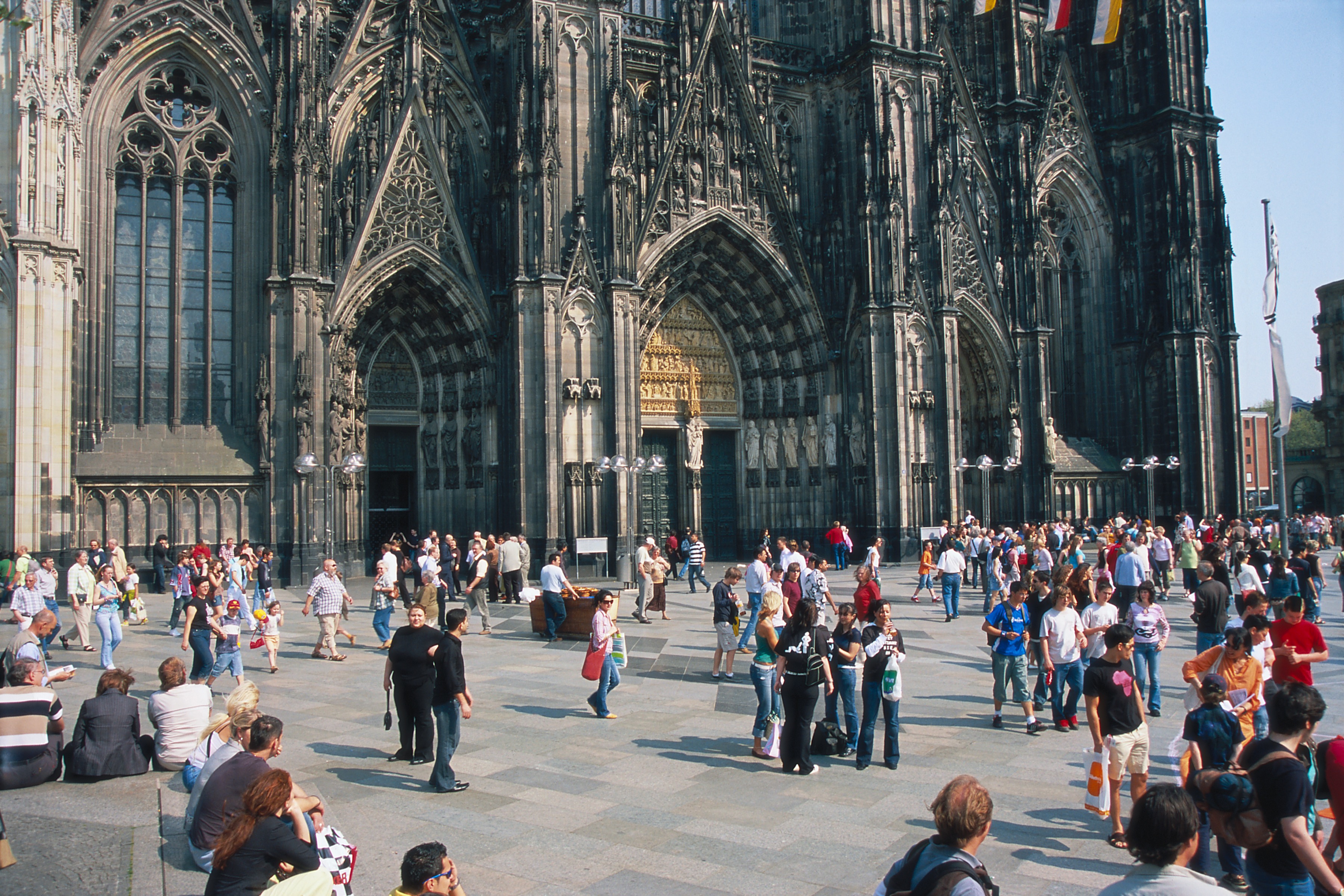
Cologne, Germany
Cologne is a city in western Germany located across the Rhine river. It is the oldest in Germany, dating back 2000 years and is considered the region’s cultural hub. The city is known for its iconic landmark of the twin-spired Cologne Cathedral set against the reconstructed Old Town buildings. When in Old Town, visit the historic Old Town Hall and the Roman Church Great St Martin, or take time out and sit at one of the traditional breweries and enjoy the scenery around you. Historical sites such as the Roman Dionysus mosaic and the medieval Overstolzenhaus are worth a visit too. Another iconic sight in Cologne is at Hohenzollern Bridge. Here, local and tourist couples affix padlocks to the railings of the bridge and swear their loyalty to each other, they then throw the key into the Rhein to ensure everlasting love. Cologne is home to over 30 stages providing cabaret, free ensembles, theatre and dance and also celebrates its openly gay culture.
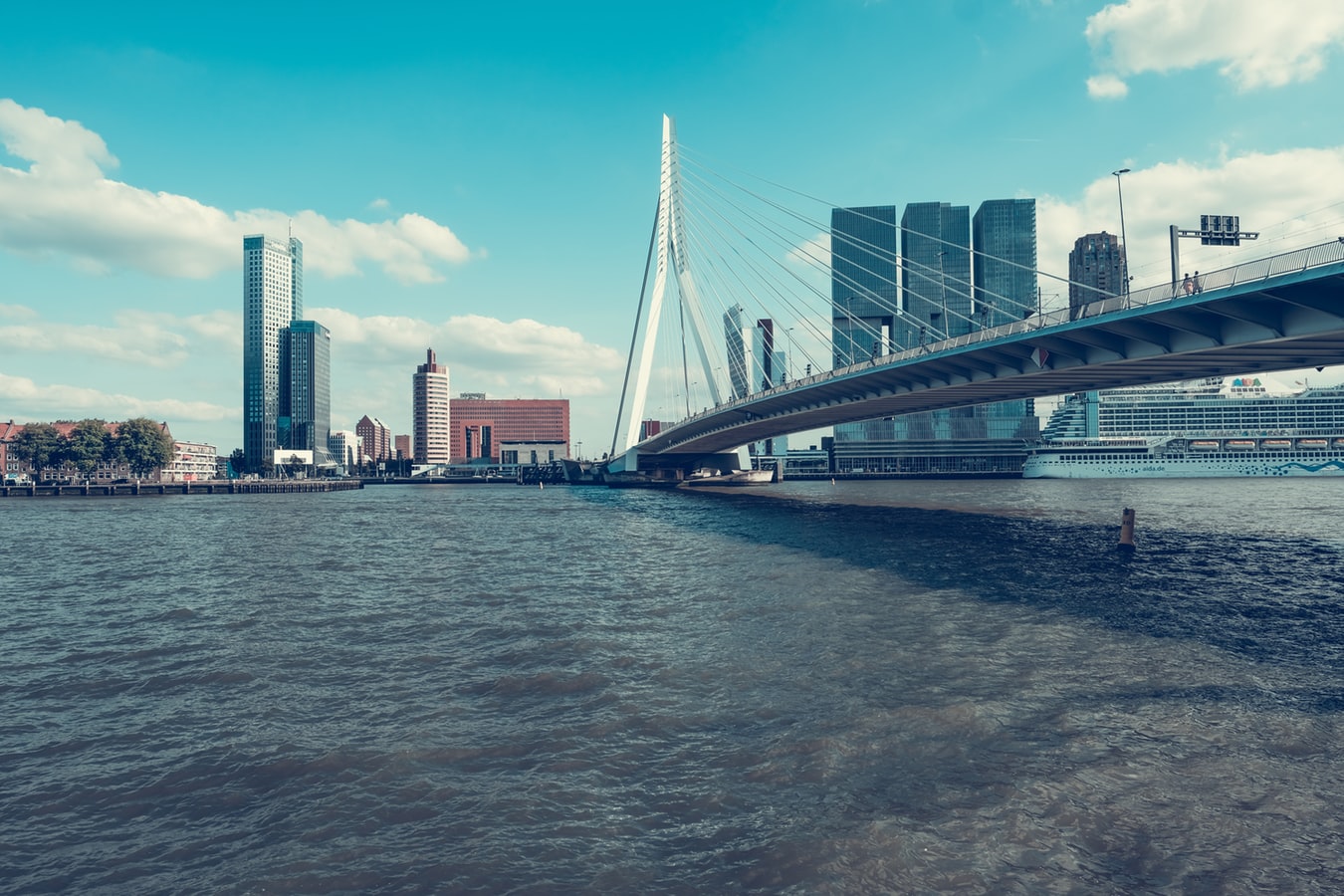
Rotterdam, Netherlands
Rotterdam is a city that’s a long way removed from most people’s stereotypical notion of the Netherlands. There are few, if any, canals to be found here nor are there any quaint windmills. There is, however, a thriving modern city which is one of the busiest ports in the entire world.
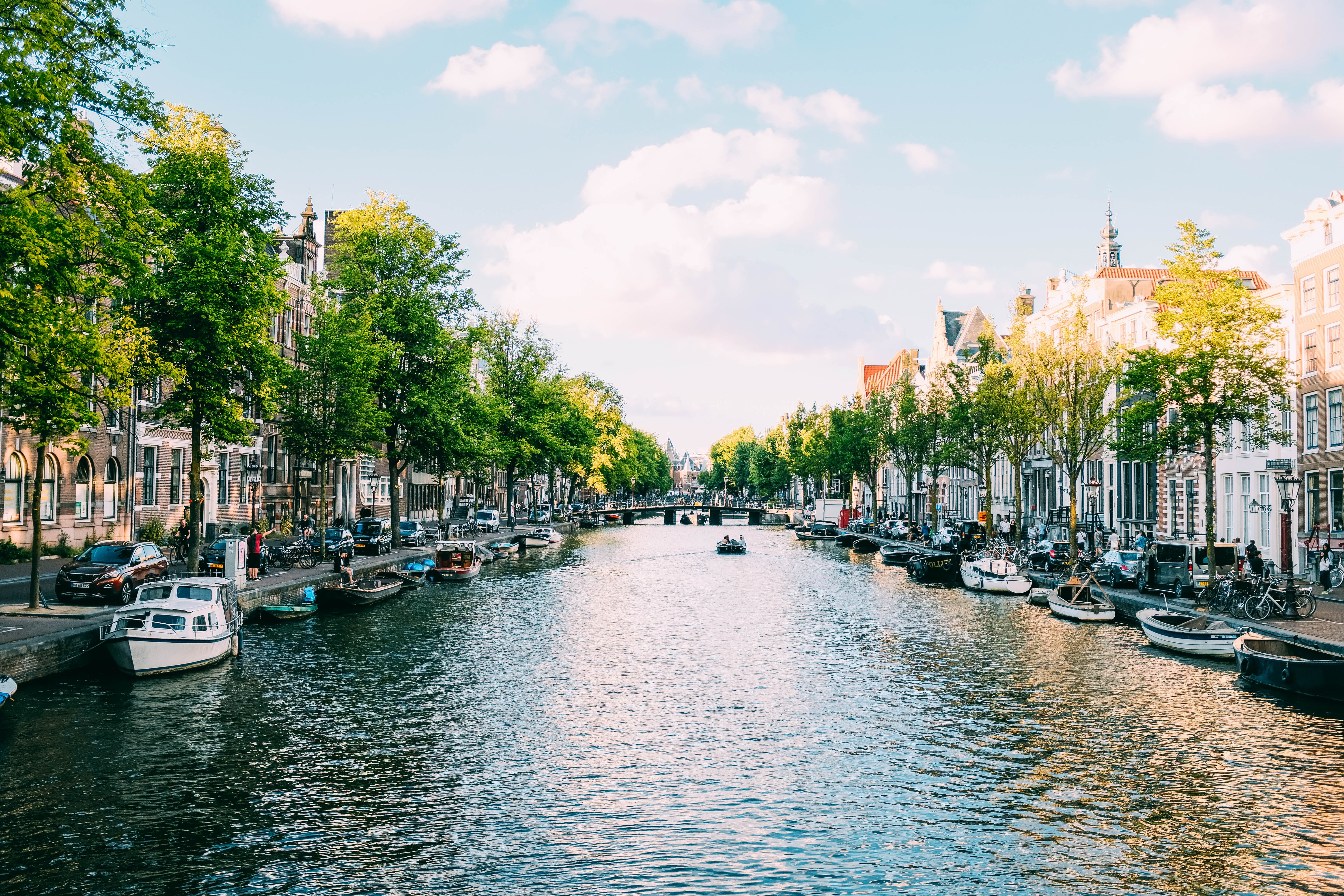
Amsterdam, Netherlands
Amsterdam combines the unrivaled beauty of the 17th-century Golden Age city center with plenty of museums and art of the highest order, not to mention a remarkably laid-back atmosphere. It all comes together to make this one of the world’s most appealing and offbeat metropolises in the world. Built on a latticework of concentric canals like an aquatic rainbow, Amsterdam is known as the City of Canals—but it’s no Venice, content to live on moonlight serenades and former glory. Quite the contrary: on nearly every street here you’ll find old and new side by side—quiet corners where time seems to be holding its breath next to streets like neon-lit Kalverstraat, and Red Light ladies strutting by the city’s oldest church. Indeed, Amsterdam has as many lovely facets as a 40-carat diamond polished by one of the city’s gem cutters. It’s certainly a metropolis, but a rather small and very accessible one. Locals tend to refer to it as a big village, albeit one that happens to pack the cultural wallop of a major world destination. There are scores of concerts every day, numerous museums, summertime festivals, and, of course, a legendary year-round party scene. It’s pretty much impossible to resist Amsterdam’s charms. With 7,000 registered monuments, most of which began as the residences and warehouses of humble merchants, set on 160 man-made canals, and traversed by 1,500 or so bridges, Amsterdam has the largest historical inner city in Europe. Its famous circle of waterways, the grachtengordel, was a 17th-century urban expansion plan for the rich and is a lasting testament to the city’s Golden Age. This town is endearing because of its kinder, gentler nature—but a reputation for championing sex, drugs, and rock ’n’ roll does not alone account for Amsterdam’s being one of the most popular destinations in Europe: consider that within a single square mile the city harbors some of the greatest achievements in Western art, from Rembrandt to Van Gogh. Not to mention that this is one of Europe’s great walking cities, with so many of its treasures in the untouted details: tiny alleyways barely visible on the map, hidden garden courtyards, shop windows, floating houseboats, hidden hofjes(courtyards with almshouses), sudden vistas of church spires, and gabled roofs that look like so many unframed paintings. And don’t forget that the joy lies in details: elaborate gables and witty gable stones denoting the trade of a previous owner. Keep in mind that those XXX symbols you see all over town are not a mark of the city’s triple-X reputation. They’re part of Amsterdam’s official coat of arms—three St. Andrew’s crosses, believed to represent the three dangers that have traditionally plagued the city: flood, fire, and pestilence. The coat’s motto (“Valiant, determined, compassionate”) was introduced in 1947 by Queen Wilhelmina in remembrance of the 1941 February Strike in Amsterdam—the first time in Europe that non-Jewish people protested against the persecution of Jews by the Nazi regime.
Antwerp, Belgium
Explore Antwerp, Belgium’s second city. Known for its diamond cutting industry, fashion and the many great artists that lived in its vicinity, Antwerp is a city focused on art and culture.
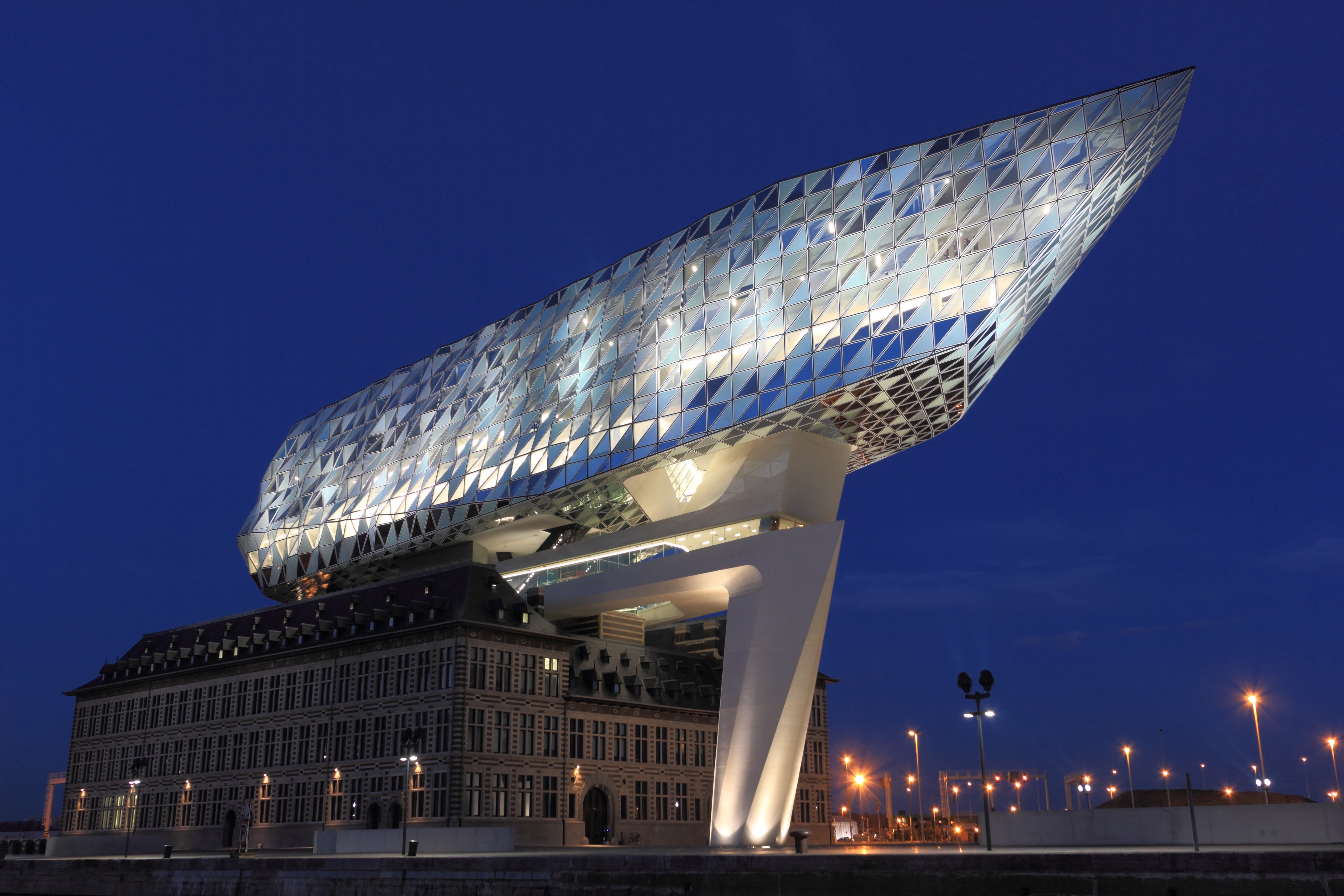
Antwerp, Belgium
Explore Antwerp, Belgium’s second city. Known for its diamond cutting industry, fashion and the many great artists that lived in its vicinity, Antwerp is a city focused on art and culture.
Nijmegen, Netherlands
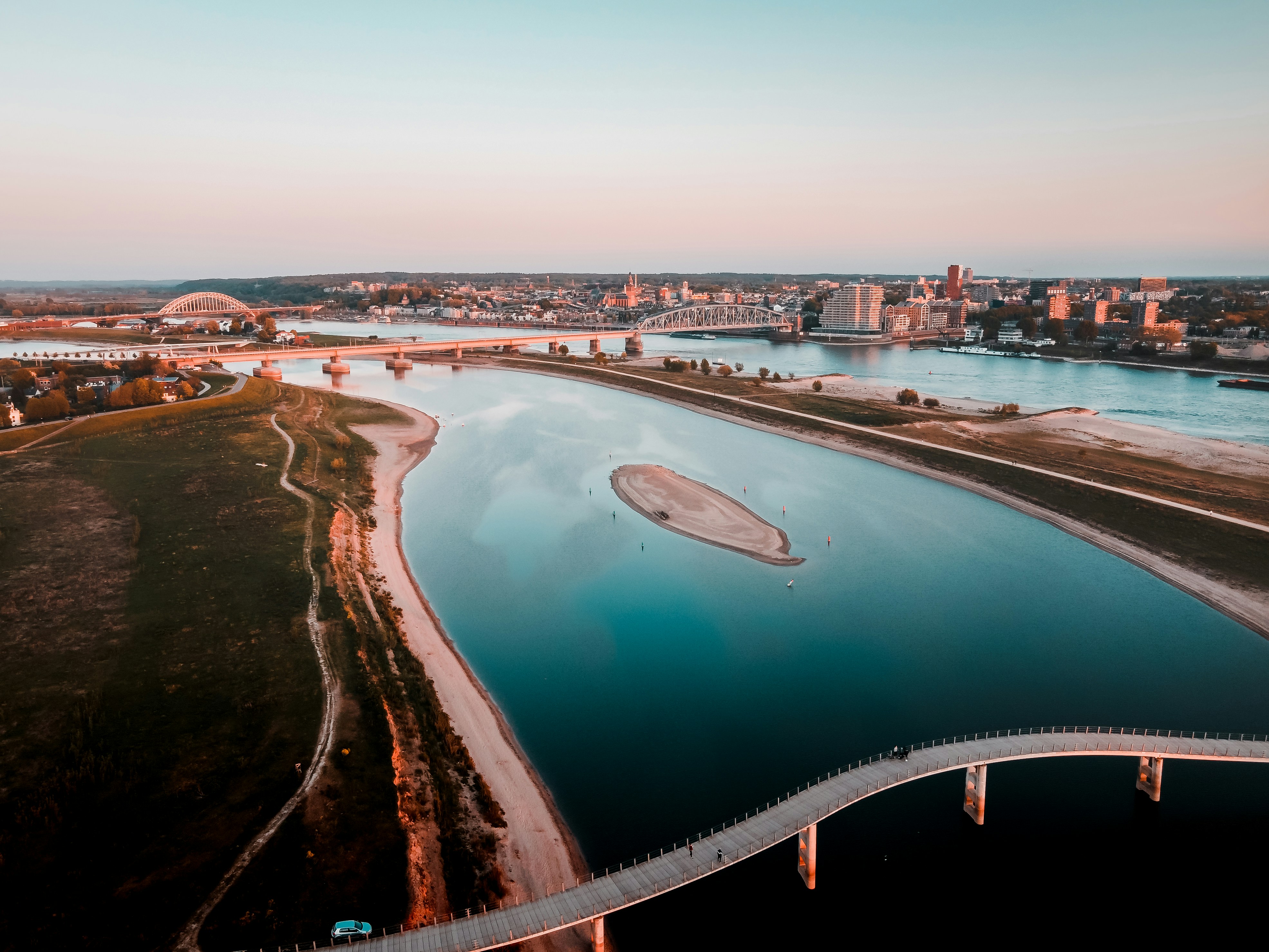
Did you know that Nijmegen is the oldest city in the Netherlands? You only need to cross the Waalburg arch bridge into the centre to understand why the 160,000 inhabitants are so proud of their city: the Waalkade wharf and the silhouette of the city-centre buildings combine to form a truly impressive sight. In this Hanseatic city, tradition and modernity go hand in hand.
Düsseldorf, Germany
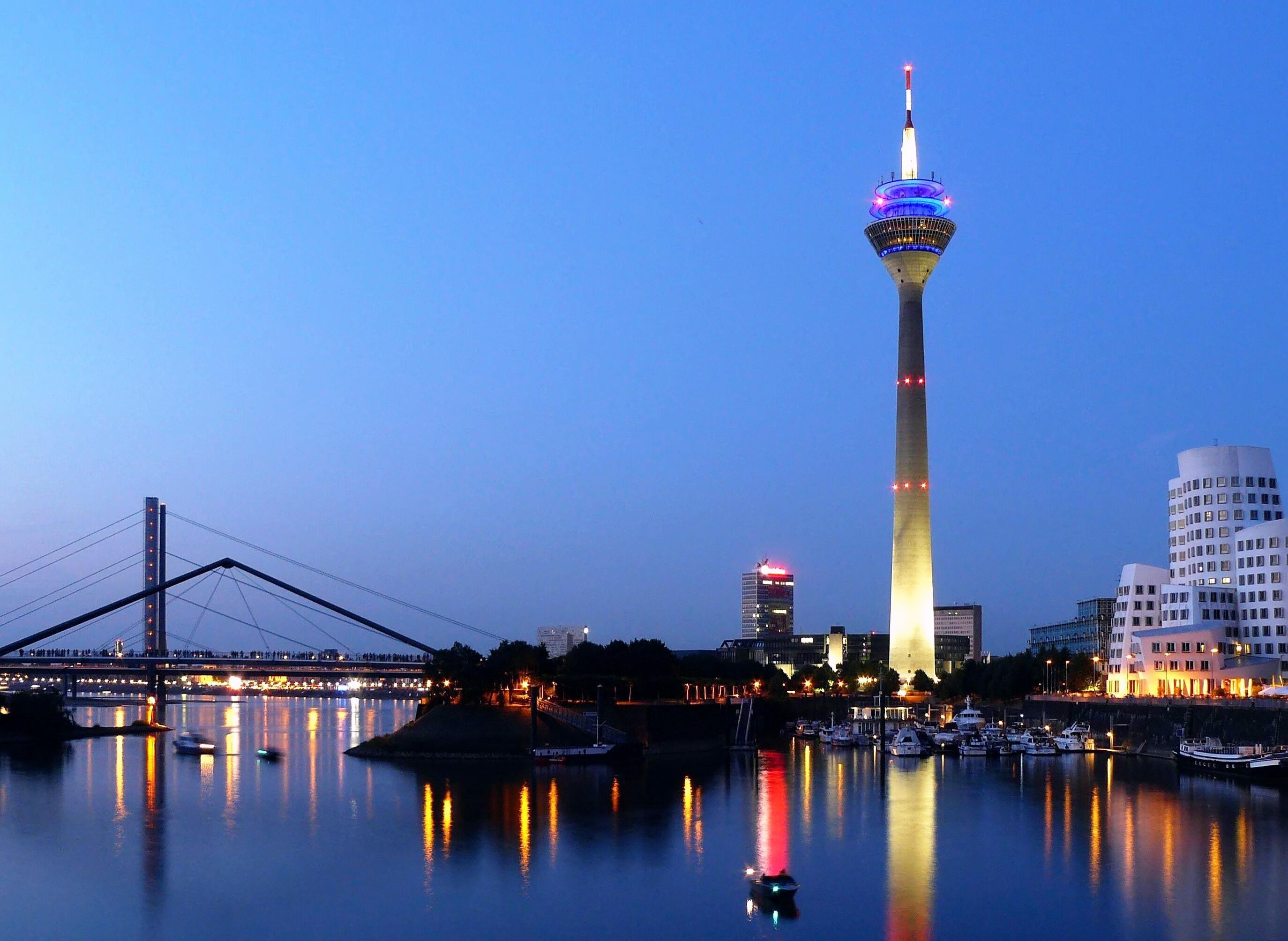
Whether you’re strolling along one of Germany’s leading luxury shopping streets, the ‘Kö’, enjoying an Altbier fresh from the tap in one of the old town’s more than 300 pubs or discovering one of the city’s many green spaces, Düsseldorf has almost everything you could wish for. Most of the city’s population seems to frequent the Uerige – the archetypical Düsseldorf brewery – even though the name of the establishment comes from a local word for ‘grumpy’. The Köbesse – as waiting staff are known here – are rather unfriendly, in keeping with tradition.
Cologne, Germany
Cologne is a city in western Germany located across the Rhine river. It is the oldest in Germany, dating back 2000 years and is considered the region’s cultural hub. The city is known for its iconic landmark of the twin-spired Cologne Cathedral set against the reconstructed Old Town buildings. When in Old Town, visit the historic Old Town Hall and the Roman Church Great St Martin, or take time out and sit at one of the traditional breweries and enjoy the scenery around you. Historical sites such as the Roman Dionysus mosaic and the medieval Overstolzenhaus are worth a visit too. Another iconic sight in Cologne is at Hohenzollern Bridge. Here, local and tourist couples affix padlocks to the railings of the bridge and swear their loyalty to each other, they then throw the key into the Rhein to ensure everlasting love. Cologne is home to over 30 stages providing cabaret, free ensembles, theatre and dance and also celebrates its openly gay culture.
Rotterdam, Netherlands
Rotterdam is a city that’s a long way removed from most people’s stereotypical notion of the Netherlands. There are few, if any, canals to be found here nor are there any quaint windmills. There is, however, a thriving modern city which is one of the busiest ports in the entire world.
Amsterdam, Netherlands
Amsterdam combines the unrivaled beauty of the 17th-century Golden Age city center with plenty of museums and art of the highest order, not to mention a remarkably laid-back atmosphere. It all comes together to make this one of the world’s most appealing and offbeat metropolises in the world. Built on a latticework of concentric canals like an aquatic rainbow, Amsterdam is known as the City of Canals—but it’s no Venice, content to live on moonlight serenades and former glory. Quite the contrary: on nearly every street here you’ll find old and new side by side—quiet corners where time seems to be holding its breath next to streets like neon-lit Kalverstraat, and Red Light ladies strutting by the city’s oldest church. Indeed, Amsterdam has as many lovely facets as a 40-carat diamond polished by one of the city’s gem cutters. It’s certainly a metropolis, but a rather small and very accessible one. Locals tend to refer to it as a big village, albeit one that happens to pack the cultural wallop of a major world destination. There are scores of concerts every day, numerous museums, summertime festivals, and, of course, a legendary year-round party scene. It’s pretty much impossible to resist Amsterdam’s charms. With 7,000 registered monuments, most of which began as the residences and warehouses of humble merchants, set on 160 man-made canals, and traversed by 1,500 or so bridges, Amsterdam has the largest historical inner city in Europe. Its famous circle of waterways, the grachtengordel, was a 17th-century urban expansion plan for the rich and is a lasting testament to the city’s Golden Age. This town is endearing because of its kinder, gentler nature—but a reputation for championing sex, drugs, and rock ’n’ roll does not alone account for Amsterdam’s being one of the most popular destinations in Europe: consider that within a single square mile the city harbors some of the greatest achievements in Western art, from Rembrandt to Van Gogh. Not to mention that this is one of Europe’s great walking cities, with so many of its treasures in the untouted details: tiny alleyways barely visible on the map, hidden garden courtyards, shop windows, floating houseboats, hidden hofjes(courtyards with almshouses), sudden vistas of church spires, and gabled roofs that look like so many unframed paintings. And don’t forget that the joy lies in details: elaborate gables and witty gable stones denoting the trade of a previous owner. Keep in mind that those XXX symbols you see all over town are not a mark of the city’s triple-X reputation. They’re part of Amsterdam’s official coat of arms—three St. Andrew’s crosses, believed to represent the three dangers that have traditionally plagued the city: flood, fire, and pestilence. The coat’s motto (“Valiant, determined, compassionate”) was introduced in 1947 by Queen Wilhelmina in remembrance of the 1941 February Strike in Amsterdam—the first time in Europe that non-Jewish people protested against the persecution of Jews by the Nazi regime.
Antwerp, Belgium
Explore Antwerp, Belgium’s second city. Known for its diamond cutting industry, fashion and the many great artists that lived in its vicinity, Antwerp is a city focused on art and culture.
Antwerp, Belgium
Explore Antwerp, Belgium’s second city. Known for its diamond cutting industry, fashion and the many great artists that lived in its vicinity, Antwerp is a city focused on art and culture.
Nijmegen, Netherlands
Did you know that Nijmegen is the oldest city in the Netherlands? You only need to cross the Waalburg arch bridge into the centre to understand why the 160,000 inhabitants are so proud of their city: the Waalkade wharf and the silhouette of the city-centre buildings combine to form a truly impressive sight. In this Hanseatic city, tradition and modernity go hand in hand.
Düsseldorf, Germany
Whether you’re strolling along one of Germany’s leading luxury shopping streets, the ‘Kö’, enjoying an Altbier fresh from the tap in one of the old town’s more than 300 pubs or discovering one of the city’s many green spaces, Düsseldorf has almost everything you could wish for. Most of the city’s population seems to frequent the Uerige – the archetypical Düsseldorf brewery – even though the name of the establishment comes from a local word for ‘grumpy’. The Köbesse – as waiting staff are known here – are rather unfriendly, in keeping with tradition.
Cologne, Germany
Cologne is a city in western Germany located across the Rhine river. It is the oldest in Germany, dating back 2000 years and is considered the region’s cultural hub. The city is known for its iconic landmark of the twin-spired Cologne Cathedral set against the reconstructed Old Town buildings. When in Old Town, visit the historic Old Town Hall and the Roman Church Great St Martin, or take time out and sit at one of the traditional breweries and enjoy the scenery around you. Historical sites such as the Roman Dionysus mosaic and the medieval Overstolzenhaus are worth a visit too. Another iconic sight in Cologne is at Hohenzollern Bridge. Here, local and tourist couples affix padlocks to the railings of the bridge and swear their loyalty to each other, they then throw the key into the Rhein to ensure everlasting love. Cologne is home to over 30 stages providing cabaret, free ensembles, theatre and dance and also celebrates its openly gay culture.
Cologne, Germany
Cologne is a city in western Germany located across the Rhine river. It is the oldest in Germany, dating back 2000 years and is considered the region’s cultural hub. The city is known for its iconic landmark of the twin-spired Cologne Cathedral set against the reconstructed Old Town buildings. When in Old Town, visit the historic Old Town Hall and the Roman Church Great St Martin, or take time out and sit at one of the traditional breweries and enjoy the scenery around you. Historical sites such as the Roman Dionysus mosaic and the medieval Overstolzenhaus are worth a visit too. Another iconic sight in Cologne is at Hohenzollern Bridge. Here, local and tourist couples affix padlocks to the railings of the bridge and swear their loyalty to each other, they then throw the key into the Rhein to ensure everlasting love. Cologne is home to over 30 stages providing cabaret, free ensembles, theatre and dance and also celebrates its openly gay culture.
Cabin Options
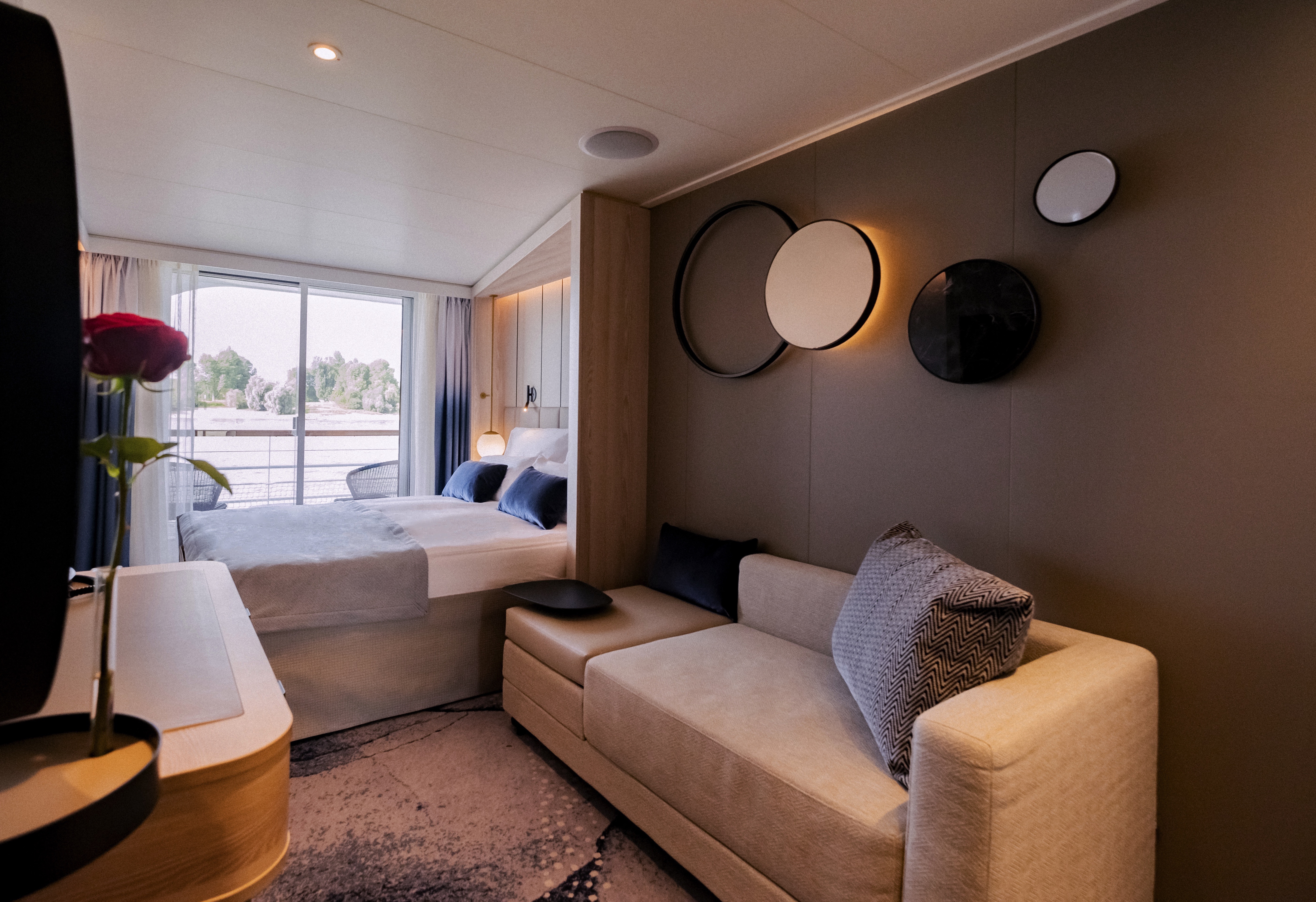
2-bed outside cabin, C
2-bed outside cabin, D
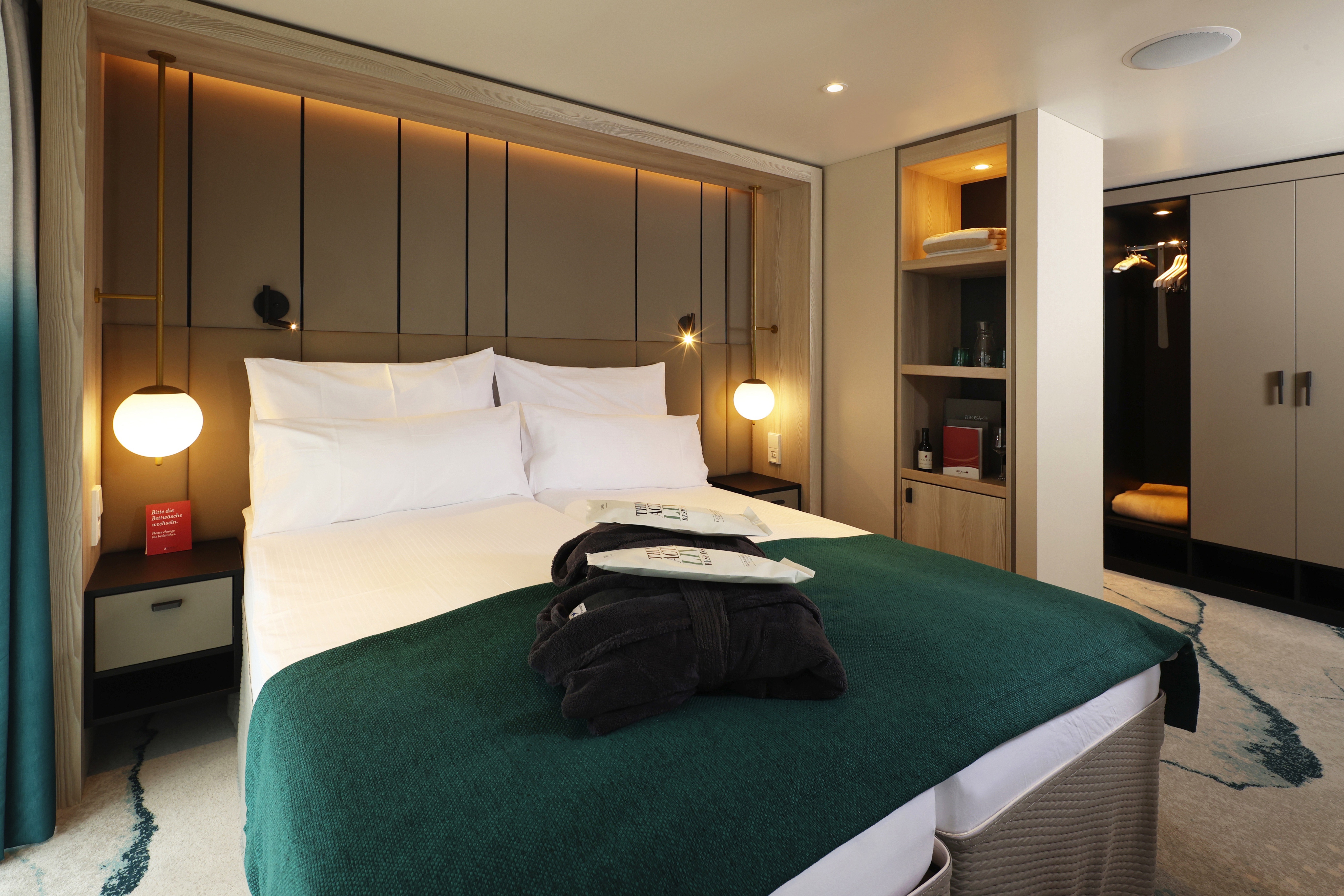
2-bed balcony suite, F
2-bed outside cabin, B
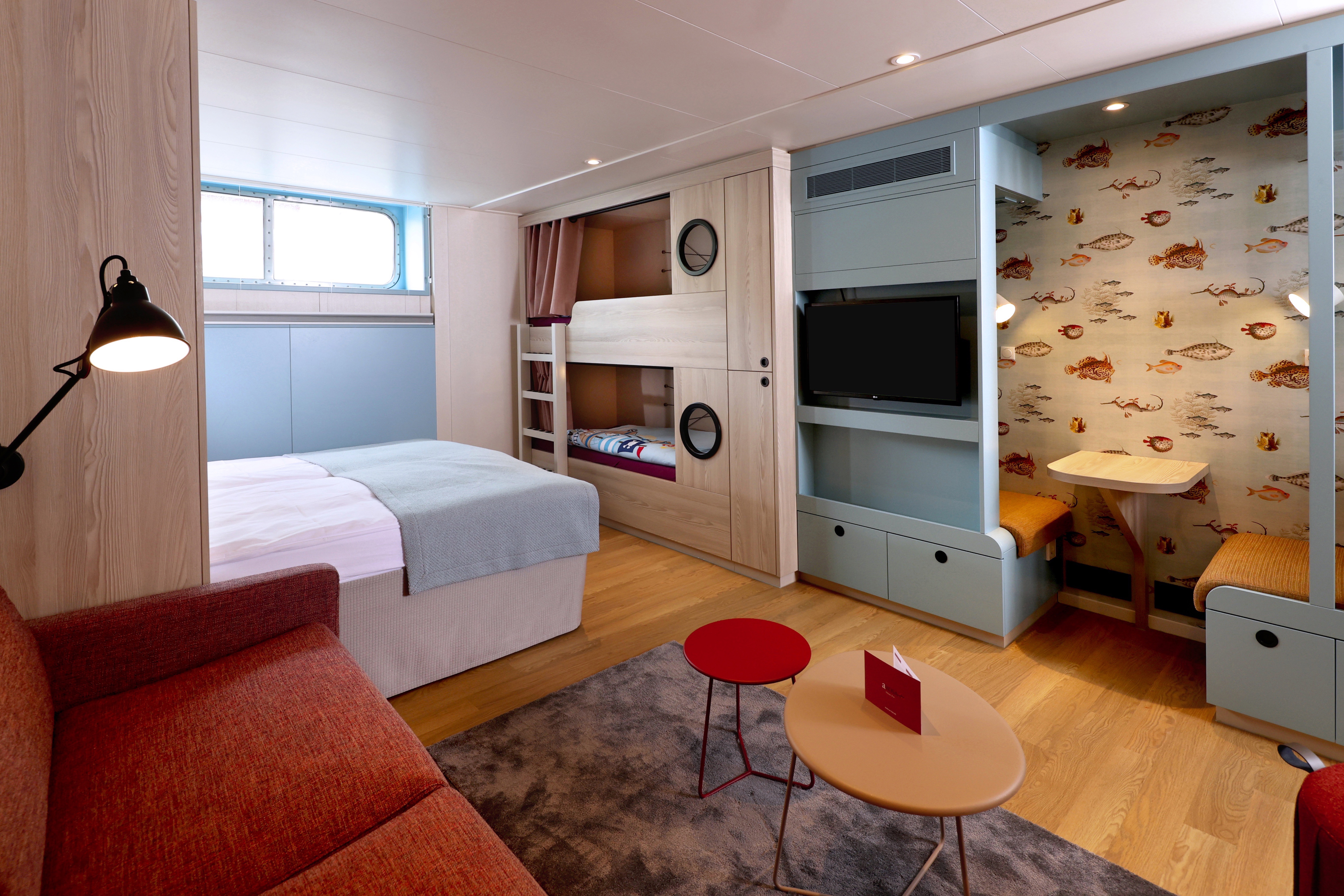
2-bed family cabin, G
Ship Facilities
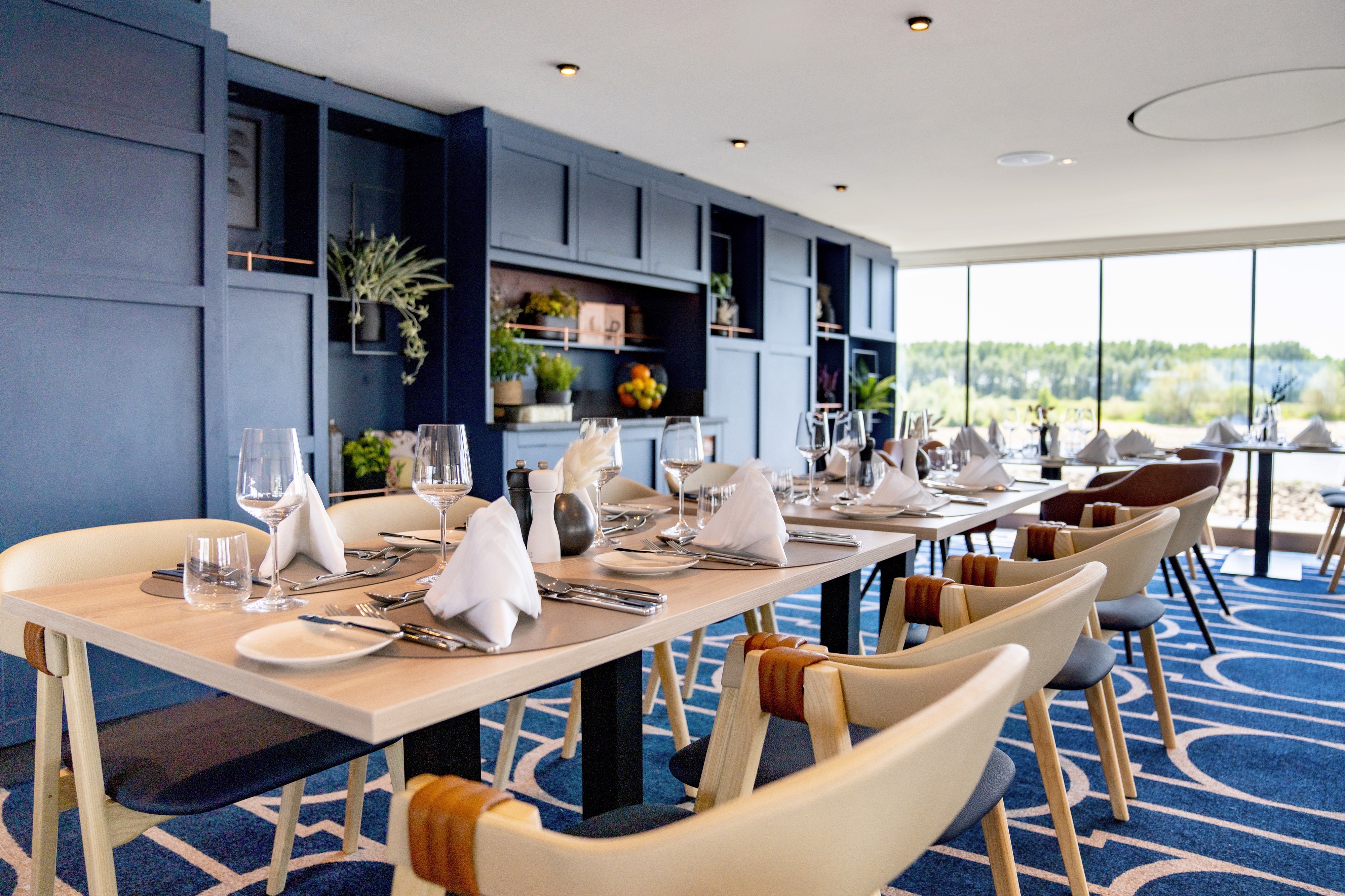
The Market Restaurant
The Market Restaurant is the ship’s Dining Room (no table reservations needed). It has an open kitchen and Buffet station. The A-ROSA RIVA’s dining room menu features low-calorie, itinerary-based (regional) specialties and traditional Mediterranean dishes. Food on board is prepared with fresh locally sourced ingredients and products.
Dining is a truly un-regimented affair – unlike other river vessels, the dining room opens its welcoming arms when you are ready, rather than at a specified time. A lavish buffet with a la minute cookery stations entices you with fresh ingredients and plenty of choice. In addition, a speciality waiter service restaurant offers an alternative option, with a new menu every night and the opportunity to dine here up to three times during the week. Weather permitting, you can choose to dine al fresco around pool as you watch the beautiful scenery pass by.
On some evenings, served onboard will be a themed 3-course-dinner in a reserved part of the restaurant. A-ROSA advises guests to sign up for this evening at the reception or with the Maître as seats are limited. On these evenings, the buffet restaurant is also open as usual.
The themed evenings are at an extra charge.
SENA Grill
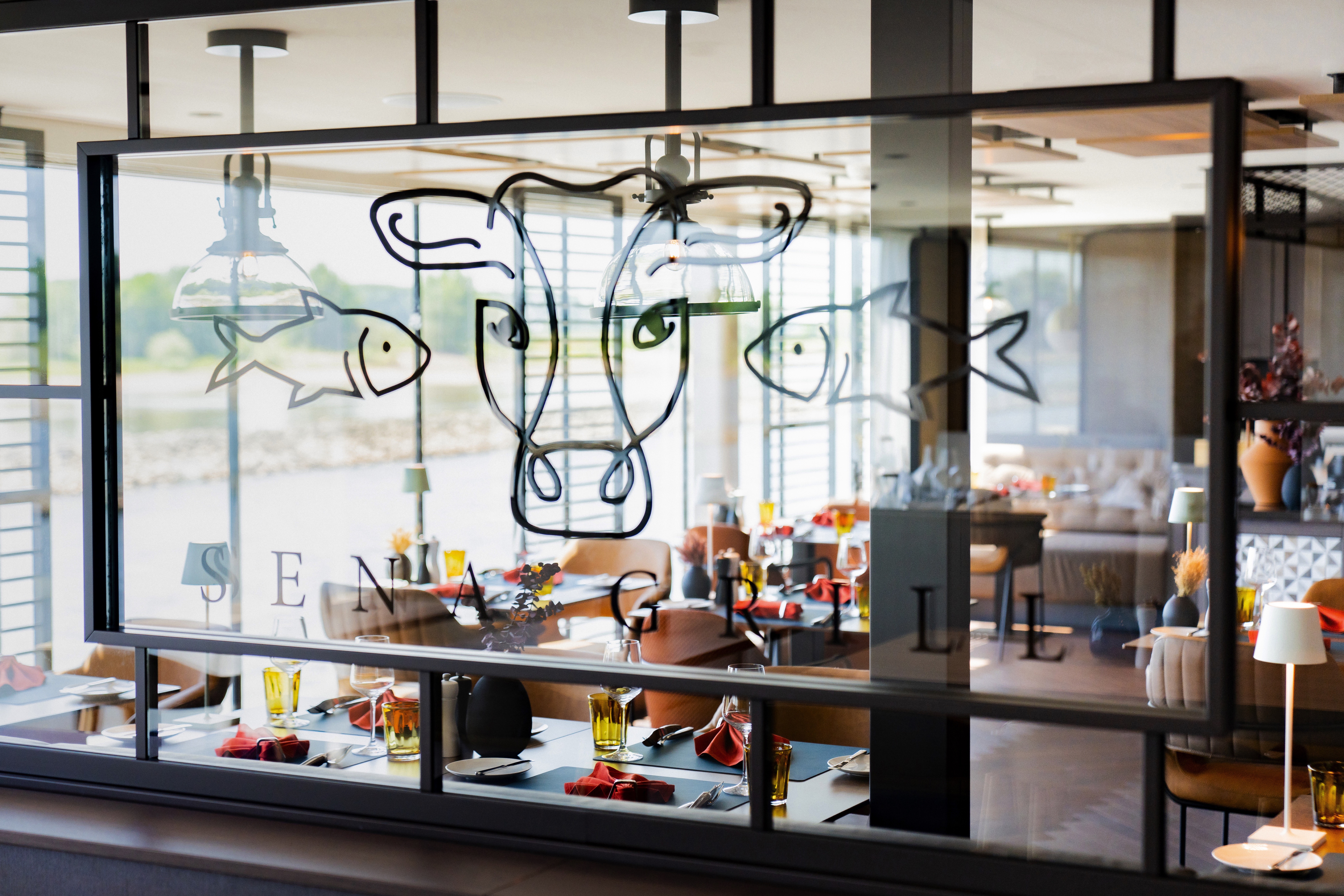
SENA GRILL is the home of prime cuts of steak and seafood, plus catch or the day and sushi bowl options. There’s a small supplement to eat here.
The PAVILION
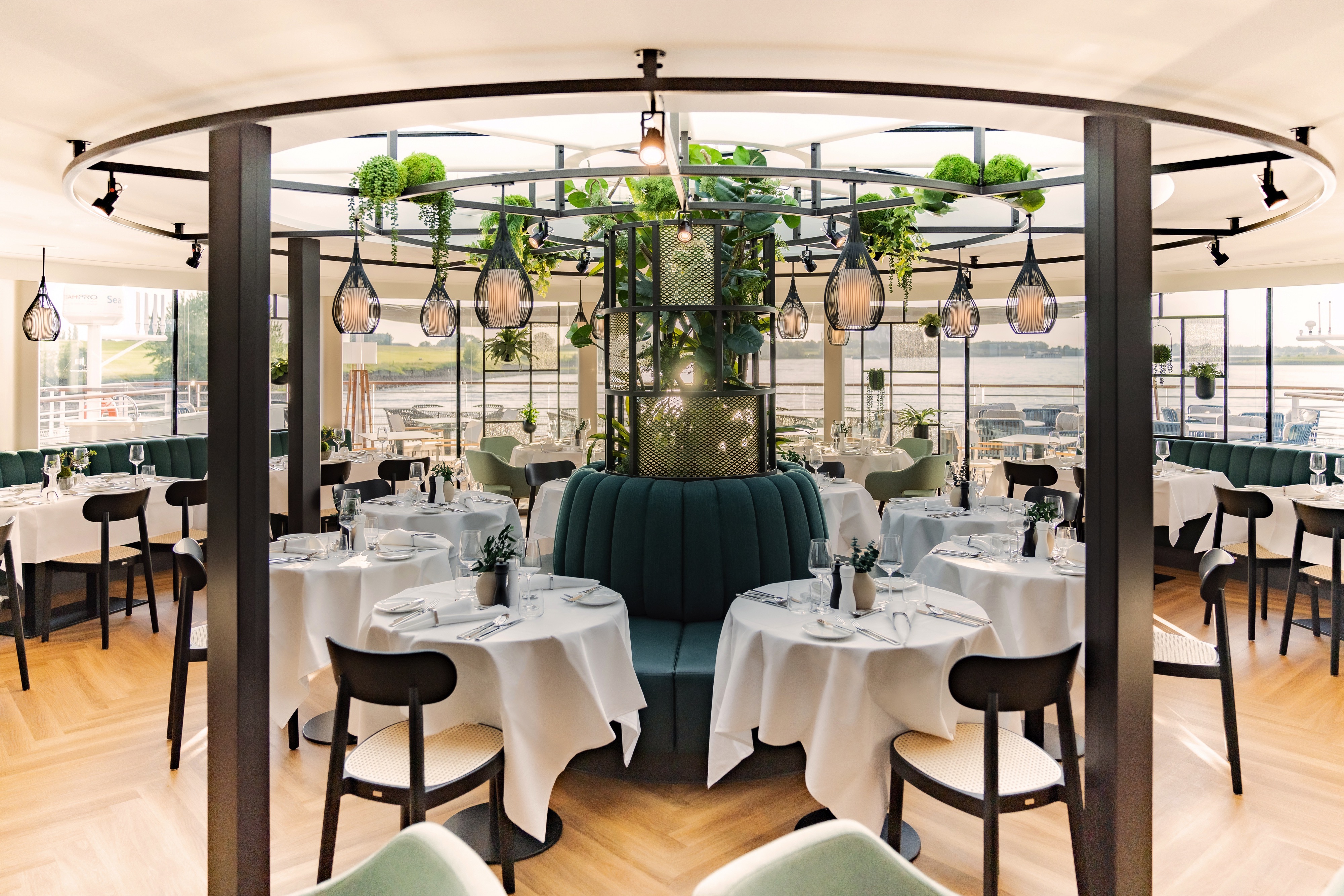
If you’d rather not lift a finger, choose waiter service at THE PAVILION.
A-ROSA Bike Excursions
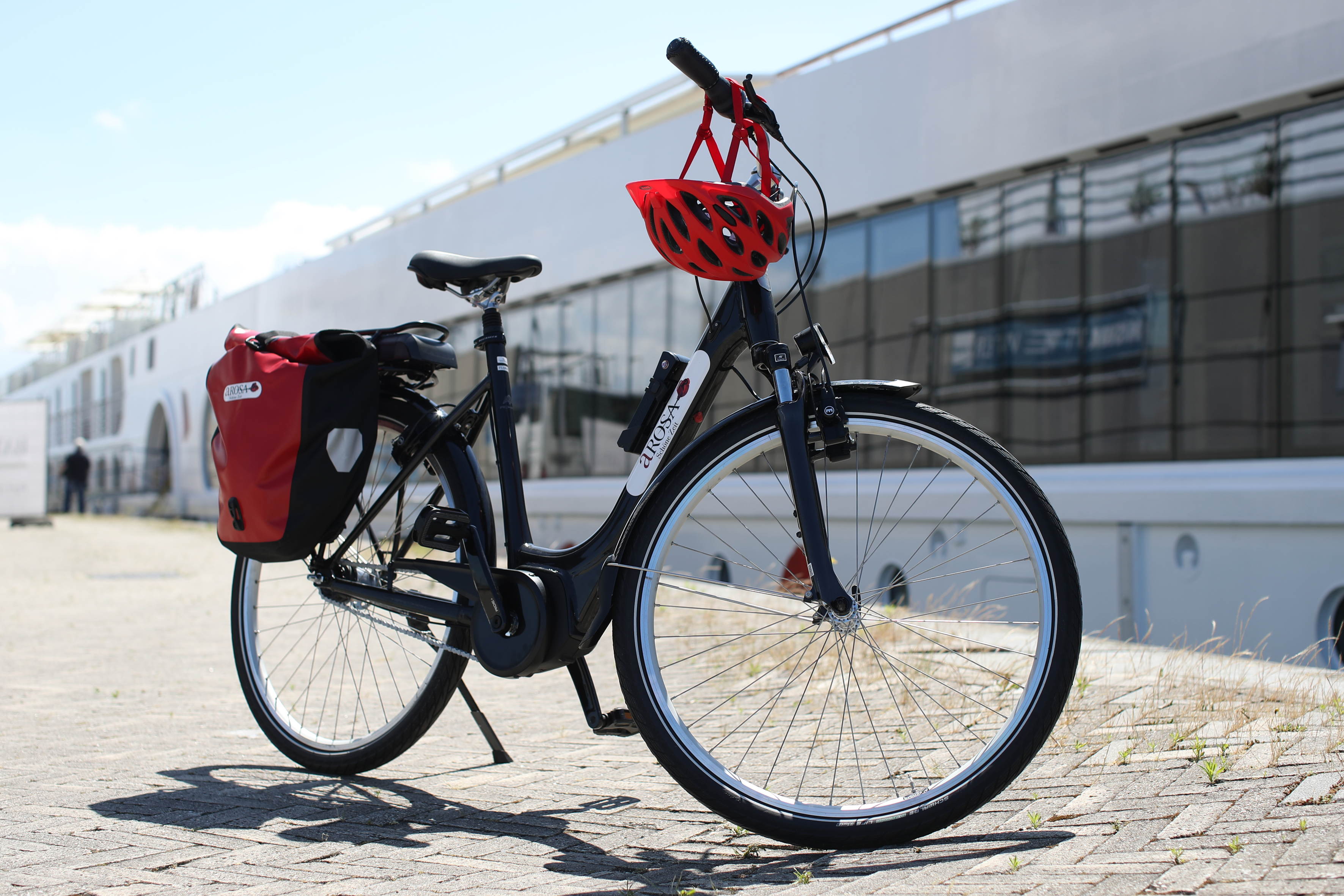
Guided bicycle tours for those who would like to combine discovering the area with a little exercise.
Excursions
DISCOVERY TOURS | City bus tours, walking tours and sightseeing tours. Especially for culture enthusiasts.
ADVENTURE TOURS | Themed tours and excursions featuring unusual means of transport.
GOURMET TOURS | Try regional products and specialities with visits to producers.
FAMILY TOURS | Discover a variety of exciting excursions for the whole family.
EXCLUSIVE TOURS | Individual or private excursions by van or car with driver and/or guide.
Up & Down Bar
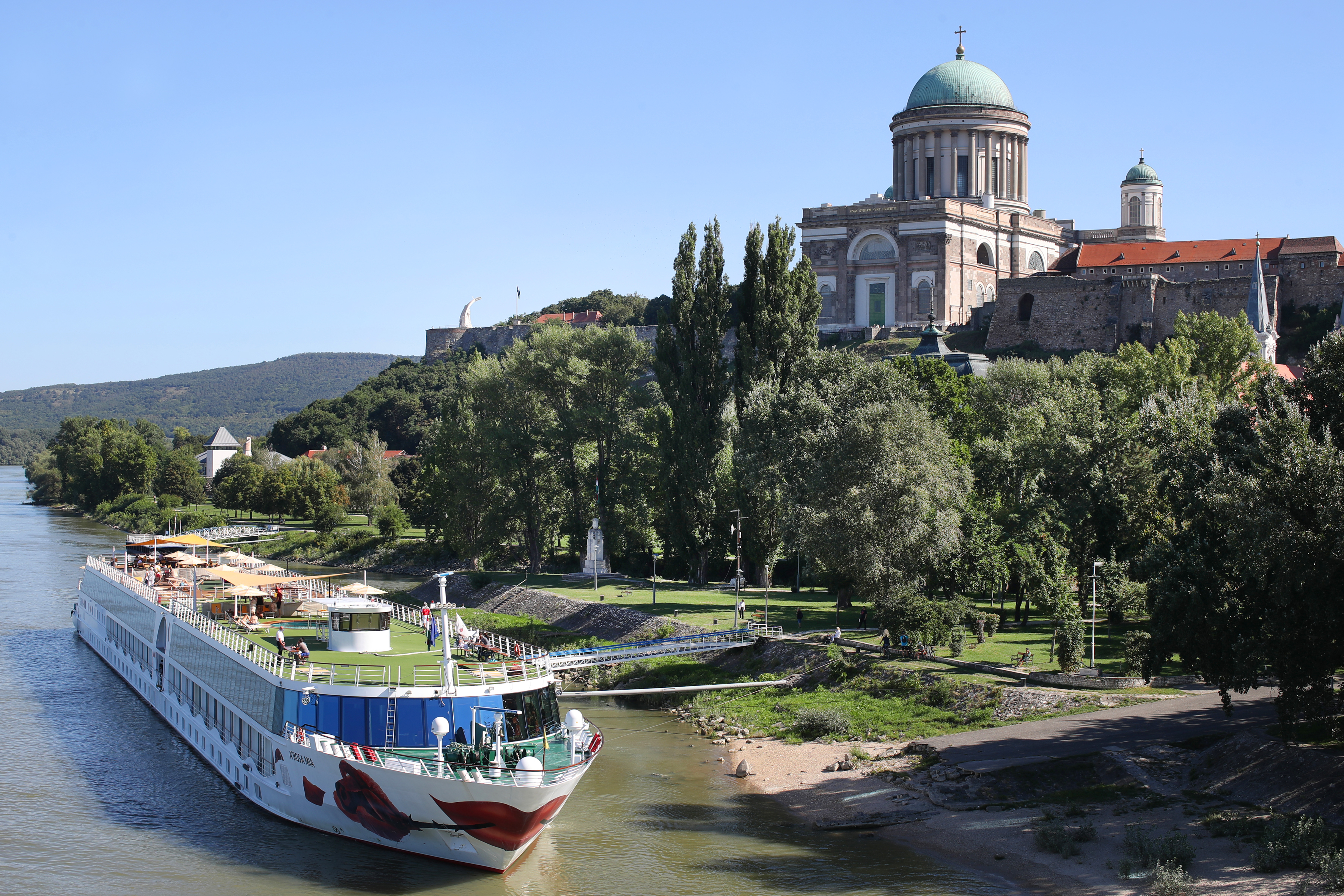
The head-turning UP & DOWN BAR on sun deck has been magnificently designed to disappear into deck when we sail under a low bridge.
Bar
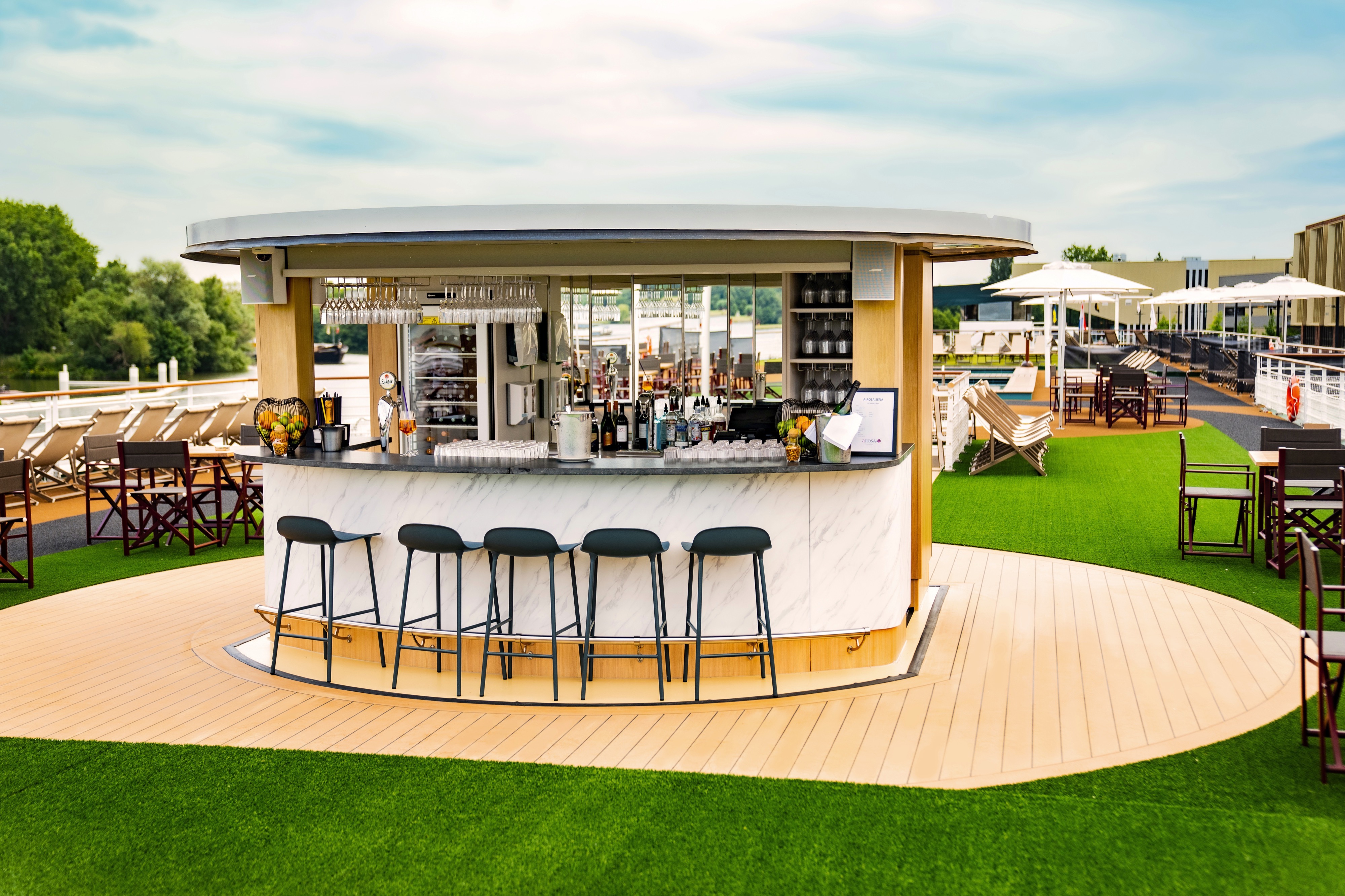
The bar can be located on Deck 4.
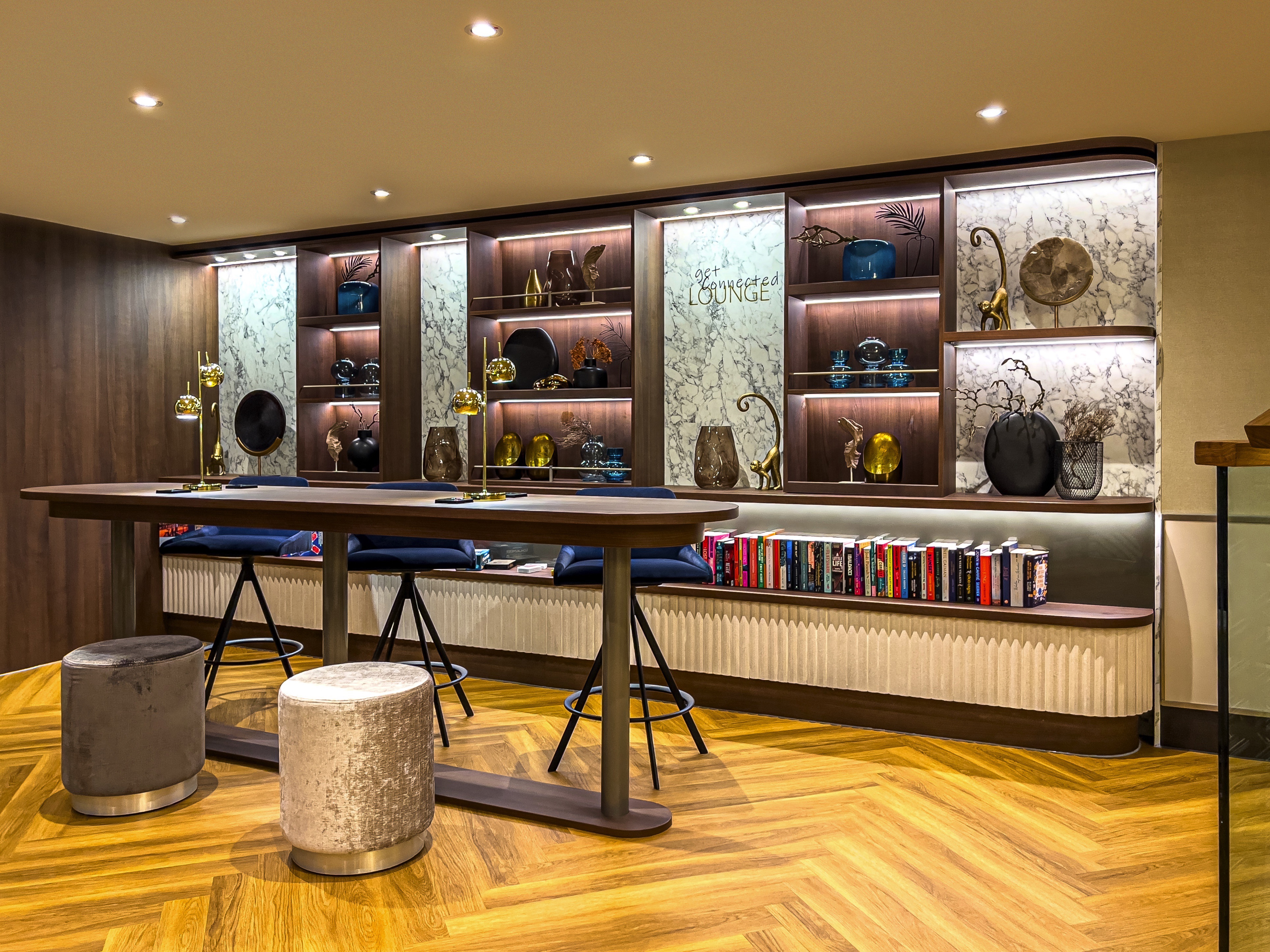
Connect Lounge
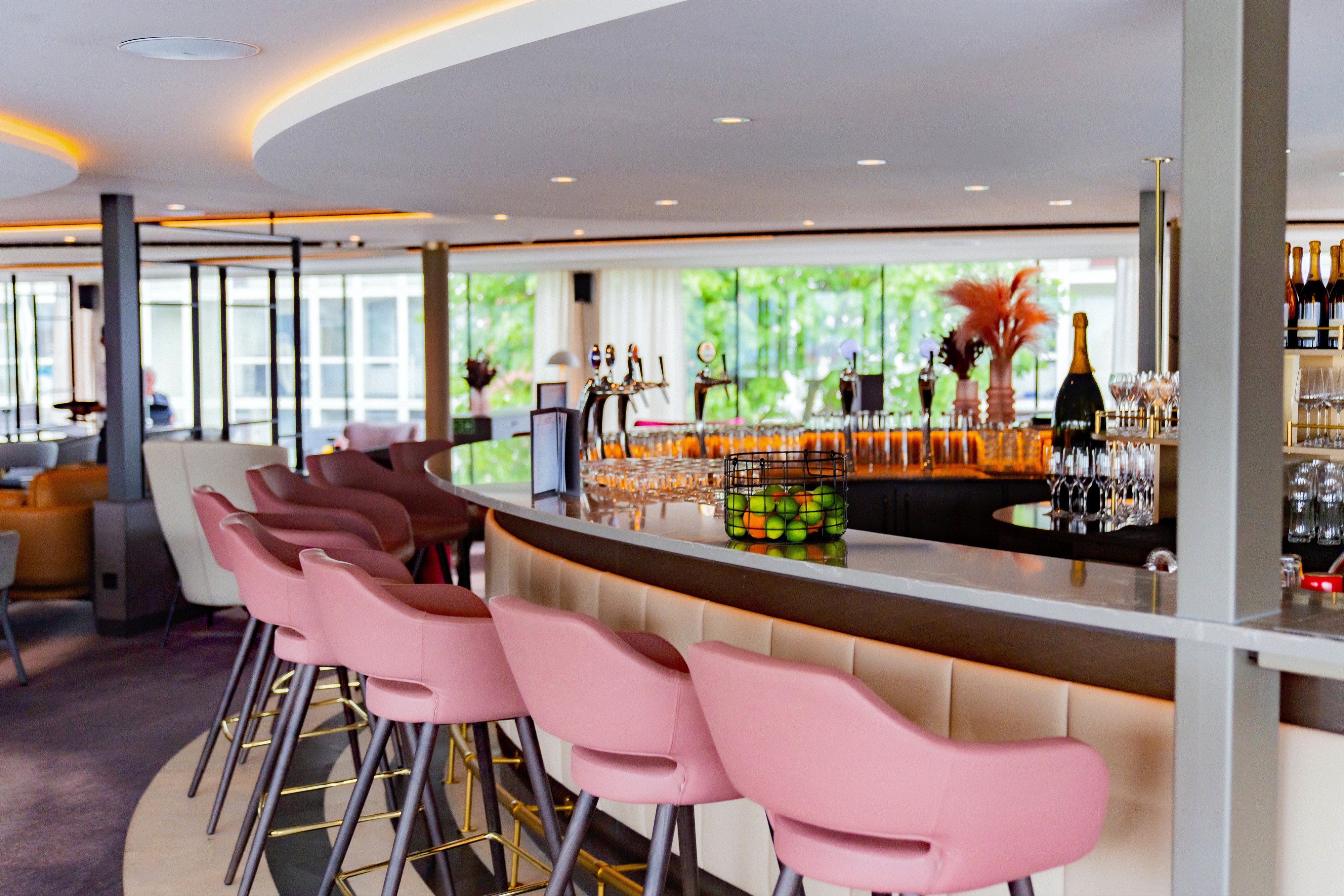
The Connect Lounge can be located on Deck 3.
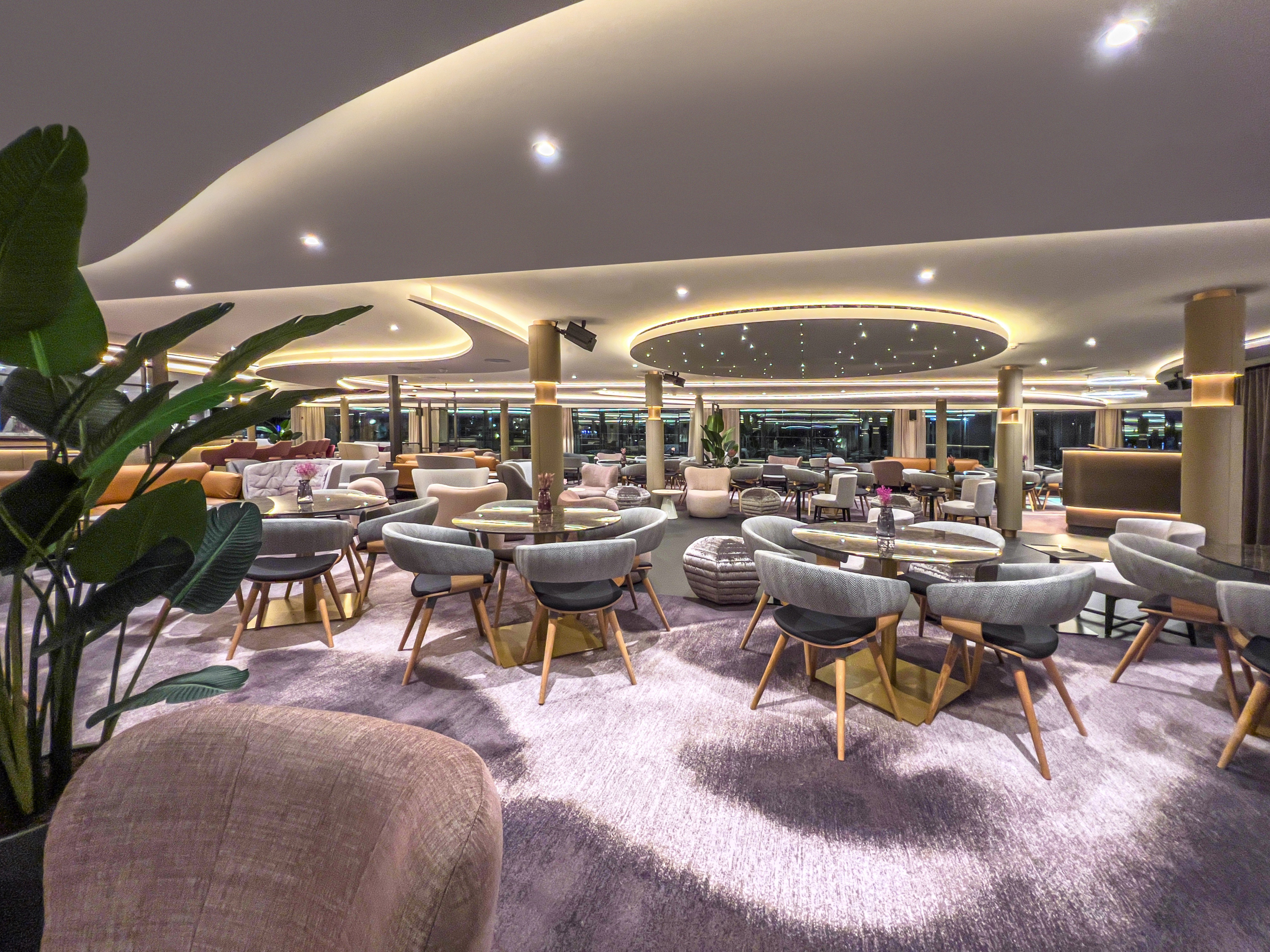
Panorama lounge
The Panorama lounge can be located on Deck 4.
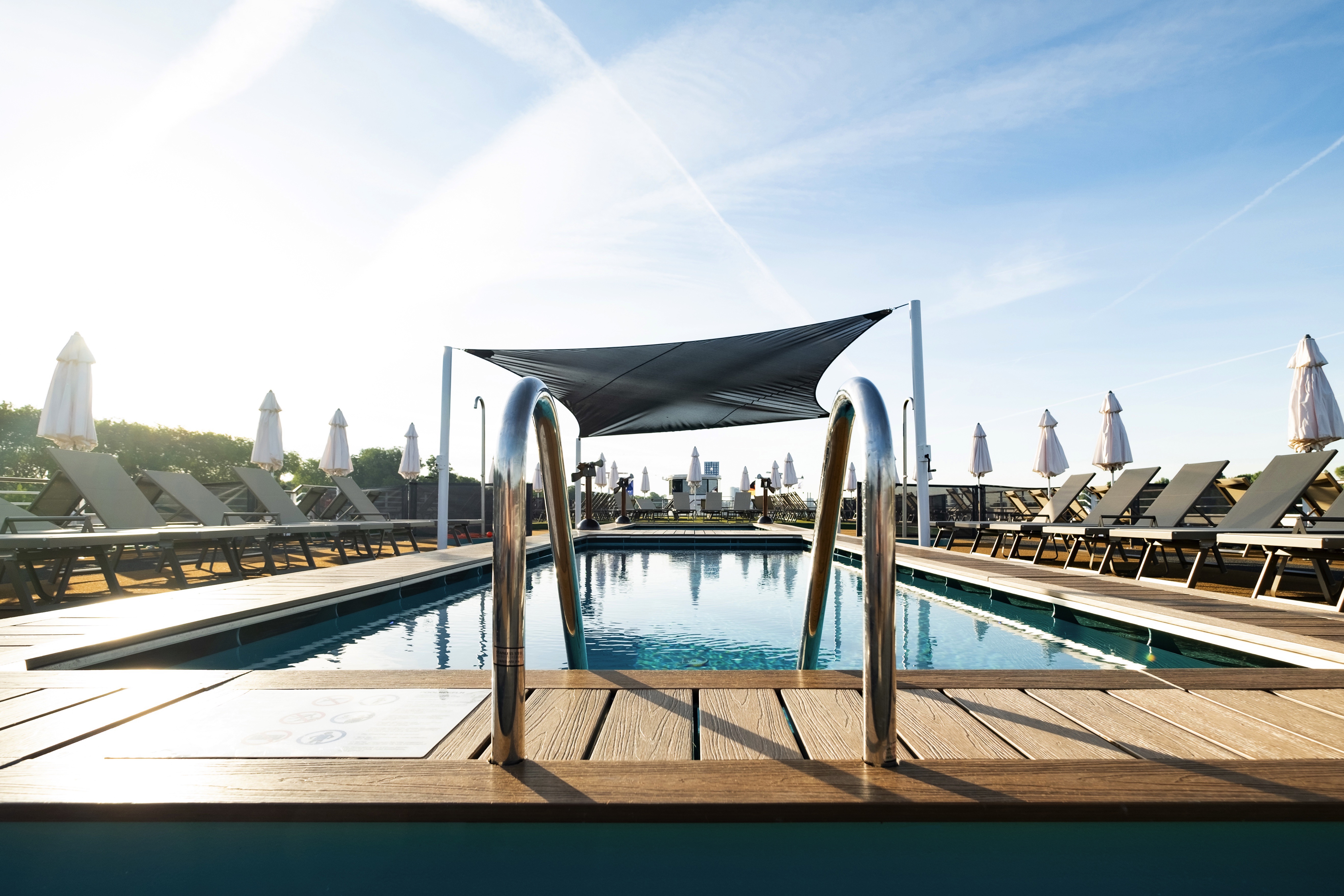
Pool Deck
Time on the sun deck can be measured in sunsets, laps in the pool, glasses of wine or the number of new friends you’ve made. But for most, time just stands still as you take in Europe’s fabled towns and picturesque countryside from your chaise lounge.
The motto topside on the sun deck is “anything is possible, but nothing is required… just enjoy.”
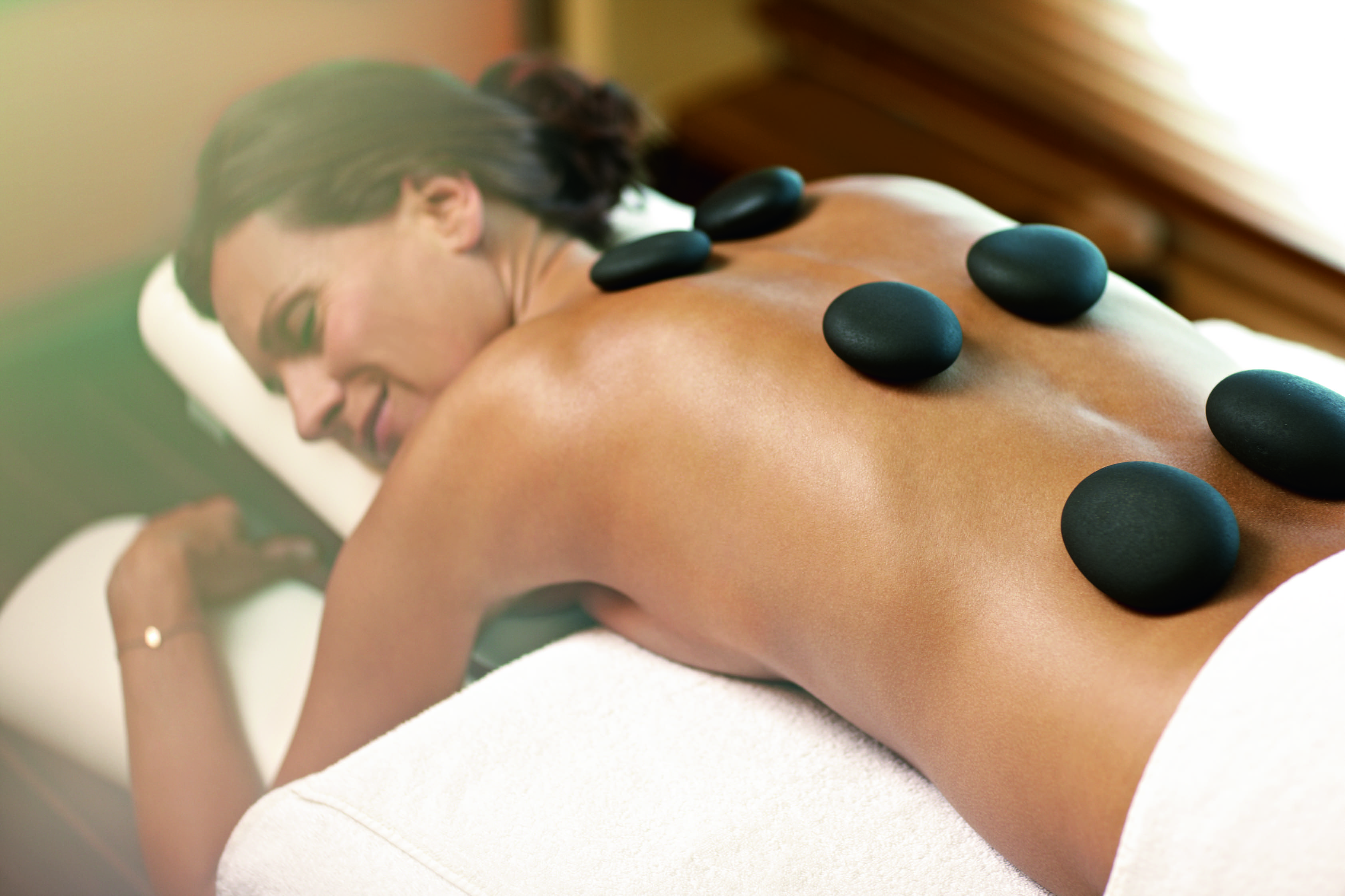
SPA-ROSA
Our signature SPA-ROSA is bigger and better than ever. Expect a Finnish sauna, jacuzzi, two treatment rooms and even an ice grotto with ice fountain. An expanded fitness room will offer up premium machines with smart tech, plus space for group sessions, including yoga.
Experience beauty and anti-ageing treatments with facials, as well as comforting warmth in the sauna or sanarium, which let you benefit from more vitality and radiance. When selecting products, we deliberately chose the German producer BABOR for you. Both stand for extraordinary results in the treatments, innovations, high skin compatibility and responsibility towards their personnel and the environment. Your SPA-ROSA feels a responsibility to give you the greatest possible recuperative effect during your cruise. We hope that, long after your holiday is over, you will often hear someone say, ‘You look so relaxed.’
Active recreation is offered in the especially developed exercise programme. Deep relaxation and intense well-being can be found with these treatments unique to A-ROSA.
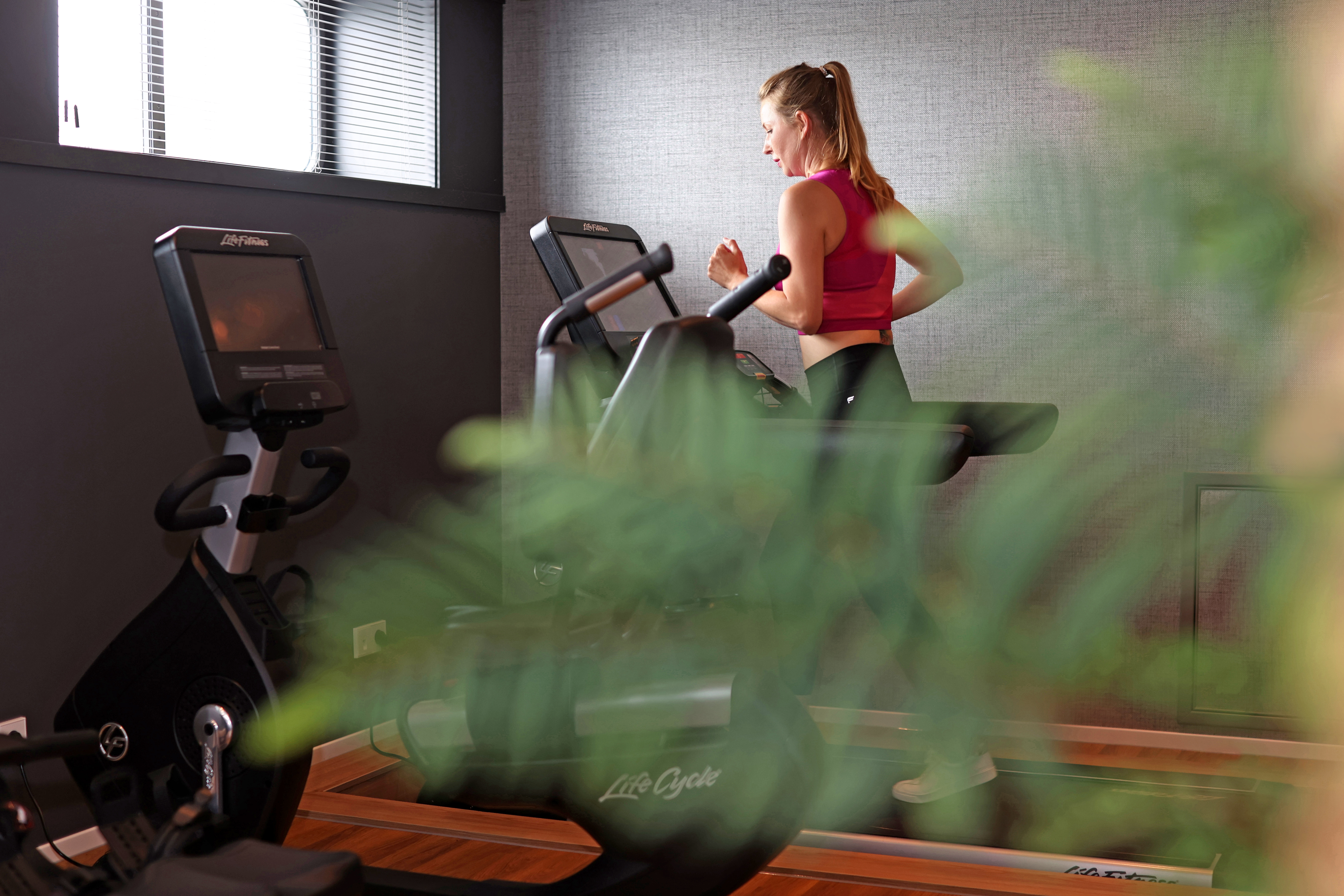
Gymnasium
If walking the town wasn’t enough exercise, you can continue in the well-equipped gymnasium with modern cardio equipment. If desired, you can also work out with a personal trainer who can put together an individual training plan for you.
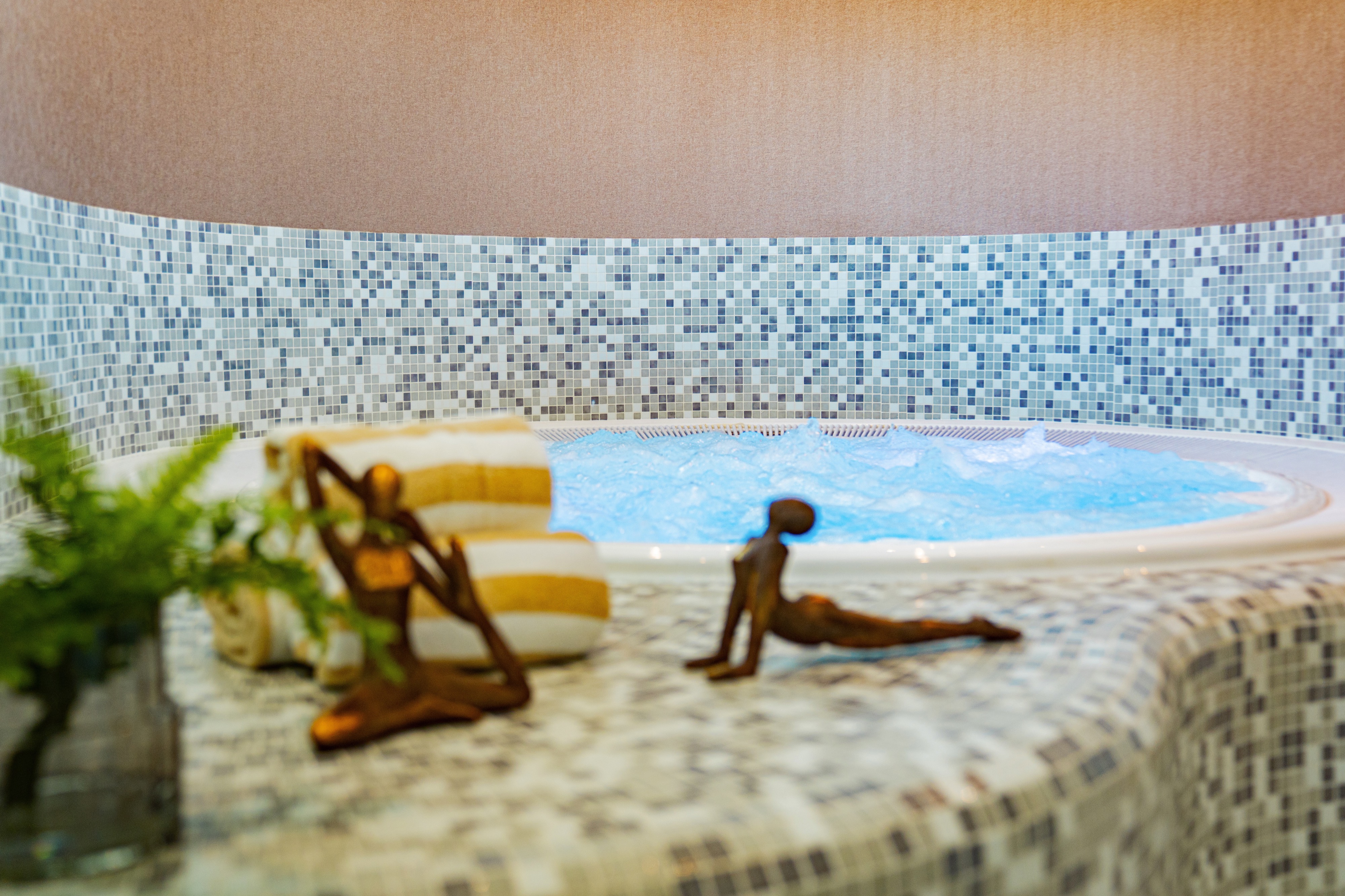
Jacuzzi
The Jacuzzi can be located on Deck 1.
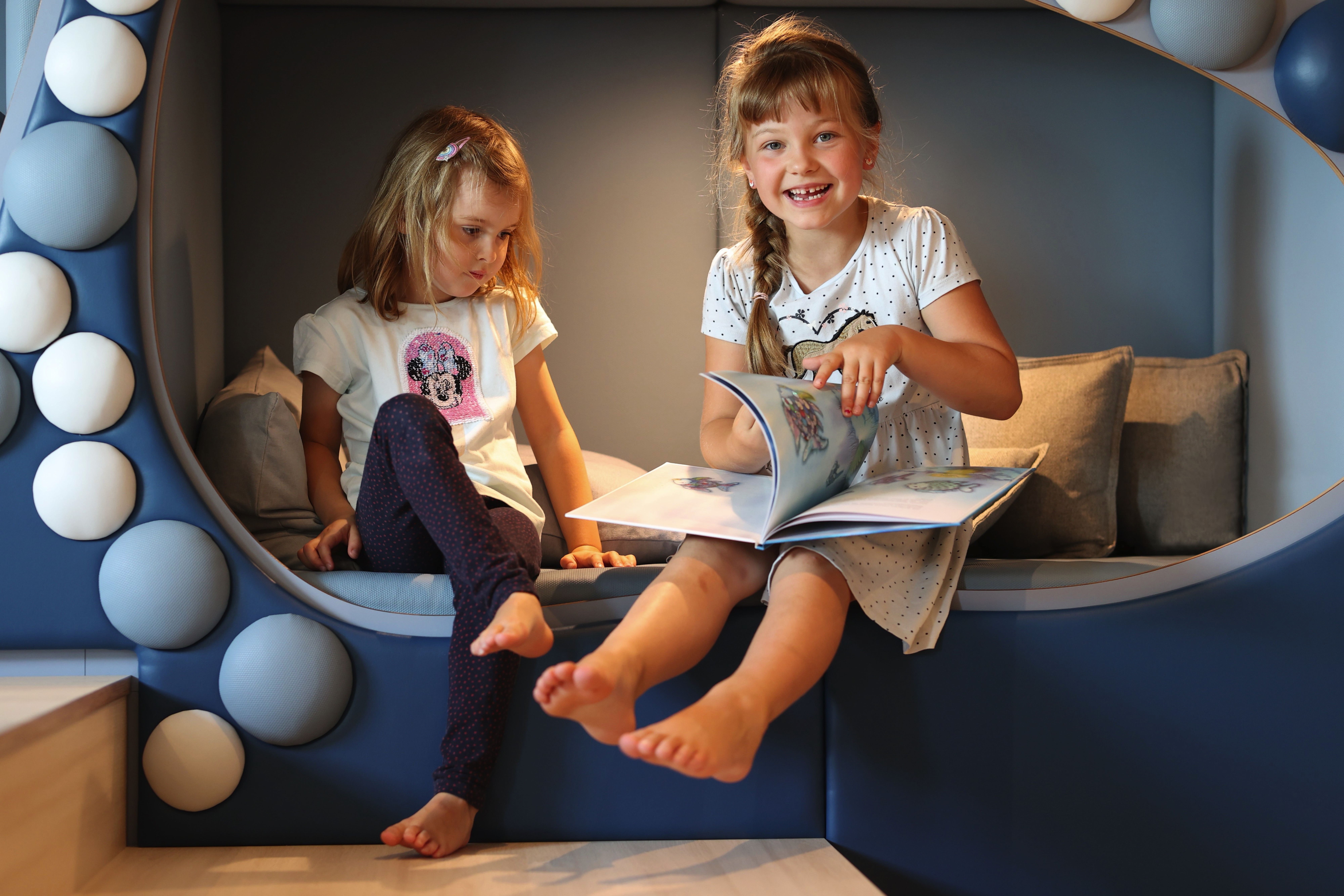
A-ROSA Kids Club
For children, our cruise ships are like a giant floating playground. Ship voyages are adventures, and those adventures are best experienced with our Kids Club – together with other children, experienced children´s entertainer and lots of activities, such as ship treasure hunts, a pirate day or a creative atelier. Parents can relax with a clear conscience, in our spa for example, while their kids experience all manners of adventures. And in the evening everyone will find their favourite dish at the buffet even your little gourmets with our special kid’s menus.
- Animation program for children and teenagers between 4 and 15 years old
- Daily up to three kids club times
- The when, where and what will be communicated the evening before
- The supervision responsibility remains with the parents, as the children can still move freely on board
The Market Restaurant
The Market Restaurant is the ship’s Dining Room (no table reservations needed). It has an open kitchen and Buffet station. The A-ROSA RIVA’s dining room menu features low-calorie, itinerary-based (regional) specialties and traditional Mediterranean dishes. Food on board is prepared with fresh locally sourced ingredients and products.
Dining is a truly un-regimented affair – unlike other river vessels, the dining room opens its welcoming arms when you are ready, rather than at a specified time. A lavish buffet with a la minute cookery stations entices you with fresh ingredients and plenty of choice. In addition, a speciality waiter service restaurant offers an alternative option, with a new menu every night and the opportunity to dine here up to three times during the week. Weather permitting, you can choose to dine al fresco around pool as you watch the beautiful scenery pass by.
On some evenings, served onboard will be a themed 3-course-dinner in a reserved part of the restaurant. A-ROSA advises guests to sign up for this evening at the reception or with the Maître as seats are limited. On these evenings, the buffet restaurant is also open as usual.
The themed evenings are at an extra charge.
SENA Grill
SENA GRILL is the home of prime cuts of steak and seafood, plus catch or the day and sushi bowl options. There’s a small supplement to eat here.
The PAVILION
If you’d rather not lift a finger, choose waiter service at THE PAVILION.
A-ROSA Bike Excursions
Guided bicycle tours for those who would like to combine discovering the area with a little exercise.
Excursions
DISCOVERY TOURS | City bus tours, walking tours and sightseeing tours. Especially for culture enthusiasts.
ADVENTURE TOURS | Themed tours and excursions featuring unusual means of transport.
GOURMET TOURS | Try regional products and specialities with visits to producers.
FAMILY TOURS | Discover a variety of exciting excursions for the whole family.
EXCLUSIVE TOURS | Individual or private excursions by van or car with driver and/or guide.
Up & Down Bar
The head-turning UP & DOWN BAR on sun deck has been magnificently designed to disappear into deck when we sail under a low bridge.
Bar
The bar can be located on Deck 4.
Connect Lounge
The Connect Lounge can be located on Deck 3.
Panorama lounge
The Panorama lounge can be located on Deck 4.
Pool Deck
Time on the sun deck can be measured in sunsets, laps in the pool, glasses of wine or the number of new friends you’ve made. But for most, time just stands still as you take in Europe’s fabled towns and picturesque countryside from your chaise lounge.
The motto topside on the sun deck is “anything is possible, but nothing is required… just enjoy.”
SPA-ROSA
Our signature SPA-ROSA is bigger and better than ever. Expect a Finnish sauna, jacuzzi, two treatment rooms and even an ice grotto with ice fountain. An expanded fitness room will offer up premium machines with smart tech, plus space for group sessions, including yoga.
Experience beauty and anti-ageing treatments with facials, as well as comforting warmth in the sauna or sanarium, which let you benefit from more vitality and radiance. When selecting products, we deliberately chose the German producer BABOR for you. Both stand for extraordinary results in the treatments, innovations, high skin compatibility and responsibility towards their personnel and the environment. Your SPA-ROSA feels a responsibility to give you the greatest possible recuperative effect during your cruise. We hope that, long after your holiday is over, you will often hear someone say, ‘You look so relaxed.’
Active recreation is offered in the especially developed exercise programme. Deep relaxation and intense well-being can be found with these treatments unique to A-ROSA.
Gymnasium
If walking the town wasn’t enough exercise, you can continue in the well-equipped gymnasium with modern cardio equipment. If desired, you can also work out with a personal trainer who can put together an individual training plan for you.
Jacuzzi
The Jacuzzi can be located on Deck 1.
A-ROSA Kids Club
For children, our cruise ships are like a giant floating playground. Ship voyages are adventures, and those adventures are best experienced with our Kids Club – together with other children, experienced children´s entertainer and lots of activities, such as ship treasure hunts, a pirate day or a creative atelier. Parents can relax with a clear conscience, in our spa for example, while their kids experience all manners of adventures. And in the evening everyone will find their favourite dish at the buffet even your little gourmets with our special kid’s menus.
- Animation program for children and teenagers between 4 and 15 years old
- Daily up to three kids club times
- The when, where and what will be communicated the evening before
- The supervision responsibility remains with the parents, as the children can still move freely on board
About the Ship
Deck Plans

- Stairs
- Kids Club
- Massage/Beauty
- Whirlpool
- Ice grotto
- Finnish sauna
- Relaxation area
- Gym
- Lift
- Category G Cabins

- Stairs
- Reception
- Entrance
- Lift
- Category B Cabins
- Category C Cabins
- Category F Cabins
- * Cabins for people with limited mobility

- Stairs
- Connect Lounge
- Entrance
- Lift
- Category C Cabins
- Category D Cabins

- Stairs
- Outdoor restaurant
- PAVILION
- A-ROSA Market and Live-Cooking
- SENA Grill
- A-ROSA Café
- Café-Bar
- Onboard shop
- Reception
- WINERY
- SENA BAR
- Panorama lounge
- Stage/dance floor
- Outdoor lounge CAPTAIN’S VIEW
- Lift
- Toilets
- Category F Cabins

- Wheelhouse
- Swimming Pool & Kids Pool
- Light dome
- Stairs
- Up & Down Bar
- Activity area
- Sunbeds & umbrellas
- Shower
- Stairs
- Kids Club
- Massage/Beauty
- Whirlpool
- Ice grotto
- Finnish sauna
- Relaxation area
- Gym
- Lift
- Category G Cabins
- Stairs
- Reception
- Entrance
- Lift
- Category B Cabins
- Category C Cabins
- Category F Cabins
- * Cabins for people with limited mobility
- Stairs
- Connect Lounge
- Entrance
- Lift
- Category C Cabins
- Category D Cabins
- Stairs
- Outdoor restaurant
- PAVILION
- A-ROSA Market and Live-Cooking
- SENA Grill
- A-ROSA Café
- Café-Bar
- Onboard shop
- Reception
- WINERY
- SENA BAR
- Panorama lounge
- Stage/dance floor
- Outdoor lounge CAPTAIN’S VIEW
- Lift
- Toilets
- Category F Cabins
- Wheelhouse
- Swimming Pool & Kids Pool
- Light dome
- Stairs
- Up & Down Bar
- Activity area
- Sunbeds & umbrellas
- Shower