Featured Cabins
Itinerary
Ushuaia, Argentina
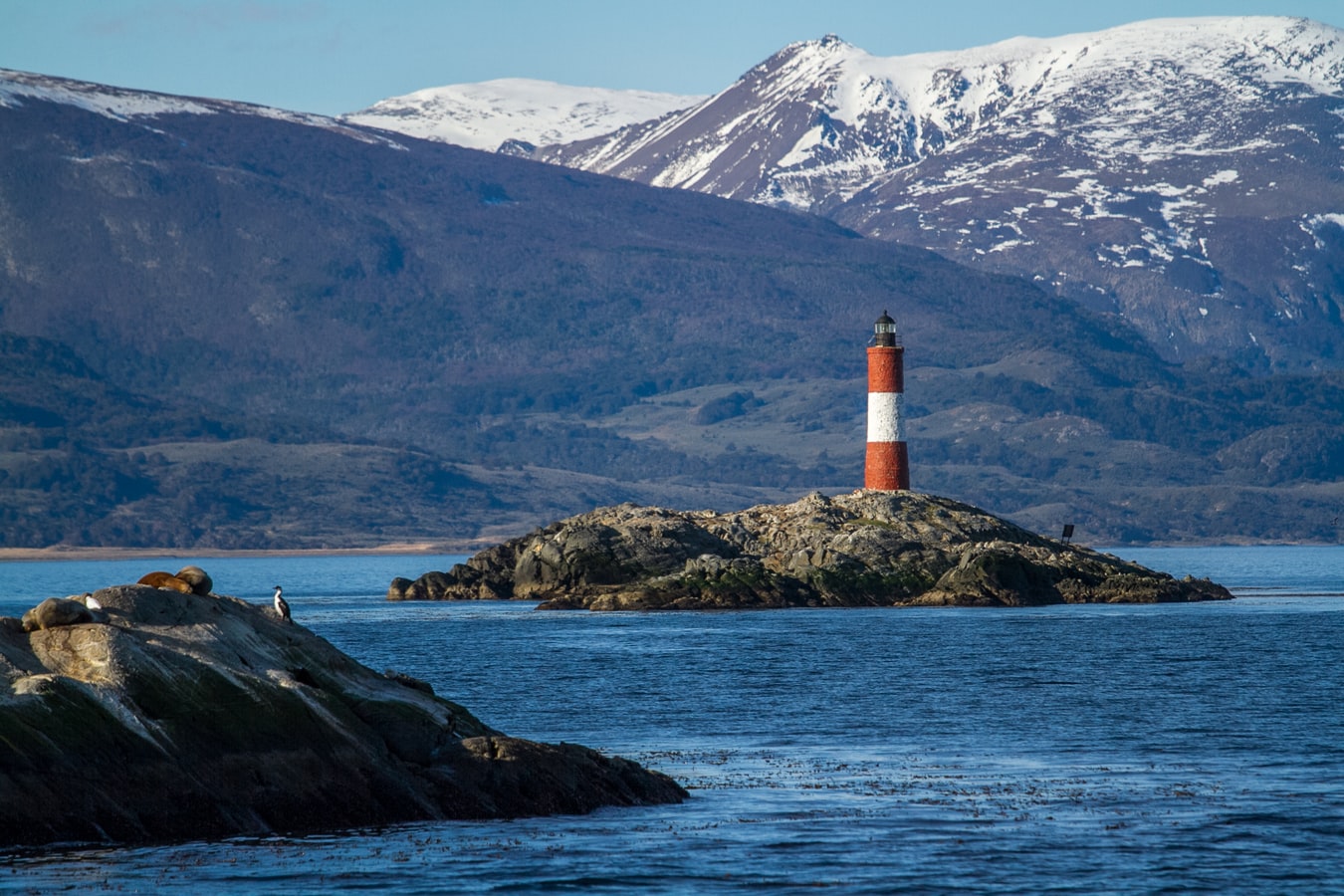
At 55 degrees latitude south, Ushuaia (pronounced oo-swy-ah) is closer to the South Pole than to Argentina’s northern border with Bolivia. It is the capital and tourism base for Tierra del Fuego, the island at the southernmost tip of Argentina.Although its stark physical beauty is striking, Tierra del Fuego’s historical allure is based more on its mythical past than on rugged reality. The island was inhabited for 6,000 years by Yámana, Haush, Selk’nam, and Alakaluf Indians. But in 1902 Argentina, eager to populate Patagonia to bolster its territorial claims, moved to initiate an Ushuaian penal colony, establishing the permanent settlement of its most southern territories and, by implication, everything in between.When the prison closed in 1947, Ushuaia had a population of about 3,000, made up mainly of former inmates and prison staff. Today the Indians of Darwin’s “missing link” theory are long gone—wiped out by diseases brought by settlers and by indifference to their plight—and the 60,000 residents of Ushuaia are hitching their star to tourism.The city rightly (if perhaps too loudly) promotes itself as the southernmost city in the world (Puerto Williams, a few miles south on the Chilean side of the Beagle Channel, is a small town). You can make your way to the tourism office to get your clichéd, but oh-so-necessary, “Southernmost City in the World” passport stamp. Ushuaia feels like a frontier boomtown, at heart still a rugged, weather-beaten fishing village, but exhibiting the frayed edges of a city that quadrupled in size in the ’70s and ’80s and just keeps growing. Unpaved portions of Ruta 3, the last stretch of the Pan-American Highway, which connects Alaska to Tierra del Fuego, are finally being paved. The summer months (December through March) draw more than 120,000 visitors, and dozens of cruise ships. The city is trying to extend those visits with events like March’s Marathon at the End of the World and by increasing the gamut of winter activities buoyed by the excellent snow conditions.A terrific trail winds through the town up to the Martial Glacier, where a ski lift can help cut down a steep kilometer of your journey. The chaotic and contradictory urban landscape includes a handful of luxury hotels amid the concrete of public housing projects. Scores of “sled houses” (wooden shacks) sit precariously on upright piers, ready for speedy displacement to a different site. But there are also many small, picturesque homes with tiny, carefully tended gardens. Many of the newer homes are built in a Swiss-chalet style, reinforcing the idea that this is a town into which tourism has breathed new life. At the same time, the weather-worn pastel colors that dominate the town’s landscape remind you that Ushuaia was once just a tiny fishing village, snuggled at the end of the Earth.As you stand on the banks of the Canal Beagle (Beagle Channel) near Ushuaia, the spirit of the farthest corner of the world takes hold. What stands out is the light: at sundown the landscape is cast in a subdued, sensual tone; everything feels closer, softer, and more human in dimension despite the vastness of the setting. The snowcapped mountains reflect the setting sun back onto a stream rolling into the channel, as nearby peaks echo their image—on a windless day—in the still waters.Above the city rise the last mountains of the Andean Cordillera, and just south and west of Ushuaia they finally vanish into the often-stormy sea. Snow whitens the peaks well into summer. Nature is the principal attraction here, with trekking, fishing, horseback riding, wildlife spotting, and sailing among the most rewarding activities, especially in the Parque Nacional Tierra del Fuego (Tierra del Fuego National Park).
Ushuaia, Argentina
At 55 degrees latitude south, Ushuaia (pronounced oo-swy-ah) is closer to the South Pole than to Argentina’s northern border with Bolivia. It is the capital and tourism base for Tierra del Fuego, the island at the southernmost tip of Argentina.Although its stark physical beauty is striking, Tierra del Fuego’s historical allure is based more on its mythical past than on rugged reality. The island was inhabited for 6,000 years by Yámana, Haush, Selk’nam, and Alakaluf Indians. But in 1902 Argentina, eager to populate Patagonia to bolster its territorial claims, moved to initiate an Ushuaian penal colony, establishing the permanent settlement of its most southern territories and, by implication, everything in between.When the prison closed in 1947, Ushuaia had a population of about 3,000, made up mainly of former inmates and prison staff. Today the Indians of Darwin’s “missing link” theory are long gone—wiped out by diseases brought by settlers and by indifference to their plight—and the 60,000 residents of Ushuaia are hitching their star to tourism.The city rightly (if perhaps too loudly) promotes itself as the southernmost city in the world (Puerto Williams, a few miles south on the Chilean side of the Beagle Channel, is a small town). You can make your way to the tourism office to get your clichéd, but oh-so-necessary, “Southernmost City in the World” passport stamp. Ushuaia feels like a frontier boomtown, at heart still a rugged, weather-beaten fishing village, but exhibiting the frayed edges of a city that quadrupled in size in the ’70s and ’80s and just keeps growing. Unpaved portions of Ruta 3, the last stretch of the Pan-American Highway, which connects Alaska to Tierra del Fuego, are finally being paved. The summer months (December through March) draw more than 120,000 visitors, and dozens of cruise ships. The city is trying to extend those visits with events like March’s Marathon at the End of the World and by increasing the gamut of winter activities buoyed by the excellent snow conditions.A terrific trail winds through the town up to the Martial Glacier, where a ski lift can help cut down a steep kilometer of your journey. The chaotic and contradictory urban landscape includes a handful of luxury hotels amid the concrete of public housing projects. Scores of “sled houses” (wooden shacks) sit precariously on upright piers, ready for speedy displacement to a different site. But there are also many small, picturesque homes with tiny, carefully tended gardens. Many of the newer homes are built in a Swiss-chalet style, reinforcing the idea that this is a town into which tourism has breathed new life. At the same time, the weather-worn pastel colors that dominate the town’s landscape remind you that Ushuaia was once just a tiny fishing village, snuggled at the end of the Earth.As you stand on the banks of the Canal Beagle (Beagle Channel) near Ushuaia, the spirit of the farthest corner of the world takes hold. What stands out is the light: at sundown the landscape is cast in a subdued, sensual tone; everything feels closer, softer, and more human in dimension despite the vastness of the setting. The snowcapped mountains reflect the setting sun back onto a stream rolling into the channel, as nearby peaks echo their image—on a windless day—in the still waters.Above the city rise the last mountains of the Andean Cordillera, and just south and west of Ushuaia they finally vanish into the often-stormy sea. Snow whitens the peaks well into summer. Nature is the principal attraction here, with trekking, fishing, horseback riding, wildlife spotting, and sailing among the most rewarding activities, especially in the Parque Nacional Tierra del Fuego (Tierra del Fuego National Park).
Drake Passage Seas
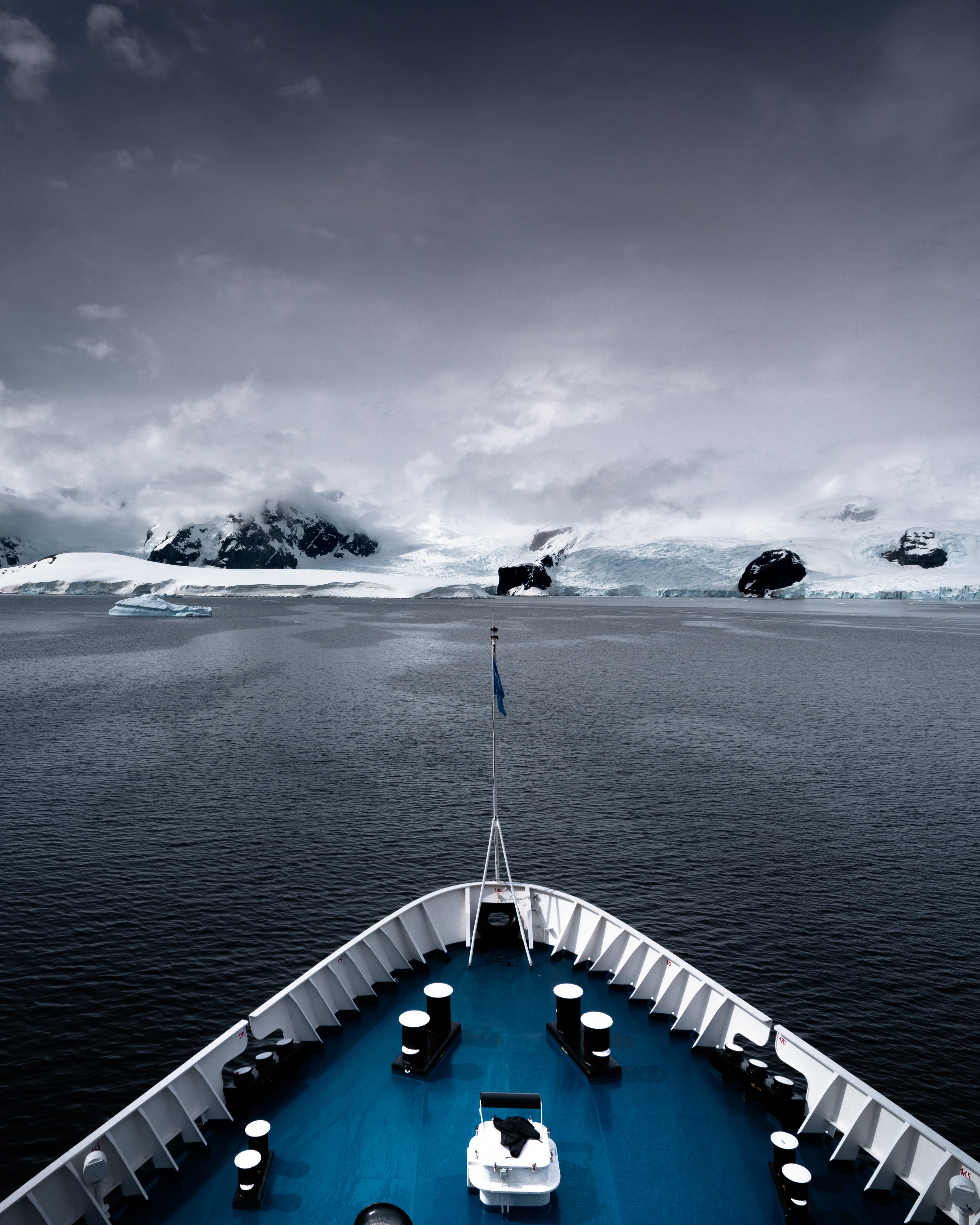
Settle into your stateroom and make yourself comfortable! The onboard gym, wellbeing centre and well-equipped library are yours to discover, and your expedition team will offer a series of presentations on Antarctica’s history, wildlife and environment to help enrich your experience. You will also be invited to collect your Muck Boots and attend important briefings on biosecurity, wildlife-watching guidelines and Zodiac safety, in preparation for your first landing in Antarctica.
On day four the excitement is palpable as you near the South Shetland Islands and the tip of the Antarctic Peninsula, with everyone converging on the observation decks to spot their first iceberg. Now that you’re south of the Antarctic Convergence the ocean takes on a whole new character, as you’re surrounded by porpoising penguins and dramatic icebergs. The memory of your first iceberg sighting is likely to remain with you for a lifetime. Time and weather permitting, we may attempt our first Antarctic landing in the late afternoon.
Drake Passage Seas
Antarctic Peninsula, Antarctica
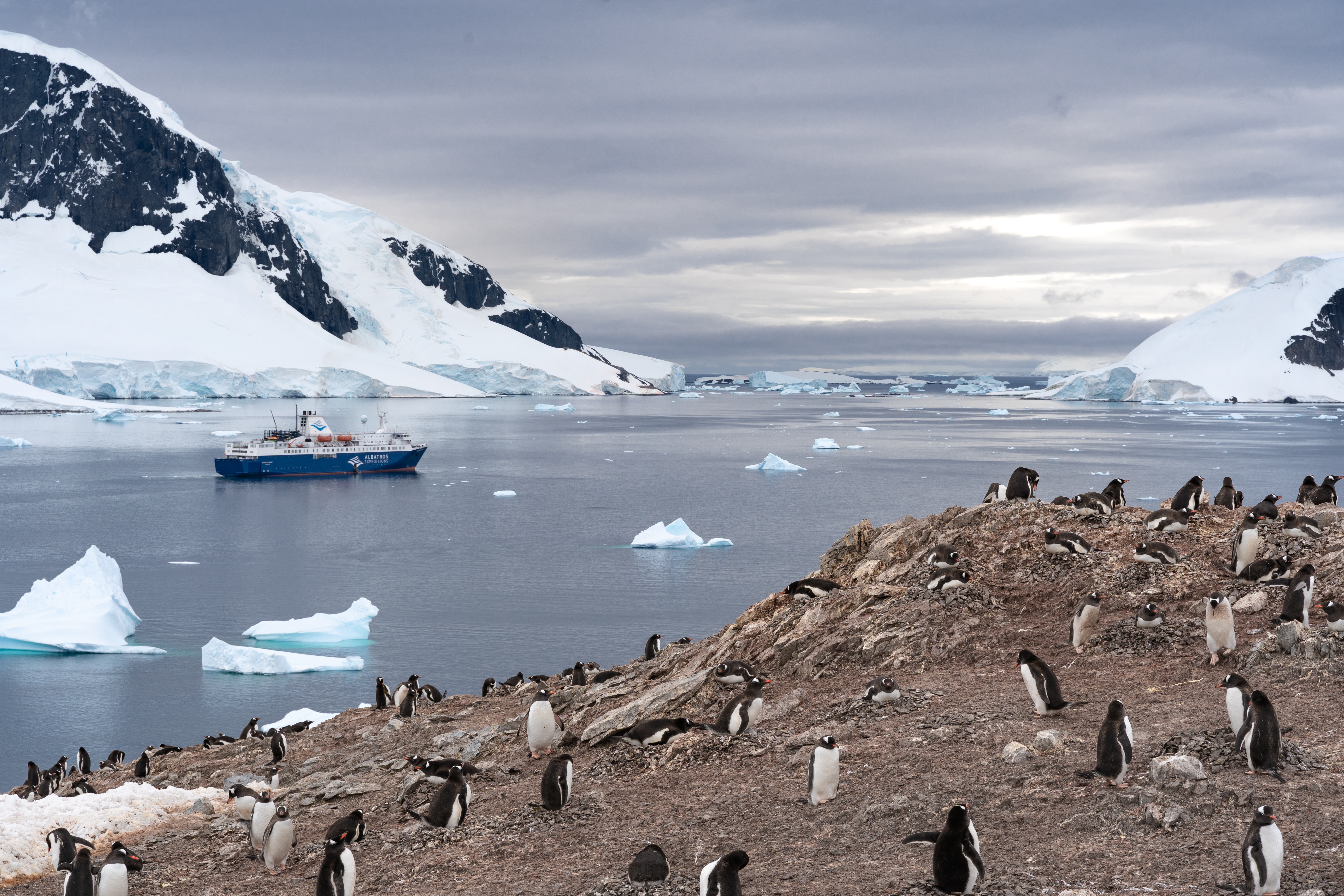
Remote and otherworldly, Antarctic is irresistible for its spectacular iceberg sculptures and calving glaciers, and for the possibility of up-close encounters with marine mammals and the iconic penguins. The Antarctic Peninsula – the main peninsula closest to South America – has a human history of almost 200 years, with explorers, sealers, whalers, and scientists who have come to work, and eventually intrepid visitors coming to enjoy this pristine and remote wilderness. It is a region of protected bays, unscaled snow-capped mountains, vast glaciers and a few places where whalers or scientists have worked. Just as irresistible are the many Gentoo and Chinstrap Penguin colonies, the seals basking on ice floes, the whales and orcas.
Antarctic Peninsula, Antarctica
Remote and otherworldly, Antarctic is irresistible for its spectacular iceberg sculptures and calving glaciers, and for the possibility of up-close encounters with marine mammals and the iconic penguins. The Antarctic Peninsula – the main peninsula closest to South America – has a human history of almost 200 years, with explorers, sealers, whalers, and scientists who have come to work, and eventually intrepid visitors coming to enjoy this pristine and remote wilderness. It is a region of protected bays, unscaled snow-capped mountains, vast glaciers and a few places where whalers or scientists have worked. Just as irresistible are the many Gentoo and Chinstrap Penguin colonies, the seals basking on ice floes, the whales and orcas.
Antarctic Peninsula, Antarctica
Remote and otherworldly, Antarctic is irresistible for its spectacular iceberg sculptures and calving glaciers, and for the possibility of up-close encounters with marine mammals and the iconic penguins. The Antarctic Peninsula – the main peninsula closest to South America – has a human history of almost 200 years, with explorers, sealers, whalers, and scientists who have come to work, and eventually intrepid visitors coming to enjoy this pristine and remote wilderness. It is a region of protected bays, unscaled snow-capped mountains, vast glaciers and a few places where whalers or scientists have worked. Just as irresistible are the many Gentoo and Chinstrap Penguin colonies, the seals basking on ice floes, the whales and orcas.
Elephant Island, South Shetland Islands, Antarctica
Awesome glaciers flecked with pink algae can be seen approaching Elephant Island — so named either for its elephant-like appearance or for sightings of elephant seals here. Elephant Island is home to several Chinstrap Penguin rookeries, as well as 2,000-year-old moss colonies. Weddell seals and Macaroni Penguins can also be spotted. In 1916, when Ernest Shackleton’s ship Endurance was crushed in pack ice in the Weddell Sea, the crew was stranded here for more than 4 months finding shelter under two upturned lifeboats on the spit of land Shackleton’s men named ‘Point Wild’. The bust of the Chilean captain Luis Pardo has been erected here to commemorate the successful rescue in the tug.
Cruising Scotia Sea
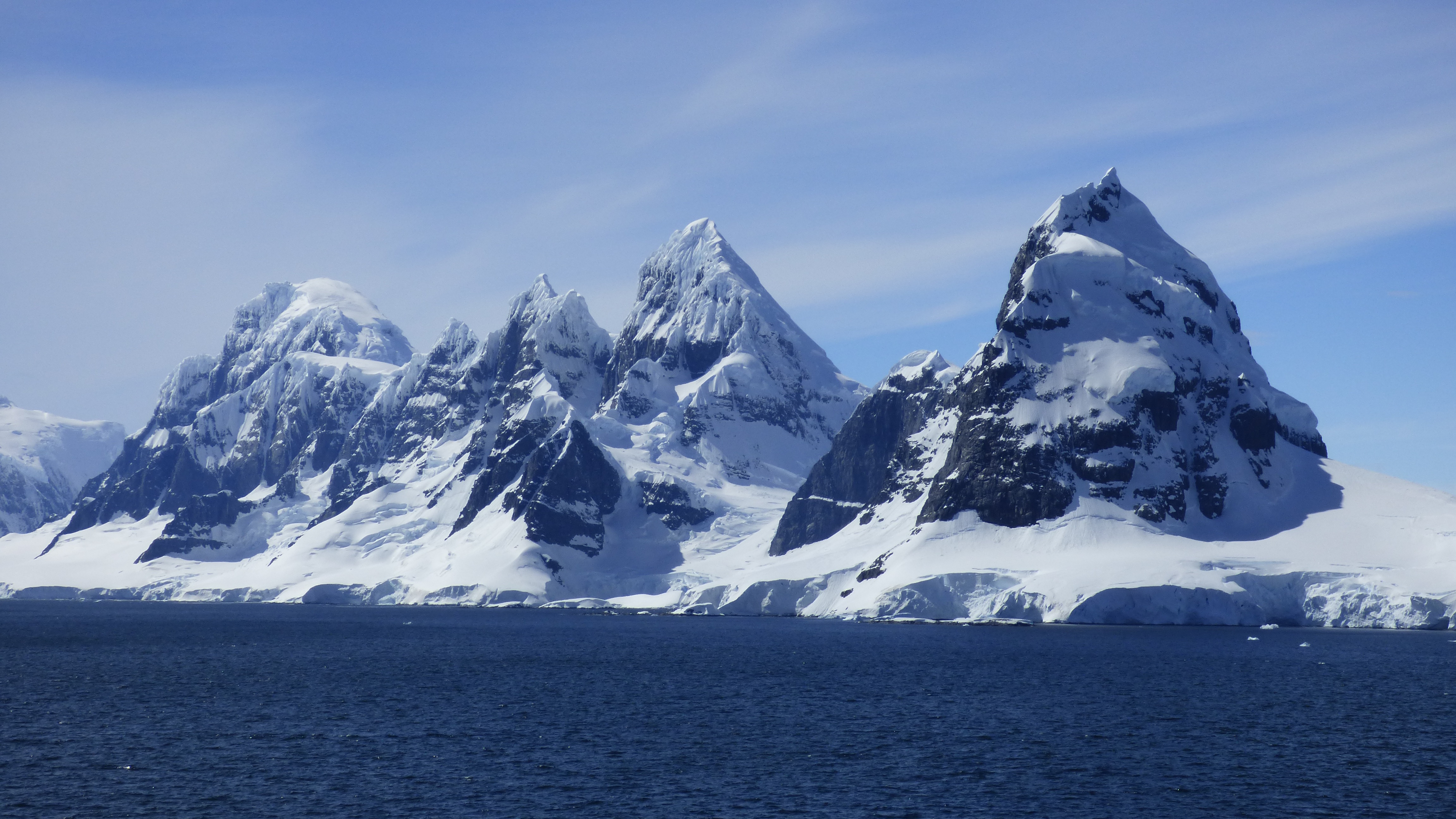
After an exciting program of excursions and activities in Antarctica, relax and enjoy the slower pace of sea days as you sail towards South Georgia.
As you make your way across the Scotia Sea you’re following the route taken by Shackleton and five of his men when they sailed from Elephant Island in search of rescue. In their open wooden boat, the James Caird, they spent 17 days sailing into the unknown across this perilous patch of ocean. This boat journey, which concluded with their safe arrival in King Haakon Bay on the west coast of South Georgia, remains one of the greatest stories of maritime navigation and survival in polar history.
As you sail the onboard lecture program continues, with a series of entertaining presentations on South Georgia’s wildlife, geology and history in the lecture room. Or you might prefer to simply unwind: take a long lunch, catch up on your gym sessions, or curl up with a book from our polar library.
The Scotia Sea is known for its abundant wildlife including fin, humpback and blue whales. Keep watch for these gentle giants and elusive orca, which patrol these waters. Venture out on deck with your camera to capture cape petrels and prions wheeling, and albatross soaring gracefully amidst the swell.
Of course, thoughts of Shackleton and his voyage are never far away.
“Nearly always there were gales. So small was our boat and so great were the seas that often our sail flapped idly in the calm between the crests of two waves. Then we would climb the next slope and catch the full fury of the gale where the wool-like whiteness of the breaking water surged around us.”
– Ernest Shackleton
Cruising Scotia Sea
South Georgia Island, South Georgia and the South Sandwich Islands
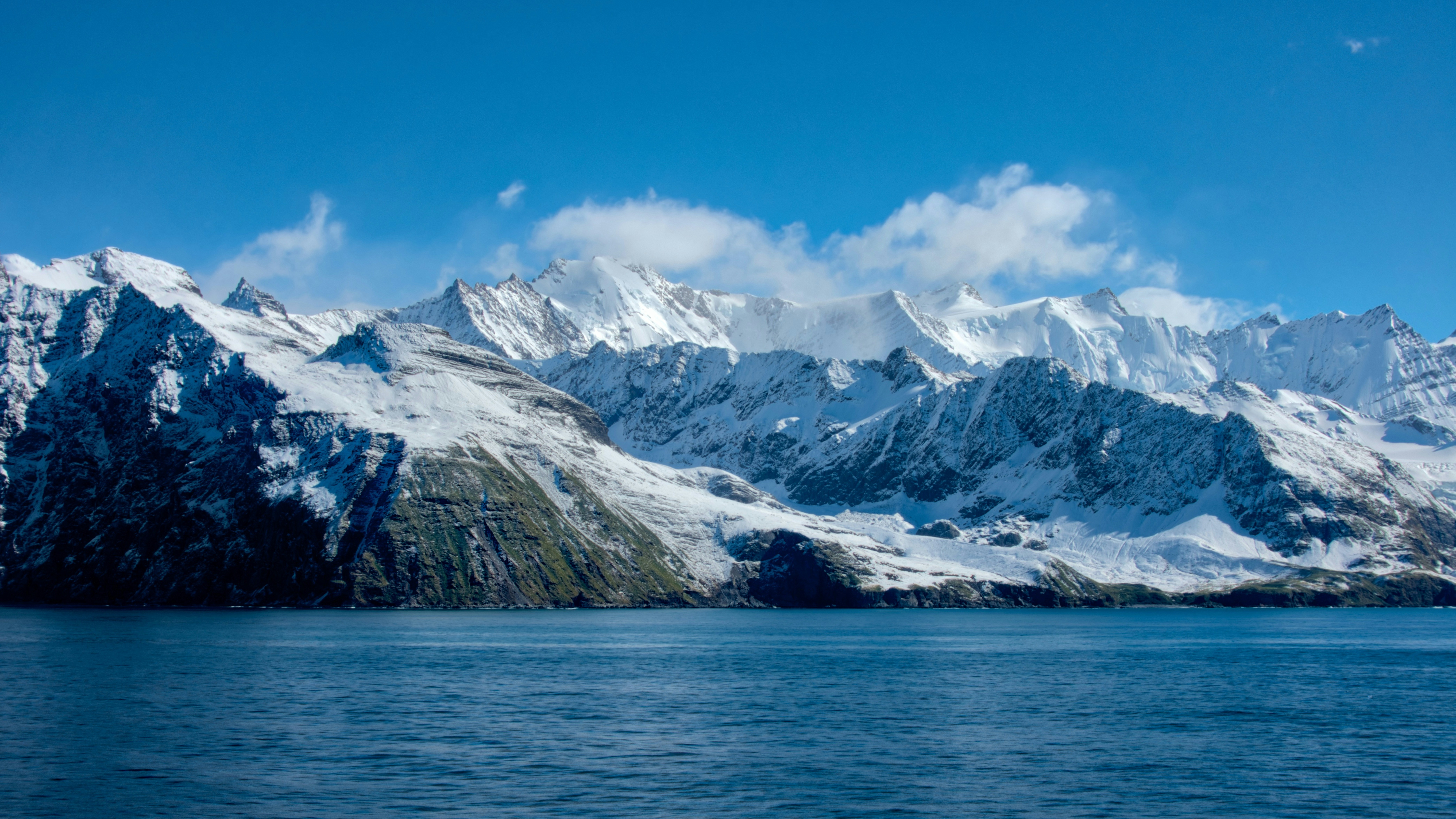
South Georgia is a breathtaking destination of towering snow-covered mountains, mighty glaciers, and low-lying grasslands that attract an astounding concentration of wildlife. It is possible to find Southern fur seals, Southern elephant seals and a variety of albatross species including Black-browed, Light-mantled Sooty, Grey-headed and the spectacular Wandering Albatross, plus thousands of King and Macaroni Penguins. South Georgia is also linked to the early Antarctic explorers. Captain James Cook first stepped ashore in 1775, but perhaps more famous is Ernest Shackleton’s arrival in 1916 following the sinking of his ship Endurance. Shackleton’s grave and the whaling museum at Grytviken are highlights, as would be a visit to one of the King Penguin colonies at Salisbury Plain or Gold Harbour.
South Georgia Island, South Georgia and the South Sandwich Islands
South Georgia is a breathtaking destination of towering snow-covered mountains, mighty glaciers, and low-lying grasslands that attract an astounding concentration of wildlife. It is possible to find Southern fur seals, Southern elephant seals and a variety of albatross species including Black-browed, Light-mantled Sooty, Grey-headed and the spectacular Wandering Albatross, plus thousands of King and Macaroni Penguins. South Georgia is also linked to the early Antarctic explorers. Captain James Cook first stepped ashore in 1775, but perhaps more famous is Ernest Shackleton’s arrival in 1916 following the sinking of his ship Endurance. Shackleton’s grave and the whaling museum at Grytviken are highlights, as would be a visit to one of the King Penguin colonies at Salisbury Plain or Gold Harbour.
South Georgia Island, South Georgia and the South Sandwich Islands
South Georgia is a breathtaking destination of towering snow-covered mountains, mighty glaciers, and low-lying grasslands that attract an astounding concentration of wildlife. It is possible to find Southern fur seals, Southern elephant seals and a variety of albatross species including Black-browed, Light-mantled Sooty, Grey-headed and the spectacular Wandering Albatross, plus thousands of King and Macaroni Penguins. South Georgia is also linked to the early Antarctic explorers. Captain James Cook first stepped ashore in 1775, but perhaps more famous is Ernest Shackleton’s arrival in 1916 following the sinking of his ship Endurance. Shackleton’s grave and the whaling museum at Grytviken are highlights, as would be a visit to one of the King Penguin colonies at Salisbury Plain or Gold Harbour.
South Georgia Island, South Georgia and the South Sandwich Islands
South Georgia is a breathtaking destination of towering snow-covered mountains, mighty glaciers, and low-lying grasslands that attract an astounding concentration of wildlife. It is possible to find Southern fur seals, Southern elephant seals and a variety of albatross species including Black-browed, Light-mantled Sooty, Grey-headed and the spectacular Wandering Albatross, plus thousands of King and Macaroni Penguins. South Georgia is also linked to the early Antarctic explorers. Captain James Cook first stepped ashore in 1775, but perhaps more famous is Ernest Shackleton’s arrival in 1916 following the sinking of his ship Endurance. Shackleton’s grave and the whaling museum at Grytviken are highlights, as would be a visit to one of the King Penguin colonies at Salisbury Plain or Gold Harbour.
South Georgia Island, South Georgia and the South Sandwich Islands
South Georgia is a breathtaking destination of towering snow-covered mountains, mighty glaciers, and low-lying grasslands that attract an astounding concentration of wildlife. It is possible to find Southern fur seals, Southern elephant seals and a variety of albatross species including Black-browed, Light-mantled Sooty, Grey-headed and the spectacular Wandering Albatross, plus thousands of King and Macaroni Penguins. South Georgia is also linked to the early Antarctic explorers. Captain James Cook first stepped ashore in 1775, but perhaps more famous is Ernest Shackleton’s arrival in 1916 following the sinking of his ship Endurance. Shackleton’s grave and the whaling museum at Grytviken are highlights, as would be a visit to one of the King Penguin colonies at Salisbury Plain or Gold Harbour.
At Sea
As we sail from South Georgia, you will be enthralled by the ceaseless flight of the many seabirds that follow the vessel, skilfully using the air currents created by the ship to gain momentum.
If time and weather conditions permit, we could pass close to Shag Rocks, a fascinating group of jagged rocky islets protruding from the sea, in the proximity of South Georgia.
As we sail on towards Ushuaia you may choose to spend your final precious moments at sea soaking up the views on deck, enjoying the onboard facilities, or attending final lectures. There is plenty of time to enjoy the magic of the Southern Ocean, have a drink with newfound friends and reflect on the voyage you’ve shared.
On the final night, celebrate your unforgettable voyage with newfound friends at a special Captain’s farewell dinner.
We hope you will become ambassadors for the Antarctic region, telling your family, friends and colleagues about your journey to this magical place, and advocating for its conservation so that they might one day visit the region to experience what you have been lucky to see and do here.
At Sea
At Sea
At Sea
Ushuaia, Argentina
At 55 degrees latitude south, Ushuaia (pronounced oo-swy-ah) is closer to the South Pole than to Argentina’s northern border with Bolivia. It is the capital and tourism base for Tierra del Fuego, the island at the southernmost tip of Argentina.Although its stark physical beauty is striking, Tierra del Fuego’s historical allure is based more on its mythical past than on rugged reality. The island was inhabited for 6,000 years by Yámana, Haush, Selk’nam, and Alakaluf Indians. But in 1902 Argentina, eager to populate Patagonia to bolster its territorial claims, moved to initiate an Ushuaian penal colony, establishing the permanent settlement of its most southern territories and, by implication, everything in between.When the prison closed in 1947, Ushuaia had a population of about 3,000, made up mainly of former inmates and prison staff. Today the Indians of Darwin’s “missing link” theory are long gone—wiped out by diseases brought by settlers and by indifference to their plight—and the 60,000 residents of Ushuaia are hitching their star to tourism.The city rightly (if perhaps too loudly) promotes itself as the southernmost city in the world (Puerto Williams, a few miles south on the Chilean side of the Beagle Channel, is a small town). You can make your way to the tourism office to get your clichéd, but oh-so-necessary, “Southernmost City in the World” passport stamp. Ushuaia feels like a frontier boomtown, at heart still a rugged, weather-beaten fishing village, but exhibiting the frayed edges of a city that quadrupled in size in the ’70s and ’80s and just keeps growing. Unpaved portions of Ruta 3, the last stretch of the Pan-American Highway, which connects Alaska to Tierra del Fuego, are finally being paved. The summer months (December through March) draw more than 120,000 visitors, and dozens of cruise ships. The city is trying to extend those visits with events like March’s Marathon at the End of the World and by increasing the gamut of winter activities buoyed by the excellent snow conditions.A terrific trail winds through the town up to the Martial Glacier, where a ski lift can help cut down a steep kilometer of your journey. The chaotic and contradictory urban landscape includes a handful of luxury hotels amid the concrete of public housing projects. Scores of “sled houses” (wooden shacks) sit precariously on upright piers, ready for speedy displacement to a different site. But there are also many small, picturesque homes with tiny, carefully tended gardens. Many of the newer homes are built in a Swiss-chalet style, reinforcing the idea that this is a town into which tourism has breathed new life. At the same time, the weather-worn pastel colors that dominate the town’s landscape remind you that Ushuaia was once just a tiny fishing village, snuggled at the end of the Earth.As you stand on the banks of the Canal Beagle (Beagle Channel) near Ushuaia, the spirit of the farthest corner of the world takes hold. What stands out is the light: at sundown the landscape is cast in a subdued, sensual tone; everything feels closer, softer, and more human in dimension despite the vastness of the setting. The snowcapped mountains reflect the setting sun back onto a stream rolling into the channel, as nearby peaks echo their image—on a windless day—in the still waters.Above the city rise the last mountains of the Andean Cordillera, and just south and west of Ushuaia they finally vanish into the often-stormy sea. Snow whitens the peaks well into summer. Nature is the principal attraction here, with trekking, fishing, horseback riding, wildlife spotting, and sailing among the most rewarding activities, especially in the Parque Nacional Tierra del Fuego (Tierra del Fuego National Park).
Cabin Options
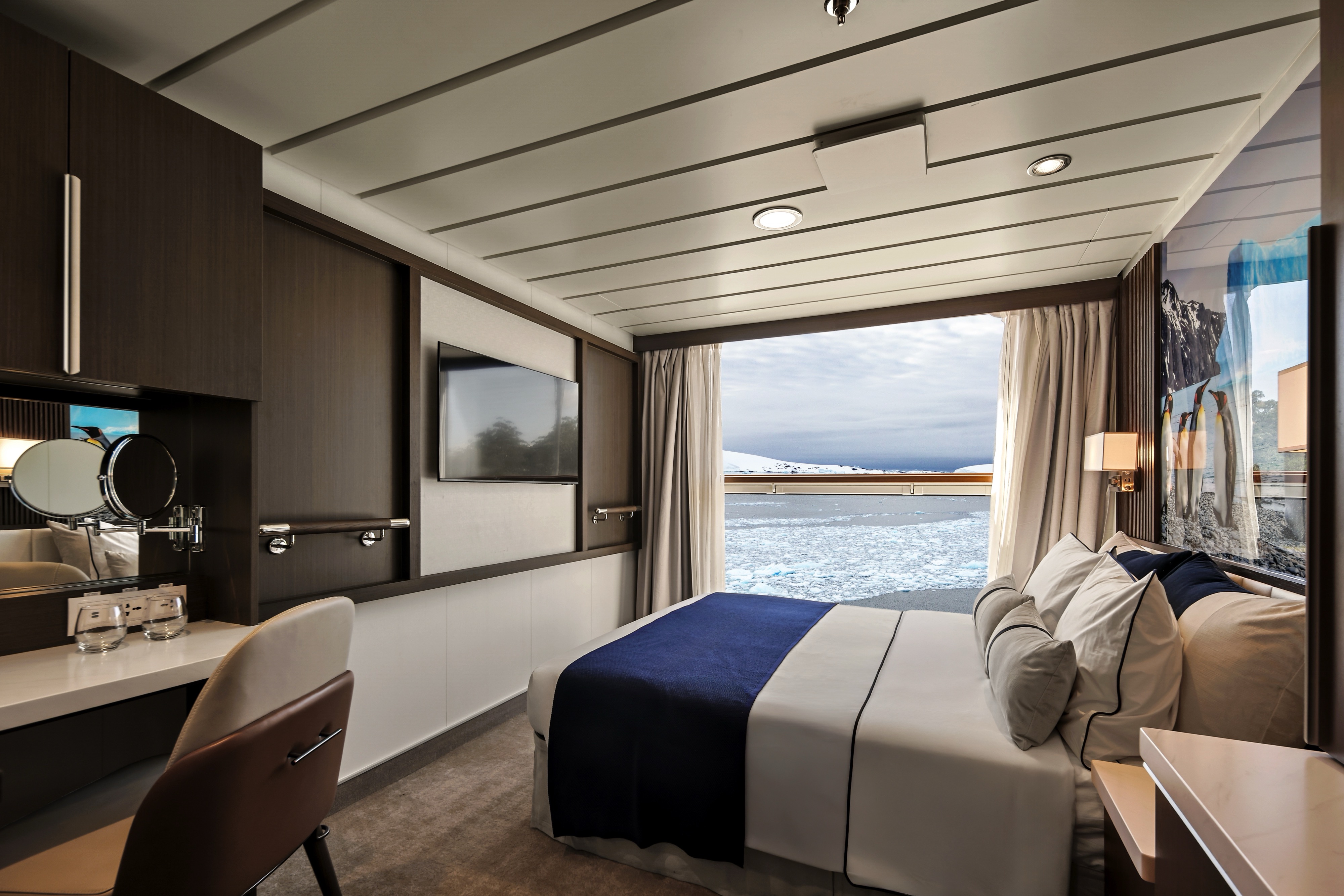
Aurora Stateroom Superior
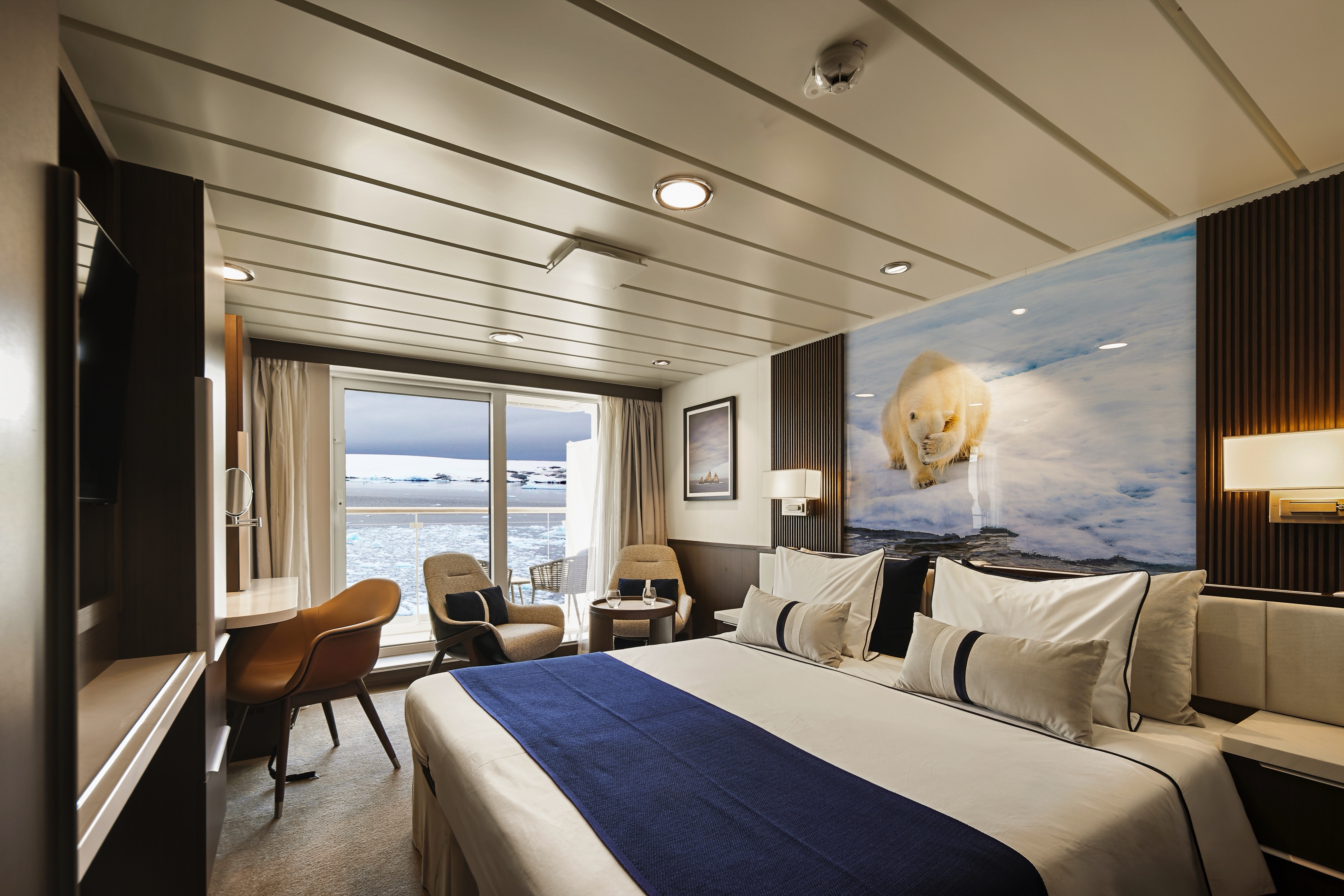
Balcony Stateroom Category C
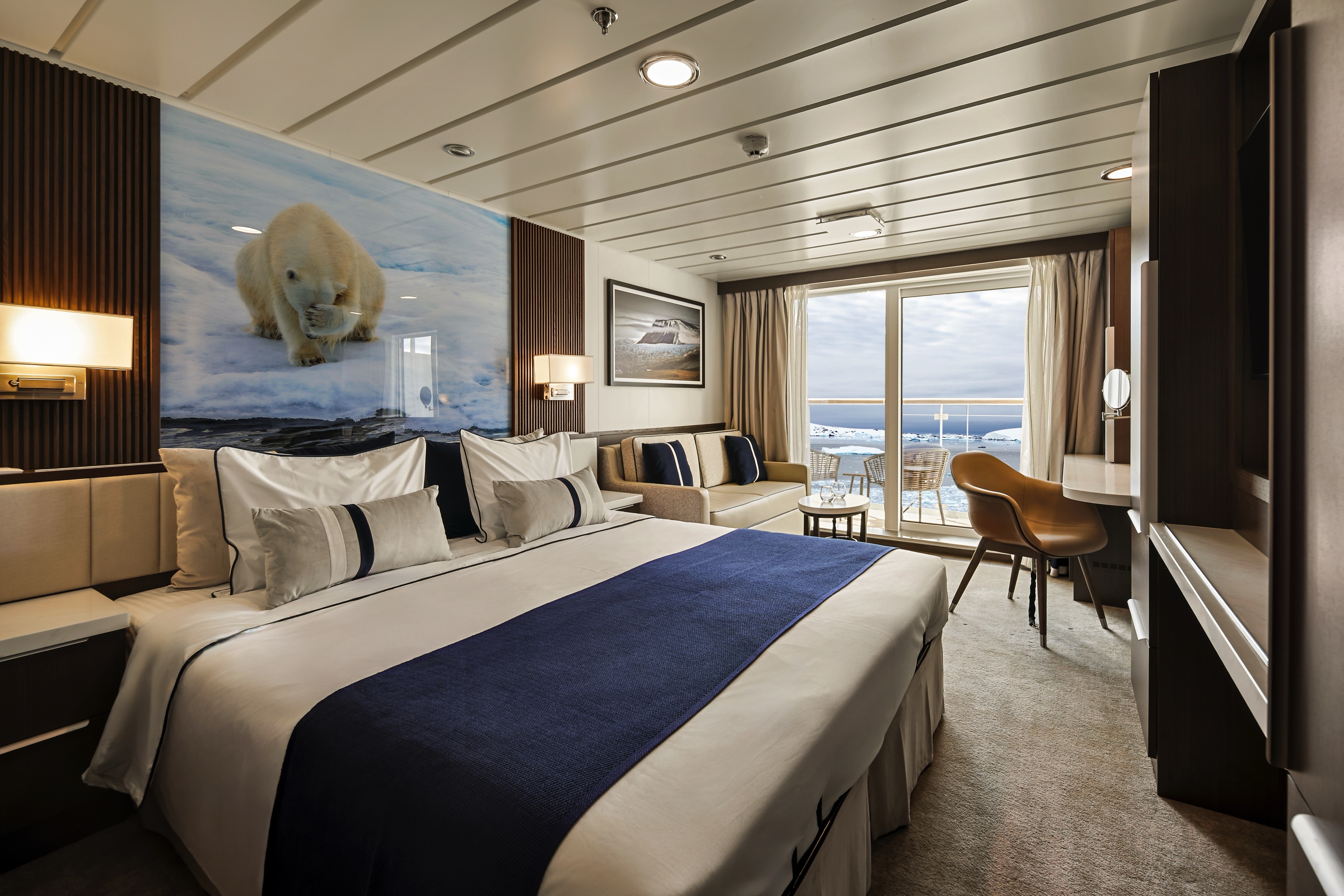
Balcony Stateroom Category B
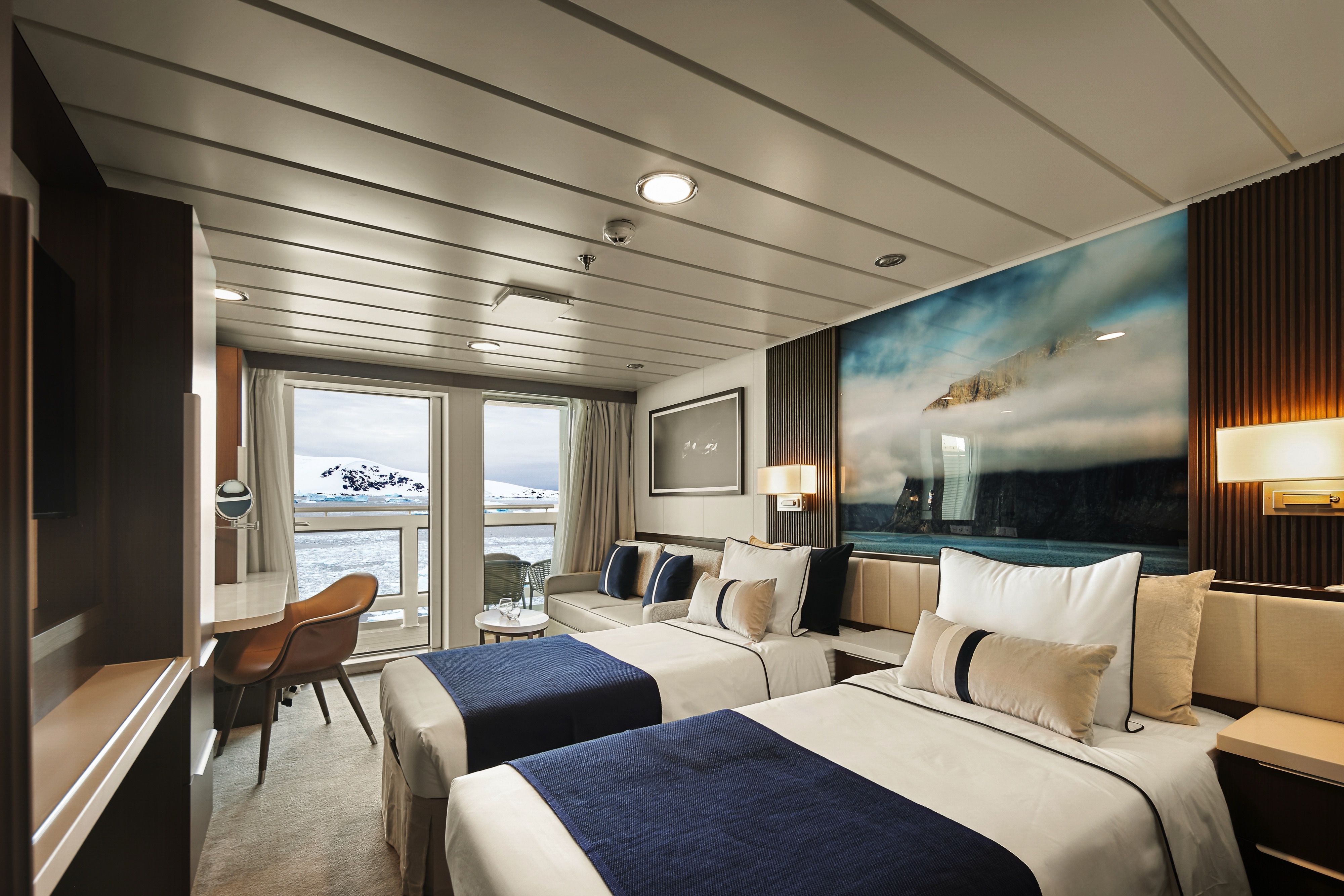
Balcony Stateroom Category A
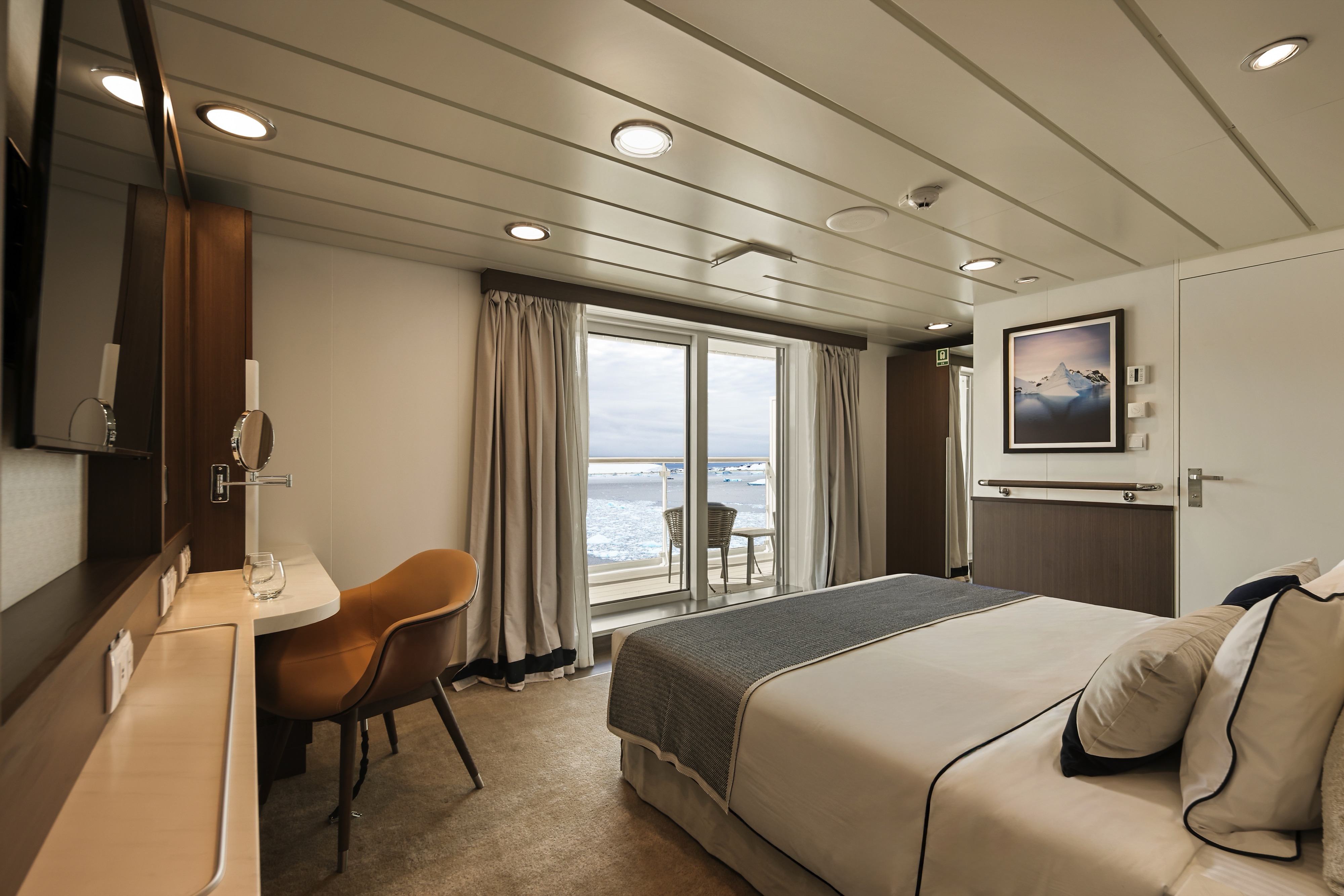
Balcony Stateroom Superior
Balcony Stateroom Category A – Solo
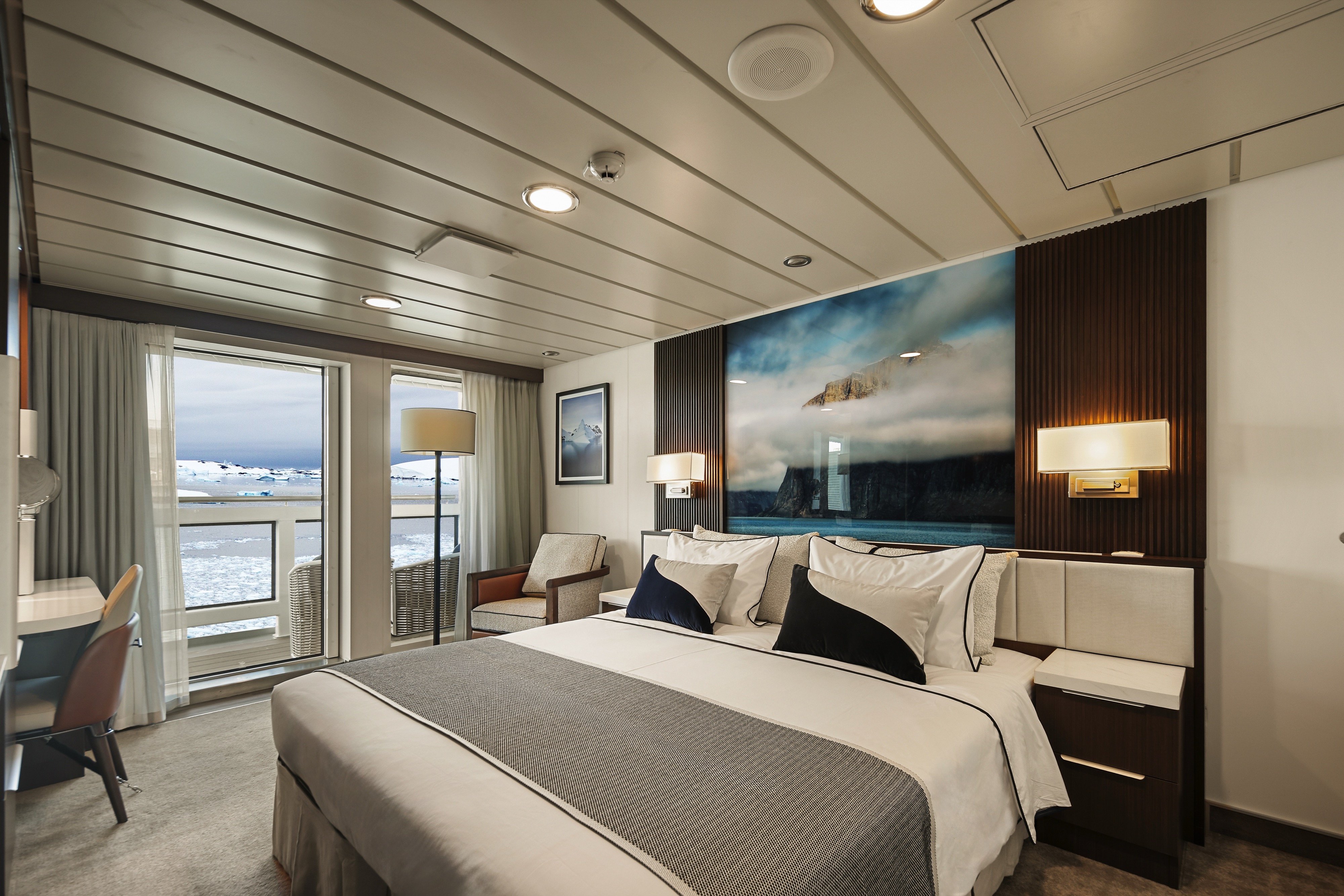
Captain's Suite
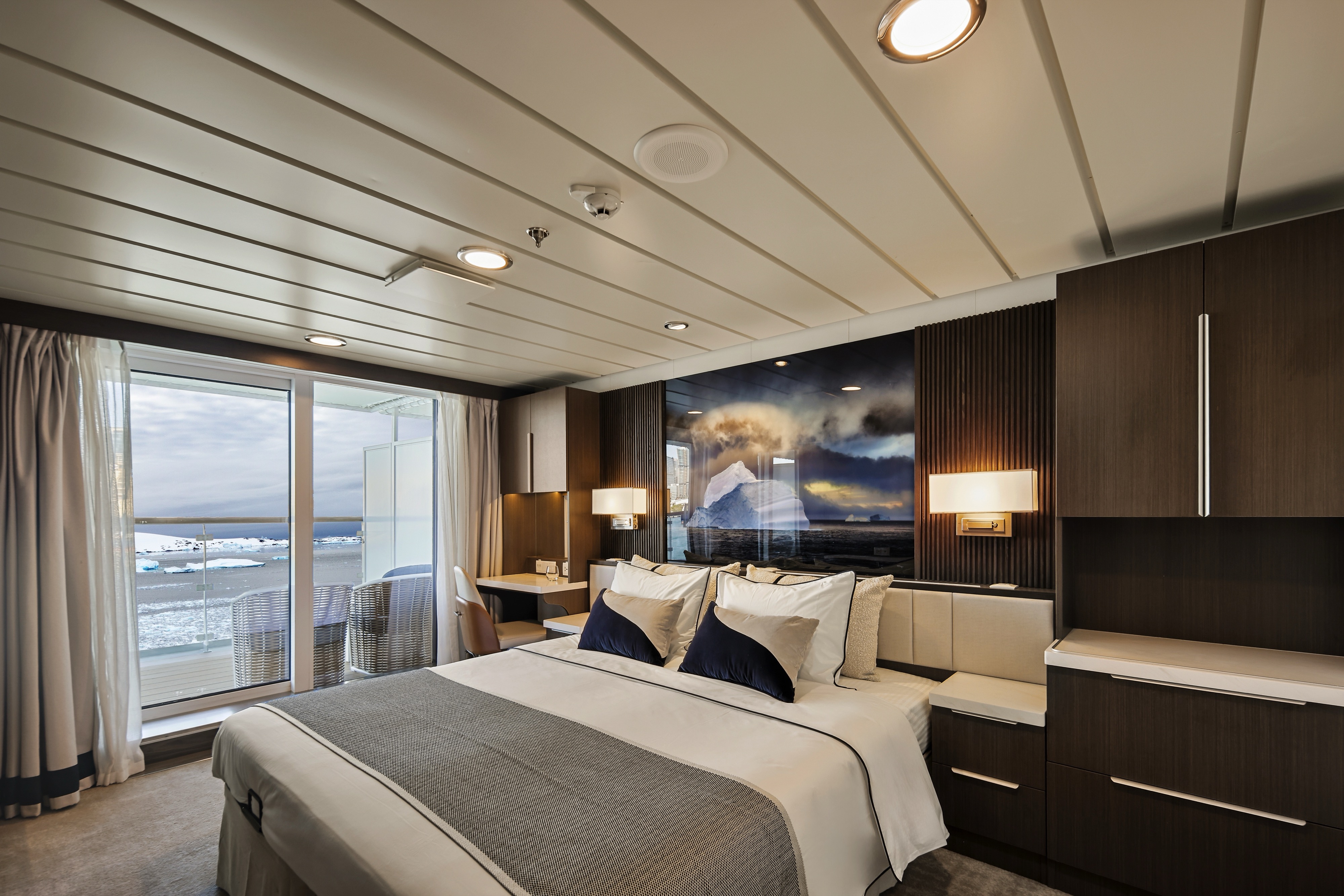
Junior Suite
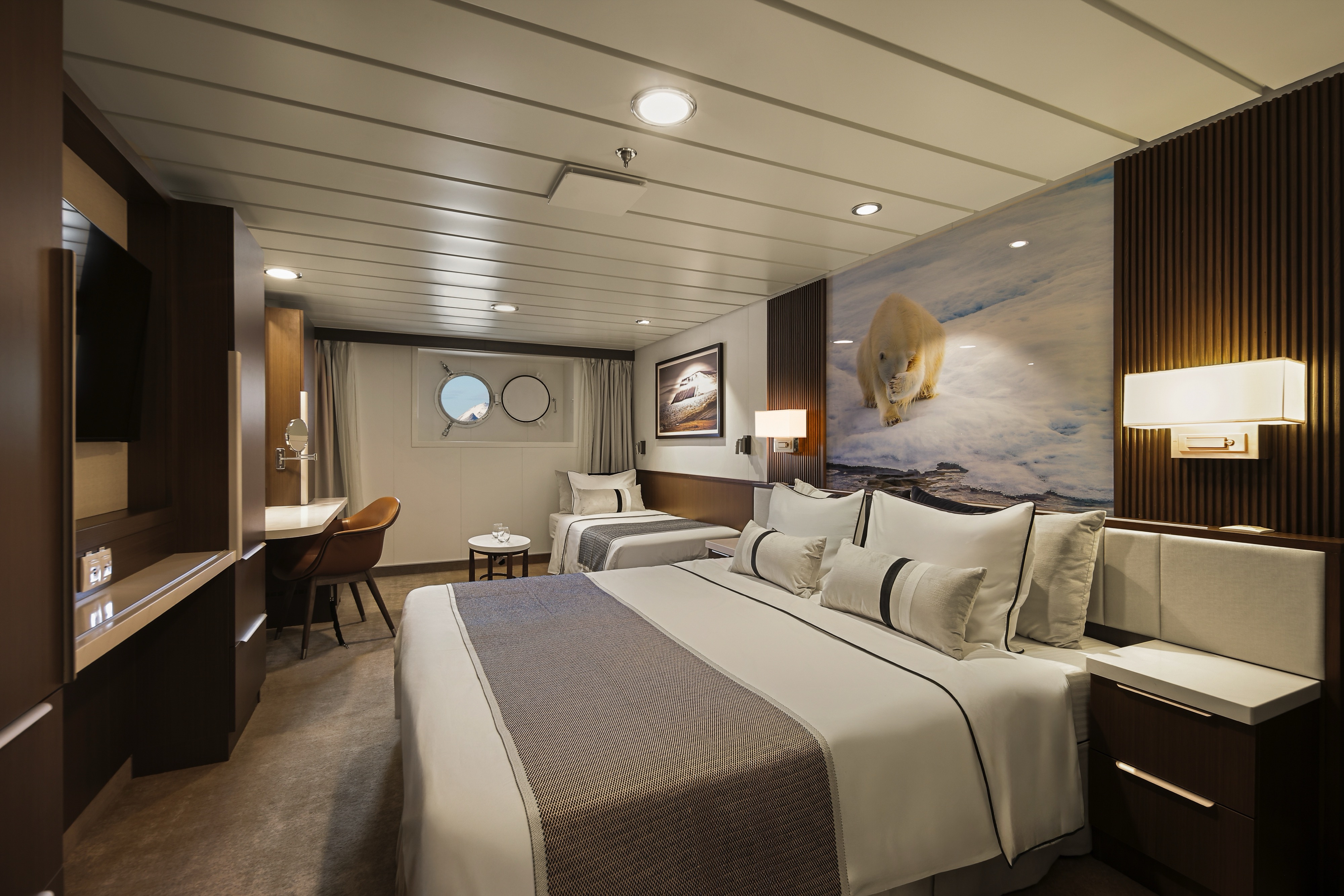
Aurora Stateroom Twin
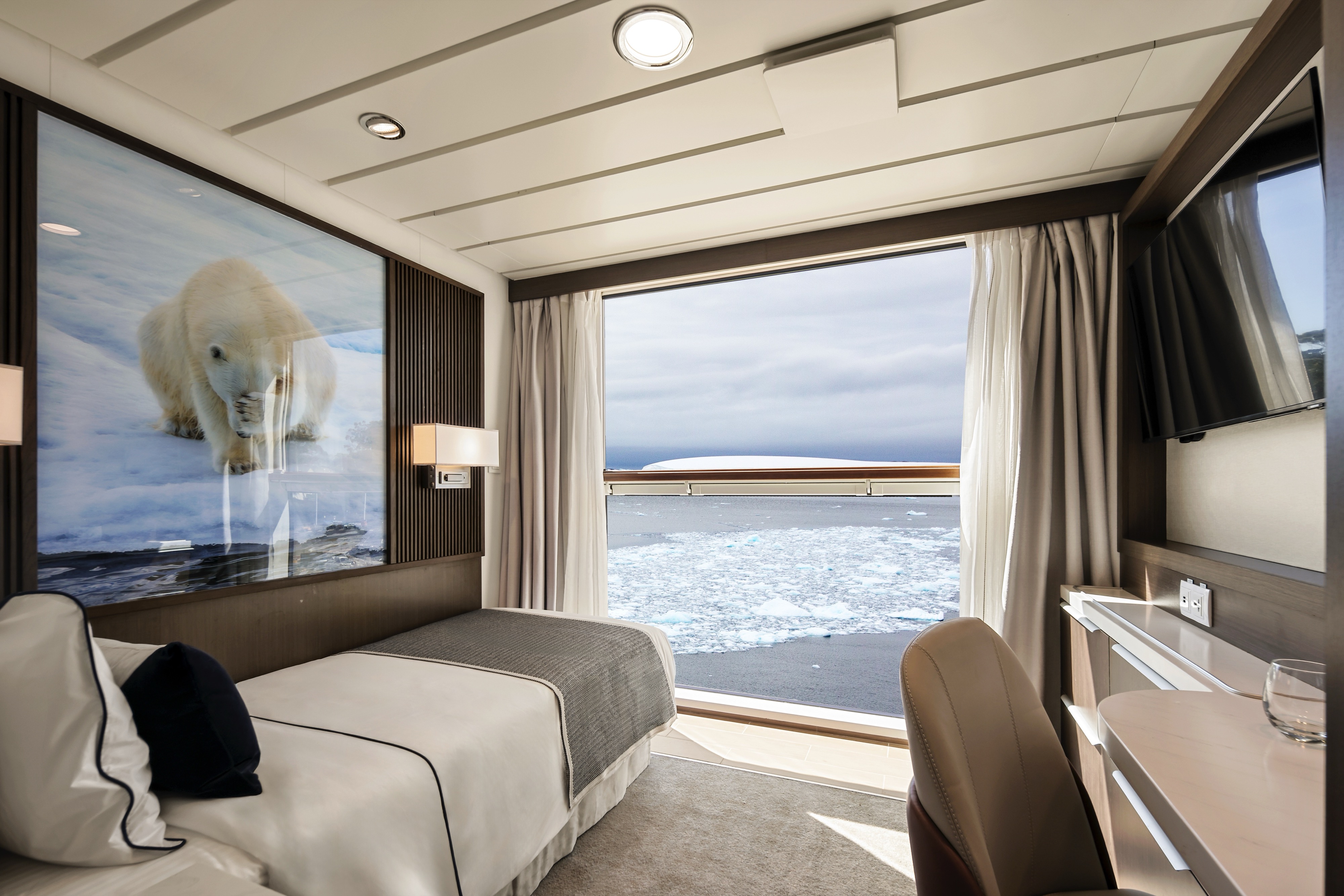
Aurora Stateroom Superior Single
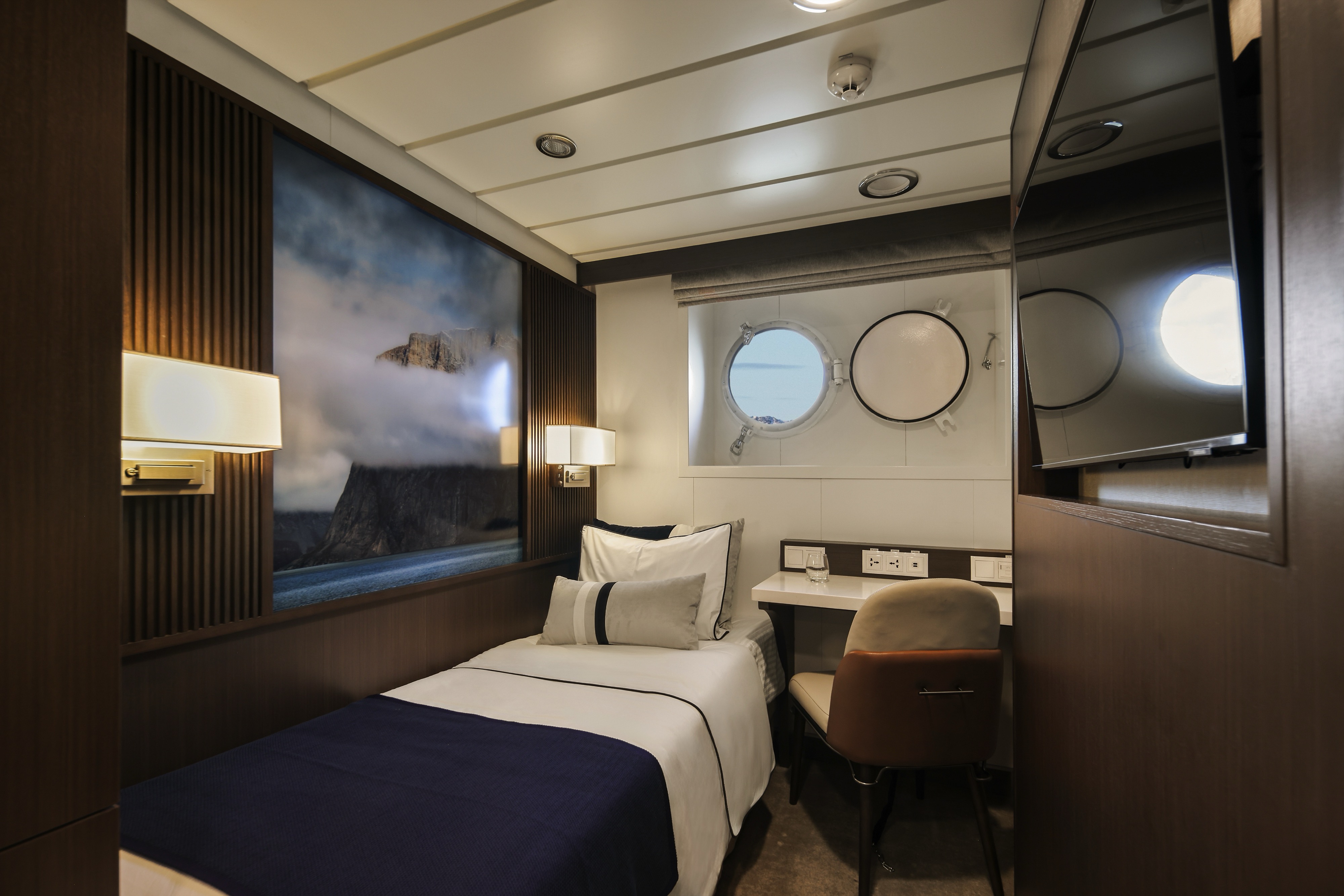
Aurora Stateroom Single
Ship Facilities
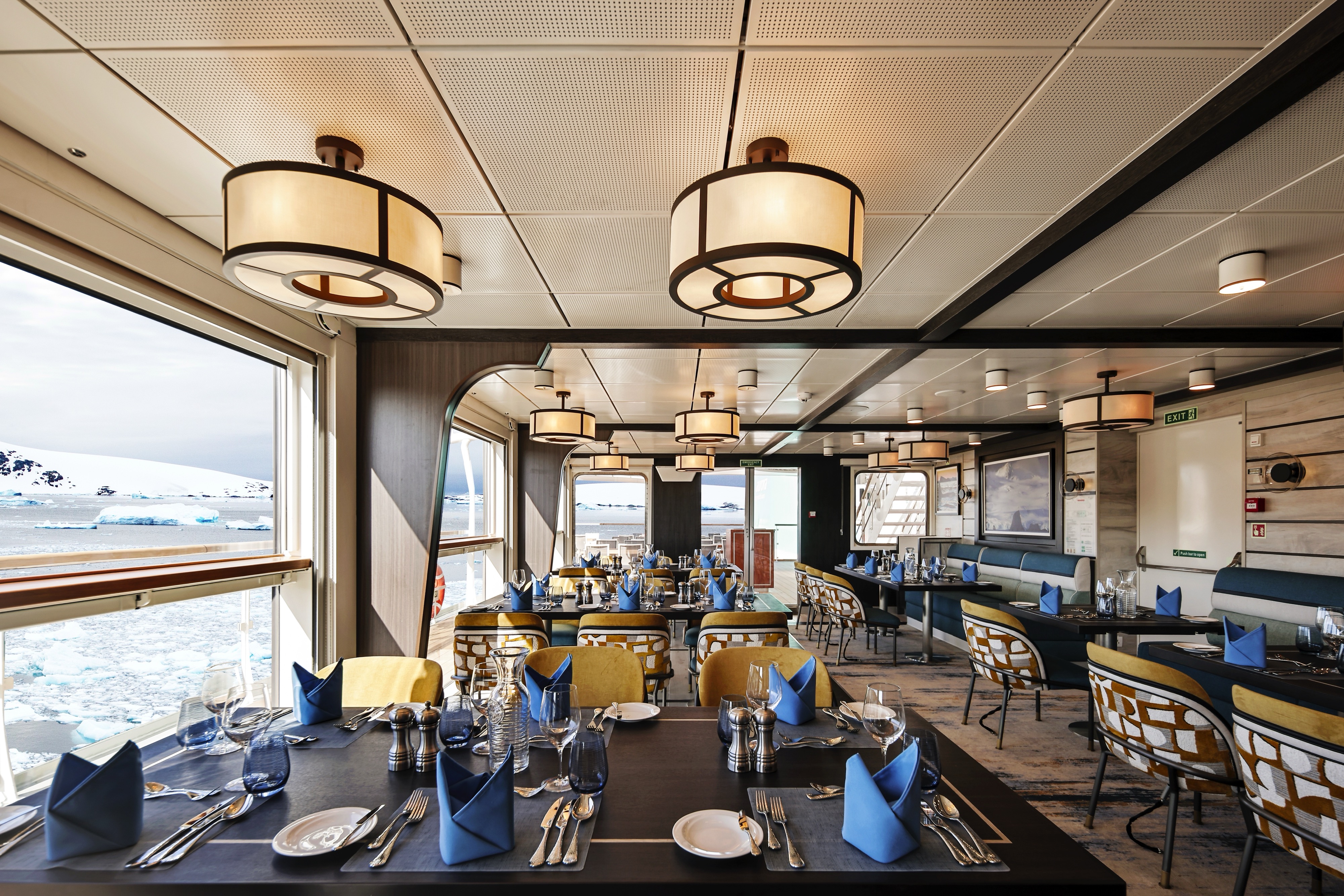
Dining room
One of the most important parts of any expedition is the food! Start each adventure with hearty meals and delicious morning and afternoon teas prepared by our onboard chefs.
Meals are a great time to connect with fellow travellers in our open-seating dining area, sharing stories and insights from the day. Tea, coffee, and snacks are available 24/7, and our chefs offer a variety of menu options for each meal. Enjoy house wines, beers, and soft drinks with dinner after a day of exploration.
Wrap up your journey with informal Captain’s Farewell drinks, featuring complimentary beverages, cocktail appetisers, and a special three-course meal.
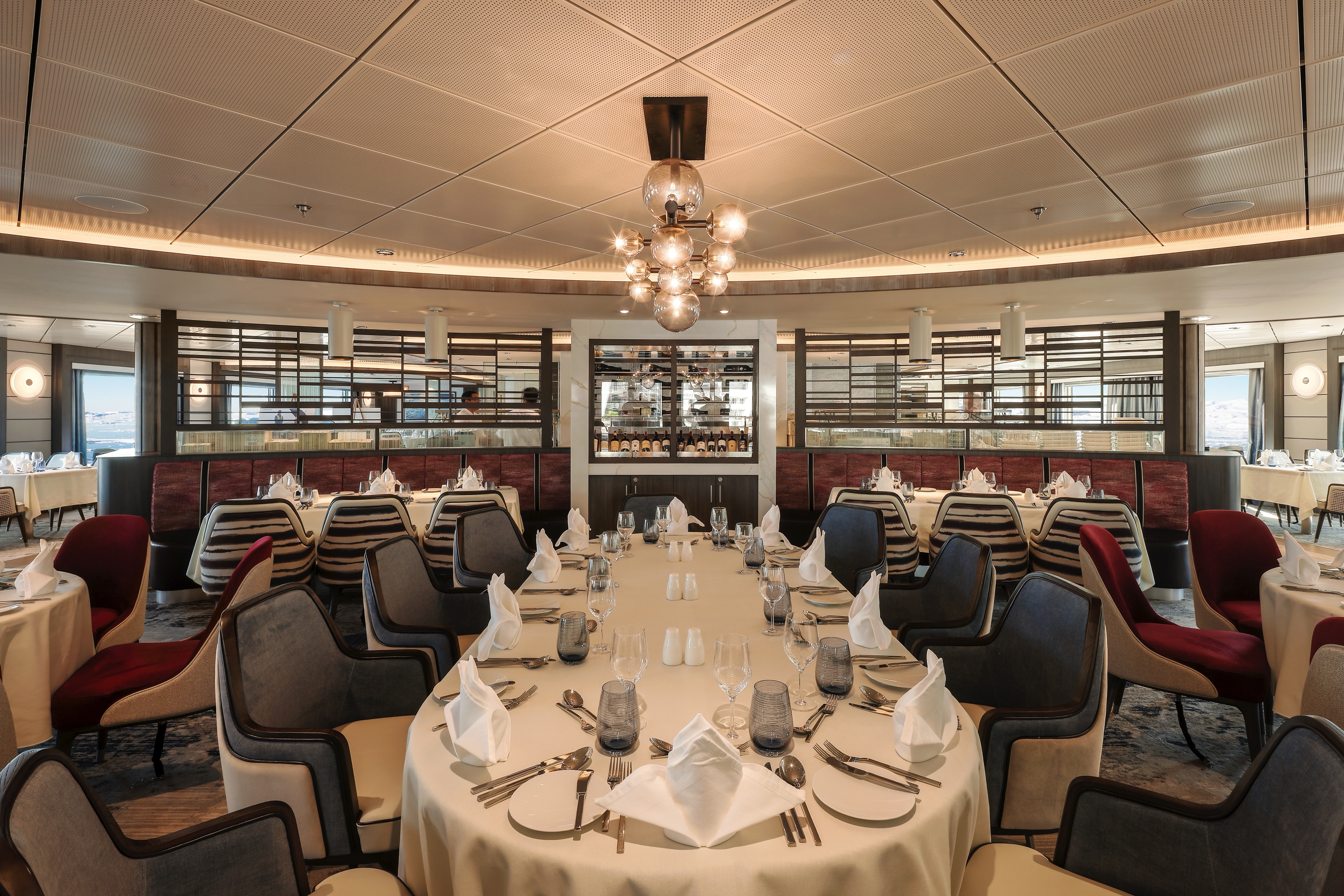
Top Deck Restaurant
The Top Deck Restaurant is located on deck 8.
Citizen Science
Travel is always the best educator and we offer the chance to enrich your curiosity and expand your knowledge and understanding of the places we travel to. There is no better learning opportunity than being in the field with subject matter experts.
Our Citizen Science Program is designed to be an interactive forum of like-minded travellers to share new discoveries and deepen their connection to the natural world in a relaxed, informal and fun environment – both on board our ships, on our fascinating shore expeditions and in our zodiacs.
You can make a difference as we can provide invaluable data to the scientific community through you taking part. You too can become an ambassador for the protection of our majestic but fragile blue planet when you return home by sharing what you have learned.
What is Citizen Science?
Citizen Science is the collection and analysis of data relating to the natural world by members of the general public, typically as part of a collaborative project with professional scientists around the world.
Why Take Part?
Aurora Expeditions travels to some of the most unique and remote places on the planet. It is challenging for scientists to spend time in these areas, so any observations we contribute can be extremely valuable.
Gathering and sharing data is also a great way to engage and educate ourselves in pressing issues that concern us at a local, regional and global level.
How Does it Work?
Members of our passionate Expedition Team, together with a Citizen Science Coordinator, will be on hand to introduce and assist you with the projects being conducted on your voyage.
Expert guidance on the collection, storage and sharing of new scientific data will not only greatly enhance your voyage experience, but help you gain more knowledge of our ever-changing natural environment.
From the biggest mammals to the smallest marine creatures, the important part you play in our Citizen Science projects will help protect and preserve the planet for generations to come.
Our Projects
Our passengers can contribute to global research, collecting data in some of the most hard-to-reach, under-studied places on Earth. Our Citizen Science Program covers seven projects that span the globe, to advance understanding of marine ecosystems, birdlife, climate change and polar environments.
Please note: As some of our Citizen Science projects are location- and weather-dependent, we cannot operate all of the projects on all voyages. We will endeavour to include as many projects as possible on your voyage with ample time allocated to them on a day-to-day basis.
- HappyWhale uses photo ID to track individual whales. Guests can photograph encounters and log them on the database, improving knowledge about migration, population health and behaviour.
- eBird is the world’s largest biodiversity-related Citizen Science project, collecting bird observations from around the globe. Aurora passengers help to track species distribution and population changes.
- Our passengers are invited to record cloud conditions, with observations submitted to NASA GLOBE Cloud contributing to climate modelling.
- Our Citizen Scientists measure water clarity by lowering a Secchi disk, recording visibility, and sharing data with scientists that are studying the effects of climate change on ocean ecosystems. This builds a long-term global dataset, and each voyage contributes new observations from some of the least-studied waters in the world.
- Snow algae are microscopic organisms that grow on snow and ice, influencing melt rates. The Snow Algae Study engages passengers in photographing and recording snow algae sites, contributing to global research into how these organisms influence the Antarctic environment. This study is supported by the latest science from the National Snow and Ice Data Center.
- FjordPhyto invites passengers to explore phytoplankton diversity in polar fjords and coastal waters. Using simple tools, they collect samples to help scientists track phytoplankton health and its response to changing ocean conditions. These observations enhance understanding of the base of the marine food and how climate change is altering polar ecosystems. *Only available on Antarctic voyages.
- We are proudly the first expedition company to facilitate the development and execution of the TIPI pilot project, using thermal imaging to measure polar ice conditions. This project combines science, technology and storytelling to create robust datasets while engaging the public in polar research. We are collaborating with founder Joe Muise to deliver high-quality scientific outcomes.
Activities
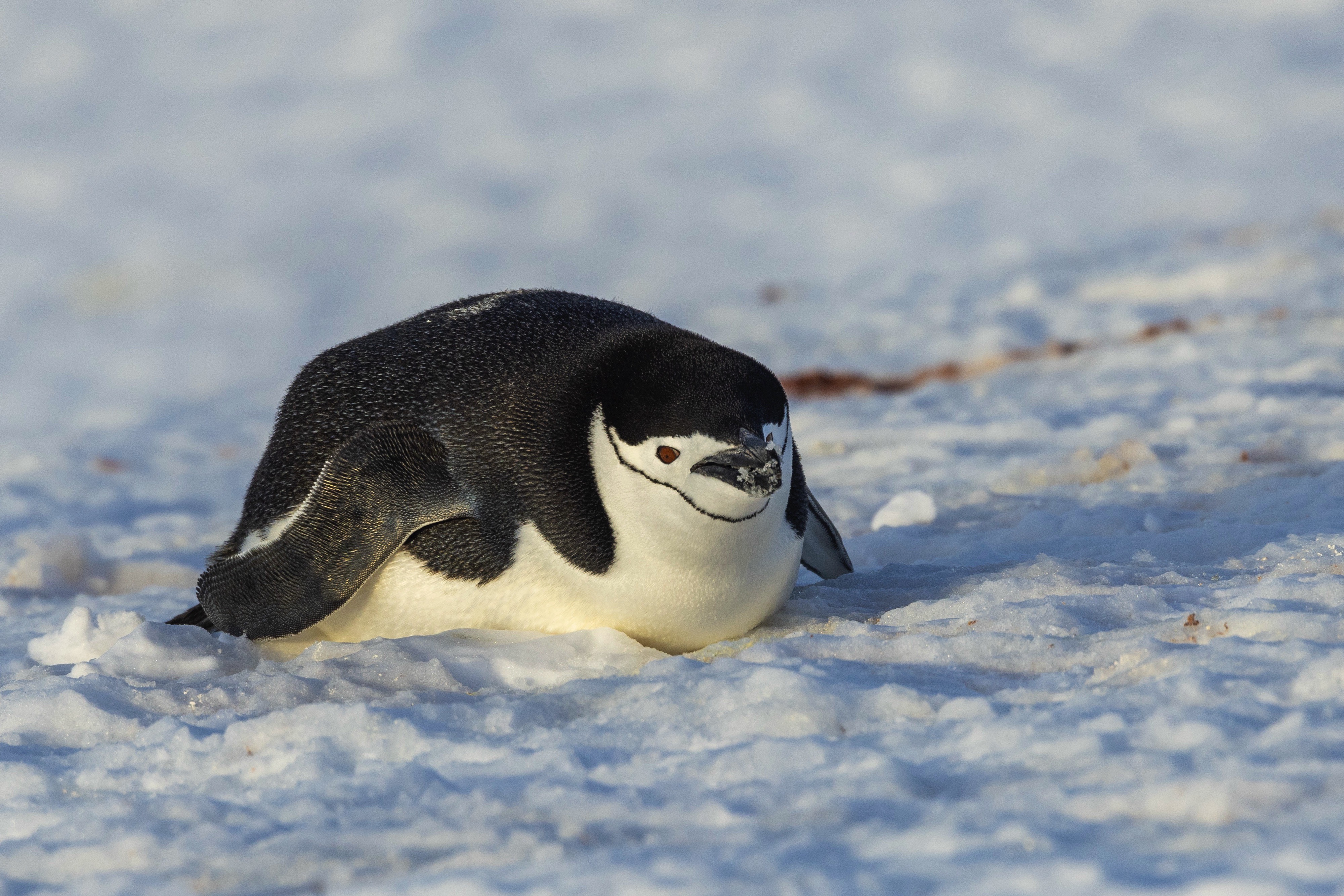
Whether it’s adventure at sea or on land that makes you tick, we have a huge range of optional activities to help you make the most of your time in some of the most beautiful places on earth.
We encourage you to make the most of every opportunity to nurture your inner adventurer. You can choose from a range of add-on adventures to make the most of your time in these beautiful places. We have pioneered more adventure activities than any polar expedition cruising company to help you explore in your own way.
We’ll get you out for your optional activities as often as possible, and this will be your main mode of exploration through your trip. Your guides* will assess the conditions at each landing, and you’ll have the option to join whenever conditions allow.
Optional activities are popular and group sizes are limited, so if you’re interested, get in touch with our team as soon as possible. Optional activities are listed on each itinerary page and additional fees apply.
Lecture Theatre
On all expeditions you will meet naturalists and local specialists, who offer presentations on their area of expertise to enhance your appreciation of the destination you are exploring.
Join the team in the lecture theatre for presentations covering a broad range of topics to suit every interest, from history and culture to biology and climate change. Regardless of the topic, they all have one thing in common: they all aim to engage, educate, entertain and turn you into an ambassador for the planet.
Activities Platform
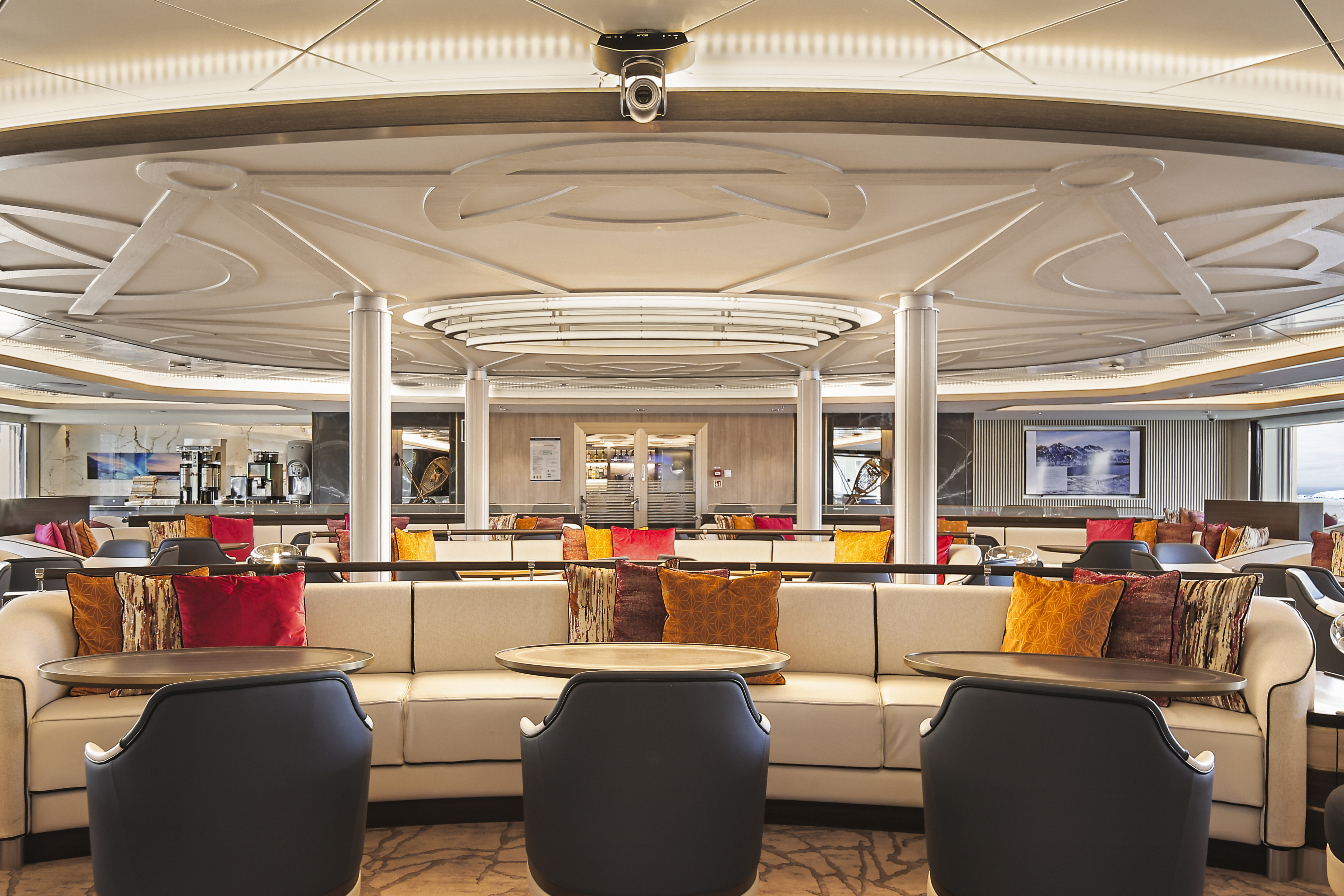
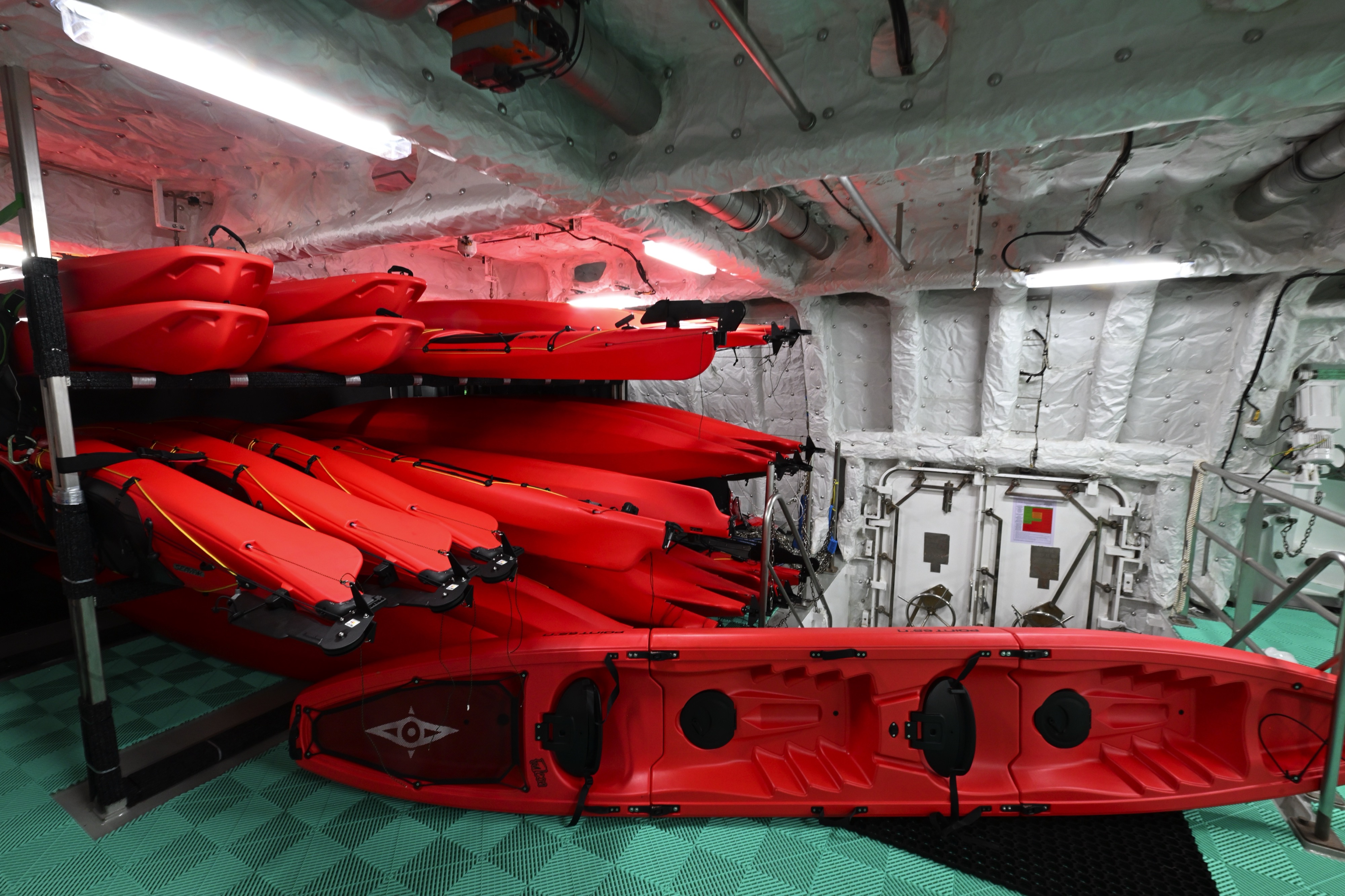
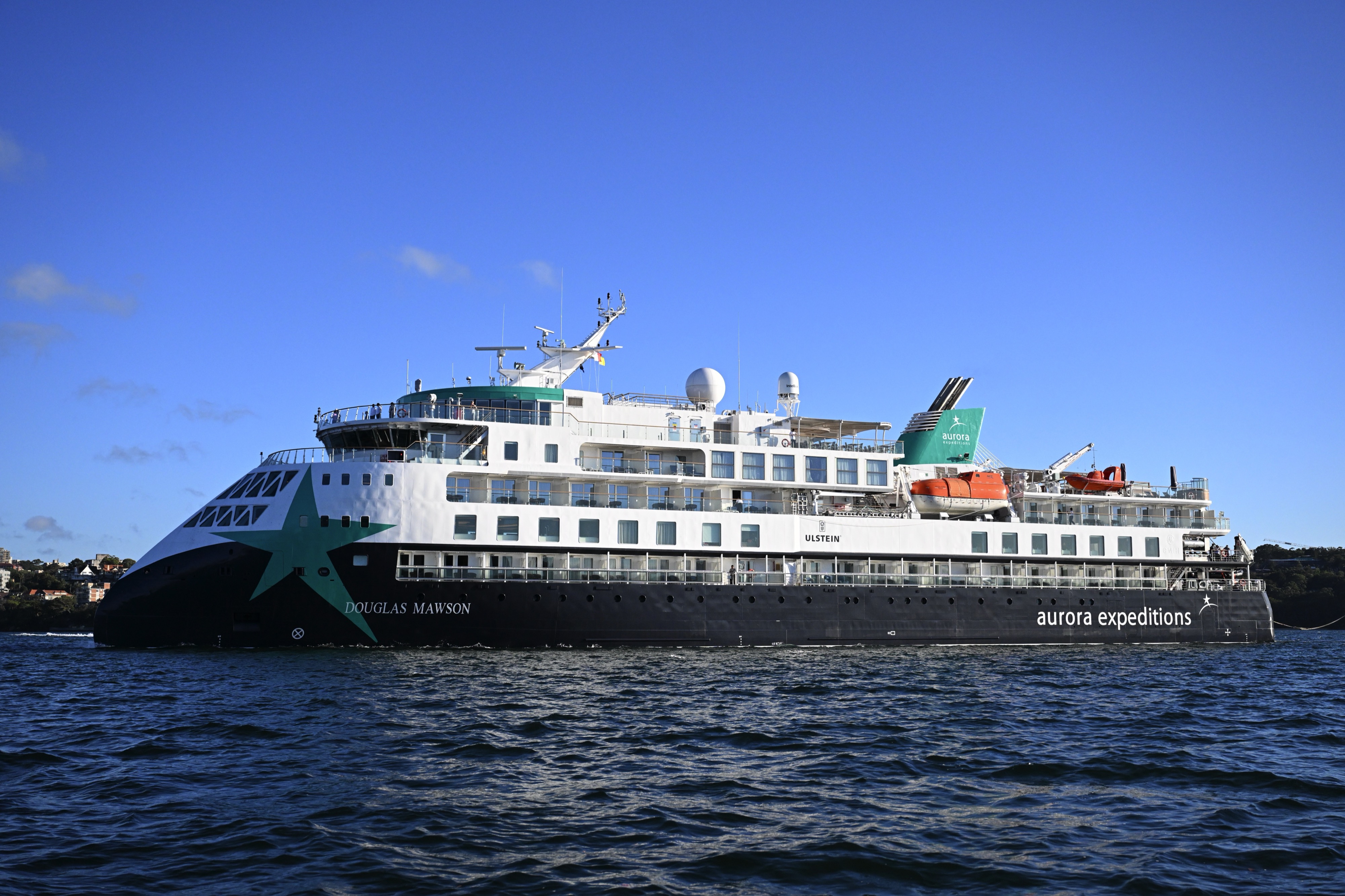
The Douglas Mawson features Zodiac access points and an activities platform, making boarding the Zodiacs as quick, efficient and safe as possible, minimising wait times and getting you closer to the action for longer.
Mudroom
Mudroom
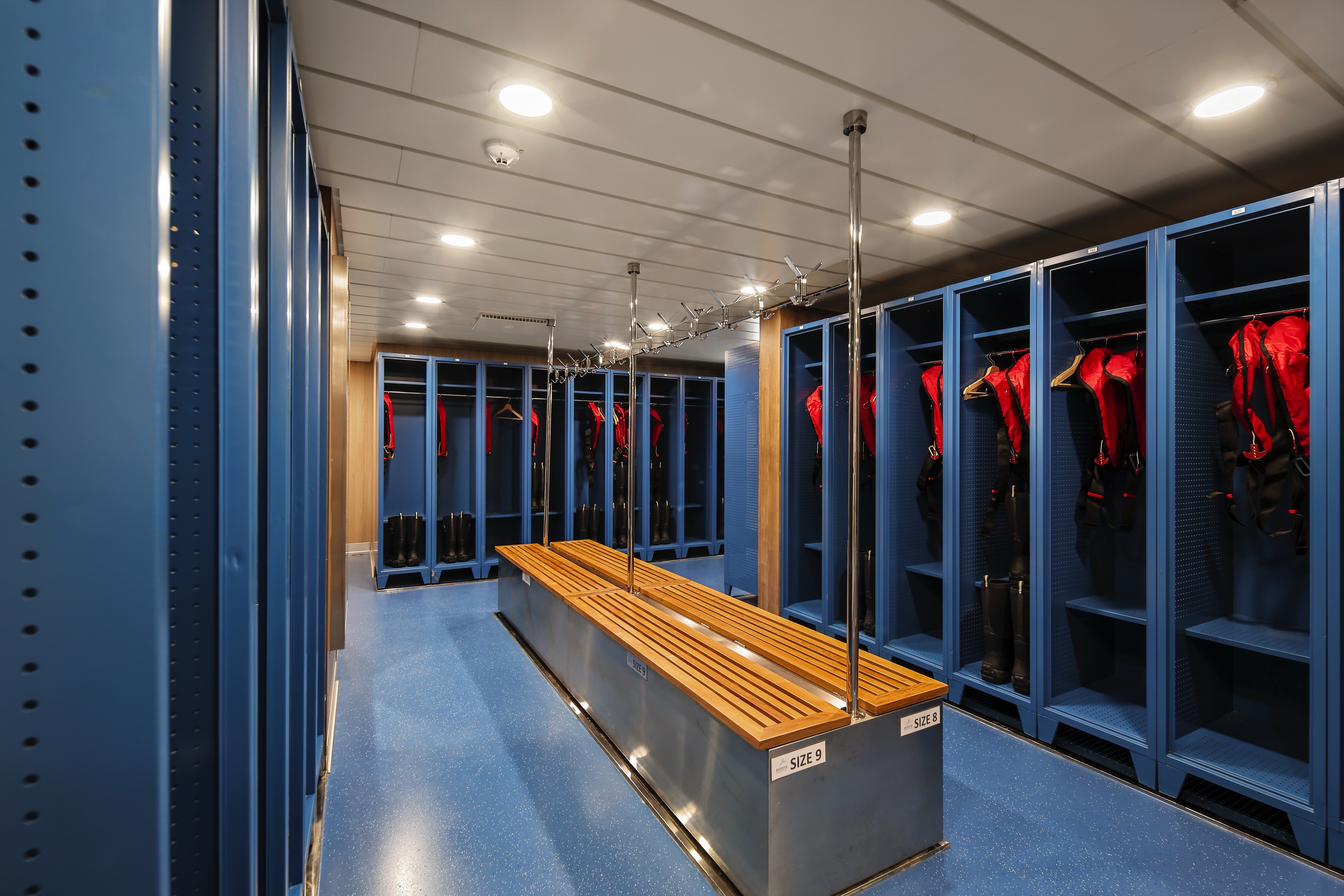
No need to take your wet expedition gear back to your cabin to dry. Keep your cabin warm and cosy by leaving your outer jackets and pants in the mudroom.
The mudroom is your launchpad for all shore excursions and activities. Here, you will have access to a locker when you can hang your gear up to dry, and store your boots between excursions.
Citizen Science Centre and Lounge
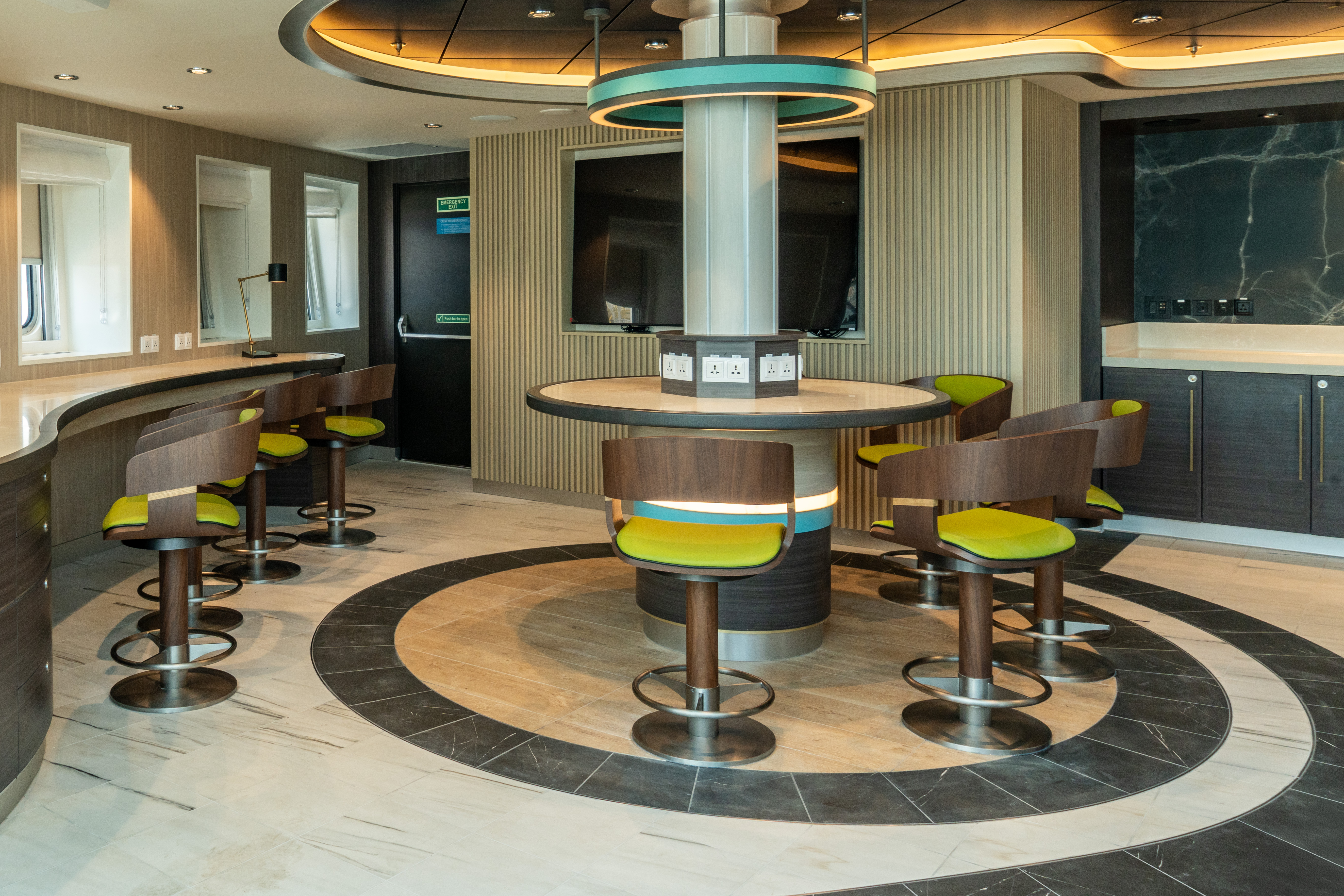
Learn more about the world and the unique destinations Aurora visits by visiting the onboard naturalist and Expedition Team in the world-class Citizen Science Center. You will be rewarded for your thirst for knowledge with one of the best views on the ship.
Atrium
More information coming soon.
Sun Deck & Pool
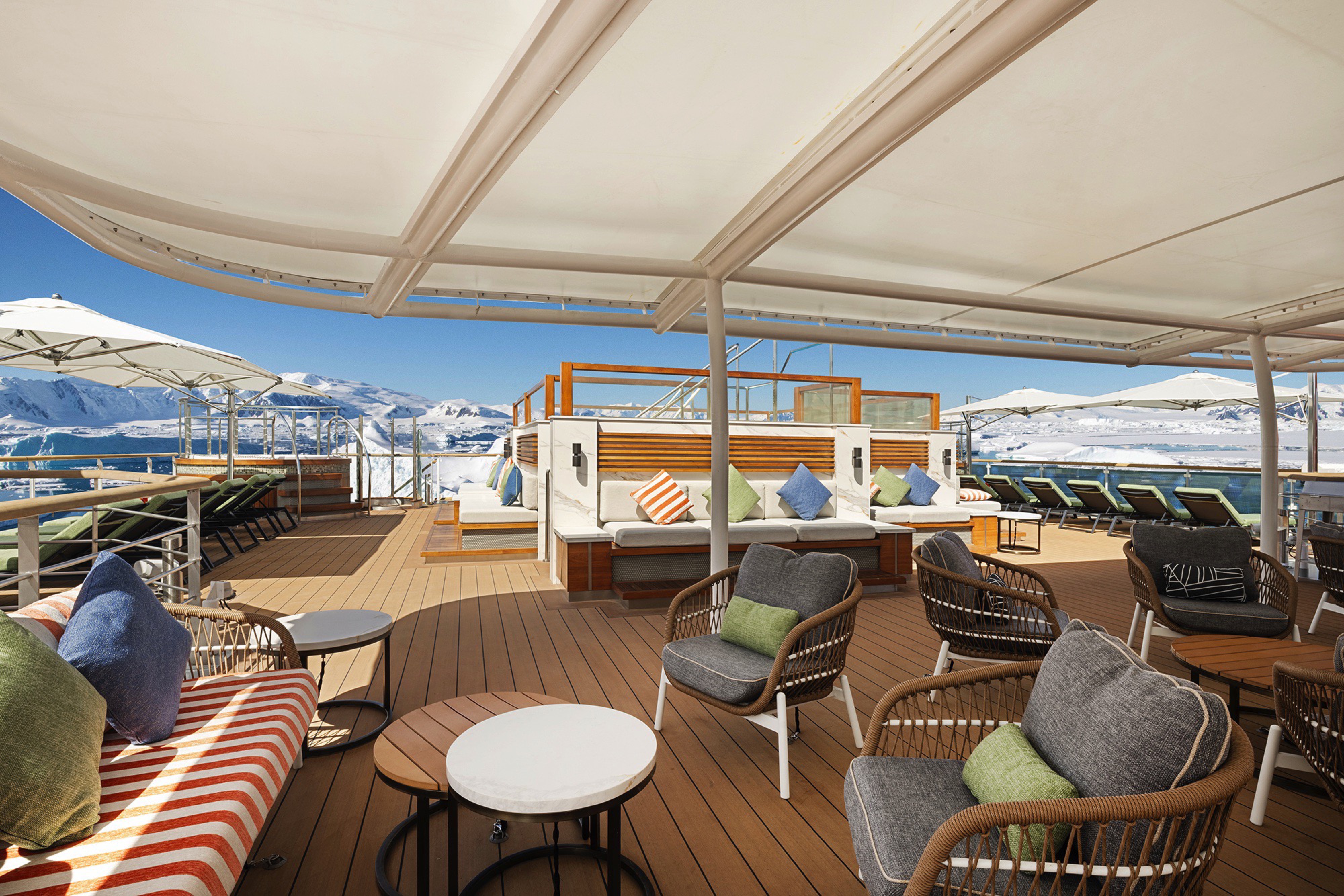
In between landings, enjoy access to the onboard gym or unwind in the sauna. Or head to the back deck to swim in the heated outdoor pool, enjoy a drink at the pool bar, or soak in one of two Jacuzzis, watching the world go by.
Bars & Lounges
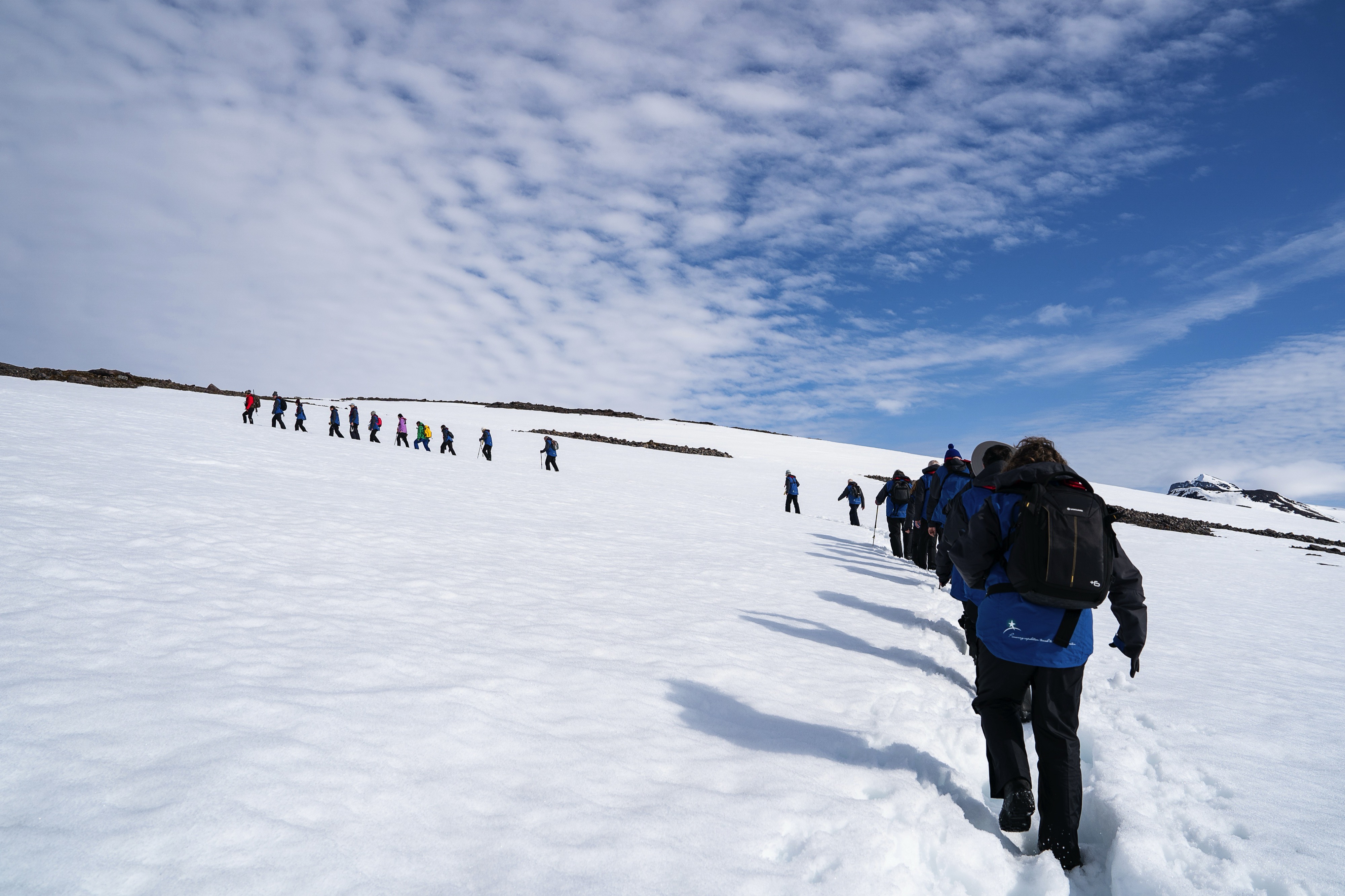
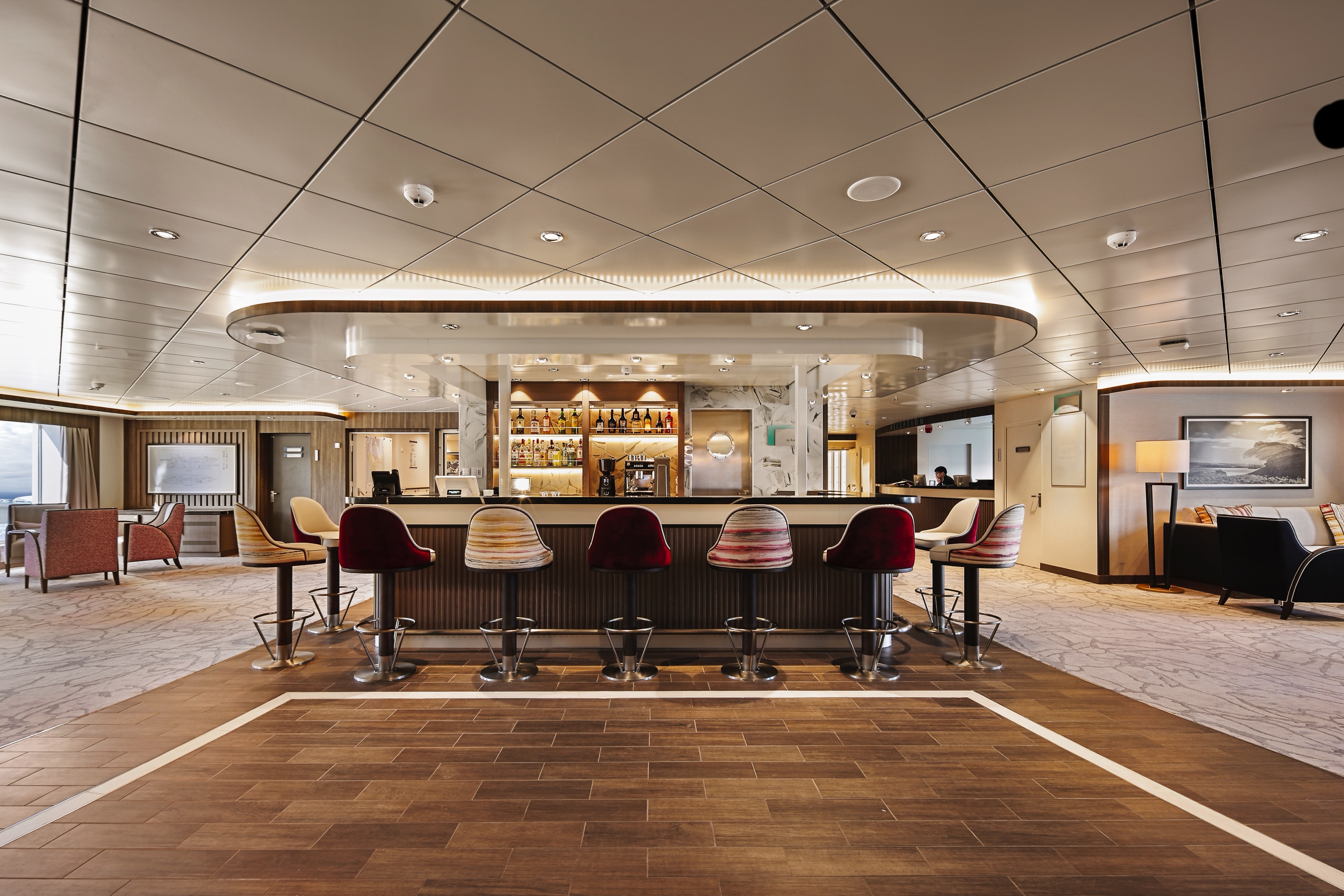
Communal meeting areas have always played a major role in fostering the warm camaraderie on board our ships. They are the heart of the expedition, where people meet to share tales from the day, swap photos, keep an eye out for wildlife and watch the sun go down.
The bars and lounges on board are refined yet inviting places to gather, with floor-to-ceiling windows offering stunning views, and of course friendly bartenders to shoot the breeze with.
Library
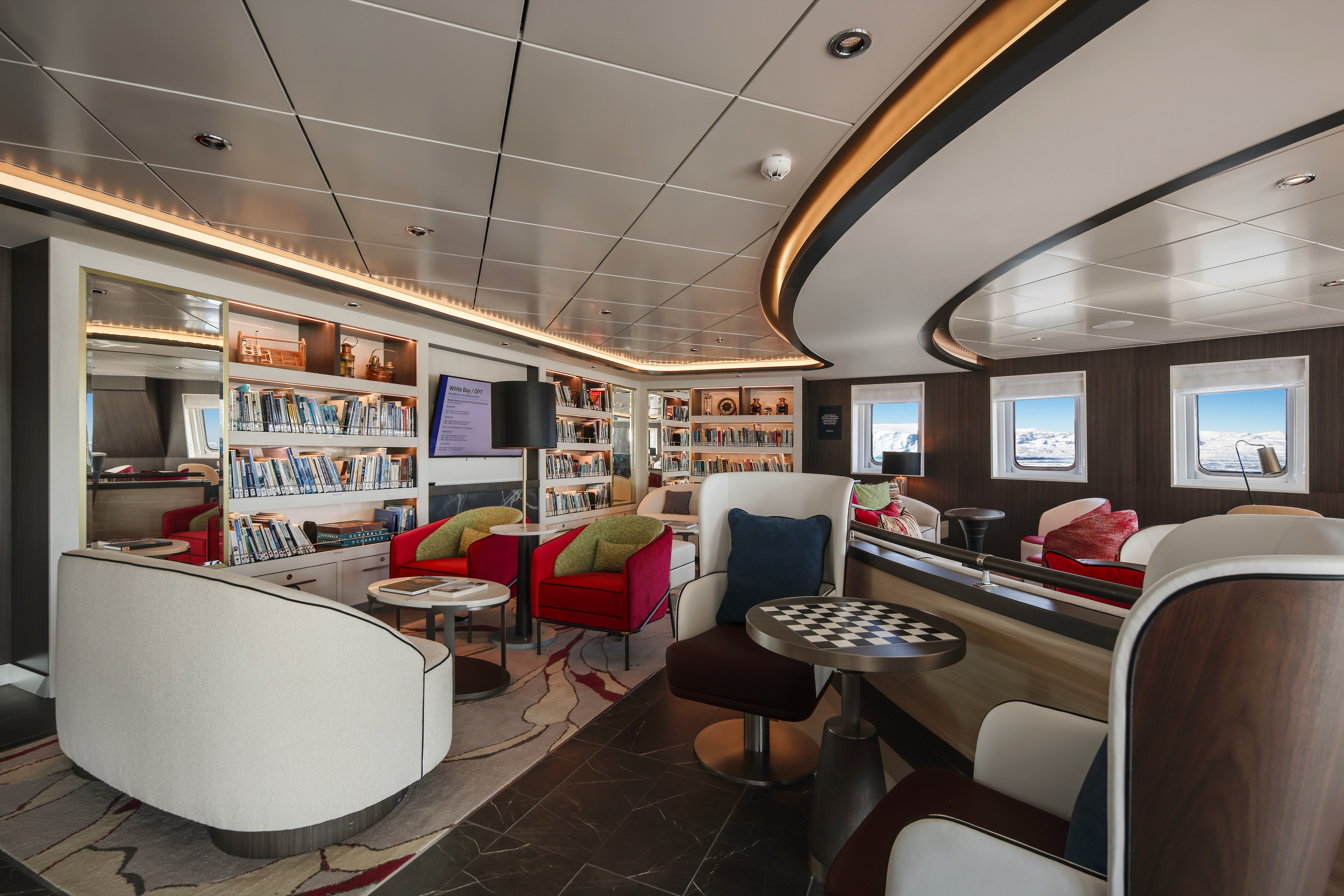
With floor-to-ceiling windows, the library is a peaceful sanctuary where you can find non-fiction books to read up on the day’s destinations, use a public laptop to organise your photos or play board games with newfound friends. Choose from our range of informative non-fiction titles, wildlife guidebooks, travel journals, novels and a selection of children’s books and board games.
The Glass Atrium Lounge
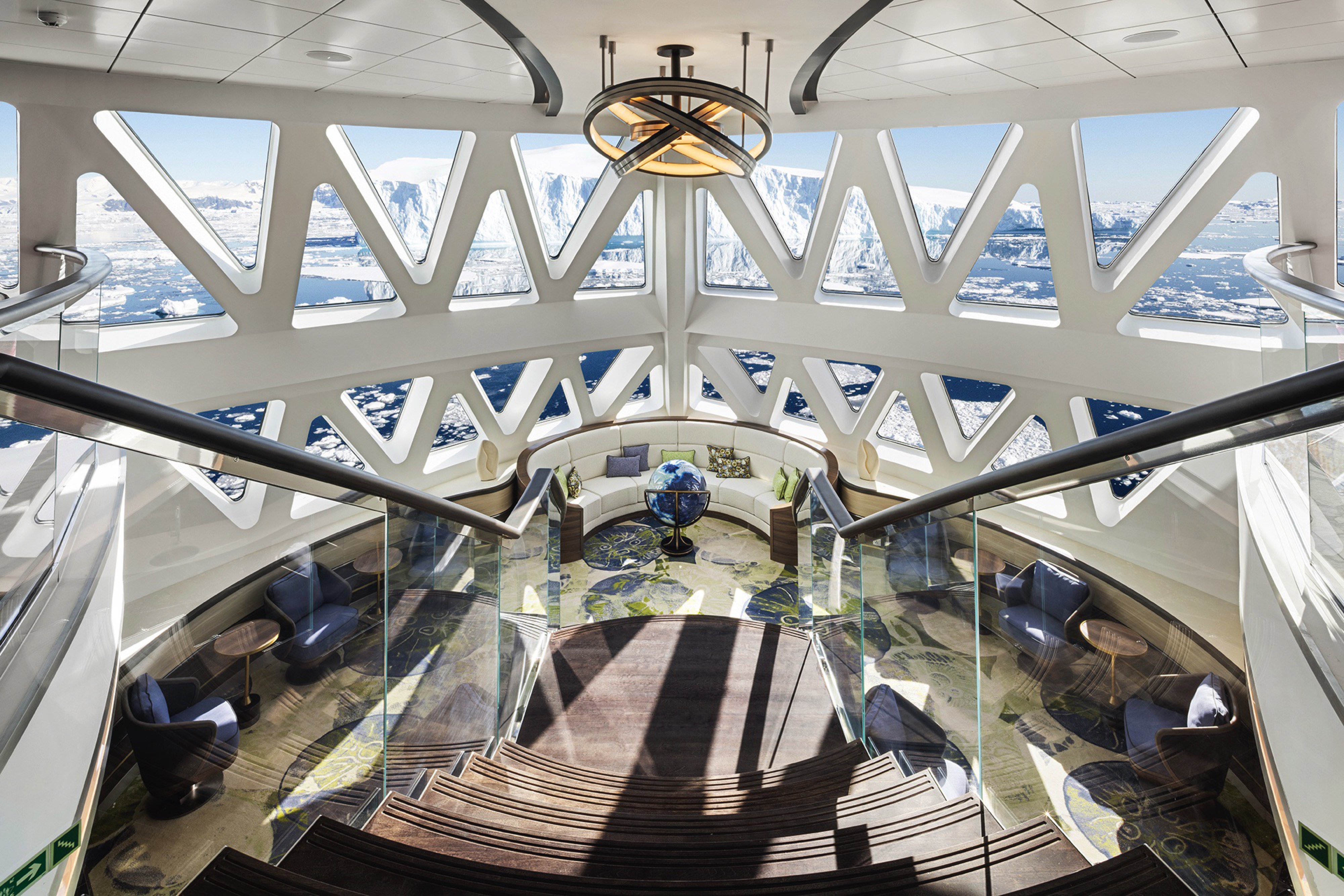
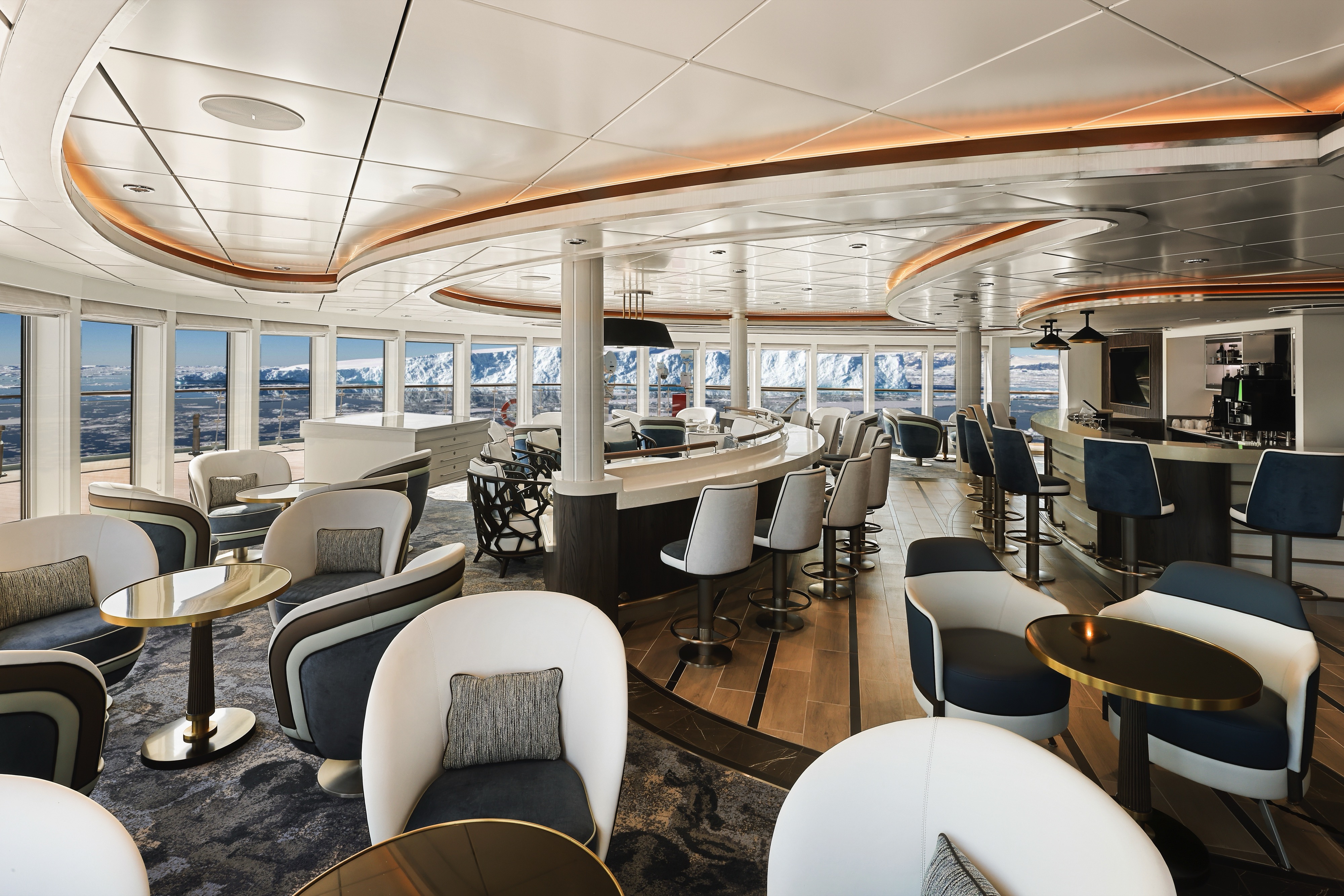
As you explore the ship you will find indoor lounge areas with floor-to ceiling windows, and multiple open decks with expansive 270-360 degree views. The Glass Atrium Lounge inside the bow is a fantastic place to sit and watch for wildlife – with a drink in hand. There is no shortage of spaces to take in the majesty of the incredible world outside!
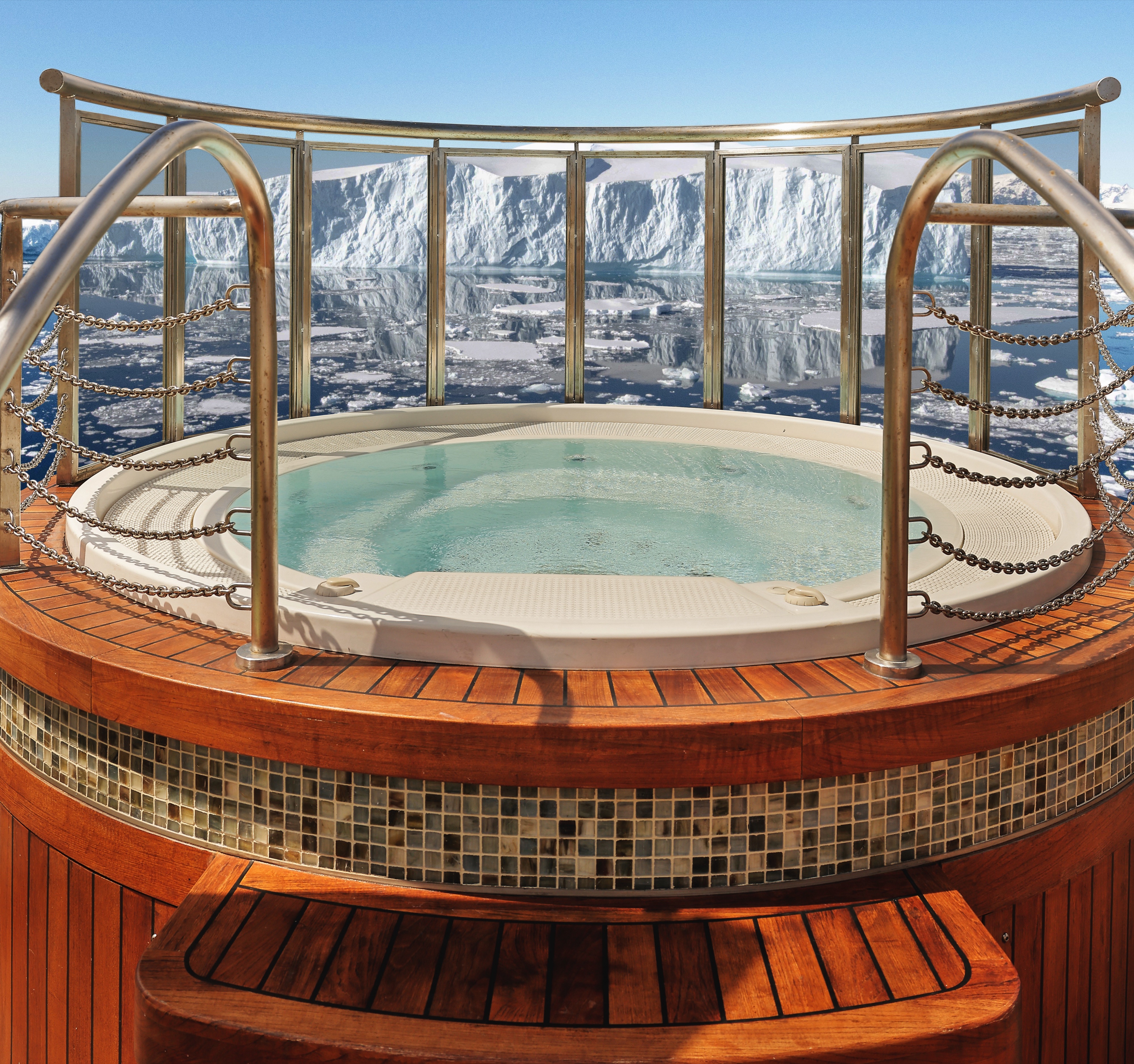
Jacuzzis
There are two Jacuzzis on the top outside deck which offer amazing views of the world outside.
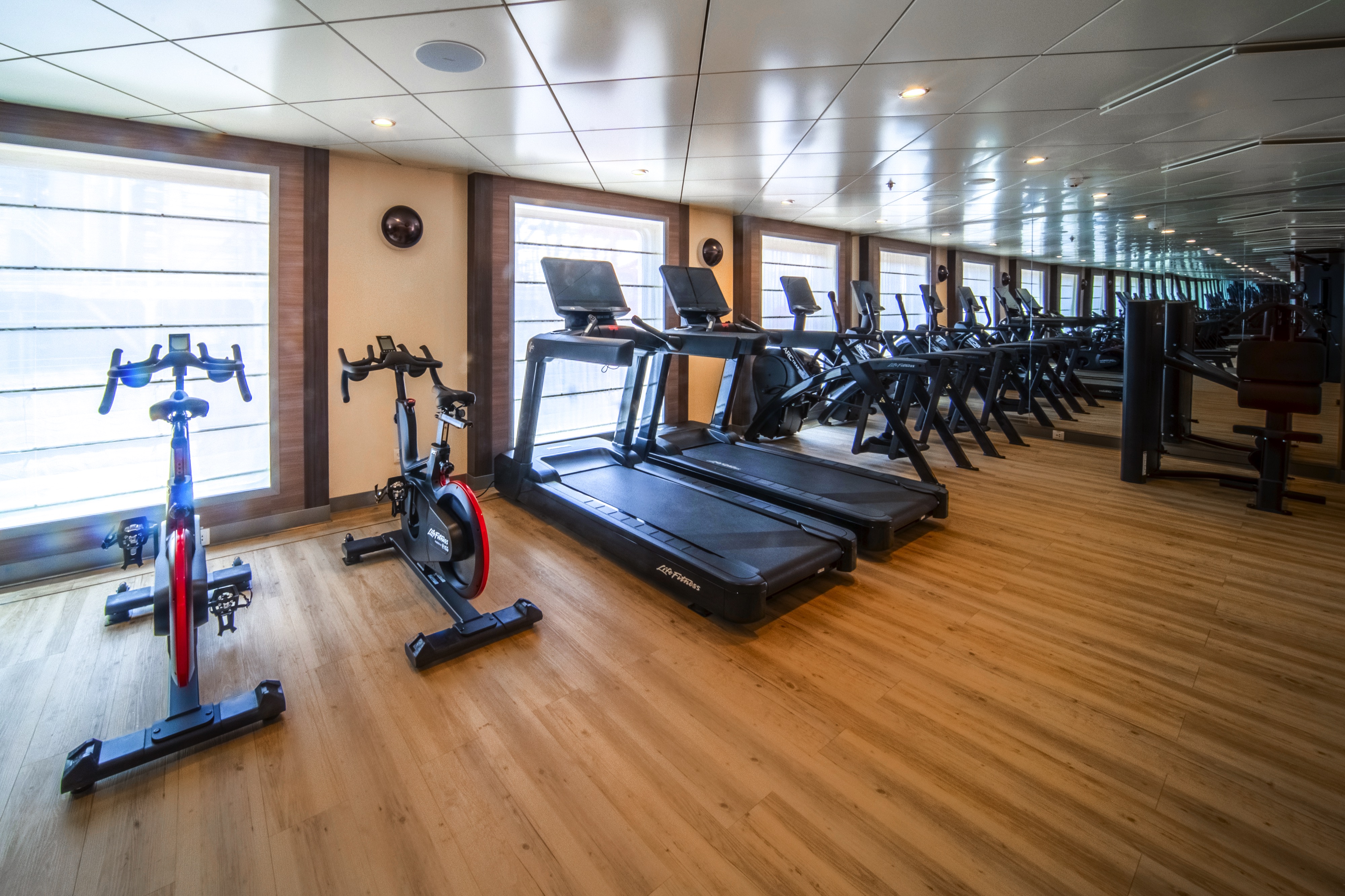
Gym & Sauna
During your voyage, enjoy complimentary access to the gym or visit our sauna, which we highly recommend after the Polar Plunge!
There are no dedicated children’s facilities onboard the Douglas Mawson
Dining room
One of the most important parts of any expedition is the food! Start each adventure with hearty meals and delicious morning and afternoon teas prepared by our onboard chefs.
Meals are a great time to connect with fellow travellers in our open-seating dining area, sharing stories and insights from the day. Tea, coffee, and snacks are available 24/7, and our chefs offer a variety of menu options for each meal. Enjoy house wines, beers, and soft drinks with dinner after a day of exploration.
Wrap up your journey with informal Captain’s Farewell drinks, featuring complimentary beverages, cocktail appetisers, and a special three-course meal.
Top Deck Restaurant
The Top Deck Restaurant is located on deck 8.
Citizen Science
Travel is always the best educator and we offer the chance to enrich your curiosity and expand your knowledge and understanding of the places we travel to. There is no better learning opportunity than being in the field with subject matter experts.
Our Citizen Science Program is designed to be an interactive forum of like-minded travellers to share new discoveries and deepen their connection to the natural world in a relaxed, informal and fun environment – both on board our ships, on our fascinating shore expeditions and in our zodiacs.
You can make a difference as we can provide invaluable data to the scientific community through you taking part. You too can become an ambassador for the protection of our majestic but fragile blue planet when you return home by sharing what you have learned.
What is Citizen Science?
Citizen Science is the collection and analysis of data relating to the natural world by members of the general public, typically as part of a collaborative project with professional scientists around the world.
Why Take Part?
Aurora Expeditions travels to some of the most unique and remote places on the planet. It is challenging for scientists to spend time in these areas, so any observations we contribute can be extremely valuable.
Gathering and sharing data is also a great way to engage and educate ourselves in pressing issues that concern us at a local, regional and global level.
How Does it Work?
Members of our passionate Expedition Team, together with a Citizen Science Coordinator, will be on hand to introduce and assist you with the projects being conducted on your voyage.
Expert guidance on the collection, storage and sharing of new scientific data will not only greatly enhance your voyage experience, but help you gain more knowledge of our ever-changing natural environment.
From the biggest mammals to the smallest marine creatures, the important part you play in our Citizen Science projects will help protect and preserve the planet for generations to come.
Our Projects
Our passengers can contribute to global research, collecting data in some of the most hard-to-reach, under-studied places on Earth. Our Citizen Science Program covers seven projects that span the globe, to advance understanding of marine ecosystems, birdlife, climate change and polar environments.
Please note: As some of our Citizen Science projects are location- and weather-dependent, we cannot operate all of the projects on all voyages. We will endeavour to include as many projects as possible on your voyage with ample time allocated to them on a day-to-day basis.
- HappyWhale uses photo ID to track individual whales. Guests can photograph encounters and log them on the database, improving knowledge about migration, population health and behaviour.
- eBird is the world’s largest biodiversity-related Citizen Science project, collecting bird observations from around the globe. Aurora passengers help to track species distribution and population changes.
- Our passengers are invited to record cloud conditions, with observations submitted to NASA GLOBE Cloud contributing to climate modelling.
- Our Citizen Scientists measure water clarity by lowering a Secchi disk, recording visibility, and sharing data with scientists that are studying the effects of climate change on ocean ecosystems. This builds a long-term global dataset, and each voyage contributes new observations from some of the least-studied waters in the world.
- Snow algae are microscopic organisms that grow on snow and ice, influencing melt rates. The Snow Algae Study engages passengers in photographing and recording snow algae sites, contributing to global research into how these organisms influence the Antarctic environment. This study is supported by the latest science from the National Snow and Ice Data Center.
- FjordPhyto invites passengers to explore phytoplankton diversity in polar fjords and coastal waters. Using simple tools, they collect samples to help scientists track phytoplankton health and its response to changing ocean conditions. These observations enhance understanding of the base of the marine food and how climate change is altering polar ecosystems. *Only available on Antarctic voyages.
- We are proudly the first expedition company to facilitate the development and execution of the TIPI pilot project, using thermal imaging to measure polar ice conditions. This project combines science, technology and storytelling to create robust datasets while engaging the public in polar research. We are collaborating with founder Joe Muise to deliver high-quality scientific outcomes.
Activities
Whether it’s adventure at sea or on land that makes you tick, we have a huge range of optional activities to help you make the most of your time in some of the most beautiful places on earth.
We encourage you to make the most of every opportunity to nurture your inner adventurer. You can choose from a range of add-on adventures to make the most of your time in these beautiful places. We have pioneered more adventure activities than any polar expedition cruising company to help you explore in your own way.
We’ll get you out for your optional activities as often as possible, and this will be your main mode of exploration through your trip. Your guides* will assess the conditions at each landing, and you’ll have the option to join whenever conditions allow.
Optional activities are popular and group sizes are limited, so if you’re interested, get in touch with our team as soon as possible. Optional activities are listed on each itinerary page and additional fees apply.
Lecture Theatre
On all expeditions you will meet naturalists and local specialists, who offer presentations on their area of expertise to enhance your appreciation of the destination you are exploring.
Join the team in the lecture theatre for presentations covering a broad range of topics to suit every interest, from history and culture to biology and climate change. Regardless of the topic, they all have one thing in common: they all aim to engage, educate, entertain and turn you into an ambassador for the planet.
Activities Platform
The Douglas Mawson features Zodiac access points and an activities platform, making boarding the Zodiacs as quick, efficient and safe as possible, minimising wait times and getting you closer to the action for longer.
Mudroom
Mudroom
No need to take your wet expedition gear back to your cabin to dry. Keep your cabin warm and cosy by leaving your outer jackets and pants in the mudroom.
The mudroom is your launchpad for all shore excursions and activities. Here, you will have access to a locker when you can hang your gear up to dry, and store your boots between excursions.
Citizen Science Centre and Lounge
Learn more about the world and the unique destinations Aurora visits by visiting the onboard naturalist and Expedition Team in the world-class Citizen Science Center. You will be rewarded for your thirst for knowledge with one of the best views on the ship.
Atrium
More information coming soon.
Sun Deck & Pool
In between landings, enjoy access to the onboard gym or unwind in the sauna. Or head to the back deck to swim in the heated outdoor pool, enjoy a drink at the pool bar, or soak in one of two Jacuzzis, watching the world go by.
Bars & Lounges
Communal meeting areas have always played a major role in fostering the warm camaraderie on board our ships. They are the heart of the expedition, where people meet to share tales from the day, swap photos, keep an eye out for wildlife and watch the sun go down.
The bars and lounges on board are refined yet inviting places to gather, with floor-to-ceiling windows offering stunning views, and of course friendly bartenders to shoot the breeze with.
Library
With floor-to-ceiling windows, the library is a peaceful sanctuary where you can find non-fiction books to read up on the day’s destinations, use a public laptop to organise your photos or play board games with newfound friends. Choose from our range of informative non-fiction titles, wildlife guidebooks, travel journals, novels and a selection of children’s books and board games.
The Glass Atrium Lounge
As you explore the ship you will find indoor lounge areas with floor-to ceiling windows, and multiple open decks with expansive 270-360 degree views. The Glass Atrium Lounge inside the bow is a fantastic place to sit and watch for wildlife – with a drink in hand. There is no shortage of spaces to take in the majesty of the incredible world outside!
Jacuzzis
There are two Jacuzzis on the top outside deck which offer amazing views of the world outside.
Gym & Sauna
During your voyage, enjoy complimentary access to the gym or visit our sauna, which we highly recommend after the Polar Plunge!
There are no dedicated children’s facilities onboard the Douglas Mawson
About the Ship
Deck Plans
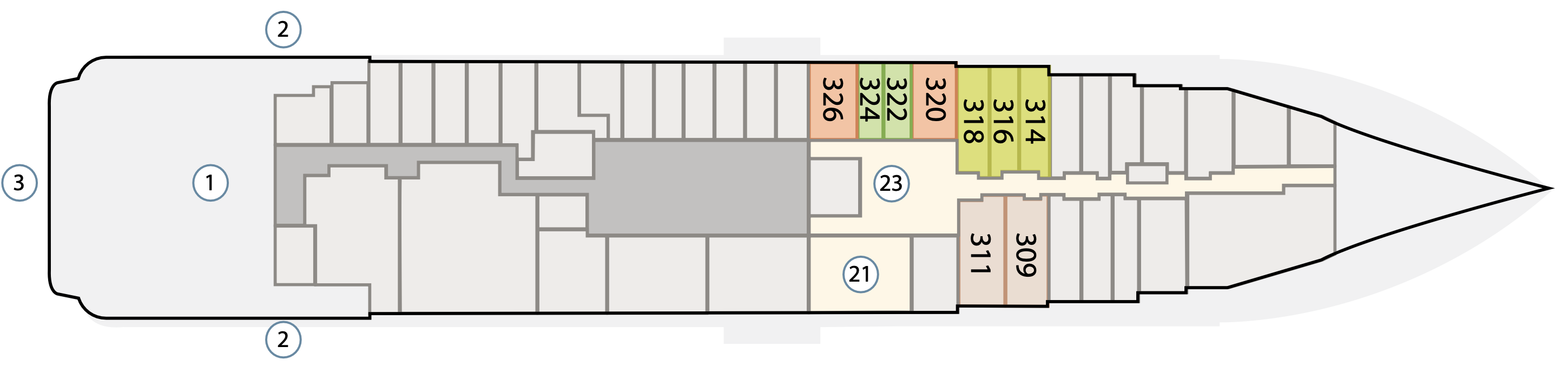
- Change room/mudroom
- Zodiac access points
- Activity launching platform
- Medical clinic
- Elevator
- Aurora Stateroom Triple
- Aurora Stateroom Twin
- Aurora Stateroom Superior Single
- Aurora Stateroom Single
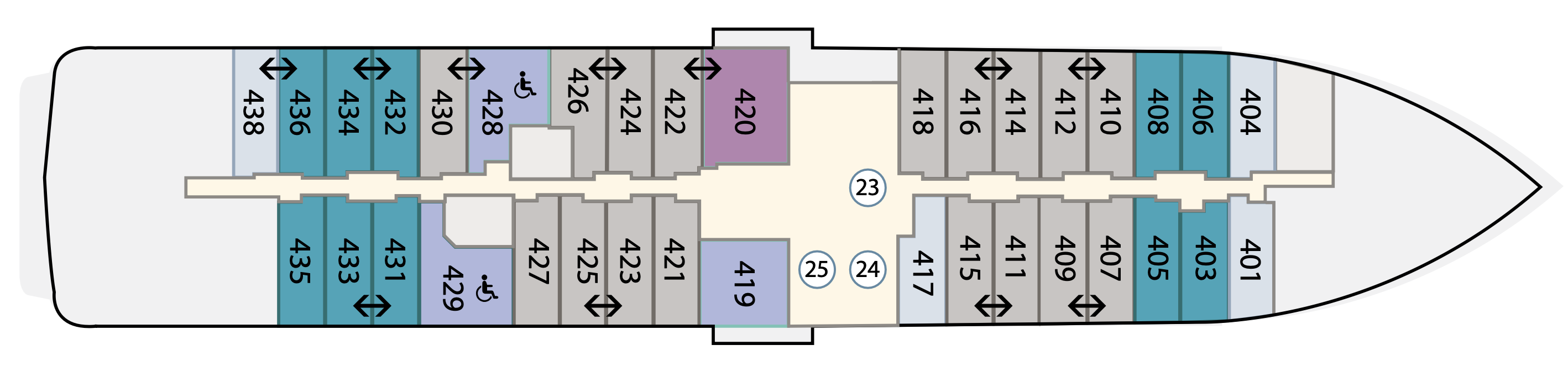
- Elevator
- Main entrance
- Expedition desk
- Captain’s Suite
- Balcony Stateroom Superior
- Balcony Stateroom (A, B, C)
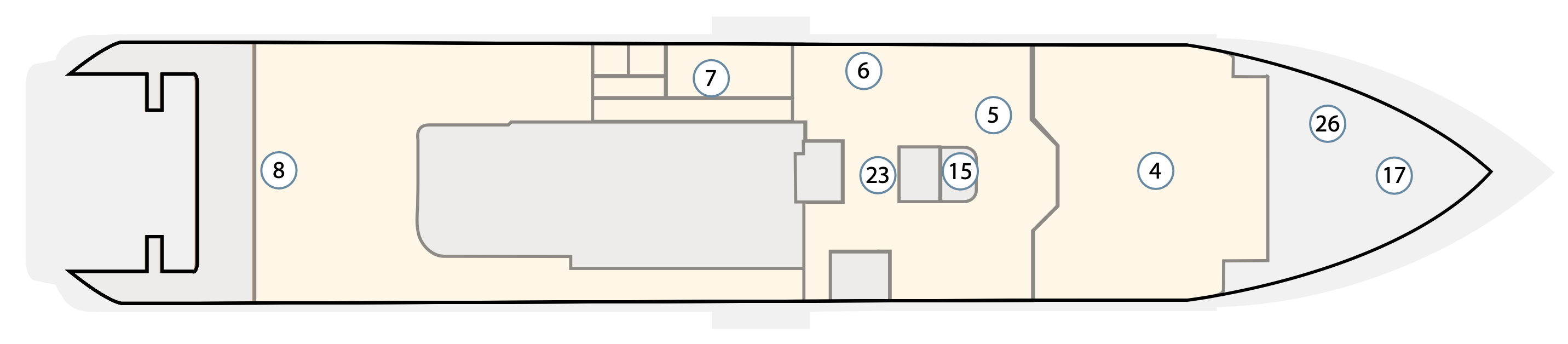
- Lecture room & lounge
- Assembly station
- Reception
- Ship shop
- Dining room
- Bar
- Lower glass atrium lounge
- Elevator
- Citizen Science centre
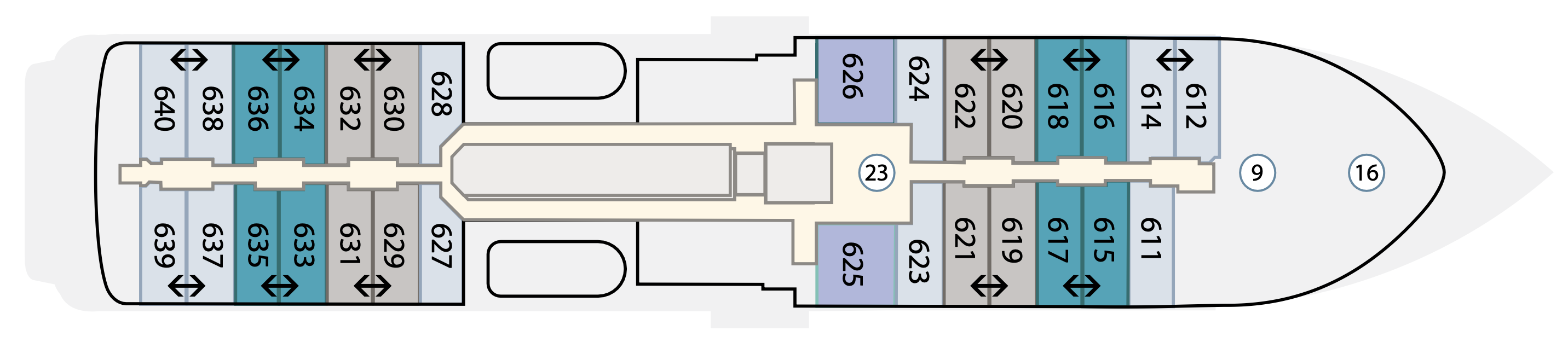
- Library
- Upper glass atrium lounge
- Elevator
- Balcony Stateroom Superior
- Balcony Stateroom (A, B, C)
- Junior Suite
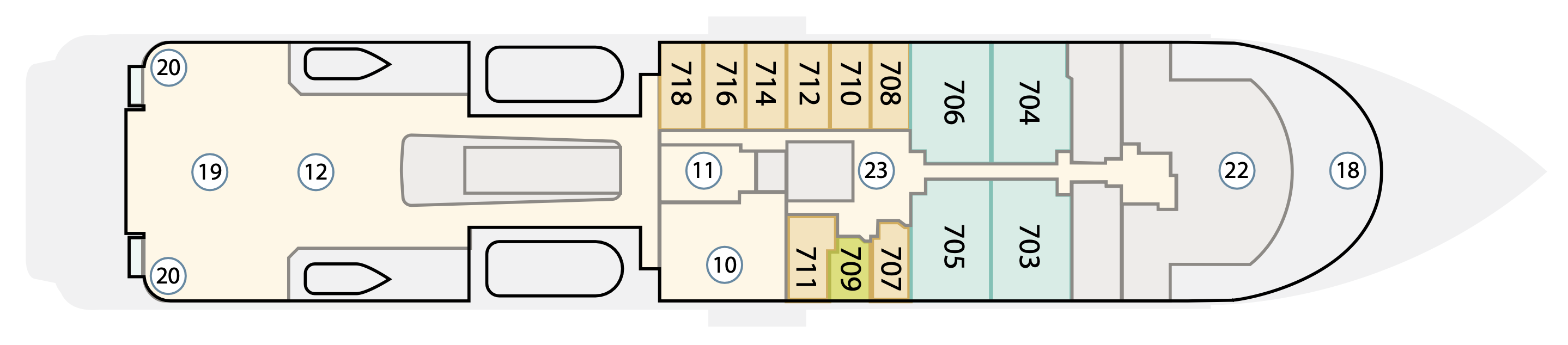
- Gym
- Sauna
- Seating area
- Observation decks
- Swimming pool and sun deck
- Jacuzzis
- Bridge
- Elevator
- Junior Suite
- Aurora Stateroom Superior
- Aurora Stateroom Superior Single

- Seating area
- Observation lounge
- Top-deck restaurant
- Bar
- Observation decks
- Elevator
- Change room/mudroom
- Zodiac access points
- Activity launching platform
- Medical clinic
- Elevator
- Aurora Stateroom Triple
- Aurora Stateroom Twin
- Aurora Stateroom Superior Single
- Aurora Stateroom Single
- Elevator
- Main entrance
- Expedition desk
- Captain’s Suite
- Balcony Stateroom Superior
- Balcony Stateroom (A, B, C)
- Lecture room & lounge
- Assembly station
- Reception
- Ship shop
- Dining room
- Bar
- Lower glass atrium lounge
- Elevator
- Citizen Science centre
- Library
- Upper glass atrium lounge
- Elevator
- Balcony Stateroom Superior
- Balcony Stateroom (A, B, C)
- Junior Suite
- Gym
- Sauna
- Seating area
- Observation decks
- Swimming pool and sun deck
- Jacuzzis
- Bridge
- Elevator
- Junior Suite
- Aurora Stateroom Superior
- Aurora Stateroom Superior Single
- Seating area
- Observation lounge
- Top-deck restaurant
- Bar
- Observation decks
- Elevator