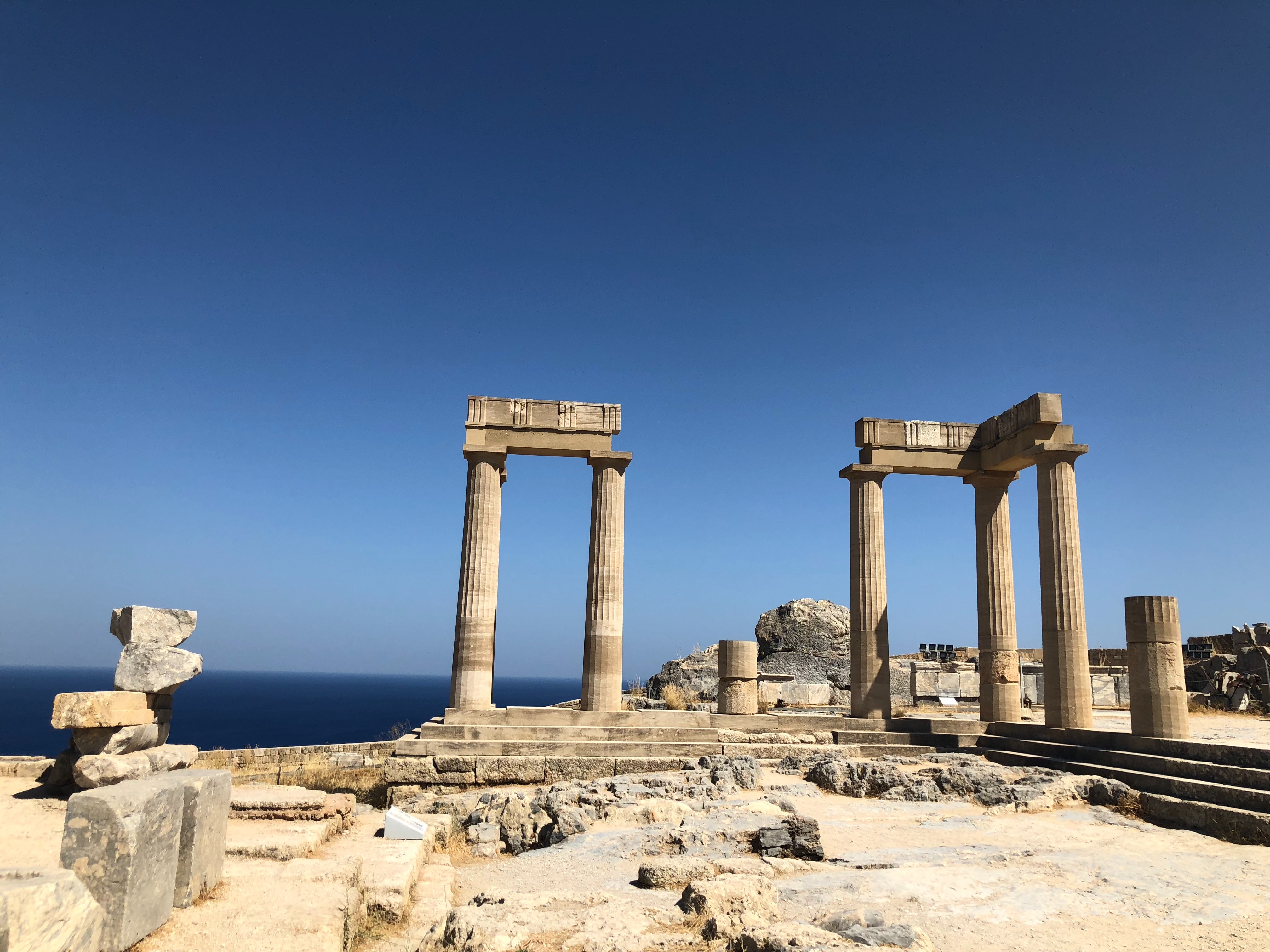
Featured Cabins
Itinerary
Athens, Greece
Welcome to Athens. On arrival at Athens airport make your way to the Arrivals Hall to meet our representative, followed by a transfer to our group hotel. At the hotel, visit our hospitality desk in the lobby to meet our team who will provide you with useful information regarding pre-embarkation procedures and about your time in Athens.
You will also receive cabin tags for your luggage. Please clearly label the tags with your name and your cabin number on the ship. This evening offers time to relax in preparation for tomorrow.
Accommodation: Athens Hotel
Athens, Greece
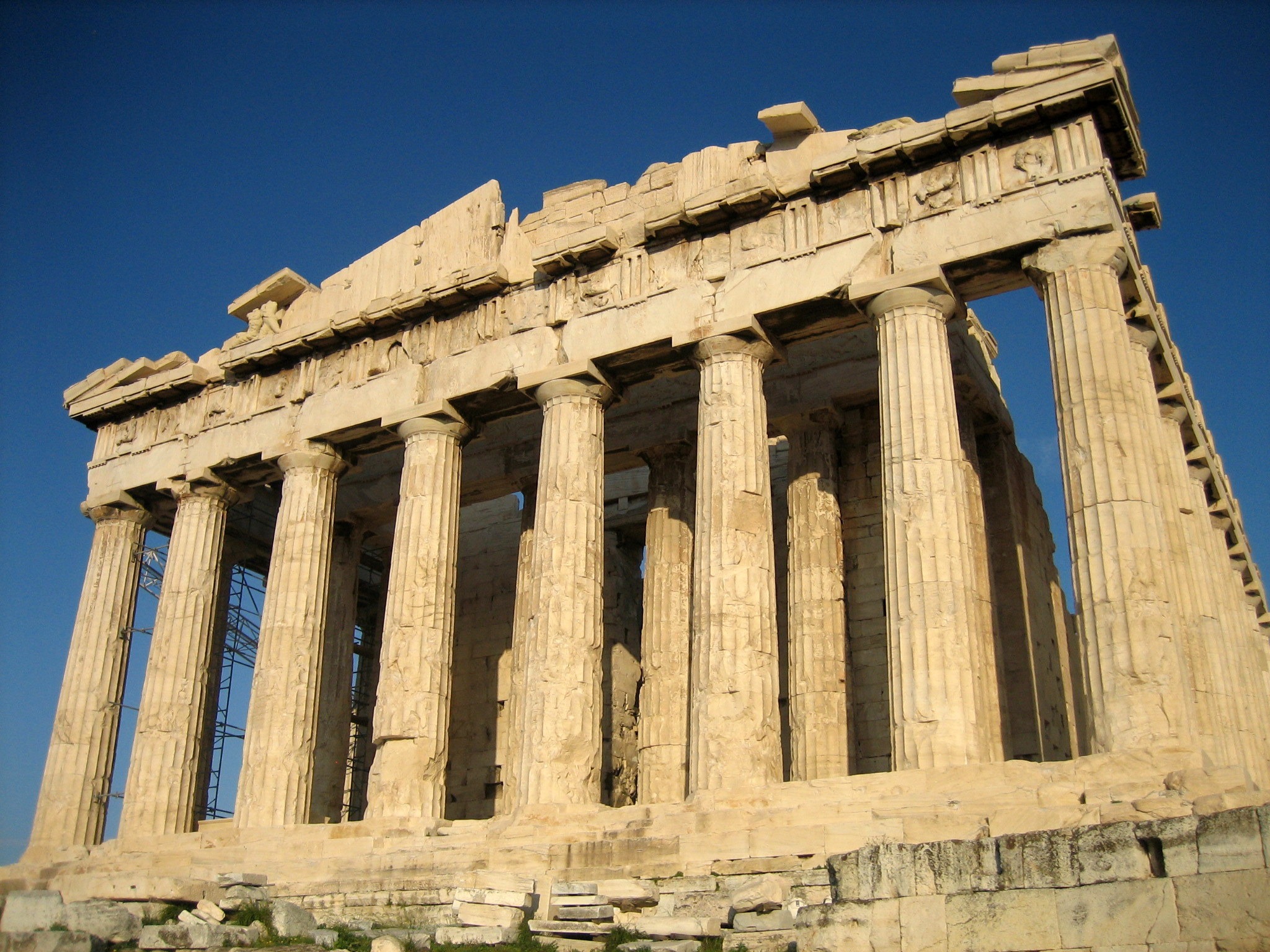
After breakfast, enjoy a morning ‘Your Choice’ experience. Walk in Socrates' footsteps, explore the ancient wonders of the Acropolis, or immerse yourself in Athens' vibrant food scene with a local guide. You can then rejoin the coach to return to our hotel or take a leisurely stroll to the nearby Plaka district. This charming area is filled with streets and alleys lined with restaurants, cafes, and shops—ideal for a bite to eat or picking up gifts (lunch at your own expense). Tonight, we kick off our journey with a Welcome Event, celebrating Greek style.
With a rich recorded history spanning 3,500 years, Athens is a city brimming with stories. Widely hailed as the ‘cradle of civilisation’ and revered as the birthplace of democracy, philosophy and theatre, Athens seamlessly merges its illustrious past with its vibrant present. This bustling metropolis, home to three million inhabitants, is adorned with a wealth of ancient sites that punctuate its landscape like temples, iconic columns and former city centres. Athens’ influence in antiquity transcended its borders, ushering in a Golden Age characterised by political discussion, education and philosophy, hosting luminaries such as Socrates, Plato and Aristotle. The democratic principles forged in Athens laid the groundwork for modern governance systems worldwide.
Yet, Athens is more than just a relic of ancient history. As a historical seat of power, it has weathered waves of invasions, shaping its contemporary identity with a diverse fusion of architectural styles, culinary delights and cultural traditions. Whether you are wandering amid ancient ruins or indulging in the flavours of modern Greek cuisine, Athens offers a captivating journey through the ages, beckoning travellers from across the globe to explore its timeless allure.
Personalise your exploration with our included ‘Your Choice’ experiences.
Option 1 – Morning experience: A Taste of Athens
For foodie fans, travellers who have visited Athens before, and those who enjoy a personal view of Athens, this experience is perfect. We begin our guided walk at Syntagma Square, where Greece’s Parliament building stands, guarded by traditionally attired Evzone guards. Our local expert warmly welcomes you to their home city, leading you on an intriguing walking tour through Athens’ historical areas. With passion and knowledge, they unveil authentic Athens and its secrets.
Stroll through Plaka, the charming ‘old quarter’ of Athens nestled at the base of the Acropolis. Admire its eclectic neoclassical architecture, picturesque alleys, and inviting tavernas. Pause at a colourful local cafe to indulge in Greek delicacies such as olives, fragrant cheeses and cured meats.
Continue through Monastir Aki, famous for its bustling flea market and vibrant shops brimming with local crafts and souvenirs. From there, we wander to Thission, offering the best panoramic views of the Acropolis, Ancient Agora, and the majestic Temple of Hephaestus. Here, we treat ourselves to a traditional Greek coffee, accompanied perhaps by a sweet delight like baklava, a favourite among Greeks for its rich layers of pastry, nuts and honey. Our morning offers us a taste of this fascinating city.
Option 2 – Morning experience: Classic Athens
This comprehensive tour combines a visit to the Acropolis with the city’s major landmarks. Begin with a view of the Greek parliament at Syntagma Square, once a royal residence, where the iconic Evzones still stand guard in traditional attire. Next, enjoy a brief photo stop at the Panathenaic Stadium, the site of the first modern Olympic Games in 1896, where athletes revived the ancient Olympic spirit.
Perched high above the city, the Acropolis is not only an architectural marvel, but also a symbol of the birthplace of democracy. This ancient citadel stands as a testament to the enduring legacy of Greek culture and ideals, representing advancements in art, architecture and political thought that originated in Athens. Feel the essence of civic pride and religious devotion in ancient Greek society, at the city’s centre for political and cultural life. The Parthenon exemplifies the height of classical Greek architecture, adorned with Doric columns and intricate sculptures. Built under the leadership of Pericles, the Parthenon symbolised the city’s wealth and power, with friezes and statues depicting various mythological scenes.
After touring the Acropolis, take a short walk to the Acropolis Museum. This modern museum houses over 3,000 artefacts from the Athenian Acropolis, offering unique insights into ancient Greek life and including an archaeological excavation beneath it.
Option 3 – Morning experience: Highlights of Athens
This panoramic tour offers a captivating introduction to the ancient city, with visits to its most iconic landmarks.
Begin at the Greek Parliament in Syntagma Square, once a royal palace, where the Evzones, dressed in traditional uniforms, stand guard in a solemn ceremonial display. Next, enjoy a photo stop at the historic Panathenaic Stadium, the site of the first modern Olympic Games in 1896, where the Olympic spirit was reborn. Continuing the Olympic theme, head to the Temple of Zeus, a colossal, ruined sanctuary dedicated to the king of the Olympian gods. Then, take in sweeping views of the Acropolis, the ancient citadel perched high above Athens, home to legendary temples like the Parthenon, built in honour of the city’s patron goddess, Athena. On a facing hilltop lies the Agora, the bustling heart of ancient Athenian life, a vibrant marketplace and political centre where citizens once gathered to shop, debate, and shape the course of democracy. Rejoin the coach for a short drive or take a stroll to the city’s popular Plaka precinct nearby. A series of streets and laneways filled with restaurants, cafes and shops, it is the perfect place to grab a bite to eat or shop for gifts to purchase before returning to your hotel.
Accommodation: Athens Hotel
Meals: Breakfast, Welcome Event canapés
Piraeus, Greece
It’s no wonder that all roads lead to the fascinating and maddening metropolis of Athens. Lift your eyes 200 feet above the city to the Parthenon, its honey-color marble columns rising from a massive limestone base, and you behold architectural perfection that has not been surpassed in 2,500 years. But, today, this shrine of classical form dominates a 21st-century boomtown. To experience Athens—Athína in Greek—fully is to understand the essence of Greece: ancient monuments surviving in a sea of cement, startling beauty amid the squalor, tradition juxtaposed with modernity. Locals depend on humor and flexibility to deal with the chaos; you should do the same. The rewards are immense. Although Athens covers a huge area, the major landmarks of the ancient Greek, Roman, and Byzantine periods are close to the modern city center. You can easily walk from the Acropolis to many other key sites, taking time to browse in shops and relax in cafés and tavernas along the way. From many quarters of the city you can glimpse “the glory that was Greece” in the form of the Acropolis looming above the horizon, but only by actually climbing that rocky precipice can you feel the impact of the ancient settlement. The Acropolis and Filopappou, two craggy hills sitting side by side; the ancient Agora (marketplace); and Kerameikos, the first cemetery, form the core of ancient and Roman Athens. Along the Unification of Archaeological Sites promenade, you can follow stone-paved, tree-lined walkways from site to site, undisturbed by traffic. Cars have also been banned or reduced in other streets in the historical center. In the National Archaeological Museum, vast numbers of artifacts illustrate the many millennia of Greek civilization; smaller museums such as the Goulandris Museum of Cycladic Art Museum and the Byzantine and Christian Museum illuminate the history of particular regions or periods. Athens may seem like one huge city, but it is really a conglomeration of neighborhoods with distinctive characters. The Eastern influences that prevailed during the 400-year rule of the Ottoman Empire are still evident in Monastiraki, the bazaar area near the foot of the Acropolis. On the northern slope of the Acropolis, stroll through Plaka (if possible by moonlight), an area of tranquil streets lined with renovated mansions, to get the flavor of the 19th-century’s gracious lifestyle. The narrow lanes of Anafiotika, a section of Plaka, thread past tiny churches and small, color-washed houses with wooden upper stories, recalling a Cycladic island village. In this maze of winding streets, vestiges of the older city are everywhere: crumbling stairways lined with festive tavernas; dank cellars filled with wine vats; occasionally a court or diminutive garden, enclosed within high walls and filled with magnolia trees and the flaming trumpet-shaped flowers of hibiscus bushes. Formerly run-down old quarters, such as Thission, Gazi and Psirri, popular nightlife areas filled with bars and mezedopoleia (similar to tapas bars), are now in the process of gentrification, although they still retain much of their original charm, as does the colorful produce and meat market on Athinas. The area around Syntagma Square, the tourist hub, and Omonia Square, the commercial heart of the city about 1 km (½ mi) northwest, is distinctly European, having been designed by the court architects of King Otho, a Bavarian, in the 19th century. The chic shops and bistros of ritzy Kolonaki nestle at the foot of Mt. Lycabettus, Athens’s highest hill (909 feet). Each of Athens’s outlying suburbs has a distinctive character: in the north is wealthy, tree-lined Kifissia, once a summer resort for aristocratic Athenians, and in the south and southeast lie Glyfada, Voula, and Vouliagmeni, with their sandy beaches, seaside bars, and lively summer nightlife. Just beyond the city’s southern fringes is Piraeus, a bustling port city of waterside fish tavernas and Saronic Gulf views.
Mykonos, Greece
Although the fishing boats still go out in good weather, Mykonos largely makes its living from tourism these days. The summer crowds have turned one of the poorest islands in Greece into one of the richest. Old Mykonians complain that their young, who have inherited stores where their grandfathers once sold eggs or wine, get so much rent that they have lost ambition, and in summer sit around pool bars at night with their friends, and hang out in Athens in winter when island life is less scintillating. Put firmly on the map by Jackie O in the 1960s, Mykonos town—called Hora by the locals—remains the Saint-Tropez of the Greek islands. The scenery is memorable, with its whitewashed streets, Little Venice, the Kato Myli ridge of windmills, and Kastro, the town’s medieval quarter. Its cubical two- or three-story houses and churches, with their red or blue doors and domes and wooden balconies, have been long celebrated as some of the best examples of classic Cycladic architecture. Luckily, the Greek Archaeological Service decided to preserve the town, even when the Mykonians would have preferred to rebuild, and so the Old Town has been impressively preserved. Pink oleander, scarlet hibiscus, and trailing green pepper trees form a contrast amid the dazzling whiteness, whose frequent renewal with whitewash is required by law. Any visitor who has the pleasure of getting lost in its narrow streets (made all the narrower by the many outdoor stone staircases, which maximize housing space in the crowded village) will appreciate how its confusing layout was designed to foil pirates—if it was designed at all. After Mykonos fell under Turkish rule in 1537, the Ottomans allowed the islanders to arm their vessels against pirates, which had a contradictory effect: many of them found that raiding other islands was more profitable than tilling arid land. At the height of Aegean piracy, Mykonos was the principal headquarters of the corsair fleets—the place where pirates met their fellows, found willing women, and filled out their crews. Eventually the illicit activity evolved into a legitimate and thriving trade network. Morning on Mykonos town’s main quay is busy with deliveries, visitors for the Delos boats, lazy breakfasters, and street cleaners dealing with the previous night’s mess. In late morning the cruise-boat people arrive, and the shops are all open. In early afternoon, shaded outdoor tavernas are full of diners eating salads (Mykonos’s produce is mostly imported); music is absent or kept low. In mid- and late afternoon, the town feels sleepy, since so many people are at the beach, on excursions, or sleeping in their air-conditioned rooms; even some tourist shops close for siesta. By sunset, people have come back from the beach, having taken their showers and rested. At night, the atmosphere in Mykonos ramps up. The cruise-boat people are mostly gone, coughing three-wheelers make no deliveries in the narrow streets, and everyone is dressed sexy for summer and starting to shimmy with the scene. Many shops stay open past midnight, the restaurants fill up, and the bars and discos make ice cubes as fast as they can. Ready to dive in? Begin your tour of Mykonos town (Hora) by starting out at its heart: Mando Mavrogenous Square.
Kusadasi, Turkey
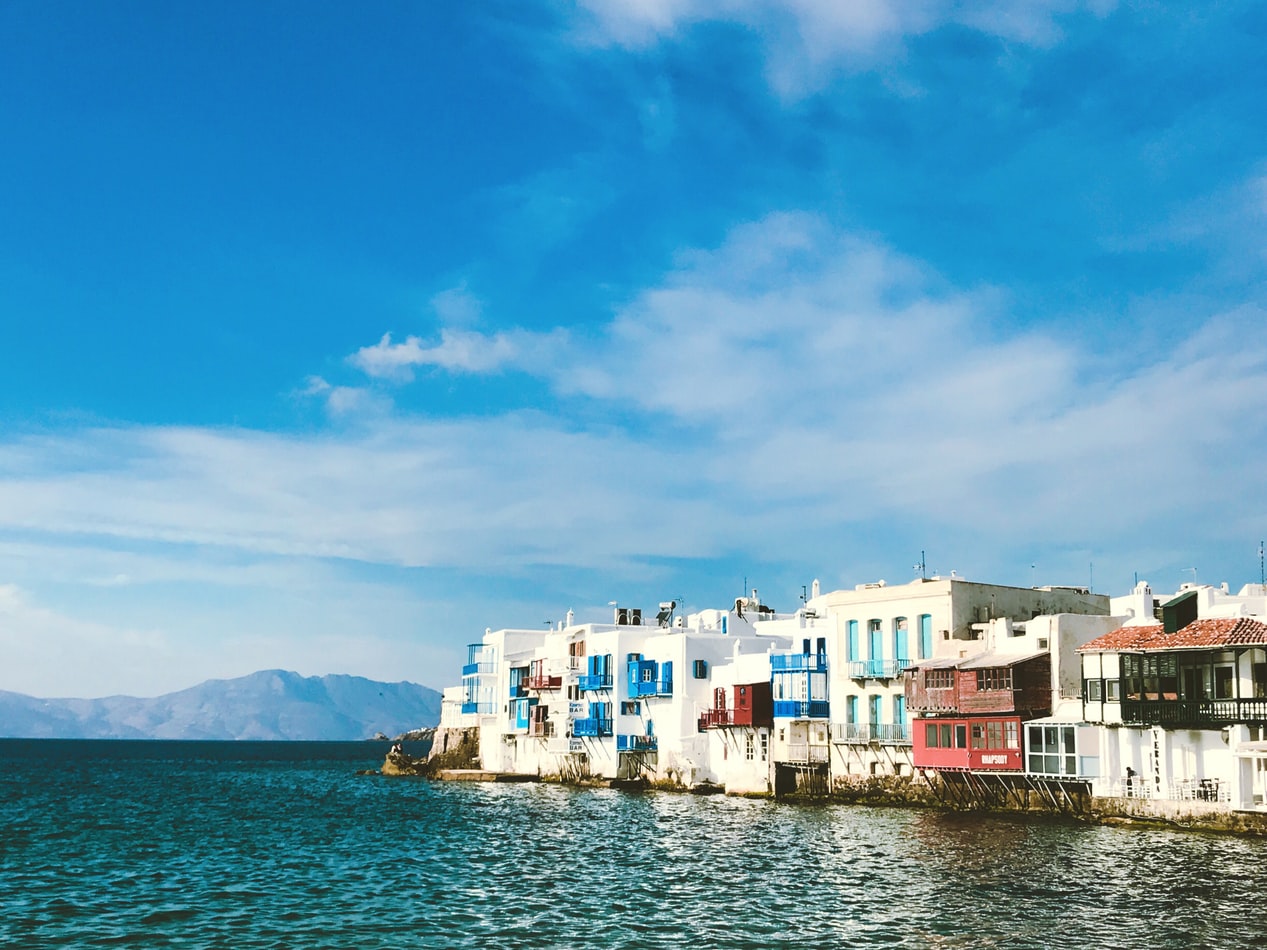
Whilst the busy resort town of Kusadasi offers much in the way of shopping and dining – not to mention a flourishing beach life scene, the real jewel here is Ephesus and the stunning ruined city that really take centre stage. With only 20% of the classical ruins having been excavated, this archaeological wonder has already gained the status as Europe’s most complete classical metropolis. And a metropolis it really is; built in the 10th century BC this UNESCO World Heritage site is nothing short of spectacular. Although regrettably very little remains of the Temple of Artemis (one of the seven wonders of the ancient world), the superb Library of Celsus’ façade is practically intact and it is one of life’s great joys to attend an evening performance in the illuminated ruins once all the tourists have left. The history of the city is fascinating and multi-layered and it is well worth reading up on this beforehand if a visit is planned. Another point of interest for historians would be the house of the Virgin Mary, located on the romantically named Mount Nightingale and just nine kilometres away from Ephesus proper. Legend has it that Mary (along with St. John) spent her final years here, secluded from the rest of the population, spreading Christianity. An edifying experience, even for non-believers. For the less historical minded amongst you, Kusadasi offers plenty in the way of activities. After a stroll through the town, jump in a taxi to Ladies’ Beach (men are allowed), sample a Turkish kebap on one of the many beachfront restaurants and enjoy the clement weather. If you do want to venture further afield, then the crystal clear beaches of Guzelcamli (or the Millipark), the cave of Zeus and the white scalloped natural pools at Pamukkale, known as Cleopatra’s pools, are definitely worth a visit.
Pátmos, Greece
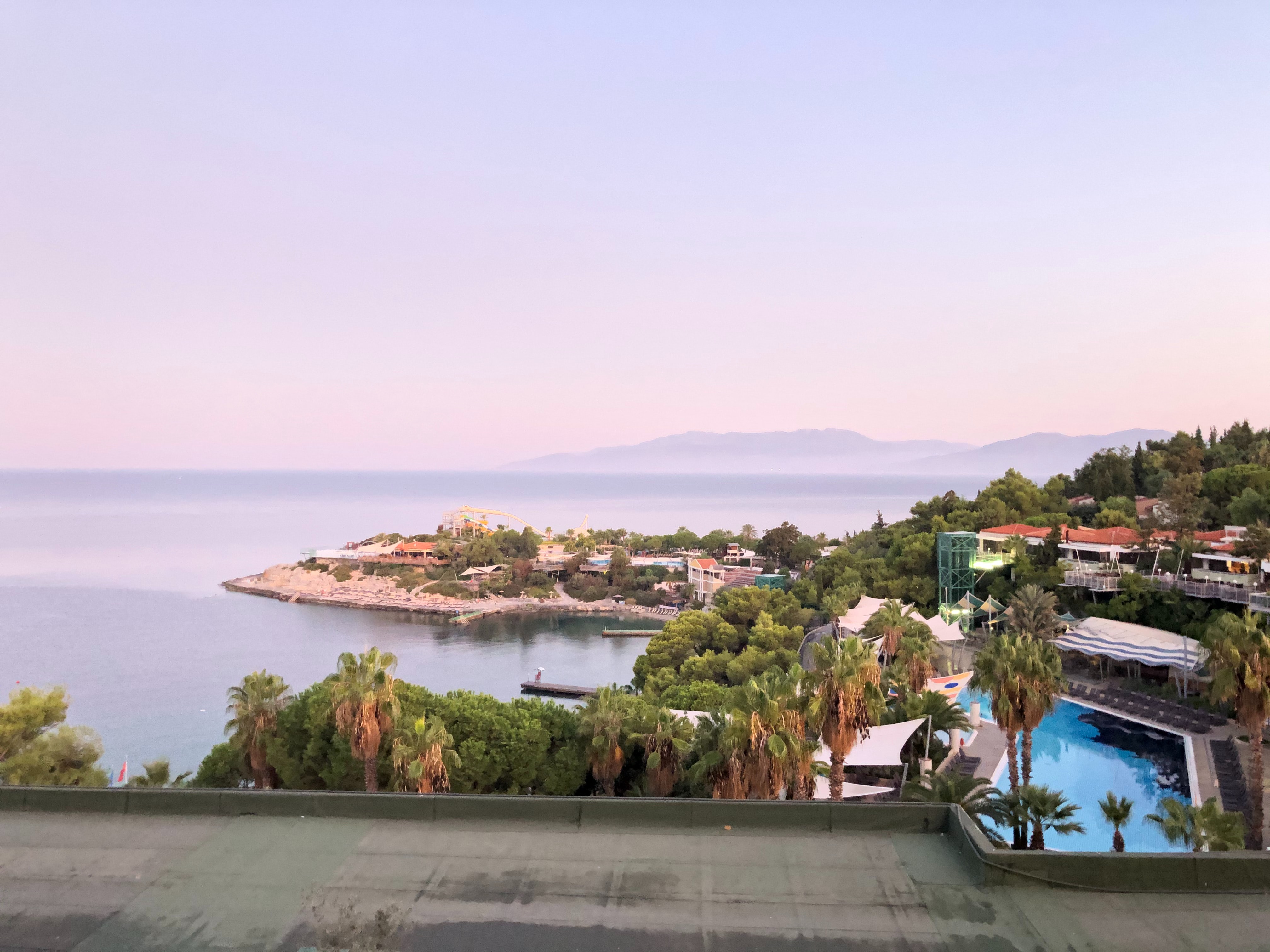
For better or worse, it can be difficult to reach Patmos—for many travelers, this lack of access is definitely for the better, since the island retains the air of an unspoiled retreat. Rocky and barren, the small, 34-square-km (21-square-mi) island lies beyond the islands of Kalymnos and Leros, northwest of Kos. Here on a hillside is the Monastery of the Apocalypse, which enshrines the cave where St. John received the Revelation in AD 95. Scattered evidence of Mycenaean presence remains on Patmos, and walls of the classical period indicate the existence of a town near Skala. Most of the island’s approximately 2,800 people live in three villages: Skala, medieval Chora, and the small rural settlement of Kambos. The island is popular among the faithful making pilgrimages to the monastery as well as with vacationing Athenians and a newly growing community of international trendsetters—designers, artists, poets, and “taste gurus” (to quote Vogue’s July 2011 write-up of the island)—who have bought homes in Chora. These stylemeisters followed in the footsteps of Alexandrian John Stefanidis and the English artist Teddy Millington-Drake who, in the early ’60s, set about creating what eventually became hailed as one of the most gorgeous island homes in the world. The word soon spread thanks to their many guests (who included Jacqueline Kennedy Onassis) but, happily, administrators have carefully contained development, and as a result, Patmos retains its charm and natural beauty—even in the busy month of August.

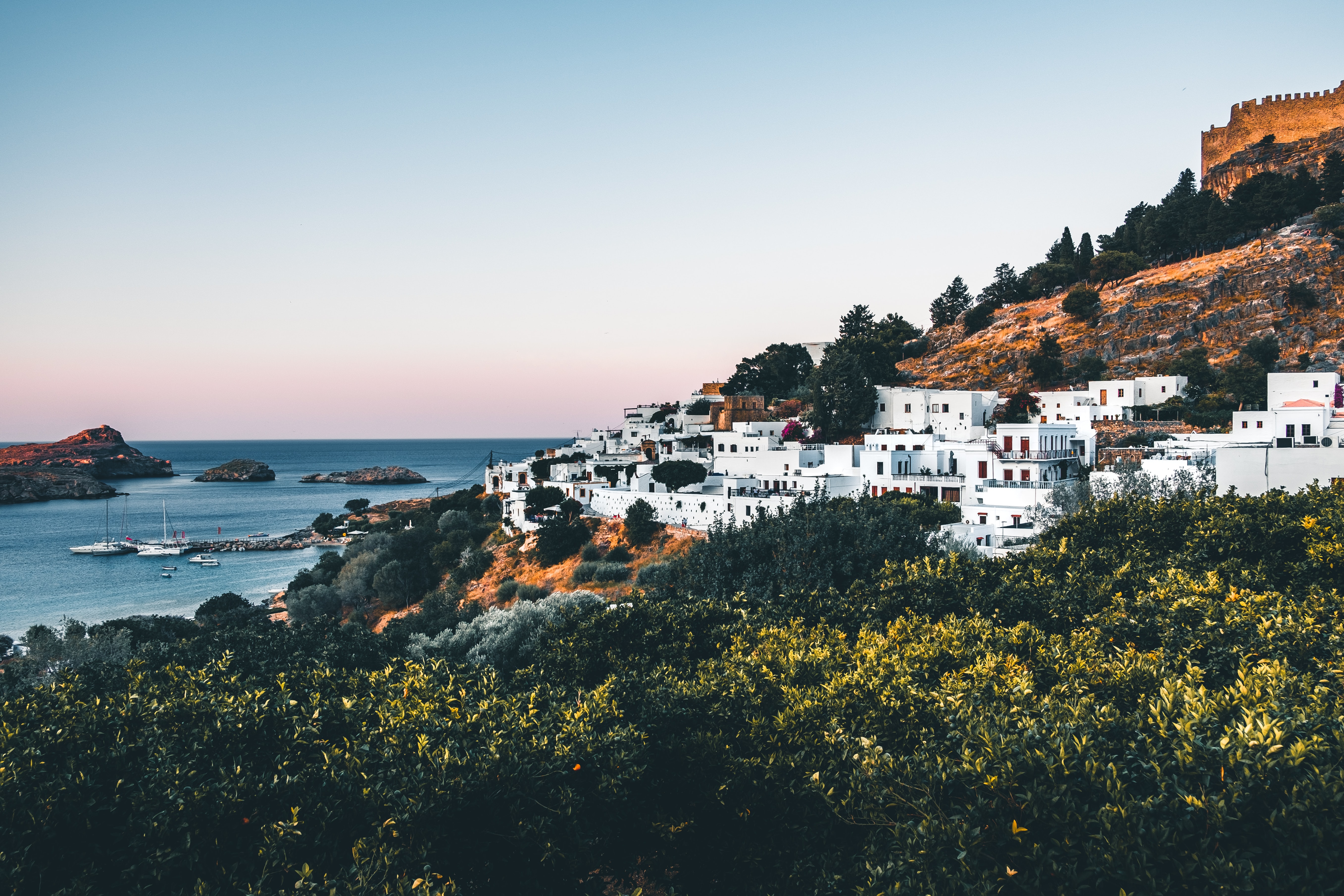
Rhodes, Greece
Early travelers described Rhodes as a town of two parts: a castle or high town (Collachium) and a lower city. Today Rhodes town—sometimes referred to as Ródos town—is still a city of two parts: the Old Town, a UNESCO World Heritage site that incorporates the high town and lower city, and the modern metropolis, or New Town, spreading away from the walls that encircle the Old Town. The narrow streets of the Old Town are for the most part closed to cars and are lined with Orthodox and Catholic churches, Turkish houses (some of which follow the ancient orthogonal plan), and medieval public buildings with exterior staircases and facades elegantly constructed of well-cut limestone from Lindos. Careful reconstruction in recent years has enhanced the harmonious effect.
Athens, Greece
Welcome to Athens. On arrival at Athens airport make your way to the Arrivals Hall to meet our representative, followed by a transfer to our group hotel. At the hotel, visit our hospitality desk in the lobby to meet our team who will provide you with useful information regarding pre-embarkation procedures and about your time in Athens.
You will also receive cabin tags for your luggage. Please clearly label the tags with your name and your cabin number on the ship. This evening offers time to relax in preparation for tomorrow.
Accommodation: Athens Hotel
Athens, Greece
After breakfast, enjoy a morning ‘Your Choice’ experience. Walk in Socrates' footsteps, explore the ancient wonders of the Acropolis, or immerse yourself in Athens' vibrant food scene with a local guide. You can then rejoin the coach to return to our hotel or take a leisurely stroll to the nearby Plaka district. This charming area is filled with streets and alleys lined with restaurants, cafes, and shops—ideal for a bite to eat or picking up gifts (lunch at your own expense). Tonight, we kick off our journey with a Welcome Event, celebrating Greek style.
With a rich recorded history spanning 3,500 years, Athens is a city brimming with stories. Widely hailed as the ‘cradle of civilisation’ and revered as the birthplace of democracy, philosophy and theatre, Athens seamlessly merges its illustrious past with its vibrant present. This bustling metropolis, home to three million inhabitants, is adorned with a wealth of ancient sites that punctuate its landscape like temples, iconic columns and former city centres. Athens’ influence in antiquity transcended its borders, ushering in a Golden Age characterised by political discussion, education and philosophy, hosting luminaries such as Socrates, Plato and Aristotle. The democratic principles forged in Athens laid the groundwork for modern governance systems worldwide.
Yet, Athens is more than just a relic of ancient history. As a historical seat of power, it has weathered waves of invasions, shaping its contemporary identity with a diverse fusion of architectural styles, culinary delights and cultural traditions. Whether you are wandering amid ancient ruins or indulging in the flavours of modern Greek cuisine, Athens offers a captivating journey through the ages, beckoning travellers from across the globe to explore its timeless allure.
Personalise your exploration with our included ‘Your Choice’ experiences.
Option 1 – Morning experience: A Taste of Athens
For foodie fans, travellers who have visited Athens before, and those who enjoy a personal view of Athens, this experience is perfect. We begin our guided walk at Syntagma Square, where Greece’s Parliament building stands, guarded by traditionally attired Evzone guards. Our local expert warmly welcomes you to their home city, leading you on an intriguing walking tour through Athens’ historical areas. With passion and knowledge, they unveil authentic Athens and its secrets.
Stroll through Plaka, the charming ‘old quarter’ of Athens nestled at the base of the Acropolis. Admire its eclectic neoclassical architecture, picturesque alleys, and inviting tavernas. Pause at a colourful local cafe to indulge in Greek delicacies such as olives, fragrant cheeses and cured meats.
Continue through Monastir Aki, famous for its bustling flea market and vibrant shops brimming with local crafts and souvenirs. From there, we wander to Thission, offering the best panoramic views of the Acropolis, Ancient Agora, and the majestic Temple of Hephaestus. Here, we treat ourselves to a traditional Greek coffee, accompanied perhaps by a sweet delight like baklava, a favourite among Greeks for its rich layers of pastry, nuts and honey. Our morning offers us a taste of this fascinating city.
Option 2 – Morning experience: Classic Athens
This comprehensive tour combines a visit to the Acropolis with the city’s major landmarks. Begin with a view of the Greek parliament at Syntagma Square, once a royal residence, where the iconic Evzones still stand guard in traditional attire. Next, enjoy a brief photo stop at the Panathenaic Stadium, the site of the first modern Olympic Games in 1896, where athletes revived the ancient Olympic spirit.
Perched high above the city, the Acropolis is not only an architectural marvel, but also a symbol of the birthplace of democracy. This ancient citadel stands as a testament to the enduring legacy of Greek culture and ideals, representing advancements in art, architecture and political thought that originated in Athens. Feel the essence of civic pride and religious devotion in ancient Greek society, at the city’s centre for political and cultural life. The Parthenon exemplifies the height of classical Greek architecture, adorned with Doric columns and intricate sculptures. Built under the leadership of Pericles, the Parthenon symbolised the city’s wealth and power, with friezes and statues depicting various mythological scenes.
After touring the Acropolis, take a short walk to the Acropolis Museum. This modern museum houses over 3,000 artefacts from the Athenian Acropolis, offering unique insights into ancient Greek life and including an archaeological excavation beneath it.
Option 3 – Morning experience: Highlights of Athens
This panoramic tour offers a captivating introduction to the ancient city, with visits to its most iconic landmarks.
Begin at the Greek Parliament in Syntagma Square, once a royal palace, where the Evzones, dressed in traditional uniforms, stand guard in a solemn ceremonial display. Next, enjoy a photo stop at the historic Panathenaic Stadium, the site of the first modern Olympic Games in 1896, where the Olympic spirit was reborn. Continuing the Olympic theme, head to the Temple of Zeus, a colossal, ruined sanctuary dedicated to the king of the Olympian gods. Then, take in sweeping views of the Acropolis, the ancient citadel perched high above Athens, home to legendary temples like the Parthenon, built in honour of the city’s patron goddess, Athena. On a facing hilltop lies the Agora, the bustling heart of ancient Athenian life, a vibrant marketplace and political centre where citizens once gathered to shop, debate, and shape the course of democracy. Rejoin the coach for a short drive or take a stroll to the city’s popular Plaka precinct nearby. A series of streets and laneways filled with restaurants, cafes and shops, it is the perfect place to grab a bite to eat or shop for gifts to purchase before returning to your hotel.
Accommodation: Athens Hotel
Meals: Breakfast, Welcome Event canapés
Piraeus, Greece
It’s no wonder that all roads lead to the fascinating and maddening metropolis of Athens. Lift your eyes 200 feet above the city to the Parthenon, its honey-color marble columns rising from a massive limestone base, and you behold architectural perfection that has not been surpassed in 2,500 years. But, today, this shrine of classical form dominates a 21st-century boomtown. To experience Athens—Athína in Greek—fully is to understand the essence of Greece: ancient monuments surviving in a sea of cement, startling beauty amid the squalor, tradition juxtaposed with modernity. Locals depend on humor and flexibility to deal with the chaos; you should do the same. The rewards are immense. Although Athens covers a huge area, the major landmarks of the ancient Greek, Roman, and Byzantine periods are close to the modern city center. You can easily walk from the Acropolis to many other key sites, taking time to browse in shops and relax in cafés and tavernas along the way. From many quarters of the city you can glimpse “the glory that was Greece” in the form of the Acropolis looming above the horizon, but only by actually climbing that rocky precipice can you feel the impact of the ancient settlement. The Acropolis and Filopappou, two craggy hills sitting side by side; the ancient Agora (marketplace); and Kerameikos, the first cemetery, form the core of ancient and Roman Athens. Along the Unification of Archaeological Sites promenade, you can follow stone-paved, tree-lined walkways from site to site, undisturbed by traffic. Cars have also been banned or reduced in other streets in the historical center. In the National Archaeological Museum, vast numbers of artifacts illustrate the many millennia of Greek civilization; smaller museums such as the Goulandris Museum of Cycladic Art Museum and the Byzantine and Christian Museum illuminate the history of particular regions or periods. Athens may seem like one huge city, but it is really a conglomeration of neighborhoods with distinctive characters. The Eastern influences that prevailed during the 400-year rule of the Ottoman Empire are still evident in Monastiraki, the bazaar area near the foot of the Acropolis. On the northern slope of the Acropolis, stroll through Plaka (if possible by moonlight), an area of tranquil streets lined with renovated mansions, to get the flavor of the 19th-century’s gracious lifestyle. The narrow lanes of Anafiotika, a section of Plaka, thread past tiny churches and small, color-washed houses with wooden upper stories, recalling a Cycladic island village. In this maze of winding streets, vestiges of the older city are everywhere: crumbling stairways lined with festive tavernas; dank cellars filled with wine vats; occasionally a court or diminutive garden, enclosed within high walls and filled with magnolia trees and the flaming trumpet-shaped flowers of hibiscus bushes. Formerly run-down old quarters, such as Thission, Gazi and Psirri, popular nightlife areas filled with bars and mezedopoleia (similar to tapas bars), are now in the process of gentrification, although they still retain much of their original charm, as does the colorful produce and meat market on Athinas. The area around Syntagma Square, the tourist hub, and Omonia Square, the commercial heart of the city about 1 km (½ mi) northwest, is distinctly European, having been designed by the court architects of King Otho, a Bavarian, in the 19th century. The chic shops and bistros of ritzy Kolonaki nestle at the foot of Mt. Lycabettus, Athens’s highest hill (909 feet). Each of Athens’s outlying suburbs has a distinctive character: in the north is wealthy, tree-lined Kifissia, once a summer resort for aristocratic Athenians, and in the south and southeast lie Glyfada, Voula, and Vouliagmeni, with their sandy beaches, seaside bars, and lively summer nightlife. Just beyond the city’s southern fringes is Piraeus, a bustling port city of waterside fish tavernas and Saronic Gulf views.
Mykonos, Greece
Although the fishing boats still go out in good weather, Mykonos largely makes its living from tourism these days. The summer crowds have turned one of the poorest islands in Greece into one of the richest. Old Mykonians complain that their young, who have inherited stores where their grandfathers once sold eggs or wine, get so much rent that they have lost ambition, and in summer sit around pool bars at night with their friends, and hang out in Athens in winter when island life is less scintillating. Put firmly on the map by Jackie O in the 1960s, Mykonos town—called Hora by the locals—remains the Saint-Tropez of the Greek islands. The scenery is memorable, with its whitewashed streets, Little Venice, the Kato Myli ridge of windmills, and Kastro, the town’s medieval quarter. Its cubical two- or three-story houses and churches, with their red or blue doors and domes and wooden balconies, have been long celebrated as some of the best examples of classic Cycladic architecture. Luckily, the Greek Archaeological Service decided to preserve the town, even when the Mykonians would have preferred to rebuild, and so the Old Town has been impressively preserved. Pink oleander, scarlet hibiscus, and trailing green pepper trees form a contrast amid the dazzling whiteness, whose frequent renewal with whitewash is required by law. Any visitor who has the pleasure of getting lost in its narrow streets (made all the narrower by the many outdoor stone staircases, which maximize housing space in the crowded village) will appreciate how its confusing layout was designed to foil pirates—if it was designed at all. After Mykonos fell under Turkish rule in 1537, the Ottomans allowed the islanders to arm their vessels against pirates, which had a contradictory effect: many of them found that raiding other islands was more profitable than tilling arid land. At the height of Aegean piracy, Mykonos was the principal headquarters of the corsair fleets—the place where pirates met their fellows, found willing women, and filled out their crews. Eventually the illicit activity evolved into a legitimate and thriving trade network. Morning on Mykonos town’s main quay is busy with deliveries, visitors for the Delos boats, lazy breakfasters, and street cleaners dealing with the previous night’s mess. In late morning the cruise-boat people arrive, and the shops are all open. In early afternoon, shaded outdoor tavernas are full of diners eating salads (Mykonos’s produce is mostly imported); music is absent or kept low. In mid- and late afternoon, the town feels sleepy, since so many people are at the beach, on excursions, or sleeping in their air-conditioned rooms; even some tourist shops close for siesta. By sunset, people have come back from the beach, having taken their showers and rested. At night, the atmosphere in Mykonos ramps up. The cruise-boat people are mostly gone, coughing three-wheelers make no deliveries in the narrow streets, and everyone is dressed sexy for summer and starting to shimmy with the scene. Many shops stay open past midnight, the restaurants fill up, and the bars and discos make ice cubes as fast as they can. Ready to dive in? Begin your tour of Mykonos town (Hora) by starting out at its heart: Mando Mavrogenous Square.
Kusadasi, Turkey
Whilst the busy resort town of Kusadasi offers much in the way of shopping and dining – not to mention a flourishing beach life scene, the real jewel here is Ephesus and the stunning ruined city that really take centre stage. With only 20% of the classical ruins having been excavated, this archaeological wonder has already gained the status as Europe’s most complete classical metropolis. And a metropolis it really is; built in the 10th century BC this UNESCO World Heritage site is nothing short of spectacular. Although regrettably very little remains of the Temple of Artemis (one of the seven wonders of the ancient world), the superb Library of Celsus’ façade is practically intact and it is one of life’s great joys to attend an evening performance in the illuminated ruins once all the tourists have left. The history of the city is fascinating and multi-layered and it is well worth reading up on this beforehand if a visit is planned. Another point of interest for historians would be the house of the Virgin Mary, located on the romantically named Mount Nightingale and just nine kilometres away from Ephesus proper. Legend has it that Mary (along with St. John) spent her final years here, secluded from the rest of the population, spreading Christianity. An edifying experience, even for non-believers. For the less historical minded amongst you, Kusadasi offers plenty in the way of activities. After a stroll through the town, jump in a taxi to Ladies’ Beach (men are allowed), sample a Turkish kebap on one of the many beachfront restaurants and enjoy the clement weather. If you do want to venture further afield, then the crystal clear beaches of Guzelcamli (or the Millipark), the cave of Zeus and the white scalloped natural pools at Pamukkale, known as Cleopatra’s pools, are definitely worth a visit.
Pátmos, Greece
For better or worse, it can be difficult to reach Patmos—for many travelers, this lack of access is definitely for the better, since the island retains the air of an unspoiled retreat. Rocky and barren, the small, 34-square-km (21-square-mi) island lies beyond the islands of Kalymnos and Leros, northwest of Kos. Here on a hillside is the Monastery of the Apocalypse, which enshrines the cave where St. John received the Revelation in AD 95. Scattered evidence of Mycenaean presence remains on Patmos, and walls of the classical period indicate the existence of a town near Skala. Most of the island’s approximately 2,800 people live in three villages: Skala, medieval Chora, and the small rural settlement of Kambos. The island is popular among the faithful making pilgrimages to the monastery as well as with vacationing Athenians and a newly growing community of international trendsetters—designers, artists, poets, and “taste gurus” (to quote Vogue’s July 2011 write-up of the island)—who have bought homes in Chora. These stylemeisters followed in the footsteps of Alexandrian John Stefanidis and the English artist Teddy Millington-Drake who, in the early ’60s, set about creating what eventually became hailed as one of the most gorgeous island homes in the world. The word soon spread thanks to their many guests (who included Jacqueline Kennedy Onassis) but, happily, administrators have carefully contained development, and as a result, Patmos retains its charm and natural beauty—even in the busy month of August.
Rhodes, Greece
Early travelers described Rhodes as a town of two parts: a castle or high town (Collachium) and a lower city. Today Rhodes town—sometimes referred to as Ródos town—is still a city of two parts: the Old Town, a UNESCO World Heritage site that incorporates the high town and lower city, and the modern metropolis, or New Town, spreading away from the walls that encircle the Old Town. The narrow streets of the Old Town are for the most part closed to cars and are lined with Orthodox and Catholic churches, Turkish houses (some of which follow the ancient orthogonal plan), and medieval public buildings with exterior staircases and facades elegantly constructed of well-cut limestone from Lindos. Careful reconstruction in recent years has enhanced the harmonious effect.
Agios Nikólaos, Kríti, Greece
Sailing to Greece’s largest island we make port for the afternoon at the ancient city of Agios Nikolaos, a vibrant seaside town rich in historical charm. The island of Crete is a land of myths, history, and natural wonders steeped in ancient mythology. In fact, Crete is believed to be the birthplace of Zeus, king of the gods. Its labyrinthine ruins resonate with tales of the Minotaur and King Minos. The Minoans, Europe’s oldest civilisation, left behind the formidable Palace of Knossos, now a UNESCO World Heritage site. Crete’s landscape is equally captivating, with rugged mountains, fertile plains, and idyllic beaches kissed by azure waters. Charming villages dot the countryside, where time seems to stand still amidst whitewashed buildings adorned with vibrant bougainvillea.
Choose to explore Agios Nikolaos this afternoon or enjoy one of our ‘Your Choice’ experiences. In Agios Nikolaos you will find shops full of unique traditional Cretian art artifacts, replicas from local archaeological museums, Cretian jewellery, and intricate embroidery. Additionally, local products and delicacies offer a taste of the region’s rich culinary heritage. The town is surrounded by popular beaches, easily accessible from the downtown area.
Personalise your exploration with our included ‘Your Choice’ experiences.
Option 1 – Afternoon experience: The Minoan Capital of Knossos
One hour’s drive from Agios Nikolaos we discover the Knossos excavation site, where we meet the fascinating early civilisation of the Minoans. Sir Arthur Evans’ archaeological discoveries unveiled a city dating back to 4000 B.C., revealing the ancient Minoan Kingdom. The Minoans, renowned for their advanced culture, thrived on Crete with sophisticated art, architecture, and maritime trade, shaping the Aegean region’s early history. At Knossos, we explore their Palace, adorned with frescoes, shields, the Hall of the Royal Guard, the King’s Chamber with its alabaster throne, and the Queen’s Apartment. Originally built around 1900 BC, Knossos was rebuilt after earthquakes and catastrophes.
The Minoan civilisation declined following the eruption of Santorini around 1600 BC, which caused widespread devastation across the Aegean. Despite subsequent rebuilding efforts, including the Palace’s reconstruction, Knossos ultimately succumbed to fire around 1400 BC. Our guide illuminates the Minoans’ cultural and technological achievements, offering insight into their religious practices, social structure, and economic prowess.
Option 2 – Afternoon experience: A Modern Twist on an Ancient Wine
Our visit to a Cretan vineyard combines traditional winemaking with modern techniques. This family-run operation starts with exceptional grapes nurtured through meticulous vineyard management and artisanal methods. The winemaking process is both refined and minimalist, with most vinification done in stainless-steel tanks. Recent innovations in oak fermentation are set to enhance the red wines, which age in oak barrels for 10 months, while roussanne is matured in small oak barrels.
Your tour includes a visit to the production area, wine cellars and bottling facilities. The experience concludes with a tasting of Cretan wines, accompanied by a mezze plate of local delicacies. Cretan wines, with their deep-rooted history and modern resurgence, offer a unique and flavourful exploration of the island’s rich viticultural heritage.
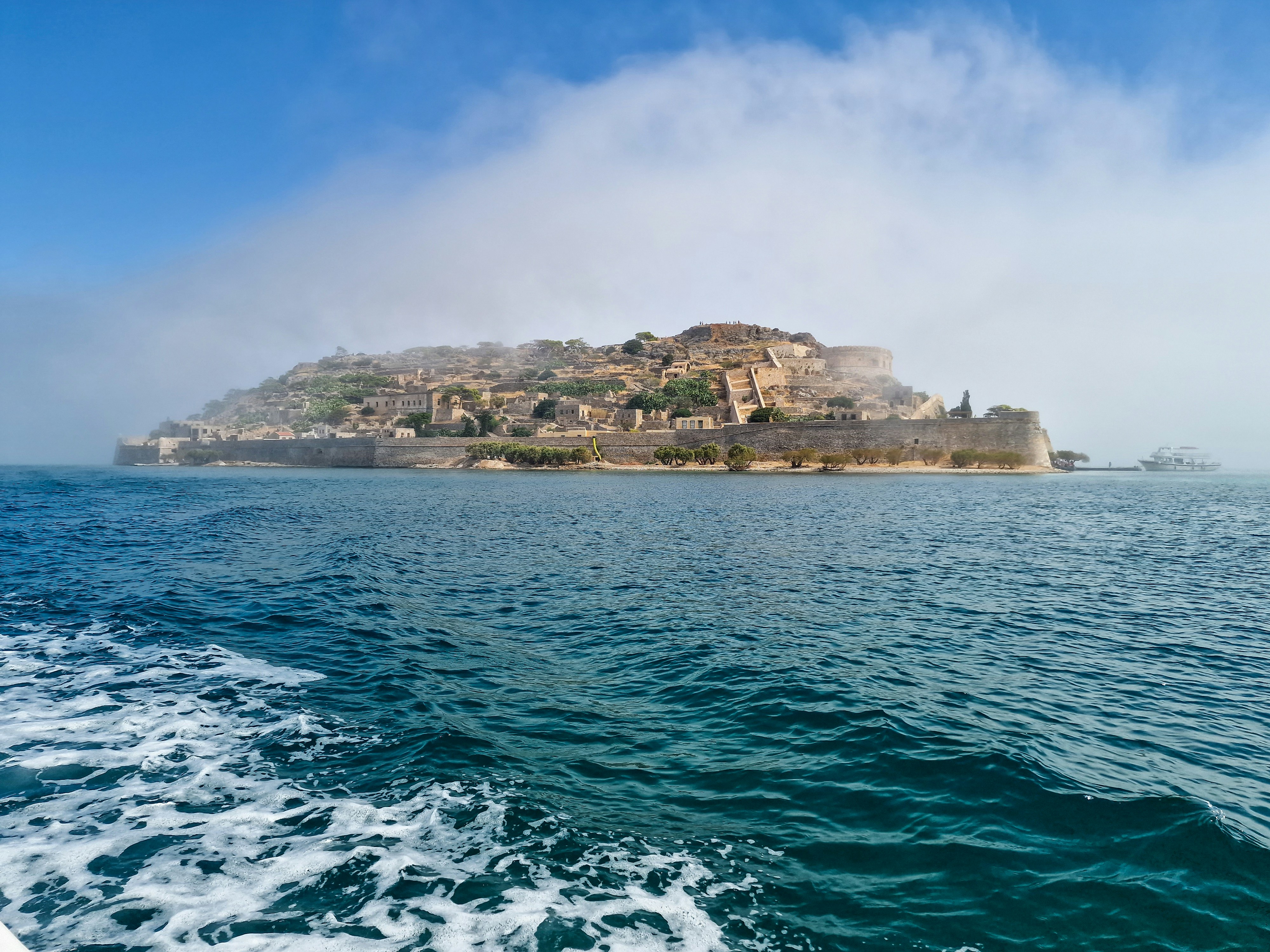
Khania, Greece
The second-largest city in Crete and capital of the Homonym Prefecture, Chania is located in Minoan Kidonia at the end of the Homonym Gulf between the Akrotiri and Onicha peninsulas. Chania City is divided into two parts; the Old Town, which is comprised of several connected districts built around the old Venetian Harbour, and New Town, a larger, more modern city whose centre is situated next to, and south of, the Old Town. The Old Town is home to Venetian buildings and Turkish elements that combine to create a unique architectural style, and is considered to be the most beautiful urban district on Crete. It was once surrounded by old Venetian fortifications that separated it from the New Town; however, only the eastern and western parts remain today. Due to its compact size, Skiathos can be easily explored in just a single day.
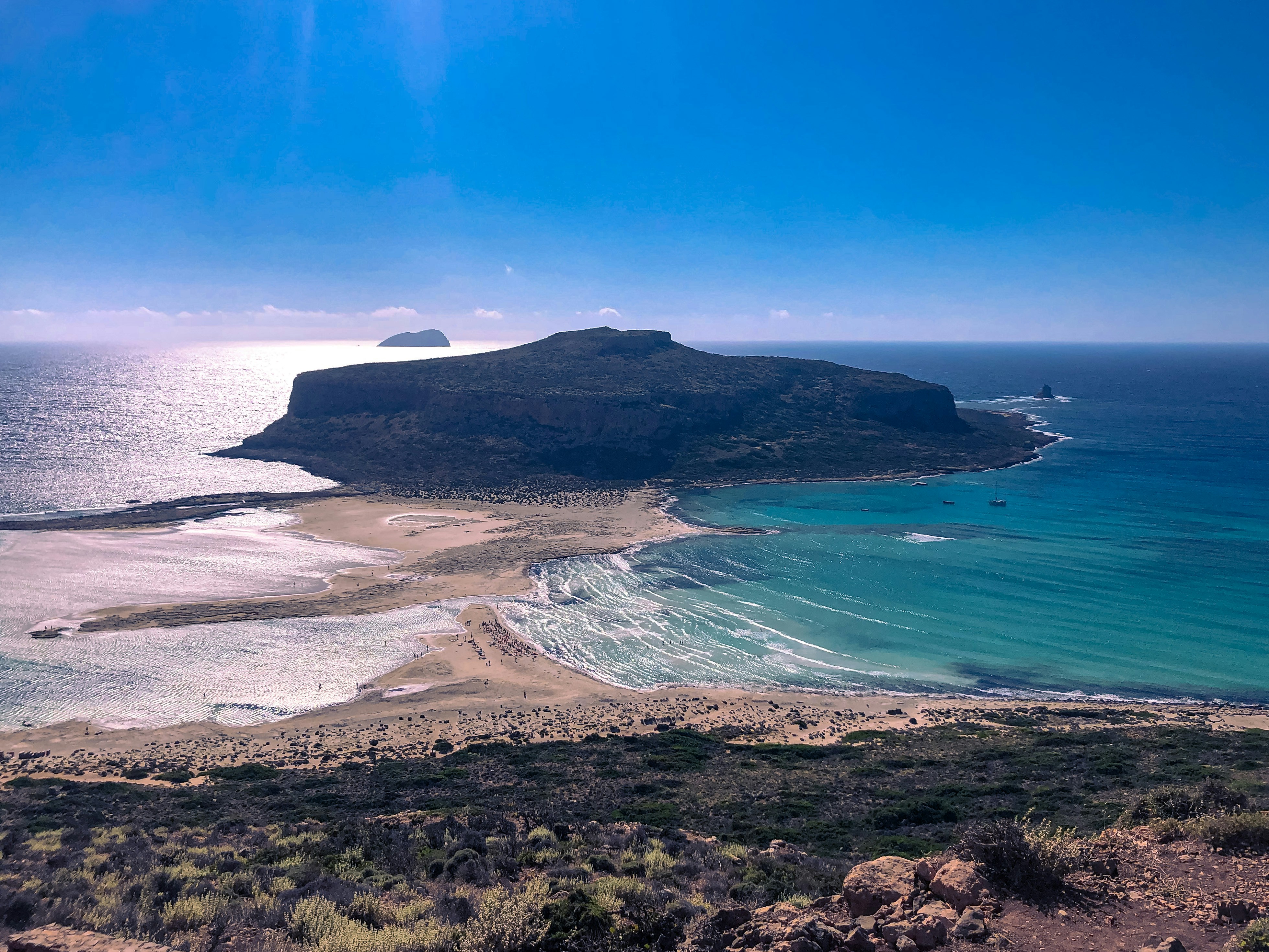
Santorini, Greece
Undoubtedly the most extraordinary island in the Aegean, crescent-shape Santorini remains a mandatory stop on the Cycladic tourist route—even if it’s necessary to enjoy the sensational sunsets from Ia, the fascinating excavations, and the dazzling white towns with a million other travelers. Called Kállisti (the “Loveliest”) when first settled, the island has now reverted to its subsequent name of Thira, after the 9th-century-BC Dorian colonizer Thiras. The place is better known, however, these days as Santorini, a name derived from its patroness, St. Irene of Thessaloniki, the Byzantine empress who restored icons to Orthodoxy and died in 802. You can fly conveniently to Santorini, but to enjoy a true Santorini rite of passage, opt instead for the boat trip here, which provides a spectacular introduction. After the boat sails between Sikinos and Ios, your deck-side perch approaches two close islands with a passage between them. The bigger one on the left is Santorini, and the smaller on the right is Thirassia. Passing between them, you see the village of Ia adorning Santorini’s northernmost cliff like a white geometric beehive. You are in the caldera (volcanic crater), one of the world’s truly breathtaking sights: a demilune of cliffs rising 1,100 feet, with the white clusters of the towns of Fira and Ia perched along the top. The bay, once the high center of the island, is 1,300 feet in some places, so deep that when boats dock in Santorini’s shabby little port of Athinios, they do not drop anchor. The encircling cliffs are the ancient rim of a still-active volcano, and you are sailing east across its flooded caldera. On your right are the Burnt isles, the White isle, and other volcanic remnants, all lined up as if some outsize display in a geology museum. Hephaestus’s subterranean fires smolder still—the volcano erupted in 198 BC, about 735, and there was an earthquake in 1956. Indeed, Santorini and its four neighboring islets are the fragmentary remains of a larger landmass that exploded about 1600 BC: the volcano’s core blew sky high, and the sea rushed into the abyss to create the great bay, which measures 10 km by 7 km (6 mi by 4½ mi) and is 1,292 feet deep. The other pieces of the rim, which broke off in later eruptions, are Thirassia, where a few hundred people live, and deserted little Aspronissi (“White isle”). In the center of the bay, black and uninhabited, two cones, the Burnt Isles of Palea Kameni and Nea Kameni, appeared between 1573 and 1925. There has been too much speculation about the identification of Santorini with the mythical Atlantis, mentioned in Egyptian papyri and by Plato (who says it’s in the Atlantic), but myths are hard to pin down. This is not true of old arguments about whether tidal waves from Santorini’s cataclysmic explosion destroyed Minoan civilization on Crete, 113 km (70 mi) away. The latest carbon-dating evidence, which points to a few years before 1600 BC for the eruption, clearly indicates that the Minoans outlasted the eruption by a couple of hundred years, but most probably in a weakened state. In fact, the island still endures hardships: since antiquity, Santorini has depended on rain collected in cisterns for drinking and irrigating—the well water is often brackish—and the serious shortage is alleviated by the importation of water. However, the volcanic soil also yields riches: small, intense tomatoes with tough skins used for tomato paste (good restaurants here serve them); the famous Santorini fava beans, which have a light, fresh taste; barley; wheat; and white-skin eggplants.
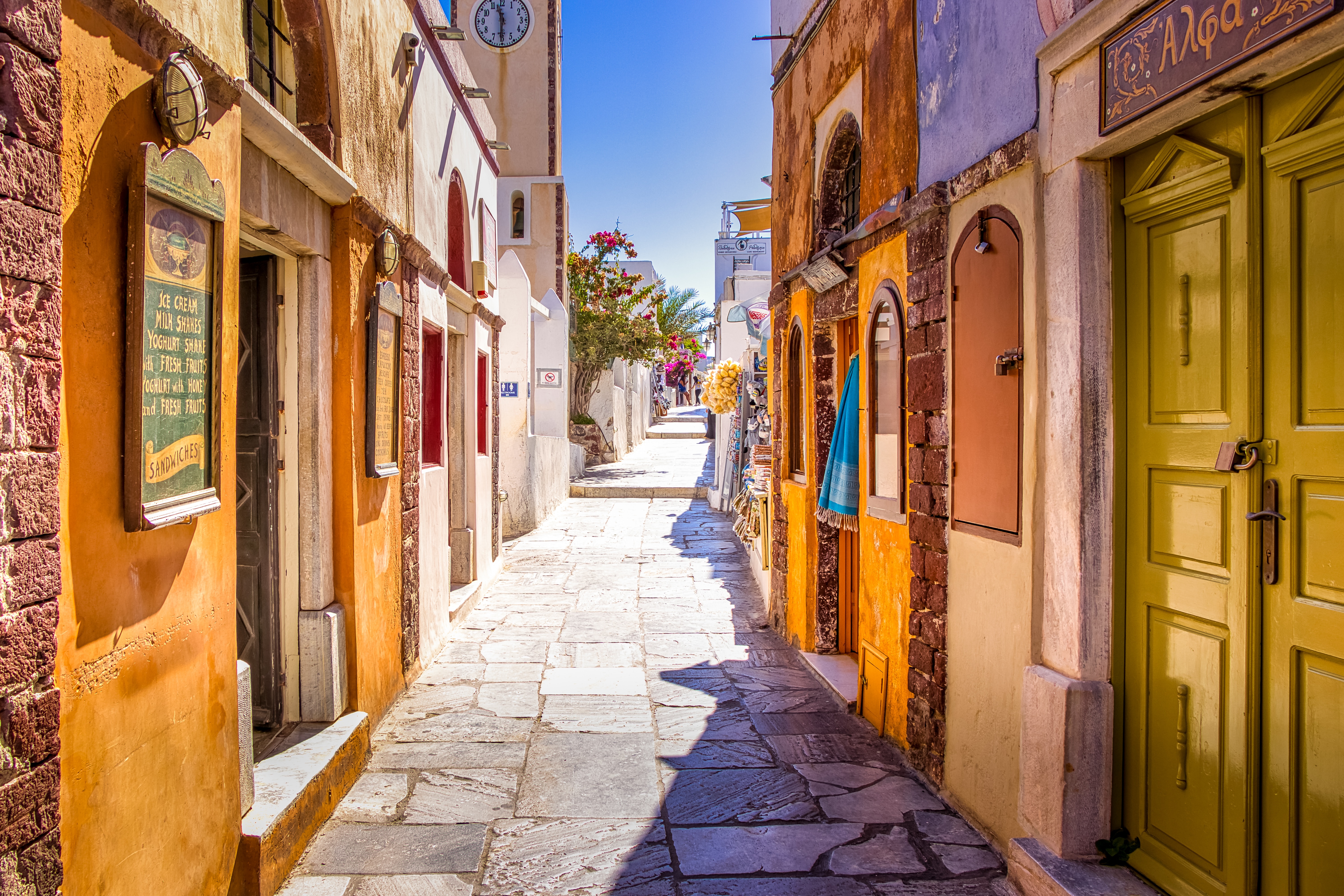
Syros, Greece
Today's visit offers a glimpse into a lesser-known island, providing an authentic local experience rather than a typical tourist destination. As the administrative centre of the Cyclades, a group of islands south-east of the mainland, Syros combines cosmopolitan flair with authentic Greek-island charm, all while steering clear of the crowds typical of its more famous island counterparts. The island is celebrated for its pristine beaches, including Kini, Vari, Azolimnos, and Galissas, as well as its renowned Aegean cuisine.
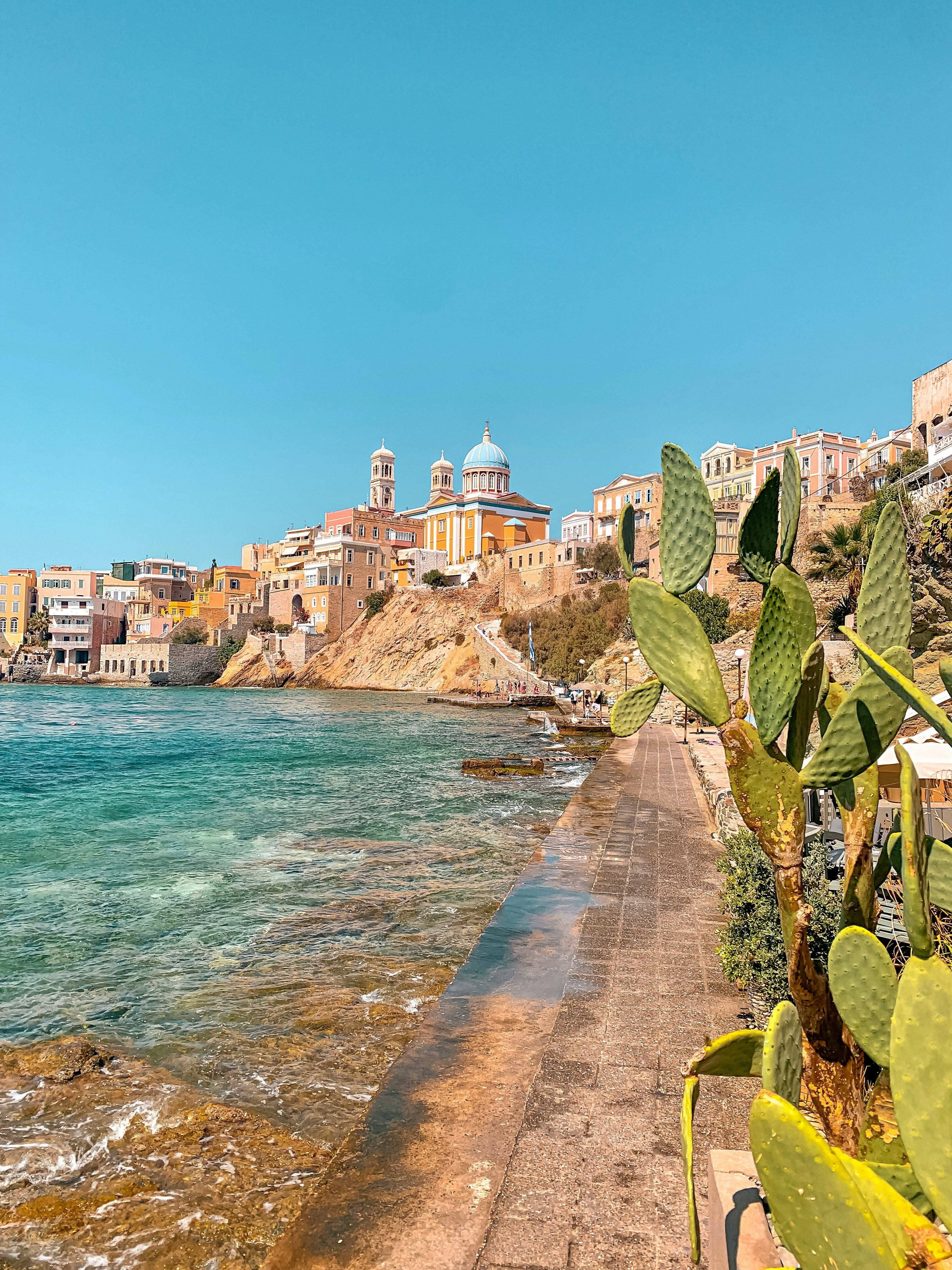
Syros’s capital, Ermoupolis, stands out with its grand architecture and prominent Orthodox church, contrasting beautifully with the nearby hilltop enclave of Ano Syros. The latter, a quintessential Cycladic village, features Roman Catholic monasteries and churches. This blend of influences – stemming from Venetian and Ottoman rule – has left a lasting imprint on the island’s cultural and architectural heritage. The name ‘Syros’ is believed to derive from the ancient Greek term Syr or Syros, hinting at its mythological roots. With a population of around 21,000, Syros offers a quintessentially Greek Island experience.
Personalise your exploration with our included ‘Your Choice’ experiences.
Option 1 – Morning experience: The Syros Trifecta
This morning, immerse yourself in the charm of Syros as you explore Ermoupolis, Ano Syros, and the Vaporia Quarter. Start your adventure in Ermoupolis, the bustling capital of the Cyclades. Wander through its elegant streets lined with grand neoclassical buildings and admire the intricate facades of the Town Hall and Apollo Theater. The town’s wide squares are perfect for a leisurely stroll, showcasing a delightful mix of Italian and Greek influences.
Next, head up to Ano Syros, a picturesque Venetian hilltop settlement. Lose yourself in the narrow, winding lanes of this fortress settlement and discover its quaint stone walls and wooden lookout balconies designed to ward off pirates. At the top, the Catholic Cathedral of Saint George offers stunning views and a peek into the area’s rich history.
Finish your tour in the Vaporia Quarter, where 19th-century mansions stand as a testament to Syros’s past affluence. Wonder at the marble carvings and frescoes of these neoclassical homes while enjoying the charming streets. The striking blue dome of the church of Agios Nikolaos makes the Vaporia Quarter a truly photogenic gem.
Option 2 – Half-day experience: A Day at the Beach – Syros Style
For a perfect day in the sun, Kini Beach is your ideal destination. Just a half-hour drive from the port, this tranquil beach offers a break from the island’s busier areas.
Renowned for its golden sand and clear waters, Kini is perfect for a refreshing swim or relaxed sunbathing. The shallow seabed is great for a leisurely dip, and you can rent a sunbed and umbrella to enhance your comfort (at your own expense). Enjoy a delicious lunch, featuring fresh, locally grown and caught delicacies that highlight the best of Greek cuisine. Bask in the sun, savour the flavours of the region and unwind in this stunning coastal spot.
Piraeus, Greece
It’s no wonder that all roads lead to the fascinating and maddening metropolis of Athens. Lift your eyes 200 feet above the city to the Parthenon, its honey-color marble columns rising from a massive limestone base, and you behold architectural perfection that has not been surpassed in 2,500 years. But, today, this shrine of classical form dominates a 21st-century boomtown. To experience Athens—Athína in Greek—fully is to understand the essence of Greece: ancient monuments surviving in a sea of cement, startling beauty amid the squalor, tradition juxtaposed with modernity. Locals depend on humor and flexibility to deal with the chaos; you should do the same. The rewards are immense. Although Athens covers a huge area, the major landmarks of the ancient Greek, Roman, and Byzantine periods are close to the modern city center. You can easily walk from the Acropolis to many other key sites, taking time to browse in shops and relax in cafés and tavernas along the way. From many quarters of the city you can glimpse “the glory that was Greece” in the form of the Acropolis looming above the horizon, but only by actually climbing that rocky precipice can you feel the impact of the ancient settlement. The Acropolis and Filopappou, two craggy hills sitting side by side; the ancient Agora (marketplace); and Kerameikos, the first cemetery, form the core of ancient and Roman Athens. Along the Unification of Archaeological Sites promenade, you can follow stone-paved, tree-lined walkways from site to site, undisturbed by traffic. Cars have also been banned or reduced in other streets in the historical center. In the National Archaeological Museum, vast numbers of artifacts illustrate the many millennia of Greek civilization; smaller museums such as the Goulandris Museum of Cycladic Art Museum and the Byzantine and Christian Museum illuminate the history of particular regions or periods. Athens may seem like one huge city, but it is really a conglomeration of neighborhoods with distinctive characters. The Eastern influences that prevailed during the 400-year rule of the Ottoman Empire are still evident in Monastiraki, the bazaar area near the foot of the Acropolis. On the northern slope of the Acropolis, stroll through Plaka (if possible by moonlight), an area of tranquil streets lined with renovated mansions, to get the flavor of the 19th-century’s gracious lifestyle. The narrow lanes of Anafiotika, a section of Plaka, thread past tiny churches and small, color-washed houses with wooden upper stories, recalling a Cycladic island village. In this maze of winding streets, vestiges of the older city are everywhere: crumbling stairways lined with festive tavernas; dank cellars filled with wine vats; occasionally a court or diminutive garden, enclosed within high walls and filled with magnolia trees and the flaming trumpet-shaped flowers of hibiscus bushes. Formerly run-down old quarters, such as Thission, Gazi and Psirri, popular nightlife areas filled with bars and mezedopoleia (similar to tapas bars), are now in the process of gentrification, although they still retain much of their original charm, as does the colorful produce and meat market on Athinas. The area around Syntagma Square, the tourist hub, and Omonia Square, the commercial heart of the city about 1 km (½ mi) northwest, is distinctly European, having been designed by the court architects of King Otho, a Bavarian, in the 19th century. The chic shops and bistros of ritzy Kolonaki nestle at the foot of Mt. Lycabettus, Athens’s highest hill (909 feet). Each of Athens’s outlying suburbs has a distinctive character: in the north is wealthy, tree-lined Kifissia, once a summer resort for aristocratic Athenians, and in the south and southeast lie Glyfada, Voula, and Vouliagmeni, with their sandy beaches, seaside bars, and lively summer nightlife. Just beyond the city’s southern fringes is Piraeus, a bustling port city of waterside fish tavernas and Saronic Gulf views.
Agios Nikólaos, Kríti, Greece
Sailing to Greece’s largest island we make port for the afternoon at the ancient city of Agios Nikolaos, a vibrant seaside town rich in historical charm. The island of Crete is a land of myths, history, and natural wonders steeped in ancient mythology. In fact, Crete is believed to be the birthplace of Zeus, king of the gods. Its labyrinthine ruins resonate with tales of the Minotaur and King Minos. The Minoans, Europe’s oldest civilisation, left behind the formidable Palace of Knossos, now a UNESCO World Heritage site. Crete’s landscape is equally captivating, with rugged mountains, fertile plains, and idyllic beaches kissed by azure waters. Charming villages dot the countryside, where time seems to stand still amidst whitewashed buildings adorned with vibrant bougainvillea.
Choose to explore Agios Nikolaos this afternoon or enjoy one of our ‘Your Choice’ experiences. In Agios Nikolaos you will find shops full of unique traditional Cretian art artifacts, replicas from local archaeological museums, Cretian jewellery, and intricate embroidery. Additionally, local products and delicacies offer a taste of the region’s rich culinary heritage. The town is surrounded by popular beaches, easily accessible from the downtown area.
Personalise your exploration with our included ‘Your Choice’ experiences.
Option 1 – Afternoon experience: The Minoan Capital of Knossos
One hour’s drive from Agios Nikolaos we discover the Knossos excavation site, where we meet the fascinating early civilisation of the Minoans. Sir Arthur Evans’ archaeological discoveries unveiled a city dating back to 4000 B.C., revealing the ancient Minoan Kingdom. The Minoans, renowned for their advanced culture, thrived on Crete with sophisticated art, architecture, and maritime trade, shaping the Aegean region’s early history. At Knossos, we explore their Palace, adorned with frescoes, shields, the Hall of the Royal Guard, the King’s Chamber with its alabaster throne, and the Queen’s Apartment. Originally built around 1900 BC, Knossos was rebuilt after earthquakes and catastrophes.
The Minoan civilisation declined following the eruption of Santorini around 1600 BC, which caused widespread devastation across the Aegean. Despite subsequent rebuilding efforts, including the Palace’s reconstruction, Knossos ultimately succumbed to fire around 1400 BC. Our guide illuminates the Minoans’ cultural and technological achievements, offering insight into their religious practices, social structure, and economic prowess.
Option 2 – Afternoon experience: A Modern Twist on an Ancient Wine
Our visit to a Cretan vineyard combines traditional winemaking with modern techniques. This family-run operation starts with exceptional grapes nurtured through meticulous vineyard management and artisanal methods. The winemaking process is both refined and minimalist, with most vinification done in stainless-steel tanks. Recent innovations in oak fermentation are set to enhance the red wines, which age in oak barrels for 10 months, while roussanne is matured in small oak barrels.
Your tour includes a visit to the production area, wine cellars and bottling facilities. The experience concludes with a tasting of Cretan wines, accompanied by a mezze plate of local delicacies. Cretan wines, with their deep-rooted history and modern resurgence, offer a unique and flavourful exploration of the island’s rich viticultural heritage.
Khania, Greece
The second-largest city in Crete and capital of the Homonym Prefecture, Chania is located in Minoan Kidonia at the end of the Homonym Gulf between the Akrotiri and Onicha peninsulas. Chania City is divided into two parts; the Old Town, which is comprised of several connected districts built around the old Venetian Harbour, and New Town, a larger, more modern city whose centre is situated next to, and south of, the Old Town. The Old Town is home to Venetian buildings and Turkish elements that combine to create a unique architectural style, and is considered to be the most beautiful urban district on Crete. It was once surrounded by old Venetian fortifications that separated it from the New Town; however, only the eastern and western parts remain today. Due to its compact size, Skiathos can be easily explored in just a single day.
Santorini, Greece
Undoubtedly the most extraordinary island in the Aegean, crescent-shape Santorini remains a mandatory stop on the Cycladic tourist route—even if it’s necessary to enjoy the sensational sunsets from Ia, the fascinating excavations, and the dazzling white towns with a million other travelers. Called Kállisti (the “Loveliest”) when first settled, the island has now reverted to its subsequent name of Thira, after the 9th-century-BC Dorian colonizer Thiras. The place is better known, however, these days as Santorini, a name derived from its patroness, St. Irene of Thessaloniki, the Byzantine empress who restored icons to Orthodoxy and died in 802. You can fly conveniently to Santorini, but to enjoy a true Santorini rite of passage, opt instead for the boat trip here, which provides a spectacular introduction. After the boat sails between Sikinos and Ios, your deck-side perch approaches two close islands with a passage between them. The bigger one on the left is Santorini, and the smaller on the right is Thirassia. Passing between them, you see the village of Ia adorning Santorini’s northernmost cliff like a white geometric beehive. You are in the caldera (volcanic crater), one of the world’s truly breathtaking sights: a demilune of cliffs rising 1,100 feet, with the white clusters of the towns of Fira and Ia perched along the top. The bay, once the high center of the island, is 1,300 feet in some places, so deep that when boats dock in Santorini’s shabby little port of Athinios, they do not drop anchor. The encircling cliffs are the ancient rim of a still-active volcano, and you are sailing east across its flooded caldera. On your right are the Burnt isles, the White isle, and other volcanic remnants, all lined up as if some outsize display in a geology museum. Hephaestus’s subterranean fires smolder still—the volcano erupted in 198 BC, about 735, and there was an earthquake in 1956. Indeed, Santorini and its four neighboring islets are the fragmentary remains of a larger landmass that exploded about 1600 BC: the volcano’s core blew sky high, and the sea rushed into the abyss to create the great bay, which measures 10 km by 7 km (6 mi by 4½ mi) and is 1,292 feet deep. The other pieces of the rim, which broke off in later eruptions, are Thirassia, where a few hundred people live, and deserted little Aspronissi (“White isle”). In the center of the bay, black and uninhabited, two cones, the Burnt Isles of Palea Kameni and Nea Kameni, appeared between 1573 and 1925. There has been too much speculation about the identification of Santorini with the mythical Atlantis, mentioned in Egyptian papyri and by Plato (who says it’s in the Atlantic), but myths are hard to pin down. This is not true of old arguments about whether tidal waves from Santorini’s cataclysmic explosion destroyed Minoan civilization on Crete, 113 km (70 mi) away. The latest carbon-dating evidence, which points to a few years before 1600 BC for the eruption, clearly indicates that the Minoans outlasted the eruption by a couple of hundred years, but most probably in a weakened state. In fact, the island still endures hardships: since antiquity, Santorini has depended on rain collected in cisterns for drinking and irrigating—the well water is often brackish—and the serious shortage is alleviated by the importation of water. However, the volcanic soil also yields riches: small, intense tomatoes with tough skins used for tomato paste (good restaurants here serve them); the famous Santorini fava beans, which have a light, fresh taste; barley; wheat; and white-skin eggplants.
Syros, Greece
Today's visit offers a glimpse into a lesser-known island, providing an authentic local experience rather than a typical tourist destination. As the administrative centre of the Cyclades, a group of islands south-east of the mainland, Syros combines cosmopolitan flair with authentic Greek-island charm, all while steering clear of the crowds typical of its more famous island counterparts. The island is celebrated for its pristine beaches, including Kini, Vari, Azolimnos, and Galissas, as well as its renowned Aegean cuisine.
Syros’s capital, Ermoupolis, stands out with its grand architecture and prominent Orthodox church, contrasting beautifully with the nearby hilltop enclave of Ano Syros. The latter, a quintessential Cycladic village, features Roman Catholic monasteries and churches. This blend of influences – stemming from Venetian and Ottoman rule – has left a lasting imprint on the island’s cultural and architectural heritage. The name ‘Syros’ is believed to derive from the ancient Greek term Syr or Syros, hinting at its mythological roots. With a population of around 21,000, Syros offers a quintessentially Greek Island experience.
Personalise your exploration with our included ‘Your Choice’ experiences.
Option 1 – Morning experience: The Syros Trifecta
This morning, immerse yourself in the charm of Syros as you explore Ermoupolis, Ano Syros, and the Vaporia Quarter. Start your adventure in Ermoupolis, the bustling capital of the Cyclades. Wander through its elegant streets lined with grand neoclassical buildings and admire the intricate facades of the Town Hall and Apollo Theater. The town’s wide squares are perfect for a leisurely stroll, showcasing a delightful mix of Italian and Greek influences.
Next, head up to Ano Syros, a picturesque Venetian hilltop settlement. Lose yourself in the narrow, winding lanes of this fortress settlement and discover its quaint stone walls and wooden lookout balconies designed to ward off pirates. At the top, the Catholic Cathedral of Saint George offers stunning views and a peek into the area’s rich history.
Finish your tour in the Vaporia Quarter, where 19th-century mansions stand as a testament to Syros’s past affluence. Wonder at the marble carvings and frescoes of these neoclassical homes while enjoying the charming streets. The striking blue dome of the church of Agios Nikolaos makes the Vaporia Quarter a truly photogenic gem.
Option 2 – Half-day experience: A Day at the Beach – Syros Style
For a perfect day in the sun, Kini Beach is your ideal destination. Just a half-hour drive from the port, this tranquil beach offers a break from the island’s busier areas.
Renowned for its golden sand and clear waters, Kini is perfect for a refreshing swim or relaxed sunbathing. The shallow seabed is great for a leisurely dip, and you can rent a sunbed and umbrella to enhance your comfort (at your own expense). Enjoy a delicious lunch, featuring fresh, locally grown and caught delicacies that highlight the best of Greek cuisine. Bask in the sun, savour the flavours of the region and unwind in this stunning coastal spot.
Piraeus, Greece
It’s no wonder that all roads lead to the fascinating and maddening metropolis of Athens. Lift your eyes 200 feet above the city to the Parthenon, its honey-color marble columns rising from a massive limestone base, and you behold architectural perfection that has not been surpassed in 2,500 years. But, today, this shrine of classical form dominates a 21st-century boomtown. To experience Athens—Athína in Greek—fully is to understand the essence of Greece: ancient monuments surviving in a sea of cement, startling beauty amid the squalor, tradition juxtaposed with modernity. Locals depend on humor and flexibility to deal with the chaos; you should do the same. The rewards are immense. Although Athens covers a huge area, the major landmarks of the ancient Greek, Roman, and Byzantine periods are close to the modern city center. You can easily walk from the Acropolis to many other key sites, taking time to browse in shops and relax in cafés and tavernas along the way. From many quarters of the city you can glimpse “the glory that was Greece” in the form of the Acropolis looming above the horizon, but only by actually climbing that rocky precipice can you feel the impact of the ancient settlement. The Acropolis and Filopappou, two craggy hills sitting side by side; the ancient Agora (marketplace); and Kerameikos, the first cemetery, form the core of ancient and Roman Athens. Along the Unification of Archaeological Sites promenade, you can follow stone-paved, tree-lined walkways from site to site, undisturbed by traffic. Cars have also been banned or reduced in other streets in the historical center. In the National Archaeological Museum, vast numbers of artifacts illustrate the many millennia of Greek civilization; smaller museums such as the Goulandris Museum of Cycladic Art Museum and the Byzantine and Christian Museum illuminate the history of particular regions or periods. Athens may seem like one huge city, but it is really a conglomeration of neighborhoods with distinctive characters. The Eastern influences that prevailed during the 400-year rule of the Ottoman Empire are still evident in Monastiraki, the bazaar area near the foot of the Acropolis. On the northern slope of the Acropolis, stroll through Plaka (if possible by moonlight), an area of tranquil streets lined with renovated mansions, to get the flavor of the 19th-century’s gracious lifestyle. The narrow lanes of Anafiotika, a section of Plaka, thread past tiny churches and small, color-washed houses with wooden upper stories, recalling a Cycladic island village. In this maze of winding streets, vestiges of the older city are everywhere: crumbling stairways lined with festive tavernas; dank cellars filled with wine vats; occasionally a court or diminutive garden, enclosed within high walls and filled with magnolia trees and the flaming trumpet-shaped flowers of hibiscus bushes. Formerly run-down old quarters, such as Thission, Gazi and Psirri, popular nightlife areas filled with bars and mezedopoleia (similar to tapas bars), are now in the process of gentrification, although they still retain much of their original charm, as does the colorful produce and meat market on Athinas. The area around Syntagma Square, the tourist hub, and Omonia Square, the commercial heart of the city about 1 km (½ mi) northwest, is distinctly European, having been designed by the court architects of King Otho, a Bavarian, in the 19th century. The chic shops and bistros of ritzy Kolonaki nestle at the foot of Mt. Lycabettus, Athens’s highest hill (909 feet). Each of Athens’s outlying suburbs has a distinctive character: in the north is wealthy, tree-lined Kifissia, once a summer resort for aristocratic Athenians, and in the south and southeast lie Glyfada, Voula, and Vouliagmeni, with their sandy beaches, seaside bars, and lively summer nightlife. Just beyond the city’s southern fringes is Piraeus, a bustling port city of waterside fish tavernas and Saronic Gulf views.
Cabin Options
Aurora Stateroom Twin
Aurora Stateroom Superior
Balcony Stateroom Category C
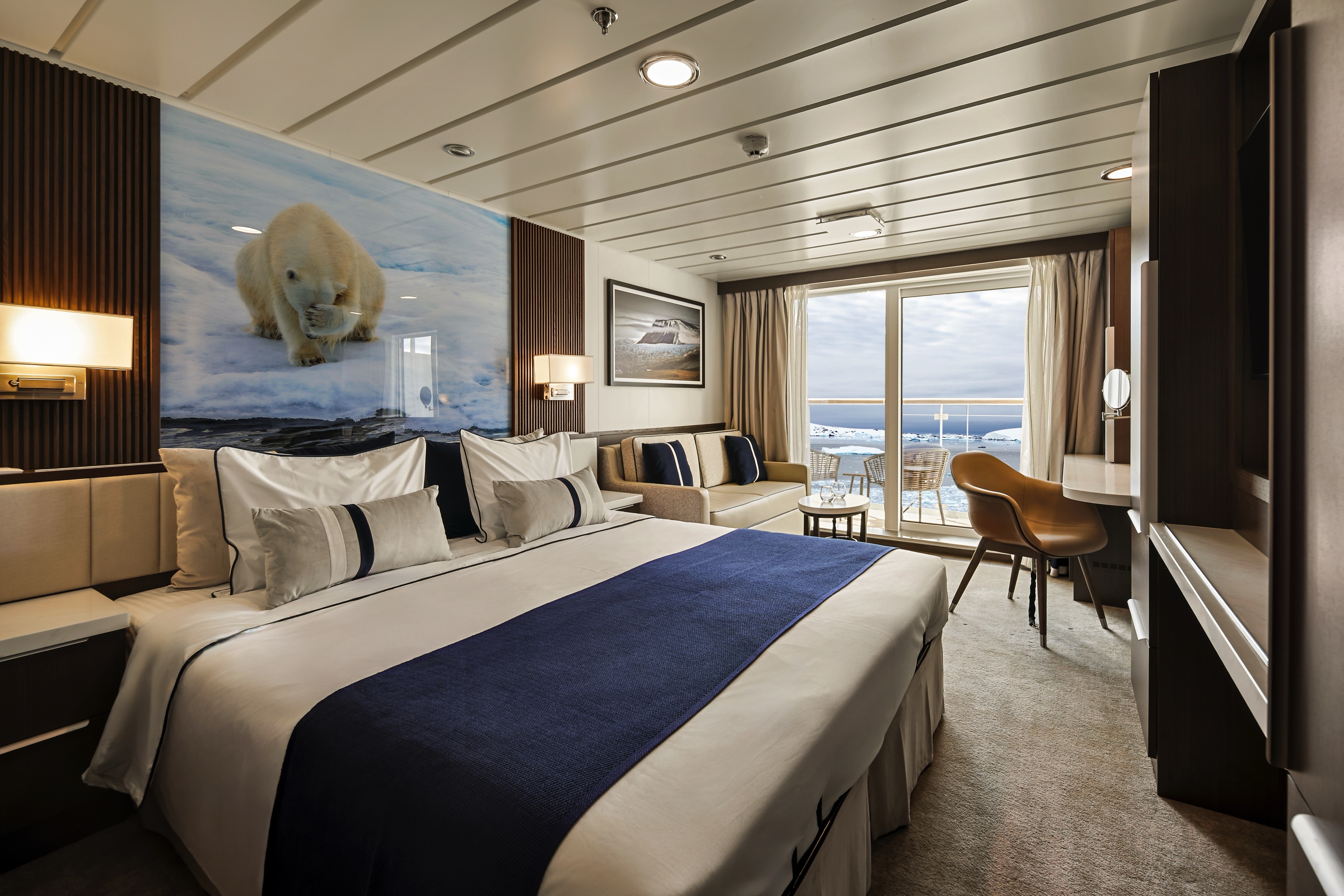
Balcony Stateroom Category B
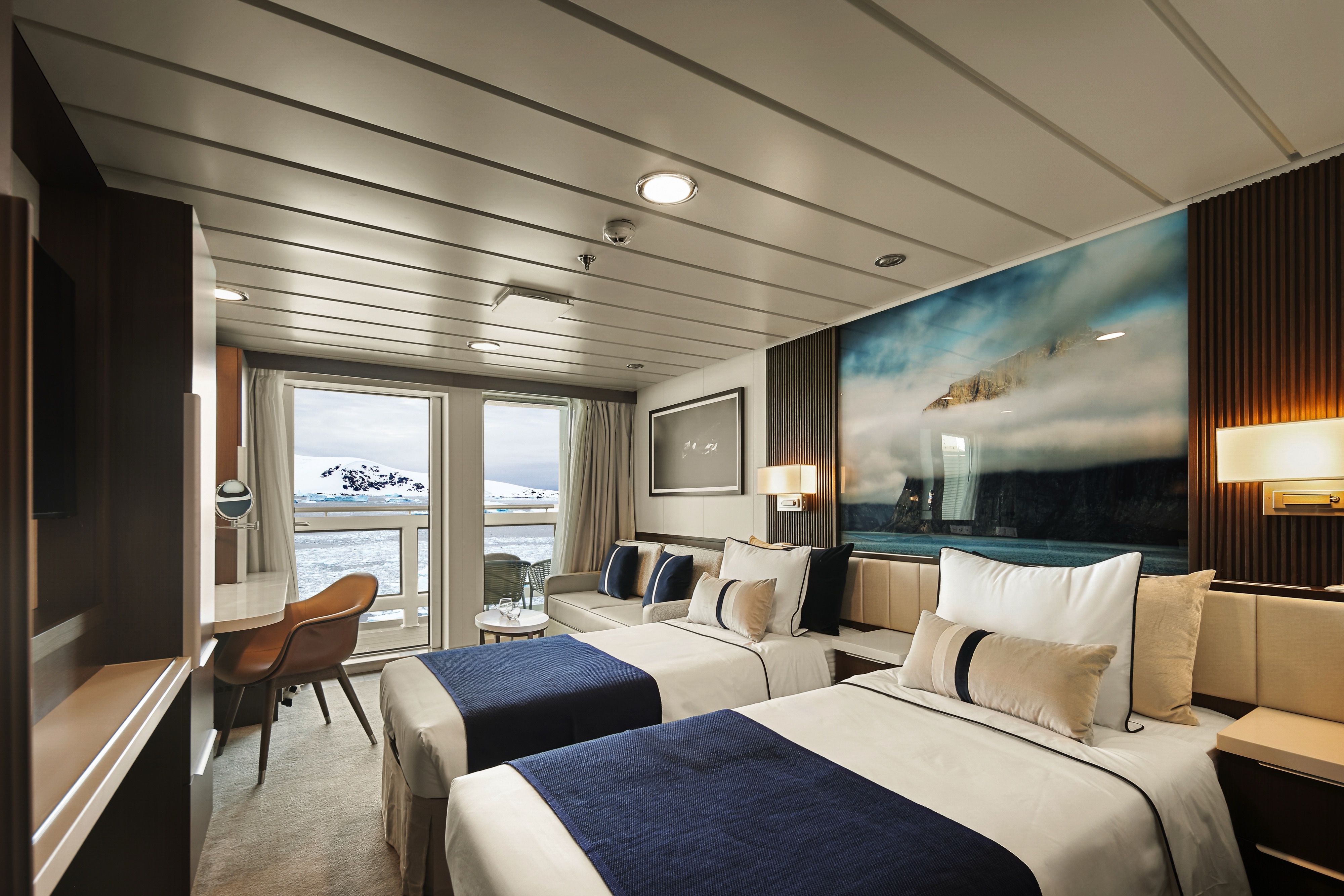
Balcony Stateroom Category A
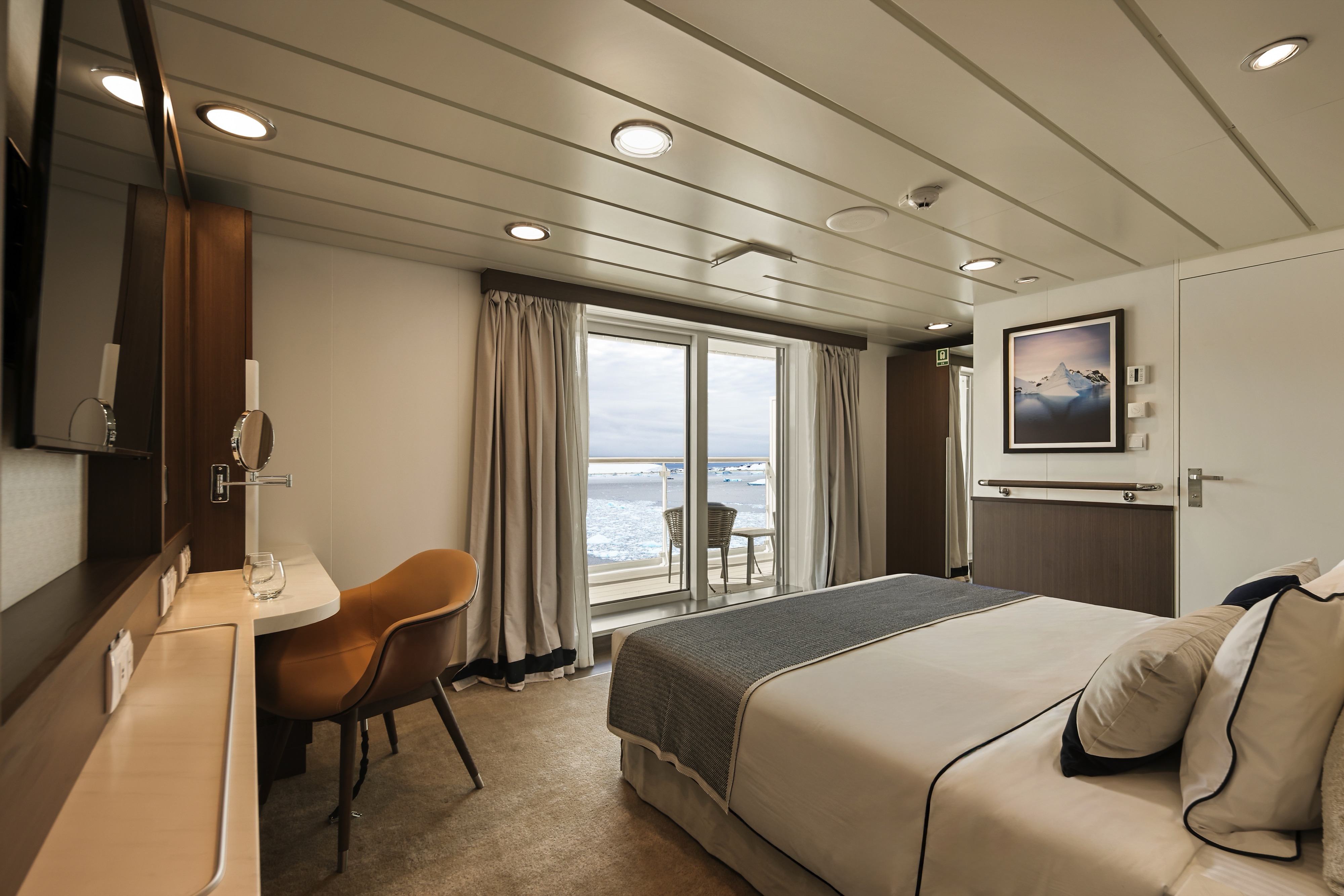
Balcony Stateroom Superior
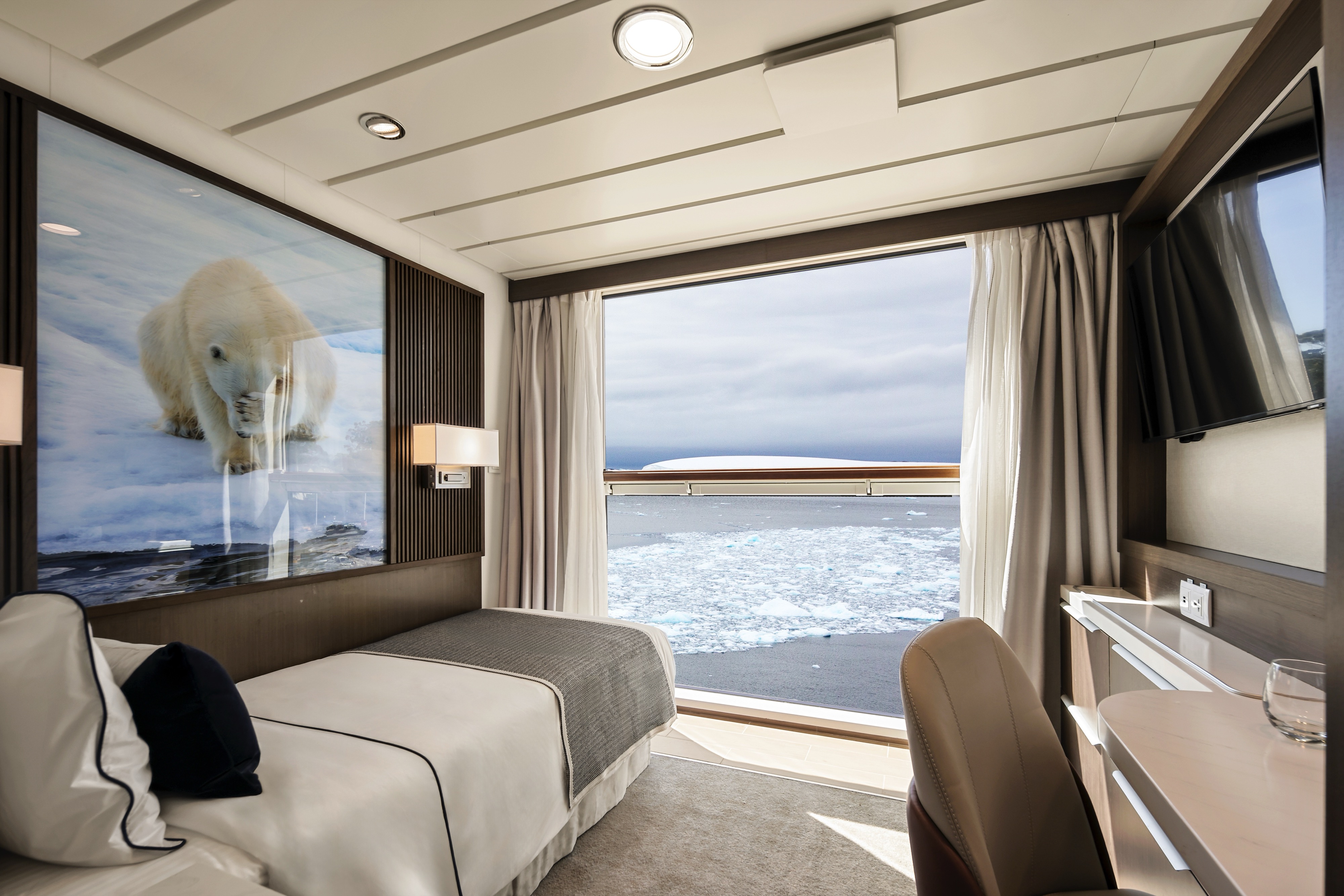
Aurora Stateroom Superior Single
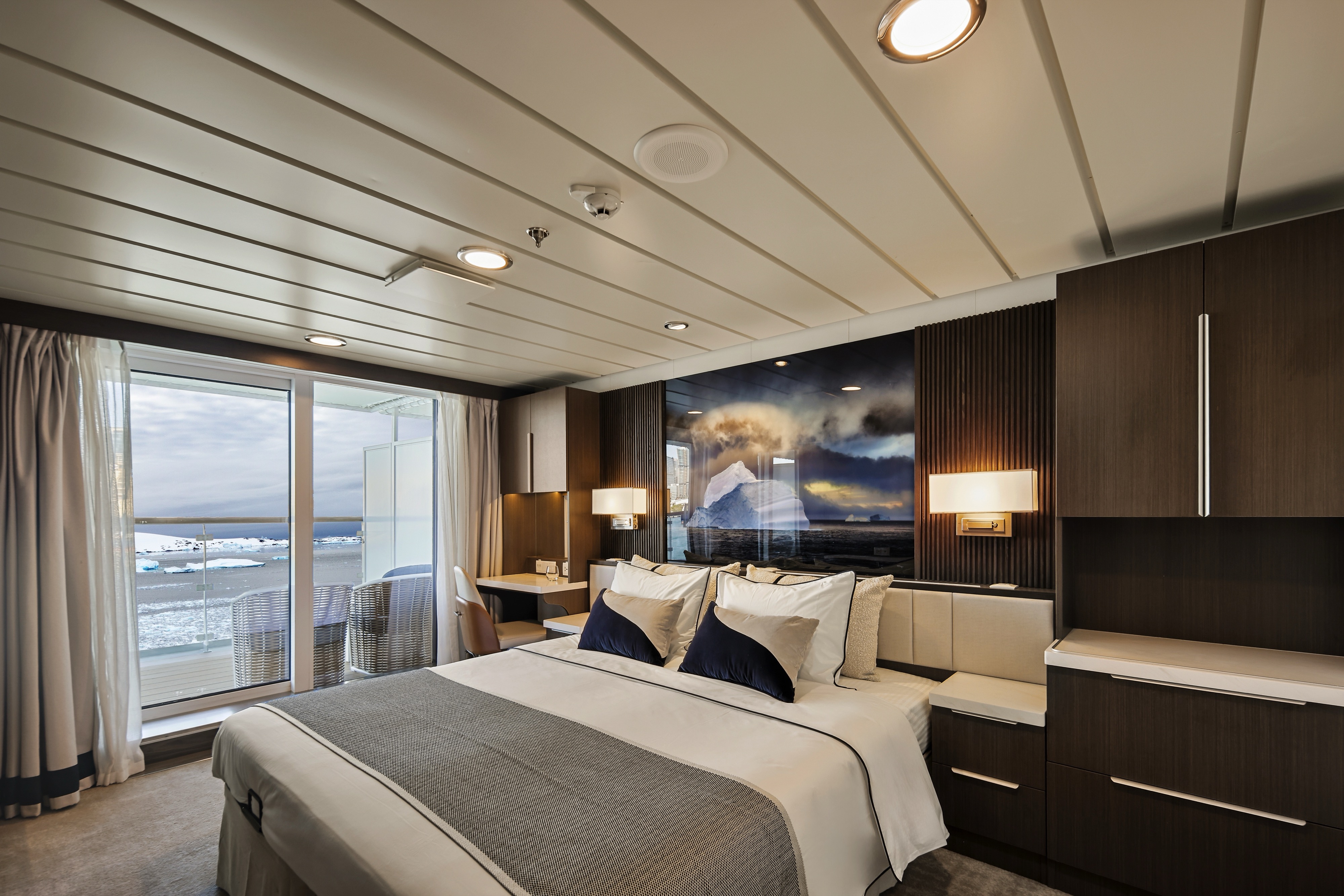
Junior Suite
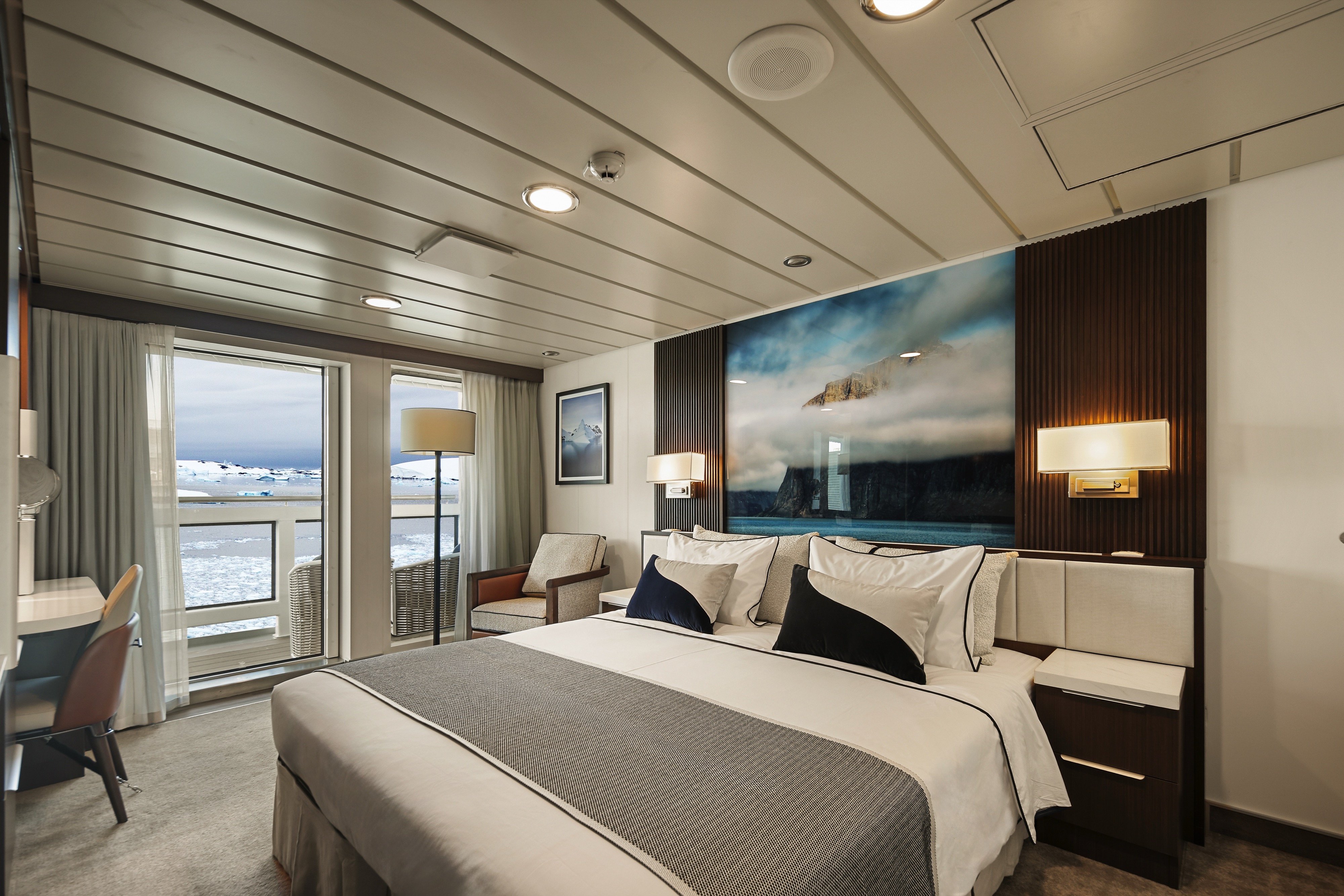
Captain's Suite
Balcony Stateroom Category A – Solo
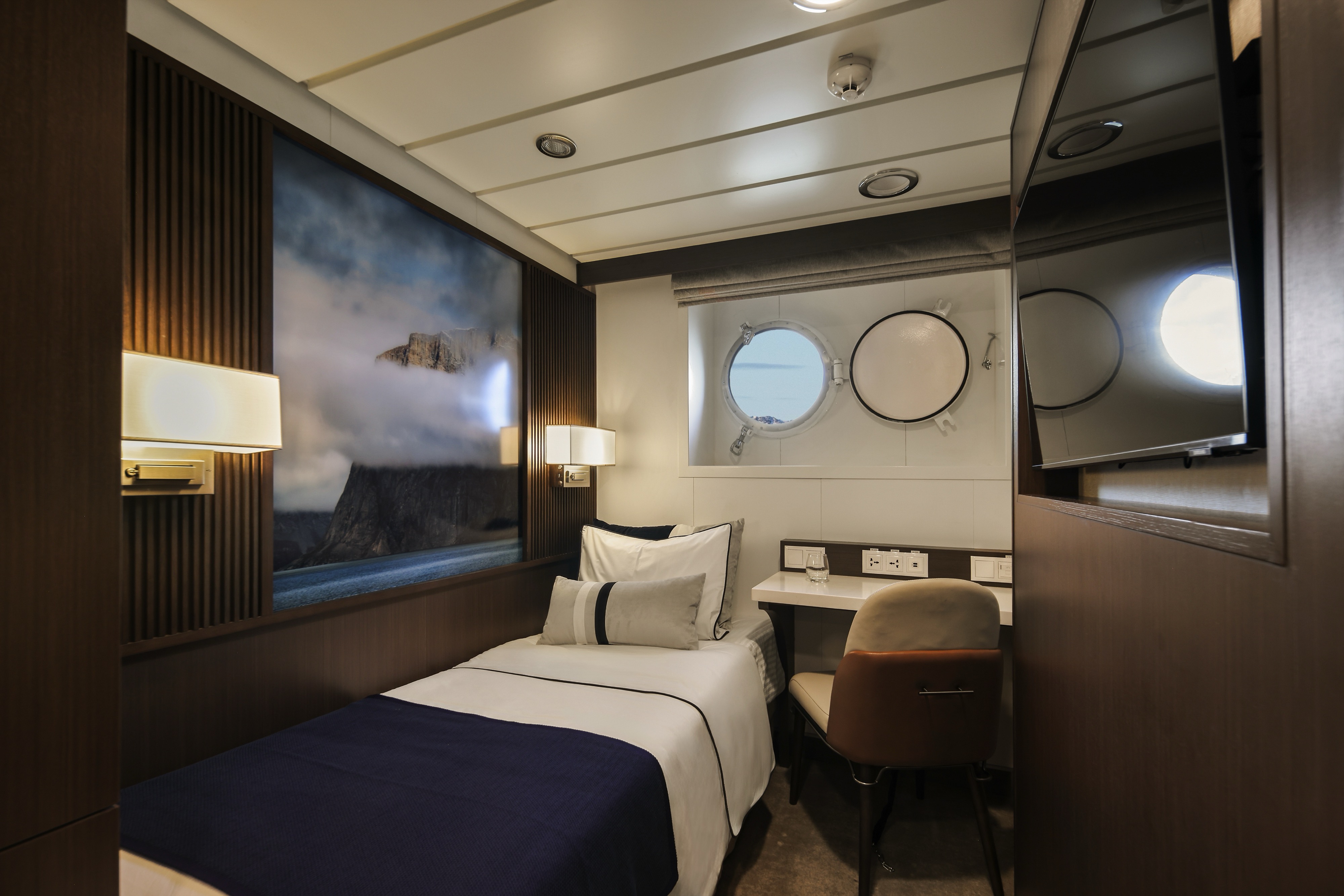
Aurora Stateroom Single
Ship Facilities
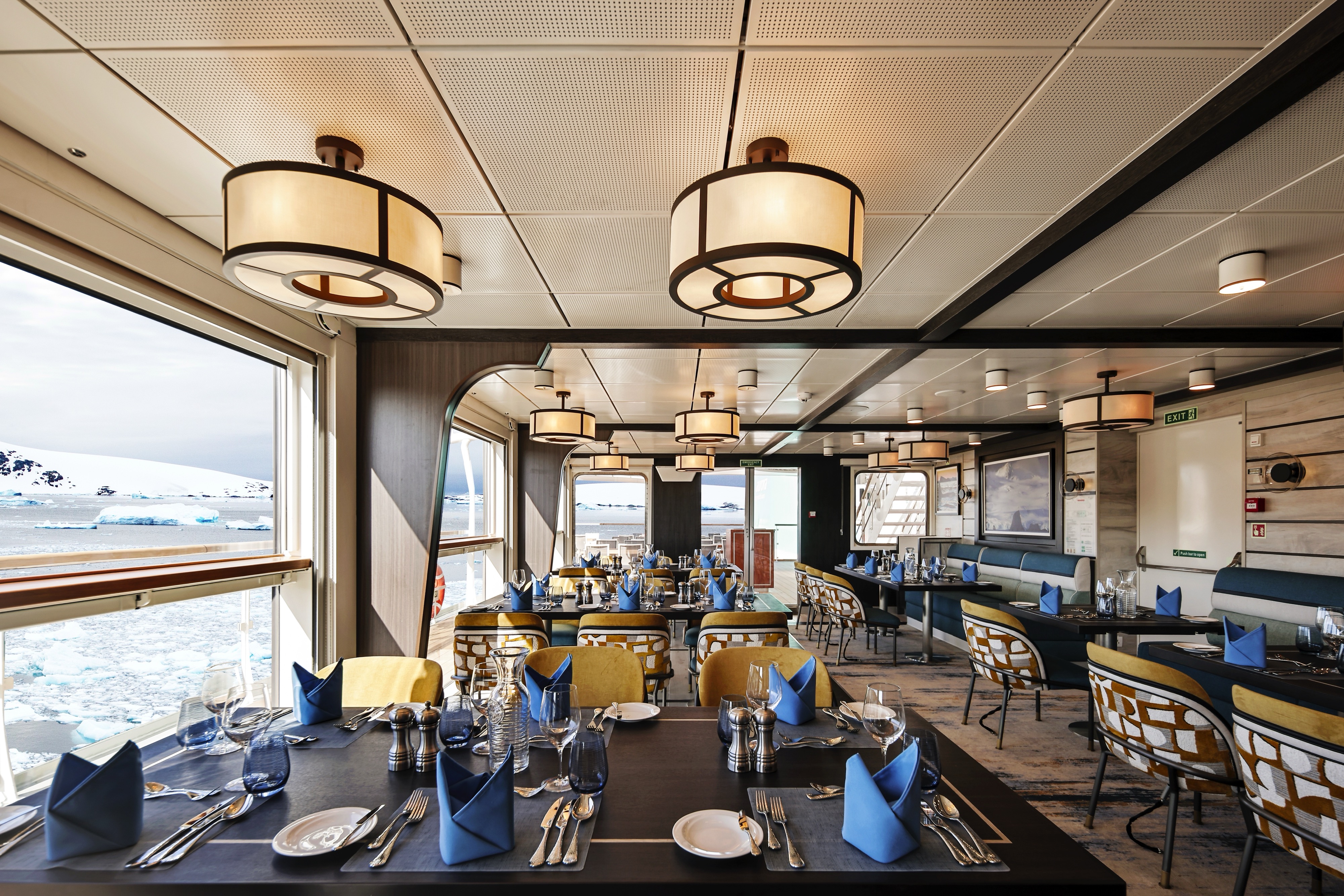
Dining room
One of the most important parts of any expedition is the food! Start each adventure with hearty meals and delicious morning and afternoon teas prepared by our onboard chefs.
Meals are a great time to connect with fellow travellers in our open-seating dining area, sharing stories and insights from the day. Tea, coffee, and snacks are available 24/7, and our chefs offer a variety of menu options for each meal. Enjoy house wines, beers, and soft drinks with dinner after a day of exploration.
Wrap up your journey with informal Captain’s Farewell drinks, featuring complimentary beverages, cocktail appetisers, and a special three-course meal.
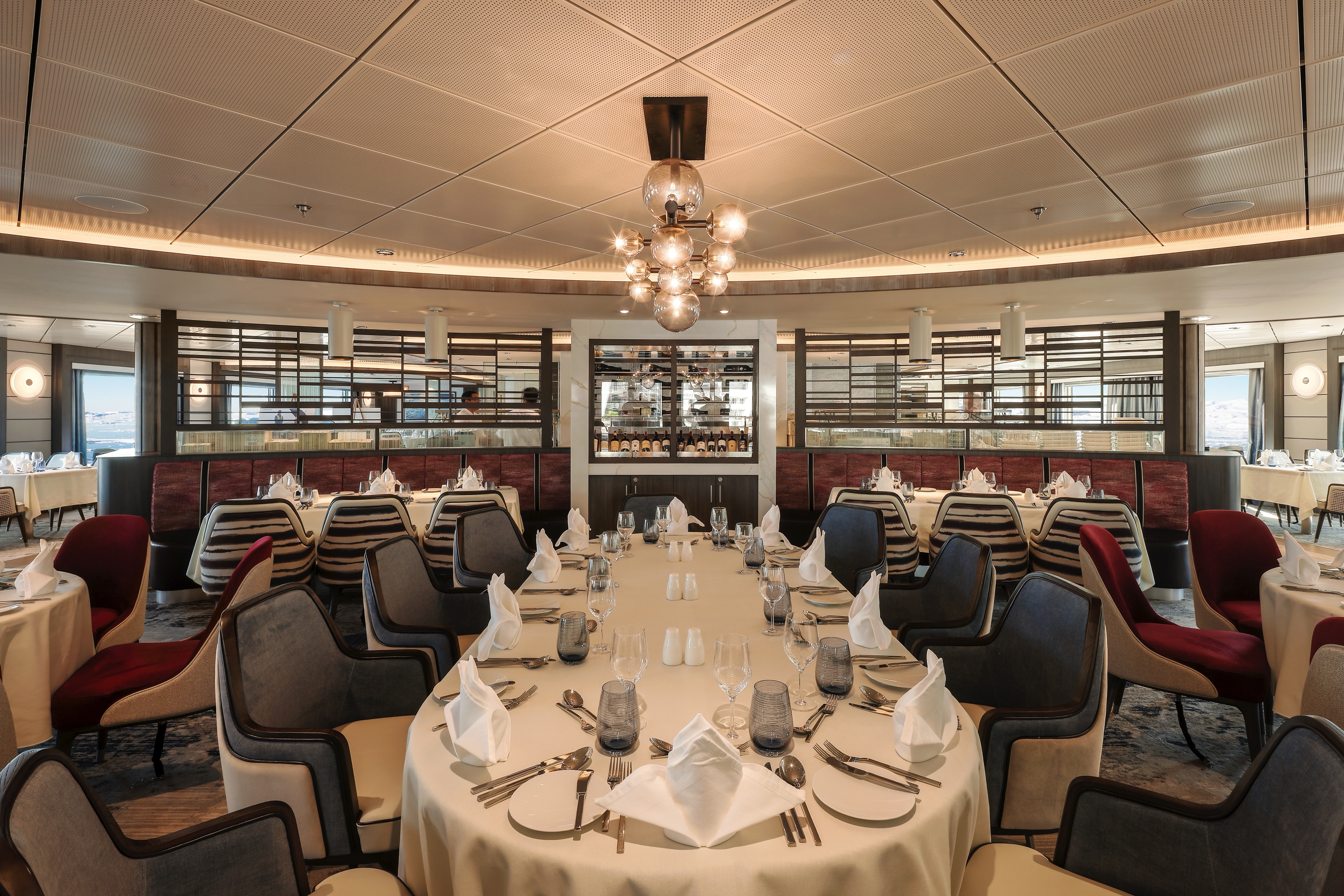
Top Deck Restaurant
The Top Deck Restaurant is located on deck 8.
Citizen Science
Travel is always the best educator and we offer the chance to enrich your curiosity and expand your knowledge and understanding of the places we travel to. There is no better learning opportunity than being in the field with subject matter experts.
Our Citizen Science Program is designed to be an interactive forum of like-minded travellers to share new discoveries and deepen their connection to the natural world in a relaxed, informal and fun environment – both on board our ships, on our fascinating shore expeditions and in our zodiacs.
You can make a difference as we can provide invaluable data to the scientific community through you taking part. You too can become an ambassador for the protection of our majestic but fragile blue planet when you return home by sharing what you have learned.
What is Citizen Science?
Citizen Science is the collection and analysis of data relating to the natural world by members of the general public, typically as part of a collaborative project with professional scientists around the world.
Why Take Part?
Aurora Expeditions travels to some of the most unique and remote places on the planet. It is challenging for scientists to spend time in these areas, so any observations we contribute can be extremely valuable.
Gathering and sharing data is also a great way to engage and educate ourselves in pressing issues that concern us at a local, regional and global level.
How Does it Work?
Members of our passionate Expedition Team, together with a Citizen Science Coordinator, will be on hand to introduce and assist you with the projects being conducted on your voyage.
Expert guidance on the collection, storage and sharing of new scientific data will not only greatly enhance your voyage experience, but help you gain more knowledge of our ever-changing natural environment.
From the biggest mammals to the smallest marine creatures, the important part you play in our Citizen Science projects will help protect and preserve the planet for generations to come.
Our Projects
Our passengers can contribute to global research, collecting data in some of the most hard-to-reach, under-studied places on Earth. Our Citizen Science Program covers seven projects that span the globe, to advance understanding of marine ecosystems, birdlife, climate change and polar environments.
Please note: As some of our Citizen Science projects are location- and weather-dependent, we cannot operate all of the projects on all voyages. We will endeavour to include as many projects as possible on your voyage with ample time allocated to them on a day-to-day basis.
- HappyWhale uses photo ID to track individual whales. Guests can photograph encounters and log them on the database, improving knowledge about migration, population health and behaviour.
- eBird is the world’s largest biodiversity-related Citizen Science project, collecting bird observations from around the globe. Aurora passengers help to track species distribution and population changes.
- Our passengers are invited to record cloud conditions, with observations submitted to NASA GLOBE Cloud contributing to climate modelling.
- Our Citizen Scientists measure water clarity by lowering a Secchi disk, recording visibility, and sharing data with scientists that are studying the effects of climate change on ocean ecosystems. This builds a long-term global dataset, and each voyage contributes new observations from some of the least-studied waters in the world.
- Snow algae are microscopic organisms that grow on snow and ice, influencing melt rates. The Snow Algae Study engages passengers in photographing and recording snow algae sites, contributing to global research into how these organisms influence the Antarctic environment. This study is supported by the latest science from the National Snow and Ice Data Center.
- FjordPhyto invites passengers to explore phytoplankton diversity in polar fjords and coastal waters. Using simple tools, they collect samples to help scientists track phytoplankton health and its response to changing ocean conditions. These observations enhance understanding of the base of the marine food and how climate change is altering polar ecosystems. *Only available on Antarctic voyages.
- We are proudly the first expedition company to facilitate the development and execution of the TIPI pilot project, using thermal imaging to measure polar ice conditions. This project combines science, technology and storytelling to create robust datasets while engaging the public in polar research. We are collaborating with founder Joe Muise to deliver high-quality scientific outcomes.
Activities
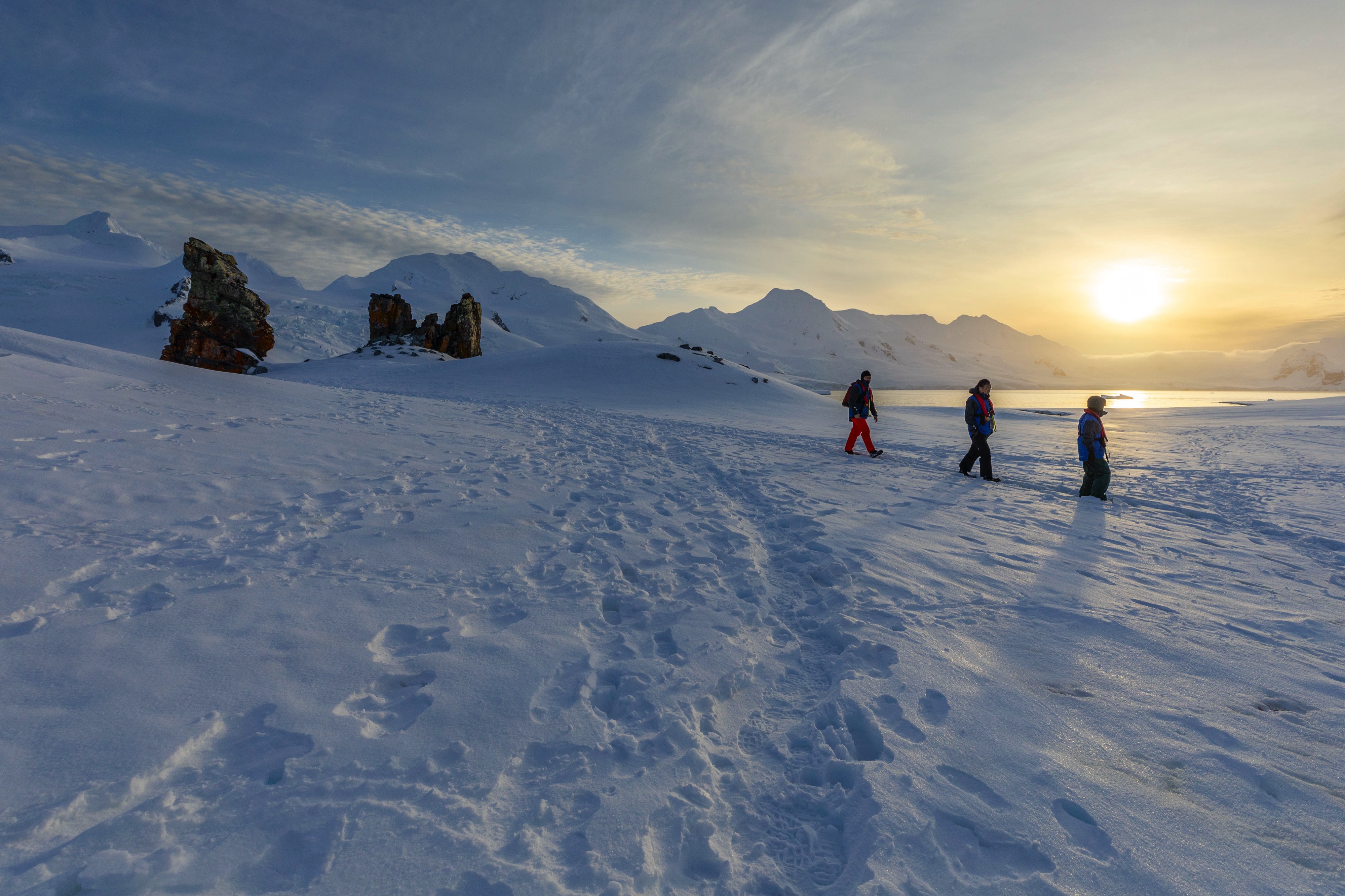
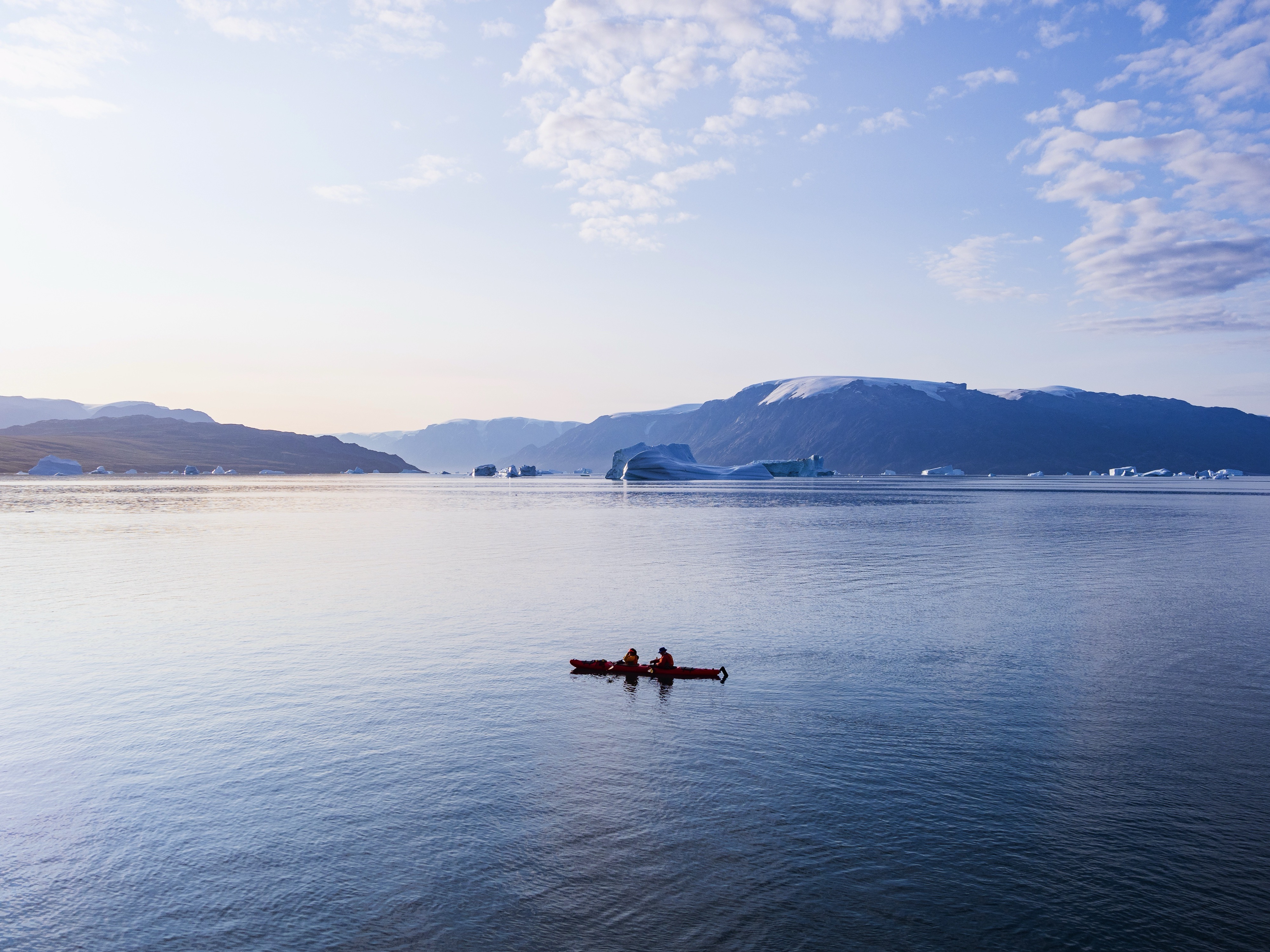
Whether it’s adventure at sea or on land that makes you tick, we have a huge range of optional activities to help you make the most of your time in some of the most beautiful places on earth.
We encourage you to make the most of every opportunity to nurture your inner adventurer. You can choose from a range of add-on adventures to make the most of your time in these beautiful places. We have pioneered more adventure activities than any polar expedition cruising company to help you explore in your own way.
We’ll get you out for your optional activities as often as possible, and this will be your main mode of exploration through your trip. Your guides* will assess the conditions at each landing, and you’ll have the option to join whenever conditions allow.
Optional activities are popular and group sizes are limited, so if you’re interested, get in touch with our team as soon as possible. Optional activities are listed on each itinerary page and additional fees apply.
Lecture Theatre
On all expeditions you will meet naturalists and local specialists, who offer presentations on their area of expertise to enhance your appreciation of the destination you are exploring.
Join the team in the lecture theatre for presentations covering a broad range of topics to suit every interest, from history and culture to biology and climate change. Regardless of the topic, they all have one thing in common: they all aim to engage, educate, entertain and turn you into an ambassador for the planet.
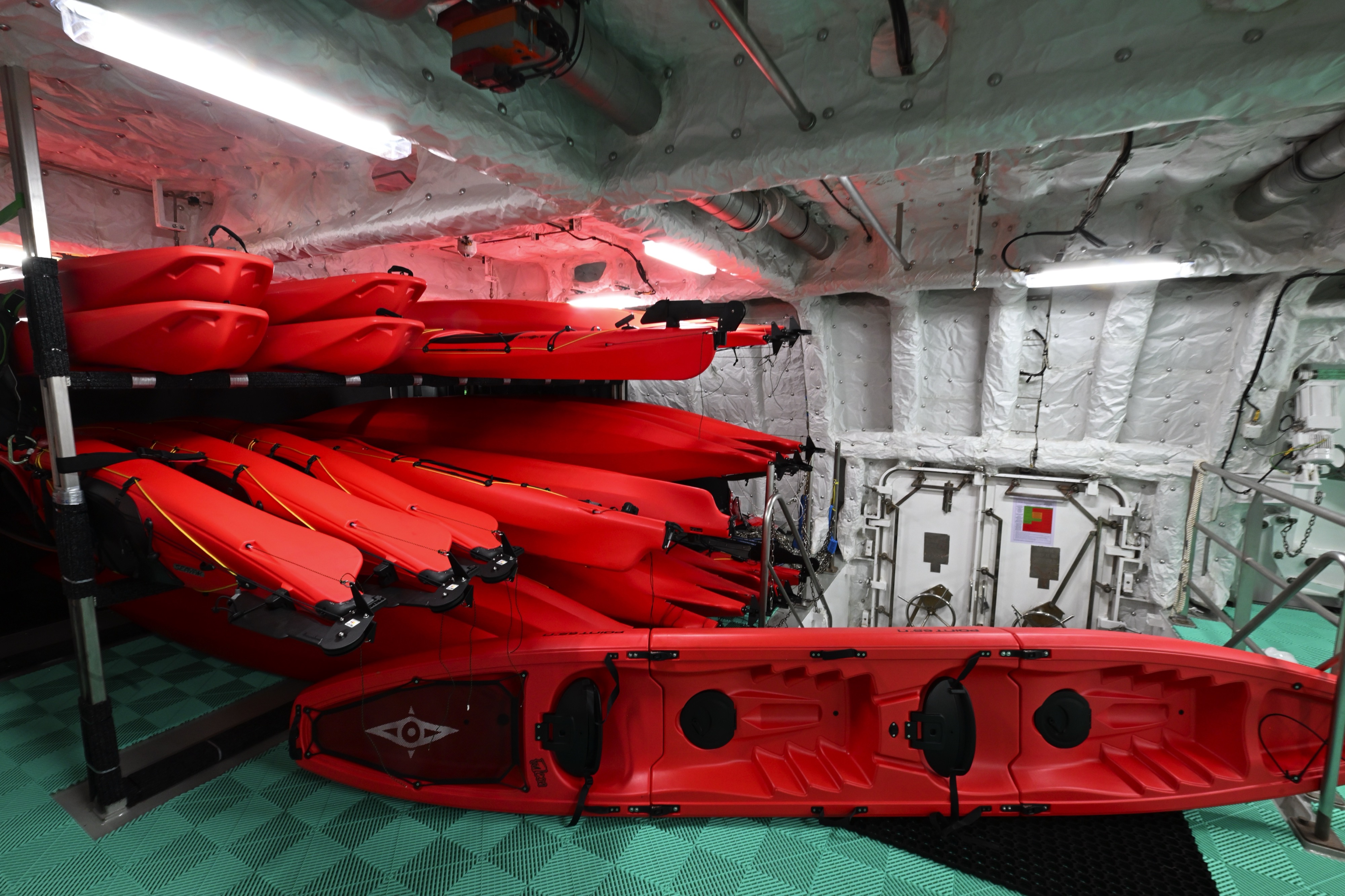
Activities Platform
The Douglas Mawson features Zodiac access points and an activities platform, making boarding the Zodiacs as quick, efficient and safe as possible, minimising wait times and getting you closer to the action for longer.
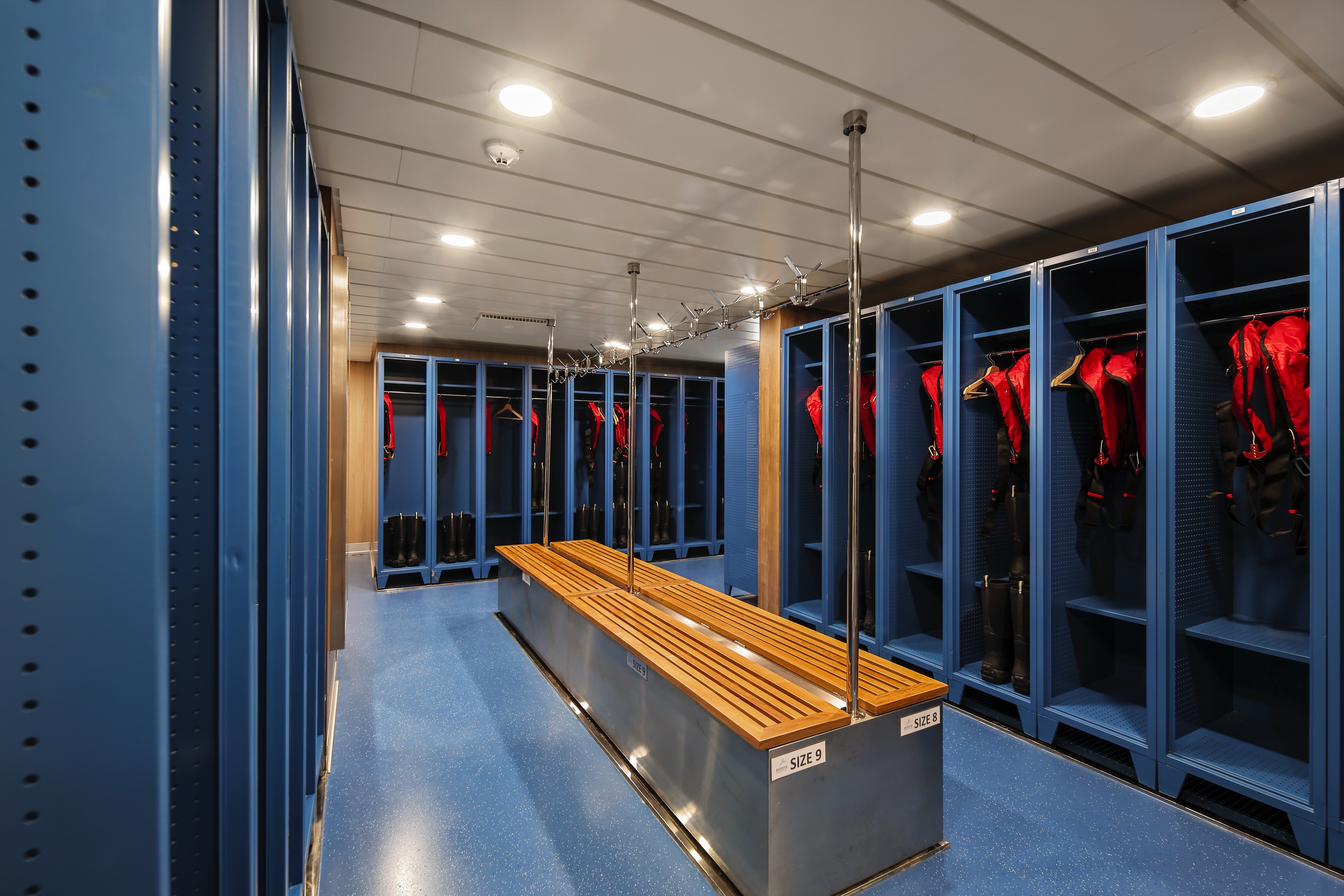
Mudroom
Mudroom
No need to take your wet expedition gear back to your cabin to dry. Keep your cabin warm and cosy by leaving your outer jackets and pants in the mudroom.
The mudroom is your launchpad for all shore excursions and activities. Here, you will have access to a locker when you can hang your gear up to dry, and store your boots between excursions.
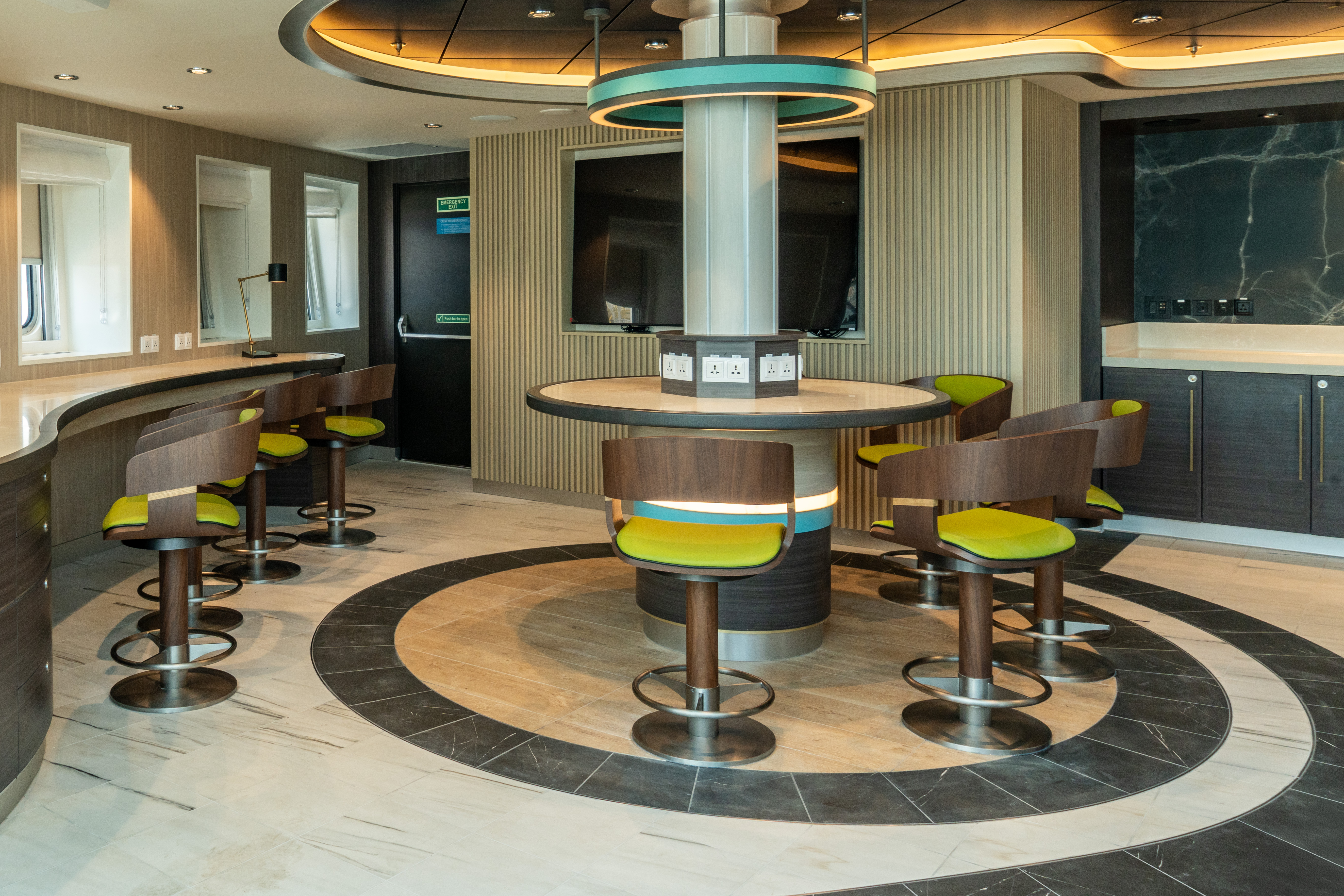
Citizen Science Centre and Lounge
Learn more about the world and the unique destinations Aurora visits by visiting the onboard naturalist and Expedition Team in the world-class Citizen Science Center. You will be rewarded for your thirst for knowledge with one of the best views on the ship.
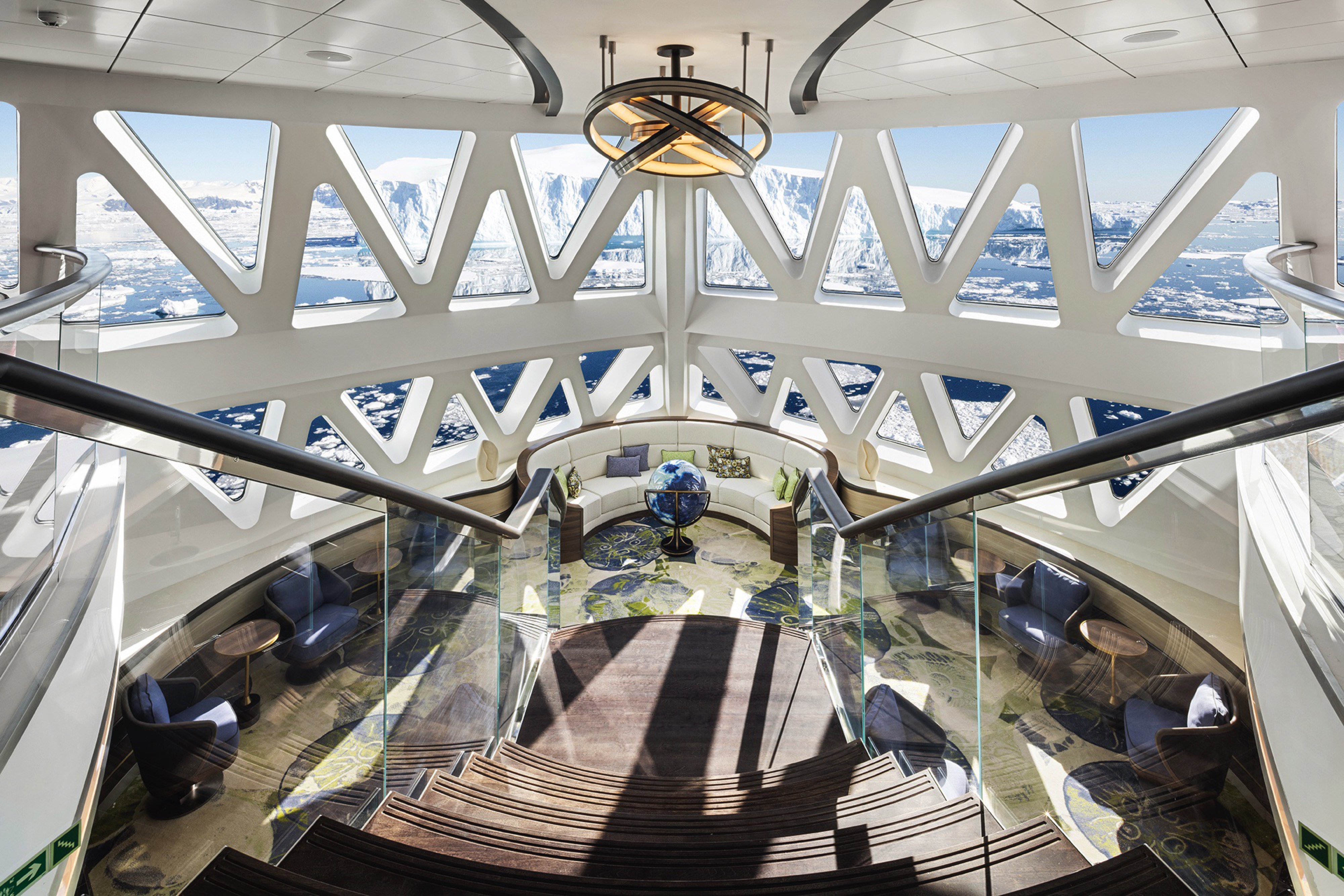
Atrium
More information coming soon.
Sun Deck & Pool
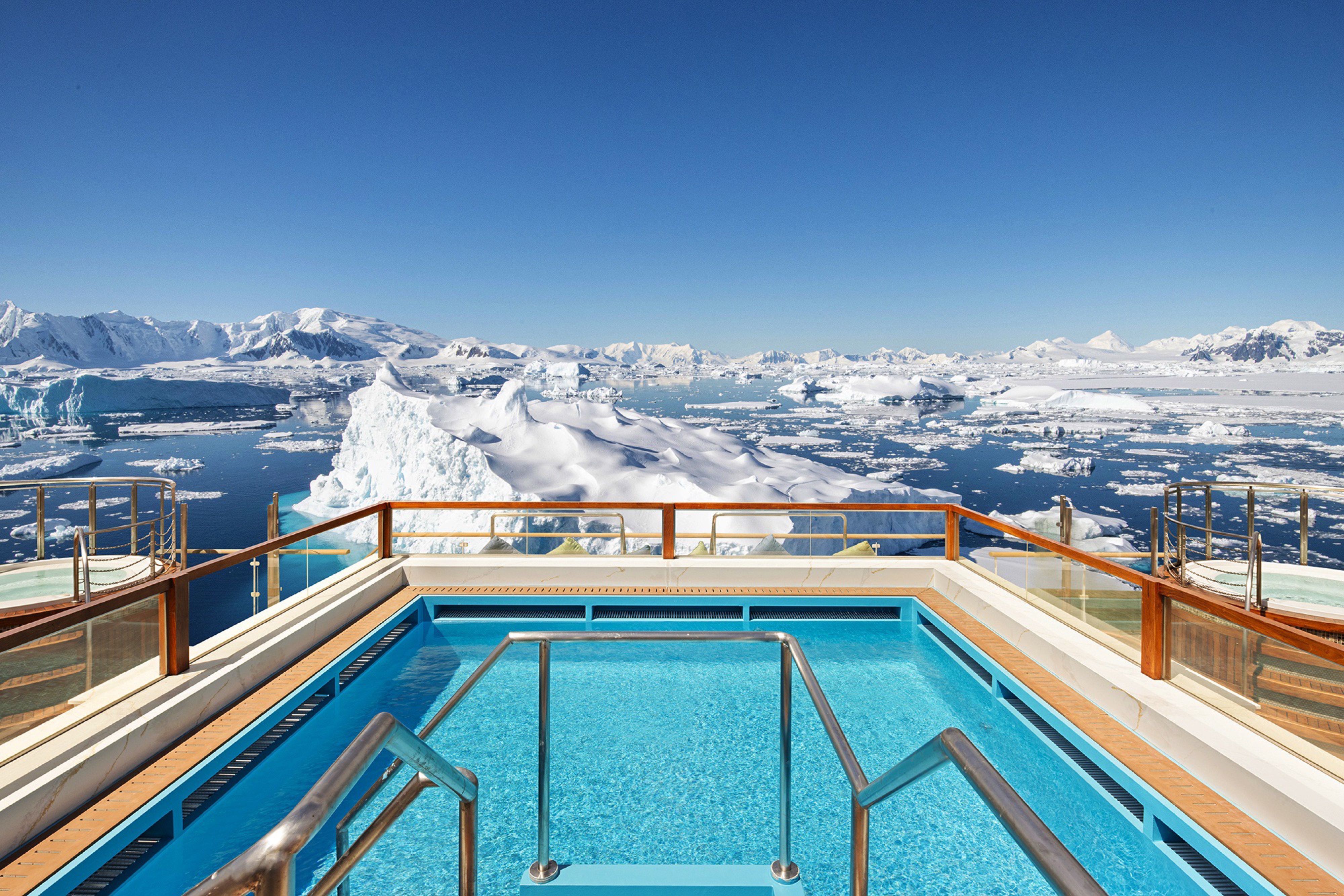
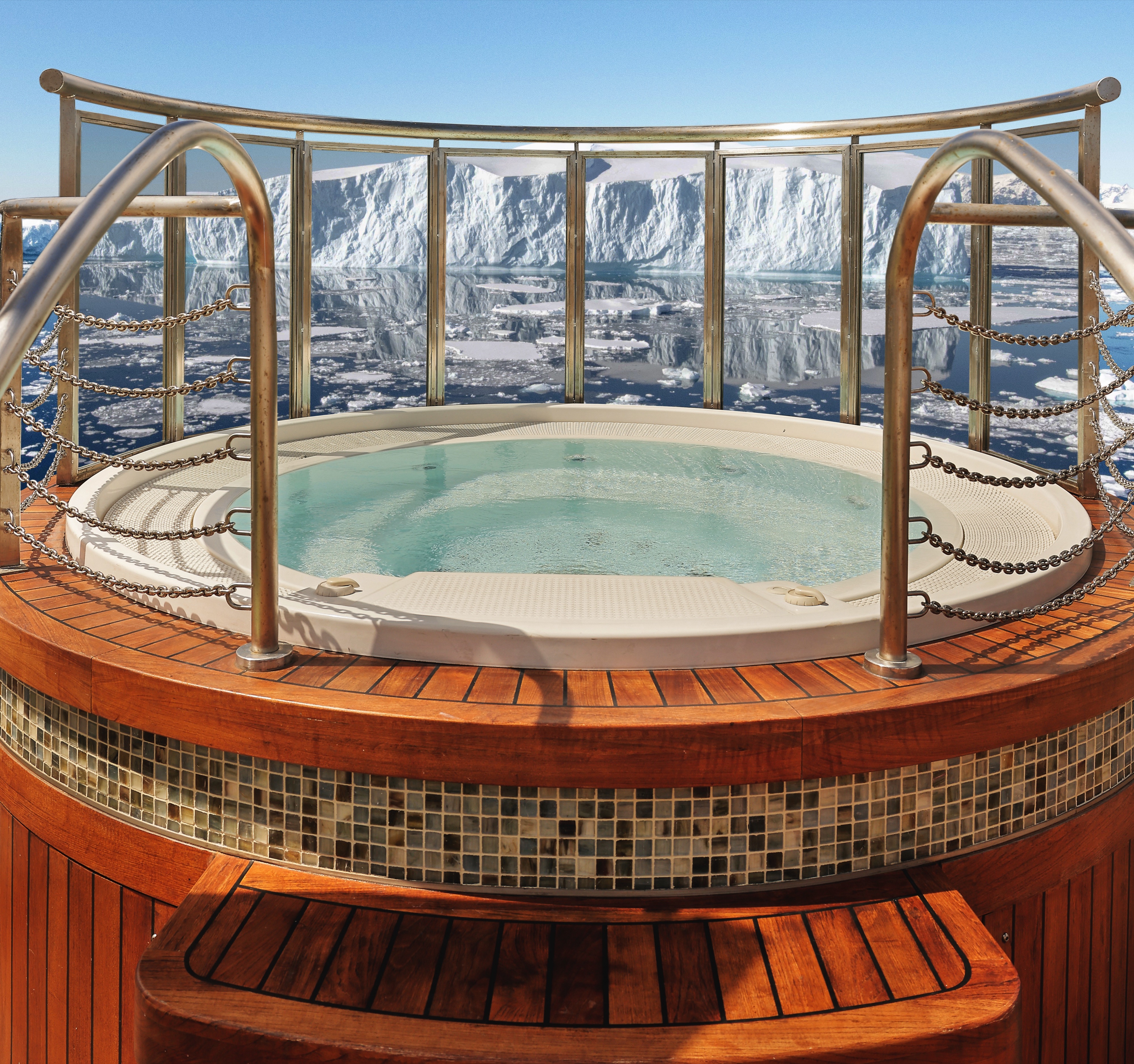
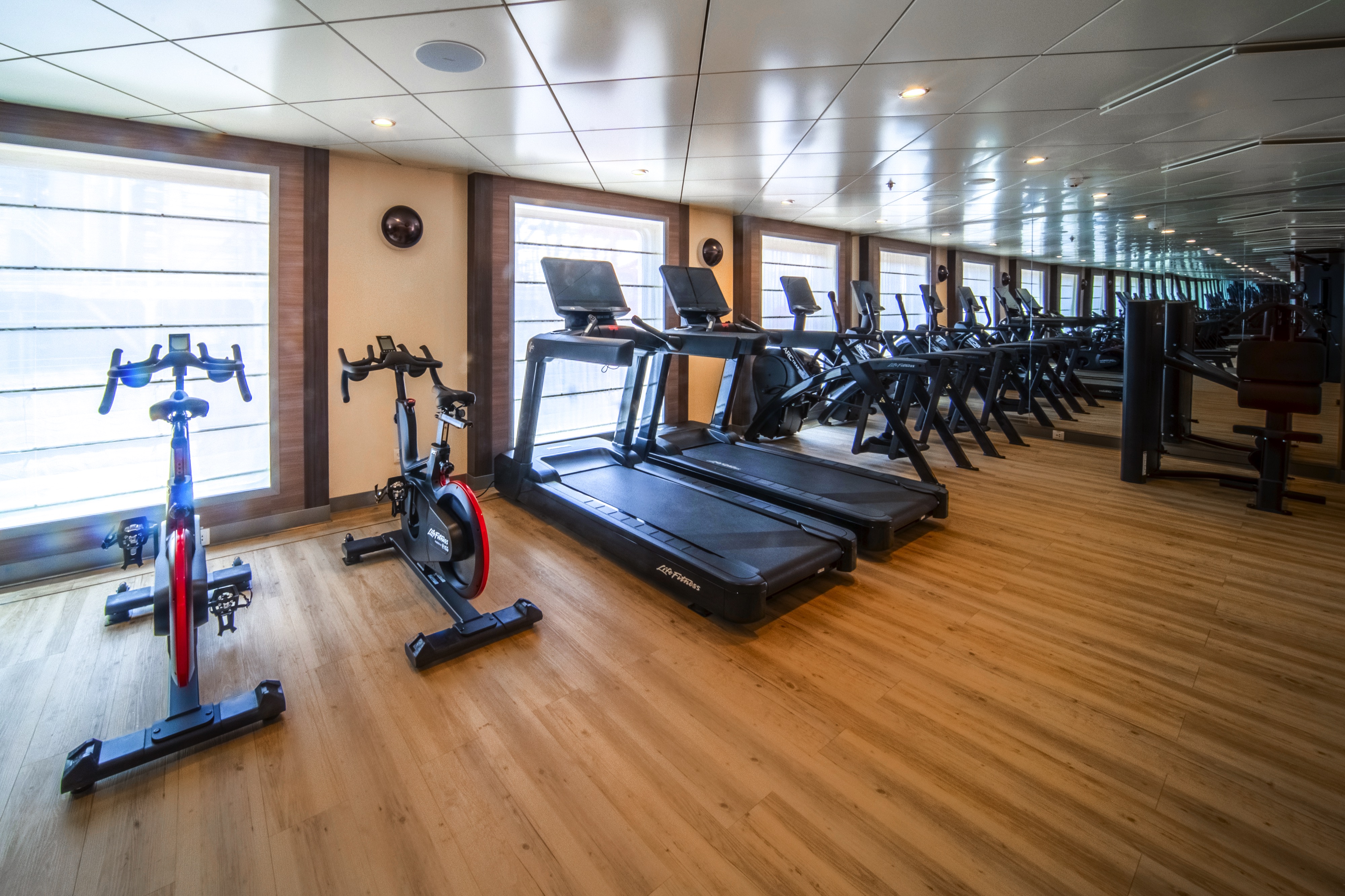
In between landings, enjoy access to the onboard gym or unwind in the sauna. Or head to the back deck to swim in the heated outdoor pool, enjoy a drink at the pool bar, or soak in one of two Jacuzzis, watching the world go by.
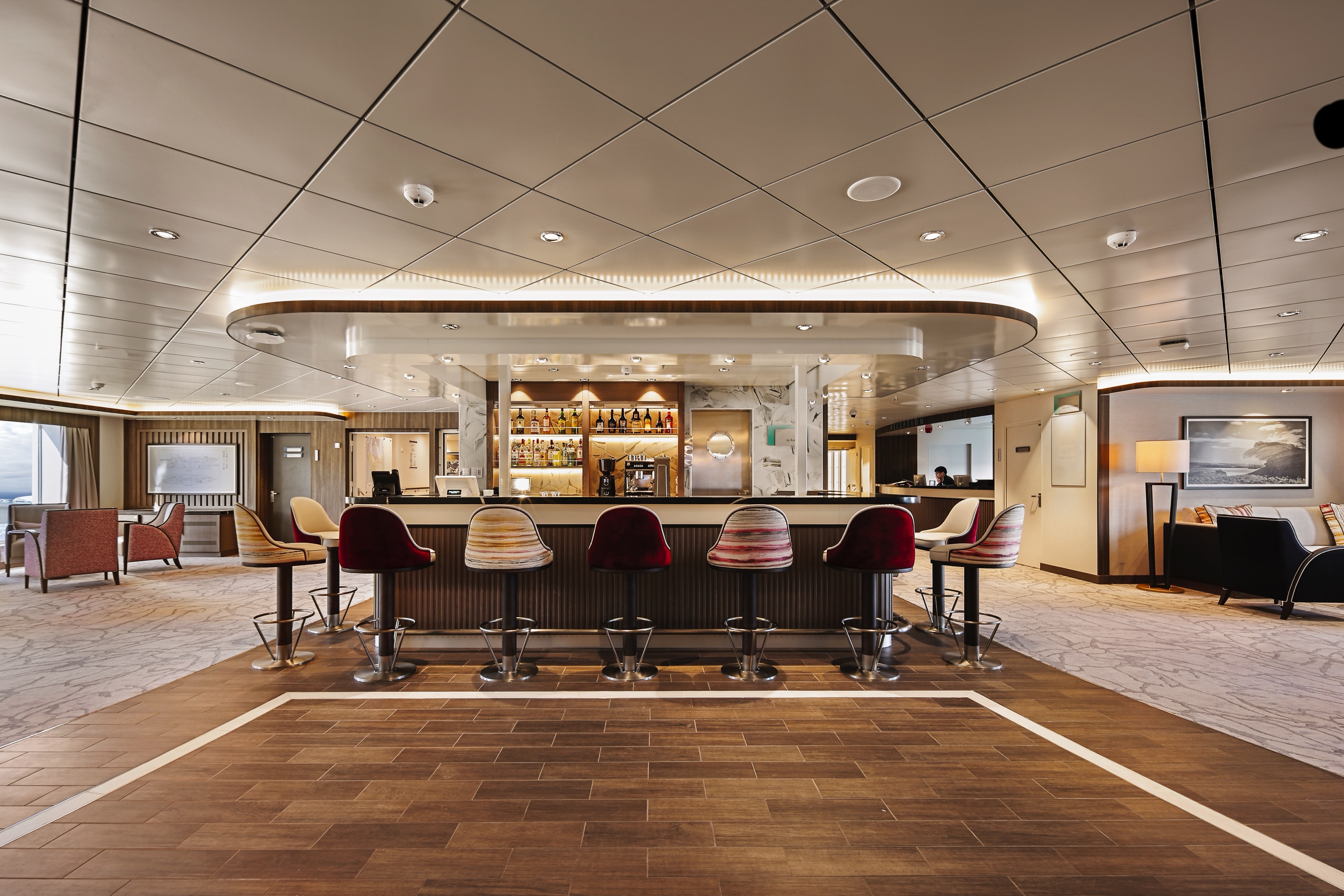
Bars & Lounges
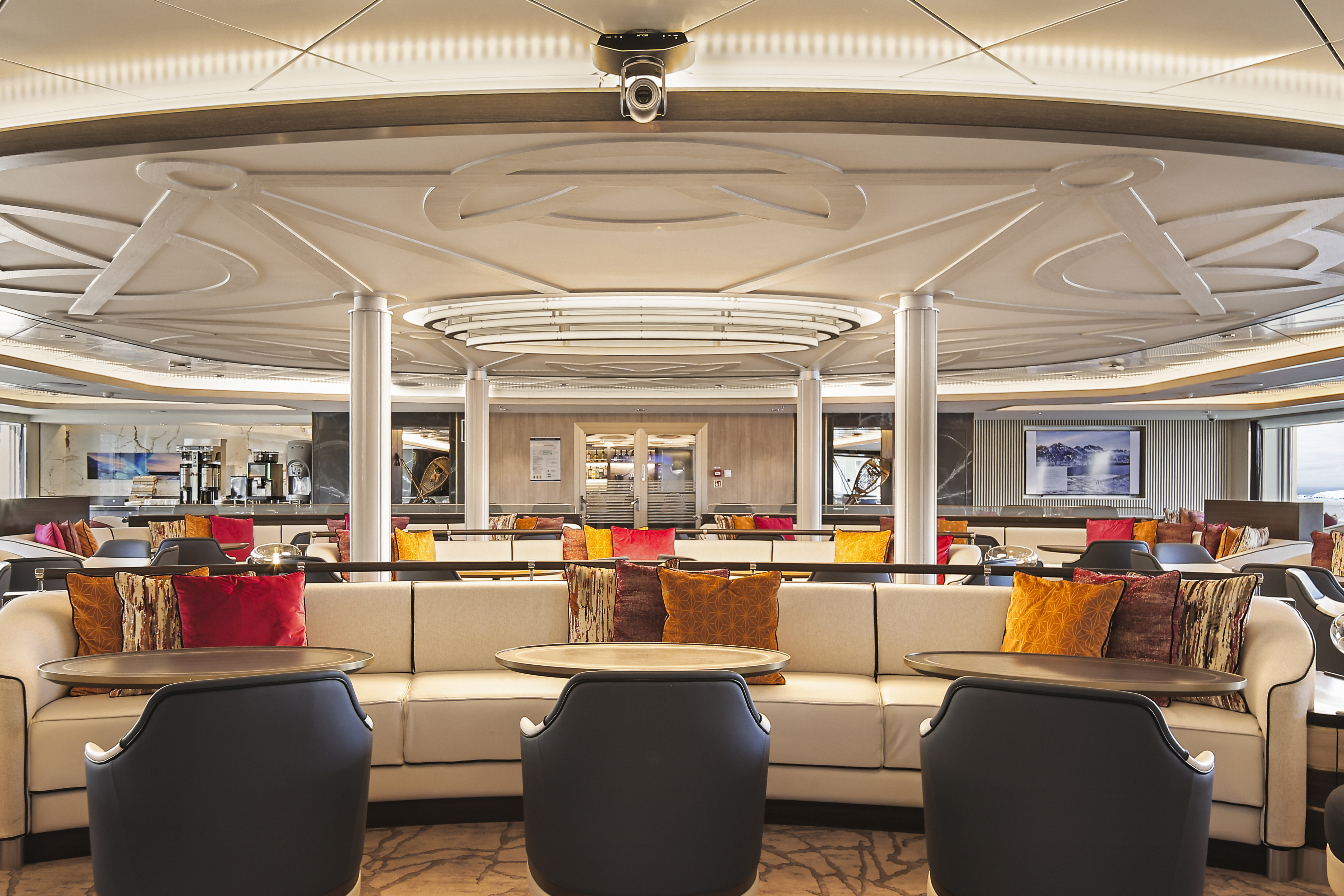
Communal meeting areas have always played a major role in fostering the warm camaraderie on board our ships. They are the heart of the expedition, where people meet to share tales from the day, swap photos, keep an eye out for wildlife and watch the sun go down.
The bars and lounges on board are refined yet inviting places to gather, with floor-to-ceiling windows offering stunning views, and of course friendly bartenders to shoot the breeze with.
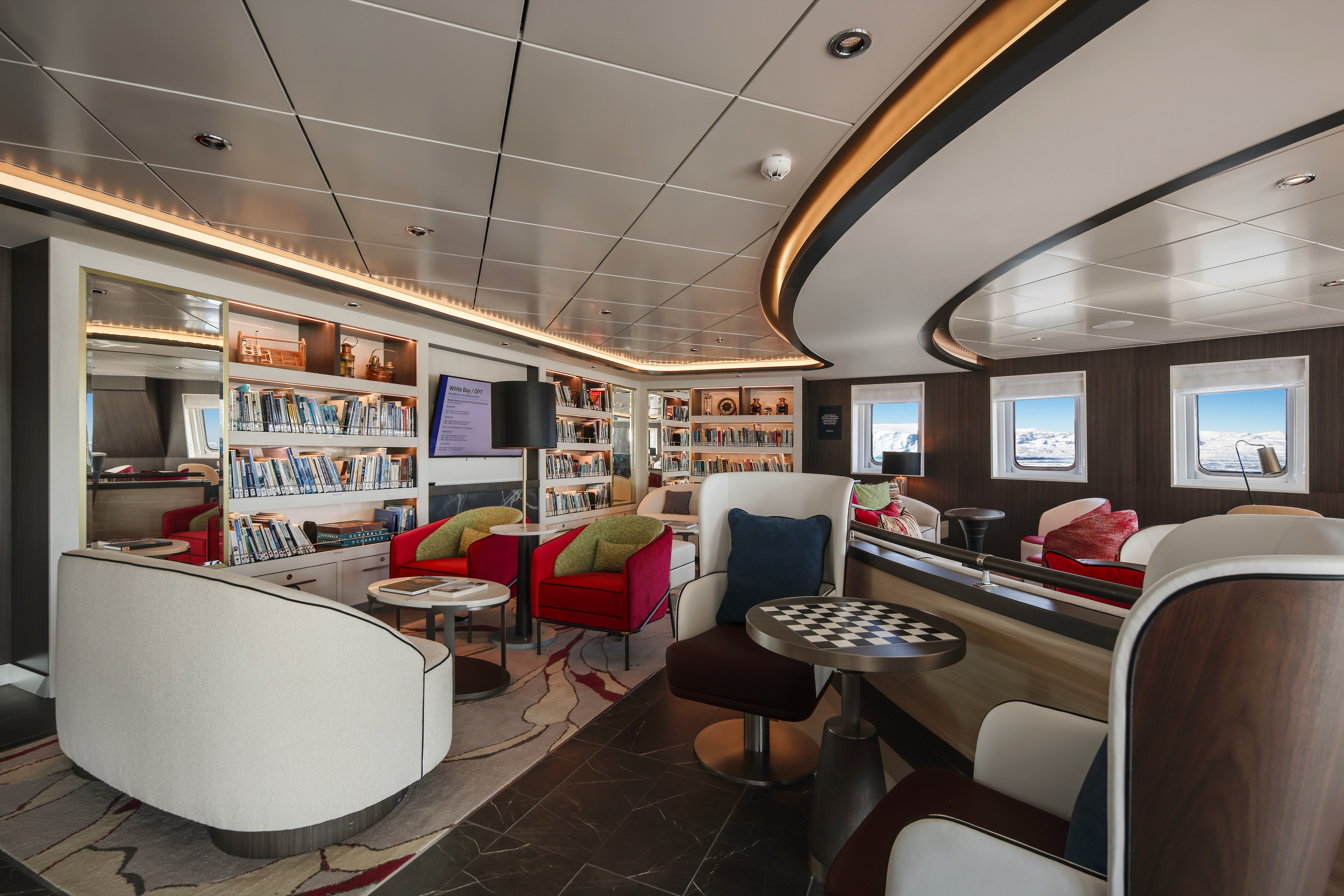
Library
With floor-to-ceiling windows, the library is a peaceful sanctuary where you can find non-fiction books to read up on the day’s destinations, use a public laptop to organise your photos or play board games with newfound friends. Choose from our range of informative non-fiction titles, wildlife guidebooks, travel journals, novels and a selection of children’s books and board games.
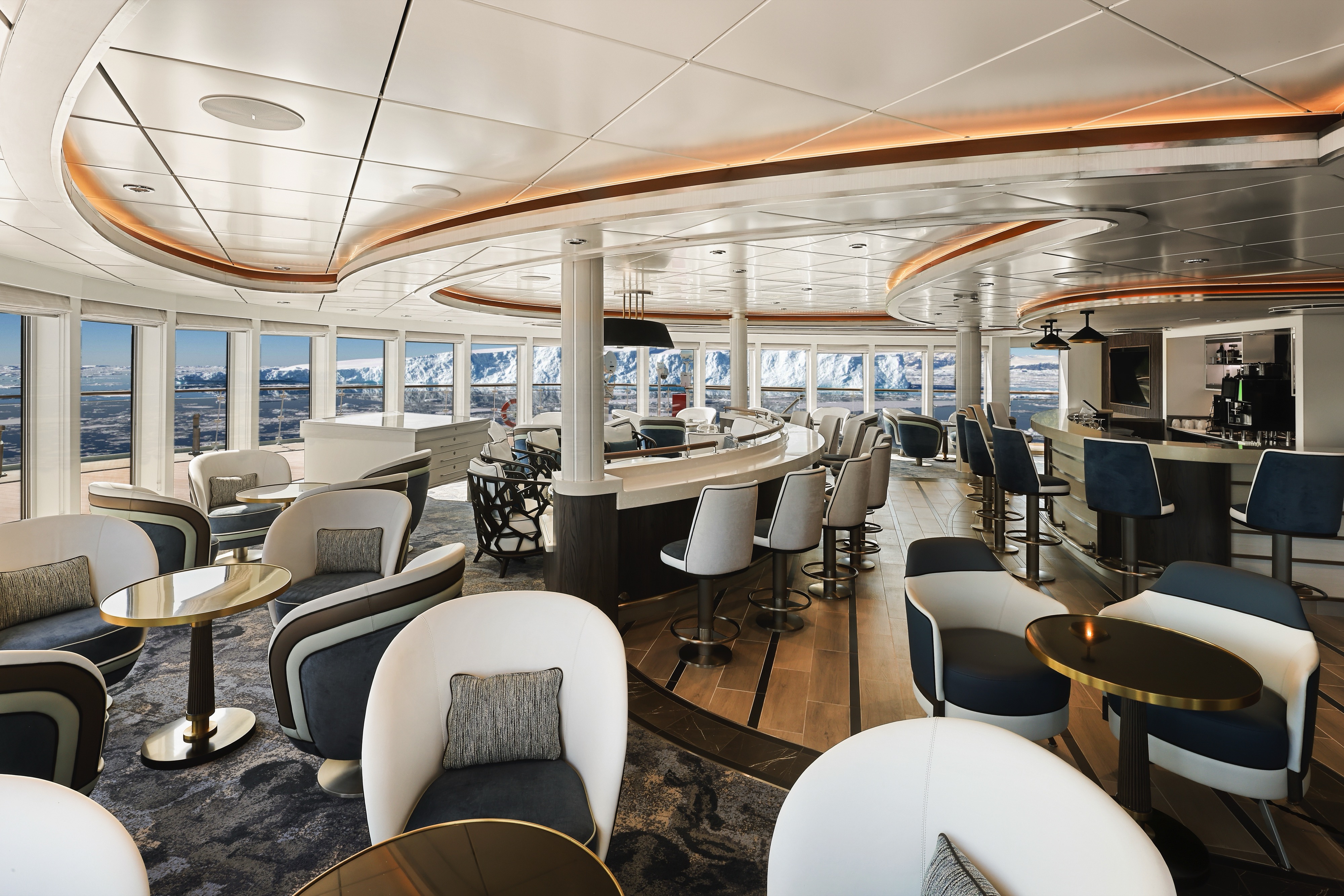
The Glass Atrium Lounge
As you explore the ship you will find indoor lounge areas with floor-to ceiling windows, and multiple open decks with expansive 270-360 degree views. The Glass Atrium Lounge inside the bow is a fantastic place to sit and watch for wildlife – with a drink in hand. There is no shortage of spaces to take in the majesty of the incredible world outside!
Jacuzzis
There are two Jacuzzis on the top outside deck which offer amazing views of the world outside.
Gym & Sauna
During your voyage, enjoy complimentary access to the gym or visit our sauna, which we highly recommend after the Polar Plunge!
There are no dedicated children’s facilities onboard the Douglas Mawson
Dining room
One of the most important parts of any expedition is the food! Start each adventure with hearty meals and delicious morning and afternoon teas prepared by our onboard chefs.
Meals are a great time to connect with fellow travellers in our open-seating dining area, sharing stories and insights from the day. Tea, coffee, and snacks are available 24/7, and our chefs offer a variety of menu options for each meal. Enjoy house wines, beers, and soft drinks with dinner after a day of exploration.
Wrap up your journey with informal Captain’s Farewell drinks, featuring complimentary beverages, cocktail appetisers, and a special three-course meal.
Top Deck Restaurant
The Top Deck Restaurant is located on deck 8.
Citizen Science
Travel is always the best educator and we offer the chance to enrich your curiosity and expand your knowledge and understanding of the places we travel to. There is no better learning opportunity than being in the field with subject matter experts.
Our Citizen Science Program is designed to be an interactive forum of like-minded travellers to share new discoveries and deepen their connection to the natural world in a relaxed, informal and fun environment – both on board our ships, on our fascinating shore expeditions and in our zodiacs.
You can make a difference as we can provide invaluable data to the scientific community through you taking part. You too can become an ambassador for the protection of our majestic but fragile blue planet when you return home by sharing what you have learned.
What is Citizen Science?
Citizen Science is the collection and analysis of data relating to the natural world by members of the general public, typically as part of a collaborative project with professional scientists around the world.
Why Take Part?
Aurora Expeditions travels to some of the most unique and remote places on the planet. It is challenging for scientists to spend time in these areas, so any observations we contribute can be extremely valuable.
Gathering and sharing data is also a great way to engage and educate ourselves in pressing issues that concern us at a local, regional and global level.
How Does it Work?
Members of our passionate Expedition Team, together with a Citizen Science Coordinator, will be on hand to introduce and assist you with the projects being conducted on your voyage.
Expert guidance on the collection, storage and sharing of new scientific data will not only greatly enhance your voyage experience, but help you gain more knowledge of our ever-changing natural environment.
From the biggest mammals to the smallest marine creatures, the important part you play in our Citizen Science projects will help protect and preserve the planet for generations to come.
Our Projects
Our passengers can contribute to global research, collecting data in some of the most hard-to-reach, under-studied places on Earth. Our Citizen Science Program covers seven projects that span the globe, to advance understanding of marine ecosystems, birdlife, climate change and polar environments.
Please note: As some of our Citizen Science projects are location- and weather-dependent, we cannot operate all of the projects on all voyages. We will endeavour to include as many projects as possible on your voyage with ample time allocated to them on a day-to-day basis.
- HappyWhale uses photo ID to track individual whales. Guests can photograph encounters and log them on the database, improving knowledge about migration, population health and behaviour.
- eBird is the world’s largest biodiversity-related Citizen Science project, collecting bird observations from around the globe. Aurora passengers help to track species distribution and population changes.
- Our passengers are invited to record cloud conditions, with observations submitted to NASA GLOBE Cloud contributing to climate modelling.
- Our Citizen Scientists measure water clarity by lowering a Secchi disk, recording visibility, and sharing data with scientists that are studying the effects of climate change on ocean ecosystems. This builds a long-term global dataset, and each voyage contributes new observations from some of the least-studied waters in the world.
- Snow algae are microscopic organisms that grow on snow and ice, influencing melt rates. The Snow Algae Study engages passengers in photographing and recording snow algae sites, contributing to global research into how these organisms influence the Antarctic environment. This study is supported by the latest science from the National Snow and Ice Data Center.
- FjordPhyto invites passengers to explore phytoplankton diversity in polar fjords and coastal waters. Using simple tools, they collect samples to help scientists track phytoplankton health and its response to changing ocean conditions. These observations enhance understanding of the base of the marine food and how climate change is altering polar ecosystems. *Only available on Antarctic voyages.
- We are proudly the first expedition company to facilitate the development and execution of the TIPI pilot project, using thermal imaging to measure polar ice conditions. This project combines science, technology and storytelling to create robust datasets while engaging the public in polar research. We are collaborating with founder Joe Muise to deliver high-quality scientific outcomes.
Activities
Whether it’s adventure at sea or on land that makes you tick, we have a huge range of optional activities to help you make the most of your time in some of the most beautiful places on earth.
We encourage you to make the most of every opportunity to nurture your inner adventurer. You can choose from a range of add-on adventures to make the most of your time in these beautiful places. We have pioneered more adventure activities than any polar expedition cruising company to help you explore in your own way.
We’ll get you out for your optional activities as often as possible, and this will be your main mode of exploration through your trip. Your guides* will assess the conditions at each landing, and you’ll have the option to join whenever conditions allow.
Optional activities are popular and group sizes are limited, so if you’re interested, get in touch with our team as soon as possible. Optional activities are listed on each itinerary page and additional fees apply.
Lecture Theatre
On all expeditions you will meet naturalists and local specialists, who offer presentations on their area of expertise to enhance your appreciation of the destination you are exploring.
Join the team in the lecture theatre for presentations covering a broad range of topics to suit every interest, from history and culture to biology and climate change. Regardless of the topic, they all have one thing in common: they all aim to engage, educate, entertain and turn you into an ambassador for the planet.
Activities Platform
The Douglas Mawson features Zodiac access points and an activities platform, making boarding the Zodiacs as quick, efficient and safe as possible, minimising wait times and getting you closer to the action for longer.
Mudroom
Mudroom
No need to take your wet expedition gear back to your cabin to dry. Keep your cabin warm and cosy by leaving your outer jackets and pants in the mudroom.
The mudroom is your launchpad for all shore excursions and activities. Here, you will have access to a locker when you can hang your gear up to dry, and store your boots between excursions.
Citizen Science Centre and Lounge
Learn more about the world and the unique destinations Aurora visits by visiting the onboard naturalist and Expedition Team in the world-class Citizen Science Center. You will be rewarded for your thirst for knowledge with one of the best views on the ship.
Atrium
More information coming soon.
Sun Deck & Pool
In between landings, enjoy access to the onboard gym or unwind in the sauna. Or head to the back deck to swim in the heated outdoor pool, enjoy a drink at the pool bar, or soak in one of two Jacuzzis, watching the world go by.
Bars & Lounges
Communal meeting areas have always played a major role in fostering the warm camaraderie on board our ships. They are the heart of the expedition, where people meet to share tales from the day, swap photos, keep an eye out for wildlife and watch the sun go down.
The bars and lounges on board are refined yet inviting places to gather, with floor-to-ceiling windows offering stunning views, and of course friendly bartenders to shoot the breeze with.
Library
With floor-to-ceiling windows, the library is a peaceful sanctuary where you can find non-fiction books to read up on the day’s destinations, use a public laptop to organise your photos or play board games with newfound friends. Choose from our range of informative non-fiction titles, wildlife guidebooks, travel journals, novels and a selection of children’s books and board games.
The Glass Atrium Lounge
As you explore the ship you will find indoor lounge areas with floor-to ceiling windows, and multiple open decks with expansive 270-360 degree views. The Glass Atrium Lounge inside the bow is a fantastic place to sit and watch for wildlife – with a drink in hand. There is no shortage of spaces to take in the majesty of the incredible world outside!
Jacuzzis
There are two Jacuzzis on the top outside deck which offer amazing views of the world outside.
Gym & Sauna
During your voyage, enjoy complimentary access to the gym or visit our sauna, which we highly recommend after the Polar Plunge!
There are no dedicated children’s facilities onboard the Douglas Mawson
About the Ship
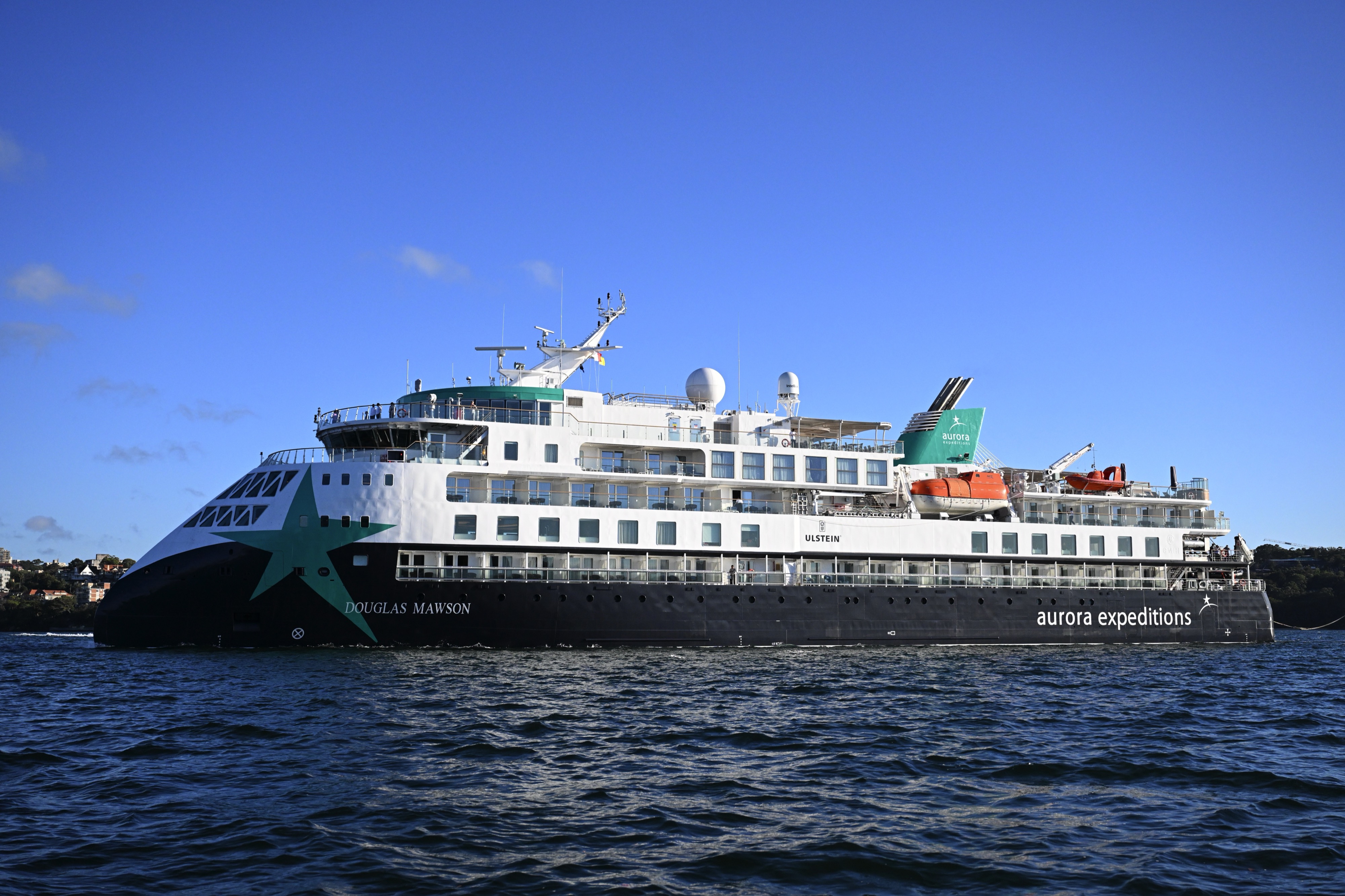
Deck Plans
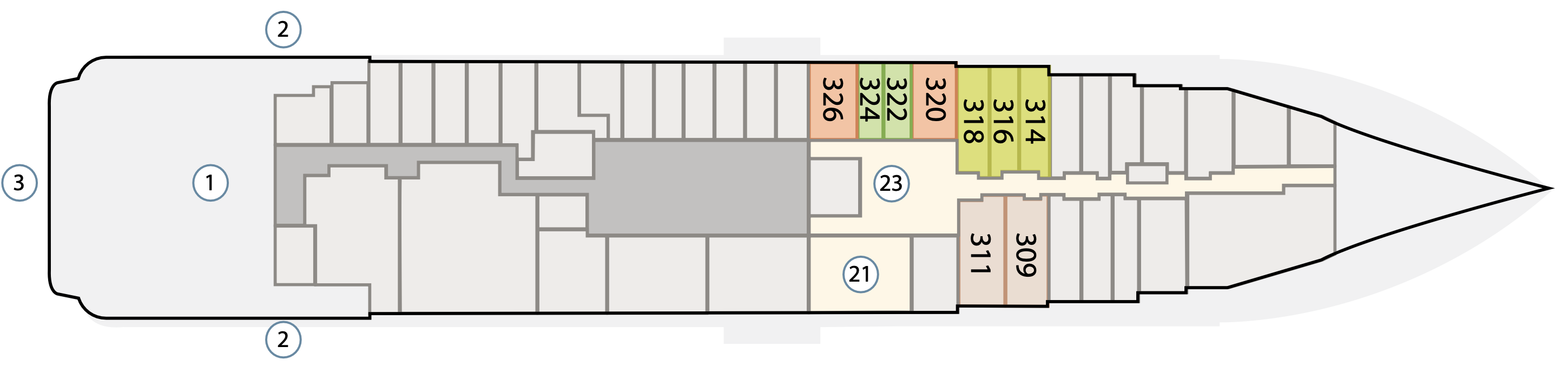
- Change room/mudroom
- Zodiac access points
- Activity launching platform
- Medical clinic
- Elevator
- Aurora Stateroom Triple
- Aurora Stateroom Twin
- Aurora Stateroom Superior Single
- Aurora Stateroom Single
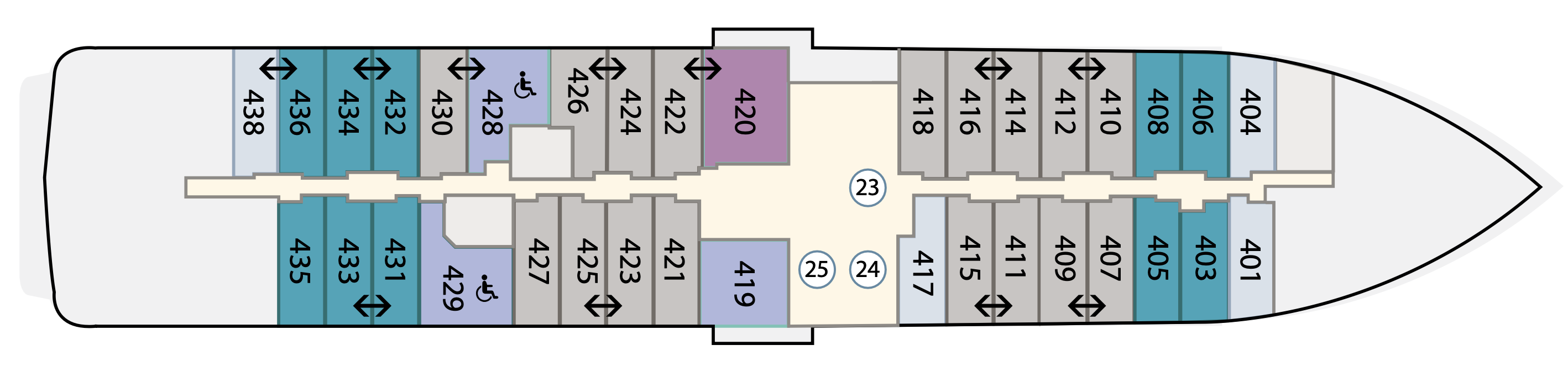
- Elevator
- Main entrance
- Expedition desk
- Captain’s Suite
- Balcony Stateroom Superior
- Balcony Stateroom (A, B, C)
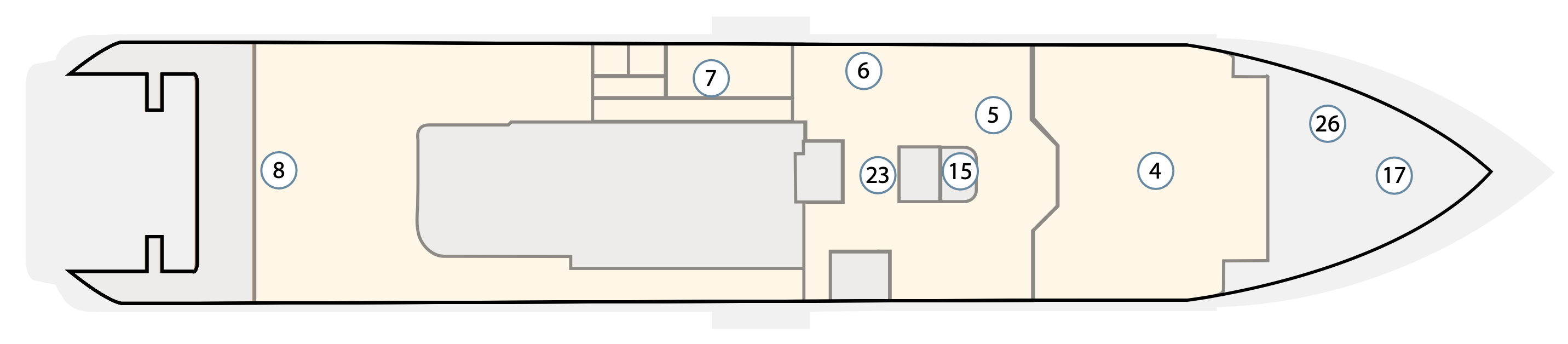
- Lecture room & lounge
- Assembly station
- Reception
- Ship shop
- Dining room
- Bar
- Lower glass atrium lounge
- Elevator
- Citizen Science centre
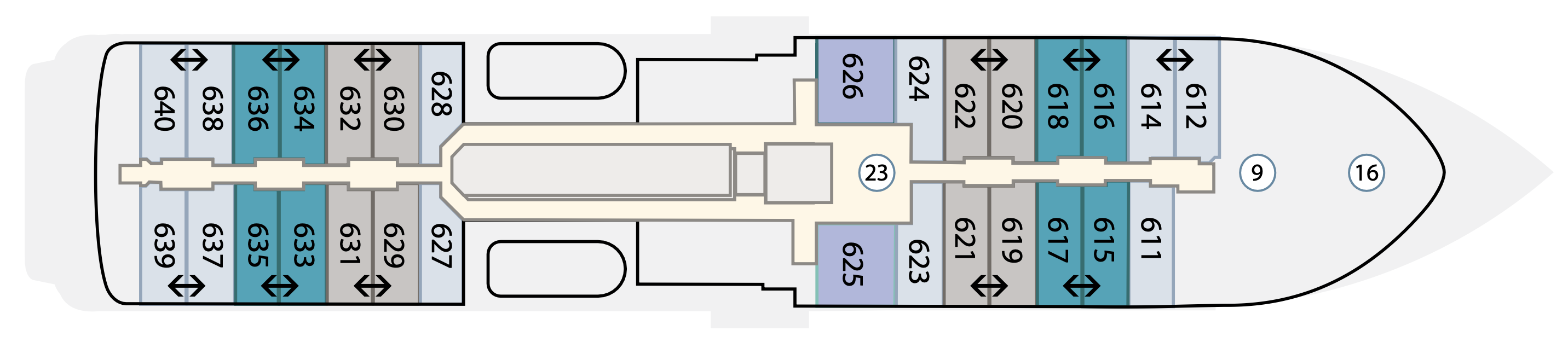
- Library
- Upper glass atrium lounge
- Elevator
- Balcony Stateroom Superior
- Balcony Stateroom (A, B, C)
- Junior Suite
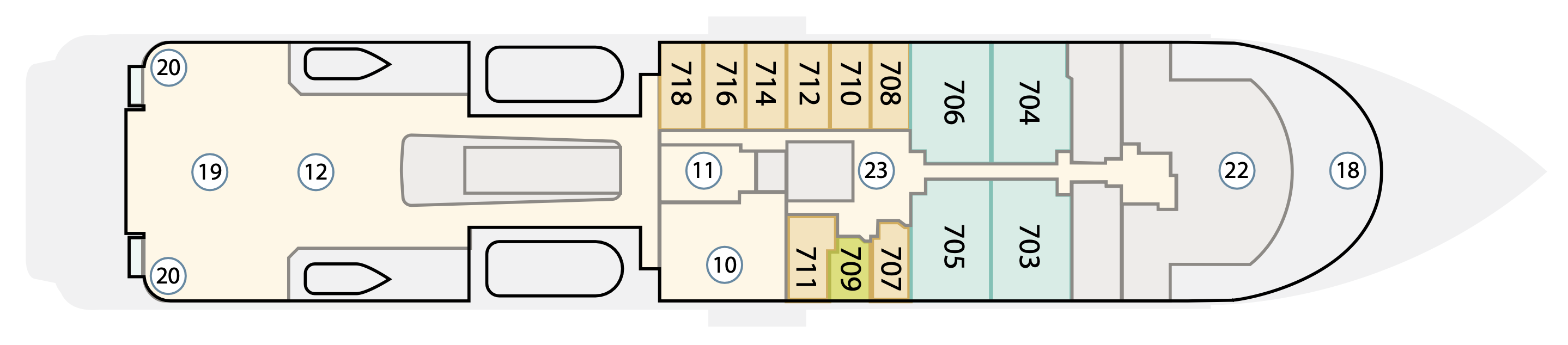
- Gym
- Sauna
- Seating area
- Observation decks
- Swimming pool and sun deck
- Jacuzzis
- Bridge
- Elevator
- Junior Suite
- Aurora Stateroom Superior
- Aurora Stateroom Superior Single

- Seating area
- Observation lounge
- Top-deck restaurant
- Bar
- Observation decks
- Elevator
- Change room/mudroom
- Zodiac access points
- Activity launching platform
- Medical clinic
- Elevator
- Aurora Stateroom Triple
- Aurora Stateroom Twin
- Aurora Stateroom Superior Single
- Aurora Stateroom Single
- Elevator
- Main entrance
- Expedition desk
- Captain’s Suite
- Balcony Stateroom Superior
- Balcony Stateroom (A, B, C)
- Lecture room & lounge
- Assembly station
- Reception
- Ship shop
- Dining room
- Bar
- Lower glass atrium lounge
- Elevator
- Citizen Science centre
- Library
- Upper glass atrium lounge
- Elevator
- Balcony Stateroom Superior
- Balcony Stateroom (A, B, C)
- Junior Suite
- Gym
- Sauna
- Seating area
- Observation decks
- Swimming pool and sun deck
- Jacuzzis
- Bridge
- Elevator
- Junior Suite
- Aurora Stateroom Superior
- Aurora Stateroom Superior Single
- Seating area
- Observation lounge
- Top-deck restaurant
- Bar
- Observation decks
- Elevator