Featured Cabins
Itinerary
Sydney, New South Wales, Australia
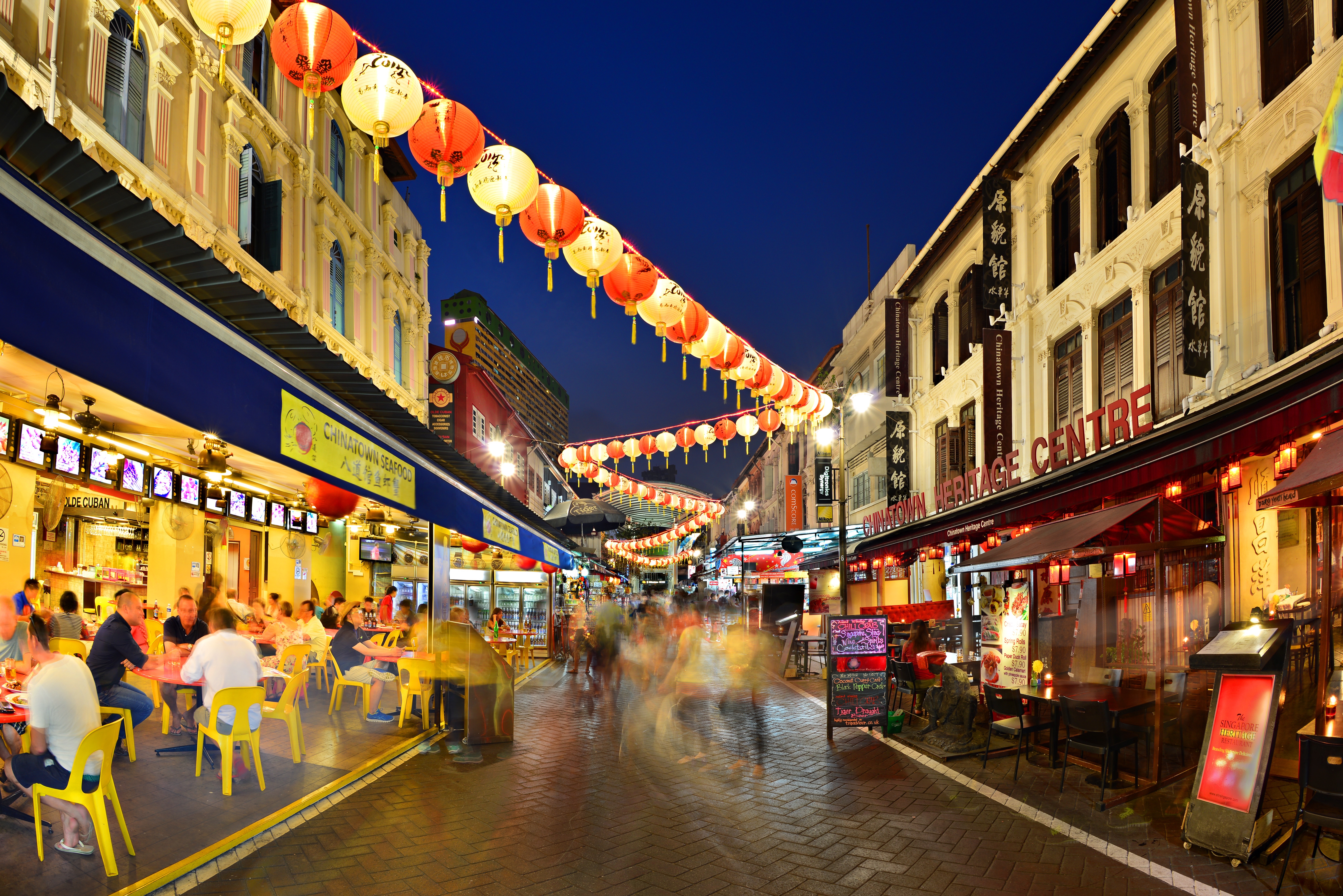
Sydney, capital of New South Wales and one of Australia’s largest cities, is best known for its harbourfront Sydney Opera House, with a distinctive sail-like design. Massive Darling Harbour and the smaller Circular Quay port are hubs of waterside life, with the arched Harbour Bridge and esteemed Royal Botanic Garden nearby. Sydney Tower’s outdoor platform, the Skywalk, offers 360-degree views of the city and suburbs.
Mooloolaba, Queensland, Australia
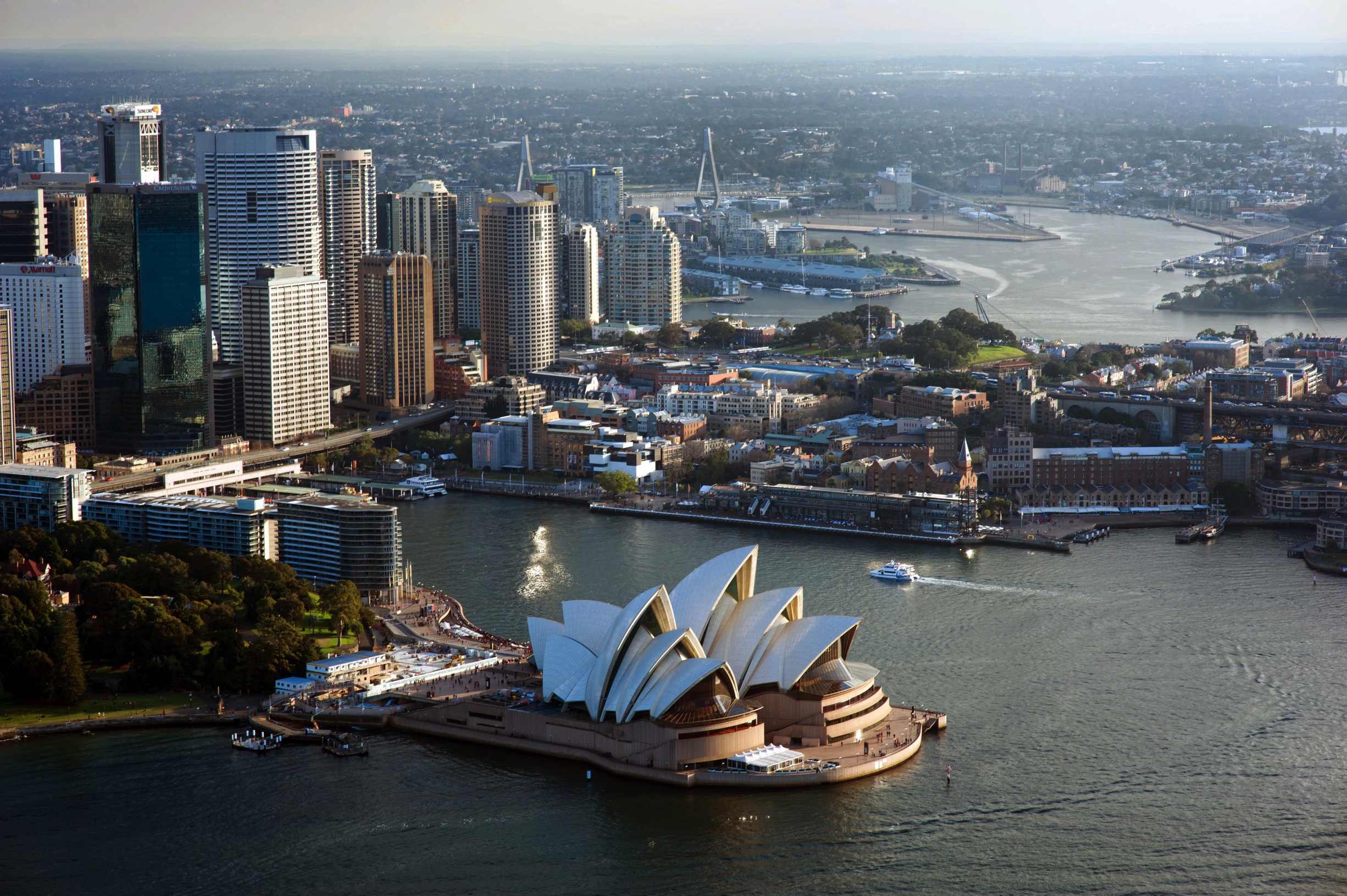
Mooloolaba is a suburban township in Queensland and a popular beach destination where you can dine on world-class cuisine, swim in waterfalls, dive with sharks and visit the world-famous Australia Zoo.
Airlie Beach, Australia
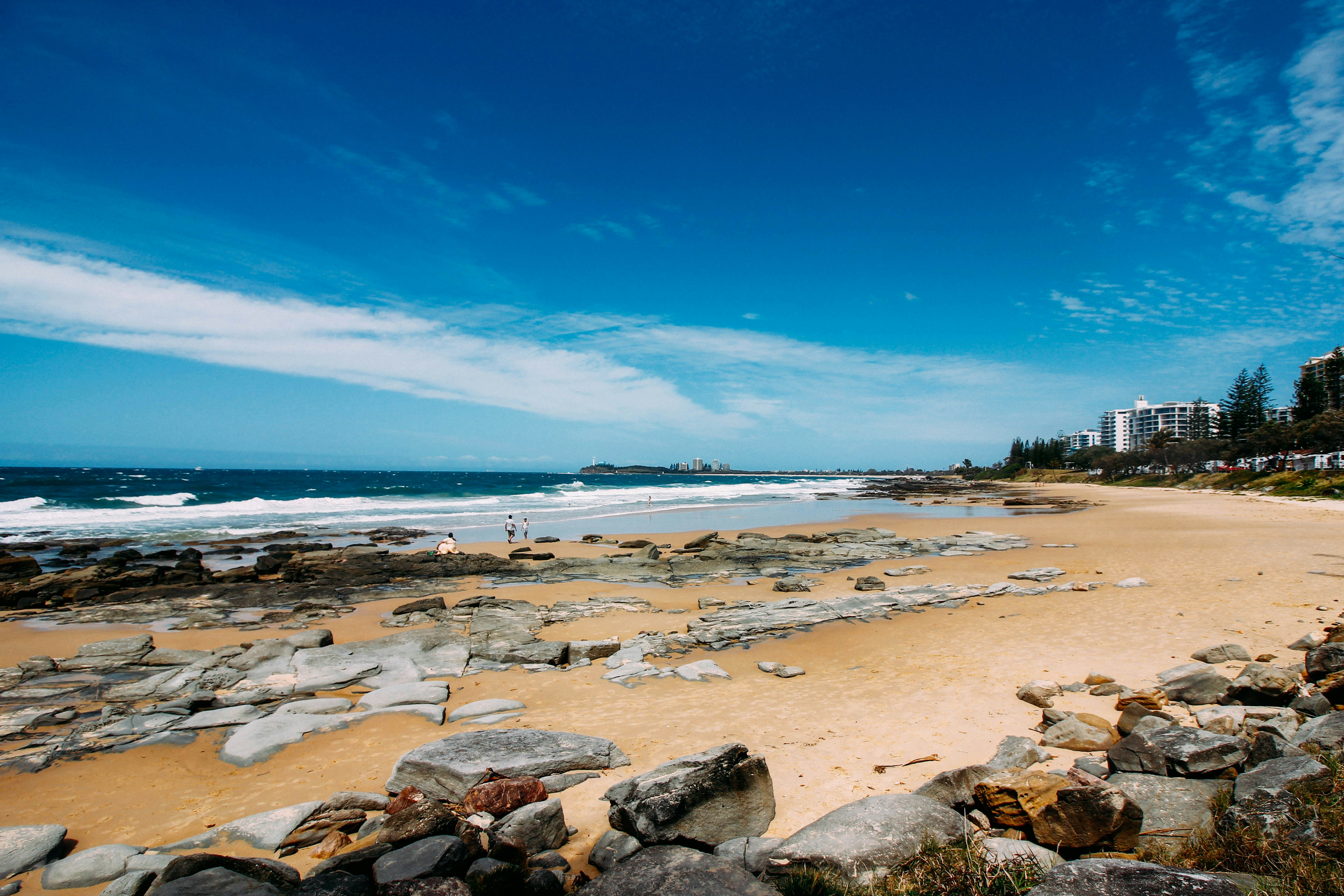
Airlie Beach, nestled in Queensland’s tropical Whitsunday Region, is a vibrant gateway to the Great Barrier Reef and the idyllic Whitsunday Islands. Renowned for its stunning waterfront, the town offers a relaxed yet lively atmosphere, with a picturesque lagoon perfect for swimming and sunbathing. Adventure seekers can enjoy sailing, snorkeling, scuba diving, and skydiving, while the surrounding rainforest and hiking trails provide scenic escapes for nature lovers. The town’s bustling streets are lined with cafés, restaurants, and lively nightlife, ensuring entertainment for all tastes. Airlie Beach is also a launch point for unforgettable island tours, including trips to the world-famous Whitehaven Beach. With its combination of natural beauty, adventure opportunities, and welcoming local culture, Airlie Beach is a must-visit destination for travelers seeking both relaxation and excitement in tropical paradise.
Cairns, Queensland, Australia
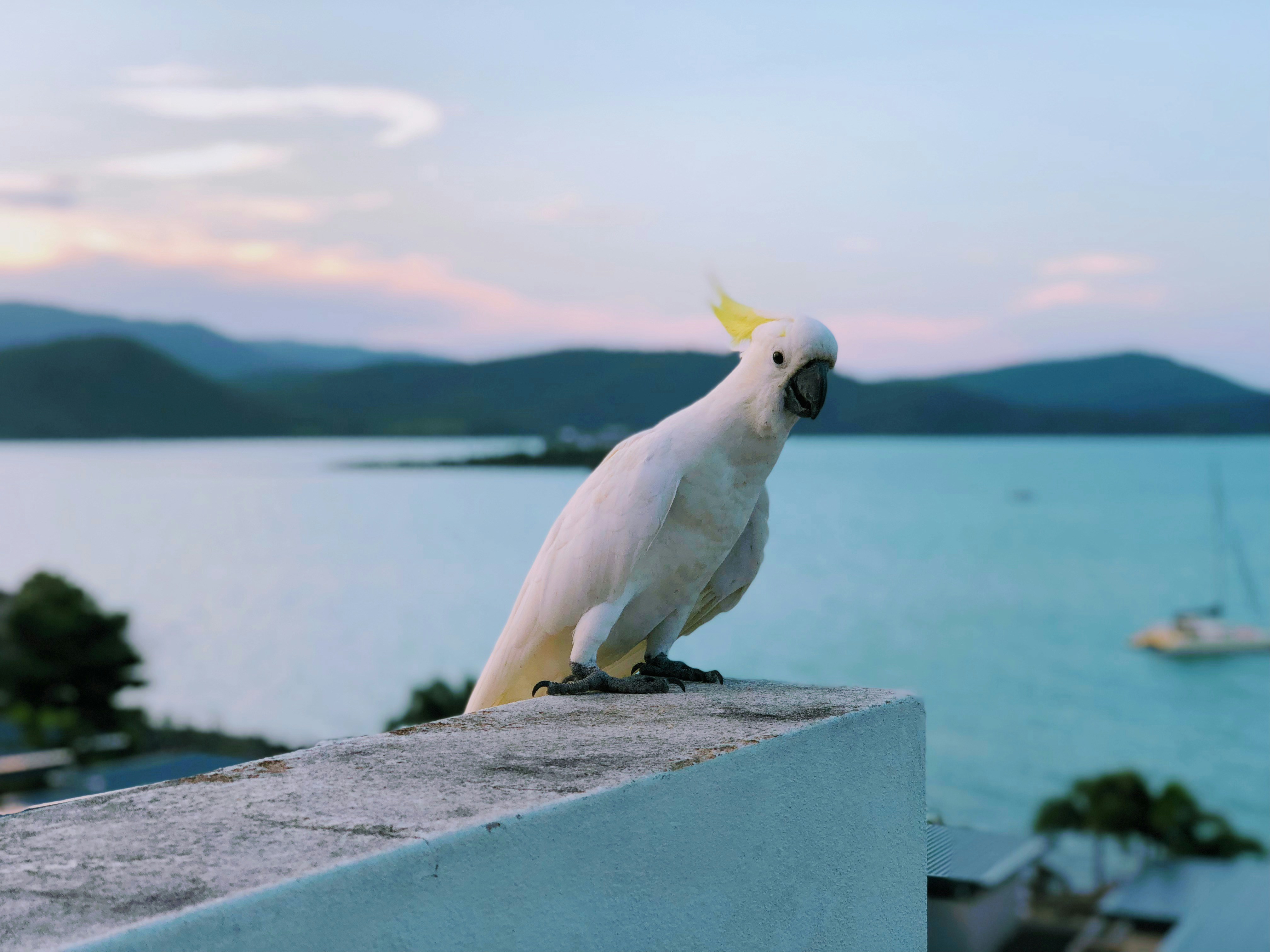
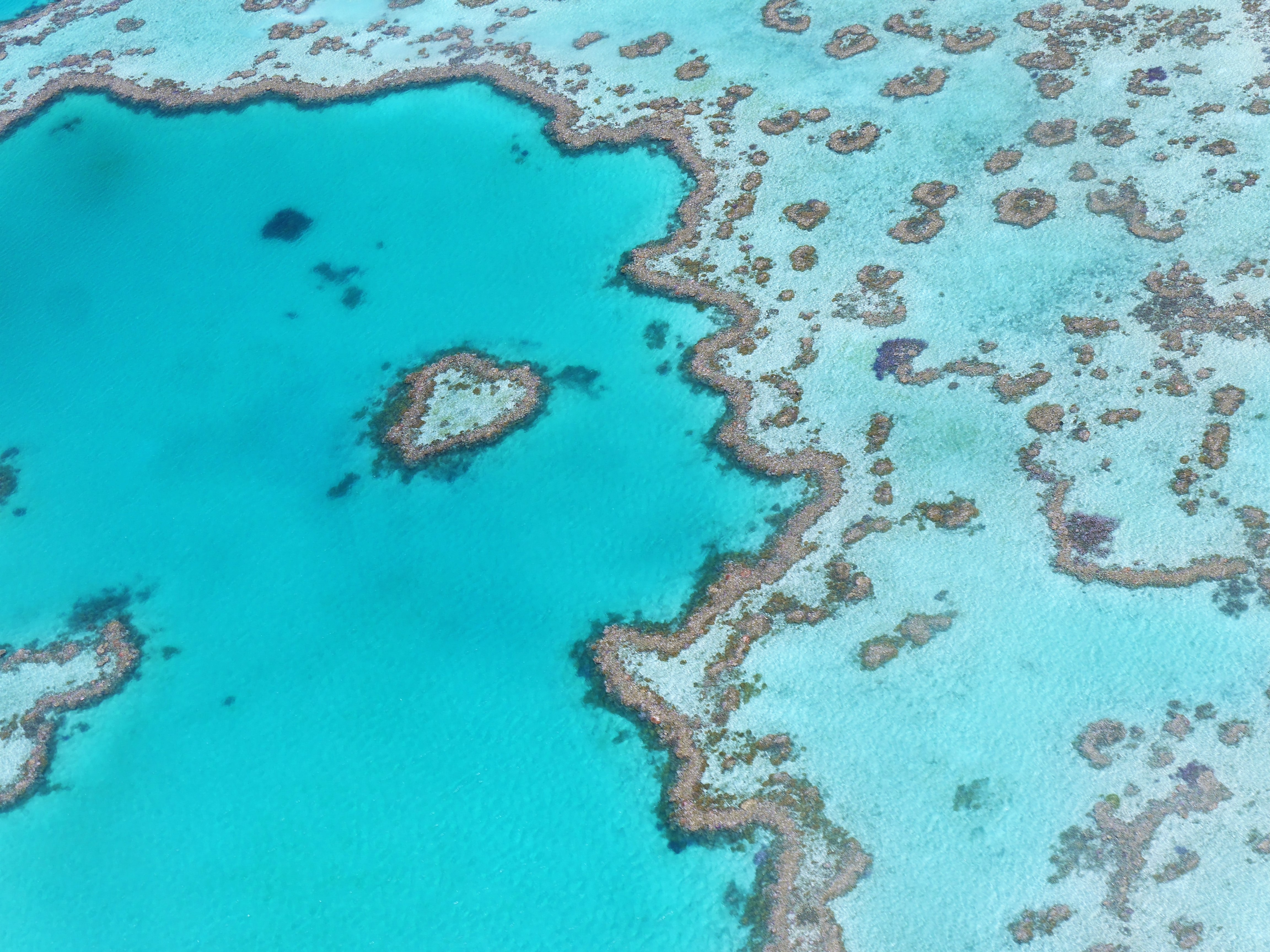
Tourism is the lifeblood of Cairns (pronounced Caans). The city makes a good base for exploring the wild top half of Queensland, and tens of thousands of international travelers use it as a jumping-off point for activities such as scuba diving and snorkeling trips to the Barrier Reef, as well as boating, fishing, parasailing, scenic flights, and rain-forest treks.It’s a tough environment, with intense heat and fierce wildlife. Along with wallabies and grey kangaroos in the savannah and tree kangaroos in the rain forest, you’ll find stealthy saltwater crocodiles, venomous snakes, and jellyfish so deadly they put the region’s stunning beaches off- limits to swimmers for nearly half the year. Yet despite this formidable setting, Cairns and tropical North Queensland are far from intimidating places. The people are warm and friendly, the sights spectacular, and—at the right time of year—the beachside lounging is world-class.
Cairns, Queensland, Australia
Tourism is the lifeblood of Cairns (pronounced Caans). The city makes a good base for exploring the wild top half of Queensland, and tens of thousands of international travelers use it as a jumping-off point for activities such as scuba diving and snorkeling trips to the Barrier Reef, as well as boating, fishing, parasailing, scenic flights, and rain-forest treks.It’s a tough environment, with intense heat and fierce wildlife. Along with wallabies and grey kangaroos in the savannah and tree kangaroos in the rain forest, you’ll find stealthy saltwater crocodiles, venomous snakes, and jellyfish so deadly they put the region’s stunning beaches off- limits to swimmers for nearly half the year. Yet despite this formidable setting, Cairns and tropical North Queensland are far from intimidating places. The people are warm and friendly, the sights spectacular, and—at the right time of year—the beachside lounging is world-class.
Sydney, New South Wales, Australia
Sydney, capital of New South Wales and one of Australia’s largest cities, is best known for its harbourfront Sydney Opera House, with a distinctive sail-like design. Massive Darling Harbour and the smaller Circular Quay port are hubs of waterside life, with the arched Harbour Bridge and esteemed Royal Botanic Garden nearby. Sydney Tower’s outdoor platform, the Skywalk, offers 360-degree views of the city and suburbs.
Mooloolaba, Queensland, Australia
Mooloolaba is a suburban township in Queensland and a popular beach destination where you can dine on world-class cuisine, swim in waterfalls, dive with sharks and visit the world-famous Australia Zoo.
Airlie Beach, Australia
Airlie Beach, nestled in Queensland’s tropical Whitsunday Region, is a vibrant gateway to the Great Barrier Reef and the idyllic Whitsunday Islands. Renowned for its stunning waterfront, the town offers a relaxed yet lively atmosphere, with a picturesque lagoon perfect for swimming and sunbathing. Adventure seekers can enjoy sailing, snorkeling, scuba diving, and skydiving, while the surrounding rainforest and hiking trails provide scenic escapes for nature lovers. The town’s bustling streets are lined with cafés, restaurants, and lively nightlife, ensuring entertainment for all tastes. Airlie Beach is also a launch point for unforgettable island tours, including trips to the world-famous Whitehaven Beach. With its combination of natural beauty, adventure opportunities, and welcoming local culture, Airlie Beach is a must-visit destination for travelers seeking both relaxation and excitement in tropical paradise.
Cairns, Queensland, Australia
Tourism is the lifeblood of Cairns (pronounced Caans). The city makes a good base for exploring the wild top half of Queensland, and tens of thousands of international travelers use it as a jumping-off point for activities such as scuba diving and snorkeling trips to the Barrier Reef, as well as boating, fishing, parasailing, scenic flights, and rain-forest treks.It’s a tough environment, with intense heat and fierce wildlife. Along with wallabies and grey kangaroos in the savannah and tree kangaroos in the rain forest, you’ll find stealthy saltwater crocodiles, venomous snakes, and jellyfish so deadly they put the region’s stunning beaches off- limits to swimmers for nearly half the year. Yet despite this formidable setting, Cairns and tropical North Queensland are far from intimidating places. The people are warm and friendly, the sights spectacular, and—at the right time of year—the beachside lounging is world-class.
Cairns, Queensland, Australia
Tourism is the lifeblood of Cairns (pronounced Caans). The city makes a good base for exploring the wild top half of Queensland, and tens of thousands of international travelers use it as a jumping-off point for activities such as scuba diving and snorkeling trips to the Barrier Reef, as well as boating, fishing, parasailing, scenic flights, and rain-forest treks.It’s a tough environment, with intense heat and fierce wildlife. Along with wallabies and grey kangaroos in the savannah and tree kangaroos in the rain forest, you’ll find stealthy saltwater crocodiles, venomous snakes, and jellyfish so deadly they put the region’s stunning beaches off- limits to swimmers for nearly half the year. Yet despite this formidable setting, Cairns and tropical North Queensland are far from intimidating places. The people are warm and friendly, the sights spectacular, and—at the right time of year—the beachside lounging is world-class.
Darwin, Northern Territory, Australia
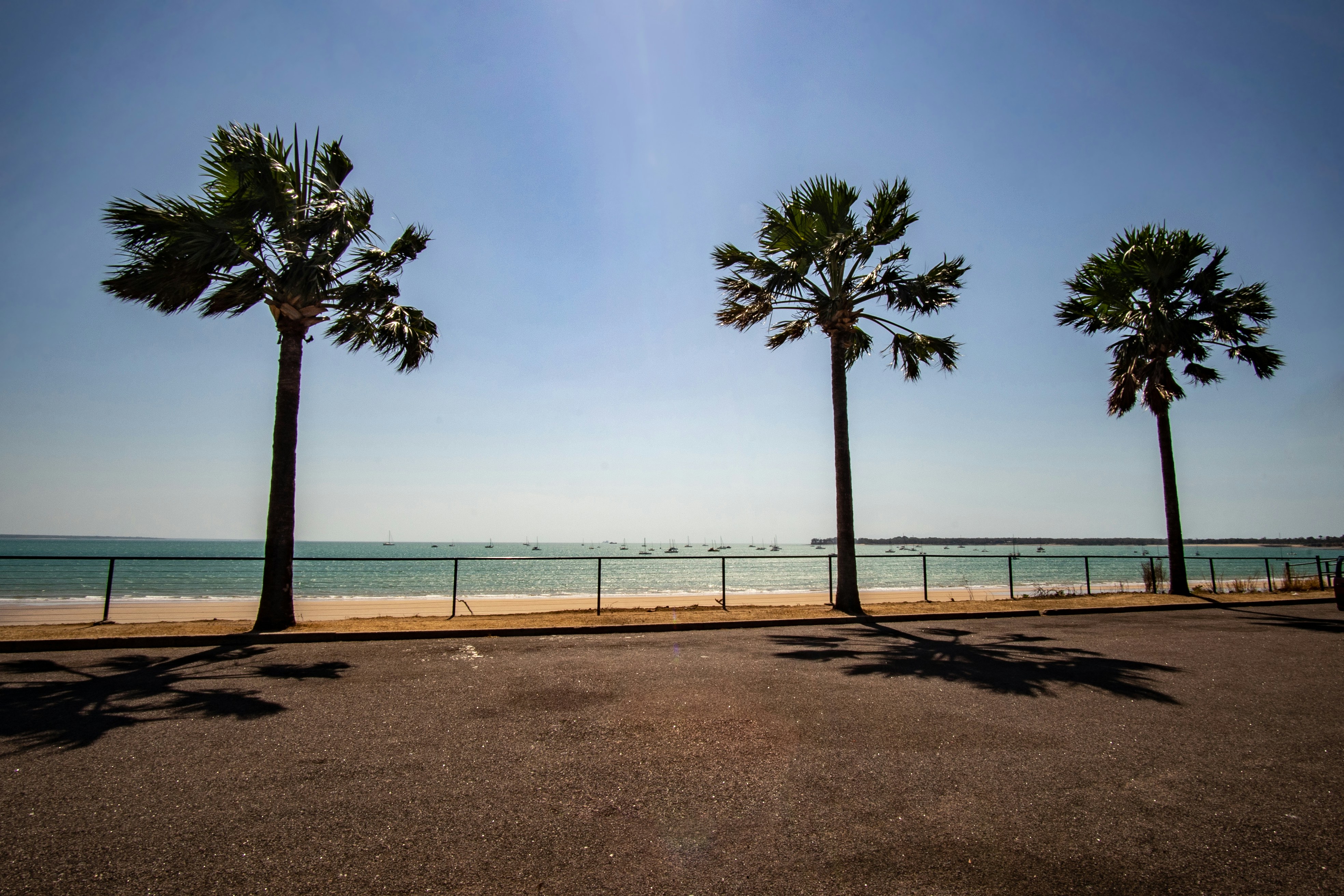
Darwin is Australia’s most colorful, and exotic, capital city. Surrounded on three sides by the turquoise waters of the Timor Sea, the streets are lined with tropical flowers and trees. Warm and dry in winter, hot and steamy in summer, it’s a relaxed and casual place, as well as a beguiling blend of tropical frontier outpost and Outback hardiness. Thanks to its close proximity to Southeast Asia and its multicultural population it also seems more like Asia than the rest of Australia. Darwin is a city that has always had to fight for its survival. The seductiveness of contemporary Darwin lifestyles belies a history of failed attempts that date from 1824 when Europeans attempted to establish an enclave in this harsh, unyielding climate. The original 1869 settlement, called Palmerston, was built on a parcel of mangrove wetlands and scrub forest that had changed little in 15 million years. It was not until 1911, after it had already weathered the disastrous cyclones of 1878, 1882, and 1897, that the town was named after the scientist who had visited Australia’s shores aboard the Beagle in 1839. During World War II it was bombed more than 60 times, as the harbor full of warships was a prime target for the Japanese war planes. Then, on the night of Christmas Eve 1974, the city was almost completely destroyed by Cyclone Tracy, Australia’s greatest natural disaster. It’s a tribute to those who stayed and to those who have come to live here after Tracy that the rebuilt city now thrives as an administrative and commercial center for northern Australia. Old Darwin has been replaced by something of an edifice complex—such buildings as Parliament House and the Supreme Court all seem very grand for such a small city, especially one that prides itself on its casual, outdoor-centric lifestyle. Today Darwin is the best place from which to explore Australia’s Top End, with its wonders of Kakadu and the Kimberley region.
Benoa, Bali, Indonesia
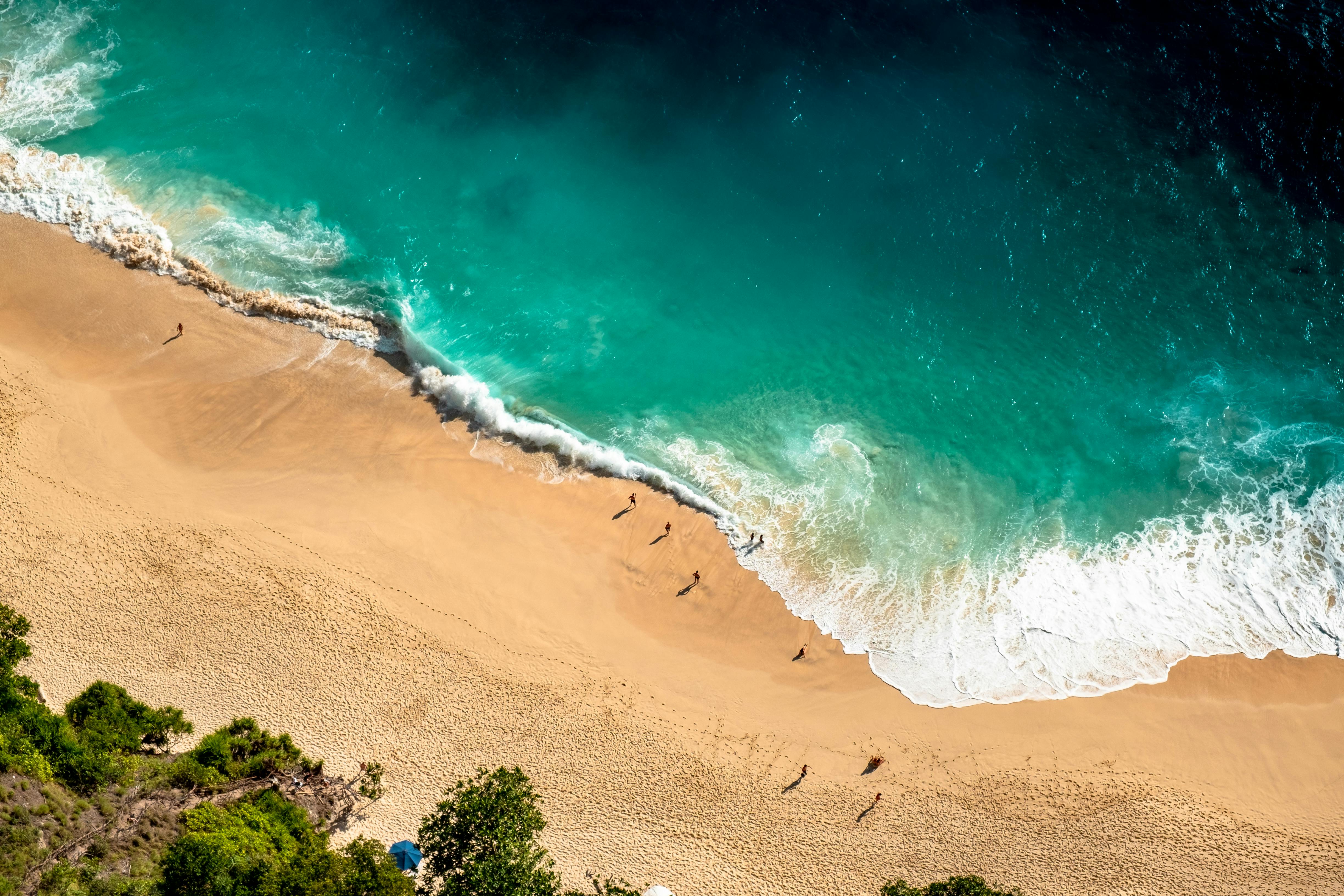
Bali really is as alluring as everyone says. This island, slightly bigger than Delaware, has it all: beaches, volcanoes, terraced rice fields, forests, renowned resorts, surfing, golf, and world-class dive sites. But what sets Bali apart from other nearby tropical destinations is Balinese tradition, and villagers dedicated to celebrating it. The hundreds of temples, dances, rituals, and crafts linked to their ancient Hindu faith aren’t a show for tourists, but a living, breathing culture in which visitors are warmly received by the Balinese, who cherish their own identities.
Darwin, Northern Territory, Australia
Darwin is Australia’s most colorful, and exotic, capital city. Surrounded on three sides by the turquoise waters of the Timor Sea, the streets are lined with tropical flowers and trees. Warm and dry in winter, hot and steamy in summer, it’s a relaxed and casual place, as well as a beguiling blend of tropical frontier outpost and Outback hardiness. Thanks to its close proximity to Southeast Asia and its multicultural population it also seems more like Asia than the rest of Australia. Darwin is a city that has always had to fight for its survival. The seductiveness of contemporary Darwin lifestyles belies a history of failed attempts that date from 1824 when Europeans attempted to establish an enclave in this harsh, unyielding climate. The original 1869 settlement, called Palmerston, was built on a parcel of mangrove wetlands and scrub forest that had changed little in 15 million years. It was not until 1911, after it had already weathered the disastrous cyclones of 1878, 1882, and 1897, that the town was named after the scientist who had visited Australia’s shores aboard the Beagle in 1839. During World War II it was bombed more than 60 times, as the harbor full of warships was a prime target for the Japanese war planes. Then, on the night of Christmas Eve 1974, the city was almost completely destroyed by Cyclone Tracy, Australia’s greatest natural disaster. It’s a tribute to those who stayed and to those who have come to live here after Tracy that the rebuilt city now thrives as an administrative and commercial center for northern Australia. Old Darwin has been replaced by something of an edifice complex—such buildings as Parliament House and the Supreme Court all seem very grand for such a small city, especially one that prides itself on its casual, outdoor-centric lifestyle. Today Darwin is the best place from which to explore Australia’s Top End, with its wonders of Kakadu and the Kimberley region.
Benoa, Bali, Indonesia
Bali really is as alluring as everyone says. This island, slightly bigger than Delaware, has it all: beaches, volcanoes, terraced rice fields, forests, renowned resorts, surfing, golf, and world-class dive sites. But what sets Bali apart from other nearby tropical destinations is Balinese tradition, and villagers dedicated to celebrating it. The hundreds of temples, dances, rituals, and crafts linked to their ancient Hindu faith aren’t a show for tourists, but a living, breathing culture in which visitors are warmly received by the Balinese, who cherish their own identities.
Semarang, Indonesia
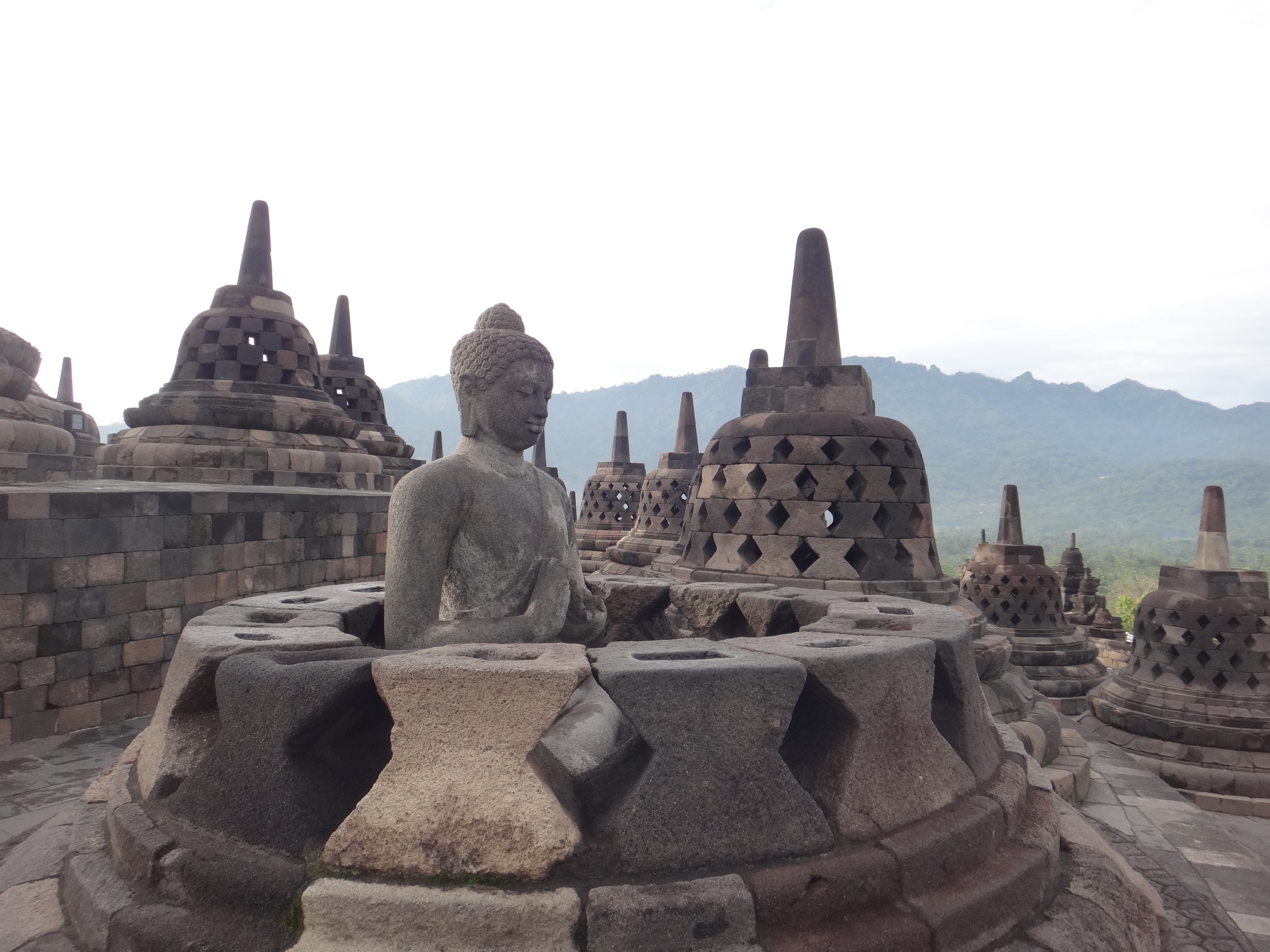
Semarang is one of the oldest cities in Indonesia, situated on Java’s north coast between the shore of the Java Sea and a small ridge of mountains. Ceded to the Dutch West India Company in 1677 by King Amangkurat I in payment of his debts, it became their headquarters and the seat of the Dutch governor of the northeast provinces. Semarang’s usefulness as a port waned due to the gradual silting up of the harbor; by the 19th century, Surabaya had eclipsed Semarang as Java’s premier port. With a population of over one million, a third of whom are thought to be of Chinese extraction, Semarang is the largest city in Central Java and its administrative capital. The city consists of two parts: the coastal lowland where most of the commercial activities are found; and the hilly residential area. Although more a business center than a city for tourists, Semarang serves as a popular gateway to the mountainous interior of Central Java and to fabled Borobudur.
Jakarta, Indonesia
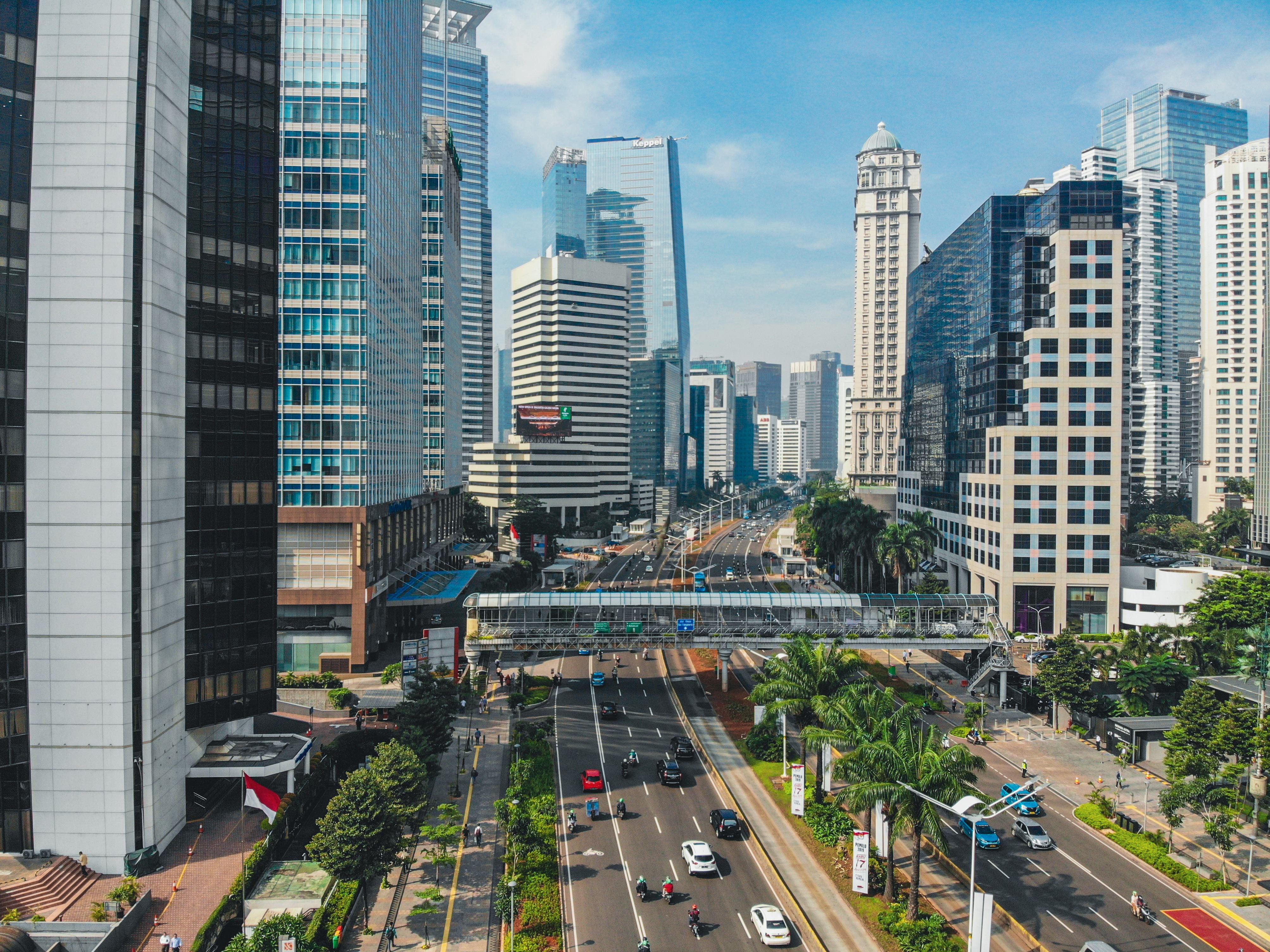
On fiery-peaked Java, the megacity of Jakarta is booming. The traffic and vastness seem daunting at first, but this is a melting pot of cultures and cuisines – seeking them out is part of its allure.
Singapore, Singapore
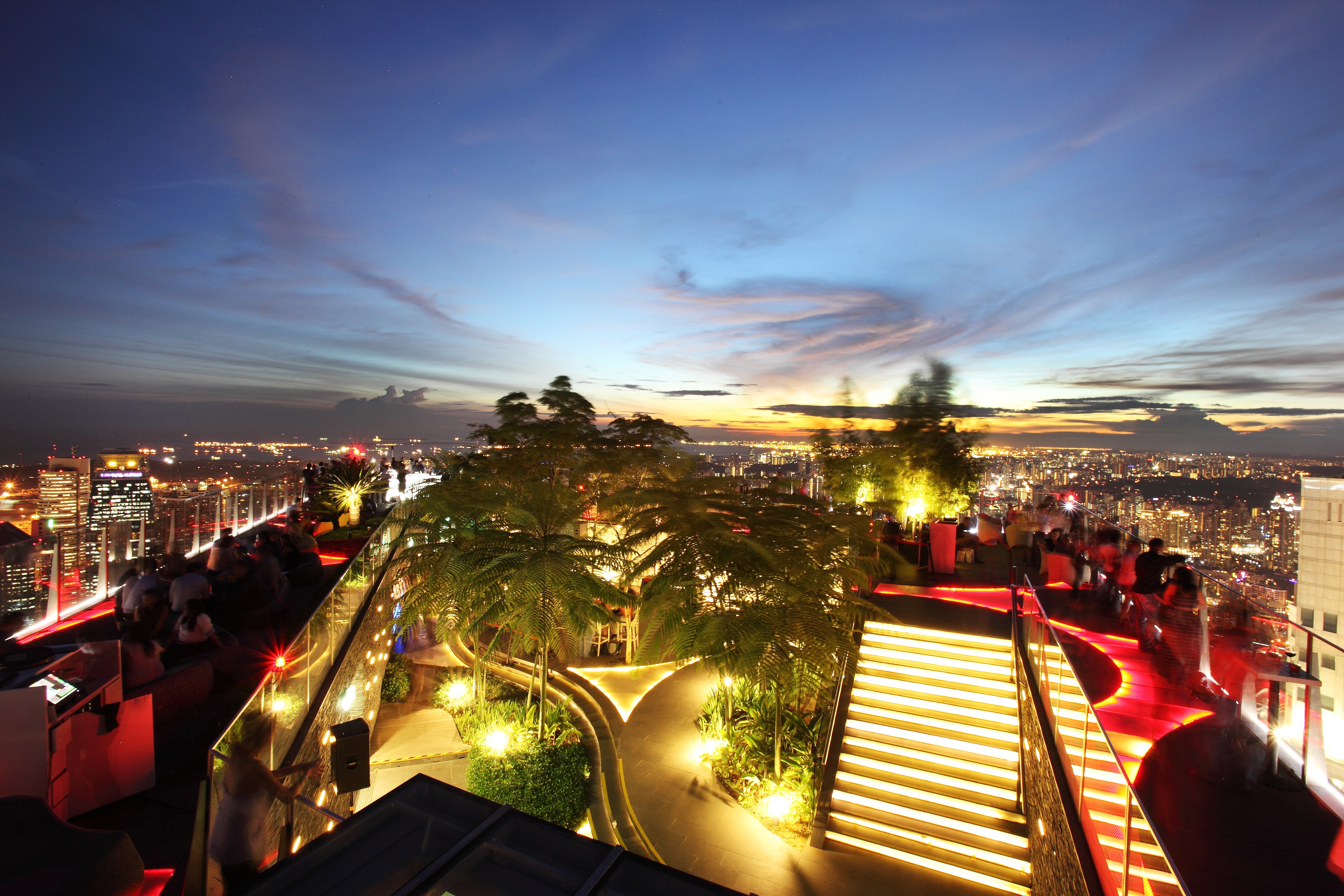
The main island of Singapore is shaped like a flattened diamond, 42 km (26 miles) east to west and 23 km (14 miles) north to south. Near the northern peak is the causeway leading to West Malaysia—Kuala Lumpur is less than four hours away by car. It is at the southern foot where you will find most of the city-state’s action, with its gleaming office towers, working docks, and futuristic “supertrees,” which are solar-powered and serve as vertical gardens. Offshore are Sentosa and over 60 smaller islands, most uninhabited, that serve as bases for oil refining or as playgrounds and beach escapes from the city. To the east is Changi International Airport, connected to the city by metro, bus, and a tree-lined parkway. Of the island’s total land area, more than half is built up, with the balance made up of parkland, farmland, plantations, swamp areas, and rain forest. Well-paved roads connect all parts of the island, and Singapore city has an excellent, and constantly expanding, public transportation system. The heart of Singapore’s history and its modern wealth are in and around the Central Business District. The area includes the skyscrapers in the Central Business District, the 19th-century Raffles Hotel, the convention centers of Marina Square, on up to the top of Ft. Canning. Although most of old Singapore has been knocked down to make way for the modern city, most colonial landmarks have been preserved in the CBD, including early-19th-century buildings designed by the Irish architect George Coleman.
Singapore, Singapore
The main island of Singapore is shaped like a flattened diamond, 42 km (26 miles) east to west and 23 km (14 miles) north to south. Near the northern peak is the causeway leading to West Malaysia—Kuala Lumpur is less than four hours away by car. It is at the southern foot where you will find most of the city-state’s action, with its gleaming office towers, working docks, and futuristic “supertrees,” which are solar-powered and serve as vertical gardens. Offshore are Sentosa and over 60 smaller islands, most uninhabited, that serve as bases for oil refining or as playgrounds and beach escapes from the city. To the east is Changi International Airport, connected to the city by metro, bus, and a tree-lined parkway. Of the island’s total land area, more than half is built up, with the balance made up of parkland, farmland, plantations, swamp areas, and rain forest. Well-paved roads connect all parts of the island, and Singapore city has an excellent, and constantly expanding, public transportation system. The heart of Singapore’s history and its modern wealth are in and around the Central Business District. The area includes the skyscrapers in the Central Business District, the 19th-century Raffles Hotel, the convention centers of Marina Square, on up to the top of Ft. Canning. Although most of old Singapore has been knocked down to make way for the modern city, most colonial landmarks have been preserved in the CBD, including early-19th-century buildings designed by the Irish architect George Coleman.
Semarang, Indonesia
Semarang is one of the oldest cities in Indonesia, situated on Java’s north coast between the shore of the Java Sea and a small ridge of mountains. Ceded to the Dutch West India Company in 1677 by King Amangkurat I in payment of his debts, it became their headquarters and the seat of the Dutch governor of the northeast provinces. Semarang’s usefulness as a port waned due to the gradual silting up of the harbor; by the 19th century, Surabaya had eclipsed Semarang as Java’s premier port. With a population of over one million, a third of whom are thought to be of Chinese extraction, Semarang is the largest city in Central Java and its administrative capital. The city consists of two parts: the coastal lowland where most of the commercial activities are found; and the hilly residential area. Although more a business center than a city for tourists, Semarang serves as a popular gateway to the mountainous interior of Central Java and to fabled Borobudur.
Jakarta, Indonesia
On fiery-peaked Java, the megacity of Jakarta is booming. The traffic and vastness seem daunting at first, but this is a melting pot of cultures and cuisines – seeking them out is part of its allure.
Singapore, Singapore
The main island of Singapore is shaped like a flattened diamond, 42 km (26 miles) east to west and 23 km (14 miles) north to south. Near the northern peak is the causeway leading to West Malaysia—Kuala Lumpur is less than four hours away by car. It is at the southern foot where you will find most of the city-state’s action, with its gleaming office towers, working docks, and futuristic “supertrees,” which are solar-powered and serve as vertical gardens. Offshore are Sentosa and over 60 smaller islands, most uninhabited, that serve as bases for oil refining or as playgrounds and beach escapes from the city. To the east is Changi International Airport, connected to the city by metro, bus, and a tree-lined parkway. Of the island’s total land area, more than half is built up, with the balance made up of parkland, farmland, plantations, swamp areas, and rain forest. Well-paved roads connect all parts of the island, and Singapore city has an excellent, and constantly expanding, public transportation system. The heart of Singapore’s history and its modern wealth are in and around the Central Business District. The area includes the skyscrapers in the Central Business District, the 19th-century Raffles Hotel, the convention centers of Marina Square, on up to the top of Ft. Canning. Although most of old Singapore has been knocked down to make way for the modern city, most colonial landmarks have been preserved in the CBD, including early-19th-century buildings designed by the Irish architect George Coleman.
Singapore, Singapore
The main island of Singapore is shaped like a flattened diamond, 42 km (26 miles) east to west and 23 km (14 miles) north to south. Near the northern peak is the causeway leading to West Malaysia—Kuala Lumpur is less than four hours away by car. It is at the southern foot where you will find most of the city-state’s action, with its gleaming office towers, working docks, and futuristic “supertrees,” which are solar-powered and serve as vertical gardens. Offshore are Sentosa and over 60 smaller islands, most uninhabited, that serve as bases for oil refining or as playgrounds and beach escapes from the city. To the east is Changi International Airport, connected to the city by metro, bus, and a tree-lined parkway. Of the island’s total land area, more than half is built up, with the balance made up of parkland, farmland, plantations, swamp areas, and rain forest. Well-paved roads connect all parts of the island, and Singapore city has an excellent, and constantly expanding, public transportation system. The heart of Singapore’s history and its modern wealth are in and around the Central Business District. The area includes the skyscrapers in the Central Business District, the 19th-century Raffles Hotel, the convention centers of Marina Square, on up to the top of Ft. Canning. Although most of old Singapore has been knocked down to make way for the modern city, most colonial landmarks have been preserved in the CBD, including early-19th-century buildings designed by the Irish architect George Coleman.
Ho Chi Minh City, Vietnam
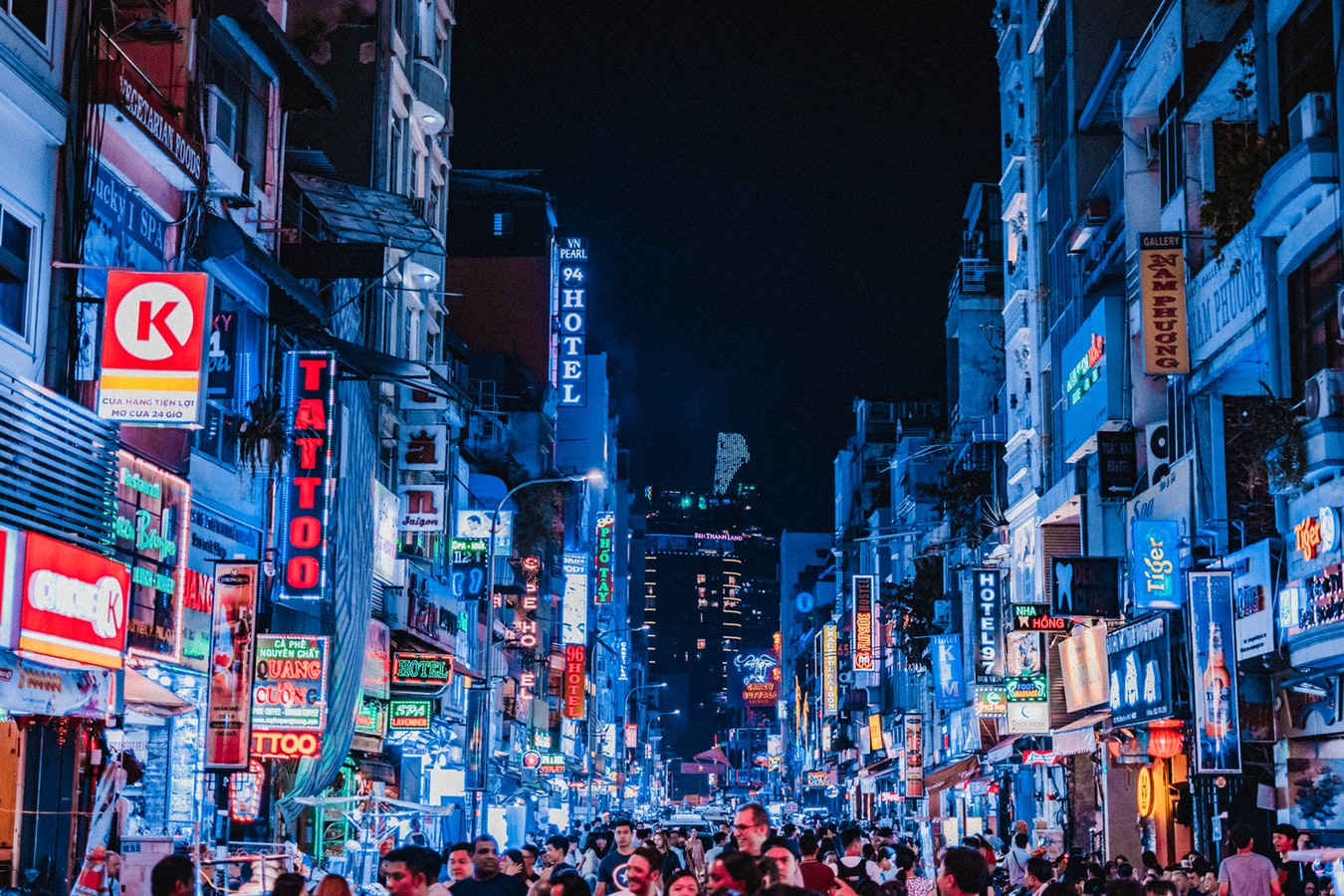
Romantically referred to by the French as the Pearl of the Orient, Ho Chi Minh City today is a super-charged city of sensory overload. Motorbikes zoom day and night along the wide boulevards, through the narrow back alleys and past vendors pushing handcarts hawking goods of all descriptions. Still called Saigon by most residents, this is Vietnam’s largest city and the engine driving the country’s current economic resurgence, but despite its frenetic pace, it’s a friendlier place than Hanoi and locals will tell you the food—simple, tasty, and incorporating many fresh herbs—is infinitely better than in the capital.This is a city full of surprises. The madness of the city’s traffic—witness the oddball things that are transported on the back of motorcycles—is countered by tranquil pagodas, peaceful parks, quirky coffee shops, and whole neighborhoods hidden down tiny alleyways, although some of these quiet spots can be difficult to track down. Life in Ho Chi Minh City is lived in public: on the back of motorcycles, on the sidewalks, and in the parks. Even when its residents are at home, they’re still on display. With many living rooms opening onto the street, grandmothers napping, babies being rocked, and food being prepared, are all in full view of passersby.Icons of the past endure in the midst of the city’s headlong rush into capitalism. The Hotel Continental, immortalized in Graham Greene’s The Quiet American, continues to stand on the corner of old Indochina’s most famous thoroughfare, the rue Catinat, known to American G.I.s during the Vietnam War as Tu Do (Freedom) Street and renamed Dong Khoi (Uprising) Street by the Communists. The city still has its ornate opera house and its old French city hall, the Hôtel de Ville. The broad colonial boulevards leading to the Saigon River and the gracious stucco villas are other remnants of the French colonial presence. Grisly reminders of the more recent past can be seen at the city’s war-related museums. Residents, however, prefer to look forward rather than back and are often perplexed by tourists’ fascination with a war that ended 40 years ago.The Chinese influence on the country is still very much in evidence in the Cholon district, the city’s Chinatown, but the modern office towers and international hotels that mark the skyline symbolize Vietnam’s fixation on the future.
Ho Chi Minh City, Vietnam
Romantically referred to by the French as the Pearl of the Orient, Ho Chi Minh City today is a super-charged city of sensory overload. Motorbikes zoom day and night along the wide boulevards, through the narrow back alleys and past vendors pushing handcarts hawking goods of all descriptions. Still called Saigon by most residents, this is Vietnam’s largest city and the engine driving the country’s current economic resurgence, but despite its frenetic pace, it’s a friendlier place than Hanoi and locals will tell you the food—simple, tasty, and incorporating many fresh herbs—is infinitely better than in the capital.This is a city full of surprises. The madness of the city’s traffic—witness the oddball things that are transported on the back of motorcycles—is countered by tranquil pagodas, peaceful parks, quirky coffee shops, and whole neighborhoods hidden down tiny alleyways, although some of these quiet spots can be difficult to track down. Life in Ho Chi Minh City is lived in public: on the back of motorcycles, on the sidewalks, and in the parks. Even when its residents are at home, they’re still on display. With many living rooms opening onto the street, grandmothers napping, babies being rocked, and food being prepared, are all in full view of passersby.Icons of the past endure in the midst of the city’s headlong rush into capitalism. The Hotel Continental, immortalized in Graham Greene’s The Quiet American, continues to stand on the corner of old Indochina’s most famous thoroughfare, the rue Catinat, known to American G.I.s during the Vietnam War as Tu Do (Freedom) Street and renamed Dong Khoi (Uprising) Street by the Communists. The city still has its ornate opera house and its old French city hall, the Hôtel de Ville. The broad colonial boulevards leading to the Saigon River and the gracious stucco villas are other remnants of the French colonial presence. Grisly reminders of the more recent past can be seen at the city’s war-related museums. Residents, however, prefer to look forward rather than back and are often perplexed by tourists’ fascination with a war that ended 40 years ago.The Chinese influence on the country is still very much in evidence in the Cholon district, the city’s Chinatown, but the modern office towers and international hotels that mark the skyline symbolize Vietnam’s fixation on the future.
Da Nang, Vietnam
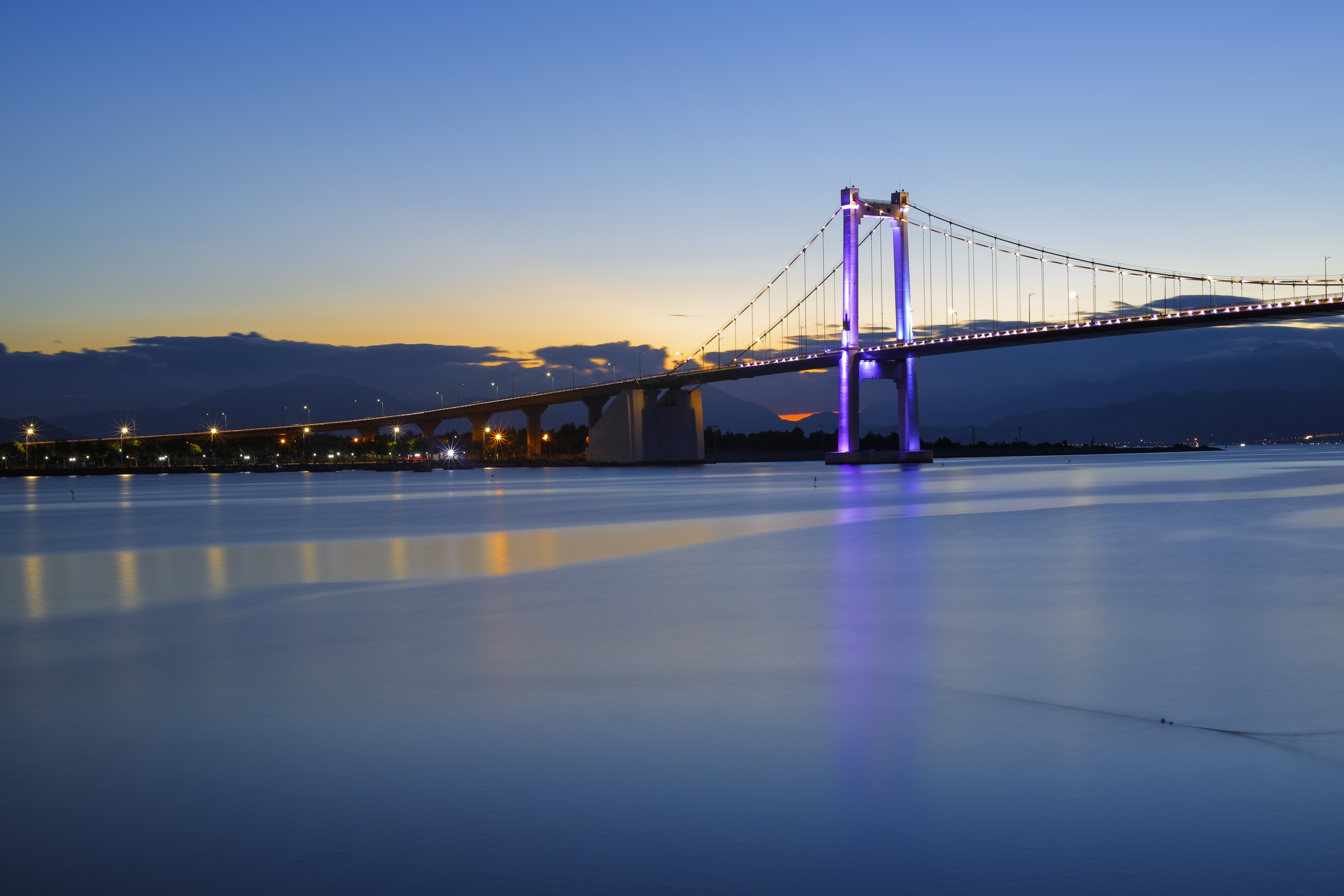
Da Nang is the third largest city in Vietnam with the land area of 1283 square kilometre and the population of approximately 1million people. Da Nang is growing into one of the most organized urban area, with attractive beach front villas on the one side and Han River flowing on the other. Of the few attractions that belong to the city, Museum of Cham stands out with its rich collection of Cham artefacts. For those who crave for more outdoors activities, My Khe beach is a good place to spend time, either by yourself or with your loved ones. Da Nang is in close proximity to Hue- 3 hours North and Hoi An- 30 minutes south, which makes it a perfect stop point for those who need a break from touristy areas. Hue was once the Royal Capital of Viet Nam. The city represents the outstanding demonstration of the power of the vanished Vietnamese feudal empire, including a complex of monuments, tombs and pagodas that attract tourists coming from all over the world. Hoi An has to this days well preserved its most sacred treasure, the centuries-old architecture. The town used to harbour foreign traders back in the 17-18th, and once is an important heavily-frequented trading port in Southeast Asia.
Hong Kong, Hong Kong
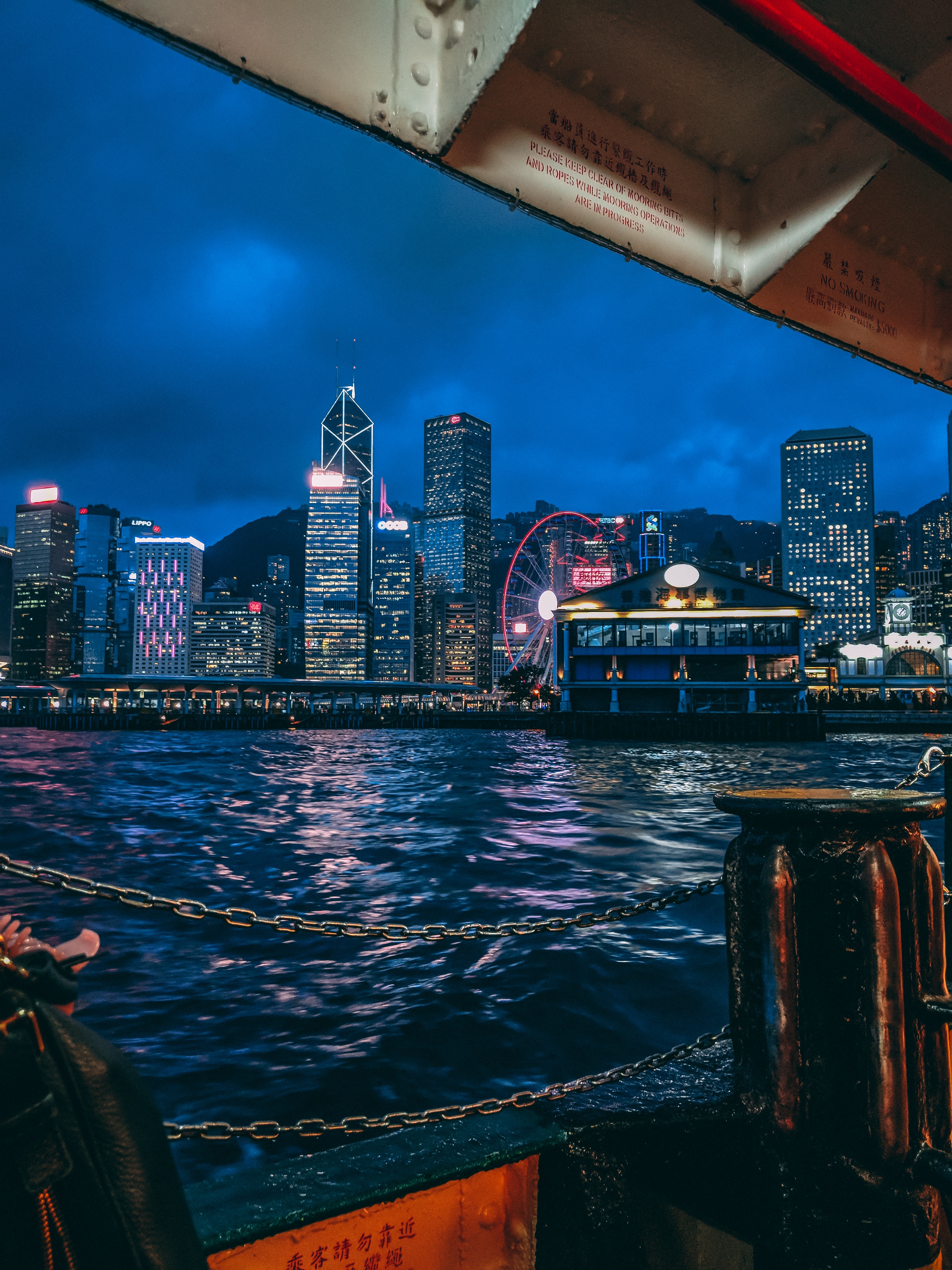
The Hong Kong Island skyline, with its ever-growing number of skyscrapers, speaks to ambition and money. Paris, London, even New York were centuries in the making, while Hong Kong’s towers, bright lights, and glitzy shopping emporia weren’t yet part of the urban scene when many of the young investment bankers who fuel one of the world’s leading financial centers were born. Commerce is concentrated in the glittering high-rises of Central, tucked between Victoria Harbor and forested peaks on Hong Kong Island’s north shore. While it’s easy to think all the bright lights are the sum of today’s Hong Kong, you need only walk or board a tram for the short jaunt west into Western to discover a side of Hong Kong that is more traditionally Chinese but no less high-energy. You’ll discover the real Hong Kong to the east of Central, too, in Wan Chai, Causeway Bay, and beyond. Amid the residential towers are restaurants, shopping malls, bars, convention centers, a nice smattering of museums, and—depending on fate and the horse you wager on—one of Hong Kong’s luckiest or unluckiest spots, the Happy Valley Racecourse. Kowloon sprawls across a generous swath of the Chinese mainland across Victoria Harbour from Central. Tsim Sha Tsui, at the tip of Kowloon peninsula, is packed with glitzy shops, first-rate museums, and eye-popping views of the skyline across the water. Just to the north are the teeming market streets of Mong Kok and in the dense residential neighborhoods beyond, two of Hong Kong’s most enchanting spiritual sights, Wong Tai Sin Temple and Chi Lin Nunnery. As you navigate this huge metropolis (easy to do on the excellent transportation network), keep in mind that streets are usually numbered odd on one side, even on the other. There’s no baseline for street numbers and no block-based numbering system, but street signs indicate building numbers for any given block.
Hong Kong, Hong Kong
The Hong Kong Island skyline, with its ever-growing number of skyscrapers, speaks to ambition and money. Paris, London, even New York were centuries in the making, while Hong Kong’s towers, bright lights, and glitzy shopping emporia weren’t yet part of the urban scene when many of the young investment bankers who fuel one of the world’s leading financial centers were born. Commerce is concentrated in the glittering high-rises of Central, tucked between Victoria Harbor and forested peaks on Hong Kong Island’s north shore. While it’s easy to think all the bright lights are the sum of today’s Hong Kong, you need only walk or board a tram for the short jaunt west into Western to discover a side of Hong Kong that is more traditionally Chinese but no less high-energy. You’ll discover the real Hong Kong to the east of Central, too, in Wan Chai, Causeway Bay, and beyond. Amid the residential towers are restaurants, shopping malls, bars, convention centers, a nice smattering of museums, and—depending on fate and the horse you wager on—one of Hong Kong’s luckiest or unluckiest spots, the Happy Valley Racecourse. Kowloon sprawls across a generous swath of the Chinese mainland across Victoria Harbour from Central. Tsim Sha Tsui, at the tip of Kowloon peninsula, is packed with glitzy shops, first-rate museums, and eye-popping views of the skyline across the water. Just to the north are the teeming market streets of Mong Kok and in the dense residential neighborhoods beyond, two of Hong Kong’s most enchanting spiritual sights, Wong Tai Sin Temple and Chi Lin Nunnery. As you navigate this huge metropolis (easy to do on the excellent transportation network), keep in mind that streets are usually numbered odd on one side, even on the other. There’s no baseline for street numbers and no block-based numbering system, but street signs indicate building numbers for any given block.
Ho Chi Minh City, Vietnam
Romantically referred to by the French as the Pearl of the Orient, Ho Chi Minh City today is a super-charged city of sensory overload. Motorbikes zoom day and night along the wide boulevards, through the narrow back alleys and past vendors pushing handcarts hawking goods of all descriptions. Still called Saigon by most residents, this is Vietnam’s largest city and the engine driving the country’s current economic resurgence, but despite its frenetic pace, it’s a friendlier place than Hanoi and locals will tell you the food—simple, tasty, and incorporating many fresh herbs—is infinitely better than in the capital.This is a city full of surprises. The madness of the city’s traffic—witness the oddball things that are transported on the back of motorcycles—is countered by tranquil pagodas, peaceful parks, quirky coffee shops, and whole neighborhoods hidden down tiny alleyways, although some of these quiet spots can be difficult to track down. Life in Ho Chi Minh City is lived in public: on the back of motorcycles, on the sidewalks, and in the parks. Even when its residents are at home, they’re still on display. With many living rooms opening onto the street, grandmothers napping, babies being rocked, and food being prepared, are all in full view of passersby.Icons of the past endure in the midst of the city’s headlong rush into capitalism. The Hotel Continental, immortalized in Graham Greene’s The Quiet American, continues to stand on the corner of old Indochina’s most famous thoroughfare, the rue Catinat, known to American G.I.s during the Vietnam War as Tu Do (Freedom) Street and renamed Dong Khoi (Uprising) Street by the Communists. The city still has its ornate opera house and its old French city hall, the Hôtel de Ville. The broad colonial boulevards leading to the Saigon River and the gracious stucco villas are other remnants of the French colonial presence. Grisly reminders of the more recent past can be seen at the city’s war-related museums. Residents, however, prefer to look forward rather than back and are often perplexed by tourists’ fascination with a war that ended 40 years ago.The Chinese influence on the country is still very much in evidence in the Cholon district, the city’s Chinatown, but the modern office towers and international hotels that mark the skyline symbolize Vietnam’s fixation on the future.
Ho Chi Minh City, Vietnam
Romantically referred to by the French as the Pearl of the Orient, Ho Chi Minh City today is a super-charged city of sensory overload. Motorbikes zoom day and night along the wide boulevards, through the narrow back alleys and past vendors pushing handcarts hawking goods of all descriptions. Still called Saigon by most residents, this is Vietnam’s largest city and the engine driving the country’s current economic resurgence, but despite its frenetic pace, it’s a friendlier place than Hanoi and locals will tell you the food—simple, tasty, and incorporating many fresh herbs—is infinitely better than in the capital.This is a city full of surprises. The madness of the city’s traffic—witness the oddball things that are transported on the back of motorcycles—is countered by tranquil pagodas, peaceful parks, quirky coffee shops, and whole neighborhoods hidden down tiny alleyways, although some of these quiet spots can be difficult to track down. Life in Ho Chi Minh City is lived in public: on the back of motorcycles, on the sidewalks, and in the parks. Even when its residents are at home, they’re still on display. With many living rooms opening onto the street, grandmothers napping, babies being rocked, and food being prepared, are all in full view of passersby.Icons of the past endure in the midst of the city’s headlong rush into capitalism. The Hotel Continental, immortalized in Graham Greene’s The Quiet American, continues to stand on the corner of old Indochina’s most famous thoroughfare, the rue Catinat, known to American G.I.s during the Vietnam War as Tu Do (Freedom) Street and renamed Dong Khoi (Uprising) Street by the Communists. The city still has its ornate opera house and its old French city hall, the Hôtel de Ville. The broad colonial boulevards leading to the Saigon River and the gracious stucco villas are other remnants of the French colonial presence. Grisly reminders of the more recent past can be seen at the city’s war-related museums. Residents, however, prefer to look forward rather than back and are often perplexed by tourists’ fascination with a war that ended 40 years ago.The Chinese influence on the country is still very much in evidence in the Cholon district, the city’s Chinatown, but the modern office towers and international hotels that mark the skyline symbolize Vietnam’s fixation on the future.
Da Nang, Vietnam
Da Nang is the third largest city in Vietnam with the land area of 1283 square kilometre and the population of approximately 1million people. Da Nang is growing into one of the most organized urban area, with attractive beach front villas on the one side and Han River flowing on the other. Of the few attractions that belong to the city, Museum of Cham stands out with its rich collection of Cham artefacts. For those who crave for more outdoors activities, My Khe beach is a good place to spend time, either by yourself or with your loved ones. Da Nang is in close proximity to Hue- 3 hours North and Hoi An- 30 minutes south, which makes it a perfect stop point for those who need a break from touristy areas. Hue was once the Royal Capital of Viet Nam. The city represents the outstanding demonstration of the power of the vanished Vietnamese feudal empire, including a complex of monuments, tombs and pagodas that attract tourists coming from all over the world. Hoi An has to this days well preserved its most sacred treasure, the centuries-old architecture. The town used to harbour foreign traders back in the 17-18th, and once is an important heavily-frequented trading port in Southeast Asia.
Hong Kong, Hong Kong
The Hong Kong Island skyline, with its ever-growing number of skyscrapers, speaks to ambition and money. Paris, London, even New York were centuries in the making, while Hong Kong’s towers, bright lights, and glitzy shopping emporia weren’t yet part of the urban scene when many of the young investment bankers who fuel one of the world’s leading financial centers were born. Commerce is concentrated in the glittering high-rises of Central, tucked between Victoria Harbor and forested peaks on Hong Kong Island’s north shore. While it’s easy to think all the bright lights are the sum of today’s Hong Kong, you need only walk or board a tram for the short jaunt west into Western to discover a side of Hong Kong that is more traditionally Chinese but no less high-energy. You’ll discover the real Hong Kong to the east of Central, too, in Wan Chai, Causeway Bay, and beyond. Amid the residential towers are restaurants, shopping malls, bars, convention centers, a nice smattering of museums, and—depending on fate and the horse you wager on—one of Hong Kong’s luckiest or unluckiest spots, the Happy Valley Racecourse. Kowloon sprawls across a generous swath of the Chinese mainland across Victoria Harbour from Central. Tsim Sha Tsui, at the tip of Kowloon peninsula, is packed with glitzy shops, first-rate museums, and eye-popping views of the skyline across the water. Just to the north are the teeming market streets of Mong Kok and in the dense residential neighborhoods beyond, two of Hong Kong’s most enchanting spiritual sights, Wong Tai Sin Temple and Chi Lin Nunnery. As you navigate this huge metropolis (easy to do on the excellent transportation network), keep in mind that streets are usually numbered odd on one side, even on the other. There’s no baseline for street numbers and no block-based numbering system, but street signs indicate building numbers for any given block.
Hong Kong, Hong Kong
The Hong Kong Island skyline, with its ever-growing number of skyscrapers, speaks to ambition and money. Paris, London, even New York were centuries in the making, while Hong Kong’s towers, bright lights, and glitzy shopping emporia weren’t yet part of the urban scene when many of the young investment bankers who fuel one of the world’s leading financial centers were born. Commerce is concentrated in the glittering high-rises of Central, tucked between Victoria Harbor and forested peaks on Hong Kong Island’s north shore. While it’s easy to think all the bright lights are the sum of today’s Hong Kong, you need only walk or board a tram for the short jaunt west into Western to discover a side of Hong Kong that is more traditionally Chinese but no less high-energy. You’ll discover the real Hong Kong to the east of Central, too, in Wan Chai, Causeway Bay, and beyond. Amid the residential towers are restaurants, shopping malls, bars, convention centers, a nice smattering of museums, and—depending on fate and the horse you wager on—one of Hong Kong’s luckiest or unluckiest spots, the Happy Valley Racecourse. Kowloon sprawls across a generous swath of the Chinese mainland across Victoria Harbour from Central. Tsim Sha Tsui, at the tip of Kowloon peninsula, is packed with glitzy shops, first-rate museums, and eye-popping views of the skyline across the water. Just to the north are the teeming market streets of Mong Kok and in the dense residential neighborhoods beyond, two of Hong Kong’s most enchanting spiritual sights, Wong Tai Sin Temple and Chi Lin Nunnery. As you navigate this huge metropolis (easy to do on the excellent transportation network), keep in mind that streets are usually numbered odd on one side, even on the other. There’s no baseline for street numbers and no block-based numbering system, but street signs indicate building numbers for any given block.
Keelung (Chilung), Taiwan
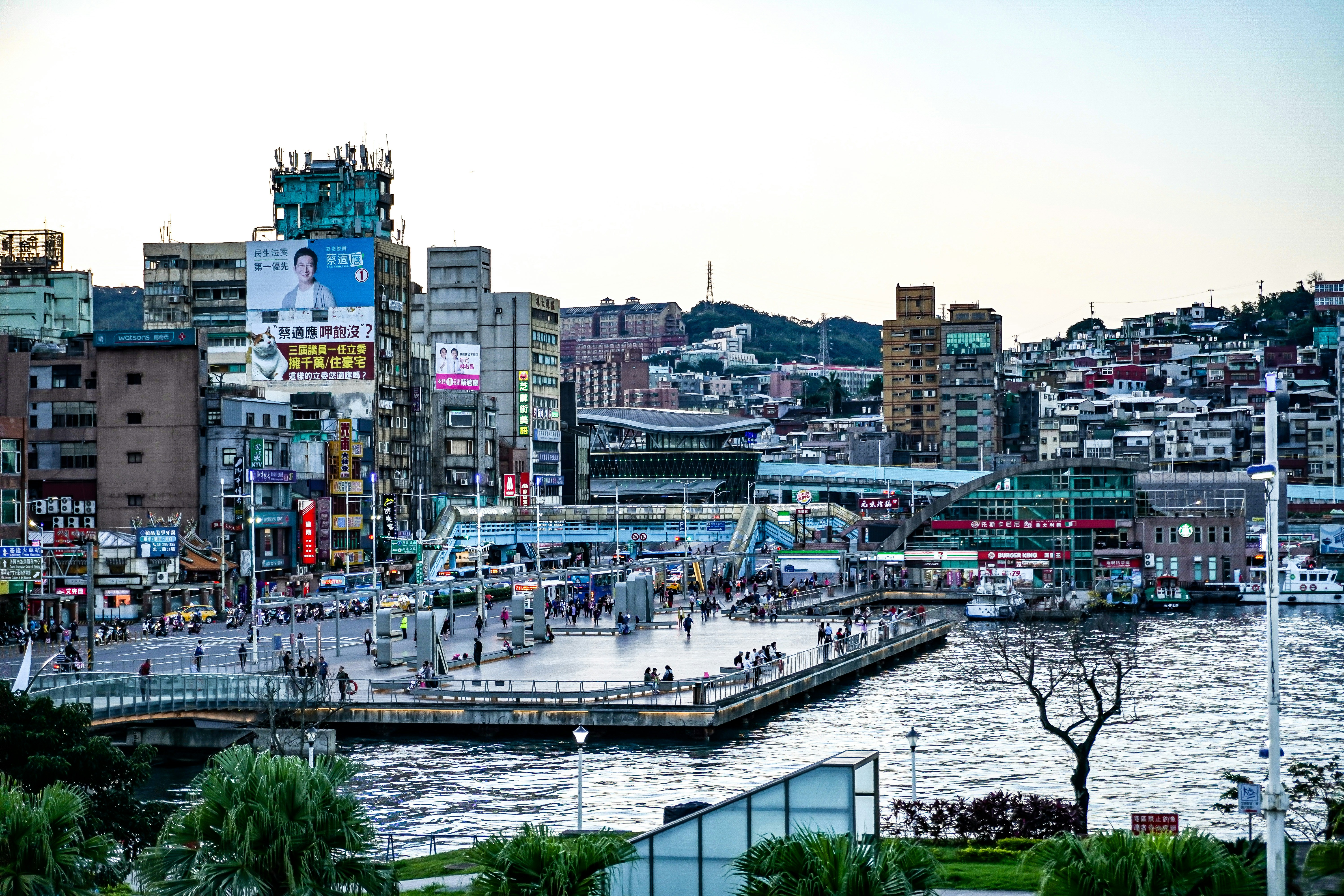
With the glittering lights of Taipei – a futuristic metropolis of culture and ideas – sparkling nearby, Keelung is the first calling point for many visitors arriving in Taiwan. While this port city essentially serves as Taipei’s ocean gateway, you shouldn’t be too hasty in dashing off to Taipei’s neon-lit magic – first it’s well worth spending some time exploring the famous glowing night market, which hums with life each evening and is famous for its local seafood.
Hirara, Japan
Hirara offers a tranquil escape with its serene beaches, laid-back atmosphere, and unique cultural attractions. Unwind on stunning stretches of sand like Yonaha Maehama Beach and Sunayama Beach, known for their crystal-clear waters and picturesque landscapes. Explore the charming town center with its quaint shops, local eateries serving Miyako soba and seafood delicacies, and vibrant markets offering fresh produce and handicrafts.
Naha, Okinawa, Japan
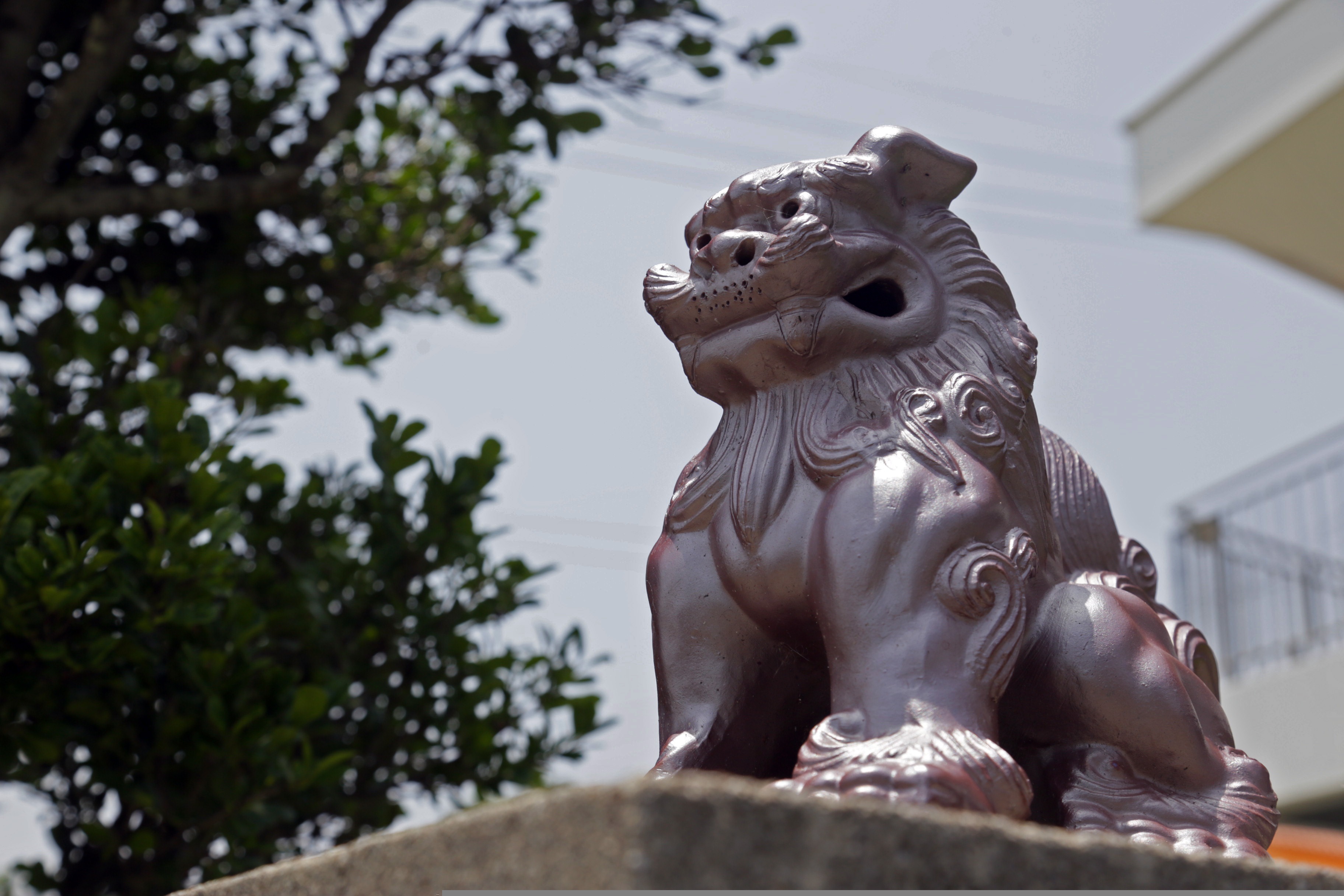
Naha, Okinawa, invites travelers with its blend of Ryukyuan history, pristine beaches like Naminoue Beach, distinctive cuisine featuring Okinawa soba and taco rice, bustling Kokusai Dori shopping street, traditional Eisa dance performances, and nearby natural wonders such as the Kerama Islands. Visit historic sites like Shuri Castle, and explore the warm hospitality of this vibrant city for an unforgettable journey in Japan’s southernmost prefecture.
Kochi, Japan
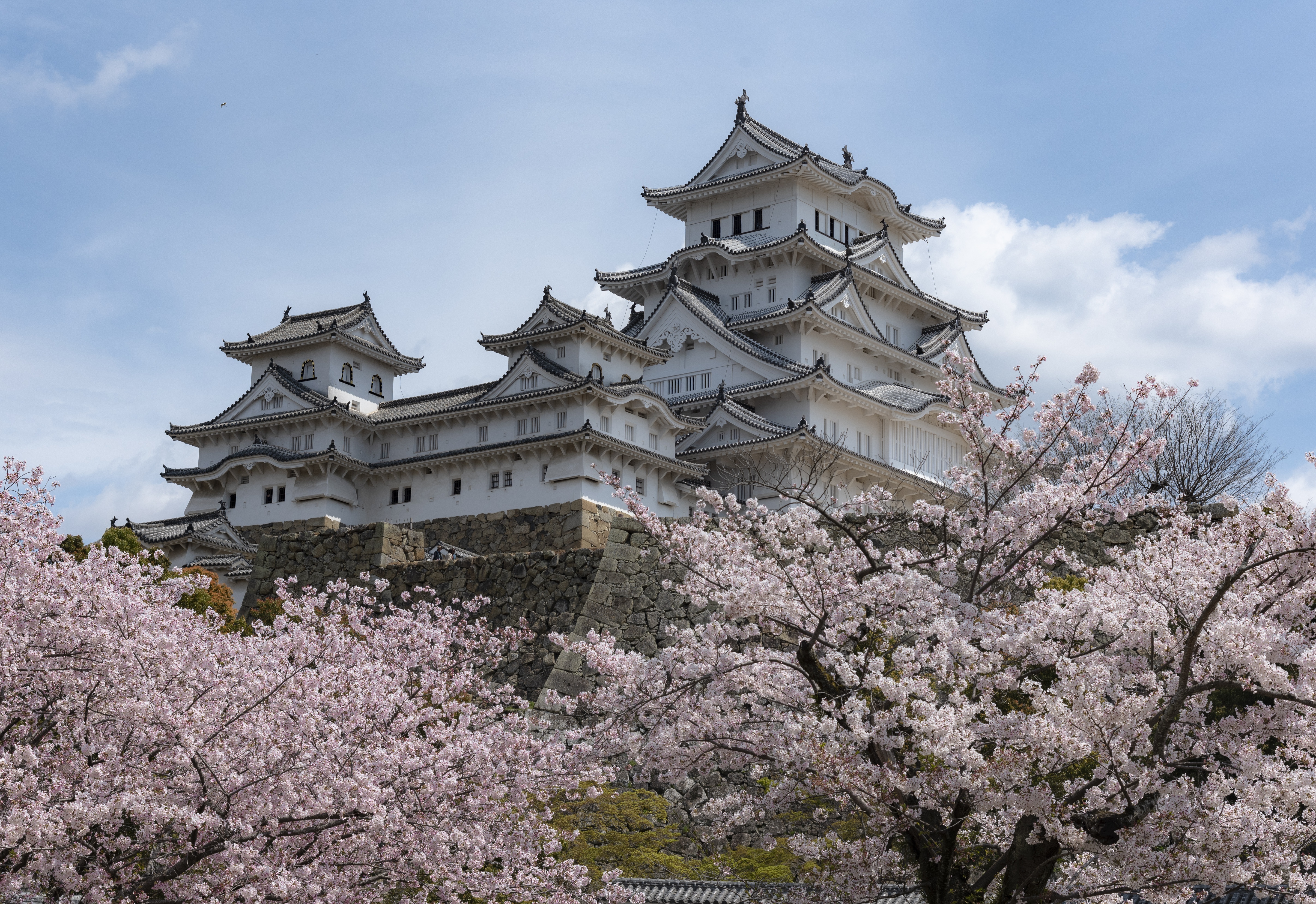
Kōchi is a city with a well-earned reputation for having a good time. Begin your visit with a trip to Kōchi Castle, one of only 12 original castles still standing in Japan. After you work up your appetite, try Sawachi cuisine, including Kōchi’s signature dish, katsuo no tataki (seared bonito). Wash it down with a shōchū with the locals.
Kobe, Japan
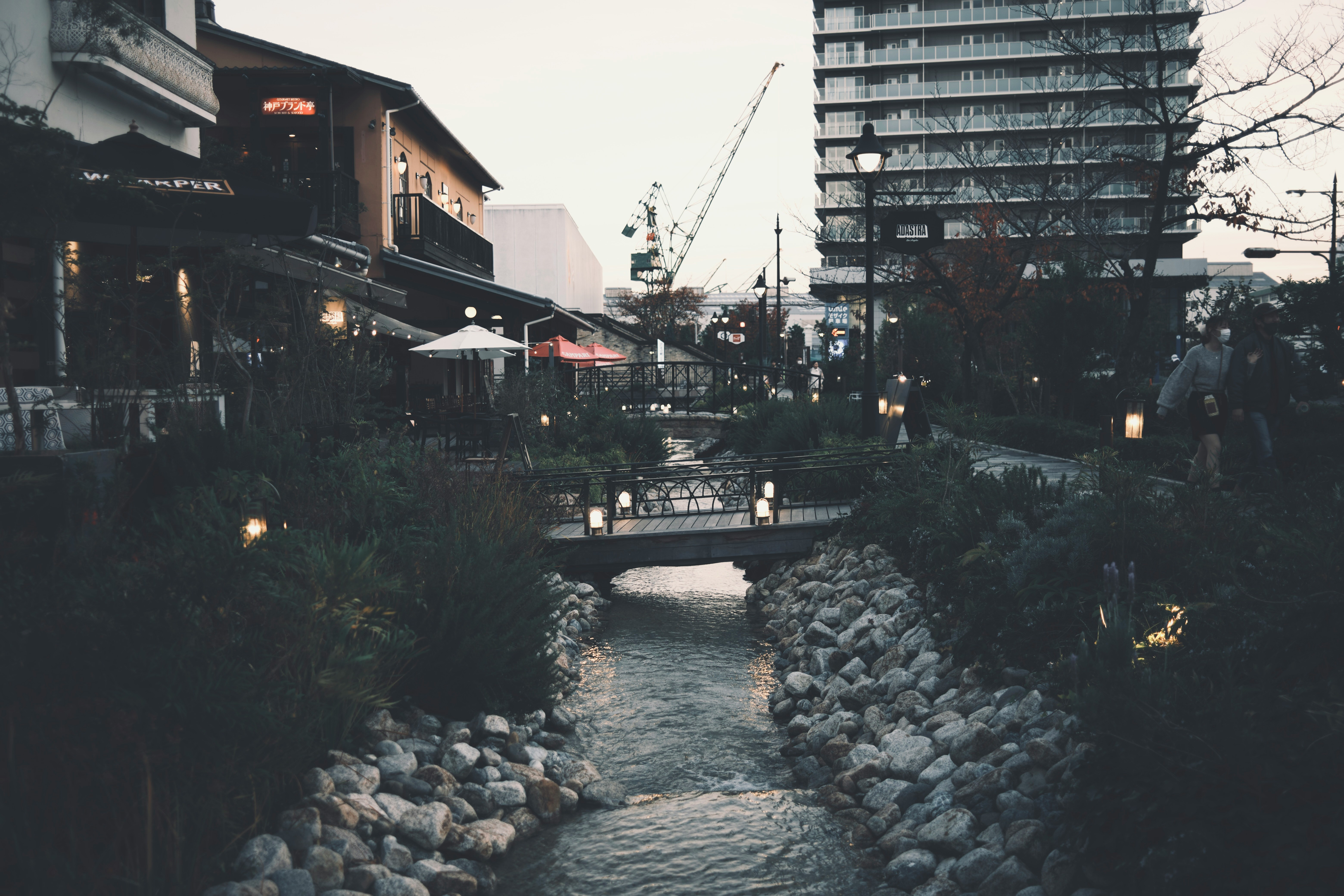
Located on the calm waters of the Inland Sea, Kobe has served as an important port town for hundreds of years. It was one of the first harbours to accept foreign traders in 1868 when Japan was just emerging from its centuries of isolation. What followed was a surge of Western trade and exports. Today, Kobe is quite multicultural, with expatriates from 98 different nations in residence, providing a cultural diversity most easily visible in restaurants serving every kind of cuisine, including the now world famous Kobe beef. The Great Hanshin Earthquake of 1995 set back Kobe’s development, but not for long. Kobe emerged more vibrant than before – with additional attractions, hotels and urban redevelopment, and only a few remnants of the extensive damage. It is a cosmopolitan place with lively shopping arcades, interesting museums, great restaurants, and a port that is still at the heart of things. Kobe is well known for its nightlife, in an intimate quarter of neon lights, cosy bars and sophisticated nightclubs. It also serves as the gateway to the ancient Japanese capitals of Kyoto and Nara.
Keelung (Chilung), Taiwan
With the glittering lights of Taipei – a futuristic metropolis of culture and ideas – sparkling nearby, Keelung is the first calling point for many visitors arriving in Taiwan. While this port city essentially serves as Taipei’s ocean gateway, you shouldn’t be too hasty in dashing off to Taipei’s neon-lit magic – first it’s well worth spending some time exploring the famous glowing night market, which hums with life each evening and is famous for its local seafood.
Hirara, Japan
Hirara offers a tranquil escape with its serene beaches, laid-back atmosphere, and unique cultural attractions. Unwind on stunning stretches of sand like Yonaha Maehama Beach and Sunayama Beach, known for their crystal-clear waters and picturesque landscapes. Explore the charming town center with its quaint shops, local eateries serving Miyako soba and seafood delicacies, and vibrant markets offering fresh produce and handicrafts.
Naha, Okinawa, Japan
Naha, Okinawa, invites travelers with its blend of Ryukyuan history, pristine beaches like Naminoue Beach, distinctive cuisine featuring Okinawa soba and taco rice, bustling Kokusai Dori shopping street, traditional Eisa dance performances, and nearby natural wonders such as the Kerama Islands. Visit historic sites like Shuri Castle, and explore the warm hospitality of this vibrant city for an unforgettable journey in Japan’s southernmost prefecture.
Kochi, Japan
Kōchi is a city with a well-earned reputation for having a good time. Begin your visit with a trip to Kōchi Castle, one of only 12 original castles still standing in Japan. After you work up your appetite, try Sawachi cuisine, including Kōchi’s signature dish, katsuo no tataki (seared bonito). Wash it down with a shōchū with the locals.
Kobe, Japan
Located on the calm waters of the Inland Sea, Kobe has served as an important port town for hundreds of years. It was one of the first harbours to accept foreign traders in 1868 when Japan was just emerging from its centuries of isolation. What followed was a surge of Western trade and exports. Today, Kobe is quite multicultural, with expatriates from 98 different nations in residence, providing a cultural diversity most easily visible in restaurants serving every kind of cuisine, including the now world famous Kobe beef. The Great Hanshin Earthquake of 1995 set back Kobe’s development, but not for long. Kobe emerged more vibrant than before – with additional attractions, hotels and urban redevelopment, and only a few remnants of the extensive damage. It is a cosmopolitan place with lively shopping arcades, interesting museums, great restaurants, and a port that is still at the heart of things. Kobe is well known for its nightlife, in an intimate quarter of neon lights, cosy bars and sophisticated nightclubs. It also serves as the gateway to the ancient Japanese capitals of Kyoto and Nara.
Cabin Options
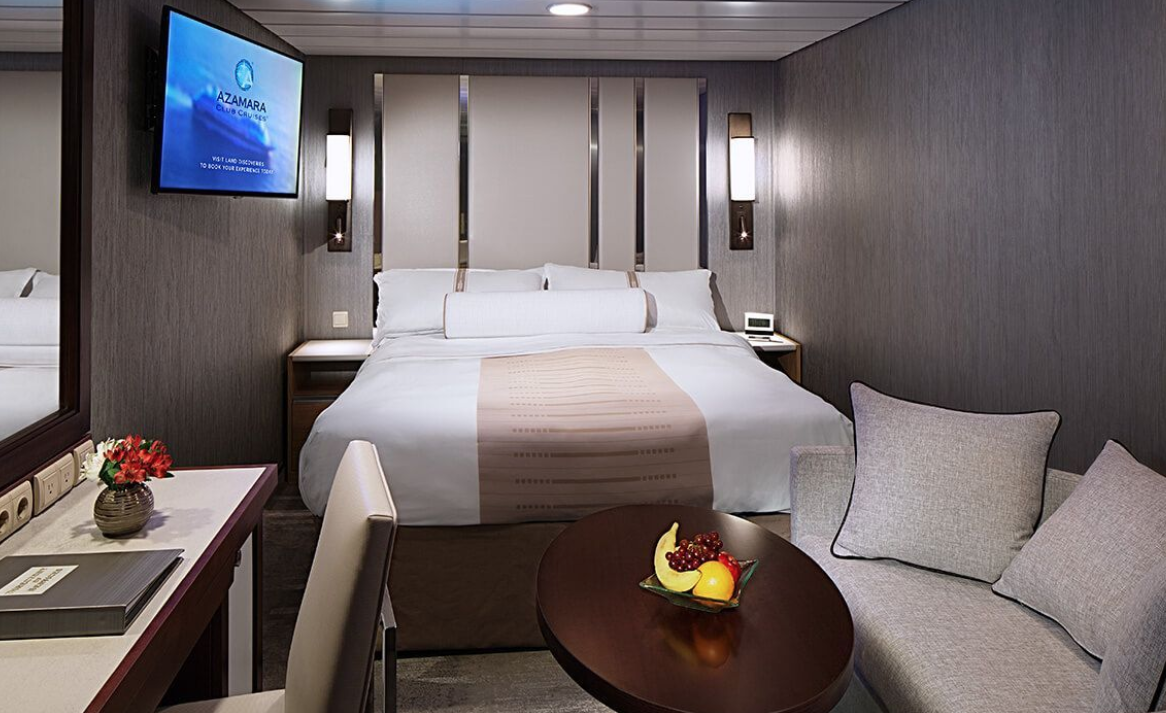
Interior
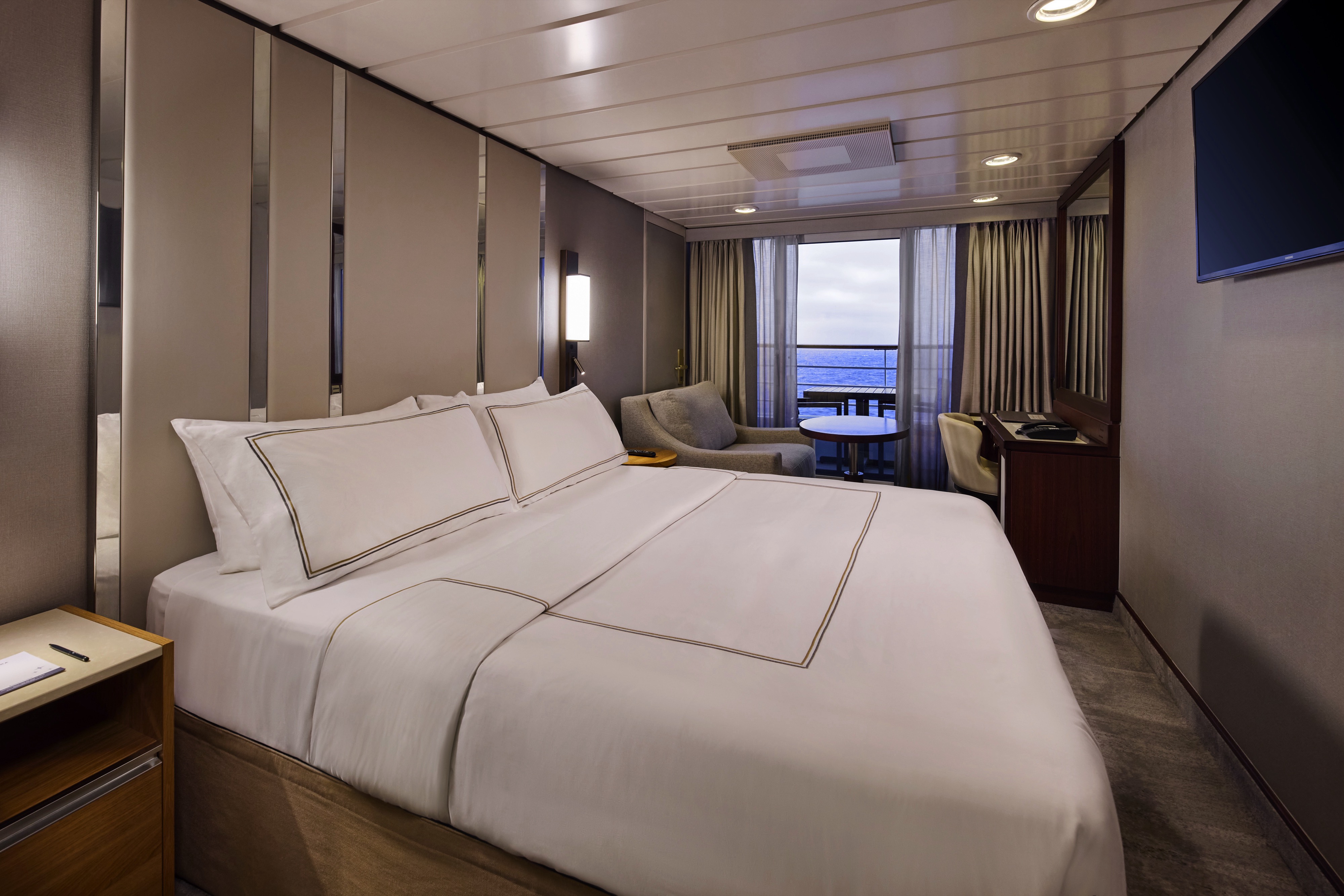
Veranda
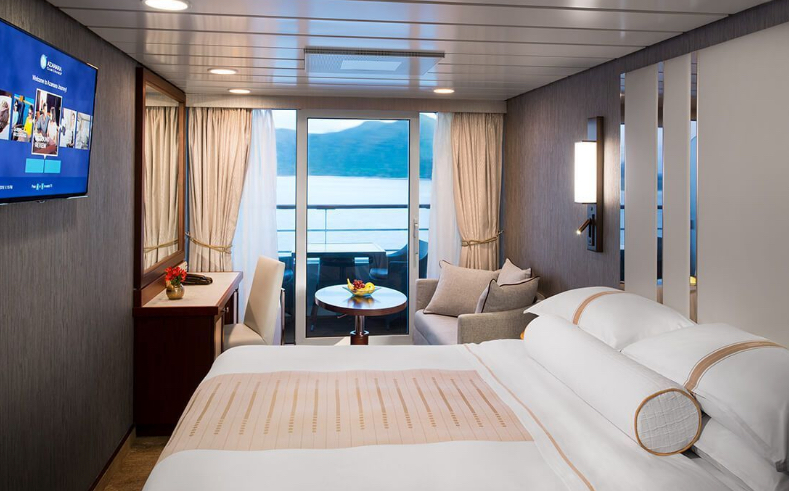
Veranda Plus
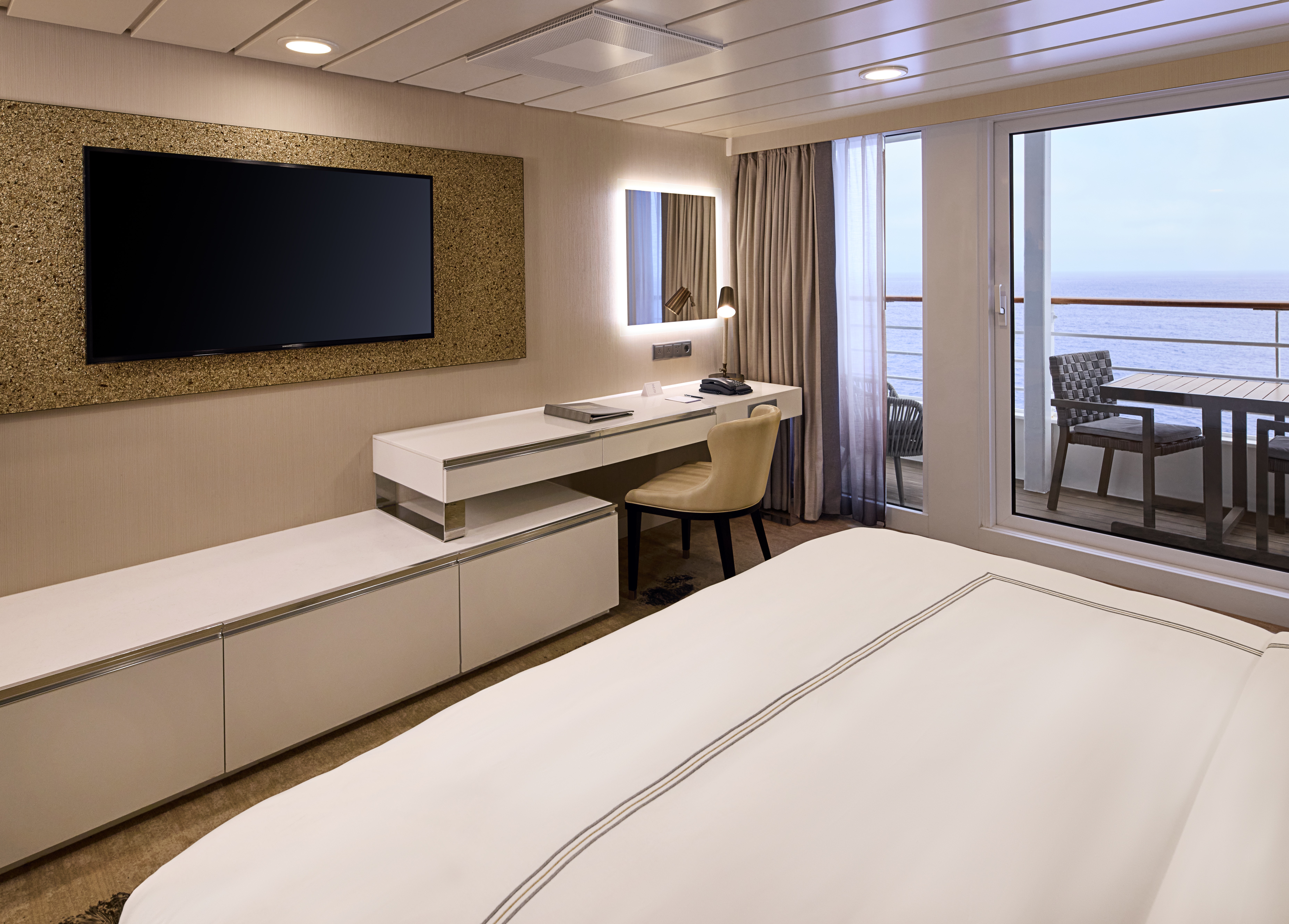
Continent Suite
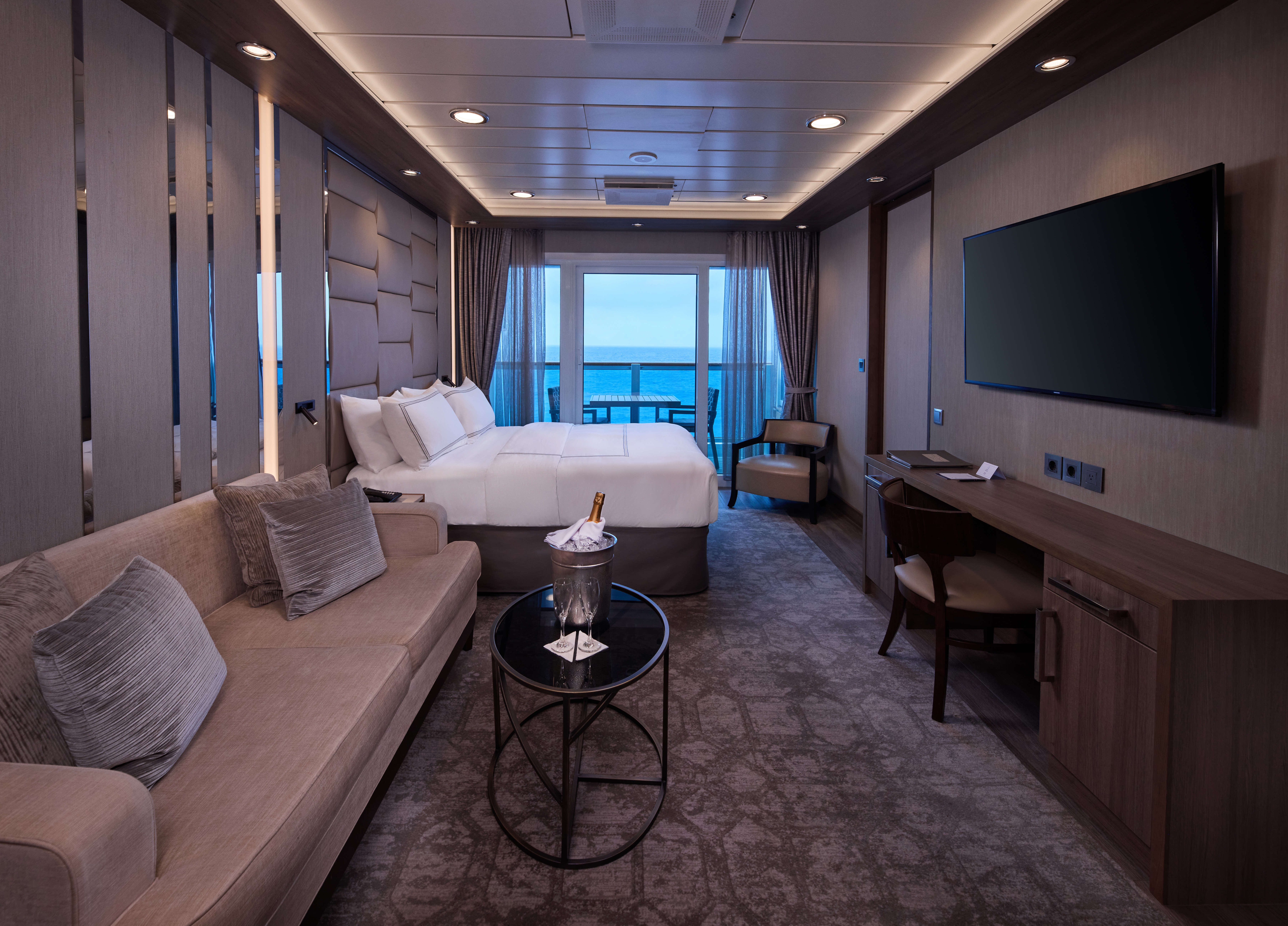
Spa Suite
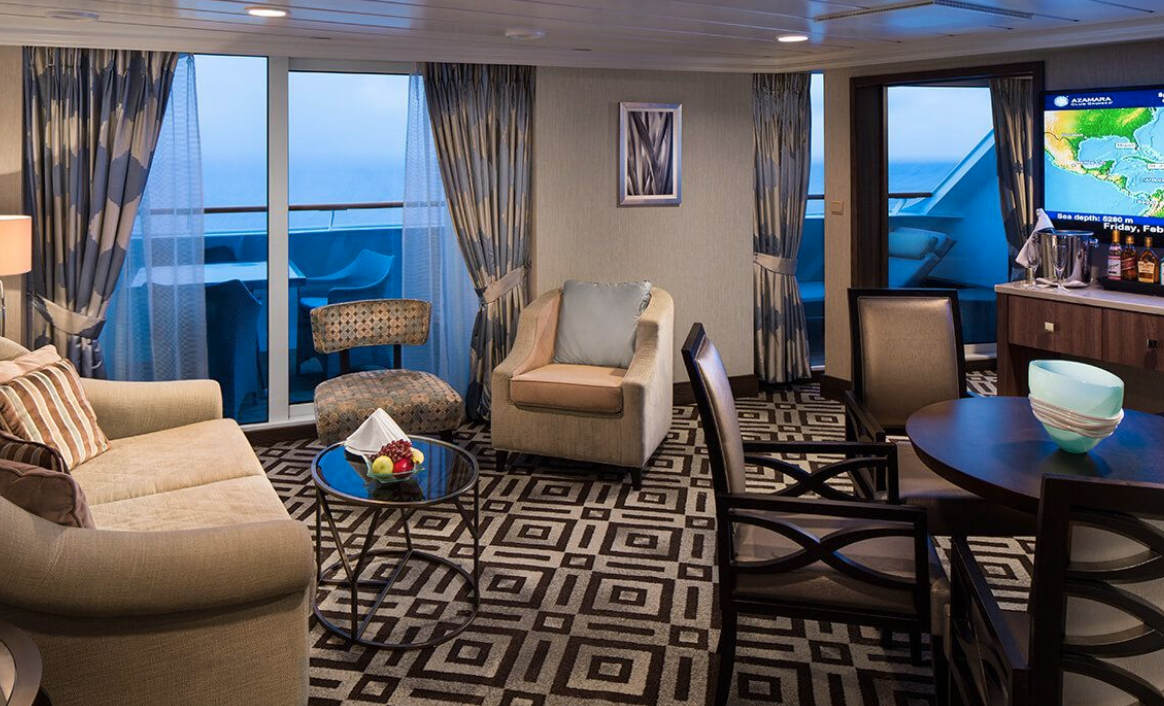
Ocean Suite
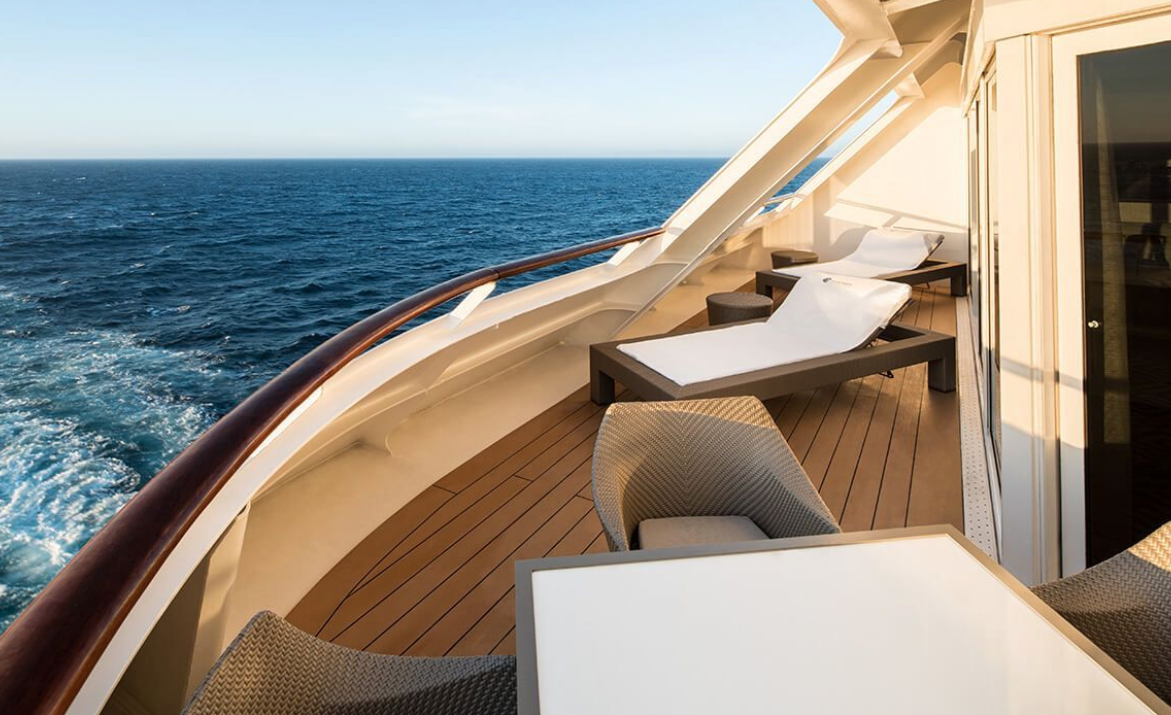
World Owner's Suite
Suite Guarantee
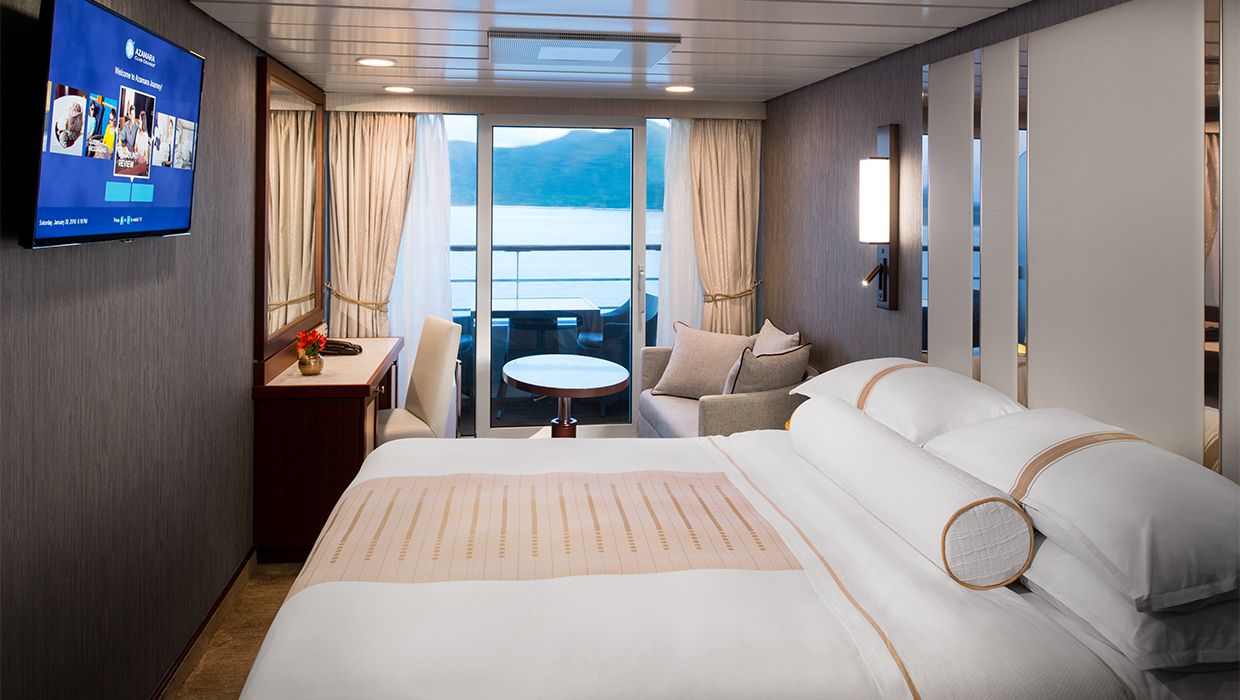
Veranda Plus Guarantee
Veranda Guarantee
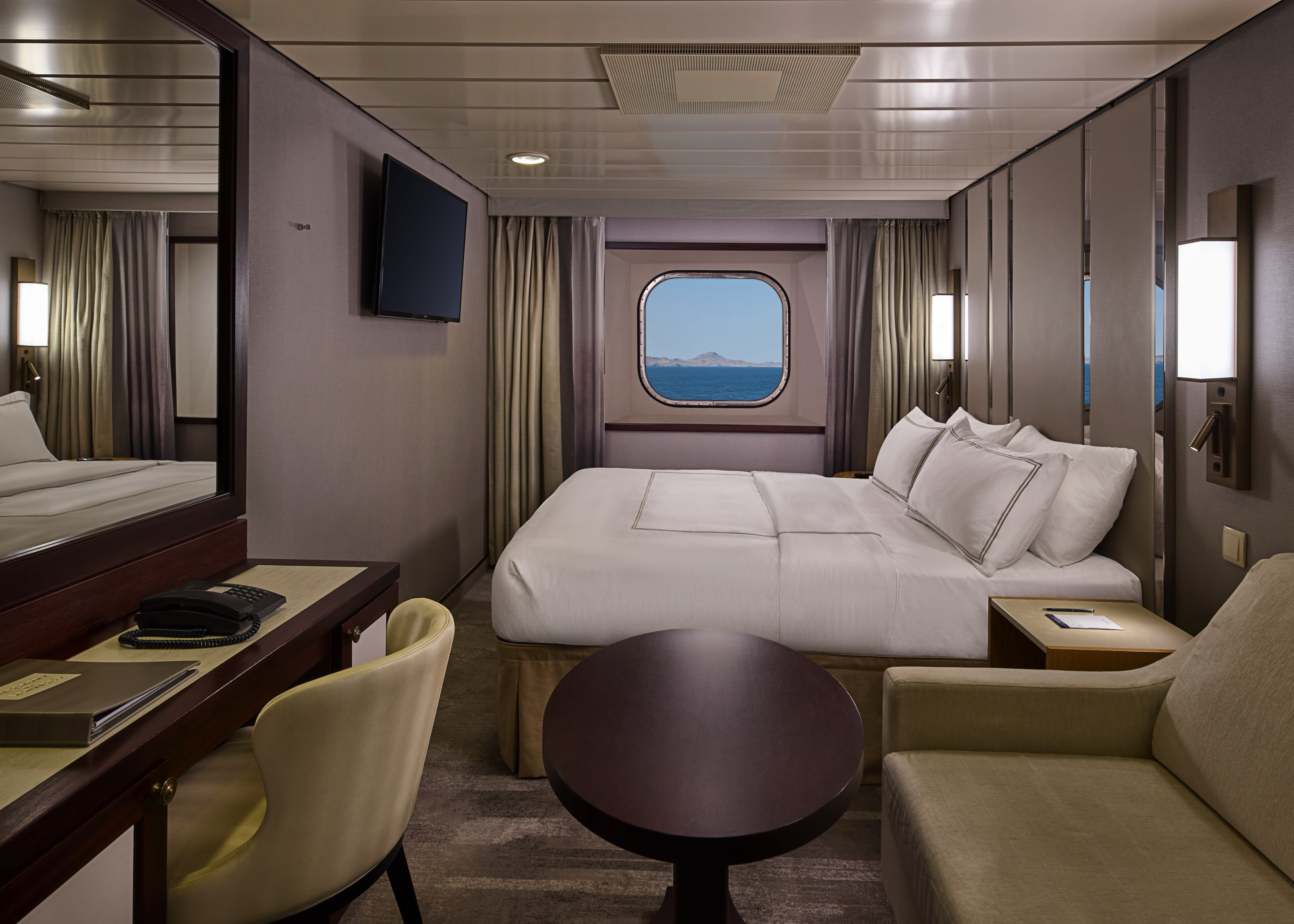
Oceanview
Oceanview Guarantee
Interior Guarantee
Ship Facilities
Aqualina
At Aqualina, you’ll find some of Italy’s most authentic dishes. Pastas made from scratch, traditional recipes, and scrumptious vegetarian dishes that make sure there’s something for everyone. Plus our famous desserts: Sorrento lemon liqueur mousse, hazelnut chocolate soufflé and more.
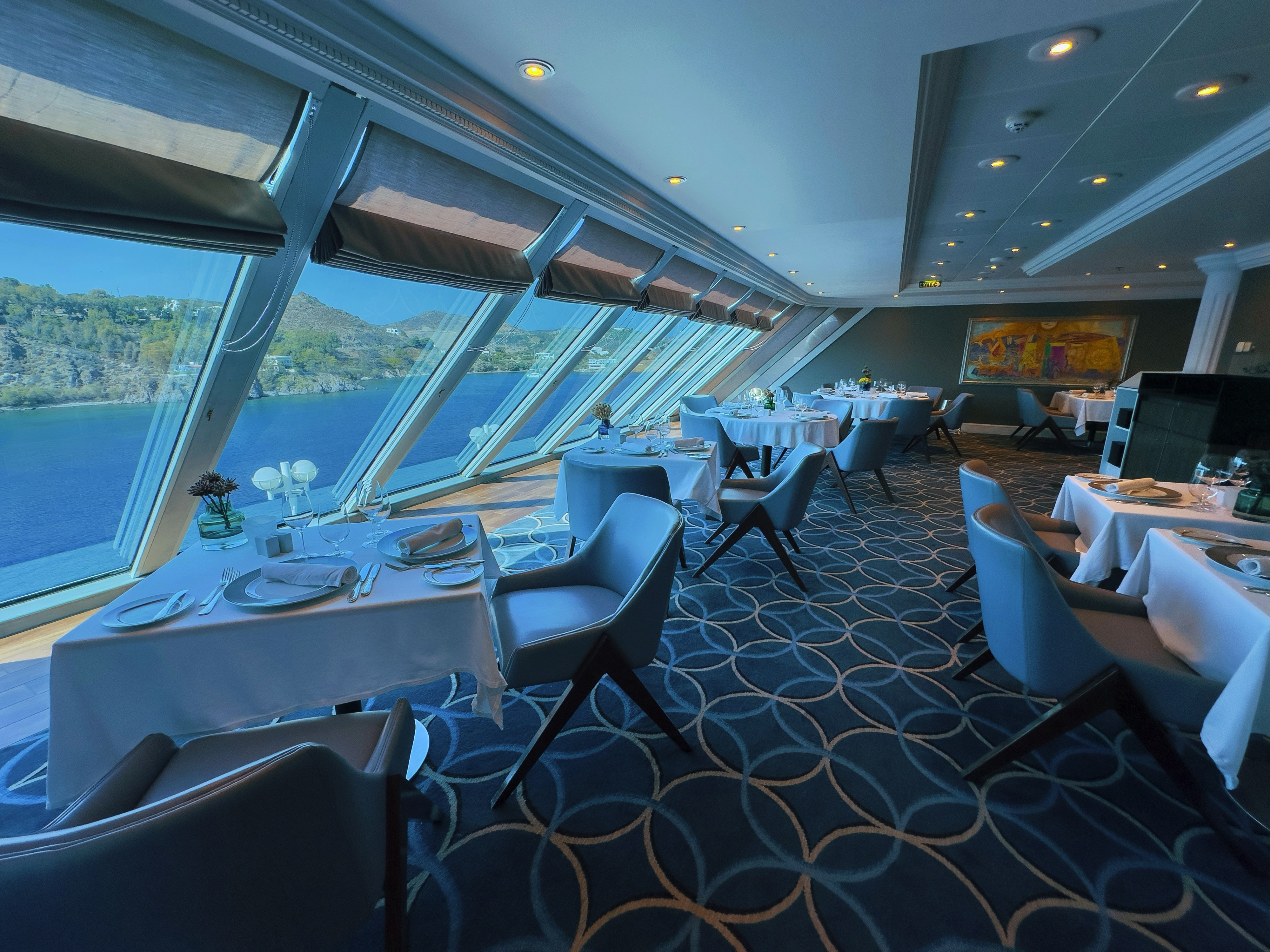
Prime C
Your choice of steak, cooked to perfection. Herb-coated rack of lamb, duck confit and Chilean sea bass—all paired with savory sides. At Prime C, you’re in for more than delectable dining. Expect a great evening with stunning views and lush décor.
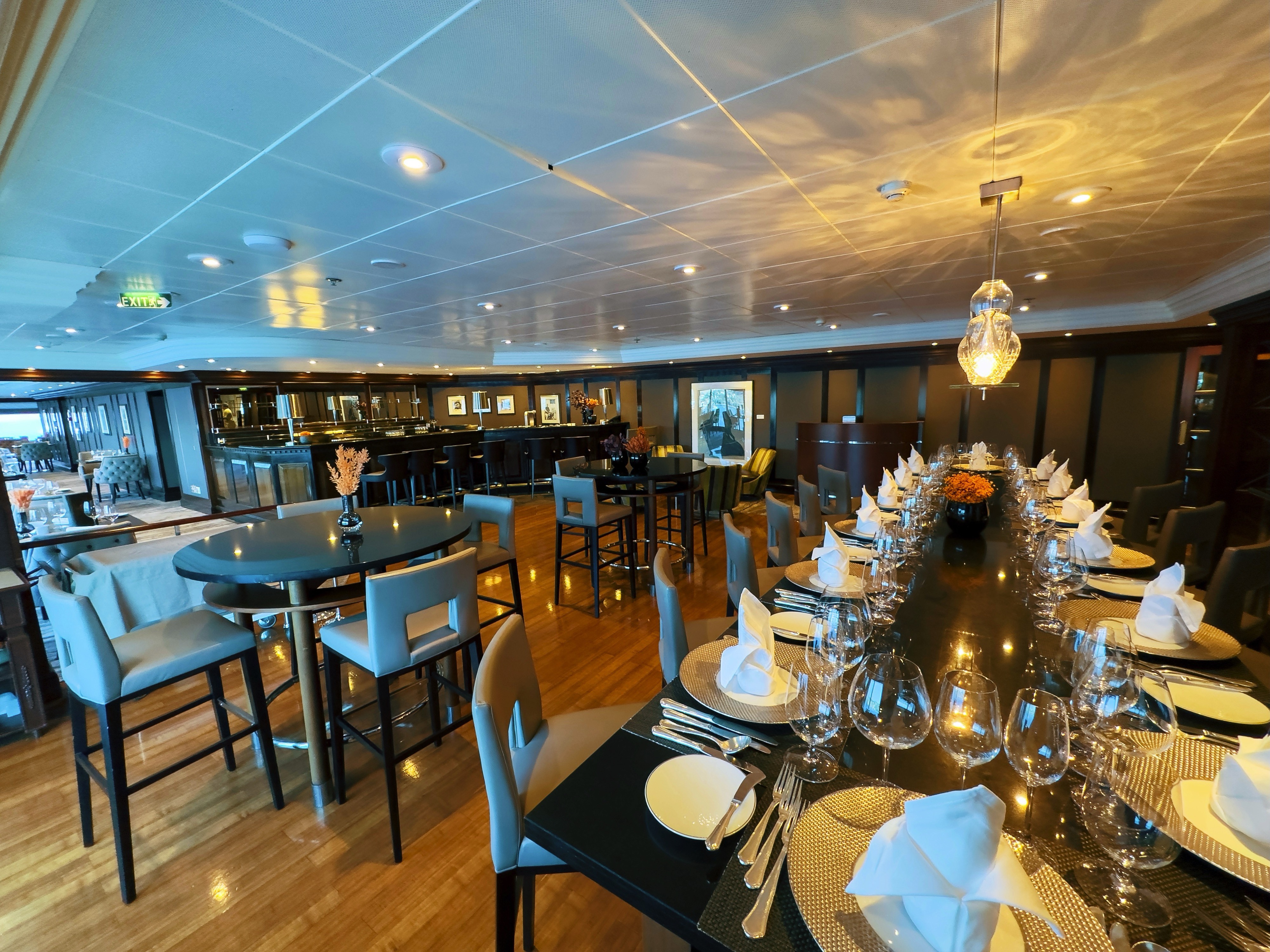
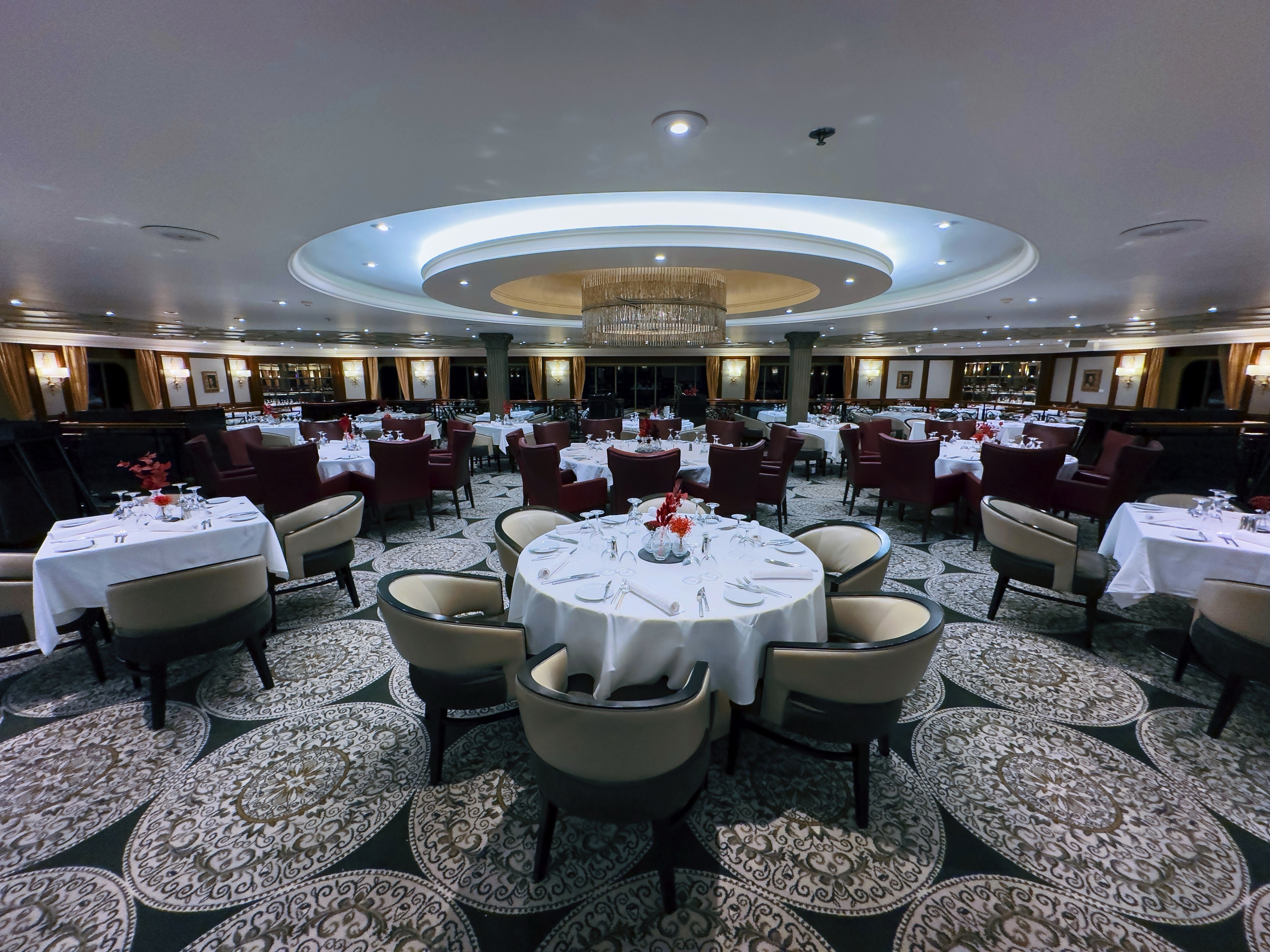
Discoveries Restaurant
Discover the world through dishes and flavors from the places we visit. Of course, you’ll also enjoy a wide variety of nightly selections such as filet mignon with black truffle sauce. Choose being seated at a table for two or as part of a larger group of fellow guests.
The Patio and Swirl & Top
Casual “pool grill” by day. A sit-down al fresco dining experience by night. Taste your way around the world with exclusive personalized dishes using local flavors of the places we visit. Plus a self-serve frozen yogurt station—Swirl & Top. With a variety of flavors and your choice of toppings, it’s the perfect way to cool off.
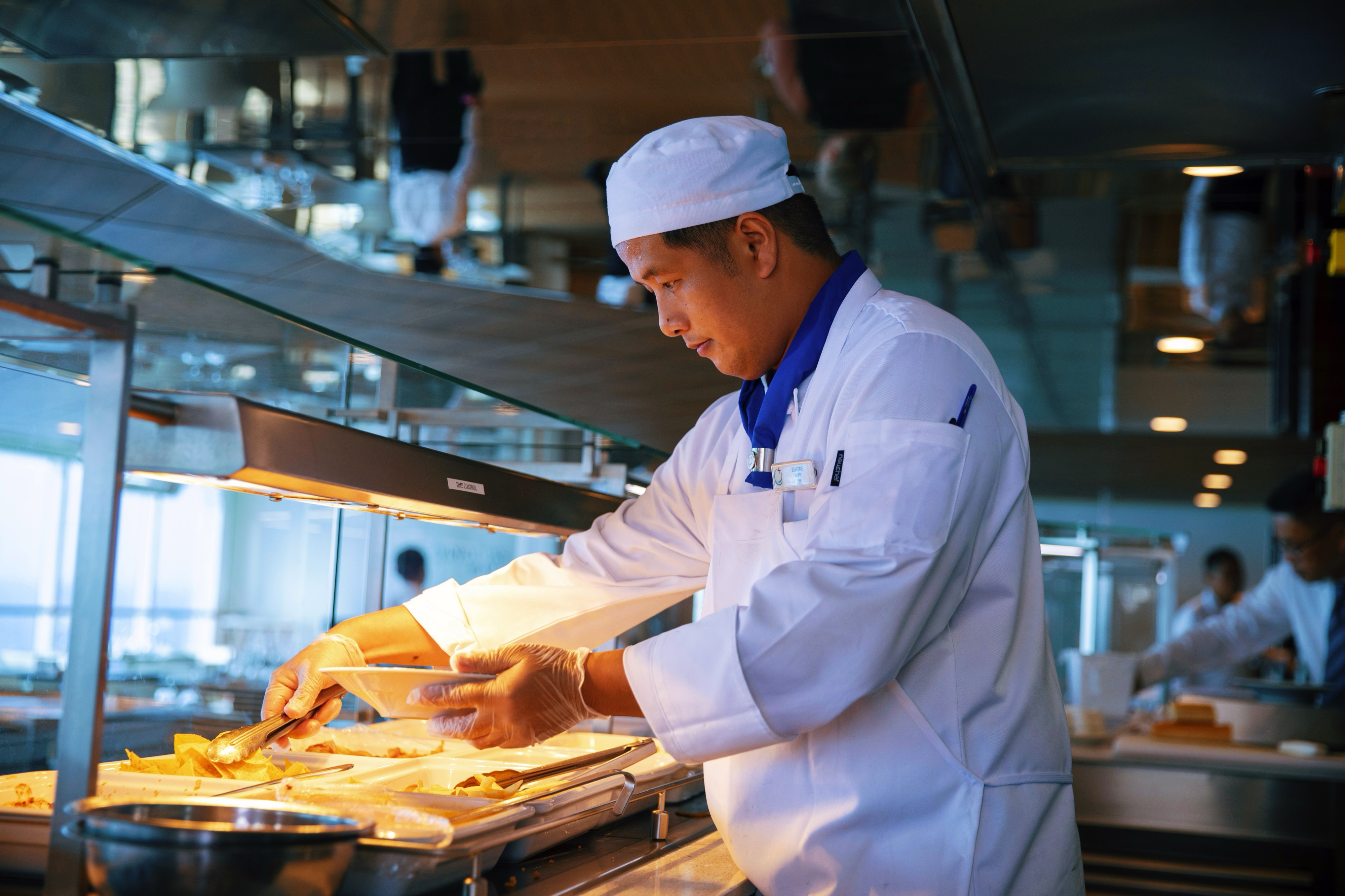
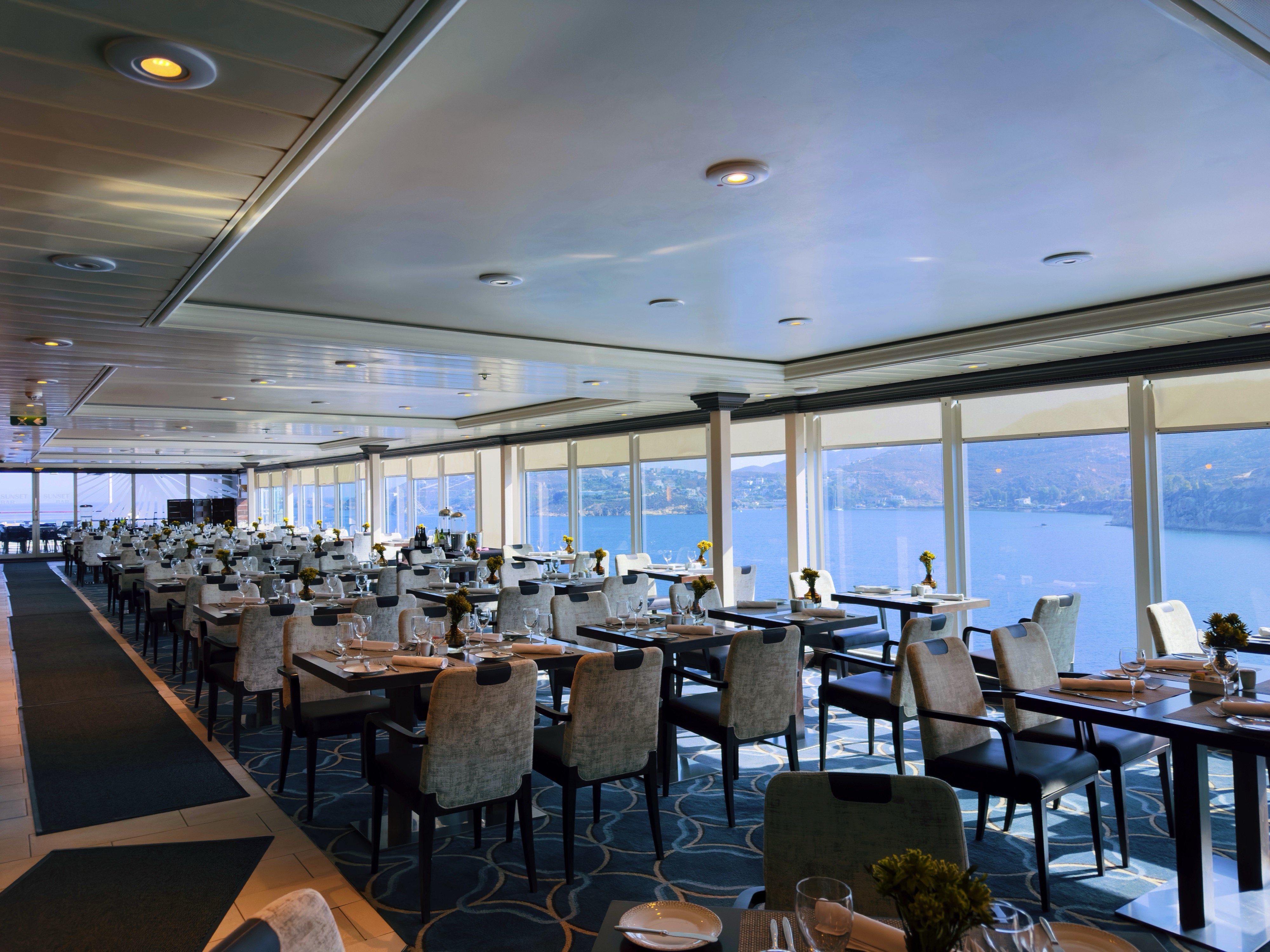
Windows Cafe
Our daily themed dinner often takes its inspiration from the region we’re visiting—Indian, Mexican, Spanish, Italian. We also create an extra live station made from local ingredients purchased in port: Greek salad made with local feta (Greece), pasta prepared with local mushrooms (Italy), fresh Mussels served with garlic bread (Netherlands).
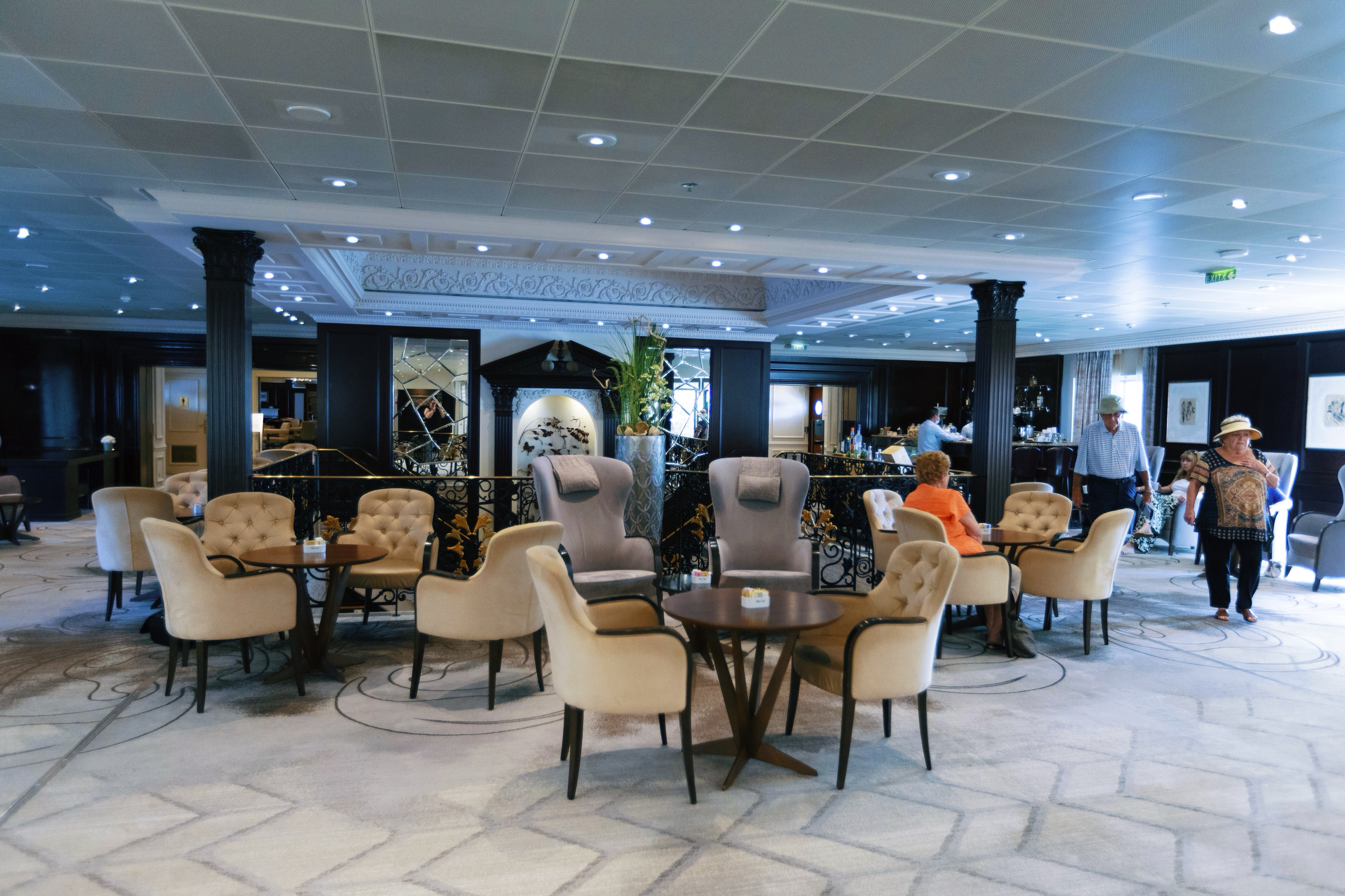
Mosaic Cafe
Stylish and cozy, Mosaic offers your favorite coffee drinks exactly as you like them. Relax in a comfortable seat and enjoy. It’s the perfect spot to start or end your day, and it just might become your favorite place on the ship.
Room Service
The best time for room service? Whenever you say it is, 24-hours a day. Order from the full breakfast menu between 6:30 AM and 10:00 AM, and we’ll deliver at your appointed time. Lunch and dinner room service features a menu of hearty soups, fresh salads, gourmet sandwiches, pizzas and desserts.
Exclusive Experiences
These excursions represent our most exclusive and unique opportunities to immerse yourself in our destinations. Be there as history is made at one of the world’s great celebrations, sporting events or cultural festivals. Spend a few days traveling overland on an expedition that ventures beyond the coast. Or, let us craft a private tour around your individual interests.
World Events
Join the revelry at world-renowned art shows, sporting events, culinary festivals and other local celebrations.
Overnight Experiences
Venture deeper into a destination to spend a night or more exploring iconic locales and landmarks, found beyond the harbours of your itinerary.
Private Tours
Let Azamara work with you to create the destination experience you’ve always dreamed of! Embark on a personalised Private Tour and we’ll turn that dream into reality.
Locales & Landmarks
These curated sightseeing tours reveal the hidden gems, local secrets and signature sites of a destination. Whether a cultural immersion, self-guided tour, panoramic drive, or guided visit, this series makes it easy to enjoy an authentic destination experience.
Cultural Expressions
Connect with customs, beliefs, art, and music that define local cultures through authentic, engaging encounters.
Ancient Wonders
Get immersed in epic history. Learn about the architecture, culture, and beliefs of ancient civilizations.
Food & Wine
Savor local food, wines, beers, and spirits on these culinary journeys, many led by Azamara Executive Chefs, Sommeliers and Mixologists.
Local Introductions
Spend time with local families, business owners, artists, aristocrats, and other influencers in their homes and workplaces.
Nature & Wildlife
Enjoy a close look at indigenous plants and wildlife on an ecological exploration that directly contributes to environmental stewardship.
AzAmazing Evenings
One-of-a-kind, complimentary, immersive cultural experiences exclusively created for Azamara guests, continuing our commitment to Destination Immersion®. First launched in 2011 to inspire guests to dive deeper into the heart of each destination, these extraordinary evenings showcase music, art, and culinary traditions in unique settings where authentic culture truly comes alive.
Most AzAmazing Evenings® take place ashore, often in iconic venues while the ship stays late in port, aligning with our hallmark of Destination Immersion®, bringing guests closer to local culture in remarkable locations. On select occasions, including seven- and eight-night itineraries, equally captivating experiences are brought onboard.
*For sailings of 9 nights or longer, exceptions may occur when local infrastructure does not allow for an onshore event; in such cases, the experience will be hosted onboard. In rare cases—such as select transoceanic crossings or charters—AzAmazing Evenings® will not be offered.
Enrichment program and classes
Your quest to learn continues with destination lecturers offering their expertise throughout each voyage with Azamara®. These leading destination experts will participate in a range of programs, classes, and lecture series throughout your voyage — all created with our incredible destinations in mind. They’ll also partake in Q&A sessions.
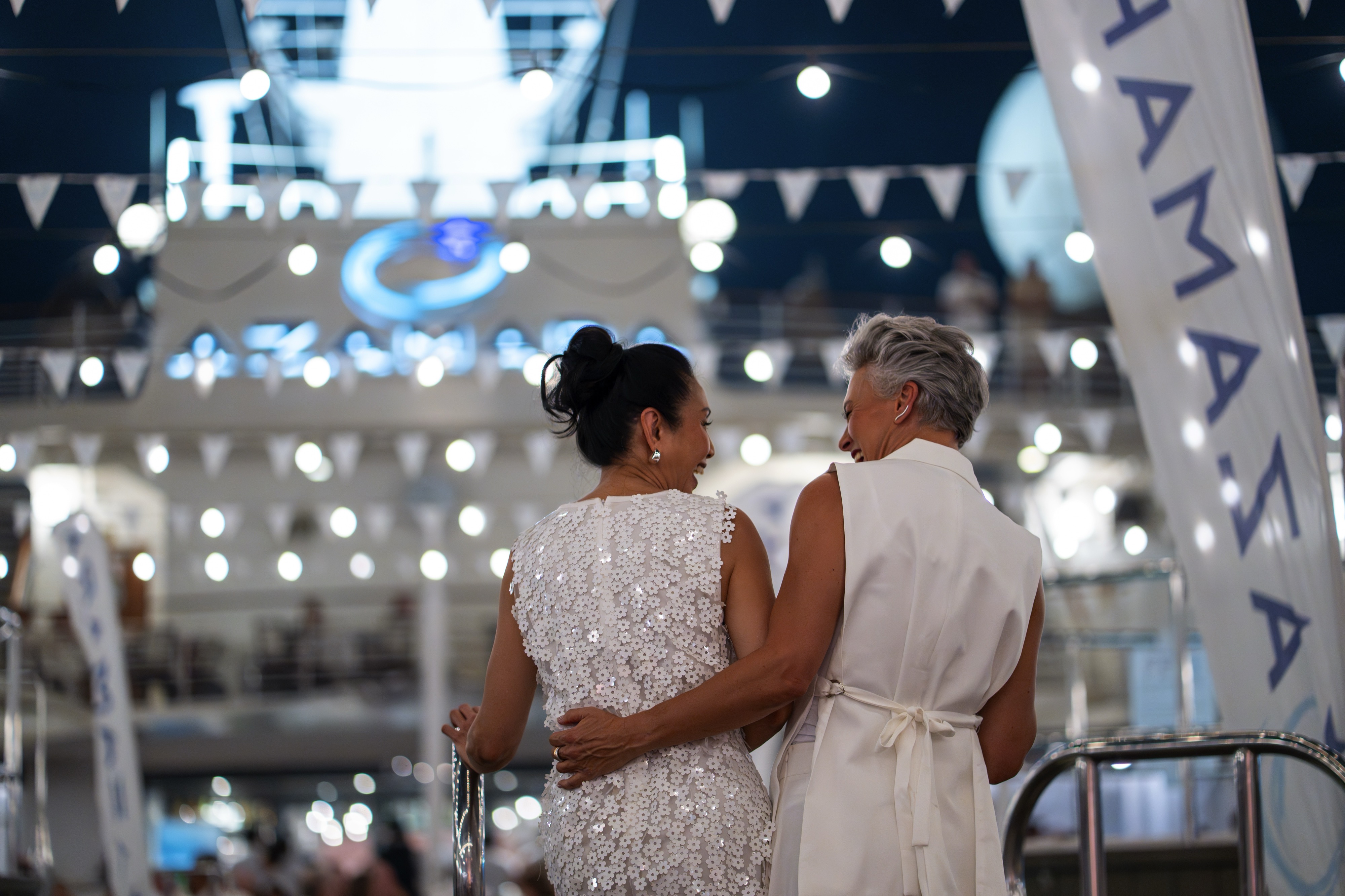
White Night
Join Azamara officers and crew for our signature dinner and entertainment event hosted al fresco on the pool deck (weather permitting). With an array of delicious food and engaging entertainment, your White Night experience will almost certainly be one of the most memorable times from your cruise. And don’t forget to bring something white to wear for the evening.
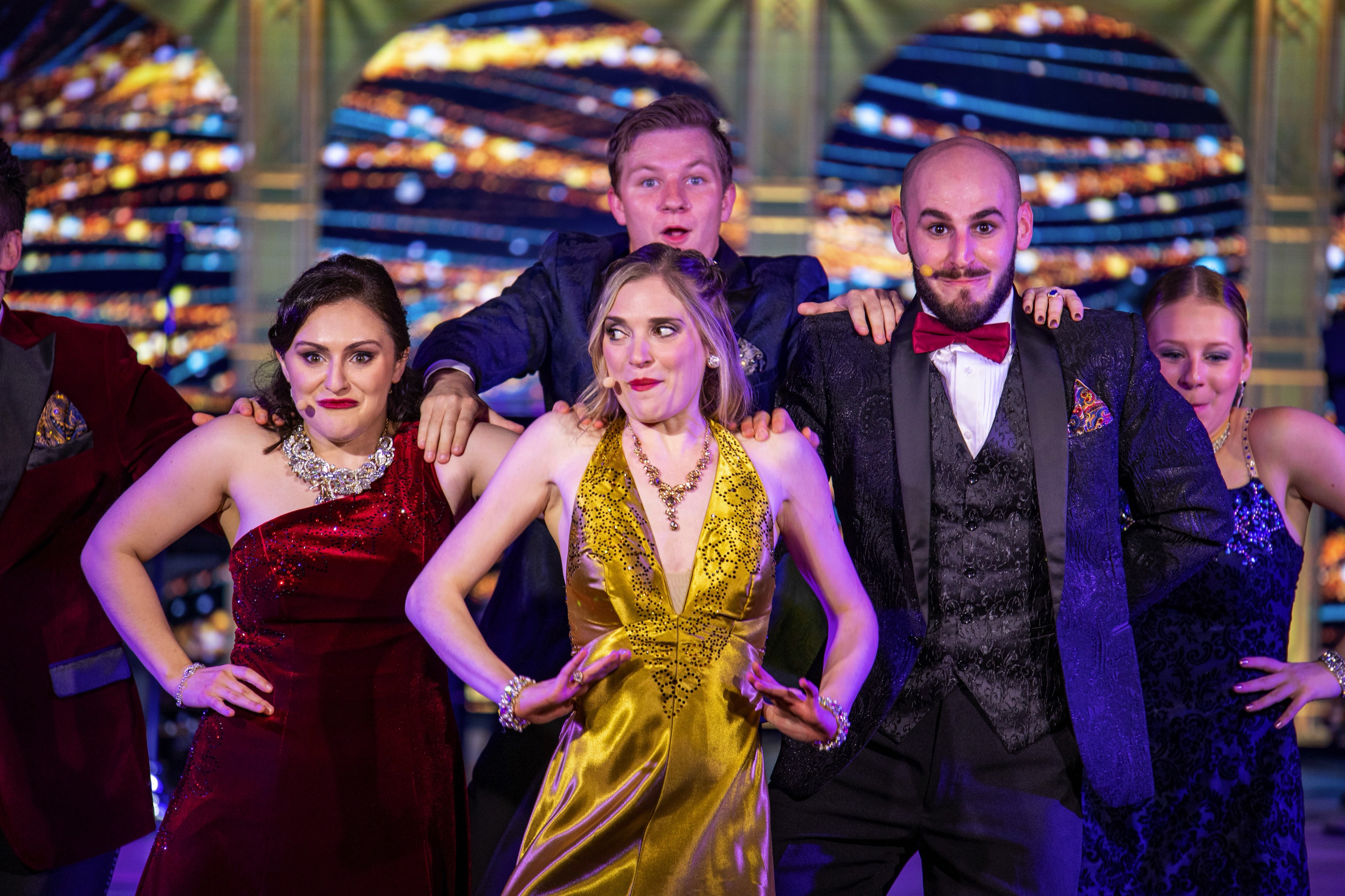
Club Crooner
Step into a swanky nightclub as the great songs of the most magnificent artists come alive on stage. From classic crooners such as Frank Sinatra and Tony Bennett, to current songbirds such as Natalie Cole and Michael Bublé, there’s a song for every time and everyone. Enjoy a beverage, sit back, and be serenaded by the melodies of our lives with CLUB CROONER!
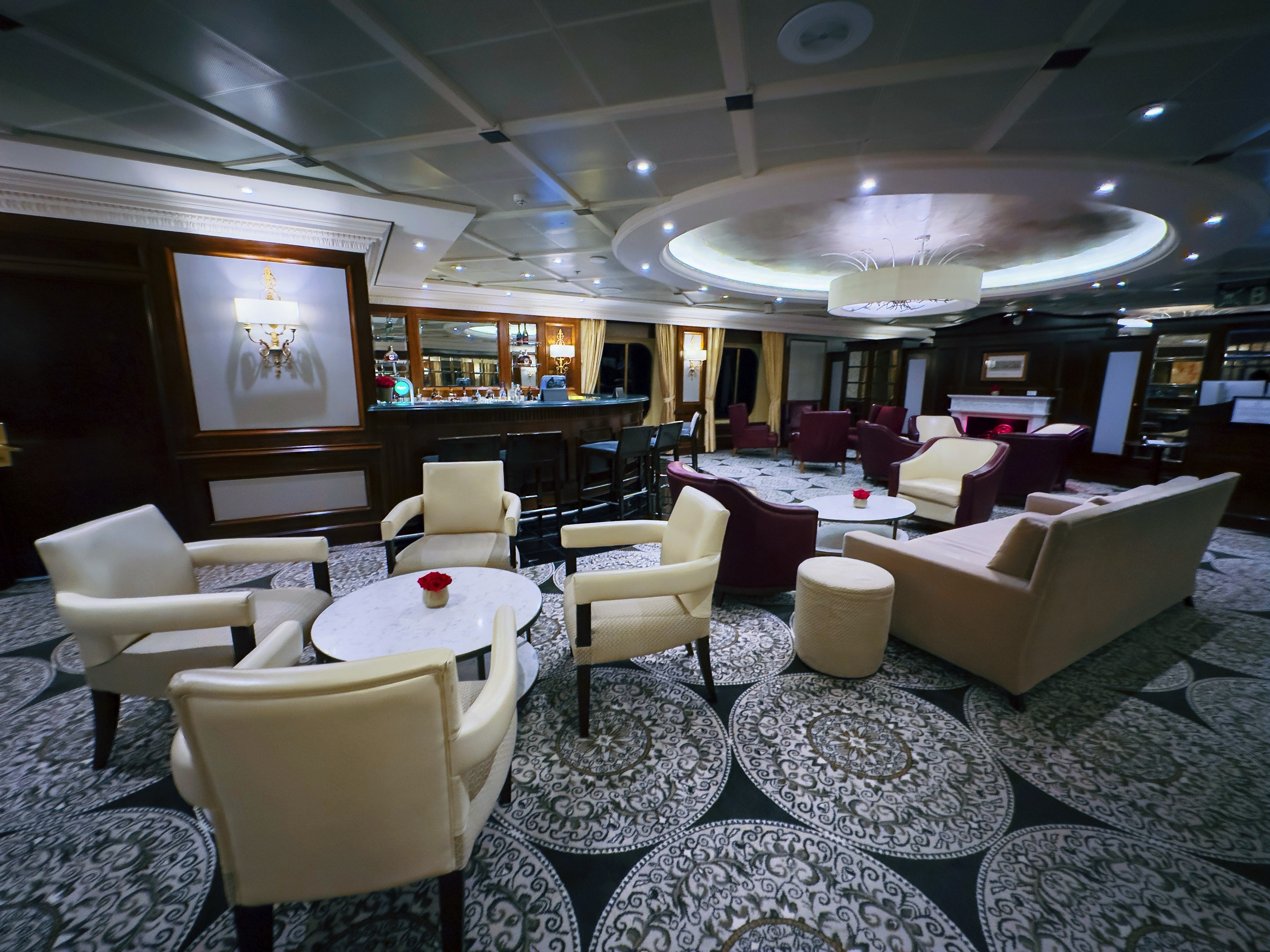
Discoveries Lounge
This congenial bar is a favorite gathering place for great conversations and delicious drinks. Bar service includes a full selection of fine wines, mixed drinks, and premium spirits…plus the entertaining banter of Azamara’s friendly bartenders.
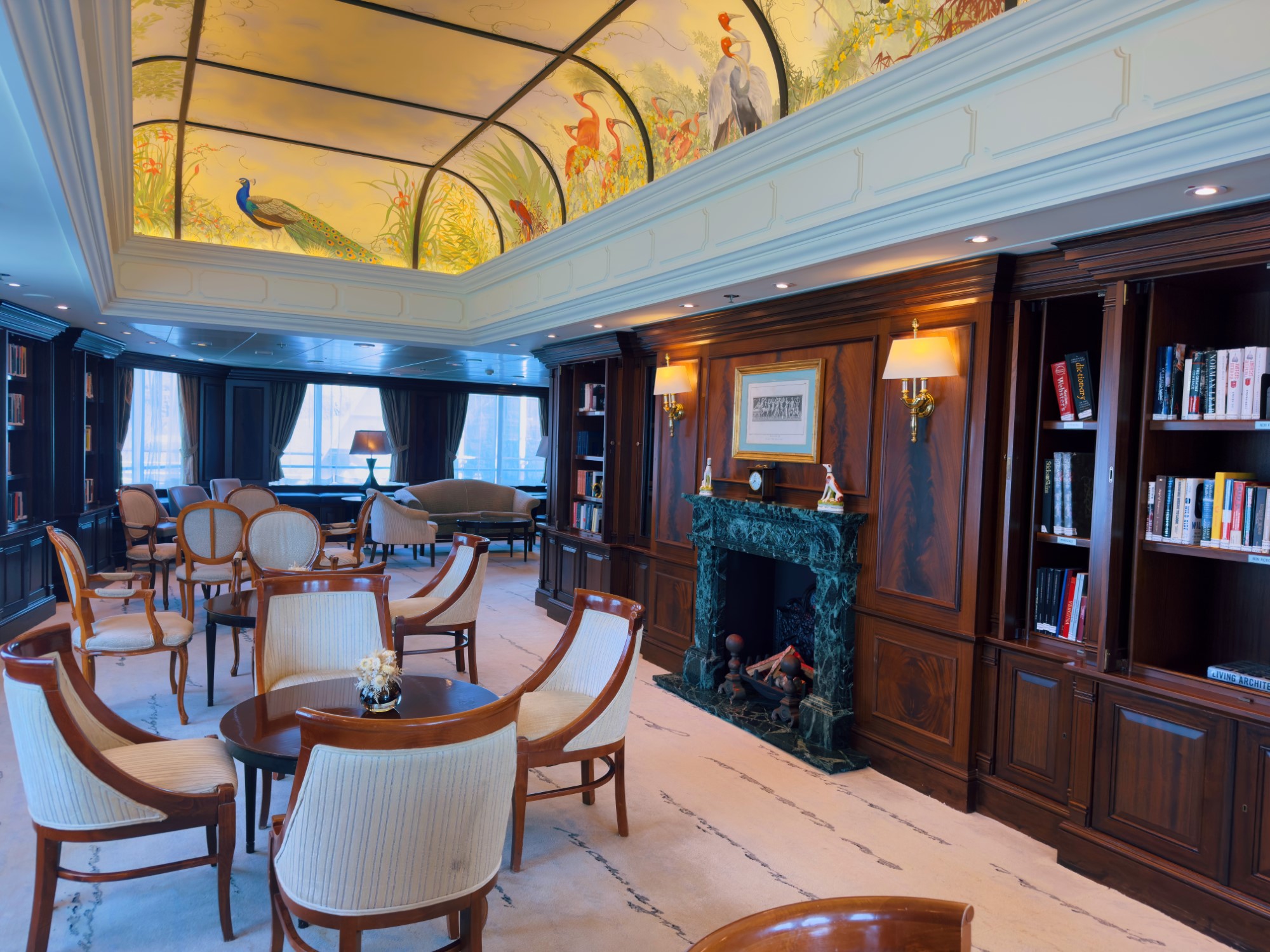
The Drawing Room
This library is one of the quiet jewels of Azamara, a peaceful and beautifully appointed space for reading or relaxing after dinner. Browse the collection and feel free to borrow the library books. Or simply relax in the tranquil atmosphere.
Mosaic Café @ Night
Our onboard coffee corner may very well become your favorite nook on the ship. With elegant and comfortable furniture, it’s bound to be one of the the most stylish places, too. Find all your favorite coffee drinks crafted just the way you like. Slip right into a comfortable seat and sip for a while—you never know who’ll walk by.
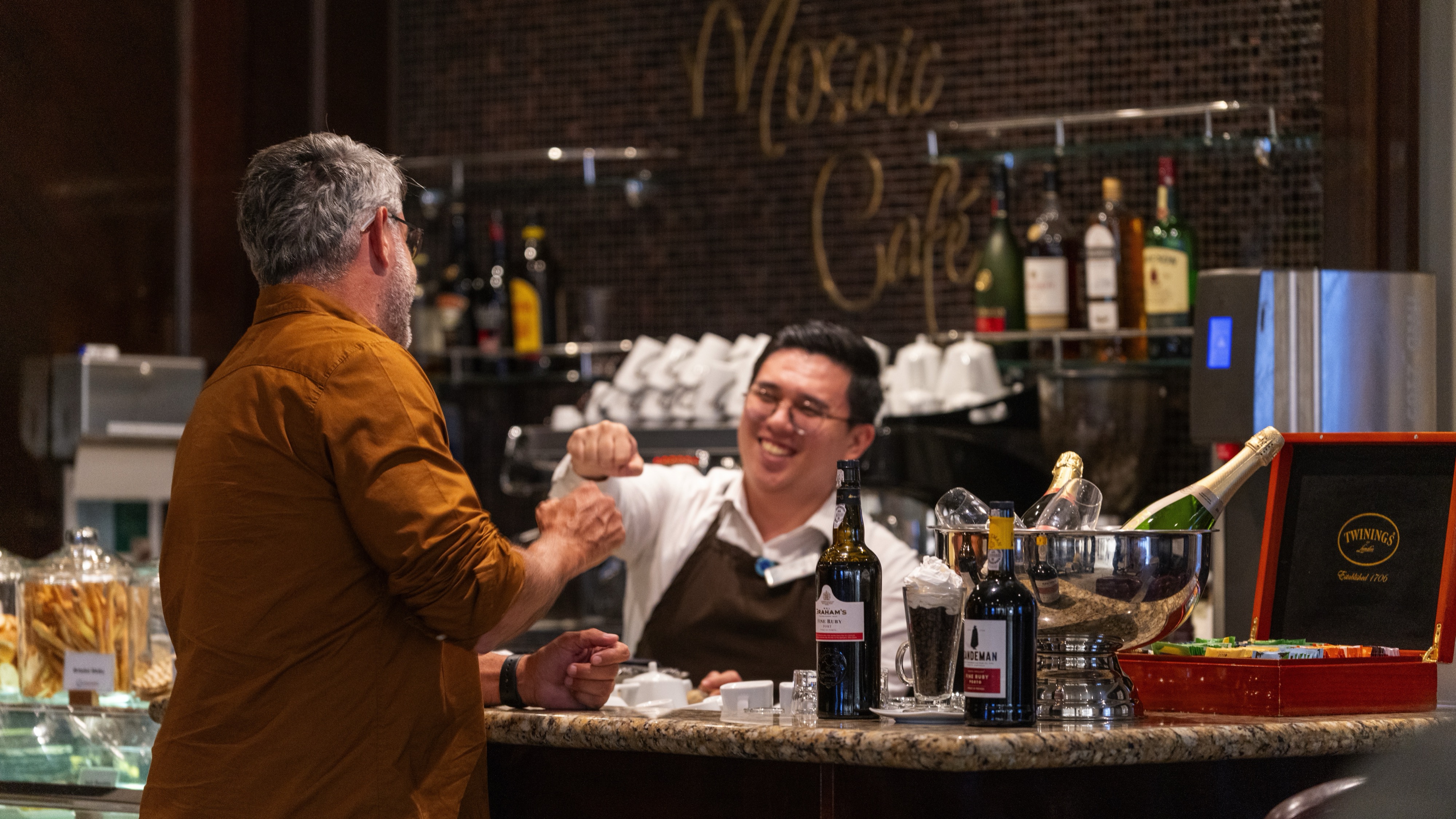
Cabaret Lounge
Enjoy live performances of professional full-stage musical revues, classical soloists, bands and other entertainment in a cabaret nightclub with a full bar and cozy tables.
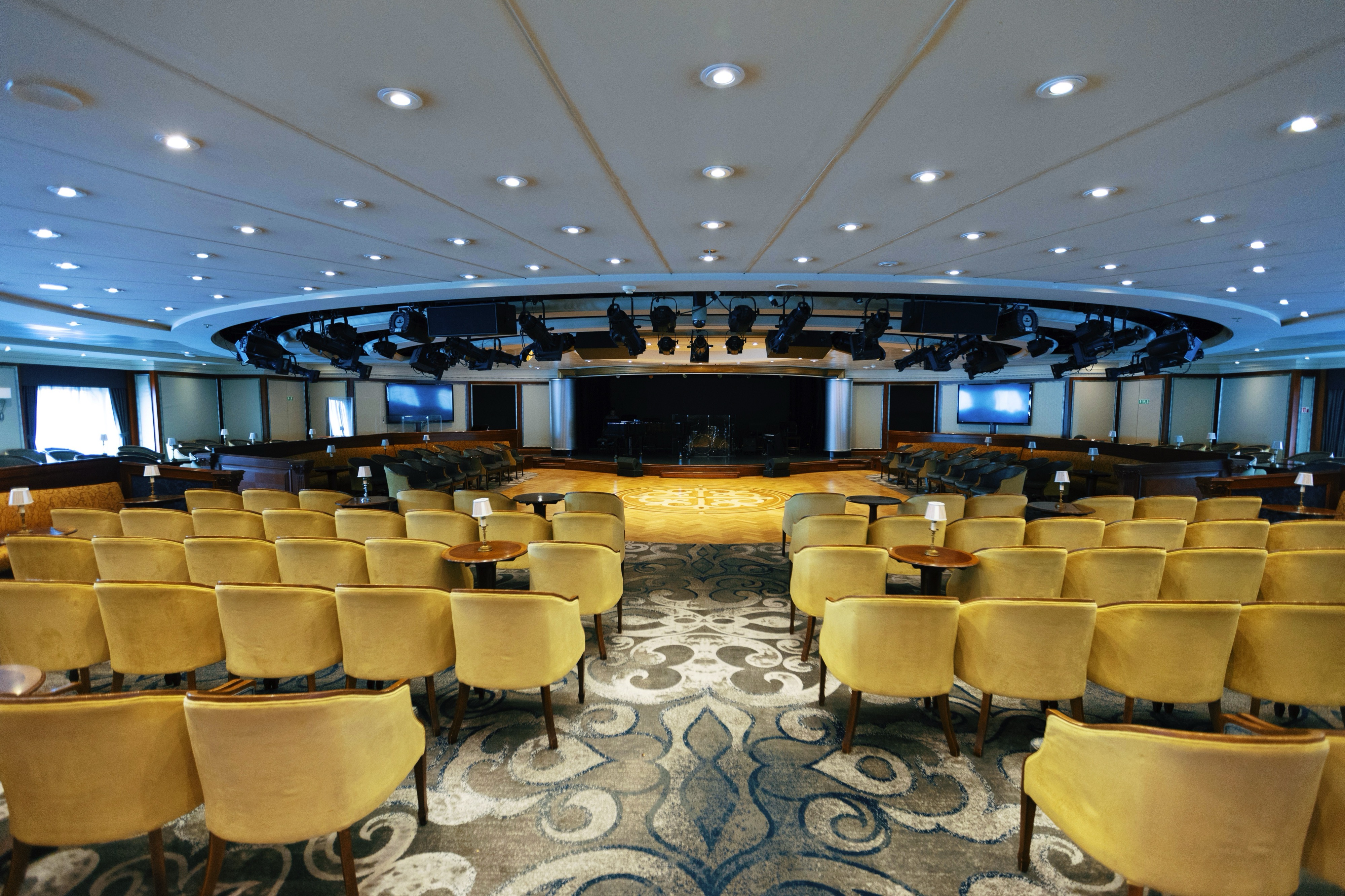
The Living Room
The idea of the Living Room is just that. To “live in” and to enjoy time with friends and fellow guests! Much of the room is furnished as a living room, with clusters of large comfortable chairs and sofas….
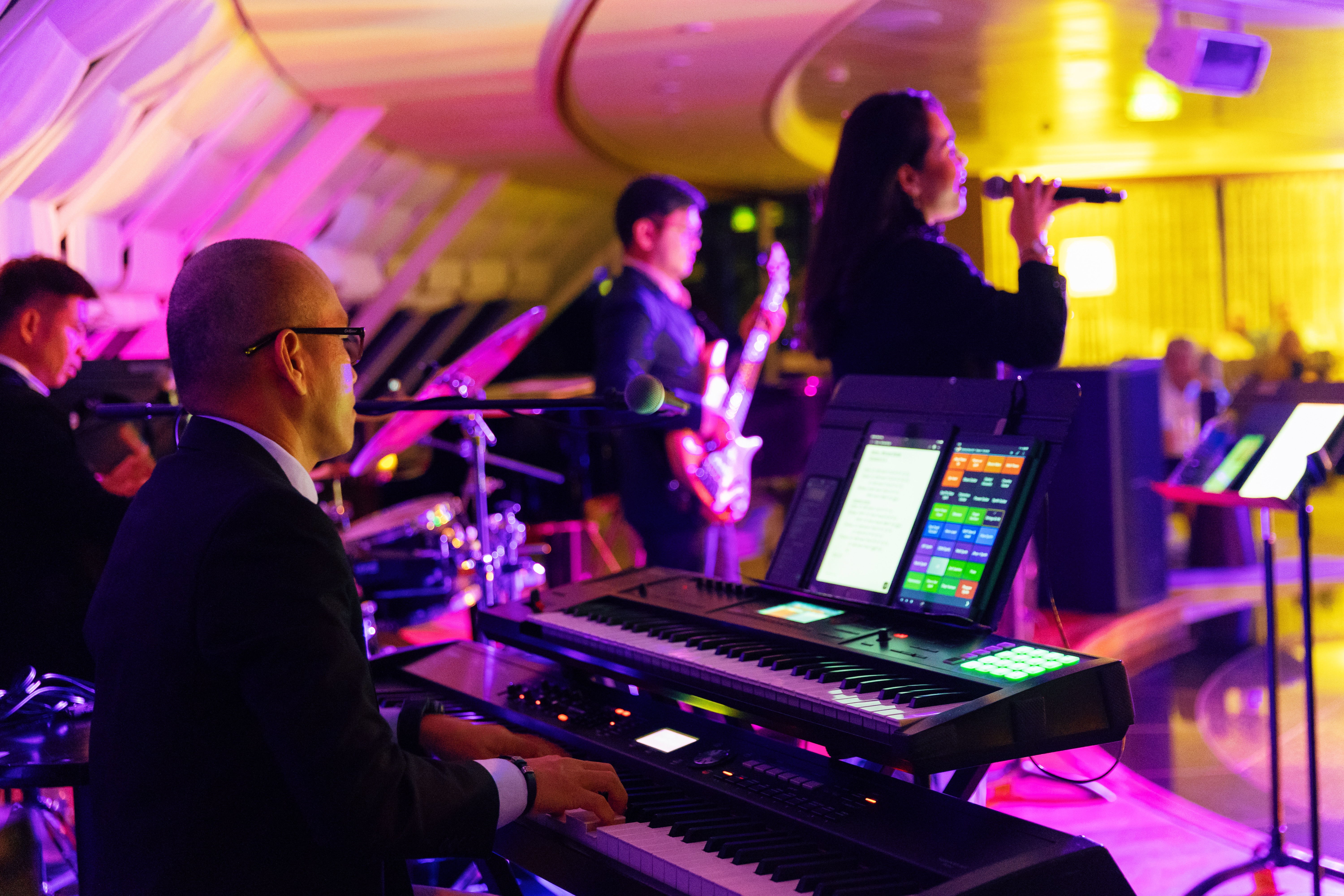
The Den
By day, The Den is a cozy, inviting space perfect for planning your next adventure—home to the Cruise Again desk and photo gallery, and filled with destination inspiration. By night, it transforms into a lively piano bar with craft cocktails, a talented live pianist, and a warm, social atmosphere. Whether you’re mapping out future travels or enjoying the music with a nightcap in hand, The Den is where stories begin, and where many guests return night after night.
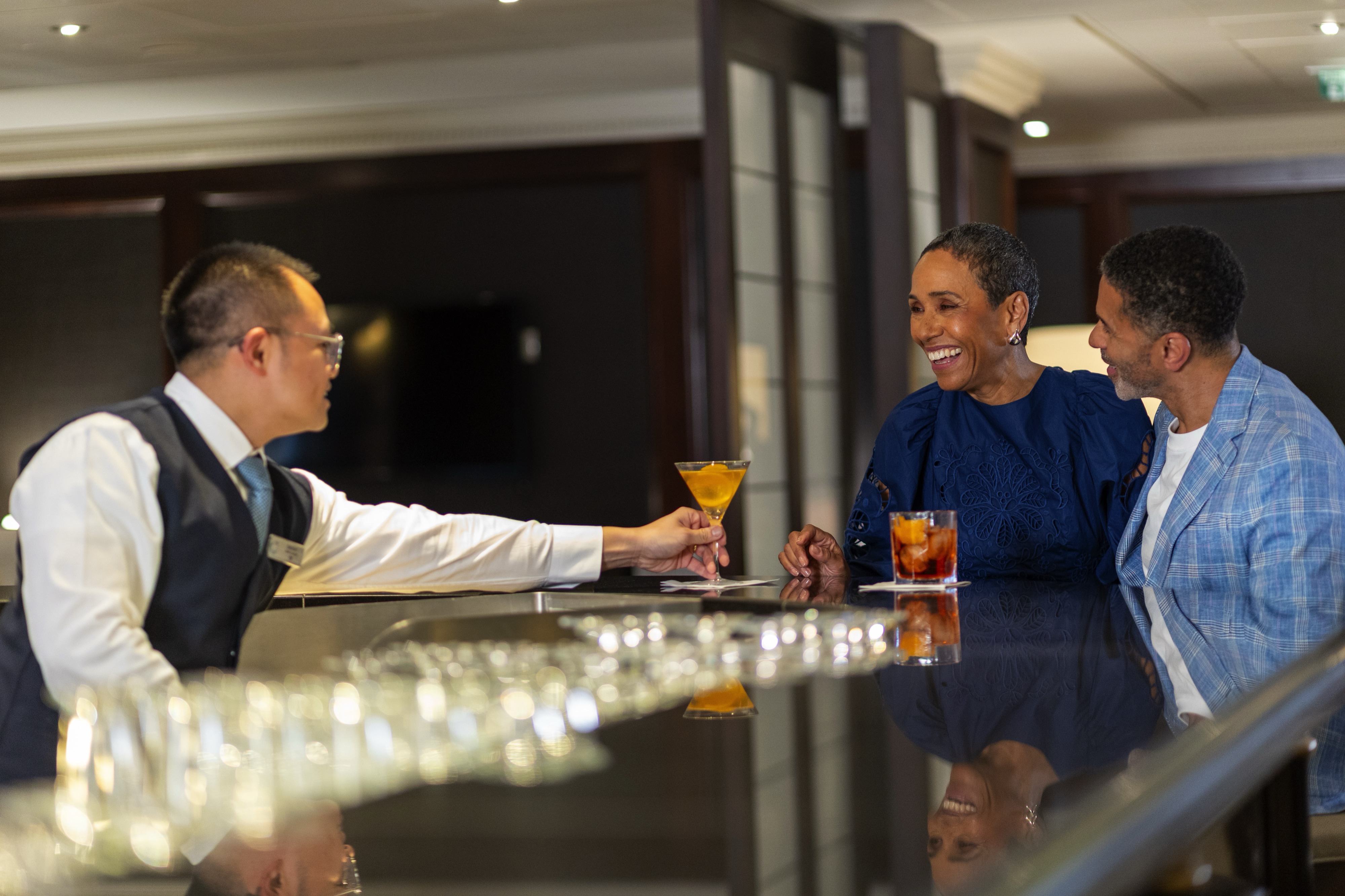
The Ship Shop
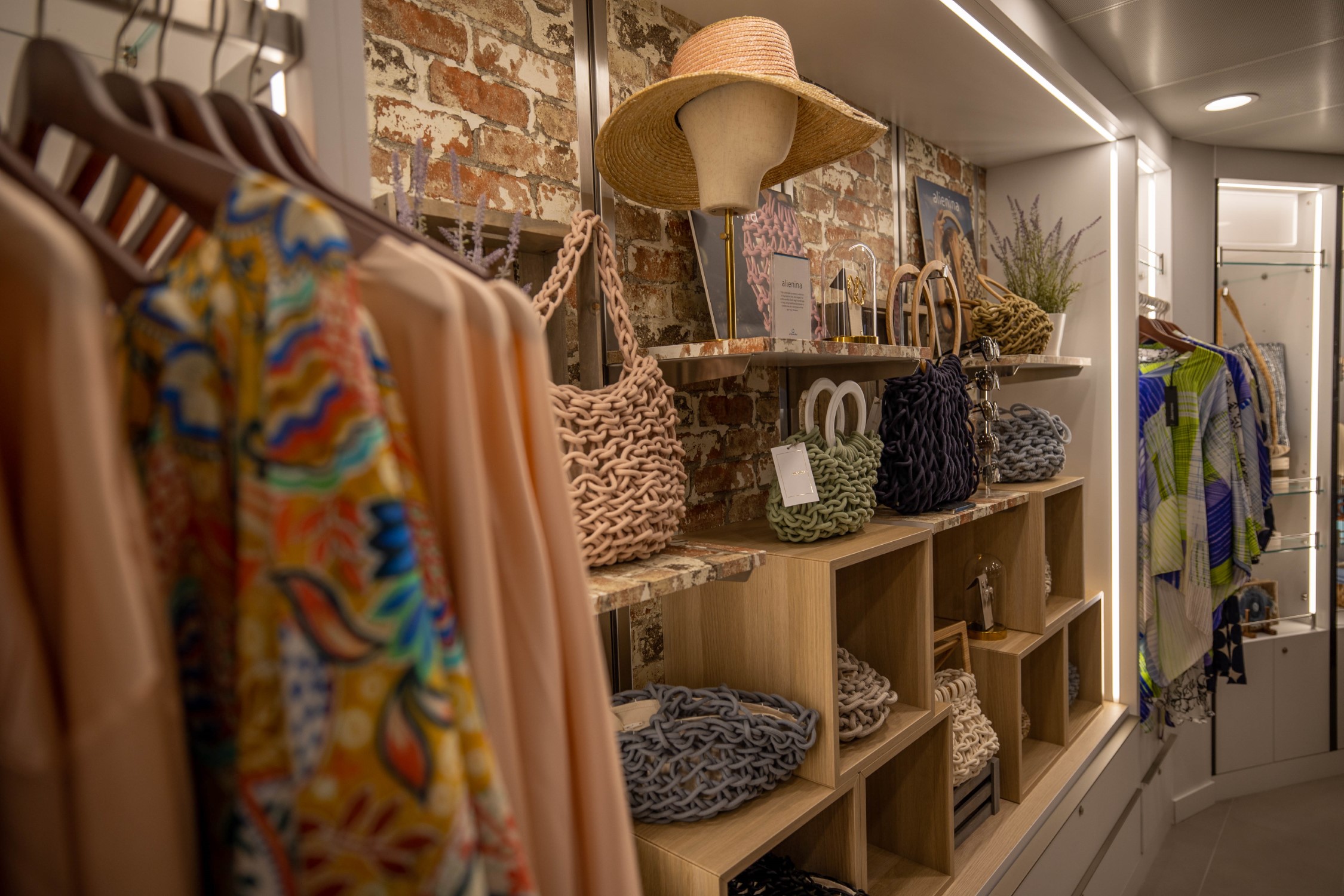
Pick up sundries, casual wear and swim fashions, sunglasses, accessories, music and shipboard keepsakes. This is a great place for small gifts to take back home.
Indulgences
Aptly named, Indulgences will satisfy your desires for the finer things in life. If you are looking for designer jewellery, it’s the perfect place to window shop or to find that extra special purchase.
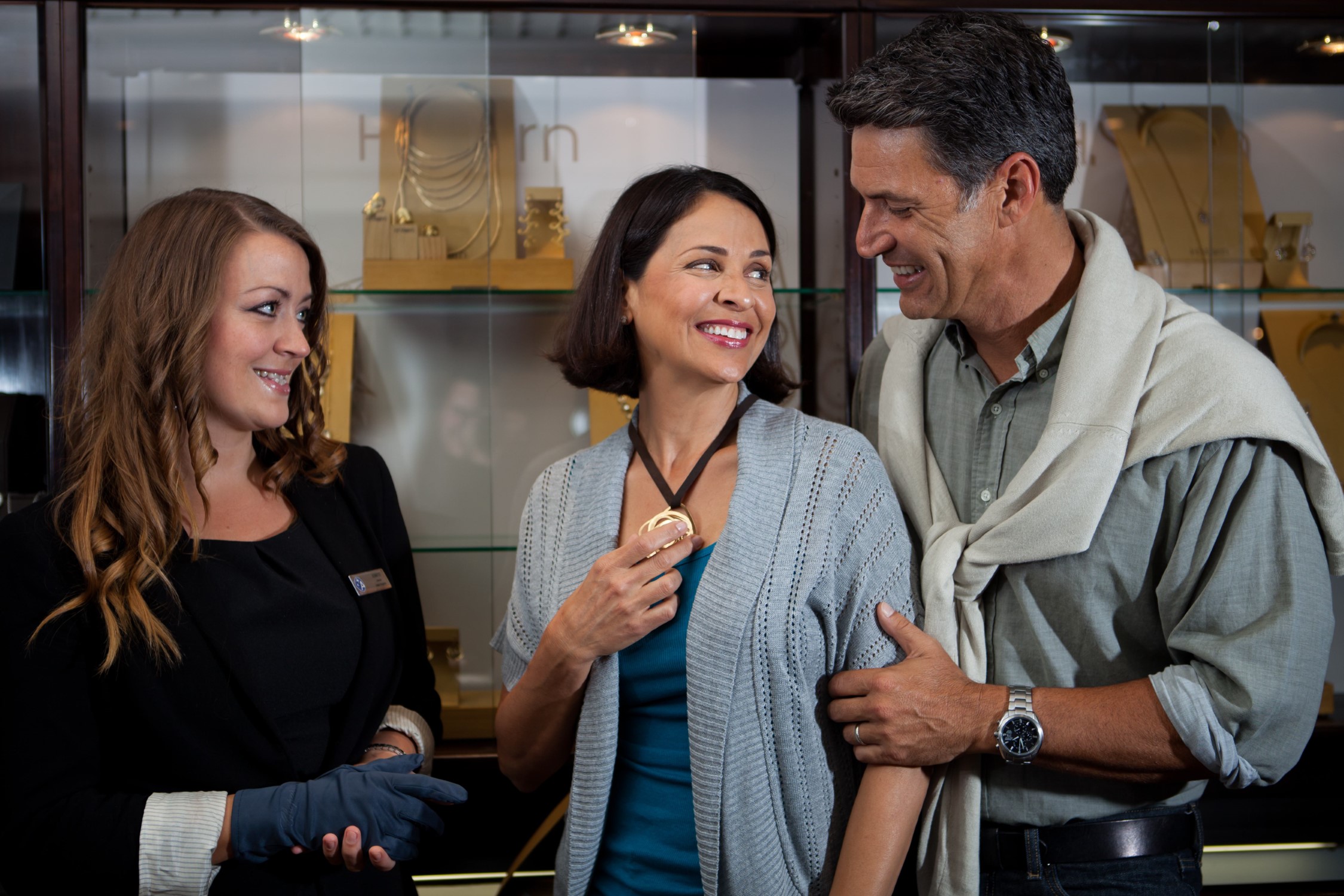
Photo Shop
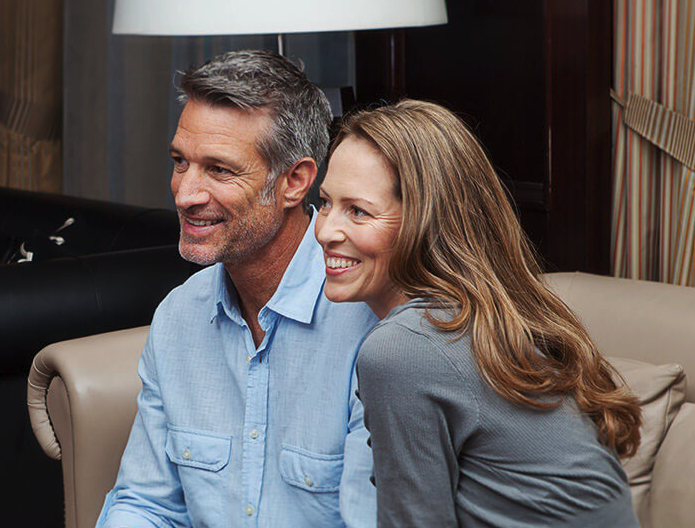
Our photographers capture both fun and professional photos throughout the voyage, whether it is your portrait, or photos of the destinations you visit. You can also find an assortment of supplies for your own photographic endeavours.
Sunset Bar
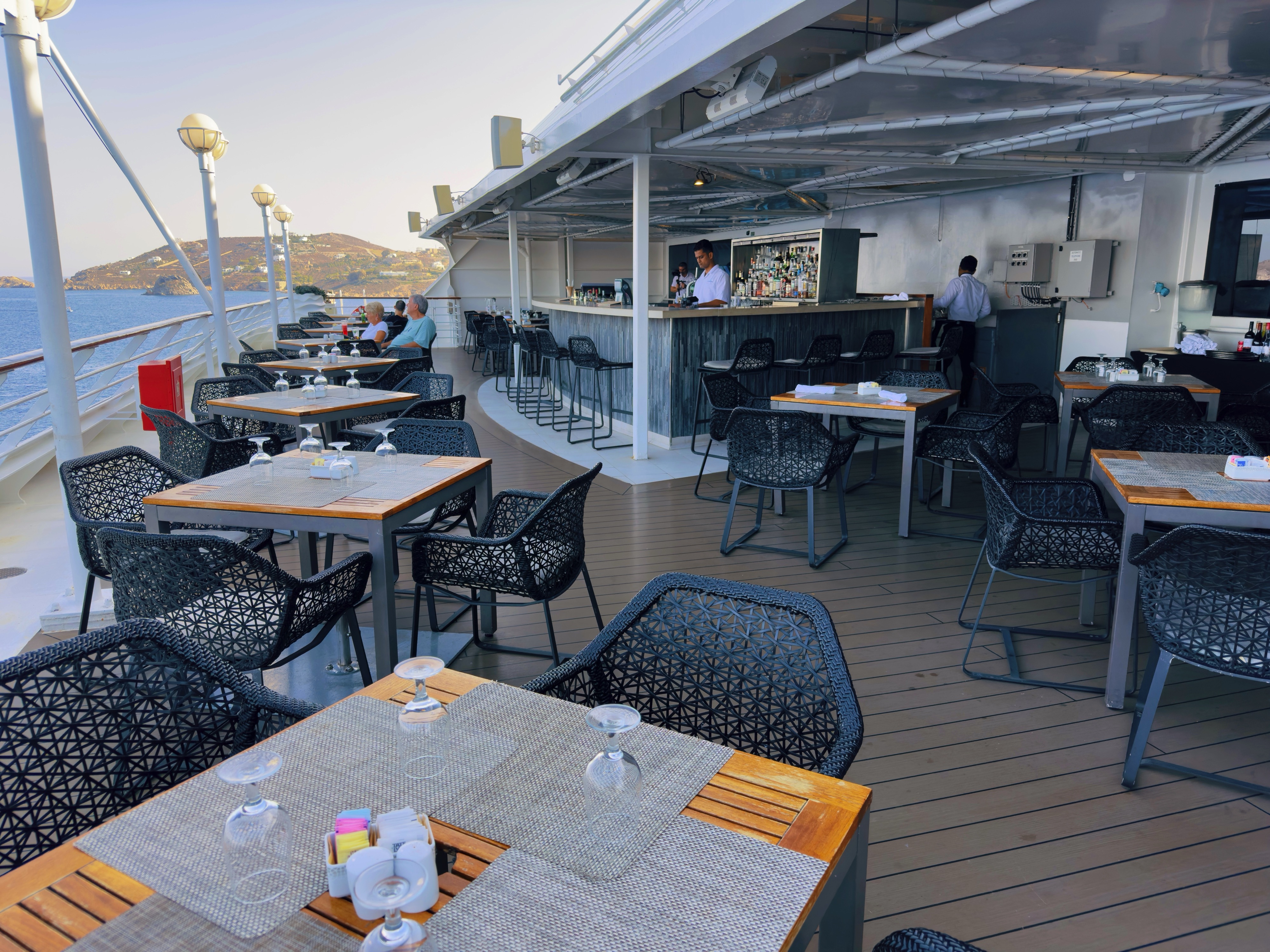
Adjacent to Windows Café, the Sunset Bar is a welcoming outdoor patio with covered and open-air seating, and a bar. It’s the perfect place for dining alfresco, enjoying a refreshing drink, taking in the sights of your favorite port, or simply watching the world sail by.
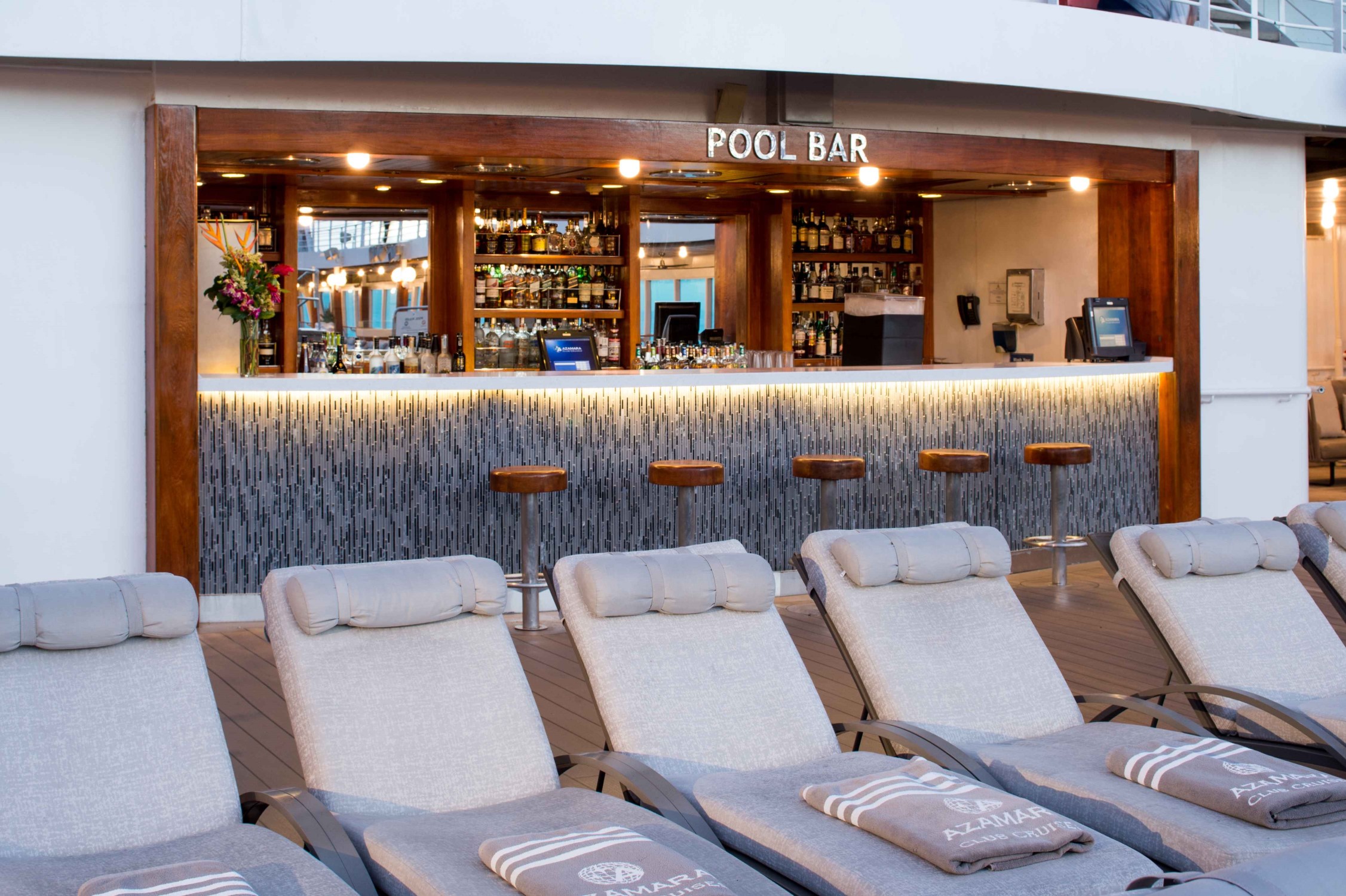
Pool Bar
Our Pool Bar serves refreshments while enjoying the Pool during the day, and cocktails of your choice in the evening.
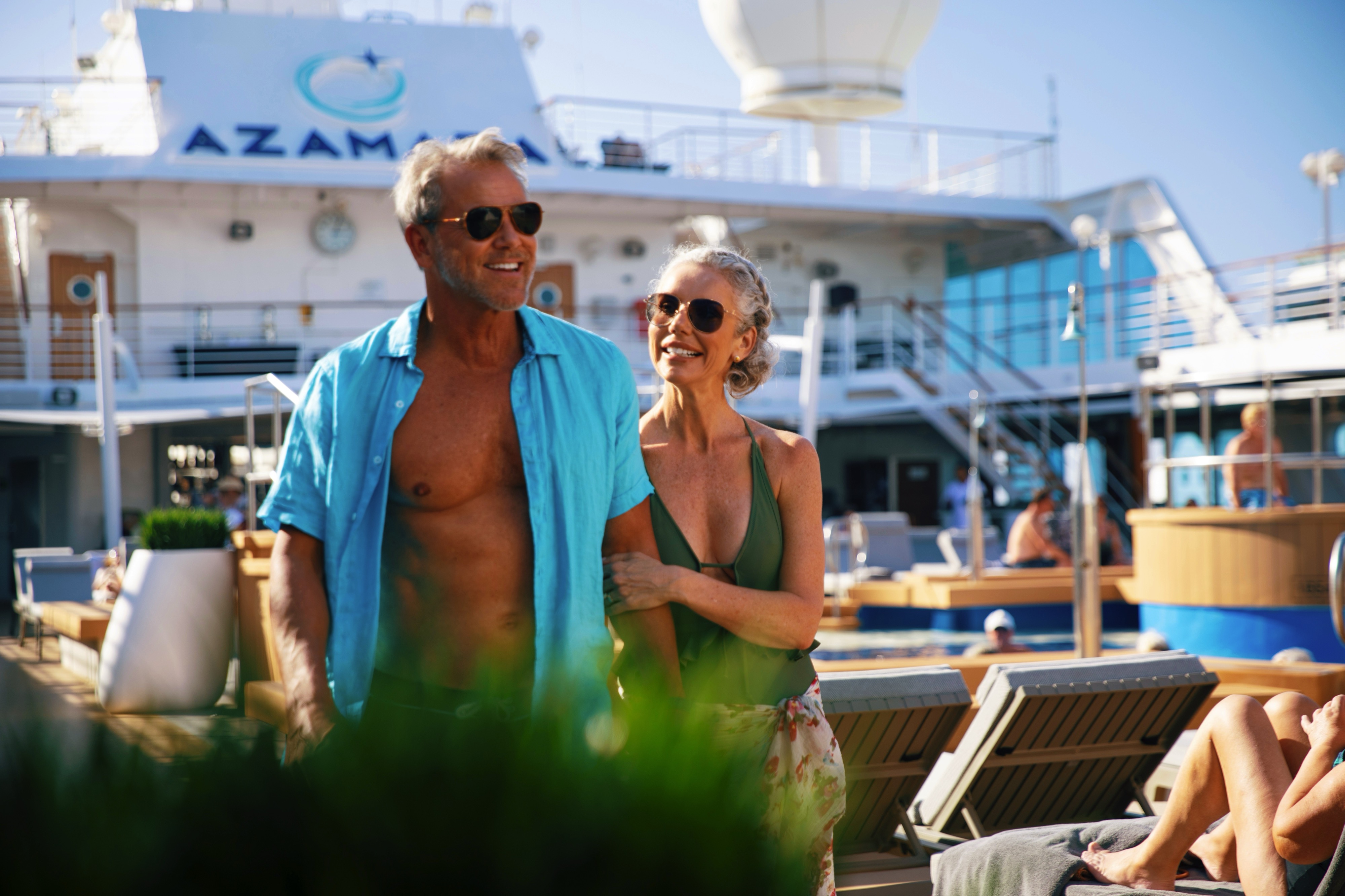
The Pool
Join Azamara officers and crew for our signature dinner and entertainment event hosted al fresco on the pool deck (weather permitting). With an array of delicious food and engaging entertainment, your White Night experience will almost certainly be one of the most memorable times from your voyage. And don’t forget to bring something white to wear for the evening.
Performances
Wanderlust
Get ready to be transported to the world’s most beloved travel destinations in one exhilarating night. As we explore all four seasons in a new city, travel along with our dynamic Signature Singers & Dancers as they sing and dance their way through an eclectic mix of music from around the world. Come and experience WANDERLUST!
Oh, What A Night
Things are shaking up on Azamara, as the cabaret lounge transforms into an az-amazing dance hall. You’re invited to join the fun and take a stroll down memory lane as we celebrate the classic hits from artists such as Elvis Presley, The Drifters, Frankie Valli and the Four Seasons, Sam Cook and more! This will sure be OH, WHAT A NIGHT!
IMAGINE – The Music That Defined a Generation
Join your Azamara Signature Singers and Dancers as they celebrate the music that inspired a generation in Imagine. From artists such as Janis Joplin and Credence Clearwater Revival to the Temptations and Tina Turner. This evening is all about the music! Sit back, relax and enjoy the nostalgia that is IMAGINE!
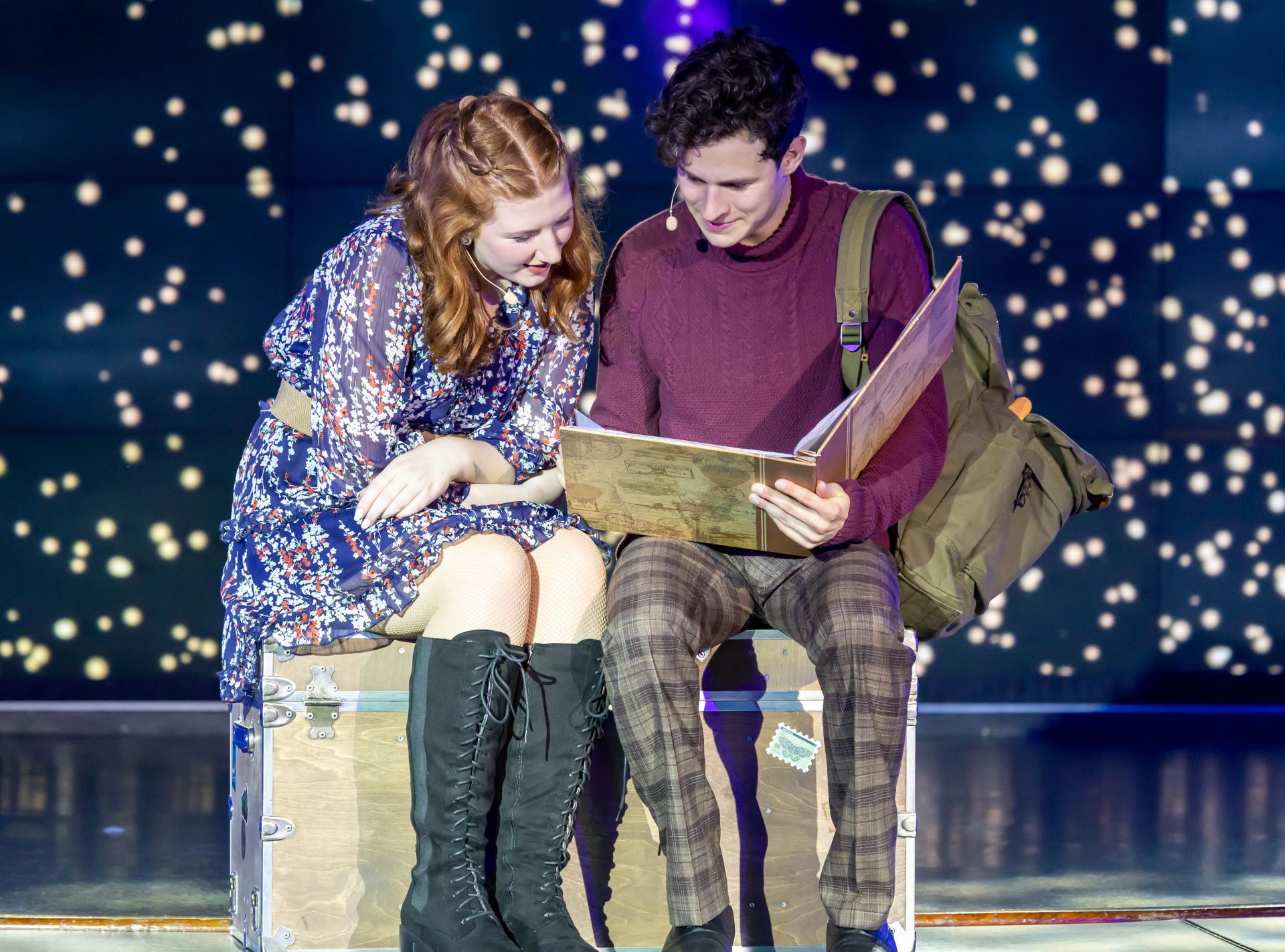
The Wine Cellar
You’ll be hard-pressed to find such a collection of limited production, small label and rare vintage wines anywhere on the high seas! And with vintages from France to California, and Argentina to South Africa, you’re sure to find a wine to suit your palate and your journey. Our knowledgeable sommeliers can help you pick the perfect wines for your evening meal.
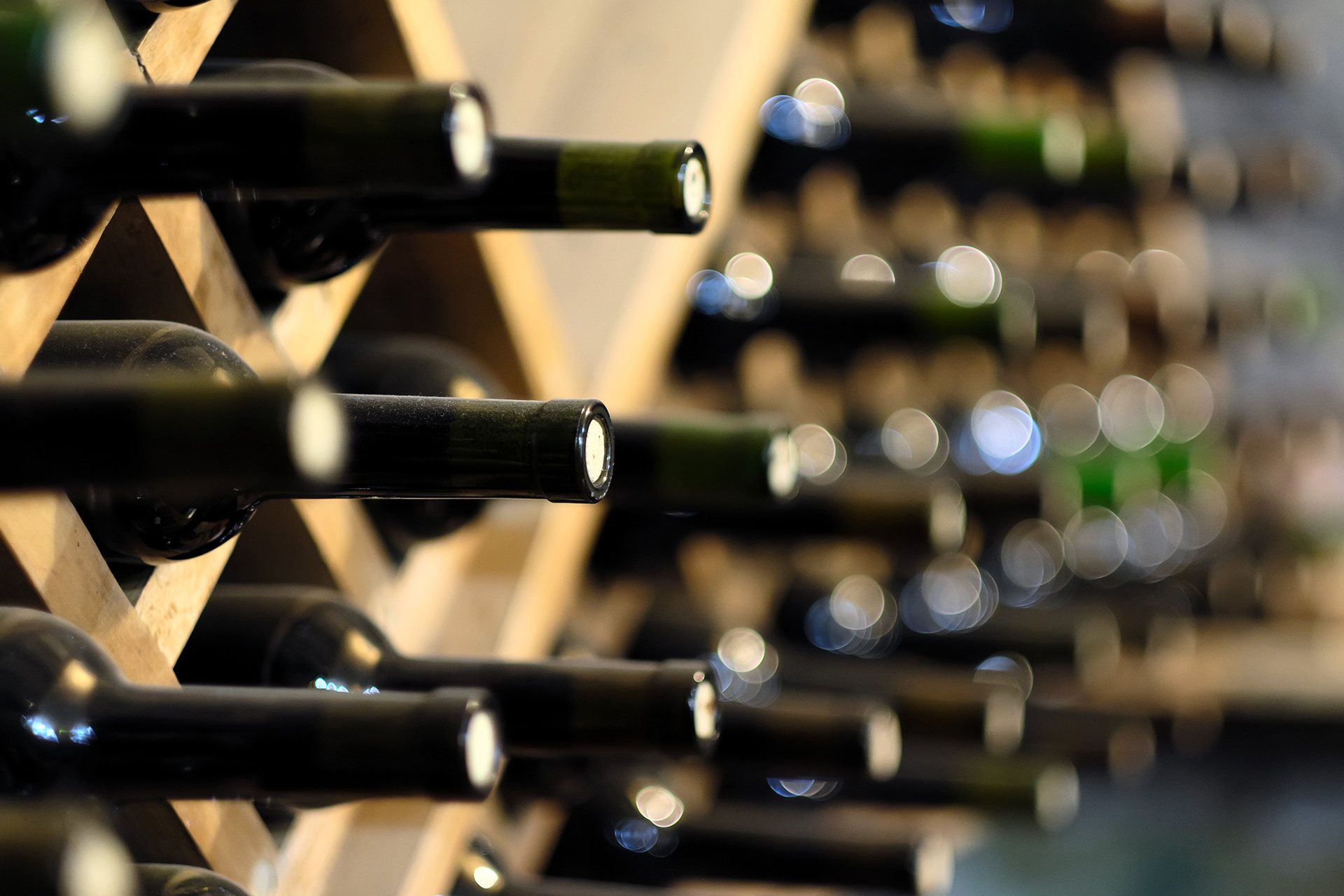
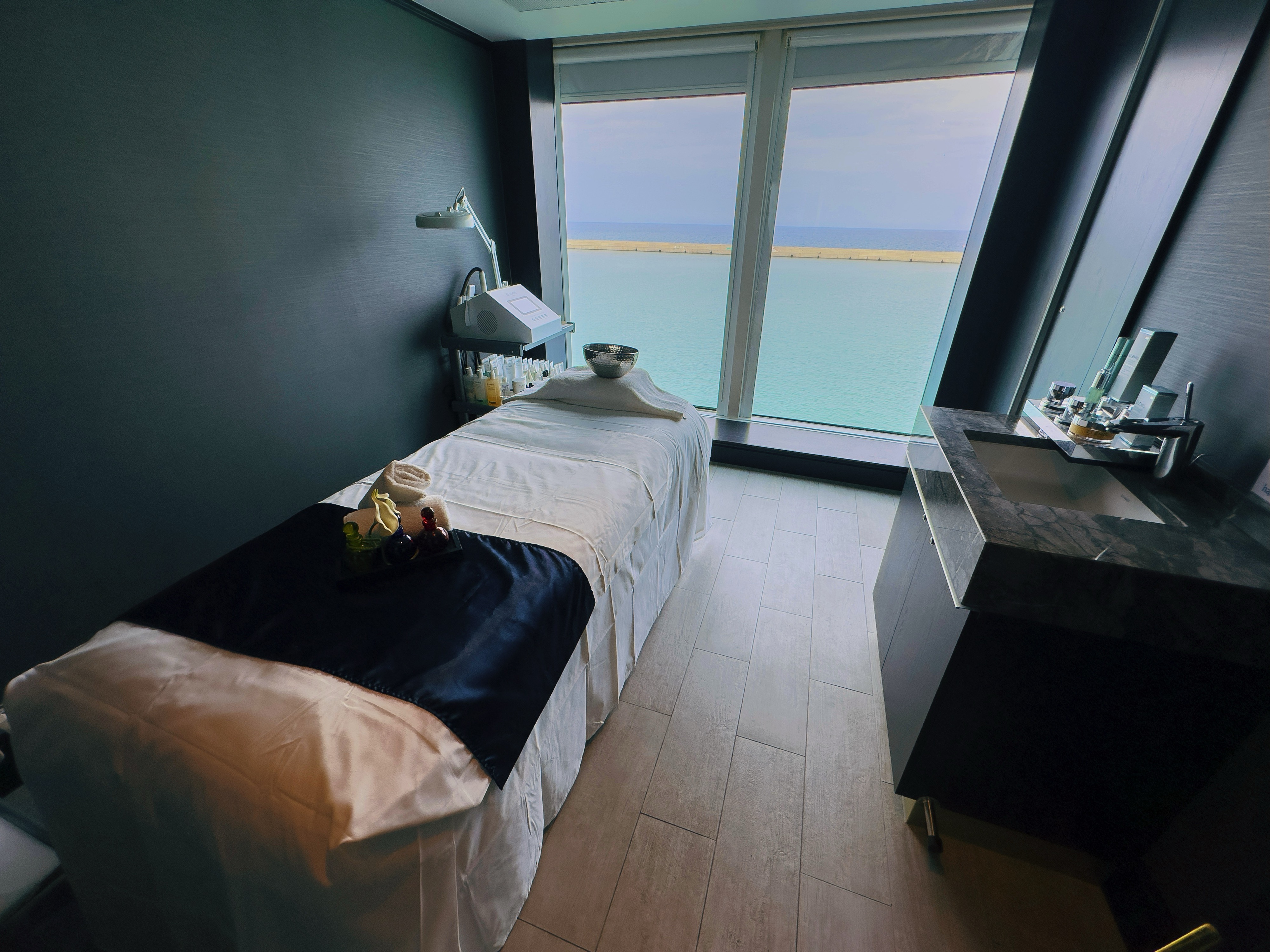
The Sanctum Spa
Staffed by professional aestheticians and therapists, the Azamara Spa is an oasis of tranquility. Choose from an extensive menu of services including:
Featured Spa Services
- The Sanctum Terrace: Enter your private spa deck with a bubbling salt water bath and powerful jets that massage you as you soak up the views.
- Biotec Facial Services: State of the art skin care and restorative facials for men and women.
- Massage Therapy: Hot stone therapy, deep tissue massage, bamboo massage and other exotic massage treatments from around the world.
- Body Sculpting: Renewing seaweed wraps, cellulite reduction body sculpting, lime and ginger salt glows, and more.
- Spa Rituals: A selection of carefully crafted half and full-day packages including body sculpting, facials and massage for the ultimate in relaxation.
- Teeth Whitening Services: Restore your bright and beautiful smile!
Ancient Healing
A cruise is a great time to experience the benefits of this ancient Chinese system of healing. Acupuncture strengthens the immune system, fights disease and controls pain while dissolving accumulated stress and restoring the body’s natural balance and energy.
Azamara’s acupuncturists are practitioners licensed by the National Certification Commission for Acupuncture and Chinese Medicine. A variety of treatments are available for pain management, smoking cessation, and more. You may notice immediate benefits in circulation, heart, stomach, skin and mood. Please inquire at the Spa for scheduling and pricing.
Elemis Aroma Seaweed Massage
Unwind in a warming wrap after a heated seaweed mask and essential oils are applied to your body. Detoxify and decongest with a treatment for tired muscles and arthritis or detoxification.
Elemis Aroma Stone Therapy
Feel tension and stress melt away. Enjoy the warming sensation the volcanic basalt stones provide while your body is massaged using traditional techniques and soothing aromatherapy oils.
BIOTEC Firm-a-Lift
Enjoy a youth-enhancing facial that reduces the appearance of fine lines and wrinkles while smoothing your skin tone and texture in just one treatment.
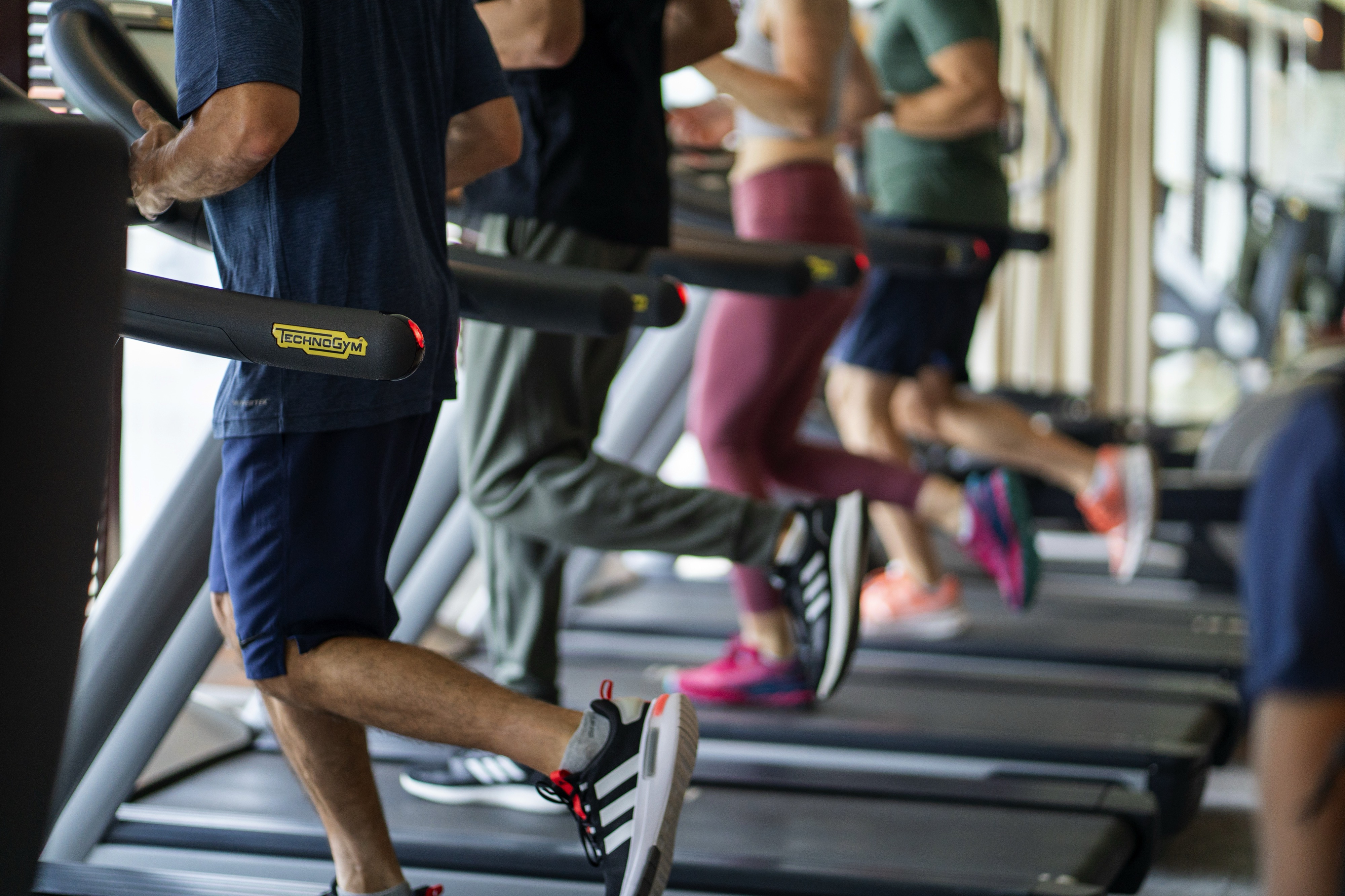
Fitness Centre & Personal Training
Join complimentary group classes like yoga on the deck, Pilates, cycling, core workouts, and nutrition classes. Exercise on your own at our Fitness Center, with ample equipment for a great workout with an ocean view. Customized personal training or Body Sculpt Boot Camp is also available (for additional cost).
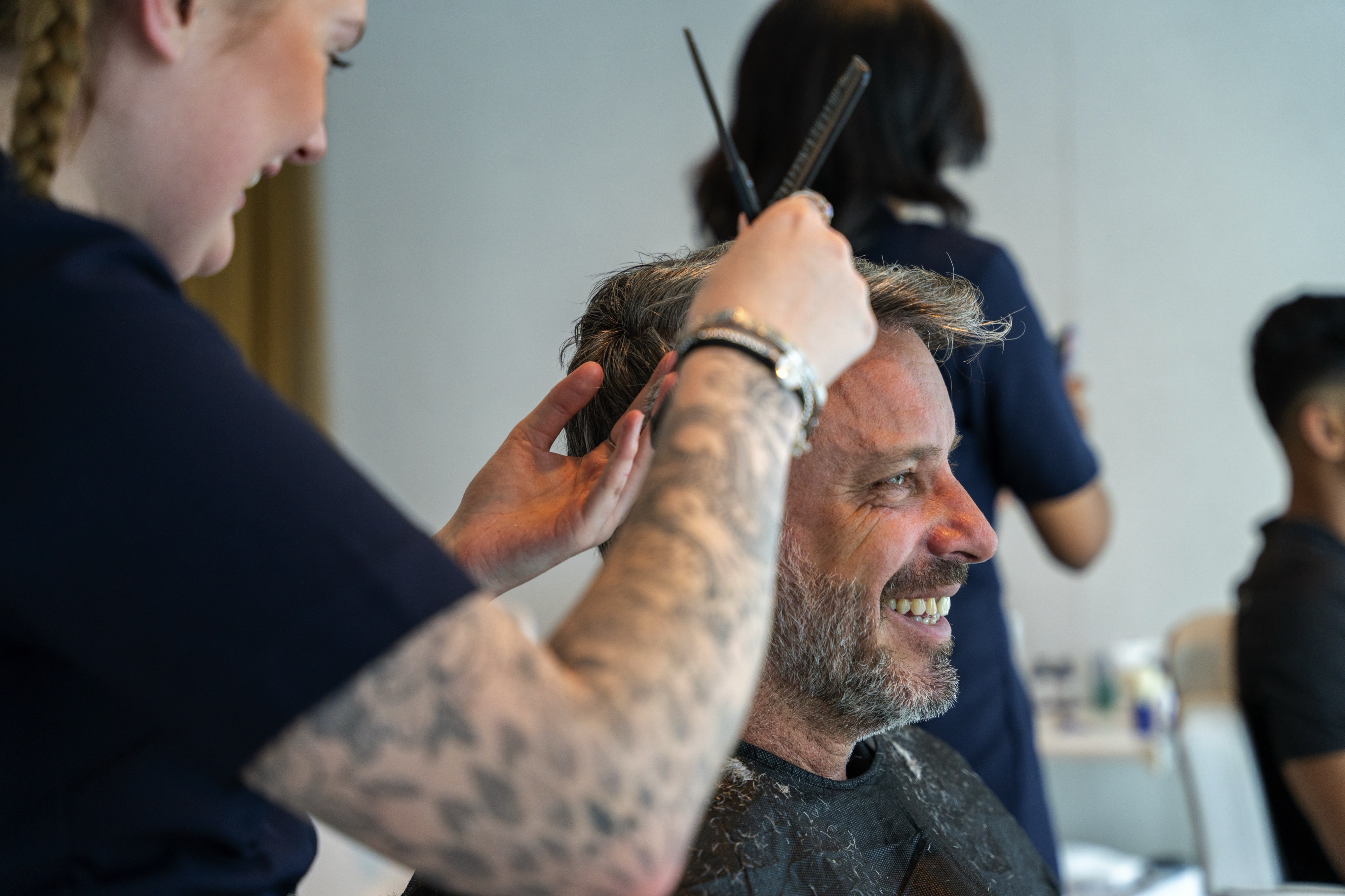
The Salon
Our full-service salon offers a menu of professional services for men and women. Special packages of hair and scalp renewing rituals, pedicures with massages, grooming services, and more are available.
Aqualina
At Aqualina, you’ll find some of Italy’s most authentic dishes. Pastas made from scratch, traditional recipes, and scrumptious vegetarian dishes that make sure there’s something for everyone. Plus our famous desserts: Sorrento lemon liqueur mousse, hazelnut chocolate soufflé and more.
Prime C
Your choice of steak, cooked to perfection. Herb-coated rack of lamb, duck confit and Chilean sea bass—all paired with savory sides. At Prime C, you’re in for more than delectable dining. Expect a great evening with stunning views and lush décor.
Discoveries Restaurant
Discover the world through dishes and flavors from the places we visit. Of course, you’ll also enjoy a wide variety of nightly selections such as filet mignon with black truffle sauce. Choose being seated at a table for two or as part of a larger group of fellow guests.
The Patio and Swirl & Top
Casual “pool grill” by day. A sit-down al fresco dining experience by night. Taste your way around the world with exclusive personalized dishes using local flavors of the places we visit. Plus a self-serve frozen yogurt station—Swirl & Top. With a variety of flavors and your choice of toppings, it’s the perfect way to cool off.
Windows Cafe
Our daily themed dinner often takes its inspiration from the region we’re visiting—Indian, Mexican, Spanish, Italian. We also create an extra live station made from local ingredients purchased in port: Greek salad made with local feta (Greece), pasta prepared with local mushrooms (Italy), fresh Mussels served with garlic bread (Netherlands).
Mosaic Cafe
Stylish and cozy, Mosaic offers your favorite coffee drinks exactly as you like them. Relax in a comfortable seat and enjoy. It’s the perfect spot to start or end your day, and it just might become your favorite place on the ship.
Room Service
The best time for room service? Whenever you say it is, 24-hours a day. Order from the full breakfast menu between 6:30 AM and 10:00 AM, and we’ll deliver at your appointed time. Lunch and dinner room service features a menu of hearty soups, fresh salads, gourmet sandwiches, pizzas and desserts.
Exclusive Experiences
These excursions represent our most exclusive and unique opportunities to immerse yourself in our destinations. Be there as history is made at one of the world’s great celebrations, sporting events or cultural festivals. Spend a few days traveling overland on an expedition that ventures beyond the coast. Or, let us craft a private tour around your individual interests.
World Events
Join the revelry at world-renowned art shows, sporting events, culinary festivals and other local celebrations.
Overnight Experiences
Venture deeper into a destination to spend a night or more exploring iconic locales and landmarks, found beyond the harbours of your itinerary.
Private Tours
Let Azamara work with you to create the destination experience you’ve always dreamed of! Embark on a personalised Private Tour and we’ll turn that dream into reality.
Locales & Landmarks
These curated sightseeing tours reveal the hidden gems, local secrets and signature sites of a destination. Whether a cultural immersion, self-guided tour, panoramic drive, or guided visit, this series makes it easy to enjoy an authentic destination experience.
Cultural Expressions
Connect with customs, beliefs, art, and music that define local cultures through authentic, engaging encounters.
Ancient Wonders
Get immersed in epic history. Learn about the architecture, culture, and beliefs of ancient civilizations.
Food & Wine
Savor local food, wines, beers, and spirits on these culinary journeys, many led by Azamara Executive Chefs, Sommeliers and Mixologists.
Local Introductions
Spend time with local families, business owners, artists, aristocrats, and other influencers in their homes and workplaces.
Nature & Wildlife
Enjoy a close look at indigenous plants and wildlife on an ecological exploration that directly contributes to environmental stewardship.
AzAmazing Evenings
One-of-a-kind, complimentary, immersive cultural experiences exclusively created for Azamara guests, continuing our commitment to Destination Immersion®. First launched in 2011 to inspire guests to dive deeper into the heart of each destination, these extraordinary evenings showcase music, art, and culinary traditions in unique settings where authentic culture truly comes alive.
Most AzAmazing Evenings® take place ashore, often in iconic venues while the ship stays late in port, aligning with our hallmark of Destination Immersion®, bringing guests closer to local culture in remarkable locations. On select occasions, including seven- and eight-night itineraries, equally captivating experiences are brought onboard.
*For sailings of 9 nights or longer, exceptions may occur when local infrastructure does not allow for an onshore event; in such cases, the experience will be hosted onboard. In rare cases—such as select transoceanic crossings or charters—AzAmazing Evenings® will not be offered.
Enrichment program and classes
Your quest to learn continues with destination lecturers offering their expertise throughout each voyage with Azamara®. These leading destination experts will participate in a range of programs, classes, and lecture series throughout your voyage — all created with our incredible destinations in mind. They’ll also partake in Q&A sessions.
White Night
Join Azamara officers and crew for our signature dinner and entertainment event hosted al fresco on the pool deck (weather permitting). With an array of delicious food and engaging entertainment, your White Night experience will almost certainly be one of the most memorable times from your cruise. And don’t forget to bring something white to wear for the evening.
Club Crooner
Step into a swanky nightclub as the great songs of the most magnificent artists come alive on stage. From classic crooners such as Frank Sinatra and Tony Bennett, to current songbirds such as Natalie Cole and Michael Bublé, there’s a song for every time and everyone. Enjoy a beverage, sit back, and be serenaded by the melodies of our lives with CLUB CROONER!
Discoveries Lounge
This congenial bar is a favorite gathering place for great conversations and delicious drinks. Bar service includes a full selection of fine wines, mixed drinks, and premium spirits…plus the entertaining banter of Azamara’s friendly bartenders.
The Drawing Room
This library is one of the quiet jewels of Azamara, a peaceful and beautifully appointed space for reading or relaxing after dinner. Browse the collection and feel free to borrow the library books. Or simply relax in the tranquil atmosphere.
Mosaic Café @ Night
Our onboard coffee corner may very well become your favorite nook on the ship. With elegant and comfortable furniture, it’s bound to be one of the the most stylish places, too. Find all your favorite coffee drinks crafted just the way you like. Slip right into a comfortable seat and sip for a while—you never know who’ll walk by.
Cabaret Lounge
Enjoy live performances of professional full-stage musical revues, classical soloists, bands and other entertainment in a cabaret nightclub with a full bar and cozy tables.
The Living Room
The idea of the Living Room is just that. To “live in” and to enjoy time with friends and fellow guests! Much of the room is furnished as a living room, with clusters of large comfortable chairs and sofas….
The Den
By day, The Den is a cozy, inviting space perfect for planning your next adventure—home to the Cruise Again desk and photo gallery, and filled with destination inspiration. By night, it transforms into a lively piano bar with craft cocktails, a talented live pianist, and a warm, social atmosphere. Whether you’re mapping out future travels or enjoying the music with a nightcap in hand, The Den is where stories begin, and where many guests return night after night.
The Ship Shop
Pick up sundries, casual wear and swim fashions, sunglasses, accessories, music and shipboard keepsakes. This is a great place for small gifts to take back home.
Indulgences
Aptly named, Indulgences will satisfy your desires for the finer things in life. If you are looking for designer jewellery, it’s the perfect place to window shop or to find that extra special purchase.
Photo Shop
Our photographers capture both fun and professional photos throughout the voyage, whether it is your portrait, or photos of the destinations you visit. You can also find an assortment of supplies for your own photographic endeavours.
Sunset Bar
Adjacent to Windows Café, the Sunset Bar is a welcoming outdoor patio with covered and open-air seating, and a bar. It’s the perfect place for dining alfresco, enjoying a refreshing drink, taking in the sights of your favorite port, or simply watching the world sail by.
Pool Bar
Our Pool Bar serves refreshments while enjoying the Pool during the day, and cocktails of your choice in the evening.
The Pool
Join Azamara officers and crew for our signature dinner and entertainment event hosted al fresco on the pool deck (weather permitting). With an array of delicious food and engaging entertainment, your White Night experience will almost certainly be one of the most memorable times from your voyage. And don’t forget to bring something white to wear for the evening.
Performances
Wanderlust
Get ready to be transported to the world’s most beloved travel destinations in one exhilarating night. As we explore all four seasons in a new city, travel along with our dynamic Signature Singers & Dancers as they sing and dance their way through an eclectic mix of music from around the world. Come and experience WANDERLUST!
Oh, What A Night
Things are shaking up on Azamara, as the cabaret lounge transforms into an az-amazing dance hall. You’re invited to join the fun and take a stroll down memory lane as we celebrate the classic hits from artists such as Elvis Presley, The Drifters, Frankie Valli and the Four Seasons, Sam Cook and more! This will sure be OH, WHAT A NIGHT!
IMAGINE – The Music That Defined a Generation
Join your Azamara Signature Singers and Dancers as they celebrate the music that inspired a generation in Imagine. From artists such as Janis Joplin and Credence Clearwater Revival to the Temptations and Tina Turner. This evening is all about the music! Sit back, relax and enjoy the nostalgia that is IMAGINE!
The Wine Cellar
You’ll be hard-pressed to find such a collection of limited production, small label and rare vintage wines anywhere on the high seas! And with vintages from France to California, and Argentina to South Africa, you’re sure to find a wine to suit your palate and your journey. Our knowledgeable sommeliers can help you pick the perfect wines for your evening meal.
The Sanctum Spa
Staffed by professional aestheticians and therapists, the Azamara Spa is an oasis of tranquility. Choose from an extensive menu of services including:
Featured Spa Services
- The Sanctum Terrace: Enter your private spa deck with a bubbling salt water bath and powerful jets that massage you as you soak up the views.
- Biotec Facial Services: State of the art skin care and restorative facials for men and women.
- Massage Therapy: Hot stone therapy, deep tissue massage, bamboo massage and other exotic massage treatments from around the world.
- Body Sculpting: Renewing seaweed wraps, cellulite reduction body sculpting, lime and ginger salt glows, and more.
- Spa Rituals: A selection of carefully crafted half and full-day packages including body sculpting, facials and massage for the ultimate in relaxation.
- Teeth Whitening Services: Restore your bright and beautiful smile!
Ancient Healing
A cruise is a great time to experience the benefits of this ancient Chinese system of healing. Acupuncture strengthens the immune system, fights disease and controls pain while dissolving accumulated stress and restoring the body’s natural balance and energy.
Azamara’s acupuncturists are practitioners licensed by the National Certification Commission for Acupuncture and Chinese Medicine. A variety of treatments are available for pain management, smoking cessation, and more. You may notice immediate benefits in circulation, heart, stomach, skin and mood. Please inquire at the Spa for scheduling and pricing.
Elemis Aroma Seaweed Massage
Unwind in a warming wrap after a heated seaweed mask and essential oils are applied to your body. Detoxify and decongest with a treatment for tired muscles and arthritis or detoxification.
Elemis Aroma Stone Therapy
Feel tension and stress melt away. Enjoy the warming sensation the volcanic basalt stones provide while your body is massaged using traditional techniques and soothing aromatherapy oils.
BIOTEC Firm-a-Lift
Enjoy a youth-enhancing facial that reduces the appearance of fine lines and wrinkles while smoothing your skin tone and texture in just one treatment.
Fitness Centre & Personal Training
Join complimentary group classes like yoga on the deck, Pilates, cycling, core workouts, and nutrition classes. Exercise on your own at our Fitness Center, with ample equipment for a great workout with an ocean view. Customized personal training or Body Sculpt Boot Camp is also available (for additional cost).
The Salon
Our full-service salon offers a menu of professional services for men and women. Special packages of hair and scalp renewing rituals, pedicures with massages, grooming services, and more are available.
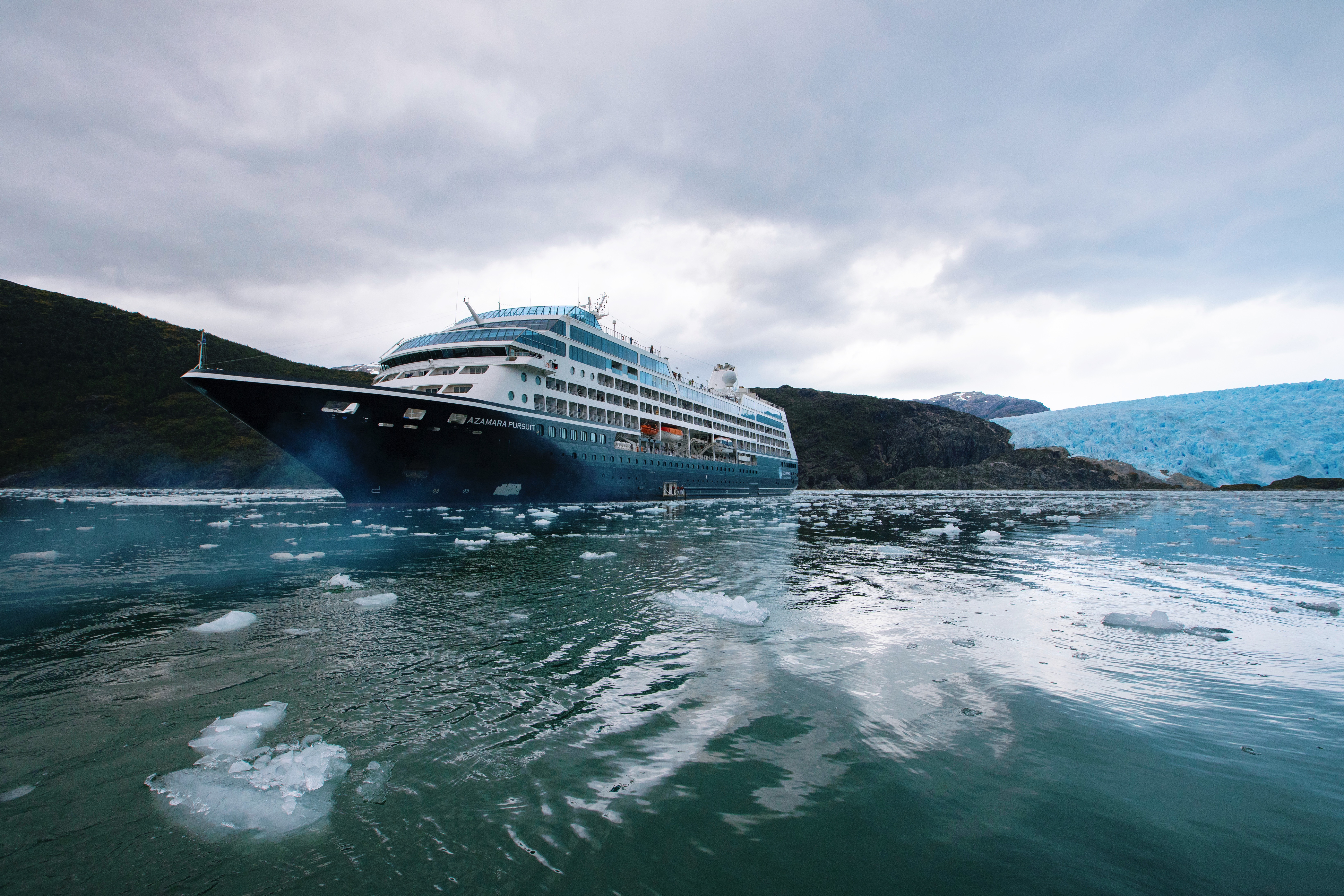
About the Ship
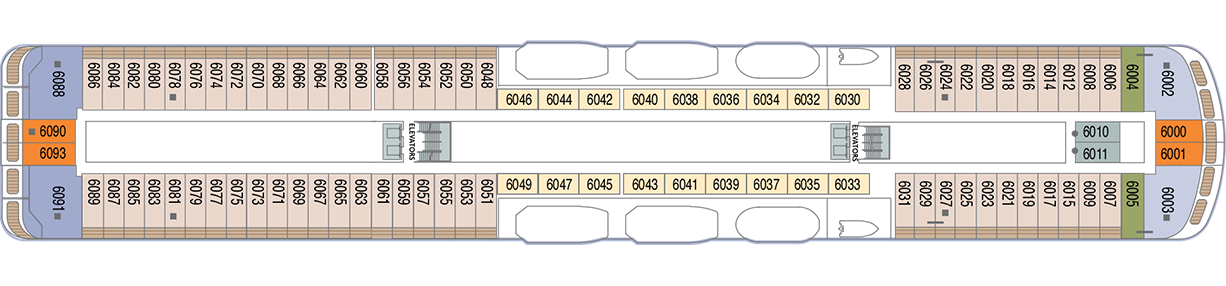
Deck Plans

- Guest Relations
- Medical Facility
- Concierge
- Oceanview Staterooms (x2 Accessible Staterooms)
- Interior Staterooms (x3 Accessible Staterooms)

- Cabaret Lounge
- The Den
- Photo Shop
- The Pursuit Shop
- Indulgences
- Mosaic Café
- Discoveries Bar
- Discoveries Restaurant
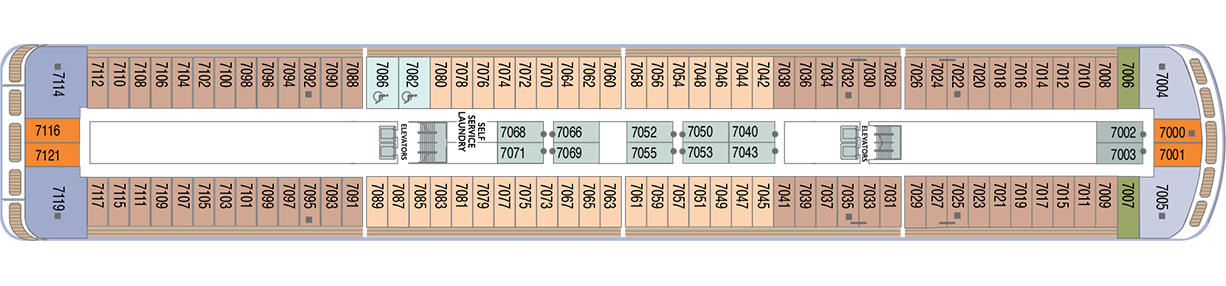
- Veranda Plus Staterooms
- Veranda Staterooms
- World Owner’s Suite
- Continent Suite
- Ocean Suite
- Oceanview
- Interior Staterooms
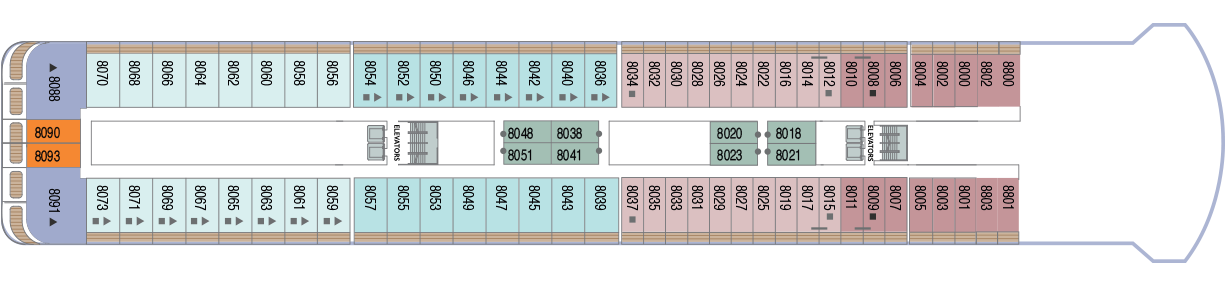
- Self Service Laundry
- Continent Suite (x2 Accessible Suites)
- Ocean Suite
- World Owner’s Suite
- Veranda Plus Staterooms
- Veranda Staterooms
- Oceanview Staterooms
- Interior Staterooms
- Veranda Plus Staterooms
- World Owner’s Suite
- Continent Suite
- Interior Staterooms
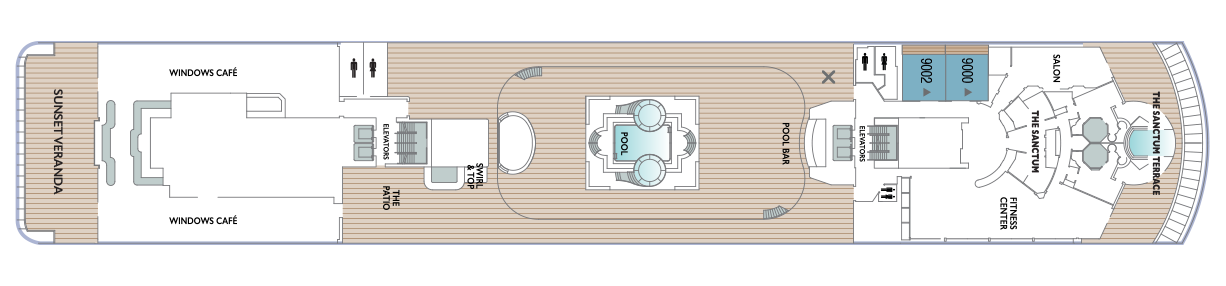
- The Sanctum Terrace
- The Sanctum
- Fitness Centre
- Salon
- Pool Bar
- Pool
- Swirl & Top
- The Patio
- Windows Café
- Sunset Veranda
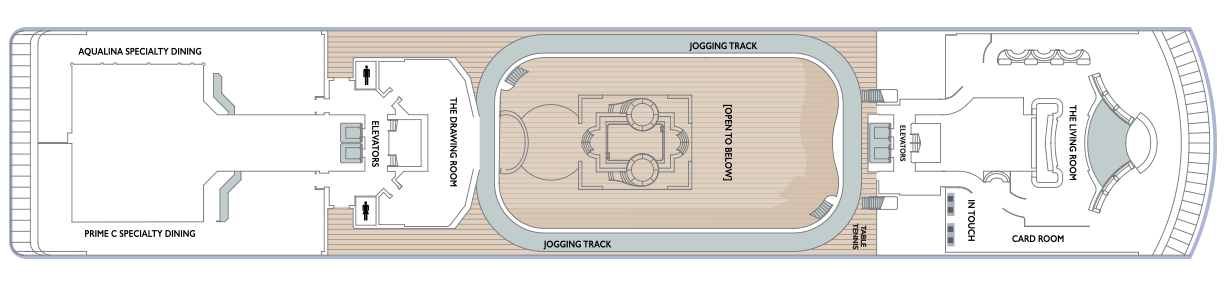
- The Living Room
- Card Room
- In Touch
- Table Tennis
- Jogging Track
- The Drawing Room
- Prime C Speciality Dining
- Aqualina Speciality Dining

- Sun Deck
- Shuffle Board
- Guest Relations
- Medical Facility
- Concierge
- Oceanview Staterooms (x2 Accessible Staterooms)
- Interior Staterooms (x3 Accessible Staterooms)
- Cabaret Lounge
- The Den
- Photo Shop
- The Pursuit Shop
- Indulgences
- Mosaic Café
- Discoveries Bar
- Discoveries Restaurant
- Veranda Plus Staterooms
- Veranda Staterooms
- World Owner’s Suite
- Continent Suite
- Ocean Suite
- Oceanview
- Interior Staterooms
- Self Service Laundry
- Continent Suite (x2 Accessible Suites)
- Ocean Suite
- World Owner’s Suite
- Veranda Plus Staterooms
- Veranda Staterooms
- Oceanview Staterooms
- Interior Staterooms
- Veranda Plus Staterooms
- World Owner’s Suite
- Continent Suite
- Interior Staterooms
- The Sanctum Terrace
- The Sanctum
- Fitness Centre
- Salon
- Pool Bar
- Pool
- Swirl & Top
- The Patio
- Windows Café
- Sunset Veranda
- The Living Room
- Card Room
- In Touch
- Table Tennis
- Jogging Track
- The Drawing Room
- Prime C Speciality Dining
- Aqualina Speciality Dining
- Sun Deck
- Shuffle Board