Itinerary
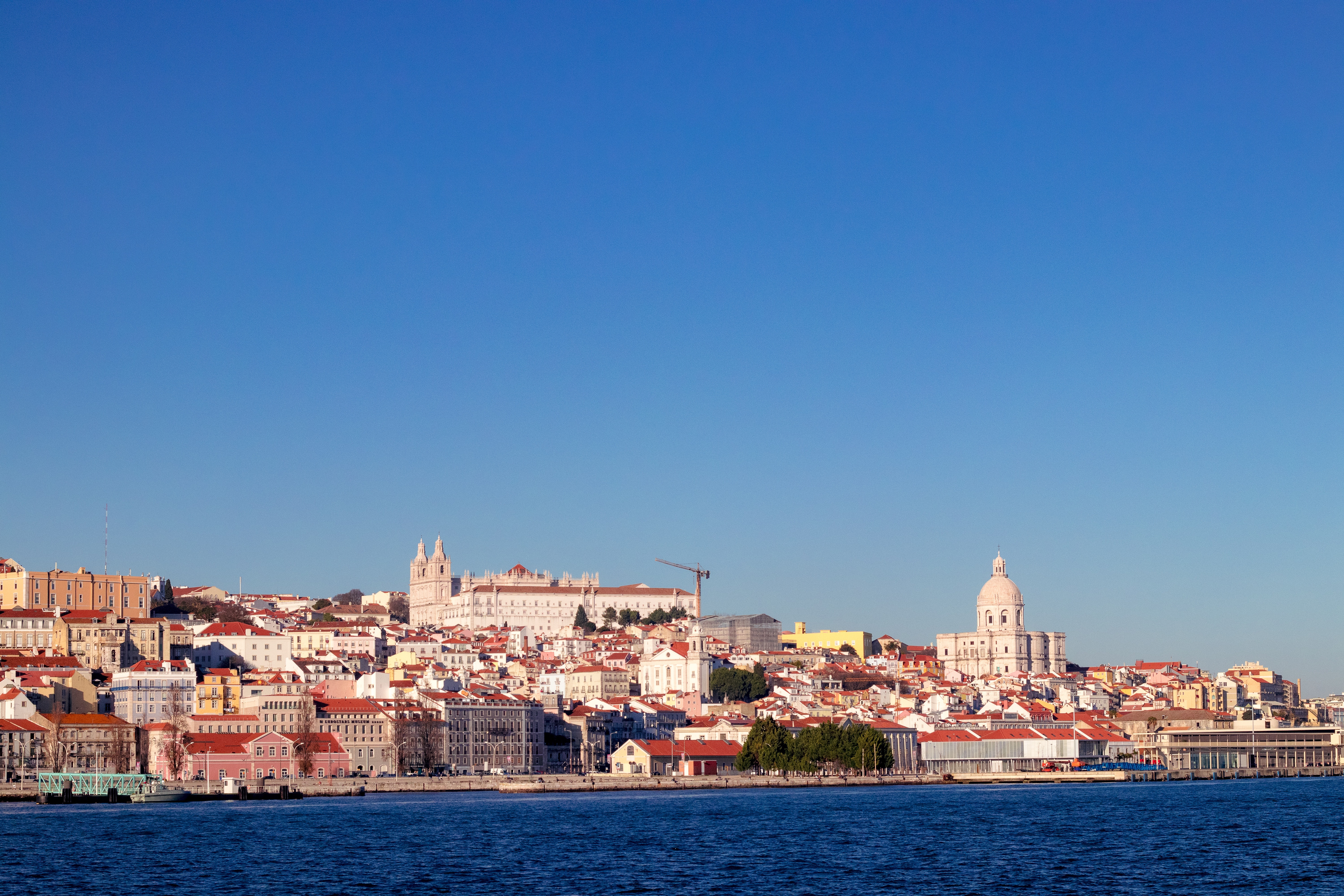
Lisbon, Portugal
Set on seven hills on the banks of the River Tagus, Lisbon has been the capital of Portugal since the 13th century. It is a city famous for its majestic architecture, old wooden trams, Moorish features and more than twenty centuries of history. Following disastrous earthquakes in the 18th century, Lisbon was rebuilt by the Marques de Pombal who created an elegant city with wide boulevards and a great riverfront and square, Praça do Comércio. Today there are distinct modern and ancient sections, combining great shopping with culture and sightseeing in the Old Town, built on the city’s terraced hillsides. The distance between the ship and your tour vehicle may vary. This distance is not included in the excursion grades.
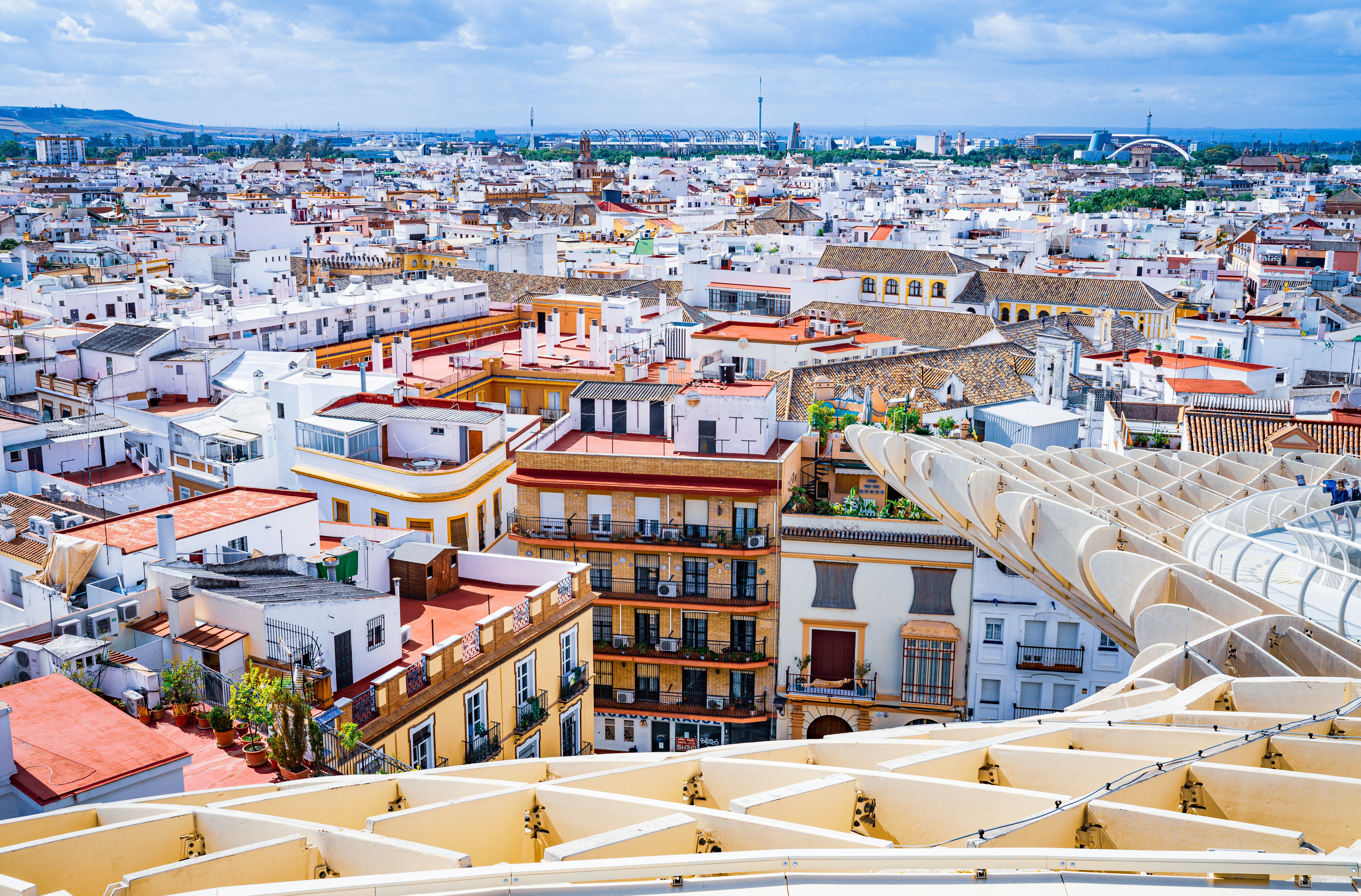
Seville, Spain
Whether you pronounce it Seville or Sevilla, this gorgeous Spanish town is most certainly the stuff of dreams. Over 2,200 years old, Seville has a mutli-layered personality; home to Flamenco, high temperatures and three UNESCO-World Heritage Sites, there is a noble ancestry to the southern Spanish town. Not forgetting that it is the birthplace of painter Diego Velazquez, the resting place of Christopher Columbus, the inspiration for Bizet’s Carmen and a location for Game of Thrones filming, Seville is truly more than just a sum of its parts. This city is a full on experience, a beguiling labyrinth of centuries old streets, tiny tapas restaurants serving possibly the best dishes you’ll taste south of Madrid and a paradise of Mudejar architecture and tranquil palm trees and fountain-filled gardens.
Seville, Spain
Whether you pronounce it Seville or Sevilla, this gorgeous Spanish town is most certainly the stuff of dreams. Over 2,200 years old, Seville has a mutli-layered personality; home to Flamenco, high temperatures and three UNESCO-World Heritage Sites, there is a noble ancestry to the southern Spanish town. Not forgetting that it is the birthplace of painter Diego Velazquez, the resting place of Christopher Columbus, the inspiration for Bizet’s Carmen and a location for Game of Thrones filming, Seville is truly more than just a sum of its parts. This city is a full on experience, a beguiling labyrinth of centuries old streets, tiny tapas restaurants serving possibly the best dishes you’ll taste south of Madrid and a paradise of Mudejar architecture and tranquil palm trees and fountain-filled gardens.
Seville, Spain
Whether you pronounce it Seville or Sevilla, this gorgeous Spanish town is most certainly the stuff of dreams. Over 2,200 years old, Seville has a mutli-layered personality; home to Flamenco, high temperatures and three UNESCO-World Heritage Sites, there is a noble ancestry to the southern Spanish town. Not forgetting that it is the birthplace of painter Diego Velazquez, the resting place of Christopher Columbus, the inspiration for Bizet’s Carmen and a location for Game of Thrones filming, Seville is truly more than just a sum of its parts. This city is a full on experience, a beguiling labyrinth of centuries old streets, tiny tapas restaurants serving possibly the best dishes you’ll taste south of Madrid and a paradise of Mudejar architecture and tranquil palm trees and fountain-filled gardens.
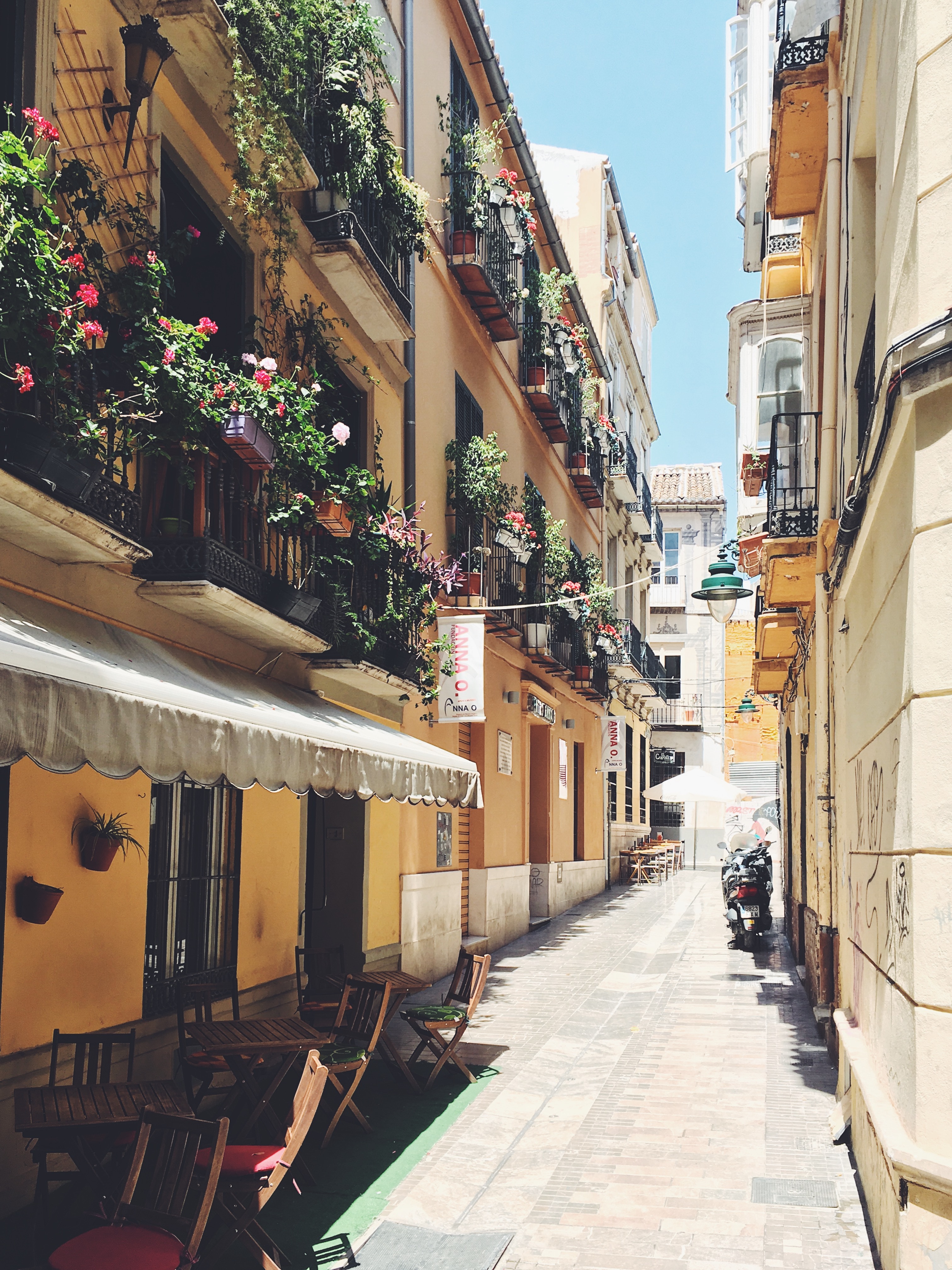
Málaga, Spain
As you sail into Malaga you will notice what an idyllic setting the city enjoys on the famous Costa del Sol. To the east of this provincial capital, the coast along the region of La Axarqua is scattered with villages, farmland and sleepy fishing hamlets – the epitome of traditional rural Spain. To the west stretches a continuous city where the razzmatazz and bustle creates a colourful contrast that is easily recognisable as the Costa del Sol. Surrounding the region, the Penibéetica Mountains provide an attractive backdrop overlooking the lower terraced slopes which yield olives and almonds. This spectacular mountain chain shelters the province from cold northerly winds, giving it a reputation as a therapeutic and exotic place in which to escape from cold northern climes. Malaga is also the gateway to many of Andalusia’s enchanting historic villages, towns and cities.
Málaga, Spain
As you sail into Malaga you will notice what an idyllic setting the city enjoys on the famous Costa del Sol. To the east of this provincial capital, the coast along the region of La Axarqua is scattered with villages, farmland and sleepy fishing hamlets – the epitome of traditional rural Spain. To the west stretches a continuous city where the razzmatazz and bustle creates a colourful contrast that is easily recognisable as the Costa del Sol. Surrounding the region, the Penibéetica Mountains provide an attractive backdrop overlooking the lower terraced slopes which yield olives and almonds. This spectacular mountain chain shelters the province from cold northerly winds, giving it a reputation as a therapeutic and exotic place in which to escape from cold northern climes. Malaga is also the gateway to many of Andalusia’s enchanting historic villages, towns and cities.
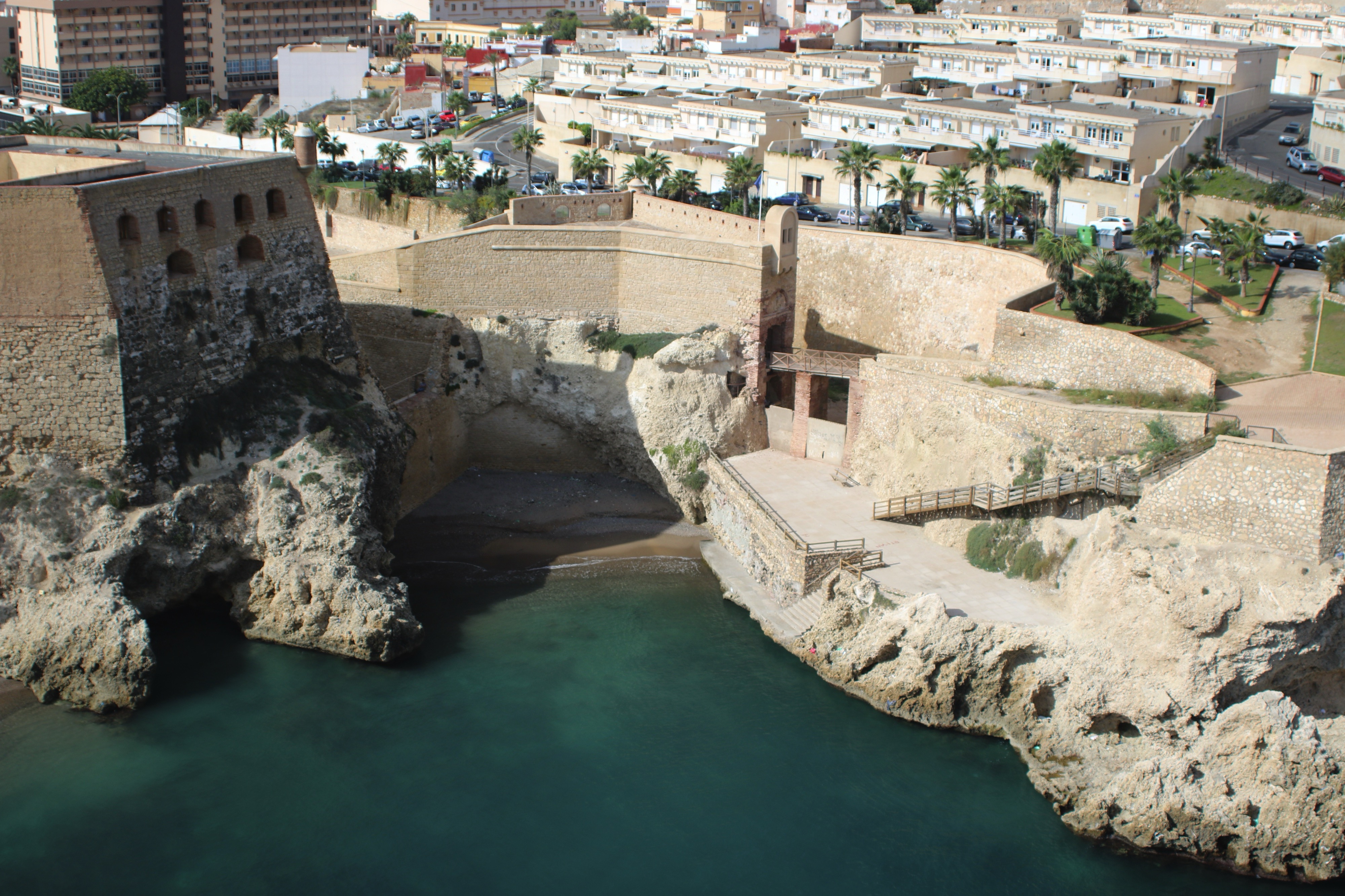
Melilla, Spain
The autonomous city of Melilla is a Spanish enclave located on the Mediterranean Rif coast of North Africa, bordering Morocco. Its chequered past embraced periods of Phoenician, Punic, Roman and Byzantine rule before it was conquered by Spain in 1497. The latter part of the 19th century and the first quarter of the 20th century saw hostilities between Rif berbers and the Spanish, with the latter finally reinstating their control in 1927. The city was used by General Franco as one of the staging points for the rebellion of 1936. As part of the Spanish protectorate, Melilla developed the architectural style of ‘Modernisme’, the Catalan version of Art Nouveau, and boasts the second most important concentration of Modernist works in Spain, after Barcelona.
Lisbon, Portugal
Set on seven hills on the banks of the River Tagus, Lisbon has been the capital of Portugal since the 13th century. It is a city famous for its majestic architecture, old wooden trams, Moorish features and more than twenty centuries of history. Following disastrous earthquakes in the 18th century, Lisbon was rebuilt by the Marques de Pombal who created an elegant city with wide boulevards and a great riverfront and square, Praça do Comércio. Today there are distinct modern and ancient sections, combining great shopping with culture and sightseeing in the Old Town, built on the city’s terraced hillsides. The distance between the ship and your tour vehicle may vary. This distance is not included in the excursion grades.
Seville, Spain
Whether you pronounce it Seville or Sevilla, this gorgeous Spanish town is most certainly the stuff of dreams. Over 2,200 years old, Seville has a mutli-layered personality; home to Flamenco, high temperatures and three UNESCO-World Heritage Sites, there is a noble ancestry to the southern Spanish town. Not forgetting that it is the birthplace of painter Diego Velazquez, the resting place of Christopher Columbus, the inspiration for Bizet’s Carmen and a location for Game of Thrones filming, Seville is truly more than just a sum of its parts. This city is a full on experience, a beguiling labyrinth of centuries old streets, tiny tapas restaurants serving possibly the best dishes you’ll taste south of Madrid and a paradise of Mudejar architecture and tranquil palm trees and fountain-filled gardens.
Seville, Spain
Whether you pronounce it Seville or Sevilla, this gorgeous Spanish town is most certainly the stuff of dreams. Over 2,200 years old, Seville has a mutli-layered personality; home to Flamenco, high temperatures and three UNESCO-World Heritage Sites, there is a noble ancestry to the southern Spanish town. Not forgetting that it is the birthplace of painter Diego Velazquez, the resting place of Christopher Columbus, the inspiration for Bizet’s Carmen and a location for Game of Thrones filming, Seville is truly more than just a sum of its parts. This city is a full on experience, a beguiling labyrinth of centuries old streets, tiny tapas restaurants serving possibly the best dishes you’ll taste south of Madrid and a paradise of Mudejar architecture and tranquil palm trees and fountain-filled gardens.
Seville, Spain
Whether you pronounce it Seville or Sevilla, this gorgeous Spanish town is most certainly the stuff of dreams. Over 2,200 years old, Seville has a mutli-layered personality; home to Flamenco, high temperatures and three UNESCO-World Heritage Sites, there is a noble ancestry to the southern Spanish town. Not forgetting that it is the birthplace of painter Diego Velazquez, the resting place of Christopher Columbus, the inspiration for Bizet’s Carmen and a location for Game of Thrones filming, Seville is truly more than just a sum of its parts. This city is a full on experience, a beguiling labyrinth of centuries old streets, tiny tapas restaurants serving possibly the best dishes you’ll taste south of Madrid and a paradise of Mudejar architecture and tranquil palm trees and fountain-filled gardens.
Málaga, Spain
As you sail into Malaga you will notice what an idyllic setting the city enjoys on the famous Costa del Sol. To the east of this provincial capital, the coast along the region of La Axarqua is scattered with villages, farmland and sleepy fishing hamlets – the epitome of traditional rural Spain. To the west stretches a continuous city where the razzmatazz and bustle creates a colourful contrast that is easily recognisable as the Costa del Sol. Surrounding the region, the Penibéetica Mountains provide an attractive backdrop overlooking the lower terraced slopes which yield olives and almonds. This spectacular mountain chain shelters the province from cold northerly winds, giving it a reputation as a therapeutic and exotic place in which to escape from cold northern climes. Malaga is also the gateway to many of Andalusia’s enchanting historic villages, towns and cities.
Málaga, Spain
As you sail into Malaga you will notice what an idyllic setting the city enjoys on the famous Costa del Sol. To the east of this provincial capital, the coast along the region of La Axarqua is scattered with villages, farmland and sleepy fishing hamlets – the epitome of traditional rural Spain. To the west stretches a continuous city where the razzmatazz and bustle creates a colourful contrast that is easily recognisable as the Costa del Sol. Surrounding the region, the Penibéetica Mountains provide an attractive backdrop overlooking the lower terraced slopes which yield olives and almonds. This spectacular mountain chain shelters the province from cold northerly winds, giving it a reputation as a therapeutic and exotic place in which to escape from cold northern climes. Malaga is also the gateway to many of Andalusia’s enchanting historic villages, towns and cities.
Melilla, Spain
The autonomous city of Melilla is a Spanish enclave located on the Mediterranean Rif coast of North Africa, bordering Morocco. Its chequered past embraced periods of Phoenician, Punic, Roman and Byzantine rule before it was conquered by Spain in 1497. The latter part of the 19th century and the first quarter of the 20th century saw hostilities between Rif berbers and the Spanish, with the latter finally reinstating their control in 1927. The city was used by General Franco as one of the staging points for the rebellion of 1936. As part of the Spanish protectorate, Melilla developed the architectural style of ‘Modernisme’, the Catalan version of Art Nouveau, and boasts the second most important concentration of Modernist works in Spain, after Barcelona.
Cartagena, Spain
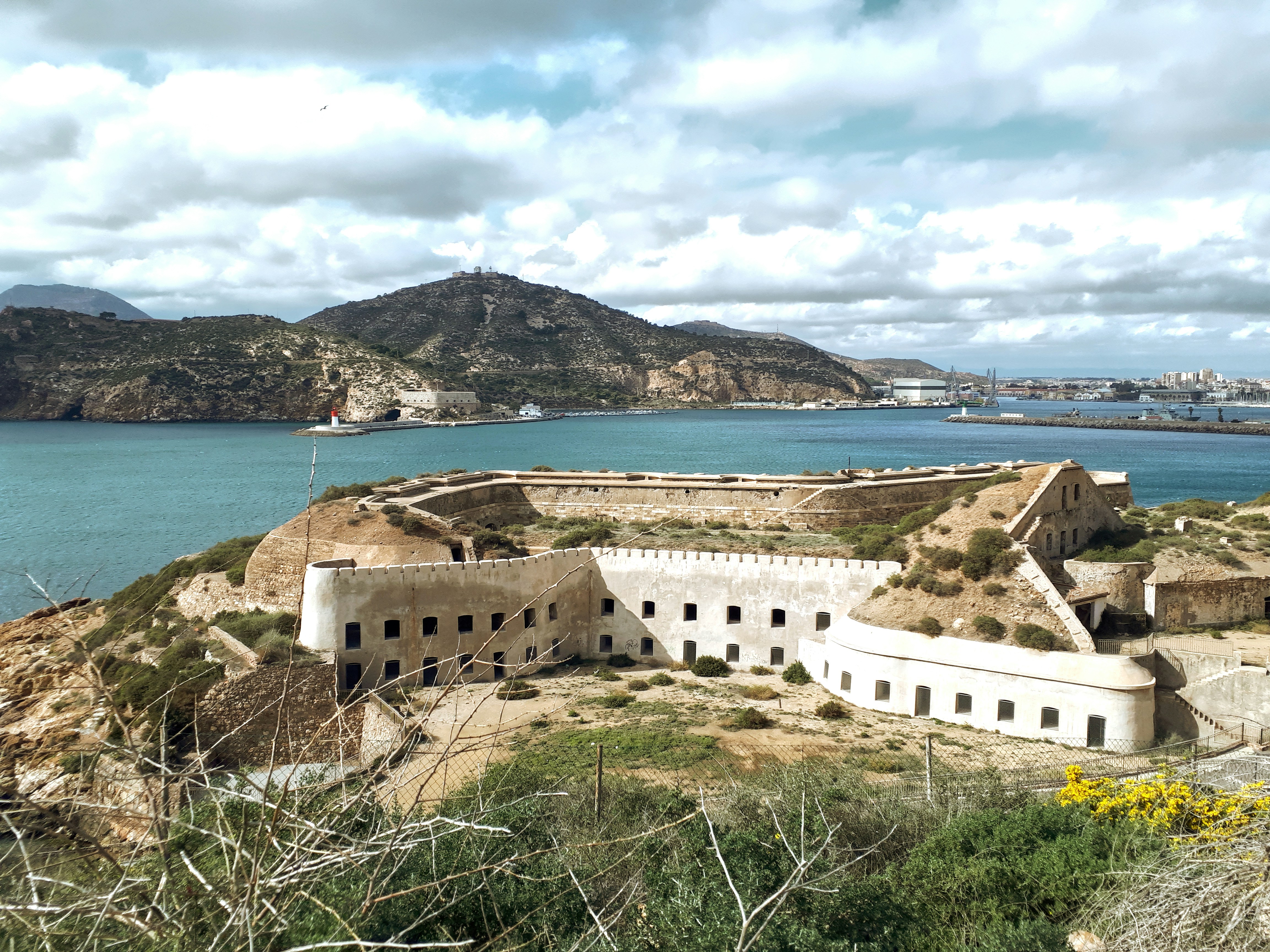
A Mediterranean city and naval station located in the Region of Murcia, southeastern Spain, Cartagena’s sheltered bay has attracted sailors for centuries. The Carthaginians founded the city in 223BC and named it Cartago Nova; it later became a prosperous Roman colony, and a Byzantine trading centre. The city has been the main Spanish Mediterranean naval base since the reign of King Philip II, and is still surrounded by walls built during this period. Cartagena’s importance grew with the arrival of the Spanish Bourbons in the 18th century, when the Navidad Fortress was constructed to protect the harbour. In recent years, traces of the city’s fascinating past have been brought to light: a well-preserved Roman Theatre was discovered in 1988, and this has now been restored and opened to the public. During your free time, you may like to take a mini-cruise around Cartagena’s historic harbour: these operate several times a day, take approximately 40 minutes and do not need to be booked in advance. Full details will be available at the port.
Valencia, Spain
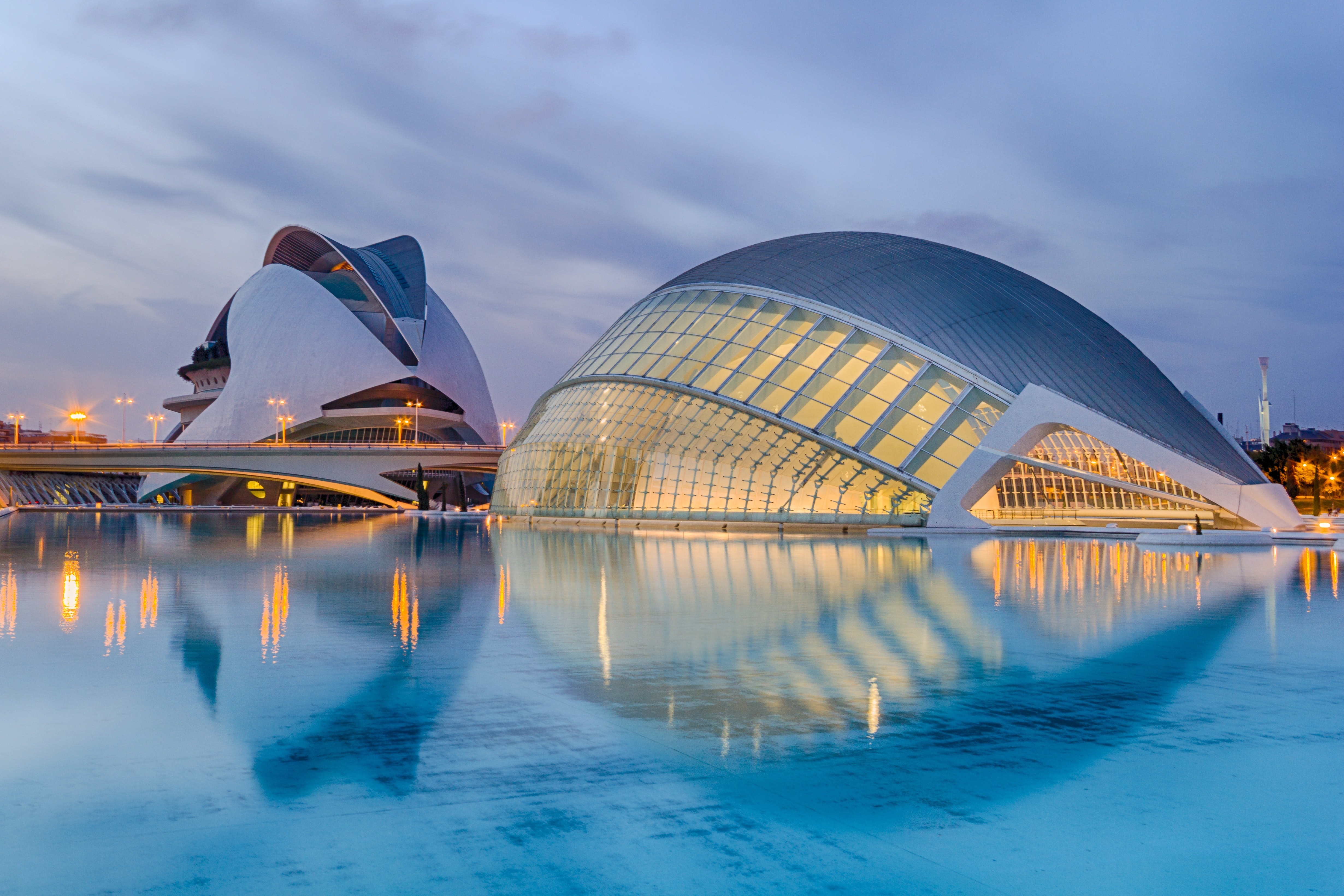
Valencia, Spain’s third-largest municipality, is a proud city with a thriving nightlife and restaurant scene, quality museums, and spectacular contemporary architecture, juxtaposed with a thoroughly charming historic quarter, making it a popular destination year in year out. During the Civil War, it was the last seat of the Republican Loyalist government (1935–36), holding out against Franco’s National forces until the country fell to 40 years of dictatorship. Today it represents the essence of contemporary Spain—daring design and architecture along with experimental cuisine—but remains deeply conservative and proud of its traditions. Though it faces the Mediterranean, Valencia’s history and geography have been defined most significantly by the River Turia and the fertile huerta that surrounds it.The city has been fiercely contested ever since it was founded by the Greeks. El Cid captured Valencia from the Moors in 1094 and won his strangest victory here in 1099: he died in the battle, but his corpse was strapped into his saddle and so frightened the besieging Moors that it caused their complete defeat. In 1102 his widow, Jimena, was forced to return the city to Moorish rule; Jaume I finally drove them out in 1238. Modern Valencia was best known for its frequent disastrous floods until the River Turia was diverted to the south in the late 1950s. Since then the city has been on a steady course of urban beautification. The lovely bridges that once spanned the Turia look equally graceful spanning a wandering municipal park, and the spectacularly futuristic Ciutat de les Arts i les Ciències (City of Arts and Sciences), most of it designed by Valencia-born architect Santiago Calatrava, has at last created an exciting architectural link between this river town and the Mediterranean. If you’re in Valencia, an excursion to Albufera Nature Park is a worthwhile day trip.
Barcelona, Spain
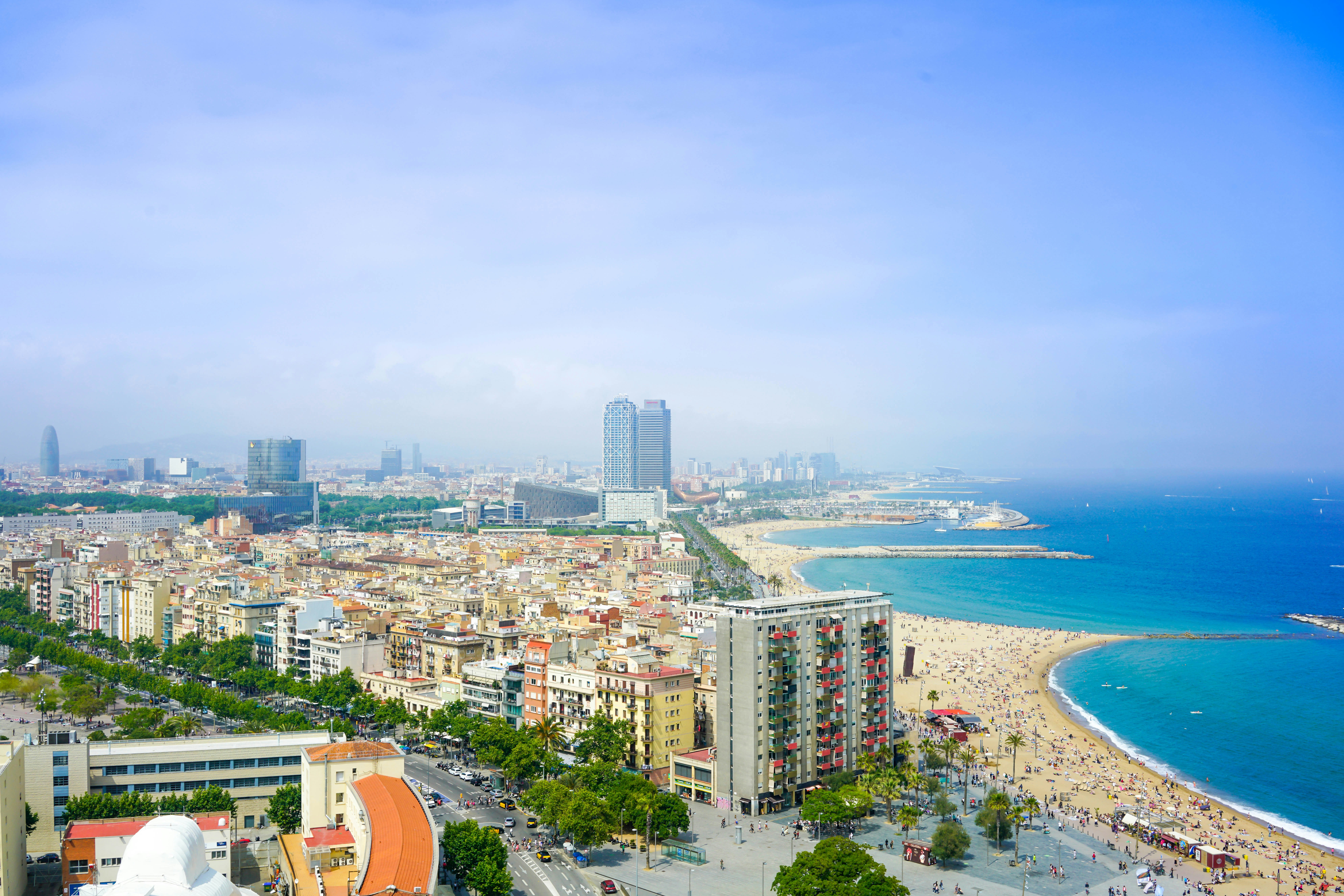
The infinite variety of street life, the nooks and crannies of the medieval Barri Gòtic, the ceramic tile and stained glass of Art Nouveau facades, the art and music, the throb of street life, the food (ah, the food!)—one way or another, Barcelona will find a way to get your full attention. The capital of Catalonia is a banquet for the senses, with its beguiling mix of ancient and modern architecture, tempting cafés and markets, and sun-drenched Mediterranean beaches. A stroll along La Rambla and through waterfront Barceloneta, as well as a tour of Gaudí’s majestic Sagrada Famíliaand his other unique creations, are part of a visit to Spain’s second-largest city. Modern art museums and chic shops call for attention, too. Barcelona’s vibe stays lively well into the night, when you can linger over regional wine and cuisine at buzzing tapas bars.
Port-Vendres, France
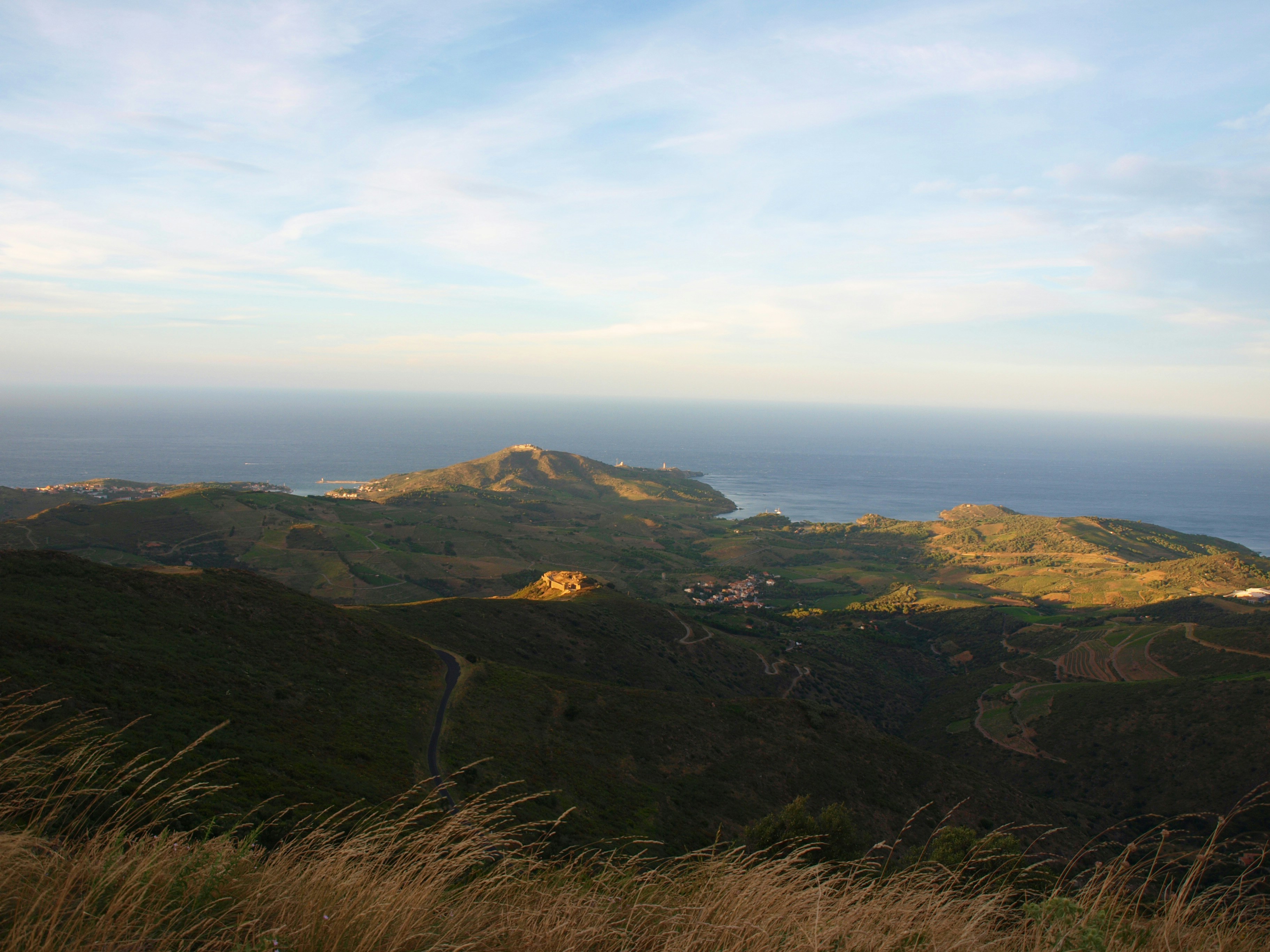
Located close to the Spanish border, Port-Vendres dates back to 6th century BC, and has been an important port ever since, and now offers popular day excursions to such major nearby sites as Carcassonne.
Sète, France
The fishing village of Sète serves as gateway to Montpellier, in the North. Other noteworthy destinations in this area include Carcassone, Aigues Mortes, the Abbaye de Fontfroide, and Pezenas. For a look at the real fisherman’s life, however, stay right where you are. Sète is the Mediterranean’s biggest fishing port. Canals winding through town make it fun to stroll around, and there are a number of good walking paths leading to the beach (about 30 minutes to the west). Although it’s small and unspectacular, Plage de la Corniche has calm, pristine waters that are perfect for swimming. For a panoramic view of the area, climb Mont St-Clair or Les Pierres Blanches and pick a beach to settle down on.

Marseille, France
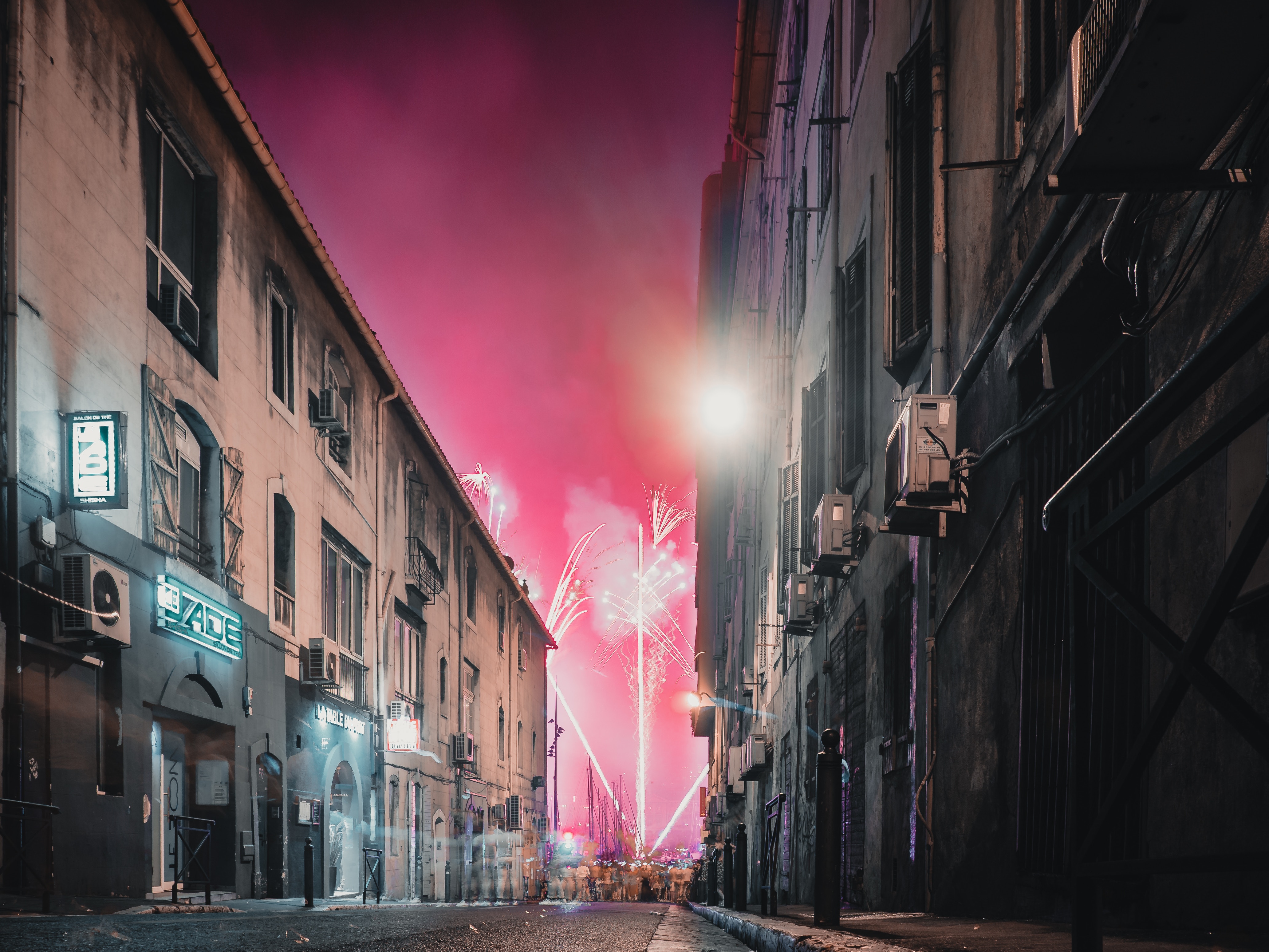
Since being designated a European Capital of Culture for 2013, with an estimated €660 million of funding in the bargain, Marseille has been in the throes of an extraordinary transformation, with no fewer than five major new arts centers, a beautifully refurbished port, revitalized neighborhoods, and a slew of new shops and restaurants. Once the underdog, this time-burnished city is now welcoming an influx of weekend tourists who have colonized entire neighborhoods and transformed them into elegant pieds-à-terre (or should we say, mer). The second-largest city in France, Marseille is one of Europe’s most vibrant destinations. Feisty and fond of broad gestures, it is also as complicated and as cosmopolitan now as it was when a band of Phoenician Greeks first sailed into the harbor that is today’s Vieux Port in 600 BC. Legend has it that on that same day a local chieftain’s daughter, Gyptis, needed to choose a husband, and her wandering eyes settled on the Greeks’ handsome commander Protis. Her dowry brought land near the mouth of the Rhône, where the Greeks founded Massalia, the most important Continental shipping port in antiquity. The port flourished for some 500 years as a typical Greek city, enjoying the full flush of classical culture, its gods, its democratic political system, its sports and theater, and its naval prowess. Caesar changed all that, besieging the city in 49 BC and seizing most of its colonies. In 1214 Marseille was seized again, this time by Charles d’Anjou, and was later annexed to France by Henri IV in 1481, but it was not until Louis XIV took the throne that the biggest transformations of the port began; he pulled down the city walls in 1666 and expanded the port to the Rive Neuve (New Riverbank). The city was devastated by plague in 1720, losing more than half its population. By the time of the Revolution, Marseille was on the rebound once again, with industries of soap manufacturing and oil processing flourishing, encouraging a wave of immigration from Provence and Italy. With the opening of the Suez Canal in 1869, Marseille became the greatest boomtown in 19th-century Europe. With a large influx of immigrants from areas as exotic as Tangiers, the city quickly acquired the multicultural population it maintains to this day.
Saint-Tropez, France
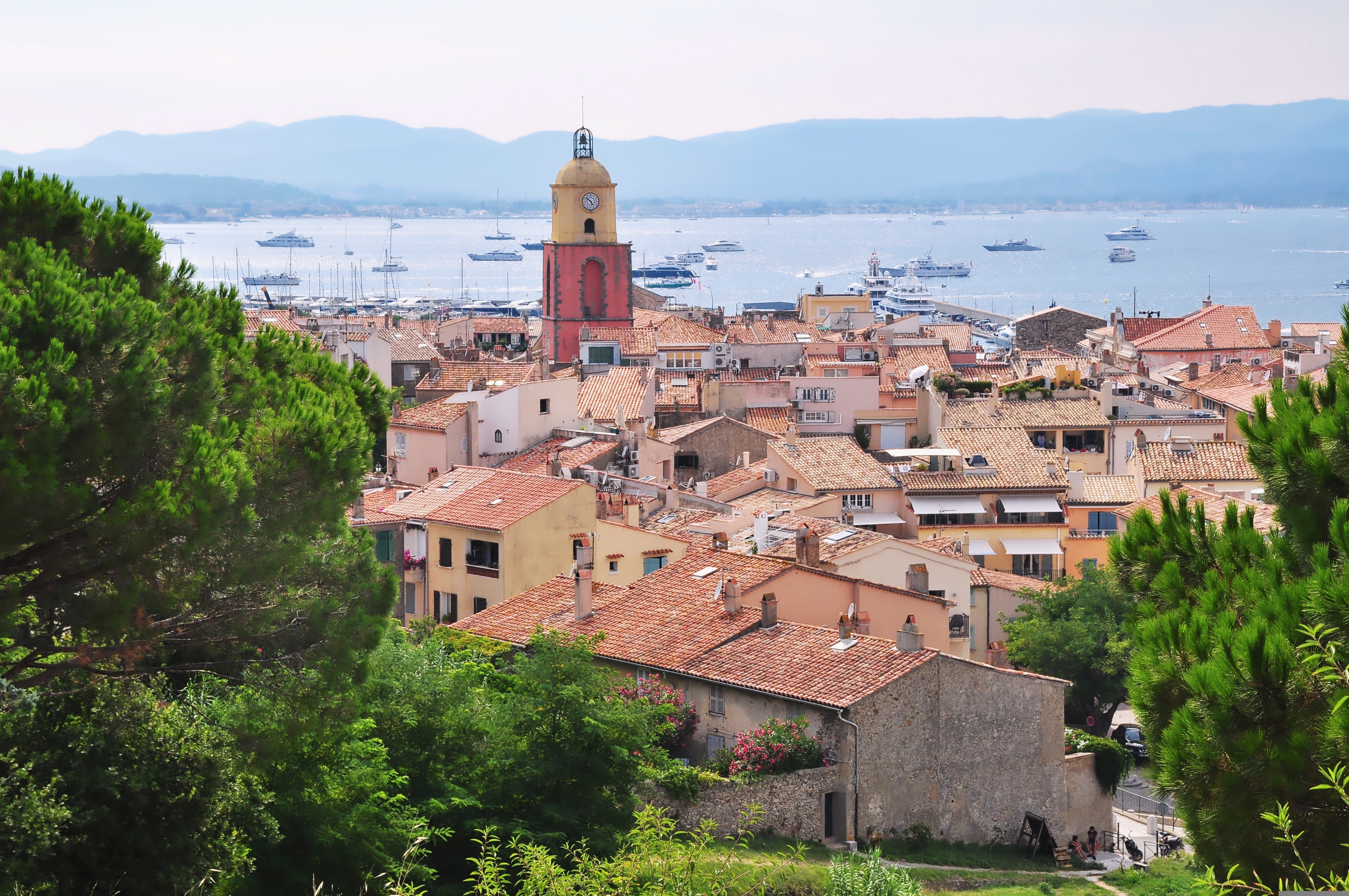
At first glance, it really doesn’t look all that impressive. There’s a pretty port with cafés charging €5 for a coffee and a picturesque old town in sugared-almond hues, but there are many prettier in the hills nearby. There are sandy beaches, rare enough on the Riviera, and old-fashioned squares with plane trees and pétanque players, but these are a dime a dozen throughout Provence. So what made St-Tropez an internationally known locale? Two words: Brigitte Bardot. When this pulpeuse (voluptuous) teenager showed up in St-Tropez on the arm of Roger Vadim in 1956 to film And God Created Woman, the heads of the world snapped around. Neither the gentle descriptions of writer Guy de Maupassant (1850–93), nor the watercolor tones of Impressionist Paul Signac (1863–1935), nor the stream of painters who followed (including Matisse and Bonnard) could focus the world’s attention on this seaside hamlet as did this one sensual woman in a scarf, Ray-Bans, and capris. Vanity Fair ran a big article, “Saint Tropez Babylon,” detailing the over-the-top petrodollar parties, megayachts, and Beyoncé–d paparazzi. But don’t be turned off: the next year, Stewart, Tabori & Chang released an elegant coffee-table book, Houses of St-Tropez, packed with photos of supremely tasteful and pretty residences, many occupied by fashion designers, artists, and writers. Once a hangout for Colette, Anaïs Nin, and Françoise Sagan, the town still earns its old moniker, the “Montparnasse of the Mediterranean.” Yet you might be surprised to find that this byword for billionaires is so small and insulated. The lack of train service, casinos, and chain hotels keeps it that way. Yet fame, in a sense, came too fast for St-Trop. Unlike the chic resorts farther east, it didn’t have the decades-old reputation of the sort that would attract visitors all year around. For a good reason: its location on the south side of the gulf puts it at the mercy of the terrible mistral winter winds. So, in summer the crowds descend and the prices rise into the stratosphere. In July and August, you must be carefree about the sordid matter of cash. After all, at the most Dionysian nightclub in town, a glass of tap water goes for $37 and when the mojo really gets going, billionaires think nothing of “champagne-spraying” the partying crowds—think World Series celebrations but with $1,000 bottles of Roederer Cristal instead of Gatorade. Complaining about summer crowds, overpricing, and lack of customer service has become a tourist sport and yet this is what makes St-Tropez—described by the French daily newspaper Le Figaro as the place you can see “the greatest number of faces per square meter”—as intriguing as it is seductive.
Cartagena, Spain
A Mediterranean city and naval station located in the Region of Murcia, southeastern Spain, Cartagena’s sheltered bay has attracted sailors for centuries. The Carthaginians founded the city in 223BC and named it Cartago Nova; it later became a prosperous Roman colony, and a Byzantine trading centre. The city has been the main Spanish Mediterranean naval base since the reign of King Philip II, and is still surrounded by walls built during this period. Cartagena’s importance grew with the arrival of the Spanish Bourbons in the 18th century, when the Navidad Fortress was constructed to protect the harbour. In recent years, traces of the city’s fascinating past have been brought to light: a well-preserved Roman Theatre was discovered in 1988, and this has now been restored and opened to the public. During your free time, you may like to take a mini-cruise around Cartagena’s historic harbour: these operate several times a day, take approximately 40 minutes and do not need to be booked in advance. Full details will be available at the port.
Valencia, Spain
Valencia, Spain’s third-largest municipality, is a proud city with a thriving nightlife and restaurant scene, quality museums, and spectacular contemporary architecture, juxtaposed with a thoroughly charming historic quarter, making it a popular destination year in year out. During the Civil War, it was the last seat of the Republican Loyalist government (1935–36), holding out against Franco’s National forces until the country fell to 40 years of dictatorship. Today it represents the essence of contemporary Spain—daring design and architecture along with experimental cuisine—but remains deeply conservative and proud of its traditions. Though it faces the Mediterranean, Valencia’s history and geography have been defined most significantly by the River Turia and the fertile huerta that surrounds it.The city has been fiercely contested ever since it was founded by the Greeks. El Cid captured Valencia from the Moors in 1094 and won his strangest victory here in 1099: he died in the battle, but his corpse was strapped into his saddle and so frightened the besieging Moors that it caused their complete defeat. In 1102 his widow, Jimena, was forced to return the city to Moorish rule; Jaume I finally drove them out in 1238. Modern Valencia was best known for its frequent disastrous floods until the River Turia was diverted to the south in the late 1950s. Since then the city has been on a steady course of urban beautification. The lovely bridges that once spanned the Turia look equally graceful spanning a wandering municipal park, and the spectacularly futuristic Ciutat de les Arts i les Ciències (City of Arts and Sciences), most of it designed by Valencia-born architect Santiago Calatrava, has at last created an exciting architectural link between this river town and the Mediterranean. If you’re in Valencia, an excursion to Albufera Nature Park is a worthwhile day trip.
Barcelona, Spain
The infinite variety of street life, the nooks and crannies of the medieval Barri Gòtic, the ceramic tile and stained glass of Art Nouveau facades, the art and music, the throb of street life, the food (ah, the food!)—one way or another, Barcelona will find a way to get your full attention. The capital of Catalonia is a banquet for the senses, with its beguiling mix of ancient and modern architecture, tempting cafés and markets, and sun-drenched Mediterranean beaches. A stroll along La Rambla and through waterfront Barceloneta, as well as a tour of Gaudí’s majestic Sagrada Famíliaand his other unique creations, are part of a visit to Spain’s second-largest city. Modern art museums and chic shops call for attention, too. Barcelona’s vibe stays lively well into the night, when you can linger over regional wine and cuisine at buzzing tapas bars.
Port-Vendres, France
Located close to the Spanish border, Port-Vendres dates back to 6th century BC, and has been an important port ever since, and now offers popular day excursions to such major nearby sites as Carcassonne.
Sète, France
The fishing village of Sète serves as gateway to Montpellier, in the North. Other noteworthy destinations in this area include Carcassone, Aigues Mortes, the Abbaye de Fontfroide, and Pezenas. For a look at the real fisherman’s life, however, stay right where you are. Sète is the Mediterranean’s biggest fishing port. Canals winding through town make it fun to stroll around, and there are a number of good walking paths leading to the beach (about 30 minutes to the west). Although it’s small and unspectacular, Plage de la Corniche has calm, pristine waters that are perfect for swimming. For a panoramic view of the area, climb Mont St-Clair or Les Pierres Blanches and pick a beach to settle down on.
Marseille, France
Since being designated a European Capital of Culture for 2013, with an estimated €660 million of funding in the bargain, Marseille has been in the throes of an extraordinary transformation, with no fewer than five major new arts centers, a beautifully refurbished port, revitalized neighborhoods, and a slew of new shops and restaurants. Once the underdog, this time-burnished city is now welcoming an influx of weekend tourists who have colonized entire neighborhoods and transformed them into elegant pieds-à-terre (or should we say, mer). The second-largest city in France, Marseille is one of Europe’s most vibrant destinations. Feisty and fond of broad gestures, it is also as complicated and as cosmopolitan now as it was when a band of Phoenician Greeks first sailed into the harbor that is today’s Vieux Port in 600 BC. Legend has it that on that same day a local chieftain’s daughter, Gyptis, needed to choose a husband, and her wandering eyes settled on the Greeks’ handsome commander Protis. Her dowry brought land near the mouth of the Rhône, where the Greeks founded Massalia, the most important Continental shipping port in antiquity. The port flourished for some 500 years as a typical Greek city, enjoying the full flush of classical culture, its gods, its democratic political system, its sports and theater, and its naval prowess. Caesar changed all that, besieging the city in 49 BC and seizing most of its colonies. In 1214 Marseille was seized again, this time by Charles d’Anjou, and was later annexed to France by Henri IV in 1481, but it was not until Louis XIV took the throne that the biggest transformations of the port began; he pulled down the city walls in 1666 and expanded the port to the Rive Neuve (New Riverbank). The city was devastated by plague in 1720, losing more than half its population. By the time of the Revolution, Marseille was on the rebound once again, with industries of soap manufacturing and oil processing flourishing, encouraging a wave of immigration from Provence and Italy. With the opening of the Suez Canal in 1869, Marseille became the greatest boomtown in 19th-century Europe. With a large influx of immigrants from areas as exotic as Tangiers, the city quickly acquired the multicultural population it maintains to this day.
Saint-Tropez, France
At first glance, it really doesn’t look all that impressive. There’s a pretty port with cafés charging €5 for a coffee and a picturesque old town in sugared-almond hues, but there are many prettier in the hills nearby. There are sandy beaches, rare enough on the Riviera, and old-fashioned squares with plane trees and pétanque players, but these are a dime a dozen throughout Provence. So what made St-Tropez an internationally known locale? Two words: Brigitte Bardot. When this pulpeuse (voluptuous) teenager showed up in St-Tropez on the arm of Roger Vadim in 1956 to film And God Created Woman, the heads of the world snapped around. Neither the gentle descriptions of writer Guy de Maupassant (1850–93), nor the watercolor tones of Impressionist Paul Signac (1863–1935), nor the stream of painters who followed (including Matisse and Bonnard) could focus the world’s attention on this seaside hamlet as did this one sensual woman in a scarf, Ray-Bans, and capris. Vanity Fair ran a big article, “Saint Tropez Babylon,” detailing the over-the-top petrodollar parties, megayachts, and Beyoncé–d paparazzi. But don’t be turned off: the next year, Stewart, Tabori & Chang released an elegant coffee-table book, Houses of St-Tropez, packed with photos of supremely tasteful and pretty residences, many occupied by fashion designers, artists, and writers. Once a hangout for Colette, Anaïs Nin, and Françoise Sagan, the town still earns its old moniker, the “Montparnasse of the Mediterranean.” Yet you might be surprised to find that this byword for billionaires is so small and insulated. The lack of train service, casinos, and chain hotels keeps it that way. Yet fame, in a sense, came too fast for St-Trop. Unlike the chic resorts farther east, it didn’t have the decades-old reputation of the sort that would attract visitors all year around. For a good reason: its location on the south side of the gulf puts it at the mercy of the terrible mistral winter winds. So, in summer the crowds descend and the prices rise into the stratosphere. In July and August, you must be carefree about the sordid matter of cash. After all, at the most Dionysian nightclub in town, a glass of tap water goes for $37 and when the mojo really gets going, billionaires think nothing of “champagne-spraying” the partying crowds—think World Series celebrations but with $1,000 bottles of Roederer Cristal instead of Gatorade. Complaining about summer crowds, overpricing, and lack of customer service has become a tourist sport and yet this is what makes St-Tropez—described by the French daily newspaper Le Figaro as the place you can see “the greatest number of faces per square meter”—as intriguing as it is seductive.
Ajaccio, Corsica, France
Considered Corsica’s primary commercial and cultural hub, the largest city and regional capital of Ajaccio is situated on the west coast of the island, approximately 644 km (400 miles) southeast of Marseille, France. Founded in 1492, vestiges of ancient Corsica in this ville impériale revolve around the city’s most famous son, Napoléon Bonaparte, whose family home—now the national museum Maison Bonaparte—pays tribute to the emperor’s historical influence.Remnants from what was originally a 12th-century Genoese colony are still visible around the Old Town near the imposing citadel and watchtower. Perfect for exploring, the luminous seaside city surrounded by snowcapped mountains and pretty beaches offers numerous sites, eateries, side streets, and a popular harbor, where sailboats and fishing vessels moor in the picturesque Tino Rossi port lined with well-established restaurants and cafés serving fresh local fare.
Nice, France
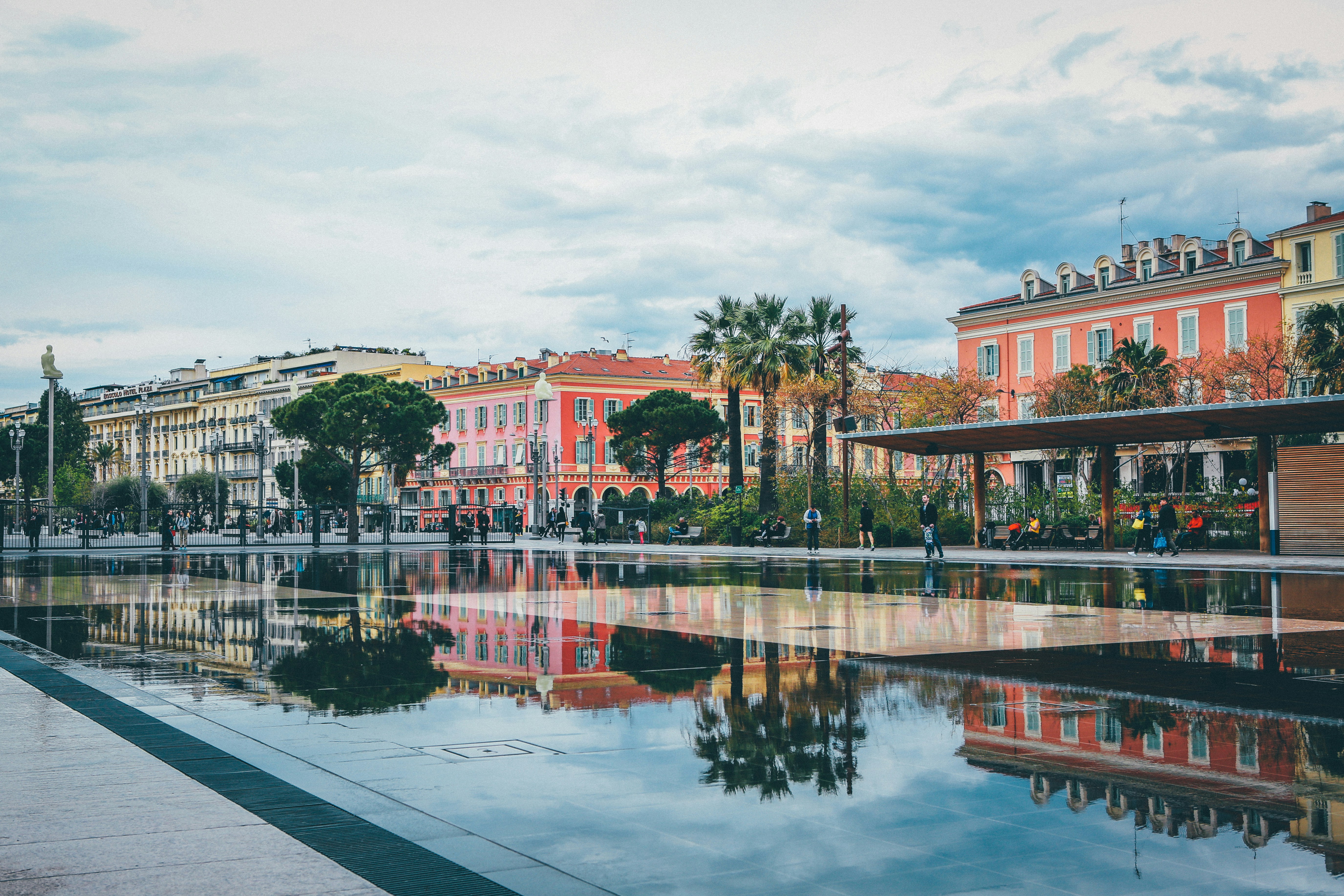
United with France only since 1860, Nice has its own history and atmosphere, which dates back 230,000 years. It was on Colline du Château (now château-less) and at the Plage des Ponchettes, in front of the Old Town, that the Greeks established a market-port in 350 BC and named it Nikaia, which would become Marseilles’ chief coastal rival. The Romans established themselves a little later on the hills of Cimiez (Cemenelum), already previously occupied by Ligurians and Celts, and quickly overshadowed the waterfront port. After falling to the Saracen invasions, Nice regained power as an independent state, becoming an important port in the early Middle Ages.So cocksure did it become that in 1388, Nice, along with the hill towns behind, effectively seceded from the county of Provence, under Louis d’Anjou, and allied itself with Savoie. Thus began its liaison with the House of Savoy, and through it with Piedmont and Sardinia, it was the Comté de Nice (Nice County). This relationship lasted some 500 years, tinting the culture, architecture, and dialect in rich Italian hues.By the 19th century Nice was flourishing commercially, locked in rivalry with the neighboring shipping port of Genoa. Another source of income: the dawning of tourism, as first the English, then the Russian nobility, discovered its extraordinary climate and superb waterfront position. A parade of fine stone mansions and hotels closed into a nearly solid wall of masonry, separated from the smooth-round rocks of the beach by what was originally named Camin deis Anglés (the English Way), which of course is now the famous Promenade des Anglais. This magnificent crescent, which is seeking UNESCO recognition, is one of the noblest in France. Many of Nice’s most delightful attractions—the Cours Saleya market, the Old Town streets, the Hotel Negresco, and the Palais Masséna—are on or close to this 10-km (6-mile) waterfront, making it the first stop for most visitors, while the redevelopment of Nice’s port, around the other side of the Colline du Château, makes it easier for amblers who want to take in the Genoese architecture or peruse the antiques at the Puces de Nice, now part of the Promenade des 100 Antiquaires, along Quai Papacino. Nice also has the distinction of the “Family Plus” label, with free strollers, play areas, and restaurants with child-friendly activities.
Nice, France
United with France only since 1860, Nice has its own history and atmosphere, which dates back 230,000 years. It was on Colline du Château (now château-less) and at the Plage des Ponchettes, in front of the Old Town, that the Greeks established a market-port in 350 BC and named it Nikaia, which would become Marseilles’ chief coastal rival. The Romans established themselves a little later on the hills of Cimiez (Cemenelum), already previously occupied by Ligurians and Celts, and quickly overshadowed the waterfront port. After falling to the Saracen invasions, Nice regained power as an independent state, becoming an important port in the early Middle Ages.So cocksure did it become that in 1388, Nice, along with the hill towns behind, effectively seceded from the county of Provence, under Louis d’Anjou, and allied itself with Savoie. Thus began its liaison with the House of Savoy, and through it with Piedmont and Sardinia, it was the Comté de Nice (Nice County). This relationship lasted some 500 years, tinting the culture, architecture, and dialect in rich Italian hues.By the 19th century Nice was flourishing commercially, locked in rivalry with the neighboring shipping port of Genoa. Another source of income: the dawning of tourism, as first the English, then the Russian nobility, discovered its extraordinary climate and superb waterfront position. A parade of fine stone mansions and hotels closed into a nearly solid wall of masonry, separated from the smooth-round rocks of the beach by what was originally named Camin deis Anglés (the English Way), which of course is now the famous Promenade des Anglais. This magnificent crescent, which is seeking UNESCO recognition, is one of the noblest in France. Many of Nice’s most delightful attractions—the Cours Saleya market, the Old Town streets, the Hotel Negresco, and the Palais Masséna—are on or close to this 10-km (6-mile) waterfront, making it the first stop for most visitors, while the redevelopment of Nice’s port, around the other side of the Colline du Château, makes it easier for amblers who want to take in the Genoese architecture or peruse the antiques at the Puces de Nice, now part of the Promenade des 100 Antiquaires, along Quai Papacino. Nice also has the distinction of the “Family Plus” label, with free strollers, play areas, and restaurants with child-friendly activities.
Ajaccio, Corsica, France
Considered Corsica’s primary commercial and cultural hub, the largest city and regional capital of Ajaccio is situated on the west coast of the island, approximately 644 km (400 miles) southeast of Marseille, France. Founded in 1492, vestiges of ancient Corsica in this ville impériale revolve around the city’s most famous son, Napoléon Bonaparte, whose family home—now the national museum Maison Bonaparte—pays tribute to the emperor’s historical influence.Remnants from what was originally a 12th-century Genoese colony are still visible around the Old Town near the imposing citadel and watchtower. Perfect for exploring, the luminous seaside city surrounded by snowcapped mountains and pretty beaches offers numerous sites, eateries, side streets, and a popular harbor, where sailboats and fishing vessels moor in the picturesque Tino Rossi port lined with well-established restaurants and cafés serving fresh local fare.
Nice, France
United with France only since 1860, Nice has its own history and atmosphere, which dates back 230,000 years. It was on Colline du Château (now château-less) and at the Plage des Ponchettes, in front of the Old Town, that the Greeks established a market-port in 350 BC and named it Nikaia, which would become Marseilles’ chief coastal rival. The Romans established themselves a little later on the hills of Cimiez (Cemenelum), already previously occupied by Ligurians and Celts, and quickly overshadowed the waterfront port. After falling to the Saracen invasions, Nice regained power as an independent state, becoming an important port in the early Middle Ages.So cocksure did it become that in 1388, Nice, along with the hill towns behind, effectively seceded from the county of Provence, under Louis d’Anjou, and allied itself with Savoie. Thus began its liaison with the House of Savoy, and through it with Piedmont and Sardinia, it was the Comté de Nice (Nice County). This relationship lasted some 500 years, tinting the culture, architecture, and dialect in rich Italian hues.By the 19th century Nice was flourishing commercially, locked in rivalry with the neighboring shipping port of Genoa. Another source of income: the dawning of tourism, as first the English, then the Russian nobility, discovered its extraordinary climate and superb waterfront position. A parade of fine stone mansions and hotels closed into a nearly solid wall of masonry, separated from the smooth-round rocks of the beach by what was originally named Camin deis Anglés (the English Way), which of course is now the famous Promenade des Anglais. This magnificent crescent, which is seeking UNESCO recognition, is one of the noblest in France. Many of Nice’s most delightful attractions—the Cours Saleya market, the Old Town streets, the Hotel Negresco, and the Palais Masséna—are on or close to this 10-km (6-mile) waterfront, making it the first stop for most visitors, while the redevelopment of Nice’s port, around the other side of the Colline du Château, makes it easier for amblers who want to take in the Genoese architecture or peruse the antiques at the Puces de Nice, now part of the Promenade des 100 Antiquaires, along Quai Papacino. Nice also has the distinction of the “Family Plus” label, with free strollers, play areas, and restaurants with child-friendly activities.
Nice, France
United with France only since 1860, Nice has its own history and atmosphere, which dates back 230,000 years. It was on Colline du Château (now château-less) and at the Plage des Ponchettes, in front of the Old Town, that the Greeks established a market-port in 350 BC and named it Nikaia, which would become Marseilles’ chief coastal rival. The Romans established themselves a little later on the hills of Cimiez (Cemenelum), already previously occupied by Ligurians and Celts, and quickly overshadowed the waterfront port. After falling to the Saracen invasions, Nice regained power as an independent state, becoming an important port in the early Middle Ages.So cocksure did it become that in 1388, Nice, along with the hill towns behind, effectively seceded from the county of Provence, under Louis d’Anjou, and allied itself with Savoie. Thus began its liaison with the House of Savoy, and through it with Piedmont and Sardinia, it was the Comté de Nice (Nice County). This relationship lasted some 500 years, tinting the culture, architecture, and dialect in rich Italian hues.By the 19th century Nice was flourishing commercially, locked in rivalry with the neighboring shipping port of Genoa. Another source of income: the dawning of tourism, as first the English, then the Russian nobility, discovered its extraordinary climate and superb waterfront position. A parade of fine stone mansions and hotels closed into a nearly solid wall of masonry, separated from the smooth-round rocks of the beach by what was originally named Camin deis Anglés (the English Way), which of course is now the famous Promenade des Anglais. This magnificent crescent, which is seeking UNESCO recognition, is one of the noblest in France. Many of Nice’s most delightful attractions—the Cours Saleya market, the Old Town streets, the Hotel Negresco, and the Palais Masséna—are on or close to this 10-km (6-mile) waterfront, making it the first stop for most visitors, while the redevelopment of Nice’s port, around the other side of the Colline du Château, makes it easier for amblers who want to take in the Genoese architecture or peruse the antiques at the Puces de Nice, now part of the Promenade des 100 Antiquaires, along Quai Papacino. Nice also has the distinction of the “Family Plus” label, with free strollers, play areas, and restaurants with child-friendly activities.
Cabin Options
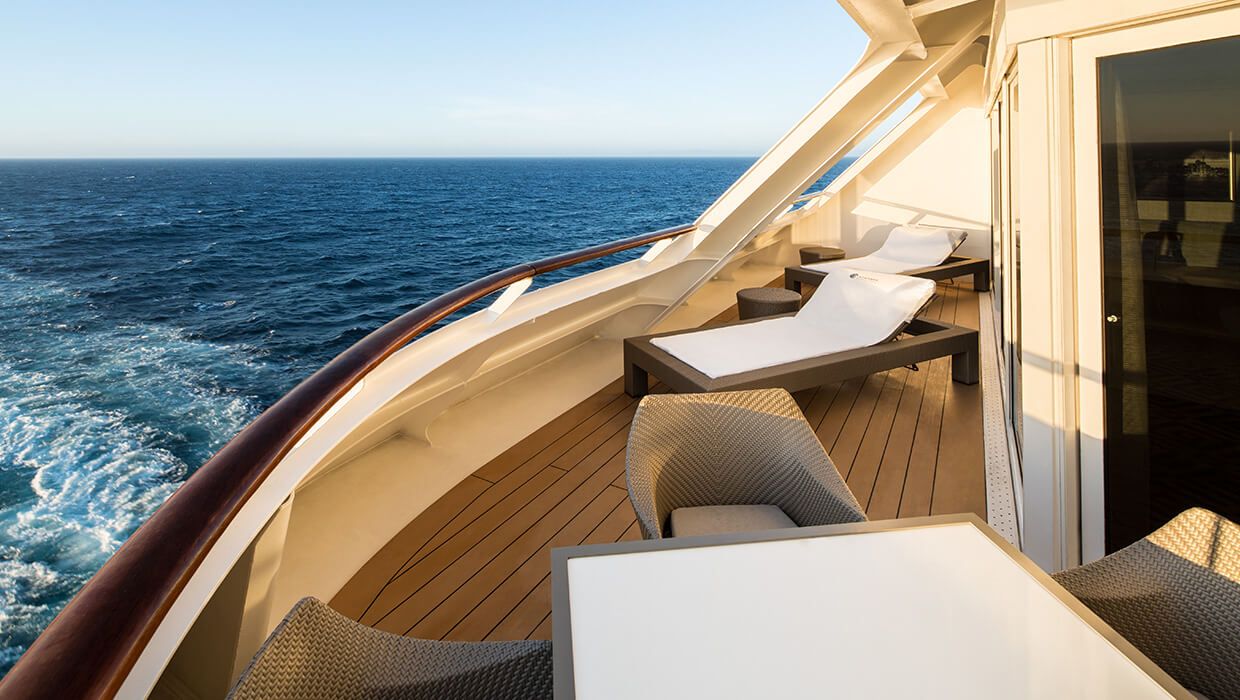
World Owner's Suite
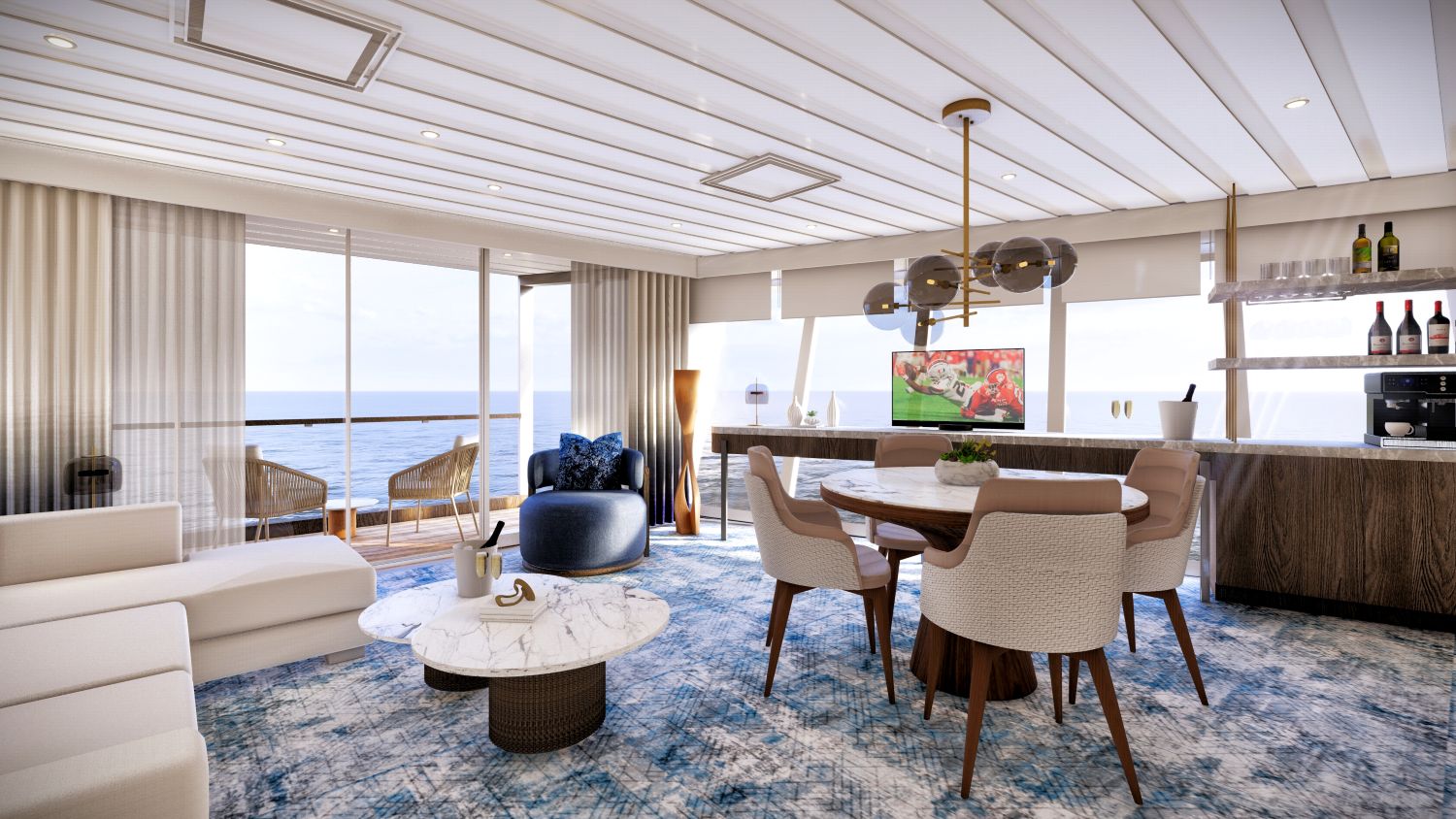
Panorama Suite
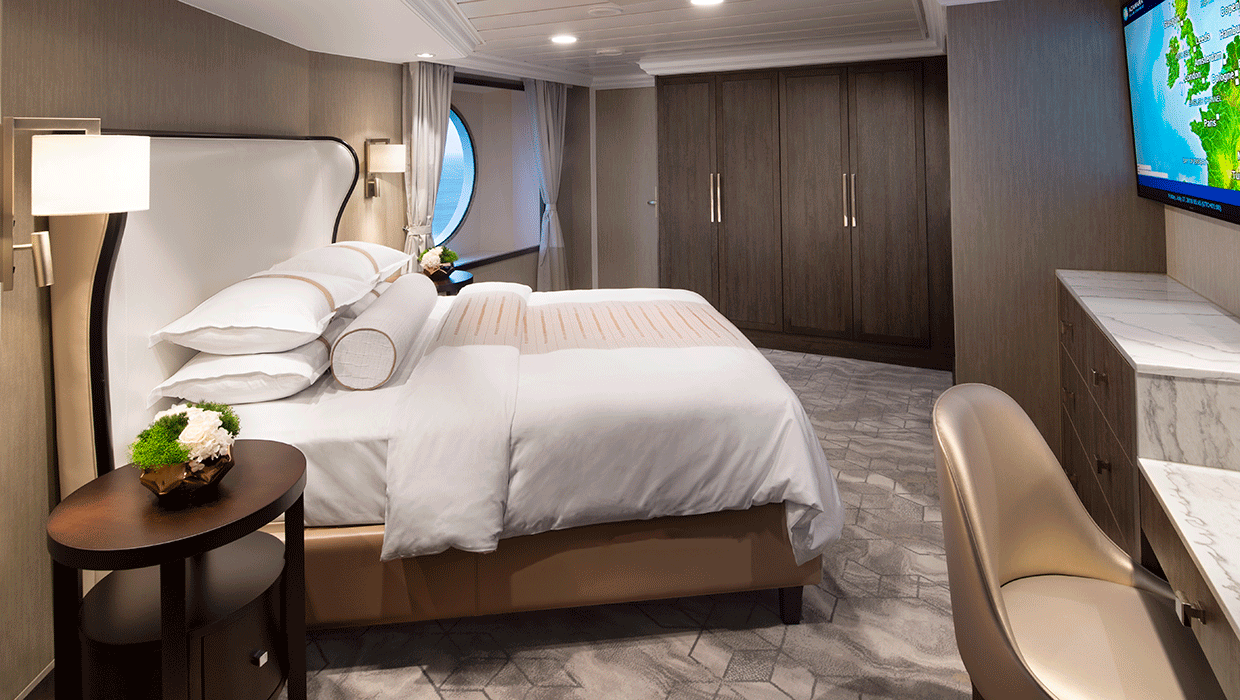
Ocean Suite
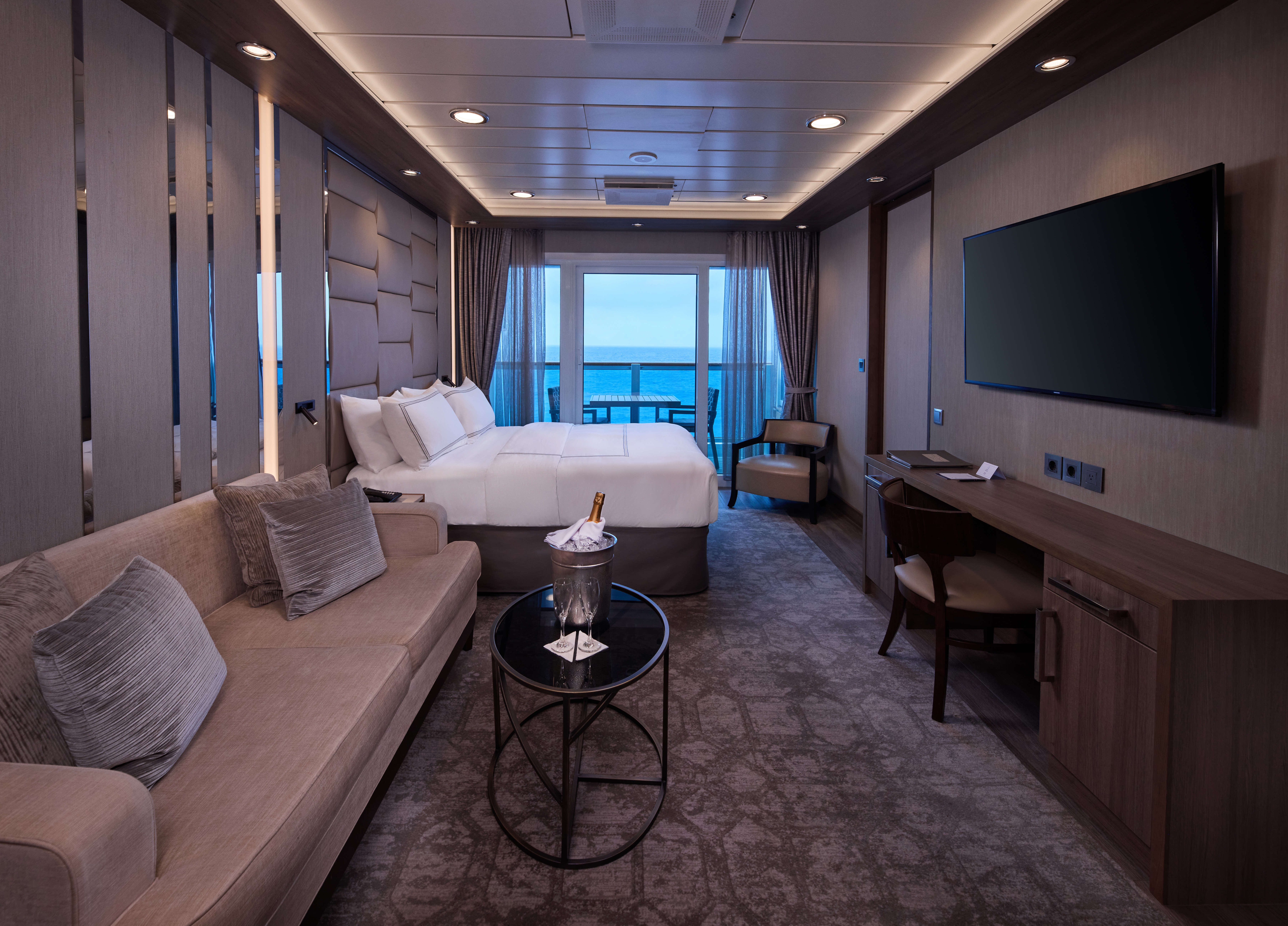
Spa Suite
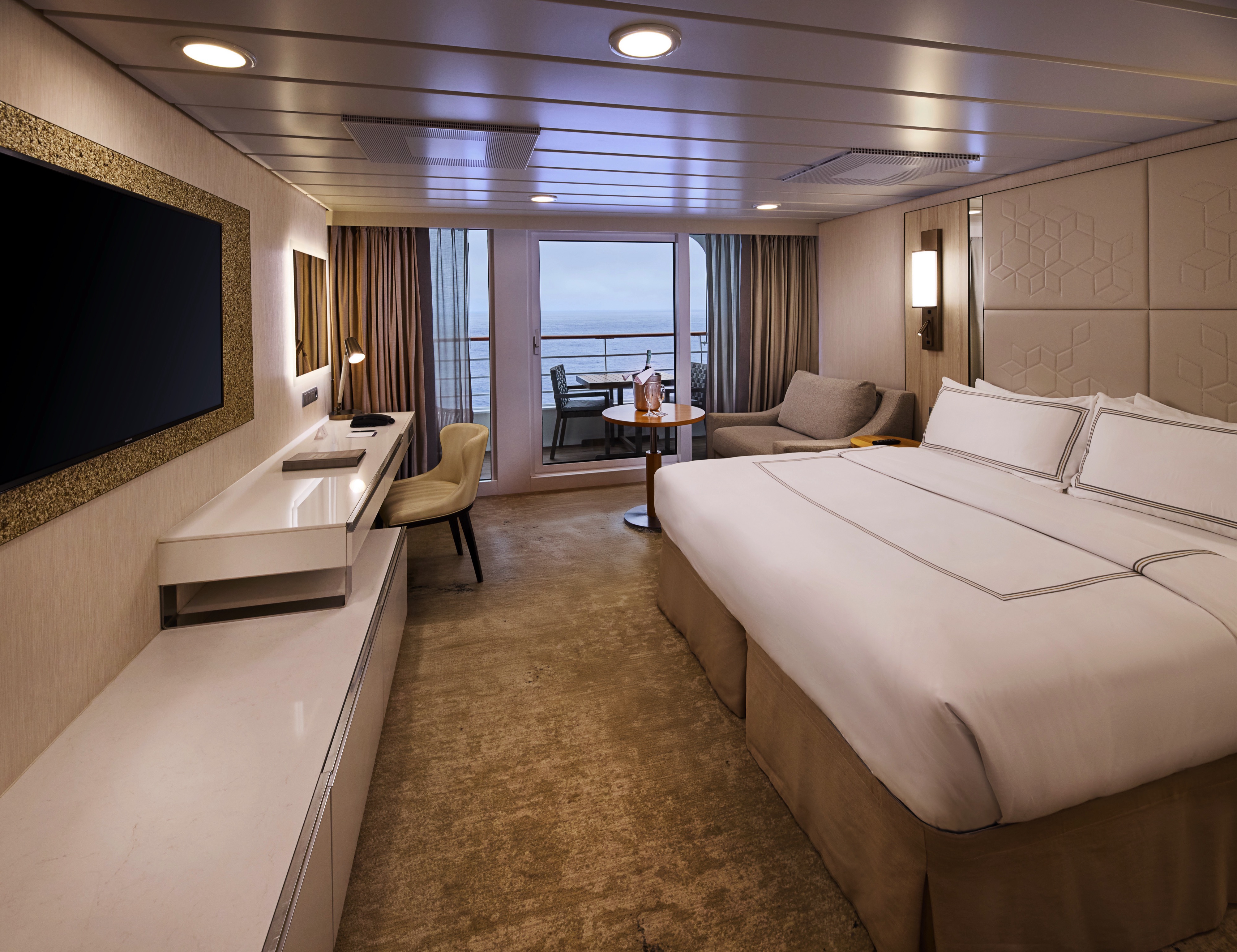
Continent Suite
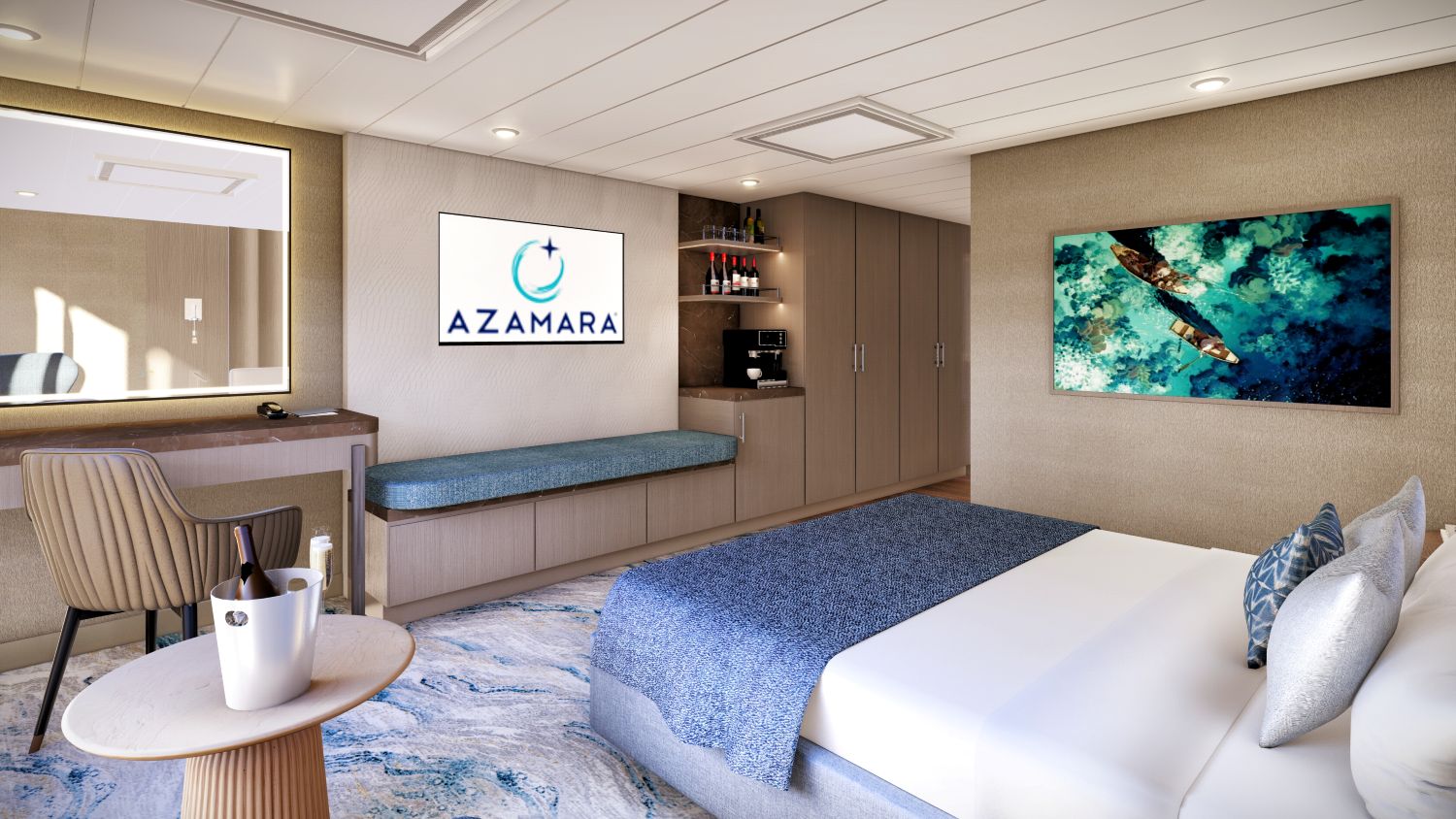
Grandview Suite
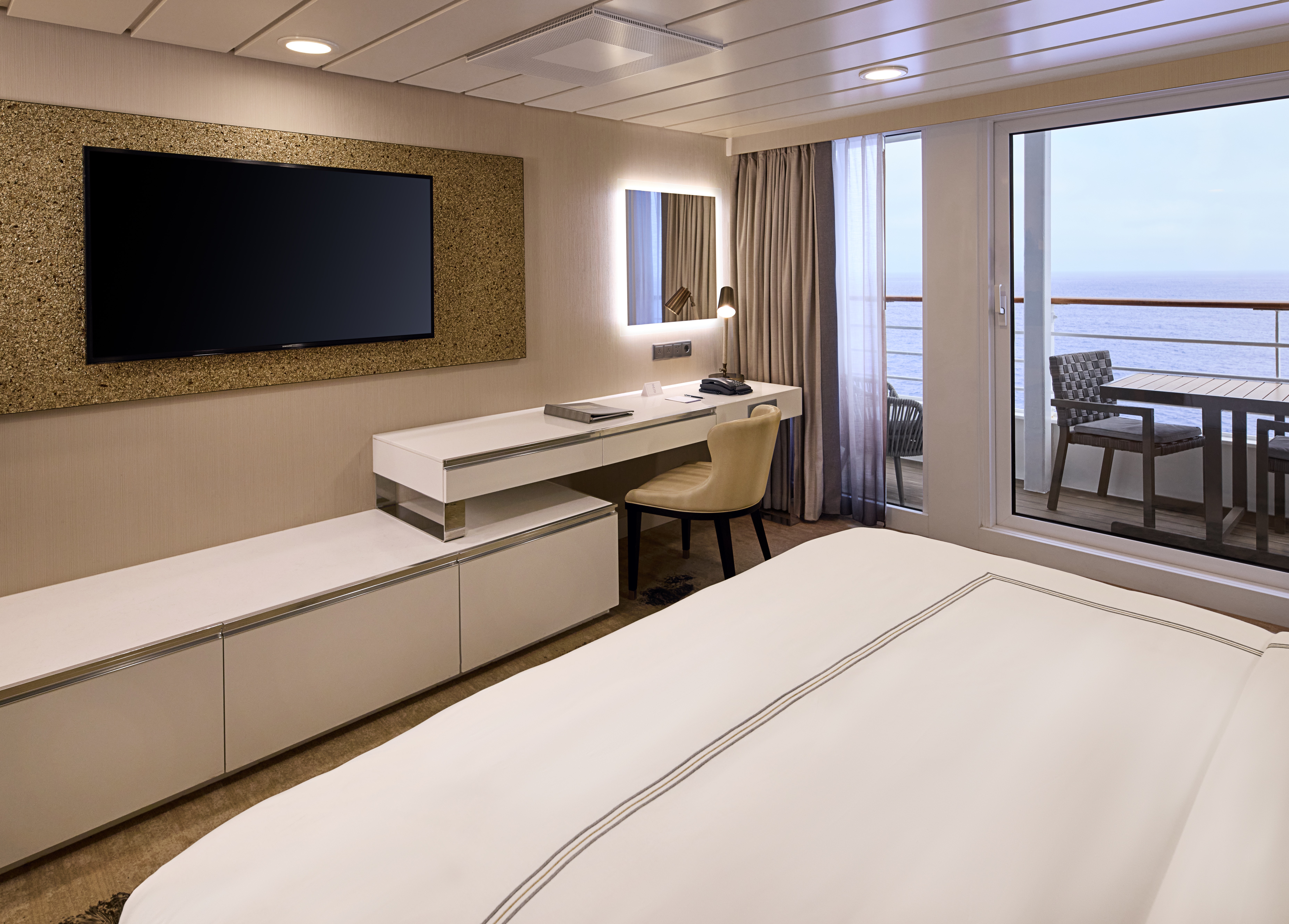
Suite Guarantee
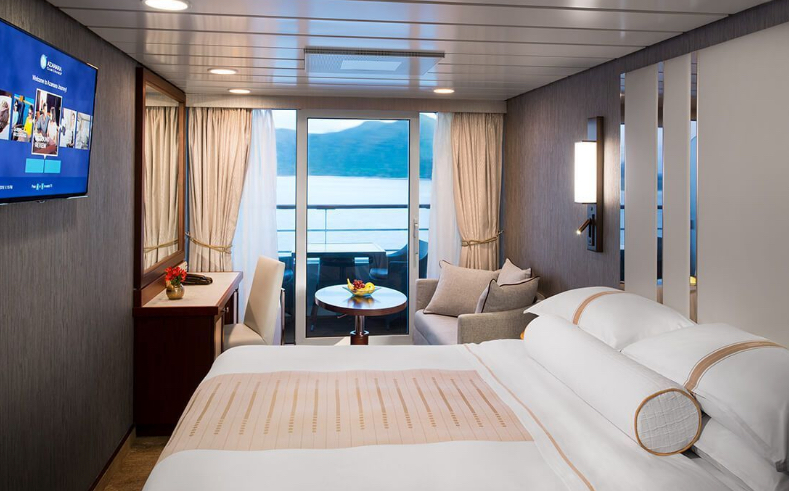
Veranda Plus
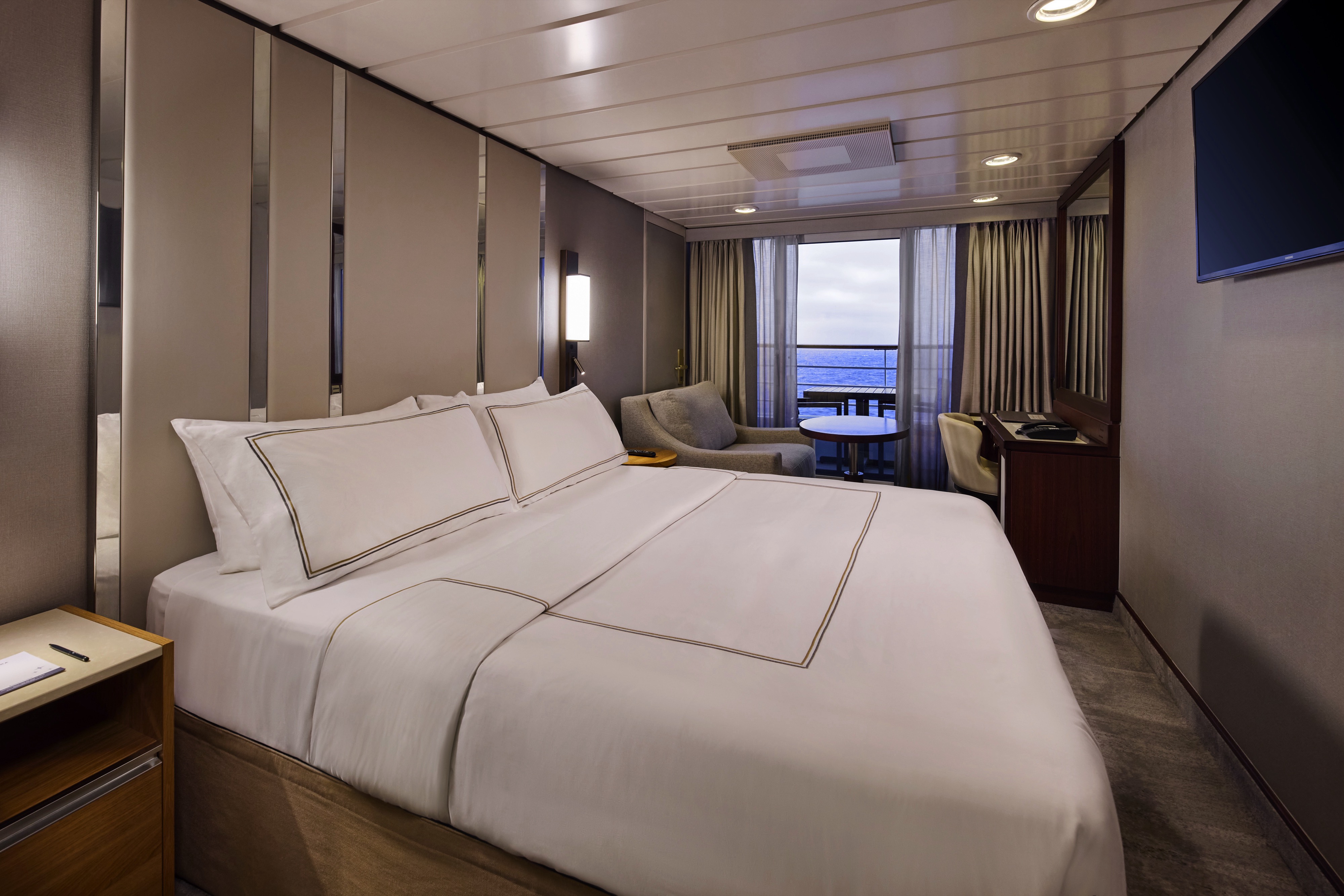
Veranda Guarantee
Veranda Plus Guarantee
Veranda
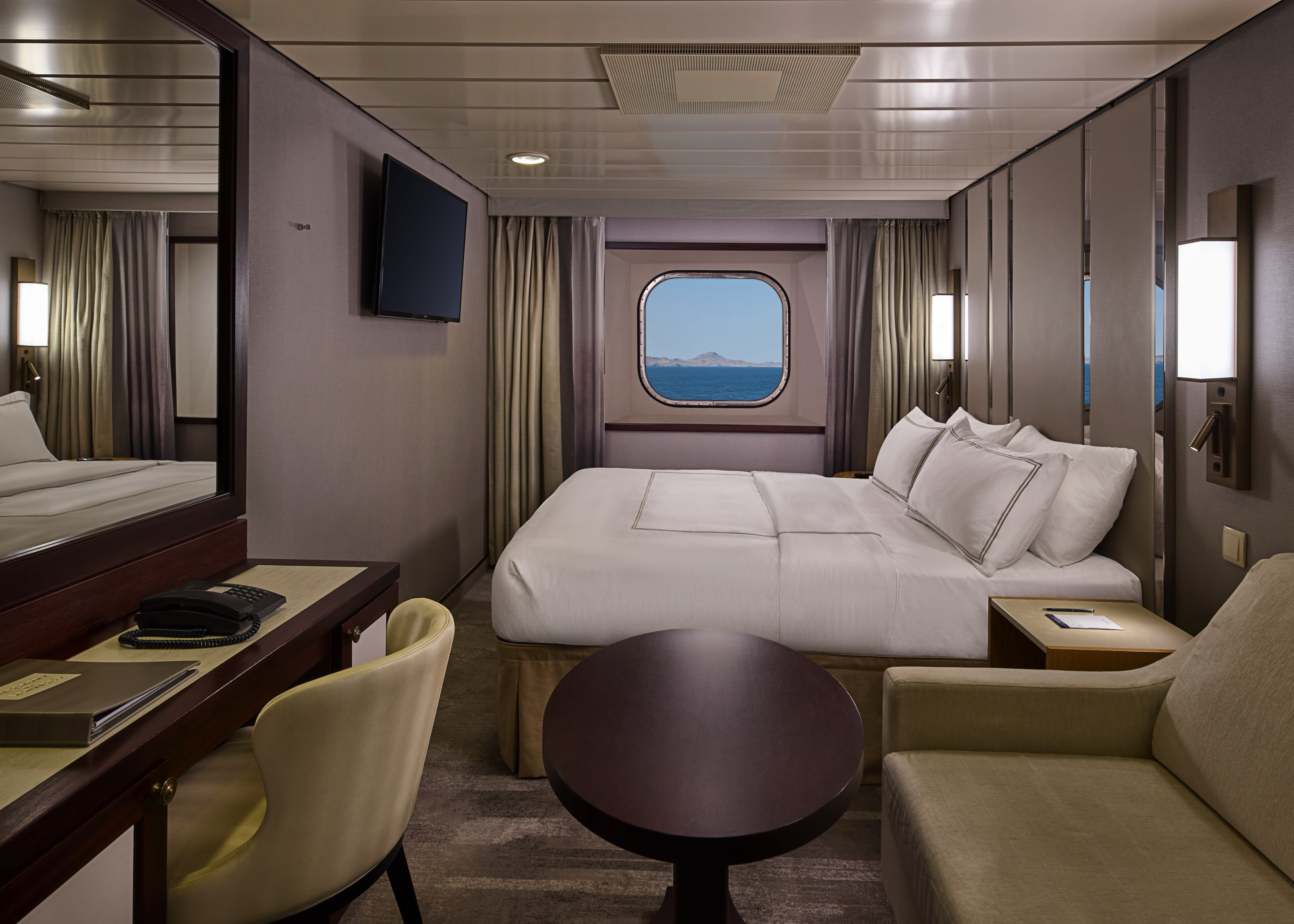
Oceanview
Oceanview Guarantee
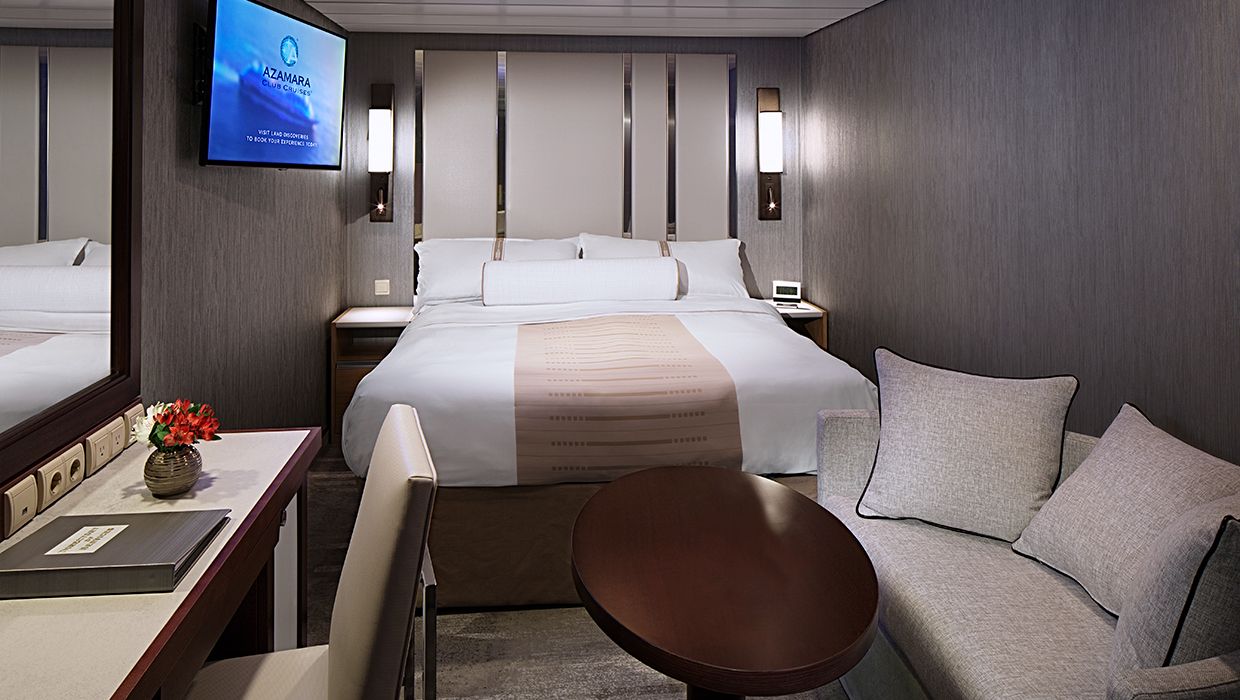
Interior
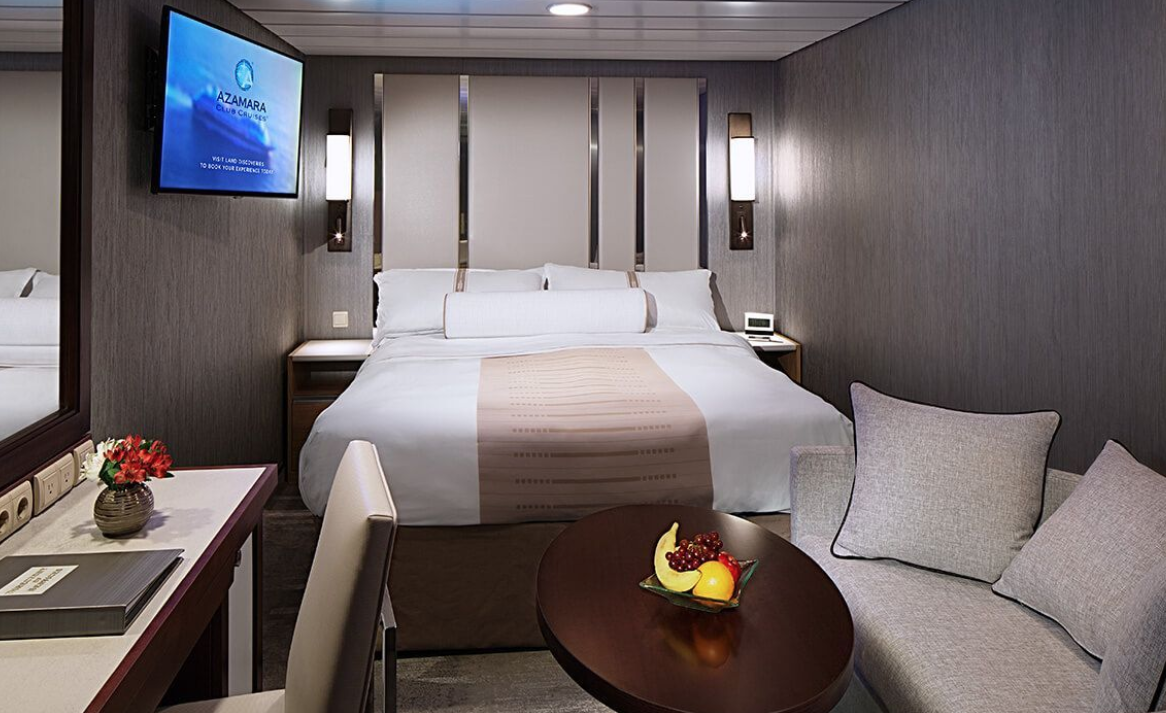
Interior Guarantee
Ship Facilities
Aqualina
At Aqualina, you’ll find some of Italy’s most authentic dishes. Pastas made from scratch, traditional recipes, and scrumptious vegetarian dishes that make sure there’s something for everyone. Plus our famous desserts: Sorrento lemon liqueur mousse, hazelnut chocolate soufflé and more.
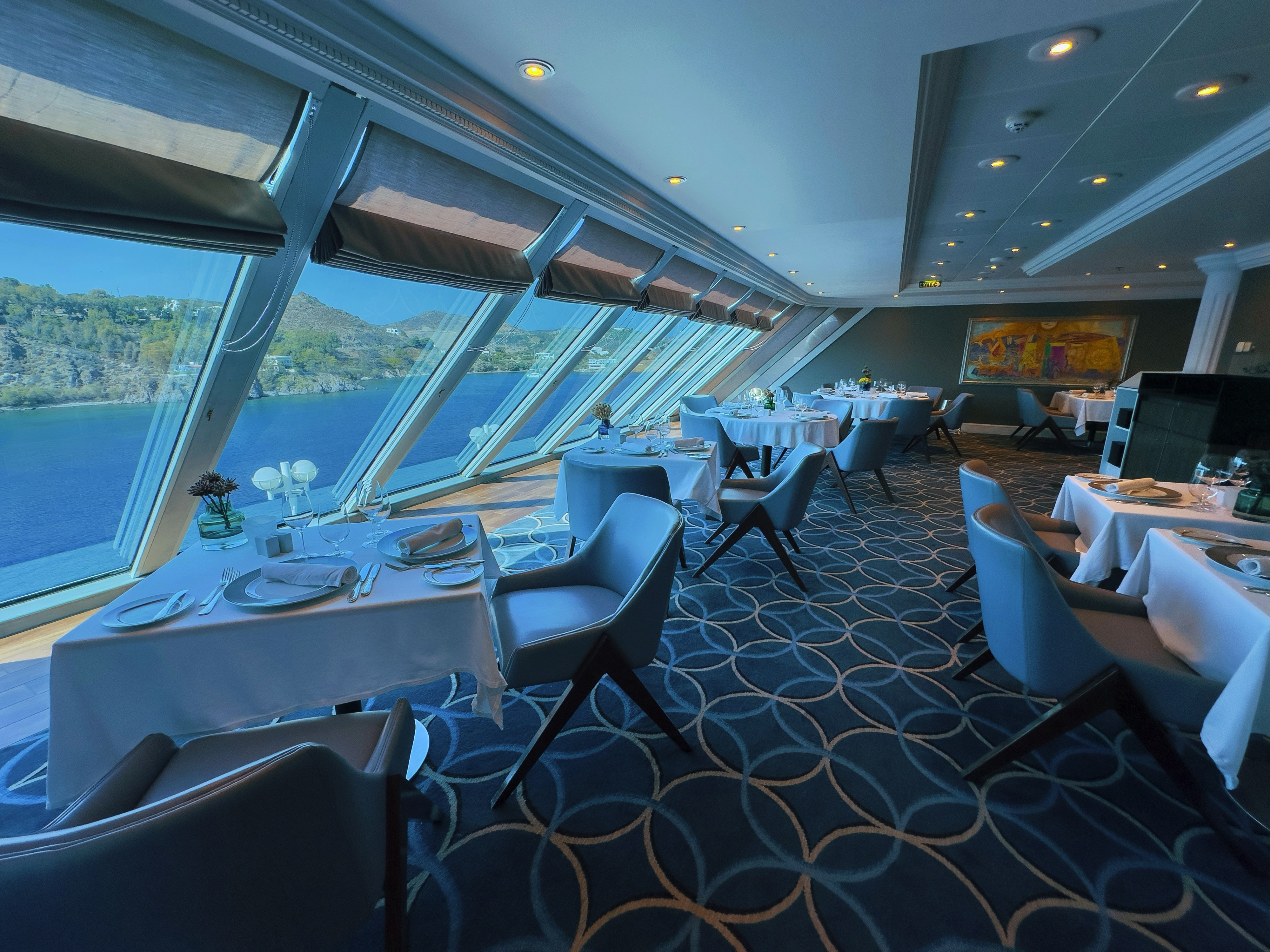
Prime C
Your choice of steak, cooked to perfection. Herb-coated rack of lamb, duck confit and Chilean sea bass—all paired with savory sides. At Prime C, you’re in for more than delectable dining. Expect a great evening with stunning views and lush décor.
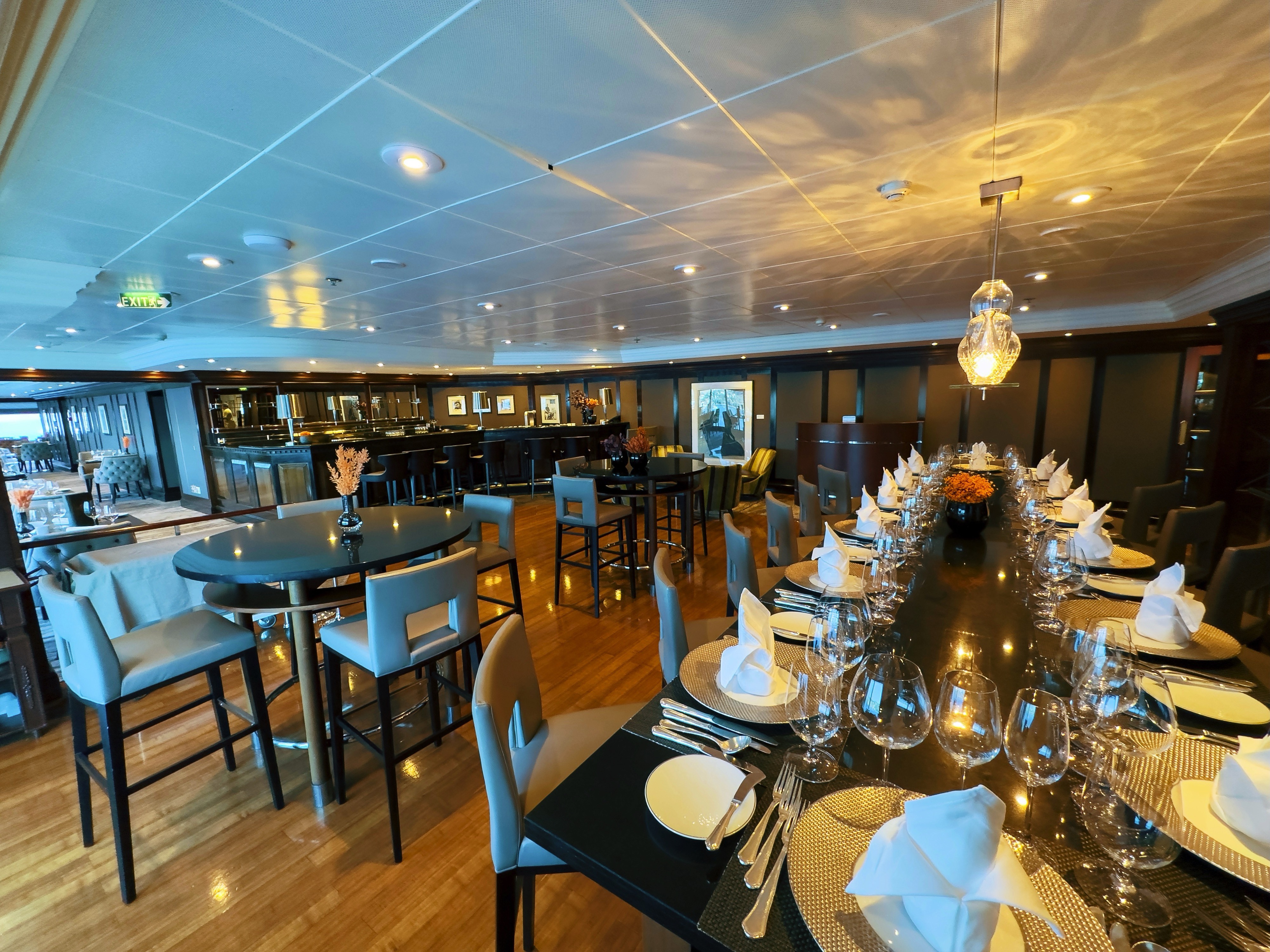
Discoveries Restaurant
Discover the world through dishes and flavors from the places we visit. Of course, you’ll also enjoy a wide variety of nightly selections such as filet mignon with black truffle sauce. Choose being seated at a table for two or as part of a larger group of fellow guests.
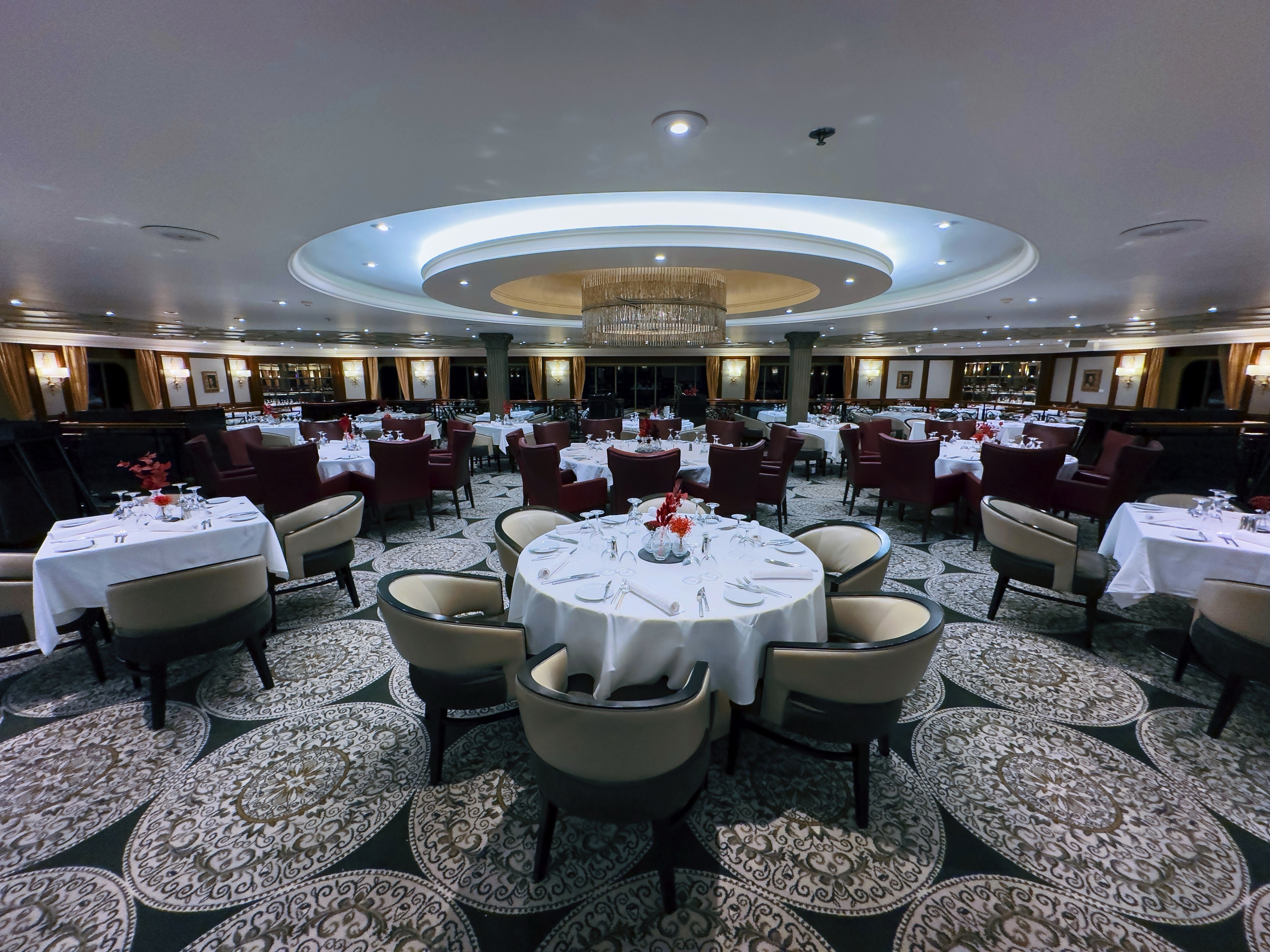
The Patio and Swirl & Top
Casual “pool grill” by day. A sit-down al fresco dining experience by night. Taste your way around the world with exclusive personalized dishes using local flavors of the places we visit. Plus a self-serve frozen yogurt station—Swirl & Top. With a variety of flavors and your choice of toppings, it’s the perfect way to cool off.
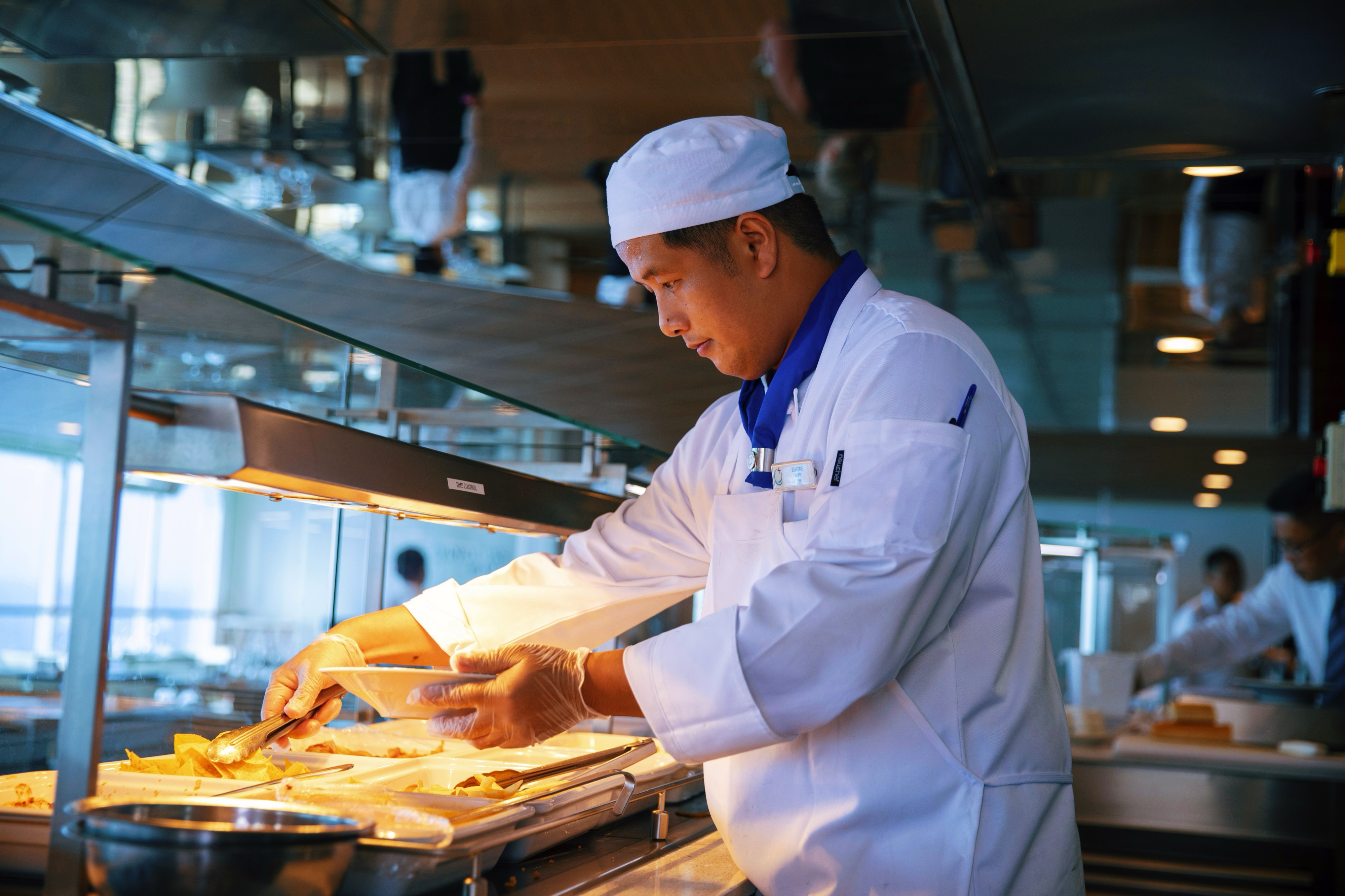
Mosaic Cafe
Stylish and cozy, Mosaic offers your favorite coffee drinks exactly as you like them. Relax in a comfortable seat and enjoy. It’s the perfect spot to start or end your day, and it just might become your favorite place on the ship.
Windows Café
Our daily themed dinner often takes its inspiration from the region we’re visiting—Indian, Mexican, Spanish, Italian. We also create an extra live station made from local ingredients purchased in port: Greek salad made with local feta (Greece), pasta prepared with local mushrooms (Italy), fresh Mussels served with garlic bread (Netherlands).
Room Service
The best time for room service? Whenever you say it is, 24-hours a day. Order from the full breakfast menu between 6:30 AM and 10:00 AM, and we’ll deliver at your appointed time. Lunch and dinner room service features a menu of hearty soups, fresh salads, gourmet sandwiches, pizzas and desserts.
Exclusive Experiences
These excursions represent our most exclusive and unique opportunities to immerse yourself in our destinations. Be there as history is made at one of the world’s great celebrations, sporting events or cultural festivals. Spend a few days traveling overland on an expedition that ventures beyond the coast. Or, let us craft a private tour around your individual interests.
World Events
Join the revelry at world-renowned art shows, sporting events, culinary festivals and other local celebrations.
Overnight Experiences
Venture deeper into a destination to spend a night or more exploring iconic locales and landmarks, found beyond the harbours of your itinerary.
Private Tours
Let Azamara work with you to create the destination experience you’ve always dreamed of! Embark on a personalised Private Tour and we’ll turn that dream into reality.
Locales & Landmarks
These curated sightseeing tours reveal the hidden gems, local secrets and signature sites of a destination. Whether a cultural immersion, self-guided tour, panoramic drive, or guided visit, this series makes it easy to enjoy an authentic destination experience.
Cultural Expressions
Connect with customs, beliefs, art, and music that define local cultures through authentic, engaging encounters.
Ancient Wonders
Get immersed in epic history. Learn about the architecture, culture, and beliefs of ancient civilizations.
Food & Wine
Savor local food, wines, beers, and spirits on these culinary journeys, many led by Azamara Executive Chefs, Sommeliers and Mixologists.
Local Introductions
Spend time with local families, business owners, artists, aristocrats, and other influencers in their homes and workplaces.
Nature & Wildlife
Enjoy a close look at indigenous plants and wildlife on an ecological exploration that directly contributes to environmental stewardship.
AzAmazing Evenings
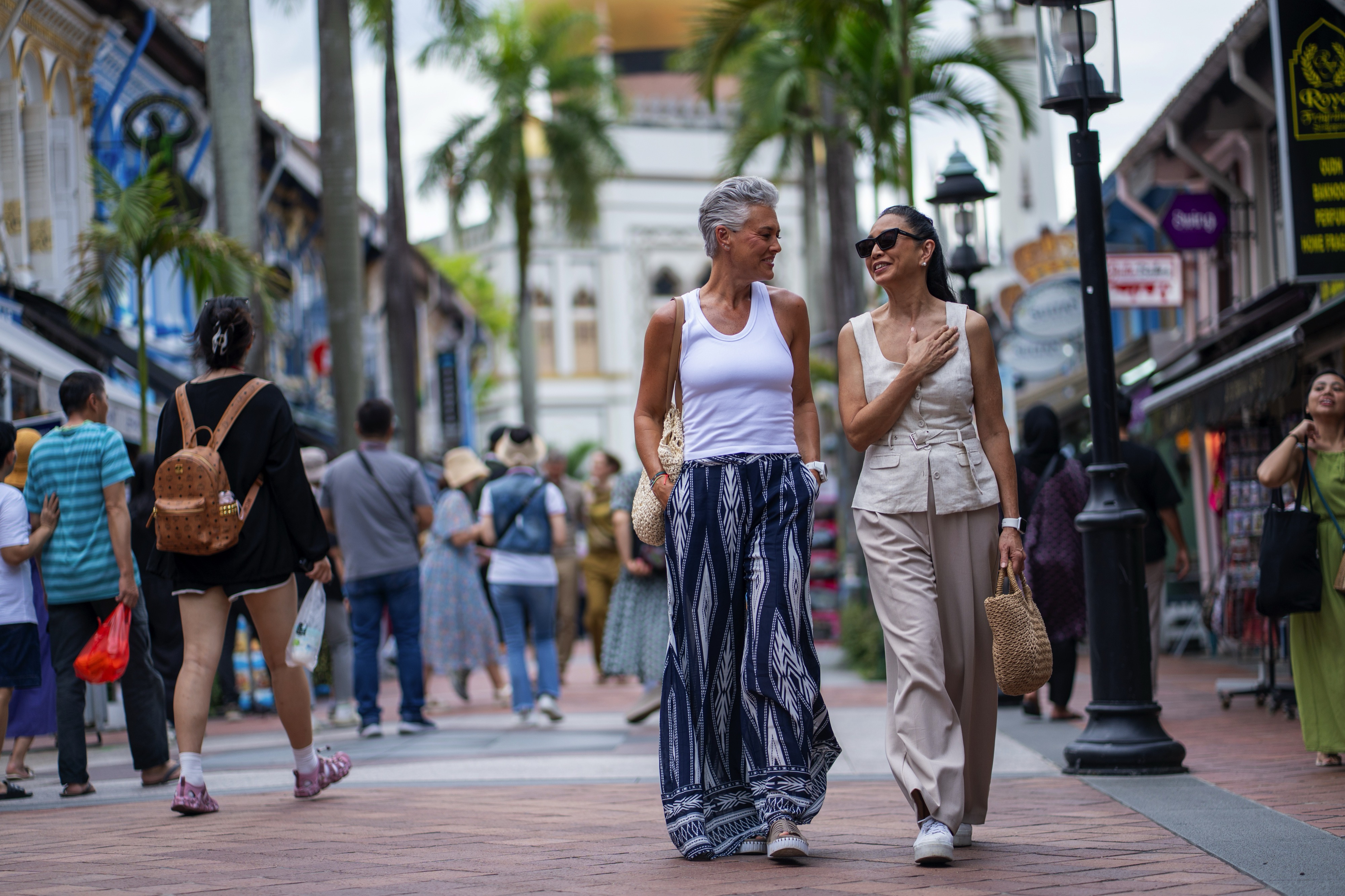
One-of-a-kind, complimentary, immersive cultural experiences exclusively created for Azamara guests, continuing our commitment to Destination Immersion®. First launched in 2011 to inspire guests to dive deeper into the heart of each destination, these extraordinary evenings showcase music, art, and culinary traditions in unique settings where authentic culture truly comes alive.
Most AzAmazing Evenings® take place ashore, often in iconic venues while the ship stays late in port, aligning with our hallmark of Destination Immersion®, bringing guests closer to local culture in remarkable locations. On select occasions, including seven- and eight-night itineraries, equally captivating experiences are brought onboard.
*For sailings of 9 nights or longer, exceptions may occur when local infrastructure does not allow for an onshore event; in such cases, the experience will be hosted onboard. In rare cases—such as select transoceanic crossings or charters—AzAmazing Evenings® will not be offered.
Enrichment program and classes
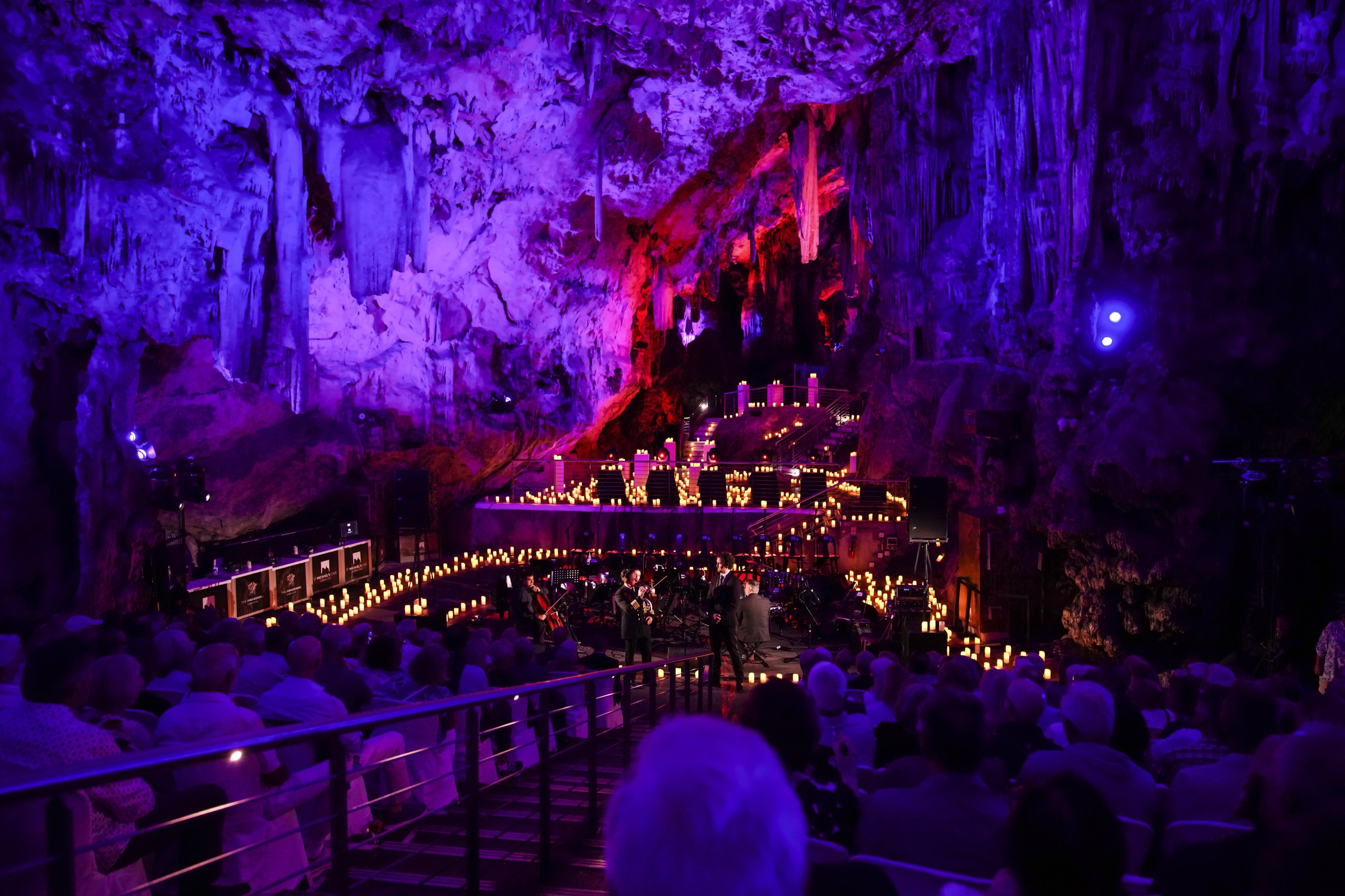
Your quest to learn continues with Destination Speakers offering their expertise throughout each voyage with Azamara®. Facilitated through Compass Speakers, these experts will participate in a range of programs, classes, and lecture series — all created with our incredible destinations in mind. They’ll also hold Q&A sessions!
White Night
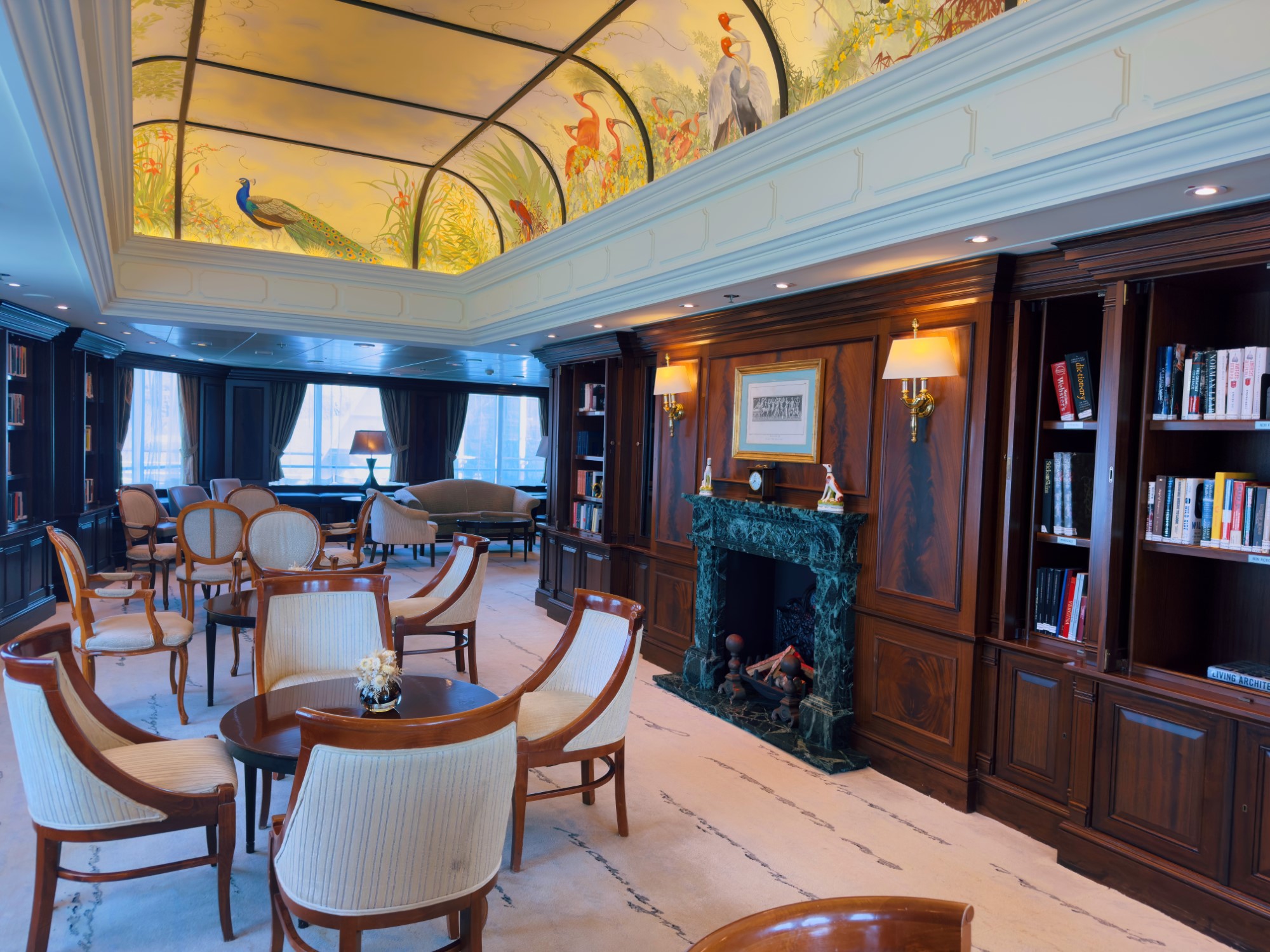
Join Azamara officers and crew for our signature dinner and entertainment event hosted al fresco on the pool deck (weather permitting). With an array of delicious food and engaging entertainment, your White Night experience will almost certainly be one of the most memorable times from your cruise. And don’t forget to bring something white to wear for the evening.
The Living Room
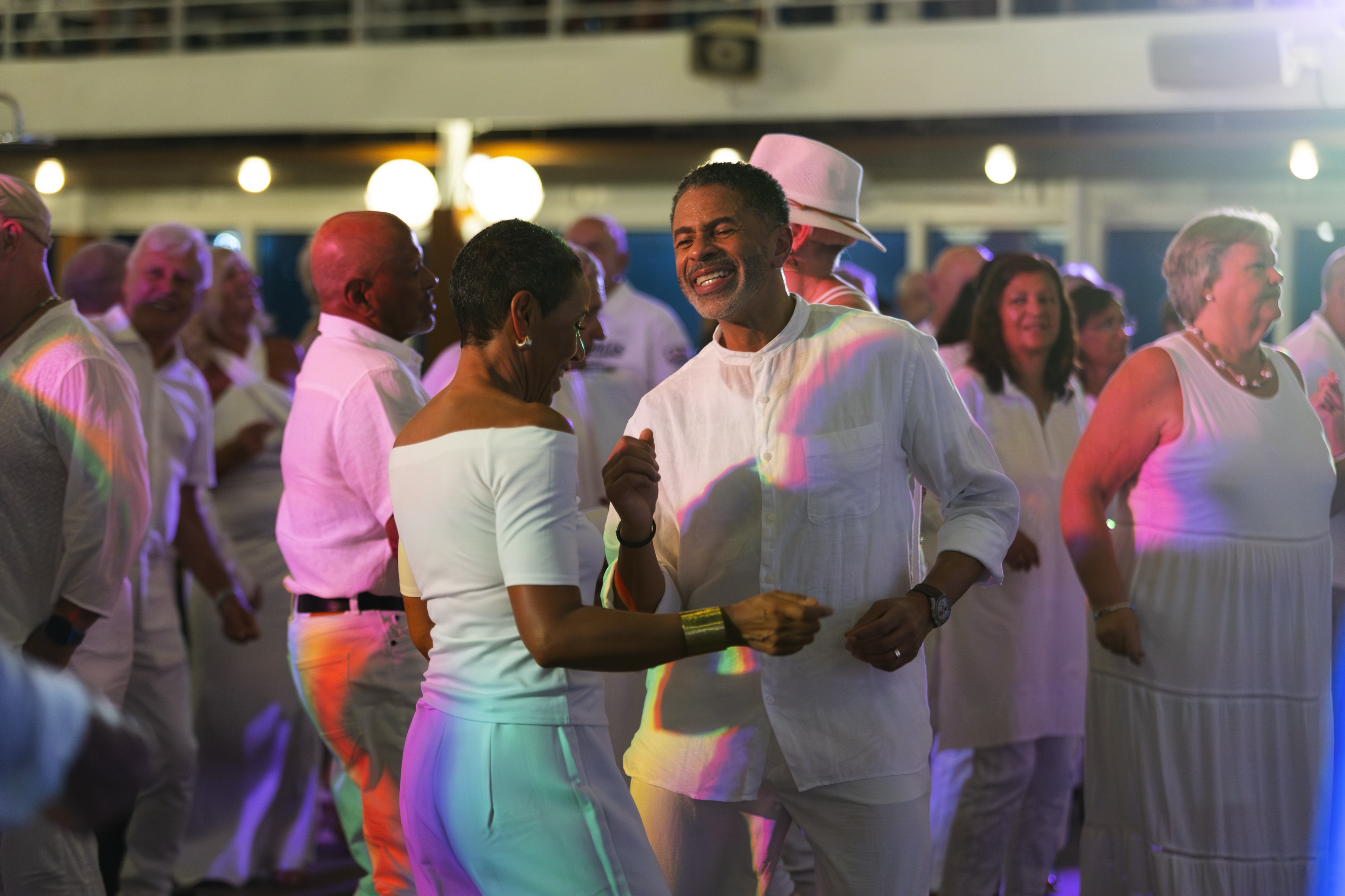
The idea of the Living Room is just that. To “live in” and to enjoy time with friends and fellow guests! Much of the room is furnished as a living room, with clusters of large comfortable chairs and sofas….
Club Crooner
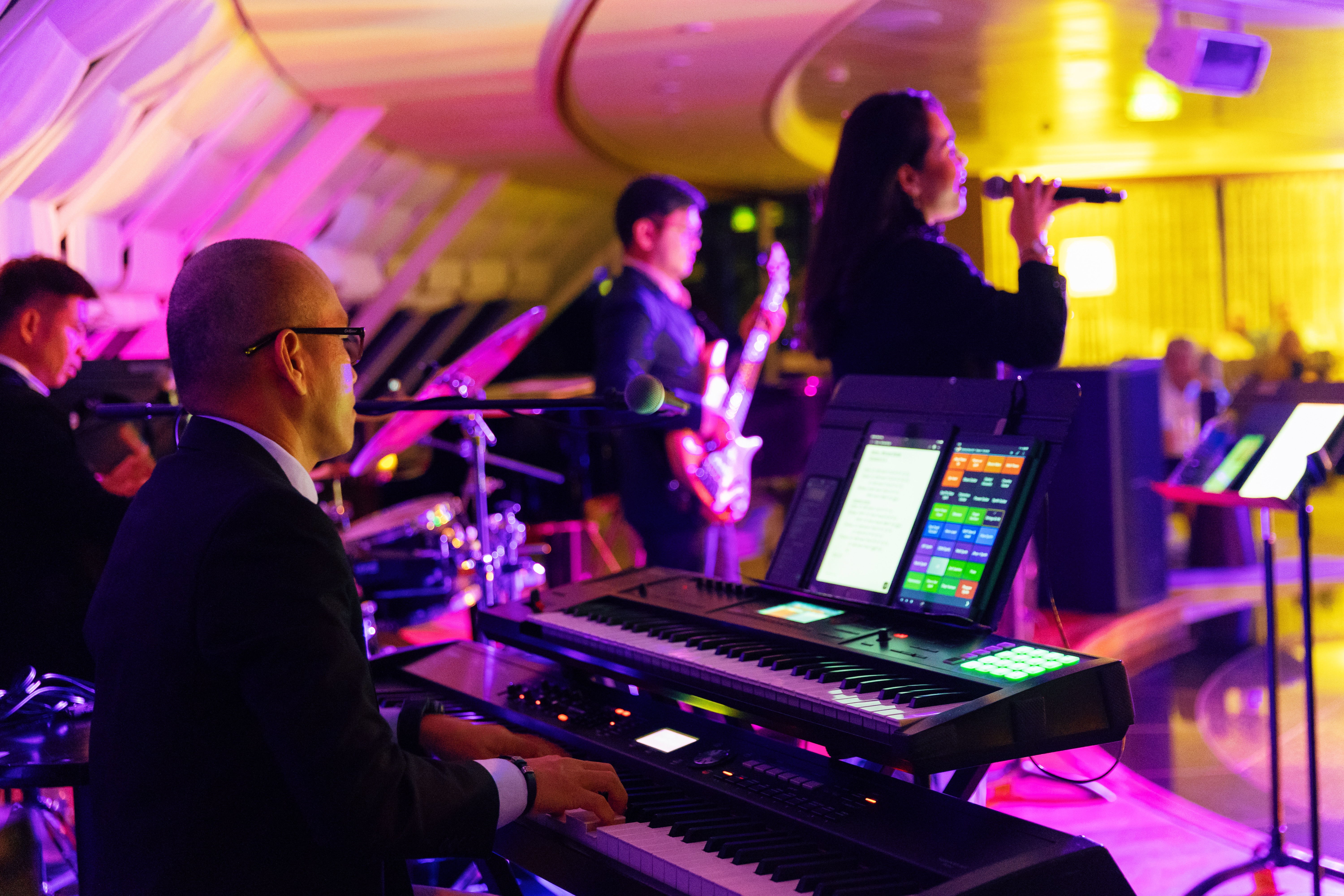
Step into a swanky nightclub as the great songs of the most magnificent artists come alive on stage. From classic crooners such as Frank Sinatra and Tony Bennett, to current songbirds such as Natalie Cole and Michael Bublé, there’s a song for every time and everyone. Enjoy a beverage, sit back, and be serenaded by the melodies of our lives with CLUB CROONER
Mosaic @ Night
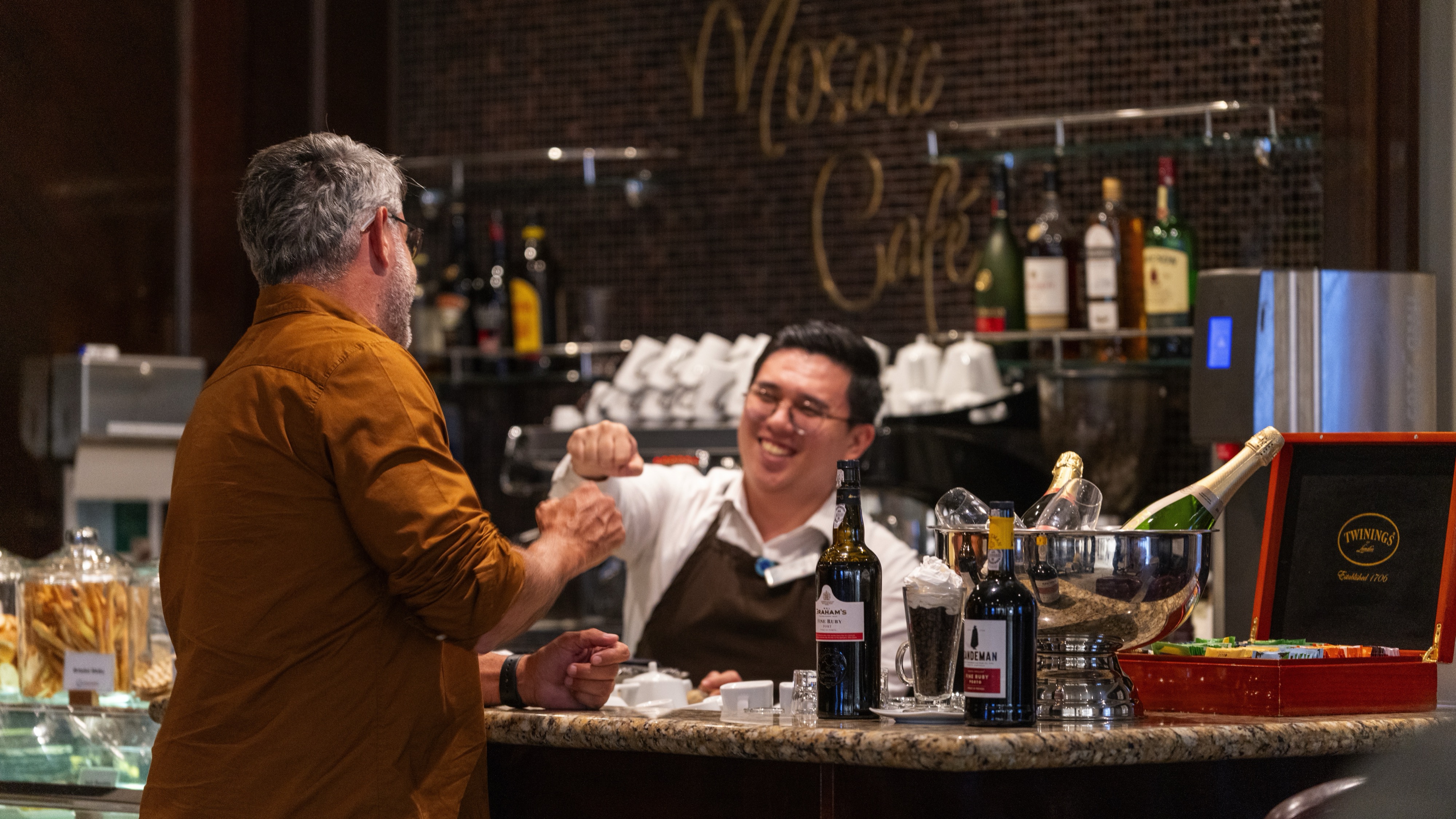
Our onboard coffee corner may very well become your favorite nook on the ship. With elegant and comfortable furniture, it’s bound to be one of the the most stylish places, too. Find all your favorite coffee drinks crafted just the way you like. Slip right into a comfortable seat and sip for a while—you never know who’ll walk by.
Discoveries Lounge
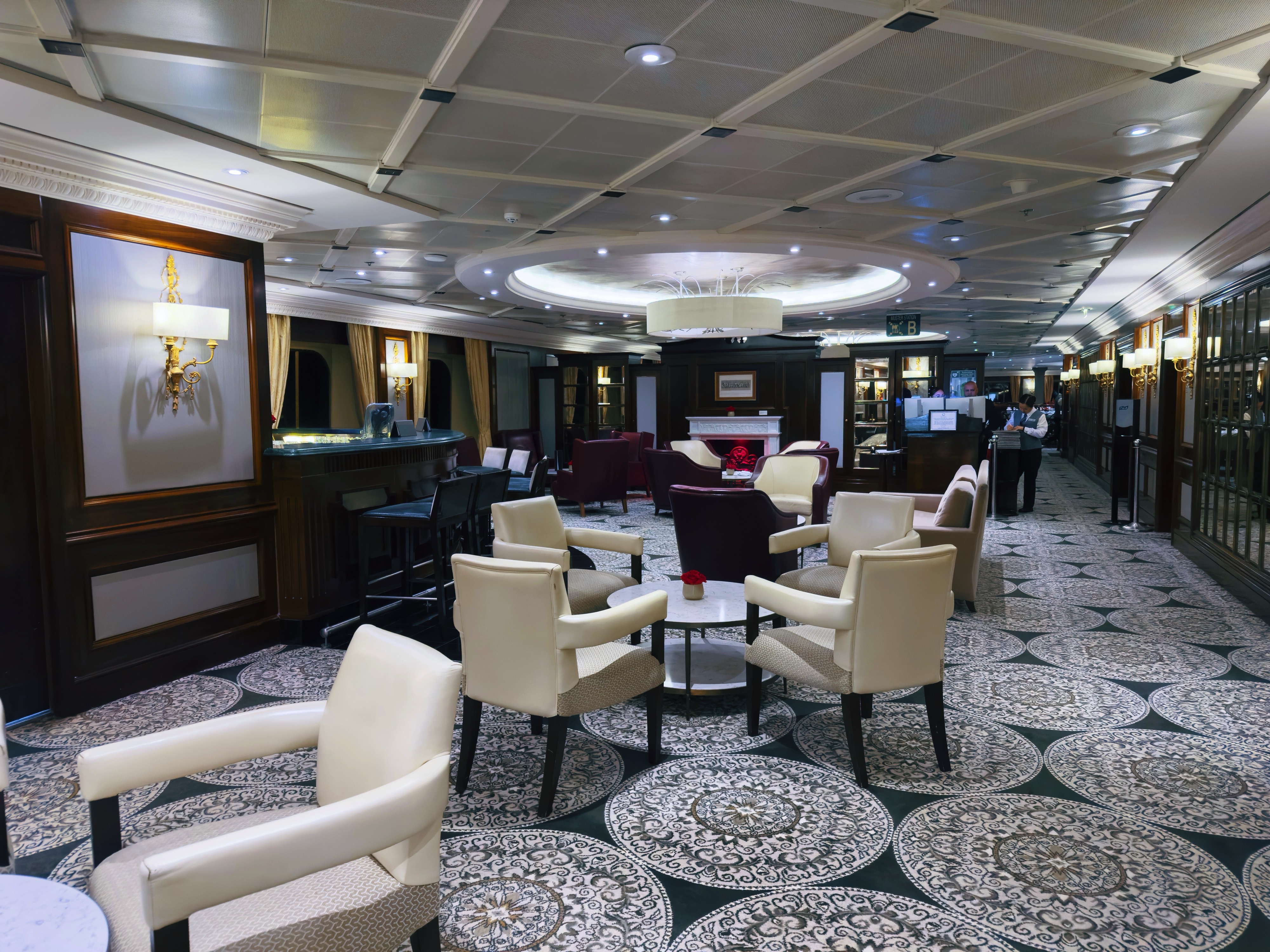
This congenial bar is a favorite gathering place for great conversations and delicious drinks. Bar service includes a full selection of fine wines, mixed drinks, and premium spirits…plus the entertaining banter of Azamara’s friendly bartenders.
Cabaret Lounge
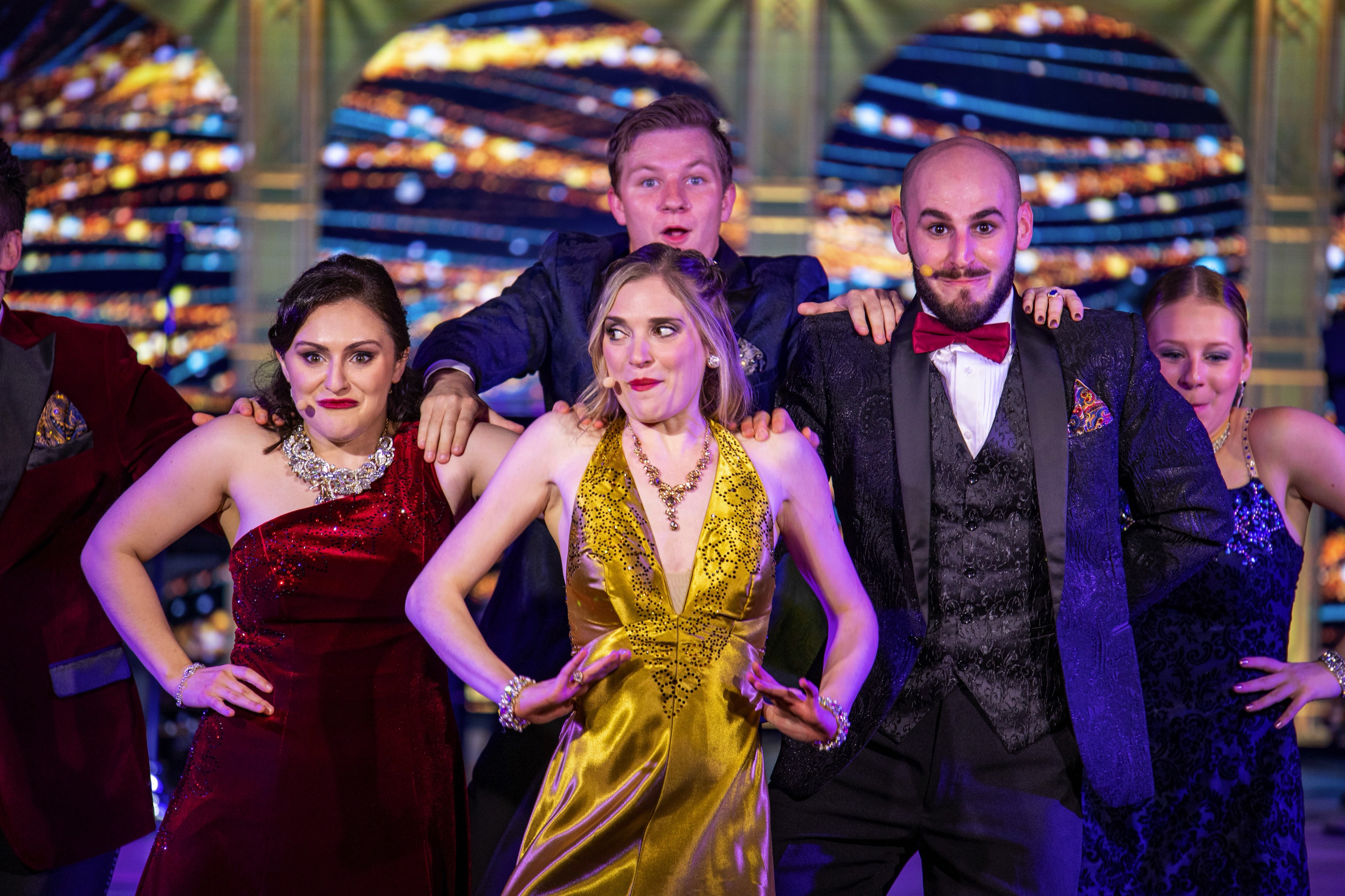
Enjoy live performances of professional full-stage musical revues, classical soloists, bands and other entertainment in a cabaret nightclub with a full bar and cozy tables.
The Den
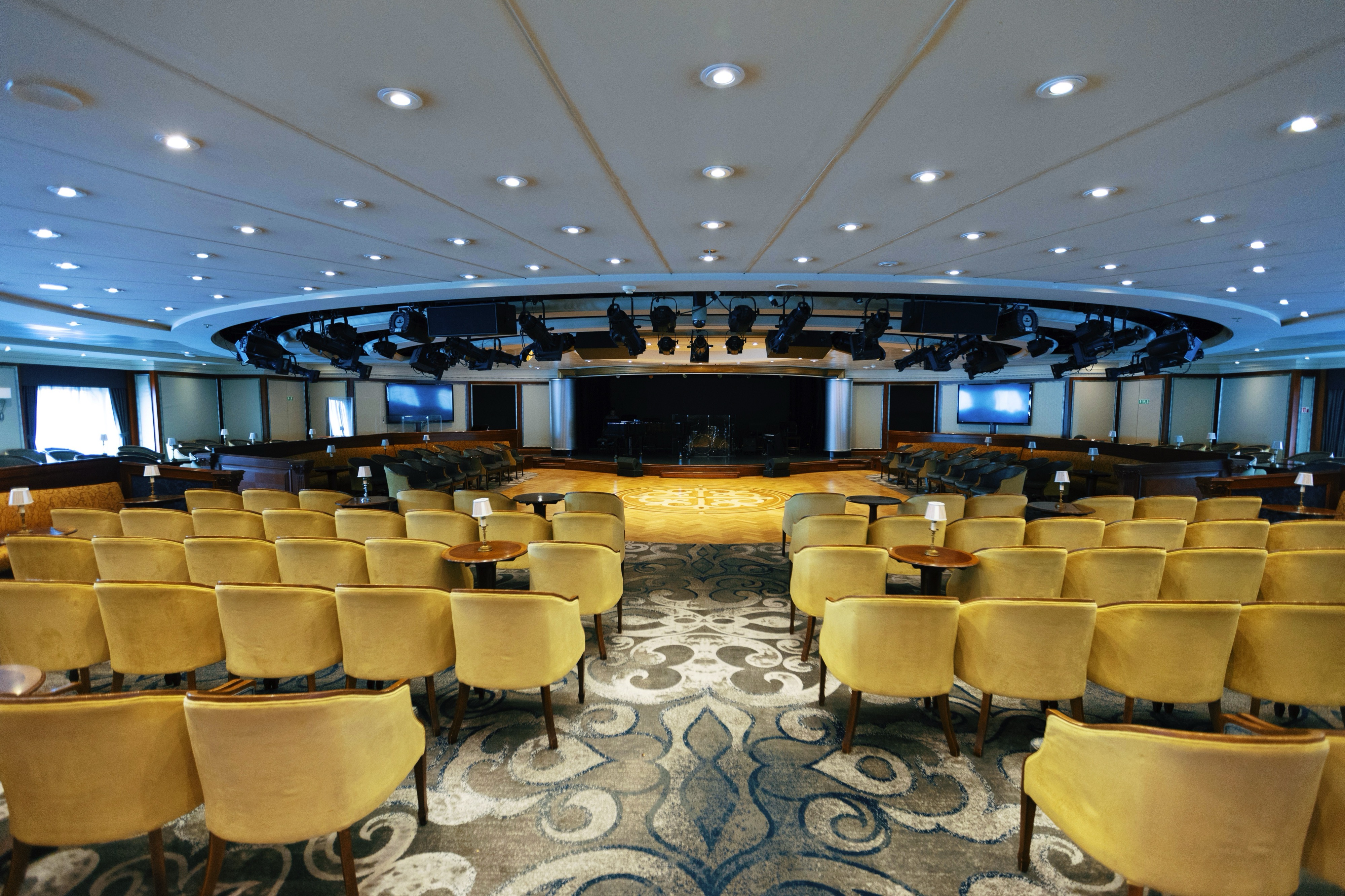
By day, The Den is a cozy, inviting space perfect for planning your next adventure—home to the Cruise Again desk and photo gallery, and filled with destination inspiration. By night, it transforms into a lively piano bar with craft cocktails, a talented live pianist, and a warm, social atmosphere. Whether you’re mapping out future travels or enjoying the music with a nightcap in hand, The Den is where stories begin, and where many guests return night after night.
The Drawing Room
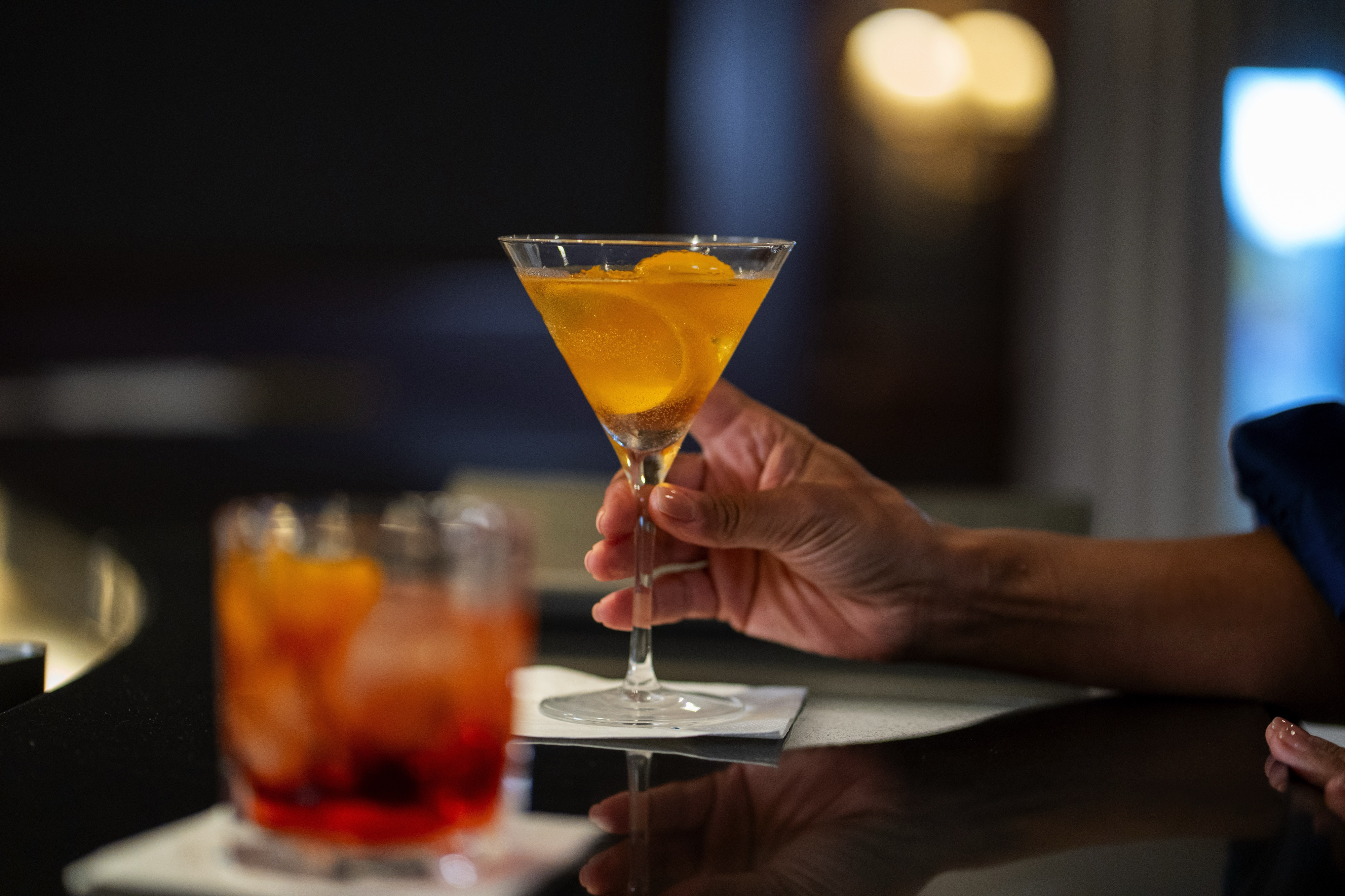
This library is one of the quiet jewels of Azamara, a peaceful and beautifully appointed space for reading or relaxing after dinner. Browse the collection and feel free to borrow the library books. Or simply relax in the tranquil atmosphere.
The Pool
Join Azamara officers and crew for our signature dinner and entertainment event hosted al fresco on the pool deck (weather permitting). With an array of delicious food and engaging entertainment, your White Night experience will almost certainly be one of the most memorable times from your voyage. And don’t forget to bring something white to wear for the evening.
Pool Bar
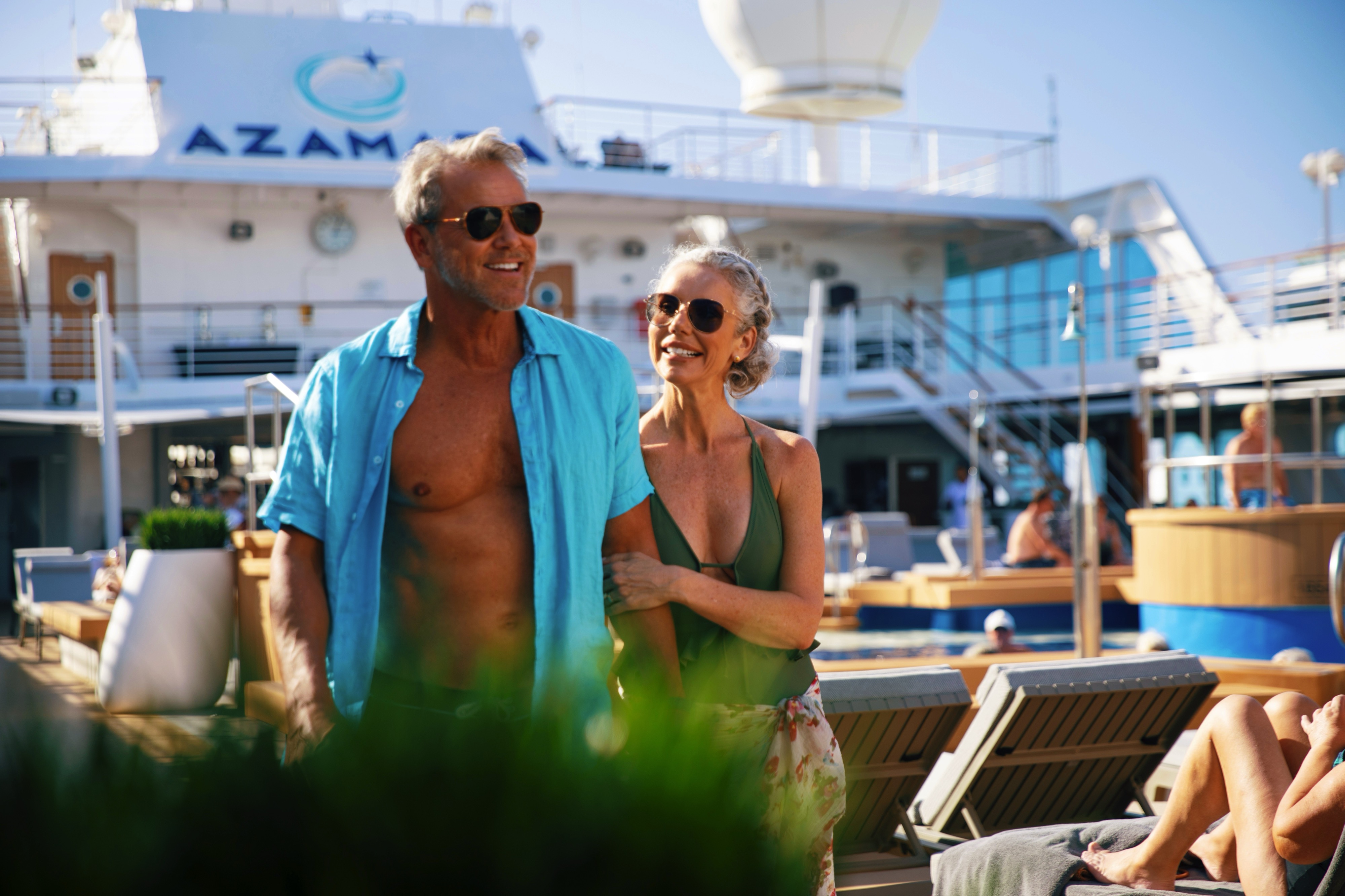
Our Pool Bar serves refreshments while enjoying the Pool during the day, and cocktails of your choice in the evening.
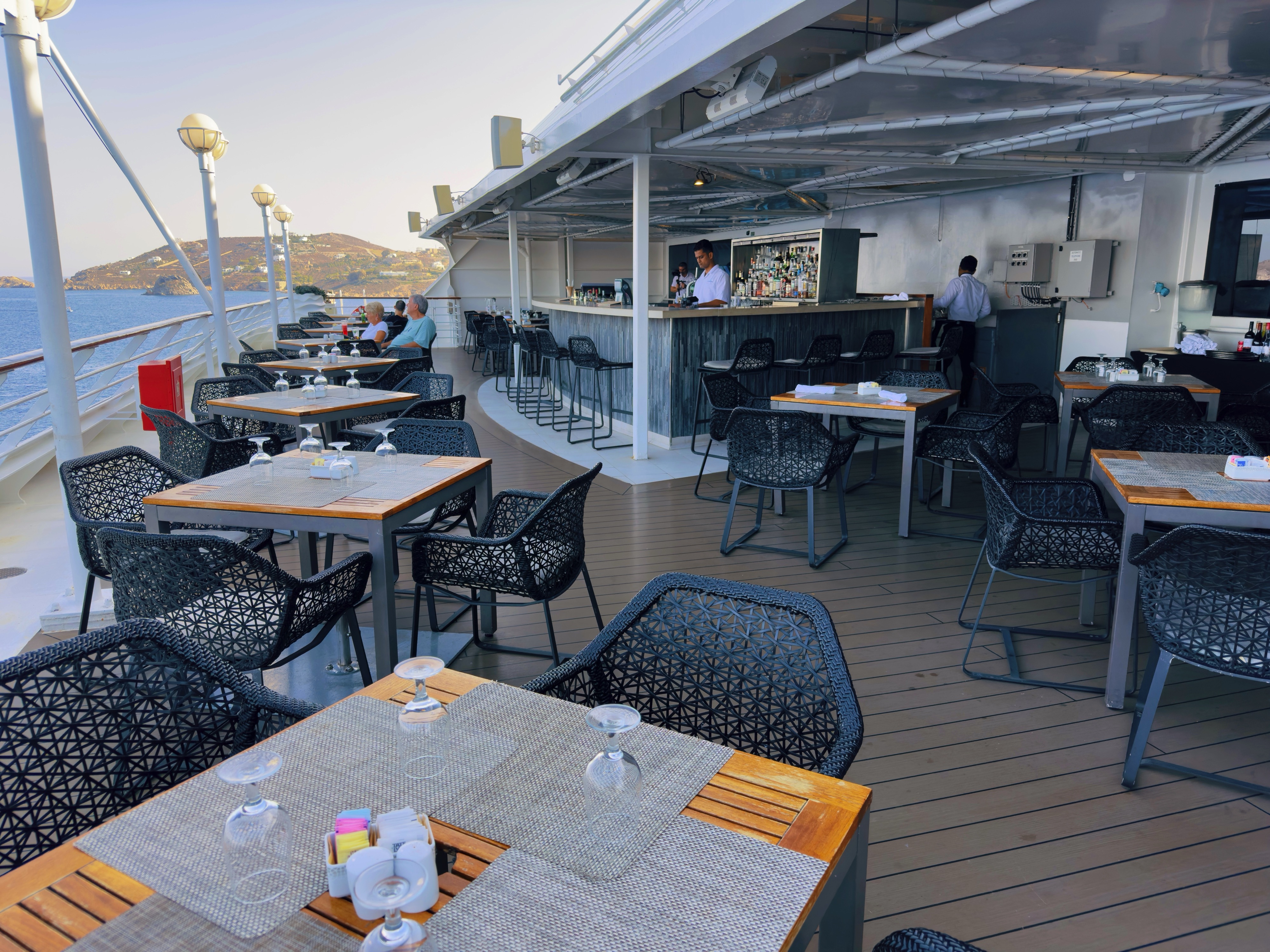
Sunset Bar
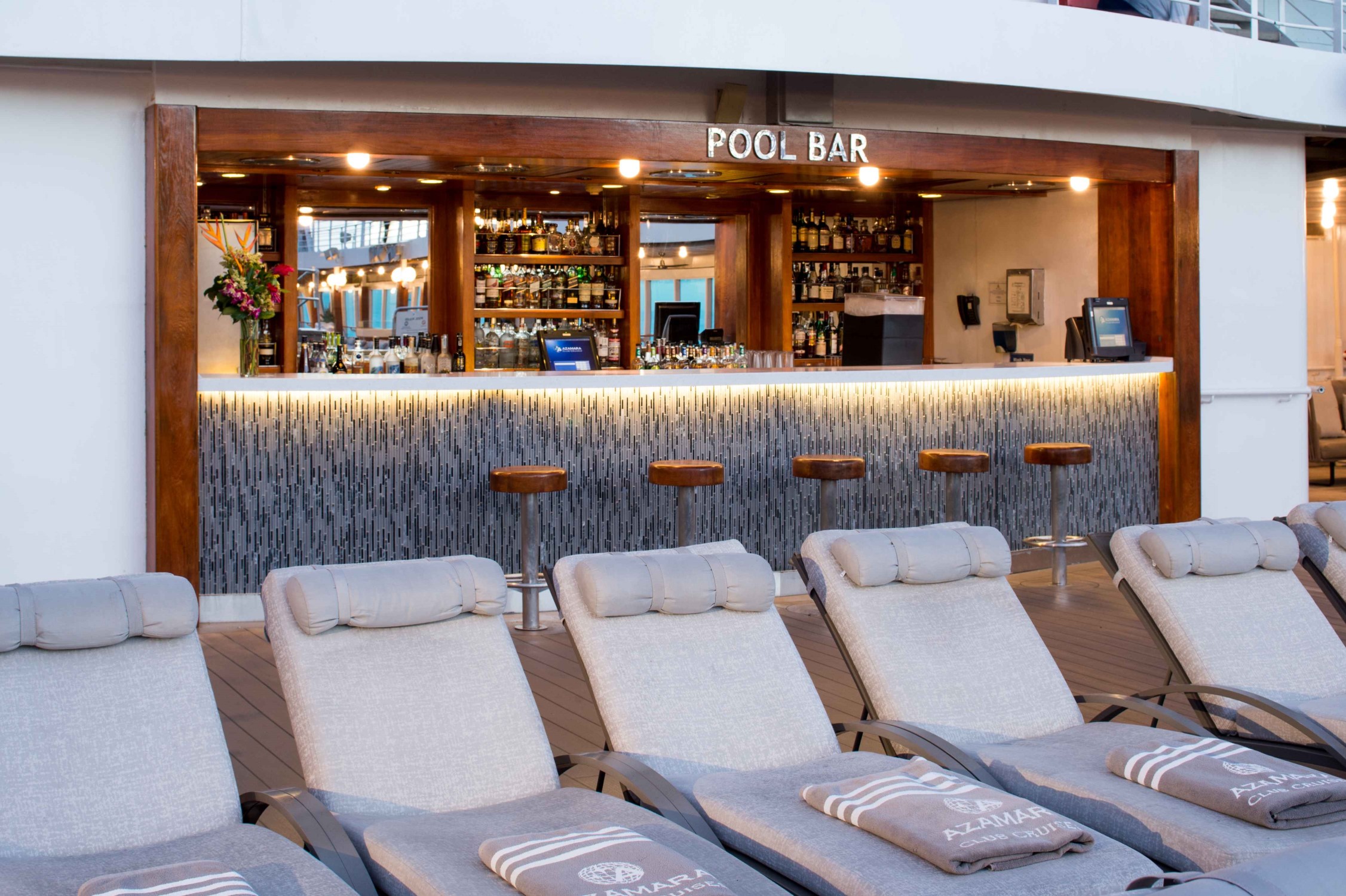
Adjacent to Windows Café, the Sunset Bar is a welcoming outdoor patio with covered and open -air seating, and a bar. It’s the perfect place for dining alfresco, enjoying a refreshing drink, taking in the sights of your favourite port, or simply watching the world sail by.
Performances
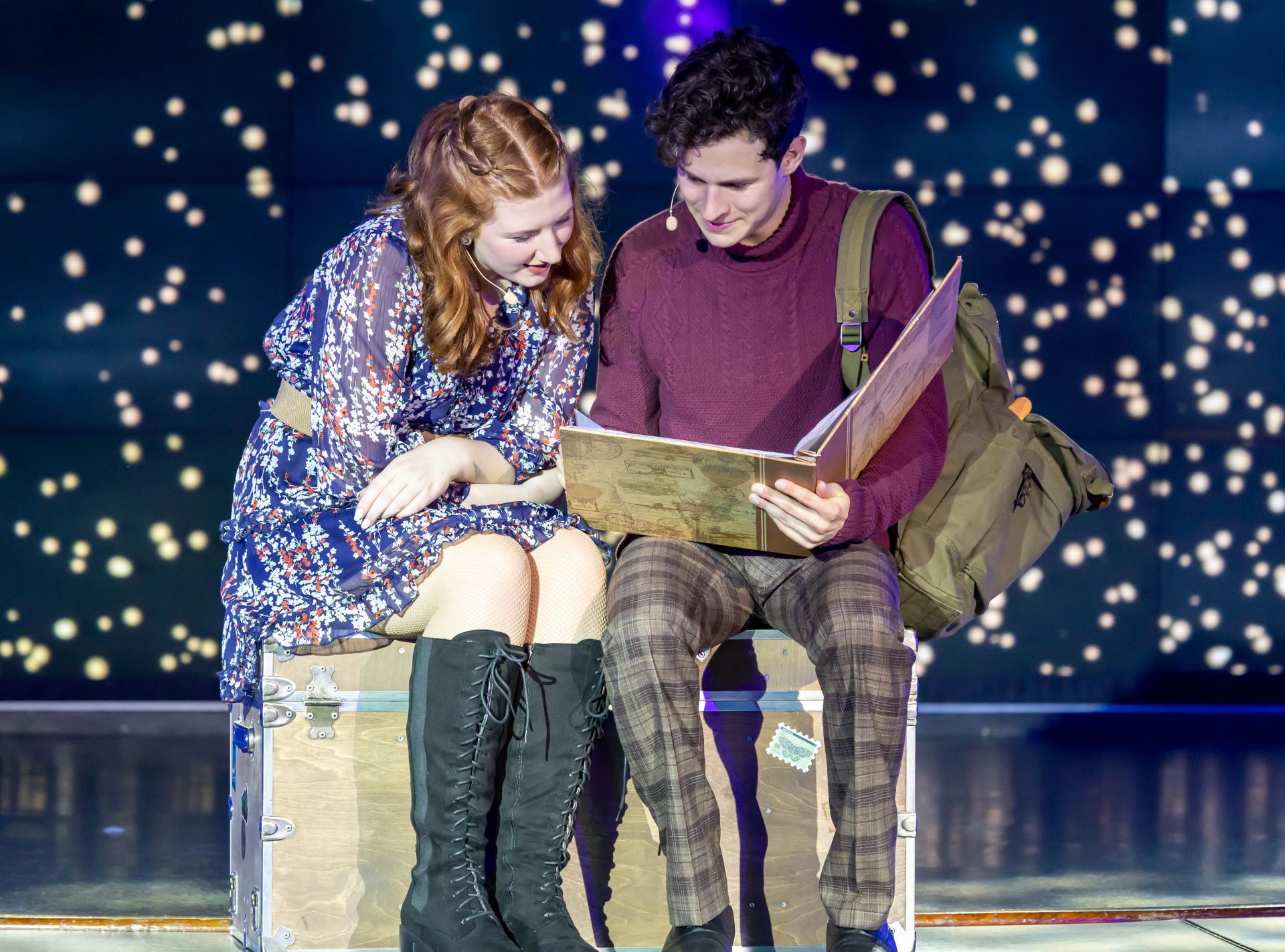
Oh, What A Night
Get ready to be transported to the world’s most beloved travel destinations in one exhilarating night. As we explore all four seasons in a new city, travel along with our dynamic Signature Singers & Dancers as they sing and dance their way through an eclectic mix of music from around the world. Come and experience Oh, What A Night!
Take Two
Get ready to grab your clicker and turn up the volume as we take a trip down memory lane celebrating the most cherished movie soundtracks of all time. As we flip through the channels together, you will be taken back to a time when stars were born, the ring is open, and yes… ghosts really do exist. We invite you to sit back, relax and enjoy the music of the movies! Lights… Camera… ACTION! TAKE TWO!
Britrock!
Join your Signature Singers and Dancers, along with your Azamara band, to celebrate the music that includes famous British musical artists such as Adele, Dusty Springfield, Elton John, George Michael, The Beatles and more! Azamara invites you to sing along, as we hit the playback button and take a stroll down memory lane to relive the music that is BRITROCK!
The Quest Shop
It’s one-stop shopping in The Pursuit Shop. Apparel, sundries, handbags, candies, souvenirs and lots more await. If you find that you forgot to pack something, chances are you’ll find it in The Pursuit Shop.
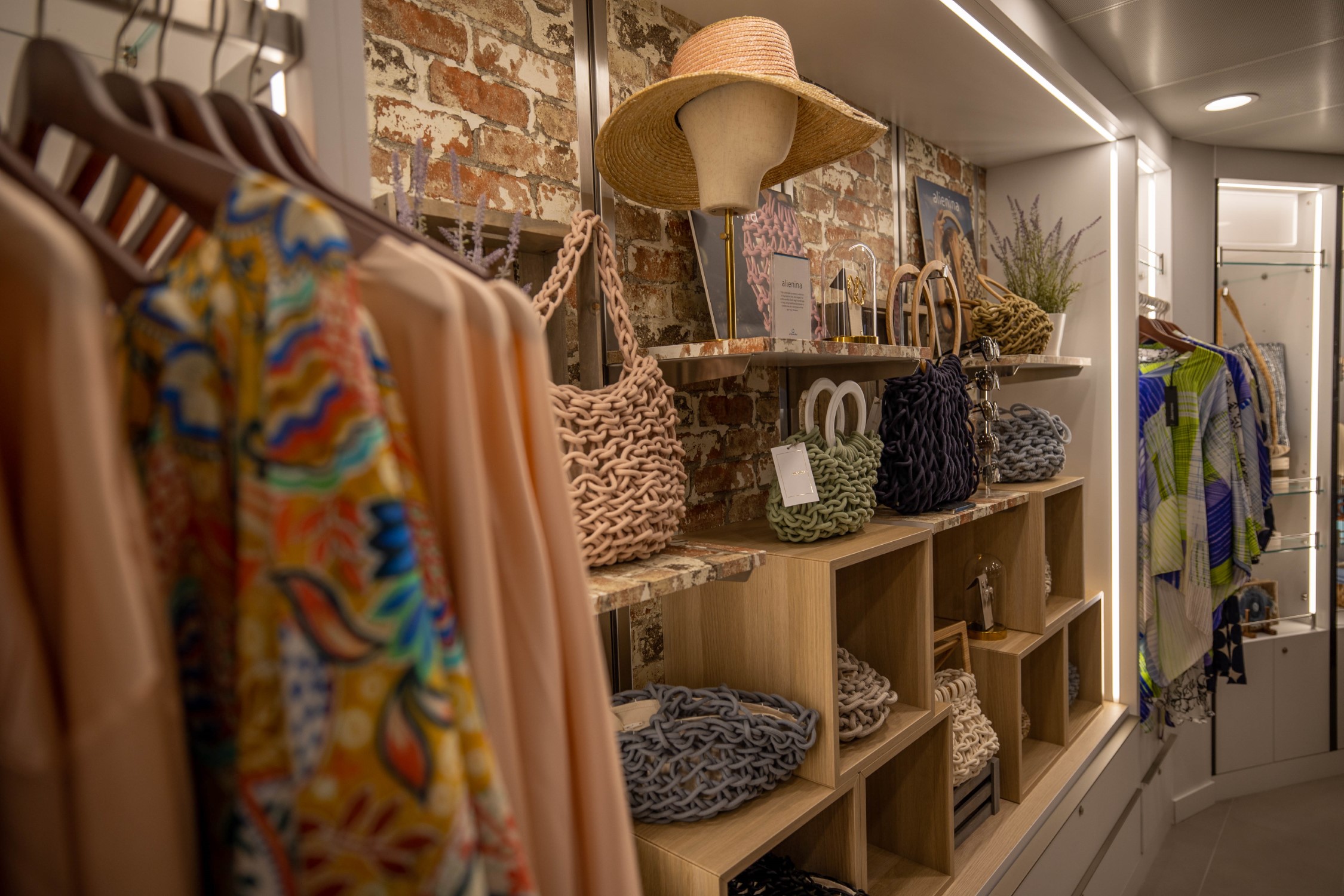
Photo Shop
Our photographers capture both fun and professional photos throughout the voyage, whether it is your portrait, or photos of the destinations you visit. You can also find an assortment of supplies for your own photographic endeavours.

Indulgences
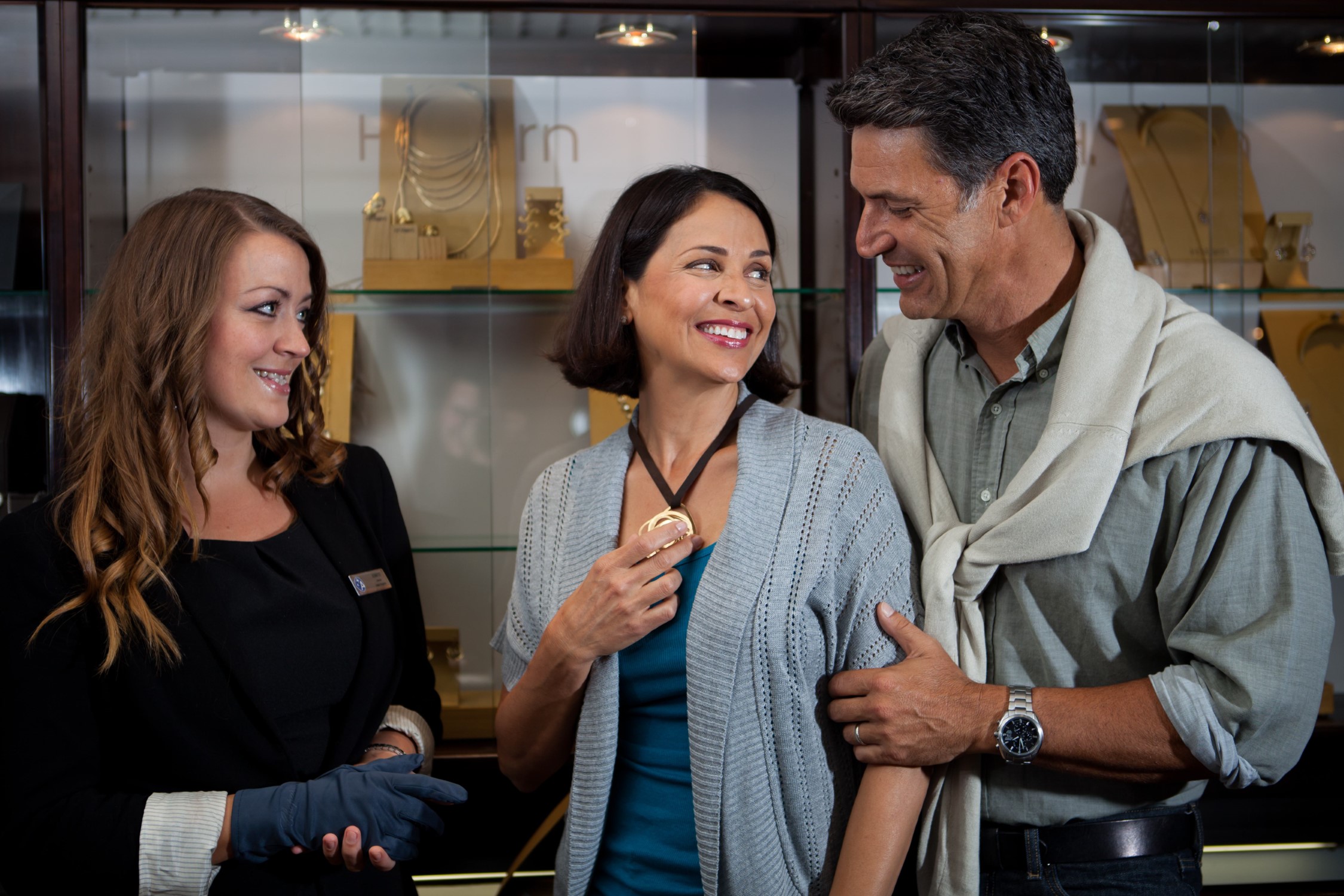
Aptly named, Indulgences will satisfy your desires for the finer things in life. If you are looking for designer jewellery, it’s the perfect place to window shop or to find that extra special purchase.
The Sanctum Spa
Staffed by professional aestheticians and therapists, the Azamara Spa is an oasis of tranquility. Choose from an extensive menu of services including:
Featured Spa Services
- The Sanctum Terrace: Enter your private spa deck with a bubbling salt water bath and powerful jets that massage you as you soak up the views.
- Biotec Facial Services: State of the art skin care and restorative facials for men and women.
- Massage Therapy: Hot stone therapy, deep tissue massage, bamboo massage and other exotic massage treatments from around the world.
- Body Sculpting: Renewing seaweed wraps, cellulite reduction body sculpting, lime and ginger salt glows, and more.
- Spa Rituals: A selection of carefully crafted half and full-day packages including body sculpting, facials and massage for the ultimate in relaxation.
- Teeth Whitening Services: Restore your bright and beautiful smile!
Ancient Healing
A cruise is a great time to experience the benefits of this ancient Chinese system of healing. Acupuncture strengthens the immune system, fights disease and controls pain while dissolving accumulated stress and restoring the body’s natural balance and energy.
Azamara’s acupuncturists are practitioners licensed by the National Certification Commission for Acupuncture and Chinese Medicine. A variety of treatments are available for pain management, smoking cessation, and more. You may notice immediate benefits in circulation, heart, stomach, skin and mood. Please inquire at the Spa for scheduling and pricing.
Elemis Aroma Seaweed Massage
Unwind in a warming wrap after a heated seaweed mask and essential oils are applied to your body. Detoxify and decongest with a treatment for tired muscles and arthritis or detoxification.
Elemis Aroma Stone Therapy
Feel tension and stress melt away. Enjoy the warming sensation the volcanic basalt stones provide while your body is massaged using traditional techniques and soothing aromatherapy oils.
BIOTEC Firm-a-Lift
Enjoy a youth-enhancing facial that reduces the appearance of fine lines and wrinkles while smoothing your skin tone and texture in just one treatment.
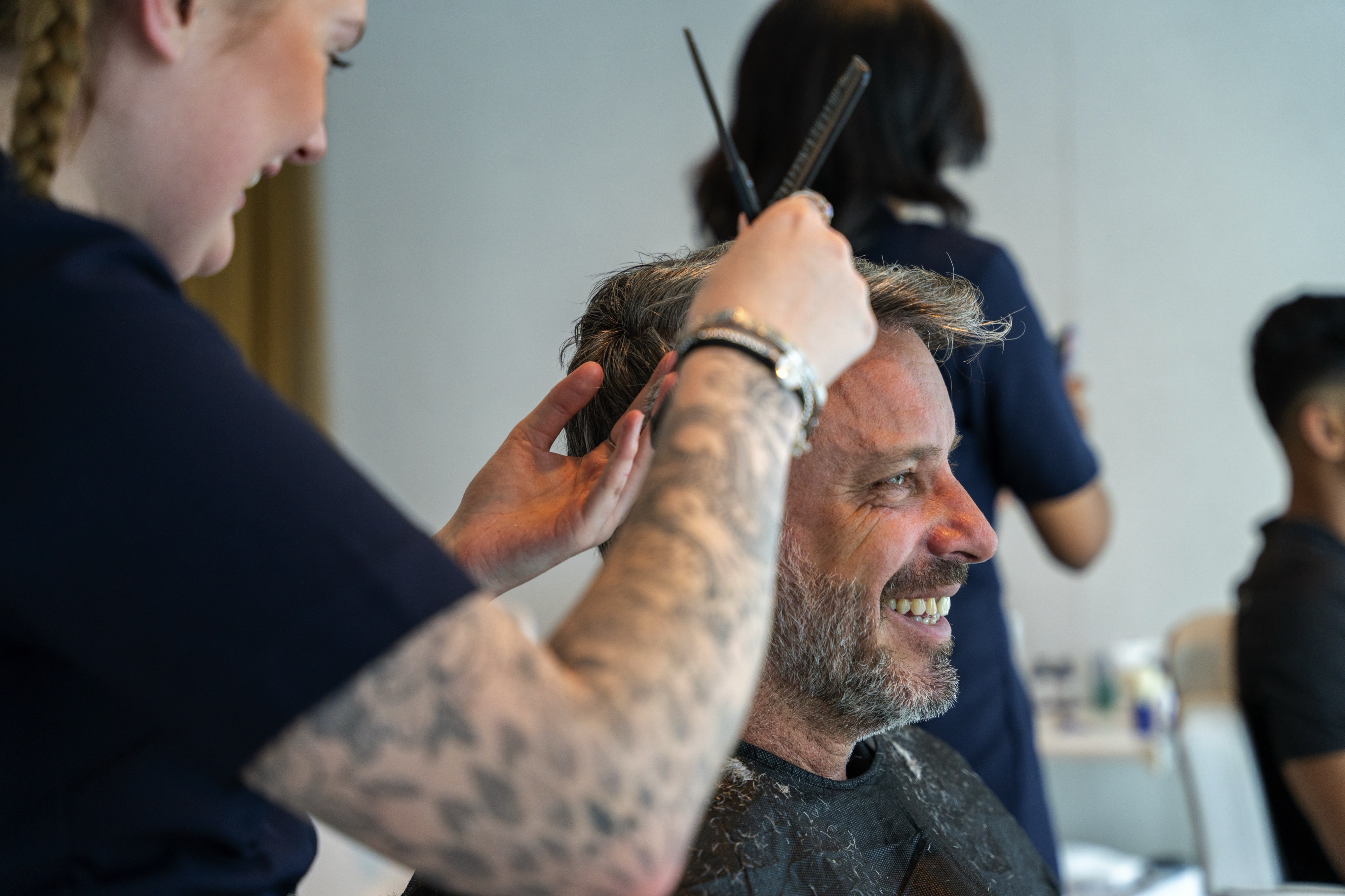
The Salon
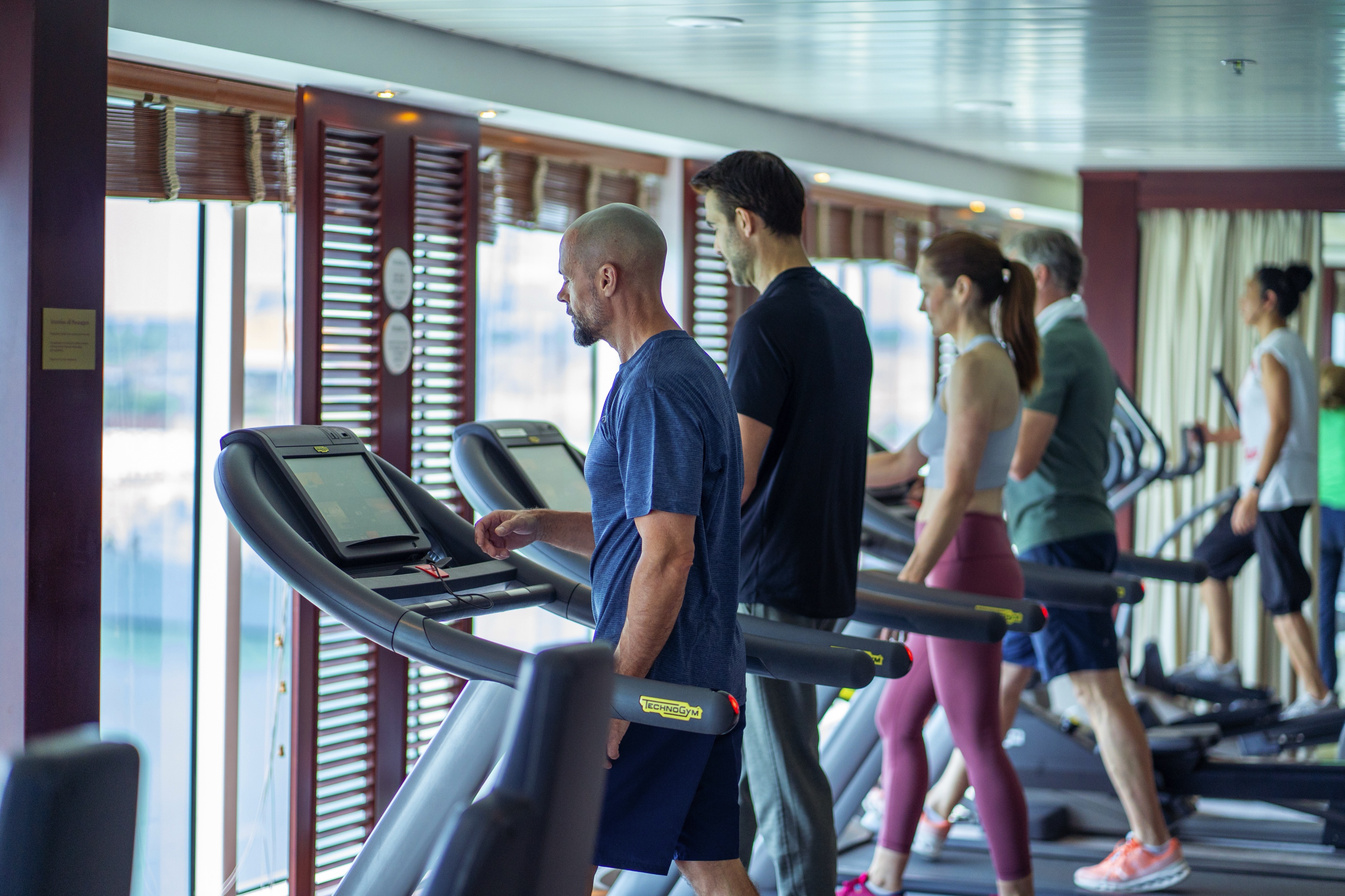
Our full-service salon offers a menu of professional services for men and women. Special packages of hair and scalp renewing rituals, pedicures with massages, grooming services, and more are available.
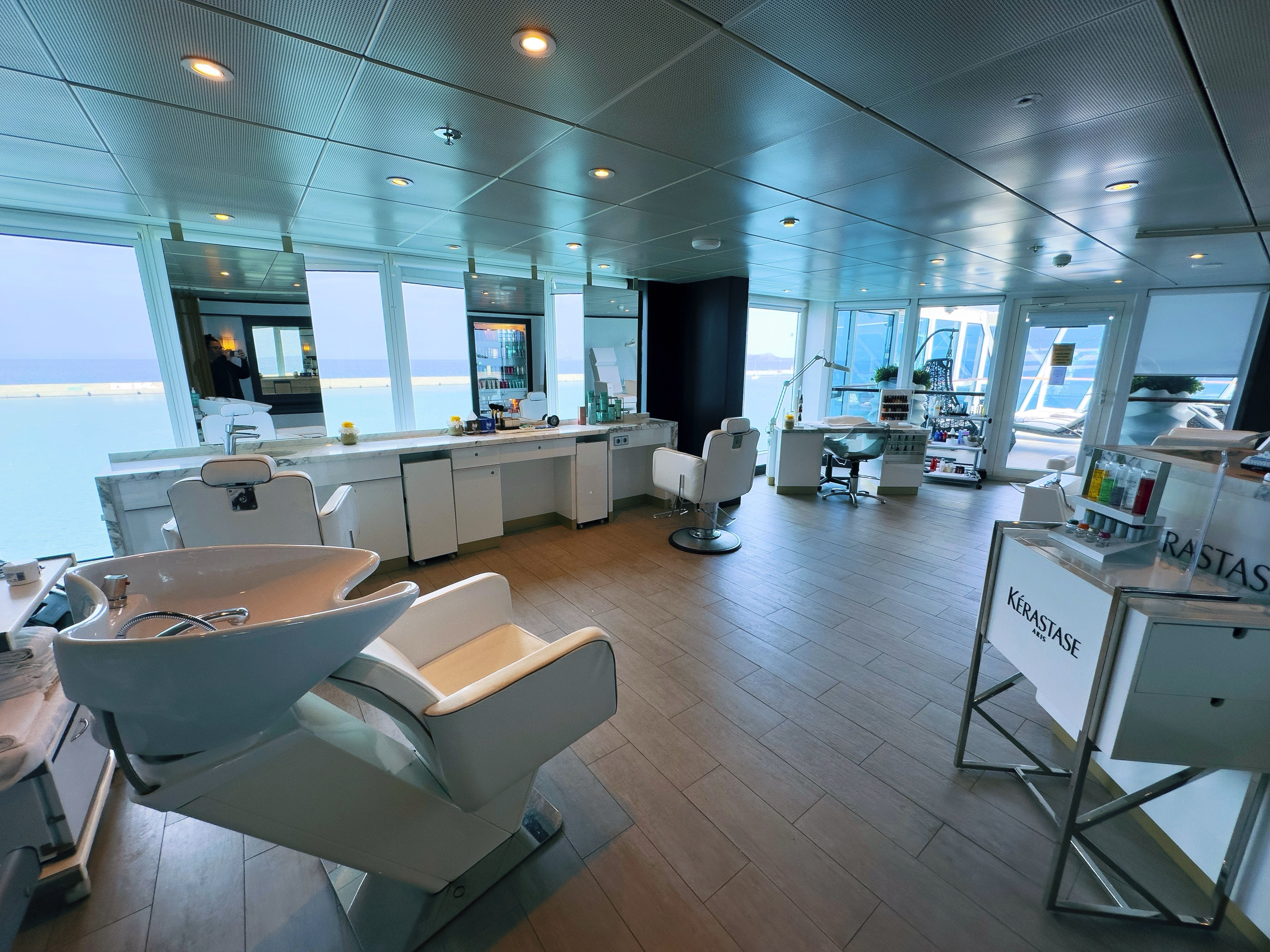
Fitness Centre & Personal Training
Join complimentary group classes like yoga on the deck, Pilates, cycling, core workouts, and nutrition classes. Exercise on your own at our Fitness Center, with ample equipment for a great workout with an ocean view. Customized personal training or Body Sculpt Boot Camp is also available (for additional cost).
Aqualina
At Aqualina, you’ll find some of Italy’s most authentic dishes. Pastas made from scratch, traditional recipes, and scrumptious vegetarian dishes that make sure there’s something for everyone. Plus our famous desserts: Sorrento lemon liqueur mousse, hazelnut chocolate soufflé and more.
Prime C
Your choice of steak, cooked to perfection. Herb-coated rack of lamb, duck confit and Chilean sea bass—all paired with savory sides. At Prime C, you’re in for more than delectable dining. Expect a great evening with stunning views and lush décor.
Discoveries Restaurant
Discover the world through dishes and flavors from the places we visit. Of course, you’ll also enjoy a wide variety of nightly selections such as filet mignon with black truffle sauce. Choose being seated at a table for two or as part of a larger group of fellow guests.
The Patio and Swirl & Top
Casual “pool grill” by day. A sit-down al fresco dining experience by night. Taste your way around the world with exclusive personalized dishes using local flavors of the places we visit. Plus a self-serve frozen yogurt station—Swirl & Top. With a variety of flavors and your choice of toppings, it’s the perfect way to cool off.
Mosaic Cafe
Stylish and cozy, Mosaic offers your favorite coffee drinks exactly as you like them. Relax in a comfortable seat and enjoy. It’s the perfect spot to start or end your day, and it just might become your favorite place on the ship.
Windows Café
Our daily themed dinner often takes its inspiration from the region we’re visiting—Indian, Mexican, Spanish, Italian. We also create an extra live station made from local ingredients purchased in port: Greek salad made with local feta (Greece), pasta prepared with local mushrooms (Italy), fresh Mussels served with garlic bread (Netherlands).
Room Service
The best time for room service? Whenever you say it is, 24-hours a day. Order from the full breakfast menu between 6:30 AM and 10:00 AM, and we’ll deliver at your appointed time. Lunch and dinner room service features a menu of hearty soups, fresh salads, gourmet sandwiches, pizzas and desserts.
Exclusive Experiences
These excursions represent our most exclusive and unique opportunities to immerse yourself in our destinations. Be there as history is made at one of the world’s great celebrations, sporting events or cultural festivals. Spend a few days traveling overland on an expedition that ventures beyond the coast. Or, let us craft a private tour around your individual interests.
World Events
Join the revelry at world-renowned art shows, sporting events, culinary festivals and other local celebrations.
Overnight Experiences
Venture deeper into a destination to spend a night or more exploring iconic locales and landmarks, found beyond the harbours of your itinerary.
Private Tours
Let Azamara work with you to create the destination experience you’ve always dreamed of! Embark on a personalised Private Tour and we’ll turn that dream into reality.
Locales & Landmarks
These curated sightseeing tours reveal the hidden gems, local secrets and signature sites of a destination. Whether a cultural immersion, self-guided tour, panoramic drive, or guided visit, this series makes it easy to enjoy an authentic destination experience.
Cultural Expressions
Connect with customs, beliefs, art, and music that define local cultures through authentic, engaging encounters.
Ancient Wonders
Get immersed in epic history. Learn about the architecture, culture, and beliefs of ancient civilizations.
Food & Wine
Savor local food, wines, beers, and spirits on these culinary journeys, many led by Azamara Executive Chefs, Sommeliers and Mixologists.
Local Introductions
Spend time with local families, business owners, artists, aristocrats, and other influencers in their homes and workplaces.
Nature & Wildlife
Enjoy a close look at indigenous plants and wildlife on an ecological exploration that directly contributes to environmental stewardship.
AzAmazing Evenings
One-of-a-kind, complimentary, immersive cultural experiences exclusively created for Azamara guests, continuing our commitment to Destination Immersion®. First launched in 2011 to inspire guests to dive deeper into the heart of each destination, these extraordinary evenings showcase music, art, and culinary traditions in unique settings where authentic culture truly comes alive.
Most AzAmazing Evenings® take place ashore, often in iconic venues while the ship stays late in port, aligning with our hallmark of Destination Immersion®, bringing guests closer to local culture in remarkable locations. On select occasions, including seven- and eight-night itineraries, equally captivating experiences are brought onboard.
*For sailings of 9 nights or longer, exceptions may occur when local infrastructure does not allow for an onshore event; in such cases, the experience will be hosted onboard. In rare cases—such as select transoceanic crossings or charters—AzAmazing Evenings® will not be offered.
Enrichment program and classes
Your quest to learn continues with Destination Speakers offering their expertise throughout each voyage with Azamara®. Facilitated through Compass Speakers, these experts will participate in a range of programs, classes, and lecture series — all created with our incredible destinations in mind. They’ll also hold Q&A sessions!
White Night
Join Azamara officers and crew for our signature dinner and entertainment event hosted al fresco on the pool deck (weather permitting). With an array of delicious food and engaging entertainment, your White Night experience will almost certainly be one of the most memorable times from your cruise. And don’t forget to bring something white to wear for the evening.
The Living Room
The idea of the Living Room is just that. To “live in” and to enjoy time with friends and fellow guests! Much of the room is furnished as a living room, with clusters of large comfortable chairs and sofas….
Club Crooner
Step into a swanky nightclub as the great songs of the most magnificent artists come alive on stage. From classic crooners such as Frank Sinatra and Tony Bennett, to current songbirds such as Natalie Cole and Michael Bublé, there’s a song for every time and everyone. Enjoy a beverage, sit back, and be serenaded by the melodies of our lives with CLUB CROONER
Mosaic @ Night
Our onboard coffee corner may very well become your favorite nook on the ship. With elegant and comfortable furniture, it’s bound to be one of the the most stylish places, too. Find all your favorite coffee drinks crafted just the way you like. Slip right into a comfortable seat and sip for a while—you never know who’ll walk by.
Discoveries Lounge
This congenial bar is a favorite gathering place for great conversations and delicious drinks. Bar service includes a full selection of fine wines, mixed drinks, and premium spirits…plus the entertaining banter of Azamara’s friendly bartenders.
Cabaret Lounge
Enjoy live performances of professional full-stage musical revues, classical soloists, bands and other entertainment in a cabaret nightclub with a full bar and cozy tables.
The Den
By day, The Den is a cozy, inviting space perfect for planning your next adventure—home to the Cruise Again desk and photo gallery, and filled with destination inspiration. By night, it transforms into a lively piano bar with craft cocktails, a talented live pianist, and a warm, social atmosphere. Whether you’re mapping out future travels or enjoying the music with a nightcap in hand, The Den is where stories begin, and where many guests return night after night.
The Drawing Room
This library is one of the quiet jewels of Azamara, a peaceful and beautifully appointed space for reading or relaxing after dinner. Browse the collection and feel free to borrow the library books. Or simply relax in the tranquil atmosphere.
The Pool
Join Azamara officers and crew for our signature dinner and entertainment event hosted al fresco on the pool deck (weather permitting). With an array of delicious food and engaging entertainment, your White Night experience will almost certainly be one of the most memorable times from your voyage. And don’t forget to bring something white to wear for the evening.
Pool Bar
Our Pool Bar serves refreshments while enjoying the Pool during the day, and cocktails of your choice in the evening.
Sunset Bar
Adjacent to Windows Café, the Sunset Bar is a welcoming outdoor patio with covered and open -air seating, and a bar. It’s the perfect place for dining alfresco, enjoying a refreshing drink, taking in the sights of your favourite port, or simply watching the world sail by.
Performances
Oh, What A Night
Get ready to be transported to the world’s most beloved travel destinations in one exhilarating night. As we explore all four seasons in a new city, travel along with our dynamic Signature Singers & Dancers as they sing and dance their way through an eclectic mix of music from around the world. Come and experience Oh, What A Night!
Take Two
Get ready to grab your clicker and turn up the volume as we take a trip down memory lane celebrating the most cherished movie soundtracks of all time. As we flip through the channels together, you will be taken back to a time when stars were born, the ring is open, and yes… ghosts really do exist. We invite you to sit back, relax and enjoy the music of the movies! Lights… Camera… ACTION! TAKE TWO!
Britrock!
Join your Signature Singers and Dancers, along with your Azamara band, to celebrate the music that includes famous British musical artists such as Adele, Dusty Springfield, Elton John, George Michael, The Beatles and more! Azamara invites you to sing along, as we hit the playback button and take a stroll down memory lane to relive the music that is BRITROCK!
The Quest Shop
It’s one-stop shopping in The Pursuit Shop. Apparel, sundries, handbags, candies, souvenirs and lots more await. If you find that you forgot to pack something, chances are you’ll find it in The Pursuit Shop.
Photo Shop
Our photographers capture both fun and professional photos throughout the voyage, whether it is your portrait, or photos of the destinations you visit. You can also find an assortment of supplies for your own photographic endeavours.
Indulgences
Aptly named, Indulgences will satisfy your desires for the finer things in life. If you are looking for designer jewellery, it’s the perfect place to window shop or to find that extra special purchase.
The Sanctum Spa
Staffed by professional aestheticians and therapists, the Azamara Spa is an oasis of tranquility. Choose from an extensive menu of services including:
Featured Spa Services
- The Sanctum Terrace: Enter your private spa deck with a bubbling salt water bath and powerful jets that massage you as you soak up the views.
- Biotec Facial Services: State of the art skin care and restorative facials for men and women.
- Massage Therapy: Hot stone therapy, deep tissue massage, bamboo massage and other exotic massage treatments from around the world.
- Body Sculpting: Renewing seaweed wraps, cellulite reduction body sculpting, lime and ginger salt glows, and more.
- Spa Rituals: A selection of carefully crafted half and full-day packages including body sculpting, facials and massage for the ultimate in relaxation.
- Teeth Whitening Services: Restore your bright and beautiful smile!
Ancient Healing
A cruise is a great time to experience the benefits of this ancient Chinese system of healing. Acupuncture strengthens the immune system, fights disease and controls pain while dissolving accumulated stress and restoring the body’s natural balance and energy.
Azamara’s acupuncturists are practitioners licensed by the National Certification Commission for Acupuncture and Chinese Medicine. A variety of treatments are available for pain management, smoking cessation, and more. You may notice immediate benefits in circulation, heart, stomach, skin and mood. Please inquire at the Spa for scheduling and pricing.
Elemis Aroma Seaweed Massage
Unwind in a warming wrap after a heated seaweed mask and essential oils are applied to your body. Detoxify and decongest with a treatment for tired muscles and arthritis or detoxification.
Elemis Aroma Stone Therapy
Feel tension and stress melt away. Enjoy the warming sensation the volcanic basalt stones provide while your body is massaged using traditional techniques and soothing aromatherapy oils.
BIOTEC Firm-a-Lift
Enjoy a youth-enhancing facial that reduces the appearance of fine lines and wrinkles while smoothing your skin tone and texture in just one treatment.
The Salon
Our full-service salon offers a menu of professional services for men and women. Special packages of hair and scalp renewing rituals, pedicures with massages, grooming services, and more are available.
Fitness Centre & Personal Training
Join complimentary group classes like yoga on the deck, Pilates, cycling, core workouts, and nutrition classes. Exercise on your own at our Fitness Center, with ample equipment for a great workout with an ocean view. Customized personal training or Body Sculpt Boot Camp is also available (for additional cost).
About the Ship
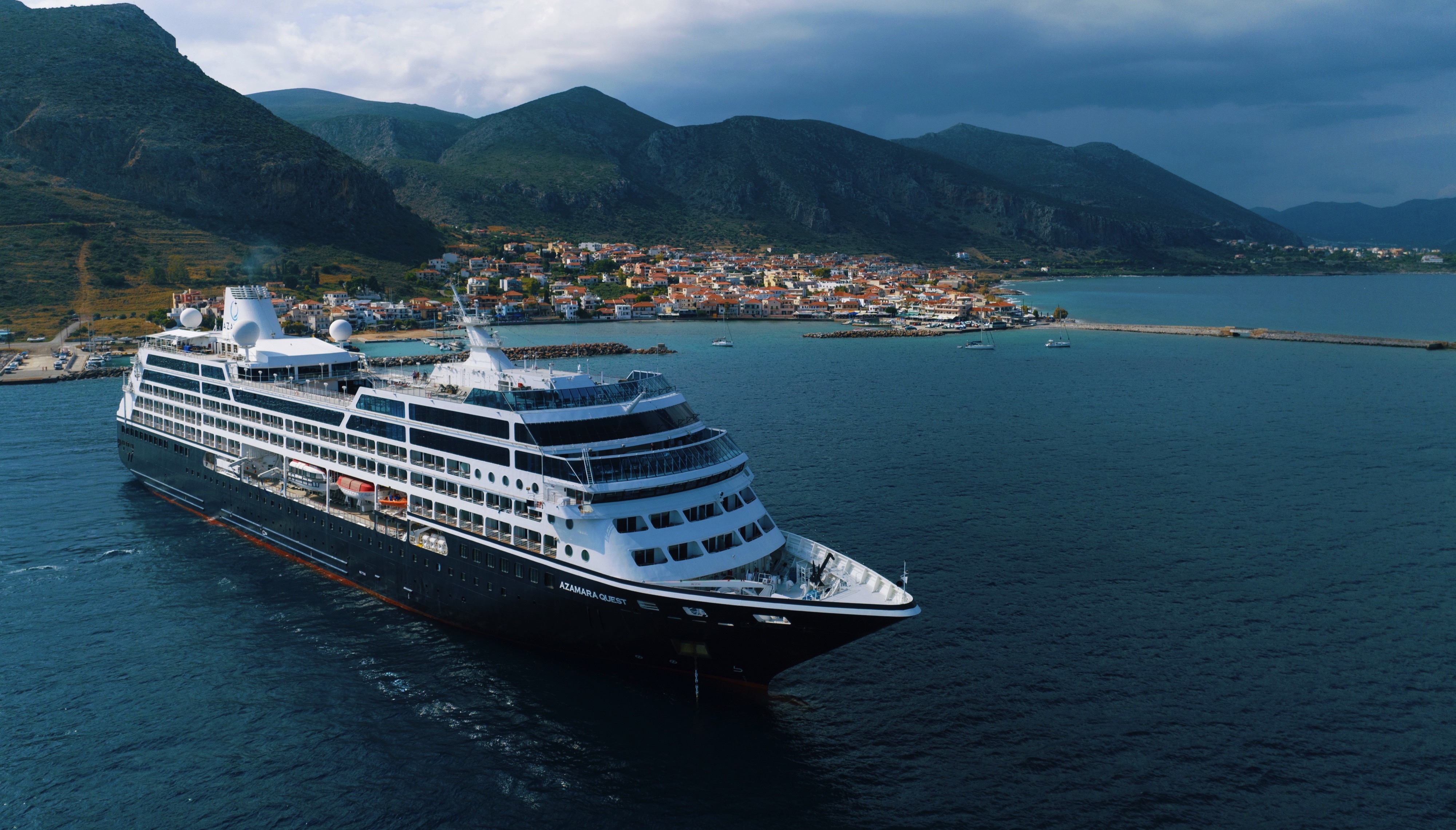
Deck Plans

- Ocean View Staterooms (x2 Accessible Staterooms)
- Interior Staterooms (x3 Accessible Staterooms)
- Guest Relations
- Concierge Desk
- Medical Facility
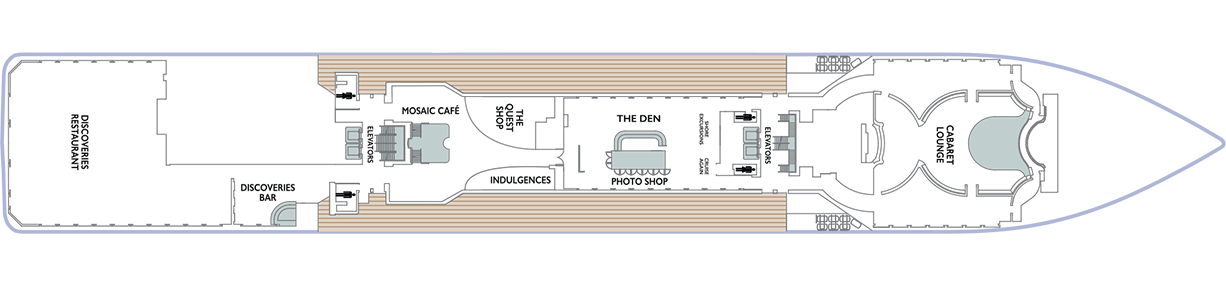
- Cabaret Lounge
- Shore Excursions
- Cruise Again
- The Quest Shop
- The Den
- Photo Shop
- Indulgences
- Mosaic Café
- Discoveries Bar
- Discoveries Restaurant
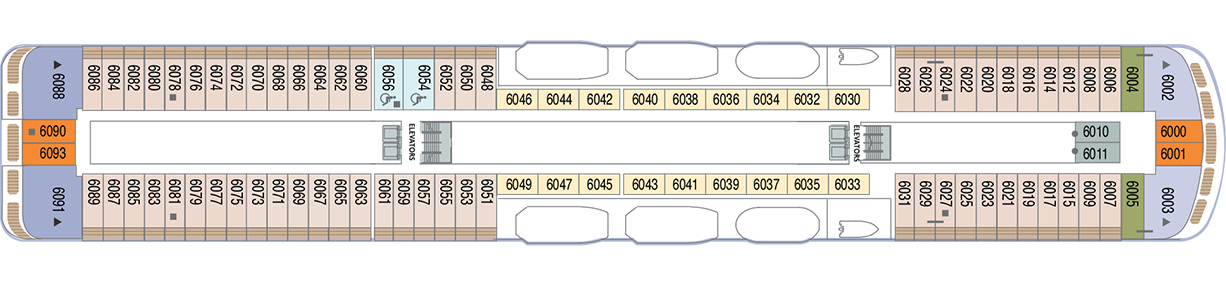
- Veranda Plus Staterooms
- Veranda Staterooms
- Ocean Suites
- World Owner’s Suites
- Continent Suite
- Oceanview Staterooms
- Interior Stateroom
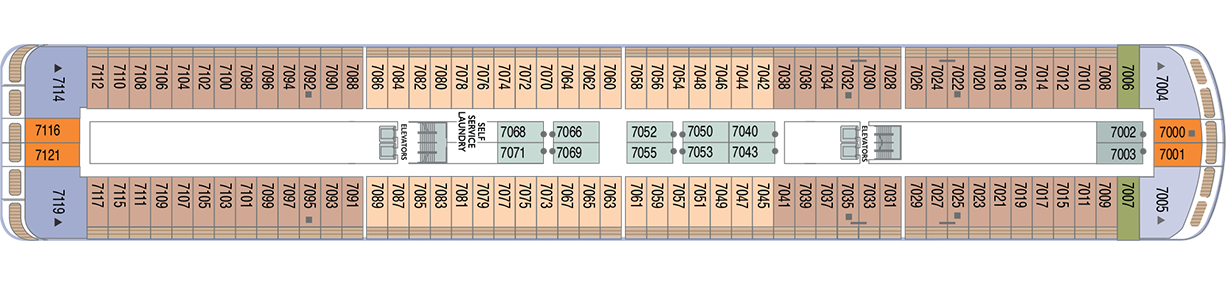
- Veranda Plus Staterooms
- Veranda Staterooms
- Ocean Suites
- Oceanview Staterooms
- Interior Staterooms
- Self Service Laundry
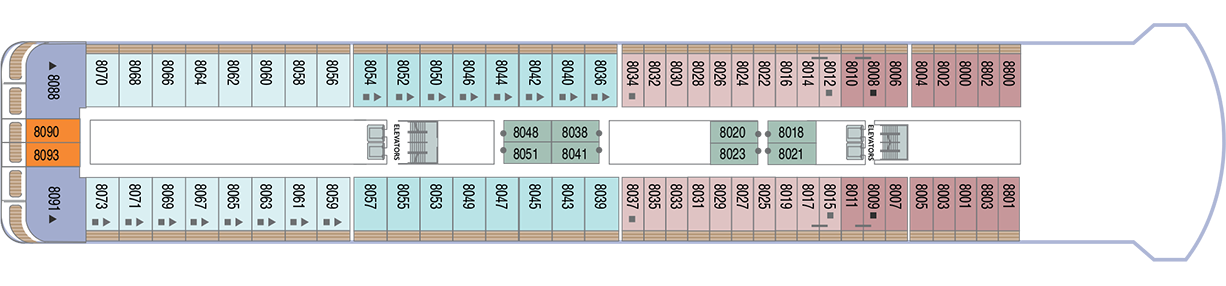
- Continent Suites
- World Owner’s Suites
- Veranda Plus Staterooms
- Interior Stateroom
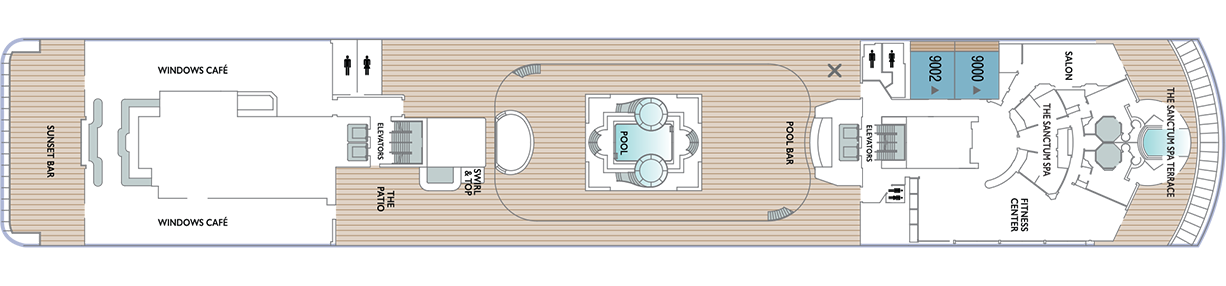
- The Sanctum Spa Terrace
- Salon
- Fitness Centre
- The Sanctum Spa
- Pool Bar
- Pool
- Swirl & Top
- The Patio
- Windows Café
- Sunset Bar
- Spa Suites
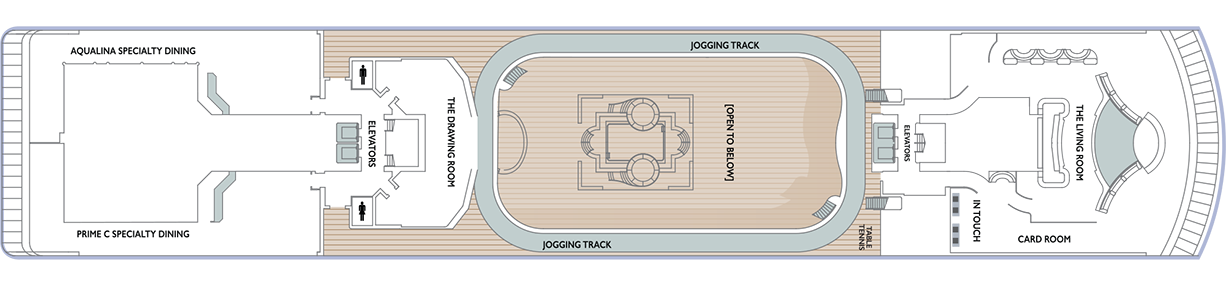
- The Living Room
- Card Room
- In Touch
- Table Tennis
- Jogging Track
- The Drawing Room
- Aqualina Speciality Dining
- Prime C Speciality Dining
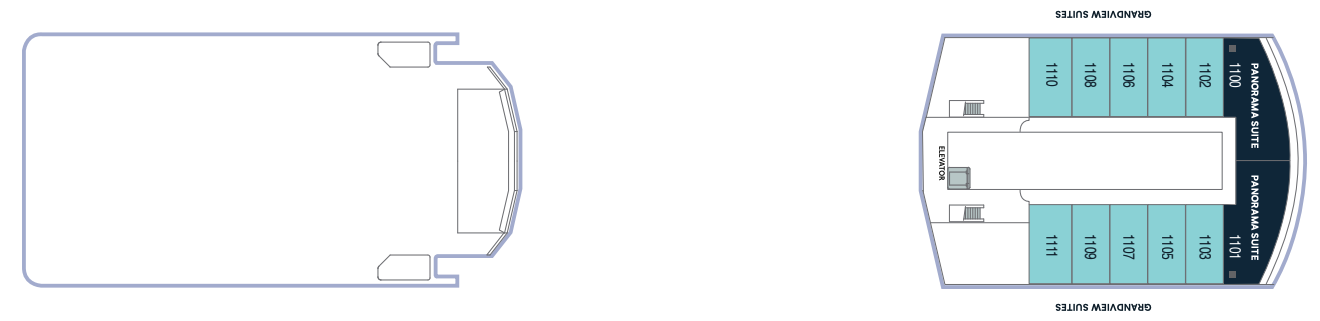
- Grandview Suites
- Panaroma Suites
- Elevator

- Sun Deck
- Ocean View Staterooms (x2 Accessible Staterooms)
- Interior Staterooms (x3 Accessible Staterooms)
- Guest Relations
- Concierge Desk
- Medical Facility
- Cabaret Lounge
- Shore Excursions
- Cruise Again
- The Quest Shop
- The Den
- Photo Shop
- Indulgences
- Mosaic Café
- Discoveries Bar
- Discoveries Restaurant
- Veranda Plus Staterooms
- Veranda Staterooms
- Ocean Suites
- World Owner’s Suites
- Continent Suite
- Oceanview Staterooms
- Interior Stateroom
- Veranda Plus Staterooms
- Veranda Staterooms
- Ocean Suites
- Oceanview Staterooms
- Interior Staterooms
- Self Service Laundry
- Continent Suites
- World Owner’s Suites
- Veranda Plus Staterooms
- Interior Stateroom
- The Sanctum Spa Terrace
- Salon
- Fitness Centre
- The Sanctum Spa
- Pool Bar
- Pool
- Swirl & Top
- The Patio
- Windows Café
- Sunset Bar
- Spa Suites
- The Living Room
- Card Room
- In Touch
- Table Tennis
- Jogging Track
- The Drawing Room
- Aqualina Speciality Dining
- Prime C Speciality Dining
- Grandview Suites
- Panaroma Suites
- Elevator
- Sun Deck