Itinerary
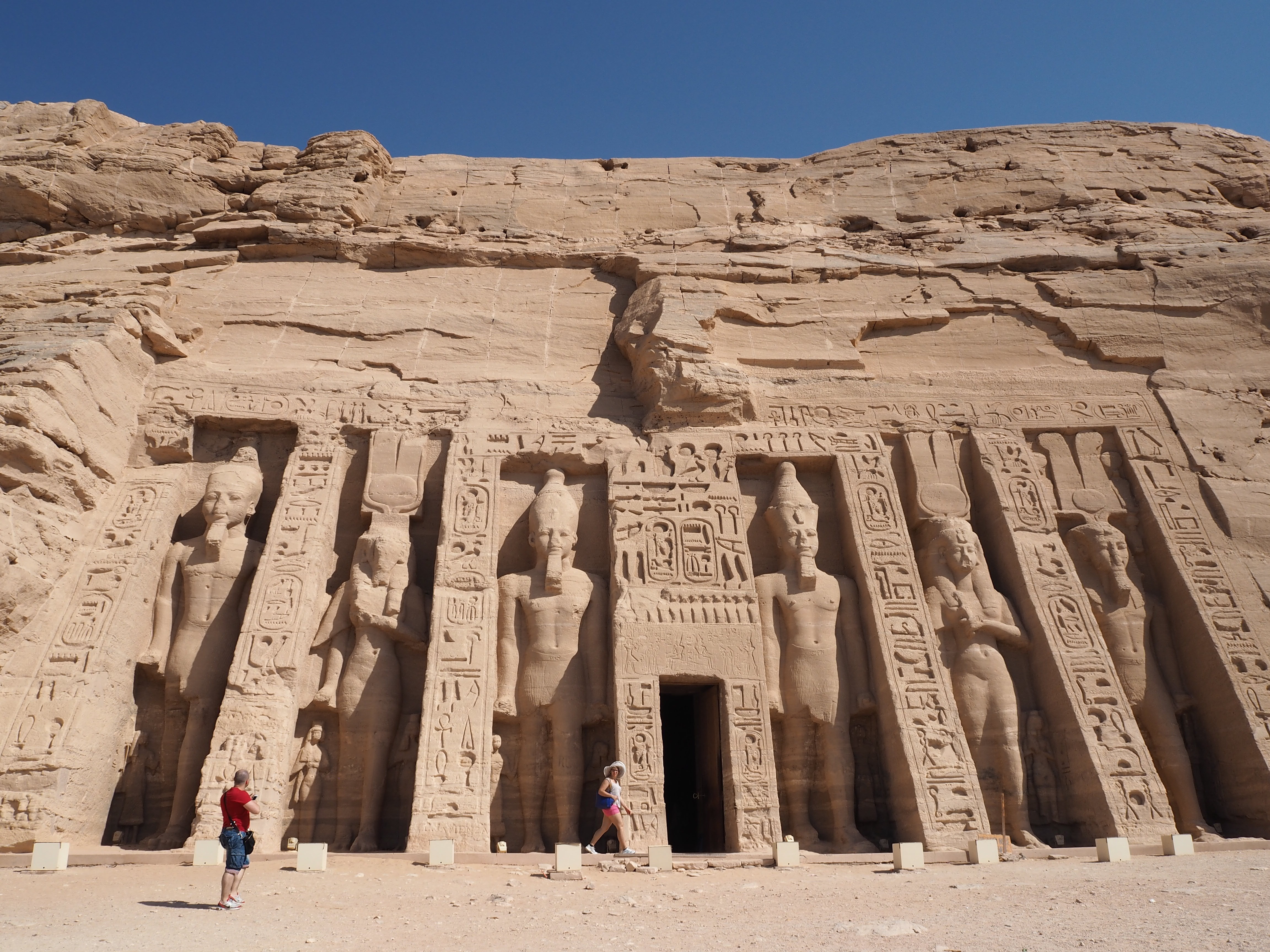
Safaga, Egypt
Port Safago has been undergoing a transformation, slowly metamorphosing into a holiday rsort. Like other cities on the Red Sea, the commercial port town sits close to great offshore dive sites. Unlike others, however, tourist development hasn’t taken off in a meaningful way. But if the mass tourism in Hurghada is a turnoff, Safaga offers a small-scale and much more low-key alternative, though the best dive sites can still be seen on a day trip from Hurghada. Safaga is also the closest beach resort to Luxor and the Valley of the Kings, which lies 200 km (124 mi) to the southwest; when cruise ships offer land excursions to Luxor, they often do so through Safaga.
At Sea
Suez Canal Transit
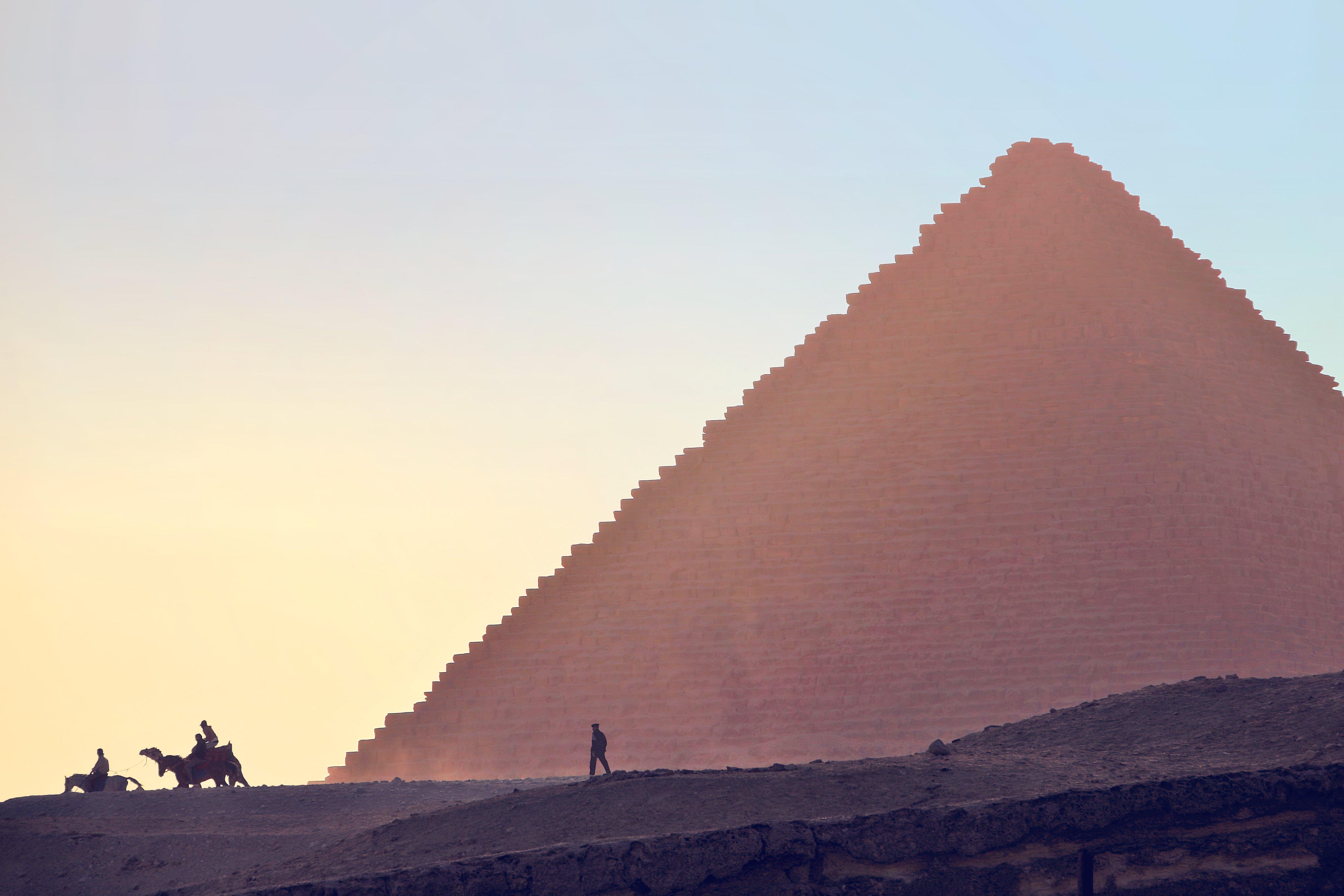
Port Said, Egypt
Port Said is located by the Suez Canal in the Northeast of Egypt. The city is steeped in history and culture as well as being an ideal place to enjoy seafood, shopping and fishing.
Port Said, Egypt
Port Said is located by the Suez Canal in the Northeast of Egypt. The city is steeped in history and culture as well as being an ideal place to enjoy seafood, shopping and fishing.
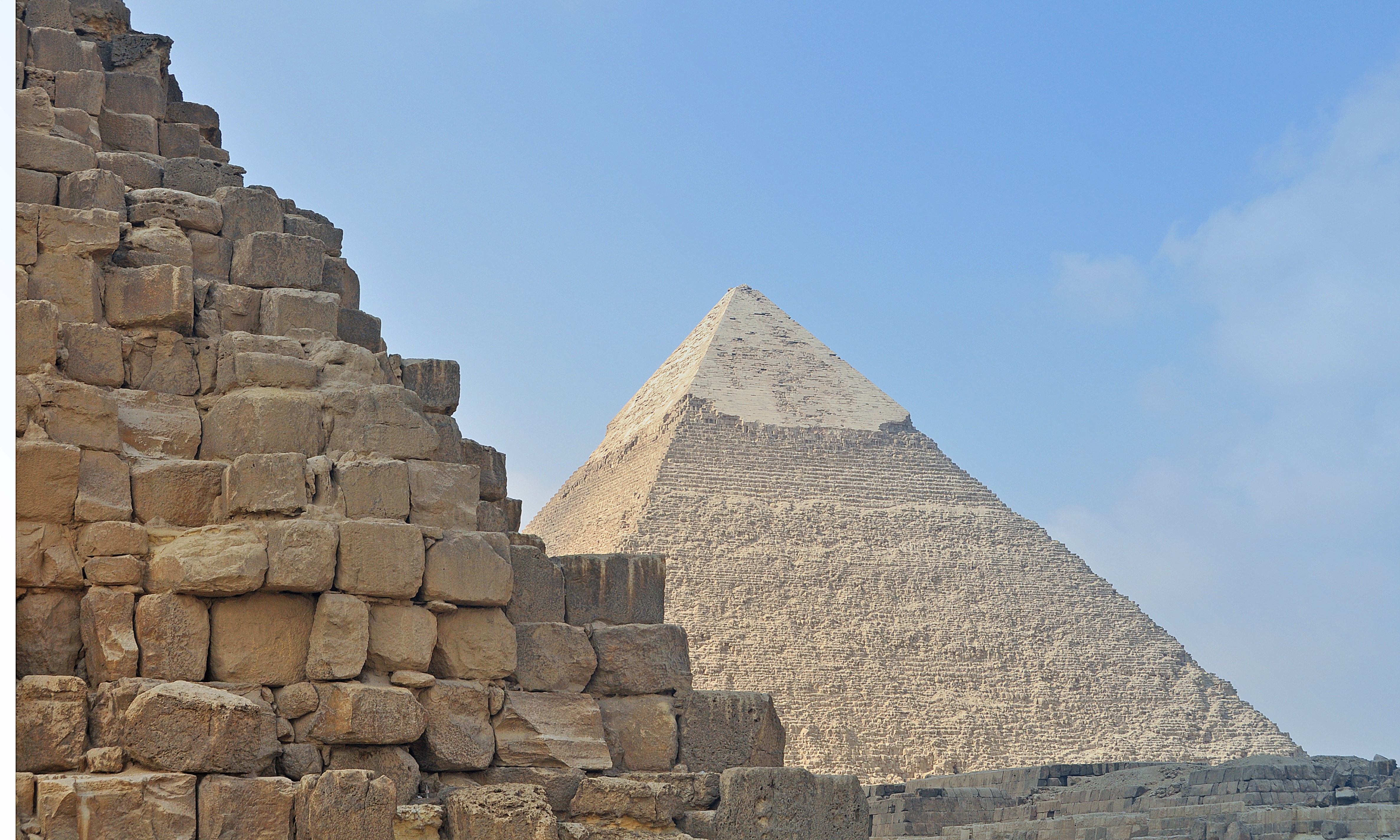
Alexandria, Egypt
Founded by Alexander the Great, Alexandria was Egypt’s capital for over 1,000 years. Now, it is visited by tourists looking to enjoy some diving and those interested in the Great Library, one of the Seven Wonders of the Ancient World.
At Sea
Safaga, Egypt
Port Safago has been undergoing a transformation, slowly metamorphosing into a holiday rsort. Like other cities on the Red Sea, the commercial port town sits close to great offshore dive sites. Unlike others, however, tourist development hasn’t taken off in a meaningful way. But if the mass tourism in Hurghada is a turnoff, Safaga offers a small-scale and much more low-key alternative, though the best dive sites can still be seen on a day trip from Hurghada. Safaga is also the closest beach resort to Luxor and the Valley of the Kings, which lies 200 km (124 mi) to the southwest; when cruise ships offer land excursions to Luxor, they often do so through Safaga.
At Sea
Suez Canal Transit
Port Said, Egypt
Port Said is located by the Suez Canal in the Northeast of Egypt. The city is steeped in history and culture as well as being an ideal place to enjoy seafood, shopping and fishing.
Port Said, Egypt
Port Said is located by the Suez Canal in the Northeast of Egypt. The city is steeped in history and culture as well as being an ideal place to enjoy seafood, shopping and fishing.
Alexandria, Egypt
Founded by Alexander the Great, Alexandria was Egypt’s capital for over 1,000 years. Now, it is visited by tourists looking to enjoy some diving and those interested in the Great Library, one of the Seven Wonders of the Ancient World.
At Sea
Rhodes, Greece
Early travelers described Rhodes as a town of two parts: a castle or high town (Collachium) and a lower city. Today Rhodes town—sometimes referred to as Ródos town—is still a city of two parts: the Old Town, a UNESCO World Heritage site that incorporates the high town and lower city, and the modern metropolis, or New Town, spreading away from the walls that encircle the Old Town. The narrow streets of the Old Town are for the most part closed to cars and are lined with Orthodox and Catholic churches, Turkish houses (some of which follow the ancient orthogonal plan), and medieval public buildings with exterior staircases and facades elegantly constructed of well-cut limestone from Lindos. Careful reconstruction in recent years has enhanced the harmonious effect.
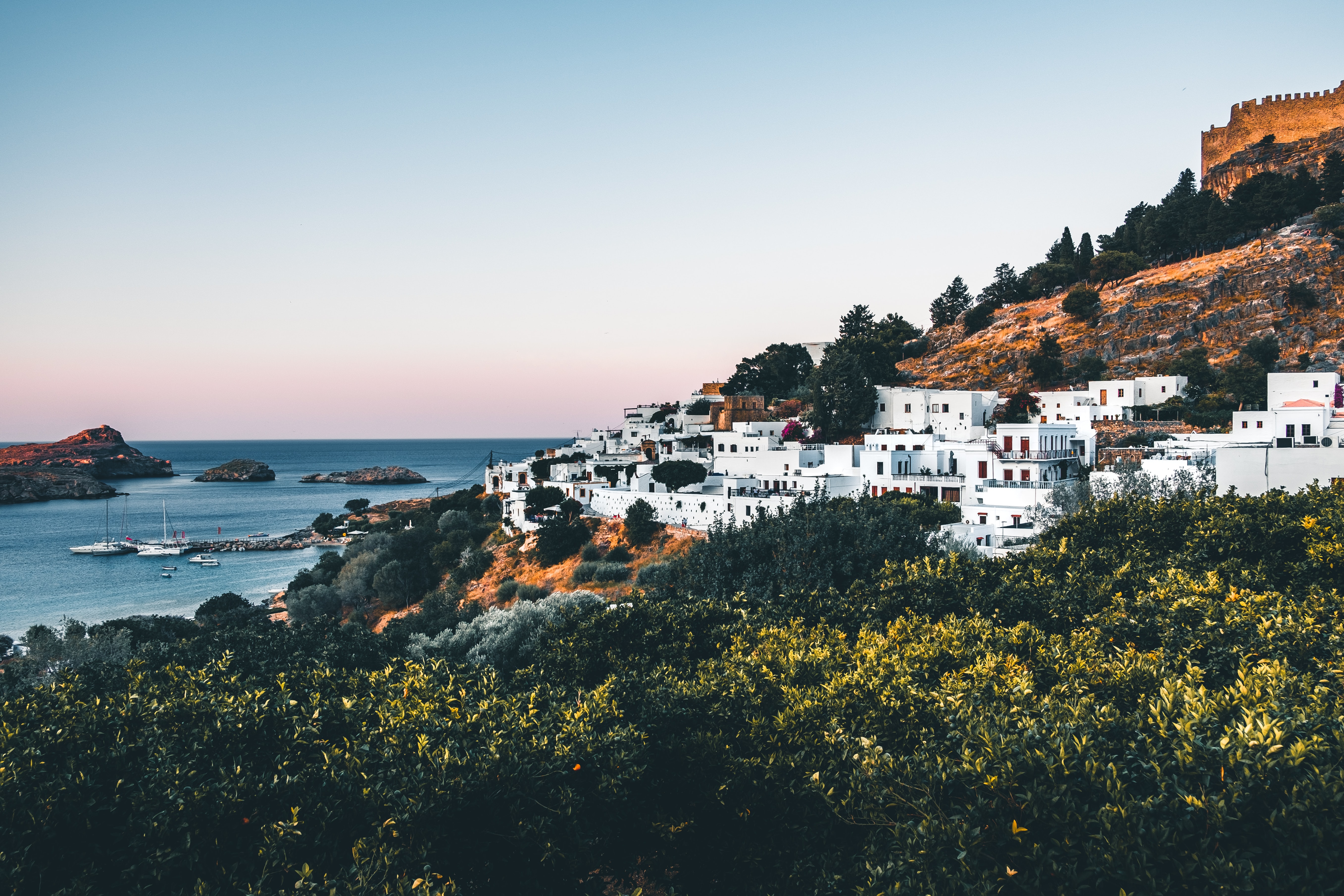
Santorini, Greece
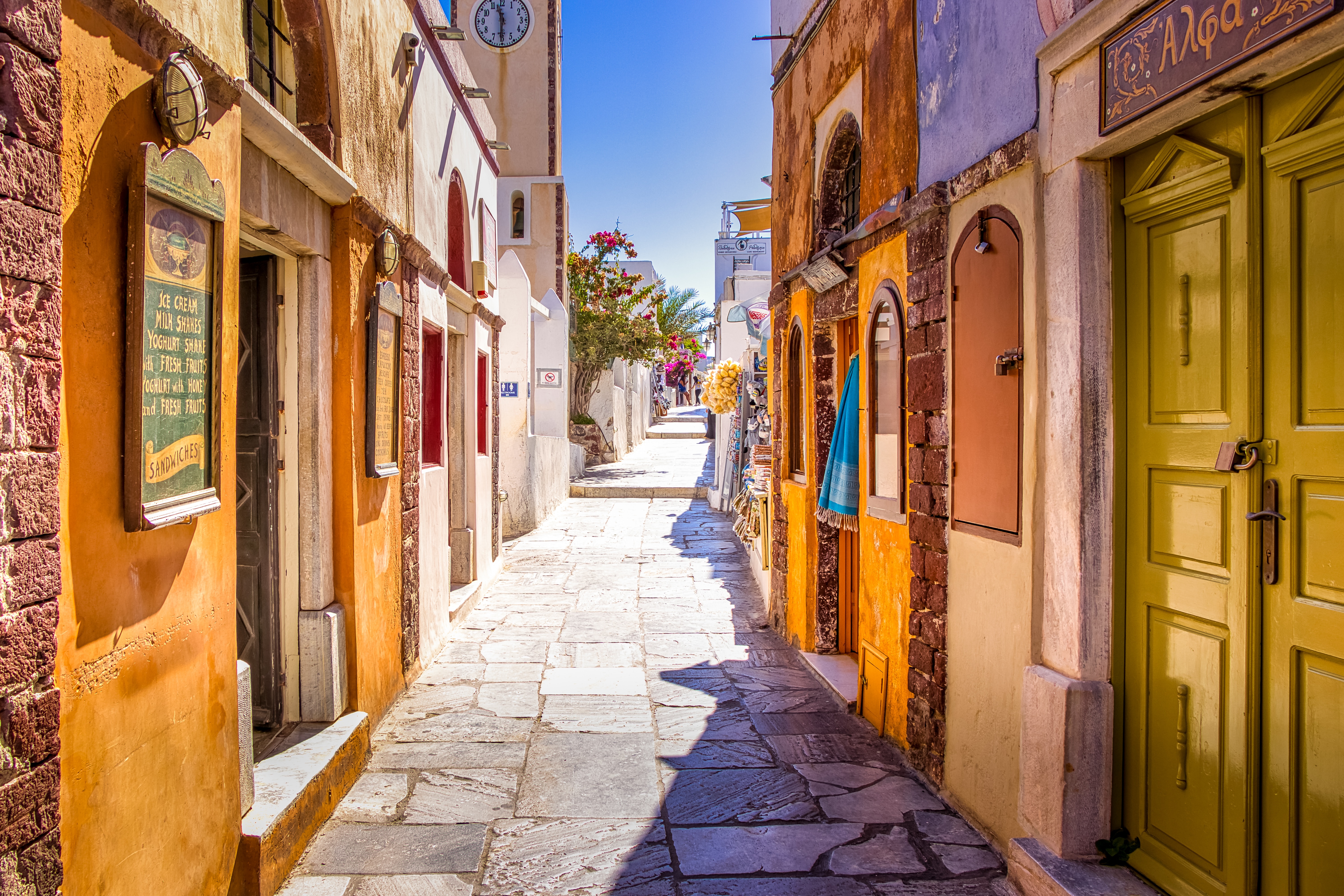
Undoubtedly the most extraordinary island in the Aegean, crescent-shape Santorini remains a mandatory stop on the Cycladic tourist route—even if it’s necessary to enjoy the sensational sunsets from Ia, the fascinating excavations, and the dazzling white towns with a million other travelers. Called Kállisti (the “Loveliest”) when first settled, the island has now reverted to its subsequent name of Thira, after the 9th-century-BC Dorian colonizer Thiras. The place is better known, however, these days as Santorini, a name derived from its patroness, St. Irene of Thessaloniki, the Byzantine empress who restored icons to Orthodoxy and died in 802. You can fly conveniently to Santorini, but to enjoy a true Santorini rite of passage, opt instead for the boat trip here, which provides a spectacular introduction. After the boat sails between Sikinos and Ios, your deck-side perch approaches two close islands with a passage between them. The bigger one on the left is Santorini, and the smaller on the right is Thirassia. Passing between them, you see the village of Ia adorning Santorini’s northernmost cliff like a white geometric beehive. You are in the caldera (volcanic crater), one of the world’s truly breathtaking sights: a demilune of cliffs rising 1,100 feet, with the white clusters of the towns of Fira and Ia perched along the top. The bay, once the high center of the island, is 1,300 feet in some places, so deep that when boats dock in Santorini’s shabby little port of Athinios, they do not drop anchor. The encircling cliffs are the ancient rim of a still-active volcano, and you are sailing east across its flooded caldera. On your right are the Burnt isles, the White isle, and other volcanic remnants, all lined up as if some outsize display in a geology museum. Hephaestus’s subterranean fires smolder still—the volcano erupted in 198 BC, about 735, and there was an earthquake in 1956. Indeed, Santorini and its four neighboring islets are the fragmentary remains of a larger landmass that exploded about 1600 BC: the volcano’s core blew sky high, and the sea rushed into the abyss to create the great bay, which measures 10 km by 7 km (6 mi by 4½ mi) and is 1,292 feet deep. The other pieces of the rim, which broke off in later eruptions, are Thirassia, where a few hundred people live, and deserted little Aspronissi (“White isle”). In the center of the bay, black and uninhabited, two cones, the Burnt Isles of Palea Kameni and Nea Kameni, appeared between 1573 and 1925. There has been too much speculation about the identification of Santorini with the mythical Atlantis, mentioned in Egyptian papyri and by Plato (who says it’s in the Atlantic), but myths are hard to pin down. This is not true of old arguments about whether tidal waves from Santorini’s cataclysmic explosion destroyed Minoan civilization on Crete, 113 km (70 mi) away. The latest carbon-dating evidence, which points to a few years before 1600 BC for the eruption, clearly indicates that the Minoans outlasted the eruption by a couple of hundred years, but most probably in a weakened state. In fact, the island still endures hardships: since antiquity, Santorini has depended on rain collected in cisterns for drinking and irrigating—the well water is often brackish—and the serious shortage is alleviated by the importation of water. However, the volcanic soil also yields riches: small, intense tomatoes with tough skins used for tomato paste (good restaurants here serve them); the famous Santorini fava beans, which have a light, fresh taste; barley; wheat; and white-skin eggplants.
Milos, Greece
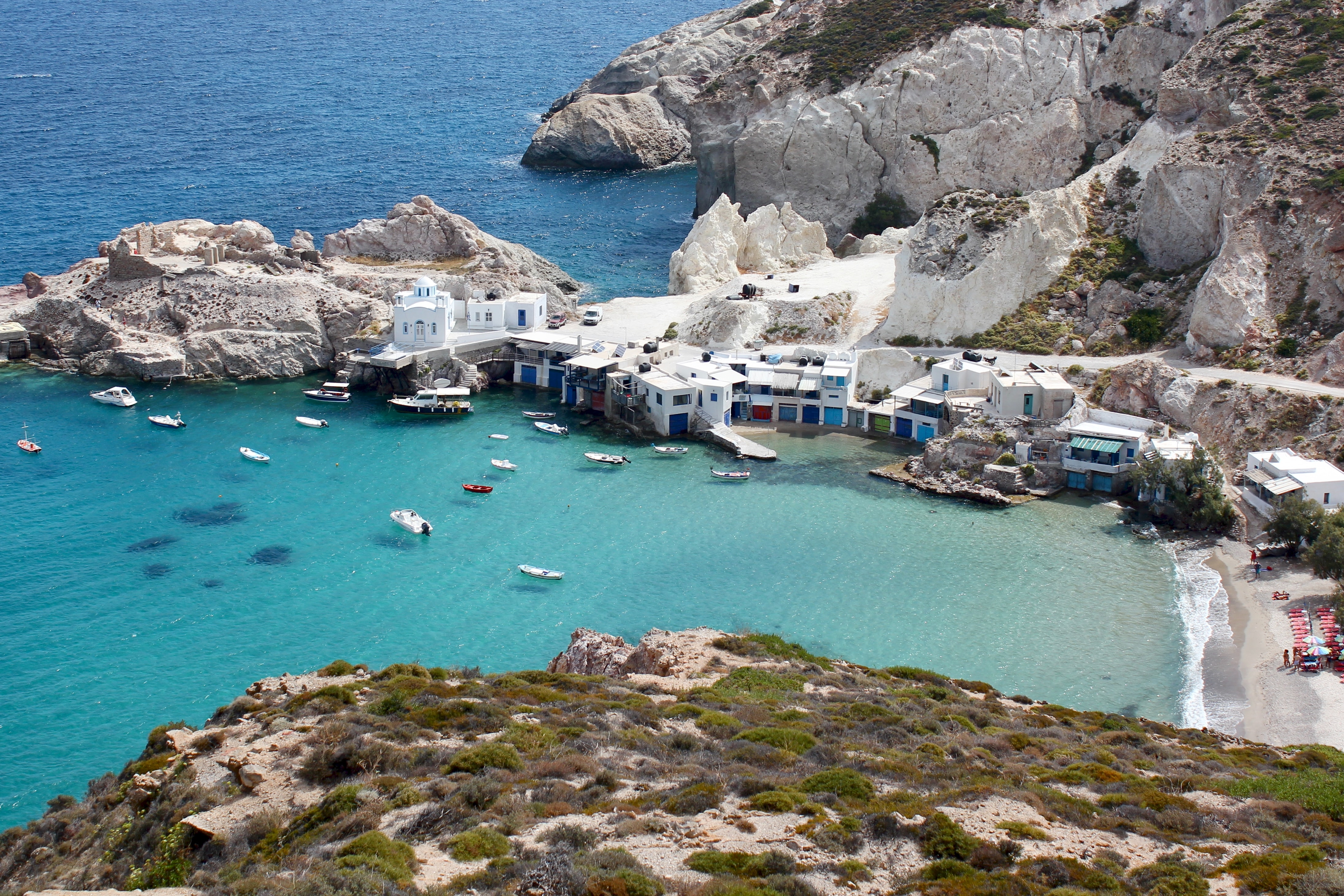
Milos or Melos is a volcanic Greek island in the Aegean Sea, just north of the Sea of Crete. Milos is the southwesternmost island in the Cyclades group. The Venus de Milo and the Asclepius of Milos were both found on the island, as were a Poseidon and an archaic Apollo now in Athens.
Hydra, Greece
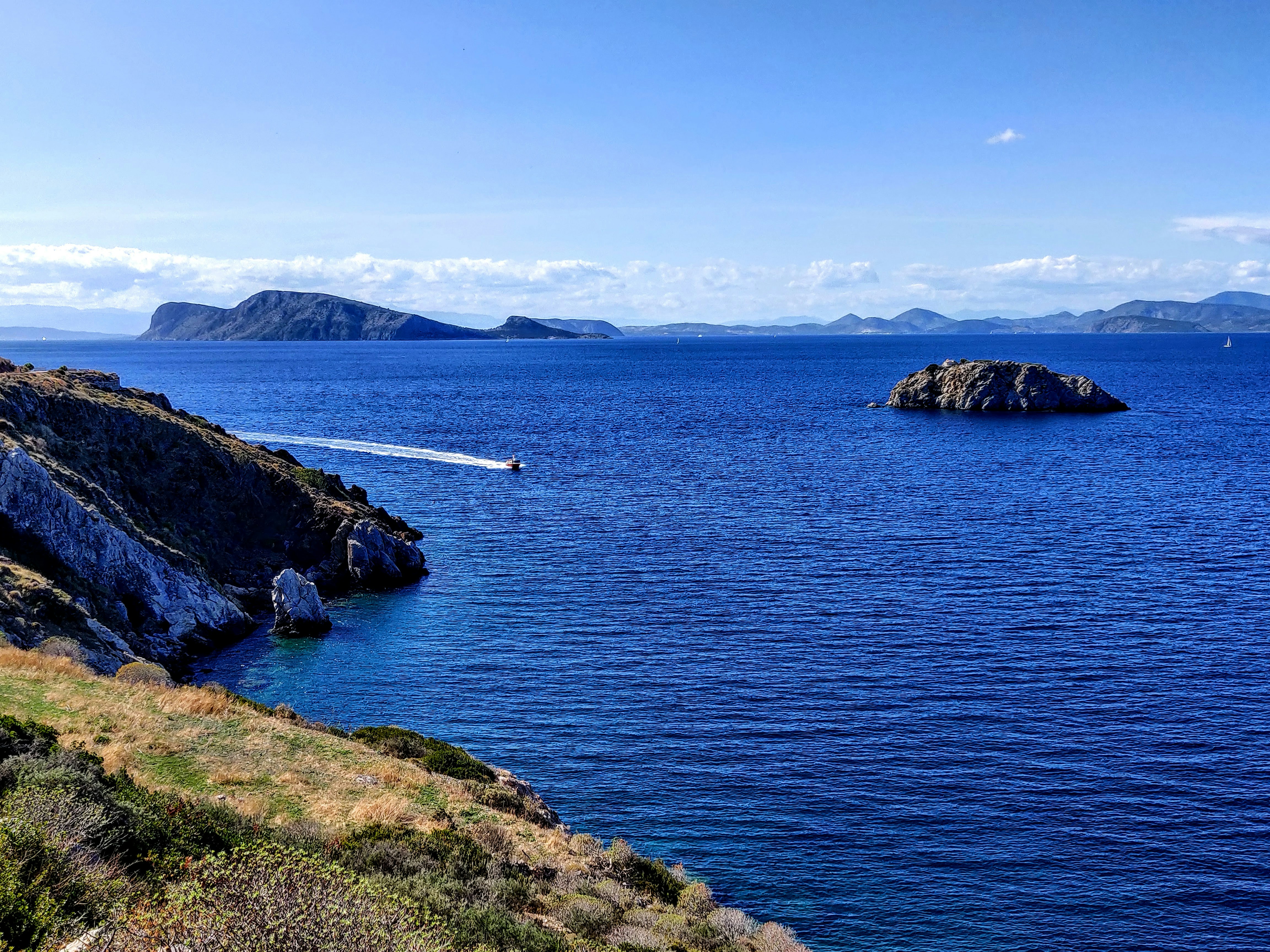
Rising from the turquoise expanse of the sunny Mediterranean, Hydra is the counterpoint of choice for Athenians – who can swap the city chaos for blissful relaxation with an hour’s boat journey. Known for its inspiring celebrity appeal – Leonard Cohen bought a house here in the 60s – Hydra is a pretty island of rising streets, whitewash mansions, and carefree clamour. Located a stone’s throw from the Greek mainland, the authorities have resisted the temptation to cash in, meaning Hydra remains an endearing time-warp, which revels in life in the slow lane. With cars and new building developments banned – discover an island of donkeys plodding cobbled streets, and fishing boats undulating gently on the harbour’s waves.
Piraeus, Greece
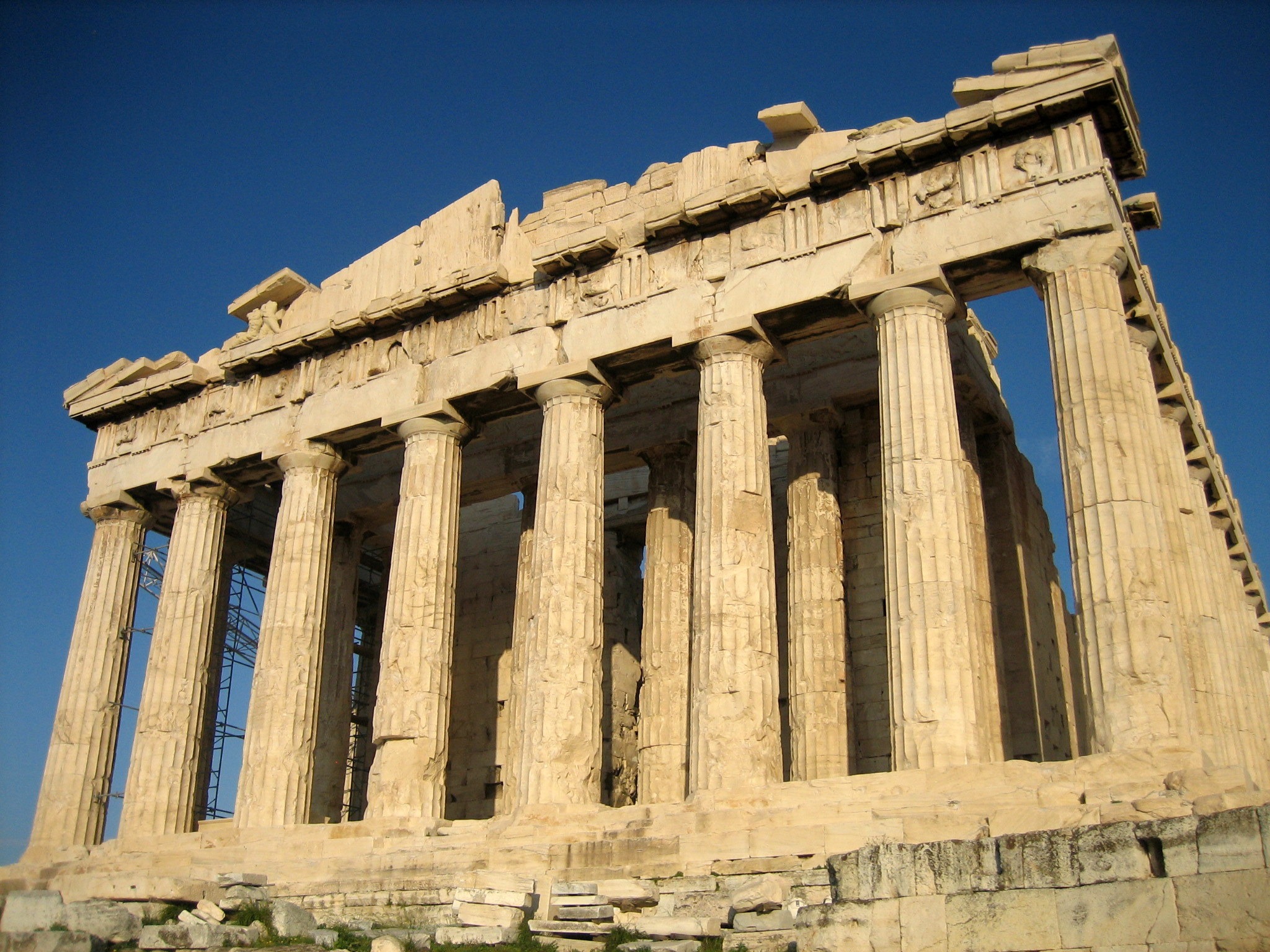
It’s no wonder that all roads lead to the fascinating and maddening metropolis of Athens. Lift your eyes 200 feet above the city to the Parthenon, its honey-color marble columns rising from a massive limestone base, and you behold architectural perfection that has not been surpassed in 2,500 years. But, today, this shrine of classical form dominates a 21st-century boomtown. To experience Athens—Athína in Greek—fully is to understand the essence of Greece: ancient monuments surviving in a sea of cement, startling beauty amid the squalor, tradition juxtaposed with modernity. Locals depend on humor and flexibility to deal with the chaos; you should do the same. The rewards are immense. Although Athens covers a huge area, the major landmarks of the ancient Greek, Roman, and Byzantine periods are close to the modern city center. You can easily walk from the Acropolis to many other key sites, taking time to browse in shops and relax in cafés and tavernas along the way. From many quarters of the city you can glimpse “the glory that was Greece” in the form of the Acropolis looming above the horizon, but only by actually climbing that rocky precipice can you feel the impact of the ancient settlement. The Acropolis and Filopappou, two craggy hills sitting side by side; the ancient Agora (marketplace); and Kerameikos, the first cemetery, form the core of ancient and Roman Athens. Along the Unification of Archaeological Sites promenade, you can follow stone-paved, tree-lined walkways from site to site, undisturbed by traffic. Cars have also been banned or reduced in other streets in the historical center. In the National Archaeological Museum, vast numbers of artifacts illustrate the many millennia of Greek civilization; smaller museums such as the Goulandris Museum of Cycladic Art Museum and the Byzantine and Christian Museum illuminate the history of particular regions or periods. Athens may seem like one huge city, but it is really a conglomeration of neighborhoods with distinctive characters. The Eastern influences that prevailed during the 400-year rule of the Ottoman Empire are still evident in Monastiraki, the bazaar area near the foot of the Acropolis. On the northern slope of the Acropolis, stroll through Plaka (if possible by moonlight), an area of tranquil streets lined with renovated mansions, to get the flavor of the 19th-century’s gracious lifestyle. The narrow lanes of Anafiotika, a section of Plaka, thread past tiny churches and small, color-washed houses with wooden upper stories, recalling a Cycladic island village. In this maze of winding streets, vestiges of the older city are everywhere: crumbling stairways lined with festive tavernas; dank cellars filled with wine vats; occasionally a court or diminutive garden, enclosed within high walls and filled with magnolia trees and the flaming trumpet-shaped flowers of hibiscus bushes. Formerly run-down old quarters, such as Thission, Gazi and Psirri, popular nightlife areas filled with bars and mezedopoleia (similar to tapas bars), are now in the process of gentrification, although they still retain much of their original charm, as does the colorful produce and meat market on Athinas. The area around Syntagma Square, the tourist hub, and Omonia Square, the commercial heart of the city about 1 km (½ mi) northwest, is distinctly European, having been designed by the court architects of King Otho, a Bavarian, in the 19th century. The chic shops and bistros of ritzy Kolonaki nestle at the foot of Mt. Lycabettus, Athens’s highest hill (909 feet). Each of Athens’s outlying suburbs has a distinctive character: in the north is wealthy, tree-lined Kifissia, once a summer resort for aristocratic Athenians, and in the south and southeast lie Glyfada, Voula, and Vouliagmeni, with their sandy beaches, seaside bars, and lively summer nightlife. Just beyond the city’s southern fringes is Piraeus, a bustling port city of waterside fish tavernas and Saronic Gulf views.
Rhodes, Greece
Early travelers described Rhodes as a town of two parts: a castle or high town (Collachium) and a lower city. Today Rhodes town—sometimes referred to as Ródos town—is still a city of two parts: the Old Town, a UNESCO World Heritage site that incorporates the high town and lower city, and the modern metropolis, or New Town, spreading away from the walls that encircle the Old Town. The narrow streets of the Old Town are for the most part closed to cars and are lined with Orthodox and Catholic churches, Turkish houses (some of which follow the ancient orthogonal plan), and medieval public buildings with exterior staircases and facades elegantly constructed of well-cut limestone from Lindos. Careful reconstruction in recent years has enhanced the harmonious effect.
Santorini, Greece
Undoubtedly the most extraordinary island in the Aegean, crescent-shape Santorini remains a mandatory stop on the Cycladic tourist route—even if it’s necessary to enjoy the sensational sunsets from Ia, the fascinating excavations, and the dazzling white towns with a million other travelers. Called Kállisti (the “Loveliest”) when first settled, the island has now reverted to its subsequent name of Thira, after the 9th-century-BC Dorian colonizer Thiras. The place is better known, however, these days as Santorini, a name derived from its patroness, St. Irene of Thessaloniki, the Byzantine empress who restored icons to Orthodoxy and died in 802. You can fly conveniently to Santorini, but to enjoy a true Santorini rite of passage, opt instead for the boat trip here, which provides a spectacular introduction. After the boat sails between Sikinos and Ios, your deck-side perch approaches two close islands with a passage between them. The bigger one on the left is Santorini, and the smaller on the right is Thirassia. Passing between them, you see the village of Ia adorning Santorini’s northernmost cliff like a white geometric beehive. You are in the caldera (volcanic crater), one of the world’s truly breathtaking sights: a demilune of cliffs rising 1,100 feet, with the white clusters of the towns of Fira and Ia perched along the top. The bay, once the high center of the island, is 1,300 feet in some places, so deep that when boats dock in Santorini’s shabby little port of Athinios, they do not drop anchor. The encircling cliffs are the ancient rim of a still-active volcano, and you are sailing east across its flooded caldera. On your right are the Burnt isles, the White isle, and other volcanic remnants, all lined up as if some outsize display in a geology museum. Hephaestus’s subterranean fires smolder still—the volcano erupted in 198 BC, about 735, and there was an earthquake in 1956. Indeed, Santorini and its four neighboring islets are the fragmentary remains of a larger landmass that exploded about 1600 BC: the volcano’s core blew sky high, and the sea rushed into the abyss to create the great bay, which measures 10 km by 7 km (6 mi by 4½ mi) and is 1,292 feet deep. The other pieces of the rim, which broke off in later eruptions, are Thirassia, where a few hundred people live, and deserted little Aspronissi (“White isle”). In the center of the bay, black and uninhabited, two cones, the Burnt Isles of Palea Kameni and Nea Kameni, appeared between 1573 and 1925. There has been too much speculation about the identification of Santorini with the mythical Atlantis, mentioned in Egyptian papyri and by Plato (who says it’s in the Atlantic), but myths are hard to pin down. This is not true of old arguments about whether tidal waves from Santorini’s cataclysmic explosion destroyed Minoan civilization on Crete, 113 km (70 mi) away. The latest carbon-dating evidence, which points to a few years before 1600 BC for the eruption, clearly indicates that the Minoans outlasted the eruption by a couple of hundred years, but most probably in a weakened state. In fact, the island still endures hardships: since antiquity, Santorini has depended on rain collected in cisterns for drinking and irrigating—the well water is often brackish—and the serious shortage is alleviated by the importation of water. However, the volcanic soil also yields riches: small, intense tomatoes with tough skins used for tomato paste (good restaurants here serve them); the famous Santorini fava beans, which have a light, fresh taste; barley; wheat; and white-skin eggplants.
Milos, Greece
Milos or Melos is a volcanic Greek island in the Aegean Sea, just north of the Sea of Crete. Milos is the southwesternmost island in the Cyclades group. The Venus de Milo and the Asclepius of Milos were both found on the island, as were a Poseidon and an archaic Apollo now in Athens.
Hydra, Greece
Rising from the turquoise expanse of the sunny Mediterranean, Hydra is the counterpoint of choice for Athenians – who can swap the city chaos for blissful relaxation with an hour’s boat journey. Known for its inspiring celebrity appeal – Leonard Cohen bought a house here in the 60s – Hydra is a pretty island of rising streets, whitewash mansions, and carefree clamour. Located a stone’s throw from the Greek mainland, the authorities have resisted the temptation to cash in, meaning Hydra remains an endearing time-warp, which revels in life in the slow lane. With cars and new building developments banned – discover an island of donkeys plodding cobbled streets, and fishing boats undulating gently on the harbour’s waves.
Piraeus, Greece
It’s no wonder that all roads lead to the fascinating and maddening metropolis of Athens. Lift your eyes 200 feet above the city to the Parthenon, its honey-color marble columns rising from a massive limestone base, and you behold architectural perfection that has not been surpassed in 2,500 years. But, today, this shrine of classical form dominates a 21st-century boomtown. To experience Athens—Athína in Greek—fully is to understand the essence of Greece: ancient monuments surviving in a sea of cement, startling beauty amid the squalor, tradition juxtaposed with modernity. Locals depend on humor and flexibility to deal with the chaos; you should do the same. The rewards are immense. Although Athens covers a huge area, the major landmarks of the ancient Greek, Roman, and Byzantine periods are close to the modern city center. You can easily walk from the Acropolis to many other key sites, taking time to browse in shops and relax in cafés and tavernas along the way. From many quarters of the city you can glimpse “the glory that was Greece” in the form of the Acropolis looming above the horizon, but only by actually climbing that rocky precipice can you feel the impact of the ancient settlement. The Acropolis and Filopappou, two craggy hills sitting side by side; the ancient Agora (marketplace); and Kerameikos, the first cemetery, form the core of ancient and Roman Athens. Along the Unification of Archaeological Sites promenade, you can follow stone-paved, tree-lined walkways from site to site, undisturbed by traffic. Cars have also been banned or reduced in other streets in the historical center. In the National Archaeological Museum, vast numbers of artifacts illustrate the many millennia of Greek civilization; smaller museums such as the Goulandris Museum of Cycladic Art Museum and the Byzantine and Christian Museum illuminate the history of particular regions or periods. Athens may seem like one huge city, but it is really a conglomeration of neighborhoods with distinctive characters. The Eastern influences that prevailed during the 400-year rule of the Ottoman Empire are still evident in Monastiraki, the bazaar area near the foot of the Acropolis. On the northern slope of the Acropolis, stroll through Plaka (if possible by moonlight), an area of tranquil streets lined with renovated mansions, to get the flavor of the 19th-century’s gracious lifestyle. The narrow lanes of Anafiotika, a section of Plaka, thread past tiny churches and small, color-washed houses with wooden upper stories, recalling a Cycladic island village. In this maze of winding streets, vestiges of the older city are everywhere: crumbling stairways lined with festive tavernas; dank cellars filled with wine vats; occasionally a court or diminutive garden, enclosed within high walls and filled with magnolia trees and the flaming trumpet-shaped flowers of hibiscus bushes. Formerly run-down old quarters, such as Thission, Gazi and Psirri, popular nightlife areas filled with bars and mezedopoleia (similar to tapas bars), are now in the process of gentrification, although they still retain much of their original charm, as does the colorful produce and meat market on Athinas. The area around Syntagma Square, the tourist hub, and Omonia Square, the commercial heart of the city about 1 km (½ mi) northwest, is distinctly European, having been designed by the court architects of King Otho, a Bavarian, in the 19th century. The chic shops and bistros of ritzy Kolonaki nestle at the foot of Mt. Lycabettus, Athens’s highest hill (909 feet). Each of Athens’s outlying suburbs has a distinctive character: in the north is wealthy, tree-lined Kifissia, once a summer resort for aristocratic Athenians, and in the south and southeast lie Glyfada, Voula, and Vouliagmeni, with their sandy beaches, seaside bars, and lively summer nightlife. Just beyond the city’s southern fringes is Piraeus, a bustling port city of waterside fish tavernas and Saronic Gulf views.
Cabin Options
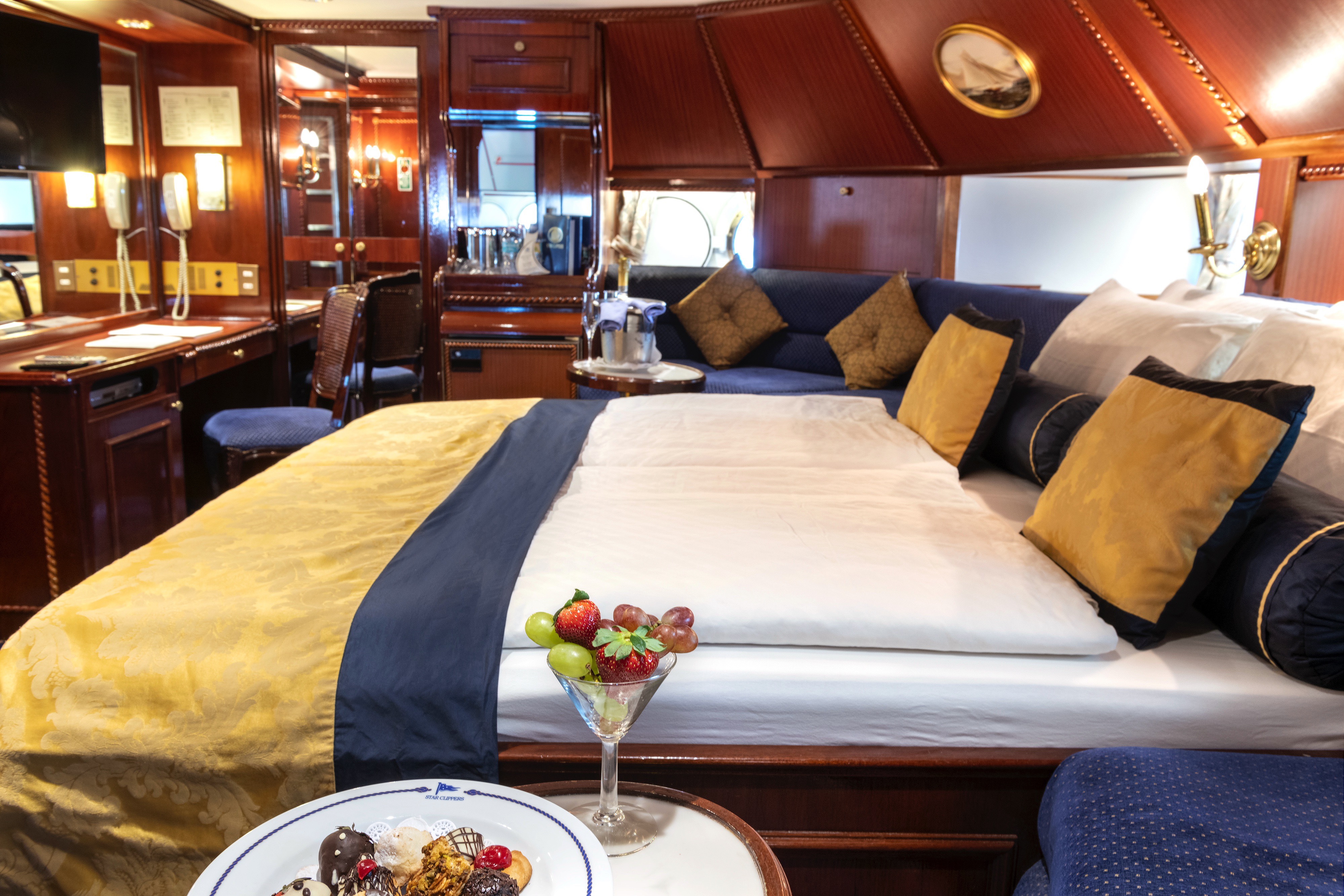
Owner's Cabin
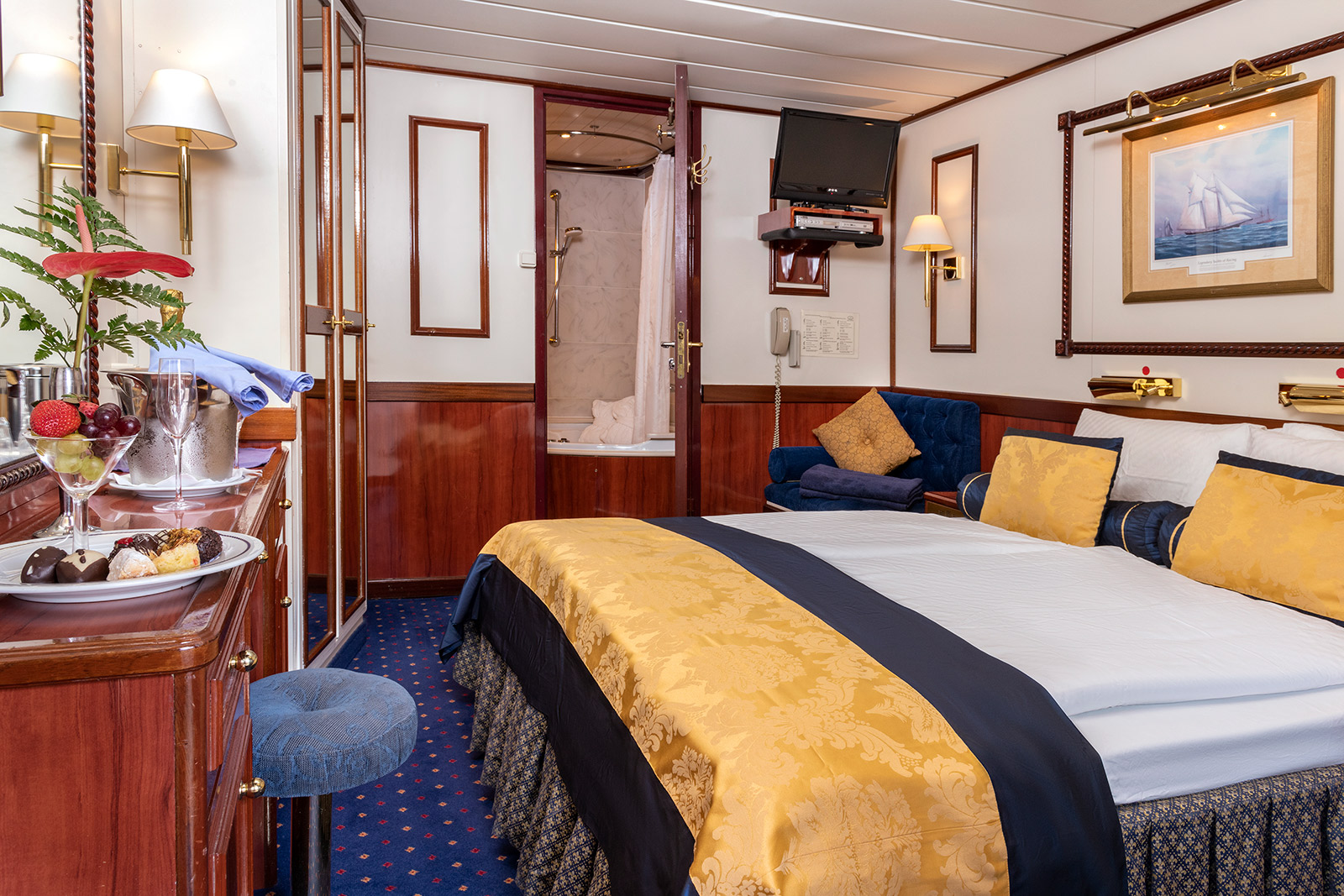
Category 1 – Deluxe Deck Cabins
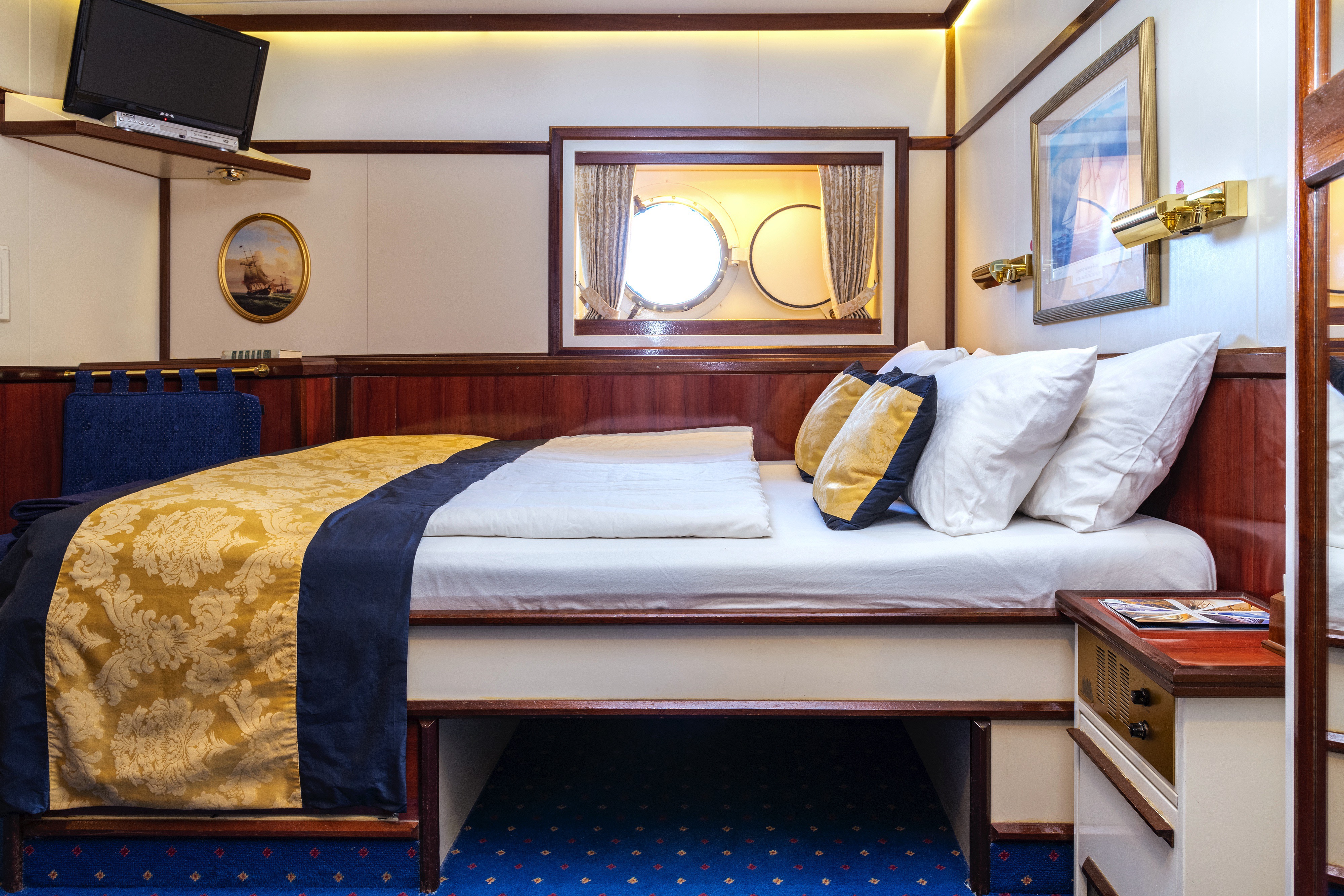
Category 2 – Large Outside Cabins
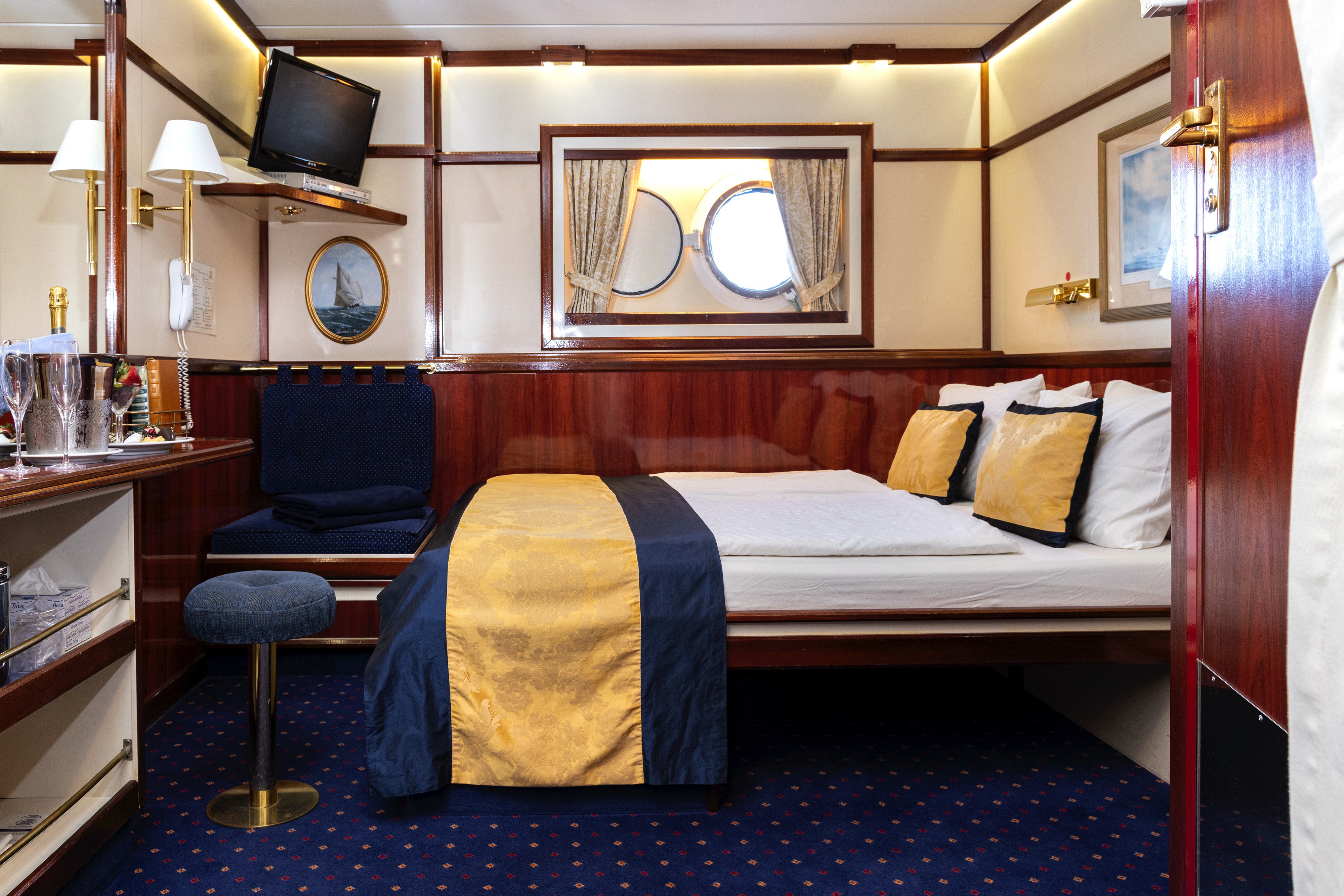
Category 3 – Outside Cabins
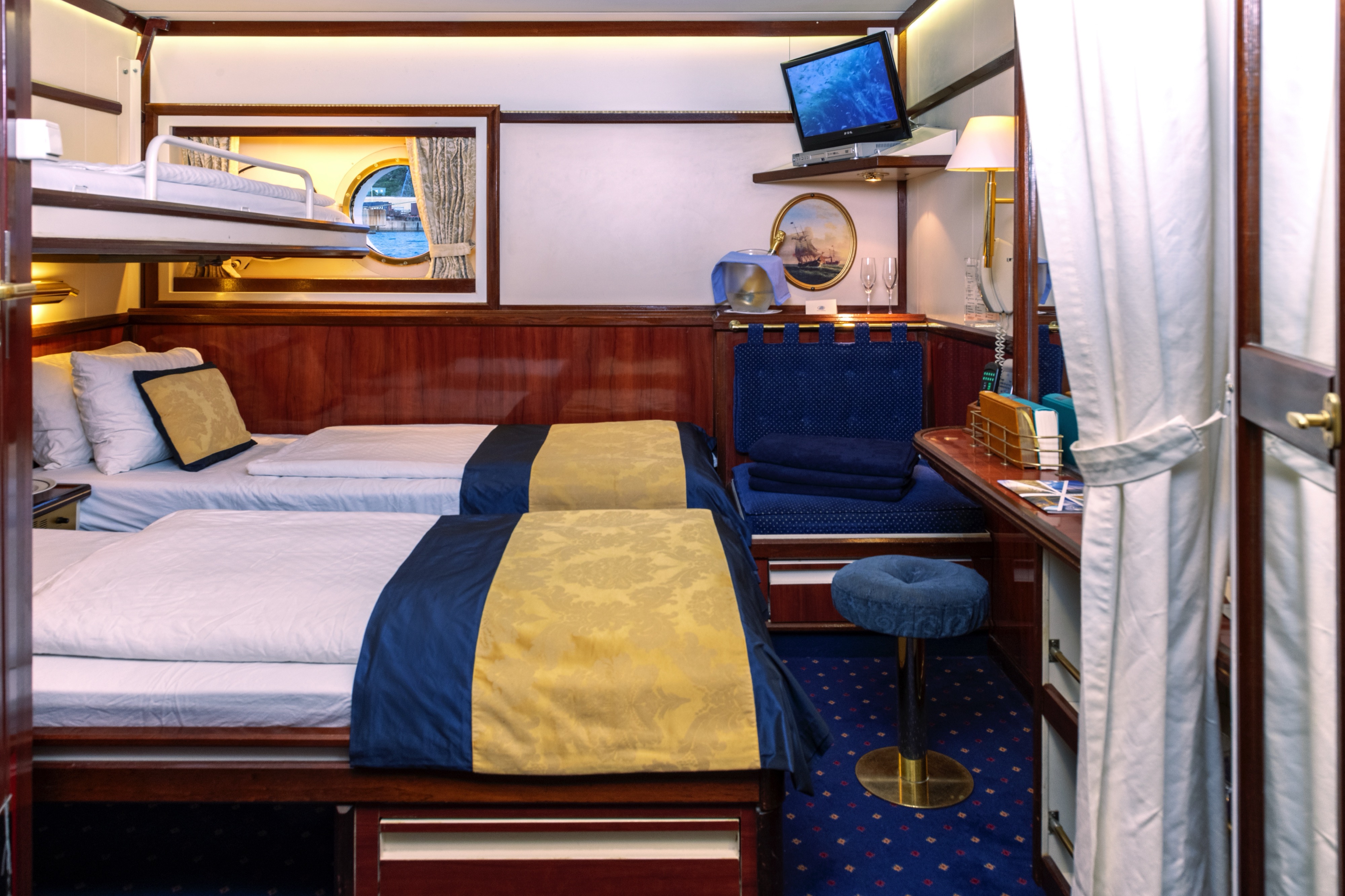
Category 4 – Outside Cabins
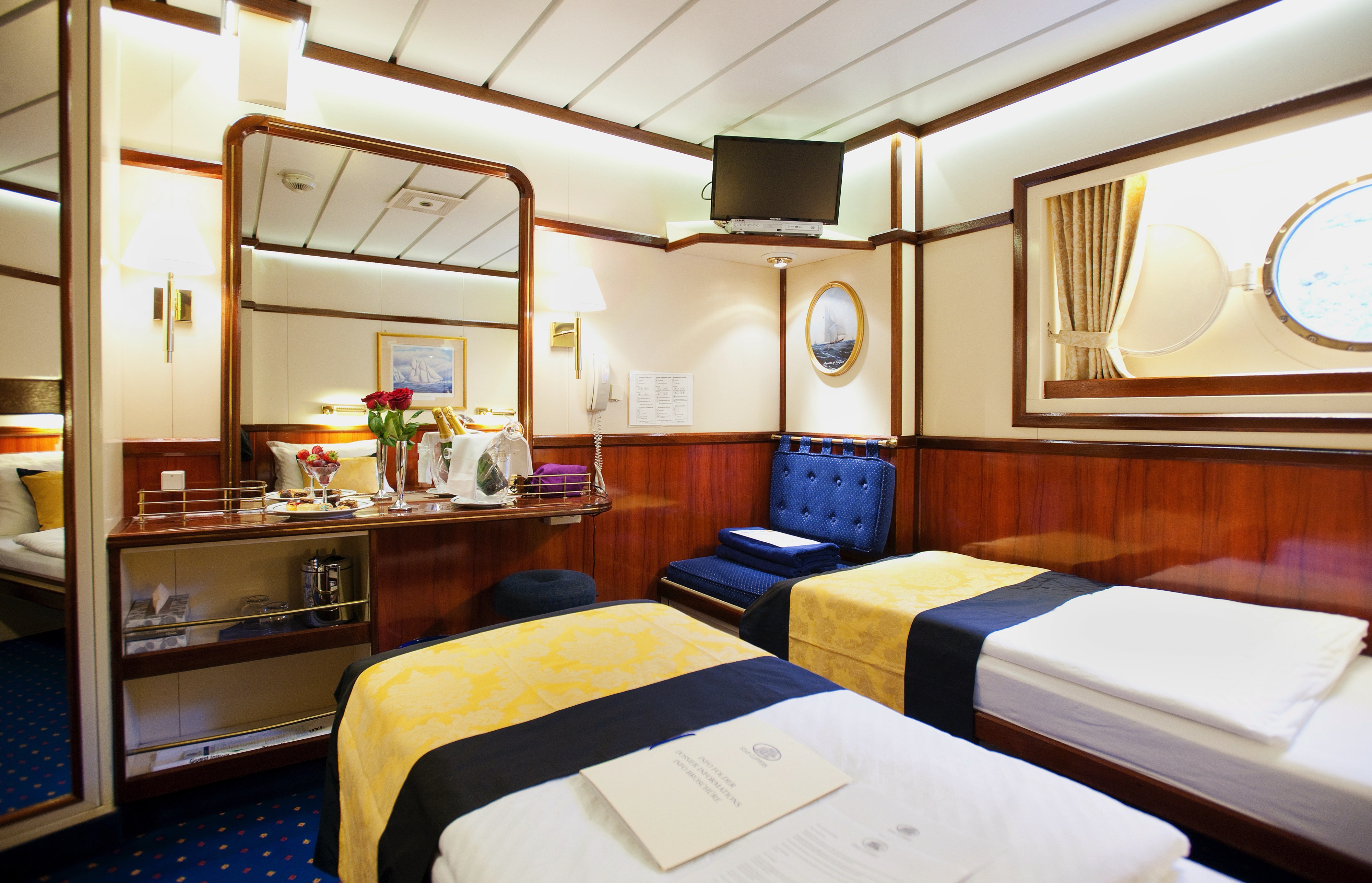
Category 5 – Outside Cabins
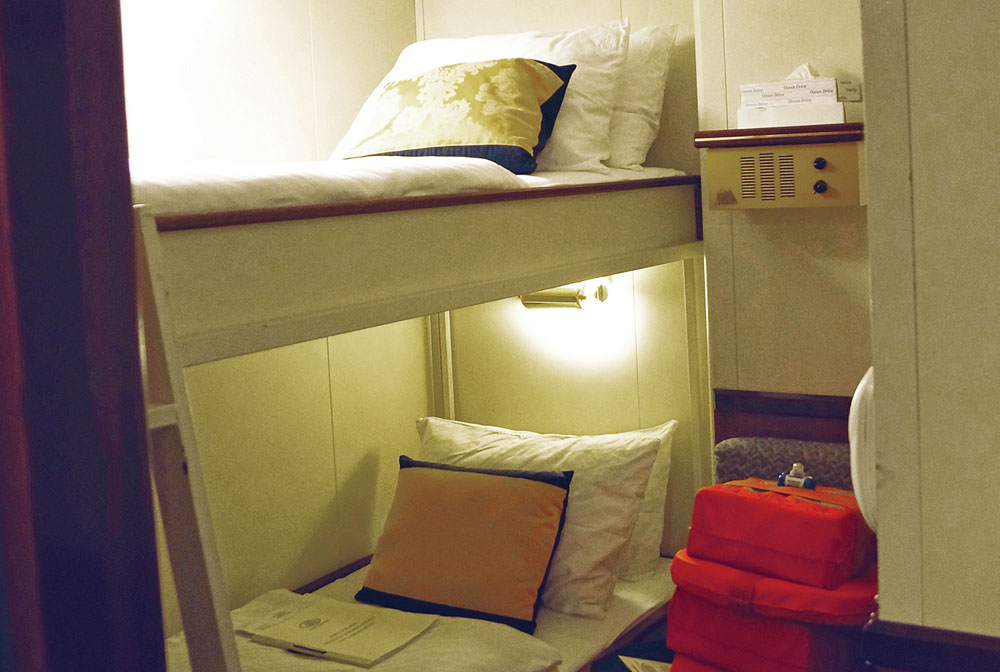
Category 6 Cabins
Ship Facilities
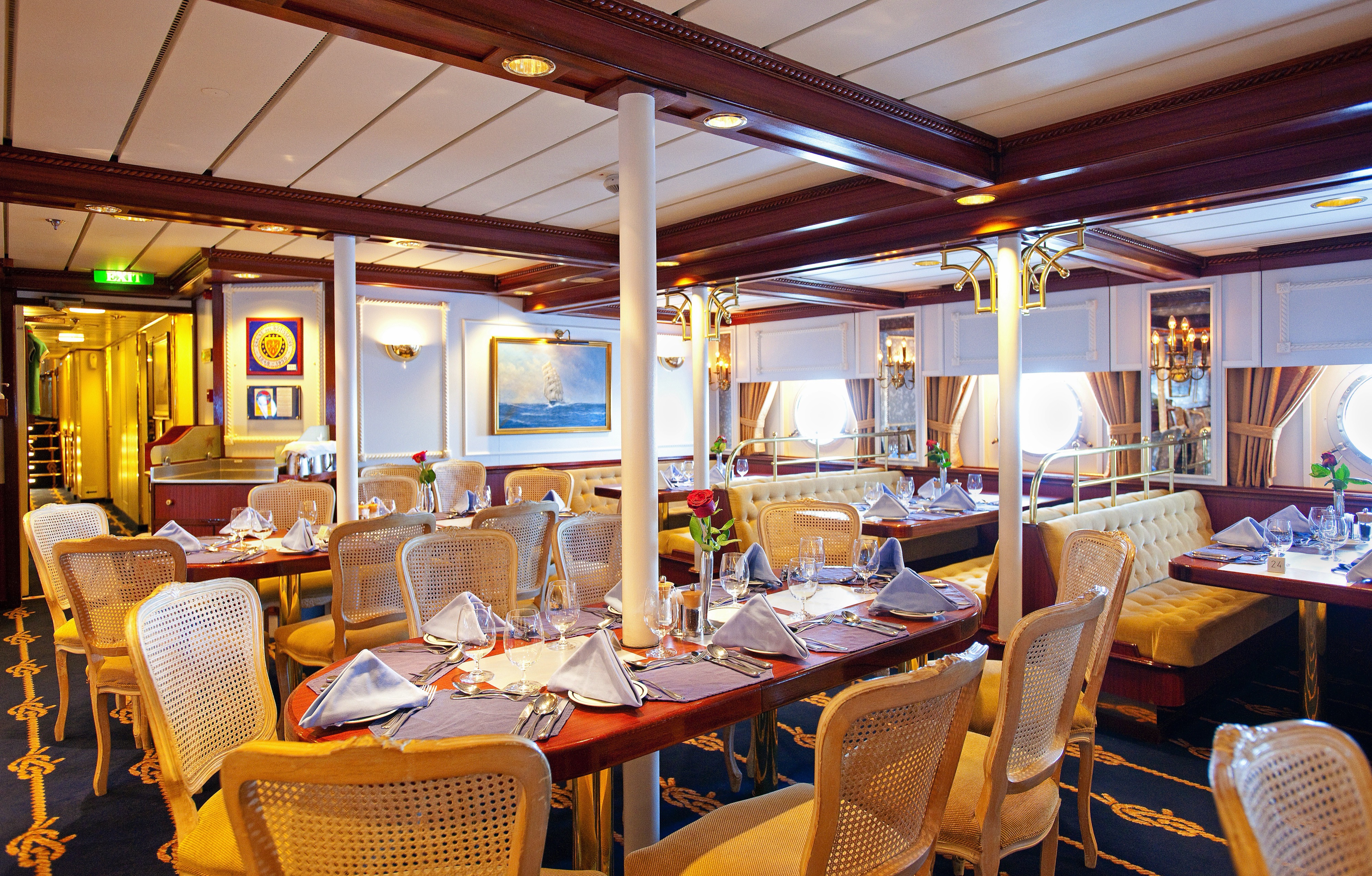
Clipper Dining Room
When you rise, help yourself to a continental breakfast with Parisian croissants or sweet Danish pastries. Or savour a full breakfast with fresh tropical fruit and crisp bacon, grilled sausage and omelettes cooked to order in the dining room.
At lunch, a marvellous buffet of seafood, salads and grilled favourites awaits your pleasure. If the day includes a stop at one of the paradisical islands we frequent, you might also be treated to a succulent outdoor barbecue on shore.
When evening comes, our elegantly appointed dining room becomes the setting for the chef’s finest culinary presentations, designed to please the eye and the palate, complemented by a selection of equally fine wines.
You’ll find our service to be friendly and gracious, befitting a tasteful restaurant. Of course, we would not presume to dictate your seating preferences. On all three ships, you are free to dine when and with whomever you wish – including with our officers, who join our guests in the dining room most nights. The dress code? No need for formal gowns and black tie, casual elegance is the order of the day and every single night.
Watersports
Sailing with Star Clippers is a unique experience!
Explore new horizons, push your boundaries & enjoy a range of nautical activities! Make the most of our complimentary water sports program and learn a wide variety of nautical activities, supervised by our officers & crew.
Water sports for all tastes!
On beach stops our sports team can offer you: kayaks, paddle boards and dinghies as well as water skiing and windsurfing. Enjoy your favourite water sports during the cruise or take the opportunity to try something new.
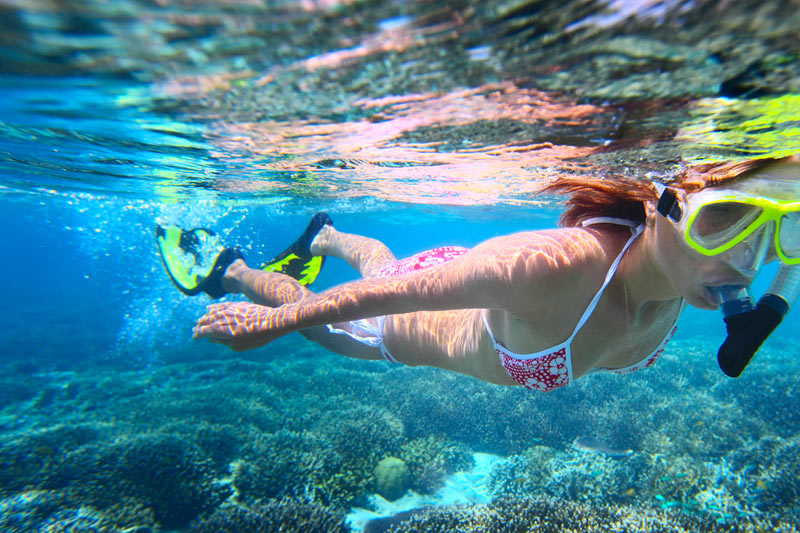
Snorkelling
Close your eyes and imagine you are soaking up the sun on a white sandy beach in the Caribbean; crystal clear waters invite you to explore the underwater world of coral reefs and colourful tropical fish. Star Clippers hands out snorkelling equipment to all passengers upon arrival on board, so all you have to do is dive in and explore.
Sailor for a day!
Life on the ocean is one big adventure! Discover the sailing techniques used by our marine experts. Our crew will help you to hoist the sails, climb the mast, and tie marine knots. You will learn the names of the different sails and how to use a sextant. When evening comes and the velvety darkness is punctuated by stars, our officers will show you how to navigate at night with the help of the stars.
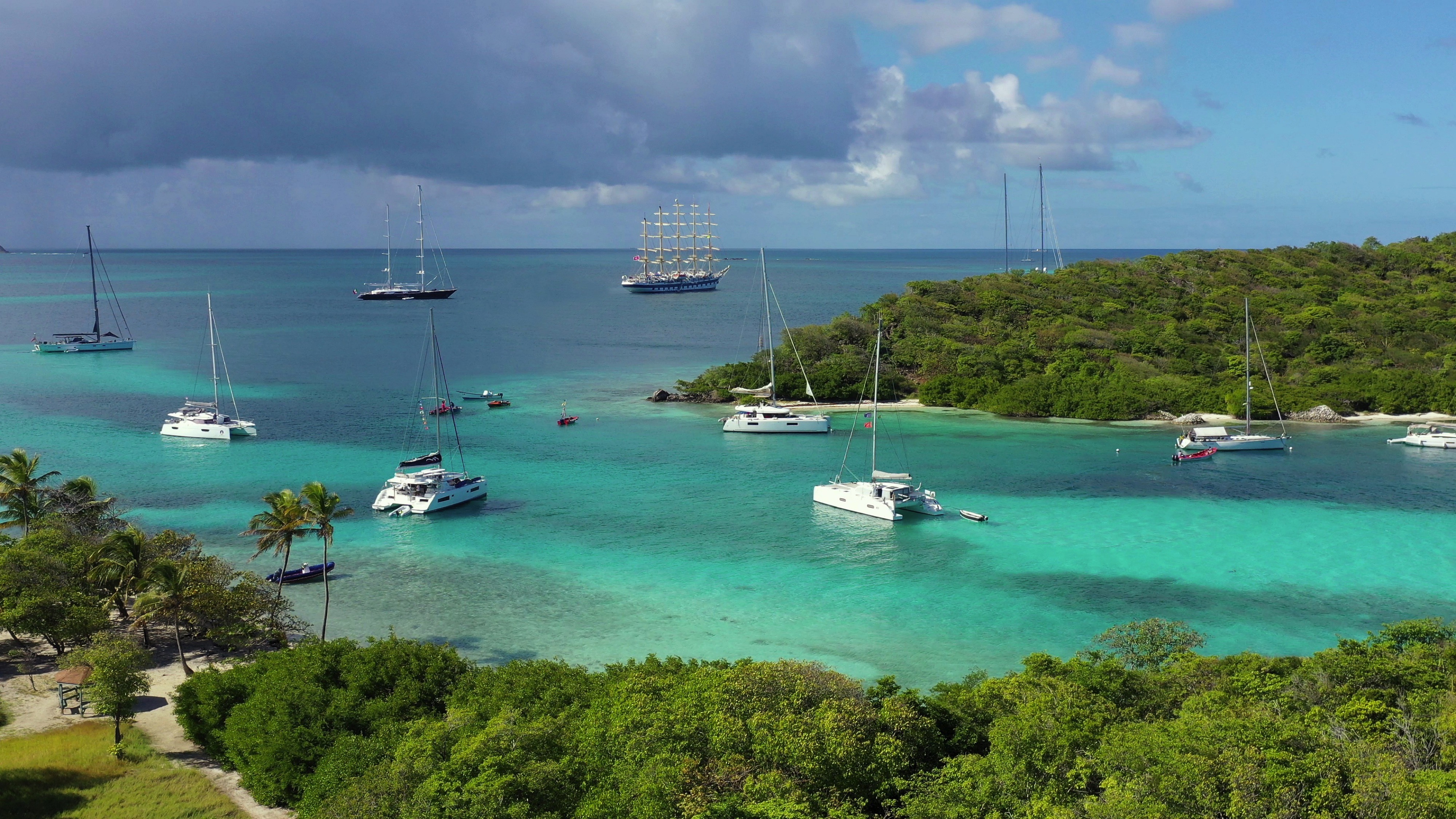
Exclusive Sailing Destinations
Star Clippers takes you to the most beautiful beaches in the Caribbean, the Mediterranean and Southeast Asia, far from all the crowds and congested harbours.
Our tenders or zodiac service allow you to go ashore in comfort and disembark either in port or directly on the beach, so you are free to set off and explore each destination. On Royal Clipper, a specially designed marine platform can be lowered to sea level, so you can enjoy water sports directly from the ship!
Shore Excursions
A wide variety of exceptional shore excursions are offered in the many extraordinary destinations Star Clippers visits around the world to enhance your journey. Don’t miss your opportunity to immerse yourself in the local history, culture, art, architecture and beauty located in each region by taking advantage of these carefully crafted tours offering an insight into the locale’s true identity. Of course, all shore excursions are optional, and you can chose which one you’d like or just explore on your own. The staff is available for suggestions and sign up is done right on board, in most cases. For a preview of what is offered in each port, you can find the details right on our website.
Themed Cruises
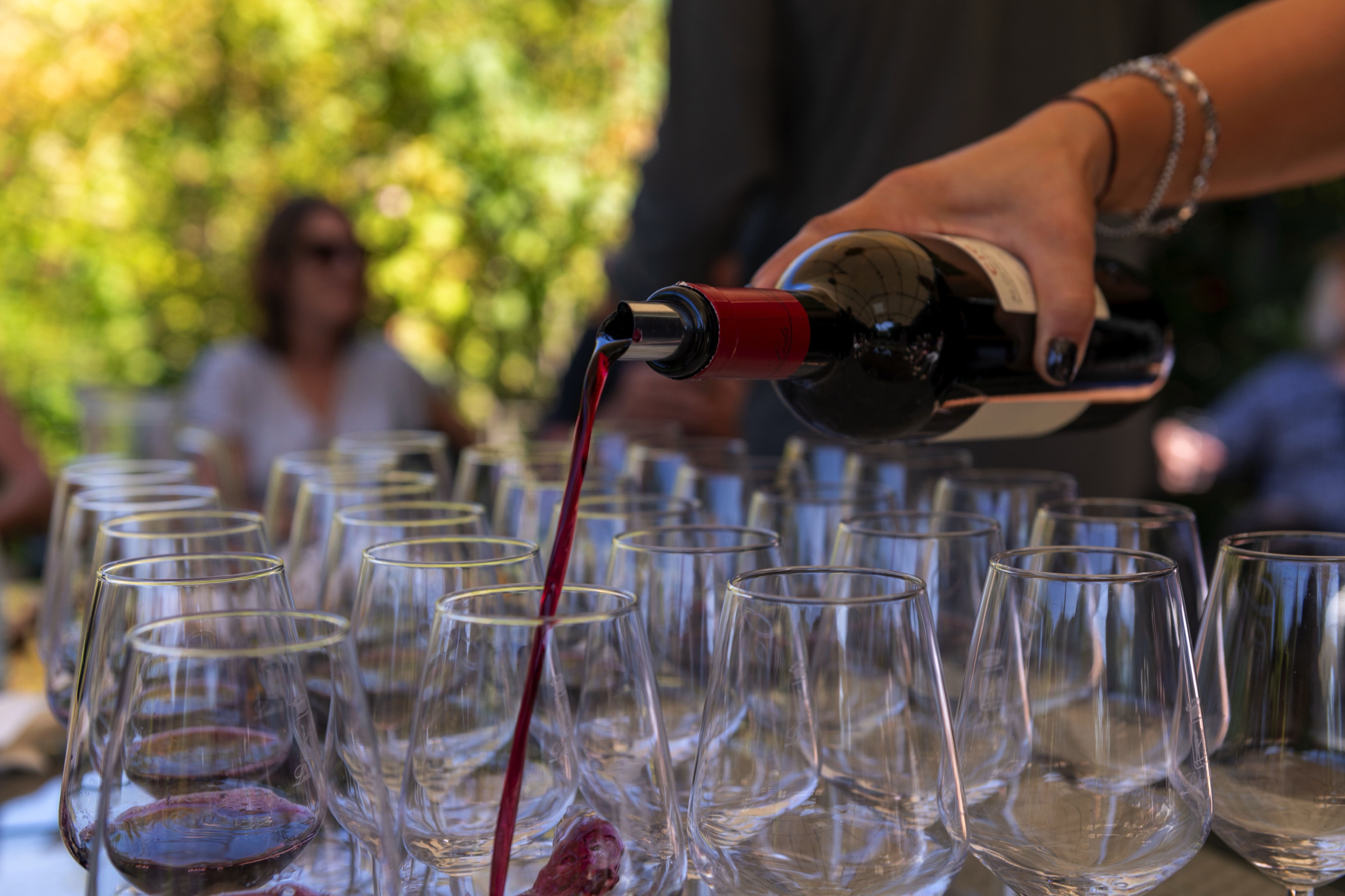
For travelers seeking a deeper, more immersive cruise experience, theme cruises offer a unique opportunity to indulge in personal passions while sailing to stunning destinations. These specially curated voyages bring together experts in various fields—gastronomy, wine, wellness, and more—to enhance the journey with exclusive events and activities.
On select sailings, guests will have the chance to learn from renowned chefs, sommeliers, yoga teachers, and wellness specialists, each bringing a wealth of expertise to the onboard experience. Enjoy engaging lectures, hands-on cooking demonstrations, and expertly guided wine tastings, all designed to inspire and educate. Wellness enthusiasts can benefit from expert-led sessions focused on relaxation, mindfulness, and holistic well-being, including yoga classes tailored for all skill levels.
Whether you’re a food and wine connoisseur, a yoga enthusiast, or someone looking to unwind and rejuvenate, a theme cruise offers a memorable way to connect with like-minded travelers while deepening your knowledge in a relaxed, elegent setting.
Lookout Stations
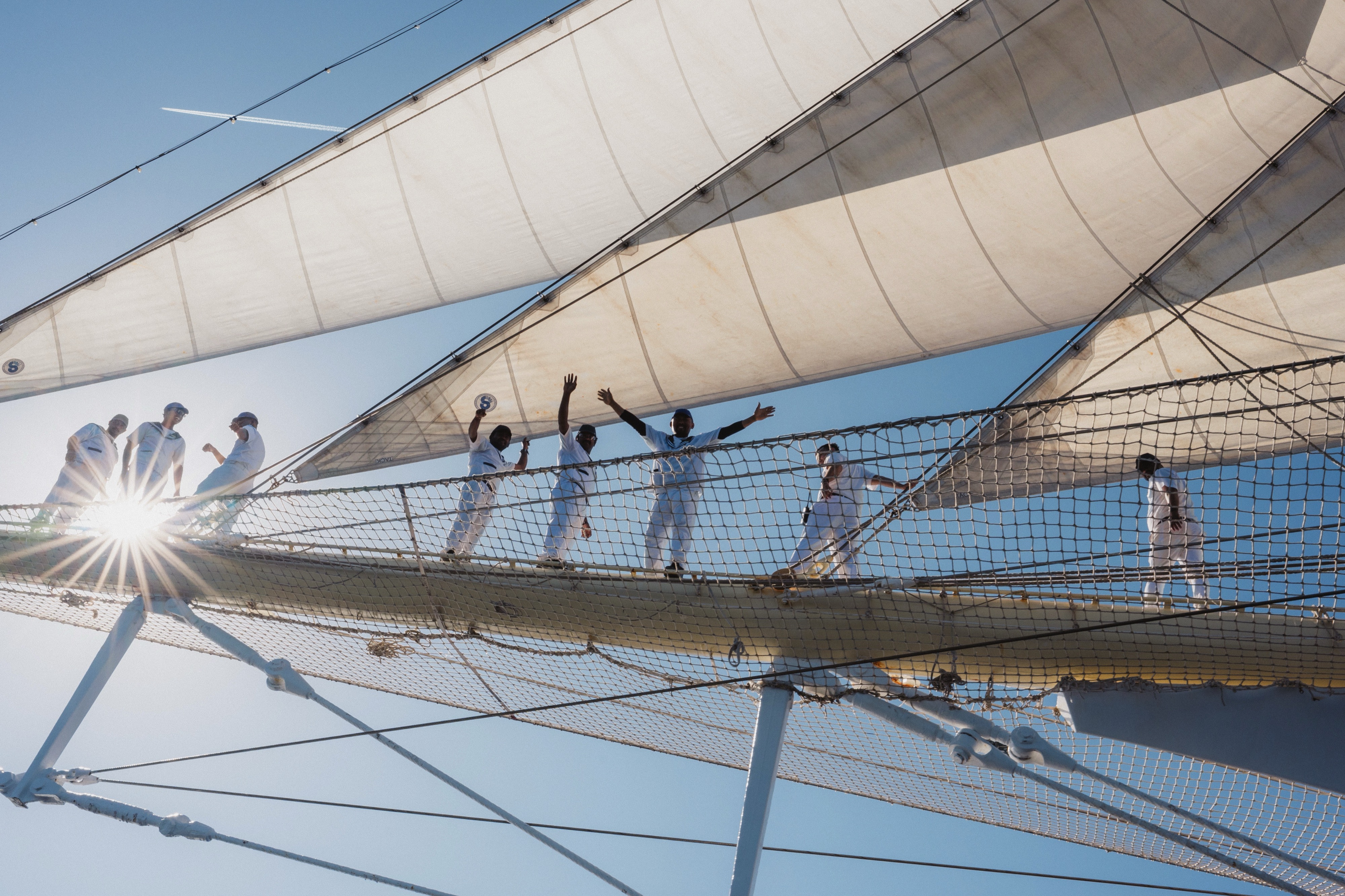
Lookout stations have been created at the first yardarm on each of the masts. Equipped with high safety rails, and a comfortable teak settee for lounging at ease, passengers can observe all the action below and out to the edge of the horizon. Passengers wishing to climb to the lookout posts slip on a ship supplied safety vest tethered to a watchful crew member on the deck, who keeps the safety line secured as they make the easy ascent up one of the ratlines. All three Star Clippers ships offer this exciting activity that is bound to be one of the highlights of a Star Clippers cruise.
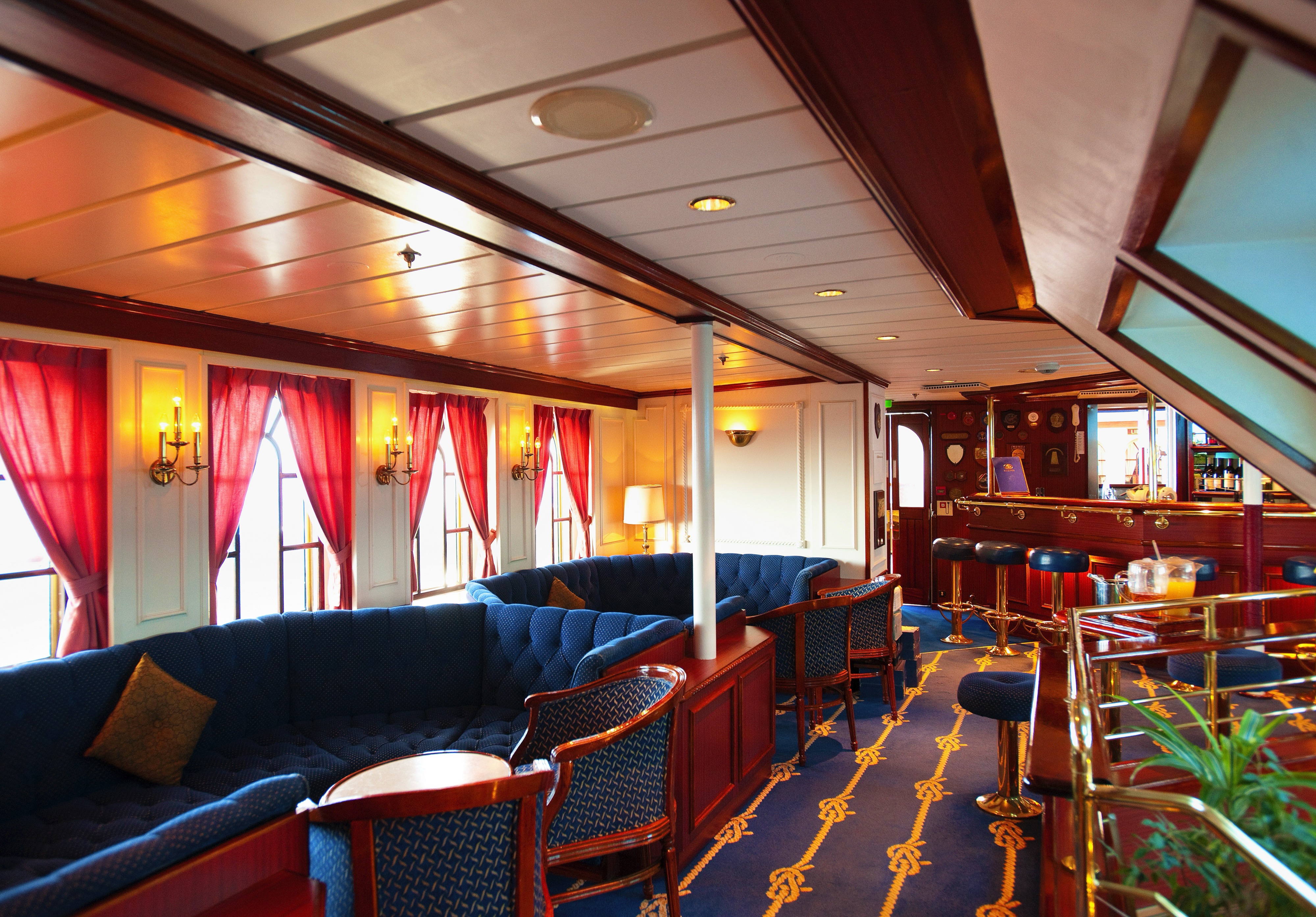
Piano Bar and Lounge
If your time isn’t taken up by searching out distant lands from the crow’s nest or enjoying a lovingly prepared meal in the dining room; you can always take a seat in the Observation Lounge. Gather round the piano bar and join in singing a few favourites.
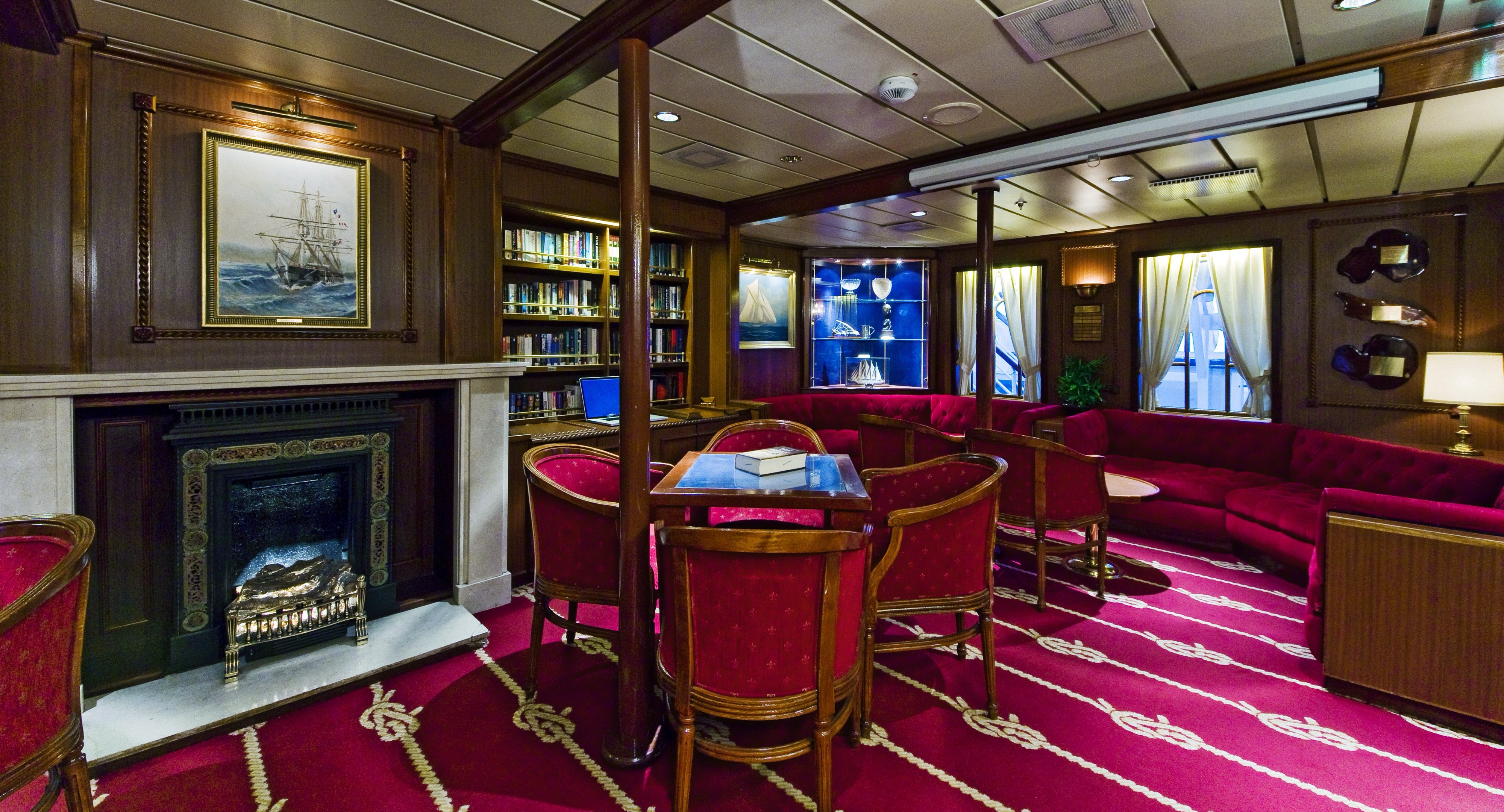
Library
Edwardian style library with an Époque fireplace. The library offers reference books , art books, and novels in several languages. There is also a selection of board games and comfortable seating so that you can relax and enjoy some quiet time if you so wish.
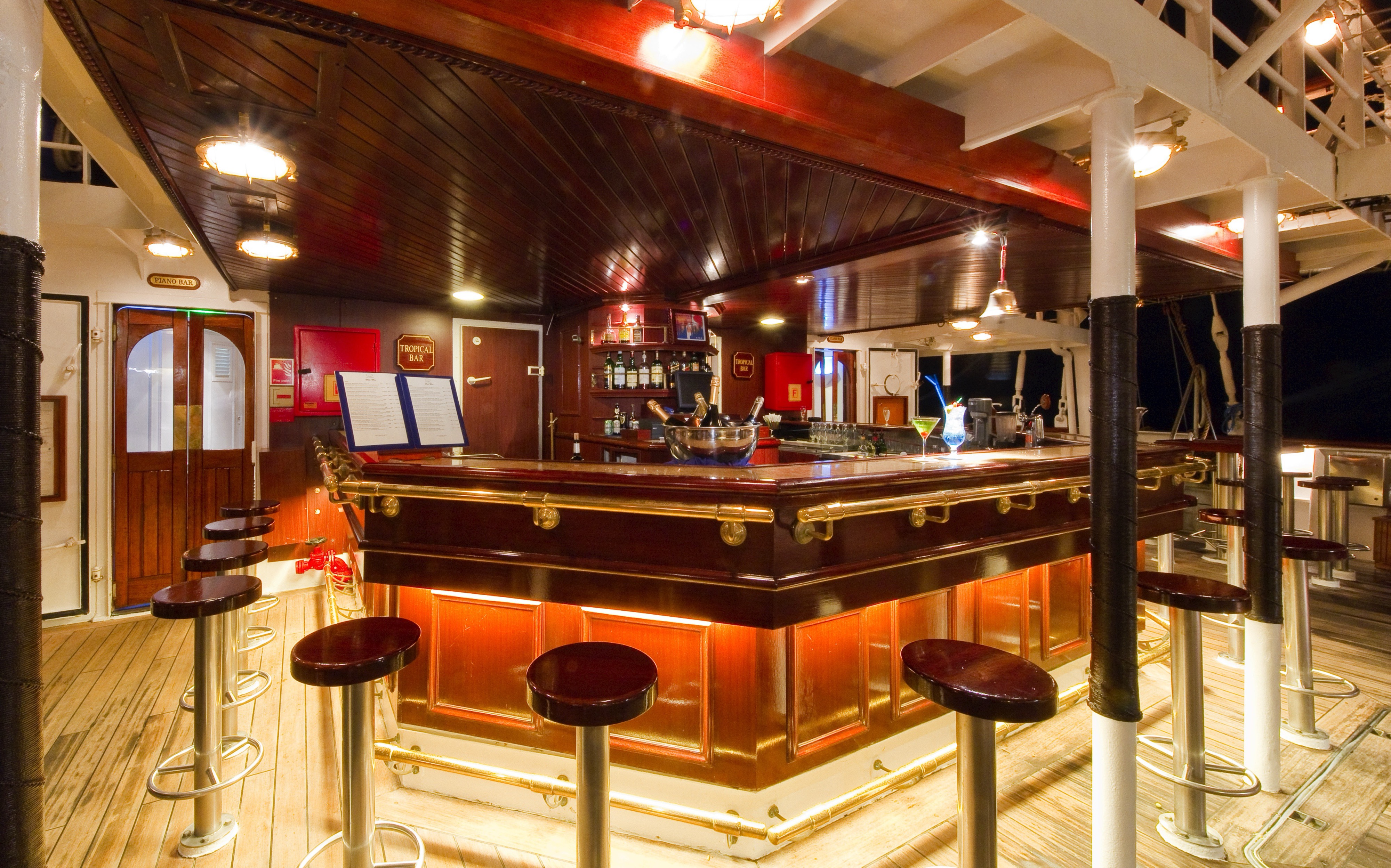
Tropical Bar
The indoor-outdoor Tropical Bar is situated on the Main Deck at the heart of the ship where passengers congregate throughout the day and into the wee hours of the night. This area can accommodate everyone on board and is the center for the nightly entertainment program as well as the focal point for all on-board activity and events.
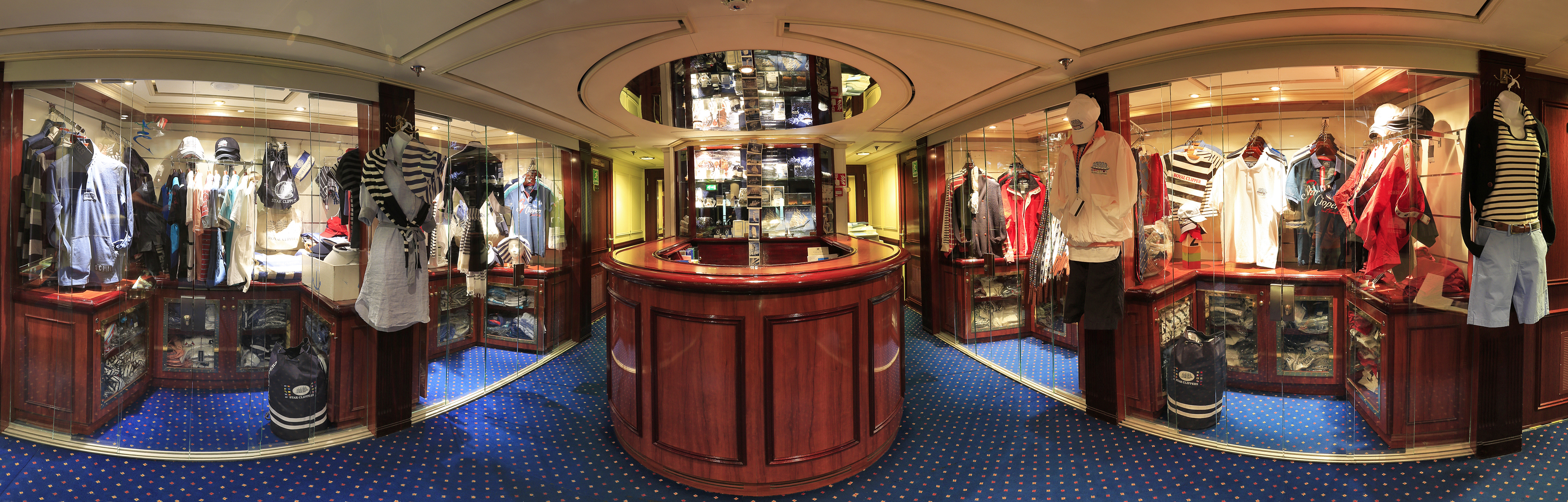
Sloop Shop
It is located on the Clipper Deck aft of the Dining Room. Head here when you need toothpaste, sunscreen, Internet & WiFi cards and all those other day-to-day items you can’t do without. There is also a tasteful selection of cruise wear, souvenirs and gifts. If you need something and you don’t see it displayed, please ask. They might just have it. The shop is open every day (except on embarkation day) from 8:30 a.m. to 9:00 p.m. and depending on the times of call and customs regulations.
Local Music and Arts
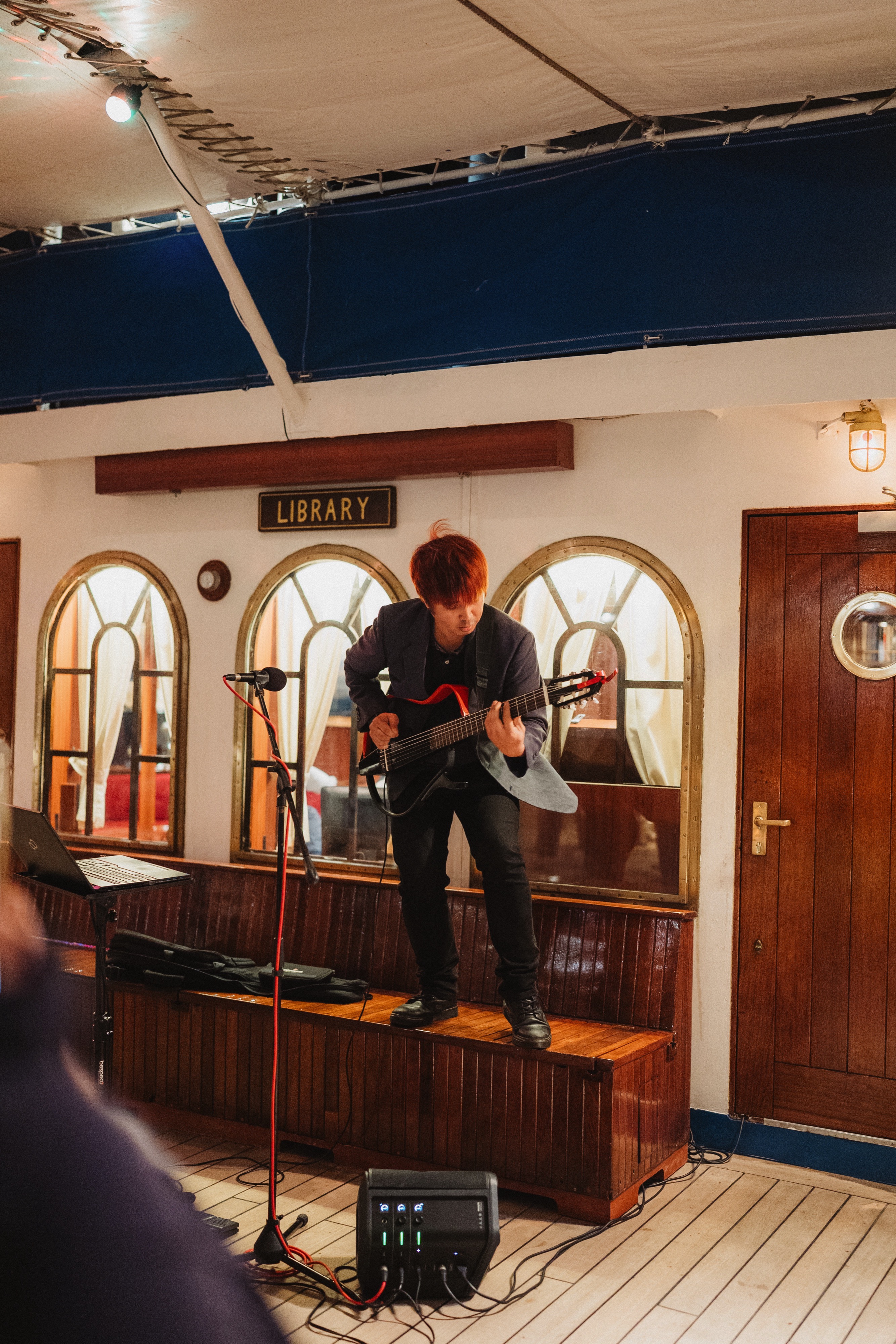
An authentic taste of the local music and arts
To entertain you at certain ports, we invite local performers, folk groups or musicians to liven up your evenings on board and our crew members are always ready to entertain you with games and nautical activities.
So rather than enduring another Broadway show, you can enjoy the conviviality of fellow shipmates while a live band plays tropical tunes from a real paradise.
Swimming Pools
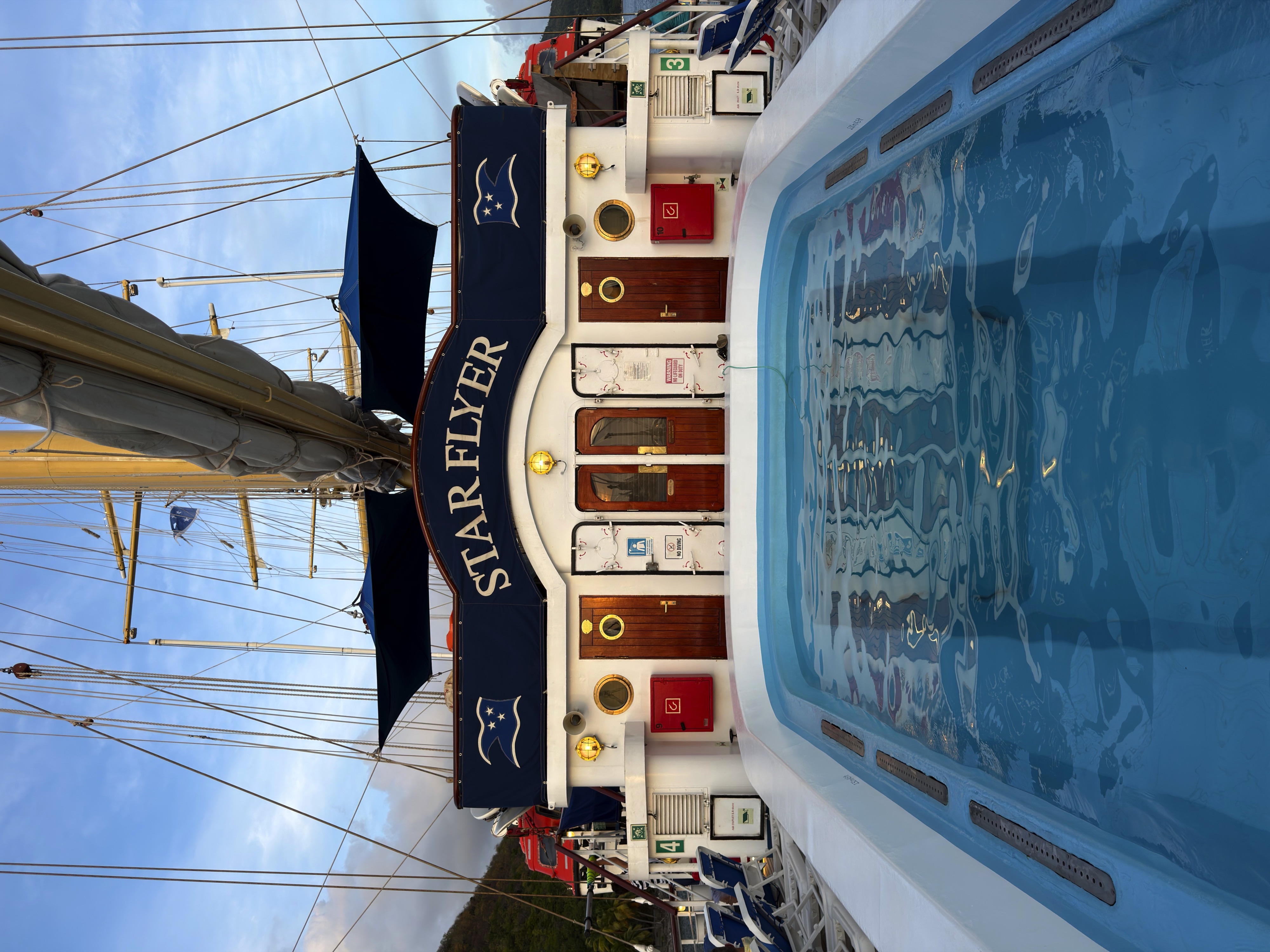
Star Clippers’ ships have two or three swimming pools located on the Sun Deck. When the weather permits, they are filled with sea water.
Gymnastic Classes
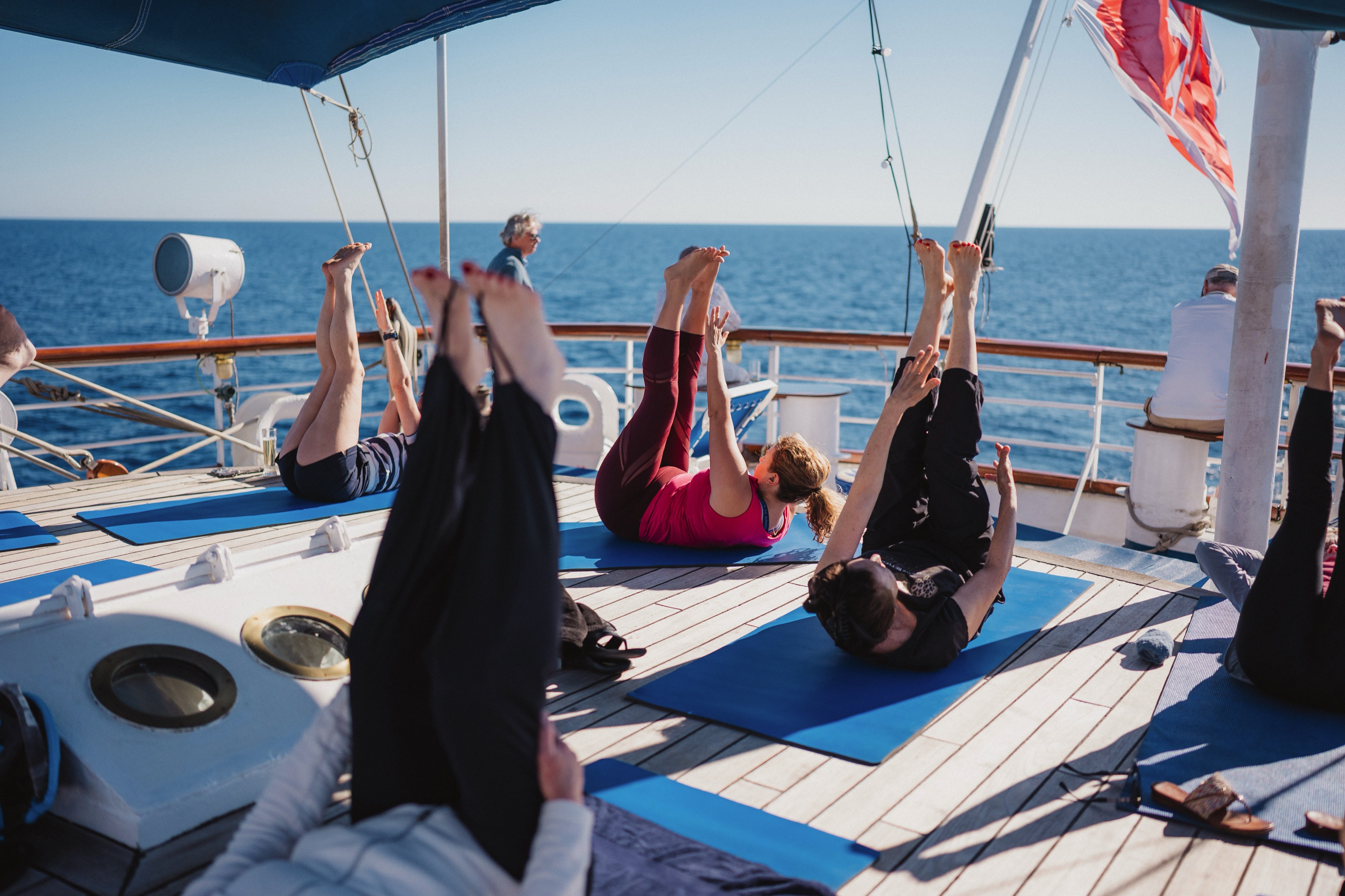
Activities such as morning gymnastic classes, swimming in one of the on-board pools, or taking part of the exciting shore excursions are always an option for passengers.
Please be advised there are no children’s or teens facilities onboard.
Clipper Dining Room
When you rise, help yourself to a continental breakfast with Parisian croissants or sweet Danish pastries. Or savour a full breakfast with fresh tropical fruit and crisp bacon, grilled sausage and omelettes cooked to order in the dining room.
At lunch, a marvellous buffet of seafood, salads and grilled favourites awaits your pleasure. If the day includes a stop at one of the paradisical islands we frequent, you might also be treated to a succulent outdoor barbecue on shore.
When evening comes, our elegantly appointed dining room becomes the setting for the chef’s finest culinary presentations, designed to please the eye and the palate, complemented by a selection of equally fine wines.
You’ll find our service to be friendly and gracious, befitting a tasteful restaurant. Of course, we would not presume to dictate your seating preferences. On all three ships, you are free to dine when and with whomever you wish – including with our officers, who join our guests in the dining room most nights. The dress code? No need for formal gowns and black tie, casual elegance is the order of the day and every single night.
Watersports
Sailing with Star Clippers is a unique experience!
Explore new horizons, push your boundaries & enjoy a range of nautical activities! Make the most of our complimentary water sports program and learn a wide variety of nautical activities, supervised by our officers & crew.
Water sports for all tastes!
On beach stops our sports team can offer you: kayaks, paddle boards and dinghies as well as water skiing and windsurfing. Enjoy your favourite water sports during the cruise or take the opportunity to try something new.
Snorkelling
Close your eyes and imagine you are soaking up the sun on a white sandy beach in the Caribbean; crystal clear waters invite you to explore the underwater world of coral reefs and colourful tropical fish. Star Clippers hands out snorkelling equipment to all passengers upon arrival on board, so all you have to do is dive in and explore.
Sailor for a day!
Life on the ocean is one big adventure! Discover the sailing techniques used by our marine experts. Our crew will help you to hoist the sails, climb the mast, and tie marine knots. You will learn the names of the different sails and how to use a sextant. When evening comes and the velvety darkness is punctuated by stars, our officers will show you how to navigate at night with the help of the stars.
Exclusive Sailing Destinations
Star Clippers takes you to the most beautiful beaches in the Caribbean, the Mediterranean and Southeast Asia, far from all the crowds and congested harbours.
Our tenders or zodiac service allow you to go ashore in comfort and disembark either in port or directly on the beach, so you are free to set off and explore each destination. On Royal Clipper, a specially designed marine platform can be lowered to sea level, so you can enjoy water sports directly from the ship!
Shore Excursions
A wide variety of exceptional shore excursions are offered in the many extraordinary destinations Star Clippers visits around the world to enhance your journey. Don’t miss your opportunity to immerse yourself in the local history, culture, art, architecture and beauty located in each region by taking advantage of these carefully crafted tours offering an insight into the locale’s true identity. Of course, all shore excursions are optional, and you can chose which one you’d like or just explore on your own. The staff is available for suggestions and sign up is done right on board, in most cases. For a preview of what is offered in each port, you can find the details right on our website.
Themed Cruises
For travelers seeking a deeper, more immersive cruise experience, theme cruises offer a unique opportunity to indulge in personal passions while sailing to stunning destinations. These specially curated voyages bring together experts in various fields—gastronomy, wine, wellness, and more—to enhance the journey with exclusive events and activities.
On select sailings, guests will have the chance to learn from renowned chefs, sommeliers, yoga teachers, and wellness specialists, each bringing a wealth of expertise to the onboard experience. Enjoy engaging lectures, hands-on cooking demonstrations, and expertly guided wine tastings, all designed to inspire and educate. Wellness enthusiasts can benefit from expert-led sessions focused on relaxation, mindfulness, and holistic well-being, including yoga classes tailored for all skill levels.
Whether you’re a food and wine connoisseur, a yoga enthusiast, or someone looking to unwind and rejuvenate, a theme cruise offers a memorable way to connect with like-minded travelers while deepening your knowledge in a relaxed, elegent setting.
Lookout Stations
Lookout stations have been created at the first yardarm on each of the masts. Equipped with high safety rails, and a comfortable teak settee for lounging at ease, passengers can observe all the action below and out to the edge of the horizon. Passengers wishing to climb to the lookout posts slip on a ship supplied safety vest tethered to a watchful crew member on the deck, who keeps the safety line secured as they make the easy ascent up one of the ratlines. All three Star Clippers ships offer this exciting activity that is bound to be one of the highlights of a Star Clippers cruise.
Piano Bar and Lounge
If your time isn’t taken up by searching out distant lands from the crow’s nest or enjoying a lovingly prepared meal in the dining room; you can always take a seat in the Observation Lounge. Gather round the piano bar and join in singing a few favourites.
Library
Edwardian style library with an Époque fireplace. The library offers reference books , art books, and novels in several languages. There is also a selection of board games and comfortable seating so that you can relax and enjoy some quiet time if you so wish.
Tropical Bar
The indoor-outdoor Tropical Bar is situated on the Main Deck at the heart of the ship where passengers congregate throughout the day and into the wee hours of the night. This area can accommodate everyone on board and is the center for the nightly entertainment program as well as the focal point for all on-board activity and events.
Sloop Shop
It is located on the Clipper Deck aft of the Dining Room. Head here when you need toothpaste, sunscreen, Internet & WiFi cards and all those other day-to-day items you can’t do without. There is also a tasteful selection of cruise wear, souvenirs and gifts. If you need something and you don’t see it displayed, please ask. They might just have it. The shop is open every day (except on embarkation day) from 8:30 a.m. to 9:00 p.m. and depending on the times of call and customs regulations.
Local Music and Arts
An authentic taste of the local music and arts
To entertain you at certain ports, we invite local performers, folk groups or musicians to liven up your evenings on board and our crew members are always ready to entertain you with games and nautical activities.
So rather than enduring another Broadway show, you can enjoy the conviviality of fellow shipmates while a live band plays tropical tunes from a real paradise.
Swimming Pools
Star Clippers’ ships have two or three swimming pools located on the Sun Deck. When the weather permits, they are filled with sea water.
Gymnastic Classes
Activities such as morning gymnastic classes, swimming in one of the on-board pools, or taking part of the exciting shore excursions are always an option for passengers.
Please be advised there are no children’s or teens facilities onboard.
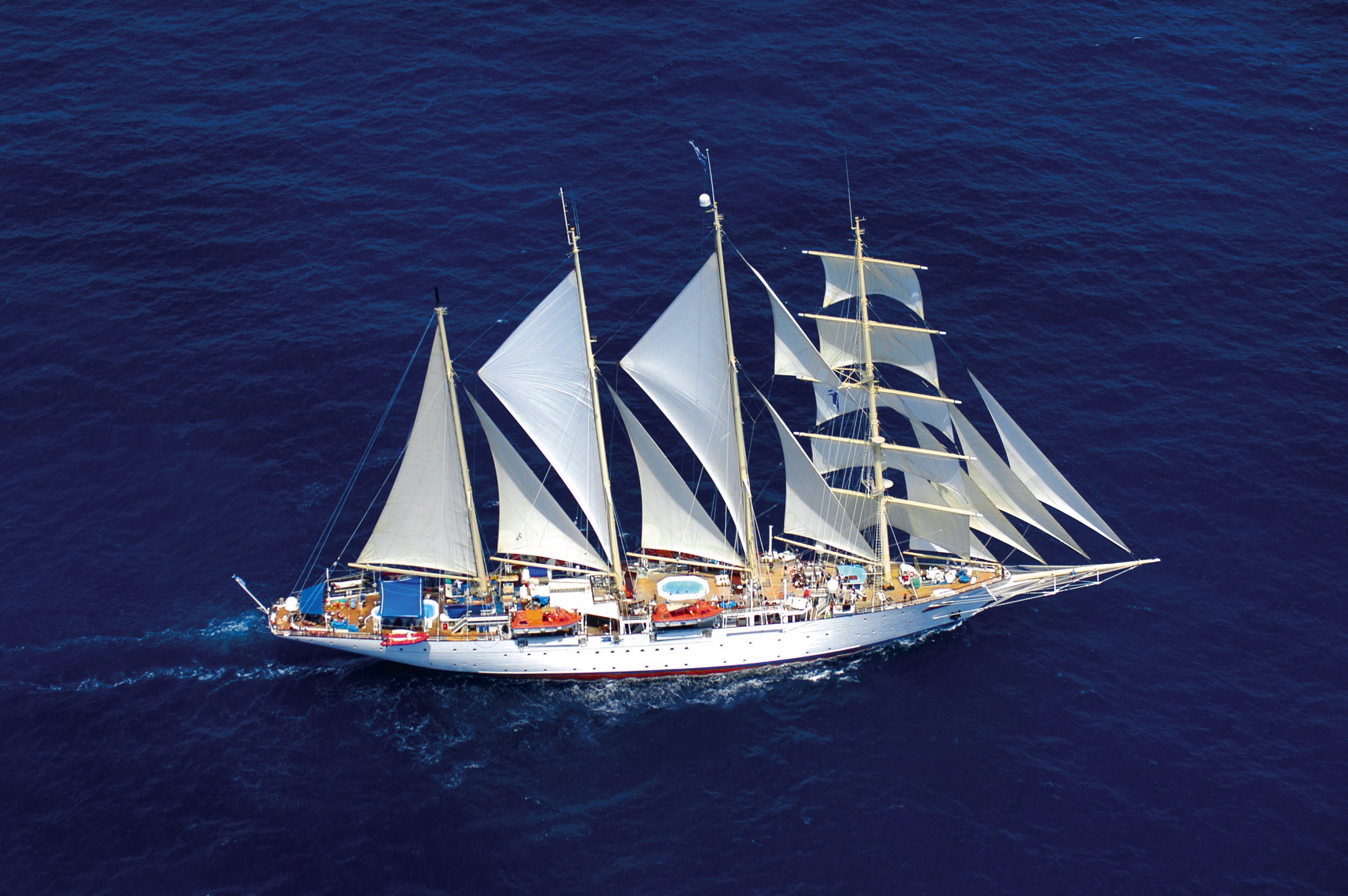
About the Ship
Deck Plans
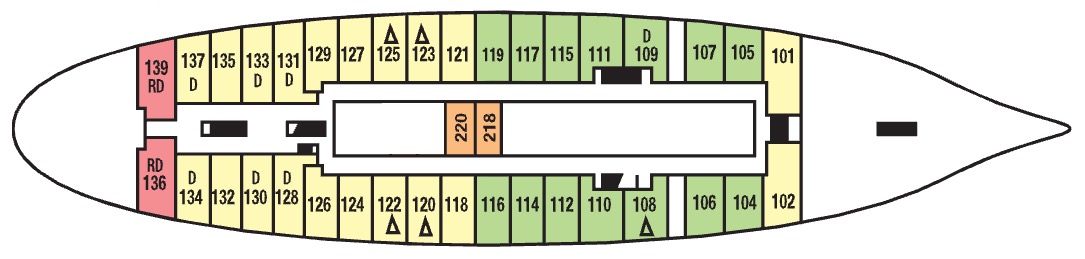
- Category 3 – Outside Cabins
- Category 4 – Outside Cabins
- Category 5 – Outside Cabins
- Category 6 – Inside Cabins
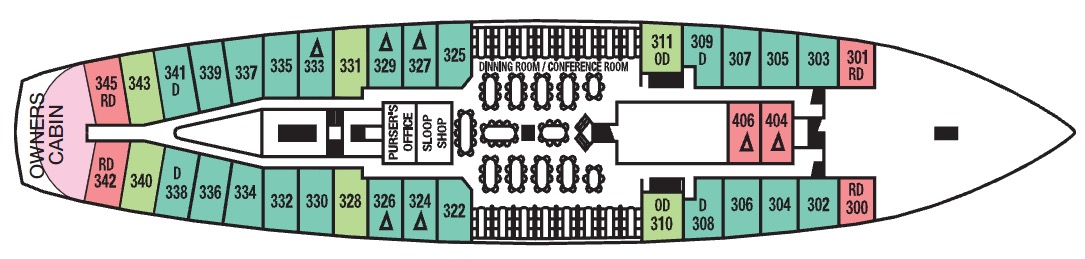
- Dining Room
- Conference Room
- Sloop Shop
- Purser’s Office
- Owner’s Cabin – Deluxe Outside Cabin
- Category 2 – Large Outside Cabins
- Category 3 – Outside Cabins
- Category 5 – Inside or Outside Cabins
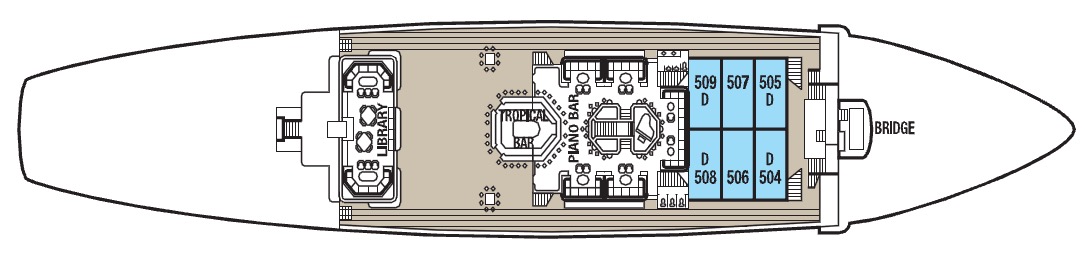
- Library
- Tropical Bar
- Piano Bar
- Bridge
- Category 1 Deluxe Deck Cabins
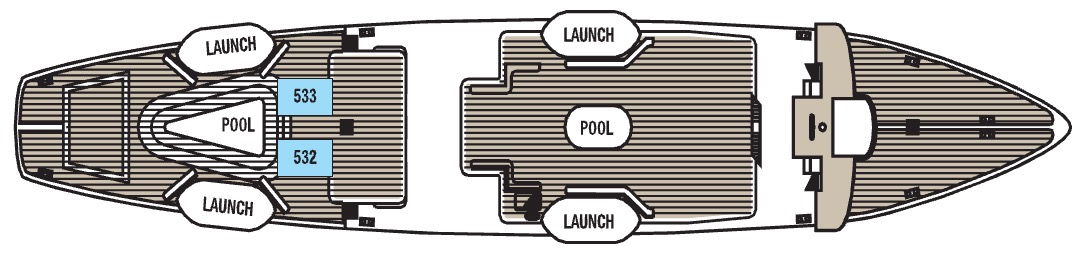
- Pools
- Category 1 Deluxe Deck Cabins
Launch Docks
- Category 3 – Outside Cabins
- Category 4 – Outside Cabins
- Category 5 – Outside Cabins
- Category 6 – Inside Cabins
- Dining Room
- Conference Room
- Sloop Shop
- Purser’s Office
- Owner’s Cabin – Deluxe Outside Cabin
- Category 2 – Large Outside Cabins
- Category 3 – Outside Cabins
- Category 5 – Inside or Outside Cabins
- Library
- Tropical Bar
- Piano Bar
- Bridge
- Category 1 Deluxe Deck Cabins
- Pools
- Category 1 Deluxe Deck Cabins
Launch Docks