Featured Cabins
Itinerary
Basel, Switzerland
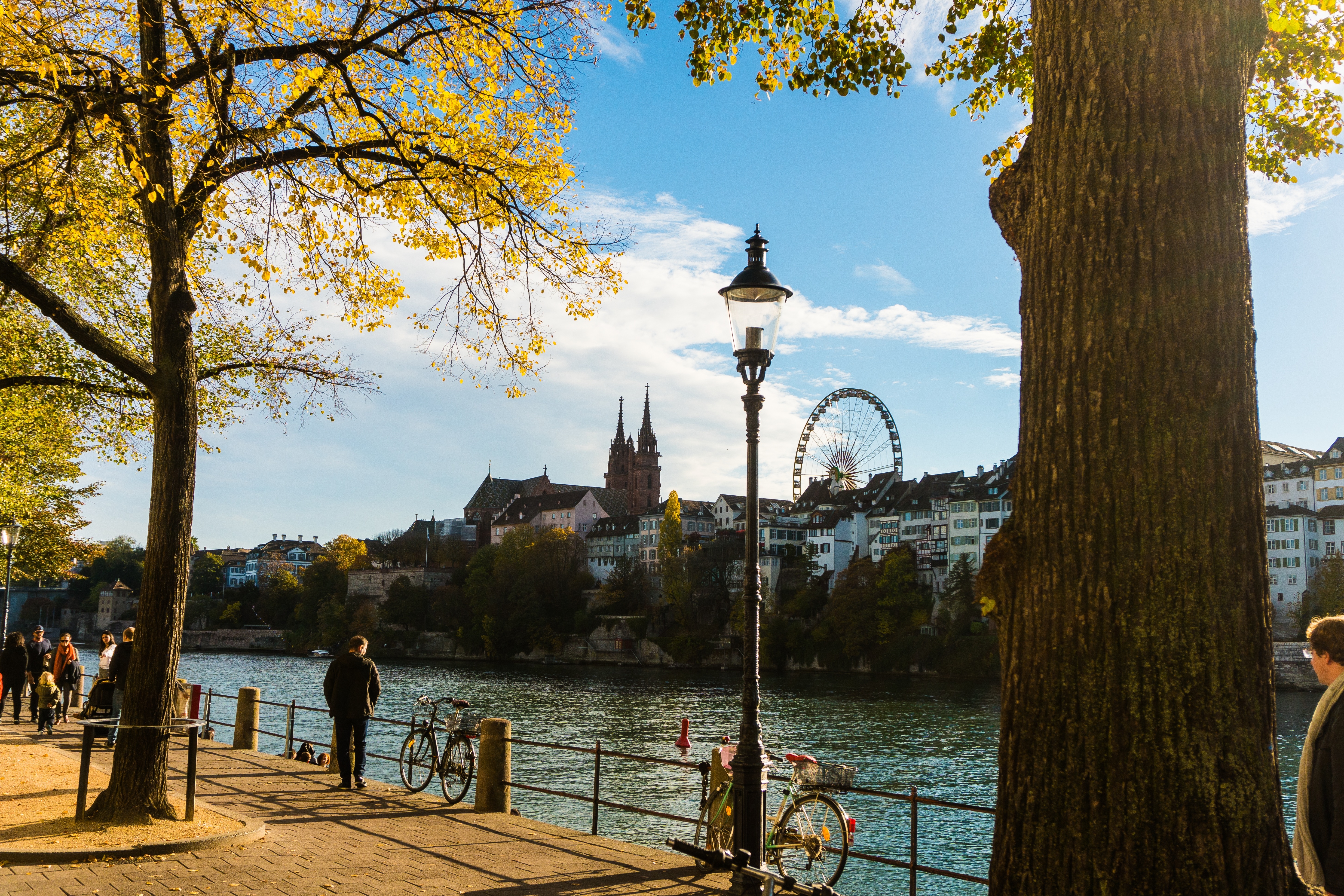
Basel is a city in northwestern Switzerland on the Swiss, French and German borders. It is located on the bend of the River Rhine and benefits from a Mediterranean climate. It is the third most populated city in Switzerland and has been the commercial hub for Swiss arts and culture since the Renaissance. In 1967 the people of Basel voted to acquire two paintings by Picasso, who was so moved by the Basel people that he donated 3 paintings and a study to the city’s Kunstmuseum (Museum of Fine Arts). Visit the Augusta Raurica, one of the largest Roman archaeology parks in Switzerland, and enjoy a river crossings over the River Rhine by non-motorised ferries. During the summer months, time is spent outdoors, either swimming in the River Rhine, dining al fresco, enjoying open air concerts, cinema, street parties and festivals. Basel is home to over 20 restaurants that have won GaultMillau or Michelin awards, and boasts Switzerland’s largest collection of theatre shows, including modern contemporary dance, touring and puppetry theatre.
Breisach, Germany
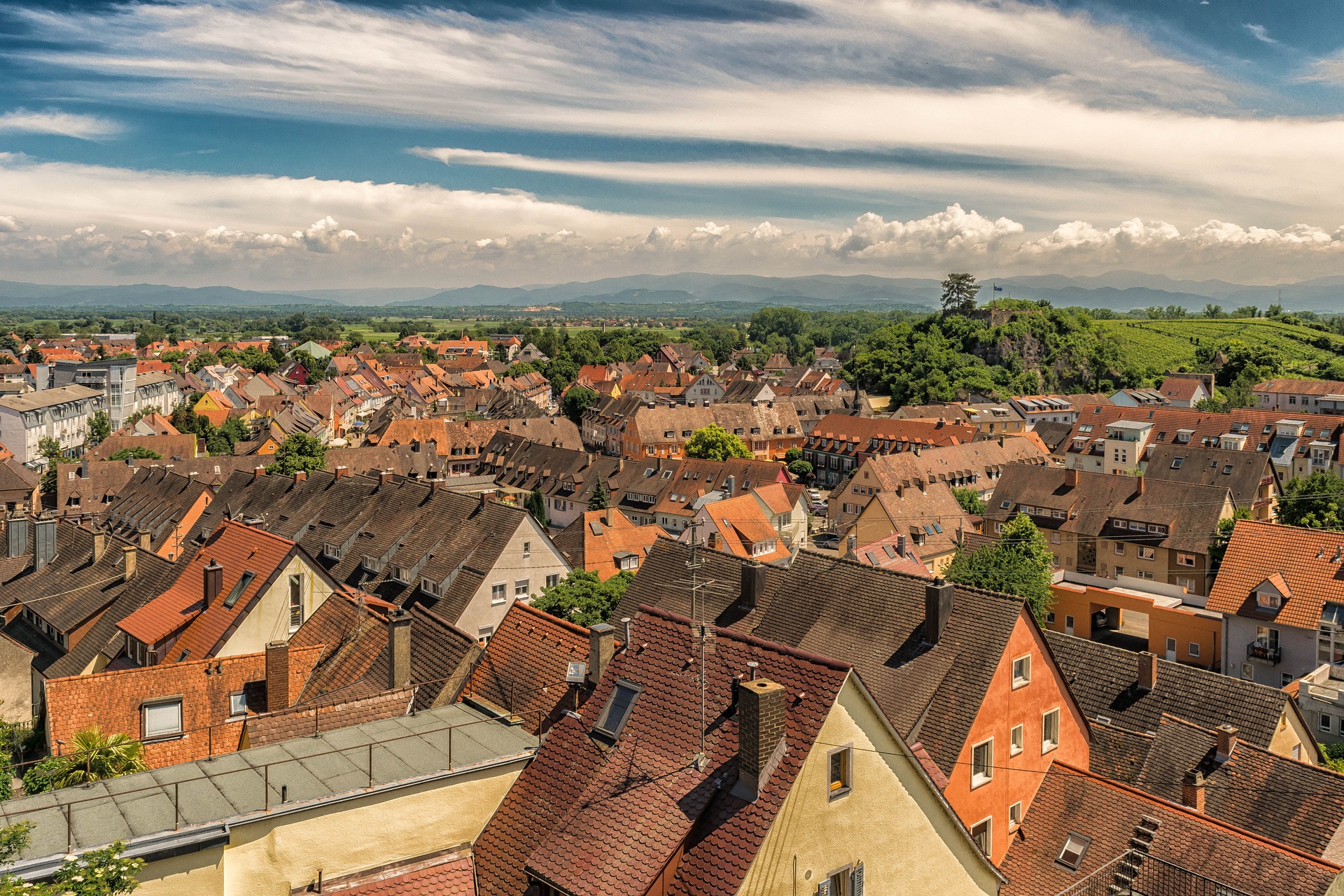
Breisach is a town located in Southwest Germany on the French border. The town is situated in the Rhine Valley on the banks of the river Rhine and dates back over four thousand years. Breisach and its history can be experienced through the City History Museum, which houses a permanent exhibition taking you from Stone Age through the Celtic, to the Romans and Middle Ages, right up to modern day. St Stephen’s Cathedral is home to the city’s famous art treasures, the wheel wells, which are housed in the neighbouring Radbrunnenturm with the forty one metre deep water well. The cathedral is also home to many other treasures including the High Altar of Master HL and wall paintings by Martin Schongauer as well as High Gothic and Roman architecture. A visit to the Blue House, the former Jewish Community Centre, is highly recommended. Now owned by the Friends of Former Jewish Community House Breisach it exhibits memorials to Breisach’s Jewish heritage.
Strasbourg, France
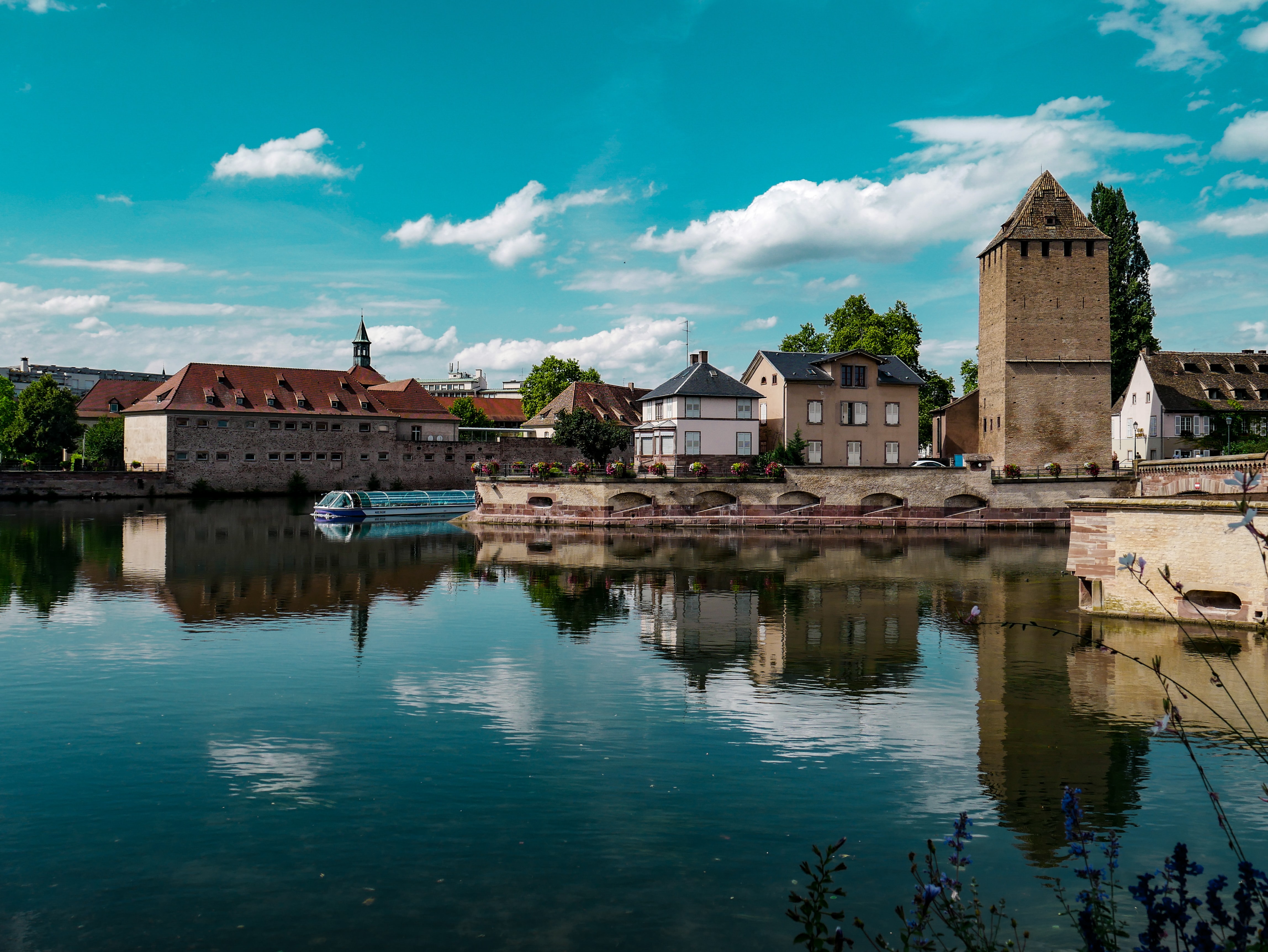
This morning, you’ll arrive in Kehl and disembark your Star-Ship, then be transferred by coach to the picturesque town of Strasbourg. Here, an enthralling medieval past is yours to discover, including quaint cobblestone squares framed by wellpreserved, half-timbered houses. During your included excursion, you’ll also have the opportunity to discover the heart of Alsace in Strasbourg and embark on a culinary journey where you’ll discover typical flavours of this region. Tonight, as part of your EmeraldPLUS experience, you’re invited to join an exclusive private concert in a historical venue.
Included Excursion
Flavours of Alsace
DiscoverMORE
Baden Baden Spa experience (extra expense)
EmeraldPLUS
Private Evening Concert on the Rhine
Mannheim, Germany
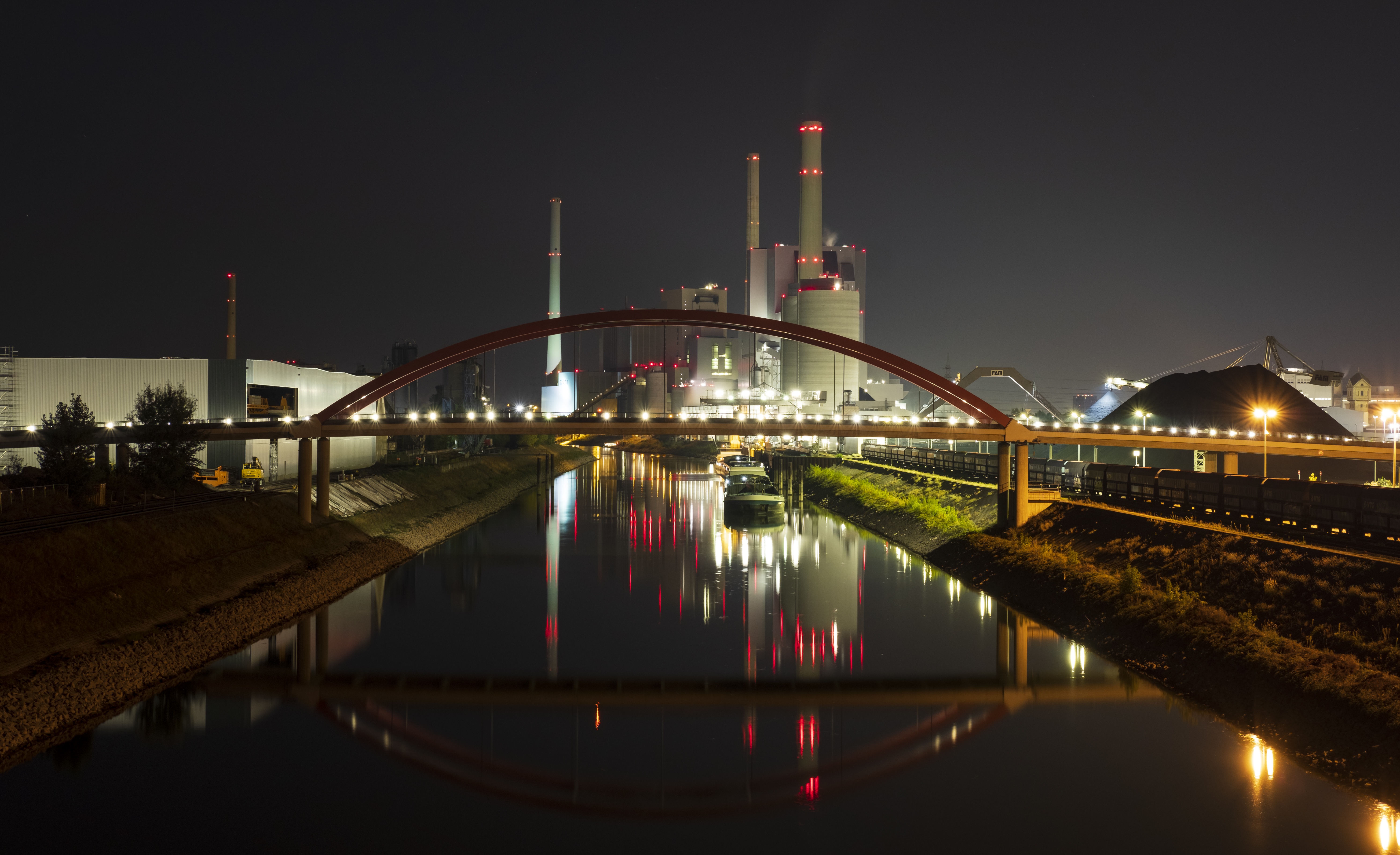
Mannheim, Germany, is a dynamic city known for its distinctive grid layout and vibrant cultural scene. Located at the confluence of the Rhine and Neckar rivers, it features the impressive Mannheim Palace and the lush Luisenpark. The city’s modern architecture contrasts with its historical roots, while its thriving arts scene includes theaters, museums, and music festivals. Mannheim is also a key industrial and commercial hub, making it a blend of cultural richness and economic vitality.
Koblenz, Germany
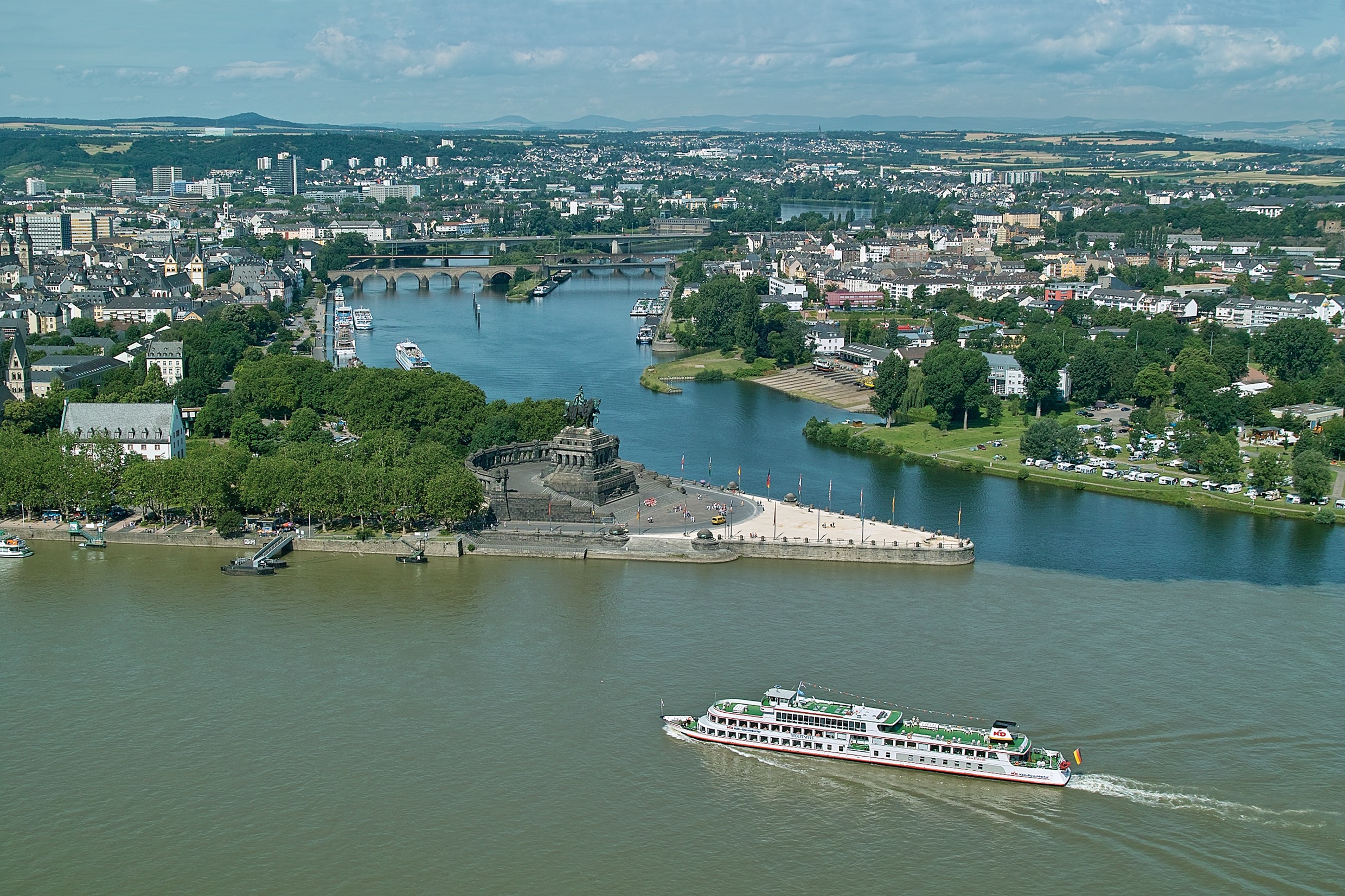
Located in the West of the country, Koblenz is one of the oldest cities in Germany. It is situated on both banks of the river Rhine, at its confluence with the Moselle River. The beginnings of Koblenz can be traced back to its military beginnings around 8 BC. The city is rich in its history and heritage and is easily explored on foot. Take the cable car crossing over the river Rhine for spectacular aerial views or enjoy the city from the one thousand year old fortress, Ehrenbreitstein. The upper middle Rhine Valley is a UNESCO World Heritage Site and its unique landscape can be enjoyed and discovered through the interactive multimedia journey at the Romanticum. Historical and architectural sites of interest include Stolzenfels Castle, the Electoral Palace of Koblenz and Old Town. From the romantic winding streets and small squares of Old Town, stroll through the alleyways from the Church of the Holy Virgin to the St Kastor Basilica and enjoy the picturesque buildings and squares along the way. Koblenz is also very popular for its Riesling and strong Spatburgunder wines since the Romans introduced it two thousand years ago.
Düsseldorf, Germany
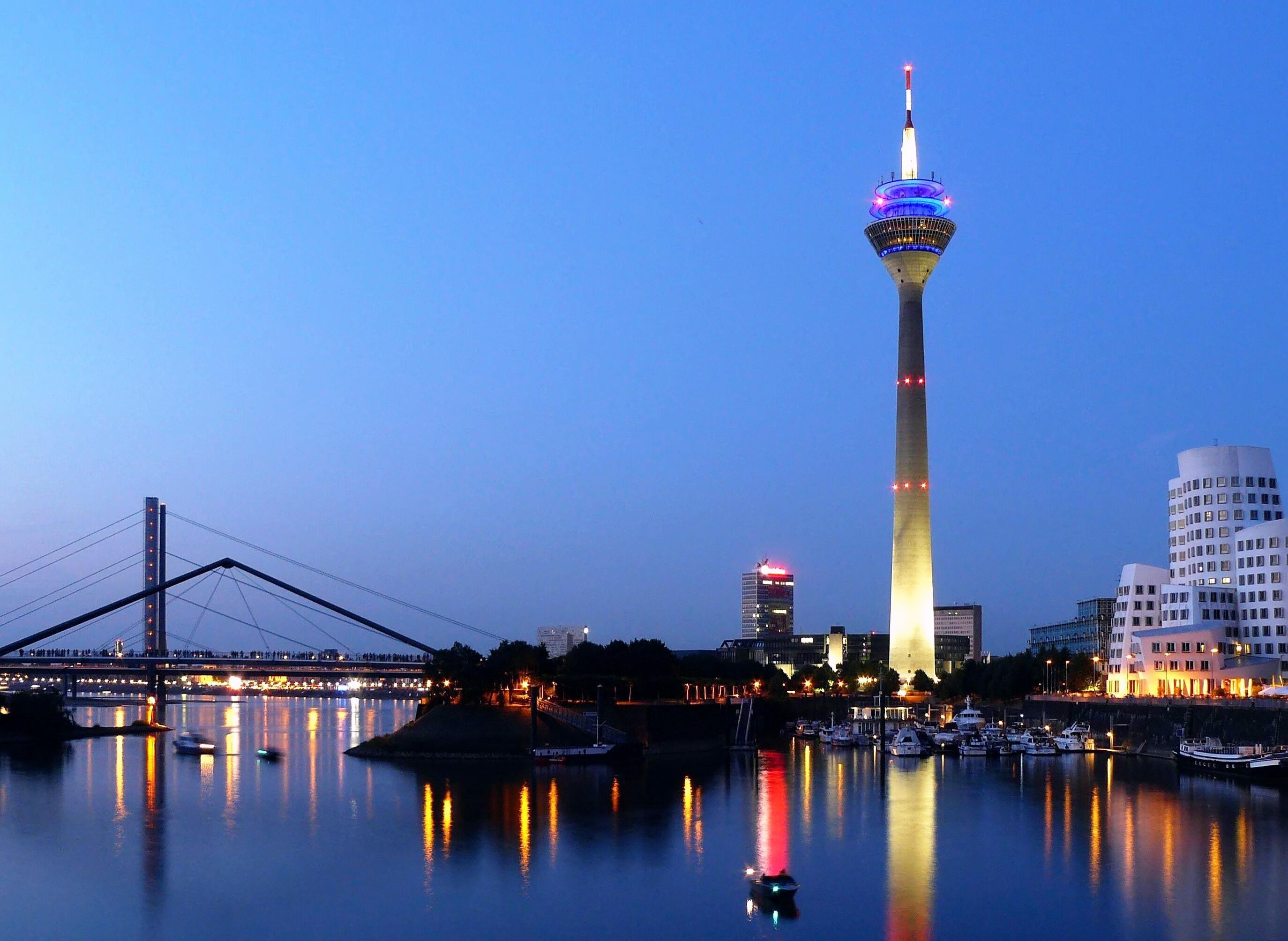
This morning, you’ll will arrive in Cologne and have the chance to know one of Germany’s oldest cities and get up close with the famous post card worthy Cathedral. After lunch, join a walking tour of Düsseldorf, a vibrant city renowned for its stylish boutiques and charming Old Town. Stroll along the picturesque Rhine River, admire the stunning architecture and discover hidden gems off-the-beaten path. Immerse yourself in the city’s lively atmosphere, indulge in the delicious local cuisine, and marvel at the contrast of Düsseldorf’s ancient and modern charms.
Included Excursion
Guided tour of Cologne Old Town
Included Excursion
Walking tour of Duesseldorf
DiscoverMORE
Cologne Beer Experience (extra expense)
Amsterdam, Netherlands
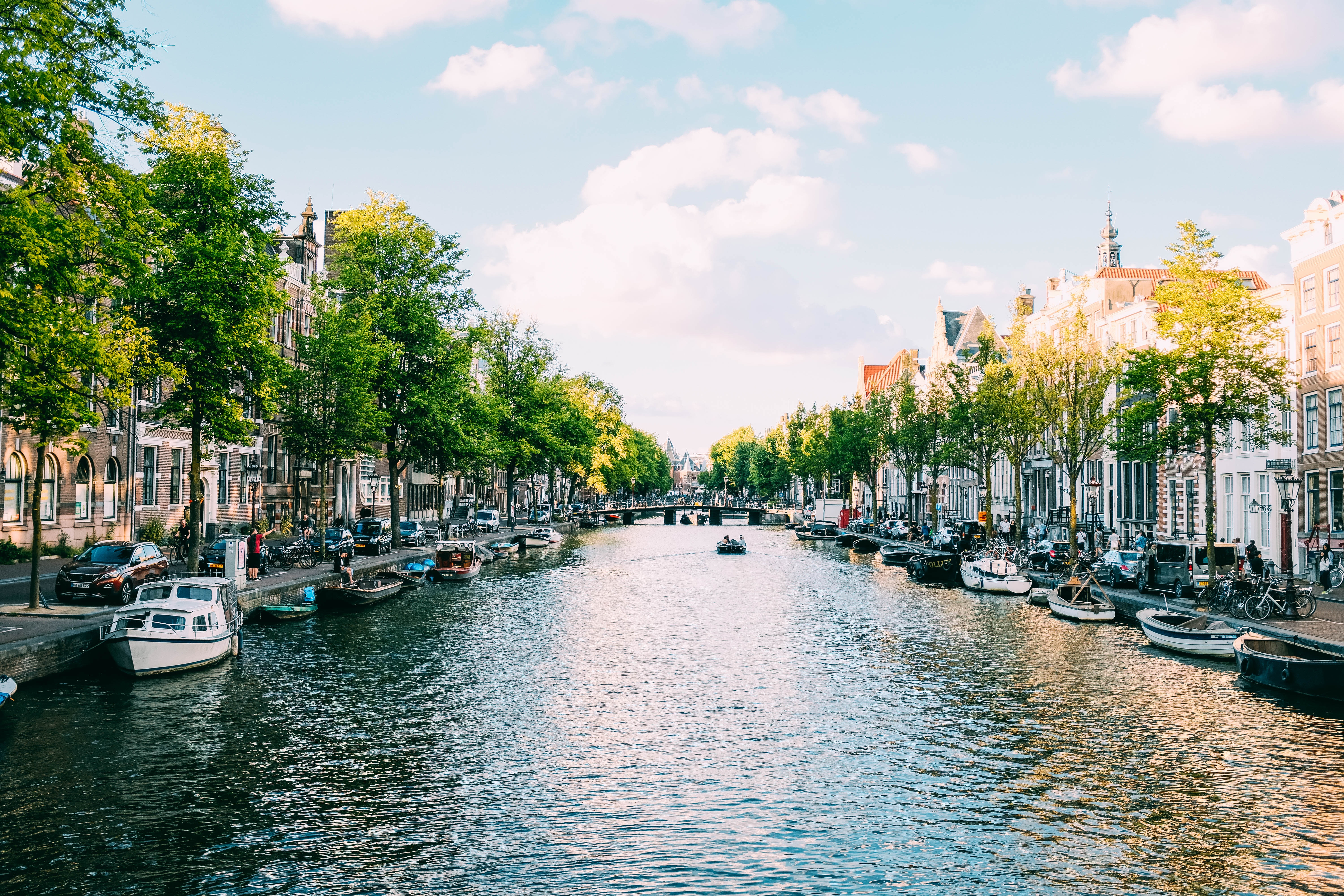
Amsterdam combines the unrivaled beauty of the 17th-century Golden Age city center with plenty of museums and art of the highest order, not to mention a remarkably laid-back atmosphere. It all comes together to make this one of the world’s most appealing and offbeat metropolises in the world. Built on a latticework of concentric canals like an aquatic rainbow, Amsterdam is known as the City of Canals—but it’s no Venice, content to live on moonlight serenades and former glory. Quite the contrary: on nearly every street here you’ll find old and new side by side—quiet corners where time seems to be holding its breath next to streets like neon-lit Kalverstraat, and Red Light ladies strutting by the city’s oldest church. Indeed, Amsterdam has as many lovely facets as a 40-carat diamond polished by one of the city’s gem cutters. It’s certainly a metropolis, but a rather small and very accessible one. Locals tend to refer to it as a big village, albeit one that happens to pack the cultural wallop of a major world destination. There are scores of concerts every day, numerous museums, summertime festivals, and, of course, a legendary year-round party scene. It’s pretty much impossible to resist Amsterdam’s charms. With 7,000 registered monuments, most of which began as the residences and warehouses of humble merchants, set on 160 man-made canals, and traversed by 1,500 or so bridges, Amsterdam has the largest historical inner city in Europe. Its famous circle of waterways, the grachtengordel, was a 17th-century urban expansion plan for the rich and is a lasting testament to the city’s Golden Age. This town is endearing because of its kinder, gentler nature—but a reputation for championing sex, drugs, and rock ’n’ roll does not alone account for Amsterdam’s being one of the most popular destinations in Europe: consider that within a single square mile the city harbors some of the greatest achievements in Western art, from Rembrandt to Van Gogh. Not to mention that this is one of Europe’s great walking cities, with so many of its treasures in the untouted details: tiny alleyways barely visible on the map, hidden garden courtyards, shop windows, floating houseboats, hidden hofjes(courtyards with almshouses), sudden vistas of church spires, and gabled roofs that look like so many unframed paintings. And don’t forget that the joy lies in details: elaborate gables and witty gable stones denoting the trade of a previous owner. Keep in mind that those XXX symbols you see all over town are not a mark of the city’s triple-X reputation. They’re part of Amsterdam’s official coat of arms—three St. Andrew’s crosses, believed to represent the three dangers that have traditionally plagued the city: flood, fire, and pestilence. The coat’s motto (“Valiant, determined, compassionate”) was introduced in 1947 by Queen Wilhelmina in remembrance of the 1941 February Strike in Amsterdam—the first time in Europe that non-Jewish people protested against the persecution of Jews by the Nazi regime.
Basel, Switzerland
Basel is a city in northwestern Switzerland on the Swiss, French and German borders. It is located on the bend of the River Rhine and benefits from a Mediterranean climate. It is the third most populated city in Switzerland and has been the commercial hub for Swiss arts and culture since the Renaissance. In 1967 the people of Basel voted to acquire two paintings by Picasso, who was so moved by the Basel people that he donated 3 paintings and a study to the city’s Kunstmuseum (Museum of Fine Arts). Visit the Augusta Raurica, one of the largest Roman archaeology parks in Switzerland, and enjoy a river crossings over the River Rhine by non-motorised ferries. During the summer months, time is spent outdoors, either swimming in the River Rhine, dining al fresco, enjoying open air concerts, cinema, street parties and festivals. Basel is home to over 20 restaurants that have won GaultMillau or Michelin awards, and boasts Switzerland’s largest collection of theatre shows, including modern contemporary dance, touring and puppetry theatre.
Breisach, Germany
Breisach is a town located in Southwest Germany on the French border. The town is situated in the Rhine Valley on the banks of the river Rhine and dates back over four thousand years. Breisach and its history can be experienced through the City History Museum, which houses a permanent exhibition taking you from Stone Age through the Celtic, to the Romans and Middle Ages, right up to modern day. St Stephen’s Cathedral is home to the city’s famous art treasures, the wheel wells, which are housed in the neighbouring Radbrunnenturm with the forty one metre deep water well. The cathedral is also home to many other treasures including the High Altar of Master HL and wall paintings by Martin Schongauer as well as High Gothic and Roman architecture. A visit to the Blue House, the former Jewish Community Centre, is highly recommended. Now owned by the Friends of Former Jewish Community House Breisach it exhibits memorials to Breisach’s Jewish heritage.
Strasbourg, France
This morning, you’ll arrive in Kehl and disembark your Star-Ship, then be transferred by coach to the picturesque town of Strasbourg. Here, an enthralling medieval past is yours to discover, including quaint cobblestone squares framed by wellpreserved, half-timbered houses. During your included excursion, you’ll also have the opportunity to discover the heart of Alsace in Strasbourg and embark on a culinary journey where you’ll discover typical flavours of this region. Tonight, as part of your EmeraldPLUS experience, you’re invited to join an exclusive private concert in a historical venue.
Included Excursion
Flavours of Alsace
DiscoverMORE
Baden Baden Spa experience (extra expense)
EmeraldPLUS
Private Evening Concert on the Rhine
Mannheim, Germany
Mannheim, Germany, is a dynamic city known for its distinctive grid layout and vibrant cultural scene. Located at the confluence of the Rhine and Neckar rivers, it features the impressive Mannheim Palace and the lush Luisenpark. The city’s modern architecture contrasts with its historical roots, while its thriving arts scene includes theaters, museums, and music festivals. Mannheim is also a key industrial and commercial hub, making it a blend of cultural richness and economic vitality.
Koblenz, Germany
Located in the West of the country, Koblenz is one of the oldest cities in Germany. It is situated on both banks of the river Rhine, at its confluence with the Moselle River. The beginnings of Koblenz can be traced back to its military beginnings around 8 BC. The city is rich in its history and heritage and is easily explored on foot. Take the cable car crossing over the river Rhine for spectacular aerial views or enjoy the city from the one thousand year old fortress, Ehrenbreitstein. The upper middle Rhine Valley is a UNESCO World Heritage Site and its unique landscape can be enjoyed and discovered through the interactive multimedia journey at the Romanticum. Historical and architectural sites of interest include Stolzenfels Castle, the Electoral Palace of Koblenz and Old Town. From the romantic winding streets and small squares of Old Town, stroll through the alleyways from the Church of the Holy Virgin to the St Kastor Basilica and enjoy the picturesque buildings and squares along the way. Koblenz is also very popular for its Riesling and strong Spatburgunder wines since the Romans introduced it two thousand years ago.
Düsseldorf, Germany
This morning, you’ll will arrive in Cologne and have the chance to know one of Germany’s oldest cities and get up close with the famous post card worthy Cathedral. After lunch, join a walking tour of Düsseldorf, a vibrant city renowned for its stylish boutiques and charming Old Town. Stroll along the picturesque Rhine River, admire the stunning architecture and discover hidden gems off-the-beaten path. Immerse yourself in the city’s lively atmosphere, indulge in the delicious local cuisine, and marvel at the contrast of Düsseldorf’s ancient and modern charms.
Included Excursion
Guided tour of Cologne Old Town
Included Excursion
Walking tour of Duesseldorf
DiscoverMORE
Cologne Beer Experience (extra expense)
Amsterdam, Netherlands
Amsterdam combines the unrivaled beauty of the 17th-century Golden Age city center with plenty of museums and art of the highest order, not to mention a remarkably laid-back atmosphere. It all comes together to make this one of the world’s most appealing and offbeat metropolises in the world. Built on a latticework of concentric canals like an aquatic rainbow, Amsterdam is known as the City of Canals—but it’s no Venice, content to live on moonlight serenades and former glory. Quite the contrary: on nearly every street here you’ll find old and new side by side—quiet corners where time seems to be holding its breath next to streets like neon-lit Kalverstraat, and Red Light ladies strutting by the city’s oldest church. Indeed, Amsterdam has as many lovely facets as a 40-carat diamond polished by one of the city’s gem cutters. It’s certainly a metropolis, but a rather small and very accessible one. Locals tend to refer to it as a big village, albeit one that happens to pack the cultural wallop of a major world destination. There are scores of concerts every day, numerous museums, summertime festivals, and, of course, a legendary year-round party scene. It’s pretty much impossible to resist Amsterdam’s charms. With 7,000 registered monuments, most of which began as the residences and warehouses of humble merchants, set on 160 man-made canals, and traversed by 1,500 or so bridges, Amsterdam has the largest historical inner city in Europe. Its famous circle of waterways, the grachtengordel, was a 17th-century urban expansion plan for the rich and is a lasting testament to the city’s Golden Age. This town is endearing because of its kinder, gentler nature—but a reputation for championing sex, drugs, and rock ’n’ roll does not alone account for Amsterdam’s being one of the most popular destinations in Europe: consider that within a single square mile the city harbors some of the greatest achievements in Western art, from Rembrandt to Van Gogh. Not to mention that this is one of Europe’s great walking cities, with so many of its treasures in the untouted details: tiny alleyways barely visible on the map, hidden garden courtyards, shop windows, floating houseboats, hidden hofjes(courtyards with almshouses), sudden vistas of church spires, and gabled roofs that look like so many unframed paintings. And don’t forget that the joy lies in details: elaborate gables and witty gable stones denoting the trade of a previous owner. Keep in mind that those XXX symbols you see all over town are not a mark of the city’s triple-X reputation. They’re part of Amsterdam’s official coat of arms—three St. Andrew’s crosses, believed to represent the three dangers that have traditionally plagued the city: flood, fire, and pestilence. The coat’s motto (“Valiant, determined, compassionate”) was introduced in 1947 by Queen Wilhelmina in remembrance of the 1941 February Strike in Amsterdam—the first time in Europe that non-Jewish people protested against the persecution of Jews by the Nazi regime.
Amsterdam, Netherlands
Amsterdam combines the unrivaled beauty of the 17th-century Golden Age city center with plenty of museums and art of the highest order, not to mention a remarkably laid-back atmosphere. It all comes together to make this one of the world’s most appealing and offbeat metropolises in the world. Built on a latticework of concentric canals like an aquatic rainbow, Amsterdam is known as the City of Canals—but it’s no Venice, content to live on moonlight serenades and former glory. Quite the contrary: on nearly every street here you’ll find old and new side by side—quiet corners where time seems to be holding its breath next to streets like neon-lit Kalverstraat, and Red Light ladies strutting by the city’s oldest church. Indeed, Amsterdam has as many lovely facets as a 40-carat diamond polished by one of the city’s gem cutters. It’s certainly a metropolis, but a rather small and very accessible one. Locals tend to refer to it as a big village, albeit one that happens to pack the cultural wallop of a major world destination. There are scores of concerts every day, numerous museums, summertime festivals, and, of course, a legendary year-round party scene. It’s pretty much impossible to resist Amsterdam’s charms. With 7,000 registered monuments, most of which began as the residences and warehouses of humble merchants, set on 160 man-made canals, and traversed by 1,500 or so bridges, Amsterdam has the largest historical inner city in Europe. Its famous circle of waterways, the grachtengordel, was a 17th-century urban expansion plan for the rich and is a lasting testament to the city’s Golden Age. This town is endearing because of its kinder, gentler nature—but a reputation for championing sex, drugs, and rock ’n’ roll does not alone account for Amsterdam’s being one of the most popular destinations in Europe: consider that within a single square mile the city harbors some of the greatest achievements in Western art, from Rembrandt to Van Gogh. Not to mention that this is one of Europe’s great walking cities, with so many of its treasures in the untouted details: tiny alleyways barely visible on the map, hidden garden courtyards, shop windows, floating houseboats, hidden hofjes(courtyards with almshouses), sudden vistas of church spires, and gabled roofs that look like so many unframed paintings. And don’t forget that the joy lies in details: elaborate gables and witty gable stones denoting the trade of a previous owner. Keep in mind that those XXX symbols you see all over town are not a mark of the city’s triple-X reputation. They’re part of Amsterdam’s official coat of arms—three St. Andrew’s crosses, believed to represent the three dangers that have traditionally plagued the city: flood, fire, and pestilence. The coat’s motto (“Valiant, determined, compassionate”) was introduced in 1947 by Queen Wilhelmina in remembrance of the 1941 February Strike in Amsterdam—the first time in Europe that non-Jewish people protested against the persecution of Jews by the Nazi regime.
Amsterdam, Netherlands
Amsterdam combines the unrivaled beauty of the 17th-century Golden Age city center with plenty of museums and art of the highest order, not to mention a remarkably laid-back atmosphere. It all comes together to make this one of the world’s most appealing and offbeat metropolises in the world. Built on a latticework of concentric canals like an aquatic rainbow, Amsterdam is known as the City of Canals—but it’s no Venice, content to live on moonlight serenades and former glory. Quite the contrary: on nearly every street here you’ll find old and new side by side—quiet corners where time seems to be holding its breath next to streets like neon-lit Kalverstraat, and Red Light ladies strutting by the city’s oldest church. Indeed, Amsterdam has as many lovely facets as a 40-carat diamond polished by one of the city’s gem cutters. It’s certainly a metropolis, but a rather small and very accessible one. Locals tend to refer to it as a big village, albeit one that happens to pack the cultural wallop of a major world destination. There are scores of concerts every day, numerous museums, summertime festivals, and, of course, a legendary year-round party scene. It’s pretty much impossible to resist Amsterdam’s charms. With 7,000 registered monuments, most of which began as the residences and warehouses of humble merchants, set on 160 man-made canals, and traversed by 1,500 or so bridges, Amsterdam has the largest historical inner city in Europe. Its famous circle of waterways, the grachtengordel, was a 17th-century urban expansion plan for the rich and is a lasting testament to the city’s Golden Age. This town is endearing because of its kinder, gentler nature—but a reputation for championing sex, drugs, and rock ’n’ roll does not alone account for Amsterdam’s being one of the most popular destinations in Europe: consider that within a single square mile the city harbors some of the greatest achievements in Western art, from Rembrandt to Van Gogh. Not to mention that this is one of Europe’s great walking cities, with so many of its treasures in the untouted details: tiny alleyways barely visible on the map, hidden garden courtyards, shop windows, floating houseboats, hidden hofjes(courtyards with almshouses), sudden vistas of church spires, and gabled roofs that look like so many unframed paintings. And don’t forget that the joy lies in details: elaborate gables and witty gable stones denoting the trade of a previous owner. Keep in mind that those XXX symbols you see all over town are not a mark of the city’s triple-X reputation. They’re part of Amsterdam’s official coat of arms—three St. Andrew’s crosses, believed to represent the three dangers that have traditionally plagued the city: flood, fire, and pestilence. The coat’s motto (“Valiant, determined, compassionate”) was introduced in 1947 by Queen Wilhelmina in remembrance of the 1941 February Strike in Amsterdam—the first time in Europe that non-Jewish people protested against the persecution of Jews by the Nazi regime.
Amsterdam, Netherlands
Amsterdam combines the unrivaled beauty of the 17th-century Golden Age city center with plenty of museums and art of the highest order, not to mention a remarkably laid-back atmosphere. It all comes together to make this one of the world’s most appealing and offbeat metropolises in the world. Built on a latticework of concentric canals like an aquatic rainbow, Amsterdam is known as the City of Canals—but it’s no Venice, content to live on moonlight serenades and former glory. Quite the contrary: on nearly every street here you’ll find old and new side by side—quiet corners where time seems to be holding its breath next to streets like neon-lit Kalverstraat, and Red Light ladies strutting by the city’s oldest church. Indeed, Amsterdam has as many lovely facets as a 40-carat diamond polished by one of the city’s gem cutters. It’s certainly a metropolis, but a rather small and very accessible one. Locals tend to refer to it as a big village, albeit one that happens to pack the cultural wallop of a major world destination. There are scores of concerts every day, numerous museums, summertime festivals, and, of course, a legendary year-round party scene. It’s pretty much impossible to resist Amsterdam’s charms. With 7,000 registered monuments, most of which began as the residences and warehouses of humble merchants, set on 160 man-made canals, and traversed by 1,500 or so bridges, Amsterdam has the largest historical inner city in Europe. Its famous circle of waterways, the grachtengordel, was a 17th-century urban expansion plan for the rich and is a lasting testament to the city’s Golden Age. This town is endearing because of its kinder, gentler nature—but a reputation for championing sex, drugs, and rock ’n’ roll does not alone account for Amsterdam’s being one of the most popular destinations in Europe: consider that within a single square mile the city harbors some of the greatest achievements in Western art, from Rembrandt to Van Gogh. Not to mention that this is one of Europe’s great walking cities, with so many of its treasures in the untouted details: tiny alleyways barely visible on the map, hidden garden courtyards, shop windows, floating houseboats, hidden hofjes(courtyards with almshouses), sudden vistas of church spires, and gabled roofs that look like so many unframed paintings. And don’t forget that the joy lies in details: elaborate gables and witty gable stones denoting the trade of a previous owner. Keep in mind that those XXX symbols you see all over town are not a mark of the city’s triple-X reputation. They’re part of Amsterdam’s official coat of arms—three St. Andrew’s crosses, believed to represent the three dangers that have traditionally plagued the city: flood, fire, and pestilence. The coat’s motto (“Valiant, determined, compassionate”) was introduced in 1947 by Queen Wilhelmina in remembrance of the 1941 February Strike in Amsterdam—the first time in Europe that non-Jewish people protested against the persecution of Jews by the Nazi regime.
Amsterdam, Netherlands
Amsterdam combines the unrivaled beauty of the 17th-century Golden Age city center with plenty of museums and art of the highest order, not to mention a remarkably laid-back atmosphere. It all comes together to make this one of the world’s most appealing and offbeat metropolises in the world. Built on a latticework of concentric canals like an aquatic rainbow, Amsterdam is known as the City of Canals—but it’s no Venice, content to live on moonlight serenades and former glory. Quite the contrary: on nearly every street here you’ll find old and new side by side—quiet corners where time seems to be holding its breath next to streets like neon-lit Kalverstraat, and Red Light ladies strutting by the city’s oldest church. Indeed, Amsterdam has as many lovely facets as a 40-carat diamond polished by one of the city’s gem cutters. It’s certainly a metropolis, but a rather small and very accessible one. Locals tend to refer to it as a big village, albeit one that happens to pack the cultural wallop of a major world destination. There are scores of concerts every day, numerous museums, summertime festivals, and, of course, a legendary year-round party scene. It’s pretty much impossible to resist Amsterdam’s charms. With 7,000 registered monuments, most of which began as the residences and warehouses of humble merchants, set on 160 man-made canals, and traversed by 1,500 or so bridges, Amsterdam has the largest historical inner city in Europe. Its famous circle of waterways, the grachtengordel, was a 17th-century urban expansion plan for the rich and is a lasting testament to the city’s Golden Age. This town is endearing because of its kinder, gentler nature—but a reputation for championing sex, drugs, and rock ’n’ roll does not alone account for Amsterdam’s being one of the most popular destinations in Europe: consider that within a single square mile the city harbors some of the greatest achievements in Western art, from Rembrandt to Van Gogh. Not to mention that this is one of Europe’s great walking cities, with so many of its treasures in the untouted details: tiny alleyways barely visible on the map, hidden garden courtyards, shop windows, floating houseboats, hidden hofjes(courtyards with almshouses), sudden vistas of church spires, and gabled roofs that look like so many unframed paintings. And don’t forget that the joy lies in details: elaborate gables and witty gable stones denoting the trade of a previous owner. Keep in mind that those XXX symbols you see all over town are not a mark of the city’s triple-X reputation. They’re part of Amsterdam’s official coat of arms—three St. Andrew’s crosses, believed to represent the three dangers that have traditionally plagued the city: flood, fire, and pestilence. The coat’s motto (“Valiant, determined, compassionate”) was introduced in 1947 by Queen Wilhelmina in remembrance of the 1941 February Strike in Amsterdam—the first time in Europe that non-Jewish people protested against the persecution of Jews by the Nazi regime.
Amsterdam, Netherlands
Amsterdam combines the unrivaled beauty of the 17th-century Golden Age city center with plenty of museums and art of the highest order, not to mention a remarkably laid-back atmosphere. It all comes together to make this one of the world’s most appealing and offbeat metropolises in the world. Built on a latticework of concentric canals like an aquatic rainbow, Amsterdam is known as the City of Canals—but it’s no Venice, content to live on moonlight serenades and former glory. Quite the contrary: on nearly every street here you’ll find old and new side by side—quiet corners where time seems to be holding its breath next to streets like neon-lit Kalverstraat, and Red Light ladies strutting by the city’s oldest church. Indeed, Amsterdam has as many lovely facets as a 40-carat diamond polished by one of the city’s gem cutters. It’s certainly a metropolis, but a rather small and very accessible one. Locals tend to refer to it as a big village, albeit one that happens to pack the cultural wallop of a major world destination. There are scores of concerts every day, numerous museums, summertime festivals, and, of course, a legendary year-round party scene. It’s pretty much impossible to resist Amsterdam’s charms. With 7,000 registered monuments, most of which began as the residences and warehouses of humble merchants, set on 160 man-made canals, and traversed by 1,500 or so bridges, Amsterdam has the largest historical inner city in Europe. Its famous circle of waterways, the grachtengordel, was a 17th-century urban expansion plan for the rich and is a lasting testament to the city’s Golden Age. This town is endearing because of its kinder, gentler nature—but a reputation for championing sex, drugs, and rock ’n’ roll does not alone account for Amsterdam’s being one of the most popular destinations in Europe: consider that within a single square mile the city harbors some of the greatest achievements in Western art, from Rembrandt to Van Gogh. Not to mention that this is one of Europe’s great walking cities, with so many of its treasures in the untouted details: tiny alleyways barely visible on the map, hidden garden courtyards, shop windows, floating houseboats, hidden hofjes(courtyards with almshouses), sudden vistas of church spires, and gabled roofs that look like so many unframed paintings. And don’t forget that the joy lies in details: elaborate gables and witty gable stones denoting the trade of a previous owner. Keep in mind that those XXX symbols you see all over town are not a mark of the city’s triple-X reputation. They’re part of Amsterdam’s official coat of arms—three St. Andrew’s crosses, believed to represent the three dangers that have traditionally plagued the city: flood, fire, and pestilence. The coat’s motto (“Valiant, determined, compassionate”) was introduced in 1947 by Queen Wilhelmina in remembrance of the 1941 February Strike in Amsterdam—the first time in Europe that non-Jewish people protested against the persecution of Jews by the Nazi regime.
Amsterdam, Netherlands
Amsterdam combines the unrivaled beauty of the 17th-century Golden Age city center with plenty of museums and art of the highest order, not to mention a remarkably laid-back atmosphere. It all comes together to make this one of the world’s most appealing and offbeat metropolises in the world. Built on a latticework of concentric canals like an aquatic rainbow, Amsterdam is known as the City of Canals—but it’s no Venice, content to live on moonlight serenades and former glory. Quite the contrary: on nearly every street here you’ll find old and new side by side—quiet corners where time seems to be holding its breath next to streets like neon-lit Kalverstraat, and Red Light ladies strutting by the city’s oldest church. Indeed, Amsterdam has as many lovely facets as a 40-carat diamond polished by one of the city’s gem cutters. It’s certainly a metropolis, but a rather small and very accessible one. Locals tend to refer to it as a big village, albeit one that happens to pack the cultural wallop of a major world destination. There are scores of concerts every day, numerous museums, summertime festivals, and, of course, a legendary year-round party scene. It’s pretty much impossible to resist Amsterdam’s charms. With 7,000 registered monuments, most of which began as the residences and warehouses of humble merchants, set on 160 man-made canals, and traversed by 1,500 or so bridges, Amsterdam has the largest historical inner city in Europe. Its famous circle of waterways, the grachtengordel, was a 17th-century urban expansion plan for the rich and is a lasting testament to the city’s Golden Age. This town is endearing because of its kinder, gentler nature—but a reputation for championing sex, drugs, and rock ’n’ roll does not alone account for Amsterdam’s being one of the most popular destinations in Europe: consider that within a single square mile the city harbors some of the greatest achievements in Western art, from Rembrandt to Van Gogh. Not to mention that this is one of Europe’s great walking cities, with so many of its treasures in the untouted details: tiny alleyways barely visible on the map, hidden garden courtyards, shop windows, floating houseboats, hidden hofjes(courtyards with almshouses), sudden vistas of church spires, and gabled roofs that look like so many unframed paintings. And don’t forget that the joy lies in details: elaborate gables and witty gable stones denoting the trade of a previous owner. Keep in mind that those XXX symbols you see all over town are not a mark of the city’s triple-X reputation. They’re part of Amsterdam’s official coat of arms—three St. Andrew’s crosses, believed to represent the three dangers that have traditionally plagued the city: flood, fire, and pestilence. The coat’s motto (“Valiant, determined, compassionate”) was introduced in 1947 by Queen Wilhelmina in remembrance of the 1941 February Strike in Amsterdam—the first time in Europe that non-Jewish people protested against the persecution of Jews by the Nazi regime.
Cabin Options
Emerald Stateroom
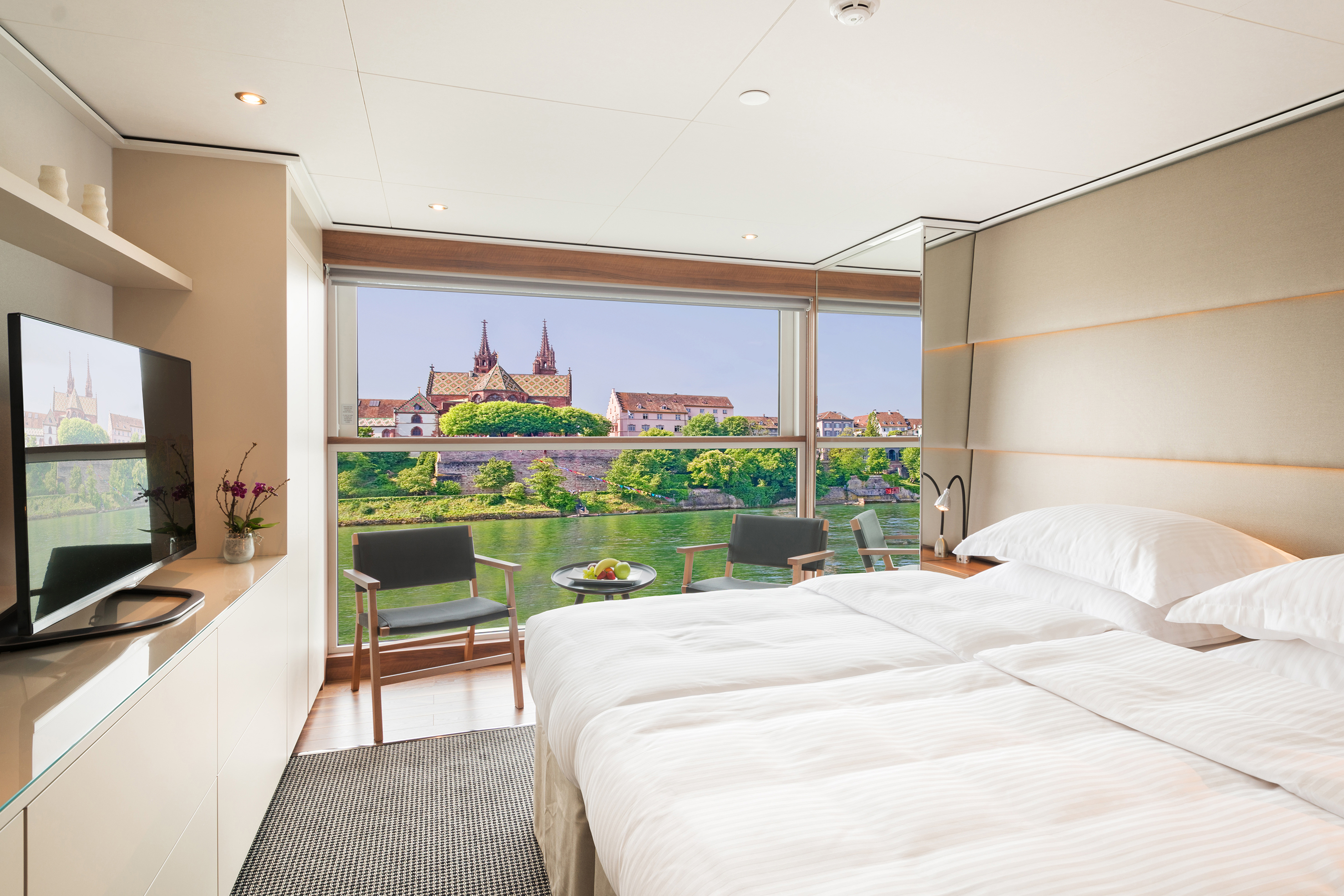
Emerald Panorama Balcony Suite
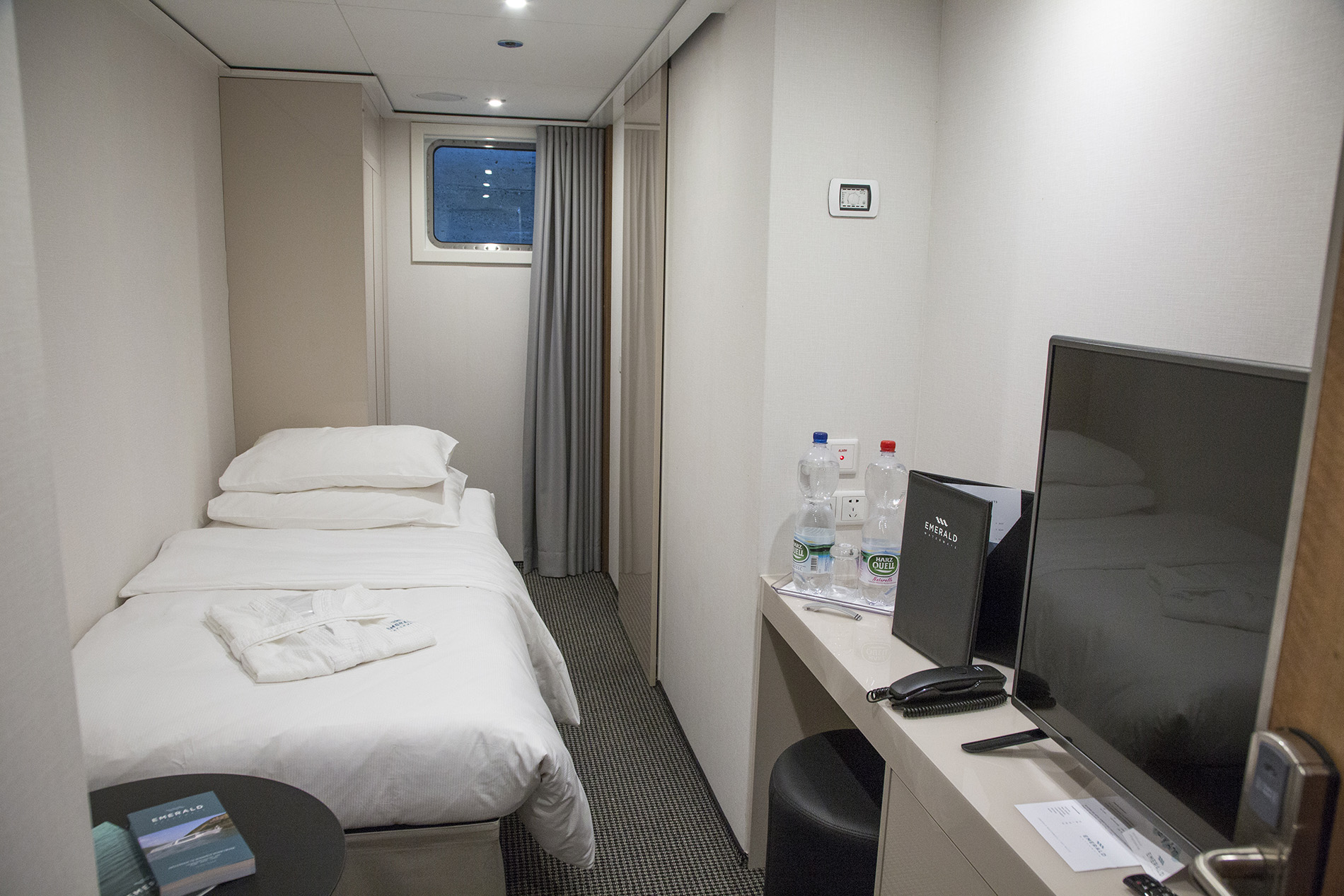
Emerald Single Stateroom
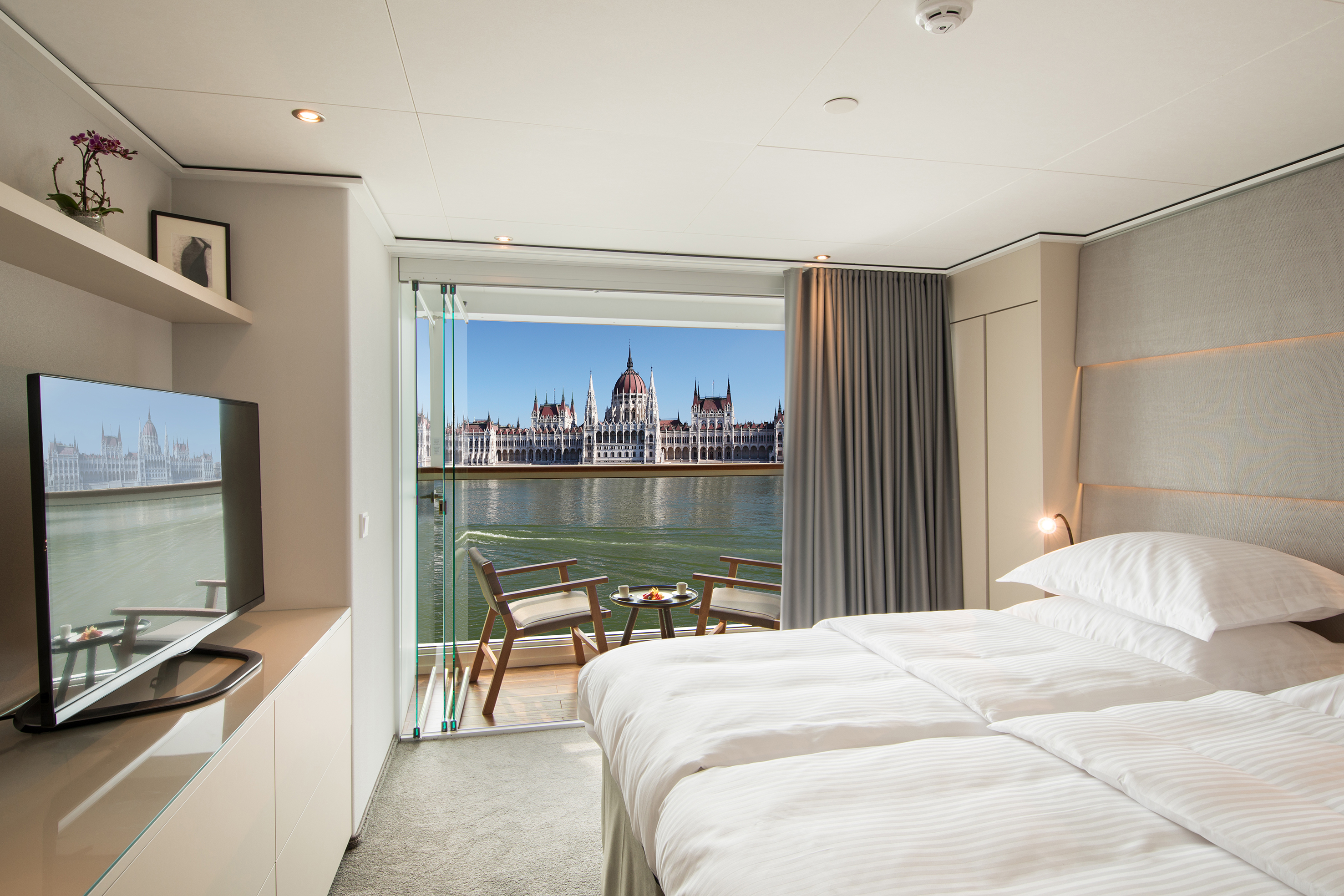
Grand Balcony Suite
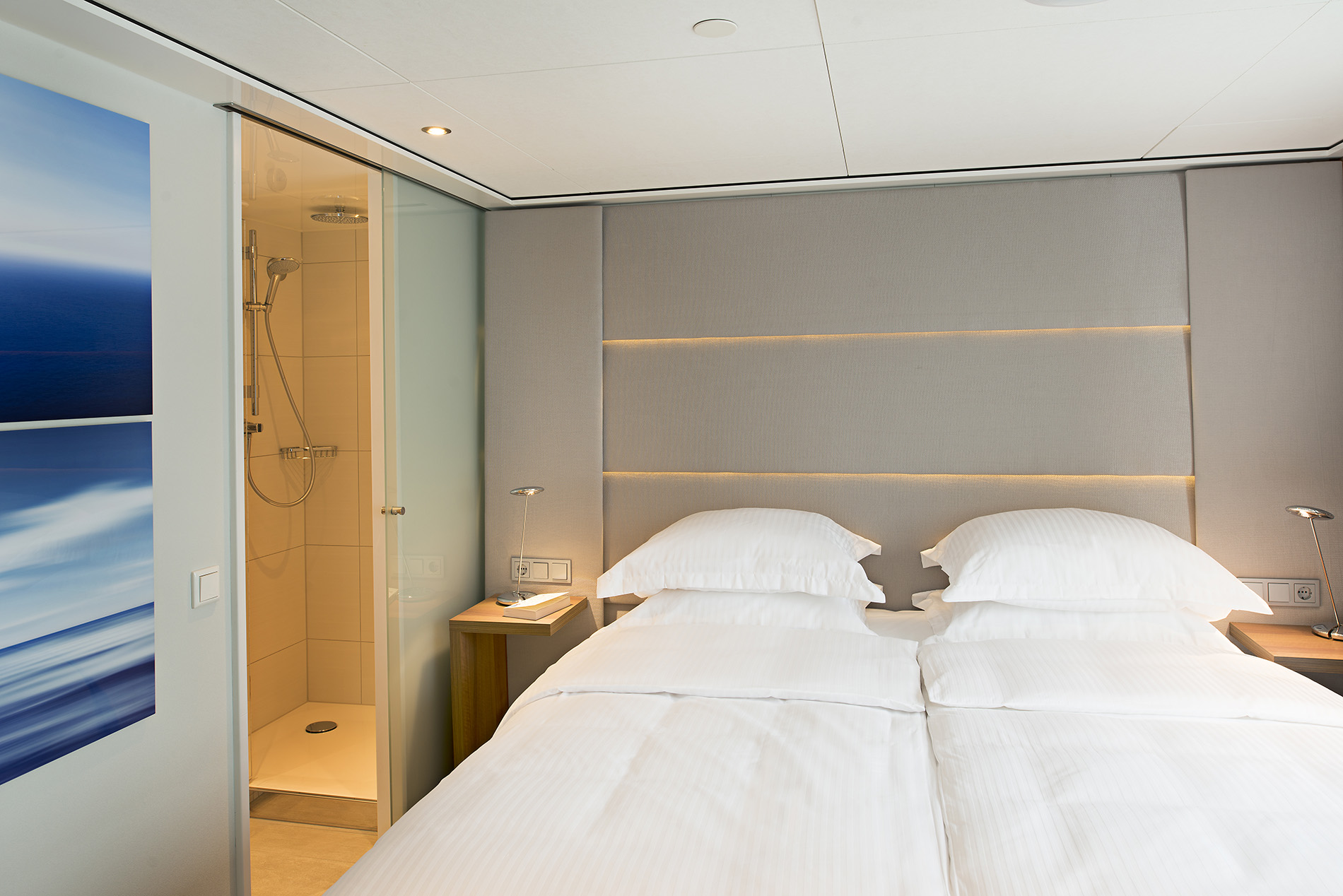
Owner's One-Bedroom Suite
Ship Facilities
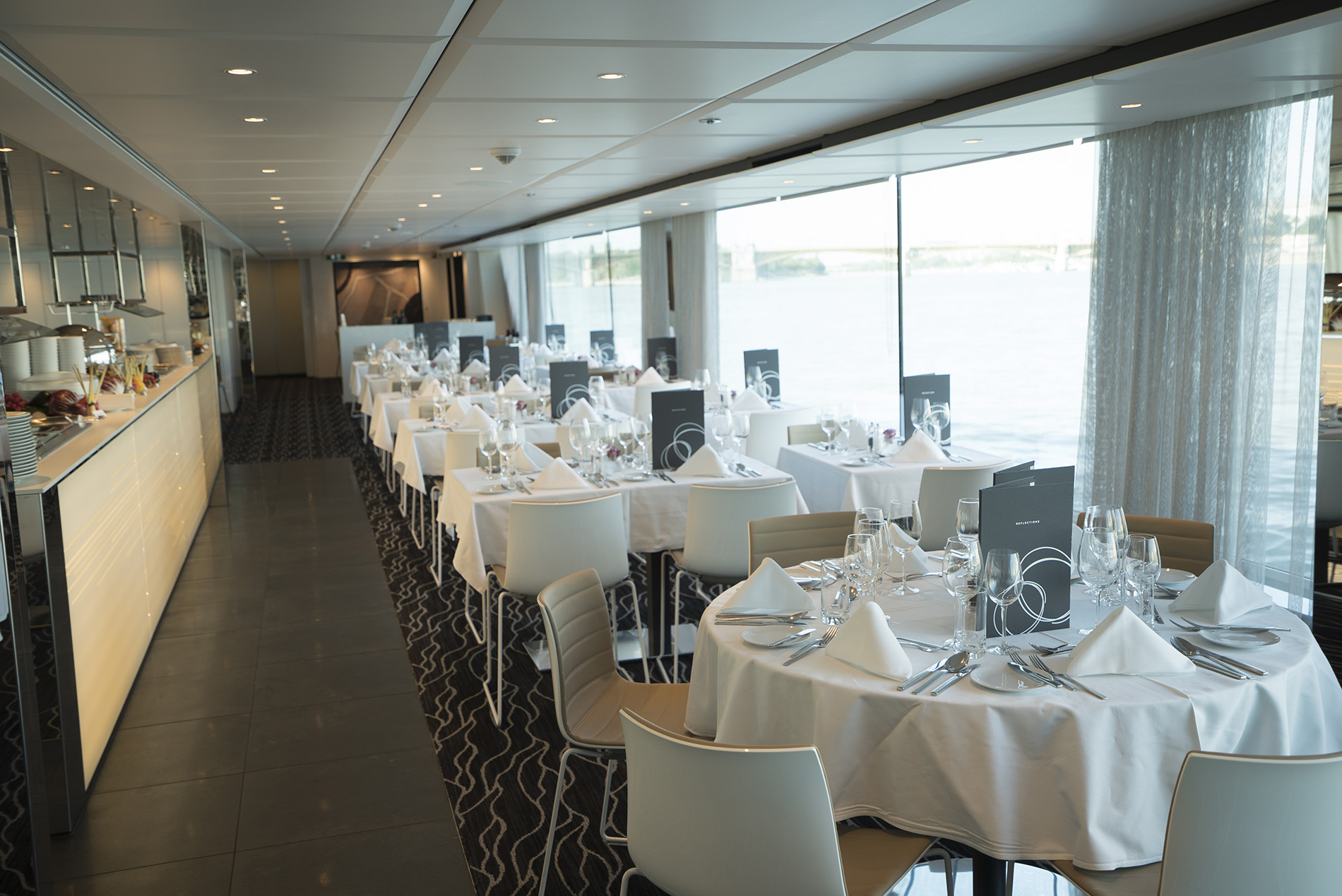
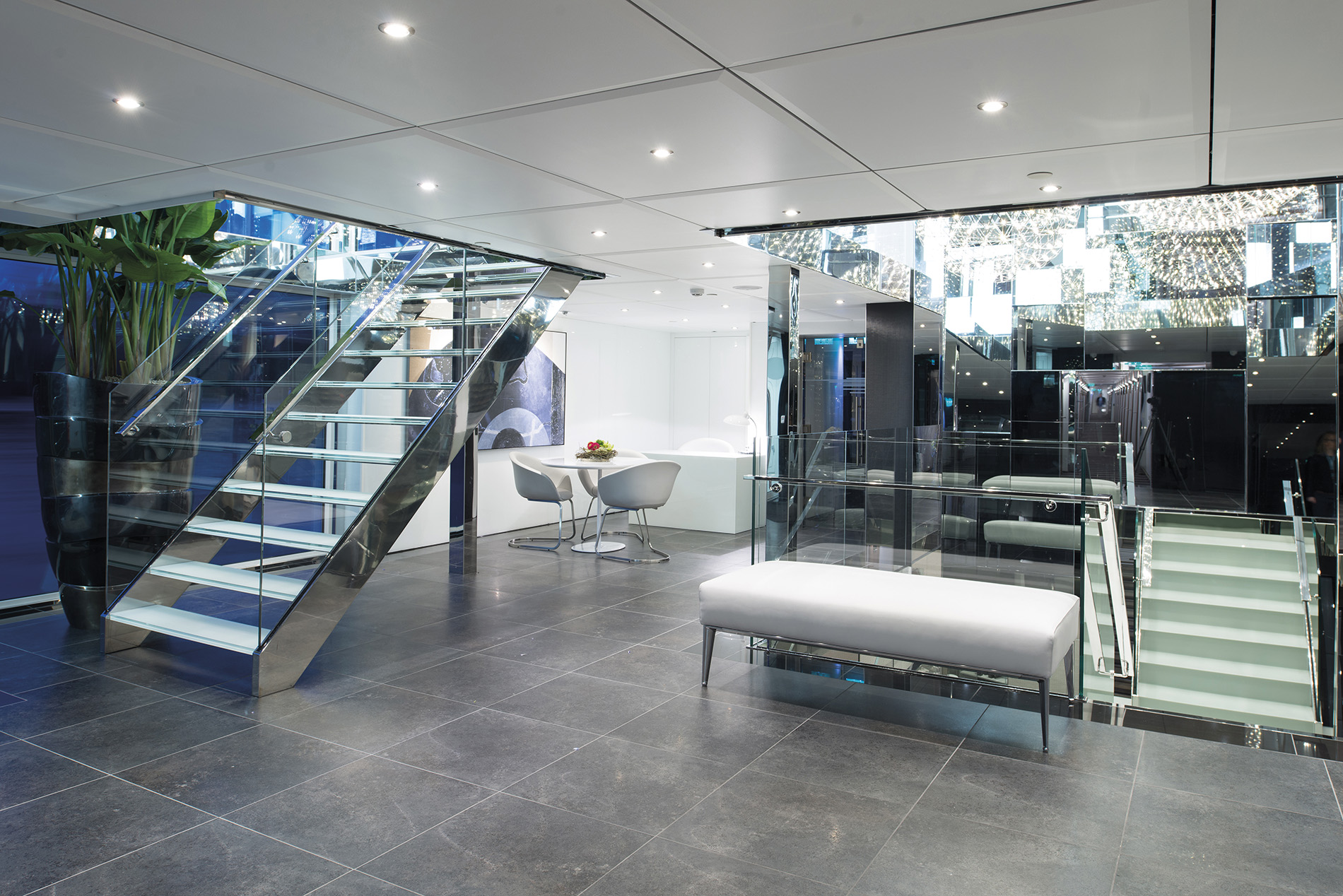
Reflections Restaurant
Our premiere on board dining spot
With open seating and elegant design, our Reflections Restaurant sets the benchmark in on board dining across our fleet of boutique Star-Ships throughout Europe and Southeast Asia. Here, savour delightful chef-prepared meals for breakfast, lunch, and dinner, with dishes inspired by local flavours and a few favourites you may recognise from home.
The Terrace
Dine alfresco
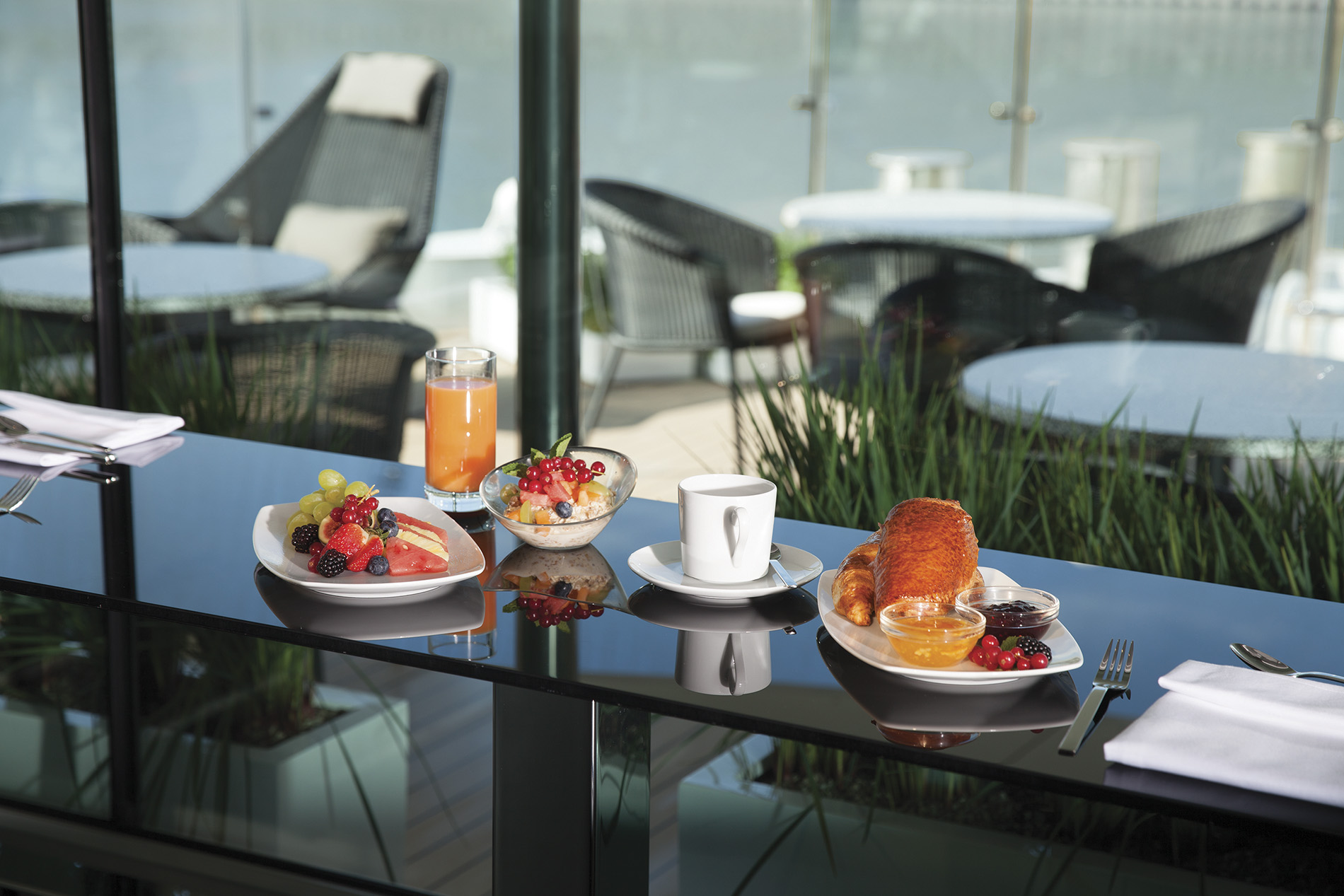
A beautifully decked area in the forward of our European Star-Ships, The Terrace provides a lovely retreat from which to enjoy a light snack or refreshing drink. Depending on the ship, this partly indoor and outdoor space is a spectacular vantage point from which to soak up the scenery, whatever the weather. This peaceful setting is also a great spot to enjoy a drink as the wonders of the landscape pass by.
Sky Barbecue
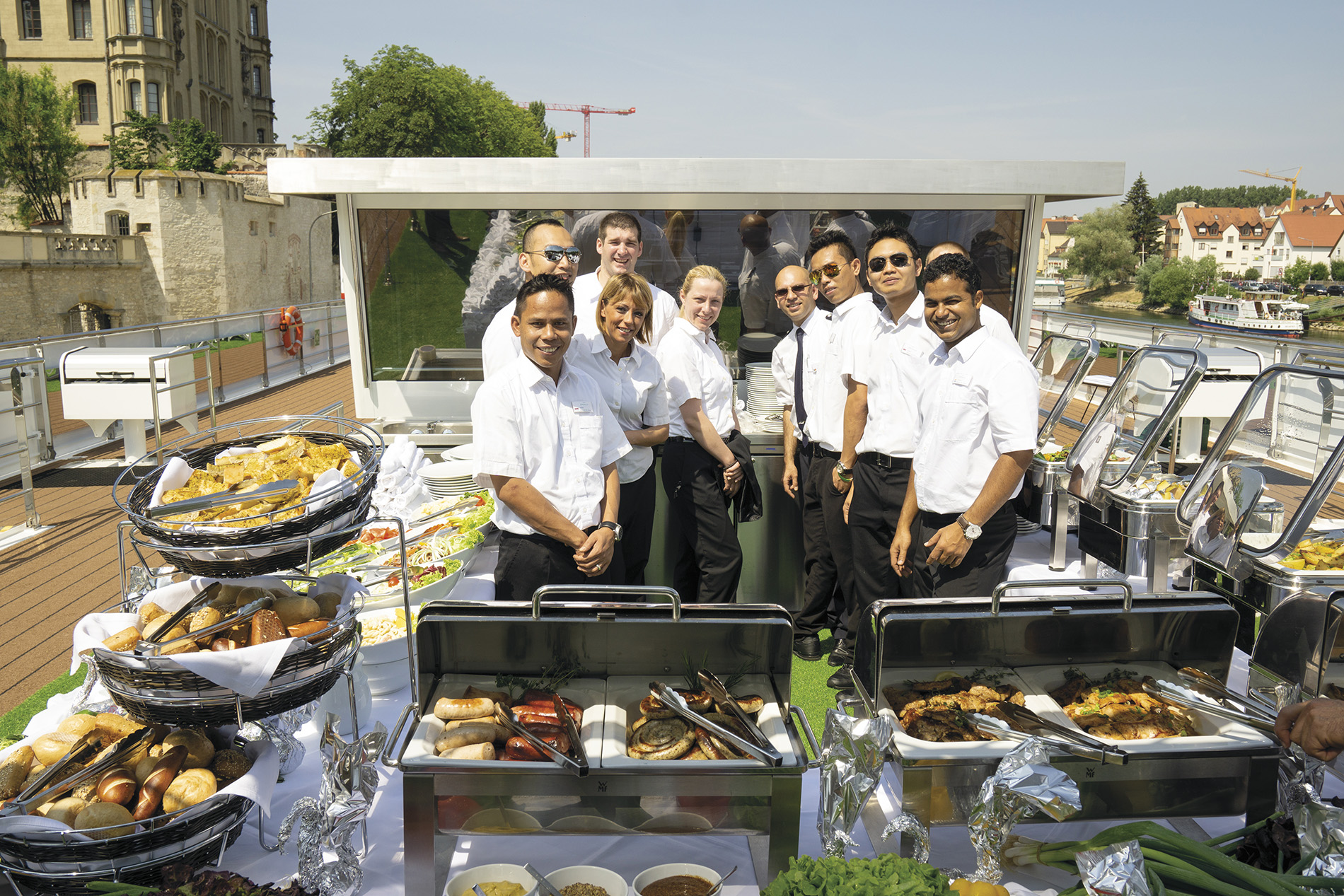
The Sky Barbecue can be found on the Sun Deck.
Healthy Dining
The freshest ingredients
Dine on delectable meals made with fresh, locally sourced produce.
Lunch with a view
Enjoy healthy meals while soaking in the stunning views and fresh air.
A range of dietary options
Sample amazing vegetarian, vegan, and gluten-free meal options^. ^Please inform your crew of any dietary requirements.

DiscoverMORE
Class & culture
Enjoy a world beyond the ordinary, attending classical concerts in grand halls and revelling in exclusive art tours.
Workshop masterclasses and tasting sessions
Let the experts guide you through the process of making local treats before you sample the fruits of your labour.
Journey further
Exciting cruise excursions take you to cities further afield from the riverbanks, where even more adventures await you.
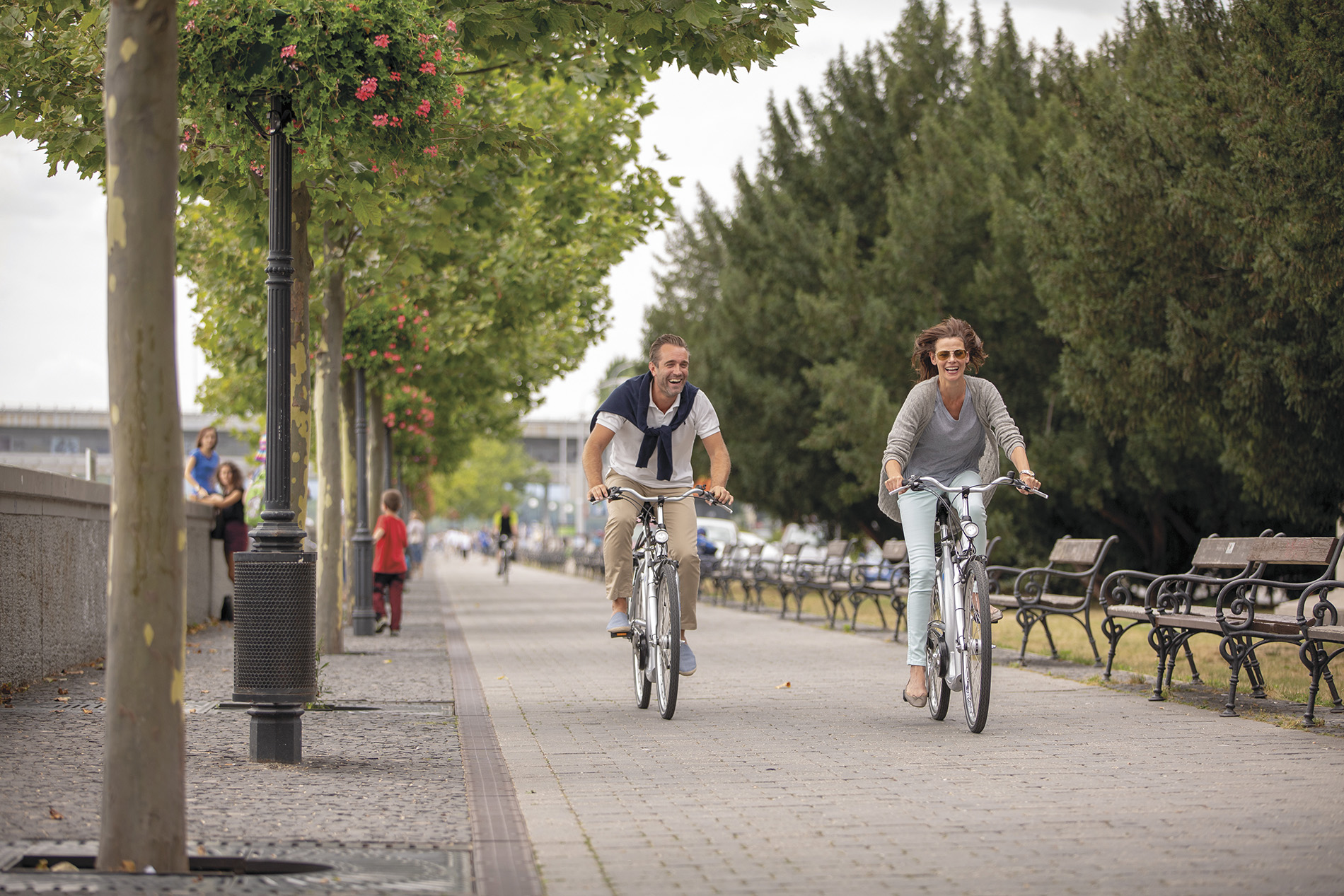
EmeraldACTIVE
An invigorating hike
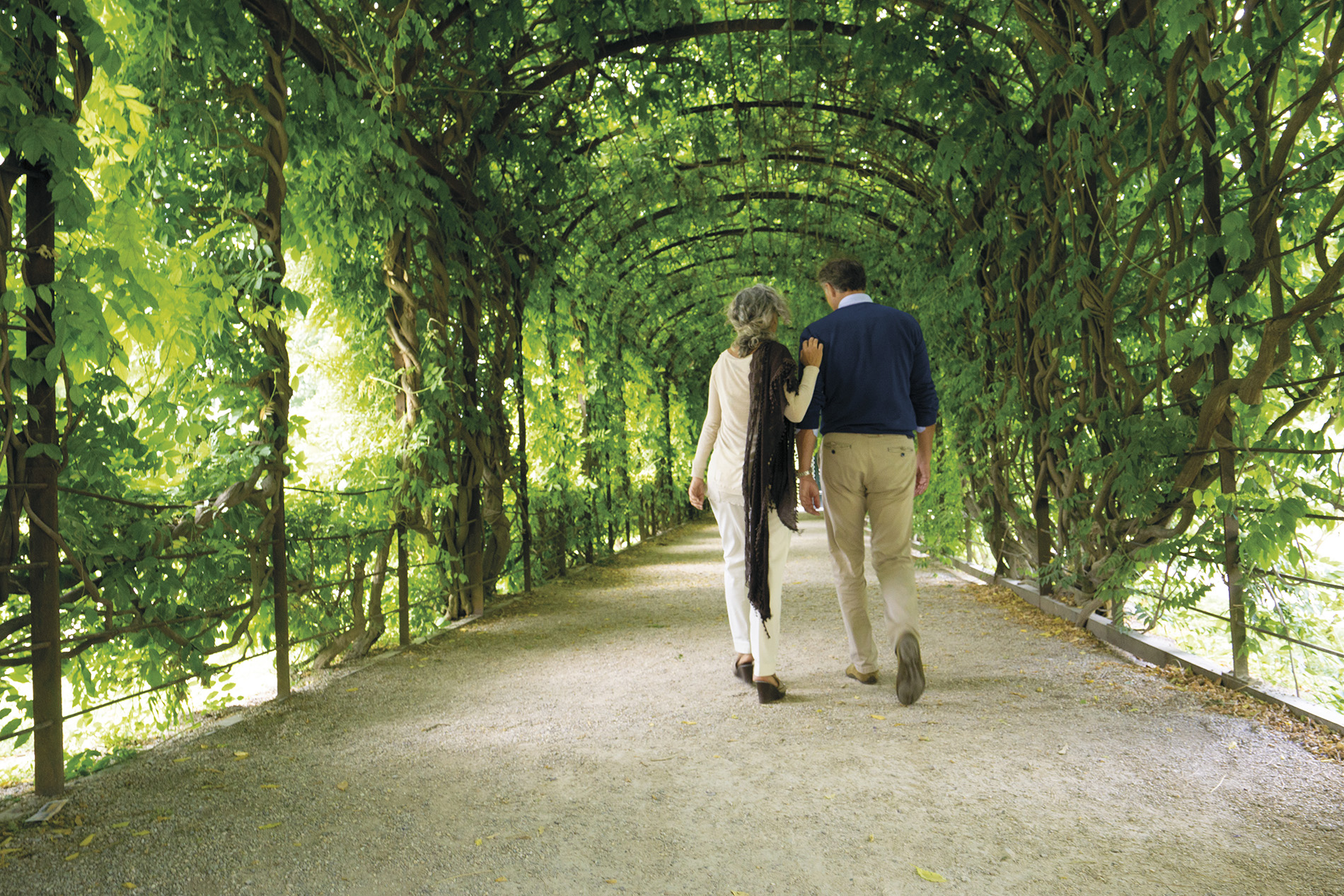
Join your guide for a sight-seeing tour like no other, as you leave the beaten path to amble across hills and forestry.
A cycling sojourn
Take advantage of our free-to-use on board bikes as your guide provides a cycling tour past picturesque scenery.
Take to the waterways
A guided canoeing or kayaking experience along the river opens up a new pathway for adventure and excitement.
EmeraldPLUS
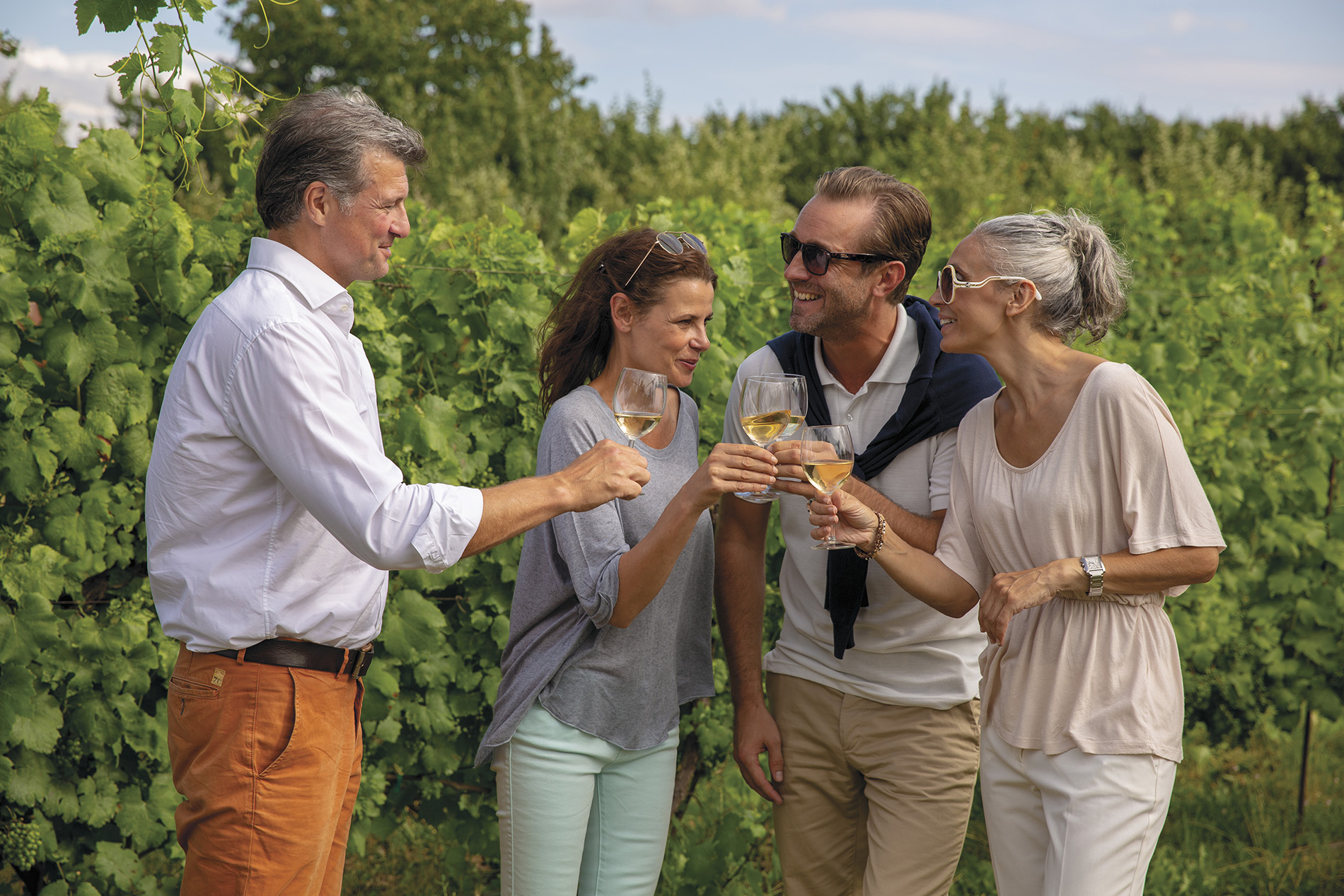
The life of a local
Join an array of excursions that showcase local life, from viticultural tours and wine tasting to home-hosted visits.
On board activities
Revel in a range of special on board shows, sessions, and workshops, that bring the highlights of your destination to you.
In-depth specialty tours
Delve deeper into a specialty-interest highlight, touring famed markets and sampling local treats and produce.
Included Excursions
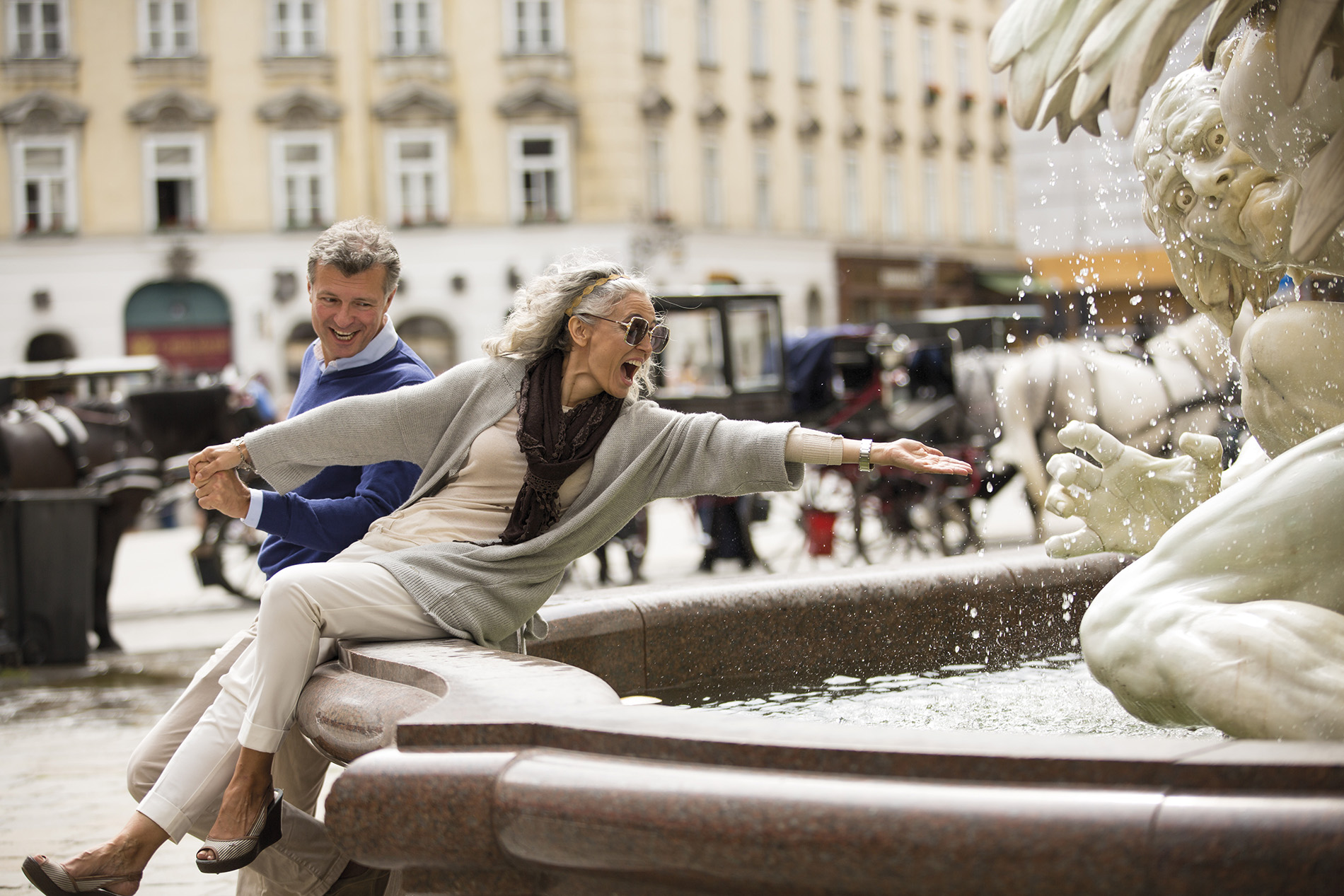
Explore your surroundings
Take to the charming streets of your chosen destination for a guided tour of various villages, towns, and cities.
A relaxing coach tour
Sit back and relax, as your guide highlights a range of wonders from the comfort of an air-conditioned coach
See the sights close up
Enjoy guided tours of historical landmarks, from Benedictine abbeys to ancient Roman structures.
Special Dining Experiences
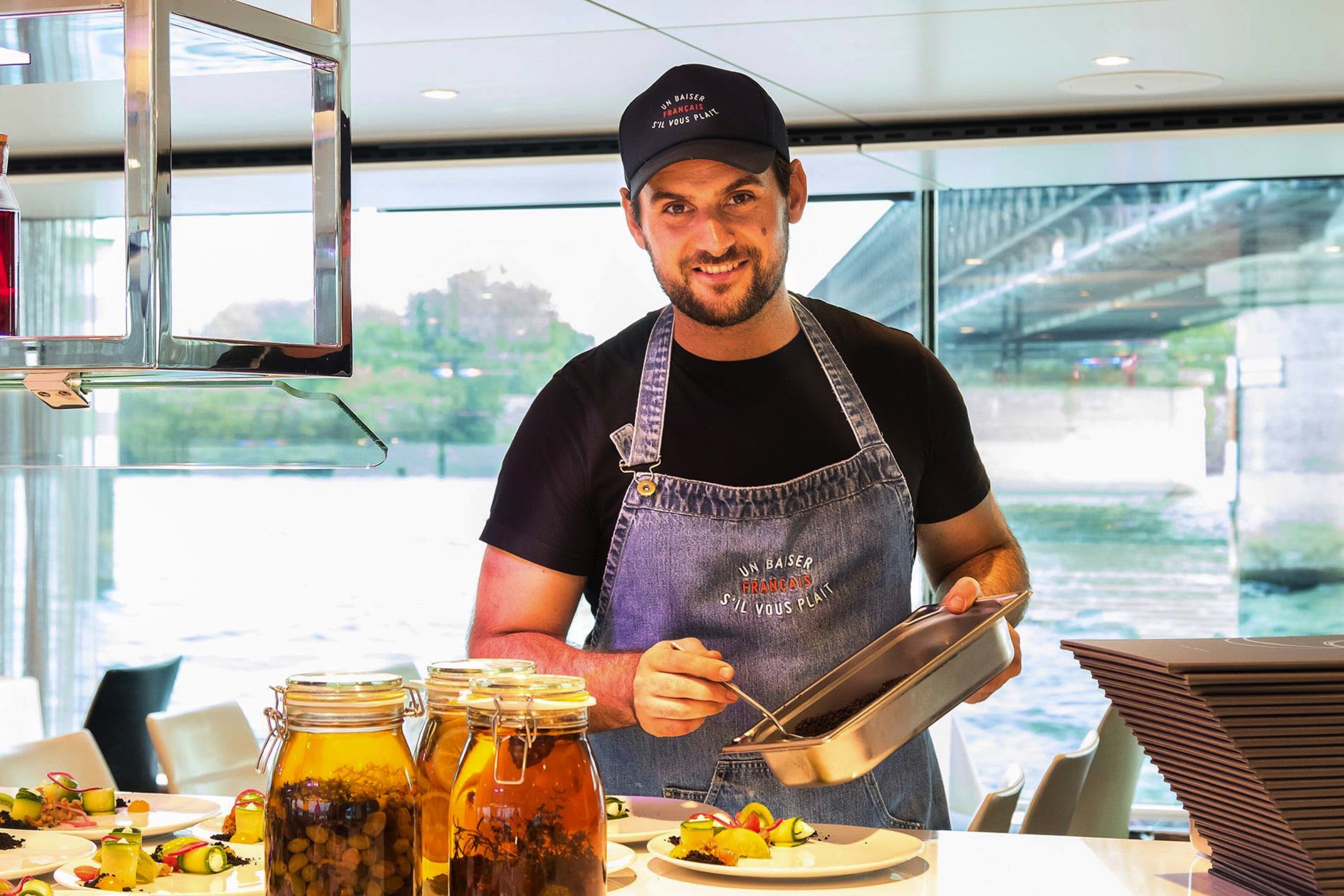
French cookery demonstration and tasting
Cruising the Rhône from Lyon to Arles, you’ll pass through a region steeped in gastronomic heritage. As part of our EmeraldPLUS programme, discover the depth and complexity of Provençal cuisine with an authentic on board dinner, hosted by revered French chef, Fabien Morreale.
Food and drink with a local family in Slovakia
Sharing a table with local people is the best way to experience regional food. In Bratislava, EmeraldPLUS gives you the chance to visit the home of a local Slovakian family, who will welcome you with great conversation and, of course, tasty, sweet treats and coffee.
Dining experience at Quinta de Pacheca wine estate
Savour a rural dinner at the beautiful Quinta da Pacheca, a historic farm and winery in the foothills of the famous Douro Valley. With wonderful food and port wine on offer, it’s a chance to get to grips with the traditional cuisine of northern Portugal.
Reception
If you want to purchase a drinks package, enquire about a DiscoverMORE excursion or simply catch-up with our friendly crew, you’ll always receive a warm welcome in our on-board reception area.
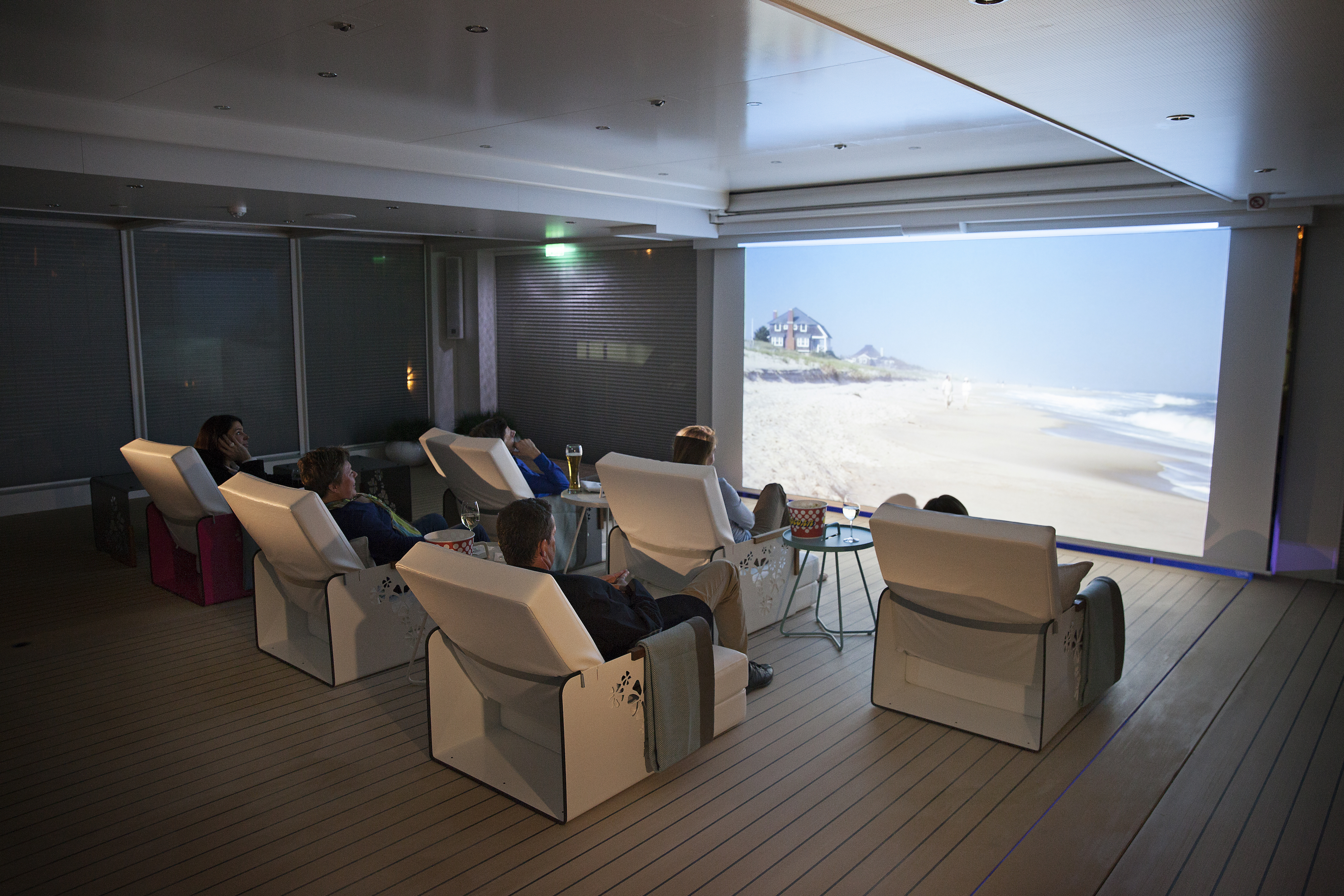
Daytime Pool & Bar/Evening Cinema
One of the greatest innovations on-board Emerald Luna, Sun or Dawn is our daytime pool and bar, which transforms into an evening cinema on selected nights during your river cruise.
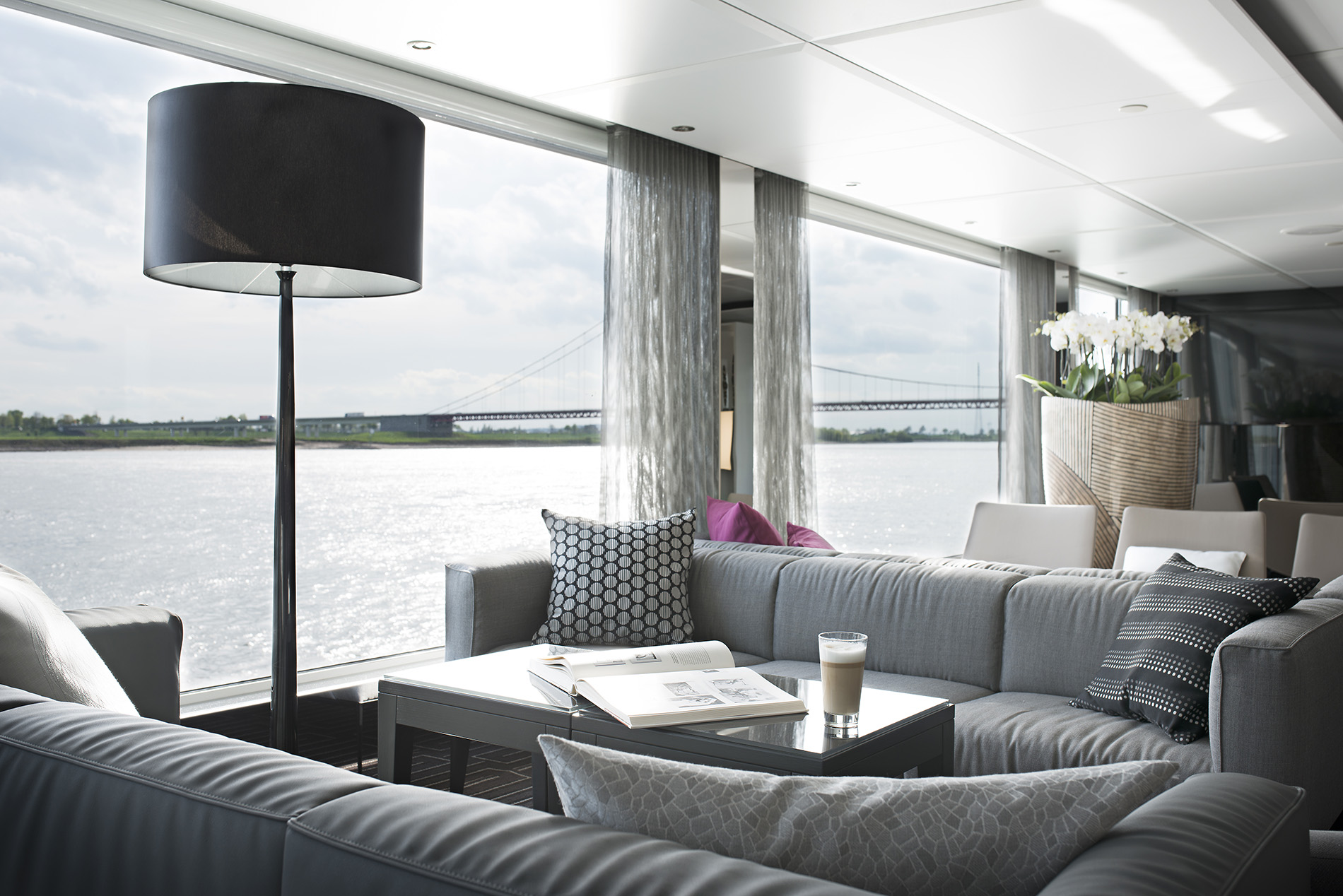
Horizon Bar and Lounge
Welcome to the Horizon Bar, the main lounge area on-board Emerald Luna, Sun or Dawn. Here, in contemporary surrounds, you can relax, unwind and make new friends while enjoying a tipple or two from our comprehensive bar menu. You’ll also be able to enjoy unlimited access to our complimentary coffee machine.
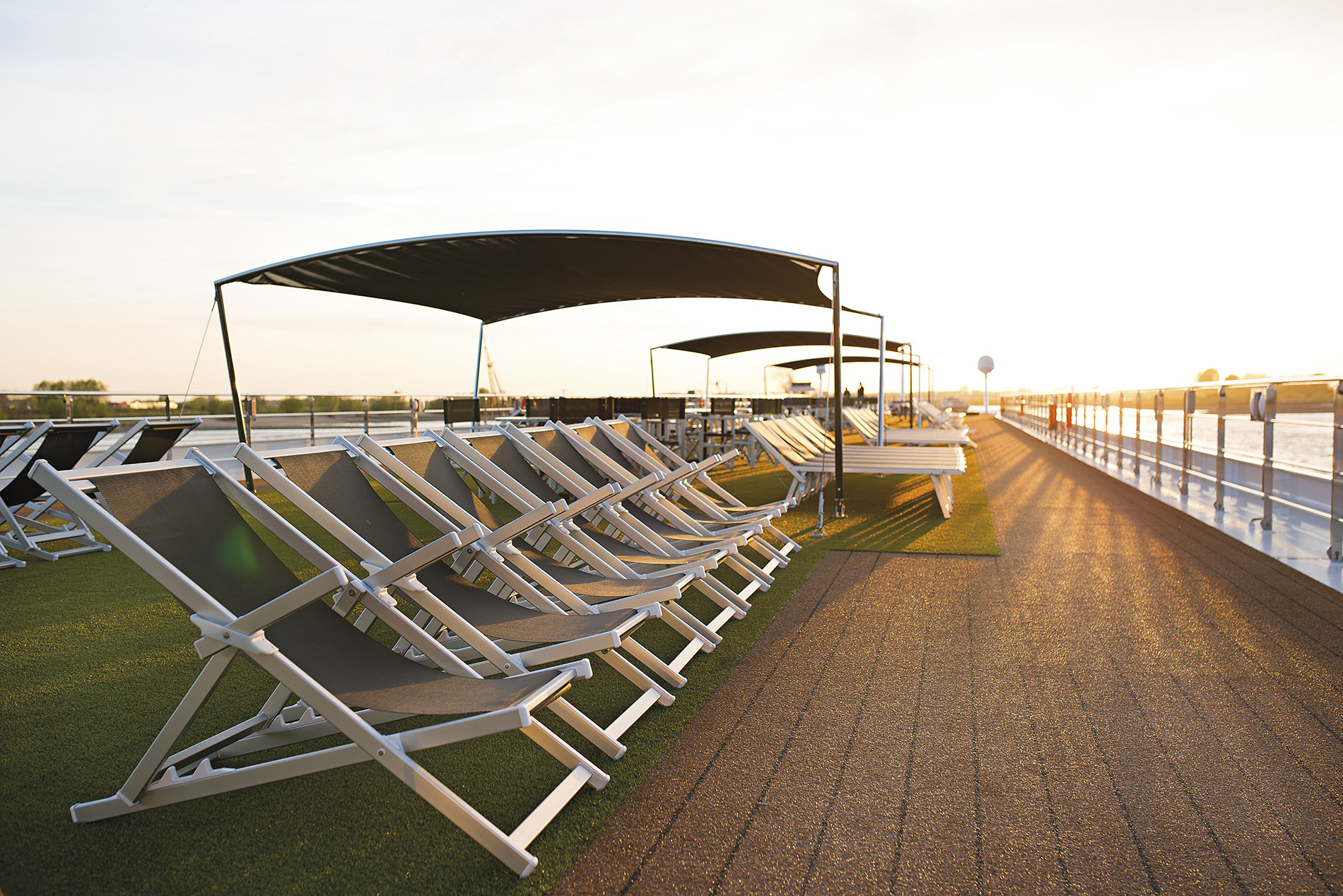
Sun Deck
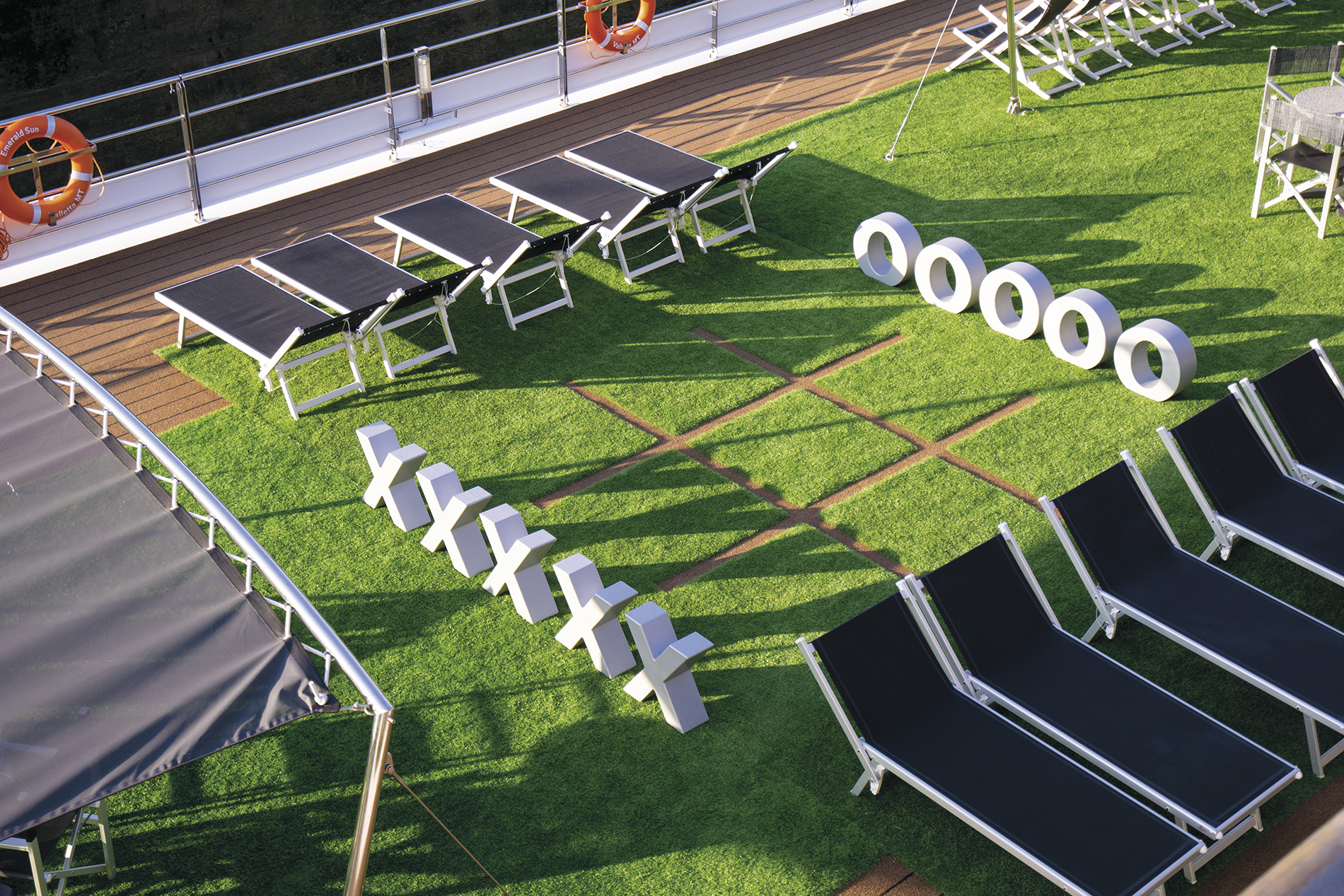
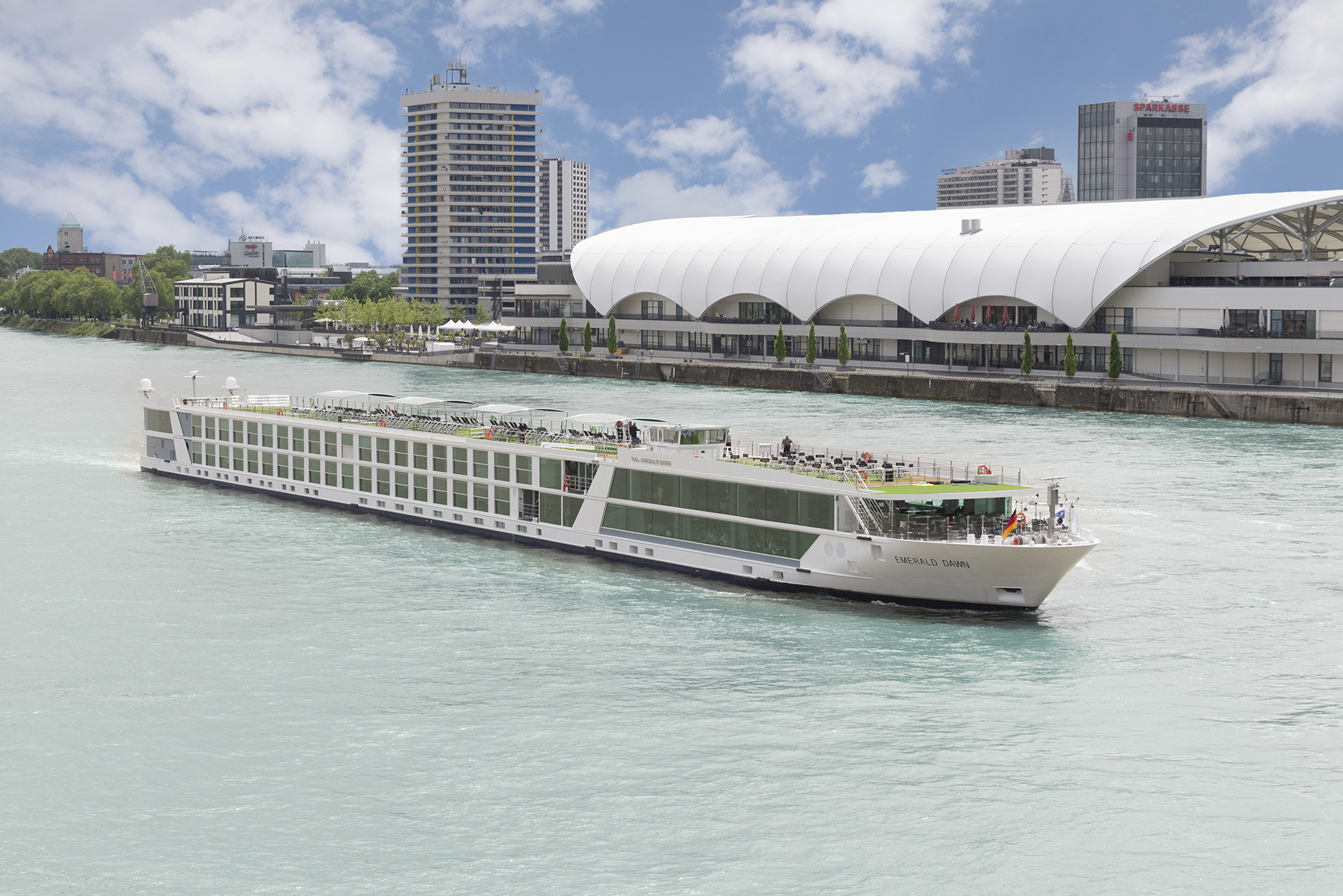
The Sun Deck is your panoramic outdoor space on-board Emerald Sun and Emerald Dawn, a place to relax, unwind and take in inspiring views of the river. Complete with deck chairs, walking track and games area, you’ll find the Sun Deck at the very top of your Emerald Star-Ship.
Games Area and Golf Putting Green
Feel free to enjoy our games area and golf putting green. It’s the perfect way to enjoy the scenery while you challenge new-found friends.
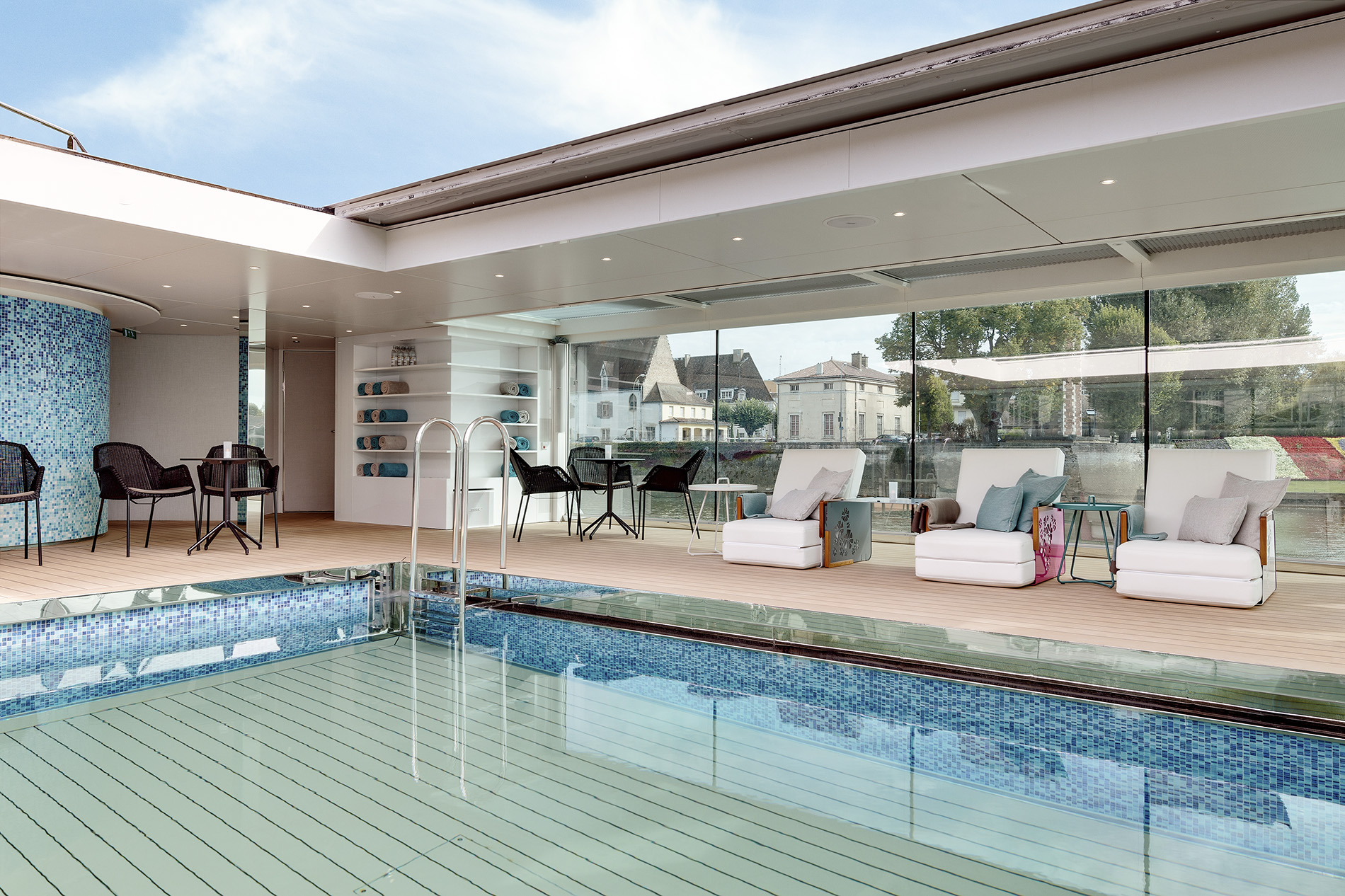
Pool
Spacious on board pools provide plenty of room for swimming.
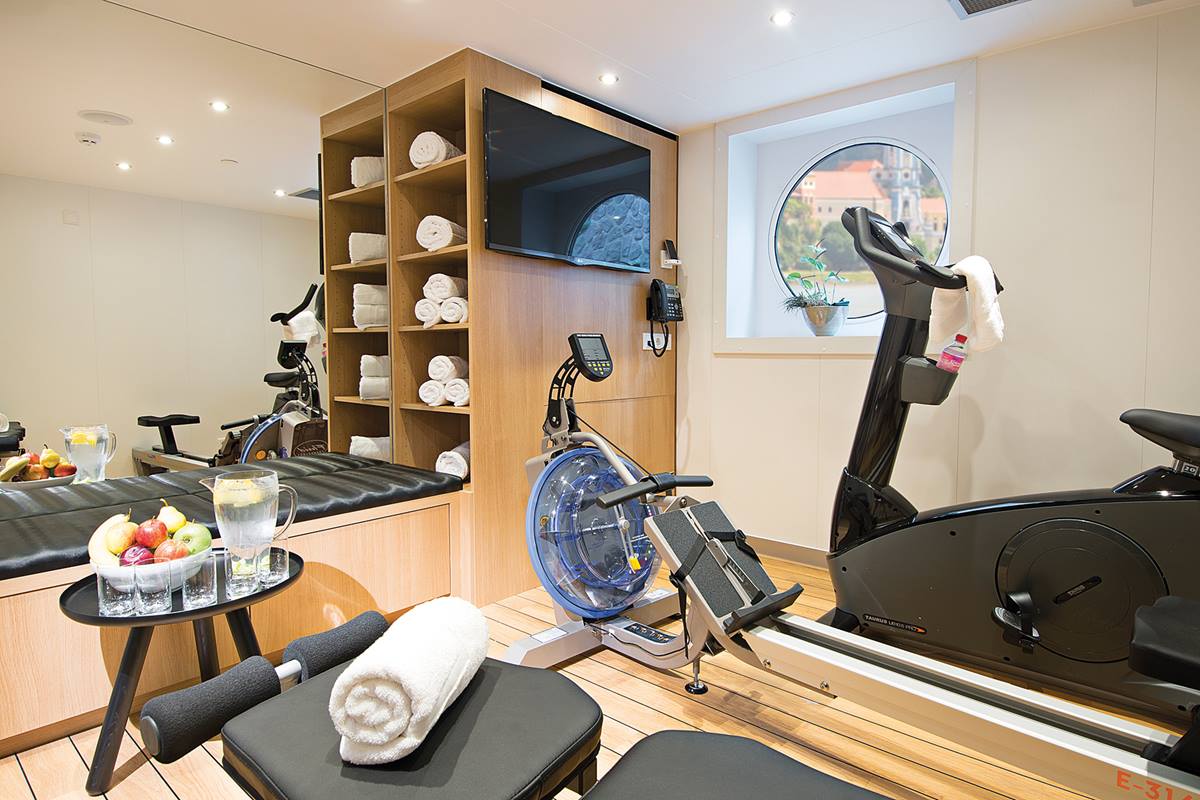
Fitness Area
Keep up your workout regime in our well-equipped, modern gym.
Walking Track
Stretch your legs and take in the sights as you enjoy a stroll on our purpose-built walking track. Taking you around the outside of the Sun Deck, it’s a great addition for those who like to stay active on their travels.
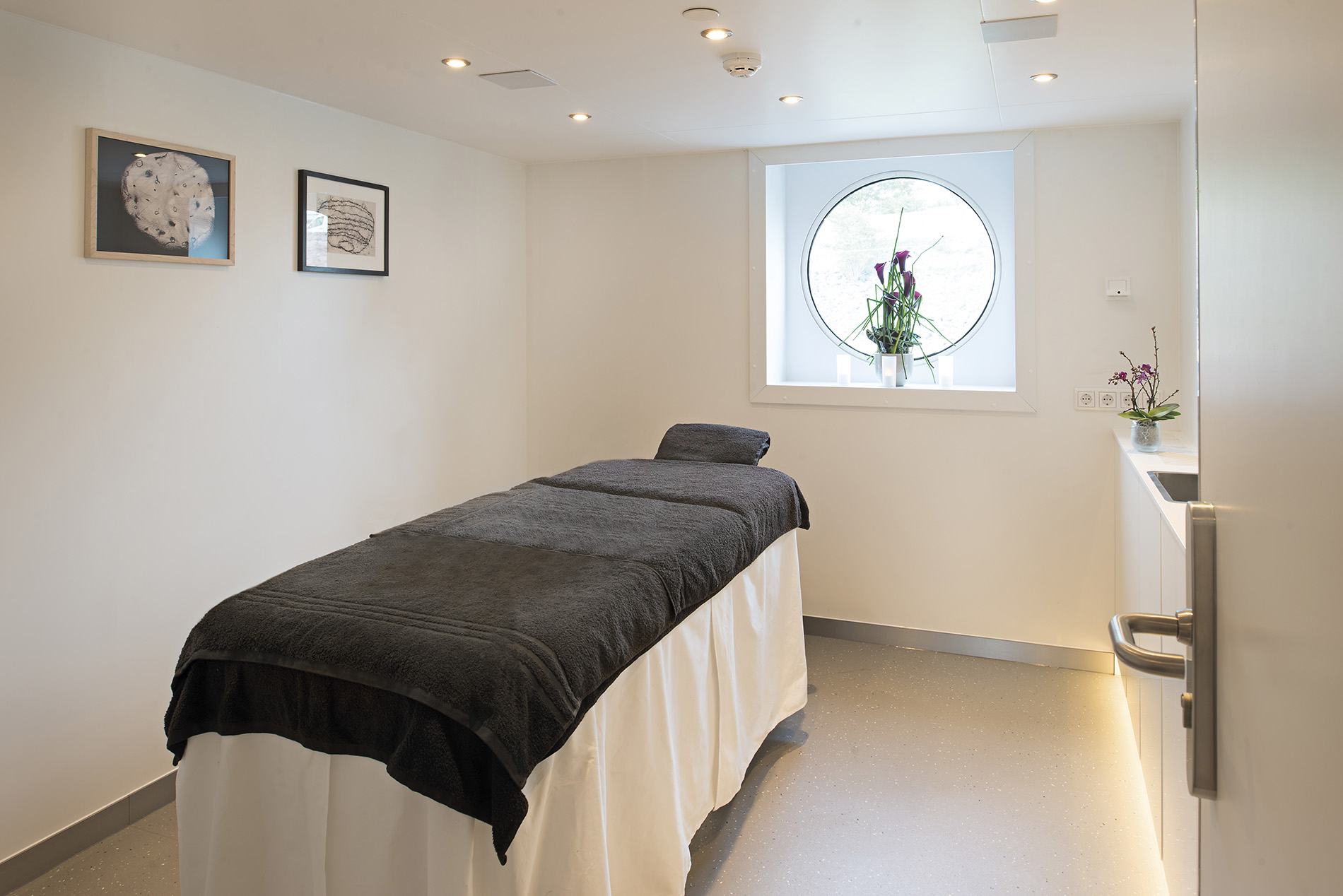
Wellness Area
Unwind with a massage courtesy of our expertly trained masseuses and settle into a professional massage therapy room designed around serenity.
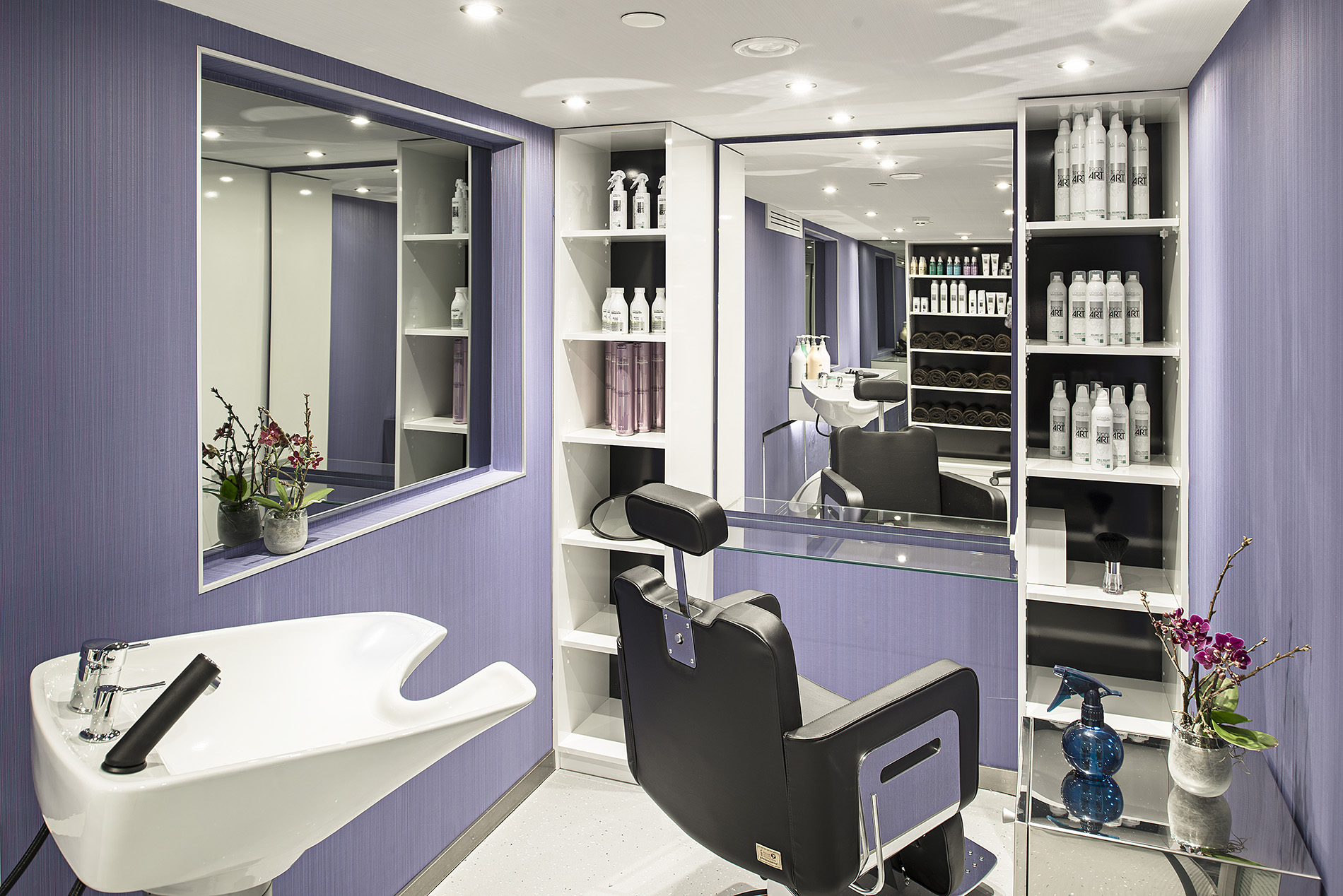
Hairdressers
In need of a quick trim during your travels? On-board the Emerald Sun, Emerald Luna and Emerald Dawn, you can treat yourself at any point during your cruise with our dedicated hairdressers – perfect if you’re looking to get spruced up for a special evening.
Please note: Emerald Dawn does not have any specific facilities to accommodate Kids/Teens.
Reflections Restaurant
Our premiere on board dining spot
With open seating and elegant design, our Reflections Restaurant sets the benchmark in on board dining across our fleet of boutique Star-Ships throughout Europe and Southeast Asia. Here, savour delightful chef-prepared meals for breakfast, lunch, and dinner, with dishes inspired by local flavours and a few favourites you may recognise from home.
The Terrace
Dine alfresco
A beautifully decked area in the forward of our European Star-Ships, The Terrace provides a lovely retreat from which to enjoy a light snack or refreshing drink. Depending on the ship, this partly indoor and outdoor space is a spectacular vantage point from which to soak up the scenery, whatever the weather. This peaceful setting is also a great spot to enjoy a drink as the wonders of the landscape pass by.
Sky Barbecue
The Sky Barbecue can be found on the Sun Deck.
Healthy Dining
The freshest ingredients
Dine on delectable meals made with fresh, locally sourced produce.
Lunch with a view
Enjoy healthy meals while soaking in the stunning views and fresh air.
A range of dietary options
Sample amazing vegetarian, vegan, and gluten-free meal options^. ^Please inform your crew of any dietary requirements.
DiscoverMORE
Class & culture
Enjoy a world beyond the ordinary, attending classical concerts in grand halls and revelling in exclusive art tours.
Workshop masterclasses and tasting sessions
Let the experts guide you through the process of making local treats before you sample the fruits of your labour.
Journey further
Exciting cruise excursions take you to cities further afield from the riverbanks, where even more adventures await you.
EmeraldACTIVE
An invigorating hike
Join your guide for a sight-seeing tour like no other, as you leave the beaten path to amble across hills and forestry.
A cycling sojourn
Take advantage of our free-to-use on board bikes as your guide provides a cycling tour past picturesque scenery.
Take to the waterways
A guided canoeing or kayaking experience along the river opens up a new pathway for adventure and excitement.
EmeraldPLUS
The life of a local
Join an array of excursions that showcase local life, from viticultural tours and wine tasting to home-hosted visits.
On board activities
Revel in a range of special on board shows, sessions, and workshops, that bring the highlights of your destination to you.
In-depth specialty tours
Delve deeper into a specialty-interest highlight, touring famed markets and sampling local treats and produce.
Included Excursions
Explore your surroundings
Take to the charming streets of your chosen destination for a guided tour of various villages, towns, and cities.
A relaxing coach tour
Sit back and relax, as your guide highlights a range of wonders from the comfort of an air-conditioned coach
See the sights close up
Enjoy guided tours of historical landmarks, from Benedictine abbeys to ancient Roman structures.
Special Dining Experiences
French cookery demonstration and tasting
Cruising the Rhône from Lyon to Arles, you’ll pass through a region steeped in gastronomic heritage. As part of our EmeraldPLUS programme, discover the depth and complexity of Provençal cuisine with an authentic on board dinner, hosted by revered French chef, Fabien Morreale.
Food and drink with a local family in Slovakia
Sharing a table with local people is the best way to experience regional food. In Bratislava, EmeraldPLUS gives you the chance to visit the home of a local Slovakian family, who will welcome you with great conversation and, of course, tasty, sweet treats and coffee.
Dining experience at Quinta de Pacheca wine estate
Savour a rural dinner at the beautiful Quinta da Pacheca, a historic farm and winery in the foothills of the famous Douro Valley. With wonderful food and port wine on offer, it’s a chance to get to grips with the traditional cuisine of northern Portugal.
Reception
If you want to purchase a drinks package, enquire about a DiscoverMORE excursion or simply catch-up with our friendly crew, you’ll always receive a warm welcome in our on-board reception area.
Daytime Pool & Bar/Evening Cinema
One of the greatest innovations on-board Emerald Luna, Sun or Dawn is our daytime pool and bar, which transforms into an evening cinema on selected nights during your river cruise.
Horizon Bar and Lounge
Welcome to the Horizon Bar, the main lounge area on-board Emerald Luna, Sun or Dawn. Here, in contemporary surrounds, you can relax, unwind and make new friends while enjoying a tipple or two from our comprehensive bar menu. You’ll also be able to enjoy unlimited access to our complimentary coffee machine.
Sun Deck
The Sun Deck is your panoramic outdoor space on-board Emerald Sun and Emerald Dawn, a place to relax, unwind and take in inspiring views of the river. Complete with deck chairs, walking track and games area, you’ll find the Sun Deck at the very top of your Emerald Star-Ship.
Games Area and Golf Putting Green
Feel free to enjoy our games area and golf putting green. It’s the perfect way to enjoy the scenery while you challenge new-found friends.
Pool
Spacious on board pools provide plenty of room for swimming.
Fitness Area
Keep up your workout regime in our well-equipped, modern gym.
Walking Track
Stretch your legs and take in the sights as you enjoy a stroll on our purpose-built walking track. Taking you around the outside of the Sun Deck, it’s a great addition for those who like to stay active on their travels.
Wellness Area
Unwind with a massage courtesy of our expertly trained masseuses and settle into a professional massage therapy room designed around serenity.
Hairdressers
In need of a quick trim during your travels? On-board the Emerald Sun, Emerald Luna and Emerald Dawn, you can treat yourself at any point during your cruise with our dedicated hairdressers – perfect if you’re looking to get spruced up for a special evening.
Please note: Emerald Dawn does not have any specific facilities to accommodate Kids/Teens.
About the Ship
Deck Plans

- Emerald Stateroom – CAT E
- Emerald Stateroom – CAT D
- Emerald Single Stateroom – CAT ES
- HairdresserLift

- Fitness Area
- Wellness Area
- Emerald Panorama Balcony Suite – CAT C
- Emerald Panorama Balcony Suite – CAT B
- Reception
- Reflections Restaurant
- Lift

- Daytime Pool and Bar/ Evening Cinema
- Grand Balcony Suite – CAT S
- Owner’s One-bedroom Suite – CAT SA
- Emerald Panorama Balcony Suite – CAT A
- Horizon Bar and Lounge
- The Terrace
- Lift

- Sun deck with deck chairs
- Navigation bridge
- Sky barbecue
- Golf putting green
- Games area
- Retractable glass roof
- Walking track
- Emerald Stateroom – CAT E
- Emerald Stateroom – CAT D
- Emerald Single Stateroom – CAT ES
- HairdresserLift
- Fitness Area
- Wellness Area
- Emerald Panorama Balcony Suite – CAT C
- Emerald Panorama Balcony Suite – CAT B
- Reception
- Reflections Restaurant
- Lift
- Daytime Pool and Bar/ Evening Cinema
- Grand Balcony Suite – CAT S
- Owner’s One-bedroom Suite – CAT SA
- Emerald Panorama Balcony Suite – CAT A
- Horizon Bar and Lounge
- The Terrace
- Lift
- Sun deck with deck chairs
- Navigation bridge
- Sky barbecue
- Golf putting green
- Games area
- Retractable glass roof
- Walking track