Itinerary
Hanoi, Vietnam
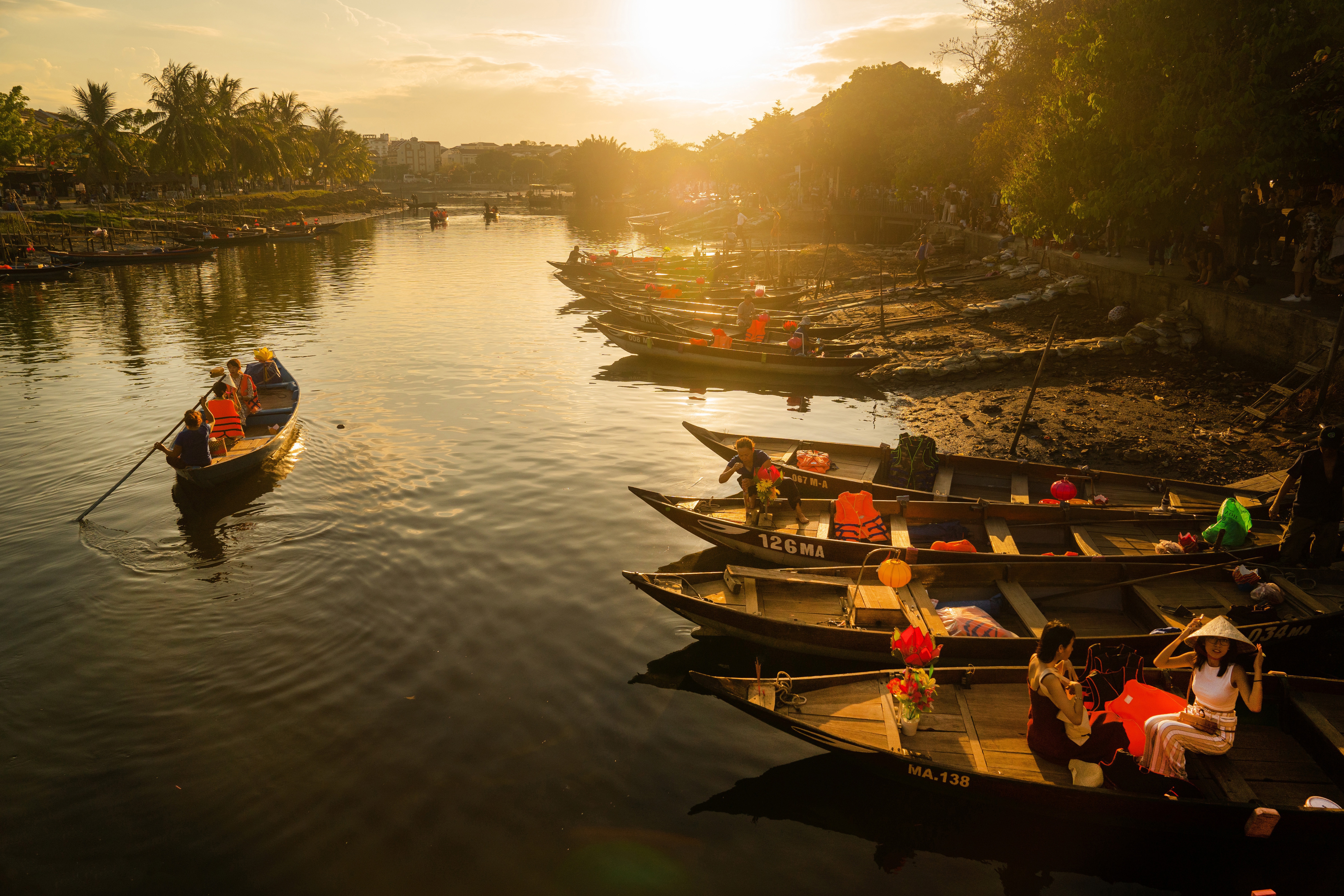
Xin Chao and welcome to Hanoi. On arrival, you’ll be transferred to downtown Hanoi and your hotel for your included one-night stay. Relax at the hotel, explore the city, or wander Hanoi’s romantic West Lake. This evening, meet your tour director for your welcome briefing.
Ha Long Bay, Vietnam
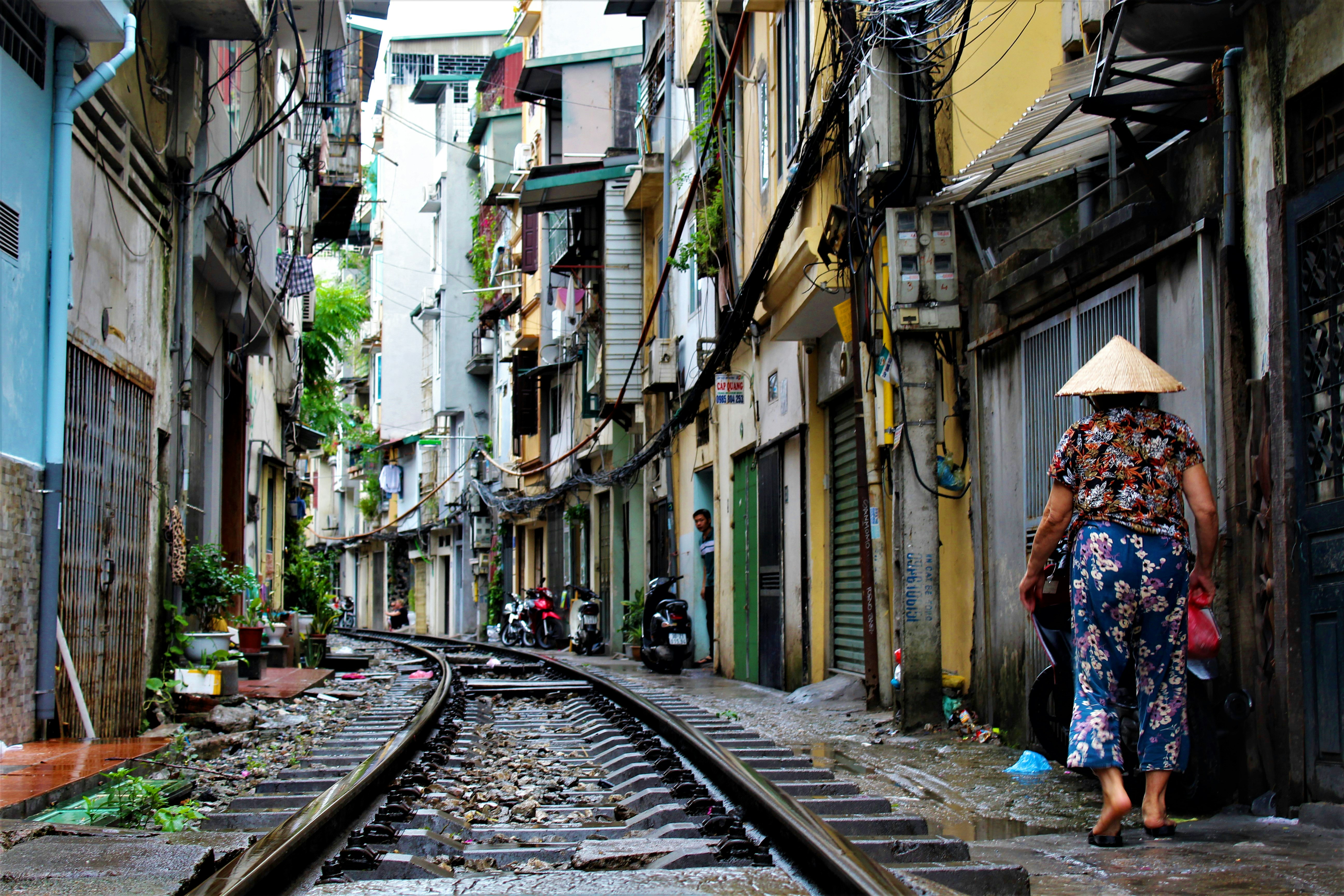
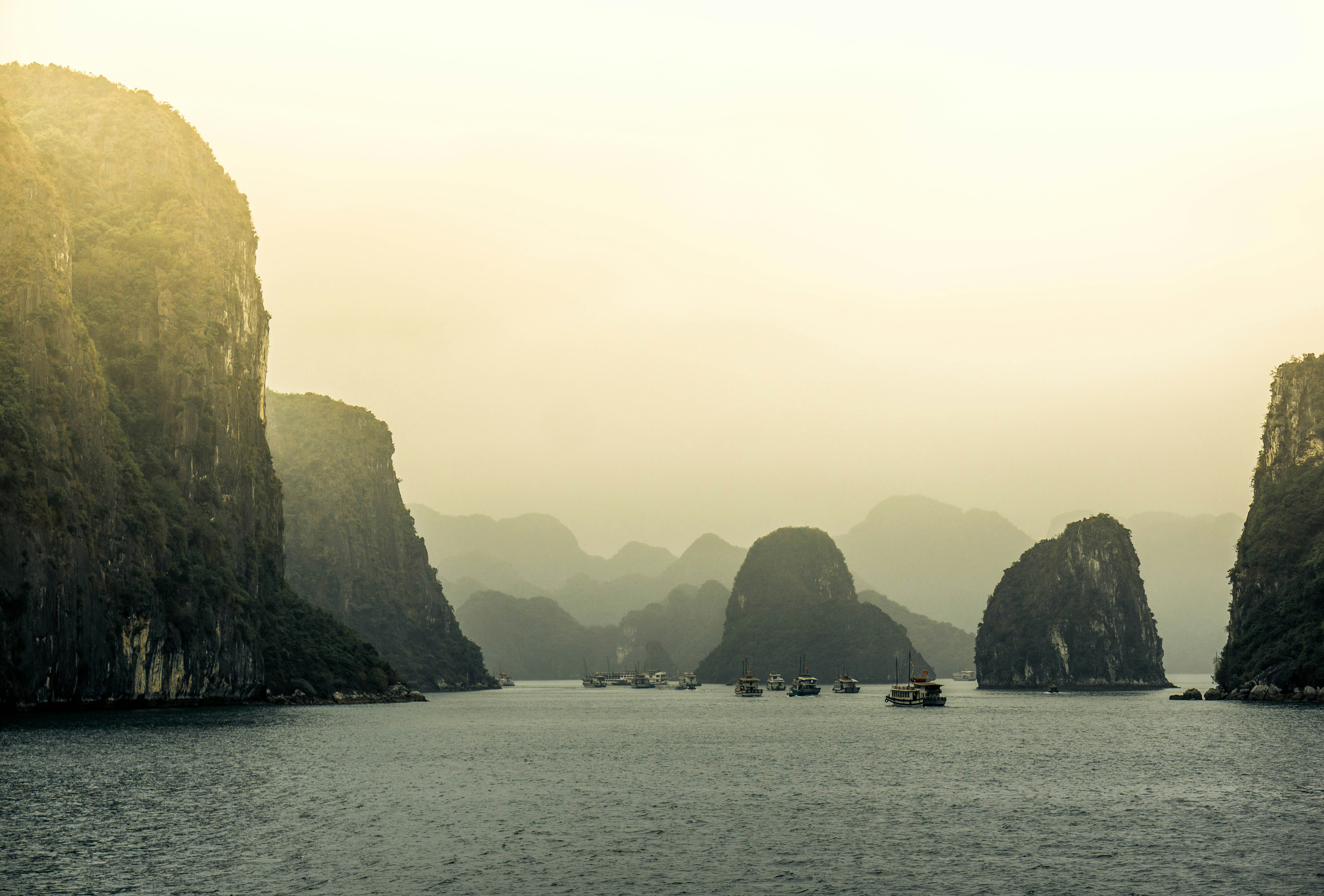
A visit to the north is not complete without a trip to Halong Bay, where placid waters give way to more than 3,000 limestone karsts and wind-sculpted limestone formations that jut from foggy lagoons. Dotting the bay are tiny islands bordered by white sandy coves and hidden caves, adding to the majestic landscape of this UNESCO World Heritage Site. Adding to this naturalist’s dream is the biodiversity of islets, grottos, and Cat Ba Island National Park. The bay, however, shows tourism’s impact: the clearing of mangrove forests to make way for jetties and piers, marine life threatened by game fishing, and garbage from passenger boats and fishing villages washed up on the shores.Beyond its geological uniqueness are activities like hiking, kayaking, rock climbing, or exploring one of the many floating villages where fishermen bring in their daily catch. The downside to all this allure is the large number of unlicensed boats it draws to the bay each day.Boat trips out onto the bay are the main tourism stock in trade farther north, but a more multifaceted side of the area can be experienced at Cat Ba Island. The largest island in Halong Bay, Cat Ba is very much its own entity. Its national park offers incredible biodiversity, with more than a thousand species of plants having been recorded here. Animal life is slightly thinner on the ground, but alert visitors may spy inhabitants such as the endangered golden-headed langur, wild boar, deer, civets, and several species of squirrel. Trekking through the wilderness is a highlight with a number of fascinating trails to follow.Cat Ba Island has also become a firm favorite with the adventure sports set. Indeed, along with Railay Beach in Thailand, it is recognized as one of the top spots in the region for rock climbing. Other outdoor pursuits include sailing and kayaking around the karsts. Although Halong Bay has arguably been tainted by over-exposure, Bai Tu Long Bay farther east toward China, retains all the majesty of Vietnam’s premier bucket-list natural attraction but sees a fraction of the traffic of its immediate neighbor to the west. Here, visitors will find islands of substantial size with deserted beaches and untamed jungle. Halong Bay’s 3,000 islands of dolomite and limestone cover a 1,500-square-km (580-square-mile) area, extending across the Gulf of Tonkin nearly to the Chinese border. According to legend, this breathtaking land- and seascape was formed by a giant dragon that came barreling out of the mountains toward the ocean—hence the name (Halong translates into “descent of the dragon”). Geologists are more likely to attribute the formations to sedimentary limestone that formed here between 300 and 500 million years ago, in the Paleozoic Era. Over millions of years water receded and exposed the limestone to wind, rain, and tidal erosion.Today the limestone formations are exposed to hordes of tourists—but don’t let that discourage you. Hundreds of fishing trawlers and tour boats share space on these crystal waters, yet there seems to be room for everyone. Most people use the main population center, Halong City, as a base from which to venture into the bay. Although it’s now officially one municipality, Halong City was, until 1996, two separate towns: Bai Chay is now Halong City West, where Halong Road winds its way around the coast and past the lifeless central beach; Hon Gai is the grimier Halong City East, where a coal transportation depot dominates the center of town and covers nearby roads and buildings with a sooty film. Locals still refer to the towns by their old names, but they are now inexorably lassoed together by a bridge. Boat trips through Halong Bay are the main attraction. Little of the majesty of this region can be found in the city, so head out onto the water and start exploring. Countless 10- and 30-foot fishing boats have been converted into Halong Bay’s formidable tourist-boat fleet. Hotels or travel agencies in Halong City or Hanoi can arrange boat trips for you (often they are part of organized tours from Hanoi). It is still possible to go down to the wharf and bargain yourself onto a boat for the day, but you are likely to be charged (sometimes significantly) more than you would pay for a prebooked tour, so this is not advised. Self-sufficient travelers have fallen victim to the old bait-and-switch: they’ve arranged a next-day boat tour with local fishermen, only to be told in no uncertain terms the following morning that they could not board their chosen boat, but they could take a different one for quite a bit more money. You may have no choice in the end. Usually travel agencies, however, have their tried-and-true favorites.
Ha Long Bay, Vietnam
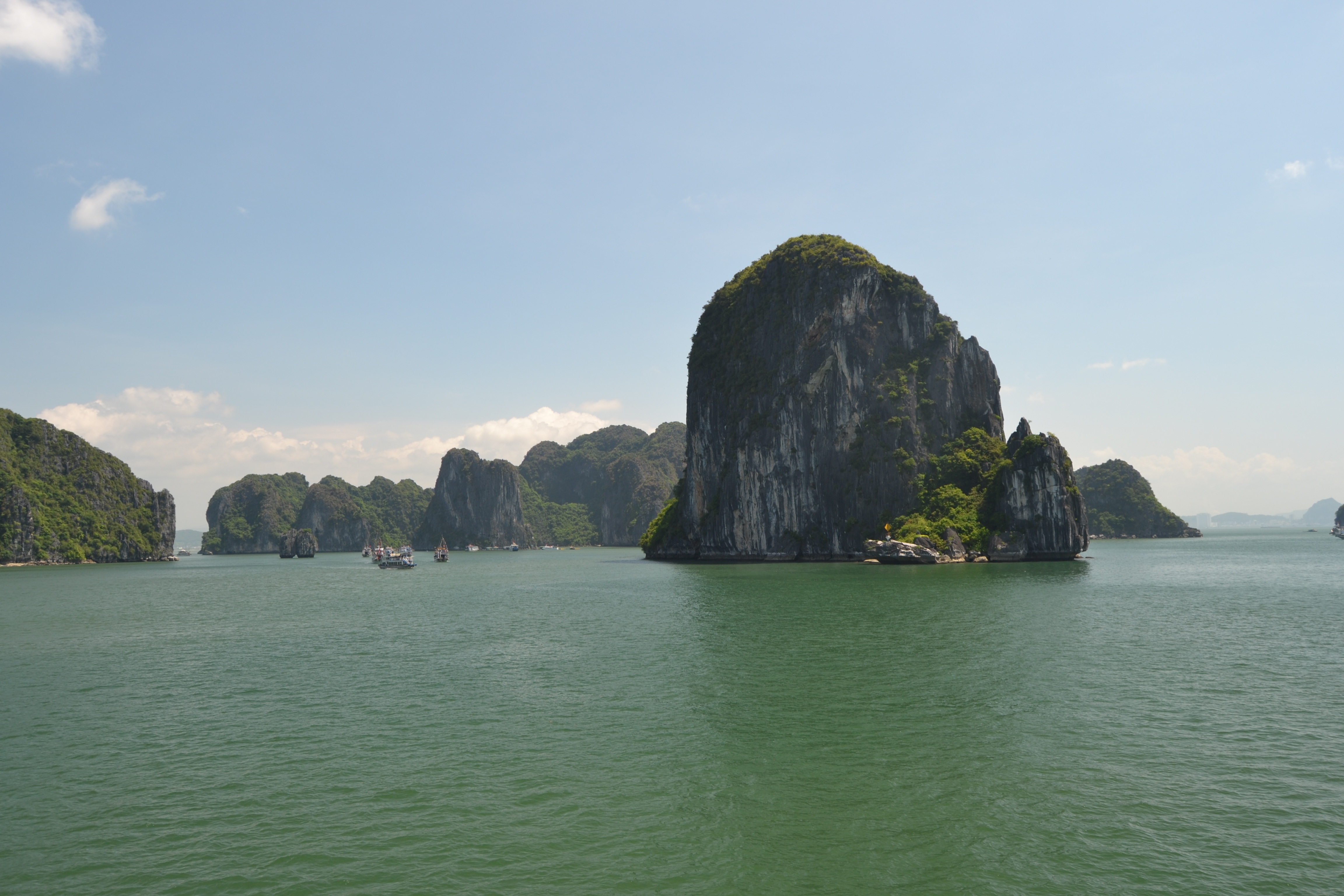
A visit to the north is not complete without a trip to Halong Bay, where placid waters give way to more than 3,000 limestone karsts and wind-sculpted limestone formations that jut from foggy lagoons. Dotting the bay are tiny islands bordered by white sandy coves and hidden caves, adding to the majestic landscape of this UNESCO World Heritage Site. Adding to this naturalist’s dream is the biodiversity of islets, grottos, and Cat Ba Island National Park. The bay, however, shows tourism’s impact: the clearing of mangrove forests to make way for jetties and piers, marine life threatened by game fishing, and garbage from passenger boats and fishing villages washed up on the shores.Beyond its geological uniqueness are activities like hiking, kayaking, rock climbing, or exploring one of the many floating villages where fishermen bring in their daily catch. The downside to all this allure is the large number of unlicensed boats it draws to the bay each day.Boat trips out onto the bay are the main tourism stock in trade farther north, but a more multifaceted side of the area can be experienced at Cat Ba Island. The largest island in Halong Bay, Cat Ba is very much its own entity. Its national park offers incredible biodiversity, with more than a thousand species of plants having been recorded here. Animal life is slightly thinner on the ground, but alert visitors may spy inhabitants such as the endangered golden-headed langur, wild boar, deer, civets, and several species of squirrel. Trekking through the wilderness is a highlight with a number of fascinating trails to follow.Cat Ba Island has also become a firm favorite with the adventure sports set. Indeed, along with Railay Beach in Thailand, it is recognized as one of the top spots in the region for rock climbing. Other outdoor pursuits include sailing and kayaking around the karsts. Although Halong Bay has arguably been tainted by over-exposure, Bai Tu Long Bay farther east toward China, retains all the majesty of Vietnam’s premier bucket-list natural attraction but sees a fraction of the traffic of its immediate neighbor to the west. Here, visitors will find islands of substantial size with deserted beaches and untamed jungle. Halong Bay’s 3,000 islands of dolomite and limestone cover a 1,500-square-km (580-square-mile) area, extending across the Gulf of Tonkin nearly to the Chinese border. According to legend, this breathtaking land- and seascape was formed by a giant dragon that came barreling out of the mountains toward the ocean—hence the name (Halong translates into “descent of the dragon”). Geologists are more likely to attribute the formations to sedimentary limestone that formed here between 300 and 500 million years ago, in the Paleozoic Era. Over millions of years water receded and exposed the limestone to wind, rain, and tidal erosion.Today the limestone formations are exposed to hordes of tourists—but don’t let that discourage you. Hundreds of fishing trawlers and tour boats share space on these crystal waters, yet there seems to be room for everyone. Most people use the main population center, Halong City, as a base from which to venture into the bay. Although it’s now officially one municipality, Halong City was, until 1996, two separate towns: Bai Chay is now Halong City West, where Halong Road winds its way around the coast and past the lifeless central beach; Hon Gai is the grimier Halong City East, where a coal transportation depot dominates the center of town and covers nearby roads and buildings with a sooty film. Locals still refer to the towns by their old names, but they are now inexorably lassoed together by a bridge. Boat trips through Halong Bay are the main attraction. Little of the majesty of this region can be found in the city, so head out onto the water and start exploring. Countless 10- and 30-foot fishing boats have been converted into Halong Bay’s formidable tourist-boat fleet. Hotels or travel agencies in Halong City or Hanoi can arrange boat trips for you (often they are part of organized tours from Hanoi). It is still possible to go down to the wharf and bargain yourself onto a boat for the day, but you are likely to be charged (sometimes significantly) more than you would pay for a prebooked tour, so this is not advised. Self-sufficient travelers have fallen victim to the old bait-and-switch: they’ve arranged a next-day boat tour with local fishermen, only to be told in no uncertain terms the following morning that they could not board their chosen boat, but they could take a different one for quite a bit more money. You may have no choice in the end. Usually travel agencies, however, have their tried-and-true favorites.
Hanoi, Vietnam
Enjoy the sunrise and breakfast. Then cruise through breathtaking rock formations and visit Sung Sot Cave, before arriving back at port for your transfer to Hanoi.
On arrival back in Hanoi, you will explore the Temple of Literature, Vietnam’s first university established to educate Vietnam’s royalty, mandarins and members of the elite. The university functioned for an incredible 700 years, and its charming gardens and well-preserved architecture offer a fascinating glimpse into the nation’s storied past. Later you’ll visit the historic Old Quarter, also known as the ‘36 Streets’. This atmospheric and bustling area of ancient narrow streets and alleys is home to literally thousands of small businesses as well as revered temples and traditional ‘tube houses.’ The Old Quarter is a fascinating place to explore, with plenty of photo opportunities at every turn. You can also visit the local-style Hang Be Market. Then enjoy a stroll around the legendary Hoan Kiem Lake, located nearby in the heart of Hanoi. Here, you can walk across the iconic Red Bridge to ancient Ngoc Son Temple located on Jade Islet within the lake.
This evening enjoy a traditional water puppet show, a unique North Vietnamese art form depicting scenes from rural life and episodes of historical significance. As part of EmeraldPLUS, you’ll enjoy dinner at KOTO (Know One Teach One), a unique restaurant set up to train and educate disadvantaged children.
EmeraldPLUS
Dinner at KOTO Restaurant
Included Excursion
Visit Hanoi’s Old Quarter
Included Excursion
A traditional water puppet show
Danang, Vietnam
Begin your morning city tour and learn about ‘Uncle Ho’, Ho Chi Minh, regarded as the father of modern Vietnam. Admire the exterior of his imposing mausoleum, before continuing to the Ho Chi Minh Quarter to glimpse his humble stilt house and the small but iconic One Pillar Pagoda.
Depart Hanoi and transfer to the airport for your included flight to Da Nang (Hoi An). Upon arrival in Hoi An, transfer to your resort for your included three-night stay. Tonight you can join a DiscoverMORE excursion.
DiscoverMORE
Hoi An Memories Show (extra expense)
Included Excursion
Hanoi City Tour
Hoi An, Vietnam
Today, start with our EmeraldPLUS visit to the Reaching Out Project. Reaching Out is an NGO (non-governmental organisation) established in 2000, which provides opportunities for people with disabilities to learn skills and gain meaningful employment. Visit the workshop and get a glimpse of how this NGO helps them to integrate fully with their communities and lead independent and fulfilling lives. After, enjoy a walking tour of Hoi An and see the old merchant’s houses, the Japanese Covered Bridge and the Assembly Hall of the Chinese Congregation. Tonight, after a dinner menu sampling the local style street food, the evening is yours free to wander the historical lantern lit streets and their many shops or bars.
EmeraldPLUS
Reaching Out Project
Included Excursion
A walking tour of Hoi An
Hoi An, Vietnam
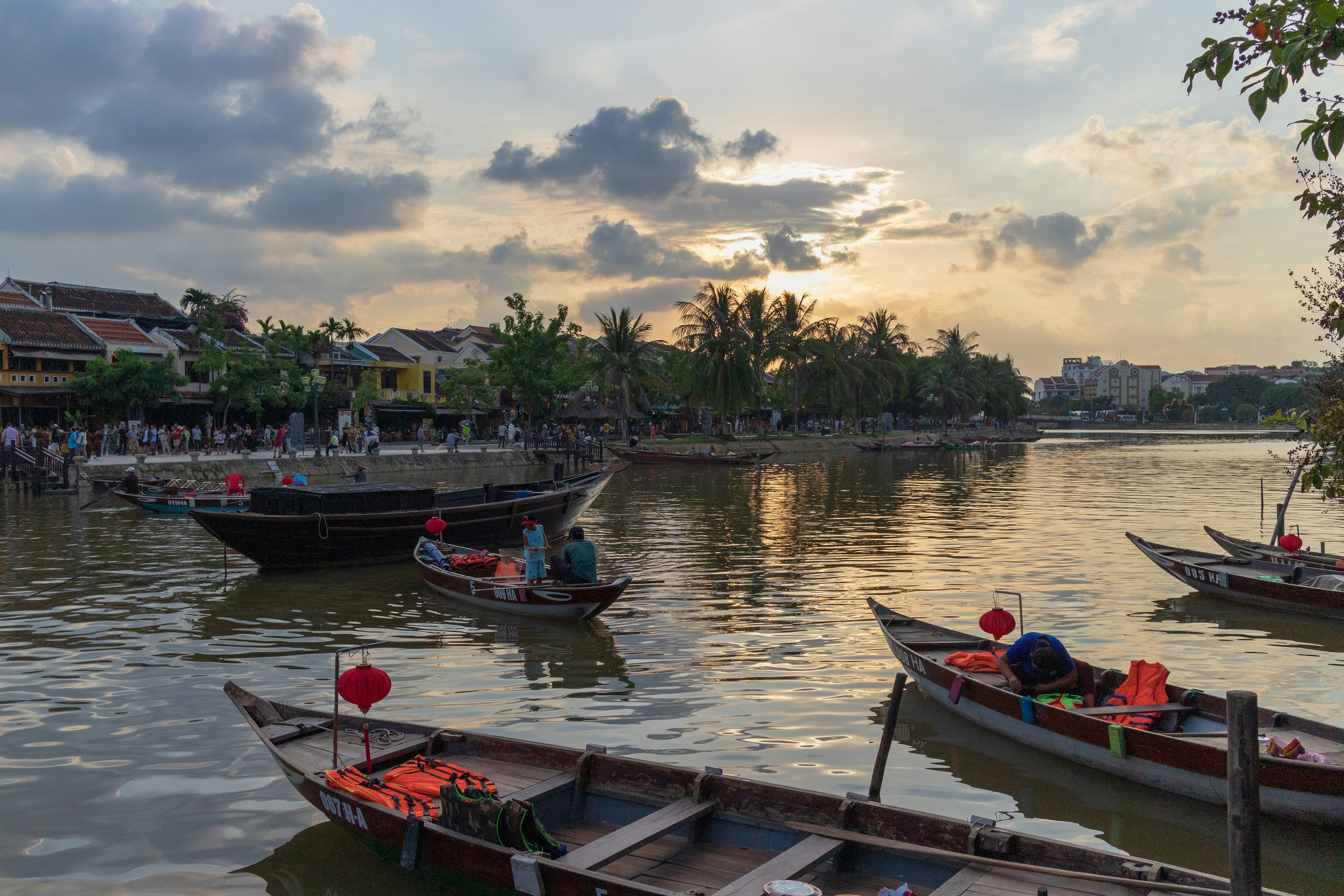
Enjoy a day of leisure to explore Hoi An and its surroundings. Perhaps take the time to explore the Old Town and visit one of the many tailors Hoi An is known for, or take a cyclo (bicycle style rickshaw) to An Bang Beach. Alternatively venture out on one of our DiscoverMORE excursions. The choice is yours.
DiscoverMORE
My Son Historic Kingdom Tour (extra expense)
DiscoverMORE
Hoi An Rural Life (extra expense)
DiscoverMORE
Thu Bon River Sunset Cruise (extra expense)
DiscoverMORE
Red Bridge Cooking Class (extra expense)
Hanoi, Vietnam
Xin Chao and welcome to Hanoi. On arrival, you’ll be transferred to downtown Hanoi and your hotel for your included one-night stay. Relax at the hotel, explore the city, or wander Hanoi’s romantic West Lake. This evening, meet your tour director for your welcome briefing.
Ha Long Bay, Vietnam
A visit to the north is not complete without a trip to Halong Bay, where placid waters give way to more than 3,000 limestone karsts and wind-sculpted limestone formations that jut from foggy lagoons. Dotting the bay are tiny islands bordered by white sandy coves and hidden caves, adding to the majestic landscape of this UNESCO World Heritage Site. Adding to this naturalist’s dream is the biodiversity of islets, grottos, and Cat Ba Island National Park. The bay, however, shows tourism’s impact: the clearing of mangrove forests to make way for jetties and piers, marine life threatened by game fishing, and garbage from passenger boats and fishing villages washed up on the shores.Beyond its geological uniqueness are activities like hiking, kayaking, rock climbing, or exploring one of the many floating villages where fishermen bring in their daily catch. The downside to all this allure is the large number of unlicensed boats it draws to the bay each day.Boat trips out onto the bay are the main tourism stock in trade farther north, but a more multifaceted side of the area can be experienced at Cat Ba Island. The largest island in Halong Bay, Cat Ba is very much its own entity. Its national park offers incredible biodiversity, with more than a thousand species of plants having been recorded here. Animal life is slightly thinner on the ground, but alert visitors may spy inhabitants such as the endangered golden-headed langur, wild boar, deer, civets, and several species of squirrel. Trekking through the wilderness is a highlight with a number of fascinating trails to follow.Cat Ba Island has also become a firm favorite with the adventure sports set. Indeed, along with Railay Beach in Thailand, it is recognized as one of the top spots in the region for rock climbing. Other outdoor pursuits include sailing and kayaking around the karsts. Although Halong Bay has arguably been tainted by over-exposure, Bai Tu Long Bay farther east toward China, retains all the majesty of Vietnam’s premier bucket-list natural attraction but sees a fraction of the traffic of its immediate neighbor to the west. Here, visitors will find islands of substantial size with deserted beaches and untamed jungle. Halong Bay’s 3,000 islands of dolomite and limestone cover a 1,500-square-km (580-square-mile) area, extending across the Gulf of Tonkin nearly to the Chinese border. According to legend, this breathtaking land- and seascape was formed by a giant dragon that came barreling out of the mountains toward the ocean—hence the name (Halong translates into “descent of the dragon”). Geologists are more likely to attribute the formations to sedimentary limestone that formed here between 300 and 500 million years ago, in the Paleozoic Era. Over millions of years water receded and exposed the limestone to wind, rain, and tidal erosion.Today the limestone formations are exposed to hordes of tourists—but don’t let that discourage you. Hundreds of fishing trawlers and tour boats share space on these crystal waters, yet there seems to be room for everyone. Most people use the main population center, Halong City, as a base from which to venture into the bay. Although it’s now officially one municipality, Halong City was, until 1996, two separate towns: Bai Chay is now Halong City West, where Halong Road winds its way around the coast and past the lifeless central beach; Hon Gai is the grimier Halong City East, where a coal transportation depot dominates the center of town and covers nearby roads and buildings with a sooty film. Locals still refer to the towns by their old names, but they are now inexorably lassoed together by a bridge. Boat trips through Halong Bay are the main attraction. Little of the majesty of this region can be found in the city, so head out onto the water and start exploring. Countless 10- and 30-foot fishing boats have been converted into Halong Bay’s formidable tourist-boat fleet. Hotels or travel agencies in Halong City or Hanoi can arrange boat trips for you (often they are part of organized tours from Hanoi). It is still possible to go down to the wharf and bargain yourself onto a boat for the day, but you are likely to be charged (sometimes significantly) more than you would pay for a prebooked tour, so this is not advised. Self-sufficient travelers have fallen victim to the old bait-and-switch: they’ve arranged a next-day boat tour with local fishermen, only to be told in no uncertain terms the following morning that they could not board their chosen boat, but they could take a different one for quite a bit more money. You may have no choice in the end. Usually travel agencies, however, have their tried-and-true favorites.
Ha Long Bay, Vietnam
A visit to the north is not complete without a trip to Halong Bay, where placid waters give way to more than 3,000 limestone karsts and wind-sculpted limestone formations that jut from foggy lagoons. Dotting the bay are tiny islands bordered by white sandy coves and hidden caves, adding to the majestic landscape of this UNESCO World Heritage Site. Adding to this naturalist’s dream is the biodiversity of islets, grottos, and Cat Ba Island National Park. The bay, however, shows tourism’s impact: the clearing of mangrove forests to make way for jetties and piers, marine life threatened by game fishing, and garbage from passenger boats and fishing villages washed up on the shores.Beyond its geological uniqueness are activities like hiking, kayaking, rock climbing, or exploring one of the many floating villages where fishermen bring in their daily catch. The downside to all this allure is the large number of unlicensed boats it draws to the bay each day.Boat trips out onto the bay are the main tourism stock in trade farther north, but a more multifaceted side of the area can be experienced at Cat Ba Island. The largest island in Halong Bay, Cat Ba is very much its own entity. Its national park offers incredible biodiversity, with more than a thousand species of plants having been recorded here. Animal life is slightly thinner on the ground, but alert visitors may spy inhabitants such as the endangered golden-headed langur, wild boar, deer, civets, and several species of squirrel. Trekking through the wilderness is a highlight with a number of fascinating trails to follow.Cat Ba Island has also become a firm favorite with the adventure sports set. Indeed, along with Railay Beach in Thailand, it is recognized as one of the top spots in the region for rock climbing. Other outdoor pursuits include sailing and kayaking around the karsts. Although Halong Bay has arguably been tainted by over-exposure, Bai Tu Long Bay farther east toward China, retains all the majesty of Vietnam’s premier bucket-list natural attraction but sees a fraction of the traffic of its immediate neighbor to the west. Here, visitors will find islands of substantial size with deserted beaches and untamed jungle. Halong Bay’s 3,000 islands of dolomite and limestone cover a 1,500-square-km (580-square-mile) area, extending across the Gulf of Tonkin nearly to the Chinese border. According to legend, this breathtaking land- and seascape was formed by a giant dragon that came barreling out of the mountains toward the ocean—hence the name (Halong translates into “descent of the dragon”). Geologists are more likely to attribute the formations to sedimentary limestone that formed here between 300 and 500 million years ago, in the Paleozoic Era. Over millions of years water receded and exposed the limestone to wind, rain, and tidal erosion.Today the limestone formations are exposed to hordes of tourists—but don’t let that discourage you. Hundreds of fishing trawlers and tour boats share space on these crystal waters, yet there seems to be room for everyone. Most people use the main population center, Halong City, as a base from which to venture into the bay. Although it’s now officially one municipality, Halong City was, until 1996, two separate towns: Bai Chay is now Halong City West, where Halong Road winds its way around the coast and past the lifeless central beach; Hon Gai is the grimier Halong City East, where a coal transportation depot dominates the center of town and covers nearby roads and buildings with a sooty film. Locals still refer to the towns by their old names, but they are now inexorably lassoed together by a bridge. Boat trips through Halong Bay are the main attraction. Little of the majesty of this region can be found in the city, so head out onto the water and start exploring. Countless 10- and 30-foot fishing boats have been converted into Halong Bay’s formidable tourist-boat fleet. Hotels or travel agencies in Halong City or Hanoi can arrange boat trips for you (often they are part of organized tours from Hanoi). It is still possible to go down to the wharf and bargain yourself onto a boat for the day, but you are likely to be charged (sometimes significantly) more than you would pay for a prebooked tour, so this is not advised. Self-sufficient travelers have fallen victim to the old bait-and-switch: they’ve arranged a next-day boat tour with local fishermen, only to be told in no uncertain terms the following morning that they could not board their chosen boat, but they could take a different one for quite a bit more money. You may have no choice in the end. Usually travel agencies, however, have their tried-and-true favorites.
Hanoi, Vietnam
Enjoy the sunrise and breakfast. Then cruise through breathtaking rock formations and visit Sung Sot Cave, before arriving back at port for your transfer to Hanoi.
On arrival back in Hanoi, you will explore the Temple of Literature, Vietnam’s first university established to educate Vietnam’s royalty, mandarins and members of the elite. The university functioned for an incredible 700 years, and its charming gardens and well-preserved architecture offer a fascinating glimpse into the nation’s storied past. Later you’ll visit the historic Old Quarter, also known as the ‘36 Streets’. This atmospheric and bustling area of ancient narrow streets and alleys is home to literally thousands of small businesses as well as revered temples and traditional ‘tube houses.’ The Old Quarter is a fascinating place to explore, with plenty of photo opportunities at every turn. You can also visit the local-style Hang Be Market. Then enjoy a stroll around the legendary Hoan Kiem Lake, located nearby in the heart of Hanoi. Here, you can walk across the iconic Red Bridge to ancient Ngoc Son Temple located on Jade Islet within the lake.
This evening enjoy a traditional water puppet show, a unique North Vietnamese art form depicting scenes from rural life and episodes of historical significance. As part of EmeraldPLUS, you’ll enjoy dinner at KOTO (Know One Teach One), a unique restaurant set up to train and educate disadvantaged children.
EmeraldPLUS
Dinner at KOTO Restaurant
Included Excursion
Visit Hanoi’s Old Quarter
Included Excursion
A traditional water puppet show
Danang, Vietnam
Begin your morning city tour and learn about ‘Uncle Ho’, Ho Chi Minh, regarded as the father of modern Vietnam. Admire the exterior of his imposing mausoleum, before continuing to the Ho Chi Minh Quarter to glimpse his humble stilt house and the small but iconic One Pillar Pagoda.
Depart Hanoi and transfer to the airport for your included flight to Da Nang (Hoi An). Upon arrival in Hoi An, transfer to your resort for your included three-night stay. Tonight you can join a DiscoverMORE excursion.
DiscoverMORE
Hoi An Memories Show (extra expense)
Included Excursion
Hanoi City Tour
Hoi An, Vietnam
Today, start with our EmeraldPLUS visit to the Reaching Out Project. Reaching Out is an NGO (non-governmental organisation) established in 2000, which provides opportunities for people with disabilities to learn skills and gain meaningful employment. Visit the workshop and get a glimpse of how this NGO helps them to integrate fully with their communities and lead independent and fulfilling lives. After, enjoy a walking tour of Hoi An and see the old merchant’s houses, the Japanese Covered Bridge and the Assembly Hall of the Chinese Congregation. Tonight, after a dinner menu sampling the local style street food, the evening is yours free to wander the historical lantern lit streets and their many shops or bars.
EmeraldPLUS
Reaching Out Project
Included Excursion
A walking tour of Hoi An
Hoi An, Vietnam
Enjoy a day of leisure to explore Hoi An and its surroundings. Perhaps take the time to explore the Old Town and visit one of the many tailors Hoi An is known for, or take a cyclo (bicycle style rickshaw) to An Bang Beach. Alternatively venture out on one of our DiscoverMORE excursions. The choice is yours.
DiscoverMORE
My Son Historic Kingdom Tour (extra expense)
DiscoverMORE
Hoi An Rural Life (extra expense)
DiscoverMORE
Thu Bon River Sunset Cruise (extra expense)
DiscoverMORE
Red Bridge Cooking Class (extra expense)
Hue, Vietnam
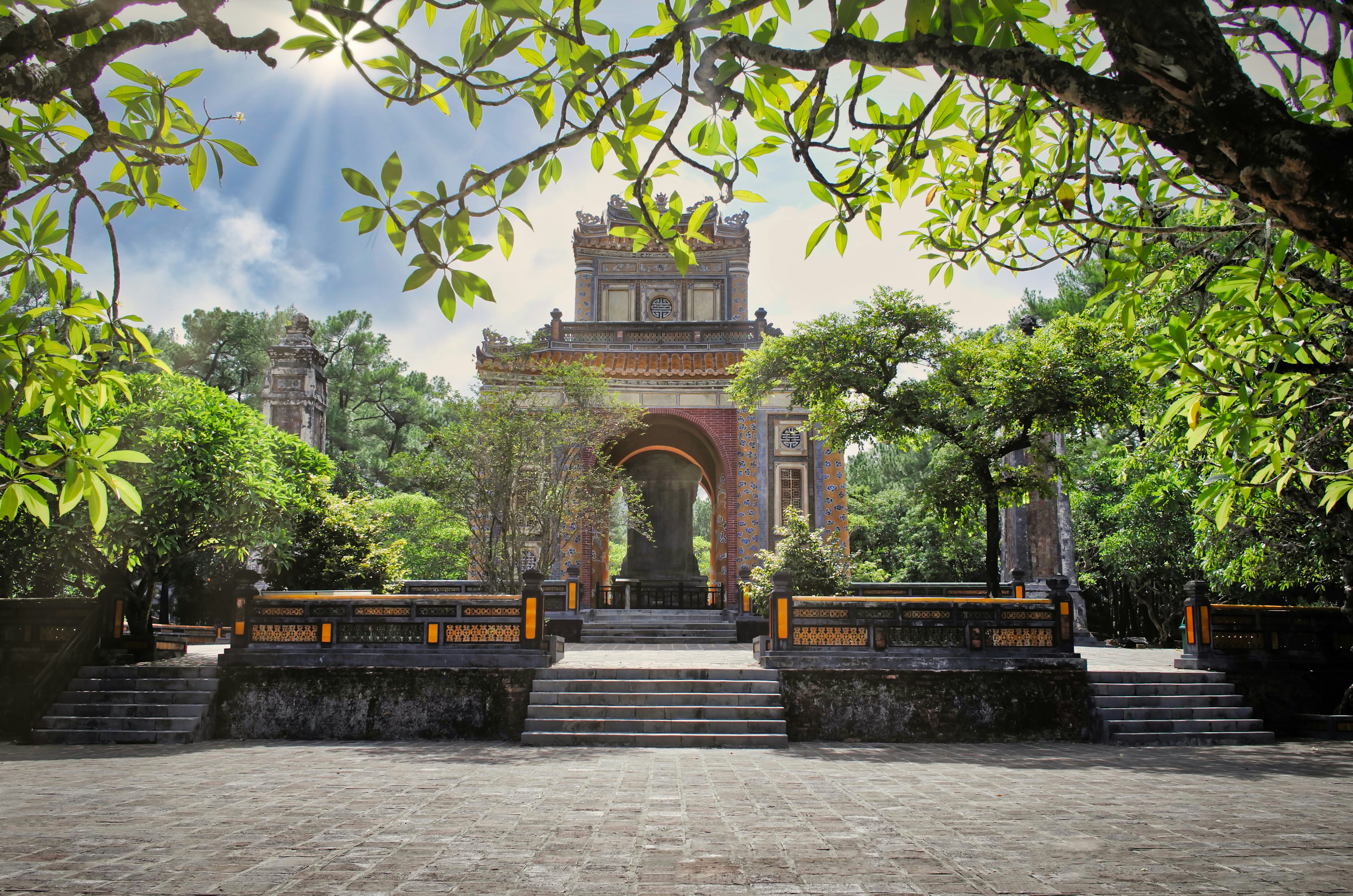
Leave Hoi An for Hue, the former imperial capital of Vietnam. You will drive through Danang before crossing the Hai Vân Pass, known as the Ocean Clouds Pass before dropping down to the wonderfully photogenic fishing village of Lang Co. In Hue, you will visit the Imperial Citadel where the Nguyen Dynasty ruled between 1802 and 1945. Enjoy a relaxing cyclo (bicycle-style rickshaw) ride from Dai Noi ‘Old City’ to Tinh Tam Lake where the Emperors where the emperors used to go to relax. Then later, join a boat trip to visit Thien Mu Pagoda before checking into your hotel for the night. This evening, for your EmeraldPLUS experience, savour a traditional Vietnamese royal dinner menu.
Included Excursion
Cyclo ride from Dai Noi ‘Old City’ to Tinh Tam Lake
Included Excursion
A visit to the Imperial Citadel
Included Excursion
A boat tour on the Perfume River to Thien Mu Pagoda
EmeraldPLUS
A traditional Vietnamese royal dinner at a local restaurant
Ho Chi Minh City, Vietnam
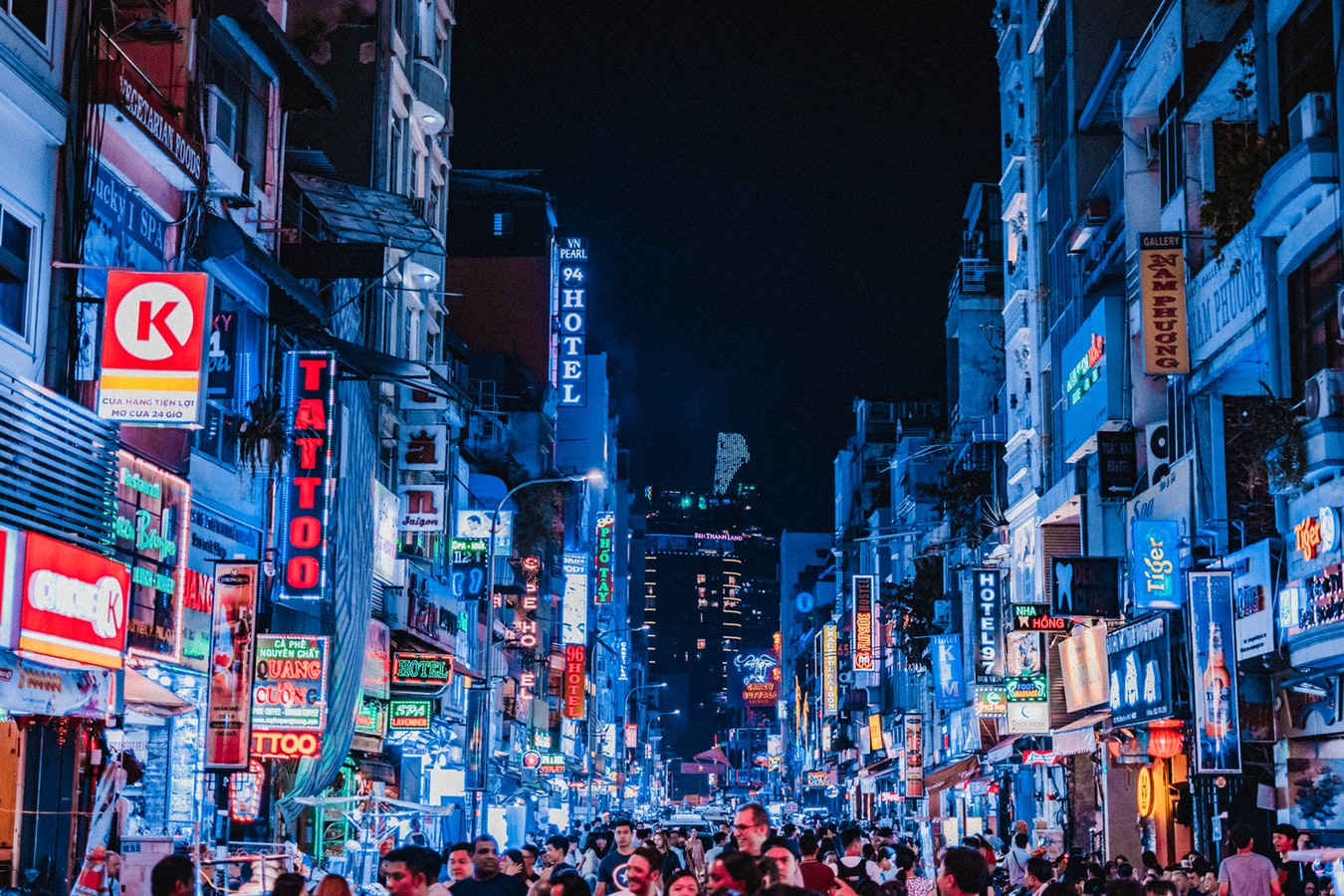
Romantically referred to by the French as the Pearl of the Orient, Ho Chi Minh City today is a super-charged city of sensory overload. Motorbikes zoom day and night along the wide boulevards, through the narrow back alleys and past vendors pushing handcarts hawking goods of all descriptions. Still called Saigon by most residents, this is Vietnam’s largest city and the engine driving the country’s current economic resurgence, but despite its frenetic pace, it’s a friendlier place than Hanoi and locals will tell you the food—simple, tasty, and incorporating many fresh herbs—is infinitely better than in the capital.This is a city full of surprises. The madness of the city’s traffic—witness the oddball things that are transported on the back of motorcycles—is countered by tranquil pagodas, peaceful parks, quirky coffee shops, and whole neighborhoods hidden down tiny alleyways, although some of these quiet spots can be difficult to track down. Life in Ho Chi Minh City is lived in public: on the back of motorcycles, on the sidewalks, and in the parks. Even when its residents are at home, they’re still on display. With many living rooms opening onto the street, grandmothers napping, babies being rocked, and food being prepared, are all in full view of passersby.Icons of the past endure in the midst of the city’s headlong rush into capitalism. The Hotel Continental, immortalized in Graham Greene’s The Quiet American, continues to stand on the corner of old Indochina’s most famous thoroughfare, the rue Catinat, known to American G.I.s during the Vietnam War as Tu Do (Freedom) Street and renamed Dong Khoi (Uprising) Street by the Communists. The city still has its ornate opera house and its old French city hall, the Hôtel de Ville. The broad colonial boulevards leading to the Saigon River and the gracious stucco villas are other remnants of the French colonial presence. Grisly reminders of the more recent past can be seen at the city’s war-related museums. Residents, however, prefer to look forward rather than back and are often perplexed by tourists’ fascination with a war that ended 40 years ago.The Chinese influence on the country is still very much in evidence in the Cholon district, the city’s Chinatown, but the modern office towers and international hotels that mark the skyline symbolize Vietnam’s fixation on the future.
Ho Chi Minh City, Vietnam
Romantically referred to by the French as the Pearl of the Orient, Ho Chi Minh City today is a super-charged city of sensory overload. Motorbikes zoom day and night along the wide boulevards, through the narrow back alleys and past vendors pushing handcarts hawking goods of all descriptions. Still called Saigon by most residents, this is Vietnam’s largest city and the engine driving the country’s current economic resurgence, but despite its frenetic pace, it’s a friendlier place than Hanoi and locals will tell you the food—simple, tasty, and incorporating many fresh herbs—is infinitely better than in the capital.This is a city full of surprises. The madness of the city’s traffic—witness the oddball things that are transported on the back of motorcycles—is countered by tranquil pagodas, peaceful parks, quirky coffee shops, and whole neighborhoods hidden down tiny alleyways, although some of these quiet spots can be difficult to track down. Life in Ho Chi Minh City is lived in public: on the back of motorcycles, on the sidewalks, and in the parks. Even when its residents are at home, they’re still on display. With many living rooms opening onto the street, grandmothers napping, babies being rocked, and food being prepared, are all in full view of passersby.Icons of the past endure in the midst of the city’s headlong rush into capitalism. The Hotel Continental, immortalized in Graham Greene’s The Quiet American, continues to stand on the corner of old Indochina’s most famous thoroughfare, the rue Catinat, known to American G.I.s during the Vietnam War as Tu Do (Freedom) Street and renamed Dong Khoi (Uprising) Street by the Communists. The city still has its ornate opera house and its old French city hall, the Hôtel de Ville. The broad colonial boulevards leading to the Saigon River and the gracious stucco villas are other remnants of the French colonial presence. Grisly reminders of the more recent past can be seen at the city’s war-related museums. Residents, however, prefer to look forward rather than back and are often perplexed by tourists’ fascination with a war that ended 40 years ago.The Chinese influence on the country is still very much in evidence in the Cholon district, the city’s Chinatown, but the modern office towers and international hotels that mark the skyline symbolize Vietnam’s fixation on the future.
Mekong River Vietnam/Cambodia
After checkout, enjoy a guided city tour, visiting the Notre Dame Cathedral, Opera House and Town Hall. Then, visit the Reunification Palace before transferring to the port where you will board your Emerald Cruises Star-Ship, Emerald Harmony. You’ll be welcomed on board by your captain and crew before setting sail down the Saigon River to Cho Gao canal where you will anchor for the night. This evening, enjoy your first dinner on board with your fellow travellers. Your Cruise Director will conduct a port talk to review the activities and itinerary for the days ahead.
Included Excursion
An orientation tour of Ho Chi Minh City
Ben Tre, Vietnam
This morning, you’ll cruise through the bustling Cho Gao Canal, one of the major arterial canals of Vietnam connecting Tien Giang Province in the Mekong Delta with Ho Chi Minh City. You’ll find this a fascinating sight, observing the heavy commercial traffic navigate this important waterway, where upwards of 1,800 vessels transit each day. During your morning of relaxation on board, soak up the ever-changing passing scenery, enjoy a refreshing dip in the infinity pool, or indulge in a spa treatment (at additional cost).
Once on the Mekong River, this afternoon you’ll visit the rural Tan My Floating community, followed by a ride through local plantations to visit a mushroom farm, a fruit farm with sampling and a honey farm with local sweets. Later, you’ll cruise onwards to Sa Ðéc, a Mekong Delta hidden gem.
Included Excursion
Visit the Thoi Binh hamlet and its authentic farming and fishing communities
Sa Déc, Vietnam
This morning is a leisurely cruise to Sa Ðéc.
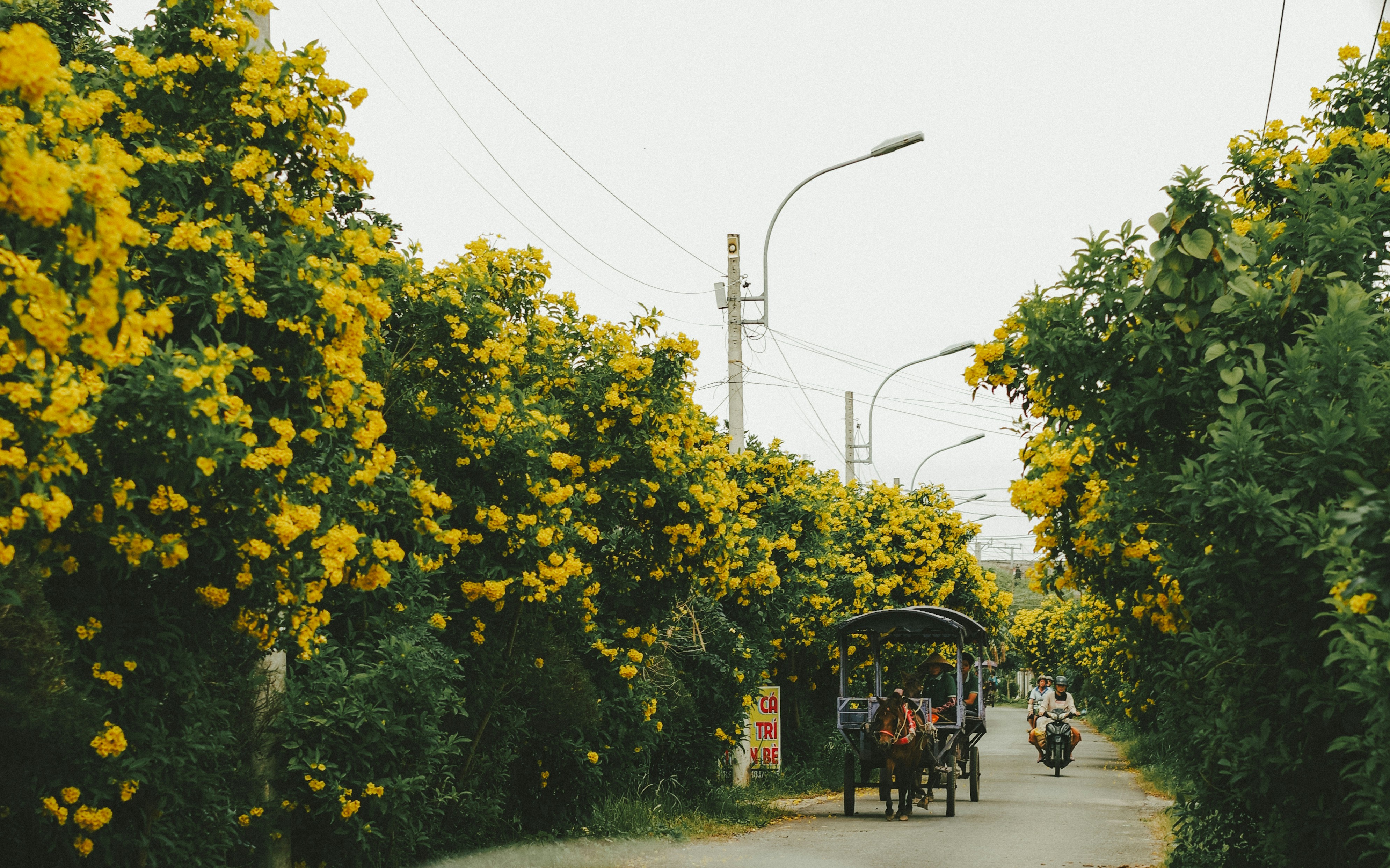
Later this afternoon, take a short ride on a sampan to arrive in Sa Ðéc, a delightful old provincial city in the heart of the Mekong Delta. Enjoy a walking tour around town with a visit to the home of local resident, Mr. Huynh Thuy Le, who inspired Marguerite Duras’ novel L’Amant (‘The Lover,’), and the town’s bustling central market to peruse its varied produce.
Afterwards return to Emerald Harmony by sampan to anchor for the night.
Included Excursion
Visit the home of Mr. Huynh Thuy Le and the bustling Sa Ðéc markets

My An Hung, Vietnam
After a short sail with breakfast, transfer ashore by sampan to explore the village life on My An Hung Island. Recognised as a cultural and historical destination, this small village in rural Vietnam specialises in red-hot chilli and peppers. For today’s EmeraldPLUS experience, enjoy some local folk singing during the visit to this charming riverine community.
After returning to Emerald Harmony, enjoy an afternoon cruise to Gieng Island.
Included Excursion
Visit My An Hung Village
EmeraldPLUS
Listen to local folk singing in My An Hung
Hue, Vietnam
Leave Hoi An for Hue, the former imperial capital of Vietnam. You will drive through Danang before crossing the Hai Vân Pass, known as the Ocean Clouds Pass before dropping down to the wonderfully photogenic fishing village of Lang Co. In Hue, you will visit the Imperial Citadel where the Nguyen Dynasty ruled between 1802 and 1945. Enjoy a relaxing cyclo (bicycle-style rickshaw) ride from Dai Noi ‘Old City’ to Tinh Tam Lake where the Emperors where the emperors used to go to relax. Then later, join a boat trip to visit Thien Mu Pagoda before checking into your hotel for the night. This evening, for your EmeraldPLUS experience, savour a traditional Vietnamese royal dinner menu.
Included Excursion
Cyclo ride from Dai Noi ‘Old City’ to Tinh Tam Lake
Included Excursion
A visit to the Imperial Citadel
Included Excursion
A boat tour on the Perfume River to Thien Mu Pagoda
EmeraldPLUS
A traditional Vietnamese royal dinner at a local restaurant
Ho Chi Minh City, Vietnam
Romantically referred to by the French as the Pearl of the Orient, Ho Chi Minh City today is a super-charged city of sensory overload. Motorbikes zoom day and night along the wide boulevards, through the narrow back alleys and past vendors pushing handcarts hawking goods of all descriptions. Still called Saigon by most residents, this is Vietnam’s largest city and the engine driving the country’s current economic resurgence, but despite its frenetic pace, it’s a friendlier place than Hanoi and locals will tell you the food—simple, tasty, and incorporating many fresh herbs—is infinitely better than in the capital.This is a city full of surprises. The madness of the city’s traffic—witness the oddball things that are transported on the back of motorcycles—is countered by tranquil pagodas, peaceful parks, quirky coffee shops, and whole neighborhoods hidden down tiny alleyways, although some of these quiet spots can be difficult to track down. Life in Ho Chi Minh City is lived in public: on the back of motorcycles, on the sidewalks, and in the parks. Even when its residents are at home, they’re still on display. With many living rooms opening onto the street, grandmothers napping, babies being rocked, and food being prepared, are all in full view of passersby.Icons of the past endure in the midst of the city’s headlong rush into capitalism. The Hotel Continental, immortalized in Graham Greene’s The Quiet American, continues to stand on the corner of old Indochina’s most famous thoroughfare, the rue Catinat, known to American G.I.s during the Vietnam War as Tu Do (Freedom) Street and renamed Dong Khoi (Uprising) Street by the Communists. The city still has its ornate opera house and its old French city hall, the Hôtel de Ville. The broad colonial boulevards leading to the Saigon River and the gracious stucco villas are other remnants of the French colonial presence. Grisly reminders of the more recent past can be seen at the city’s war-related museums. Residents, however, prefer to look forward rather than back and are often perplexed by tourists’ fascination with a war that ended 40 years ago.The Chinese influence on the country is still very much in evidence in the Cholon district, the city’s Chinatown, but the modern office towers and international hotels that mark the skyline symbolize Vietnam’s fixation on the future.
Ho Chi Minh City, Vietnam
Romantically referred to by the French as the Pearl of the Orient, Ho Chi Minh City today is a super-charged city of sensory overload. Motorbikes zoom day and night along the wide boulevards, through the narrow back alleys and past vendors pushing handcarts hawking goods of all descriptions. Still called Saigon by most residents, this is Vietnam’s largest city and the engine driving the country’s current economic resurgence, but despite its frenetic pace, it’s a friendlier place than Hanoi and locals will tell you the food—simple, tasty, and incorporating many fresh herbs—is infinitely better than in the capital.This is a city full of surprises. The madness of the city’s traffic—witness the oddball things that are transported on the back of motorcycles—is countered by tranquil pagodas, peaceful parks, quirky coffee shops, and whole neighborhoods hidden down tiny alleyways, although some of these quiet spots can be difficult to track down. Life in Ho Chi Minh City is lived in public: on the back of motorcycles, on the sidewalks, and in the parks. Even when its residents are at home, they’re still on display. With many living rooms opening onto the street, grandmothers napping, babies being rocked, and food being prepared, are all in full view of passersby.Icons of the past endure in the midst of the city’s headlong rush into capitalism. The Hotel Continental, immortalized in Graham Greene’s The Quiet American, continues to stand on the corner of old Indochina’s most famous thoroughfare, the rue Catinat, known to American G.I.s during the Vietnam War as Tu Do (Freedom) Street and renamed Dong Khoi (Uprising) Street by the Communists. The city still has its ornate opera house and its old French city hall, the Hôtel de Ville. The broad colonial boulevards leading to the Saigon River and the gracious stucco villas are other remnants of the French colonial presence. Grisly reminders of the more recent past can be seen at the city’s war-related museums. Residents, however, prefer to look forward rather than back and are often perplexed by tourists’ fascination with a war that ended 40 years ago.The Chinese influence on the country is still very much in evidence in the Cholon district, the city’s Chinatown, but the modern office towers and international hotels that mark the skyline symbolize Vietnam’s fixation on the future.
Mekong River Vietnam/Cambodia
After checkout, enjoy a guided city tour, visiting the Notre Dame Cathedral, Opera House and Town Hall. Then, visit the Reunification Palace before transferring to the port where you will board your Emerald Cruises Star-Ship, Emerald Harmony. You’ll be welcomed on board by your captain and crew before setting sail down the Saigon River to Cho Gao canal where you will anchor for the night. This evening, enjoy your first dinner on board with your fellow travellers. Your Cruise Director will conduct a port talk to review the activities and itinerary for the days ahead.
Included Excursion
An orientation tour of Ho Chi Minh City
Ben Tre, Vietnam
This morning, you’ll cruise through the bustling Cho Gao Canal, one of the major arterial canals of Vietnam connecting Tien Giang Province in the Mekong Delta with Ho Chi Minh City. You’ll find this a fascinating sight, observing the heavy commercial traffic navigate this important waterway, where upwards of 1,800 vessels transit each day. During your morning of relaxation on board, soak up the ever-changing passing scenery, enjoy a refreshing dip in the infinity pool, or indulge in a spa treatment (at additional cost).
Once on the Mekong River, this afternoon you’ll visit the rural Tan My Floating community, followed by a ride through local plantations to visit a mushroom farm, a fruit farm with sampling and a honey farm with local sweets. Later, you’ll cruise onwards to Sa Ðéc, a Mekong Delta hidden gem.
Included Excursion
Visit the Thoi Binh hamlet and its authentic farming and fishing communities
Sa Déc, Vietnam
This morning is a leisurely cruise to Sa Ðéc.
Later this afternoon, take a short ride on a sampan to arrive in Sa Ðéc, a delightful old provincial city in the heart of the Mekong Delta. Enjoy a walking tour around town with a visit to the home of local resident, Mr. Huynh Thuy Le, who inspired Marguerite Duras’ novel L’Amant (‘The Lover,’), and the town’s bustling central market to peruse its varied produce.
Afterwards return to Emerald Harmony by sampan to anchor for the night.
Included Excursion
Visit the home of Mr. Huynh Thuy Le and the bustling Sa Ðéc markets
My An Hung, Vietnam
After a short sail with breakfast, transfer ashore by sampan to explore the village life on My An Hung Island. Recognised as a cultural and historical destination, this small village in rural Vietnam specialises in red-hot chilli and peppers. For today’s EmeraldPLUS experience, enjoy some local folk singing during the visit to this charming riverine community.
After returning to Emerald Harmony, enjoy an afternoon cruise to Gieng Island.
Included Excursion
Visit My An Hung Village
EmeraldPLUS
Listen to local folk singing in My An Hung
Giêng Island, Vietnam
Locally known as ‘Mango Island,’ Cu Lao Gieng is a small, picturesque island untouched by tourism, located along the upper Mekong River. Travel by local motorcycle rickshaw through the island’s villages to visit families who work in various local industries, including mango farming, various types of boat construction and a factory that produces temple incense sticks.
The afternoon is yours to enjoy at leisure on board as we cruise to Tan Chau. Upon arrival and for today’s EmeraldPLUS experience, delight in a traditional Lion Dance performance on the Sun Deck of Emerald Harmony.
Included Excursion
Visit local industries in Gieng Island
EmeraldPLUS
Lion Dance performance on board Emerald Harmony
Crossing Cambodia Border
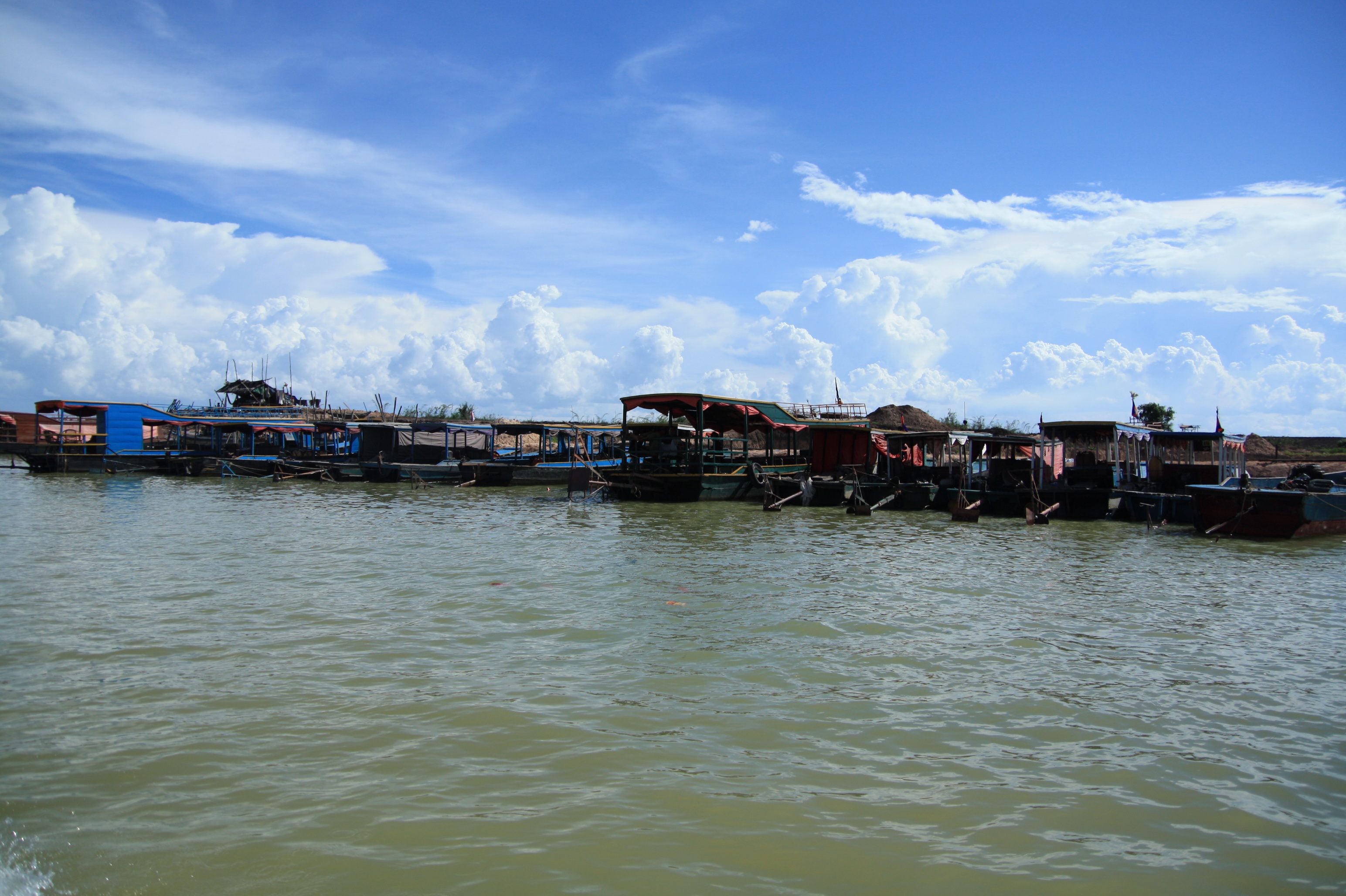
In Tan Chau, embark on a sampan ride to Evergreen Island for a walk through a local village, affording an insightful glimpse into the ‘Delta farming community’. You’ll then reboard your sampan returning to Tan Chau for a visit to a local Cao Dai Temple. Cao Dai is a syncretic, monotheistic religion established in Tây Ninh, Southern Vietnam, in 1926. At the temple, you can learn more about the hybrid of philosophies that form the basis of this fascinating and complex religion. Afterwards, take a ride in a Xe Loi, a local form of Cyclo unique to the Mekong Delta, back to your sampan and return to Emerald Harmony. Back on board your Emerald Star-Ship, you’ll cruise towards the border between Vietnam and Cambodia.
Included Excursion
Visit to Evergreen Island, a Cao Dai Temple visit and Xe Loi ride
Phnom Penh, Cambodia
Phnom Penh, Cambodia’s busy capital, sits at the junction of the Mekong and Tonlé Sap rivers. It was a hub for both the Khmer Empire and French colonialists. On its walkable riverfront, lined with parks, restaurants and bars, are the ornate Royal Palace, Silver Pagoda and the National Museum, displaying artifacts from around the country. At the city’s heart is the massive, art deco Central Market.
Angkor Ban, Cambodia
In the morning visit the majestic Royal Palace, captivating with its French-inspired gardens and Silver Pagoda. Once back on board, as part of your EmeraldPLUS experience, you’ll enjoy a cultural performance by the Cambodian Student and Children’s Organisation. After lunch set sail from Phnom Penh and enjoy an afternoon of relaxed cruising as you continue further up the Mekong River to Angkor Ban.
Included Excursion
Visit to the Royal Palace
EmeraldPLUS
Cultural Performance by the Cambodian Student and Children’s Organisation
Peam Chi Kang, Cambodia
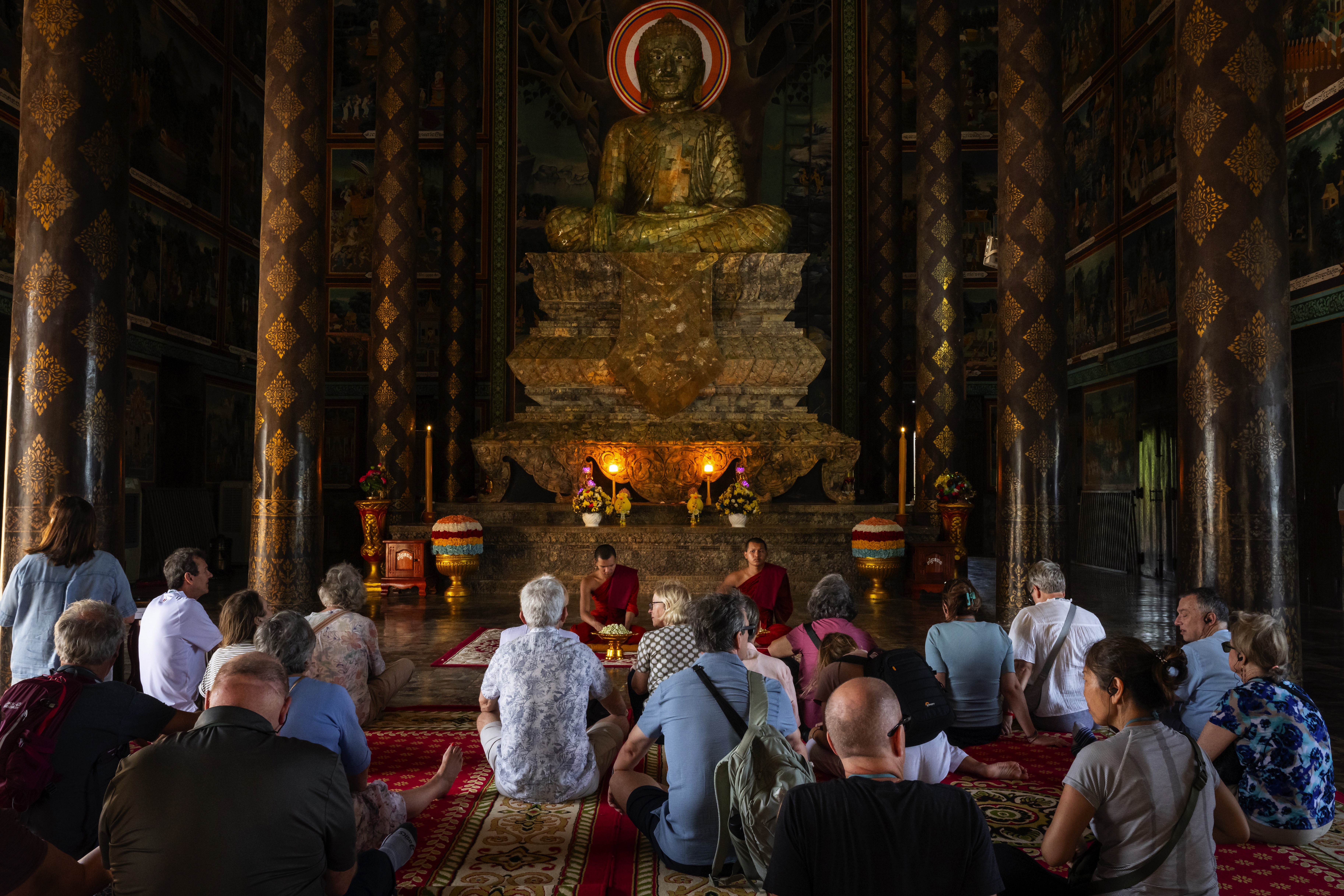
In Angkor Ban, explore its historical rural wooden houses which survived the Khmer Rouge. In the village temple, partake in an alm’s ceremony, learn how to pray in a Buddhist pagoda and receive a traditional Buddhist blessing from the temple’s resident monks from as part of your EmeraldPLUS experience. Afterwards set sail to your final destination, Peam Chi Korng located further upstream on the Mekong River.
Included Excursion
Walk around the historical village of Angkor Ban
EmeraldPLUS
A traditional Buddhist Monk blessing
Siem Reap, Cambodia
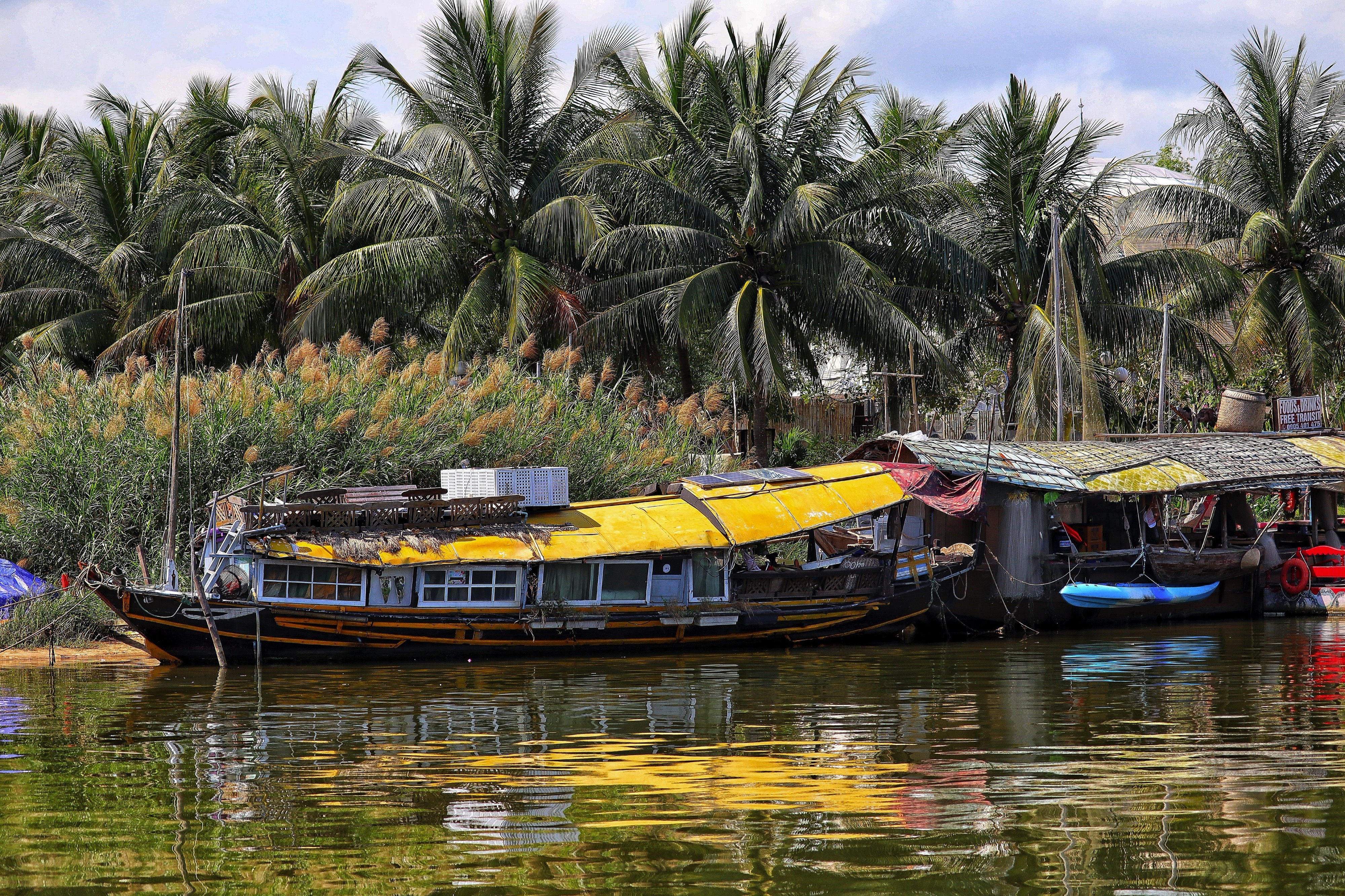
Disembark Emerald Harmony in the morning, then continue your journey by road to Siem Reap for your included three-night stay. Upon arrival in this lively northern city, check in to your beautiful hotel, a deluxe boutique property of world-class design, which takes great care in honouring the environment and paying homage to the traditional and local aesthetics.
This evening, for your EmeraldPLUS experience, you’re invited to Phare, The Cambodian Circus, where a combination of acrobatics, music and dance tell a uniquely Cambodian story. Enjoy a special Emerald DiscoverMORE dinner while attending the circus, to further support Phare’s work.
EmeraldPLUS
Phare Cambodian Circus performance
DiscoverMORE
Evening – Local Fare at Phare Circus (extra expense)
Siem Reap, Cambodia
Today, start with a visit to Angkor Thom, not a single temple such as the historic sites it neighbours, but rather one of the most remarkable royal cities of the Angkor Period and an architectural wonder. As the last capital of the Khmer Empire, it was a fortified city, home to priests, officials of the palace, military and buildings for administering the kingdom. Afterwards, visit the sacred Temple of Ta Prohm. In an incredible standoff between human creation and nature, the jungle’s root systems have reclaimed this spiritual location now enshrouded in wild vegetation. The backdrop to many Hollywood scenes, the incredible Ta Prohm is both a cinematic and contemplative location. This evening is free to visit ‘Pub Street’ or try a DiscoverMORE option.
Included Excursion
Visit to Angkor Thom
Included Excursion
Visit to Ta Prohm Temple
DiscoverMORE
Evening – Gondola Boat ride at Banyon with drinks (extra expense)
DiscoverMORE
Evening – Cambodian Street Food Discovery Tour (extra expense)
Giêng Island, Vietnam
Locally known as ‘Mango Island,’ Cu Lao Gieng is a small, picturesque island untouched by tourism, located along the upper Mekong River. Travel by local motorcycle rickshaw through the island’s villages to visit families who work in various local industries, including mango farming, various types of boat construction and a factory that produces temple incense sticks.
The afternoon is yours to enjoy at leisure on board as we cruise to Tan Chau. Upon arrival and for today’s EmeraldPLUS experience, delight in a traditional Lion Dance performance on the Sun Deck of Emerald Harmony.
Included Excursion
Visit local industries in Gieng Island
EmeraldPLUS
Lion Dance performance on board Emerald Harmony
Crossing Cambodia Border
In Tan Chau, embark on a sampan ride to Evergreen Island for a walk through a local village, affording an insightful glimpse into the ‘Delta farming community’. You’ll then reboard your sampan returning to Tan Chau for a visit to a local Cao Dai Temple. Cao Dai is a syncretic, monotheistic religion established in Tây Ninh, Southern Vietnam, in 1926. At the temple, you can learn more about the hybrid of philosophies that form the basis of this fascinating and complex religion. Afterwards, take a ride in a Xe Loi, a local form of Cyclo unique to the Mekong Delta, back to your sampan and return to Emerald Harmony. Back on board your Emerald Star-Ship, you’ll cruise towards the border between Vietnam and Cambodia.
Included Excursion
Visit to Evergreen Island, a Cao Dai Temple visit and Xe Loi ride
Phnom Penh, Cambodia
Phnom Penh, Cambodia’s busy capital, sits at the junction of the Mekong and Tonlé Sap rivers. It was a hub for both the Khmer Empire and French colonialists. On its walkable riverfront, lined with parks, restaurants and bars, are the ornate Royal Palace, Silver Pagoda and the National Museum, displaying artifacts from around the country. At the city’s heart is the massive, art deco Central Market.
Angkor Ban, Cambodia
In the morning visit the majestic Royal Palace, captivating with its French-inspired gardens and Silver Pagoda. Once back on board, as part of your EmeraldPLUS experience, you’ll enjoy a cultural performance by the Cambodian Student and Children’s Organisation. After lunch set sail from Phnom Penh and enjoy an afternoon of relaxed cruising as you continue further up the Mekong River to Angkor Ban.
Included Excursion
Visit to the Royal Palace
EmeraldPLUS
Cultural Performance by the Cambodian Student and Children’s Organisation
Peam Chi Kang, Cambodia
In Angkor Ban, explore its historical rural wooden houses which survived the Khmer Rouge. In the village temple, partake in an alm’s ceremony, learn how to pray in a Buddhist pagoda and receive a traditional Buddhist blessing from the temple’s resident monks from as part of your EmeraldPLUS experience. Afterwards set sail to your final destination, Peam Chi Korng located further upstream on the Mekong River.
Included Excursion
Walk around the historical village of Angkor Ban
EmeraldPLUS
A traditional Buddhist Monk blessing
Siem Reap, Cambodia
Disembark Emerald Harmony in the morning, then continue your journey by road to Siem Reap for your included three-night stay. Upon arrival in this lively northern city, check in to your beautiful hotel, a deluxe boutique property of world-class design, which takes great care in honouring the environment and paying homage to the traditional and local aesthetics.
This evening, for your EmeraldPLUS experience, you’re invited to Phare, The Cambodian Circus, where a combination of acrobatics, music and dance tell a uniquely Cambodian story. Enjoy a special Emerald DiscoverMORE dinner while attending the circus, to further support Phare’s work.
EmeraldPLUS
Phare Cambodian Circus performance
DiscoverMORE
Evening – Local Fare at Phare Circus (extra expense)
Siem Reap, Cambodia
Today, start with a visit to Angkor Thom, not a single temple such as the historic sites it neighbours, but rather one of the most remarkable royal cities of the Angkor Period and an architectural wonder. As the last capital of the Khmer Empire, it was a fortified city, home to priests, officials of the palace, military and buildings for administering the kingdom. Afterwards, visit the sacred Temple of Ta Prohm. In an incredible standoff between human creation and nature, the jungle’s root systems have reclaimed this spiritual location now enshrouded in wild vegetation. The backdrop to many Hollywood scenes, the incredible Ta Prohm is both a cinematic and contemplative location. This evening is free to visit ‘Pub Street’ or try a DiscoverMORE option.
Included Excursion
Visit to Angkor Thom
Included Excursion
Visit to Ta Prohm Temple
DiscoverMORE
Evening – Gondola Boat ride at Banyon with drinks (extra expense)
DiscoverMORE
Evening – Cambodian Street Food Discovery Tour (extra expense)
Siem Reap, Cambodia
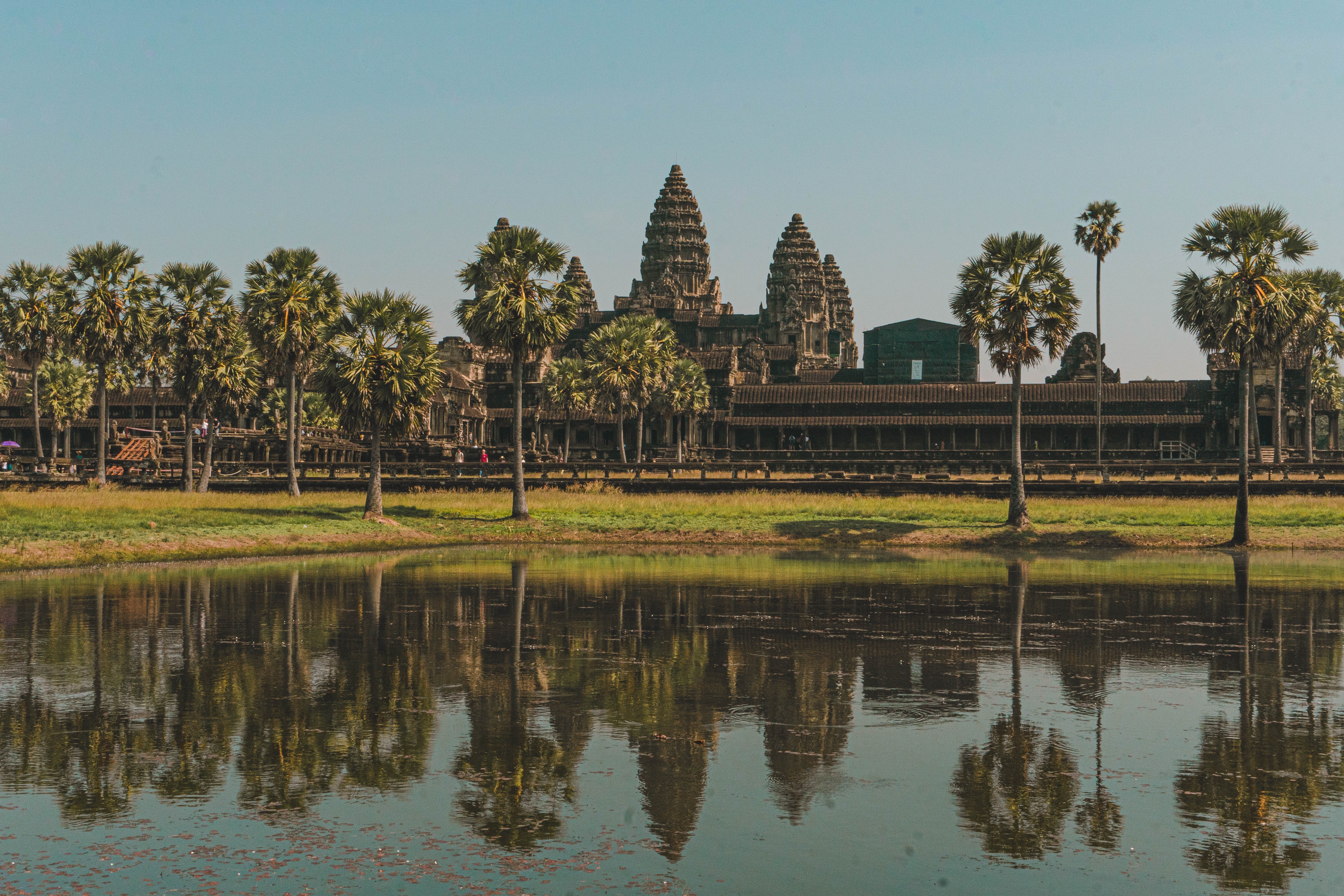
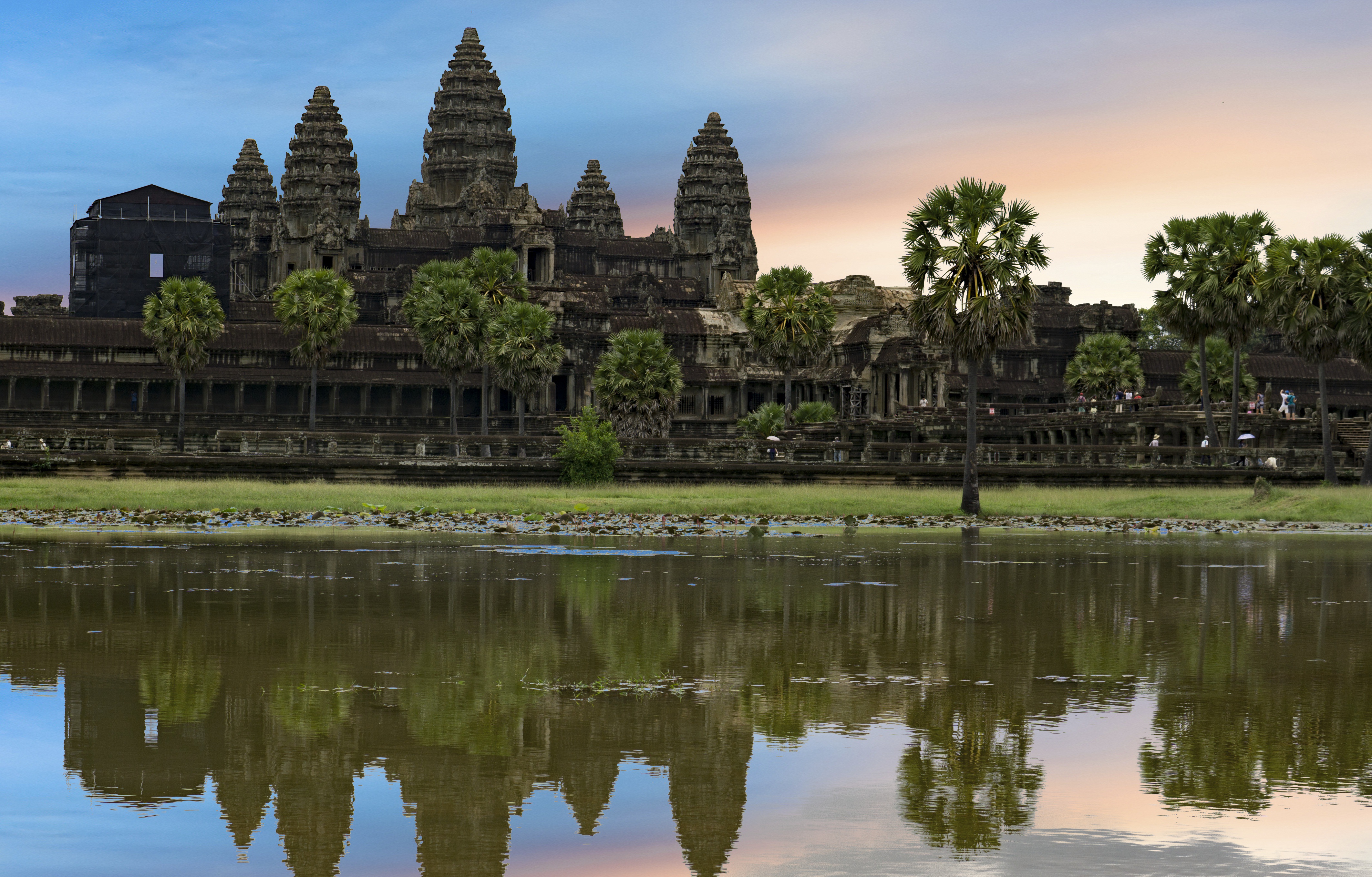
Witness a mesmerising sunrise over Angkor Wat. Afterwards, walk through this magnificent UNESCO World Heritage-listed site, renowned for its intricate carvings. This afternoon, enjoy time at leisure to explore the town, or join a DiscoverMORE excursion. Later, as part of your EmeraldPLUS experience, enjoy an immersive evening and farewell dinner, accompanied by an Apsara dance performance.
Included Excursion
Sunrise visit to Angkor Wat
EmeraldPLUS
Cultural night dinner show with Apsara dance performance
DiscoverMORE
Siem Reap Countryside by Vespa (extra expense)
DiscoverMORE
Banteay Srei Temple and APOPO (extra expense)
DiscoverMORE
Tonlé Sap and Lotus Workshop (extra expense, operating Aug-Feb only)
DiscoverMORE
Khmer Cooking Class (extra expense)
DiscoverMORE
Senteurs d’Angkor Workshop (extra expense)
Siem Reap, Cambodia
After breakfast this morning, you will be transferred to the Siem Reap airport to catch your onward or homebound flight.
Rivers and waterways are subject to variations in water levels. While every effort is made to adhere to the planned itinerary, changes in river conditions, ad hoc local government regulations or local festivities may require journey modifications. These will be made based on the advice of local authorities or for safety reasons. Hotels are indicative and are subject to change.
Siem Reap, Cambodia
Witness a mesmerising sunrise over Angkor Wat. Afterwards, walk through this magnificent UNESCO World Heritage-listed site, renowned for its intricate carvings. This afternoon, enjoy time at leisure to explore the town, or join a DiscoverMORE excursion. Later, as part of your EmeraldPLUS experience, enjoy an immersive evening and farewell dinner, accompanied by an Apsara dance performance.
Included Excursion
Sunrise visit to Angkor Wat
EmeraldPLUS
Cultural night dinner show with Apsara dance performance
DiscoverMORE
Siem Reap Countryside by Vespa (extra expense)
DiscoverMORE
Banteay Srei Temple and APOPO (extra expense)
DiscoverMORE
Tonlé Sap and Lotus Workshop (extra expense, operating Aug-Feb only)
DiscoverMORE
Khmer Cooking Class (extra expense)
DiscoverMORE
Senteurs d’Angkor Workshop (extra expense)
Siem Reap, Cambodia
After breakfast this morning, you will be transferred to the Siem Reap airport to catch your onward or homebound flight.
Rivers and waterways are subject to variations in water levels. While every effort is made to adhere to the planned itinerary, changes in river conditions, ad hoc local government regulations or local festivities may require journey modifications. These will be made based on the advice of local authorities or for safety reasons. Hotels are indicative and are subject to change.
Cabin Options
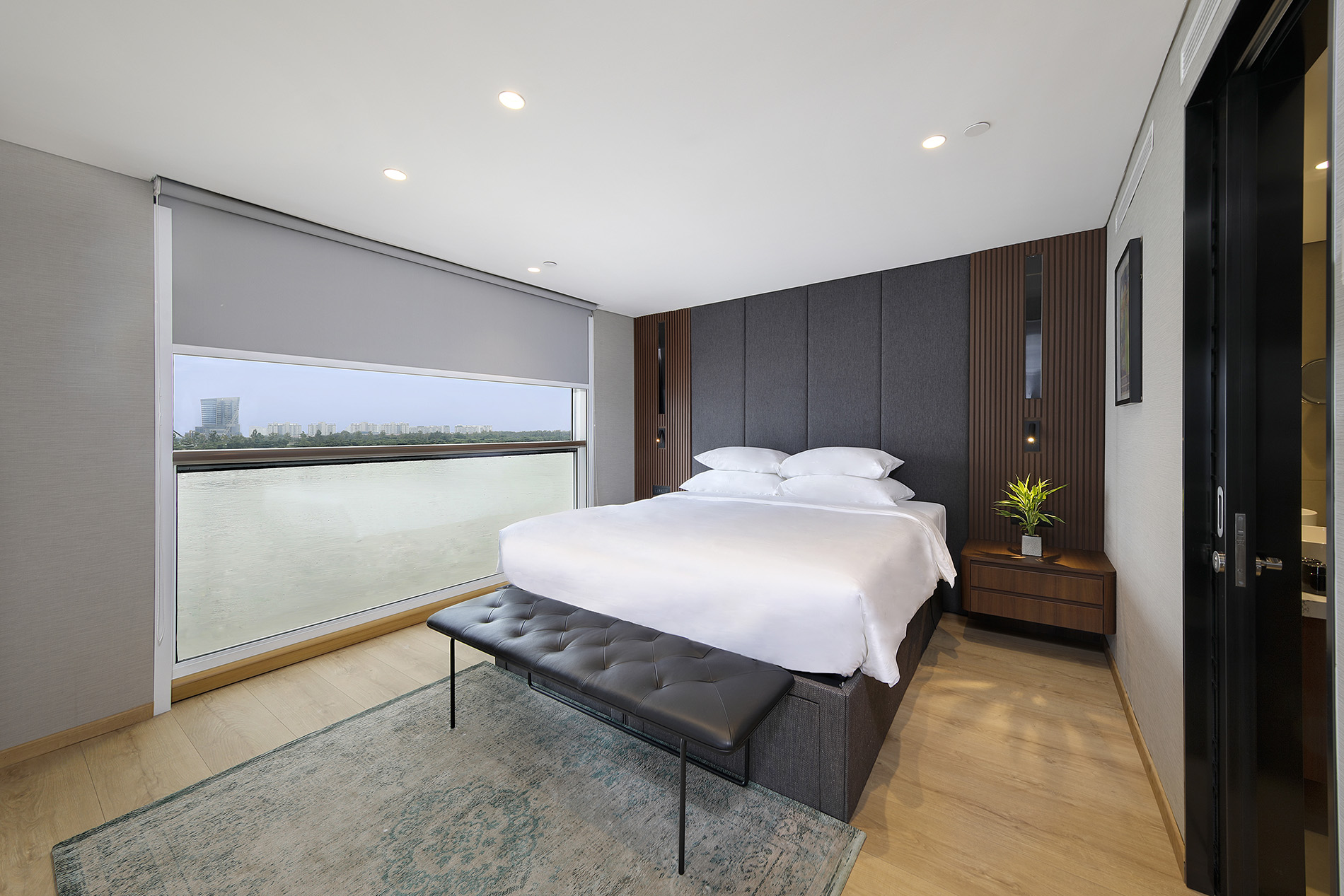
Owner's One-bedroom Suite
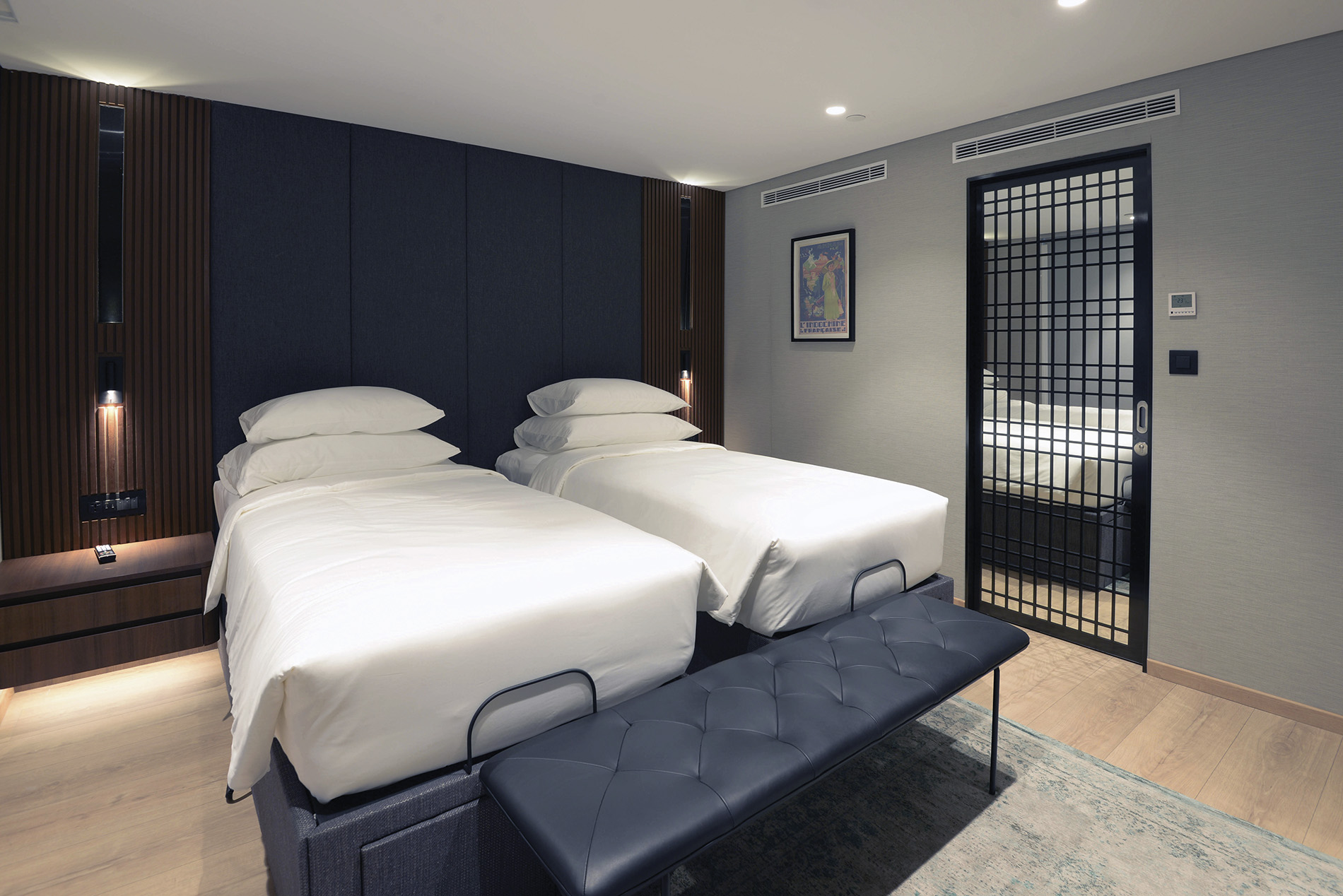
Grand Balcony Suite
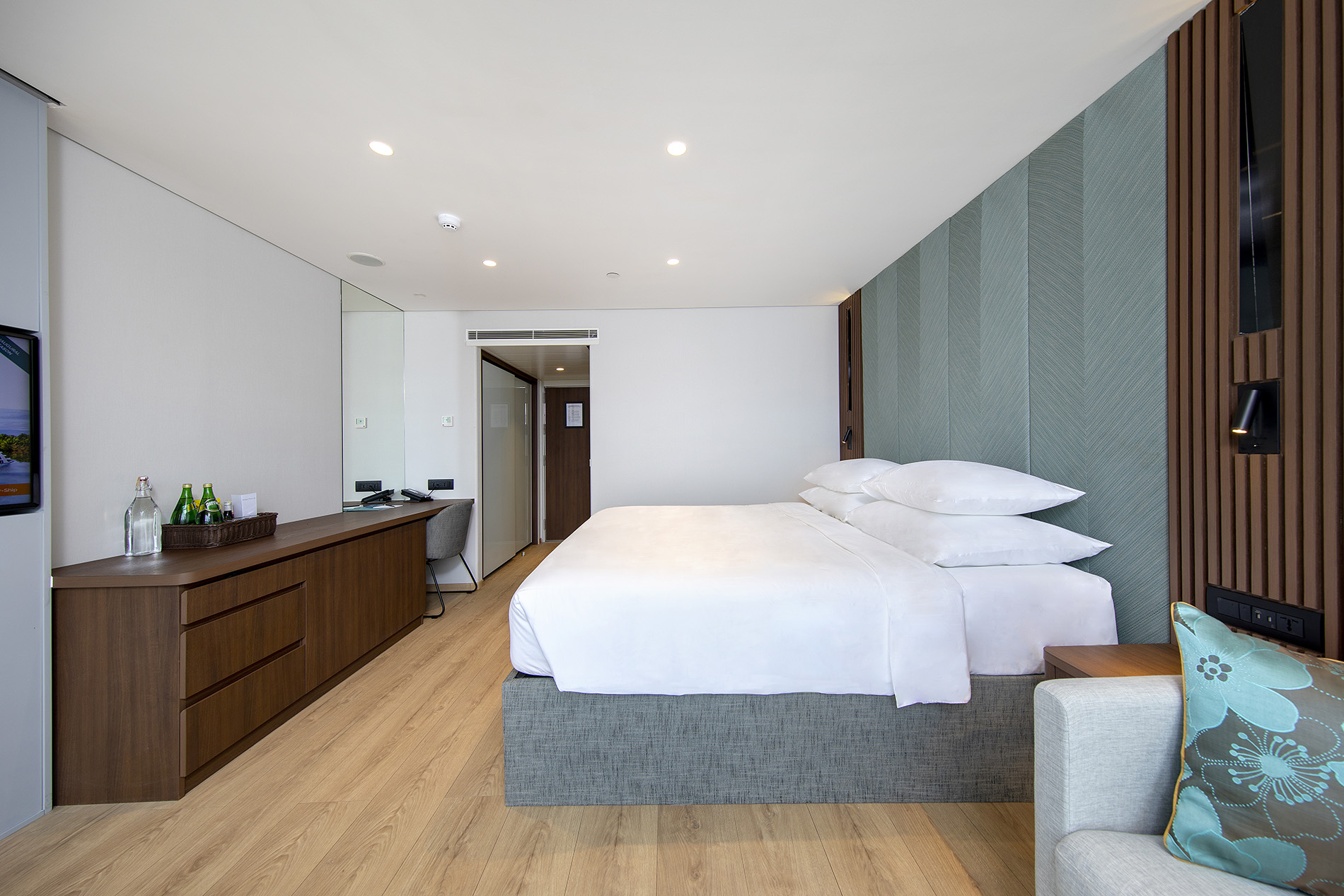
Emerald Panorama Balcony Suite
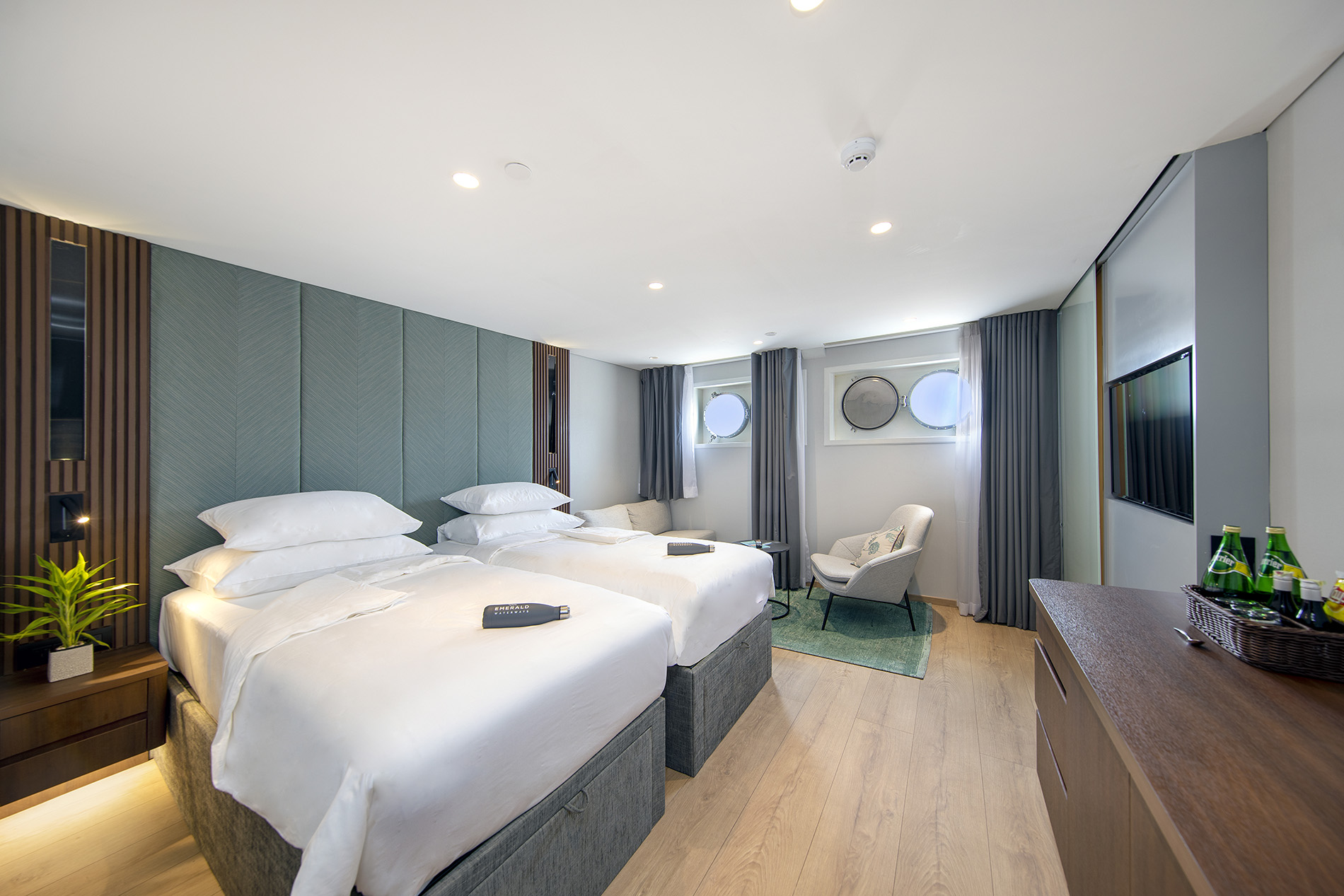
Emerald Stateroom
Ship Facilities
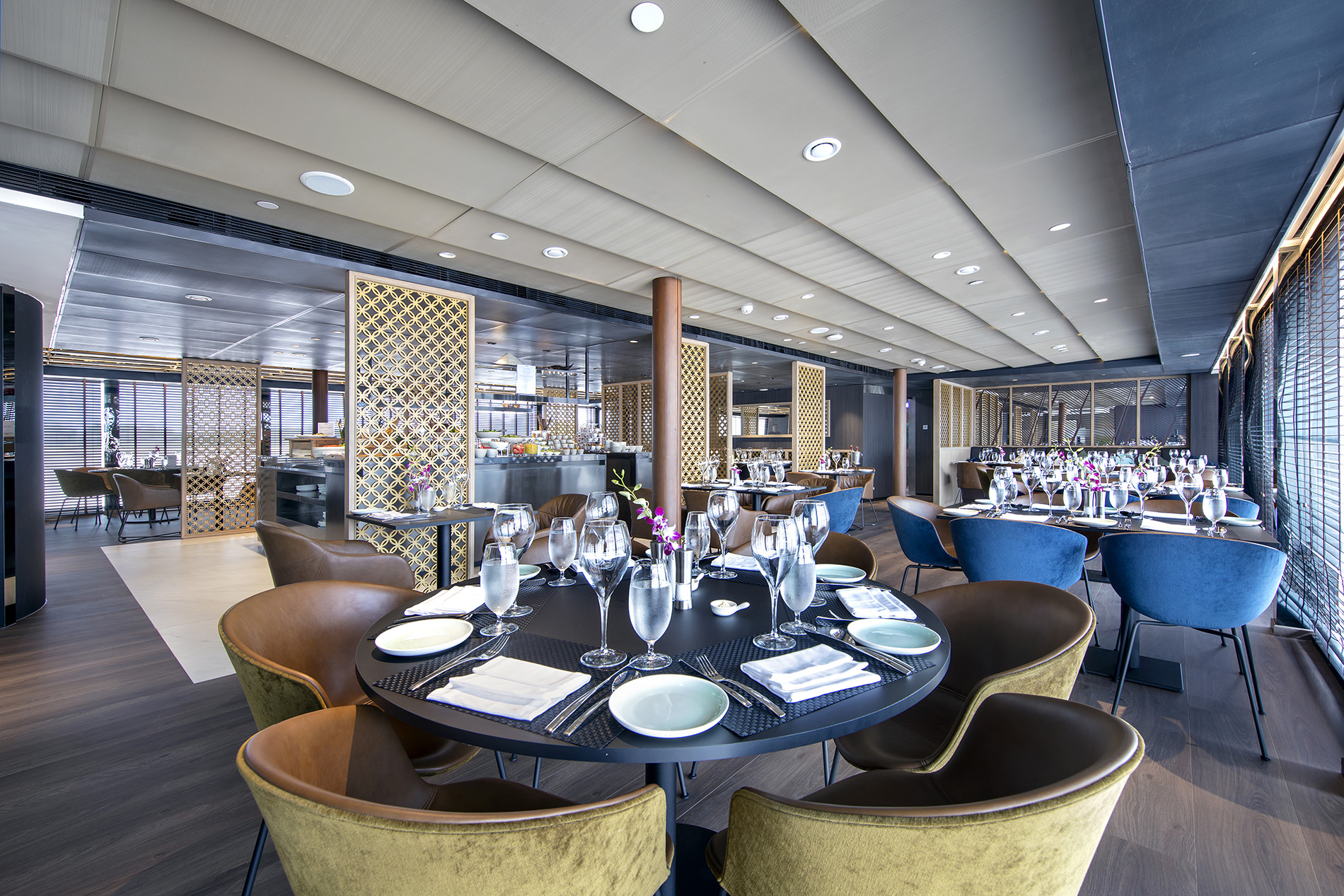
Reflections Restaurant
Our premiere on board dining spot
With open seating and elegant design, our Reflections Restaurant sets the benchmark in on board dining across our fleet of boutique Star-Ships throughout Europe and Southeast Asia. Here, savour delightful chef-prepared meals for breakfast, lunch, and dinner, with dishes inspired by local flavours and a few favourites you may recognise from home.
The Terrace
Dine alfresco
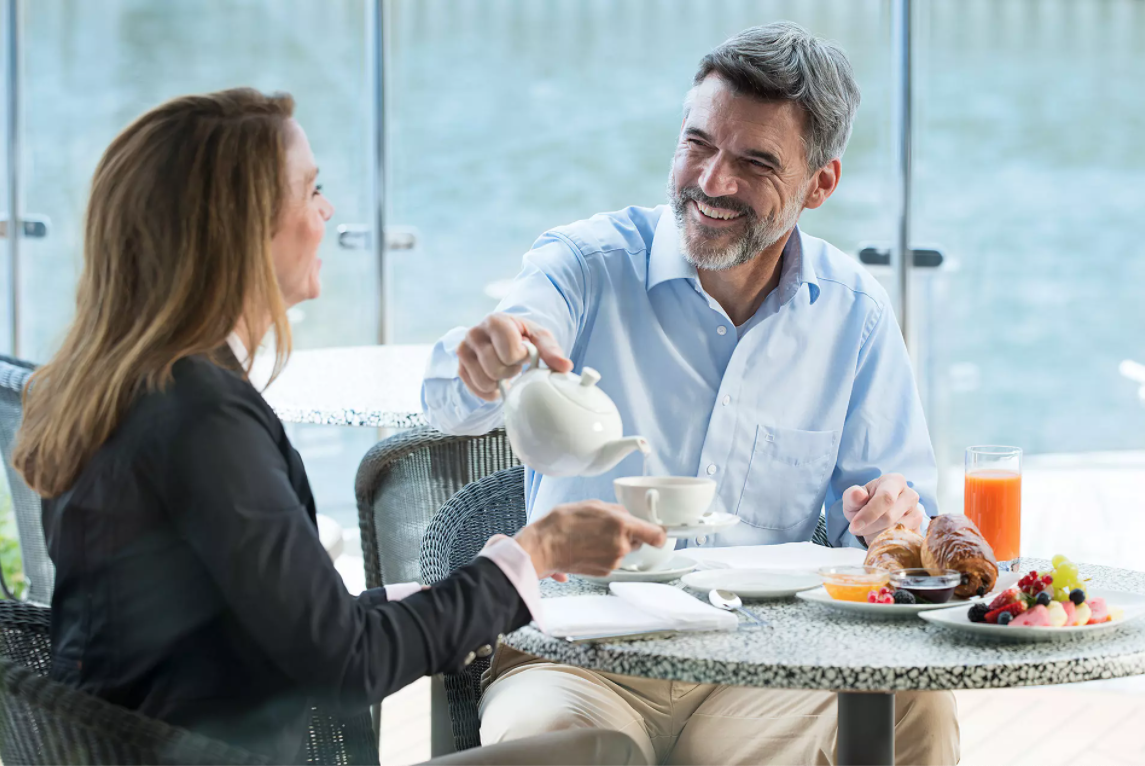
A beautifully decked area in the forward of our European Star-Ships, The Terrace provides a lovely retreat from which to enjoy a light snack or refreshing drink. Depending on the ship, this partly indoor and outdoor space is a spectacular vantage point from which to soak up the scenery, whatever the weather. This peaceful setting is also a great spot to enjoy a drink as the wonders of the landscape pass by.
Healthy Dining
The freshest ingredients
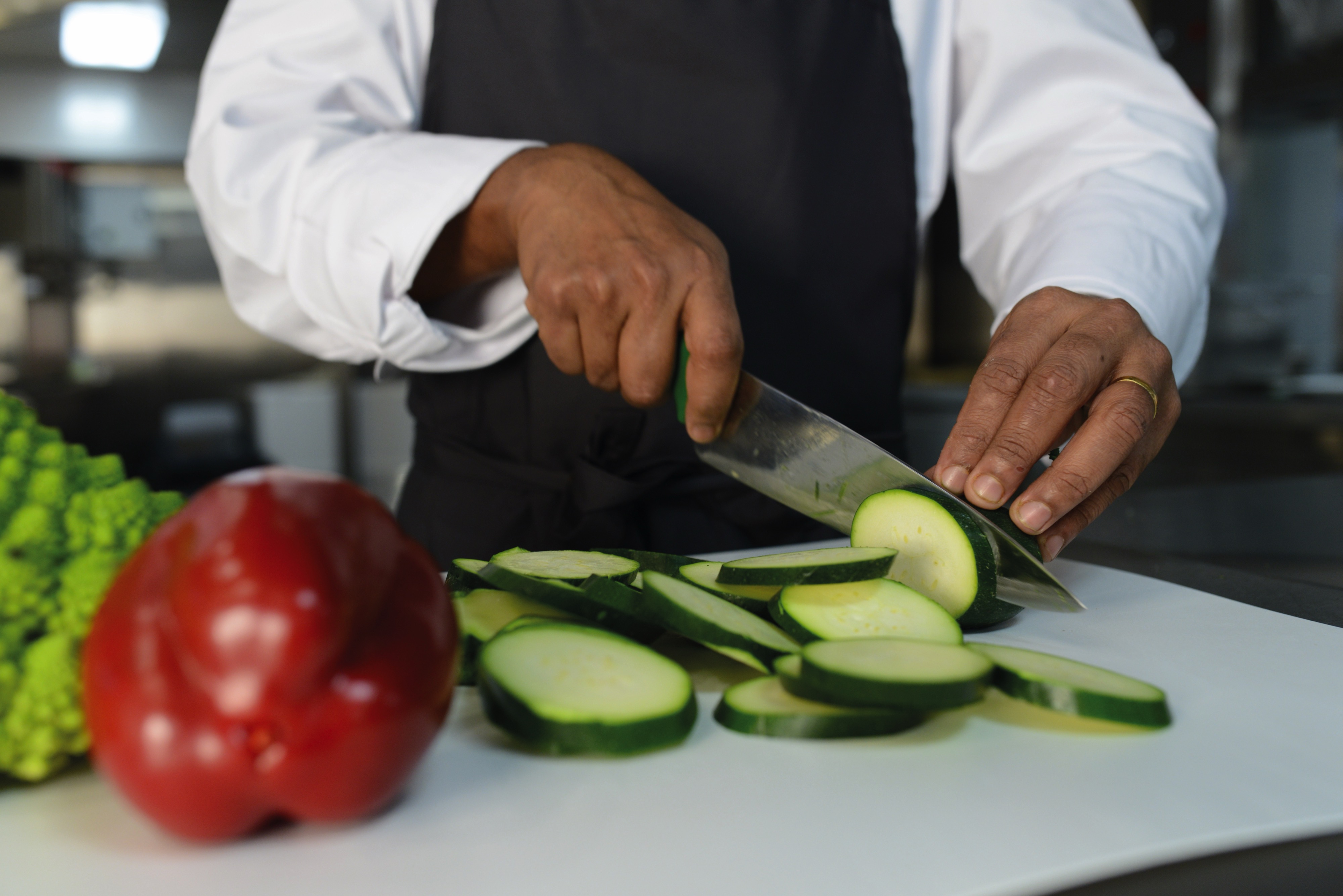
Dine on delectable meals made with fresh, locally sourced produce.
Lunch with a view
Enjoy healthy meals while soaking in the stunning views and fresh air.
A range of dietary options
Sample amazing vegetarian, vegan, and gluten-free meal options^. ^Please inform your crew of any dietary requirements.
DiscoverMORE
Delve deeper and DiscoverMORE
Every aspect of our river cruise DiscoverMORE programme is designed to bring you closer to the heart of local life, discovering hidden gems and rare insights that go beyond ordinary travel encounters.
For those who want to experience even more of each destination, DiscoverMORE provides in-depth excursions and experiences which complement those provided by our EmeraldPLUS and EmeraldACTIVE programmes. These optional events can either be booked before you go or while you’re on board and are available at an additional cost.
Each one of our cruise itineraries features complimentary experiences in a wealth of destinations, from UNESCO World Heritage-listed sites to insightful walking tours.
Additional to these included experiences, our extra-special collection of DiscoverMORE excursions enable you to explore each location at a deeper level, offering a unique insight into the region and immersing you in local life.
We advise you to book before you travel to secure your place on your chosen excursion or confirm your choice with your tour manager on the day of embarkation.
EmeraldPLUS
Immerse yourself in new experiences with EmeraldPLUS
Taking you into the heart of local life, our included EmeraldPLUS excursions and experiences provide a fascinating insight into the authentic customs and traditions along the rivers of Europe and Southeast Asia.
Our journey planners have sought out hidden gems that you may not have discovered without a local expert. Providing a rare insight into each destination these included experiences are certain to be one of the highlights of your Emerald Cruises river cruise.
EmeraldPLUS experiences will take you deeper into the local culture. You’ll enjoy exclusive social events with the locals, tours of significant landmarks, as well as special on board performances and workshops, and much more.
Included Excursions
Take in your surroundings
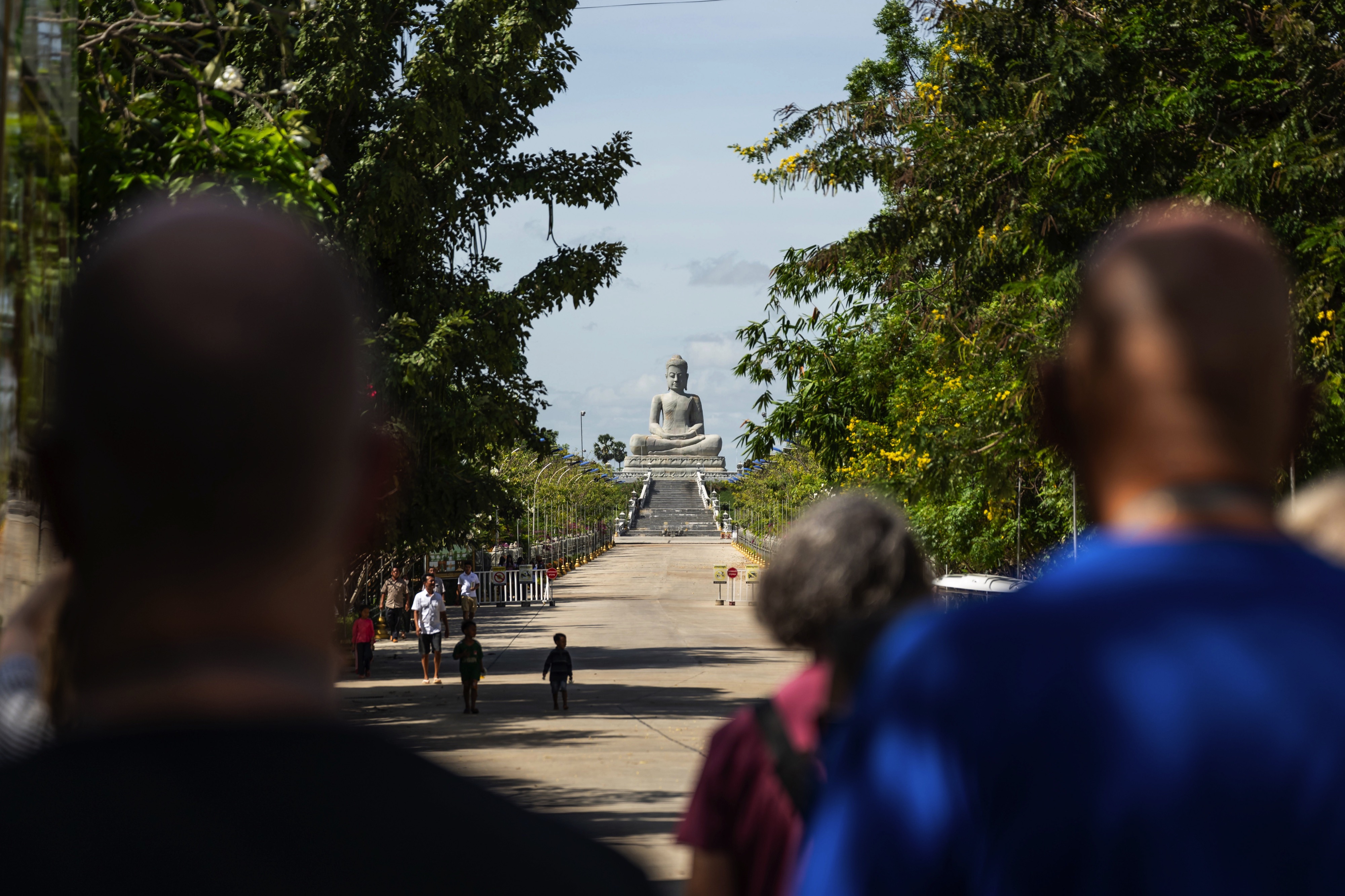
Tour the vibrant cities and tranquil villages of Vietnam and Cambodia, where traditions blend with the modern way of life.
See the wonders up close
Explore peaceful Cambodian temples and discover iconic landmarks such as Ho Chi Minh City’s Notre Dame Cathedral.
Visit historic sites
From Vietnam’s Cu Chi Tunnels to the Imperial Citadel, there are many historic locations for you to discover.
Horizon Bar & Lounge
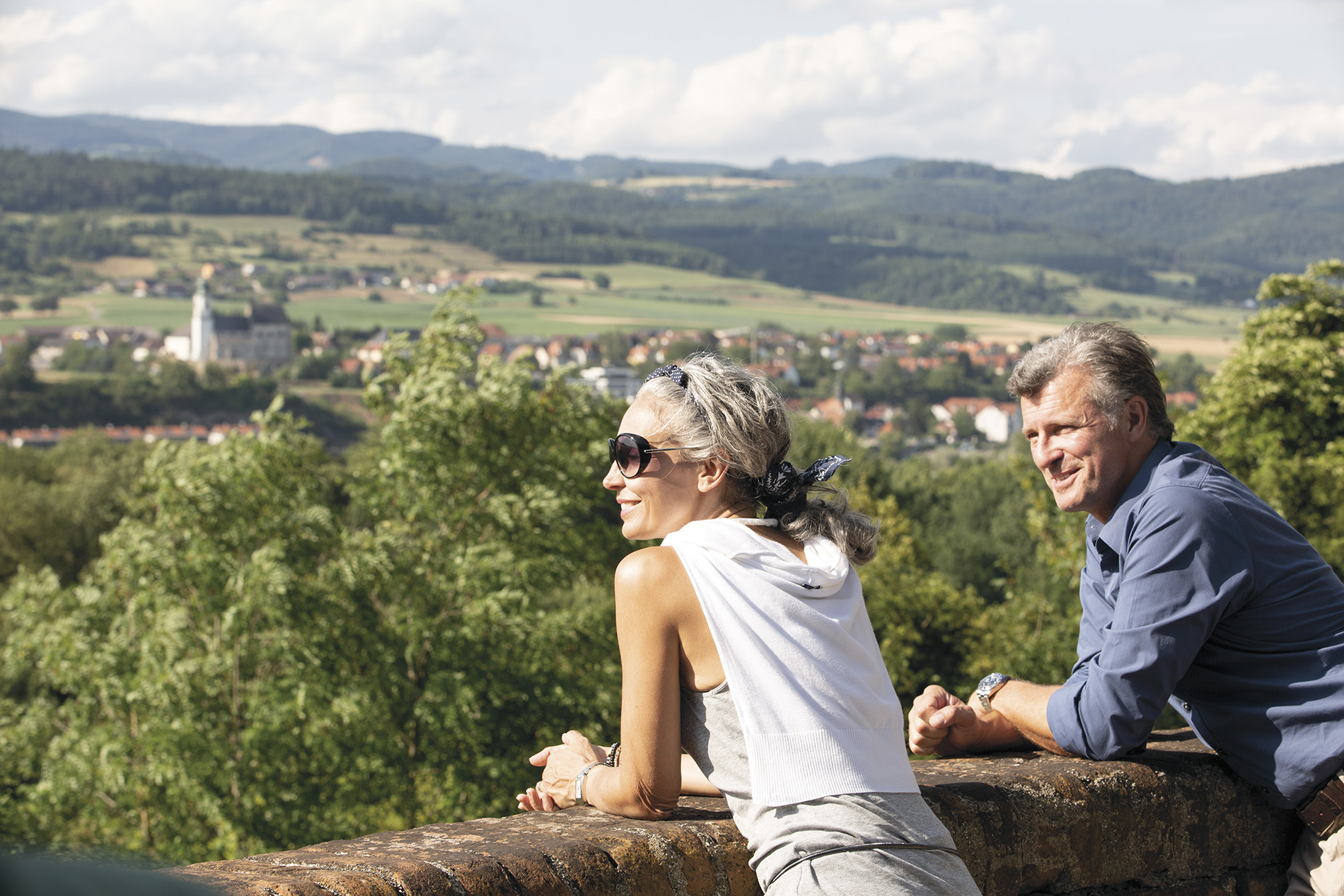
Enjoy a regional beer, glass of wine, cocktail or mocktail in the Asian-inspired surrounds of the Horizon Bar & Lounge. Dark wooden interior and indigenous plants create an authentic environment. And, of course, delicious teas and coffees are always available.
Our bar tenders are experts when it comes to mixing up delicious cocktails, and we’ve sourced the best local and international wines and beers, all complimentary with lunch and dinner. Also available are a delicious selection of mocktails, created using local flavours, like lemongrass and tamarind.
Lotus Lounge
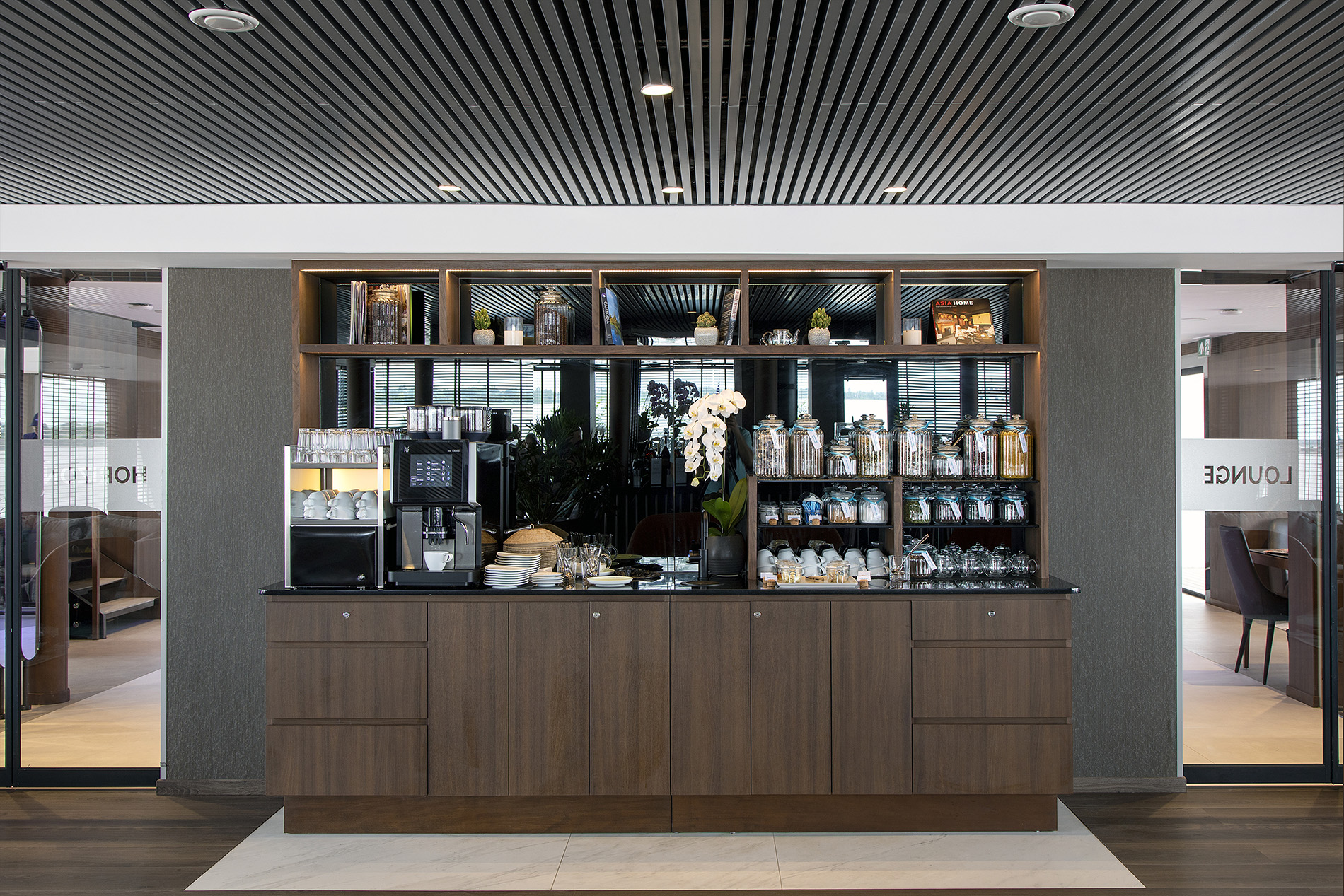
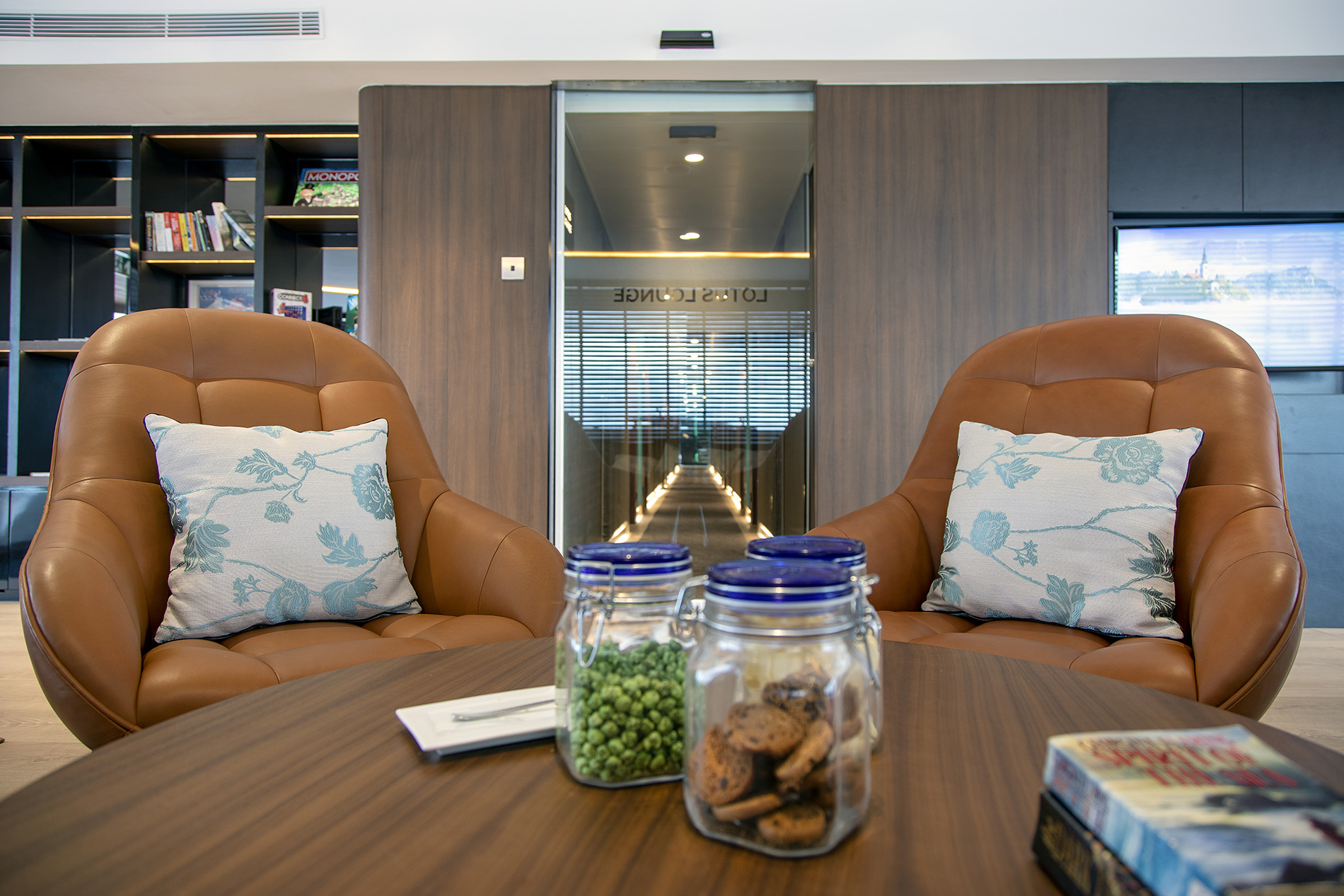
On our Emerald Harmony Star-Ship, we have introduced the Lotus Lounge, where dark wooden tones and muted colours relax you as you sail towards your next destination. Located at the front of the Vista Deck, nibbles and snacks will be available here throughout the day, as well as teas and coffees. Watch the endless horizons unfold as you sip your favourite drink and nibble something delicious.
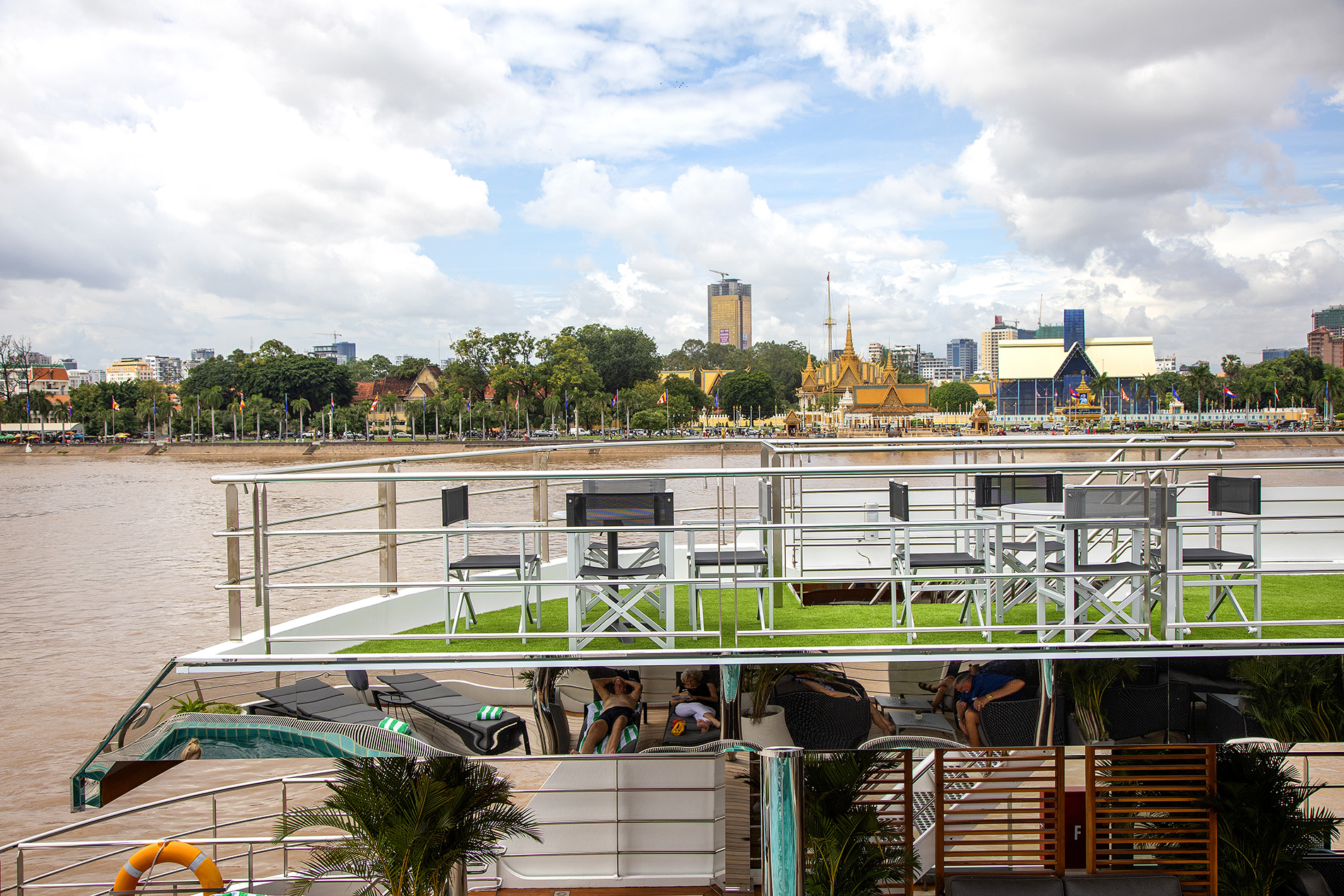
Sun & Pool Deck
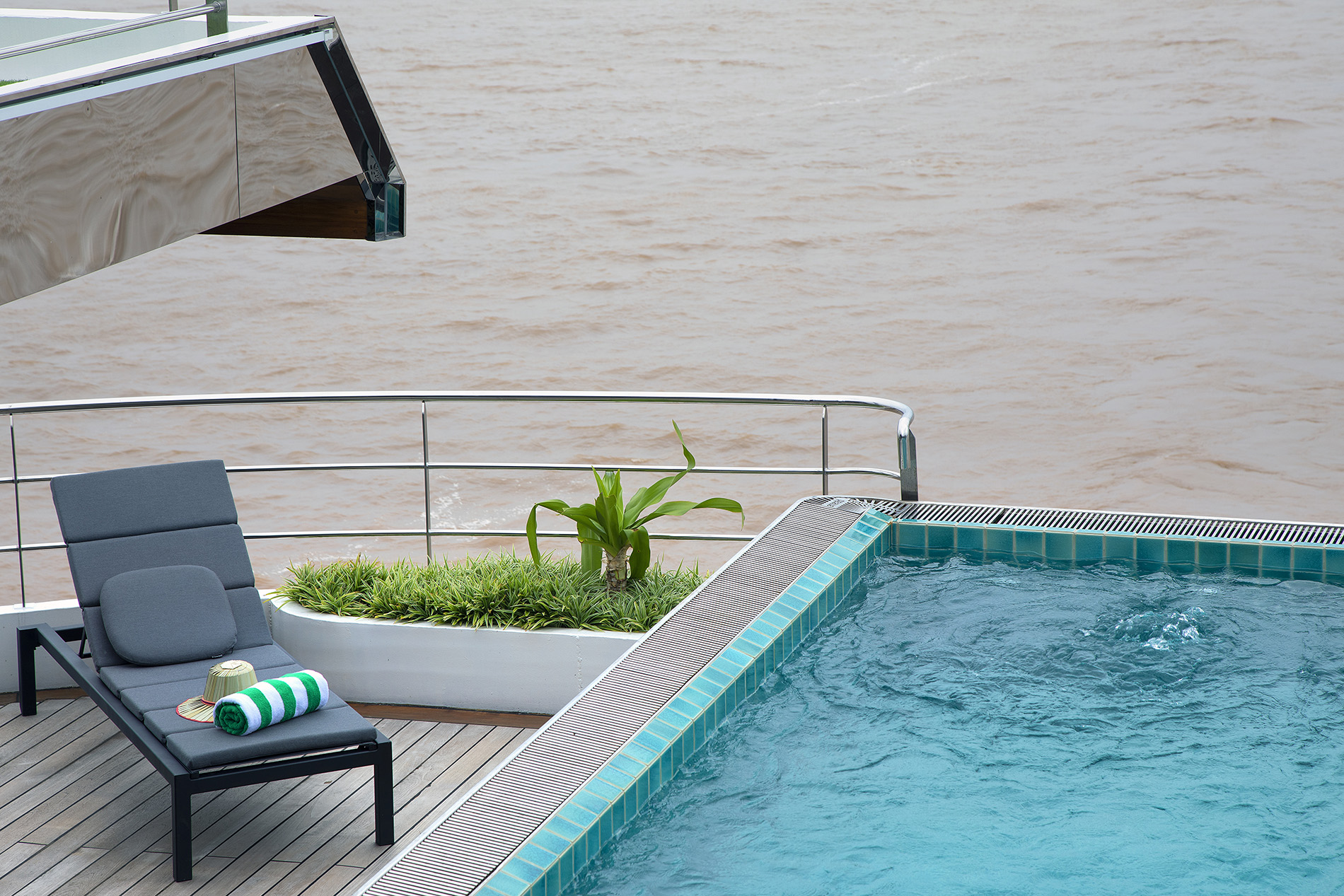
These truly remarkable spaces have been designed with your total relaxation in mind. Take a refreshing dip in the pool on warm days, before enjoying a selection of alcoholic and non-alcoholic drinks from the bar. Sit back and relax in one of the comfortable chairs or sun loungers in the open-air space, or take shelter from the sun, as the river breeze invigorates you.
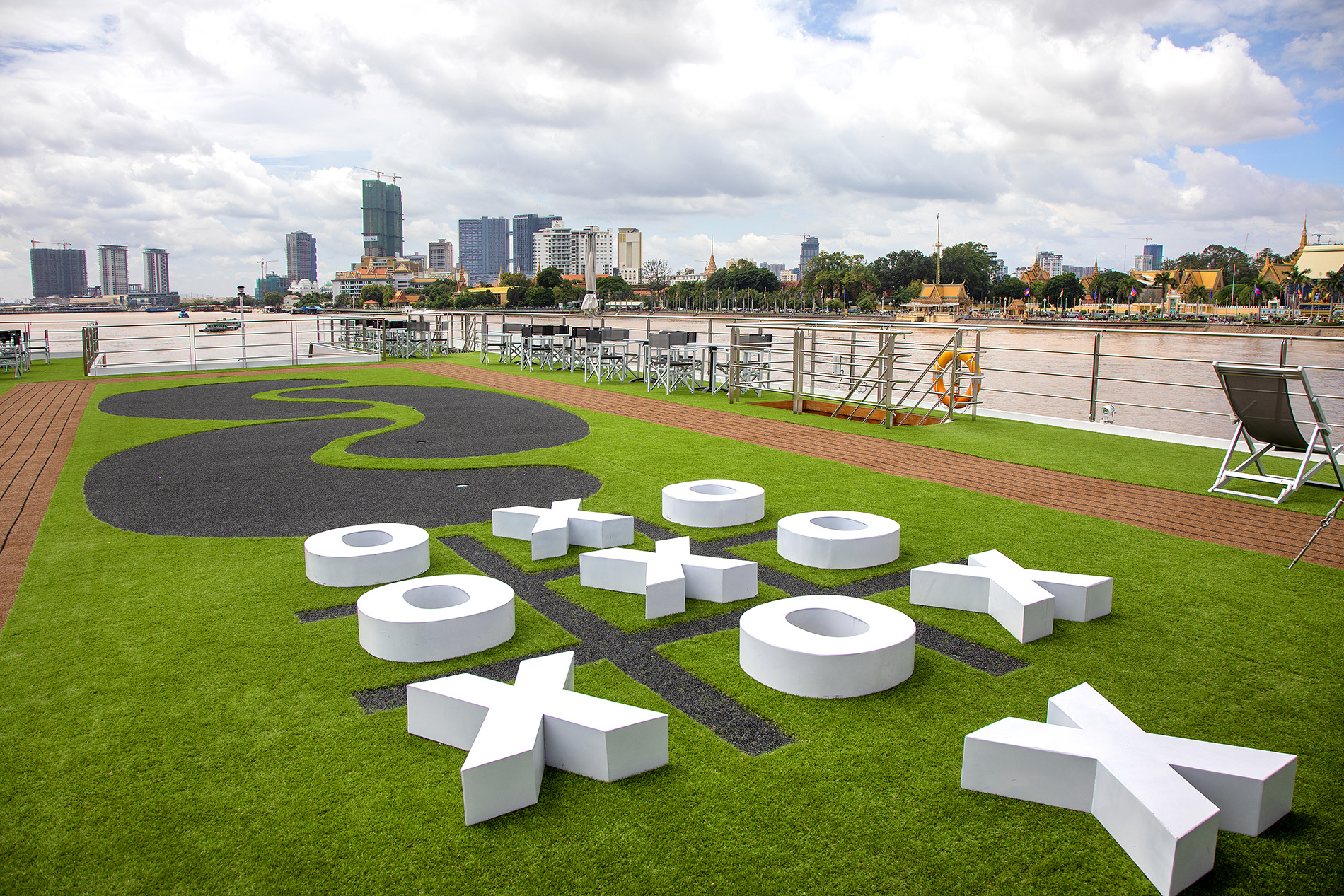
Games Area
During downtime on-board Emerald Harmony, feel free to enjoy our games area and golf putting green. It’s the perfect way to enjoy the scenery while you challenge new-found friends.
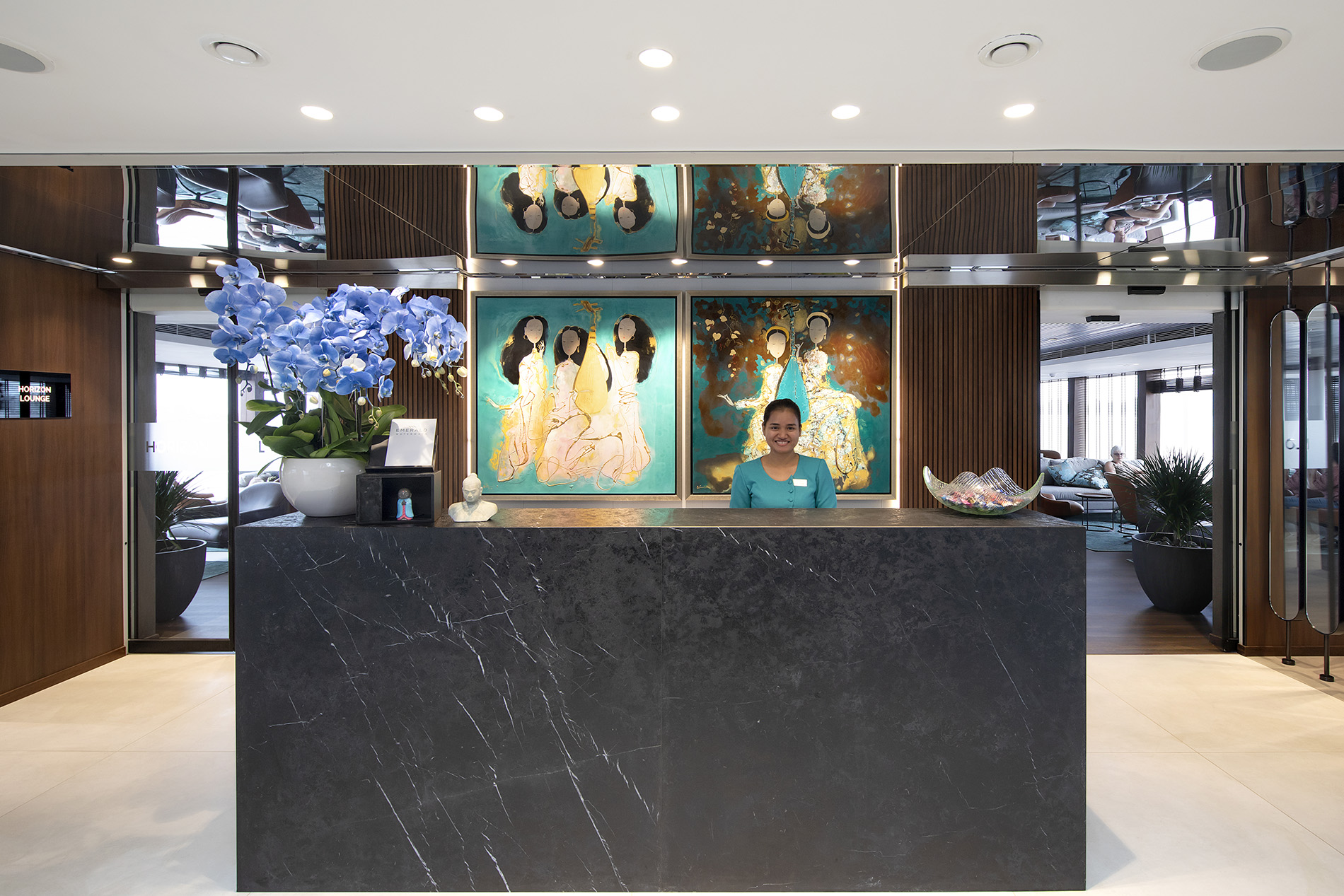
Reception and Atrium
Pool Deck
These truly remarkable spaces have been designed with your total relaxation in mind. Take a refreshing dip in the pool on warm days, before enjoying a selection of alcoholic and non-alcoholic drinks from the bar. Sit back and relax in one of the comfortable chairs or sun loungers in the open-air space, or take shelter from the sun, as the river breeze invigorates you.
Wellness Area
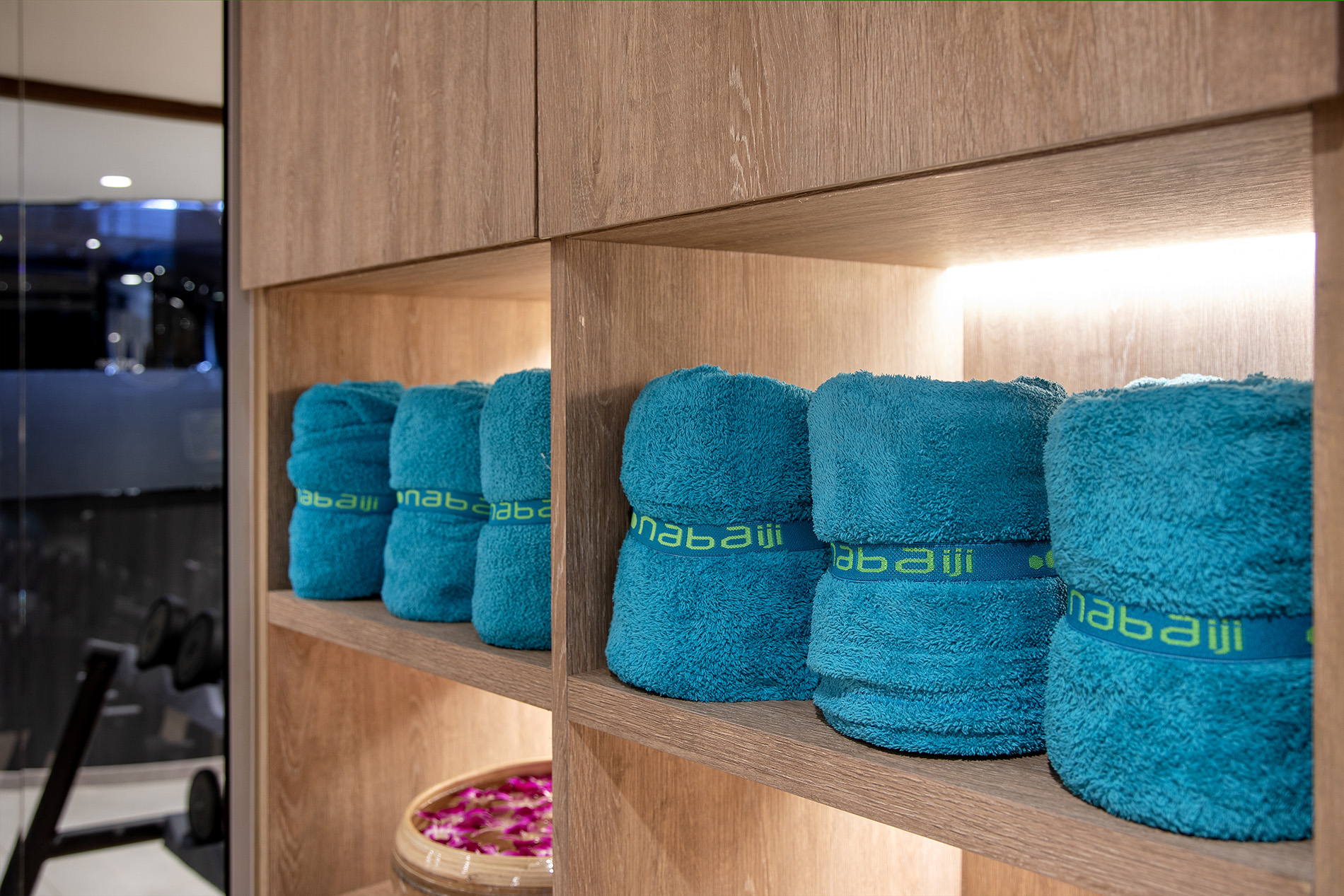
A relaxing space dedicated to mind, body, and soul. Stay active on board with a fitness session in the well-equipped gym, or indulge in a blissful range of Asian-inspired therapies and treatments.
Hairdressers
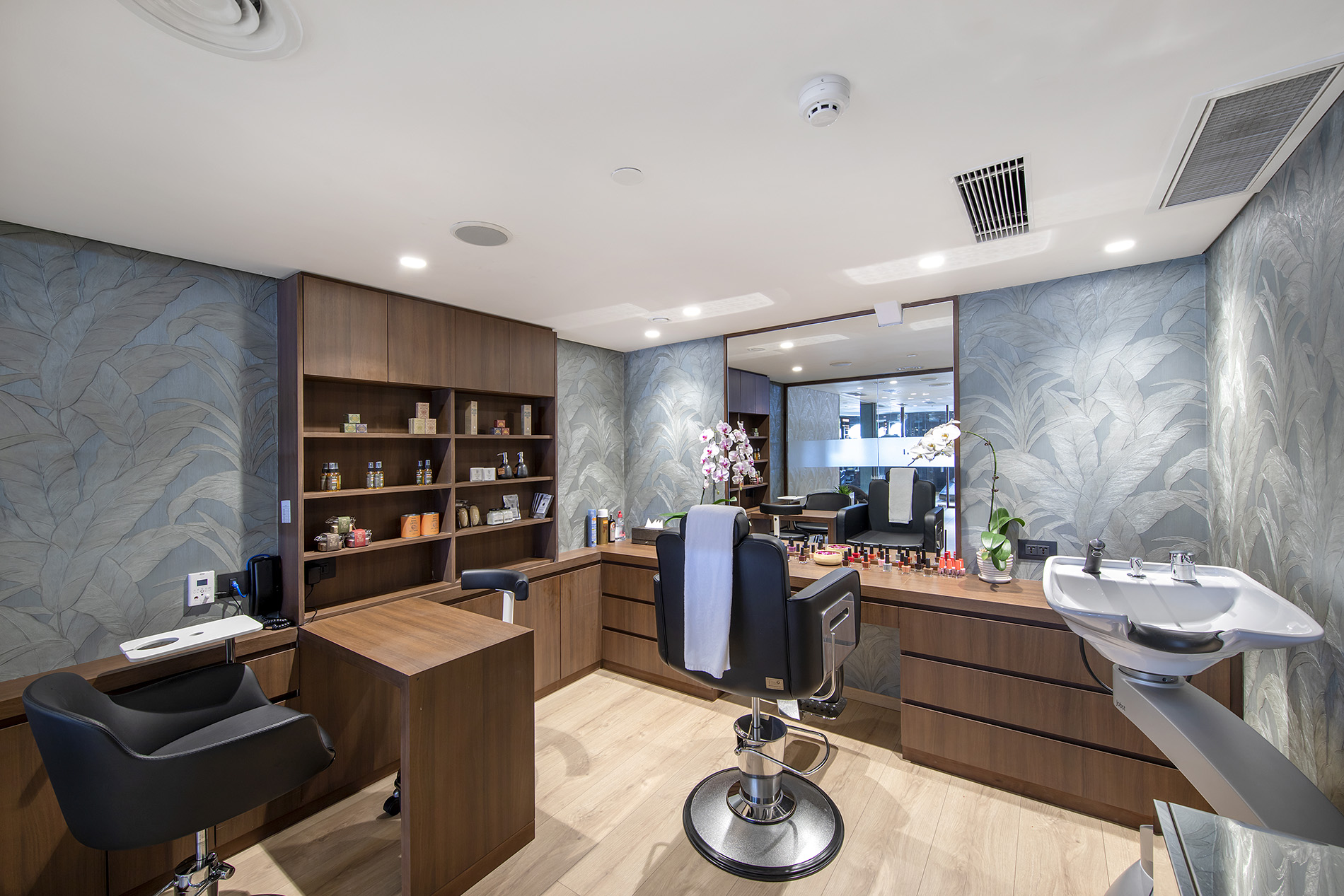
In need of a quick trim during your travels? You can treat yourself at any point during your cruise with our dedicated hairdressers – perfect if you’re looking to get spruced up for a special evening.
Reflections Restaurant
Our premiere on board dining spot
With open seating and elegant design, our Reflections Restaurant sets the benchmark in on board dining across our fleet of boutique Star-Ships throughout Europe and Southeast Asia. Here, savour delightful chef-prepared meals for breakfast, lunch, and dinner, with dishes inspired by local flavours and a few favourites you may recognise from home.
The Terrace
Dine alfresco
A beautifully decked area in the forward of our European Star-Ships, The Terrace provides a lovely retreat from which to enjoy a light snack or refreshing drink. Depending on the ship, this partly indoor and outdoor space is a spectacular vantage point from which to soak up the scenery, whatever the weather. This peaceful setting is also a great spot to enjoy a drink as the wonders of the landscape pass by.
Healthy Dining
The freshest ingredients
Dine on delectable meals made with fresh, locally sourced produce.
Lunch with a view
Enjoy healthy meals while soaking in the stunning views and fresh air.
A range of dietary options
Sample amazing vegetarian, vegan, and gluten-free meal options^. ^Please inform your crew of any dietary requirements.
DiscoverMORE
Delve deeper and DiscoverMORE
Every aspect of our river cruise DiscoverMORE programme is designed to bring you closer to the heart of local life, discovering hidden gems and rare insights that go beyond ordinary travel encounters.
For those who want to experience even more of each destination, DiscoverMORE provides in-depth excursions and experiences which complement those provided by our EmeraldPLUS and EmeraldACTIVE programmes. These optional events can either be booked before you go or while you’re on board and are available at an additional cost.
Each one of our cruise itineraries features complimentary experiences in a wealth of destinations, from UNESCO World Heritage-listed sites to insightful walking tours.
Additional to these included experiences, our extra-special collection of DiscoverMORE excursions enable you to explore each location at a deeper level, offering a unique insight into the region and immersing you in local life.
We advise you to book before you travel to secure your place on your chosen excursion or confirm your choice with your tour manager on the day of embarkation.
EmeraldPLUS
Immerse yourself in new experiences with EmeraldPLUS
Taking you into the heart of local life, our included EmeraldPLUS excursions and experiences provide a fascinating insight into the authentic customs and traditions along the rivers of Europe and Southeast Asia.
Our journey planners have sought out hidden gems that you may not have discovered without a local expert. Providing a rare insight into each destination these included experiences are certain to be one of the highlights of your Emerald Cruises river cruise.
EmeraldPLUS experiences will take you deeper into the local culture. You’ll enjoy exclusive social events with the locals, tours of significant landmarks, as well as special on board performances and workshops, and much more.
Included Excursions
Take in your surroundings
Tour the vibrant cities and tranquil villages of Vietnam and Cambodia, where traditions blend with the modern way of life.
See the wonders up close
Explore peaceful Cambodian temples and discover iconic landmarks such as Ho Chi Minh City’s Notre Dame Cathedral.
Visit historic sites
From Vietnam’s Cu Chi Tunnels to the Imperial Citadel, there are many historic locations for you to discover.
Horizon Bar & Lounge
Enjoy a regional beer, glass of wine, cocktail or mocktail in the Asian-inspired surrounds of the Horizon Bar & Lounge. Dark wooden interior and indigenous plants create an authentic environment. And, of course, delicious teas and coffees are always available.
Our bar tenders are experts when it comes to mixing up delicious cocktails, and we’ve sourced the best local and international wines and beers, all complimentary with lunch and dinner. Also available are a delicious selection of mocktails, created using local flavours, like lemongrass and tamarind.
Lotus Lounge
On our Emerald Harmony Star-Ship, we have introduced the Lotus Lounge, where dark wooden tones and muted colours relax you as you sail towards your next destination. Located at the front of the Vista Deck, nibbles and snacks will be available here throughout the day, as well as teas and coffees. Watch the endless horizons unfold as you sip your favourite drink and nibble something delicious.
Sun & Pool Deck
These truly remarkable spaces have been designed with your total relaxation in mind. Take a refreshing dip in the pool on warm days, before enjoying a selection of alcoholic and non-alcoholic drinks from the bar. Sit back and relax in one of the comfortable chairs or sun loungers in the open-air space, or take shelter from the sun, as the river breeze invigorates you.
Games Area
During downtime on-board Emerald Harmony, feel free to enjoy our games area and golf putting green. It’s the perfect way to enjoy the scenery while you challenge new-found friends.
Reception and Atrium
Pool Deck
These truly remarkable spaces have been designed with your total relaxation in mind. Take a refreshing dip in the pool on warm days, before enjoying a selection of alcoholic and non-alcoholic drinks from the bar. Sit back and relax in one of the comfortable chairs or sun loungers in the open-air space, or take shelter from the sun, as the river breeze invigorates you.
Wellness Area
A relaxing space dedicated to mind, body, and soul. Stay active on board with a fitness session in the well-equipped gym, or indulge in a blissful range of Asian-inspired therapies and treatments.
Hairdressers
In need of a quick trim during your travels? You can treat yourself at any point during your cruise with our dedicated hairdressers – perfect if you’re looking to get spruced up for a special evening.
About the Ship
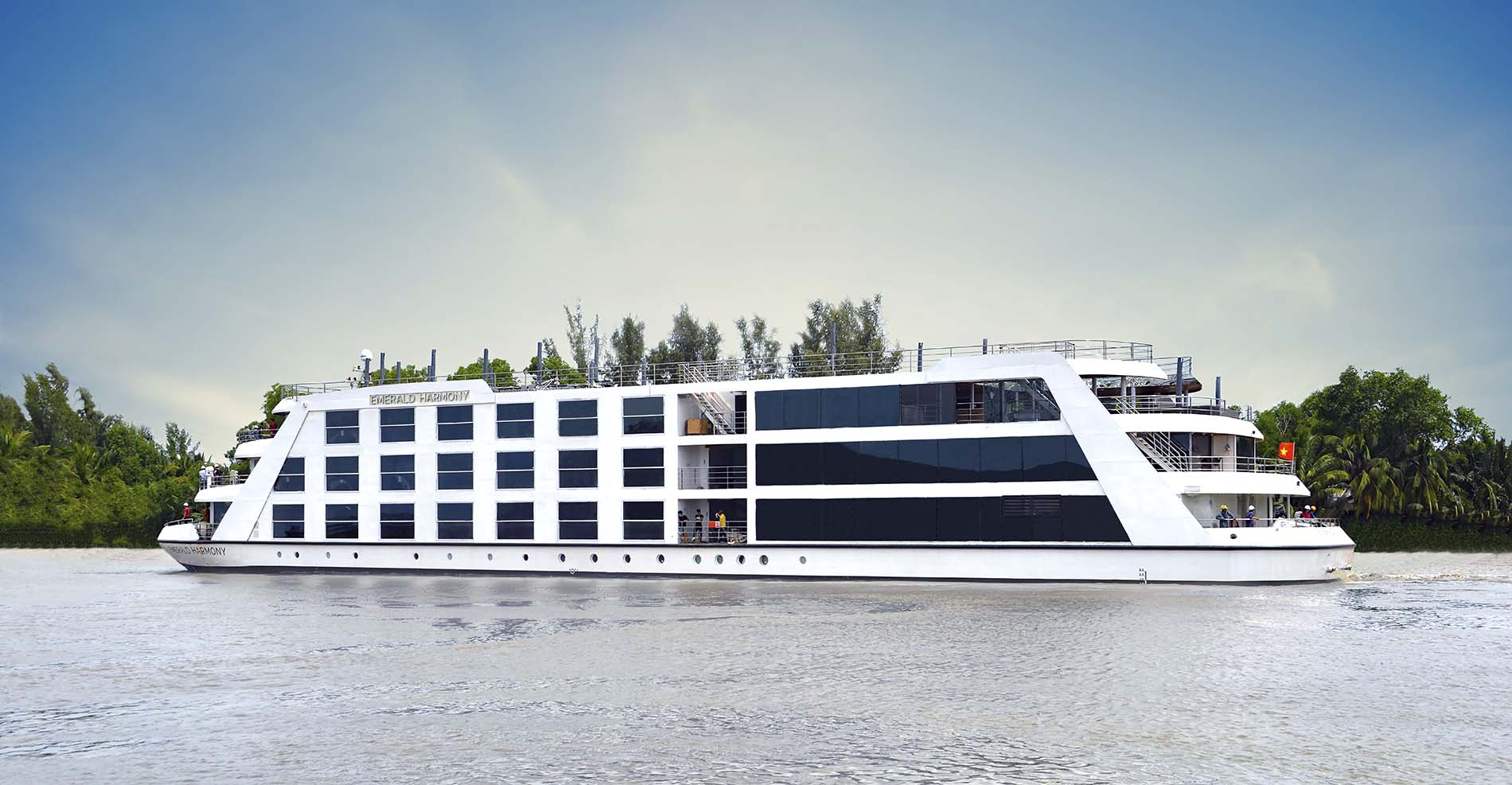
Deck Plans

- Fitness Area
- Guest Self-Service Laundry
- Wellness Area
- Hairdresser
- Emerald Stateroom

- Lotus Lounge
- Reflections Restaurant
- Emerald Panorama Balcony Suite
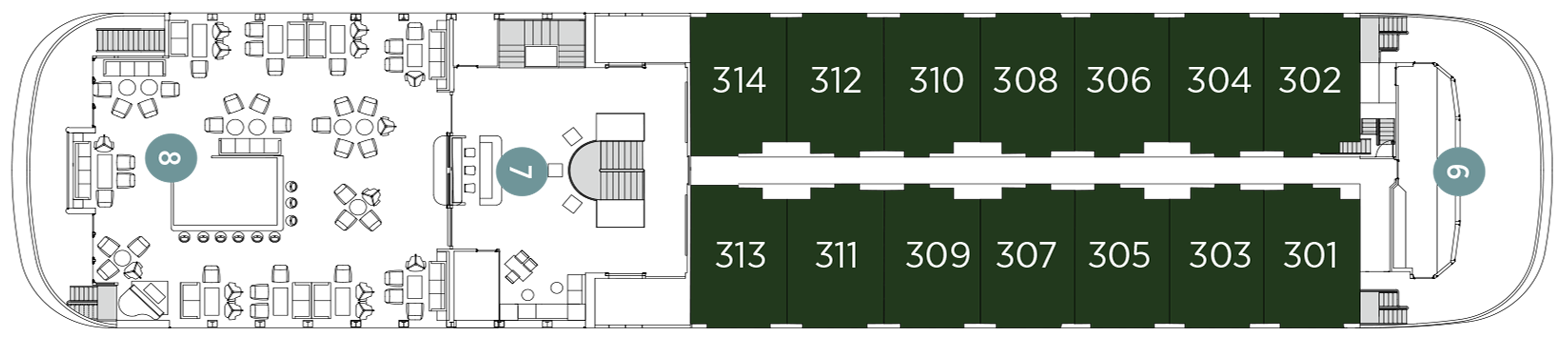
- Captains Bridge
- Reception
- Horizon Bar & Lounge
- Emerald Panorama Balcony Suite
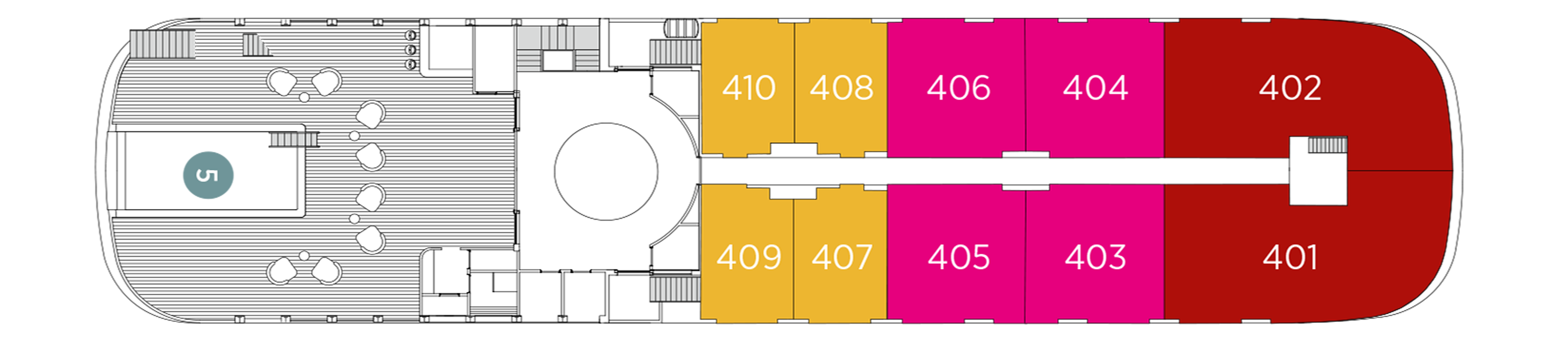
- Daytime Pool & Bar
- Owner’s One-bedroom Suite
- Grand Balcony Suite
- Emerald Panorama Balcony Suite

- Sun Deck with Deck Chairs
- Retractable Sun Shade Roof
- Games Area
- Walking Track
- Fitness Area
- Guest Self-Service Laundry
- Wellness Area
- Hairdresser
- Emerald Stateroom
- Lotus Lounge
- Reflections Restaurant
- Emerald Panorama Balcony Suite
- Captains Bridge
- Reception
- Horizon Bar & Lounge
- Emerald Panorama Balcony Suite
- Daytime Pool & Bar
- Owner’s One-bedroom Suite
- Grand Balcony Suite
- Emerald Panorama Balcony Suite
- Sun Deck with Deck Chairs
- Retractable Sun Shade Roof
- Games Area
- Walking Track