Featured Cabins
Itinerary
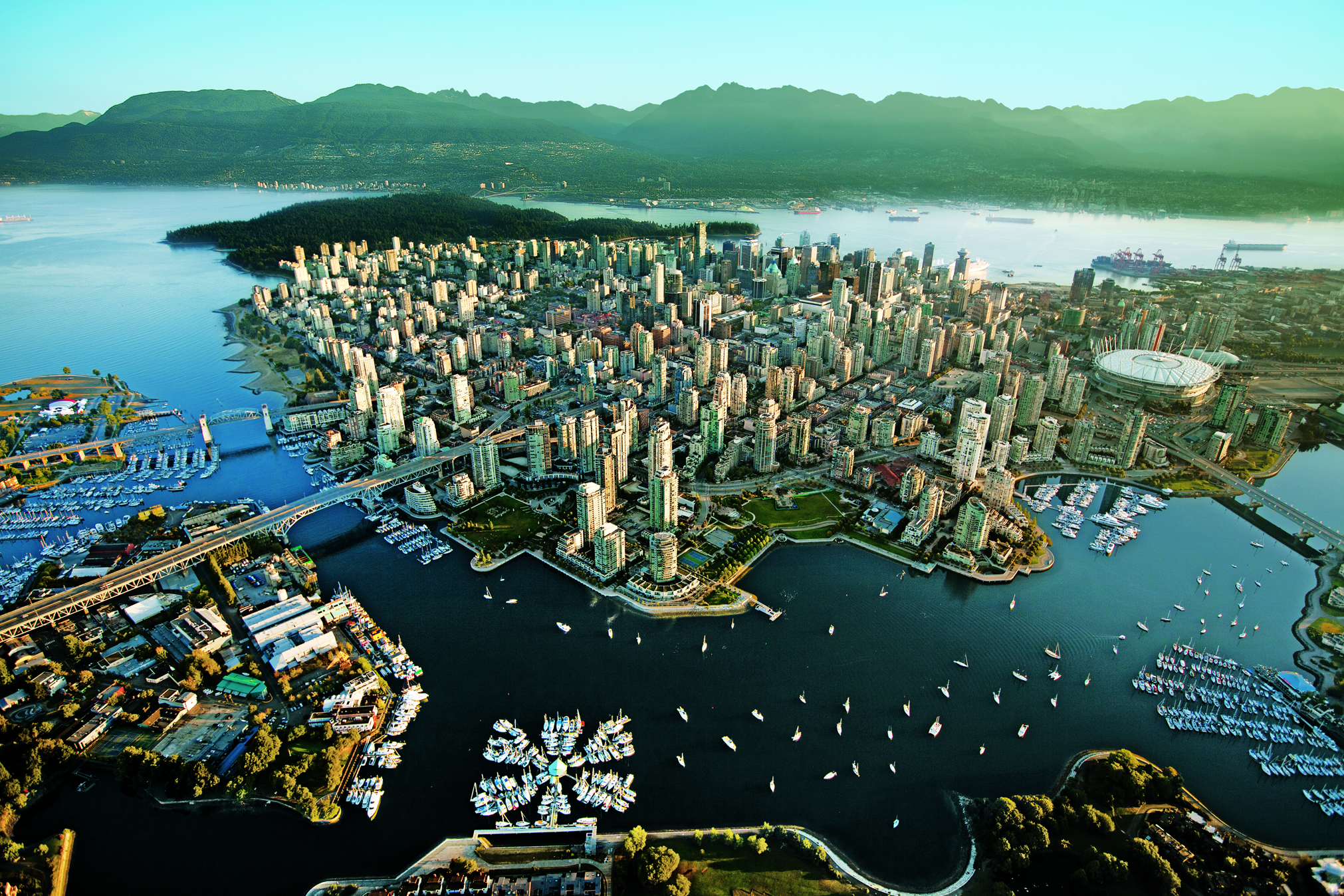
Vancouver, British Columbia, Canada
Vancouver is a delicious juxtaposition of urban sophistication and on-your-doorstep wilderness adventure. The mountains and seascape make the city an outdoor playground for hiking, skiing, kayaking, cycling, and sailing—and so much more—while the cuisine and arts scenes are equally diverse, reflecting the makeup of Vancouver’s ethnic (predominantly Asian) mosaic. Vancouver is consistently ranked as one of the world’s most livable cities, and it’s easy for visitors to see why. It’s beautiful, it’s outdoorsy, and there’s a laidback West Coast vibe. On the one hand, there’s easy access to a variety of outdoor activities, a fabulous variety of beaches, and amazing parks. At the same time, the city has a multicultural vitality and cosmopolitan flair. The attraction is as much in the range of food choices—the fresh seafood and local produce are some of North America’s best—as it is in the museums, shopping, and nightlife.Vancouver’s landscaping also adds to the city’s walking appeal. In spring, flowerbeds spill over with tulips and daffodils while sea breezes scatter scented cherry blossoms throughout Downtown; in summer office workers take to the beaches, parks, and urban courtyards for picnic lunches and laptop meetings. More than 8 million visitors each year come to Vancouver, Canada’s third-largest metropolitan area. Because of its peninsula location, traffic flow is a contentious issue. Thankfully, Vancouver is wonderfully walkable, especially in the downtown core. The North Shore is a scoot across the harbor, and the rapid-transit system to Richmond and the airport means that staying in the more affordable ’burbs doesn’t have to be synonymous with sacrificing convenience. The mild climate, exquisite natural scenery, and relaxed outdoor lifestyle keep attracting residents, and the number of visitors is increasing for the same reasons. People often get their first glimpse of Vancouver when catching an Alaskan cruise, and many return at some point to spend more time here.
At Sea
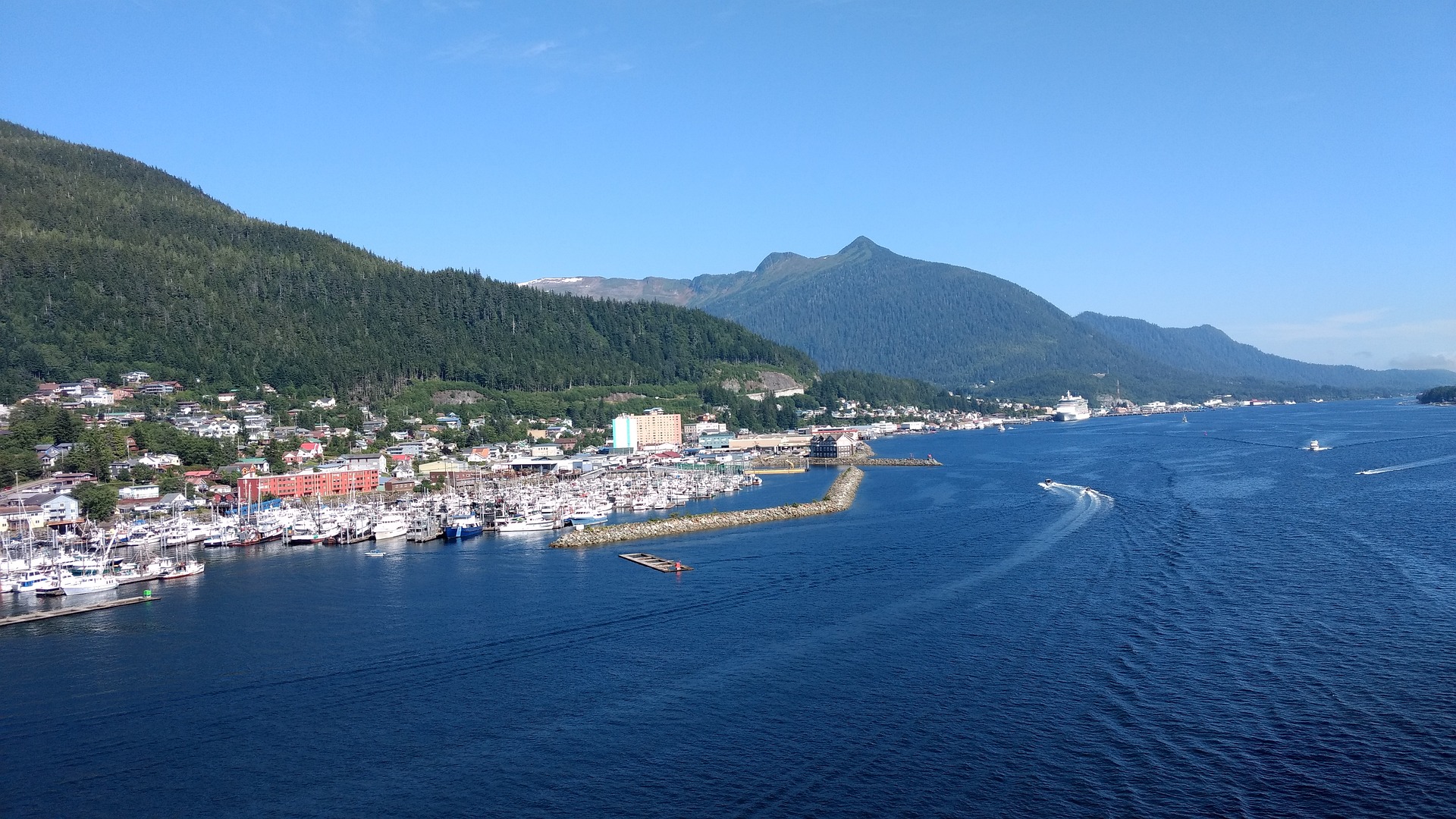
Ketchikan, Alaska, United States
Ketchikan is famous for its colorful totem poles, rainy skies, steep–as–San Francisco streets, and lush island setting. Some 13,500 people call the town home, and, in the summer, cruise ships crowd the shoreline, floatplanes depart noisily for Misty Fiords National Monument, and salmon-laden commercial fishing boats motor through Tongass Narrows. In the last decade Ketchikan’s rowdy, blue-collar heritage of logging and fishing has been softened by the loss of many timber-industry jobs and the dramatic rise of cruise-ship tourism. With some effort, though, visitors can still glimpse the rugged frontier spirit that once permeated this hardscrabble cannery town. Art lovers should make a beeline for Ketchikan: the arts community here is very active. Travelers in search of the perfect piece of Alaska art will find an incredible range of pieces to choose from.The town is at the foot of 3,000-foot Deer Mountain, near the southeastern corner of Revillagigedo (locals shorten it to Revilla) Island. Prior to the arrival of white miners and fishermen in 1885, the Tlingit used the site at the mouth of Ketchikan Creek as a summer fish camp. Gold discoveries just before the turn of the 20th century brought more immigrants, and valuable timber and commercial fishing resources spurred new industries. By the 1930s the town bragged that it was the “salmon-canning capital of the world.” You will still find some of Southeast’s best salmon fishing around here. Ketchikan is the first bite of Alaska that many travelers taste. Despite its imposing backdrop, hillside homes, and many staircases, the town is relatively easy to walk through. Favorite downtown stops include the Spruce Mill Development shops and Creek Street. A bit farther away you’ll find the Totem Heritage Center. Out of town (but included on most bus tours) are two longtime favorites: Totem Bight State Historical Park to the north and Saxman Totem Park to the south.

Hoonah, United States
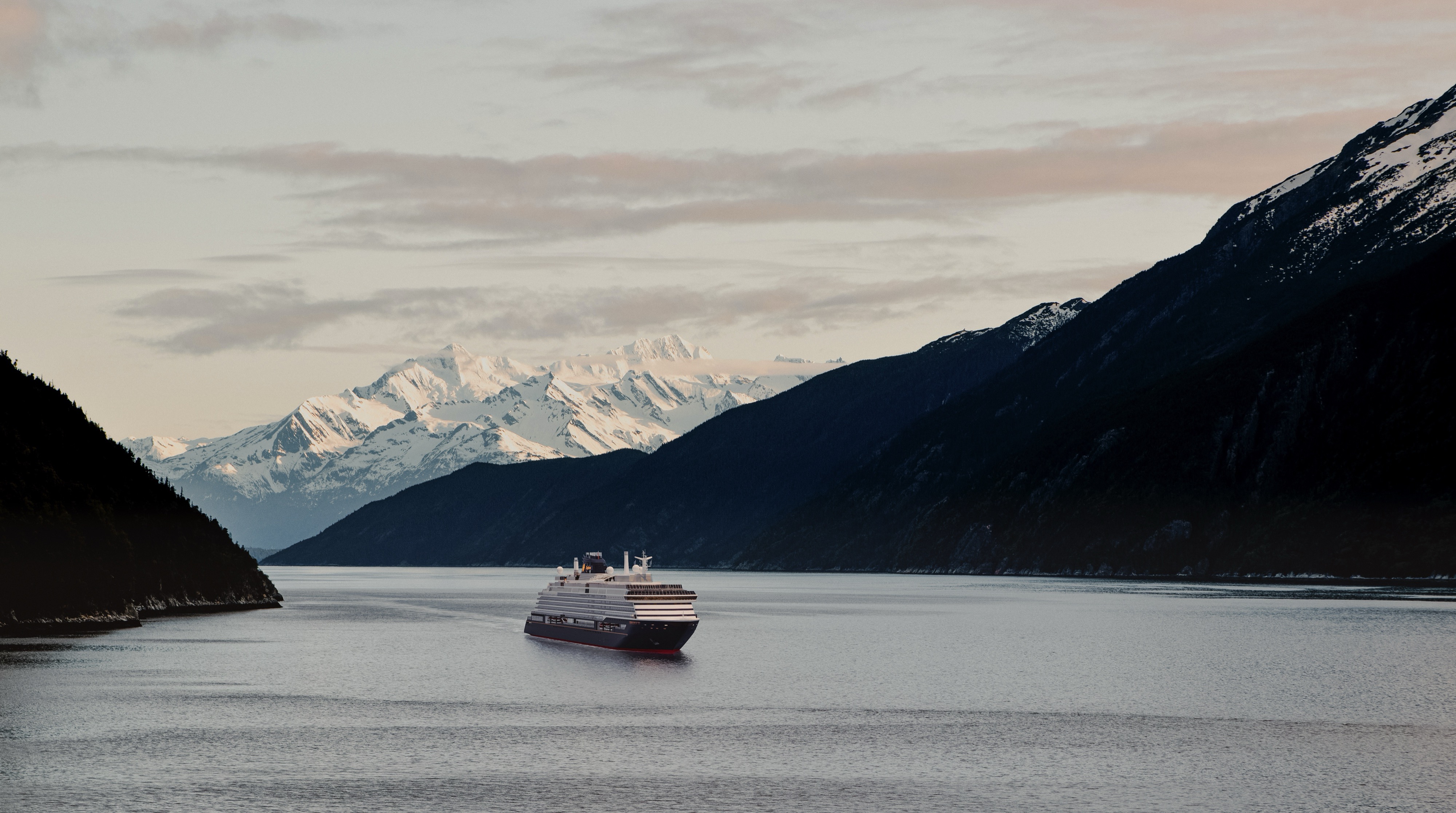
Cruising by Hubbard Glacier, Alaska
Haines, Alaska, United States
Unlike most cities of Southeast Alaska, Haines can be reached by road. With a population of 2,200, Haines lies in the upper northern reaches of the Inside Passage and is an important access point to the Yukon Territory and Interior Alaska. While cruising into Haines, see the Lynn Canal, the longest and deepest fjord in North America. Once in town, mountains seem to surround you on all sides while the jagged cathedral peaks of the Chilkat Mountains loom over Fort Seward. Haines has two distinct personalities. On the north side of the Haines Highway is the section of Haines that developed around the Presbyterian mission. After its missionary beginnings, it served as the trailhead for the Jack Dalton Trail into the Yukon during the 1897 gold rush to the Klondike. South of the highway, the town resembles a military post, which is exactly what it was for nearly half a century. In 1903 the U.S. Army established Fort William Henry Seward at Portage Cove just south of town. The post (renamed Chilkoot Barracks in 1922) was the only military base in the territory until World War II. In 1939, the army built the Alaska Highway and the Haines Highway to connect Alaska with the other states. Today, the community of Haines is recognized for the Native American dance and culture center at Fort Seward as well as for its superb fishing, camping and outdoor recreation.

Juneau, Alaska, United States
Juneau, Alaska’s capital and third-largest city, is on the North American mainland but can’t be reached by road. Bounded by steep mountains and water, the city’s geographic isolation and compact size make it much more akin to an island community such as Sitka than to other Alaskan urban centers, such as Fairbanks or Anchorage. Juneau is full of contrasts. Its dramatic hillside location and historic downtown buildings provide a frontier feeling, but the city’s cosmopolitan nature comes through in fine museums, noteworthy restaurants, and a literate and outdoorsy populace. The finest of the museums, the Alaska State Museum, is scheduled to reopen in May 2016 on its old site as the expanded Alaska State Library, Archives, and Museum (SLAM) following several years of planning and exhibit research. Another new facility, the Walter Soboleff Center, offers visitors a chance to learn about the indigenous cultures of Southeast Alaska–-Tlingit, Haida, and Tsimshian. Other highlights include the Mt. Roberts Tramway, plenty of densely forested wilderness areas, quiet bays for sea kayaking, and even a famous drive-up glacier, Mendenhall Glacier. For goings-on, pick up the Juneau Empire (www.juneauempire.com), which keeps tabs on state politics, business, sports, and local news.

Endicott Arm, Alaska, United States
Endicott Arm is a long fjord branching off Stephen’s Passage, the major inner passage heading southeast from Juneau. The easternmost tip of Endicott Arm nearly reaches the Canadian border. Like all the fords in this region, it was carved by glaciers during the last Ice Age which ended about 11,000 years ago. One either side of the fjord the steep, nearly vertical walls, rise to a height of about 370 meters or 1,200 feet. Sitka spruce and western hemlock trees manage to cling onto the rock faces, adding to the breath-taking beauty of the landscape.

Wrangell, Alaska, United States
A small, unassuming timber and fishing community, Wrangel sits on the northern tip of Wrangel Island, near the mouth of the fast-flowing Stikine River—North America’s largest undammed river. The Stikine plays a large role in the life of many Wrangel residents, including those who grew up homesteading on the islands that pepper the area. Trips on the river with local guides are highly recommended as they provide, basically, an insider’s guide to the Stikine and a very Alaskan way of life. Like much of Southeast, Wrangel has suffered in recent years from a declining resource-based economy. But locals are working to build tourism in the town. Bearfest, which started in 2010, celebrates Wrangel’s proximity to Anan Creek, where you can get a close-up view of both brown and black bears. Wrangel has flown three different national flags in its time. Russia established Redoubt St. Dionysius here in 1834. Five years later Great Britain’s Hudson’s Bay Company leased the southern Alaska coastline, renaming the settlement Ft. Stikine. It was rechristened Wrangel when the Americans took over in 1867; the name came from Baron Ferdinand Petrovich von Wrangel, governor of the Russian-American Company. The rough-around-the-edges town is off the track of the larger cruise ships, so it does not get the same seasonal traffic that Ketchikan and Juneau do. Hence, it is nearly devoid of the souvenir shops that dominate so many other nearby downtown areas. But the gift shops and art galleries that are here do sell locally created work, and the town is very welcoming to visitors; independent travelers would do well to add a stop in Wrangel during their Southeast wanderings.
Prince Rupert, British Columbia, Canada
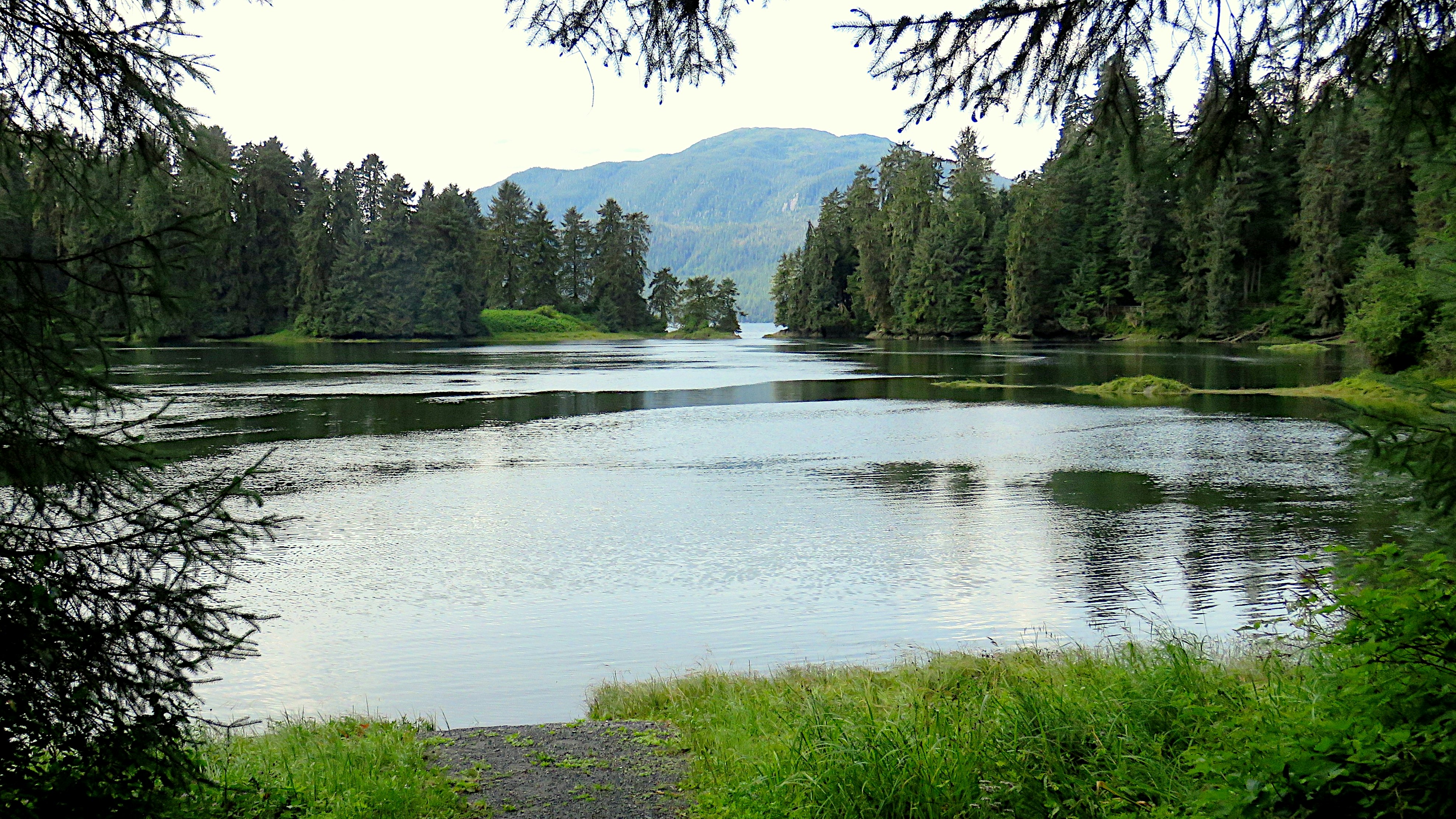
Just 40 mi (66 km) south of the Alaskan border, Prince Rupert is the largest community on British Columbia’s north coast. Set on Kaien Island at the mouth of the Skeena River and surrounded by deep green fjords and coastal rain forest, Prince Rupert is rich in the culture of the Tsimshian, people who have been in the area for thousands of years. As the western terminus of Canada’s second transcontinental railroad and blessed with a deep natural harbor, Prince Rupert was, at the time of its incorporation in 1910, poised to rival Vancouver as a center for trans-Pacific trade. This didn’t happen, partly because the main visionary behind the scheme, Grand Trunk Pacific Railroad president Charles Hays, went down with the Titanic on his way back from a financing trip to England. Prince Rupert turned instead to fishing and forestry. A port of call for both BC and Alaska ferries, but relatively new to cruise ships, this community of 15,000 retains a laid-back, small-town air.
At Sea
Vancouver, British Columbia, Canada
Vancouver is a delicious juxtaposition of urban sophistication and on-your-doorstep wilderness adventure. The mountains and seascape make the city an outdoor playground for hiking, skiing, kayaking, cycling, and sailing—and so much more—while the cuisine and arts scenes are equally diverse, reflecting the makeup of Vancouver’s ethnic (predominantly Asian) mosaic. Vancouver is consistently ranked as one of the world’s most livable cities, and it’s easy for visitors to see why. It’s beautiful, it’s outdoorsy, and there’s a laidback West Coast vibe. On the one hand, there’s easy access to a variety of outdoor activities, a fabulous variety of beaches, and amazing parks. At the same time, the city has a multicultural vitality and cosmopolitan flair. The attraction is as much in the range of food choices—the fresh seafood and local produce are some of North America’s best—as it is in the museums, shopping, and nightlife.Vancouver’s landscaping also adds to the city’s walking appeal. In spring, flowerbeds spill over with tulips and daffodils while sea breezes scatter scented cherry blossoms throughout Downtown; in summer office workers take to the beaches, parks, and urban courtyards for picnic lunches and laptop meetings. More than 8 million visitors each year come to Vancouver, Canada’s third-largest metropolitan area. Because of its peninsula location, traffic flow is a contentious issue. Thankfully, Vancouver is wonderfully walkable, especially in the downtown core. The North Shore is a scoot across the harbor, and the rapid-transit system to Richmond and the airport means that staying in the more affordable ’burbs doesn’t have to be synonymous with sacrificing convenience. The mild climate, exquisite natural scenery, and relaxed outdoor lifestyle keep attracting residents, and the number of visitors is increasing for the same reasons. People often get their first glimpse of Vancouver when catching an Alaskan cruise, and many return at some point to spend more time here.
Cabin Options
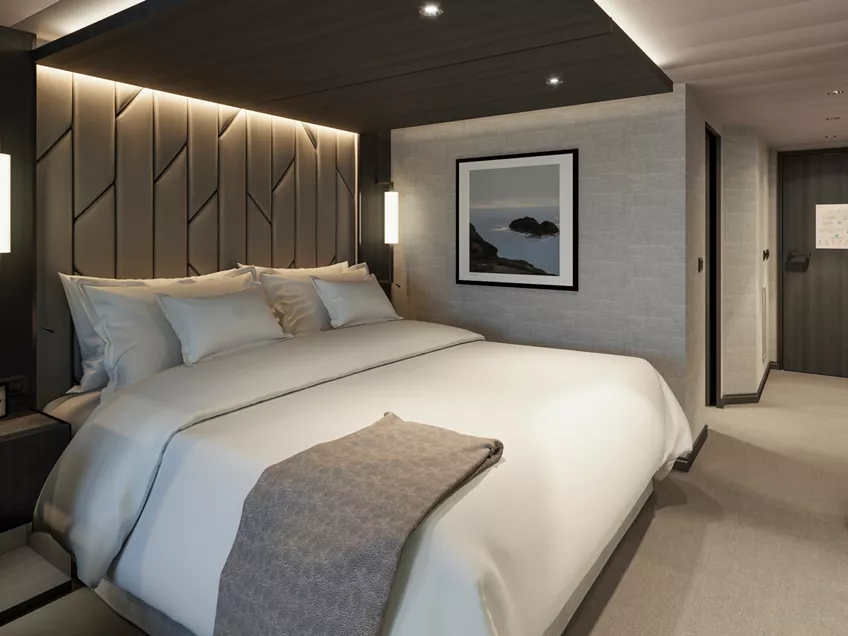
Ocean Terrace Suite
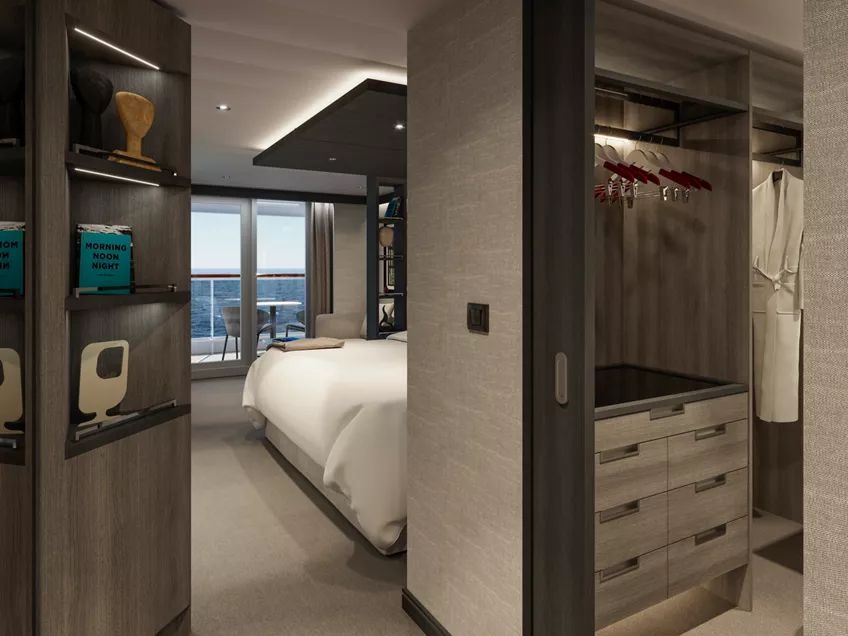
Ocean Grand Terrace Suite
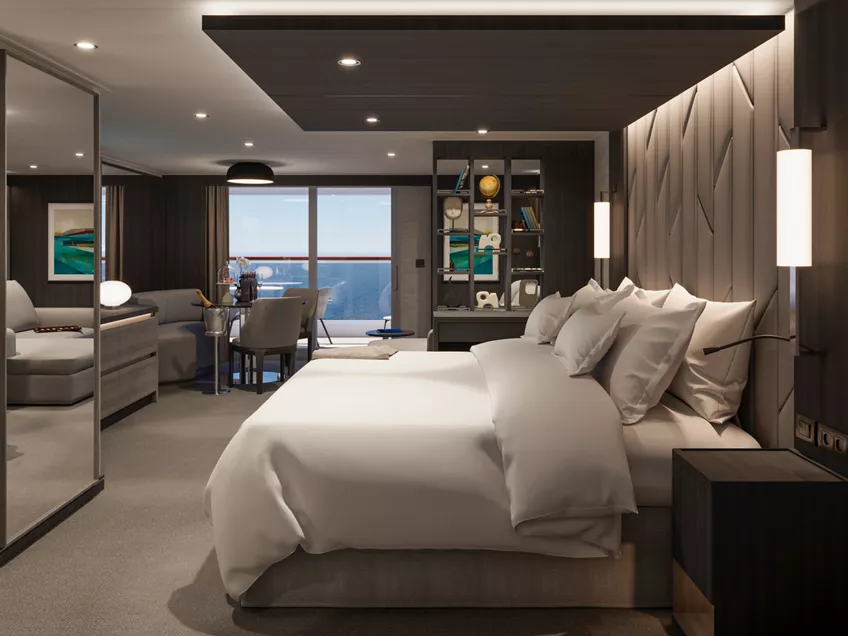
Penthouse
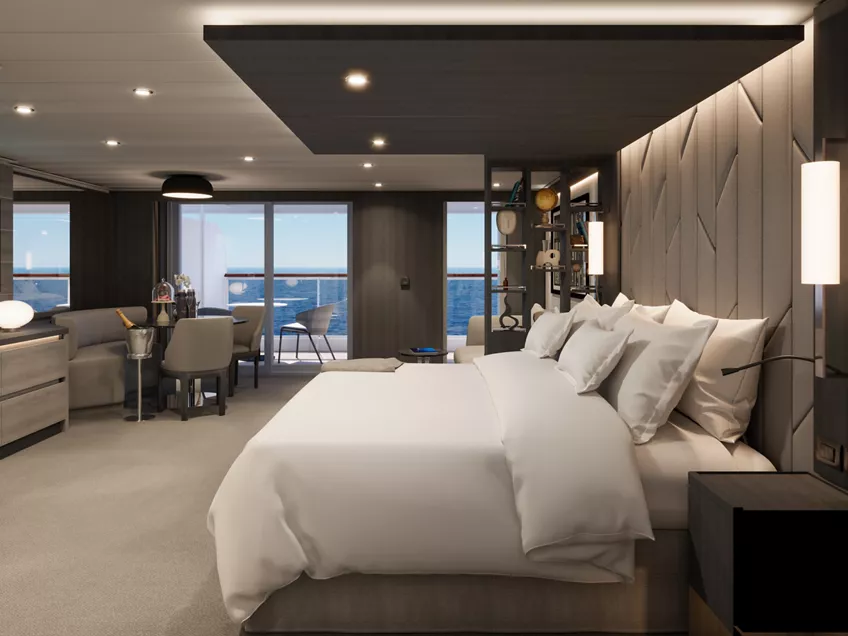
Deluxe Penthouse
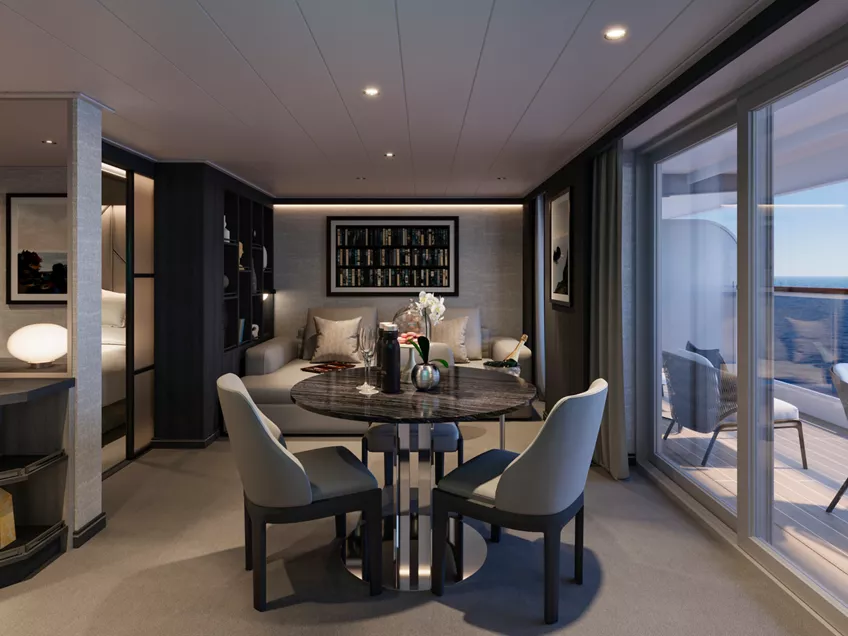
Premier Penthouse
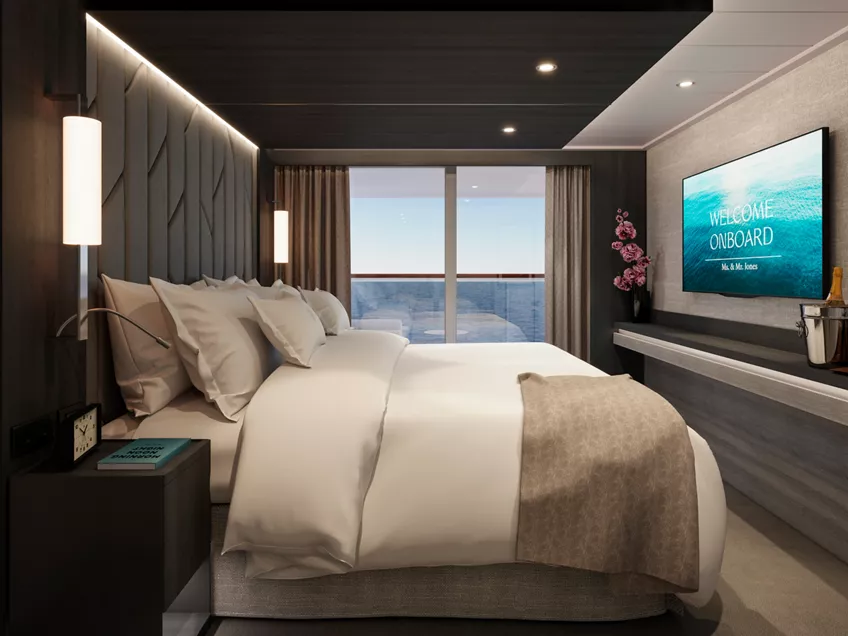
Grand Penthouse
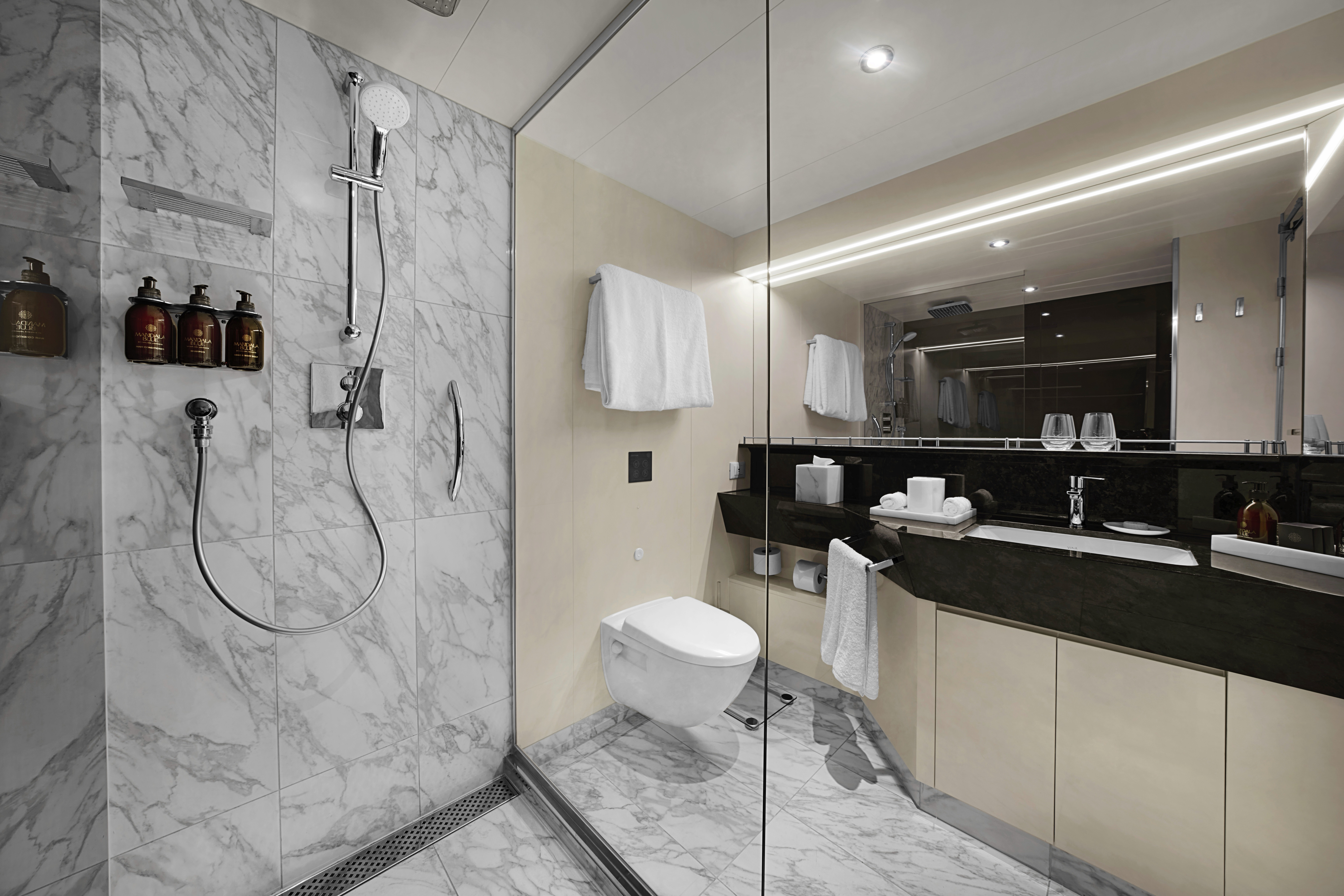
Cove Residence
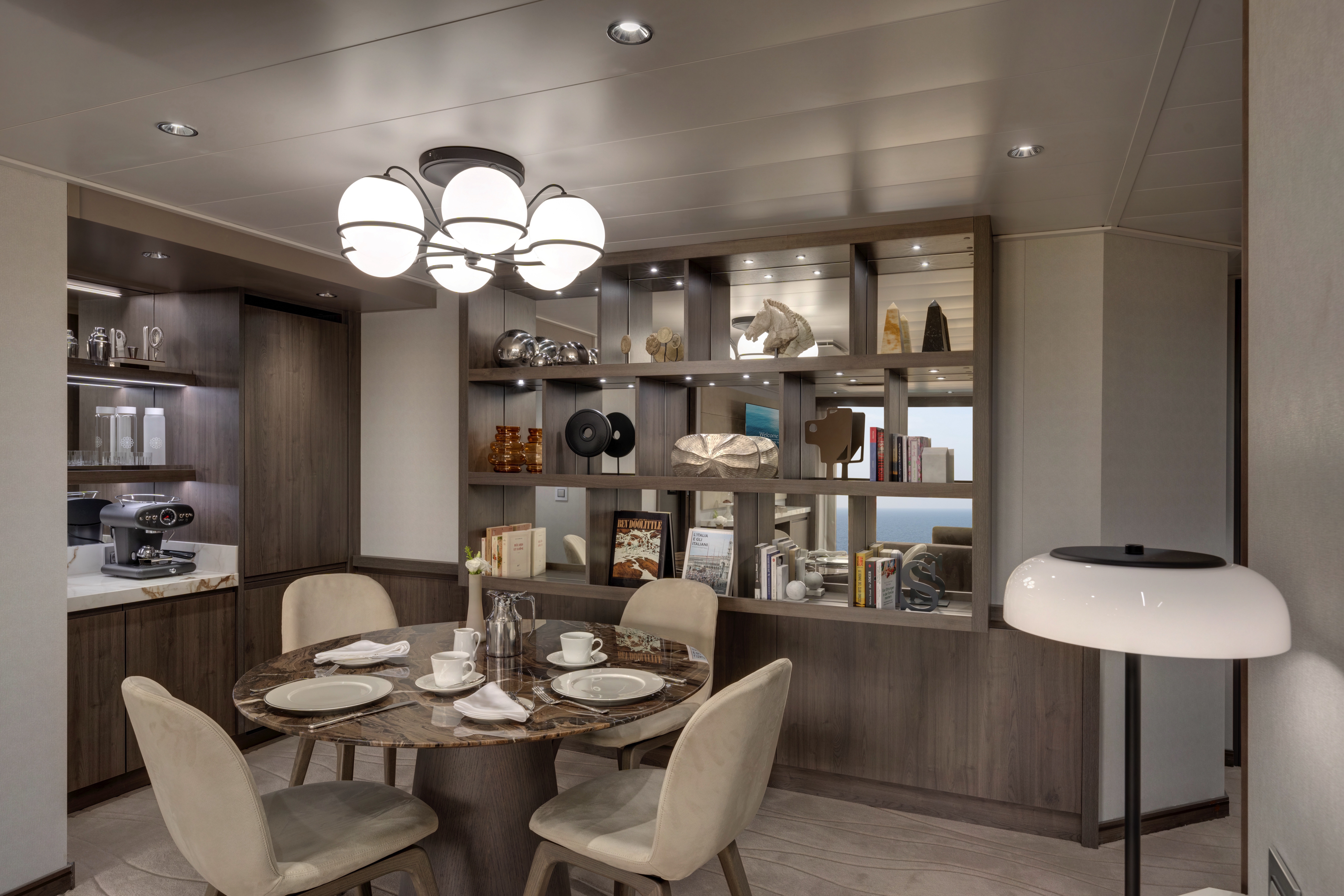
Cove Residence with Whirlpool
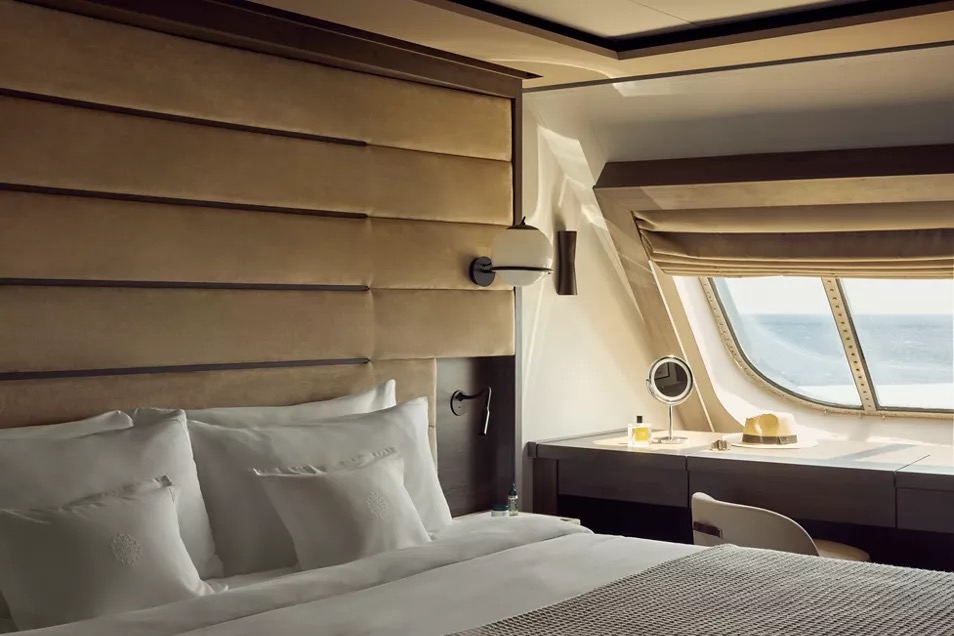
Retreat Residence
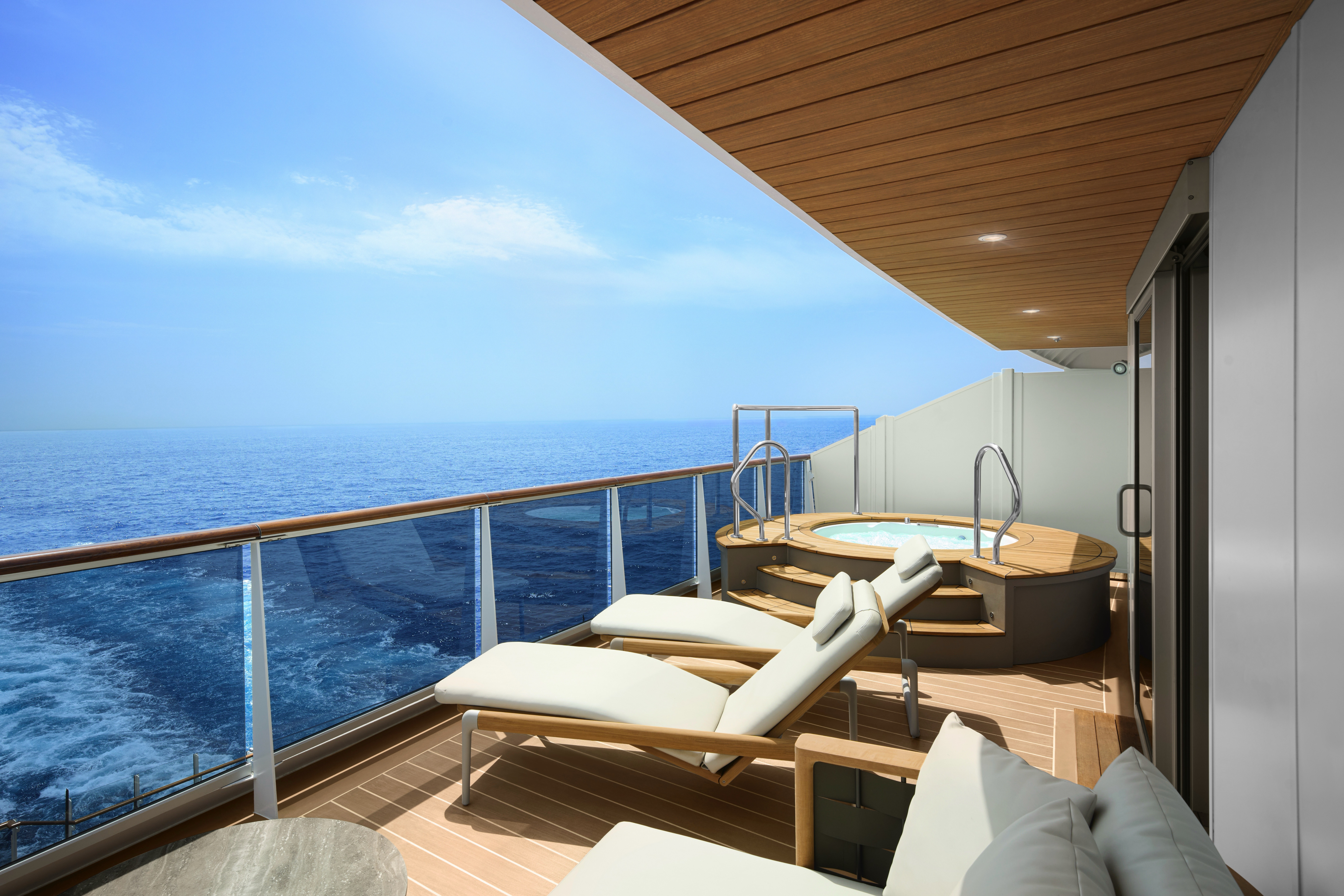
Serenity Residence
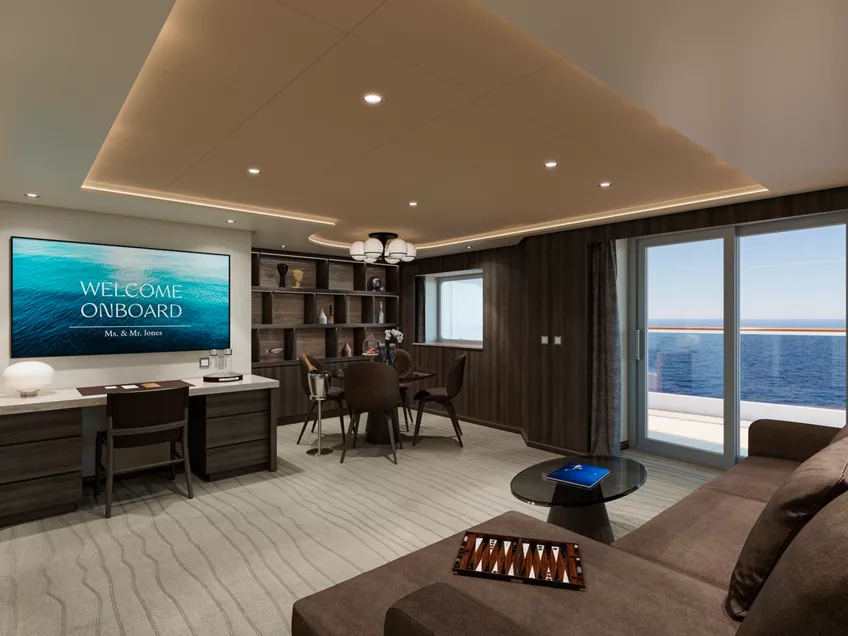
Cocoon Residence
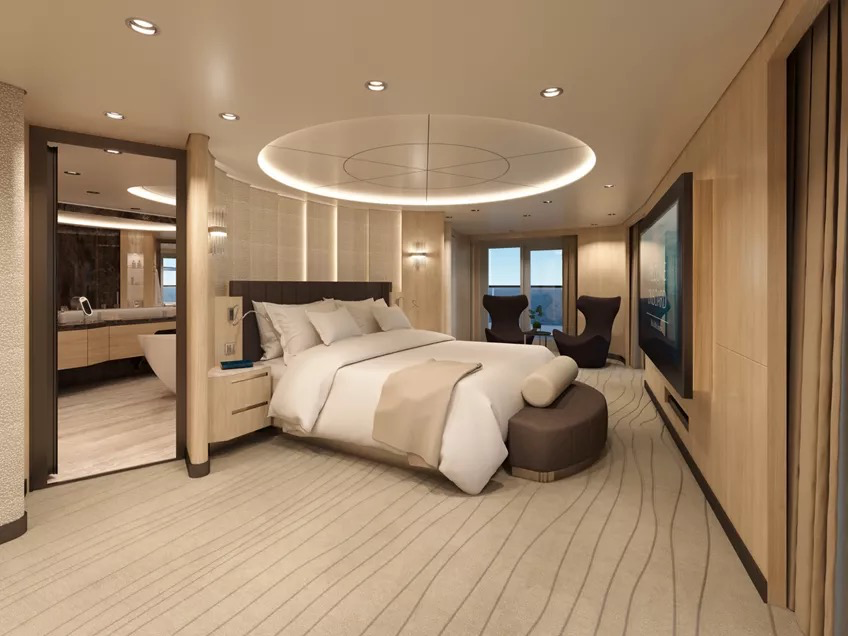
Owner's Residence
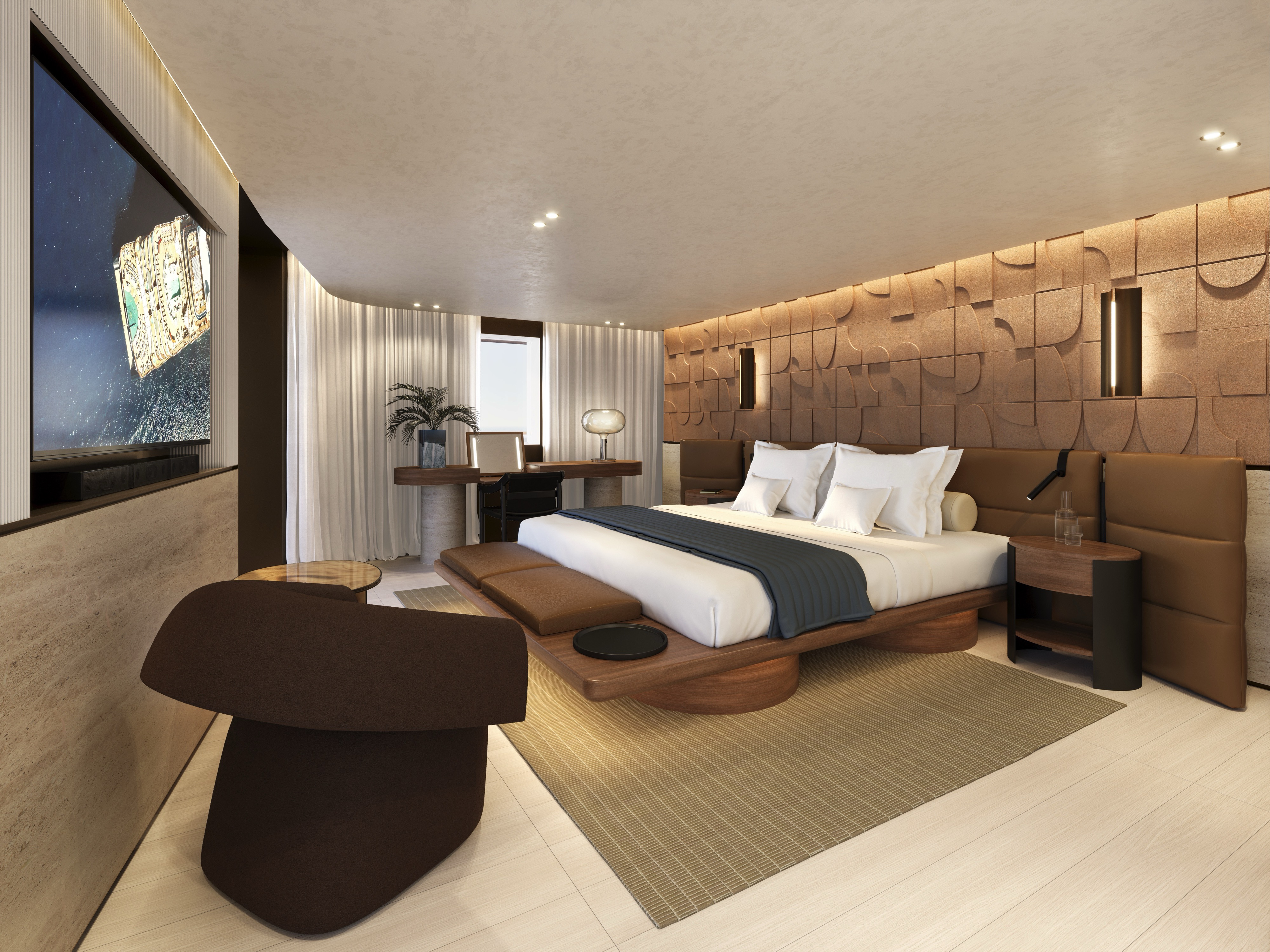
Owner's Residence by Patricia Urquiola
Ship Facilities
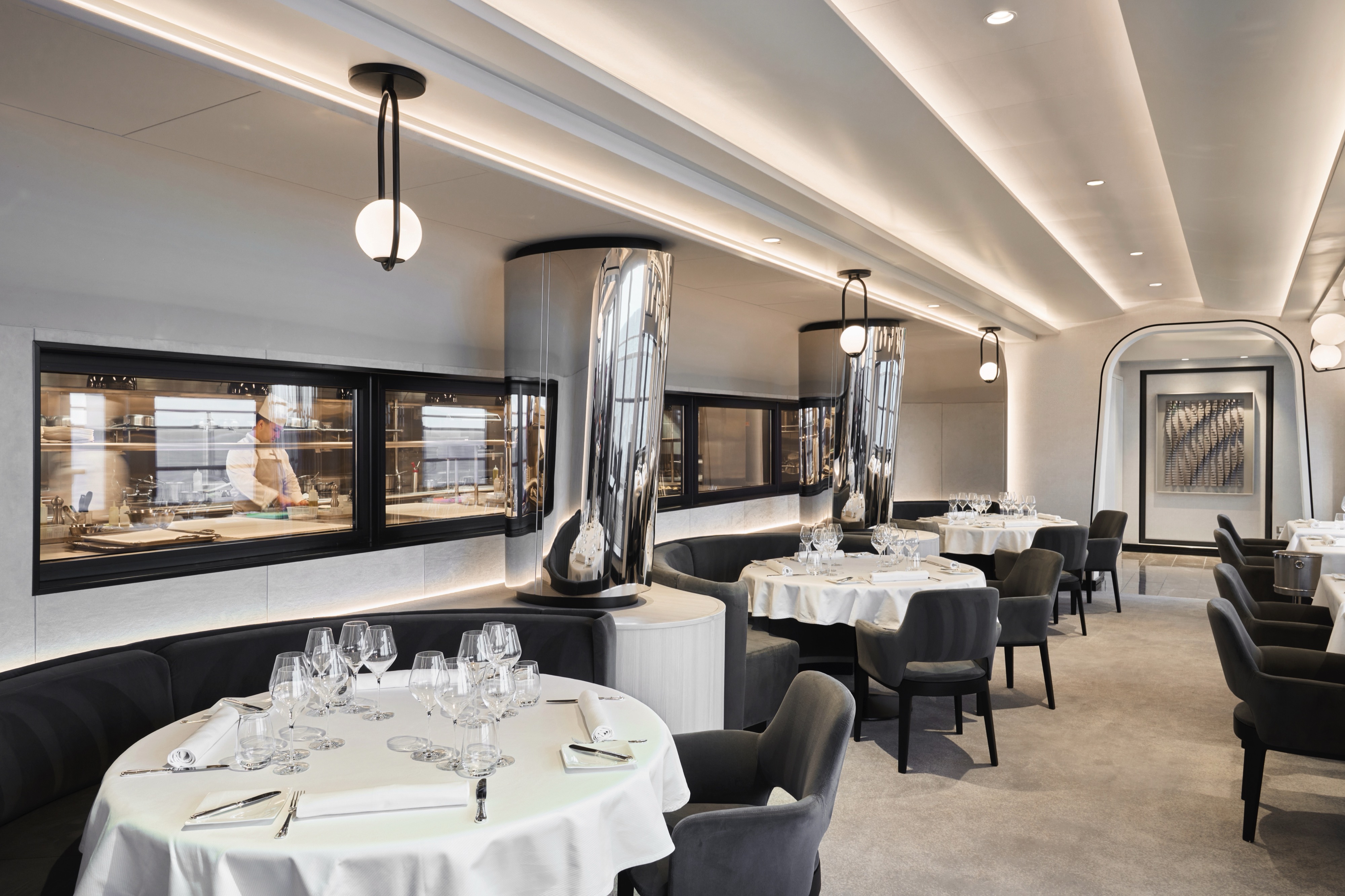
Anthology
A Gastronomic Discovery
Taking guests on a unique culinary journey through Italy.
Refined Italian Cuisine
As our signature fine-dining experience, Anthology elevates Italian cuisine, offering an unparalleled gastronomic adventure.
On the menu, created by our esteemed Head of Culinary, Franck Garanger, each dish is a celebration of Italy’s finest regional ingredients and flavours.
Contemporary, Refined Elegance
With the opportunity to dine outdoors, Anthology offers an intimate yet elevated dining atmosphere with flawless, attentive service.
- Indoor seating: 48
- Outdoor seating: 22
- Open for dinner
- Reservations recommended
- An Exclusive Experience Fee Applies
- Located on Deck 5
Sakura
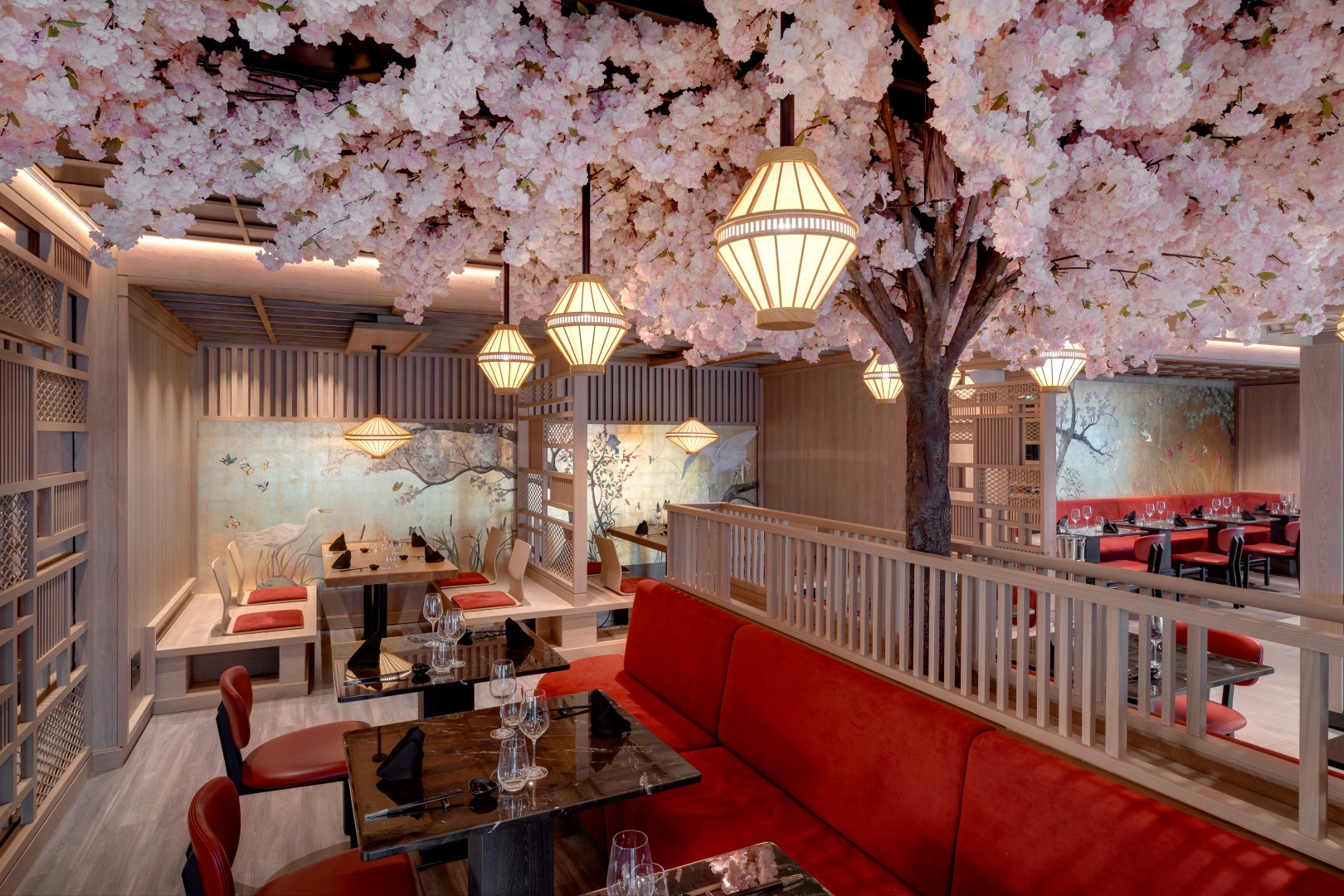
A vibrant Pan-Asian fine-dining experience
Named after Japan’s iconic cherry blossom, Sakura blends contemporary elegance with the vibrant spirit of Asia’s culinary capitals. With sweeping ocean views, guests enjoy Mediterranean Bluefin tuna, wagyu tataki, and freshly prepared sushi — paired with curated sakes, shōchūs, and Asian beers. A modern expression of immersive Pan-Asian cuisine.
Culinary highlights
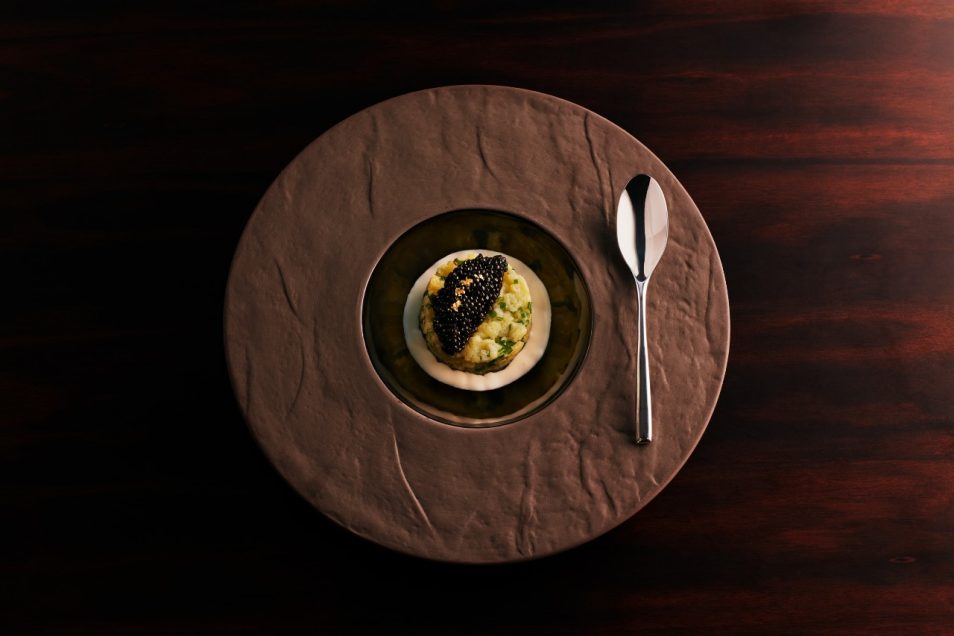
Wagyu beef tataki
Our sustainably sourced prime grade five Japanese wagyu beef is delicately torched by our chefs: an authentic method of cooking that ensures that the cut’s best qualities are preserved.
Makrut lime pavlova
A fusion of east and west, this unique interpretation of pavlova is a perfect representation of the passionate, creative expertise and multicultural diversity of our talented pastry team .
Kale salad
Another example of our chefs’ ingenuity, a humble kale salad is transformed into culinary art for our guests to enjoy. This superfood salad represents a fusion of clean living with the flavours of Asia.
Intimate and Welcoming Environment
The ancient tea rooms of Kyoto provide the inspiration for Sakura’s aesthetic, where dark wood frames lead your eye to the ceiling, adorned with a blossom tree canopy which envelops diners in a warm atmosphere of festoon lights.
- Indoor seating: 92
- Outdoor seating: 26
- Open for lunch and dinner
- Reservations recommended
- The Sushi Bar is open-seating on a first come first served basis.
- Located on Deck 5
Marble & Co. Grill
The Art of Marbled Excellence
Marble & Co. Grill is a vibrant celebration of European steakhouse tradition, elevated by French-inspired finesse. Its name reflects delicate marbling – the hallmark of the world’s finest cuts.
Culinary highlights
Grilled prime rib
From a local producer in the Deux Sévres region of the lush Loire Valleé, it’s clear why the famous Jersiaise breed, renowned for its sensational flavour and intense marbling, is one of the most sought-after cuts of prime rib
European Steakhouse, Redefined
The experience at Marble & Co. Grill is reflected through the modern, understated yet sophisticated design with soft lighting and relaxed, attentive service.
- Indoor seating: 80
- Outdoor seating: 10
- Open for dinner
- Reservations recommended
- Located on Deck 5
Med Yacht Club
A celebration of the Mediterranean coastal living
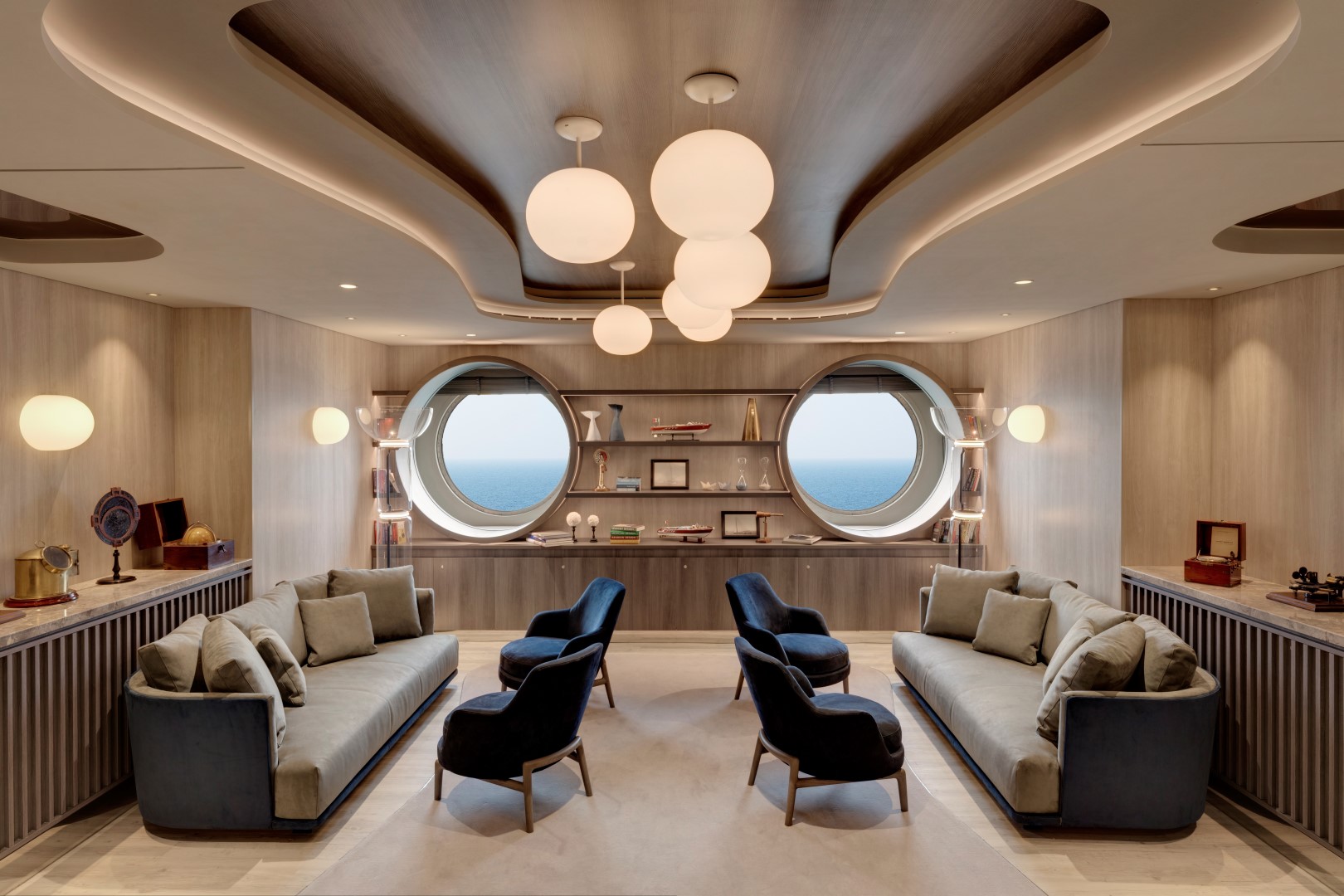
Inspired by the region’s sun-drenched coastlines, Med Yacht Club captures the easy rhythm and convivial spirit of the Mediterranean. The menu brings together the flavours of Italy, Spain, Greece, France, and North Africa — a tapestry of coastal influences expressed through sharing plates created with authenticity and passion.
Culinary highlights
Sweet Caprese
The finest cherry tomatoes and strawberries create an intriguing base, upon which our burrata sits adorned with even more sweet tomatoes and strawberries with a drizzle of pesto from Sicilian Bronte pistachios.
The Essence of the Mediterranean
Effortlessly refined in its design, space and light creates a convivial atmosphere, with bright sunshine streaming through large portholes and Med-influenced music transporting guests on a culinary journey inspired by the sea.
- Indoor seating: 136 (34 at the bar)
- Open for lunch and dinner
- Located on Deck 4
Emporium Marketplace
Effortless all-day dining
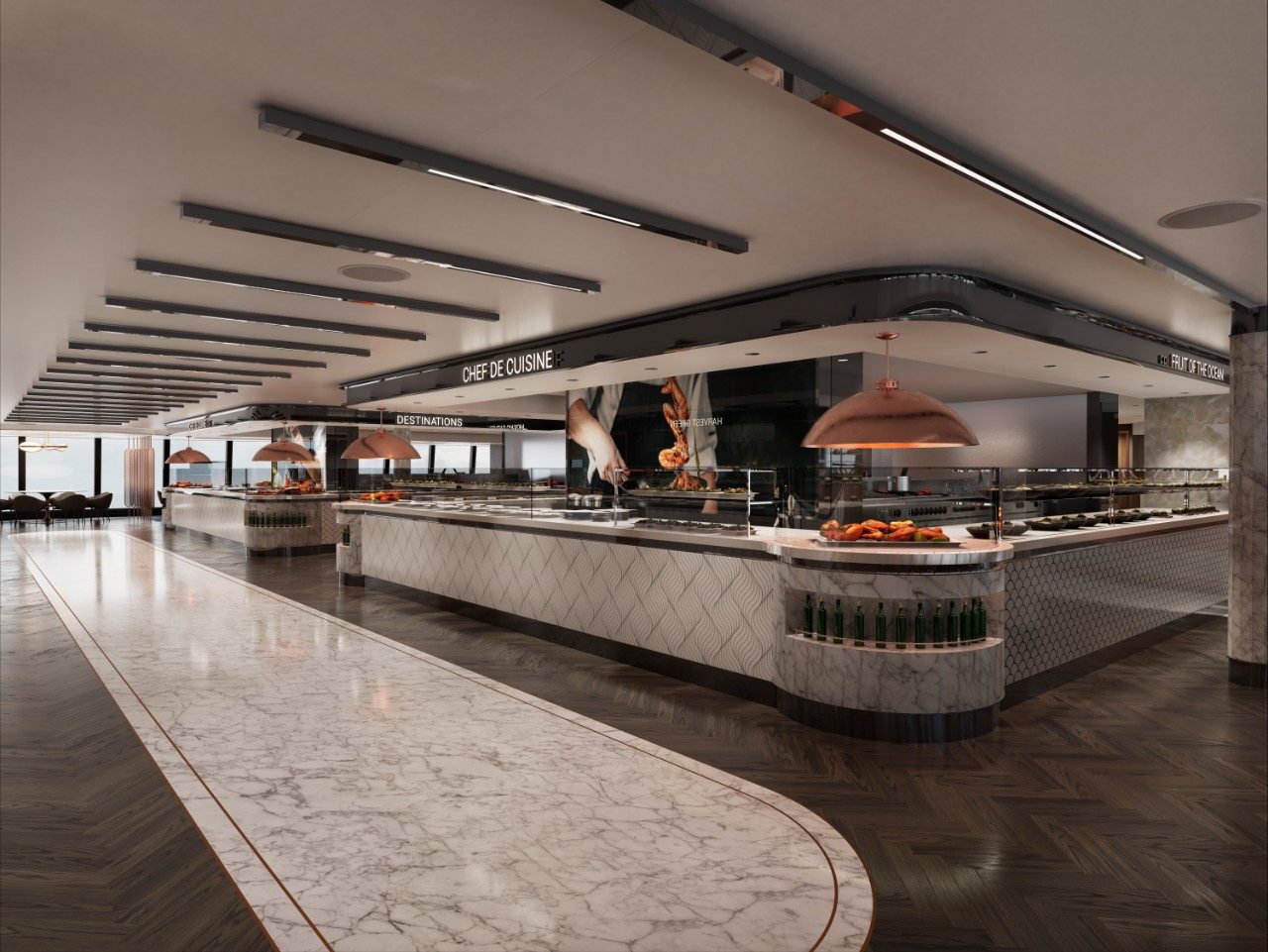
Named after the Greek word emporion (‘place of exchange’), Emporium Marketplace celebrates global cuisine and the joy of discovery through food. Guests can explore a remarkable array of authentic flavours, from destination-inspired dishes to handmade pasta and wood-fired pizza.
Open kitchens buzz with quiet energy, while artisanal charcuterie, fromagerie and pâtisserie stations bring a refined touch. A chilled glass of Champagne partners perfectly with fresh crudo, as the sun sets on the horizon.
Culinary highlights
Handmade tortelloni
Our tortelloni are made onboard from scratch every day in the authentic Italian way. Carefully selected flour is used to make dough that has the correct degree of elasticity.
Plant based chia yoghurt
Our chia yoghurt is daily made from homemade cashew milk, creating a fusion of delicious creamy flavours for guests to enjoy each morning.
Light, Space, Flavour
Bathed in natural light, several separate cooking stations evolve throughout the day with white marble and minimalist design accents, allowing the freshest ingredients to take centre stage.
- Indoor seating: 271
- Outdoor seating: 70
- Open for breakfast, lunch and dinner
- Located on Deck 11
Fil Rouge
French-inspired international cuisine
Fil Rouge is an elegant celebration of global cuisine, seen through the lens of French artistry. Its name — ‘the red thread’ — speaks to the connections woven between cultures, flavours, and stories.
In a serene, though contemporary setting, time slows. The menu blends international inspiration with refined French technique, offering a dining experience that is both authentic and imaginative.
Evenings unfold with quiet indulgence – signature soufflés, a curated wine list, and the charm of the iconic dessert trolley. And in the morning, a hidden gem awaits: an exquisite breakfast, served with elegance and intention.
Culinary highlights
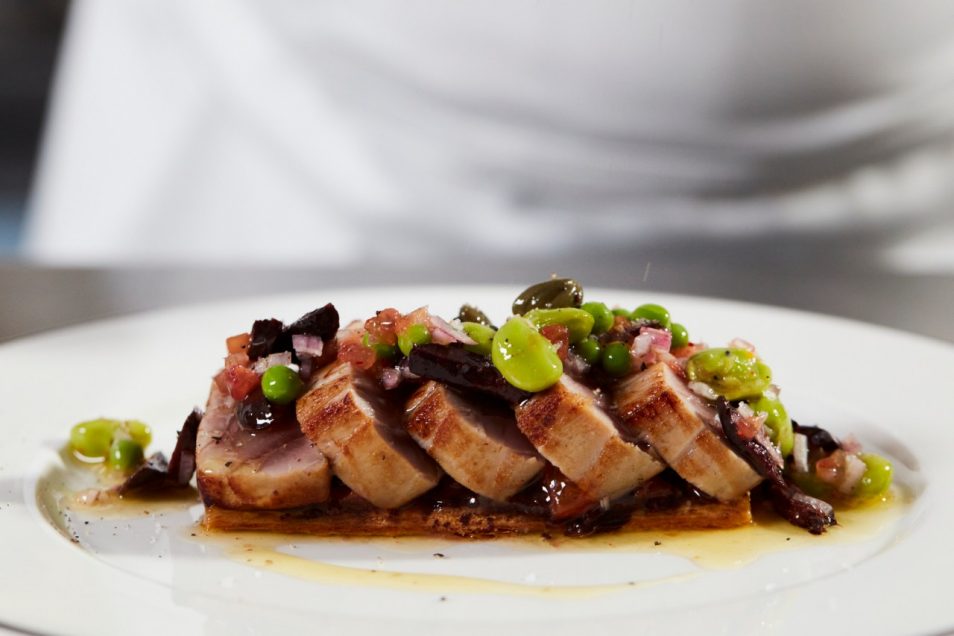
Tuna Tataki
Sustainably raised and caught in the open Mediterranean Sea close to the Cartagena Bay, the Mediterranean Bluefin tuna sourced by our chefs is some of the best grade to be found anywhere in the world.
A Refined, Timeless dining experience
Fil Rouge embodies the essence of understated sophistication. A visual and culinary interpretation of elegance, its refined geometry — inspired by interlocking hexagons — symbolises balance and harmony.
- Indoor seating: 222
- Open for breakfast and dinner
- Located on Deck 4
Chef's Kitchen
An Interactive Culinary Experience
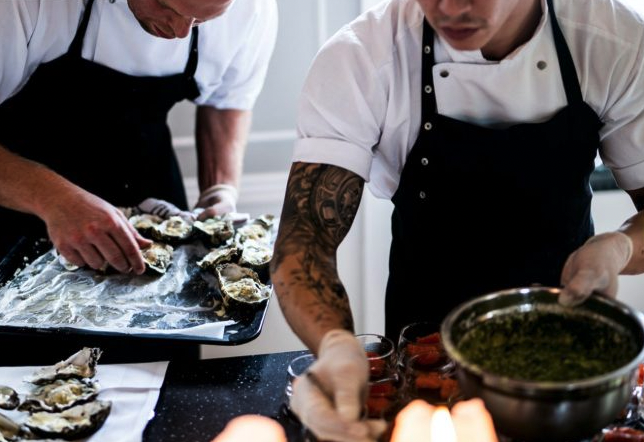
Guided by our team of world-class chefs, immersive and interactive cooking classes invite guests of all skill levels to embrace the art of creating exquisite dishes.
More than a cooking class, it’s a social and sensory celebration – where learning is joyful, conversation flows freely, and food is savoured in good company. Each experience culminates in the nearby private dining room, where the class – guests and chefs alike – gathers to enjoy the dishes they’ve prepared together.
Ocean-front private kitchen
The Chef’s Kitchen offers a range of enriching, hands-on culinary experience set within an intimate, ocean-front private kitchen.
- Indoor seating: 12
- An exclusive experience fee applies
- Available for reservation only onboard
Shore Club on 11 at The Conservatory
A relaxed yet refined poolside setting where sun, warmth, and flavour come together. Freshly prepared favourites and vibrant bites influenced by sun-soaked coastal traditions are served in a laid-back, light-filled space perfect for unhurried moments and lingering afternoons. Inspired by carefree summer days by the sea, the coastal vistas, the glow of the sun, and the simple pleasures of elevated poolside dining.

The Chef’s Table by Explora Journeys
An exclusive one-of-a-kind experience where dining becomes a dialogue between taste and intention – intimate, expressive, and entirely your own. Reserved for those who seek privacy, personalisation, and the pleasure of curation, this experience invites guests to collaborate closely with our chefs to craft a fully bespoke menu, transforming preferences, stories, and inspirations into a one-of-a-kind culinary journey to share with the people you love. Whether hosting a meaningful celebration or a a private evening with loved ones, the experience is personally prepared and presented by our chefs – with every dish created with care and presence.

In-Suite Dining
Refined dining in the comfort of your suite or private terrace
Our guests can enjoy an array of cuisines at any time, day or night, in the comfort of their suite or private terrace. Available 24 hours, the menu offers guests a taste of each of our unique dining destinations.
- Available 24 hours
Destination Experiences
Inspiring authentic discovery across culture, history, and cuisine.
Intimate Explorations
Intimate, smaller groups with like-minded guests, for authentic exploration – with opportunities to understand the culture and connect with locals.
Explore with Peace of Mind
Seamless experiences with everything taken care of, no hidden fees, fully insured partners, transportation arrangements and flexibility in case of change of plans.
Authentic Immersions
Enriching opportunities to explore behind-the-scenes in unique locations. Crafted experiences curated in collaboration with expert partners and ambassadors.
Destination Experiences Categories
Private Arrangements
We are pleased to curate your requests for customised arrangements that can be as off-the-beaten-path or utterly indulgent as you wish.
Whether yours is an intimate group or a larger gathering of family and friends, we can help you adapt a featured destination experience or tailor an arrangement that delivers exactly what and where you prefer.
Destination Essentials
Our Destination Essentials offer immersive experiences, with hidden wonders and little surprises.
Your experiences will feature:
- Must-do experiences
- Discovering local highlights through a different lens
- Expert guides and hosts to enhance your discovery
- Culinary tastings through local flavours and traditions
- Full immersions into cultures and customs
- Close-up encounters with the natural world
Curated Explorations
Our Curated Explorations offer unmatched experiences and moments that are off-limits to most.
Your experiences will feature:
- Small, intimate groups
- Tailored, boutique adventures
- Behind-the-scenes experiences
- Guided by locals for more enriching discovery
- Deeper insights into cultures and traditions
- Premium culinary and beverage experiences
- VIP access to landmark sites and special events
Overland Immersions
Our Overland Immersions are all-inclusive and available to small groups during your Journey.
What to expect:
- Luxury transportation such as private jet, helicopters, vehicles, boats or other means
- Accommodation in 5-star or boutique hotels
- Culinary experiences, including all meals, beverages, and selected spirits
- VIP access to landmark sites and special events
- Exclusive evening experiences
- Meticulously vetted hosts to coordinate all logistics
- Luxury transfers and luggage handling
Entertainment Experiences
Each moment invites you to embrace your own Ocean State of Mind
World-Class Performances
Immerse yourself in curated, world-class performances by our distinguished roster of guest artistes, from Broadway and West End icons to Steinway Artistes. Whether masterful expressions of music or authentic local performances, these acts will capture your imagination.
Curated Moments
Thoughtfully curated gatherings that reflect the spirit of Explora Journeys, bringing guests and hosts together through captivating performances, cultural celebrations, and unique moments that create lasting memories.
Engaging Sessions
Numerous daytime events and activities that include programmed, organised activities like sports and games, plus spontaneous surprise activations such as a pool game or dance classes.
Clubs
Explora Journeys presents a thoughtfully curated collection of clubs, offering guests meaningful opportunities to connect with others who share similar interests, values, and lifestyles. Whether travelling solo, embracing diversity, or seeking a mindful, alcohol-free space, each gathering fosters connection and a genuine sense of community at sea.
Prism
Prism Club proudly celebrates diversity —inviting LGBTQIA+ guests and allies to come together through inclusive, uplifting events and gatherings.
Club Soda
Club Soda creatively supports those embracing an alcohol-free lifestyle, with vibrant, zero-proof experiences that reimagine the art of socialising in refreshingly sophisticated ways.
Luminary Enrichment
A curated series of onboard sessions, workshops, and experiences led by our Luminaries, passionate experts in their fields.
Destinations
Experts who bring destinations to life with regional history, culture, nature, and geography.
Special Interest
With insights into their chosen field, our Special Interest Luminaries will uncover literature, wellness, design, science, entertainment, or athletics, igniting curiosity and broadening your perspective.
Natural World
Draw closer to the beauty and complexity of nature, wildlife, and the environment. Dedicated to preserving our most vital ecosystems, our Natural World Luminaries shares knowledge and a sense of wonder.
Creative Arts
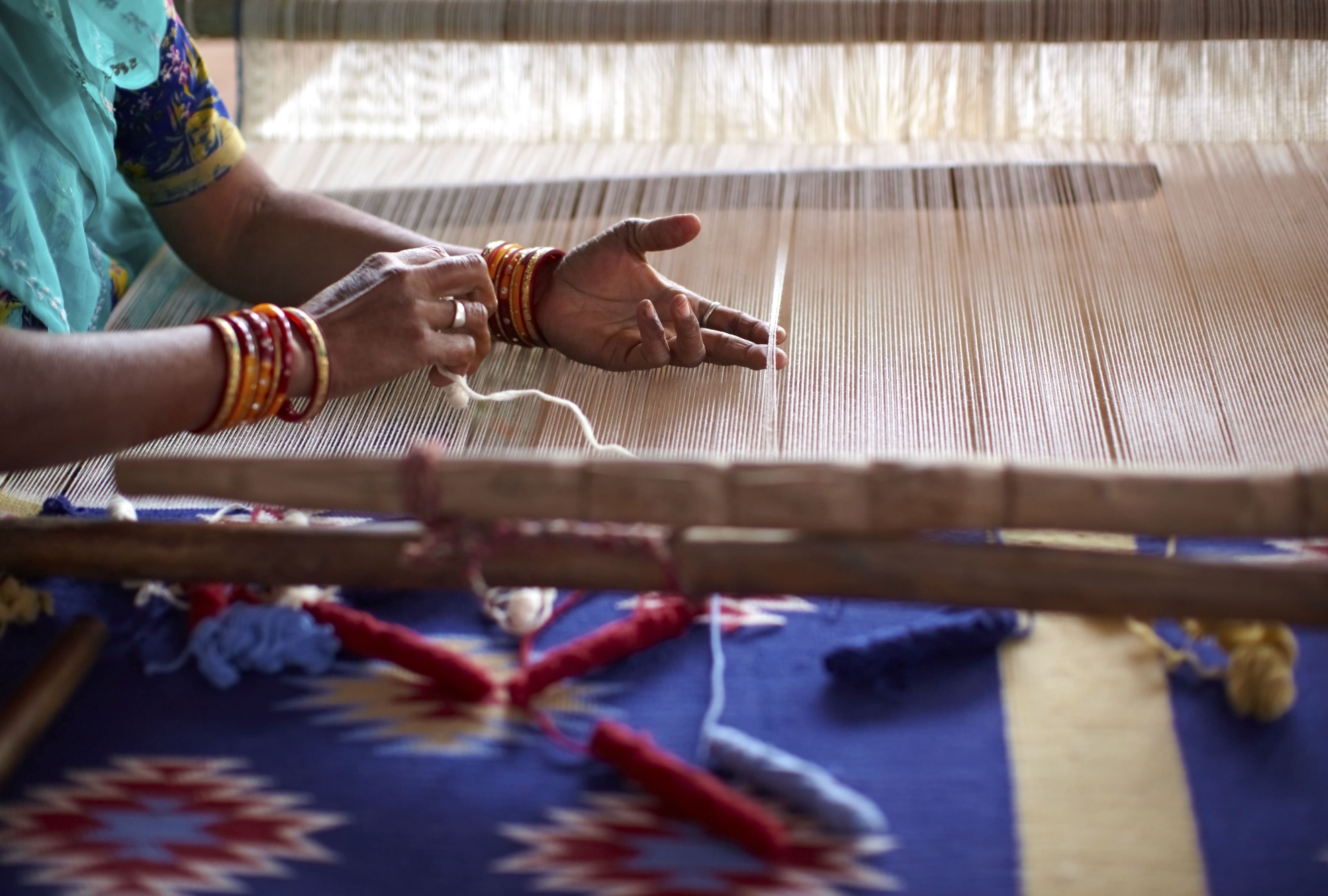
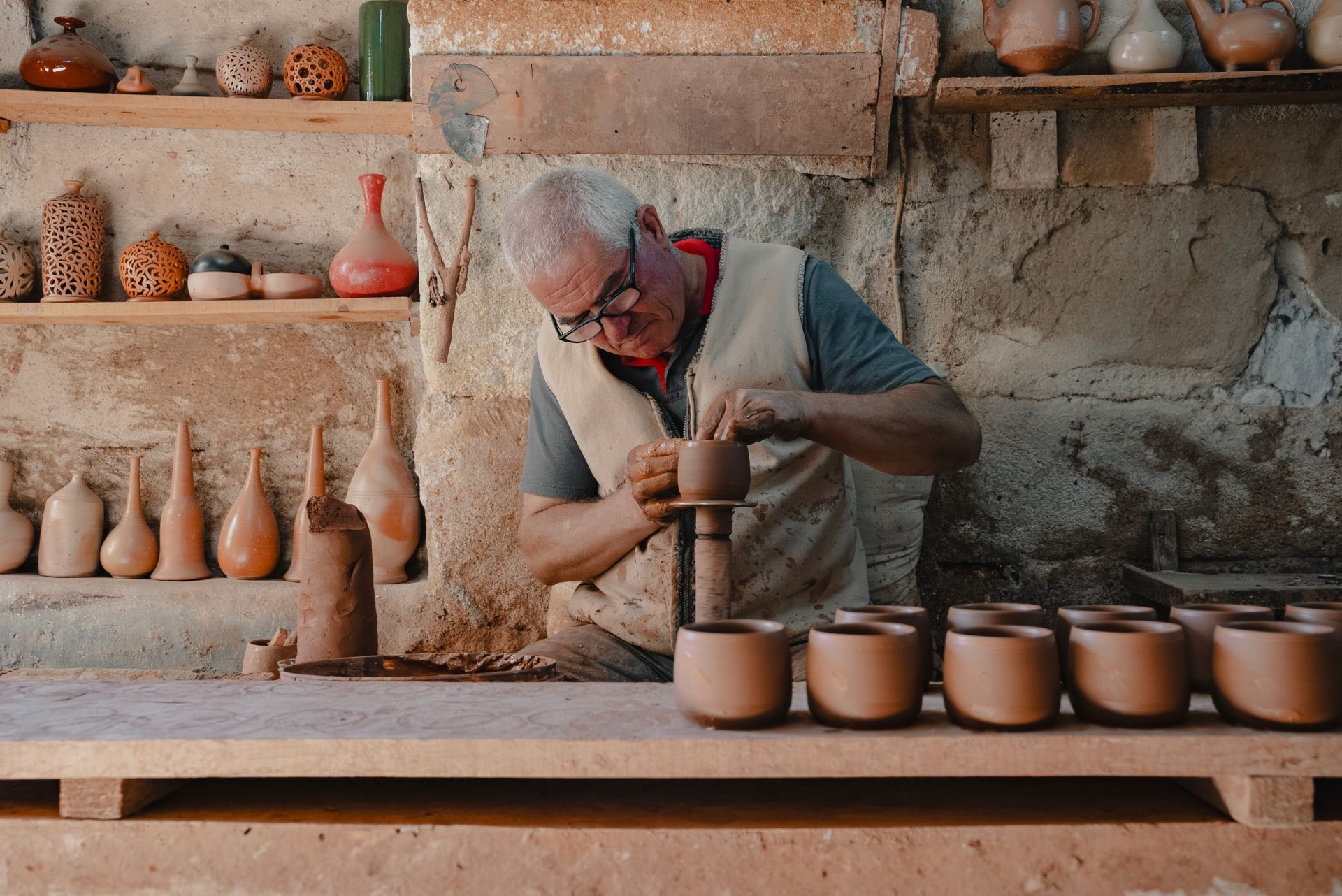
Let your artistry flow as our Creative Arts Luminaries, skilled artisan experts in refined techniques and authentic expression, guides you in an engaging session celebrating the joy of creating by hand.
Interactive Digital Entertainment
By scanning QR codes placed throughout the ship, guests can access new digital content each day, designed for enjoyment at their leisure.
Daily features include themed word searches, Sudoku puzzles, and crosswords, all thoughtfully curated to reflect the spirit of the journey.
Extended Journeys
Our Extended Journeys invite you to see the world with greater depth and ease — combining two or more consecutive journeys into one seamless exploration.
Enjoy up to 20% savings compared to booking each journey individually* and allow yourself the luxury of time — to linger longer, discover more, and truly immerse in the rhythm of the ocean and the destinations we explore.
Each of our curated Extended Journeys offers a continuous flow of discovery, with enriching destinations, a deeper sense of connection, and the convenience of remaining in your suite throughout — no need to pack or unpack, simply settle in and savour every moment.
Benefits
Take the time to embrace the art of slow travel — whether through long, unhurried lunches by the sea, rejuvenating afternoons at Ocean Wellness – The Spa, or new perspectives uncovered ashore. Every detail is thoughtfully curated to inspire your journey into the Ocean State of Mind.
Up to 20% Savings
Enjoy generous savings when combining select consecutive journeys into one seamless experience.
Ultimate Ocean Escape
Unpack once and unwind – your suite is yours for a seamless journey filled with complimentary experiences, refined dining, and ocean-inspired wellness.
Bespoke Assistance
Our Ambassadors at the Explora Experience Centre are on hand to help you curate your own tailored Extended Journeys.
Inspiring Destinations
A deeper exploration of vibrant cities, hidden gems, and coastal wonders.

Casino
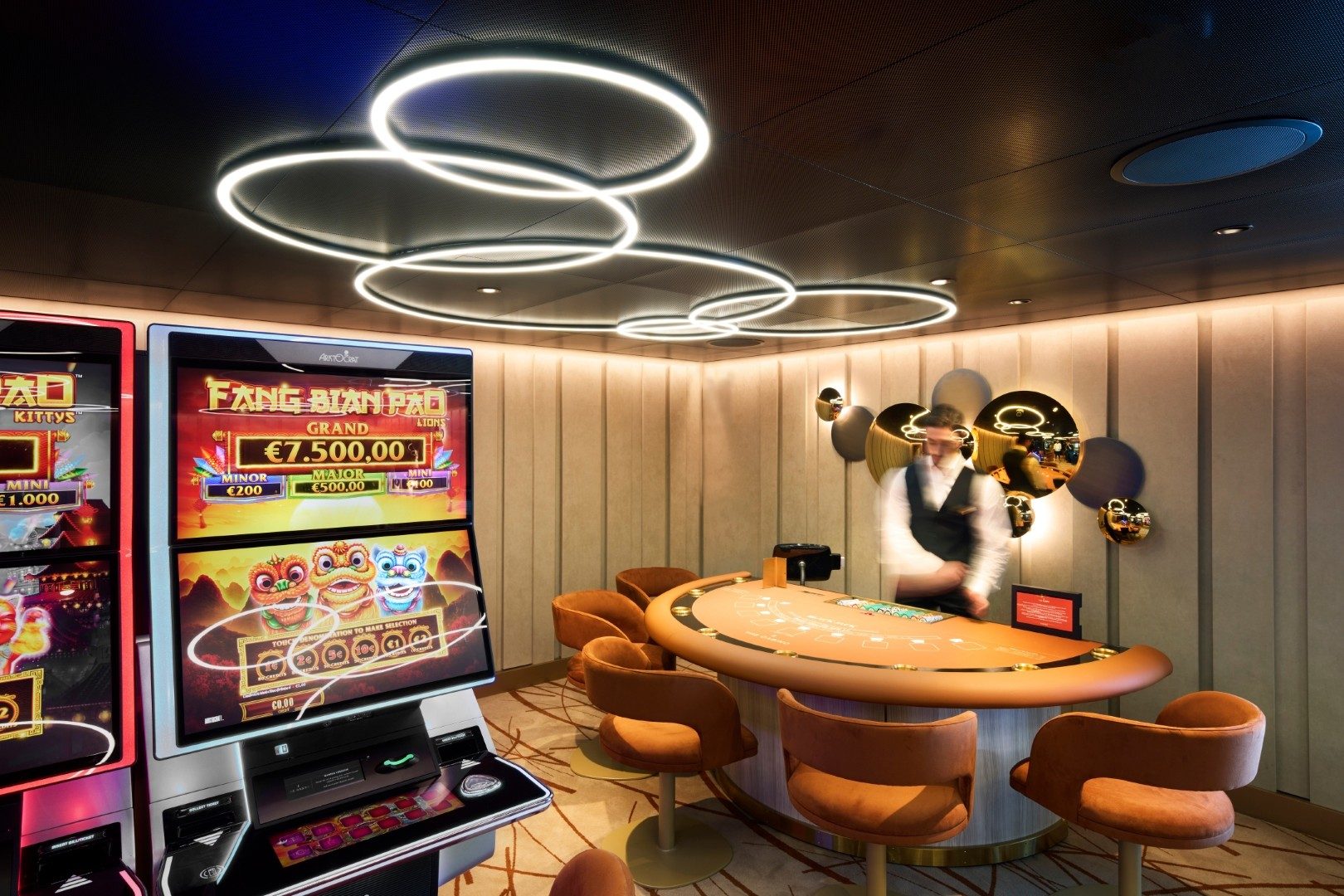
Explore the intimate, elegant space of The Casino and its diverse gaming offerings: from thrilling poker and blackjack tables to the excitement of American roulette, baccarat elegance, and the chance to hit it big with progressive slot machines.
Journeys Lounge
Mixology, enrichment and entertainment continuously evolving throughout the day.
The most spacious onboard lounge features mixology specialists, enrichment activities and cabaret-style entertainment daily. This venue is designed to continuously evolve and transform throughout the day along with the ocean journey.
- Indoor seating: 210
- Located on Deck 4
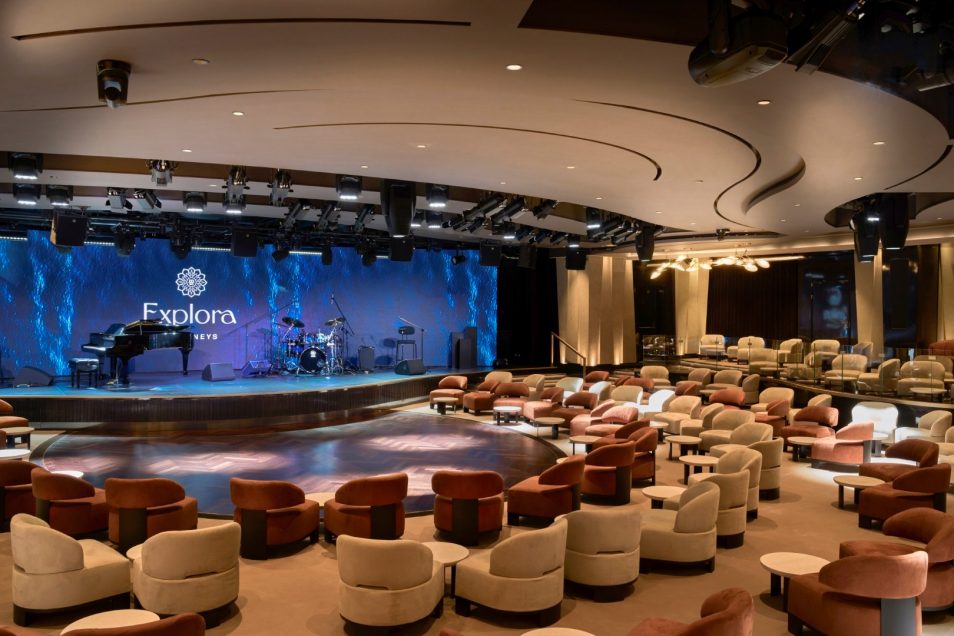
Explora Lounge
A luminous lounge offering spectacular 270-degree views of the ocean, a spectacular backdrop to informal drinking and dining.
Explora Lounge is a central meeting place bathed in natural bright light, where guests can watch the world sail by as they enjoy light meals, snacks, and traditional afternoon tea. Perfect for a quiet moment to read, work or sip a coffee, or simply admire the beautiful sea-facing views which instantly ease the mind into a calming space.
Cool and soothing background music during the day is transformed into a jazz and piano bar at night. This is the perfect soundtrack to your journey paired with a sunset aperitivo in hand.
Guests can enjoy light meals, snacks, traditional afternoon tea, along with inventive modern cocktails barista-made coffees, loose leaf teas, smoothies, and fresh pressed juices.
- Indoor seating: 149
- Outdoor seating: 38
- Located on Deck 11
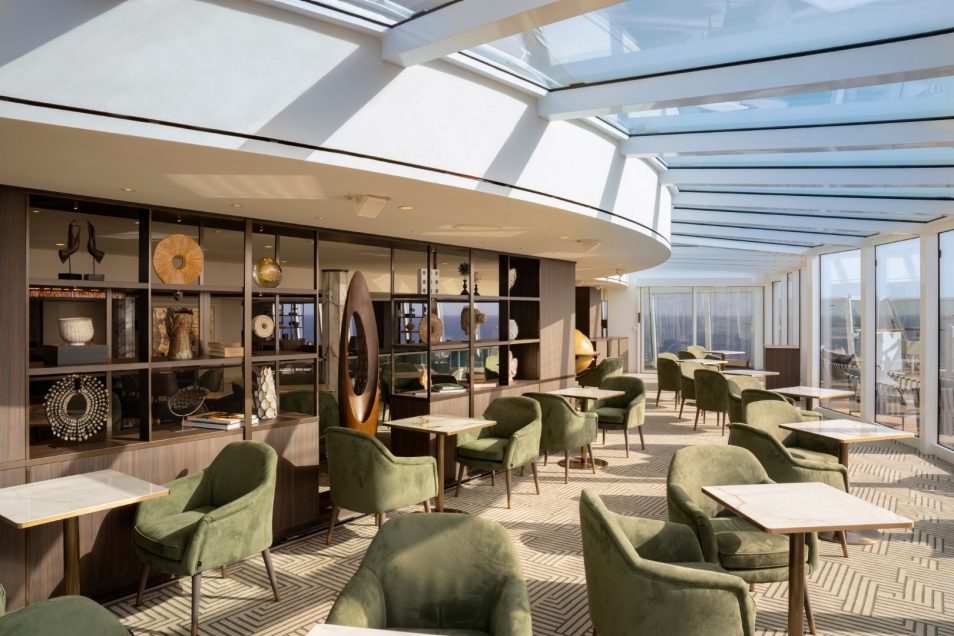
Astern Pool & Bar
An all-day pool and outdoor lounge at the water’s edge.
An all-day lounge next to the infinity pool, ideal for a waterfront escape offering chilled beach club vibes, with low background music by day and acoustic musicians and DJs as the sun sets, continuing throughout the evening.
Outdoor dining is available from nearby restaurant, Sakura in the form of nutritious bento boxes, conveniently served seated at a table, a lounger or a poolside sunbed.
- Outdoor seating: 122 (Includes sunbeds, lounge chairs and bar seating)
- Located on Deck 5
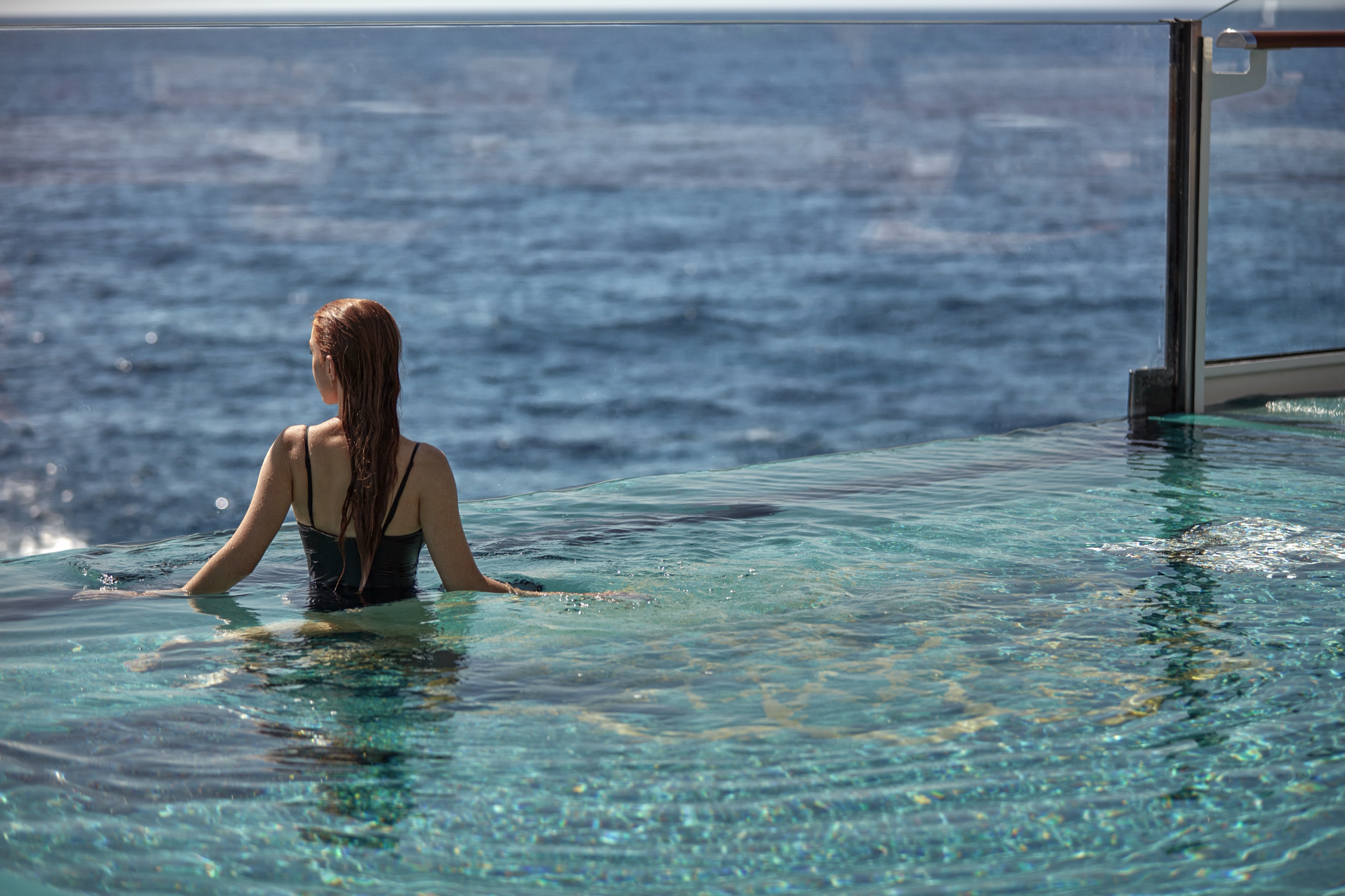
Astern Lounge
An all-day lounge and oceanfront escape opening onto the Astern Pool.
The Astern Lounge is the social hub of any journey, with a collection of daily events and happenings suited to every taste.
Effortlessly transitioning throughout the day, Astern Lounge hosts live music, DJ sessions and enrichment insights with a collection of handpicked tastemakers. Coming to life at sundown, the lounge perfects the aperitivo through a nightly ritual celebrating golden hour, complemented by live entertainment.
- Indoor seating: 70
- Located on Deck 5
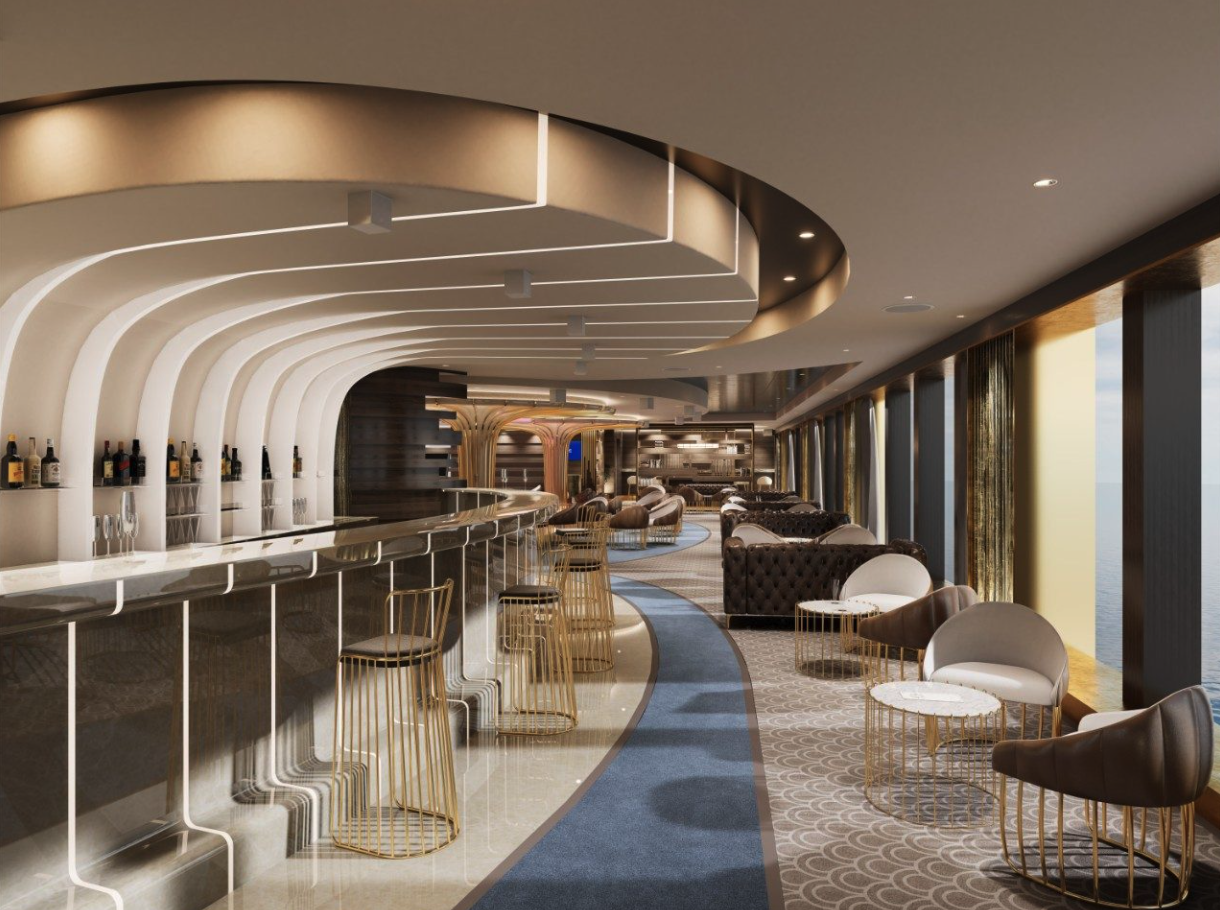
The Conservatory Pool & Bar
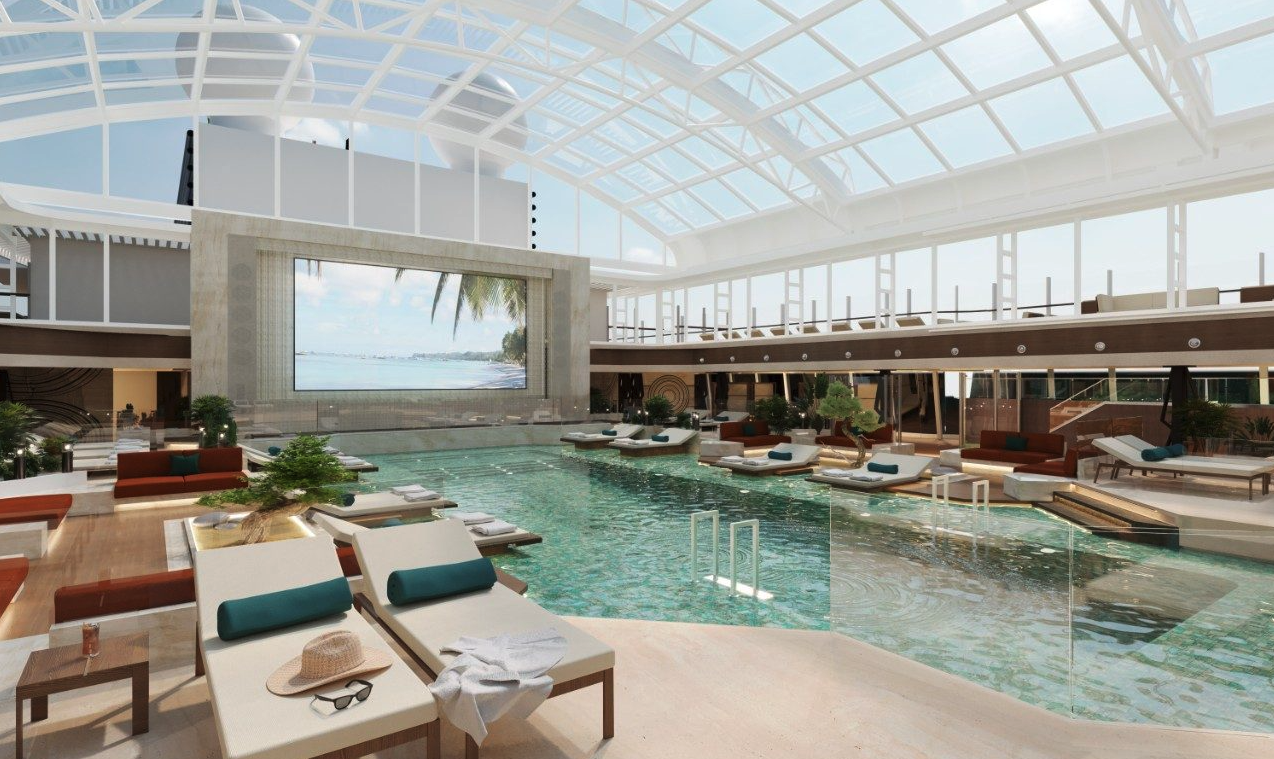
An all-day poolside lounge protected from the elements.
The Conservatory is a weather-protected poolside lounge by day. By night, it turns into a cinema experience under the stars. A relaxed, calming venue to unwind and enjoy cocktails, with light, lively background music playing throughout the day.
- Indoor seating: 52
- Located on Deck 11
Lobby Bar
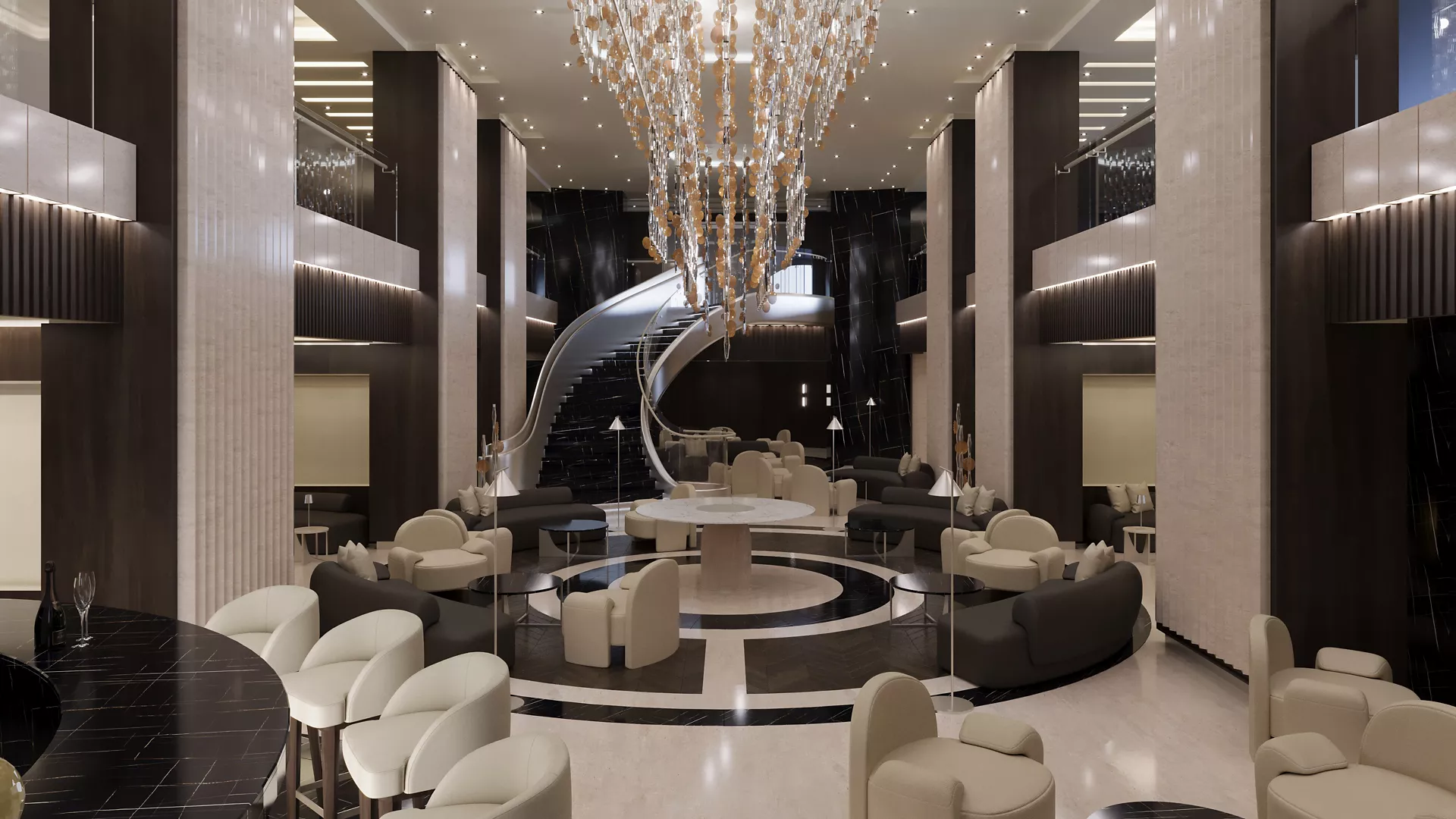
A laidback, centrally-located bar and lounge perfect for socialising.
Located at the heart of the ship, the Lobby is a laid-back, relaxed social hub, perfect for breathing in the onboard ambiance. A natural stop for an aperitif, a post-dinner moment with live music, or a gentle pause throughout the day.
- Indoor seating: 40
- Located on Deck 4
Atoll Pool & Bar
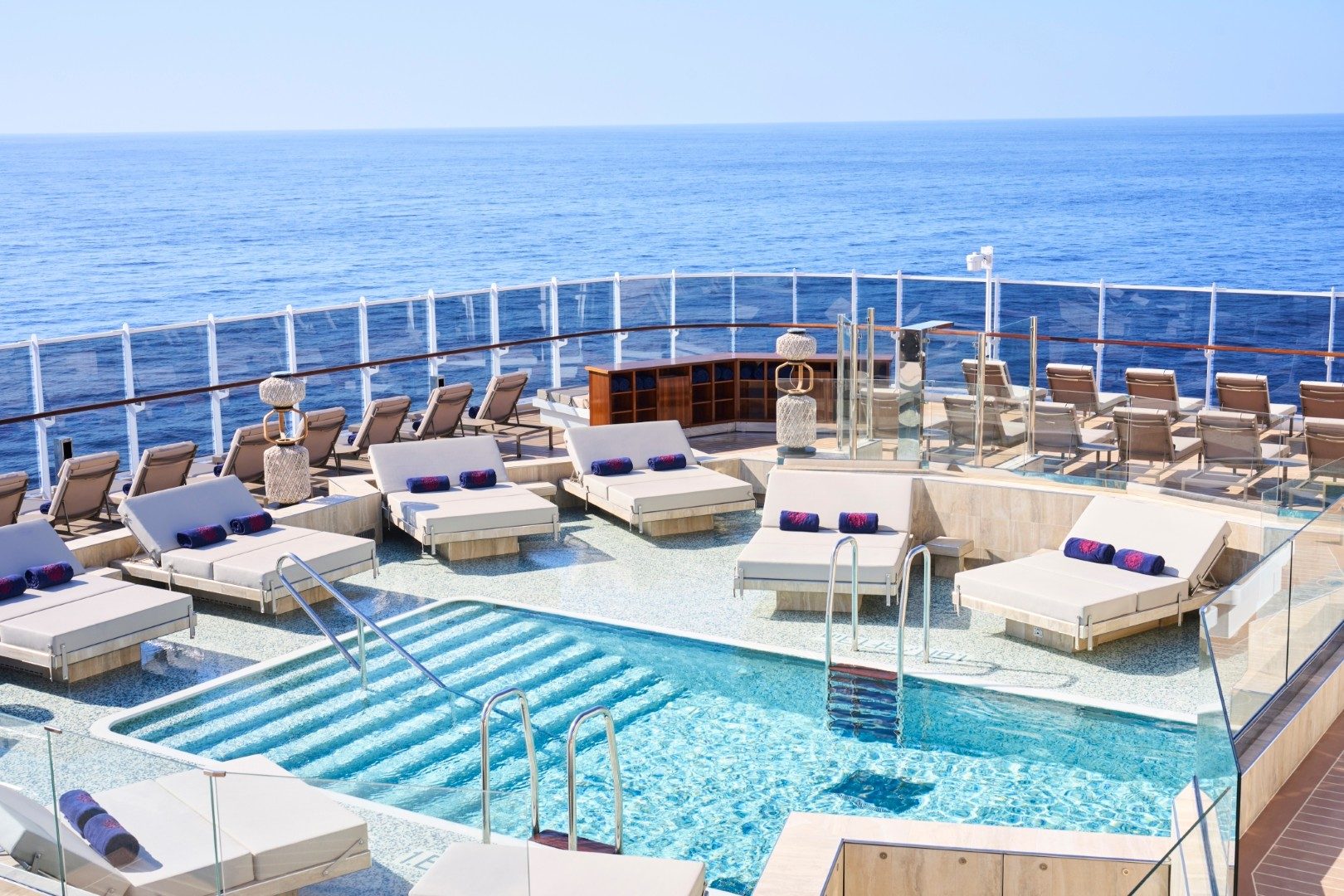
An intimate pool for laidback lounging throughout the day.
A laidback venue where guests can enjoy the sun, sea and serenity day-long, accompanied by a selection of energising, colourful drinks.
- Outdoor seating: 138 (Includes sunbeds, lounge chairs and bar seating)
- Located on Deck 10
Malt Whisky Bar
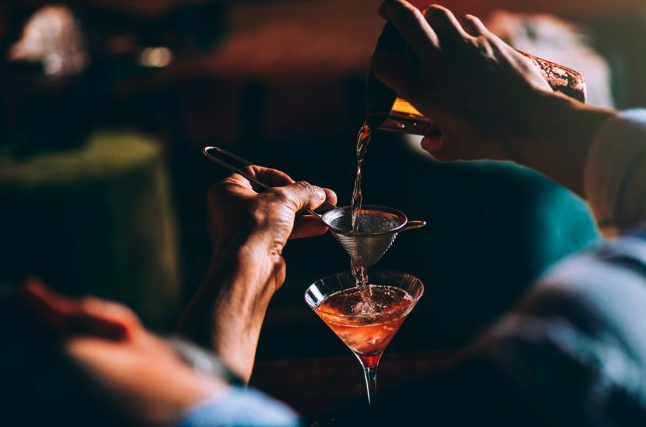
A refined tour across the globe’s most celebrated whiskey regions.
Set within the Explora Lounge, Malt offers a refined tour of the global whisky regions, including some of the rarest whiskies, complete with a walk-in humidor, cigar expert and a dedicated outdoor cigar-smoking terrace.
Alongside its drinks menu with an emphasis on dark brown spirits the bar also features an outdoor smoking area for guests to enjoy their hand-rolled cigars*, selected with the guidance of our cigar expert. A range of signature whiskey-based cocktails are also available, curated exclusively for Explora Journeys and served accompanied by the smooth sounds of jazz.
- Indoor seating: 20
- Located on Deck 11
Crema Café
Bustling European all-day café culture on the world’s oceans.
A luxurious layer of crema nods to the freshness of an espresso and aptly lends authenticity and sophistication to a café at the centre of life on board.
Inspired by modern European café culture, Crema Café has softy stylish interiors with comfortable lounge seating, with access to a choice of reading materials and all set against uninterrupted views of the sea. A place to meet, discuss, unwind, taste and indulge, where like-minded guests gather to mingle and converse.
Coffee is chosen by selected connoisseurs who have travelled the world exploring fair-trade coffee origin, character, and strength. Discover the refined methods of brewing coffee from skilled baristas, taste high-quality loose-leaf teas with an on-hand tea expert, or enjoy refreshing cold-pressed juices. A glass display showcases pastries, cakes, desserts and sweets including madeleines, cannelés, biscotti, navette sandwiches as well as gelato throughout the day.
- Indoor seating: 62
- Outdoor seating:16
- Located on Deck 5

Sky Bar On 14
Refreshing cocktails and infinite views in a sophisticated outdoor setting.
Set on the ship’s highest point, on deck 14, this panoramic outdoor lounge setting is ideal for soothing cocktails and infinite views.
- Located on Deck 14
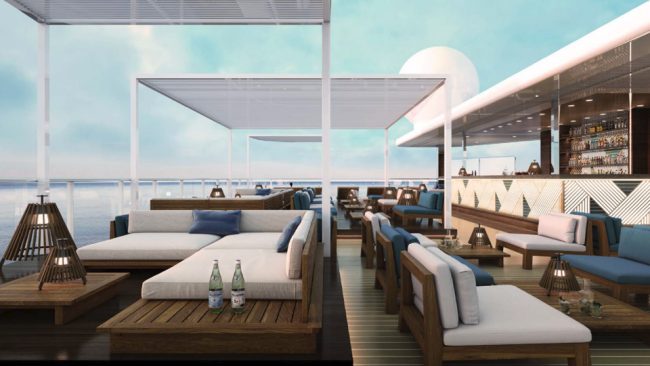
Helios Pool & Bar
A panoramic adults-only pool and lounge experience.
Inspired by the Ancient Greek god of the sun, and also literally meaning “sun” in Greek, this adults-only area is indeed the sunniest venue onboard, panoramically facing forward on deck 12. Enjoy lying by the pool or lounging throughout the day as you watch the ship sail through the sea.
- Outdoor seating: 100 (Includes sunbeds, lounge chairs and bar seating)
- Located on Deck 12
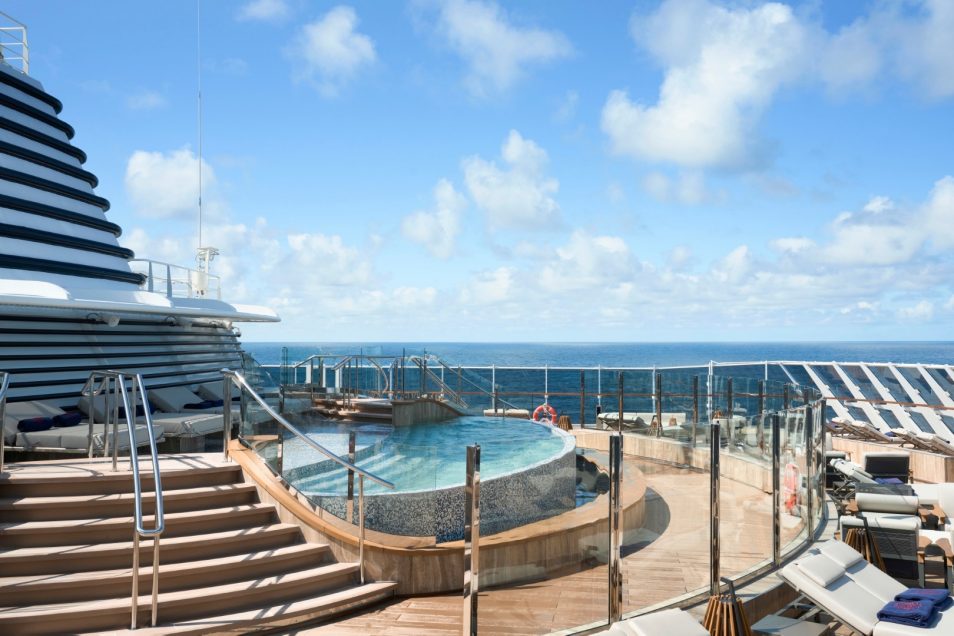
The Cellar by Explora Journeys
Refreshingly relaxed, The Cellar by Explora Journeys creates a welcoming space where wine is enjoyed through curiosity, easy conversation, and genuine pleasure. Its collection brings together characterful Old World classics, expressive New World favourites, and a few quietly remarkable rarities.
Our Cellar Masters share their passion with an intuitive, light touch – offering guidance or a gentle surprise when the moment feels right. Whether it’s an aperitivo, a bottle carried through dinner, or a final glass with chocolate truffles, the experience feels personal, comfortable, and quietly elevated.
- Main space with 8 seats
- Private area with 4 seats
- Pricing: Options starting from EUR/USD 15–20 per glass, with a wide range of options up to rare and exceptional vintages
- Small bites and hand-crafted chocolate truffles crafted to complement the tasting experience

The Journey
Inspired by the Ocean State of Mind and influenced by the destinations we visit, The Journey is more than just a place to browse.
Shop fragrance, skincare, apparel, homeware, accessories and fine foods.
Our Inspiration
Every item available is a celebration of creativity, passion, and the power of discovery, each with its own magical story to tell.
Discovery
We champion small, luxury, locally-influenced brands with unique stories to tell, inviting our guests on a journey of discovery into the diverse cultures, flavours, and skills of the visionaries in the destinations we visit.
Consciousness
We are dedicated to partnering with brands that prioritise sustainability, using regenerative, recycled, and natural materials at the heart of the production process; supporting slow fashion and waste reduction, and reducing our environmental impact.
Provenance and Craftmanship
Our products are a celebration of the artisan: skilled craftspeople, artists, smaller suppliers, and designers who pour their passion and creativity into every detail, with a focus on quality materials and finishing.
Collections
More than just a place to buy, our retail experience is a journey of discovery, consciousness, and craftsmanship with provenance. Explore our unique collection of over 30 of the finest artisanal brands that share a commitment to caring for people and planet.
Sensorial Fragrances & Skincare
Regionally inspired, our carefully selected collection of niche fragrance brands showcases the rarest and most precious natural ingredients, for a memorable sensory experience.
Effortless Ready-to-Wear
Unparalleled comfort and style, a curated collectionfor men and women, designed to envelop the wearer in effortless confidence and ease.
Homeware & Gifting
Distinct pieces, beautifully designed for aesthetics and ergonomics. The perfect tokens to take home with you or gift to a loved one following your journey.
Timeless Accessories
Crafted to perfection and designed to last a lifetime, our timeless collection spans scarves, lather goods, eyewear and lifestyle accessories.
Fine Food & Drink
Savour the essence of your travels through the finest food and beverages, carefully selected to showcase small producers, unforgettable flavours and unique stories.
ENCORE
By Explora Journeys
Pre-loved luxury, sustainably yours. Timeless icons, given new life.
Some treasures are too precious for just one story. ENCORE offers a curated collection of authenticated, pre-loved luxury bags and accessories, each with a past as unique as its future.
From rare finds to timeless icons, every piece has been lovingly restored and meticulously verified for quality and authenticity.
Our Bespoke Fragrance
Introducing Mandala Blue by Explora Journeys, the scent of the ship, curated with master perfumer Alberto Morillas.
A fragrance that relaxes, connects, awakens the senses and ultimately transforms.
Cue notes that echo the ocean with enchanting freshness, layered alongside dominant woody and spicy signatures.
Available to purchase from The Journey.
Brand Selection
We’re committed to partnering with brands who reflect our own commitment to sustainable practices and environmental consciousness. It is why we are the first retail experience on the water to seek out partners with relevant certifications, ensuring a positive approach to their production practices.
B-Corp Certified Partners
Ensuring the highest standards in social and environmental performance.
Positive Luxury – Brands to Trust
The Butterfly Mark certification is an independent, globally respected trust mark awarded to luxury brands, retailers and suppliers that meet the highest standards of verified ESG+ performance
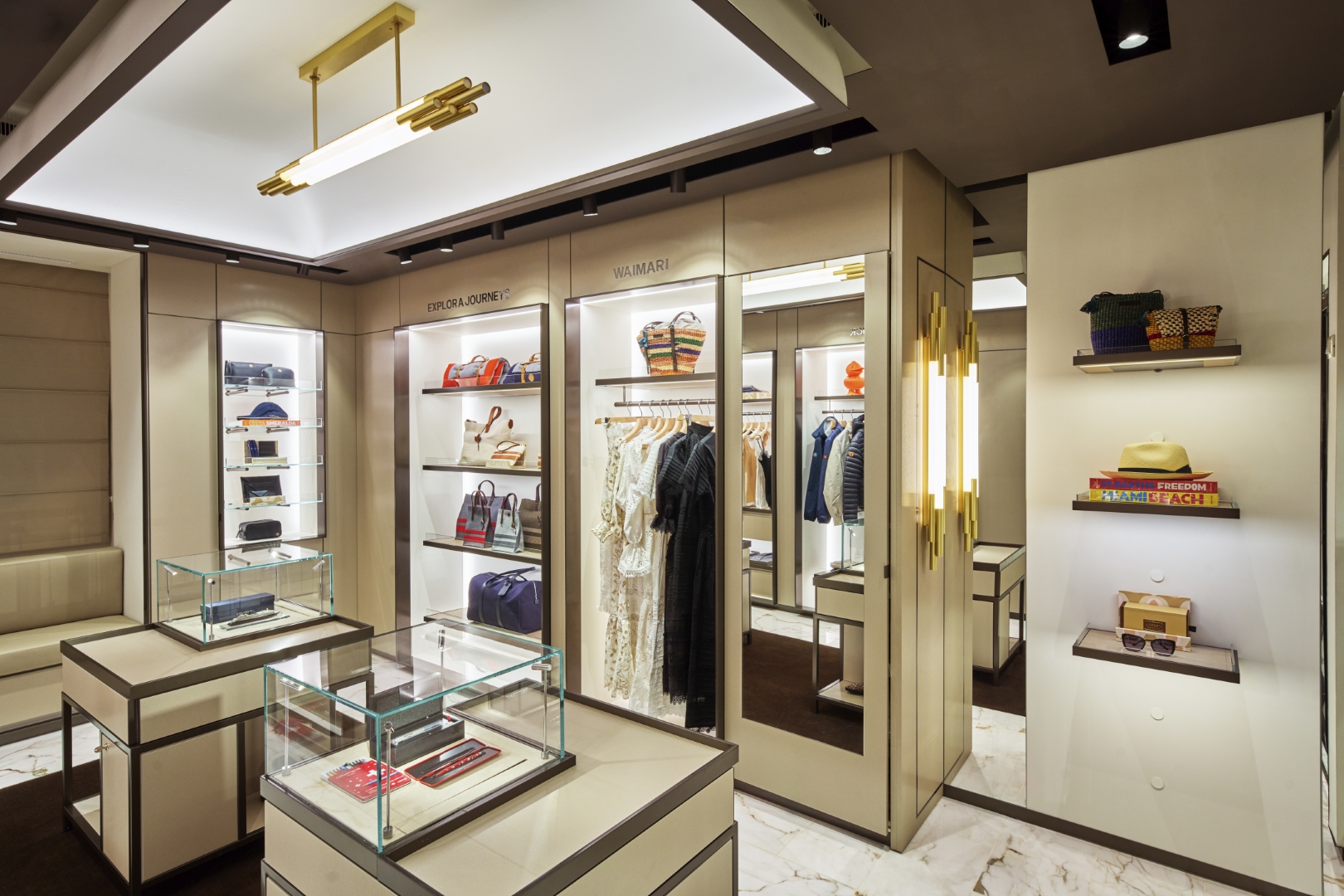
Shops
Ship Exclusives
Dedicated boutiques with knowledgeable and experienced hosts.
Rolex
The first ever official on-ship Rolex boutiques.
Chopard
A curated selection of timepieces and jewellery.
Ocean Atelier
The new multi-brand jewellery boutique by Explora Journeys.
Available across the Fleet
Our curated collections include a tempting selection of Swiss watches and the finest jewellery, alongside an array of artisanal creations.
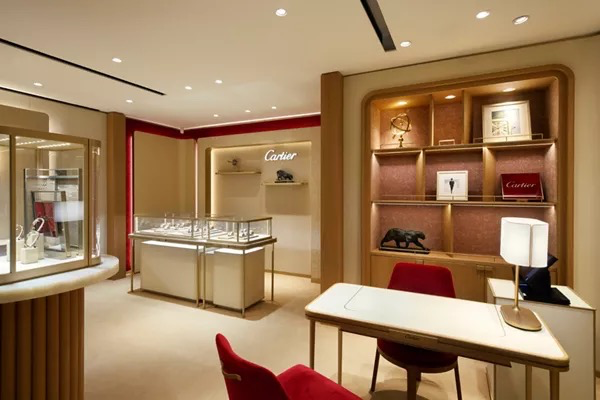
Cartier
Exceptional craftsmanship and a timeless signature, born of a unique vision.
Panerai
Italianity, Marine World, Swiss Technicity and Modern Heroes: the four pillars that define Panerai.
Piaget
Creator of emblems of daring excellence and mechanical masterpieces.
Ocean Wellness Spa
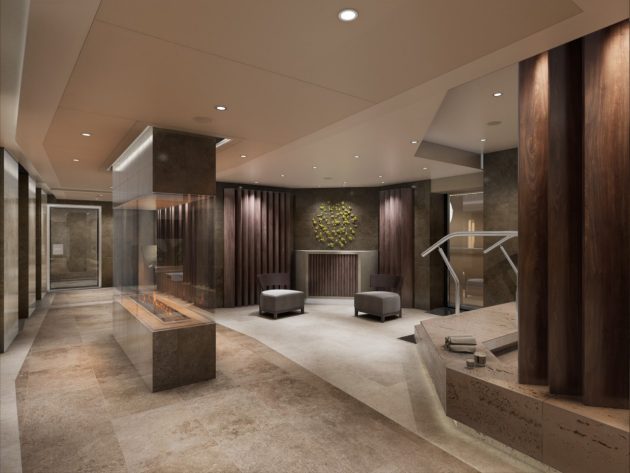
A calming space designed to reconnect guests to themselves – influenced at every level by the calming presence of the ocean.
The spa is where the pressures of daily life dissipate to insignificance amidst a sensory journey to the Ocean State of Mind.
Features & Services
- Spa
- Wellness area with thermal facilities
- Signature Ocean Wellness rituals
- Facial treatments
- Body treatments
- Specialised Medi Luxe Treatments by Dr Levy Switzerland
- Ashore wellness Destination Experiences
- In-suite treatments
- New signature treatments, curated collaborations and the Sava Sound Pod (Exclusive to EXPLORA III)
*Spa treatments, including massages and facials, require a minimum age of 12 years, with parental supervision. Access to our Wellness area and thermal facilities is reserved for guests aged 16 years and above.
Eleven Dedicated Treatment Rooms
- Two Private Spa Suites with a dedicated outdoor relaxation area
- One Double treatment room
- Seven single treatment rooms
- One single treatment room for specialised skin treatments
- Outdoor relaxation area
*Spa treatments cannot be booked until 90 days prior to embarkation.
The Spa Facilities:
- Steam Room – A regenerating oasis of psycho-physical wellbeing. Air, steam, and scented fragrances combine and gently rest on the skin, making natural exfoliation easier and increasing perspiration.
- Experience Shower – A multi-sensory journey, the warm shower is complete with fragrances and soft colour lights, offering moments of utmost pleasure – either at the beginning or at the end of the day.
- Hydrotherapy Pool – This warm therapeutic pool is designed to promote healing, relaxation and physical rehabilitation. Heated to a soothing temperature, gentle currents and jets work to ease muscle tension, improve circulation, and support joint mobility.
- Finnish Sauna – A deeply purifying experience using dry heat, to help you unwind and reduce stress levels while also opening the airways, relaxing the muscles, and oxygenating tissues.
- Salt Cave – In an inviting cavern with walls covered in Himalayan salt bricks, the air is infused with microscopic salt particles and negative ions. As you inhale the mineral-rich air, respiratory health is enhanced and a sense of overall relaxation ensues.
- Steam Shower – A shower that combines the relaxing heat of the steam and the regenerating freshness of water. (* Available within private Spa suites)
- Ice Fall – The Ice Fall regenerates the body after intense heat exposure in the Finnish Sauna or Steam Room.
- Heated Marble Loungers – A restful place to relax, equipped with an infrared system that radiates the heat to ease muscle stiffness and create on overall feeling of comfort and warmth.
- Outdoor Relaxation Area – A tranquil open-air relaxation deck with infinite ocean views, perfect for reflection before or after a treatment.
Ocean Wellness Fitness
Energise the body with a dynamic workout, accompanied by the invigorating soundtrack of the ocean.
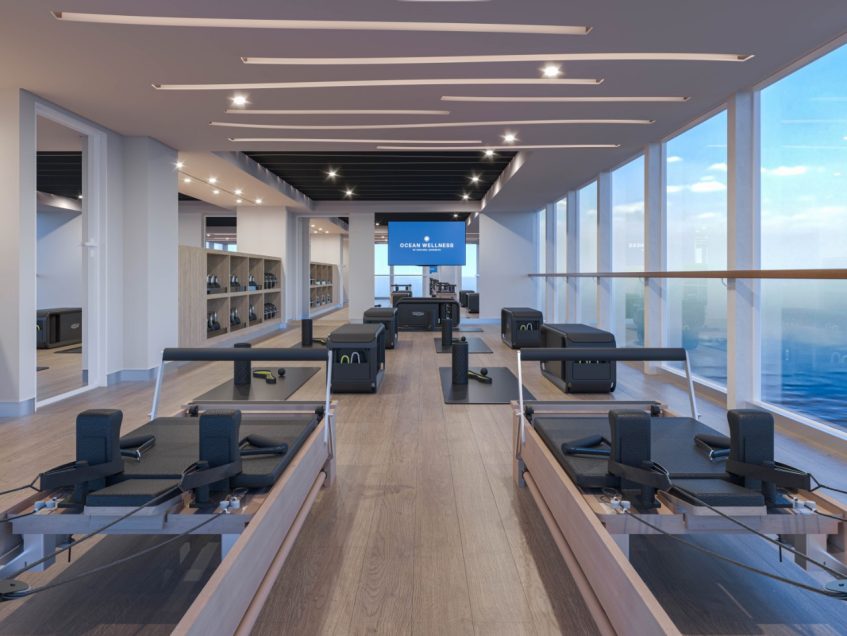
Our Fitness Centre offers distinct zones for cardio, strength, and functional training, all outfitted with premium. Technogym Artis equipment, designed to maximise efficiency and optimise results. Among the many options, reach your cardio goals with the Run Artis treadmill and Artis Synchro elliptical – engineered for engaging, effective movement.
In the strength zone, sculpt the lower body with high-quality solutions such as the Artis Leg Press and Artis Leg Curl, or train the upper body with the Artis Chest Press and the Artis Shoulder Press.
For a full body challenge, the innovative Technogym Bench delivers over 200 exercise possibilities in one sleek station. Paired with tools such as Urethane Dumbbells, it offers a complete solution for streamlined training.
Over 350 sqm (3,750 sq ft) of indoor and outdoor fitness facilities designed in partnership with Technogym.
Features:
- Functional training
- Strength training
- Cardio
- Pilates Reformers
- Technogym classes
- Body assessment
- Immersive wellness experiences
- Outdoor exercise
- Cycling classes
- Personal and group training
- Private Personal Training Studio (Exclusive to EXPLORA III and EXPLORA IV)
Ocean Wellness The Beauty Studio
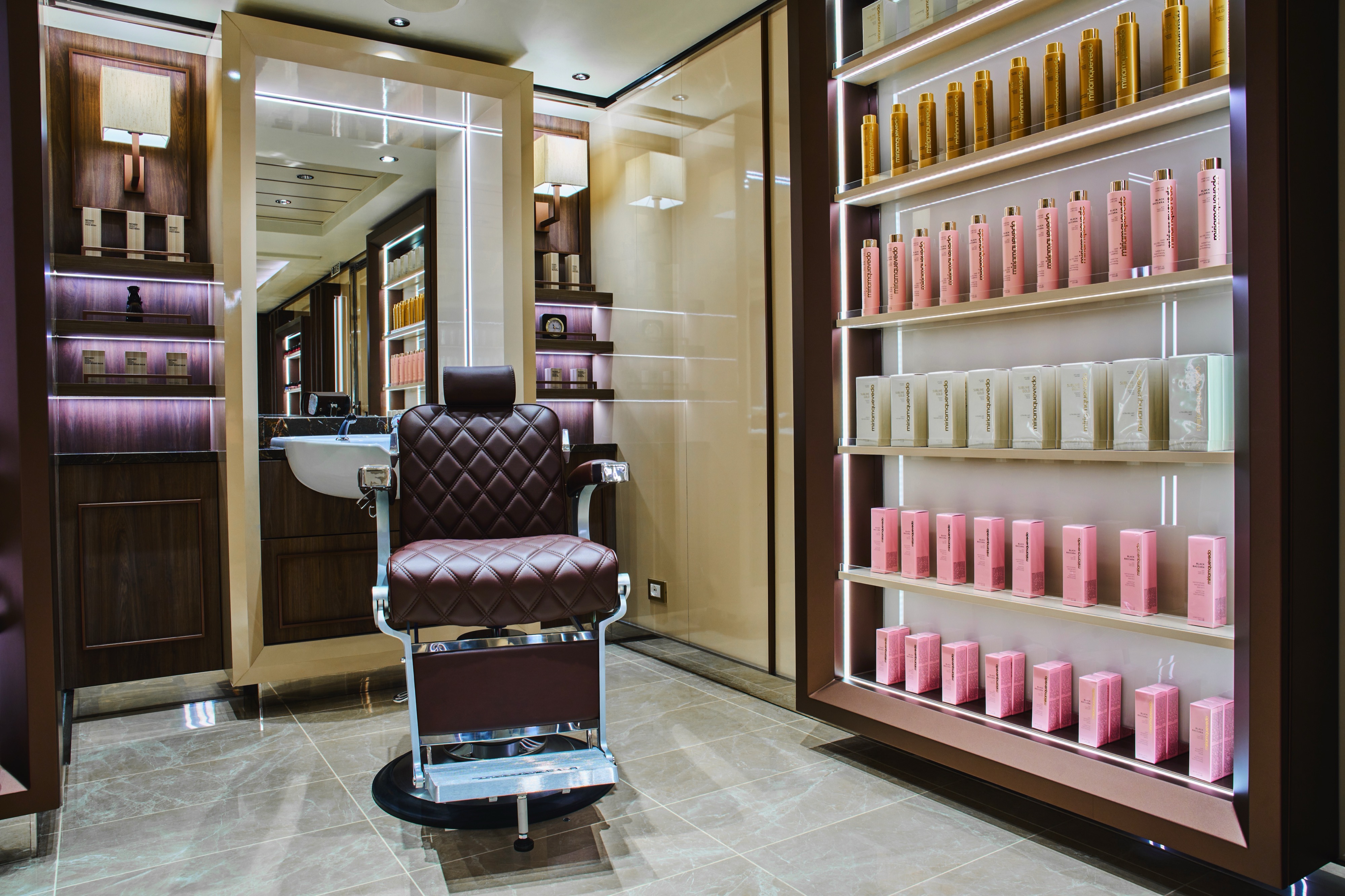
We believe true beauty begins within. When you feel well, it radiates, bringing confidence on the outside too.
Step inside The Beauty Studio – a serene, flowing space, designed to meet all your beauty needs. From indulgent hair rituals and precision, barber treatments to rejuvenating hand and foot care, every service is delivered with intention and care.
Services include:
- Hair Care Rituals
- Barber Services
- Manicures & Hand Treatments
- Pedicures & Foot Care
- In-Suite Beauty Services
Ocean Wellness Wellbeing
Experiences, programmes and spaces designed to enhance the influence of the ocean on wellbeing
From sleep to nutrition, our collection of initiatives has been carefully curated to ensure each and every guests has the opportunity to enhance their sense of wellbeing, no matter their fitness levels or abilities.
Sleep Retreat
Sleep is the calm that lays the elemental foundations of life.
Our Sleep Retreat provides guests with a series of sleep-enhancing practices curated following an introductory one-to-one workshop and accompanied by a sleep-enhancing smoothie.
From the Aromatherapy Associates Relax and Sleep Ritual and restorative Yoga Nidra classes to in-suite bedtime meditations, our therapists ensure every guest benefits from a well-rested stay.
The Sleep Retreat also offers access to expert-led workshops that help uncover the importance of sleep, giving answers to an important – yet often overlooked – subject.
Mindful Nutrition
A celebration of talents, cultures and passions.
Yoga
ENERGY YOGA:
Energy flow power class with the addition of bamboo tapping to supercharge energy levels. Complete the yoga practice with a bespoke visualisation inspired by the ocean’s incessant vitality.
SLEEP YOGA:
A portal to peace, this combination of restorative yoga, Yoga Nidra and the addition of warm neck and eye pillows sends you on a path to a truly blissful night’s sleep.
RELAXATION YOGA:
Cradle your emotions with the crystal oceanic wisdom singing bowl whilst meditating to focus on love and kindness. All to foster greater feelings of self-love and appreciation.
MINDFULNESS YOGA:
A deeply therapeutic restorative yoga class anchoring the body and mind in the present moment through the use of essential oils and bespoke guided ocean-inspired meditation.
IMMUNE-BOOSTING YOGA:
Yoga flow with a focus on pranayama techniques, proven to enhance oxygen flow and reduce anxiety. The practice ends with an immune-fortifying juice shot.
Immune Boosting Retreat
This wholly restorative programme includes an introductory one-to-one workshop with a welcome immune-fortifying juice, as well as a one-to-one yoga flow with a focus on pranayama techniques and thymus tapping. The programme is complemented by a specially curated immune-fortifying lunch and an Aromatherapy Associates Immune Support Treatment.
The Retreat also includes access to expert-led workshops that uncover the importance of protecting your immune system. Learn about the core principles of immunity, and how to boost it.
The workshop is complemented with immune-fortifying foods, snacks and pranayama techniques to practice at home, taking the retreat beyond the parameters of your ocean journey.
Embark on a journey of awakening
A series of onboard experiences to help you begin your day with intention. Designed to enliven your senses and elevate your mood as you transition into the Ocean State of Mind.
Touch
- Sunrise yoga on deck accompanied by rejuvenating bamboo tapping
- Technogym Case with a wake up and energise routine for an active start
- Guided morning stretches streamed directly to your in-suite TV.
Hear
- Curated Awakening playlist to gently energise your morning featuring soothing ocean harmonies to welcome a new day.
See
- Journey of Awakening TV channel with mindful movement and breathing sessions
- Revive lifestyle cards with daily inspiration and wellbeing tips.
Smell
- Uplifting scented towels available at the Ocean Wellness – Fitness Centre and throughout wellness experiences.
Taste
- In-suite vitality shot to boost energy.
- Wellness-focussed breakfast selection and energising herbal teas.
Embark on a journey of sleeping
Transition into rest with a series of onboard experiences designed to invoke a sense of calm and serenity, encouraging a deep, restorative sleep.
Touch
- Evening Yoga Nidra for deep relazation
- Soothing bath ritual to unwind
- Technogym Case: Good Night & De-Stress routine to relax the body
Hear
- Guided bedtime meditations via in-suite TV
- Tranquil nighttime playlist to ease into sleep
See
- Journey of Sleeping TV channel with calming visuals and sleep stories
- Restore lifestyle cards with evening wellness rituals and wind-down tips.
Smell
- Relaxing pillow mist made with essential oils
Taste
- Sleep-enhancing dining options
- Herbal teas crafted to promote restful sleep
Indoor and Outdoor Pools
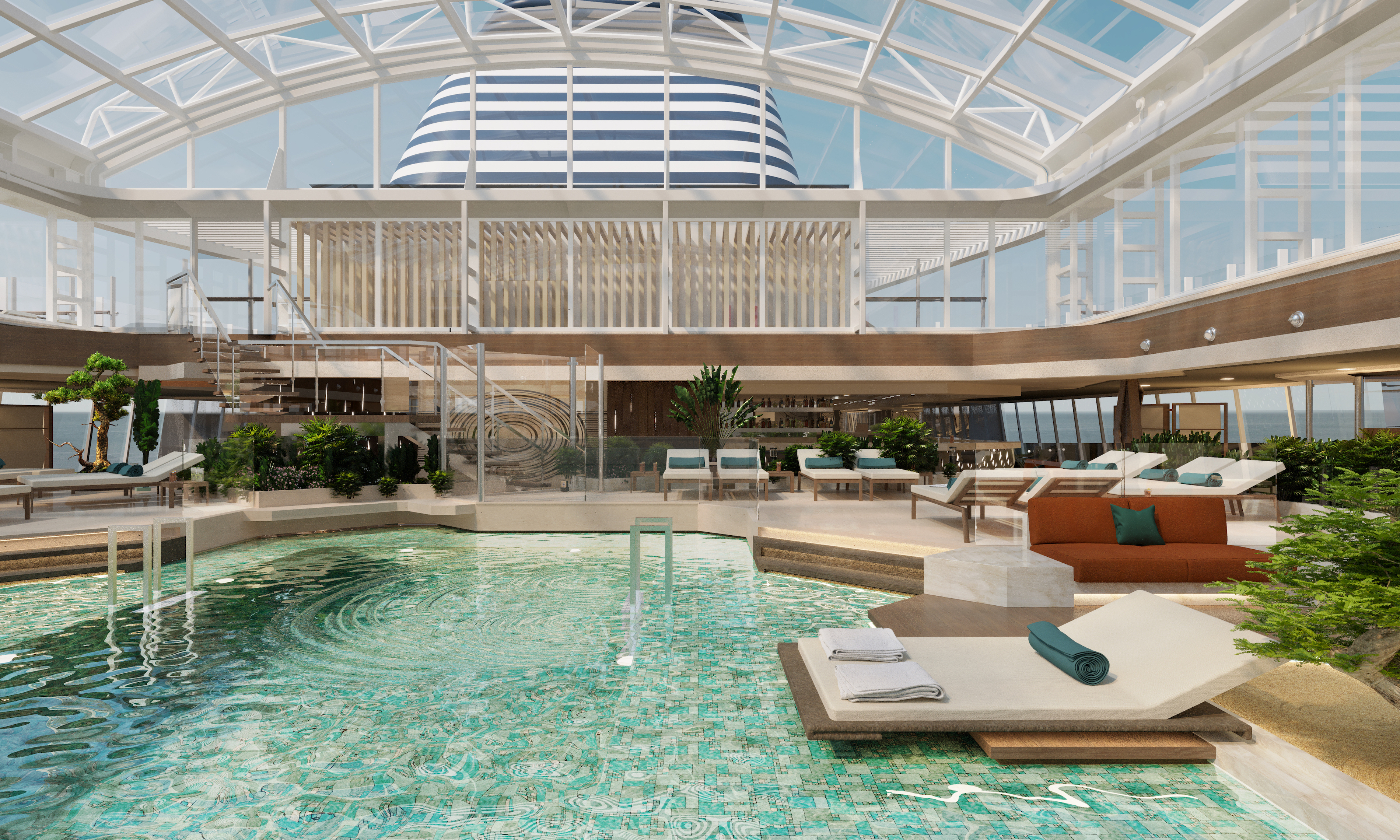
A fourth pool, with a retractable glass roof, will allow swimming and poolside relaxation in any weather.
Combined with various indoor and outdoor whirlpool baths on the ship’s promenade deck, the ship has been designed with water as a real focal point of the onboard experience – helping our guests discover their ocean state of mind.
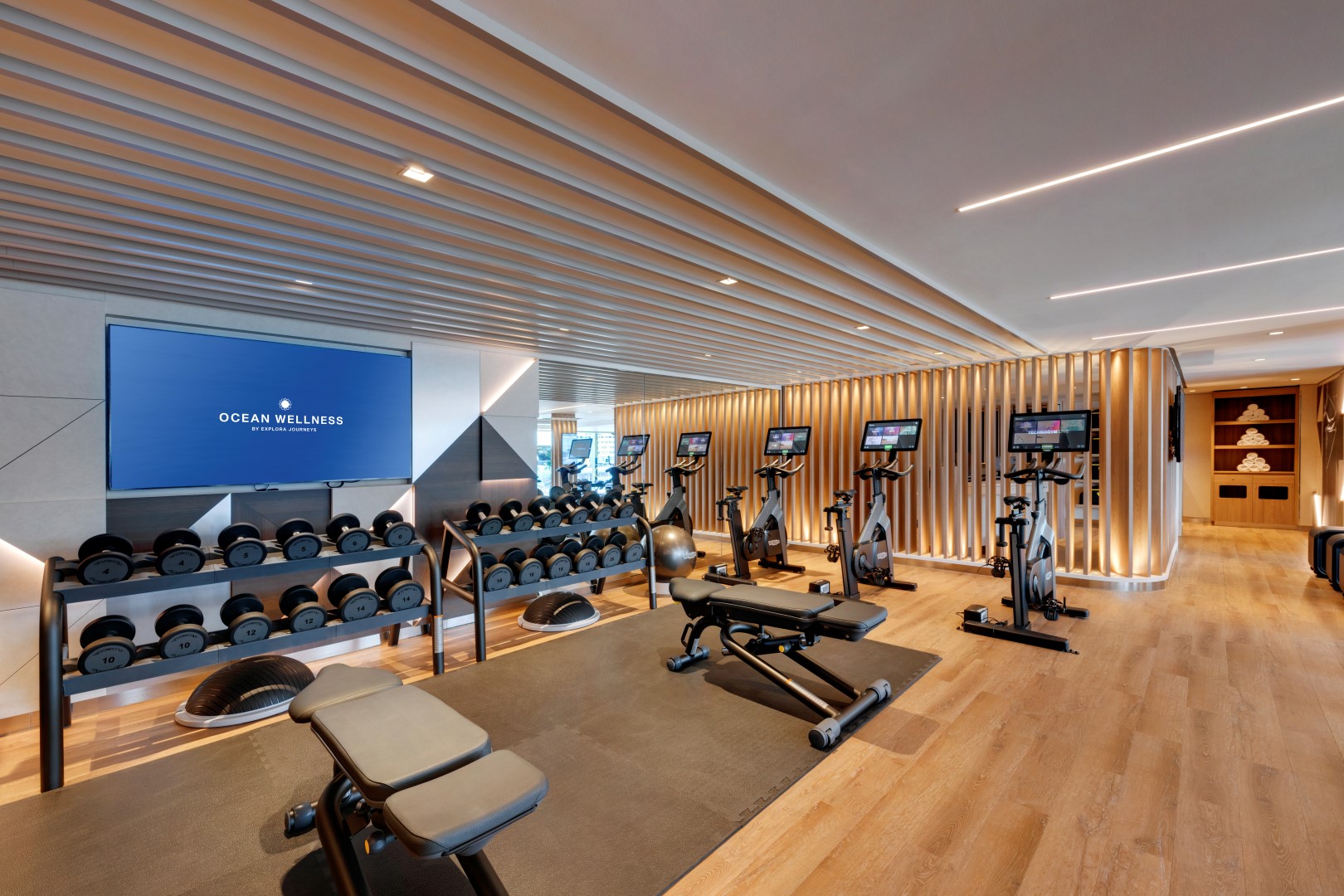
Fitness Studio
Step into the Fitness Studio – a refined space within the Fitness Centre, designed for movement, balance and strenght. Join yoga classes on extra-large Technogym training mats for optium comfort, or dive into functional workouts with cutting-edge equipment such as the Technogym Bench, Technogym Skill tools and the Technogym Case Kit. This smart kit includes instant access to a digital library of guided workouts via QR code, bringing personalised routines right to your fingertips.
For those seeking improved balance, our Pilates Reformers classes focus on deep core activation, delivered by experts.
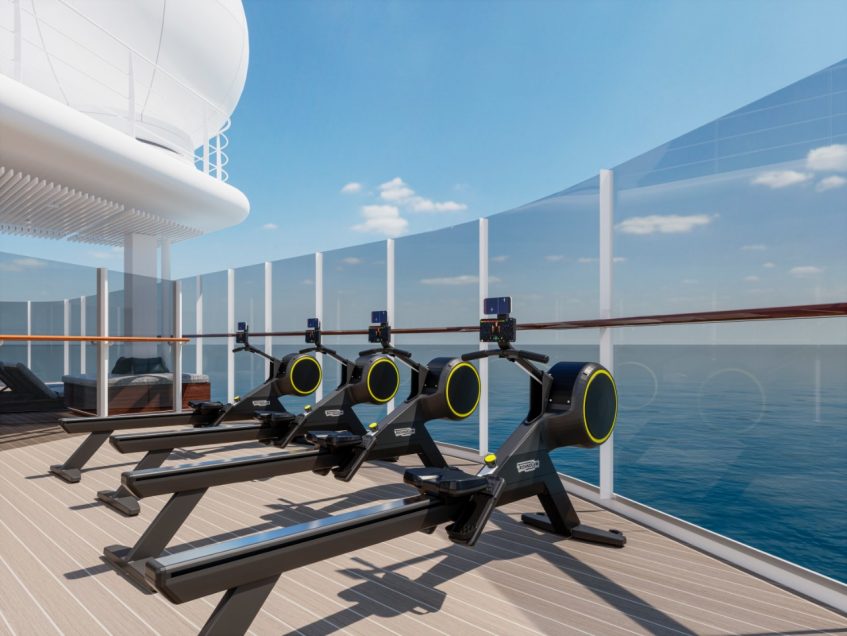
Open Air Fitness
Experience fitness like never before on our outdoor deck, where the ocean meets your wellness goals. The Open Air Fitness is equipped with the latest fitness equipment including:
– SKILLROW: the first outdoor rowing machine designed to improve anaerobic power, aerobic capacity and neuromuscular abilities.
– GROUP CYCLE BIKES: perfect for engaging cycling sessions with panoramic views.
– TECHNOGYM CASE KIT: allowing you to train with ease following guided routines.
Guests can personalise their workout by training solo, receiving guidance from a personal trainer, or joining one of our vibrant fitness classes.
Outdoor FItness extendes beyond the deck with:
– RUNNING TRACK: A 360º track circling the ship, where runners can enjoy commanding ocean views with every lap.
– SPORTS COURT: The ideal spot for touch tennis, half basketball, or yoga rituals.
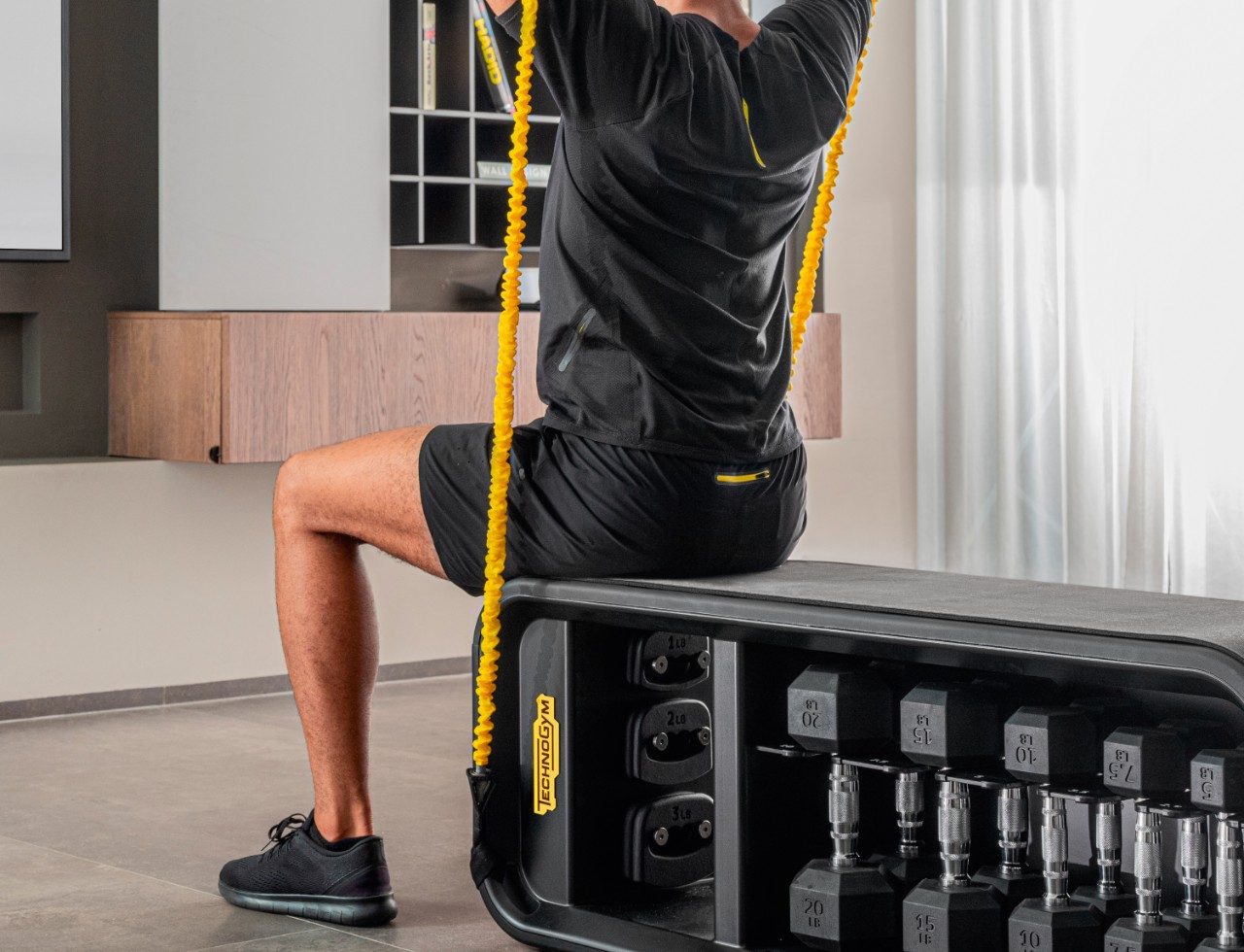
In-Suite Fitness
Enjoy access to an all-inclusive functional training kit that empowers you to perform total body workouts with the guidance of the Technogym virtual coach, in the comfort of your suite, or on your very own balcony overlooking the ocean.
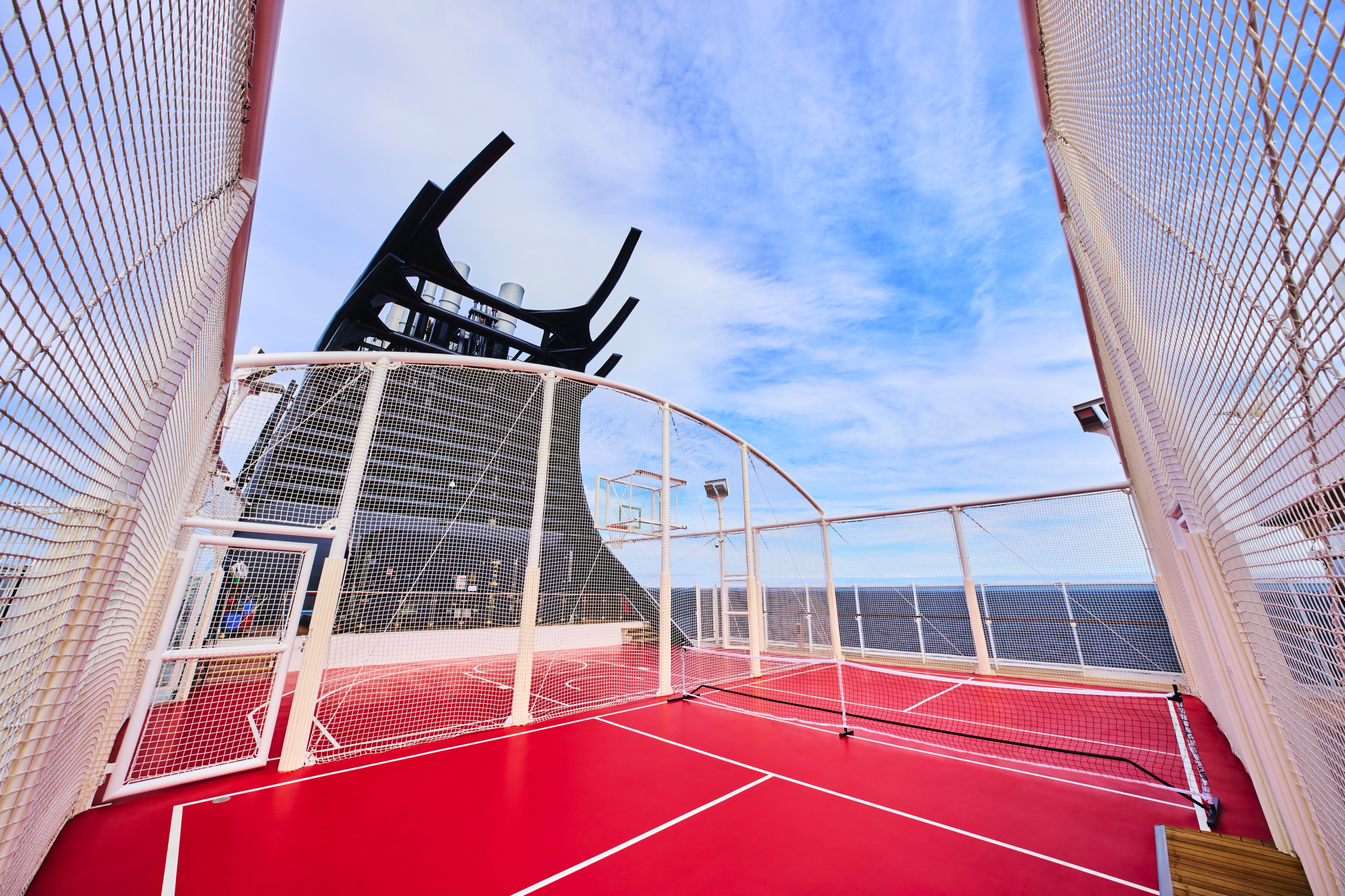
Sports Court
A dedicated space for various activities, such as touch tennis, half basketball and yoga ritual experiences. The use of the space is complimentary for all guests and the equipment such as balls, rackets and other will be provided on board free of charge.
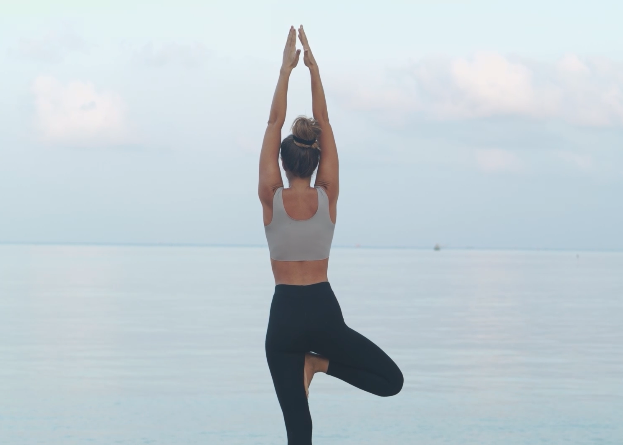
Sundial Salutation
This twice-daily, movement-based wellness ritual invigorates guests as they begin each new day, then calms them as sunset slides into nightfall.

Ocean Meditation
Simple daily guided meditations against a backdrop of sky and ocean, a welcome to each new day. A blend of local cultural practices and soothing stories about the day’s destination.
Running Track
An extended panoramic 262 m (860 ft) running track on Deck 12 is availble only on EXPLORA III and EXPLORA IV.

Nautilus Club
A space dedicated to our younger guests
Our team of expert hosts ensure the entertainment and enrichment of children aged six to 17 years old. Children aged three to five years are also welcome at specific intervals for age-appropriate activities, if accompanied by a parent or guardian.
Open every day from 9:00 until midnight, the Nautilus Club offers the latest generation of video games and VR consoles, such as PlayStation 5 and PlayStation VR2, Xbox, Nintendo Switch, iPads and Oculus Pro.
Children can also try their hand at foosbal, pool (at a table designed and crafted in Italy by MBM Biliardi), or listen to their favourite music at our jukebox tablet connected to streaming platforms such as Spotify and Apple. We also offer a large collection of board games and a digital library with a wide range of books across a multitude of languages.
Nautilus Club on EXPLORA III and EXPLORA IV
The Nautilus Club on EXPLORA III & EXPLORA IV has been thoughtfully enhanced with dedicated spaces designed for children and teens, creating 2 distinct spaces:
Nautilus Club – Juniors: Tailored for children aged 3 to 5 years old, this area will also include six hours per day baby care services. For children under 3 years old, parents can enjoy baby time together, or take advantage of supervised care without parents.
Nautilus Club – Teens: A reserved club for younger guests aged 6 to 17 years old, this space offers activities and experiences designed to inspire and entertain older children and teenagers.
Other Nautilus Club Activities
The space also offers sports sessions, technology tournaments, painting, arts and crafts, and games throughout the ship. Our Nautilus Club hosts are certified according to CLIA (Cruise Lines International Association) policies and standards on youth activities, making sure that children and teens are looked after as and when needed. All younger guests can also enjoy reserved periods at the Sports Court, one of the heated pools, as well as other locations around the ship.

Anthology
A Gastronomic Discovery
Taking guests on a unique culinary journey through Italy.
Refined Italian Cuisine
As our signature fine-dining experience, Anthology elevates Italian cuisine, offering an unparalleled gastronomic adventure.
On the menu, created by our esteemed Head of Culinary, Franck Garanger, each dish is a celebration of Italy’s finest regional ingredients and flavours.
Contemporary, Refined Elegance
With the opportunity to dine outdoors, Anthology offers an intimate yet elevated dining atmosphere with flawless, attentive service.
- Indoor seating: 48
- Outdoor seating: 22
- Open for dinner
- Reservations recommended
- An Exclusive Experience Fee Applies
- Located on Deck 5
Sakura
A vibrant Pan-Asian fine-dining experience
Named after Japan’s iconic cherry blossom, Sakura blends contemporary elegance with the vibrant spirit of Asia’s culinary capitals. With sweeping ocean views, guests enjoy Mediterranean Bluefin tuna, wagyu tataki, and freshly prepared sushi — paired with curated sakes, shōchūs, and Asian beers. A modern expression of immersive Pan-Asian cuisine.
Culinary highlights
Wagyu beef tataki
Our sustainably sourced prime grade five Japanese wagyu beef is delicately torched by our chefs: an authentic method of cooking that ensures that the cut’s best qualities are preserved.
Makrut lime pavlova
A fusion of east and west, this unique interpretation of pavlova is a perfect representation of the passionate, creative expertise and multicultural diversity of our talented pastry team .
Kale salad
Another example of our chefs’ ingenuity, a humble kale salad is transformed into culinary art for our guests to enjoy. This superfood salad represents a fusion of clean living with the flavours of Asia.
Intimate and Welcoming Environment
The ancient tea rooms of Kyoto provide the inspiration for Sakura’s aesthetic, where dark wood frames lead your eye to the ceiling, adorned with a blossom tree canopy which envelops diners in a warm atmosphere of festoon lights.
- Indoor seating: 92
- Outdoor seating: 26
- Open for lunch and dinner
- Reservations recommended
- The Sushi Bar is open-seating on a first come first served basis.
- Located on Deck 5
Marble & Co. Grill
The Art of Marbled Excellence
Marble & Co. Grill is a vibrant celebration of European steakhouse tradition, elevated by French-inspired finesse. Its name reflects delicate marbling – the hallmark of the world’s finest cuts.
Culinary highlights
Grilled prime rib
From a local producer in the Deux Sévres region of the lush Loire Valleé, it’s clear why the famous Jersiaise breed, renowned for its sensational flavour and intense marbling, is one of the most sought-after cuts of prime rib
European Steakhouse, Redefined
The experience at Marble & Co. Grill is reflected through the modern, understated yet sophisticated design with soft lighting and relaxed, attentive service.
- Indoor seating: 80
- Outdoor seating: 10
- Open for dinner
- Reservations recommended
- Located on Deck 5
Med Yacht Club
A celebration of the Mediterranean coastal living
Inspired by the region’s sun-drenched coastlines, Med Yacht Club captures the easy rhythm and convivial spirit of the Mediterranean. The menu brings together the flavours of Italy, Spain, Greece, France, and North Africa — a tapestry of coastal influences expressed through sharing plates created with authenticity and passion.
Culinary highlights
Sweet Caprese
The finest cherry tomatoes and strawberries create an intriguing base, upon which our burrata sits adorned with even more sweet tomatoes and strawberries with a drizzle of pesto from Sicilian Bronte pistachios.
The Essence of the Mediterranean
Effortlessly refined in its design, space and light creates a convivial atmosphere, with bright sunshine streaming through large portholes and Med-influenced music transporting guests on a culinary journey inspired by the sea.
- Indoor seating: 136 (34 at the bar)
- Open for lunch and dinner
- Located on Deck 4
Emporium Marketplace
Effortless all-day dining
Named after the Greek word emporion (‘place of exchange’), Emporium Marketplace celebrates global cuisine and the joy of discovery through food. Guests can explore a remarkable array of authentic flavours, from destination-inspired dishes to handmade pasta and wood-fired pizza.
Open kitchens buzz with quiet energy, while artisanal charcuterie, fromagerie and pâtisserie stations bring a refined touch. A chilled glass of Champagne partners perfectly with fresh crudo, as the sun sets on the horizon.
Culinary highlights
Handmade tortelloni
Our tortelloni are made onboard from scratch every day in the authentic Italian way. Carefully selected flour is used to make dough that has the correct degree of elasticity.
Plant based chia yoghurt
Our chia yoghurt is daily made from homemade cashew milk, creating a fusion of delicious creamy flavours for guests to enjoy each morning.
Light, Space, Flavour
Bathed in natural light, several separate cooking stations evolve throughout the day with white marble and minimalist design accents, allowing the freshest ingredients to take centre stage.
- Indoor seating: 271
- Outdoor seating: 70
- Open for breakfast, lunch and dinner
- Located on Deck 11
Fil Rouge
French-inspired international cuisine
Fil Rouge is an elegant celebration of global cuisine, seen through the lens of French artistry. Its name — ‘the red thread’ — speaks to the connections woven between cultures, flavours, and stories.
In a serene, though contemporary setting, time slows. The menu blends international inspiration with refined French technique, offering a dining experience that is both authentic and imaginative.
Evenings unfold with quiet indulgence – signature soufflés, a curated wine list, and the charm of the iconic dessert trolley. And in the morning, a hidden gem awaits: an exquisite breakfast, served with elegance and intention.
Culinary highlights
Tuna Tataki
Sustainably raised and caught in the open Mediterranean Sea close to the Cartagena Bay, the Mediterranean Bluefin tuna sourced by our chefs is some of the best grade to be found anywhere in the world.
A Refined, Timeless dining experience
Fil Rouge embodies the essence of understated sophistication. A visual and culinary interpretation of elegance, its refined geometry — inspired by interlocking hexagons — symbolises balance and harmony.
- Indoor seating: 222
- Open for breakfast and dinner
- Located on Deck 4
Chef's Kitchen
An Interactive Culinary Experience
Guided by our team of world-class chefs, immersive and interactive cooking classes invite guests of all skill levels to embrace the art of creating exquisite dishes.
More than a cooking class, it’s a social and sensory celebration – where learning is joyful, conversation flows freely, and food is savoured in good company. Each experience culminates in the nearby private dining room, where the class – guests and chefs alike – gathers to enjoy the dishes they’ve prepared together.
Ocean-front private kitchen
The Chef’s Kitchen offers a range of enriching, hands-on culinary experience set within an intimate, ocean-front private kitchen.
- Indoor seating: 12
- An exclusive experience fee applies
- Available for reservation only onboard
Shore Club on 11 at The Conservatory
A relaxed yet refined poolside setting where sun, warmth, and flavour come together. Freshly prepared favourites and vibrant bites influenced by sun-soaked coastal traditions are served in a laid-back, light-filled space perfect for unhurried moments and lingering afternoons. Inspired by carefree summer days by the sea, the coastal vistas, the glow of the sun, and the simple pleasures of elevated poolside dining.
The Chef’s Table by Explora Journeys
An exclusive one-of-a-kind experience where dining becomes a dialogue between taste and intention – intimate, expressive, and entirely your own. Reserved for those who seek privacy, personalisation, and the pleasure of curation, this experience invites guests to collaborate closely with our chefs to craft a fully bespoke menu, transforming preferences, stories, and inspirations into a one-of-a-kind culinary journey to share with the people you love. Whether hosting a meaningful celebration or a a private evening with loved ones, the experience is personally prepared and presented by our chefs – with every dish created with care and presence.
In-Suite Dining
Refined dining in the comfort of your suite or private terrace
Our guests can enjoy an array of cuisines at any time, day or night, in the comfort of their suite or private terrace. Available 24 hours, the menu offers guests a taste of each of our unique dining destinations.
- Available 24 hours
Destination Experiences
Inspiring authentic discovery across culture, history, and cuisine.
Intimate Explorations
Intimate, smaller groups with like-minded guests, for authentic exploration – with opportunities to understand the culture and connect with locals.
Explore with Peace of Mind
Seamless experiences with everything taken care of, no hidden fees, fully insured partners, transportation arrangements and flexibility in case of change of plans.
Authentic Immersions
Enriching opportunities to explore behind-the-scenes in unique locations. Crafted experiences curated in collaboration with expert partners and ambassadors.
Destination Experiences Categories
Private Arrangements
We are pleased to curate your requests for customised arrangements that can be as off-the-beaten-path or utterly indulgent as you wish.
Whether yours is an intimate group or a larger gathering of family and friends, we can help you adapt a featured destination experience or tailor an arrangement that delivers exactly what and where you prefer.
Destination Essentials
Our Destination Essentials offer immersive experiences, with hidden wonders and little surprises.
Your experiences will feature:
- Must-do experiences
- Discovering local highlights through a different lens
- Expert guides and hosts to enhance your discovery
- Culinary tastings through local flavours and traditions
- Full immersions into cultures and customs
- Close-up encounters with the natural world
Curated Explorations
Our Curated Explorations offer unmatched experiences and moments that are off-limits to most.
Your experiences will feature:
- Small, intimate groups
- Tailored, boutique adventures
- Behind-the-scenes experiences
- Guided by locals for more enriching discovery
- Deeper insights into cultures and traditions
- Premium culinary and beverage experiences
- VIP access to landmark sites and special events
Overland Immersions
Our Overland Immersions are all-inclusive and available to small groups during your Journey.
What to expect:
- Luxury transportation such as private jet, helicopters, vehicles, boats or other means
- Accommodation in 5-star or boutique hotels
- Culinary experiences, including all meals, beverages, and selected spirits
- VIP access to landmark sites and special events
- Exclusive evening experiences
- Meticulously vetted hosts to coordinate all logistics
- Luxury transfers and luggage handling
Entertainment Experiences
Each moment invites you to embrace your own Ocean State of Mind
World-Class Performances
Immerse yourself in curated, world-class performances by our distinguished roster of guest artistes, from Broadway and West End icons to Steinway Artistes. Whether masterful expressions of music or authentic local performances, these acts will capture your imagination.
Curated Moments
Thoughtfully curated gatherings that reflect the spirit of Explora Journeys, bringing guests and hosts together through captivating performances, cultural celebrations, and unique moments that create lasting memories.
Engaging Sessions
Numerous daytime events and activities that include programmed, organised activities like sports and games, plus spontaneous surprise activations such as a pool game or dance classes.
Clubs
Explora Journeys presents a thoughtfully curated collection of clubs, offering guests meaningful opportunities to connect with others who share similar interests, values, and lifestyles. Whether travelling solo, embracing diversity, or seeking a mindful, alcohol-free space, each gathering fosters connection and a genuine sense of community at sea.
Prism
Prism Club proudly celebrates diversity —inviting LGBTQIA+ guests and allies to come together through inclusive, uplifting events and gatherings.
Club Soda
Club Soda creatively supports those embracing an alcohol-free lifestyle, with vibrant, zero-proof experiences that reimagine the art of socialising in refreshingly sophisticated ways.
Luminary Enrichment
A curated series of onboard sessions, workshops, and experiences led by our Luminaries, passionate experts in their fields.
Destinations
Experts who bring destinations to life with regional history, culture, nature, and geography.
Special Interest
With insights into their chosen field, our Special Interest Luminaries will uncover literature, wellness, design, science, entertainment, or athletics, igniting curiosity and broadening your perspective.
Natural World
Draw closer to the beauty and complexity of nature, wildlife, and the environment. Dedicated to preserving our most vital ecosystems, our Natural World Luminaries shares knowledge and a sense of wonder.
Creative Arts
Let your artistry flow as our Creative Arts Luminaries, skilled artisan experts in refined techniques and authentic expression, guides you in an engaging session celebrating the joy of creating by hand.
Interactive Digital Entertainment
By scanning QR codes placed throughout the ship, guests can access new digital content each day, designed for enjoyment at their leisure.
Daily features include themed word searches, Sudoku puzzles, and crosswords, all thoughtfully curated to reflect the spirit of the journey.
Extended Journeys
Our Extended Journeys invite you to see the world with greater depth and ease — combining two or more consecutive journeys into one seamless exploration.
Enjoy up to 20% savings compared to booking each journey individually* and allow yourself the luxury of time — to linger longer, discover more, and truly immerse in the rhythm of the ocean and the destinations we explore.
Each of our curated Extended Journeys offers a continuous flow of discovery, with enriching destinations, a deeper sense of connection, and the convenience of remaining in your suite throughout — no need to pack or unpack, simply settle in and savour every moment.
Benefits
Take the time to embrace the art of slow travel — whether through long, unhurried lunches by the sea, rejuvenating afternoons at Ocean Wellness – The Spa, or new perspectives uncovered ashore. Every detail is thoughtfully curated to inspire your journey into the Ocean State of Mind.
Up to 20% Savings
Enjoy generous savings when combining select consecutive journeys into one seamless experience.
Ultimate Ocean Escape
Unpack once and unwind – your suite is yours for a seamless journey filled with complimentary experiences, refined dining, and ocean-inspired wellness.
Bespoke Assistance
Our Ambassadors at the Explora Experience Centre are on hand to help you curate your own tailored Extended Journeys.
Inspiring Destinations
A deeper exploration of vibrant cities, hidden gems, and coastal wonders.
Casino
Explore the intimate, elegant space of The Casino and its diverse gaming offerings: from thrilling poker and blackjack tables to the excitement of American roulette, baccarat elegance, and the chance to hit it big with progressive slot machines.
Journeys Lounge
Mixology, enrichment and entertainment continuously evolving throughout the day.
The most spacious onboard lounge features mixology specialists, enrichment activities and cabaret-style entertainment daily. This venue is designed to continuously evolve and transform throughout the day along with the ocean journey.
- Indoor seating: 210
- Located on Deck 4
Explora Lounge
A luminous lounge offering spectacular 270-degree views of the ocean, a spectacular backdrop to informal drinking and dining.
Explora Lounge is a central meeting place bathed in natural bright light, where guests can watch the world sail by as they enjoy light meals, snacks, and traditional afternoon tea. Perfect for a quiet moment to read, work or sip a coffee, or simply admire the beautiful sea-facing views which instantly ease the mind into a calming space.
Cool and soothing background music during the day is transformed into a jazz and piano bar at night. This is the perfect soundtrack to your journey paired with a sunset aperitivo in hand.
Guests can enjoy light meals, snacks, traditional afternoon tea, along with inventive modern cocktails barista-made coffees, loose leaf teas, smoothies, and fresh pressed juices.
- Indoor seating: 149
- Outdoor seating: 38
- Located on Deck 11
Astern Pool & Bar
An all-day pool and outdoor lounge at the water’s edge.
An all-day lounge next to the infinity pool, ideal for a waterfront escape offering chilled beach club vibes, with low background music by day and acoustic musicians and DJs as the sun sets, continuing throughout the evening.
Outdoor dining is available from nearby restaurant, Sakura in the form of nutritious bento boxes, conveniently served seated at a table, a lounger or a poolside sunbed.
- Outdoor seating: 122 (Includes sunbeds, lounge chairs and bar seating)
- Located on Deck 5
Astern Lounge
An all-day lounge and oceanfront escape opening onto the Astern Pool.
The Astern Lounge is the social hub of any journey, with a collection of daily events and happenings suited to every taste.
Effortlessly transitioning throughout the day, Astern Lounge hosts live music, DJ sessions and enrichment insights with a collection of handpicked tastemakers. Coming to life at sundown, the lounge perfects the aperitivo through a nightly ritual celebrating golden hour, complemented by live entertainment.
- Indoor seating: 70
- Located on Deck 5
The Conservatory Pool & Bar
An all-day poolside lounge protected from the elements.
The Conservatory is a weather-protected poolside lounge by day. By night, it turns into a cinema experience under the stars. A relaxed, calming venue to unwind and enjoy cocktails, with light, lively background music playing throughout the day.
- Indoor seating: 52
- Located on Deck 11
Lobby Bar
A laidback, centrally-located bar and lounge perfect for socialising.
Located at the heart of the ship, the Lobby is a laid-back, relaxed social hub, perfect for breathing in the onboard ambiance. A natural stop for an aperitif, a post-dinner moment with live music, or a gentle pause throughout the day.
- Indoor seating: 40
- Located on Deck 4
Atoll Pool & Bar
An intimate pool for laidback lounging throughout the day.
A laidback venue where guests can enjoy the sun, sea and serenity day-long, accompanied by a selection of energising, colourful drinks.
- Outdoor seating: 138 (Includes sunbeds, lounge chairs and bar seating)
- Located on Deck 10
Malt Whisky Bar
A refined tour across the globe’s most celebrated whiskey regions.
Set within the Explora Lounge, Malt offers a refined tour of the global whisky regions, including some of the rarest whiskies, complete with a walk-in humidor, cigar expert and a dedicated outdoor cigar-smoking terrace.
Alongside its drinks menu with an emphasis on dark brown spirits the bar also features an outdoor smoking area for guests to enjoy their hand-rolled cigars*, selected with the guidance of our cigar expert. A range of signature whiskey-based cocktails are also available, curated exclusively for Explora Journeys and served accompanied by the smooth sounds of jazz.
- Indoor seating: 20
- Located on Deck 11
Crema Café
Bustling European all-day café culture on the world’s oceans.
A luxurious layer of crema nods to the freshness of an espresso and aptly lends authenticity and sophistication to a café at the centre of life on board.
Inspired by modern European café culture, Crema Café has softy stylish interiors with comfortable lounge seating, with access to a choice of reading materials and all set against uninterrupted views of the sea. A place to meet, discuss, unwind, taste and indulge, where like-minded guests gather to mingle and converse.
Coffee is chosen by selected connoisseurs who have travelled the world exploring fair-trade coffee origin, character, and strength. Discover the refined methods of brewing coffee from skilled baristas, taste high-quality loose-leaf teas with an on-hand tea expert, or enjoy refreshing cold-pressed juices. A glass display showcases pastries, cakes, desserts and sweets including madeleines, cannelés, biscotti, navette sandwiches as well as gelato throughout the day.
- Indoor seating: 62
- Outdoor seating:16
- Located on Deck 5
Sky Bar On 14
Refreshing cocktails and infinite views in a sophisticated outdoor setting.
Set on the ship’s highest point, on deck 14, this panoramic outdoor lounge setting is ideal for soothing cocktails and infinite views.
- Located on Deck 14
Helios Pool & Bar
A panoramic adults-only pool and lounge experience.
Inspired by the Ancient Greek god of the sun, and also literally meaning “sun” in Greek, this adults-only area is indeed the sunniest venue onboard, panoramically facing forward on deck 12. Enjoy lying by the pool or lounging throughout the day as you watch the ship sail through the sea.
- Outdoor seating: 100 (Includes sunbeds, lounge chairs and bar seating)
- Located on Deck 12
The Cellar by Explora Journeys
Refreshingly relaxed, The Cellar by Explora Journeys creates a welcoming space where wine is enjoyed through curiosity, easy conversation, and genuine pleasure. Its collection brings together characterful Old World classics, expressive New World favourites, and a few quietly remarkable rarities.
Our Cellar Masters share their passion with an intuitive, light touch – offering guidance or a gentle surprise when the moment feels right. Whether it’s an aperitivo, a bottle carried through dinner, or a final glass with chocolate truffles, the experience feels personal, comfortable, and quietly elevated.
- Main space with 8 seats
- Private area with 4 seats
- Pricing: Options starting from EUR/USD 15–20 per glass, with a wide range of options up to rare and exceptional vintages
- Small bites and hand-crafted chocolate truffles crafted to complement the tasting experience
The Journey
Inspired by the Ocean State of Mind and influenced by the destinations we visit, The Journey is more than just a place to browse.
Shop fragrance, skincare, apparel, homeware, accessories and fine foods.
Our Inspiration
Every item available is a celebration of creativity, passion, and the power of discovery, each with its own magical story to tell.
Discovery
We champion small, luxury, locally-influenced brands with unique stories to tell, inviting our guests on a journey of discovery into the diverse cultures, flavours, and skills of the visionaries in the destinations we visit.
Consciousness
We are dedicated to partnering with brands that prioritise sustainability, using regenerative, recycled, and natural materials at the heart of the production process; supporting slow fashion and waste reduction, and reducing our environmental impact.
Provenance and Craftmanship
Our products are a celebration of the artisan: skilled craftspeople, artists, smaller suppliers, and designers who pour their passion and creativity into every detail, with a focus on quality materials and finishing.
Collections
More than just a place to buy, our retail experience is a journey of discovery, consciousness, and craftsmanship with provenance. Explore our unique collection of over 30 of the finest artisanal brands that share a commitment to caring for people and planet.
Sensorial Fragrances & Skincare
Regionally inspired, our carefully selected collection of niche fragrance brands showcases the rarest and most precious natural ingredients, for a memorable sensory experience.
Effortless Ready-to-Wear
Unparalleled comfort and style, a curated collectionfor men and women, designed to envelop the wearer in effortless confidence and ease.
Homeware & Gifting
Distinct pieces, beautifully designed for aesthetics and ergonomics. The perfect tokens to take home with you or gift to a loved one following your journey.
Timeless Accessories
Crafted to perfection and designed to last a lifetime, our timeless collection spans scarves, lather goods, eyewear and lifestyle accessories.
Fine Food & Drink
Savour the essence of your travels through the finest food and beverages, carefully selected to showcase small producers, unforgettable flavours and unique stories.
ENCORE
By Explora Journeys
Pre-loved luxury, sustainably yours. Timeless icons, given new life.
Some treasures are too precious for just one story. ENCORE offers a curated collection of authenticated, pre-loved luxury bags and accessories, each with a past as unique as its future.
From rare finds to timeless icons, every piece has been lovingly restored and meticulously verified for quality and authenticity.
Our Bespoke Fragrance
Introducing Mandala Blue by Explora Journeys, the scent of the ship, curated with master perfumer Alberto Morillas.
A fragrance that relaxes, connects, awakens the senses and ultimately transforms.
Cue notes that echo the ocean with enchanting freshness, layered alongside dominant woody and spicy signatures.
Available to purchase from The Journey.
Brand Selection
We’re committed to partnering with brands who reflect our own commitment to sustainable practices and environmental consciousness. It is why we are the first retail experience on the water to seek out partners with relevant certifications, ensuring a positive approach to their production practices.
B-Corp Certified Partners
Ensuring the highest standards in social and environmental performance.
Positive Luxury – Brands to Trust
The Butterfly Mark certification is an independent, globally respected trust mark awarded to luxury brands, retailers and suppliers that meet the highest standards of verified ESG+ performance
Shops
Ship Exclusives
Dedicated boutiques with knowledgeable and experienced hosts.
Rolex
The first ever official on-ship Rolex boutiques.
Chopard
A curated selection of timepieces and jewellery.
Ocean Atelier
The new multi-brand jewellery boutique by Explora Journeys.
Available across the Fleet
Our curated collections include a tempting selection of Swiss watches and the finest jewellery, alongside an array of artisanal creations.
Cartier
Exceptional craftsmanship and a timeless signature, born of a unique vision.
Panerai
Italianity, Marine World, Swiss Technicity and Modern Heroes: the four pillars that define Panerai.
Piaget
Creator of emblems of daring excellence and mechanical masterpieces.
Ocean Wellness Spa
A calming space designed to reconnect guests to themselves – influenced at every level by the calming presence of the ocean.
The spa is where the pressures of daily life dissipate to insignificance amidst a sensory journey to the Ocean State of Mind.
Features & Services
- Spa
- Wellness area with thermal facilities
- Signature Ocean Wellness rituals
- Facial treatments
- Body treatments
- Specialised Medi Luxe Treatments by Dr Levy Switzerland
- Ashore wellness Destination Experiences
- In-suite treatments
- New signature treatments, curated collaborations and the Sava Sound Pod (Exclusive to EXPLORA III)
*Spa treatments, including massages and facials, require a minimum age of 12 years, with parental supervision. Access to our Wellness area and thermal facilities is reserved for guests aged 16 years and above.
Eleven Dedicated Treatment Rooms
- Two Private Spa Suites with a dedicated outdoor relaxation area
- One Double treatment room
- Seven single treatment rooms
- One single treatment room for specialised skin treatments
- Outdoor relaxation area
*Spa treatments cannot be booked until 90 days prior to embarkation.
The Spa Facilities:
- Steam Room – A regenerating oasis of psycho-physical wellbeing. Air, steam, and scented fragrances combine and gently rest on the skin, making natural exfoliation easier and increasing perspiration.
- Experience Shower – A multi-sensory journey, the warm shower is complete with fragrances and soft colour lights, offering moments of utmost pleasure – either at the beginning or at the end of the day.
- Hydrotherapy Pool – This warm therapeutic pool is designed to promote healing, relaxation and physical rehabilitation. Heated to a soothing temperature, gentle currents and jets work to ease muscle tension, improve circulation, and support joint mobility.
- Finnish Sauna – A deeply purifying experience using dry heat, to help you unwind and reduce stress levels while also opening the airways, relaxing the muscles, and oxygenating tissues.
- Salt Cave – In an inviting cavern with walls covered in Himalayan salt bricks, the air is infused with microscopic salt particles and negative ions. As you inhale the mineral-rich air, respiratory health is enhanced and a sense of overall relaxation ensues.
- Steam Shower – A shower that combines the relaxing heat of the steam and the regenerating freshness of water. (* Available within private Spa suites)
- Ice Fall – The Ice Fall regenerates the body after intense heat exposure in the Finnish Sauna or Steam Room.
- Heated Marble Loungers – A restful place to relax, equipped with an infrared system that radiates the heat to ease muscle stiffness and create on overall feeling of comfort and warmth.
- Outdoor Relaxation Area – A tranquil open-air relaxation deck with infinite ocean views, perfect for reflection before or after a treatment.
Ocean Wellness Fitness
Energise the body with a dynamic workout, accompanied by the invigorating soundtrack of the ocean.
Our Fitness Centre offers distinct zones for cardio, strength, and functional training, all outfitted with premium. Technogym Artis equipment, designed to maximise efficiency and optimise results. Among the many options, reach your cardio goals with the Run Artis treadmill and Artis Synchro elliptical – engineered for engaging, effective movement.
In the strength zone, sculpt the lower body with high-quality solutions such as the Artis Leg Press and Artis Leg Curl, or train the upper body with the Artis Chest Press and the Artis Shoulder Press.
For a full body challenge, the innovative Technogym Bench delivers over 200 exercise possibilities in one sleek station. Paired with tools such as Urethane Dumbbells, it offers a complete solution for streamlined training.
Over 350 sqm (3,750 sq ft) of indoor and outdoor fitness facilities designed in partnership with Technogym.
Features:
- Functional training
- Strength training
- Cardio
- Pilates Reformers
- Technogym classes
- Body assessment
- Immersive wellness experiences
- Outdoor exercise
- Cycling classes
- Personal and group training
- Private Personal Training Studio (Exclusive to EXPLORA III and EXPLORA IV)
Ocean Wellness The Beauty Studio
We believe true beauty begins within. When you feel well, it radiates, bringing confidence on the outside too.
Step inside The Beauty Studio – a serene, flowing space, designed to meet all your beauty needs. From indulgent hair rituals and precision, barber treatments to rejuvenating hand and foot care, every service is delivered with intention and care.
Services include:
- Hair Care Rituals
- Barber Services
- Manicures & Hand Treatments
- Pedicures & Foot Care
- In-Suite Beauty Services
Ocean Wellness Wellbeing
Experiences, programmes and spaces designed to enhance the influence of the ocean on wellbeing
From sleep to nutrition, our collection of initiatives has been carefully curated to ensure each and every guests has the opportunity to enhance their sense of wellbeing, no matter their fitness levels or abilities.
Sleep Retreat
Sleep is the calm that lays the elemental foundations of life.
Our Sleep Retreat provides guests with a series of sleep-enhancing practices curated following an introductory one-to-one workshop and accompanied by a sleep-enhancing smoothie.
From the Aromatherapy Associates Relax and Sleep Ritual and restorative Yoga Nidra classes to in-suite bedtime meditations, our therapists ensure every guest benefits from a well-rested stay.
The Sleep Retreat also offers access to expert-led workshops that help uncover the importance of sleep, giving answers to an important – yet often overlooked – subject.
Mindful Nutrition
A celebration of talents, cultures and passions.
Yoga
ENERGY YOGA:
Energy flow power class with the addition of bamboo tapping to supercharge energy levels. Complete the yoga practice with a bespoke visualisation inspired by the ocean’s incessant vitality.
SLEEP YOGA:
A portal to peace, this combination of restorative yoga, Yoga Nidra and the addition of warm neck and eye pillows sends you on a path to a truly blissful night’s sleep.
RELAXATION YOGA:
Cradle your emotions with the crystal oceanic wisdom singing bowl whilst meditating to focus on love and kindness. All to foster greater feelings of self-love and appreciation.
MINDFULNESS YOGA:
A deeply therapeutic restorative yoga class anchoring the body and mind in the present moment through the use of essential oils and bespoke guided ocean-inspired meditation.
IMMUNE-BOOSTING YOGA:
Yoga flow with a focus on pranayama techniques, proven to enhance oxygen flow and reduce anxiety. The practice ends with an immune-fortifying juice shot.
Immune Boosting Retreat
This wholly restorative programme includes an introductory one-to-one workshop with a welcome immune-fortifying juice, as well as a one-to-one yoga flow with a focus on pranayama techniques and thymus tapping. The programme is complemented by a specially curated immune-fortifying lunch and an Aromatherapy Associates Immune Support Treatment.
The Retreat also includes access to expert-led workshops that uncover the importance of protecting your immune system. Learn about the core principles of immunity, and how to boost it.
The workshop is complemented with immune-fortifying foods, snacks and pranayama techniques to practice at home, taking the retreat beyond the parameters of your ocean journey.
Embark on a journey of awakening
A series of onboard experiences to help you begin your day with intention. Designed to enliven your senses and elevate your mood as you transition into the Ocean State of Mind.
Touch
- Sunrise yoga on deck accompanied by rejuvenating bamboo tapping
- Technogym Case with a wake up and energise routine for an active start
- Guided morning stretches streamed directly to your in-suite TV.
Hear
- Curated Awakening playlist to gently energise your morning featuring soothing ocean harmonies to welcome a new day.
See
- Journey of Awakening TV channel with mindful movement and breathing sessions
- Revive lifestyle cards with daily inspiration and wellbeing tips.
Smell
- Uplifting scented towels available at the Ocean Wellness – Fitness Centre and throughout wellness experiences.
Taste
- In-suite vitality shot to boost energy.
- Wellness-focussed breakfast selection and energising herbal teas.
Embark on a journey of sleeping
Transition into rest with a series of onboard experiences designed to invoke a sense of calm and serenity, encouraging a deep, restorative sleep.
Touch
- Evening Yoga Nidra for deep relazation
- Soothing bath ritual to unwind
- Technogym Case: Good Night & De-Stress routine to relax the body
Hear
- Guided bedtime meditations via in-suite TV
- Tranquil nighttime playlist to ease into sleep
See
- Journey of Sleeping TV channel with calming visuals and sleep stories
- Restore lifestyle cards with evening wellness rituals and wind-down tips.
Smell
- Relaxing pillow mist made with essential oils
Taste
- Sleep-enhancing dining options
- Herbal teas crafted to promote restful sleep
Indoor and Outdoor Pools
A fourth pool, with a retractable glass roof, will allow swimming and poolside relaxation in any weather.
Combined with various indoor and outdoor whirlpool baths on the ship’s promenade deck, the ship has been designed with water as a real focal point of the onboard experience – helping our guests discover their ocean state of mind.
Fitness Studio
Step into the Fitness Studio – a refined space within the Fitness Centre, designed for movement, balance and strenght. Join yoga classes on extra-large Technogym training mats for optium comfort, or dive into functional workouts with cutting-edge equipment such as the Technogym Bench, Technogym Skill tools and the Technogym Case Kit. This smart kit includes instant access to a digital library of guided workouts via QR code, bringing personalised routines right to your fingertips.
For those seeking improved balance, our Pilates Reformers classes focus on deep core activation, delivered by experts.
Open Air Fitness
Experience fitness like never before on our outdoor deck, where the ocean meets your wellness goals. The Open Air Fitness is equipped with the latest fitness equipment including:
– SKILLROW: the first outdoor rowing machine designed to improve anaerobic power, aerobic capacity and neuromuscular abilities.
– GROUP CYCLE BIKES: perfect for engaging cycling sessions with panoramic views.
– TECHNOGYM CASE KIT: allowing you to train with ease following guided routines.
Guests can personalise their workout by training solo, receiving guidance from a personal trainer, or joining one of our vibrant fitness classes.
Outdoor FItness extendes beyond the deck with:
– RUNNING TRACK: A 360º track circling the ship, where runners can enjoy commanding ocean views with every lap.
– SPORTS COURT: The ideal spot for touch tennis, half basketball, or yoga rituals.
In-Suite Fitness
Enjoy access to an all-inclusive functional training kit that empowers you to perform total body workouts with the guidance of the Technogym virtual coach, in the comfort of your suite, or on your very own balcony overlooking the ocean.
Sports Court
A dedicated space for various activities, such as touch tennis, half basketball and yoga ritual experiences. The use of the space is complimentary for all guests and the equipment such as balls, rackets and other will be provided on board free of charge.
Sundial Salutation
This twice-daily, movement-based wellness ritual invigorates guests as they begin each new day, then calms them as sunset slides into nightfall.
Ocean Meditation
Simple daily guided meditations against a backdrop of sky and ocean, a welcome to each new day. A blend of local cultural practices and soothing stories about the day’s destination.
Running Track
An extended panoramic 262 m (860 ft) running track on Deck 12 is availble only on EXPLORA III and EXPLORA IV.
Nautilus Club
A space dedicated to our younger guests
Our team of expert hosts ensure the entertainment and enrichment of children aged six to 17 years old. Children aged three to five years are also welcome at specific intervals for age-appropriate activities, if accompanied by a parent or guardian.
Open every day from 9:00 until midnight, the Nautilus Club offers the latest generation of video games and VR consoles, such as PlayStation 5 and PlayStation VR2, Xbox, Nintendo Switch, iPads and Oculus Pro.
Children can also try their hand at foosbal, pool (at a table designed and crafted in Italy by MBM Biliardi), or listen to their favourite music at our jukebox tablet connected to streaming platforms such as Spotify and Apple. We also offer a large collection of board games and a digital library with a wide range of books across a multitude of languages.
Nautilus Club on EXPLORA III and EXPLORA IV
The Nautilus Club on EXPLORA III & EXPLORA IV has been thoughtfully enhanced with dedicated spaces designed for children and teens, creating 2 distinct spaces:
Nautilus Club – Juniors: Tailored for children aged 3 to 5 years old, this area will also include six hours per day baby care services. For children under 3 years old, parents can enjoy baby time together, or take advantage of supervised care without parents.
Nautilus Club – Teens: A reserved club for younger guests aged 6 to 17 years old, this space offers activities and experiences designed to inspire and entertain older children and teenagers.
Other Nautilus Club Activities
The space also offers sports sessions, technology tournaments, painting, arts and crafts, and games throughout the ship. Our Nautilus Club hosts are certified according to CLIA (Cruise Lines International Association) policies and standards on youth activities, making sure that children and teens are looked after as and when needed. All younger guests can also enjoy reserved periods at the Sports Court, one of the heated pools, as well as other locations around the ship.
About the Ship
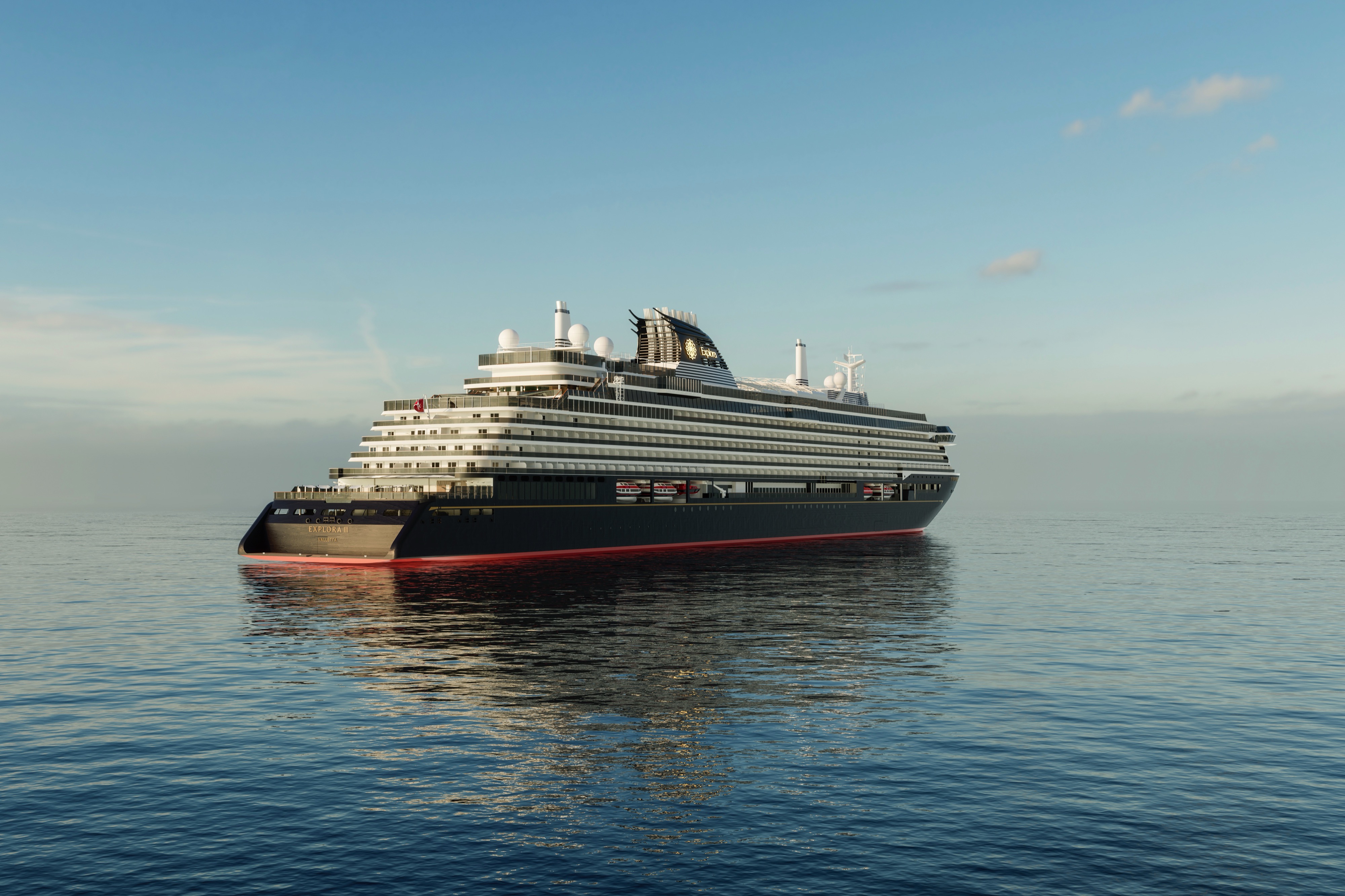
Deck Plans

- Medical Centre

- Journeys Lounge
- The Casino
- Guest Services
- Destination Experiences
- Future Journeys
- Chopard
- Rolex
- Cartier
- Lobby & Lobby Bar
- The Journey
- Med Yacht Club Restaurant
- Fil Rouge Restaurant

- Astern Pool & Bar
- Sakura Restaurant
- Astern Lounge
- Galleria D’Arte
- MSC Foundation
- Marble & Co. Grill Restaurant
- Anthology Restaurant
- Crema Café
- The Chef’s Table
- Chef’s Kitchen
- The Cellar
- Ocean Wellness Fitness Centre
- Ocean Wellness The Spa

- Ocean Grand Terrace Suite
- Ocean Terrace Suite
- Premier Penthouse
- Penthouse
- Grand Penthouse
- Cocoon Residence Penthouse
- Cove Residence with Private Whirlpool

- Retreat Residence
- Ocean Grand Terrace Suite
- Ocean Terrace Suite
- Grand Penthouse
- Cove Residence
- Penthouse
- Owner’s Residence by Patricia Urquiola

- Owner’s Residence
- Retreat Residence
- Ocean Terrace Suite
- Cove Residence with Private Whirlpool
- Cove Residence
- Deluxe Penthouse
- Penthouse
- Premier Penthouse
- Grand Penthouse

- Retreat Residence
- Cove Residence with Private Whirlpool
- Cove Residence
- Grand Penthouse
- Premier Penthouse
- Deluxe Penthouse
- Ocean Terrace Suite
- Penthouse
- Serenity Residence

- Atoll Pool & Bar
- Grand Penthouse
- Cove Residence with Private Whirlpool
- Premier Penthouse
- Ocean Terrace Suite
- Bridge

- Explora Lounge Outdoor Area
- Explora Lounge
- Malt Whiskey Bar
- Meeting Rooms
- Nautilus Club Teens
- Nautilus Club Juniors
- Outdoor Cigar Lounge
- The Conservatory Pool
- Indoor Whirlpools
- The Conservatory Bar
- Shore Club On 11 At The Conservatory
- Emporium Marketplace Restaurant
- Emporium Marketplace Outdoor Seating Area

- Helios Pool & Bar (Adults Only)
- Running Track
- Infinity Whirlpools

- Sports Court
- Whirlpool
- Sky Bar on 14
- Ocean Wellness Open Air Fitness
- Medical Centre
- Journeys Lounge
- The Casino
- Guest Services
- Destination Experiences
- Future Journeys
- Chopard
- Rolex
- Cartier
- Lobby & Lobby Bar
- The Journey
- Med Yacht Club Restaurant
- Fil Rouge Restaurant
- Astern Pool & Bar
- Sakura Restaurant
- Astern Lounge
- Galleria D’Arte
- MSC Foundation
- Marble & Co. Grill Restaurant
- Anthology Restaurant
- Crema Café
- The Chef’s Table
- Chef’s Kitchen
- The Cellar
- Ocean Wellness Fitness Centre
- Ocean Wellness The Spa
- Ocean Grand Terrace Suite
- Ocean Terrace Suite
- Premier Penthouse
- Penthouse
- Grand Penthouse
- Cocoon Residence Penthouse
- Cove Residence with Private Whirlpool
- Retreat Residence
- Ocean Grand Terrace Suite
- Ocean Terrace Suite
- Grand Penthouse
- Cove Residence
- Penthouse
- Owner’s Residence by Patricia Urquiola
- Owner’s Residence
- Retreat Residence
- Ocean Terrace Suite
- Cove Residence with Private Whirlpool
- Cove Residence
- Deluxe Penthouse
- Penthouse
- Premier Penthouse
- Grand Penthouse
- Retreat Residence
- Cove Residence with Private Whirlpool
- Cove Residence
- Grand Penthouse
- Premier Penthouse
- Deluxe Penthouse
- Ocean Terrace Suite
- Penthouse
- Serenity Residence
- Atoll Pool & Bar
- Grand Penthouse
- Cove Residence with Private Whirlpool
- Premier Penthouse
- Ocean Terrace Suite
- Bridge
- Explora Lounge Outdoor Area
- Explora Lounge
- Malt Whiskey Bar
- Meeting Rooms
- Nautilus Club Teens
- Nautilus Club Juniors
- Outdoor Cigar Lounge
- The Conservatory Pool
- Indoor Whirlpools
- The Conservatory Bar
- Shore Club On 11 At The Conservatory
- Emporium Marketplace Restaurant
- Emporium Marketplace Outdoor Seating Area
- Helios Pool & Bar (Adults Only)
- Running Track
- Infinity Whirlpools
- Sports Court
- Whirlpool
- Sky Bar on 14
- Ocean Wellness Open Air Fitness