Featured Cabins
Itinerary
Civitavecchia, Italy
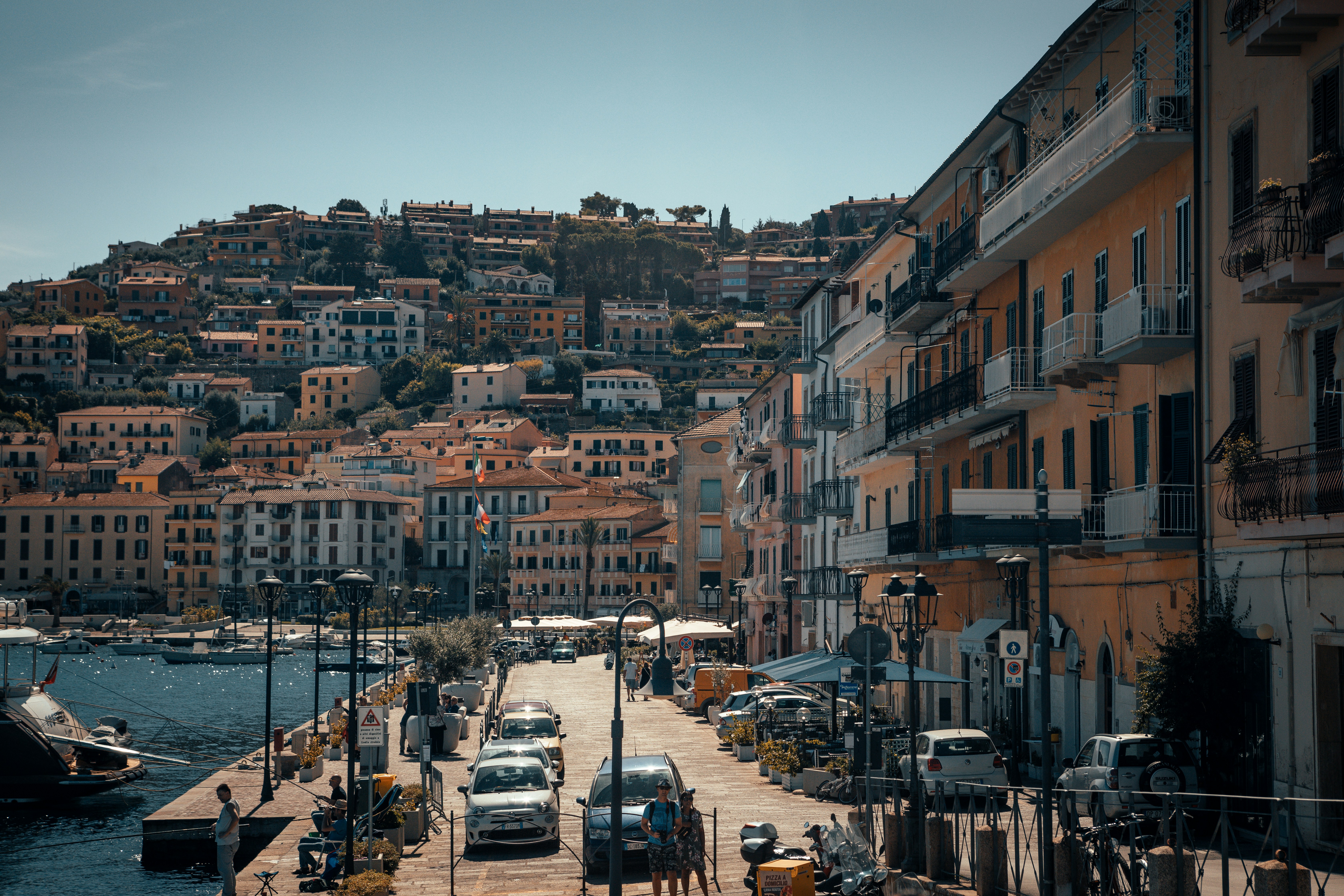
Italy’s vibrant capital lives in the present, but no other city on earth evokes its past so powerfully. For over 2,500 years, emperors, popes, artists, and common citizens have left their mark here. Archaeological remains from ancient Rome, art-stuffed churches, and the treasures of Vatican City vie for your attention, but Rome is also a wonderful place to practice the Italian-perfected il dolce far niente, the sweet art of idleness. Your most memorable experiences may include sitting at a caffè in the Campo de’ Fiori or strolling in a beguiling piazza.
Porto Santo Stefano, Italy
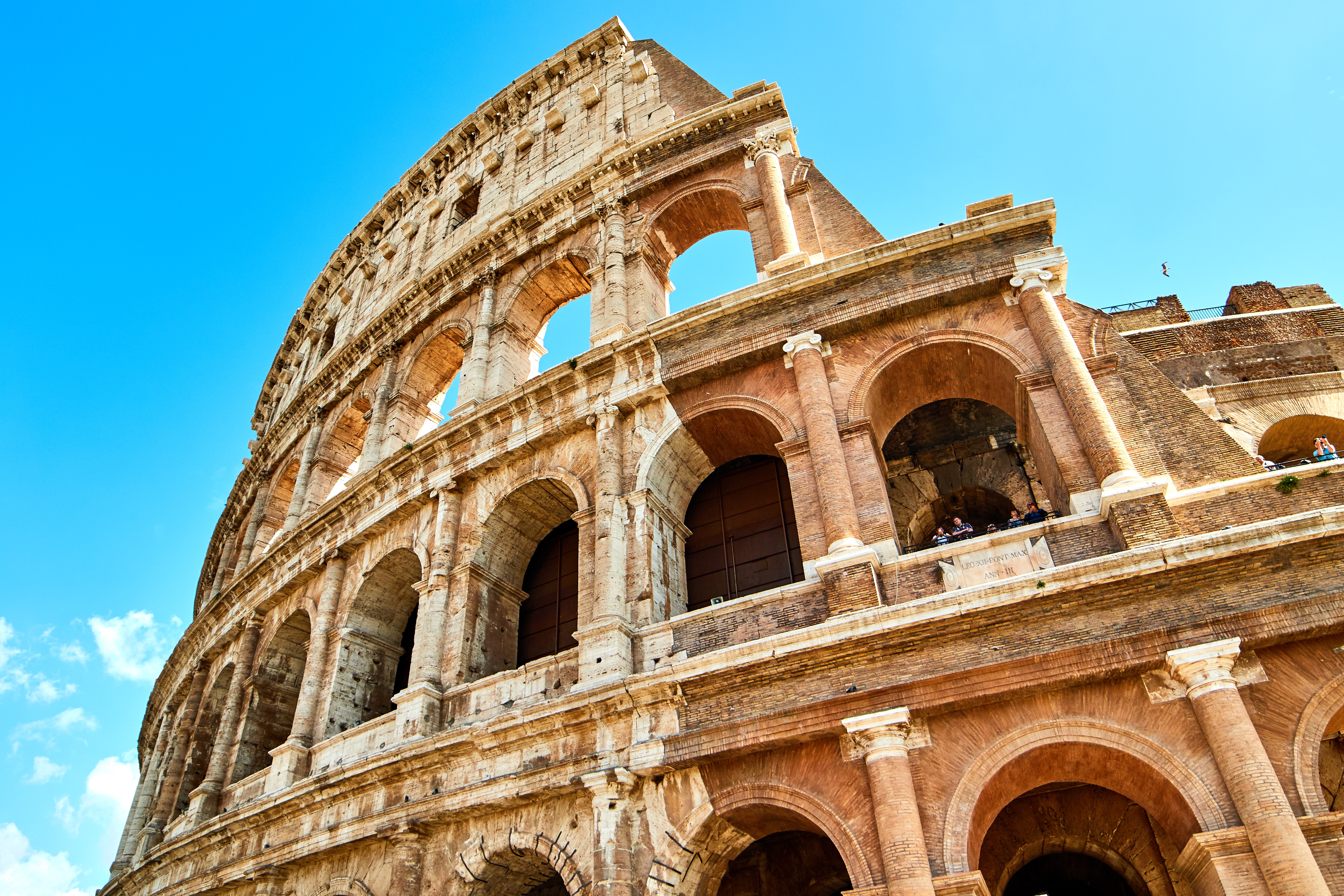
Monte-Carlo, Monaco
On one of the best stretches of the Mediterranean, this classic luxury destination is one of the most sought-after addresses in the world. With all the high-rise towers you have to look hard to find the Belle Époque grace of yesteryear. But if you head to the town’s great 1864 landmark Hôtel de Paris—still a veritable crossroads of the buffed and befurred Euro-gentry—or enjoy a grand bouffe at its famous Louis XV restaurant, or attend the opera, or visit the ballrooms of the casino, you may still be able to conjure up Monaco’s elegant past. Prince Albert II, a political science graduate from Amherst College, traces his ancestry to Otto Canella, who was born in 1070. The Grimaldi dynasty began with Otto’s great-great-great-grandson, Francesco Grimaldi, also known as Frank the Rogue. Expelled from Genoa, Frank and his cronies disguised themselves as monks and in 1297 seized the fortified medieval town known today as Le Rocher (the Rock). Except for a short break under Napoléon, the Grimaldis have been here ever since, which makes them the oldest reigning family in Europe. In the 1850s a Grimaldi named Charles III made a decision that turned the Rock into a giant blue chip. Needing revenue but not wanting to impose additional taxes on his subjects, he contracted with a company to open a gambling facility. The first spin of the roulette wheel was on December 14, 1856. There was no easy way to reach Monaco then—no carriage roads or railroads—so no one came. Between March 15 and March 20, 1857, one person entered the casino—and won two francs. In 1868, however, the railroad reached Monaco, and it was filled with Englishmen who came to escape the London fog. The effects were immediate. Profits were so great that Charles eventually abolished all direct taxes. Almost overnight, a threadbare principality became an elegant watering hole for European society. Dukes (and their mistresses) and duchesses (and their gigolos) danced and dined their way through a world of spinning roulette wheels and bubbling champagne—preening themselves for nights at the opera, where such artists as Vaslav Nijinsky, Sarah Bernhardt, and Enrico Caruso came to perform. Along with the tax system, its sensational position on a broad, steep peninsula that bulges into the Mediterranean—its harbor sparkling with luxury cruisers, its posh mansions angling awnings toward the nearly perpetual sun—continues to draw the rich and famous. One of the latest French celebrities to declare himself “Monégasque,” thus giving up his French passport, is superchef Alain Ducasse, who said that he made the choice out of affection for Monaco rather than tax reasons. Pleasure boats vie with luxury cruisers in their brash beauty and Titanic scale, and teams of handsome young men—themselves dyed blond and tanned to match—scour and polish every gleaming surface. As you might expect, all this glitz doesn’t come cheap. Eating is expensive, and even the most modest hotels cost more here than in nearby Nice or Menton. As for taxis, they don’t even have meters so you are completely at the driver’s mercy (with prices skyrocketing during events such as the Grand Prix). For the frugal, Monaco is the ultimate day-trip, although parking is as coveted as a room with a view. At the very least you can afford a coffee at Starbucks. The harbor district, known as La Condamine, connects the new quarter, officially known as Monte Carlo with Monaco-Ville (or Le Rocher), a medieval town on the Rock, topped by the palace, the cathedral, and the Oceanography Museum. Have no fear that you’ll need to climb countless steps to get to Monaco-Ville, as there are plenty of elevators and escalators climbing the steep cliffs. But shuttling between the lovely casino grounds of Monte Carlo and Old Monaco, separated by a vast port, is a daunting proposition for ordinary mortals without wings, so hop on the No. 1 bus from Saint Roman, or No. 2 from the Jardin Exotique – Both stop at Place du Casino and come up to Monaco Ville.
Cannes, France
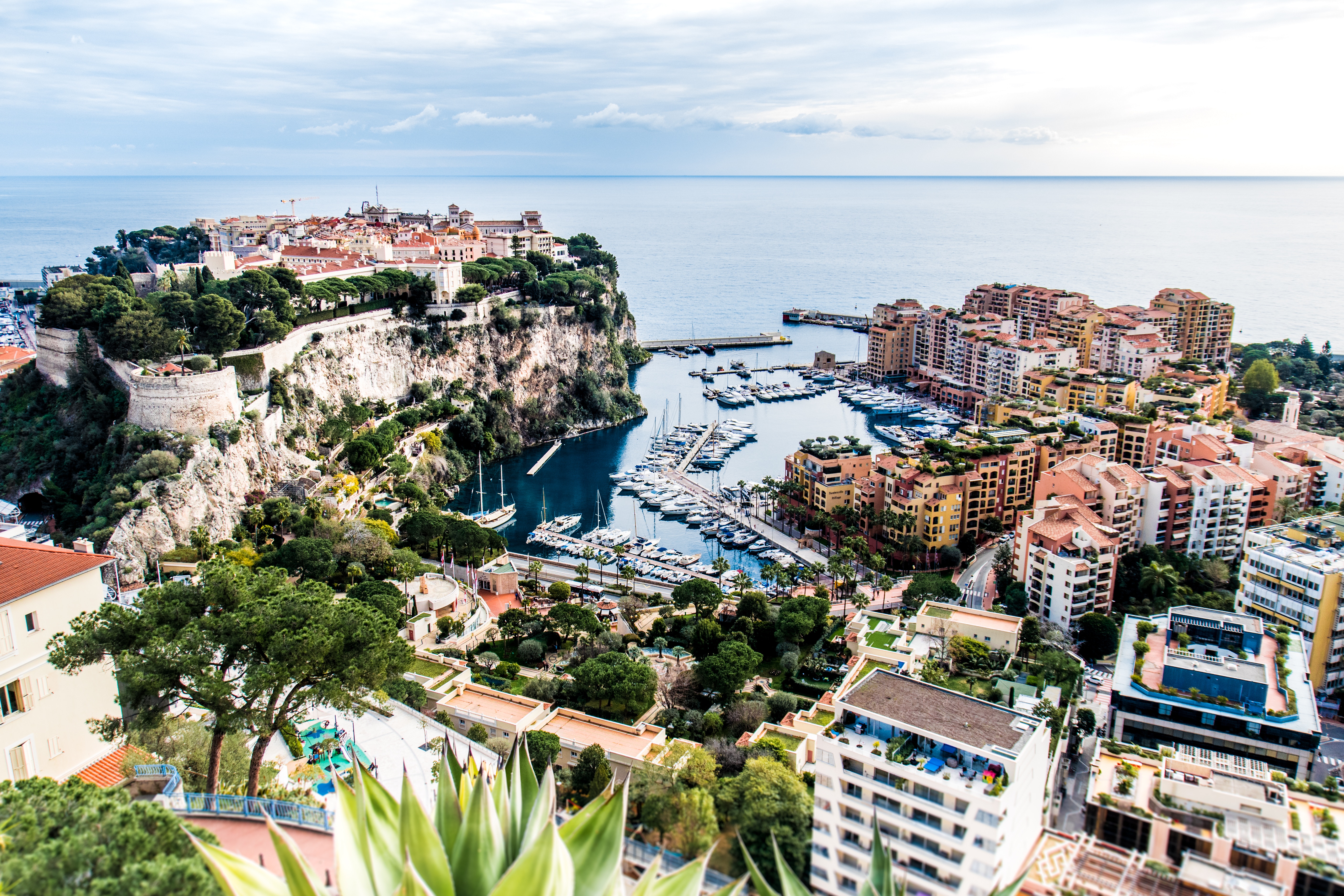
Cannes is pampered with the luxurious year-round climate that has made it one of the most popular resorts in Europe. Cannes was an important sentinel site for the monks who established themselves on Île St-Honorat in the Middle Ages. Its bay served as nothing more than a fishing port until in 1834 an English aristocrat, Lord Brougham, fell in love with the site during an emergency stopover with a sick daughter. He had a home built here and returned every winter for a sun cure—a ritual quickly picked up by his peers. Between the popularity of Le Train Blue transporting wealthy passengers from Calais, and the introduction in 1936 of France’s first paid holidays, Cannes became the destination, a tasteful and expensive breeding ground for the upper-upscale.Cannes has been further glamorized by the ongoing success of its annual film festival, as famous as Hollywood’s Academy Awards. About the closest many of us will get to feeling like a film star is a stroll here along La Croisette, the iconic promenade that gracefully curves the wave-washed sand coastline, peppered with chic restaurants and prestigious private beaches. This is precisely the sort of place for which the French invented the verb flâner (to dawdle, saunter): strewn with palm trees and poseurs, its fancy boutiques and status-symbol grand hotels—including the Carlton, the legendary backdrop to Grace Kelly in To Catch a Thief —all vying for the custom of the Louis Vuitton set. This legend is, to many, the heart and soul of the Côte d’Azur.
At Sea
No additional details available for this day.
Valencia, Spain
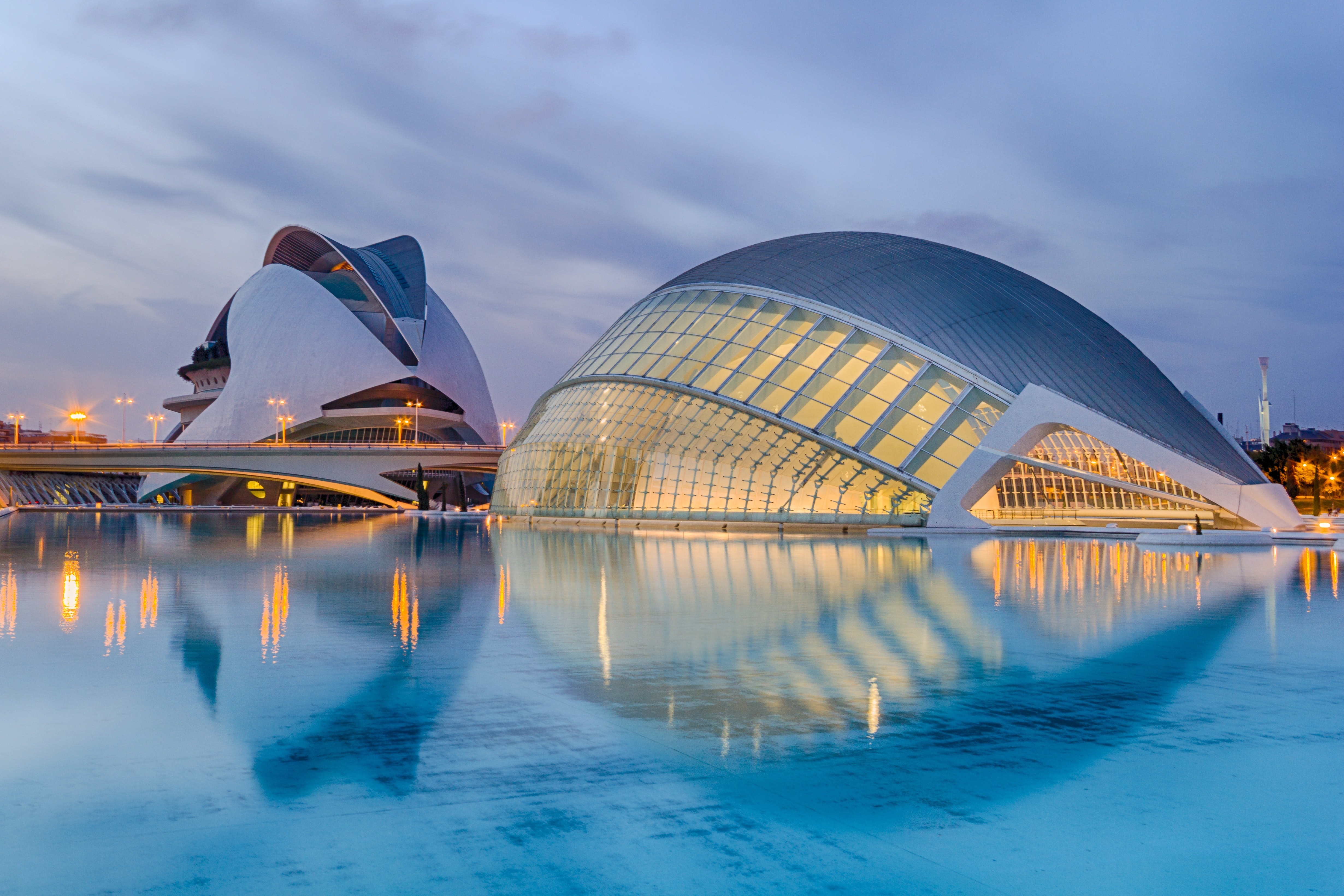
Valencia, Spain’s third-largest municipality, is a proud city with a thriving nightlife and restaurant scene, quality museums, and spectacular contemporary architecture, juxtaposed with a thoroughly charming historic quarter, making it a popular destination year in year out. During the Civil War, it was the last seat of the Republican Loyalist government (1935–36), holding out against Franco’s National forces until the country fell to 40 years of dictatorship. Today it represents the essence of contemporary Spain—daring design and architecture along with experimental cuisine—but remains deeply conservative and proud of its traditions. Though it faces the Mediterranean, Valencia’s history and geography have been defined most significantly by the River Turia and the fertile huerta that surrounds it.The city has been fiercely contested ever since it was founded by the Greeks. El Cid captured Valencia from the Moors in 1094 and won his strangest victory here in 1099: he died in the battle, but his corpse was strapped into his saddle and so frightened the besieging Moors that it caused their complete defeat. In 1102 his widow, Jimena, was forced to return the city to Moorish rule; Jaume I finally drove them out in 1238. Modern Valencia was best known for its frequent disastrous floods until the River Turia was diverted to the south in the late 1950s. Since then the city has been on a steady course of urban beautification. The lovely bridges that once spanned the Turia look equally graceful spanning a wandering municipal park, and the spectacularly futuristic Ciutat de les Arts i les Ciències (City of Arts and Sciences), most of it designed by Valencia-born architect Santiago Calatrava, has at last created an exciting architectural link between this river town and the Mediterranean. If you’re in Valencia, an excursion to Albufera Nature Park is a worthwhile day trip.
Palma de Mallorca, Spain
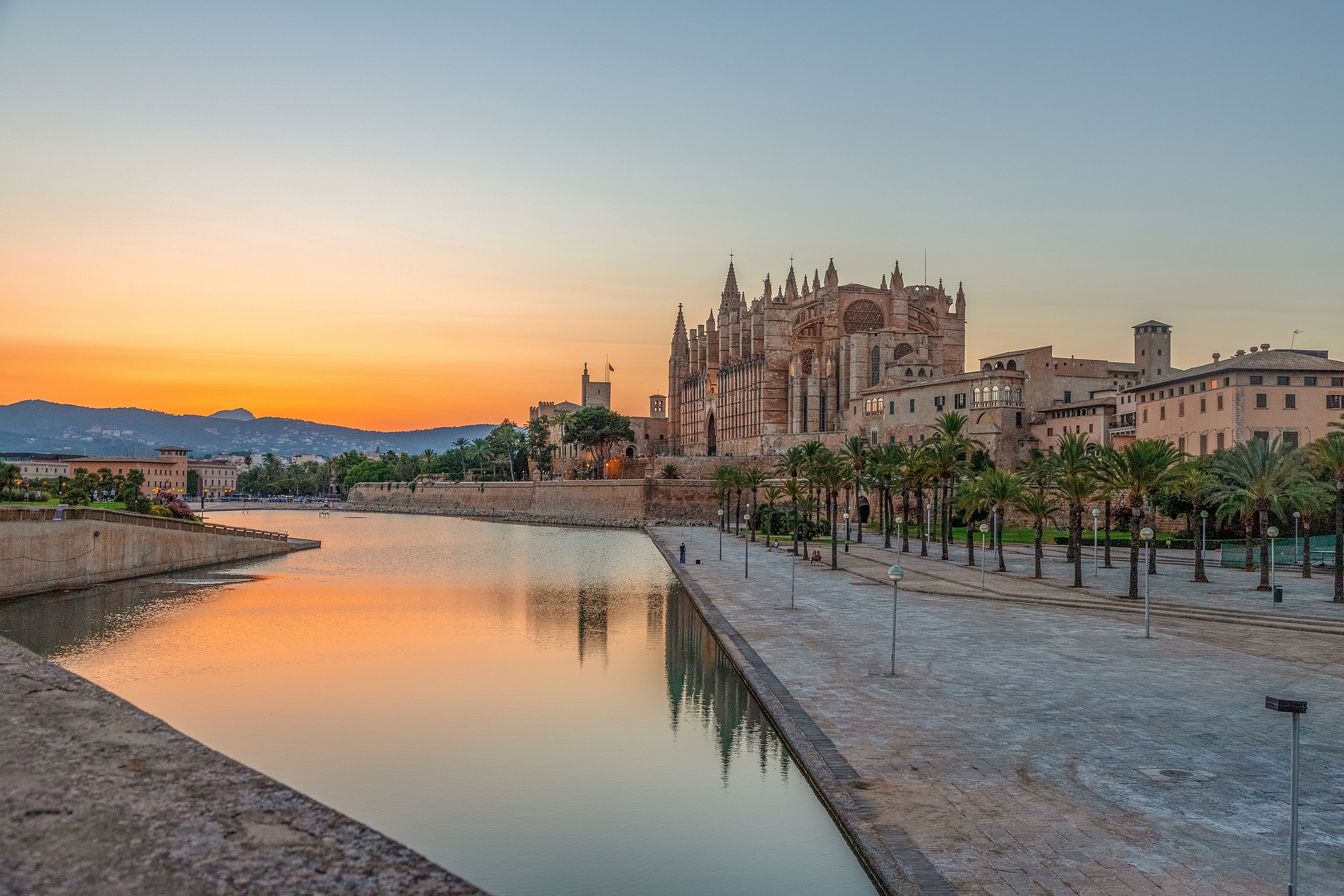
If you look north of the cathedral (La Seu, or the seat of the bishopric, to Mallorcans) on a map of the city of Palma, you can see around the Plaça Santa Eulàlia a jumble of tiny streets that made up the earliest settlement. Farther out, a ring of wide boulevards traces the fortifications built by the Moors to defend the larger city that emerged by the 12th century. The zigzags mark the bastions that jutted out at regular intervals. By the end of the 19th century, most of the walls had been demolished; the only place where you can still see the massive defenses is at Ses Voltes, along the seafront west of the cathedral.A torrent (streambed) used to run through the middle of the old city, dry for most of the year but often a raging flood in the rainy season. In the 17th century it was diverted to the east, along the moat that ran outside the city walls. Two of Palma’s main arteries, La Rambla and the Passeig d’es Born, now follow the stream’s natural course. The traditional evening paseo (promenade) takes place on the Born.If you come to Palma by car, park in the garage beneath the Parc de la Mar (the ramp is just off the highway from the airport, as you reach the cathedral) and stroll along the park. Beside it run the huge bastions guarding the Almudaina Palace; the cathedral, golden and massive, rises beyond. Where you exit the garage, there’s a ceramic mural by the late Catalan artist and Mallorca resident Joan Miró, facing the cathedral across the pool that runs the length of the park.If you begin early enough, a walk along the ramparts at Ses Voltes from the mirador beside the cathedral is spectacular. The first rays of the sun turn the upper pinnacles of La Seu bright gold and then begin to work their way down the sandstone walls. From the Parc de la Mar, follow Avinguda Antoni Maura past the steps to the palace. Just below the Plaça de la Reina, where the Passeig d’es Born begins, turn left on Carrer de la Boteria into the Plaça de la Llotja (if the Llotja itself is open, don’t miss a chance to visit—it’s the Mediterranean’s finest Gothic-style civic building). From there stroll through the Plaça Drassana to the Museu d’Es Baluard, at the end of Carrer Sant Pere. Retrace your steps to Avinguda Antoni Maura. Walk up the Passeig d’es Born to Plaça Joan Carles I, then right on Avenida de La Unió.
Civitavecchia, Italy
Italy’s vibrant capital lives in the present, but no other city on earth evokes its past so powerfully. For over 2,500 years, emperors, popes, artists, and common citizens have left their mark here. Archaeological remains from ancient Rome, art-stuffed churches, and the treasures of Vatican City vie for your attention, but Rome is also a wonderful place to practice the Italian-perfected il dolce far niente, the sweet art of idleness. Your most memorable experiences may include sitting at a caffè in the Campo de’ Fiori or strolling in a beguiling piazza.
Porto Santo Stefano, Italy
Monte-Carlo, Monaco
On one of the best stretches of the Mediterranean, this classic luxury destination is one of the most sought-after addresses in the world. With all the high-rise towers you have to look hard to find the Belle Époque grace of yesteryear. But if you head to the town’s great 1864 landmark Hôtel de Paris—still a veritable crossroads of the buffed and befurred Euro-gentry—or enjoy a grand bouffe at its famous Louis XV restaurant, or attend the opera, or visit the ballrooms of the casino, you may still be able to conjure up Monaco’s elegant past. Prince Albert II, a political science graduate from Amherst College, traces his ancestry to Otto Canella, who was born in 1070. The Grimaldi dynasty began with Otto’s great-great-great-grandson, Francesco Grimaldi, also known as Frank the Rogue. Expelled from Genoa, Frank and his cronies disguised themselves as monks and in 1297 seized the fortified medieval town known today as Le Rocher (the Rock). Except for a short break under Napoléon, the Grimaldis have been here ever since, which makes them the oldest reigning family in Europe. In the 1850s a Grimaldi named Charles III made a decision that turned the Rock into a giant blue chip. Needing revenue but not wanting to impose additional taxes on his subjects, he contracted with a company to open a gambling facility. The first spin of the roulette wheel was on December 14, 1856. There was no easy way to reach Monaco then—no carriage roads or railroads—so no one came. Between March 15 and March 20, 1857, one person entered the casino—and won two francs. In 1868, however, the railroad reached Monaco, and it was filled with Englishmen who came to escape the London fog. The effects were immediate. Profits were so great that Charles eventually abolished all direct taxes. Almost overnight, a threadbare principality became an elegant watering hole for European society. Dukes (and their mistresses) and duchesses (and their gigolos) danced and dined their way through a world of spinning roulette wheels and bubbling champagne—preening themselves for nights at the opera, where such artists as Vaslav Nijinsky, Sarah Bernhardt, and Enrico Caruso came to perform. Along with the tax system, its sensational position on a broad, steep peninsula that bulges into the Mediterranean—its harbor sparkling with luxury cruisers, its posh mansions angling awnings toward the nearly perpetual sun—continues to draw the rich and famous. One of the latest French celebrities to declare himself “Monégasque,” thus giving up his French passport, is superchef Alain Ducasse, who said that he made the choice out of affection for Monaco rather than tax reasons. Pleasure boats vie with luxury cruisers in their brash beauty and Titanic scale, and teams of handsome young men—themselves dyed blond and tanned to match—scour and polish every gleaming surface. As you might expect, all this glitz doesn’t come cheap. Eating is expensive, and even the most modest hotels cost more here than in nearby Nice or Menton. As for taxis, they don’t even have meters so you are completely at the driver’s mercy (with prices skyrocketing during events such as the Grand Prix). For the frugal, Monaco is the ultimate day-trip, although parking is as coveted as a room with a view. At the very least you can afford a coffee at Starbucks. The harbor district, known as La Condamine, connects the new quarter, officially known as Monte Carlo with Monaco-Ville (or Le Rocher), a medieval town on the Rock, topped by the palace, the cathedral, and the Oceanography Museum. Have no fear that you’ll need to climb countless steps to get to Monaco-Ville, as there are plenty of elevators and escalators climbing the steep cliffs. But shuttling between the lovely casino grounds of Monte Carlo and Old Monaco, separated by a vast port, is a daunting proposition for ordinary mortals without wings, so hop on the No. 1 bus from Saint Roman, or No. 2 from the Jardin Exotique – Both stop at Place du Casino and come up to Monaco Ville.
Cannes, France
Cannes is pampered with the luxurious year-round climate that has made it one of the most popular resorts in Europe. Cannes was an important sentinel site for the monks who established themselves on Île St-Honorat in the Middle Ages. Its bay served as nothing more than a fishing port until in 1834 an English aristocrat, Lord Brougham, fell in love with the site during an emergency stopover with a sick daughter. He had a home built here and returned every winter for a sun cure—a ritual quickly picked up by his peers. Between the popularity of Le Train Blue transporting wealthy passengers from Calais, and the introduction in 1936 of France’s first paid holidays, Cannes became the destination, a tasteful and expensive breeding ground for the upper-upscale.Cannes has been further glamorized by the ongoing success of its annual film festival, as famous as Hollywood’s Academy Awards. About the closest many of us will get to feeling like a film star is a stroll here along La Croisette, the iconic promenade that gracefully curves the wave-washed sand coastline, peppered with chic restaurants and prestigious private beaches. This is precisely the sort of place for which the French invented the verb flâner (to dawdle, saunter): strewn with palm trees and poseurs, its fancy boutiques and status-symbol grand hotels—including the Carlton, the legendary backdrop to Grace Kelly in To Catch a Thief —all vying for the custom of the Louis Vuitton set. This legend is, to many, the heart and soul of the Côte d’Azur.
At Sea
No additional details available for this day.
Valencia, Spain
Valencia, Spain’s third-largest municipality, is a proud city with a thriving nightlife and restaurant scene, quality museums, and spectacular contemporary architecture, juxtaposed with a thoroughly charming historic quarter, making it a popular destination year in year out. During the Civil War, it was the last seat of the Republican Loyalist government (1935–36), holding out against Franco’s National forces until the country fell to 40 years of dictatorship. Today it represents the essence of contemporary Spain—daring design and architecture along with experimental cuisine—but remains deeply conservative and proud of its traditions. Though it faces the Mediterranean, Valencia’s history and geography have been defined most significantly by the River Turia and the fertile huerta that surrounds it.The city has been fiercely contested ever since it was founded by the Greeks. El Cid captured Valencia from the Moors in 1094 and won his strangest victory here in 1099: he died in the battle, but his corpse was strapped into his saddle and so frightened the besieging Moors that it caused their complete defeat. In 1102 his widow, Jimena, was forced to return the city to Moorish rule; Jaume I finally drove them out in 1238. Modern Valencia was best known for its frequent disastrous floods until the River Turia was diverted to the south in the late 1950s. Since then the city has been on a steady course of urban beautification. The lovely bridges that once spanned the Turia look equally graceful spanning a wandering municipal park, and the spectacularly futuristic Ciutat de les Arts i les Ciències (City of Arts and Sciences), most of it designed by Valencia-born architect Santiago Calatrava, has at last created an exciting architectural link between this river town and the Mediterranean. If you’re in Valencia, an excursion to Albufera Nature Park is a worthwhile day trip.
Palma de Mallorca, Spain
If you look north of the cathedral (La Seu, or the seat of the bishopric, to Mallorcans) on a map of the city of Palma, you can see around the Plaça Santa Eulàlia a jumble of tiny streets that made up the earliest settlement. Farther out, a ring of wide boulevards traces the fortifications built by the Moors to defend the larger city that emerged by the 12th century. The zigzags mark the bastions that jutted out at regular intervals. By the end of the 19th century, most of the walls had been demolished; the only place where you can still see the massive defenses is at Ses Voltes, along the seafront west of the cathedral.A torrent (streambed) used to run through the middle of the old city, dry for most of the year but often a raging flood in the rainy season. In the 17th century it was diverted to the east, along the moat that ran outside the city walls. Two of Palma’s main arteries, La Rambla and the Passeig d’es Born, now follow the stream’s natural course. The traditional evening paseo (promenade) takes place on the Born.If you come to Palma by car, park in the garage beneath the Parc de la Mar (the ramp is just off the highway from the airport, as you reach the cathedral) and stroll along the park. Beside it run the huge bastions guarding the Almudaina Palace; the cathedral, golden and massive, rises beyond. Where you exit the garage, there’s a ceramic mural by the late Catalan artist and Mallorca resident Joan Miró, facing the cathedral across the pool that runs the length of the park.If you begin early enough, a walk along the ramparts at Ses Voltes from the mirador beside the cathedral is spectacular. The first rays of the sun turn the upper pinnacles of La Seu bright gold and then begin to work their way down the sandstone walls. From the Parc de la Mar, follow Avinguda Antoni Maura past the steps to the palace. Just below the Plaça de la Reina, where the Passeig d’es Born begins, turn left on Carrer de la Boteria into the Plaça de la Llotja (if the Llotja itself is open, don’t miss a chance to visit—it’s the Mediterranean’s finest Gothic-style civic building). From there stroll through the Plaça Drassana to the Museu d’Es Baluard, at the end of Carrer Sant Pere. Retrace your steps to Avinguda Antoni Maura. Walk up the Passeig d’es Born to Plaça Joan Carles I, then right on Avenida de La Unió.
Barcelona, Spain
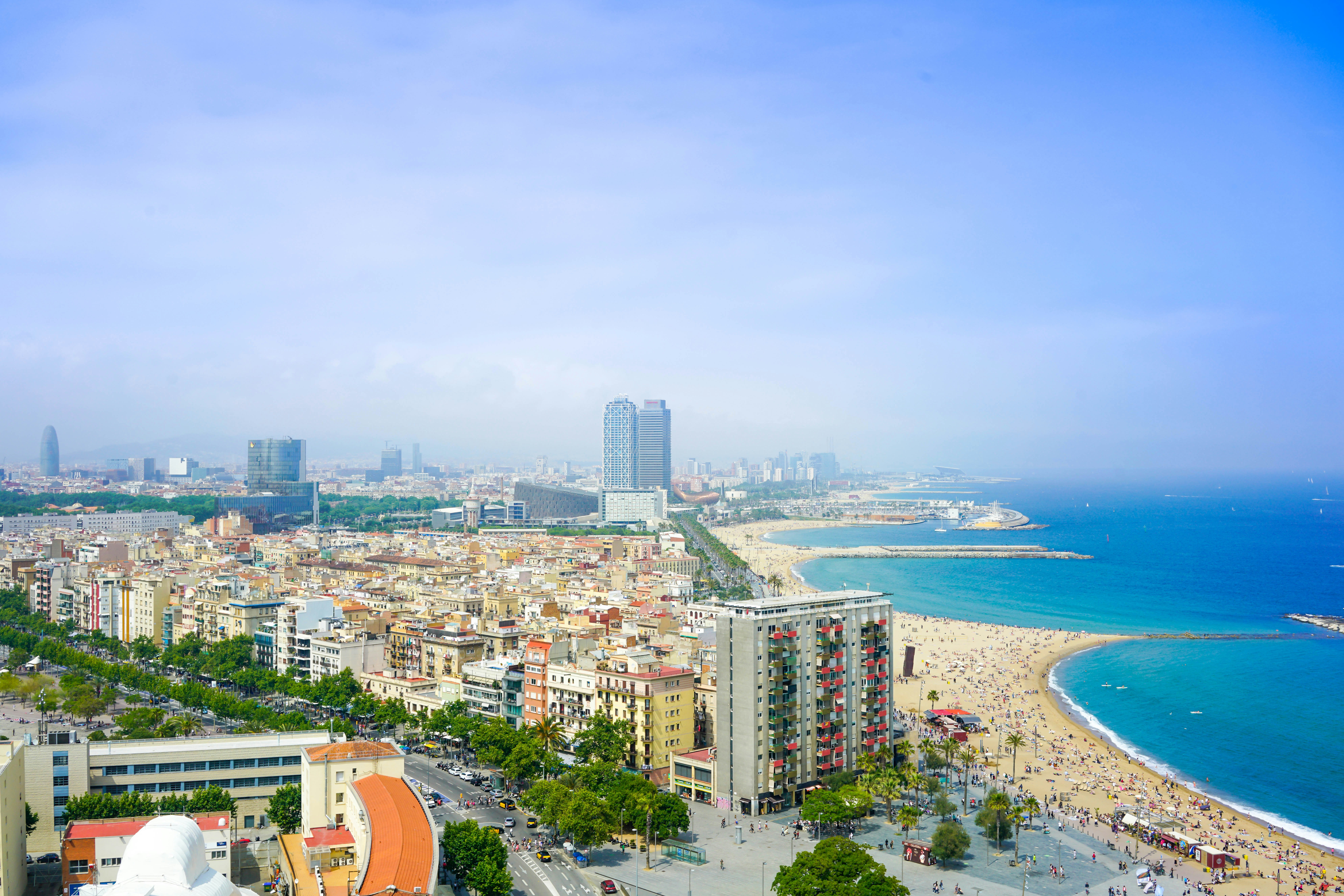
The infinite variety of street life, the nooks and crannies of the medieval Barri Gòtic, the ceramic tile and stained glass of Art Nouveau facades, the art and music, the throb of street life, the food (ah, the food!)—one way or another, Barcelona will find a way to get your full attention. The capital of Catalonia is a banquet for the senses, with its beguiling mix of ancient and modern architecture, tempting cafés and markets, and sun-drenched Mediterranean beaches. A stroll along La Rambla and through waterfront Barceloneta, as well as a tour of Gaudí’s majestic Sagrada Famíliaand his other unique creations, are part of a visit to Spain’s second-largest city. Modern art museums and chic shops call for attention, too. Barcelona’s vibe stays lively well into the night, when you can linger over regional wine and cuisine at buzzing tapas bars.
Barcelona, Spain
The infinite variety of street life, the nooks and crannies of the medieval Barri Gòtic, the ceramic tile and stained glass of Art Nouveau facades, the art and music, the throb of street life, the food (ah, the food!)—one way or another, Barcelona will find a way to get your full attention. The capital of Catalonia is a banquet for the senses, with its beguiling mix of ancient and modern architecture, tempting cafés and markets, and sun-drenched Mediterranean beaches. A stroll along La Rambla and through waterfront Barceloneta, as well as a tour of Gaudí’s majestic Sagrada Famíliaand his other unique creations, are part of a visit to Spain’s second-largest city. Modern art museums and chic shops call for attention, too. Barcelona’s vibe stays lively well into the night, when you can linger over regional wine and cuisine at buzzing tapas bars.
Cabin Options
Ocean Terrace Suite
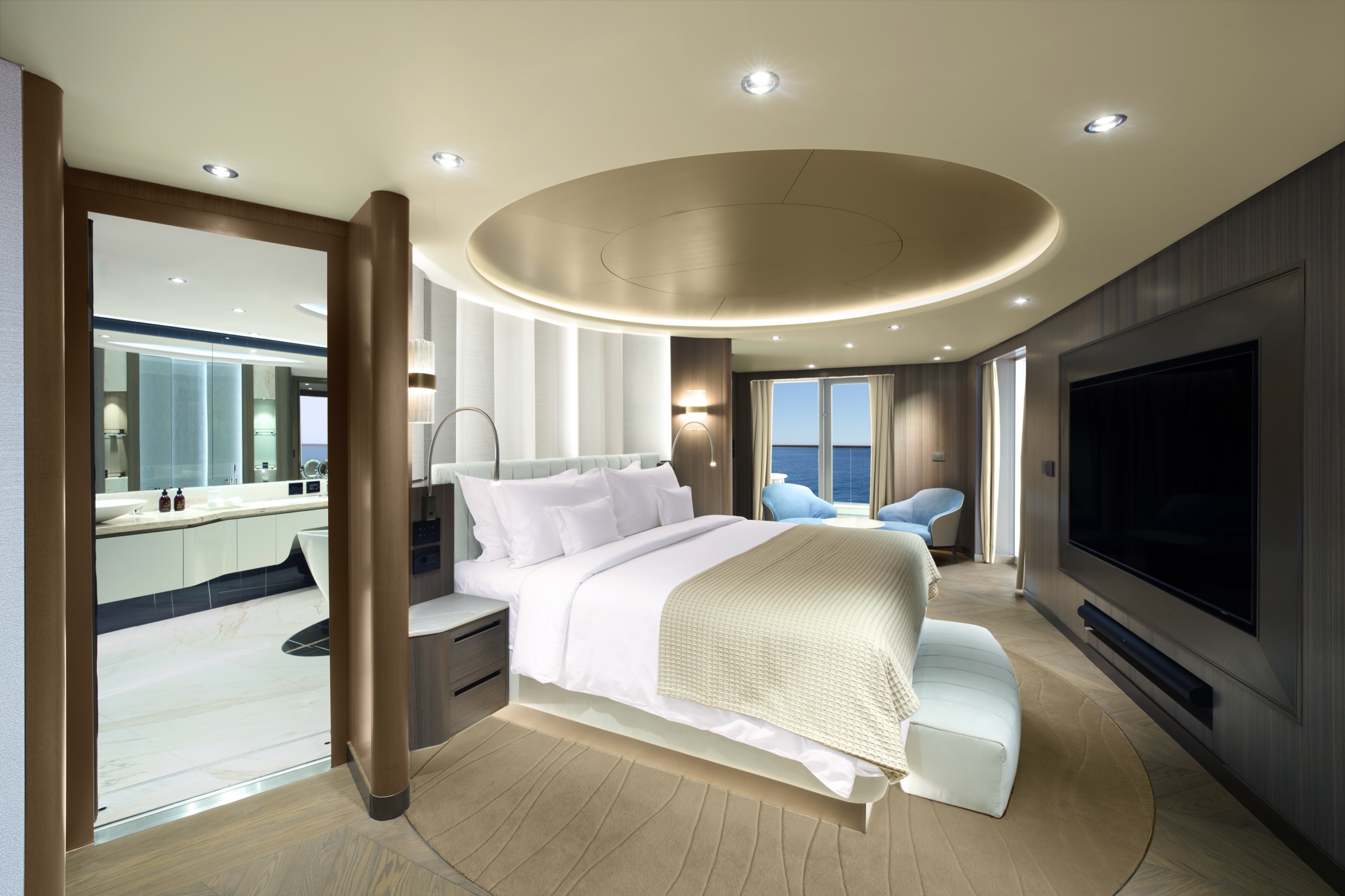
Owner's Residence
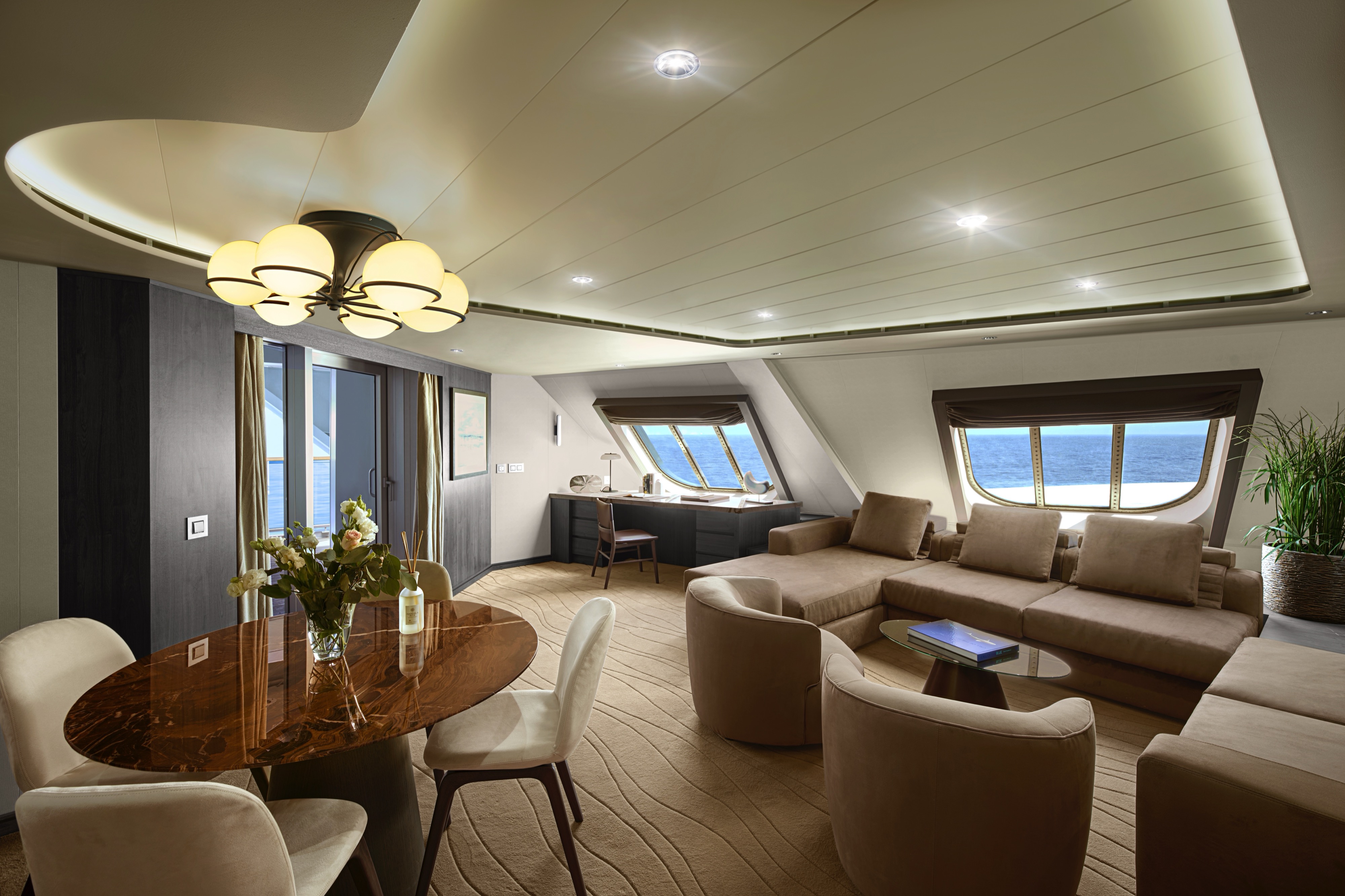
Retreat Residence
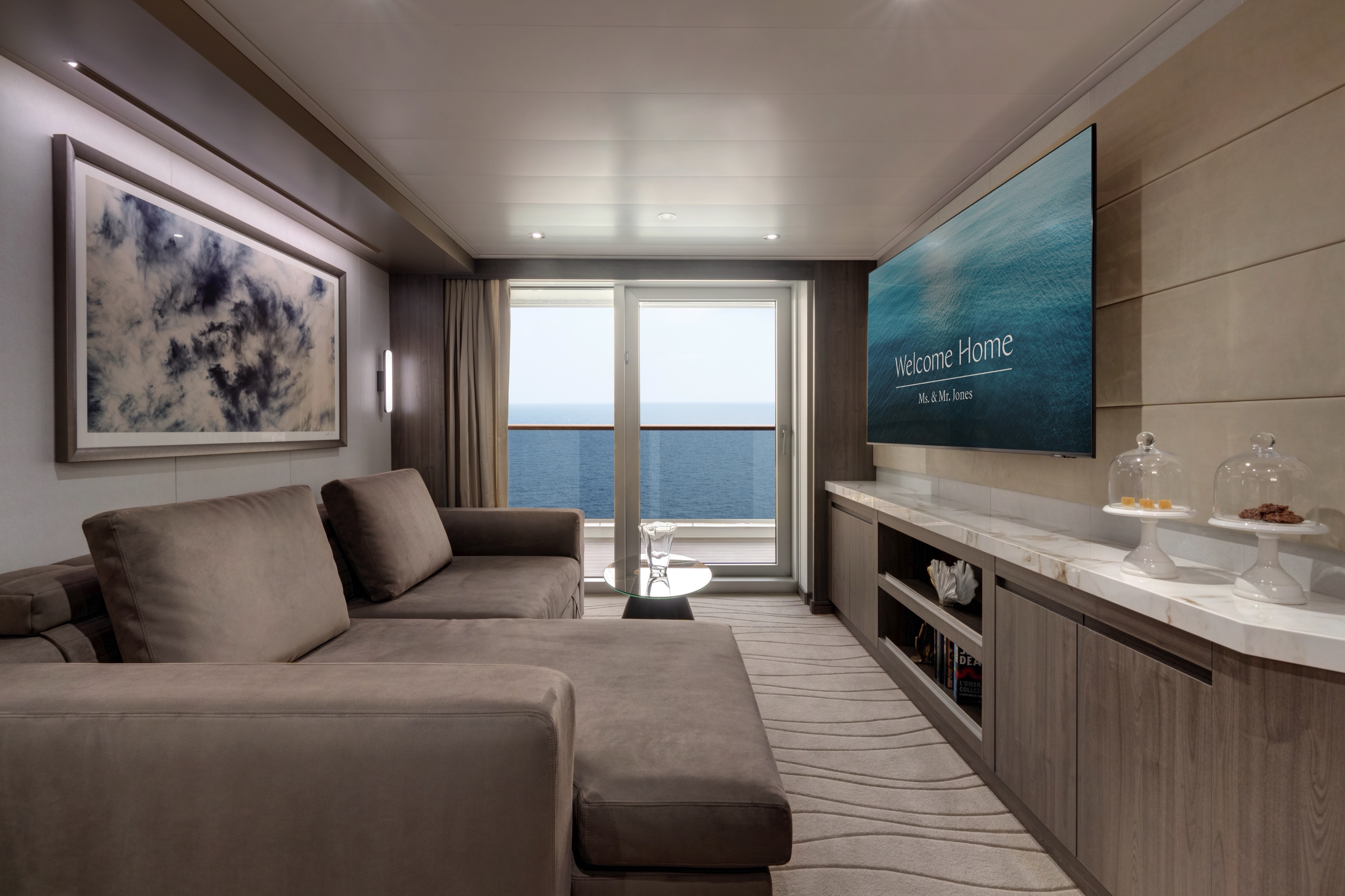
Cove Residence
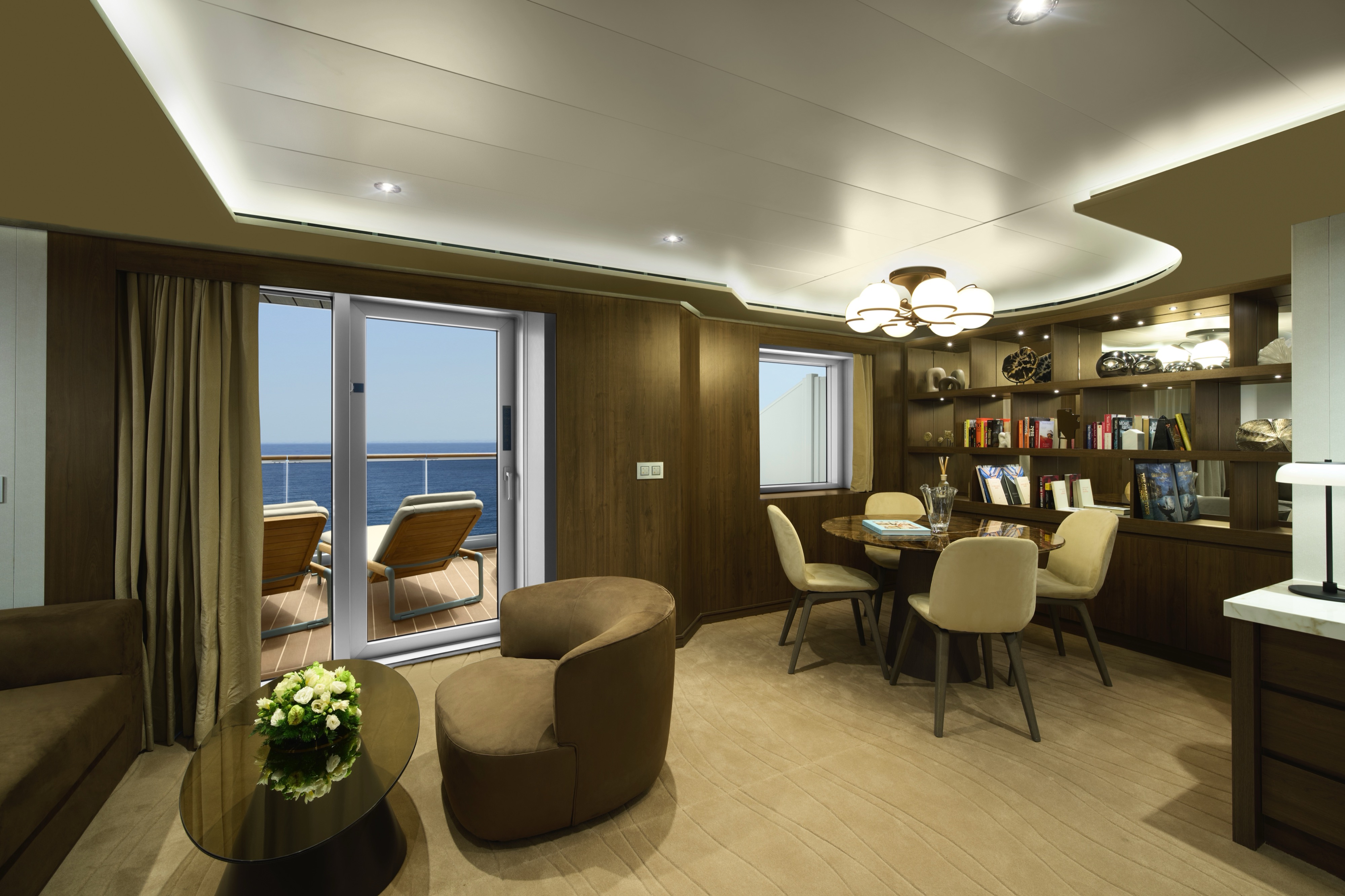
Serenity Residence
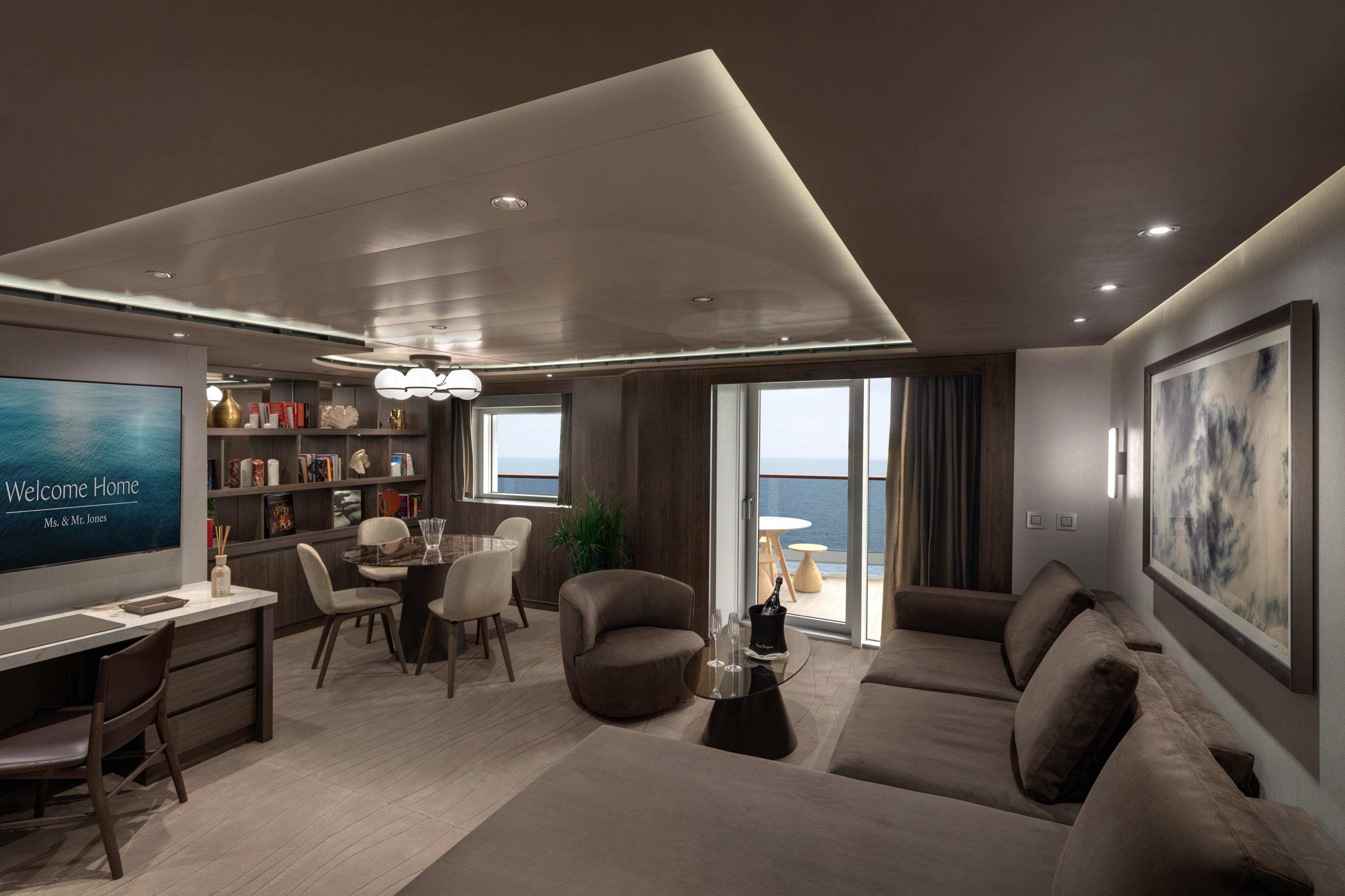
Cocoon Residence
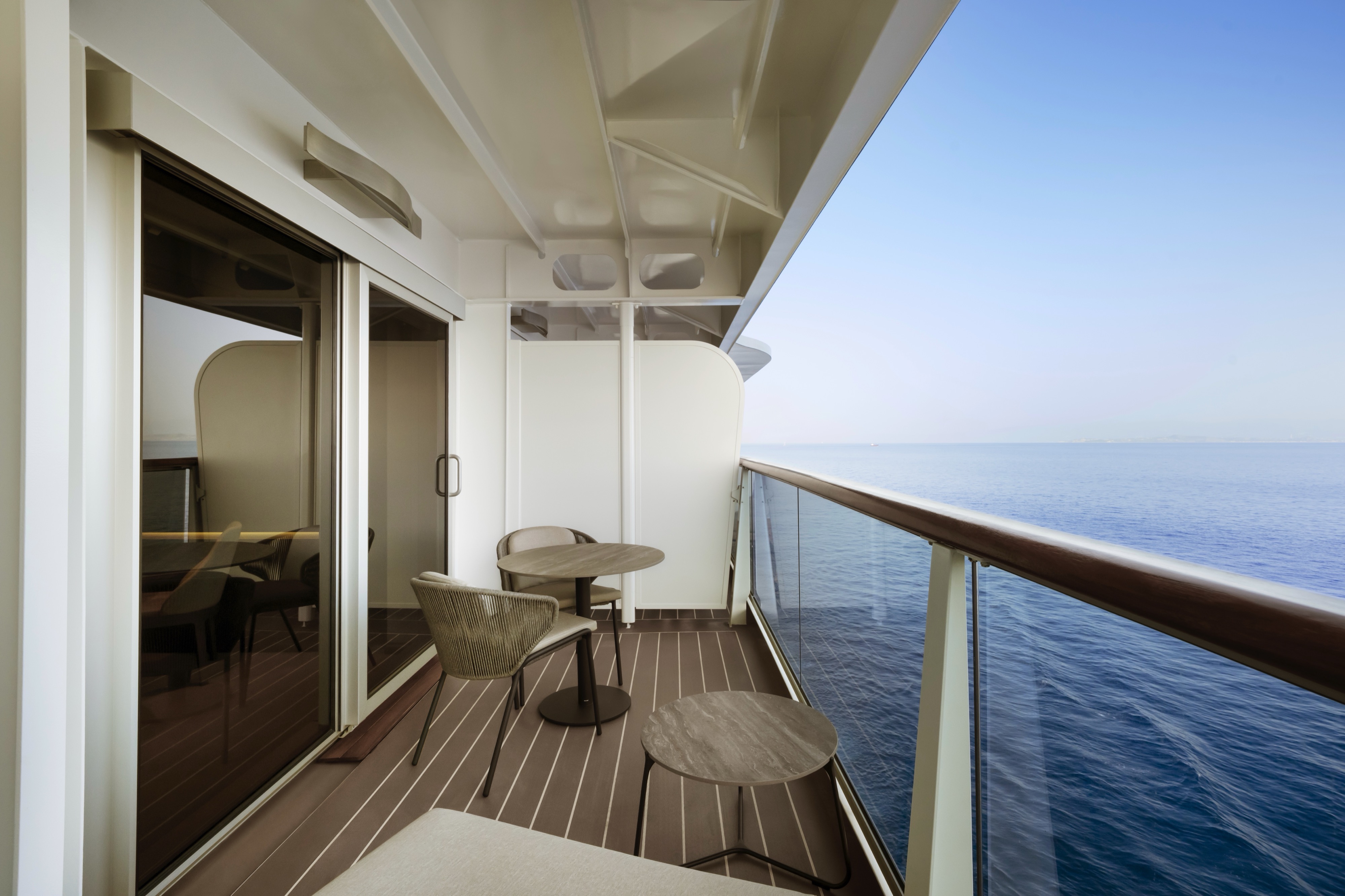
Grand Penthouse
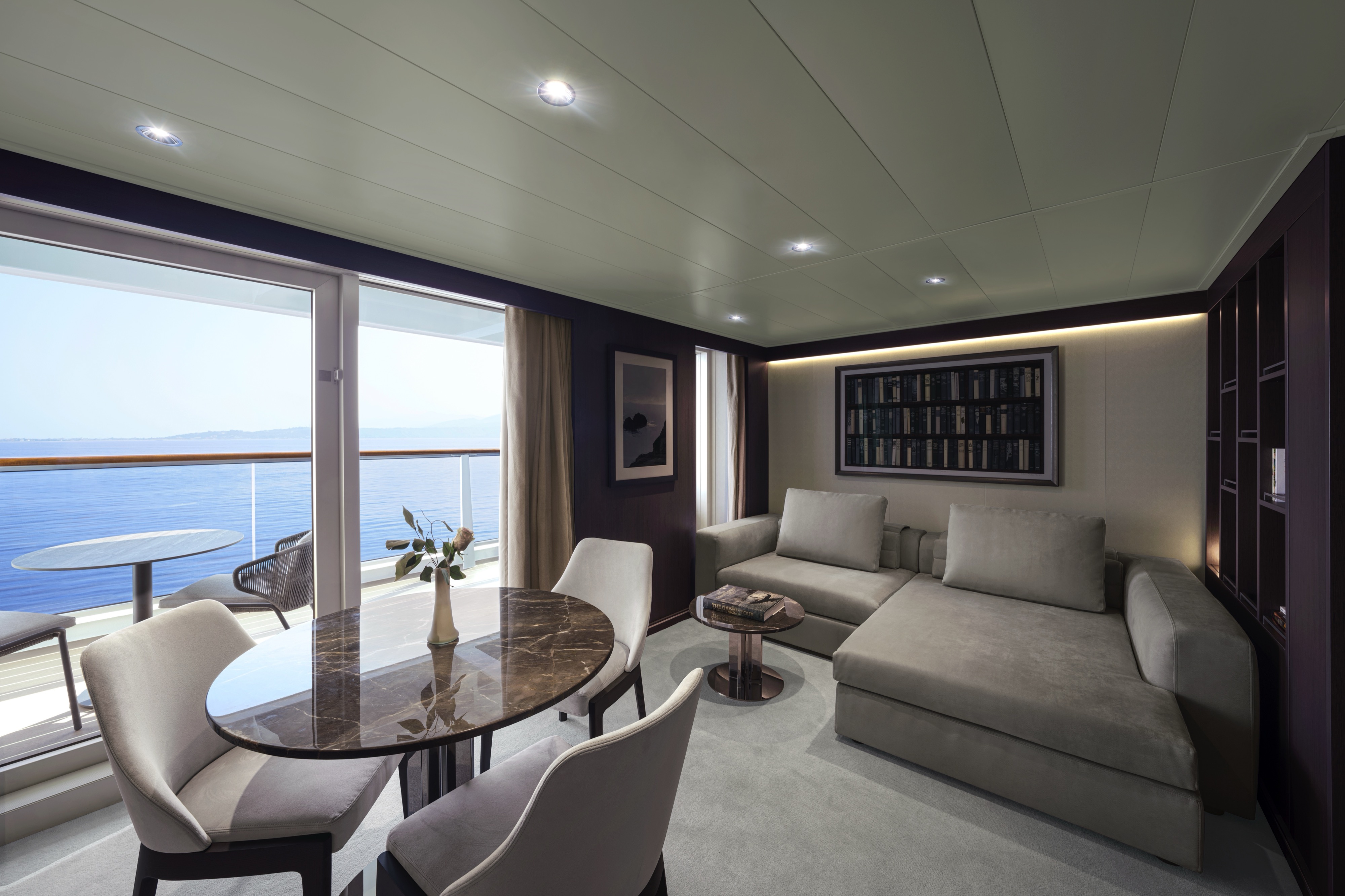
Premier Penthouse
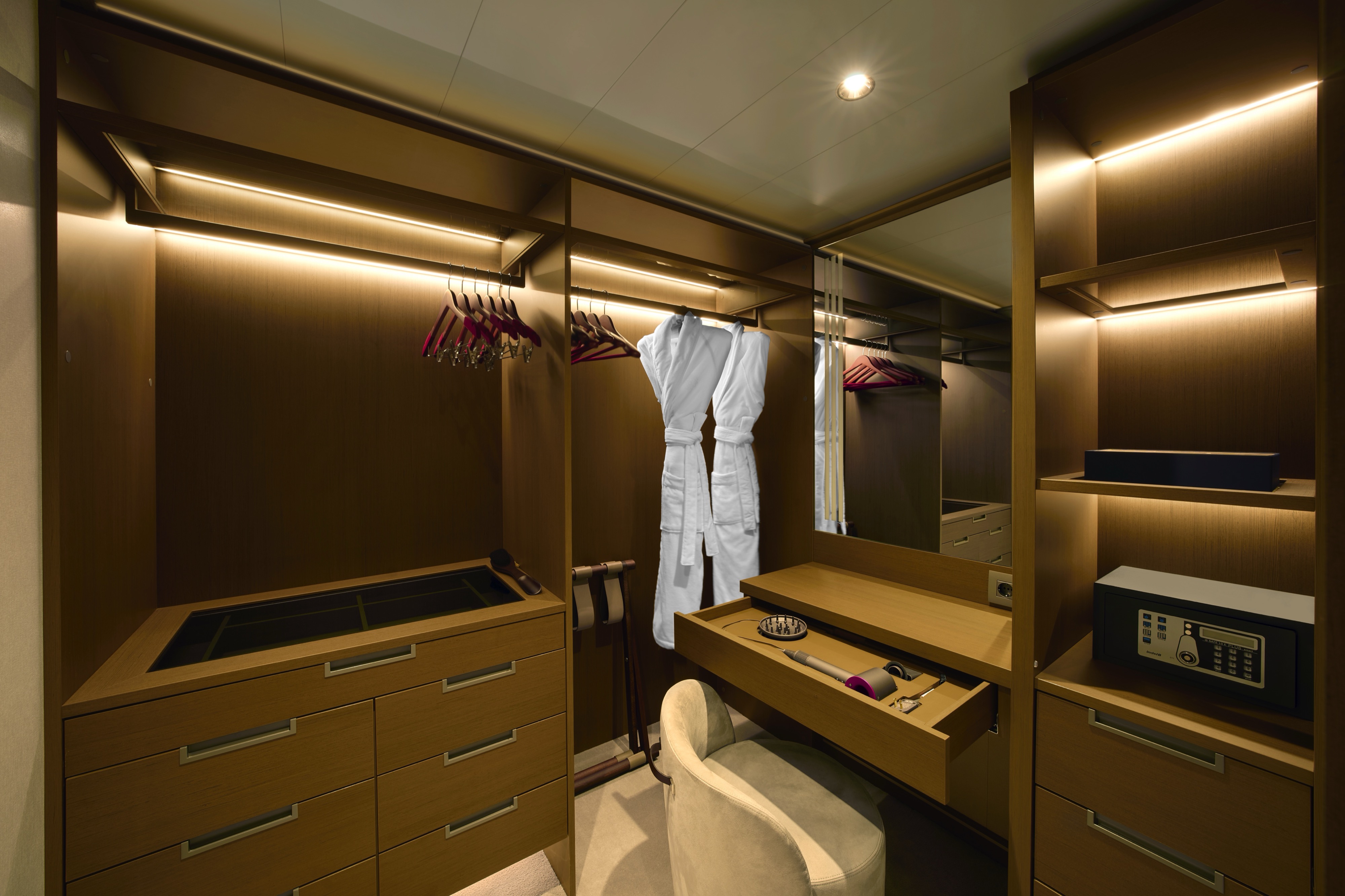
Deluxe Penthouse
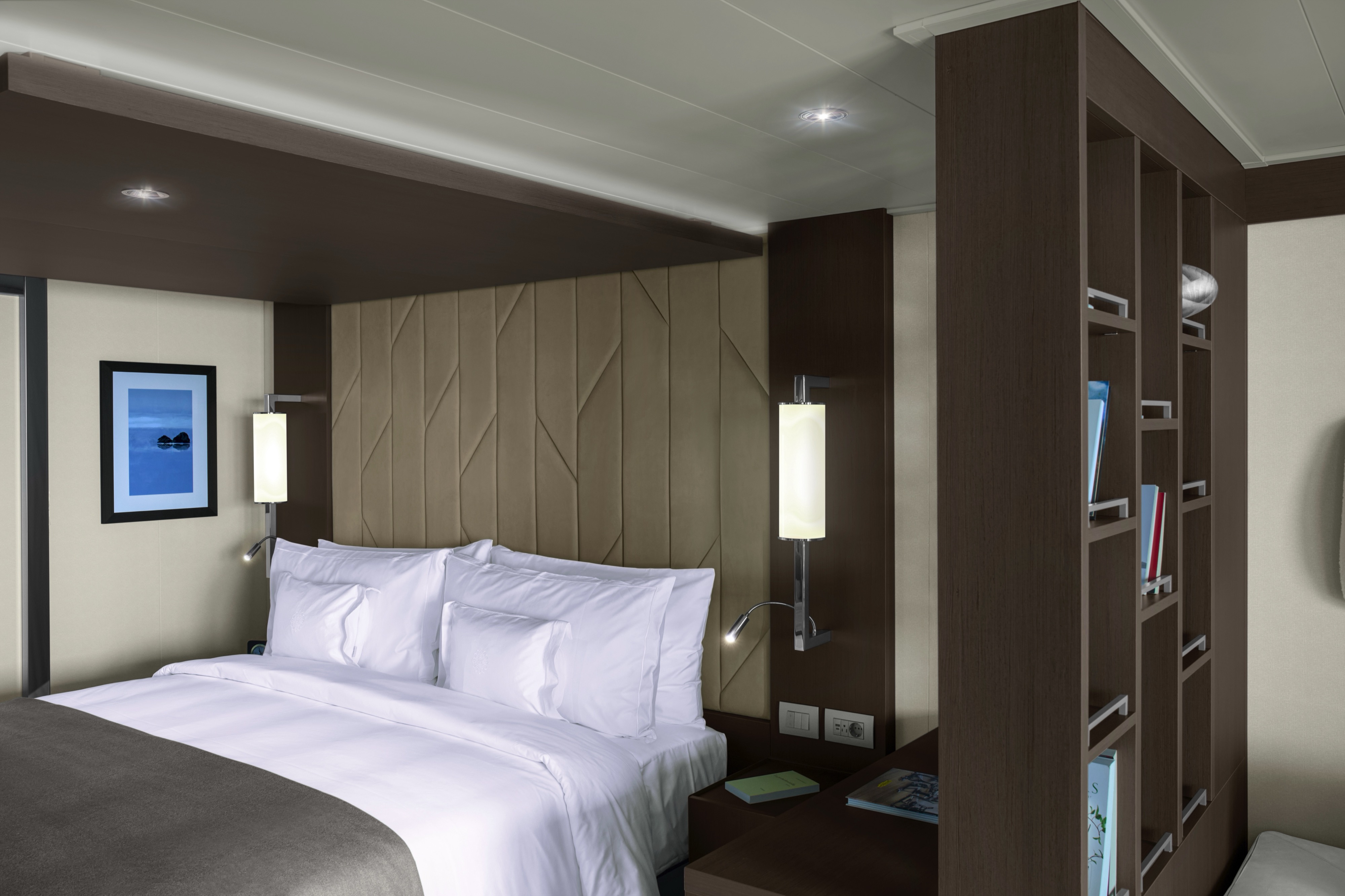
Penthouse
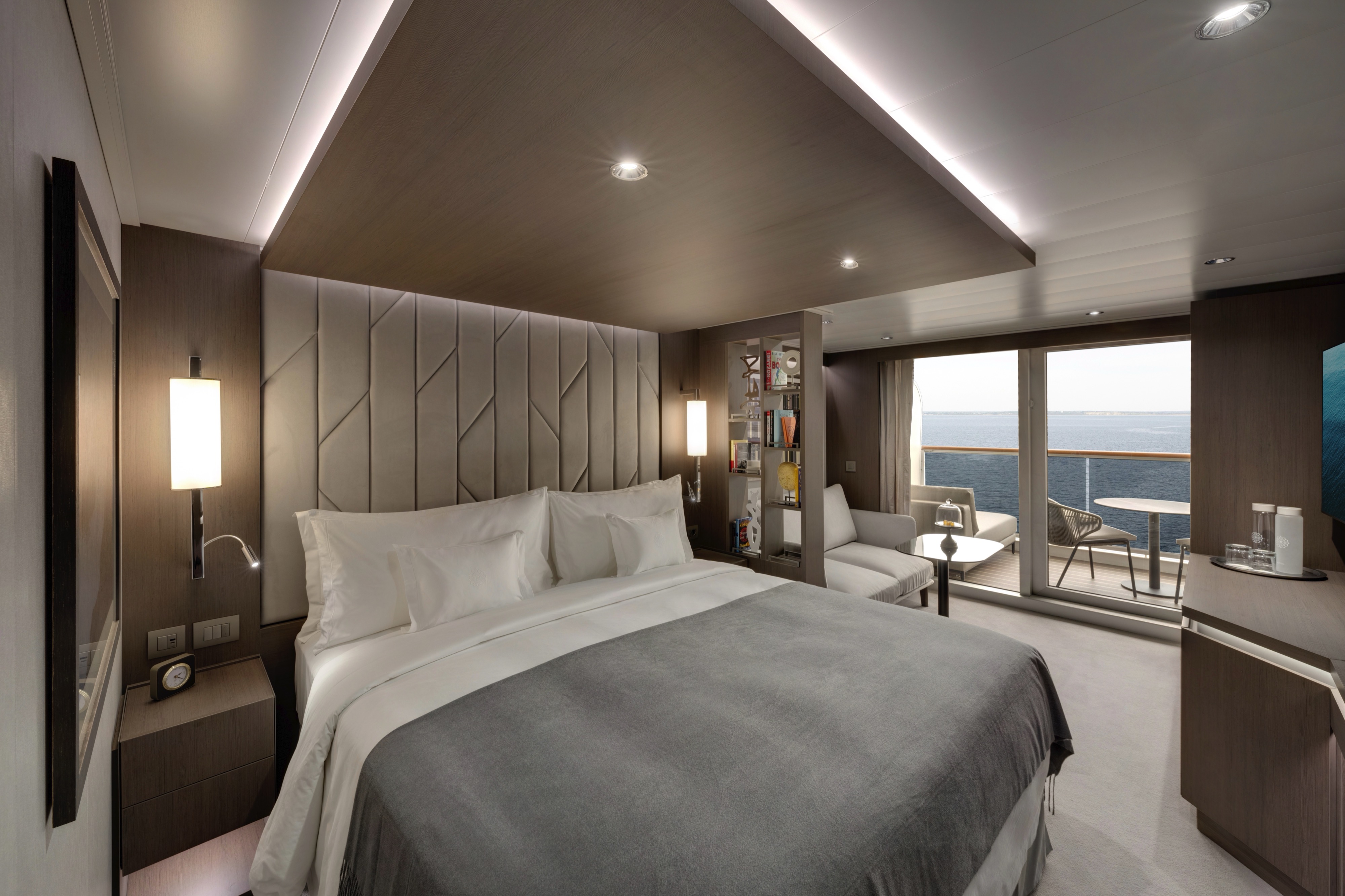
Ocean Grand Terrace Suite
Ship Facilities
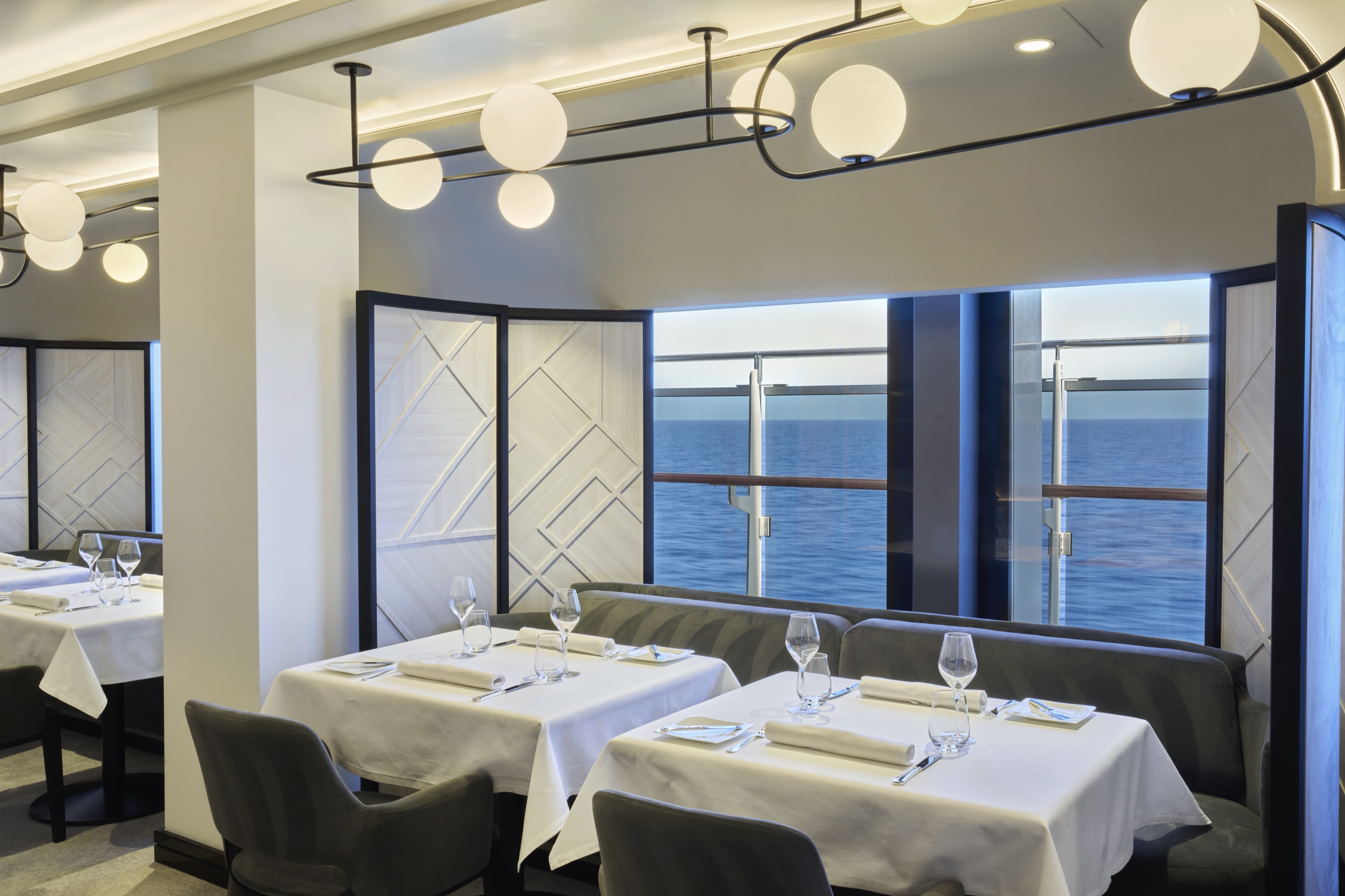
Anthology
A Gastronomic Discovery
Taking guests on a unique culinary journey through Italy.
Refined Italian Cuisine
As our signature fine-dining experience, Anthology elevates Italian cuisine, offering an unparalleled gastronomic adventure.
On the menu, created by our esteemed Head of Culinary, Franck Garanger, each dish is a celebration of Italy’s finest regional ingredients and flavours.
Contemporary, Refined Elegance
With the opportunity to dine outdoors, Anthology offers an intimate yet elevated dining atmosphere with flawless, attentive service.
- Indoor seating: 48
- Outdoor seating: 22
- Open for dinner
- Reservations recommended
- An Exclusive Experience Fee Applies
- Located on Deck 5
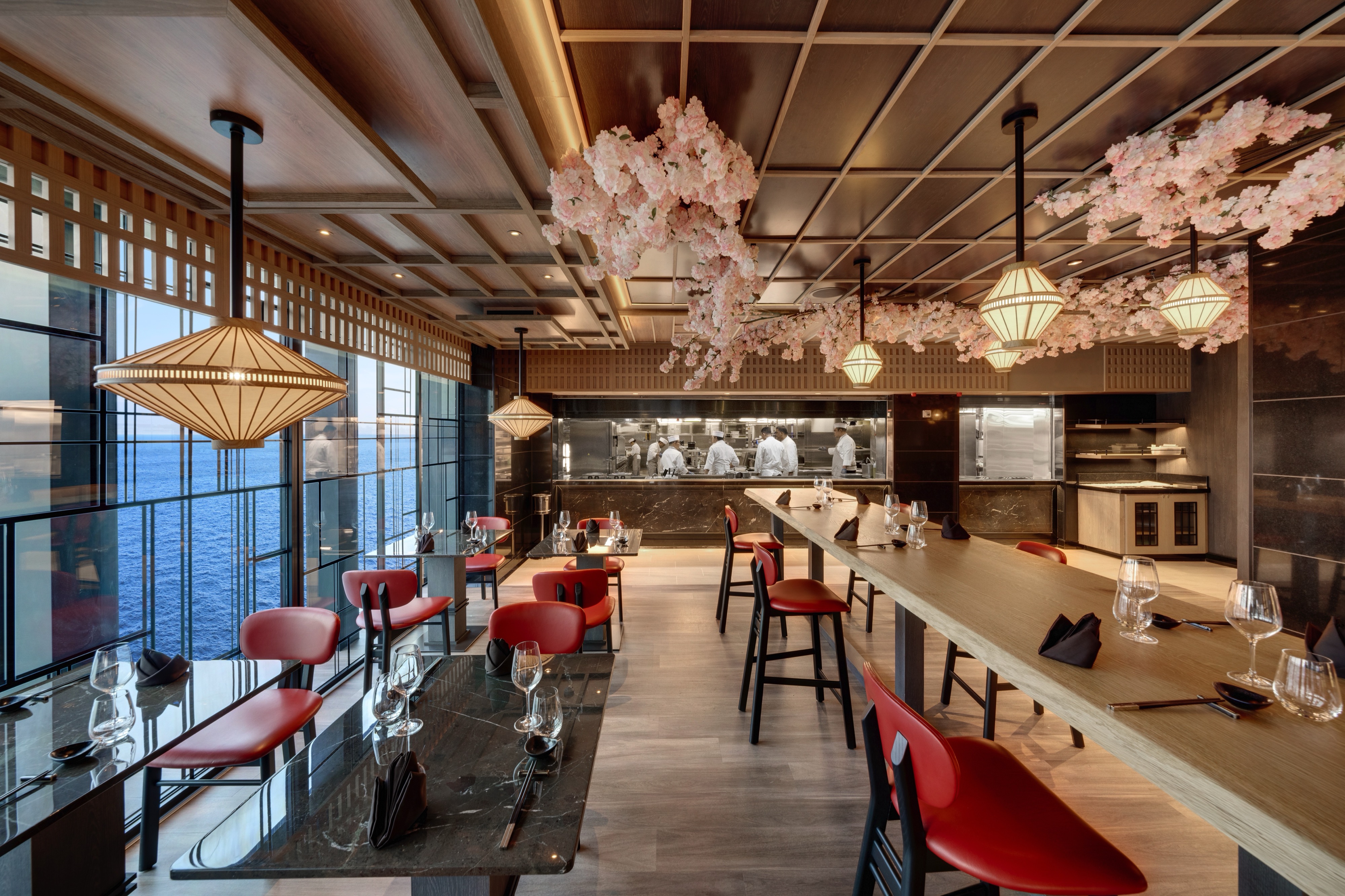
Sakura
A vibrant Pan-Asian fine-dining experience
Named after Japan’s iconic cherry blossom, Sakura blends contemporary elegance with the vibrant spirit of Asia’s culinary capitals. With sweeping ocean views, guests enjoy Mediterranean Bluefin tuna, wagyu tataki, and freshly prepared sushi — paired with curated sakes, shōchūs, and Asian beers. A modern expression of immersive Pan-Asian cuisine.
Culinary highlights
Wagyu beef tataki
Our sustainably sourced prime grade five Japanese wagyu beef is delicately torched by our chefs: an authentic method of cooking that ensures that the cut’s best qualities are preserved.
Makrut lime pavlova
A fusion of east and west, this unique interpretation of pavlova is a perfect representation of the passionate, creative expertise and multicultural diversity of our talented pastry team .
Kale salad
Another example of our chefs’ ingenuity, a humble kale salad is transformed into culinary art for our guests to enjoy. This superfood salad represents a fusion of clean living with the flavours of Asia.
Intimate and Welcoming Environment
The ancient tea rooms of Kyoto provide the inspiration for Sakura’s aesthetic, where dark wood frames lead your eye to the ceiling, adorned with a blossom tree canopy which envelops diners in a warm atmosphere of festoon lights.
- Indoor seating: 92
- Outdoor seating: 26
- Open for lunch and dinner
- Reservations recommended
- The Sushi Bar is open-seating on a first come first served basis.
- Located on Deck 5
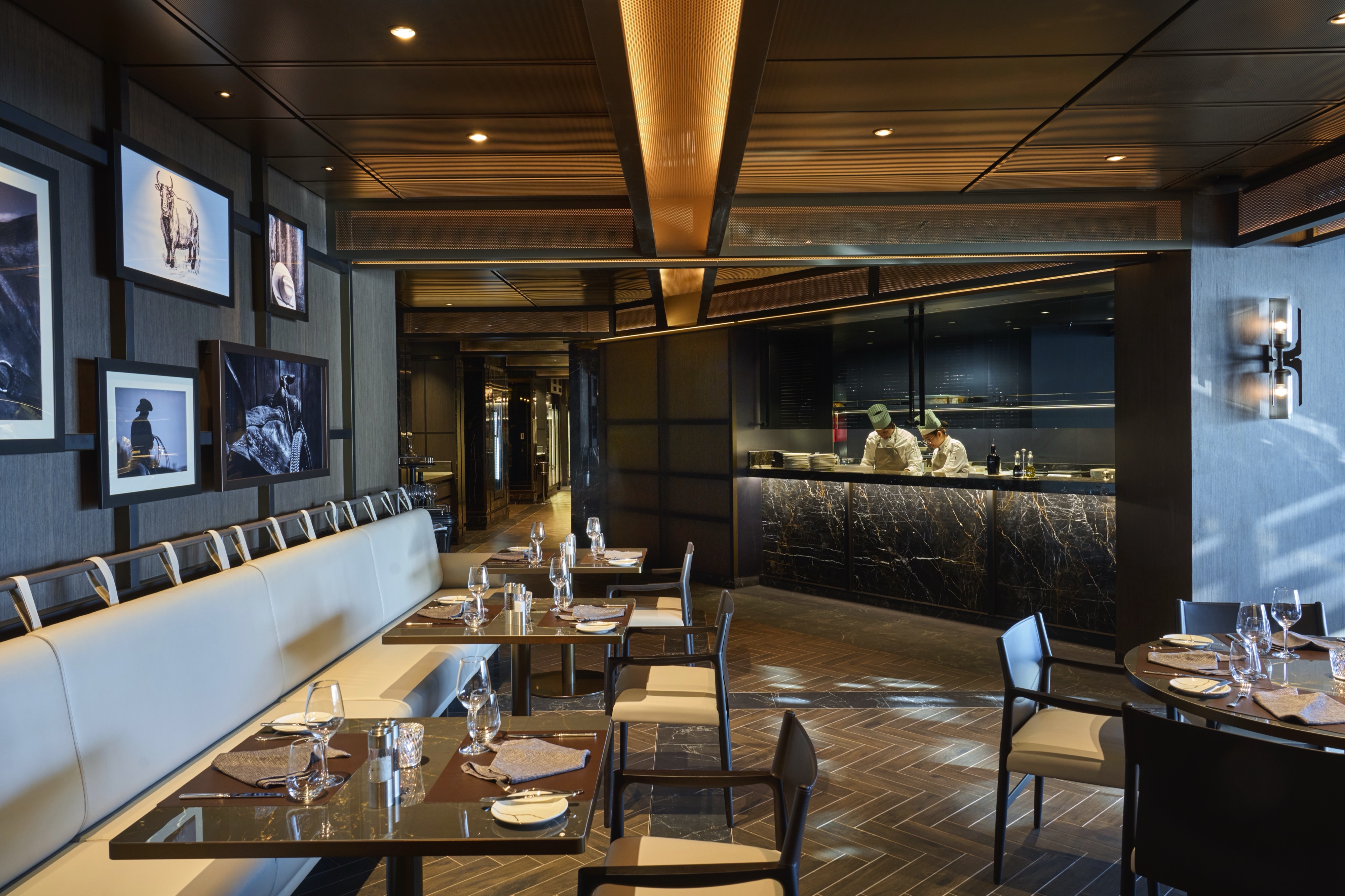
Marble & Co. Grill
The Art of Marbled Excellence
Marble & Co. Grill is a vibrant celebration of European steakhouse tradition, elevated by French-inspired finesse. Its name reflects delicate marbling – the hallmark of the world’s finest cuts.
Culinary highlights
Grilled prime rib
From a local producer in the Deux Sévres region of the lush Loire Valleé, it’s clear why the famous Jersiaise breed, renowned for its sensational flavour and intense marbling, is one of the most sought-after cuts of prime rib
European Steakhouse, Redefined
The experience at Marble & Co. Grill is reflected through the modern, understated yet sophisticated design with soft lighting and relaxed, attentive service.
- Indoor seating: 80
- Outdoor seating: 10
- Open for dinner
- Reservations recommended
- Located on Deck 5
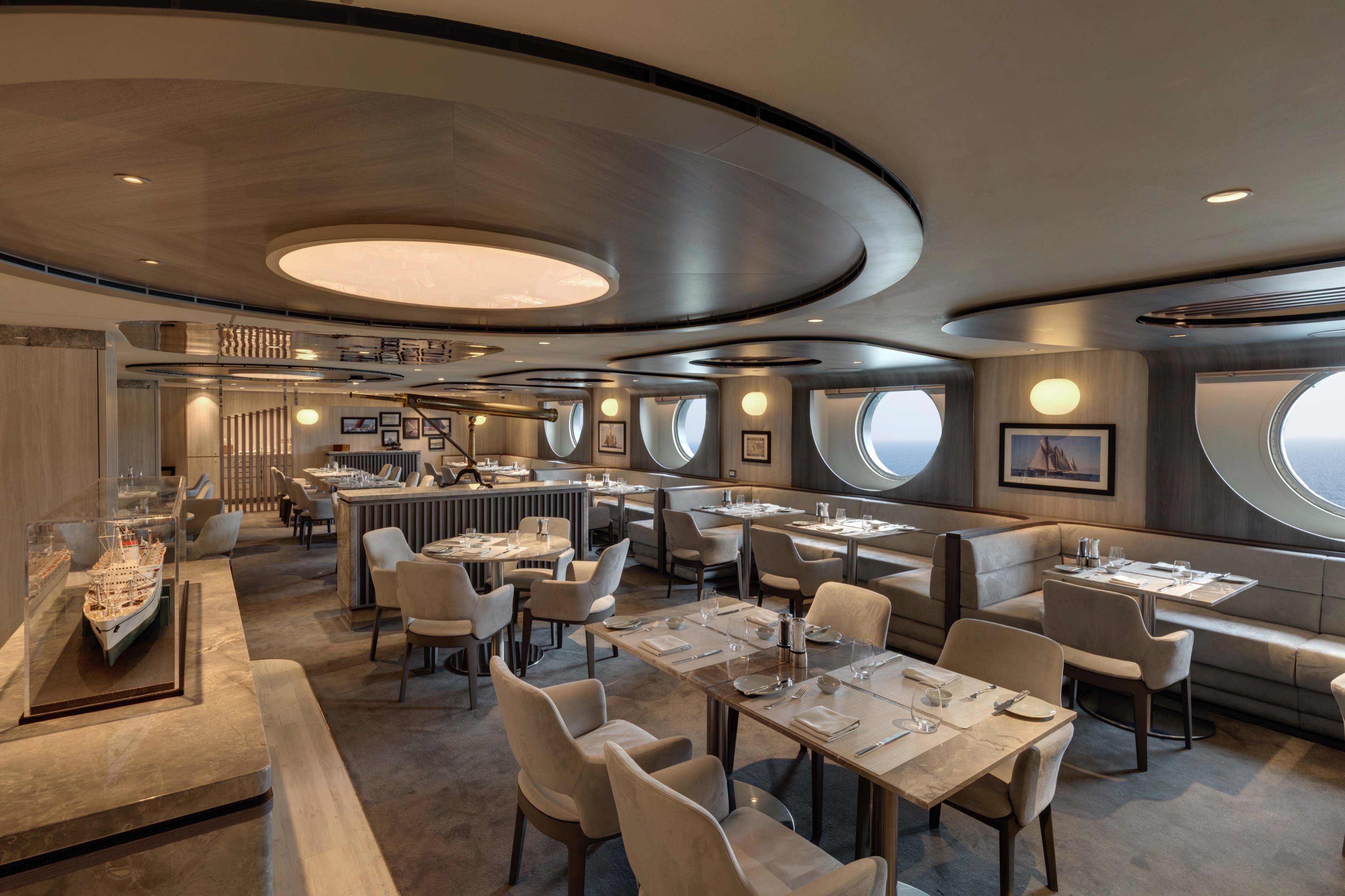
Med Yacht Club
A celebration of the Mediterranean coastal living
Inspired by the region’s sun-drenched coastlines, Med Yacht Club captures the easy rhythm and convivial spirit of the Mediterranean. The menu brings together the flavours of Italy, Spain, Greece, France, and North Africa — a tapestry of coastal influences expressed through sharing plates created with authenticity and passion.
Culinary highlights
Sweet Caprese
The finest cherry tomatoes and strawberries create an intriguing base, upon which our burrata sits adorned with even more sweet tomatoes and strawberries with a drizzle of pesto from Sicilian Bronte pistachios.
The Essence of the Mediterranean
Effortlessly refined in its design, space and light creates a convivial atmosphere, with bright sunshine streaming through large portholes and Med-influenced music transporting guests on a culinary journey inspired by the sea.
- Indoor seating: 136 (34 at the bar)
- Open for lunch and dinner
- Located on Deck 4
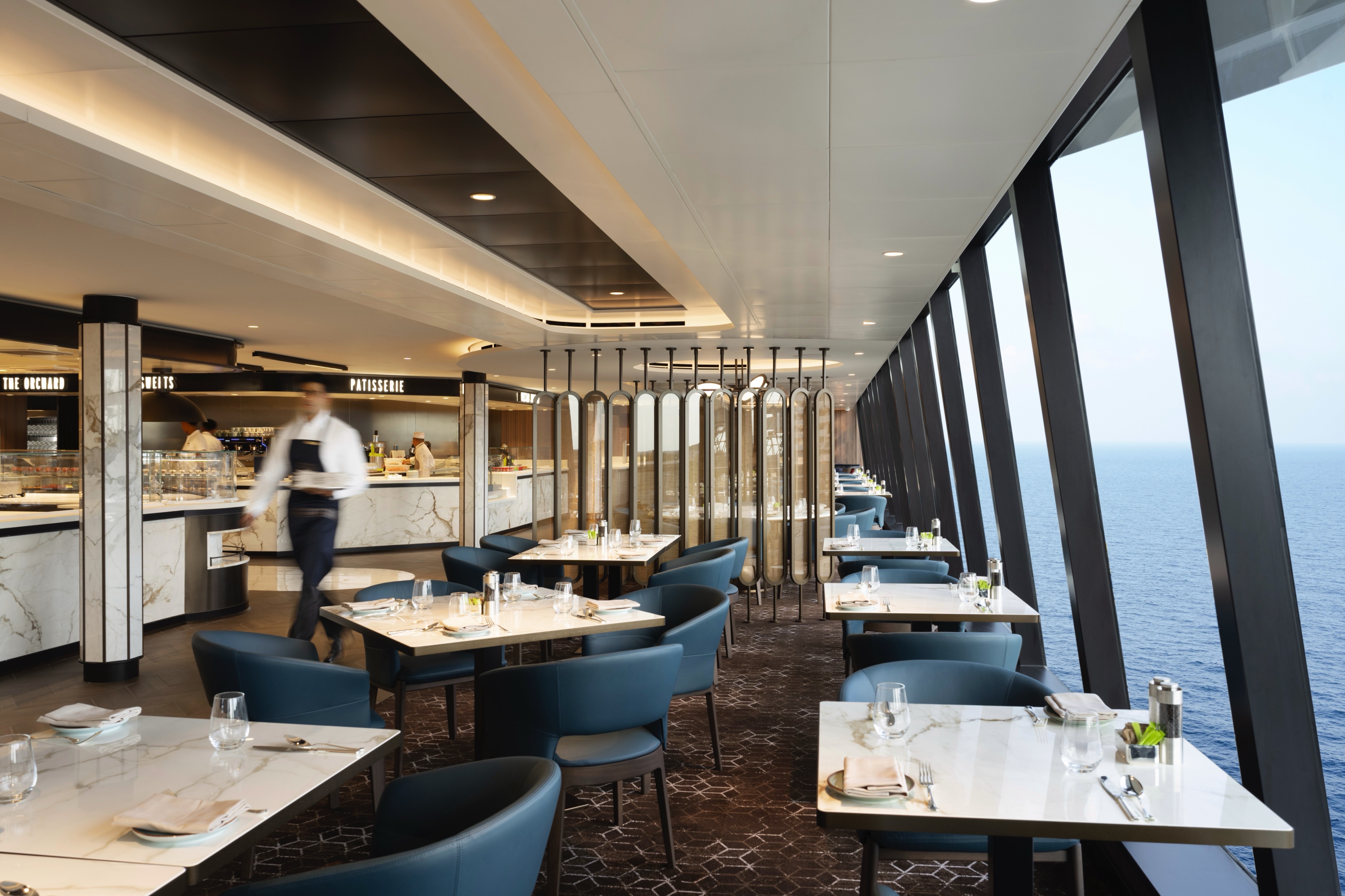
Emporium Marketplace
Effortless all-day dining
Named after the Greek word emporion (‘place of exchange’), Emporium Marketplace celebrates global cuisine and the joy of discovery through food. Guests can explore a remarkable array of authentic flavours, from destination-inspired dishes to handmade pasta and wood-fired pizza.
Open kitchens buzz with quiet energy, while artisanal charcuterie, fromagerie and pâtisserie stations bring a refined touch. A chilled glass of Champagne partners perfectly with fresh crudo, as the sun sets on the horizon.
Culinary highlights
Handmade tortelloni
Our tortelloni are made onboard from scratch every day in the authentic Italian way. Carefully selected flour is used to make dough that has the correct degree of elasticity.
Plant based chia yoghurt
Our chia yoghurt is daily made from homemade cashew milk, creating a fusion of delicious creamy flavours for guests to enjoy each morning.
Light, Space, Flavour
Bathed in natural light, several separate cooking stations evolve throughout the day with white marble and minimalist design accents, allowing the freshest ingredients to take centre stage.
- Indoor seating: 271
- Outdoor seating: 70
- Open for breakfast, lunch and dinner
- Located on Deck 11
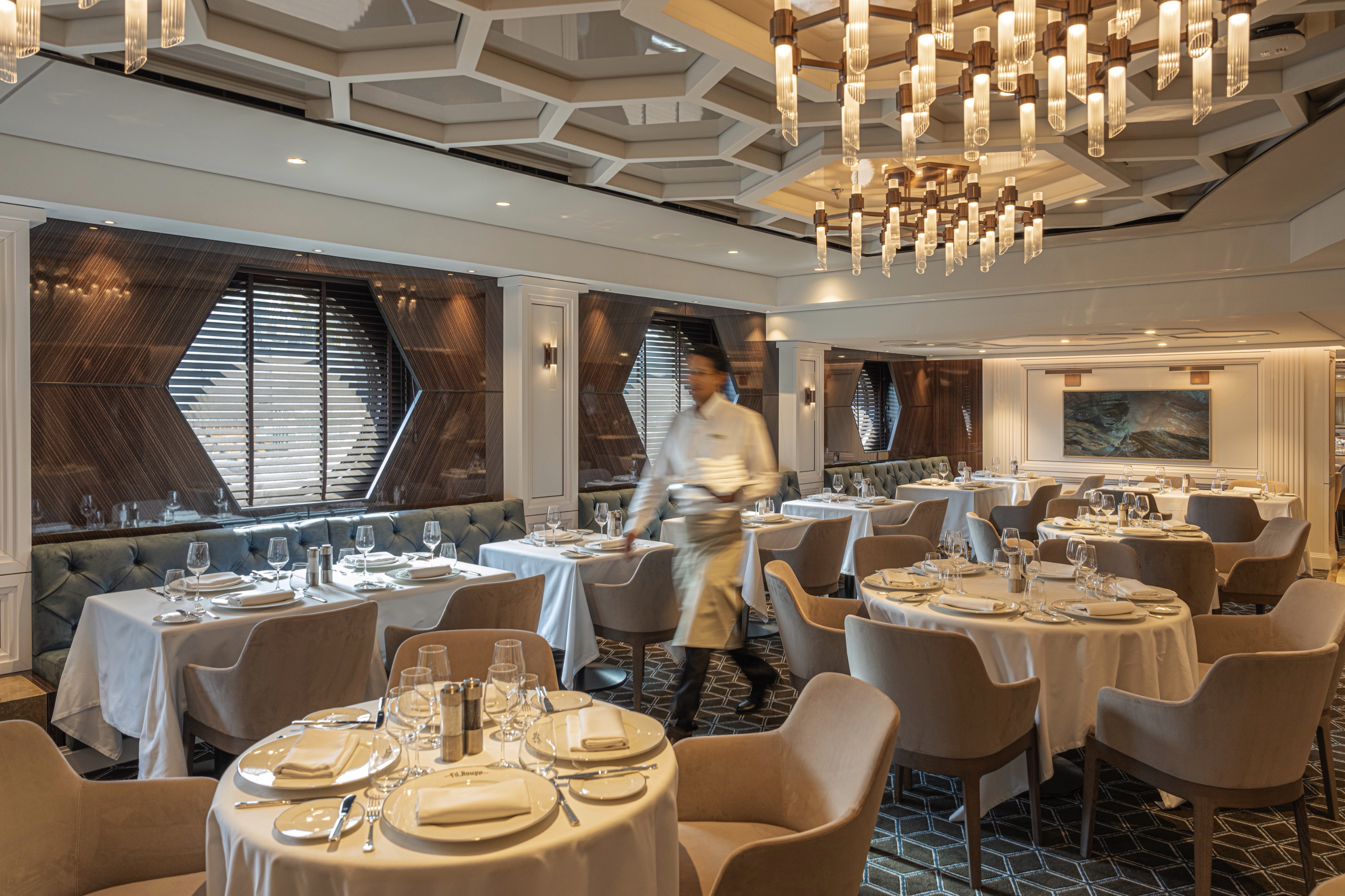
Fil Rouge
French-inspired international cuisine
Fil Rouge is an elegant celebration of global cuisine, seen through the lens of French artistry. Its name — ‘the red thread’ — speaks to the connections woven between cultures, flavours, and stories.
In a serene, though contemporary setting, time slows. The menu blends international inspiration with refined French technique, offering a dining experience that is both authentic and imaginative.
Evenings unfold with quiet indulgence – signature soufflés, a curated wine list, and the charm of the iconic dessert trolley. And in the morning, a hidden gem awaits: an exquisite breakfast, served with elegance and intention.
Culinary highlights
Tuna Tataki
Sustainably raised and caught in the open Mediterranean Sea close to the Cartagena Bay, the Mediterranean Bluefin tuna sourced by our chefs is some of the best grade to be found anywhere in the world.
A Refined, Timeless dining experience
Fil Rouge embodies the essence of understated sophistication. A visual and culinary interpretation of elegance, its refined geometry — inspired by interlocking hexagons — symbolises balance and harmony.
- Indoor seating: 222
- Open for breakfast and dinner
- Located on Deck 4
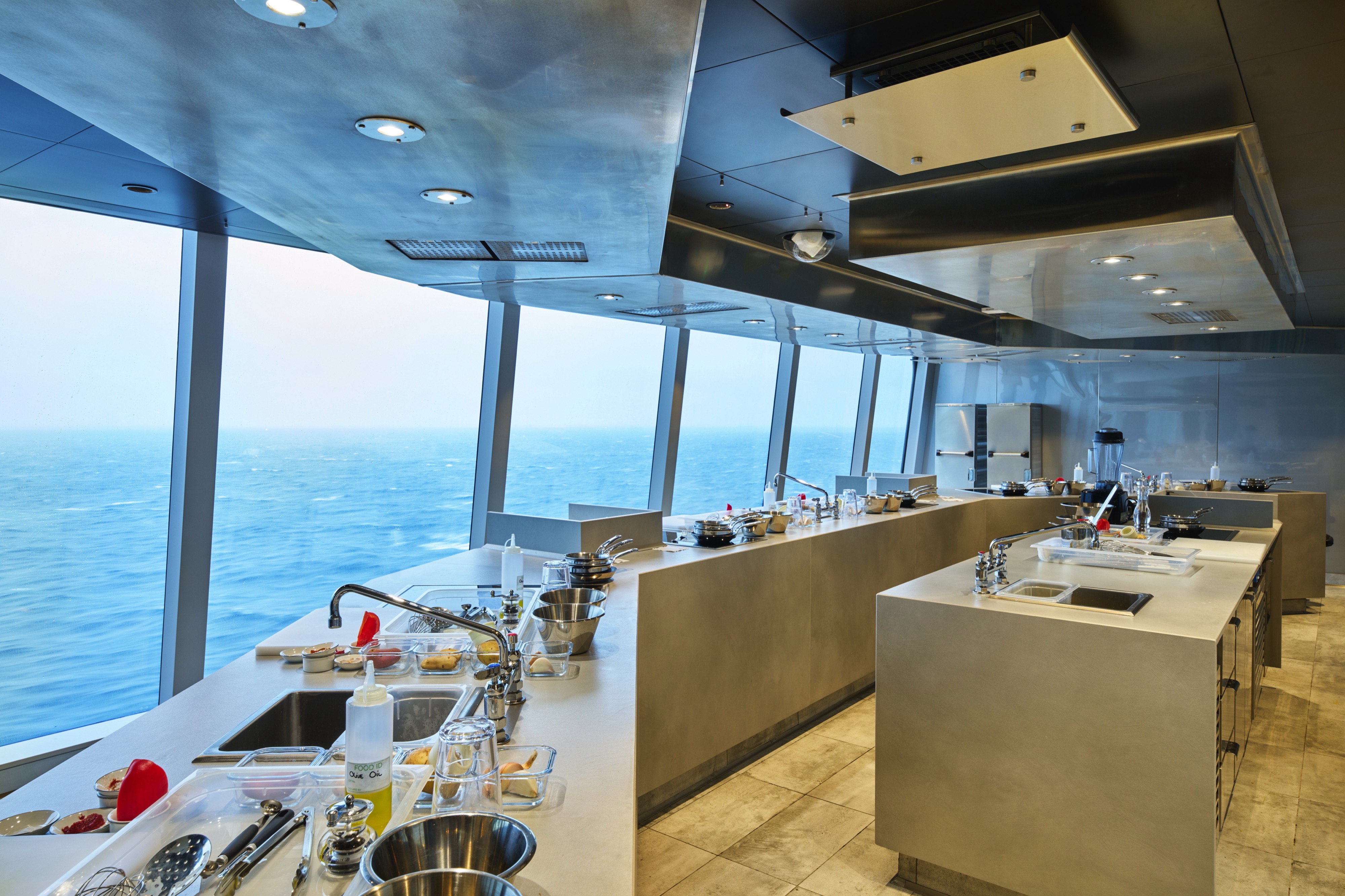
Chef's Kitchen
An Interactive Culinary Experience
Guided by our team of world-class chefs, immersive and interactive cooking classes invite guests of all skill levels to embrace the art of creating exquisite dishes.
More than a cooking class, it’s a social and sensory celebration – where learning is joyful, conversation flows freely, and food is savoured in good company. Each experience culminates in the nearby private dining room, where the class – guests and chefs alike – gathers to enjoy the dishes they’ve prepared together.
Ocean-front private kitchen
The Chef’s Kitchen offers a range of enriching, hands-on culinary experience set within an intimate, ocean-front private kitchen.
- Indoor seating: 12
- An exclusive experience fee applies
- Available for reservation only onboard
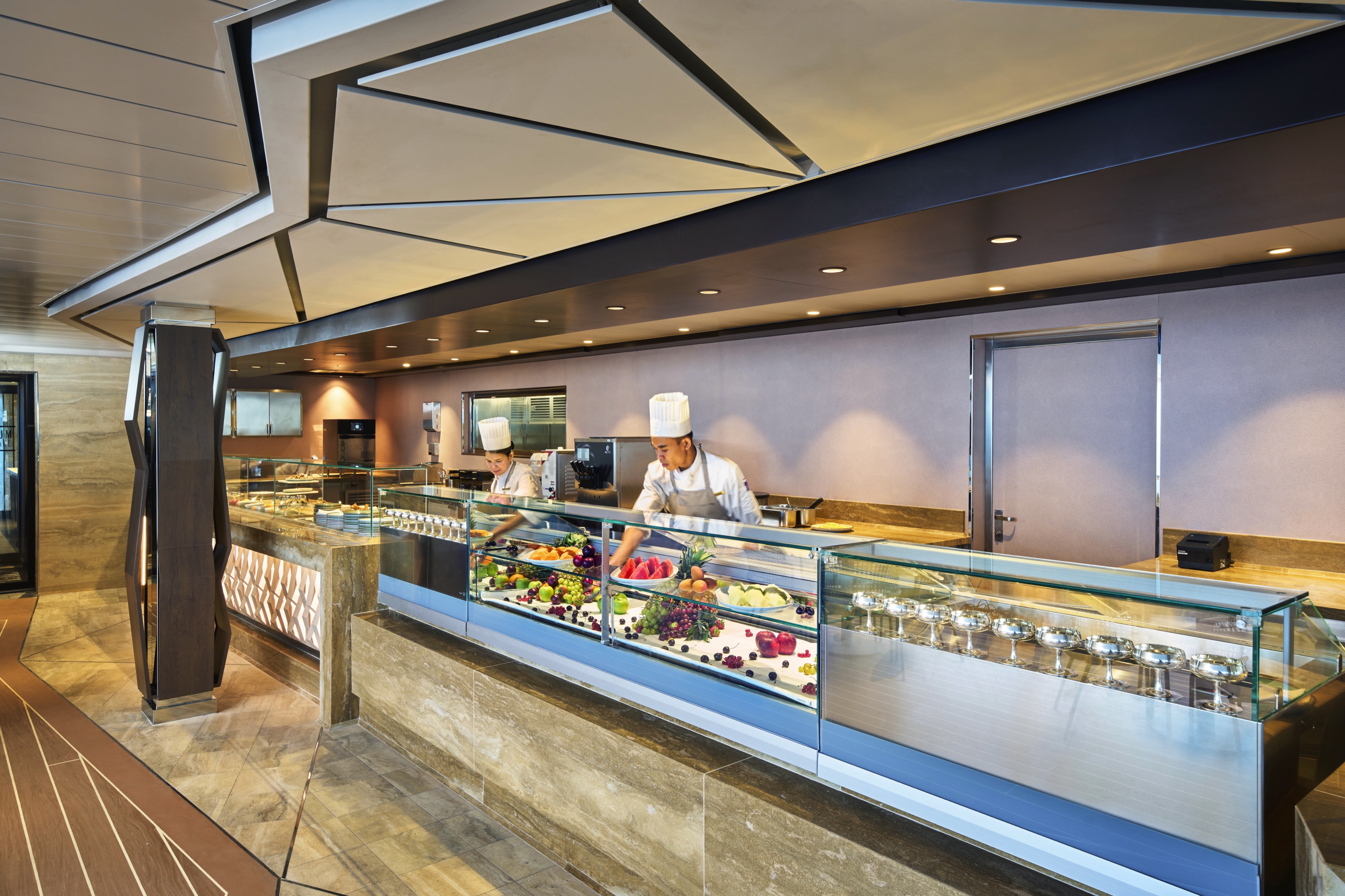
Gelateria & Creperie at The Conservatory
Authentic French and Italian indulgences served poolside.
Set in the relaxed, weather-protected poolside Conservatory, this is the place to treat yourself to authentic French and Italian indulgencies.
- Open during the day
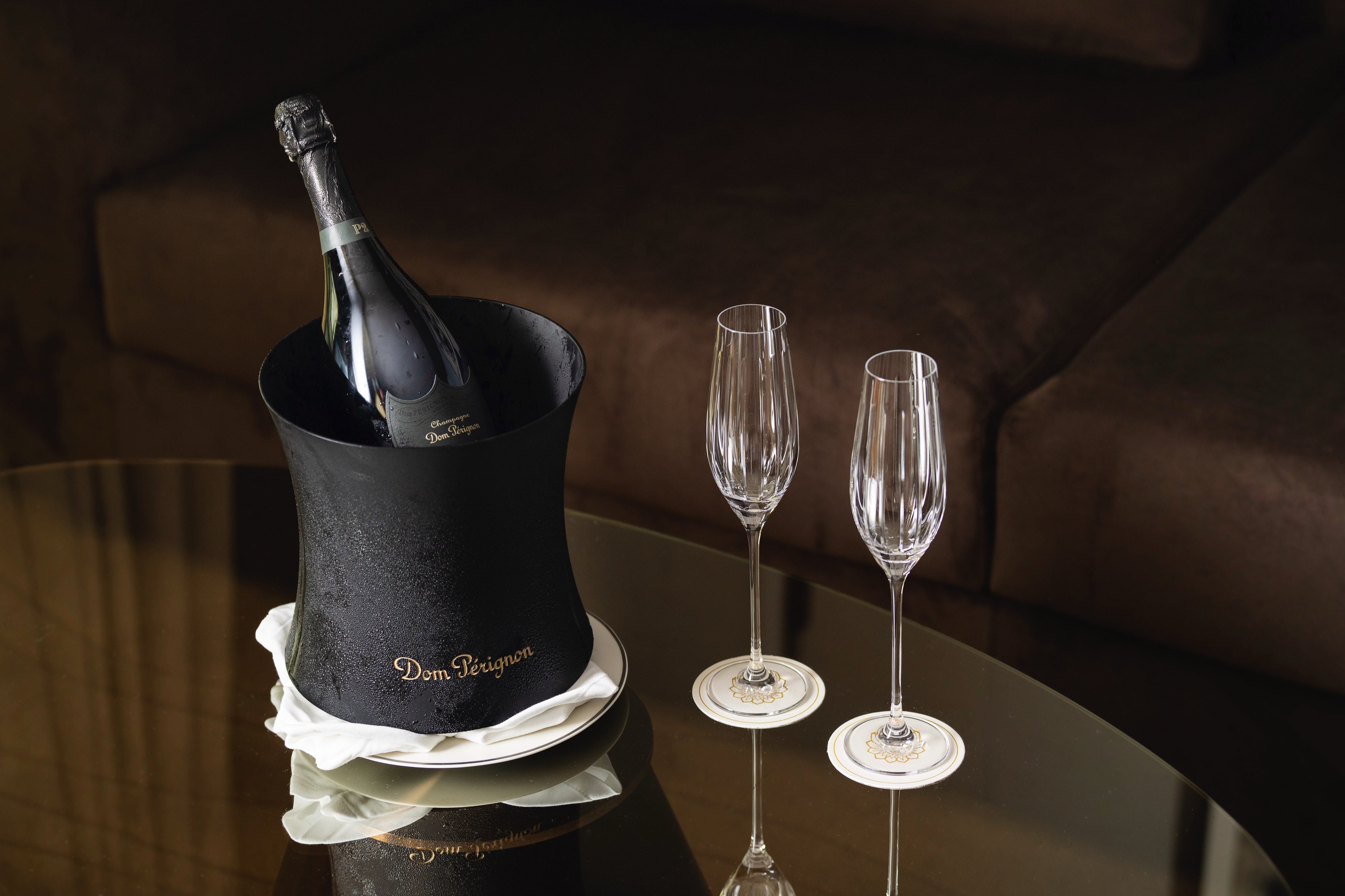
In-Suite Dining
Refined dining in the comfort of your suite or private terrace.
Our guests can enjoy an array of cuisines at any time, day or night, in the comfort of their suite or private terrace. Available 24 hours, the menu offers guests a taste of each of our unique dining destinations.
- Available 24 hours
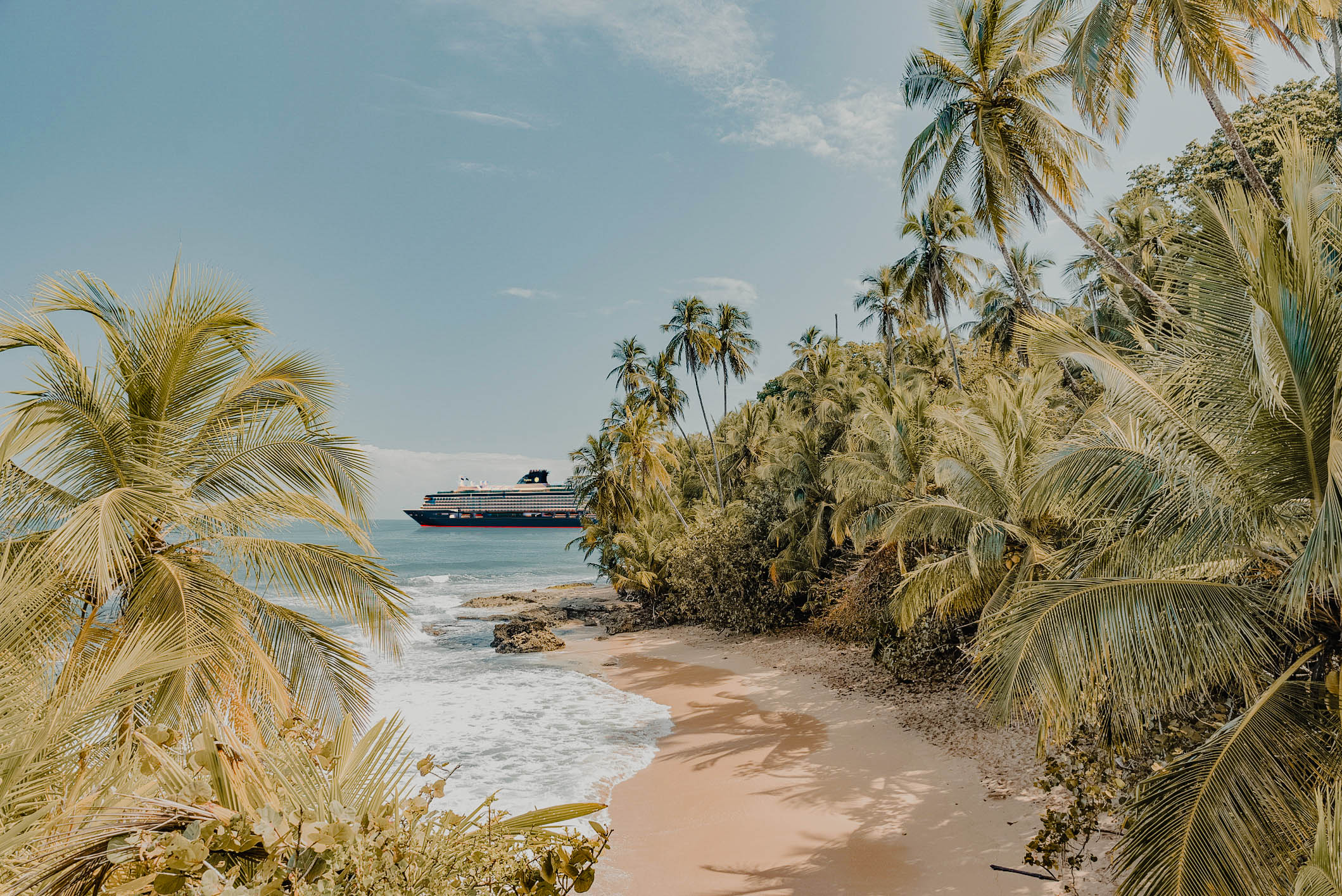
Destination Experiences
Inspiring authentic discovery across culture, history, and cuisine.
Intimate Explorations
Intimate, smaller groups with like-minded guests, for authentic exploration – with opportunities to understand the culture and connect with locals.
Explore with Peace of Mind
Seamless experiences with everything taken care of, no hidden fees, fully insured partners, transportation arrangements and flexibility in case of change of plans.
Authentic Immersions
Enriching opportunities to explore behind-the-scenes in unique locations. Crafted experiences curated in collaboration with expert partners and ambassadors.
Destination Experiences Categories
Private Arrangements
We are pleased to curate your requests for customised arrangements that can be as off-the-beaten-path or utterly indulgent as you wish.
Whether yours is an intimate group or a larger gathering of family and friends, we can help you adapt a featured destination experience or tailor an arrangement that delivers exactly what and where you prefer.
Destination Essentials
Our Destination Essentials offer immersive experiences, with hidden wonders and little surprises.
Your experiences will feature:
- Must-do experiences
- Discovering local highlights through a different lens
- Expert guides and hosts to enhance your discovery
- Culinary tastings through local flavours and traditions
- Full immersions into cultures and customs
- Close-up encounters with the natural world
Curated Explorations
Our Curated Explorations offer unmatched experiences and moments that are off-limits to most.
Your experiences will feature:
- Small, intimate groups
- Tailored, boutique adventures
- Behind-the-scenes experiences
- Guided by locals for more enriching discovery
- Deeper insights into cultures and traditions
- Premium culinary and beverage experiences
- VIP access to landmark sites and special events
Overland Immersions
Our Overland Immersions are all-inclusive and available to small groups during your Journey.
What to expect:
- Luxury transportation such as private jet, helicopters, vehicles, boats or other means
- Accommodation in 5-star or boutique hotels
- Culinary experiences, including all meals, beverages, and selected spirits
- VIP access to landmark sites and special events
- Exclusive evening experiences
- Meticulously vetted hosts to coordinate all logistics
- Luxury transfers and luggage handling
Entertainment Experiences
Each moment invites you to embrace your own Ocean State of Mind
World-Class Performances
Immerse yourself in curated, world-class performances by our distinguished roster of guest artistes, from Broadway and West End icons to Steinway Artistes. Whether masterful expressions of music or authentic local performances, these acts will capture your imagination.
Curated Moments
Thoughtfully curated gatherings that reflect the spirit of Explora Journeys, bringing guests and hosts together through captivating performances, cultural celebrations, and unique moments that create lasting memories.
Engaging Sessions
Numerous daytime events and activities that include programmed, organised activities like sports and games, plus spontaneous surprise activations such as a pool game or dance classes.
Clubs
Explora Journeys presents a thoughtfully curated collection of clubs, offering guests meaningful opportunities to connect with others who share similar interests, values, and lifestyles. Whether travelling solo, embracing diversity, or seeking a mindful, alcohol-free space, each gathering fosters connection and a genuine sense of community at sea.
Prism
Prism Club proudly celebrates diversity —inviting LGBTQIA+ guests and allies to come together through inclusive, uplifting events and gatherings.
Club Soda
Club Soda creatively supports those embracing an alcohol-free lifestyle, with vibrant, zero-proof experiences that reimagine the art of socialising in refreshingly sophisticated ways.
Luminary Enrichment
A curated series of onboard sessions, workshops, and experiences led by our Luminaries, passionate experts in their fields.
Destinations
Experts who bring destinations to life with regional history, culture, nature, and geography.
Special Interest
With insights into their chosen field, our Special Interest Luminaries will uncover literature, wellness, design, science, entertainment, or athletics, igniting curiosity and broadening your perspective.
Natural World
Draw closer to the beauty and complexity of nature, wildlife, and the environment. Dedicated to preserving our most vital ecosystems, our Natural World Luminaries shares knowledge and a sense of wonder.
Creative Arts
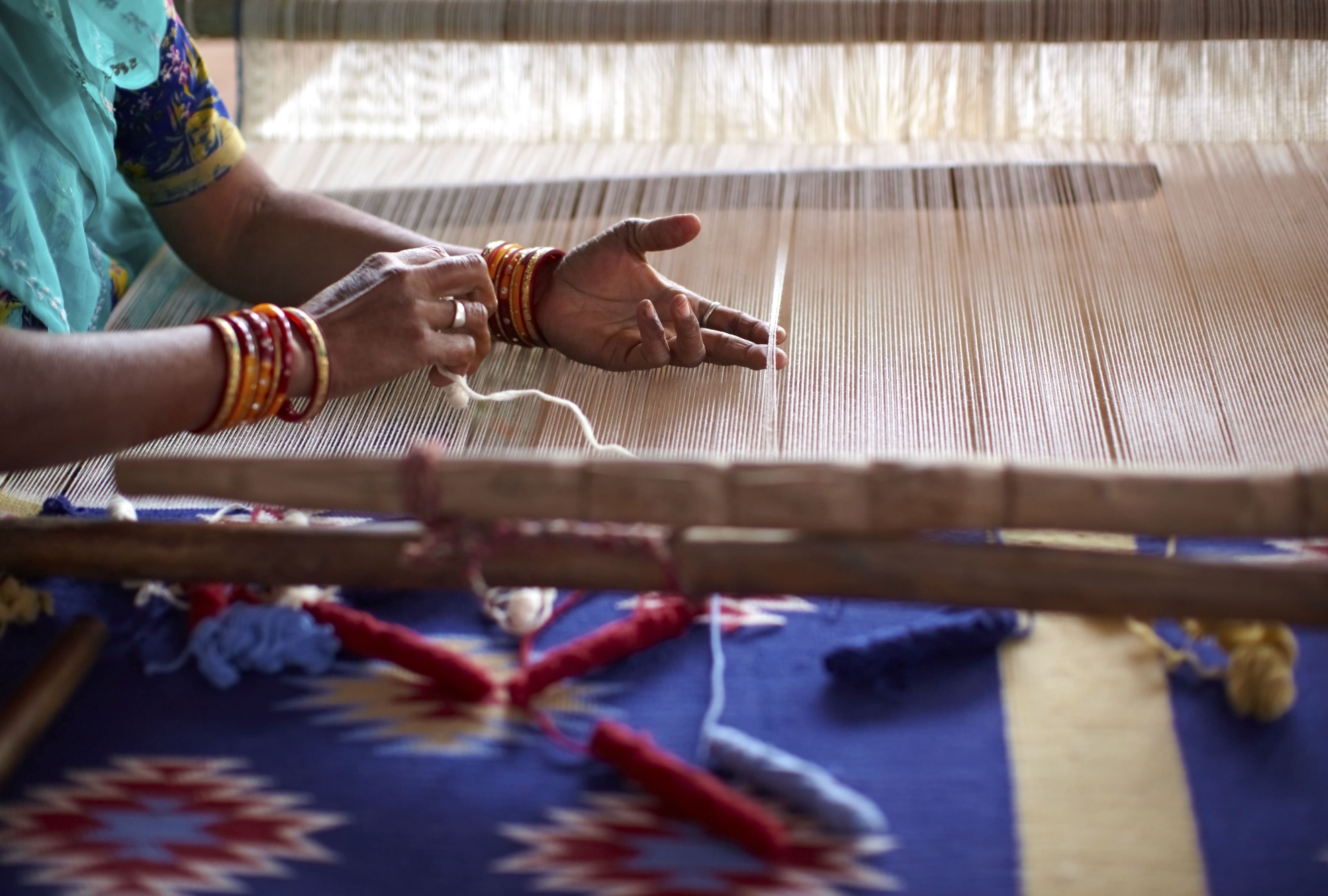
Let your artistry flow as our Creative Arts Luminaries, skilled artisan experts in refined techniques and authentic expression, guides you in an engaging session celebrating the joy of creating by hand.
Interactive Digital Entertainment
By scanning QR codes placed throughout the ship, guests can access new digital content each day, designed for enjoyment at their leisure.
Daily features include themed word searches, Sudoku puzzles, and crosswords, all thoughtfully curated to reflect the spirit of the journey.
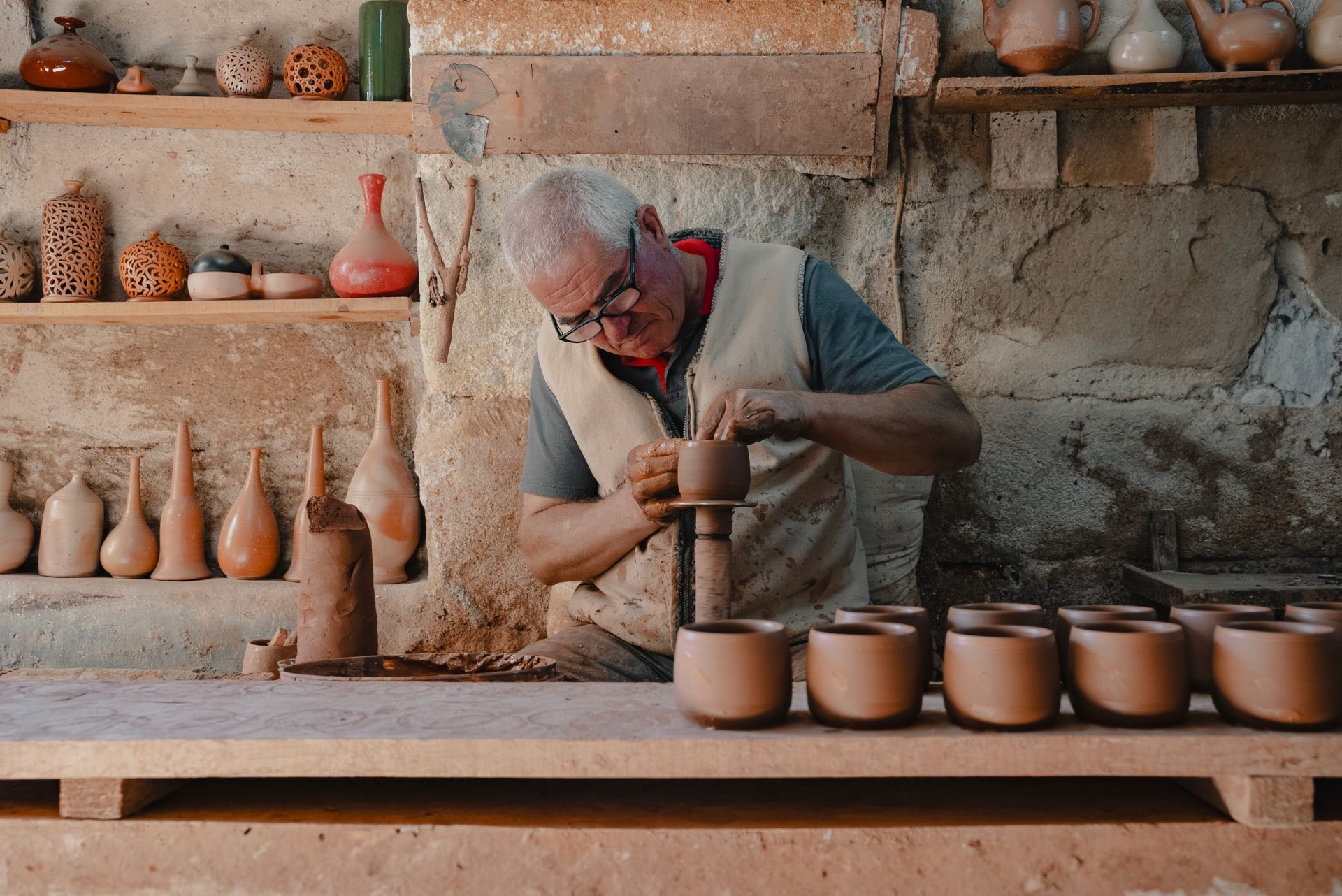
Extended Journeys
Our Extended Journeys invite you to see the world with greater depth and ease — combining two or more consecutive journeys into one seamless exploration.
Enjoy up to 20% savings compared to booking each journey individually* and allow yourself the luxury of time — to linger longer, discover more, and truly immerse in the rhythm of the ocean and the destinations we explore.
Each of our curated Extended Journeys offers a continuous flow of discovery, with enriching destinations, a deeper sense of connection, and the convenience of remaining in your suite throughout — no need to pack or unpack, simply settle in and savour every moment.
Benefits
Take the time to embrace the art of slow travel — whether through long, unhurried lunches by the sea, rejuvenating afternoons at Ocean Wellness – The Spa, or new perspectives uncovered ashore. Every detail is thoughtfully curated to inspire your journey into the Ocean State of Mind.
Up to 20% Savings
Enjoy generous savings when combining select consecutive journeys into one seamless experience.
Ultimate Ocean Escape
Unpack once and unwind – your suite is yours for a seamless journey filled with complimentary experiences, refined dining, and ocean-inspired wellness.
Bespoke Assistance
Our Ambassadors at the Explora Experience Centre are on hand to help you curate your own tailored Extended Journeys.
Inspiring Destinations
A deeper exploration of vibrant cities, hidden gems, and coastal wonders.
Art on Board Explora I
Galleria d’Arte
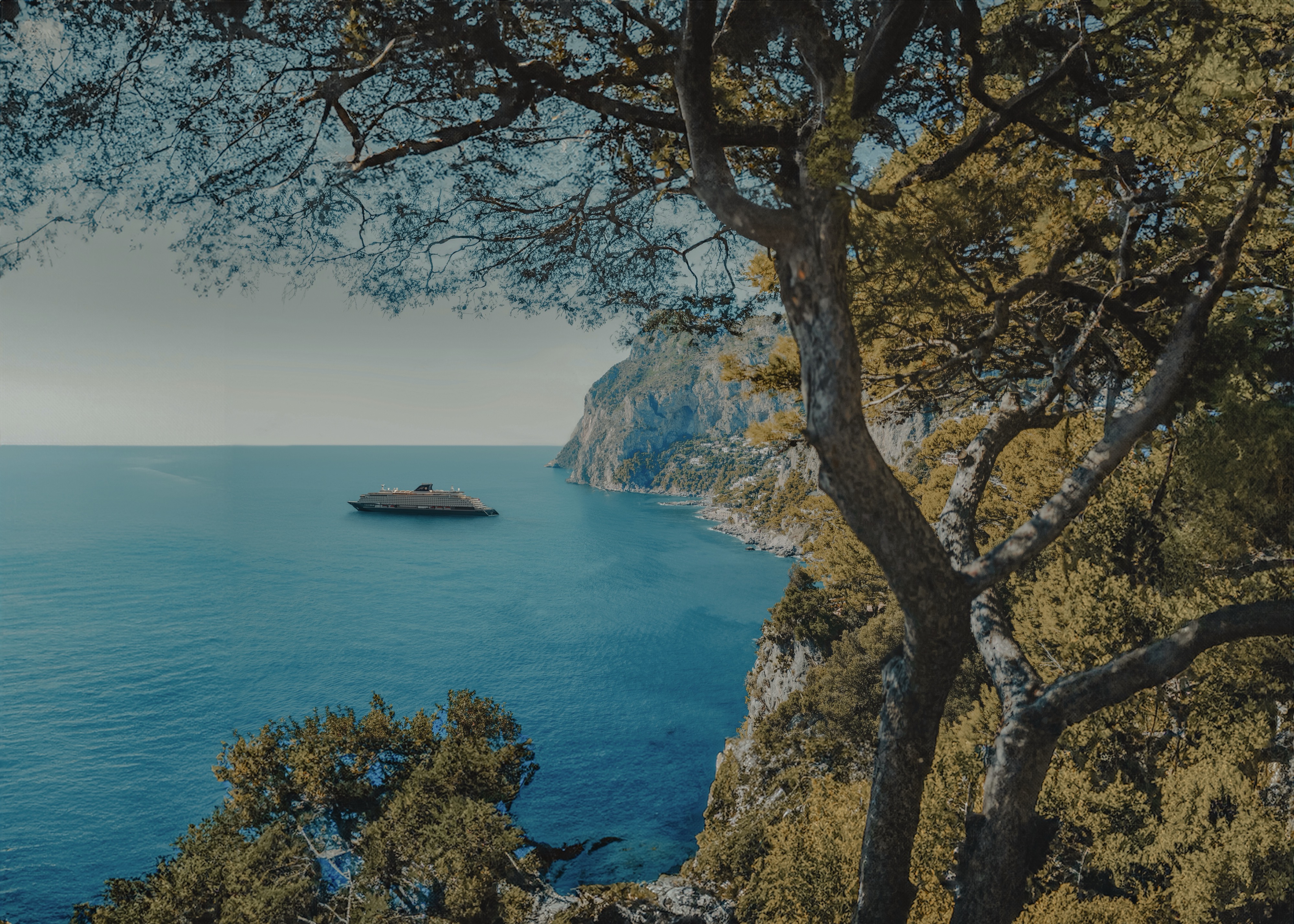
EXPLORA I presents a curated portfolio of masters such as Salvador Dalí and Marc Chagall, alongside contemporary icons including Damien Hirst and Mr. Brainwash, and the most compelling emerging stars.
Featured Artists
The art selection on board features a blend of renowned and emerging artists creating an immersive art experience throughout the ship. From suites to restaurants to the lounges and lobby inspiring artwork enhances every space.
Journeys Lounge
Mixology, enrichment and entertainment continuously evolving throughout the day.
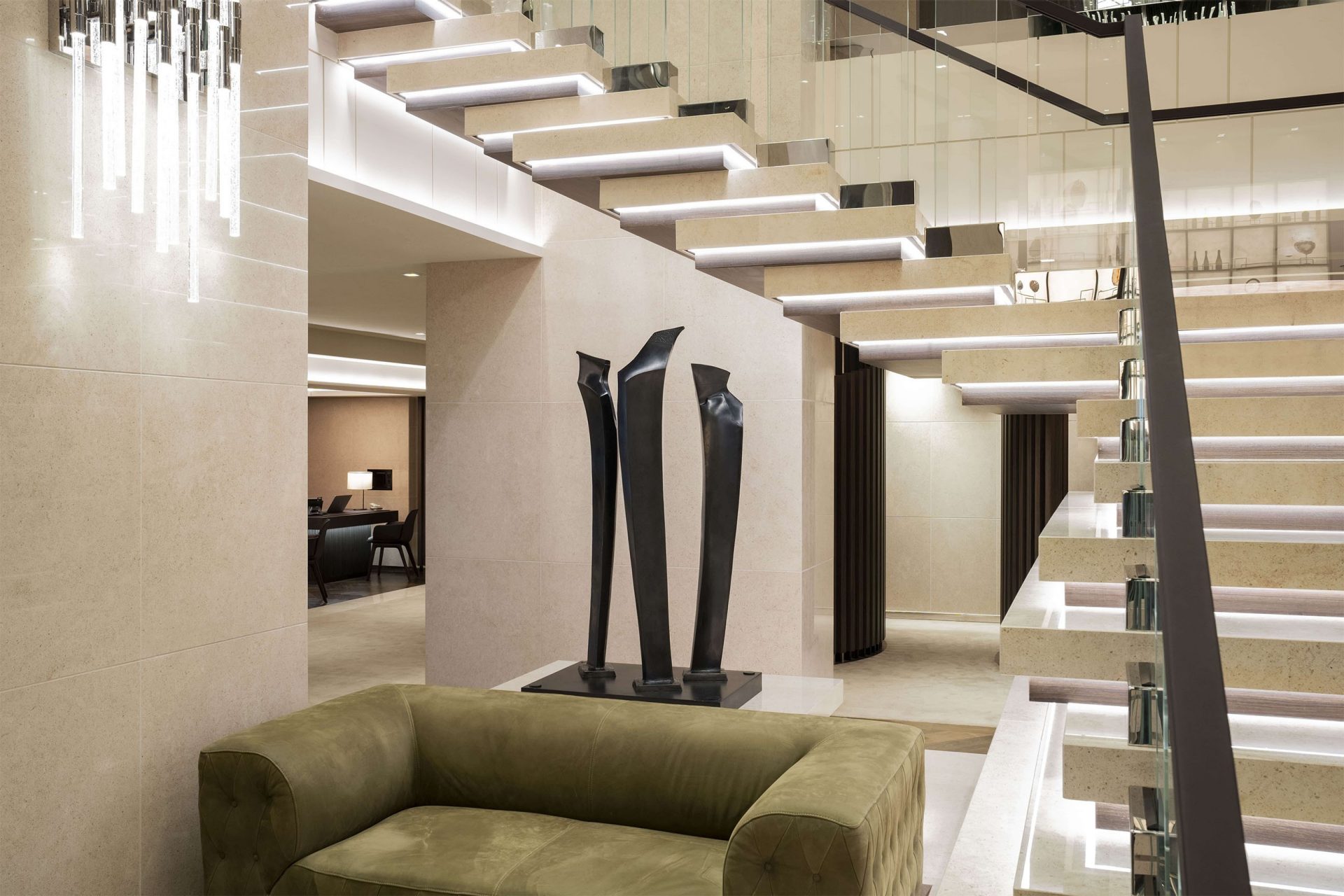
The most spacious onboard lounge features mixology specialists, enrichment activities and cabaret-style entertainment daily. This venue is designed to continuously evolve and transform throughout the day along with the ocean journey.
- Indoor seating: 210
- Located on Deck 4
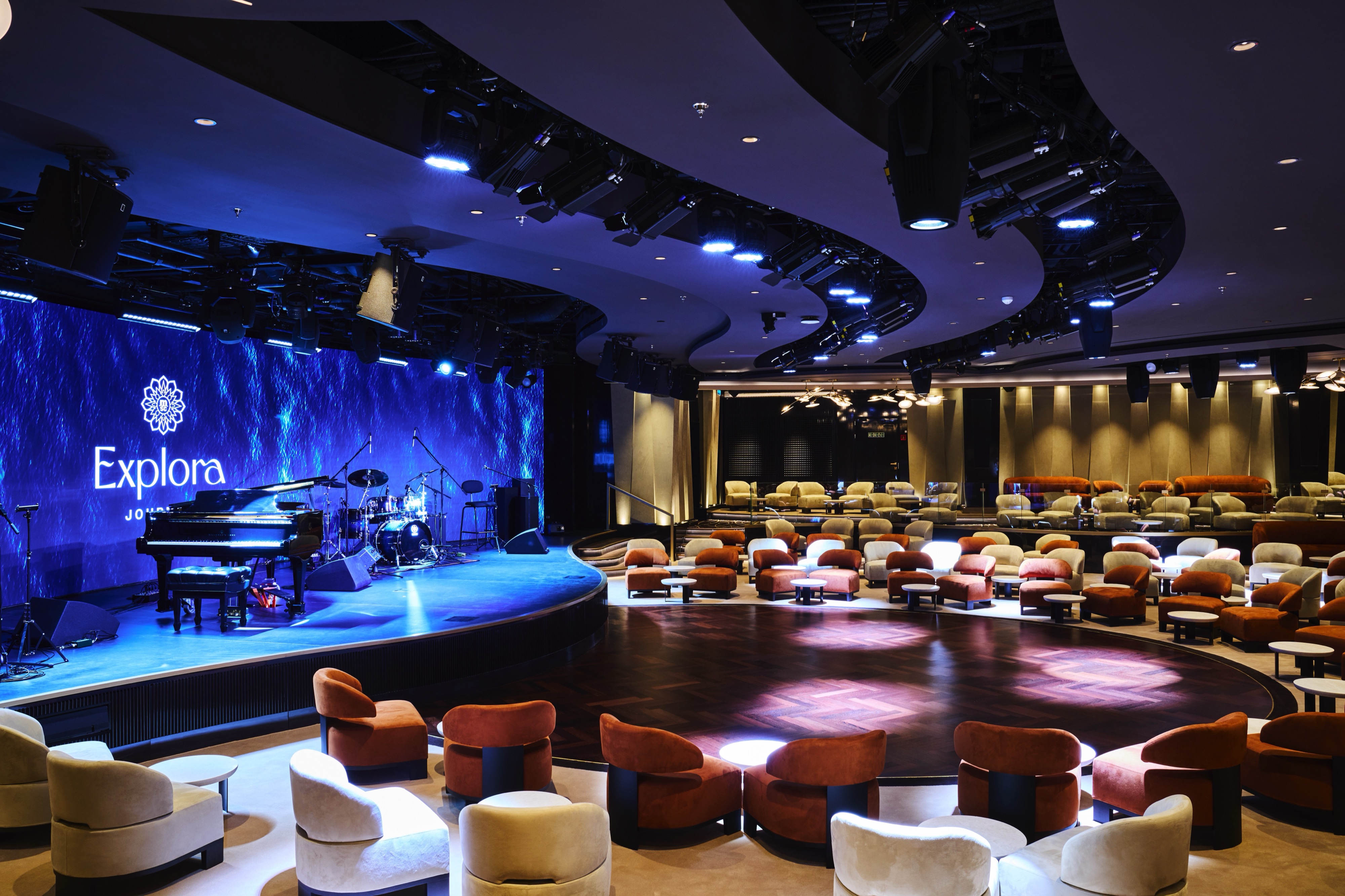
Explora Lounge
A luminous lounge offering 270-degree views of the ocean, a spectacular backdrop to informal drinking and dining.
Explora Lounge is a central meeting place bathed in natural light, where guests can watch the world sail by as they enjoy light meals, snacks, and traditional afternoon tea. Perfect for a quiet moment to read, work or sip a coffee, or simply admire the beautiful ocean views, easing the mind into a calming space.
Cool and soothing background music transitions to live jazz and piano at night. The perfect soundtrack to your journey paired with a sunset aperitivo in hand.
Here, guests can enjoy light meals, snacks, traditional afternoon tea, along with inventive modern cocktails, barista-made coffees, loose leaf teas, smoothies, and fresh pressed juices.
- Indoor seating: 149
- Outdoor seating: 38
- Located on Deck 11
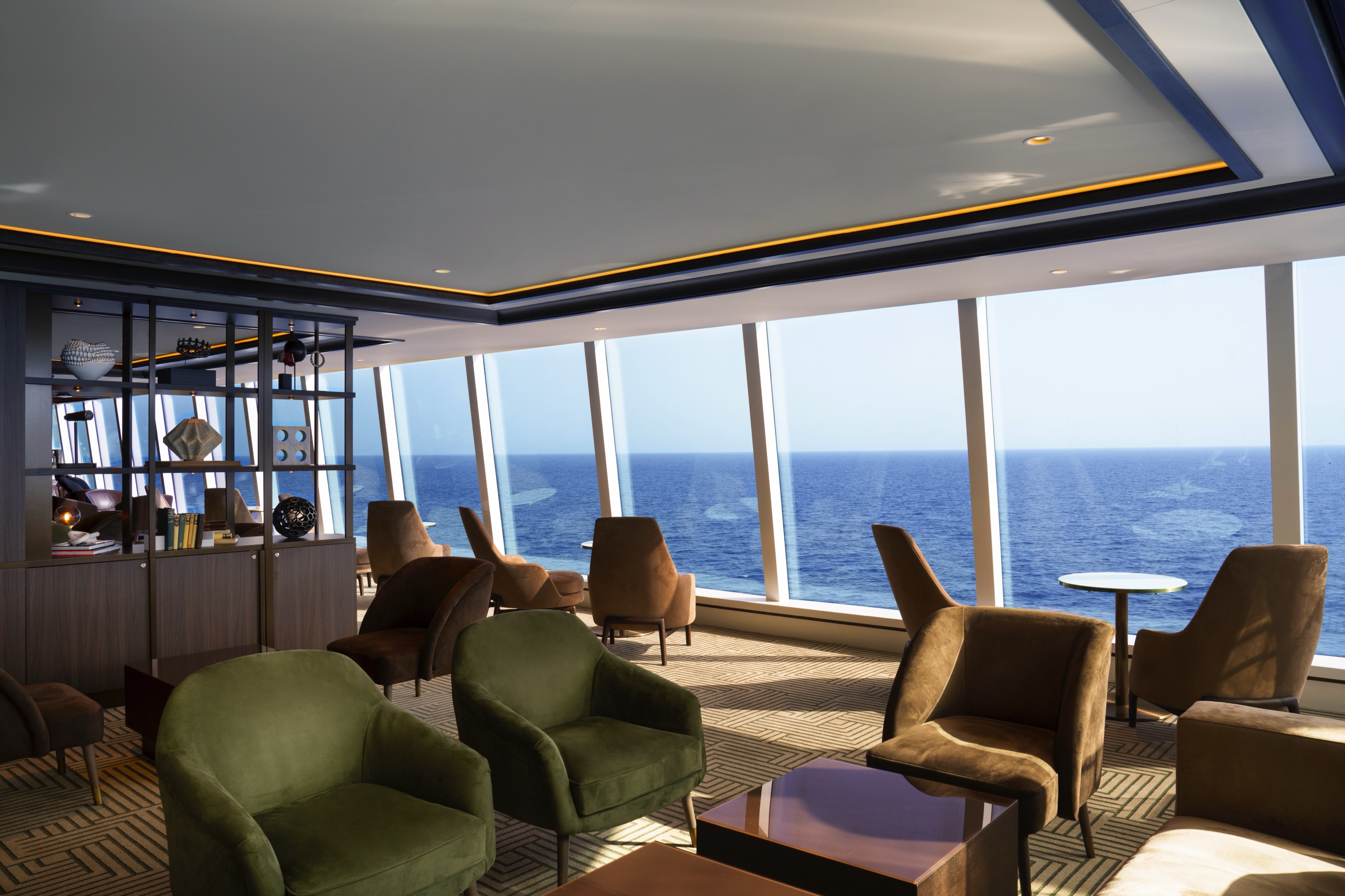
Astern Pool & Bar
An all-day pool and outdoor lounge at the water’s edge.
An all-day lounge next to the infinity pool, ideal for a waterfront escape offering chilled beach club vibes, with low background music by day and acoustic musicians and DJs as the sun sets, continuing throughout the evening.
Outdoor dining is available from nearby restaurant, Sakura in the form of nutritious bento boxes, conveniently served seated at a table, a lounger or a poolside sunbed.
- Outdoor seating: 122 (Includes sunbeds, lounge chairs and bar seating)
- Located on Deck 5
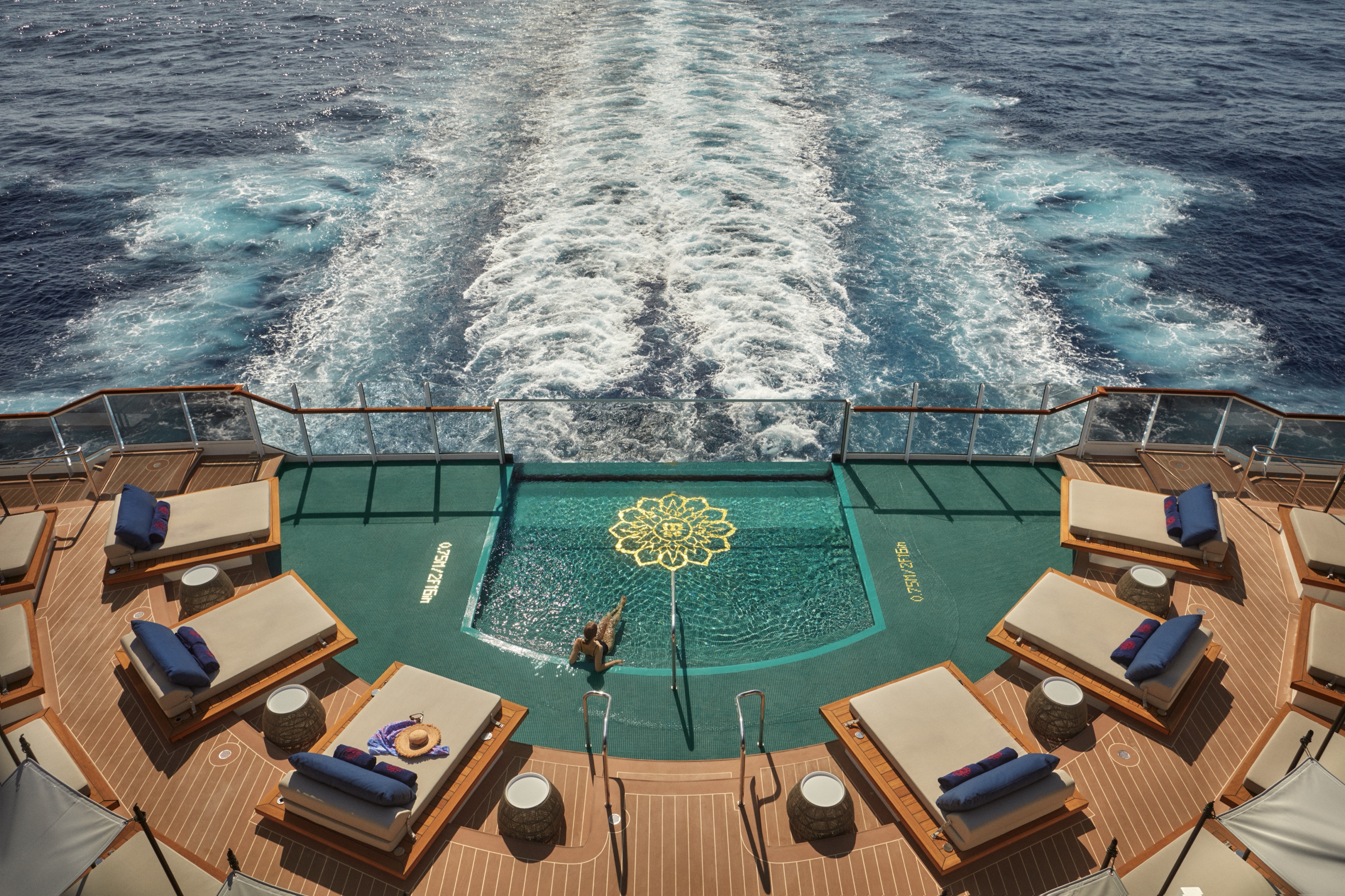
Astern Lounge
An all-day lounge and oceanfront escape opening onto the Astern Pool.
The Astern Lounge is the social hub of any journey, with a collection of daily events and happenings suited to every taste.
Effortlessly transitioning throughout the day, Astern Lounge hosts live music, DJ sessions and enrichment insights with a collection of handpicked tastemakers. Coming to life at sundown, the lounge perfects the aperitivo through a nightly ritual celebrating golden hour, complemented by live entertainment.
- Indoor seating: 70
- Located on Deck 5
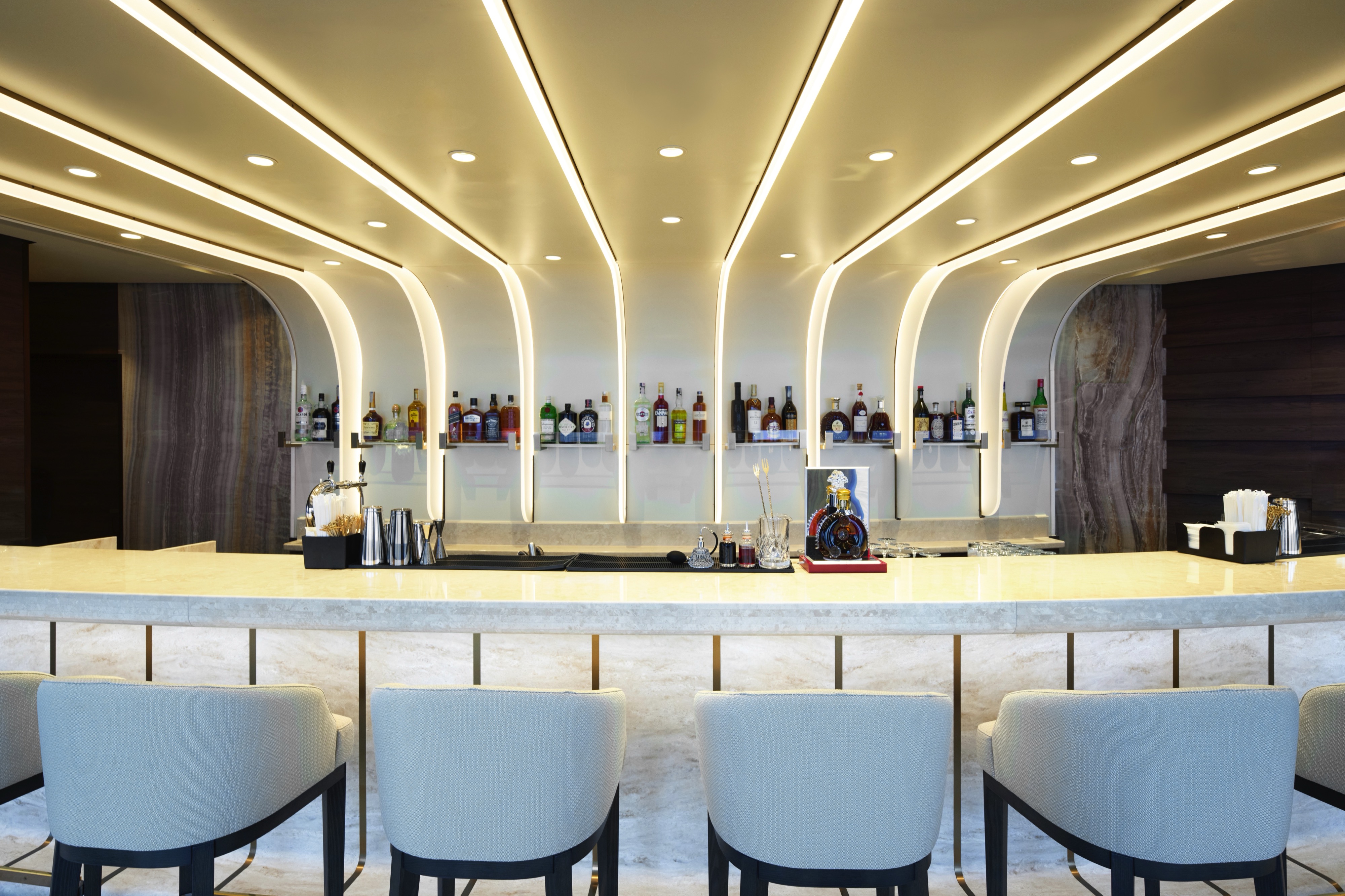
The Conservatory Pool & Bar
An all-day poolside lounge protected from the elements.
The Conservatory is a weather-protected poolside lounge by day. By night, it turns into a cinema experience under the stars. A relaxed, calming venue to unwind and enjoy cocktails, with light, lively background music playing throughout the day.
- Indoor seating: 52
- Located on Deck 11
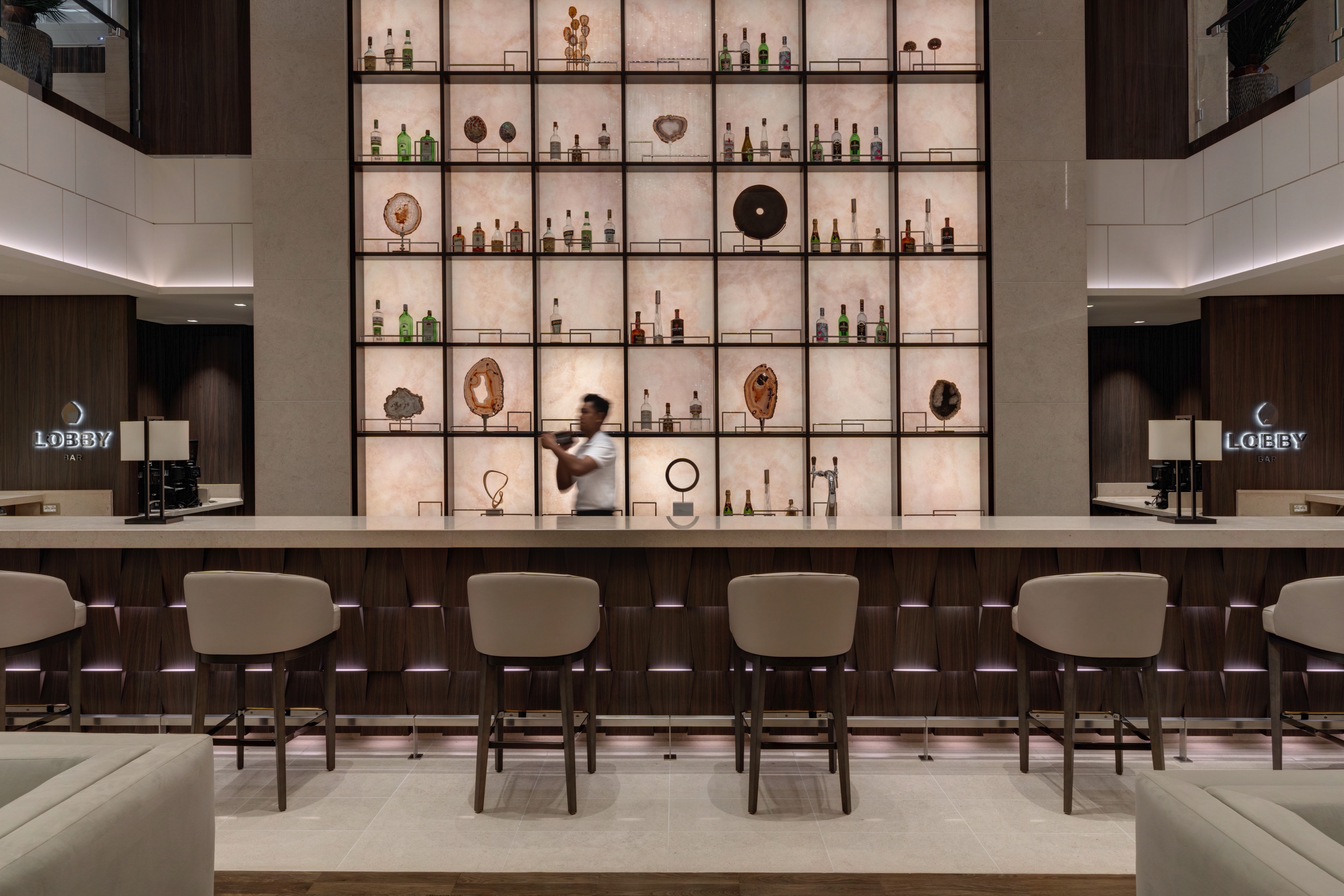
Lobby Bar
A laidback, centrally-located bar and lounge perfect for socialising.
Located at the heart of the ship, the Lobby is a laid-back, relaxed social hub, perfect for breathing in the onboard ambiance. A natural stop for an aperitif, a post-dinner moment with live music, or a gentle pause throughout the day.
- Indoor seating: 40
- Located on Deck 4
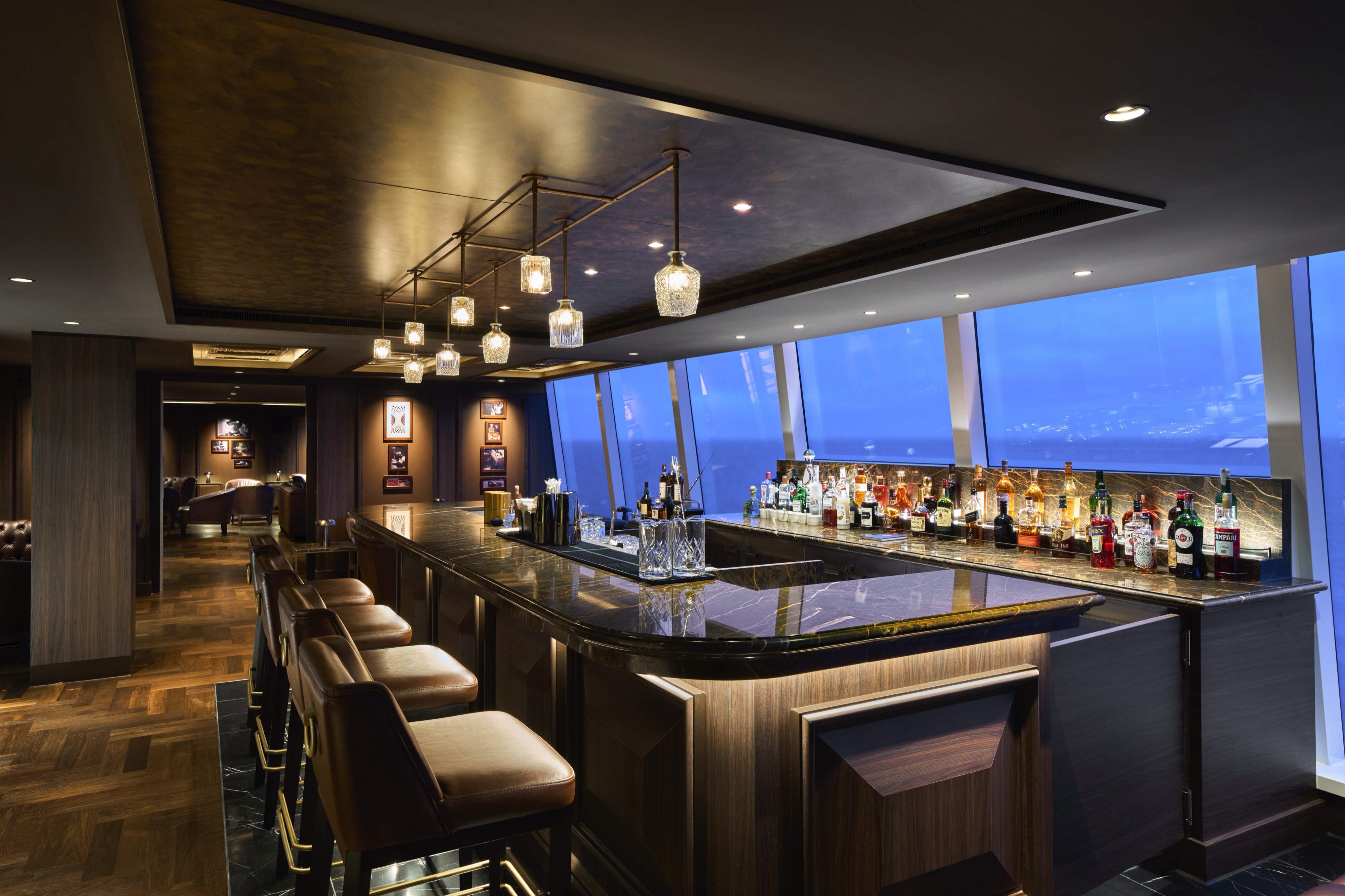
Malt Whisky Bar
A refined tour across the globe’s most celebrated whiskey regions.
Set within the Explora Lounge, Malt offers a refined tour of the global whisky regions, including some of the rarest whiskies, complete with a walk-in humidor, cigar expert and a dedicated outdoor cigar-smoking terrace.
Alongside its drinks menu with an emphasis on dark brown spirits the bar also features an outdoor smoking area for guests to enjoy their hand-rolled cigars*, selected with the guidance of our cigar expert. A range of signature whiskey-based cocktails are also available, curated exclusively for Explora Journeys and served accompanied by the smooth sounds of jazz.
- Indoor seating: 20
- Located on Deck 11
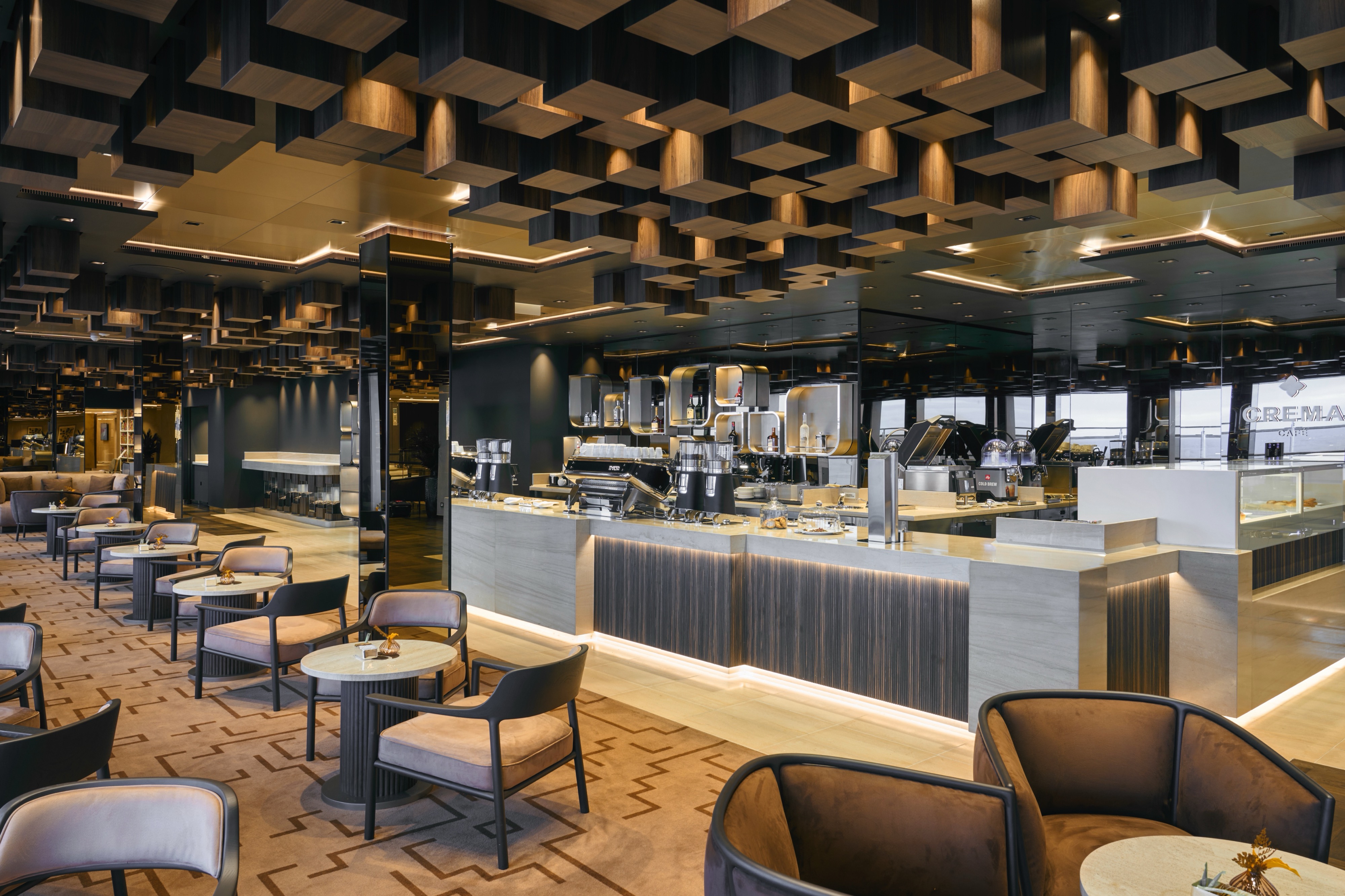
Crema Café
Bustling European all-day café culture on the world’s oceans.
A luxurious layer of crema nods to the freshness of an espresso and aptly lends authenticity and sophistication to a café at the centre of life on board.
Inspired by modern European café culture, Crema Café has softy stylish interiors with comfortable lounge seating, with access to a choice of reading materials and all set against uninterrupted views of the sea. A place to meet, discuss, unwind, taste and indulge, where like-minded guests gather to mingle and converse.
Coffee is chosen by selected connoisseurs who have travelled the world exploring fair-trade coffee origin, character, and strength. Discover the refined methods of brewing coffee from skilled baristas, taste high-quality loose-leaf teas with an on-hand tea expert, or enjoy refreshing cold-pressed juices. A glass display showcases pastries, cakes, desserts and sweets including madeleines, cannelés, biscotti, navette sandwiches as well as gelato throughout the day.
- Indoor seating: 62
- Outdoor seating: 16
- Located on Deck 5
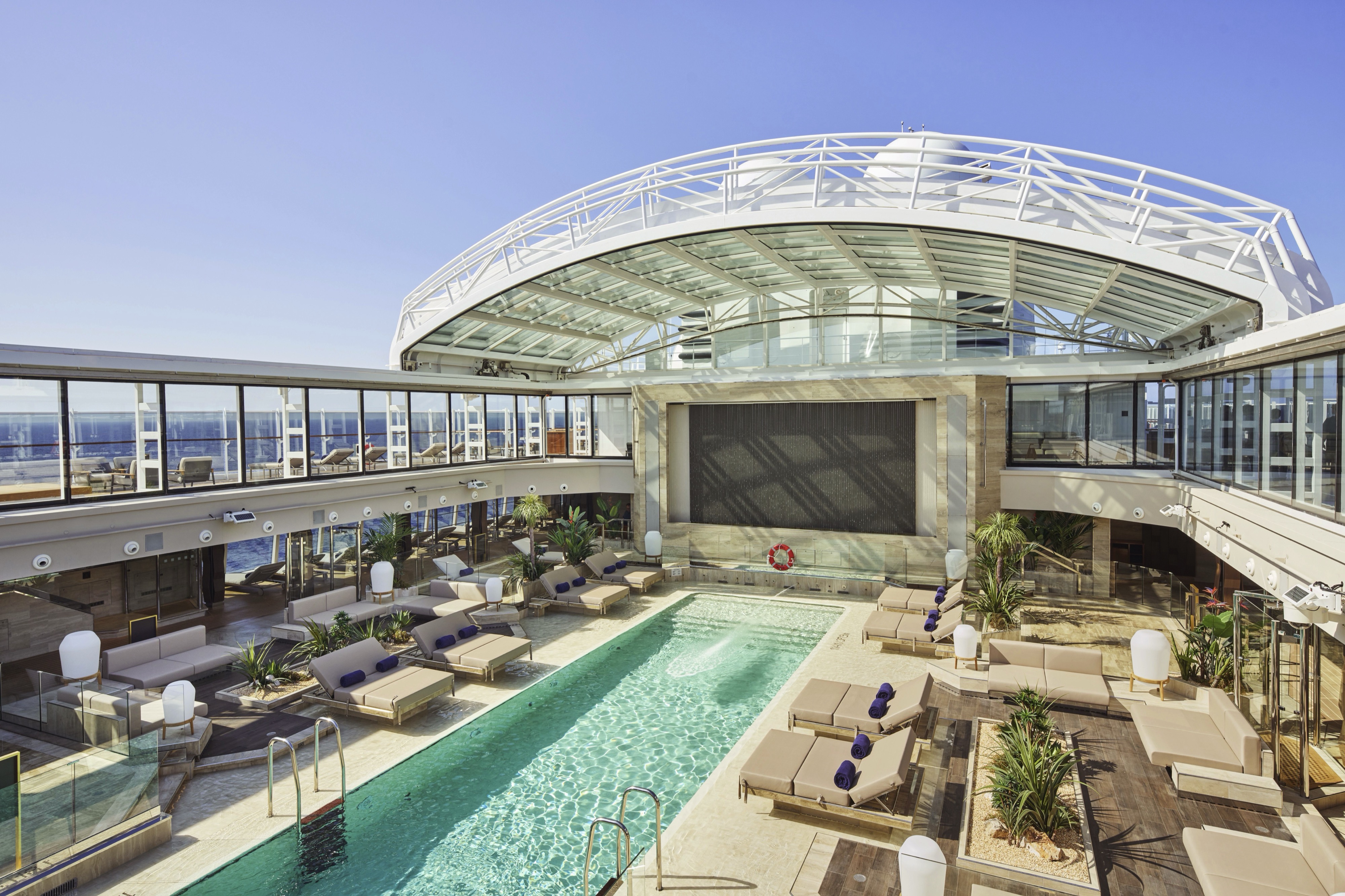
Atoll Pool & Bar
An intimate pool for laidback lounging throughout the day.
A laidback venue where guests can enjoy the sun, sea and serenity day-long, accompanied by a selection of energising, colourful drinks.
- Outdoor seating: 138 (Includes sunbeds, lounge chairs and bar seating)
- Located on Deck 10
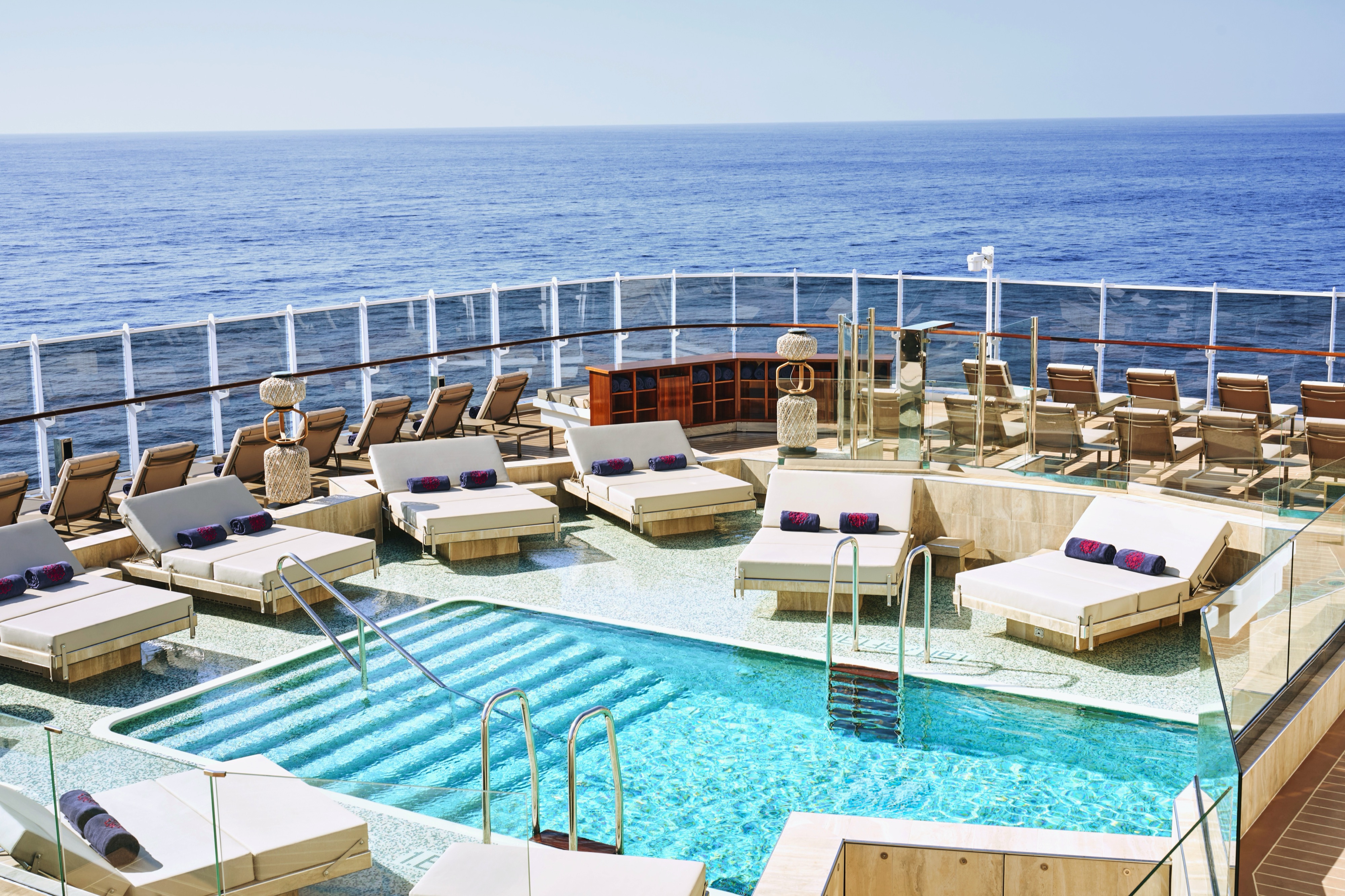
Helios Pool & Bar
A panoramic adults-only pool and lounge experience.
Inspired by the Ancient Greek God of Sun, Helios, translating literally to sun in Greek, is an adults-only area and the sunniest spot onboard. Panoramically facing forward on deck 12, guests canm enjoy lying by the pool or lounging throughout the day as they watch the ship sail through the sea.
- Outdoor seating: 100 (Includes sunbeds, lounge chairs and bar seating)
- Located on Deck 12
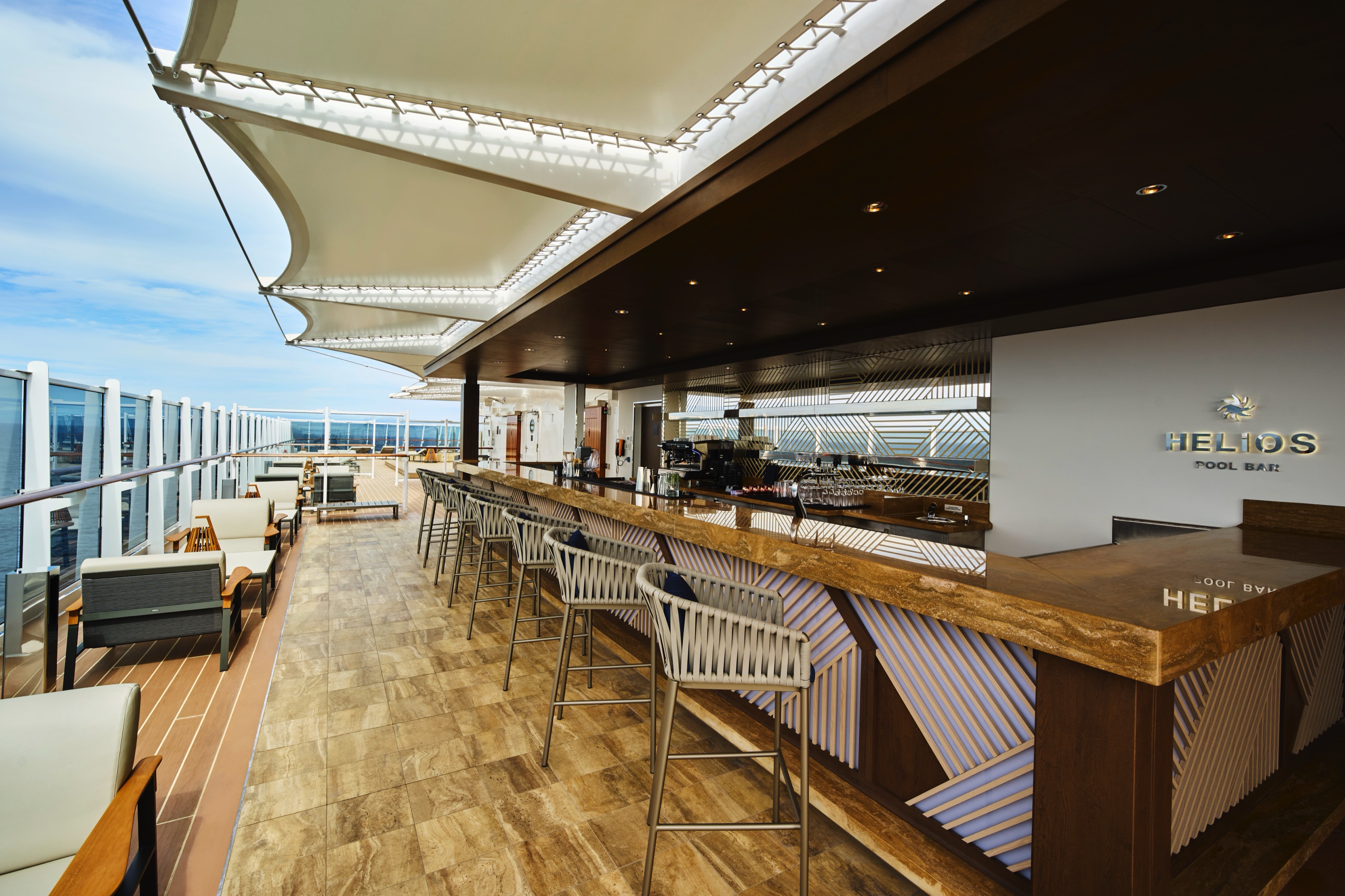
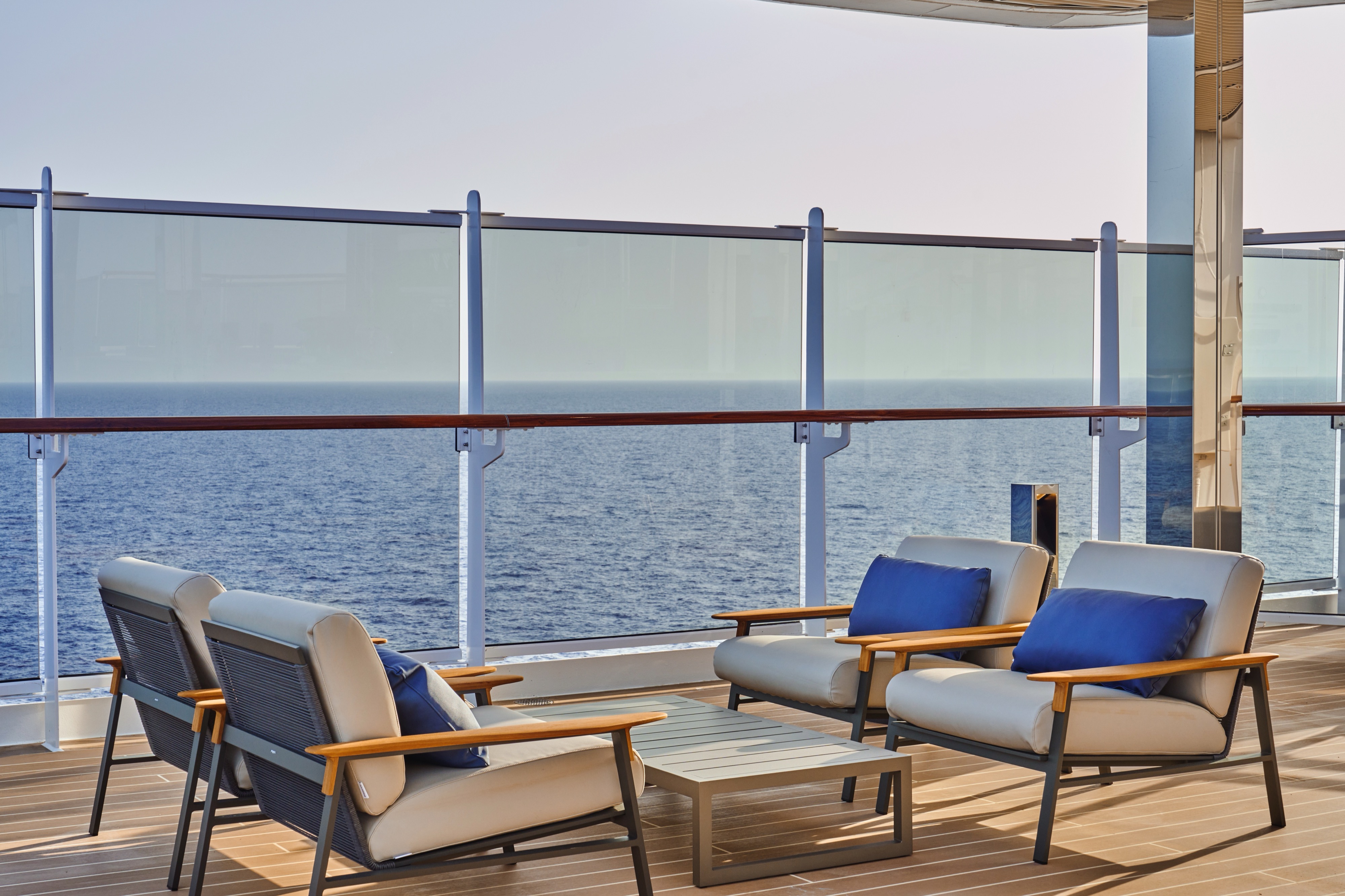
Sky Bar On 14
Refreshing cocktails and infinite views in a sophisticated outdoor setting.
Set on the ship’s highest point, on deck 14, this panoramic outdoor lounge setting is ideal for soothing cocktails and infinite views.
- Located on Deck 14
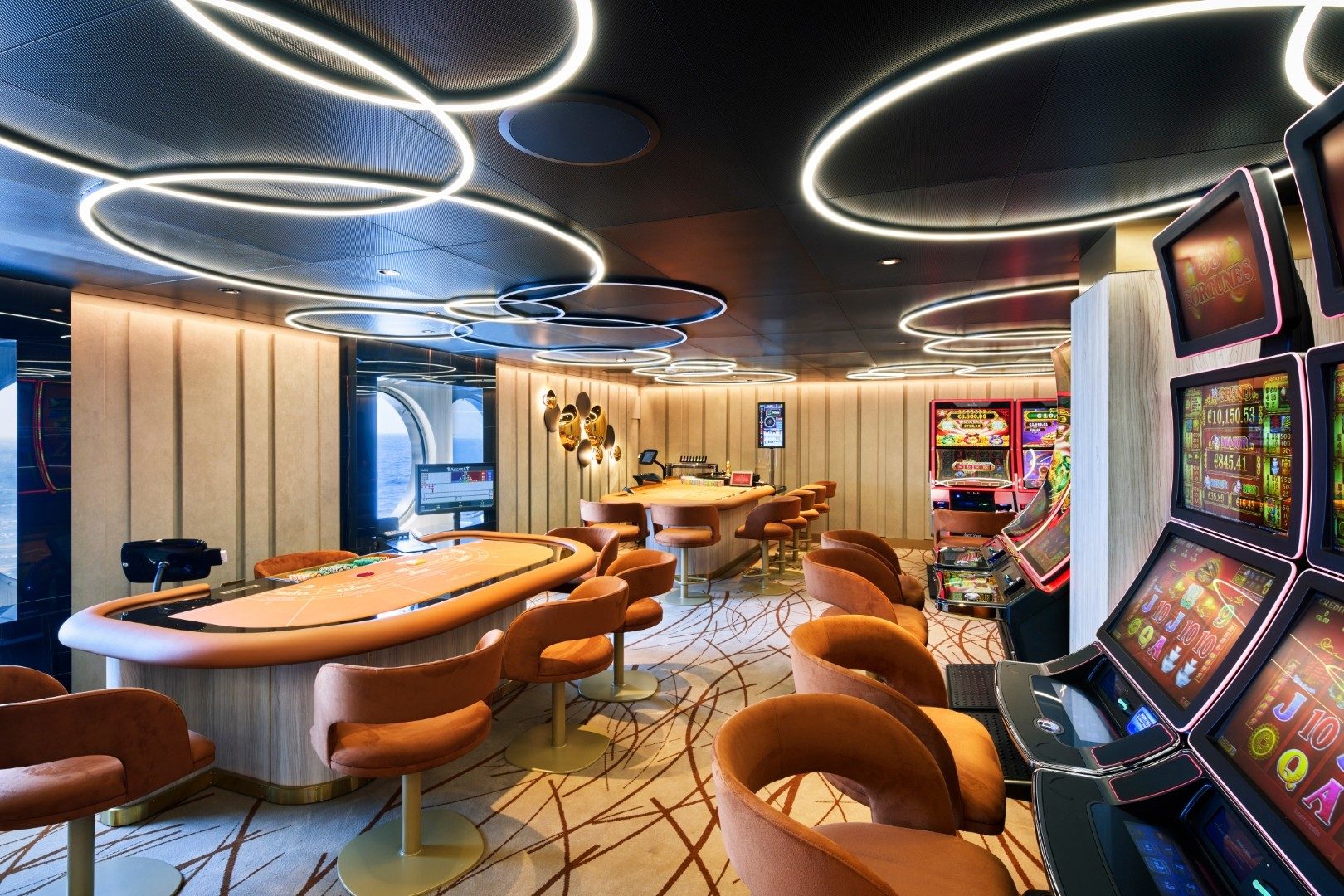
Casino
Explore the intimate, elegant space of The Casino and its diverse gaming offerings: from thrilling poker and blackjack tables to the excitement of American roulette, baccarat elegance, and the chance to hit it big with progressive slot machines.
The Journey
Inspired by the Ocean State of Mind and influenced by the destinations we visit, The Journey redefines the shopping experience at sea.
Our Inspiration
Every item available is a celebration of creativity, passion, and the power of discovery, each with its own magical story to tell.
Discovery
We celebrate a passion for small, luxury brands with unique stories and local influences, inviting our guests on a journey of discovery to explore diverse regional cultures, techniques, flavours, and artisanal skills that make each item truly special.
Consciousness
We are dedicated to partnering with brands that prioritise sustainability, using regenerative, recycled, and natural materials at the heart of the production process; supporting slow fashion, waste reduction and environmental impact.
Provenance and Craftmanship
Our products are a celebration of the artisan: skilled craftspeople, artists, smaller suppliers, and designers who pour their passion and creativity into every detail, with a focus on quality of materials and finishing.
Collections
More than just a place to buy, our retail experience is a journey of discovery, consciousness, and craftsmanship with provenance. Explore our unique collection of over 30 of the finest artisanal brands that share a commitment to caring for people and planet.
Sensorial Fragrances & Skincare
Carefully selected to showcase the rarest and most precious natural ingredients, for a unique and unforgettable sensory experience. Discover an exclusive curation featuring Floraiku, Guerlain, Tom Ford, and other leading names.
Effortless Ready-to-Wear
Unparalleled comfort and style, a collection designed to gift the wearer effortless confidence and ease. Explore a premium selection including Ralph Lauren, North Sails, Waimari, alongside other renowned designers.
Mandala Blue Collection
Featuring exceptional pieces from the Mandala Blue by Explora Journeys collection, designed to bring the journey’s signature scent into every space and every moment.
Timeless Accessories
Elevate your style with timeless accessories, crafted to perfection and designed to last a lifetime. Unveil a masterfully curated collection from Moscot, John Hardy, Borsalino, and other iconic houses
ENCORE
By Explora Journeys
Pre-loved luxury, sustainably yours. Timeless icons, given new life.
Some treasures are too precious for just one story. ENCORE offers a curated collection of authenticated, pre-loved luxury bags and accessories, each with a past as unique as its future.
From rare finds to timeless icons, every piece has been lovingly restored and meticulously verified for quality and authenticity.
Our Bespoke Fragrance
Introducing Mandala Blue by Explora Journeys, the scent of the ship, curated with master perfumer Alberto Morillas.
A fragrance that relaxes, connects, awakens the senses and ultimately transforms.
Cue notes that echo the ocean with enchanting freshness, layered alongside dominant woody and spicy signatures.
Available to purchase from The Journey.
Brand Selection
We’re committed to partnering with brands who reflect our own commitment to sustainable practices and environmental consciousness. It is why we are the first retail experience on the water to seek out partners with relevant certifications, ensuring a positive approach to their production practices.
B-Corp Certified Partners
Ensuring the highest standards in social and environmental performance.
Positive Luxury – Brands to Trust
The Butterfly Mark certification is an independent, globally respected trust mark awarded to luxury brands, retailers and suppliers that meet the highest standards of verified ESG+ performance
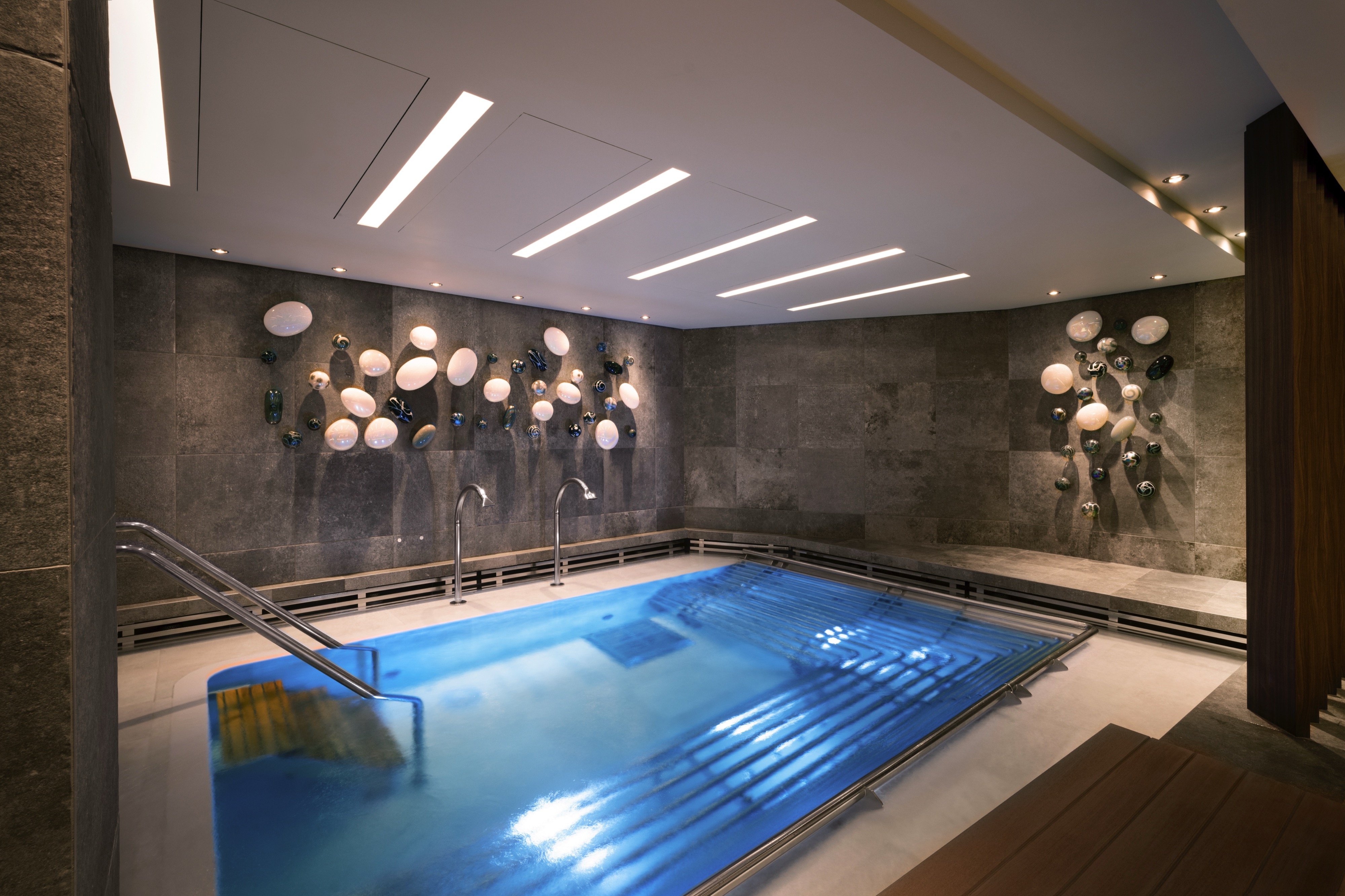
Ocean Wellness The Spa
A calming space designed to reconnect guests to themselves – influenced at every level by the calming presence of the ocean.
The spa is where the pressures of daily life dissipate to insignificance amidst a sensory journey to the Ocean State of Mind.
Features & Services
- Spa
- Wellness area with thermal facilities
- Signature Ocean Wellness rituals
- Facial treatments
- Body treatments
- Specialised Medi Luxe Treatments by Dr Levy Switzerland
- Ashore wellness Destination Experiences
- In-suite treatments
*Spa treatments, including massages and facials, require a minimum age of 12 years, with parental supervision. Access to our Wellness area and thermal facilities is reserved for guests aged 16 years and above.
Eleven Dedicated Treatment Rooms
- Two Private Spa Suites with a dedicated outdoor relaxation area
- One Double treatment room
- Seven single treatment rooms
- One single treatment room for specialised skin treatments
- Outdoor relaxation area
*Spa treatments cannot be booked until 90 days prior to embarkation.
The Spa Facilities:
- Steam Room – A regenerating oasis of psycho-physical wellbeing. Air, steam, and scented fragrances combine and gently rest on the skin, making natural exfoliation easier and increasing perspiration.
- Experience Shower – A multi-sensory journey, the warm shower is complete with fragrances and soft colour lights, offering moments of utmost pleasure – either at the beginning or at the end of the day.
- Hydrotherapy Pool – This warm therapeutic pool is designed to promote healing, relaxation and physical rehabilitation. Heated to a soothing temperature, gentle currents and jets work to ease muscle tension, improve circulation, and support joint mobility.
- Finnish Sauna – A deeply purifying experience using dry heat, to help you unwind and reduce stress levels while also opening the airways, relaxing the muscles, and oxygenating tissues.
- Salt Cave – In an inviting cavern with walls covered in Himalayan salt bricks, the air is infused with microscopic salt particles and negative ions. As you inhale the mineral-rich air, respiratory health is enhanced and a sense of overall relaxation ensues.
- Steam Shower – A shower that combines the relaxing heat of the steam and the regenerating freshness of water. (* Available within private Spa suites)
- Ice Fall – The Ice Fall regenerates the body after intense heat exposure in the Finnish Sauna or Steam Room.
- Heated Marble Loungers – A restful place to relax, equipped with an infrared system that radiates the heat to ease muscle stiffness and create on overall feeling of comfort and warmth.
Outdoor Relaxation Area – A tranquil open-air relaxation deck with infinite ocean views, perfect for reflection before or after a treatment.
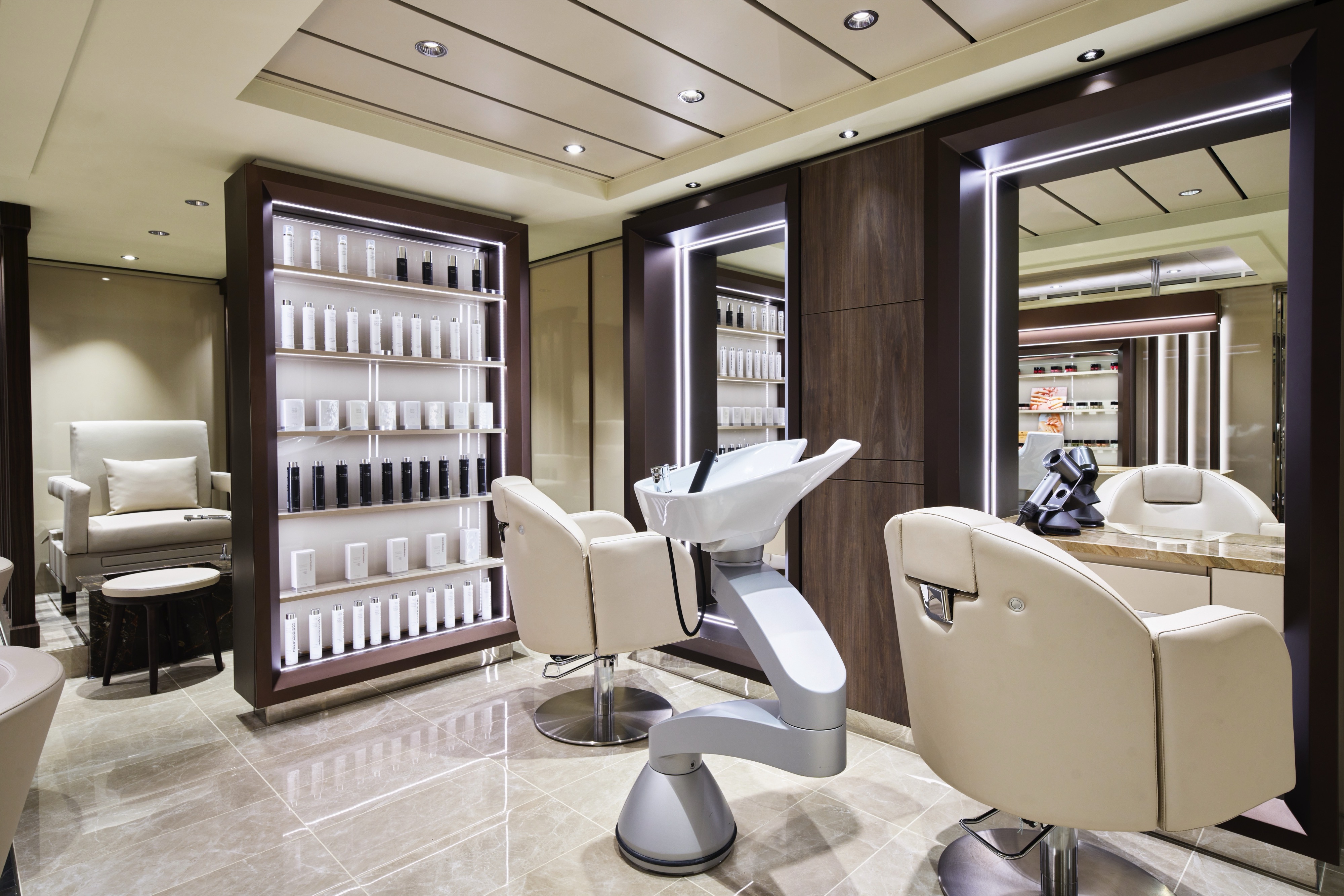
Ocean Wellness The Beauty Studio
We believe true beauty begins within. When you feel well, it radiates, bringing confidence on the outside too.
Step inside The Beauty Studio – a serene, flowing space, designed to meet all your beauty needs. From indulgent hair rituals and precision, barber treatments to rejuvenating hand and foot care, every service is delivered with intention and care.
Services include:
- Hair Care Rituals
- Barber Services
- Manicures & Hand Treatments
- Pedicures & Foot Care
- In-Suite Beauty Services
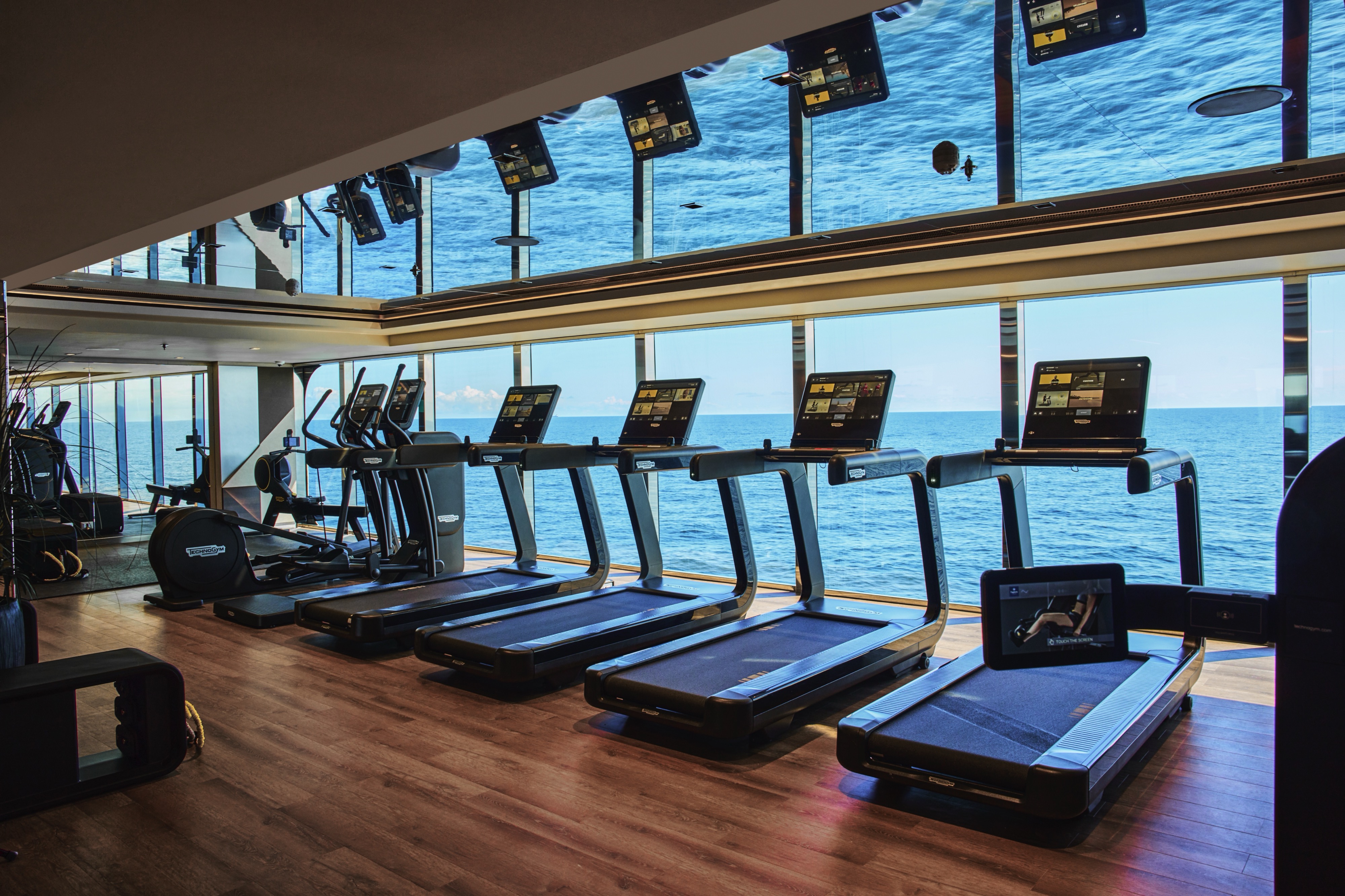
Ocean Wellness The Fitness Centre
An approach that echoes the revitalising power of the oceans
Over 350 sqm (3,750 sq ft) of indoor and outdoor fitness facilities designed in partnership with Technogym.
Features:
- Functional training
- Strength training
- Cardio
- Pilates
- Technogym classes
- Body assessment
- Immersive wellness experiences
- Outdoor exercise
- Cycling classes
- Personal and group training
Diverse, dynamic and designed for you
- Fitness Centre – Featuring a dedicated fitness assessment area, and state-of-the-art Technogym Artis equipment, our centre empower every guest to achieve a comprehensive, well-rounded workout.
- Fitness Studio – Enjoy customised Technogym-powered classes, featuring the versatile Technogym Bench or enhance core strength and balance with expert-led Pilates Reformer sessions.
- Open Air Fitness – Train outdoors with ocean views on our Open Air Fitness Deck. Equipped with flexible solutions, such as Technogym Skillrow, Group Cycle bikes and the Technogym Case Kit, offering variety and versatility.
- In-Suite Fitness – Enjoy access to an all-inclusive functional training kit that empowers you to perform total body workouts with the guidance of the Technogym virtual coach, in the comfort of your suite, or on your very own balcony overlooking the ocean.
- Running Track – A 360-degree track encircling all our ships – ideal for morning runs with uninterrupted ocean views.
Ocean Wellness Wellbeing
Experiences, programmes and spaces designed to enhance the influence of the ocean on wellbeing
From sleep to nutrition, our collection of initiatives has been carefully curated to ensure each and every guests has the opportunity to enhance their sense of wellbeing, no matter their fitness levels or abilities.
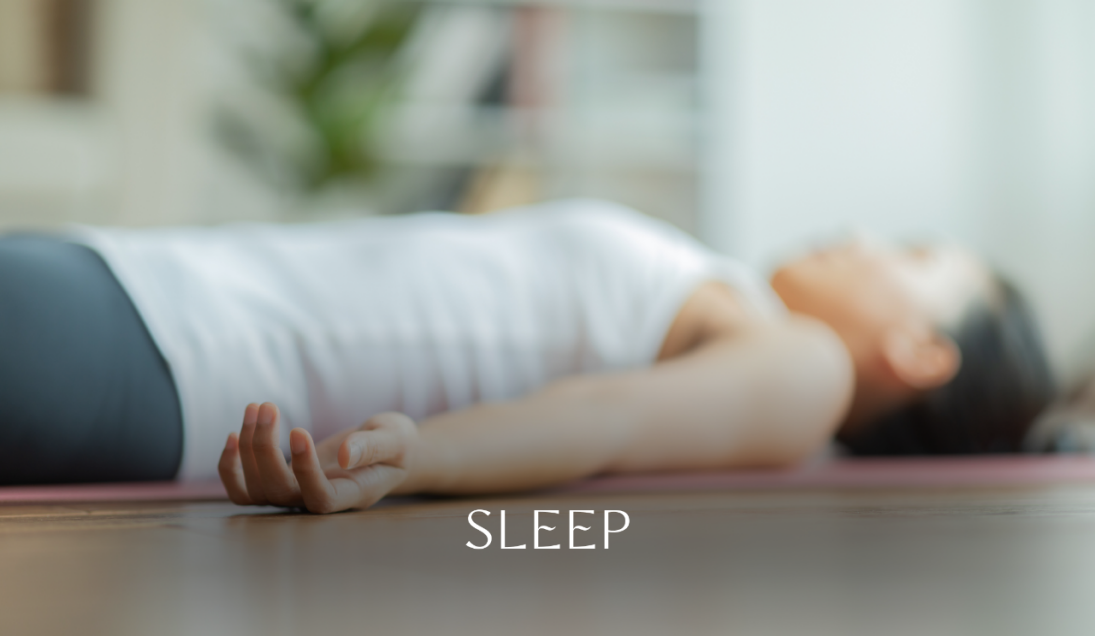
Sleep Retreat
Sleep is the calm that lays the elemental foundations of life.
Our Sleep Retreat provides guests with a series of sleep-enhancing practices curated following an introductory one-to-one workshop and accompanied by a sleep-enhancing smoothie.
From the Aromatherapy Associates Relax and Sleep Ritual and restorative Yoga Nidra classes to in-suite bedtime meditations, our therapists ensure every guest benefits from a well-rested stay.
The Sleep Retreat also offers access to expert-led workshops that help uncover the importance of sleep, giving answers to an important – yet often overlooked – subject.
Mindful Nutrition
A celebration of talents, cultures and passions.
Yoga
ENERGY YOGA:
Energy flow power class with the addition of bamboo tapping to supercharge energy levels. Complete the yoga practice with a bespoke visualisation inspired by the ocean’s incessant vitality.
SLEEP YOGA:
A portal to peace, this combination of restorative yoga, Yoga Nidra and the addition of warm neck and eye pillows sends you on a path to a truly blissful night’s sleep.
RELAXATION YOGA:
Cradle your emotions with the crystal oceanic wisdom singing bowl whilst meditating to focus on love and kindness. All to foster greater feelings of self-love and appreciation.
MINDFULNESS YOGA:
A deeply therapeutic restorative yoga class anchoring the body and mind in the present moment through the use of essential oils and bespoke guided ocean-inspired meditation.
IMMUNE-BOOSTING YOGA:
Yoga flow with a focus on pranayama techniques, proven to enhance oxygen flow and reduce anxiety. The practice ends with an immune-fortifying juice shot.
Immune Boosting Retreat
This wholly restorative programme includes an introductory one-to-one workshop with a welcome immune-fortifying juice, as well as a one-to-one yoga flow with a focus on pranayama techniques and thymus tapping. The programme is complemented by a specially curated immune-fortifying lunch and an Aromatherapy Associates Immune Support Treatment.
The Retreat also includes access to expert-led workshops that uncover the importance of protecting your immune system. Learn about the core principles of immunity, and how to boost it.
The workshop is complemented with immune-fortifying foods, snacks and pranayama techniques to practice at home, taking the retreat beyond the parameters of your ocean journey.
Embark on a journey of awakening
A series of onboard experiences to help you begin your day with intention. Designed to enliven your senses and elevate your mood as you transition into the Ocean State of Mind.
Touch
- Sunrise yoga on deck accompanied by rejuvenating bamboo tapping
- Technogym Case with a wake up and energise routine for an active start
- Guided morning stretches streamed directly to your in-suite TV.
Hear
- Curated Awakening playlist to gently energise your morning featuring soothing ocean harmonies to welcome a new day.
See
- Journey of Awakening TV channel with mindful movement and breathing sessions
- Revive lifestyle cards with daily inspiration and wellbeing tips.
Smell
- Uplifting scented towels available at the Ocean Wellness – Fitness Centre and throughout wellness experiences.
Taste
- In-suite vitality shot to boost energy.
- Wellness-focussed breakfast selection and energising herbal teas.
Embark on a journey of sleeping
Transition into rest with a series of onboard experiences designed to invoke a sense of calm and serenity, encouraging a deep, restorative sleep.
Touch
- Evening Yoga Nidra for deep relazation
- Soothing bath ritual to unwind
- Technogym Case: Good Night & De-Stress routine to relax the body
Hear
- Guided bedtime meditations via in-suite TV
- Tranquil nighttime playlist to ease into sleep
See
- Journey of Sleeping TV channel with calming visuals and sleep stories
- Restore lifestyle cards with evening wellness rituals and wind-down tips.
Smell
- Relaxing pillow mist made with essential oils
Taste
- Sleep-enhancing dining options
- Herbal teas crafted to promote restful sleep
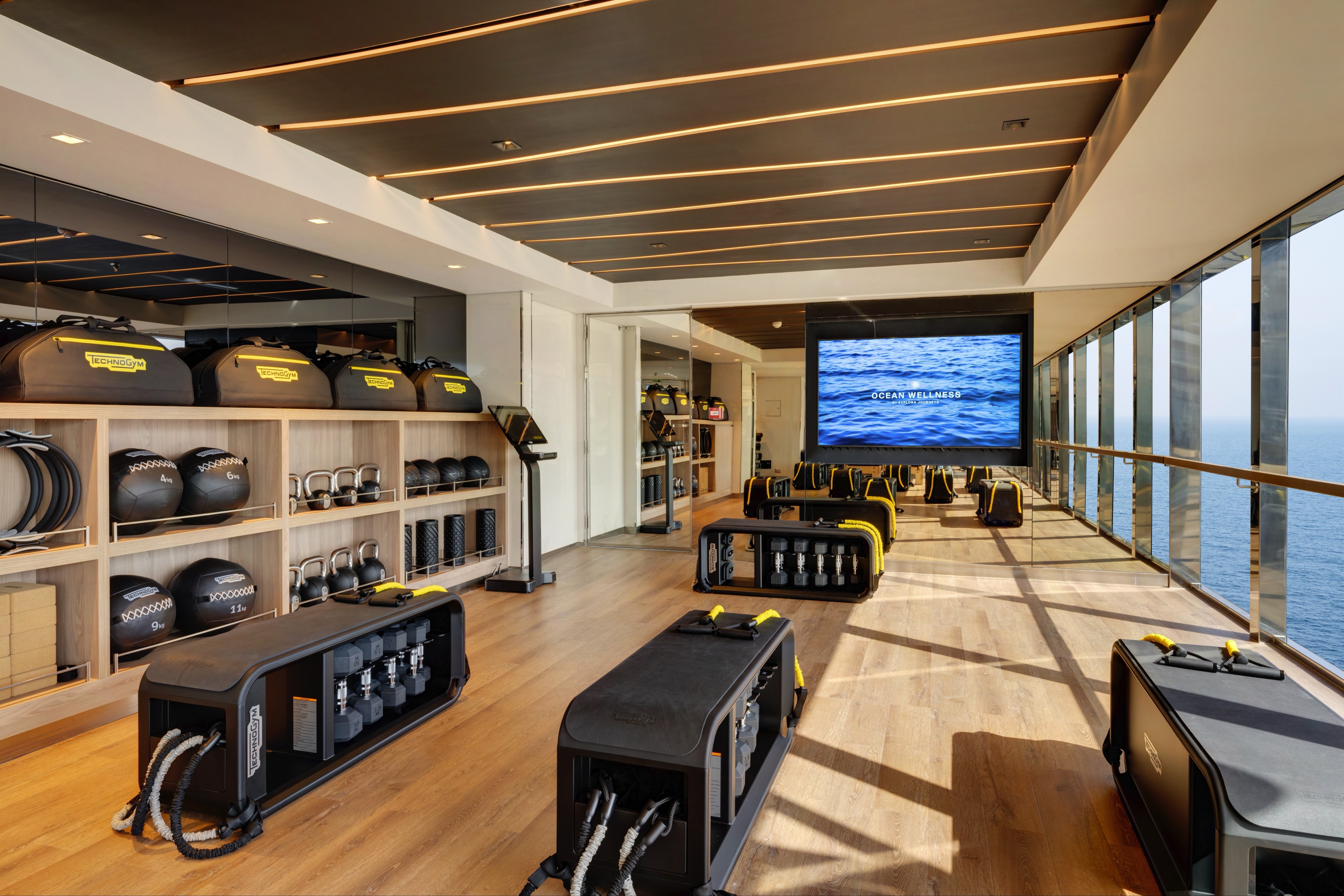
Fitness Studio
Located within the Fitness Centre, the Fitness Studio allows guests to take part in yoga classes with the Technogym training mats, which offer extra-large size and maximum comfort, or enjoy functional workouts with the Technogym Bench, Technogym Skill tools and the Technogym Case Kit, a practical and spacious bag with a QR code on the hangtag, that allows for direct access to a digital library of video exercises and guided routines focused on their needs.
Additionally, our Fitness Studio offers Pilates Reformers classes for improved balance through the strengthening of the core muscles.
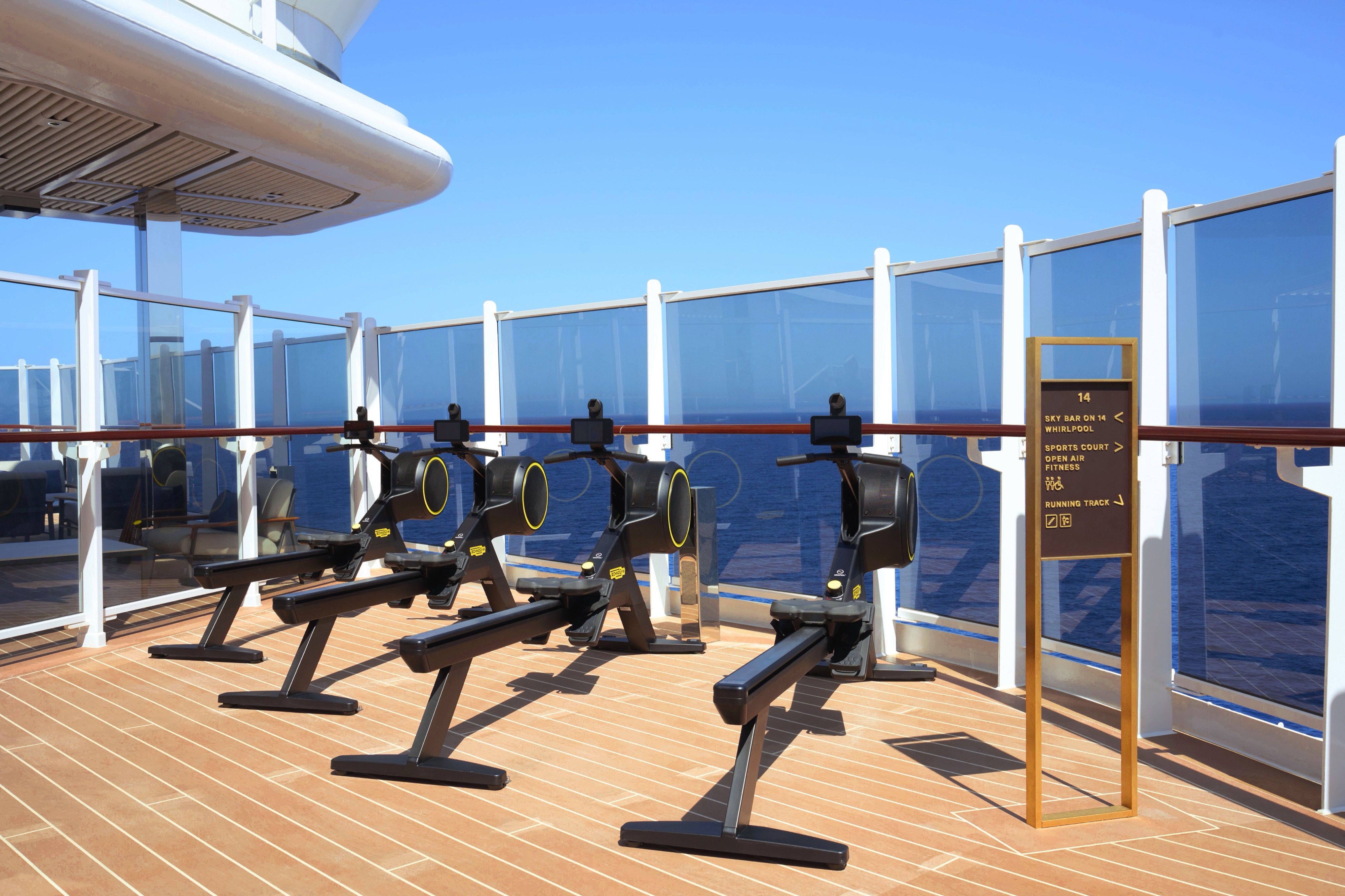
Open Air Fitness
On the outdoor deck, guests can train in the open air, with direct ocean views. The Open Air Fitness area provides guests with the latest fitness equipment such as:
- SKILLROW, the first outdoor rowing equipment designed to improve anaerobic power, aerobic capacity and neuromuscular abilities in one solution
- GROUP CYCLE BIKES, perfect to create an engaging cycling experience.
- TECHNOGYM CASE KIT
Guests can use Skillrow, Group Cycle bikes and also Technogym Case in the way they most prefer: they can choose to train individually, receive support from a qualified personal trainer, or participate in exciting and engaging fitness classes.
More exercise options in the open air include:
- RUNNING TRACK: Encircling the ship is a 360º track where runners can enjoy commanding ocean views while they do laps.
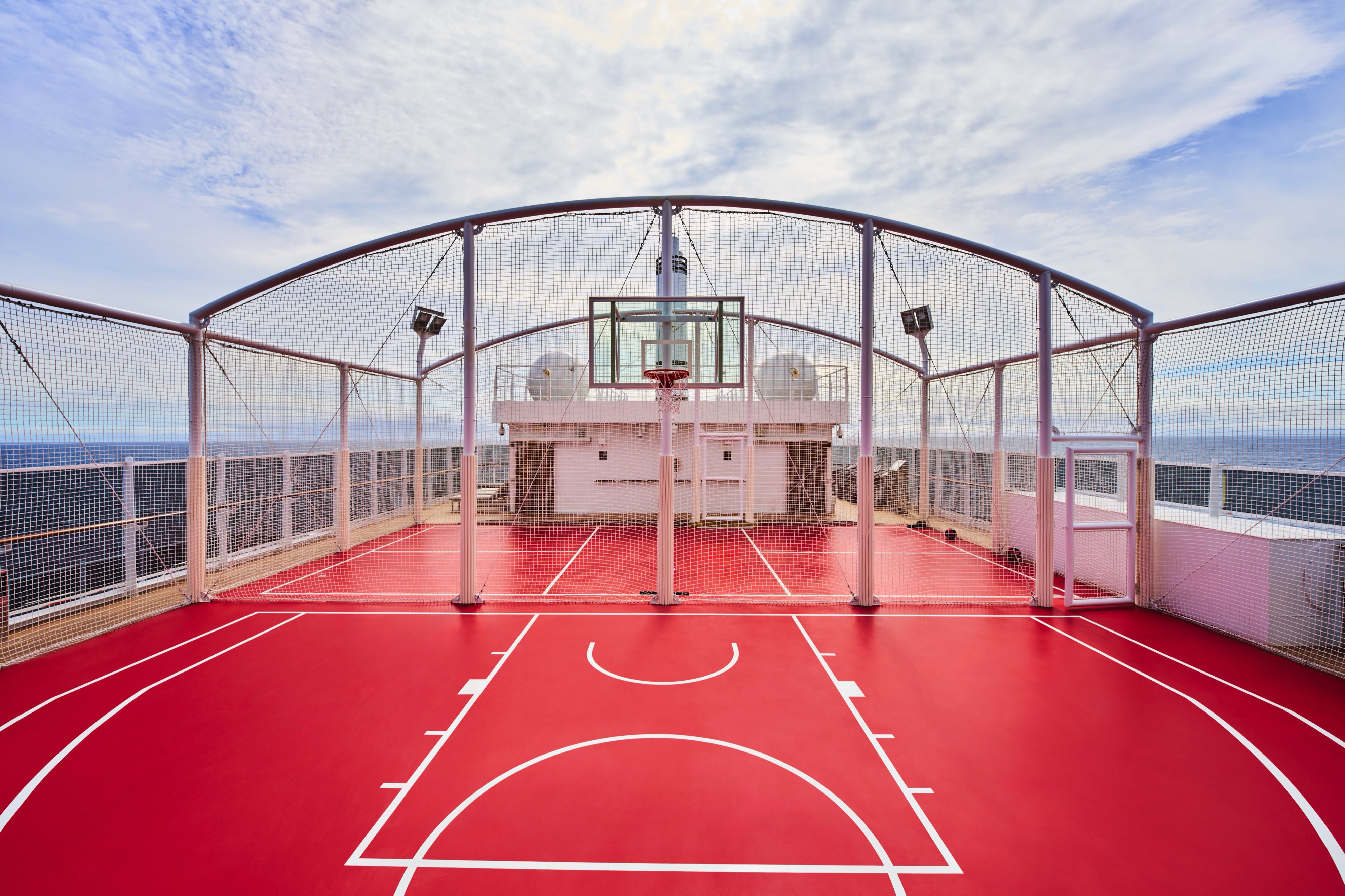
- SPORTS COURT: The ideal space for touch tennis, half basketball, or yoga ritual experiences.
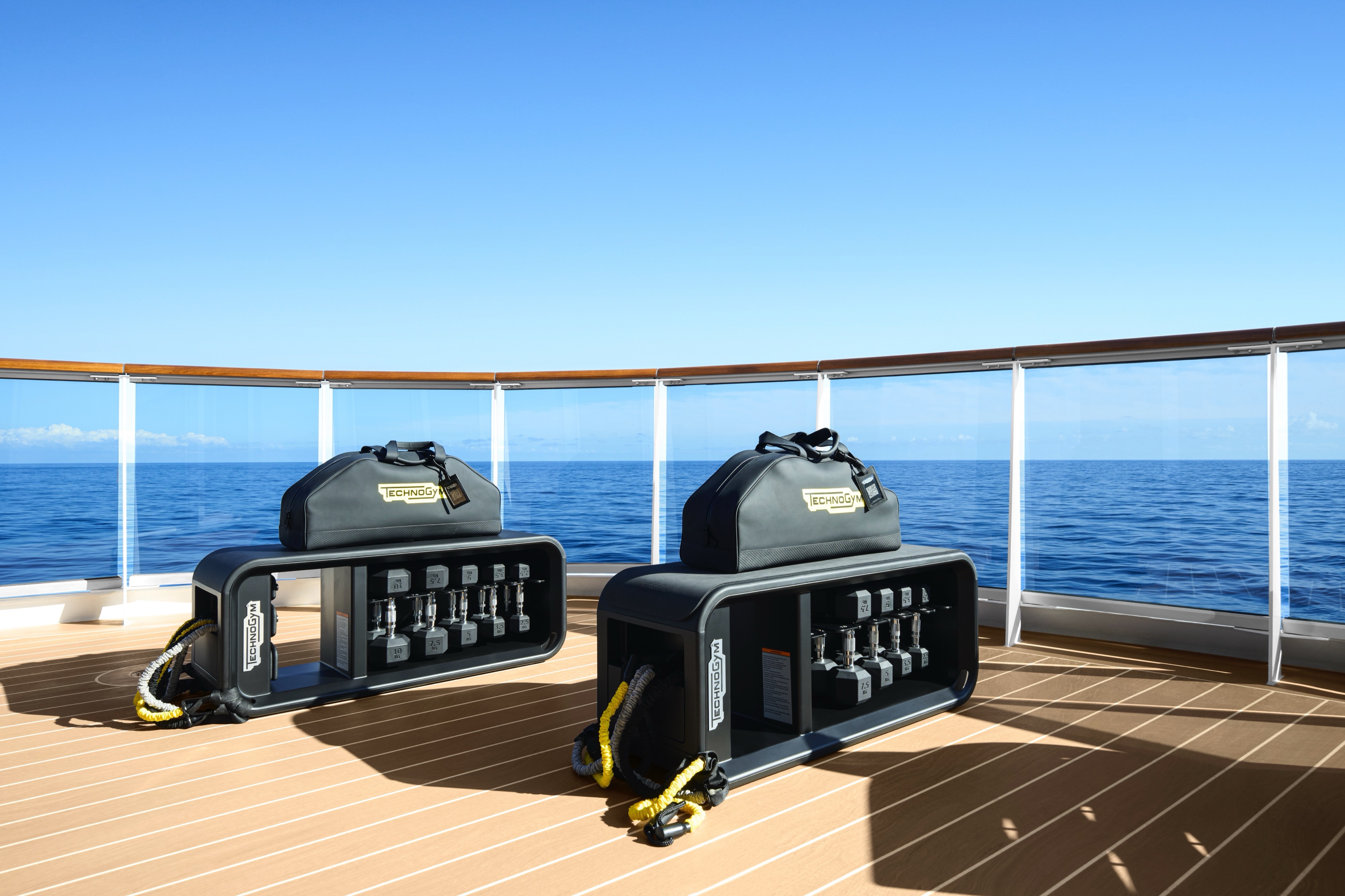
In-Suite Fitness
Enjoy the all-inclusive functional training kit that empowers you to perform myriads of total body workouts, with the guidance of the Technogym virtual coach.
Sports Court
A dedicated space for various activities, such as touch tennis, half basketball and yoga ritual experiences.
The use of the space is complimentary for all guests and the equipment such as balls, rackets and other will be provided on board free of charge.
In Balance Ocean Wellness Programme
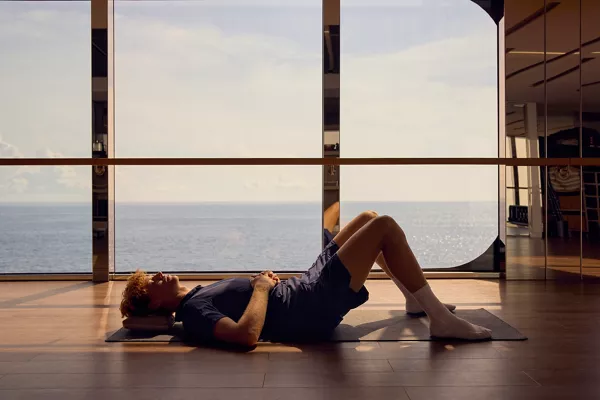
Explora Journeys introduces In Balance, a refined wellness programme inspired by the philosophy and discipline of world-class performance, created in collaboration with Jannik Sinner.
The programme reflects a shared belief: that true wellbeing is achieved where physical vitality, mental clarity and emotional calm converge. It is an invitation to reconnect — with oneself, with movement and with purpose — at sea.
The experience is designed as a 3 hour 30 minute guided wellness journey, offering guests a considered approach to movement, recovery and mindful performance throughout their time at sea.
During the Prelude Journey, in a two-day window sailing 24–25 July from Genoa to Marseille, guests will have the opportunity to experience a specially adapted 45-minute, short-format, edition of In Balance in the presence of Jannik Sinner.
Nautilus Club
A space dedicated to our younger guests
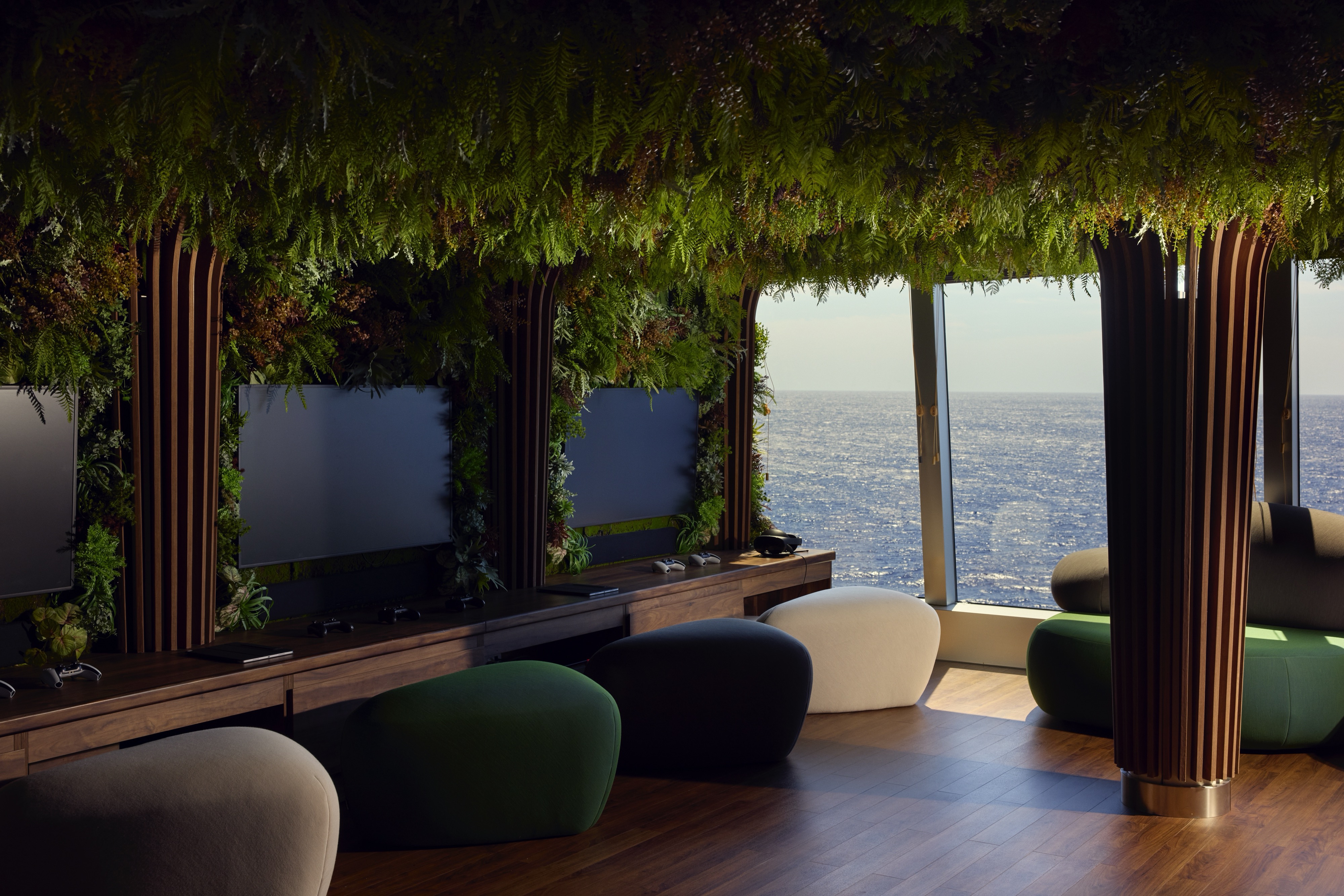
The Nautilus Club offers a tailored environment for younger travellers aged 6-17 years, featuring curated activities designed to entertain and engage. Children aged three to five years are also welcome at specific intervals for age-appropriate activities, if accompanied by a parent or guardian.
Open every day from 9:00 until midnight, the Nautilus Club offers the latest generation of video games and VR consoles, such as PlayStation 5 and PlayStation VR2, Xbox, Nintendo Switch, iPads and Oculus Pro.
Children can also try their hand at foosbal, pool (at a table designed and crafted in Italy by MBM Biliardi), or listen to their favourite music at our jukebox tablet connected to streaming platforms such as Spotify and Apple. We also offer a large collection of board games and a digital library with a wide range of books across a multitude of languages.
Other Nautilus Club Activities
The space also offers sports sessions, technology tournaments, painting, arts and crafts, and games throughout the ship. Our Nautilus Club hosts are certified according to CLIA (Cruise Lines International Association) policies and standards on youth activities, making sure that children and teens are looked after as and when needed. All younger guests can also enjoy reserved periods at the Sports Court, one of the heated pools, as well as other locations around the ship.
Anthology
A Gastronomic Discovery
Taking guests on a unique culinary journey through Italy.
Refined Italian Cuisine
As our signature fine-dining experience, Anthology elevates Italian cuisine, offering an unparalleled gastronomic adventure.
On the menu, created by our esteemed Head of Culinary, Franck Garanger, each dish is a celebration of Italy’s finest regional ingredients and flavours.
Contemporary, Refined Elegance
With the opportunity to dine outdoors, Anthology offers an intimate yet elevated dining atmosphere with flawless, attentive service.
- Indoor seating: 48
- Outdoor seating: 22
- Open for dinner
- Reservations recommended
- An Exclusive Experience Fee Applies
- Located on Deck 5
Sakura
A vibrant Pan-Asian fine-dining experience
Named after Japan’s iconic cherry blossom, Sakura blends contemporary elegance with the vibrant spirit of Asia’s culinary capitals. With sweeping ocean views, guests enjoy Mediterranean Bluefin tuna, wagyu tataki, and freshly prepared sushi — paired with curated sakes, shōchūs, and Asian beers. A modern expression of immersive Pan-Asian cuisine.
Culinary highlights
Wagyu beef tataki
Our sustainably sourced prime grade five Japanese wagyu beef is delicately torched by our chefs: an authentic method of cooking that ensures that the cut’s best qualities are preserved.
Makrut lime pavlova
A fusion of east and west, this unique interpretation of pavlova is a perfect representation of the passionate, creative expertise and multicultural diversity of our talented pastry team .
Kale salad
Another example of our chefs’ ingenuity, a humble kale salad is transformed into culinary art for our guests to enjoy. This superfood salad represents a fusion of clean living with the flavours of Asia.
Intimate and Welcoming Environment
The ancient tea rooms of Kyoto provide the inspiration for Sakura’s aesthetic, where dark wood frames lead your eye to the ceiling, adorned with a blossom tree canopy which envelops diners in a warm atmosphere of festoon lights.
- Indoor seating: 92
- Outdoor seating: 26
- Open for lunch and dinner
- Reservations recommended
- The Sushi Bar is open-seating on a first come first served basis.
- Located on Deck 5
Marble & Co. Grill
The Art of Marbled Excellence
Marble & Co. Grill is a vibrant celebration of European steakhouse tradition, elevated by French-inspired finesse. Its name reflects delicate marbling – the hallmark of the world’s finest cuts.
Culinary highlights
Grilled prime rib
From a local producer in the Deux Sévres region of the lush Loire Valleé, it’s clear why the famous Jersiaise breed, renowned for its sensational flavour and intense marbling, is one of the most sought-after cuts of prime rib
European Steakhouse, Redefined
The experience at Marble & Co. Grill is reflected through the modern, understated yet sophisticated design with soft lighting and relaxed, attentive service.
- Indoor seating: 80
- Outdoor seating: 10
- Open for dinner
- Reservations recommended
- Located on Deck 5
Med Yacht Club
A celebration of the Mediterranean coastal living
Inspired by the region’s sun-drenched coastlines, Med Yacht Club captures the easy rhythm and convivial spirit of the Mediterranean. The menu brings together the flavours of Italy, Spain, Greece, France, and North Africa — a tapestry of coastal influences expressed through sharing plates created with authenticity and passion.
Culinary highlights
Sweet Caprese
The finest cherry tomatoes and strawberries create an intriguing base, upon which our burrata sits adorned with even more sweet tomatoes and strawberries with a drizzle of pesto from Sicilian Bronte pistachios.
The Essence of the Mediterranean
Effortlessly refined in its design, space and light creates a convivial atmosphere, with bright sunshine streaming through large portholes and Med-influenced music transporting guests on a culinary journey inspired by the sea.
- Indoor seating: 136 (34 at the bar)
- Open for lunch and dinner
- Located on Deck 4
Emporium Marketplace
Effortless all-day dining
Named after the Greek word emporion (‘place of exchange’), Emporium Marketplace celebrates global cuisine and the joy of discovery through food. Guests can explore a remarkable array of authentic flavours, from destination-inspired dishes to handmade pasta and wood-fired pizza.
Open kitchens buzz with quiet energy, while artisanal charcuterie, fromagerie and pâtisserie stations bring a refined touch. A chilled glass of Champagne partners perfectly with fresh crudo, as the sun sets on the horizon.
Culinary highlights
Handmade tortelloni
Our tortelloni are made onboard from scratch every day in the authentic Italian way. Carefully selected flour is used to make dough that has the correct degree of elasticity.
Plant based chia yoghurt
Our chia yoghurt is daily made from homemade cashew milk, creating a fusion of delicious creamy flavours for guests to enjoy each morning.
Light, Space, Flavour
Bathed in natural light, several separate cooking stations evolve throughout the day with white marble and minimalist design accents, allowing the freshest ingredients to take centre stage.
- Indoor seating: 271
- Outdoor seating: 70
- Open for breakfast, lunch and dinner
- Located on Deck 11
Fil Rouge
French-inspired international cuisine
Fil Rouge is an elegant celebration of global cuisine, seen through the lens of French artistry. Its name — ‘the red thread’ — speaks to the connections woven between cultures, flavours, and stories.
In a serene, though contemporary setting, time slows. The menu blends international inspiration with refined French technique, offering a dining experience that is both authentic and imaginative.
Evenings unfold with quiet indulgence – signature soufflés, a curated wine list, and the charm of the iconic dessert trolley. And in the morning, a hidden gem awaits: an exquisite breakfast, served with elegance and intention.
Culinary highlights
Tuna Tataki
Sustainably raised and caught in the open Mediterranean Sea close to the Cartagena Bay, the Mediterranean Bluefin tuna sourced by our chefs is some of the best grade to be found anywhere in the world.
A Refined, Timeless dining experience
Fil Rouge embodies the essence of understated sophistication. A visual and culinary interpretation of elegance, its refined geometry — inspired by interlocking hexagons — symbolises balance and harmony.
- Indoor seating: 222
- Open for breakfast and dinner
- Located on Deck 4
Chef's Kitchen
An Interactive Culinary Experience
Guided by our team of world-class chefs, immersive and interactive cooking classes invite guests of all skill levels to embrace the art of creating exquisite dishes.
More than a cooking class, it’s a social and sensory celebration – where learning is joyful, conversation flows freely, and food is savoured in good company. Each experience culminates in the nearby private dining room, where the class – guests and chefs alike – gathers to enjoy the dishes they’ve prepared together.
Ocean-front private kitchen
The Chef’s Kitchen offers a range of enriching, hands-on culinary experience set within an intimate, ocean-front private kitchen.
- Indoor seating: 12
- An exclusive experience fee applies
- Available for reservation only onboard
Gelateria & Creperie at The Conservatory
Authentic French and Italian indulgences served poolside.
Set in the relaxed, weather-protected poolside Conservatory, this is the place to treat yourself to authentic French and Italian indulgencies.
- Open during the day
In-Suite Dining
Refined dining in the comfort of your suite or private terrace.
Our guests can enjoy an array of cuisines at any time, day or night, in the comfort of their suite or private terrace. Available 24 hours, the menu offers guests a taste of each of our unique dining destinations.
- Available 24 hours
Destination Experiences
Inspiring authentic discovery across culture, history, and cuisine.
Intimate Explorations
Intimate, smaller groups with like-minded guests, for authentic exploration – with opportunities to understand the culture and connect with locals.
Explore with Peace of Mind
Seamless experiences with everything taken care of, no hidden fees, fully insured partners, transportation arrangements and flexibility in case of change of plans.
Authentic Immersions
Enriching opportunities to explore behind-the-scenes in unique locations. Crafted experiences curated in collaboration with expert partners and ambassadors.
Destination Experiences Categories
Private Arrangements
We are pleased to curate your requests for customised arrangements that can be as off-the-beaten-path or utterly indulgent as you wish.
Whether yours is an intimate group or a larger gathering of family and friends, we can help you adapt a featured destination experience or tailor an arrangement that delivers exactly what and where you prefer.
Destination Essentials
Our Destination Essentials offer immersive experiences, with hidden wonders and little surprises.
Your experiences will feature:
- Must-do experiences
- Discovering local highlights through a different lens
- Expert guides and hosts to enhance your discovery
- Culinary tastings through local flavours and traditions
- Full immersions into cultures and customs
- Close-up encounters with the natural world
Curated Explorations
Our Curated Explorations offer unmatched experiences and moments that are off-limits to most.
Your experiences will feature:
- Small, intimate groups
- Tailored, boutique adventures
- Behind-the-scenes experiences
- Guided by locals for more enriching discovery
- Deeper insights into cultures and traditions
- Premium culinary and beverage experiences
- VIP access to landmark sites and special events
Overland Immersions
Our Overland Immersions are all-inclusive and available to small groups during your Journey.
What to expect:
- Luxury transportation such as private jet, helicopters, vehicles, boats or other means
- Accommodation in 5-star or boutique hotels
- Culinary experiences, including all meals, beverages, and selected spirits
- VIP access to landmark sites and special events
- Exclusive evening experiences
- Meticulously vetted hosts to coordinate all logistics
- Luxury transfers and luggage handling
Entertainment Experiences
Each moment invites you to embrace your own Ocean State of Mind
World-Class Performances
Immerse yourself in curated, world-class performances by our distinguished roster of guest artistes, from Broadway and West End icons to Steinway Artistes. Whether masterful expressions of music or authentic local performances, these acts will capture your imagination.
Curated Moments
Thoughtfully curated gatherings that reflect the spirit of Explora Journeys, bringing guests and hosts together through captivating performances, cultural celebrations, and unique moments that create lasting memories.
Engaging Sessions
Numerous daytime events and activities that include programmed, organised activities like sports and games, plus spontaneous surprise activations such as a pool game or dance classes.
Clubs
Explora Journeys presents a thoughtfully curated collection of clubs, offering guests meaningful opportunities to connect with others who share similar interests, values, and lifestyles. Whether travelling solo, embracing diversity, or seeking a mindful, alcohol-free space, each gathering fosters connection and a genuine sense of community at sea.
Prism
Prism Club proudly celebrates diversity —inviting LGBTQIA+ guests and allies to come together through inclusive, uplifting events and gatherings.
Club Soda
Club Soda creatively supports those embracing an alcohol-free lifestyle, with vibrant, zero-proof experiences that reimagine the art of socialising in refreshingly sophisticated ways.
Luminary Enrichment
A curated series of onboard sessions, workshops, and experiences led by our Luminaries, passionate experts in their fields.
Destinations
Experts who bring destinations to life with regional history, culture, nature, and geography.
Special Interest
With insights into their chosen field, our Special Interest Luminaries will uncover literature, wellness, design, science, entertainment, or athletics, igniting curiosity and broadening your perspective.
Natural World
Draw closer to the beauty and complexity of nature, wildlife, and the environment. Dedicated to preserving our most vital ecosystems, our Natural World Luminaries shares knowledge and a sense of wonder.
Creative Arts
Let your artistry flow as our Creative Arts Luminaries, skilled artisan experts in refined techniques and authentic expression, guides you in an engaging session celebrating the joy of creating by hand.
Interactive Digital Entertainment
By scanning QR codes placed throughout the ship, guests can access new digital content each day, designed for enjoyment at their leisure.
Daily features include themed word searches, Sudoku puzzles, and crosswords, all thoughtfully curated to reflect the spirit of the journey.
Extended Journeys
Our Extended Journeys invite you to see the world with greater depth and ease — combining two or more consecutive journeys into one seamless exploration.
Enjoy up to 20% savings compared to booking each journey individually* and allow yourself the luxury of time — to linger longer, discover more, and truly immerse in the rhythm of the ocean and the destinations we explore.
Each of our curated Extended Journeys offers a continuous flow of discovery, with enriching destinations, a deeper sense of connection, and the convenience of remaining in your suite throughout — no need to pack or unpack, simply settle in and savour every moment.
Benefits
Take the time to embrace the art of slow travel — whether through long, unhurried lunches by the sea, rejuvenating afternoons at Ocean Wellness – The Spa, or new perspectives uncovered ashore. Every detail is thoughtfully curated to inspire your journey into the Ocean State of Mind.
Up to 20% Savings
Enjoy generous savings when combining select consecutive journeys into one seamless experience.
Ultimate Ocean Escape
Unpack once and unwind – your suite is yours for a seamless journey filled with complimentary experiences, refined dining, and ocean-inspired wellness.
Bespoke Assistance
Our Ambassadors at the Explora Experience Centre are on hand to help you curate your own tailored Extended Journeys.
Inspiring Destinations
A deeper exploration of vibrant cities, hidden gems, and coastal wonders.
Art on Board Explora I
Galleria d’Arte
EXPLORA I presents a curated portfolio of masters such as Salvador Dalí and Marc Chagall, alongside contemporary icons including Damien Hirst and Mr. Brainwash, and the most compelling emerging stars.
Featured Artists
The art selection on board features a blend of renowned and emerging artists creating an immersive art experience throughout the ship. From suites to restaurants to the lounges and lobby inspiring artwork enhances every space.
Journeys Lounge
Mixology, enrichment and entertainment continuously evolving throughout the day.
The most spacious onboard lounge features mixology specialists, enrichment activities and cabaret-style entertainment daily. This venue is designed to continuously evolve and transform throughout the day along with the ocean journey.
- Indoor seating: 210
- Located on Deck 4
Explora Lounge
A luminous lounge offering 270-degree views of the ocean, a spectacular backdrop to informal drinking and dining.
Explora Lounge is a central meeting place bathed in natural light, where guests can watch the world sail by as they enjoy light meals, snacks, and traditional afternoon tea. Perfect for a quiet moment to read, work or sip a coffee, or simply admire the beautiful ocean views, easing the mind into a calming space.
Cool and soothing background music transitions to live jazz and piano at night. The perfect soundtrack to your journey paired with a sunset aperitivo in hand.
Here, guests can enjoy light meals, snacks, traditional afternoon tea, along with inventive modern cocktails, barista-made coffees, loose leaf teas, smoothies, and fresh pressed juices.
- Indoor seating: 149
- Outdoor seating: 38
- Located on Deck 11
Astern Pool & Bar
An all-day pool and outdoor lounge at the water’s edge.
An all-day lounge next to the infinity pool, ideal for a waterfront escape offering chilled beach club vibes, with low background music by day and acoustic musicians and DJs as the sun sets, continuing throughout the evening.
Outdoor dining is available from nearby restaurant, Sakura in the form of nutritious bento boxes, conveniently served seated at a table, a lounger or a poolside sunbed.
- Outdoor seating: 122 (Includes sunbeds, lounge chairs and bar seating)
- Located on Deck 5
Astern Lounge
An all-day lounge and oceanfront escape opening onto the Astern Pool.
The Astern Lounge is the social hub of any journey, with a collection of daily events and happenings suited to every taste.
Effortlessly transitioning throughout the day, Astern Lounge hosts live music, DJ sessions and enrichment insights with a collection of handpicked tastemakers. Coming to life at sundown, the lounge perfects the aperitivo through a nightly ritual celebrating golden hour, complemented by live entertainment.
- Indoor seating: 70
- Located on Deck 5
The Conservatory Pool & Bar
An all-day poolside lounge protected from the elements.
The Conservatory is a weather-protected poolside lounge by day. By night, it turns into a cinema experience under the stars. A relaxed, calming venue to unwind and enjoy cocktails, with light, lively background music playing throughout the day.
- Indoor seating: 52
- Located on Deck 11
Lobby Bar
A laidback, centrally-located bar and lounge perfect for socialising.
Located at the heart of the ship, the Lobby is a laid-back, relaxed social hub, perfect for breathing in the onboard ambiance. A natural stop for an aperitif, a post-dinner moment with live music, or a gentle pause throughout the day.
- Indoor seating: 40
- Located on Deck 4
Malt Whisky Bar
A refined tour across the globe’s most celebrated whiskey regions.
Set within the Explora Lounge, Malt offers a refined tour of the global whisky regions, including some of the rarest whiskies, complete with a walk-in humidor, cigar expert and a dedicated outdoor cigar-smoking terrace.
Alongside its drinks menu with an emphasis on dark brown spirits the bar also features an outdoor smoking area for guests to enjoy their hand-rolled cigars*, selected with the guidance of our cigar expert. A range of signature whiskey-based cocktails are also available, curated exclusively for Explora Journeys and served accompanied by the smooth sounds of jazz.
- Indoor seating: 20
- Located on Deck 11
Crema Café
Bustling European all-day café culture on the world’s oceans.
A luxurious layer of crema nods to the freshness of an espresso and aptly lends authenticity and sophistication to a café at the centre of life on board.
Inspired by modern European café culture, Crema Café has softy stylish interiors with comfortable lounge seating, with access to a choice of reading materials and all set against uninterrupted views of the sea. A place to meet, discuss, unwind, taste and indulge, where like-minded guests gather to mingle and converse.
Coffee is chosen by selected connoisseurs who have travelled the world exploring fair-trade coffee origin, character, and strength. Discover the refined methods of brewing coffee from skilled baristas, taste high-quality loose-leaf teas with an on-hand tea expert, or enjoy refreshing cold-pressed juices. A glass display showcases pastries, cakes, desserts and sweets including madeleines, cannelés, biscotti, navette sandwiches as well as gelato throughout the day.
- Indoor seating: 62
- Outdoor seating: 16
- Located on Deck 5
Atoll Pool & Bar
An intimate pool for laidback lounging throughout the day.
A laidback venue where guests can enjoy the sun, sea and serenity day-long, accompanied by a selection of energising, colourful drinks.
- Outdoor seating: 138 (Includes sunbeds, lounge chairs and bar seating)
- Located on Deck 10
Helios Pool & Bar
A panoramic adults-only pool and lounge experience.
Inspired by the Ancient Greek God of Sun, Helios, translating literally to sun in Greek, is an adults-only area and the sunniest spot onboard. Panoramically facing forward on deck 12, guests canm enjoy lying by the pool or lounging throughout the day as they watch the ship sail through the sea.
- Outdoor seating: 100 (Includes sunbeds, lounge chairs and bar seating)
- Located on Deck 12
Sky Bar On 14
Refreshing cocktails and infinite views in a sophisticated outdoor setting.
Set on the ship’s highest point, on deck 14, this panoramic outdoor lounge setting is ideal for soothing cocktails and infinite views.
- Located on Deck 14
Casino
Explore the intimate, elegant space of The Casino and its diverse gaming offerings: from thrilling poker and blackjack tables to the excitement of American roulette, baccarat elegance, and the chance to hit it big with progressive slot machines.
The Journey
Inspired by the Ocean State of Mind and influenced by the destinations we visit, The Journey redefines the shopping experience at sea.
Our Inspiration
Every item available is a celebration of creativity, passion, and the power of discovery, each with its own magical story to tell.
Discovery
We celebrate a passion for small, luxury brands with unique stories and local influences, inviting our guests on a journey of discovery to explore diverse regional cultures, techniques, flavours, and artisanal skills that make each item truly special.
Consciousness
We are dedicated to partnering with brands that prioritise sustainability, using regenerative, recycled, and natural materials at the heart of the production process; supporting slow fashion, waste reduction and environmental impact.
Provenance and Craftmanship
Our products are a celebration of the artisan: skilled craftspeople, artists, smaller suppliers, and designers who pour their passion and creativity into every detail, with a focus on quality of materials and finishing.
Collections
More than just a place to buy, our retail experience is a journey of discovery, consciousness, and craftsmanship with provenance. Explore our unique collection of over 30 of the finest artisanal brands that share a commitment to caring for people and planet.
Sensorial Fragrances & Skincare
Carefully selected to showcase the rarest and most precious natural ingredients, for a unique and unforgettable sensory experience. Discover an exclusive curation featuring Floraiku, Guerlain, Tom Ford, and other leading names.
Effortless Ready-to-Wear
Unparalleled comfort and style, a collection designed to gift the wearer effortless confidence and ease. Explore a premium selection including Ralph Lauren, North Sails, Waimari, alongside other renowned designers.
Mandala Blue Collection
Featuring exceptional pieces from the Mandala Blue by Explora Journeys collection, designed to bring the journey’s signature scent into every space and every moment.
Timeless Accessories
Elevate your style with timeless accessories, crafted to perfection and designed to last a lifetime. Unveil a masterfully curated collection from Moscot, John Hardy, Borsalino, and other iconic houses
ENCORE
By Explora Journeys
Pre-loved luxury, sustainably yours. Timeless icons, given new life.
Some treasures are too precious for just one story. ENCORE offers a curated collection of authenticated, pre-loved luxury bags and accessories, each with a past as unique as its future.
From rare finds to timeless icons, every piece has been lovingly restored and meticulously verified for quality and authenticity.
Our Bespoke Fragrance
Introducing Mandala Blue by Explora Journeys, the scent of the ship, curated with master perfumer Alberto Morillas.
A fragrance that relaxes, connects, awakens the senses and ultimately transforms.
Cue notes that echo the ocean with enchanting freshness, layered alongside dominant woody and spicy signatures.
Available to purchase from The Journey.
Brand Selection
We’re committed to partnering with brands who reflect our own commitment to sustainable practices and environmental consciousness. It is why we are the first retail experience on the water to seek out partners with relevant certifications, ensuring a positive approach to their production practices.
B-Corp Certified Partners
Ensuring the highest standards in social and environmental performance.
Positive Luxury – Brands to Trust
The Butterfly Mark certification is an independent, globally respected trust mark awarded to luxury brands, retailers and suppliers that meet the highest standards of verified ESG+ performance
Ocean Wellness The Spa
A calming space designed to reconnect guests to themselves – influenced at every level by the calming presence of the ocean.
The spa is where the pressures of daily life dissipate to insignificance amidst a sensory journey to the Ocean State of Mind.
Features & Services
- Spa
- Wellness area with thermal facilities
- Signature Ocean Wellness rituals
- Facial treatments
- Body treatments
- Specialised Medi Luxe Treatments by Dr Levy Switzerland
- Ashore wellness Destination Experiences
- In-suite treatments
*Spa treatments, including massages and facials, require a minimum age of 12 years, with parental supervision. Access to our Wellness area and thermal facilities is reserved for guests aged 16 years and above.
Eleven Dedicated Treatment Rooms
- Two Private Spa Suites with a dedicated outdoor relaxation area
- One Double treatment room
- Seven single treatment rooms
- One single treatment room for specialised skin treatments
- Outdoor relaxation area
*Spa treatments cannot be booked until 90 days prior to embarkation.
The Spa Facilities:
- Steam Room – A regenerating oasis of psycho-physical wellbeing. Air, steam, and scented fragrances combine and gently rest on the skin, making natural exfoliation easier and increasing perspiration.
- Experience Shower – A multi-sensory journey, the warm shower is complete with fragrances and soft colour lights, offering moments of utmost pleasure – either at the beginning or at the end of the day.
- Hydrotherapy Pool – This warm therapeutic pool is designed to promote healing, relaxation and physical rehabilitation. Heated to a soothing temperature, gentle currents and jets work to ease muscle tension, improve circulation, and support joint mobility.
- Finnish Sauna – A deeply purifying experience using dry heat, to help you unwind and reduce stress levels while also opening the airways, relaxing the muscles, and oxygenating tissues.
- Salt Cave – In an inviting cavern with walls covered in Himalayan salt bricks, the air is infused with microscopic salt particles and negative ions. As you inhale the mineral-rich air, respiratory health is enhanced and a sense of overall relaxation ensues.
- Steam Shower – A shower that combines the relaxing heat of the steam and the regenerating freshness of water. (* Available within private Spa suites)
- Ice Fall – The Ice Fall regenerates the body after intense heat exposure in the Finnish Sauna or Steam Room.
- Heated Marble Loungers – A restful place to relax, equipped with an infrared system that radiates the heat to ease muscle stiffness and create on overall feeling of comfort and warmth.
Outdoor Relaxation Area – A tranquil open-air relaxation deck with infinite ocean views, perfect for reflection before or after a treatment.
Ocean Wellness The Beauty Studio
We believe true beauty begins within. When you feel well, it radiates, bringing confidence on the outside too.
Step inside The Beauty Studio – a serene, flowing space, designed to meet all your beauty needs. From indulgent hair rituals and precision, barber treatments to rejuvenating hand and foot care, every service is delivered with intention and care.
Services include:
- Hair Care Rituals
- Barber Services
- Manicures & Hand Treatments
- Pedicures & Foot Care
- In-Suite Beauty Services
Ocean Wellness The Fitness Centre
An approach that echoes the revitalising power of the oceans
Over 350 sqm (3,750 sq ft) of indoor and outdoor fitness facilities designed in partnership with Technogym.
Features:
- Functional training
- Strength training
- Cardio
- Pilates
- Technogym classes
- Body assessment
- Immersive wellness experiences
- Outdoor exercise
- Cycling classes
- Personal and group training
Diverse, dynamic and designed for you
- Fitness Centre – Featuring a dedicated fitness assessment area, and state-of-the-art Technogym Artis equipment, our centre empower every guest to achieve a comprehensive, well-rounded workout.
- Fitness Studio – Enjoy customised Technogym-powered classes, featuring the versatile Technogym Bench or enhance core strength and balance with expert-led Pilates Reformer sessions.
- Open Air Fitness – Train outdoors with ocean views on our Open Air Fitness Deck. Equipped with flexible solutions, such as Technogym Skillrow, Group Cycle bikes and the Technogym Case Kit, offering variety and versatility.
- In-Suite Fitness – Enjoy access to an all-inclusive functional training kit that empowers you to perform total body workouts with the guidance of the Technogym virtual coach, in the comfort of your suite, or on your very own balcony overlooking the ocean.
- Running Track – A 360-degree track encircling all our ships – ideal for morning runs with uninterrupted ocean views.
Ocean Wellness Wellbeing
Experiences, programmes and spaces designed to enhance the influence of the ocean on wellbeing
From sleep to nutrition, our collection of initiatives has been carefully curated to ensure each and every guests has the opportunity to enhance their sense of wellbeing, no matter their fitness levels or abilities.
Sleep Retreat
Sleep is the calm that lays the elemental foundations of life.
Our Sleep Retreat provides guests with a series of sleep-enhancing practices curated following an introductory one-to-one workshop and accompanied by a sleep-enhancing smoothie.
From the Aromatherapy Associates Relax and Sleep Ritual and restorative Yoga Nidra classes to in-suite bedtime meditations, our therapists ensure every guest benefits from a well-rested stay.
The Sleep Retreat also offers access to expert-led workshops that help uncover the importance of sleep, giving answers to an important – yet often overlooked – subject.
Mindful Nutrition
A celebration of talents, cultures and passions.
Yoga
ENERGY YOGA:
Energy flow power class with the addition of bamboo tapping to supercharge energy levels. Complete the yoga practice with a bespoke visualisation inspired by the ocean’s incessant vitality.
SLEEP YOGA:
A portal to peace, this combination of restorative yoga, Yoga Nidra and the addition of warm neck and eye pillows sends you on a path to a truly blissful night’s sleep.
RELAXATION YOGA:
Cradle your emotions with the crystal oceanic wisdom singing bowl whilst meditating to focus on love and kindness. All to foster greater feelings of self-love and appreciation.
MINDFULNESS YOGA:
A deeply therapeutic restorative yoga class anchoring the body and mind in the present moment through the use of essential oils and bespoke guided ocean-inspired meditation.
IMMUNE-BOOSTING YOGA:
Yoga flow with a focus on pranayama techniques, proven to enhance oxygen flow and reduce anxiety. The practice ends with an immune-fortifying juice shot.
Immune Boosting Retreat
This wholly restorative programme includes an introductory one-to-one workshop with a welcome immune-fortifying juice, as well as a one-to-one yoga flow with a focus on pranayama techniques and thymus tapping. The programme is complemented by a specially curated immune-fortifying lunch and an Aromatherapy Associates Immune Support Treatment.
The Retreat also includes access to expert-led workshops that uncover the importance of protecting your immune system. Learn about the core principles of immunity, and how to boost it.
The workshop is complemented with immune-fortifying foods, snacks and pranayama techniques to practice at home, taking the retreat beyond the parameters of your ocean journey.
Embark on a journey of awakening
A series of onboard experiences to help you begin your day with intention. Designed to enliven your senses and elevate your mood as you transition into the Ocean State of Mind.
Touch
- Sunrise yoga on deck accompanied by rejuvenating bamboo tapping
- Technogym Case with a wake up and energise routine for an active start
- Guided morning stretches streamed directly to your in-suite TV.
Hear
- Curated Awakening playlist to gently energise your morning featuring soothing ocean harmonies to welcome a new day.
See
- Journey of Awakening TV channel with mindful movement and breathing sessions
- Revive lifestyle cards with daily inspiration and wellbeing tips.
Smell
- Uplifting scented towels available at the Ocean Wellness – Fitness Centre and throughout wellness experiences.
Taste
- In-suite vitality shot to boost energy.
- Wellness-focussed breakfast selection and energising herbal teas.
Embark on a journey of sleeping
Transition into rest with a series of onboard experiences designed to invoke a sense of calm and serenity, encouraging a deep, restorative sleep.
Touch
- Evening Yoga Nidra for deep relazation
- Soothing bath ritual to unwind
- Technogym Case: Good Night & De-Stress routine to relax the body
Hear
- Guided bedtime meditations via in-suite TV
- Tranquil nighttime playlist to ease into sleep
See
- Journey of Sleeping TV channel with calming visuals and sleep stories
- Restore lifestyle cards with evening wellness rituals and wind-down tips.
Smell
- Relaxing pillow mist made with essential oils
Taste
- Sleep-enhancing dining options
- Herbal teas crafted to promote restful sleep
Fitness Studio
Located within the Fitness Centre, the Fitness Studio allows guests to take part in yoga classes with the Technogym training mats, which offer extra-large size and maximum comfort, or enjoy functional workouts with the Technogym Bench, Technogym Skill tools and the Technogym Case Kit, a practical and spacious bag with a QR code on the hangtag, that allows for direct access to a digital library of video exercises and guided routines focused on their needs.
Additionally, our Fitness Studio offers Pilates Reformers classes for improved balance through the strengthening of the core muscles.
Open Air Fitness
On the outdoor deck, guests can train in the open air, with direct ocean views. The Open Air Fitness area provides guests with the latest fitness equipment such as:
- SKILLROW, the first outdoor rowing equipment designed to improve anaerobic power, aerobic capacity and neuromuscular abilities in one solution
- GROUP CYCLE BIKES, perfect to create an engaging cycling experience.
- TECHNOGYM CASE KIT
Guests can use Skillrow, Group Cycle bikes and also Technogym Case in the way they most prefer: they can choose to train individually, receive support from a qualified personal trainer, or participate in exciting and engaging fitness classes.
More exercise options in the open air include:
- RUNNING TRACK: Encircling the ship is a 360º track where runners can enjoy commanding ocean views while they do laps.
- SPORTS COURT: The ideal space for touch tennis, half basketball, or yoga ritual experiences.
In-Suite Fitness
Enjoy the all-inclusive functional training kit that empowers you to perform myriads of total body workouts, with the guidance of the Technogym virtual coach.
Sports Court
A dedicated space for various activities, such as touch tennis, half basketball and yoga ritual experiences.
The use of the space is complimentary for all guests and the equipment such as balls, rackets and other will be provided on board free of charge.
In Balance Ocean Wellness Programme
Explora Journeys introduces In Balance, a refined wellness programme inspired by the philosophy and discipline of world-class performance, created in collaboration with Jannik Sinner.
The programme reflects a shared belief: that true wellbeing is achieved where physical vitality, mental clarity and emotional calm converge. It is an invitation to reconnect — with oneself, with movement and with purpose — at sea.
The experience is designed as a 3 hour 30 minute guided wellness journey, offering guests a considered approach to movement, recovery and mindful performance throughout their time at sea.
During the Prelude Journey, in a two-day window sailing 24–25 July from Genoa to Marseille, guests will have the opportunity to experience a specially adapted 45-minute, short-format, edition of In Balance in the presence of Jannik Sinner.
Nautilus Club
A space dedicated to our younger guests
The Nautilus Club offers a tailored environment for younger travellers aged 6-17 years, featuring curated activities designed to entertain and engage. Children aged three to five years are also welcome at specific intervals for age-appropriate activities, if accompanied by a parent or guardian.
Open every day from 9:00 until midnight, the Nautilus Club offers the latest generation of video games and VR consoles, such as PlayStation 5 and PlayStation VR2, Xbox, Nintendo Switch, iPads and Oculus Pro.
Children can also try their hand at foosbal, pool (at a table designed and crafted in Italy by MBM Biliardi), or listen to their favourite music at our jukebox tablet connected to streaming platforms such as Spotify and Apple. We also offer a large collection of board games and a digital library with a wide range of books across a multitude of languages.
Other Nautilus Club Activities
The space also offers sports sessions, technology tournaments, painting, arts and crafts, and games throughout the ship. Our Nautilus Club hosts are certified according to CLIA (Cruise Lines International Association) policies and standards on youth activities, making sure that children and teens are looked after as and when needed. All younger guests can also enjoy reserved periods at the Sports Court, one of the heated pools, as well as other locations around the ship.
About the Ship
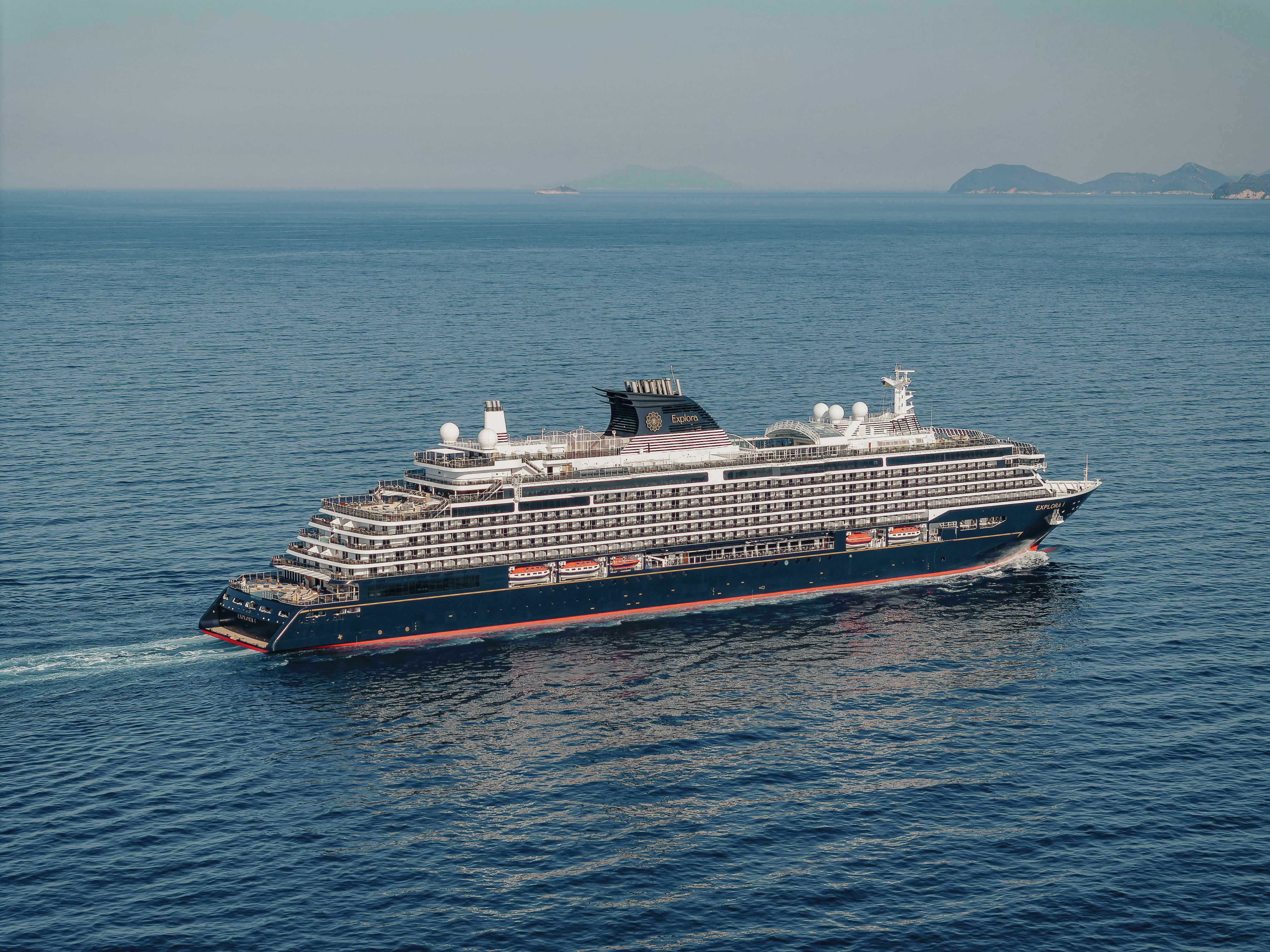
Deck Plans

- Medical Centre

- Journeys Lounge
- The Casino
- Guest Services
- Destination Experiences
- Shops
- Lobby & Lobby Bar
- Med Yacht Club Restaurant
- Fil Rouge Restaurant
- Lift

- Ocean Wellness The Spa
- Future Journeys Ambassadors
- Anthology Restaurant
- Crema Café
- Marble & Co. Grill Restaurant
- Galleria D’Arte
- MSC Foundation
- Astern Lounge
- Sakura Restaurant
- Astern Pool & Bar
- Lift

- Cocoon Residence
- Penthouse
- Deluxe Penthouse
- Ocean Grand Terrace Suite
- Ocean Terrace Suite
- Grand Penthouse
- Cove Residence
- Lift

- Retreat Residence
- Ocean Grand Terrace Suite
- Ocean Terrace Suite
- Grand Penthouse
- Cove Residence
- Deluxe Penthouse
- Penthouse
- Serenity Residence
- Lift

- Owner’s Residence
- Retreat Residence
- Ocean Terrace Suite
- Penthouse
- Premier Penthouse
- Grand Penthouse
- Cove Residence
- Lift

- Retreat Residence
- Ocean Terrace Suite
- Cove Residence
- Grand Penthouse
- Premier Penthouse
- Deluxe Penthouse
- Penthouse
- Serenity Residence
- Lift

- Bridge
- Ocean Wellness Fitness Centre
- Atoll Pool & Bar
- Grand Penthouse
- Deluxe Penthouse
- Cove Residence
- Premier Penthouse
- Ocean Terrace Suite
- Lift

- Explora Lounge
- Explora Lounge Outdoor Area
- Private Dining Room
- Malt Whiskey Bar
- Chef’s Kitchen
- Nautilus Club
- The Conservatory Pool & Bar
- Indoor Whirlpool
- Gelateria & Creperie
- Emporium Marketplace Restaurant
- Emporium Marketplace Restaurant Outdoor Seating
- Lift

- Helios Pool & Lounge (Adults Only)
- Running Track
- Whirlpools
- Lift

- Sports Court
- Whirlpool
- Ocean Wellness Open Air Fitness
- Sky Bar On 14
- Medical Centre
- Journeys Lounge
- The Casino
- Guest Services
- Destination Experiences
- Shops
- Lobby & Lobby Bar
- Med Yacht Club Restaurant
- Fil Rouge Restaurant
- Lift
- Ocean Wellness The Spa
- Future Journeys Ambassadors
- Anthology Restaurant
- Crema Café
- Marble & Co. Grill Restaurant
- Galleria D’Arte
- MSC Foundation
- Astern Lounge
- Sakura Restaurant
- Astern Pool & Bar
- Lift
- Cocoon Residence
- Penthouse
- Deluxe Penthouse
- Ocean Grand Terrace Suite
- Ocean Terrace Suite
- Grand Penthouse
- Cove Residence
- Lift
- Retreat Residence
- Ocean Grand Terrace Suite
- Ocean Terrace Suite
- Grand Penthouse
- Cove Residence
- Deluxe Penthouse
- Penthouse
- Serenity Residence
- Lift
- Owner’s Residence
- Retreat Residence
- Ocean Terrace Suite
- Penthouse
- Premier Penthouse
- Grand Penthouse
- Cove Residence
- Lift
- Retreat Residence
- Ocean Terrace Suite
- Cove Residence
- Grand Penthouse
- Premier Penthouse
- Deluxe Penthouse
- Penthouse
- Serenity Residence
- Lift
- Bridge
- Ocean Wellness Fitness Centre
- Atoll Pool & Bar
- Grand Penthouse
- Deluxe Penthouse
- Cove Residence
- Premier Penthouse
- Ocean Terrace Suite
- Lift
- Explora Lounge
- Explora Lounge Outdoor Area
- Private Dining Room
- Malt Whiskey Bar
- Chef’s Kitchen
- Nautilus Club
- The Conservatory Pool & Bar
- Indoor Whirlpool
- Gelateria & Creperie
- Emporium Marketplace Restaurant
- Emporium Marketplace Restaurant Outdoor Seating
- Lift
- Helios Pool & Lounge (Adults Only)
- Running Track
- Whirlpools
- Lift
- Sports Court
- Whirlpool
- Ocean Wellness Open Air Fitness
- Sky Bar On 14