Featured Cabins
Itinerary
Nuuk (Godthaab), Greenland
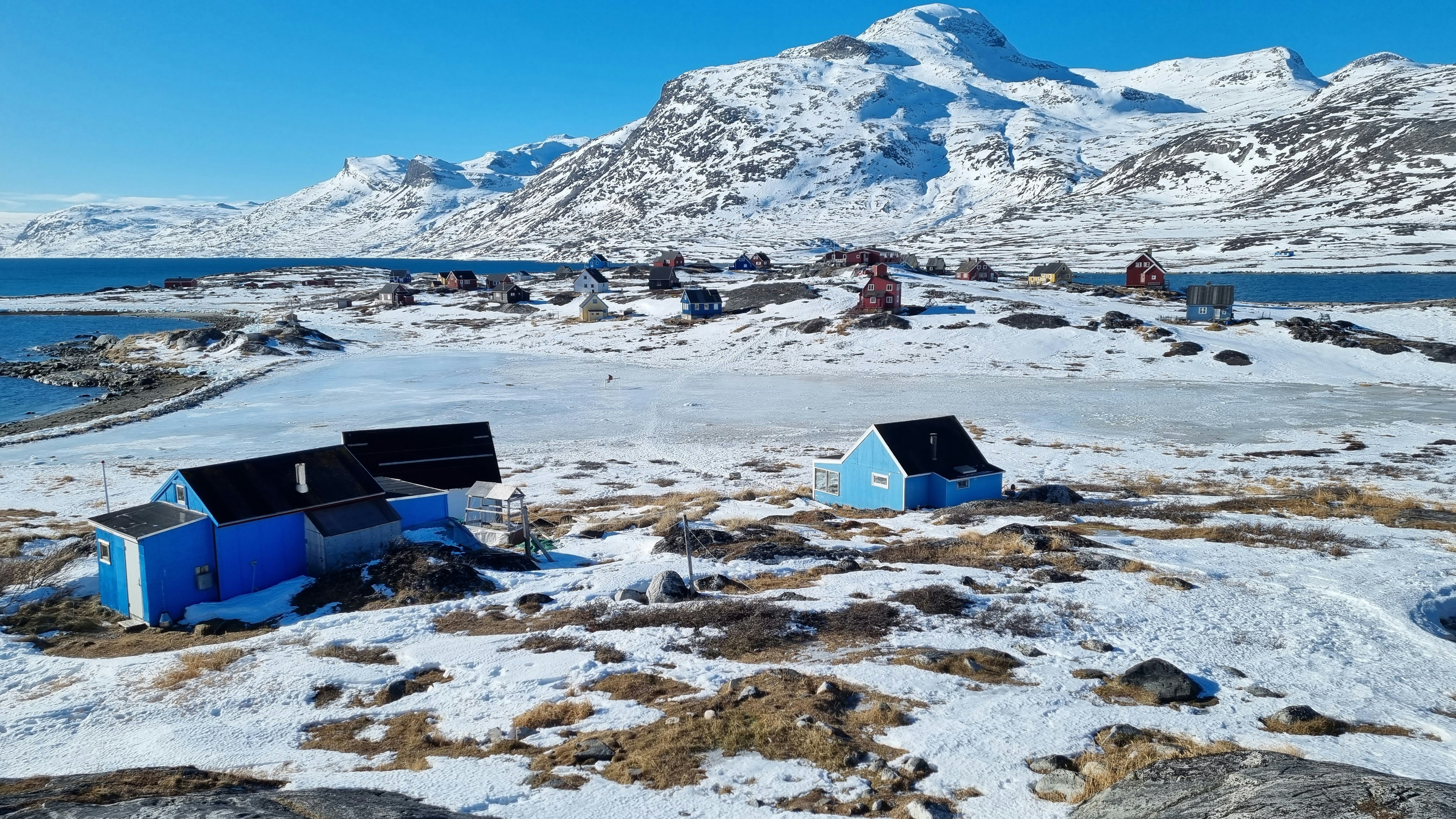
Nuuk, meaning “the cape”, was Greenland’s first town (1728). Started as a fort and later mission and trading post some 240 kilometers south of the Arctic Circle, it is the current capital. Almost 30% of Greenland’s population lives in the town. Not only does Nuuk have great natural beauty in its vicinity, but there are Inuit ruins, Hans Egede’s home, the parliament, and the Church of our Saviour as well. The Greenlandic National Museum has an outstanding collection of Greenlandic traditional dresses, as well as the famous Qilakitsoq mummies. The Katuaq Cultural Center’s building was inspired by the undulating Northern Lights and can house 10% of Nuuk’s inhabitants.
At Sea
No additional details available for this day.
Ilulissat (Jakobshavn), Greenland
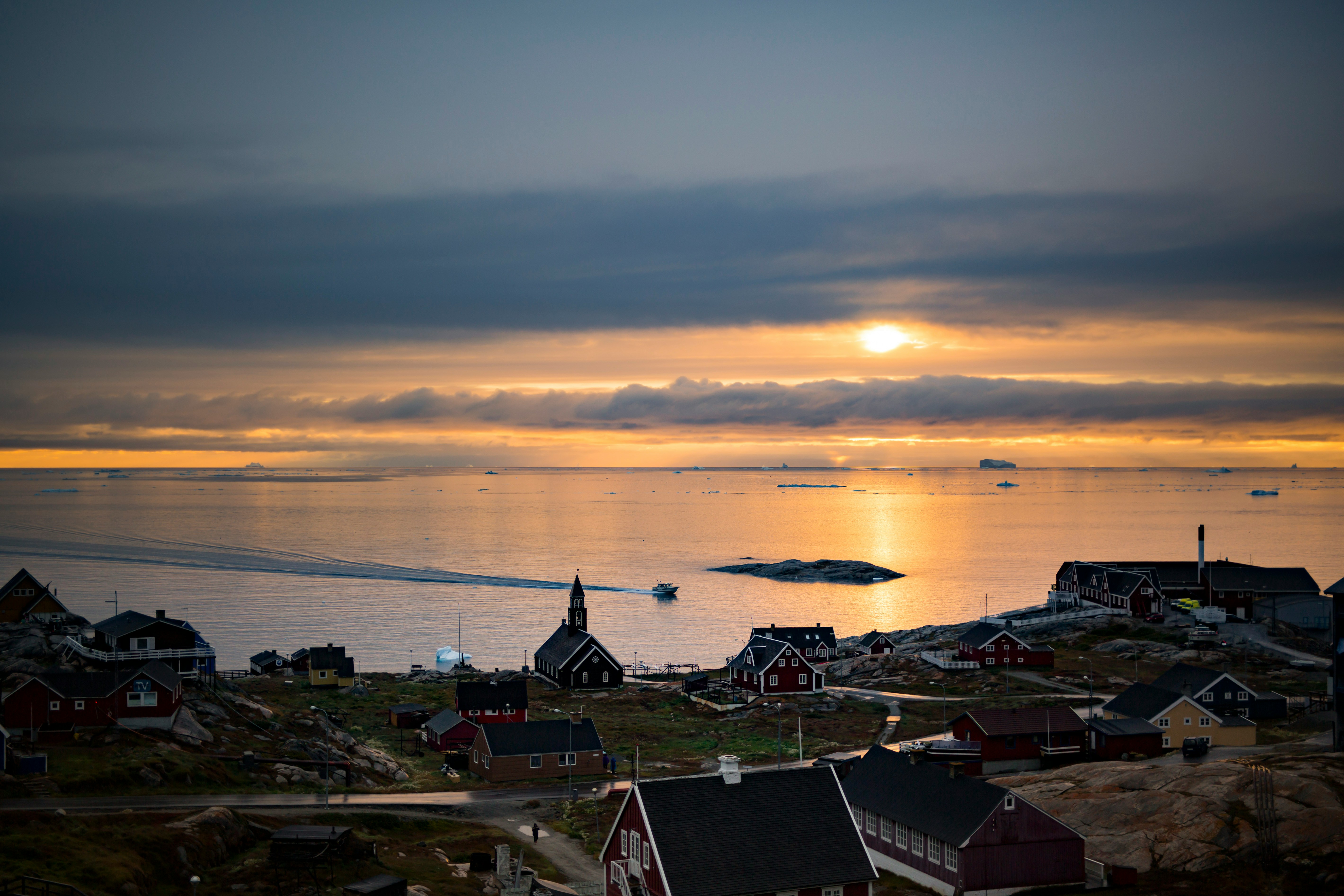
Known as the birthplace of icebergs, the Ilulissat Icefjord produces nearly 20 million tons of ice each day. In fact, the word Ilulissat means “icebergs” in the Kalaallisut language. The town of Ilulissat is known for its long periods of calm and settled weather, but the climate tends to be cold due to its proximity to the fjord. Approximately 4,500 people live in Ilulissat, the third-largest town in Greenland after Nuuk and Sisimiut. Some people here estimate that there are nearly as many sled dogs as human beings living in the town that also boasts a local history museum located in the former home of Greenlandic folk hero and famed polar explorer Knud Rasmussen.
Uummannaq, Greenland
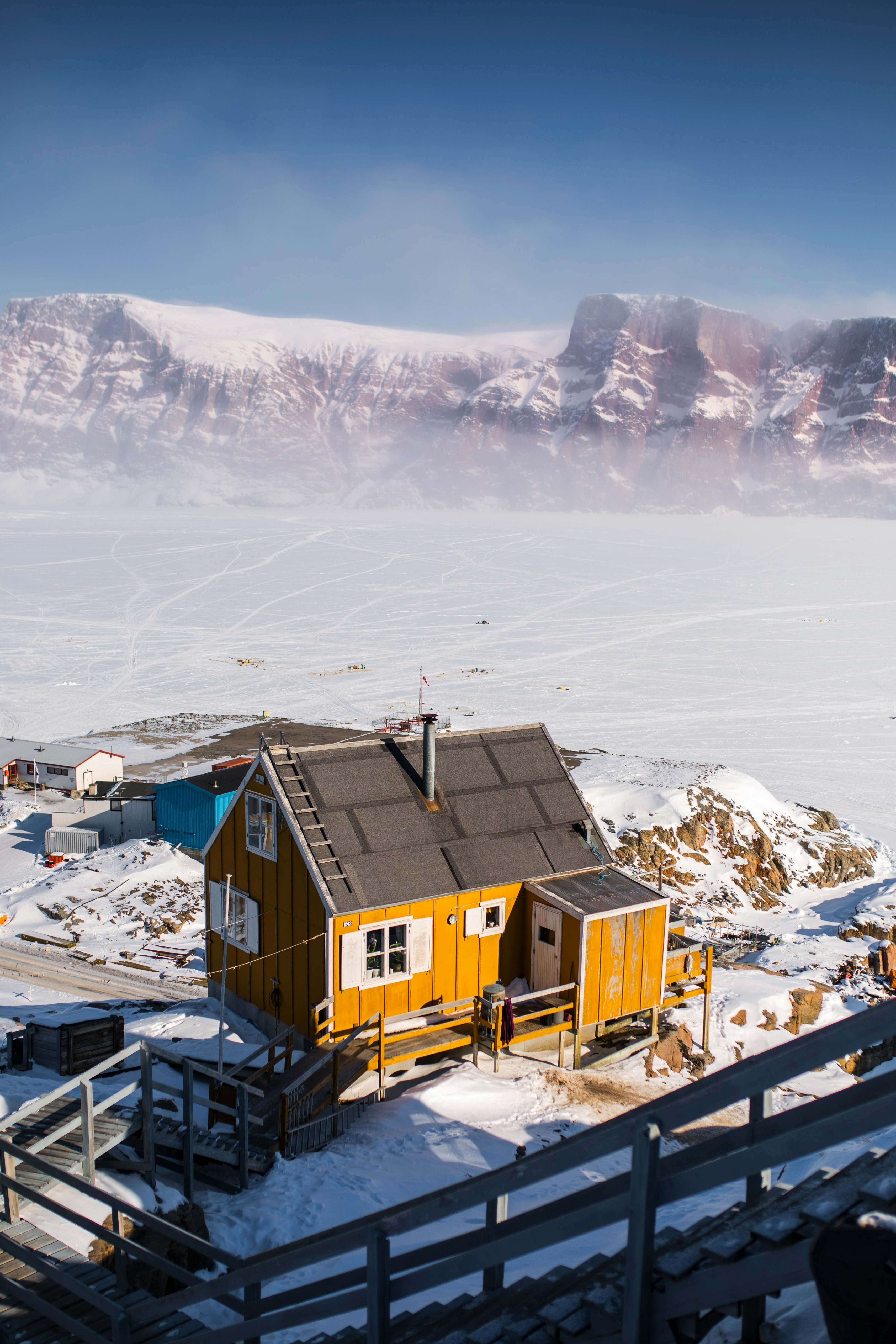
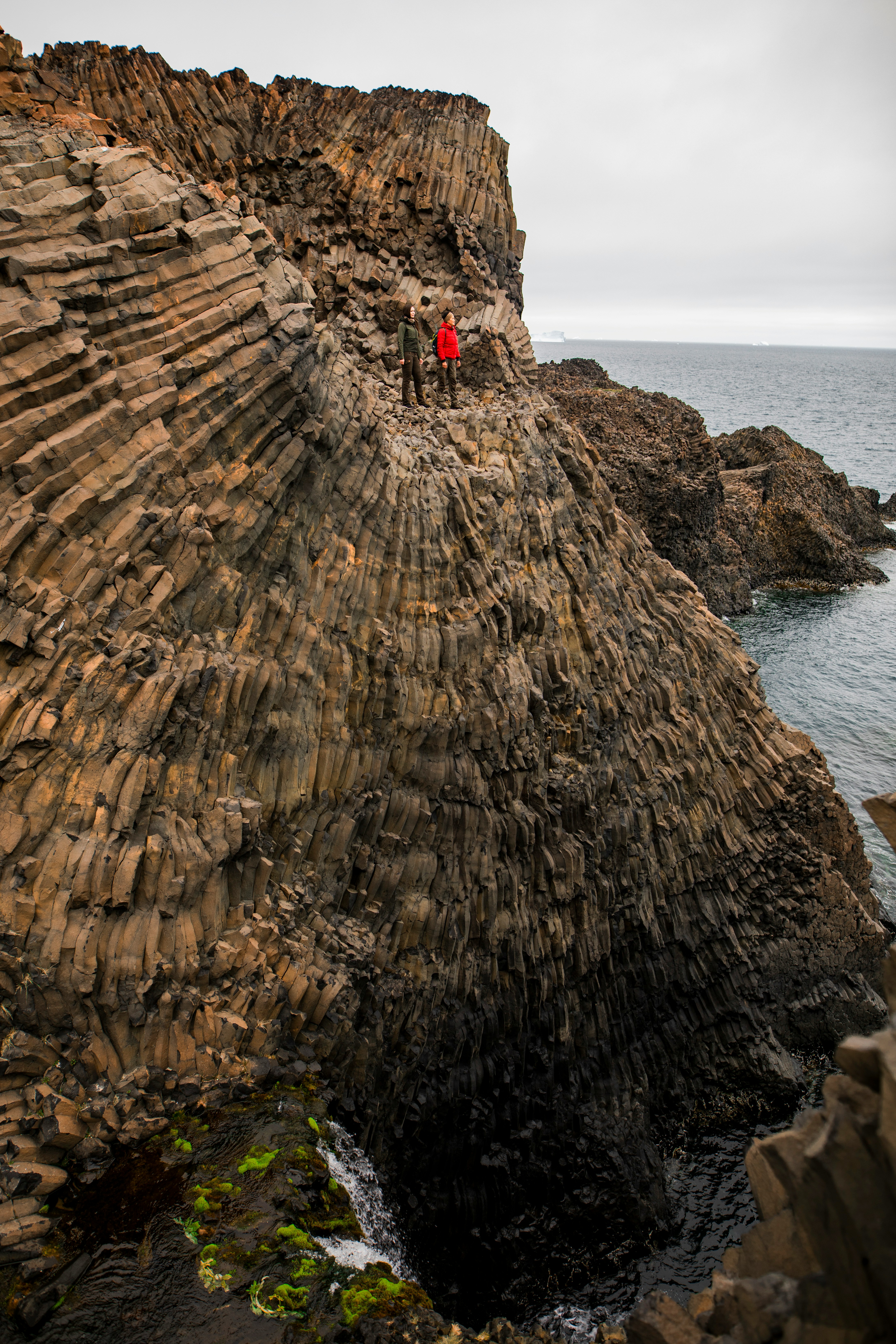
In the iceberg-laden waters surrounding the remote community of Uummannaq it is common to see whales. This area of Greenland is also known for its huge basalt mountains, and the small hunting and fishing village of Uummannaq rests at the foot of the heart-shaped Uummannaq Mountain, a name that translates to mean “in the shape of a seal’s heart”. The town of over 1200 people has a granite church and the country’s most northerly ferry terminal. The economy of Uummannaq revolves largely around the halibut/fish-processing factory.
At Sea
No additional details available for this day.
Savissivik, Greenland
Explore life at the edge of the world
“Ultima Thule” was the term used in the 4th century BC by the Greek explorer Pytheas to describe a mythical land in the far north. Nobody knows for sure which land Pytheas had in mind when he coined this name, but for some it has come to refer to the far north in Greenland.
As we explore here, expect wild beauty at the edge of the inhabitable world. Extreme climatic conditions year-round guarantee isolation and tough living conditions for the inhabitants, and even by Arctic standards the Thule region is harsh and remote. And yet, this was the first region in Greenland ever to be populated by the forerunners of the Inuit, somewhere around 4,500 years ago. How they managed to survive and thrive in that environment still puzzles Arctic archaeologists.
The abundant bird and animal life provides sustenance, and the traditional hunting culture has survived better here than elsewhere in Greenland. The polar travel know-how of the locals has been highly sought after on European and American expeditions, either as guides or saviors. In fact, thanks to its position, the region has been the natural starting point for many travelers heading toward the North Pole.
Always adapting our program to the changing weather and ice conditions, we will spend the next few days exploring the region. We aim to visit some of the local communities, land with expedition boats and marvel at the power of nature, sail through icy channels and – with a bit of luck – spot some of the giants of the Arctic, including walruses, orcas and perhaps even polar bears.
Nuuk (Godthaab), Greenland
Nuuk, meaning “the cape”, was Greenland’s first town (1728). Started as a fort and later mission and trading post some 240 kilometers south of the Arctic Circle, it is the current capital. Almost 30% of Greenland’s population lives in the town. Not only does Nuuk have great natural beauty in its vicinity, but there are Inuit ruins, Hans Egede’s home, the parliament, and the Church of our Saviour as well. The Greenlandic National Museum has an outstanding collection of Greenlandic traditional dresses, as well as the famous Qilakitsoq mummies. The Katuaq Cultural Center’s building was inspired by the undulating Northern Lights and can house 10% of Nuuk’s inhabitants.
At Sea
No additional details available for this day.
Ilulissat (Jakobshavn), Greenland
Known as the birthplace of icebergs, the Ilulissat Icefjord produces nearly 20 million tons of ice each day. In fact, the word Ilulissat means “icebergs” in the Kalaallisut language. The town of Ilulissat is known for its long periods of calm and settled weather, but the climate tends to be cold due to its proximity to the fjord. Approximately 4,500 people live in Ilulissat, the third-largest town in Greenland after Nuuk and Sisimiut. Some people here estimate that there are nearly as many sled dogs as human beings living in the town that also boasts a local history museum located in the former home of Greenlandic folk hero and famed polar explorer Knud Rasmussen.
Uummannaq, Greenland
In the iceberg-laden waters surrounding the remote community of Uummannaq it is common to see whales. This area of Greenland is also known for its huge basalt mountains, and the small hunting and fishing village of Uummannaq rests at the foot of the heart-shaped Uummannaq Mountain, a name that translates to mean “in the shape of a seal’s heart”. The town of over 1200 people has a granite church and the country’s most northerly ferry terminal. The economy of Uummannaq revolves largely around the halibut/fish-processing factory.
At Sea
No additional details available for this day.
Savissivik, Greenland
Explore life at the edge of the world
“Ultima Thule” was the term used in the 4th century BC by the Greek explorer Pytheas to describe a mythical land in the far north. Nobody knows for sure which land Pytheas had in mind when he coined this name, but for some it has come to refer to the far north in Greenland.
As we explore here, expect wild beauty at the edge of the inhabitable world. Extreme climatic conditions year-round guarantee isolation and tough living conditions for the inhabitants, and even by Arctic standards the Thule region is harsh and remote. And yet, this was the first region in Greenland ever to be populated by the forerunners of the Inuit, somewhere around 4,500 years ago. How they managed to survive and thrive in that environment still puzzles Arctic archaeologists.
The abundant bird and animal life provides sustenance, and the traditional hunting culture has survived better here than elsewhere in Greenland. The polar travel know-how of the locals has been highly sought after on European and American expeditions, either as guides or saviors. In fact, thanks to its position, the region has been the natural starting point for many travelers heading toward the North Pole.
Always adapting our program to the changing weather and ice conditions, we will spend the next few days exploring the region. We aim to visit some of the local communities, land with expedition boats and marvel at the power of nature, sail through icy channels and – with a bit of luck – spot some of the giants of the Arctic, including walruses, orcas and perhaps even polar bears.
Dundas, Greenland
At Sea
No additional details available for this day.
Qaanaaq, Greenland
In AD 850, the Vikings established their parliament in Tórshavn, a name which translates as “Thor’s harbor.” It was named after Thor, the god of thunder and lightning in Norse mythology. The town became a center of trade for the island, and in fact was designated as the only legal place for the islanders to sell and buy products. This trade monopoly was abolished in 1856. Today it is the capital and largest city of the Faroe Islands, with fish-processing plants, a shipyard, and woolen products making up. It is considered to be one of the oldest capitals in Northern Europe.
At Sea
No additional details available for this day.
Qeqertarsuaq (Godhavn), Greenland
Visit modern towns on the edge of the wilderness
The central west coast of Greenland is a land of contrasts, home to some of the longest fjords in the country and a sprinkling of settlements, including the second-largest town on the island. However, the vastness of the land makes this stretch of the coast a sparsely-populated region, where huge distances are the norm, and the sense of remoteness and isolation is just a part of daily life.
As we sail south, we’ll visit communities where Greenlandic traditions remain strong. Possible calls include Qeqertarsuaq, the main settlement on Disko Island, and Itilleq – a small fishing and hunting village perched just north of the Arctic Circle.
Further along the coast lies Sisimiut, Greenland’s second-largest town. Though modern in appearance, its roots run deep, with archaeological remains dating back over 4,000 years. Visit the local museum to learn more about the ancient Saqqaq culture, or browse for qiviut scarves, hats, and mittens – crafted from the soft inner wool of musk ox, said to be 10 times warmer than sheep wool.
Whether hiking ashore, meeting Greenlanders, or scanning the horizon for wildlife, these final days offer a fitting epilogue to your Arctic expedition.
Dundas, Greenland
At Sea
No additional details available for this day.
Qaanaaq, Greenland
In AD 850, the Vikings established their parliament in Tórshavn, a name which translates as “Thor’s harbor.” It was named after Thor, the god of thunder and lightning in Norse mythology. The town became a center of trade for the island, and in fact was designated as the only legal place for the islanders to sell and buy products. This trade monopoly was abolished in 1856. Today it is the capital and largest city of the Faroe Islands, with fish-processing plants, a shipyard, and woolen products making up. It is considered to be one of the oldest capitals in Northern Europe.
At Sea
No additional details available for this day.
Qeqertarsuaq (Godhavn), Greenland
Visit modern towns on the edge of the wilderness
The central west coast of Greenland is a land of contrasts, home to some of the longest fjords in the country and a sprinkling of settlements, including the second-largest town on the island. However, the vastness of the land makes this stretch of the coast a sparsely-populated region, where huge distances are the norm, and the sense of remoteness and isolation is just a part of daily life.
As we sail south, we’ll visit communities where Greenlandic traditions remain strong. Possible calls include Qeqertarsuaq, the main settlement on Disko Island, and Itilleq – a small fishing and hunting village perched just north of the Arctic Circle.
Further along the coast lies Sisimiut, Greenland’s second-largest town. Though modern in appearance, its roots run deep, with archaeological remains dating back over 4,000 years. Visit the local museum to learn more about the ancient Saqqaq culture, or browse for qiviut scarves, hats, and mittens – crafted from the soft inner wool of musk ox, said to be 10 times warmer than sheep wool.
Whether hiking ashore, meeting Greenlanders, or scanning the horizon for wildlife, these final days offer a fitting epilogue to your Arctic expedition.
Itilleq, Greenland
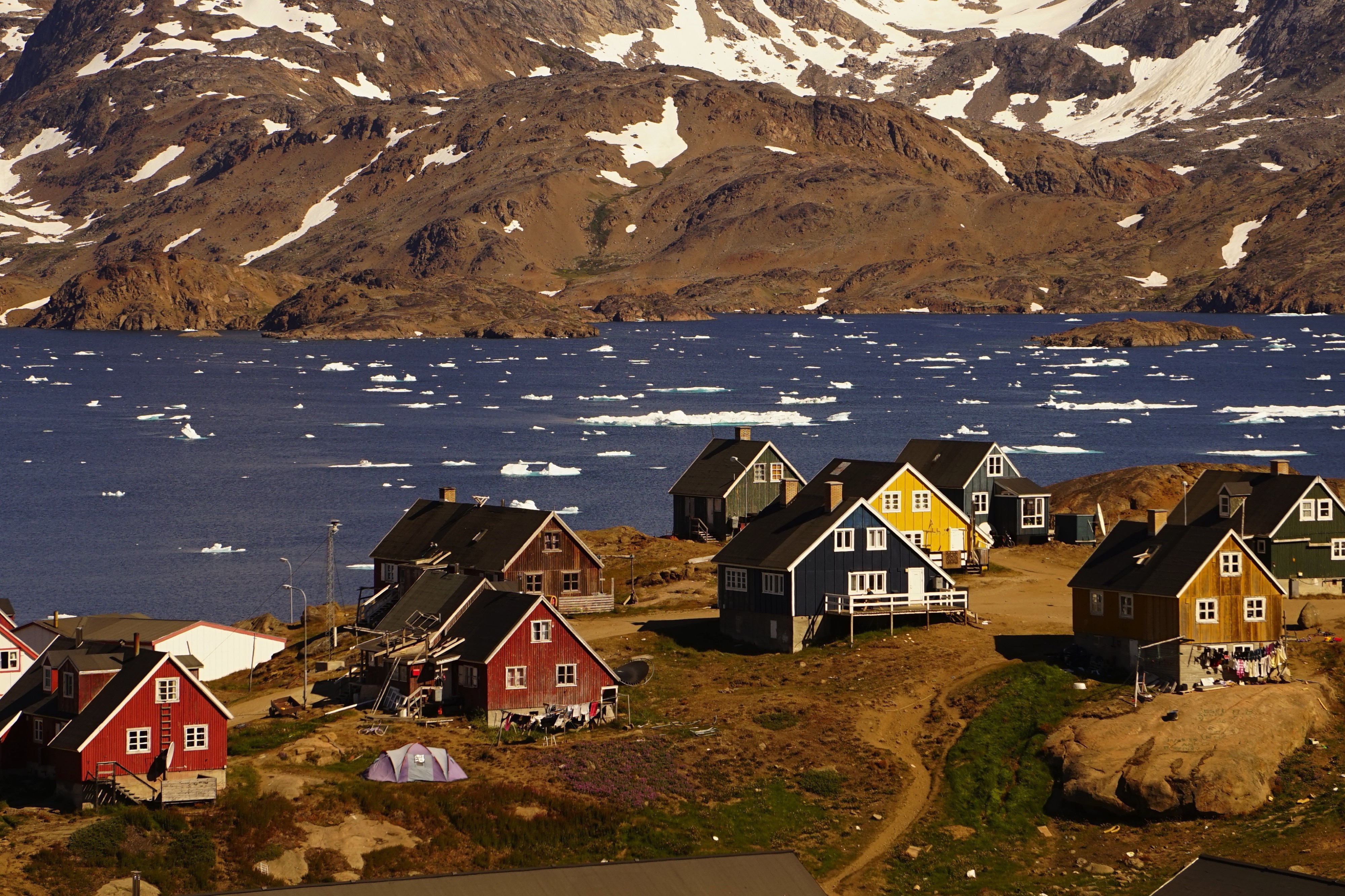
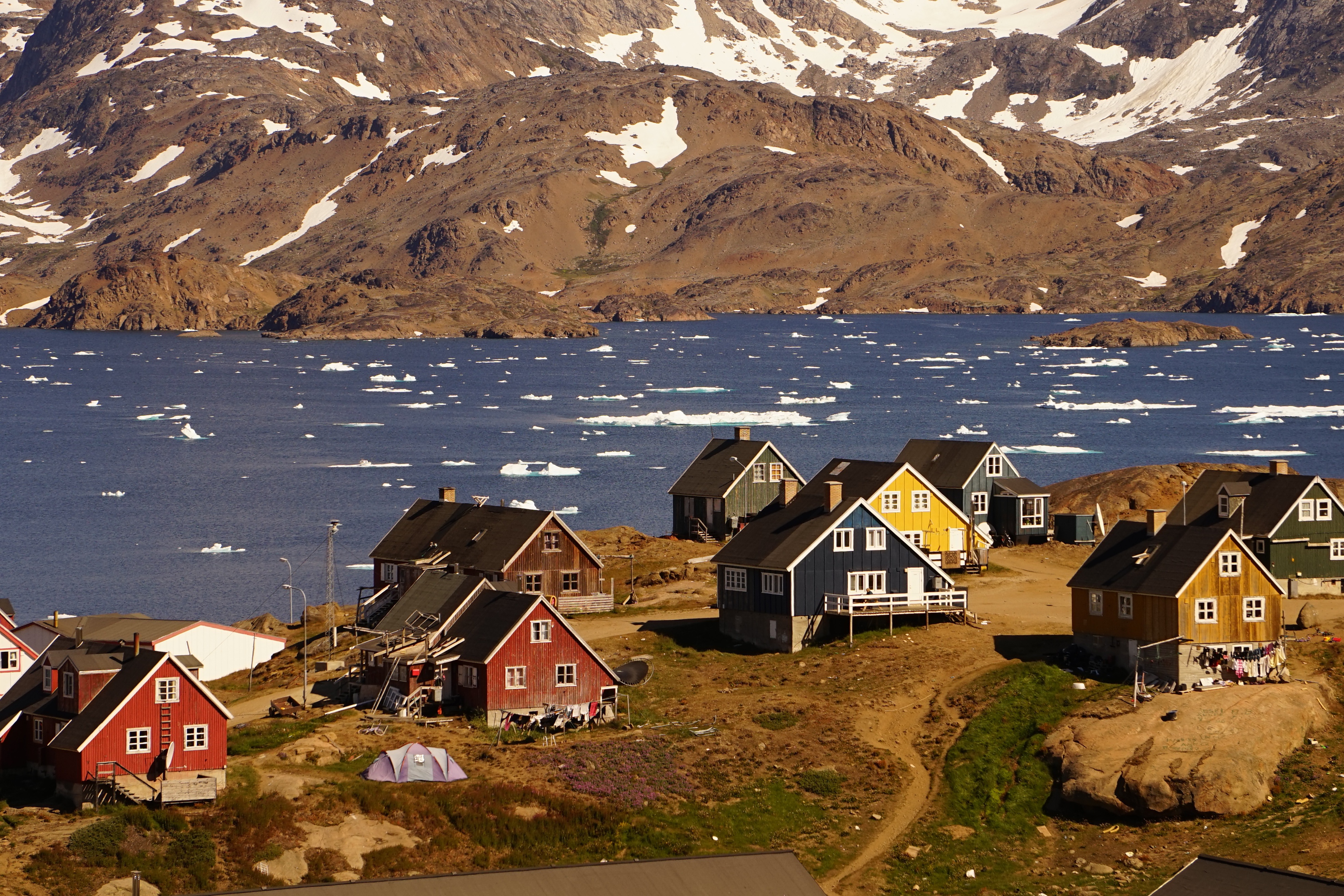
Itilleq is an idyllic little village located on a small island about ahalf a mile off the west coast of Greenland, and only about a mile north of theArctic Circle. It is one of the most picturesque villages in Greenland with itsquaint colorful houses surrounded by stunning rugged mountains and glaciers.Originally, the village of Itilleq was founded on another island in 1847, butwas later moved to its present location. The 100 people living here todaysurvive mainly on hunting and fishing, with a fish factory being the mainemployer.
Nuuk (Godthaab), Greenland
Nuuk, meaning “the cape”, was Greenland’s first town (1728). Started as a fort and later mission and trading post some 240 kilometers south of the Arctic Circle, it is the current capital. Almost 30% of Greenland’s population lives in the town. Not only does Nuuk have great natural beauty in its vicinity, but there are Inuit ruins, Hans Egede’s home, the parliament, and the Church of our Saviour as well. The Greenlandic National Museum has an outstanding collection of Greenlandic traditional dresses, as well as the famous Qilakitsoq mummies. The Katuaq Cultural Center’s building was inspired by the undulating Northern Lights and can house 10% of Nuuk’s inhabitants.
Itilleq, Greenland
Itilleq is an idyllic little village located on a small island about ahalf a mile off the west coast of Greenland, and only about a mile north of theArctic Circle. It is one of the most picturesque villages in Greenland with itsquaint colorful houses surrounded by stunning rugged mountains and glaciers.Originally, the village of Itilleq was founded on another island in 1847, butwas later moved to its present location. The 100 people living here todaysurvive mainly on hunting and fishing, with a fish factory being the mainemployer.
Nuuk (Godthaab), Greenland
Nuuk, meaning “the cape”, was Greenland’s first town (1728). Started as a fort and later mission and trading post some 240 kilometers south of the Arctic Circle, it is the current capital. Almost 30% of Greenland’s population lives in the town. Not only does Nuuk have great natural beauty in its vicinity, but there are Inuit ruins, Hans Egede’s home, the parliament, and the Church of our Saviour as well. The Greenlandic National Museum has an outstanding collection of Greenlandic traditional dresses, as well as the famous Qilakitsoq mummies. The Katuaq Cultural Center’s building was inspired by the undulating Northern Lights and can house 10% of Nuuk’s inhabitants.
Cabin Options
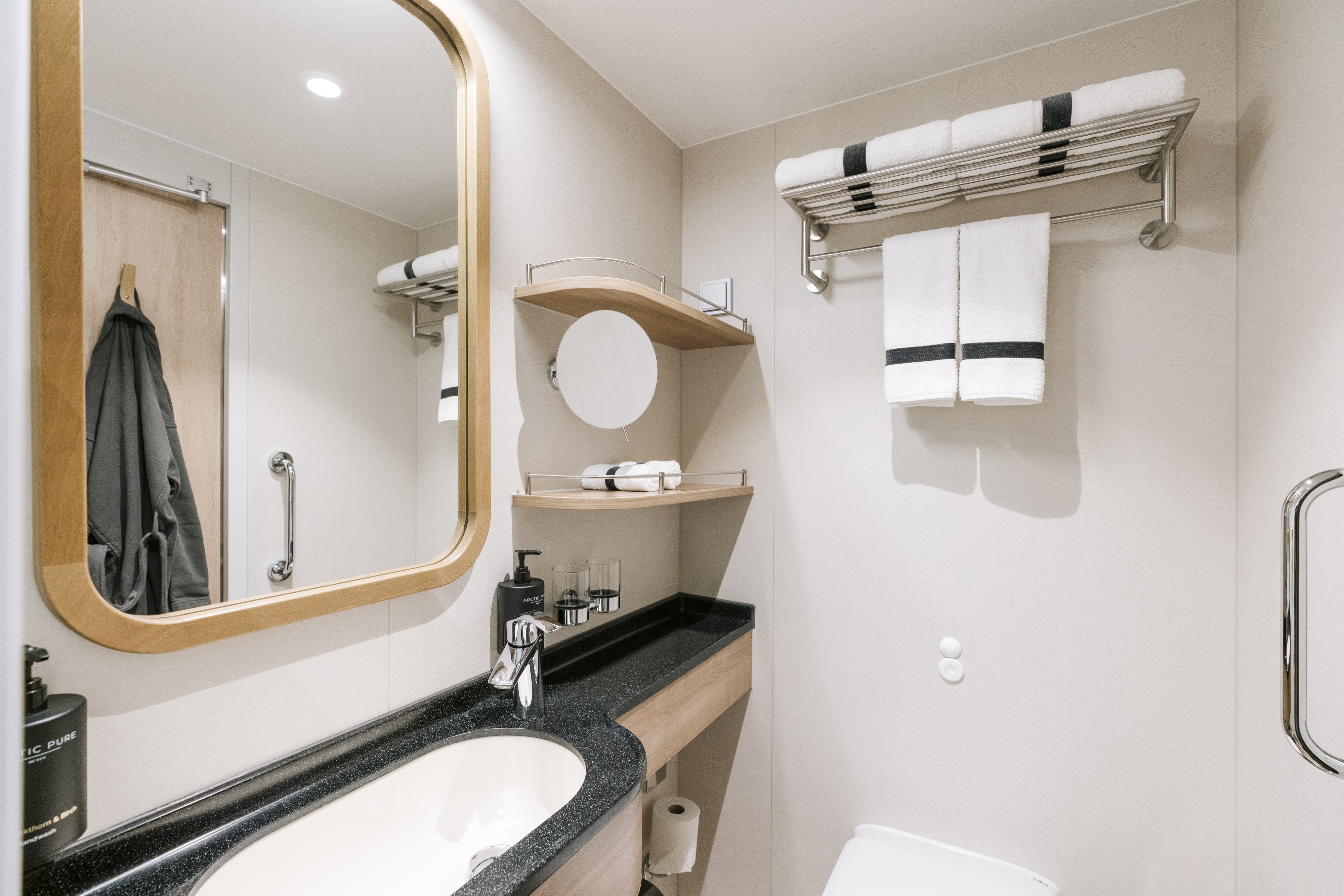
Polar Outside | Outside cabin – Lower/middle decks
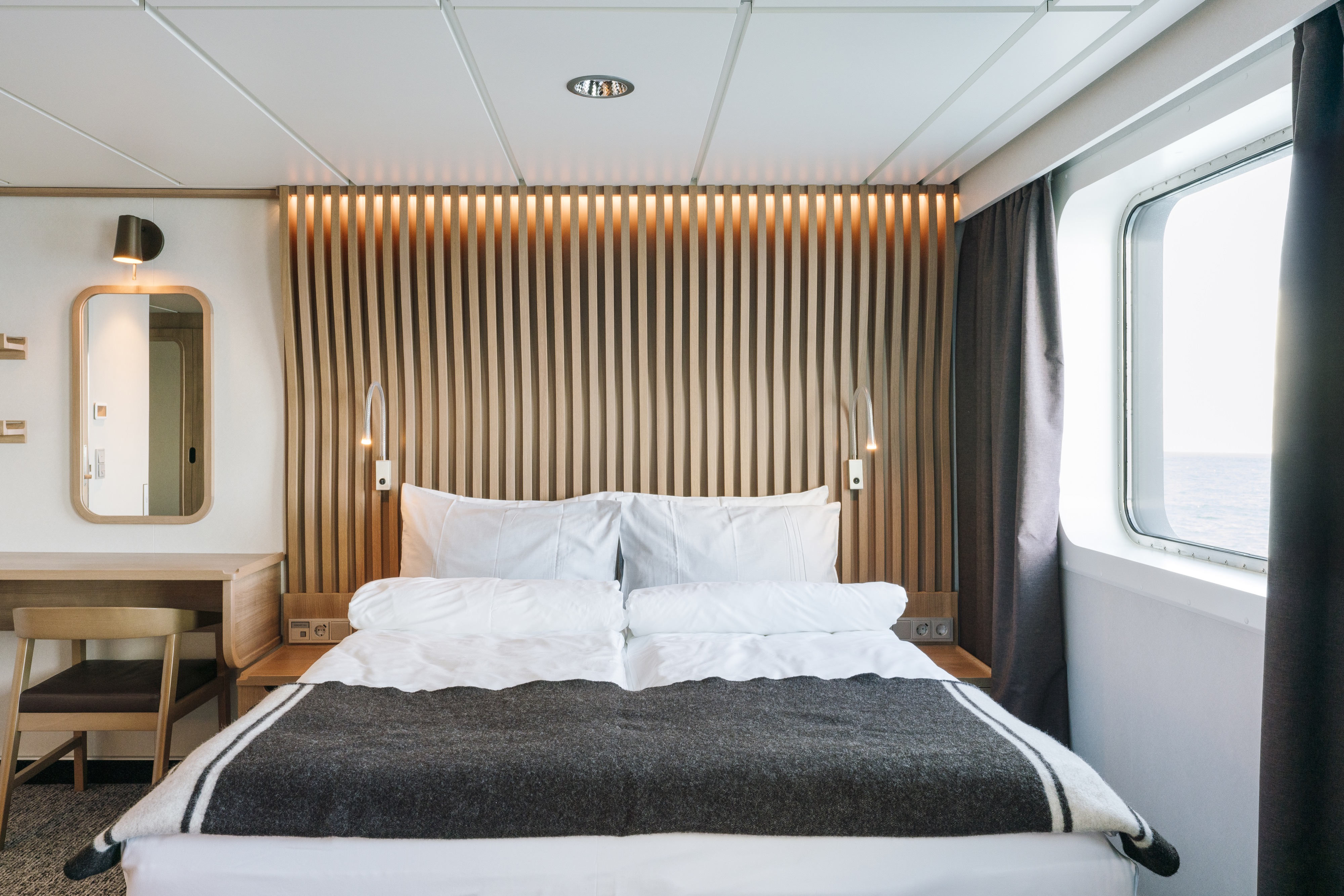
Arctic Superior | Outside cabin – Lower/middle decks
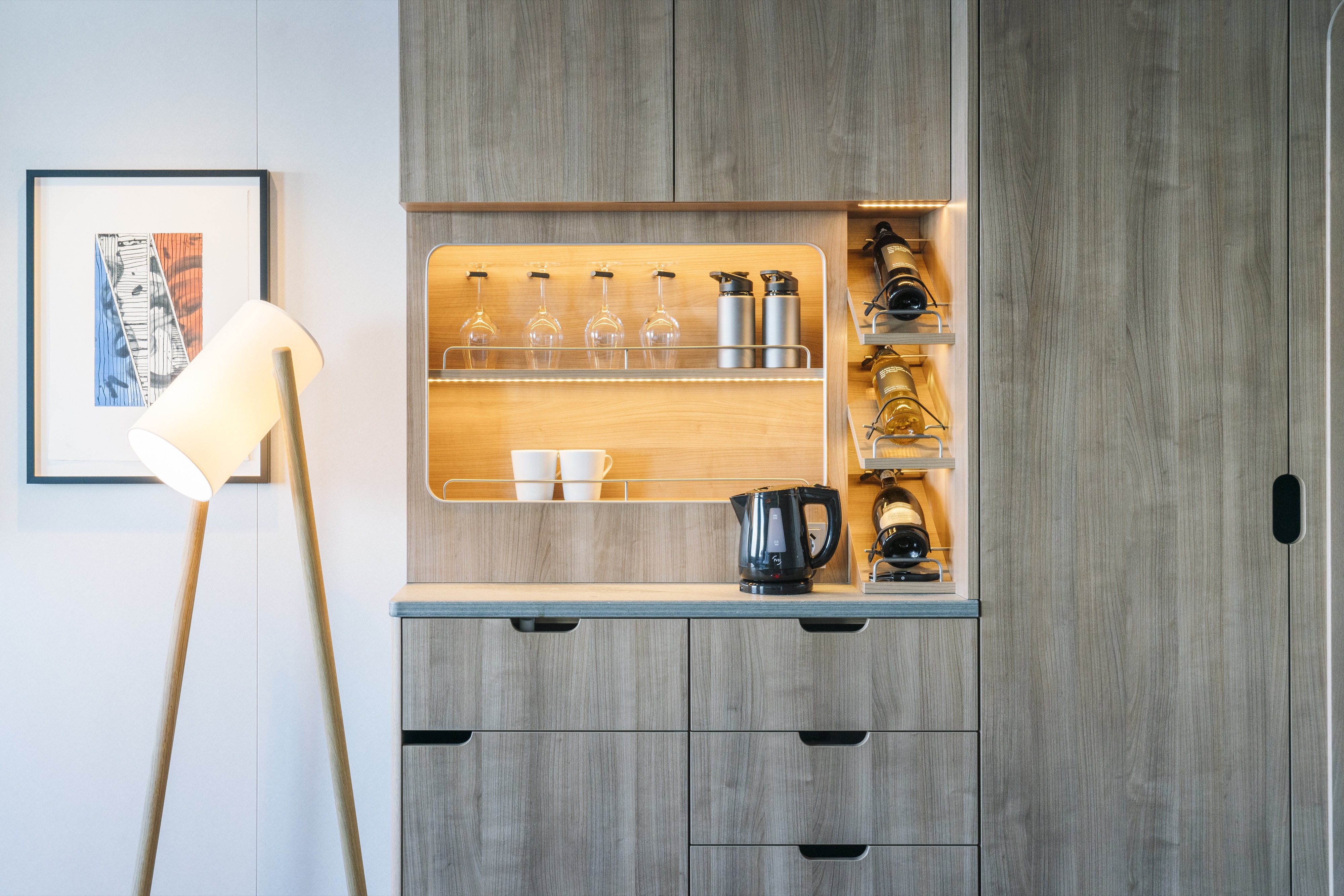
Arctic Superior | Outside cabin – Middle deck
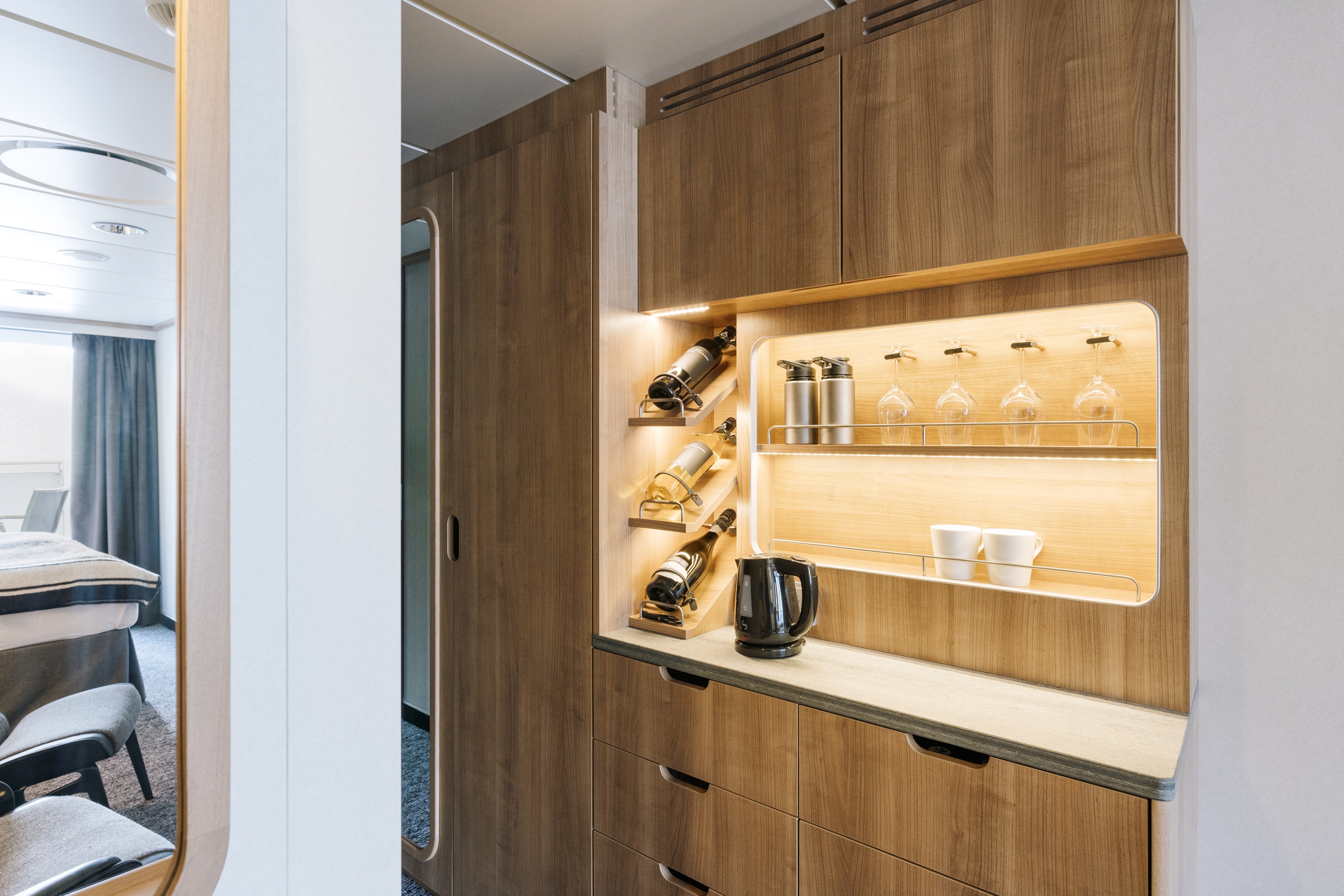
Arctic Superior | Outside cabin – Upper deck
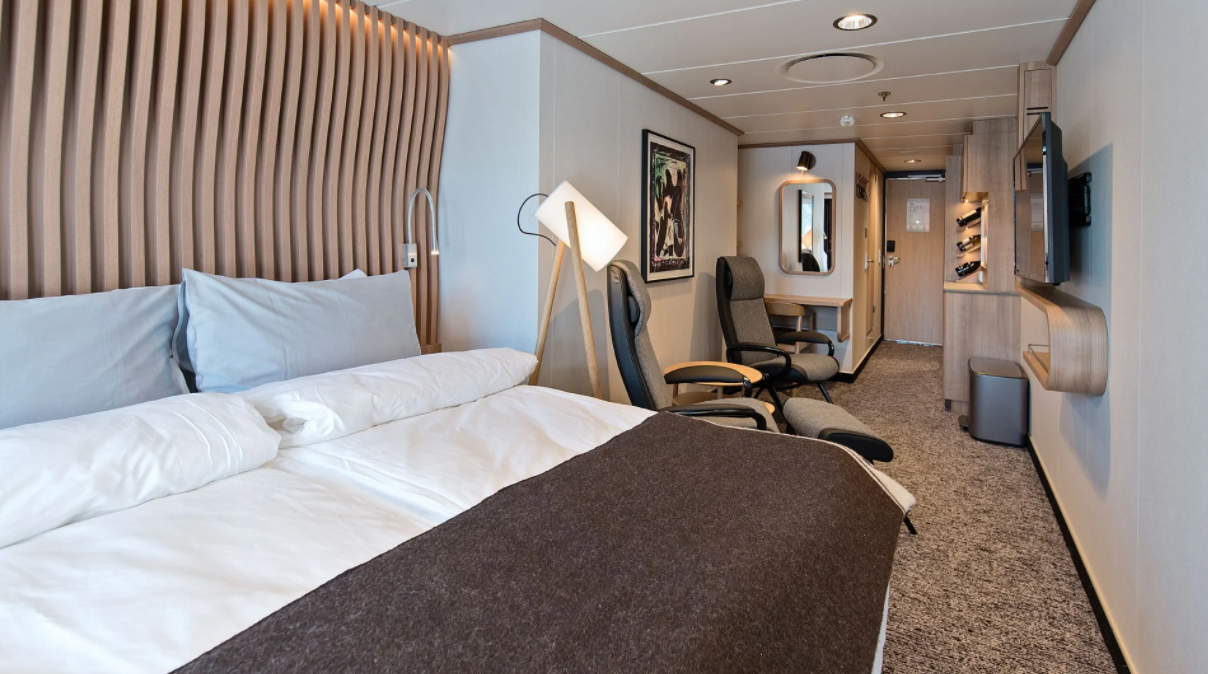
Arctic Superior | Outside cabin – With balcony
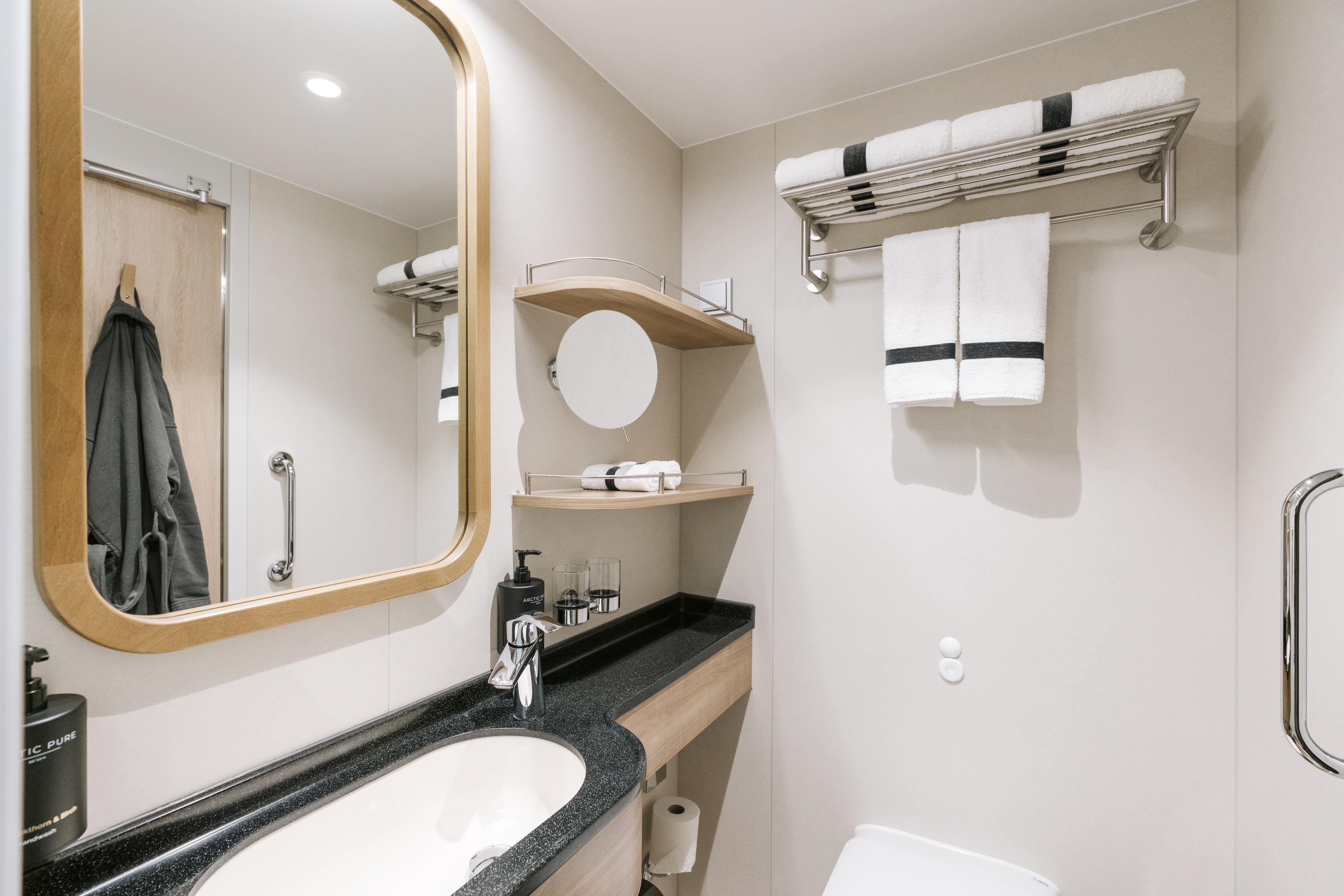
Arctic Superior | Outside cabin – Upper deck
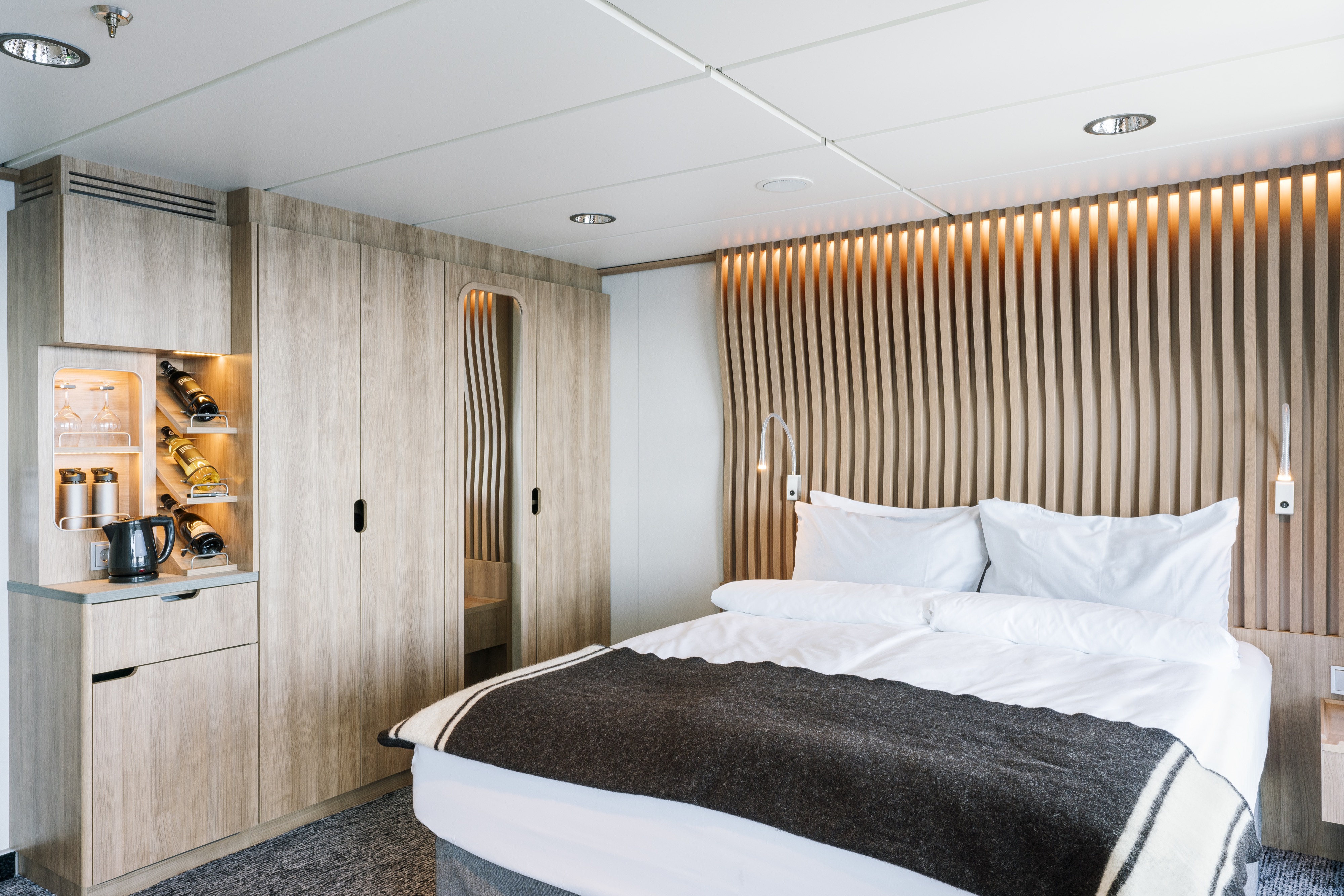
Arctic Superior | Wheelchair-accessible outside cabin with balcony
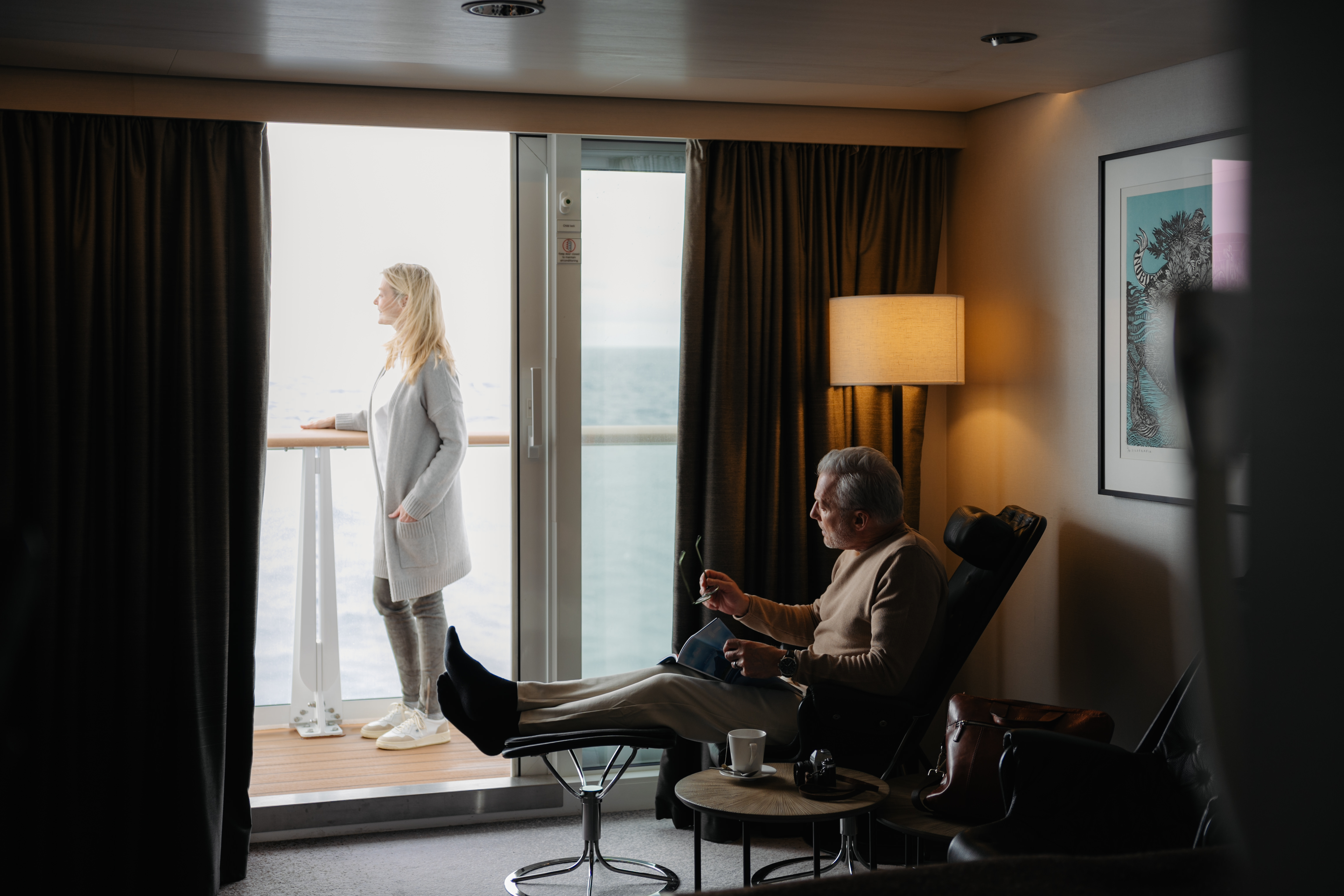
Expedition Suite | Suite – With balcony
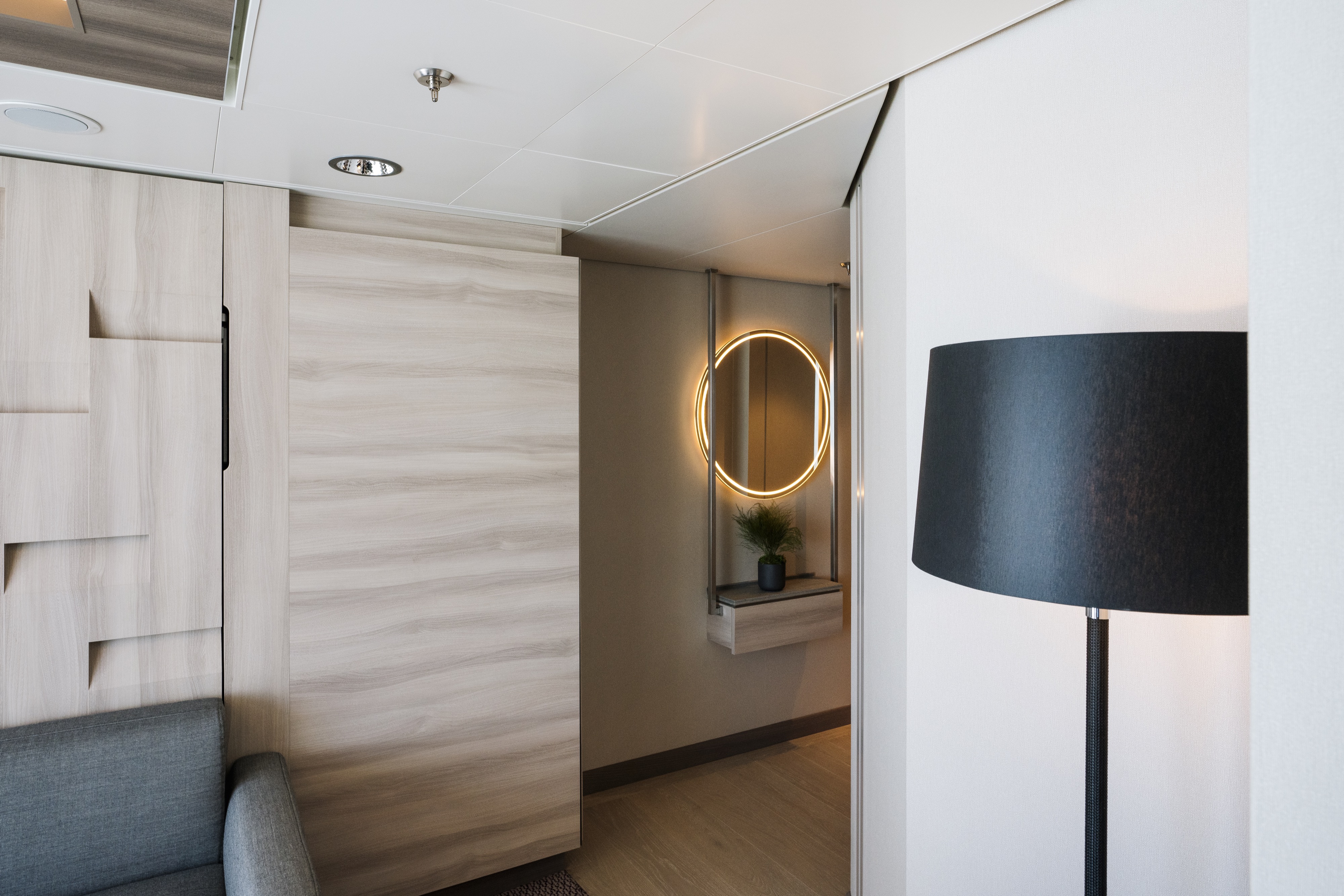
Expedition Suite | XL Suite
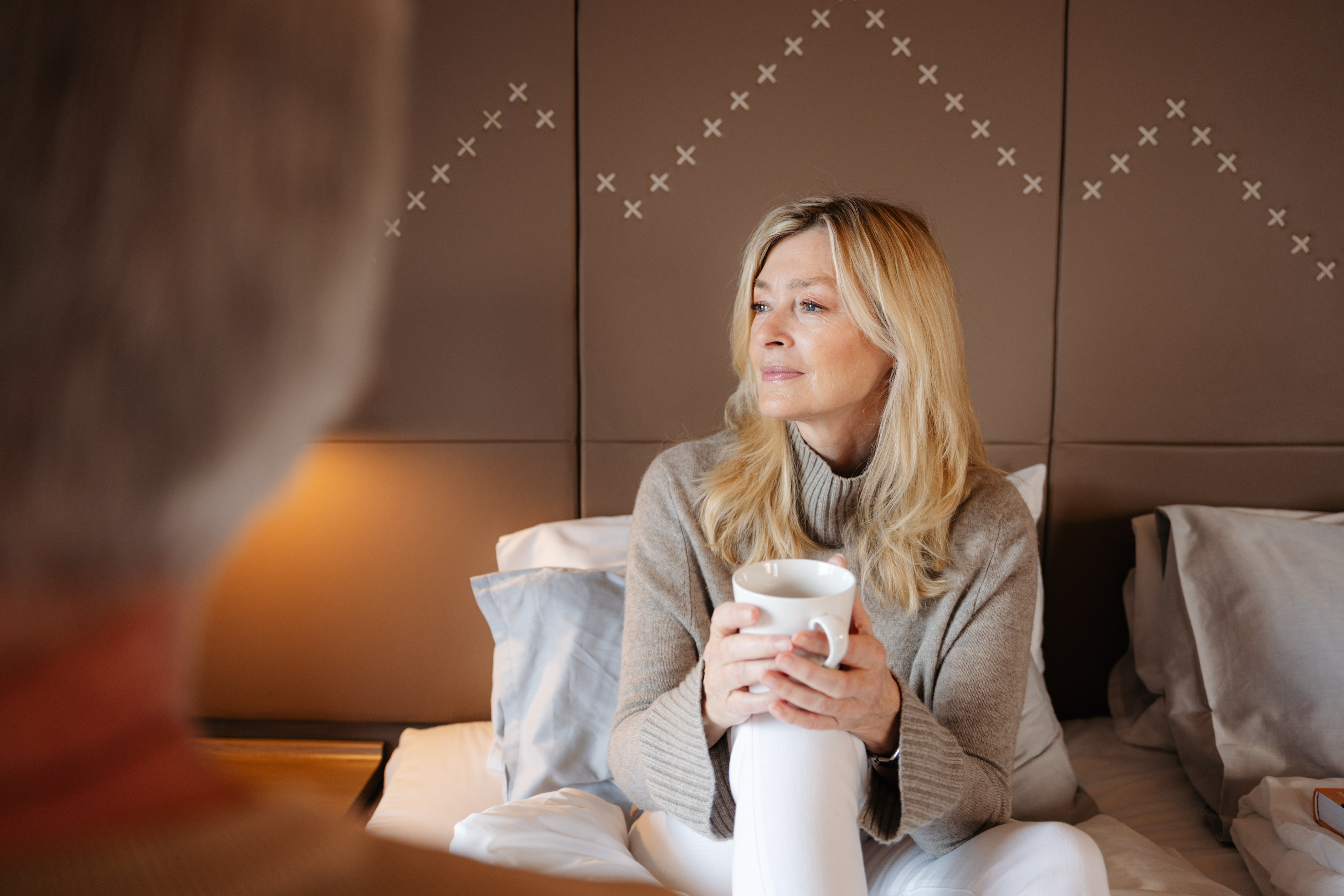
Expedition Suite | Corner Suite
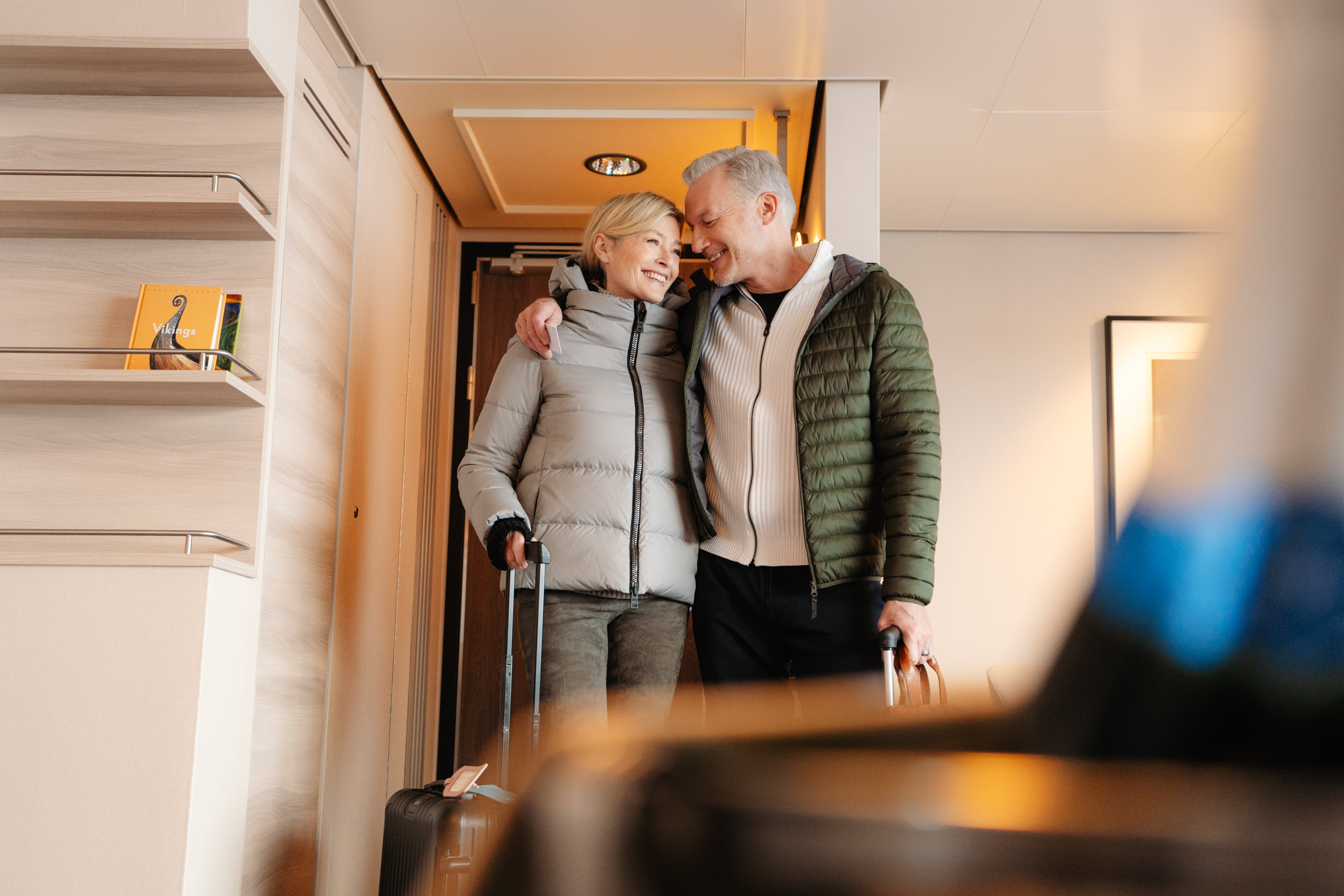
Expedition Suite | XL Suite – With balcony
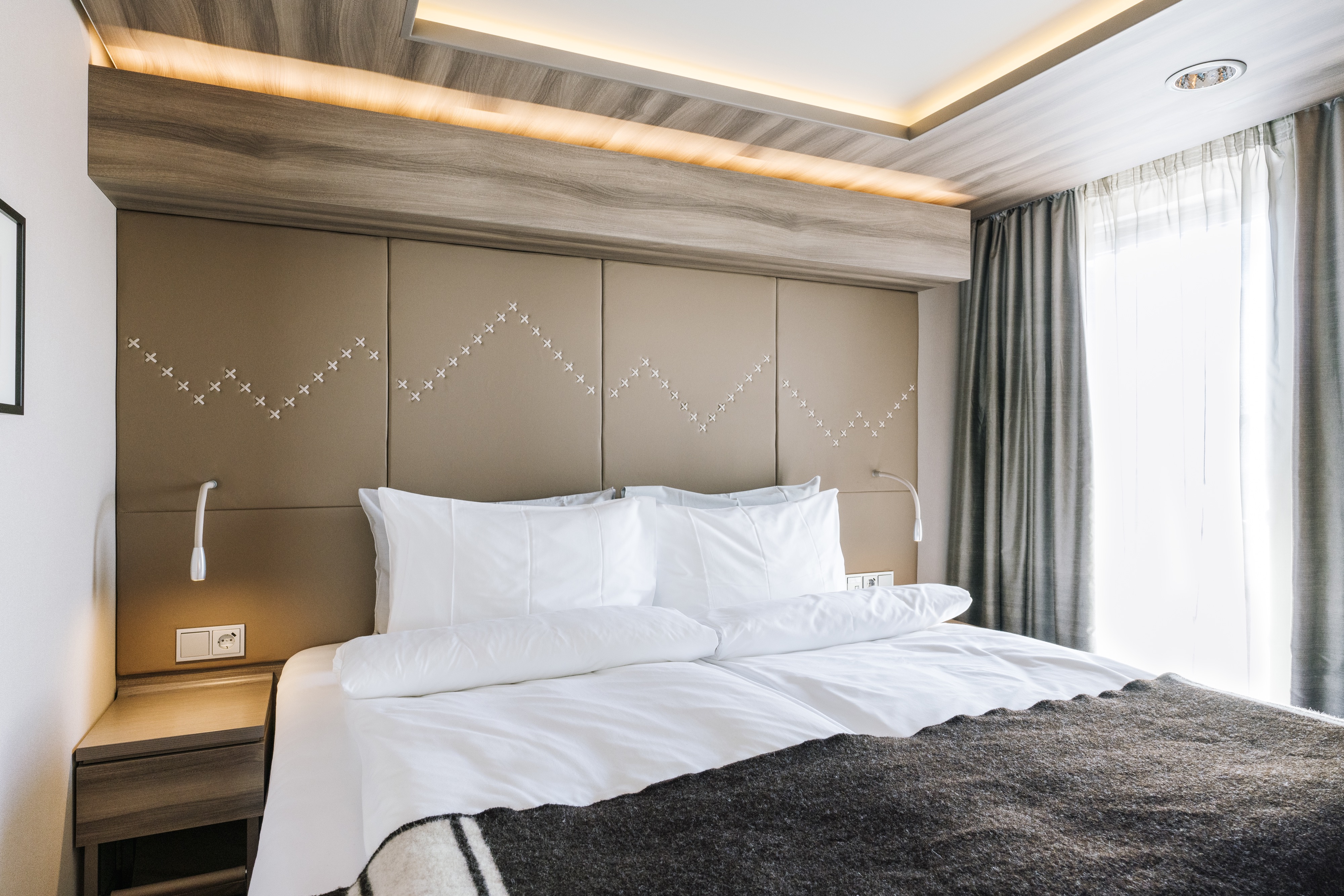
Expedition Suite | Large suite – With balcony
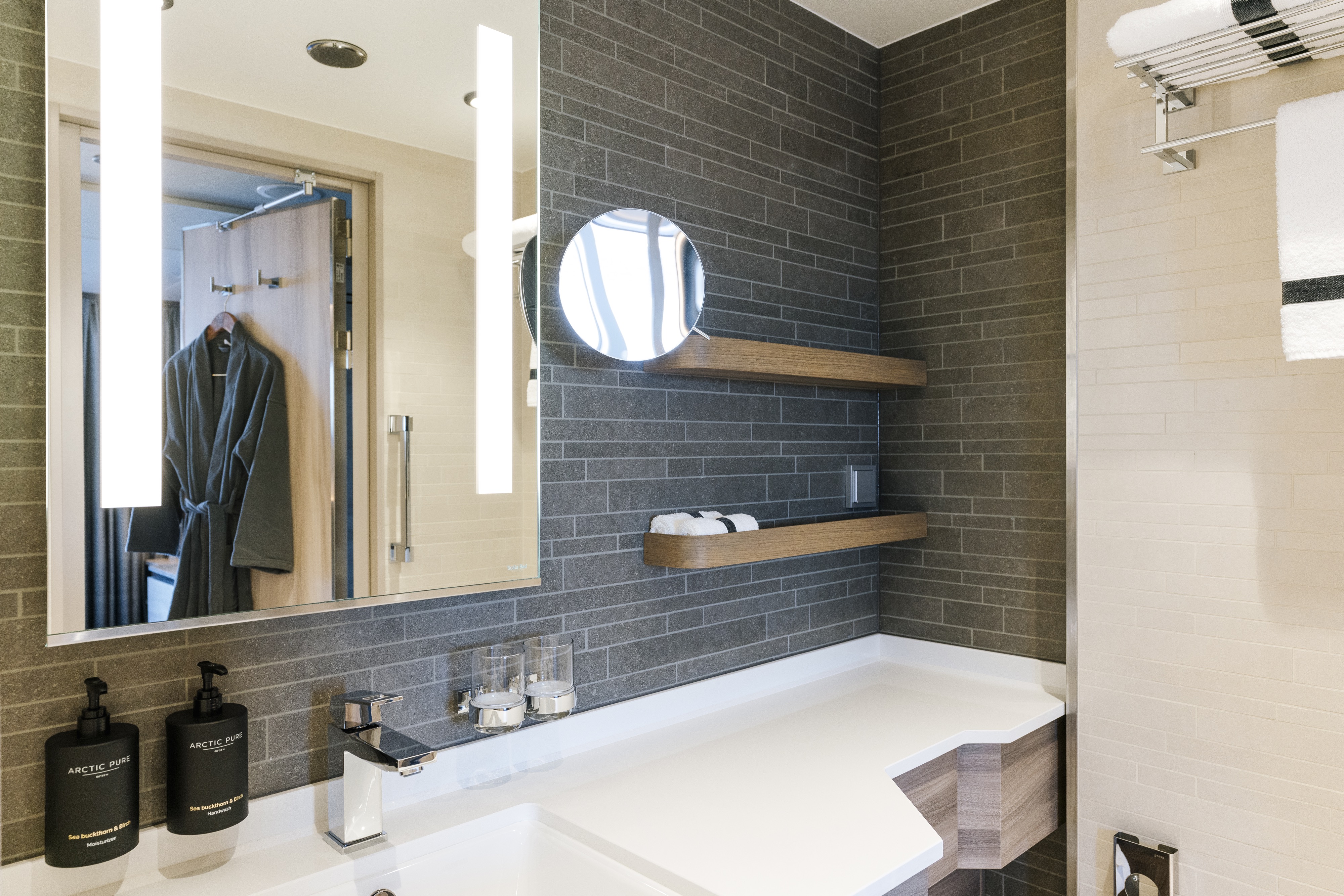
Expedition Suite | Corner suite
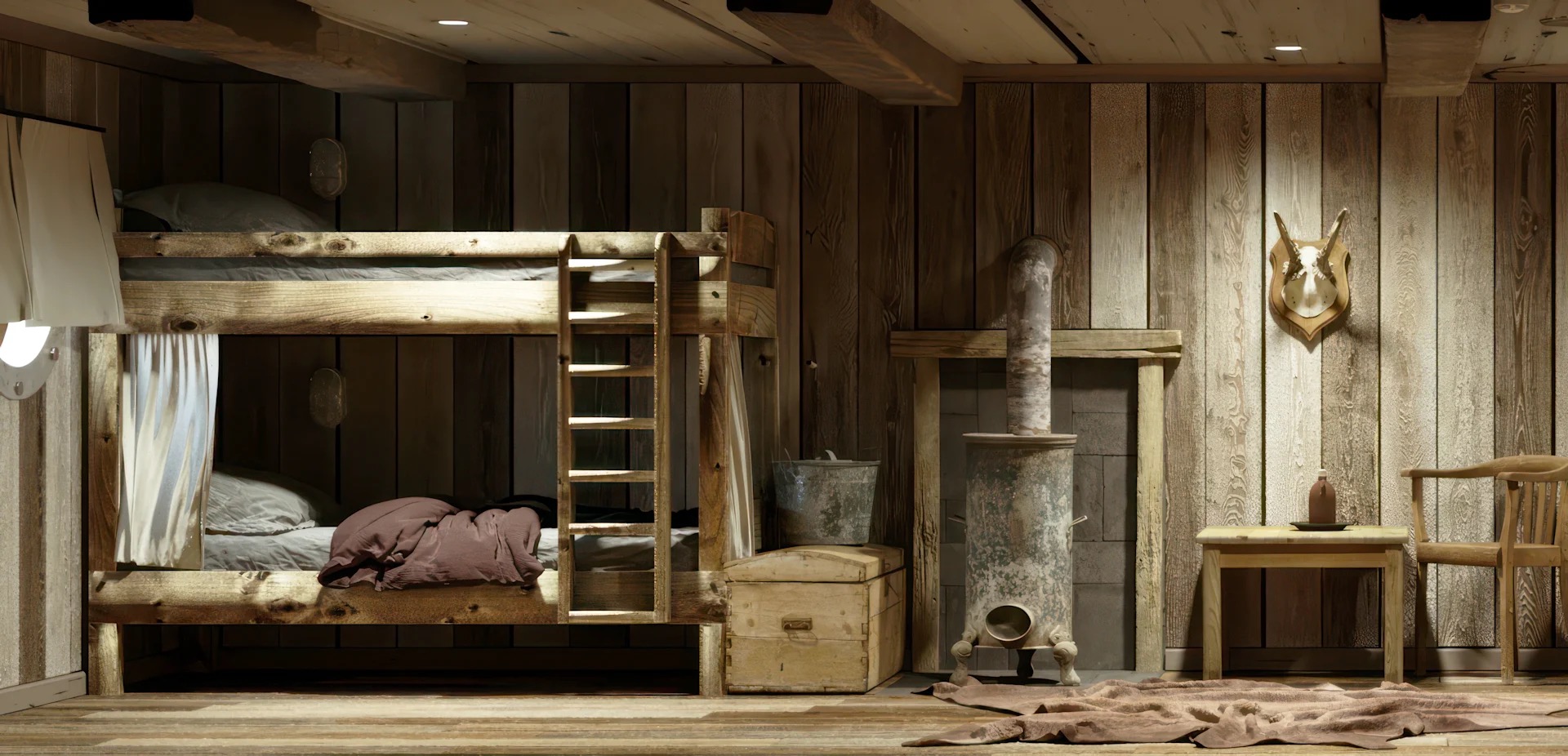
The 1896 Cabin
Ship Facilities
Lindstrøm
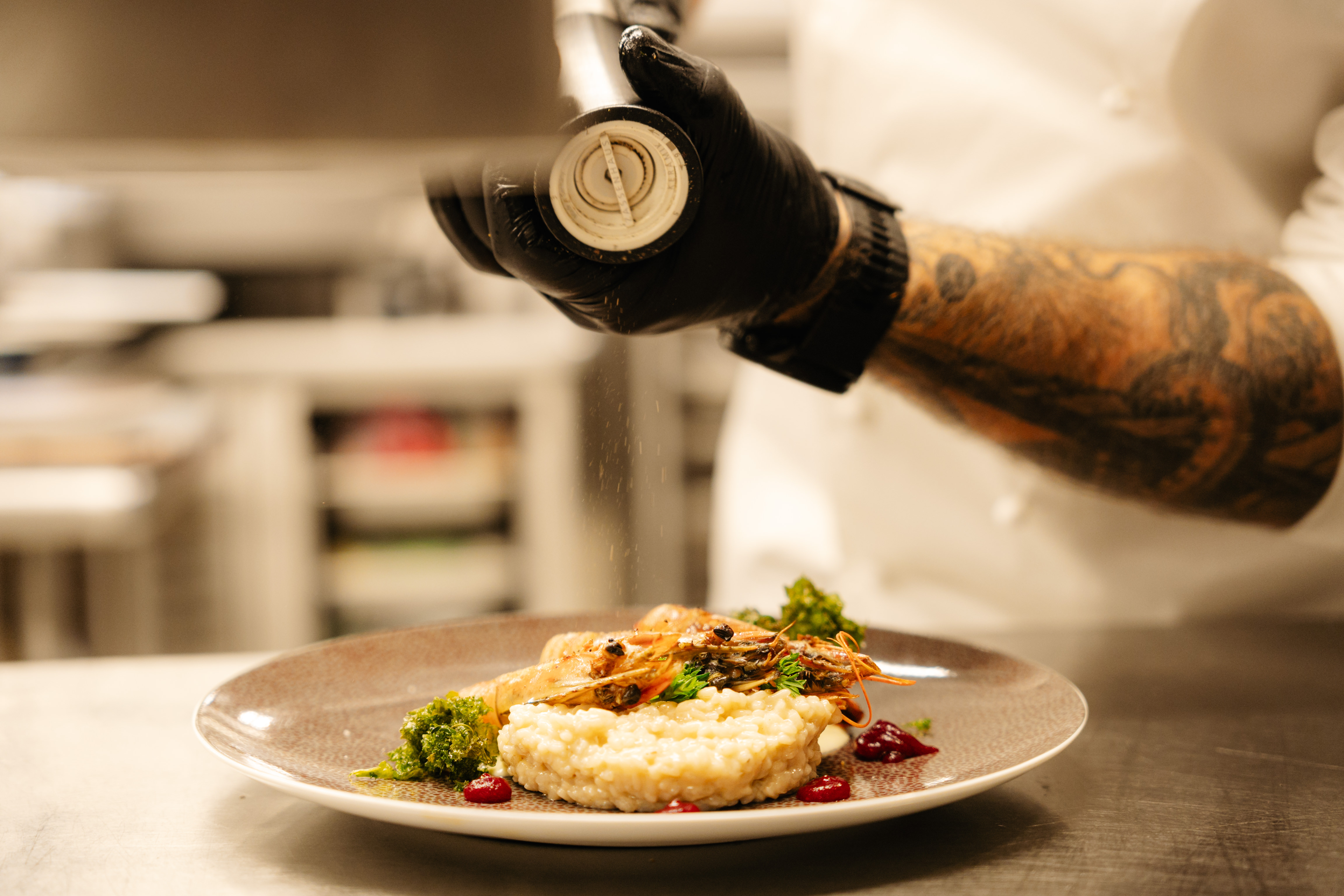
A speciality restaurant named after Adolf Lindstrøm, the favourite chef of the Norwegian polar heroes. Fine dining in Restaurant Lindstrøm is included for suite guests. Non-suite guests can enjoy breakfast, lunch and dinner in Lindstrøm for an additional cost.
Aune
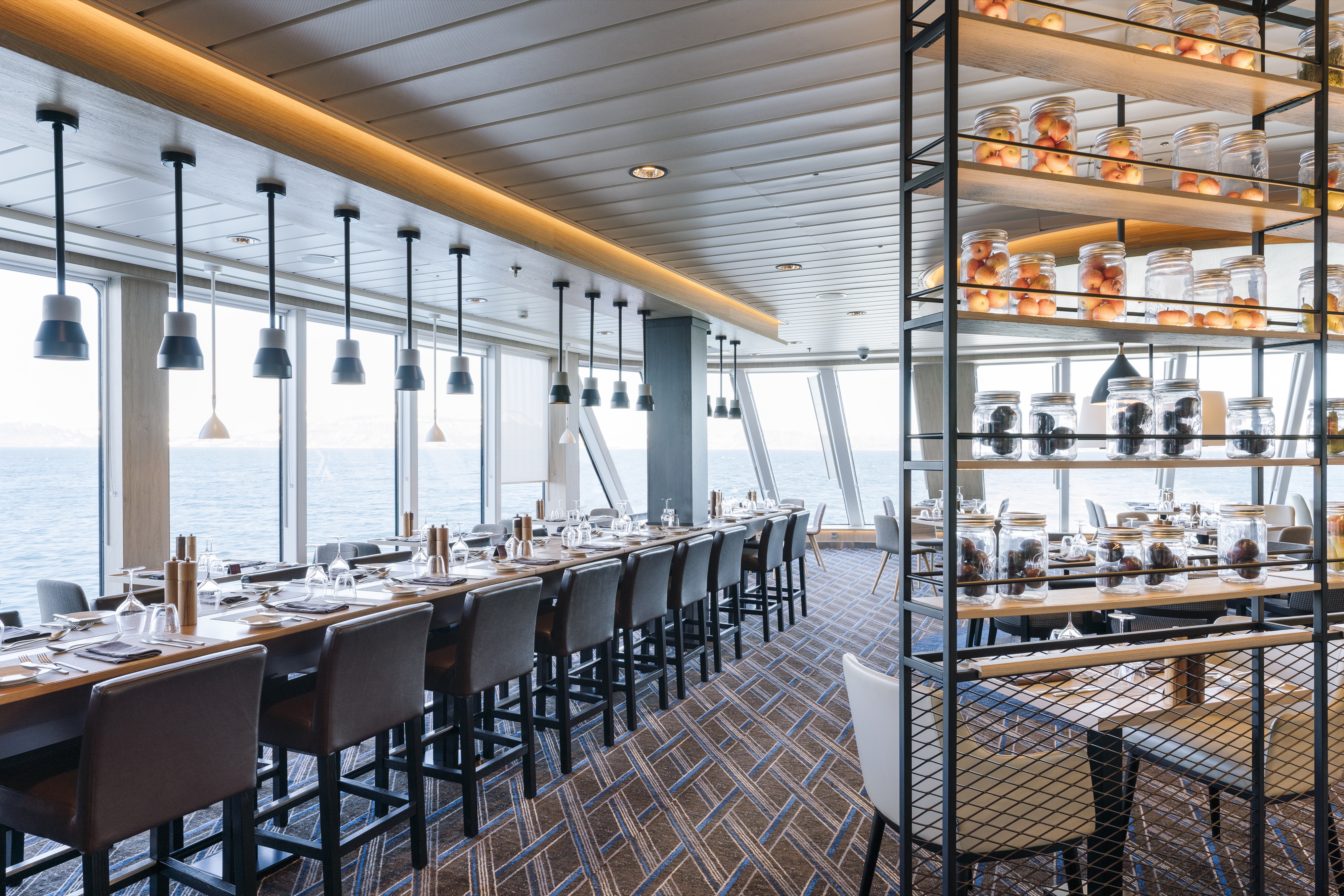
Named after the Norwegian ship chandler and polar expedition supplier Tinus Aune.
Fredheim
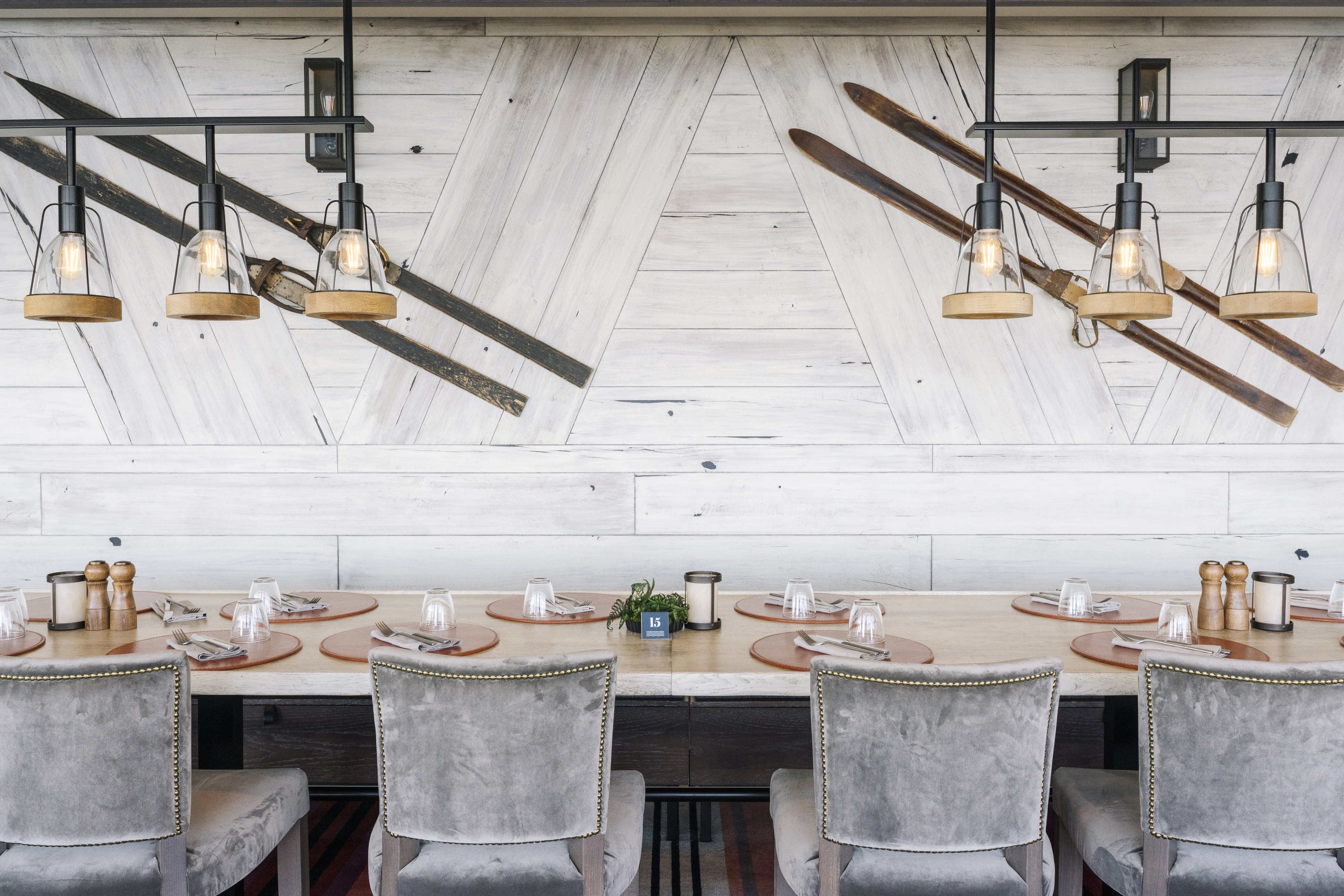
The ships’ informal and social meeting place – named after a 1900s hunting station on Svalbard.
Excursions
We offer a rich and varied program of optional shore excursions. In many ports, we offer an included excursion, which can be reserved for no additional charge. In many cases the included excursion can be combined with other optional excursions in the port. Most excursions can be pre-booked but may also be bookable onboard if capacity remains.
We advise that you book well in advance in order to avoid disappointment due to the excursion being fully booked. Please note that registration is binding, and once on board the Expedition Team will advise you of booking deadlines for excursions still available. Our excursions have English speaking guides unless otherwise indicated and other languages cannot be guaranteed unless otherwise specified. Excursions are subject to change and possible cancellation due to weather conditions. They are also dependent on the number of participants.
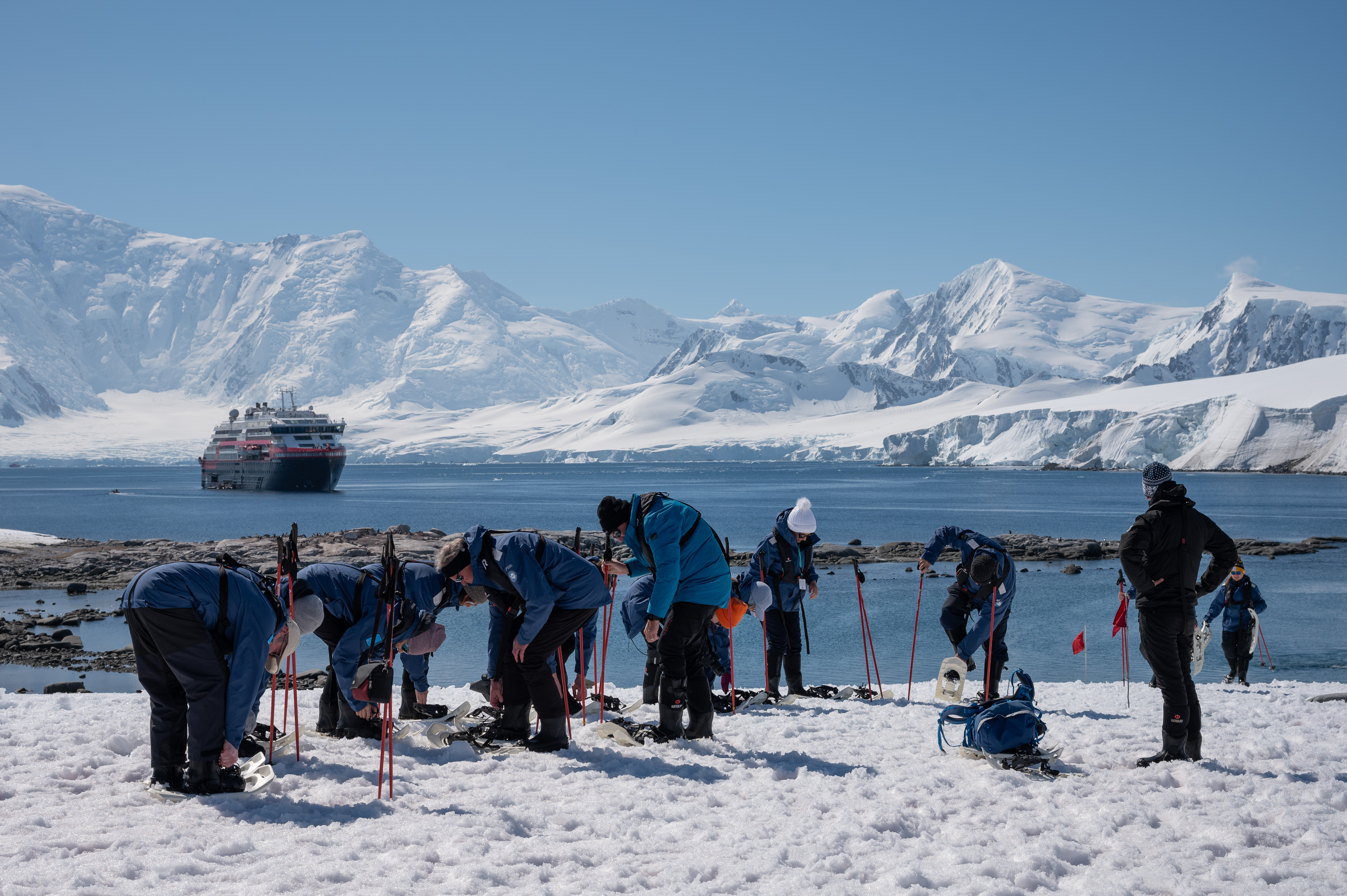
All expedition shore landings and small boat cruising during our exploration of Antarctica are included the programme. Along with the optional excursions available to book, the Expedition Team also arrange a variety of activities during the voyage. These will depend on location and season, but may include hiking, small boat cruising, kayaking, snowshoeing, or camping. A limited amount of kayaking is available for booking prior to select voyages, but all other activities are booked on board and subject to availability.
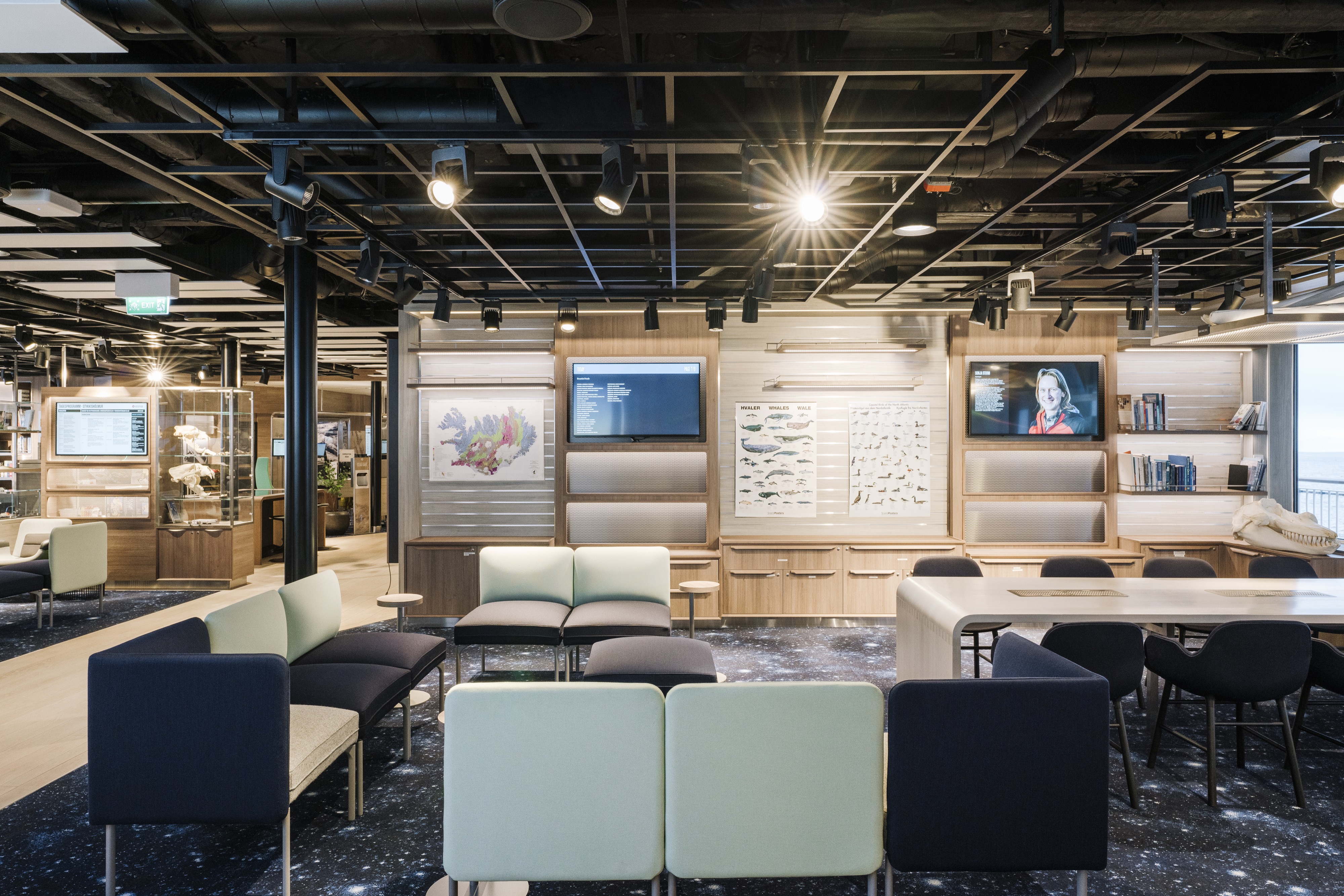
Science Center
The Science & Education program brings together like-minded individuals
Covering over 3/4 of the planet’s surface, our oceans are vital in supporting human life on earth and are also home to over 90% of all known wildlife. Despite it influencing everything from our weather to transportation and yes, expedition cruises, very little is known about our blue planet.
This is where HX Expeditions and our fleet of small, state-of-the-art Expedition ships come in. We can reach, explore and collect vital scientific data on some of the planet’s most remote regions. From understanding whale migrations and phytoplankton communities to cloud observations and the Northern Lights, our onboard Science & Education Teams – with the help of you, our guests – captures, analyses, and reports invaluable data to organisations and research projects around the world.
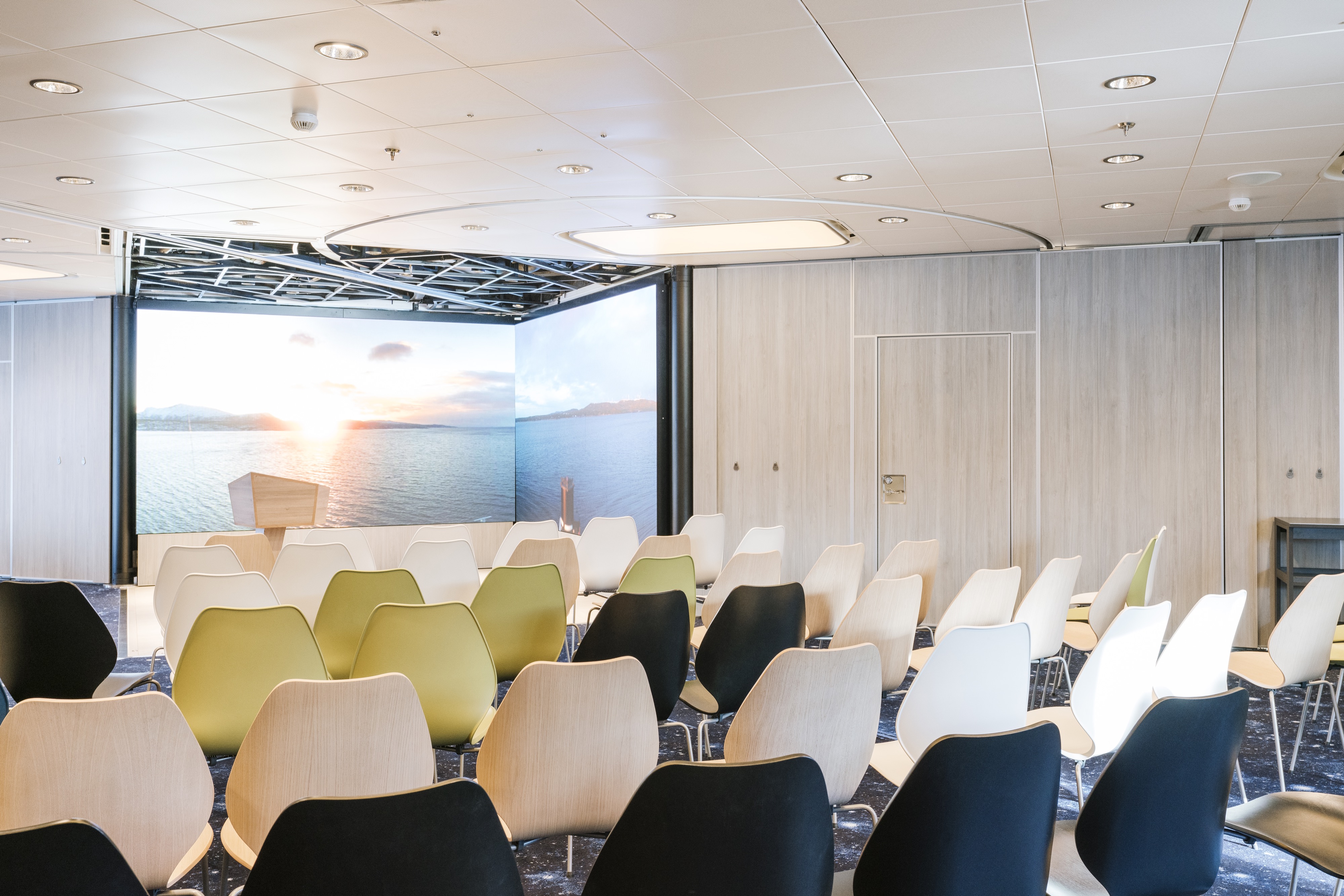
Lecture Halls
In-depth talks on history, climate change, sustainability, wildlife, Earth science, culture, and other topics specific to the destination you are visiting are held here. Learning more about each subject is certain to enhance your expedition experience.
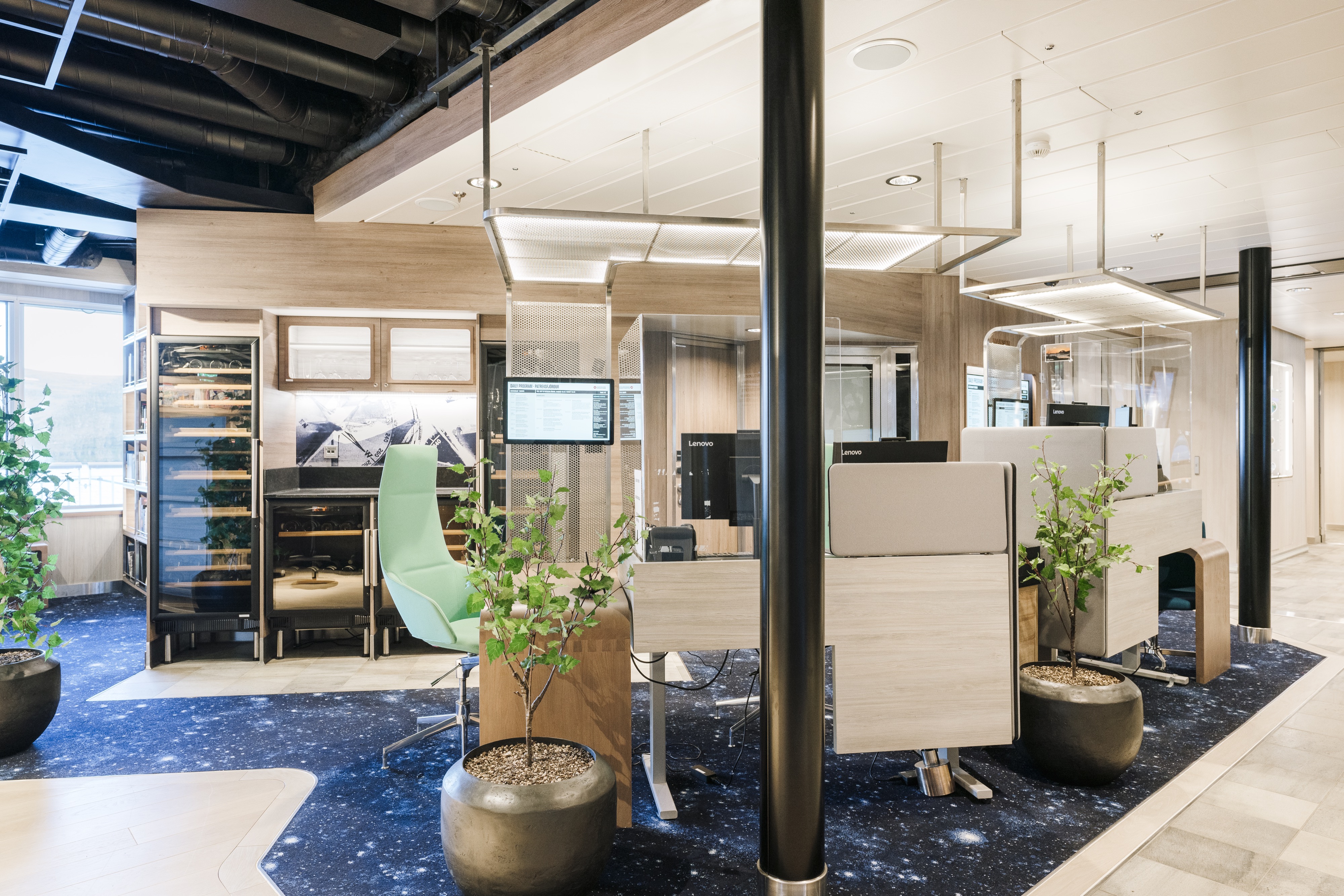
Expedition Team Desk
Each expedition voyage is accompanied by a hand-picked team of specialists and modern-day explorers. Highly experienced, passionate and knowledgeable, the Expedition Team will be your guides and guardians on your voyage of exploration, instructing you on safety, sustainability and science.
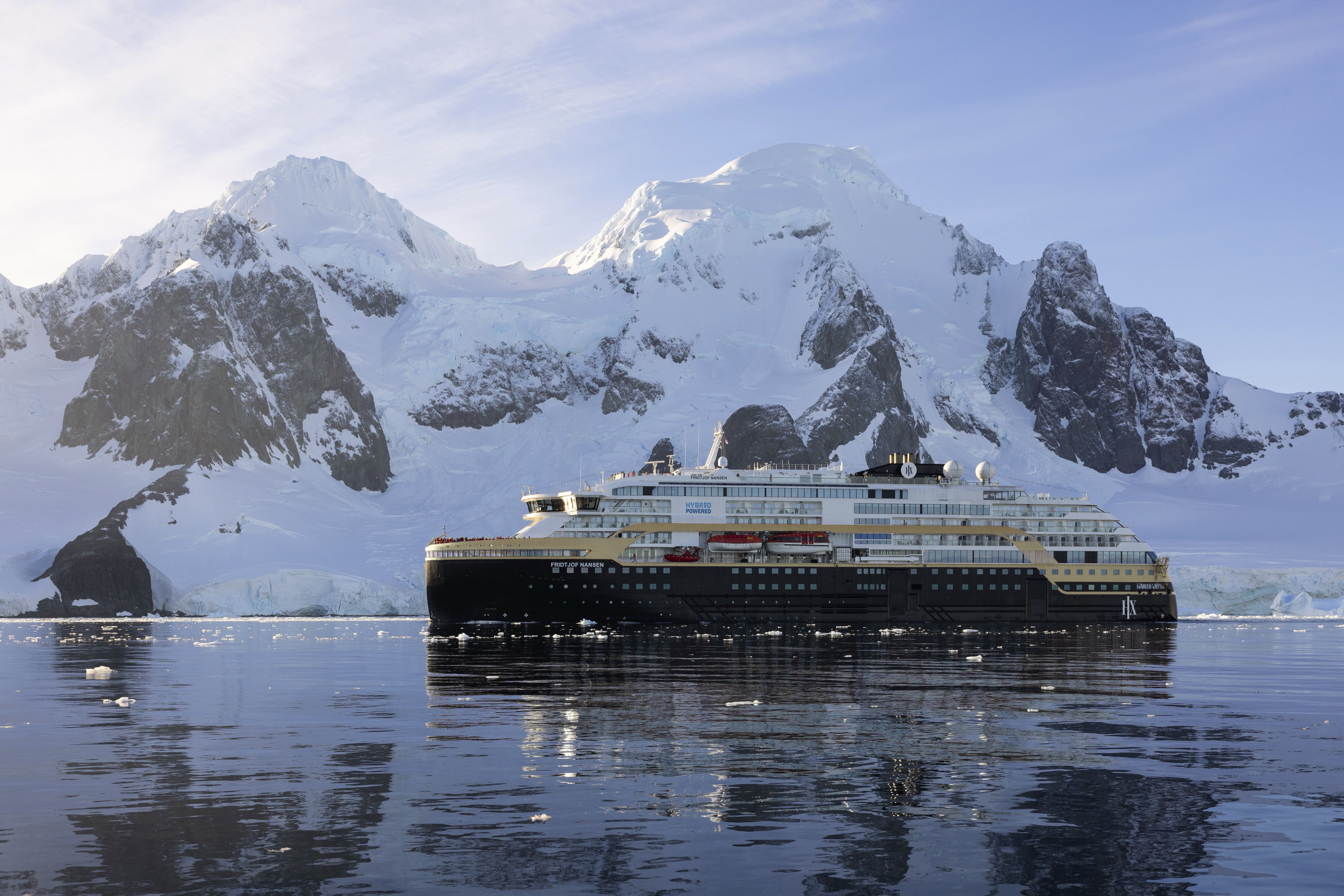
MS Fridtjof Nansen will feature a variety of custom built expedition equipment, including kayaks, a fleet of Blueye underwater drones and Expedition Boats for safe landings in remote areas.
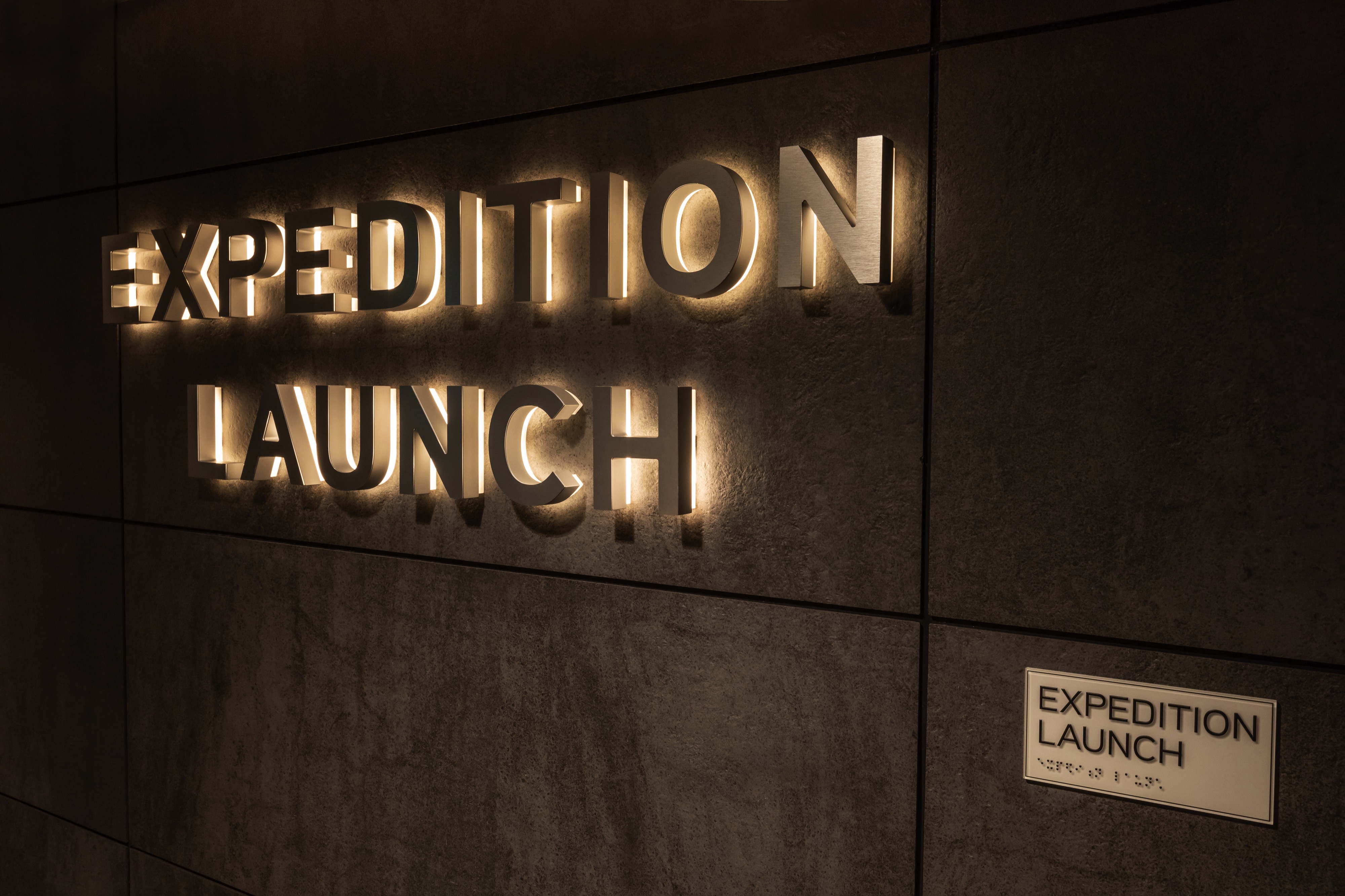
Expedition Launch Pad
The Expedition Launch Pad can be found on Deck 3.
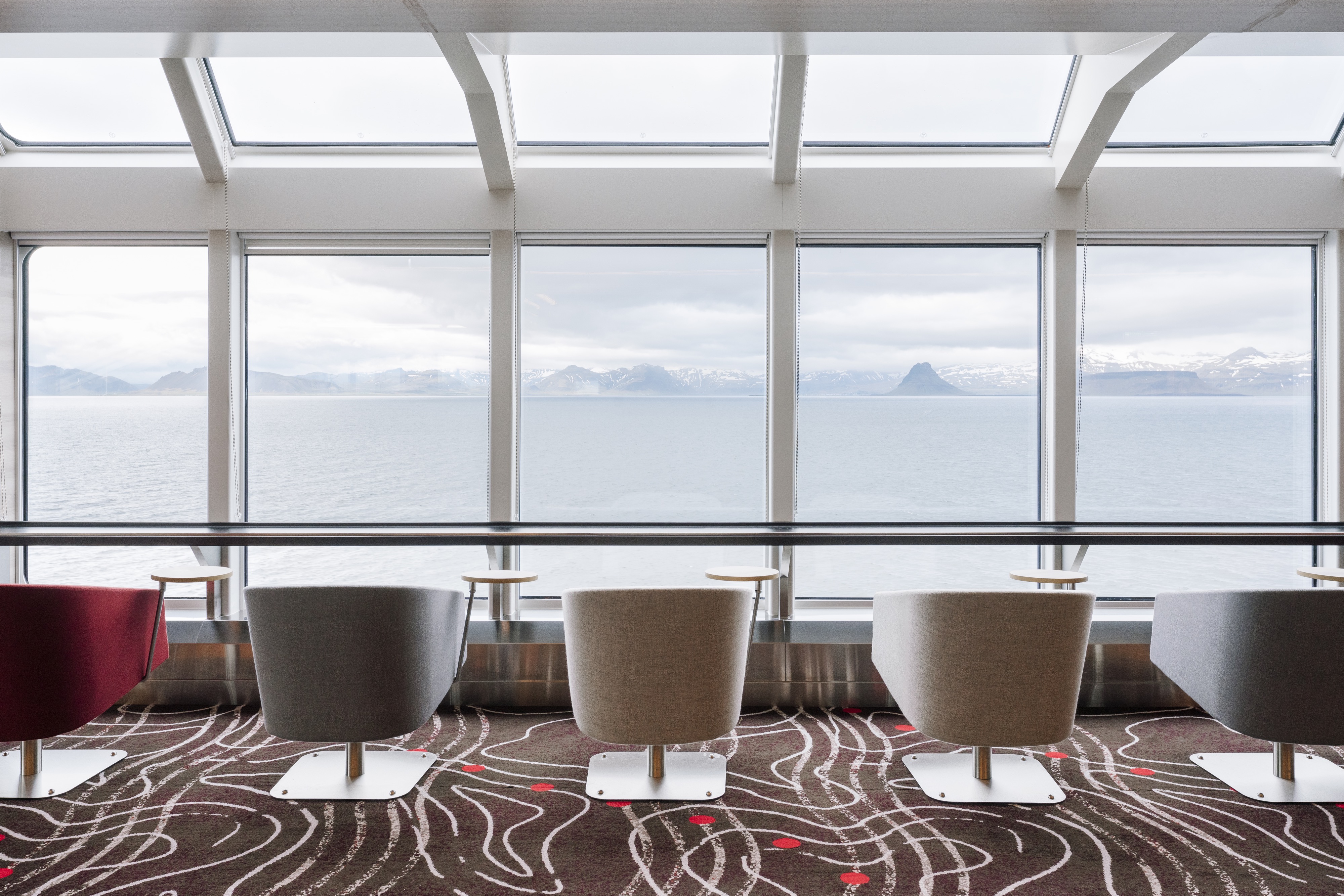
Explorer Lounge & Bar
Relax and rejuvenate in the elegant Explorer lounge & bar. Sink into a comfortable armchair and gaze out at the magnificent views through the floor-to-ceiling windows.
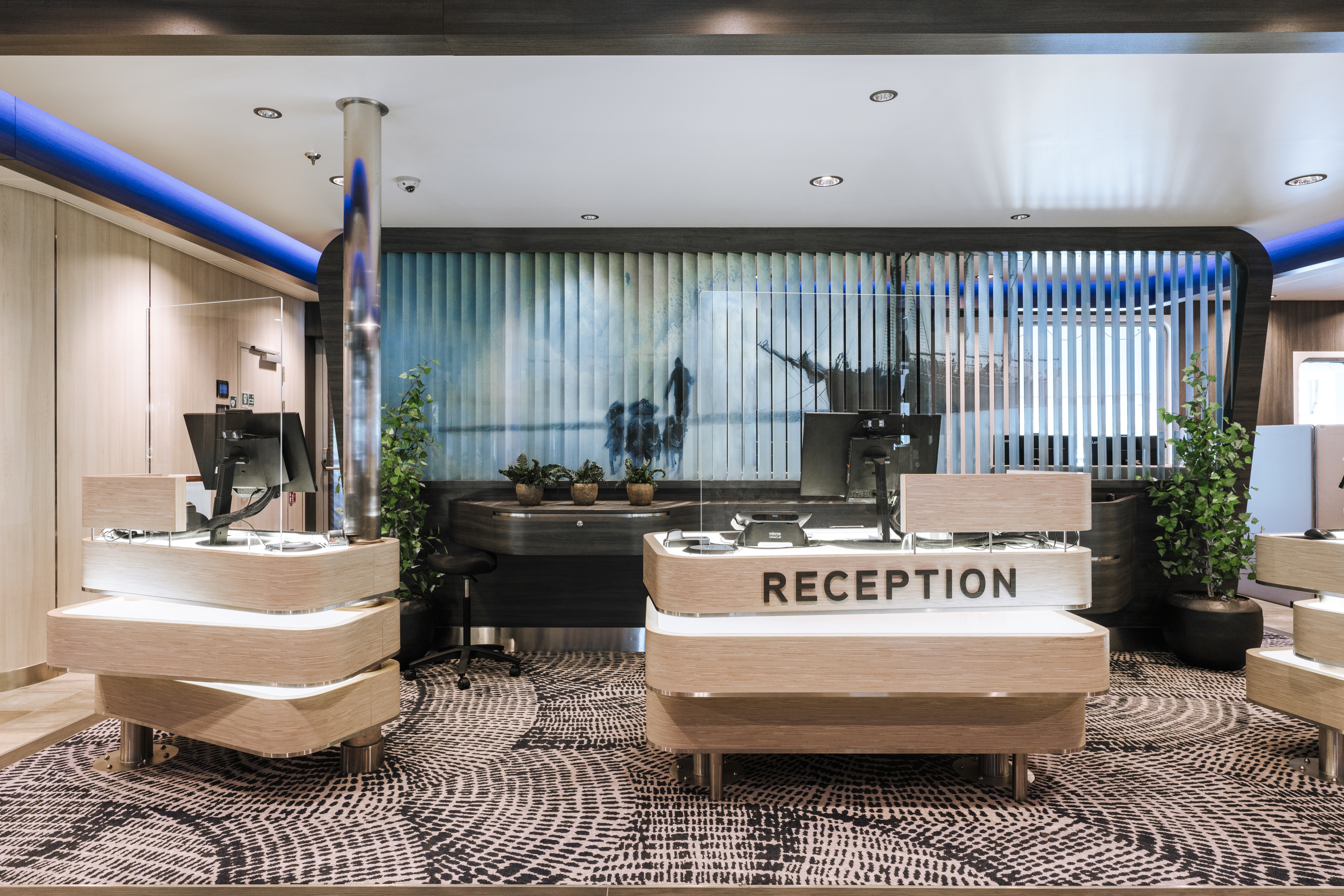
Reception
The Reception can be found on Deck 6.
Shop
Pool Deck
The Pool Deck can be found on Deck 10.
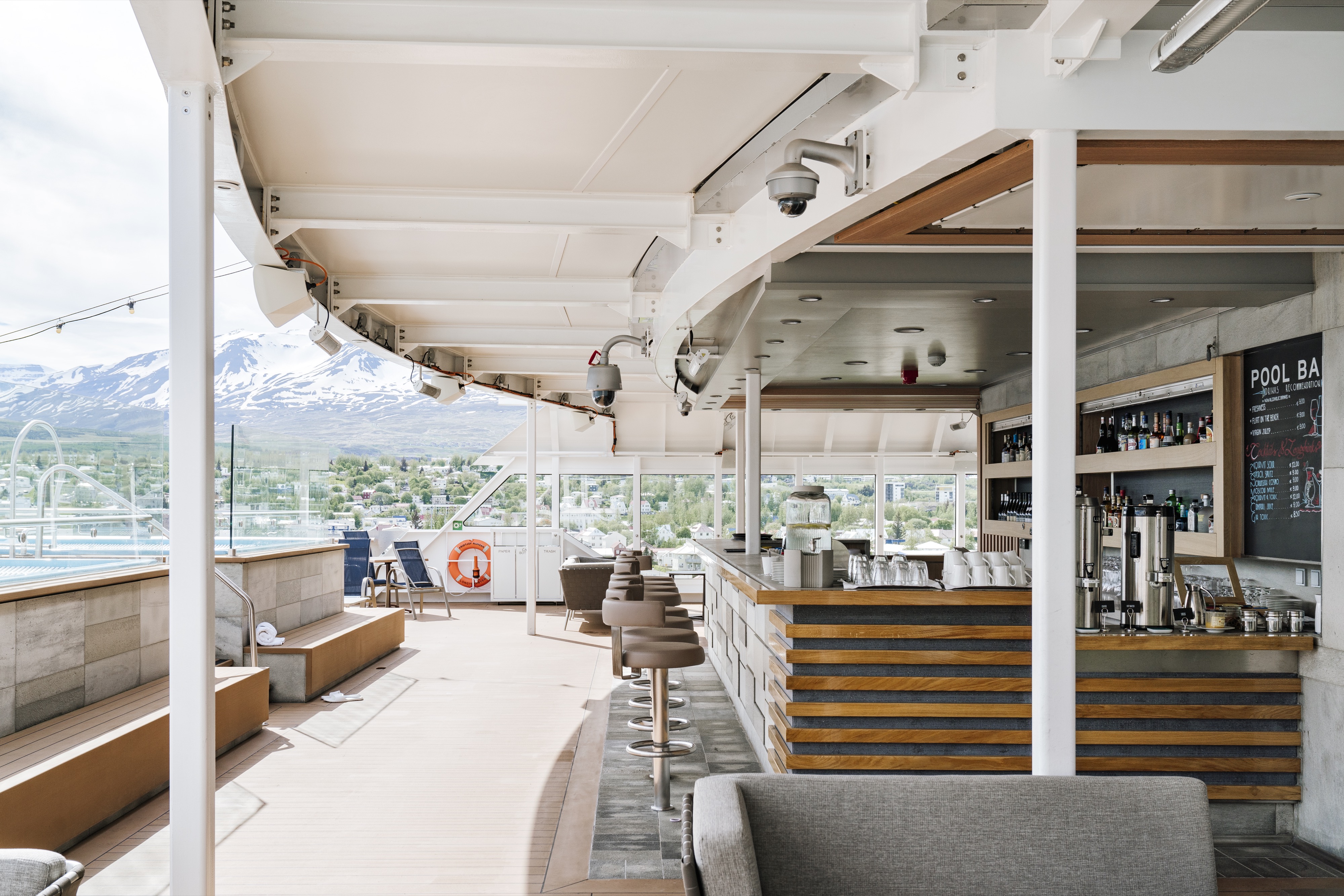
Pool Bar
The Pool Bar can be found on Deck 10.
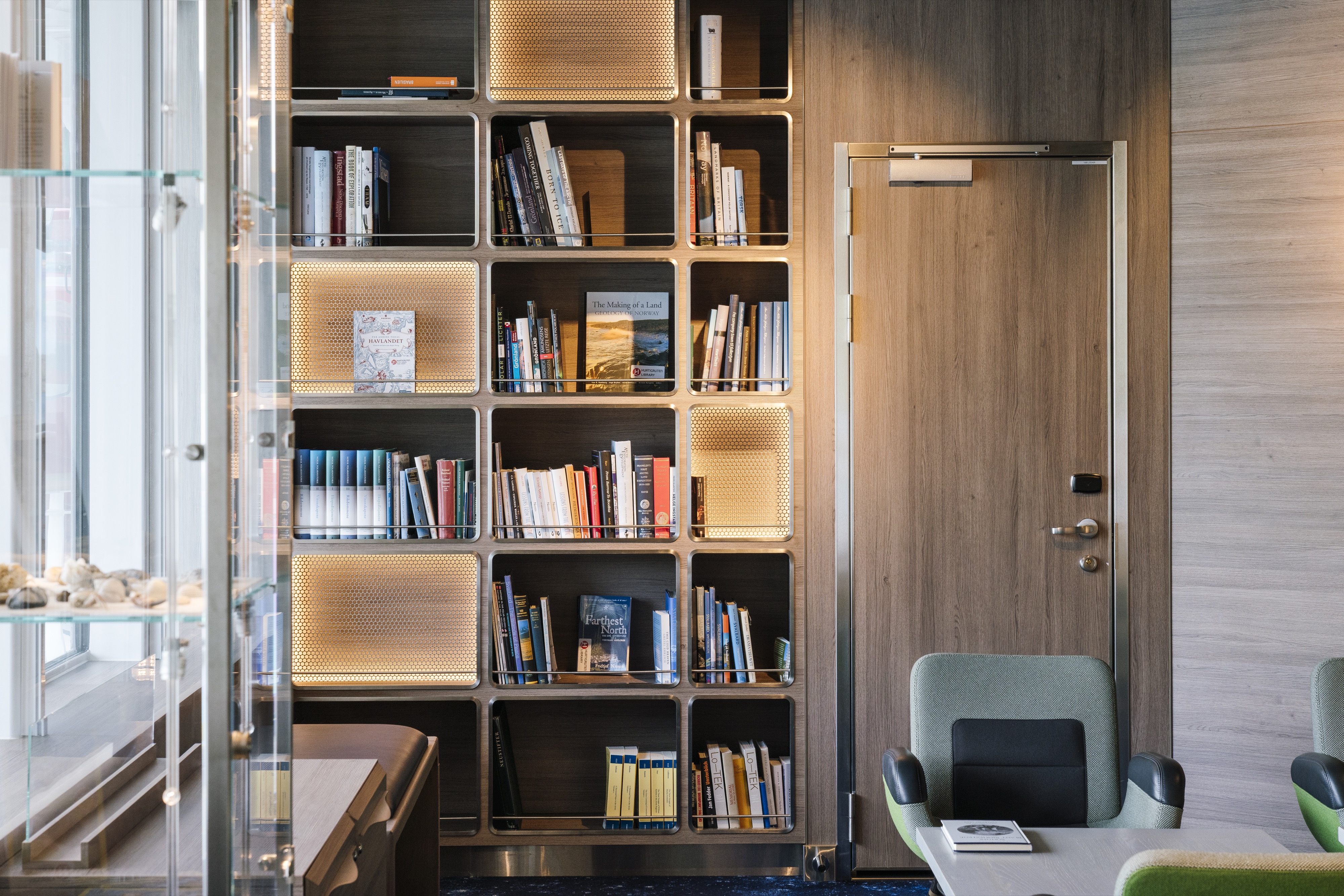
Library
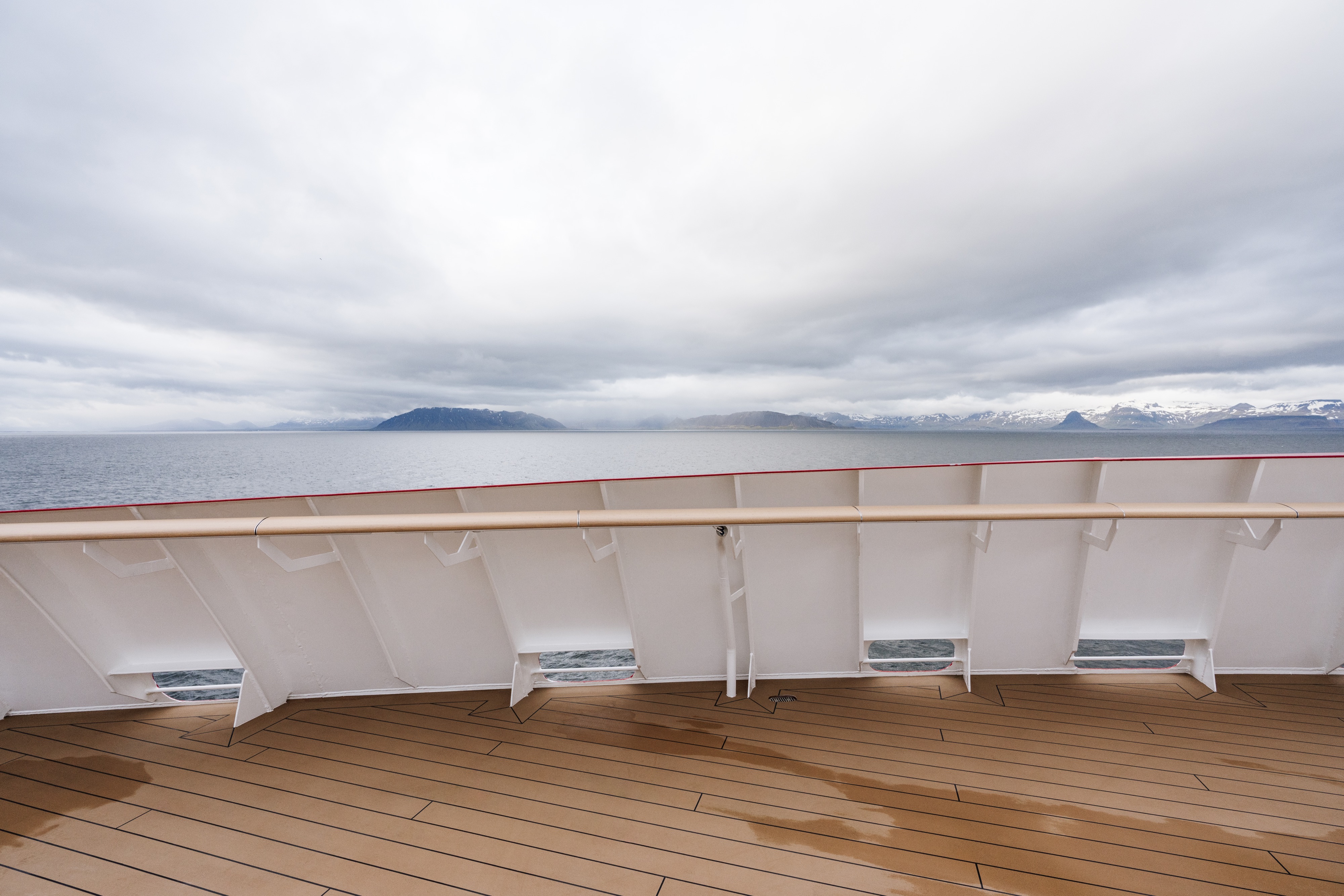
Observation Deck
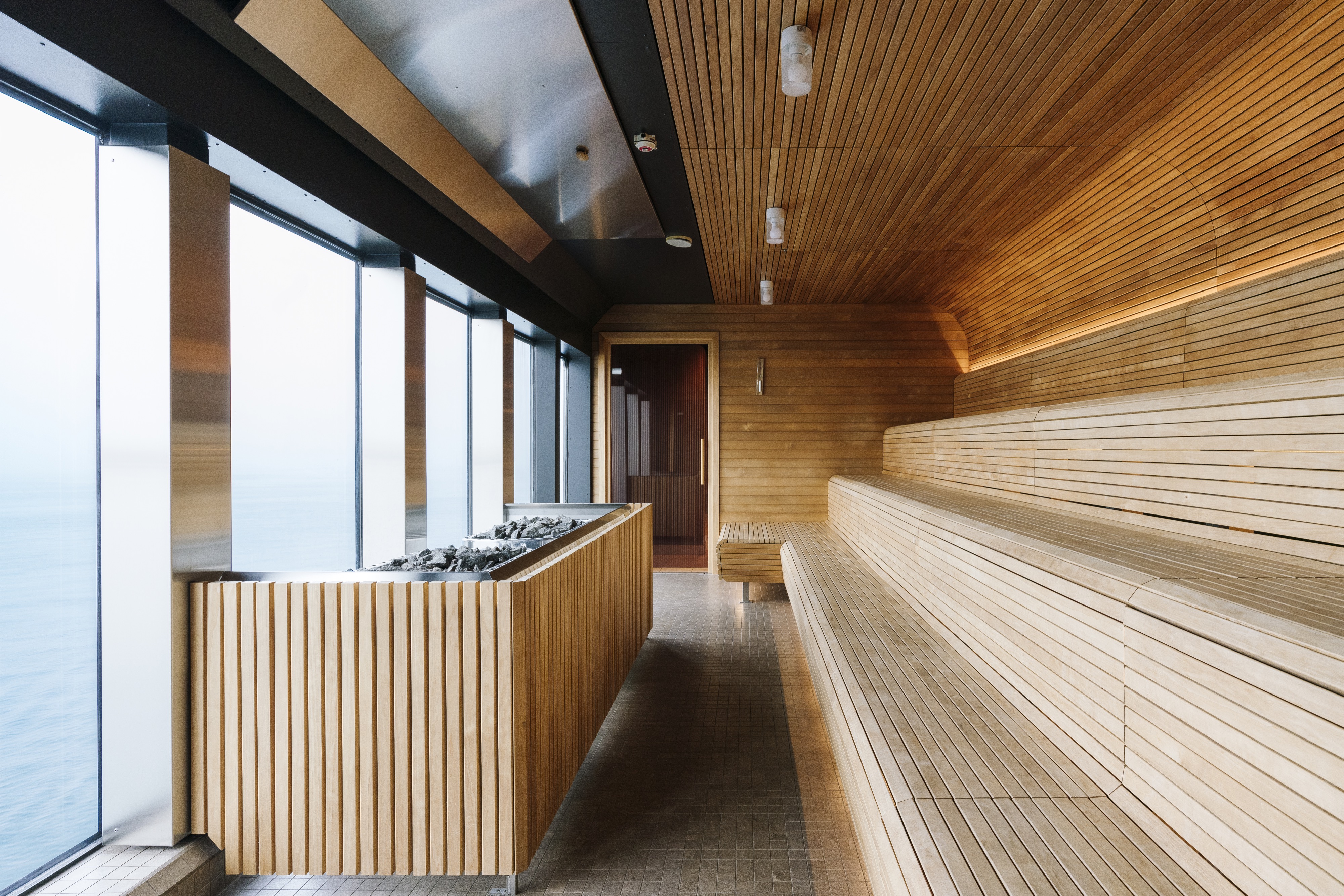
Sauna
The ship has a wellness center where the guests may buy treatments as body massage, face-, hand- and foot treatments.
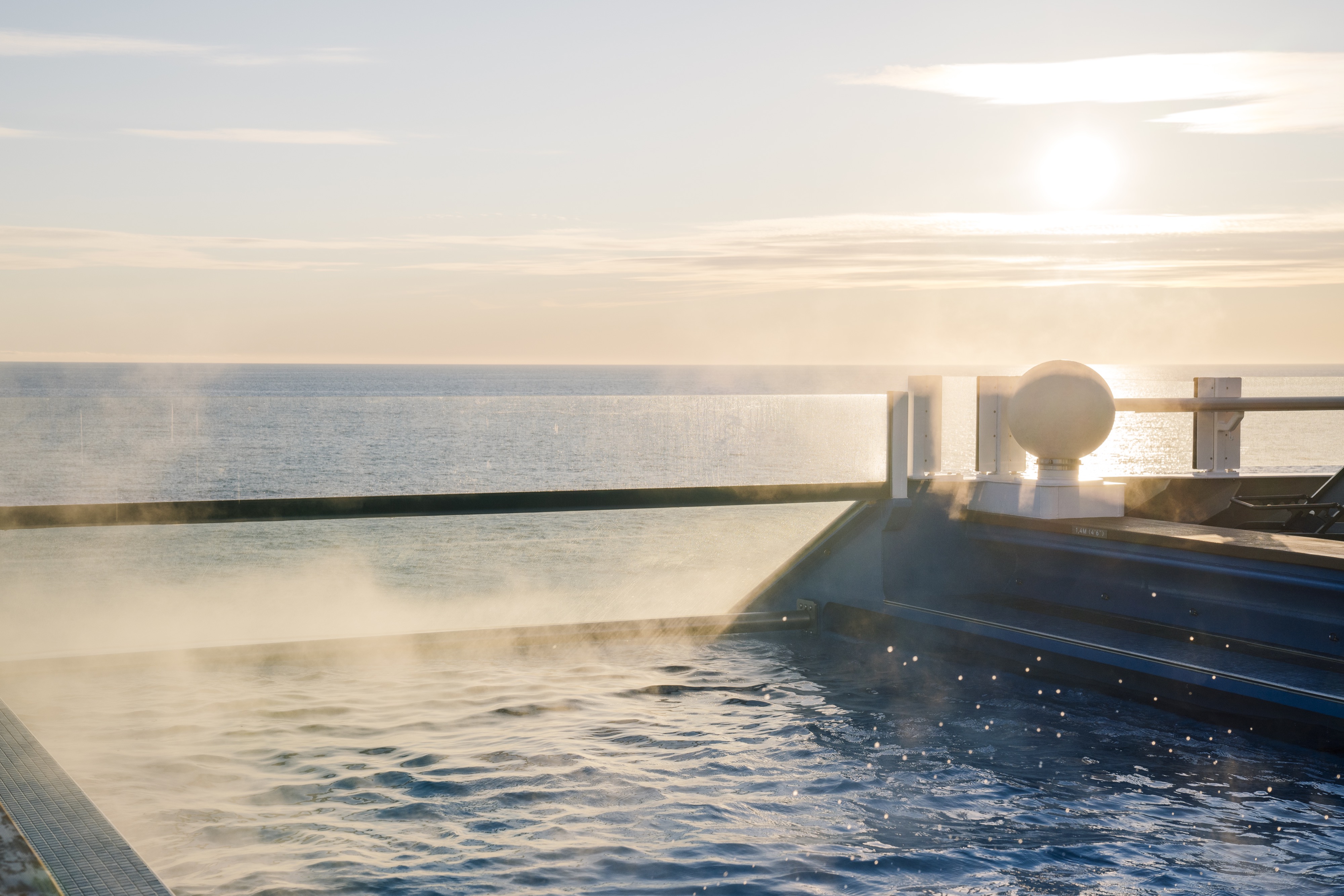
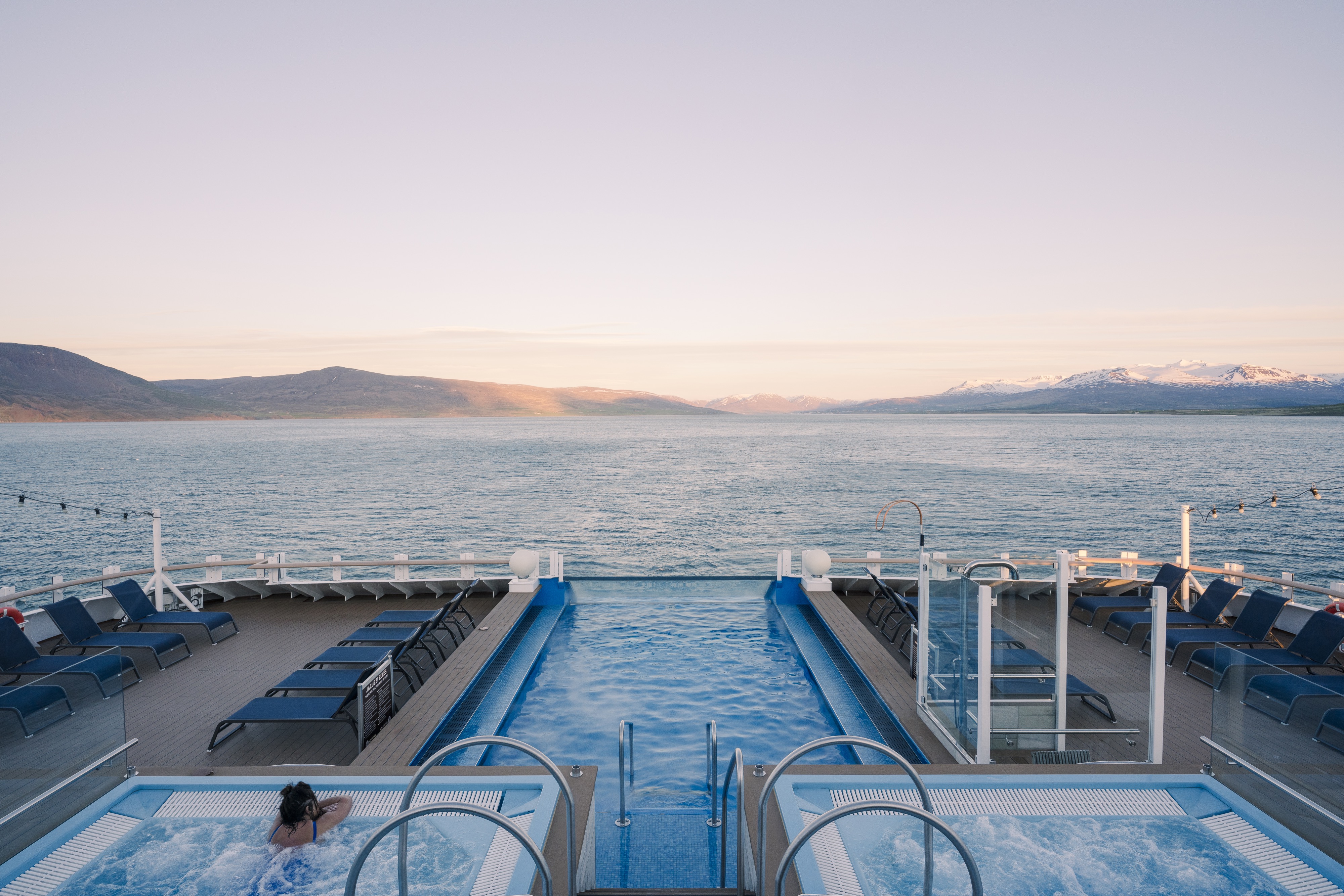
Hot Tub
After a day of exploring new destinations, guests can relax and rejuvenate in the aft infinity pool and hot tubs as one of the highlights.
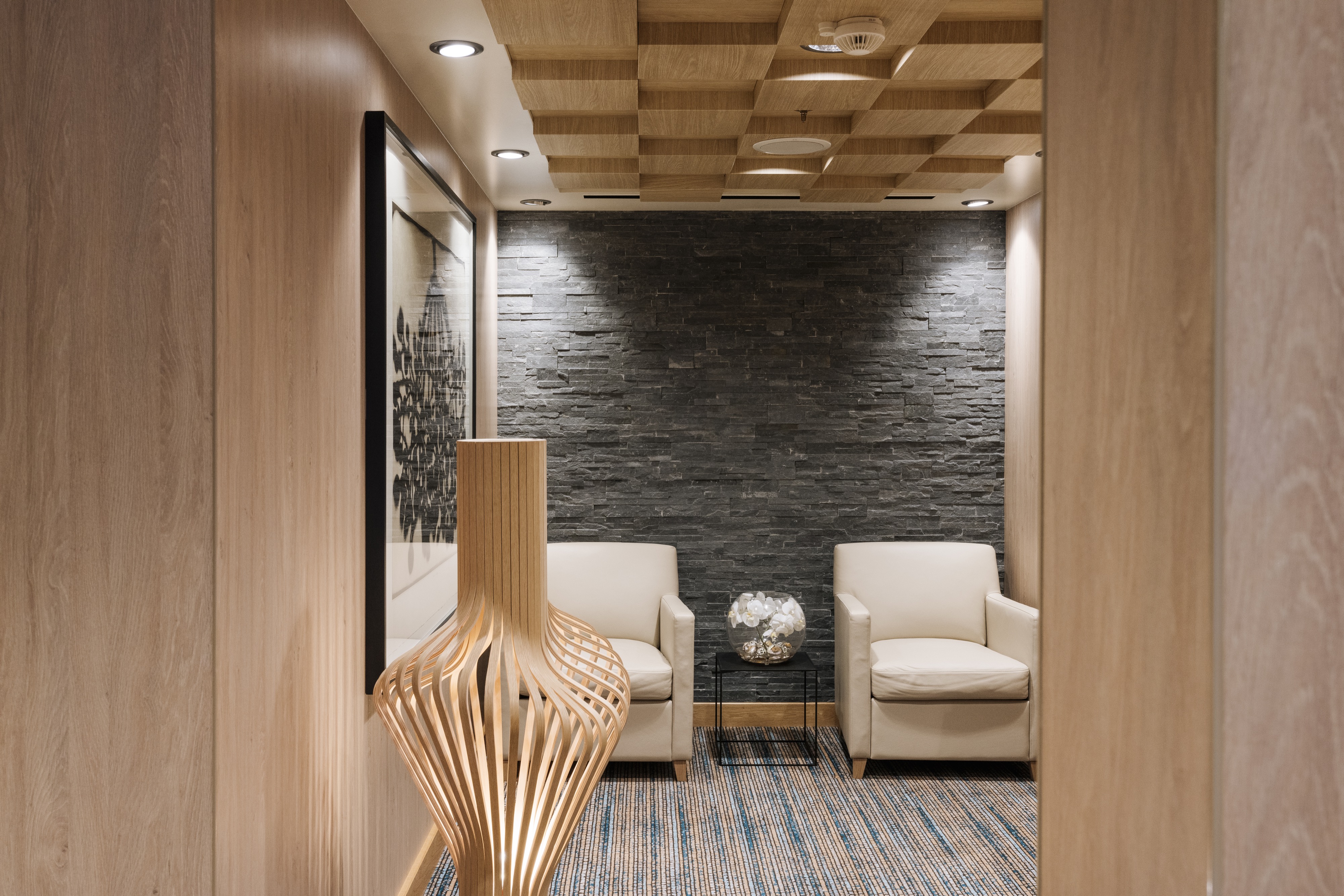
Wellness Center
The ship has a wellness center where the guests may buy treatments as body massage, face, hand and foot treatments.
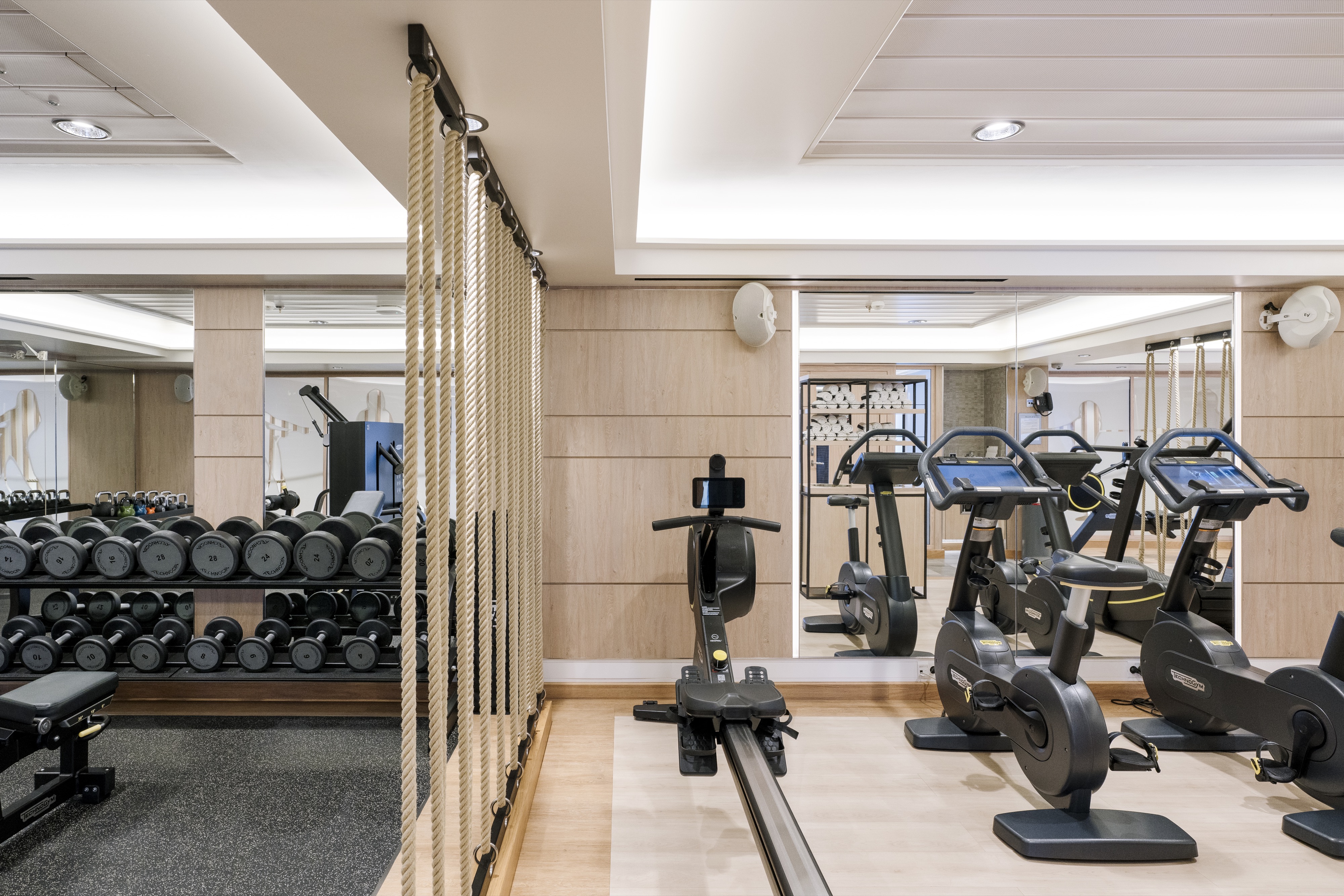
Gym
Lindstrøm
A speciality restaurant named after Adolf Lindstrøm, the favourite chef of the Norwegian polar heroes. Fine dining in Restaurant Lindstrøm is included for suite guests. Non-suite guests can enjoy breakfast, lunch and dinner in Lindstrøm for an additional cost.
Aune
Named after the Norwegian ship chandler and polar expedition supplier Tinus Aune.
Fredheim
The ships’ informal and social meeting place – named after a 1900s hunting station on Svalbard.
Excursions
We offer a rich and varied program of optional shore excursions. In many ports, we offer an included excursion, which can be reserved for no additional charge. In many cases the included excursion can be combined with other optional excursions in the port. Most excursions can be pre-booked but may also be bookable onboard if capacity remains.
We advise that you book well in advance in order to avoid disappointment due to the excursion being fully booked. Please note that registration is binding, and once on board the Expedition Team will advise you of booking deadlines for excursions still available. Our excursions have English speaking guides unless otherwise indicated and other languages cannot be guaranteed unless otherwise specified. Excursions are subject to change and possible cancellation due to weather conditions. They are also dependent on the number of participants.
All expedition shore landings and small boat cruising during our exploration of Antarctica are included the programme. Along with the optional excursions available to book, the Expedition Team also arrange a variety of activities during the voyage. These will depend on location and season, but may include hiking, small boat cruising, kayaking, snowshoeing, or camping. A limited amount of kayaking is available for booking prior to select voyages, but all other activities are booked on board and subject to availability.
Science Center
The Science & Education program brings together like-minded individuals
Covering over 3/4 of the planet’s surface, our oceans are vital in supporting human life on earth and are also home to over 90% of all known wildlife. Despite it influencing everything from our weather to transportation and yes, expedition cruises, very little is known about our blue planet.
This is where HX Expeditions and our fleet of small, state-of-the-art Expedition ships come in. We can reach, explore and collect vital scientific data on some of the planet’s most remote regions. From understanding whale migrations and phytoplankton communities to cloud observations and the Northern Lights, our onboard Science & Education Teams – with the help of you, our guests – captures, analyses, and reports invaluable data to organisations and research projects around the world.
Lecture Halls
In-depth talks on history, climate change, sustainability, wildlife, Earth science, culture, and other topics specific to the destination you are visiting are held here. Learning more about each subject is certain to enhance your expedition experience.
Expedition Team Desk
Each expedition voyage is accompanied by a hand-picked team of specialists and modern-day explorers. Highly experienced, passionate and knowledgeable, the Expedition Team will be your guides and guardians on your voyage of exploration, instructing you on safety, sustainability and science.
MS Fridtjof Nansen will feature a variety of custom built expedition equipment, including kayaks, a fleet of Blueye underwater drones and Expedition Boats for safe landings in remote areas.
Expedition Launch Pad
The Expedition Launch Pad can be found on Deck 3.
Explorer Lounge & Bar
Relax and rejuvenate in the elegant Explorer lounge & bar. Sink into a comfortable armchair and gaze out at the magnificent views through the floor-to-ceiling windows.
Reception
The Reception can be found on Deck 6.
Shop
Pool Deck
The Pool Deck can be found on Deck 10.
Pool Bar
The Pool Bar can be found on Deck 10.
Library
Observation Deck
Sauna
The ship has a wellness center where the guests may buy treatments as body massage, face-, hand- and foot treatments.
Hot Tub
After a day of exploring new destinations, guests can relax and rejuvenate in the aft infinity pool and hot tubs as one of the highlights.
Wellness Center
The ship has a wellness center where the guests may buy treatments as body massage, face, hand and foot treatments.
Gym
About the Ship
Deck Plans

- Expedition Launch
- Medical Center

- Gangway
- Arctic Superior Cabins
- Outside Cabins

- Expedition Suites
- Arctic Superior Cabins
- Outside Cabins
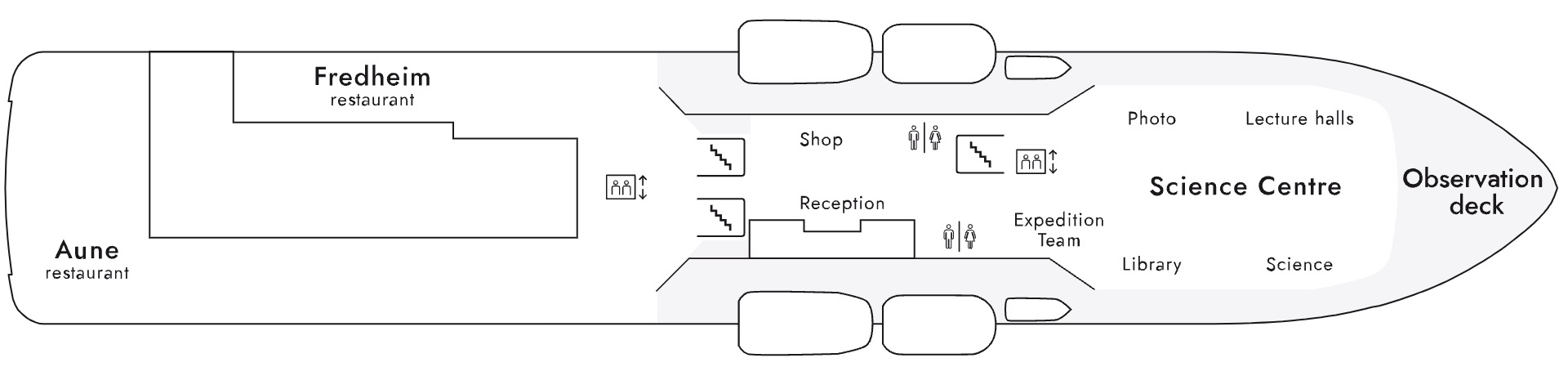
- Aune Restaurant
- Fredheim Restaurant
- Shop
- Reception
- Expedition Team
- Science Center
- Lecture Halls
- Library
- Observation Deck

- Observation Deck
- Gym
- Wellness Center
- Expedition Suites
- Arctic Superior Cabins
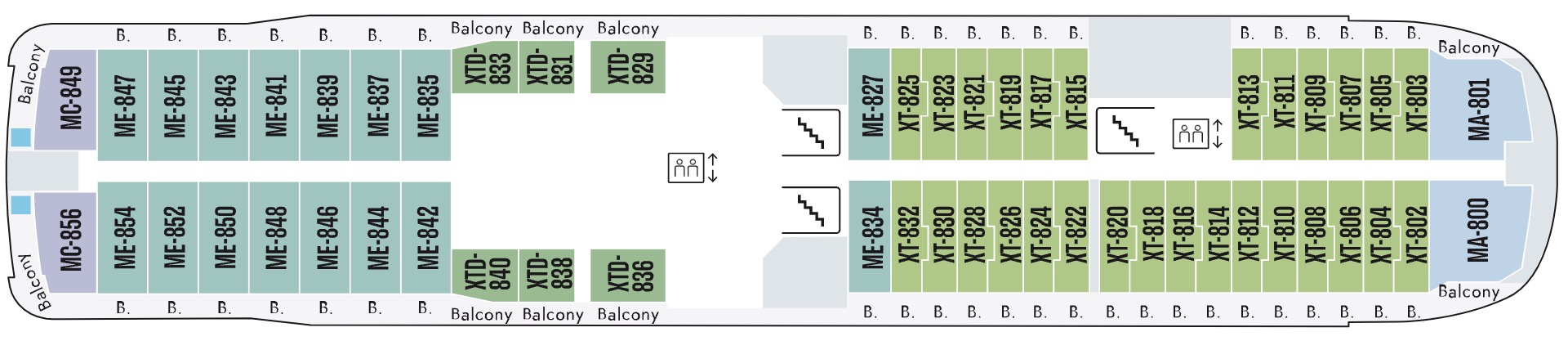
- Expedition Suites
- Arctic Superior Cabins
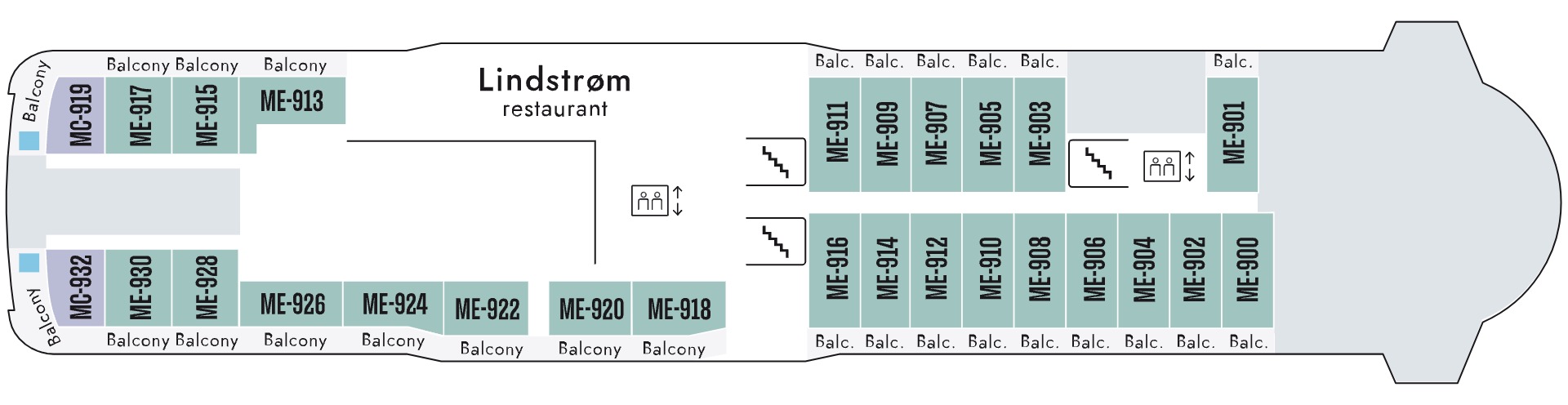
- Lindstrom Restaurant
- Expedition Suites
- Arctic Superior Cabins
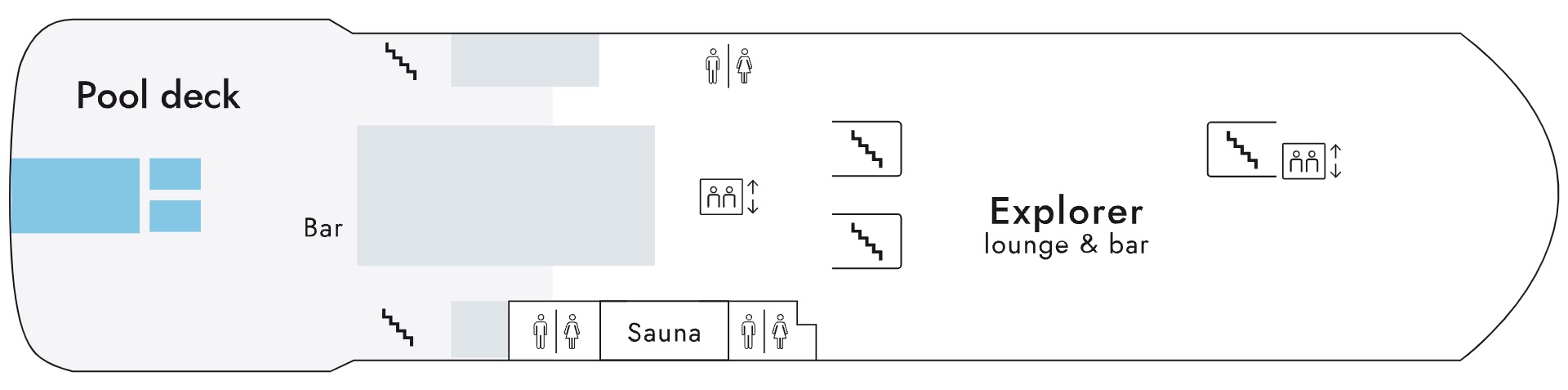
- Explorer Lounge & Bar
- Pool Deck
- Pool Bar
- Sauna
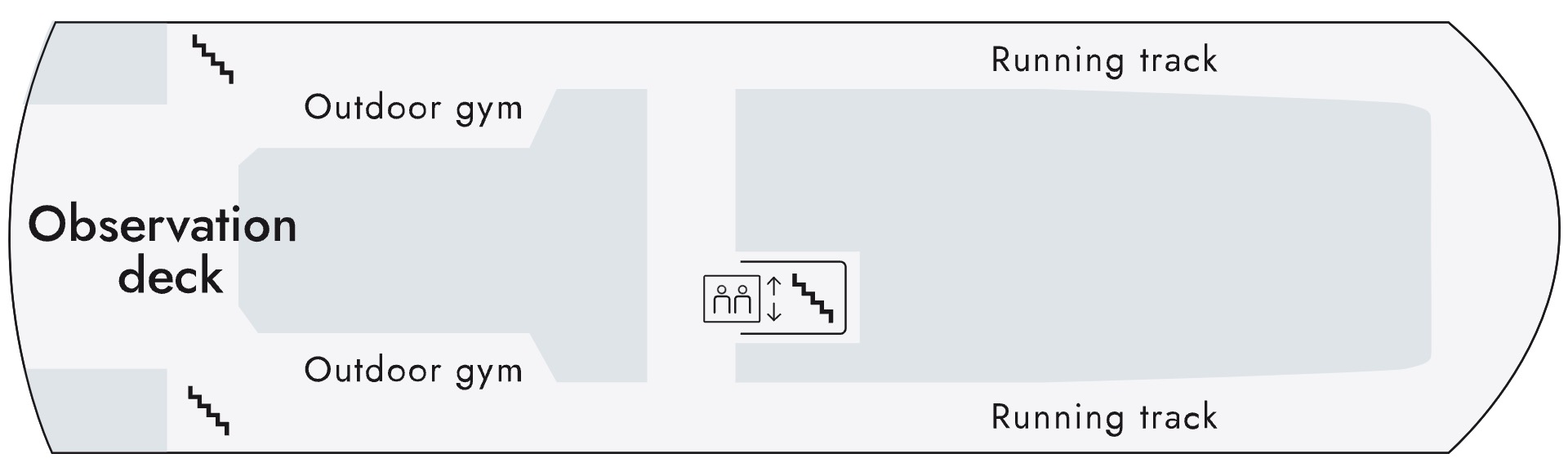
- Running Track
- Outdoor Gym
- Observation Deck
- Expedition Launch
- Medical Center
- Gangway
- Arctic Superior Cabins
- Outside Cabins
- Expedition Suites
- Arctic Superior Cabins
- Outside Cabins
- Aune Restaurant
- Fredheim Restaurant
- Shop
- Reception
- Expedition Team
- Science Center
- Lecture Halls
- Library
- Observation Deck
- Observation Deck
- Gym
- Wellness Center
- Expedition Suites
- Arctic Superior Cabins
- Expedition Suites
- Arctic Superior Cabins
- Lindstrom Restaurant
- Expedition Suites
- Arctic Superior Cabins
- Explorer Lounge & Bar
- Pool Deck
- Pool Bar
- Sauna
- Running Track
- Outdoor Gym
- Observation Deck