Featured Cabins
Itinerary
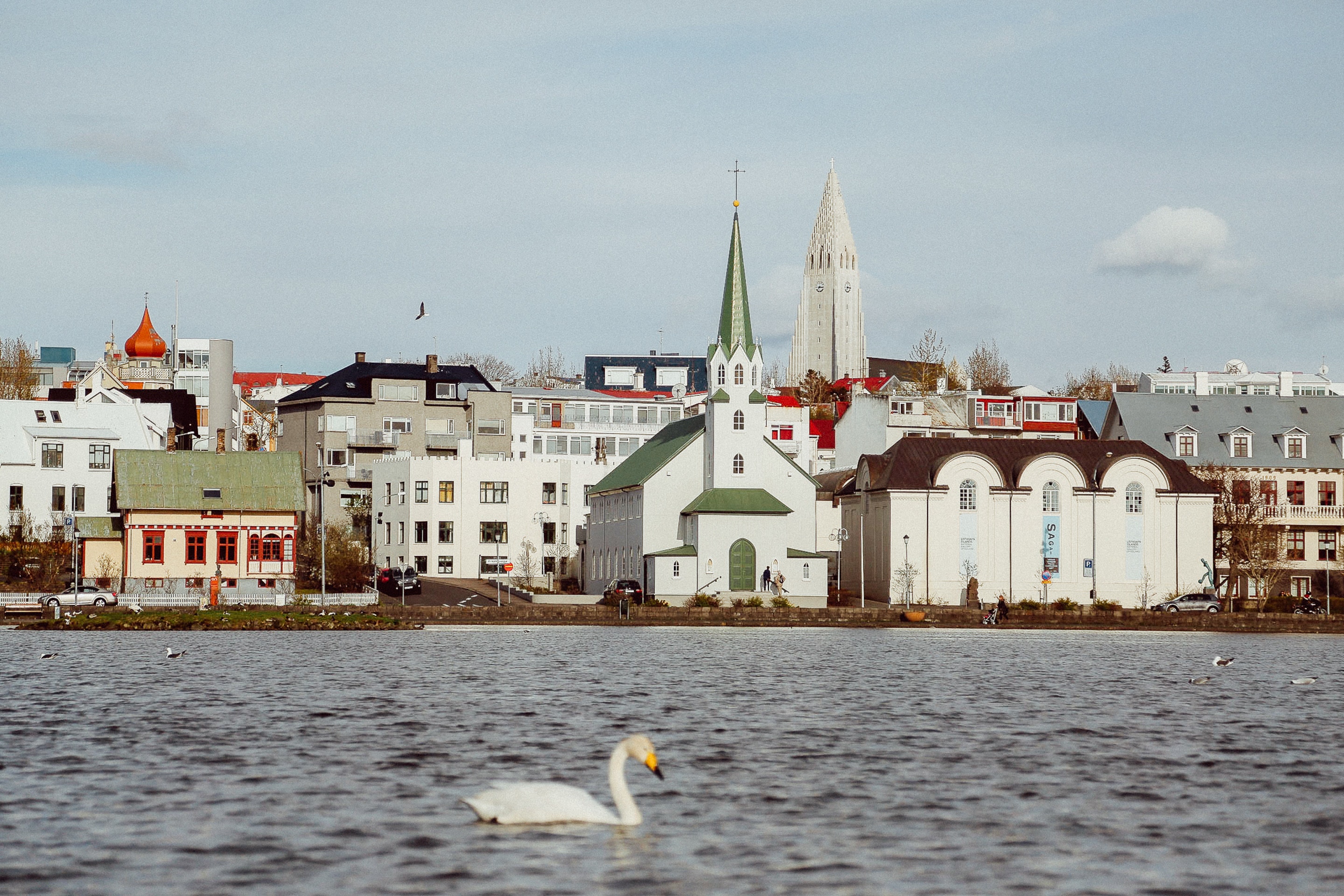
Reykjavík, Iceland
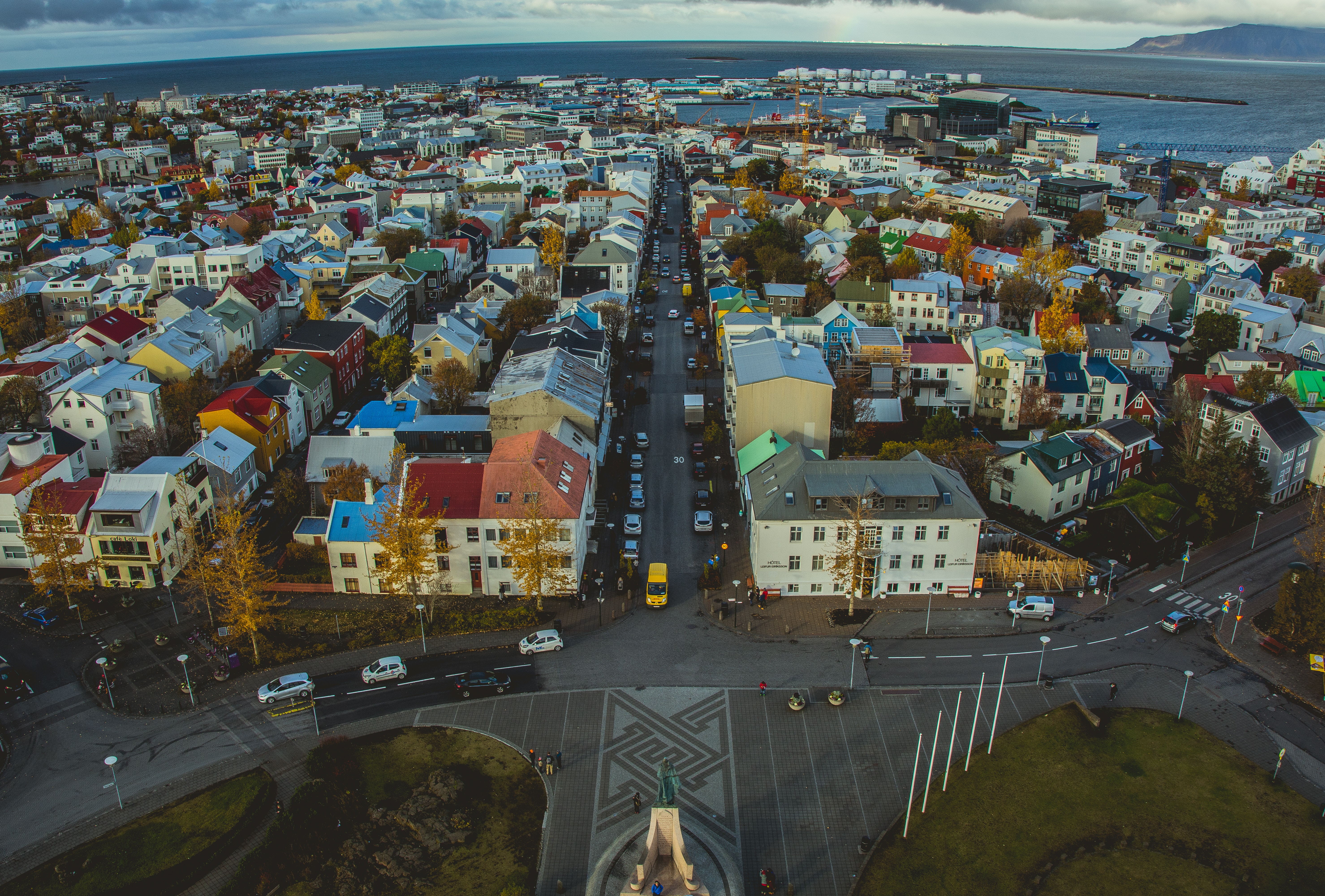
Sprawling Reykjavík, the nation’s nerve center and government seat, is home to half the island’s population. On a bay overlooked by proud Mt. Esja (pronounced eh-shyuh), with its ever-changing hues, Reykjavík presents a colorful sight, its concrete houses painted in light colors and topped by vibrant red, blue, and green roofs. In contrast to the almost treeless countryside, Reykjavík has many tall, native birches, rowans, and willows, as well as imported aspen, pines, and spruces.Reykjavík’s name comes from the Icelandic words for smoke, reykur, and bay, vík. In AD 874, Norseman Ingólfur Arnarson saw Iceland rising out of the misty sea and came ashore at a bay eerily shrouded with plumes of steam from nearby hot springs. Today most of the houses in Reykjavík are heated by near-boiling water from the hot springs. Natural heating avoids air pollution; there’s no smoke around. You may notice, however, that the hot water brings a slight sulfur smell to the bathroom.Prices are easily on a par with other major European cities. A practical option is to purchase a Reykjavík City Card at the Tourist Information Center or at the Reykjavík Youth Hostel. This card permits unlimited bus usage and admission to any of the city’s seven pools, the Family Park and Zoo, and city museums. The cards are valid for one (ISK 3,300), two (ISK 4,400), or three days (ISK 4,900), and they pay for themselves after three or four uses a day. Even lacking the City Card, paying admission (ISK 500, or ISK 250 for seniors and people with disabilities) to one of the city art museums (Hafnarhús, Kjarvalsstaðir, or Ásmundarsafn) gets you free same-day admission to the other two.
At Sea
No additional details available for this day.
Hurry Inlet, King Christian X Land, Greenland
Explore the largest fjord system on Earth
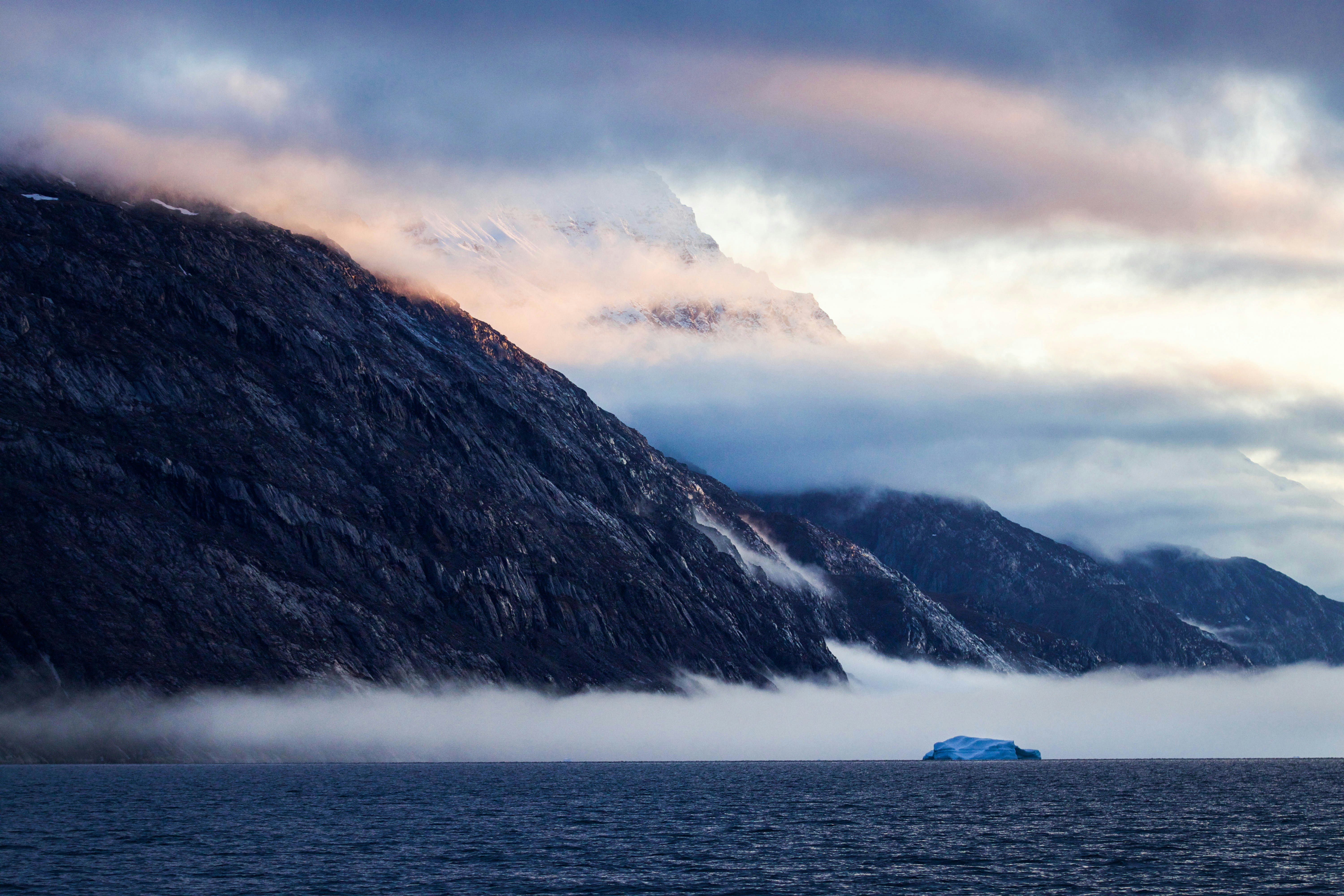
You’ll spend the next few days exploring the vast wilderness of Scoresby Sund, the world’s largest fjord system.
Cruising peacefully against a backdrop of looming mountains, blue icebergs, and mirror-like waters, you’ll seek out wildlife such as whales and Greenlandic gyrfalcons. We will make the most of current conditions and pack in as many shore landings, nature walks, kayaking tours, and wildlife sightings as possible.
You’ll visit Ittoqqortoormiit, the most remote inhabited community in the western hemisphere. And if conditions allow, we’ll sail toward the ever-changing sea ice edge to scout for wildlife.
If you want to do your part, you can participate in Citizen Science projects that help scientists understand how this region is changing.
Danmark Island, Greenland
No additional details available for this day.
Rodefjord, Greenland
No additional details available for this day.
Scoresby Sund, Greenland
No additional details available for this day.
Bear Islands, Scoresby Sound, Greenland
No additional details available for this day.
Reykjavík, Iceland
Sprawling Reykjavík, the nation’s nerve center and government seat, is home to half the island’s population. On a bay overlooked by proud Mt. Esja (pronounced eh-shyuh), with its ever-changing hues, Reykjavík presents a colorful sight, its concrete houses painted in light colors and topped by vibrant red, blue, and green roofs. In contrast to the almost treeless countryside, Reykjavík has many tall, native birches, rowans, and willows, as well as imported aspen, pines, and spruces.Reykjavík’s name comes from the Icelandic words for smoke, reykur, and bay, vík. In AD 874, Norseman Ingólfur Arnarson saw Iceland rising out of the misty sea and came ashore at a bay eerily shrouded with plumes of steam from nearby hot springs. Today most of the houses in Reykjavík are heated by near-boiling water from the hot springs. Natural heating avoids air pollution; there’s no smoke around. You may notice, however, that the hot water brings a slight sulfur smell to the bathroom.Prices are easily on a par with other major European cities. A practical option is to purchase a Reykjavík City Card at the Tourist Information Center or at the Reykjavík Youth Hostel. This card permits unlimited bus usage and admission to any of the city’s seven pools, the Family Park and Zoo, and city museums. The cards are valid for one (ISK 3,300), two (ISK 4,400), or three days (ISK 4,900), and they pay for themselves after three or four uses a day. Even lacking the City Card, paying admission (ISK 500, or ISK 250 for seniors and people with disabilities) to one of the city art museums (Hafnarhús, Kjarvalsstaðir, or Ásmundarsafn) gets you free same-day admission to the other two.
At Sea
No additional details available for this day.
Hurry Inlet, King Christian X Land, Greenland
Explore the largest fjord system on Earth
You’ll spend the next few days exploring the vast wilderness of Scoresby Sund, the world’s largest fjord system.
Cruising peacefully against a backdrop of looming mountains, blue icebergs, and mirror-like waters, you’ll seek out wildlife such as whales and Greenlandic gyrfalcons. We will make the most of current conditions and pack in as many shore landings, nature walks, kayaking tours, and wildlife sightings as possible.
You’ll visit Ittoqqortoormiit, the most remote inhabited community in the western hemisphere. And if conditions allow, we’ll sail toward the ever-changing sea ice edge to scout for wildlife.
If you want to do your part, you can participate in Citizen Science projects that help scientists understand how this region is changing.
Danmark Island, Greenland
No additional details available for this day.
Rodefjord, Greenland
No additional details available for this day.
Scoresby Sund, Greenland
No additional details available for this day.
Bear Islands, Scoresby Sound, Greenland
No additional details available for this day.
Ittoqqortoormiit (ex Scoresbysund), Greenland
Scoresbysund is the ultimate fjord system; likely the longest, largest and deepest of any in the world. The massive fjord is tucked into the eastern coast of Greenland and on the icy western edges of the Greenland Sea. Scoresbysund’s scale deserves several days to explore, especially while plying the waters between castle-sized icebergs as they gently drift under the persuasion of the Arctic waters in the mighty fjord. Scattered in the remote bays and smaller fjords are places to discover old Inuit settlements, slowly growing over with Arctic willow and dwarf birch. The lower slopes of many mountains are draped in the herbs and grasses favoured by muskox, Arctic fox, lemmings, Ptarmigan, Barnacle Geese, and Snowy Owls. Tundra walks give impressive views of landscape, flora and fauna. Not to be neglected, the waters of Scoresbysund warrant a vigilant eye for sightings of whales, seals, narwhals, beluga whales and walrus.
At Sea
Heading back to Iceland
After exploring the remote beauty of Greenland, we’ll set our course back to Iceland. Spend the time at sea recapping your experiences with your new friends, studying nature in the Science Center, listening to a lecture or two or just relaxing on deck. Look out for the seabirds that follow our ship and keep an eye out for whales.
East Greenland’s beauty is sure to have left its mark on you, so reflect on what you’ve seen – from the delicate ecology of the fjord systems to the ethereal elegance of the floating ice.
Reykjavík, Iceland
Sprawling Reykjavík, the nation’s nerve center and government seat, is home to half the island’s population. On a bay overlooked by proud Mt. Esja (pronounced eh-shyuh), with its ever-changing hues, Reykjavík presents a colorful sight, its concrete houses painted in light colors and topped by vibrant red, blue, and green roofs. In contrast to the almost treeless countryside, Reykjavík has many tall, native birches, rowans, and willows, as well as imported aspen, pines, and spruces.Reykjavík’s name comes from the Icelandic words for smoke, reykur, and bay, vík. In AD 874, Norseman Ingólfur Arnarson saw Iceland rising out of the misty sea and came ashore at a bay eerily shrouded with plumes of steam from nearby hot springs. Today most of the houses in Reykjavík are heated by near-boiling water from the hot springs. Natural heating avoids air pollution; there’s no smoke around. You may notice, however, that the hot water brings a slight sulfur smell to the bathroom.Prices are easily on a par with other major European cities. A practical option is to purchase a Reykjavík City Card at the Tourist Information Center or at the Reykjavík Youth Hostel. This card permits unlimited bus usage and admission to any of the city’s seven pools, the Family Park and Zoo, and city museums. The cards are valid for one (ISK 3,300), two (ISK 4,400), or three days (ISK 4,900), and they pay for themselves after three or four uses a day. Even lacking the City Card, paying admission (ISK 500, or ISK 250 for seniors and people with disabilities) to one of the city art museums (Hafnarhús, Kjarvalsstaðir, or Ásmundarsafn) gets you free same-day admission to the other two.
Ittoqqortoormiit (ex Scoresbysund), Greenland
Scoresbysund is the ultimate fjord system; likely the longest, largest and deepest of any in the world. The massive fjord is tucked into the eastern coast of Greenland and on the icy western edges of the Greenland Sea. Scoresbysund’s scale deserves several days to explore, especially while plying the waters between castle-sized icebergs as they gently drift under the persuasion of the Arctic waters in the mighty fjord. Scattered in the remote bays and smaller fjords are places to discover old Inuit settlements, slowly growing over with Arctic willow and dwarf birch. The lower slopes of many mountains are draped in the herbs and grasses favoured by muskox, Arctic fox, lemmings, Ptarmigan, Barnacle Geese, and Snowy Owls. Tundra walks give impressive views of landscape, flora and fauna. Not to be neglected, the waters of Scoresbysund warrant a vigilant eye for sightings of whales, seals, narwhals, beluga whales and walrus.
At Sea
Heading back to Iceland
After exploring the remote beauty of Greenland, we’ll set our course back to Iceland. Spend the time at sea recapping your experiences with your new friends, studying nature in the Science Center, listening to a lecture or two or just relaxing on deck. Look out for the seabirds that follow our ship and keep an eye out for whales.
East Greenland’s beauty is sure to have left its mark on you, so reflect on what you’ve seen – from the delicate ecology of the fjord systems to the ethereal elegance of the floating ice.
Reykjavík, Iceland
Sprawling Reykjavík, the nation’s nerve center and government seat, is home to half the island’s population. On a bay overlooked by proud Mt. Esja (pronounced eh-shyuh), with its ever-changing hues, Reykjavík presents a colorful sight, its concrete houses painted in light colors and topped by vibrant red, blue, and green roofs. In contrast to the almost treeless countryside, Reykjavík has many tall, native birches, rowans, and willows, as well as imported aspen, pines, and spruces.Reykjavík’s name comes from the Icelandic words for smoke, reykur, and bay, vík. In AD 874, Norseman Ingólfur Arnarson saw Iceland rising out of the misty sea and came ashore at a bay eerily shrouded with plumes of steam from nearby hot springs. Today most of the houses in Reykjavík are heated by near-boiling water from the hot springs. Natural heating avoids air pollution; there’s no smoke around. You may notice, however, that the hot water brings a slight sulfur smell to the bathroom.Prices are easily on a par with other major European cities. A practical option is to purchase a Reykjavík City Card at the Tourist Information Center or at the Reykjavík Youth Hostel. This card permits unlimited bus usage and admission to any of the city’s seven pools, the Family Park and Zoo, and city museums. The cards are valid for one (ISK 3,300), two (ISK 4,400), or three days (ISK 4,900), and they pay for themselves after three or four uses a day. Even lacking the City Card, paying admission (ISK 500, or ISK 250 for seniors and people with disabilities) to one of the city art museums (Hafnarhús, Kjarvalsstaðir, or Ásmundarsafn) gets you free same-day admission to the other two.
Cabin Options
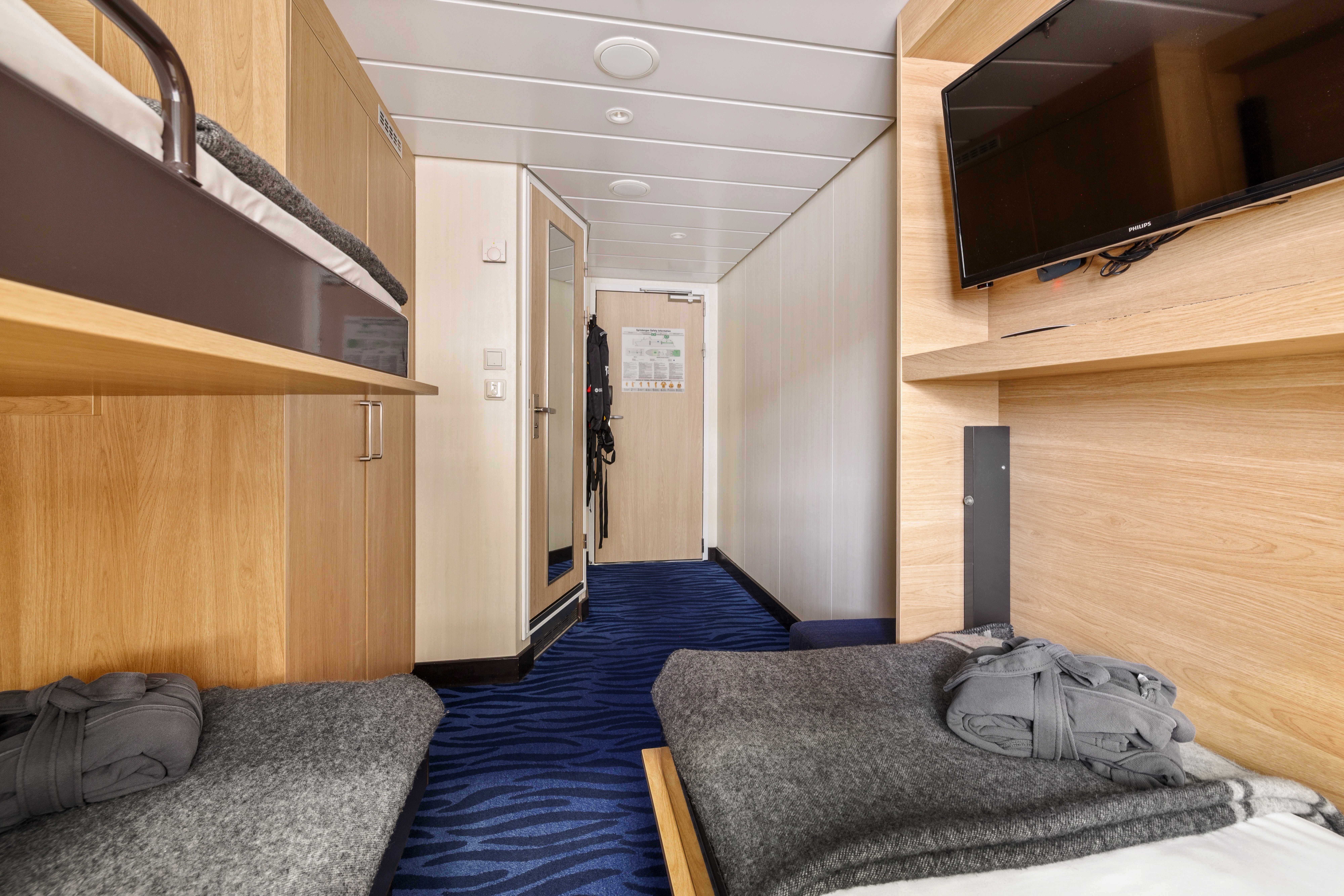
Polar Outside | Outside Cabin
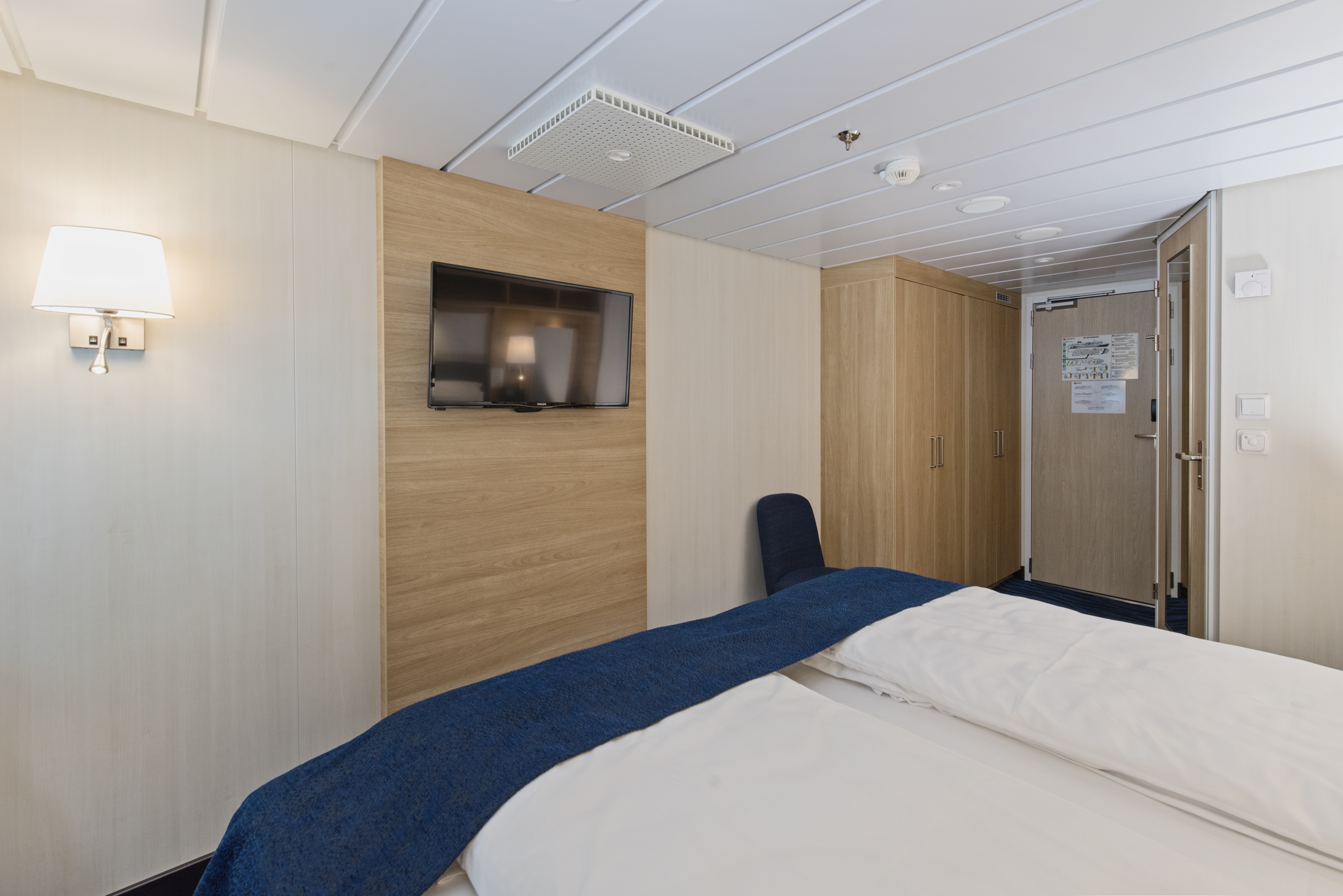
Arctic Superior | Outside Cabin
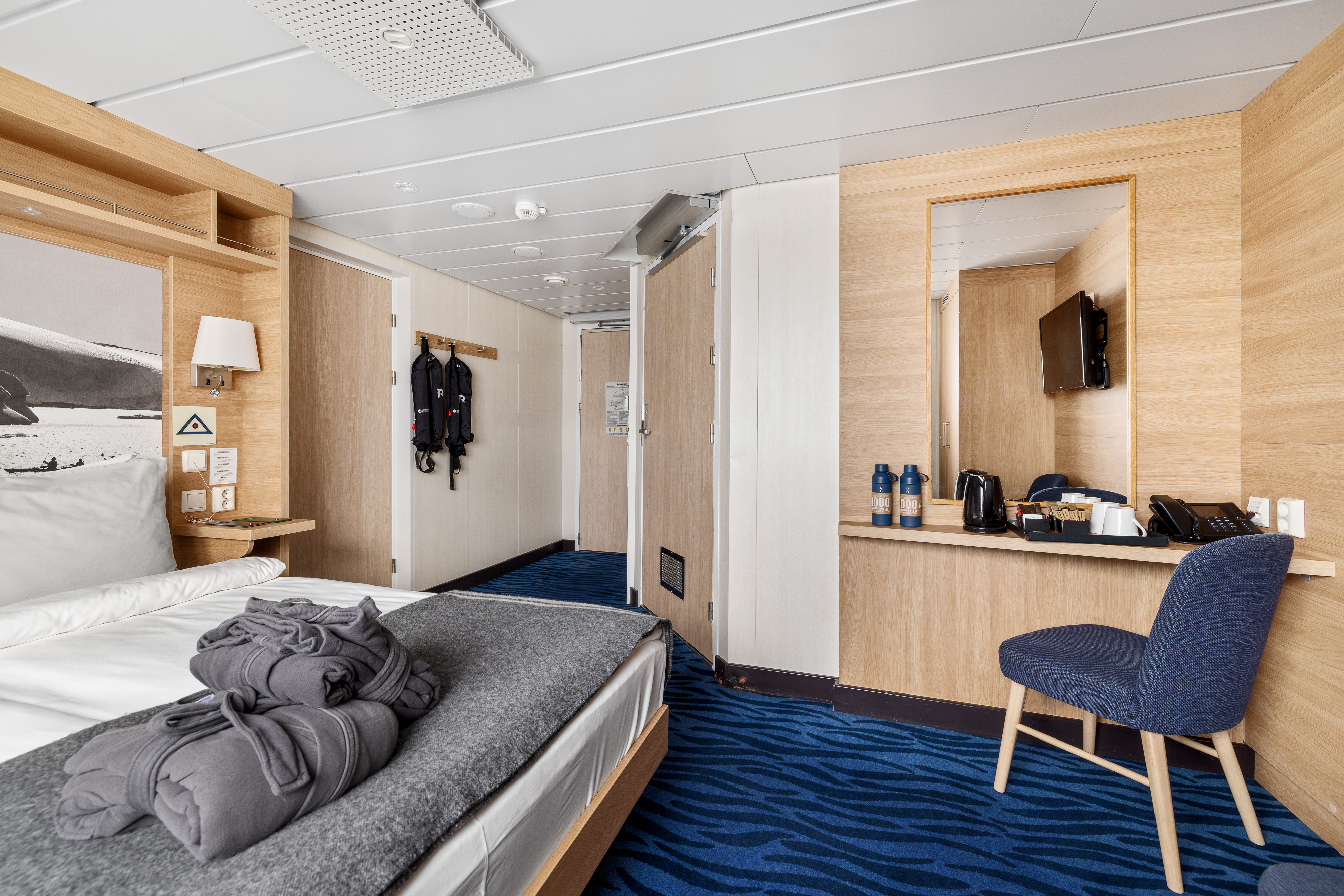
Arctic Superior | Wheelchair-Accessible
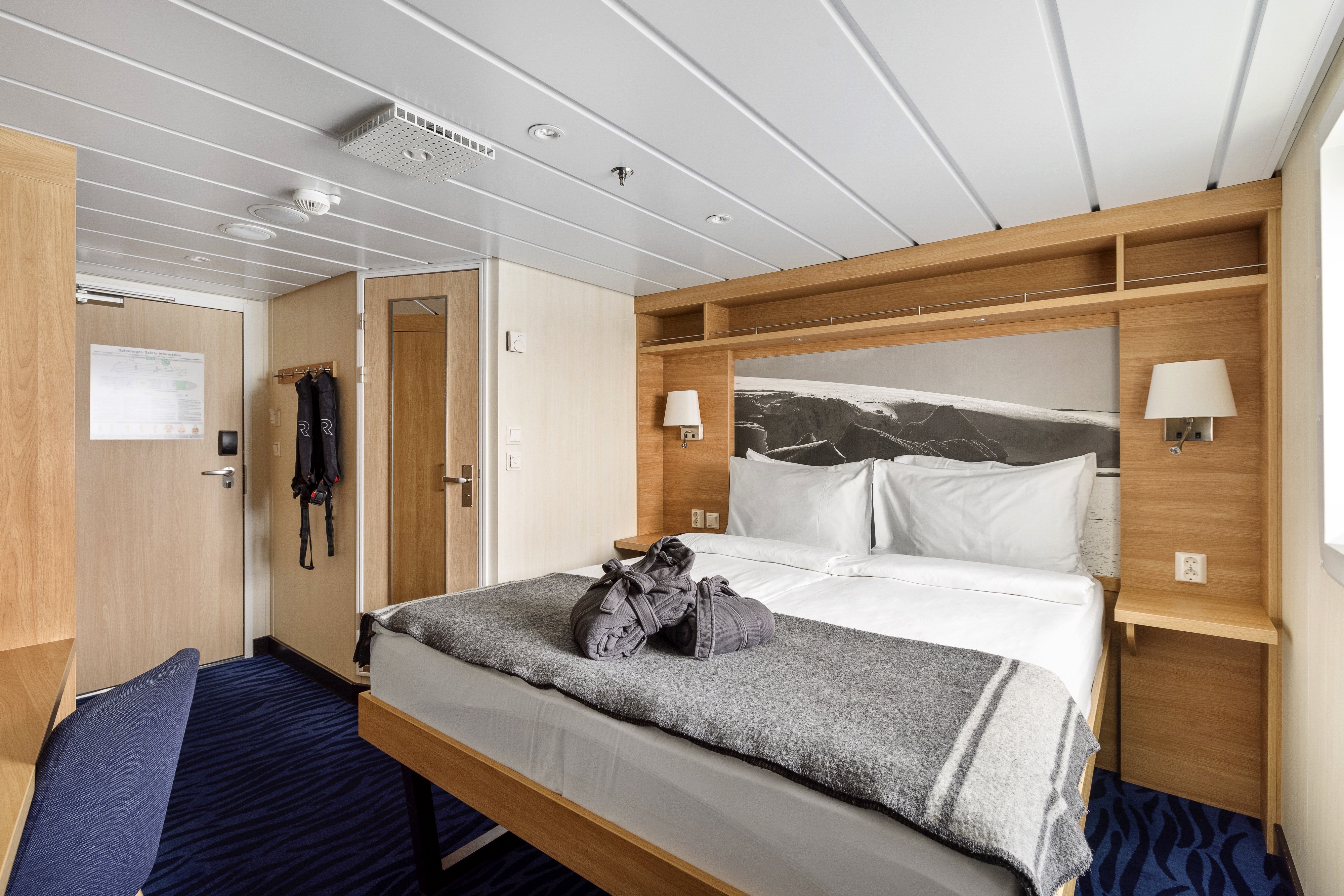
Polar Outside | Outside cabin – Lower deck for up to 3 travellers
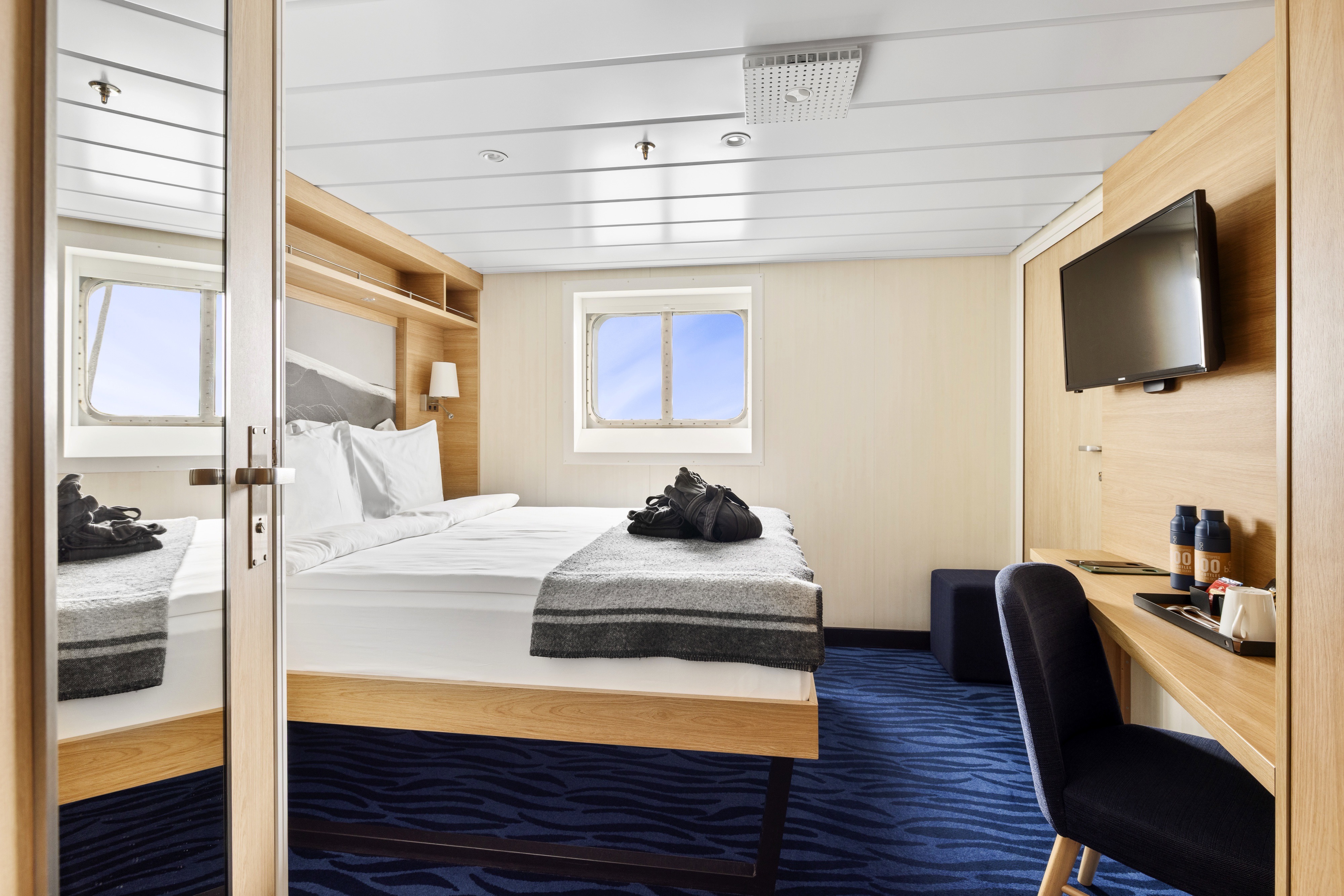
Polar Outside | Outside cabin for 2 travellers
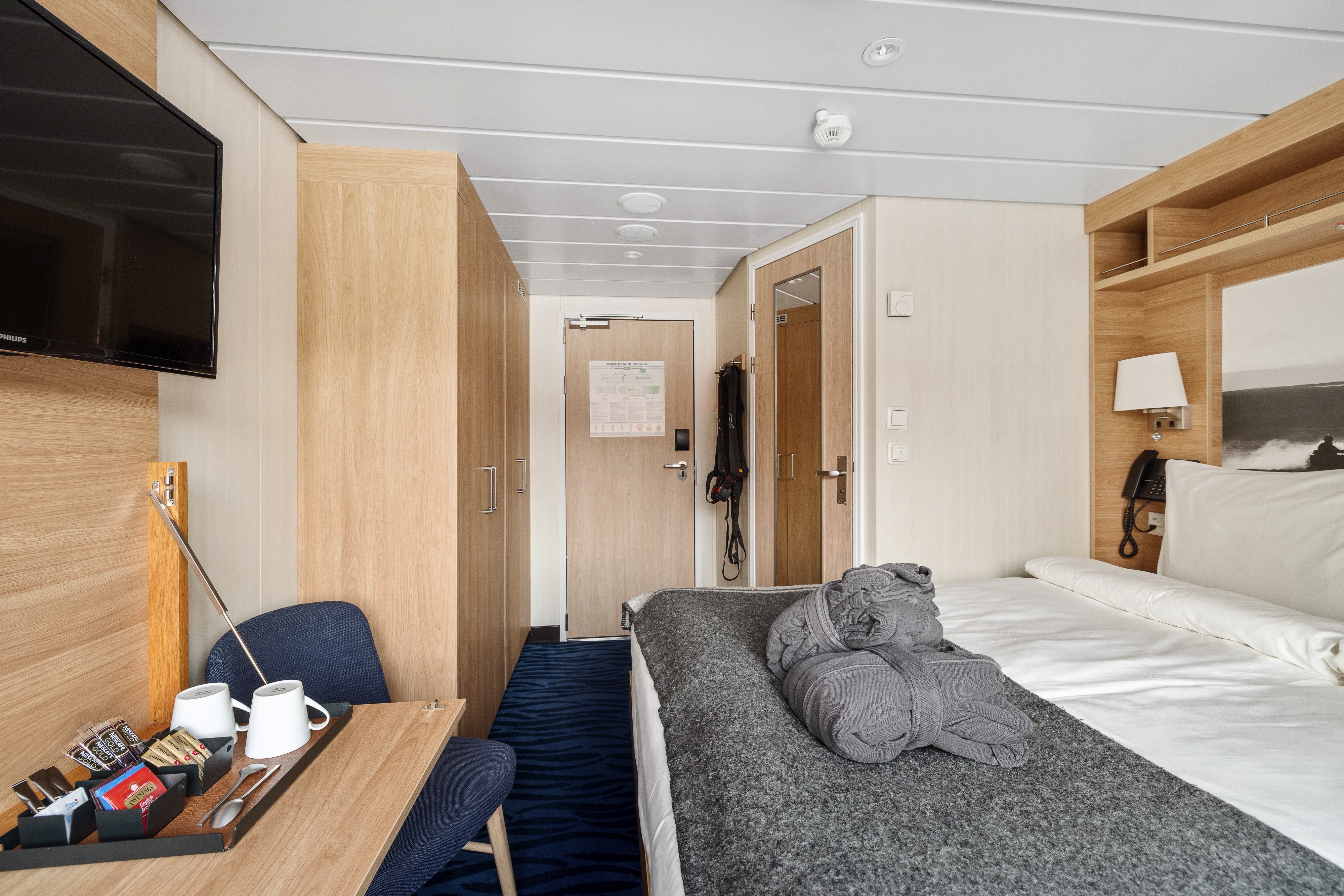
Arctic Superior | Outside Cabin
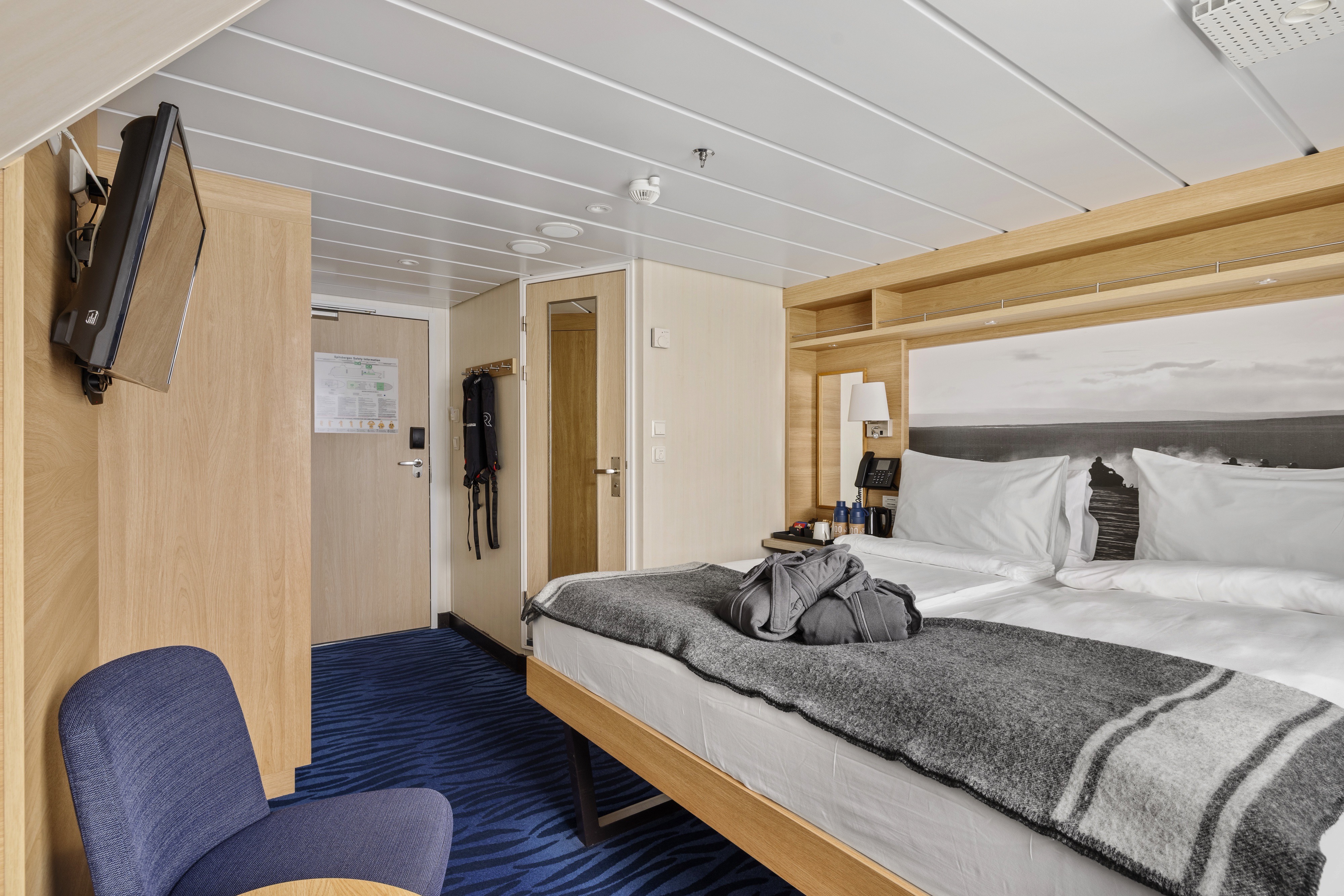
Arctic Superior | Outside Cabin
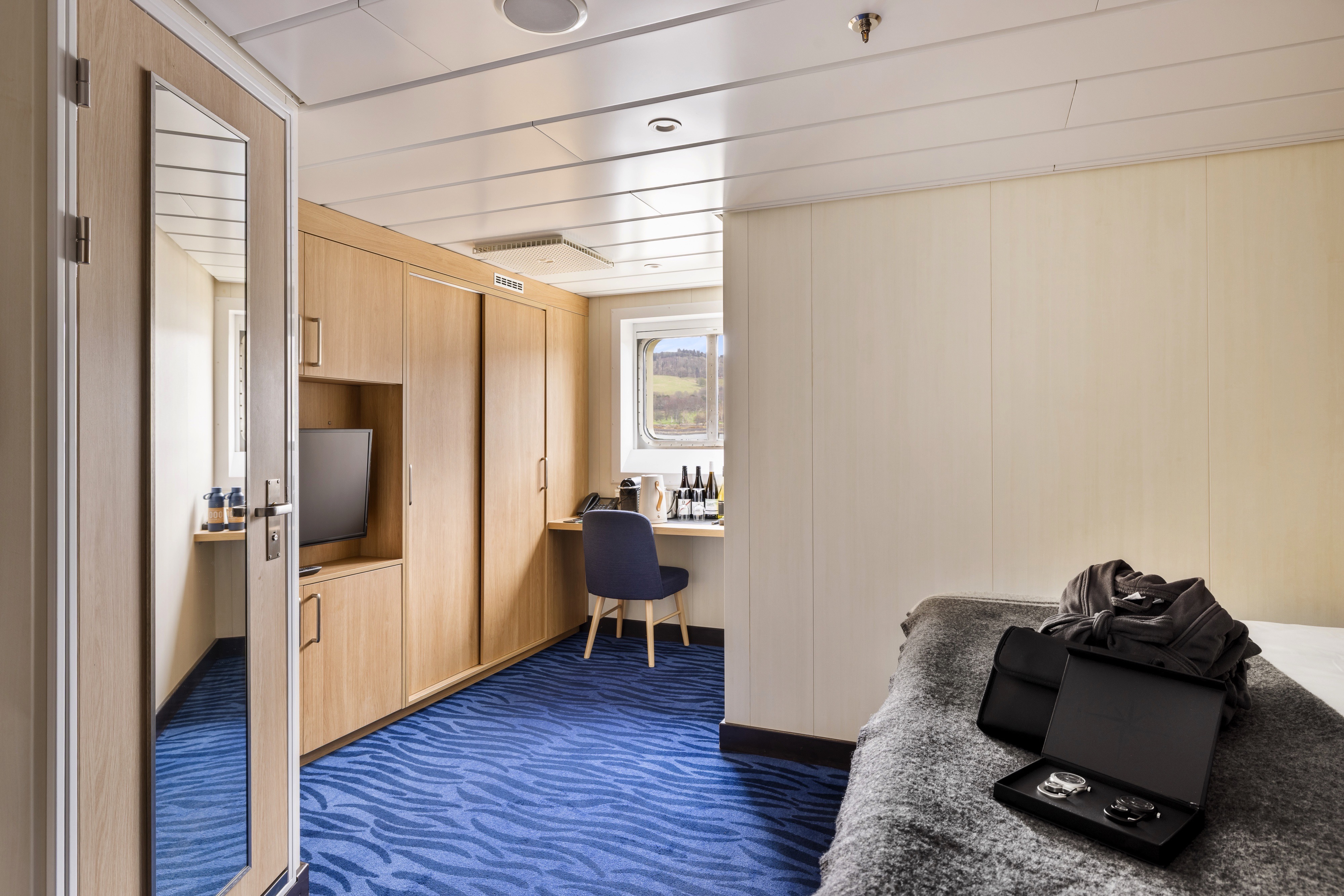
Expedition Suite | Mini Suite
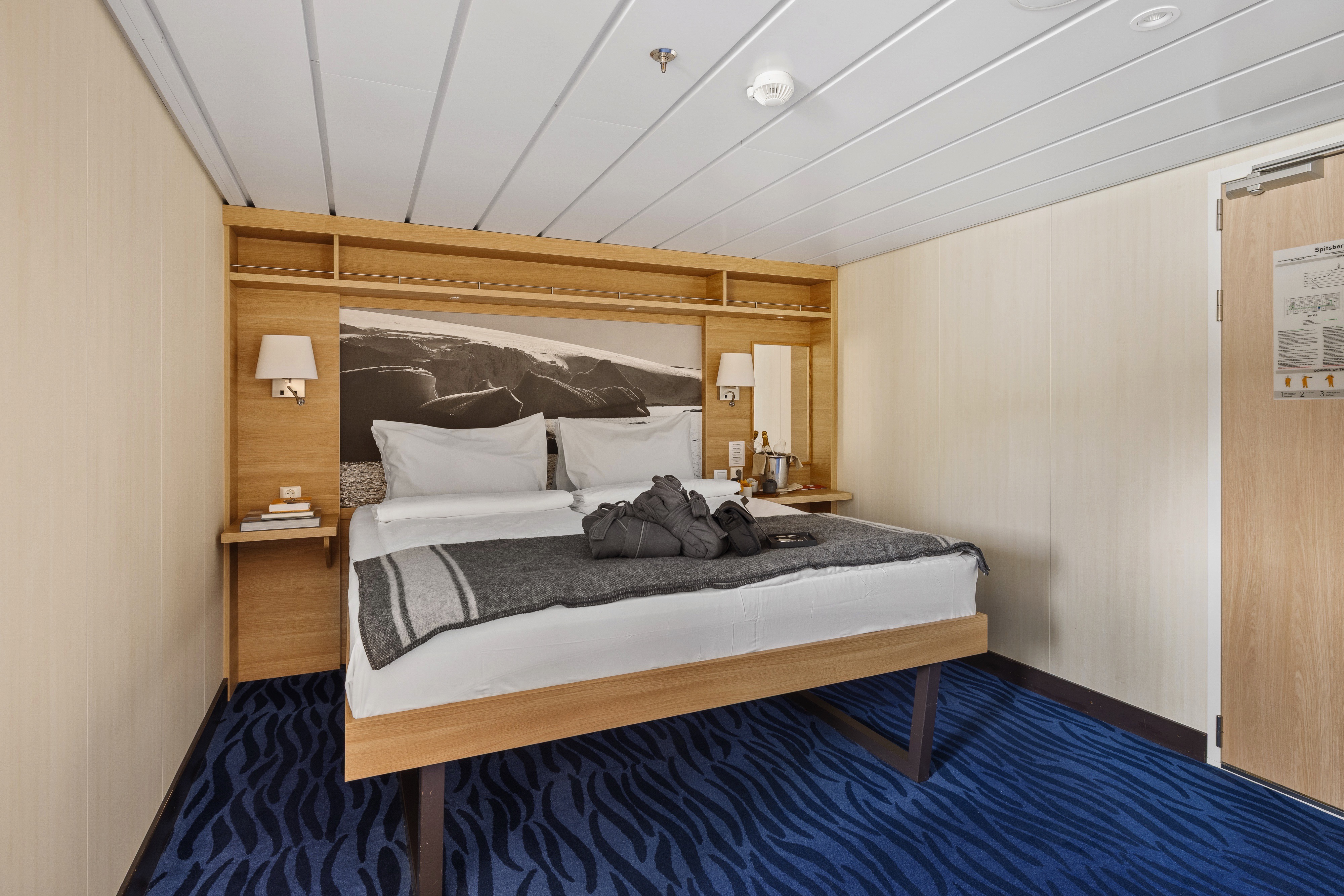
Expedition Suite | Mini Suite
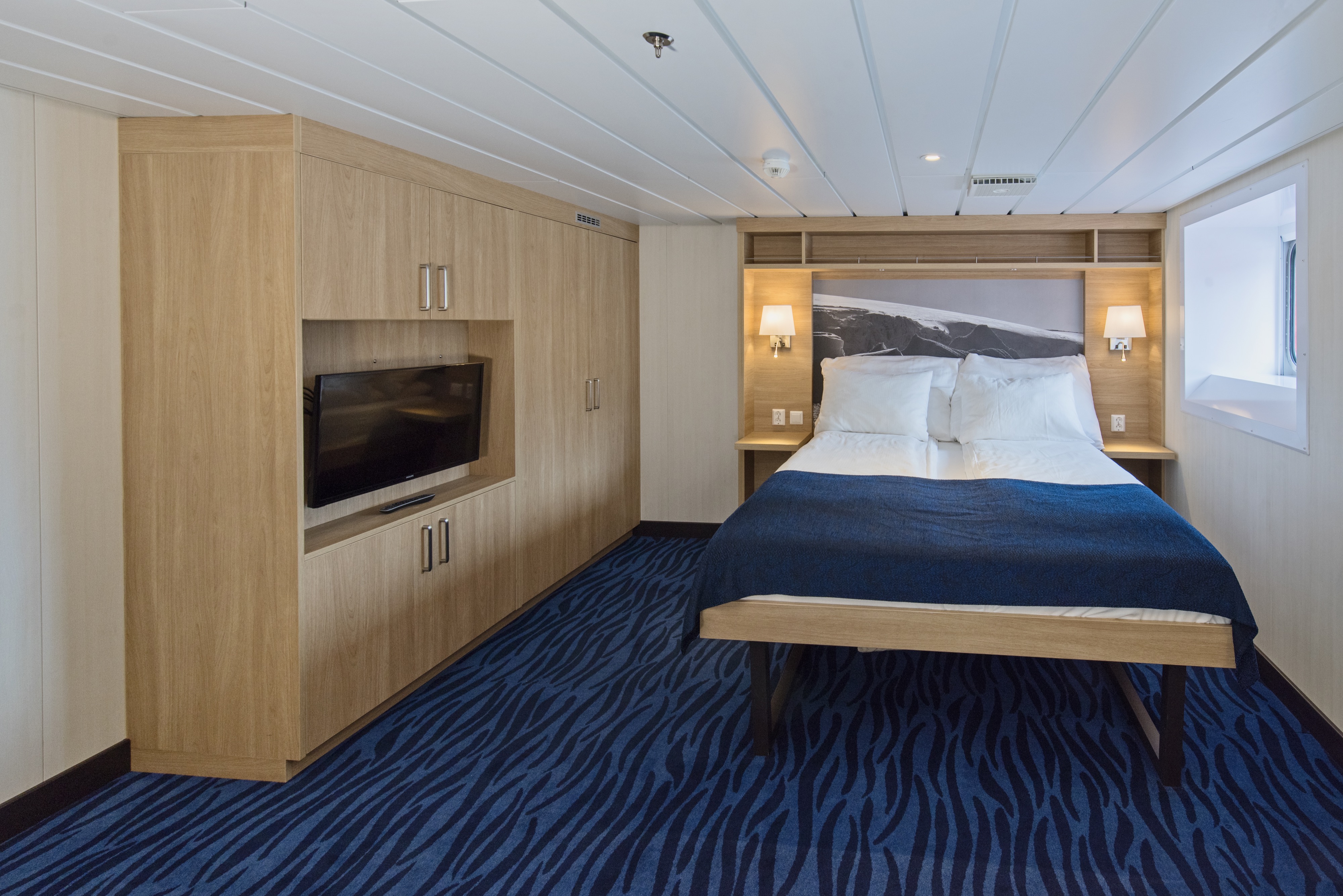
Expedition Suite | Mini Suite
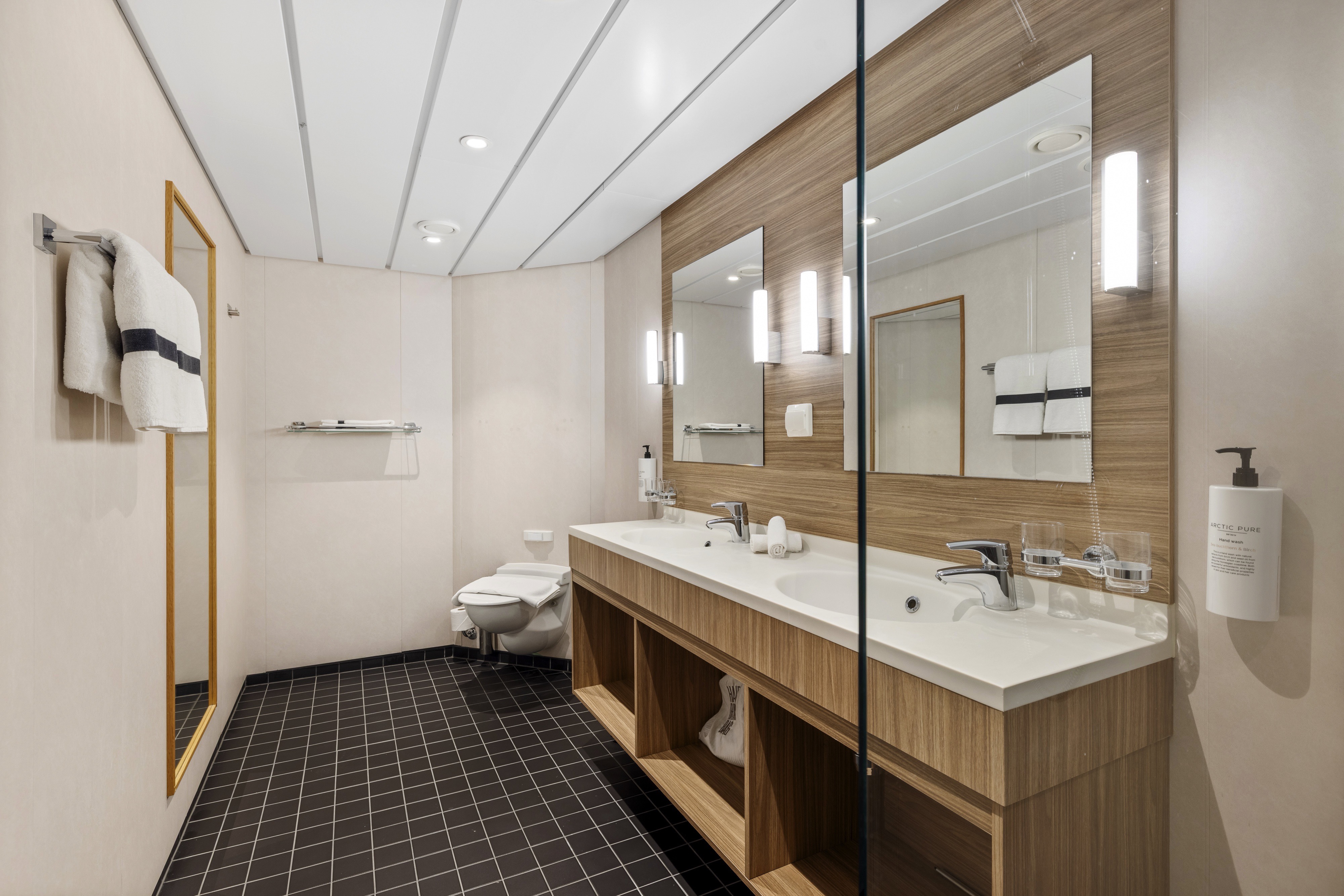
Expedition Suite | Owners Suite
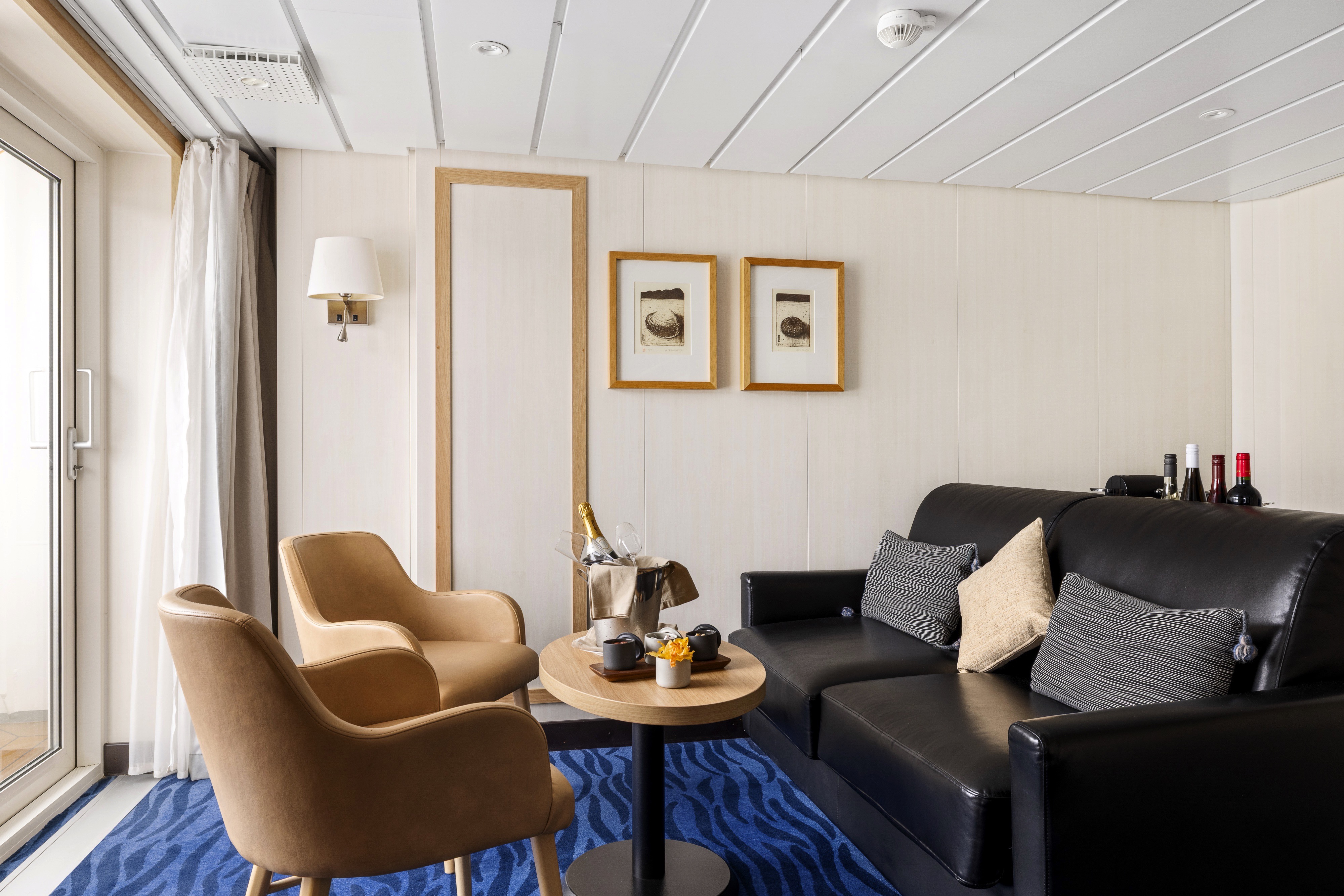
Expedition Suite | Grand Suite
Polar Outside | Middle deck for up to 3 travellers
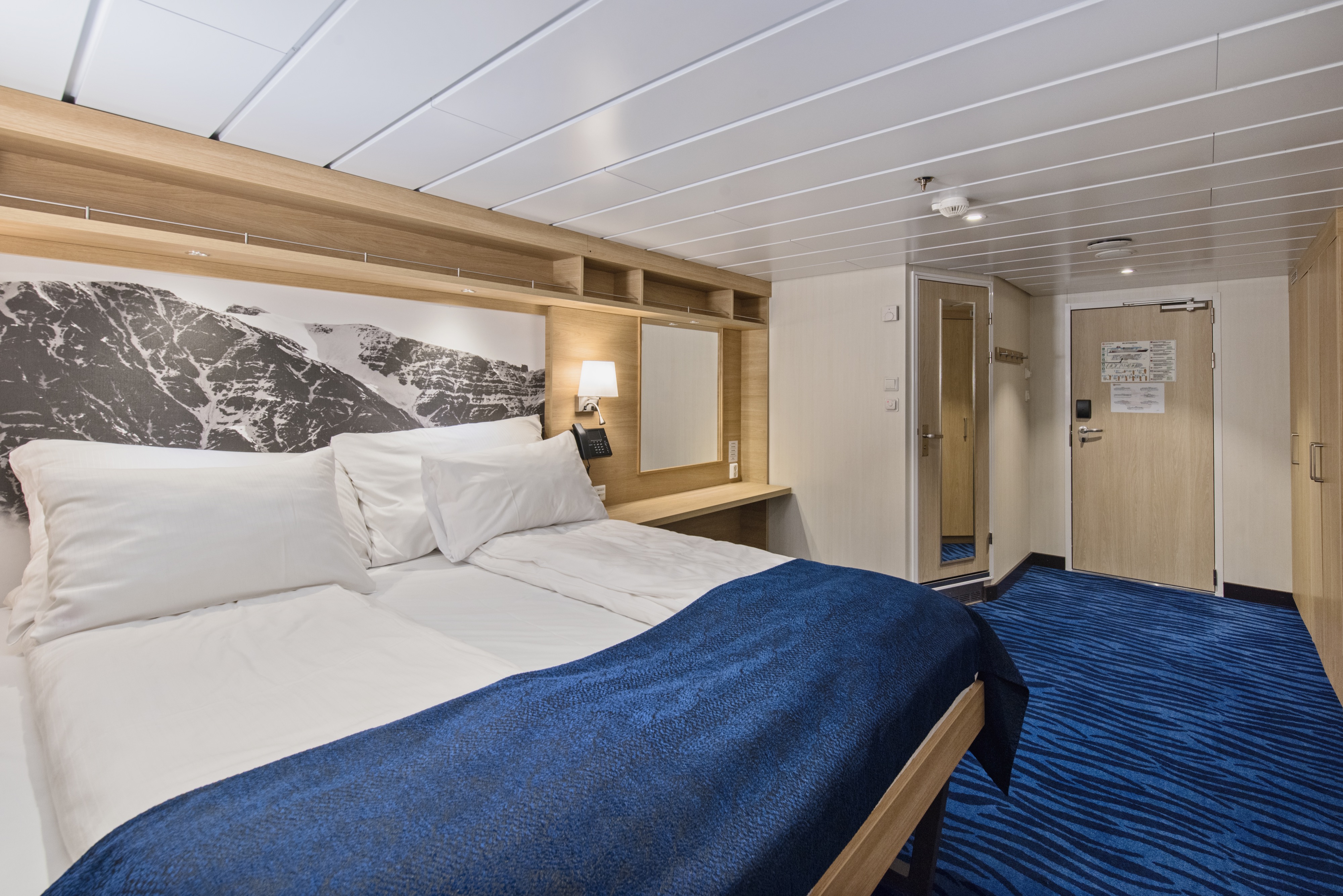
Polar Inside | Larger inside cabin for 2 travellers
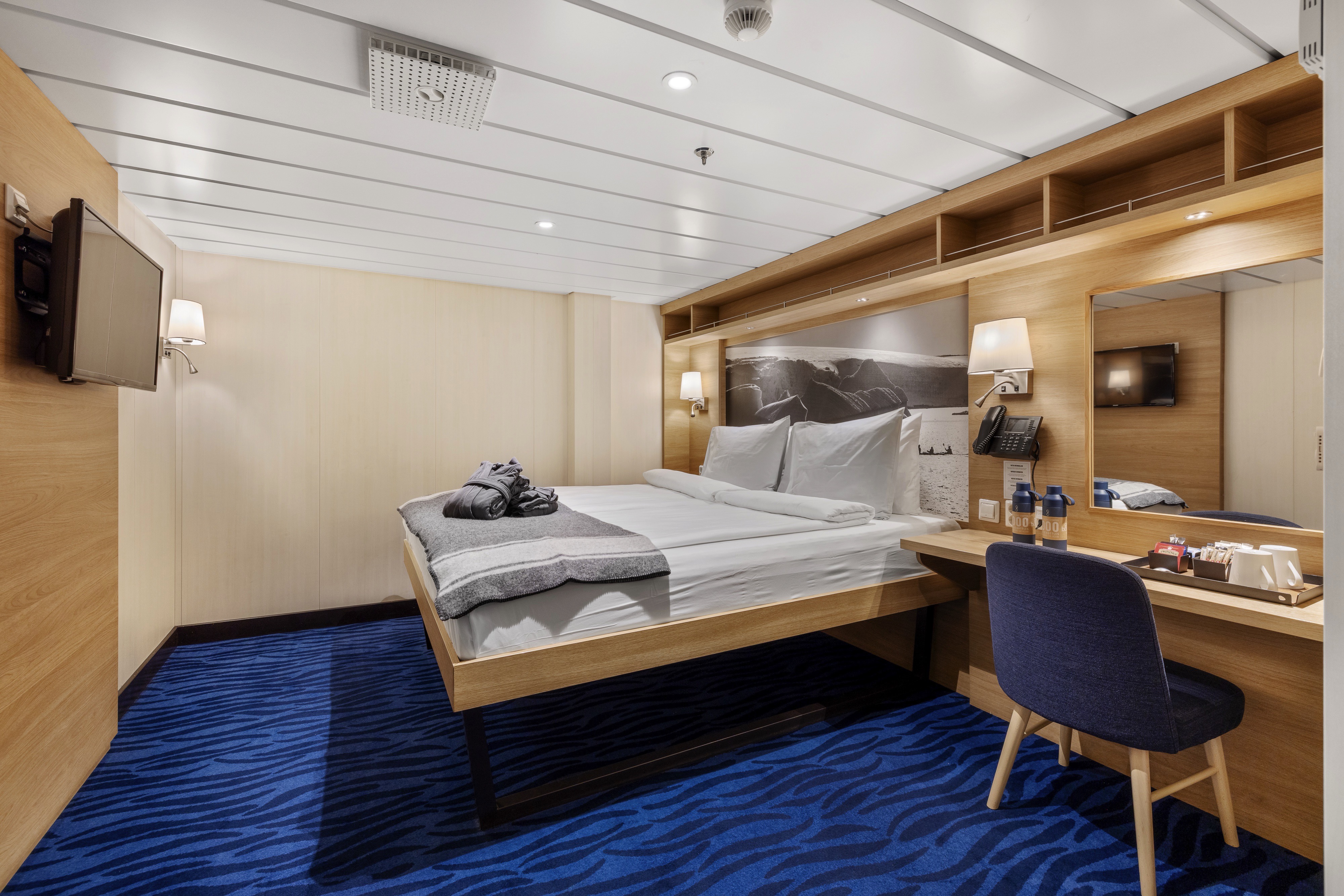
Polar Inside | Superior Inside Cabin
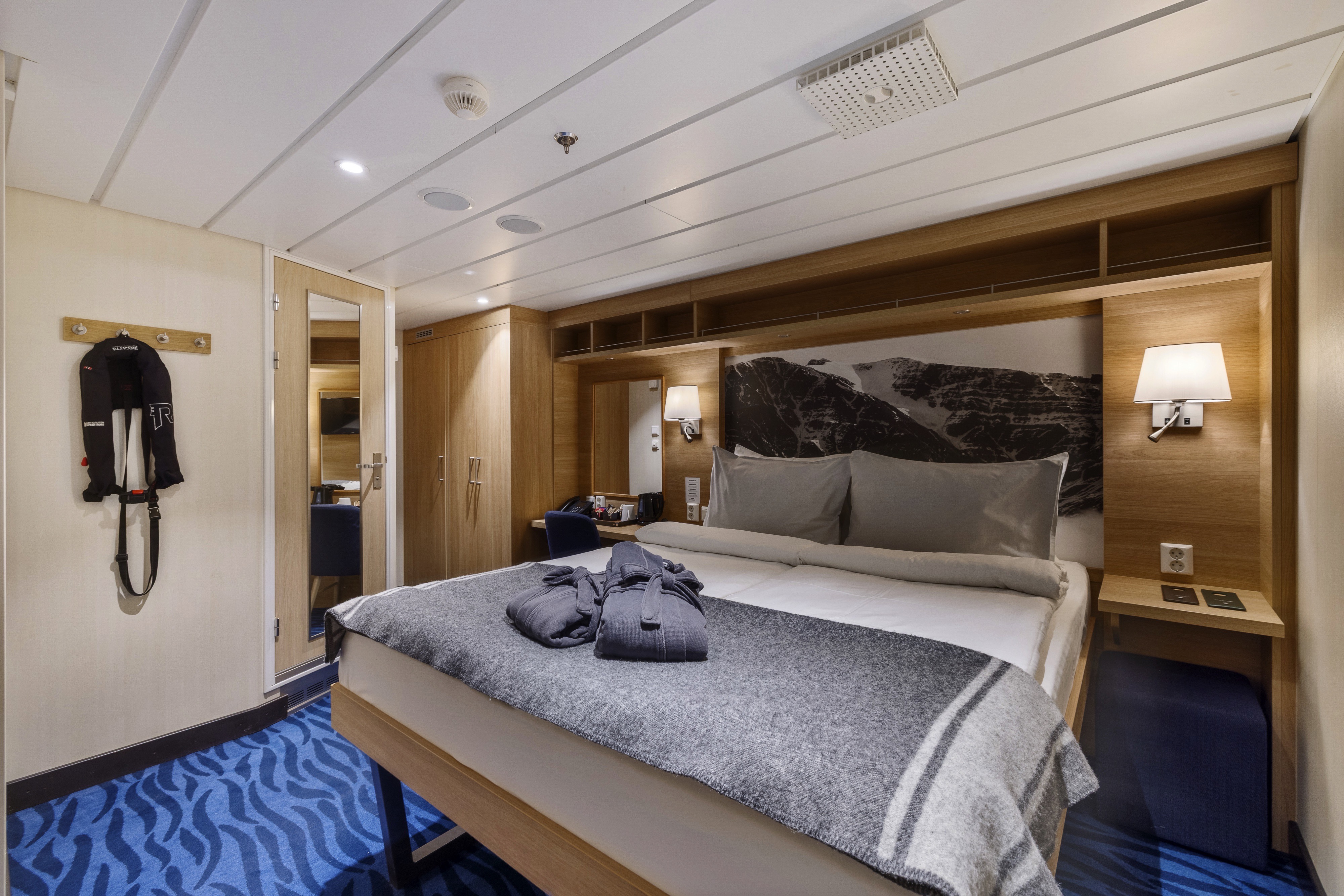
Polar Inside | Inside Cabin
Ship Facilities
Aune
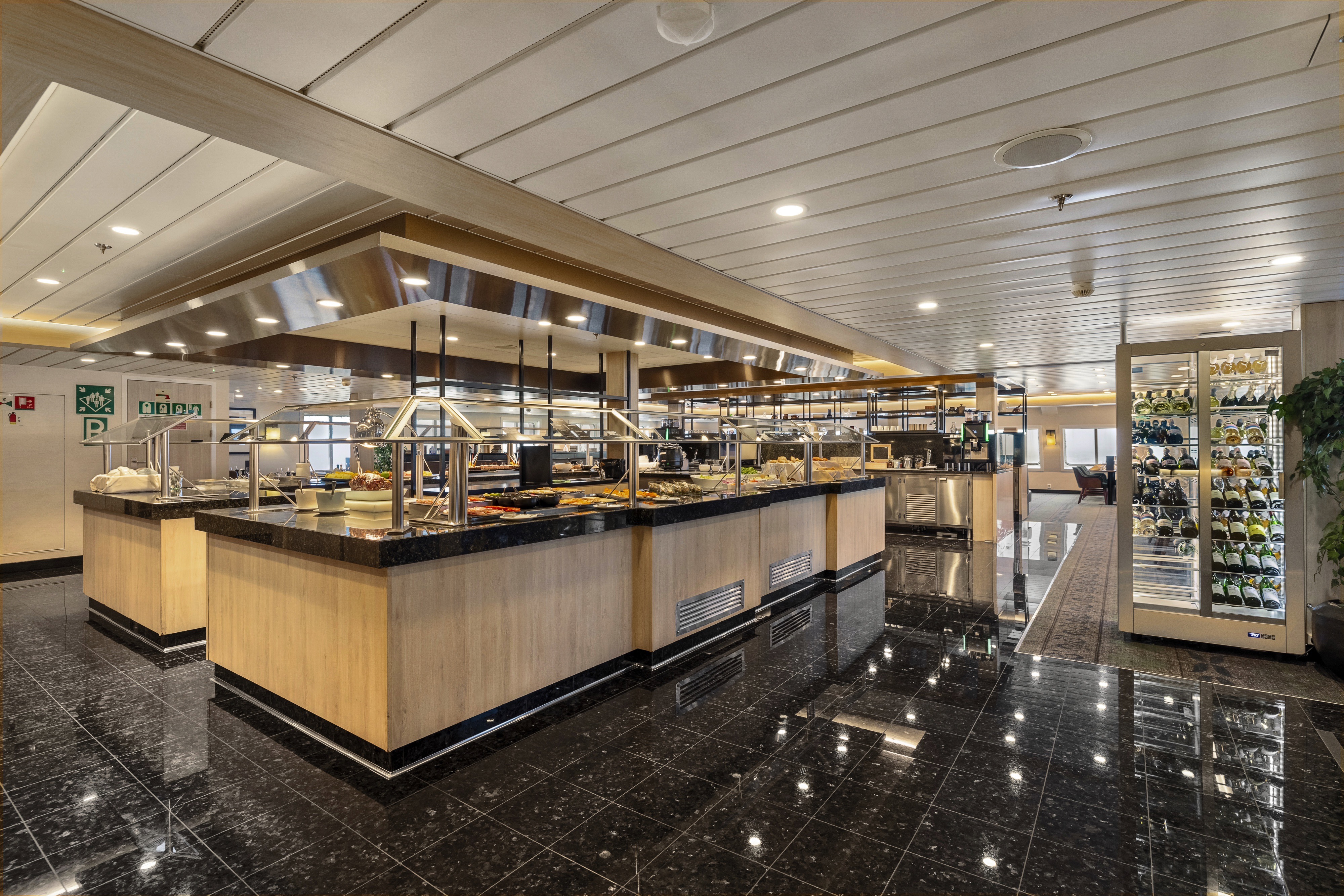
MS Spitsbergen’s main restaurant serves three meals a day from generous breakfast buffets, casual lunches, to beautifully plated dinners that spotlight regional dishes.
Brygga Bistro
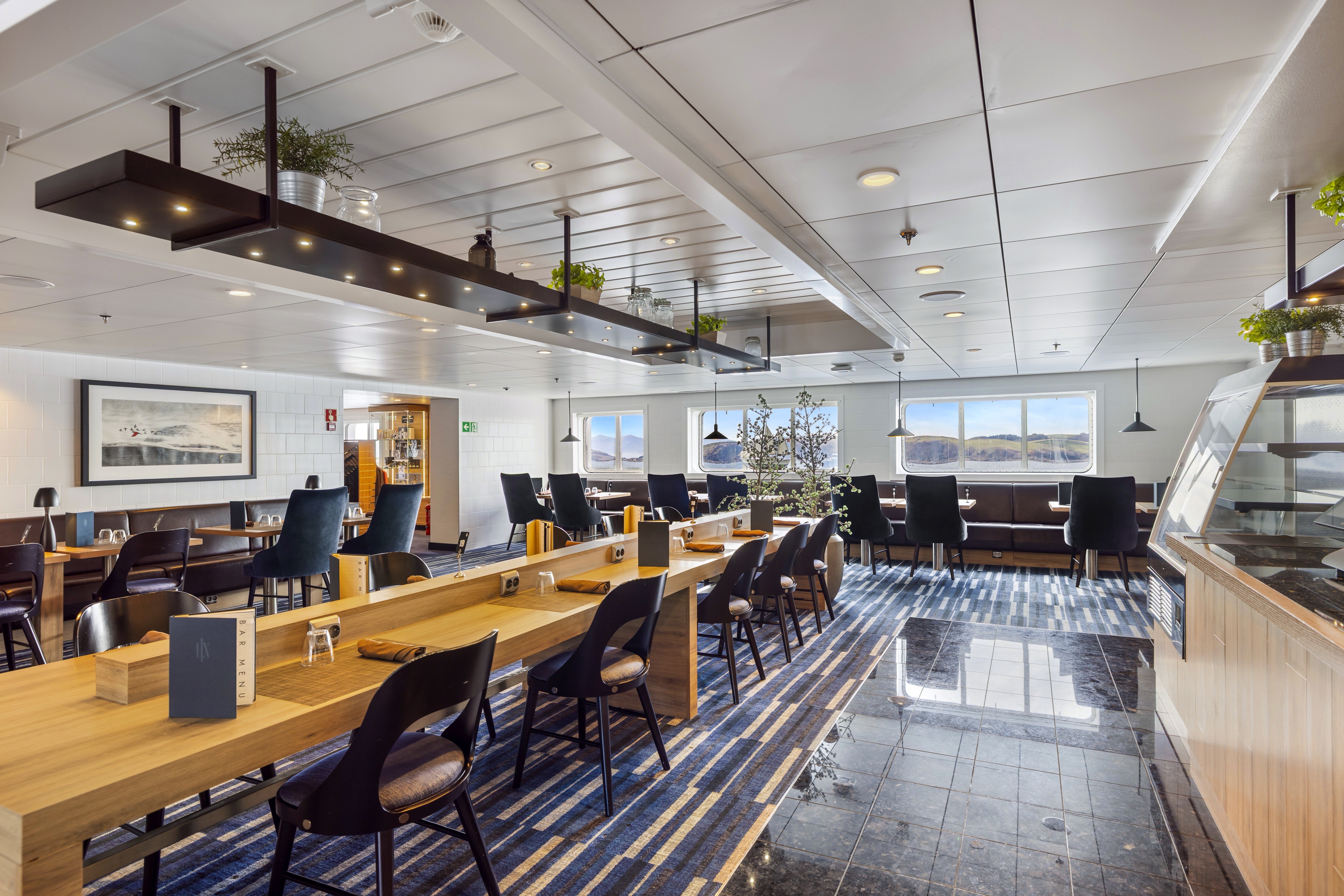
A casual venue new since 2025 serving snacks and light meals between restaurant hours. Perfect for when you’ve worked up an appetite in between landings.
Expedition Team
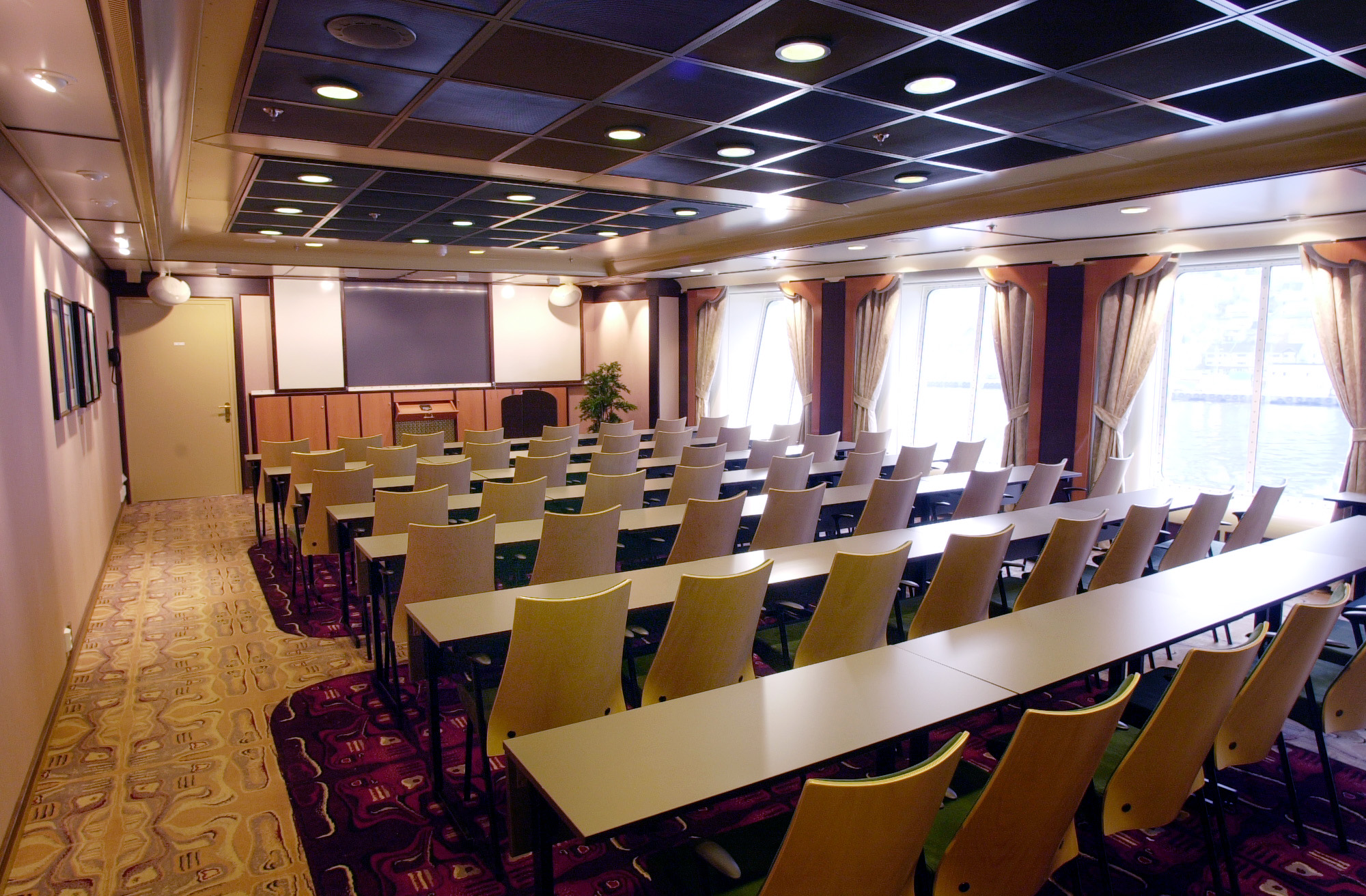
The onboard Expedition Team is composed of the Expedition Leader, the Assistant Expedition Leader, the Expedition Coordinator plus several lecturers and experts. Your Expedition Leader will regularly update you on the progress of the trip as well as the different points of interest and wildlife sightings that may occur. Biographies of the Expedition Team can be found on board. In the ships science center, you will be able to find information regarding the trip and book optional excursions and activities.
Shore Excursions
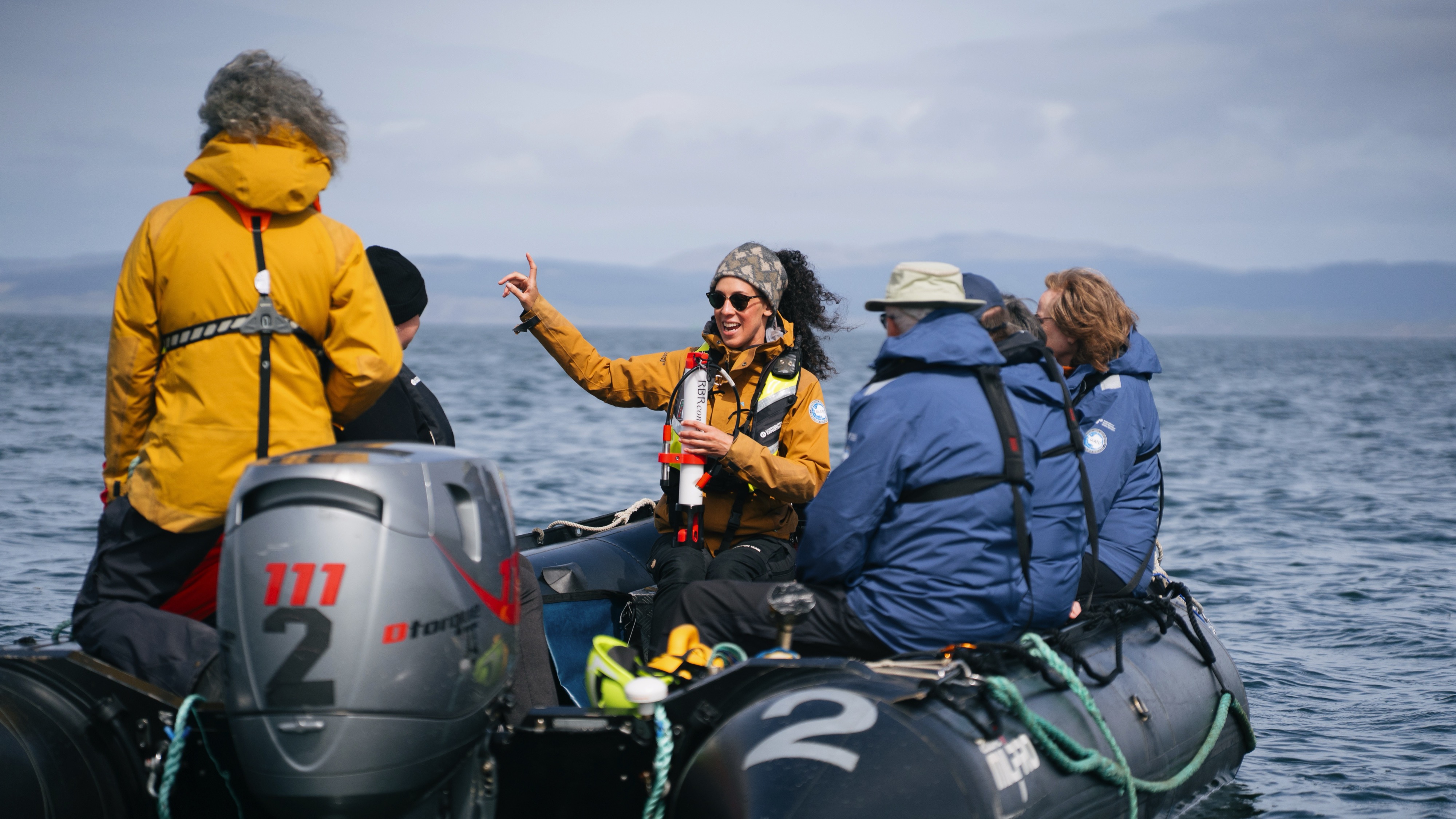
We offer a rich and varied programme of included and optional shore excursions run by third-party providers in many areas we sail to. In many ports, we offer an included excursion, which can be reserved for no additional charge. In some cases, the included excursion can be combined with other optional excursions in the port. Most excursions can be pre-booked, but may also be bookable onboard if capacity remains.
We advise that you book well in advance in order to avoid disappointment due to the excursion being fully booked. Please note that registration is binding, and once on board the Expedition Team will advise you of booking deadlines for excursions still available. Our excursions have English-speaking guides unless otherwise indicated and other languages cannot be guaranteed unless specified. Excursions are subject to change and possible cancellation due to weather conditions. They are also dependent on the number of participants.
In addition, the Expedition Team also arrange a variety of activities during the cruise. These will depend on location and season but may include hiking, snowshoeing, and kayaking. These activities are booked on board and subject to availability.
Science Centre
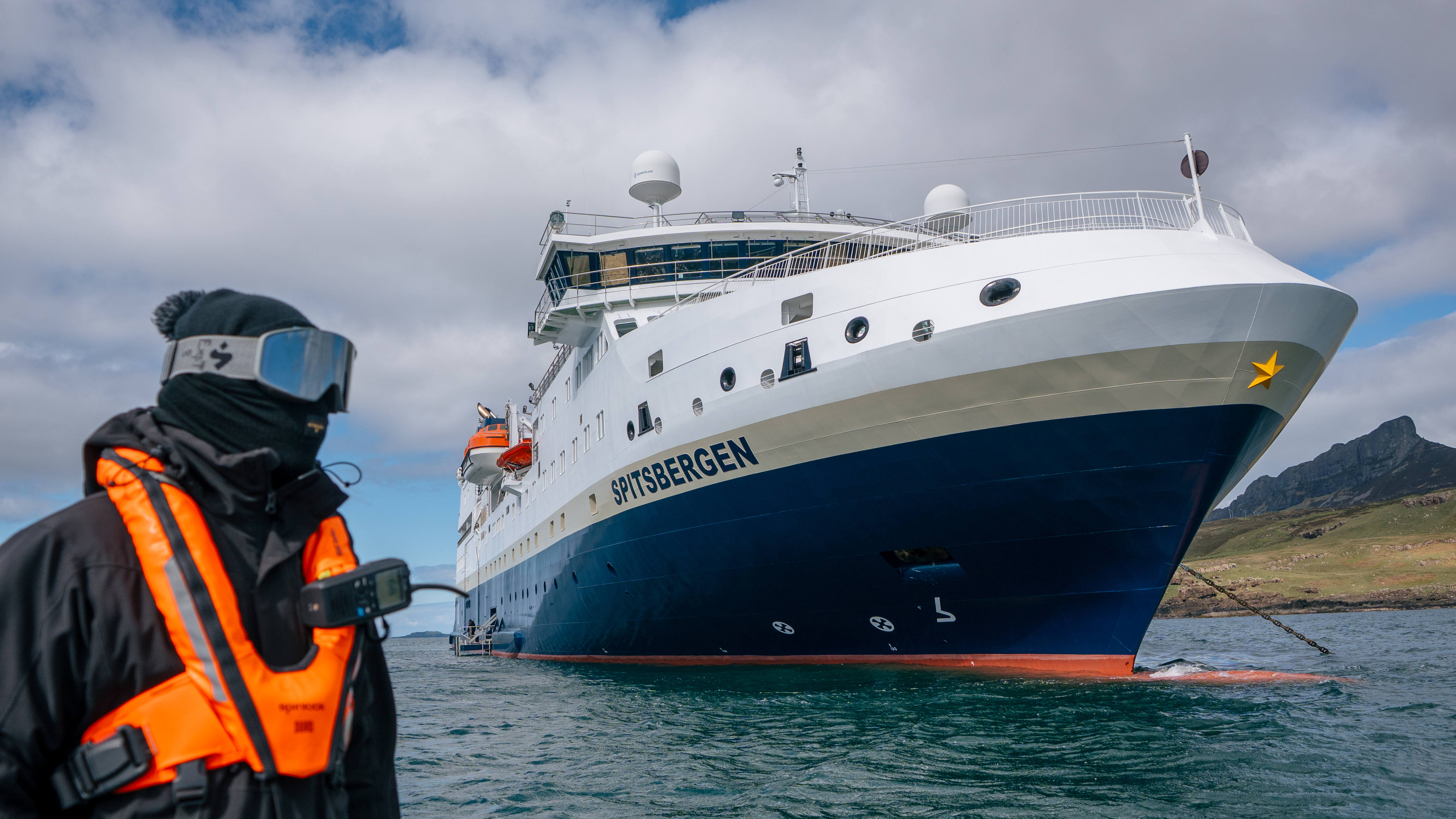
The Science & Education program brings together like-minded individuals
Covering over 3/4 of the planet’s surface, our oceans are vital in supporting human life on earth and are also home to over 90% of all known wildlife. Despite it influencing everything from our weather to transportation and yes, expedition cruises, very little is known about our blue planet.
This is where HX Expeditions and our fleet of small, state-of-the-art Expedition ships come in. We can reach, explore and collect vital scientific data on some of the planet’s most remote regions. From understanding whale migrations and phytoplankton communities to cloud observations and the Northern Lights, our onboard Science & Education Teams – with the help of you, our guests – captures, analyses, and reports invaluable data to organisations and research projects around the world.
Expedition Launch
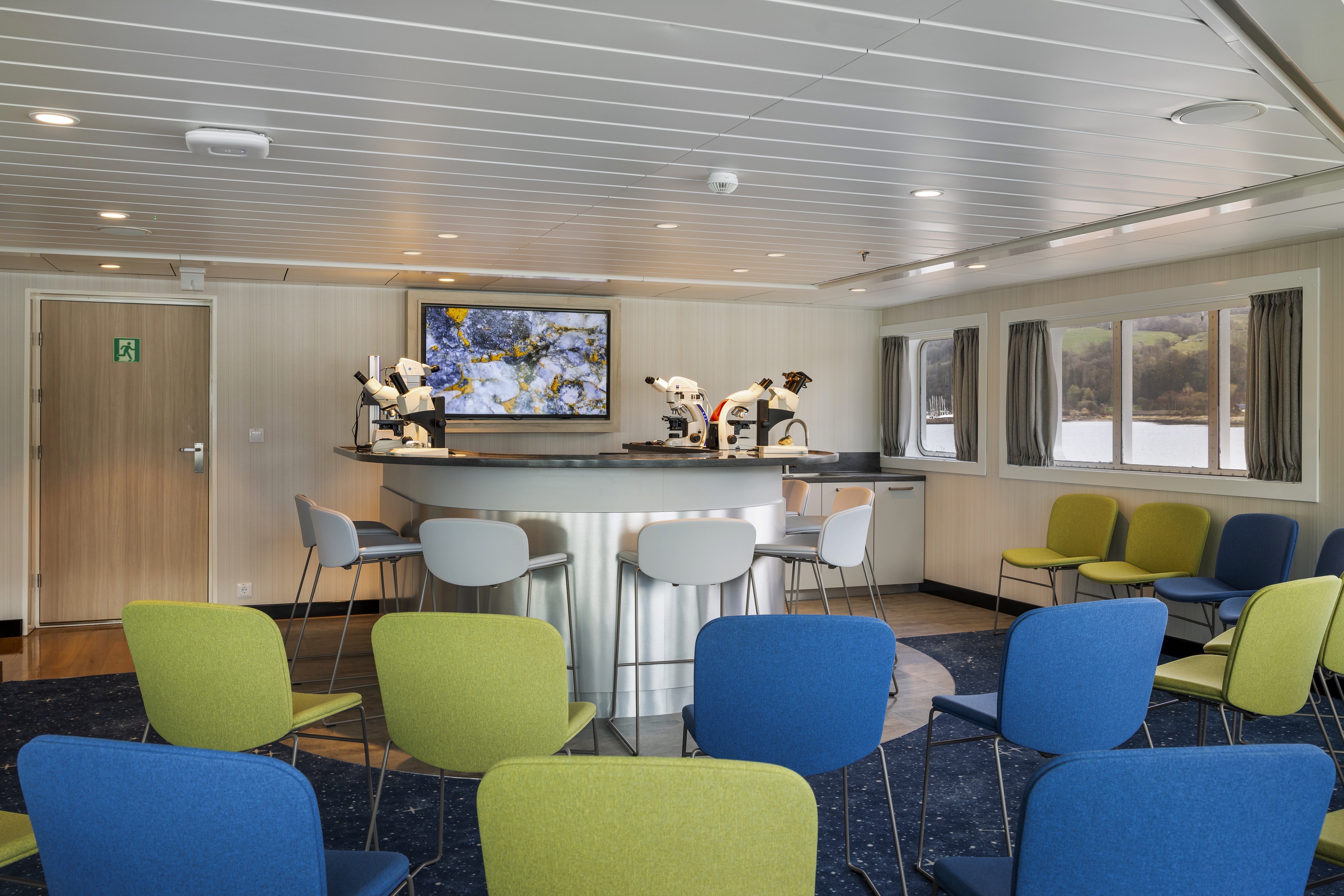
Located on Deck 3
Lectures
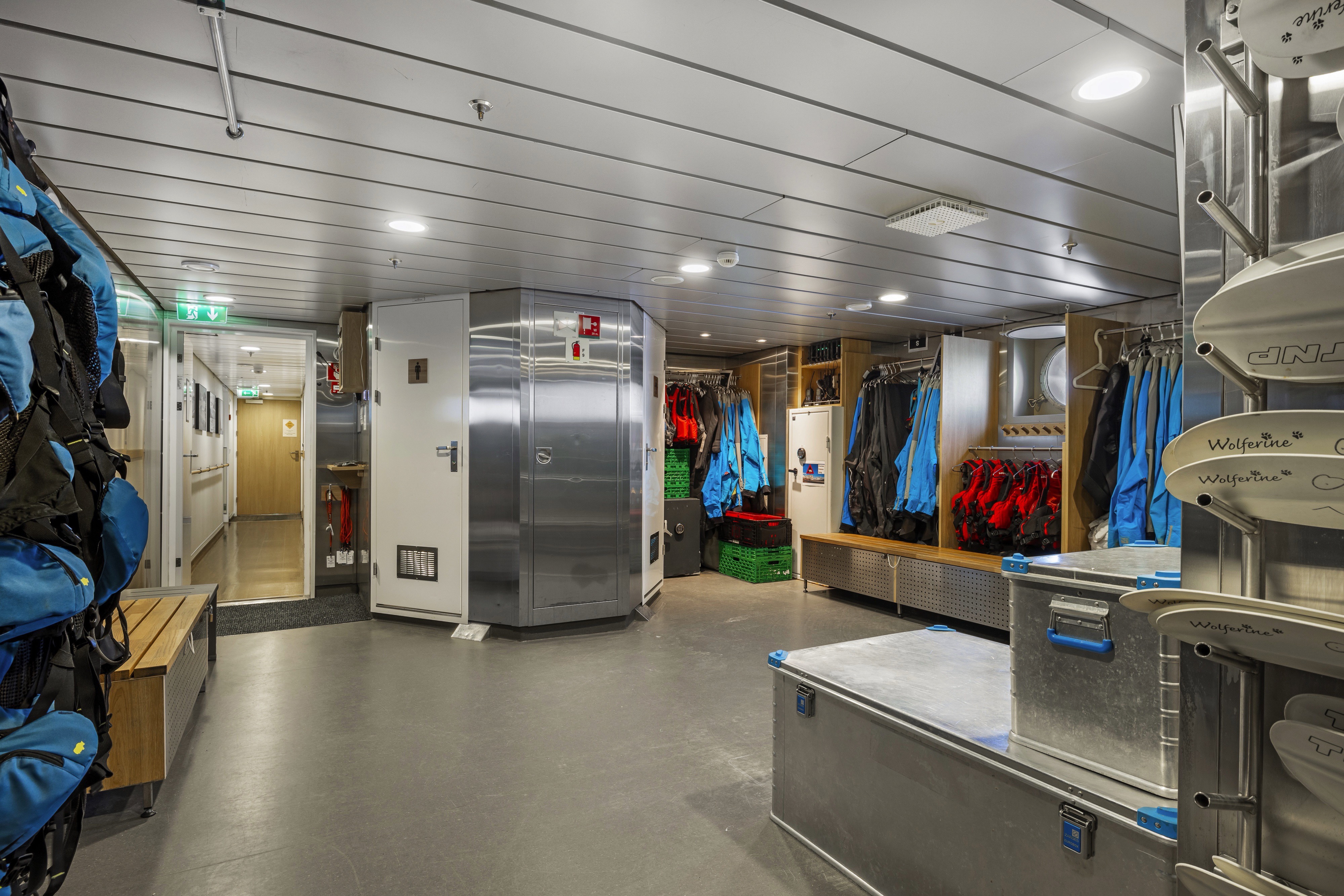
The ship’s experienced lecturers command an in-depth knowledge of the areas in which we sail. They will conduct, on a regular basis, lectures on topics such as biology, history and geology throughout the voyage. The lecturing schedule will be announced every day in the on board daily program.
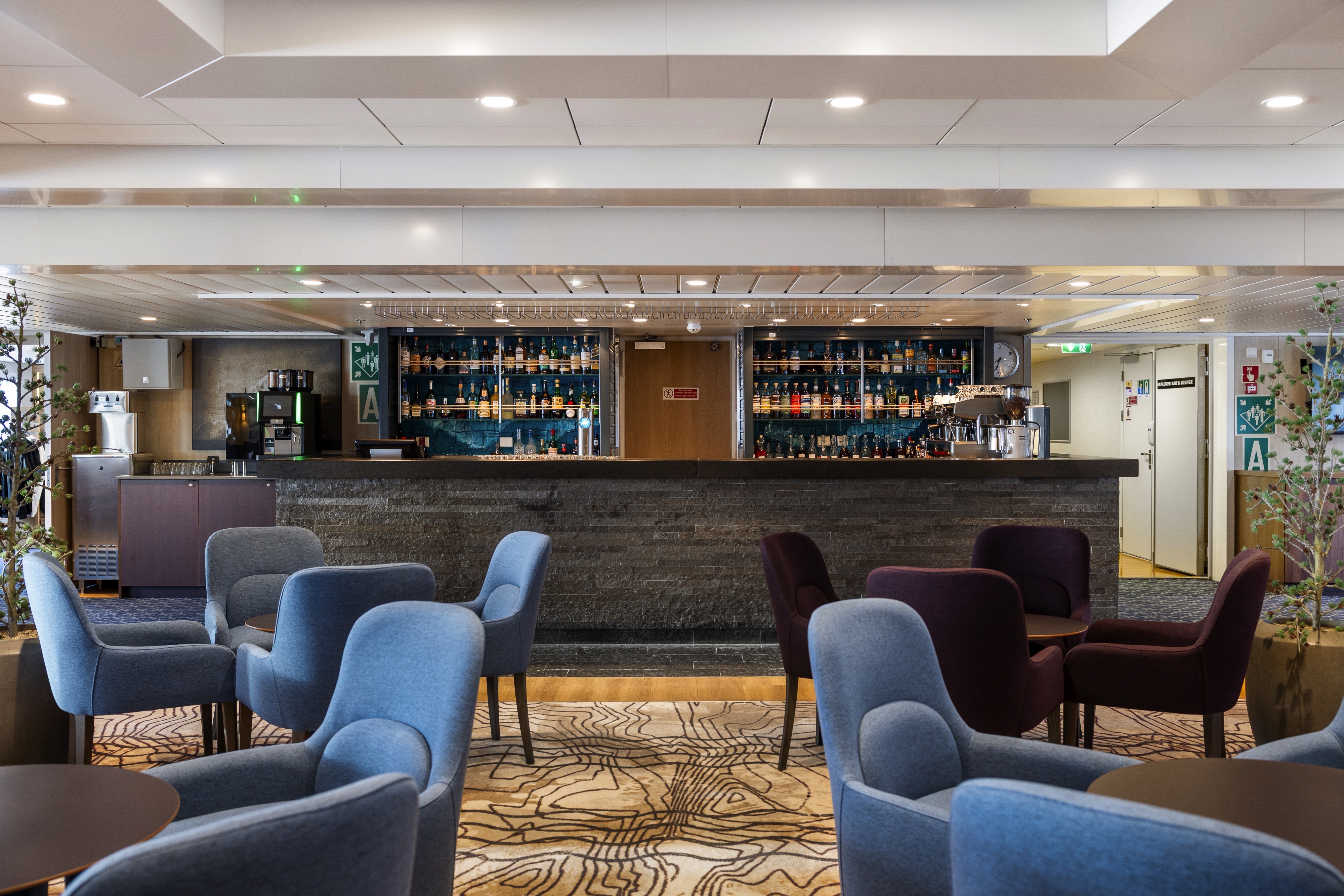
Explorer Lounge & Bar
This relaxed space is where the day’s stories gather. With sweeping views and a warm atmosphere, it’s the perfect setting for sharing discoveries, attending briefings, or simply watching the waves roll by.
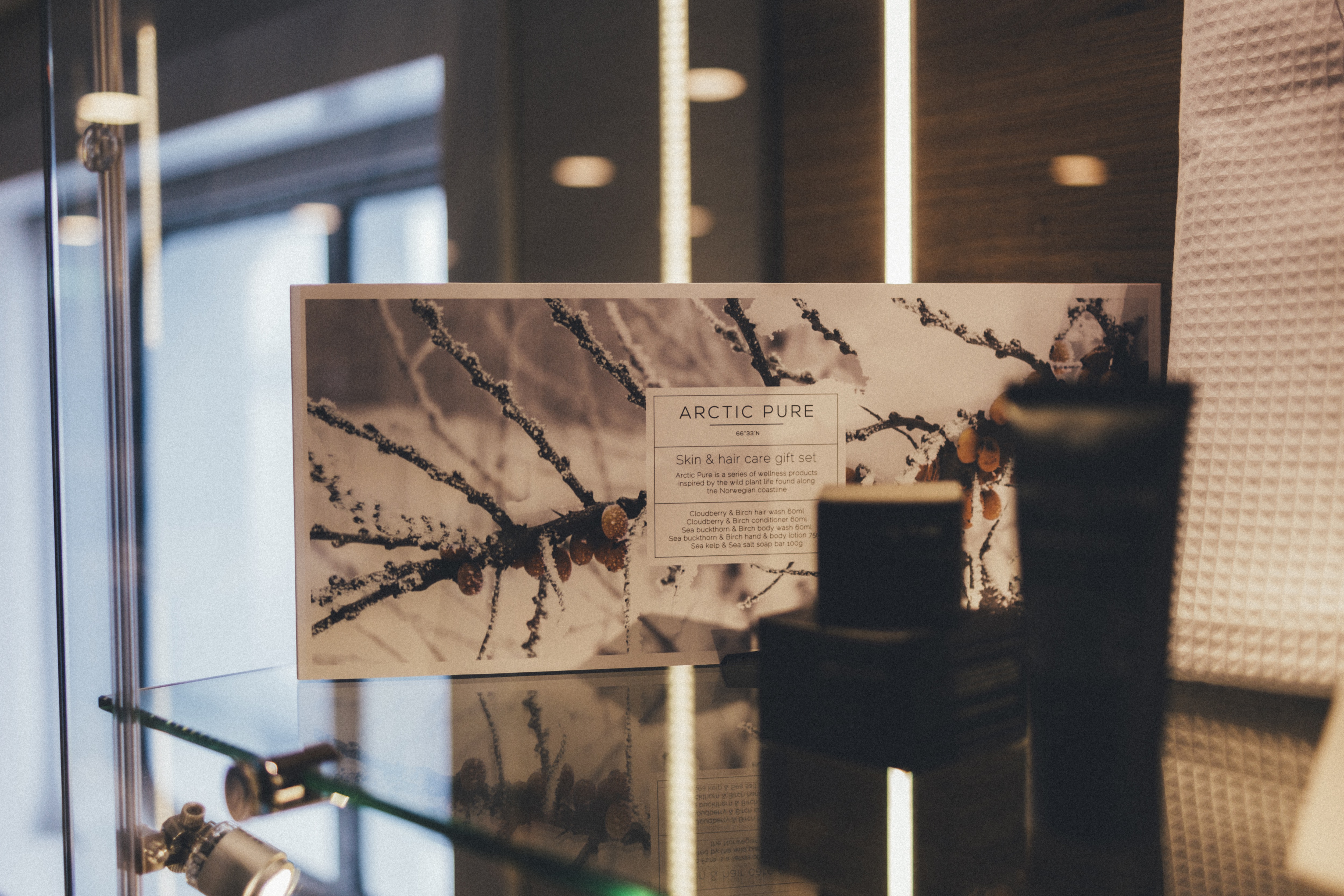
Shop
Located on Deck 5
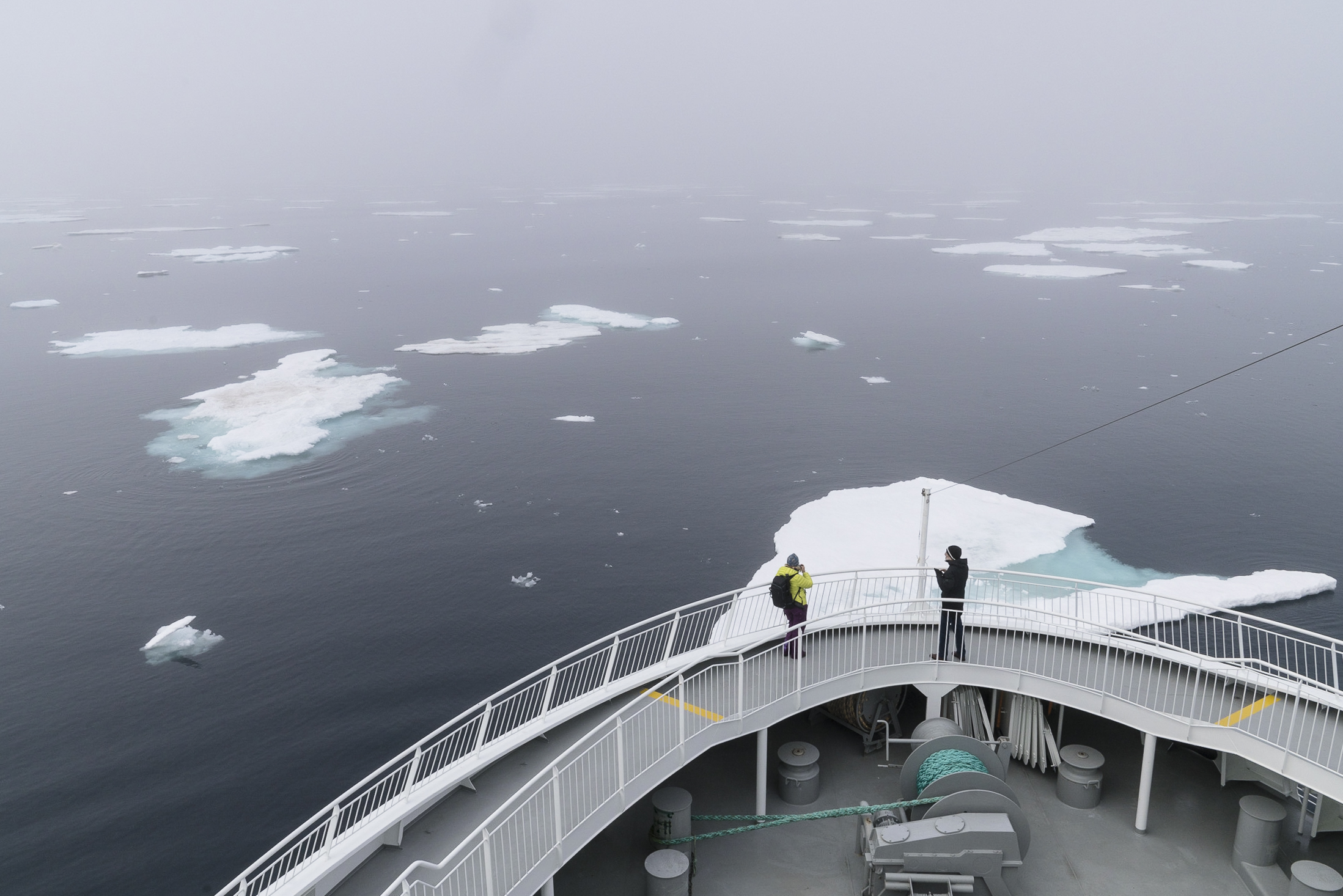
Observation Decks
The ship has spacious outdoor areas. They are perfect vantage points to sit back, relax and watch the world go by.
Reception
Located on Deck 5.
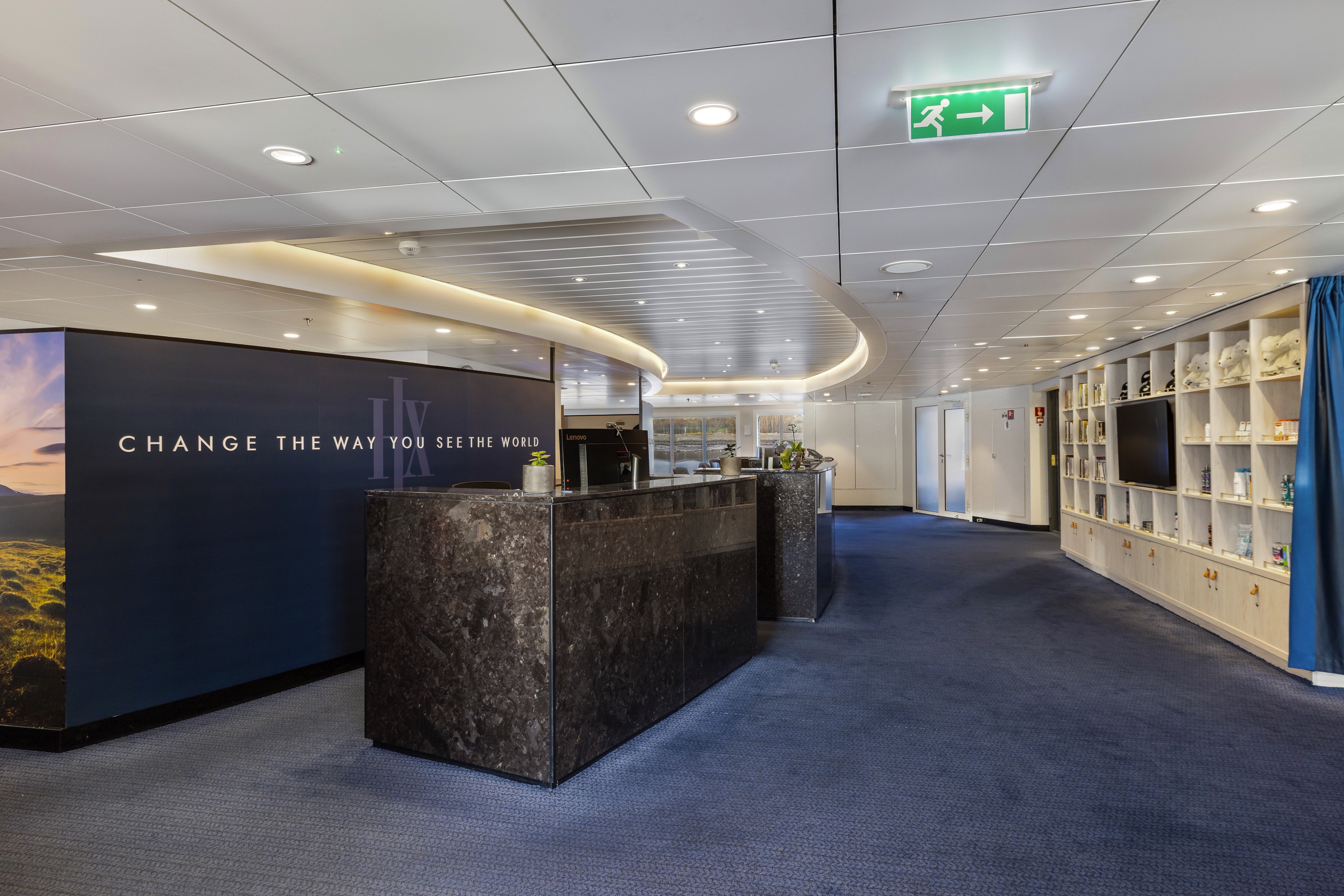
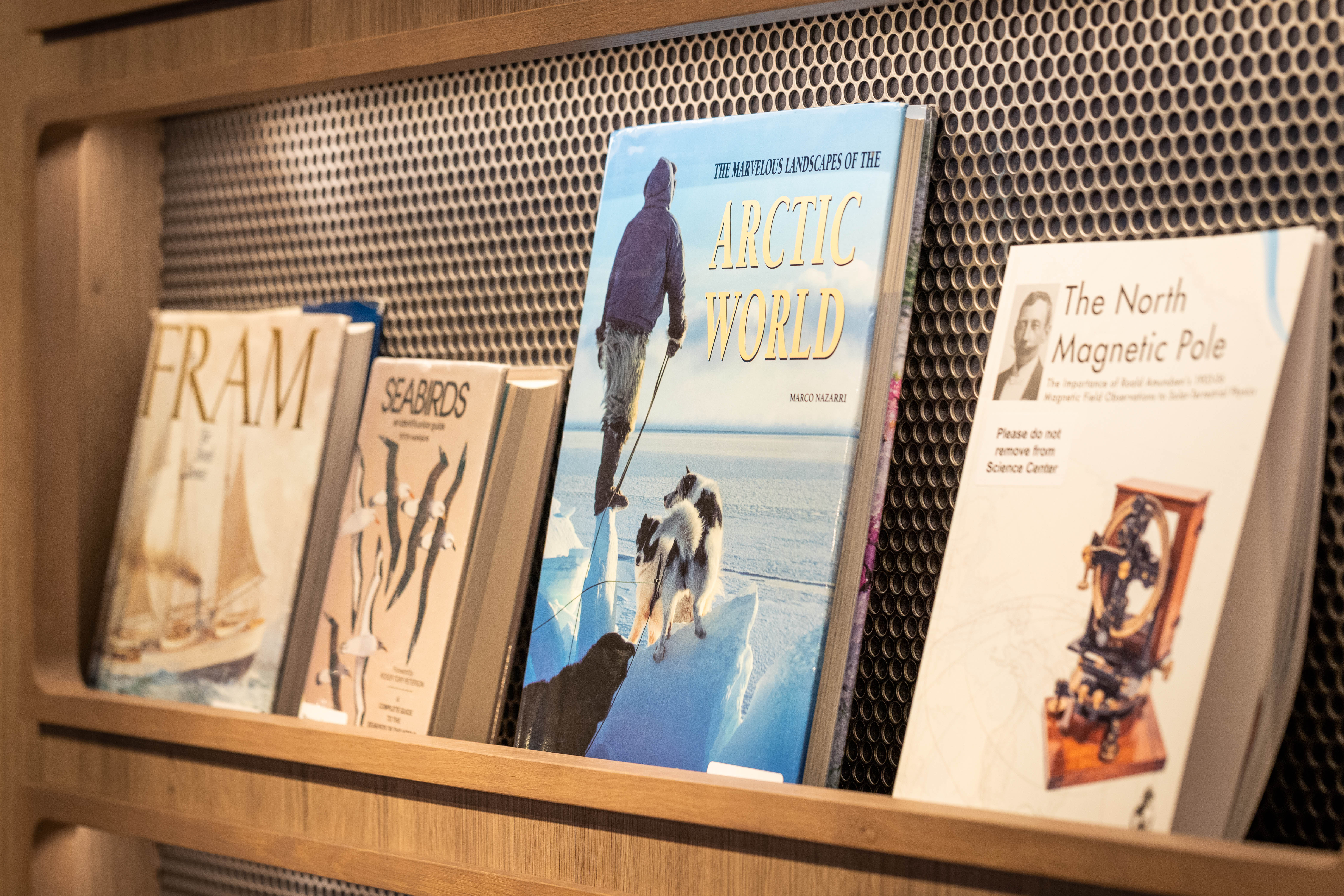
Library
The ship has a small selection of books that are available to guests while on board.
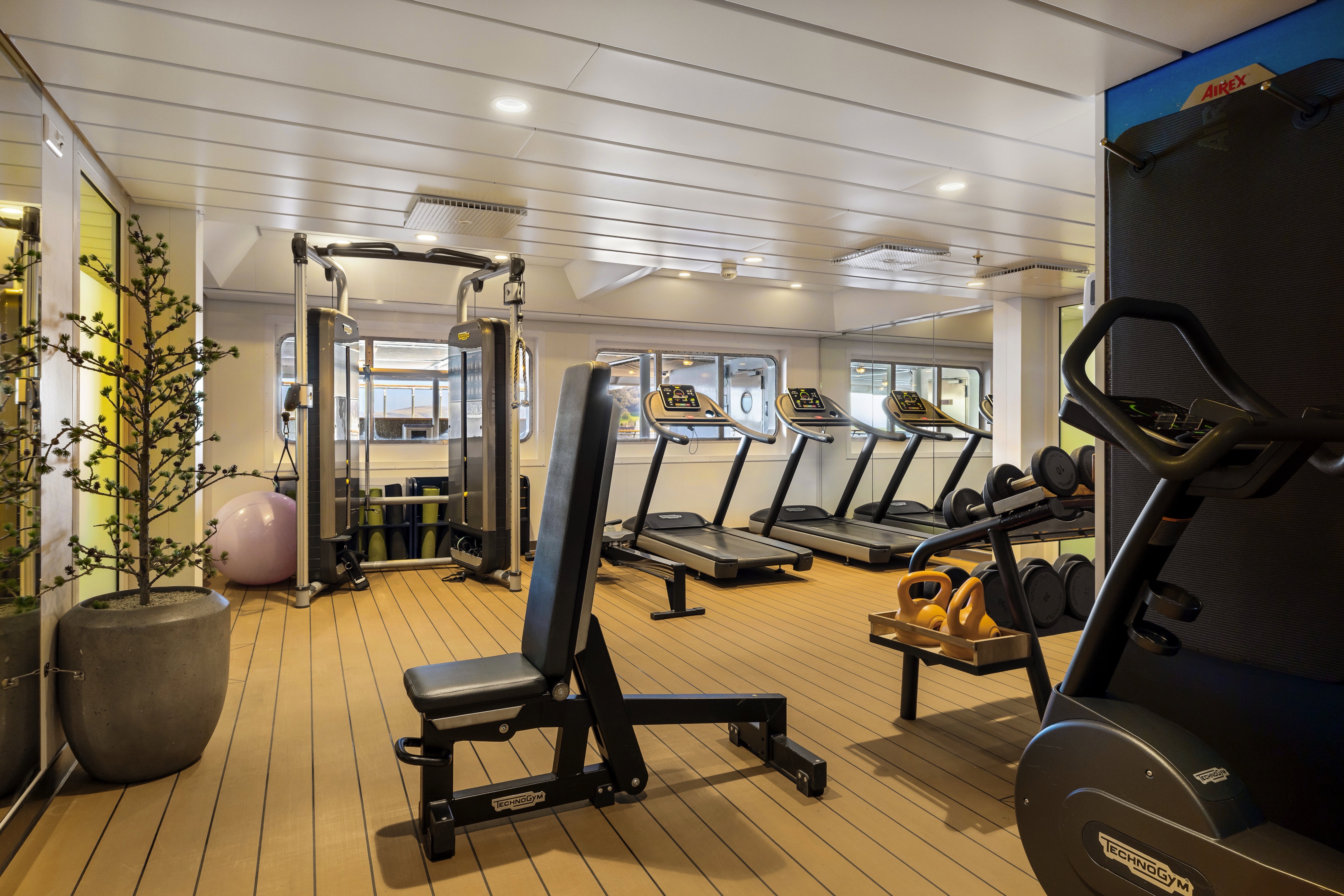
Fitness Centre
Well-equipped and compact, the gym includes treadmills, bikes, weights — and even a ping pong table. Finish your workout with a breath of fresh air on deck.
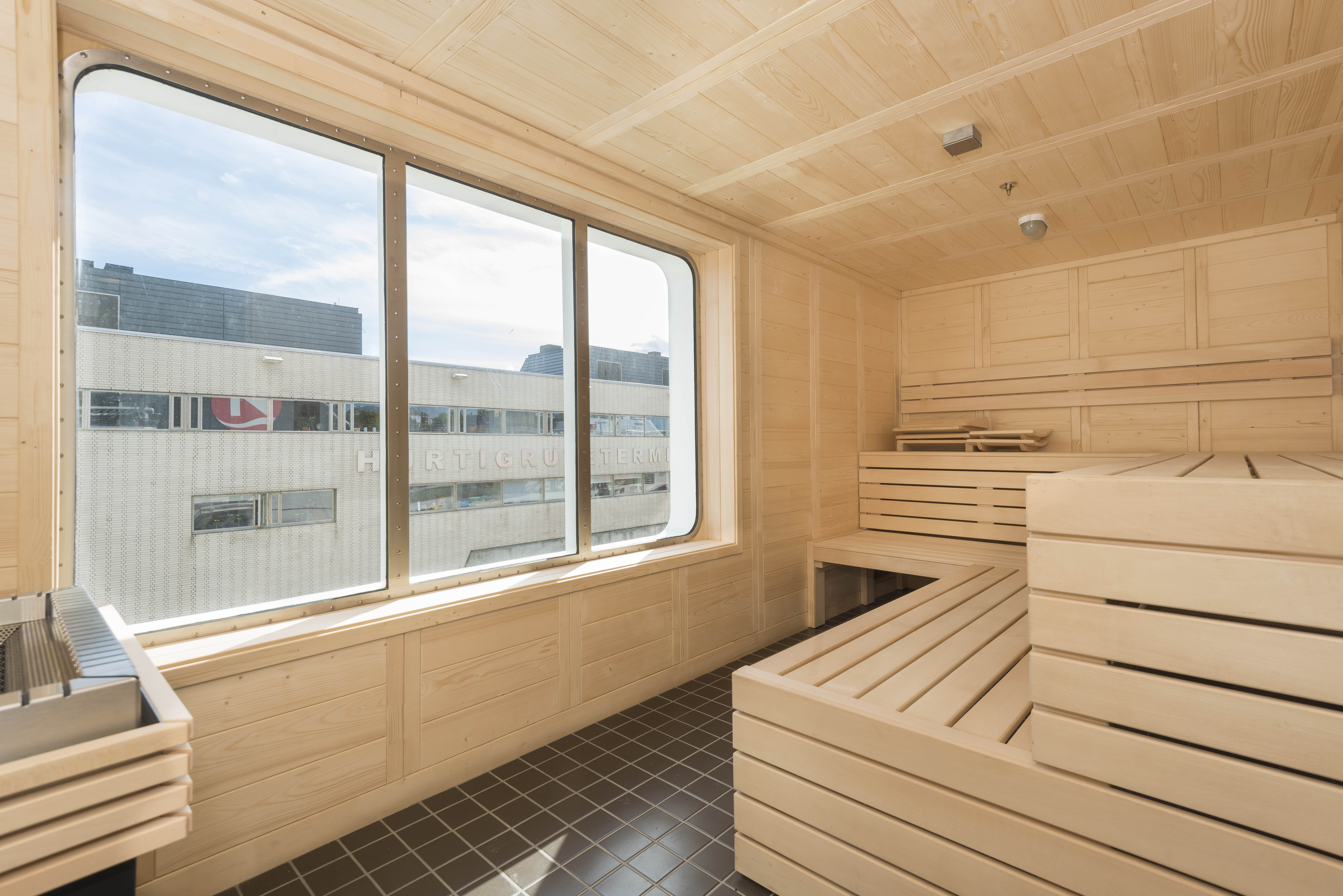
Panoramic Sauna
Perched high on the ship, the sauna offers not just heat but horizon. The ultimate way to warm up and wind down after a day in the elements.
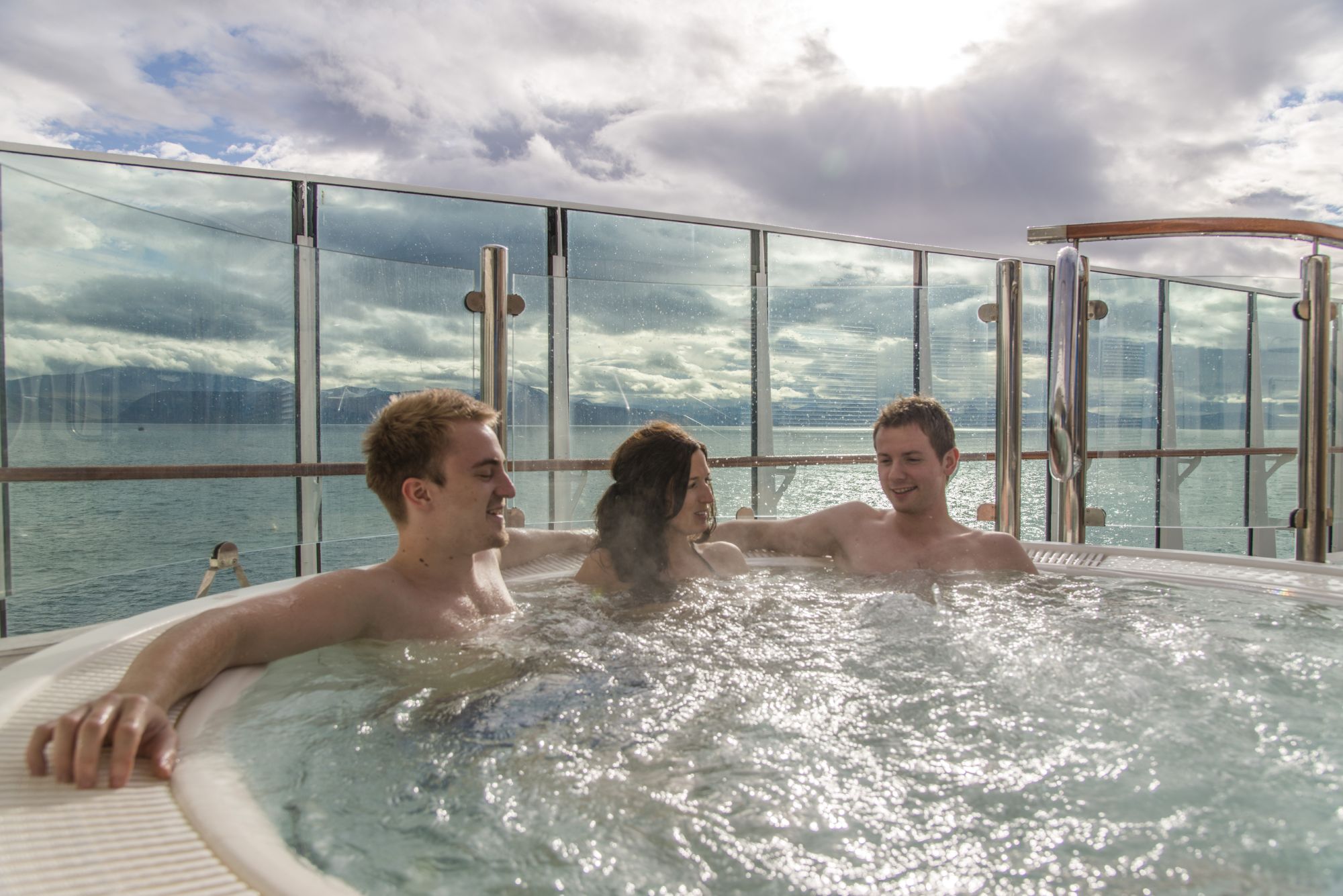
Hot Tub
Two open-air hot tubs, each with space for five, offer a soothing way to soak in the scenery. Ideal for easing tired muscles or simply watching the world roll by.
Aune
MS Spitsbergen’s main restaurant serves three meals a day from generous breakfast buffets, casual lunches, to beautifully plated dinners that spotlight regional dishes.
Brygga Bistro
A casual venue new since 2025 serving snacks and light meals between restaurant hours. Perfect for when you’ve worked up an appetite in between landings.
Expedition Team
The onboard Expedition Team is composed of the Expedition Leader, the Assistant Expedition Leader, the Expedition Coordinator plus several lecturers and experts. Your Expedition Leader will regularly update you on the progress of the trip as well as the different points of interest and wildlife sightings that may occur. Biographies of the Expedition Team can be found on board. In the ships science center, you will be able to find information regarding the trip and book optional excursions and activities.
Shore Excursions
We offer a rich and varied programme of included and optional shore excursions run by third-party providers in many areas we sail to. In many ports, we offer an included excursion, which can be reserved for no additional charge. In some cases, the included excursion can be combined with other optional excursions in the port. Most excursions can be pre-booked, but may also be bookable onboard if capacity remains.
We advise that you book well in advance in order to avoid disappointment due to the excursion being fully booked. Please note that registration is binding, and once on board the Expedition Team will advise you of booking deadlines for excursions still available. Our excursions have English-speaking guides unless otherwise indicated and other languages cannot be guaranteed unless specified. Excursions are subject to change and possible cancellation due to weather conditions. They are also dependent on the number of participants.
In addition, the Expedition Team also arrange a variety of activities during the cruise. These will depend on location and season but may include hiking, snowshoeing, and kayaking. These activities are booked on board and subject to availability.
Science Centre
The Science & Education program brings together like-minded individuals
Covering over 3/4 of the planet’s surface, our oceans are vital in supporting human life on earth and are also home to over 90% of all known wildlife. Despite it influencing everything from our weather to transportation and yes, expedition cruises, very little is known about our blue planet.
This is where HX Expeditions and our fleet of small, state-of-the-art Expedition ships come in. We can reach, explore and collect vital scientific data on some of the planet’s most remote regions. From understanding whale migrations and phytoplankton communities to cloud observations and the Northern Lights, our onboard Science & Education Teams – with the help of you, our guests – captures, analyses, and reports invaluable data to organisations and research projects around the world.
Expedition Launch
Located on Deck 3
Lectures
The ship’s experienced lecturers command an in-depth knowledge of the areas in which we sail. They will conduct, on a regular basis, lectures on topics such as biology, history and geology throughout the voyage. The lecturing schedule will be announced every day in the on board daily program.
Explorer Lounge & Bar
This relaxed space is where the day’s stories gather. With sweeping views and a warm atmosphere, it’s the perfect setting for sharing discoveries, attending briefings, or simply watching the waves roll by.
Shop
Located on Deck 5
Observation Decks
The ship has spacious outdoor areas. They are perfect vantage points to sit back, relax and watch the world go by.
Reception
Located on Deck 5.
Library
The ship has a small selection of books that are available to guests while on board.
Fitness Centre
Well-equipped and compact, the gym includes treadmills, bikes, weights — and even a ping pong table. Finish your workout with a breath of fresh air on deck.
Panoramic Sauna
Perched high on the ship, the sauna offers not just heat but horizon. The ultimate way to warm up and wind down after a day in the elements.
Hot Tub
Two open-air hot tubs, each with space for five, offer a soothing way to soak in the scenery. Ideal for easing tired muscles or simply watching the world roll by.
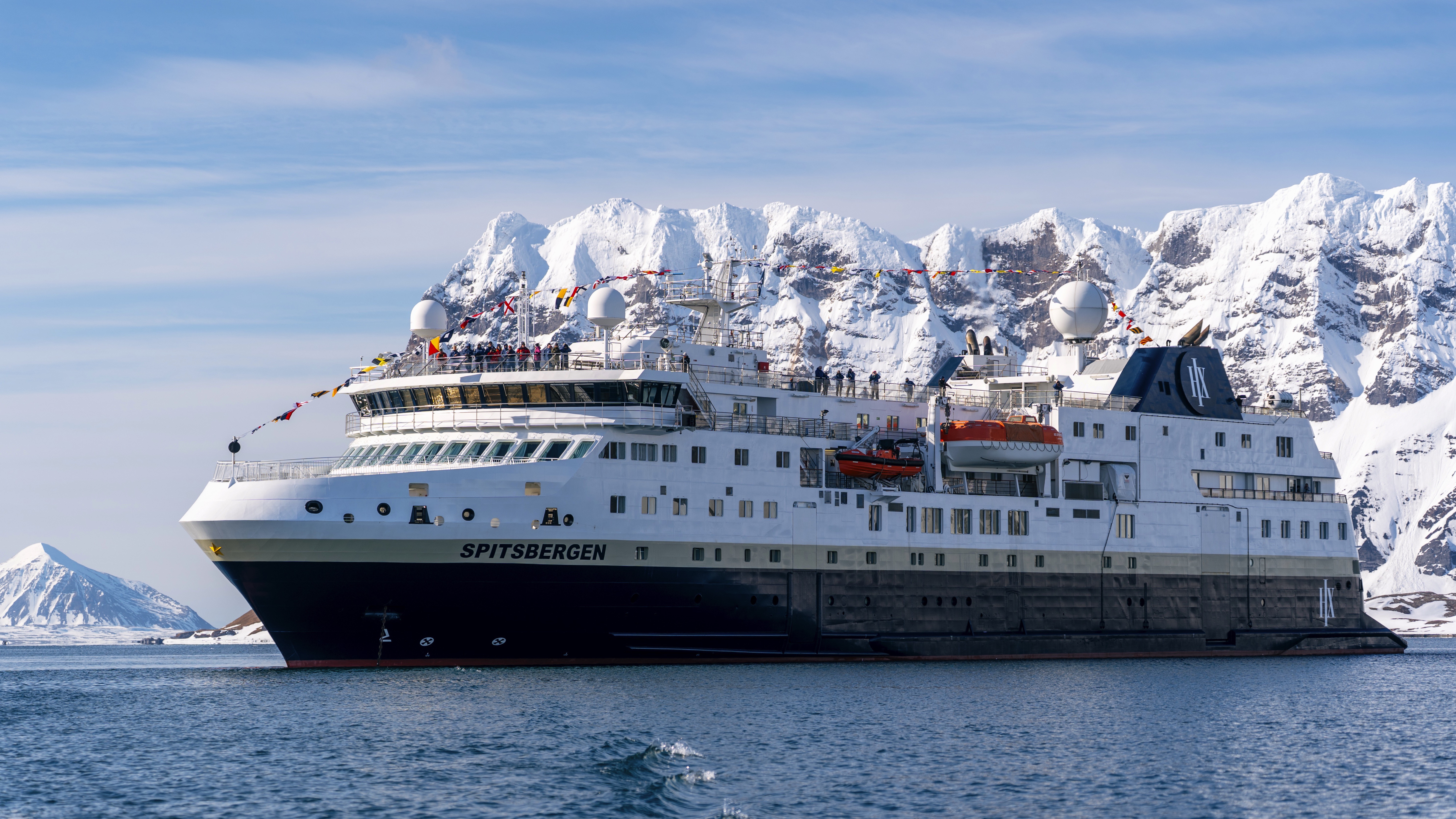
About the Ship
Deck Plans

- Expedition Launch Pad

- Polar Outside Cabins
- Polar Inside Cabins
- Expedition Suites
- Luggage
- Gangway
- Medical Centre
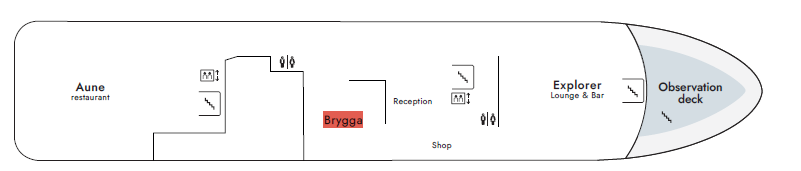
- Aune Restaurant
- Explorer Lounge & Bar
- Reception
- Brygga
- Observation Deck
- Shop
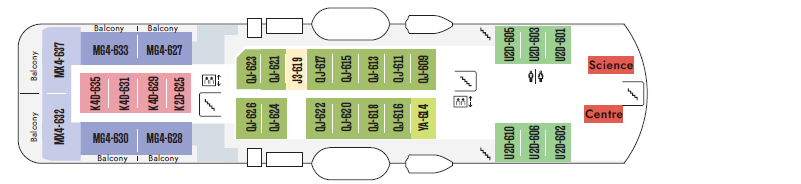
- Explorer Lounge & Bar
- Polar Outside Cabins
- Polar Inside Cabins
- Arctic Superior Cabins
- Expedition Suites
Science Centre
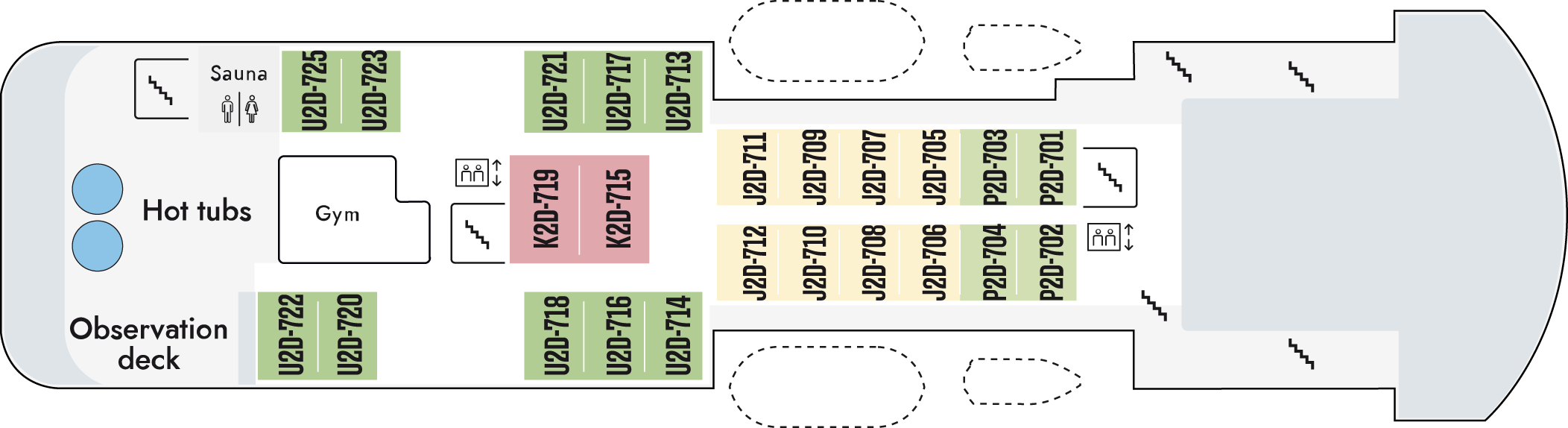
- Hot Tubs
- Sauna
- Gym
- Observation Deck
- Polar Inside Cabins
- Polar Outside Cabins
- Arctic Superior Cabins
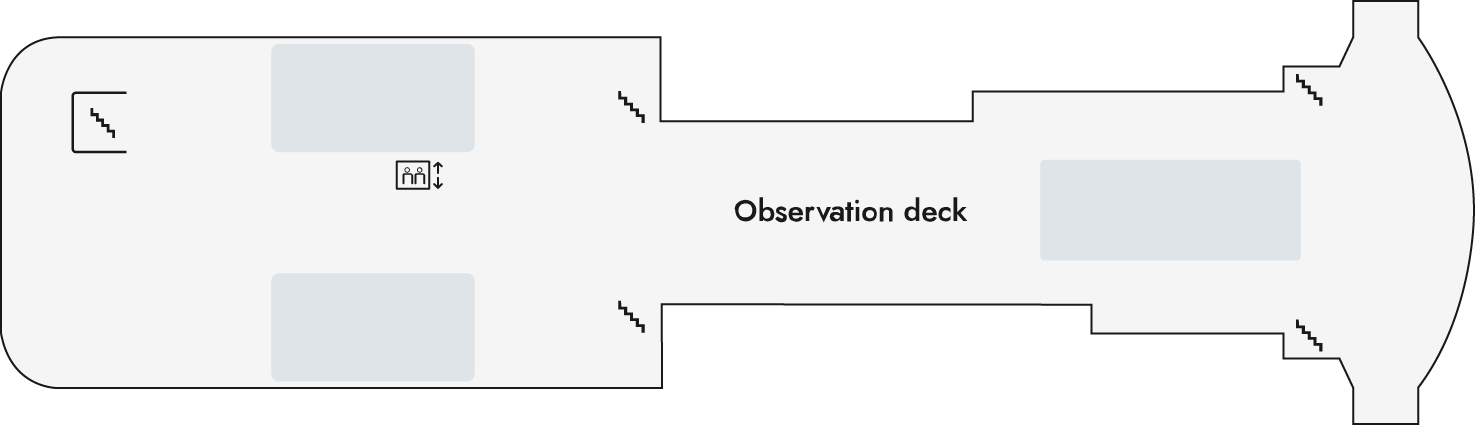
- Observation Deck
- Expedition Launch Pad
- Polar Outside Cabins
- Polar Inside Cabins
- Expedition Suites
- Luggage
- Gangway
- Medical Centre
- Aune Restaurant
- Explorer Lounge & Bar
- Reception
- Brygga
- Observation Deck
- Shop
- Explorer Lounge & Bar
- Polar Outside Cabins
- Polar Inside Cabins
- Arctic Superior Cabins
- Expedition Suites
Science Centre
- Hot Tubs
- Sauna
- Gym
- Observation Deck
- Polar Inside Cabins
- Polar Outside Cabins
- Arctic Superior Cabins
- Observation Deck