Featured Cabins
Itinerary
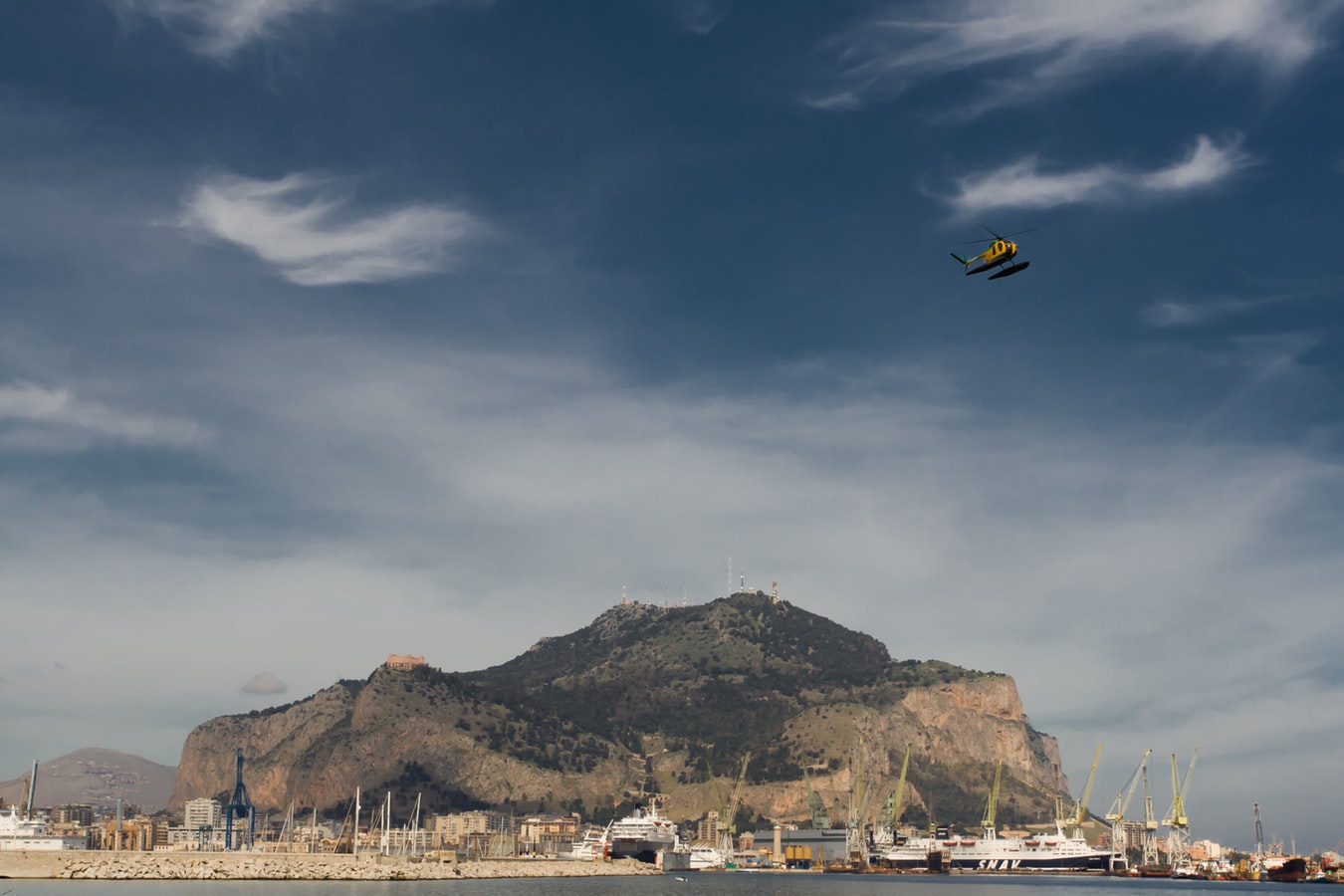
Palermo, Italy
Once the intellectual capital of southern Europe, Palermo has always been at the crossroads of civilization. Favorably situated on a crescent-shaped bay at the foot of Monte Pellegrino, it has attracted almost every culture touching the Mediterranean world. To Palermo’s credit, it has absorbed these diverse cultures into a unique personality that is at once Arab and Christian, Byzantine and Roman, Norman and Italian. The city’s heritage encompasses all of Sicily’s varied ages, but its distinctive aspect is its Arab-Norman identity, an improbable marriage that, mixed in with Byzantine and Jewish elements, created some resplendent works of art. No less noteworthy than the architecture is Palermo’s chaotic vitality, on display at some of Italy’s most vibrant outdoor markets, public squares, street bazaars, and food vendors, and above all in its grand climax of Italy’s most spectacular passeggiata (the leisurely social stroll along the principal thoroughfare).
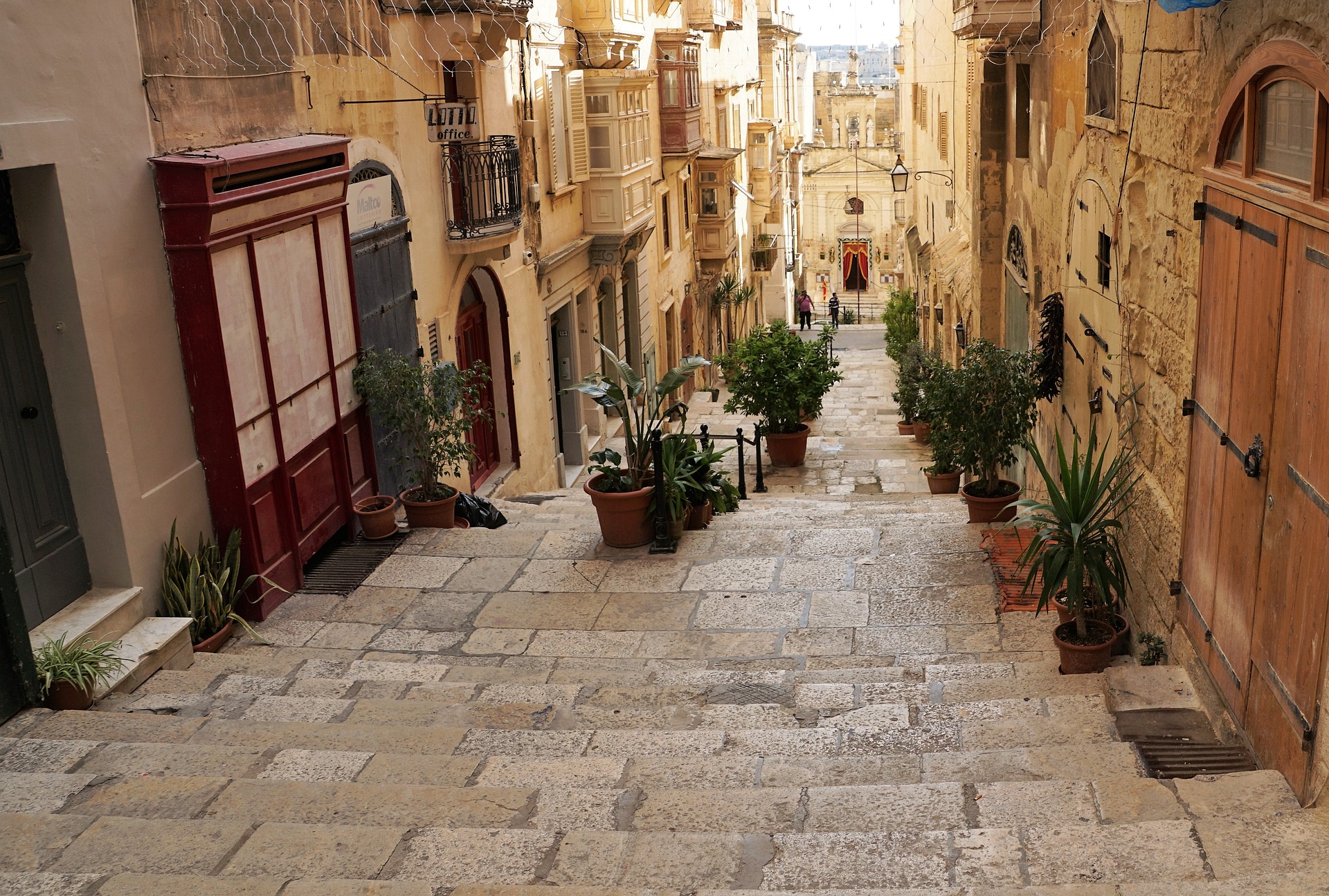
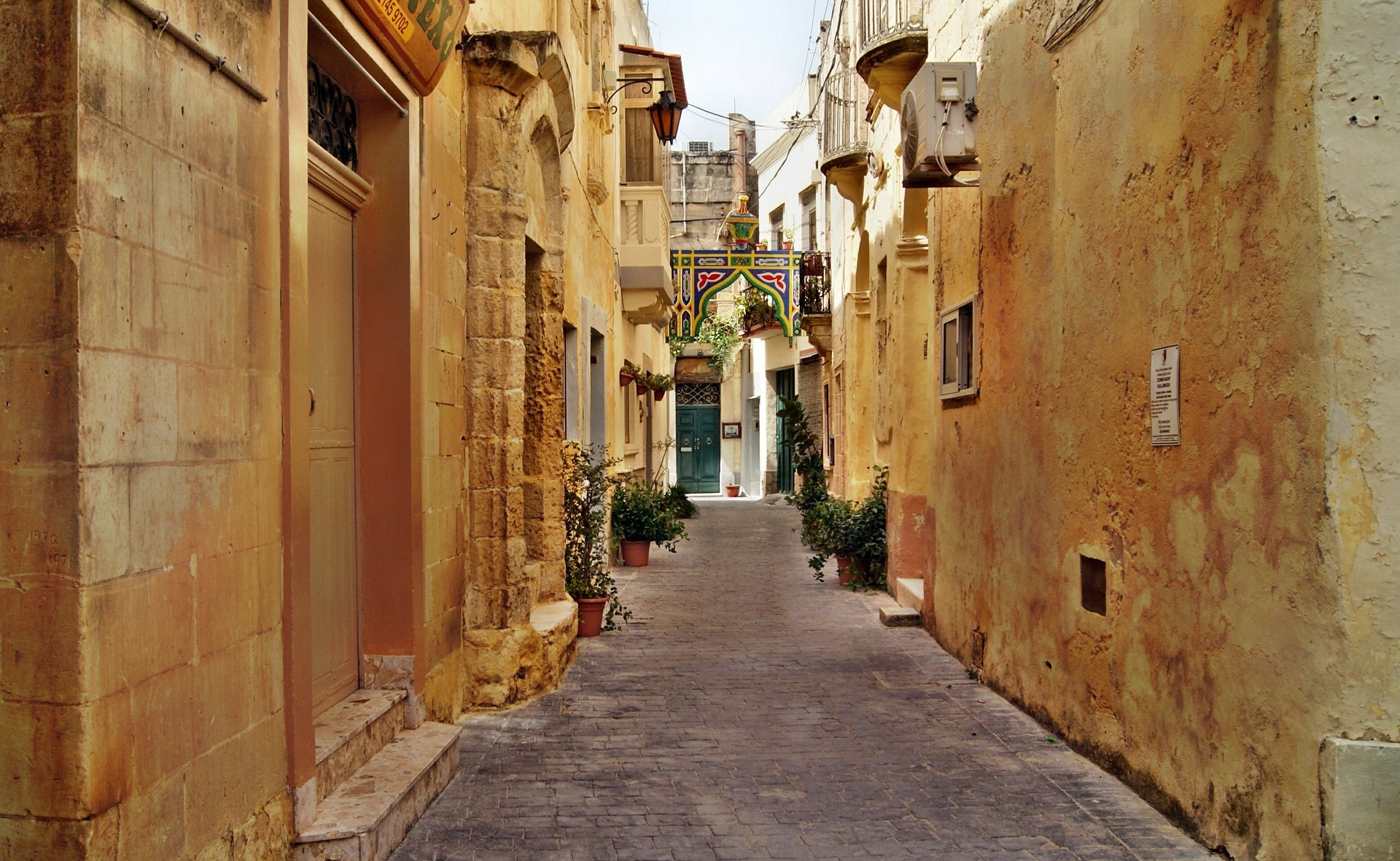
Valletta, Malta
Malta’s capital, the minicity of Valletta, has ornate palaces and museums protected by massive fortifications of honey-color limestone. Houses along the narrow streets have overhanging wooden balconies for people-watching from indoors. Generations ago they gave housebound women a window on the world of the street. The main entrance to town is through the City Gate (where all bus routes end), which leads onto Triq Repubblika (Republic Street), the spine of the grid-pattern city and the main shopping street. Triq Mercante (Merchant Street) parallels Repubblika to the east and is also good for strolling. From these two streets, cross streets descend toward the water; some are stepped. Valletta’s compactness makes it ideal to explore on foot. City Gate and the upper part of Valletta are experiencing vast redevelopment that includes a new Parliament Building and open-air performance venue. The complex, completed mid-2013, has numerous pedestrian detours in place along with building noise and dust. Before setting out along Republic Street, stop at the tourist information office on Merchant Street for maps and brochures.
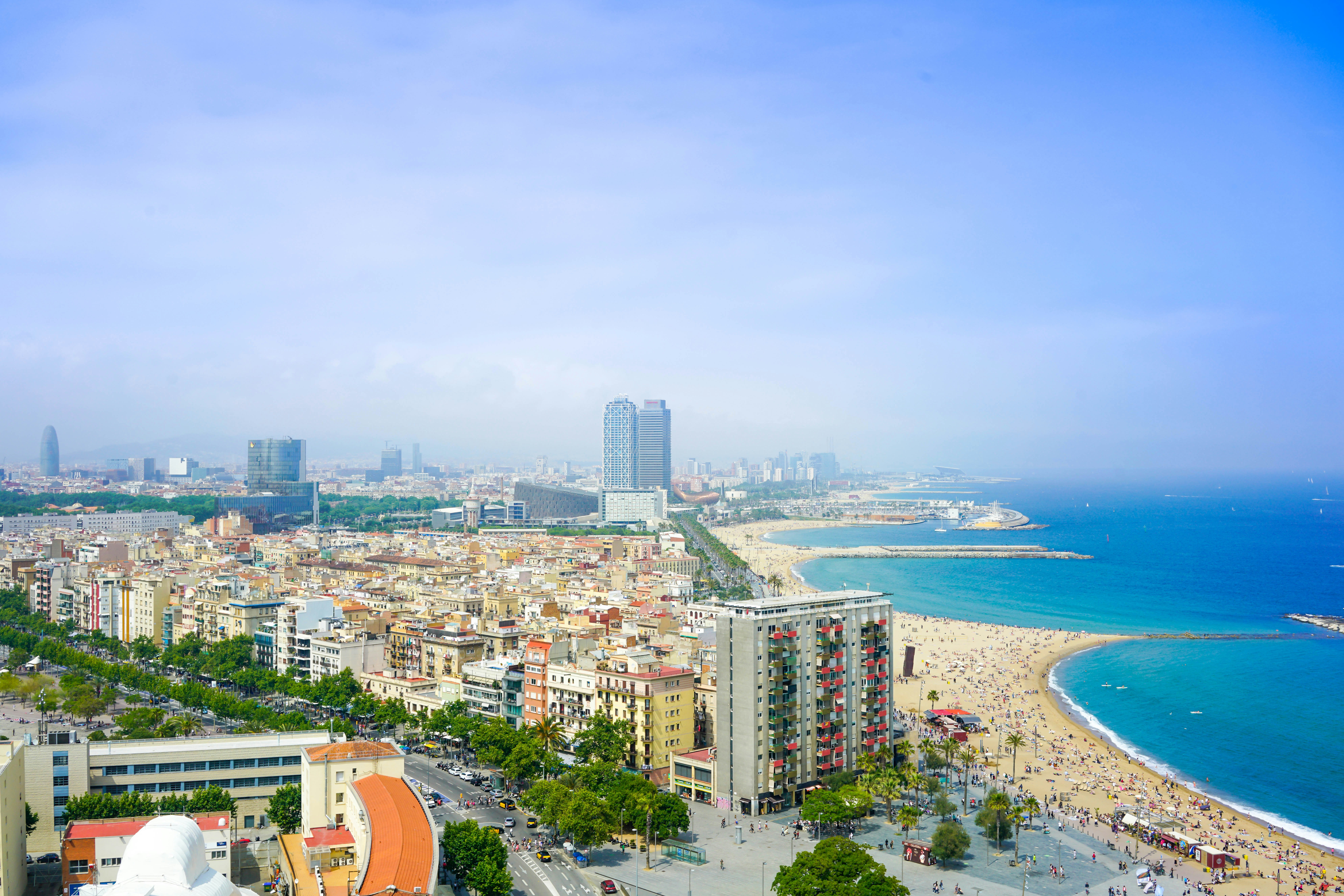
Barcelona, Spain
The infinite variety of street life, the nooks and crannies of the medieval Barri Gòtic, the ceramic tile and stained glass of Art Nouveau facades, the art and music, the throb of street life, the food (ah, the food!)—one way or another, Barcelona will find a way to get your full attention. The capital of Catalonia is a banquet for the senses, with its beguiling mix of ancient and modern architecture, tempting cafés and markets, and sun-drenched Mediterranean beaches. A stroll along La Rambla and through waterfront Barceloneta, as well as a tour of Gaudí’s majestic Sagrada Famíliaand his other unique creations, are part of a visit to Spain’s second-largest city. Modern art museums and chic shops call for attention, too. Barcelona’s vibe stays lively well into the night, when you can linger over regional wine and cuisine at buzzing tapas bars.
Marseille, France
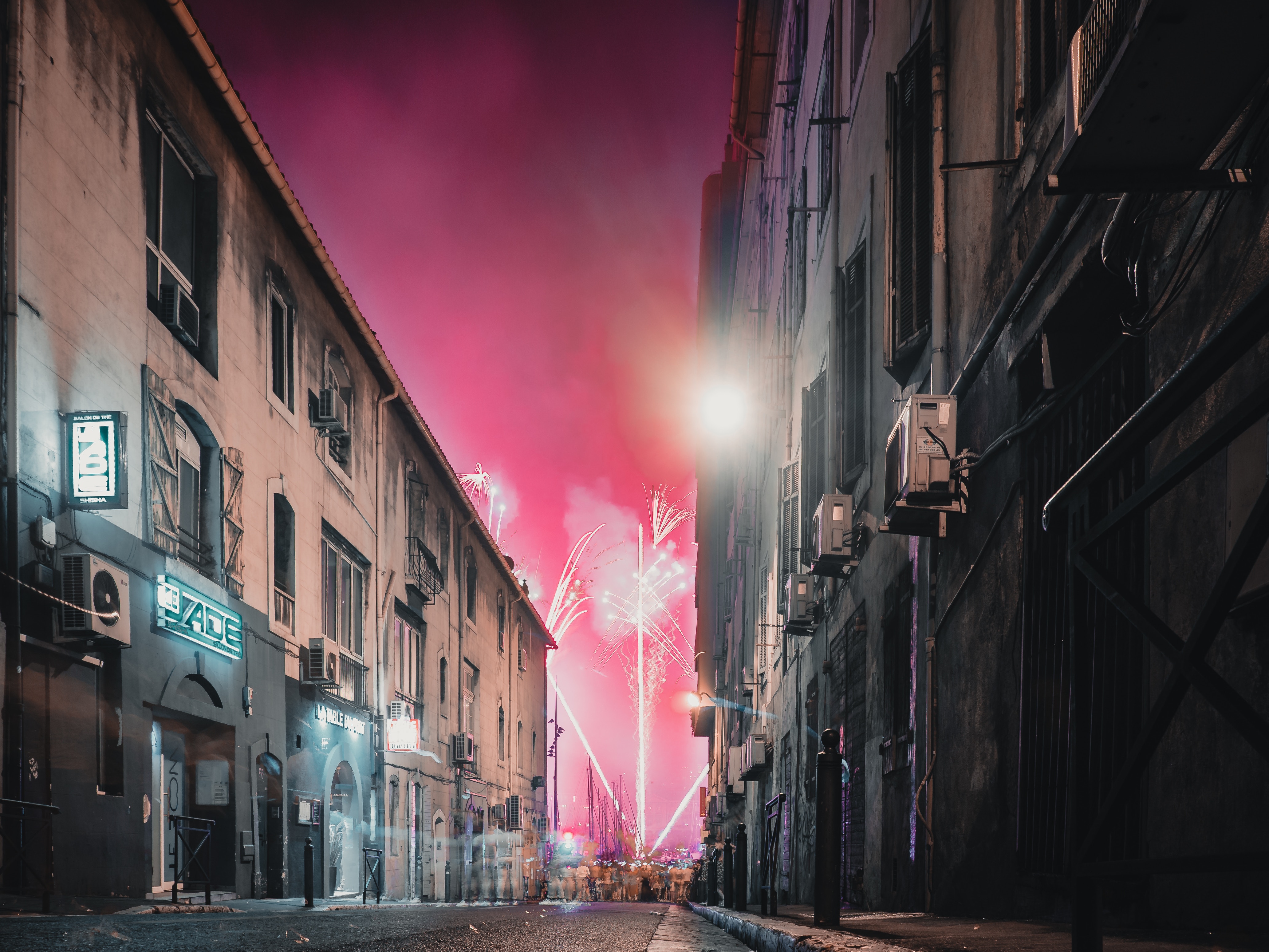
Since being designated a European Capital of Culture for 2013, with an estimated €660 million of funding in the bargain, Marseille has been in the throes of an extraordinary transformation, with no fewer than five major new arts centers, a beautifully refurbished port, revitalized neighborhoods, and a slew of new shops and restaurants. Once the underdog, this time-burnished city is now welcoming an influx of weekend tourists who have colonized entire neighborhoods and transformed them into elegant pieds-à-terre (or should we say, mer). The second-largest city in France, Marseille is one of Europe’s most vibrant destinations. Feisty and fond of broad gestures, it is also as complicated and as cosmopolitan now as it was when a band of Phoenician Greeks first sailed into the harbor that is today’s Vieux Port in 600 BC. Legend has it that on that same day a local chieftain’s daughter, Gyptis, needed to choose a husband, and her wandering eyes settled on the Greeks’ handsome commander Protis. Her dowry brought land near the mouth of the Rhône, where the Greeks founded Massalia, the most important Continental shipping port in antiquity. The port flourished for some 500 years as a typical Greek city, enjoying the full flush of classical culture, its gods, its democratic political system, its sports and theater, and its naval prowess. Caesar changed all that, besieging the city in 49 BC and seizing most of its colonies. In 1214 Marseille was seized again, this time by Charles d’Anjou, and was later annexed to France by Henri IV in 1481, but it was not until Louis XIV took the throne that the biggest transformations of the port began; he pulled down the city walls in 1666 and expanded the port to the Rive Neuve (New Riverbank). The city was devastated by plague in 1720, losing more than half its population. By the time of the Revolution, Marseille was on the rebound once again, with industries of soap manufacturing and oil processing flourishing, encouraging a wave of immigration from Provence and Italy. With the opening of the Suez Canal in 1869, Marseille became the greatest boomtown in 19th-century Europe. With a large influx of immigrants from areas as exotic as Tangiers, the city quickly acquired the multicultural population it maintains to this day.
Livorno, Italy
Livorno is a gritty city with a long and interesting history. In the early Middle Ages it alternately belonged to Pisa and Genoa. In 1421 Florence, seeking access to the sea, bought it. Cosimo I (1519–74) started construction of the harbor in 1571, putting Livorno on the map. After Ferdinando I de’ Medici (1549–1609) proclaimed Livorno a free city, it became a haven for people suffering from religious persecution; Roman Catholics from England and Jews and Moors from Spain and Portugal, among others, settled here. The Quattro Mori (Four Moors), also known as the Monument to Ferdinando I, commemorates this. (The statue of Ferdinando I dates from 1595, the bronze Moors by Pietro Tacca from the 1620s.)In the following centuries, and particularly in the 18th, Livorno boomed as a port. In the 19th century the town drew a host of famous Britons passing through on their grand tours. Its prominence continued up to World War II, when it was heavily bombed. Much of the town’s architecture, therefore, postdates the war, and it’s somewhat difficult to imagine what it might have looked like before. Livorno has recovered from the war, however, as it’s become a huge point of departure for container ships, as well as the only spot in Tuscany for cruise ships to dock for the day.Most of Livorno’s artistic treasures date from the 17th century and aren’t all that interesting unless you dote on obscure baroque artists. Livorno’s most famous native artist, Amedeo Modigliani (1884–1920), was of much more recent vintage. Sadly, there’s no notable work by him in his hometown.There may not be much in the way of art, but it’s still worth strolling around the city. The Mercato Nuovo, which has been around since 1894, sells all sorts of fruits, vegetables, grains, meat, and fish. Outdoor markets nearby are also chock-full of local color. The presence of Camp Darby, an American military base just outside town, accounts for the availability of many American products.If you have time, Livorno is worth a stop for lunch or dinner at the very least.
Cagliari, Italy
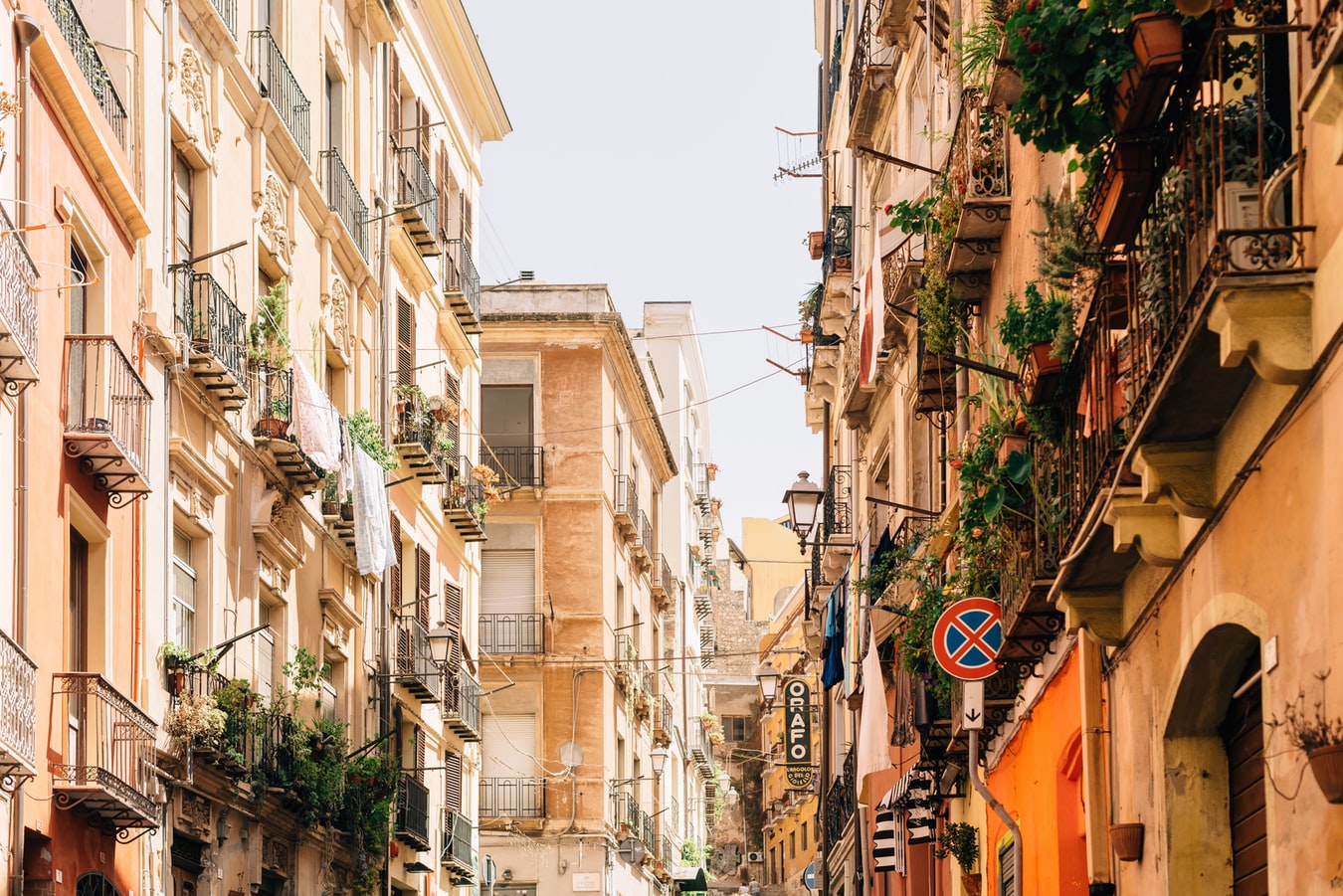
Known in Sardinia as Casteddu, the island’s capital has steep streets and impressive Italianate architecture, from modern to medieval. This city of nearly 160,000 people is characterized by a busy commercial center and waterfront with broad avenues and arched arcades, as well as by the typically narrow streets of the old hilltop citadel (called, simply, “Castello”). The Museo Archeologico makes a good starting point to a visit. The imposing Bastione di Saint Remy and Mercato di San Benedetto (one of the best fish markets in Italy) are both musts.
Palermo, Italy
Once the intellectual capital of southern Europe, Palermo has always been at the crossroads of civilization. Favorably situated on a crescent-shaped bay at the foot of Monte Pellegrino, it has attracted almost every culture touching the Mediterranean world. To Palermo’s credit, it has absorbed these diverse cultures into a unique personality that is at once Arab and Christian, Byzantine and Roman, Norman and Italian. The city’s heritage encompasses all of Sicily’s varied ages, but its distinctive aspect is its Arab-Norman identity, an improbable marriage that, mixed in with Byzantine and Jewish elements, created some resplendent works of art. No less noteworthy than the architecture is Palermo’s chaotic vitality, on display at some of Italy’s most vibrant outdoor markets, public squares, street bazaars, and food vendors, and above all in its grand climax of Italy’s most spectacular passeggiata (the leisurely social stroll along the principal thoroughfare).
Valletta, Malta
Malta’s capital, the minicity of Valletta, has ornate palaces and museums protected by massive fortifications of honey-color limestone. Houses along the narrow streets have overhanging wooden balconies for people-watching from indoors. Generations ago they gave housebound women a window on the world of the street. The main entrance to town is through the City Gate (where all bus routes end), which leads onto Triq Repubblika (Republic Street), the spine of the grid-pattern city and the main shopping street. Triq Mercante (Merchant Street) parallels Repubblika to the east and is also good for strolling. From these two streets, cross streets descend toward the water; some are stepped. Valletta’s compactness makes it ideal to explore on foot. City Gate and the upper part of Valletta are experiencing vast redevelopment that includes a new Parliament Building and open-air performance venue. The complex, completed mid-2013, has numerous pedestrian detours in place along with building noise and dust. Before setting out along Republic Street, stop at the tourist information office on Merchant Street for maps and brochures.
Barcelona, Spain
The infinite variety of street life, the nooks and crannies of the medieval Barri Gòtic, the ceramic tile and stained glass of Art Nouveau facades, the art and music, the throb of street life, the food (ah, the food!)—one way or another, Barcelona will find a way to get your full attention. The capital of Catalonia is a banquet for the senses, with its beguiling mix of ancient and modern architecture, tempting cafés and markets, and sun-drenched Mediterranean beaches. A stroll along La Rambla and through waterfront Barceloneta, as well as a tour of Gaudí’s majestic Sagrada Famíliaand his other unique creations, are part of a visit to Spain’s second-largest city. Modern art museums and chic shops call for attention, too. Barcelona’s vibe stays lively well into the night, when you can linger over regional wine and cuisine at buzzing tapas bars.
Marseille, France
Since being designated a European Capital of Culture for 2013, with an estimated €660 million of funding in the bargain, Marseille has been in the throes of an extraordinary transformation, with no fewer than five major new arts centers, a beautifully refurbished port, revitalized neighborhoods, and a slew of new shops and restaurants. Once the underdog, this time-burnished city is now welcoming an influx of weekend tourists who have colonized entire neighborhoods and transformed them into elegant pieds-à-terre (or should we say, mer). The second-largest city in France, Marseille is one of Europe’s most vibrant destinations. Feisty and fond of broad gestures, it is also as complicated and as cosmopolitan now as it was when a band of Phoenician Greeks first sailed into the harbor that is today’s Vieux Port in 600 BC. Legend has it that on that same day a local chieftain’s daughter, Gyptis, needed to choose a husband, and her wandering eyes settled on the Greeks’ handsome commander Protis. Her dowry brought land near the mouth of the Rhône, where the Greeks founded Massalia, the most important Continental shipping port in antiquity. The port flourished for some 500 years as a typical Greek city, enjoying the full flush of classical culture, its gods, its democratic political system, its sports and theater, and its naval prowess. Caesar changed all that, besieging the city in 49 BC and seizing most of its colonies. In 1214 Marseille was seized again, this time by Charles d’Anjou, and was later annexed to France by Henri IV in 1481, but it was not until Louis XIV took the throne that the biggest transformations of the port began; he pulled down the city walls in 1666 and expanded the port to the Rive Neuve (New Riverbank). The city was devastated by plague in 1720, losing more than half its population. By the time of the Revolution, Marseille was on the rebound once again, with industries of soap manufacturing and oil processing flourishing, encouraging a wave of immigration from Provence and Italy. With the opening of the Suez Canal in 1869, Marseille became the greatest boomtown in 19th-century Europe. With a large influx of immigrants from areas as exotic as Tangiers, the city quickly acquired the multicultural population it maintains to this day.
Livorno, Italy
Livorno is a gritty city with a long and interesting history. In the early Middle Ages it alternately belonged to Pisa and Genoa. In 1421 Florence, seeking access to the sea, bought it. Cosimo I (1519–74) started construction of the harbor in 1571, putting Livorno on the map. After Ferdinando I de’ Medici (1549–1609) proclaimed Livorno a free city, it became a haven for people suffering from religious persecution; Roman Catholics from England and Jews and Moors from Spain and Portugal, among others, settled here. The Quattro Mori (Four Moors), also known as the Monument to Ferdinando I, commemorates this. (The statue of Ferdinando I dates from 1595, the bronze Moors by Pietro Tacca from the 1620s.)In the following centuries, and particularly in the 18th, Livorno boomed as a port. In the 19th century the town drew a host of famous Britons passing through on their grand tours. Its prominence continued up to World War II, when it was heavily bombed. Much of the town’s architecture, therefore, postdates the war, and it’s somewhat difficult to imagine what it might have looked like before. Livorno has recovered from the war, however, as it’s become a huge point of departure for container ships, as well as the only spot in Tuscany for cruise ships to dock for the day.Most of Livorno’s artistic treasures date from the 17th century and aren’t all that interesting unless you dote on obscure baroque artists. Livorno’s most famous native artist, Amedeo Modigliani (1884–1920), was of much more recent vintage. Sadly, there’s no notable work by him in his hometown.There may not be much in the way of art, but it’s still worth strolling around the city. The Mercato Nuovo, which has been around since 1894, sells all sorts of fruits, vegetables, grains, meat, and fish. Outdoor markets nearby are also chock-full of local color. The presence of Camp Darby, an American military base just outside town, accounts for the availability of many American products.If you have time, Livorno is worth a stop for lunch or dinner at the very least.
Cagliari, Italy
Known in Sardinia as Casteddu, the island’s capital has steep streets and impressive Italianate architecture, from modern to medieval. This city of nearly 160,000 people is characterized by a busy commercial center and waterfront with broad avenues and arched arcades, as well as by the typically narrow streets of the old hilltop citadel (called, simply, “Castello”). The Museo Archeologico makes a good starting point to a visit. The imposing Bastione di Saint Remy and Mercato di San Benedetto (one of the best fish markets in Italy) are both musts.
Palermo, Italy
Once the intellectual capital of southern Europe, Palermo has always been at the crossroads of civilization. Favorably situated on a crescent-shaped bay at the foot of Monte Pellegrino, it has attracted almost every culture touching the Mediterranean world. To Palermo’s credit, it has absorbed these diverse cultures into a unique personality that is at once Arab and Christian, Byzantine and Roman, Norman and Italian. The city’s heritage encompasses all of Sicily’s varied ages, but its distinctive aspect is its Arab-Norman identity, an improbable marriage that, mixed in with Byzantine and Jewish elements, created some resplendent works of art. No less noteworthy than the architecture is Palermo’s chaotic vitality, on display at some of Italy’s most vibrant outdoor markets, public squares, street bazaars, and food vendors, and above all in its grand climax of Italy’s most spectacular passeggiata (the leisurely social stroll along the principal thoroughfare).
Palermo, Italy
Once the intellectual capital of southern Europe, Palermo has always been at the crossroads of civilization. Favorably situated on a crescent-shaped bay at the foot of Monte Pellegrino, it has attracted almost every culture touching the Mediterranean world. To Palermo’s credit, it has absorbed these diverse cultures into a unique personality that is at once Arab and Christian, Byzantine and Roman, Norman and Italian. The city’s heritage encompasses all of Sicily’s varied ages, but its distinctive aspect is its Arab-Norman identity, an improbable marriage that, mixed in with Byzantine and Jewish elements, created some resplendent works of art. No less noteworthy than the architecture is Palermo’s chaotic vitality, on display at some of Italy’s most vibrant outdoor markets, public squares, street bazaars, and food vendors, and above all in its grand climax of Italy’s most spectacular passeggiata (the leisurely social stroll along the principal thoroughfare).
Cabin Options
Deluxe Interior
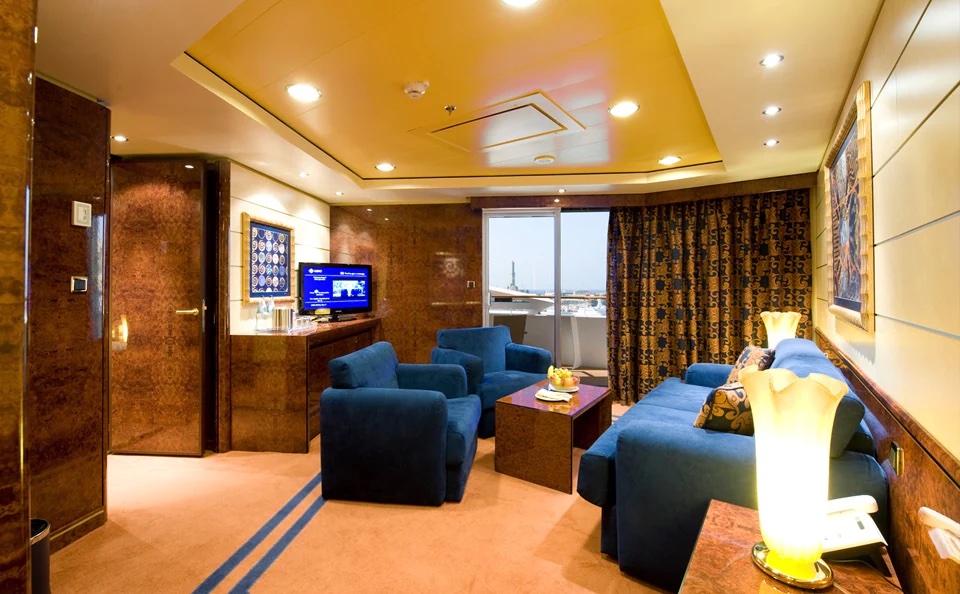
MSC Yacht Club Executive and Family Suite with Balcony
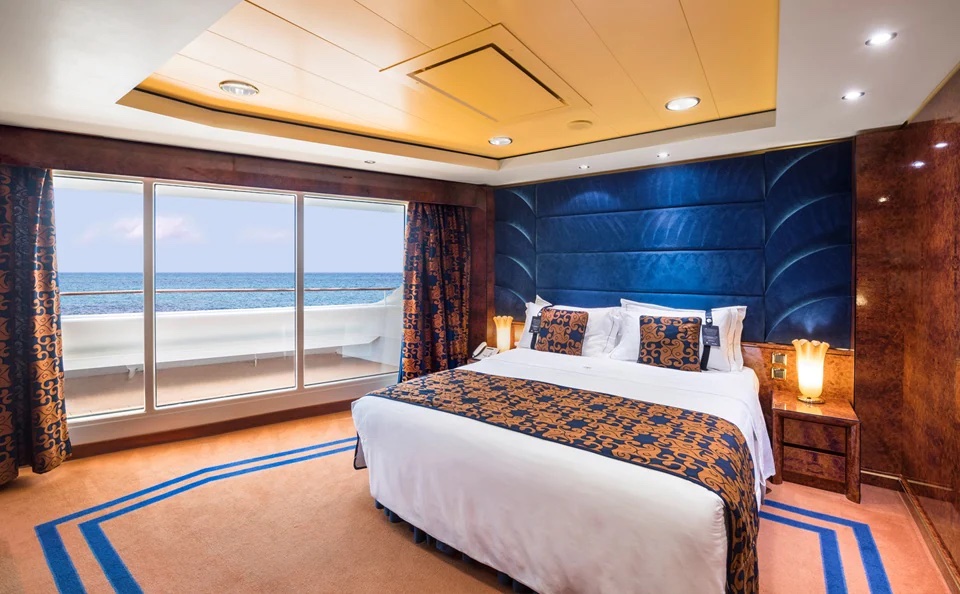
MSC Yacht Club Executive & Family Suite
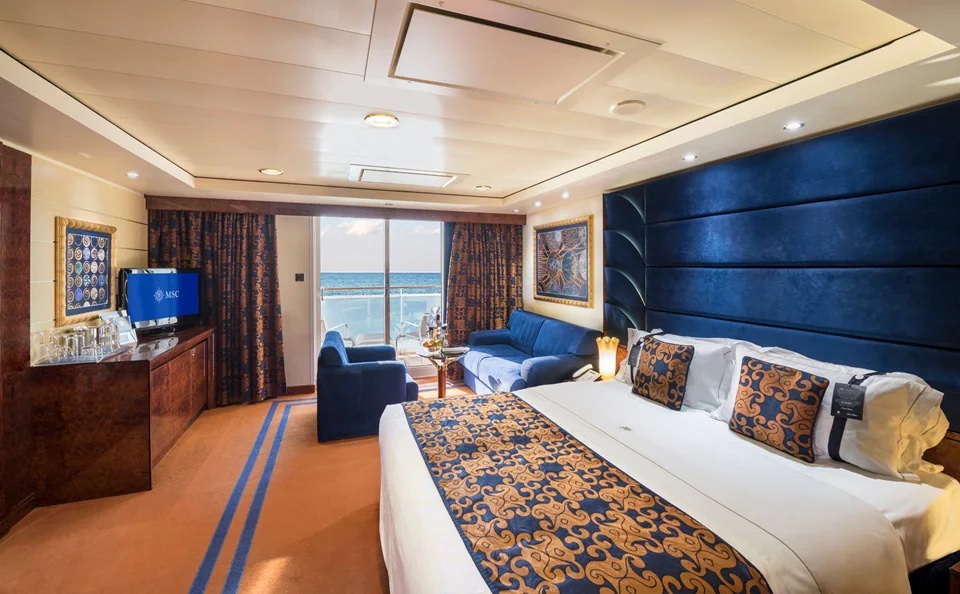
MSC Yacht Club Grand Suite
MSC Yacht Club Deluxe Suite
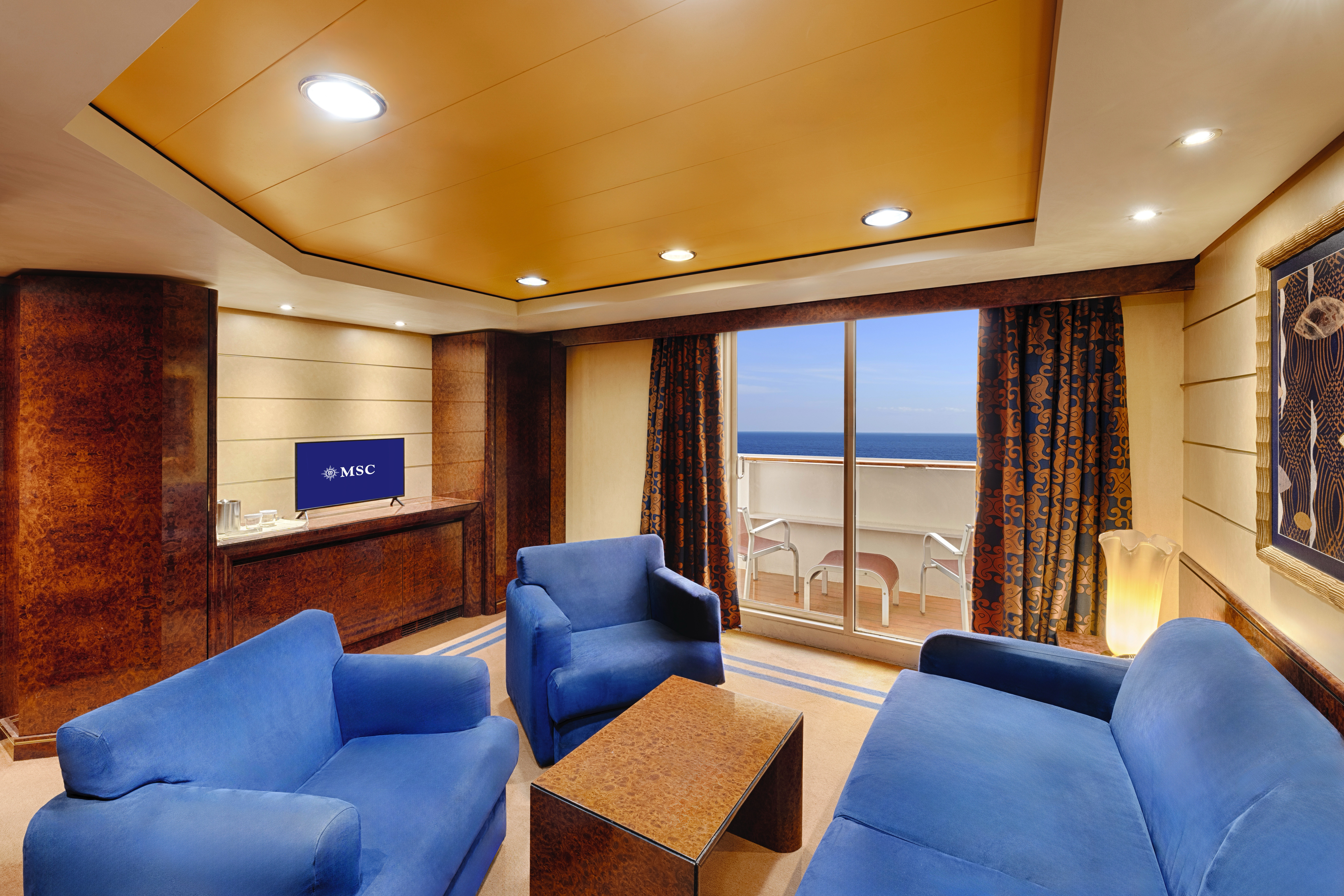
Grand Suite Aurea
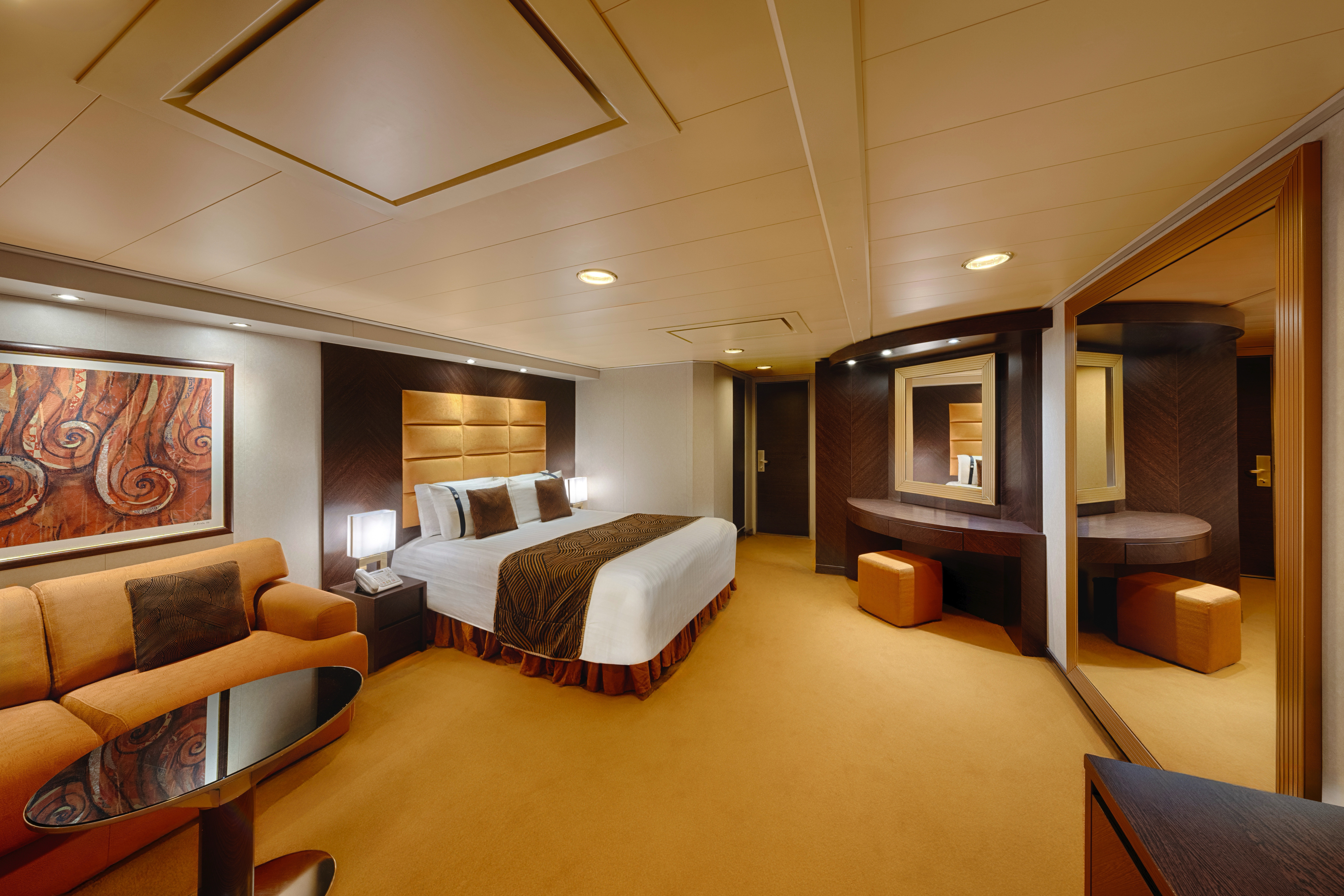
Premium Suite Aurea
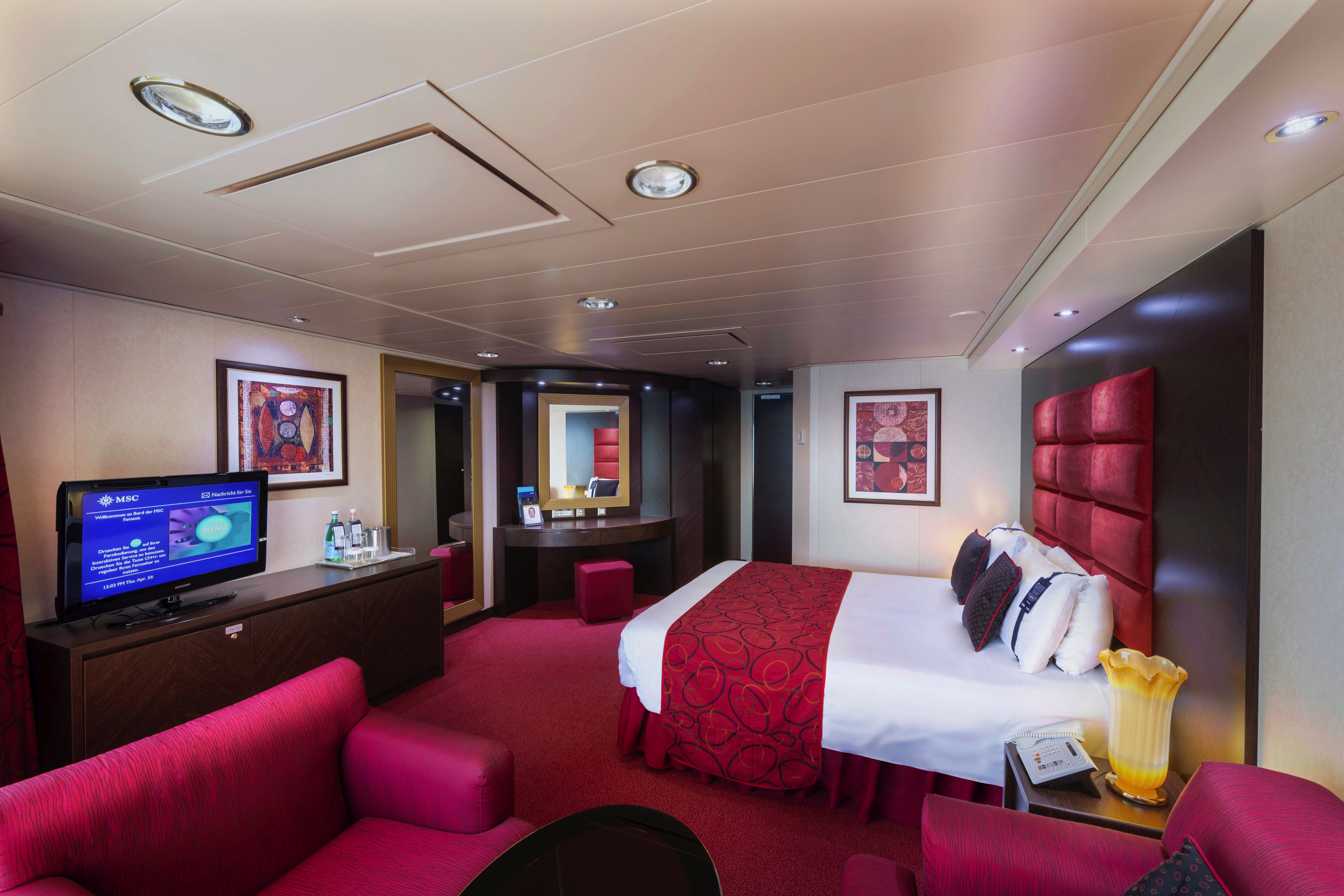
Premium Suite Aurea with Sealed Window
Junior Suite Aurea With Sealed Window
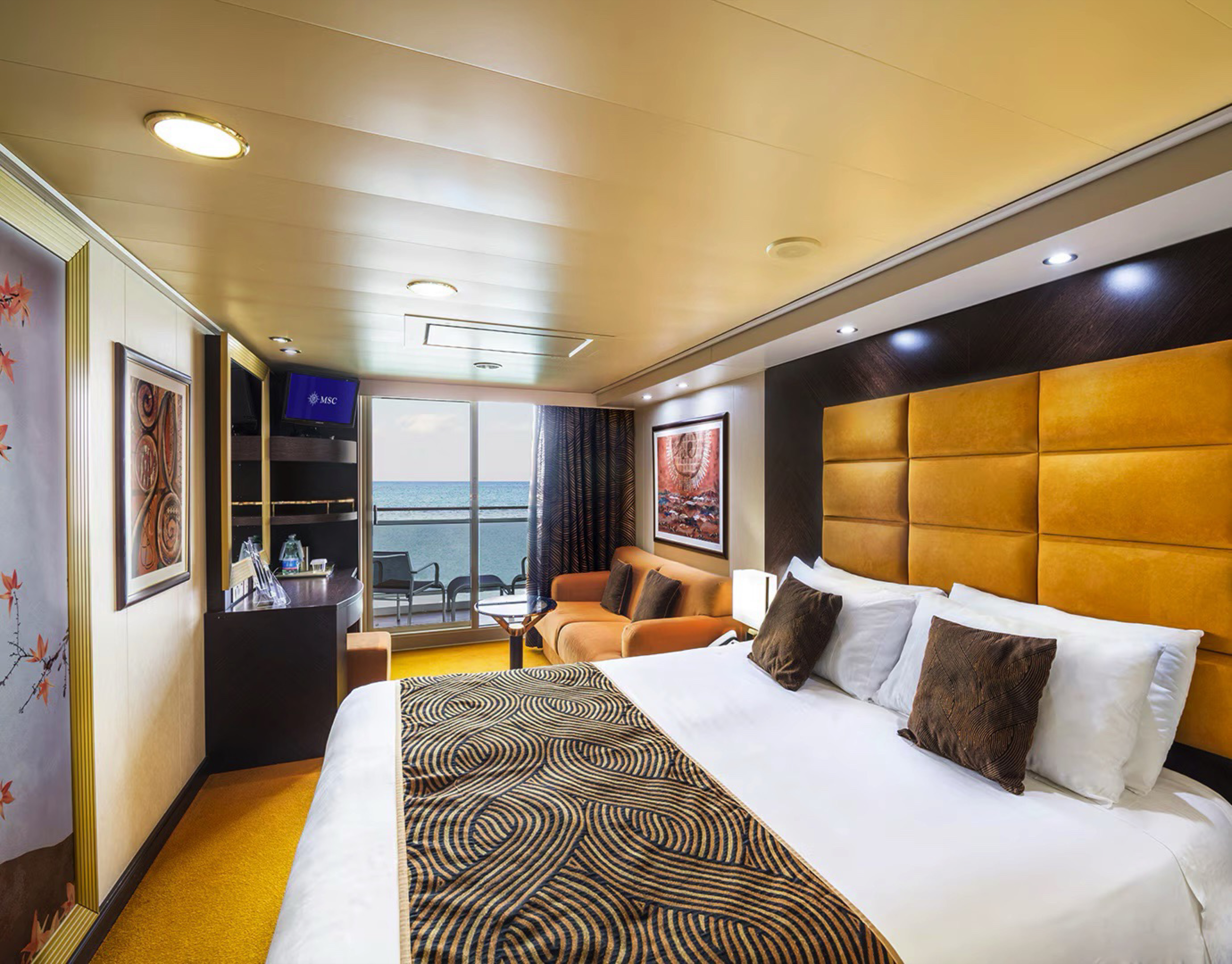
Deluxe Balcony Aurea
Premium Balcony
Deluxe Balcony with Partial View
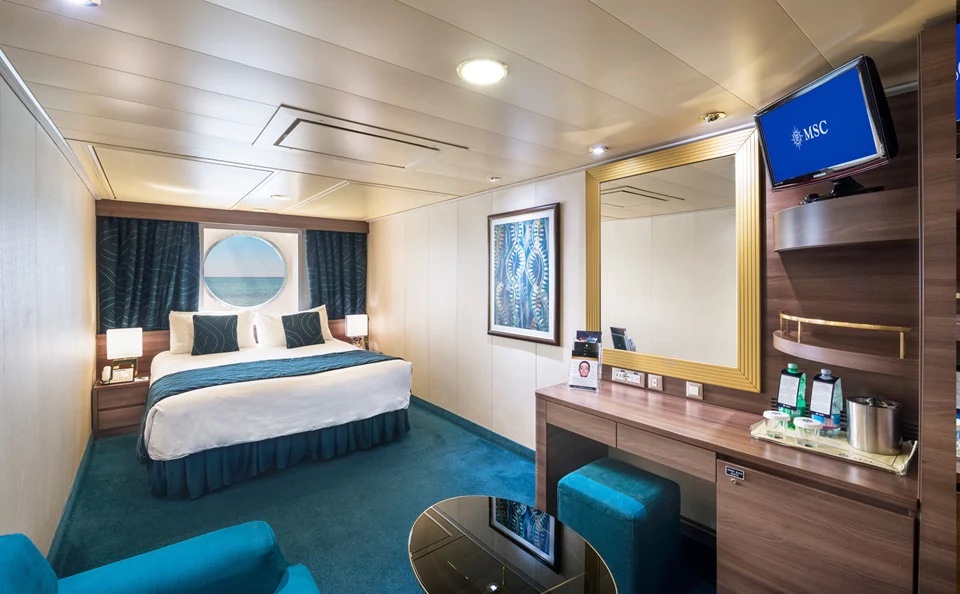
Guarantee Balcony
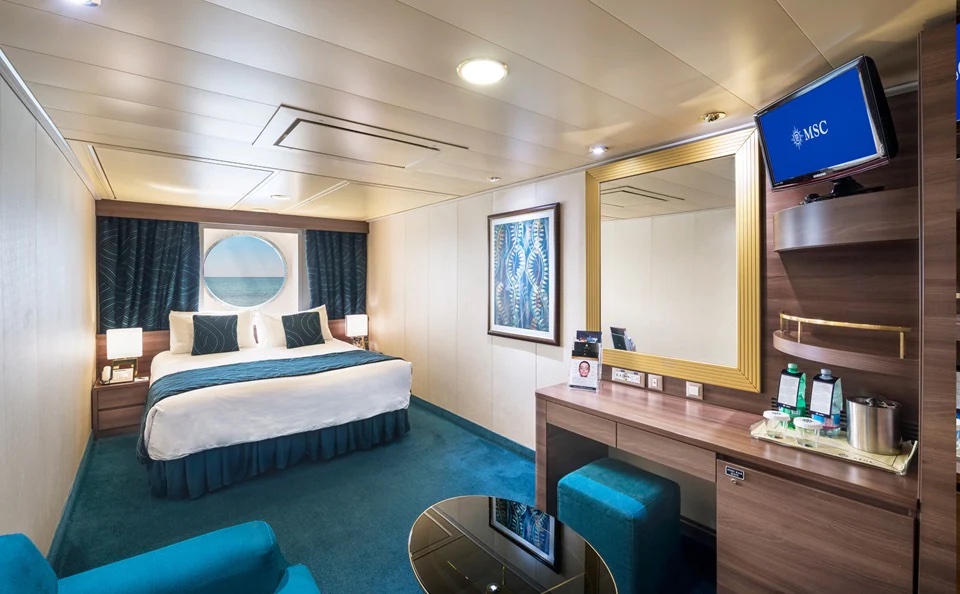
Premium Ocean View
Guarantee Ocean View
Guarantee Inside
Ship Facilities
Bora Bora & Pago Buffet Restaurants
Pago Buffet – A wonderfully comfortable and casual place to eat. Watch our chefs at work while you enjoy the best of Mediterranean dining with a spectacular sea view.
Bora Bora Buffet – Delight in a feast for all your senses at our exquisite buffet, where an exquisite array of delectable dishes from around the world awaits. Indulge in a gastronomic adventure as you savor the flavors, sights, and aromas that will take your taste buds on an unforgettable journey.
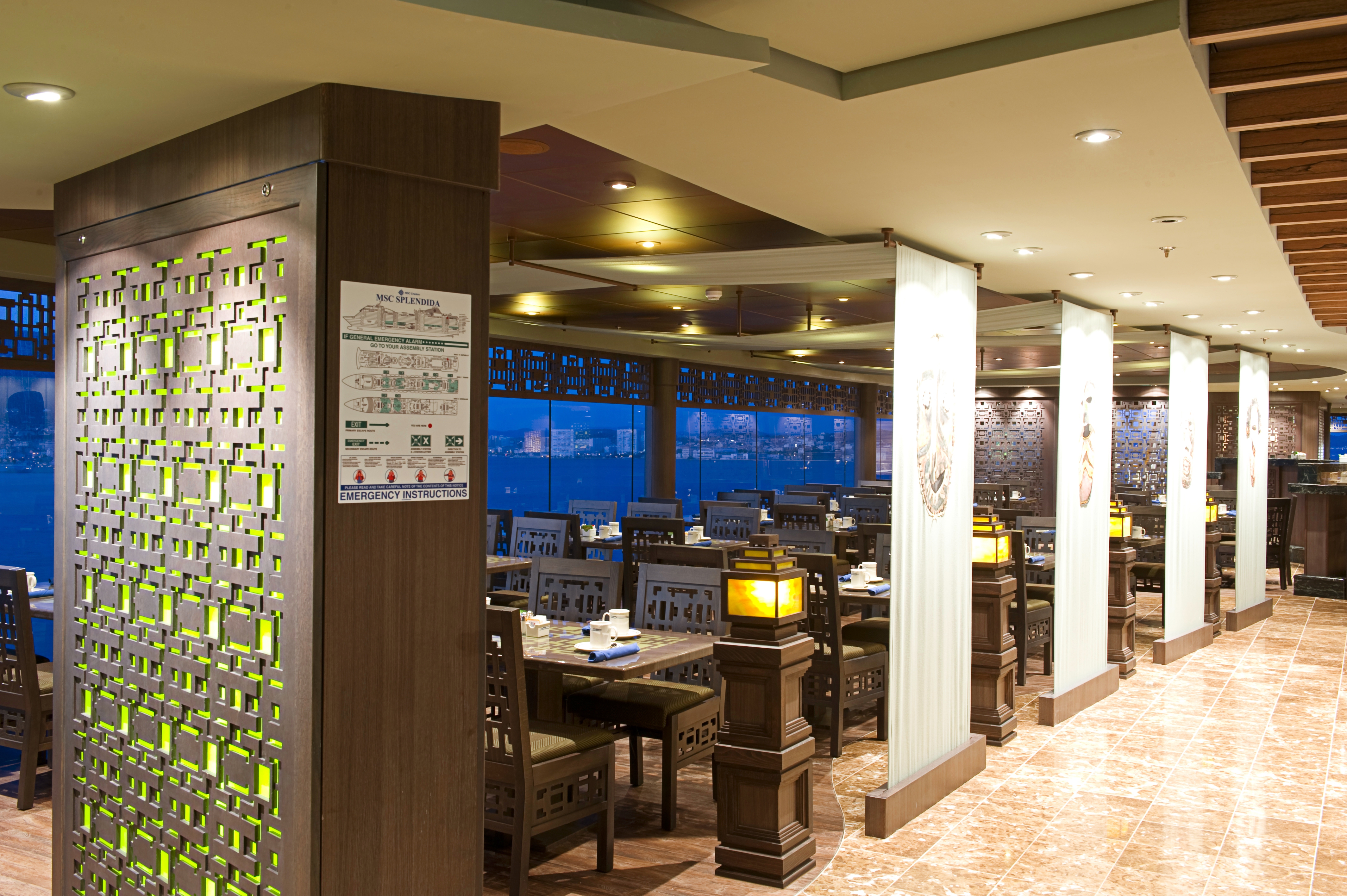
La Reggia
Offering exquisite Mediterranean and international specialities and a change of menu everyday means that no two days are the same in our main restaurant.
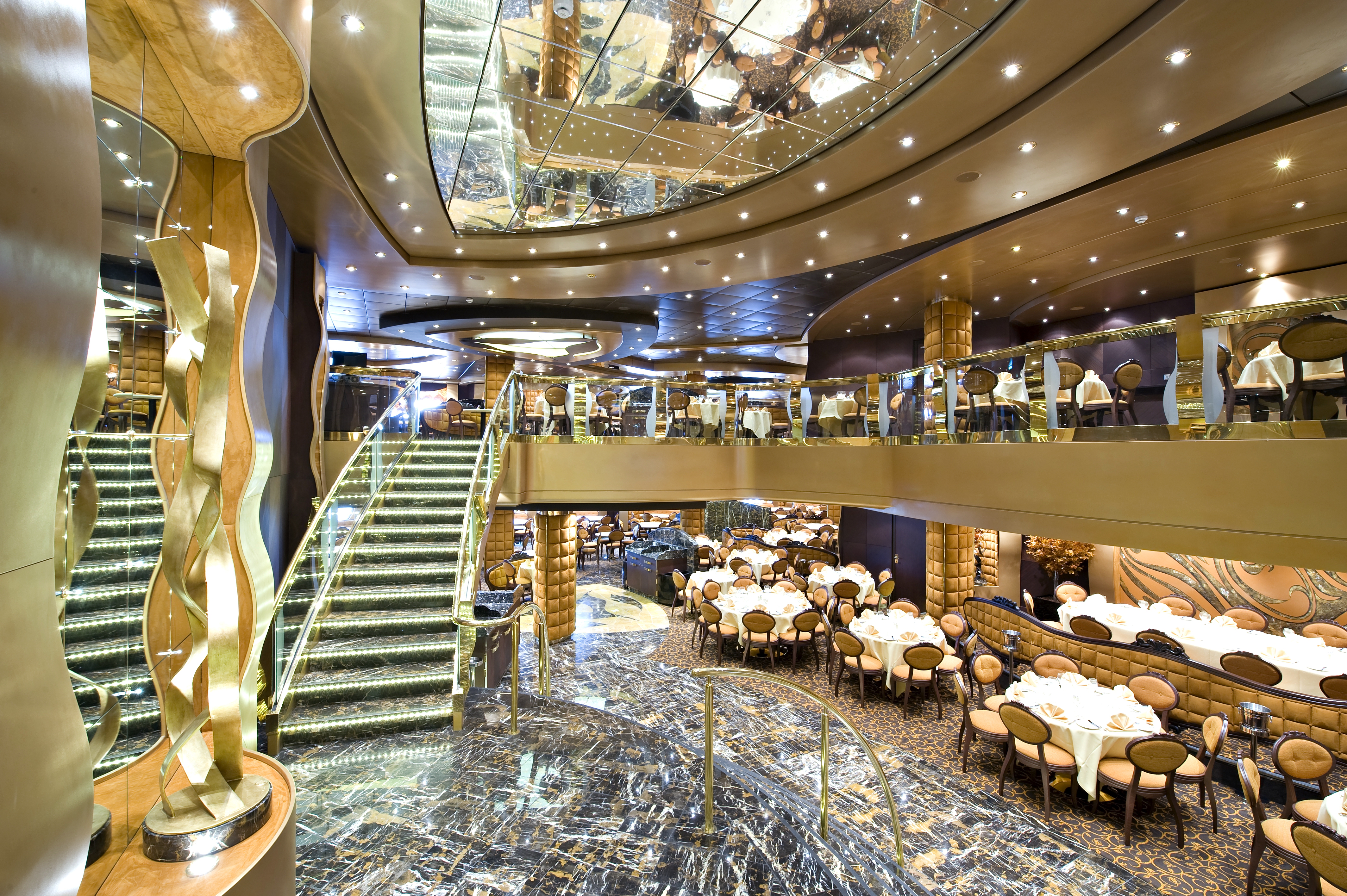
Villa Verde
In our main restaurant, we offer a unique culinary experience every day. With our exquisite Mediterranean and international specialties and a daily changing menu, we ensure that no two days are the same, providing you with a fresh and exciting dining experience each time.
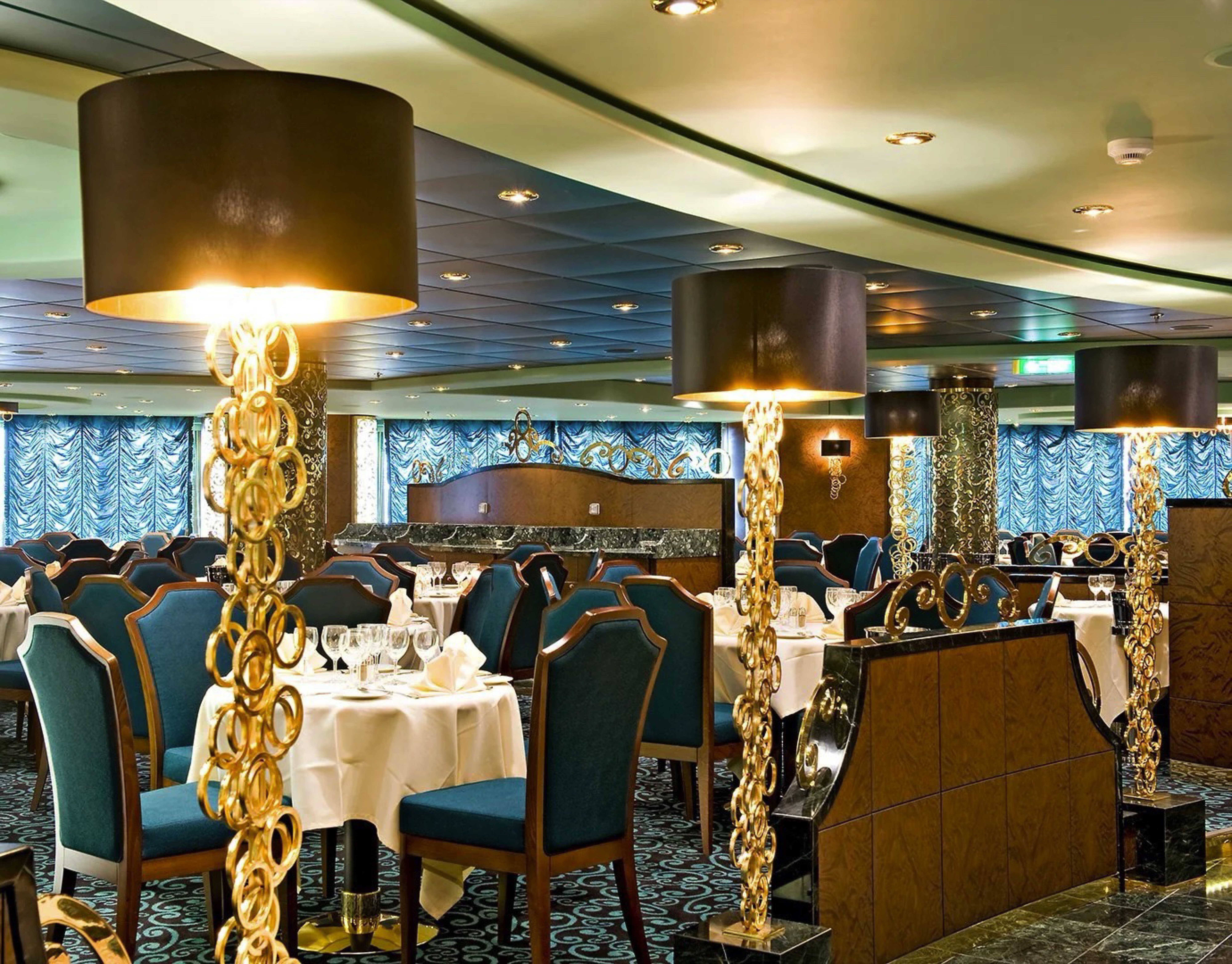
Sea Pavilion
This exclusive restaurant is a world of contemporary Asian culinary emotions.
Discover the culinary delights of the Sea Pavilion restaurant, where innovative fusion of Asian cuisines comes to life. In this restaurant the art of Hot Pot, a beloved comfort food across Asia, transcends regional boundaries with its universal appeal. At Sea Pavilion, we craft distinctive flavors to satisfy every palate, guaranteeing a memorable dining experience. Our tempting menu features an array of hot pot creations perfect for sharing, as well as refreshing appetizers to whet your appetite.
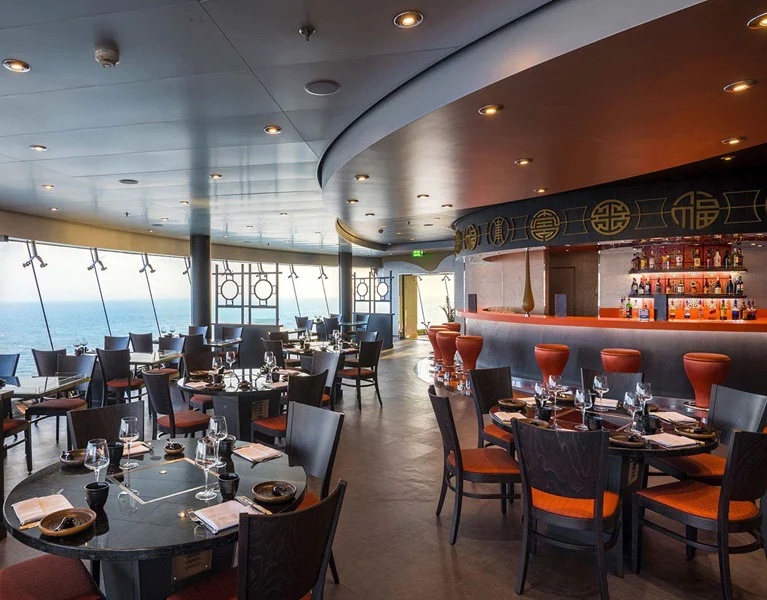
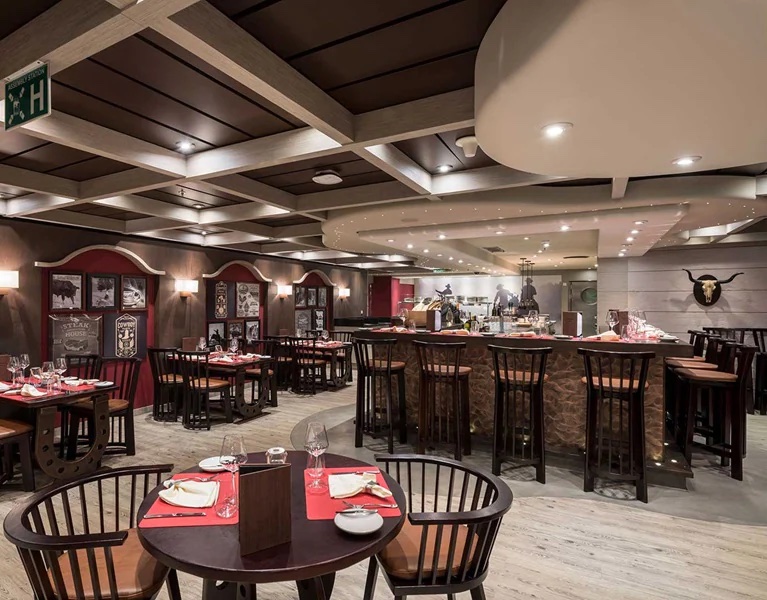
Butcher's Cut
This American-style steak house serves select Linz heritage angus beef, gold standard in high-end angus beef thanks to the best genetics in breed. The highest quality product custom cut by master butchers and aged to perfection. The menu is inspired by the great plains and it is accompanied by bold New World wines and cocktails with swagger.
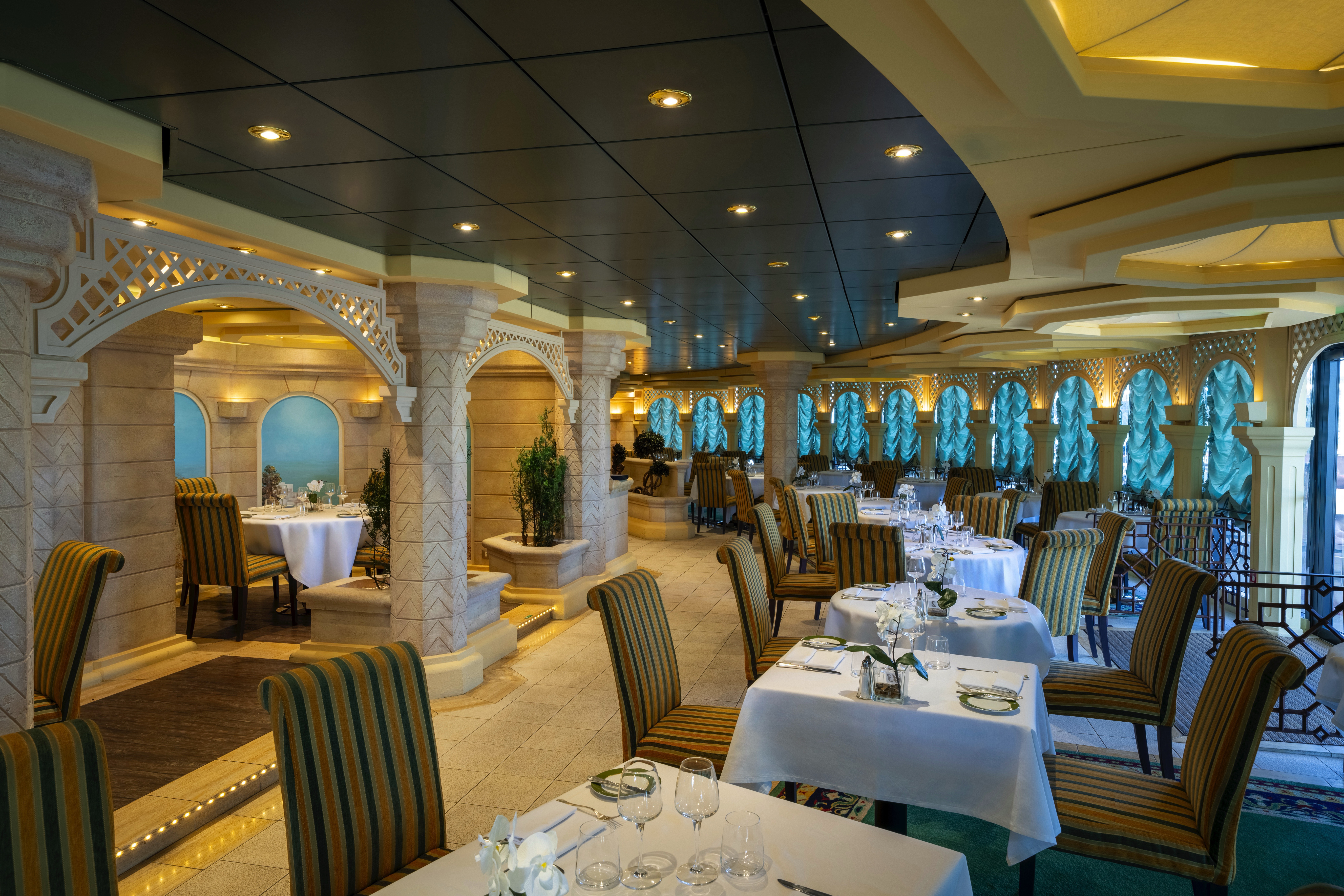
L'Olivo Restaurant
A delightfully relaxed and cozy dining spot awaits you, offering the finest Mediterranean cuisine with a mesmerising ocean view. Watch our skilled chefs showcase their culinary expertise while you savour your meal in a casual ambiance.
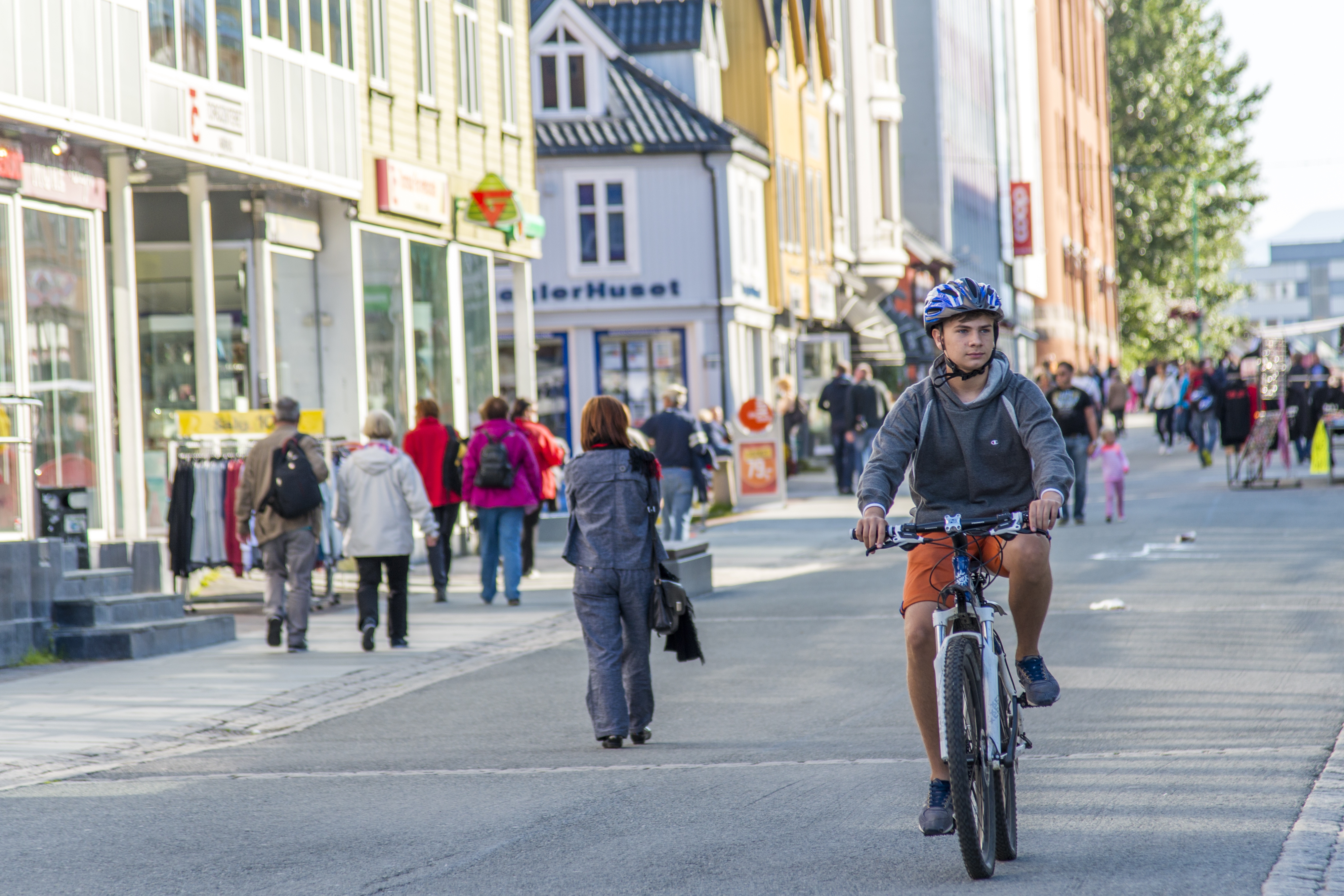
MSC Bike Adventours
Discover New Roads
One of the best ways to explore a city is from the seat of a bicycle. Hit the road on your next MSC Cruise on a MSC BIKE ADVENTOURS experience.
See, hear, smell and feel the destination like never before. You’re guaranteed to leave with a deeper connection.
You Don’t Have To Go Fast, You Just Have To Go
Our carefully curated small group tours offer both active adventures and easy city sightseeing on electric bicycles.
Reserve today and ride into your next adventure with MSC Bike Adventours.
MSC Bike Adventours Clothing
Ride longer and feel stronger with our pro cycling jersey and race ready bib, designed by Essor Design studio and available exclusively onboard. Available in S – XL.
You can have yours with our MSC Bike Adventours.d feel the destination like never before. You’re guaranteed to leave with a deeper connection.
Respecting the Places We Visit: MSC Protectours
What are Protectours – We are committed to preserving a beautiful world for future generations to enjoy. By focusing on environmental sustainability, PROTECTOURS contribute to that vital goal. 70% of the tours involve activities with zero environmental impact – like walking, cycling, or kayaking – while others make a direct contribution to the environment, for example, tree planting or beach cleaning. So, you can enjoy original insights into the natural world while preserving its beauty and helping to ensure a greener future!
A world of amazing experiences – PROTECTOURS offer you unforgettable experiences in close contact with nature and communities in a variety of environments around the world. Local guides, with an expertise in wildlife or traditions, will help you save baby sea turtles in the Caribbean, clean the desert in Abu Dhabi, explore Iceland by horseback, or immerse yourself in Corfu’s beautiful countryside and the magical world of bees.
MSC Cruises and the environment – Our love and respect for the marine environment are reflected in our certified eco-ships, with their innovative systems for energy saving, waste treatment and recycling. Naturally, our commitment to the environments extends to our onshore activities too. PROTECTOURS is not only a way to offer our guests a variety of eco-friendly shore excursions, but also a means of encouraging our onshore partners to develop tours that pay ever more attention to environmental sustainability. Just one example is that no single-use plastic or other items are accepted on these tours.
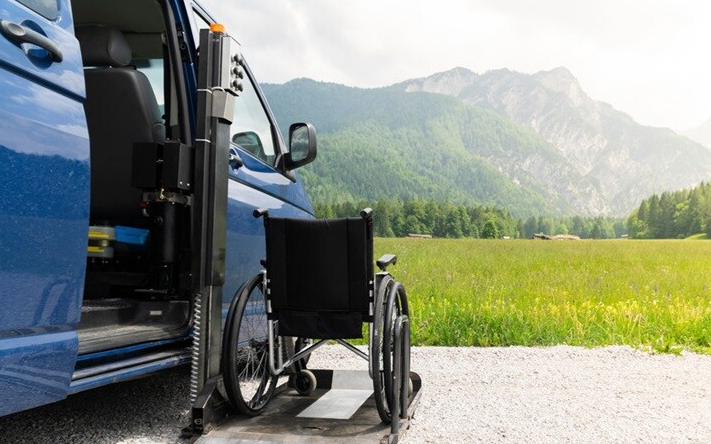
Easy & Accessible Excursions
Our Easy & Accessible Tours make exploring comfortable for everyone. These tours allow slow walkers, wheelchair, scooter users and any guests that like to leisurely explore, to visit the best each destination has to offer on easy tours created just for them.
MSC Accessible Tours are currently available in the Caribbean and Western Mediterranean.
EFFORTLESS EXPLORATION – Explore each destination at your own pace
Through specifically selected itineraries and specially designed tours, guests will be able to enjoy step free routes at their own pace, experiencing the wonders of our destinations in total comfort. Accessible vehicles will be available to accommodate small groups, and tours itineraries will always include access to special needs restrooms. Please note that vehicles and their wheelchair & scooter requirements (width, height, weight) vary from tour to tour so make sure to carefully check the specific requirements within each tour description.
TOURS FOR EVERYONE – Comfort and freedom for all guests
Explore the world with wheelchair-accessible vehicles, expert guides, and step-free routes tailored to your needs.
Accessible Vehicles & FacilitIes – Vehicles equipped with a wheelchair accessible solution. We visit accessible bathrooms equipped with wide doors.
Small Groups with Expert Guides – Small Groups or Private Vehicle for you and your companion/s with expert guides
Visit at your own pace – Tours made to leisurely visit the destination’s highlights while taking into account guests’ special needs and facilitating each participant in moving independently.
Step-free Routes – Tours aim at eliminating obstacles and ensure a smooth access to all of the highlights visited.
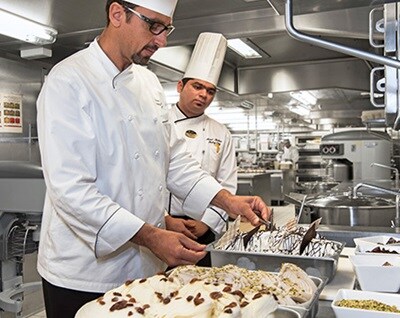
Behind The Scenes
Come and see how we do it! Go “Behind-the-Scenes” and experience what goes into delivering a perfect cruise vacation.
Explore several “off-limit” areas of the ship
Are you ready for the ultimate behind-the-scenes experience on our magnificent cruise ship? This exclusive excursion is limited to small groups of 20 people, so you’ll have a truly intimate and immersive experience.
Join us as we take you on a journey through the hidden corners of our ship, where only a select few have gone before. You’ll have the chance to see the inner workings of the ship, from the bridge of command, engine control room to the gallery and beyond.
A one-of-a-kind discovery tour
Our knowledgeable tour guides and shipboard staff will be on hand to answer any questions you may have and give an overview of the internal operation of the ship.
But that’s not all – you’ll also have the opportunity to meet the ship’s officers and learn about their experiences at sea. This is a once-in-a-lifetime chance to get an inside look at the operations of a cruise ship and to see what goes on behind the scenes. Don’t miss out on this amazing opportunity – book your spot now to ensure one of the very few seats available!
MSC Yacht Club Excursions
Make every moment ashore an unforgettable experience
Explore marvellous destinations all over the world with MSC Yacht Club by immersing you in luxury, exclusivity, and premium privilege, such as private transportation, smaller excursion groups, all-inclusive benefits.
From paradisiacal beach getaways and upscale adventures to authentic cuisine, enlightening arts and craft workshops, storied architectural visits, elevate your journey with MSC Yacht Club Excursions.
Get ready to unveil a world of unparalleled luxury and exploration.
- Desirable Locations – Stylish beaches, elegant resorts, private catamaran voyages
- Local Artisanry – Local arts, traditional handcraft, cultural workshops
- Architectural Treasures – Castles, palaces, UNESCO World Heritage Sites
- Authentic Cuisine – New flavours and exciting culinary journeys
- Upscale Adventures – Premium, unspoilt locations and adrenaline fuelled-activities
Tailor-made Excursions – Private guides, customised adventures & experiences
Enjoy hidden wonders, engaging in unique activities with local experts that go beyond the reach of regular travel
EXCLUSIVITY
- MSC Yacht Club Limited – Uncover unforgettable destinations, purely for Yacht Club Guests.
- Dedicated personnel – Flawless service at every stage, from booking advice to onboard butlers to excursion experts ashore.
- Meticulously crafted itineraries – Enjoy carefully constructed excursions, chosen to maximise wide-ranging leisure interests.
COMPREHENSIVE LUXURY
- Out-of-ordinary activities – Curated activities allow a deep dive into the destination’s culture and particularities.
- One-of-a-kind venues – Carefully selected venues to represent destination uniqueness and to get the most out if it.
- Outstanding services – All details are organised – simply prepare to enjoy the most relaxing journey.
PRIVILEGES
- Escape the crowds – Relax in the ease of smaller group excursions, allowing for deeper exploration of destinations.
- Private transportation – Premium transfers, including minivans and cars, provide ultimate comfort.
- All-inclusive – Sit back and soak up all-inclusive indulgence without fretting about extra fees.
EXPLORE THE WORLD IN STYLE WITH OUR EXCLUSIVE MSC YACHT CLUB EXCURSIONS
Discover the essence of our destination through our selection of expertly curated excursions and let us help you craft an unforgettable cruise tailored to your interests and preferences. Book your exclusive excursions online and get up to 20% off the onboard price.
*Prices shown in the personal area are already discounted
The excursion program provides our guests with an overview of the different tours that can be organised in each port and relevant prices which may change during the season even more than once; the program and prices are a guide only. The final program of the tour for each port will be available during the cruise. Bookings can be made up to 2 days prior departure date.
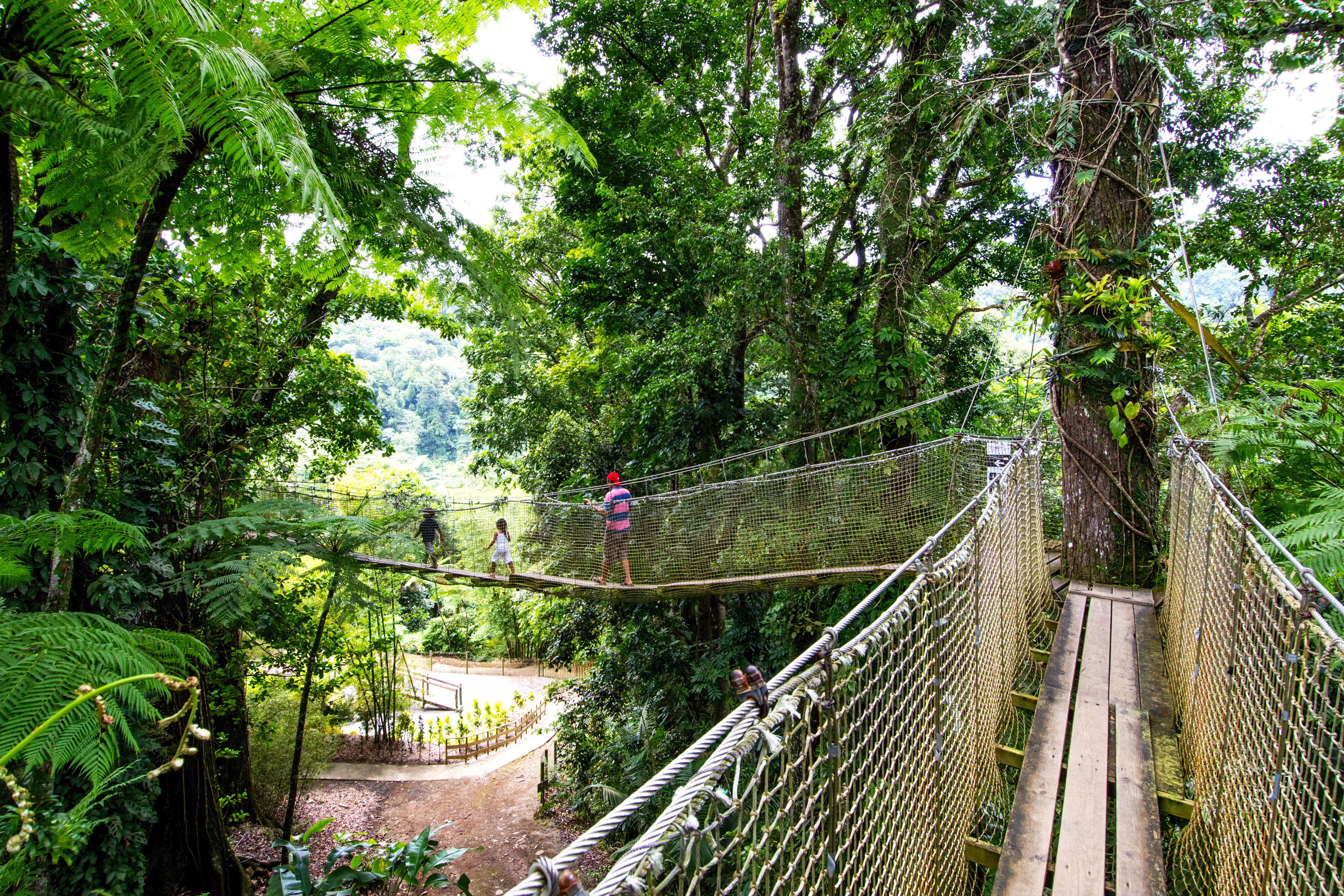
Family Excursions
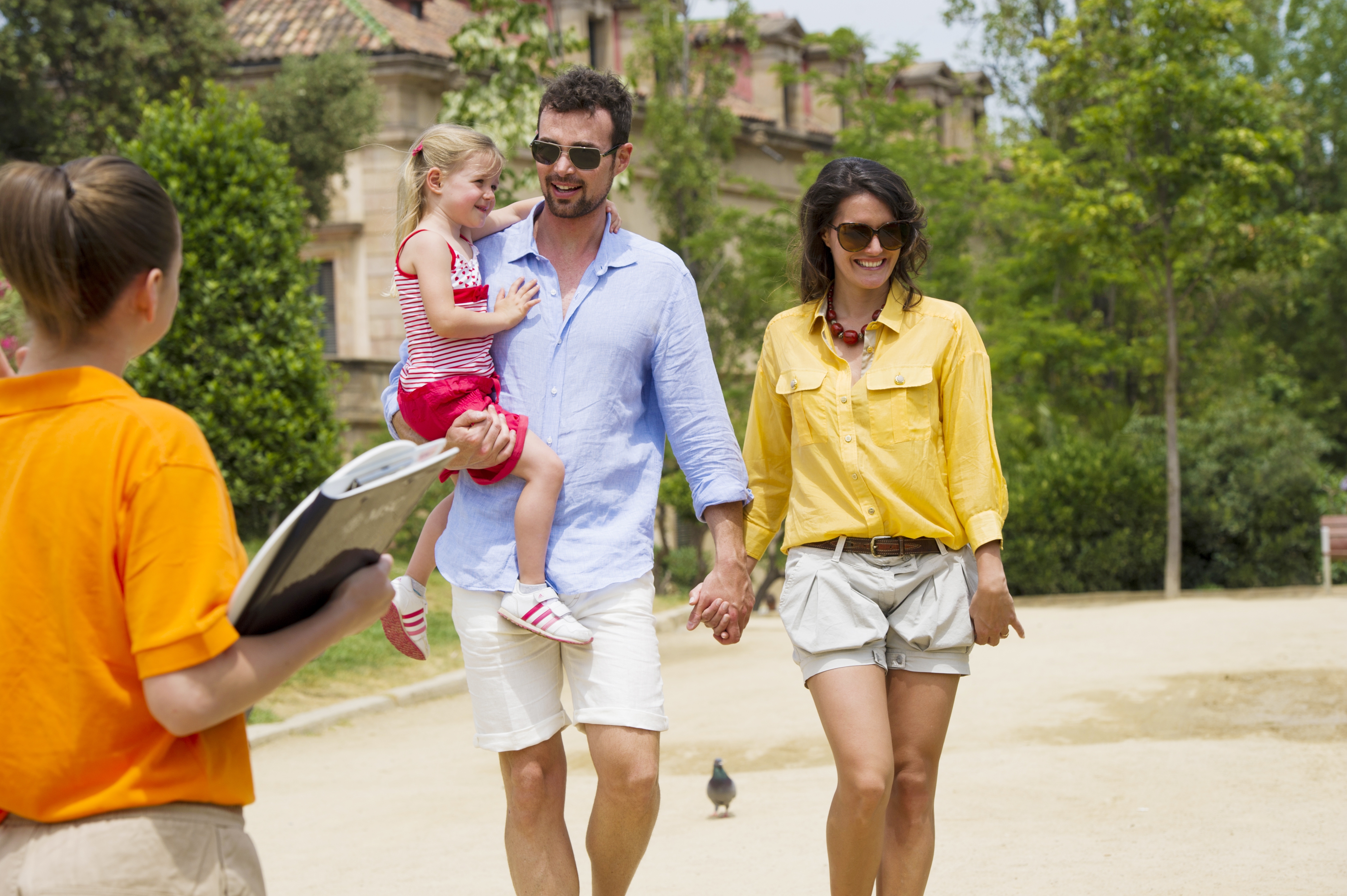
Discover each destination with your children at a rhythm that suits families, thanks to our Family Fun excursions. Guided by talented, qualified local guides in constant contact with the ship, they are your passport to new cultures, historic monuments, natural beauty and more.
What’s more, kids get a special price on shore excursions!
- Babies and Infants aged 2 and younger will be carried free of charge
- Children between the ages of 3 to 13 years have a discount up to 30% vs adult price
Book now and save up to 20% vs onboard prices!
Shore Excursion Explorer Package
Make The Magic Last A Little Longer
One of the joys of cruising is the chance to discover enchanting new destinations in comfort and style. At each port of call, our excursions offer you the most memorable experiences in the most fascinating places, accompanied by experienced, professional personnel. To get more for less from your time ashore, why not take advantage of our Excursions Explorer Package? The package comprises three of the best excursions* available on each cruise at one very attractive price. Please note that this is a limited availability offer and is valid only on selected departures**.
*Excursions Explorer Package cannot be modified or refunded. In the event of one or more excursions being cancelled by MSC Cruises, the offer is not applicable to other excursions different from those included in the package.
**The Excursions Explorer Package is available on selected departures for the following destinations: Mediterranean, Northern Europe, MSC Grand Voyages, Abu Dhabi, Dubai and Qatar, Caribbean & Antilles, South America.
MSC Family Explorer Club
SHORE EXCURSIONS FOR FAMILIES
Discover our kids friendly tours designed especially for families
MSC Family Explorer Club
Explore the destination together on a fun filled family adventure, inspired by history and designed to cover all the highlights.
- Family friendly programming – Tours typically start later in the morning, are shorter in duration and are accompanied by expert guides and story tellers
- Tours that the whole family can enjoy – Each experience is developed to keep both children entertained while also providing an enriching and educational experience for adults
- Family-Friendly Prices 50% off – Children tickets are always half-price
- Peace of Mind – When you choose an MSC Family Explorer Club you can relax in the knowledge that all our tours are operated by carefully selected partners who can easily make contact with your ship throughout the day.
FAMILY EXPLORER CLUB HIGHLIGHTS
An expert guide and a talented storytellers will lead each tour and be available for any assistance needed.
The leaders on these tours are not just tour guides, they are skilled in captivating the attention of both children and adults through storytelling in a way that describes the attraction and history of the location in an engaging manner – they are entertainers.
During this interactive experience children of all ages will feel like an explorer.
Acting as detectives and explorers, children play a key-role in accomplishing a unique mission on each tour inspired by the history of the location.
Children and parents are given the opportunity to unleash their imaginations and enjoy solving games and riddles together. Every tour will feature an iconic historical character, symbolic of the city.
We know that this is your vacation too, and sometimes you just want to get away and have some adult time.
For parents wishing to take a tour by themselves, we offer a complimentary childcare service for children aged 3 to 11.
While you are out in port your children can remain onboard in a fun and supervised environment with their new friends and Mini Club Staff.
For more information, contact the Mini Club onboard.

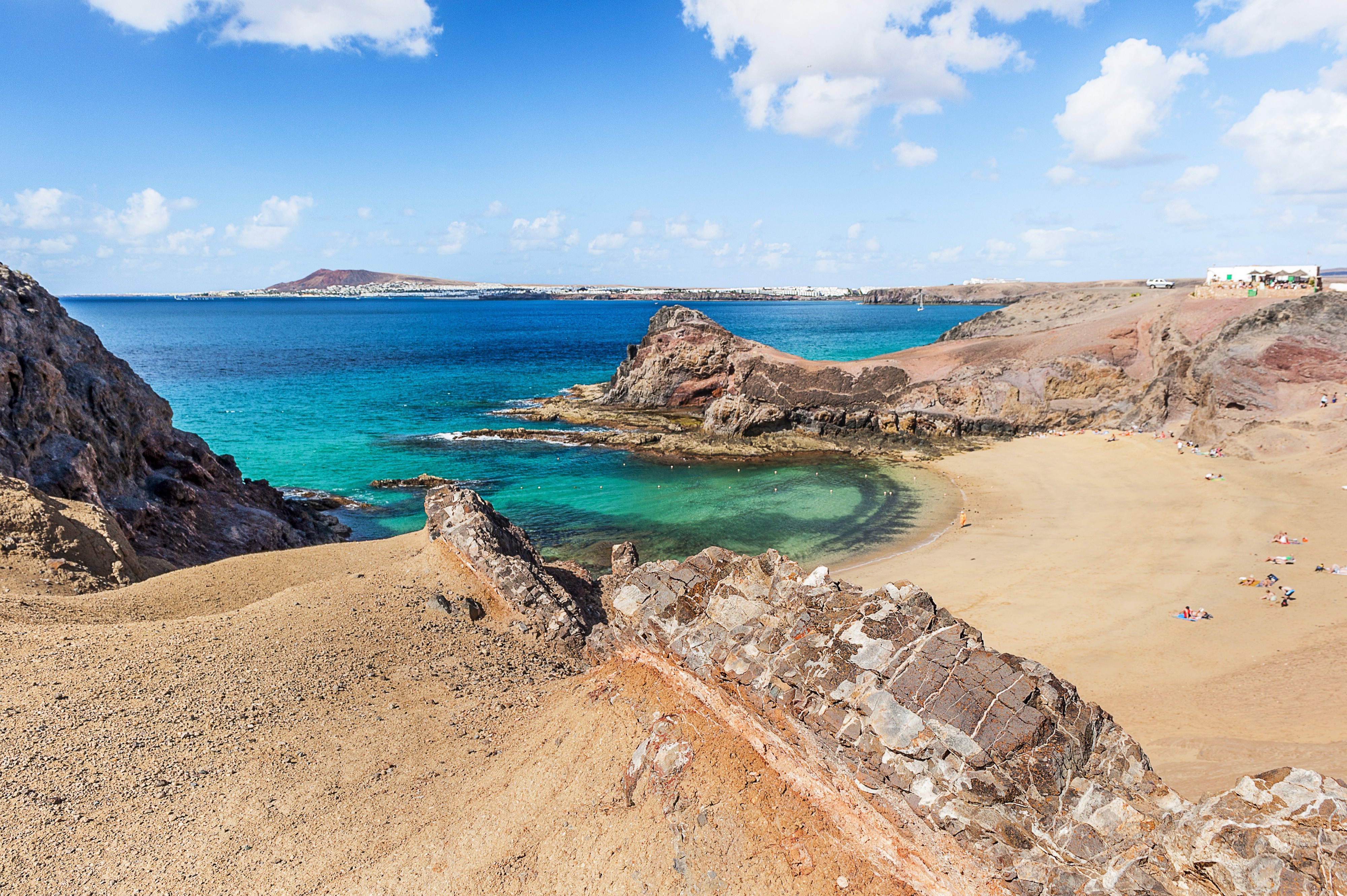
The Strand Theatre
You’d normally have to travel to London to see top-end shows, but thanks to our West End-style theatres, you can enjoy superlative entertainment with an international line-up of artists without having to leave the ship. Take your pick from a fabulous programme; there’s sure to be a show you love.
Sports Bar
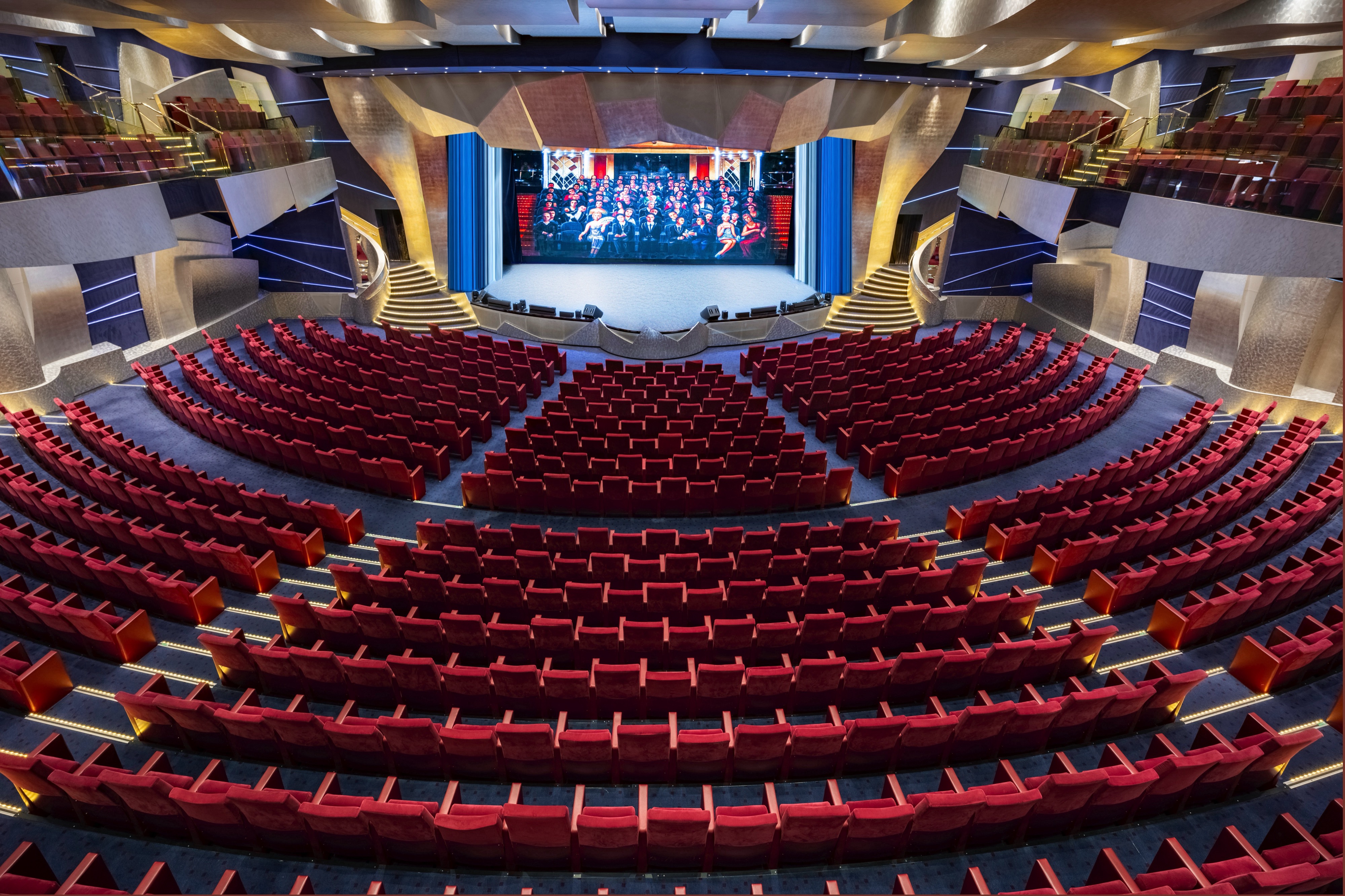
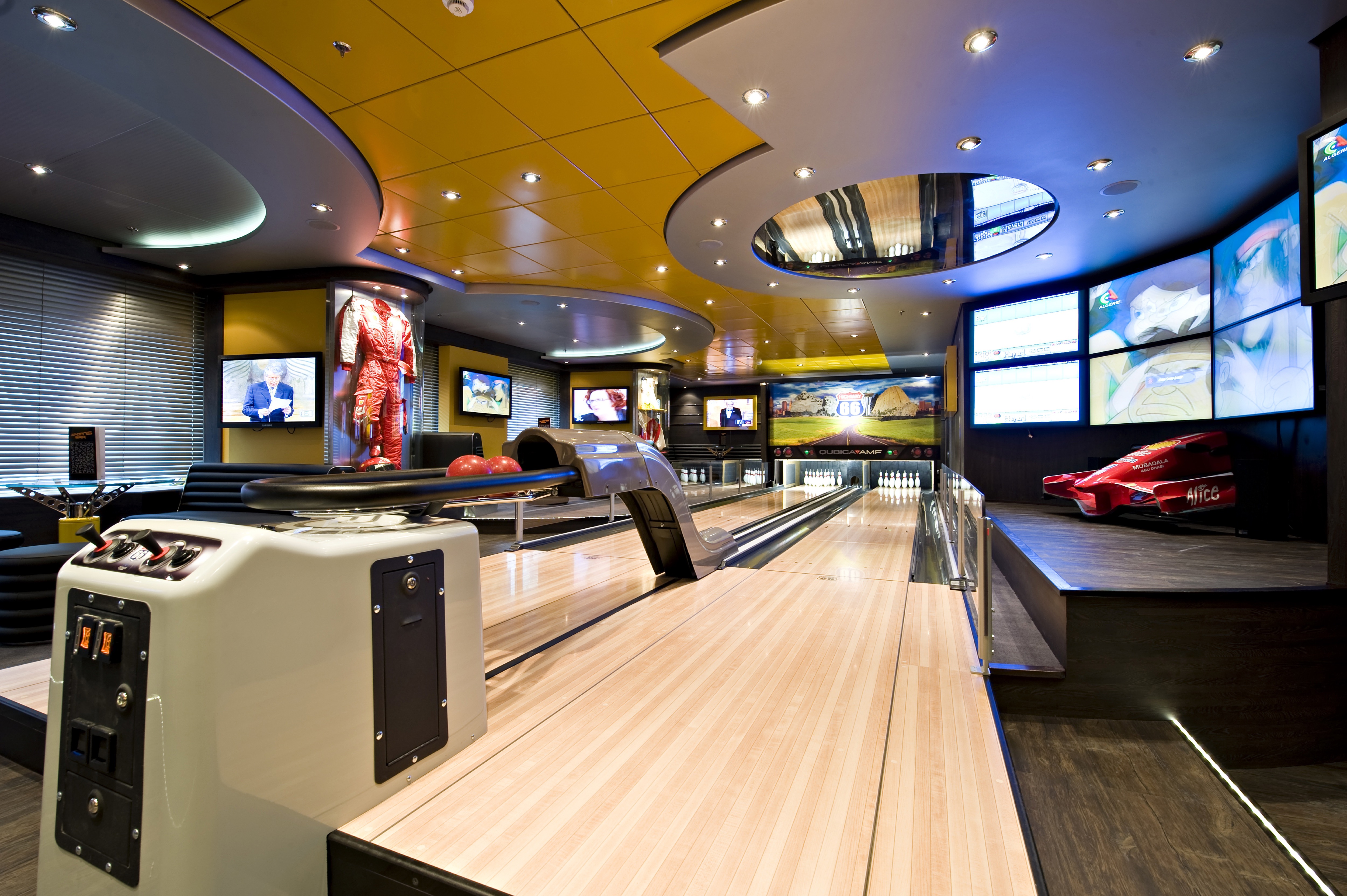
The name says it all; onboard passengers are unlikely to find a better place to relax and catch a game. There’s a wide variety of sport shown here, from football to cricket, basketball to ice hockey, something to suit all tastes. Passengers will find a variety of alcoholic and soft drink awaiting, all of which are complimented by a sports-inspired menu, serving up dishes from all around the world.
The Sports Lounge on deck 7 is a multi-screen themed sports bar with seating for 87 passengers.
Featuring a customised drinks menu and snacks, it is also home to the two lane bowling alley which attracts a charge of €6 per game.
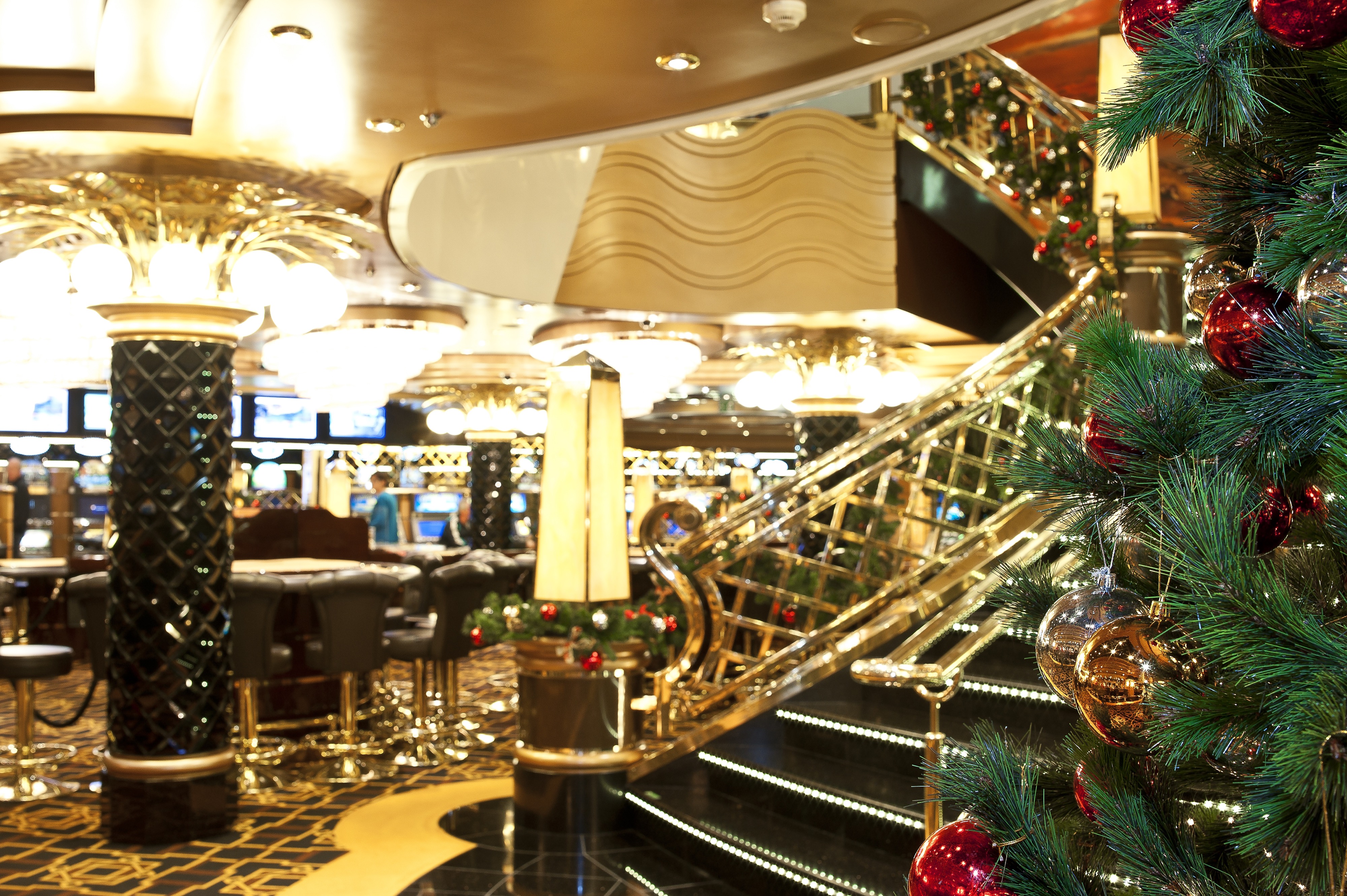
Royal Palm Casino
Our casinos are elegantly designed, featuring games for all types of players. You’ll be able to try your hand at Roulette or Blackjack, challenge yourself at one of our Poker tables, or choose among a variety of slot machines.
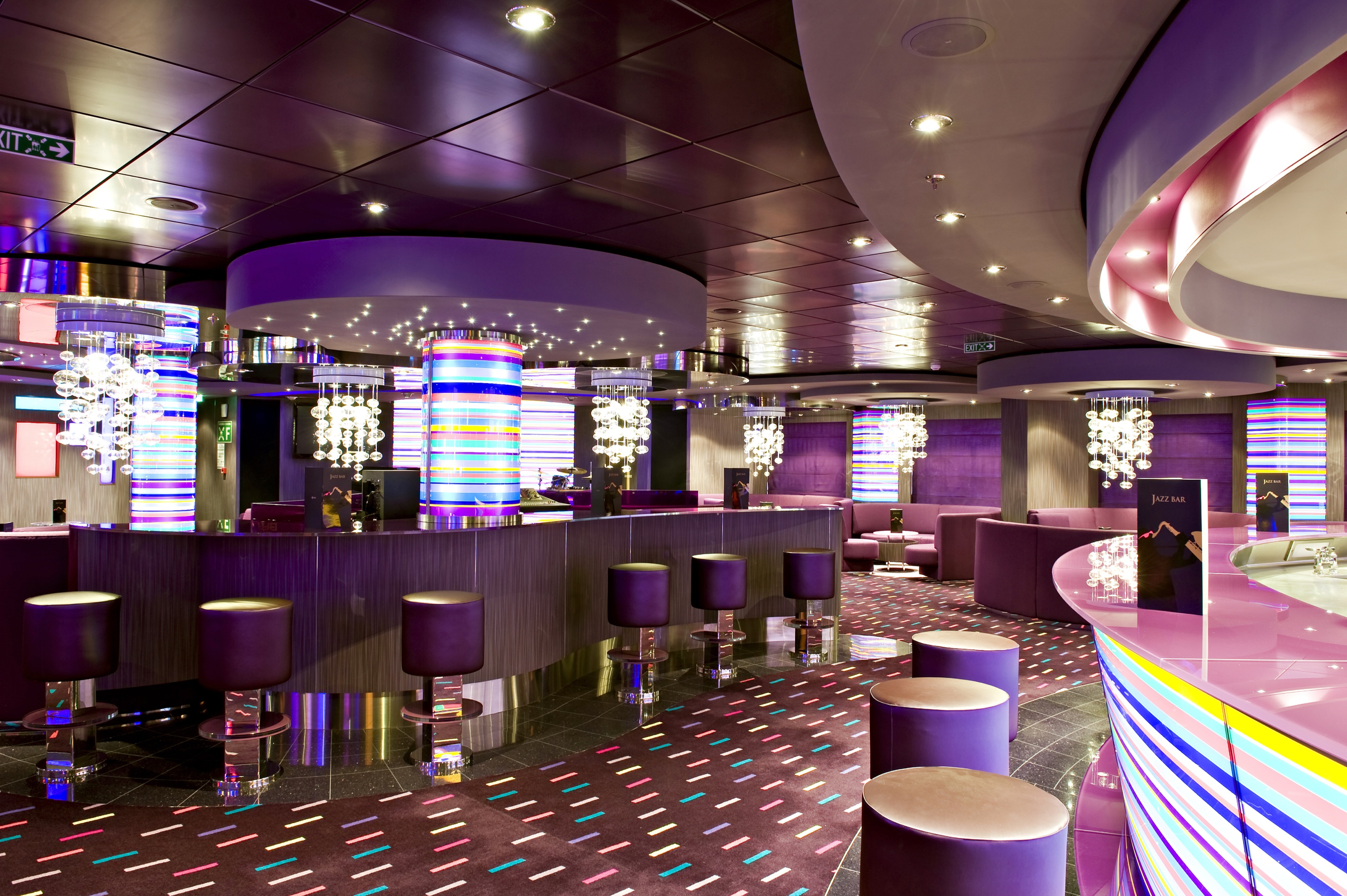
The Purple Jazz Bar
The Purple Jazz Bar has seating for 106 visitors and features live jazz music along with a special range of ‘made to measure’ drinks.
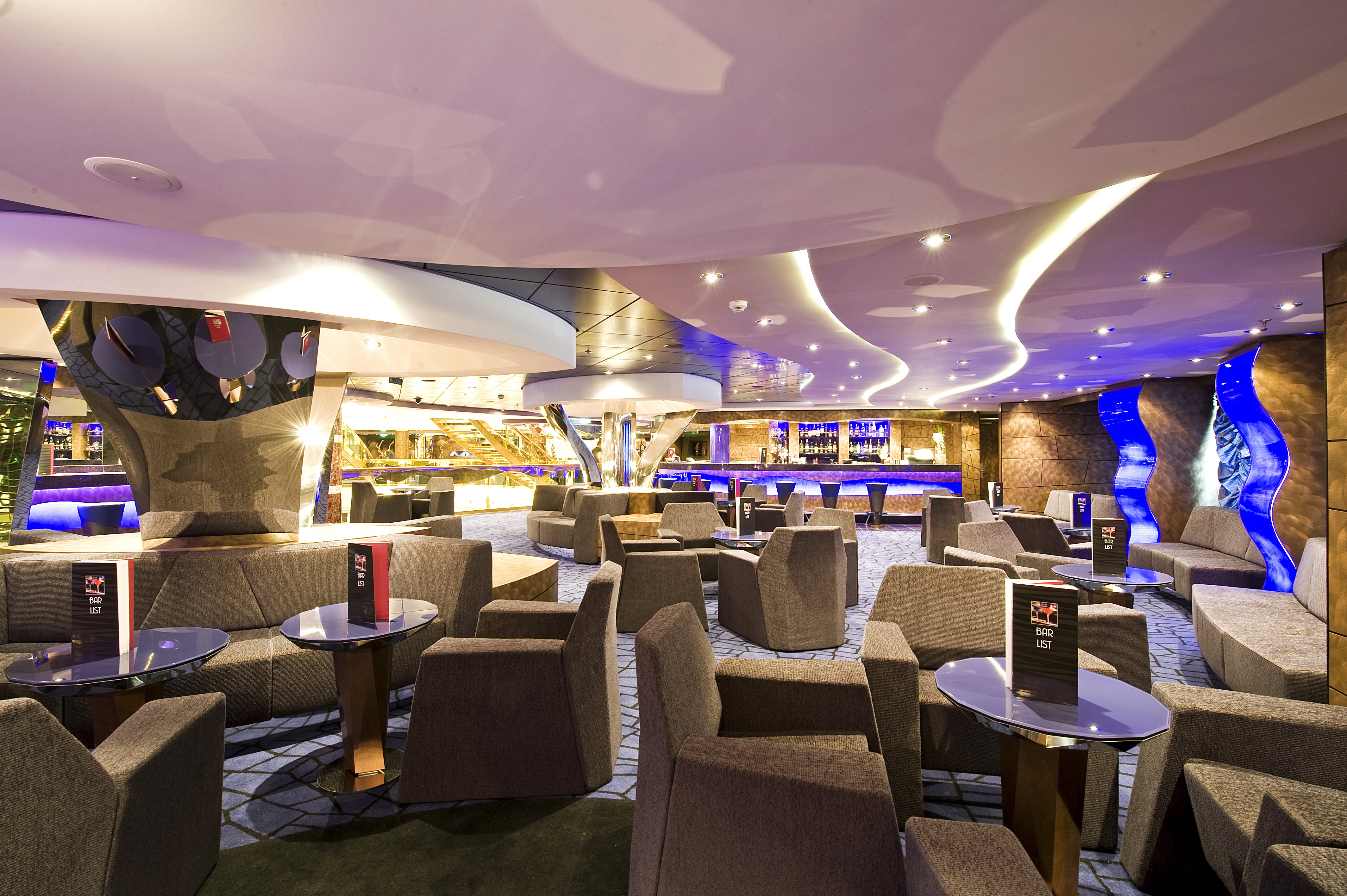
L'Aperitivo Bar
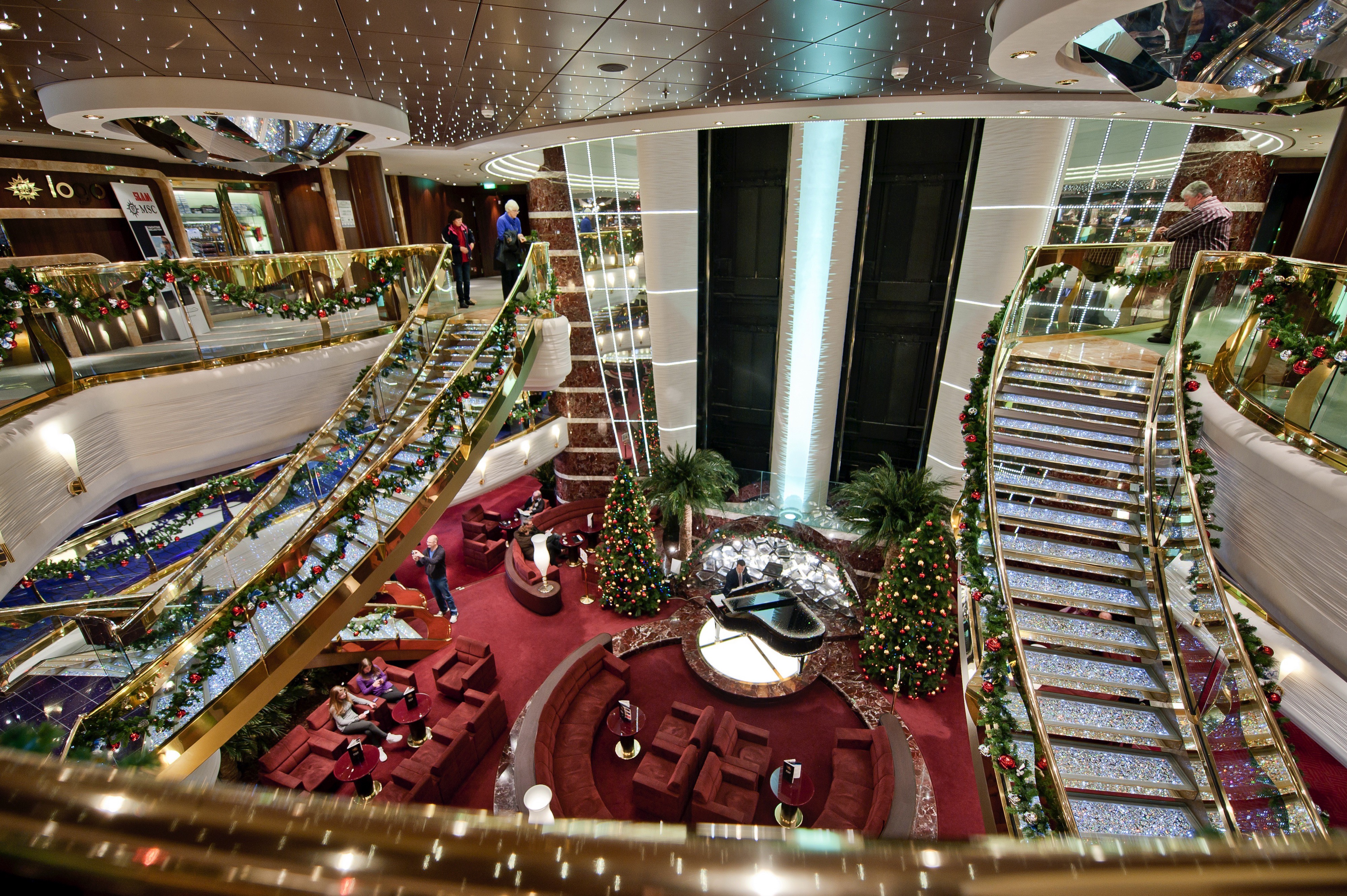
The L’Aperitivo Bar overlooks the central atrium and is located on deck 6 serving the foyer area. It can seat up to 98 guests who can enjoy the musical entertainment from the bottom of the atrium.
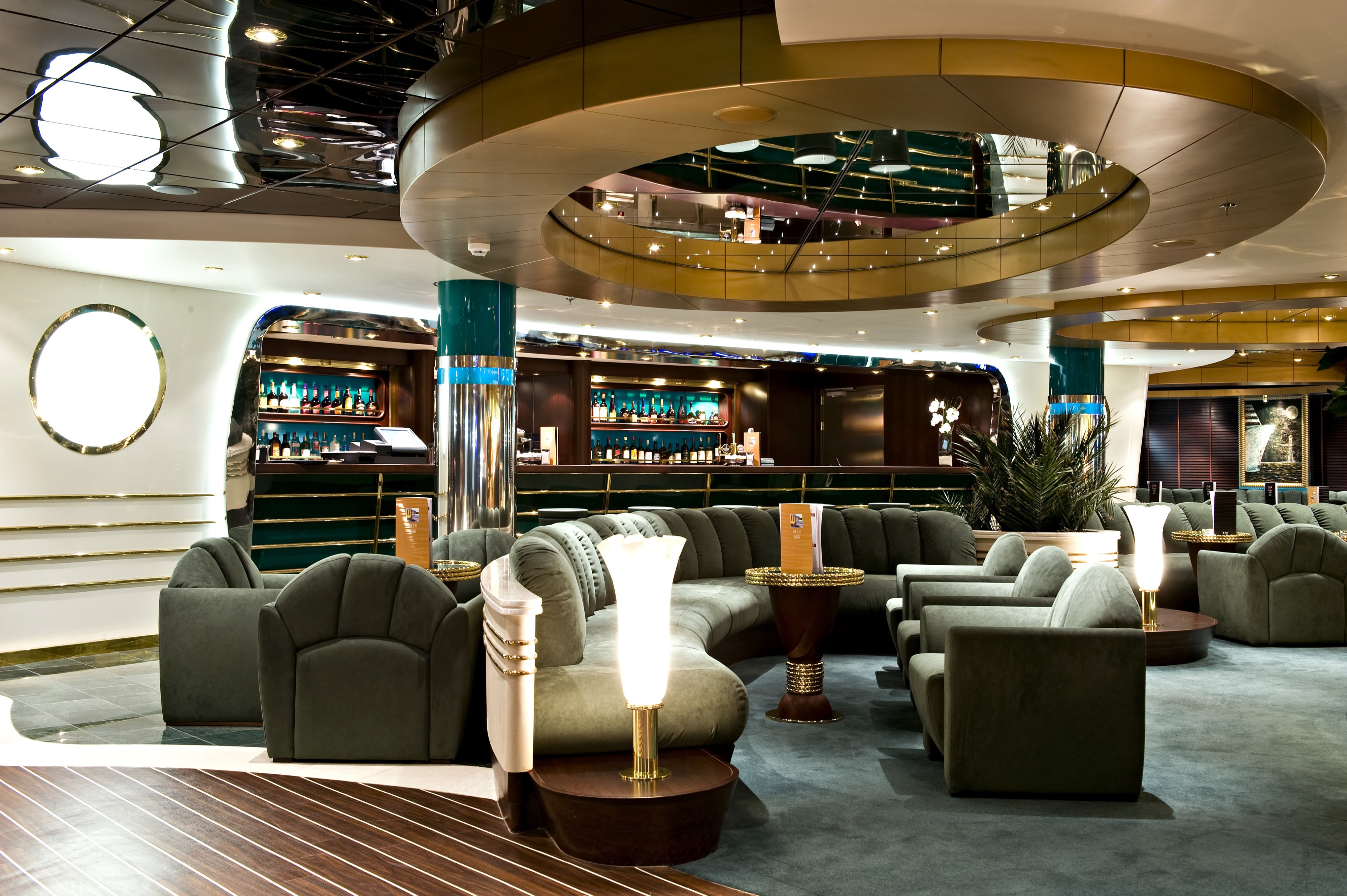
La Prua Piano Bar
The ship’s Piano and Martini Bar, seats 108 and is located on deck 7.
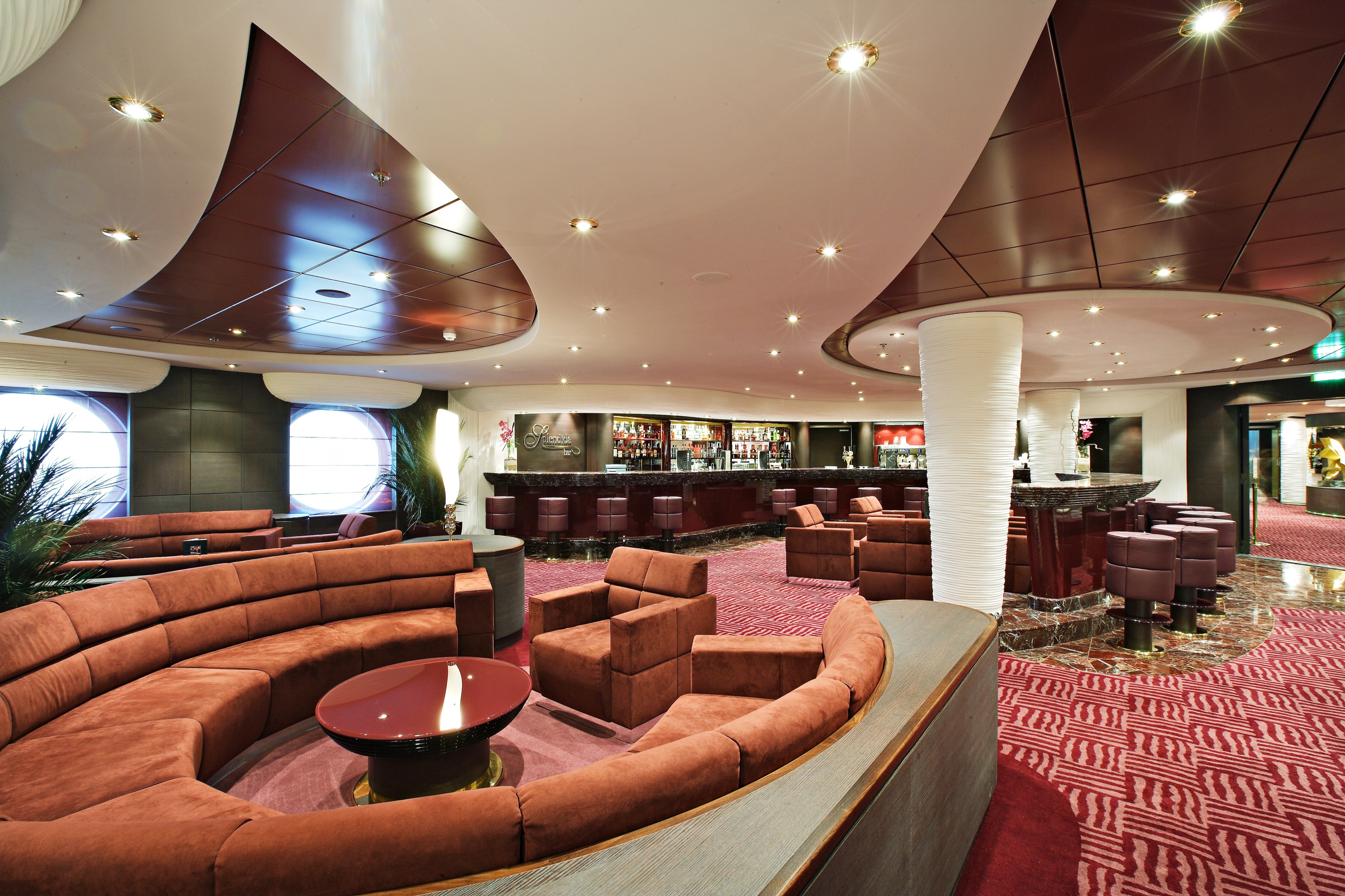
Splendida Bar
The Bar is on deck 5 by the central atrium with 28 seats.
Guests can enjoy a drink here whilst listening to classical piano music, string quartets and singers.
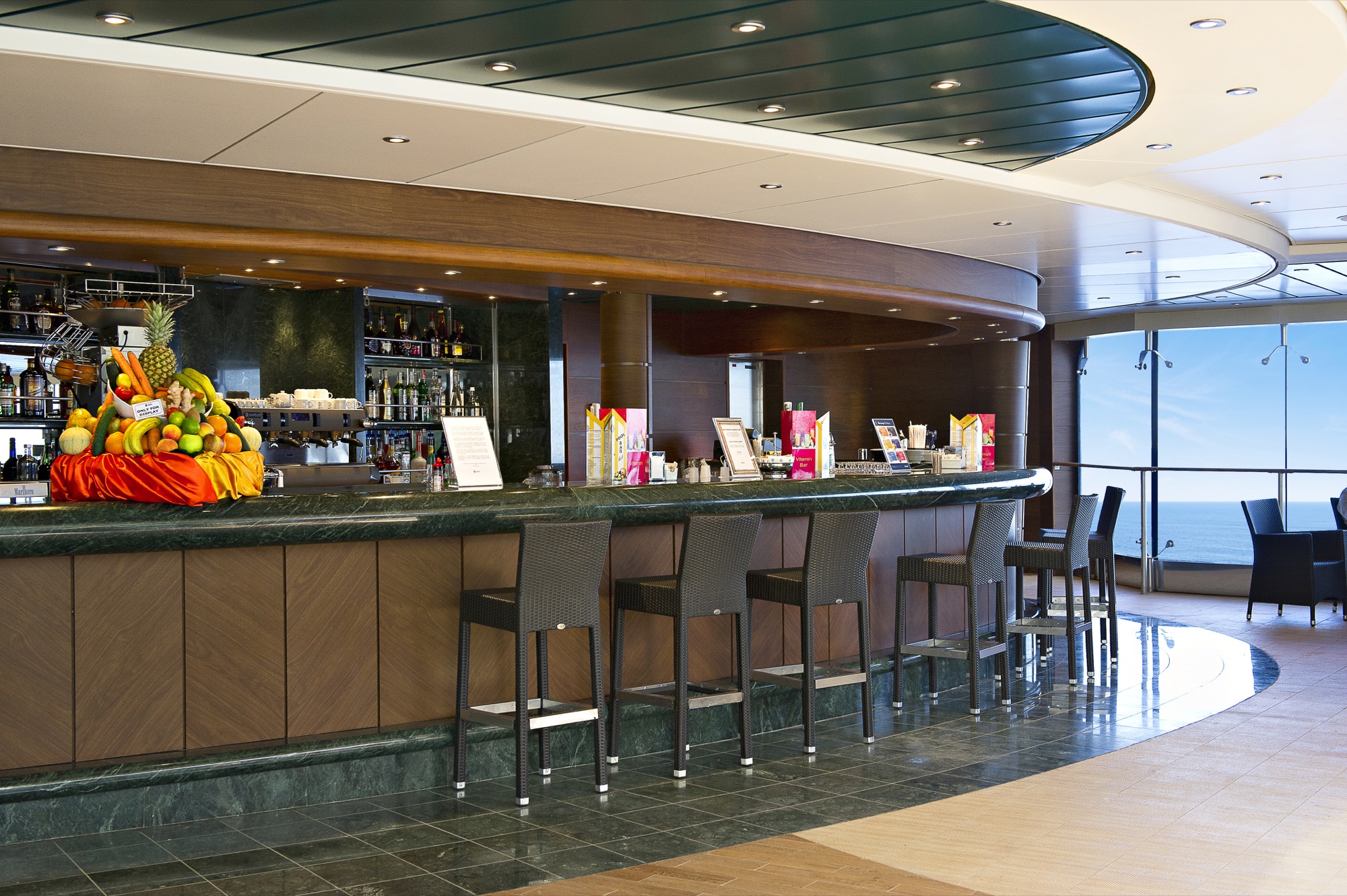
The Pool Bars
The Pool bars are located by the Pool on Deck 14.
L'Espresso Coffee Bar
The ship’s coffee shop serves a selection of cakes and desserts.
It is located on deck 7 with room for 58 passengers.
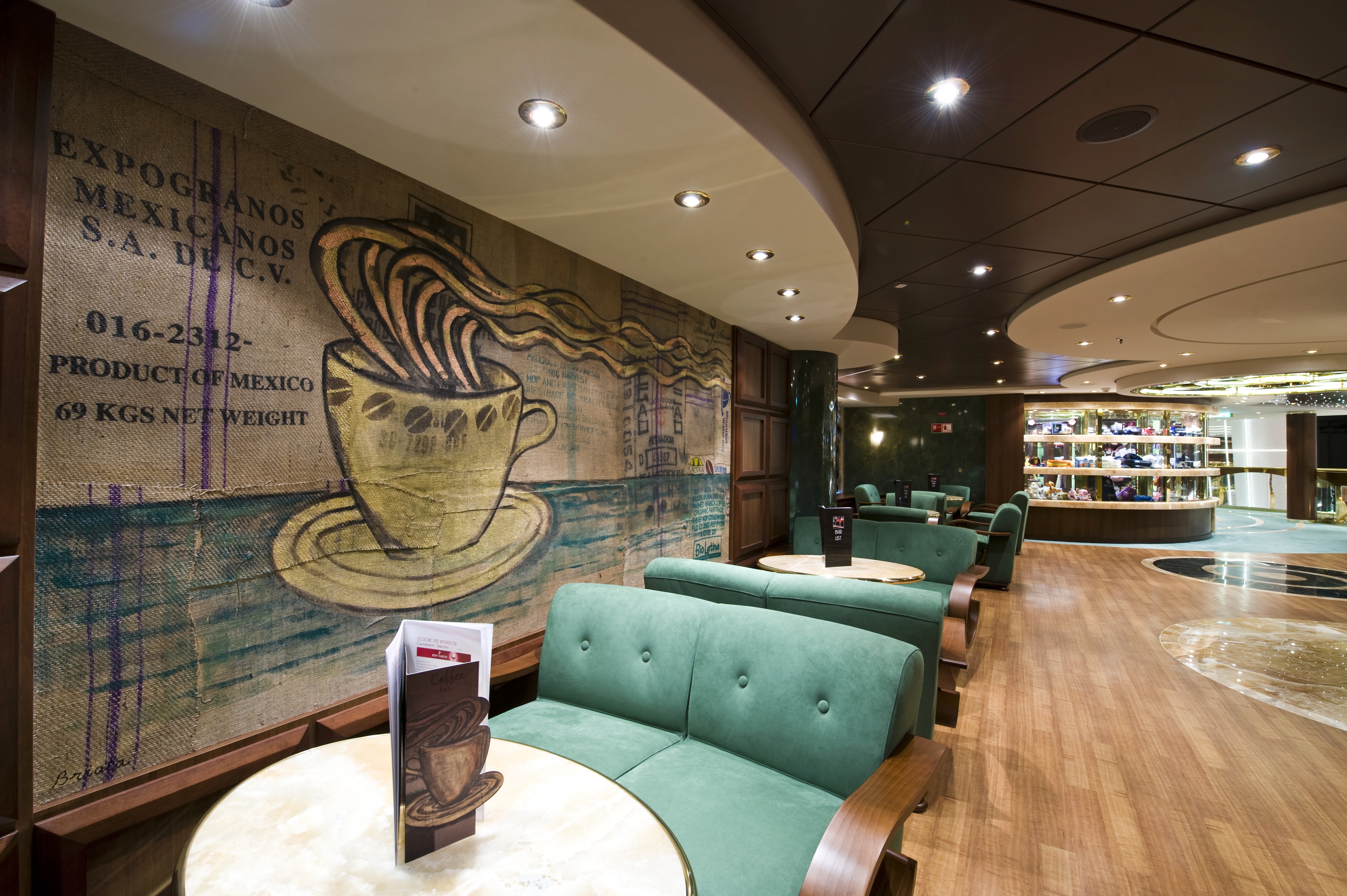
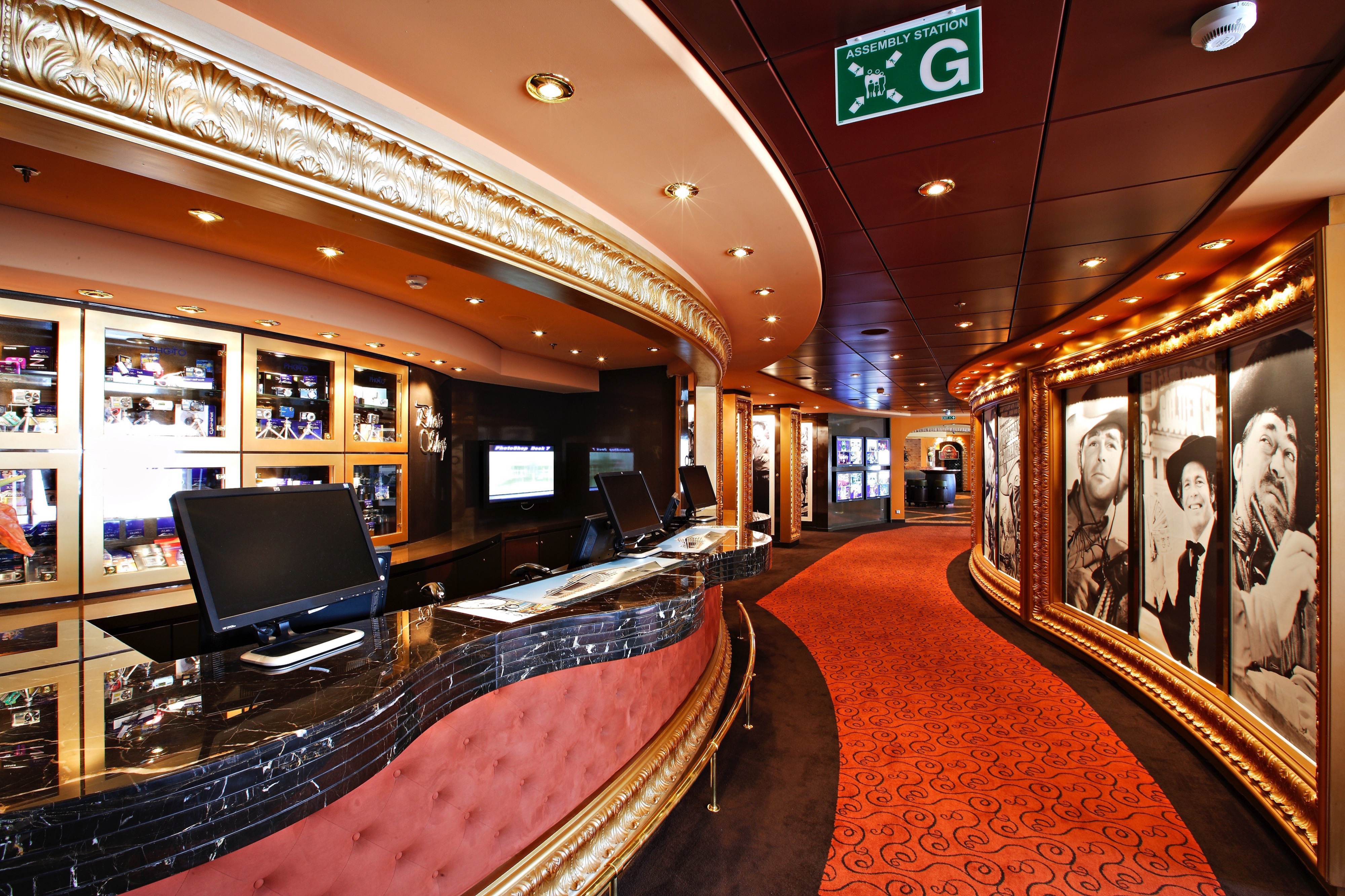
Photo Shop
The Photo Shop is located on deck 7. Photos captured by the ship’s professional photographers both on board and ashore can be viewed in the adjoining Photo Gallery area and purchased in the photo shop.
Art Gallery
The Art Gallery features a selection of artwork from fine prints, lithographs, water colours and oils which can be purchased during the ship’s champagne art auctions.
It is located outside the Sports Bar and Jazz Bar on deck 7.
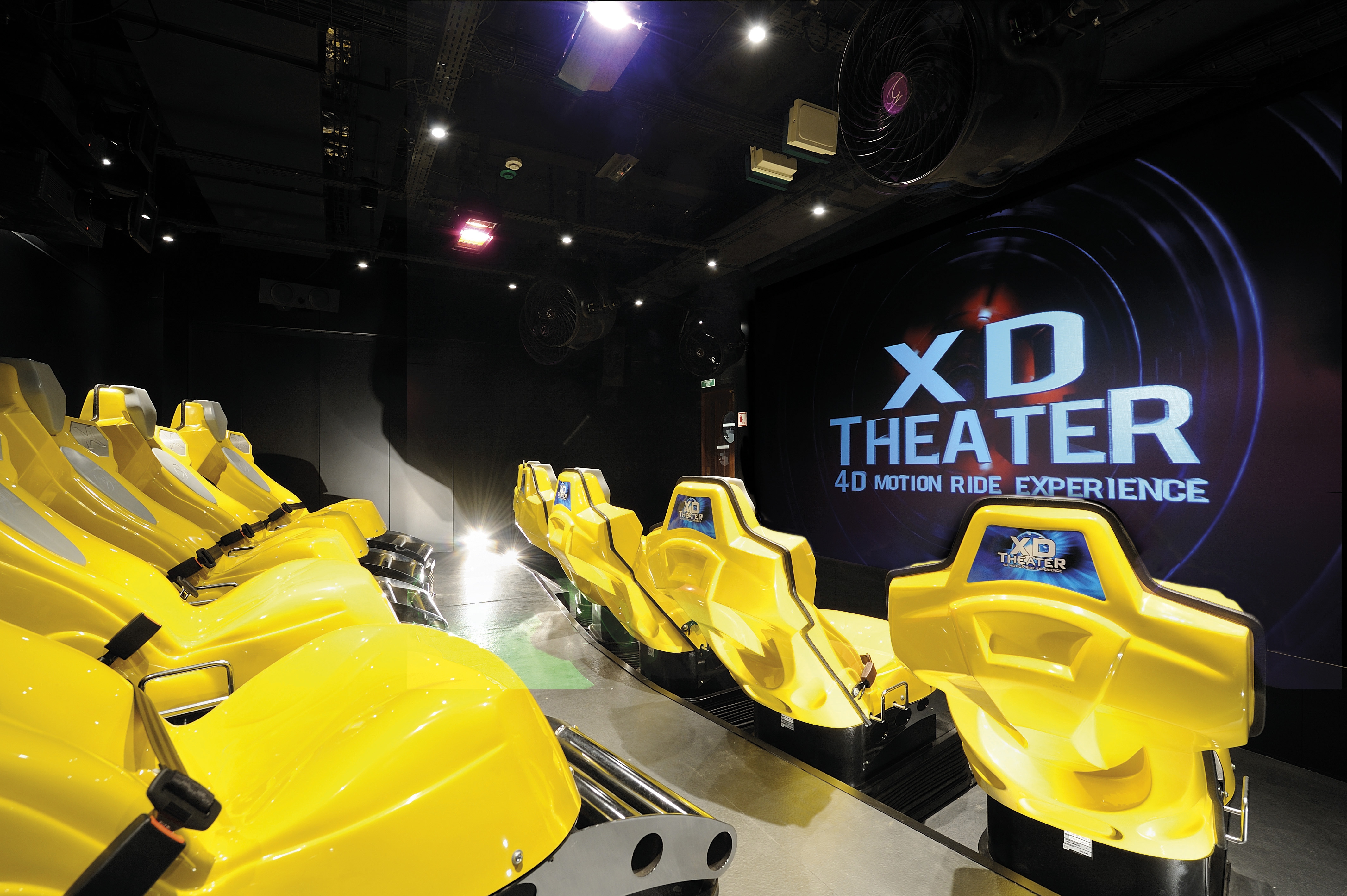
4D Cinema
Visit our on-board 4D Cinema* for a chance to enter a world of adventure without having to leave the comfort of your seat. Enjoy a unique cinematic experience, full of surprising features and visual effects.
- Type of service: Charges apply
- Riding Difficulty: Medium
- *Regulations: Min. Height admitted: 39 inches / 100 cm, Max. Weight admitted: 350 Lbs / 159 Kg
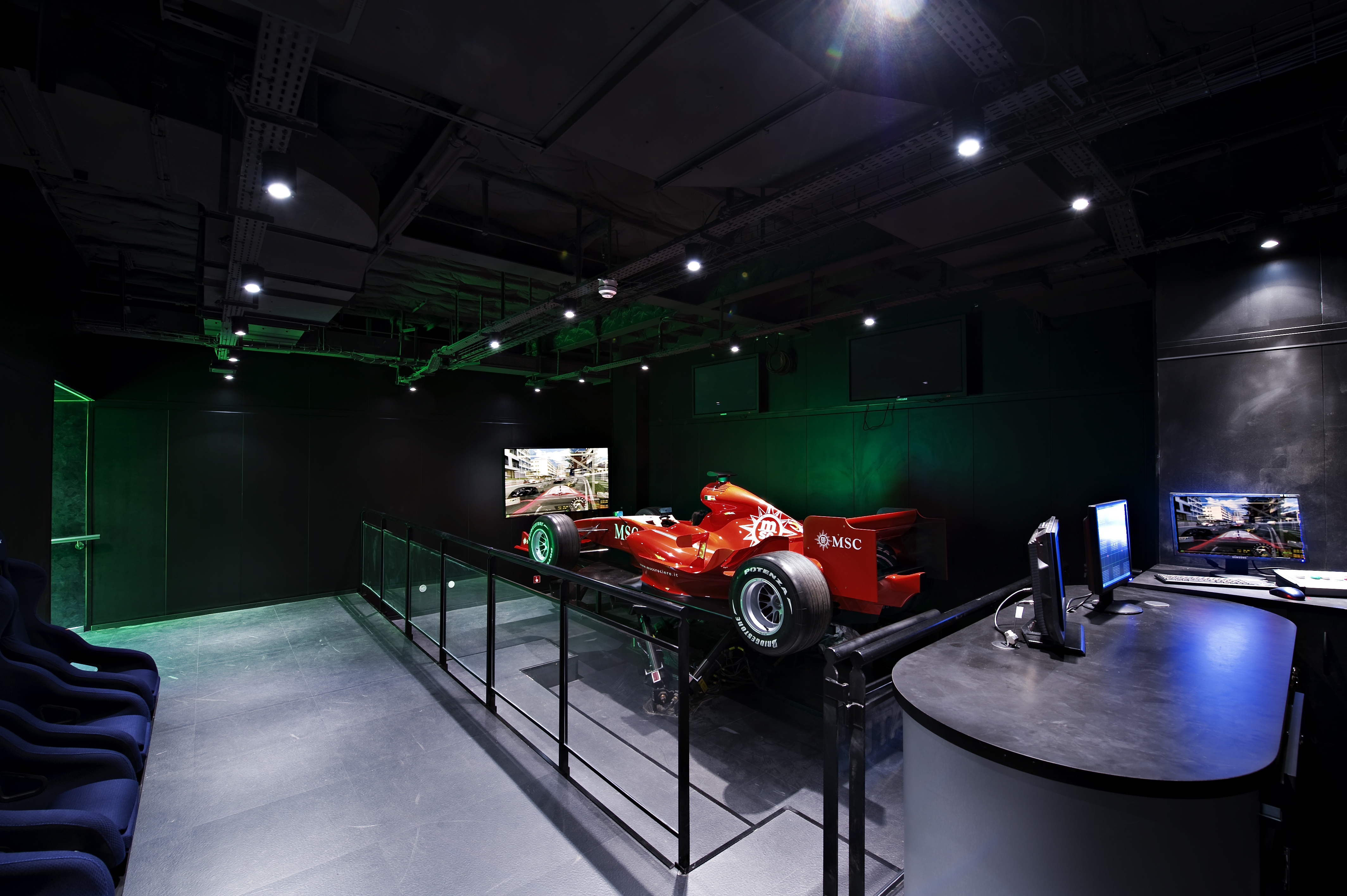
MSC Formula Racer
Our amazing on-board MSC Formula Racer delivers an adrenaline-pumping virtual-reality race*, with you in the driver’s seat of a racing car. Go head to head against other racers and thrill to the feel of engines gunning. Huge fun for the young and the young at heart, regardless of who wins the race
- Type of service: Charges apply
- Riding Difficulty: Medium
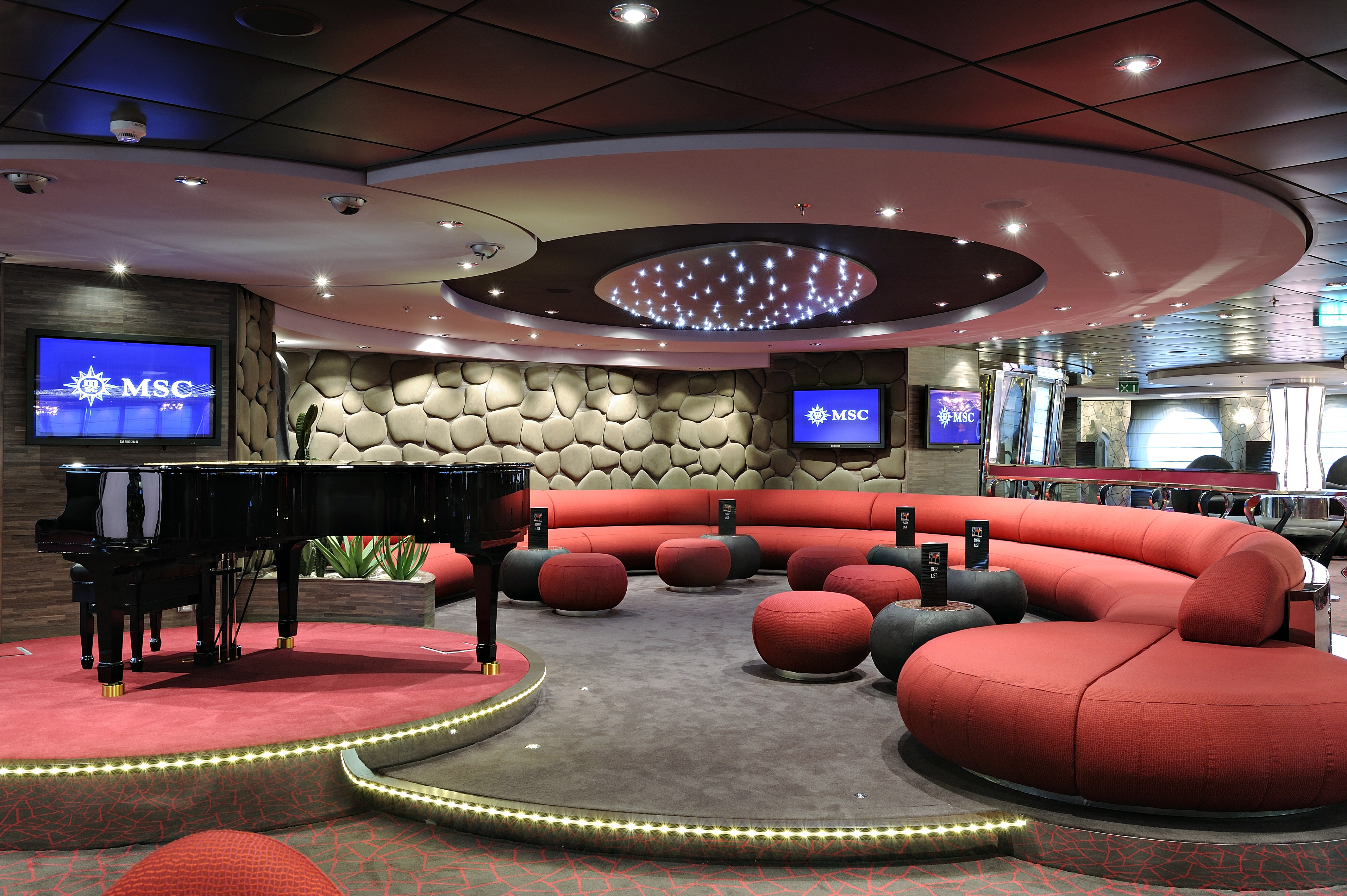
The Aft Lounge
The Aft Lounge located on deck 7 and seating 268 guests, has its own bar and dance floor and plays host to live music and shows.
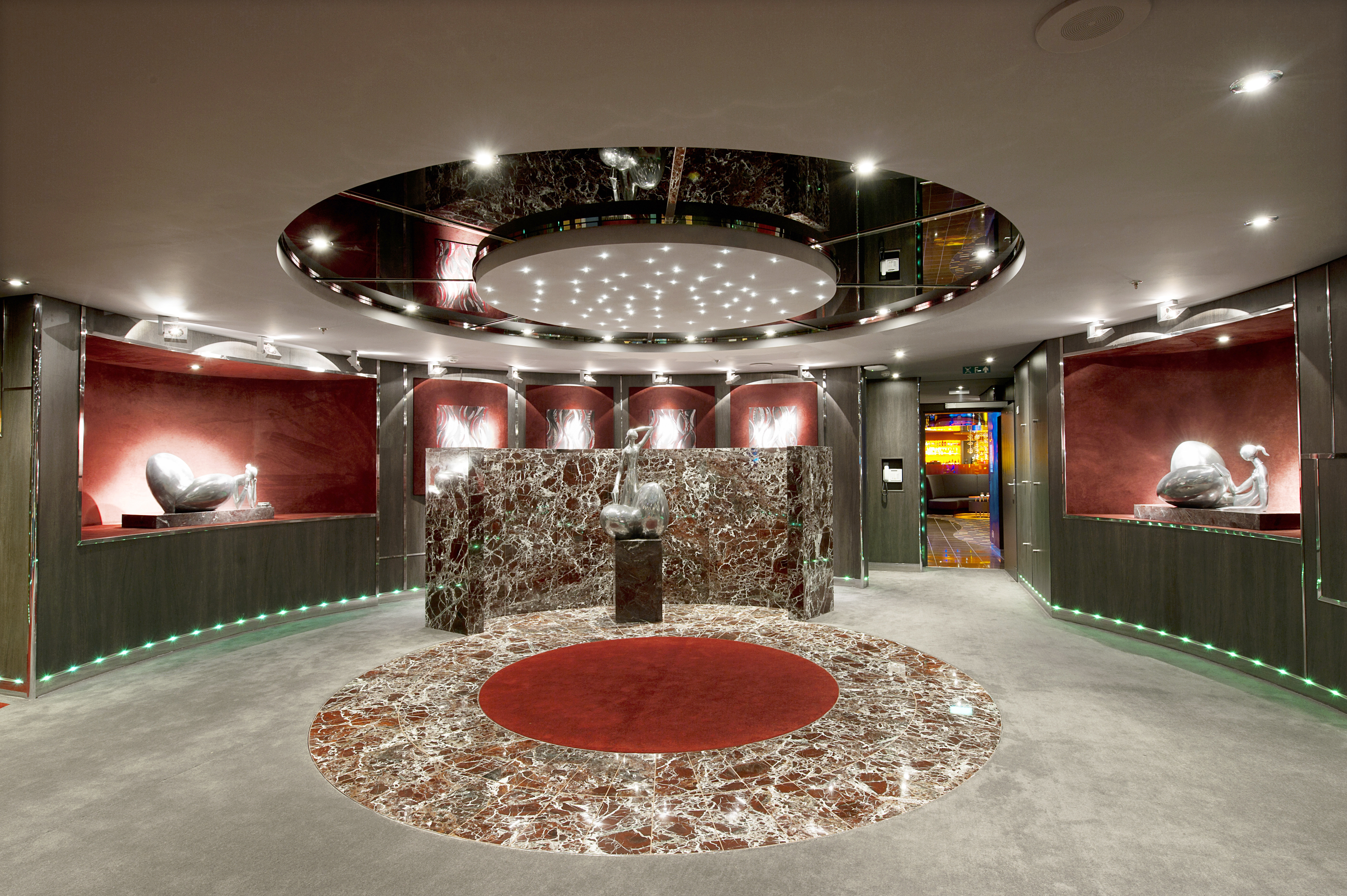
The Cigar Lounge
The Cigar Lounge, situated on deck 6 and seating 31 guests, offers elegant surroundings for guests to relax and enjoy a cigar accompanied by a drink selected from the range of fine spirits on offer.
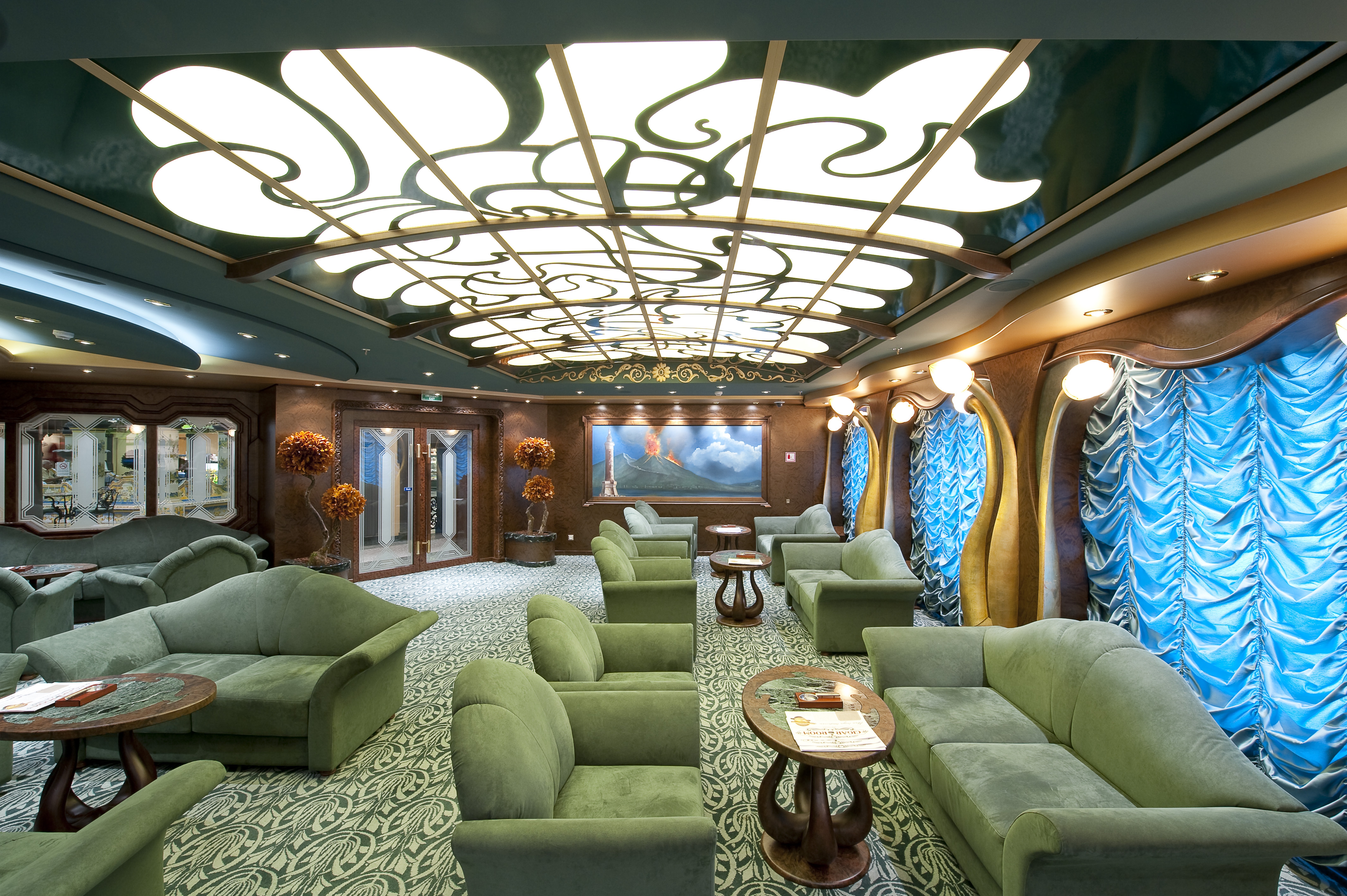
MSC Yacht Club
Nestling in the prestigious foredecks is the exclusive MSC Yacht Club, a luxurious “ship within a ship”. In addition to its 71 designer suites, it boasts its own concierge reception, 24-hour butler service, private restaurant, lounge, pool deck and bar.
An exclusive haven of refinement
Discover a ship within a ship through our exclusive MSC Yacht Club, a place where you can savour exclusivity and privacy in a world of choice. A place where you can indulge in the luxury of a private club while enjoying access to a myriad of recreation and entertainment possibilities that the ship has to offer.
Lavishly appointed suites, an exclusive 24-hour butler service and a dedicated concierge are just the beginning of these exclusive cruise experiences. Welcome to the MSC Yacht Club, a cruise experience like no other.
You can discover the ultimate in MSC exclusivity with the MSC Yacht Club, selectively available on board of MSC Bellissima, MSC Divina, MSC Euribia, MSC Fantasia, MSC Grandiosa, MSC Meraviglia, MSC Preziosa, MSC Seascape, MSC Seashore, MSC Seaside, MSC Seaview, MSC Splendida, MSC Virtuosa and MSC World Europa.
Private venues for total tranquillity
Luxurious accommodation and exclusive services are only the beginning. The MSC Yacht Club also boasts a range of superb private areas, from the elegant Top Sail Lounge with its panoramic views to the stylish restaurant and the One Pool Deck complete with private swimming pool, whirlpool baths, sun deck and bar.
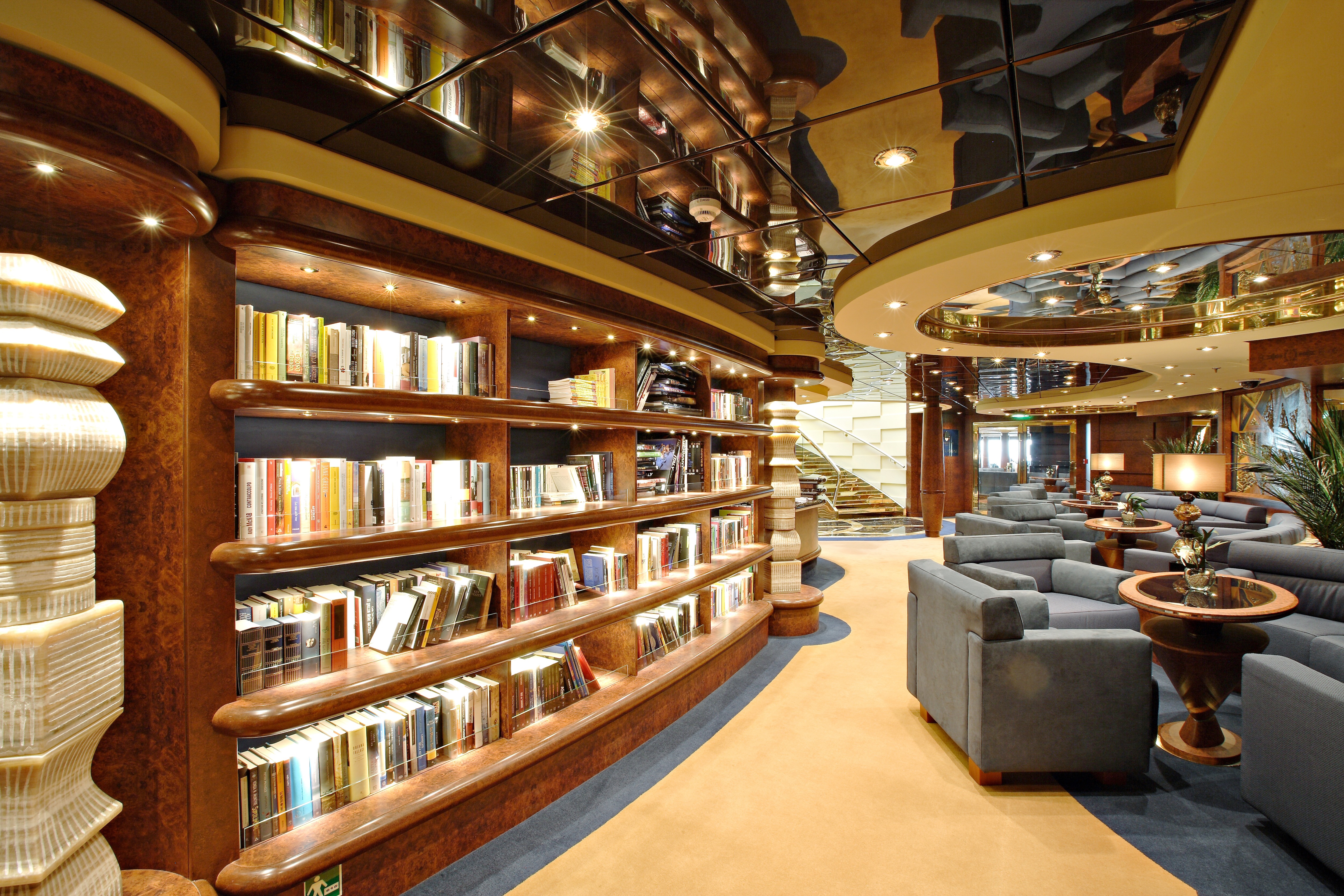
Library
Located on Deck 5.
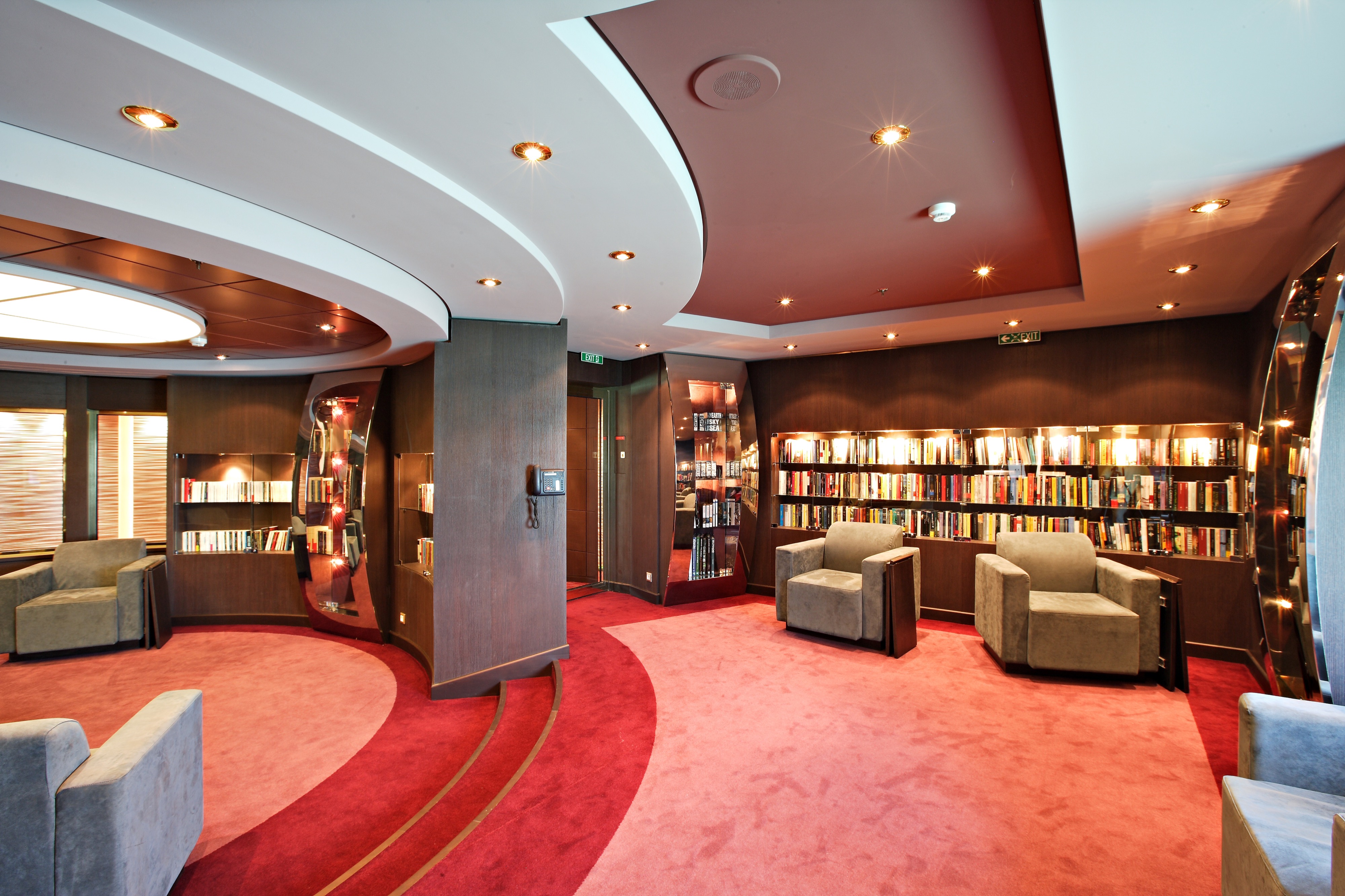
Theme Parties
We organise various daytime and evening Theme Parties on board. You may wish to bring bright fun clothes for the Sunshine Party and something white for the White Party.

MSC Factor
Think you’ve got what it takes to be a star in our on-board talent competition, The MSC Factor? Then come and showcase what you can do in the most exciting talent show at sea. Whatever your specific talent may be, don’t be shy – come and show the world what it’s been missing.
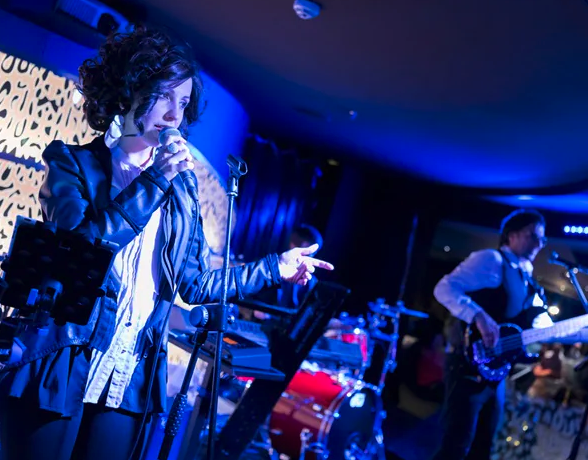
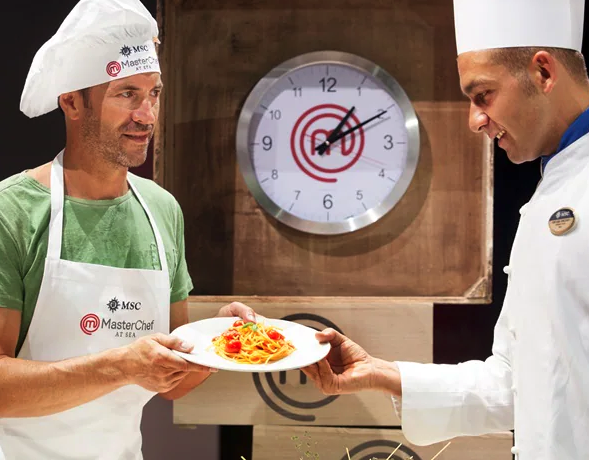
Masterchef
The world’s best-loved food show awaits you on the MSC Cruises fleet! Experience the adrenaline-fuelled creativity of an extraordinary on-board cooking competition for adults and junior guests.
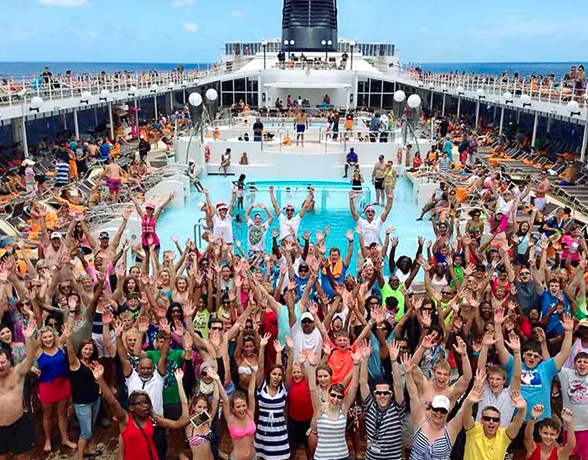
Sailaway Party
A start-of-the-cruise event celebrating the ship’s departure, led by the Entertainment Team and Dancers in a spectacular Costume Parade.
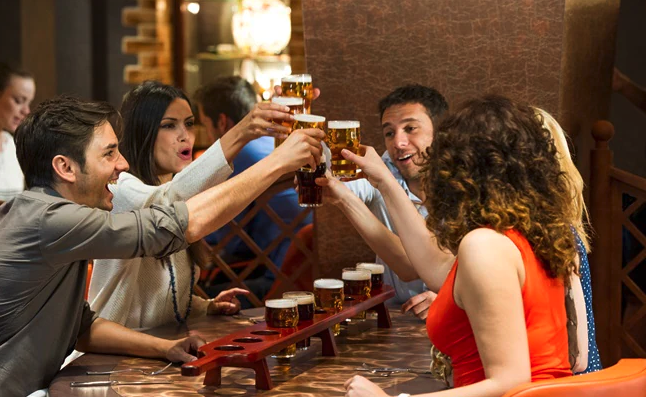
Beer Festival
Fun-packed festive celebrations with a Bavarian flair – decorations, costumes, games, music and of course beer. There’s even a Master of Beer competition and a 6-metre-tall inflatable beer mug.
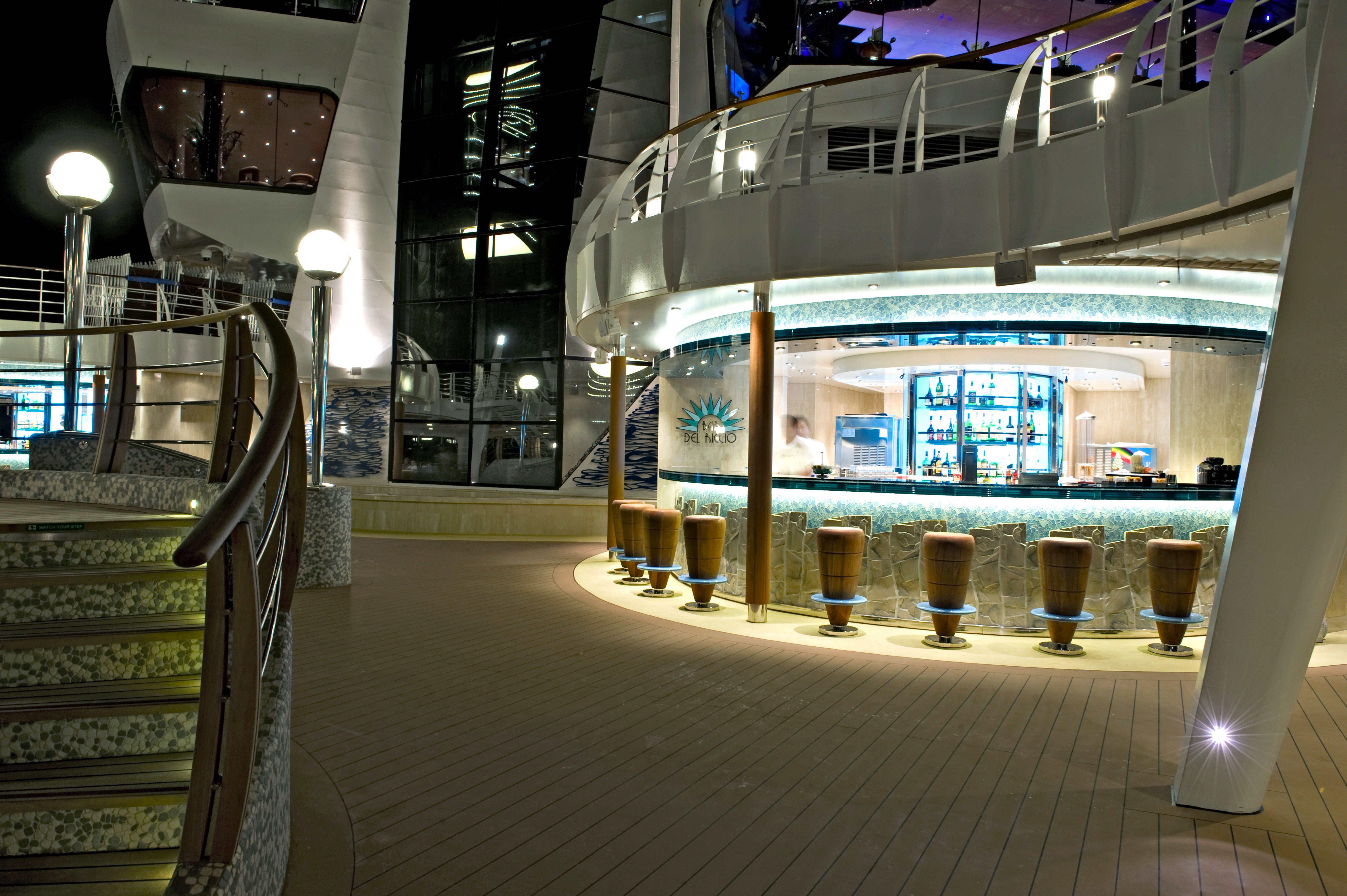
Bar del Riccio
Bar del Riccio is located on Deck 14.
Playa Sol
Playa Sol is located on Deck 15.
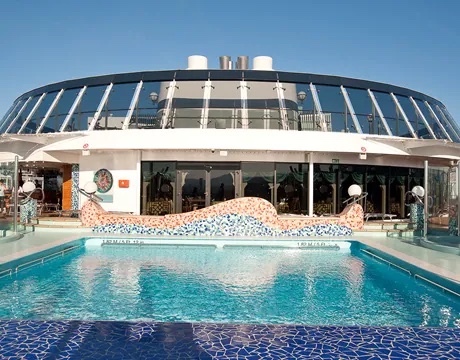
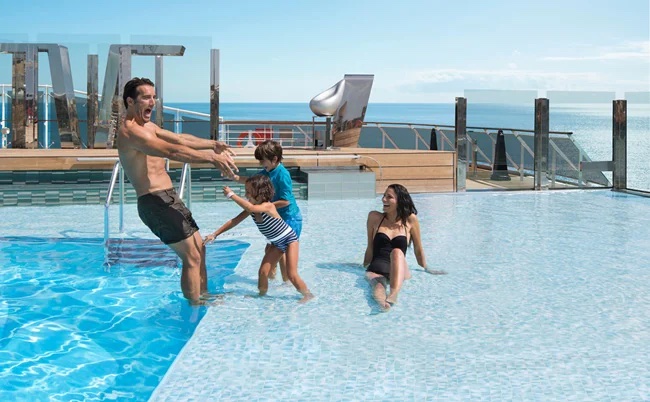
Swimming Pools
If a bit of poolside therapy sounds like your idea of heaven, look no further than one of our numerous swimming pools to get your fill of sun and relaxation, while our pool attendants can cater to your every need.
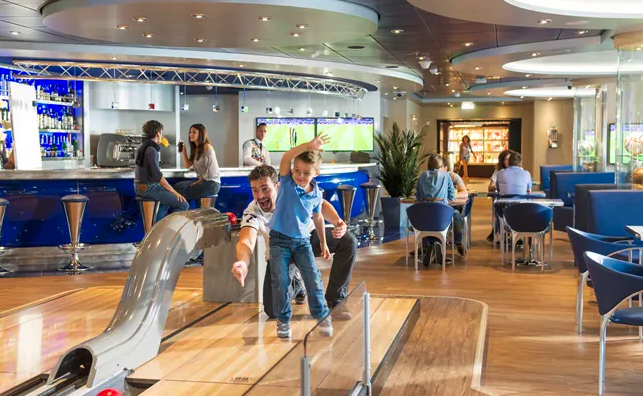
Mini Bowling
Strike! That’s what you want to hear every time the bowling ball barrels down the alley. See whether you have the knack and play against your family and friends to crown the bowling champion in your midst
Mini Bowling available on: MSC Magnifica, MSC Divina, MSC Splendida and MSC Preziosa.
Type of service: Charges apply
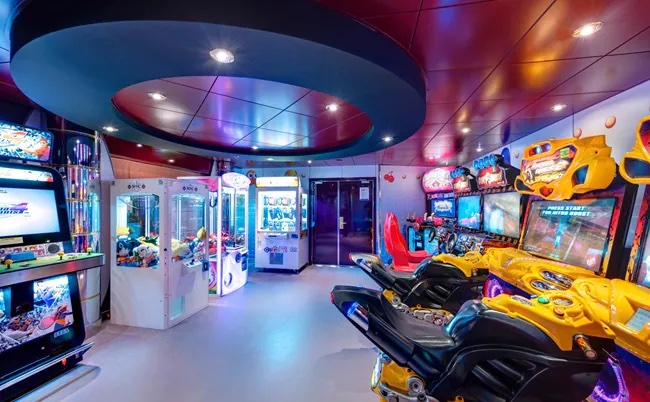
Arcade
Spend a few fun-filled hours gaming at the Arcadeon board the ship. Pit your wits and skill against your friends in a variety of classic arcade games, including video games, pinball, and more.
Type of service: Charges apply
Shopping
On our ships you’ll find a wide selection of the best boutiques at sea stocked with all your favourite premium brands, so you can enjoy the best shopping experience during your cruise. Treat yourself on board and look your best whenever you want! Our shops are open all day and until late at night when at sea.
MSC Logo Shop – Infuse your cruise with gifts that spark magical memories of your voyage across the waves! Navigate the MSC Logo Shop for everything from gadgets to books and novelty gifts! You’ll also find MSC’s very own DOREMI Mascot right here in the MSC Shop.
Jewellery – A wonderland of all that sparkles; showcasing designs in gold, silver, precious and semi-precious stones and watches.
You’ll love the wide choice of jewellery, perfect as a special gift or to treat yourself, and at prices that will put an extra sparkle in your eye.
Duty Free – Discover everything the Duty Free shop has to offer, all at tax and duty-free prices*.
You can choose between top-flight international tobacco products, technology products, fine wines, chocolate, make up and travel essentials.
Our expert staff can provide you with all the help you need to make the perfect choice.
* We always give you the lowest tax and duty-free prices applicable in accordance with local legislation
Fashion Boutique – Browse the latest collections for men, women and children, plus an array of accessories for all tastes. Enjoy the expert guidance of our staff, here to help you find something for the special people in your life, whatever their age and taste!
Accessories – Top Italian brands such as Armani, Coccinelle, Furla and Fusaro feature alongside international names like Radley London, Calvin Klein, Lacoste, Tommy Hilfiger and Ralph Lauren.
Here you are sure to find serious sartorial inspiration for bags and accessories!
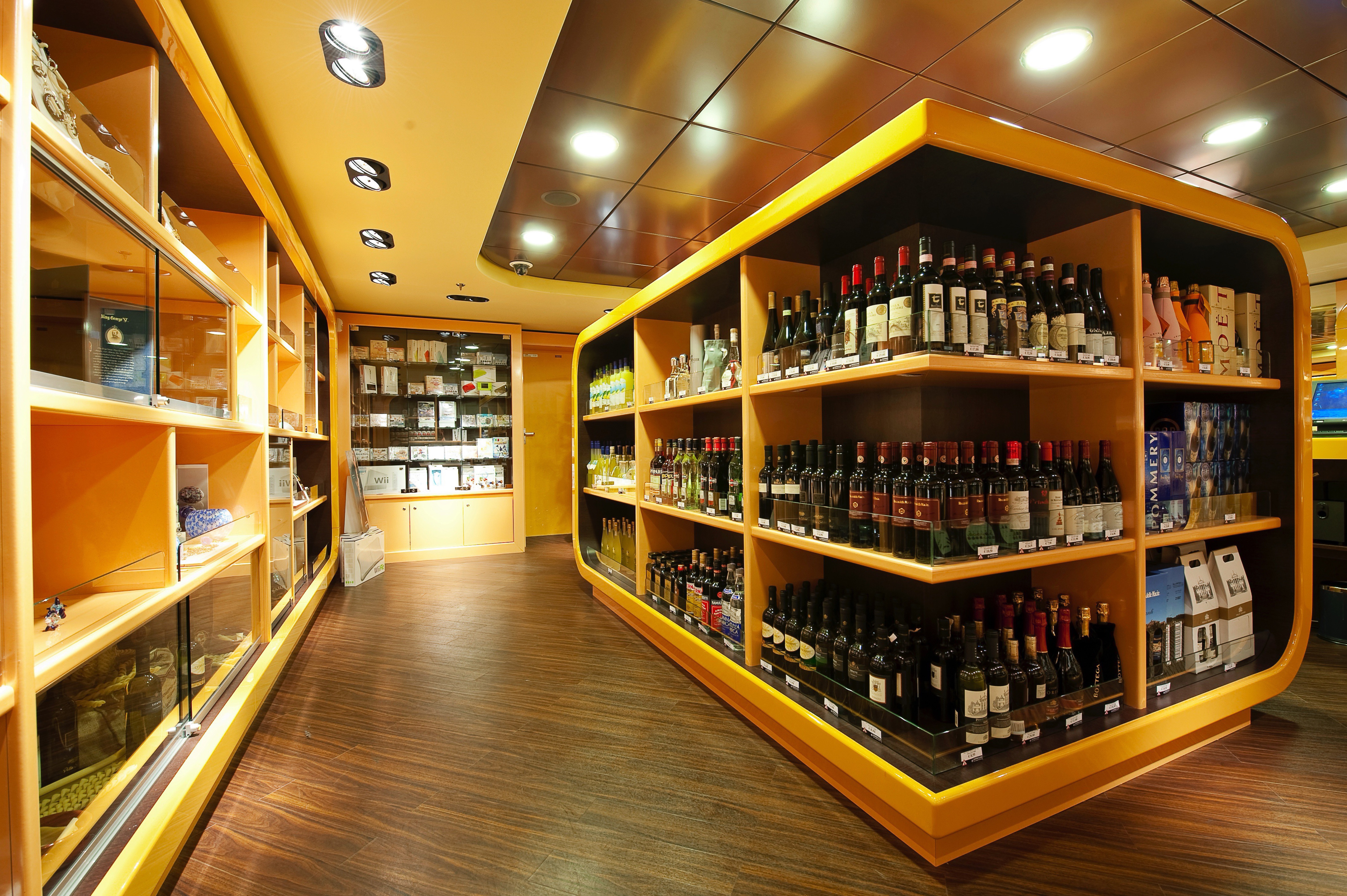
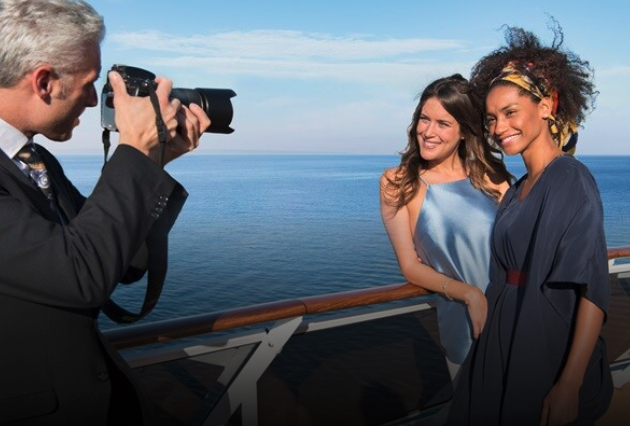
Photo Gallery
Don’t forget to explore the All-Inclusive Digital Photo Package, which includes digital files of all the photos taken by our professional photographers on board. Digital photos are available for download only during your cruise. Keep in mind, once you disembark, downloading your photos won’t be possible.
Reception Guest Service
The Reception/Guest Service can be located on Deck 5.
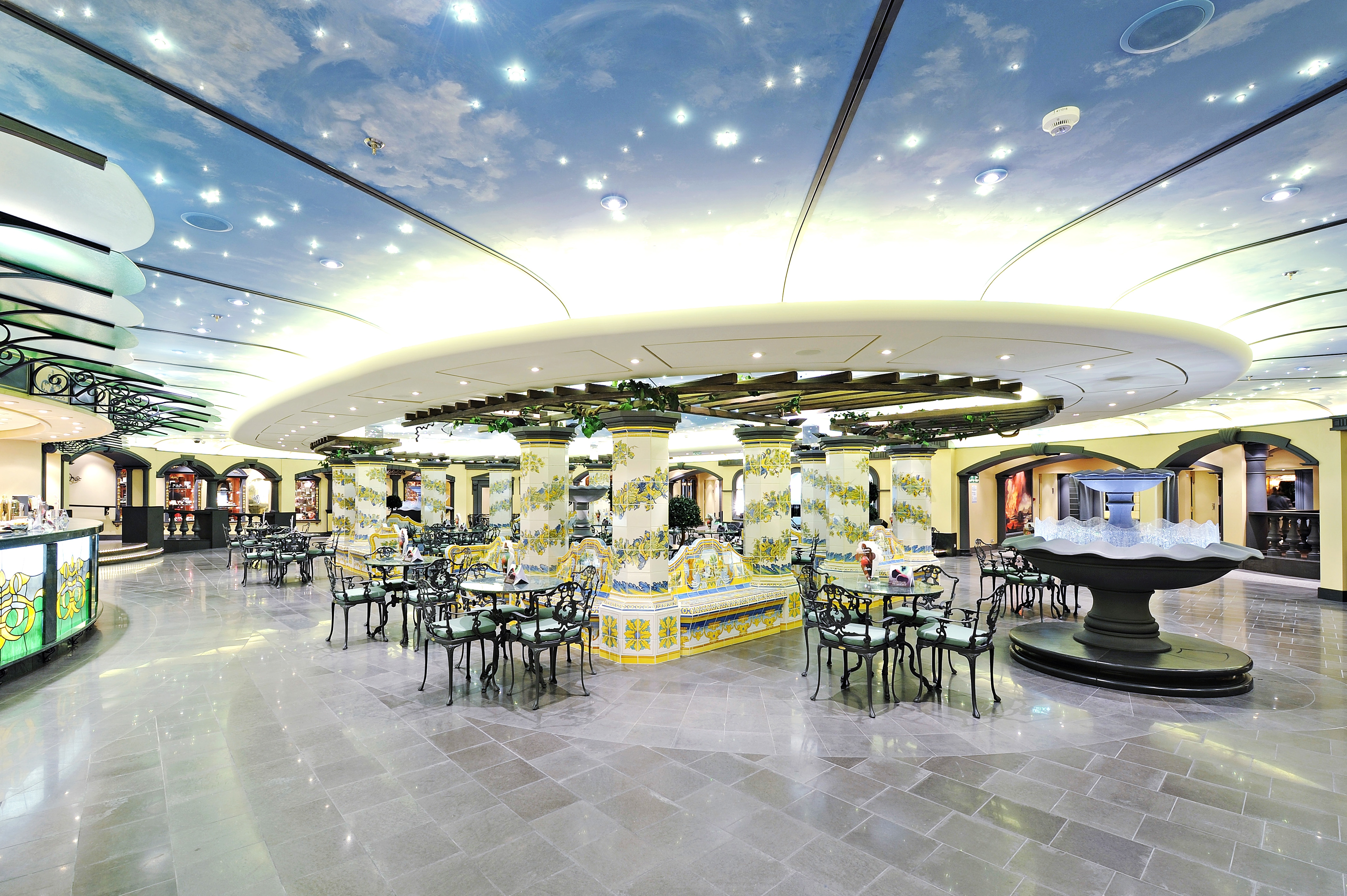
La Piazzetta Bar
Located on Deck 6.
Club 33
Club 33 is Splendida’s futuristic nightclub located on deck 16 with seats for 120 guests and served by its own bar.

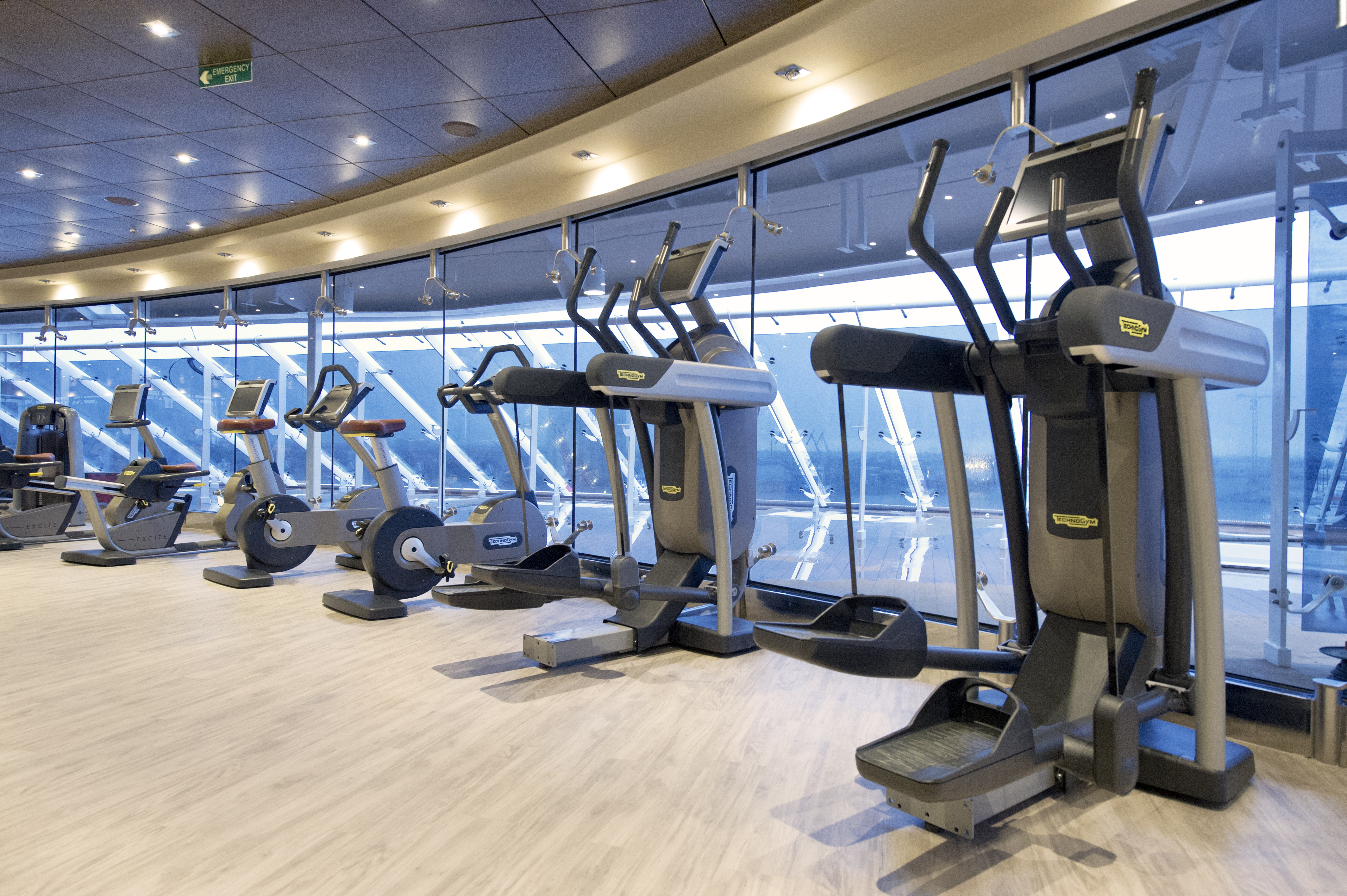
Gym by TechnoGym®
Fitted with authentic TechnoGym® equipment and featuring panoramic ocean views, the on-board gym is the place to be for all those who take their fitness regime seriously. Hone your physique with a full set of TechnoGym® apparatus every day of your cruise to look better than ever before.
Type of service: Included
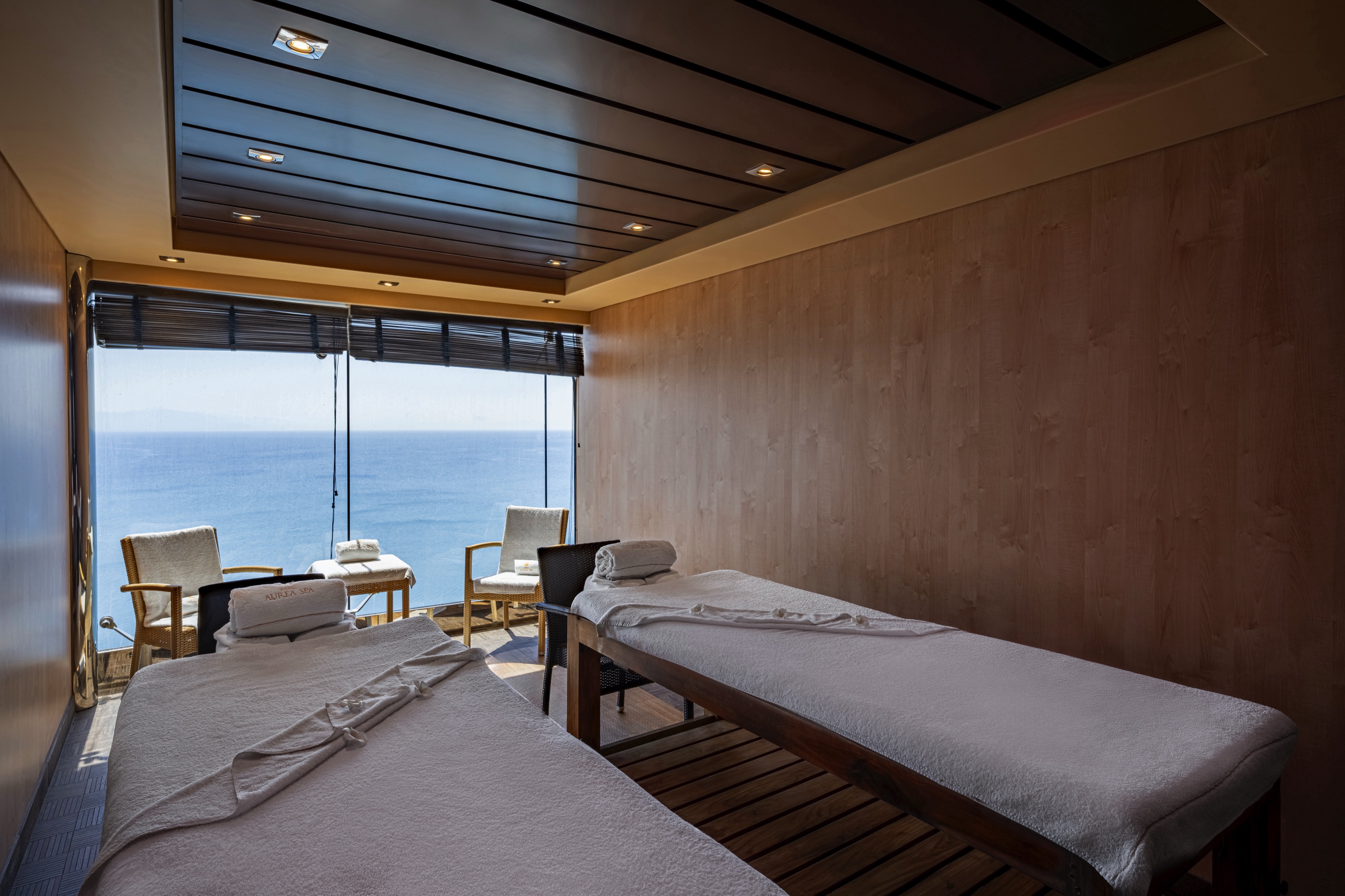
MSC Aurea Spa
Feeling healthy and looking your best is all part of the MSC Cruises experience. Try something new, like advanced beauty treatments, a relaxing sauna, or enjoy a Balinese massage. Book your spa packages now and take advantage of online savings.
MSC Aurea Spa boasts an exotic interior of natural stone, precious woods and rich mosaics, and is equipped with specific and massage treatment suites. Being pampered by a traditional Balinese Massage is a truly unique experience. Thanks to a blend of scented essences and aromatic oils, your body is enveloped in an endlessly peaceful and relaxing aura.
Type of service: Charges apply
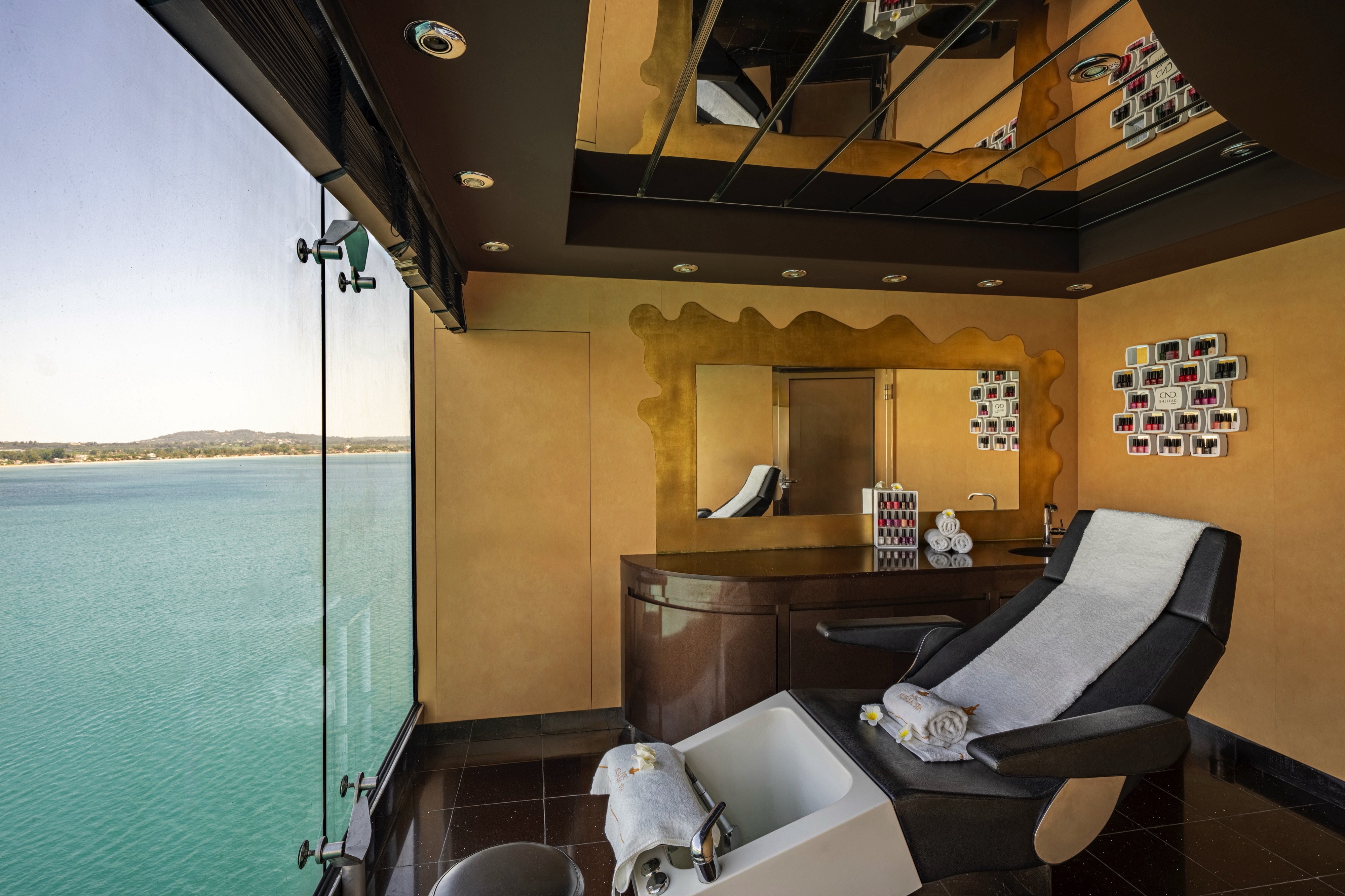
Beauty Salon
You can enjoy the expertise of highly specialised staff in aesthetic treatments to offer you excellent results and improve the relaxing effects of your cruise. Customise your cruise with the best treatments for your body. Unwind and feel fantastic!
Type of service: Charges apply
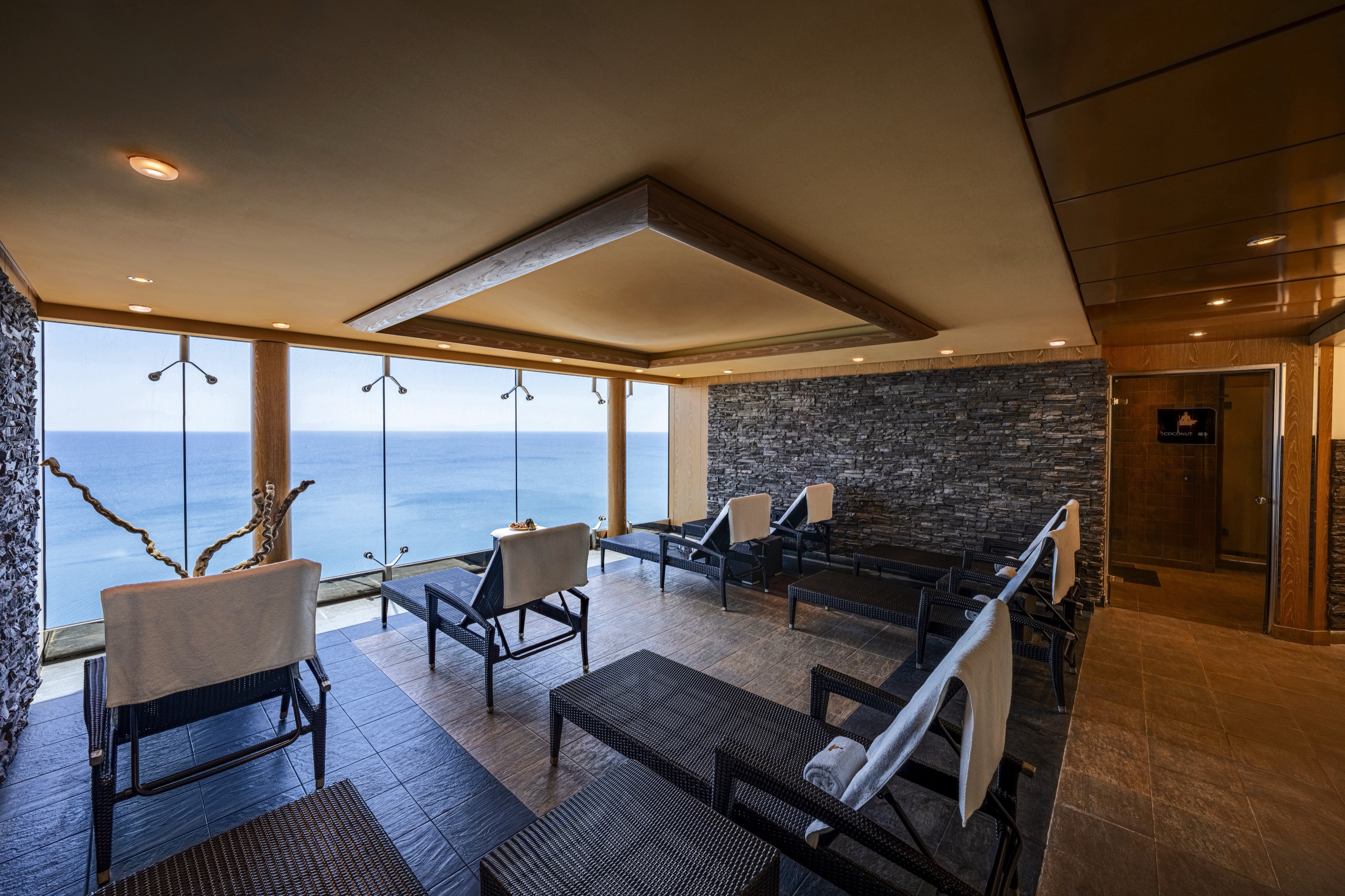
Thermal Area
Start your wellness journey in our on board thermal area and achieve a lasting feeling of absolute well-being that will stay with you well beyond your cruise. Our thermal experiences are designed to slowly raise your body temperature while you relax, taking full advantage of the holistic and therapeutic benefits of water and heat.
Spa facilities vary depending on the ship. Once on board, visit the Spa reception for more details.
Type of service: Charges apply
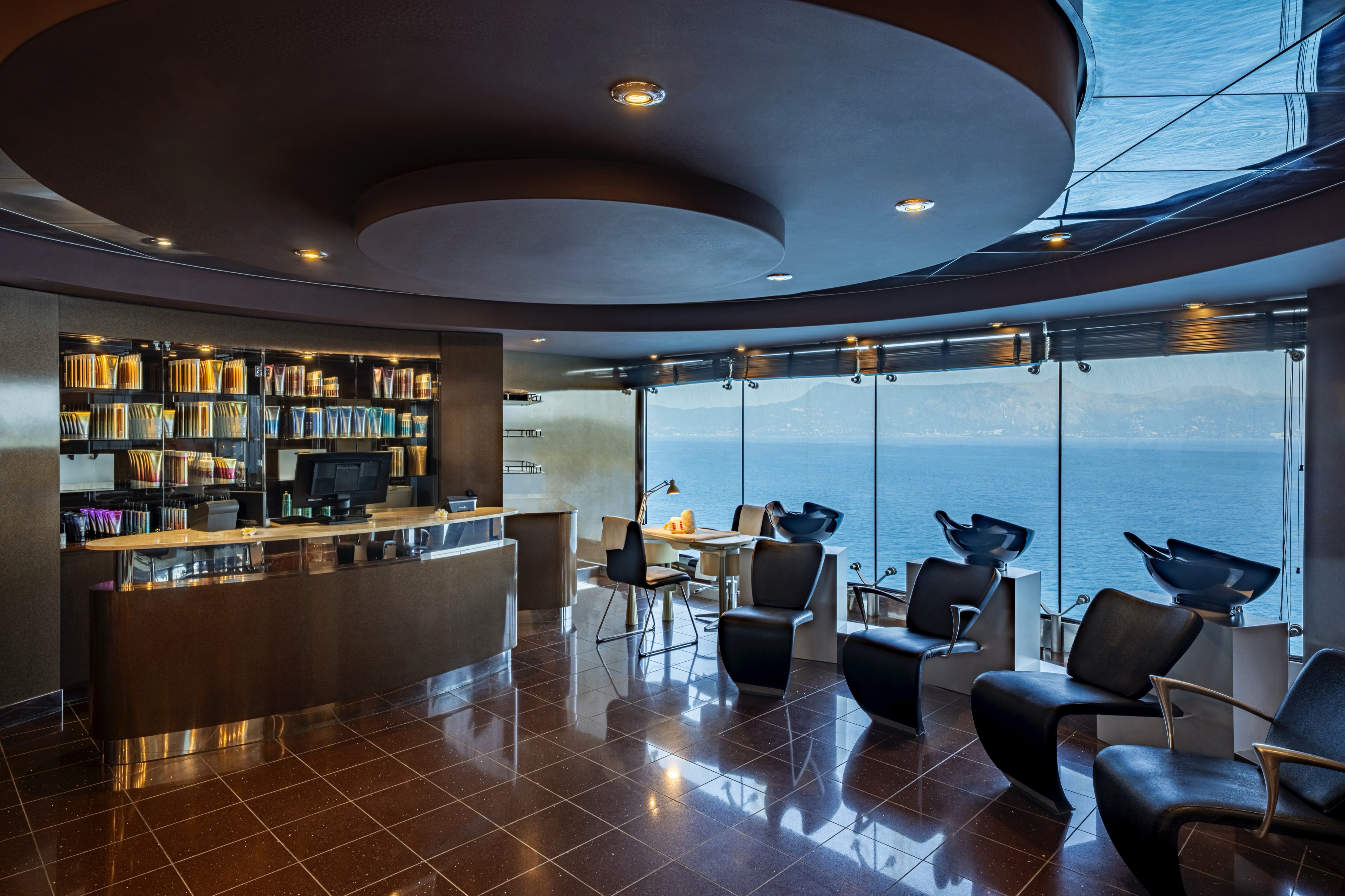
Hair Salon
Refresh your look with a new hairstyle! There are different packages which include a personalised shampoo & conditioning mask, a haircut and a single-process colour treatment. Leave the salon styled and ready for a great evening on board.
Available on: all MSC Ships
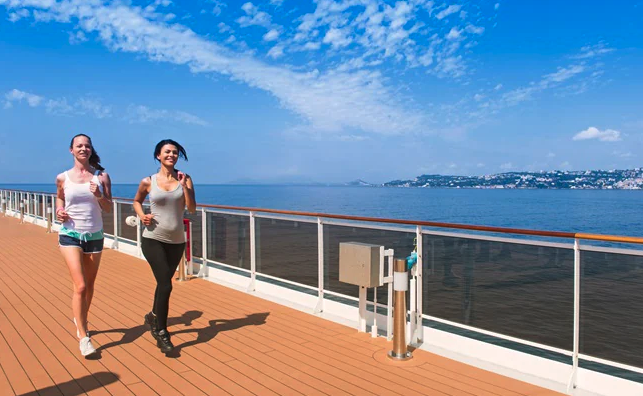
Power Walking Track
Enjoying time off on your cruise doesn’t need to mean letting your fitness routine slide, so gear up and rendezvous with the power walking and jogging track on deck to get your daily exercise fix while also savouring outstanding ocean views.
Available on: all ships
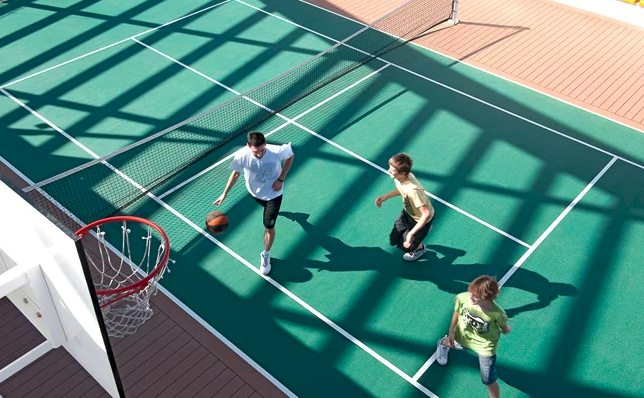
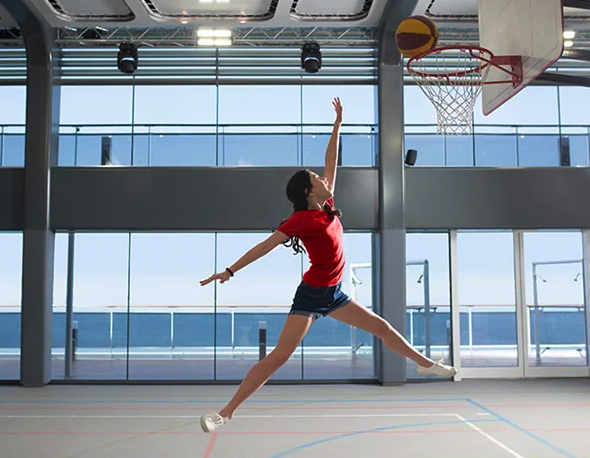
Basketball
Come to the outdoor basketball court at the Sports Centre for a chance to hang out with friends, have fun shooting hoops and enjoy a full-body workout at the same time. You may not make the latest line-up of the Harlem Globetrotters, but you’re sure to have a great time.
Type of service: Included
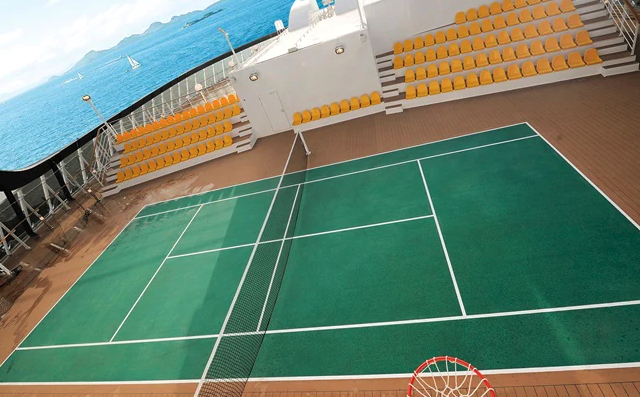
Tennis Court
Anyone for tennis? Play to your heart’s content at the outdoor or indoor tennis court of our on-board Sports Centre. Tennis is ideal for getting some healthy activity, honing your hand-to-eye coordination and having loads of fun. Game, set and match to you.
Type of service: Included
Volleyball
Fast-paced, energetic and a ton of fun to play, volleyball is one of the world’s most popular team sports and one you can enjoy at the outdoor volleyball court at the on-board Sports Centre. Burn some calories and get a thorough cardiovascular workout while you land a kill and beat the opposing team.
Type of service: Included

Five-a-side Football
Fancy a game of footy? Your wish can be granted at the outdoor five-a-side football pitch at the Sports Centre. Team up with some friends or family and play a match against another on-board team. A great way to have fun, get active and turn strangers into friends.
Type of service: Included
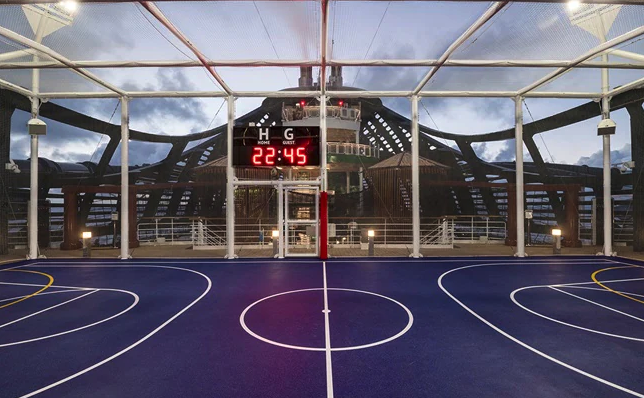
Squash Court
If a fast game of squash is your favourite way of keeping fit or if you’d just like to give it a first go, simply book the outside squash court at our on-board Sports Centre and prepare to hit it like a pro. First played in Harrow, England, in 1830, the game certainly looks back on a long history.
Type of service: Included

Sport Tournaments
Soccer Tournament – can you kick it? Yes you can! Sign up for the onboard soccer tournament and show off your skills. Your team needs you, so get involved.
Volleyball Tournament – unleash your competitive side in our very own onboard volleyball tournament. Quick reactions and impressive reach could lead you and your team to glory!
Basketball Tournament – ready to shoot some hoops? Then enter our onboard basketball tournament. Get involved and prepare for glory!
Ping Pong Tournament – pick up a paddle and prepare for battle! The ping pong tournament is on and you’re invited. Ready for the challenge? See you there!
Table Soccer Tournament – if you’re a fan of football in the miniaturised form known as foosball why not enter today’s tournament? Just remember the golden rule – no spinning
Type of service: included
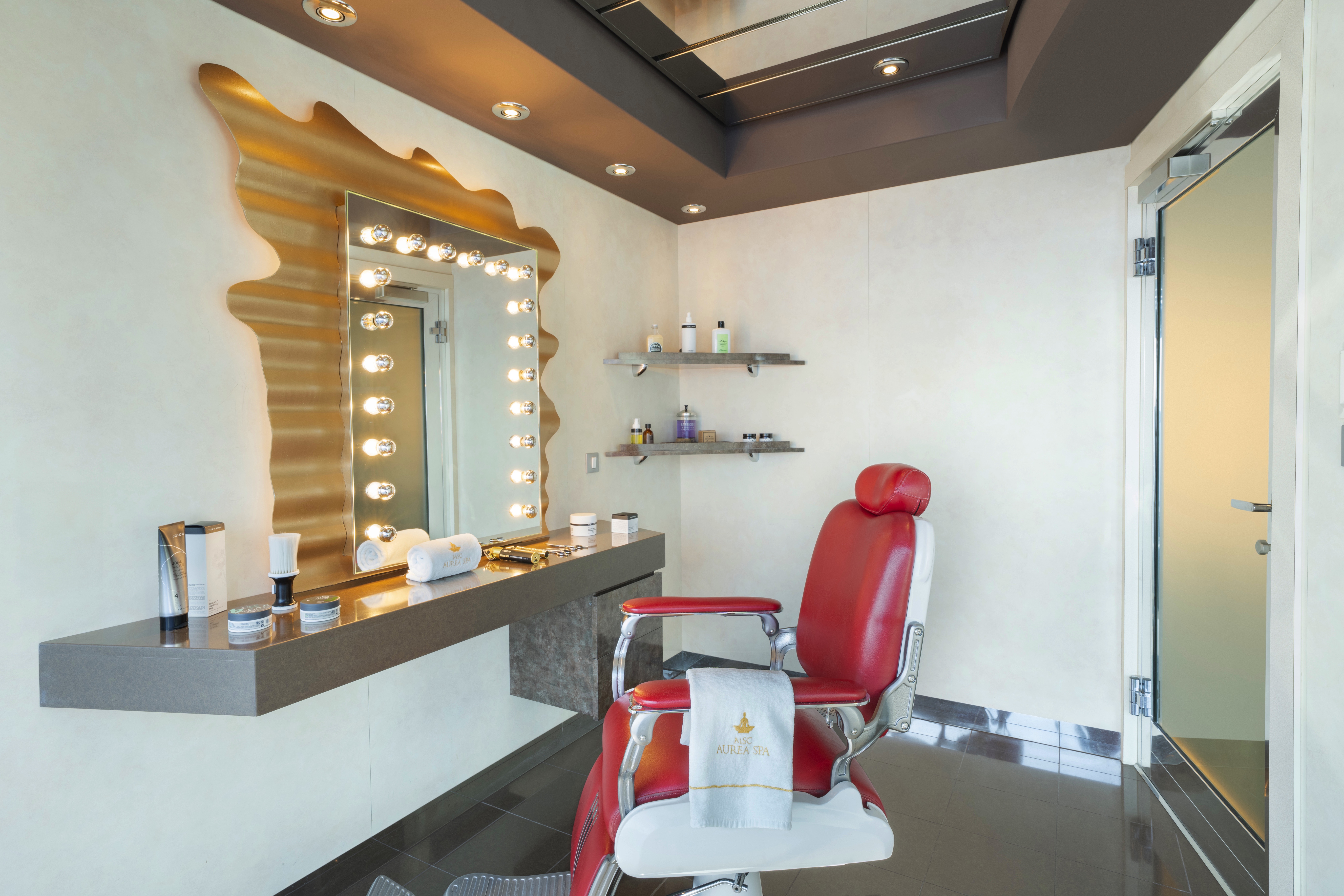
Barber Shop
Inside the MSC Aurea Spa there’s a dedicated Barber Shop to keep you looking at your best during your time on board! Leave the salon styled and ready for a great evening.
Type of service: Charges apply
Baby Club 0-3
You can leave your toddlers with our MSC Babycare staff, or stay with them and enjoy the special Chicco toys and games. They’ll love our music and rhythm activities, designed to awaken their curiosity.
MSC Cruises offers two services to all parents of babies under 3 years old*.
- MSC Baby Time: is the service that allows parents to enter our baby club and play with their children at specific time slots each day.
- MSC Baby Care: is the service that allows parents to leave their baby with the youth staff in determined time slots each day and in the meantime enjoy on-board services and relaxation. Both services are free of charge and allow a maximum of 15 babies to enter the Baby Club at the same time.
Our partnership with leading baby care brand Chicco provides a dedicated play area with facilities for babies and toddlers under 3 years old.
*To be left under the responsibility of youth staff during MSC Baby Care service, babies must be more than 6 months old.
Please note charges apply for the MSC Baby Care service and may vary by ship and itinerary.
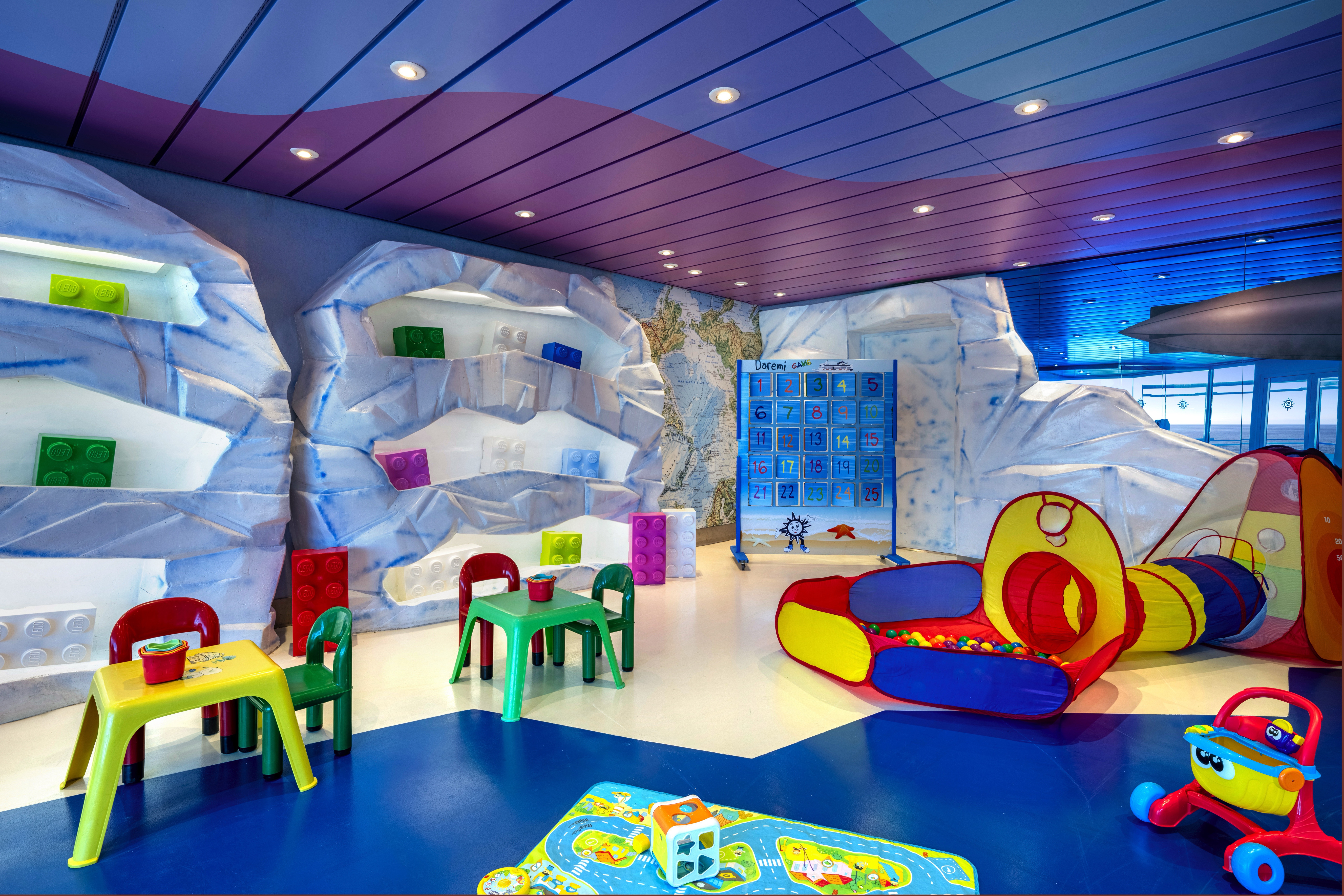
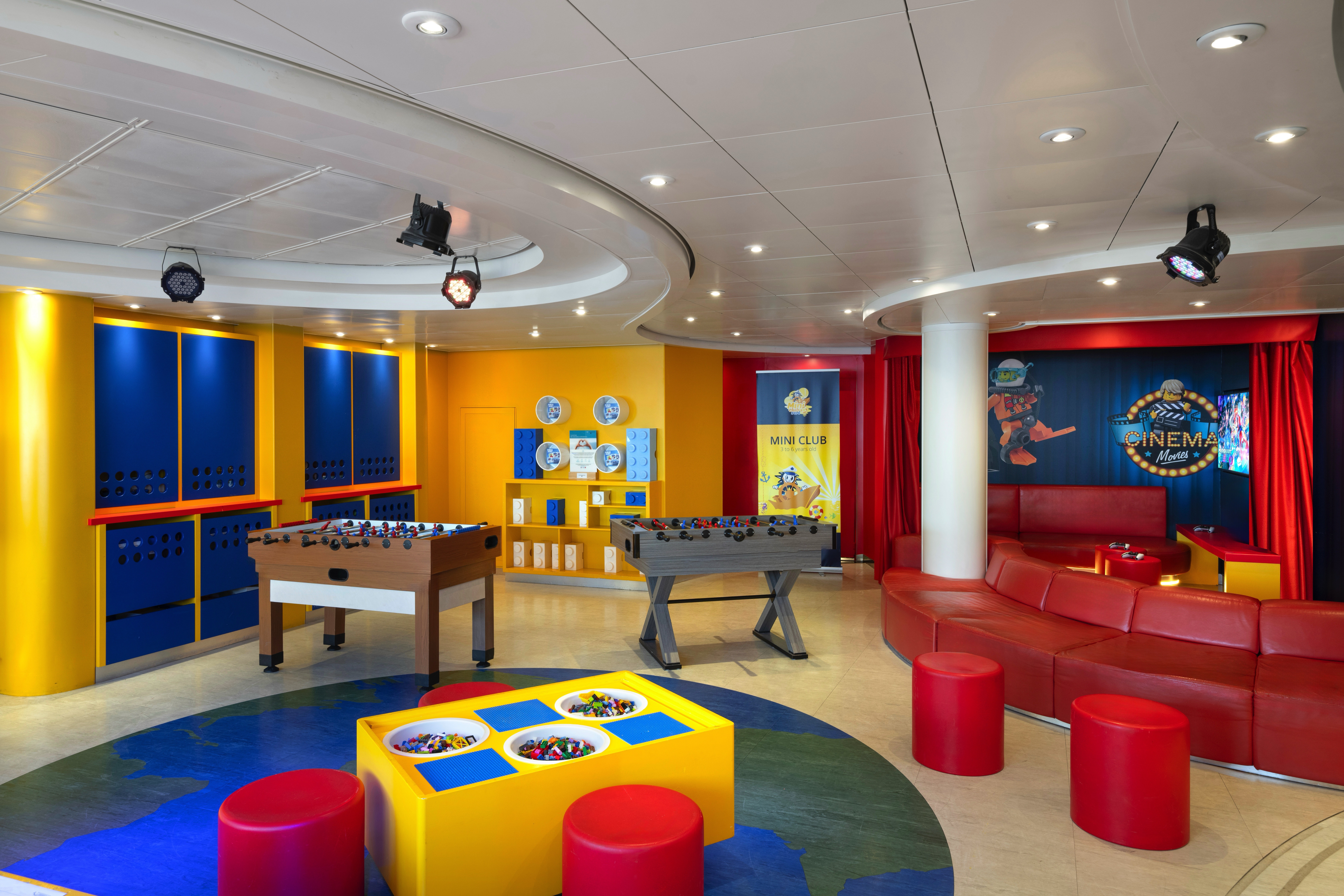
Mini Club 3-6
The Mini Club welcomes children aged between 3 and 6 years old, bringing them new friends and lots of fun, enriched by the stimulating toys of our partnership with LEGO®. The club offers games, events and activities to free their imagination and make every day special. And the whole family is invited to the Doremi Family Disco!
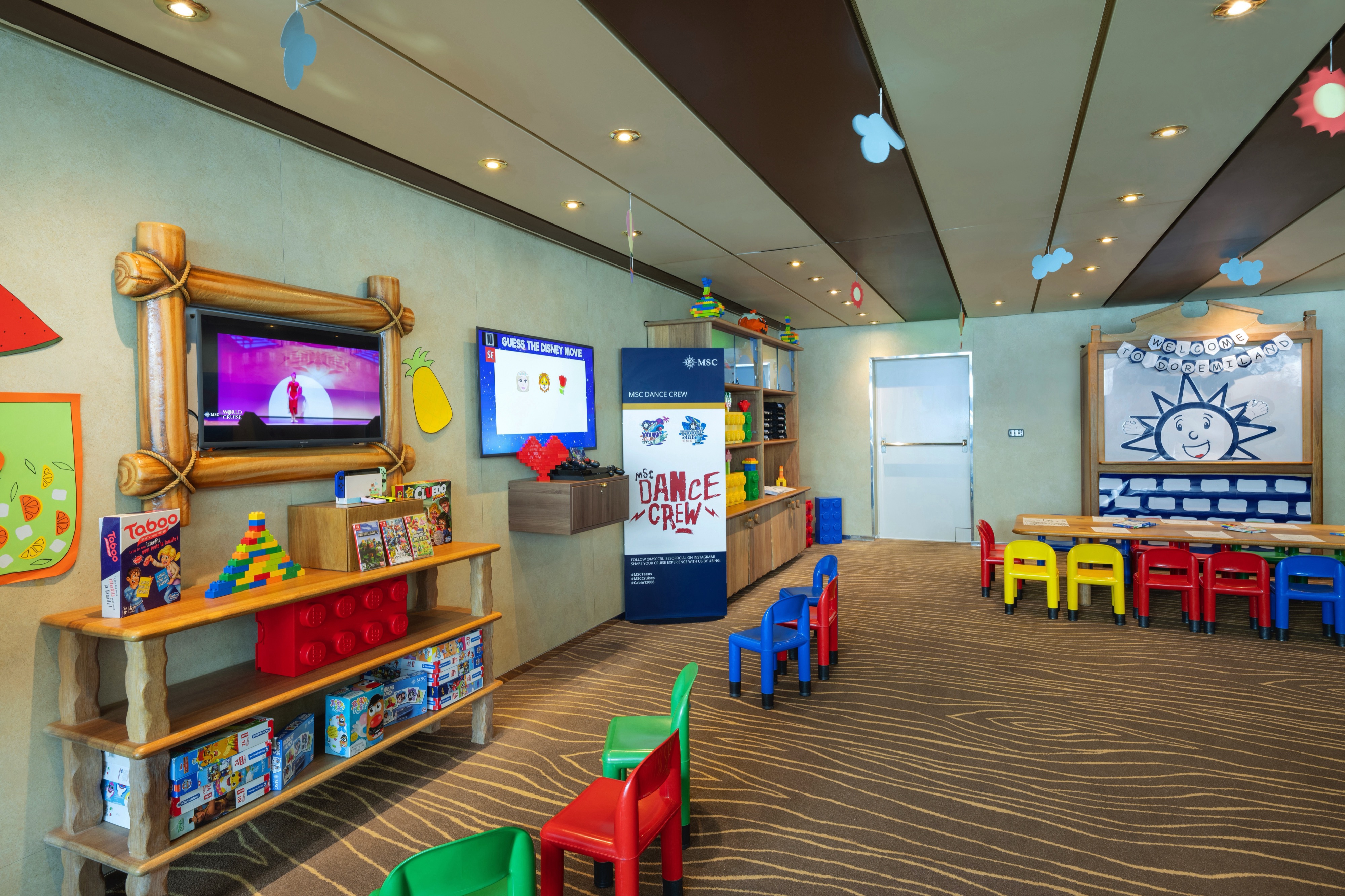
Junior Club 7-11
The Junior Club inspires connection and cooperation among 7 to 11-year-olds, through a wide variety of activities. Highlights range from Masterchef at Sea Juniors and Dorebro Sport competitions to our Fire & Ice live video game. Do you like acting, dancing or singing? Enjoy the thrill of filming with the Kelly & Kloe On Board Green Screen Experience!
Young Club
With the Young Club, kids from 12 to 14 years old can dive into a world of discovery, involvement and interaction.
Each day holds the promise of new experiences, with a dedicated programme of sport tournaments, hi-tech games and lots of other fun activities. And of course, every day also brings opportunities to make new friends.
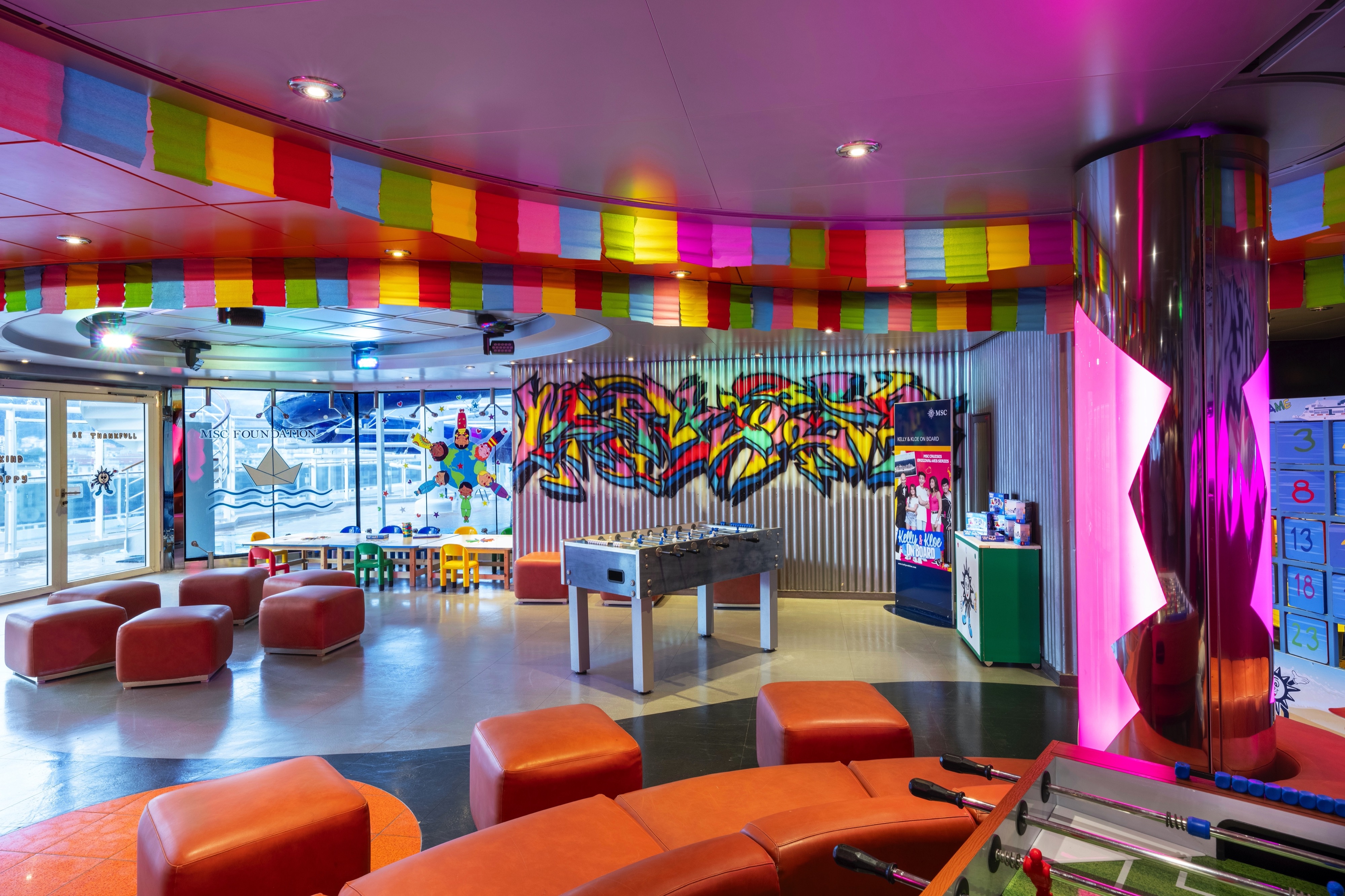
Teen Club
Teenagers aged from 15 to 17 years old can look forward to having the time of their lives on board. Teen Club activities range from sports and competitions, dance contests and social network games to Wii, Xbox and PS4 tournaments.
- For the kind of adrenaline rush kids and teenagers love, we give them the chance to pilot a fast-flying drone with our Drone Academy through an obstacle course in a night-time race that will really test their skill!*
- Developed in partnership with Fremantle, the company behind “The X Factor”, the Dance Crew Competition gives teams of teenagers the chance to compete for the title of Dance Crew of the Year*
- With our new YouTube web series Cabin 12006, your children can follow teenager Markus on his first cruise as it turns into an unexpected adventure!**
- Also with the Teen disco, the Karaoke, Flash mobs and other themed events, every evening is a party!**
*Available on: MSC Grandiosa
**Available on: all MSC Ships
Kids Clubs and Family Activities
MSC ORIGINALS: On an MSC cruise, you’ll discover a diverse array of activities designed for both children and adults. Our dedicated Kids Clubs offer a wide range of engaging experiences, including sports tournaments, quizzes, and the exciting DOREMIX family disco. Featuring an exclusive MSC Cruises soundtrack, also available on all digital platforms, this family-friendly dance party will be led by beloved mascot Doremi, who will serve as both DJ and dance judge for competitions in all age categories.
Additionally, our ships provide numerous entertainment options to ensure everyone has a memorable and enjoyable time onboard: BOXES will see contestants face unexpected challenges, revealed only when they open the selected box. MSC BOOM, will combine technology and fun, allowing participants to compete for exciting prizes.
We kindly ask you to check the daily programme once onboard to discover all the activities.
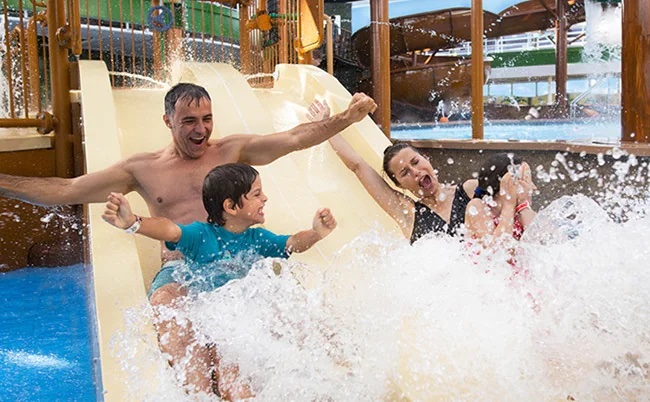
From the joys of relaxing in a pool or splashing around in an aqua park, to the thrill of riding a swirling waterslide, family fun in the sun is never far away.
Some ships offer the added excitement of activities such as sliding down a zip-line, driving a full-size MSC Formula Racer, and enjoying a fully immersive VR experience. Not to mention the thrilling multi-sensory experience of an interactive XD cinema and the amazing video games room**.
You can take the kids to a Broadway-style theatre show
Once during every cruise we hold a special entertainment event called the LEGO® Experience On Board*: an entire day dedicated to fun LEGO activities for the whole family to enjoy.
Web Series
Experience the cruise adventure before you even step on board! Dive into the captivating web series Cabin 12006, available on MSC Cruises’ official YouTube channel. Join Markus, a teenager embarking on his first cruise, as his holiday takes an unexpected turn. MSC Bellissima’s “Cabin 12006” is filled with unanswered questions and thrilling surprises, and it’s up to Markus and his friend Lucas to unravel the mystery.
Kelly & Kloe Onboard is an exciting web series that chronicles the adventures of two young girls, Kelly and Kloe, as they spend time on an MSC Cruises ship alongside their father, the Master. Kids will have the opportunity to learn the theme song and dance routine from the web series, participate in a selfie contest while dressed up as characters from the story, and even unleash their creativity by writing their very own episode of the thrilling adventure.
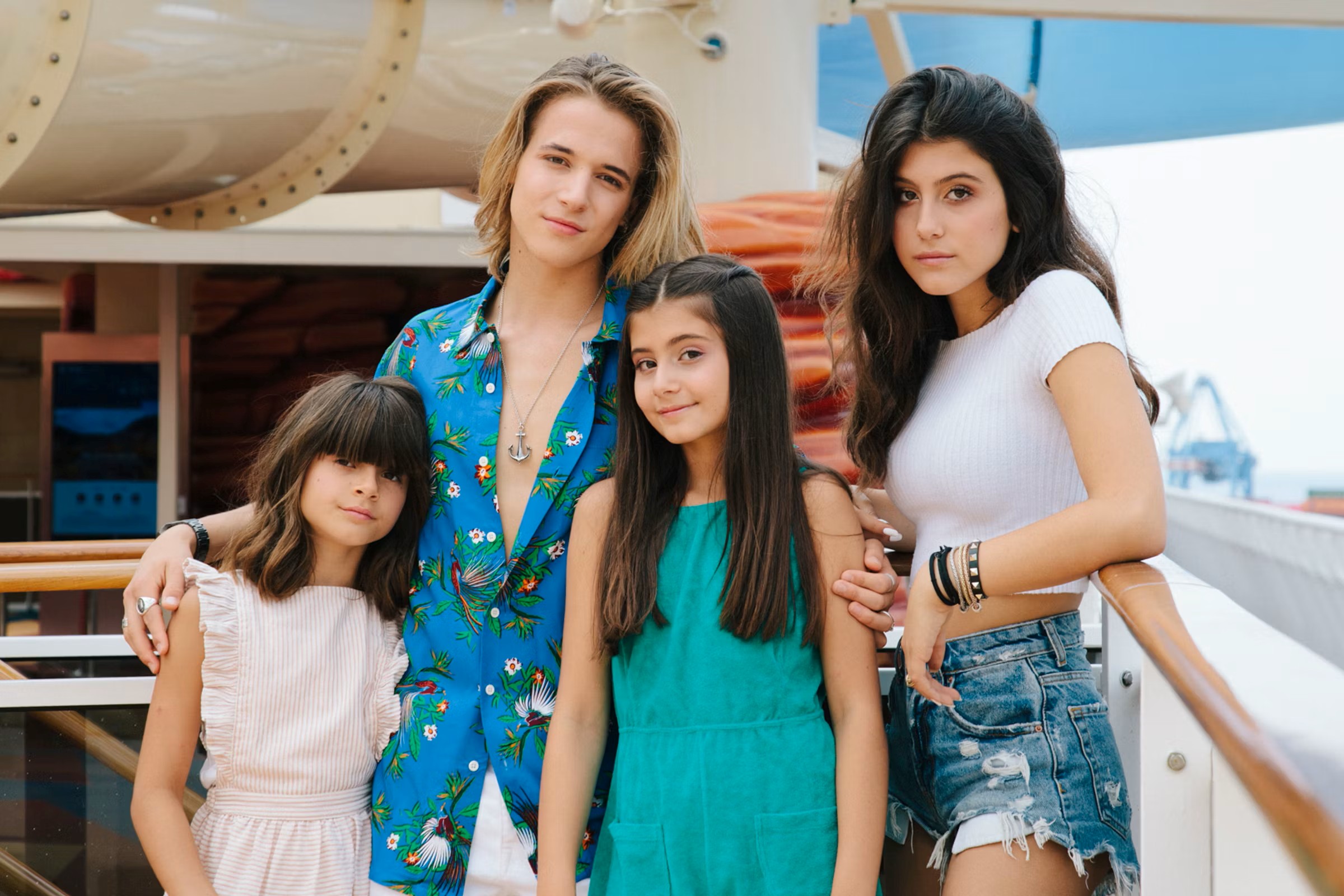
Babies and Toddlers Services
Baby Clubs – along with activities that the whole family can enjoy together, we offer a Baby Club onboard all our ships with dedicated activities and facilities.
MSC Baby Care Service – we have thought about mums and dads too! Everyday, you can drop your baby off at the Baby Club, where they will be looked after by qualified and dedicated staff who will let them play (during specific times)
MSC and Chicco – on our cruise ships you’ll find the most modern, fun and educational toys, chosen for you by the Osservatorio Chicco, Baby Research Center.
Medical Centre – every ship in the MSC Cruises fleet has a well-equipped modern Medical Centre on board. The Medical Centre is staffed by fully-qualified personnel, and benefits from 24/7 specialist paediatric telemedicine support. Over-the-counter medicines can be purchased on board.
24 hours Room Service – all our restaurants and 24-hour Cabin Service are ready and happy to help, ensuring you can feed your baby swiftly on demand, for their and your own comfort.
Baby Laundry Service – our unique new Baby Laundry service washes baby and toddler clothes separately from everything else, using a specialised machine, program and detergents to clean and sanitise even at temperatures as low as 30°C. We’ll collect your children’s items from your cabin and deliver them to you the following day clean, safe and sterilised: ideal for protecting their skin. You’ll find full details in your cabin, along with a biodegradable paper laundry bag and a service coupon to fill in.
Please note charges apply for the MSC Baby Care service and may vary by ship and itinerary.
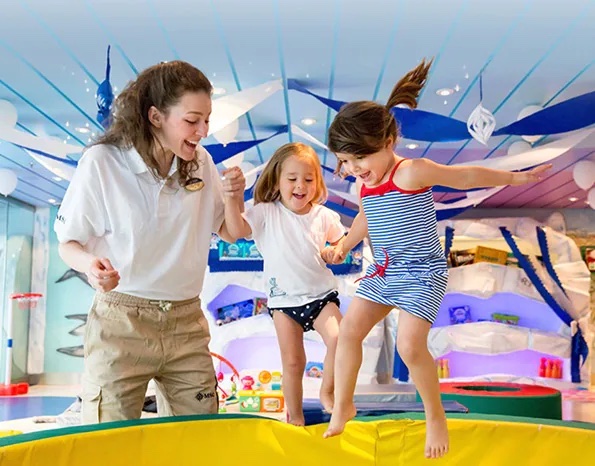
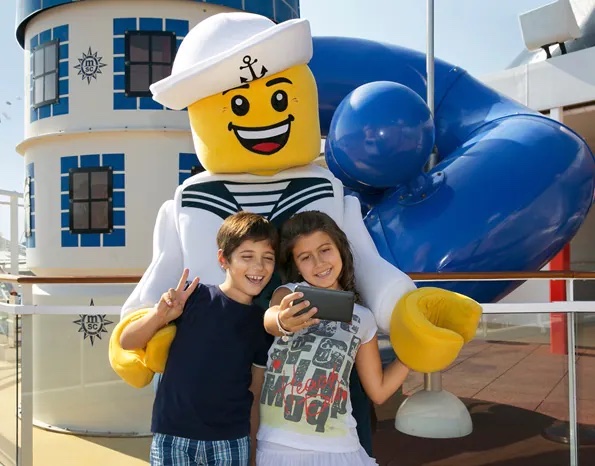
LEGO® Experience
Once during every cruise we hold a special entertainment event called the LEGO® Experience On Board: an entire day dedicated to fun LEGO activities for the whole family to enjoy. Thanks to this special activity your kids can spend hours building and creating whatever they want!
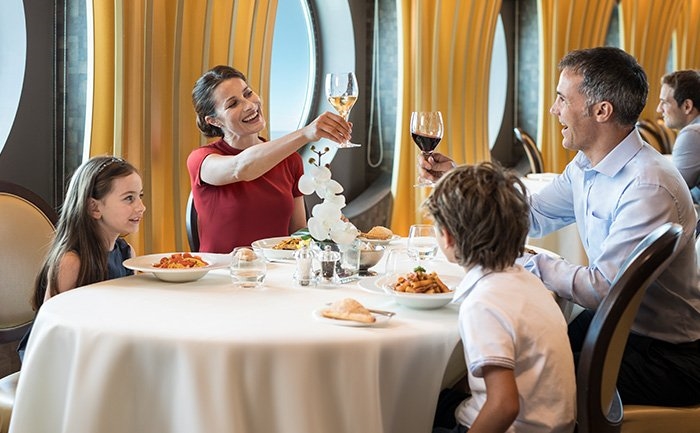
Family Dining
Enjoy a culinary voyage of discovery with your children on an MSC Cruise: an array of international dishes and ethnic specialties will delight the whole family with flavours from around the globe.
For ever-changing menus of high-quality international cuisine, including signature dishes from award-winning chefs, look no further than the main restaurants onboard our ships. If you prefer a casual meal, buffet is open for breakfast, lunch, dinner and late night snacks.
If your kids want to eat with their new friends, our youth staff are happy to look after them. When they’re exhausted after a fun-packed day, you can choose to have a meal delivered to your cabin.
Meals in the main restaurants and buffet are included in the cruise fare.
Family Activities
Family Game Show – this is a competition for the whole family with dance, music and selfie challenges dedicated to Kelly & Kloe On Board, MSC Cruises’ original web series created for kids and families. Don’t forget to visit the website!
Family Disco – who’s going to be the best dancer of the night? The whole family is invited to join the Youth Staff for a special disco time!
Bora Bora & Pago Buffet Restaurants
Pago Buffet – A wonderfully comfortable and casual place to eat. Watch our chefs at work while you enjoy the best of Mediterranean dining with a spectacular sea view.
Bora Bora Buffet – Delight in a feast for all your senses at our exquisite buffet, where an exquisite array of delectable dishes from around the world awaits. Indulge in a gastronomic adventure as you savor the flavors, sights, and aromas that will take your taste buds on an unforgettable journey.
La Reggia
Offering exquisite Mediterranean and international specialities and a change of menu everyday means that no two days are the same in our main restaurant.
Villa Verde
In our main restaurant, we offer a unique culinary experience every day. With our exquisite Mediterranean and international specialties and a daily changing menu, we ensure that no two days are the same, providing you with a fresh and exciting dining experience each time.
Sea Pavilion
This exclusive restaurant is a world of contemporary Asian culinary emotions.
Discover the culinary delights of the Sea Pavilion restaurant, where innovative fusion of Asian cuisines comes to life. In this restaurant the art of Hot Pot, a beloved comfort food across Asia, transcends regional boundaries with its universal appeal. At Sea Pavilion, we craft distinctive flavors to satisfy every palate, guaranteeing a memorable dining experience. Our tempting menu features an array of hot pot creations perfect for sharing, as well as refreshing appetizers to whet your appetite.
Butcher's Cut
This American-style steak house serves select Linz heritage angus beef, gold standard in high-end angus beef thanks to the best genetics in breed. The highest quality product custom cut by master butchers and aged to perfection. The menu is inspired by the great plains and it is accompanied by bold New World wines and cocktails with swagger.
L'Olivo Restaurant
A delightfully relaxed and cozy dining spot awaits you, offering the finest Mediterranean cuisine with a mesmerising ocean view. Watch our skilled chefs showcase their culinary expertise while you savour your meal in a casual ambiance.
MSC Bike Adventours
Discover New Roads
One of the best ways to explore a city is from the seat of a bicycle. Hit the road on your next MSC Cruise on a MSC BIKE ADVENTOURS experience.
See, hear, smell and feel the destination like never before. You’re guaranteed to leave with a deeper connection.
You Don’t Have To Go Fast, You Just Have To Go
Our carefully curated small group tours offer both active adventures and easy city sightseeing on electric bicycles.
Reserve today and ride into your next adventure with MSC Bike Adventours.
MSC Bike Adventours Clothing
Ride longer and feel stronger with our pro cycling jersey and race ready bib, designed by Essor Design studio and available exclusively onboard. Available in S – XL.
You can have yours with our MSC Bike Adventours.d feel the destination like never before. You’re guaranteed to leave with a deeper connection.
Respecting the Places We Visit: MSC Protectours
What are Protectours – We are committed to preserving a beautiful world for future generations to enjoy. By focusing on environmental sustainability, PROTECTOURS contribute to that vital goal. 70% of the tours involve activities with zero environmental impact – like walking, cycling, or kayaking – while others make a direct contribution to the environment, for example, tree planting or beach cleaning. So, you can enjoy original insights into the natural world while preserving its beauty and helping to ensure a greener future!
A world of amazing experiences – PROTECTOURS offer you unforgettable experiences in close contact with nature and communities in a variety of environments around the world. Local guides, with an expertise in wildlife or traditions, will help you save baby sea turtles in the Caribbean, clean the desert in Abu Dhabi, explore Iceland by horseback, or immerse yourself in Corfu’s beautiful countryside and the magical world of bees.
MSC Cruises and the environment – Our love and respect for the marine environment are reflected in our certified eco-ships, with their innovative systems for energy saving, waste treatment and recycling. Naturally, our commitment to the environments extends to our onshore activities too. PROTECTOURS is not only a way to offer our guests a variety of eco-friendly shore excursions, but also a means of encouraging our onshore partners to develop tours that pay ever more attention to environmental sustainability. Just one example is that no single-use plastic or other items are accepted on these tours.
Easy & Accessible Excursions
Our Easy & Accessible Tours make exploring comfortable for everyone. These tours allow slow walkers, wheelchair, scooter users and any guests that like to leisurely explore, to visit the best each destination has to offer on easy tours created just for them.
MSC Accessible Tours are currently available in the Caribbean and Western Mediterranean.
EFFORTLESS EXPLORATION – Explore each destination at your own pace
Through specifically selected itineraries and specially designed tours, guests will be able to enjoy step free routes at their own pace, experiencing the wonders of our destinations in total comfort. Accessible vehicles will be available to accommodate small groups, and tours itineraries will always include access to special needs restrooms. Please note that vehicles and their wheelchair & scooter requirements (width, height, weight) vary from tour to tour so make sure to carefully check the specific requirements within each tour description.
TOURS FOR EVERYONE – Comfort and freedom for all guests
Explore the world with wheelchair-accessible vehicles, expert guides, and step-free routes tailored to your needs.
Accessible Vehicles & FacilitIes – Vehicles equipped with a wheelchair accessible solution. We visit accessible bathrooms equipped with wide doors.
Small Groups with Expert Guides – Small Groups or Private Vehicle for you and your companion/s with expert guides
Visit at your own pace – Tours made to leisurely visit the destination’s highlights while taking into account guests’ special needs and facilitating each participant in moving independently.
Step-free Routes – Tours aim at eliminating obstacles and ensure a smooth access to all of the highlights visited.
Behind The Scenes
Come and see how we do it! Go “Behind-the-Scenes” and experience what goes into delivering a perfect cruise vacation.
Explore several “off-limit” areas of the ship
Are you ready for the ultimate behind-the-scenes experience on our magnificent cruise ship? This exclusive excursion is limited to small groups of 20 people, so you’ll have a truly intimate and immersive experience.
Join us as we take you on a journey through the hidden corners of our ship, where only a select few have gone before. You’ll have the chance to see the inner workings of the ship, from the bridge of command, engine control room to the gallery and beyond.
A one-of-a-kind discovery tour
Our knowledgeable tour guides and shipboard staff will be on hand to answer any questions you may have and give an overview of the internal operation of the ship.
But that’s not all – you’ll also have the opportunity to meet the ship’s officers and learn about their experiences at sea. This is a once-in-a-lifetime chance to get an inside look at the operations of a cruise ship and to see what goes on behind the scenes. Don’t miss out on this amazing opportunity – book your spot now to ensure one of the very few seats available!
MSC Yacht Club Excursions
Make every moment ashore an unforgettable experience
Explore marvellous destinations all over the world with MSC Yacht Club by immersing you in luxury, exclusivity, and premium privilege, such as private transportation, smaller excursion groups, all-inclusive benefits.
From paradisiacal beach getaways and upscale adventures to authentic cuisine, enlightening arts and craft workshops, storied architectural visits, elevate your journey with MSC Yacht Club Excursions.
Get ready to unveil a world of unparalleled luxury and exploration.
- Desirable Locations – Stylish beaches, elegant resorts, private catamaran voyages
- Local Artisanry – Local arts, traditional handcraft, cultural workshops
- Architectural Treasures – Castles, palaces, UNESCO World Heritage Sites
- Authentic Cuisine – New flavours and exciting culinary journeys
- Upscale Adventures – Premium, unspoilt locations and adrenaline fuelled-activities
Tailor-made Excursions – Private guides, customised adventures & experiences
Enjoy hidden wonders, engaging in unique activities with local experts that go beyond the reach of regular travel
EXCLUSIVITY
- MSC Yacht Club Limited – Uncover unforgettable destinations, purely for Yacht Club Guests.
- Dedicated personnel – Flawless service at every stage, from booking advice to onboard butlers to excursion experts ashore.
- Meticulously crafted itineraries – Enjoy carefully constructed excursions, chosen to maximise wide-ranging leisure interests.
COMPREHENSIVE LUXURY
- Out-of-ordinary activities – Curated activities allow a deep dive into the destination’s culture and particularities.
- One-of-a-kind venues – Carefully selected venues to represent destination uniqueness and to get the most out if it.
- Outstanding services – All details are organised – simply prepare to enjoy the most relaxing journey.
PRIVILEGES
- Escape the crowds – Relax in the ease of smaller group excursions, allowing for deeper exploration of destinations.
- Private transportation – Premium transfers, including minivans and cars, provide ultimate comfort.
- All-inclusive – Sit back and soak up all-inclusive indulgence without fretting about extra fees.
EXPLORE THE WORLD IN STYLE WITH OUR EXCLUSIVE MSC YACHT CLUB EXCURSIONS
Discover the essence of our destination through our selection of expertly curated excursions and let us help you craft an unforgettable cruise tailored to your interests and preferences. Book your exclusive excursions online and get up to 20% off the onboard price.
*Prices shown in the personal area are already discounted
The excursion program provides our guests with an overview of the different tours that can be organised in each port and relevant prices which may change during the season even more than once; the program and prices are a guide only. The final program of the tour for each port will be available during the cruise. Bookings can be made up to 2 days prior departure date.
Family Excursions
Discover each destination with your children at a rhythm that suits families, thanks to our Family Fun excursions. Guided by talented, qualified local guides in constant contact with the ship, they are your passport to new cultures, historic monuments, natural beauty and more.
What’s more, kids get a special price on shore excursions!
- Babies and Infants aged 2 and younger will be carried free of charge
- Children between the ages of 3 to 13 years have a discount up to 30% vs adult price
Book now and save up to 20% vs onboard prices!
Shore Excursion Explorer Package
Make The Magic Last A Little Longer
One of the joys of cruising is the chance to discover enchanting new destinations in comfort and style. At each port of call, our excursions offer you the most memorable experiences in the most fascinating places, accompanied by experienced, professional personnel. To get more for less from your time ashore, why not take advantage of our Excursions Explorer Package? The package comprises three of the best excursions* available on each cruise at one very attractive price. Please note that this is a limited availability offer and is valid only on selected departures**.
*Excursions Explorer Package cannot be modified or refunded. In the event of one or more excursions being cancelled by MSC Cruises, the offer is not applicable to other excursions different from those included in the package.
**The Excursions Explorer Package is available on selected departures for the following destinations: Mediterranean, Northern Europe, MSC Grand Voyages, Abu Dhabi, Dubai and Qatar, Caribbean & Antilles, South America.
MSC Family Explorer Club
SHORE EXCURSIONS FOR FAMILIES
Discover our kids friendly tours designed especially for families
MSC Family Explorer Club
Explore the destination together on a fun filled family adventure, inspired by history and designed to cover all the highlights.
- Family friendly programming – Tours typically start later in the morning, are shorter in duration and are accompanied by expert guides and story tellers
- Tours that the whole family can enjoy – Each experience is developed to keep both children entertained while also providing an enriching and educational experience for adults
- Family-Friendly Prices 50% off – Children tickets are always half-price
- Peace of Mind – When you choose an MSC Family Explorer Club you can relax in the knowledge that all our tours are operated by carefully selected partners who can easily make contact with your ship throughout the day.
FAMILY EXPLORER CLUB HIGHLIGHTS
An expert guide and a talented storytellers will lead each tour and be available for any assistance needed.
The leaders on these tours are not just tour guides, they are skilled in captivating the attention of both children and adults through storytelling in a way that describes the attraction and history of the location in an engaging manner – they are entertainers.
During this interactive experience children of all ages will feel like an explorer.
Acting as detectives and explorers, children play a key-role in accomplishing a unique mission on each tour inspired by the history of the location.
Children and parents are given the opportunity to unleash their imaginations and enjoy solving games and riddles together. Every tour will feature an iconic historical character, symbolic of the city.
We know that this is your vacation too, and sometimes you just want to get away and have some adult time.
For parents wishing to take a tour by themselves, we offer a complimentary childcare service for children aged 3 to 11.
While you are out in port your children can remain onboard in a fun and supervised environment with their new friends and Mini Club Staff.
For more information, contact the Mini Club onboard.
The Strand Theatre
You’d normally have to travel to London to see top-end shows, but thanks to our West End-style theatres, you can enjoy superlative entertainment with an international line-up of artists without having to leave the ship. Take your pick from a fabulous programme; there’s sure to be a show you love.
Sports Bar
The name says it all; onboard passengers are unlikely to find a better place to relax and catch a game. There’s a wide variety of sport shown here, from football to cricket, basketball to ice hockey, something to suit all tastes. Passengers will find a variety of alcoholic and soft drink awaiting, all of which are complimented by a sports-inspired menu, serving up dishes from all around the world.
The Sports Lounge on deck 7 is a multi-screen themed sports bar with seating for 87 passengers.
Featuring a customised drinks menu and snacks, it is also home to the two lane bowling alley which attracts a charge of €6 per game.
Royal Palm Casino
Our casinos are elegantly designed, featuring games for all types of players. You’ll be able to try your hand at Roulette or Blackjack, challenge yourself at one of our Poker tables, or choose among a variety of slot machines.
The Purple Jazz Bar
The Purple Jazz Bar has seating for 106 visitors and features live jazz music along with a special range of ‘made to measure’ drinks.
L'Aperitivo Bar
The L’Aperitivo Bar overlooks the central atrium and is located on deck 6 serving the foyer area. It can seat up to 98 guests who can enjoy the musical entertainment from the bottom of the atrium.
La Prua Piano Bar
The ship’s Piano and Martini Bar, seats 108 and is located on deck 7.
Splendida Bar
The Bar is on deck 5 by the central atrium with 28 seats.
Guests can enjoy a drink here whilst listening to classical piano music, string quartets and singers.
The Pool Bars
The Pool bars are located by the Pool on Deck 14.
L'Espresso Coffee Bar
The ship’s coffee shop serves a selection of cakes and desserts.
It is located on deck 7 with room for 58 passengers.
Photo Shop
The Photo Shop is located on deck 7. Photos captured by the ship’s professional photographers both on board and ashore can be viewed in the adjoining Photo Gallery area and purchased in the photo shop.
Art Gallery
The Art Gallery features a selection of artwork from fine prints, lithographs, water colours and oils which can be purchased during the ship’s champagne art auctions.
It is located outside the Sports Bar and Jazz Bar on deck 7.
4D Cinema
Visit our on-board 4D Cinema* for a chance to enter a world of adventure without having to leave the comfort of your seat. Enjoy a unique cinematic experience, full of surprising features and visual effects.
- Type of service: Charges apply
- Riding Difficulty: Medium
- *Regulations: Min. Height admitted: 39 inches / 100 cm, Max. Weight admitted: 350 Lbs / 159 Kg
MSC Formula Racer
Our amazing on-board MSC Formula Racer delivers an adrenaline-pumping virtual-reality race*, with you in the driver’s seat of a racing car. Go head to head against other racers and thrill to the feel of engines gunning. Huge fun for the young and the young at heart, regardless of who wins the race
- Type of service: Charges apply
- Riding Difficulty: Medium
The Aft Lounge
The Aft Lounge located on deck 7 and seating 268 guests, has its own bar and dance floor and plays host to live music and shows.
The Cigar Lounge
The Cigar Lounge, situated on deck 6 and seating 31 guests, offers elegant surroundings for guests to relax and enjoy a cigar accompanied by a drink selected from the range of fine spirits on offer.
MSC Yacht Club
Nestling in the prestigious foredecks is the exclusive MSC Yacht Club, a luxurious “ship within a ship”. In addition to its 71 designer suites, it boasts its own concierge reception, 24-hour butler service, private restaurant, lounge, pool deck and bar.
An exclusive haven of refinement
Discover a ship within a ship through our exclusive MSC Yacht Club, a place where you can savour exclusivity and privacy in a world of choice. A place where you can indulge in the luxury of a private club while enjoying access to a myriad of recreation and entertainment possibilities that the ship has to offer.
Lavishly appointed suites, an exclusive 24-hour butler service and a dedicated concierge are just the beginning of these exclusive cruise experiences. Welcome to the MSC Yacht Club, a cruise experience like no other.
You can discover the ultimate in MSC exclusivity with the MSC Yacht Club, selectively available on board of MSC Bellissima, MSC Divina, MSC Euribia, MSC Fantasia, MSC Grandiosa, MSC Meraviglia, MSC Preziosa, MSC Seascape, MSC Seashore, MSC Seaside, MSC Seaview, MSC Splendida, MSC Virtuosa and MSC World Europa.
Private venues for total tranquillity
Luxurious accommodation and exclusive services are only the beginning. The MSC Yacht Club also boasts a range of superb private areas, from the elegant Top Sail Lounge with its panoramic views to the stylish restaurant and the One Pool Deck complete with private swimming pool, whirlpool baths, sun deck and bar.
Library
Located on Deck 5.
Theme Parties
We organise various daytime and evening Theme Parties on board. You may wish to bring bright fun clothes for the Sunshine Party and something white for the White Party.
MSC Factor
Think you’ve got what it takes to be a star in our on-board talent competition, The MSC Factor? Then come and showcase what you can do in the most exciting talent show at sea. Whatever your specific talent may be, don’t be shy – come and show the world what it’s been missing.
Masterchef
The world’s best-loved food show awaits you on the MSC Cruises fleet! Experience the adrenaline-fuelled creativity of an extraordinary on-board cooking competition for adults and junior guests.
Sailaway Party
A start-of-the-cruise event celebrating the ship’s departure, led by the Entertainment Team and Dancers in a spectacular Costume Parade.
Beer Festival
Fun-packed festive celebrations with a Bavarian flair – decorations, costumes, games, music and of course beer. There’s even a Master of Beer competition and a 6-metre-tall inflatable beer mug.
Bar del Riccio
Bar del Riccio is located on Deck 14.
Playa Sol
Playa Sol is located on Deck 15.
Swimming Pools
If a bit of poolside therapy sounds like your idea of heaven, look no further than one of our numerous swimming pools to get your fill of sun and relaxation, while our pool attendants can cater to your every need.
Mini Bowling
Strike! That’s what you want to hear every time the bowling ball barrels down the alley. See whether you have the knack and play against your family and friends to crown the bowling champion in your midst
Mini Bowling available on: MSC Magnifica, MSC Divina, MSC Splendida and MSC Preziosa.
Type of service: Charges apply
Arcade
Spend a few fun-filled hours gaming at the Arcadeon board the ship. Pit your wits and skill against your friends in a variety of classic arcade games, including video games, pinball, and more.
Type of service: Charges apply
Shopping
On our ships you’ll find a wide selection of the best boutiques at sea stocked with all your favourite premium brands, so you can enjoy the best shopping experience during your cruise. Treat yourself on board and look your best whenever you want! Our shops are open all day and until late at night when at sea.
MSC Logo Shop – Infuse your cruise with gifts that spark magical memories of your voyage across the waves! Navigate the MSC Logo Shop for everything from gadgets to books and novelty gifts! You’ll also find MSC’s very own DOREMI Mascot right here in the MSC Shop.
Jewellery – A wonderland of all that sparkles; showcasing designs in gold, silver, precious and semi-precious stones and watches.
You’ll love the wide choice of jewellery, perfect as a special gift or to treat yourself, and at prices that will put an extra sparkle in your eye.
Duty Free – Discover everything the Duty Free shop has to offer, all at tax and duty-free prices*.
You can choose between top-flight international tobacco products, technology products, fine wines, chocolate, make up and travel essentials.
Our expert staff can provide you with all the help you need to make the perfect choice.
* We always give you the lowest tax and duty-free prices applicable in accordance with local legislation
Fashion Boutique – Browse the latest collections for men, women and children, plus an array of accessories for all tastes. Enjoy the expert guidance of our staff, here to help you find something for the special people in your life, whatever their age and taste!
Accessories – Top Italian brands such as Armani, Coccinelle, Furla and Fusaro feature alongside international names like Radley London, Calvin Klein, Lacoste, Tommy Hilfiger and Ralph Lauren.
Here you are sure to find serious sartorial inspiration for bags and accessories!
Photo Gallery
Don’t forget to explore the All-Inclusive Digital Photo Package, which includes digital files of all the photos taken by our professional photographers on board. Digital photos are available for download only during your cruise. Keep in mind, once you disembark, downloading your photos won’t be possible.
Reception Guest Service
The Reception/Guest Service can be located on Deck 5.
La Piazzetta Bar
Located on Deck 6.
Club 33
Club 33 is Splendida’s futuristic nightclub located on deck 16 with seats for 120 guests and served by its own bar.
Gym by TechnoGym®
Fitted with authentic TechnoGym® equipment and featuring panoramic ocean views, the on-board gym is the place to be for all those who take their fitness regime seriously. Hone your physique with a full set of TechnoGym® apparatus every day of your cruise to look better than ever before.
Type of service: Included
MSC Aurea Spa
Feeling healthy and looking your best is all part of the MSC Cruises experience. Try something new, like advanced beauty treatments, a relaxing sauna, or enjoy a Balinese massage. Book your spa packages now and take advantage of online savings.
MSC Aurea Spa boasts an exotic interior of natural stone, precious woods and rich mosaics, and is equipped with specific and massage treatment suites. Being pampered by a traditional Balinese Massage is a truly unique experience. Thanks to a blend of scented essences and aromatic oils, your body is enveloped in an endlessly peaceful and relaxing aura.
Type of service: Charges apply
Beauty Salon
You can enjoy the expertise of highly specialised staff in aesthetic treatments to offer you excellent results and improve the relaxing effects of your cruise. Customise your cruise with the best treatments for your body. Unwind and feel fantastic!
Type of service: Charges apply
Thermal Area
Start your wellness journey in our on board thermal area and achieve a lasting feeling of absolute well-being that will stay with you well beyond your cruise. Our thermal experiences are designed to slowly raise your body temperature while you relax, taking full advantage of the holistic and therapeutic benefits of water and heat.
Spa facilities vary depending on the ship. Once on board, visit the Spa reception for more details.
Type of service: Charges apply
Hair Salon
Refresh your look with a new hairstyle! There are different packages which include a personalised shampoo & conditioning mask, a haircut and a single-process colour treatment. Leave the salon styled and ready for a great evening on board.
Available on: all MSC Ships
Power Walking Track
Enjoying time off on your cruise doesn’t need to mean letting your fitness routine slide, so gear up and rendezvous with the power walking and jogging track on deck to get your daily exercise fix while also savouring outstanding ocean views.
Available on: all ships
Basketball
Come to the outdoor basketball court at the Sports Centre for a chance to hang out with friends, have fun shooting hoops and enjoy a full-body workout at the same time. You may not make the latest line-up of the Harlem Globetrotters, but you’re sure to have a great time.
Type of service: Included
Tennis Court
Anyone for tennis? Play to your heart’s content at the outdoor or indoor tennis court of our on-board Sports Centre. Tennis is ideal for getting some healthy activity, honing your hand-to-eye coordination and having loads of fun. Game, set and match to you.
Type of service: Included
Volleyball
Fast-paced, energetic and a ton of fun to play, volleyball is one of the world’s most popular team sports and one you can enjoy at the outdoor volleyball court at the on-board Sports Centre. Burn some calories and get a thorough cardiovascular workout while you land a kill and beat the opposing team.
Type of service: Included
Five-a-side Football
Fancy a game of footy? Your wish can be granted at the outdoor five-a-side football pitch at the Sports Centre. Team up with some friends or family and play a match against another on-board team. A great way to have fun, get active and turn strangers into friends.
Type of service: Included
Squash Court
If a fast game of squash is your favourite way of keeping fit or if you’d just like to give it a first go, simply book the outside squash court at our on-board Sports Centre and prepare to hit it like a pro. First played in Harrow, England, in 1830, the game certainly looks back on a long history.
Type of service: Included
Sport Tournaments
Soccer Tournament – can you kick it? Yes you can! Sign up for the onboard soccer tournament and show off your skills. Your team needs you, so get involved.
Volleyball Tournament – unleash your competitive side in our very own onboard volleyball tournament. Quick reactions and impressive reach could lead you and your team to glory!
Basketball Tournament – ready to shoot some hoops? Then enter our onboard basketball tournament. Get involved and prepare for glory!
Ping Pong Tournament – pick up a paddle and prepare for battle! The ping pong tournament is on and you’re invited. Ready for the challenge? See you there!
Table Soccer Tournament – if you’re a fan of football in the miniaturised form known as foosball why not enter today’s tournament? Just remember the golden rule – no spinning
Type of service: included
Barber Shop
Inside the MSC Aurea Spa there’s a dedicated Barber Shop to keep you looking at your best during your time on board! Leave the salon styled and ready for a great evening.
Type of service: Charges apply
Baby Club 0-3
You can leave your toddlers with our MSC Babycare staff, or stay with them and enjoy the special Chicco toys and games. They’ll love our music and rhythm activities, designed to awaken their curiosity.
MSC Cruises offers two services to all parents of babies under 3 years old*.
- MSC Baby Time: is the service that allows parents to enter our baby club and play with their children at specific time slots each day.
- MSC Baby Care: is the service that allows parents to leave their baby with the youth staff in determined time slots each day and in the meantime enjoy on-board services and relaxation. Both services are free of charge and allow a maximum of 15 babies to enter the Baby Club at the same time.
Our partnership with leading baby care brand Chicco provides a dedicated play area with facilities for babies and toddlers under 3 years old.
*To be left under the responsibility of youth staff during MSC Baby Care service, babies must be more than 6 months old.
Please note charges apply for the MSC Baby Care service and may vary by ship and itinerary.
Mini Club 3-6
The Mini Club welcomes children aged between 3 and 6 years old, bringing them new friends and lots of fun, enriched by the stimulating toys of our partnership with LEGO®. The club offers games, events and activities to free their imagination and make every day special. And the whole family is invited to the Doremi Family Disco!
Junior Club 7-11
The Junior Club inspires connection and cooperation among 7 to 11-year-olds, through a wide variety of activities. Highlights range from Masterchef at Sea Juniors and Dorebro Sport competitions to our Fire & Ice live video game. Do you like acting, dancing or singing? Enjoy the thrill of filming with the Kelly & Kloe On Board Green Screen Experience!
Young Club
With the Young Club, kids from 12 to 14 years old can dive into a world of discovery, involvement and interaction.
Each day holds the promise of new experiences, with a dedicated programme of sport tournaments, hi-tech games and lots of other fun activities. And of course, every day also brings opportunities to make new friends.
Teen Club
Teenagers aged from 15 to 17 years old can look forward to having the time of their lives on board. Teen Club activities range from sports and competitions, dance contests and social network games to Wii, Xbox and PS4 tournaments.
- For the kind of adrenaline rush kids and teenagers love, we give them the chance to pilot a fast-flying drone with our Drone Academy through an obstacle course in a night-time race that will really test their skill!*
- Developed in partnership with Fremantle, the company behind “The X Factor”, the Dance Crew Competition gives teams of teenagers the chance to compete for the title of Dance Crew of the Year*
- With our new YouTube web series Cabin 12006, your children can follow teenager Markus on his first cruise as it turns into an unexpected adventure!**
- Also with the Teen disco, the Karaoke, Flash mobs and other themed events, every evening is a party!**
*Available on: MSC Grandiosa
**Available on: all MSC Ships
Kids Clubs and Family Activities
MSC ORIGINALS: On an MSC cruise, you’ll discover a diverse array of activities designed for both children and adults. Our dedicated Kids Clubs offer a wide range of engaging experiences, including sports tournaments, quizzes, and the exciting DOREMIX family disco. Featuring an exclusive MSC Cruises soundtrack, also available on all digital platforms, this family-friendly dance party will be led by beloved mascot Doremi, who will serve as both DJ and dance judge for competitions in all age categories.
Additionally, our ships provide numerous entertainment options to ensure everyone has a memorable and enjoyable time onboard: BOXES will see contestants face unexpected challenges, revealed only when they open the selected box. MSC BOOM, will combine technology and fun, allowing participants to compete for exciting prizes.
We kindly ask you to check the daily programme once onboard to discover all the activities.
From the joys of relaxing in a pool or splashing around in an aqua park, to the thrill of riding a swirling waterslide, family fun in the sun is never far away.
Some ships offer the added excitement of activities such as sliding down a zip-line, driving a full-size MSC Formula Racer, and enjoying a fully immersive VR experience. Not to mention the thrilling multi-sensory experience of an interactive XD cinema and the amazing video games room**.
You can take the kids to a Broadway-style theatre show
Once during every cruise we hold a special entertainment event called the LEGO® Experience On Board*: an entire day dedicated to fun LEGO activities for the whole family to enjoy.
Web Series
Experience the cruise adventure before you even step on board! Dive into the captivating web series Cabin 12006, available on MSC Cruises’ official YouTube channel. Join Markus, a teenager embarking on his first cruise, as his holiday takes an unexpected turn. MSC Bellissima’s “Cabin 12006” is filled with unanswered questions and thrilling surprises, and it’s up to Markus and his friend Lucas to unravel the mystery.
Kelly & Kloe Onboard is an exciting web series that chronicles the adventures of two young girls, Kelly and Kloe, as they spend time on an MSC Cruises ship alongside their father, the Master. Kids will have the opportunity to learn the theme song and dance routine from the web series, participate in a selfie contest while dressed up as characters from the story, and even unleash their creativity by writing their very own episode of the thrilling adventure.
Babies and Toddlers Services
Baby Clubs – along with activities that the whole family can enjoy together, we offer a Baby Club onboard all our ships with dedicated activities and facilities.
MSC Baby Care Service – we have thought about mums and dads too! Everyday, you can drop your baby off at the Baby Club, where they will be looked after by qualified and dedicated staff who will let them play (during specific times)
MSC and Chicco – on our cruise ships you’ll find the most modern, fun and educational toys, chosen for you by the Osservatorio Chicco, Baby Research Center.
Medical Centre – every ship in the MSC Cruises fleet has a well-equipped modern Medical Centre on board. The Medical Centre is staffed by fully-qualified personnel, and benefits from 24/7 specialist paediatric telemedicine support. Over-the-counter medicines can be purchased on board.
24 hours Room Service – all our restaurants and 24-hour Cabin Service are ready and happy to help, ensuring you can feed your baby swiftly on demand, for their and your own comfort.
Baby Laundry Service – our unique new Baby Laundry service washes baby and toddler clothes separately from everything else, using a specialised machine, program and detergents to clean and sanitise even at temperatures as low as 30°C. We’ll collect your children’s items from your cabin and deliver them to you the following day clean, safe and sterilised: ideal for protecting their skin. You’ll find full details in your cabin, along with a biodegradable paper laundry bag and a service coupon to fill in.
Please note charges apply for the MSC Baby Care service and may vary by ship and itinerary.
LEGO® Experience
Once during every cruise we hold a special entertainment event called the LEGO® Experience On Board: an entire day dedicated to fun LEGO activities for the whole family to enjoy. Thanks to this special activity your kids can spend hours building and creating whatever they want!
Family Dining
Enjoy a culinary voyage of discovery with your children on an MSC Cruise: an array of international dishes and ethnic specialties will delight the whole family with flavours from around the globe.
For ever-changing menus of high-quality international cuisine, including signature dishes from award-winning chefs, look no further than the main restaurants onboard our ships. If you prefer a casual meal, buffet is open for breakfast, lunch, dinner and late night snacks.
If your kids want to eat with their new friends, our youth staff are happy to look after them. When they’re exhausted after a fun-packed day, you can choose to have a meal delivered to your cabin.
Meals in the main restaurants and buffet are included in the cruise fare.
Family Activities
Family Game Show – this is a competition for the whole family with dance, music and selfie challenges dedicated to Kelly & Kloe On Board, MSC Cruises’ original web series created for kids and families. Don’t forget to visit the website!
Family Disco – who’s going to be the best dancer of the night? The whole family is invited to join the Youth Staff for a special disco time!
About the Ship
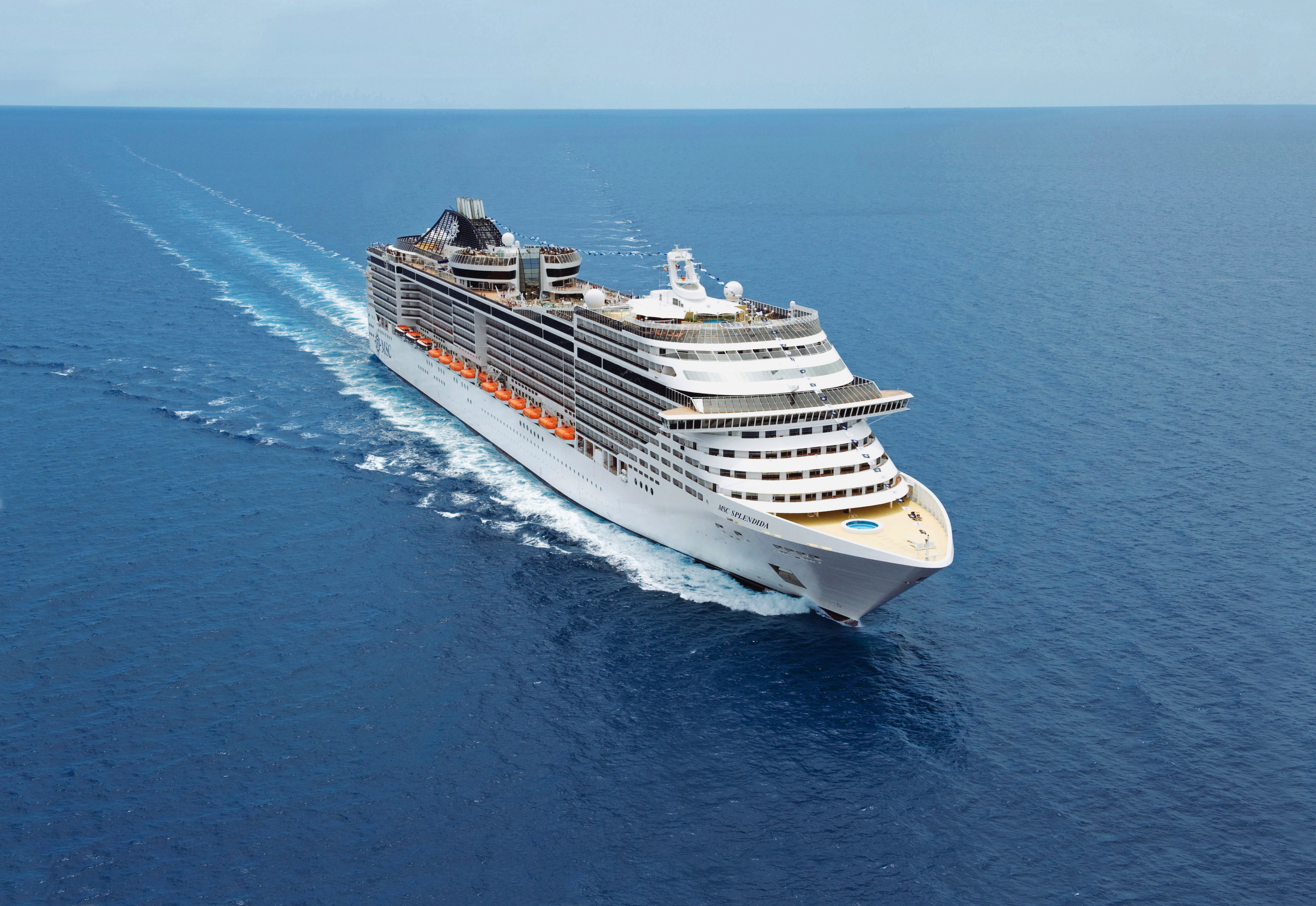
Deck Plans

- More information coming soon

- La Reggia Restaurant
- Library
- Business Centre
- MSC Excursions
- Splendida Bar
- Reception
- Guest Service
- Deluxe Interior
- Premium Ocean View

- The Strand Theatre
- Royal Palm Casino
- La Galleria Luxury Watches, Jewellery and Accessories Shop
- The Cigar Lounge
- La Galleria Fine Watches & Accessories Shop
- Fashion Watches & Jewellery Shop
- La Piazetta Bar & Shops
- Duty Free Shop
- L’Aperivito
- L’Aperivito Bar
- Cosmetics Shop
- MSC Kids Shop
- La Reggia Restaurant
- Villa Verde Restaurant

- The Aft Lounge
- Promenade Deck
- Photo Shop
- Butcher’s Cut
- Tea House & Dim Sum
- Fashion Accessories Shop
- L’Espresso
- MSC Fashion Shop
- The Purple Jazz Bar
- Sports Fun Bar
- Galleria d’Arte
- La Prua Piano Bar
- The Strand Theatre

- Premium Balcony
- Deluxe Interior
- Deluxe Balcony with Partial View
- Premium Ocean View
- Atrium

- Atrium
- Deluxe Interior
- Premium Balcony
- Grand Suite Aurea with terrace and whirlpool
- Premium Suite Aurea with sealed window

- Premium Suite Aurea
- Junior Suite Aurea with Sealed Window
- Premium Balcony
- Deluxe Interior

- Grand Suite Aurea
- Premium Suite Aurea with Sealed Window
- Junior Suite Aurea with Sealed Window
- Deluxe Balcony Aurea
- Premium Balcony
- Deluxe Interior

- Premium Suite Aurea with sealed window
- Deluxe Interior
- Premium Balcony
- Deluxe Balcony Aurea
- MSC Yacht Club Executive & Family Suite

- Premium Ocean View
- Premium Balcony
- Deluxe Balcony with Partial View
- Deluxe Balcony Aurea
- Deluxe Interior

- Pago Pago Buffet
- Bora Bora Buffet
- Tartaruga Bar
- Bar del Riccio
- Aqua Park
- L’Equatore Indoor Pool
- MSC Aurea Spa

- Movida Bar
- L’Olivo Restaurant
- Pool
- Playa del Sol
- Children’s Pool
- Kids Club
- Lego Club
- Teens Toboga
- Power Walking Track
- Whirlpool Baths
- MSC Yacht Club
- MSC Yacht Club VIP Concierge
- MSC Yacht Club Top Sail Lounge
- MSC Yacht Club Grand Suite
- MSC Yacht Club Deluxe Suite

- MSC Arena
- 4D Cinema
- Shuffleboard
- Teen Club
- Virtual World
- Sea Pavilion by Jereme Leung
- Sliding Roof
- MSC Yacht Club
- MSC Yacht Club Executive and Family Suite with Balcony
- MSC Yacht Club Executive & Family Suite
- MSC Yacht Club Deluxe Grand Suite

- Top 18 Exclusive Solarium
- Whirlpool Baths
- MSC Yacht Club
- The One Pool
- The One Bar
- More information coming soon
- La Reggia Restaurant
- Library
- Business Centre
- MSC Excursions
- Splendida Bar
- Reception
- Guest Service
- Deluxe Interior
- Premium Ocean View
- The Strand Theatre
- Royal Palm Casino
- La Galleria Luxury Watches, Jewellery and Accessories Shop
- The Cigar Lounge
- La Galleria Fine Watches & Accessories Shop
- Fashion Watches & Jewellery Shop
- La Piazetta Bar & Shops
- Duty Free Shop
- L’Aperivito
- L’Aperivito Bar
- Cosmetics Shop
- MSC Kids Shop
- La Reggia Restaurant
- Villa Verde Restaurant
- The Aft Lounge
- Promenade Deck
- Photo Shop
- Butcher’s Cut
- Tea House & Dim Sum
- Fashion Accessories Shop
- L’Espresso
- MSC Fashion Shop
- The Purple Jazz Bar
- Sports Fun Bar
- Galleria d’Arte
- La Prua Piano Bar
- The Strand Theatre
- Premium Balcony
- Deluxe Interior
- Deluxe Balcony with Partial View
- Premium Ocean View
- Atrium
- Atrium
- Deluxe Interior
- Premium Balcony
- Grand Suite Aurea with terrace and whirlpool
- Premium Suite Aurea with sealed window
- Premium Suite Aurea
- Junior Suite Aurea with Sealed Window
- Premium Balcony
- Deluxe Interior
- Grand Suite Aurea
- Premium Suite Aurea with Sealed Window
- Junior Suite Aurea with Sealed Window
- Deluxe Balcony Aurea
- Premium Balcony
- Deluxe Interior
- Premium Suite Aurea with sealed window
- Deluxe Interior
- Premium Balcony
- Deluxe Balcony Aurea
- MSC Yacht Club Executive & Family Suite
- Premium Ocean View
- Premium Balcony
- Deluxe Balcony with Partial View
- Deluxe Balcony Aurea
- Deluxe Interior
- Pago Pago Buffet
- Bora Bora Buffet
- Tartaruga Bar
- Bar del Riccio
- Aqua Park
- L’Equatore Indoor Pool
- MSC Aurea Spa
- Movida Bar
- L’Olivo Restaurant
- Pool
- Playa del Sol
- Children’s Pool
- Kids Club
- Lego Club
- Teens Toboga
- Power Walking Track
- Whirlpool Baths
- MSC Yacht Club
- MSC Yacht Club VIP Concierge
- MSC Yacht Club Top Sail Lounge
- MSC Yacht Club Grand Suite
- MSC Yacht Club Deluxe Suite
- MSC Arena
- 4D Cinema
- Shuffleboard
- Teen Club
- Virtual World
- Sea Pavilion by Jereme Leung
- Sliding Roof
- MSC Yacht Club
- MSC Yacht Club Executive and Family Suite with Balcony
- MSC Yacht Club Executive & Family Suite
- MSC Yacht Club Deluxe Grand Suite
- Top 18 Exclusive Solarium
- Whirlpool Baths
- MSC Yacht Club
- The One Pool
- The One Bar