Featured Cabins
Itinerary
Lisbon, Portugal
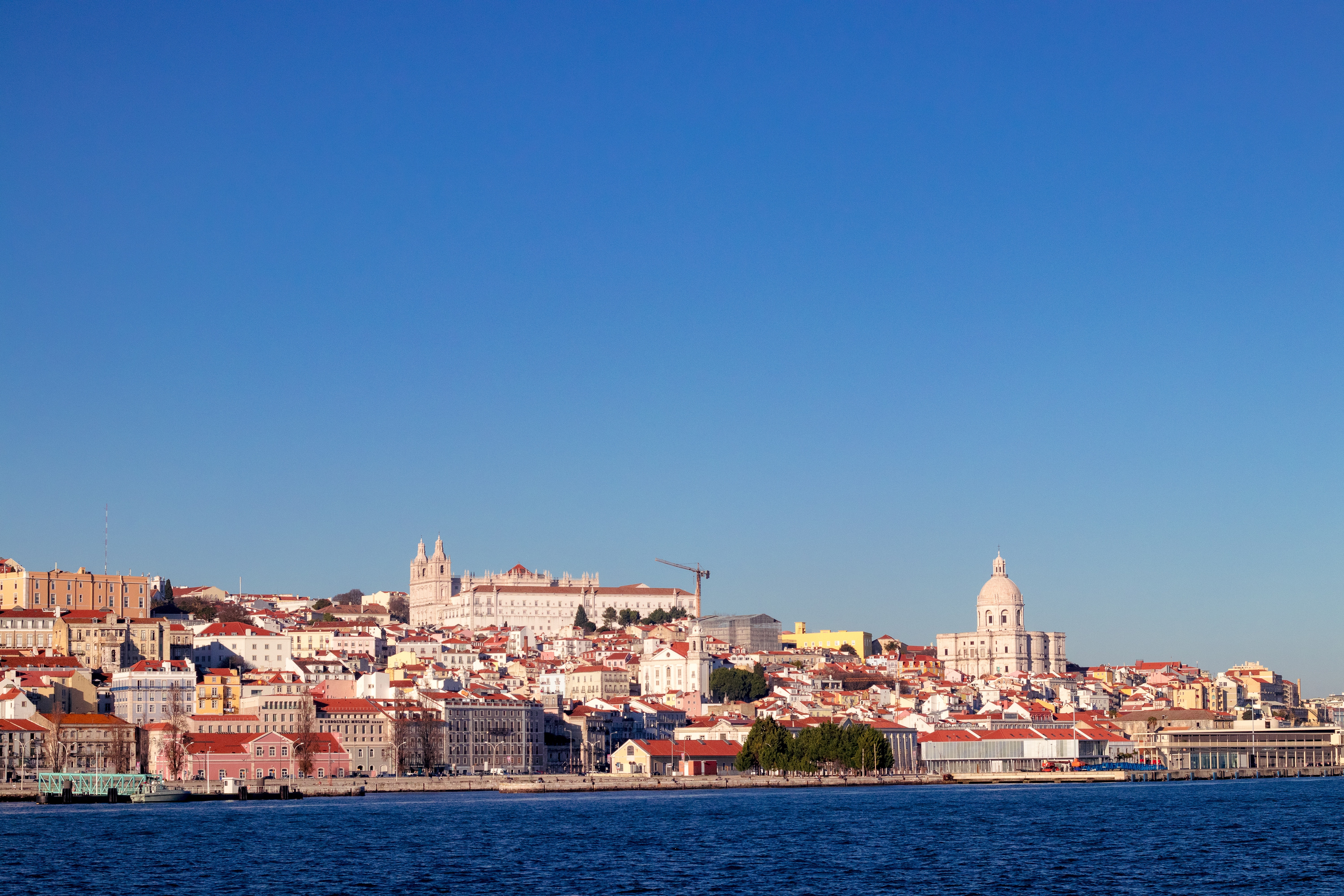
Set on seven hills on the banks of the River Tagus, Lisbon has been the capital of Portugal since the 13th century. It is a city famous for its majestic architecture, old wooden trams, Moorish features and more than twenty centuries of history. Following disastrous earthquakes in the 18th century, Lisbon was rebuilt by the Marques de Pombal who created an elegant city with wide boulevards and a great riverfront and square, Praça do Comércio. Today there are distinct modern and ancient sections, combining great shopping with culture and sightseeing in the Old Town, built on the city’s terraced hillsides. The distance between the ship and your tour vehicle may vary. This distance is not included in the excursion grades.
Porto, Portugal
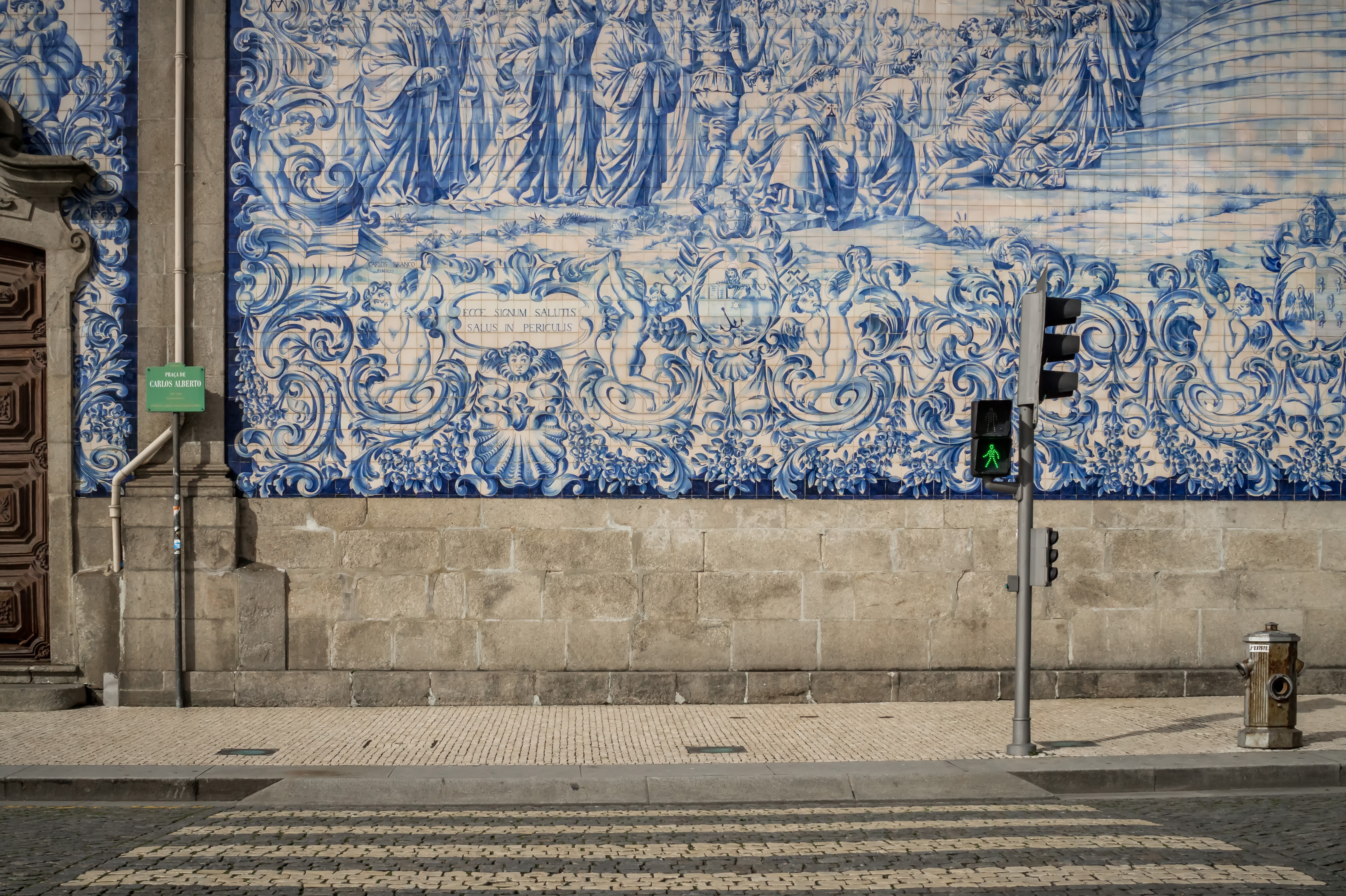
Lively, commercial Oporto is the second largest city in Portugal after Lisbon. Also called Porto for short, the word easily brings to mind the city’s most famous product – port wine. Oporto’s strategic location on the north bank of the Douro River has accounted for the town’s importance since ancient times. The Romans built a fort here where their trading route crossed the Douro, and the Moors brought their own culture to the area. Oporto profited from provisioning crusaders en route to the Holy Land and enjoyed the riches from Portuguese maritime discoveries during the 15th and 16th centuries. Later, port wine trade with Britain compensated for the loss of the spice trade and the end of gold and gem shipments from Brazil. In the 19th century, the city went through a period of new prosperity with the rise of industries. In its wake followed the building of workers’ quarters and opulent residences. Since the declaration of Oporto as a World Heritage Site by UNESCO, the city aims to build up a cultural reference that will provide it with a new image, based on deep historical roots. Among the attractions that make Oporto such an interesting place are its graceful bridges spanning the Douro River, a picturesque riverfront quarter and, most notable, its world-famous port wine lodges. Although Oporto is a bustling centre and home to many different businesses, the source of its greatest fame is the rich, sweet fortified red wine we know as port.
La Coruña, Spain
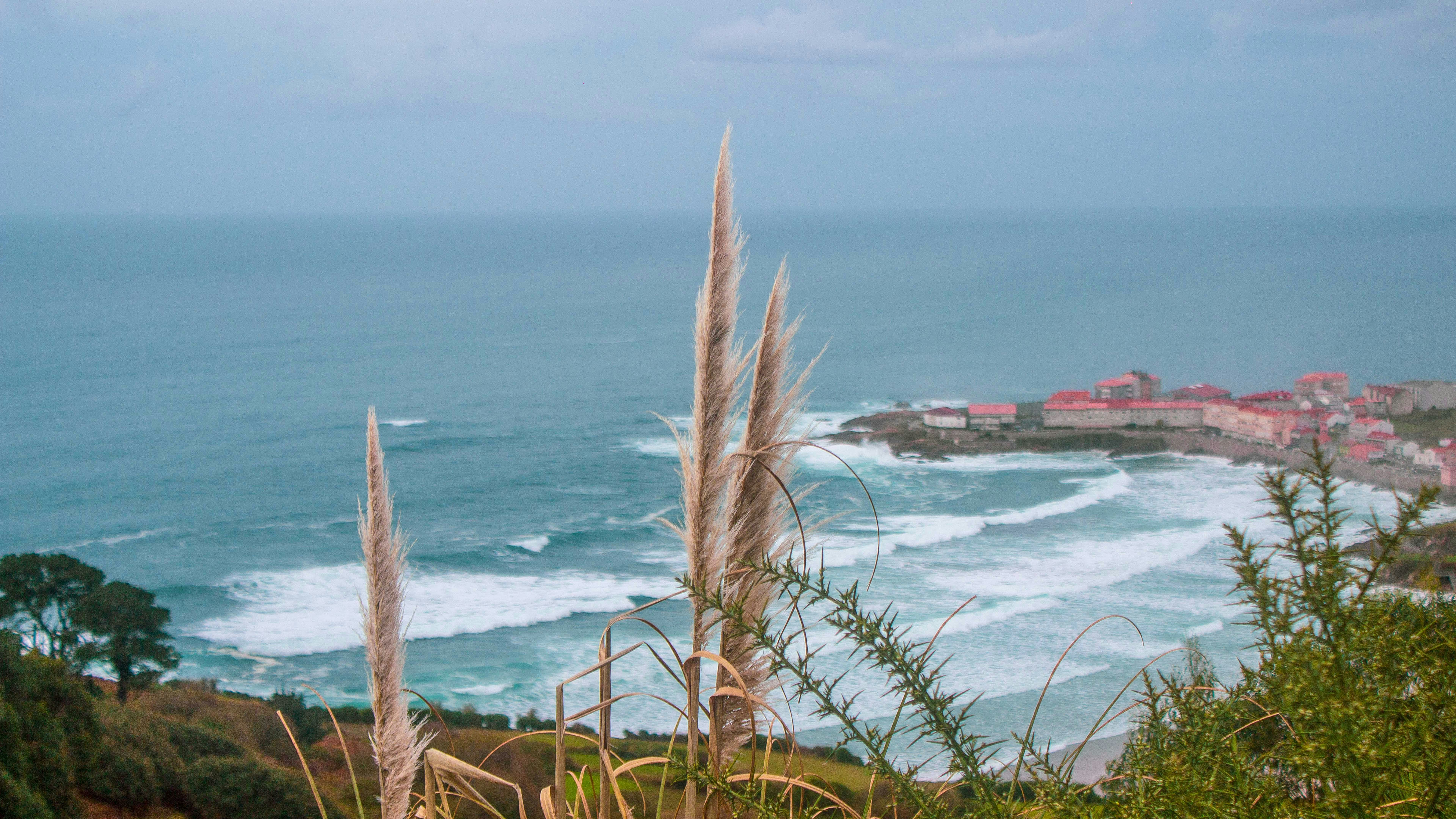
La Coruña, the largest city in Spain’s Galicia region, is among the country’s busiest ports. The remote Galicia area is tucked into the northwest corner of the Iberian Peninsula, surprising visitors with its green and misty countryside that is so much unlike other parts of Spain. The name “Galicia” is Celtic in origin, for it was the Celts who occupied the region around the 6th-century BC and erected fortifications. La Coruña was already considered an important port under the Romans. They were followed by an invasion of Suevians, Visigoths and, much later in 730, the Moors. It was after Galicia was incorporated into the Kingdom of Asturias that the epic saga of the Pilgrimage to Santiago (St. James) began. From the 15th century, overseas trade developed rapidly; in 1720, La Coruña was granted the privilege of trading with America – a right previously only held by Cadiz and Seville. This was the great era when adventurous men voyaged to the colonies and returned with vast riches. Today, the city’s significant expansion is evident in three distinct quarters: the town centre located along the isthmus; the business and commercial centre with wide avenues and shopping streets; and the “Ensanche” to the south, occupied by warehouses and factories. Many of the buildings in the old section feature the characteristic glazed façades that have earned La Coruña the name “City of Crystal.” Plaza Maria Pita, the beautiful main square, is named after the local heroine who saved the town in 1589 when she seized the English standard from the beacon and gave the alarm, warning her fellow townsmen of the English attack.
Gijón, Spain
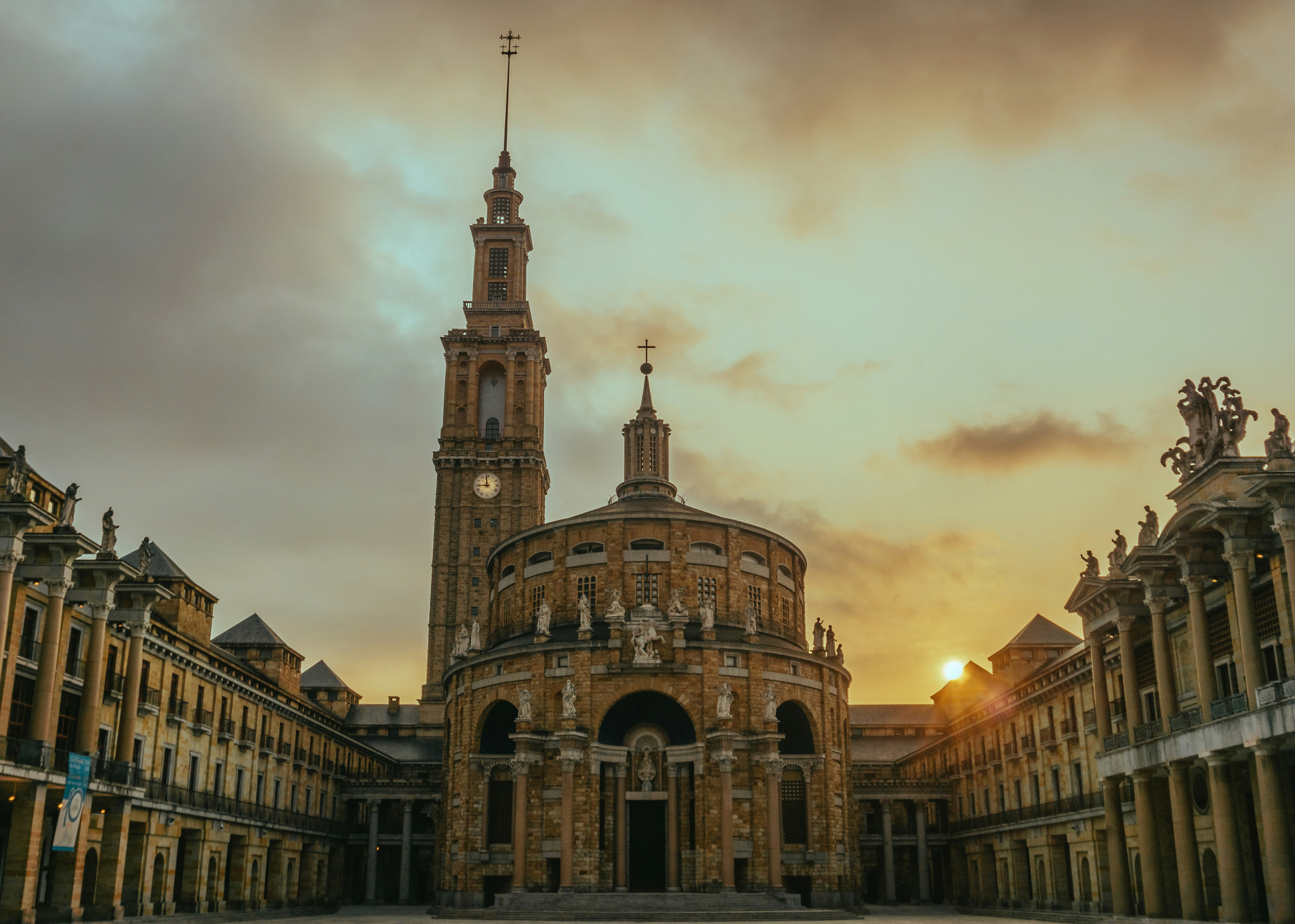
The Campo Valdés baths, dating back to the 1st century AD, and other reminders of Gijón’s time as an ancient Roman port remain visible downtown. Gijón was almost destroyed in a 14th-century struggle over the Castilian throne, but by the 19th century it was a thriving port and industrial city. The modern-day city is part fishing port, part summer resort, and part university town, packed with cafés, restaurants, and sidrerías.
Bilbao, Spain
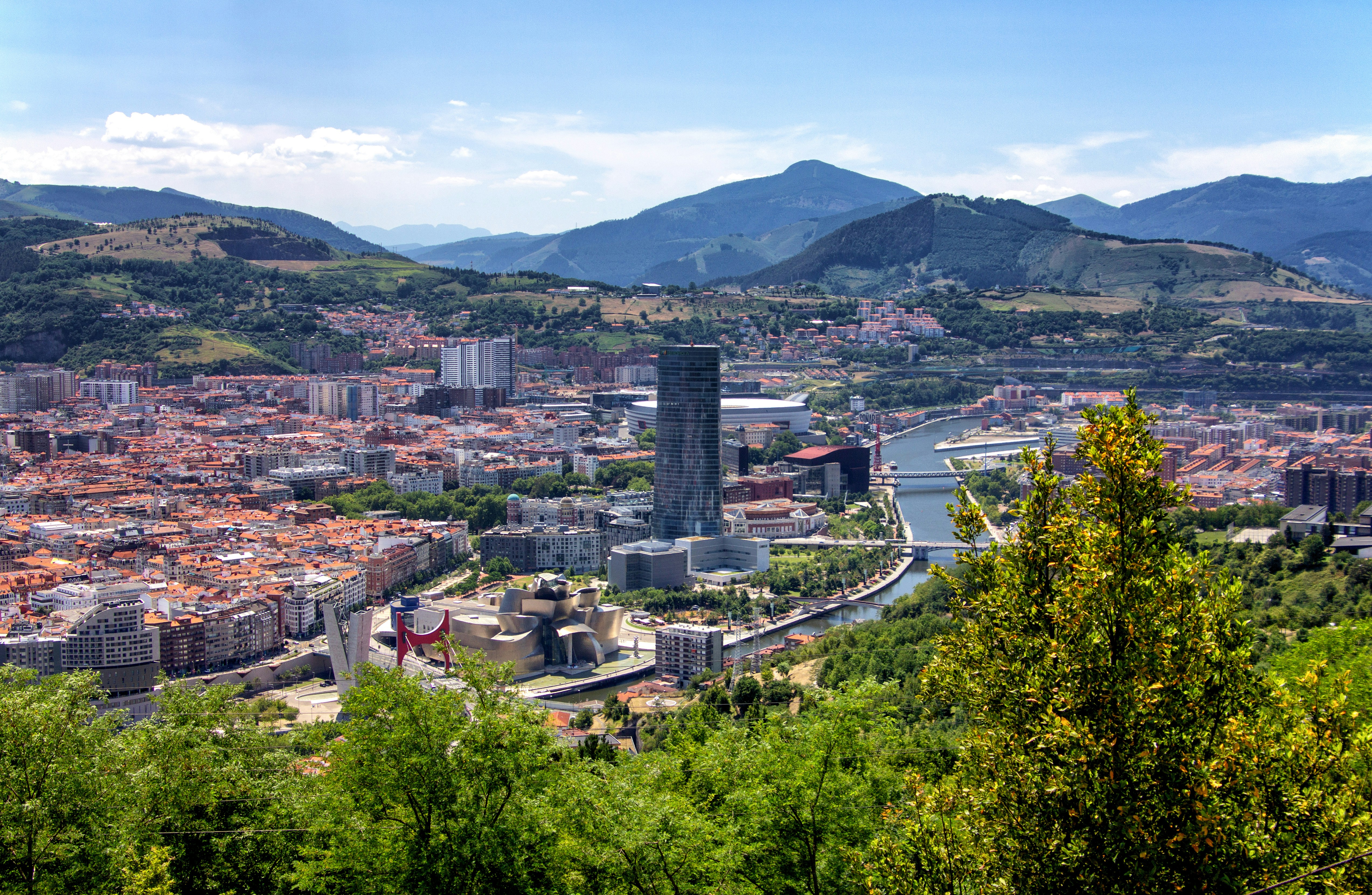
Time in Bilbao (Bilbo, in Euskera) may be recorded as BG or AG (Before Guggenheim or After Guggenheim). Never has a single monument of art and architecture so radically changed a city. Frank Gehry’s stunning museum, Norman Foster’s sleek subway system, the Santiago Calatrava glass footbridge and airport, the leafy César Pelli Abandoibarra park and commercial complex next to the Guggenheim, and the Philippe Starck AlhóndigaBilbao cultural center have contributed to an unprecedented cultural revolution in what was once the industry capital of the Basque Country.Greater Bilbao contains almost 1 million inhabitants, nearly half the total population of the Basque Country. Founded in 1300 by Vizcayan noble Diego López de Haro, Bilbao became an industrial center in the mid-19th century, largely because of the abundance of minerals in the surrounding hills. An affluent industrial class grew up here, as did the working class in suburbs that line the Margen Izquierda (Left Bank) of the Nervión estuary.Bilbao’s new attractions get more press, but the city’s old treasures still quietly line the banks of the rust-color Nervión River. The Casco Viejo (Old Quarter)—also known as Siete Calles (Seven Streets)—is a charming jumble of shops, bars, and restaurants on the river’s Right Bank, near the Puente del Arenal bridge. This elegant proto-Bilbao nucleus was carefully restored after devastating floods in 1983. Throughout the Casco Viejo are ancient mansions emblazoned with family coats of arms, wooden doors, and fine ironwork balconies. The most interesting square is the 64-arch Plaza Nueva, where an outdoor market is pitched every Sunday morning.Walking the banks of the Nervión is a satisfying jaunt. After all, this was how—while out on a morning jog—Guggenheim director Thomas Krens first discovered the perfect spot for his project, nearly opposite the right bank’s Deusto University. From the Palacio de Euskalduna upstream to the colossal Mercado de la Ribera, parks and green zones line the river. César Pelli’s Abandoibarra project fills in the half mile between the Guggenheim and the Euskalduna bridge with a series of parks, the Deusto University library, the Meliá Bilbao Hotel, and a major shopping center.On the left bank, the wide, late-19th-century boulevards of the Ensanche neighborhood, such as Gran Vía (the main shopping artery) and Alameda de Mazarredo, are the city’s more formal face. Bilbao’s cultural institutions include, along with the Guggenheim, a major museum of fine arts (the Museo de Bellas Artes) and an opera society (Asociación Bilbaína de Amigos de la Ópera, or ABAO) with 7,000 members from Spain and southern France. In addition, epicureans have long ranked Bilbao’s culinary offerings among the best in Spain. Don’t miss a chance to ride the trolley line, the Euskotram, for a trip along the river from Atxuri Station to Basurto’s San Mamés soccer stadium, reverently dubbed “la Catedral del Fútbol” (the Cathedral of Football).
Le Verdon-sur-Mer, France
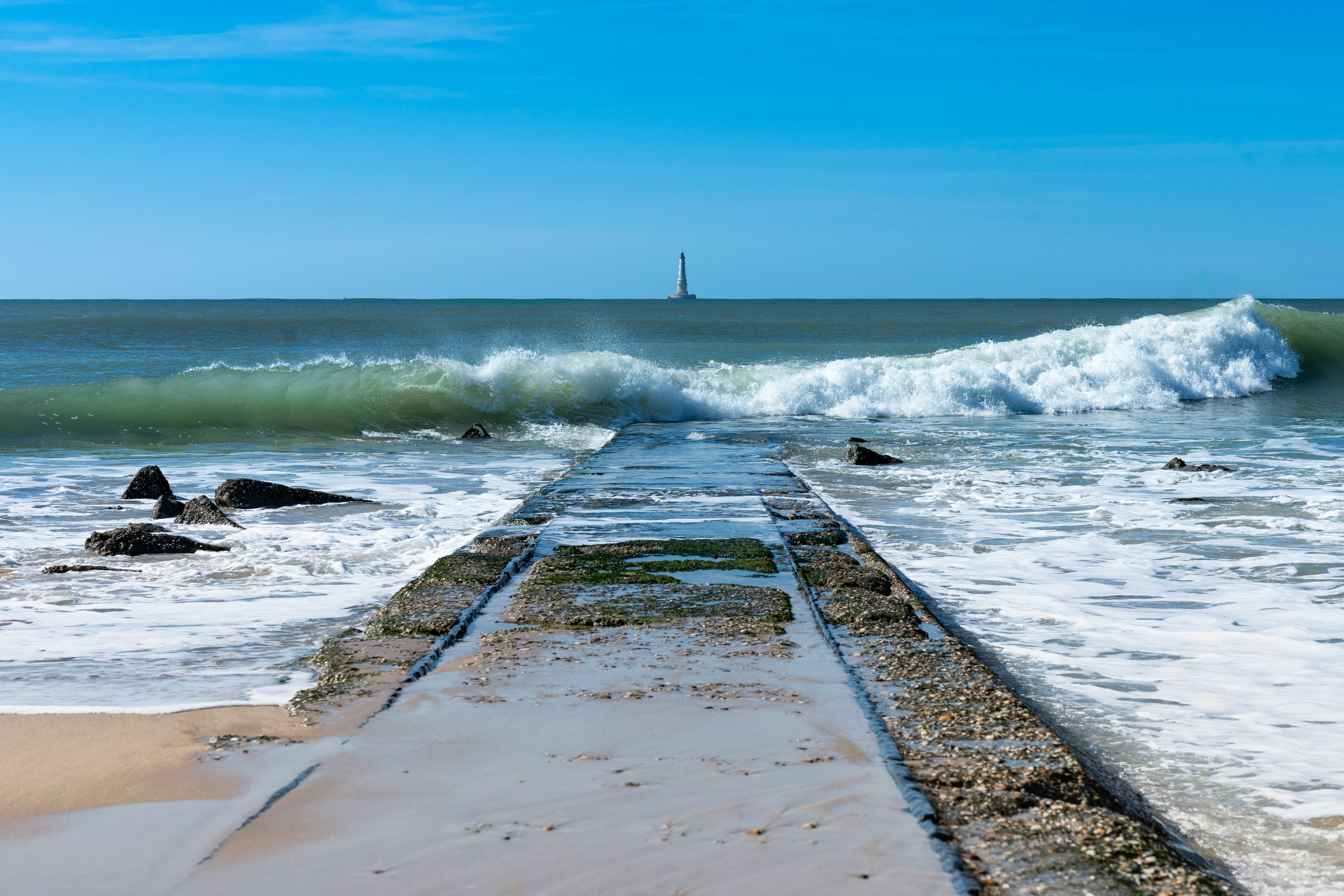
Situated on the Garonne River, 70 miles (113 km) inland from the Atlantic, Bordeaux’s origin can be traced back to the 3rd century when it was Aquitaine’s Roman capital called Burdigala. From 1154 to 1453, the town prospered under the rule of the English, whose fondness for the region’s red wines gave impetus to the local wine industry. At various times, Bordeaux even served as the nation’s capital: in 1870, at the beginning of World War I, and for two weeks in 1940 before the Vichy government was proclaimed. Bordeaux’s neo-classical architecture, wide avenues and well-tended public squares and parks lend the city a certain grandeur. Excellent museums, an imposing cathedral and a much-praised theatre add to the city’s attractions. The principal highlights, clustered around the town centre, can easily be explored on foot.
Lisbon, Portugal
Set on seven hills on the banks of the River Tagus, Lisbon has been the capital of Portugal since the 13th century. It is a city famous for its majestic architecture, old wooden trams, Moorish features and more than twenty centuries of history. Following disastrous earthquakes in the 18th century, Lisbon was rebuilt by the Marques de Pombal who created an elegant city with wide boulevards and a great riverfront and square, Praça do Comércio. Today there are distinct modern and ancient sections, combining great shopping with culture and sightseeing in the Old Town, built on the city’s terraced hillsides. The distance between the ship and your tour vehicle may vary. This distance is not included in the excursion grades.
Porto, Portugal
Lively, commercial Oporto is the second largest city in Portugal after Lisbon. Also called Porto for short, the word easily brings to mind the city’s most famous product – port wine. Oporto’s strategic location on the north bank of the Douro River has accounted for the town’s importance since ancient times. The Romans built a fort here where their trading route crossed the Douro, and the Moors brought their own culture to the area. Oporto profited from provisioning crusaders en route to the Holy Land and enjoyed the riches from Portuguese maritime discoveries during the 15th and 16th centuries. Later, port wine trade with Britain compensated for the loss of the spice trade and the end of gold and gem shipments from Brazil. In the 19th century, the city went through a period of new prosperity with the rise of industries. In its wake followed the building of workers’ quarters and opulent residences. Since the declaration of Oporto as a World Heritage Site by UNESCO, the city aims to build up a cultural reference that will provide it with a new image, based on deep historical roots. Among the attractions that make Oporto such an interesting place are its graceful bridges spanning the Douro River, a picturesque riverfront quarter and, most notable, its world-famous port wine lodges. Although Oporto is a bustling centre and home to many different businesses, the source of its greatest fame is the rich, sweet fortified red wine we know as port.
La Coruña, Spain
La Coruña, the largest city in Spain’s Galicia region, is among the country’s busiest ports. The remote Galicia area is tucked into the northwest corner of the Iberian Peninsula, surprising visitors with its green and misty countryside that is so much unlike other parts of Spain. The name “Galicia” is Celtic in origin, for it was the Celts who occupied the region around the 6th-century BC and erected fortifications. La Coruña was already considered an important port under the Romans. They were followed by an invasion of Suevians, Visigoths and, much later in 730, the Moors. It was after Galicia was incorporated into the Kingdom of Asturias that the epic saga of the Pilgrimage to Santiago (St. James) began. From the 15th century, overseas trade developed rapidly; in 1720, La Coruña was granted the privilege of trading with America – a right previously only held by Cadiz and Seville. This was the great era when adventurous men voyaged to the colonies and returned with vast riches. Today, the city’s significant expansion is evident in three distinct quarters: the town centre located along the isthmus; the business and commercial centre with wide avenues and shopping streets; and the “Ensanche” to the south, occupied by warehouses and factories. Many of the buildings in the old section feature the characteristic glazed façades that have earned La Coruña the name “City of Crystal.” Plaza Maria Pita, the beautiful main square, is named after the local heroine who saved the town in 1589 when she seized the English standard from the beacon and gave the alarm, warning her fellow townsmen of the English attack.
Gijón, Spain
The Campo Valdés baths, dating back to the 1st century AD, and other reminders of Gijón’s time as an ancient Roman port remain visible downtown. Gijón was almost destroyed in a 14th-century struggle over the Castilian throne, but by the 19th century it was a thriving port and industrial city. The modern-day city is part fishing port, part summer resort, and part university town, packed with cafés, restaurants, and sidrerías.
Bilbao, Spain
Time in Bilbao (Bilbo, in Euskera) may be recorded as BG or AG (Before Guggenheim or After Guggenheim). Never has a single monument of art and architecture so radically changed a city. Frank Gehry’s stunning museum, Norman Foster’s sleek subway system, the Santiago Calatrava glass footbridge and airport, the leafy César Pelli Abandoibarra park and commercial complex next to the Guggenheim, and the Philippe Starck AlhóndigaBilbao cultural center have contributed to an unprecedented cultural revolution in what was once the industry capital of the Basque Country.Greater Bilbao contains almost 1 million inhabitants, nearly half the total population of the Basque Country. Founded in 1300 by Vizcayan noble Diego López de Haro, Bilbao became an industrial center in the mid-19th century, largely because of the abundance of minerals in the surrounding hills. An affluent industrial class grew up here, as did the working class in suburbs that line the Margen Izquierda (Left Bank) of the Nervión estuary.Bilbao’s new attractions get more press, but the city’s old treasures still quietly line the banks of the rust-color Nervión River. The Casco Viejo (Old Quarter)—also known as Siete Calles (Seven Streets)—is a charming jumble of shops, bars, and restaurants on the river’s Right Bank, near the Puente del Arenal bridge. This elegant proto-Bilbao nucleus was carefully restored after devastating floods in 1983. Throughout the Casco Viejo are ancient mansions emblazoned with family coats of arms, wooden doors, and fine ironwork balconies. The most interesting square is the 64-arch Plaza Nueva, where an outdoor market is pitched every Sunday morning.Walking the banks of the Nervión is a satisfying jaunt. After all, this was how—while out on a morning jog—Guggenheim director Thomas Krens first discovered the perfect spot for his project, nearly opposite the right bank’s Deusto University. From the Palacio de Euskalduna upstream to the colossal Mercado de la Ribera, parks and green zones line the river. César Pelli’s Abandoibarra project fills in the half mile between the Guggenheim and the Euskalduna bridge with a series of parks, the Deusto University library, the Meliá Bilbao Hotel, and a major shopping center.On the left bank, the wide, late-19th-century boulevards of the Ensanche neighborhood, such as Gran Vía (the main shopping artery) and Alameda de Mazarredo, are the city’s more formal face. Bilbao’s cultural institutions include, along with the Guggenheim, a major museum of fine arts (the Museo de Bellas Artes) and an opera society (Asociación Bilbaína de Amigos de la Ópera, or ABAO) with 7,000 members from Spain and southern France. In addition, epicureans have long ranked Bilbao’s culinary offerings among the best in Spain. Don’t miss a chance to ride the trolley line, the Euskotram, for a trip along the river from Atxuri Station to Basurto’s San Mamés soccer stadium, reverently dubbed “la Catedral del Fútbol” (the Cathedral of Football).
Le Verdon-sur-Mer, France
Situated on the Garonne River, 70 miles (113 km) inland from the Atlantic, Bordeaux’s origin can be traced back to the 3rd century when it was Aquitaine’s Roman capital called Burdigala. From 1154 to 1453, the town prospered under the rule of the English, whose fondness for the region’s red wines gave impetus to the local wine industry. At various times, Bordeaux even served as the nation’s capital: in 1870, at the beginning of World War I, and for two weeks in 1940 before the Vichy government was proclaimed. Bordeaux’s neo-classical architecture, wide avenues and well-tended public squares and parks lend the city a certain grandeur. Excellent museums, an imposing cathedral and a much-praised theatre add to the city’s attractions. The principal highlights, clustered around the town centre, can easily be explored on foot.
Le Havre, France
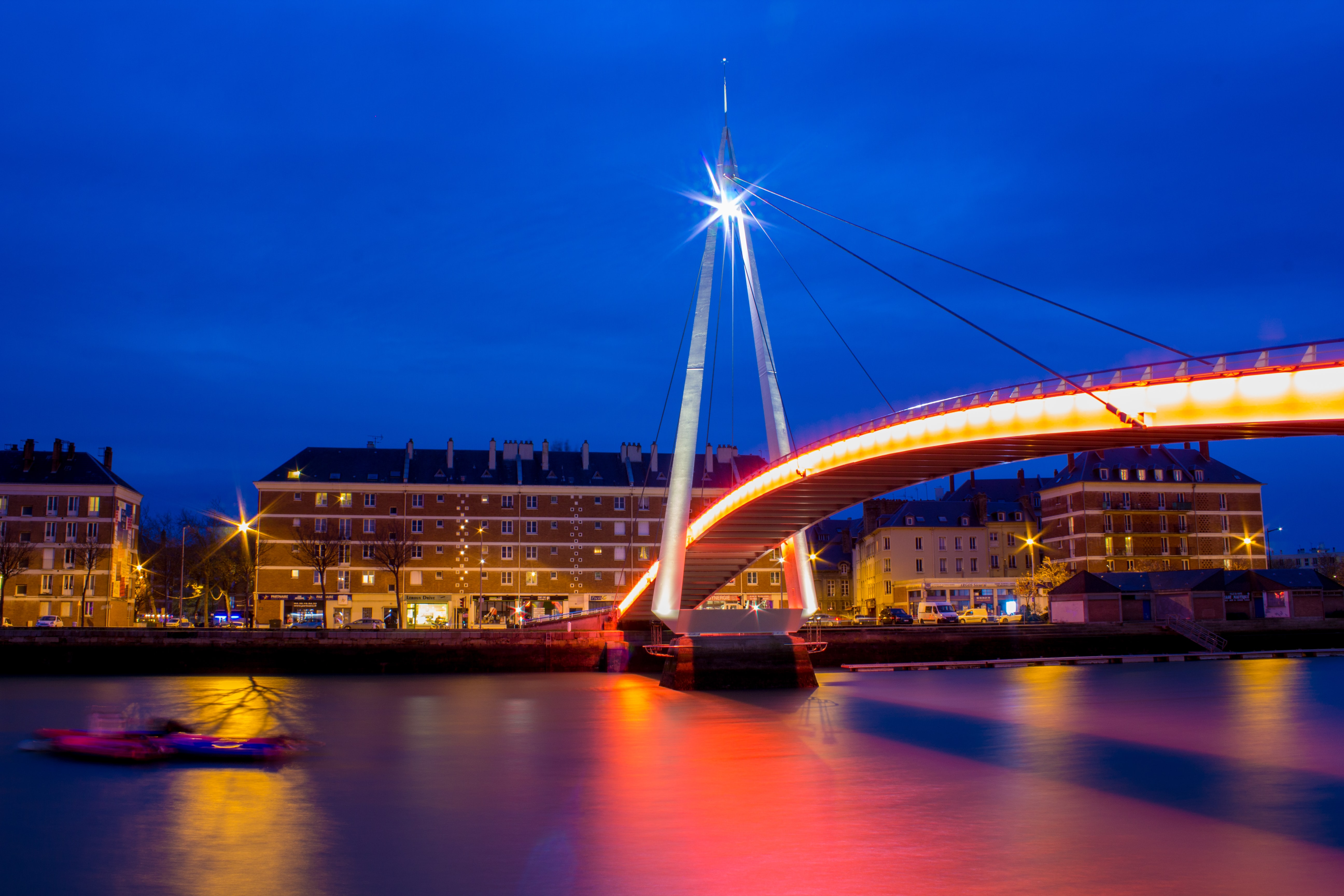
Le Havre, founded by King Francis I of France in 1517, is located inUpper Normandy on the north bank of the mouth of the River Seine, which isconsidered the most frequented waterway in the world. Its port is ranked thesecond largest in France. The city was originally built on marshland andmudflats that were drained in the 1500’s. During WWII most of Le Havre wasdestroyed by Allied bombing raids. Post war rebuilding of the city followed thedevelopment plans of the well-known Belgian architect Auguste Perre. Thereconstruction was so unique that the entire city was listed as a UNESCO WorldHeritage Site in 2005.
Hamburg, Germany
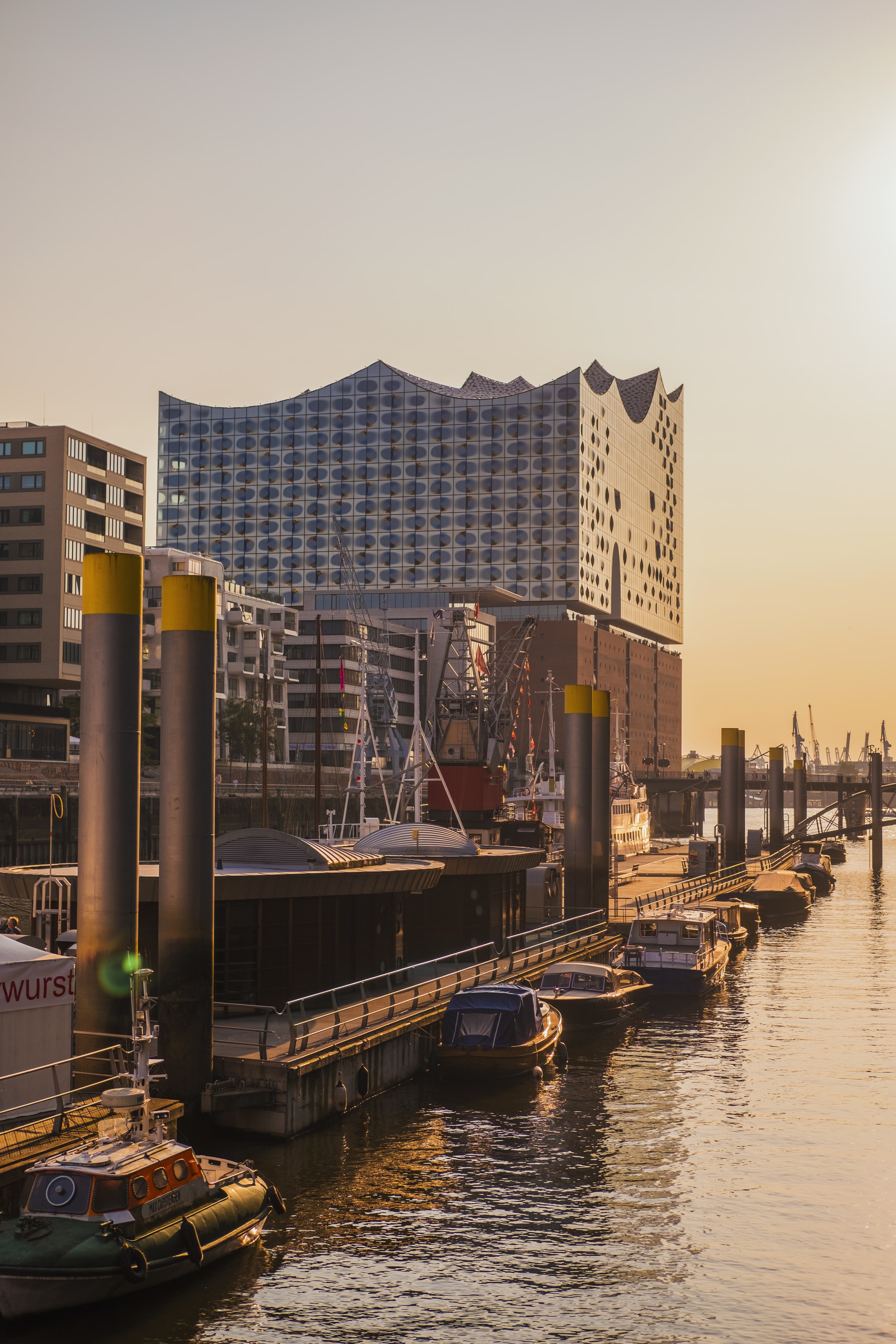
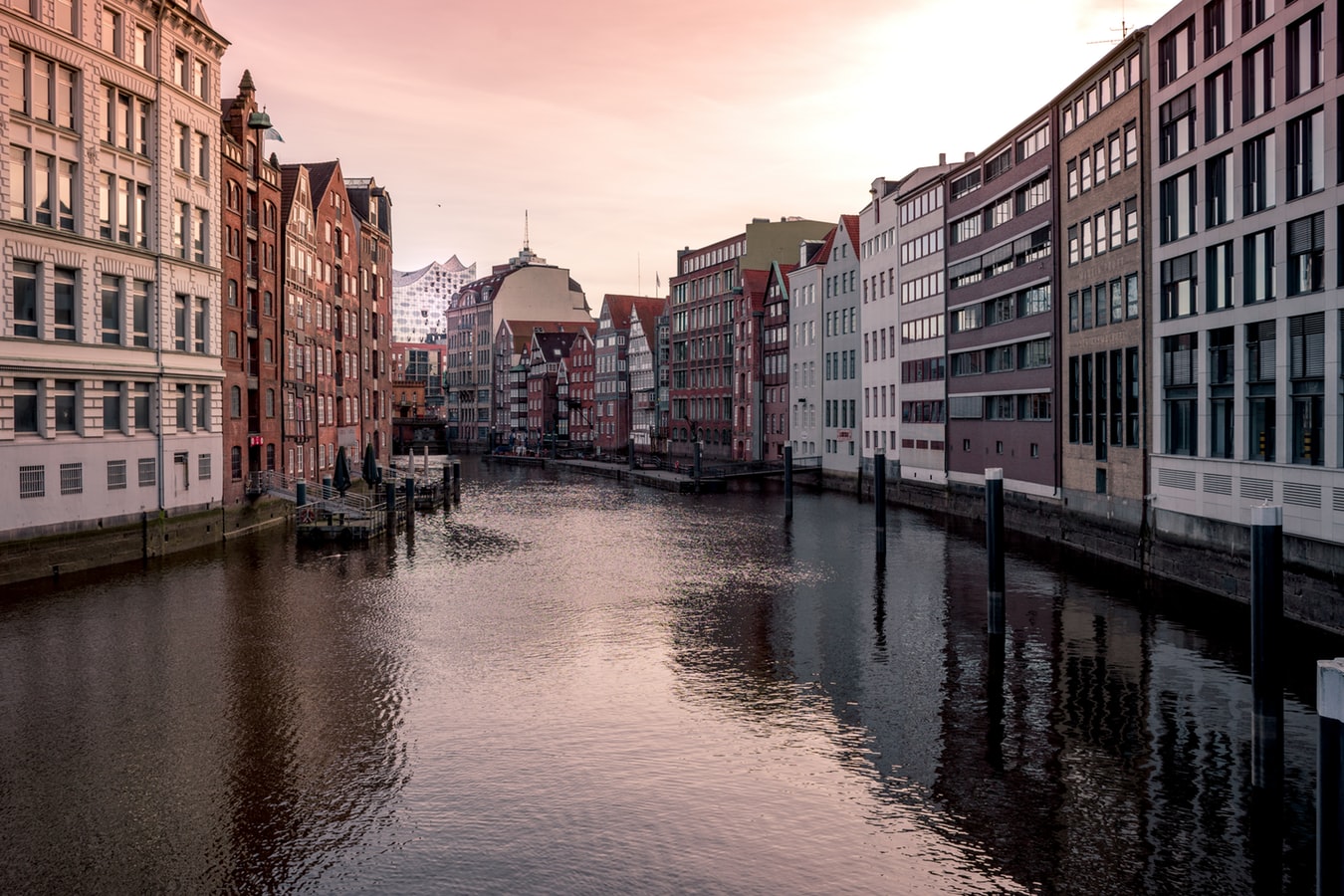
Hamburg is Germany’s second-largest city with a history dating back to Charlemagne. A major port, this vibrant city is home to art and culture, extensive shopping facilities, Baroque buildings and waterfront vistas. With its well-known fish market, art galleries and Museums together with several beautiful parks including a botanical garden, this is a city with something for everyone. British visitors who remember the Swinging Sixties may like to visit the streets around Grosse Freiheit, where an unknown pop group called The Beatles gave their first public performances in various local clubs before achieving worldwide fame.
Hamburg, Germany
Hamburg is Germany’s second-largest city with a history dating back to Charlemagne. A major port, this vibrant city is home to art and culture, extensive shopping facilities, Baroque buildings and waterfront vistas. With its well-known fish market, art galleries and Museums together with several beautiful parks including a botanical garden, this is a city with something for everyone. British visitors who remember the Swinging Sixties may like to visit the streets around Grosse Freiheit, where an unknown pop group called The Beatles gave their first public performances in various local clubs before achieving worldwide fame.
IJmuiden, Netherlands
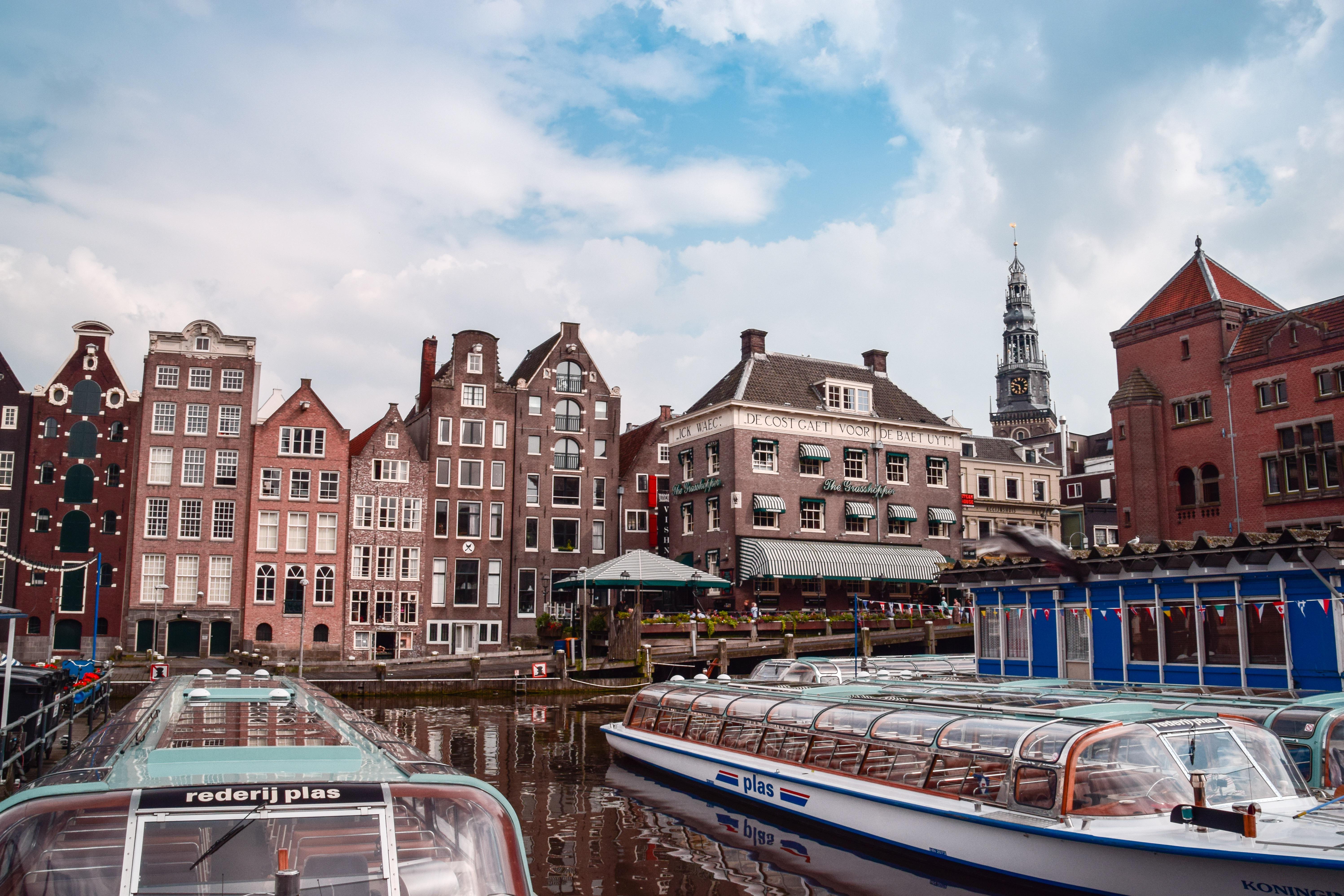
North Holland’s ‘Gate to the North Sea’, IJmuiden has four harbours: the Vissershaven, Haringhaven, IJmondhaven and the Seaport Marina – the latter used by pleasure craft. It is the largest Dutch fishing port, but is a relatively young town: it grew up in the 1870s when the North Sea Canal was opened. During World War II, the German Navy demolished much of the town and built huge fortified concrete bunkers for their torpedo boats and submarines. After 1945, the town was rebuilt by the architect Willem Marinus Dudok. He designed IJmuiden’s most impressive building, the Stadhuis van Velsen, which houses local government offices. For cruise passengers IJmuiden is the gateway to Amsterdam, the Dutch capital and one of Europe’s truly great cities, where elegant canals are lined by old brick gabled houses, and superb art galleries and museums are home to some of the world’s best-known paintings. Please note that complimentary shuttle buses operate from the port to the centre of IJmuiden, not to Amsterdam.
Zeebrugge, Belgium
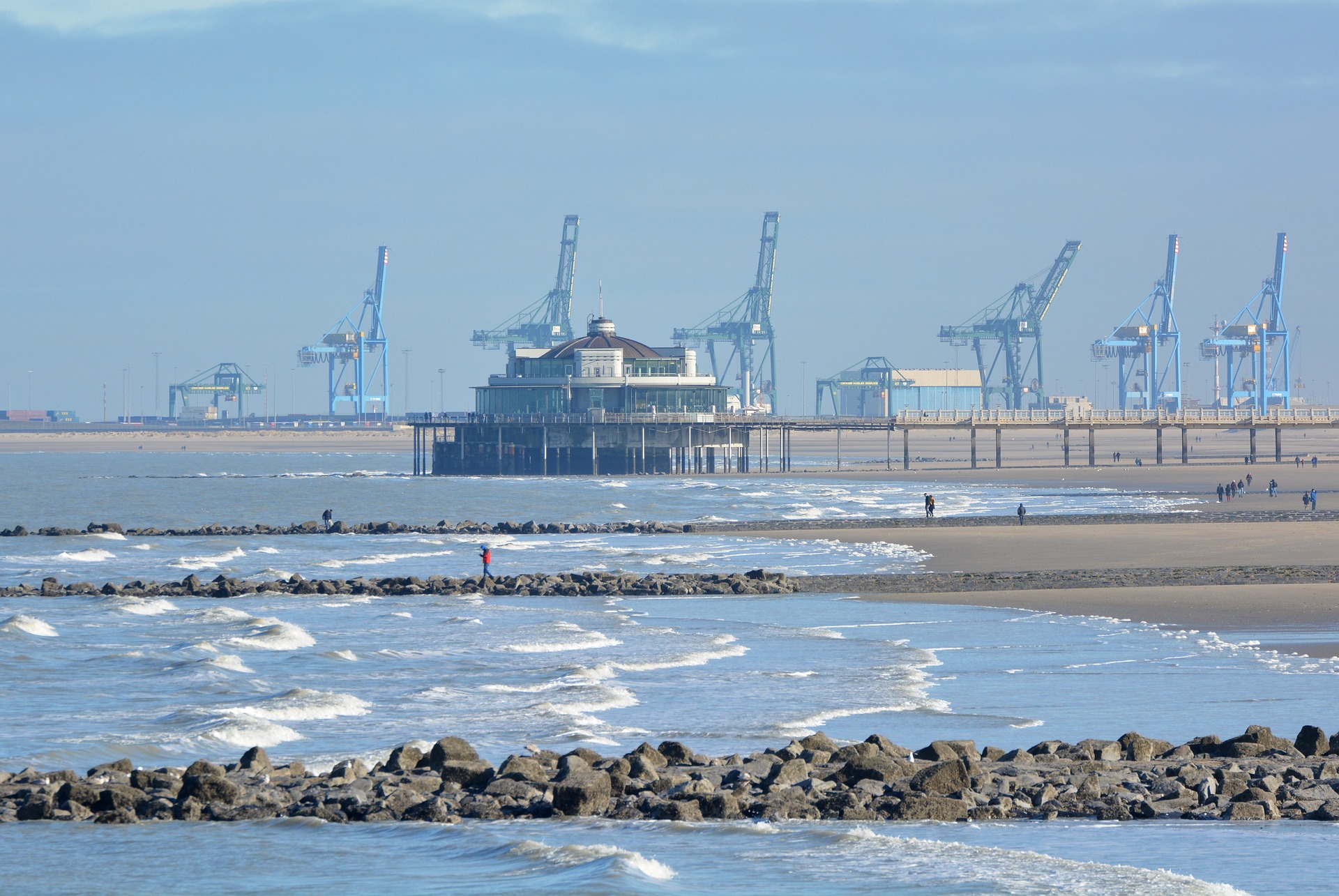
In 1895 work began to construct a new seaport and harbour next to the tiny village of Zeebrugge, situated on the North Sea coast. Today the fast-expanding port of Zeebrugge is one of the busiest in Europe and its marina is Belgium’s most important fishing port. Many attempts were made to destroy this important port during both World Wars. Zeebrugge is ideally located for discovering the historic city of Bruges, and delightful seaside resorts with long sandy beaches can be visited by using the trams that run the whole length of the Belgian coast. Please note that no food may be taken ashore in Belgium. We shall not be offering shuttle buses to Bruges, but you may visit the city on an optional excursion: those visiting Bruges should note that there may be quite a long walk from the coach to the town centre.
Le Havre, France
Le Havre, founded by King Francis I of France in 1517, is located inUpper Normandy on the north bank of the mouth of the River Seine, which isconsidered the most frequented waterway in the world. Its port is ranked thesecond largest in France. The city was originally built on marshland andmudflats that were drained in the 1500’s. During WWII most of Le Havre wasdestroyed by Allied bombing raids. Post war rebuilding of the city followed thedevelopment plans of the well-known Belgian architect Auguste Perre. Thereconstruction was so unique that the entire city was listed as a UNESCO WorldHeritage Site in 2005.
Hamburg, Germany
Hamburg is Germany’s second-largest city with a history dating back to Charlemagne. A major port, this vibrant city is home to art and culture, extensive shopping facilities, Baroque buildings and waterfront vistas. With its well-known fish market, art galleries and Museums together with several beautiful parks including a botanical garden, this is a city with something for everyone. British visitors who remember the Swinging Sixties may like to visit the streets around Grosse Freiheit, where an unknown pop group called The Beatles gave their first public performances in various local clubs before achieving worldwide fame.
Hamburg, Germany
Hamburg is Germany’s second-largest city with a history dating back to Charlemagne. A major port, this vibrant city is home to art and culture, extensive shopping facilities, Baroque buildings and waterfront vistas. With its well-known fish market, art galleries and Museums together with several beautiful parks including a botanical garden, this is a city with something for everyone. British visitors who remember the Swinging Sixties may like to visit the streets around Grosse Freiheit, where an unknown pop group called The Beatles gave their first public performances in various local clubs before achieving worldwide fame.
IJmuiden, Netherlands
North Holland’s ‘Gate to the North Sea’, IJmuiden has four harbours: the Vissershaven, Haringhaven, IJmondhaven and the Seaport Marina – the latter used by pleasure craft. It is the largest Dutch fishing port, but is a relatively young town: it grew up in the 1870s when the North Sea Canal was opened. During World War II, the German Navy demolished much of the town and built huge fortified concrete bunkers for their torpedo boats and submarines. After 1945, the town was rebuilt by the architect Willem Marinus Dudok. He designed IJmuiden’s most impressive building, the Stadhuis van Velsen, which houses local government offices. For cruise passengers IJmuiden is the gateway to Amsterdam, the Dutch capital and one of Europe’s truly great cities, where elegant canals are lined by old brick gabled houses, and superb art galleries and museums are home to some of the world’s best-known paintings. Please note that complimentary shuttle buses operate from the port to the centre of IJmuiden, not to Amsterdam.
Zeebrugge, Belgium
In 1895 work began to construct a new seaport and harbour next to the tiny village of Zeebrugge, situated on the North Sea coast. Today the fast-expanding port of Zeebrugge is one of the busiest in Europe and its marina is Belgium’s most important fishing port. Many attempts were made to destroy this important port during both World Wars. Zeebrugge is ideally located for discovering the historic city of Bruges, and delightful seaside resorts with long sandy beaches can be visited by using the trams that run the whole length of the Belgian coast. Please note that no food may be taken ashore in Belgium. We shall not be offering shuttle buses to Bruges, but you may visit the city on an optional excursion: those visiting Bruges should note that there may be quite a long walk from the coach to the town centre.
Southampton, England
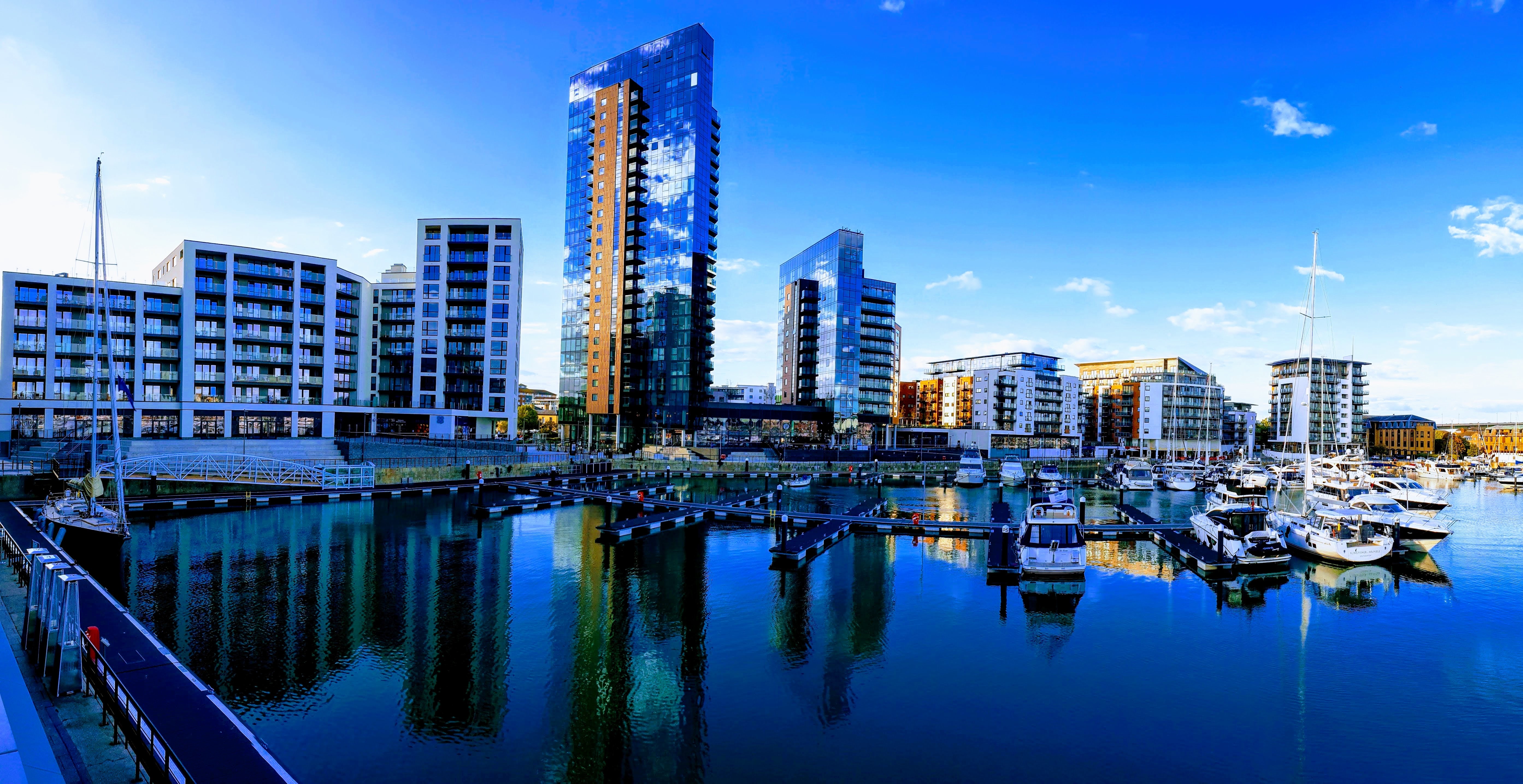
Lying near the head of Southampton Water, a peninsula between the estuaries of the Rivers Test and Itchen, Southampton is Britain’s largest cruise port. It has been one of England’s major ports since the Middle Ages, when it exported wool and hides from the hinterland and imported wine from Bordeaux. The city suffered heavy damage during World War Two and as a result the centre has been extensively rebuilt, but there are still some interesting medieval buildings including the Bargate, one of the finest city gatehouses in England.
Southampton, England
Lying near the head of Southampton Water, a peninsula between the estuaries of the Rivers Test and Itchen, Southampton is Britain’s largest cruise port. It has been one of England’s major ports since the Middle Ages, when it exported wool and hides from the hinterland and imported wine from Bordeaux. The city suffered heavy damage during World War Two and as a result the centre has been extensively rebuilt, but there are still some interesting medieval buildings including the Bargate, one of the finest city gatehouses in England.
Cabin Options
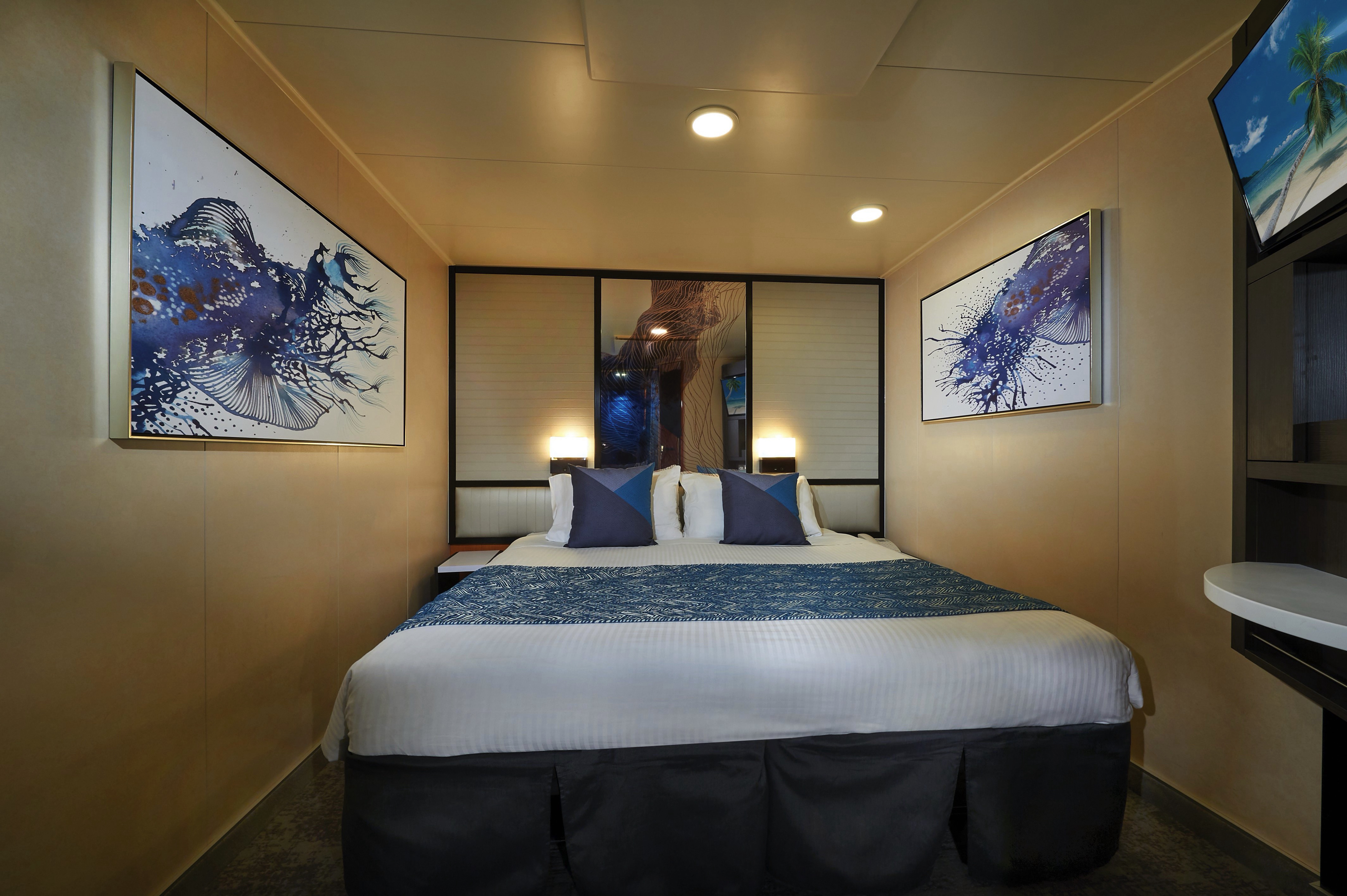
Inside
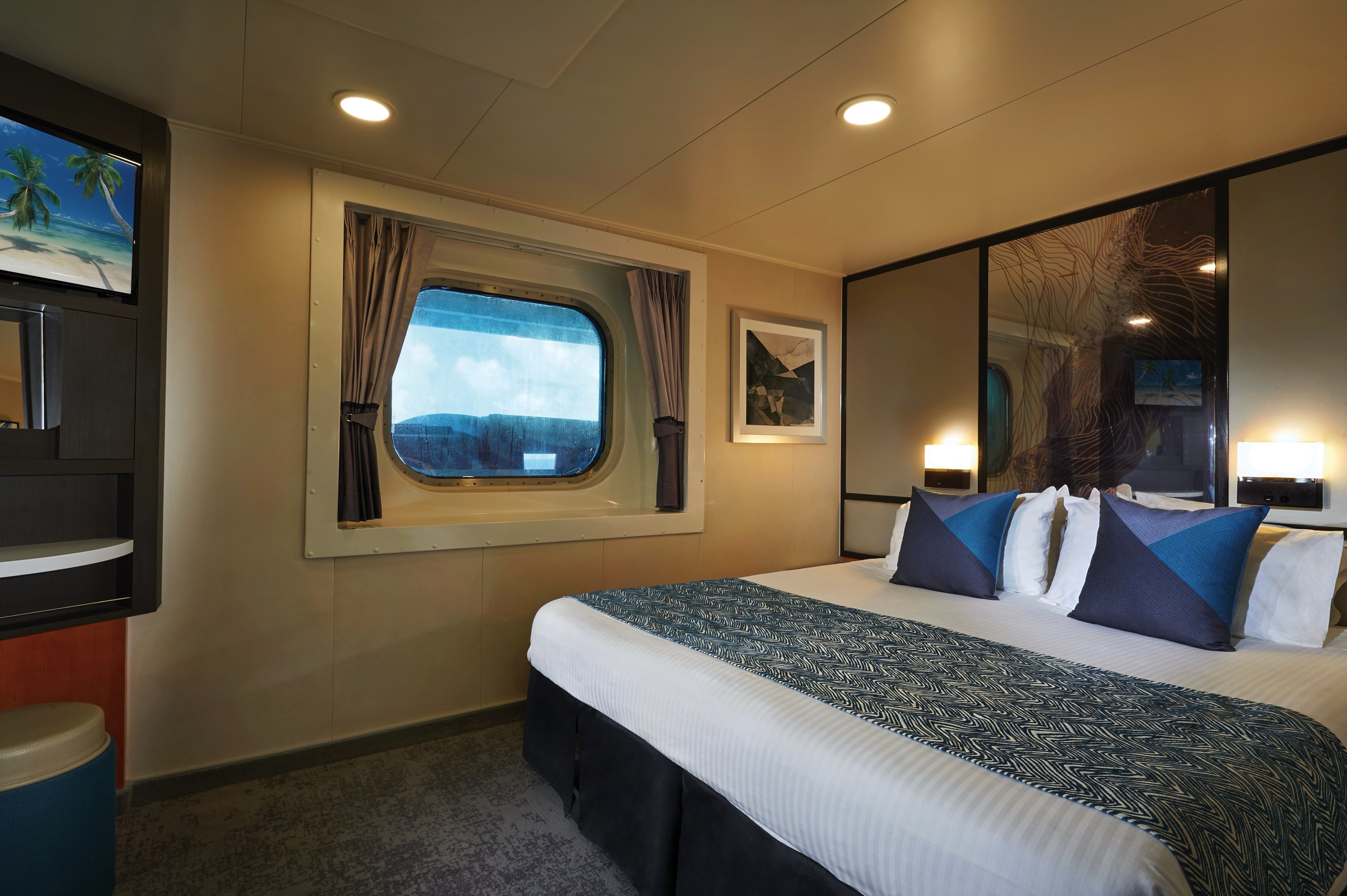
Obstructed Oceanview
Family Inside
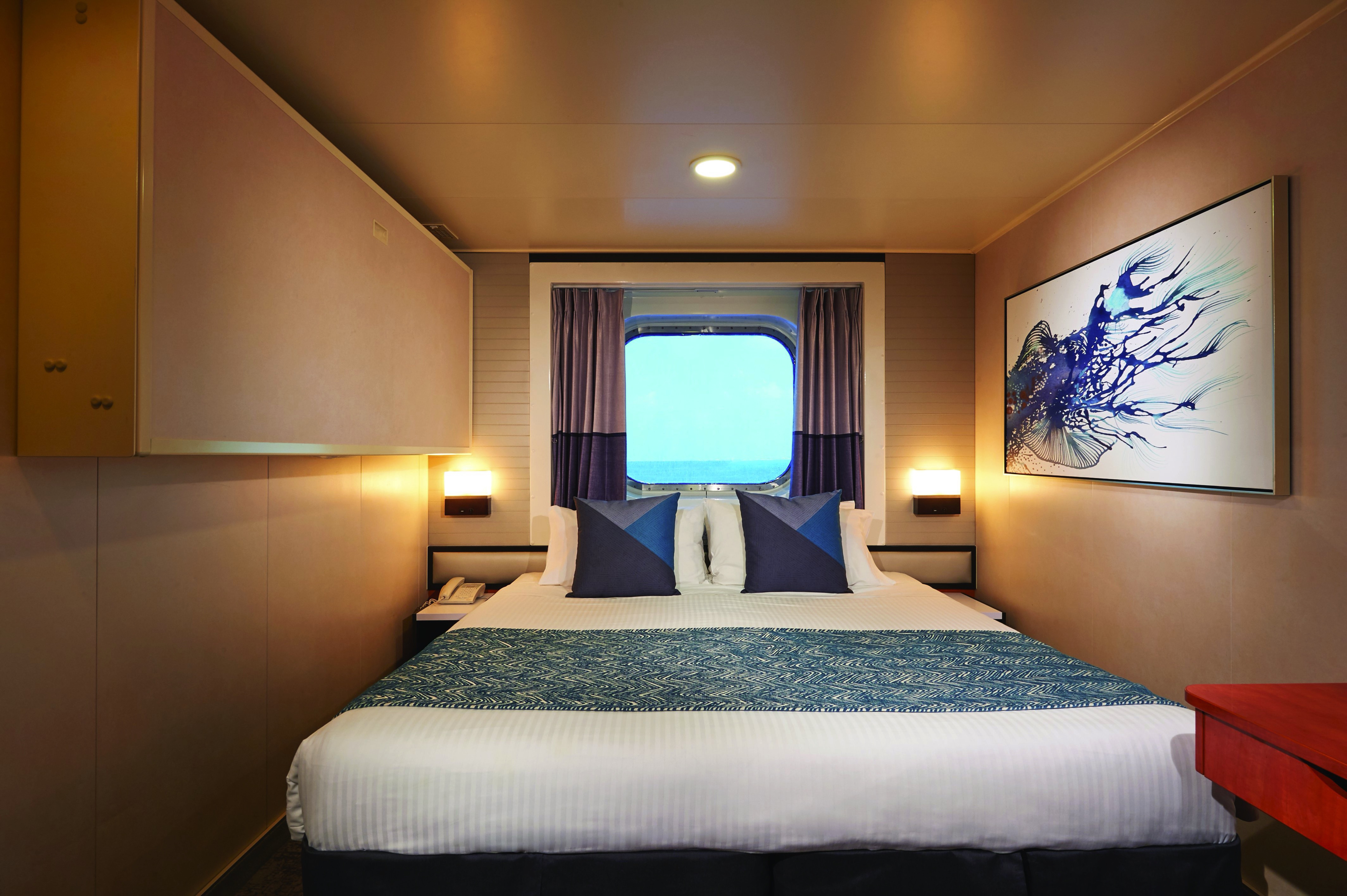
Oceanview
Oceanview with Picture Window
Family Oceanview
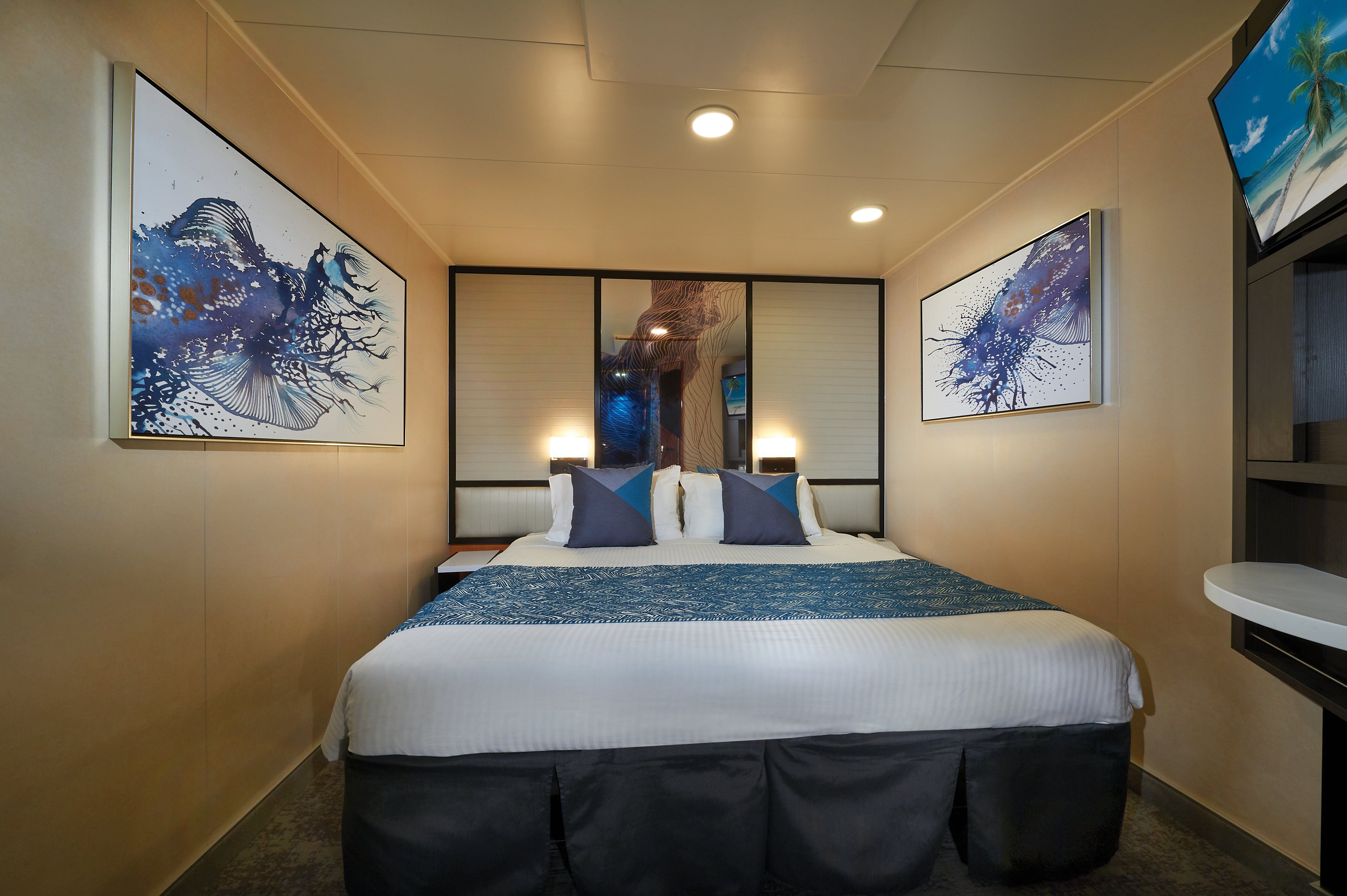
Sail Away Inside
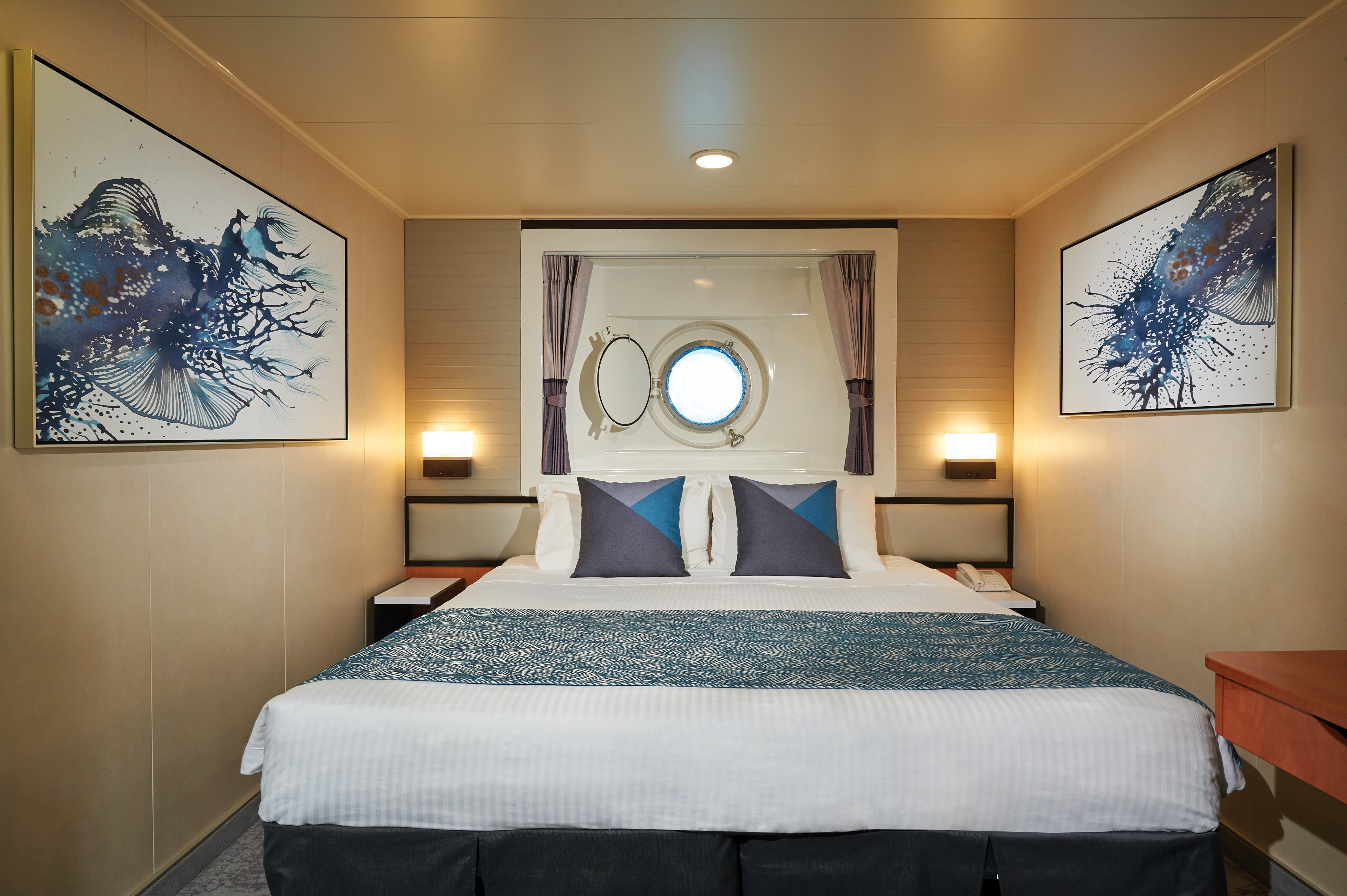
Sail Away Oceanview
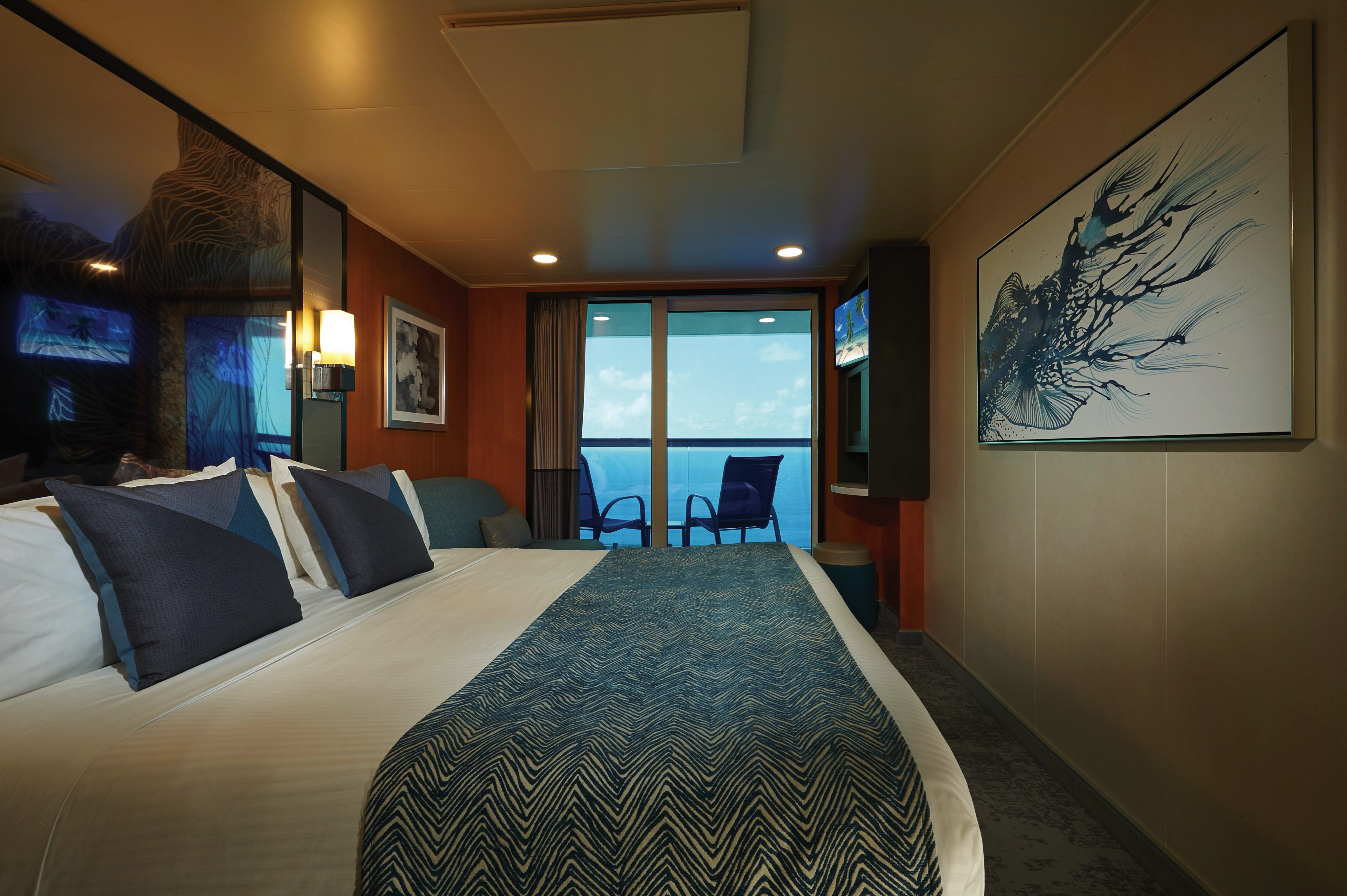
Balcony
Sail Away Balcony
Solo Balcony
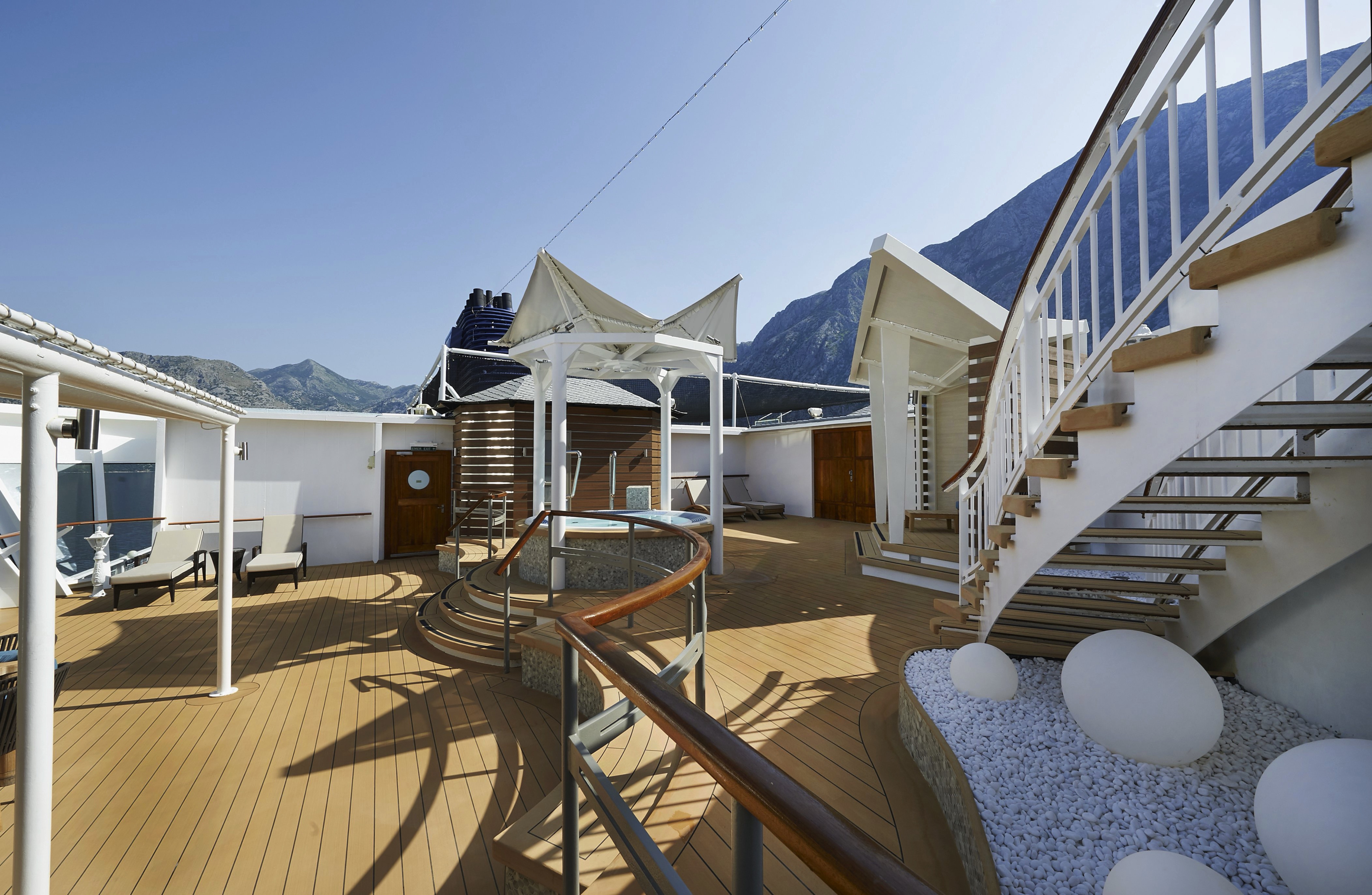
3-Bedroom Garden Villa
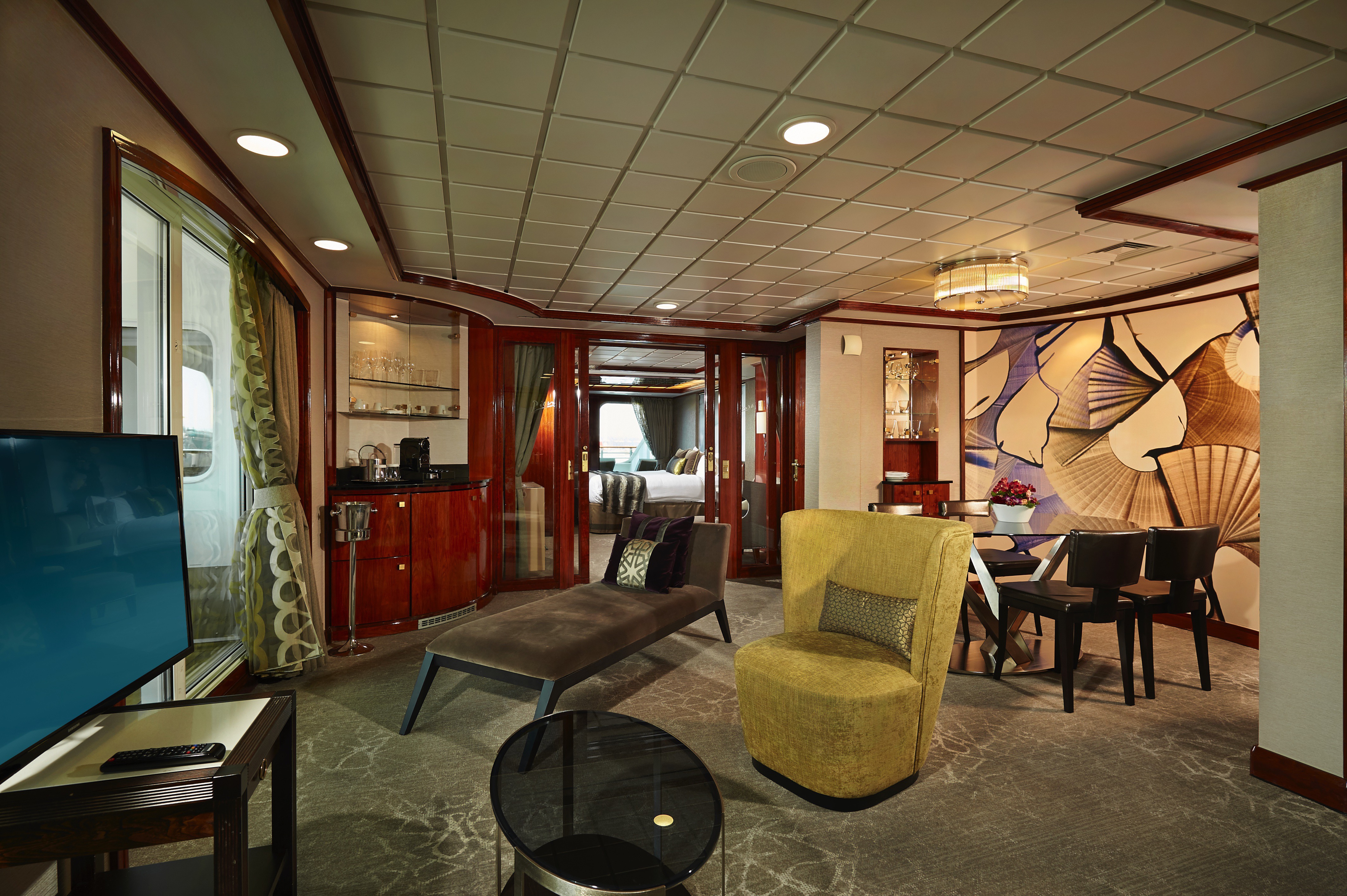
Deluxe Owner's Suite with Two Balconies
Owner's Suite with Two Balconies
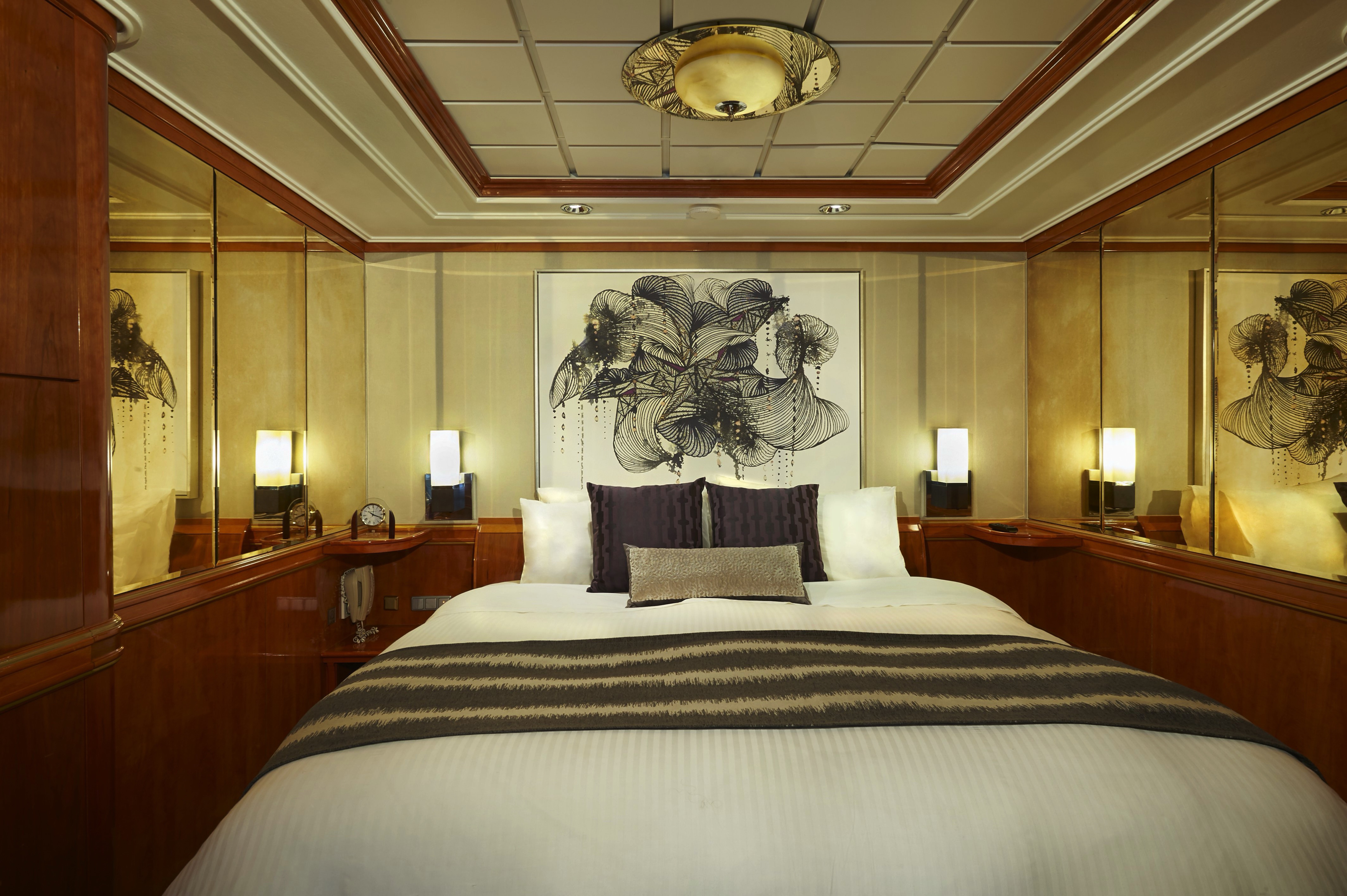
2-Bedroom Deluxe Family Suite with Balcony
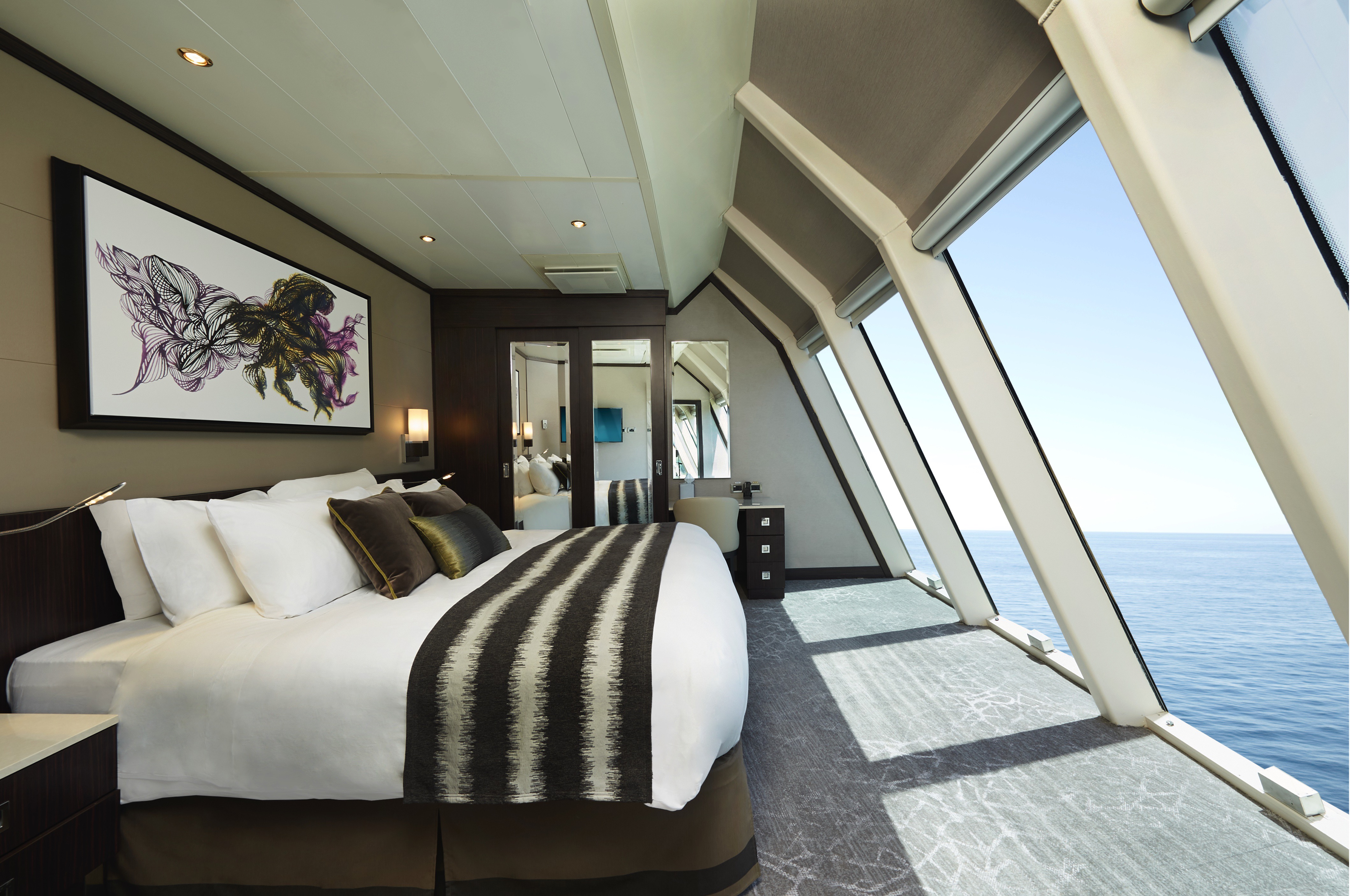
Deluxe Owner’s Suite
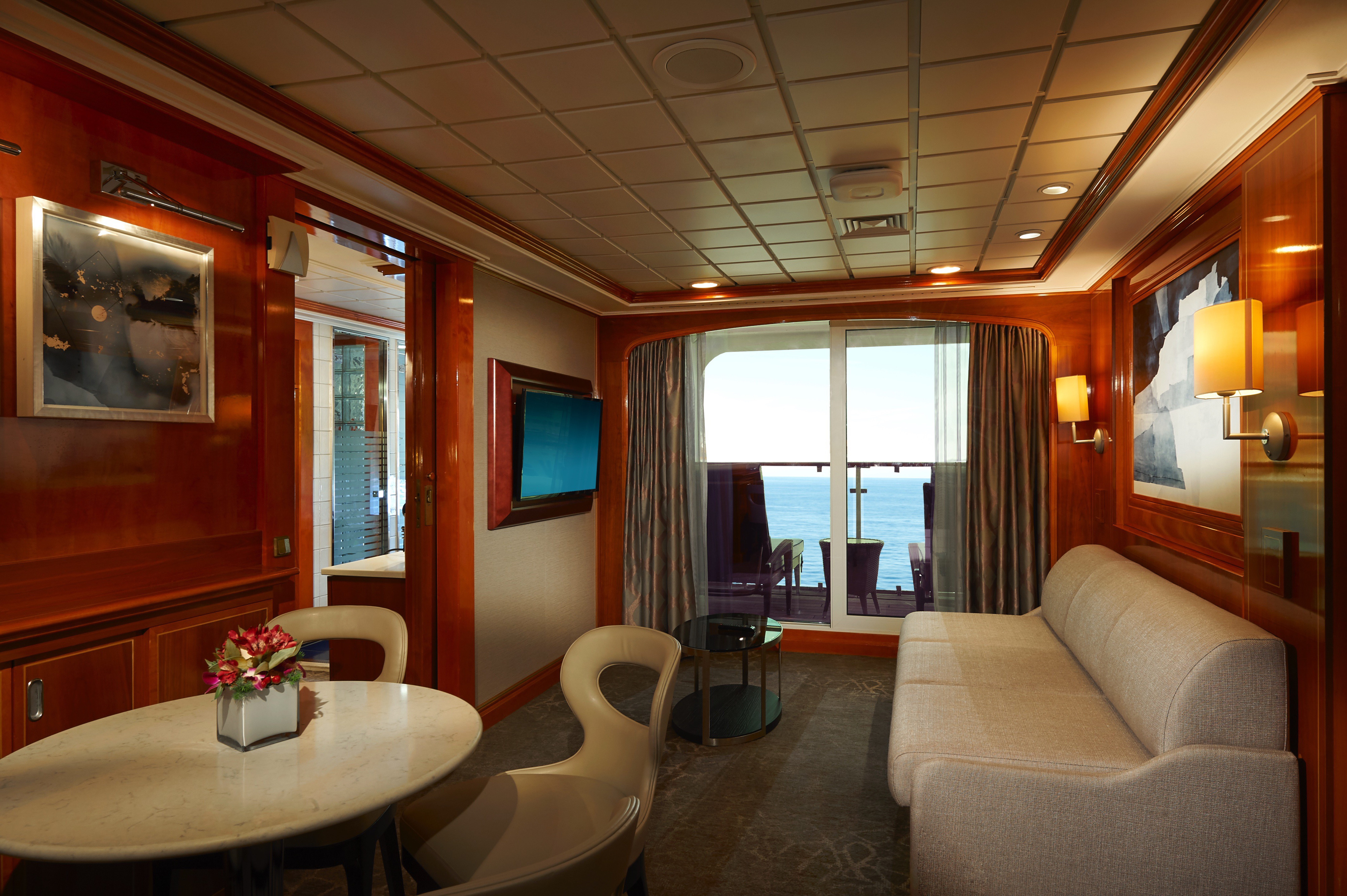
Penthouse with Balcony
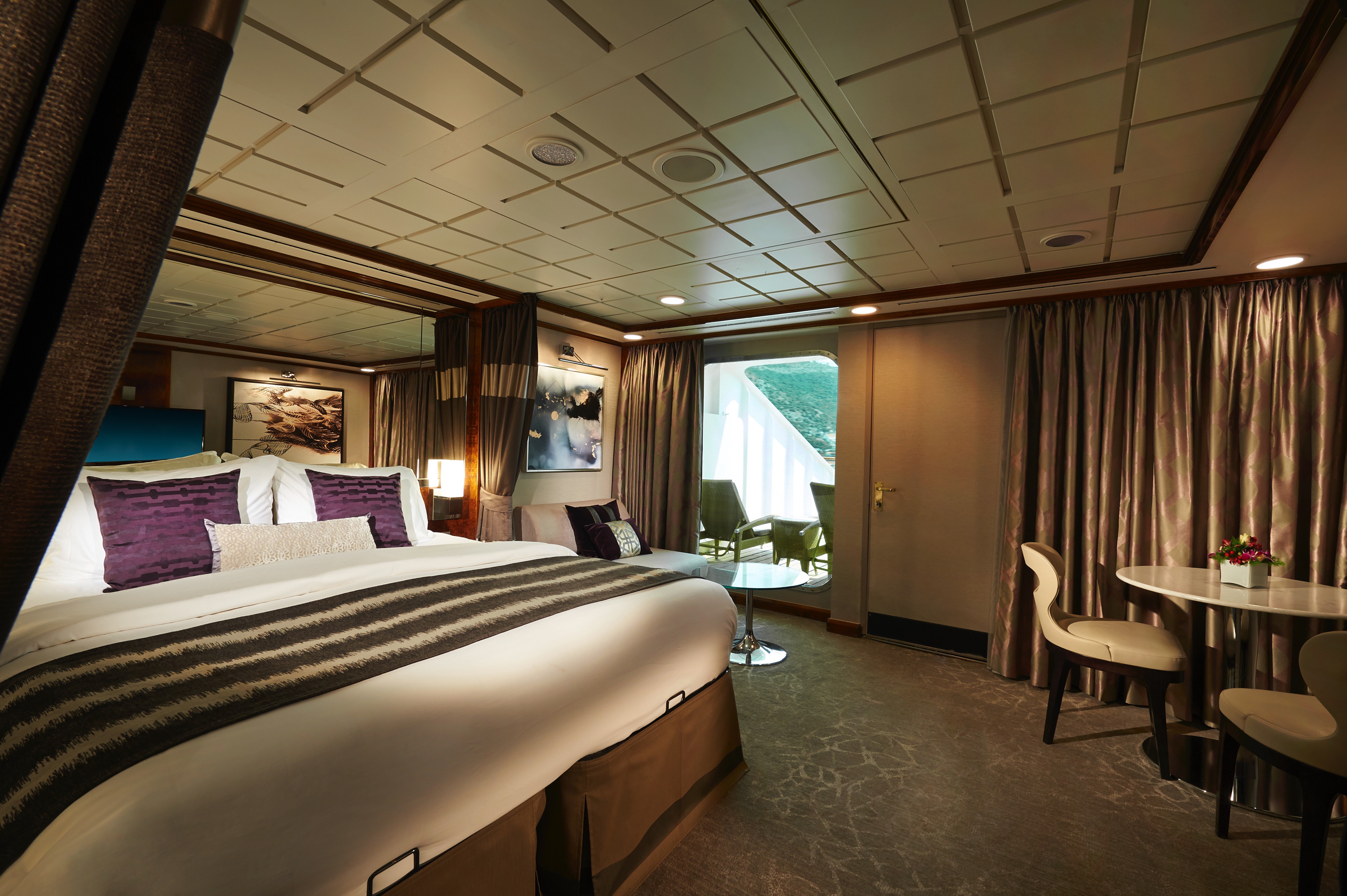
Forward-Facing Deluxe Penthouse with Large Balcony
Forward-Facing Penthouse with Large Balcony
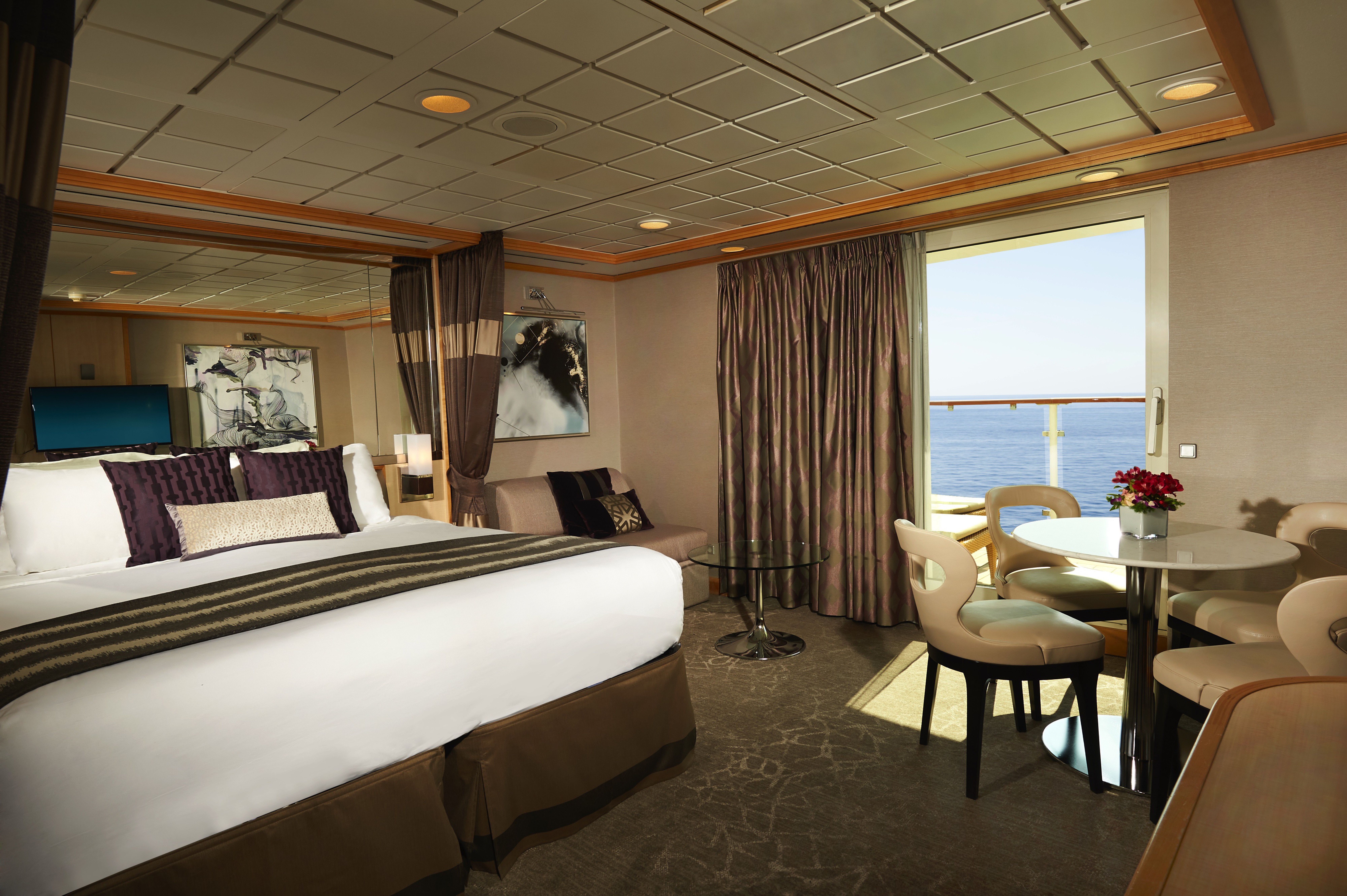
Aft-Facing Penthouse with Large Balcony
Aft-Facing Penthouse with Balcony
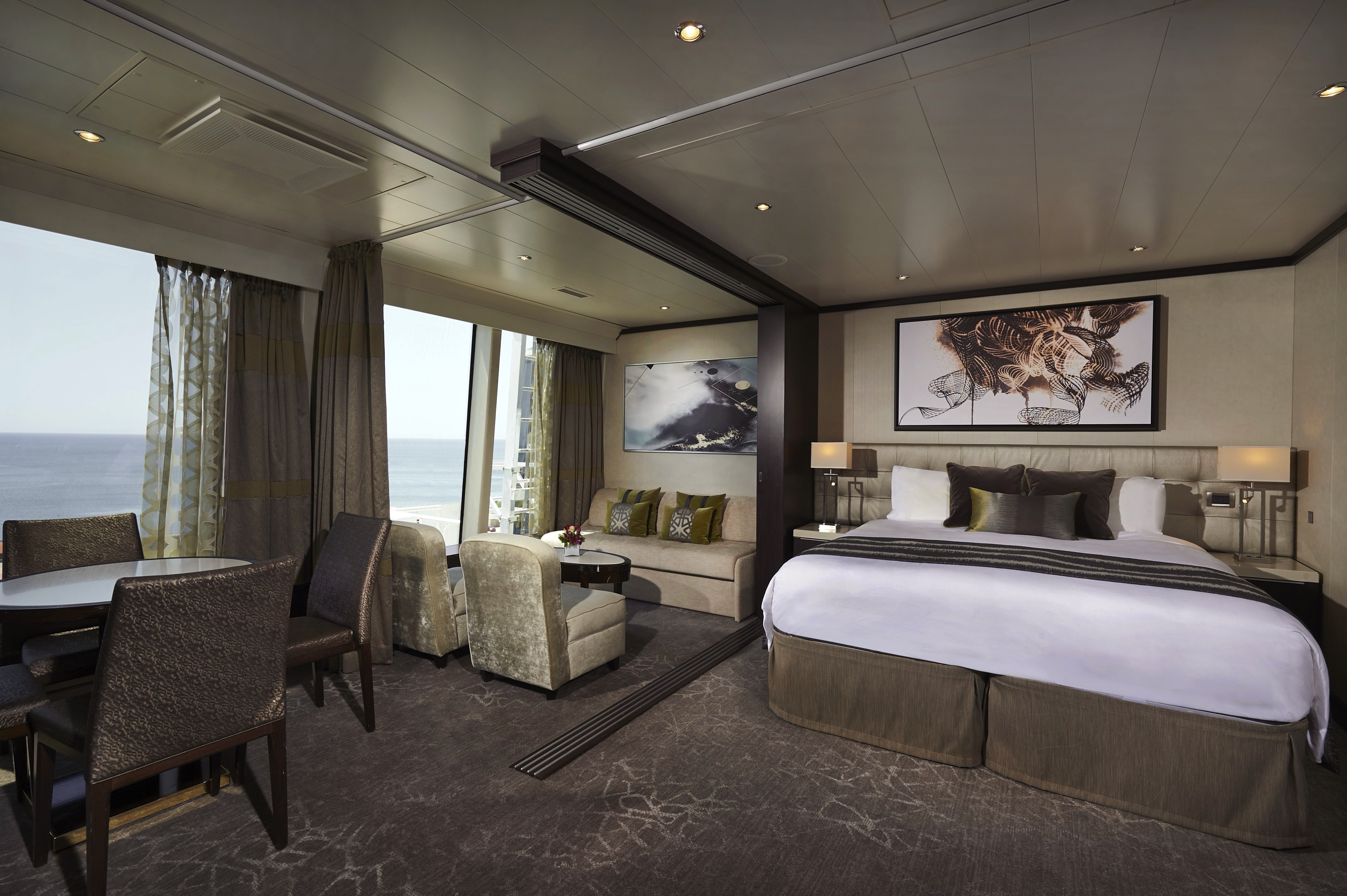
Family Suite
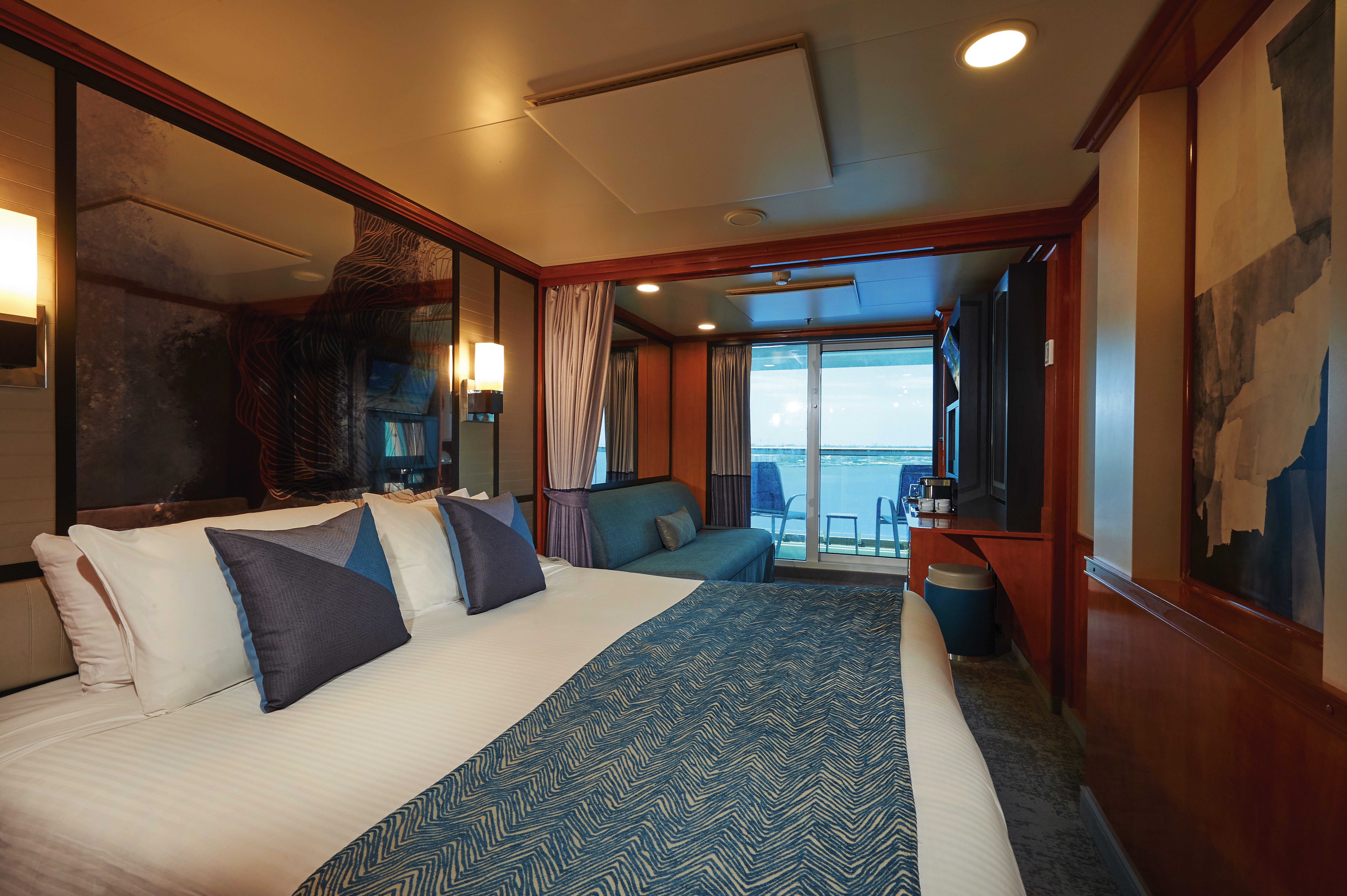
Club Balcony Suite
Sail Away Club Balcony Suite
Aft-Facing Balcony
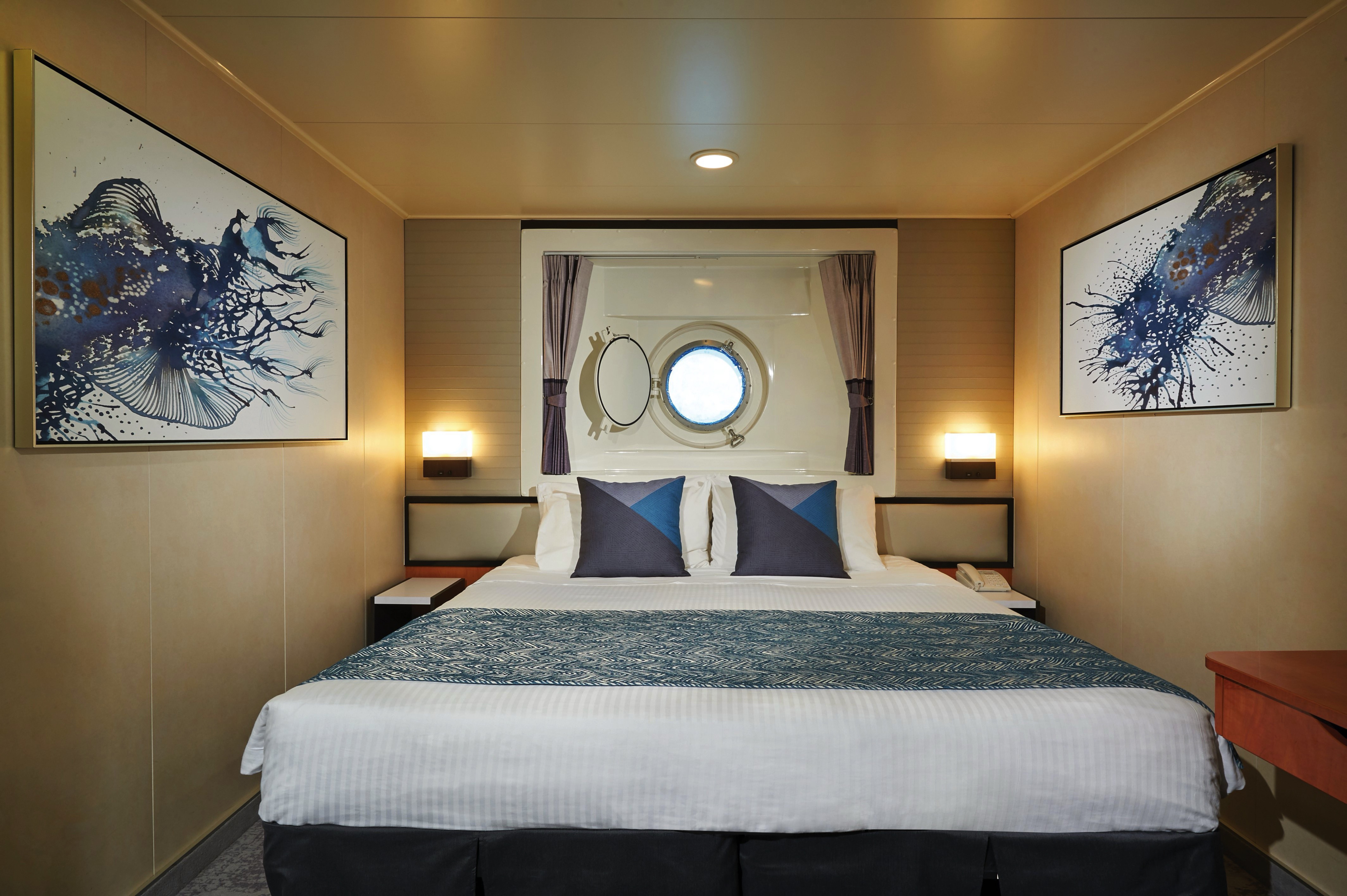
Solo Oceanview
Solo Inside
Ship Facilities
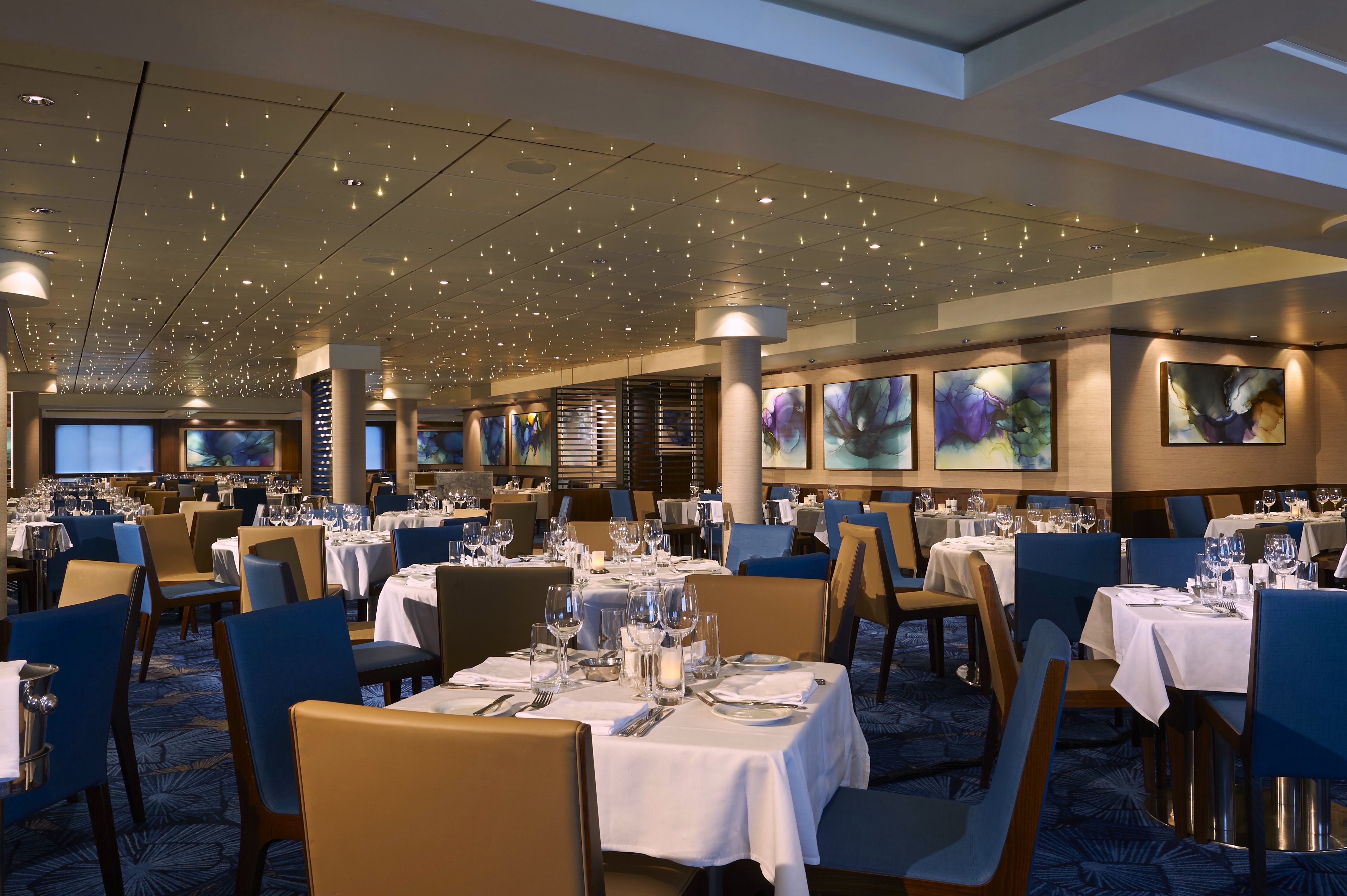
Aqua
One of our two Main Restaurants serving a variety of culinary delights with a contemporary flair.
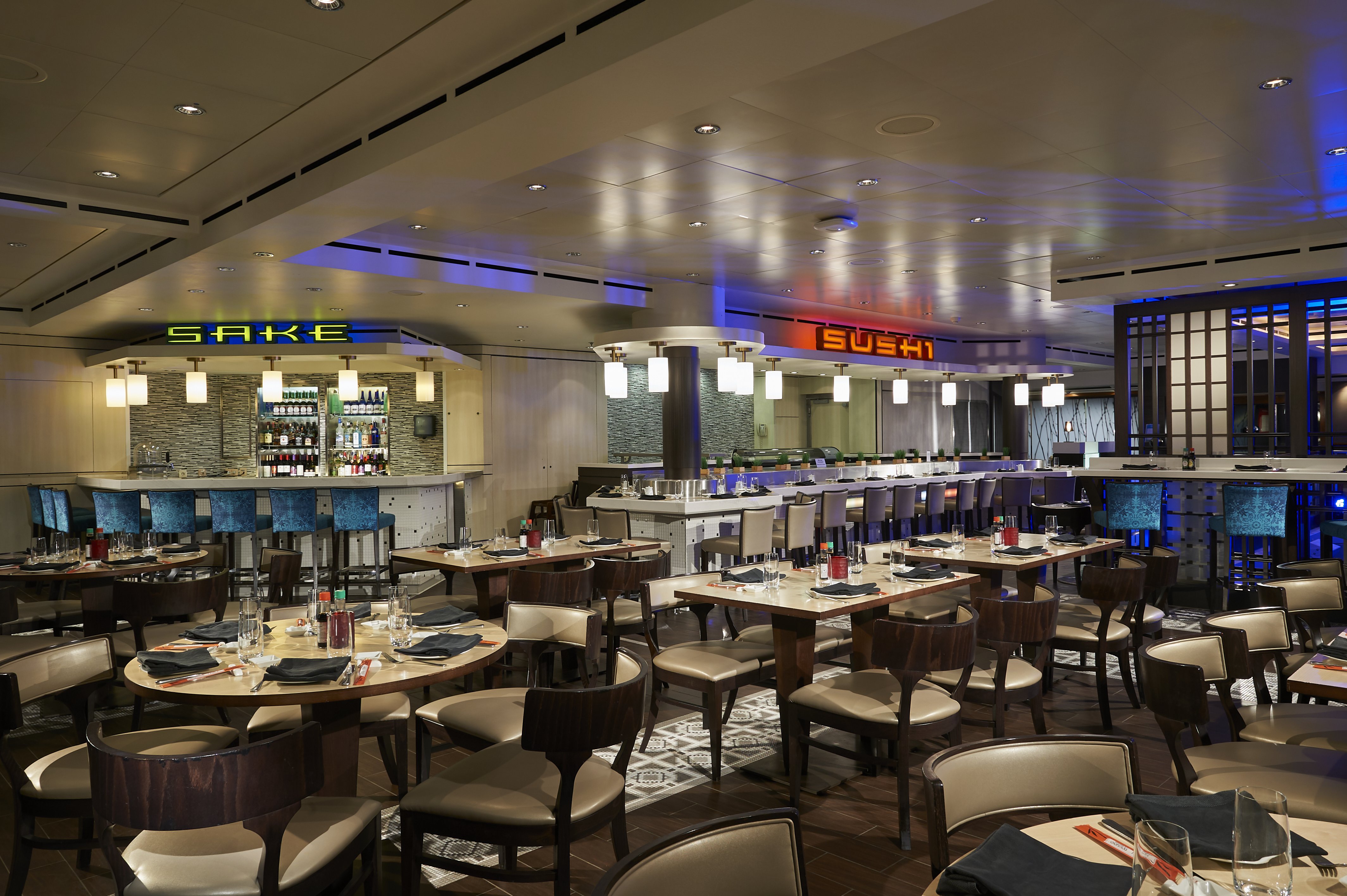
Ginza
Enjoy our Asian Fusion dining venue featuring freshly prepared noodles, delicious wok fried dishes, authentic soups, and more.
Price Per Person: Cover Charge USD $50
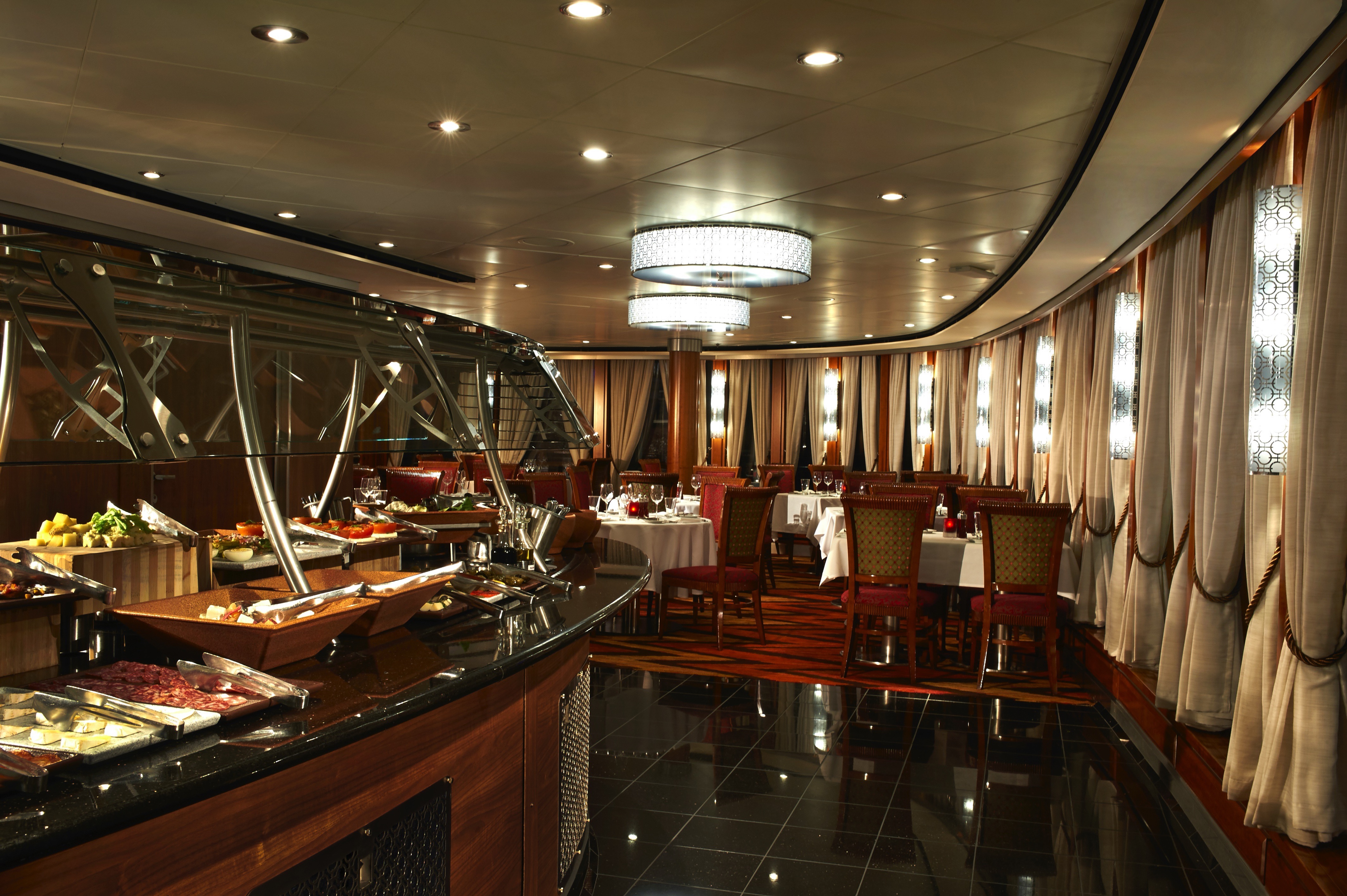
Moderno Churrascaria
Looking for a unique experience? Our authentic Brazilian churrascaria is a must. Start with an impressive salad bar, but save plenty of room for our slow-roasted meats carved tableside by our Passadores.
Price Per Person: Cover Charge USD $50
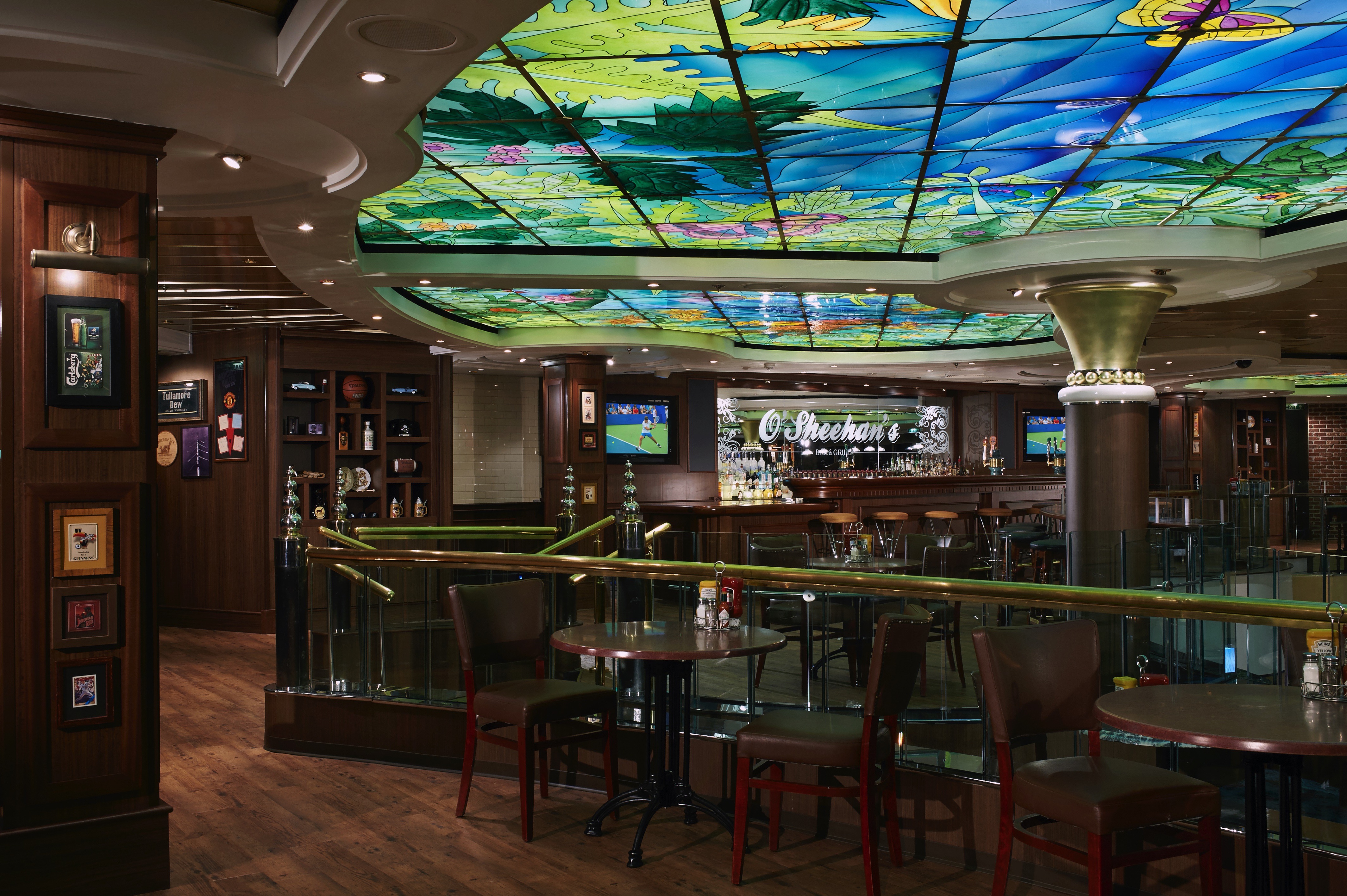
O'Sheehan's Bar & Grill
O’Sheehan’s offers classic pub fare in a relaxed atmosphere. With popular dishes like the Reuben Sandwich and Fish n’ Chips, O’Sheehan’s has all your favourite comfort foods. So try one of our beers or cocktails on tap and catch a game with us!
Cagney's Steakhouse
Specialising in Premium Black Angus Beef and exceptional seafood, this American-style steakhouse is second to none. With classic cocktails, an extensive wine list, and attentive service, Cagney’s Steakhouse offers a truly delightful dining experience.
Price Per Person: Cover Charge USD $60
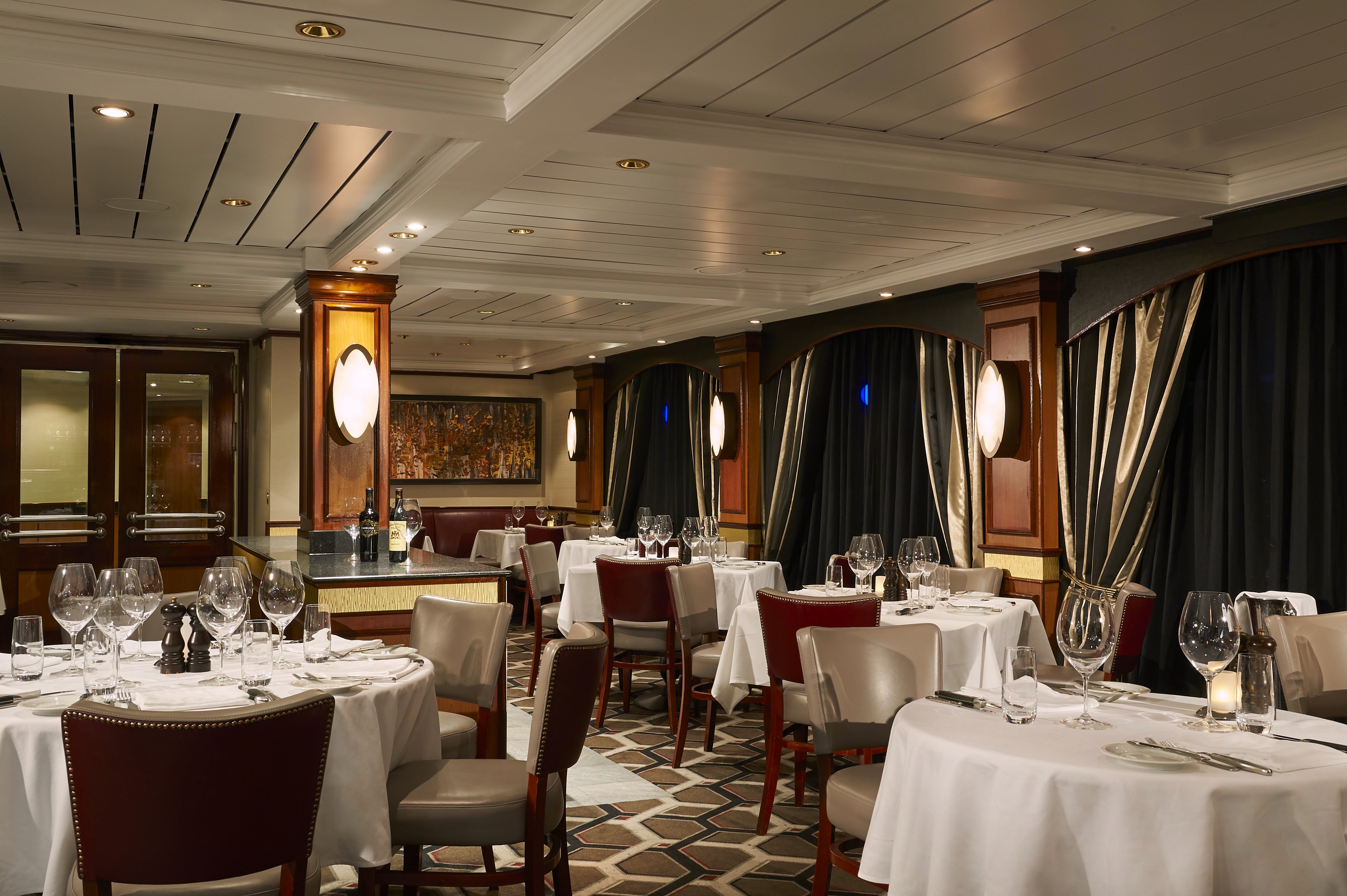
Garden Café
Whatever you’re craving, chances are you will find it at the Garden Café. This complimentary, indoor buffet restaurant serves up breakfast, lunch and dinner

La Cucina
Buona Sera! Enjoy the finest ingredients at our vibrant Italian ristorante. Dine on Italian classics and indulge with a rich homemade Tiramisu. Your good evening just got better.
Price Per Person: Cover Charge USD $40
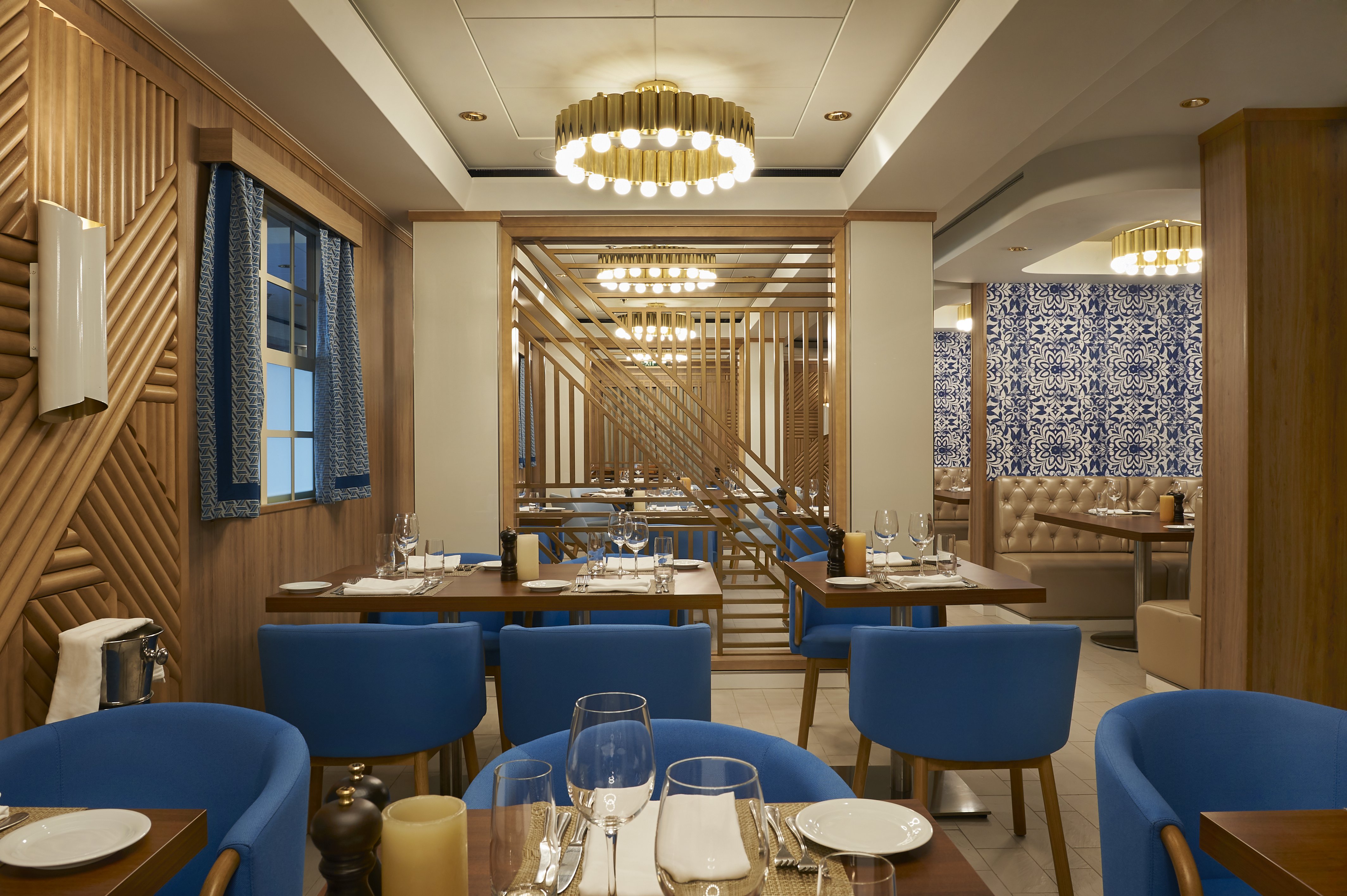
Le Bistro
Romance is in the air at our signature French restaurant. Elegant interiors, crisp white linens and attentive servers make this an intimate dining experience. By the end of your meal, you might just be proclaiming c’est magnifique!
Price Per Person: Cover Charge USD $60
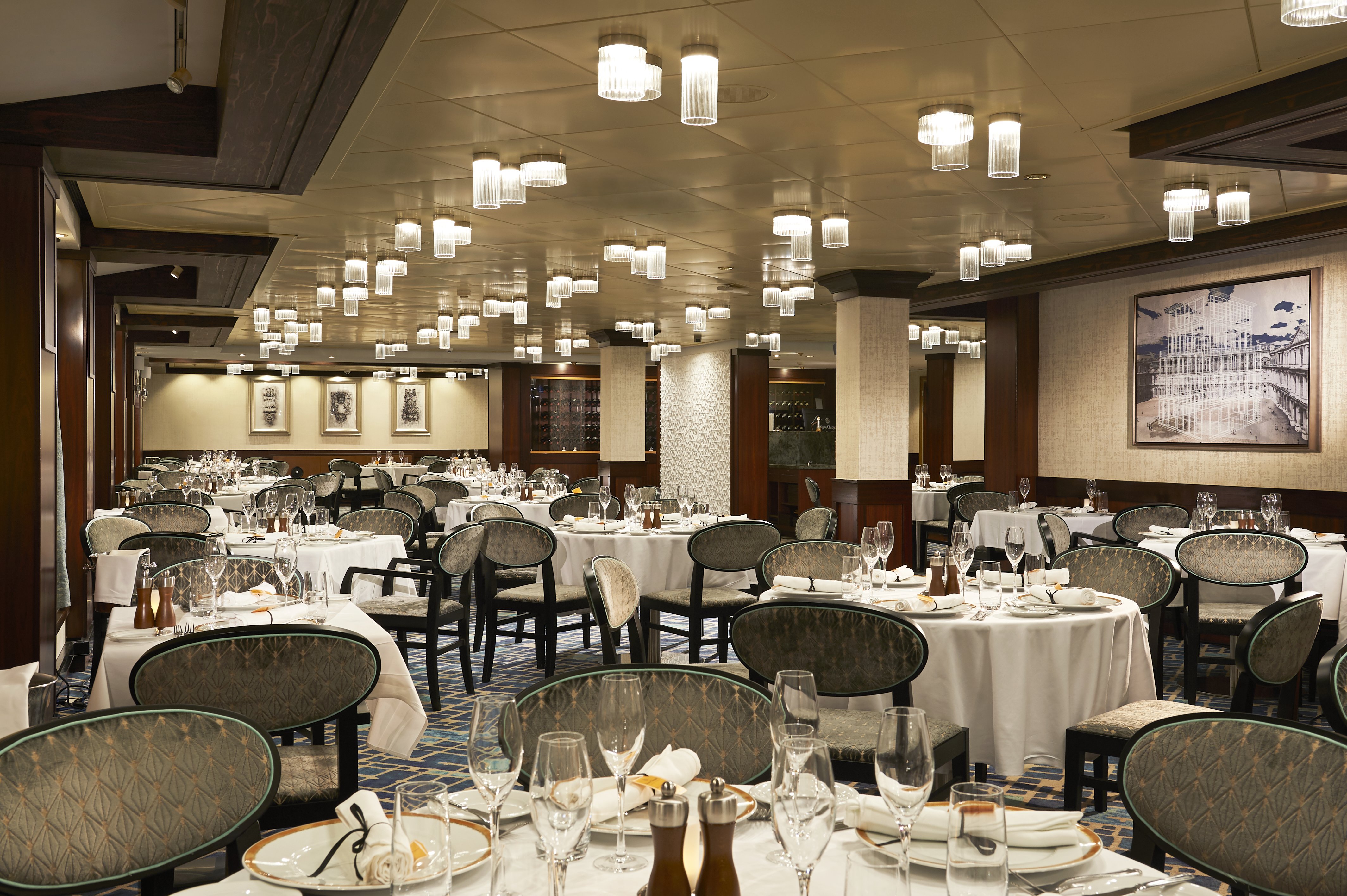
Versailles
Stunning in design with ocean views, this Main Restaurant offers traditional cuisine to please every palate.
Price Per Person: Complimentary
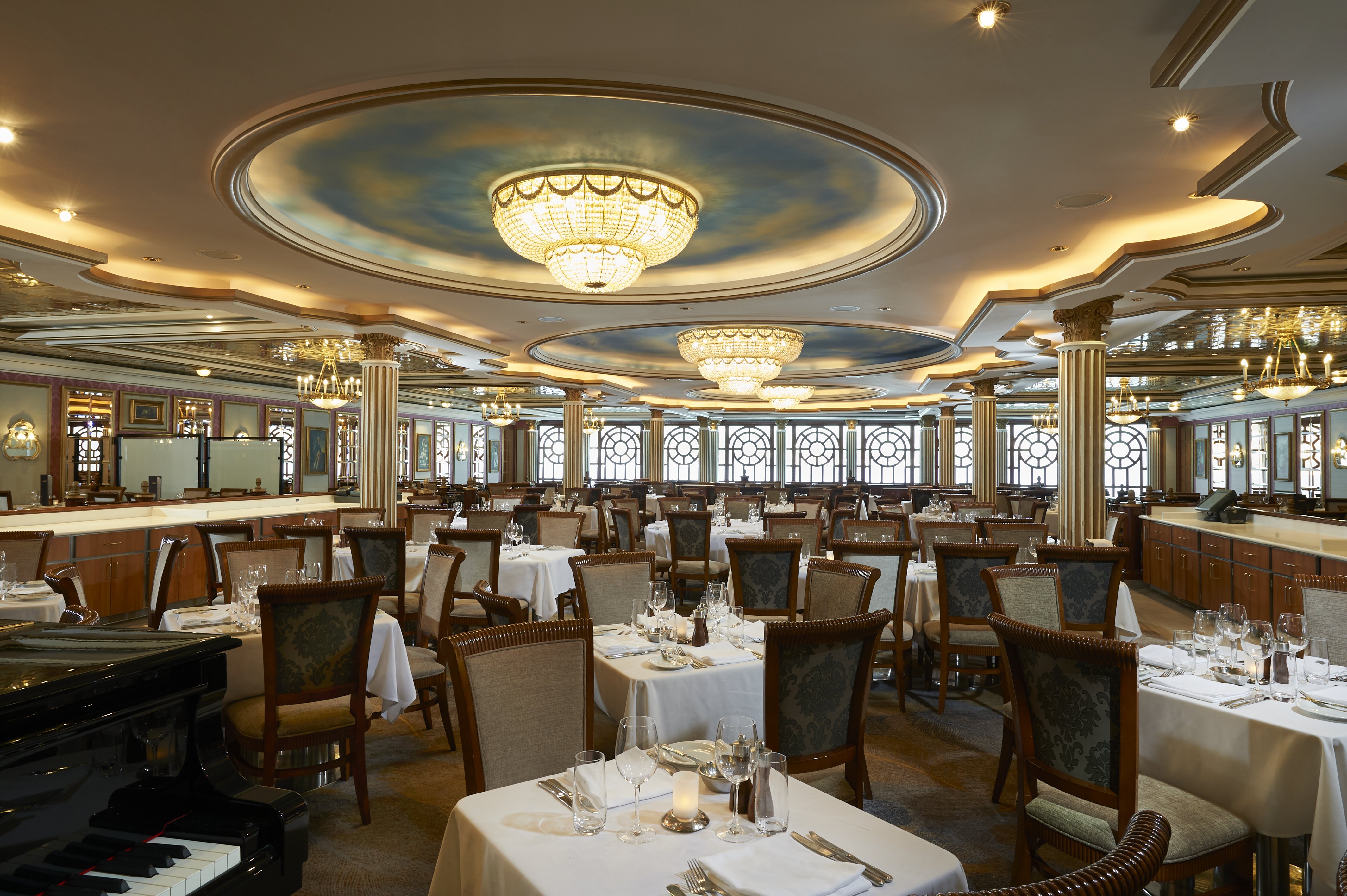
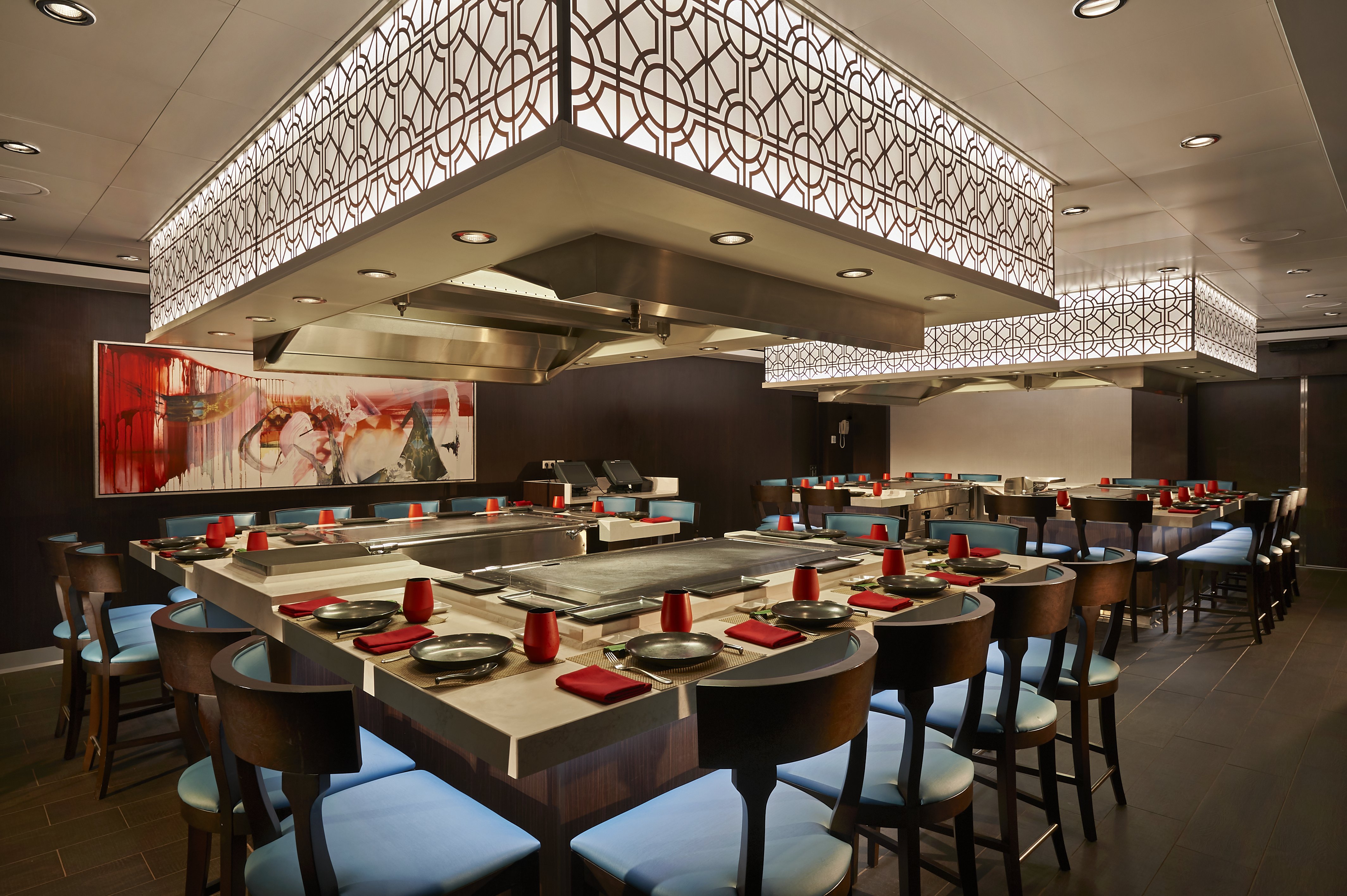
Teppanyaki
Sit at a lively shared table as a skillful chef perfectly prepares shrimp, steak, chicken and fried rice on a large steel grill. And you’ve got a front row seat to all the sizzles and surprises in our Japanese restaurant.
Price Per Person: Cover Charge USD $60
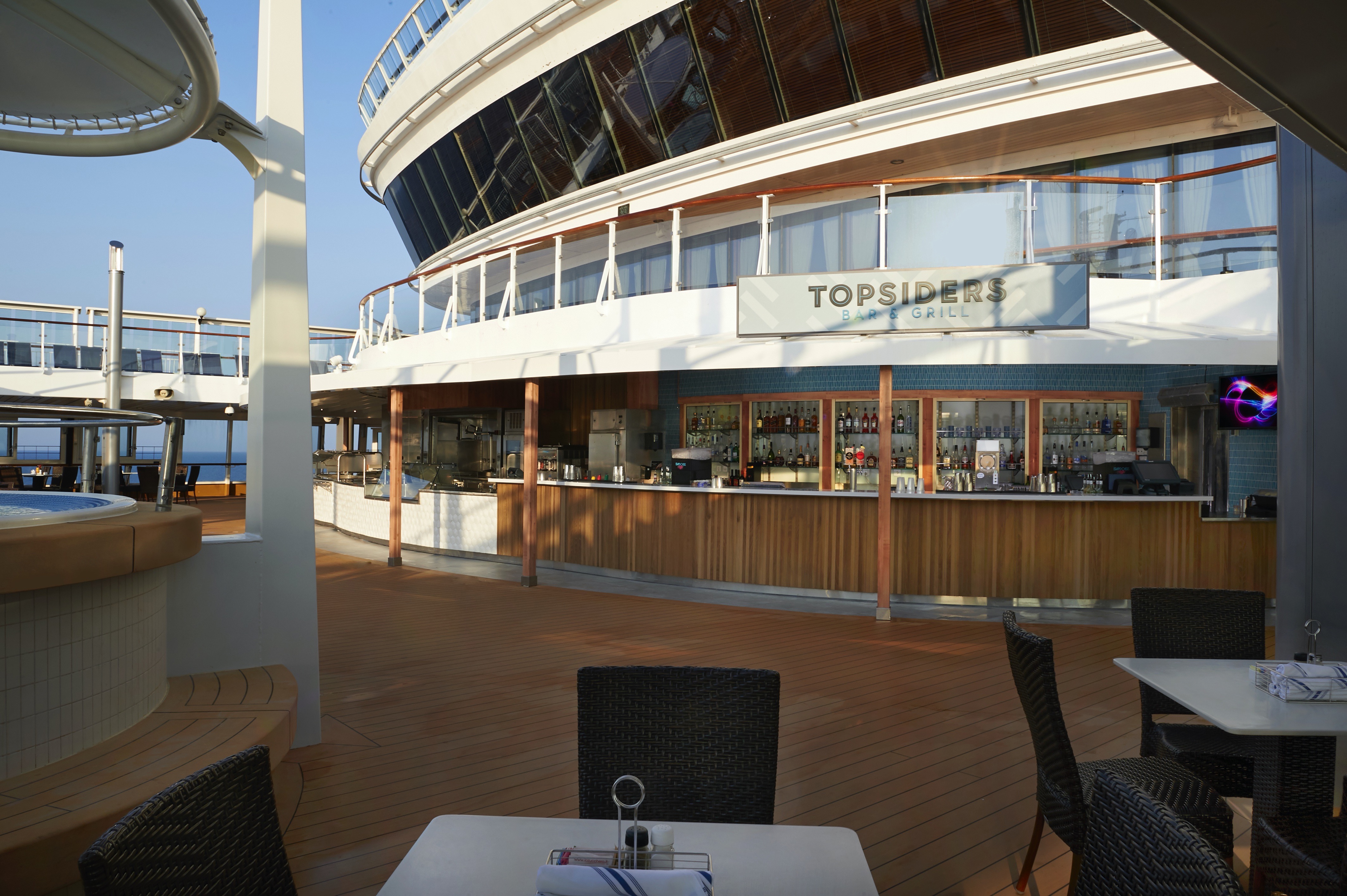
Topsiders Bar & Grill
Enjoy casual dining to suit every taste. From grilled burgers to hot dogs, come as you are and eat as you like after a night out or before your day begins.
Price Per Person: Complimentary
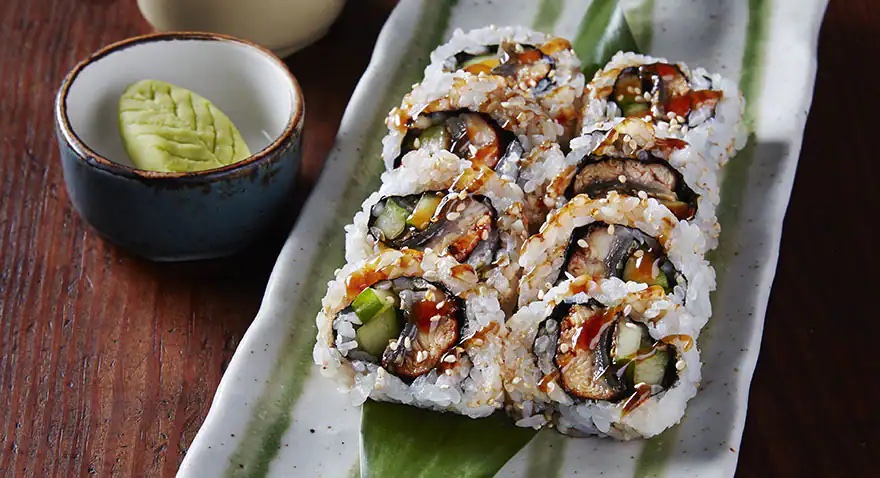
Sushi
In the mood for sushi? Take a seat at this contemporary sushi bar for some traditional Japanese culinary bites.
Price Per Person: Cover Charge USD $50
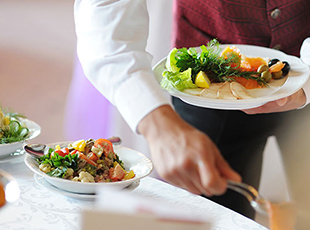
Room Service
Available 24 hours a day, simply pick up the phone and order breakfast, lunch, dinner or late-night munchies. A room service fee may apply.
Price Per Person: Room Service Fee may apply.
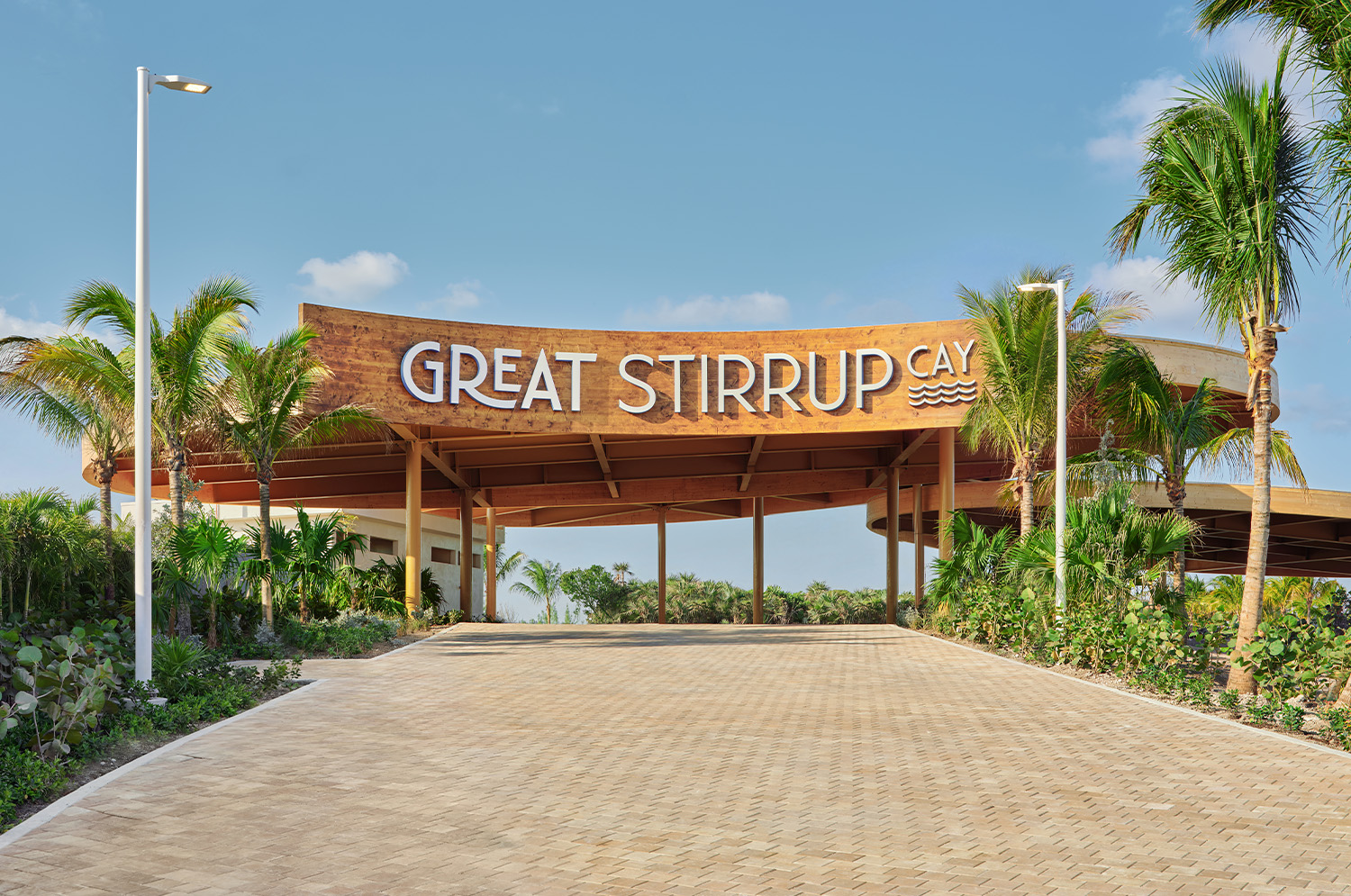
Great Stirrup Cay
Escape to The Great Life
Great Stirrup Cay isn’t just an island in The Bahamas, it’s an escape to The Great Life. And The Great Life isn’t just about cruising to your very own private island; it’s about unlocking a state of mind. It’s a cool drink in your hand at the 2,600 sq. metres pool. The roar of jet skis and a gentle breeze through your cabana. It’s shouting at the top of your lungs as you race down the larger-than-life tower of water slides. And it’s gazing onto white sand beaches all afternoon. Here, you have the freedom to do what you want, when you want. That’s The Great Life, and it’s about to get GREATER on the incredible, new Great Stirrup Cay.
Great Life Lagoon
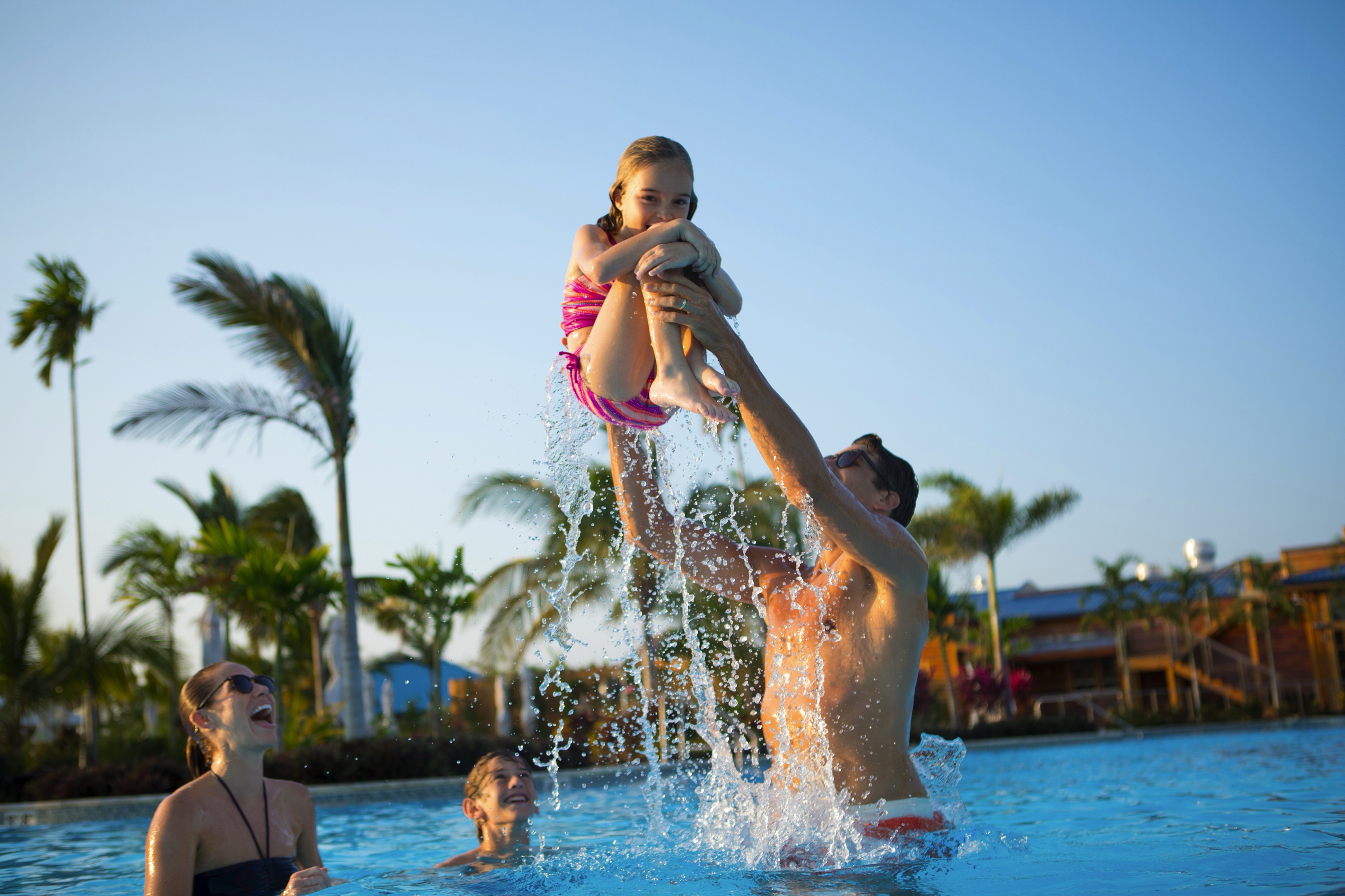
What do ten blue whales, 20 tennis courts, three Washington Monuments, one large cruise ship and Mt. Everest’s peak all have in common? They’re roughly the same size as our new, 28,000-sq.-ft. pool. Throw in two swim-up bars, beach-style water entry for kids, water features, ocean views, cabanas and you’ve got yourself a pretty spectacular Caribbean day!
Epic slides. Towering cliff jumps. One unforgettable splash.
Get ready to live the great life at full speed. Spanning the size of several football fields, Great Tides Waterpark is the bold new thrill zone at Great Stirrup Cay – where adventure meets relaxation. Race down sea-inspired slides, drift through a winding river with tunnels that might just be hiding a secret adventure, or leap from dramatic cliffside platforms into crystal-clear waters. Little ones can splash and play in a vibrant water zone, whilst grown-ups unwind with cocktails in a glowing grotto bar. Whether you’re chasing high-speed thrills or laid-back vibes, Great Tides delivers next-level excitement for everyone.
What’s Included on Great Stirrup Cay?
This isn’t your typical holiday spot – it’s our island, which means it’s your island. The same superb service you receive on board applies here too. Like complimentary meals and endless activities with Free at Sea™. So, get ready to play, explore, relax and enjoy an unforgettable day in The Bahamas!
Introducing Free at Sea Plus™
Free at Sea Plus™ makes your escape to the great life even greater. Upgrade for only £39.99 per person per day and your unlimited premium beverage package will follow you to Great Stirrup Cay. Plus, you’ll get a taste of luxury on board too, with wine and Champagne from our signature collection, top-shelf spirits, more speciality dining experiences at a discounted rate, high-speed Wi-Fi made for streaming and more.
Excursions
GO LOCAL TOURS
Authentic multicultural experiences await on a Go Local Tour with NCL. Explore how people in cities around the world live, work, eat and play on unique tours designed for guests who thrive on culture-connecting and unforgettable exploration.
ADVENTURE RUSH
Start by letting your imagination run wild. Mush your way across an ice field in Alaska. Surf in Kaua‘i. Soar through the sky on a zipline on Harvest Caye. Go tubing in Belize or even airboat through the Florida Everglades. Your adventure awaits.
HISTORIC TIMES
Get up close and personal with places you’ve seen only in pictures. Then take some of your own. Stand in the shadow of the Colosseum. Tour a medieval castle. Unravel the mysteries of the Mayan ruins. Or catch a glimpse of the revered Emerald Buddha in the Grand Palace of Bangkok. Take a history lesson like no other.
WONDERS OF NATURE
Hang with the locals in Australia. Or pack your camera and enjoy majestic humpback whales near Hawai‘i, glaciers in Alaska, the soaring cliffs of Greece or the golden foliage in New England. They’re all naturally wondrous scene-stealers.
LAID-BACK LEISURE
Sometimes you just want to soak in the sun — and your surroundings. So find that perfect secluded beach and take it all in. Or shop the local markets for great bargains and take home a little something to complement your amazing holiday.
SELFIE TOURS
Get your smile — and your mobile device — ready for a tour like no other. With NCL’s Selfie Tours, we will take you to picture-perfect places to fill your feed. Many of our tours are guided by a selfie expert who will show you how to perfect your angle, use a selfie stick and more.
Behind the Scenes Tours
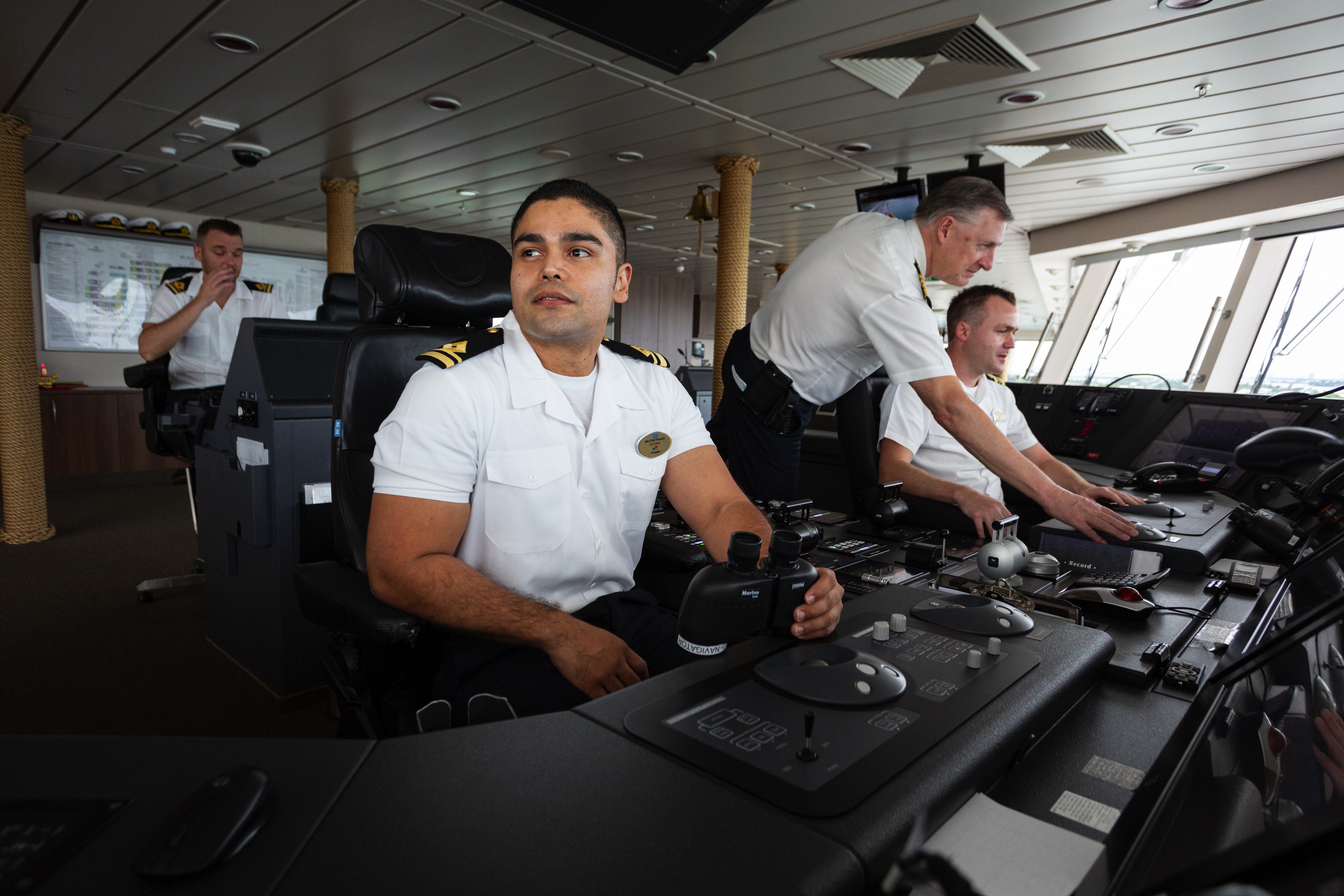
Experience the exciting Behind The Scenes Tour of our crew working areas, including exclusive access to the Bridge, Engine Control Room, Main Galley, Laundry and so much more.
Private Vow Renewal
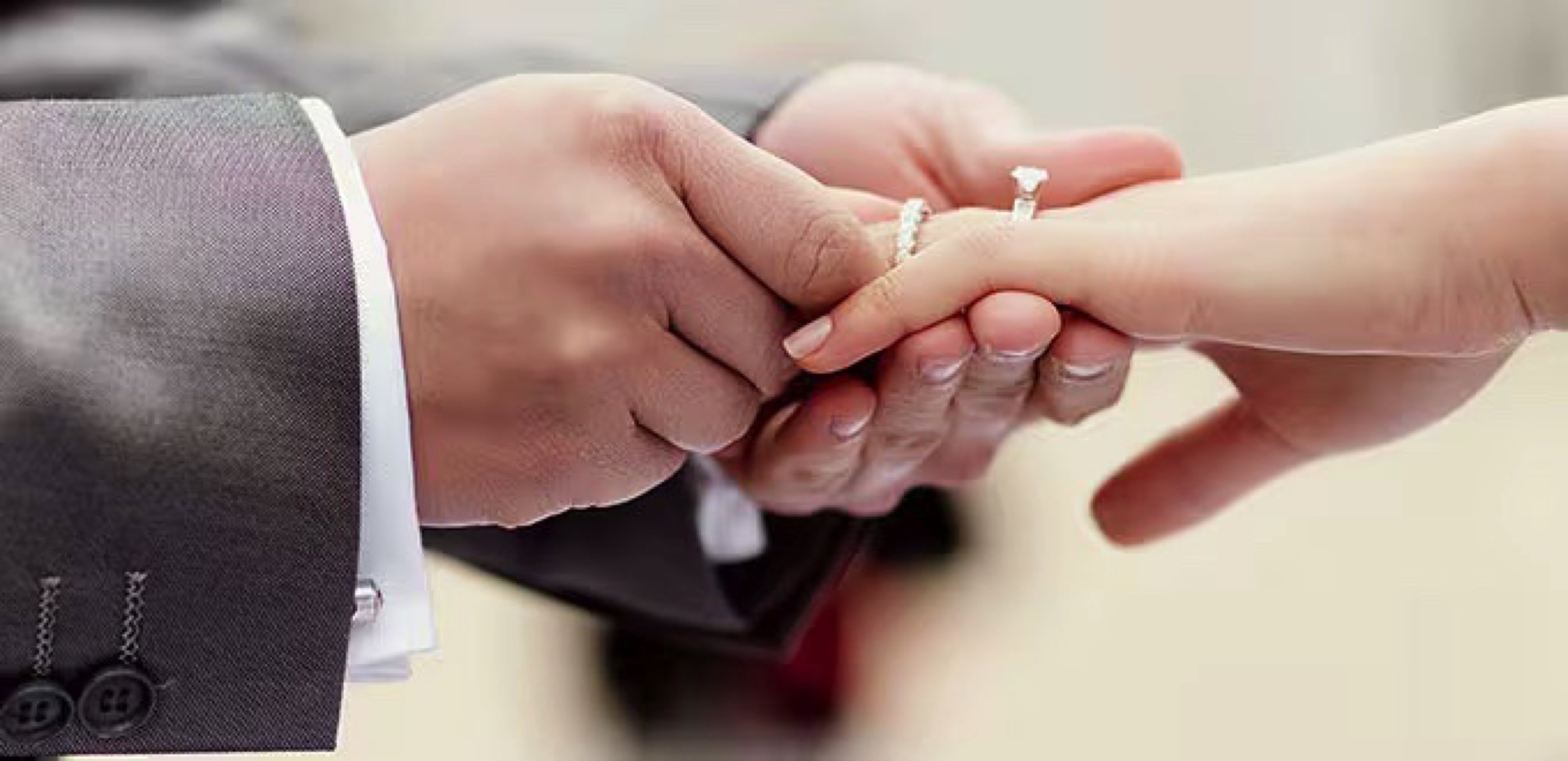
Nothing says “I love you” like saying it all over again. Book a private ceremony to renew your wedding vows for the ultimate romantic holiday. Here’s what our Private Vow Renewal Package includes.
- Bottle of Sparkling Wine, Chocolate Covered Strawberries & Canapes – in Stateroom
- Vows Ceremony Performed by a Ship Officer
- Ceremony Music
- One Single Red Rose
- Couple’s Cake
- Champagne Toast
- Keepsake Vow Renewal Certificate
- 8 x 10 Professional Portrait in an Engraved Frame
Booked guests, please contact us here to timetable a vow renewal.
For questions, please contact us at 0333 2412319.
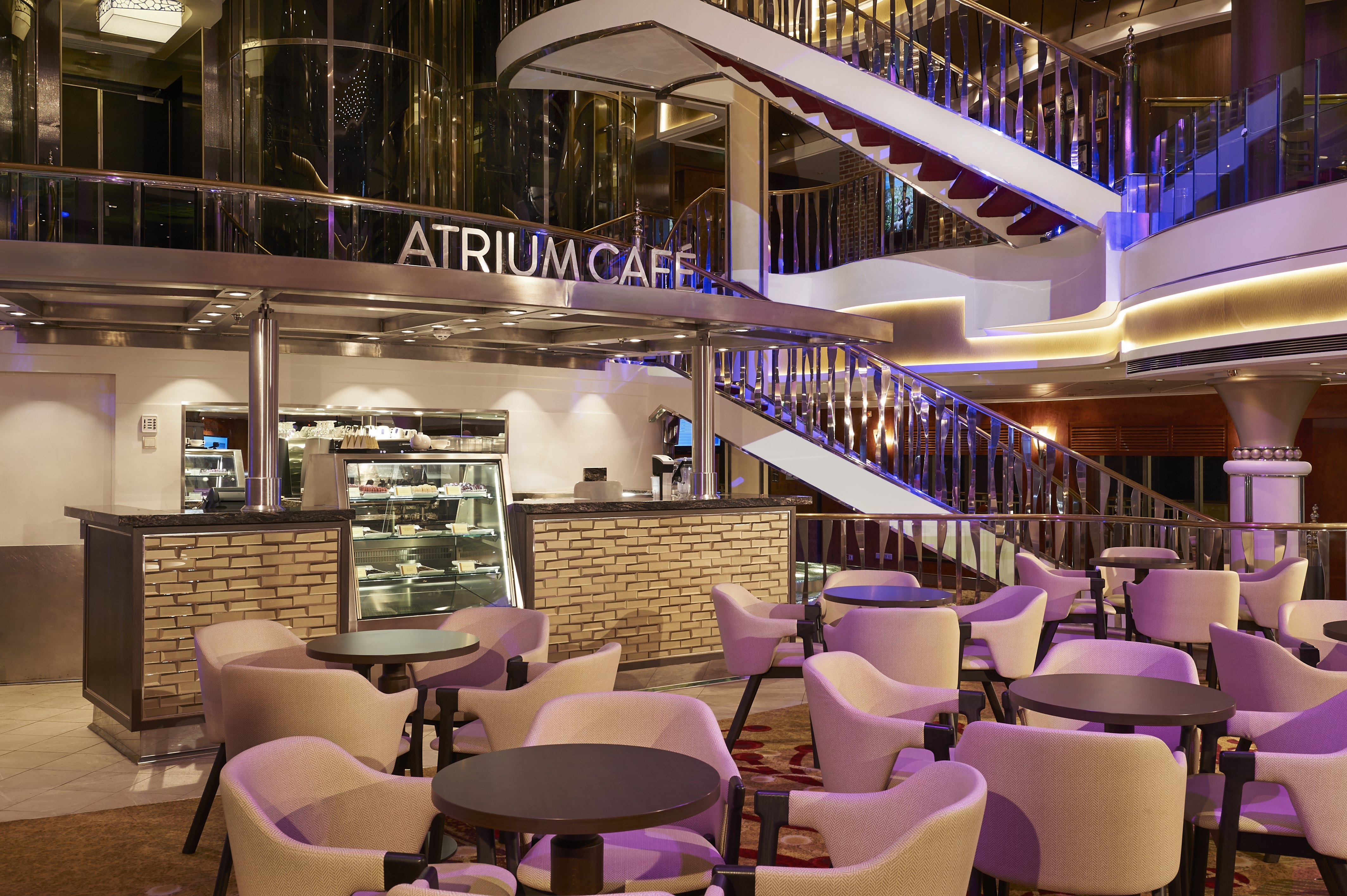
Atrium Café
If you are a people watcher then this is the place to be, whether you want a frothy cappuccino or a vanilla latte.
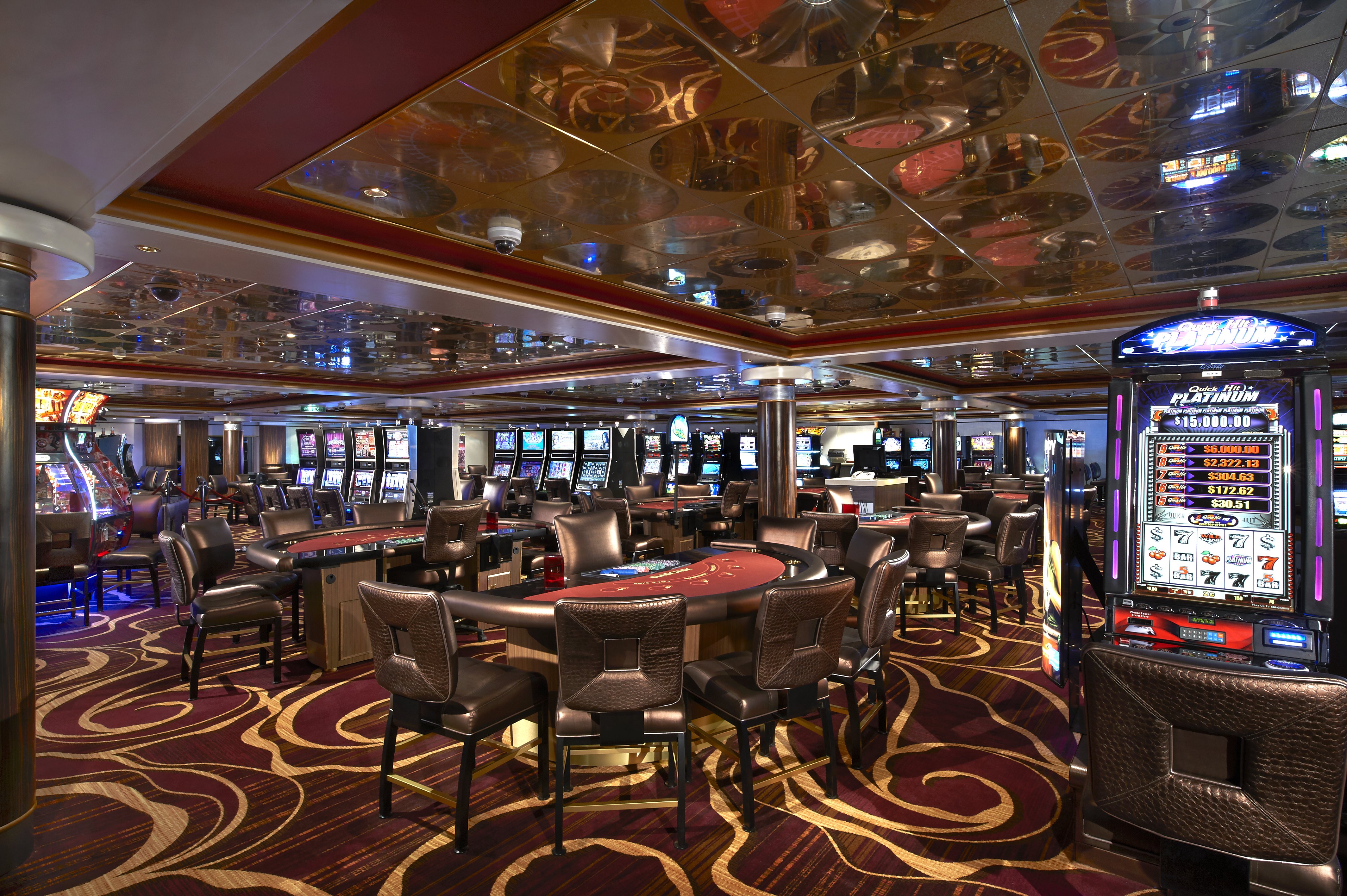
Star Casino
Spin your way to the jackpot playing the most popular slots including reel and video slots. Or pull up a chair at your favourite table game, from blackjack to craps and more. Whatever games you choose, you can bet on a good time in our award-winning casino.
Star Casino Bar
This could be your lucky night. Try your hand at one of our many slot machines. Or play, Blackjack, Roulette, Craps and Let It Ride (TM) and enjoy a full service bar. For a detailed list of slots and games offered, please visit the game types page in the Norwegian Casinos At Sea (TM) section.
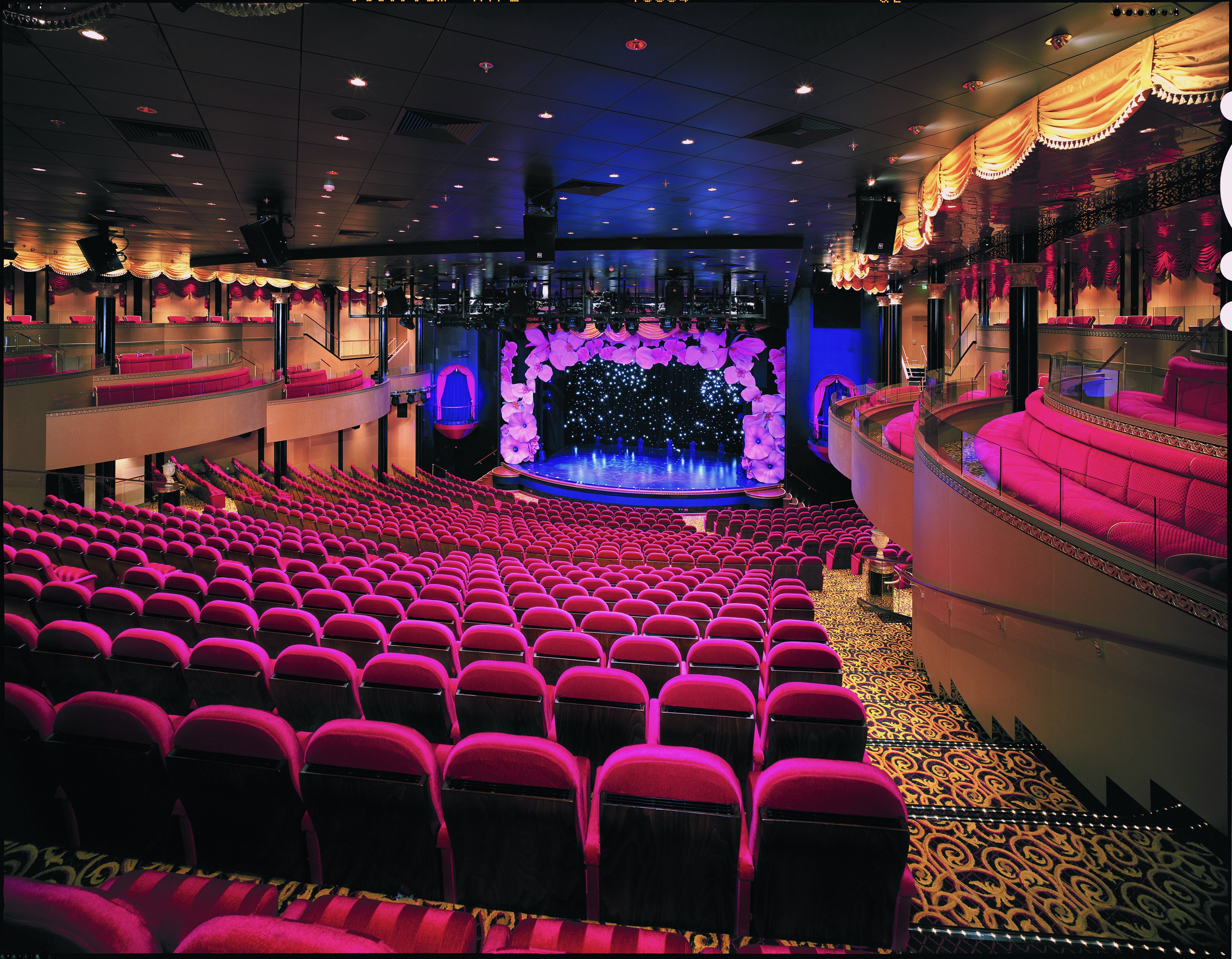
Stardust Theatre
It’s showtime! And we’ve got a really big show for you. Enjoy Broadway and Vegas-style shows with cocktails before or after dinner in a traditional European opera house style auditorium reaching up three decks.
Famous Riffz
Get ready to play loud-this is the game show that ROCKS! Two teams go head-to-head in high-energy music trivia, battling it out in rounds all powered by our electrifying house band, The Riffz. With bonus rounds, surprise tiebreakers, and audience participation that can shift the score, every show is full of twists and epic moments. Contestants get to live the dream on stage with a live band, whilst the audience enjoys a unique blend of concert vibes and game show excitement.
Price Per Person: Complimentary
Women of Rock
COMING SOON – November 10, 2025 – From Big Mama Thornton to Heart, Women of Rock salutes the fierce female trailblazers of classic rock. With show-stopping vocals and iconic hits like “Edge of Seventeen” and “Piece of My Heart,” it’s a high-voltage tribute to music’s boldest women.
Price Per Person: Complimentary
The Wild Cards
Step into a world of rhythm and flair with Miss Bentley and her Wild Cards in this high-energy cabaret-style dance concert. With bold choreography, vibrant vignettes, and irresistible charm, this show is a sparkling celebration of movement and live entertainment.
Price Per Person: Complimentary
The Broadway Cabaret
Experience the dazzling talents of our Star Production Vocalists as they present the finest Broadway tunes. If you are a fan of the vibrant world of musicals, this is the cabaret for you. Enjoy an evening of the most beloved show tunes from well-known classics to hidden gems, spanning from soulful ballads to sensational Broadway blockbusters.
Price Per Person: Complimentary
The Welcome Aboard Show
Embark on a thrilling voyage to preview your cruise’s sensational entertainment. From the powerhouse performances of the Star Production Cast, get to know our dynamic team and brace yourself for surprises that promise to set the stage for an unforgettable holiday ahead!
Price Per Person: Complimentary
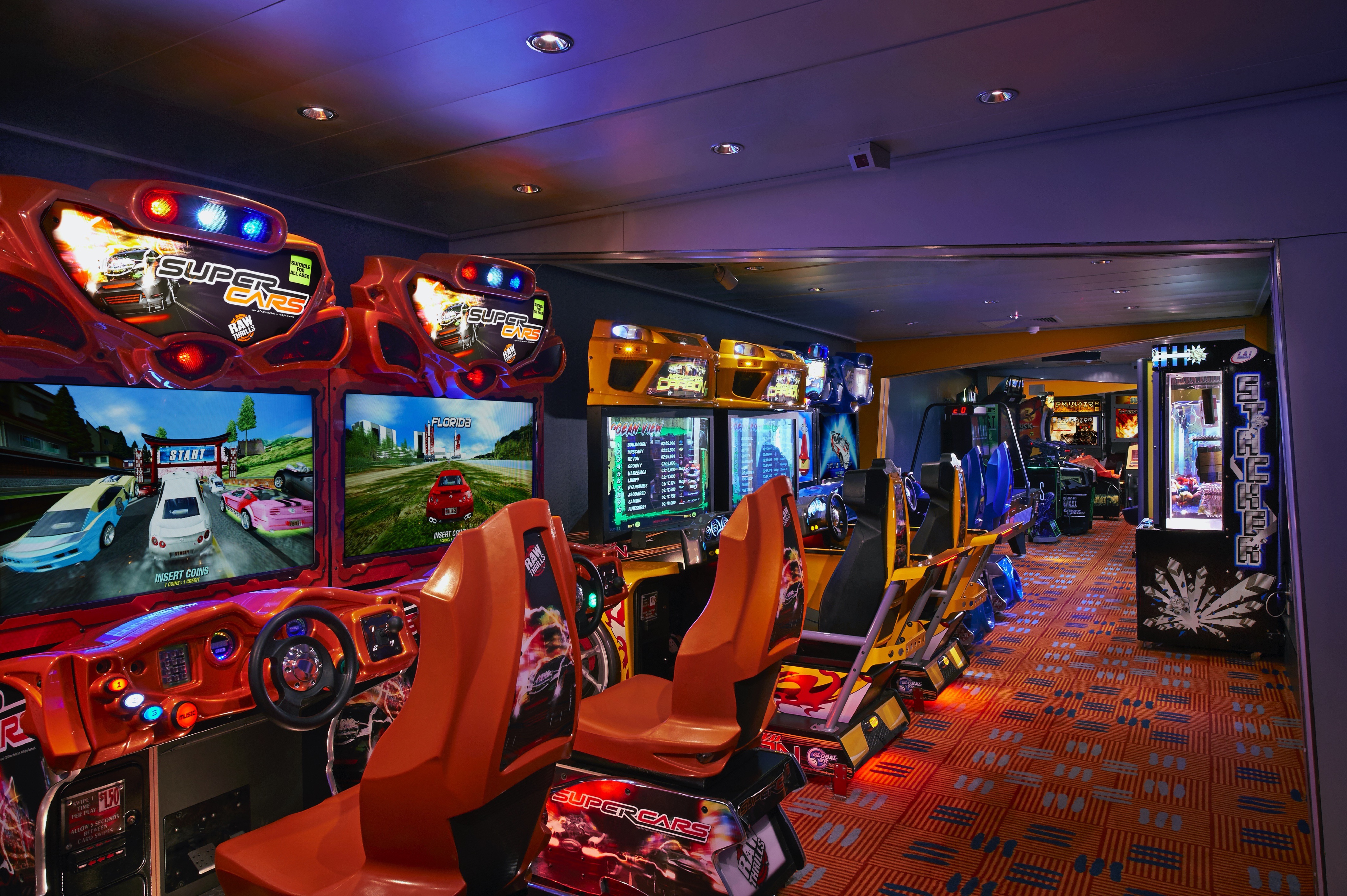
Video Arcade
Level up your fun at the Arcade! Take on thrilling challenges – capture aliens, pilot a fighter jet, race to the finish, and more. Can you rise to the top and claim the highest score?
Gatsby's Champagne Bar
There are moments when only champagne will do. Head to Gatsby’s Champagne Bar for an extensive selection of bubbly, decorated in classic art deco motif.
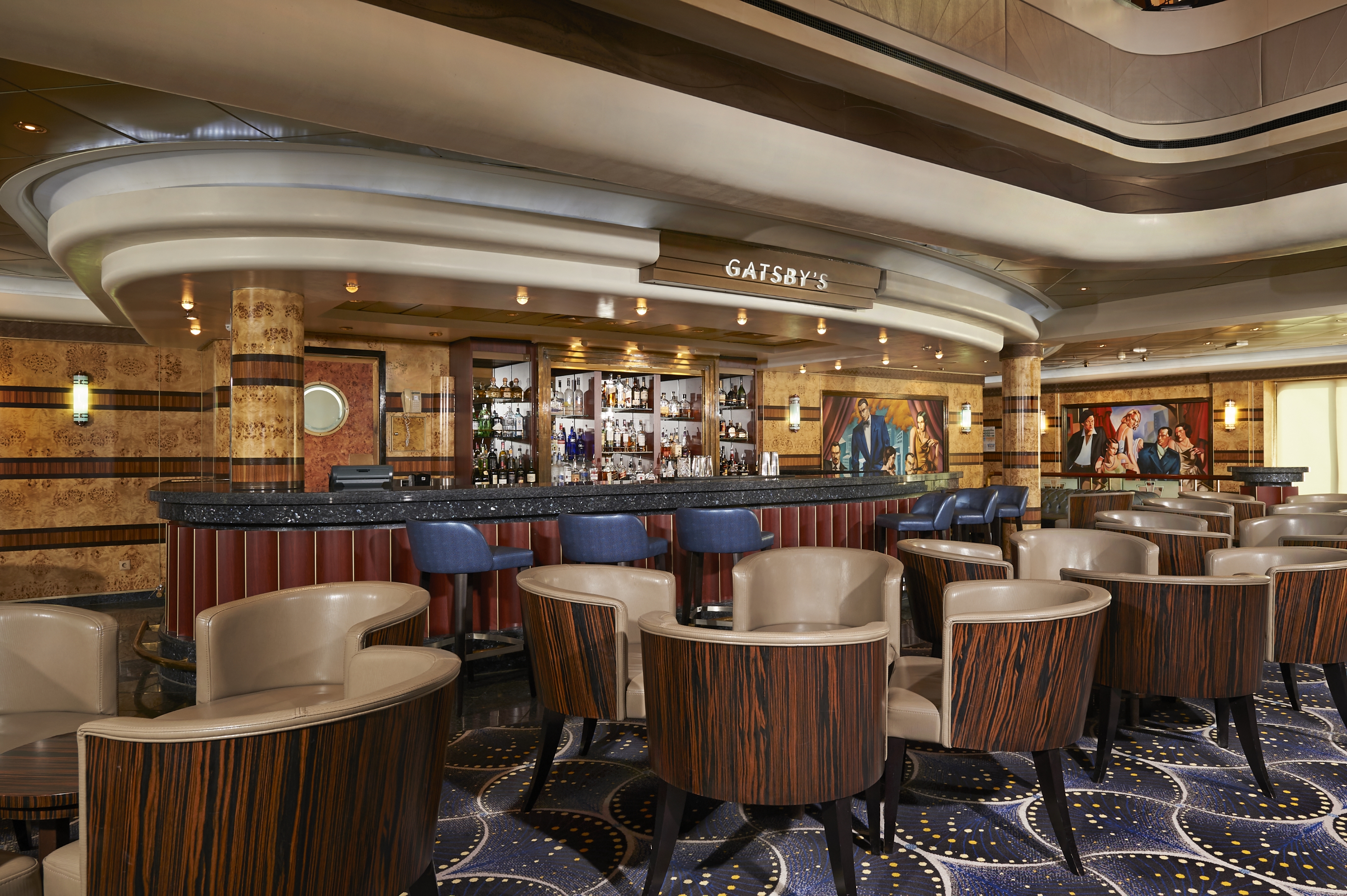
Bliss Ultra Lounge
The electrifying aura of this hip, high-energy ultra lounge literally surrounds you. High-voltage tunes make everyone want to get their groove on and custom loungers are the perfect spot to cap off the evening with a cocktail.
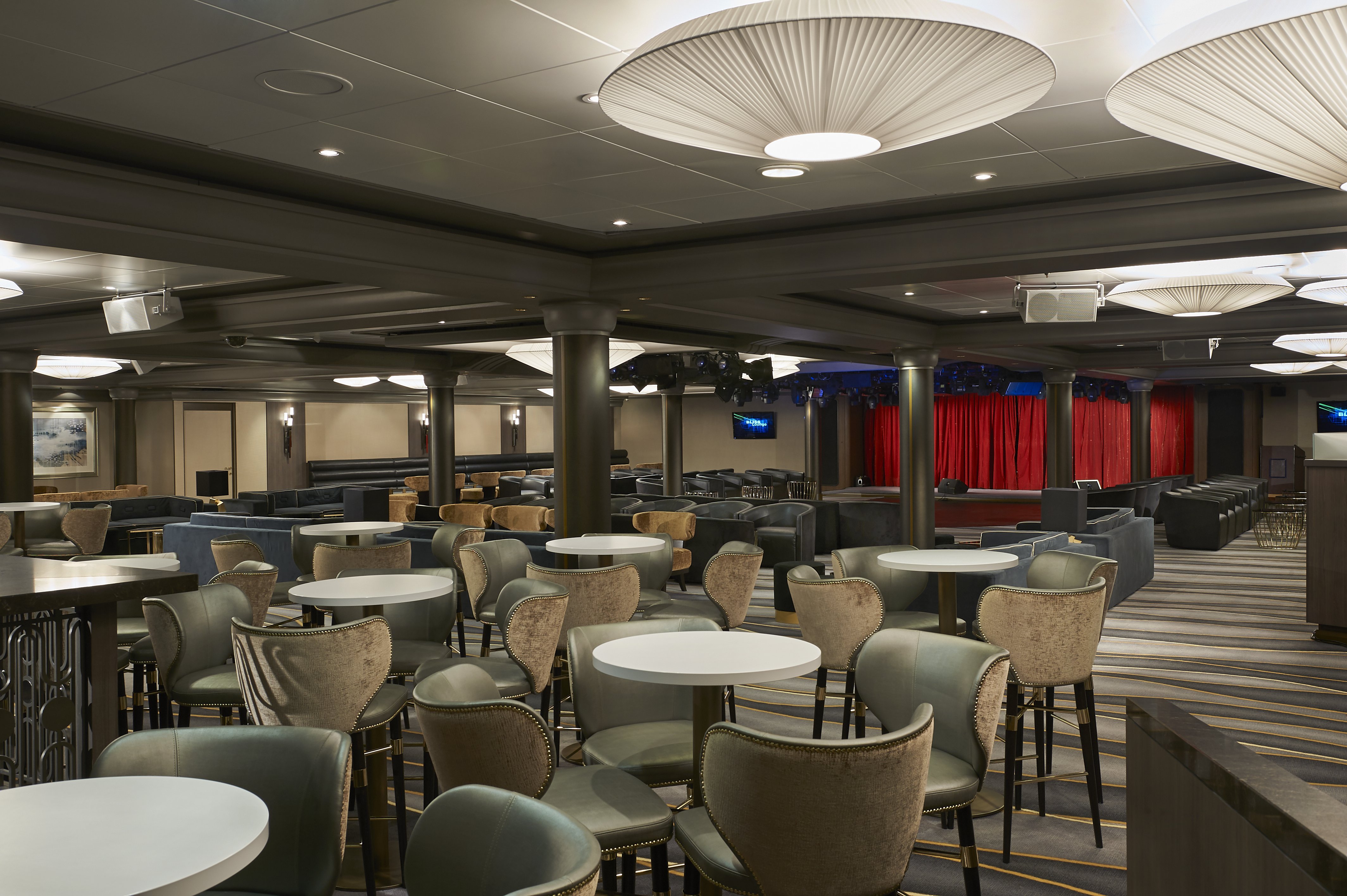
Sugarcane Mojito Bar
Freshly muddled just the way you like, enjoy a refreshing mojito with friends – day or night.
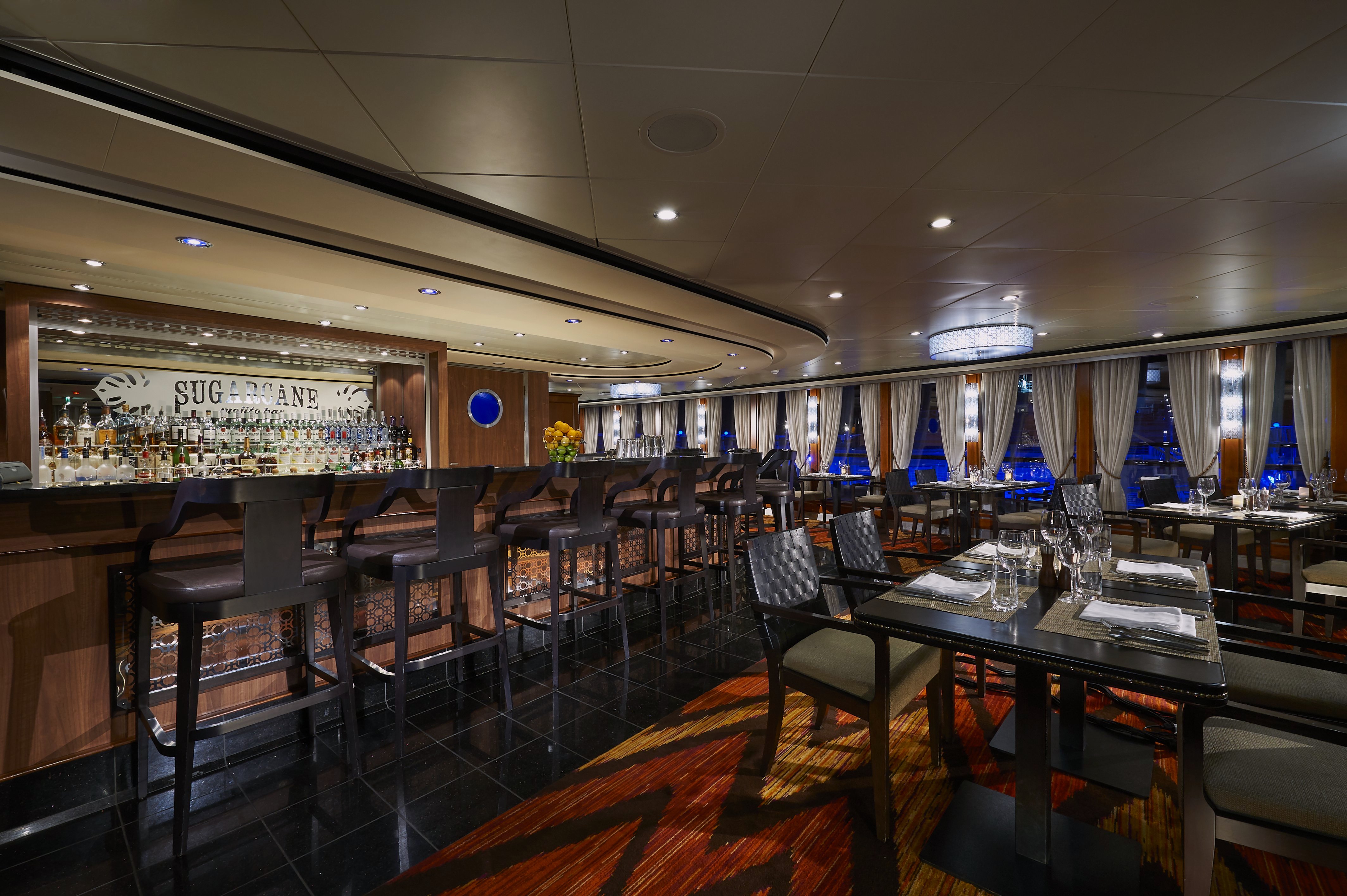
The Library
You’ll find a well-stocked selection of things to read with all the elegant trimmings a good library deserves.
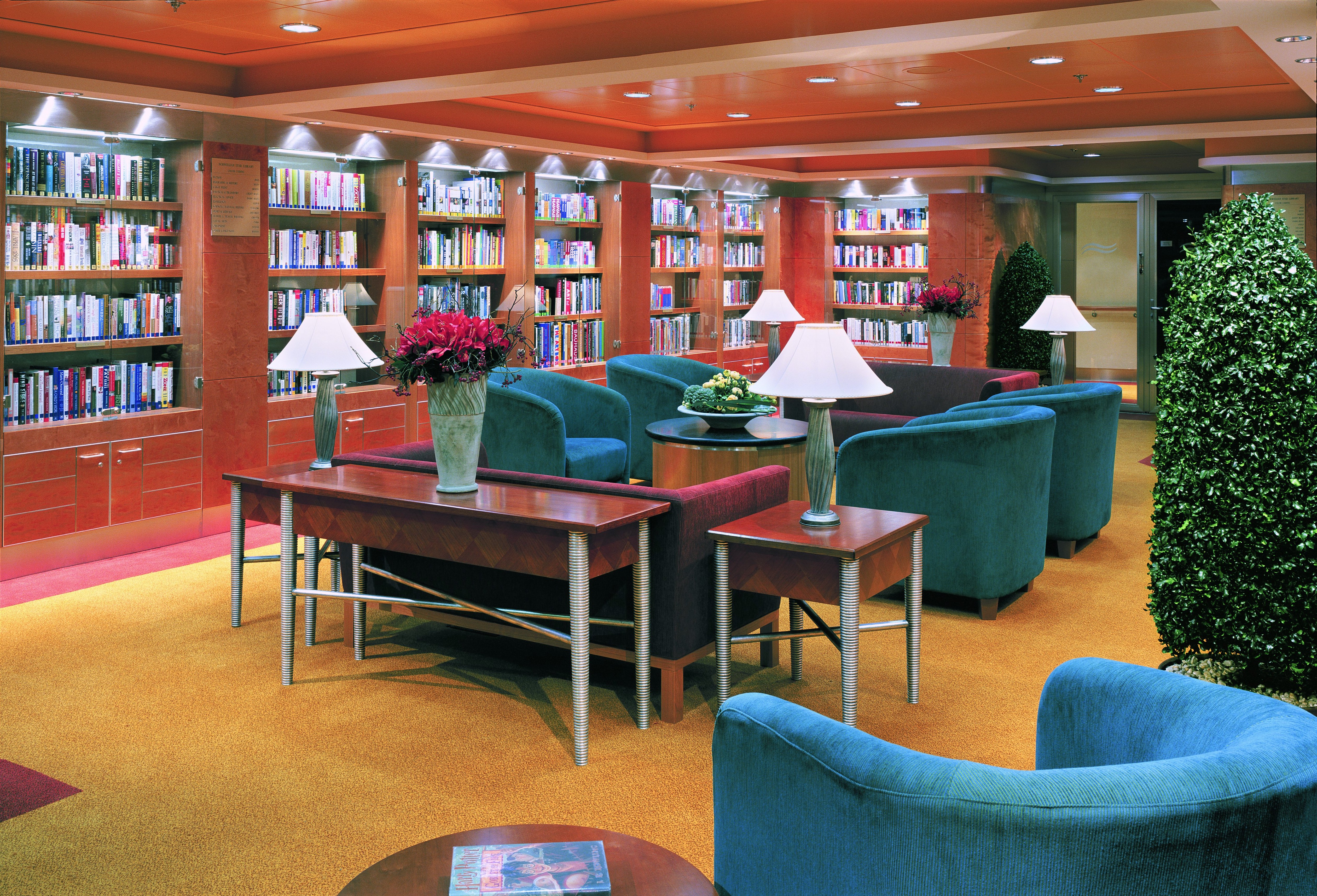
Sky High Bar
Pull up a stool at this casual outdoor bar and enjoy your favourite frozen drink.
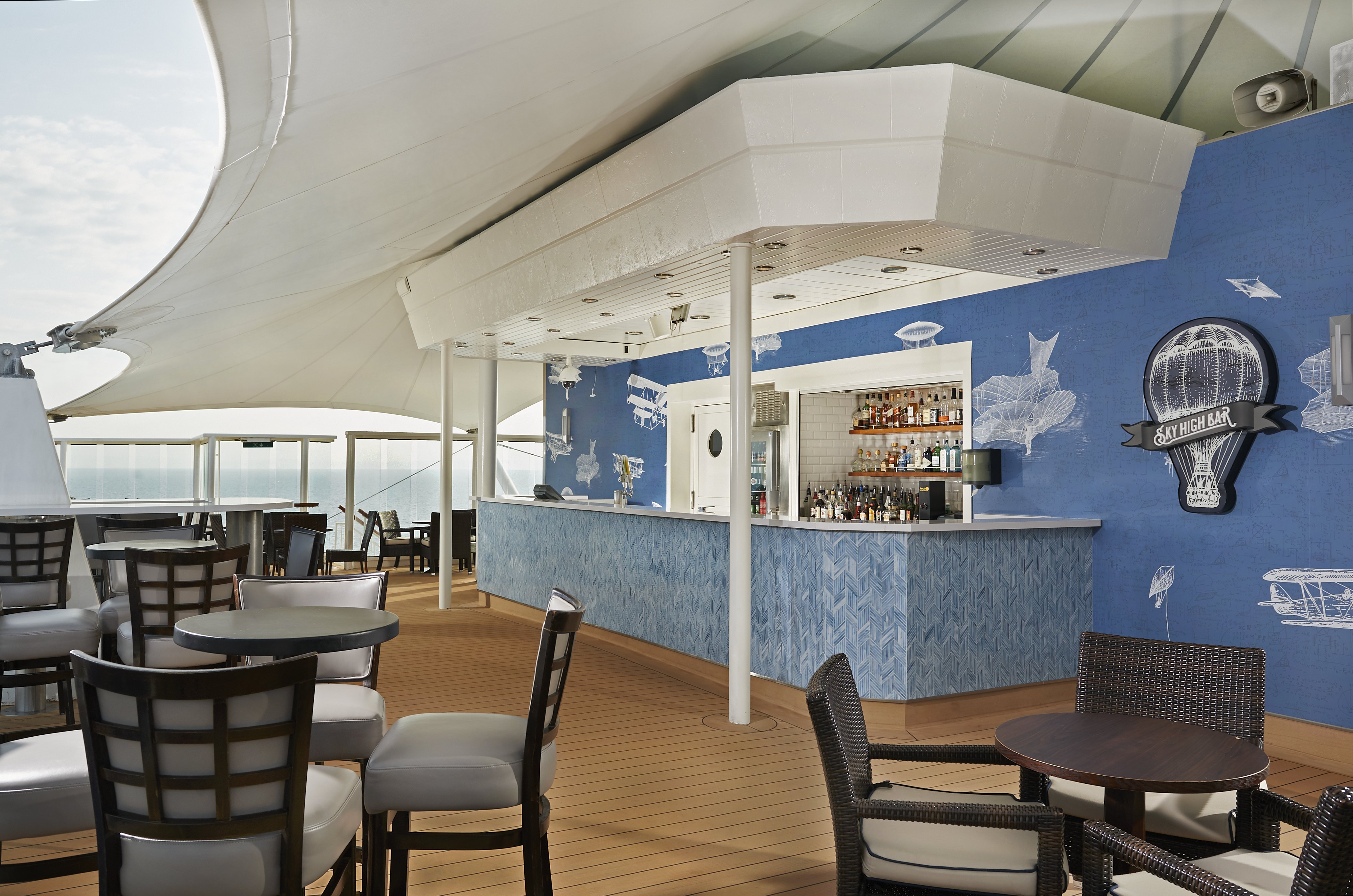
Spice H20
Spice H20 is an adult-only escape. By day, you can sip cold cocktails from your reclined lounge chair. By night, it’s a whole different beat. Let loose and dance beneath the stars.
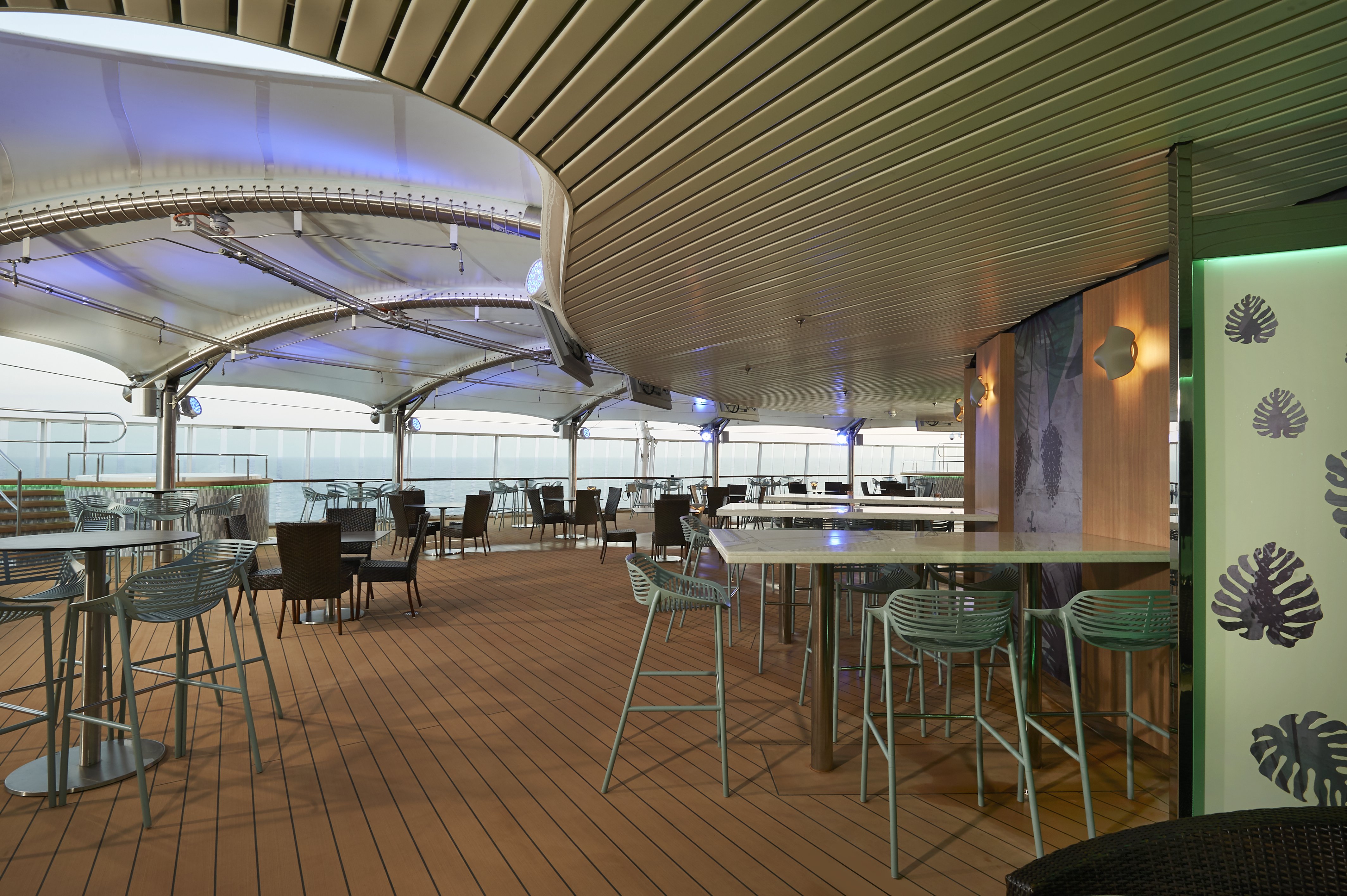
Onboard Shopping
EFFY Jewellery
Effy Hematian has been designing and manufacturing fine jewellery in the heart of New York’s Diamond District for over 40 years. By combining uncompromising attention to detail, exceptional gemstones, and quality American craftmanship, Effy has become one of the most celebrated and desired jewellery brands in the world today – available to you onboard at tax-and duty-free pricing.
The Photo Gallery
We have everything you need, to capture it all: Binoculars, Camera/Phone Accessories, Professional Portraits, Souvenir, Photography, Photo Books, Wall Art, 3D Photo Crystals, Souvenir Frames, Collectable Photo Accessories & more!
The Tides
Conveniently located in the Atrium, Tides offers the very best deals of the cruise, including one day specials across a variety of brands with savings of up to 70% off US prices! Make sure you check the Freestyle Daily for days and times for our daily special offers!
Tradewinds
Welcome to boutique shopping at Tradewinds. You’ll find a paradise filled with the most sought-after brands in jewellery, watches, spirits and beauty & fragrance, all at tax & duty-free savings conveniently located steps away from your stateroom.
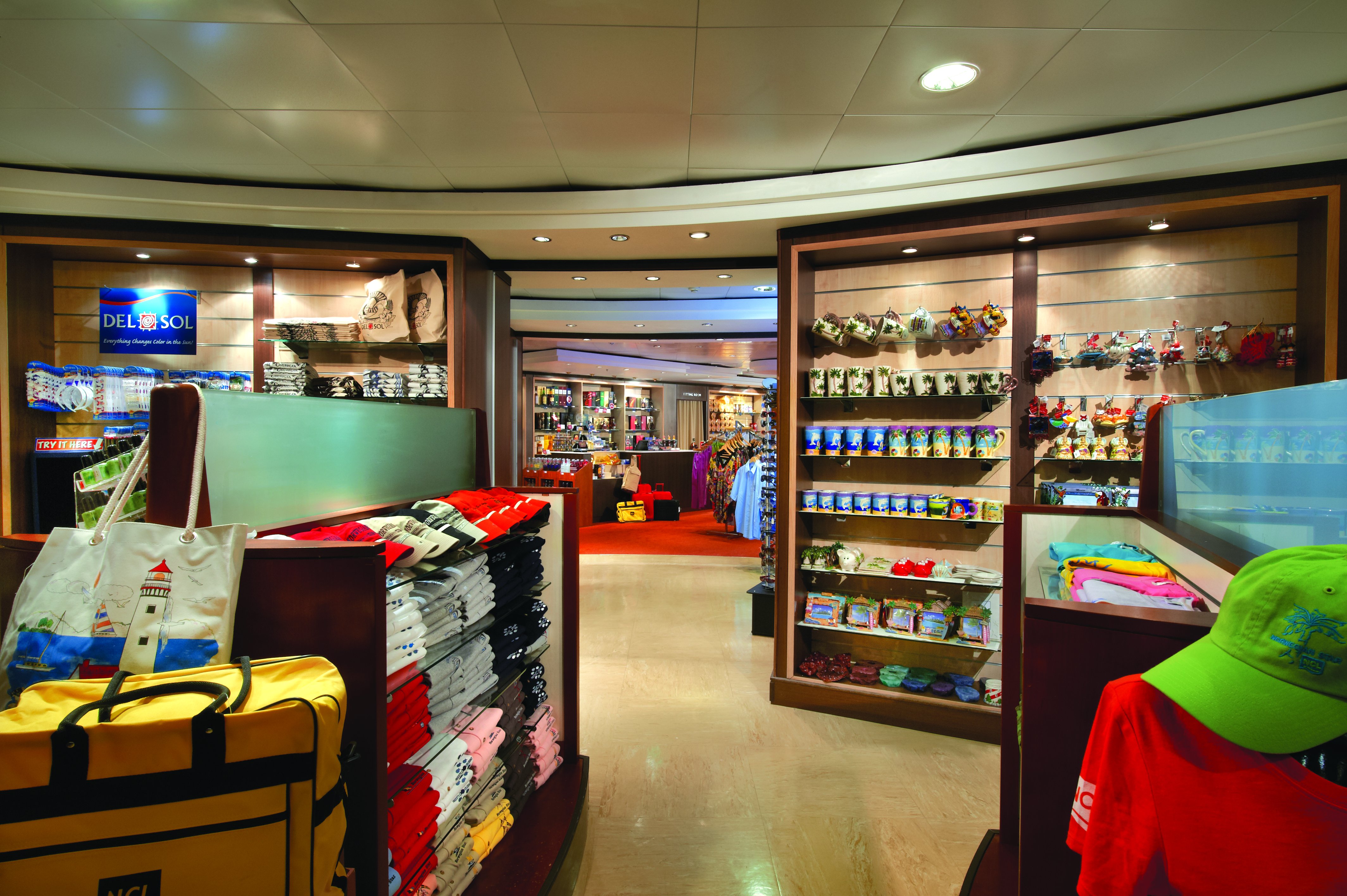
Game Shows
Deal or No Deal
Enjoy an exhilarating show where contestants play and deal for cash in a high-energy contest of nerves and intuition.
Play cards will be available for purchase onboard.
Wheel of Fortune
Wheel of Fortune is here! From Hollywood to the High Seas, experience this new interactive game show where everyone plays along on their mobile devices to solve puzzles and collect matches for a chance to win great prizes, including a Free Cruise! Watch the show or play along – everyone is invited.
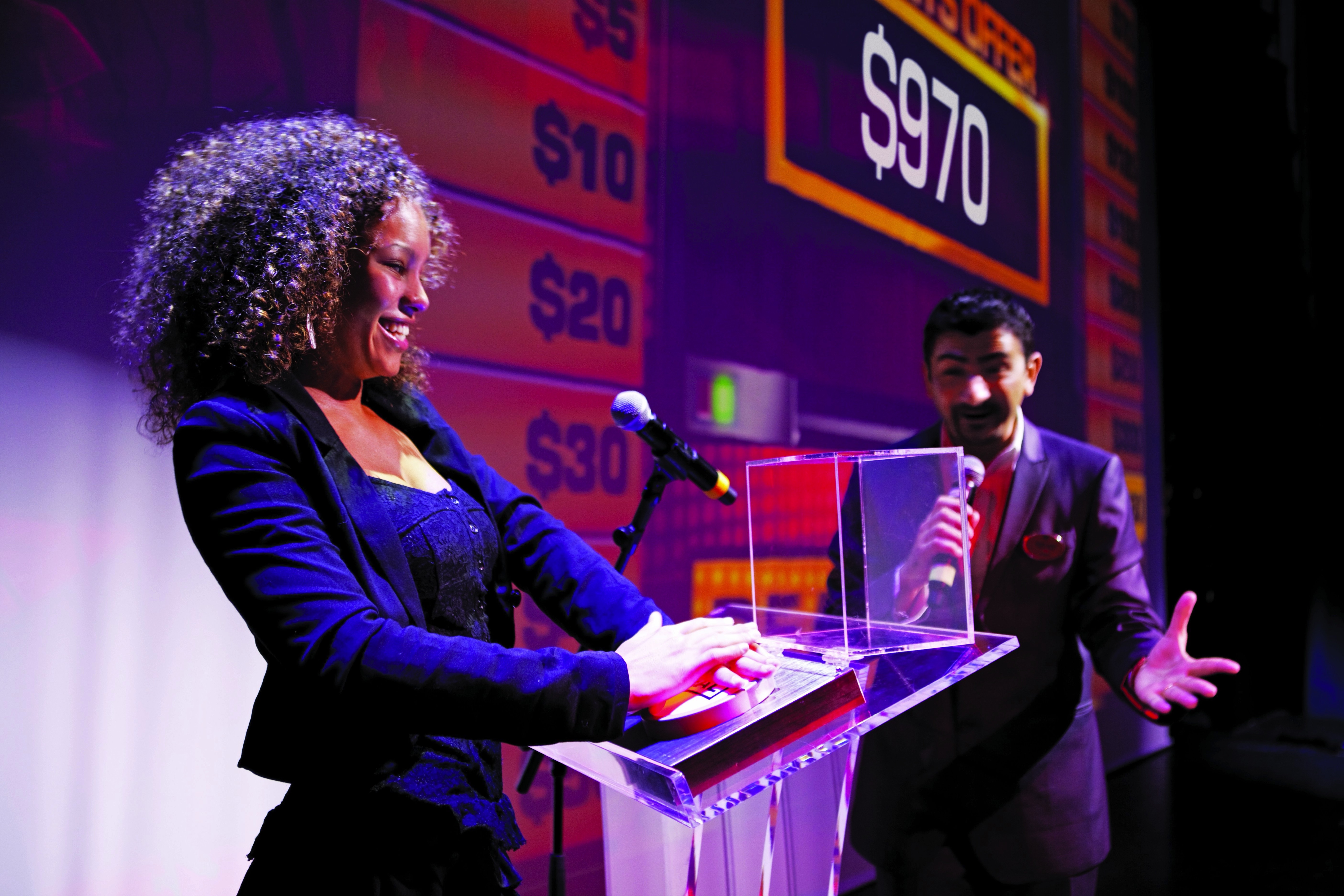
Professional Portraits
Take advantage of this time together whilst onboard to create beautiful photographs that will last a lifetime. Our professional photographers set up studios in the atrium and around the ship each night so you can have a variety of images to choose from. Relax, have fun and build your digital portfolio – it’s always free to try! Visit the Photo Gallery to learn more, view your photos and enjoy great deals on photography packages, frames, wall art, 3D Crystals, binoculars, mobile accessories and more!
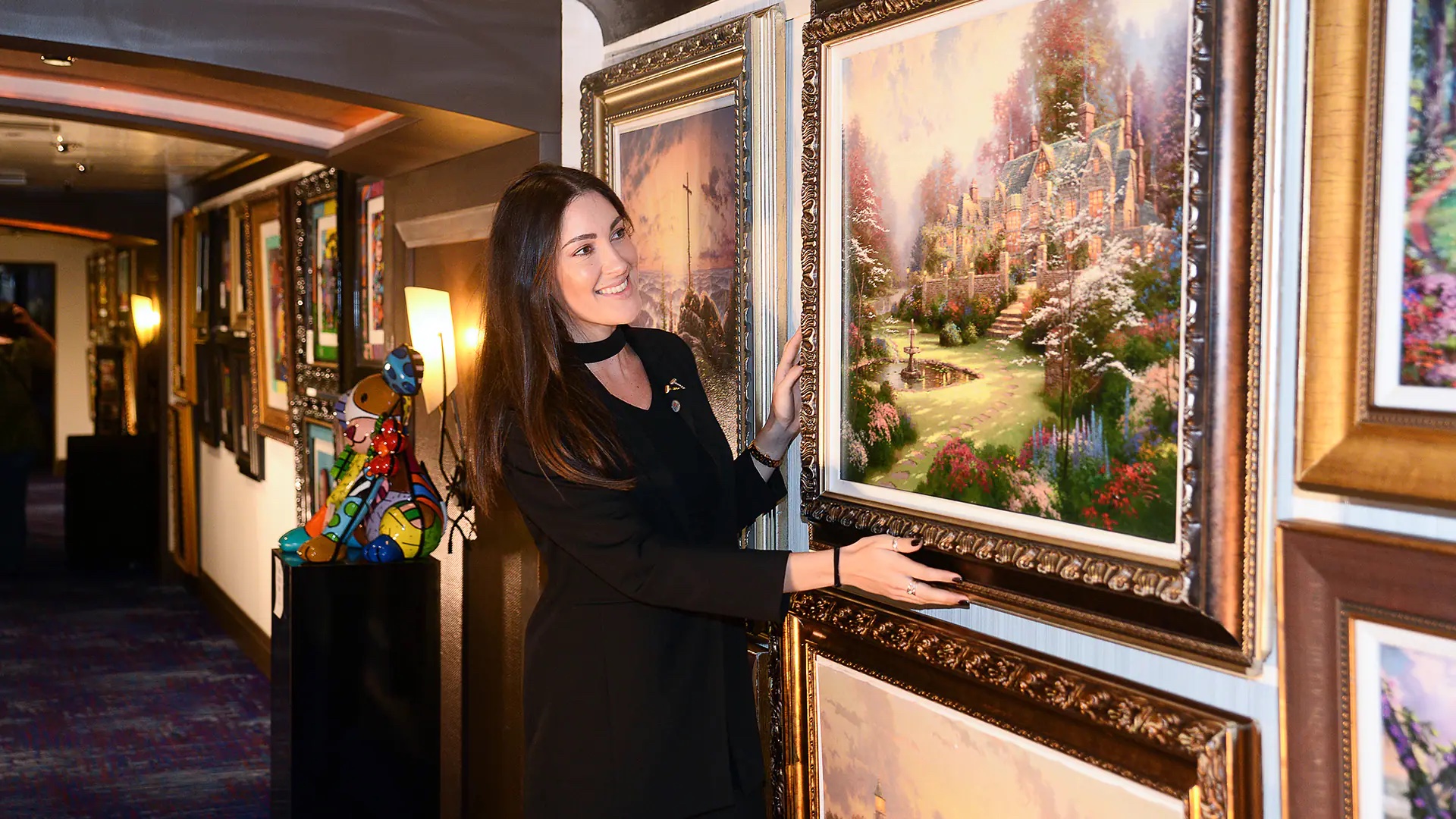
Park West Gallery
Take home something you’ll never forget! Our impressive onboard art gallery has everything from contemporary to classics-Peter Max to Picasso-giving you access to an unparalleled collection of fine art. Looking for a little excitement? Try attending our live art auctions where you can raise a glass with our Art Team as the bidding gets fast and furious. Plus, everyone who visits our gallery gets a free work of art!
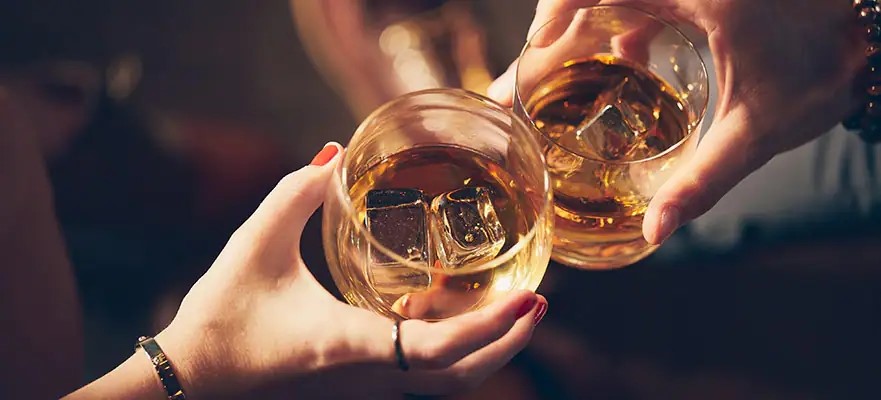
Proof Whiskey Bar
Familiar, like your favourite neighbourhood bar. Mysterious, like a photograph from a historical era that stirs your soul. Foolproof-offering both handcrafted cocktails and classic libations, for those that stick to the standards. So whether you like to keep it neat or shake things up, our knowledgeable mixologists always serve it proper, just the way you like it.
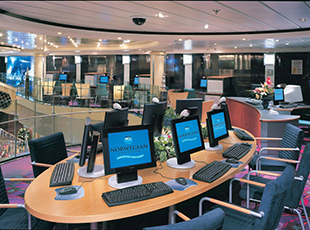
Internet Café
No matter how far you are from home, you can stay in touch. The Internet Café can also be used as a computer lecture and training centre.
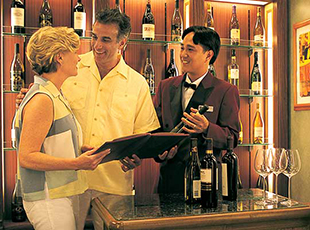
Wine Cellar
Here’s your chance to go wine tasting whilst onboard ship. You’ll find a wide selection of wines to sample and purchase.
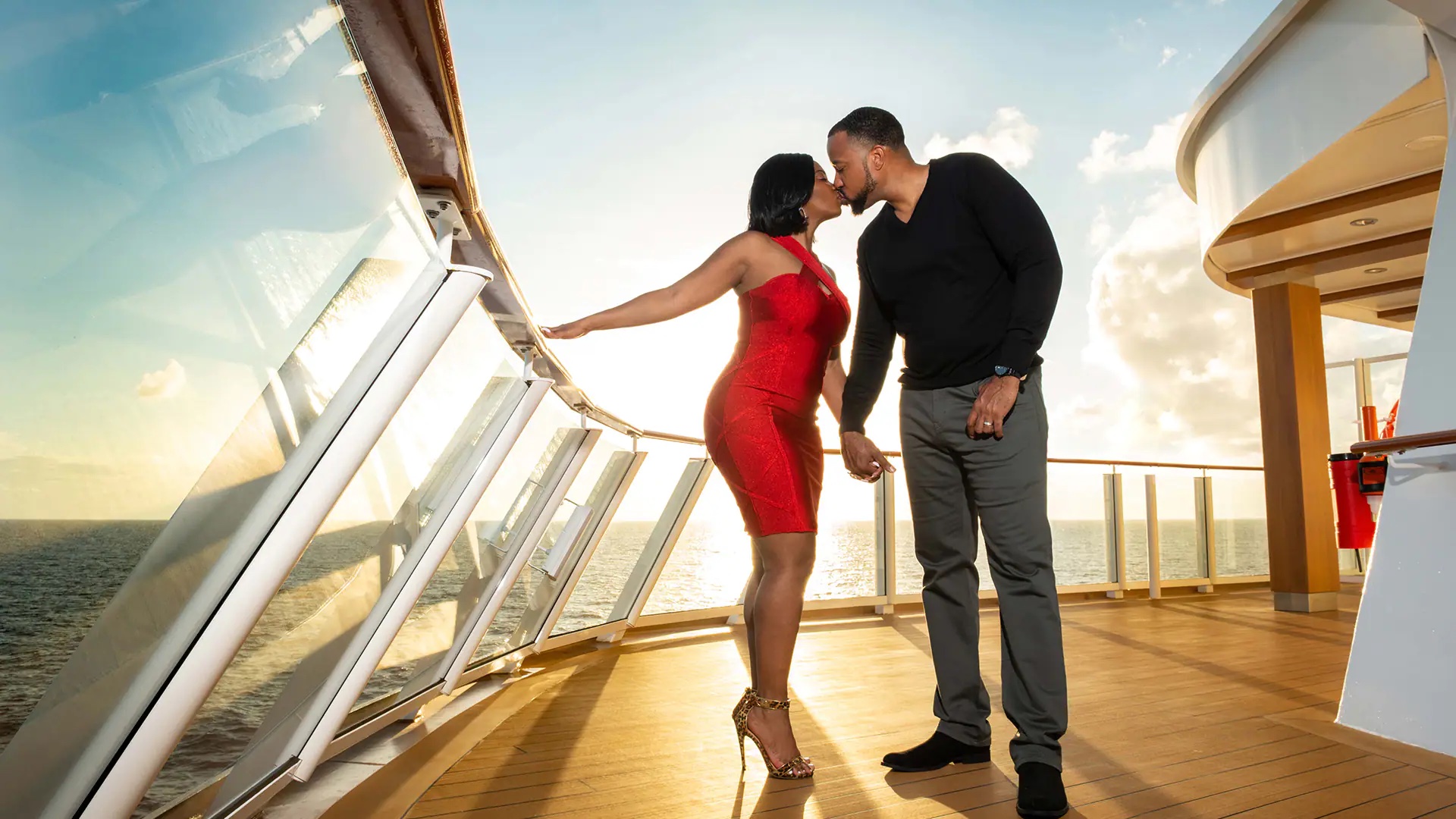
Perspectives Studios
At Perspectives Photography Studio, we celebrate love, life and human connection creating spectacular portraits that will be handed down for generations. Your onboard Portrait Artist(s) will capture your unique spirit in our private studio or on location, it’s your choice. Visit us to learn more about this personalised portrait experience.
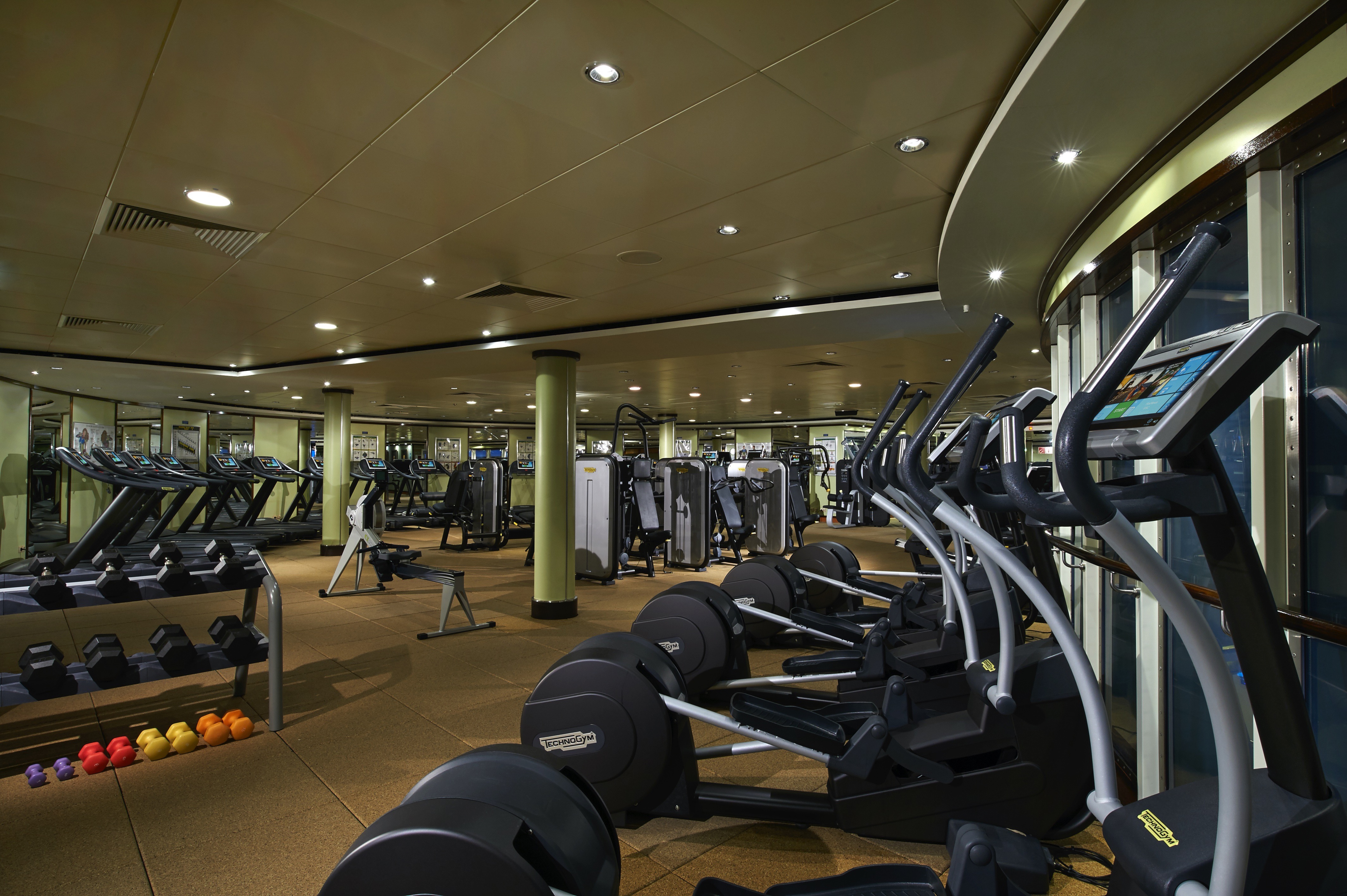
Pulse Fitness Centre
There are numerous ways to stay in shape whilst on-board. The Pulse Fitness Centre is open from 6am to 11pm with a full-service gym and aerobics/fitness classes offered daily.
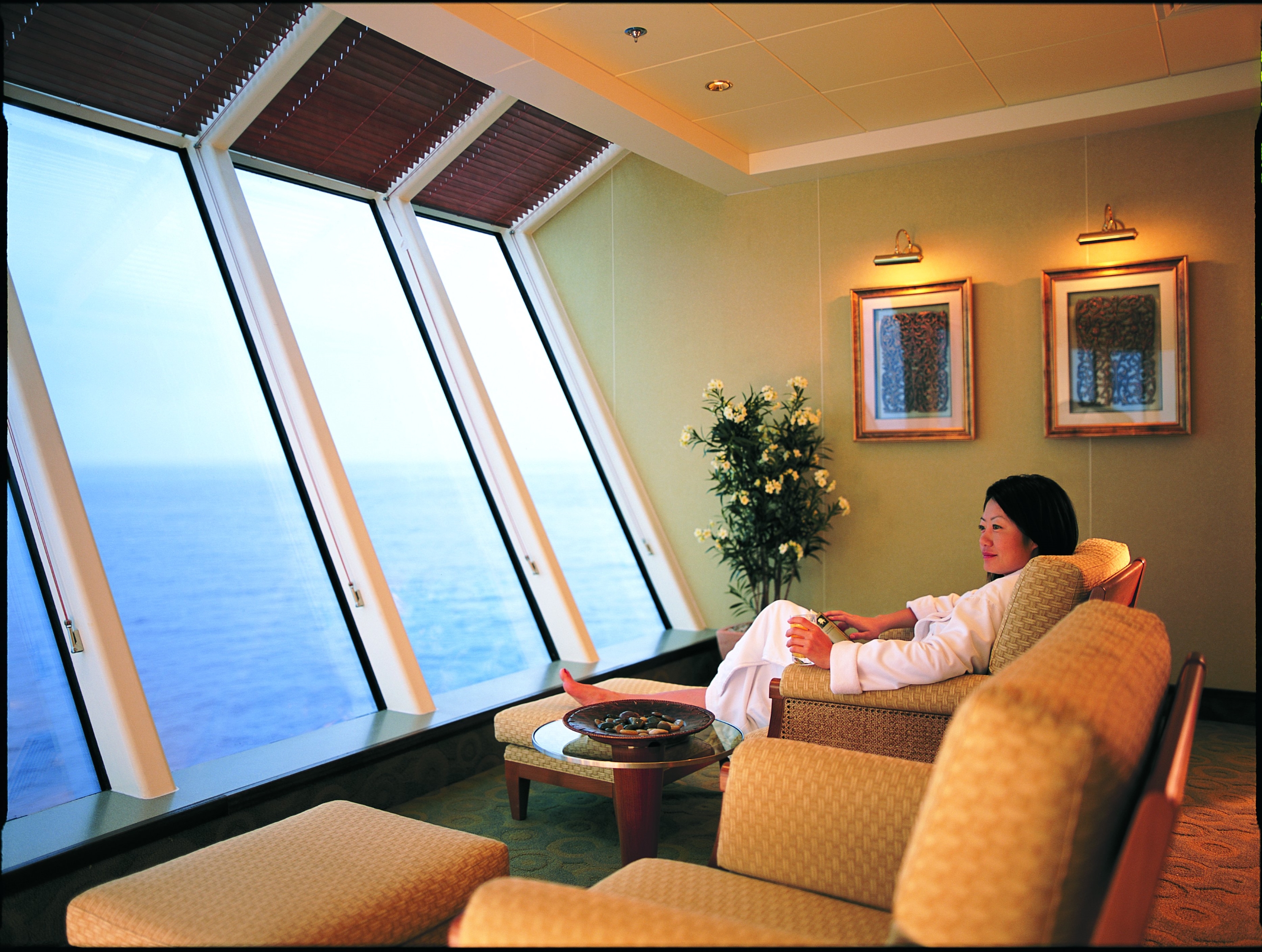
Mandara Spa & Salon
Step into the world-renowned Mandara Spa and Salon®, where time slows and tranquility takes over. Indulge in signature massages, high-performance Biotec facials, and ancient healing through acupuncture-or rejuvenate your skin with advanced Med Spa treatments. Complete your transformation in the salon with expert hair styling, precision barber services, and flawless nail care, leaving you refreshed, radiant, and ready to sail.
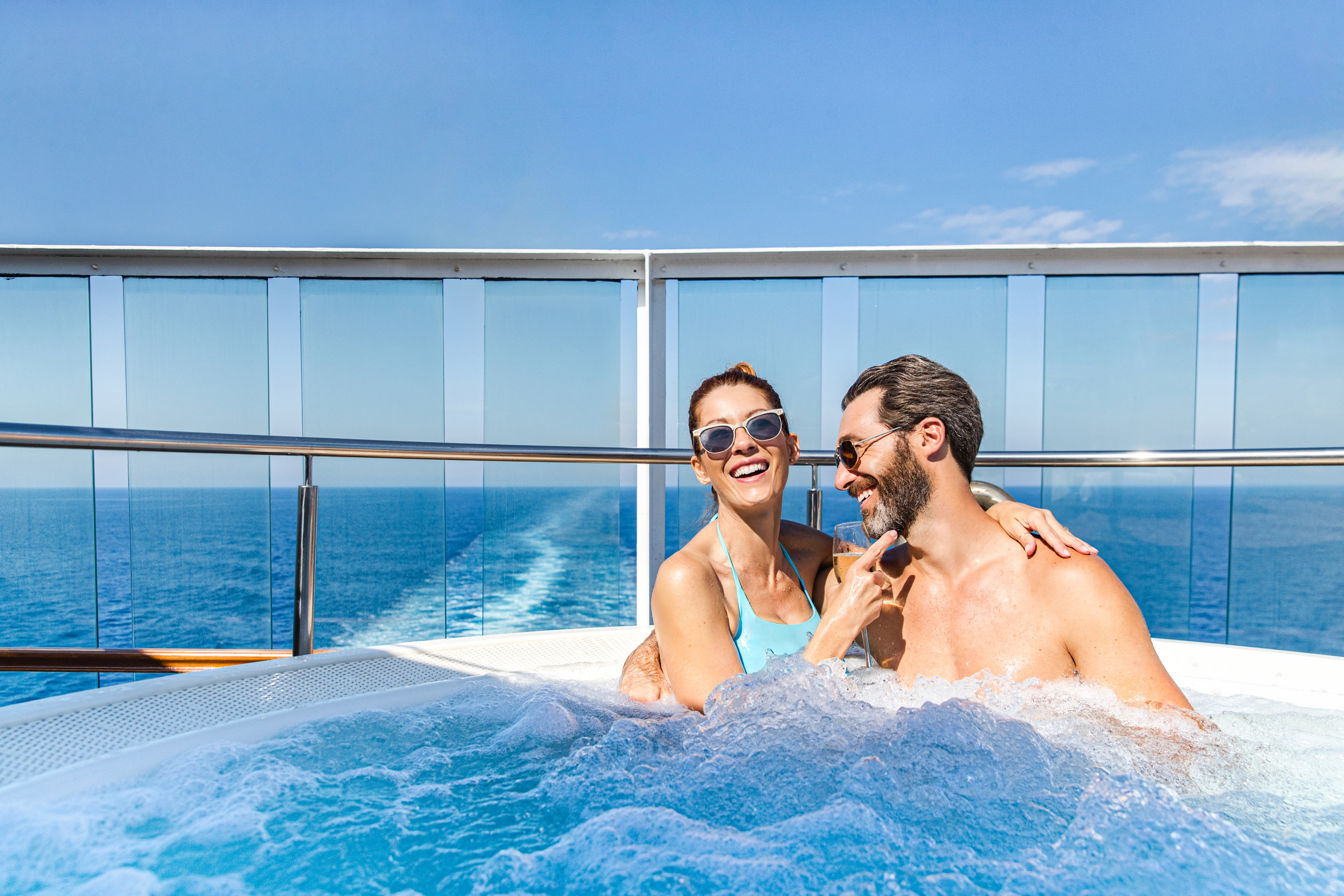
Hot Tubs
There are six hot tubs conveniently located. Try them all out or pick your favourite and make relaxing and unwinding a part of your daily regimen.
Jogging/Walking Track
Run circles around the other guests or get in your daily walk whilst you’re at sea. Breakfast always tastes better after a good walk or run, right?
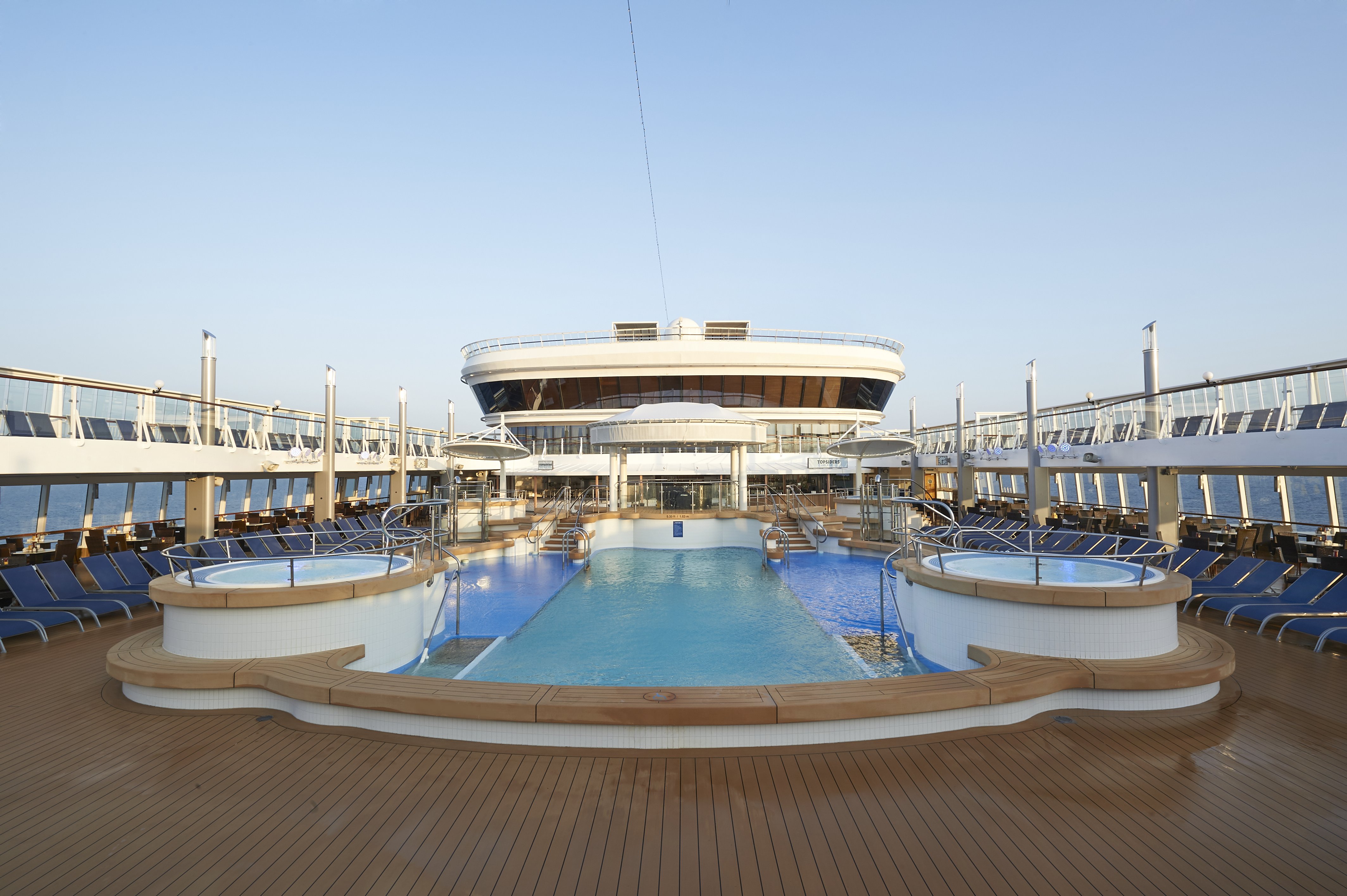
The Oasis Pool
Our main pool has two hot tubs nearby and Topsider’s Bar & Grill. Plus, ample room for sunning.
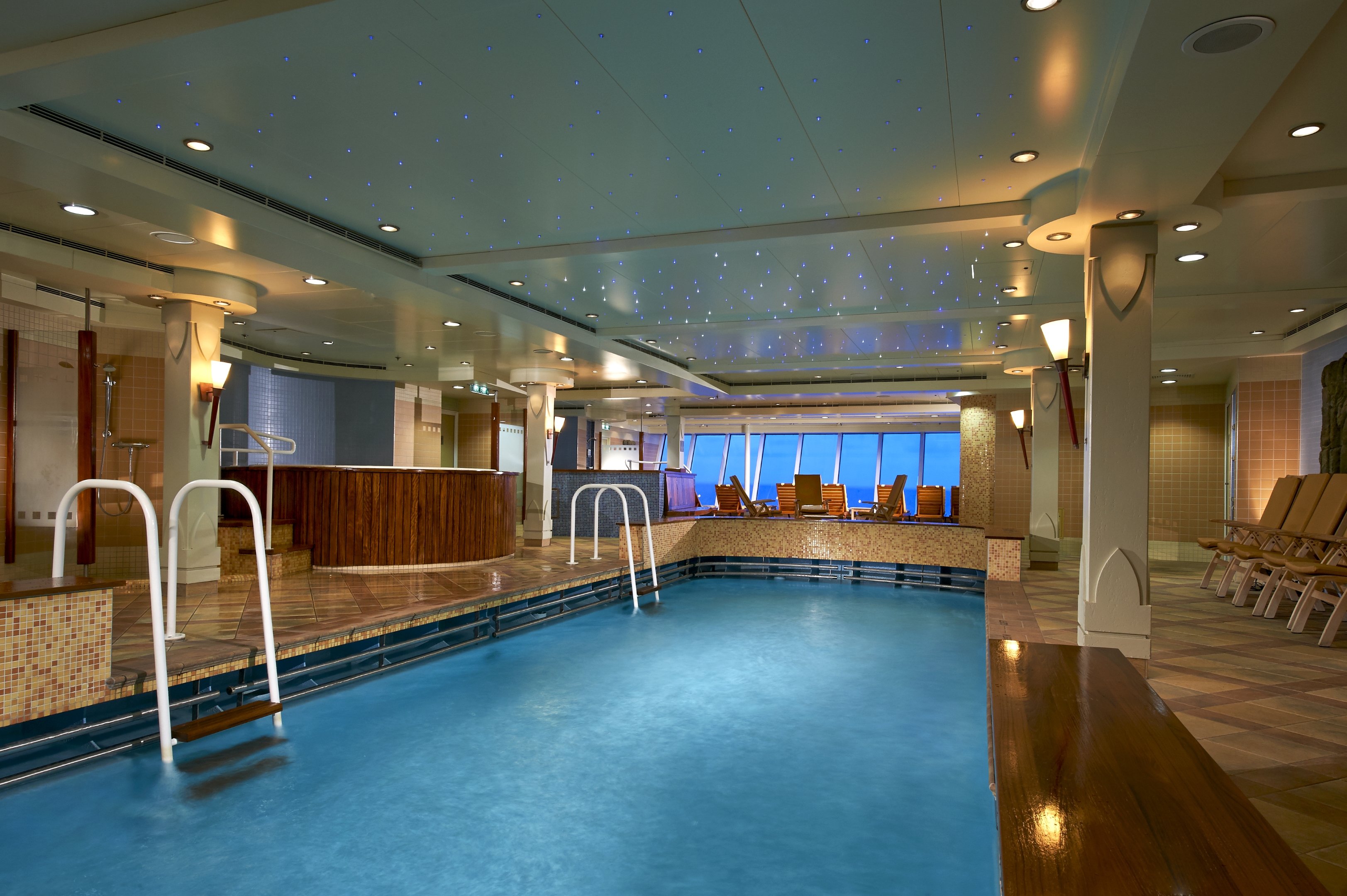
Spa Thermal Suite
Refresh, recharge, and rejuvenate in Mandara Spa’s adults-only Thermal Suite. Enjoy a full mind and body experience as you alternate between saunas, stream rooms, thalassotherapy pools, and more.
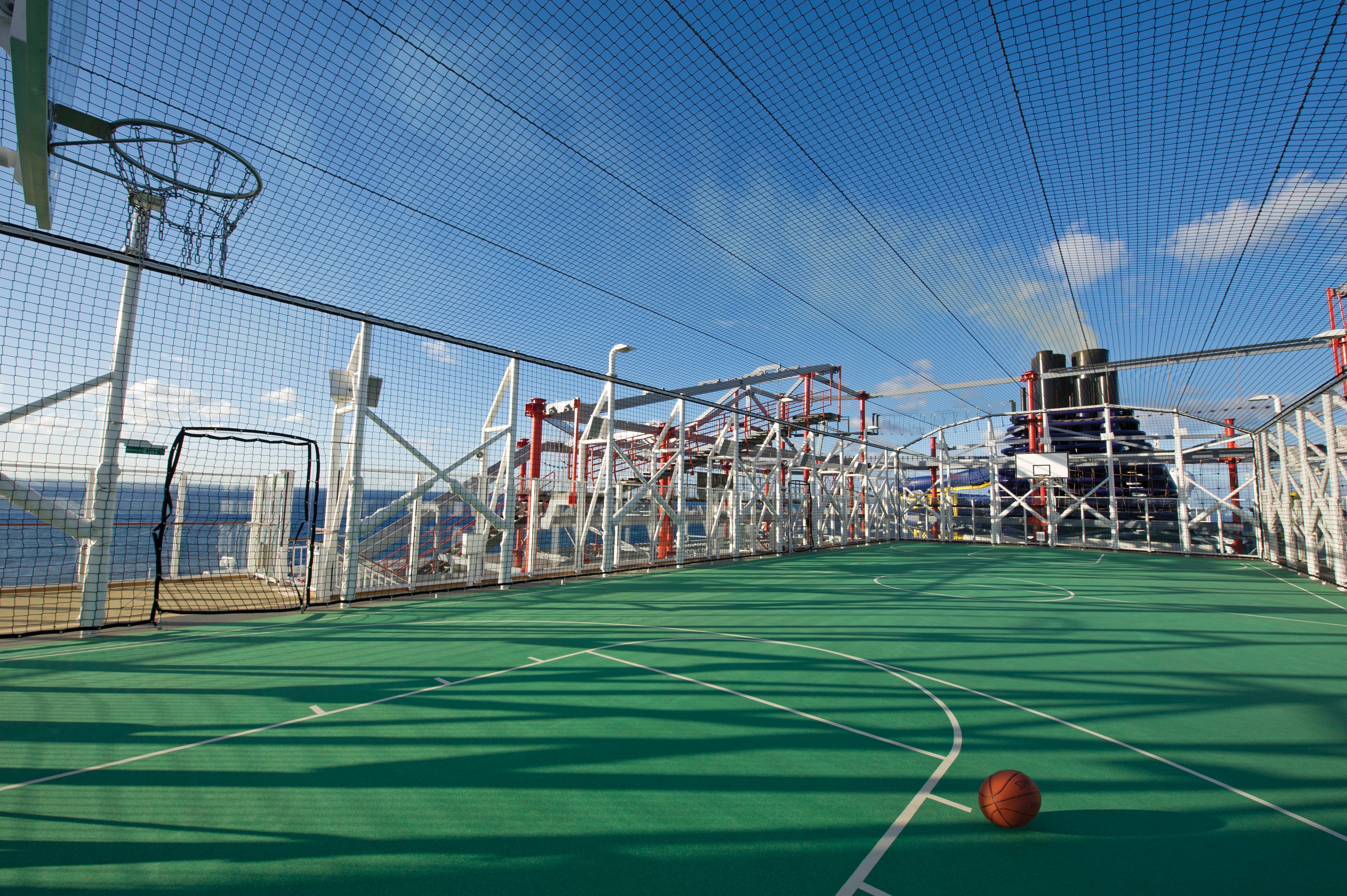
Basketball/Volleyball Court
Shoot hoops, join a pick up game or play volleyball at the enclosed, outdoor Basketball/Volleyball Court.
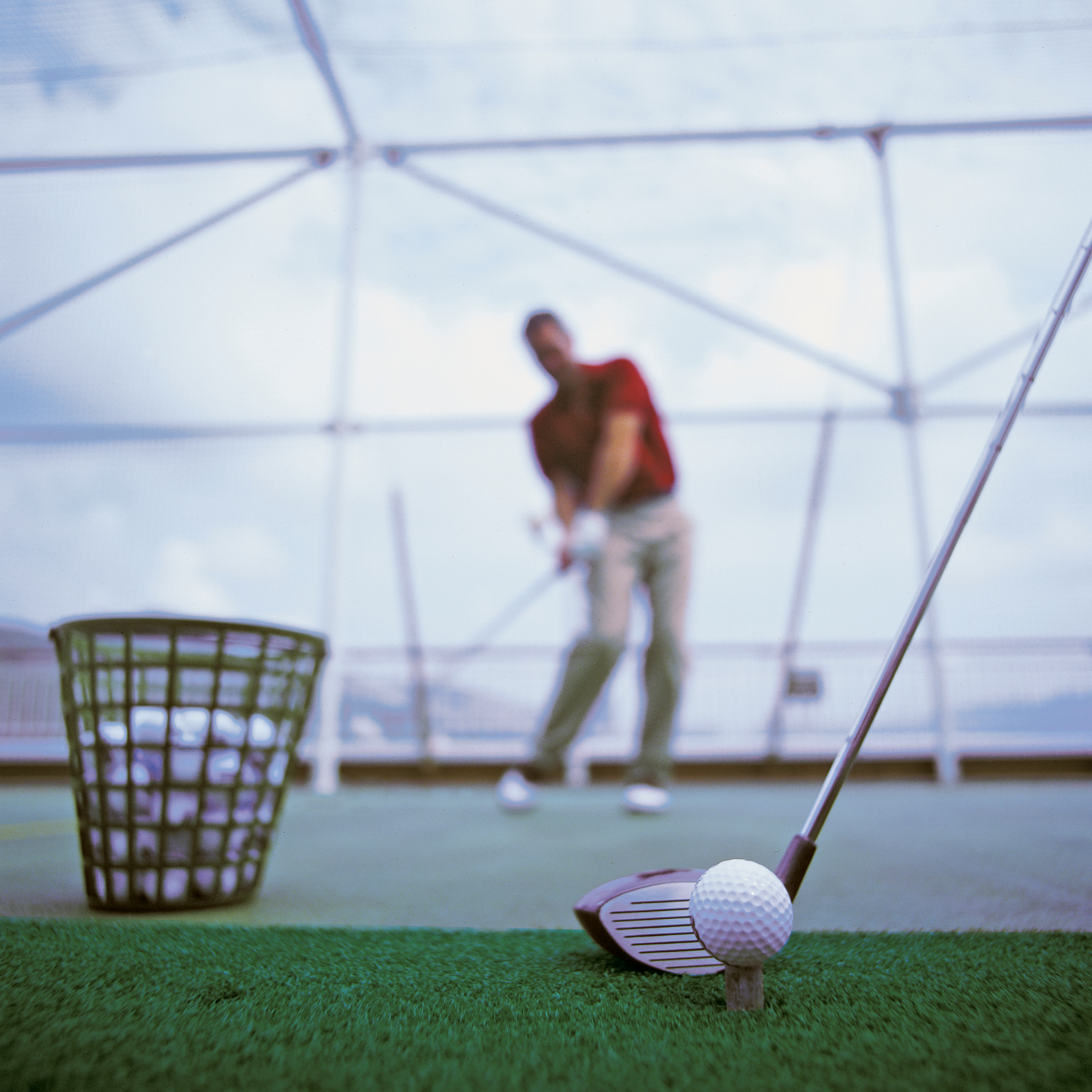
Golf Driving Net
Fore! Play a round at one of two Golf Driving Nets onboard, because there’s no such thing as a lost ball or a bad drive on Norwegian Star.
Treatments
Thermal Suite Pass
Refresh, recharge, and rejuvenate in Mandara Spa’s adults-only Thermal Suite. Enjoy a full mind and body experience as you alternate between saunas, stream rooms, thalassotherapy pools, and more.
Aroma Spa Seaweed Massage – 100 minutes
Indulge in this detoxifying wrap and massage to reduce fluid retention and cellulite and replenish your body’s systems with vital trace elements. This treatment concludes with a full body massage.
Aroma Spa Seaweed Massage – 75 minutes
Indulge in this detoxifying wrap and massage to reduce fluid retention and cellulite and replenish your body’s systems with vital trace elements. This treatment concludes with a full body massage.
Aroma Stone Therapy – 50 minutes
Heated Basalt Stones are applied to key points of the body, whilst your therapist massages your body with warmed, fragrant aromatherapy oils.
Aroma Stone Therapy – 75 minutes
Heated Basalt Stones are applied to key points of the body, whilst your therapist massages your body with warmed, fragrant aromatherapy oils.
Bamboo Massage – 50 minutes
Imagine warm bamboo shoots of various sizes soaked in essential oil rolling, sliding and massaging your muscles into pure bliss. Getting into the belly of the muscle, this deeper tissue massage targets specific areas, releasing the build-up of tightness using sliding and rolling techniques across the body, hands and feet, kneading away soreness to your specified level of pressure.
Bamboo Massage – 75 minutes
Imagine warm bamboo shoots of various sizes soaked in essential oil rolling, sliding and massaging your muscles into pure bliss. Getting into the belly of the muscle, this deeper tissue massage targets specific areas, releasing the build-up of tightness using sliding and rolling techniques across the body, hands and feet, kneading away soreness to your specified level of pressure.
Body Composition Analysis
Our fitness professionals will determine your body fat percentage, metabolic rate and water retention level and then compare the results to the percentage recommended for you.
Couples Deep Tissue Muscle Massage
You and your favourite person can enjoy a gorgeously relaxing full body Deep Tissue Muscle Massage as you lie side by side. The listed price is per couple.
Couture Touch Face and Body Treatment – 100 minutes
Condition your skin and condition your muscles with this all-embracing hands-on experience. Includes a ELEMIS hands-on TOUCH facial with your choice of a Deep Tissue Muscle Massage or an Aroma Stone Therapy.
Couture Touch Face and Body Treatment – 50 minutes
Condition your skin and condition your muscles with this all-embracing hands-on experience. Includes a ELEMIS hands-on TOUCH facial with your choice of a Deep Tissue Muscle Massage or an Aroma Stone Therapy.
DYSPORT® Cosmetic Wrinkle Treatment – Crow’s Feet
Soften the wrinkles around the outside corner of the eyes with this targeted wrinkle treatment.
DYSPORT® Cosmetic Wrinkle Treatment – Forehead Lines
Smooth horizontal forehead lines with this targeted wrinkle treatment.
DYSPORT® Cosmetic Wrinkle Treatment – Frown Lines
Soften wrinkles between the eyebrows with this targeted wrinkle treatment.
Deep Tissue Muscle Massage – 50 minutes
Using muscle-melting warmed oils and deep pressure massage movements, we massage deep into the belly of the muscle, erasing stress, tension and lactic acid build up.
Deep Tissue Muscle Massage – 75 minutes
Using muscle-melting warmed oils and deep pressure massage movements, we massage deep into the belly of the muscle, erasing stress, tension and lactic acid build up.
ELEMIS Deep Cleanse Grooming Treatment with Shave
This grooming treatment for men will deeply cleanse the skin to prepare it for the closest shave ever!
ELEMIS Dynamic Resurfacing Precision Peel
Experience the age-defying benefits of marine-charged Padina Pavonica whilst targeted massage encourages optimum cellular function.
Express Shave
A quick, clean, silky shave for the man who wants to be smooth!
Fire and Ice Manicure
Beautify your nails with this invigorating manicure that will warm your spirit and cool your stress.
Fire and Ice Pedicure
This super rejuvenating pedicure will warm your senses and cool your tension, leaving your nails and skin looking beautiful.
GO SMILE™ Teeth Whitening Treatment
Are you ready to smile? Then try our advanced tooth-whitening treatment available at the spa.
Intensely Cleansing Salt Scrub – 50 minutes
The extraordinary cleansing power of salt goes to work releasing toxins in this body polishing treatment. Choose from Frangipani Monoi Salt Scrub or Lime and Ginger Salt Glow with a 25 minute massage.
Intensely Cleansing Salt Scrub – 75 minutes
The extraordinary cleansing power of salt goes to work releasing toxins in this body polishing treatment. Choose from Frangipani Monoi Salt Scrub or Lime and Ginger Salt Glow with a 50 minute massage.
Ionithermie Cellulite Reduction Treatment
Reduce the appearance of cellulite and firm and tone the skin with this Parisian treatment that offers substantial inch loss in just one session.
Nutritional Consultation
If you are ready to enhance your well-being with a sensible diet and exercise programme, our fitness professionals can provide you with the in-depth information you need to get you started.
Personal Training
After conducting a Body Composition Analysis, our personal trainers will design a nutrition and exercise plan that will help you achieve the results you’ve always wanted.
Pro-Collagen Age Defy
This anti-aging facial combines the benefits of exotic ingredients to plump out fine lines and reduce skin-fatigue – helping relax wrinkes, whilst an age-defying peel-off mask encourages the highest cellular function, visibly improving firmness and elasticity for beautifully nourished, younger looking skin.
Pro-Collagen Grooming Treatment with Shave
Our most opulent grooming service for men, this is simply the shave of all shaves combined with the facial of all facials! Your skin will be left perfectly smooth.
Restylane® Lip Enhancement Treatment
Add volume to uneven or small lips. This treatment provides you with a fuller, natural looking lip instantly.
Restylane® Lip Lines Treatment
This treatment softens the border of the lip for a smoother lip line.
Restylane® Marionette Lines Treatment
Restore youthful contours by softening the lines from the corners of the mouth to the chin with this FDA approved dermal filler.
Restylane® Smile Lines Treatment
Restore youthful contours by softening the lines from the corners of the nose to the mouth.
Swedish Massage – 50 minutes
This relaxing Swedish massage uses techniques that will smooth away stress and tension.
Swedish Massage – 75 minutes
Enjoy this deeply relaxing Swedish massage for a full 75 minutes.
Traditional Chinese Acupuncture – 1 session
Curious about acupuncture and how it can benefit you? Try this special introductory treatment.
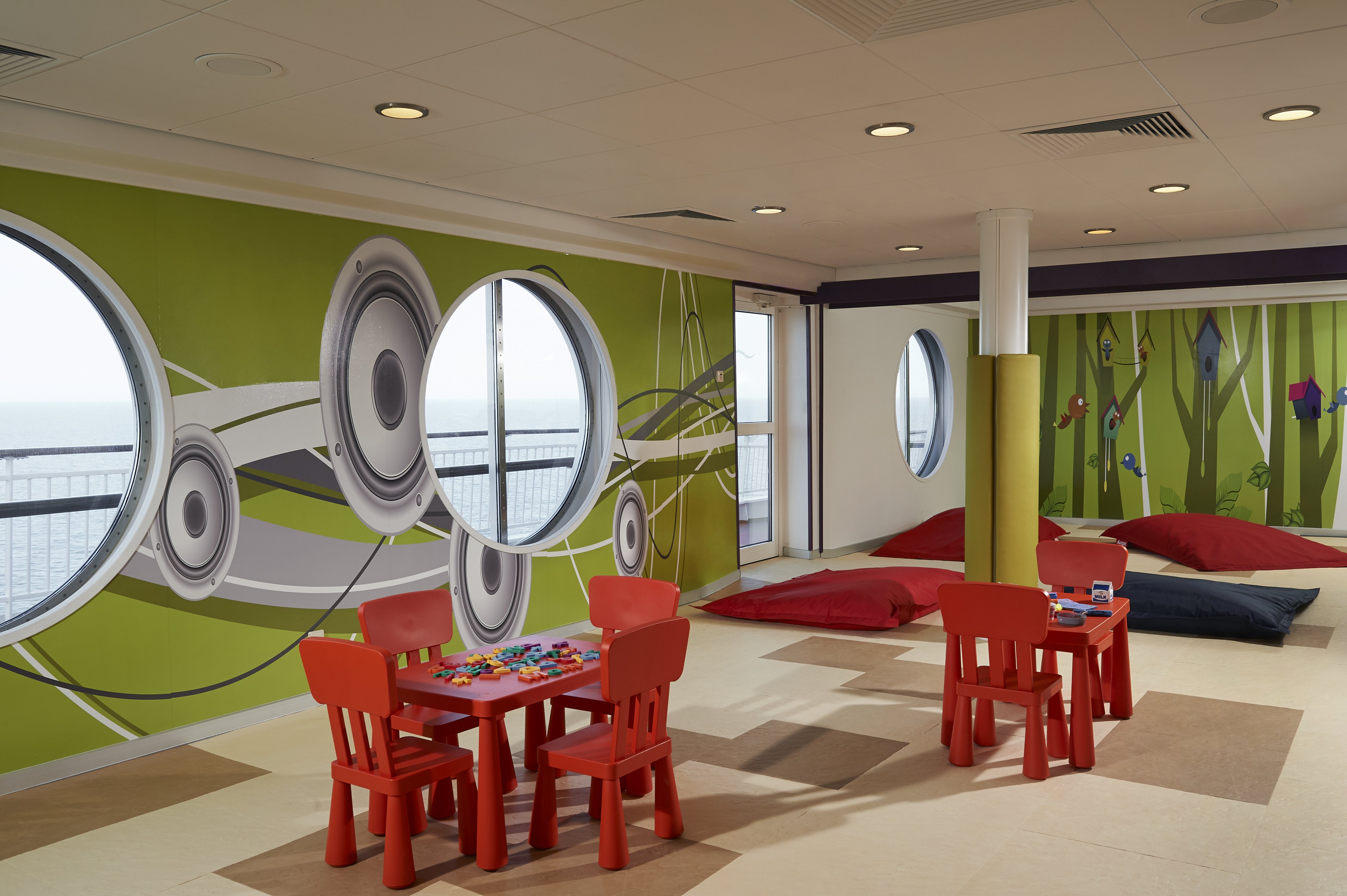
Splash Academy
Jump into a splash of fun at Splash Academy just for kids 3-12. Join us for active games, arts and crafts, and jump into character with the creative theme days.
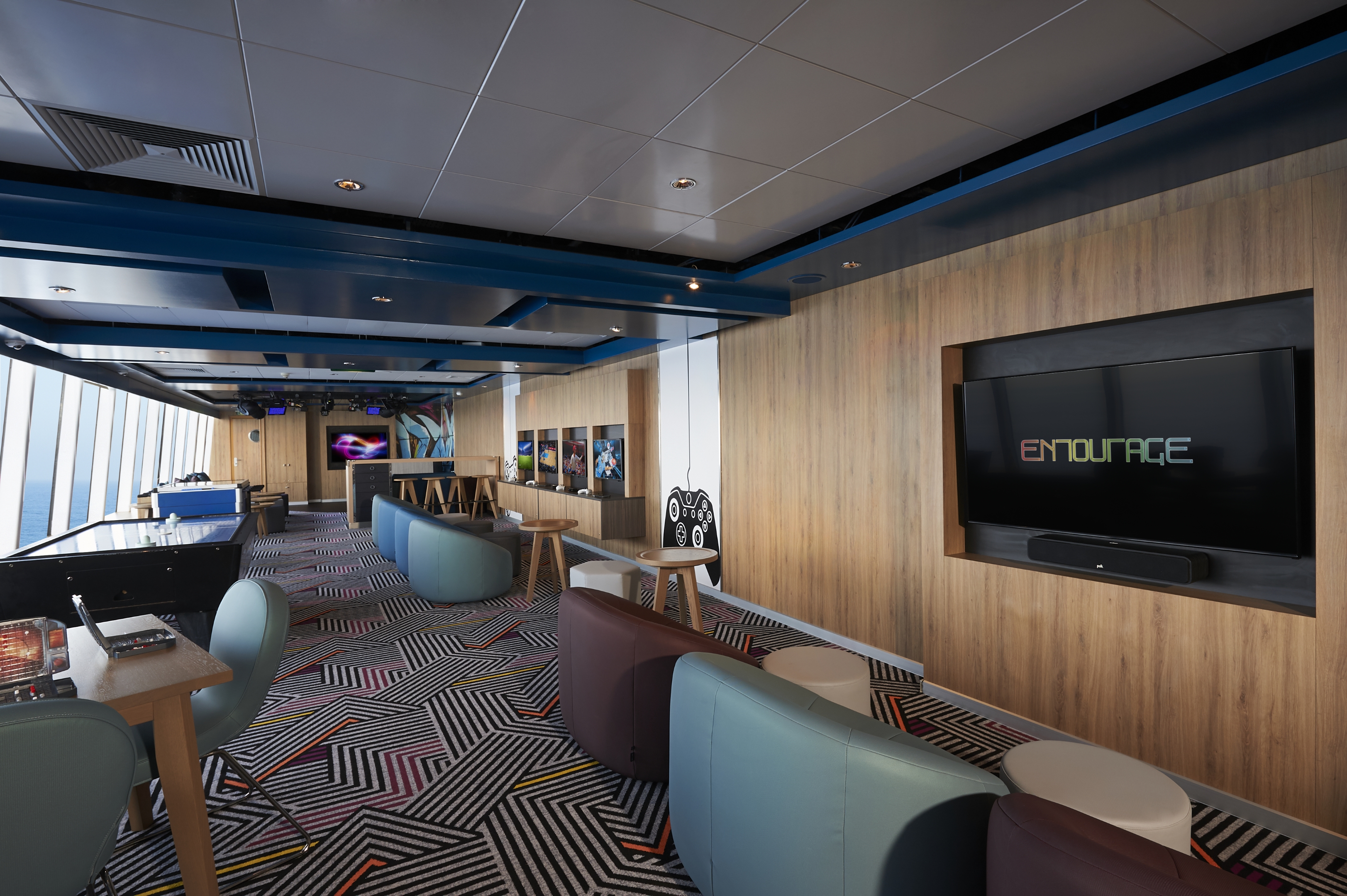
Entourage
It is time to change the way you play. Entourage for 13-17 year olds offers modern, digital, and inclusive options to engage the way you want. Connect. Influence. Create. Be You.
Guppies
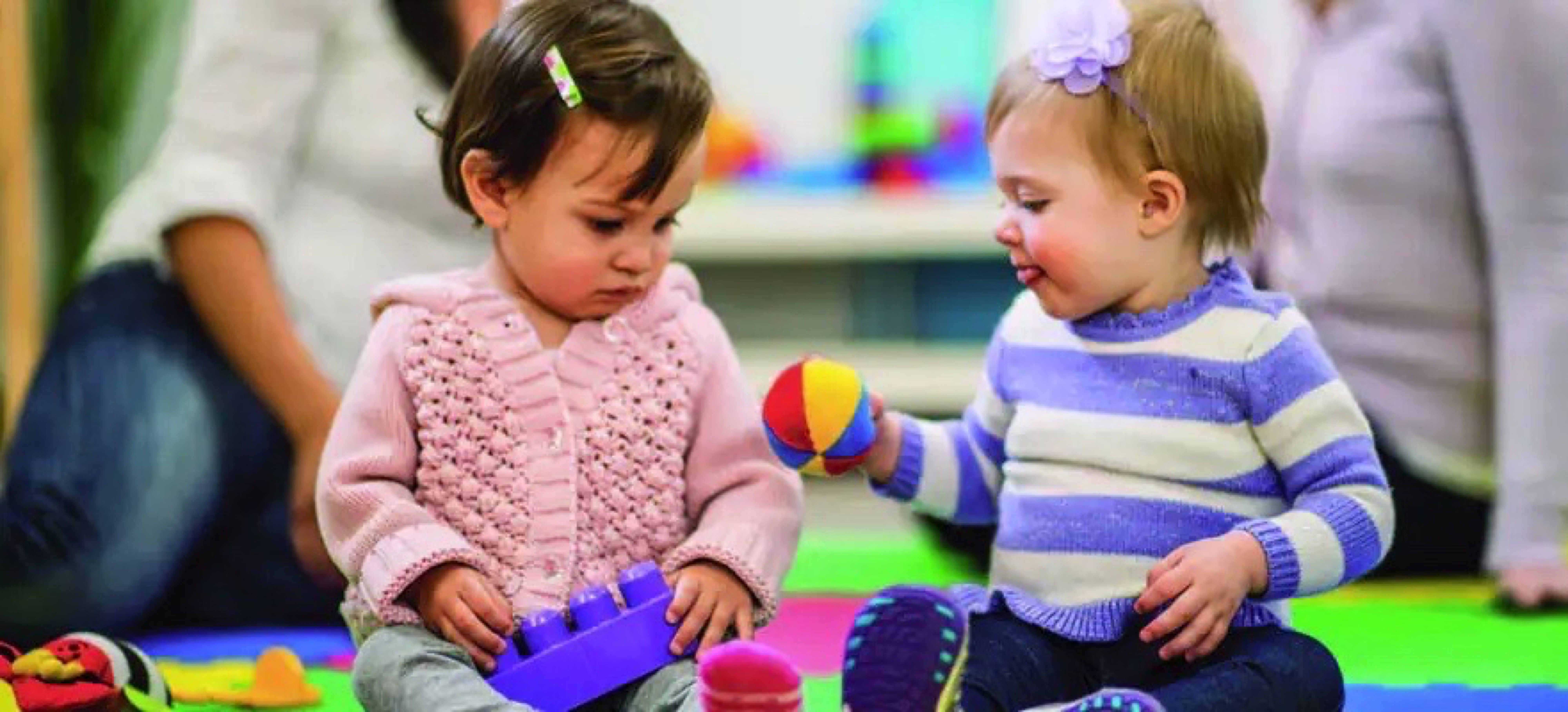
Guppies Open Play is for the littlest cruisers and offers a play space for parents to interact with their infants/babies/toddlers 6 months – 3 years old and children in nappies. Toys, balls, and sensory items are available within the space. The timetable varies per ship and itinerary and is posted in the Freestyle Daily. Guppies Open Play is not a drop off programme.
Aqua
One of our two Main Restaurants serving a variety of culinary delights with a contemporary flair.
Ginza
Enjoy our Asian Fusion dining venue featuring freshly prepared noodles, delicious wok fried dishes, authentic soups, and more.
Price Per Person: Cover Charge USD $50
Moderno Churrascaria
Looking for a unique experience? Our authentic Brazilian churrascaria is a must. Start with an impressive salad bar, but save plenty of room for our slow-roasted meats carved tableside by our Passadores.
Price Per Person: Cover Charge USD $50
O'Sheehan's Bar & Grill
O’Sheehan’s offers classic pub fare in a relaxed atmosphere. With popular dishes like the Reuben Sandwich and Fish n’ Chips, O’Sheehan’s has all your favourite comfort foods. So try one of our beers or cocktails on tap and catch a game with us!
Cagney's Steakhouse
Specialising in Premium Black Angus Beef and exceptional seafood, this American-style steakhouse is second to none. With classic cocktails, an extensive wine list, and attentive service, Cagney’s Steakhouse offers a truly delightful dining experience.
Price Per Person: Cover Charge USD $60
Garden Café
Whatever you’re craving, chances are you will find it at the Garden Café. This complimentary, indoor buffet restaurant serves up breakfast, lunch and dinner
La Cucina
Buona Sera! Enjoy the finest ingredients at our vibrant Italian ristorante. Dine on Italian classics and indulge with a rich homemade Tiramisu. Your good evening just got better.
Price Per Person: Cover Charge USD $40
Le Bistro
Romance is in the air at our signature French restaurant. Elegant interiors, crisp white linens and attentive servers make this an intimate dining experience. By the end of your meal, you might just be proclaiming c’est magnifique!
Price Per Person: Cover Charge USD $60
Versailles
Stunning in design with ocean views, this Main Restaurant offers traditional cuisine to please every palate.
Price Per Person: Complimentary
Teppanyaki
Sit at a lively shared table as a skillful chef perfectly prepares shrimp, steak, chicken and fried rice on a large steel grill. And you’ve got a front row seat to all the sizzles and surprises in our Japanese restaurant.
Price Per Person: Cover Charge USD $60
Topsiders Bar & Grill
Enjoy casual dining to suit every taste. From grilled burgers to hot dogs, come as you are and eat as you like after a night out or before your day begins.
Price Per Person: Complimentary
Sushi
In the mood for sushi? Take a seat at this contemporary sushi bar for some traditional Japanese culinary bites.
Price Per Person: Cover Charge USD $50
Room Service
Available 24 hours a day, simply pick up the phone and order breakfast, lunch, dinner or late-night munchies. A room service fee may apply.
Price Per Person: Room Service Fee may apply.
Great Stirrup Cay
Escape to The Great Life
Great Stirrup Cay isn’t just an island in The Bahamas, it’s an escape to The Great Life. And The Great Life isn’t just about cruising to your very own private island; it’s about unlocking a state of mind. It’s a cool drink in your hand at the 2,600 sq. metres pool. The roar of jet skis and a gentle breeze through your cabana. It’s shouting at the top of your lungs as you race down the larger-than-life tower of water slides. And it’s gazing onto white sand beaches all afternoon. Here, you have the freedom to do what you want, when you want. That’s The Great Life, and it’s about to get GREATER on the incredible, new Great Stirrup Cay.
Great Life Lagoon
What do ten blue whales, 20 tennis courts, three Washington Monuments, one large cruise ship and Mt. Everest’s peak all have in common? They’re roughly the same size as our new, 28,000-sq.-ft. pool. Throw in two swim-up bars, beach-style water entry for kids, water features, ocean views, cabanas and you’ve got yourself a pretty spectacular Caribbean day!
Epic slides. Towering cliff jumps. One unforgettable splash.
Get ready to live the great life at full speed. Spanning the size of several football fields, Great Tides Waterpark is the bold new thrill zone at Great Stirrup Cay – where adventure meets relaxation. Race down sea-inspired slides, drift through a winding river with tunnels that might just be hiding a secret adventure, or leap from dramatic cliffside platforms into crystal-clear waters. Little ones can splash and play in a vibrant water zone, whilst grown-ups unwind with cocktails in a glowing grotto bar. Whether you’re chasing high-speed thrills or laid-back vibes, Great Tides delivers next-level excitement for everyone.
What’s Included on Great Stirrup Cay?
This isn’t your typical holiday spot – it’s our island, which means it’s your island. The same superb service you receive on board applies here too. Like complimentary meals and endless activities with Free at Sea™. So, get ready to play, explore, relax and enjoy an unforgettable day in The Bahamas!
Introducing Free at Sea Plus™
Free at Sea Plus™ makes your escape to the great life even greater. Upgrade for only £39.99 per person per day and your unlimited premium beverage package will follow you to Great Stirrup Cay. Plus, you’ll get a taste of luxury on board too, with wine and Champagne from our signature collection, top-shelf spirits, more speciality dining experiences at a discounted rate, high-speed Wi-Fi made for streaming and more.
Excursions
GO LOCAL TOURS
Authentic multicultural experiences await on a Go Local Tour with NCL. Explore how people in cities around the world live, work, eat and play on unique tours designed for guests who thrive on culture-connecting and unforgettable exploration.
ADVENTURE RUSH
Start by letting your imagination run wild. Mush your way across an ice field in Alaska. Surf in Kaua‘i. Soar through the sky on a zipline on Harvest Caye. Go tubing in Belize or even airboat through the Florida Everglades. Your adventure awaits.
HISTORIC TIMES
Get up close and personal with places you’ve seen only in pictures. Then take some of your own. Stand in the shadow of the Colosseum. Tour a medieval castle. Unravel the mysteries of the Mayan ruins. Or catch a glimpse of the revered Emerald Buddha in the Grand Palace of Bangkok. Take a history lesson like no other.
WONDERS OF NATURE
Hang with the locals in Australia. Or pack your camera and enjoy majestic humpback whales near Hawai‘i, glaciers in Alaska, the soaring cliffs of Greece or the golden foliage in New England. They’re all naturally wondrous scene-stealers.
LAID-BACK LEISURE
Sometimes you just want to soak in the sun — and your surroundings. So find that perfect secluded beach and take it all in. Or shop the local markets for great bargains and take home a little something to complement your amazing holiday.
SELFIE TOURS
Get your smile — and your mobile device — ready for a tour like no other. With NCL’s Selfie Tours, we will take you to picture-perfect places to fill your feed. Many of our tours are guided by a selfie expert who will show you how to perfect your angle, use a selfie stick and more.
Behind the Scenes Tours
Experience the exciting Behind The Scenes Tour of our crew working areas, including exclusive access to the Bridge, Engine Control Room, Main Galley, Laundry and so much more.
Private Vow Renewal
Nothing says “I love you” like saying it all over again. Book a private ceremony to renew your wedding vows for the ultimate romantic holiday. Here’s what our Private Vow Renewal Package includes.
- Bottle of Sparkling Wine, Chocolate Covered Strawberries & Canapes – in Stateroom
- Vows Ceremony Performed by a Ship Officer
- Ceremony Music
- One Single Red Rose
- Couple’s Cake
- Champagne Toast
- Keepsake Vow Renewal Certificate
- 8 x 10 Professional Portrait in an Engraved Frame
Booked guests, please contact us here to timetable a vow renewal.
For questions, please contact us at 0333 2412319.
Atrium Café
If you are a people watcher then this is the place to be, whether you want a frothy cappuccino or a vanilla latte.
Star Casino
Spin your way to the jackpot playing the most popular slots including reel and video slots. Or pull up a chair at your favourite table game, from blackjack to craps and more. Whatever games you choose, you can bet on a good time in our award-winning casino.
Star Casino Bar
This could be your lucky night. Try your hand at one of our many slot machines. Or play, Blackjack, Roulette, Craps and Let It Ride (TM) and enjoy a full service bar. For a detailed list of slots and games offered, please visit the game types page in the Norwegian Casinos At Sea (TM) section.
Stardust Theatre
It’s showtime! And we’ve got a really big show for you. Enjoy Broadway and Vegas-style shows with cocktails before or after dinner in a traditional European opera house style auditorium reaching up three decks.
Famous Riffz
Get ready to play loud-this is the game show that ROCKS! Two teams go head-to-head in high-energy music trivia, battling it out in rounds all powered by our electrifying house band, The Riffz. With bonus rounds, surprise tiebreakers, and audience participation that can shift the score, every show is full of twists and epic moments. Contestants get to live the dream on stage with a live band, whilst the audience enjoys a unique blend of concert vibes and game show excitement.
Price Per Person: Complimentary
Women of Rock
COMING SOON – November 10, 2025 – From Big Mama Thornton to Heart, Women of Rock salutes the fierce female trailblazers of classic rock. With show-stopping vocals and iconic hits like “Edge of Seventeen” and “Piece of My Heart,” it’s a high-voltage tribute to music’s boldest women.
Price Per Person: Complimentary
The Wild Cards
Step into a world of rhythm and flair with Miss Bentley and her Wild Cards in this high-energy cabaret-style dance concert. With bold choreography, vibrant vignettes, and irresistible charm, this show is a sparkling celebration of movement and live entertainment.
Price Per Person: Complimentary
The Broadway Cabaret
Experience the dazzling talents of our Star Production Vocalists as they present the finest Broadway tunes. If you are a fan of the vibrant world of musicals, this is the cabaret for you. Enjoy an evening of the most beloved show tunes from well-known classics to hidden gems, spanning from soulful ballads to sensational Broadway blockbusters.
Price Per Person: Complimentary
The Welcome Aboard Show
Embark on a thrilling voyage to preview your cruise’s sensational entertainment. From the powerhouse performances of the Star Production Cast, get to know our dynamic team and brace yourself for surprises that promise to set the stage for an unforgettable holiday ahead!
Price Per Person: Complimentary
Video Arcade
Level up your fun at the Arcade! Take on thrilling challenges – capture aliens, pilot a fighter jet, race to the finish, and more. Can you rise to the top and claim the highest score?
Gatsby's Champagne Bar
There are moments when only champagne will do. Head to Gatsby’s Champagne Bar for an extensive selection of bubbly, decorated in classic art deco motif.
Bliss Ultra Lounge
The electrifying aura of this hip, high-energy ultra lounge literally surrounds you. High-voltage tunes make everyone want to get their groove on and custom loungers are the perfect spot to cap off the evening with a cocktail.
Sugarcane Mojito Bar
Freshly muddled just the way you like, enjoy a refreshing mojito with friends – day or night.
The Library
You’ll find a well-stocked selection of things to read with all the elegant trimmings a good library deserves.
Sky High Bar
Pull up a stool at this casual outdoor bar and enjoy your favourite frozen drink.
Spice H20
Spice H20 is an adult-only escape. By day, you can sip cold cocktails from your reclined lounge chair. By night, it’s a whole different beat. Let loose and dance beneath the stars.
Onboard Shopping
EFFY Jewellery
Effy Hematian has been designing and manufacturing fine jewellery in the heart of New York’s Diamond District for over 40 years. By combining uncompromising attention to detail, exceptional gemstones, and quality American craftmanship, Effy has become one of the most celebrated and desired jewellery brands in the world today – available to you onboard at tax-and duty-free pricing.
The Photo Gallery
We have everything you need, to capture it all: Binoculars, Camera/Phone Accessories, Professional Portraits, Souvenir, Photography, Photo Books, Wall Art, 3D Photo Crystals, Souvenir Frames, Collectable Photo Accessories & more!
The Tides
Conveniently located in the Atrium, Tides offers the very best deals of the cruise, including one day specials across a variety of brands with savings of up to 70% off US prices! Make sure you check the Freestyle Daily for days and times for our daily special offers!
Tradewinds
Welcome to boutique shopping at Tradewinds. You’ll find a paradise filled with the most sought-after brands in jewellery, watches, spirits and beauty & fragrance, all at tax & duty-free savings conveniently located steps away from your stateroom.
Game Shows
Deal or No Deal
Enjoy an exhilarating show where contestants play and deal for cash in a high-energy contest of nerves and intuition.
Play cards will be available for purchase onboard.
Wheel of Fortune
Wheel of Fortune is here! From Hollywood to the High Seas, experience this new interactive game show where everyone plays along on their mobile devices to solve puzzles and collect matches for a chance to win great prizes, including a Free Cruise! Watch the show or play along – everyone is invited.
Professional Portraits
Take advantage of this time together whilst onboard to create beautiful photographs that will last a lifetime. Our professional photographers set up studios in the atrium and around the ship each night so you can have a variety of images to choose from. Relax, have fun and build your digital portfolio – it’s always free to try! Visit the Photo Gallery to learn more, view your photos and enjoy great deals on photography packages, frames, wall art, 3D Crystals, binoculars, mobile accessories and more!
Park West Gallery
Take home something you’ll never forget! Our impressive onboard art gallery has everything from contemporary to classics-Peter Max to Picasso-giving you access to an unparalleled collection of fine art. Looking for a little excitement? Try attending our live art auctions where you can raise a glass with our Art Team as the bidding gets fast and furious. Plus, everyone who visits our gallery gets a free work of art!
Proof Whiskey Bar
Familiar, like your favourite neighbourhood bar. Mysterious, like a photograph from a historical era that stirs your soul. Foolproof-offering both handcrafted cocktails and classic libations, for those that stick to the standards. So whether you like to keep it neat or shake things up, our knowledgeable mixologists always serve it proper, just the way you like it.
Internet Café
No matter how far you are from home, you can stay in touch. The Internet Café can also be used as a computer lecture and training centre.
Wine Cellar
Here’s your chance to go wine tasting whilst onboard ship. You’ll find a wide selection of wines to sample and purchase.
Perspectives Studios
At Perspectives Photography Studio, we celebrate love, life and human connection creating spectacular portraits that will be handed down for generations. Your onboard Portrait Artist(s) will capture your unique spirit in our private studio or on location, it’s your choice. Visit us to learn more about this personalised portrait experience.
Pulse Fitness Centre
There are numerous ways to stay in shape whilst on-board. The Pulse Fitness Centre is open from 6am to 11pm with a full-service gym and aerobics/fitness classes offered daily.
Mandara Spa & Salon
Step into the world-renowned Mandara Spa and Salon®, where time slows and tranquility takes over. Indulge in signature massages, high-performance Biotec facials, and ancient healing through acupuncture-or rejuvenate your skin with advanced Med Spa treatments. Complete your transformation in the salon with expert hair styling, precision barber services, and flawless nail care, leaving you refreshed, radiant, and ready to sail.
Hot Tubs
There are six hot tubs conveniently located. Try them all out or pick your favourite and make relaxing and unwinding a part of your daily regimen.
Jogging/Walking Track
Run circles around the other guests or get in your daily walk whilst you’re at sea. Breakfast always tastes better after a good walk or run, right?
The Oasis Pool
Our main pool has two hot tubs nearby and Topsider’s Bar & Grill. Plus, ample room for sunning.
Spa Thermal Suite
Refresh, recharge, and rejuvenate in Mandara Spa’s adults-only Thermal Suite. Enjoy a full mind and body experience as you alternate between saunas, stream rooms, thalassotherapy pools, and more.
Basketball/Volleyball Court
Shoot hoops, join a pick up game or play volleyball at the enclosed, outdoor Basketball/Volleyball Court.
Golf Driving Net
Fore! Play a round at one of two Golf Driving Nets onboard, because there’s no such thing as a lost ball or a bad drive on Norwegian Star.
Treatments
Thermal Suite Pass
Refresh, recharge, and rejuvenate in Mandara Spa’s adults-only Thermal Suite. Enjoy a full mind and body experience as you alternate between saunas, stream rooms, thalassotherapy pools, and more.
Aroma Spa Seaweed Massage – 100 minutes
Indulge in this detoxifying wrap and massage to reduce fluid retention and cellulite and replenish your body’s systems with vital trace elements. This treatment concludes with a full body massage.
Aroma Spa Seaweed Massage – 75 minutes
Indulge in this detoxifying wrap and massage to reduce fluid retention and cellulite and replenish your body’s systems with vital trace elements. This treatment concludes with a full body massage.
Aroma Stone Therapy – 50 minutes
Heated Basalt Stones are applied to key points of the body, whilst your therapist massages your body with warmed, fragrant aromatherapy oils.
Aroma Stone Therapy – 75 minutes
Heated Basalt Stones are applied to key points of the body, whilst your therapist massages your body with warmed, fragrant aromatherapy oils.
Bamboo Massage – 50 minutes
Imagine warm bamboo shoots of various sizes soaked in essential oil rolling, sliding and massaging your muscles into pure bliss. Getting into the belly of the muscle, this deeper tissue massage targets specific areas, releasing the build-up of tightness using sliding and rolling techniques across the body, hands and feet, kneading away soreness to your specified level of pressure.
Bamboo Massage – 75 minutes
Imagine warm bamboo shoots of various sizes soaked in essential oil rolling, sliding and massaging your muscles into pure bliss. Getting into the belly of the muscle, this deeper tissue massage targets specific areas, releasing the build-up of tightness using sliding and rolling techniques across the body, hands and feet, kneading away soreness to your specified level of pressure.
Body Composition Analysis
Our fitness professionals will determine your body fat percentage, metabolic rate and water retention level and then compare the results to the percentage recommended for you.
Couples Deep Tissue Muscle Massage
You and your favourite person can enjoy a gorgeously relaxing full body Deep Tissue Muscle Massage as you lie side by side. The listed price is per couple.
Couture Touch Face and Body Treatment – 100 minutes
Condition your skin and condition your muscles with this all-embracing hands-on experience. Includes a ELEMIS hands-on TOUCH facial with your choice of a Deep Tissue Muscle Massage or an Aroma Stone Therapy.
Couture Touch Face and Body Treatment – 50 minutes
Condition your skin and condition your muscles with this all-embracing hands-on experience. Includes a ELEMIS hands-on TOUCH facial with your choice of a Deep Tissue Muscle Massage or an Aroma Stone Therapy.
DYSPORT® Cosmetic Wrinkle Treatment – Crow’s Feet
Soften the wrinkles around the outside corner of the eyes with this targeted wrinkle treatment.
DYSPORT® Cosmetic Wrinkle Treatment – Forehead Lines
Smooth horizontal forehead lines with this targeted wrinkle treatment.
DYSPORT® Cosmetic Wrinkle Treatment – Frown Lines
Soften wrinkles between the eyebrows with this targeted wrinkle treatment.
Deep Tissue Muscle Massage – 50 minutes
Using muscle-melting warmed oils and deep pressure massage movements, we massage deep into the belly of the muscle, erasing stress, tension and lactic acid build up.
Deep Tissue Muscle Massage – 75 minutes
Using muscle-melting warmed oils and deep pressure massage movements, we massage deep into the belly of the muscle, erasing stress, tension and lactic acid build up.
ELEMIS Deep Cleanse Grooming Treatment with Shave
This grooming treatment for men will deeply cleanse the skin to prepare it for the closest shave ever!
ELEMIS Dynamic Resurfacing Precision Peel
Experience the age-defying benefits of marine-charged Padina Pavonica whilst targeted massage encourages optimum cellular function.
Express Shave
A quick, clean, silky shave for the man who wants to be smooth!
Fire and Ice Manicure
Beautify your nails with this invigorating manicure that will warm your spirit and cool your stress.
Fire and Ice Pedicure
This super rejuvenating pedicure will warm your senses and cool your tension, leaving your nails and skin looking beautiful.
GO SMILE™ Teeth Whitening Treatment
Are you ready to smile? Then try our advanced tooth-whitening treatment available at the spa.
Intensely Cleansing Salt Scrub – 50 minutes
The extraordinary cleansing power of salt goes to work releasing toxins in this body polishing treatment. Choose from Frangipani Monoi Salt Scrub or Lime and Ginger Salt Glow with a 25 minute massage.
Intensely Cleansing Salt Scrub – 75 minutes
The extraordinary cleansing power of salt goes to work releasing toxins in this body polishing treatment. Choose from Frangipani Monoi Salt Scrub or Lime and Ginger Salt Glow with a 50 minute massage.
Ionithermie Cellulite Reduction Treatment
Reduce the appearance of cellulite and firm and tone the skin with this Parisian treatment that offers substantial inch loss in just one session.
Nutritional Consultation
If you are ready to enhance your well-being with a sensible diet and exercise programme, our fitness professionals can provide you with the in-depth information you need to get you started.
Personal Training
After conducting a Body Composition Analysis, our personal trainers will design a nutrition and exercise plan that will help you achieve the results you’ve always wanted.
Pro-Collagen Age Defy
This anti-aging facial combines the benefits of exotic ingredients to plump out fine lines and reduce skin-fatigue – helping relax wrinkes, whilst an age-defying peel-off mask encourages the highest cellular function, visibly improving firmness and elasticity for beautifully nourished, younger looking skin.
Pro-Collagen Grooming Treatment with Shave
Our most opulent grooming service for men, this is simply the shave of all shaves combined with the facial of all facials! Your skin will be left perfectly smooth.
Restylane® Lip Enhancement Treatment
Add volume to uneven or small lips. This treatment provides you with a fuller, natural looking lip instantly.
Restylane® Lip Lines Treatment
This treatment softens the border of the lip for a smoother lip line.
Restylane® Marionette Lines Treatment
Restore youthful contours by softening the lines from the corners of the mouth to the chin with this FDA approved dermal filler.
Restylane® Smile Lines Treatment
Restore youthful contours by softening the lines from the corners of the nose to the mouth.
Swedish Massage – 50 minutes
This relaxing Swedish massage uses techniques that will smooth away stress and tension.
Swedish Massage – 75 minutes
Enjoy this deeply relaxing Swedish massage for a full 75 minutes.
Traditional Chinese Acupuncture – 1 session
Curious about acupuncture and how it can benefit you? Try this special introductory treatment.
Splash Academy
Jump into a splash of fun at Splash Academy just for kids 3-12. Join us for active games, arts and crafts, and jump into character with the creative theme days.
Entourage
It is time to change the way you play. Entourage for 13-17 year olds offers modern, digital, and inclusive options to engage the way you want. Connect. Influence. Create. Be You.
Guppies
Guppies Open Play is for the littlest cruisers and offers a play space for parents to interact with their infants/babies/toddlers 6 months – 3 years old and children in nappies. Toys, balls, and sensory items are available within the space. The timetable varies per ship and itinerary and is posted in the Freestyle Daily. Guppies Open Play is not a drop off programme.
About the Ship
Deck Plans

- Oceanview
- Solo Oceanview
- Sail Away Oceanview
- Inside
- Solo Inside
- Sail Away Inside

- Famous Riffz
- Women of Rock
- The Wild Cards
- The Broadway Cabaret
- The Welcome Aboard Show
- Stardust Theatre
- Oceanview with Picture Window
- Oceanview
- Sail Away Oceanview
- Inside
- Solo Inside
- Sail Away Inside

- Aqua Main Dining Room
- Versailles Main Dining Room
- La Cucina Italian Restaurant
- Le Bistro French Restaurant
- Gatsby’s Champagne Bar
- Star Casino Bar
- Casino
- Famous Riffz
- Women of Rock
- The Wild Cards
- The Broadway Cabaret
- The Welcome Aboard Show
- Wheel of Fortune
- Star Casino
- Stardust Theatre
- Wine Cellar
- Art Gallery

Ginza
- Atrium Café
- Sushi
- Teppanyaki
- Bliss Ultra Lounge
- Proof Whiskey Bar
- Famous Riffz
- Women of Rock
- The Wild Cards
- The Broadway Cabaret
- The Welcome Aboard Show
- Wheel of Fortune
- Professional Portraits
- Stardust Theatre
- EFFY Jewellery
- The Photo Gallery
- The Tides
- Tradewinds
- The Promenade
- Shore Excursions
- Grand Atrium
- Gift Shop
- Proof
- Photo Gallery

- O’Sheehan’s Bar & Grill
- Aft-Facing Penthouse with Large Balcony
- Aft-Facing Penthouse with Balcony
- Aft-Facing Balcony Stateroom
- Balcony Stateroom
- Solo Balcony Stateroom
- Sail Away Balcony Stateroom
- Family Oceanview Stateroom
- Obstructed Oceanview Stateroom
- Sail Away Oceanview Stateroom
- Inside Stateroom
- Sail Away Inside Stateroom

- Internet Café
- Owner’s Suite with Two Balconies
- Forward-Facing Penthouse with Large Balcony
- Aft-Facing Penthouse with Balcony
- Aft-Facing Balcony Stateroom
- Balcony Stateroom
- Solo Balcony Stateroom
- Sail Away Balcony Stateroom
- Inside Stateroom
- Sail Away Inside Stateroom

- Deluxe Owner’s Suite with Two Balconies
- Forward-Facing Deluxe Penthouse with Large Balcony
- Forward-Facing Penthouse with Large Balcony
- Aft-Facing Penthouse with Large Balcony
- Aft-Facing Balcony Stateroom
- Balcony Stateroom
- Sail Away Balcony Stateroom
- Inside Stateroom
- Sail Away Inside Stateroom

- Mandara Spa & Salon
- Spa Thermal Suite
- Thermal Suite Pass
- 2-Bedroom Deluxe Family Suite with Balcony
- Club Balcony Suite
- Sail Away Club Balcony Suite
- Balcony Stateroom
- Family Inside Stateroom
- Inside Stateroom
- Sail Away Inside Stateroom

- Garden Café
- Topsiders Bar & Grill
- Spice H20
- Pulse Fitness Centre
- Entourage
- Guppies
- Hot Tubs
- Perspectives Studios
- Meeting Rooms
- The Library
- The Oasis Pool
- Arcade
- Deluxe Owner’s Suite
- Penthouse with Balcony
- Family Suite
- Family Inside
- Sail Away Inside

- Cagney’s Steak House
- Moderno Churrascaria
- Sugarcane Mojito Bar
- Jogging/Walking Track
- Golf Driving Nets
- Splash Academy
- Sports Deck
- Sun Deck
- Helipad

- Sky High Bar
- Sports Court
- 3-Bedroom Garden Villa
- Oceanview
- Solo Oceanview
- Sail Away Oceanview
- Inside
- Solo Inside
- Sail Away Inside
- Famous Riffz
- Women of Rock
- The Wild Cards
- The Broadway Cabaret
- The Welcome Aboard Show
- Stardust Theatre
- Oceanview with Picture Window
- Oceanview
- Sail Away Oceanview
- Inside
- Solo Inside
- Sail Away Inside
- Aqua Main Dining Room
- Versailles Main Dining Room
- La Cucina Italian Restaurant
- Le Bistro French Restaurant
- Gatsby’s Champagne Bar
- Star Casino Bar
- Casino
- Famous Riffz
- Women of Rock
- The Wild Cards
- The Broadway Cabaret
- The Welcome Aboard Show
- Wheel of Fortune
- Star Casino
- Stardust Theatre
- Wine Cellar
- Art Gallery
Ginza
- Atrium Café
- Sushi
- Teppanyaki
- Bliss Ultra Lounge
- Proof Whiskey Bar
- Famous Riffz
- Women of Rock
- The Wild Cards
- The Broadway Cabaret
- The Welcome Aboard Show
- Wheel of Fortune
- Professional Portraits
- Stardust Theatre
- EFFY Jewellery
- The Photo Gallery
- The Tides
- Tradewinds
- The Promenade
- Shore Excursions
- Grand Atrium
- Gift Shop
- Proof
- Photo Gallery
- O’Sheehan’s Bar & Grill
- Aft-Facing Penthouse with Large Balcony
- Aft-Facing Penthouse with Balcony
- Aft-Facing Balcony Stateroom
- Balcony Stateroom
- Solo Balcony Stateroom
- Sail Away Balcony Stateroom
- Family Oceanview Stateroom
- Obstructed Oceanview Stateroom
- Sail Away Oceanview Stateroom
- Inside Stateroom
- Sail Away Inside Stateroom
- Internet Café
- Owner’s Suite with Two Balconies
- Forward-Facing Penthouse with Large Balcony
- Aft-Facing Penthouse with Balcony
- Aft-Facing Balcony Stateroom
- Balcony Stateroom
- Solo Balcony Stateroom
- Sail Away Balcony Stateroom
- Inside Stateroom
- Sail Away Inside Stateroom
- Deluxe Owner’s Suite with Two Balconies
- Forward-Facing Deluxe Penthouse with Large Balcony
- Forward-Facing Penthouse with Large Balcony
- Aft-Facing Penthouse with Large Balcony
- Aft-Facing Balcony Stateroom
- Balcony Stateroom
- Sail Away Balcony Stateroom
- Inside Stateroom
- Sail Away Inside Stateroom
- Mandara Spa & Salon
- Spa Thermal Suite
- Thermal Suite Pass
- 2-Bedroom Deluxe Family Suite with Balcony
- Club Balcony Suite
- Sail Away Club Balcony Suite
- Balcony Stateroom
- Family Inside Stateroom
- Inside Stateroom
- Sail Away Inside Stateroom
- Garden Café
- Topsiders Bar & Grill
- Spice H20
- Pulse Fitness Centre
- Entourage
- Guppies
- Hot Tubs
- Perspectives Studios
- Meeting Rooms
- The Library
- The Oasis Pool
- Arcade
- Deluxe Owner’s Suite
- Penthouse with Balcony
- Family Suite
- Family Inside
- Sail Away Inside
- Cagney’s Steak House
- Moderno Churrascaria
- Sugarcane Mojito Bar
- Jogging/Walking Track
- Golf Driving Nets
- Splash Academy
- Sports Deck
- Sun Deck
- Helipad
- Sky High Bar
- Sports Court
- 3-Bedroom Garden Villa