Featured Cabins
Itinerary
Oslo, Norway
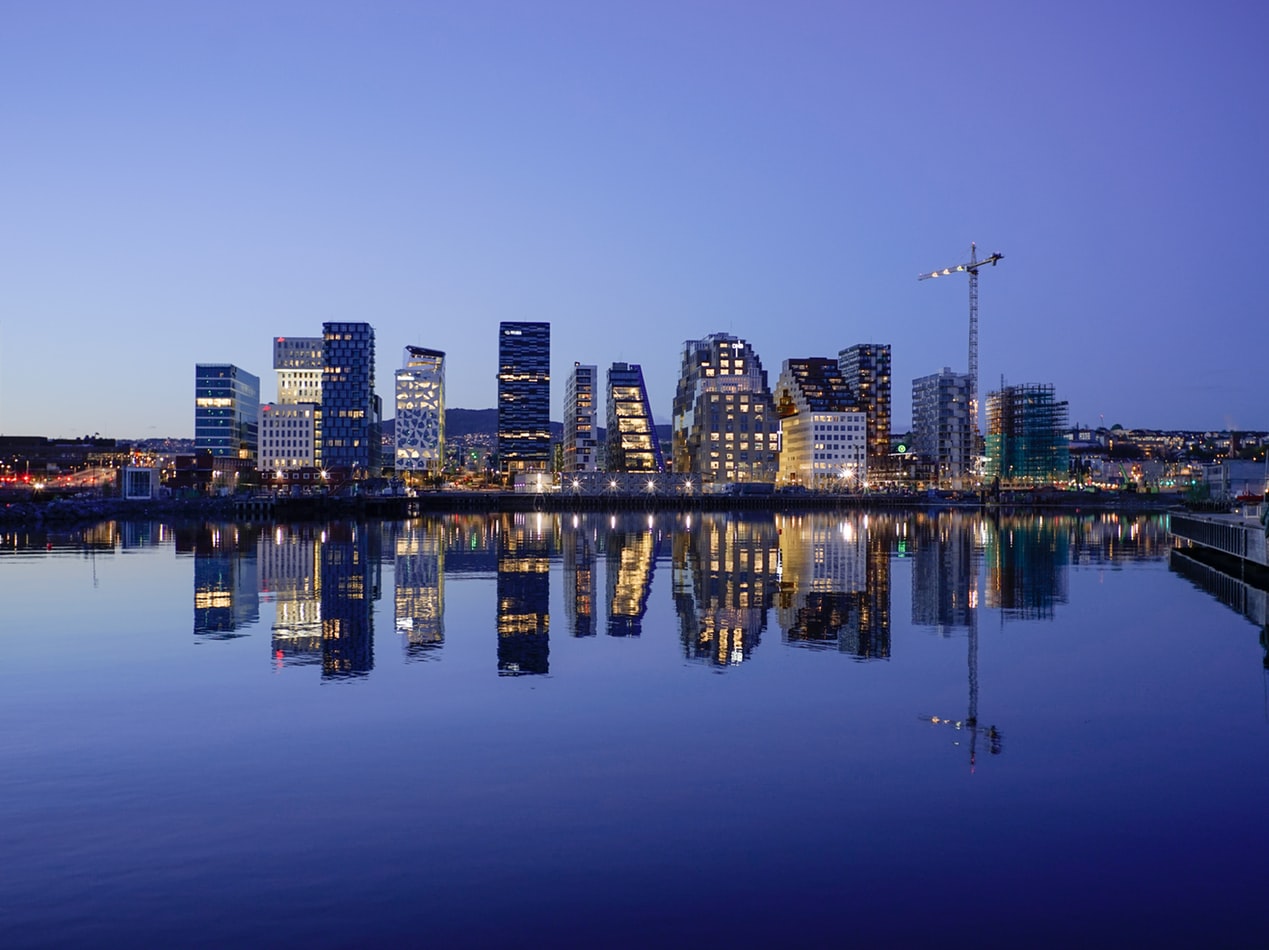
Oslo is the capital of Norway and is also its largest city, situated at the head of Oslo Fjord and surrounded by hills and forests. Home to some 50 museums and full of galleries, cafés, a sculpture park and the Royal Palace, this vibrant city with its handsome 19th-century buildings and wide streets has much to offer. Its history dates back 1,000 years, and includes a rich seafaring heritage that ranges from the Viking era to Thor Heyerdahl’s Kon Tiki expedition. Discover more about this exciting city on our varied selection of excursions.
Skagen, Denmark
Copenhagen, Denmark
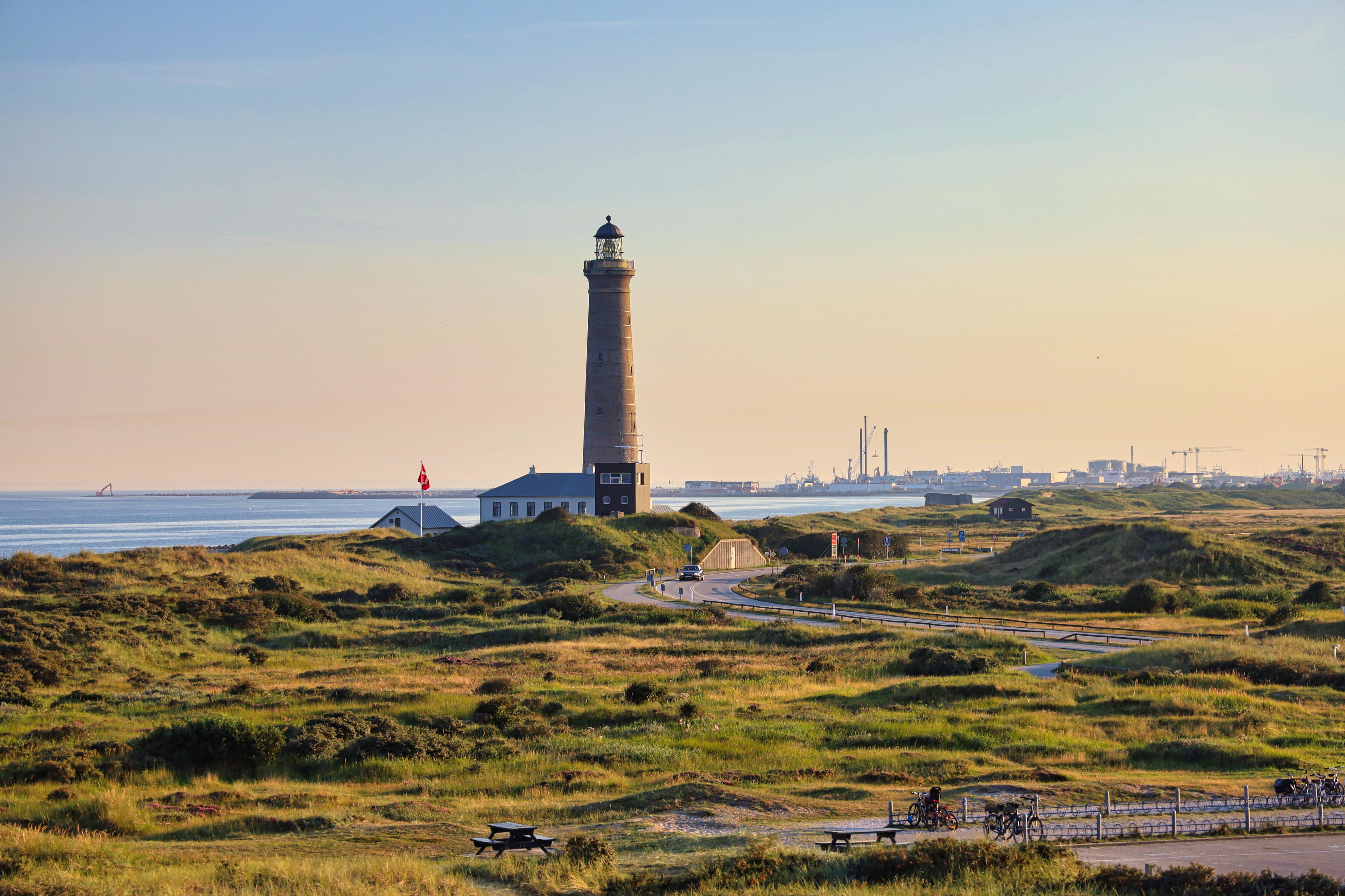
By the 11th century, Copenhagen was already an important trading and fishing centre and today you will find an attractive city which, although the largest in Scandinavia, has managed to retain its low-level skyline. Discover some of the famous attractions including Gefion Fountain and Amalienborg Palace, perhaps cruise the city’s waterways, visit Rosenborg Castle or explore the medieval fishing village of Dragoer. Once the home of Hans Christian Andersen, Copenhagen features many reminders of its fairytale heritage and lives up to the reputation immortalised in the famous song ‘Wonderful Copenhagen’.
Gdansk, Poland
Liepaja, Latvia
Tallinn, Estonia
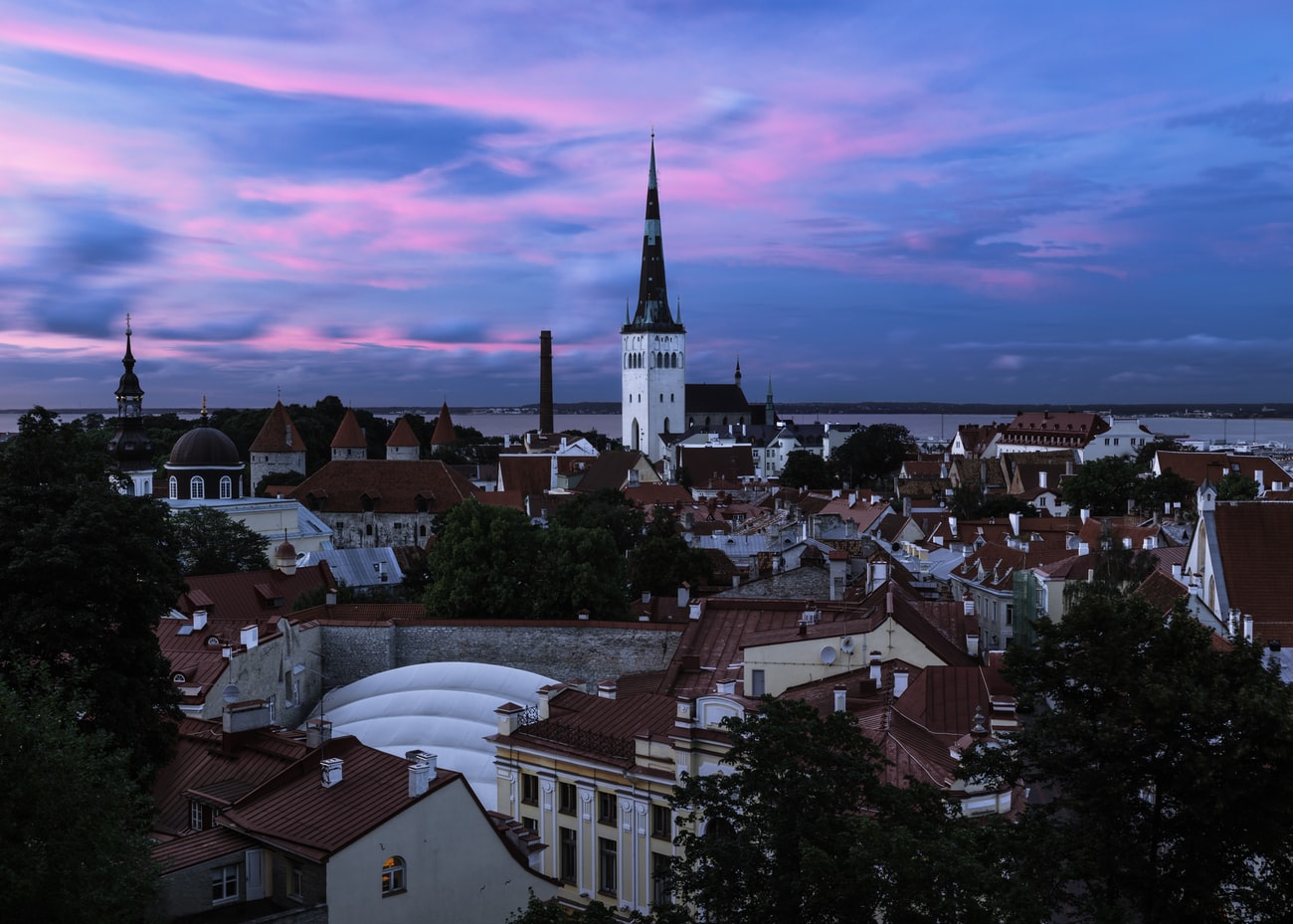
Estonia’s history is sprinkled liberally with long stretches of foreign domination, beginning in 1219 with the Danes, followed without interruption by the Germans, Swedes, and Russians. Only after World War I, with Russia in revolutionary wreckage, was Estonia able to declare its independence. Shortly before World War II, in 1940, that independence was usurped by the Soviets, who—save for a brief three-year occupation by Hitler’s Nazis—proceeded to suppress all forms of national Estonian pride for the next 50 years. Estonia finally regained independence in 1991. In the early 1990s, Estonia’s own Riigikogu (Parliament), not some other nation’s puppet ruler, handed down from the Upper City reforms that forced Estonia to blaze its post-Soviet trail to the European Union. Estonia has been a member of the EU since 2004, and in 2011, the country and its growing economy joined the Eurozone. Tallinn was also named the European City of Culture in 2011, cementing its growing reputation as a cultural hot spot.
Helsinki, Finland
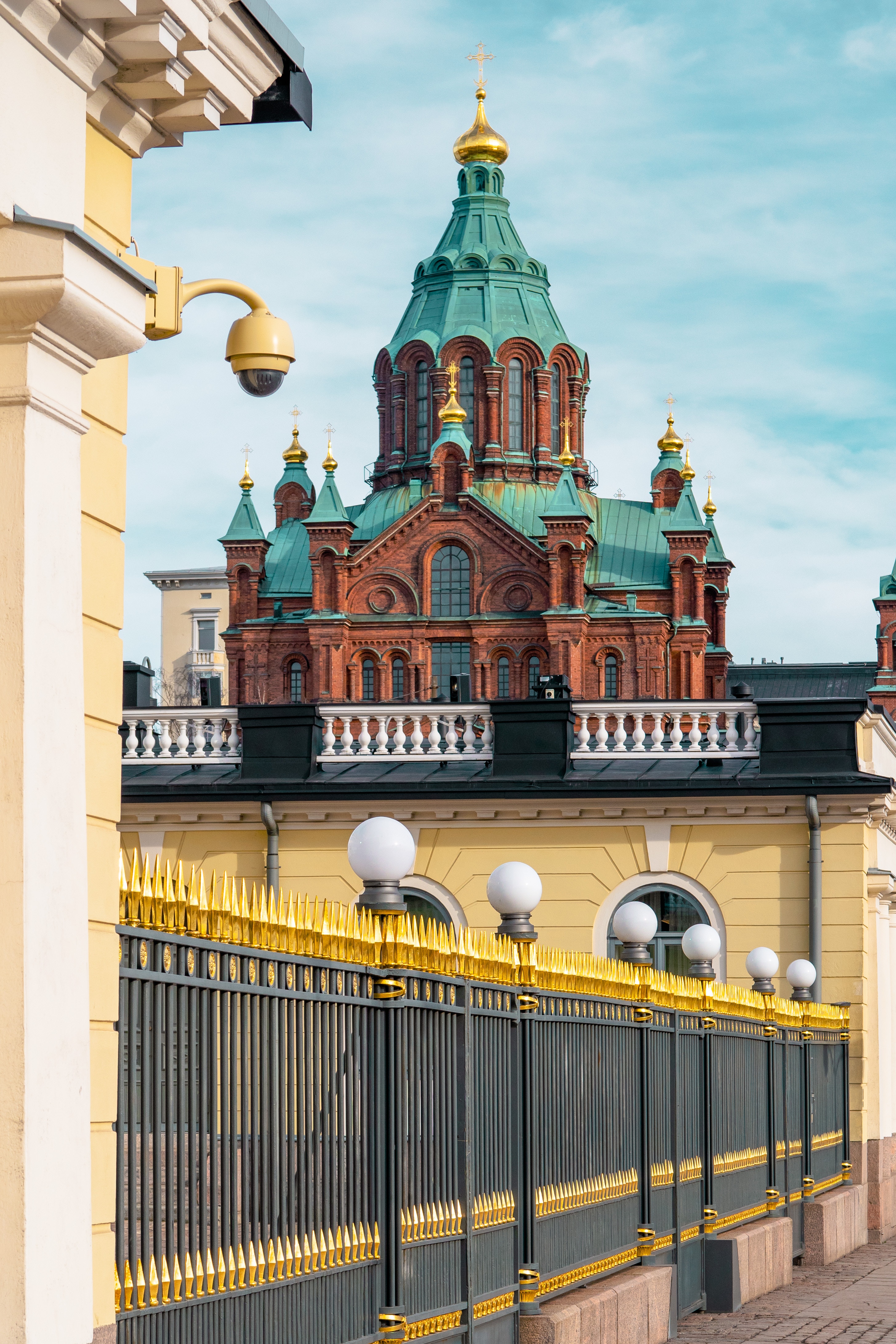
A city of the sea, Helsinki was built along a series of oddly shaped peninsulas and islands jutting into the Baltic coast along the Gulf of Finland. Streets and avenues curve around bays, bridges reach to nearby islands, and ferries ply among offshore islands.Having grown dramatically since World War II, Helsinki now absorbs more than one-tenth of the Finnish population. The metro area covers 764 square km (474 square miles) and 315 islands. Most sights, hotels, and restaurants cluster on one peninsula, forming a compact central hub. The greater Helsinki metropolitan area, which includes Espoo and Vantaa, has a total population of more than a million people.Helsinki is a relatively young city compared with other European capitals. In the 16th century, King Gustav Vasa of Sweden decided to woo trade from the Estonian city of Tallinn and thus challenge the Hanseatic League’s monopoly on Baltic trade. Accordingly, he commanded the people of four Finnish towns to pack up their belongings and relocate to the rapids on the River Vantaa. The new town, founded on June 12, 1550, was named Helsinki.For three centuries, Helsinki (Helsingfors in Swedish) had its ups and downs as a trading town. Turku, to the west, remained Finland’s capital and intellectual center. However, Helsinki’s fortunes improved when Finland fell under Russian rule as an autonomous grand duchy. Czar Alexander I wanted Finland’s political center closer to Russia and, in 1812, selected Helsinki as the new capital. Shortly afterward, Turku suffered a disastrous fire, forcing the university to move to Helsinki. The town’s future was secure.Just before the czar’s proclamation, a fire destroyed many of Helsinki’s traditional wooden structures, precipitating the construction of new buildings suitable for a nation’s capital. The German-born architect Carl Ludvig Engel was commissioned to rebuild the city, and as a result, Helsinki has some of the purest neoclassical architecture in the world. Add to this foundation the influence of Stockholm and St. Petersburg with the local inspiration of 20th-century Finnish design, and the result is a European capital city that is as architecturally eye-catching as it is distinct from other Scandinavian capitals. You are bound to discover endless engaging details—a grimacing gargoyle; a foursome of males supporting a balcony’s weight on their shoulders; a building painted in striking colors with contrasting flowers in the windows. The city’s 400 or so parks make it particularly inviting in summer.Today, Helsinki is still a meeting point of eastern and western Europe, which is reflected in its cosmopolitan image, the influx of Russians and Estonians, and generally multilingual population. Outdoor summer bars (“terrassit” as the locals call them) and cafés in the city center are perfect for people watching on a summer afternoon.
Oslo, Norway
Oslo is the capital of Norway and is also its largest city, situated at the head of Oslo Fjord and surrounded by hills and forests. Home to some 50 museums and full of galleries, cafés, a sculpture park and the Royal Palace, this vibrant city with its handsome 19th-century buildings and wide streets has much to offer. Its history dates back 1,000 years, and includes a rich seafaring heritage that ranges from the Viking era to Thor Heyerdahl’s Kon Tiki expedition. Discover more about this exciting city on our varied selection of excursions.
Skagen, Denmark
Copenhagen, Denmark
By the 11th century, Copenhagen was already an important trading and fishing centre and today you will find an attractive city which, although the largest in Scandinavia, has managed to retain its low-level skyline. Discover some of the famous attractions including Gefion Fountain and Amalienborg Palace, perhaps cruise the city’s waterways, visit Rosenborg Castle or explore the medieval fishing village of Dragoer. Once the home of Hans Christian Andersen, Copenhagen features many reminders of its fairytale heritage and lives up to the reputation immortalised in the famous song ‘Wonderful Copenhagen’.
Gdansk, Poland
Liepaja, Latvia
Tallinn, Estonia
Estonia’s history is sprinkled liberally with long stretches of foreign domination, beginning in 1219 with the Danes, followed without interruption by the Germans, Swedes, and Russians. Only after World War I, with Russia in revolutionary wreckage, was Estonia able to declare its independence. Shortly before World War II, in 1940, that independence was usurped by the Soviets, who—save for a brief three-year occupation by Hitler’s Nazis—proceeded to suppress all forms of national Estonian pride for the next 50 years. Estonia finally regained independence in 1991. In the early 1990s, Estonia’s own Riigikogu (Parliament), not some other nation’s puppet ruler, handed down from the Upper City reforms that forced Estonia to blaze its post-Soviet trail to the European Union. Estonia has been a member of the EU since 2004, and in 2011, the country and its growing economy joined the Eurozone. Tallinn was also named the European City of Culture in 2011, cementing its growing reputation as a cultural hot spot.
Helsinki, Finland
A city of the sea, Helsinki was built along a series of oddly shaped peninsulas and islands jutting into the Baltic coast along the Gulf of Finland. Streets and avenues curve around bays, bridges reach to nearby islands, and ferries ply among offshore islands.Having grown dramatically since World War II, Helsinki now absorbs more than one-tenth of the Finnish population. The metro area covers 764 square km (474 square miles) and 315 islands. Most sights, hotels, and restaurants cluster on one peninsula, forming a compact central hub. The greater Helsinki metropolitan area, which includes Espoo and Vantaa, has a total population of more than a million people.Helsinki is a relatively young city compared with other European capitals. In the 16th century, King Gustav Vasa of Sweden decided to woo trade from the Estonian city of Tallinn and thus challenge the Hanseatic League’s monopoly on Baltic trade. Accordingly, he commanded the people of four Finnish towns to pack up their belongings and relocate to the rapids on the River Vantaa. The new town, founded on June 12, 1550, was named Helsinki.For three centuries, Helsinki (Helsingfors in Swedish) had its ups and downs as a trading town. Turku, to the west, remained Finland’s capital and intellectual center. However, Helsinki’s fortunes improved when Finland fell under Russian rule as an autonomous grand duchy. Czar Alexander I wanted Finland’s political center closer to Russia and, in 1812, selected Helsinki as the new capital. Shortly afterward, Turku suffered a disastrous fire, forcing the university to move to Helsinki. The town’s future was secure.Just before the czar’s proclamation, a fire destroyed many of Helsinki’s traditional wooden structures, precipitating the construction of new buildings suitable for a nation’s capital. The German-born architect Carl Ludvig Engel was commissioned to rebuild the city, and as a result, Helsinki has some of the purest neoclassical architecture in the world. Add to this foundation the influence of Stockholm and St. Petersburg with the local inspiration of 20th-century Finnish design, and the result is a European capital city that is as architecturally eye-catching as it is distinct from other Scandinavian capitals. You are bound to discover endless engaging details—a grimacing gargoyle; a foursome of males supporting a balcony’s weight on their shoulders; a building painted in striking colors with contrasting flowers in the windows. The city’s 400 or so parks make it particularly inviting in summer.Today, Helsinki is still a meeting point of eastern and western Europe, which is reflected in its cosmopolitan image, the influx of Russians and Estonians, and generally multilingual population. Outdoor summer bars (“terrassit” as the locals call them) and cafés in the city center are perfect for people watching on a summer afternoon.
Stockholm, Sweden
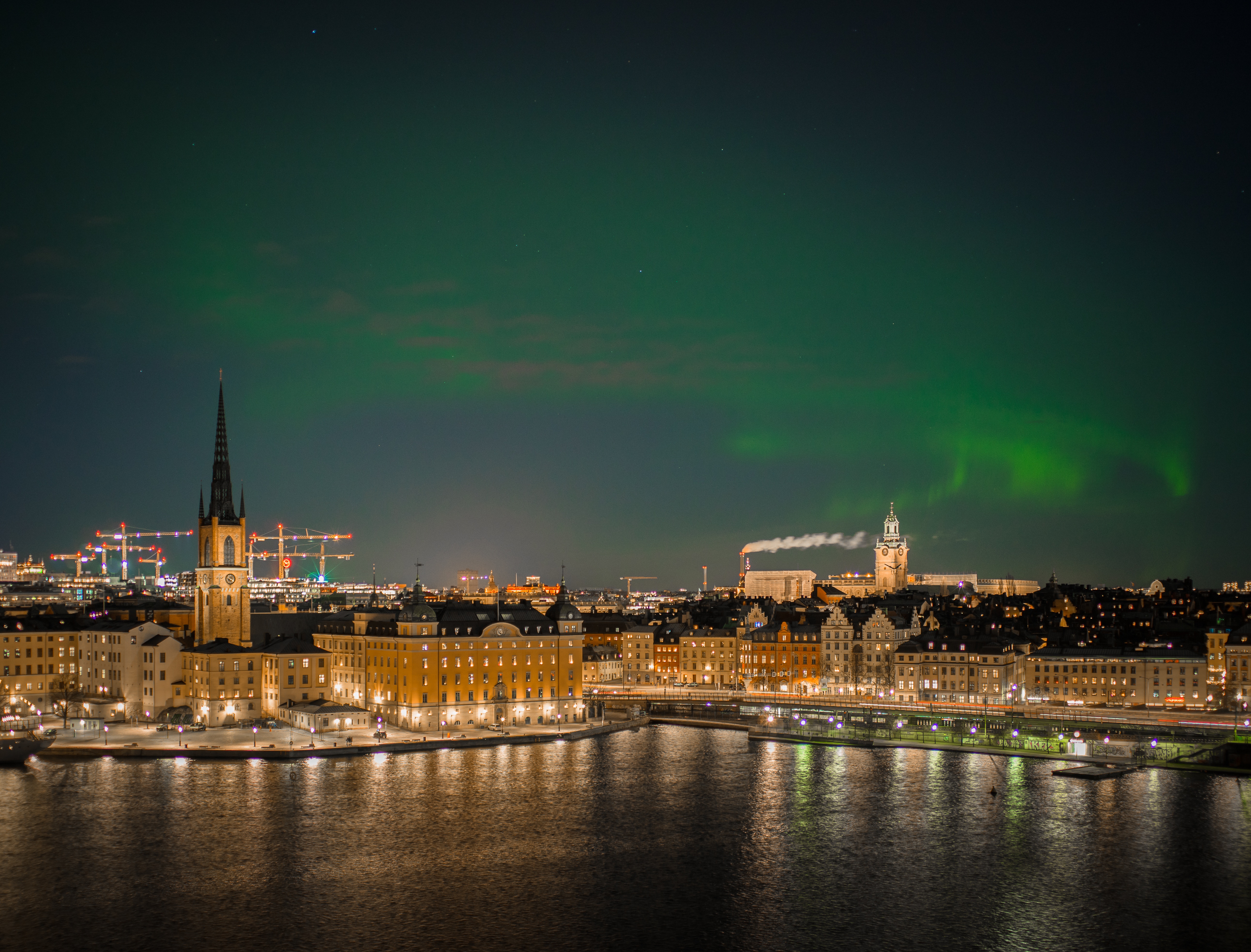
Stockholm is a city in the flush of its second youth. Since the mid-1990s, Sweden’s capital has emerged from its cold, Nordic shadow to take the stage as a truly international city. What started with entry into the European Union in 1995 gained pace with the extraordinary IT boom of the late 1990s, strengthened with the Skype-led IT second wave of 2003, and solidified with the hedge-fund invasion that is still happening today as Stockholm gains even more global confidence. And despite more recent economic turmoil, Stockholm’s 1 million or so inhabitants have, almost as one, realized that their city is one to rival Paris, London, New York, or any other great metropolis.With this realization comes change. Stockholm has become a city of design, fashion, innovation, technology, and world-class food, pairing homegrown talent with an international outlook. The streets are flowing with a young and confident population keen to drink in everything the city has to offer. The glittering feeling of optimism, success, and living in the here and now is rampant in Stockholm.Stockholm also has plenty of history. Positioned where the waters of Lake Mälaren rush into the Baltic, it’s been an important trading site and a wealthy international city for centuries. Built on 14 islands joined by bridges crossing open bays and narrow channels, Stockholm boasts the story of its history in its glorious medieval old town, grand palaces, ancient churches, sturdy edifices, public parks, and 19th-century museums—its history is soaked into the very fabric of its airy boulevards, built as a public display of trading glory.
At Sea
No additional details available for this day.
Warnemünde, Germany
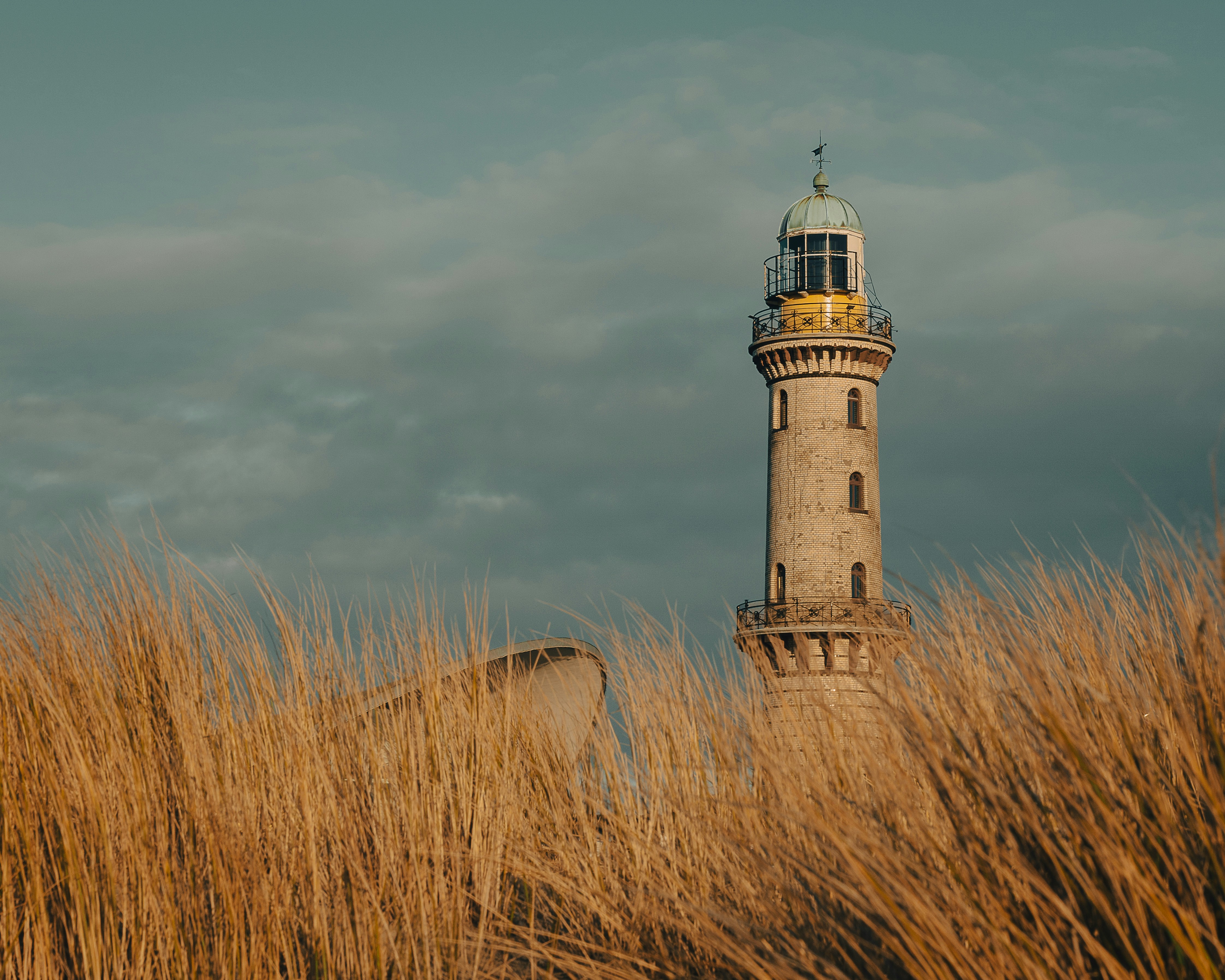
Warnemünde, officially a suburb of Rostock, is a quaint seaside resort town with the best hotels and restaurants in the area, as well as 20 km (12 miles) of beautiful white-sand beach. It’s been a popular summer getaway for families in eastern Germany for years.There is little to do in Warnemünde except relax, and the town excels brilliantly at that. However, Warnemünde is a major cruise-ship terminal. Whenever there is more than one ship at dock, the town explodes with a county fair–like atmosphere, and shops and restaurants stay open until the ships leave at midnight. The city celebrates the dreifache Anlauf, when three ships dock simultaneously, with fireworks.
Cruising Kiel Canal
No additional details available for this day.
IJmuiden, Netherlands
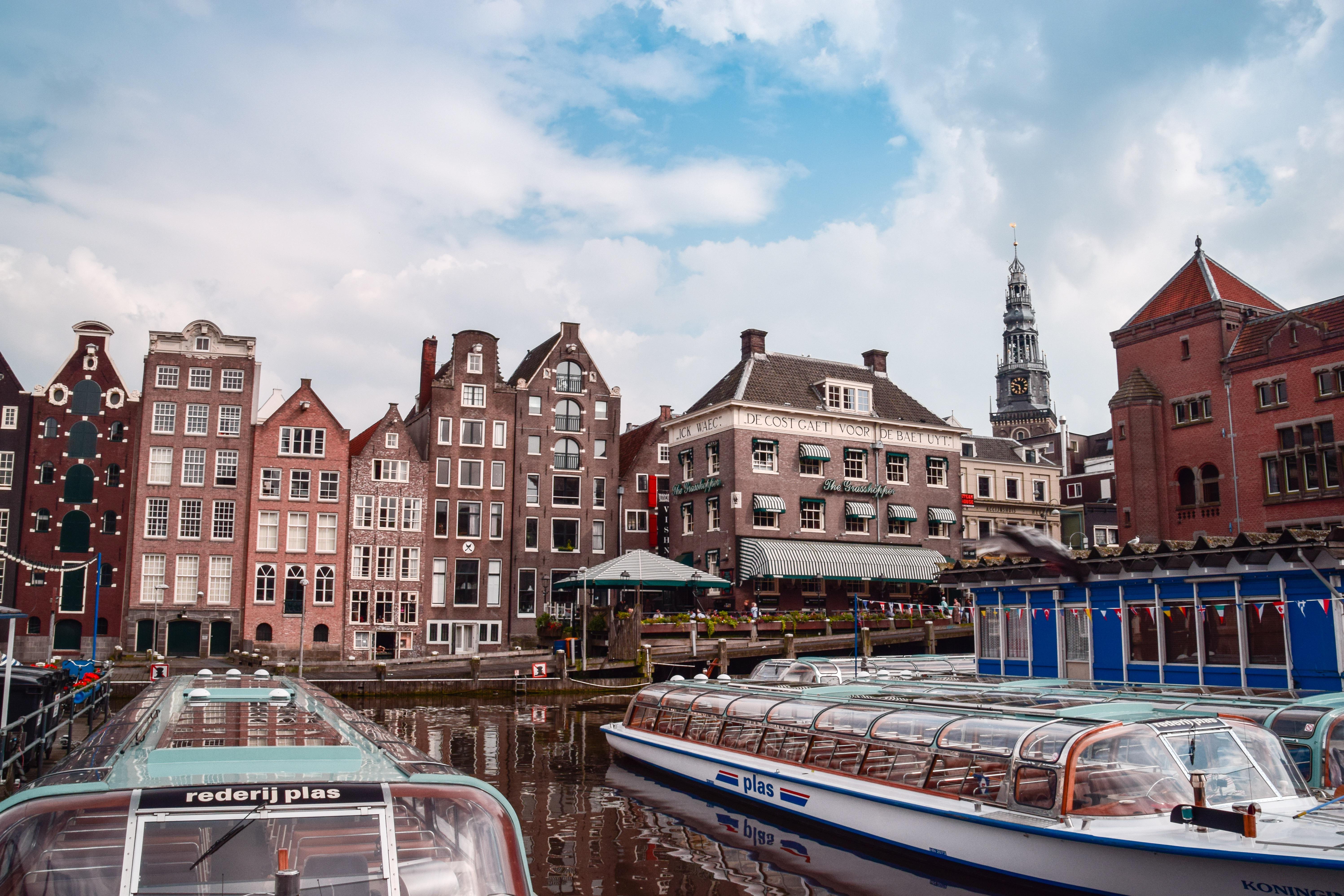
North Holland’s ‘Gate to the North Sea’, IJmuiden has four harbours: the Vissershaven, Haringhaven, IJmondhaven and the Seaport Marina – the latter used by pleasure craft. It is the largest Dutch fishing port, but is a relatively young town: it grew up in the 1870s when the North Sea Canal was opened. During World War II, the German Navy demolished much of the town and built huge fortified concrete bunkers for their torpedo boats and submarines. After 1945, the town was rebuilt by the architect Willem Marinus Dudok. He designed IJmuiden’s most impressive building, the Stadhuis van Velsen, which houses local government offices. For cruise passengers IJmuiden is the gateway to Amsterdam, the Dutch capital and one of Europe’s truly great cities, where elegant canals are lined by old brick gabled houses, and superb art galleries and museums are home to some of the world’s best-known paintings. Please note that complimentary shuttle buses operate from the port to the centre of IJmuiden, not to Amsterdam.
IJmuiden, Netherlands
North Holland’s ‘Gate to the North Sea’, IJmuiden has four harbours: the Vissershaven, Haringhaven, IJmondhaven and the Seaport Marina – the latter used by pleasure craft. It is the largest Dutch fishing port, but is a relatively young town: it grew up in the 1870s when the North Sea Canal was opened. During World War II, the German Navy demolished much of the town and built huge fortified concrete bunkers for their torpedo boats and submarines. After 1945, the town was rebuilt by the architect Willem Marinus Dudok. He designed IJmuiden’s most impressive building, the Stadhuis van Velsen, which houses local government offices. For cruise passengers IJmuiden is the gateway to Amsterdam, the Dutch capital and one of Europe’s truly great cities, where elegant canals are lined by old brick gabled houses, and superb art galleries and museums are home to some of the world’s best-known paintings. Please note that complimentary shuttle buses operate from the port to the centre of IJmuiden, not to Amsterdam.
Tilbury, England
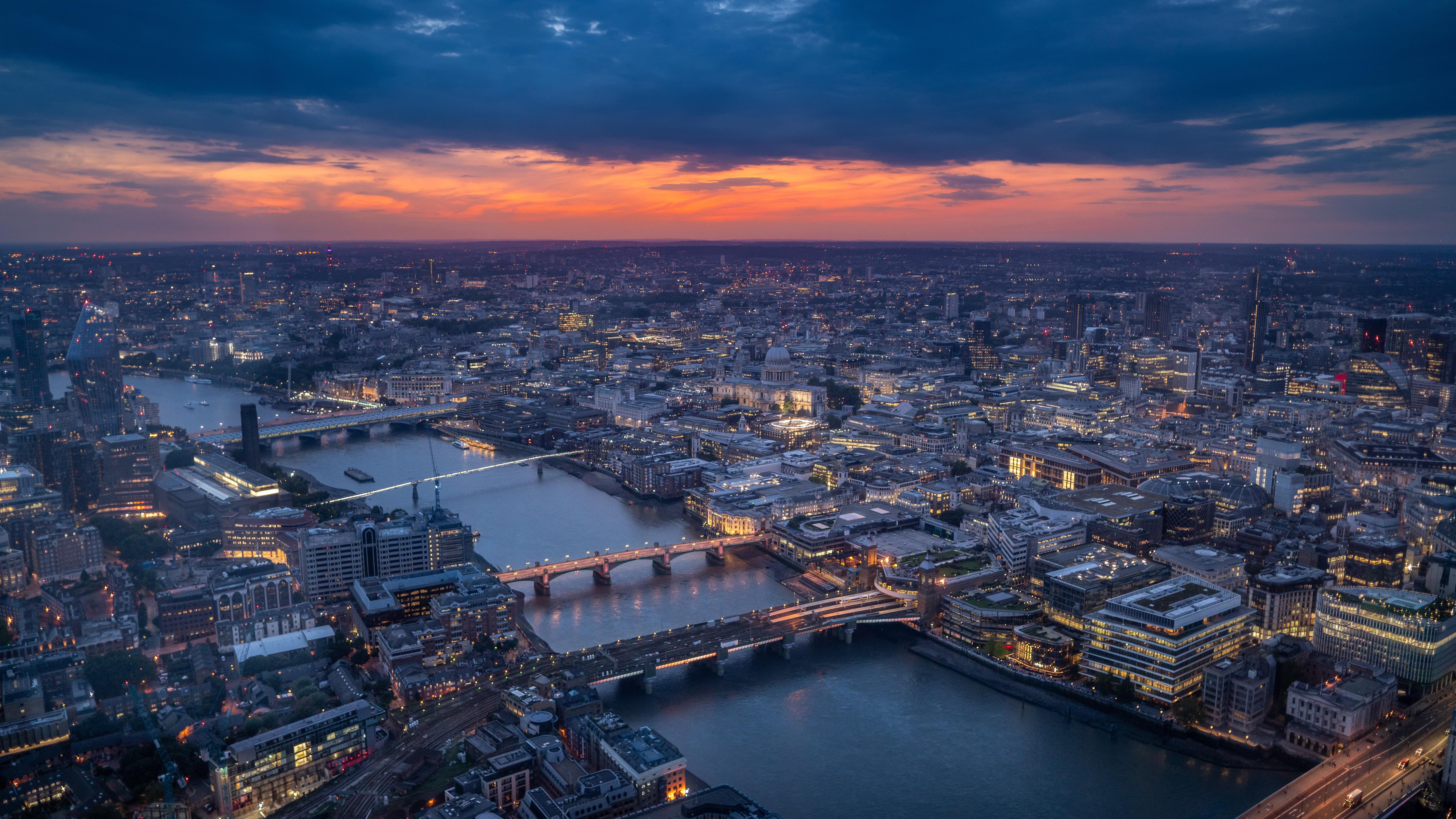
Just 22 nautical miles down river from the Tower Bridge in London, Tilbury is a popular turnaround port for cruises visiting Baltic and Northern European destinations.
Stockholm, Sweden
Stockholm is a city in the flush of its second youth. Since the mid-1990s, Sweden’s capital has emerged from its cold, Nordic shadow to take the stage as a truly international city. What started with entry into the European Union in 1995 gained pace with the extraordinary IT boom of the late 1990s, strengthened with the Skype-led IT second wave of 2003, and solidified with the hedge-fund invasion that is still happening today as Stockholm gains even more global confidence. And despite more recent economic turmoil, Stockholm’s 1 million or so inhabitants have, almost as one, realized that their city is one to rival Paris, London, New York, or any other great metropolis.With this realization comes change. Stockholm has become a city of design, fashion, innovation, technology, and world-class food, pairing homegrown talent with an international outlook. The streets are flowing with a young and confident population keen to drink in everything the city has to offer. The glittering feeling of optimism, success, and living in the here and now is rampant in Stockholm.Stockholm also has plenty of history. Positioned where the waters of Lake Mälaren rush into the Baltic, it’s been an important trading site and a wealthy international city for centuries. Built on 14 islands joined by bridges crossing open bays and narrow channels, Stockholm boasts the story of its history in its glorious medieval old town, grand palaces, ancient churches, sturdy edifices, public parks, and 19th-century museums—its history is soaked into the very fabric of its airy boulevards, built as a public display of trading glory.
At Sea
No additional details available for this day.
Warnemünde, Germany
Warnemünde, officially a suburb of Rostock, is a quaint seaside resort town with the best hotels and restaurants in the area, as well as 20 km (12 miles) of beautiful white-sand beach. It’s been a popular summer getaway for families in eastern Germany for years.There is little to do in Warnemünde except relax, and the town excels brilliantly at that. However, Warnemünde is a major cruise-ship terminal. Whenever there is more than one ship at dock, the town explodes with a county fair–like atmosphere, and shops and restaurants stay open until the ships leave at midnight. The city celebrates the dreifache Anlauf, when three ships dock simultaneously, with fireworks.
Cruising Kiel Canal
No additional details available for this day.
IJmuiden, Netherlands
North Holland’s ‘Gate to the North Sea’, IJmuiden has four harbours: the Vissershaven, Haringhaven, IJmondhaven and the Seaport Marina – the latter used by pleasure craft. It is the largest Dutch fishing port, but is a relatively young town: it grew up in the 1870s when the North Sea Canal was opened. During World War II, the German Navy demolished much of the town and built huge fortified concrete bunkers for their torpedo boats and submarines. After 1945, the town was rebuilt by the architect Willem Marinus Dudok. He designed IJmuiden’s most impressive building, the Stadhuis van Velsen, which houses local government offices. For cruise passengers IJmuiden is the gateway to Amsterdam, the Dutch capital and one of Europe’s truly great cities, where elegant canals are lined by old brick gabled houses, and superb art galleries and museums are home to some of the world’s best-known paintings. Please note that complimentary shuttle buses operate from the port to the centre of IJmuiden, not to Amsterdam.
IJmuiden, Netherlands
North Holland’s ‘Gate to the North Sea’, IJmuiden has four harbours: the Vissershaven, Haringhaven, IJmondhaven and the Seaport Marina – the latter used by pleasure craft. It is the largest Dutch fishing port, but is a relatively young town: it grew up in the 1870s when the North Sea Canal was opened. During World War II, the German Navy demolished much of the town and built huge fortified concrete bunkers for their torpedo boats and submarines. After 1945, the town was rebuilt by the architect Willem Marinus Dudok. He designed IJmuiden’s most impressive building, the Stadhuis van Velsen, which houses local government offices. For cruise passengers IJmuiden is the gateway to Amsterdam, the Dutch capital and one of Europe’s truly great cities, where elegant canals are lined by old brick gabled houses, and superb art galleries and museums are home to some of the world’s best-known paintings. Please note that complimentary shuttle buses operate from the port to the centre of IJmuiden, not to Amsterdam.
Tilbury, England
Just 22 nautical miles down river from the Tower Bridge in London, Tilbury is a popular turnaround port for cruises visiting Baltic and Northern European destinations.
Cabin Options
Ocean View Stateroom
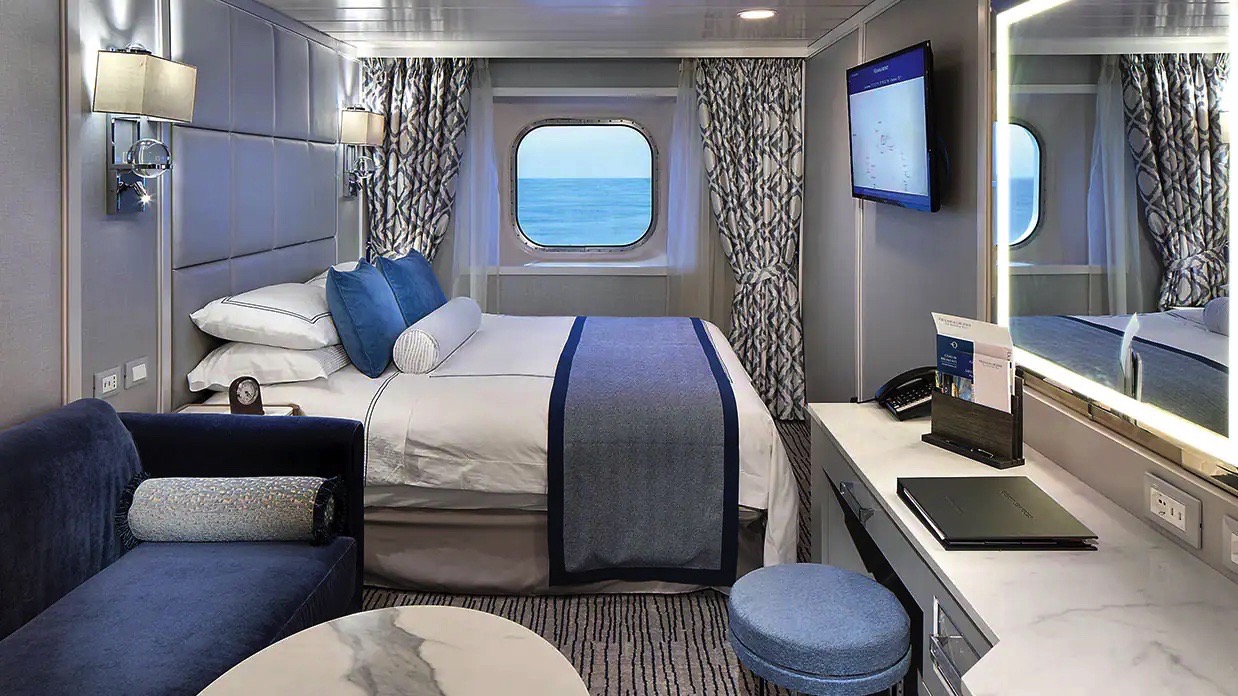
Deluxe Ocean View Stateroom
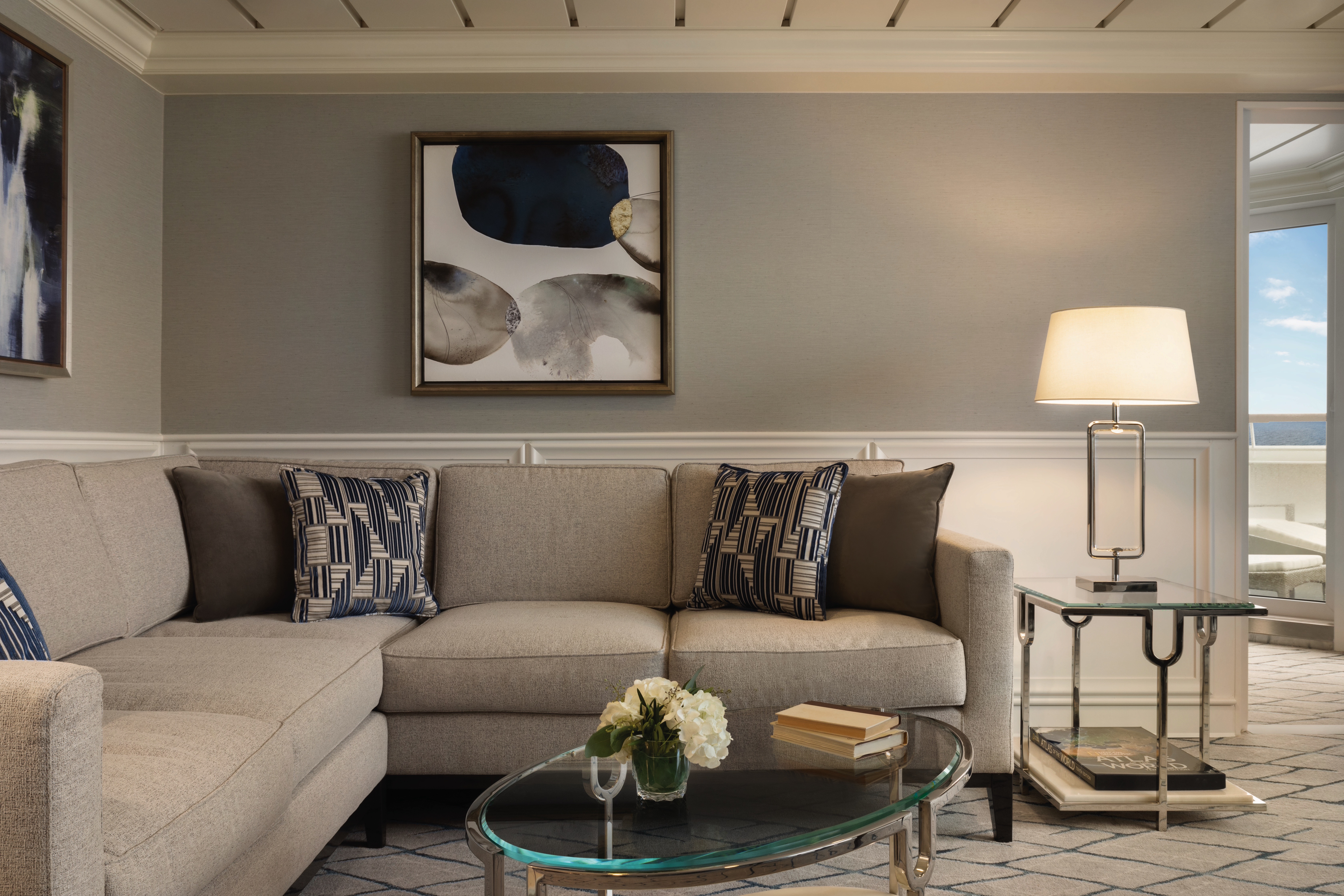
Owner's Suite
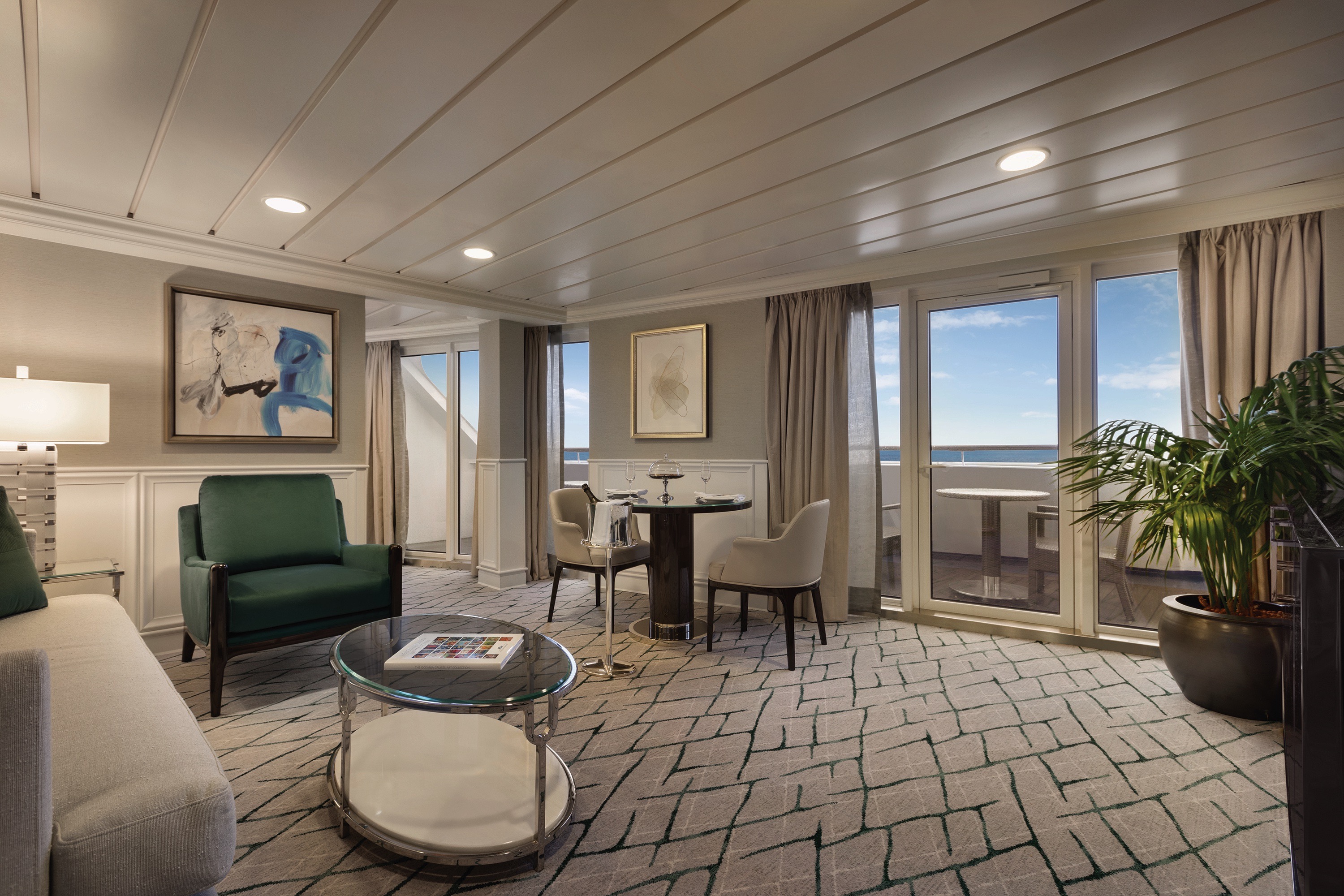
Vista Suite
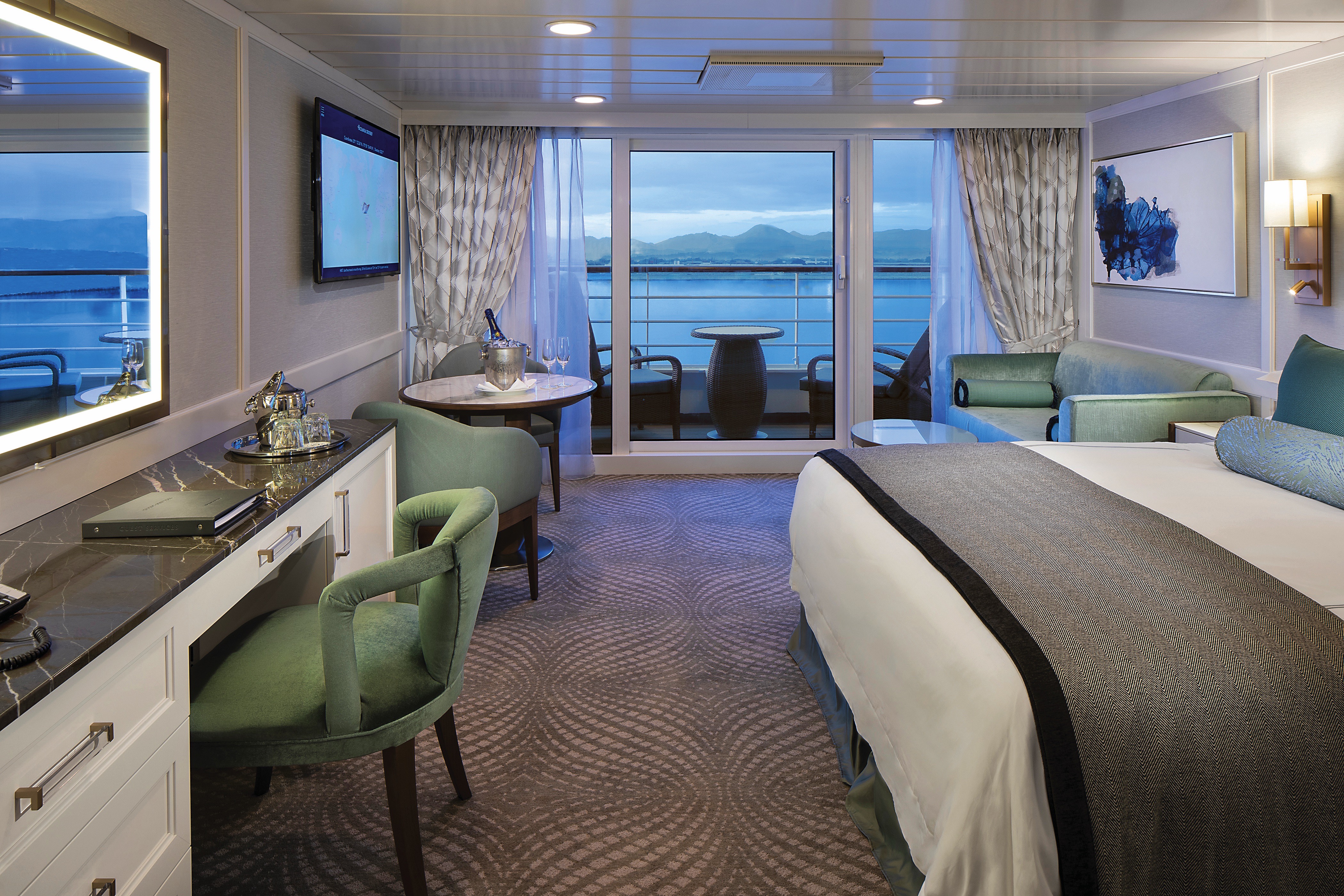
Penthouse Suite
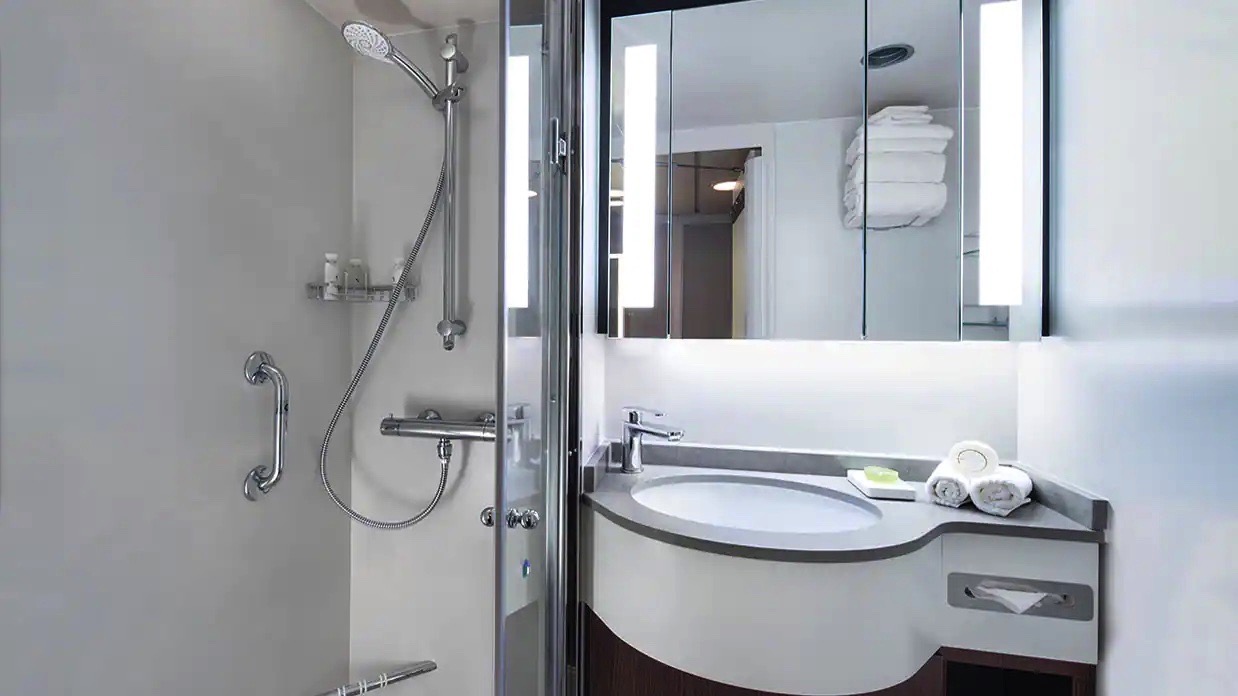
Concierge Level Veranda Stateroom
Veranda Stateroom
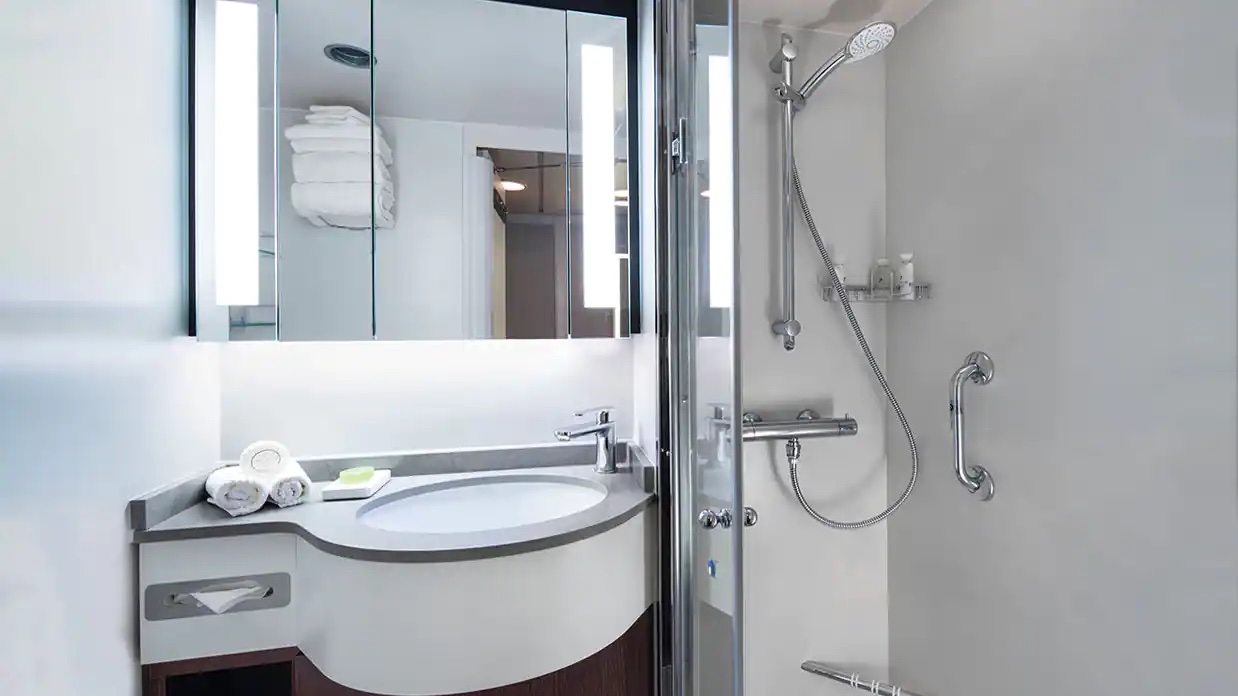
Solo Oceanview Stateroom
Inside Staterooms
Ship Facilities
The Grand Dining Room
AN ELEGANT SETTING
The Grand Dining Room is a study in stateliness, a tribute to the spirit of Europe’s marquee five-star hotel restaurants that inspired its dignified yet convivial ambiance. Handsomely decorated in rich woods, designer tapestry fabrics and oversized armchairs, the expansive dining area exudes classic splendor. This signature dining experience has always offered a bevy of delicious Continental dishes, and now a fresh and new array of options brings you even more exciting choices, as well as an incredible spectrum of global flavors and an all new Executive Chef’s Tasting Menu. As variety is essential to your satisfaction, menus change daily with an expansive choice of at least 10 appetizers, soups and salads and 10 dinner entrées, along with healthy options such as Aquamar Vitality Cuisine, gourmet vegetarian selections and the most extensive array of plant-based dishes at sea.
Open for breakfast, lunch and dinner. No reservations required.
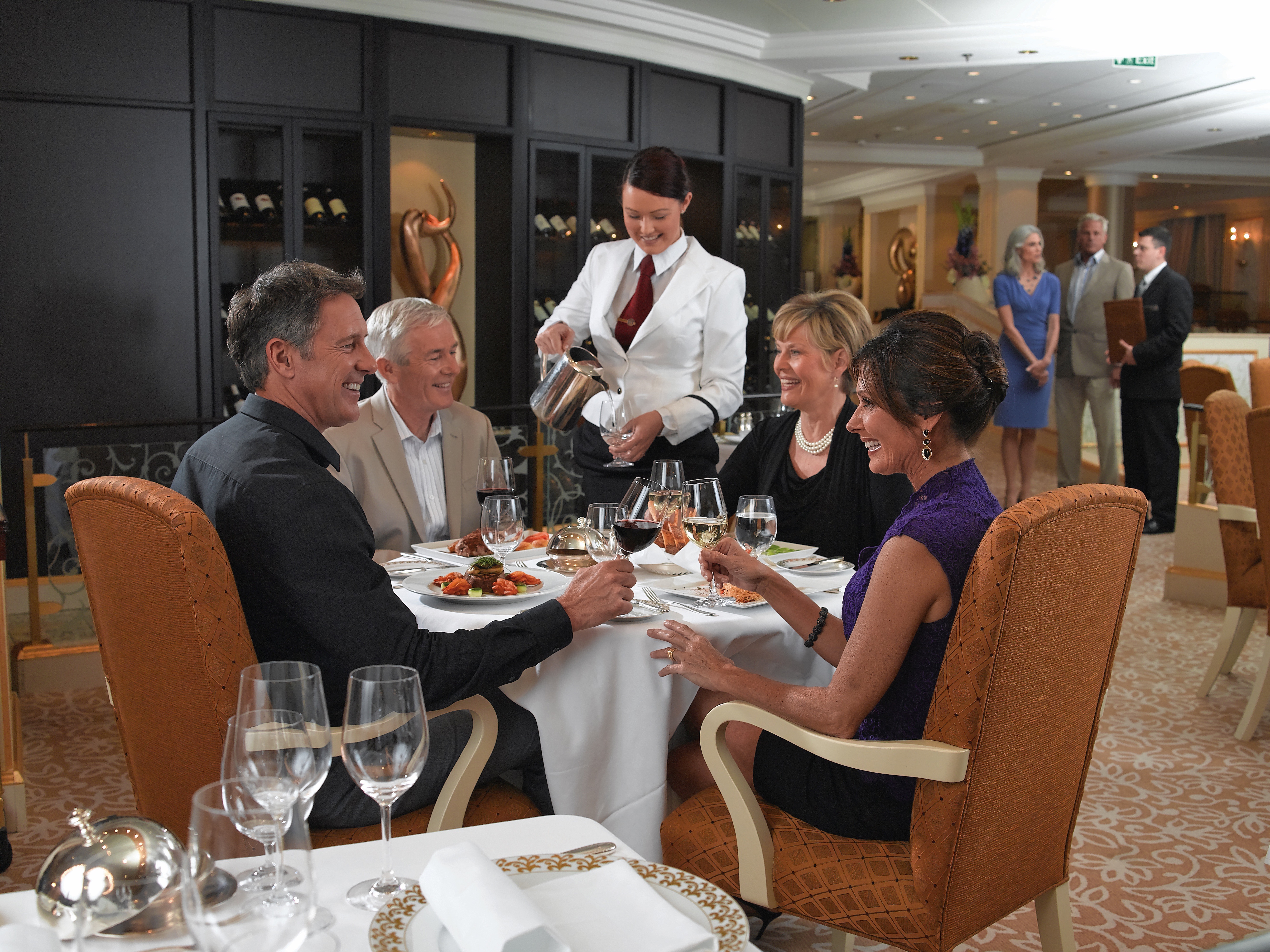
Toscana
AUTHENTIC ITALIAN
Toscana means Tuscan, and just as Tuscan cuisine evolved from rich family traditions, many of our recipes originated with the mothers and grandmothers of our own Italian culinary staff. Presented on elegant, custom-designed Versace china, masterfully prepared dishes exemplify the essence of Tuscany and celebrate Italy’s culinary passion. Perhaps the evening begins with the octopus carpaccio with Champagne vinaigrette or the artichoke and parmesan cheese timbale with black truffle sauce. Classic dishes from other regions of Northern Italy are featured as well, such as the minestrone alla Genovese, lasagna alforno alla Bolognese and osso buco alla Milanese.
Open for dinner only. Reservations are required.
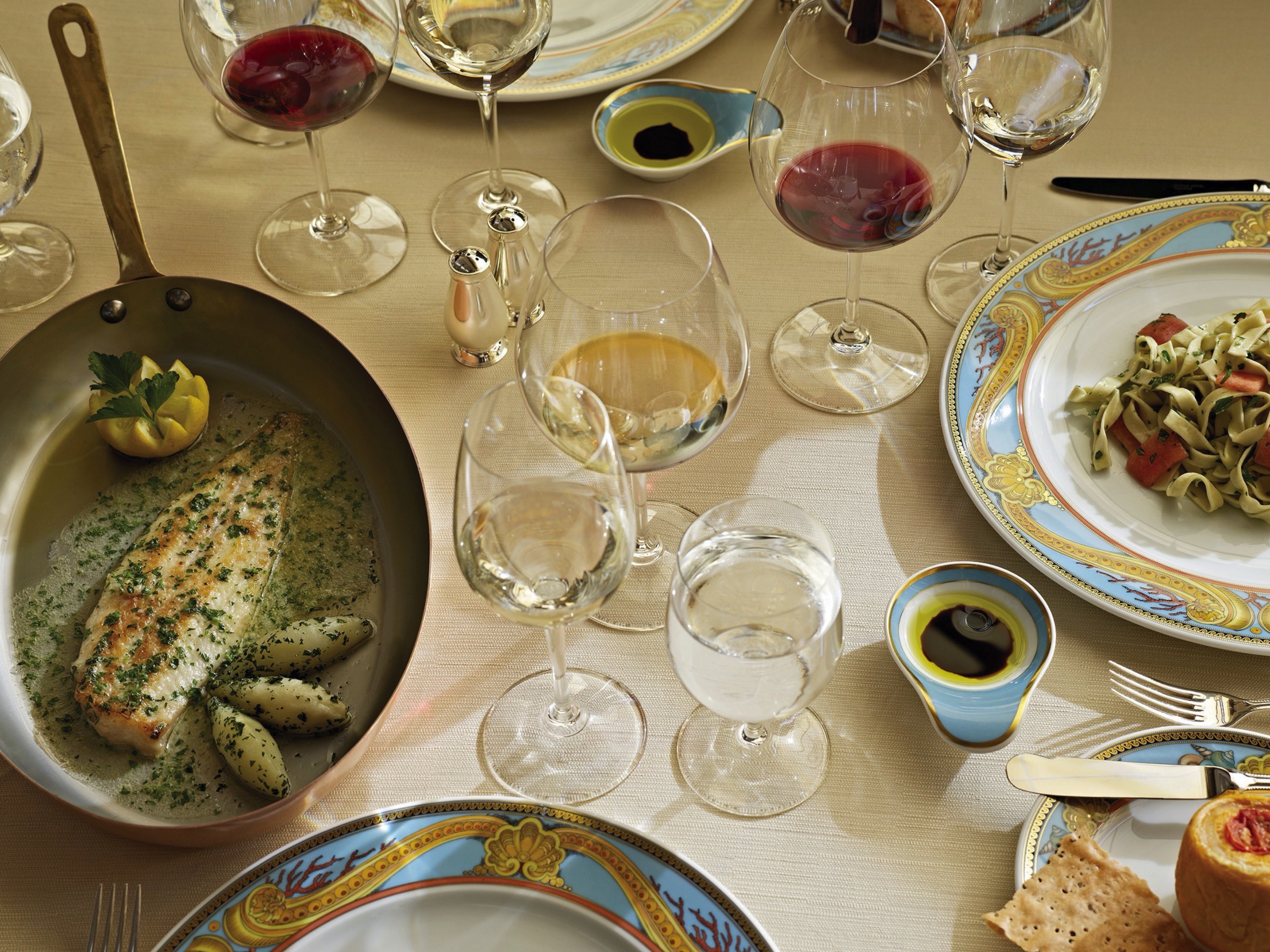
Polo Grill
A CLASSIC STEAKHOUSE
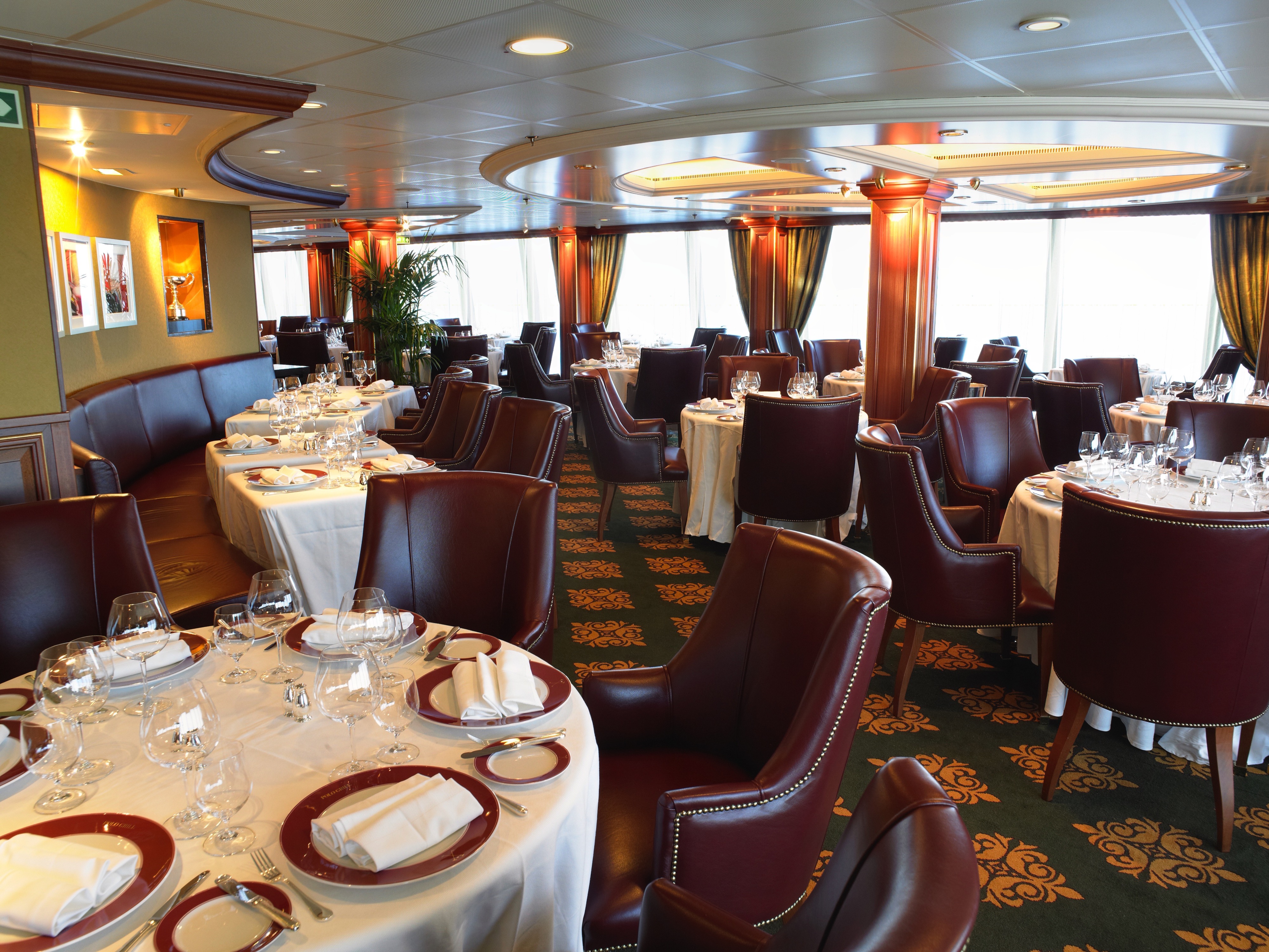
Polo Grill embodies all the elements of a classic steakhouse, expressing them with timeless reverence. Mindful of tradition, the decor features crisp, white linen tablecloths, dark wood furnishings and supple, high-back, burgundy leather chairs. Each course stands as the very definition of time-honored favorites, most notably the beef dishes, all of which are certified Black Angus USDA Prime and dry aged to enhance tenderness and flavor. Succulent seafood dishes such as grilled swordfish and whole Maine lobster gratinée are also classics in their own right. The classic Caesar salad, too, is prepared according to tradition, tableside and with gusto.
Open for dinner only. Reservations are required.
Terrace Café
INFORMAL DINING
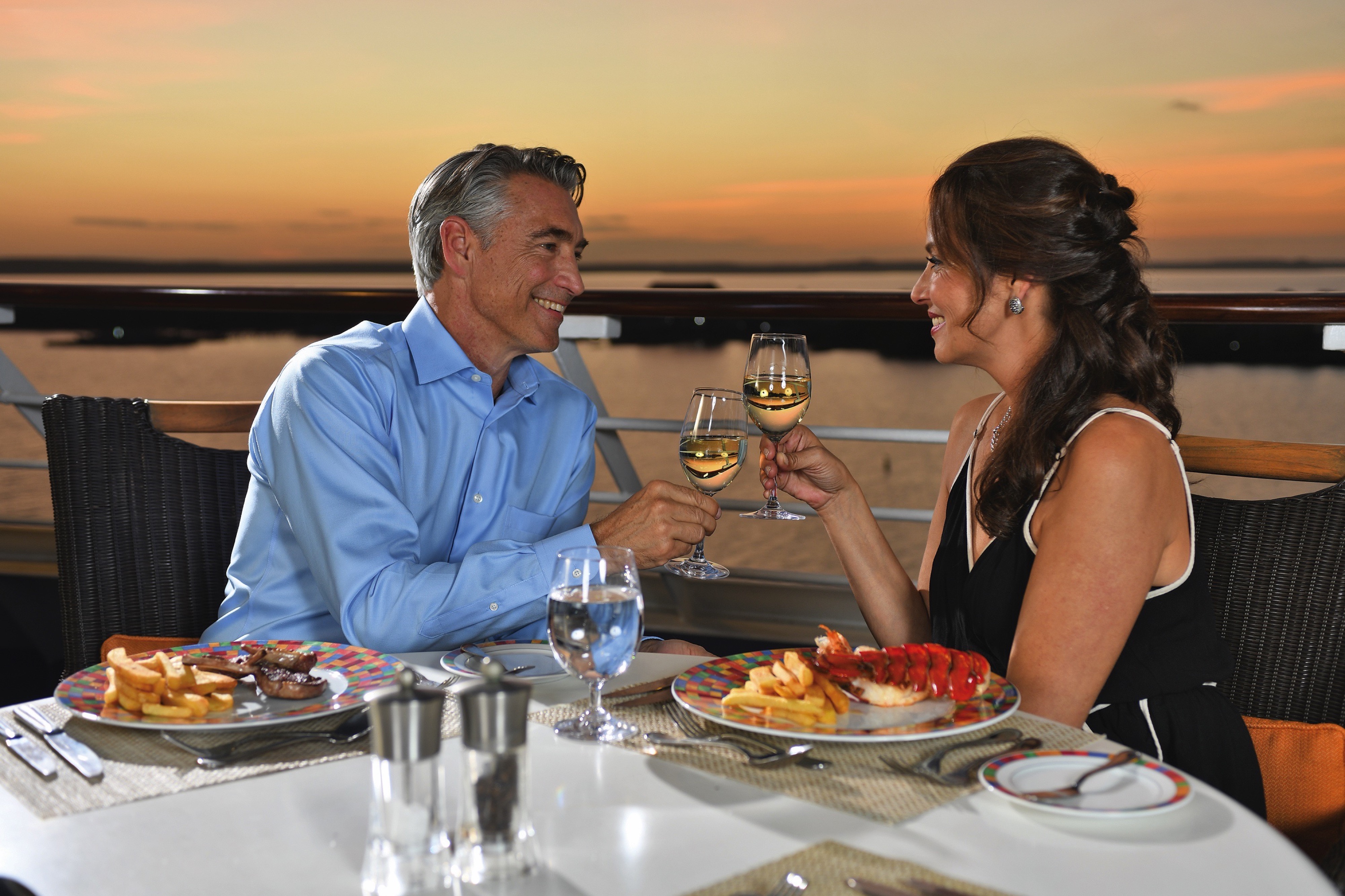
Informal and carefree, the Terrace Café is wonderfully inviting any time of day. During breakfast, the room is infused with natural sunlight from the floor-to-ceiling windows, stimulating the appetite for the sumptuous selections. Come lunch, the expansive menu of international-inspired dishes changes entirely, complemented by a flavorful roast and the magic of the pizzeria’s oven. Dine inside or alfresco at one of the shaded teak tables on the terrace. During the evenings, the cuisine takes on a more sophisticated flair, with lobster tails, chops and fresh fish prepared to order, and freshly made hand-cut sushi and sashimi. In addition, a diverse selection of bold and flavorful plant-based dishes is available.
Open for breakfast, lunch and dinner. No reservations required.
Waves Grill
ALFRESCO DINING
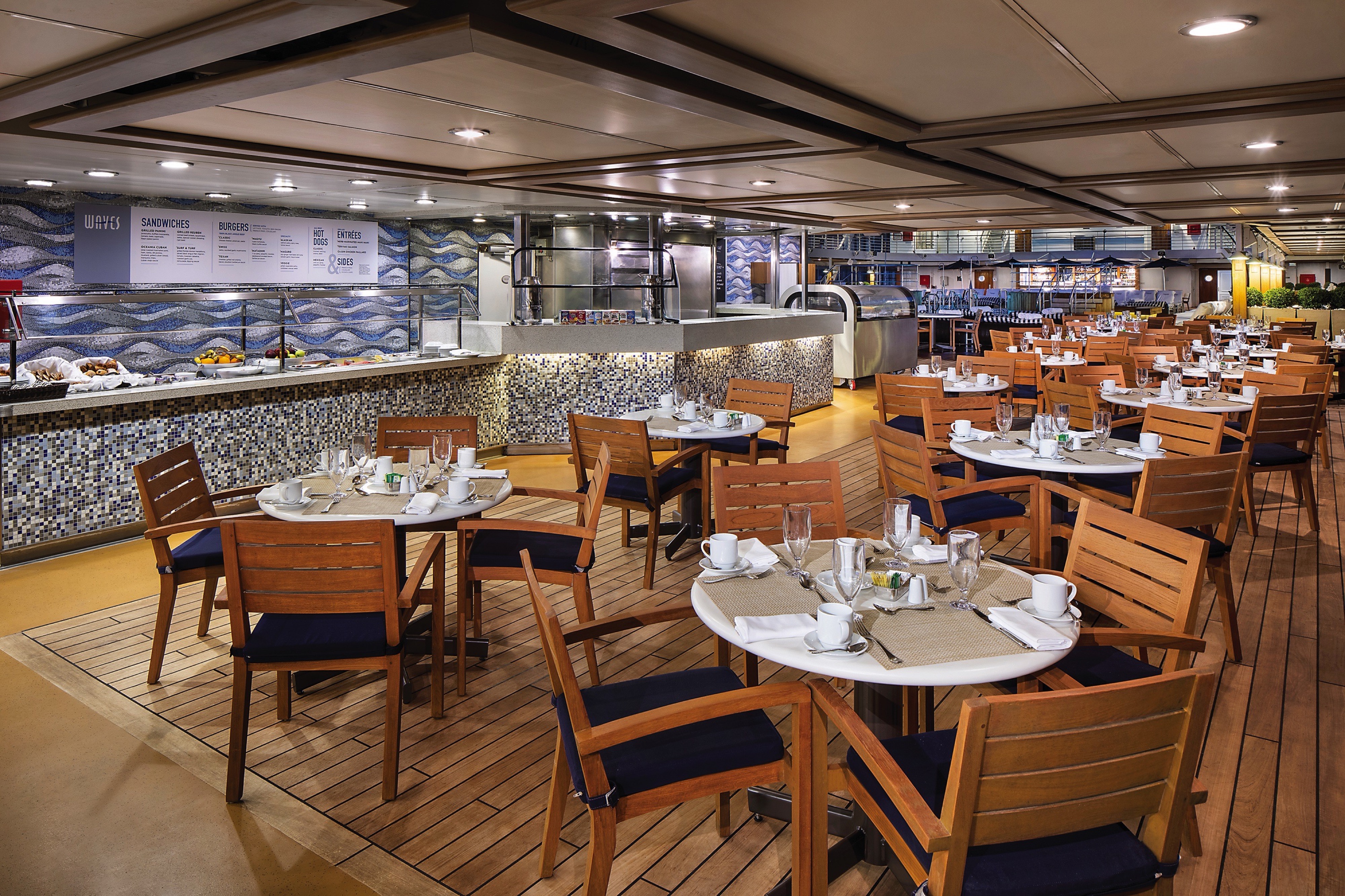
Sometimes, the ultimate luxury is casual dining on all-American favorites, a laid-back style Waves Grill epitomizes. Located in a spacious, shaded area steps from the swimming pool, Waves Grill offers an extensive and mouthwatering menu. Then try a decadent dessert such as a homemade passion fruit sorbet, a made-to-order hot fudge sundae, a hand-dipped milkshake or one of the new, whimsical ice cream flavors by Humphry Slocombe, such as Secret Breakfast, Elvis (the Fat Years) or our signature flavor, Regatta Royale.
Open for lunch and afternoon dining only. No reservations required.
Afternoon Tea
TIME-HONOURED PASTIME
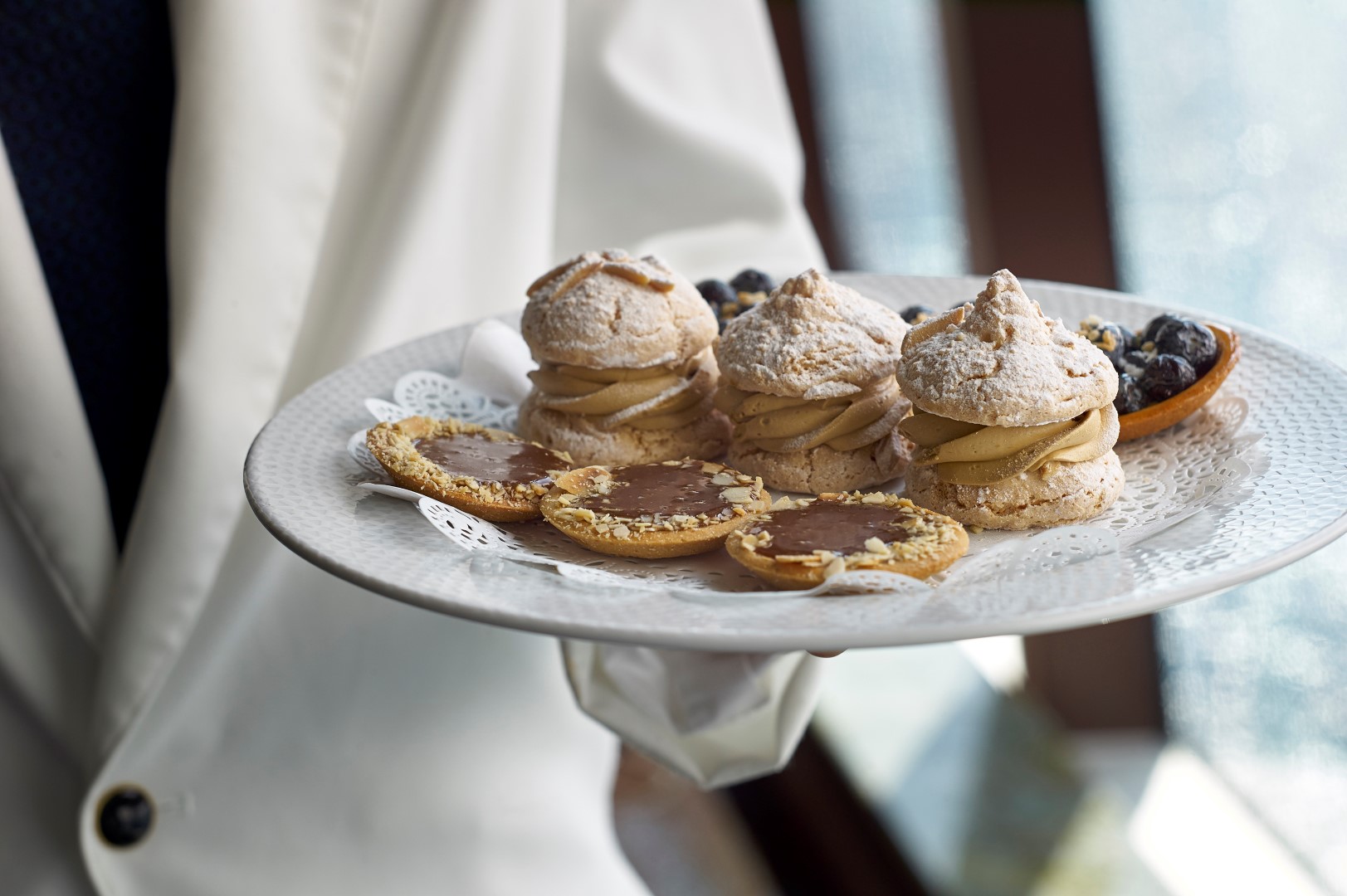
Each afternoon, the parade of gleaming four-tiered pastry carts begins. Savor freshly made, flavorful smoked salmon and egg salad finger sandwiches. Enjoy mirror-glazed petits fours, tender scones with rich clotted cream and, of course, a wide assortment of fine teas. Soak in the ambiance of polished silver teapots reflecting the turquoise sea, the precision of white-gloved servers and the amusing enigma of a string quartet playing softly in the background. You’ll quickly realize that this is how afternoon tea should be.
Check your daily Currents for time and venue. No reservations required.
Baristas
A Neighborhood Gem
This delightful coffee bar is a favorite stop for java lovers. Enjoy complimentary illy® espressos, cappuccinos and lattes prepared by our master baristas, as well as the delicious pastries, finger sandwiches and homemade biscotti that draw so many to Baristas throughout the day.
Open daily until early evening. No reservations required.
Room Service
In-Room Dining Experiences
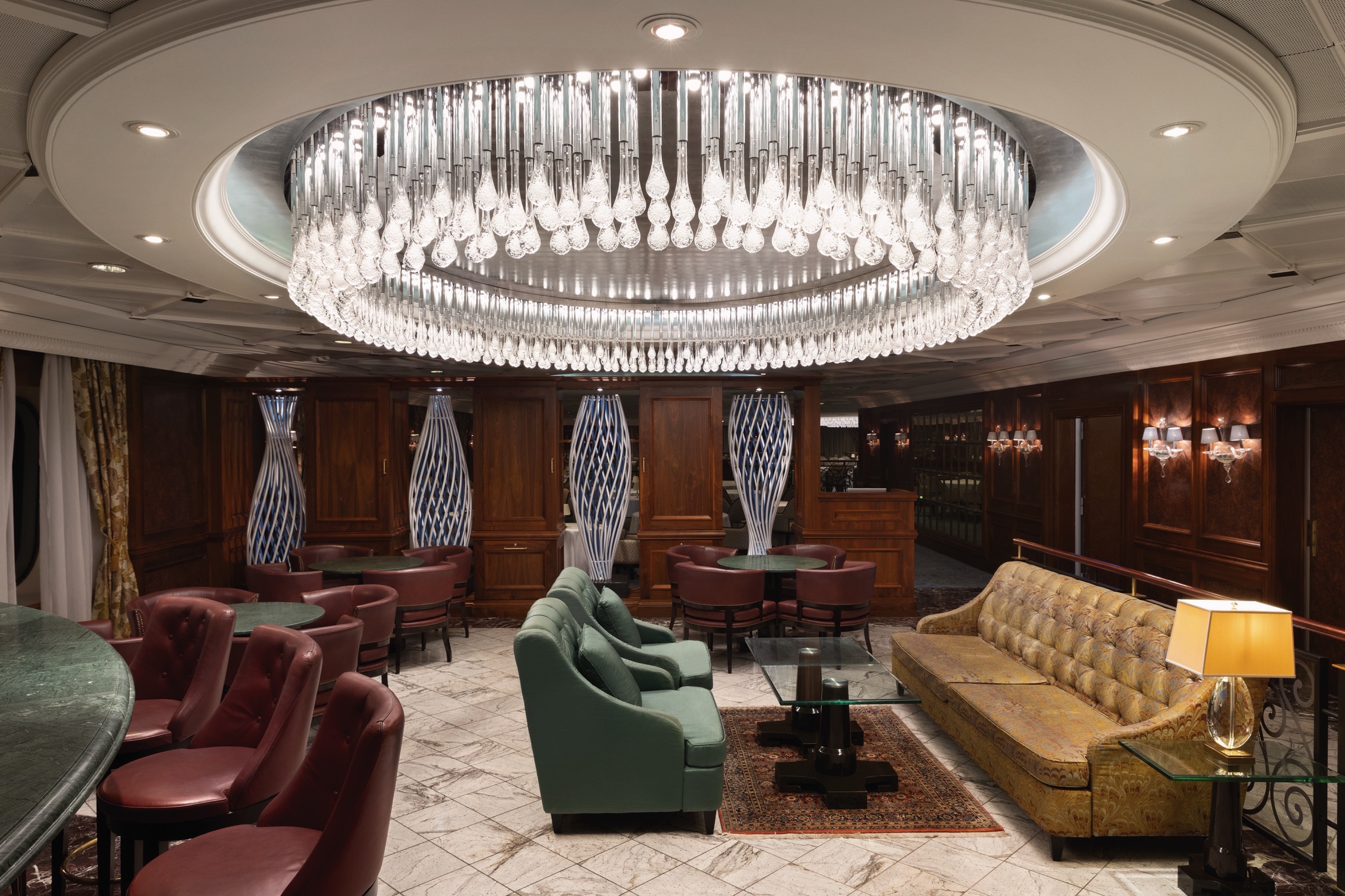
After a day of enriching adventures ashore or an enjoyable day on board, dining in the privacy of your suite or stateroom with our compliments is always a welcome possibility. A complete menu of varied dining experiences is available around the clock, featuring an extensive array of delectable breakfast, lunch and dinner items. All suites and staterooms have the added luxury of enjoying a full, hot breakfast in-room and those staying in Concierge Level or above have the additional privilege of ordering from an expanded lunch and dinner room service menu from The Grand Dining Room. Suite guests have the ultimate indulgence of enjoying course-by-course meals from the comfort of their spacious sanctuaries. Revel in the private luxury of your suite or stateroom, and enjoy an exquisite meal on your tranquil veranda as you take in spectacular seascapes.
Shore Excursions
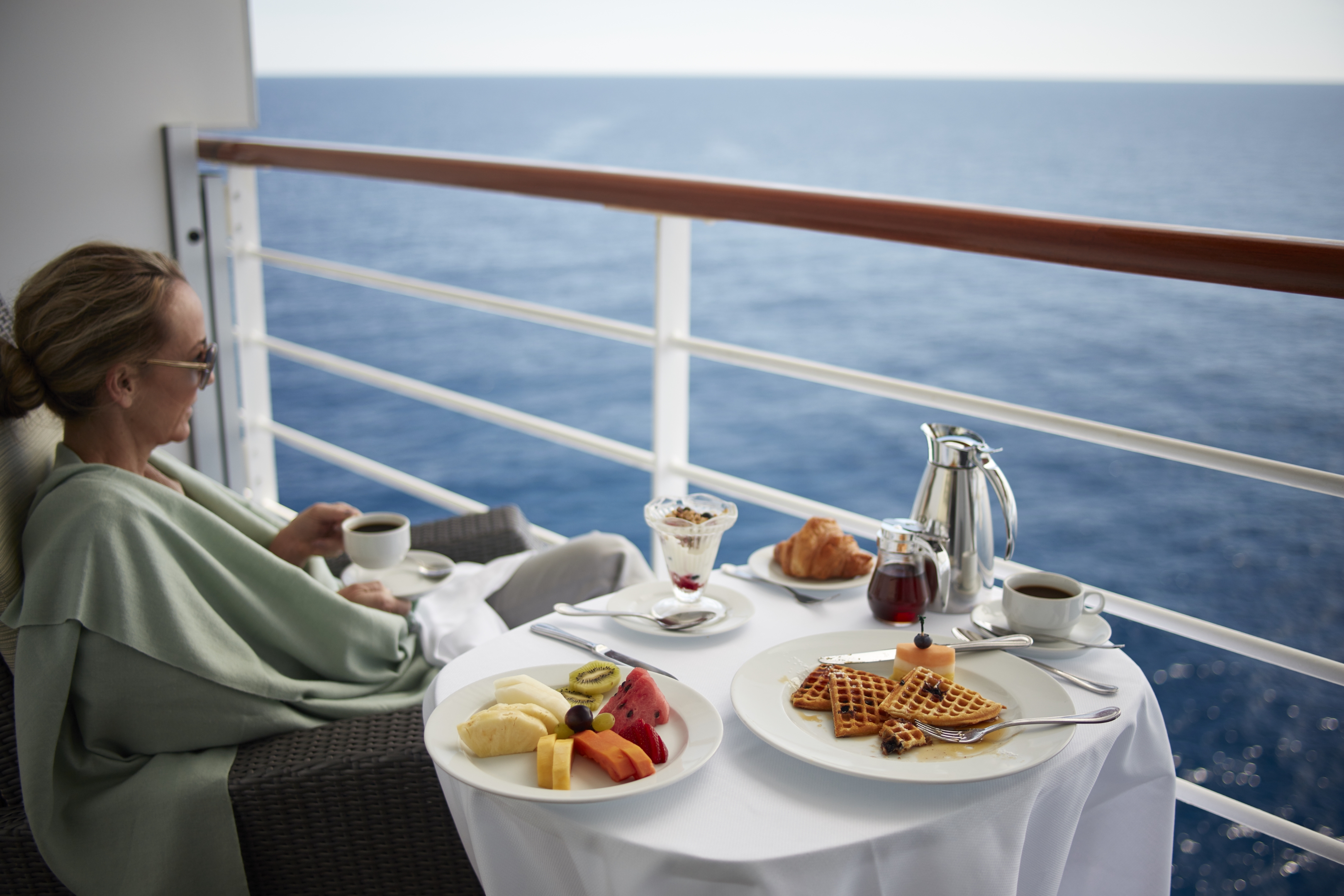
With more than 8,000 tours and excursions to choose from, we’ll help deepen your exploration of our fantastic locales in our Oceania Cruises way. Through a number of specialty tours and an expert team of destination specialists, transformative, once-in-a-lifetime experiences in the most magnificent places on earth await you. From small group tours to our signature curations focused on culinary discovery, local immersions, wellness and vitality, architecture and history, we promise that you will be forever changed.
BEYOND BLUEPRINTS
Designed to enhance your appreciation for architecture, Beyond Blueprints tours provide a rare and behind-the-scenes look at some of the world’s most iconic and fascinating architectural landmarks.
CULINARY DISCOVERY TOURS
Widely recognised for its groundbreaking culinary enrichment both aboard its ships and ashore, Oceania Cruises connects you with the culinary culture wherever you travel.
EXECUTIVE COLLECTION
Allows guests to have the personalised attention of a driver and English-speaking guide to provide them with flexibility and independence to design their itinerary ashore according to their interests.
EVENING EXCURSIONS
More late evening departures and overnight stays in ports around the world mean ample opportunities for evening excursions.
FOOD & WINE TOURS
Each Food & Wine Trails tour is led or organised by a local culinary expert – sommeliers, chefs and wine writers – to provide you with unique insights and a behind-the-scenes experience.
GO GREEN TOURS
Go Green tours offer enriching opportunities to experience the ways in which local communities and businesses are endeavouring to conserve, sustain and elevate their surrounding environments.
GO LOCAL TOURS
Our groundbreaking new Go Local excursions are immersive destination tours that invite you to embed yourself in the fabric of the local communities for engaging, one-of-a-kind experiences. On more than 120 tours across Europe, Alaska and South America, you will be welcomed into homes and businesses and immersed in the local way of life. You’ll have the chance to engage with local artisans, craftsmen, religious figures and other individuals. You’ll learn generations-old traditions and become part of a local family. You’ll experience the destination on an entirely new level and leave feeling connected to the place – and changed.
OCEANIA EXCLUSIVE EXCURSIONS
Designed for travelers who prefer an added measure of privacy, intimacy and flexibility, our Oceania Exclusive excursions limit group size to just 16 guests maximum.
- Small group tours from 10 to 16 guests
- Available in nearly every port we visit
- More flexibility and personalized attention
OCEANIA SELECT EXCURSIONS
While all our shore excursions offer extraordinary experiences, some are so outstanding and awe-inspiring that they merit special recognition.
WELLNESS DISCOVERY TOURS BY AQUAMAR
From ancient mineral baths outside of Rome to a traditional teahouse in Myanmar, our Wellness Discovery Tours by Aquamar offer exclusive excursions ashore that reveal timeless wellness practices of locales around the world. Alluring destinations, fascinating cultures and healthy living come together to create innovative and rejuvenating travel experiences. With more than 50 options, the tours featured here are only the beginning.
Guest Speakers
MEANINGFUL & EVER-CHANGING ENRICHMENT
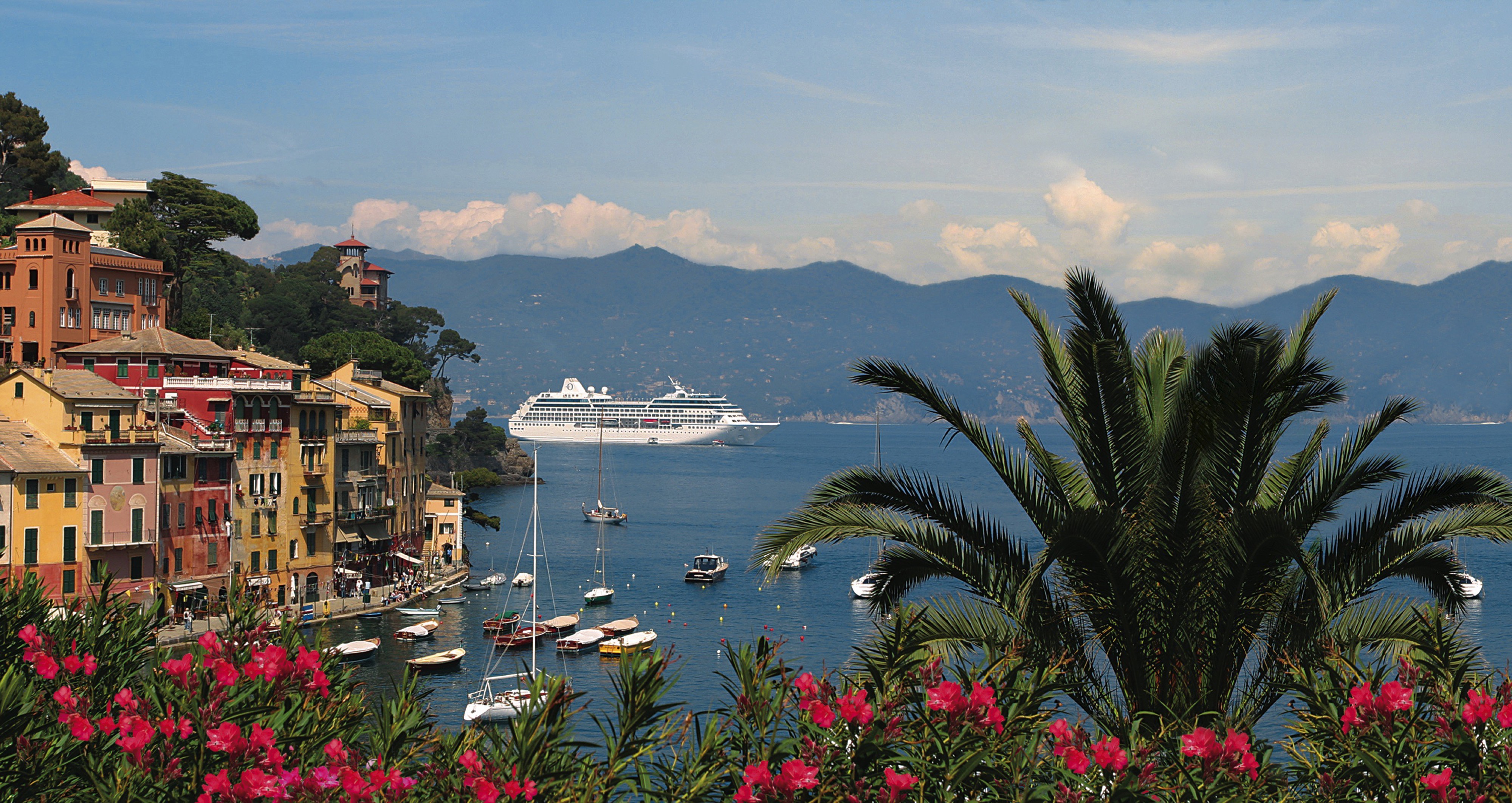
On every voyage, a Guest Speaker will share unique insights into the cultures and people of the regions visited, along with fascinating stories and themes related to the destinations. On select sailings, a second Guest Speaker will provide an additional program of enriching presentations and workshops. Also take advantage of complimentary seminars hosted by the Aquamar Spa + Vitality Center on a range of relevant and timely health, nutrition and wellness topics to reinvigorate your routines and lifestyle. Check your daily onboard newsletter, Currents, for a schedule of talks, presentations and seminars.
Destination Services
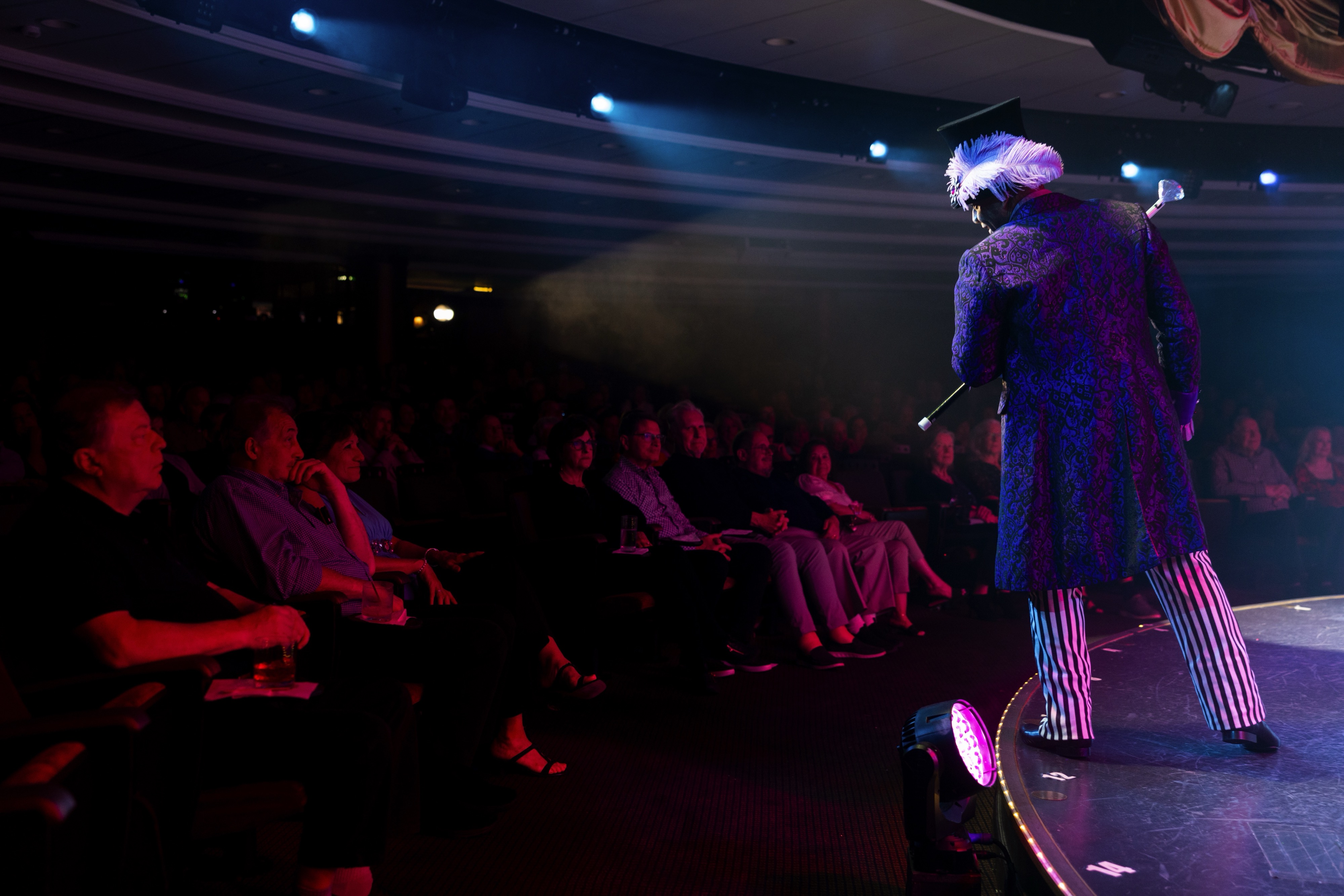
Our expert team of Destination Specialists is on hand to help you with all of your shore excursion planning and destination questions.
Library
Quietude at Sea
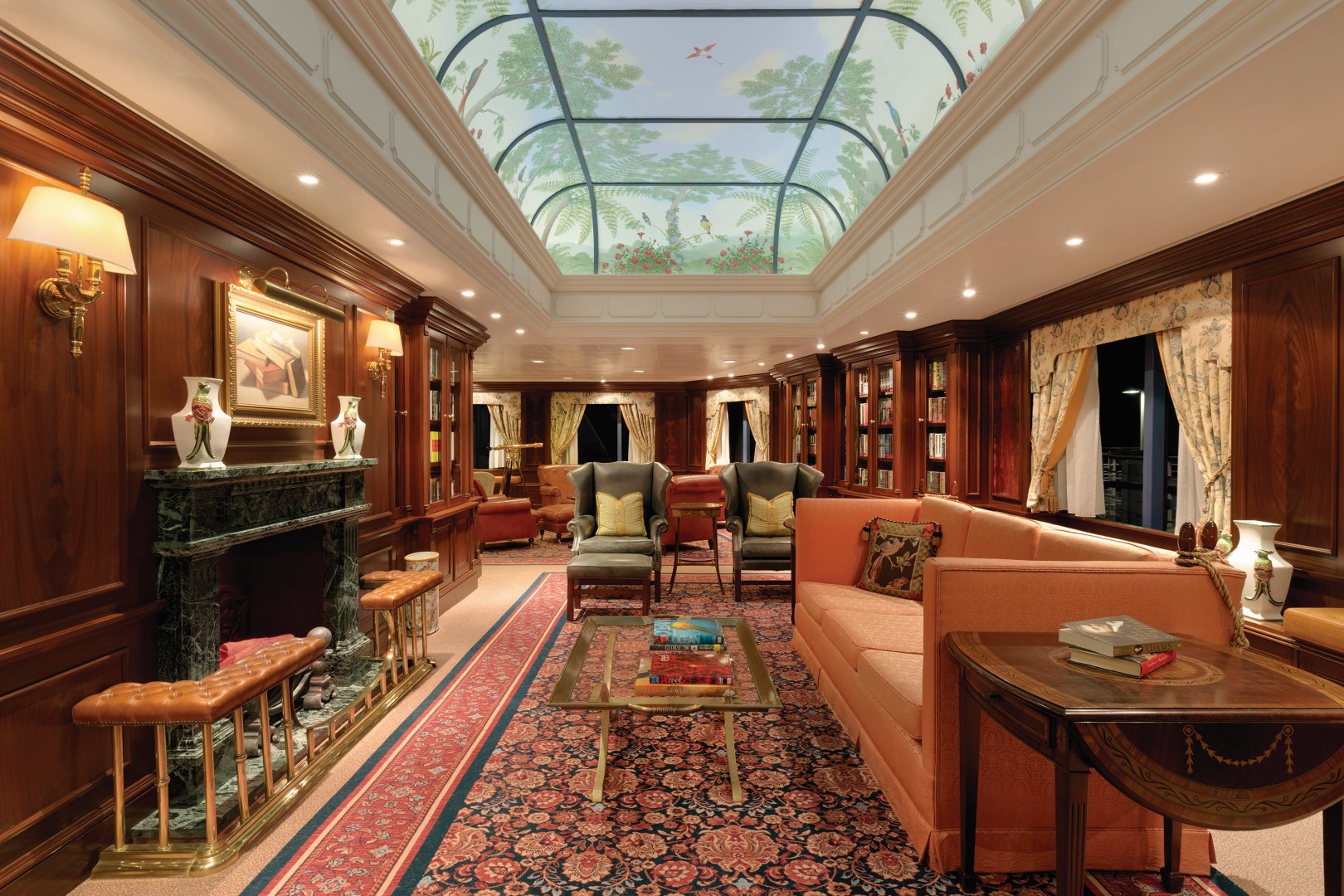
Pick up a steaming cappuccino and settle in to the welcoming ambiance of our classic library on board Oceania Insignia with the novel or bestseller you’ve been meaning to read. Read, relax and feel right at home with more than 2,000 books and periodicals to choose from as you sail from one destination to the next.
Just as sailing aboard Oceania Cruises recalls the elegance of the Golden Age of Travel, our inspired English-style library is reminiscent of a charming English country estate where you can while away the hours in ultimate comfort. There is something magical about the dark, rich woods; the plush high back chairs; the cozy fireplaces and rows of books lining the walls, each a new world waiting to be discovered.
Casino
EARN CASINO POINTS
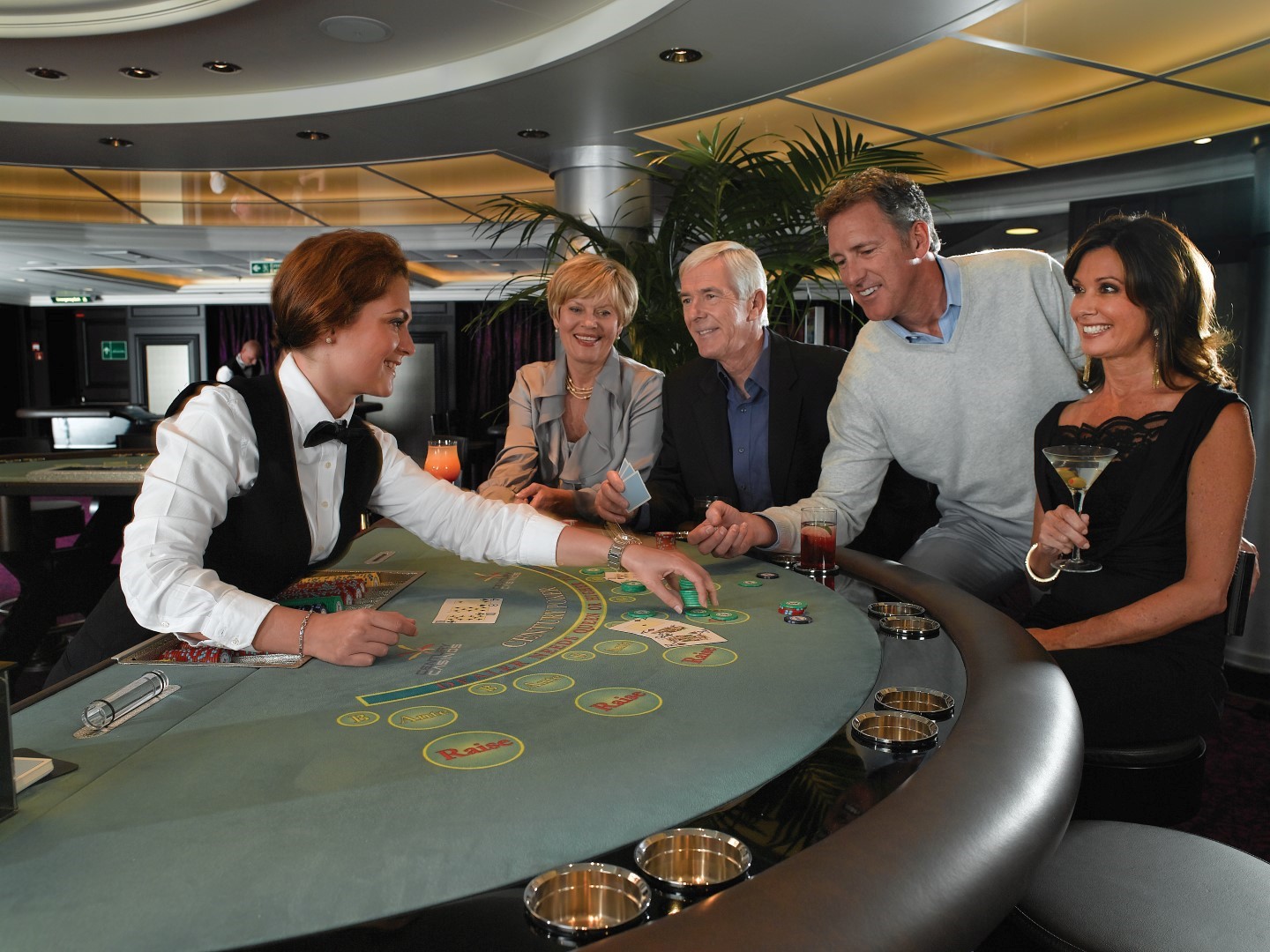
The professional staff is happy to provide lessons on how games are played, the rules and proper table procedures. Unwind from a busy day ashore by playing your favourite games of chance and skill in our casino. Enjoy a fun and exciting range of ways to play, from card and table games such as blackjack and roulette to slot machines.
Getting started is easy. Stop by the casino cage and pick up your Oceania Cruises casino player card and start earning points today, by inserting your player card while playing your favourite slot machines and table games. The more you play, the more you earn!
- Reel & Video Slots – For every $5 coin-in, receive 1 point.
- Video Poker – For every $10 coin-in, receive 1 point.
- Table Games – Points are based on average bet, session play or hands played and game type.
- Action packed casinos designed with style
- Table game limits for players of all levels
- Diverse array of reel slot, video slot and video poker machines
- Dedicated and knowledgeable casino staff
- Industry leading player tracking system
- Free gaming lessons
REDEEM CASINO POINTS
You’ve played. You’ve earned. Now you’re ready to redeem. Downloading points for play is quick and easy. Redeem your casino points for play right at your machine by following the on-screen prompts or stop by the casino cage – the choice is yours.
- Earn points for all your casino play
- Redeem points for play right at your machine
CASINO CASH & CREDIT
Front Money deposits are accepted for gaming in the form of cash, traveler’s checks, cashier’s checks and wire transfers delivered to us prior to embarkation. All cashier’s checks require prior verification. For more information please give us a call at 877.625.2094.
Cashless Wagering
Charge gaming to your onboard account directly from your game of choice or at the casino cashier, using your stateroom key card. Convenience fees, daily limits and cruise limits apply. Euros may be exchanged at the casino cashier, exchange rates apply. All gaming is in US Dollars.
- Cashless wagering allows you to game with your key card
Credit
Casino Credit is available to all players with an existing reservation. The minimum application amount is $10,000.00 and a personal check is required onboard to activate the credit line. Applications are processed 1 month prior to sailing. The application process is easy and there is no fee to apply. To get started, click here for our credit application or for more information email us at casinocredit@ncl.com or call us at 877.625.2094.
- Casino credit available
Onboard Shows
DAZZLING PERFORMANCES
PRODUCTION SHOWS ON BOARD OCEANIA INSIGNIA
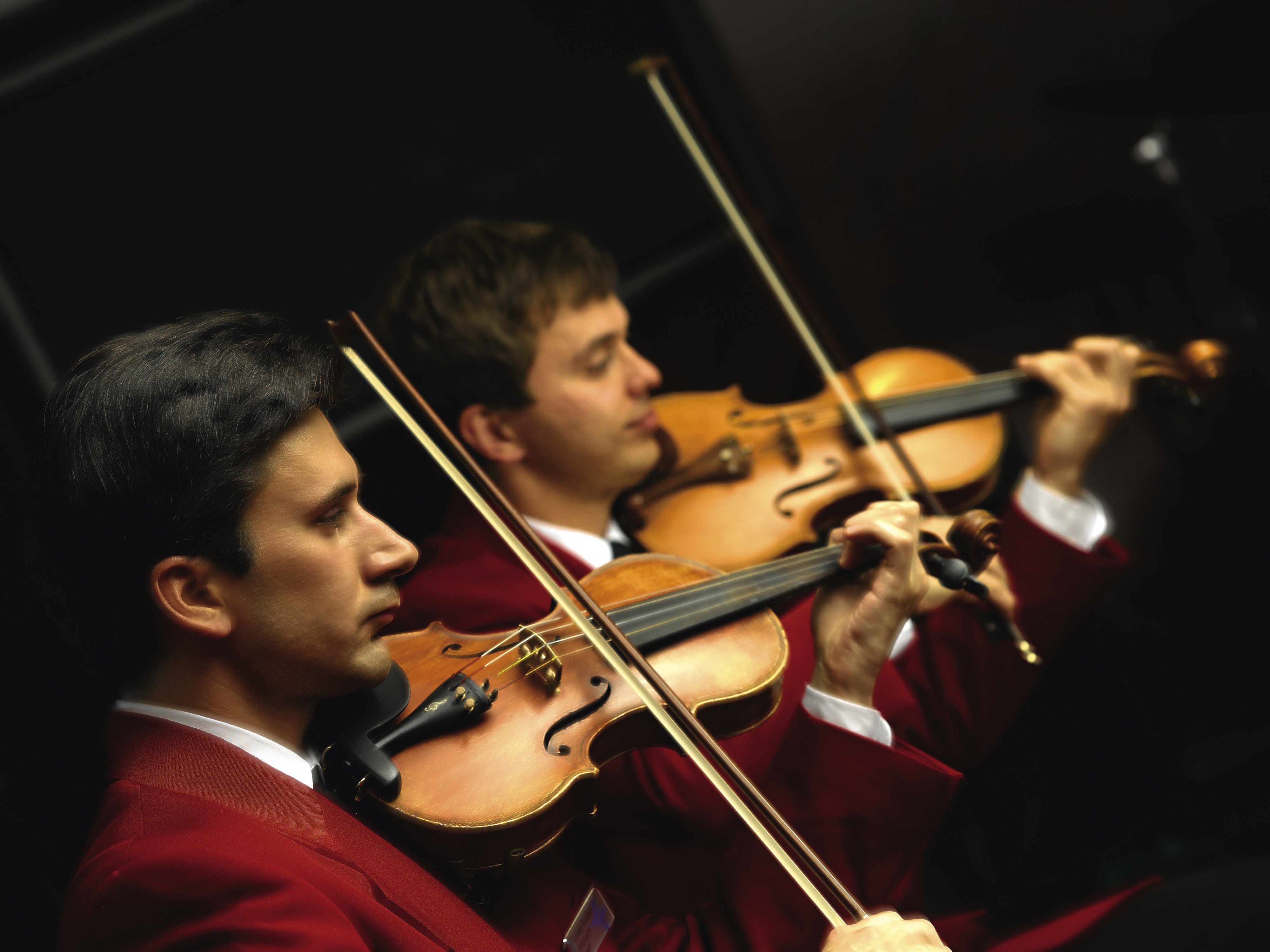
World-class musical performances will delight you, showcasing an ever-changing array of guest entertainers such as pianists, classical string quartets, dynamic vocalists and spectacular headliners.
Each of our ships features a unique lineup of onboard shows and entertainers to ensure that your interests are constantly piqued. Bold and crowd-thrilling, nostalgic and upbeat, or intimate and sophisticated – whatever you choose, the night is yours.
Oceania Insignia’s versatile and talented cast performs the following diverse production shows:
Broadway in Concert
Come on along and listen to…the lullabies of Broadway! In this elegant concert-style review, our fabulous production cast vocalists pay tribute to some of the most iconic musicals of all time. You’ll experience songs you know and love, and maybe you’ll discover one or two more contemporary gems. Let us entertain you…because, after all, “There’s no business like show business!”
Showdown
Your vote counts in this mock singing competition, where you, the audience, chooses the winner. Join our production cast and cheer on your favorite singer as he or she belts out some pop favorites in hopes of taking home the title. Will they sway your vote? Find out because it’s time for a SHOWDOWN!
Acoustic Sessions
Acoustic Sessions features the most recognizable pop music of the last four decades in an unplugged, acoustic-style, live band setting. Acoustic Sessions is presented “in the round” with the audience in a 360-degree arena-style seating to provide an immersive musical experience for every audience member.
Gatsby’s
The upbeat and quirky musical score is compiled from timeless tunes, inspired by the 1920s and includes blues, jazz and Tin Pan Alley standards like “Makin’ Whoopie,” “Won’t You Charleston,” “Puttin’ on the Ritz” and “I Wanna Be Loved by You” and the melodies of Duke Ellington and Fats Waller.
Oceania@Sea Internet Center
Internet
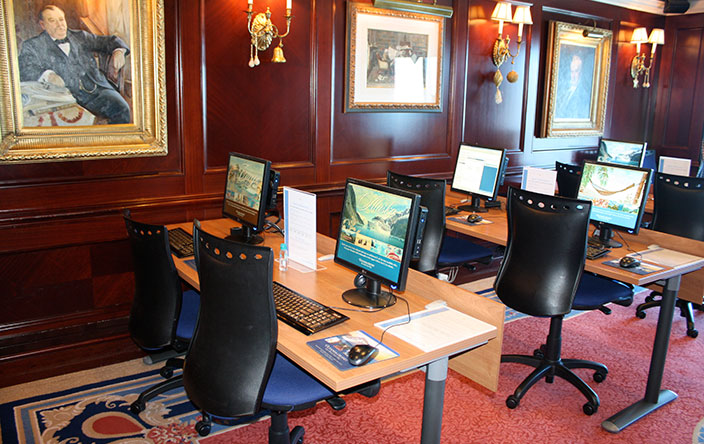
Enjoy WiFi access throughout the entirety of the ship, including in all suites, staterooms, public rooms and outdoor decks. A complimentary login per guest will be provided with a maximum of two free logins per suite or stateroom (one login for solo travelers), each of which can be used on one device at a time. Additional logins for 3rd and 4th guests in a suite or stateroom as well as upgrade packages are available for purchase on board. For your convenience, Internet-enabled computers are also available in the Oceania@Sea Internet Center aboard many of our ships.
Starlink, has been completed on all ships, providing all guests with high-speed, unlimited WiFi included as part of the cruise fare.
Boutique Shopping
Unique Gifts, Jewelry & More
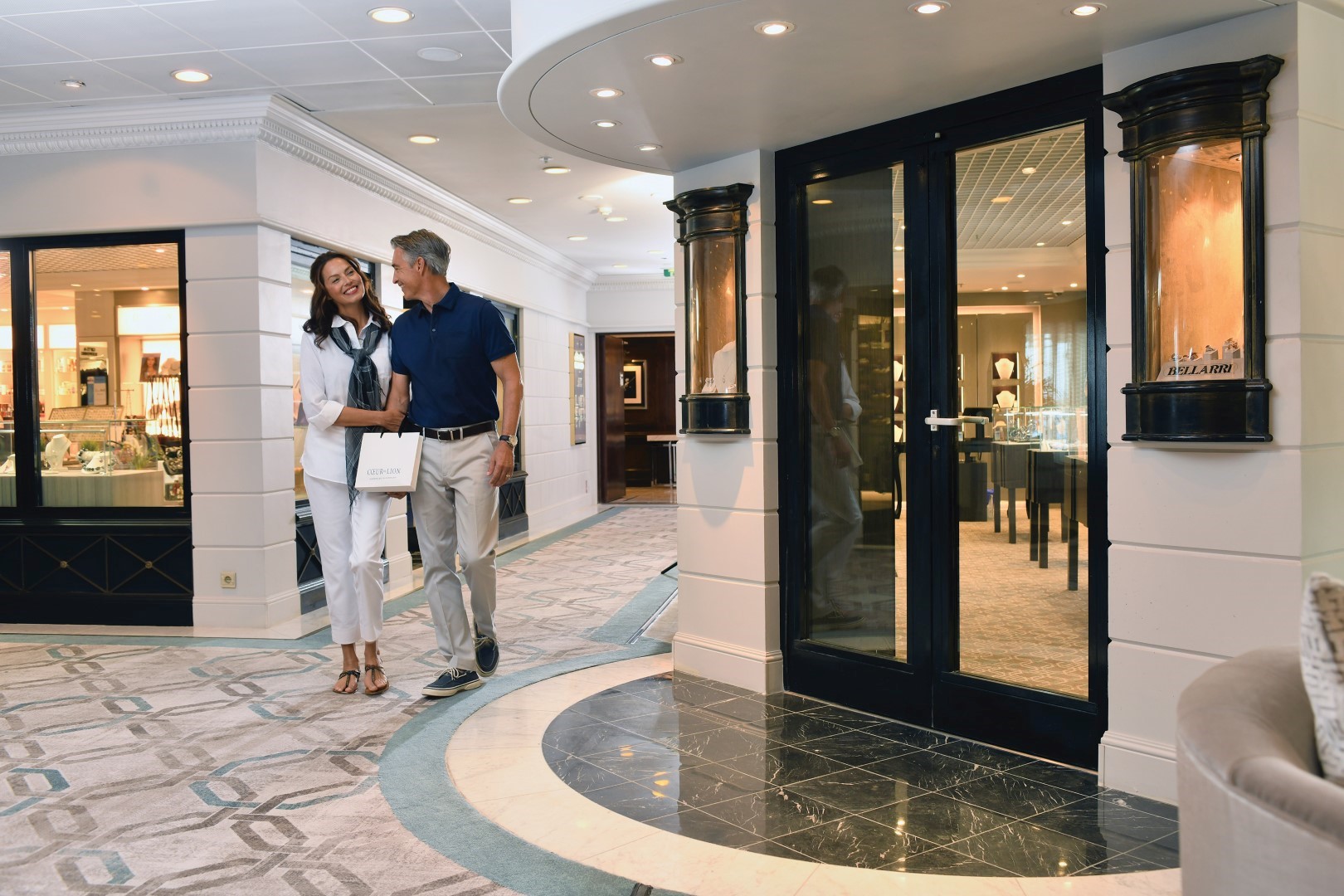
Our stylish boutiques feature a tastefully curated selection of items ranging from sundries to chic resort wear and fine jewellery. Discover thoughtful gifts for friends and family or the perfect memento to remind you of your special cruise experience.
Martinis
Martinis serves numerous incarnations of this famous cocktail in an airy, elegant atmosphere reminiscent of the Greek Isles with a palette of bold blues, deep pewter and serene sienna.
The Grand Bar
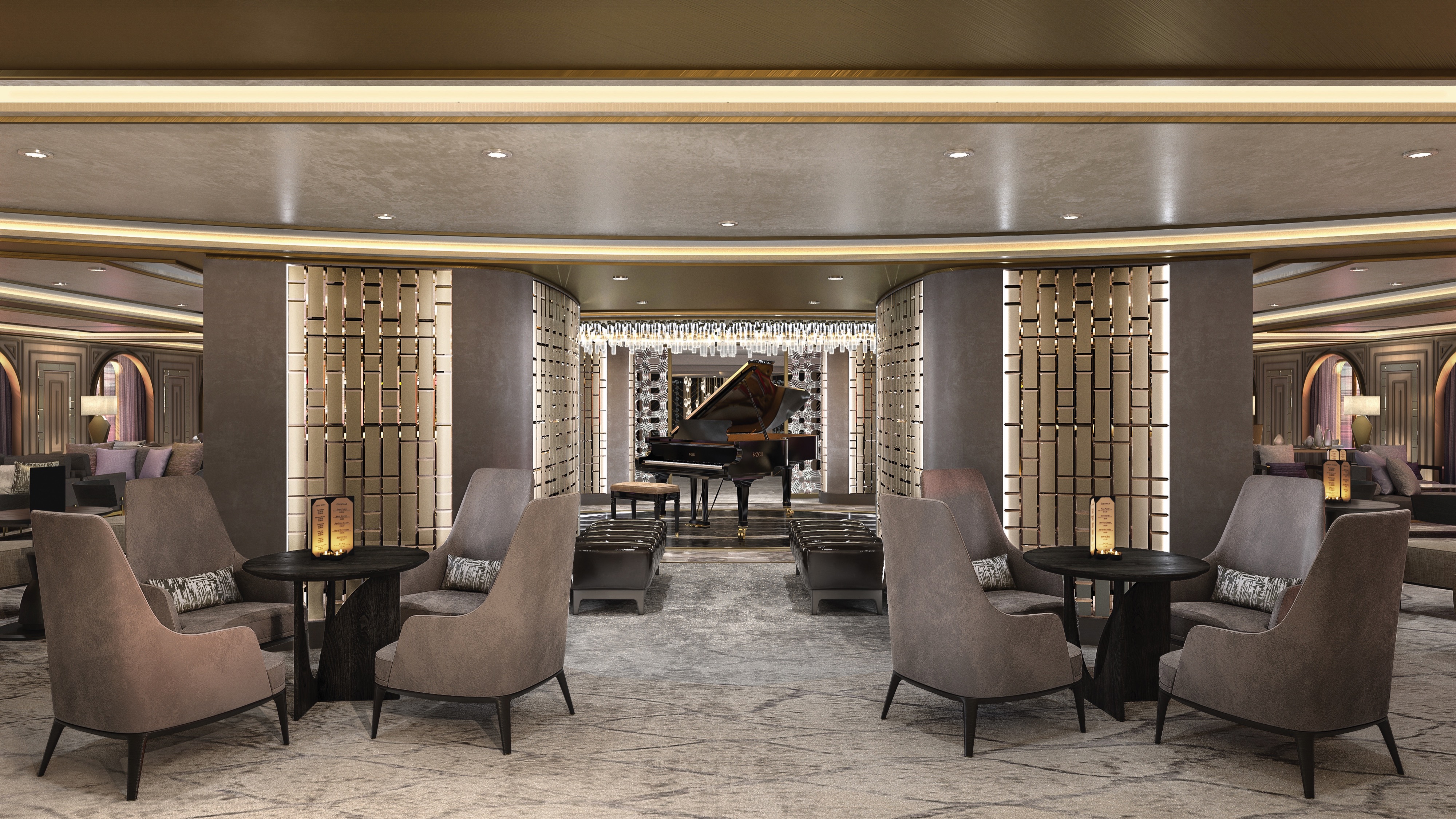
Before sitting down to a gourmet meal, sample a rare vintage or savour your favourite apéritif as you enjoy spirited conversation with newfound friends amid the refined atmosphere of the convivial Grand Bar.
Horizons
An elegant observation lounge with dramatic floor to ceiling windows and a country club casual ambiance. Horizons transforms into a sophisticated evening venue by night. Dance the night away to the sounds of a lively musical group and enjoy cocktails with friends at the welcoming bar.
Waves Bar
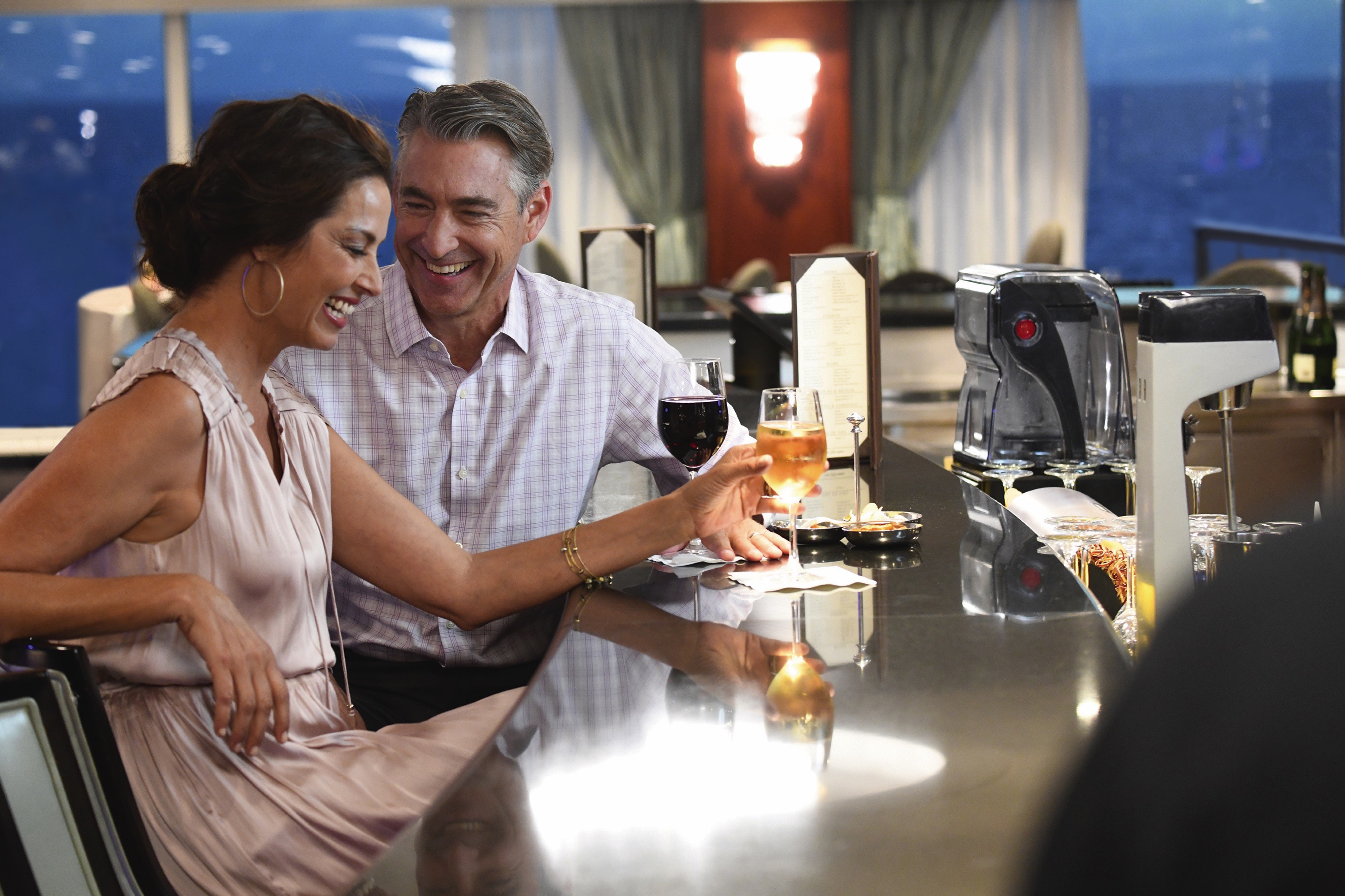
Located in a shaded area just steps from the swimming pool, Waves Bar offers a wide variety of libations to enhance your poolside experience. Revel in the perfect afternoon on deck with your favorite cocktail, glass of wine or chilled beer. Come happy hour, signature cocktails and frosty beverages create a delightfully carefree segue to the lively evening ahead as the sun sets.
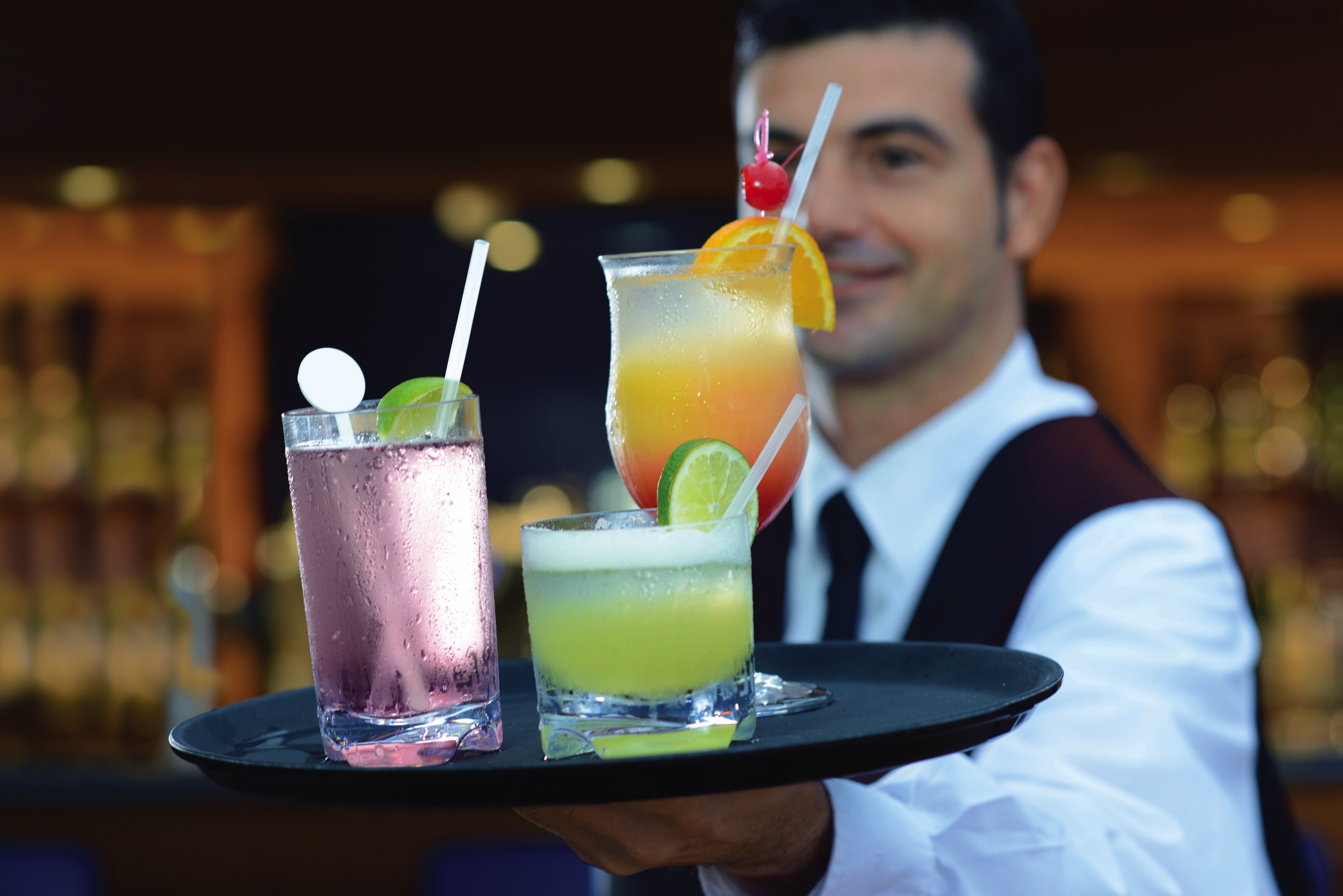
Lounge
From headline acts to comedians, magicians and lively jazz ensembles, head to the Lounge to discover the centre of nightly entertainment aboard Oceania Cruises.
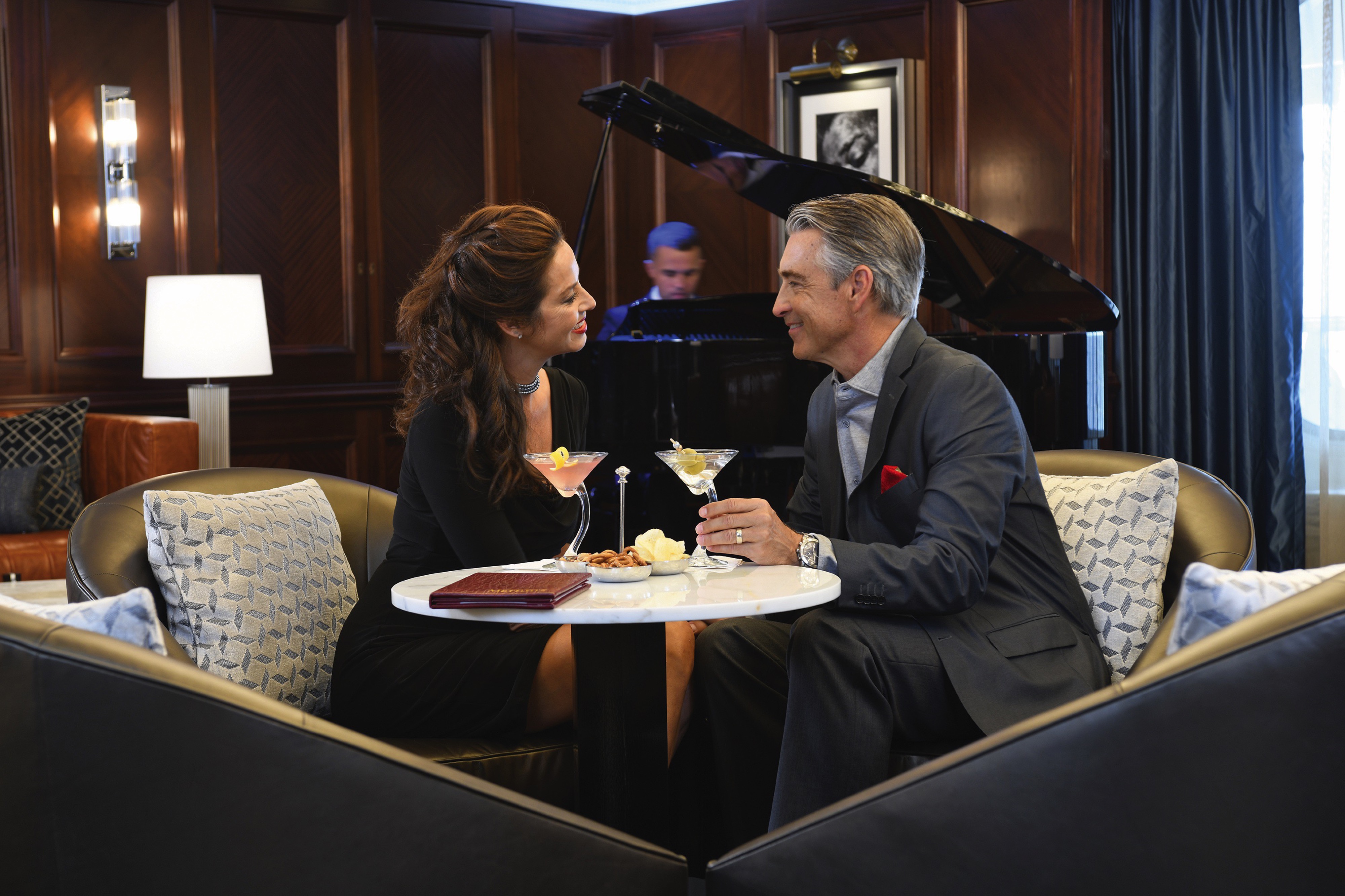
Card Room
The beautifully Card Room is an inviting and tranquil oasis. Stay at the top of your game and try your hand at bridge or gather around one of our many tables for a quiet afternoon or evening of board games.
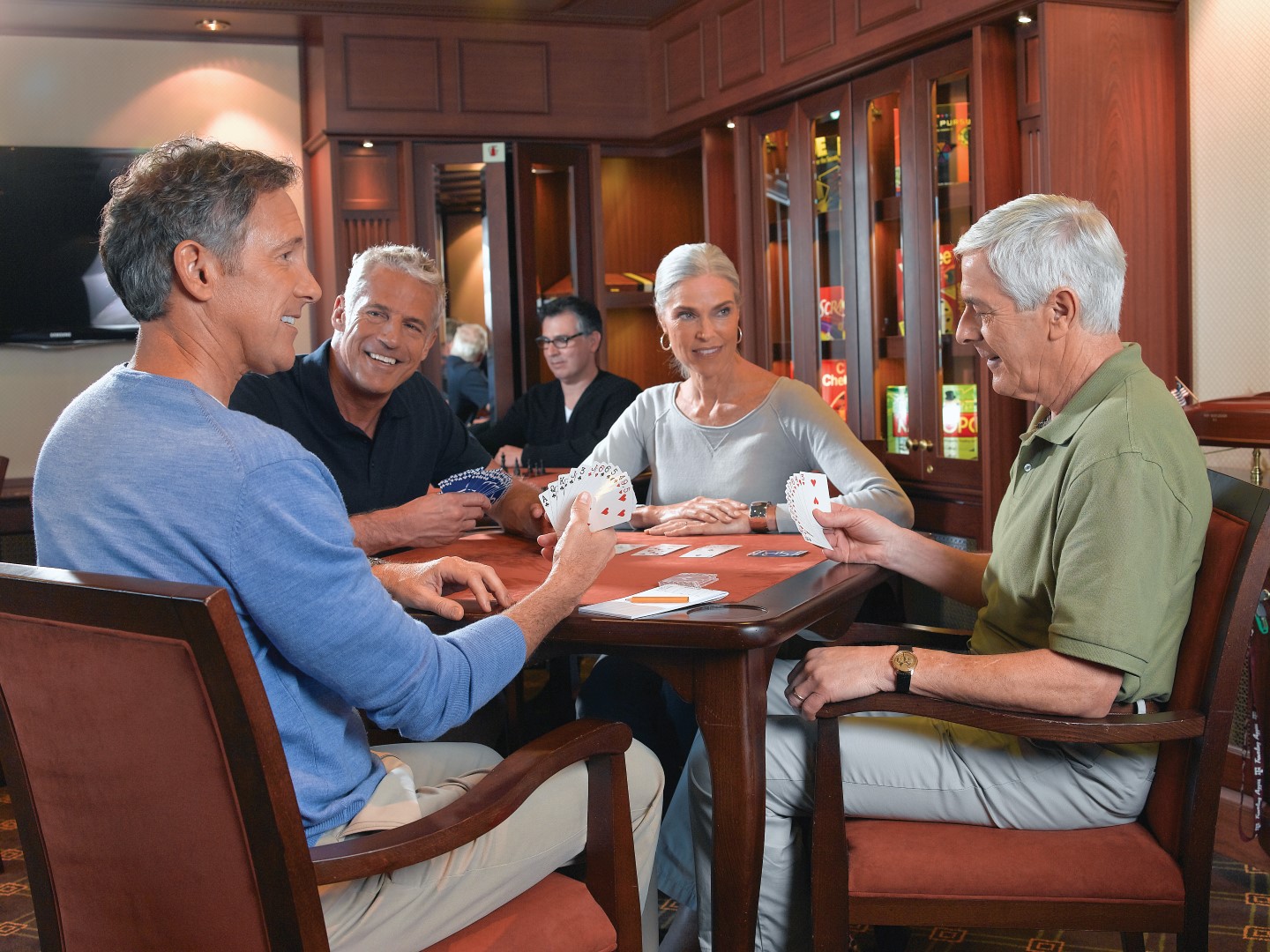
Patio
Sit back, relax and enjoy the stunning panoramic ocean views in the shaded, comfortable Patio as you sail to the next exciting destination.
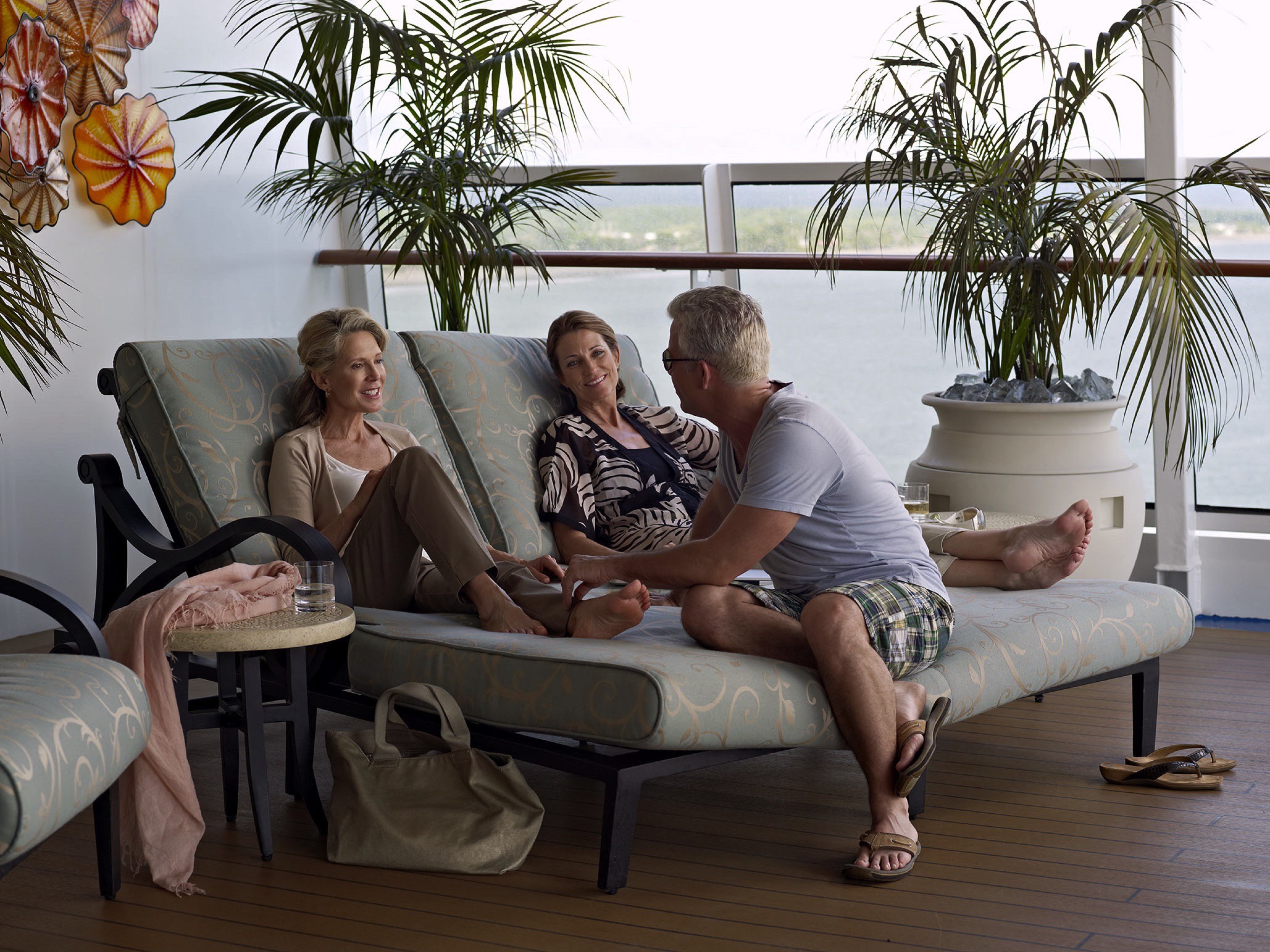
Aquamar Spa + Vitality Center
NEW PATHS TO WELLNESS
Revel in the benefits of restorative therapies and treatments, savor healthy Aquamar Vitality Cuisine, enjoy immersive wellness experiences ashore, benefit from nutrition and lifestyle consultations, and so much more. You naturally enhance your well-being on board our ships because the entire experience nurtures that most cherished gift – your health and vitality.
BEYOND THE SPA
- Rejuvenating treatments and healing therapies
- Aquamar Vitality Cuisine and extensive plant-based menus in The Grand Dining Room
- Exclusive collection of Wellness Discovery Tours by Aquamar in global destinations
- State-of-the-art fitness center and complimentary fitness classes
- Nutrition and lifestyle consultations
- Wellness presentations and enrichment lectures
- Aquamar Spa Terrace with thalassotherapy pool or whirlpools
- Steam room, fitness track and salon
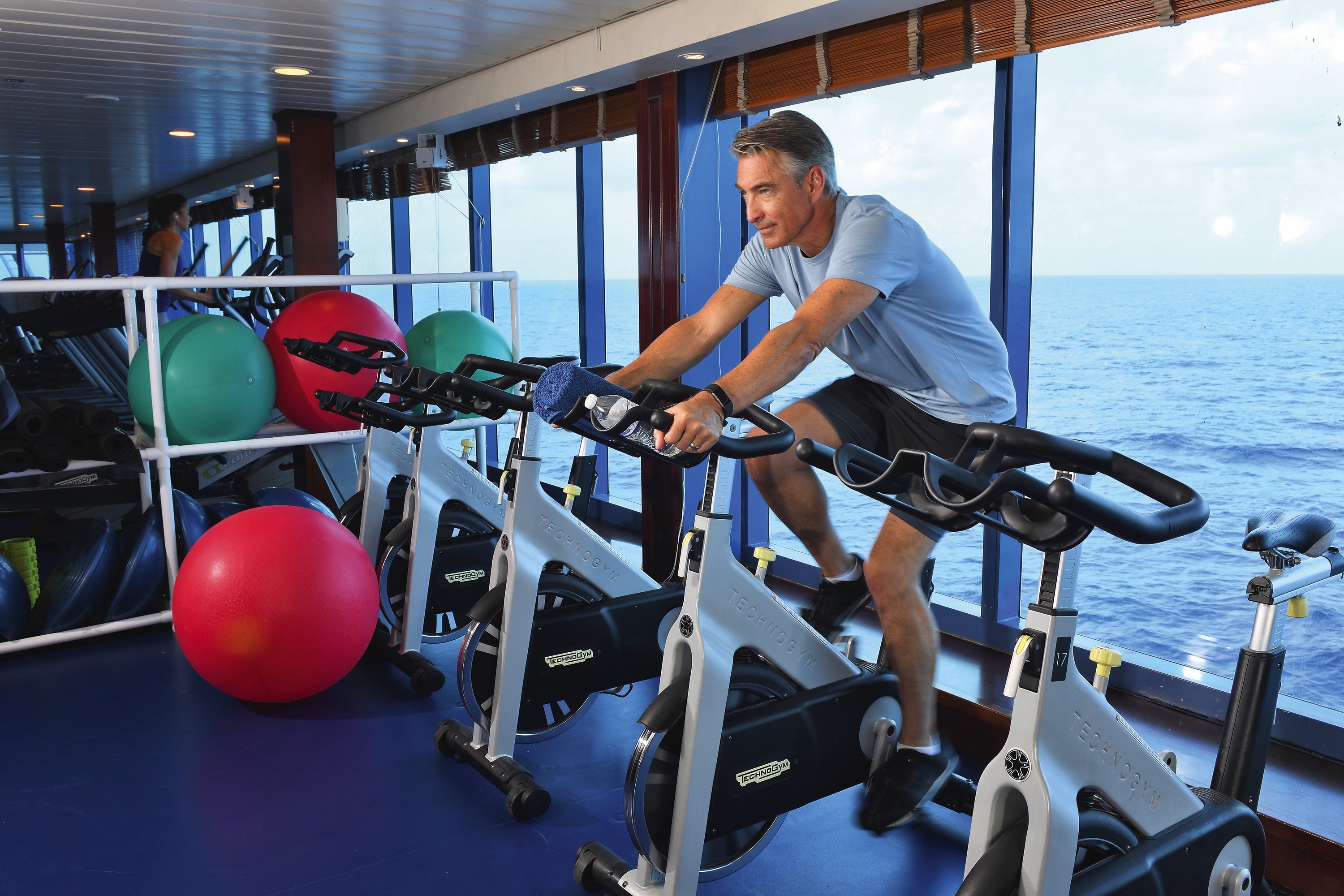
Fitness Centre
Free Fitness Classes & More
From Pilates and yoga to full-body strength training, you are certain to find a complimentary fitness class to suit your preferences. One-on-one personal training is also available, as is the latest exercise equipment, such as treadmills, cycling and elliptical machines, and free weights. You can also take advantage of the Kinesis® exercise wall to improve core strength, flexibility and posture.
Yoga, Pilates & More
In addition to the complimentary use of the fitness facilities in the Aquamar Spa + Vitality Centre, you can join an array of free classes led by professional instructors. With a full range of options, there’s certain to be a class to suit your needs and preferences. From Sunrise Stretch or Yoga Flow Vinyasa on deck to Pure-Form Pilates, or more comprehensive programs such as High Intensity Interval Training (HIIT), instructors guide you through the class, offering tips, advice and helpful hints.
YOGA
Join one of our complimentary yoga classes to calm your inner mind and improve flexibility, circulation and strength. Sunrise yoga is the perfect way to start your day on a healthy note and those new to yoga will appreciate our 45-minute introductory class.
PILATES
The popular exercise method known for building core strength, Pilates focuses on low-impact flexibility as well as strength and endurance movements. Our expertly led classes guide you through exercises that promote core stability, proper posture and muscle control and endurance.
KINESIS
On board Marina and Riviera, our Kinesis® exercise wall combines cardio, strength and flexibility training in one workout. Named after the ancient Greek word for motion, Kinesis uses cable pulleys that encourage a wide range of motion and allow for a vast number of exercises. Exercises can be customised to suit all levels – request a personal training session to take full advantage of the possibilities.
CARDIO & STRENGTH TRAINING
Work up a sweat on ellipticals, indoor cycling machines and treadmills with heart-rate monitoring and individual LCD screens. Our fitness centre also offers a full range of the latest strength-training machines. Try one of our complimentary bootcamp, indoor cycling or targeted strength-training classes for extra motivation.
FREE FITNESS CLASSES
Take advantage of our full range of complimentary exercise classes that include offerings appropriate for all fitness levels. Classes range from full-body strength training and ab-focused sessions to stretching and foot fitness. Regardless of what you choose, our instructors will guide you throughout the class, offering adjustments, advice and helpful tips. Check your daily Currents on board to see the schedule.
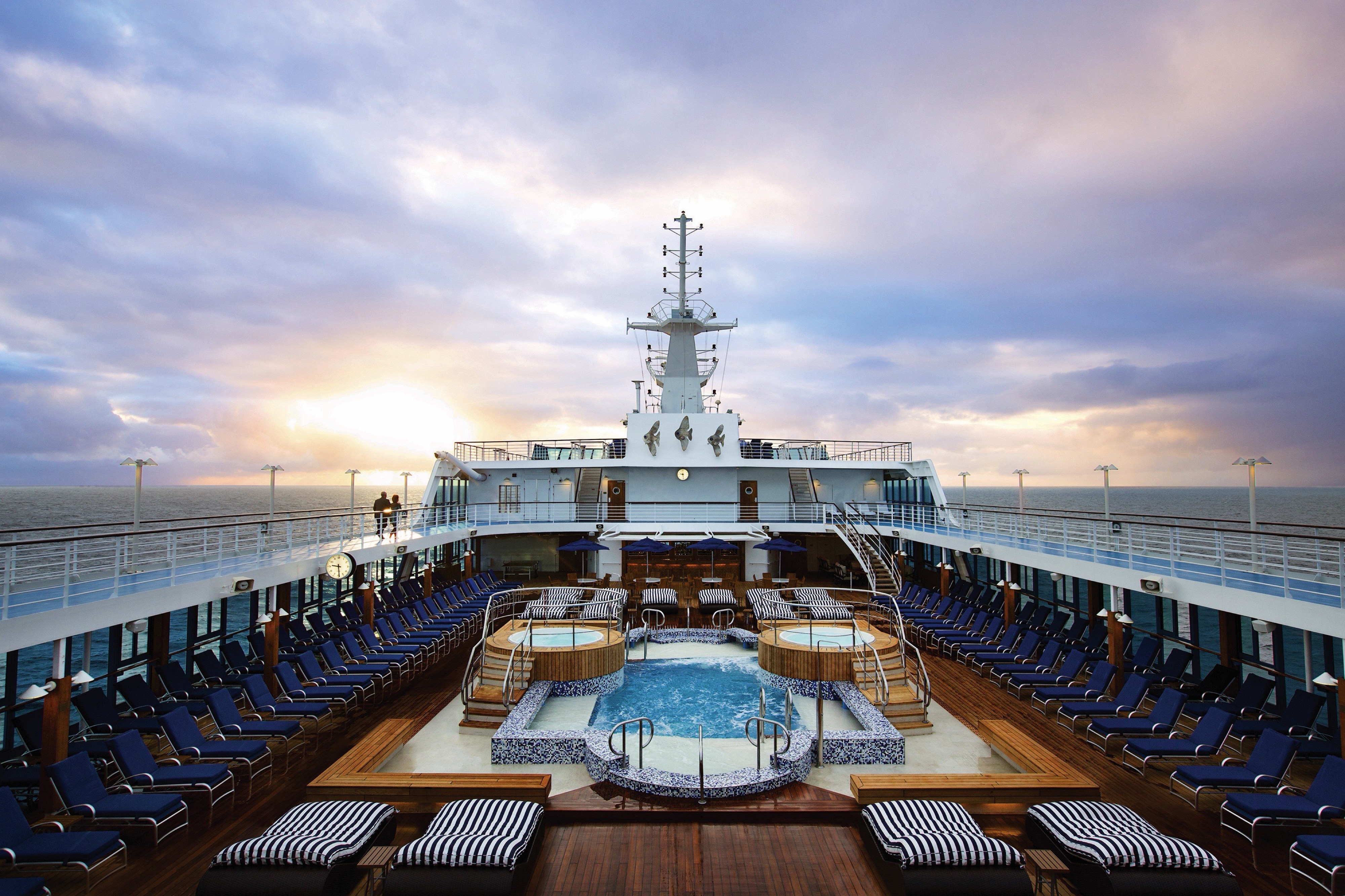
The Pool
Swim, Sip & Lounge
On the sparkling pool deck, take a refreshing dip in the large saltwater pool or relax in one of the two whirlpool spas. Plenty of comfortable chaise lounge chairs and luxurious day beds on the beautiful teak lido deck invite you to lounge poolside while you sip your favourite cocktail from Waves Bar.
Whether you prefer to soak up the rays or love the tranquil shade, stunning views of the sea and compelling new destinations create the backdrop to enjoy from your poolside lounge chair. Enjoy the refreshing freedom to completely unwind in between your adventures ashore. Just sit back, relax and enjoy life on the high seas.
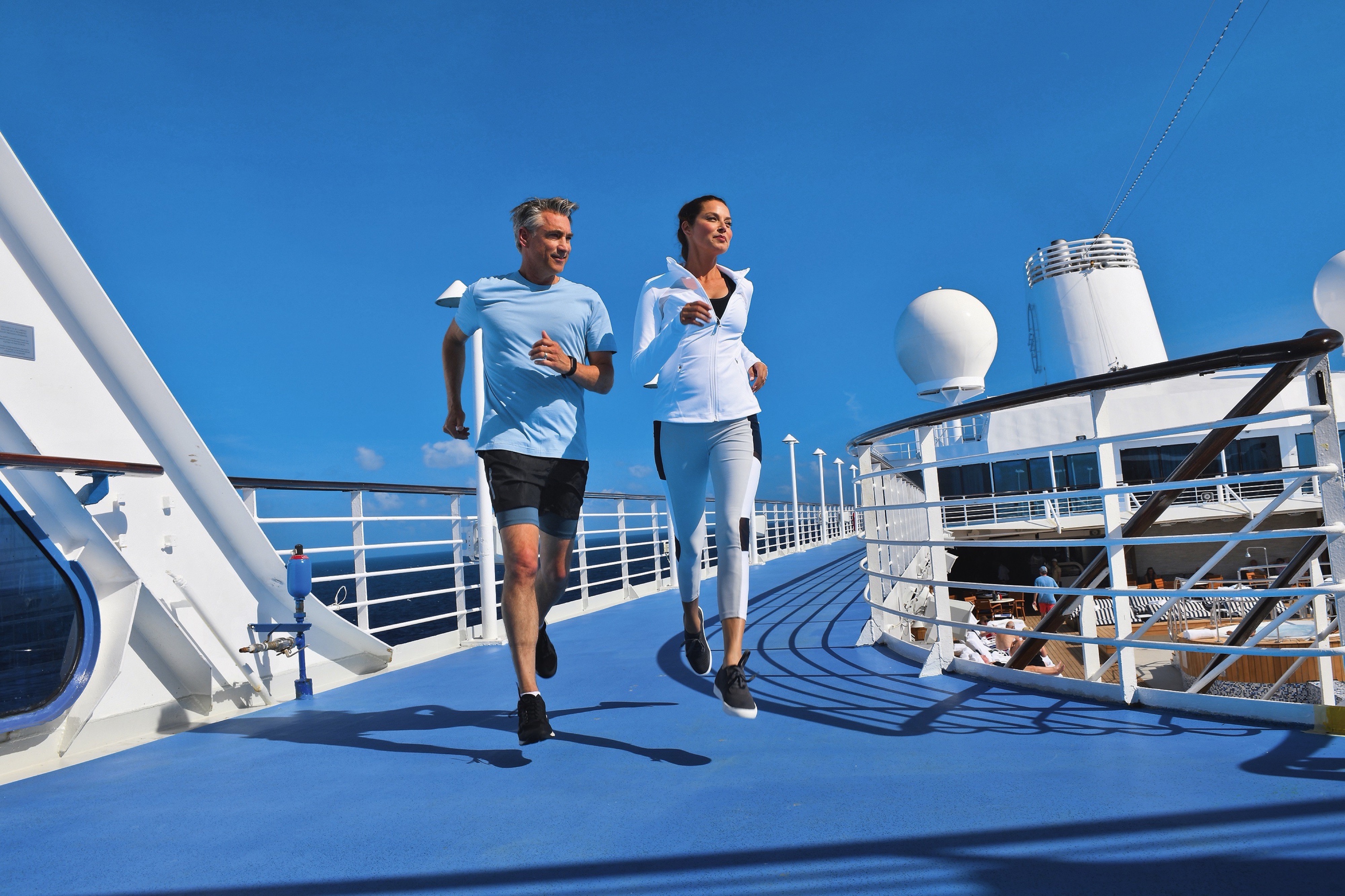
Running Track & Sports Deck
ACTIVITIES WITH A VIEW
High atop the ship, revel in the breathtaking views and refreshing sea breeze. Breathe in the fresh sea air with a few invigorating laps on the running track at your own pace or choose from an array of activities and games.
Golf enthusiasts will enjoy practicing their swing and playing 9 holes of golf on the putting greens. More friendly competition awaits on the shuffleboard court. Round up newfound friends for a lively game and check the daily shipboard newsletter, Currents, for sports deck competitions that give you the chance to win Big O Points.
- Golf Putting Green
- Shuffleboard
- Fitness Track
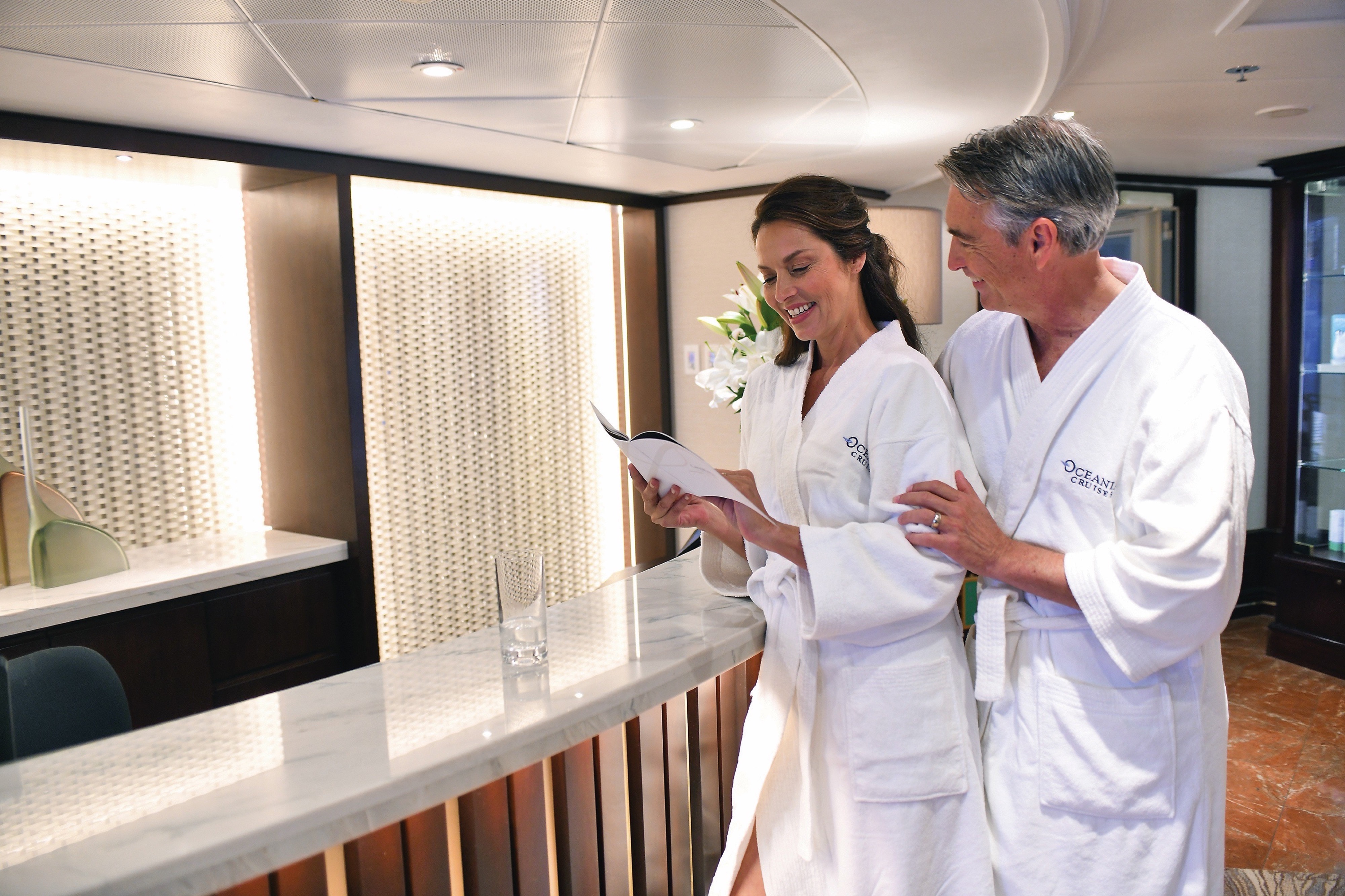
Thermal Environments
For centuries, people have turned to water for purification, muscle and joint relief and deep relaxation. Our aromatic steam rooms and thalassotherapy pools relieve tired muscles and joints, detoxify the body and promote relaxation.
AROMATIC STEAM ROOM
Enhance your mood and improve your skin in this multi-sensory, temperature-regulated steam room. Breathe in steam infused with your choice of stimulating or relaxing pure herbal essences, then bask in fragrant, 90-percent-plus humidity.
THALASSOTHERAPY POOL
Unwind in this unique therapeutic environment as flowing saltwater massages your tired muscles. Ideal after a workout or before a massage, saltwater therapy can also be used to help improve circulation and reduce joint pain.
SUNDECK
Let go of all stress as you relax on our private sundeck. It’s the perfect spot for a meditative moment or a bit of me time before rejoining the ship’s lively social environment.
Massage Therapies
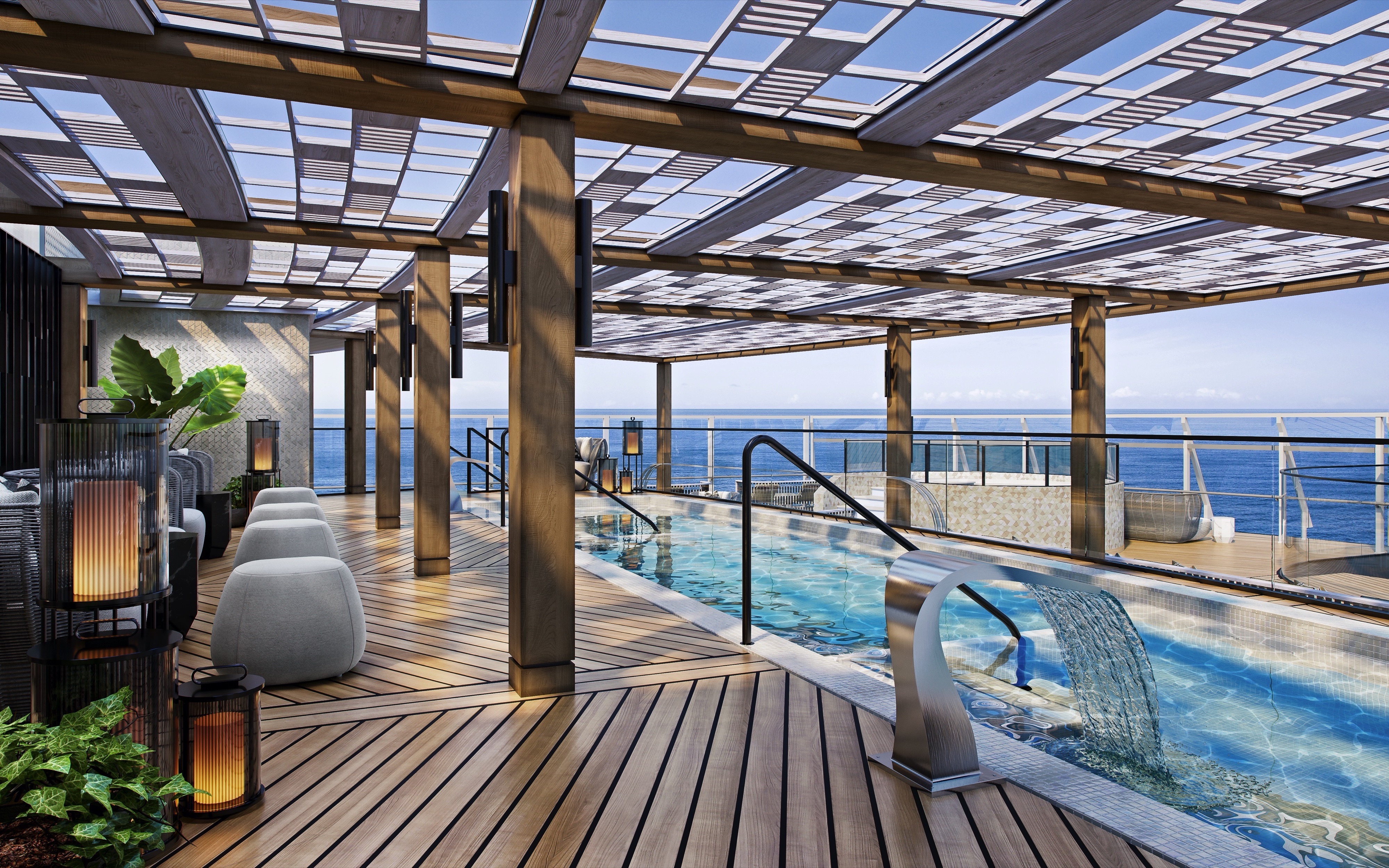
Relish moments of calm and reflection that inspire longevity and complete well-being. Massage brings waves of relaxation while addressing the anatomy of the body and stressors that disrupt its natural state. The signature massage therapies at our Aquamar Spa + Vitality Center utilise natural ingredients from the earth and sea combined with ancient and modern techniques from around the world to balance, restore and renew the body and spirit.
BODYWORK FOR A BLISSFUL STATE
Whether you’re seeking a calming experience, increased energy or relief from a specific condition, our restorative massages provide the perfect wellness experience.
SIGNATURE SERVICES:
- Aroma Stone Therapy
- Vital Bamboo Massage
- Nourishing Coconut Poultice Massage
- R3 Pain Management Therapy — Relax, Repair, Relieve
- Restorative Salt Stone Massage
- Deep Tissue Muscle Massage
- Thai Herbal Poultice Massage
- Biotec Face Treatment & Body Ritual
Body Therapies
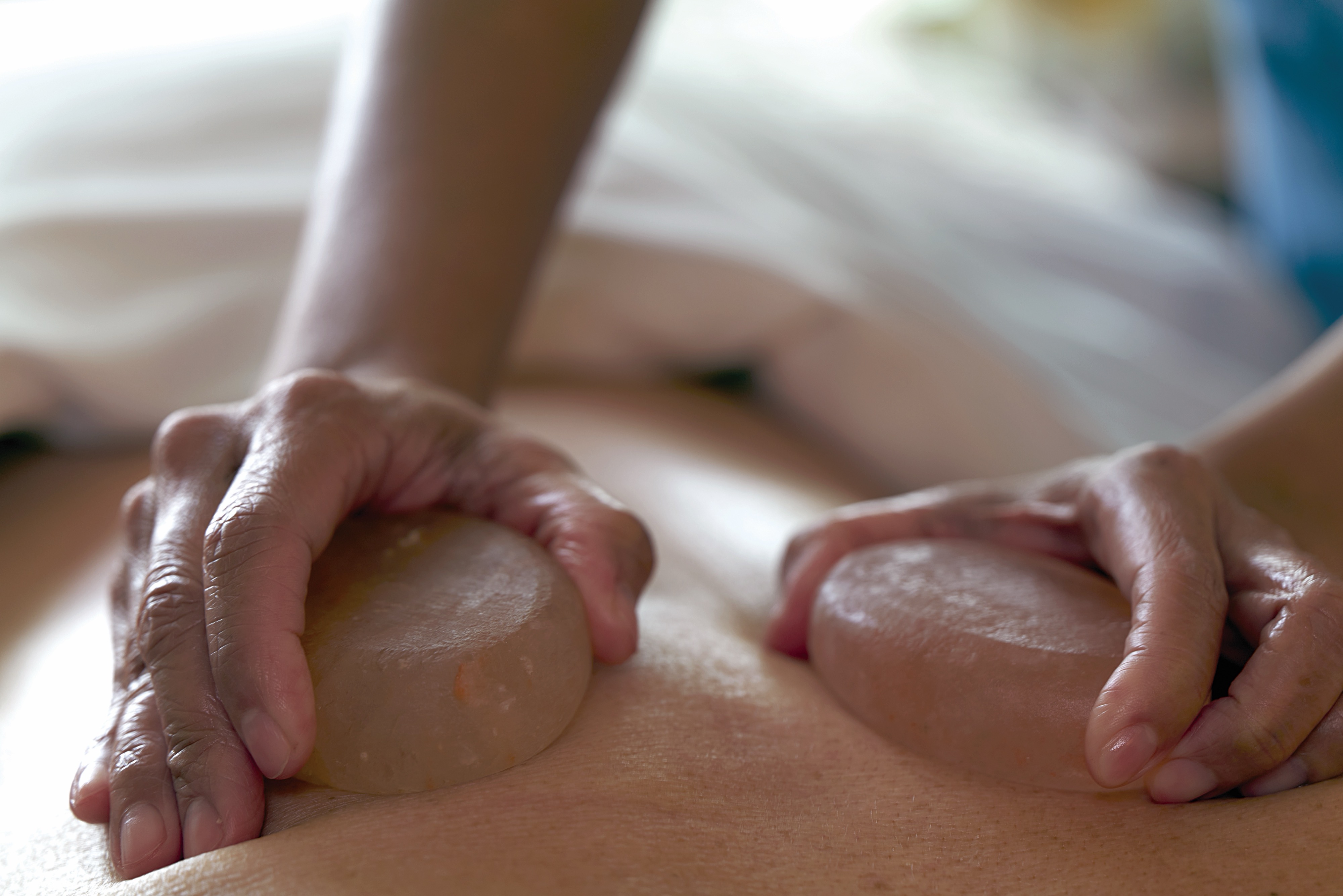
The human body has a deep connection with water. Much like the ocean, it is comprised of this element. Cleanse the body and maintain its nourishment with a selection of ocean-inspired wraps, polishes, and muds that eliminate toxins and purify the skin for an enriching experience.
OUR SIGNATURE SERVICES:
- Musclease Ocean Wrap
- Marine Detox Wrap
- Sea Lavender & Samphire Mineralising Wrap
- Intensely Cleansing Salt Scrub
Facial Therapies
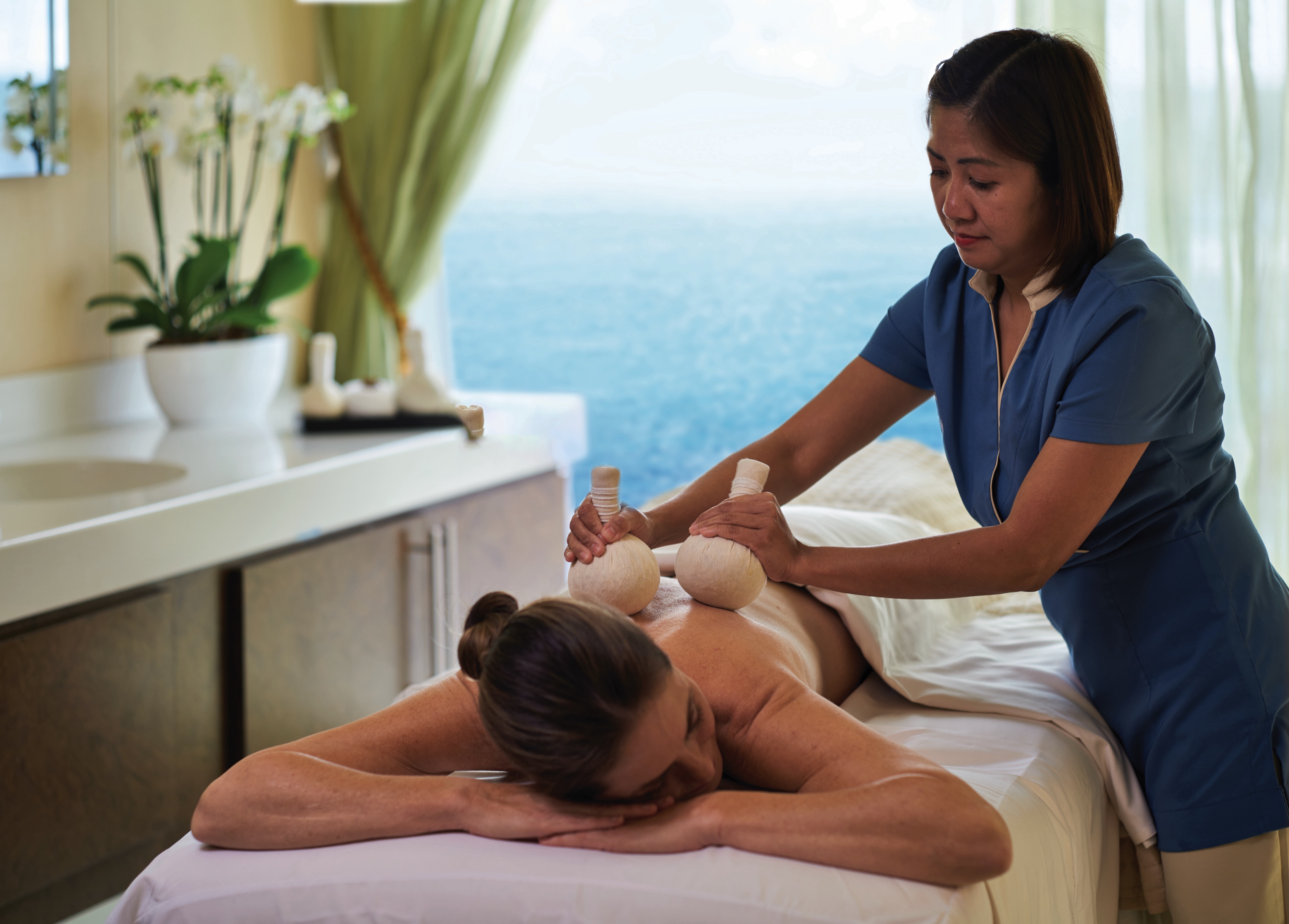
Hands-on facial treatments use touch as a powerful diagnostic tool, softening and preparing the skin to receive essential vitamins and nutrients. Therapeutic treatments call on a combination of ancient and modern massage techniques from around the world.
FACIAL THERAPIES
SIGNATURE SERVICES:
- Pro-Collagen Age Defy
- Caviar Firm And Lift Facial
Salon & Barber Shop Services
Aquamar Spa + Vitality Centre’s salon offers luxury hair care products, deluxe services, and a specialty colour bar. Salon experts can identify haircare needs and create personalised treatments along with everything expected from a full-service salon – manicures, pedicures, brow shaping, and more.
SALON & BARBER SHOP SERVICES
SALON SIGNATURE SERVICES:
- Kérastase® Caviar Revitalising Ritual
- Keratin Complex ® Express Blowout
- Fire & Ice Manicure / Pedicure
BARBER SHOP SIGNATURE SERVICES:
- Pro – Coll Agen Grooming Treatment with Shave

The Grand Dining Room
AN ELEGANT SETTING
The Grand Dining Room is a study in stateliness, a tribute to the spirit of Europe’s marquee five-star hotel restaurants that inspired its dignified yet convivial ambiance. Handsomely decorated in rich woods, designer tapestry fabrics and oversized armchairs, the expansive dining area exudes classic splendor. This signature dining experience has always offered a bevy of delicious Continental dishes, and now a fresh and new array of options brings you even more exciting choices, as well as an incredible spectrum of global flavors and an all new Executive Chef’s Tasting Menu. As variety is essential to your satisfaction, menus change daily with an expansive choice of at least 10 appetizers, soups and salads and 10 dinner entrées, along with healthy options such as Aquamar Vitality Cuisine, gourmet vegetarian selections and the most extensive array of plant-based dishes at sea.
Open for breakfast, lunch and dinner. No reservations required.
Toscana
AUTHENTIC ITALIAN
Toscana means Tuscan, and just as Tuscan cuisine evolved from rich family traditions, many of our recipes originated with the mothers and grandmothers of our own Italian culinary staff. Presented on elegant, custom-designed Versace china, masterfully prepared dishes exemplify the essence of Tuscany and celebrate Italy’s culinary passion. Perhaps the evening begins with the octopus carpaccio with Champagne vinaigrette or the artichoke and parmesan cheese timbale with black truffle sauce. Classic dishes from other regions of Northern Italy are featured as well, such as the minestrone alla Genovese, lasagna alforno alla Bolognese and osso buco alla Milanese.
Open for dinner only. Reservations are required.
Polo Grill
A CLASSIC STEAKHOUSE
Polo Grill embodies all the elements of a classic steakhouse, expressing them with timeless reverence. Mindful of tradition, the decor features crisp, white linen tablecloths, dark wood furnishings and supple, high-back, burgundy leather chairs. Each course stands as the very definition of time-honored favorites, most notably the beef dishes, all of which are certified Black Angus USDA Prime and dry aged to enhance tenderness and flavor. Succulent seafood dishes such as grilled swordfish and whole Maine lobster gratinée are also classics in their own right. The classic Caesar salad, too, is prepared according to tradition, tableside and with gusto.
Open for dinner only. Reservations are required.
Terrace Café
INFORMAL DINING
Informal and carefree, the Terrace Café is wonderfully inviting any time of day. During breakfast, the room is infused with natural sunlight from the floor-to-ceiling windows, stimulating the appetite for the sumptuous selections. Come lunch, the expansive menu of international-inspired dishes changes entirely, complemented by a flavorful roast and the magic of the pizzeria’s oven. Dine inside or alfresco at one of the shaded teak tables on the terrace. During the evenings, the cuisine takes on a more sophisticated flair, with lobster tails, chops and fresh fish prepared to order, and freshly made hand-cut sushi and sashimi. In addition, a diverse selection of bold and flavorful plant-based dishes is available.
Open for breakfast, lunch and dinner. No reservations required.
Waves Grill
ALFRESCO DINING
Sometimes, the ultimate luxury is casual dining on all-American favorites, a laid-back style Waves Grill epitomizes. Located in a spacious, shaded area steps from the swimming pool, Waves Grill offers an extensive and mouthwatering menu. Then try a decadent dessert such as a homemade passion fruit sorbet, a made-to-order hot fudge sundae, a hand-dipped milkshake or one of the new, whimsical ice cream flavors by Humphry Slocombe, such as Secret Breakfast, Elvis (the Fat Years) or our signature flavor, Regatta Royale.
Open for lunch and afternoon dining only. No reservations required.
Afternoon Tea
TIME-HONOURED PASTIME
Each afternoon, the parade of gleaming four-tiered pastry carts begins. Savor freshly made, flavorful smoked salmon and egg salad finger sandwiches. Enjoy mirror-glazed petits fours, tender scones with rich clotted cream and, of course, a wide assortment of fine teas. Soak in the ambiance of polished silver teapots reflecting the turquoise sea, the precision of white-gloved servers and the amusing enigma of a string quartet playing softly in the background. You’ll quickly realize that this is how afternoon tea should be.
Check your daily Currents for time and venue. No reservations required.
Baristas
A Neighborhood Gem
This delightful coffee bar is a favorite stop for java lovers. Enjoy complimentary illy® espressos, cappuccinos and lattes prepared by our master baristas, as well as the delicious pastries, finger sandwiches and homemade biscotti that draw so many to Baristas throughout the day.
Open daily until early evening. No reservations required.
Room Service
In-Room Dining Experiences
After a day of enriching adventures ashore or an enjoyable day on board, dining in the privacy of your suite or stateroom with our compliments is always a welcome possibility. A complete menu of varied dining experiences is available around the clock, featuring an extensive array of delectable breakfast, lunch and dinner items. All suites and staterooms have the added luxury of enjoying a full, hot breakfast in-room and those staying in Concierge Level or above have the additional privilege of ordering from an expanded lunch and dinner room service menu from The Grand Dining Room. Suite guests have the ultimate indulgence of enjoying course-by-course meals from the comfort of their spacious sanctuaries. Revel in the private luxury of your suite or stateroom, and enjoy an exquisite meal on your tranquil veranda as you take in spectacular seascapes.
Shore Excursions
With more than 8,000 tours and excursions to choose from, we’ll help deepen your exploration of our fantastic locales in our Oceania Cruises way. Through a number of specialty tours and an expert team of destination specialists, transformative, once-in-a-lifetime experiences in the most magnificent places on earth await you. From small group tours to our signature curations focused on culinary discovery, local immersions, wellness and vitality, architecture and history, we promise that you will be forever changed.
BEYOND BLUEPRINTS
Designed to enhance your appreciation for architecture, Beyond Blueprints tours provide a rare and behind-the-scenes look at some of the world’s most iconic and fascinating architectural landmarks.
CULINARY DISCOVERY TOURS
Widely recognised for its groundbreaking culinary enrichment both aboard its ships and ashore, Oceania Cruises connects you with the culinary culture wherever you travel.
EXECUTIVE COLLECTION
Allows guests to have the personalised attention of a driver and English-speaking guide to provide them with flexibility and independence to design their itinerary ashore according to their interests.
EVENING EXCURSIONS
More late evening departures and overnight stays in ports around the world mean ample opportunities for evening excursions.
FOOD & WINE TOURS
Each Food & Wine Trails tour is led or organised by a local culinary expert – sommeliers, chefs and wine writers – to provide you with unique insights and a behind-the-scenes experience.
GO GREEN TOURS
Go Green tours offer enriching opportunities to experience the ways in which local communities and businesses are endeavouring to conserve, sustain and elevate their surrounding environments.
GO LOCAL TOURS
Our groundbreaking new Go Local excursions are immersive destination tours that invite you to embed yourself in the fabric of the local communities for engaging, one-of-a-kind experiences. On more than 120 tours across Europe, Alaska and South America, you will be welcomed into homes and businesses and immersed in the local way of life. You’ll have the chance to engage with local artisans, craftsmen, religious figures and other individuals. You’ll learn generations-old traditions and become part of a local family. You’ll experience the destination on an entirely new level and leave feeling connected to the place – and changed.
OCEANIA EXCLUSIVE EXCURSIONS
Designed for travelers who prefer an added measure of privacy, intimacy and flexibility, our Oceania Exclusive excursions limit group size to just 16 guests maximum.
- Small group tours from 10 to 16 guests
- Available in nearly every port we visit
- More flexibility and personalized attention
OCEANIA SELECT EXCURSIONS
While all our shore excursions offer extraordinary experiences, some are so outstanding and awe-inspiring that they merit special recognition.
WELLNESS DISCOVERY TOURS BY AQUAMAR
From ancient mineral baths outside of Rome to a traditional teahouse in Myanmar, our Wellness Discovery Tours by Aquamar offer exclusive excursions ashore that reveal timeless wellness practices of locales around the world. Alluring destinations, fascinating cultures and healthy living come together to create innovative and rejuvenating travel experiences. With more than 50 options, the tours featured here are only the beginning.
Guest Speakers
MEANINGFUL & EVER-CHANGING ENRICHMENT
On every voyage, a Guest Speaker will share unique insights into the cultures and people of the regions visited, along with fascinating stories and themes related to the destinations. On select sailings, a second Guest Speaker will provide an additional program of enriching presentations and workshops. Also take advantage of complimentary seminars hosted by the Aquamar Spa + Vitality Center on a range of relevant and timely health, nutrition and wellness topics to reinvigorate your routines and lifestyle. Check your daily onboard newsletter, Currents, for a schedule of talks, presentations and seminars.
Destination Services
Our expert team of Destination Specialists is on hand to help you with all of your shore excursion planning and destination questions.
Library
Quietude at Sea
Pick up a steaming cappuccino and settle in to the welcoming ambiance of our classic library on board Oceania Insignia with the novel or bestseller you’ve been meaning to read. Read, relax and feel right at home with more than 2,000 books and periodicals to choose from as you sail from one destination to the next.
Just as sailing aboard Oceania Cruises recalls the elegance of the Golden Age of Travel, our inspired English-style library is reminiscent of a charming English country estate where you can while away the hours in ultimate comfort. There is something magical about the dark, rich woods; the plush high back chairs; the cozy fireplaces and rows of books lining the walls, each a new world waiting to be discovered.
Casino
EARN CASINO POINTS
The professional staff is happy to provide lessons on how games are played, the rules and proper table procedures. Unwind from a busy day ashore by playing your favourite games of chance and skill in our casino. Enjoy a fun and exciting range of ways to play, from card and table games such as blackjack and roulette to slot machines.
Getting started is easy. Stop by the casino cage and pick up your Oceania Cruises casino player card and start earning points today, by inserting your player card while playing your favourite slot machines and table games. The more you play, the more you earn!
- Reel & Video Slots – For every $5 coin-in, receive 1 point.
- Video Poker – For every $10 coin-in, receive 1 point.
- Table Games – Points are based on average bet, session play or hands played and game type.
- Action packed casinos designed with style
- Table game limits for players of all levels
- Diverse array of reel slot, video slot and video poker machines
- Dedicated and knowledgeable casino staff
- Industry leading player tracking system
- Free gaming lessons
REDEEM CASINO POINTS
You’ve played. You’ve earned. Now you’re ready to redeem. Downloading points for play is quick and easy. Redeem your casino points for play right at your machine by following the on-screen prompts or stop by the casino cage – the choice is yours.
- Earn points for all your casino play
- Redeem points for play right at your machine
CASINO CASH & CREDIT
Front Money deposits are accepted for gaming in the form of cash, traveler’s checks, cashier’s checks and wire transfers delivered to us prior to embarkation. All cashier’s checks require prior verification. For more information please give us a call at 877.625.2094.
Cashless Wagering
Charge gaming to your onboard account directly from your game of choice or at the casino cashier, using your stateroom key card. Convenience fees, daily limits and cruise limits apply. Euros may be exchanged at the casino cashier, exchange rates apply. All gaming is in US Dollars.
- Cashless wagering allows you to game with your key card
Credit
Casino Credit is available to all players with an existing reservation. The minimum application amount is $10,000.00 and a personal check is required onboard to activate the credit line. Applications are processed 1 month prior to sailing. The application process is easy and there is no fee to apply. To get started, click here for our credit application or for more information email us at casinocredit@ncl.com or call us at 877.625.2094.
- Casino credit available
Onboard Shows
DAZZLING PERFORMANCES
PRODUCTION SHOWS ON BOARD OCEANIA INSIGNIA
World-class musical performances will delight you, showcasing an ever-changing array of guest entertainers such as pianists, classical string quartets, dynamic vocalists and spectacular headliners.
Each of our ships features a unique lineup of onboard shows and entertainers to ensure that your interests are constantly piqued. Bold and crowd-thrilling, nostalgic and upbeat, or intimate and sophisticated – whatever you choose, the night is yours.
Oceania Insignia’s versatile and talented cast performs the following diverse production shows:
Broadway in Concert
Come on along and listen to…the lullabies of Broadway! In this elegant concert-style review, our fabulous production cast vocalists pay tribute to some of the most iconic musicals of all time. You’ll experience songs you know and love, and maybe you’ll discover one or two more contemporary gems. Let us entertain you…because, after all, “There’s no business like show business!”
Showdown
Your vote counts in this mock singing competition, where you, the audience, chooses the winner. Join our production cast and cheer on your favorite singer as he or she belts out some pop favorites in hopes of taking home the title. Will they sway your vote? Find out because it’s time for a SHOWDOWN!
Acoustic Sessions
Acoustic Sessions features the most recognizable pop music of the last four decades in an unplugged, acoustic-style, live band setting. Acoustic Sessions is presented “in the round” with the audience in a 360-degree arena-style seating to provide an immersive musical experience for every audience member.
Gatsby’s
The upbeat and quirky musical score is compiled from timeless tunes, inspired by the 1920s and includes blues, jazz and Tin Pan Alley standards like “Makin’ Whoopie,” “Won’t You Charleston,” “Puttin’ on the Ritz” and “I Wanna Be Loved by You” and the melodies of Duke Ellington and Fats Waller.
Oceania@Sea Internet Center
Internet
Enjoy WiFi access throughout the entirety of the ship, including in all suites, staterooms, public rooms and outdoor decks. A complimentary login per guest will be provided with a maximum of two free logins per suite or stateroom (one login for solo travelers), each of which can be used on one device at a time. Additional logins for 3rd and 4th guests in a suite or stateroom as well as upgrade packages are available for purchase on board. For your convenience, Internet-enabled computers are also available in the Oceania@Sea Internet Center aboard many of our ships.
Starlink, has been completed on all ships, providing all guests with high-speed, unlimited WiFi included as part of the cruise fare.
Boutique Shopping
Unique Gifts, Jewelry & More
Our stylish boutiques feature a tastefully curated selection of items ranging from sundries to chic resort wear and fine jewellery. Discover thoughtful gifts for friends and family or the perfect memento to remind you of your special cruise experience.
Martinis
Martinis serves numerous incarnations of this famous cocktail in an airy, elegant atmosphere reminiscent of the Greek Isles with a palette of bold blues, deep pewter and serene sienna.
The Grand Bar
Before sitting down to a gourmet meal, sample a rare vintage or savour your favourite apéritif as you enjoy spirited conversation with newfound friends amid the refined atmosphere of the convivial Grand Bar.
Horizons
An elegant observation lounge with dramatic floor to ceiling windows and a country club casual ambiance. Horizons transforms into a sophisticated evening venue by night. Dance the night away to the sounds of a lively musical group and enjoy cocktails with friends at the welcoming bar.
Waves Bar
Located in a shaded area just steps from the swimming pool, Waves Bar offers a wide variety of libations to enhance your poolside experience. Revel in the perfect afternoon on deck with your favorite cocktail, glass of wine or chilled beer. Come happy hour, signature cocktails and frosty beverages create a delightfully carefree segue to the lively evening ahead as the sun sets.
Lounge
From headline acts to comedians, magicians and lively jazz ensembles, head to the Lounge to discover the centre of nightly entertainment aboard Oceania Cruises.
Card Room
The beautifully Card Room is an inviting and tranquil oasis. Stay at the top of your game and try your hand at bridge or gather around one of our many tables for a quiet afternoon or evening of board games.
Patio
Sit back, relax and enjoy the stunning panoramic ocean views in the shaded, comfortable Patio as you sail to the next exciting destination.
Aquamar Spa + Vitality Center
NEW PATHS TO WELLNESS
Revel in the benefits of restorative therapies and treatments, savor healthy Aquamar Vitality Cuisine, enjoy immersive wellness experiences ashore, benefit from nutrition and lifestyle consultations, and so much more. You naturally enhance your well-being on board our ships because the entire experience nurtures that most cherished gift – your health and vitality.
BEYOND THE SPA
- Rejuvenating treatments and healing therapies
- Aquamar Vitality Cuisine and extensive plant-based menus in The Grand Dining Room
- Exclusive collection of Wellness Discovery Tours by Aquamar in global destinations
- State-of-the-art fitness center and complimentary fitness classes
- Nutrition and lifestyle consultations
- Wellness presentations and enrichment lectures
- Aquamar Spa Terrace with thalassotherapy pool or whirlpools
- Steam room, fitness track and salon
Fitness Centre
Free Fitness Classes & More
From Pilates and yoga to full-body strength training, you are certain to find a complimentary fitness class to suit your preferences. One-on-one personal training is also available, as is the latest exercise equipment, such as treadmills, cycling and elliptical machines, and free weights. You can also take advantage of the Kinesis® exercise wall to improve core strength, flexibility and posture.
Yoga, Pilates & More
In addition to the complimentary use of the fitness facilities in the Aquamar Spa + Vitality Centre, you can join an array of free classes led by professional instructors. With a full range of options, there’s certain to be a class to suit your needs and preferences. From Sunrise Stretch or Yoga Flow Vinyasa on deck to Pure-Form Pilates, or more comprehensive programs such as High Intensity Interval Training (HIIT), instructors guide you through the class, offering tips, advice and helpful hints.
YOGA
Join one of our complimentary yoga classes to calm your inner mind and improve flexibility, circulation and strength. Sunrise yoga is the perfect way to start your day on a healthy note and those new to yoga will appreciate our 45-minute introductory class.
PILATES
The popular exercise method known for building core strength, Pilates focuses on low-impact flexibility as well as strength and endurance movements. Our expertly led classes guide you through exercises that promote core stability, proper posture and muscle control and endurance.
KINESIS
On board Marina and Riviera, our Kinesis® exercise wall combines cardio, strength and flexibility training in one workout. Named after the ancient Greek word for motion, Kinesis uses cable pulleys that encourage a wide range of motion and allow for a vast number of exercises. Exercises can be customised to suit all levels – request a personal training session to take full advantage of the possibilities.
CARDIO & STRENGTH TRAINING
Work up a sweat on ellipticals, indoor cycling machines and treadmills with heart-rate monitoring and individual LCD screens. Our fitness centre also offers a full range of the latest strength-training machines. Try one of our complimentary bootcamp, indoor cycling or targeted strength-training classes for extra motivation.
FREE FITNESS CLASSES
Take advantage of our full range of complimentary exercise classes that include offerings appropriate for all fitness levels. Classes range from full-body strength training and ab-focused sessions to stretching and foot fitness. Regardless of what you choose, our instructors will guide you throughout the class, offering adjustments, advice and helpful tips. Check your daily Currents on board to see the schedule.
The Pool
Swim, Sip & Lounge
On the sparkling pool deck, take a refreshing dip in the large saltwater pool or relax in one of the two whirlpool spas. Plenty of comfortable chaise lounge chairs and luxurious day beds on the beautiful teak lido deck invite you to lounge poolside while you sip your favourite cocktail from Waves Bar.
Whether you prefer to soak up the rays or love the tranquil shade, stunning views of the sea and compelling new destinations create the backdrop to enjoy from your poolside lounge chair. Enjoy the refreshing freedom to completely unwind in between your adventures ashore. Just sit back, relax and enjoy life on the high seas.
Running Track & Sports Deck
ACTIVITIES WITH A VIEW
High atop the ship, revel in the breathtaking views and refreshing sea breeze. Breathe in the fresh sea air with a few invigorating laps on the running track at your own pace or choose from an array of activities and games.
Golf enthusiasts will enjoy practicing their swing and playing 9 holes of golf on the putting greens. More friendly competition awaits on the shuffleboard court. Round up newfound friends for a lively game and check the daily shipboard newsletter, Currents, for sports deck competitions that give you the chance to win Big O Points.
- Golf Putting Green
- Shuffleboard
- Fitness Track
Thermal Environments
For centuries, people have turned to water for purification, muscle and joint relief and deep relaxation. Our aromatic steam rooms and thalassotherapy pools relieve tired muscles and joints, detoxify the body and promote relaxation.
AROMATIC STEAM ROOM
Enhance your mood and improve your skin in this multi-sensory, temperature-regulated steam room. Breathe in steam infused with your choice of stimulating or relaxing pure herbal essences, then bask in fragrant, 90-percent-plus humidity.
THALASSOTHERAPY POOL
Unwind in this unique therapeutic environment as flowing saltwater massages your tired muscles. Ideal after a workout or before a massage, saltwater therapy can also be used to help improve circulation and reduce joint pain.
SUNDECK
Let go of all stress as you relax on our private sundeck. It’s the perfect spot for a meditative moment or a bit of me time before rejoining the ship’s lively social environment.
Massage Therapies
Relish moments of calm and reflection that inspire longevity and complete well-being. Massage brings waves of relaxation while addressing the anatomy of the body and stressors that disrupt its natural state. The signature massage therapies at our Aquamar Spa + Vitality Center utilise natural ingredients from the earth and sea combined with ancient and modern techniques from around the world to balance, restore and renew the body and spirit.
BODYWORK FOR A BLISSFUL STATE
Whether you’re seeking a calming experience, increased energy or relief from a specific condition, our restorative massages provide the perfect wellness experience.
SIGNATURE SERVICES:
- Aroma Stone Therapy
- Vital Bamboo Massage
- Nourishing Coconut Poultice Massage
- R3 Pain Management Therapy — Relax, Repair, Relieve
- Restorative Salt Stone Massage
- Deep Tissue Muscle Massage
- Thai Herbal Poultice Massage
- Biotec Face Treatment & Body Ritual
Body Therapies
The human body has a deep connection with water. Much like the ocean, it is comprised of this element. Cleanse the body and maintain its nourishment with a selection of ocean-inspired wraps, polishes, and muds that eliminate toxins and purify the skin for an enriching experience.
OUR SIGNATURE SERVICES:
- Musclease Ocean Wrap
- Marine Detox Wrap
- Sea Lavender & Samphire Mineralising Wrap
- Intensely Cleansing Salt Scrub
Facial Therapies
Hands-on facial treatments use touch as a powerful diagnostic tool, softening and preparing the skin to receive essential vitamins and nutrients. Therapeutic treatments call on a combination of ancient and modern massage techniques from around the world.
FACIAL THERAPIES
SIGNATURE SERVICES:
- Pro-Collagen Age Defy
- Caviar Firm And Lift Facial
Salon & Barber Shop Services
Aquamar Spa + Vitality Centre’s salon offers luxury hair care products, deluxe services, and a specialty colour bar. Salon experts can identify haircare needs and create personalised treatments along with everything expected from a full-service salon – manicures, pedicures, brow shaping, and more.
SALON & BARBER SHOP SERVICES
SALON SIGNATURE SERVICES:
- Kérastase® Caviar Revitalising Ritual
- Keratin Complex ® Express Blowout
- Fire & Ice Manicure / Pedicure
BARBER SHOP SIGNATURE SERVICES:
- Pro – Coll Agen Grooming Treatment with Shave
About the Ship
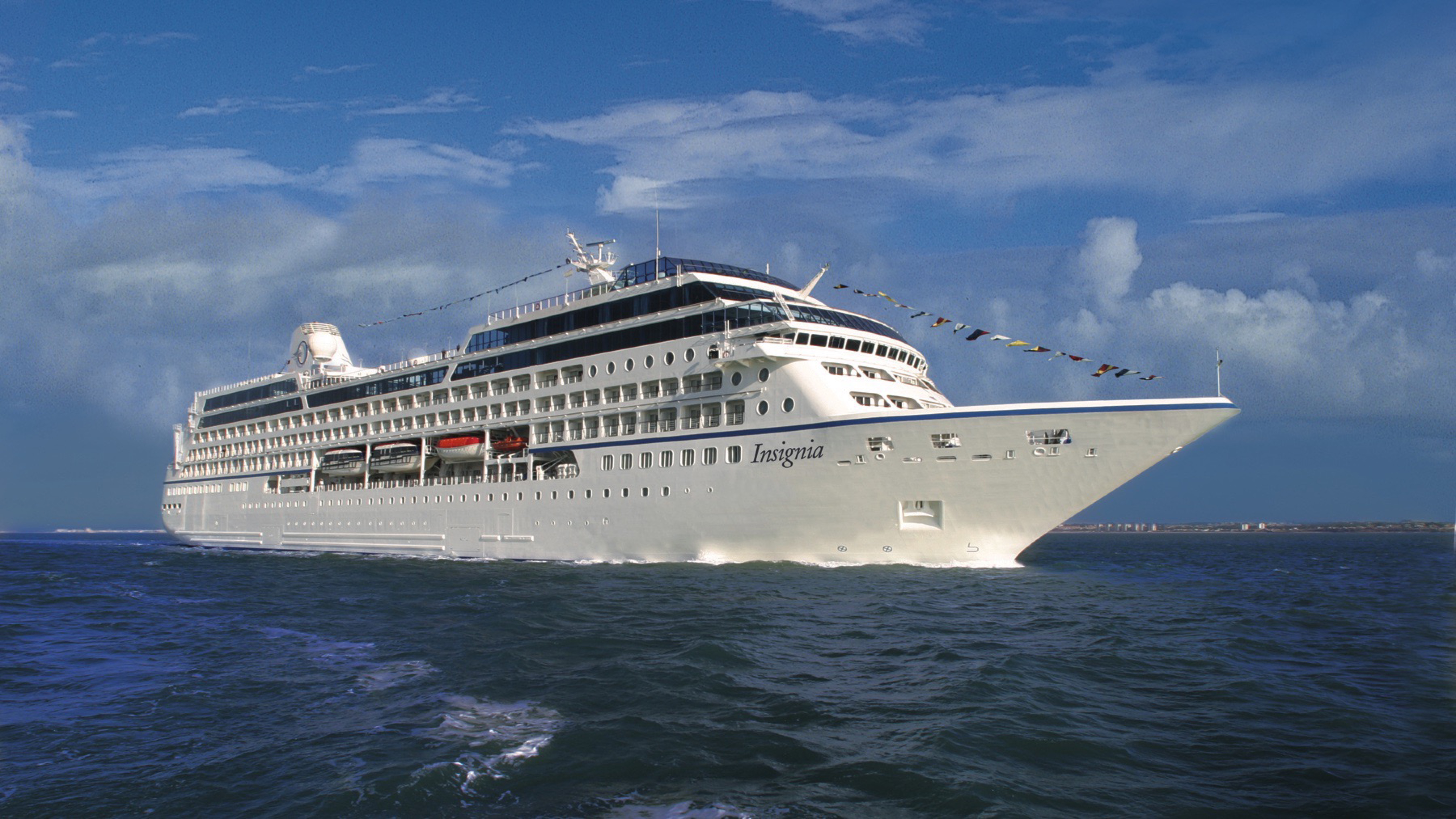
Deck Plans

- Ocean View Stateroom
- Tender Embarkation Area
- Elevator

- Destination Services
- Concierge
- Reception Hall
- Reception Desk
- Medical Centre
- Deluxe Ocean View Staterooms
- Inside Staterooms
- Elevator

- Grand Dining Room
- Baristas Grand/Bar
- Upper Hall
- Boutiques
- Martinis
- Casino
- Lounge
- Dance Floor
- Stage
- Elevator

- Concierge Level Veranda Staterooms
- Veranda Staterooms
- Deluxe Ocean View Staterooms
- Inside Staterooms
- Owner’s Suites
- Vista Suites
- Elevator

- Concierge Level Veranda Staterooms
- Deluxe Ocean View Staterooms
- Inside Staterooms
- Owner’s Suites
- Vista Suites
- Elevator
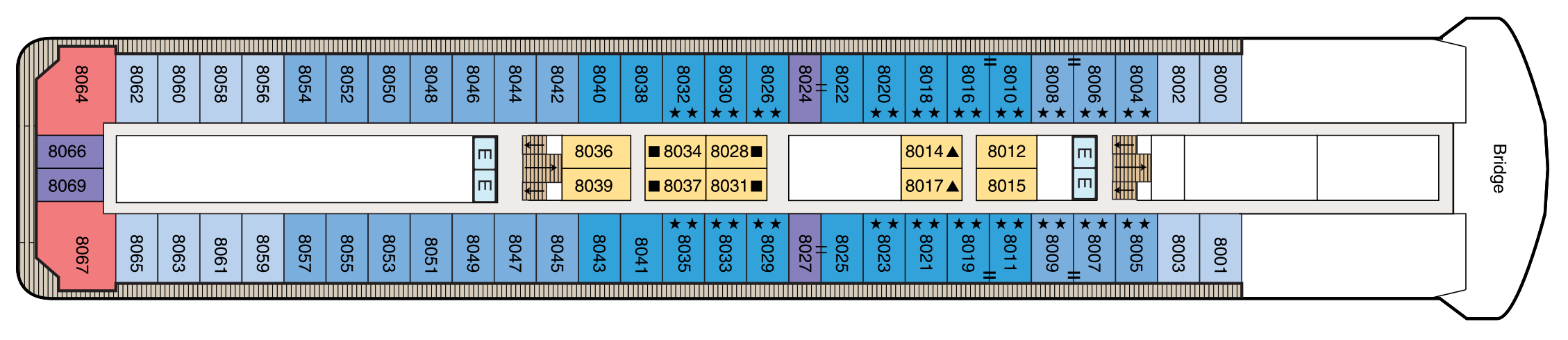
- Bridge
- Concierge Level Veranda Staterooms
- Inside Staterooms
- Owner’s Suites
- Penthouse Suites
- Elevator

- Terrace Café
- Bar
- The Patio
- Waves Grill
- Whirlpools
- Pool
- Waves Bar
- Oceania@Sea
- Card Room
- Aquamar Spa
- Fitness Centre
- Styling Salon
- Steam Rooms
- Spa Terrace
- Elevator
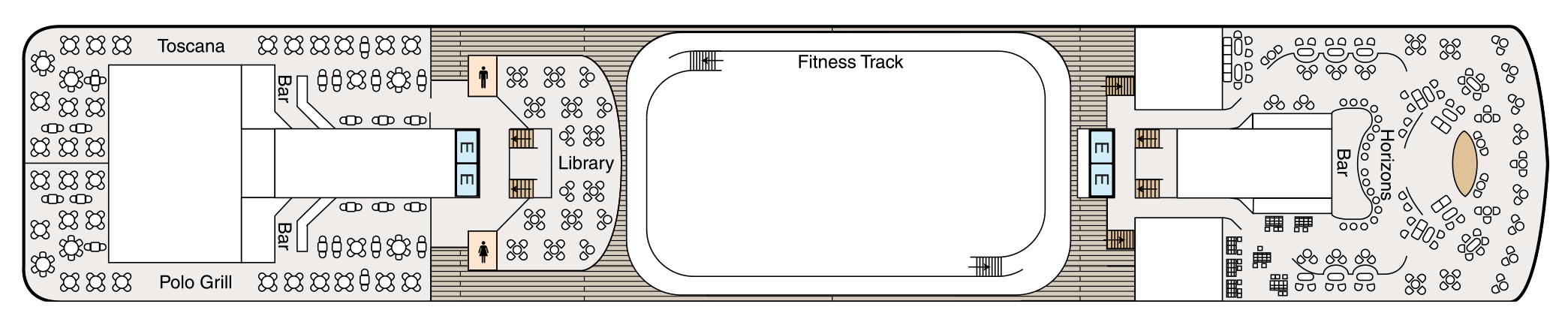
- Toscana
- Polo Grill
- Bars
- Library
- Fitness Track
- Horizons Bar
- Elevator

- Shuffleboard
- Sun Deck
- Golf Putting Greenes
- Showers
- Ocean View Stateroom
- Tender Embarkation Area
- Elevator
- Destination Services
- Concierge
- Reception Hall
- Reception Desk
- Medical Centre
- Deluxe Ocean View Staterooms
- Inside Staterooms
- Elevator
- Grand Dining Room
- Baristas Grand/Bar
- Upper Hall
- Boutiques
- Martinis
- Casino
- Lounge
- Dance Floor
- Stage
- Elevator
- Concierge Level Veranda Staterooms
- Veranda Staterooms
- Deluxe Ocean View Staterooms
- Inside Staterooms
- Owner’s Suites
- Vista Suites
- Elevator
- Concierge Level Veranda Staterooms
- Deluxe Ocean View Staterooms
- Inside Staterooms
- Owner’s Suites
- Vista Suites
- Elevator
- Bridge
- Concierge Level Veranda Staterooms
- Inside Staterooms
- Owner’s Suites
- Penthouse Suites
- Elevator
- Terrace Café
- Bar
- The Patio
- Waves Grill
- Whirlpools
- Pool
- Waves Bar
- Oceania@Sea
- Card Room
- Aquamar Spa
- Fitness Centre
- Styling Salon
- Steam Rooms
- Spa Terrace
- Elevator
- Toscana
- Polo Grill
- Bars
- Library
- Fitness Track
- Horizons Bar
- Elevator
- Shuffleboard
- Sun Deck
- Golf Putting Greenes
- Showers