Featured Cabins
Itinerary
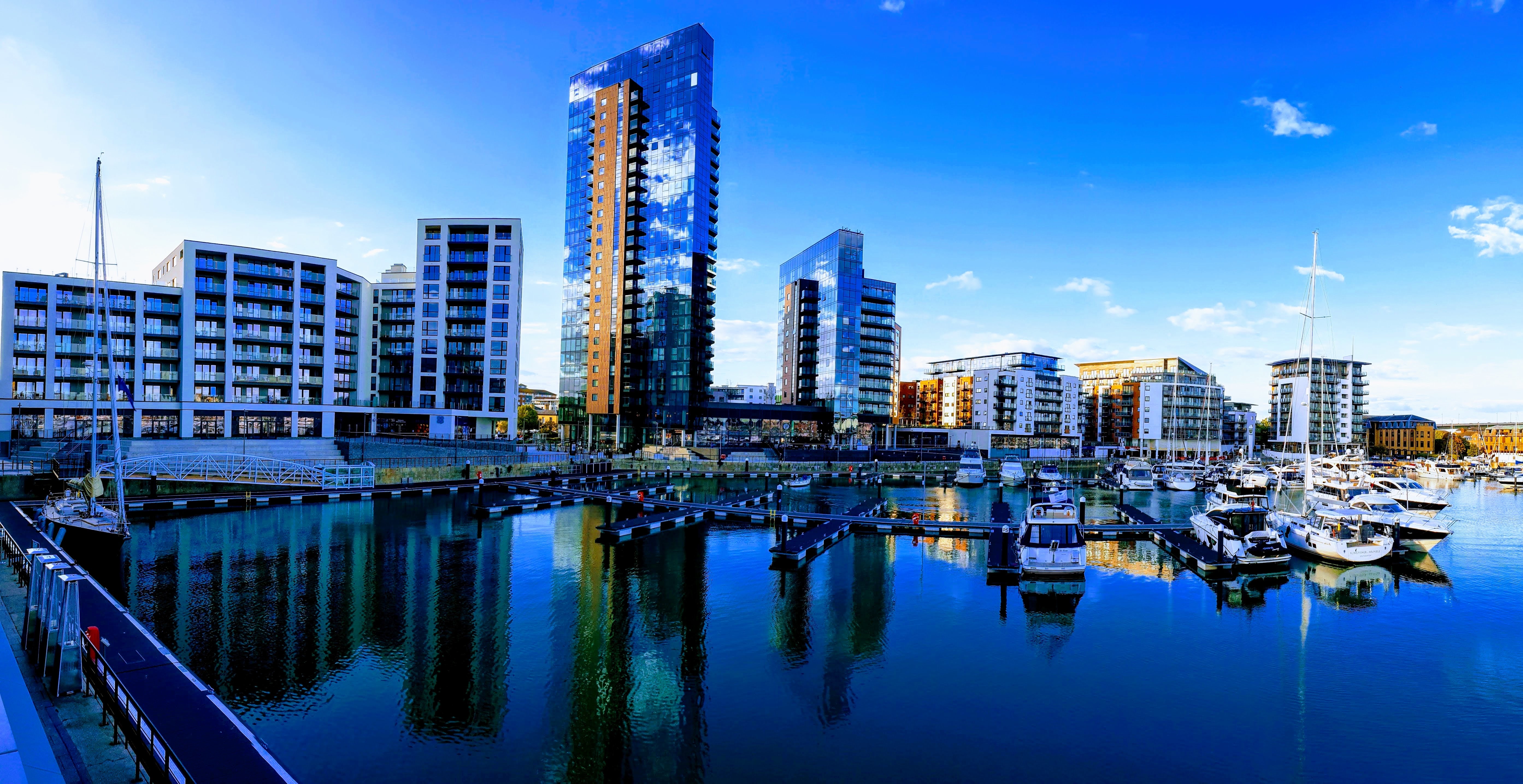
Southampton, England
Lying near the head of Southampton Water, a peninsula between the estuaries of the Rivers Test and Itchen, Southampton is Britain’s largest cruise port. It has been one of England’s major ports since the Middle Ages, when it exported wool and hides from the hinterland and imported wine from Bordeaux. The city suffered heavy damage during World War Two and as a result the centre has been extensively rebuilt, but there are still some interesting medieval buildings including the Bargate, one of the finest city gatehouses in England.
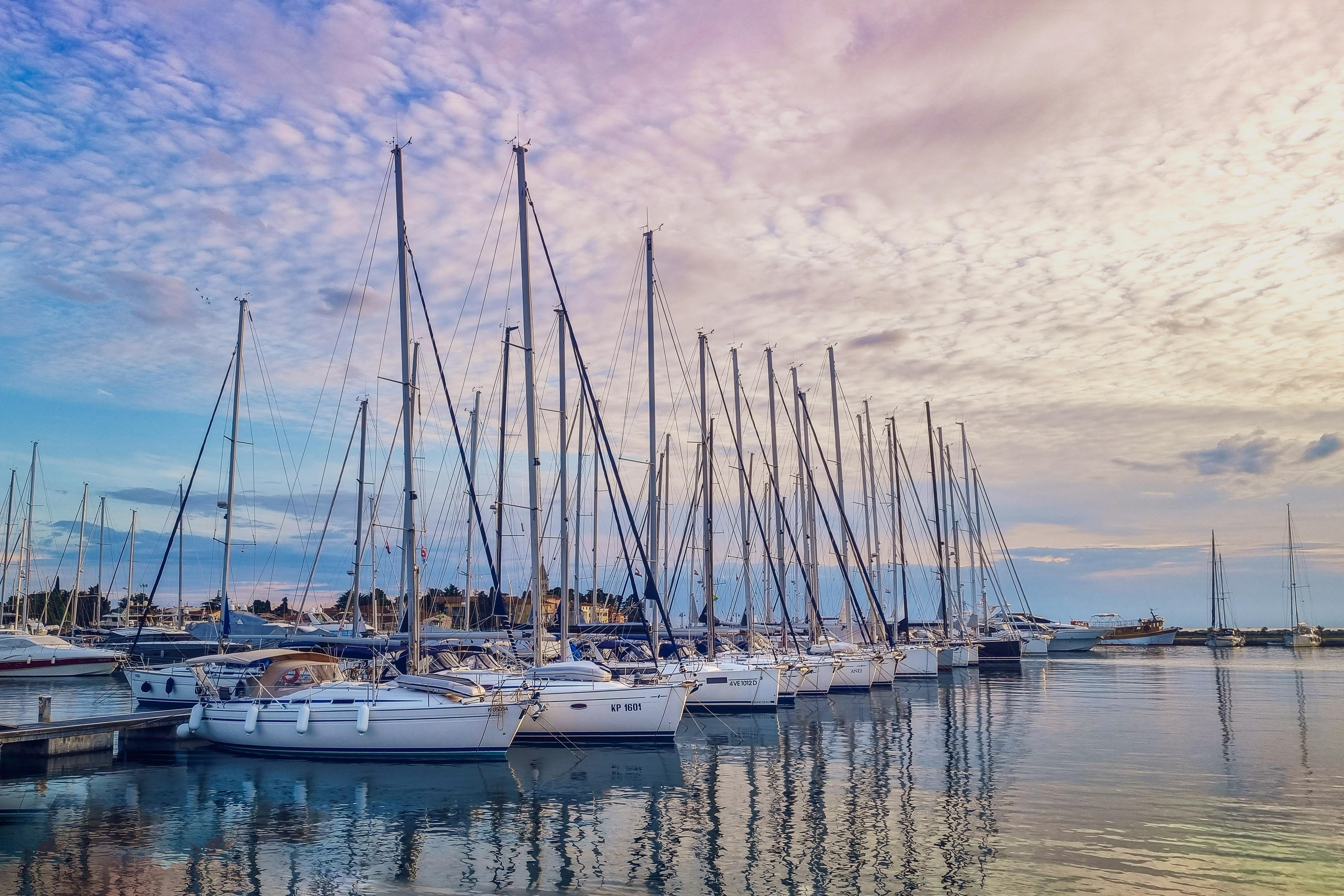
Motril, Spain
Motril is located in the Spanish region of Andalucia on the Costa Tropical. It is the biggest town on the Costa with a thriving commercial, fishing and leisure port. An hour and a half’s drive east of Malaga and within easy reach of the magnificent Sierra Nevada mountain range, Motril makes an ideal base for exploring the many delights of the Andalucian coastline and its hinterland. Halfway between the resorts of Malaga to the west and Almeria to the east, nestling in the foothills of the Sierra Lujar mountains, Motril is at the heart of one of the most fertile and productive agricultural areas of Spain. The Costa Tropical takes its name from its sub-tropical climate which enables the cultivation of exotic fruits and crops such as sugar cane, oranges, lemons, apples, avocadoes, mangoes and bananas. One of the sights of Motril is the 17th-century church of Nuestra Señora de la Cabeza, dedicated to the town’s patron saint.
Southampton, England
Lying near the head of Southampton Water, a peninsula between the estuaries of the Rivers Test and Itchen, Southampton is Britain’s largest cruise port. It has been one of England’s major ports since the Middle Ages, when it exported wool and hides from the hinterland and imported wine from Bordeaux. The city suffered heavy damage during World War Two and as a result the centre has been extensively rebuilt, but there are still some interesting medieval buildings including the Bargate, one of the finest city gatehouses in England.
Motril, Spain
Motril is located in the Spanish region of Andalucia on the Costa Tropical. It is the biggest town on the Costa with a thriving commercial, fishing and leisure port. An hour and a half’s drive east of Malaga and within easy reach of the magnificent Sierra Nevada mountain range, Motril makes an ideal base for exploring the many delights of the Andalucian coastline and its hinterland. Halfway between the resorts of Malaga to the west and Almeria to the east, nestling in the foothills of the Sierra Lujar mountains, Motril is at the heart of one of the most fertile and productive agricultural areas of Spain. The Costa Tropical takes its name from its sub-tropical climate which enables the cultivation of exotic fruits and crops such as sugar cane, oranges, lemons, apples, avocadoes, mangoes and bananas. One of the sights of Motril is the 17th-century church of Nuestra Señora de la Cabeza, dedicated to the town’s patron saint.
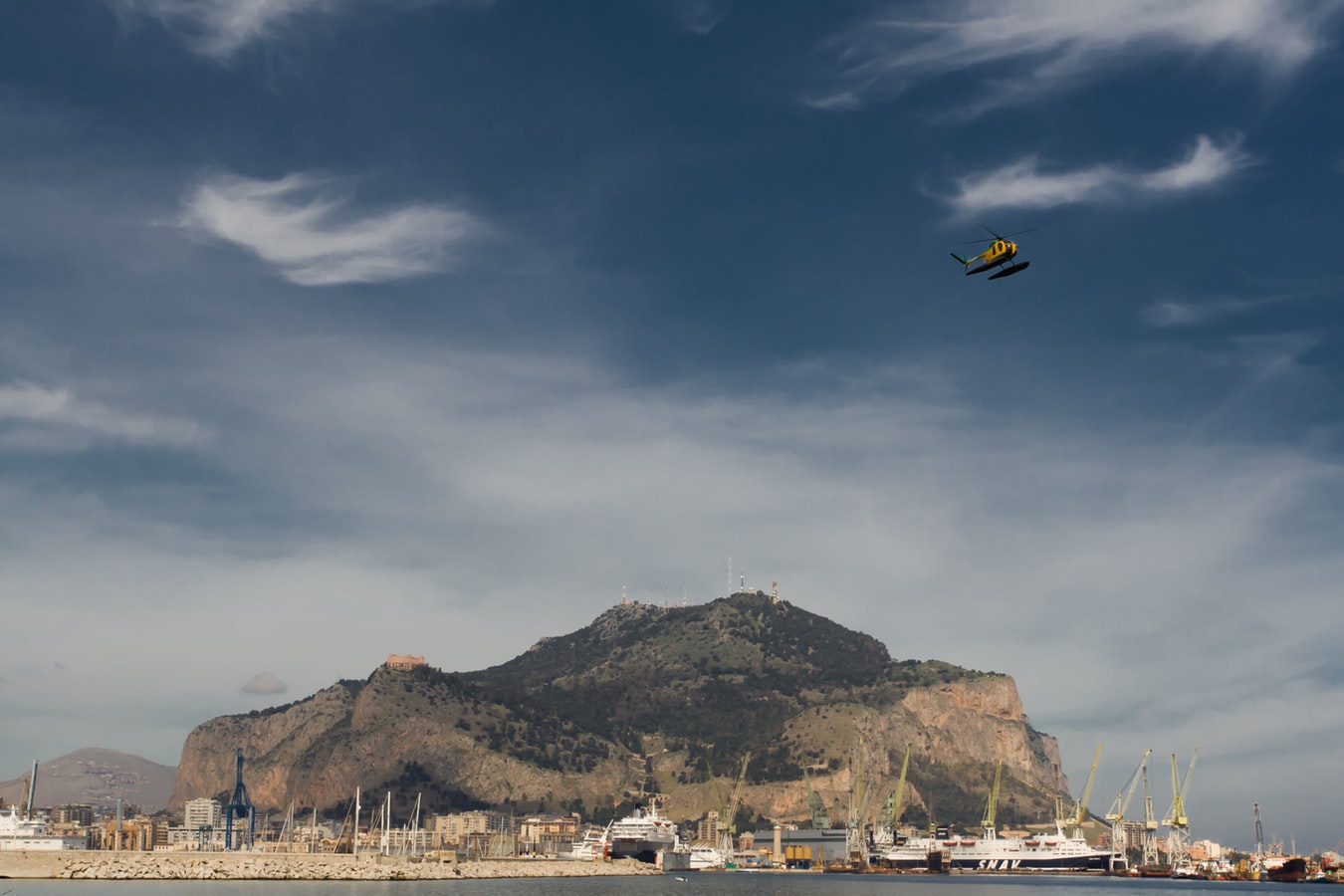
Palermo, Italy
Once the intellectual capital of southern Europe, Palermo has always been at the crossroads of civilization. Favorably situated on a crescent-shaped bay at the foot of Monte Pellegrino, it has attracted almost every culture touching the Mediterranean world. To Palermo’s credit, it has absorbed these diverse cultures into a unique personality that is at once Arab and Christian, Byzantine and Roman, Norman and Italian. The city’s heritage encompasses all of Sicily’s varied ages, but its distinctive aspect is its Arab-Norman identity, an improbable marriage that, mixed in with Byzantine and Jewish elements, created some resplendent works of art. No less noteworthy than the architecture is Palermo’s chaotic vitality, on display at some of Italy’s most vibrant outdoor markets, public squares, street bazaars, and food vendors, and above all in its grand climax of Italy’s most spectacular passeggiata (the leisurely social stroll along the principal thoroughfare).
Piraeus, Greece
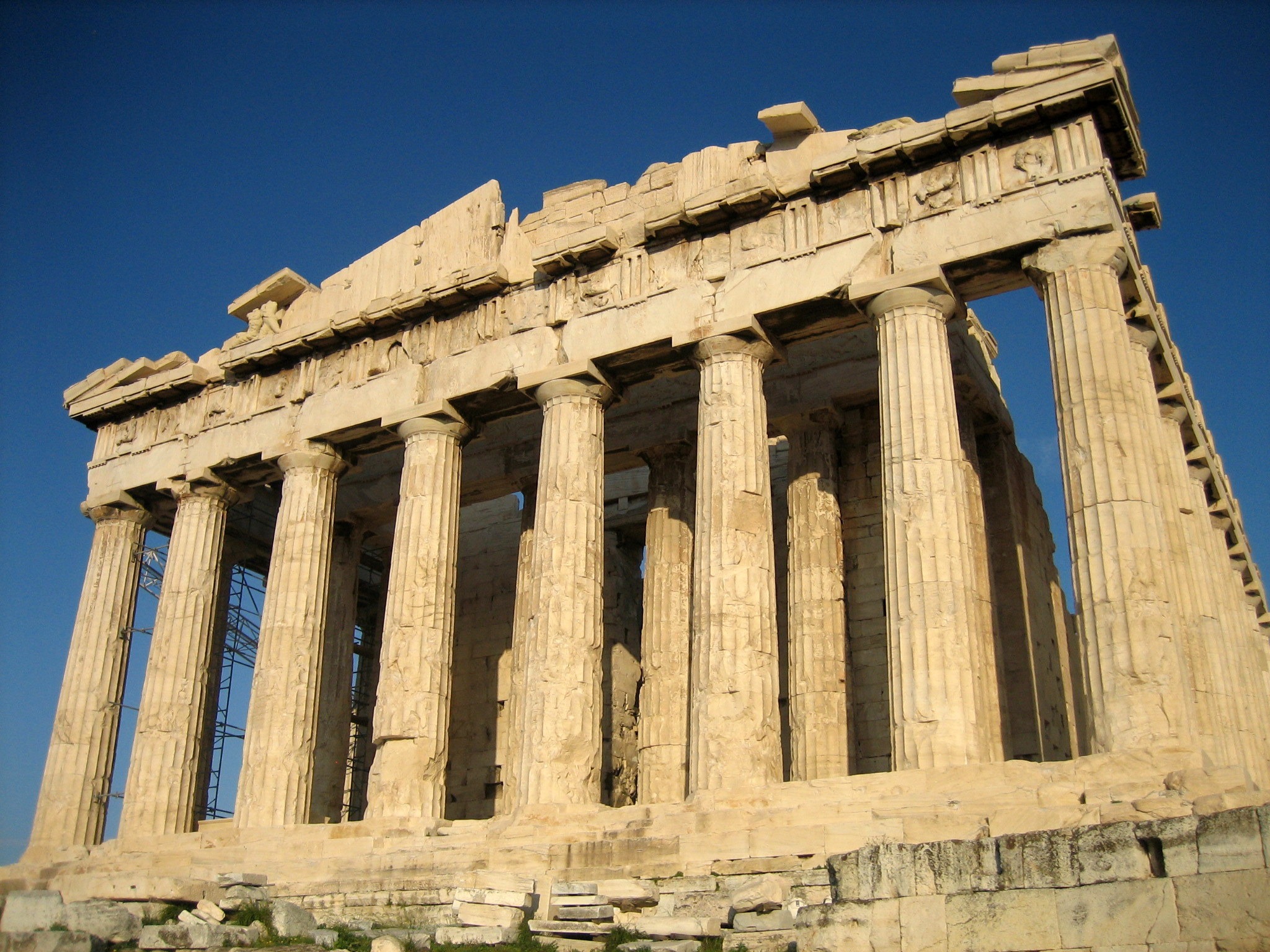
It’s no wonder that all roads lead to the fascinating and maddening metropolis of Athens. Lift your eyes 200 feet above the city to the Parthenon, its honey-color marble columns rising from a massive limestone base, and you behold architectural perfection that has not been surpassed in 2,500 years. But, today, this shrine of classical form dominates a 21st-century boomtown. To experience Athens—Athína in Greek—fully is to understand the essence of Greece: ancient monuments surviving in a sea of cement, startling beauty amid the squalor, tradition juxtaposed with modernity. Locals depend on humor and flexibility to deal with the chaos; you should do the same. The rewards are immense. Although Athens covers a huge area, the major landmarks of the ancient Greek, Roman, and Byzantine periods are close to the modern city center. You can easily walk from the Acropolis to many other key sites, taking time to browse in shops and relax in cafés and tavernas along the way. From many quarters of the city you can glimpse “the glory that was Greece” in the form of the Acropolis looming above the horizon, but only by actually climbing that rocky precipice can you feel the impact of the ancient settlement. The Acropolis and Filopappou, two craggy hills sitting side by side; the ancient Agora (marketplace); and Kerameikos, the first cemetery, form the core of ancient and Roman Athens. Along the Unification of Archaeological Sites promenade, you can follow stone-paved, tree-lined walkways from site to site, undisturbed by traffic. Cars have also been banned or reduced in other streets in the historical center. In the National Archaeological Museum, vast numbers of artifacts illustrate the many millennia of Greek civilization; smaller museums such as the Goulandris Museum of Cycladic Art Museum and the Byzantine and Christian Museum illuminate the history of particular regions or periods. Athens may seem like one huge city, but it is really a conglomeration of neighborhoods with distinctive characters. The Eastern influences that prevailed during the 400-year rule of the Ottoman Empire are still evident in Monastiraki, the bazaar area near the foot of the Acropolis. On the northern slope of the Acropolis, stroll through Plaka (if possible by moonlight), an area of tranquil streets lined with renovated mansions, to get the flavor of the 19th-century’s gracious lifestyle. The narrow lanes of Anafiotika, a section of Plaka, thread past tiny churches and small, color-washed houses with wooden upper stories, recalling a Cycladic island village. In this maze of winding streets, vestiges of the older city are everywhere: crumbling stairways lined with festive tavernas; dank cellars filled with wine vats; occasionally a court or diminutive garden, enclosed within high walls and filled with magnolia trees and the flaming trumpet-shaped flowers of hibiscus bushes. Formerly run-down old quarters, such as Thission, Gazi and Psirri, popular nightlife areas filled with bars and mezedopoleia (similar to tapas bars), are now in the process of gentrification, although they still retain much of their original charm, as does the colorful produce and meat market on Athinas. The area around Syntagma Square, the tourist hub, and Omonia Square, the commercial heart of the city about 1 km (½ mi) northwest, is distinctly European, having been designed by the court architects of King Otho, a Bavarian, in the 19th century. The chic shops and bistros of ritzy Kolonaki nestle at the foot of Mt. Lycabettus, Athens’s highest hill (909 feet). Each of Athens’s outlying suburbs has a distinctive character: in the north is wealthy, tree-lined Kifissia, once a summer resort for aristocratic Athenians, and in the south and southeast lie Glyfada, Voula, and Vouliagmeni, with their sandy beaches, seaside bars, and lively summer nightlife. Just beyond the city’s southern fringes is Piraeus, a bustling port city of waterside fish tavernas and Saronic Gulf views.
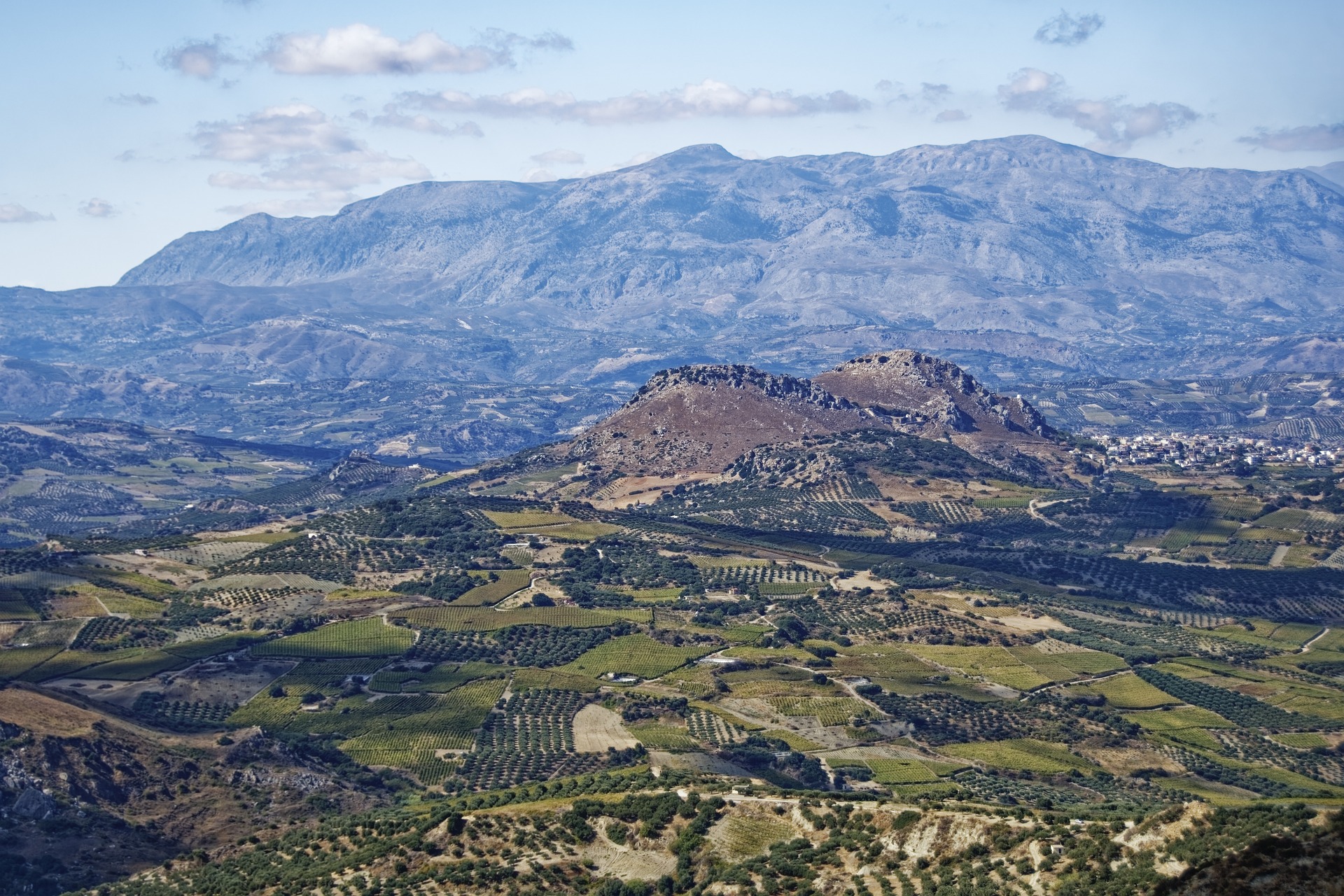
Heraklion (Iraklion), Crete, Greece
Having been controlled by Arabic, Venetian and Ottoman empires over the years – it’s no surprise that Heraklion is a diverse patchwork of exotic cultures and historical treasures. Celebrated as the birthplace of the Spanish Renaissance artist, El Greco, you can visit to explore the storied ruins of the Minoan empire’s capital, and unearth the rich cultural treasures that Crete’s bustling modern capital has to offer.
Santorini, Greece
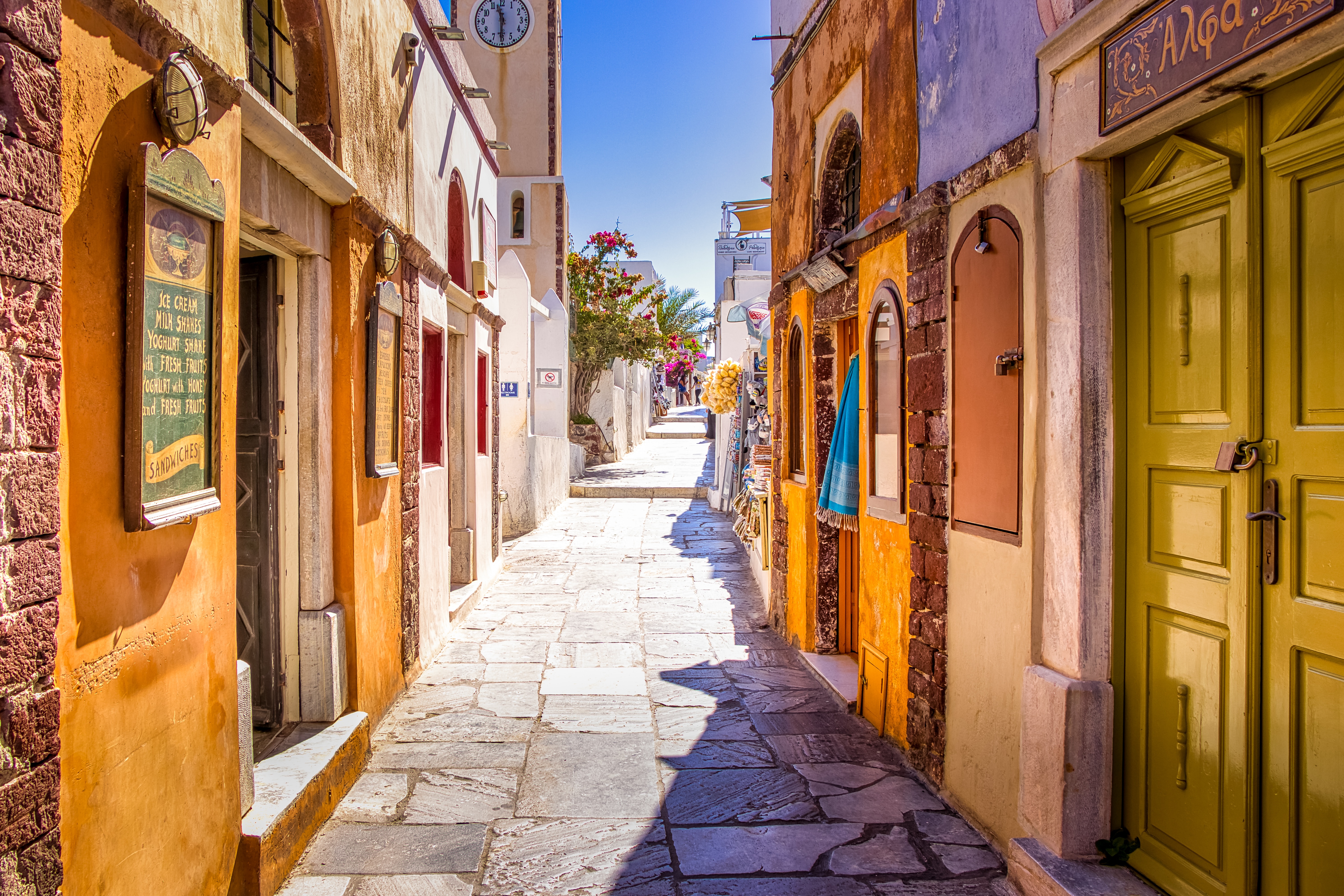
Undoubtedly the most extraordinary island in the Aegean, crescent-shape Santorini remains a mandatory stop on the Cycladic tourist route—even if it’s necessary to enjoy the sensational sunsets from Ia, the fascinating excavations, and the dazzling white towns with a million other travelers. Called Kállisti (the “Loveliest”) when first settled, the island has now reverted to its subsequent name of Thira, after the 9th-century-BC Dorian colonizer Thiras. The place is better known, however, these days as Santorini, a name derived from its patroness, St. Irene of Thessaloniki, the Byzantine empress who restored icons to Orthodoxy and died in 802. You can fly conveniently to Santorini, but to enjoy a true Santorini rite of passage, opt instead for the boat trip here, which provides a spectacular introduction. After the boat sails between Sikinos and Ios, your deck-side perch approaches two close islands with a passage between them. The bigger one on the left is Santorini, and the smaller on the right is Thirassia. Passing between them, you see the village of Ia adorning Santorini’s northernmost cliff like a white geometric beehive. You are in the caldera (volcanic crater), one of the world’s truly breathtaking sights: a demilune of cliffs rising 1,100 feet, with the white clusters of the towns of Fira and Ia perched along the top. The bay, once the high center of the island, is 1,300 feet in some places, so deep that when boats dock in Santorini’s shabby little port of Athinios, they do not drop anchor. The encircling cliffs are the ancient rim of a still-active volcano, and you are sailing east across its flooded caldera. On your right are the Burnt isles, the White isle, and other volcanic remnants, all lined up as if some outsize display in a geology museum. Hephaestus’s subterranean fires smolder still—the volcano erupted in 198 BC, about 735, and there was an earthquake in 1956. Indeed, Santorini and its four neighboring islets are the fragmentary remains of a larger landmass that exploded about 1600 BC: the volcano’s core blew sky high, and the sea rushed into the abyss to create the great bay, which measures 10 km by 7 km (6 mi by 4½ mi) and is 1,292 feet deep. The other pieces of the rim, which broke off in later eruptions, are Thirassia, where a few hundred people live, and deserted little Aspronissi (“White isle”). In the center of the bay, black and uninhabited, two cones, the Burnt Isles of Palea Kameni and Nea Kameni, appeared between 1573 and 1925. There has been too much speculation about the identification of Santorini with the mythical Atlantis, mentioned in Egyptian papyri and by Plato (who says it’s in the Atlantic), but myths are hard to pin down. This is not true of old arguments about whether tidal waves from Santorini’s cataclysmic explosion destroyed Minoan civilization on Crete, 113 km (70 mi) away. The latest carbon-dating evidence, which points to a few years before 1600 BC for the eruption, clearly indicates that the Minoans outlasted the eruption by a couple of hundred years, but most probably in a weakened state. In fact, the island still endures hardships: since antiquity, Santorini has depended on rain collected in cisterns for drinking and irrigating—the well water is often brackish—and the serious shortage is alleviated by the importation of water. However, the volcanic soil also yields riches: small, intense tomatoes with tough skins used for tomato paste (good restaurants here serve them); the famous Santorini fava beans, which have a light, fresh taste; barley; wheat; and white-skin eggplants.
Kusadasi, Turkey
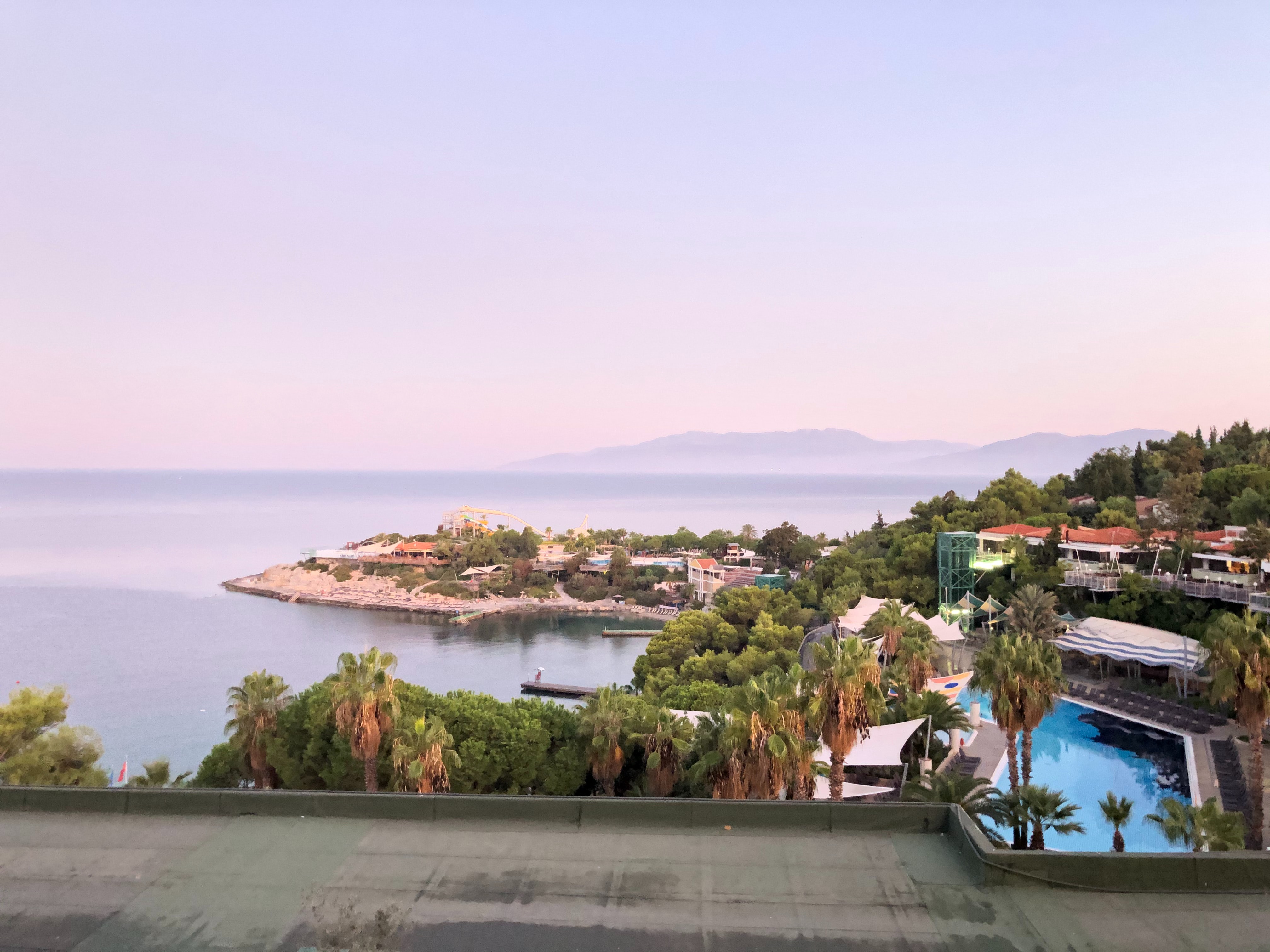
Whilst the busy resort town of Kusadasi offers much in the way of shopping and dining – not to mention a flourishing beach life scene, the real jewel here is Ephesus and the stunning ruined city that really take centre stage. With only 20% of the classical ruins having been excavated, this archaeological wonder has already gained the status as Europe’s most complete classical metropolis. And a metropolis it really is; built in the 10th century BC this UNESCO World Heritage site is nothing short of spectacular. Although regrettably very little remains of the Temple of Artemis (one of the seven wonders of the ancient world), the superb Library of Celsus’ façade is practically intact and it is one of life’s great joys to attend an evening performance in the illuminated ruins once all the tourists have left. The history of the city is fascinating and multi-layered and it is well worth reading up on this beforehand if a visit is planned. Another point of interest for historians would be the house of the Virgin Mary, located on the romantically named Mount Nightingale and just nine kilometres away from Ephesus proper. Legend has it that Mary (along with St. John) spent her final years here, secluded from the rest of the population, spreading Christianity. An edifying experience, even for non-believers. For the less historical minded amongst you, Kusadasi offers plenty in the way of activities. After a stroll through the town, jump in a taxi to Ladies’ Beach (men are allowed), sample a Turkish kebap on one of the many beachfront restaurants and enjoy the clement weather. If you do want to venture further afield, then the crystal clear beaches of Guzelcamli (or the Millipark), the cave of Zeus and the white scalloped natural pools at Pamukkale, known as Cleopatra’s pools, are definitely worth a visit.
Palermo, Italy
Once the intellectual capital of southern Europe, Palermo has always been at the crossroads of civilization. Favorably situated on a crescent-shaped bay at the foot of Monte Pellegrino, it has attracted almost every culture touching the Mediterranean world. To Palermo’s credit, it has absorbed these diverse cultures into a unique personality that is at once Arab and Christian, Byzantine and Roman, Norman and Italian. The city’s heritage encompasses all of Sicily’s varied ages, but its distinctive aspect is its Arab-Norman identity, an improbable marriage that, mixed in with Byzantine and Jewish elements, created some resplendent works of art. No less noteworthy than the architecture is Palermo’s chaotic vitality, on display at some of Italy’s most vibrant outdoor markets, public squares, street bazaars, and food vendors, and above all in its grand climax of Italy’s most spectacular passeggiata (the leisurely social stroll along the principal thoroughfare).
Piraeus, Greece
It’s no wonder that all roads lead to the fascinating and maddening metropolis of Athens. Lift your eyes 200 feet above the city to the Parthenon, its honey-color marble columns rising from a massive limestone base, and you behold architectural perfection that has not been surpassed in 2,500 years. But, today, this shrine of classical form dominates a 21st-century boomtown. To experience Athens—Athína in Greek—fully is to understand the essence of Greece: ancient monuments surviving in a sea of cement, startling beauty amid the squalor, tradition juxtaposed with modernity. Locals depend on humor and flexibility to deal with the chaos; you should do the same. The rewards are immense. Although Athens covers a huge area, the major landmarks of the ancient Greek, Roman, and Byzantine periods are close to the modern city center. You can easily walk from the Acropolis to many other key sites, taking time to browse in shops and relax in cafés and tavernas along the way. From many quarters of the city you can glimpse “the glory that was Greece” in the form of the Acropolis looming above the horizon, but only by actually climbing that rocky precipice can you feel the impact of the ancient settlement. The Acropolis and Filopappou, two craggy hills sitting side by side; the ancient Agora (marketplace); and Kerameikos, the first cemetery, form the core of ancient and Roman Athens. Along the Unification of Archaeological Sites promenade, you can follow stone-paved, tree-lined walkways from site to site, undisturbed by traffic. Cars have also been banned or reduced in other streets in the historical center. In the National Archaeological Museum, vast numbers of artifacts illustrate the many millennia of Greek civilization; smaller museums such as the Goulandris Museum of Cycladic Art Museum and the Byzantine and Christian Museum illuminate the history of particular regions or periods. Athens may seem like one huge city, but it is really a conglomeration of neighborhoods with distinctive characters. The Eastern influences that prevailed during the 400-year rule of the Ottoman Empire are still evident in Monastiraki, the bazaar area near the foot of the Acropolis. On the northern slope of the Acropolis, stroll through Plaka (if possible by moonlight), an area of tranquil streets lined with renovated mansions, to get the flavor of the 19th-century’s gracious lifestyle. The narrow lanes of Anafiotika, a section of Plaka, thread past tiny churches and small, color-washed houses with wooden upper stories, recalling a Cycladic island village. In this maze of winding streets, vestiges of the older city are everywhere: crumbling stairways lined with festive tavernas; dank cellars filled with wine vats; occasionally a court or diminutive garden, enclosed within high walls and filled with magnolia trees and the flaming trumpet-shaped flowers of hibiscus bushes. Formerly run-down old quarters, such as Thission, Gazi and Psirri, popular nightlife areas filled with bars and mezedopoleia (similar to tapas bars), are now in the process of gentrification, although they still retain much of their original charm, as does the colorful produce and meat market on Athinas. The area around Syntagma Square, the tourist hub, and Omonia Square, the commercial heart of the city about 1 km (½ mi) northwest, is distinctly European, having been designed by the court architects of King Otho, a Bavarian, in the 19th century. The chic shops and bistros of ritzy Kolonaki nestle at the foot of Mt. Lycabettus, Athens’s highest hill (909 feet). Each of Athens’s outlying suburbs has a distinctive character: in the north is wealthy, tree-lined Kifissia, once a summer resort for aristocratic Athenians, and in the south and southeast lie Glyfada, Voula, and Vouliagmeni, with their sandy beaches, seaside bars, and lively summer nightlife. Just beyond the city’s southern fringes is Piraeus, a bustling port city of waterside fish tavernas and Saronic Gulf views.
Heraklion (Iraklion), Crete, Greece
Having been controlled by Arabic, Venetian and Ottoman empires over the years – it’s no surprise that Heraklion is a diverse patchwork of exotic cultures and historical treasures. Celebrated as the birthplace of the Spanish Renaissance artist, El Greco, you can visit to explore the storied ruins of the Minoan empire’s capital, and unearth the rich cultural treasures that Crete’s bustling modern capital has to offer.
Santorini, Greece
Undoubtedly the most extraordinary island in the Aegean, crescent-shape Santorini remains a mandatory stop on the Cycladic tourist route—even if it’s necessary to enjoy the sensational sunsets from Ia, the fascinating excavations, and the dazzling white towns with a million other travelers. Called Kállisti (the “Loveliest”) when first settled, the island has now reverted to its subsequent name of Thira, after the 9th-century-BC Dorian colonizer Thiras. The place is better known, however, these days as Santorini, a name derived from its patroness, St. Irene of Thessaloniki, the Byzantine empress who restored icons to Orthodoxy and died in 802. You can fly conveniently to Santorini, but to enjoy a true Santorini rite of passage, opt instead for the boat trip here, which provides a spectacular introduction. After the boat sails between Sikinos and Ios, your deck-side perch approaches two close islands with a passage between them. The bigger one on the left is Santorini, and the smaller on the right is Thirassia. Passing between them, you see the village of Ia adorning Santorini’s northernmost cliff like a white geometric beehive. You are in the caldera (volcanic crater), one of the world’s truly breathtaking sights: a demilune of cliffs rising 1,100 feet, with the white clusters of the towns of Fira and Ia perched along the top. The bay, once the high center of the island, is 1,300 feet in some places, so deep that when boats dock in Santorini’s shabby little port of Athinios, they do not drop anchor. The encircling cliffs are the ancient rim of a still-active volcano, and you are sailing east across its flooded caldera. On your right are the Burnt isles, the White isle, and other volcanic remnants, all lined up as if some outsize display in a geology museum. Hephaestus’s subterranean fires smolder still—the volcano erupted in 198 BC, about 735, and there was an earthquake in 1956. Indeed, Santorini and its four neighboring islets are the fragmentary remains of a larger landmass that exploded about 1600 BC: the volcano’s core blew sky high, and the sea rushed into the abyss to create the great bay, which measures 10 km by 7 km (6 mi by 4½ mi) and is 1,292 feet deep. The other pieces of the rim, which broke off in later eruptions, are Thirassia, where a few hundred people live, and deserted little Aspronissi (“White isle”). In the center of the bay, black and uninhabited, two cones, the Burnt Isles of Palea Kameni and Nea Kameni, appeared between 1573 and 1925. There has been too much speculation about the identification of Santorini with the mythical Atlantis, mentioned in Egyptian papyri and by Plato (who says it’s in the Atlantic), but myths are hard to pin down. This is not true of old arguments about whether tidal waves from Santorini’s cataclysmic explosion destroyed Minoan civilization on Crete, 113 km (70 mi) away. The latest carbon-dating evidence, which points to a few years before 1600 BC for the eruption, clearly indicates that the Minoans outlasted the eruption by a couple of hundred years, but most probably in a weakened state. In fact, the island still endures hardships: since antiquity, Santorini has depended on rain collected in cisterns for drinking and irrigating—the well water is often brackish—and the serious shortage is alleviated by the importation of water. However, the volcanic soil also yields riches: small, intense tomatoes with tough skins used for tomato paste (good restaurants here serve them); the famous Santorini fava beans, which have a light, fresh taste; barley; wheat; and white-skin eggplants.
Kusadasi, Turkey
Whilst the busy resort town of Kusadasi offers much in the way of shopping and dining – not to mention a flourishing beach life scene, the real jewel here is Ephesus and the stunning ruined city that really take centre stage. With only 20% of the classical ruins having been excavated, this archaeological wonder has already gained the status as Europe’s most complete classical metropolis. And a metropolis it really is; built in the 10th century BC this UNESCO World Heritage site is nothing short of spectacular. Although regrettably very little remains of the Temple of Artemis (one of the seven wonders of the ancient world), the superb Library of Celsus’ façade is practically intact and it is one of life’s great joys to attend an evening performance in the illuminated ruins once all the tourists have left. The history of the city is fascinating and multi-layered and it is well worth reading up on this beforehand if a visit is planned. Another point of interest for historians would be the house of the Virgin Mary, located on the romantically named Mount Nightingale and just nine kilometres away from Ephesus proper. Legend has it that Mary (along with St. John) spent her final years here, secluded from the rest of the population, spreading Christianity. An edifying experience, even for non-believers. For the less historical minded amongst you, Kusadasi offers plenty in the way of activities. After a stroll through the town, jump in a taxi to Ladies’ Beach (men are allowed), sample a Turkish kebap on one of the many beachfront restaurants and enjoy the clement weather. If you do want to venture further afield, then the crystal clear beaches of Guzelcamli (or the Millipark), the cave of Zeus and the white scalloped natural pools at Pamukkale, known as Cleopatra’s pools, are definitely worth a visit.
Gibraltar, Gibraltar
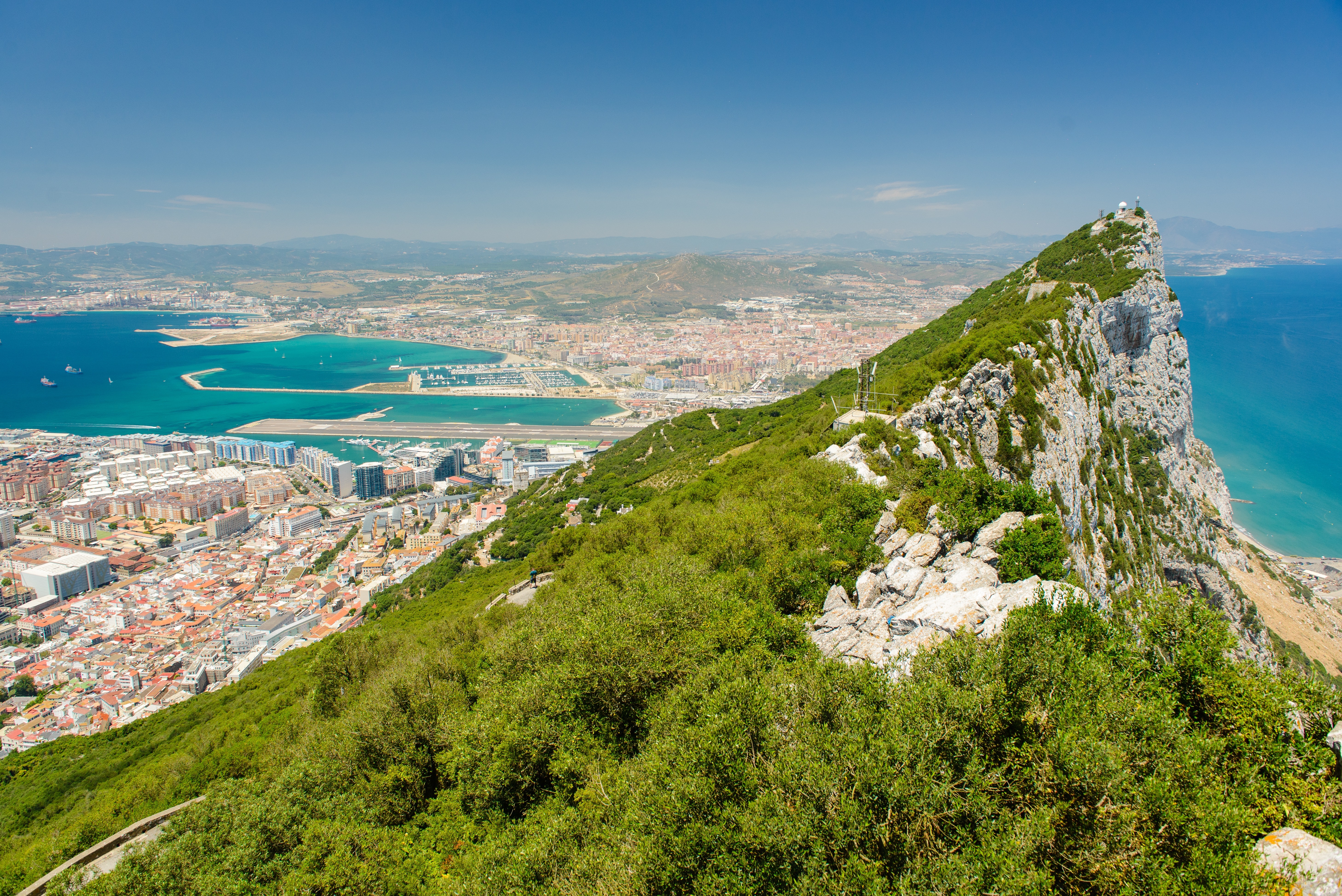
Tagged on to the end of Iberia, the intriguing British outpost of Gibraltar is dominated by a sandy peninsula and the stunning 1,400-feet-high limestone Rock. Although small, Gibraltar has always been seen as having great strategic importance on account of its advantageous position where the Atlantic meets the Mediterranean, just 12 miles from the coast of Africa. Ever popular with British holidaymakers, Gibraltar is very much a home from home, boasting excellent duty-free shopping in many familiar British high street shops. Please note: Gibraltar’s small size and narrow winding roads mean that excursions are operated by 22-seater mini-buses, accompanied by a driver/guide. Local health and safety regulations prohibit the carriage of walking aids and collapsible wheelchairs on these vehicles. If you do wish to bring a mobility aid, we can arrange the Rock Tour by taxi, which has extra space. If this suits your requirements, please advise the Tours and Travel office when you join the ship, as numbers are limited.
Southampton, England
Lying near the head of Southampton Water, a peninsula between the estuaries of the Rivers Test and Itchen, Southampton is Britain’s largest cruise port. It has been one of England’s major ports since the Middle Ages, when it exported wool and hides from the hinterland and imported wine from Bordeaux. The city suffered heavy damage during World War Two and as a result the centre has been extensively rebuilt, but there are still some interesting medieval buildings including the Bargate, one of the finest city gatehouses in England.
Gibraltar, Gibraltar
Tagged on to the end of Iberia, the intriguing British outpost of Gibraltar is dominated by a sandy peninsula and the stunning 1,400-feet-high limestone Rock. Although small, Gibraltar has always been seen as having great strategic importance on account of its advantageous position where the Atlantic meets the Mediterranean, just 12 miles from the coast of Africa. Ever popular with British holidaymakers, Gibraltar is very much a home from home, boasting excellent duty-free shopping in many familiar British high street shops. Please note: Gibraltar’s small size and narrow winding roads mean that excursions are operated by 22-seater mini-buses, accompanied by a driver/guide. Local health and safety regulations prohibit the carriage of walking aids and collapsible wheelchairs on these vehicles. If you do wish to bring a mobility aid, we can arrange the Rock Tour by taxi, which has extra space. If this suits your requirements, please advise the Tours and Travel office when you join the ship, as numbers are limited.
Southampton, England
Lying near the head of Southampton Water, a peninsula between the estuaries of the Rivers Test and Itchen, Southampton is Britain’s largest cruise port. It has been one of England’s major ports since the Middle Ages, when it exported wool and hides from the hinterland and imported wine from Bordeaux. The city suffered heavy damage during World War Two and as a result the centre has been extensively rebuilt, but there are still some interesting medieval buildings including the Bargate, one of the finest city gatehouses in England.
Cabin Options
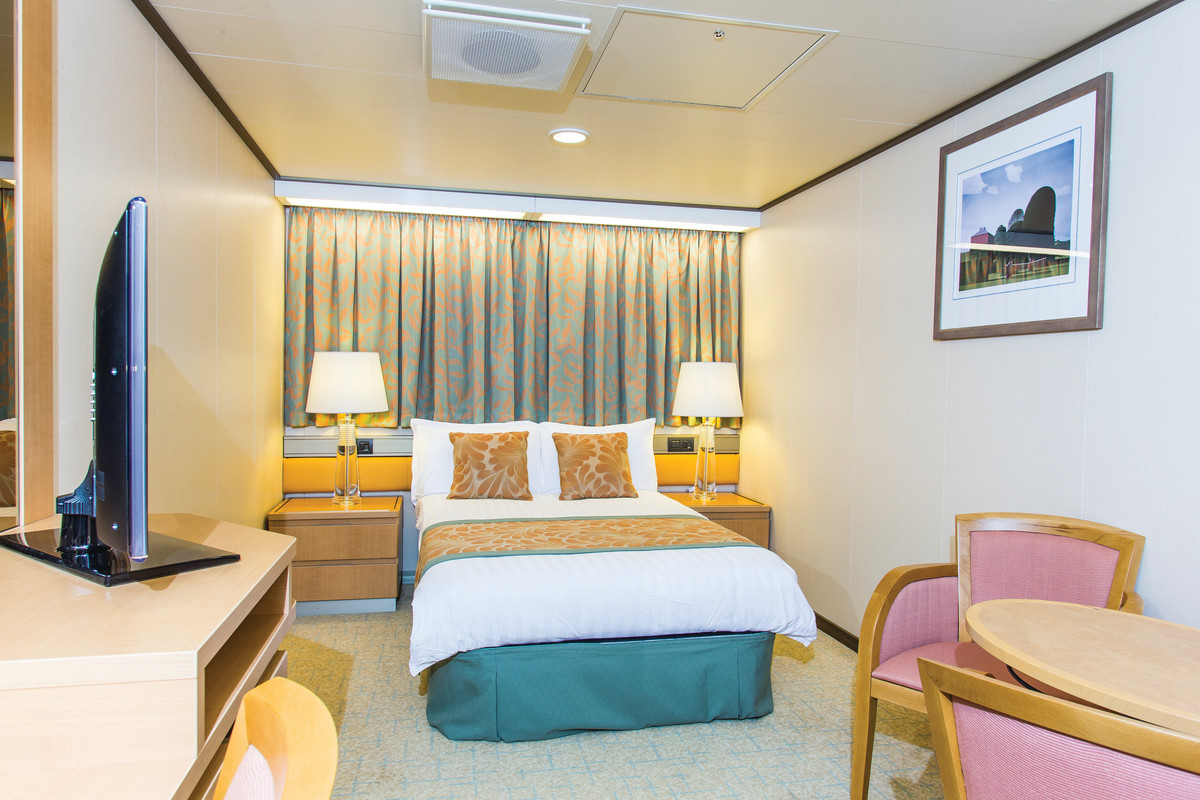
Inside Cabin
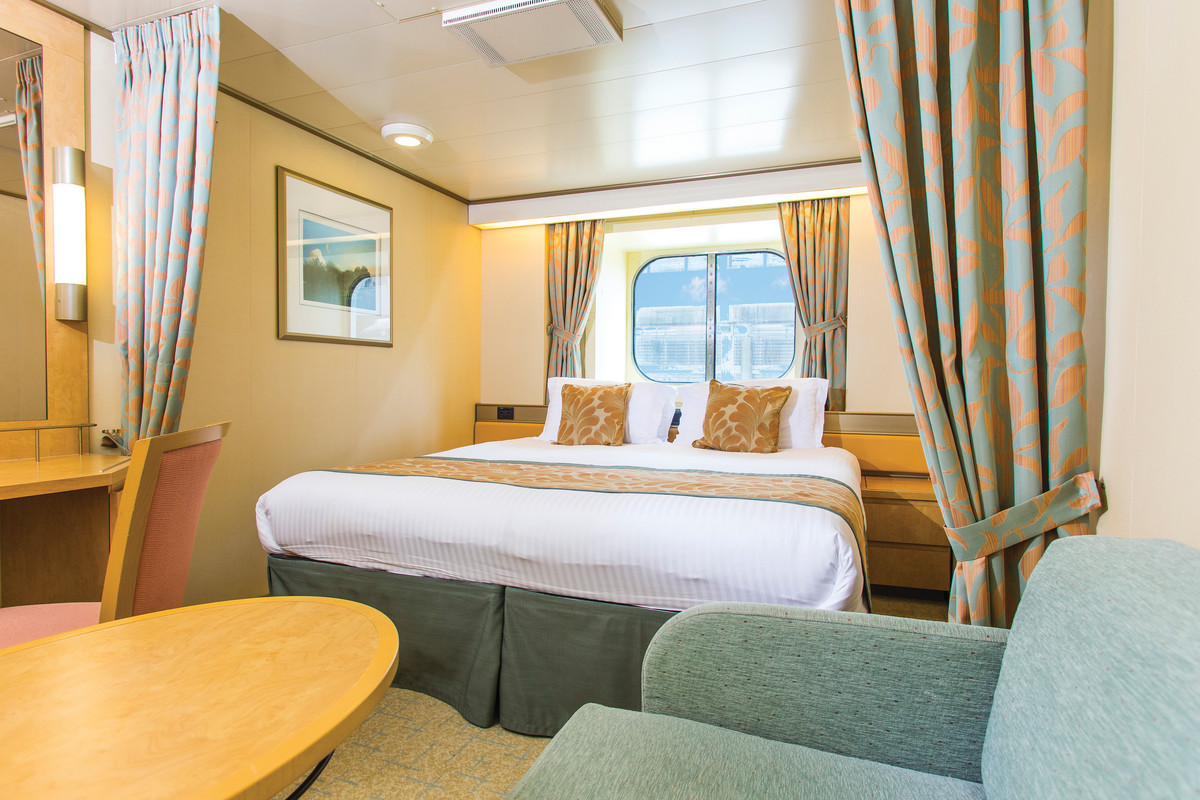
Sea View Cabins
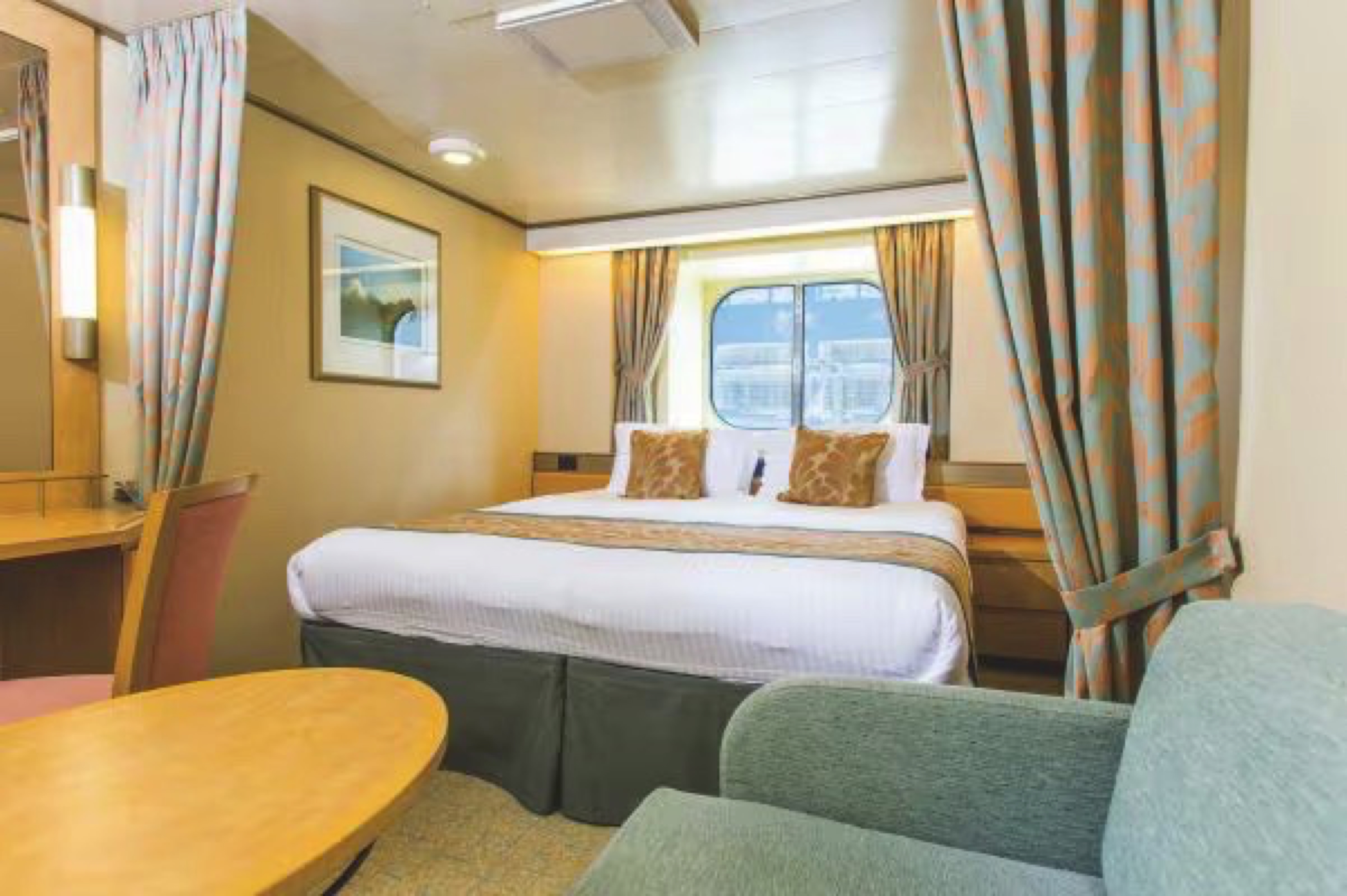
Sea View Cabins (Obstructed View)
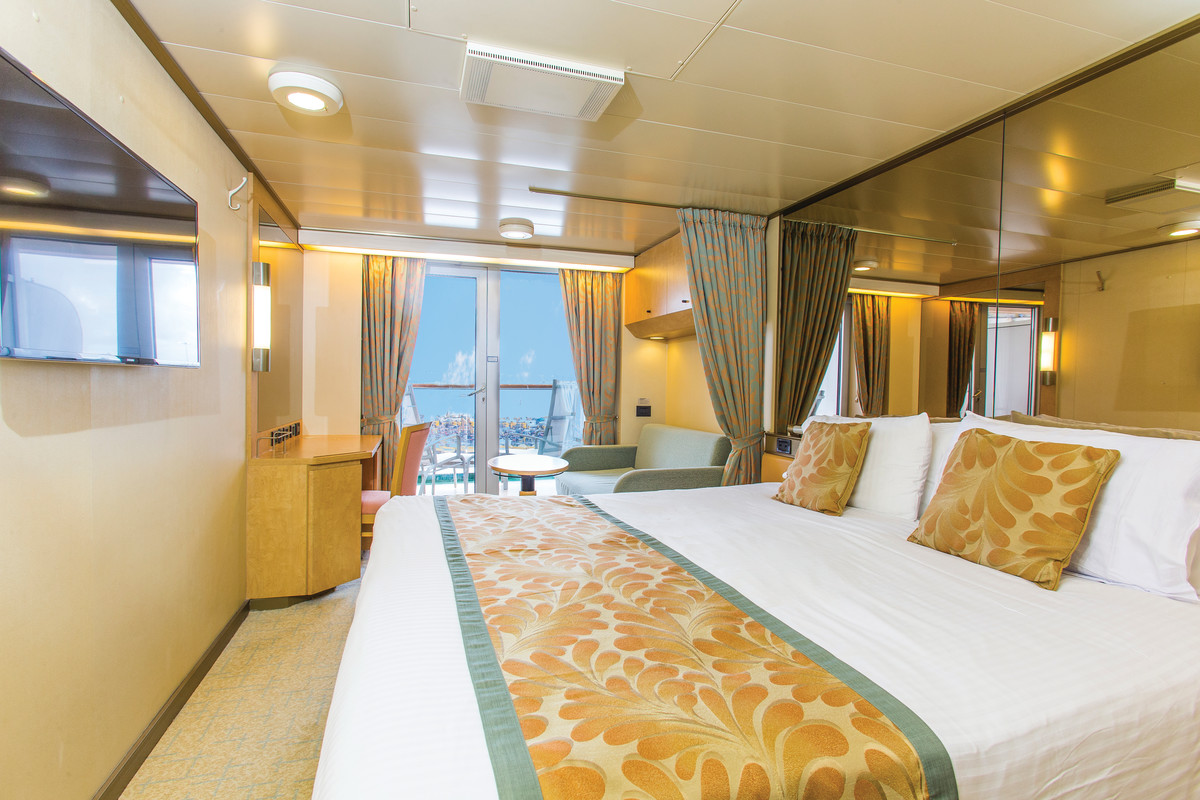
Deluxe Balcony Cabins
Inside Single Cabins
Single Balcony Cabins
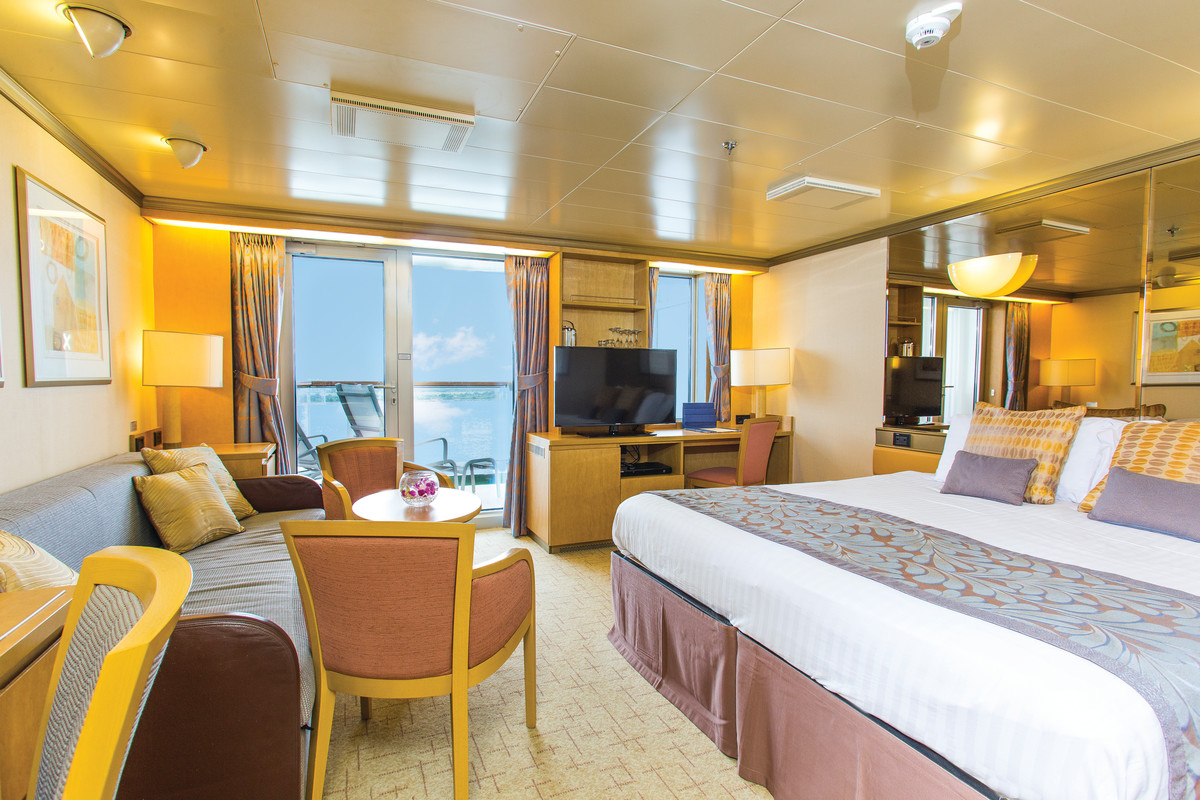
Mini-Suites
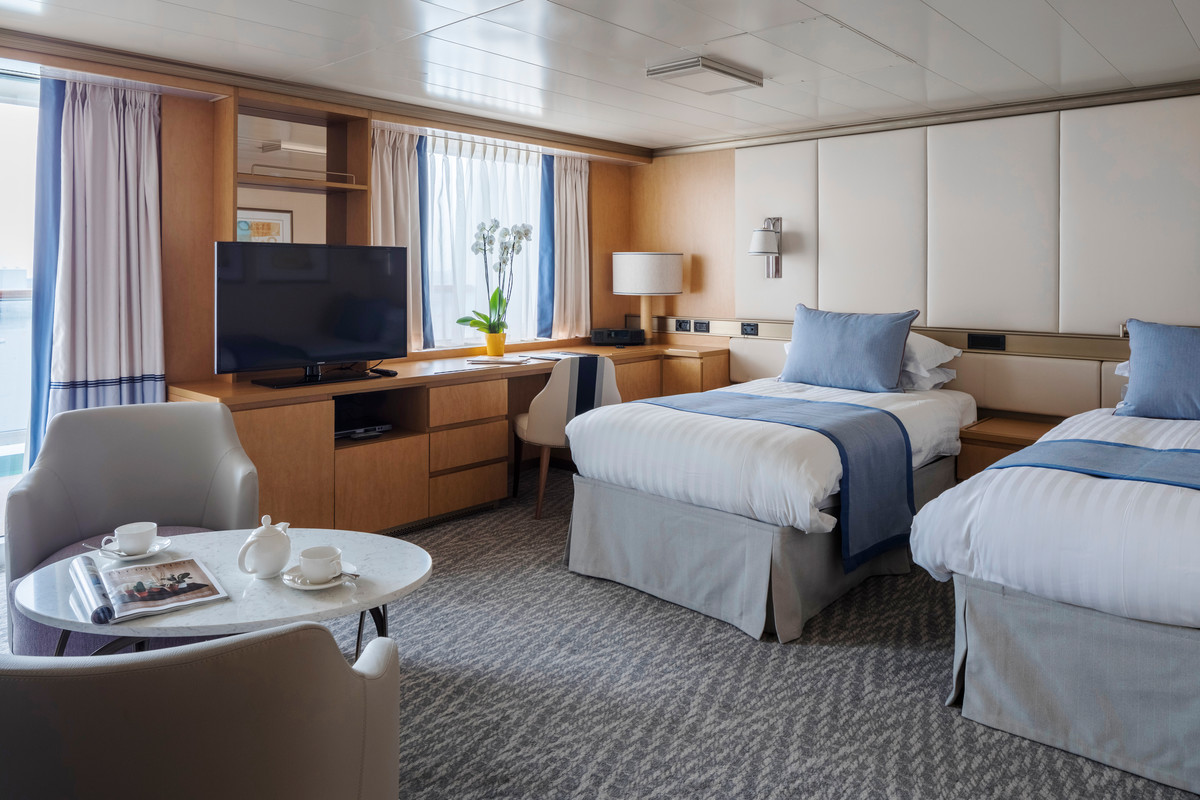
Suite
Ship Facilities
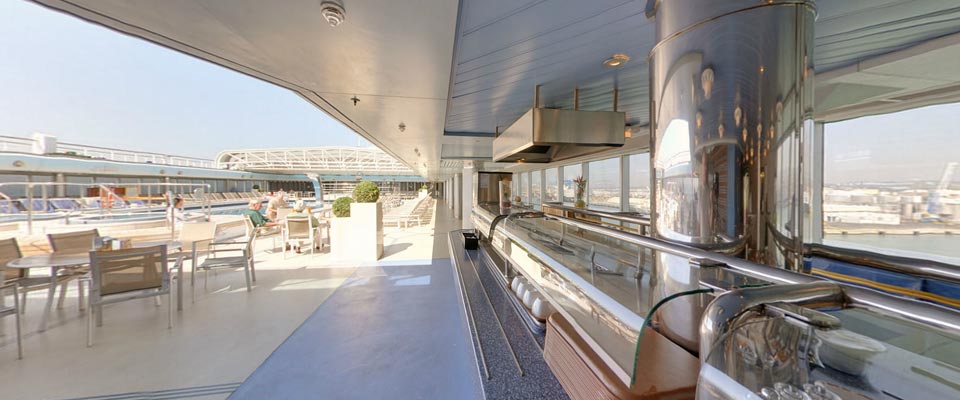
Neptune Grill
This casual eatery offers a tempting selection of freshly made snacks, perfect for satisfying poolside cravings. Bite into juicy burgers or customise your hot dog with various toppings. Featuring flavours of the day that change throughout your cruise, the Poolside Grill uses fresh ingredients to ensure a delicious and convenient bite.
Dress code
Day / Evening Casual
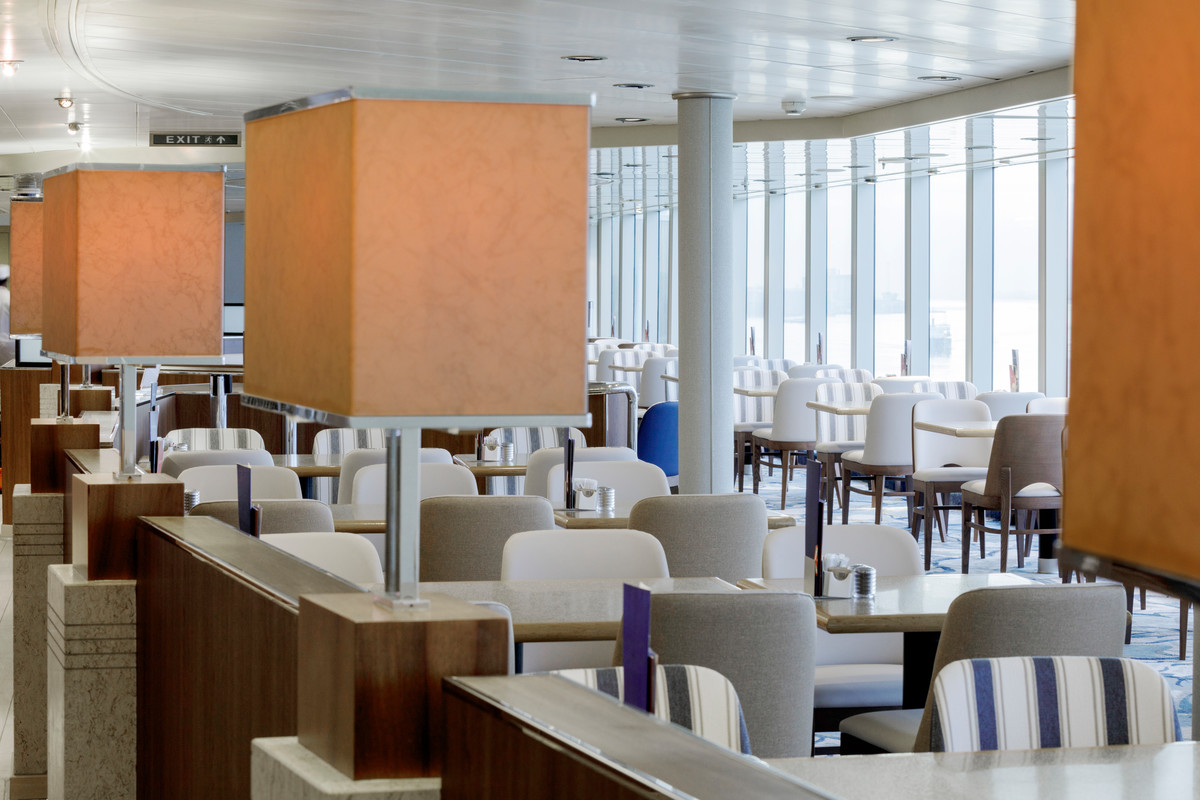
Belvedere Buffet
The buffet is your one-stop shop for casual dining at sea, offering an extensive international menu to satisfy every craving. You’ll find the Horizon Buffet on Arvia, Aurora, Britannia and Iona, and the Belvedere Buffet on Arcadia. Azura boasts the Verona and Venezia buffets, while Ventura features the Waterside Buffet.
Dress code
Evening Casual. Tailored shorts are accepted.
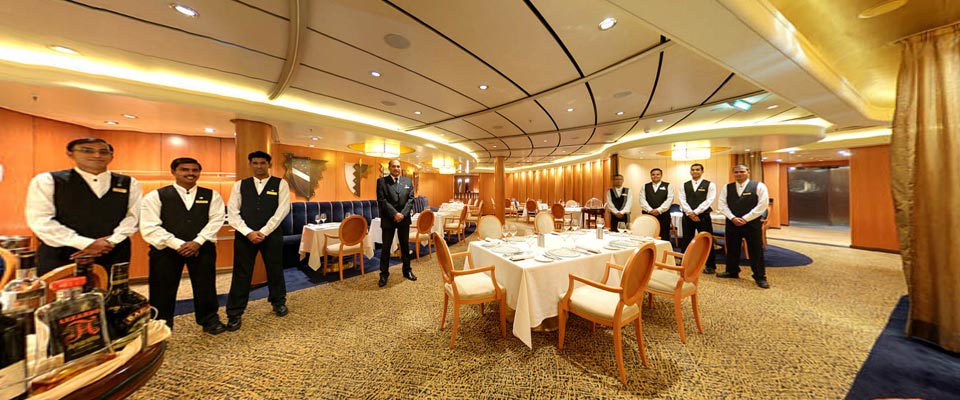
Meridian Restaurant
Experience a global culinary adventure of the highest quality at Medina. This opulent Arabian-themed space offers Freedom Dining flexibility, allowing you to dine whenever and with whomever you wish. From classic home comfort dishes to locally inspired flavours, the menus offer a delightful array of options that will leave you craving more.
Dress code
Dress code of the day (Evening Casual or Black Tie). No tailored shorts.
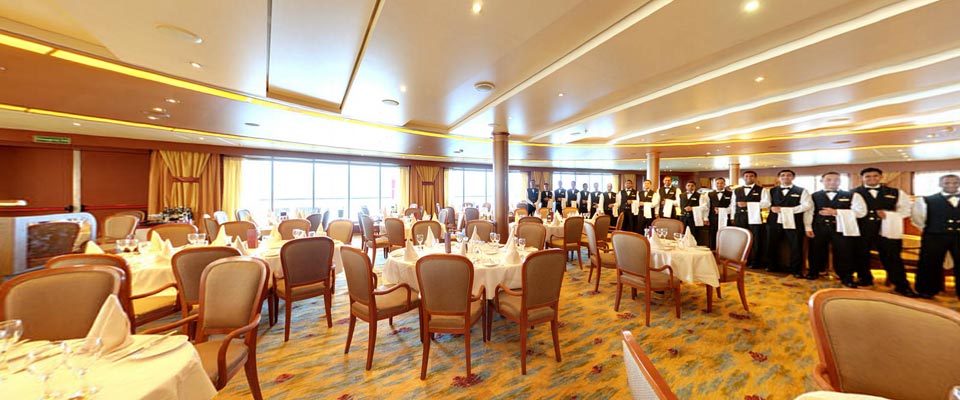
Sindhu Restaurant
Prepare your taste buds for a flavour-filled adventure. In stylish and sumptuous surroundings, Sindhu’s expert chefs will take you on a delicately spiced odyssey that celebrates the best of contemporary Indian cuisines. You can also make a date on selected sea days to enjoy a delicious tiffin style lunch.
Dress code
Dress code of the day (Evening Casual or Black Tie)
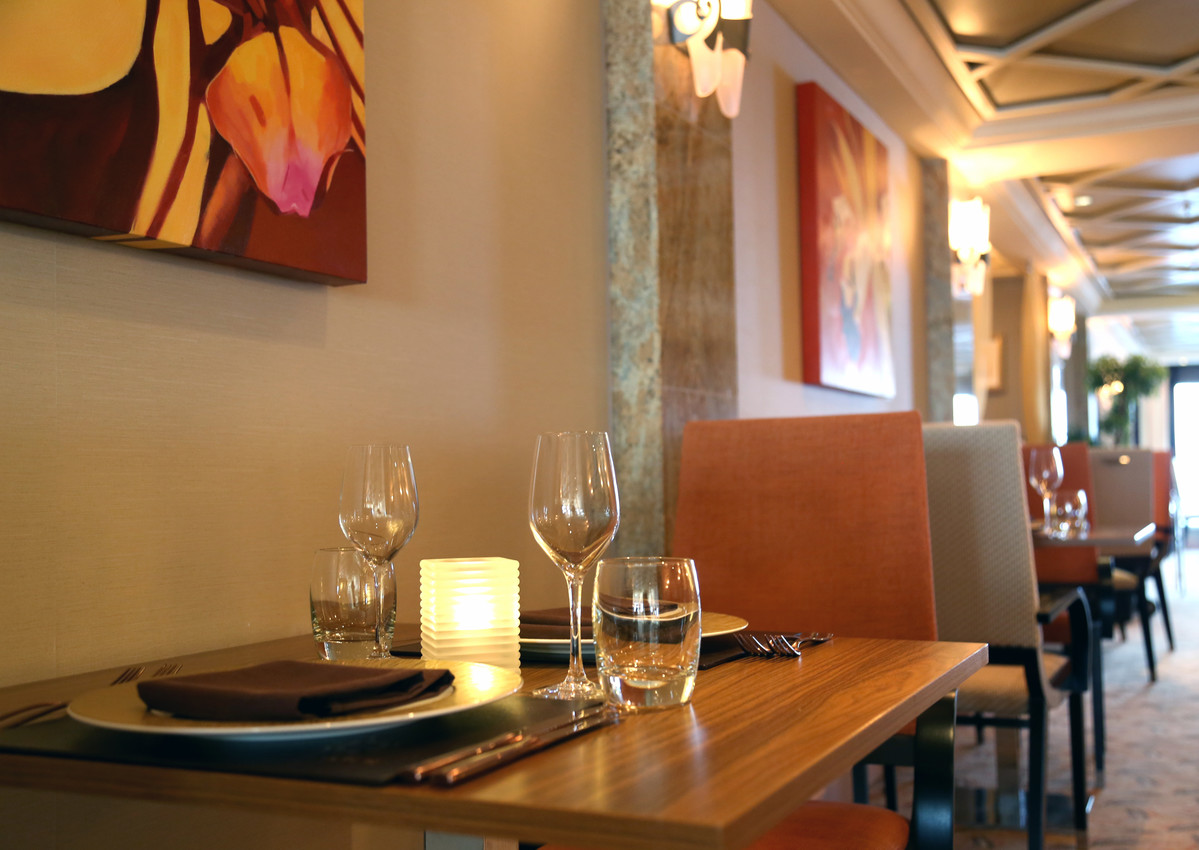
The Ocean Grill
Experience culinary excellence at Marco Pierre White’s Ocean Grill, where attention to detail and quality reign supreme. Indulge in mouth-watering steaks and seafood in relaxed and sophisticated surroundings that mirror the spirit of great London grill restaurants. Simplicity meets artistry in masterfully presented dishes, delivering exceptional flavours that showcase Marco’s expertise.
Dress code
Dress code of the day (Evening Casual or Black Tie)
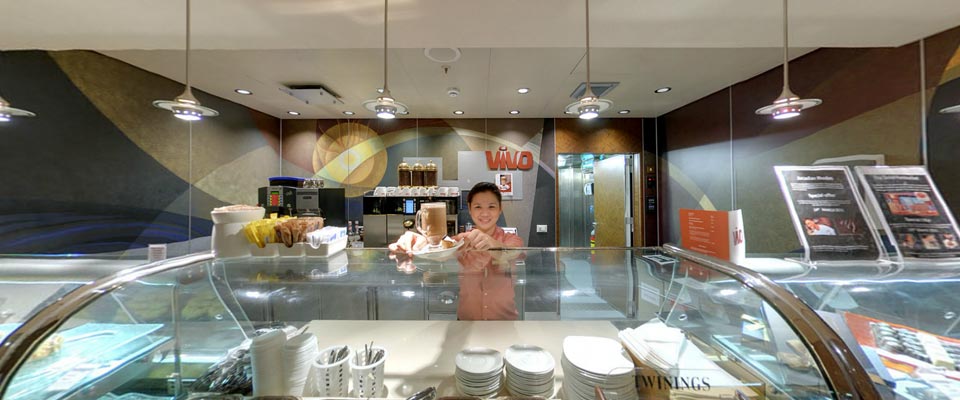
Caffé Vivo
The perfect place to relax, indulge and people-watch, Caffè Vivo exudes warmth and Mediterranean charm with its brown leather sofas, high tables and wooden floors. It offers a cosy retreat just steps away from the on-board shops, so you can unwind as you sip aromatic coffee or a refreshing juice, or choose from a menu of light bites like salads, bagels and pastries.
Dress code – Casual
The Palladium
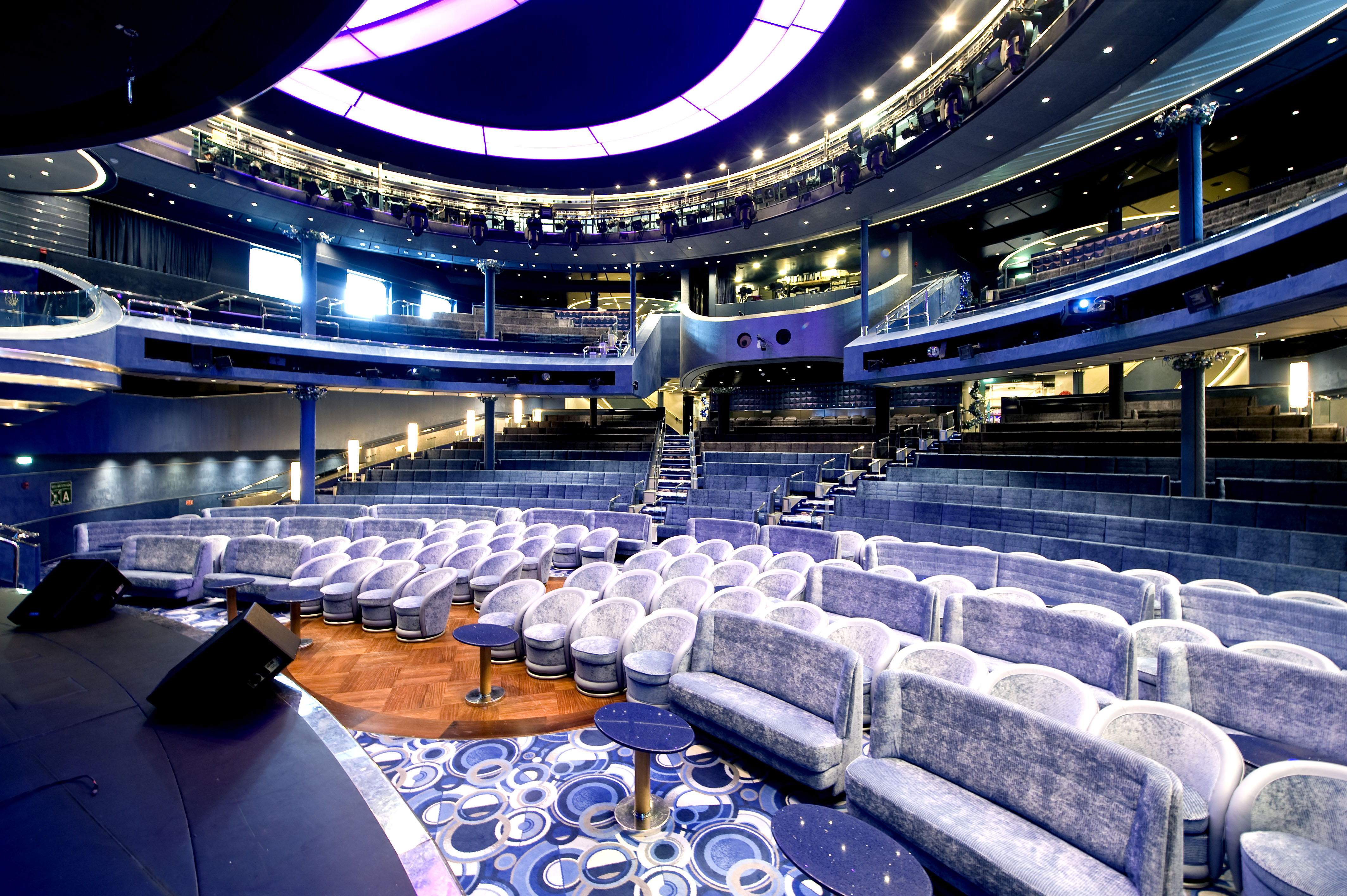
Arcadia’s impressive three tier theatre, The Palladium, is located at the very forward end of the ship. Inside you will find comfortable theatre-style-seating arcs around the stage in three tiers, affording you excellent views of the stage. In The Palladium, the drama is not confined to the stage, as the décor adds a theatrical touch of its own. A rich colour scheme of royal blue, violet, midnight blue and silver sets off the main attraction – the shows themselves! Suede and crushed velvet adds an opulent touch, ensuring The Palladium has all the magic and anticipation of the West End!
The Crow's Nest
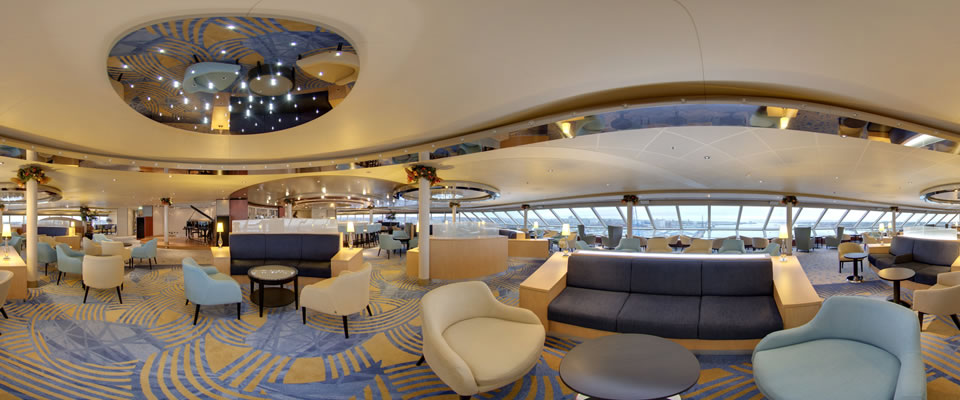
Perched high in the ship, Crow’s Nest offers breathtaking ocean views. By day, unwind with classic cocktails and a book in this serene haven, while evenings transform the venue into a sophisticated escape with live piano music, sultry vocals and a stylish ambience. Perfect for daydreamers and night owls alike!
Dress code – Dress code of the day (Evening Casual or Black Tie). No tailored shorts.
Monte Carlo Casino
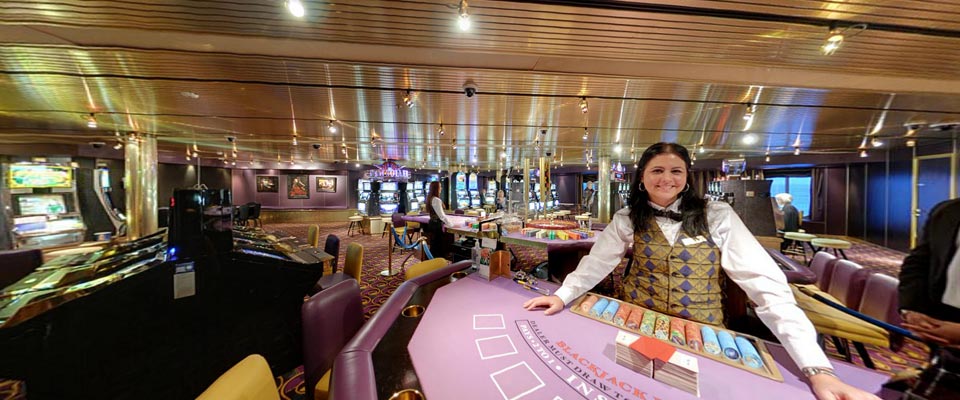
Try your luck in style in our opulent on-board casinos. Feel the thrill of classic table games like blackjack, roulette and poker. Or test your fortune on our state-of-the-art slots. Beyond the games, there are interactive game shows, virtual horse races and daily bingo. Will Lady Luck be on your side on board?
The Globe
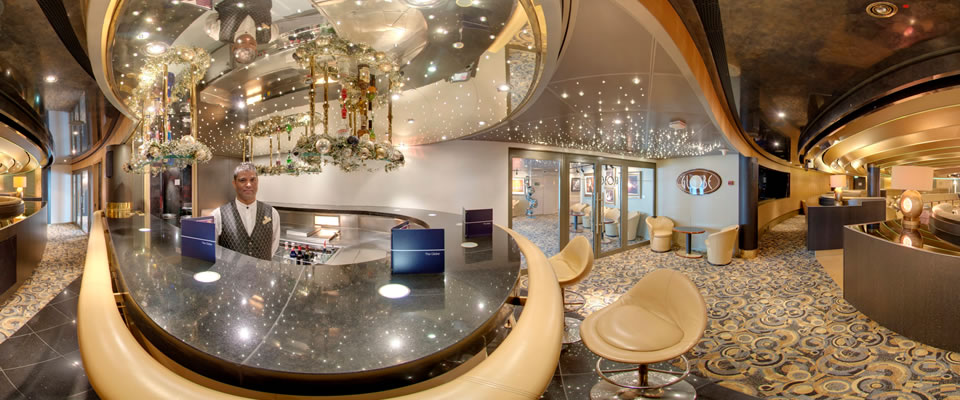
Immerse yourself in the vibrant energy of The Globe. This circular bar boasts black and gold décor, a warm ambience and a delectable drinks menu. Enjoy evenings of live music and game shows, or test your moves on the dancefloor during social ballroom and Latin dance events. The Globe offers something for everyone.
Dress code – Casual
The Screening Room
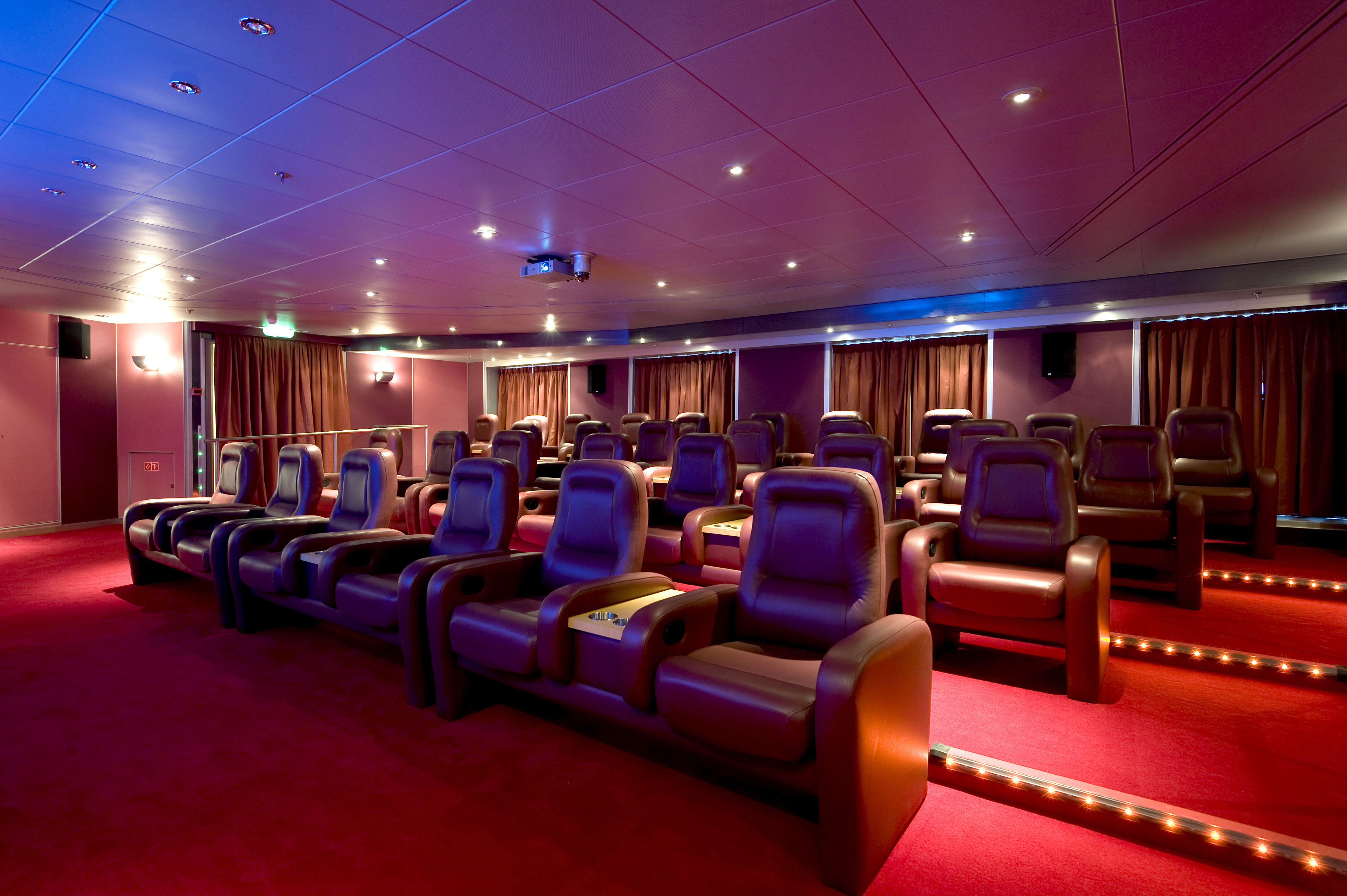
Immerse yourself in intimate luxury at the Screening Room, a 30-seat cinema that offers an exclusive escape with plush, reclining seats and a private ambience. Watch the latest blockbusters or hidden gems in comfort, with showtimes conveniently mirroring the main theatre. Reserve your spot for an unforgettable movie experience.
Dress Code – Day/Evening Casual
Intermezzo
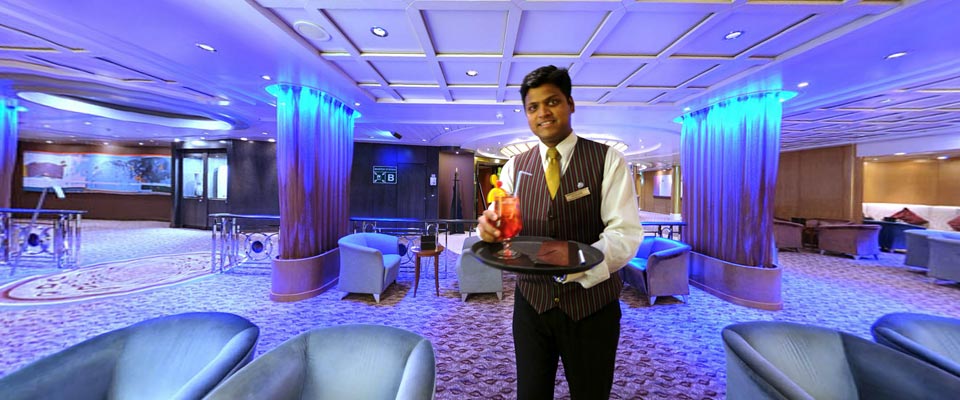
Indulge in luxury at Intermezzo, a sophisticated cocktail bar with a glamorous ambience, soft lighting, sheer curtains and rich décor. Sip on expertly crafted cocktails or select a glass of Champagne for unforgettable and elegant pre-dinner drinks or a nightcap.
Dress code – Dress code of the day (Evening Casual or Black Tie). No tailored shorts.
Spinnaker Bar
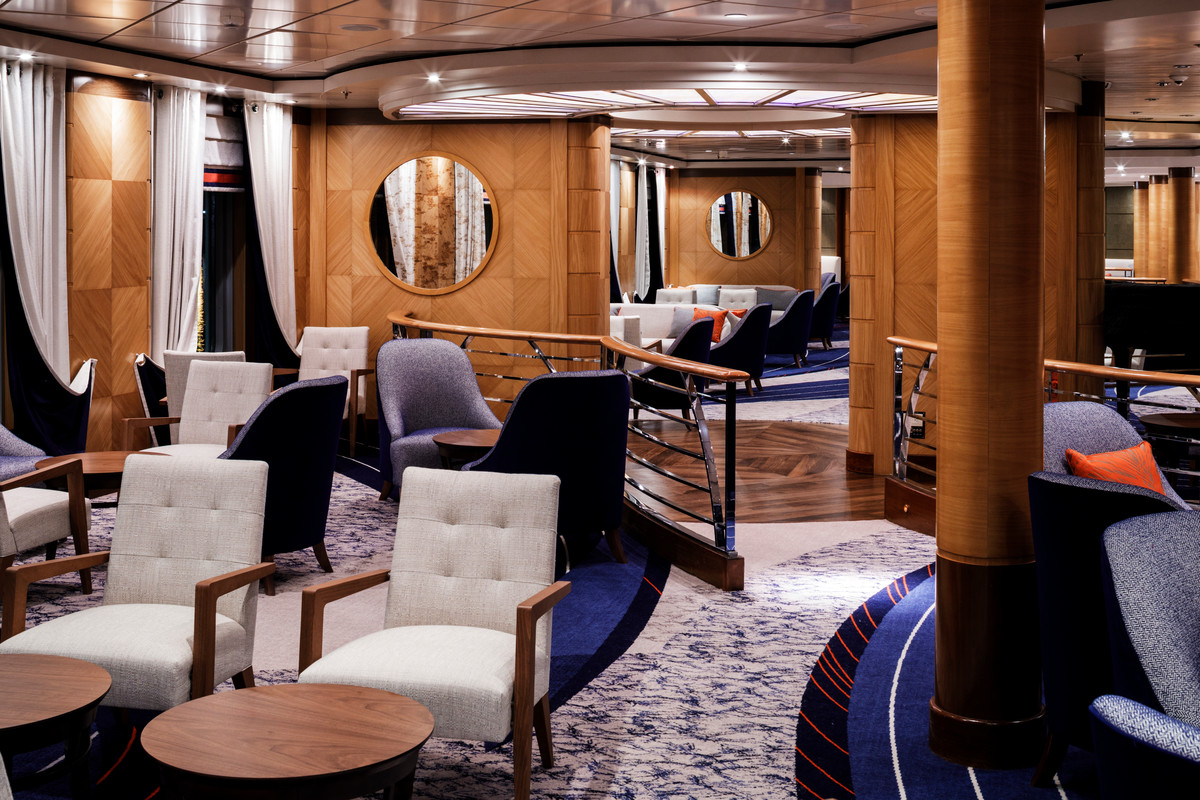
Unwind amid nautical charm at Spinnaker. This yacht-inspired café – with its contemporary décor featuring wood, steel and chrome – offers comfy seating and popular Costa coffees throughout the day. Nestled between Intermezzo and Meridian Restaurant, it transforms into a stylish evening bar, perfect for pre-dinner drinks or an after-dinner tipple.
Dress code – Day/Evening Casual
Piano Bar
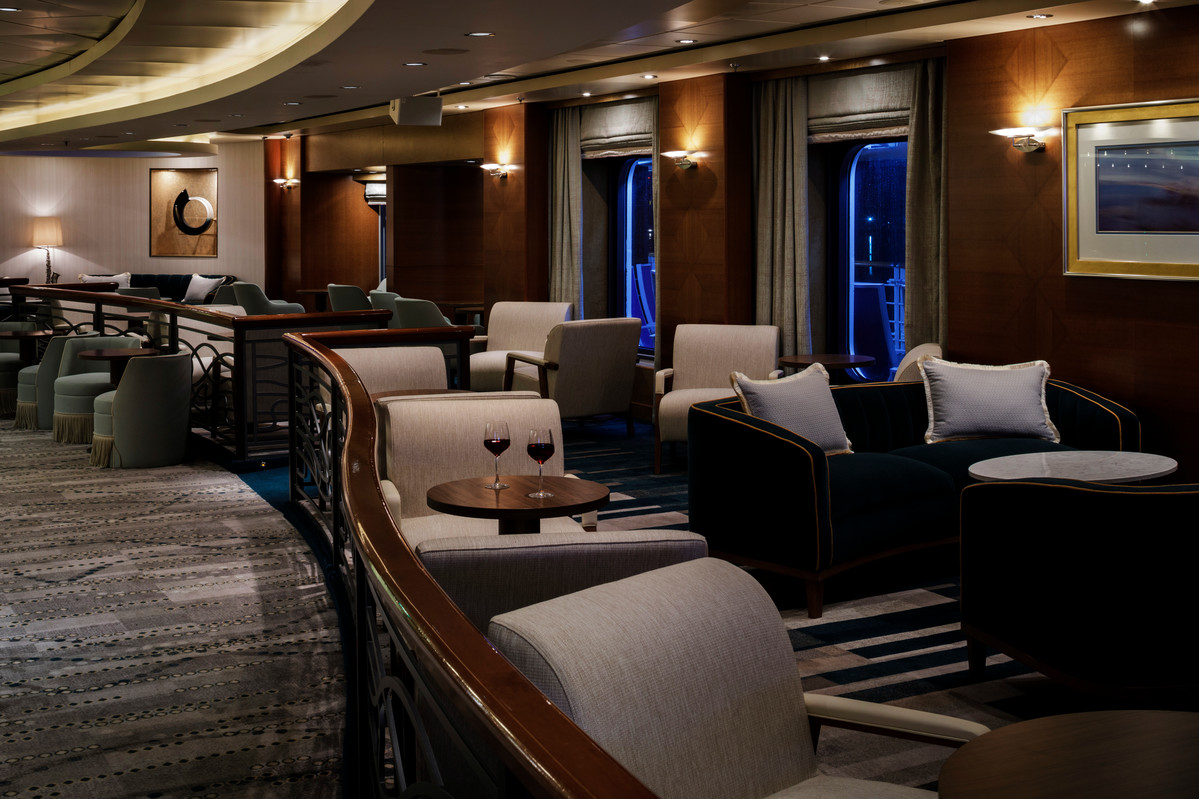
Unwind with friends over drinks in the intimate ambience of The Piano Bar. Sip on classic or creative cocktails, Champagne or after-dinner drinks as talented pianists set the mood. This tastefully designed bar offers a wide selection of drinks and a warm atmosphere, perfect for conversation or a relaxing nightcap.
Dress code – Casual
The Rising Sun
Escape to the familiar surroundings of The Rising Sun, a charming country pub brought to life at sea. This traditional pub boasts comfy booths, a jukebox and endless entertainment, from darts and karaoke to live music and sports screenings. It’s your go-to spot for a casual drink and a taste of home.
Dress code – Day/Evening Casual
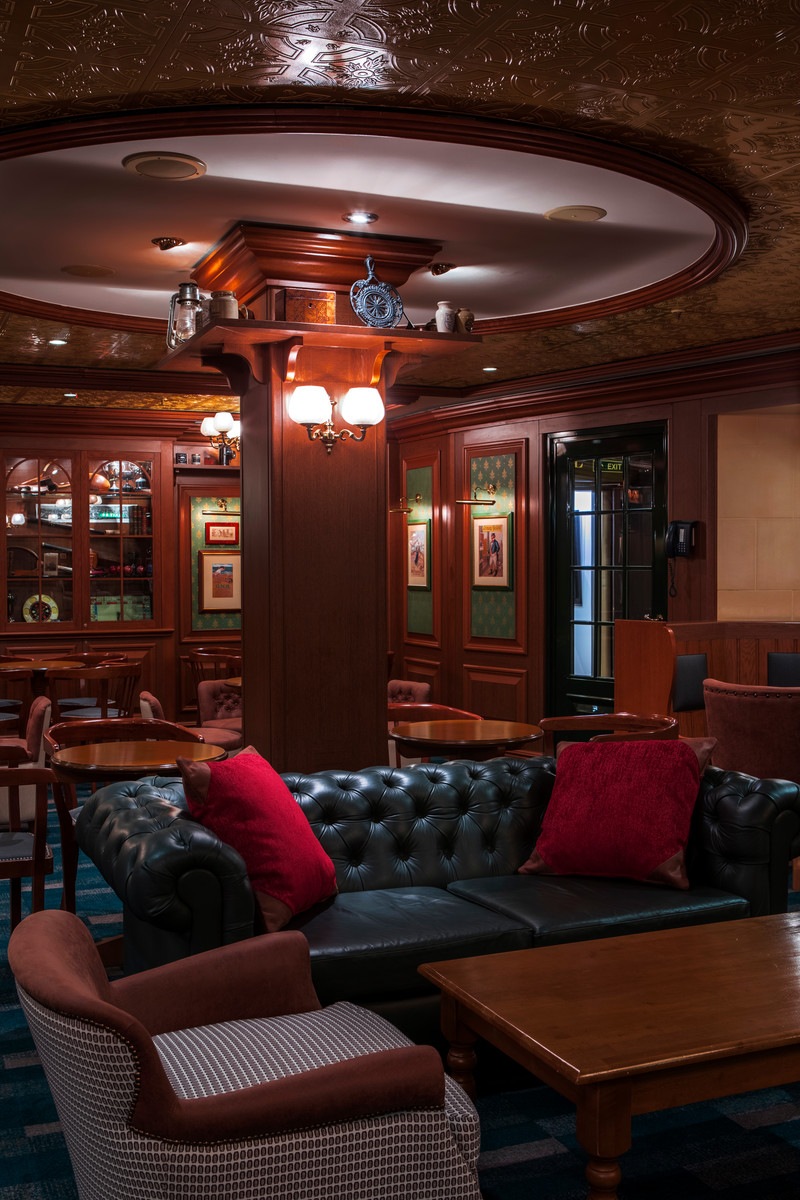
The East Bar
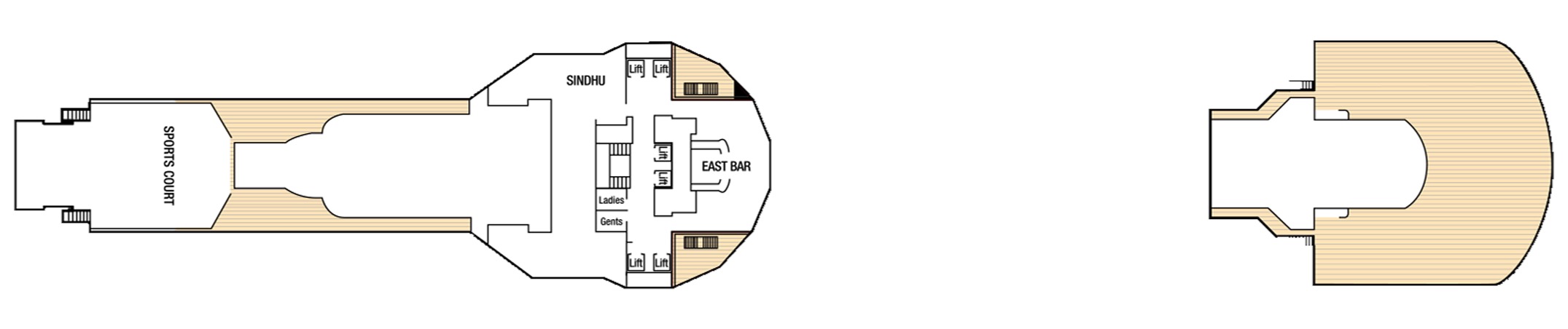
Located at Arcadia’s highest point on Sky Deck, East Bar invites you to indulge in a colonial-style ambience while savouring coffees or sundowners. Adorned with artwork by Martin Williams depicting Asian travels, it sets the stage for pre- or post-dinner drinks, offering a selection of cocktails, Champagne and more amid warm, ambient lighting and stunning views.
Dress code – Evening Casual
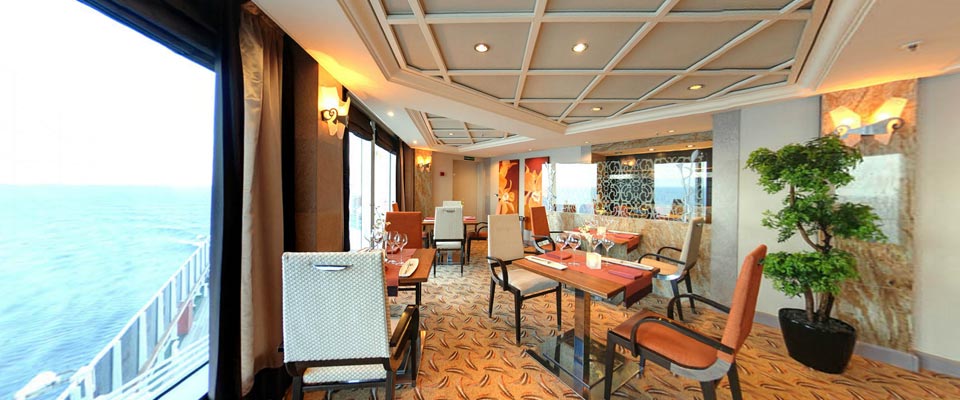
Neptune Bar
Every P&O Cruises ship boasts several deck bars. From crisp beers and fine wines to delicious cocktails and thirst-quenching soft drinks, you’re always close to a cooling refreshment from one of our alfresco bars. Located by the pool areas, these friendly venues are perfect for soaking up the sun and enjoying the fun.
Dress code – Day/Evening Casual
Aquarius Bar
Every P&O Cruises ship boasts several deck bars. From crisp beers and fine wines to delicious cocktails and thirst-quenching soft drinks, you’re always close to a cooling refreshment from one of our alfresco bars. Located by the pool areas, these friendly venues are perfect for soaking up the sun and enjoying the fun.
Dress code – Day/Evening Casual
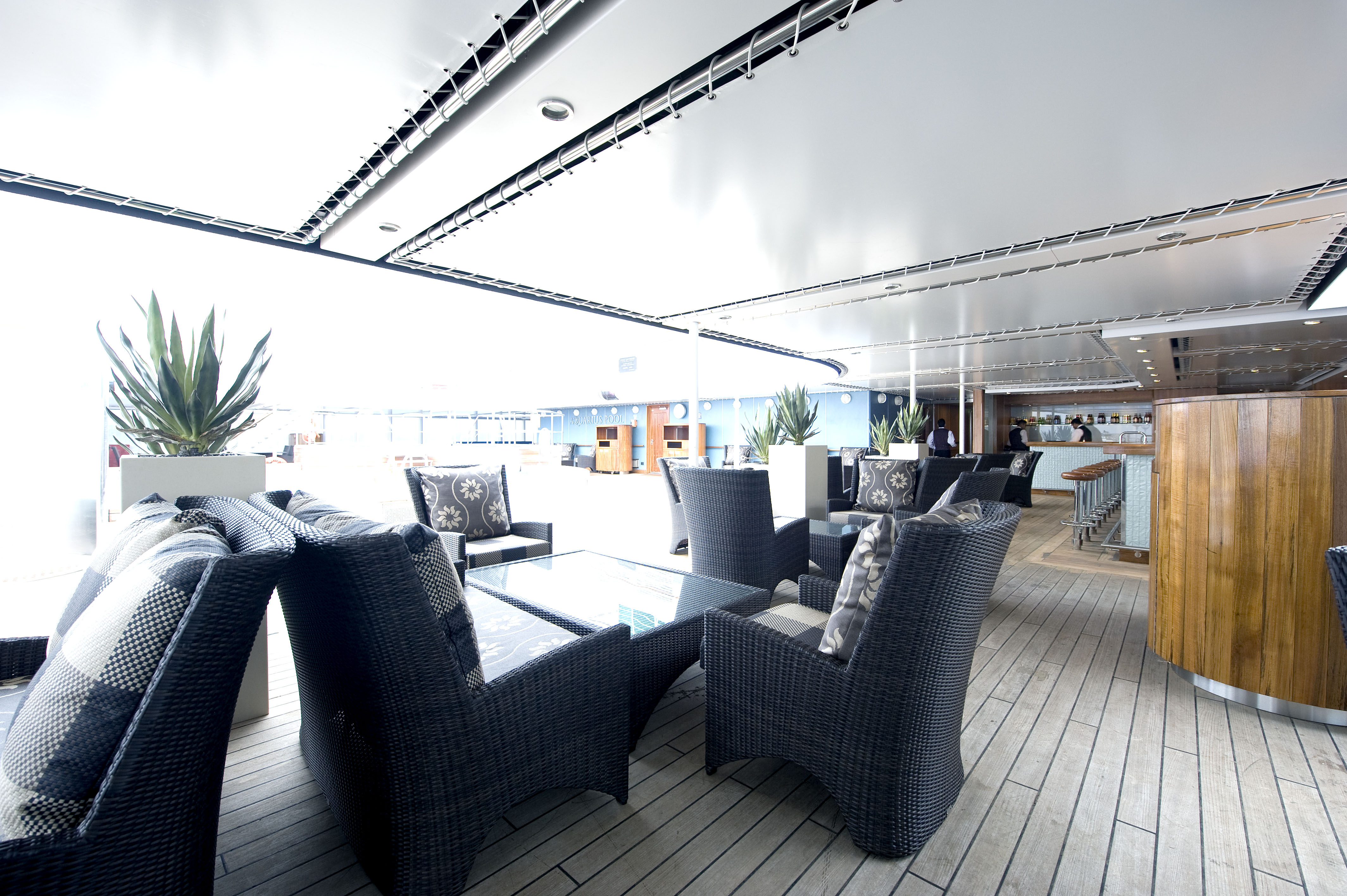
Oasis Spa
Escape to a haven of tranquillity onboard P&O Cruises. Indulge in pampering spa treatments, unwind in soothing thermal suites, and discover serene relaxation spaces. We also have expert stylists, and state-of-the-art fitness options to ensure you return home feeling renewed and revitalised.
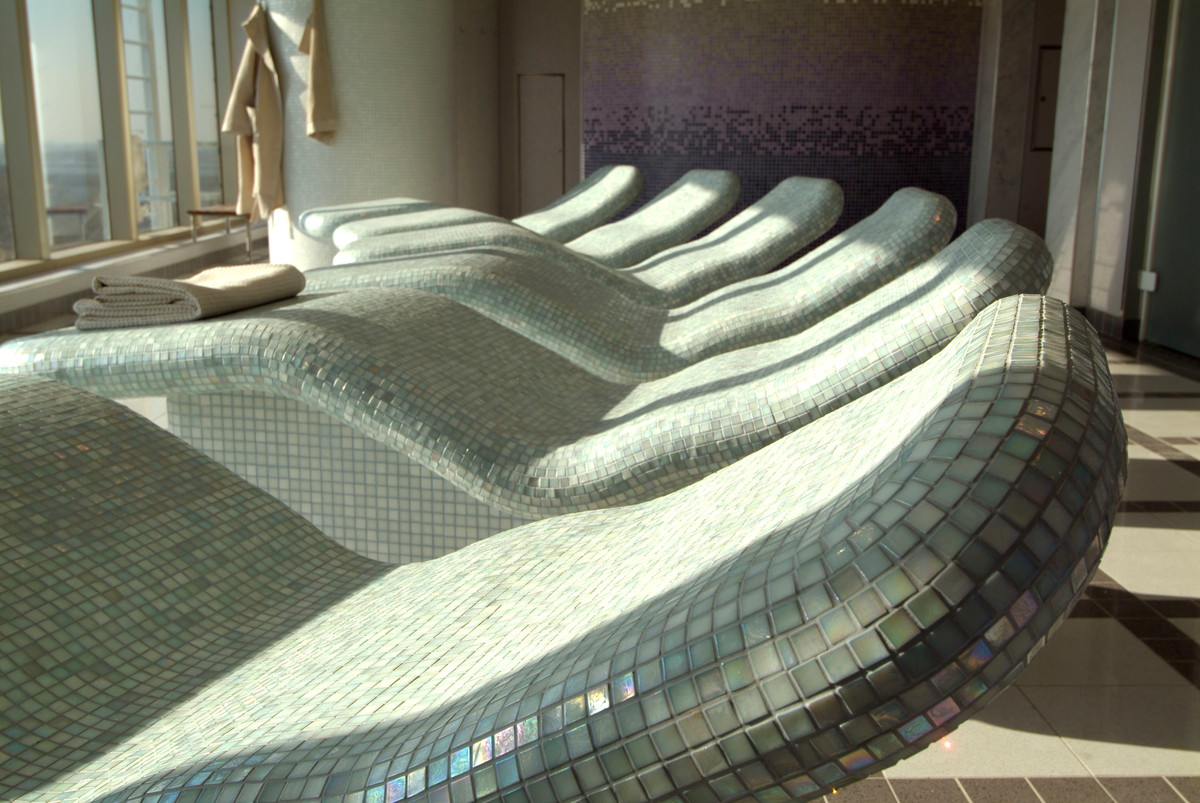
The Retreat
The Retreat, alfresco spa terrace has it all. A premium VIP open-air deck area, where you can find cold flannels, chilled drinks and snacks, and alfresco spa treatments in the privacy of shaded cabanas. Numbers are limited, so the atmosphere is serene and sophisticated with luxurious surroundings including day beds, private cabanas (to enjoy a range of spa treatments) and complimentary smoothies or fruit platters on offer. With panoramic ocean views, The Retreat is the height of grown-up sophistication and indulgence.
*Please note: Details on this page may differ depending on the ship you choose to sail on.
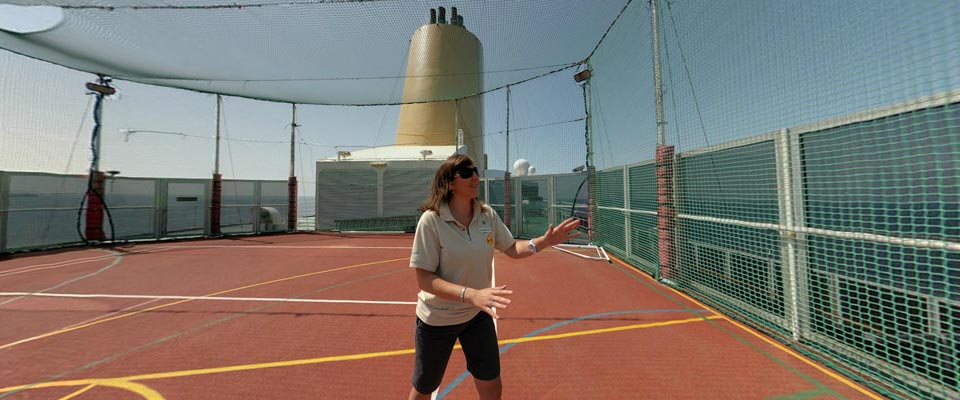
Sports Court
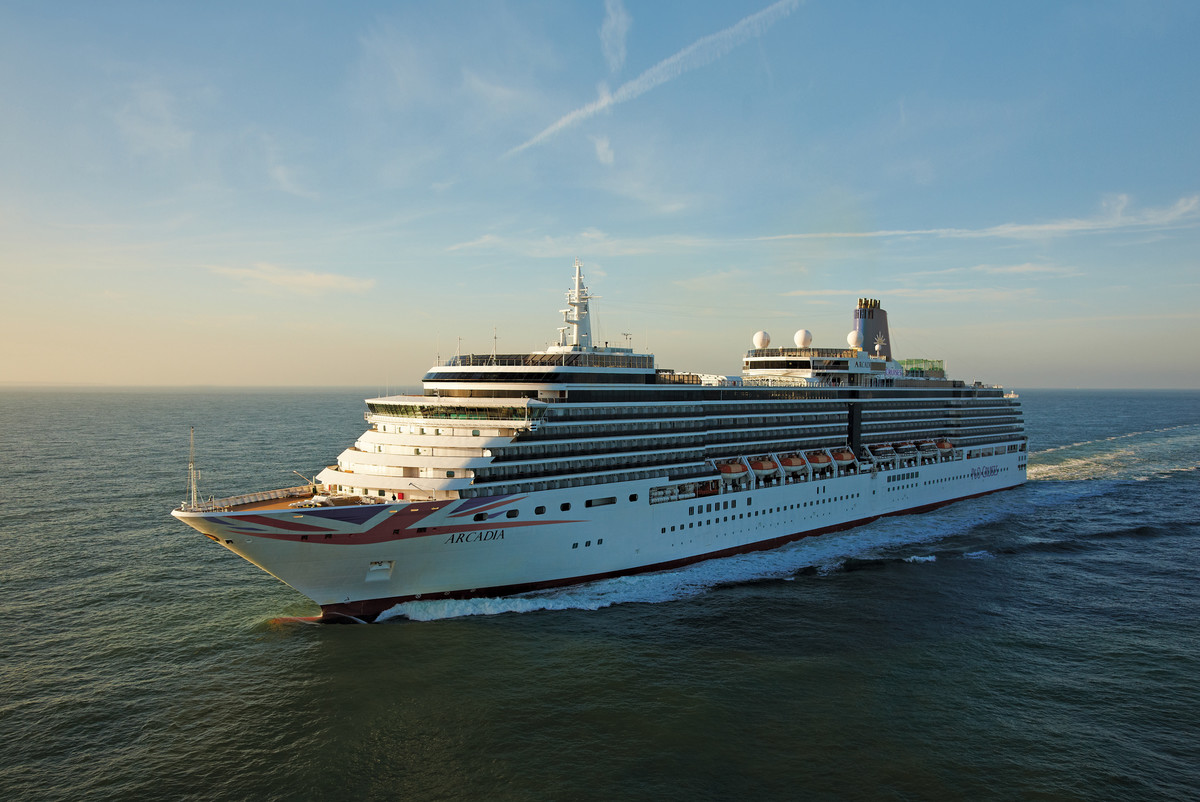
On board P&O Arcadia, enjoy diverse sports and activities, including a sports court for football, basketball, short tennis, and cricket. Challenge friends or participate in organised competitions. Engage in deck activities like golf nets, table tennis, deck quoits, and shuffleboard, for a fun-filled holiday for all guests.
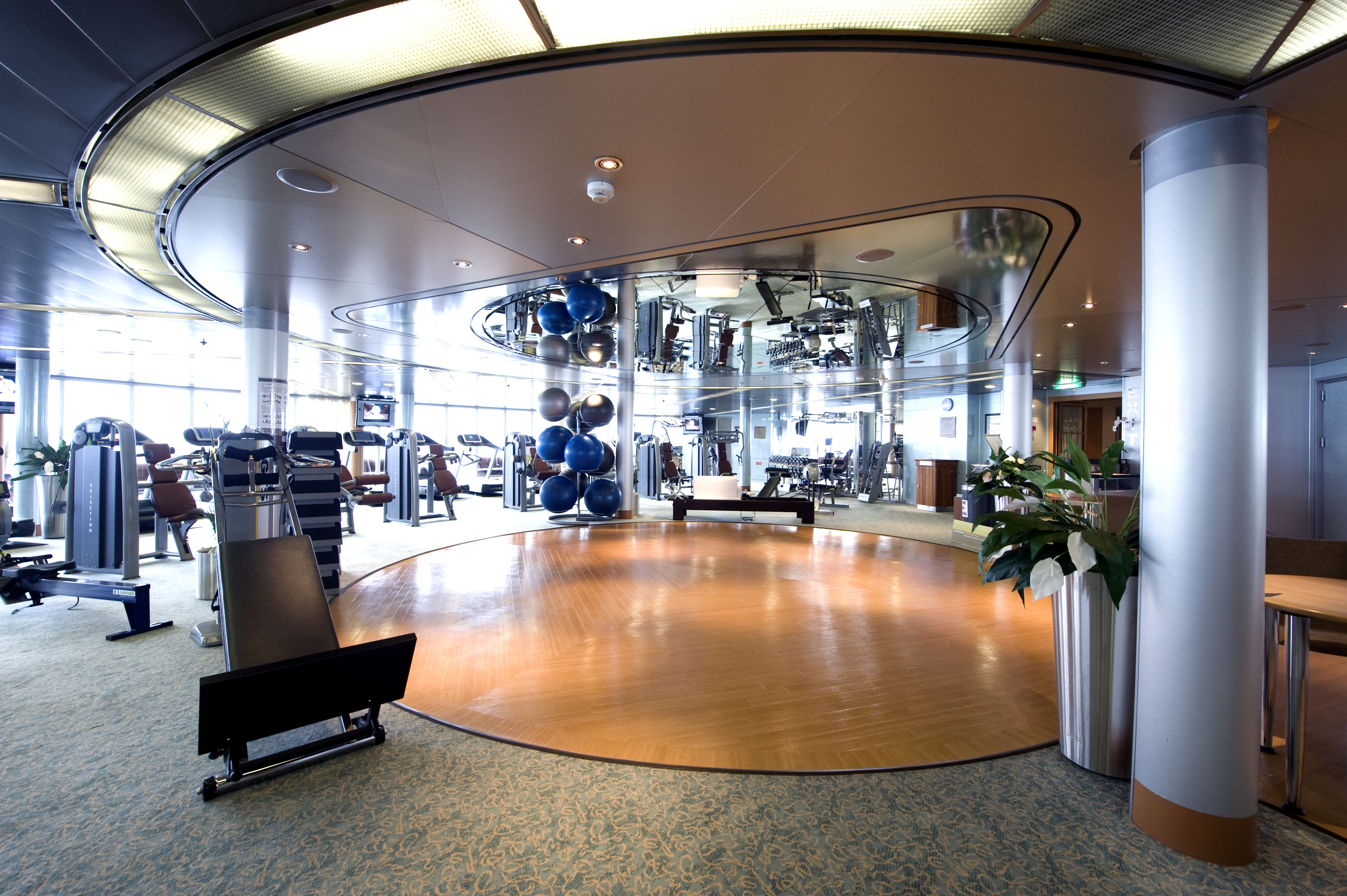
Gymnasium
Elevate your fitness journey at our state-of-the-art gym and fitness studio. Our high-tech facility boasts a full range of equipment, from free weights to cutting-edge machines, to help you reach your fitness goals. Whether you’re a beginner or a seasoned gym-goer, our gyms have everything you need to stay active and feel your best.
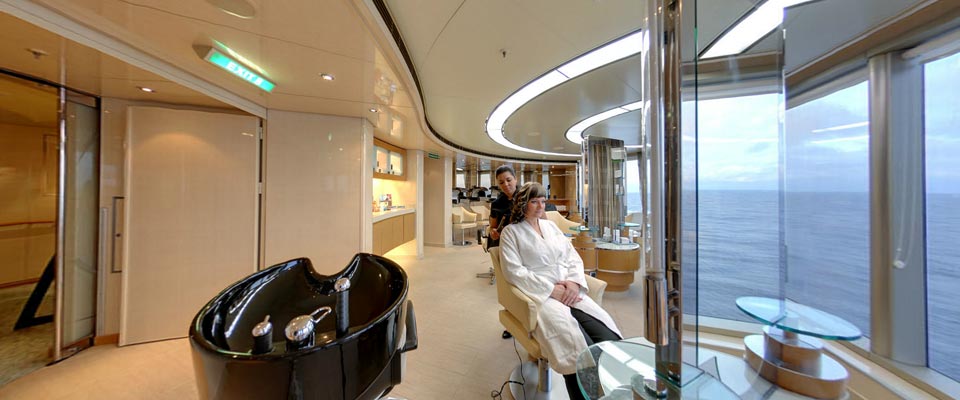
Salon
Want to look your best at sea? The Beauty Salon onboard P&O Cruises offers a complete pampering experience. Emerge refreshed, revitalised, and ready to enjoy your voyage. From manicures and pedicures to facials and waxing, the Beauty Salon is the place for all beauty essentials.
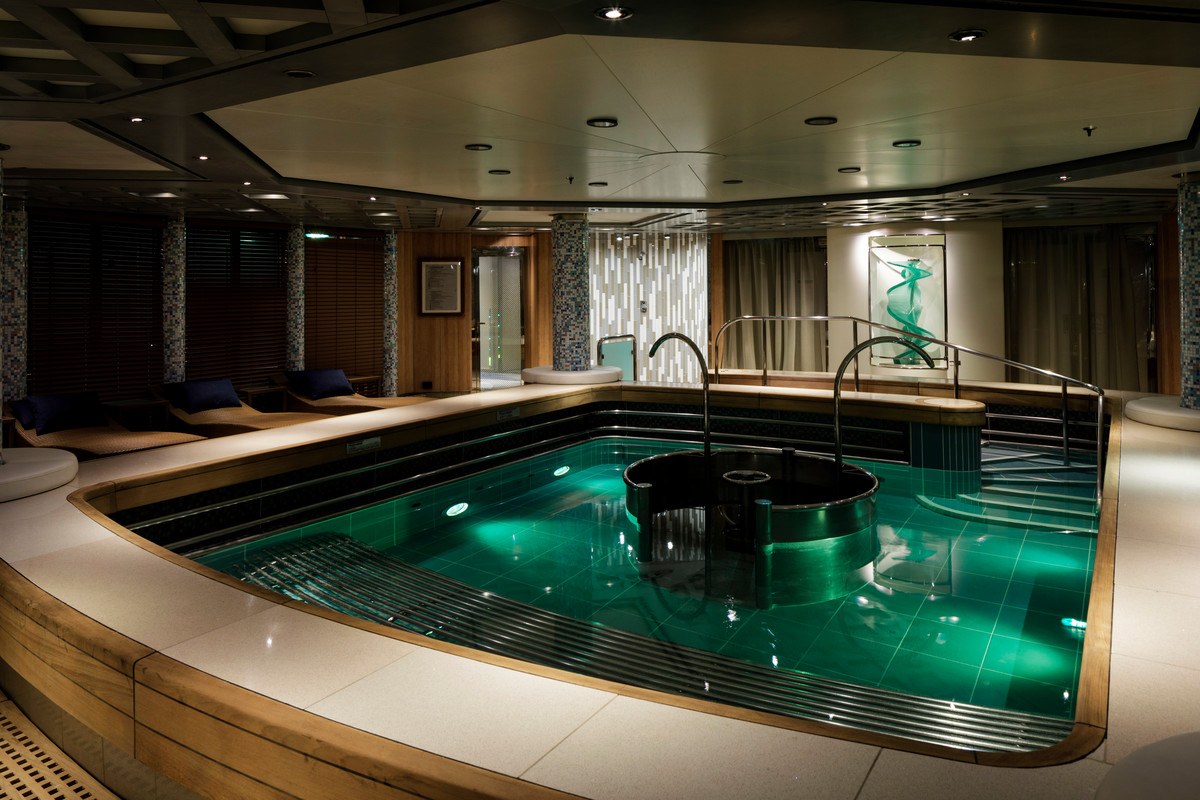
Swimming Pools
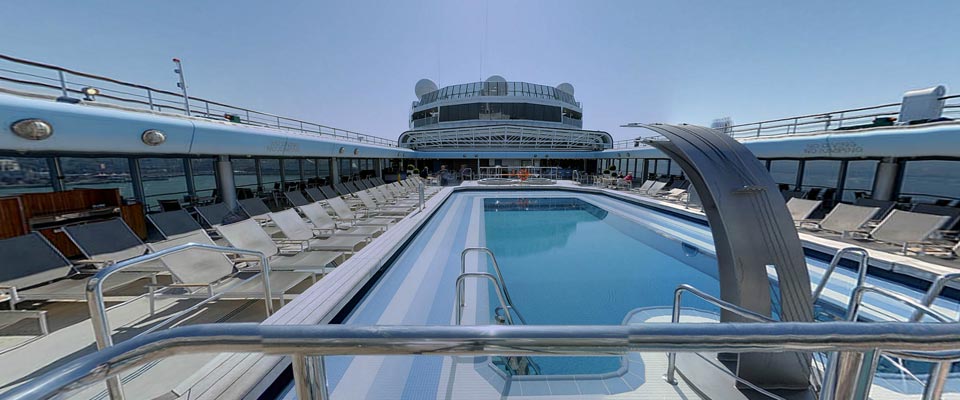
Neptune Pool (Lido deck) – The largest pool on the ship features a retractable glass roof, three whirlpool spas, and a relaxing atmosphere. Poolside refreshments and activities are available.
Aquarius pool (Lido deck) – A good place to relax during the day and enjoy ocean views at sunset. Also features two whirlpool spas. Poolside refreshments are available.
As an adult only ship, Arcadia does not feature any Kids & Teens facilities.
Neptune Grill
This casual eatery offers a tempting selection of freshly made snacks, perfect for satisfying poolside cravings. Bite into juicy burgers or customise your hot dog with various toppings. Featuring flavours of the day that change throughout your cruise, the Poolside Grill uses fresh ingredients to ensure a delicious and convenient bite.
Dress code
Day / Evening Casual
Belvedere Buffet
The buffet is your one-stop shop for casual dining at sea, offering an extensive international menu to satisfy every craving. You’ll find the Horizon Buffet on Arvia, Aurora, Britannia and Iona, and the Belvedere Buffet on Arcadia. Azura boasts the Verona and Venezia buffets, while Ventura features the Waterside Buffet.
Dress code
Evening Casual. Tailored shorts are accepted.
Meridian Restaurant
Experience a global culinary adventure of the highest quality at Medina. This opulent Arabian-themed space offers Freedom Dining flexibility, allowing you to dine whenever and with whomever you wish. From classic home comfort dishes to locally inspired flavours, the menus offer a delightful array of options that will leave you craving more.
Dress code
Dress code of the day (Evening Casual or Black Tie). No tailored shorts.
Sindhu Restaurant
Prepare your taste buds for a flavour-filled adventure. In stylish and sumptuous surroundings, Sindhu’s expert chefs will take you on a delicately spiced odyssey that celebrates the best of contemporary Indian cuisines. You can also make a date on selected sea days to enjoy a delicious tiffin style lunch.
Dress code
Dress code of the day (Evening Casual or Black Tie)
The Ocean Grill
Experience culinary excellence at Marco Pierre White’s Ocean Grill, where attention to detail and quality reign supreme. Indulge in mouth-watering steaks and seafood in relaxed and sophisticated surroundings that mirror the spirit of great London grill restaurants. Simplicity meets artistry in masterfully presented dishes, delivering exceptional flavours that showcase Marco’s expertise.
Dress code
Dress code of the day (Evening Casual or Black Tie)
Caffé Vivo
The perfect place to relax, indulge and people-watch, Caffè Vivo exudes warmth and Mediterranean charm with its brown leather sofas, high tables and wooden floors. It offers a cosy retreat just steps away from the on-board shops, so you can unwind as you sip aromatic coffee or a refreshing juice, or choose from a menu of light bites like salads, bagels and pastries.
Dress code – Casual
The Palladium
Arcadia’s impressive three tier theatre, The Palladium, is located at the very forward end of the ship. Inside you will find comfortable theatre-style-seating arcs around the stage in three tiers, affording you excellent views of the stage. In The Palladium, the drama is not confined to the stage, as the décor adds a theatrical touch of its own. A rich colour scheme of royal blue, violet, midnight blue and silver sets off the main attraction – the shows themselves! Suede and crushed velvet adds an opulent touch, ensuring The Palladium has all the magic and anticipation of the West End!
The Crow's Nest
Perched high in the ship, Crow’s Nest offers breathtaking ocean views. By day, unwind with classic cocktails and a book in this serene haven, while evenings transform the venue into a sophisticated escape with live piano music, sultry vocals and a stylish ambience. Perfect for daydreamers and night owls alike!
Dress code – Dress code of the day (Evening Casual or Black Tie). No tailored shorts.
Monte Carlo Casino
Try your luck in style in our opulent on-board casinos. Feel the thrill of classic table games like blackjack, roulette and poker. Or test your fortune on our state-of-the-art slots. Beyond the games, there are interactive game shows, virtual horse races and daily bingo. Will Lady Luck be on your side on board?
The Globe
Immerse yourself in the vibrant energy of The Globe. This circular bar boasts black and gold décor, a warm ambience and a delectable drinks menu. Enjoy evenings of live music and game shows, or test your moves on the dancefloor during social ballroom and Latin dance events. The Globe offers something for everyone.
Dress code – Casual
The Screening Room
Immerse yourself in intimate luxury at the Screening Room, a 30-seat cinema that offers an exclusive escape with plush, reclining seats and a private ambience. Watch the latest blockbusters or hidden gems in comfort, with showtimes conveniently mirroring the main theatre. Reserve your spot for an unforgettable movie experience.
Dress Code – Day/Evening Casual
Intermezzo
Indulge in luxury at Intermezzo, a sophisticated cocktail bar with a glamorous ambience, soft lighting, sheer curtains and rich décor. Sip on expertly crafted cocktails or select a glass of Champagne for unforgettable and elegant pre-dinner drinks or a nightcap.
Dress code – Dress code of the day (Evening Casual or Black Tie). No tailored shorts.
Spinnaker Bar
Unwind amid nautical charm at Spinnaker. This yacht-inspired café – with its contemporary décor featuring wood, steel and chrome – offers comfy seating and popular Costa coffees throughout the day. Nestled between Intermezzo and Meridian Restaurant, it transforms into a stylish evening bar, perfect for pre-dinner drinks or an after-dinner tipple.
Dress code – Day/Evening Casual
Piano Bar
Unwind with friends over drinks in the intimate ambience of The Piano Bar. Sip on classic or creative cocktails, Champagne or after-dinner drinks as talented pianists set the mood. This tastefully designed bar offers a wide selection of drinks and a warm atmosphere, perfect for conversation or a relaxing nightcap.
Dress code – Casual
The Rising Sun
Escape to the familiar surroundings of The Rising Sun, a charming country pub brought to life at sea. This traditional pub boasts comfy booths, a jukebox and endless entertainment, from darts and karaoke to live music and sports screenings. It’s your go-to spot for a casual drink and a taste of home.
Dress code – Day/Evening Casual
The East Bar
Located at Arcadia’s highest point on Sky Deck, East Bar invites you to indulge in a colonial-style ambience while savouring coffees or sundowners. Adorned with artwork by Martin Williams depicting Asian travels, it sets the stage for pre- or post-dinner drinks, offering a selection of cocktails, Champagne and more amid warm, ambient lighting and stunning views.
Dress code – Evening Casual
Neptune Bar
Every P&O Cruises ship boasts several deck bars. From crisp beers and fine wines to delicious cocktails and thirst-quenching soft drinks, you’re always close to a cooling refreshment from one of our alfresco bars. Located by the pool areas, these friendly venues are perfect for soaking up the sun and enjoying the fun.
Dress code – Day/Evening Casual
Aquarius Bar
Every P&O Cruises ship boasts several deck bars. From crisp beers and fine wines to delicious cocktails and thirst-quenching soft drinks, you’re always close to a cooling refreshment from one of our alfresco bars. Located by the pool areas, these friendly venues are perfect for soaking up the sun and enjoying the fun.
Dress code – Day/Evening Casual
Oasis Spa
Escape to a haven of tranquillity onboard P&O Cruises. Indulge in pampering spa treatments, unwind in soothing thermal suites, and discover serene relaxation spaces. We also have expert stylists, and state-of-the-art fitness options to ensure you return home feeling renewed and revitalised.
The Retreat
The Retreat, alfresco spa terrace has it all. A premium VIP open-air deck area, where you can find cold flannels, chilled drinks and snacks, and alfresco spa treatments in the privacy of shaded cabanas. Numbers are limited, so the atmosphere is serene and sophisticated with luxurious surroundings including day beds, private cabanas (to enjoy a range of spa treatments) and complimentary smoothies or fruit platters on offer. With panoramic ocean views, The Retreat is the height of grown-up sophistication and indulgence.
*Please note: Details on this page may differ depending on the ship you choose to sail on.
Sports Court
On board P&O Arcadia, enjoy diverse sports and activities, including a sports court for football, basketball, short tennis, and cricket. Challenge friends or participate in organised competitions. Engage in deck activities like golf nets, table tennis, deck quoits, and shuffleboard, for a fun-filled holiday for all guests.
Gymnasium
Elevate your fitness journey at our state-of-the-art gym and fitness studio. Our high-tech facility boasts a full range of equipment, from free weights to cutting-edge machines, to help you reach your fitness goals. Whether you’re a beginner or a seasoned gym-goer, our gyms have everything you need to stay active and feel your best.
Salon
Want to look your best at sea? The Beauty Salon onboard P&O Cruises offers a complete pampering experience. Emerge refreshed, revitalised, and ready to enjoy your voyage. From manicures and pedicures to facials and waxing, the Beauty Salon is the place for all beauty essentials.
Swimming Pools
Neptune Pool (Lido deck) – The largest pool on the ship features a retractable glass roof, three whirlpool spas, and a relaxing atmosphere. Poolside refreshments and activities are available.
Aquarius pool (Lido deck) – A good place to relax during the day and enjoy ocean views at sunset. Also features two whirlpool spas. Poolside refreshments are available.
As an adult only ship, Arcadia does not feature any Kids & Teens facilities.
About the Ship
Deck Plans

- The Palladium
- Reception
- Tours Office
- Atrium
- Loyalty And Cruise Sales
- Outside Cabins
- Inside Cabins

- The Palladium
- Monte Carlo Casino
- The Rising Sun
- The Globe
- Art Gallery
- Ocean Grill
- Intermezzo
- Spinnaker Bar
- Meridian Restaurant

- The Palladium
- Shopping
- Horizon
- The Screening Room
- Caffé Vivo
- Library
- The Piano Bar
- Meridian Restaurant

- Suites
- Deluxe Balcony Cabins
- Outside Cabins
- Inside Cabin

- Suites
- Mini-Suites
- Deluxe Balcony Cabins
- Inside Cabins

- Suites
- Deluxe Balcony Cabins
- Outside Cabins
- Inside Cabins

- Suites
- Mini-Suites
- Deluxe Balcony Cabins
- Inside Cabins

- Suites
- Deluxe Balcony Cabins
- Inside Cabins

- Gym
- Treatment Rooms
- Oasis Spa & Salon
- Hydro Pool
- Steam Rooms
- Sauna
- Salon
- Neptune Pool
- Neptune Bar
- Neptune Grill
- The Belvedere
- Aquarius Pool
- Aquarius Bar

- The Crow’s Nest
- Retractable Roof
- The Retreat
- Viceroy Room/Wedding Venue
- Mini-Suites
- Deluxe Balcony Cabins
- Single Balcony Cabins
- Single Inside Cabins
- Inside Cabins
- Sports Court
- Sindhu
- East Bar
- The Palladium
- Reception
- Tours Office
- Atrium
- Loyalty And Cruise Sales
- Outside Cabins
- Inside Cabins
- The Palladium
- Monte Carlo Casino
- The Rising Sun
- The Globe
- Art Gallery
- Ocean Grill
- Intermezzo
- Spinnaker Bar
- Meridian Restaurant
- The Palladium
- Shopping
- Horizon
- The Screening Room
- Caffé Vivo
- Library
- The Piano Bar
- Meridian Restaurant
- Suites
- Deluxe Balcony Cabins
- Outside Cabins
- Inside Cabin
- Suites
- Mini-Suites
- Deluxe Balcony Cabins
- Inside Cabins
- Suites
- Deluxe Balcony Cabins
- Outside Cabins
- Inside Cabins
- Suites
- Mini-Suites
- Deluxe Balcony Cabins
- Inside Cabins
- Suites
- Deluxe Balcony Cabins
- Inside Cabins
- Gym
- Treatment Rooms
- Oasis Spa & Salon
- Hydro Pool
- Steam Rooms
- Sauna
- Salon
- Neptune Pool
- Neptune Bar
- Neptune Grill
- The Belvedere
- Aquarius Pool
- Aquarius Bar
- The Crow’s Nest
- Retractable Roof
- The Retreat
- Viceroy Room/Wedding Venue
- Mini-Suites
- Deluxe Balcony Cabins
- Single Balcony Cabins
- Single Inside Cabins
- Inside Cabins
- Sports Court
- Sindhu
- East Bar