Featured Cabins
Itinerary
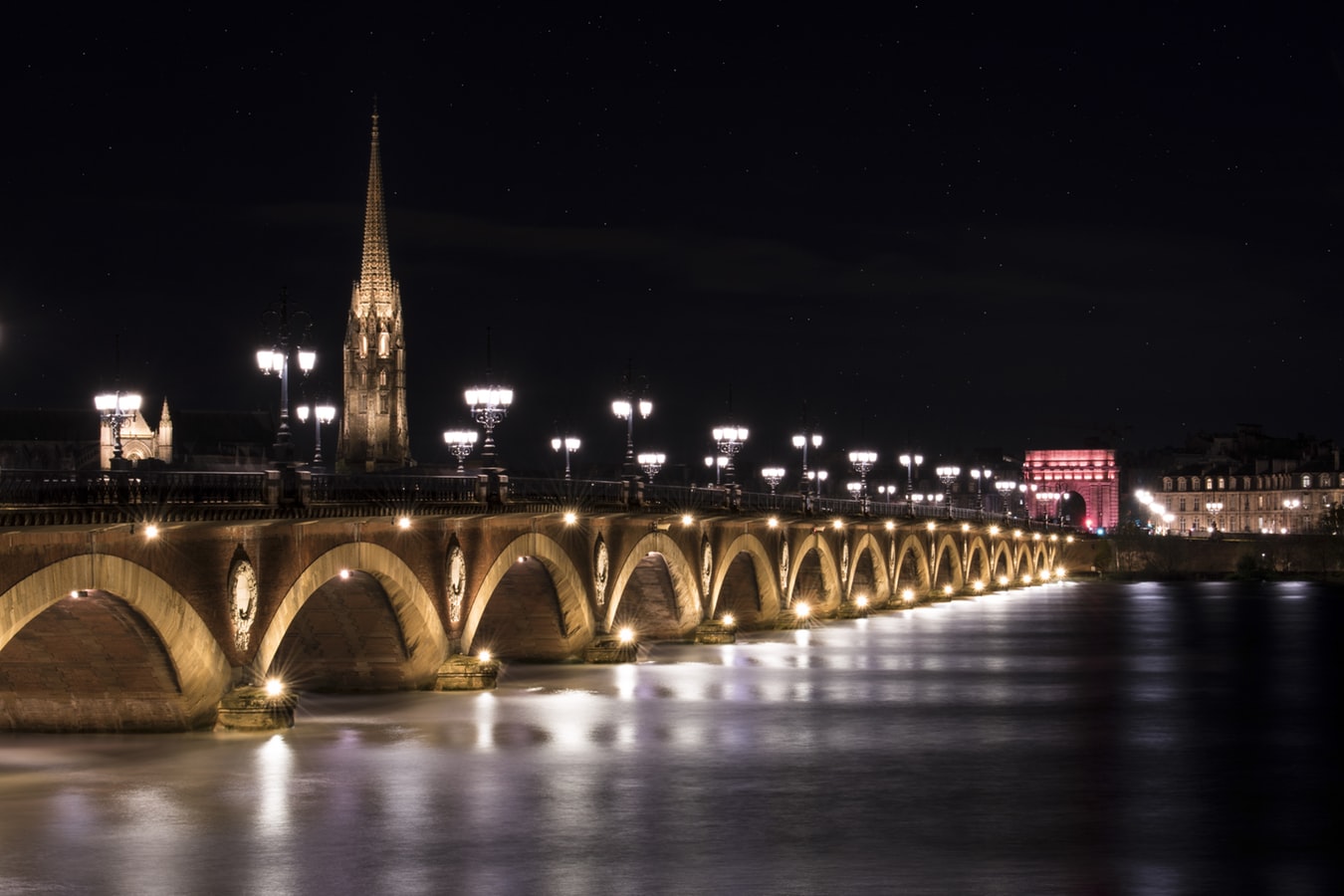
Bordeaux, France
Bordeaux as a whole, rather than any particular points within it, is what you’ll want to visit in order to understand why Victor Hugo described it as Versailles plus Antwerp, and why the painter Francisco de Goya, when exiled from his native Spain, chose it as his last home (he died here in 1828). The capital of southwest France and the region’s largest city, Bordeaux remains synonymous with the wine trade: wine shippers have long maintained their headquarters along the banks of the Garonne, while buyers from around the world arrive for the huge biennial Vinexpo show (held in odd-number years).Bordeaux is, admittedly, a less exuberant city than many others in France, but lively and stylish elements are making a dent in its conservative veneer. The cleaned-up riverfront is said by some, after a bottle or two, to exude an elegance reminiscent of St. Petersburg, and that aura of 18th-century élan also permeates the historic downtown sector—“le vieux Bordeaux”—where fine shops invite exploration. To the south of the city center are old docklands undergoing renewal—one train station has now been transformed into a big multiplex movie theater—but the area is still a bit shady. To get a feel for the historic port of Bordeaux, take the 90-minute boat trip that leaves Quai Louis-XVIII every weekday afternoon, or the regular passenger ferry that plies the Garonne between Quai Richelieu and the Pont d’Aquitaine in summer. A nice time to stroll around the city center is the first Sunday of the month, when it’s pedestrian-only and vehicles are banned.
Quiberon, France
No additional details available for this day.
Brest, France

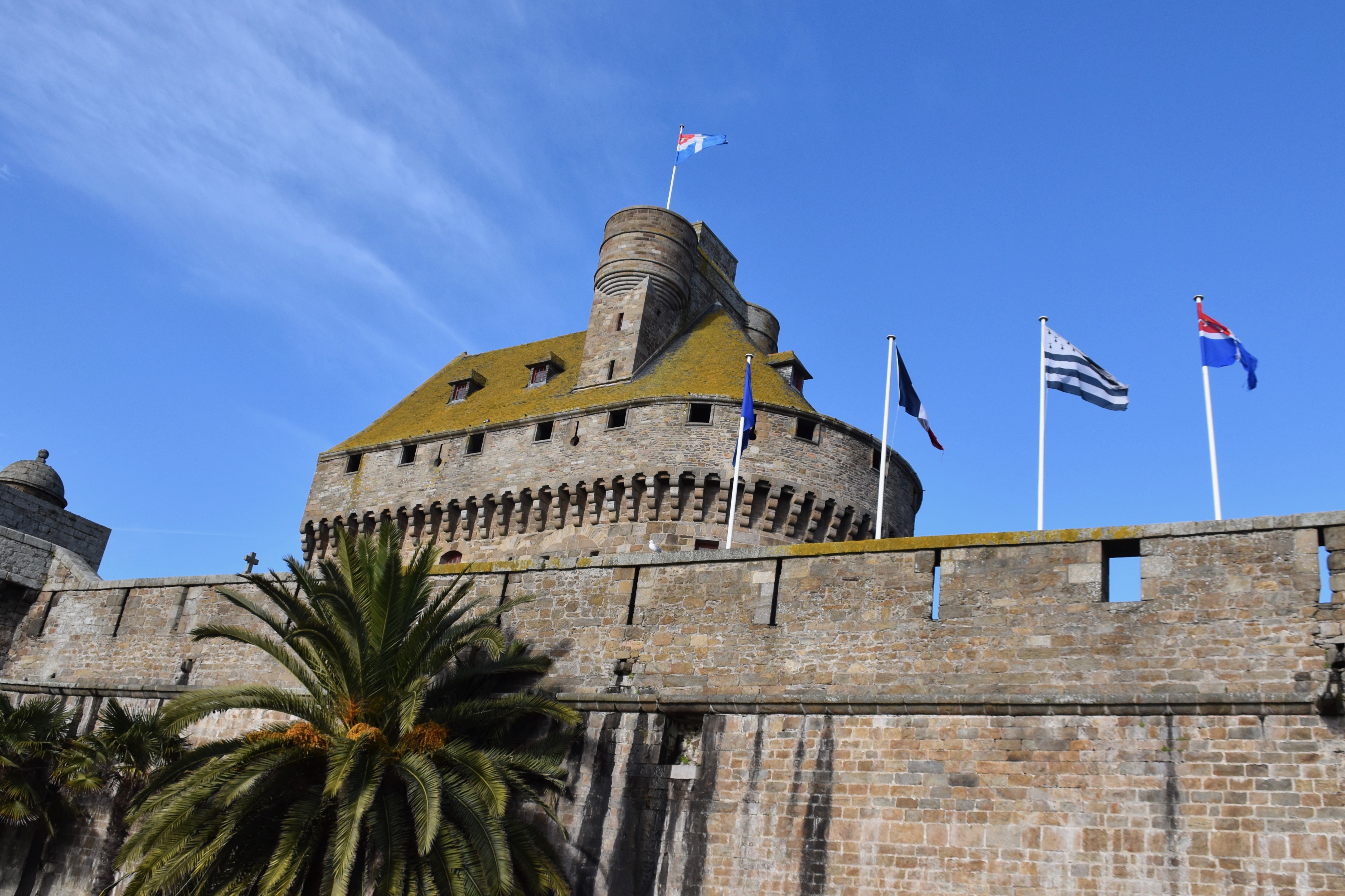
Saint-Malo, France
Thrust out into the sea and bound to the mainland only by tenuous man-made causeways, romantic St-Malo has built a reputation as a breeding ground for phenomenal sailors. Many were fishermen, but others—most notably Jacques Cartier, who claimed Canada for Francis I in 1534—were New World explorers. Still others were corsairs, “sea dogs” paid by the French crown to harass the Limeys across the Channel: legendary ones like Robert Surcouf and Duguay-Trouin helped make St-Malo rich through their pillaging, in the process earning it the nickname “the pirates’ city.” The St-Malo you see today isn’t quite the one they called home because a weeklong fire in 1944, kindled by retreating Nazis, wiped out nearly all of the old buildings. Restoration work was more painstaking than brilliant, but the narrow streets and granite houses of the Vieille Ville were satisfactorily recreated, enabling St-Malo to regain its role as a busy fishing port, seaside resort, and tourist destination. The ramparts that help define this city figuratively and literally are authentic, and the flames also spared houses along Rue de Pelicot in the Vieille Ville. Battalions of tourists invade this quaint part of town in summer, so arrive off-season if you want to avoid crowds.
Guernsey, Guernsey
Dartmouth, England
No additional details available for this day.
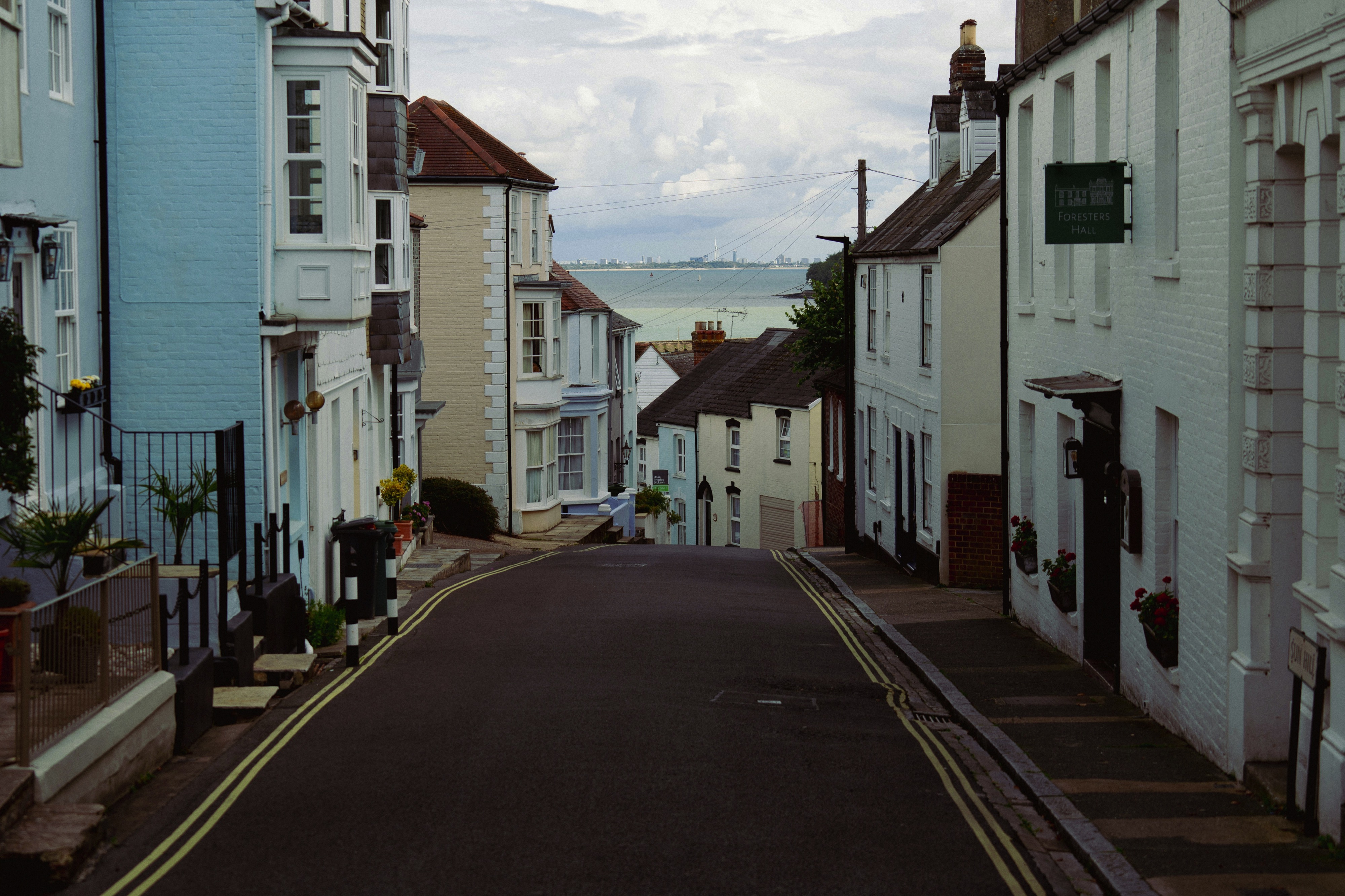
Cowes, Isle of Wight, England
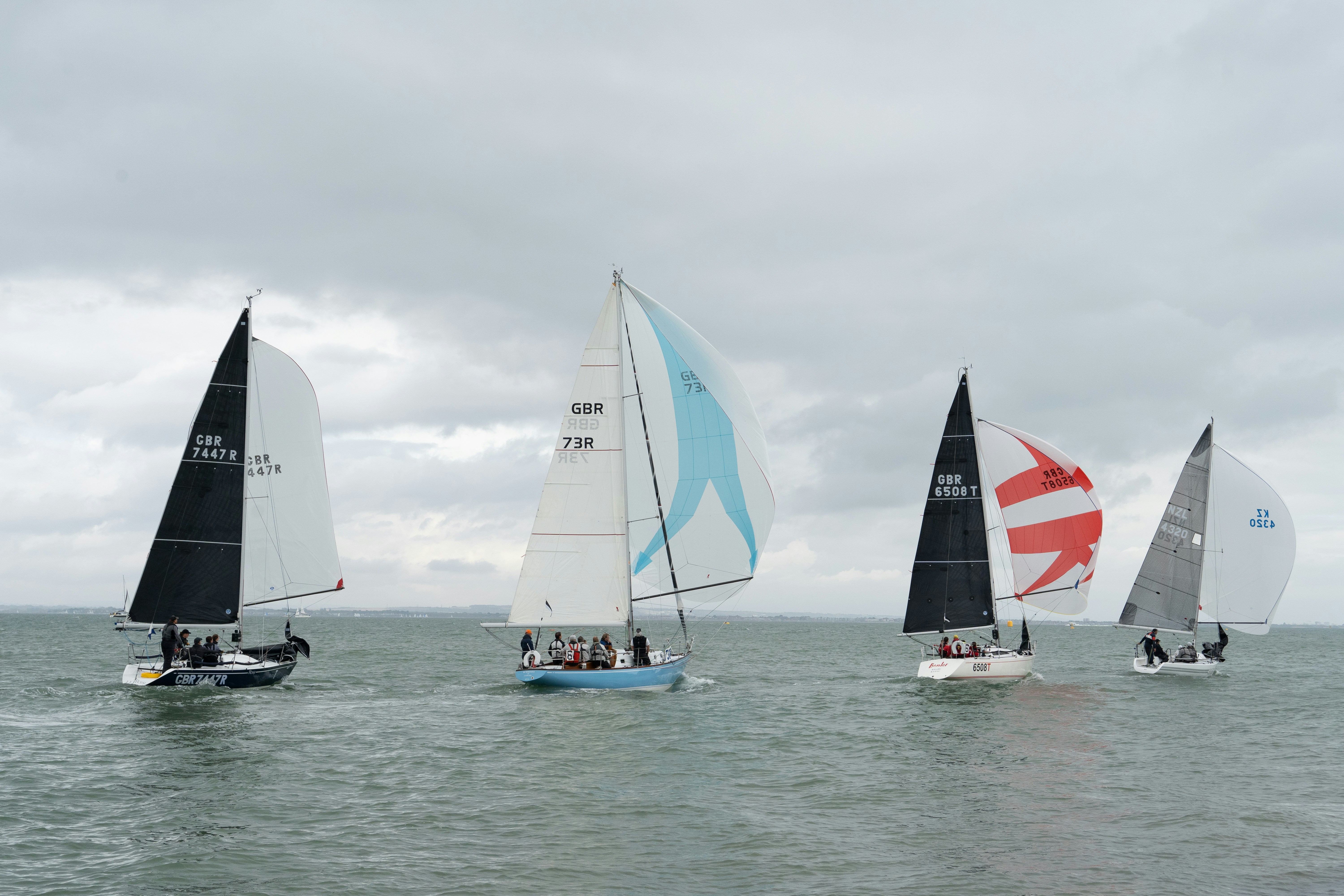
The 147-square-mile island with its pretty bays and thatched villages is like a miniature England. A well-preserved Victorian character dates from no other than Queen Victoria herself, who favored the island as her summer residence and made it her permanent home after the death of her husband, Prince Albert. Several other great names have close associations with the Isle of Wight, such as Tennyson, Dickens and Keats. The small port of Cowes at the northern tip of the island hosts every year in August Britain’s most prestigious sailing event – Cowes Week, often called “the yachtsman’s Ascot.”This is when the cozy and laid-back island bursts with visitors from all over, who fill the ranks of the island’s retired folk. Apart from being a haven for sailing craft, the world’s first hovercraft made its test runs here in the 1950s. For a place of relatively small size, the Isle of Wight packs a startling variety of landscapes and coastal scenery, ranging from a terrain of low-lying woodland and pasture to open chalky downland fringed by high cliffs. In addition, there are a number of historic buildings and a splendid array of well-preserved Victoriana. The town of Cowes is bisected by the Medina River, with West Cowes near the harbor being the old, pretty part, while East Cowes is more industrialized. Outside the suburbs stands Osborne House, Queen Victoria’s favorite residence. The grand mansion was largely designed by Albert, and the interior has been left very much as it was in the Queen’s lifetime. Around the island, some of the highlights include the Needles, three tall chalk stacks beneath the cliffs at the far west end of the island. The small village of Shanklin is known for its golden cliffs and a scenic steep ravine whose mossy, fern-filled woods have been embellished with tiny lights and thatched tea shops. The port of Yarmouth features an attractive fortress and quaint pubs in the main square. Pier Information The ship is scheduled to anchor off Cowes. Guests will be taken ashore via ship’s tender. Walking distance to the town center is approximately 5 minutes. Taxis are generally available for trips around the island. Shopping Shops in the town center of Cowes carry maritime items and yachting attire, local glassware and the famous Isle of Wight colored sand. Normal opening times are from 9:00 a.m. to 5:00 p.m. The local currency is the pound. Cuisine Not surprisingly, seafood is a good choice as well as other popular English fare. If you fancy lunch ashore, you may want to give the Amadeus Restaurant in Cowes a try, or stop in one of the local pubs for a quick meal and a cold beer. Other Sites Most of the island’s sights are covered in the organized excursions. Additionally, at the far west end of the island is the site of The Needles, a cluster of three tall chalk stacks beneath steep cliffs. The drive there takes about 45 minutes each way. Nearby is Alum Bay. The oxidized sandstone cliffs are popular for their multicolored sands, which are collected and arranged in diverse glass bottles, making popular souvenirs. Private arrangements are not encouraged in this port.
Bordeaux, France
Bordeaux as a whole, rather than any particular points within it, is what you’ll want to visit in order to understand why Victor Hugo described it as Versailles plus Antwerp, and why the painter Francisco de Goya, when exiled from his native Spain, chose it as his last home (he died here in 1828). The capital of southwest France and the region’s largest city, Bordeaux remains synonymous with the wine trade: wine shippers have long maintained their headquarters along the banks of the Garonne, while buyers from around the world arrive for the huge biennial Vinexpo show (held in odd-number years).Bordeaux is, admittedly, a less exuberant city than many others in France, but lively and stylish elements are making a dent in its conservative veneer. The cleaned-up riverfront is said by some, after a bottle or two, to exude an elegance reminiscent of St. Petersburg, and that aura of 18th-century élan also permeates the historic downtown sector—“le vieux Bordeaux”—where fine shops invite exploration. To the south of the city center are old docklands undergoing renewal—one train station has now been transformed into a big multiplex movie theater—but the area is still a bit shady. To get a feel for the historic port of Bordeaux, take the 90-minute boat trip that leaves Quai Louis-XVIII every weekday afternoon, or the regular passenger ferry that plies the Garonne between Quai Richelieu and the Pont d’Aquitaine in summer. A nice time to stroll around the city center is the first Sunday of the month, when it’s pedestrian-only and vehicles are banned.
Quiberon, France
No additional details available for this day.
Brest, France
Saint-Malo, France
Thrust out into the sea and bound to the mainland only by tenuous man-made causeways, romantic St-Malo has built a reputation as a breeding ground for phenomenal sailors. Many were fishermen, but others—most notably Jacques Cartier, who claimed Canada for Francis I in 1534—were New World explorers. Still others were corsairs, “sea dogs” paid by the French crown to harass the Limeys across the Channel: legendary ones like Robert Surcouf and Duguay-Trouin helped make St-Malo rich through their pillaging, in the process earning it the nickname “the pirates’ city.” The St-Malo you see today isn’t quite the one they called home because a weeklong fire in 1944, kindled by retreating Nazis, wiped out nearly all of the old buildings. Restoration work was more painstaking than brilliant, but the narrow streets and granite houses of the Vieille Ville were satisfactorily recreated, enabling St-Malo to regain its role as a busy fishing port, seaside resort, and tourist destination. The ramparts that help define this city figuratively and literally are authentic, and the flames also spared houses along Rue de Pelicot in the Vieille Ville. Battalions of tourists invade this quaint part of town in summer, so arrive off-season if you want to avoid crowds.
Guernsey, Guernsey
Dartmouth, England
No additional details available for this day.
Cowes, Isle of Wight, England
The 147-square-mile island with its pretty bays and thatched villages is like a miniature England. A well-preserved Victorian character dates from no other than Queen Victoria herself, who favored the island as her summer residence and made it her permanent home after the death of her husband, Prince Albert. Several other great names have close associations with the Isle of Wight, such as Tennyson, Dickens and Keats. The small port of Cowes at the northern tip of the island hosts every year in August Britain’s most prestigious sailing event – Cowes Week, often called “the yachtsman’s Ascot.”This is when the cozy and laid-back island bursts with visitors from all over, who fill the ranks of the island’s retired folk. Apart from being a haven for sailing craft, the world’s first hovercraft made its test runs here in the 1950s. For a place of relatively small size, the Isle of Wight packs a startling variety of landscapes and coastal scenery, ranging from a terrain of low-lying woodland and pasture to open chalky downland fringed by high cliffs. In addition, there are a number of historic buildings and a splendid array of well-preserved Victoriana. The town of Cowes is bisected by the Medina River, with West Cowes near the harbor being the old, pretty part, while East Cowes is more industrialized. Outside the suburbs stands Osborne House, Queen Victoria’s favorite residence. The grand mansion was largely designed by Albert, and the interior has been left very much as it was in the Queen’s lifetime. Around the island, some of the highlights include the Needles, three tall chalk stacks beneath the cliffs at the far west end of the island. The small village of Shanklin is known for its golden cliffs and a scenic steep ravine whose mossy, fern-filled woods have been embellished with tiny lights and thatched tea shops. The port of Yarmouth features an attractive fortress and quaint pubs in the main square. Pier Information The ship is scheduled to anchor off Cowes. Guests will be taken ashore via ship’s tender. Walking distance to the town center is approximately 5 minutes. Taxis are generally available for trips around the island. Shopping Shops in the town center of Cowes carry maritime items and yachting attire, local glassware and the famous Isle of Wight colored sand. Normal opening times are from 9:00 a.m. to 5:00 p.m. The local currency is the pound. Cuisine Not surprisingly, seafood is a good choice as well as other popular English fare. If you fancy lunch ashore, you may want to give the Amadeus Restaurant in Cowes a try, or stop in one of the local pubs for a quick meal and a cold beer. Other Sites Most of the island’s sights are covered in the organized excursions. Additionally, at the far west end of the island is the site of The Needles, a cluster of three tall chalk stacks beneath steep cliffs. The drive there takes about 45 minutes each way. Nearby is Alum Bay. The oxidized sandstone cliffs are popular for their multicolored sands, which are collected and arranged in diverse glass bottles, making popular souvenirs. Private arrangements are not encouraged in this port.
At Sea
No additional details available for this day.
London (Greenwich), England
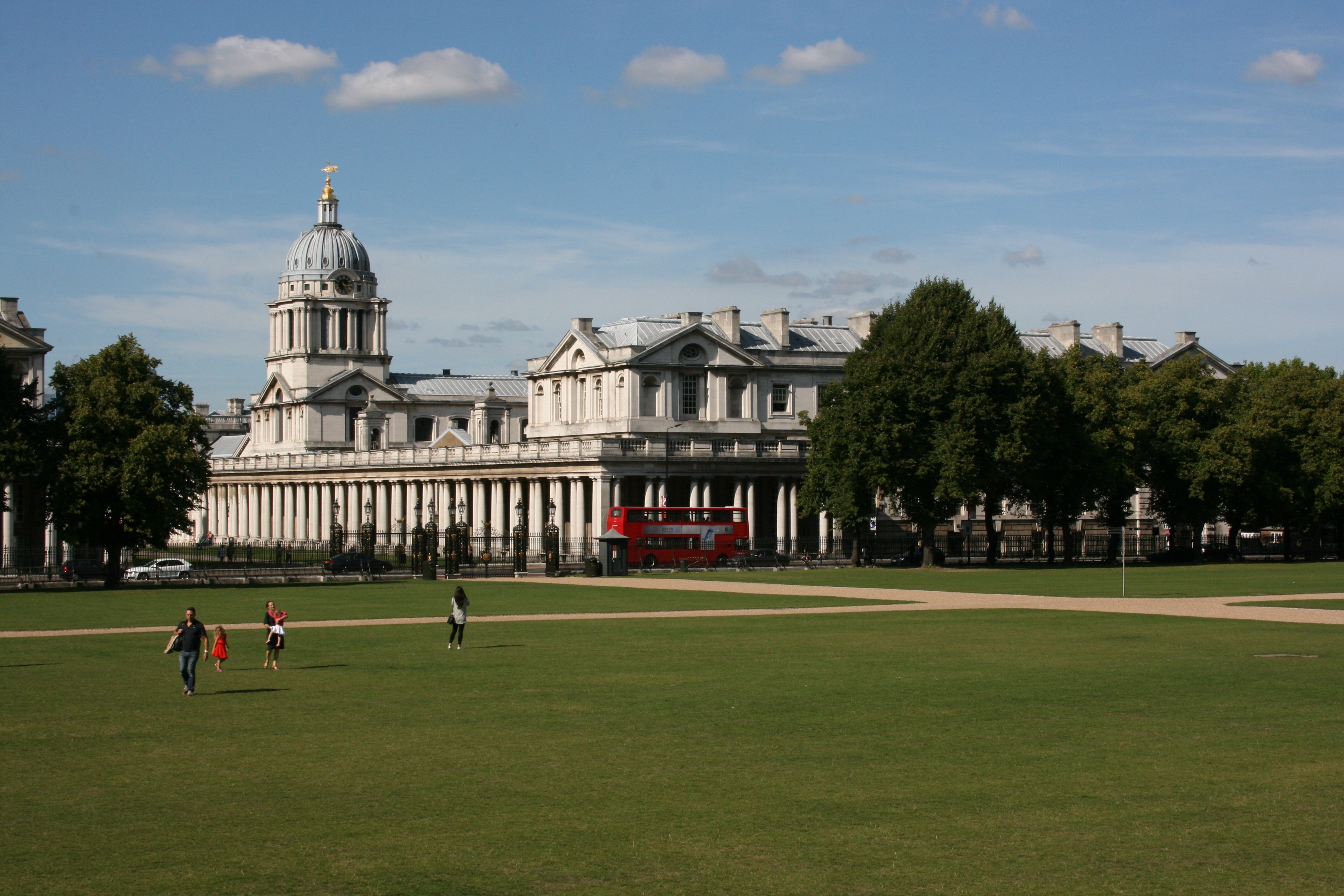
About 8 miles downstream—which means seaward, to the east—from central London, Greenwich is a small borough that looms large across the world. Once the seat of British naval power, it is not only home to the Old Royal Observatory, which measures time for our entire planet, but also the Greenwich Meridian, which divides the world into two—you can stand astride it with one foot in either hemisphere. Bear in mind that the journey to Greenwich is an event in itself. In a rush, you can take the driverless DLR train—but many opt for arriving by boat along the Thames. This way, you glide past famous sights on the London skyline (there’s a guaranteed spine chill on passing the Tower) and ever-changing docklands, and there’s usually a chirpy Cock-er-ney navigator enlivening the journey with his fun commentary. A visit to Greenwich feels like a trip to a rather elegant seaside town—albeit one with more than its fair share of historic sites. The grandiose Old Royal Naval Hospital, designed by Christopher Wren, was originally a home for veteran sailors. Today it’s a popular visitor attraction, with a more glamorous second life as one of the most widely used movie locations in Britain. Greenwich was originally home to one of England’s finest Tudor palaces, and the birthplace of Henry VIII, Elizabeth I, and Mary I. Inigo Jones built what is considered the first “classical” building in England in 1616—the Queen’s House, which now houses a collection of fine art. Britain was the world’s preeminent naval power for over 500 years, and the excellent National Maritime Museum> details that history in an engaging way. Its prize exhibits include the coat worn by Admiral Lord Nelson (1758–1805) in his final battle—bullet hole and all. The 19th-century tea clipper Cutty Sark was nearly destroyed by fire in 2007, but reopened in 2012 after a painstaking restoration. Now it’s more pristine than ever, complete with an impressive new visitor center. Greenwich Park, London’s oldest royal park, is still home to fallow red deer, just as it has been since they were first introduced here for hunting by Henry VIII. The Ranger’s House now houses a private art collection, next door to a beautifully manicured rose garden. Above it all is the Royal Observatory, where you can be in two hemispheres at once by standing along the Greenwich Meridian Line, before seeing a high-tech planetarium show. Toward north Greenwich, the hopelessly ambitious Millennium Dome has been successfully reborn as the O2 and now hosts major concerts and stand-up comedy gigs. More adventurous visitors can also go Up the O2 on a climbing expedition across the massive domed surface. Meanwhile, those who prefer excursions of a gentler kind may prefer to journey a couple of miles south of the borough, farther out into London’s southern suburbs, to the shamefully underappreciated Eltham Palace. Once a favorite of Henry VIII, parts of the mansion were transformed into an art deco masterpiece during the 1930s.
At Sea
No additional details available for this day.
London (Greenwich), England
About 8 miles downstream—which means seaward, to the east—from central London, Greenwich is a small borough that looms large across the world. Once the seat of British naval power, it is not only home to the Old Royal Observatory, which measures time for our entire planet, but also the Greenwich Meridian, which divides the world into two—you can stand astride it with one foot in either hemisphere. Bear in mind that the journey to Greenwich is an event in itself. In a rush, you can take the driverless DLR train—but many opt for arriving by boat along the Thames. This way, you glide past famous sights on the London skyline (there’s a guaranteed spine chill on passing the Tower) and ever-changing docklands, and there’s usually a chirpy Cock-er-ney navigator enlivening the journey with his fun commentary. A visit to Greenwich feels like a trip to a rather elegant seaside town—albeit one with more than its fair share of historic sites. The grandiose Old Royal Naval Hospital, designed by Christopher Wren, was originally a home for veteran sailors. Today it’s a popular visitor attraction, with a more glamorous second life as one of the most widely used movie locations in Britain. Greenwich was originally home to one of England’s finest Tudor palaces, and the birthplace of Henry VIII, Elizabeth I, and Mary I. Inigo Jones built what is considered the first “classical” building in England in 1616—the Queen’s House, which now houses a collection of fine art. Britain was the world’s preeminent naval power for over 500 years, and the excellent National Maritime Museum> details that history in an engaging way. Its prize exhibits include the coat worn by Admiral Lord Nelson (1758–1805) in his final battle—bullet hole and all. The 19th-century tea clipper Cutty Sark was nearly destroyed by fire in 2007, but reopened in 2012 after a painstaking restoration. Now it’s more pristine than ever, complete with an impressive new visitor center. Greenwich Park, London’s oldest royal park, is still home to fallow red deer, just as it has been since they were first introduced here for hunting by Henry VIII. The Ranger’s House now houses a private art collection, next door to a beautifully manicured rose garden. Above it all is the Royal Observatory, where you can be in two hemispheres at once by standing along the Greenwich Meridian Line, before seeing a high-tech planetarium show. Toward north Greenwich, the hopelessly ambitious Millennium Dome has been successfully reborn as the O2 and now hosts major concerts and stand-up comedy gigs. More adventurous visitors can also go Up the O2 on a climbing expedition across the massive domed surface. Meanwhile, those who prefer excursions of a gentler kind may prefer to journey a couple of miles south of the borough, farther out into London’s southern suburbs, to the shamefully underappreciated Eltham Palace. Once a favorite of Henry VIII, parts of the mansion were transformed into an art deco masterpiece during the 1930s.
Cabin Options
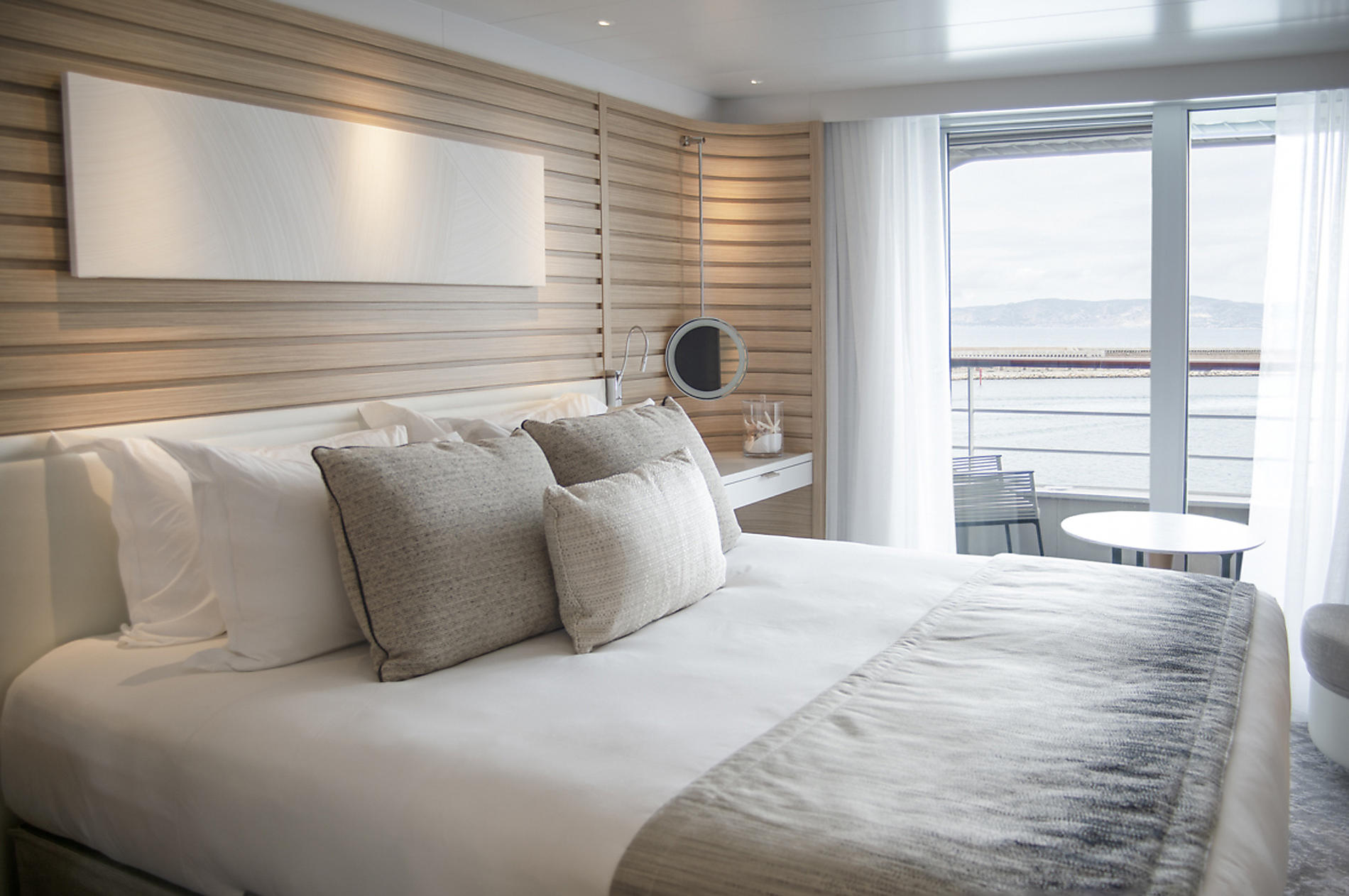
Prestige Stateroom
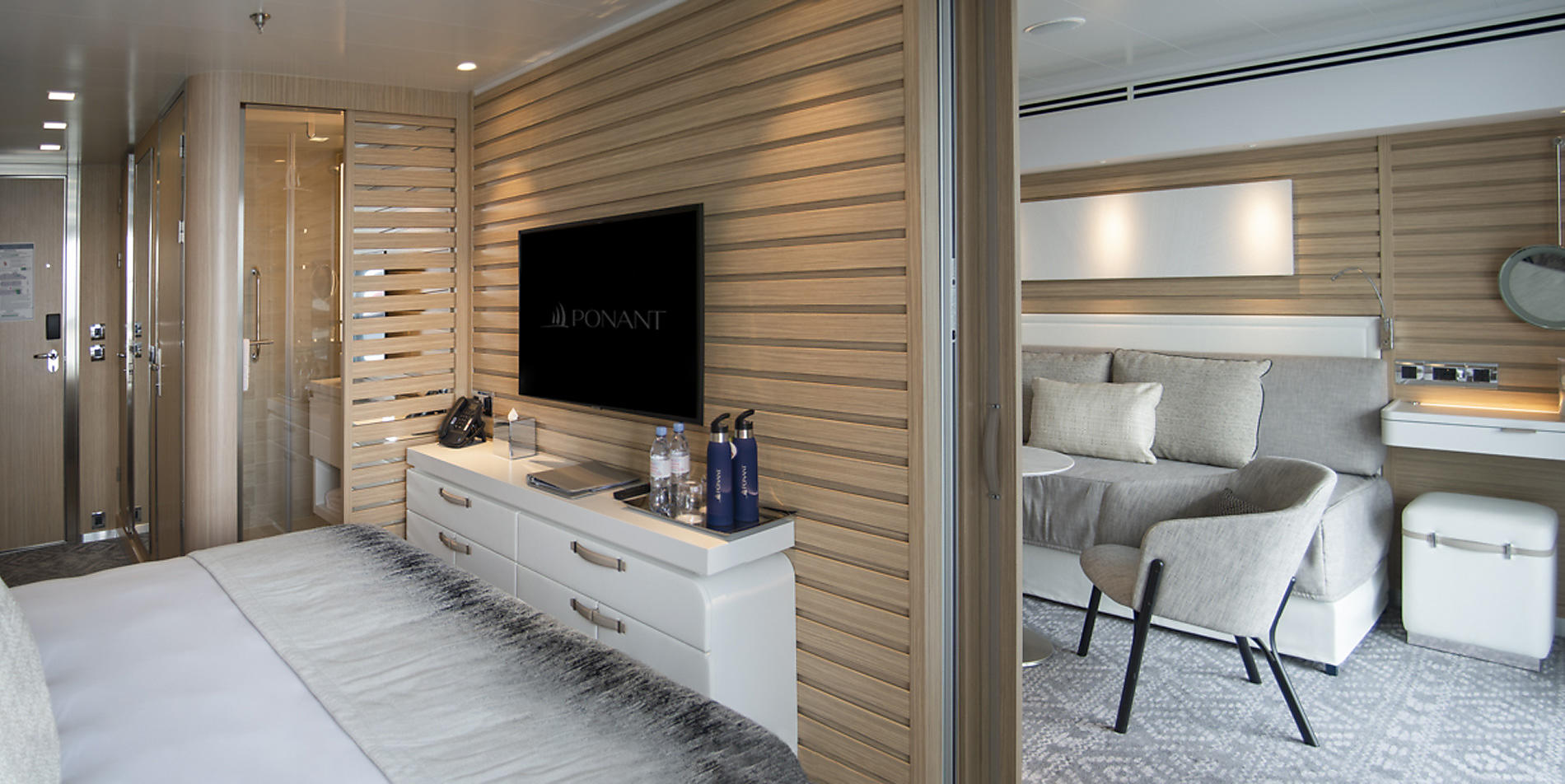
Prestige Suite
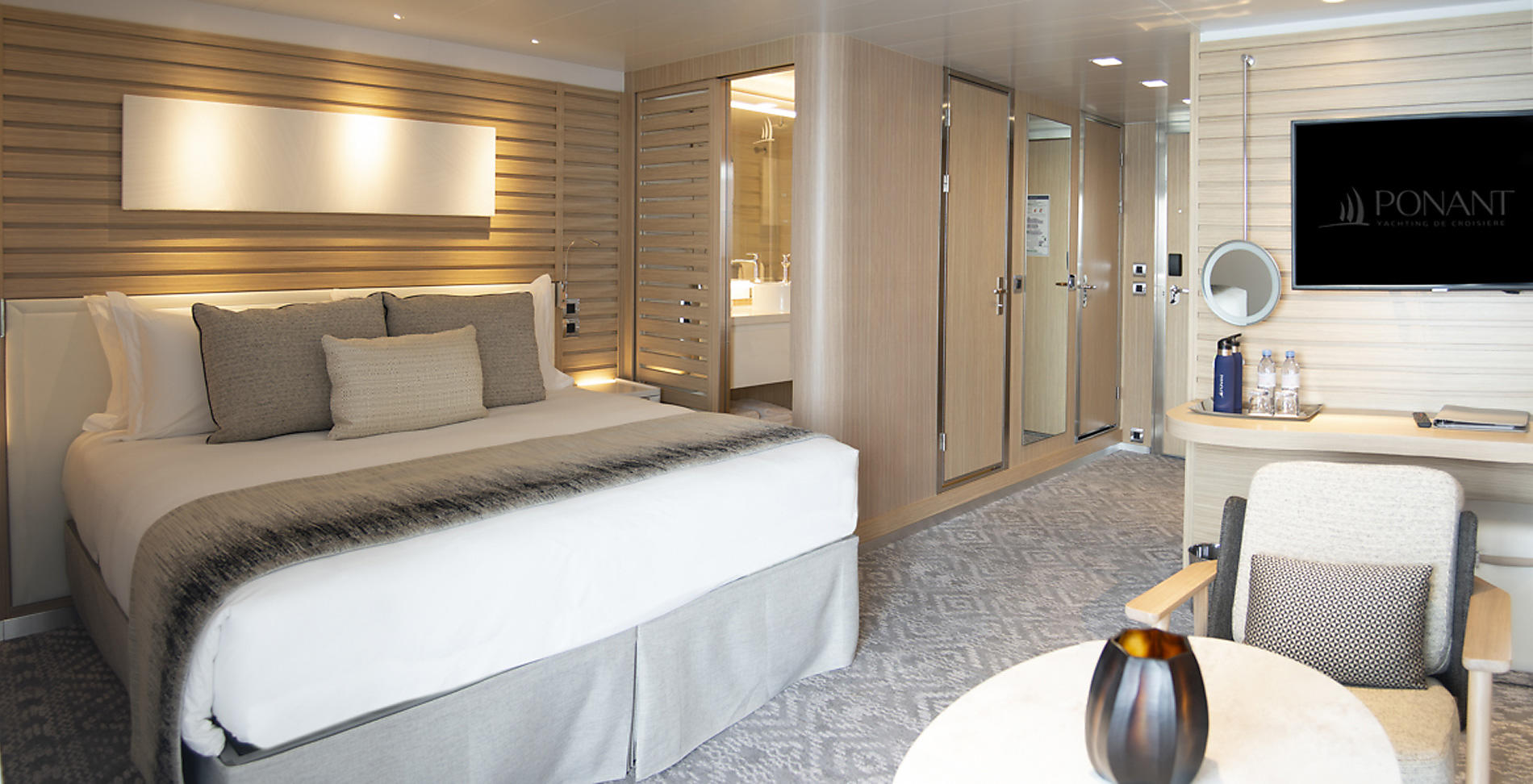
Privilege Suite
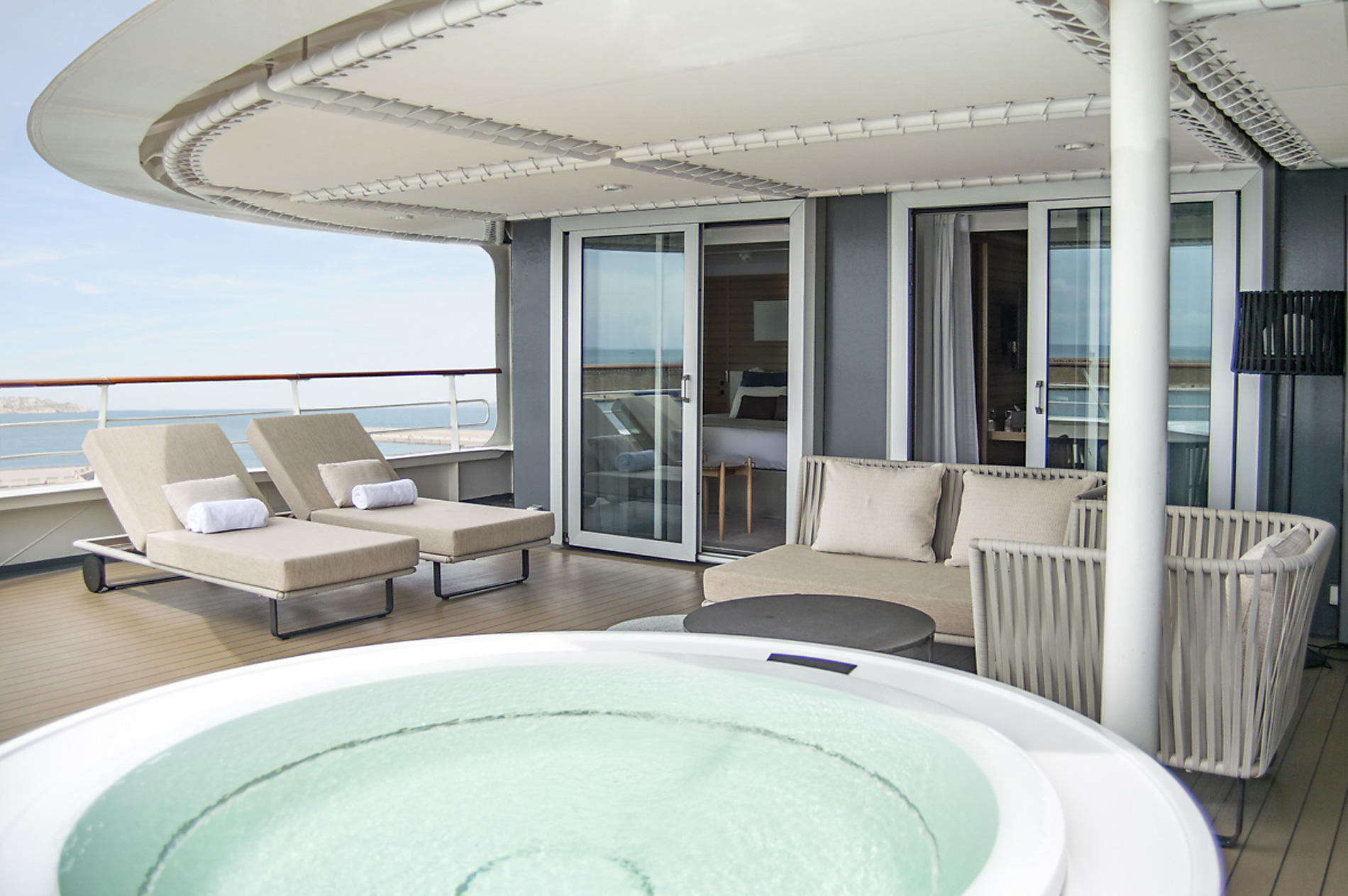
Owner's Suite
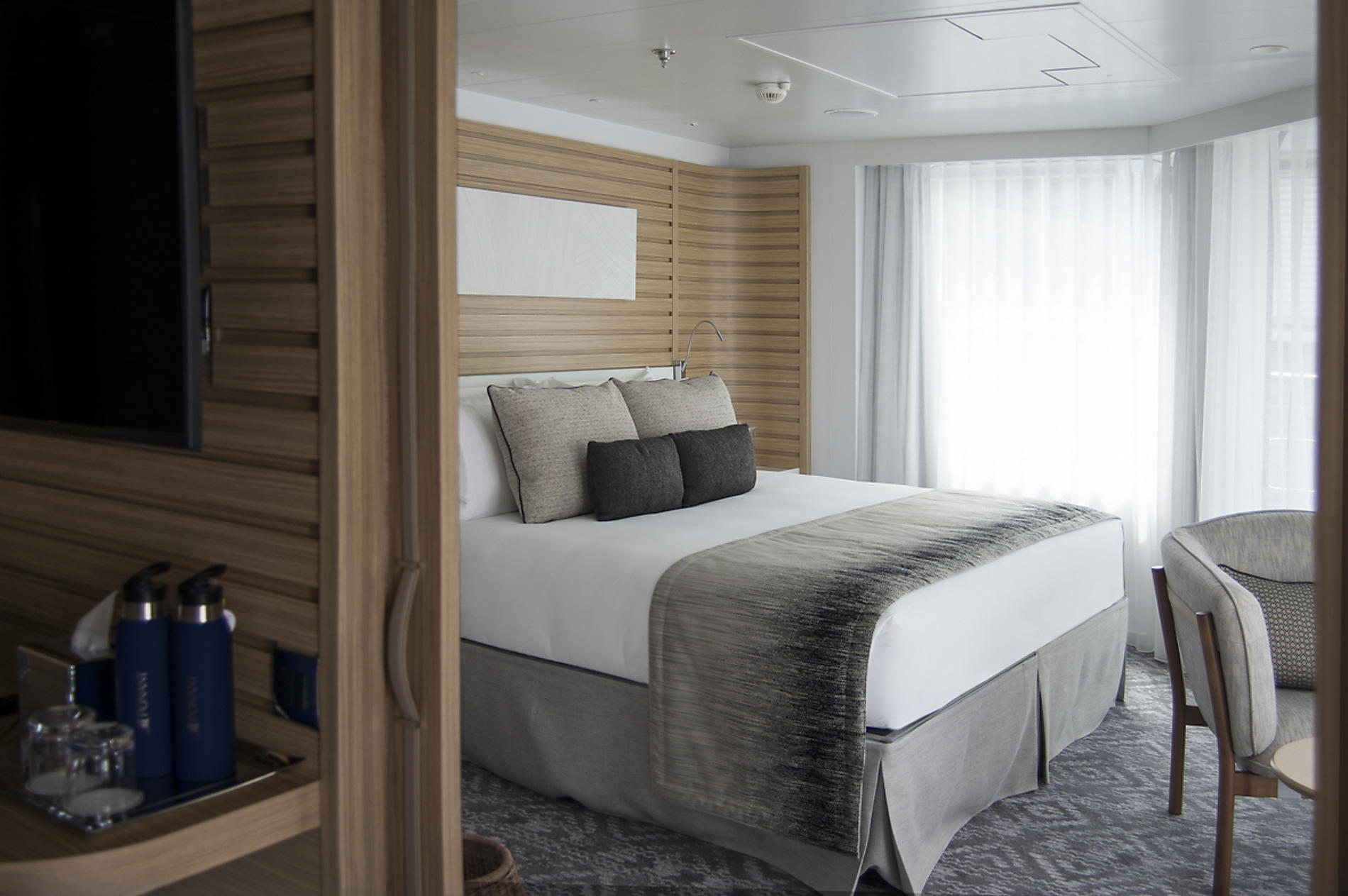
Grand Deluxe Suite
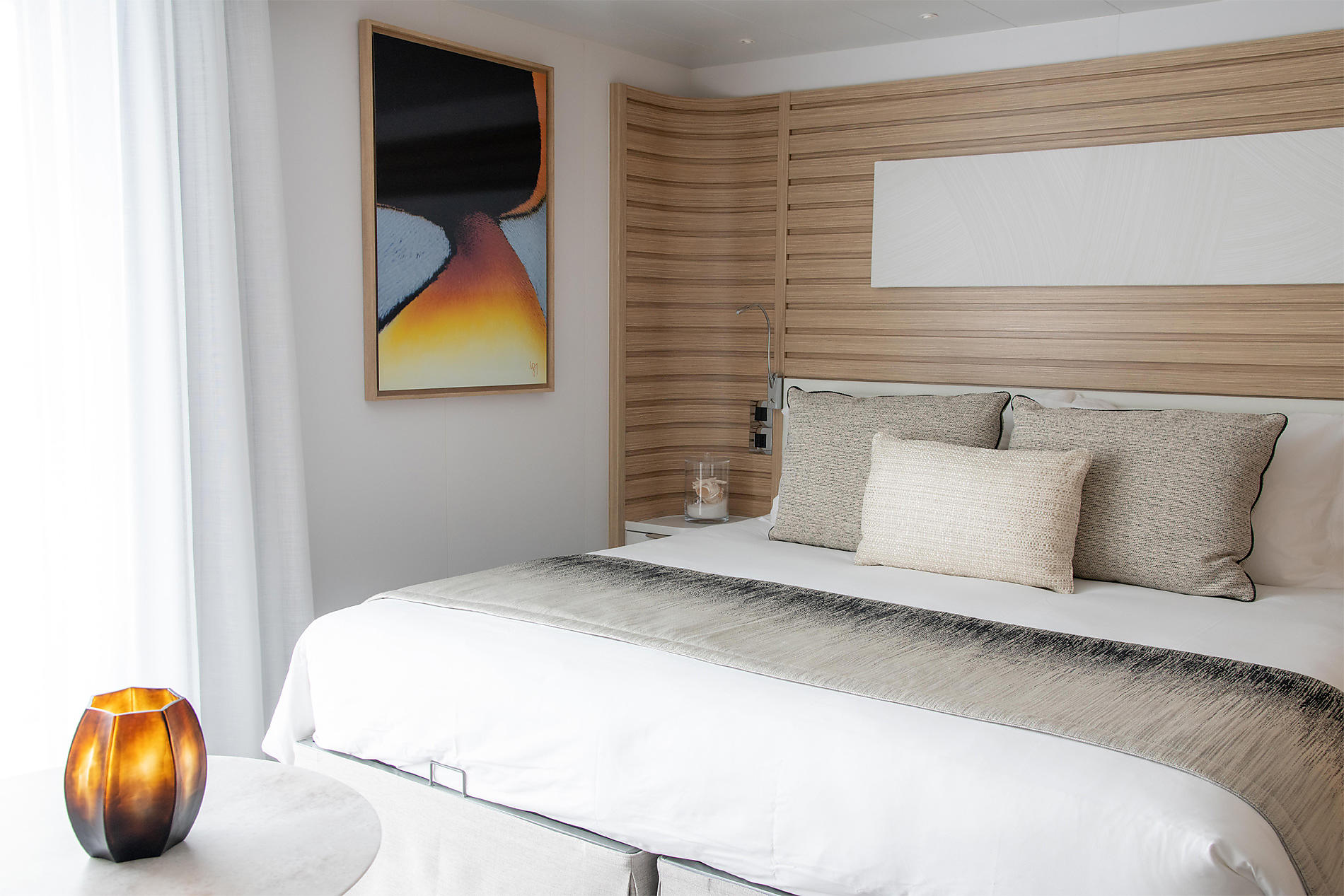
Deluxe Suite
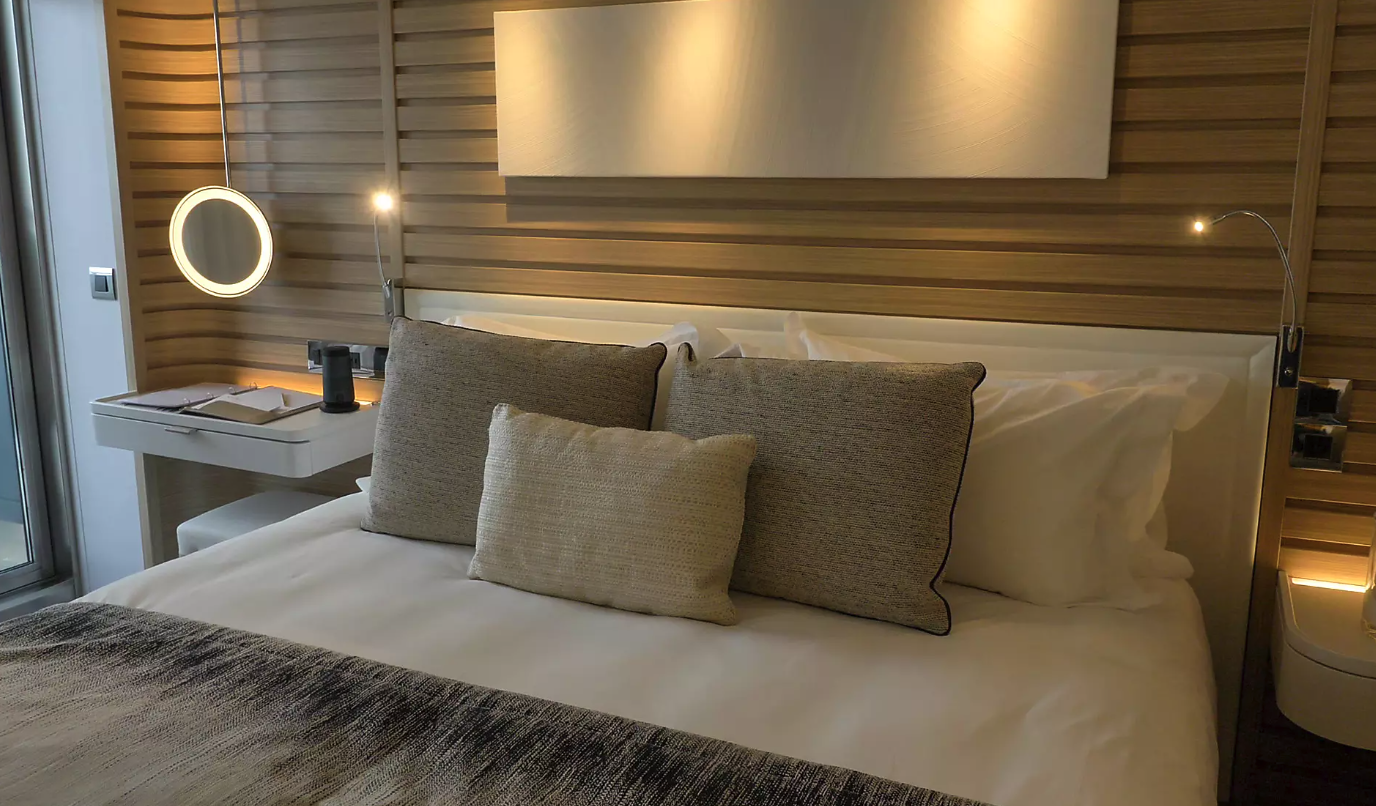
Deluxe Stateroom
Ship Facilities
The Le Nautilus
Towards the rear of deck 4 you’ll find a panoramic restaurant large enough to accommodate all our passengers at one sitting. Offering a different concept than on our other ships, this space is open to the exterior and serves buffets of salads, desserts and cheeses. Our discreet and attentive staff provide a table service for hot meals.
- 260 m2 (2,800 ft²)
- Wine cellar
- Deck 4

Grill Restaurant
An exterior grill restaurant on deck 3 offering a relaxed ambiance and atmosphere:
- Capacity: 70
- Views out over the pool deck
- Grilled meats and a variety of salads and desserts

Room Service
Whether you wish to have breakfast in the privacy of your stateroom, savour a snack in the middle of the day or enjoy your dinner in an intimate setting, our Room Service is available for you. Have a gourmet interlude and treat yourself from a varied menu at any time of day or night.

Excursions
Excursions & land itineraries
Each itinerary has been thoughtfully created by our teams to offer you a complete excursion experience. You can discover the hidden gems of the regions you visit in line with your interests.
Hidden creeks, ancient cities, UNESCO world heritage sites… the world reveals its hidden gems as you journey along the routes taken by travellers. In keeping with our ethos “Accessing the worlds treasures by sea”, we offer a wide choice of land excursions during all our cruises (except for expeditions). Chosen by our PONANT EXPLORATIONS experts for their cultural value and historic interest, these excursions can last a few hours or a few days. If you need to stay on land overnight, we take care of your stay from start to finish, until you rejoin your ship. These longer excursions mean you can discover the unmissable sites of the region you are visiting, like Cuzco in Peru for example or the Mekong Delta in Vietnam.
You can access these trips by pre-booking two months before your departure date.
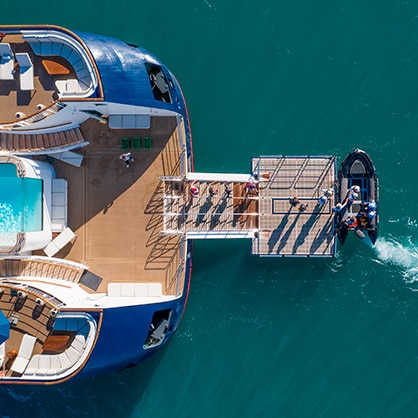
Hydraulic Platform
Deck 2
Much easier onboard access than on any other cruise ship
Easier disembarking and embarking by Zodiac when participating in expeditions
Swimming and bathing in the sea and various nautical sports, such as kayaking and paddleboarding
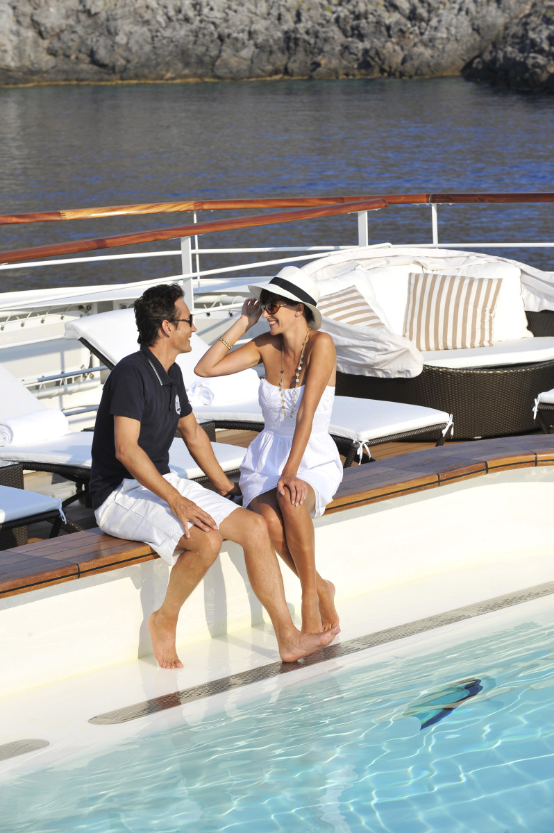
The Pool
- A swimming pool with a panoramic view equipped with a counter-current swimming system
- A pleasant solarium
- A bar and an outdoor lounge equipped with sofas and armchairs
Panoramic Lounge
- Library, internet area, bar, “live” entertainment on certain evenings
- Direct access to the panoramic terrace
Lounges & Bars
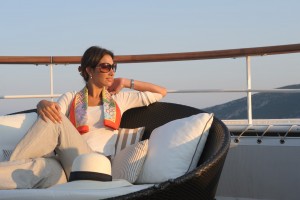
The various different lounges allow passengers to meet up and share quality time together.
The main lounge is the ideal place to relax with a drink and enjoy the various activities that have been organised such as dancing classes or theme evenings.
The cosy piano bar is a panorama lounge with breathtaking views of the horizon.
The outside bar is a great space for relaxing and is handy for accessing the swimming pool* and its solarium.
The Main Lounge – Deck 3
A main lounge of 200 m²
- Able to accommodate all of our passengers to share friendly moments and attend daytime or evening entertainment

Theatre
The Theatre* is the most unique meeting space on board. It’s the largest space on the ship and regularly accommodates all the passengers. It plays host to shows and entertainment as well as conferences from our experts, naturalist guides and guests of honours. The Theatre makes every cruise unique and enriching thanks to its constant and very accessible events.
Settle comfortably into your seat and enjoy a range of different shows, concerts and performances organised by the professional dancers and musicians onboard.
Special musical evenings, dance evenings and culture and music quizzes are held In the Grand Salon lounge onboard Le Ponant. Additionally, traditional local music concerts, featuring styles such as Corsican polyphony and Caribbean steel band music, are performed out on deck in the open air by bands specially invited onboard for the purpose.
- 188-seat capacity
- Cutting edge audio and lighting technology
- LED stage background wall enabling the projection of ultra-high resolution media
*As Le Ponant has a different layout due to its smaller size, it cannot accommodate certain equipment.
On-board events
There are performers on board all of our ships. Recruited for their talent in Paris and Rome, they star in multiple shows at the Theatre, after dinner. Throughout your voyage, they host the various entertainment events in the Grand Salon, with the support of our on-board musicians.
During Tea Time or before dinner, our musical duos consisting of a singer and an accompanying musician play classical repertoires for you. In the evening, they play in concert at the Theatere or invite you to show off your dance moves. Dance evenings are thus co-led by performance dancers who know just how to keep you in step, under the direction of the Cruise Director.
There’s plenty of themed entertainment to enjoy in the evenings. Both a soirée blanche (dress-in-white party) and an officers’ evening are held on all long cruises. Other types of parties or evening events may also be on the programme, such as karaoke parties, a Casino parties or games evenings.
Films are regularly shown at the Theatre on giant screens. National Geographic features, documentaries related to our expedition route and feature films contribute to the cultural enrichment that is part of our cruise philosophy.

Shop
On board all our ships, a shop is open during sailing. It offers a selection of presents and souvenirs: clothing, jewellery, beauty products, postcards and accessories.

Leisure Area
Dedicated to leisure and relaxation, the libraries onboard all our ships stock a range of books and board games. This space is also equipped with Wi-Fi connected computers.
All the ships have a special area for children onboard known as the Le Kids Club. Books, television, board games and consoles (PS4 or Wii™) are all provided for their use and enjoyment.

PONANT Studio
A photography and videography team escort you throughout your trip. These professionals capture the most beautiful moments of your cruise, which you can share with family and friends upon your return. Meet them on DECK 5 (DECK 6 on the PONANT Explorers ships) at the photo/video area, where you can also order souvenir pictures and videos.
Open Bar
From the moment you board and throughout your cruise, your unlimited drinks are included*, at any time of the day. A drink with friends at the bar, refreshments on your return from an excursion or in the calm of your Stateroom’s balcony: enjoy a large selection of beverages (mineral waters, cold drinks, cruise wines, beer, champagne, spirits, coffee, tea). A selection of premium alcoholic drinks is also available “à la carte”.
*It doesn’t include premium alcoholic drinks indicated in the Bar Menu. It is valid only for individual personal consumption, without limitations.

Excursion Reception and Office
On board the sisterships (Le Boreal, L’Austral, Le Soléal and Le Lyrial) and PONANT EXPLORERS, the reception desk and the excursion desk are arranged side by side to facilitate all your requests.
Reception: our receptionists can accommodate you 24 hours a day on all our ships (from 7 a.m. to 11 p.m. on Le Ponant) to answer all your needs, such as room service, etc.
The excursion office: the excursion team is available at all times to tell you about the onshore programmes, organise group or private excursions and to manage transfers at the start or end of the cruise.
On Le Ponant, the receptionist will answer all your questions about excursions.
- A 140 m² (1,500 ft²) space
- A reception/concierge service
- The excursions desk
- The onboard administrative services
- The sales office operated by our Customer Manager
- Our 50m² (540 ft²) shop selling a line of clothing, jewellery, beauty care products, postcards and various accessories.
- The facilities accessible to persons with reduced mobility

The Blue Eye
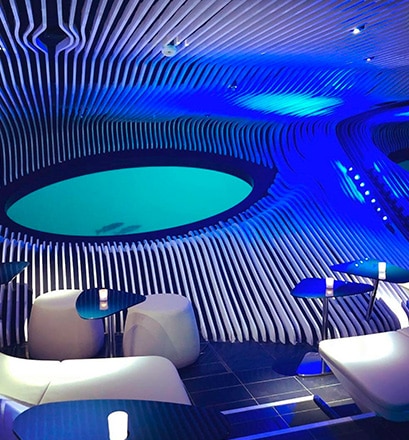
Every ship** in the PONANT EXPLORERS series features the Blue Eye. Located in the hull, below the waterline, this unique multi-sensory lounge that is unique to Ponant cruises plunges you into the heart of underwater life. Sight, hearing, and sensations… With digital screens, hydrophones and Body Listening sofas, you can experience the complete and unprecedented spectacle offered by the seabed.
Accessible to all passengers and equipped with a bar, the Blue Eye is an exceptional place to share a drink in a unique atmosphere.
The Spa
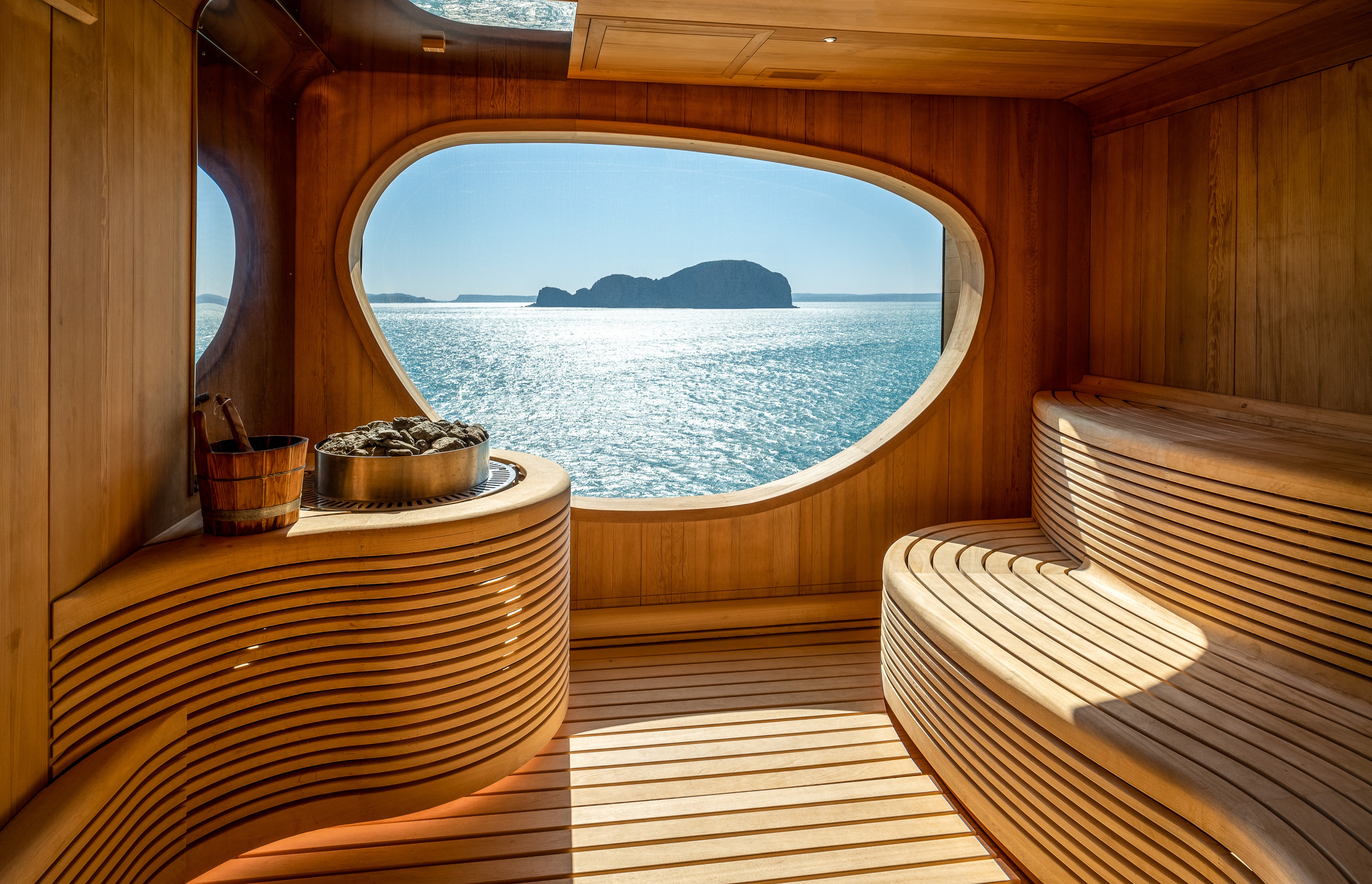
All our ships feature an onboard spa. Equipped with massage cabins, a Turkish bath (Sisterships, Le Paul Gauguin), a sauna (Explorers, Le Commandant Charcot), or a Snow Room (Le Commandant Charcot), the spas offer a wide choice of top-of-the-range treatments provided in association with SOTHYS™, CLARINS (Le Bellot and Le Jacques-Cartier only), BIOLOGIQUE RECHERCHE (Le Commandant Charcot, Le Ponant) and ALGOTHERM (Le Paul Gauguin), leading French spa and wellness centre brands.
Prices and details of services in the PONANT EXPLORATIONS Yacht Spa menu.
Discover a range of facial treatments, aromatic baths, exfoliation and body massage treatments designed to provide moments of complete relaxation. You can also supplement your beauty ritual with additional services such as hair-removal, makeovers, manicures and pedicures.
Wellness area – Deck 7
- Spa in partnership with CLARINS™: massage and treatment cubicles, beauty care cubicle
- KÉRASTASE / L’Oréal Paris hair salon
- Free access sauna (open during the day)
- Gym (open during the day)
The Gym
The gyms on our ships are equipped with the very latest Technogym© equipment and machines. Treadmills, exercise bikes, Kinesis Wall© strength training machines and many other types of equipment are all provided in a laid-back relaxing environment. The wide floor-to-ceiling windows looking out over the sea add undeniable charm to the exercise sessions.
Each day also begins with organised morning workout sessions, either out in the open air or in the theatre. These are supplemented by water aerobics in the pool, or in the sea off the beach for PONANT EXPLORATIONS passengers, when the situation allows it.

The Hairdressing Salon
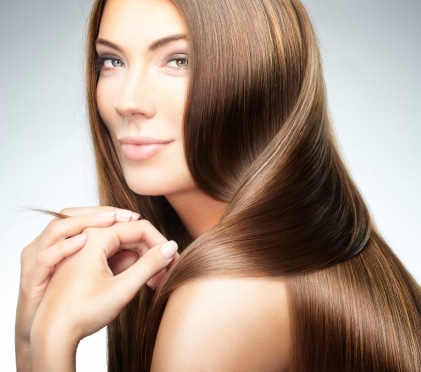
Provided in partnership with KÉRASTASE® and L’ORÉAL PROFESSIONNEL®, the hairdressing salon offers a complete range of top quality treatments designed to strengthen, nourish and reinvigorate hair’s shine and brilliance. Our stylists are available to serve all your styling, highlighting, colouring, cutting and tailored hair advice needs.
Ocean Young Explorers
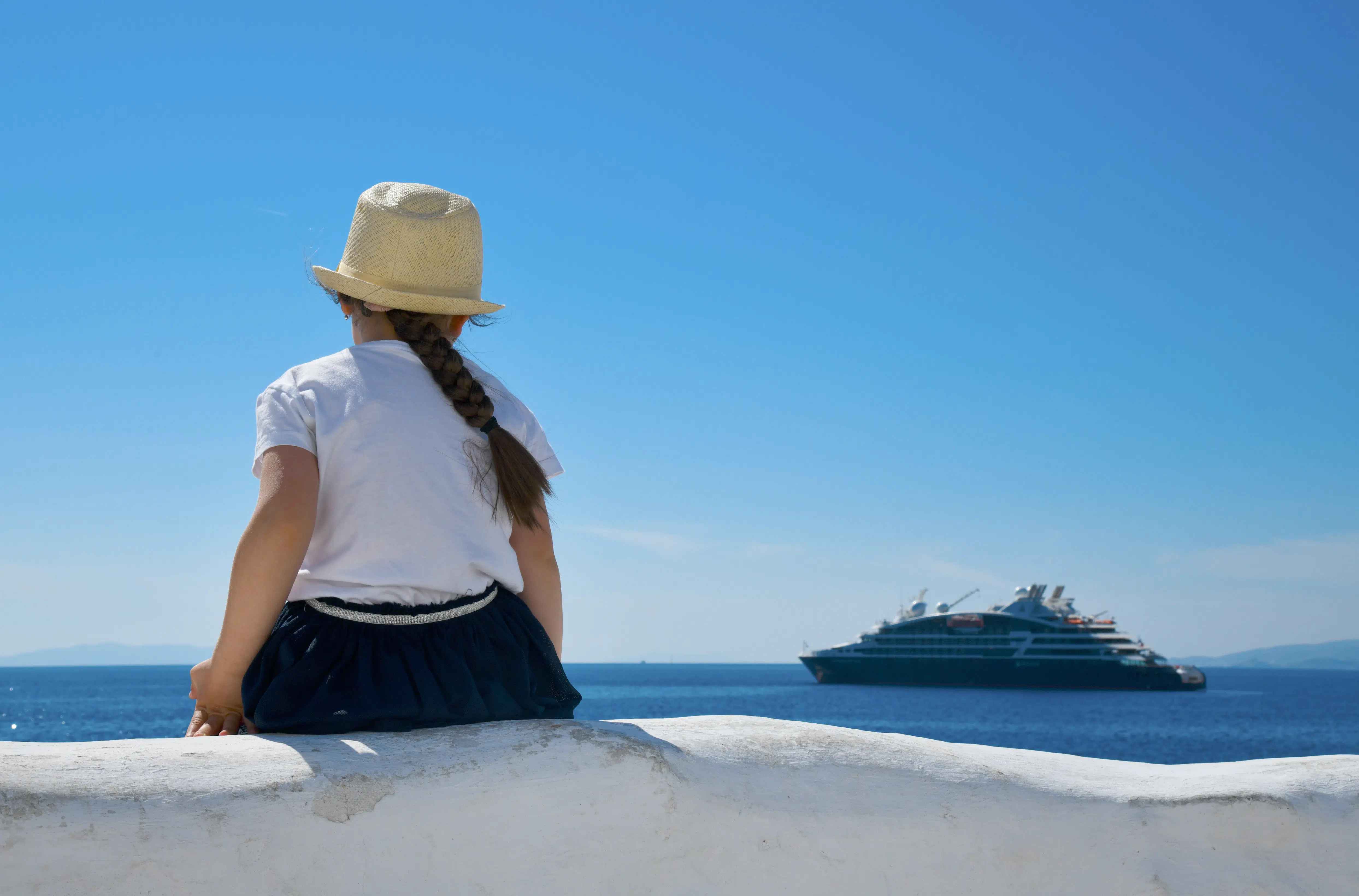
Because it’s important to reach new generations and make children aware of environmental protection issues from an early age, PONANT EXPLORATIONS has joined forces with the Maud Fontenoy Foundation to help run its Ocean Explorers club for children. In total this summer, 17 cruises will offer children aged 4 to 13 a programme of activities dedicated to the ocean protection theme.
Raising awareness of oceans protection from an early age
The Maud Fontenoy Foundation is providing PONANT EXPLORATIONS activity teams with fun educational kits, activity sheets and videos highlighting why oceans need to be protected. From creative activities (drawing, painting, a giant map of the world to colour in, etc.) to meditation initiation sessions, the programme is very varied. And from 2023, it will also include fun educational workshops on the water cycle, biodiversity, astronomy, and geology.
Excursions and Talks
Children aged 4-13 will have the opportunity to do excursions such as watersports, beach games and swimming, treasure hunts, and even guided tours. For larger groups, a naturalist guide will join the team running the sessions and give a talk on local fauna and flora.
The Le Nautilus
Towards the rear of deck 4 you’ll find a panoramic restaurant large enough to accommodate all our passengers at one sitting. Offering a different concept than on our other ships, this space is open to the exterior and serves buffets of salads, desserts and cheeses. Our discreet and attentive staff provide a table service for hot meals.
- 260 m2 (2,800 ft²)
- Wine cellar
- Deck 4
Grill Restaurant
An exterior grill restaurant on deck 3 offering a relaxed ambiance and atmosphere:
- Capacity: 70
- Views out over the pool deck
- Grilled meats and a variety of salads and desserts
Room Service
Whether you wish to have breakfast in the privacy of your stateroom, savour a snack in the middle of the day or enjoy your dinner in an intimate setting, our Room Service is available for you. Have a gourmet interlude and treat yourself from a varied menu at any time of day or night.
Excursions
Excursions & land itineraries
Each itinerary has been thoughtfully created by our teams to offer you a complete excursion experience. You can discover the hidden gems of the regions you visit in line with your interests.
Hidden creeks, ancient cities, UNESCO world heritage sites… the world reveals its hidden gems as you journey along the routes taken by travellers. In keeping with our ethos “Accessing the worlds treasures by sea”, we offer a wide choice of land excursions during all our cruises (except for expeditions). Chosen by our PONANT EXPLORATIONS experts for their cultural value and historic interest, these excursions can last a few hours or a few days. If you need to stay on land overnight, we take care of your stay from start to finish, until you rejoin your ship. These longer excursions mean you can discover the unmissable sites of the region you are visiting, like Cuzco in Peru for example or the Mekong Delta in Vietnam.
You can access these trips by pre-booking two months before your departure date.
Hydraulic Platform
Deck 2
Much easier onboard access than on any other cruise ship
Easier disembarking and embarking by Zodiac when participating in expeditions
Swimming and bathing in the sea and various nautical sports, such as kayaking and paddleboarding
The Pool
- A swimming pool with a panoramic view equipped with a counter-current swimming system
- A pleasant solarium
- A bar and an outdoor lounge equipped with sofas and armchairs
Panoramic Lounge
- Library, internet area, bar, “live” entertainment on certain evenings
- Direct access to the panoramic terrace
Lounges & Bars
The various different lounges allow passengers to meet up and share quality time together.
The main lounge is the ideal place to relax with a drink and enjoy the various activities that have been organised such as dancing classes or theme evenings.
The cosy piano bar is a panorama lounge with breathtaking views of the horizon.
The outside bar is a great space for relaxing and is handy for accessing the swimming pool* and its solarium.
The Main Lounge – Deck 3
A main lounge of 200 m²
- Able to accommodate all of our passengers to share friendly moments and attend daytime or evening entertainment
Theatre
The Theatre* is the most unique meeting space on board. It’s the largest space on the ship and regularly accommodates all the passengers. It plays host to shows and entertainment as well as conferences from our experts, naturalist guides and guests of honours. The Theatre makes every cruise unique and enriching thanks to its constant and very accessible events.
Settle comfortably into your seat and enjoy a range of different shows, concerts and performances organised by the professional dancers and musicians onboard.
Special musical evenings, dance evenings and culture and music quizzes are held In the Grand Salon lounge onboard Le Ponant. Additionally, traditional local music concerts, featuring styles such as Corsican polyphony and Caribbean steel band music, are performed out on deck in the open air by bands specially invited onboard for the purpose.
- 188-seat capacity
- Cutting edge audio and lighting technology
- LED stage background wall enabling the projection of ultra-high resolution media
*As Le Ponant has a different layout due to its smaller size, it cannot accommodate certain equipment.
On-board events
There are performers on board all of our ships. Recruited for their talent in Paris and Rome, they star in multiple shows at the Theatre, after dinner. Throughout your voyage, they host the various entertainment events in the Grand Salon, with the support of our on-board musicians.
During Tea Time or before dinner, our musical duos consisting of a singer and an accompanying musician play classical repertoires for you. In the evening, they play in concert at the Theatere or invite you to show off your dance moves. Dance evenings are thus co-led by performance dancers who know just how to keep you in step, under the direction of the Cruise Director.
There’s plenty of themed entertainment to enjoy in the evenings. Both a soirée blanche (dress-in-white party) and an officers’ evening are held on all long cruises. Other types of parties or evening events may also be on the programme, such as karaoke parties, a Casino parties or games evenings.
Films are regularly shown at the Theatre on giant screens. National Geographic features, documentaries related to our expedition route and feature films contribute to the cultural enrichment that is part of our cruise philosophy.
Shop
On board all our ships, a shop is open during sailing. It offers a selection of presents and souvenirs: clothing, jewellery, beauty products, postcards and accessories.
Leisure Area
Dedicated to leisure and relaxation, the libraries onboard all our ships stock a range of books and board games. This space is also equipped with Wi-Fi connected computers.
All the ships have a special area for children onboard known as the Le Kids Club. Books, television, board games and consoles (PS4 or Wii™) are all provided for their use and enjoyment.
PONANT Studio
A photography and videography team escort you throughout your trip. These professionals capture the most beautiful moments of your cruise, which you can share with family and friends upon your return. Meet them on DECK 5 (DECK 6 on the PONANT Explorers ships) at the photo/video area, where you can also order souvenir pictures and videos.
Open Bar
From the moment you board and throughout your cruise, your unlimited drinks are included*, at any time of the day. A drink with friends at the bar, refreshments on your return from an excursion or in the calm of your Stateroom’s balcony: enjoy a large selection of beverages (mineral waters, cold drinks, cruise wines, beer, champagne, spirits, coffee, tea). A selection of premium alcoholic drinks is also available “à la carte”.
*It doesn’t include premium alcoholic drinks indicated in the Bar Menu. It is valid only for individual personal consumption, without limitations.
Excursion Reception and Office
On board the sisterships (Le Boreal, L’Austral, Le Soléal and Le Lyrial) and PONANT EXPLORERS, the reception desk and the excursion desk are arranged side by side to facilitate all your requests.
Reception: our receptionists can accommodate you 24 hours a day on all our ships (from 7 a.m. to 11 p.m. on Le Ponant) to answer all your needs, such as room service, etc.
The excursion office: the excursion team is available at all times to tell you about the onshore programmes, organise group or private excursions and to manage transfers at the start or end of the cruise.
On Le Ponant, the receptionist will answer all your questions about excursions.
- A 140 m² (1,500 ft²) space
- A reception/concierge service
- The excursions desk
- The onboard administrative services
- The sales office operated by our Customer Manager
- Our 50m² (540 ft²) shop selling a line of clothing, jewellery, beauty care products, postcards and various accessories.
- The facilities accessible to persons with reduced mobility
The Blue Eye
Every ship** in the PONANT EXPLORERS series features the Blue Eye. Located in the hull, below the waterline, this unique multi-sensory lounge that is unique to Ponant cruises plunges you into the heart of underwater life. Sight, hearing, and sensations… With digital screens, hydrophones and Body Listening sofas, you can experience the complete and unprecedented spectacle offered by the seabed.
Accessible to all passengers and equipped with a bar, the Blue Eye is an exceptional place to share a drink in a unique atmosphere.
The Spa
All our ships feature an onboard spa. Equipped with massage cabins, a Turkish bath (Sisterships, Le Paul Gauguin), a sauna (Explorers, Le Commandant Charcot), or a Snow Room (Le Commandant Charcot), the spas offer a wide choice of top-of-the-range treatments provided in association with SOTHYS™, CLARINS (Le Bellot and Le Jacques-Cartier only), BIOLOGIQUE RECHERCHE (Le Commandant Charcot, Le Ponant) and ALGOTHERM (Le Paul Gauguin), leading French spa and wellness centre brands.
Prices and details of services in the PONANT EXPLORATIONS Yacht Spa menu.
Discover a range of facial treatments, aromatic baths, exfoliation and body massage treatments designed to provide moments of complete relaxation. You can also supplement your beauty ritual with additional services such as hair-removal, makeovers, manicures and pedicures.
Wellness area – Deck 7
- Spa in partnership with CLARINS™: massage and treatment cubicles, beauty care cubicle
- KÉRASTASE / L’Oréal Paris hair salon
- Free access sauna (open during the day)
- Gym (open during the day)
The Gym
The gyms on our ships are equipped with the very latest Technogym© equipment and machines. Treadmills, exercise bikes, Kinesis Wall© strength training machines and many other types of equipment are all provided in a laid-back relaxing environment. The wide floor-to-ceiling windows looking out over the sea add undeniable charm to the exercise sessions.
Each day also begins with organised morning workout sessions, either out in the open air or in the theatre. These are supplemented by water aerobics in the pool, or in the sea off the beach for PONANT EXPLORATIONS passengers, when the situation allows it.
The Hairdressing Salon
Provided in partnership with KÉRASTASE® and L’ORÉAL PROFESSIONNEL®, the hairdressing salon offers a complete range of top quality treatments designed to strengthen, nourish and reinvigorate hair’s shine and brilliance. Our stylists are available to serve all your styling, highlighting, colouring, cutting and tailored hair advice needs.
Ocean Young Explorers
Because it’s important to reach new generations and make children aware of environmental protection issues from an early age, PONANT EXPLORATIONS has joined forces with the Maud Fontenoy Foundation to help run its Ocean Explorers club for children. In total this summer, 17 cruises will offer children aged 4 to 13 a programme of activities dedicated to the ocean protection theme.
Raising awareness of oceans protection from an early age
The Maud Fontenoy Foundation is providing PONANT EXPLORATIONS activity teams with fun educational kits, activity sheets and videos highlighting why oceans need to be protected. From creative activities (drawing, painting, a giant map of the world to colour in, etc.) to meditation initiation sessions, the programme is very varied. And from 2023, it will also include fun educational workshops on the water cycle, biodiversity, astronomy, and geology.
Excursions and Talks
Children aged 4-13 will have the opportunity to do excursions such as watersports, beach games and swimming, treasure hunts, and even guided tours. For larger groups, a naturalist guide will join the team running the sessions and give a talk on local fauna and flora.
About the Ship
Deck Plans

- Theatre
- Medical Centre
- Reception Desk
- Excursions Desk
- Shop
- Main Lounge
- Grill
- Pool
- Deluxe Suites
- Deluxe Staterooms

- Restaurant
- Prestige Staterooms
- Deluxe Suites

- Bridge
- Owners Suites
- Prestige Suites
- Deluxe Suites
- Privilege Suites
- Prestige Staterooms

- Panoramic Lounge
- Art Gallery/Photo & Video
- Ocean Young Explorers
- Privilege Suites
- Grand Deluxe Suites
- Deluxe Suites
- Prestige Suites
- Prestige Staterooms

- Spa
- Fitness Centre
- Hair Salon
- Sun Deck
- Theatre
- Medical Centre
- Reception Desk
- Excursions Desk
- Shop
- Main Lounge
- Grill
- Pool
- Deluxe Suites
- Deluxe Staterooms
- Restaurant
- Prestige Staterooms
- Deluxe Suites
- Bridge
- Owners Suites
- Prestige Suites
- Deluxe Suites
- Privilege Suites
- Prestige Staterooms
- Panoramic Lounge
- Art Gallery/Photo & Video
- Ocean Young Explorers
- Privilege Suites
- Grand Deluxe Suites
- Deluxe Suites
- Prestige Suites
- Prestige Staterooms
- Spa
- Fitness Centre
- Hair Salon
- Sun Deck