Featured Cabins
Itinerary
Benoa, Bali, Indonesia
Bali really is as alluring as everyone says. This island, slightly bigger than Delaware, has it all: beaches, volcanoes, terraced rice fields, forests, renowned resorts, surfing, golf, and world-class dive sites. But what sets Bali apart from other nearby tropical destinations is Balinese tradition, and villagers dedicated to celebrating it. The hundreds of temples, dances, rituals, and crafts linked to their ancient Hindu faith aren’t a show for tourists, but a living, breathing culture in which visitors are warmly received by the Balinese, who cherish their own identities.
Sumbawa Island, Indonesia
Komba Island, Indonesia
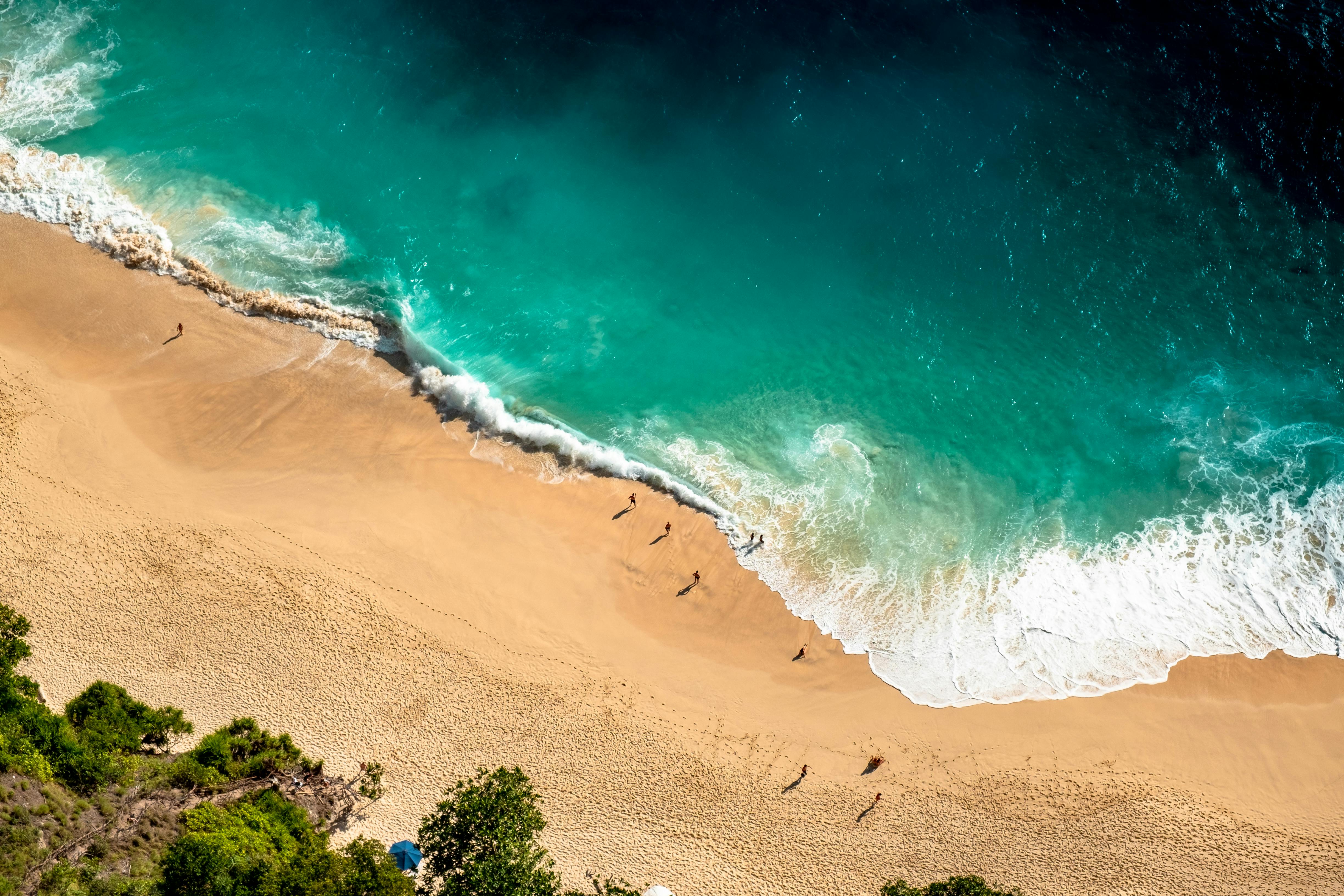
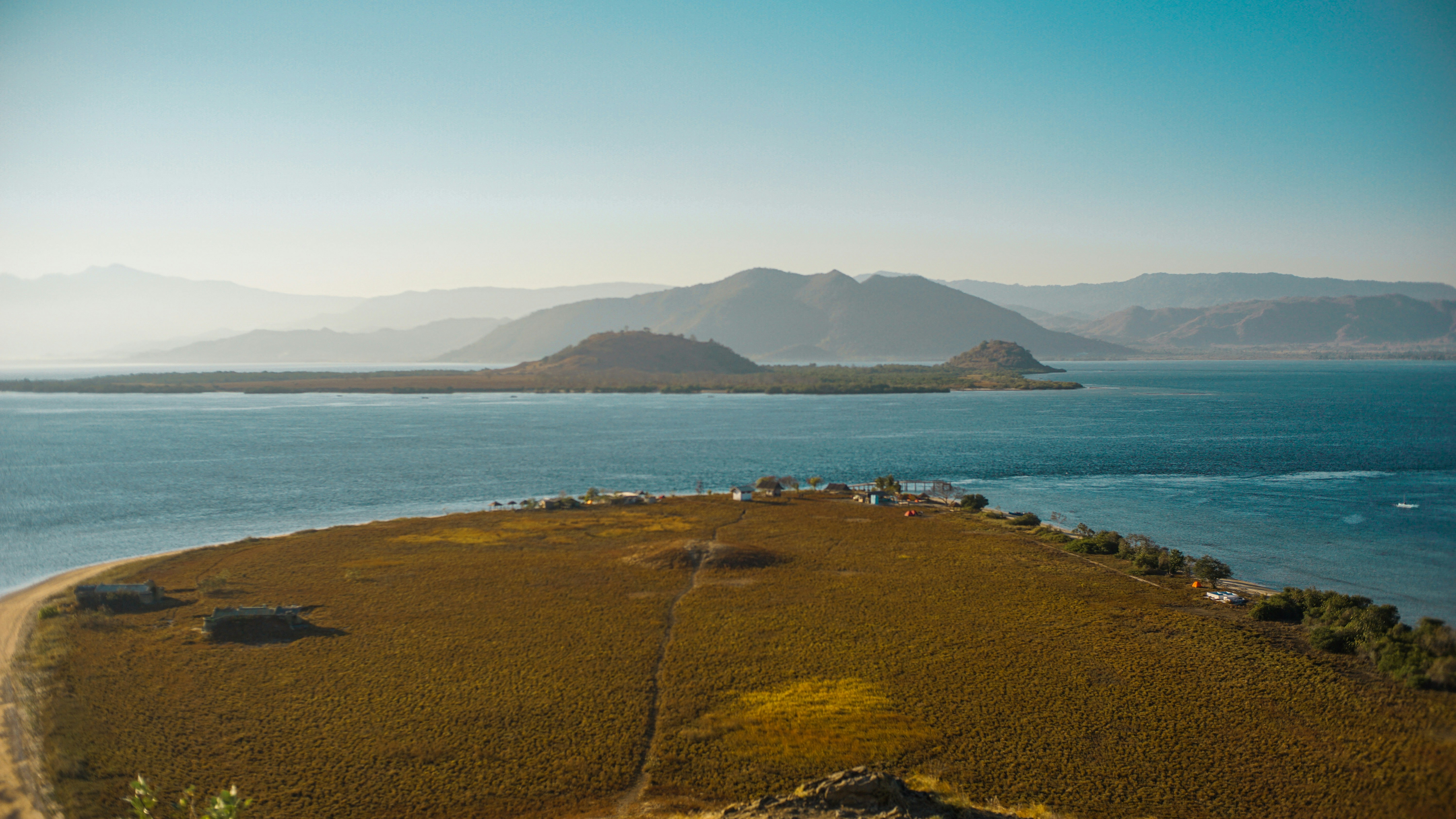
On the approach to Pulau Komodo, a tiny island just 36 km (22 miles) long and 16 km (9 miles) across at its widest point, it’s hard to imagine that this is the home of the fearsome dragons described by late-19th-century explorers. The island, in the Indonesian region of Nusa Tenggara, lies between the islands of Sumbawa and Flores at the heart of the Komodo National Park, designated a UNESCO World Heritage Site and one of the New7Wonders of Nature. At first look, steep hillsides of parched, golden grasses slide down into topaz bays covered in glass-clear waters, and white-sand beaches hem quiet shorelines. But then you remember that this innocent-looking island is inhabited by 13-foot-long, 220-pound ora, as Komodo dragons are known locally. Don’t be frightened: Although stories of people disappearing run rampant, a trip here is quite safe—as long as you stay with a park guide.While Komodo dragons are the main attraction, several other large species also reside here. Dark-brown deer and small buffalo nibble the grasses of the high plains, macaques peer through the trees, and wild pigs crash through the underbrush. More than 150 types of birds also inhabit the island, including cockatoos, imperial pigeons, sea eagles, and mound-building megapodes. Offshore in the marine reserve, you might spot dolphins, dugong (a relative of the manatee), sea turtles, manta rays, and even whales, as well as more than 1,000 species of fish.Lodging on Pulau Komodo was nonexistent until 2012, when a modest, eco-friendly resort and diving club opened, providing a rare opportunity for scuba divers and snorkelers to explore this pristine habitat’s extensive coral reefs and extraordinary marine life. Travelers can also find comfortable lodging and a convenient base from which to explore the many natural wonders of the Komodo National Park in Labuan Bajo, on the island of Flores (East Nusa Tenggara).
Komba Island, Indonesia
On the approach to Pulau Komodo, a tiny island just 36 km (22 miles) long and 16 km (9 miles) across at its widest point, it’s hard to imagine that this is the home of the fearsome dragons described by late-19th-century explorers. The island, in the Indonesian region of Nusa Tenggara, lies between the islands of Sumbawa and Flores at the heart of the Komodo National Park, designated a UNESCO World Heritage Site and one of the New7Wonders of Nature. At first look, steep hillsides of parched, golden grasses slide down into topaz bays covered in glass-clear waters, and white-sand beaches hem quiet shorelines. But then you remember that this innocent-looking island is inhabited by 13-foot-long, 220-pound ora, as Komodo dragons are known locally. Don’t be frightened: Although stories of people disappearing run rampant, a trip here is quite safe—as long as you stay with a park guide.While Komodo dragons are the main attraction, several other large species also reside here. Dark-brown deer and small buffalo nibble the grasses of the high plains, macaques peer through the trees, and wild pigs crash through the underbrush. More than 150 types of birds also inhabit the island, including cockatoos, imperial pigeons, sea eagles, and mound-building megapodes. Offshore in the marine reserve, you might spot dolphins, dugong (a relative of the manatee), sea turtles, manta rays, and even whales, as well as more than 1,000 species of fish.Lodging on Pulau Komodo was nonexistent until 2012, when a modest, eco-friendly resort and diving club opened, providing a rare opportunity for scuba divers and snorkelers to explore this pristine habitat’s extensive coral reefs and extraordinary marine life. Travelers can also find comfortable lodging and a convenient base from which to explore the many natural wonders of the Komodo National Park in Labuan Bajo, on the island of Flores (East Nusa Tenggara).
Maumere, Flores, Indonesia
No additional details available for this day.
Kalabahi, Indonesia
No additional details available for this day.
Barat Daya Islands, Indonesia
No additional details available for this day.
Benoa, Bali, Indonesia
Bali really is as alluring as everyone says. This island, slightly bigger than Delaware, has it all: beaches, volcanoes, terraced rice fields, forests, renowned resorts, surfing, golf, and world-class dive sites. But what sets Bali apart from other nearby tropical destinations is Balinese tradition, and villagers dedicated to celebrating it. The hundreds of temples, dances, rituals, and crafts linked to their ancient Hindu faith aren’t a show for tourists, but a living, breathing culture in which visitors are warmly received by the Balinese, who cherish their own identities.
Sumbawa Island, Indonesia
Komba Island, Indonesia
On the approach to Pulau Komodo, a tiny island just 36 km (22 miles) long and 16 km (9 miles) across at its widest point, it’s hard to imagine that this is the home of the fearsome dragons described by late-19th-century explorers. The island, in the Indonesian region of Nusa Tenggara, lies between the islands of Sumbawa and Flores at the heart of the Komodo National Park, designated a UNESCO World Heritage Site and one of the New7Wonders of Nature. At first look, steep hillsides of parched, golden grasses slide down into topaz bays covered in glass-clear waters, and white-sand beaches hem quiet shorelines. But then you remember that this innocent-looking island is inhabited by 13-foot-long, 220-pound ora, as Komodo dragons are known locally. Don’t be frightened: Although stories of people disappearing run rampant, a trip here is quite safe—as long as you stay with a park guide.While Komodo dragons are the main attraction, several other large species also reside here. Dark-brown deer and small buffalo nibble the grasses of the high plains, macaques peer through the trees, and wild pigs crash through the underbrush. More than 150 types of birds also inhabit the island, including cockatoos, imperial pigeons, sea eagles, and mound-building megapodes. Offshore in the marine reserve, you might spot dolphins, dugong (a relative of the manatee), sea turtles, manta rays, and even whales, as well as more than 1,000 species of fish.Lodging on Pulau Komodo was nonexistent until 2012, when a modest, eco-friendly resort and diving club opened, providing a rare opportunity for scuba divers and snorkelers to explore this pristine habitat’s extensive coral reefs and extraordinary marine life. Travelers can also find comfortable lodging and a convenient base from which to explore the many natural wonders of the Komodo National Park in Labuan Bajo, on the island of Flores (East Nusa Tenggara).
Komba Island, Indonesia
On the approach to Pulau Komodo, a tiny island just 36 km (22 miles) long and 16 km (9 miles) across at its widest point, it’s hard to imagine that this is the home of the fearsome dragons described by late-19th-century explorers. The island, in the Indonesian region of Nusa Tenggara, lies between the islands of Sumbawa and Flores at the heart of the Komodo National Park, designated a UNESCO World Heritage Site and one of the New7Wonders of Nature. At first look, steep hillsides of parched, golden grasses slide down into topaz bays covered in glass-clear waters, and white-sand beaches hem quiet shorelines. But then you remember that this innocent-looking island is inhabited by 13-foot-long, 220-pound ora, as Komodo dragons are known locally. Don’t be frightened: Although stories of people disappearing run rampant, a trip here is quite safe—as long as you stay with a park guide.While Komodo dragons are the main attraction, several other large species also reside here. Dark-brown deer and small buffalo nibble the grasses of the high plains, macaques peer through the trees, and wild pigs crash through the underbrush. More than 150 types of birds also inhabit the island, including cockatoos, imperial pigeons, sea eagles, and mound-building megapodes. Offshore in the marine reserve, you might spot dolphins, dugong (a relative of the manatee), sea turtles, manta rays, and even whales, as well as more than 1,000 species of fish.Lodging on Pulau Komodo was nonexistent until 2012, when a modest, eco-friendly resort and diving club opened, providing a rare opportunity for scuba divers and snorkelers to explore this pristine habitat’s extensive coral reefs and extraordinary marine life. Travelers can also find comfortable lodging and a convenient base from which to explore the many natural wonders of the Komodo National Park in Labuan Bajo, on the island of Flores (East Nusa Tenggara).
Maumere, Flores, Indonesia
No additional details available for this day.
Kalabahi, Indonesia
No additional details available for this day.
Barat Daya Islands, Indonesia
No additional details available for this day.
Banda Neira, Indonesia
Banda Neira is the main island and town of the minute Banda Archipelago in the Banda Sea some 2500 kilometers away from Jakarta. Although the Portuguese already contacted the Banda Islands for nutmeg and mace in 1512, it was only ninety years later that the Dutch established a trading post on Neira and neighboring Lonthor to export the spices. Rivalries between the Dutch and the British led to forts being built –the ruins of Fort Nassau and the restored Fort Belgica can be visited on Banda Neira. The area surrounding the town still has nutmeg plantations and several sites relate to the Dutch spice trading time.
Mommon Peninsula, West Papua, Indonesia
Triton Bay, Indonesia
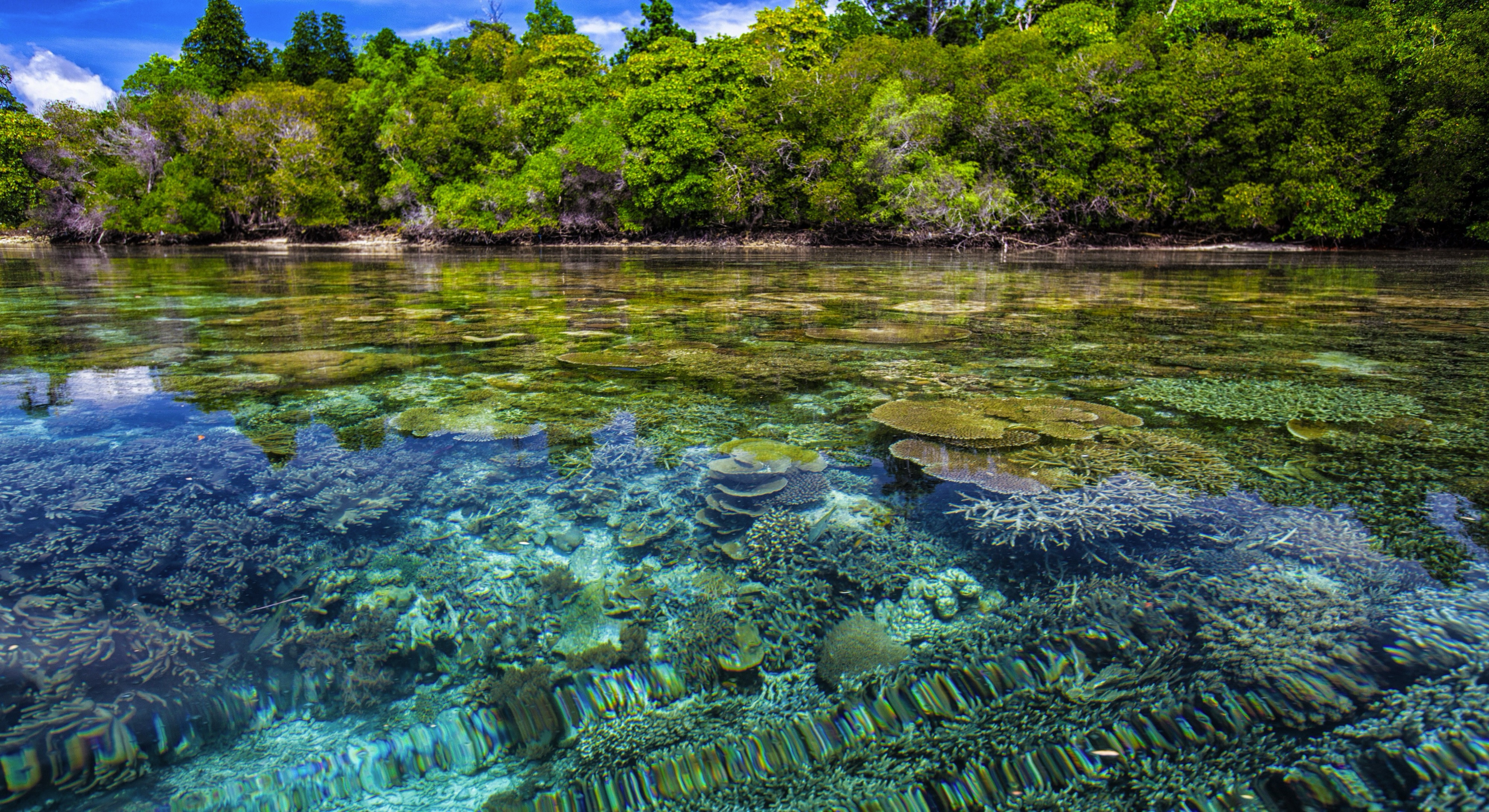
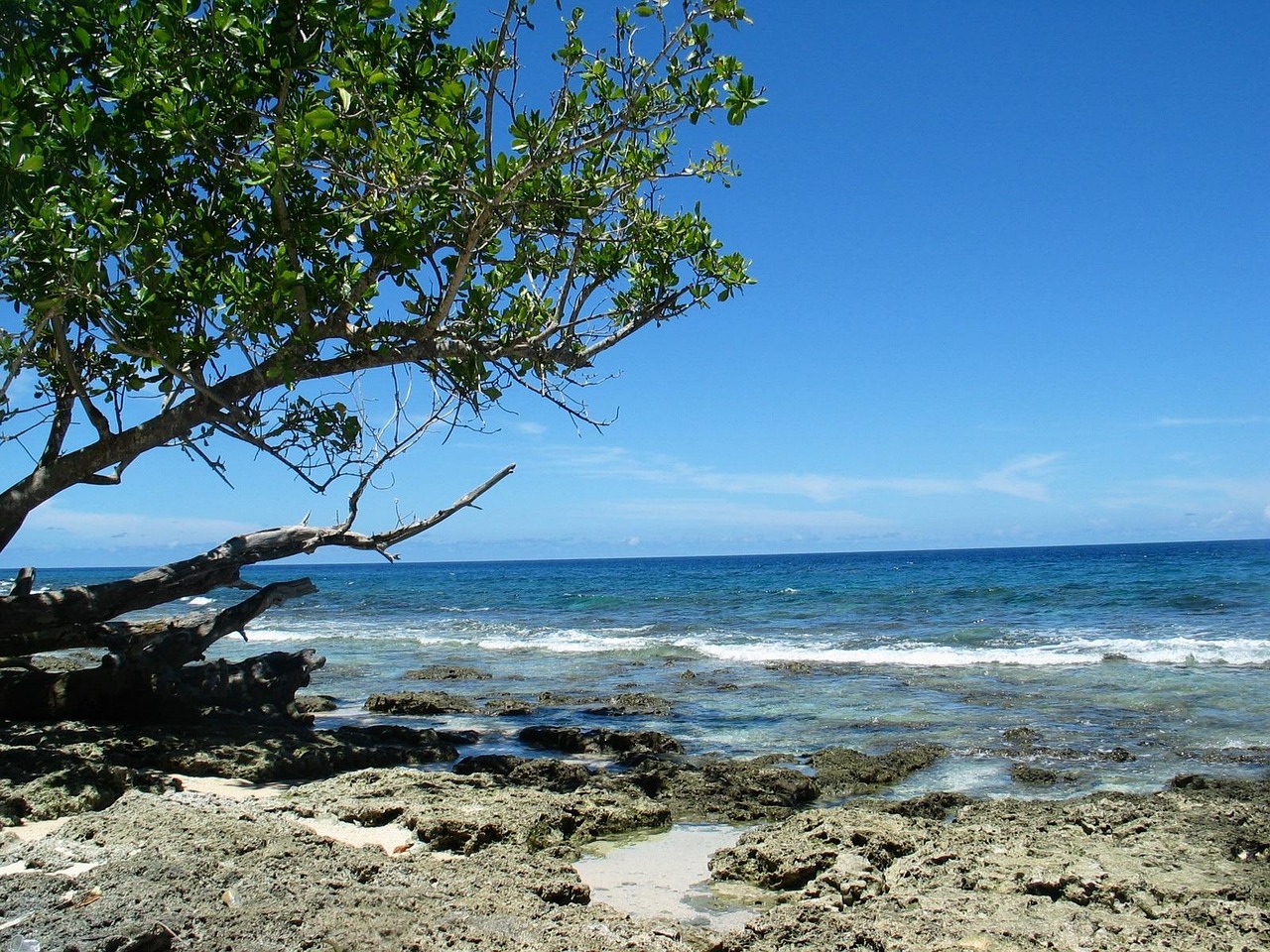
In 2008, the Kaimana Regency declared a 6000 square kilometer (over 2,300 square mile) Marine Protected Area around the waters of Triton Bay. Conservation International maintains an office in Kaimana and a field station out in Triton Bay where visiting scientists can do their work studying the staggering marine biodiversity of the reserve. It is truly second to none, and the area offers everything from the tiniest pygmy seahorses, to large and graceful whale sharks. Triton Bay is known for its beautiful soft coral gardens as well as nesting green turtles, and a population of coastal Bryde’s whales.

Kai Islands, Indonesia
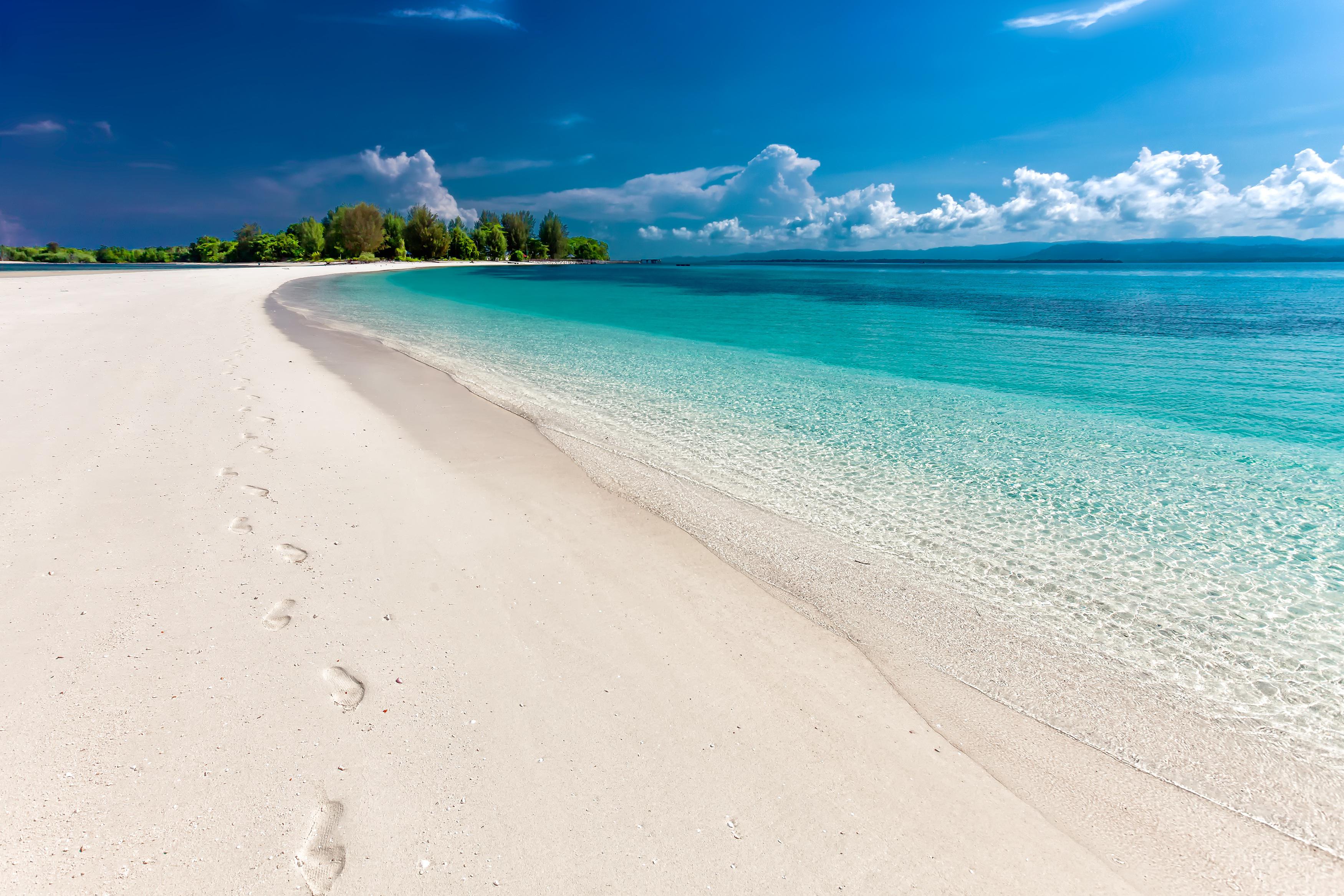
The Kei islands are home to some of the most beautiful, pristine and untouched beaches in the world. They are the most accessible islands of southern Maluku and offer visitors a tranquil escape from the bustling nature of Darwin. Referred to as the hidden gems of Indonesia, Kei Islands are relatively unknown and therefore make for the perfect place to enjoy a day of swimming and snorkelling on an idyllic uninhabited picture postcard tropical island.
At Sea
No additional details available for this day.
Darwin, Northern Territory, Australia
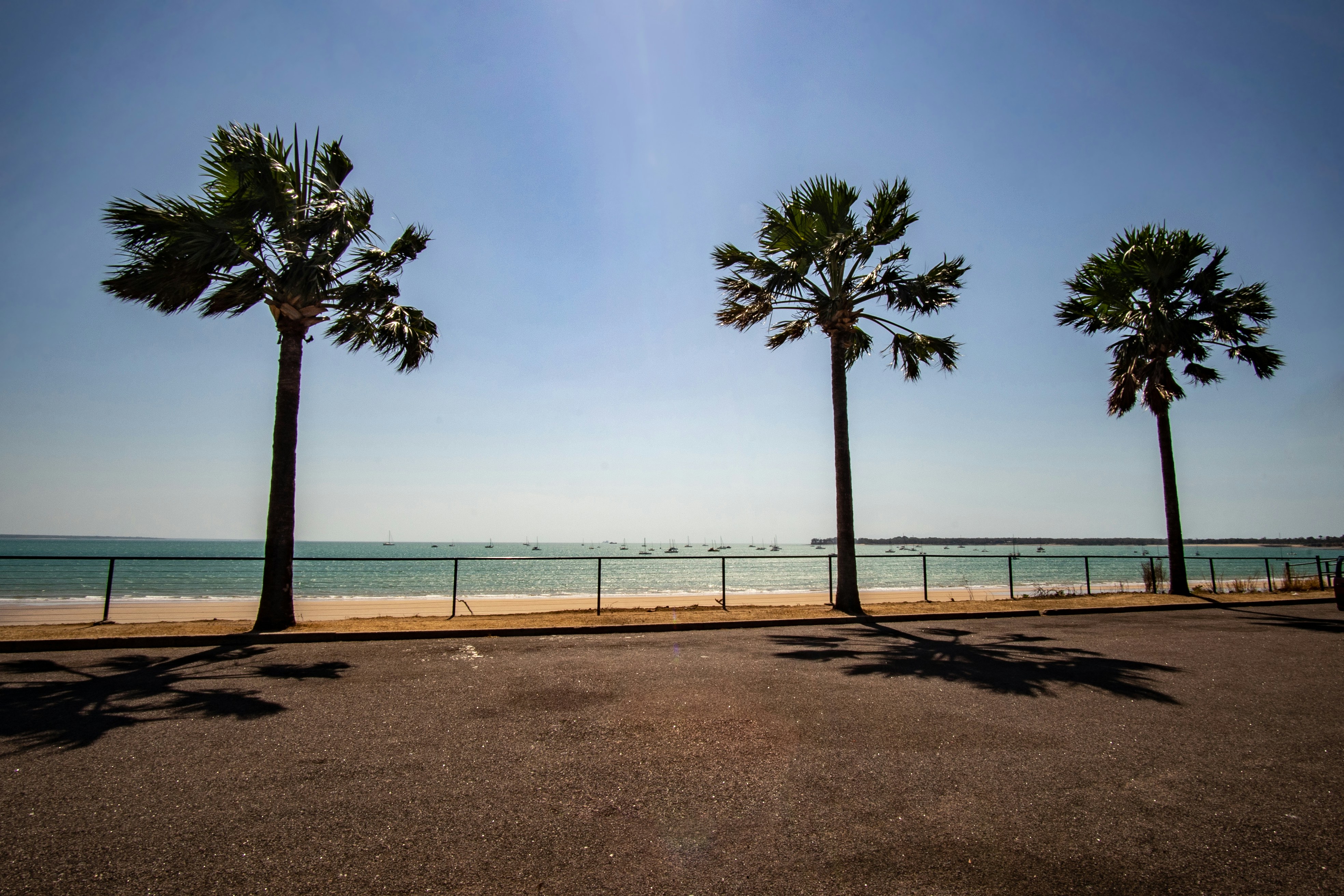
Darwin is Australia’s most colorful, and exotic, capital city. Surrounded on three sides by the turquoise waters of the Timor Sea, the streets are lined with tropical flowers and trees. Warm and dry in winter, hot and steamy in summer, it’s a relaxed and casual place, as well as a beguiling blend of tropical frontier outpost and Outback hardiness. Thanks to its close proximity to Southeast Asia and its multicultural population it also seems more like Asia than the rest of Australia. Darwin is a city that has always had to fight for its survival. The seductiveness of contemporary Darwin lifestyles belies a history of failed attempts that date from 1824 when Europeans attempted to establish an enclave in this harsh, unyielding climate. The original 1869 settlement, called Palmerston, was built on a parcel of mangrove wetlands and scrub forest that had changed little in 15 million years. It was not until 1911, after it had already weathered the disastrous cyclones of 1878, 1882, and 1897, that the town was named after the scientist who had visited Australia’s shores aboard the Beagle in 1839. During World War II it was bombed more than 60 times, as the harbor full of warships was a prime target for the Japanese war planes. Then, on the night of Christmas Eve 1974, the city was almost completely destroyed by Cyclone Tracy, Australia’s greatest natural disaster. It’s a tribute to those who stayed and to those who have come to live here after Tracy that the rebuilt city now thrives as an administrative and commercial center for northern Australia. Old Darwin has been replaced by something of an edifice complex—such buildings as Parliament House and the Supreme Court all seem very grand for such a small city, especially one that prides itself on its casual, outdoor-centric lifestyle. Today Darwin is the best place from which to explore Australia’s Top End, with its wonders of Kakadu and the Kimberley region.
Banda Neira, Indonesia
Banda Neira is the main island and town of the minute Banda Archipelago in the Banda Sea some 2500 kilometers away from Jakarta. Although the Portuguese already contacted the Banda Islands for nutmeg and mace in 1512, it was only ninety years later that the Dutch established a trading post on Neira and neighboring Lonthor to export the spices. Rivalries between the Dutch and the British led to forts being built –the ruins of Fort Nassau and the restored Fort Belgica can be visited on Banda Neira. The area surrounding the town still has nutmeg plantations and several sites relate to the Dutch spice trading time.
Mommon Peninsula, West Papua, Indonesia
Triton Bay, Indonesia
In 2008, the Kaimana Regency declared a 6000 square kilometer (over 2,300 square mile) Marine Protected Area around the waters of Triton Bay. Conservation International maintains an office in Kaimana and a field station out in Triton Bay where visiting scientists can do their work studying the staggering marine biodiversity of the reserve. It is truly second to none, and the area offers everything from the tiniest pygmy seahorses, to large and graceful whale sharks. Triton Bay is known for its beautiful soft coral gardens as well as nesting green turtles, and a population of coastal Bryde’s whales.
Kai Islands, Indonesia
The Kei islands are home to some of the most beautiful, pristine and untouched beaches in the world. They are the most accessible islands of southern Maluku and offer visitors a tranquil escape from the bustling nature of Darwin. Referred to as the hidden gems of Indonesia, Kei Islands are relatively unknown and therefore make for the perfect place to enjoy a day of swimming and snorkelling on an idyllic uninhabited picture postcard tropical island.
At Sea
No additional details available for this day.
Darwin, Northern Territory, Australia
Darwin is Australia’s most colorful, and exotic, capital city. Surrounded on three sides by the turquoise waters of the Timor Sea, the streets are lined with tropical flowers and trees. Warm and dry in winter, hot and steamy in summer, it’s a relaxed and casual place, as well as a beguiling blend of tropical frontier outpost and Outback hardiness. Thanks to its close proximity to Southeast Asia and its multicultural population it also seems more like Asia than the rest of Australia. Darwin is a city that has always had to fight for its survival. The seductiveness of contemporary Darwin lifestyles belies a history of failed attempts that date from 1824 when Europeans attempted to establish an enclave in this harsh, unyielding climate. The original 1869 settlement, called Palmerston, was built on a parcel of mangrove wetlands and scrub forest that had changed little in 15 million years. It was not until 1911, after it had already weathered the disastrous cyclones of 1878, 1882, and 1897, that the town was named after the scientist who had visited Australia’s shores aboard the Beagle in 1839. During World War II it was bombed more than 60 times, as the harbor full of warships was a prime target for the Japanese war planes. Then, on the night of Christmas Eve 1974, the city was almost completely destroyed by Cyclone Tracy, Australia’s greatest natural disaster. It’s a tribute to those who stayed and to those who have come to live here after Tracy that the rebuilt city now thrives as an administrative and commercial center for northern Australia. Old Darwin has been replaced by something of an edifice complex—such buildings as Parliament House and the Supreme Court all seem very grand for such a small city, especially one that prides itself on its casual, outdoor-centric lifestyle. Today Darwin is the best place from which to explore Australia’s Top End, with its wonders of Kakadu and the Kimberley region.
Cabin Options
Prestige Stateroom
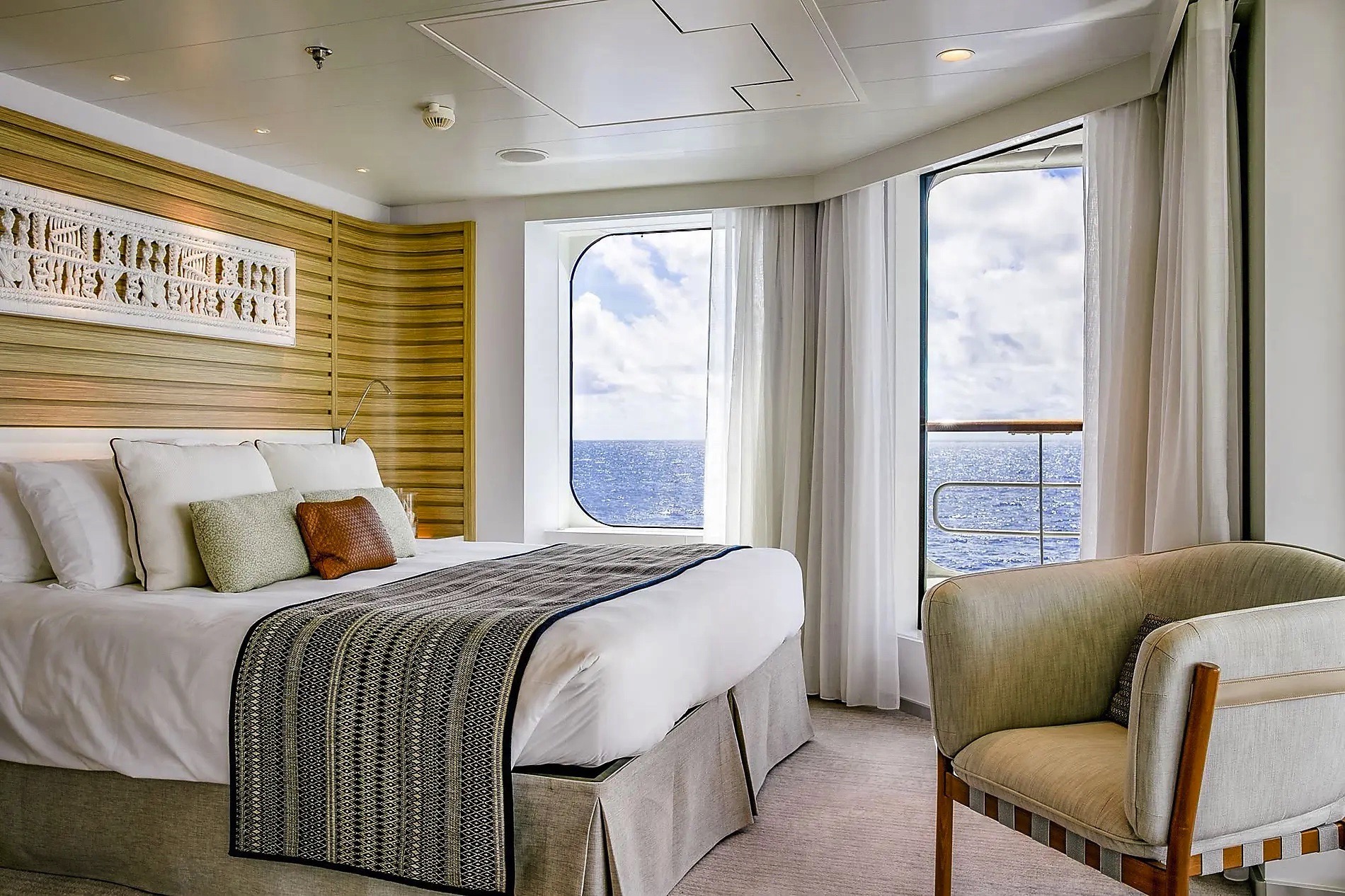
Owner's Suite

Grand Deluxe Suite
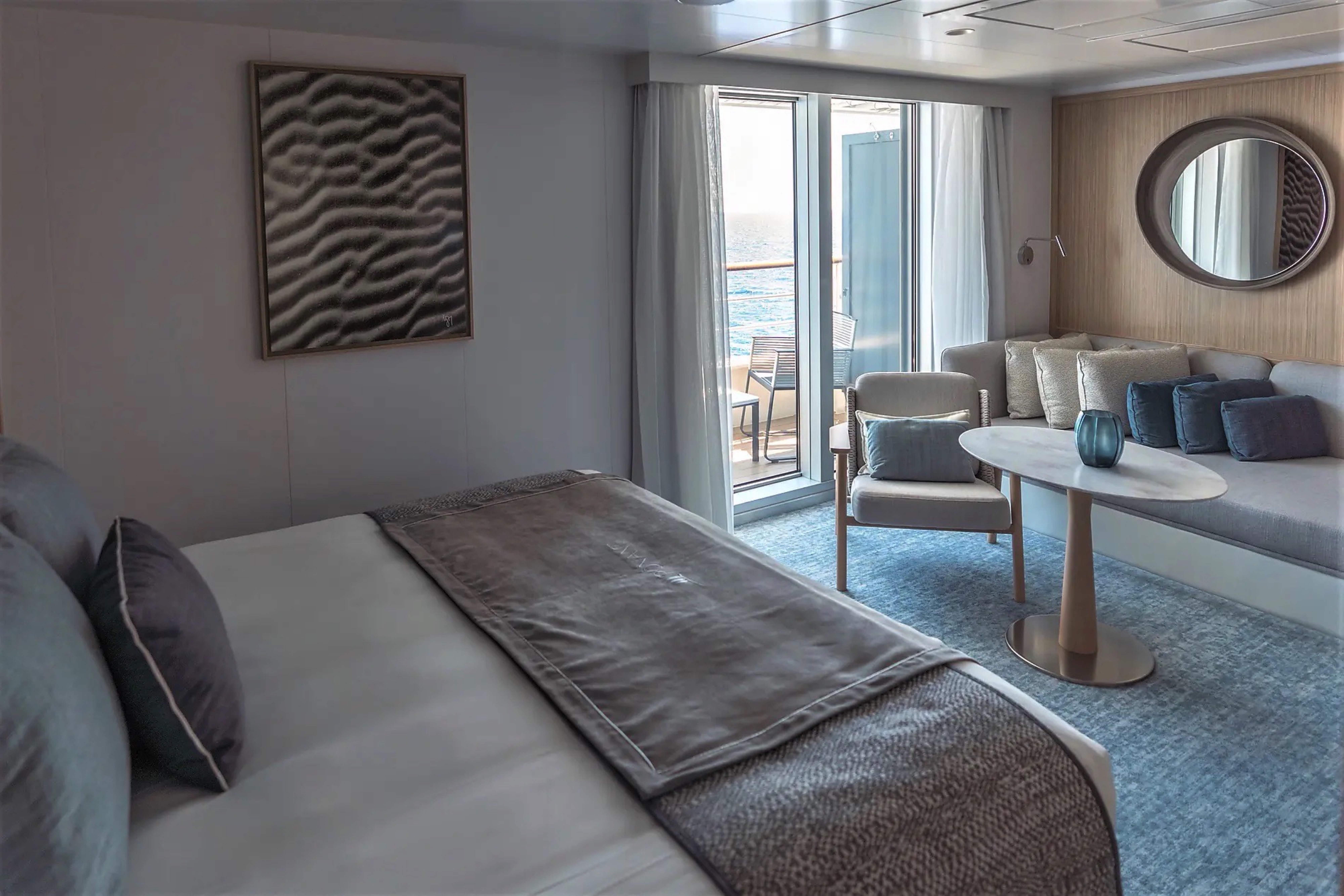
Privilege Suite
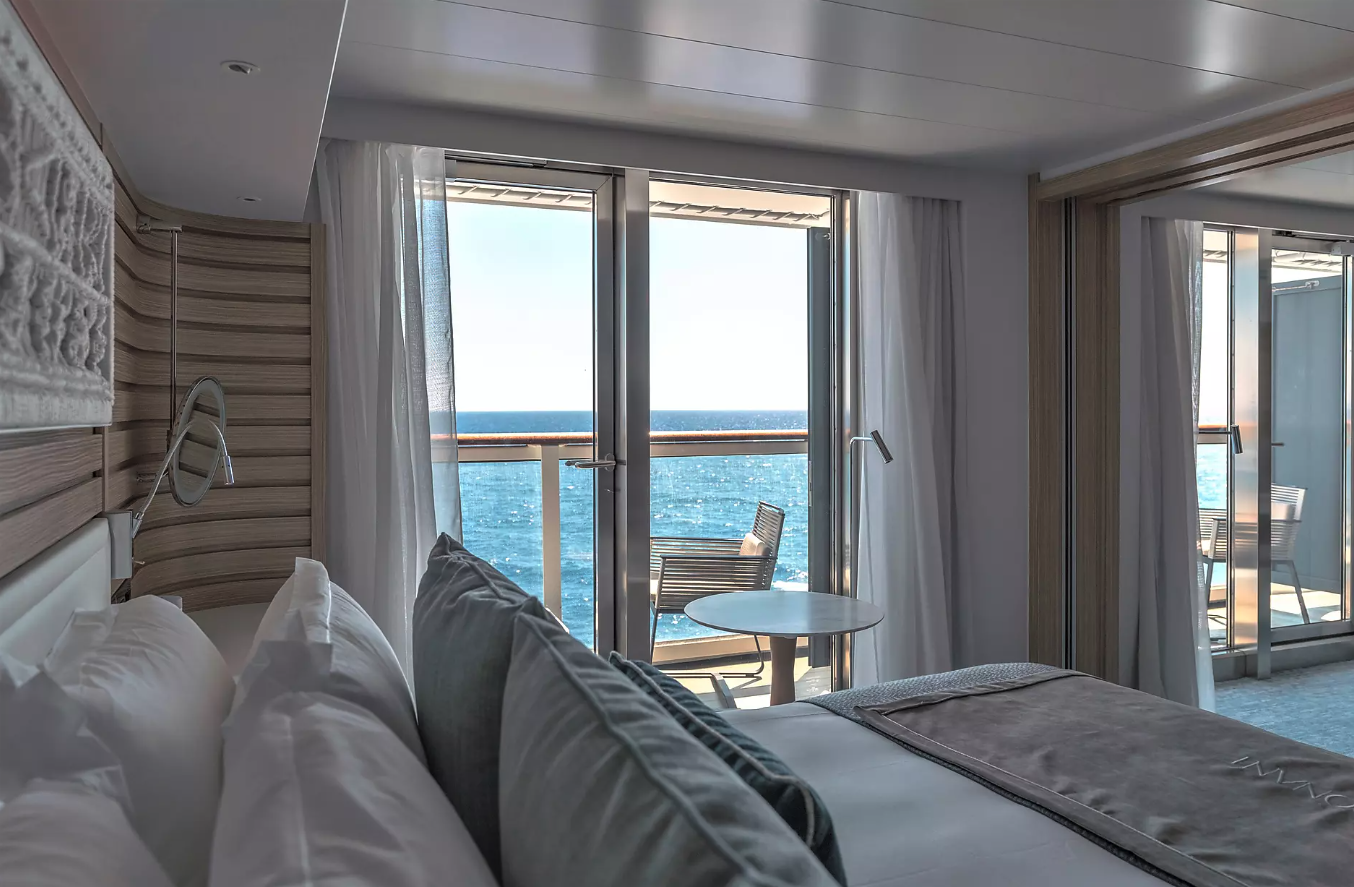
Prestige Suite
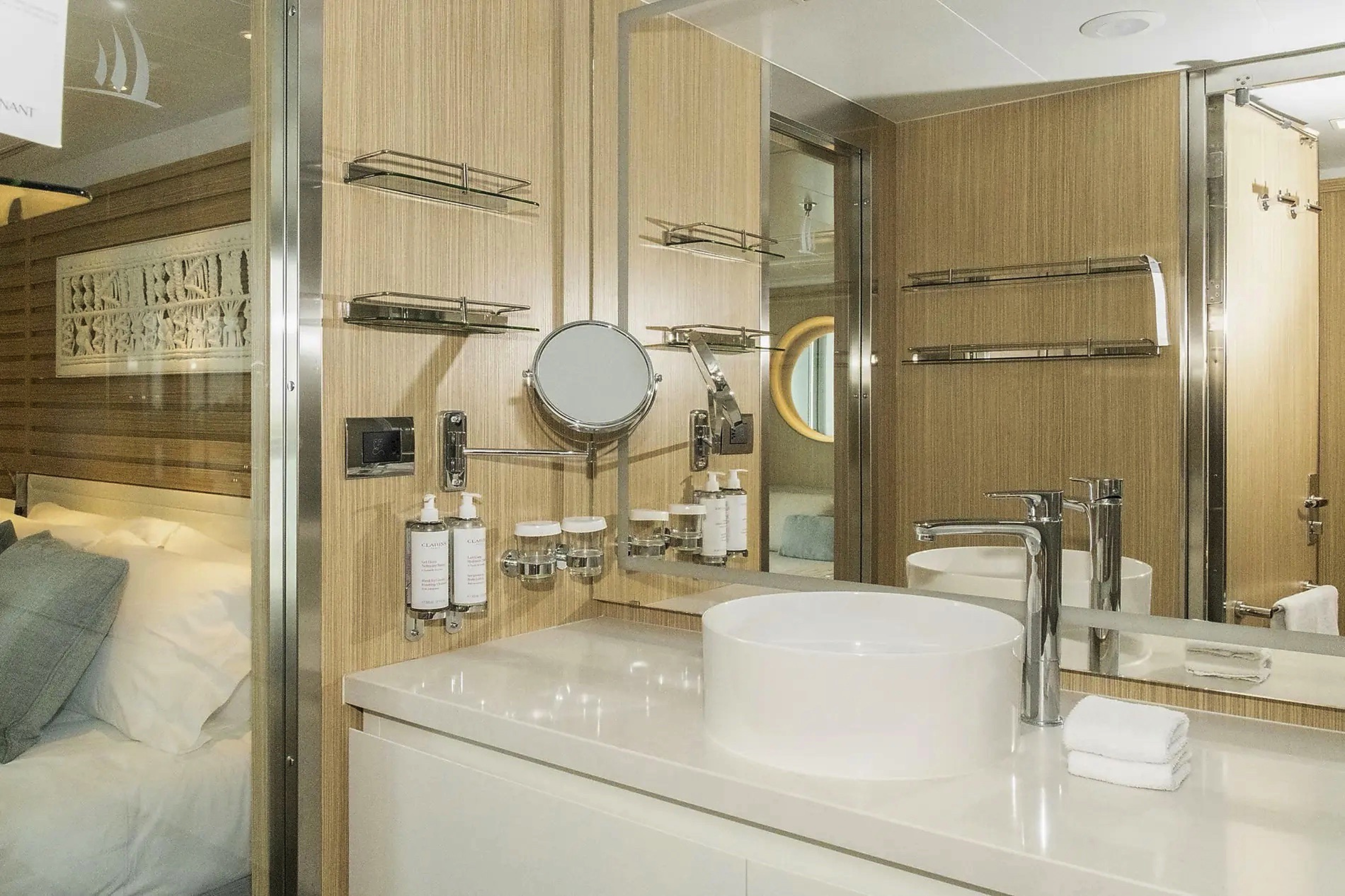
Deluxe Suite
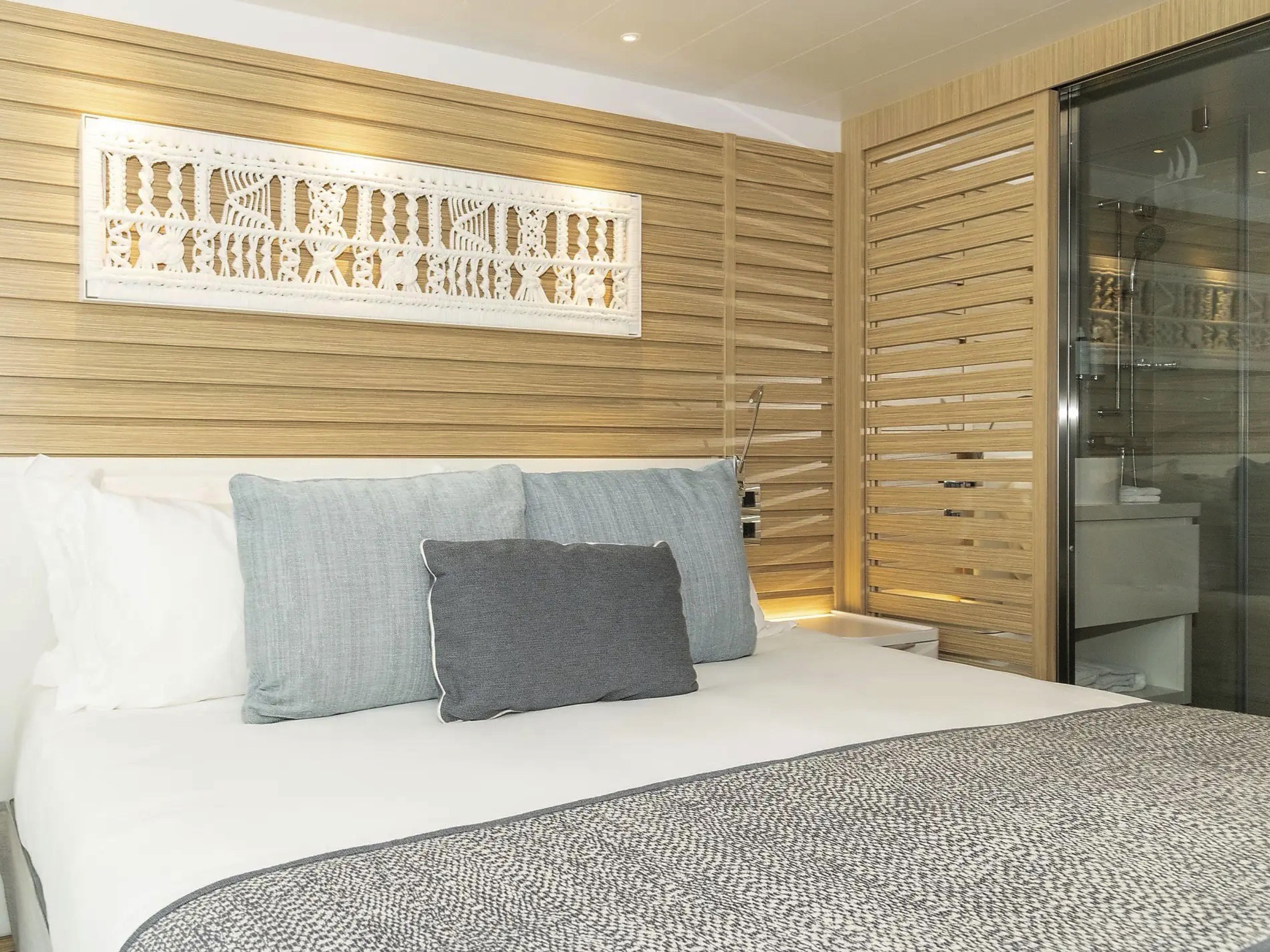
Deluxe Stateroom
Ship Facilities
The Le Nautilus
Gastronomic Restaurant – Deck 4
Towards the rear of deck 4 you’ll find a panoramic restaurant large enough to accommodate all our passengers at one sitting. Offering a different concept than on our other ships, this space is open to the exterior and serves buffets of salads, desserts and cheeses. Our discreet and attentive staff provide a table service for hot meals
- 260 m2 (2,800 ft²)
- Wine cellar
A la carte meals are served at the table in the gastronomic restaurant. At lunch, a selection of dishes inspired by contemporary French brasseries will be offered. At dinner, it is time to sample the grand traditions of French fine dining, with menus to go with one of the best wines from our cellar, as recommended by our sommelier.

Grill Restaurant
An exterior grill restaurant on deck 3 offering a relaxed ambiance and atmosphere:
- Capacity: 70
- Views out over the pool deck
- Grilled meats and a variety of salads and desserts

Room Service
Whether you wish to have breakfast in the privacy of your stateroom, savour a snack in the middle of the day or enjoy your dinner in an intimate setting, our Room Service is available for you. Have a gourmet interlude and treat yourself from a varied menu at any time of day or night *.
On each of our ships, you can enjoy room service at any hour of the day and night (except at night on Le Ponant). A butler service is also available to passengers:
- on the PONANT Explorers: for passengers staying in one of the Privilege and Grand Deluxe Suites and on the Shipowner’s Suite.

Excursions
Our desire to create exceptional trips is demonstrated in the quality of excursions we offer on each itinerary. Planned, tested and approved by our team of experts, they’ll enrich your cruise and make your trip unique.
Excursions & land itineraries
Each itinerary has been thoughtfully created by our teams to offer you a complete excursion experience. You can discover the hidden gems of the regions you visit in line with your interests.
Hidden creeks, ancient cities, UNESCO world heritage sites… the world reveals its hidden gems as you journey along the routes taken by travellers. In keeping with our ethos “Accessing the worlds treasures by sea”, we offer a wide choice of land excursions during all our cruises (except for expeditions). Chosen by our PONANT EXPLORATIONS experts for their cultural value and historic interest, these excursions can last a few hours or a few days. If you need to stay on land overnight, we take care of your stay from start to finish, until you rejoin your ship. These longer excursions mean you can discover the unmissable sites of the region you are visiting, like Cuzco in Peru for example or the Mekong Delta in Vietnam.
You can access these trips by pre-booking two months before your departure date.
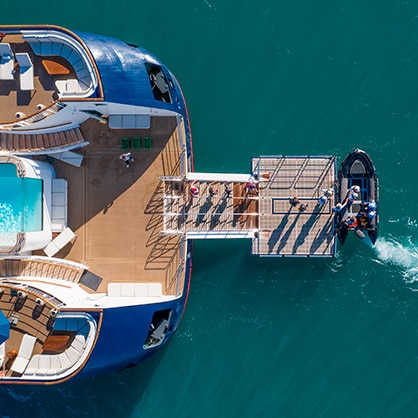
Hydraulic Platform
- Deck 2
- Much easier onboard access than on any other cruise ship
- Easier disembarking and embarking by Zodiac when participating in expeditions
- Swimming and bathing in the sea and various nautical sports, such as kayaking and paddle-boarding
Excursion Reception and Office
On board the sisterships (Le Boreal, L’Austral, Le Soléal and Le Lyrial) and PONANT EXPLORERS, the reception desk and the excursion desk are arranged side by side to facilitate all your requests.
Reception: our receptionists can accommodate you 24 hours a day on all our ships (from 7 a.m. to 11 p.m. on Le Ponant) to answer all your needs, such as room service, etc.
The excursion office: the excursion team is available at all times to tell you about the onshore programmes, organise group or private excursions and to manage transfers at the start or end of the cruise.
On Le Ponant, the receptionist will answer all your questions about excursions.

The Pool
The outdoor areas on our ships, comfortable and conducive to relaxation, have been designed to merge into the sublime scenery and surroundings of the sea and horizon. There is a heated seawater pool featuring its own sun lounge on the top deck of our Sisterships (Le Boréal, L’Austral, Le Soléal and Le Lyrial), on the third deck of the PONANT EXPLORERS (Le Lapérouse, Le Champlain, Le Bougainville, Le Dumont-D’Urville, Le Jacques Cartier and Le Bellot) and on deck 8 of Le Paul Gauguin. On Le Commandant Charcot, you can enjoy the Blue Lagoon on deck 9 and on Le Ponant, a solarium on the 400 m² (4,300 ft²) Sun deck.
A swimming pool offering panoramic views and equipped with a counter-current system
- A pleasant, attractive sun deck
- An exterior bar and lounge equipped with armchairs and sofas

Panoramic Lounge
- Deck 6
- Library, internet space, bar, and live entertainment on certain evenings
- Direct access to the panoramic terrace
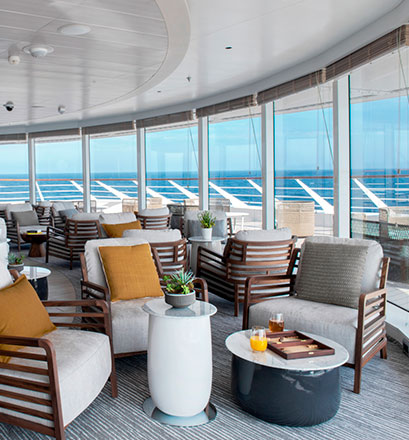
Lounges & Bars
The various different lounges allow passengers to meet up and share quality time together.
The cosy piano bar is a panorama lounge with breathtaking views of the horizon.
The outside bar is a great space for relaxing and is handy for accessing the swimming pool* and its solarium.
The main lounge – Deck 3
The main lounge is the ideal place to relax with a drink and enjoy the various activities that have been organised such as dancing classes or theme evenings.
A 200 m² (2,150 ft²) main lounge
Able to accommodate all our passengers at once for moments of shared conviviality, and as a venue for both daytime and evening shows and entertainment

Theatre
Settle comfortably into your seat and enjoy a range of different shows, concerts and performances organised by the professional dancers and musicians onboard.
Special musical evenings, dance evenings and culture and music quizzes are held In the Grand Salon lounge onboard Le Ponant. Additionally, traditional local music concerts, featuring styles such as Corsican polyphony and Caribbean steel band music, are performed out on deck in the open air by bands specially invited onboard for the purpose.
The Theatre* is the most unique meeting space on board. It’s the largest space on the ship and regularly accommodates all the passengers. It plays host to shows and entertainment as well as conferences from our experts, naturalist guides and guests of honours. The Theatre makes every cruise unique and enriching thanks to its constant and very accessible events.
There are performers on board all of our ships. Recruited for their talent in Paris and Rome, they star in multiple shows at the Theatre, after dinner. Throughout your voyage, they host the various entertainment events in the Grand Salon, with the support of our on-board musicians.
During Tea Time or before dinner, our musical duos consisting of a singer and an accompanying musician play classical repertoires for you. In the evening, they play in concert at the Theatere or invite you to show off your dance moves. Dance evenings are thus co-led by performance dancers who know just how to keep you in step, under the direction of the Cruise Director.
There’s plenty of themed entertainment to enjoy in the evenings. Both a soirée blanche (dress-in-white party) and an officers’ evening are held on all long cruises. Other types of parties or evening events may also be on the programme, such as karaoke parties, a Casino parties or games evenings.
Films are regularly shown at the Theatre on giant screens. National Geographic features, documentaries related to our expedition route and feature films contribute to the cultural enrichment that is part of our cruise philosophy.
- 188-seat capacity
- Cutting edge audio and lighting technology
- LED stage background wall enabling the projection of ultra-high resolution media

Shop
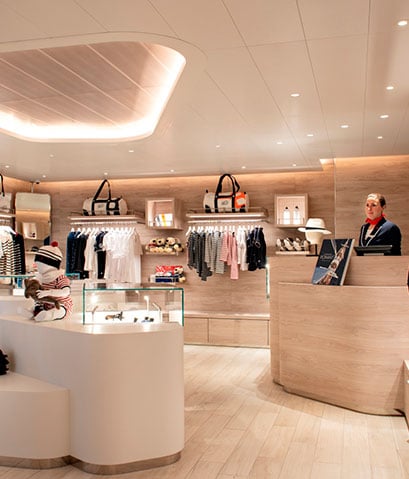
On board all our ships, a shop is open during sailing. It offers a selection of presents and souvenirs: clothing, jewellery, beauty products, postcards and accessories.
Leisure Areas
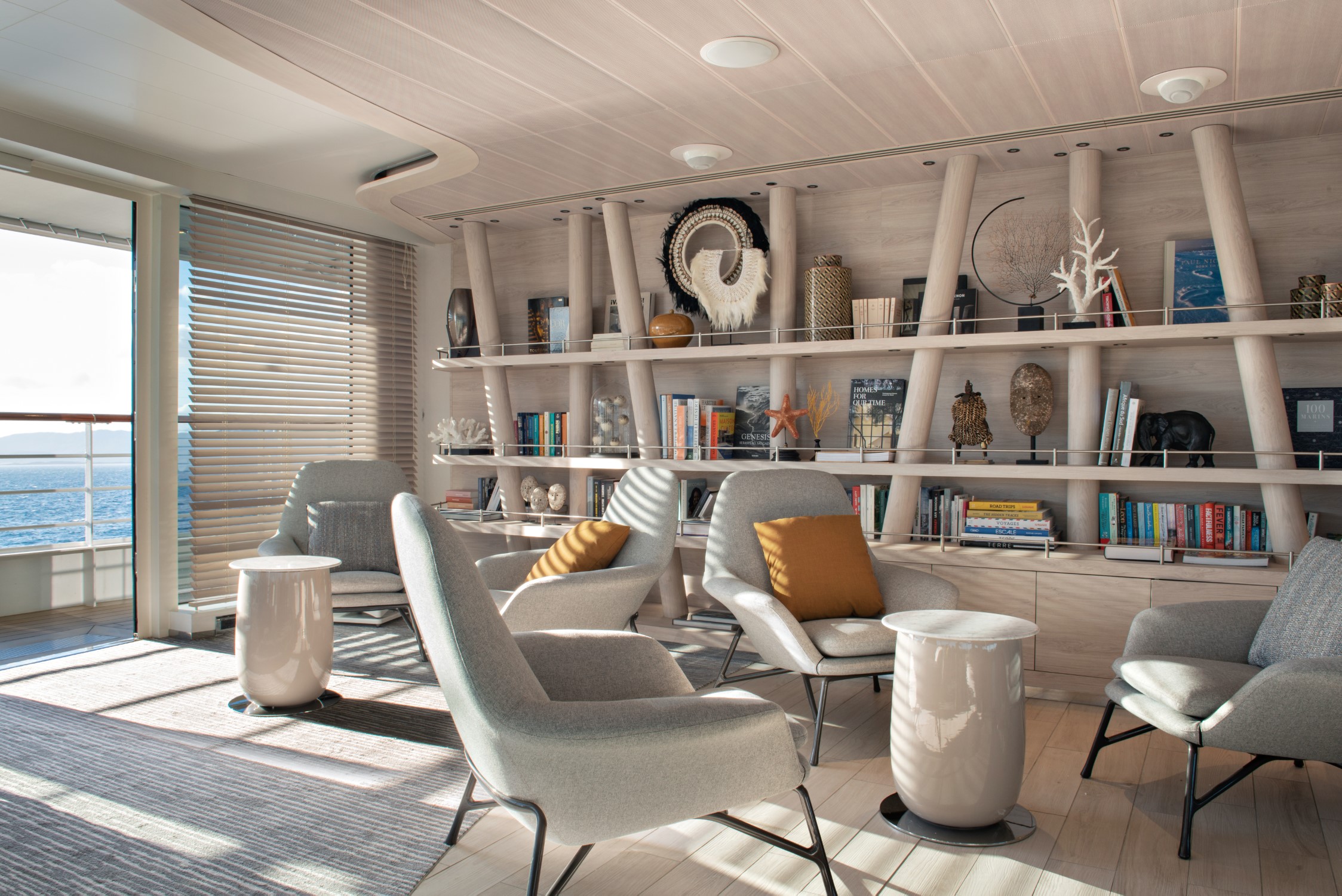
Dedicated to leisure and relaxation, the libraries onboard all our ships stock a range of books and board games. This space is also equipped with Wi-Fi connected computers.
All the ships have a special area for children onboard known as the Le Kids Club. Books, television, board games and consoles (PS4 or Wii™) are all provided for their use and enjoyment.

PONANT Studio
A photography and videography team escort you throughout your trip. These professionals capture the most beautiful moments of your cruise, which you can share with family and friends upon your return.*
Reception
- Deck 3
- A 140 m² (1,500 ft²) space
- A reception/concierge service
- The excursions desk
- The onboard administrative services
- The sales office operated by our Customer Manager
- Our 50m² (540 ft²) shop selling a line of clothing, jewellery, beauty care products, postcards and various accessories.
- The facilities accessible to persons with reduced mobility
Open Bar
From the moment you board and throughout your cruise, your unlimited drinks are included*, at any time of the day. A drink with friends at the bar, refreshments on your return from an excursion or in the calm of your Stateroom’s balcony: enjoy a large selection of beverages (mineral waters, cold drinks, cruise wines, beer, champagne, spirits, coffee, tea). A selection of premium alcoholic drinks is also available “à la carte”.
*It doesn’t include premium alcoholic drinks indicated in the Bar Menu. It is valid only for individual personal consumption, without limitations.

The Blue Eye
Every ship** in the PONANT EXPLORERS series features the Blue Eye. Located in the hull, below the waterline, this unique multi-sensory lounge that is unique to Ponant cruises plunges you into the heart of underwater life. Sight, hearing, and sensations… With digital screens, hydrophones and Body Listening sofas, you can experience the complete and unprecedented spectacle offered by the seabed.
Accessible to all passengers and equipped with a bar, the Blue Eye is an exceptional place to share a drink in a unique atmosphere.
- A multi sensorial underwater lounge
- Enough room for 40 passengers

Leisure Area
Dedicated to leisure and relaxation, the libraries onboard all our ships stock a range of books and board games. This space is also equipped with Wi-Fi connected computers.
The Sisterships and The PONANT Explorers have a special area for children onboard known as the Kids Club. Books, television, board games and consoles (PS4 or Wii™) are all provided for their use and enjoyment.
The Spa
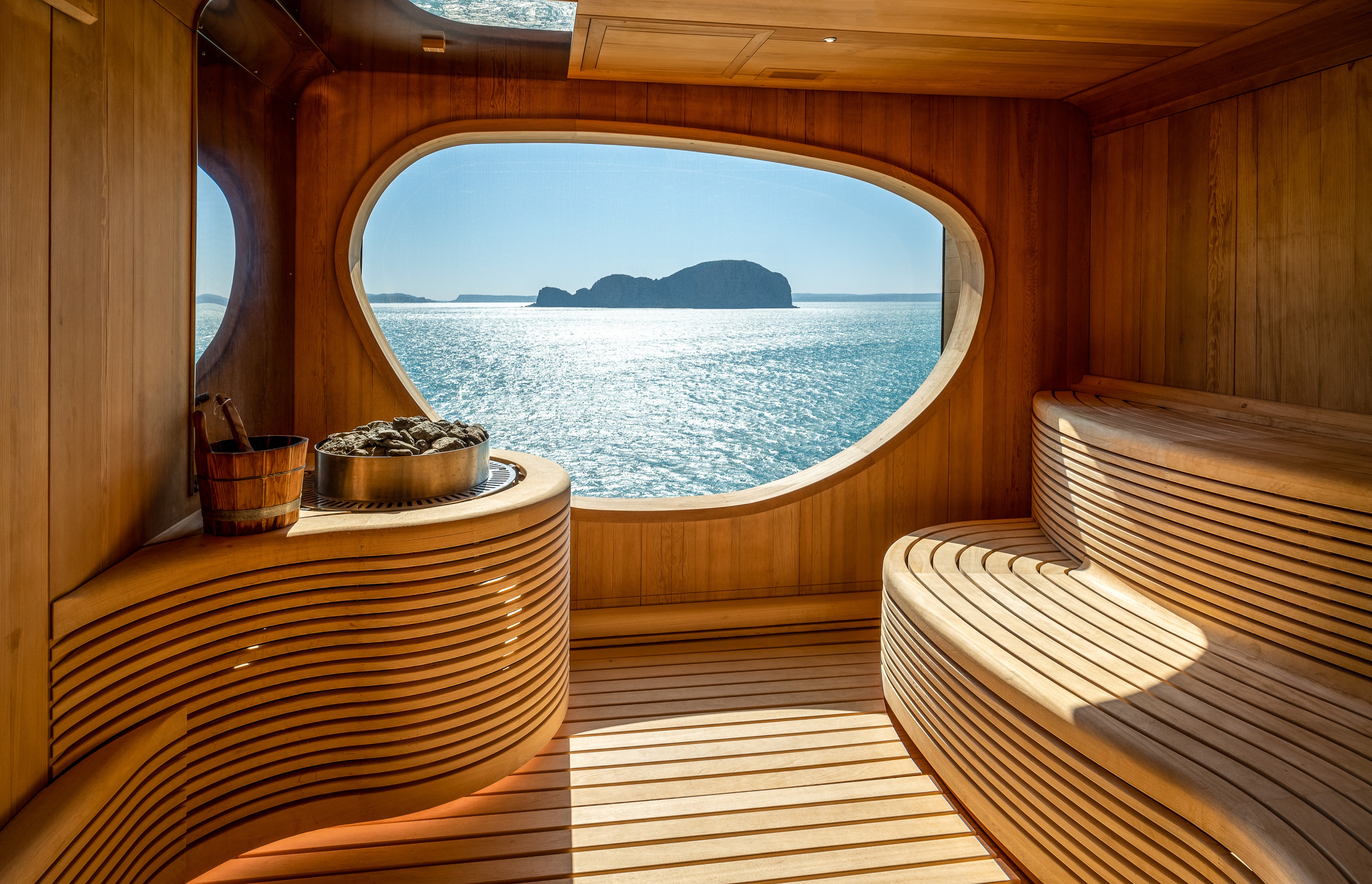
All our ships feature an onboard spa. Equipped with massage cabins, a Turkish bath (Sisterships, Le Paul Gauguin), a sauna (Explorers, Le Commandant Charcot), or a Snow Room (Le Commandant Charcot), the spas offer a wide choice of top-of-the-range treatments provided in association with SOTHYS™, CLARINS (Le Bellot and Le Jacques-Cartier only), BIOLOGIQUE RECHERCHE (Le Commandant Charcot, Le Ponant) and ALGOTHERM (Le Paul Gauguin), leading French spa and wellness centre brands.
Discover a range of facial treatments, aromatic baths, exfoliation and body massage treatments designed to provide moments of complete relaxation. You can also supplement your beauty ritual with additional services such as hair-removal, makeovers, manicures and pedicures.
Wellness area – Deck 7
- Spa in partnership with CLARINS™: massage and treatment cubicles, beauty care cubicle
- KÉRASTASE / L’Oréal Paris hair salon
- Free access sauna (open during the day)
- Gym (open during the day)
The Fitness Room
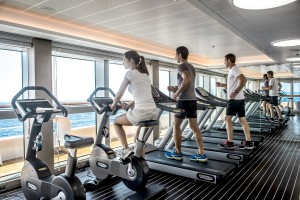
The gyms on our ships are equipped with the very latest equipment and machines. Treadmills, exercise bikes, strength training machines and many other types of equipment are all provided in a laid-back relaxing environment. The wide floor-to-ceiling windows looking out over the sea add undeniable charm to the exercise sessions.
Each day also begins with organised morning workout sessions, either out in the open air or in the theatre. These are supplemented by water aerobics in the pool, or in the sea off the beach for PONANT EXPLORATIONS passengers, when the situation allows it.
The Hairdressing Salon
Provided in partnership with KÉRASTASE®, L’ORÉAL PROFESSIONNEL® or DAVINES®, our hairdressing salons offer a complete range of top quality treatments designed to strengthen, nourish and reinvigorate hair’s shine and brilliance. Our stylists are available to serve all your styling, highlighting, colouring, cutting and tailored hair advice needs.

Ocean Young Explorers
Because it’s important to reach new generations and make children aware of environmental protection issues from an early age, PONANT EXPLORATIONS has joined forces with the Maud Fontenoy Foundation to help run its Ocean Explorers club for children. In total this summer, 17 cruises will offer children aged 4 to 13 a programme of activities dedicated to the ocean protection theme.
Raising awareness of oceans protection from an early age
The Maud Fontenoy Foundation is providing PONANT EXPLORATIONS activity teams with fun educational kits, activity sheets and videos highlighting why oceans need to be protected. From creative activities (drawing, painting, a giant map of the world to colour in, etc.) to meditation initiation sessions, the programme is very varied. And from 2023, it will also include fun educational workshops on the water cycle, biodiversity, astronomy, and geology.
Excursions and Talks
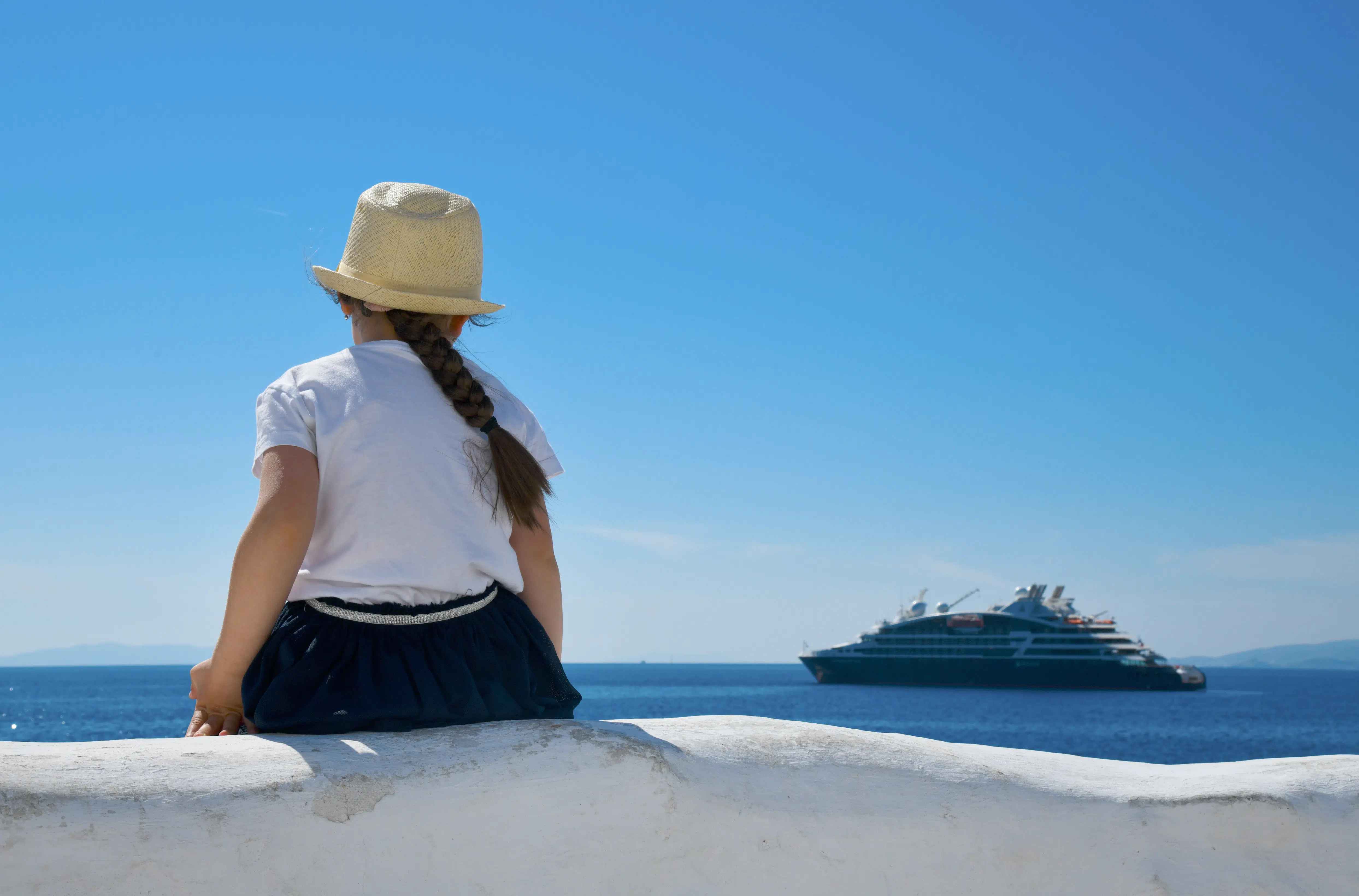
Children aged 4-13 will have the opportunity to do excursions such as watersports, beach games and swimming, treasure hunts, and even guided tours. For larger groups, a naturalist guide will join the team running the sessions and give a talk on local fauna and flora.
The Le Nautilus
Gastronomic Restaurant – Deck 4
Towards the rear of deck 4 you’ll find a panoramic restaurant large enough to accommodate all our passengers at one sitting. Offering a different concept than on our other ships, this space is open to the exterior and serves buffets of salads, desserts and cheeses. Our discreet and attentive staff provide a table service for hot meals
- 260 m2 (2,800 ft²)
- Wine cellar
A la carte meals are served at the table in the gastronomic restaurant. At lunch, a selection of dishes inspired by contemporary French brasseries will be offered. At dinner, it is time to sample the grand traditions of French fine dining, with menus to go with one of the best wines from our cellar, as recommended by our sommelier.
Grill Restaurant
An exterior grill restaurant on deck 3 offering a relaxed ambiance and atmosphere:
- Capacity: 70
- Views out over the pool deck
- Grilled meats and a variety of salads and desserts
Room Service
Whether you wish to have breakfast in the privacy of your stateroom, savour a snack in the middle of the day or enjoy your dinner in an intimate setting, our Room Service is available for you. Have a gourmet interlude and treat yourself from a varied menu at any time of day or night *.
On each of our ships, you can enjoy room service at any hour of the day and night (except at night on Le Ponant). A butler service is also available to passengers:
- on the PONANT Explorers: for passengers staying in one of the Privilege and Grand Deluxe Suites and on the Shipowner’s Suite.
Excursions
Our desire to create exceptional trips is demonstrated in the quality of excursions we offer on each itinerary. Planned, tested and approved by our team of experts, they’ll enrich your cruise and make your trip unique.
Excursions & land itineraries
Each itinerary has been thoughtfully created by our teams to offer you a complete excursion experience. You can discover the hidden gems of the regions you visit in line with your interests.
Hidden creeks, ancient cities, UNESCO world heritage sites… the world reveals its hidden gems as you journey along the routes taken by travellers. In keeping with our ethos “Accessing the worlds treasures by sea”, we offer a wide choice of land excursions during all our cruises (except for expeditions). Chosen by our PONANT EXPLORATIONS experts for their cultural value and historic interest, these excursions can last a few hours or a few days. If you need to stay on land overnight, we take care of your stay from start to finish, until you rejoin your ship. These longer excursions mean you can discover the unmissable sites of the region you are visiting, like Cuzco in Peru for example or the Mekong Delta in Vietnam.
You can access these trips by pre-booking two months before your departure date.
Hydraulic Platform
- Deck 2
- Much easier onboard access than on any other cruise ship
- Easier disembarking and embarking by Zodiac when participating in expeditions
- Swimming and bathing in the sea and various nautical sports, such as kayaking and paddle-boarding
Excursion Reception and Office
On board the sisterships (Le Boreal, L’Austral, Le Soléal and Le Lyrial) and PONANT EXPLORERS, the reception desk and the excursion desk are arranged side by side to facilitate all your requests.
Reception: our receptionists can accommodate you 24 hours a day on all our ships (from 7 a.m. to 11 p.m. on Le Ponant) to answer all your needs, such as room service, etc.
The excursion office: the excursion team is available at all times to tell you about the onshore programmes, organise group or private excursions and to manage transfers at the start or end of the cruise.
On Le Ponant, the receptionist will answer all your questions about excursions.
The Pool
The outdoor areas on our ships, comfortable and conducive to relaxation, have been designed to merge into the sublime scenery and surroundings of the sea and horizon. There is a heated seawater pool featuring its own sun lounge on the top deck of our Sisterships (Le Boréal, L’Austral, Le Soléal and Le Lyrial), on the third deck of the PONANT EXPLORERS (Le Lapérouse, Le Champlain, Le Bougainville, Le Dumont-D’Urville, Le Jacques Cartier and Le Bellot) and on deck 8 of Le Paul Gauguin. On Le Commandant Charcot, you can enjoy the Blue Lagoon on deck 9 and on Le Ponant, a solarium on the 400 m² (4,300 ft²) Sun deck.
A swimming pool offering panoramic views and equipped with a counter-current system
- A pleasant, attractive sun deck
- An exterior bar and lounge equipped with armchairs and sofas
Panoramic Lounge
- Deck 6
- Library, internet space, bar, and live entertainment on certain evenings
- Direct access to the panoramic terrace
Lounges & Bars
The various different lounges allow passengers to meet up and share quality time together.
The cosy piano bar is a panorama lounge with breathtaking views of the horizon.
The outside bar is a great space for relaxing and is handy for accessing the swimming pool* and its solarium.
The main lounge – Deck 3
The main lounge is the ideal place to relax with a drink and enjoy the various activities that have been organised such as dancing classes or theme evenings.
A 200 m² (2,150 ft²) main lounge
Able to accommodate all our passengers at once for moments of shared conviviality, and as a venue for both daytime and evening shows and entertainment
Theatre
Settle comfortably into your seat and enjoy a range of different shows, concerts and performances organised by the professional dancers and musicians onboard.
Special musical evenings, dance evenings and culture and music quizzes are held In the Grand Salon lounge onboard Le Ponant. Additionally, traditional local music concerts, featuring styles such as Corsican polyphony and Caribbean steel band music, are performed out on deck in the open air by bands specially invited onboard for the purpose.
The Theatre* is the most unique meeting space on board. It’s the largest space on the ship and regularly accommodates all the passengers. It plays host to shows and entertainment as well as conferences from our experts, naturalist guides and guests of honours. The Theatre makes every cruise unique and enriching thanks to its constant and very accessible events.
There are performers on board all of our ships. Recruited for their talent in Paris and Rome, they star in multiple shows at the Theatre, after dinner. Throughout your voyage, they host the various entertainment events in the Grand Salon, with the support of our on-board musicians.
During Tea Time or before dinner, our musical duos consisting of a singer and an accompanying musician play classical repertoires for you. In the evening, they play in concert at the Theatere or invite you to show off your dance moves. Dance evenings are thus co-led by performance dancers who know just how to keep you in step, under the direction of the Cruise Director.
There’s plenty of themed entertainment to enjoy in the evenings. Both a soirée blanche (dress-in-white party) and an officers’ evening are held on all long cruises. Other types of parties or evening events may also be on the programme, such as karaoke parties, a Casino parties or games evenings.
Films are regularly shown at the Theatre on giant screens. National Geographic features, documentaries related to our expedition route and feature films contribute to the cultural enrichment that is part of our cruise philosophy.
- 188-seat capacity
- Cutting edge audio and lighting technology
- LED stage background wall enabling the projection of ultra-high resolution media
Shop
On board all our ships, a shop is open during sailing. It offers a selection of presents and souvenirs: clothing, jewellery, beauty products, postcards and accessories.
Leisure Areas
Dedicated to leisure and relaxation, the libraries onboard all our ships stock a range of books and board games. This space is also equipped with Wi-Fi connected computers.
All the ships have a special area for children onboard known as the Le Kids Club. Books, television, board games and consoles (PS4 or Wii™) are all provided for their use and enjoyment.
PONANT Studio
A photography and videography team escort you throughout your trip. These professionals capture the most beautiful moments of your cruise, which you can share with family and friends upon your return.*
Reception
- Deck 3
- A 140 m² (1,500 ft²) space
- A reception/concierge service
- The excursions desk
- The onboard administrative services
- The sales office operated by our Customer Manager
- Our 50m² (540 ft²) shop selling a line of clothing, jewellery, beauty care products, postcards and various accessories.
- The facilities accessible to persons with reduced mobility
Open Bar
From the moment you board and throughout your cruise, your unlimited drinks are included*, at any time of the day. A drink with friends at the bar, refreshments on your return from an excursion or in the calm of your Stateroom’s balcony: enjoy a large selection of beverages (mineral waters, cold drinks, cruise wines, beer, champagne, spirits, coffee, tea). A selection of premium alcoholic drinks is also available “à la carte”.
*It doesn’t include premium alcoholic drinks indicated in the Bar Menu. It is valid only for individual personal consumption, without limitations.
The Blue Eye
Every ship** in the PONANT EXPLORERS series features the Blue Eye. Located in the hull, below the waterline, this unique multi-sensory lounge that is unique to Ponant cruises plunges you into the heart of underwater life. Sight, hearing, and sensations… With digital screens, hydrophones and Body Listening sofas, you can experience the complete and unprecedented spectacle offered by the seabed.
Accessible to all passengers and equipped with a bar, the Blue Eye is an exceptional place to share a drink in a unique atmosphere.
- A multi sensorial underwater lounge
- Enough room for 40 passengers
Leisure Area
Dedicated to leisure and relaxation, the libraries onboard all our ships stock a range of books and board games. This space is also equipped with Wi-Fi connected computers.
The Sisterships and The PONANT Explorers have a special area for children onboard known as the Kids Club. Books, television, board games and consoles (PS4 or Wii™) are all provided for their use and enjoyment.
The Spa
All our ships feature an onboard spa. Equipped with massage cabins, a Turkish bath (Sisterships, Le Paul Gauguin), a sauna (Explorers, Le Commandant Charcot), or a Snow Room (Le Commandant Charcot), the spas offer a wide choice of top-of-the-range treatments provided in association with SOTHYS™, CLARINS (Le Bellot and Le Jacques-Cartier only), BIOLOGIQUE RECHERCHE (Le Commandant Charcot, Le Ponant) and ALGOTHERM (Le Paul Gauguin), leading French spa and wellness centre brands.
Discover a range of facial treatments, aromatic baths, exfoliation and body massage treatments designed to provide moments of complete relaxation. You can also supplement your beauty ritual with additional services such as hair-removal, makeovers, manicures and pedicures.
Wellness area – Deck 7
- Spa in partnership with CLARINS™: massage and treatment cubicles, beauty care cubicle
- KÉRASTASE / L’Oréal Paris hair salon
- Free access sauna (open during the day)
- Gym (open during the day)
The Fitness Room
The gyms on our ships are equipped with the very latest equipment and machines. Treadmills, exercise bikes, strength training machines and many other types of equipment are all provided in a laid-back relaxing environment. The wide floor-to-ceiling windows looking out over the sea add undeniable charm to the exercise sessions.
Each day also begins with organised morning workout sessions, either out in the open air or in the theatre. These are supplemented by water aerobics in the pool, or in the sea off the beach for PONANT EXPLORATIONS passengers, when the situation allows it.
The Hairdressing Salon
Provided in partnership with KÉRASTASE®, L’ORÉAL PROFESSIONNEL® or DAVINES®, our hairdressing salons offer a complete range of top quality treatments designed to strengthen, nourish and reinvigorate hair’s shine and brilliance. Our stylists are available to serve all your styling, highlighting, colouring, cutting and tailored hair advice needs.
Ocean Young Explorers
Because it’s important to reach new generations and make children aware of environmental protection issues from an early age, PONANT EXPLORATIONS has joined forces with the Maud Fontenoy Foundation to help run its Ocean Explorers club for children. In total this summer, 17 cruises will offer children aged 4 to 13 a programme of activities dedicated to the ocean protection theme.
Raising awareness of oceans protection from an early age
The Maud Fontenoy Foundation is providing PONANT EXPLORATIONS activity teams with fun educational kits, activity sheets and videos highlighting why oceans need to be protected. From creative activities (drawing, painting, a giant map of the world to colour in, etc.) to meditation initiation sessions, the programme is very varied. And from 2023, it will also include fun educational workshops on the water cycle, biodiversity, astronomy, and geology.
Excursions and Talks
Children aged 4-13 will have the opportunity to do excursions such as watersports, beach games and swimming, treasure hunts, and even guided tours. For larger groups, a naturalist guide will join the team running the sessions and give a talk on local fauna and flora.
About the Ship

Deck Plans

- Pool
- Grill
- Main Lounge
- Shop
- Excursion Desk
- Reception Desk
- Theatre
- Medical Centre
- Deluxe Suites
- Deluxe Staterooms

- Restaurant
- Prestige Staterooms (x1 Accessible Stateroom)
- Deluxe Suites

- Bridge
- Owners Suites
- Prestige Suites
- Deluxe Suites
- Privilege Suites
- Prestige Staterooms (x1 Accessible Stateroom)
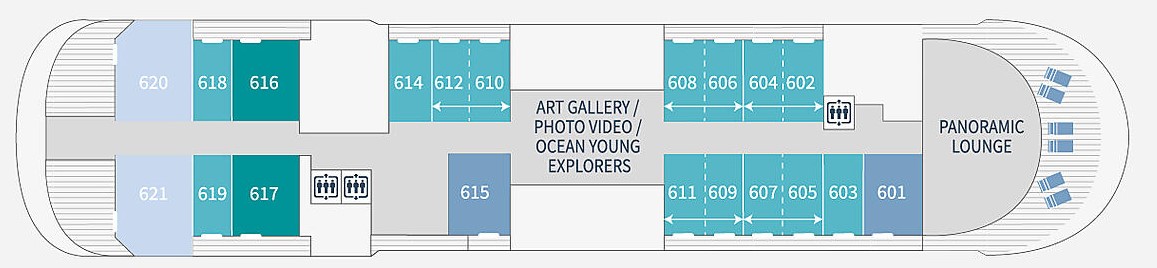
- Art Gallery/Photo Video
- Panoramic Lounge
- Ocean Young Explorers
- Privilege Suites
- Grand Deluxe Suites
- Deluxe Suites
- Prestige Suites
- Prestige Staterooms
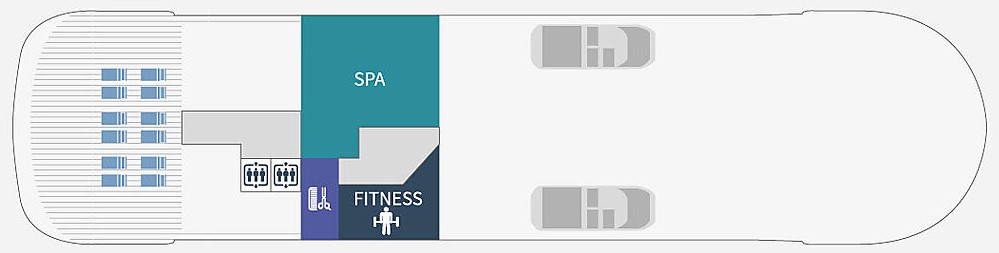
- Spa
- Fitness
- Hair Salon
- Sun Deck
- Pool
- Grill
- Main Lounge
- Shop
- Excursion Desk
- Reception Desk
- Theatre
- Medical Centre
- Deluxe Suites
- Deluxe Staterooms
- Restaurant
- Prestige Staterooms (x1 Accessible Stateroom)
- Deluxe Suites
- Bridge
- Owners Suites
- Prestige Suites
- Deluxe Suites
- Privilege Suites
- Prestige Staterooms (x1 Accessible Stateroom)
- Art Gallery/Photo Video
- Panoramic Lounge
- Ocean Young Explorers
- Privilege Suites
- Grand Deluxe Suites
- Deluxe Suites
- Prestige Suites
- Prestige Staterooms
- Spa
- Fitness
- Hair Salon
- Sun Deck