Itinerary
In Flight
Departure
Penang, Malaysia
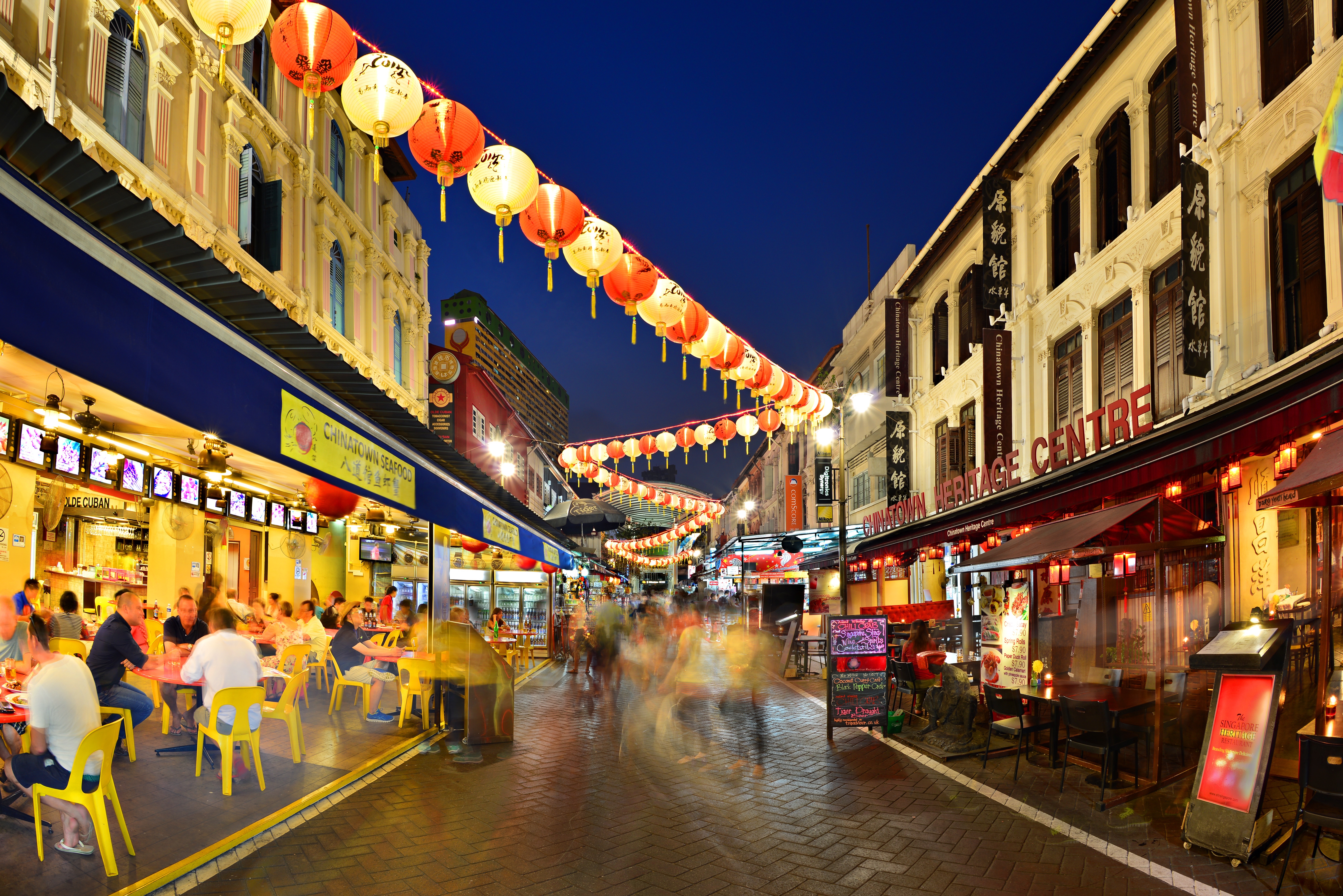
Arrival in Penang – Arriving in the afternoon, we’ll transfer to our hotel on Batu Ferringhi Beach and enjoy the rest of the afternoon at leisure – the perfect start for anyone who prefers to fly and flop.
Of course, any trip to the Far East cannot be complete without trying out the delectable flavours of one of the world’s most varied cuisines. The best-known Malaysian dish is satay – meat skewers marinated with turmeric, grilled over charcoal and served with a mildly spicy peanut sauce.
But there’s so much more: nasi kandar, steamed rice soaked in a variety of flavourful curries; asam laksa, a tangy fish broth listed on CNN’s ‘world’s 50 most delicious foods’; beef rendang, a rich meat dish seasoned with a mouthwatering mix of spices; chicken rice, a Hainanese-influenced dish of steamed or roasted chicken served with fragrant rice cooked in chicken broth – the list is almost endless! Don’t be afraid to dive right in – tonight is your first opportunity to try the country’s mouthwatering cuisine.
George Town, Malaysia
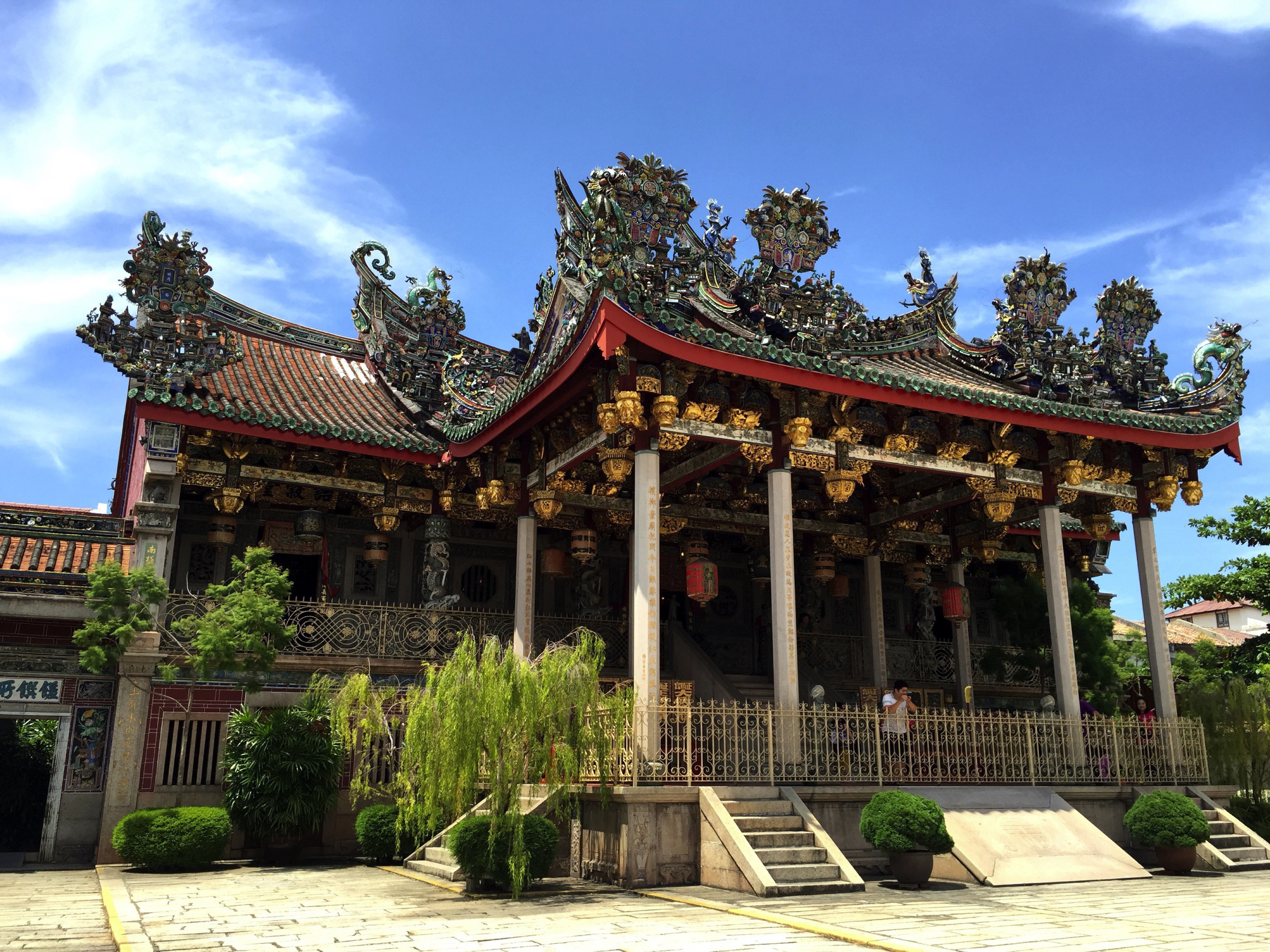
George Town – This morning we’ll enjoy a walking tour of the beautifully preserved colonial centre of George Town. A UNESCO World Heritage site, George Town is perhaps unique in Southeast Asia in having over 30,000 pre-war buildings. Francis Light built Fort Cornwallis, which still stands to this day, and promoted it as a free port, vastly increasing trade and attracting large numbers of Chinese and Indian settlers.
The same successful tactic was followed in Malacca to the south and both cities, developed their unique mix of cultures which is still evident today. What is particularly fascinating is that despite being bombed by the Japanese in World War II, George Town still has thousands of pre-war buildings, mostly Chinese-owned ‘shophouses’, many fine colonial-era villas and public buildings, which have helped it attain UNESCO World Heritage status. George Town represents a fascinating glimpse into 18th-century colonial life.
We’ll visit Cheong Fatt Tze Blue Mansion House, a timeless grand mansion built at the end of the 19th century by a powerful Chinese tycoon. In this famed George Town landmark, we’ll learn more about a life of grandeur in 19th-century Penang and gain insight into its eclectic architecture and heritage.
After a fascinating ride by cycle trishaw through the winding back streets, you’ll enjoy an included lunch. The afternoon is at leisure to enjoy the many facilities of your hotel. In the evening, the local night market is an easy stroll from the hotel and a great chance to try the local street cuisine or hone your bargaining skills.
George Town, Malaysia
Penang Hill – Boarding the Penang Hill Funicular Railway, we’ll climb to the top of Penang Hill – some 833 metres above sea level – travelling on the steepest tunnel track in the world.
Once a cool retreat during the British colonial period, many prominent bungalows built here still stand today as well as the post office and police station, built in 1894 and 1929 respectively. Here you can enjoy the heritage ambience of the picturesque, antiquated century-old colonial-style buildings, discover the unique plants (like tropical pitcher plants, tree ferns, and tropical oak trees) and look out at unobstructed views of George Town and both Penang Bridges.
After an included lunch sheltered from the crowds by the lush greenery at the top Strawberry Hill on Penang Hill – a hill on a hill if you will – you’ll be free to enjoy the afternoon at leisure.
Kuala Lumpur, Malaysia
Penang to Kuala Lumpur – After breakfast, we’ll take a short flight to Kuala Lumpur and transfer to the hotel on arrival. You will then have free time this afternoon to explore or settle into the hotel.
Later, we’ll escape the soaring skyscrapers and state-of-the-art shopping malls this evening and experience a quieter side of the city in the historic district of Kampung Baru. First opened in the 1880s, this is the last Malay enclave in the city centre and families have lived on these bougainvillea lined streets for four generations. Get a glimpse into the Malay lifestyle as we browse Chow Kit Market where the stalls are piled high with fresh local produce. Then we’ll experience typical Kampung Baru hospitality and Hi-Tea in the welcoming surroundings of a local home. Later, we’ll step into the peaceful surroundings of the Kampung Baru mosque and Tatt Khalsa Diwan Gurdwara Sikh Temple, the biggest temple in Southeast Asia – truly a multicultural melting pot.
Kuala Lumpur, Malaysia
Kuala Lumpur – This morning we’ll explore the contrasting city of Kuala Lumpur, with a fascinating mix of skyscrapers, upscale shopping malls, colonial buildings and atmospheric street markets.
Continuing on our tour next up will be Istana Negara – the King’s Palace – the official residence of the supreme King of Malaysia to get a glimpse into the intricate royal residence. We’ll stop to visit the manicured grounds of the National Mosque and its dome of blue and green tiles standing in contrast with the modern city centre of glass and steel that surrounds it. Then on to pay our respects to those soldiers and civilians who died defending Malaysia against the Japanese occupation during WWII and during the Malayan Emergency. And we’ll pass the old Railway Station, the Tudor-styled Cricket Club, and the Moorish-style Federal Court.
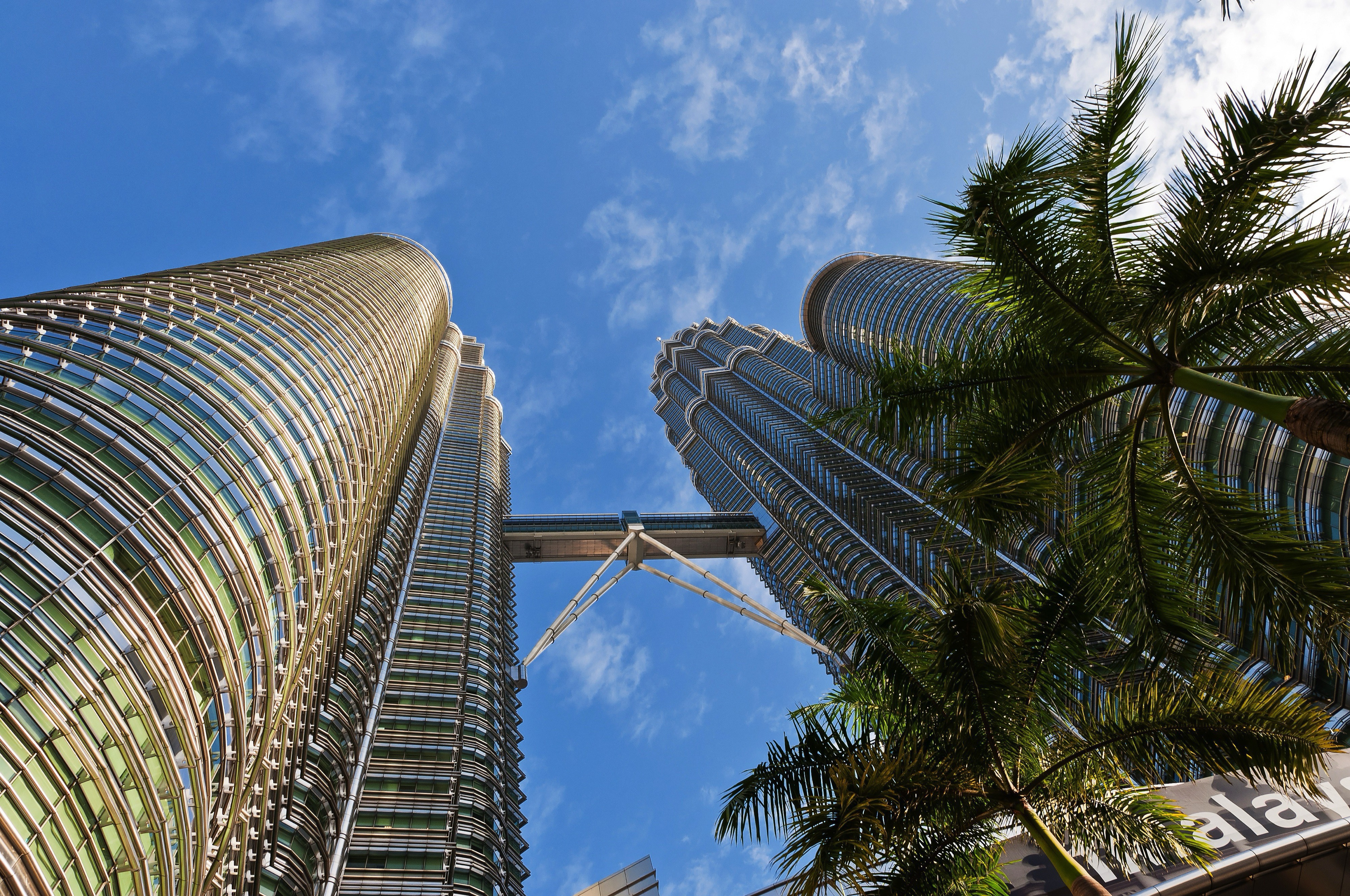
This afternoon is free to enjoy at leisure. You could visit the world’s tallest twin towers, the Petronas Twin Towers – it’s beautifully decorated with Islamic motifs and finished with a sky bridge that connects them at a knee-knocking 41 storeys up.
In Flight
Departure
Penang, Malaysia
Arrival in Penang – Arriving in the afternoon, we’ll transfer to our hotel on Batu Ferringhi Beach and enjoy the rest of the afternoon at leisure – the perfect start for anyone who prefers to fly and flop.
Of course, any trip to the Far East cannot be complete without trying out the delectable flavours of one of the world’s most varied cuisines. The best-known Malaysian dish is satay – meat skewers marinated with turmeric, grilled over charcoal and served with a mildly spicy peanut sauce.
But there’s so much more: nasi kandar, steamed rice soaked in a variety of flavourful curries; asam laksa, a tangy fish broth listed on CNN’s ‘world’s 50 most delicious foods’; beef rendang, a rich meat dish seasoned with a mouthwatering mix of spices; chicken rice, a Hainanese-influenced dish of steamed or roasted chicken served with fragrant rice cooked in chicken broth – the list is almost endless! Don’t be afraid to dive right in – tonight is your first opportunity to try the country’s mouthwatering cuisine.
George Town, Malaysia
George Town – This morning we’ll enjoy a walking tour of the beautifully preserved colonial centre of George Town. A UNESCO World Heritage site, George Town is perhaps unique in Southeast Asia in having over 30,000 pre-war buildings. Francis Light built Fort Cornwallis, which still stands to this day, and promoted it as a free port, vastly increasing trade and attracting large numbers of Chinese and Indian settlers.
The same successful tactic was followed in Malacca to the south and both cities, developed their unique mix of cultures which is still evident today. What is particularly fascinating is that despite being bombed by the Japanese in World War II, George Town still has thousands of pre-war buildings, mostly Chinese-owned ‘shophouses’, many fine colonial-era villas and public buildings, which have helped it attain UNESCO World Heritage status. George Town represents a fascinating glimpse into 18th-century colonial life.
We’ll visit Cheong Fatt Tze Blue Mansion House, a timeless grand mansion built at the end of the 19th century by a powerful Chinese tycoon. In this famed George Town landmark, we’ll learn more about a life of grandeur in 19th-century Penang and gain insight into its eclectic architecture and heritage.
After a fascinating ride by cycle trishaw through the winding back streets, you’ll enjoy an included lunch. The afternoon is at leisure to enjoy the many facilities of your hotel. In the evening, the local night market is an easy stroll from the hotel and a great chance to try the local street cuisine or hone your bargaining skills.
George Town, Malaysia
Penang Hill – Boarding the Penang Hill Funicular Railway, we’ll climb to the top of Penang Hill – some 833 metres above sea level – travelling on the steepest tunnel track in the world.
Once a cool retreat during the British colonial period, many prominent bungalows built here still stand today as well as the post office and police station, built in 1894 and 1929 respectively. Here you can enjoy the heritage ambience of the picturesque, antiquated century-old colonial-style buildings, discover the unique plants (like tropical pitcher plants, tree ferns, and tropical oak trees) and look out at unobstructed views of George Town and both Penang Bridges.
After an included lunch sheltered from the crowds by the lush greenery at the top Strawberry Hill on Penang Hill – a hill on a hill if you will – you’ll be free to enjoy the afternoon at leisure.
Kuala Lumpur, Malaysia
Penang to Kuala Lumpur – After breakfast, we’ll take a short flight to Kuala Lumpur and transfer to the hotel on arrival. You will then have free time this afternoon to explore or settle into the hotel.
Later, we’ll escape the soaring skyscrapers and state-of-the-art shopping malls this evening and experience a quieter side of the city in the historic district of Kampung Baru. First opened in the 1880s, this is the last Malay enclave in the city centre and families have lived on these bougainvillea lined streets for four generations. Get a glimpse into the Malay lifestyle as we browse Chow Kit Market where the stalls are piled high with fresh local produce. Then we’ll experience typical Kampung Baru hospitality and Hi-Tea in the welcoming surroundings of a local home. Later, we’ll step into the peaceful surroundings of the Kampung Baru mosque and Tatt Khalsa Diwan Gurdwara Sikh Temple, the biggest temple in Southeast Asia – truly a multicultural melting pot.
Kuala Lumpur, Malaysia
Kuala Lumpur – This morning we’ll explore the contrasting city of Kuala Lumpur, with a fascinating mix of skyscrapers, upscale shopping malls, colonial buildings and atmospheric street markets.
Continuing on our tour next up will be Istana Negara – the King’s Palace – the official residence of the supreme King of Malaysia to get a glimpse into the intricate royal residence. We’ll stop to visit the manicured grounds of the National Mosque and its dome of blue and green tiles standing in contrast with the modern city centre of glass and steel that surrounds it. Then on to pay our respects to those soldiers and civilians who died defending Malaysia against the Japanese occupation during WWII and during the Malayan Emergency. And we’ll pass the old Railway Station, the Tudor-styled Cricket Club, and the Moorish-style Federal Court.
This afternoon is free to enjoy at leisure. You could visit the world’s tallest twin towers, the Petronas Twin Towers – it’s beautifully decorated with Islamic motifs and finished with a sky bridge that connects them at a knee-knocking 41 storeys up.
Sandakan, Sabah, Malaysia
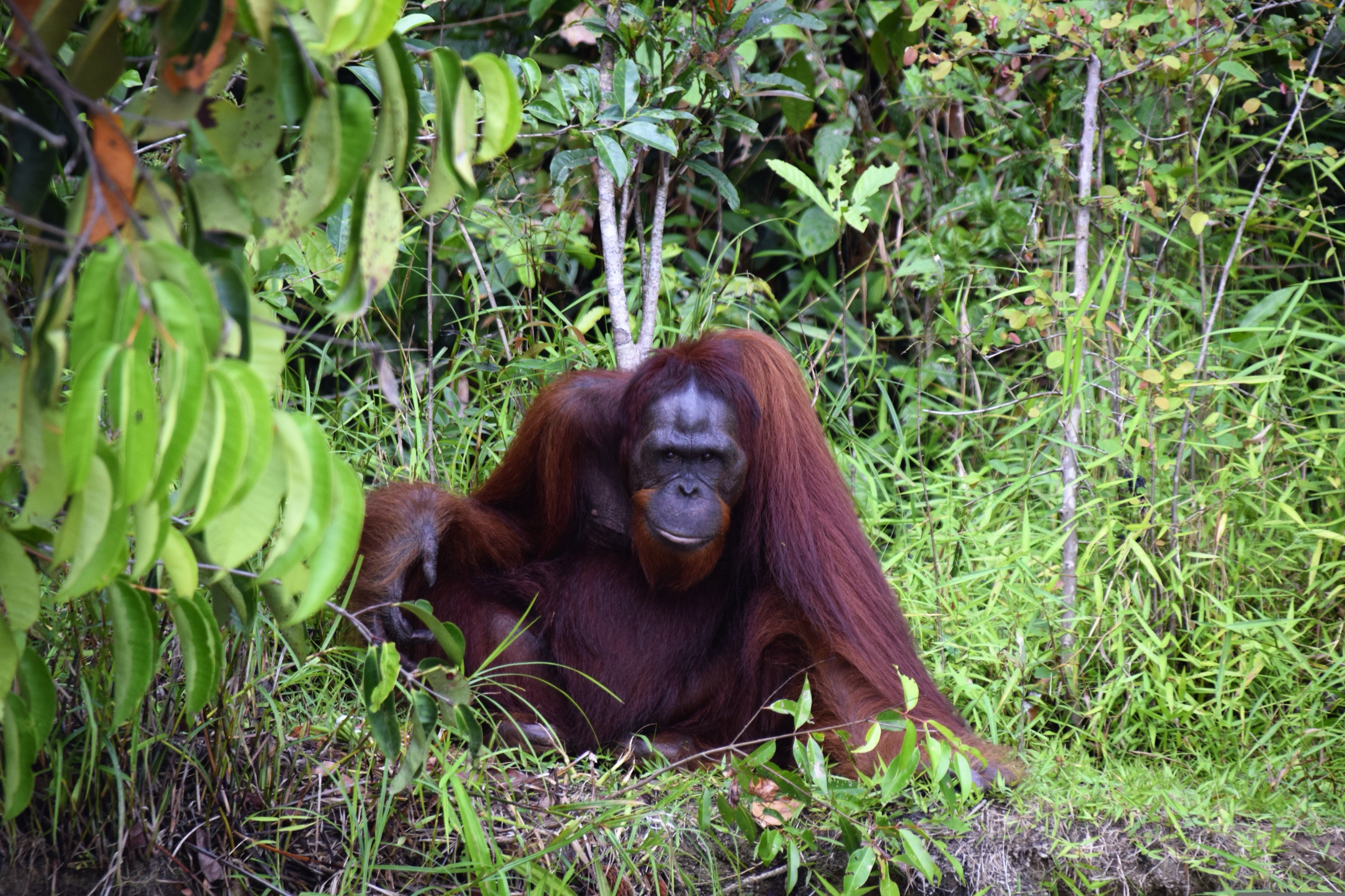
Borneo’s forbidding interior made it less attractive to early traders and explorers than neighboring areas, so what is now the state of Sabah remained unexploited by the British until the late 19th century, although traders long visited for exotic items such as bird’s nests (for the celebrated Chinese soup). In 1963, Sabah joined Sarawak, Malaya, and Singapore (which later seceded) in forming the Federation of Malaysia. Known as the “Land Below the Wind” because it’s south of the typhoon belt, Sabah occupies Borneo’s northern tip. It shares its southwestern border with Sarawak and the rest of its southern border with the Indonesian province of East Kalimantan. Today vast tracts of forest have been replaced by oil-palm plantations, and a sizable portion of remaining forest land is protected in national parks or conservation areas.On the shore of a deep bay, Sandakan was the capital of British North Borneo and one of the most important towns in Southeast Asia from the 1880s through the 1930s. But Japanese occupation during World War II and allied bombing virtually destroyed the town, and the capital was transferred to Jesselton (now Kota Kinabalu) in 1946. Sandakan enjoyed a revival in the 1970s as the center of the region’s logging industry. Logging has since declined, but Sandakan is still worth visiting for its rich history and proximity to some of Borneo’s most accessible wildlife attractions. Sandakan’s downtown, much of it built on landfill, is squeezed between a steep promontory and Sandakan Bay. In recent years, this city of 450,000 (counting its extensive suburbs) has begun redeveloping its downtown waterfront into a shopping and nightlife hub. Its working harbor area for passengers and cargo is 6 km (4 miles) west of downtown.
Sandakan, Sabah, Malaysia
Borneo’s forbidding interior made it less attractive to early traders and explorers than neighboring areas, so what is now the state of Sabah remained unexploited by the British until the late 19th century, although traders long visited for exotic items such as bird’s nests (for the celebrated Chinese soup). In 1963, Sabah joined Sarawak, Malaya, and Singapore (which later seceded) in forming the Federation of Malaysia. Known as the “Land Below the Wind” because it’s south of the typhoon belt, Sabah occupies Borneo’s northern tip. It shares its southwestern border with Sarawak and the rest of its southern border with the Indonesian province of East Kalimantan. Today vast tracts of forest have been replaced by oil-palm plantations, and a sizable portion of remaining forest land is protected in national parks or conservation areas.On the shore of a deep bay, Sandakan was the capital of British North Borneo and one of the most important towns in Southeast Asia from the 1880s through the 1930s. But Japanese occupation during World War II and allied bombing virtually destroyed the town, and the capital was transferred to Jesselton (now Kota Kinabalu) in 1946. Sandakan enjoyed a revival in the 1970s as the center of the region’s logging industry. Logging has since declined, but Sandakan is still worth visiting for its rich history and proximity to some of Borneo’s most accessible wildlife attractions. Sandakan’s downtown, much of it built on landfill, is squeezed between a steep promontory and Sandakan Bay. In recent years, this city of 450,000 (counting its extensive suburbs) has begun redeveloping its downtown waterfront into a shopping and nightlife hub. Its working harbor area for passengers and cargo is 6 km (4 miles) west of downtown.
Kota Kinabalu, Sabah, Malaysia
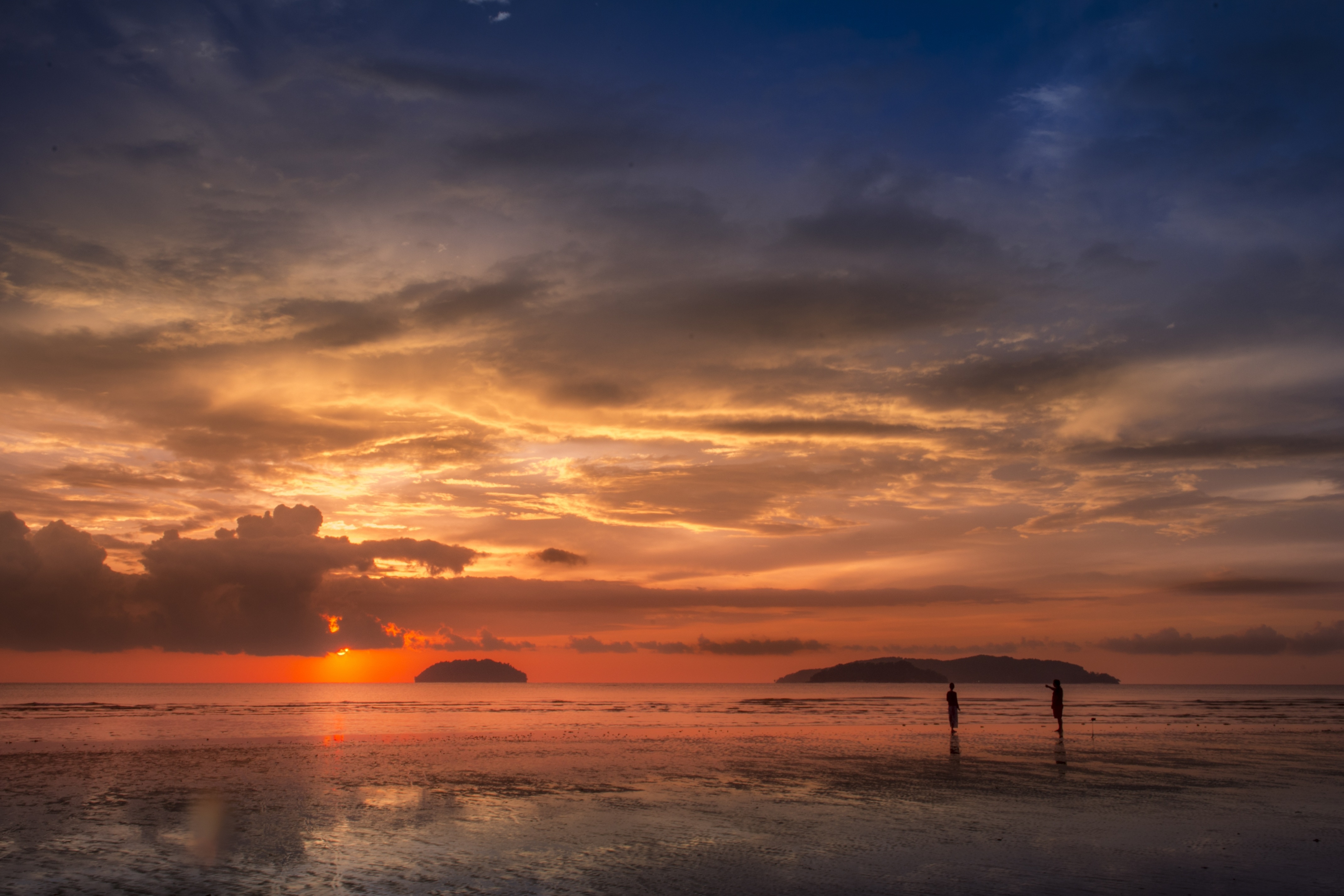
The capital of Sabah, Borneo’s northernmost state, Kota Kinabalu is wedged between a tropical rainforest and the South China Sea. Many explorers use it as a launching point to venture off and see the surrounding jungle and marine life. Mt. Kinabalu challenges climbers daily, and top diving spots reel in underwater adventurers. The city is made up of a dense grid of concrete buildings built over reclaimed land along the coast. Several waterfront seafood restaurants and a diverse mix of hotels appeal to the travelers passing through, mostly off to explore the region.
Kota Kinabalu, Sabah, Malaysia
The capital of Sabah, Borneo’s northernmost state, Kota Kinabalu is wedged between a tropical rainforest and the South China Sea. Many explorers use it as a launching point to venture off and see the surrounding jungle and marine life. Mt. Kinabalu challenges climbers daily, and top diving spots reel in underwater adventurers. The city is made up of a dense grid of concrete buildings built over reclaimed land along the coast. Several waterfront seafood restaurants and a diverse mix of hotels appeal to the travelers passing through, mostly off to explore the region.
Kota Kinabalu, Sabah, Malaysia
The capital of Sabah, Borneo’s northernmost state, Kota Kinabalu is wedged between a tropical rainforest and the South China Sea. Many explorers use it as a launching point to venture off and see the surrounding jungle and marine life. Mt. Kinabalu challenges climbers daily, and top diving spots reel in underwater adventurers. The city is made up of a dense grid of concrete buildings built over reclaimed land along the coast. Several waterfront seafood restaurants and a diverse mix of hotels appeal to the travelers passing through, mostly off to explore the region.
Singapore, Singapore
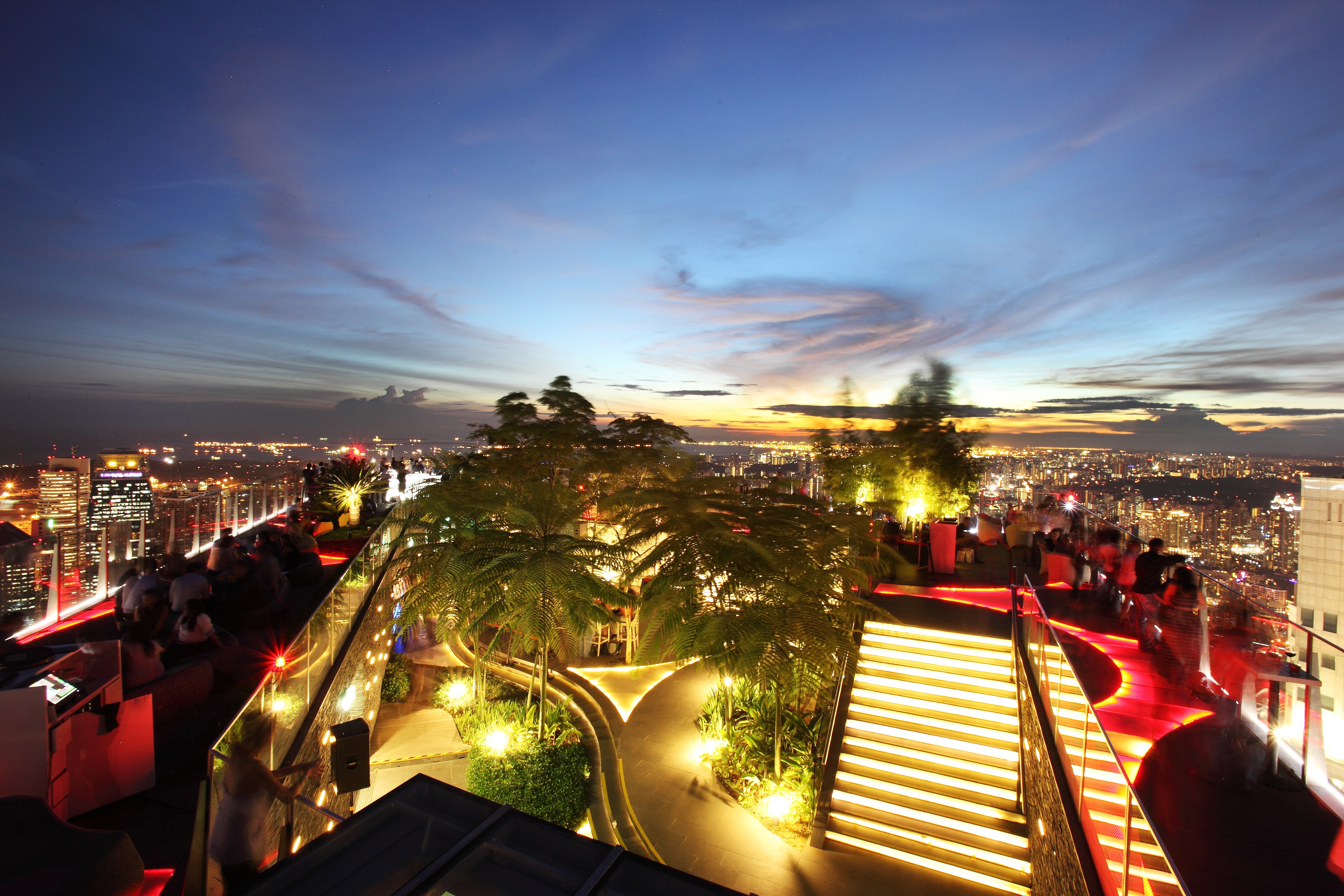
The main island of Singapore is shaped like a flattened diamond, 42 km (26 miles) east to west and 23 km (14 miles) north to south. Near the northern peak is the causeway leading to West Malaysia—Kuala Lumpur is less than four hours away by car. It is at the southern foot where you will find most of the city-state’s action, with its gleaming office towers, working docks, and futuristic “supertrees,” which are solar-powered and serve as vertical gardens. Offshore are Sentosa and over 60 smaller islands, most uninhabited, that serve as bases for oil refining or as playgrounds and beach escapes from the city. To the east is Changi International Airport, connected to the city by metro, bus, and a tree-lined parkway. Of the island’s total land area, more than half is built up, with the balance made up of parkland, farmland, plantations, swamp areas, and rain forest. Well-paved roads connect all parts of the island, and Singapore city has an excellent, and constantly expanding, public transportation system. The heart of Singapore’s history and its modern wealth are in and around the Central Business District. The area includes the skyscrapers in the Central Business District, the 19th-century Raffles Hotel, the convention centers of Marina Square, on up to the top of Ft. Canning. Although most of old Singapore has been knocked down to make way for the modern city, most colonial landmarks have been preserved in the CBD, including early-19th-century buildings designed by the Irish architect George Coleman.
Singapore, Singapore
The main island of Singapore is shaped like a flattened diamond, 42 km (26 miles) east to west and 23 km (14 miles) north to south. Near the northern peak is the causeway leading to West Malaysia—Kuala Lumpur is less than four hours away by car. It is at the southern foot where you will find most of the city-state’s action, with its gleaming office towers, working docks, and futuristic “supertrees,” which are solar-powered and serve as vertical gardens. Offshore are Sentosa and over 60 smaller islands, most uninhabited, that serve as bases for oil refining or as playgrounds and beach escapes from the city. To the east is Changi International Airport, connected to the city by metro, bus, and a tree-lined parkway. Of the island’s total land area, more than half is built up, with the balance made up of parkland, farmland, plantations, swamp areas, and rain forest. Well-paved roads connect all parts of the island, and Singapore city has an excellent, and constantly expanding, public transportation system. The heart of Singapore’s history and its modern wealth are in and around the Central Business District. The area includes the skyscrapers in the Central Business District, the 19th-century Raffles Hotel, the convention centers of Marina Square, on up to the top of Ft. Canning. Although most of old Singapore has been knocked down to make way for the modern city, most colonial landmarks have been preserved in the CBD, including early-19th-century buildings designed by the Irish architect George Coleman.
Sandakan, Sabah, Malaysia
Borneo’s forbidding interior made it less attractive to early traders and explorers than neighboring areas, so what is now the state of Sabah remained unexploited by the British until the late 19th century, although traders long visited for exotic items such as bird’s nests (for the celebrated Chinese soup). In 1963, Sabah joined Sarawak, Malaya, and Singapore (which later seceded) in forming the Federation of Malaysia. Known as the “Land Below the Wind” because it’s south of the typhoon belt, Sabah occupies Borneo’s northern tip. It shares its southwestern border with Sarawak and the rest of its southern border with the Indonesian province of East Kalimantan. Today vast tracts of forest have been replaced by oil-palm plantations, and a sizable portion of remaining forest land is protected in national parks or conservation areas.On the shore of a deep bay, Sandakan was the capital of British North Borneo and one of the most important towns in Southeast Asia from the 1880s through the 1930s. But Japanese occupation during World War II and allied bombing virtually destroyed the town, and the capital was transferred to Jesselton (now Kota Kinabalu) in 1946. Sandakan enjoyed a revival in the 1970s as the center of the region’s logging industry. Logging has since declined, but Sandakan is still worth visiting for its rich history and proximity to some of Borneo’s most accessible wildlife attractions. Sandakan’s downtown, much of it built on landfill, is squeezed between a steep promontory and Sandakan Bay. In recent years, this city of 450,000 (counting its extensive suburbs) has begun redeveloping its downtown waterfront into a shopping and nightlife hub. Its working harbor area for passengers and cargo is 6 km (4 miles) west of downtown.
Sandakan, Sabah, Malaysia
Borneo’s forbidding interior made it less attractive to early traders and explorers than neighboring areas, so what is now the state of Sabah remained unexploited by the British until the late 19th century, although traders long visited for exotic items such as bird’s nests (for the celebrated Chinese soup). In 1963, Sabah joined Sarawak, Malaya, and Singapore (which later seceded) in forming the Federation of Malaysia. Known as the “Land Below the Wind” because it’s south of the typhoon belt, Sabah occupies Borneo’s northern tip. It shares its southwestern border with Sarawak and the rest of its southern border with the Indonesian province of East Kalimantan. Today vast tracts of forest have been replaced by oil-palm plantations, and a sizable portion of remaining forest land is protected in national parks or conservation areas.On the shore of a deep bay, Sandakan was the capital of British North Borneo and one of the most important towns in Southeast Asia from the 1880s through the 1930s. But Japanese occupation during World War II and allied bombing virtually destroyed the town, and the capital was transferred to Jesselton (now Kota Kinabalu) in 1946. Sandakan enjoyed a revival in the 1970s as the center of the region’s logging industry. Logging has since declined, but Sandakan is still worth visiting for its rich history and proximity to some of Borneo’s most accessible wildlife attractions. Sandakan’s downtown, much of it built on landfill, is squeezed between a steep promontory and Sandakan Bay. In recent years, this city of 450,000 (counting its extensive suburbs) has begun redeveloping its downtown waterfront into a shopping and nightlife hub. Its working harbor area for passengers and cargo is 6 km (4 miles) west of downtown.
Kota Kinabalu, Sabah, Malaysia
The capital of Sabah, Borneo’s northernmost state, Kota Kinabalu is wedged between a tropical rainforest and the South China Sea. Many explorers use it as a launching point to venture off and see the surrounding jungle and marine life. Mt. Kinabalu challenges climbers daily, and top diving spots reel in underwater adventurers. The city is made up of a dense grid of concrete buildings built over reclaimed land along the coast. Several waterfront seafood restaurants and a diverse mix of hotels appeal to the travelers passing through, mostly off to explore the region.
Kota Kinabalu, Sabah, Malaysia
The capital of Sabah, Borneo’s northernmost state, Kota Kinabalu is wedged between a tropical rainforest and the South China Sea. Many explorers use it as a launching point to venture off and see the surrounding jungle and marine life. Mt. Kinabalu challenges climbers daily, and top diving spots reel in underwater adventurers. The city is made up of a dense grid of concrete buildings built over reclaimed land along the coast. Several waterfront seafood restaurants and a diverse mix of hotels appeal to the travelers passing through, mostly off to explore the region.
Kota Kinabalu, Sabah, Malaysia
The capital of Sabah, Borneo’s northernmost state, Kota Kinabalu is wedged between a tropical rainforest and the South China Sea. Many explorers use it as a launching point to venture off and see the surrounding jungle and marine life. Mt. Kinabalu challenges climbers daily, and top diving spots reel in underwater adventurers. The city is made up of a dense grid of concrete buildings built over reclaimed land along the coast. Several waterfront seafood restaurants and a diverse mix of hotels appeal to the travelers passing through, mostly off to explore the region.
Singapore, Singapore
The main island of Singapore is shaped like a flattened diamond, 42 km (26 miles) east to west and 23 km (14 miles) north to south. Near the northern peak is the causeway leading to West Malaysia—Kuala Lumpur is less than four hours away by car. It is at the southern foot where you will find most of the city-state’s action, with its gleaming office towers, working docks, and futuristic “supertrees,” which are solar-powered and serve as vertical gardens. Offshore are Sentosa and over 60 smaller islands, most uninhabited, that serve as bases for oil refining or as playgrounds and beach escapes from the city. To the east is Changi International Airport, connected to the city by metro, bus, and a tree-lined parkway. Of the island’s total land area, more than half is built up, with the balance made up of parkland, farmland, plantations, swamp areas, and rain forest. Well-paved roads connect all parts of the island, and Singapore city has an excellent, and constantly expanding, public transportation system. The heart of Singapore’s history and its modern wealth are in and around the Central Business District. The area includes the skyscrapers in the Central Business District, the 19th-century Raffles Hotel, the convention centers of Marina Square, on up to the top of Ft. Canning. Although most of old Singapore has been knocked down to make way for the modern city, most colonial landmarks have been preserved in the CBD, including early-19th-century buildings designed by the Irish architect George Coleman.
Singapore, Singapore
The main island of Singapore is shaped like a flattened diamond, 42 km (26 miles) east to west and 23 km (14 miles) north to south. Near the northern peak is the causeway leading to West Malaysia—Kuala Lumpur is less than four hours away by car. It is at the southern foot where you will find most of the city-state’s action, with its gleaming office towers, working docks, and futuristic “supertrees,” which are solar-powered and serve as vertical gardens. Offshore are Sentosa and over 60 smaller islands, most uninhabited, that serve as bases for oil refining or as playgrounds and beach escapes from the city. To the east is Changi International Airport, connected to the city by metro, bus, and a tree-lined parkway. Of the island’s total land area, more than half is built up, with the balance made up of parkland, farmland, plantations, swamp areas, and rain forest. Well-paved roads connect all parts of the island, and Singapore city has an excellent, and constantly expanding, public transportation system. The heart of Singapore’s history and its modern wealth are in and around the Central Business District. The area includes the skyscrapers in the Central Business District, the 19th-century Raffles Hotel, the convention centers of Marina Square, on up to the top of Ft. Canning. Although most of old Singapore has been knocked down to make way for the modern city, most colonial landmarks have been preserved in the CBD, including early-19th-century buildings designed by the Irish architect George Coleman.
Singapore, Singapore
The main island of Singapore is shaped like a flattened diamond, 42 km (26 miles) east to west and 23 km (14 miles) north to south. Near the northern peak is the causeway leading to West Malaysia—Kuala Lumpur is less than four hours away by car. It is at the southern foot where you will find most of the city-state’s action, with its gleaming office towers, working docks, and futuristic “supertrees,” which are solar-powered and serve as vertical gardens. Offshore are Sentosa and over 60 smaller islands, most uninhabited, that serve as bases for oil refining or as playgrounds and beach escapes from the city. To the east is Changi International Airport, connected to the city by metro, bus, and a tree-lined parkway. Of the island’s total land area, more than half is built up, with the balance made up of parkland, farmland, plantations, swamp areas, and rain forest. Well-paved roads connect all parts of the island, and Singapore city has an excellent, and constantly expanding, public transportation system. The heart of Singapore’s history and its modern wealth are in and around the Central Business District. The area includes the skyscrapers in the Central Business District, the 19th-century Raffles Hotel, the convention centers of Marina Square, on up to the top of Ft. Canning. Although most of old Singapore has been knocked down to make way for the modern city, most colonial landmarks have been preserved in the CBD, including early-19th-century buildings designed by the Irish architect George Coleman.
In Flight
Arrive home
Singapore, Singapore
The main island of Singapore is shaped like a flattened diamond, 42 km (26 miles) east to west and 23 km (14 miles) north to south. Near the northern peak is the causeway leading to West Malaysia—Kuala Lumpur is less than four hours away by car. It is at the southern foot where you will find most of the city-state’s action, with its gleaming office towers, working docks, and futuristic “supertrees,” which are solar-powered and serve as vertical gardens. Offshore are Sentosa and over 60 smaller islands, most uninhabited, that serve as bases for oil refining or as playgrounds and beach escapes from the city. To the east is Changi International Airport, connected to the city by metro, bus, and a tree-lined parkway. Of the island’s total land area, more than half is built up, with the balance made up of parkland, farmland, plantations, swamp areas, and rain forest. Well-paved roads connect all parts of the island, and Singapore city has an excellent, and constantly expanding, public transportation system. The heart of Singapore’s history and its modern wealth are in and around the Central Business District. The area includes the skyscrapers in the Central Business District, the 19th-century Raffles Hotel, the convention centers of Marina Square, on up to the top of Ft. Canning. Although most of old Singapore has been knocked down to make way for the modern city, most colonial landmarks have been preserved in the CBD, including early-19th-century buildings designed by the Irish architect George Coleman.
In Flight
Arrive home