Itinerary
In Flight
Depart UK – Arrive at the airport for your flight to Kolkata.
Kolkata (ex Calcutta), India
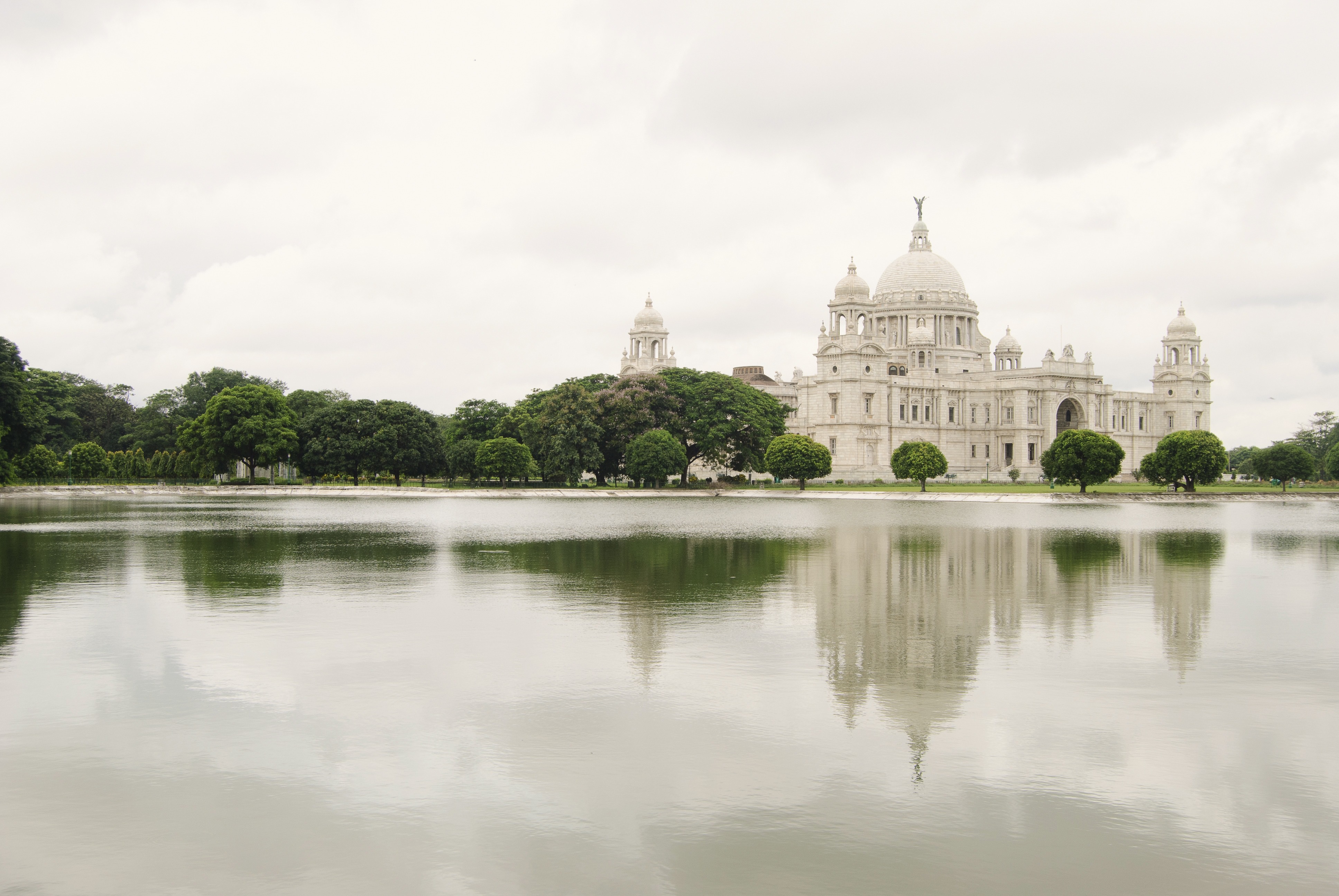
Kolkata, the capital of West Bengal, India, is a vibrant city known for its rich cultural heritage, colonial architecture, and intellectual dynamism. Often called the “City of Joy,” Kolkata blends the old and new, featuring landmarks like the Victoria Memorial, Howrah Bridge, and Indian Museum alongside bustling markets and modern malls. The city’s literary and artistic legacy is celebrated through numerous festivals, theaters, and galleries. Renowned for its culinary delights, Kolkata offers a diverse cuisine, from street food to Bengali sweets. Home to notable figures like Rabindranath Tagore, the city remains a hub of education, politics, and culture.
Kolkata (ex Calcutta), India
Kolkata, the capital of West Bengal, India, is a vibrant city known for its rich cultural heritage, colonial architecture, and intellectual dynamism. Often called the “City of Joy,” Kolkata blends the old and new, featuring landmarks like the Victoria Memorial, Howrah Bridge, and Indian Museum alongside bustling markets and modern malls. The city’s literary and artistic legacy is celebrated through numerous festivals, theaters, and galleries. Renowned for its culinary delights, Kolkata offers a diverse cuisine, from street food to Bengali sweets. Home to notable figures like Rabindranath Tagore, the city remains a hub of education, politics, and culture.
Darjeeling, India
Darjeeling – Early risers can enjoy a magical excursion to a nearby Sherpa village, where we’ll watch the sun rise over the Himalayas. When the first golden light spills across the peaks, the silhouette of Kanchenjunga may reveal itself in all its glory — a moment of quiet awe that any budding photograph will want to capture.
Returning to the hotel for a well-earned breakfast, our day exploring Darjeeling begins in earnest with a ride aboard a marvel of 19th-century engineering. Designed and built by the British in 1880, the Darjeeling Himalayan Railway, affectionally known as the Toy Train, transformed north Bengal’s sleepy hill economy, giving rise to new villages, tea estates and residential schools. Today, it retains most of its original charm and was Asia’s first ‘industrial heritage’ site to be inscribed on UNESCO’s World Heritage List.
As the miniature steam engine chugs its way up the steep gradients and seemingly impossible curves, we pass through breathtaking landscapes, tea gardens and hillside hamlets. A highlight of the journey is the Batasia Loop, a spiralling section of track that offers panoramic views of Darjeeling town and the majestic Kanchenjunga range.
After free time for lunch, we’ll set out on a heritage walk to discover Darjeeling’s colonial heritage. From the Mall Road — a scenic promenade lined with old-world shops, bookstalls, and charming cafés — to St Andrew’s Church and the nearby Planters’ Club, echoes of the past linger in every cobbled lane. As we pause to enjoy vistas of the valley below and breathe in the crisp mountain air, we think you’ll agree that Darjeeling lives up to its moniker, the “Queen of the Hills”.
Darjeeling, India
Darjeeling Tea Estate – After breakfasting this morning, we’ll take a scenic drive through the hills to the Glenburn Tea Estate, a tranquil haven nestled on the banks of the Rangeet River, in the shadow of the Kanchenjunga Mountain range.
This family-run estate, passed down through generations of expert tea planters, offers a fascinating glimpse into the world of tea. We’ll explore the estate with a guide, wandering through the lush gardens and working factories to find out how the humble tea leaf is transformed into the perfect cup. A guided tea-tasting session introduces us to the Glenburn Estate’s range of black, green, oolong and white teas — each with a different aroma, flavour, appearance and story. By the time we leave, you’ll be a tea connoisseur!
Our visit ends with lunch on the estate, after which we’ll return to our hotel and spend the rest of the day at leisure.
Phuentsholing, Bhutan
Darjeeling to Phuentsholing – The journey is a long one, but it’s the only way to cross into Bhutan — and it’s anything but dull. We’ll wind our way through classic Indian villages and ever-changing landscapes, arriving at the border in the early afternoon. After a quick hello to both Indian and Bhutanese immigration, we continue to Phuentsholing.
The difference is unmistakable. India is a whirlwind of colour and sound; Bhutan, by contrast, greets us with calm and quiet. Here, it’s actually illegal to toot your own horn without good reason — you won’t find a single traffic light in the entire country.
After time to settle into our hotel, we set out to visit the Kharbandi Goempa Monastery. Perched on a hillside overlooking the plains of India, this sacred site was founded by the Royal Grandmother, Ashi Phuntsho Choden, and is one of the oldest Buddhist temples in Bhutan.
Inside, the monastery is a treasure trove of spiritual artistry — from beautifully crafted statues to vivid murals, and intricate paintings that depict the life and teachings of the Buddha. Among its most striking features are a towering 10-foot statue of Guru Padmasambhava, along with life-size representations of other revered deities.
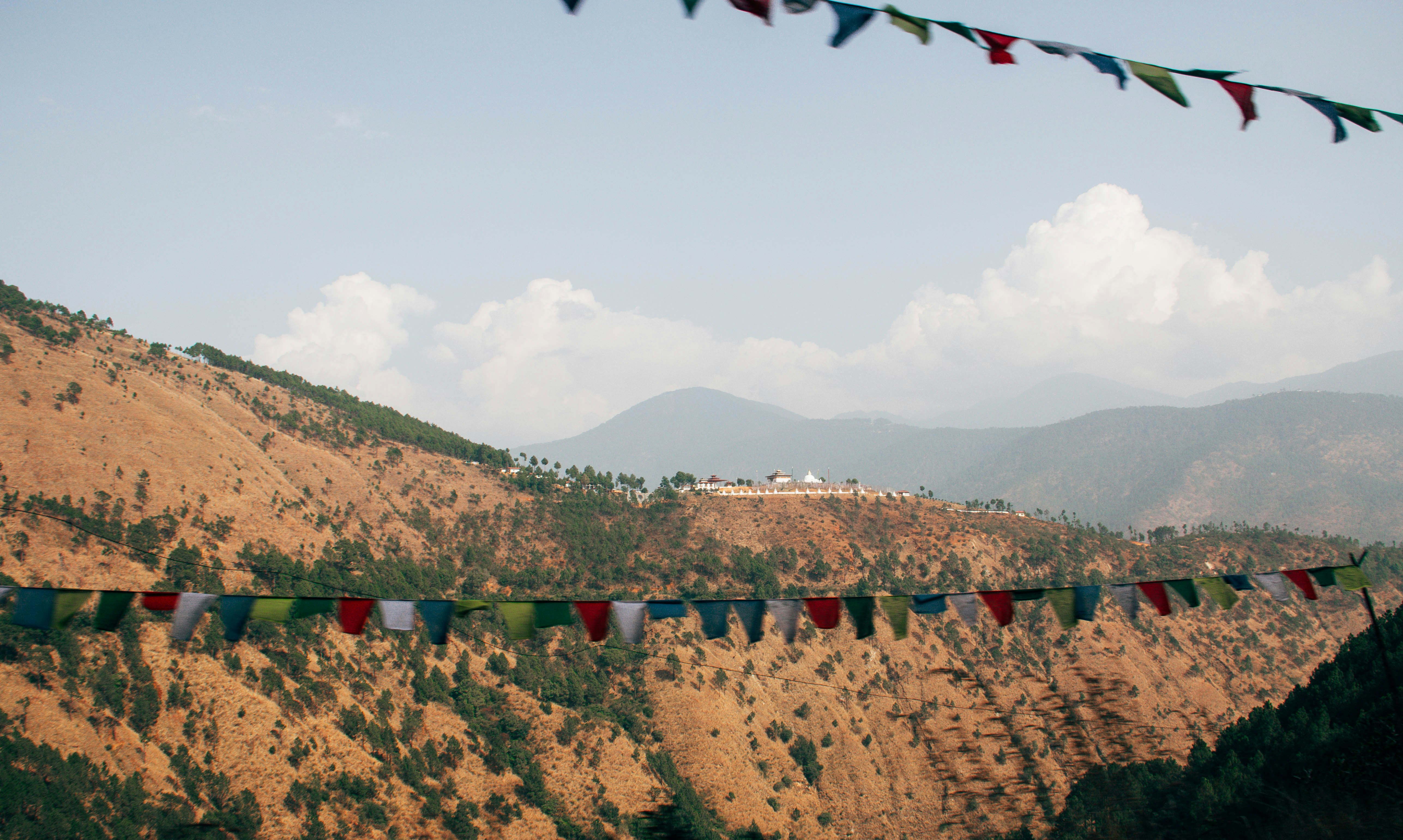
Outside, the peaceful tropical gardens invite quiet reflection. Dotted with eight whitewashed chortens (stupas) symbolising key events in the Buddha’s life, the grounds are also adorned with fluttering prayer flags, enormous prayer wheels, and traditional Bhutanese architecture — all set against a backdrop of lush greenery and mountain air.
Thimphu (Bhutan), Bhutan
Phuentsholing to Thimphu – This morning, we set off for Thimphu, arriving at our hotel in time for lunch.
After time to settle in, we will visit one of Thimphu’s most noticeable landmarks – Thimphu Chorten. Located in the southern central part of the city, a place of worship and a monument to Bhutan’s third king, Jigme Dorji Wangchuck, revered as the father of modern Bhutan. Adorned with intricate carvings, golden spires, and vibrant murals and, inside, you’ll find statues and paintings that honour the king’s legacy and reflect the deep roots of Buddhist culture.
This afternoon we visit one of Bhutan’s most iconic landmarks, Tashichho Dzong, a grand dzong (fortress-monastery) that has stood for centuries as both a spiritual sanctuary and a seat of power. Located to the north of Thimphu, on the west bank of the Wang Chhu River, it is one of the city’s most famous sights.
Originally established in the 13th century, the dzong has been rebuilt several times over the centuries, due to fires and an earthquake, yet its grand whitewashed walls and red and gold tiered towers are a striking symbol of Bhutanese resilience and craftsmanship. Through the southern gates is the administrative centre of the small mountain country, housing the throne room and offices of the king (though it’s not open to the public). We’ll enter through the northern gate, which opens into the monastic quarters – the summer residence of Bhutan’s central monk body.
Inside, we pass murals of guardian kings and revered figures like Drukpa Kunley, before stepping into a vast courtyard dominated by a utse (central tower), which houses sacred relics, including the funeral chorten of the 69th Je Khenpo. Nearby we’ll see the Lhakhang Sarp chapel and the dukhang (assembly hall), home to a large Buddha statue and royal thrones.
Surrounding the dzong are further symbols of Bhutan’s heritage: a traditional cantilever bridge to the northeast, the king’s residence to the southeast and the National Assembly across the river. West of the dzong is the Neykhang Lhakhang which houses protective deities. Its religious significance means it is closed to visitors, but it certainly adds to the spiritual gravity of the site.
Returning to our hotel before dinner this evening, meet an expert local to find out more about Bhutan’s Gross National Happiness policy, which prioritises well-being over purely economic growth and its influence on public policy.
Punakha (Bhutan), Bhutan
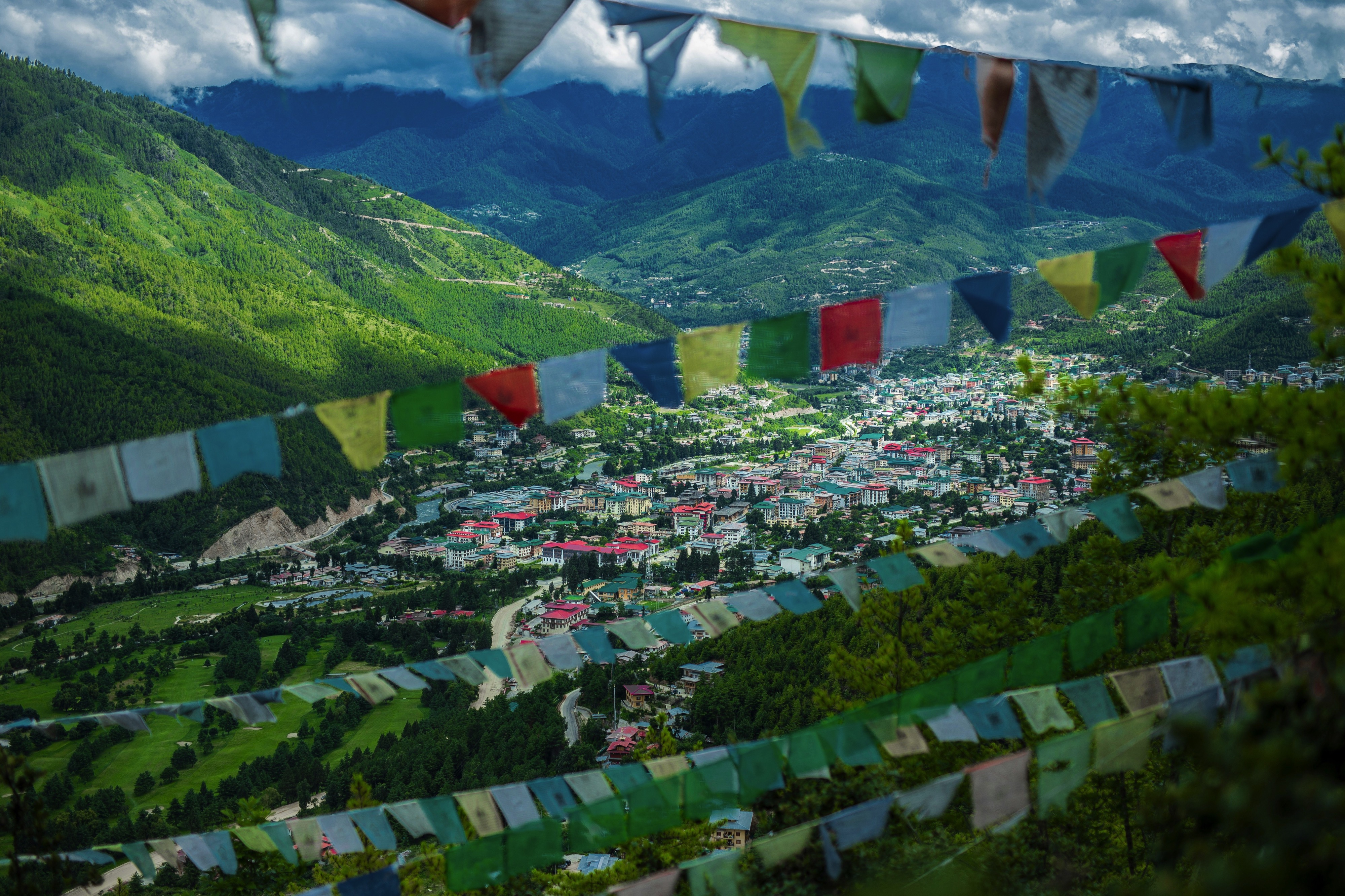
Punakha – This morning, we leave the capital behind and journey over the scenic Dochu La Pass, where, on a clear day, the snow-capped peaks of the eastern Himalayas stretch across the horizon. Descending into the lush Punakha Valley, we arrive at one of Bhutan’s most breathtaking landmarks — the Punakha Dzong.
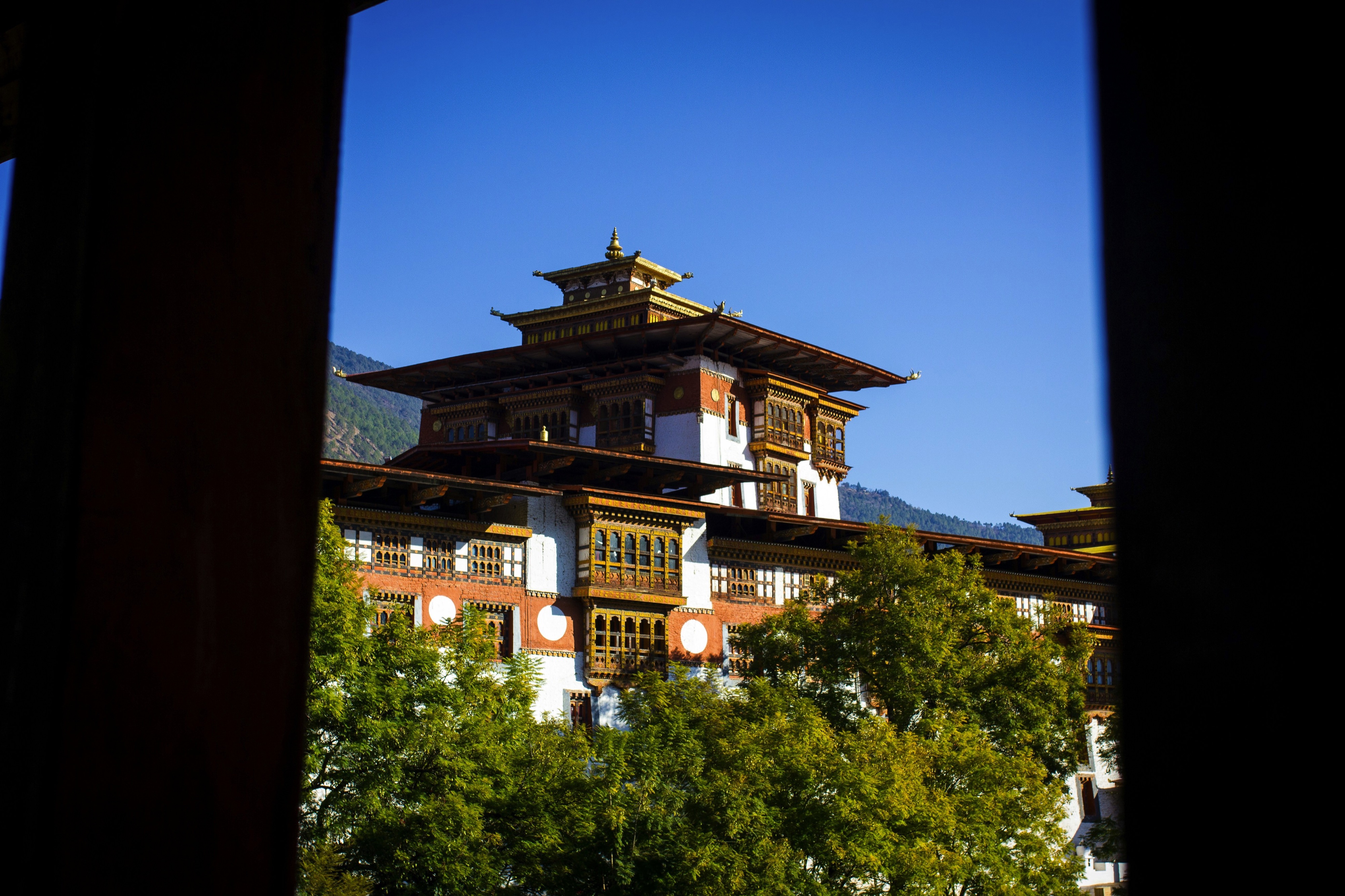
Often considered the most beautiful dzong in the country, Punakha Dzong is steeped in history and grandeur. It was here that all of Bhutan’s kings have been crowned, and its architecture is a striking example of traditional Bhutanese design – with high, arched windows, grand wooden doors, and tiered, flared roofs that seem to float above the whitewashed walls.
Its serene location at the confluence of two rivers gives it unparalleled natural beauty and spiritual calm. Inside, peaceful courtyards are adorned with intricate Buddhist murals in soft yet vibrant hues, while saffron-robed monks move quietly through the corridors, continuing the rhythms of monastic life.
Depending on the season, we’ll take a gentle stroll through fields of rice, wheat or vegetables – an everchanging patchwork that gives us a real taste of rural life. Our walk leads us to Chimi Lhakhang, a temple famous for its blessings of fertility and a place where local legend and daily life intertwine.
After our visit, we’ll return to our hotel in Thimphu and spend the rest of the day at leisure.
Paro (Bhutan), Bhutan
Thimphu & Paro – Our day begins at one of Thimphu’s most noticeable landmarks. One of the largest Buddha stupas in the world at 177 feet, and gilded entirely in gold the Buddha Dordenma Statue is visible from everywhere in Thimphu — you can’t miss it. Built from 2006 to 2015, its construction fulfilled an ancient prophecy, bringing peace and prosperity to the entire world.
Next, we’ll enjoy a visit to the Royal Textile Museum to see its fascinating display of ancient and modern textiles in exhibits that explore the rich traditions of Bhutan’s national arts of thagzo (weaving) and tshemzo (embroidery). Highlights include wedding clothes worn by the fourth king and his four wives — a stark contrast to the everyday attire worn by Bhutanese men and women, also on display.
Sticking to the theme of Bhutanese craftsmanship, our last visit is to the Craft Bazaar, located in Norzin Lam, one of Thimphu’s main thoroughfares. With around 80 colourful stalls and shops, this open-air market is a celebration of the country’s dedication to preserving its traditional art forms while catering to contemporary market demands. From handwoven scarves and carved masks to handmade paper and traditional jewellery, it’s the ideal place to find a meaningful souvenir and support local artisans.
After much of the day spent exploring Thimphu, we head off to Paro for a three-night stay.
Paro (Bhutan), Bhutan
Paro – Our exploration of Paro begins perched high above the city, at the Ta Dzong. Originally built to protect the Rinpung Dzong from the unceasing assaults from Tibet and India, it is now a national museum housing more than 3,000 artifacts dating back 1,500 years. Learn more about how magic and science are inseparable in Bhutan, see ancient relics discovered by Bhutan’s treasure finders and marvel at rare treasures, including a stone egg allegedly laid by a mule and a ritual dagger said to belong to the protector Dorje Lekpa.
After time to explore, we’ll head to a local market for an introduction to some of Bhutan’s unique local produce — squares of dried jellied cow skin known as khoo (a local snack) to fresh husky betel nut (a fruit that looks like an orange egg), imported from India. Then, after whetting your appetite, we’ll head to a traditional farmhouse for an authentic Bhutanese lunch.
The rest of the afternoon is at leisure as we head back to our hotel in Paro. Take this time to unwind, soak in the serene surroundings and recharge — tomorrow’s hike to the iconic Tiger’s Nest awaits.
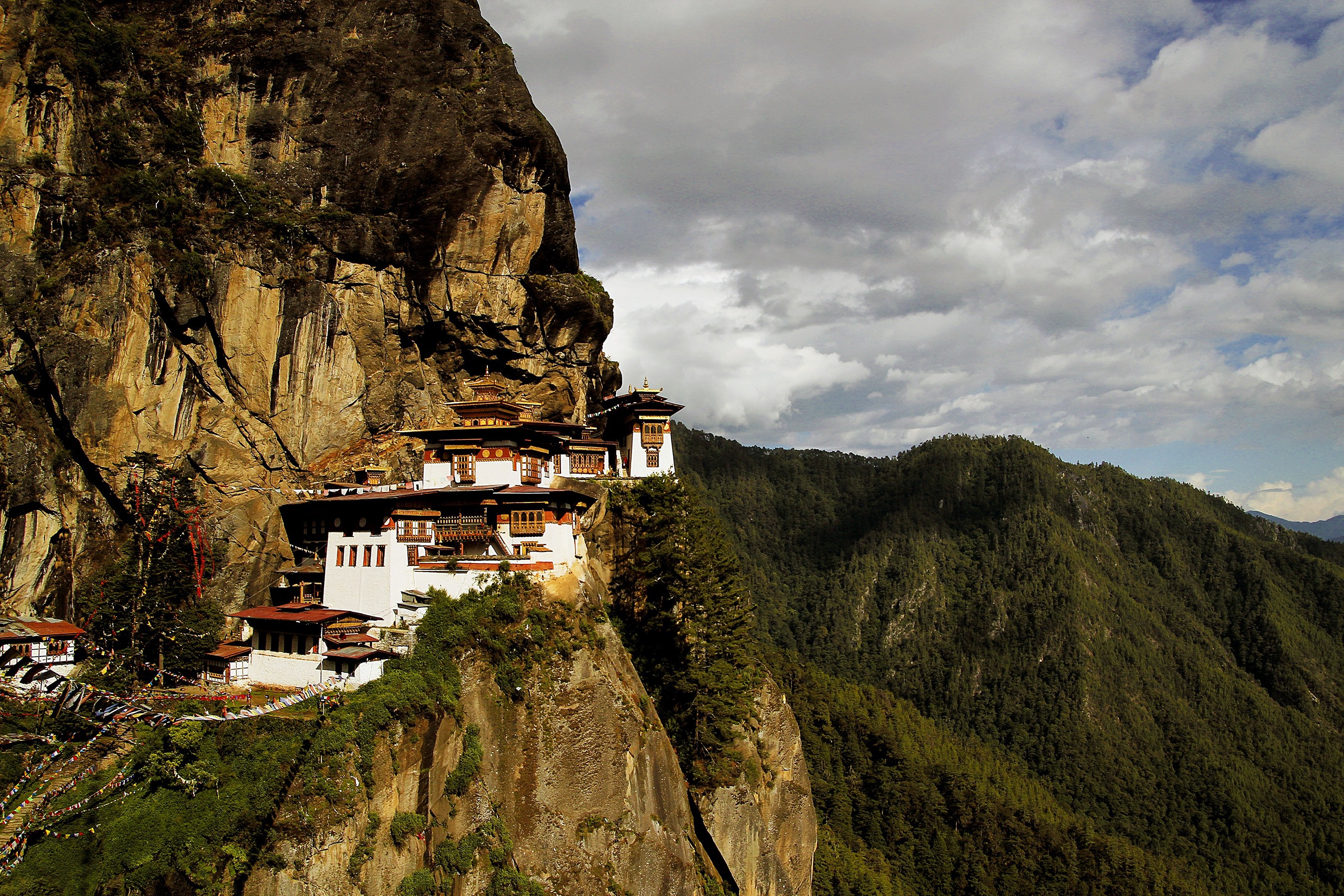
Paro Taktsang (Tiger's Nest Monastery)
Tiger’s Nest Monastery – Enjoy a real highlight of the holiday today, a pilgrimage to the most sacred Buddhist site in Bhutan, Taktsang Goemba – better known as the Tiger’s Nest Monastery. Clinging dramatically to a cliff overlooking the Paro Valley, this legendary monastery marks the spot where it’s said Padmasambhava, the 8th-century Indian sage who brought Buddhism to Bhutan, meditated after flying here on the back of a tigress.
Reaching the monastery is an adventure in itself. The only way up is on foot via a steep hike up a rough but well-trodden mountain path for around two and half hours. As we wind through pine forest and prayer-lined trails, we’ll gain about 550m (1,800 ft) in elevation. Midway to the top, we’ll pause for a rest at the café while enjoying the scenic views.
As we continue the final zigzagging ascent along the cliff’s contours, the full majesty of the monastery unveils itself before you — a vision that feels almost otherworldly.
Upon arrival, we begin our guided tour of the monastery complex, including the sacred Drubkhang cave, where Guru Rinpoche is said to have meditated for three months. The inner sanctum, sealed behind gilded doors, is surrounded by vivid murals of his eight manifestations and powerful deities like Dorje Drolo and Tseringma. As we ascend through chapels and lhakhangs, we’ll encounter sacred relics, hidden carvings, a holy spring and even descend into the original Tiger’s Nest cave via steep wooden ladders carved into the cliffside.
Top tip: Near the entrance, look for the relic stone – Bhutanese pilgrims stand at a marked spot, close their eyes and try to put their thumb into a small hole in the rock said to conceal a treasure hidden by Guru Rinpoche. It’s a playful yet spiritual karmic test and a memorable way to end this extraordinary experience before we make our way back down the mountainside.
As we descend from the monastery, we pause at the café for a well-earned lunch before continuing our journey back to the hotel. The rest of the day is yours to enjoy at leisure, whether you choose to relax, reflect or simply take in the tranquil surroundings.
Kolkata (ex Calcutta), India
Kolkata, the capital of West Bengal, India, is a vibrant city known for its rich cultural heritage, colonial architecture, and intellectual dynamism. Often called the “City of Joy,” Kolkata blends the old and new, featuring landmarks like the Victoria Memorial, Howrah Bridge, and Indian Museum alongside bustling markets and modern malls. The city’s literary and artistic legacy is celebrated through numerous festivals, theaters, and galleries. Renowned for its culinary delights, Kolkata offers a diverse cuisine, from street food to Bengali sweets. Home to notable figures like Rabindranath Tagore, the city remains a hub of education, politics, and culture.