Featured Cabins
Itinerary
Ho Chi Minh City, Vietnam
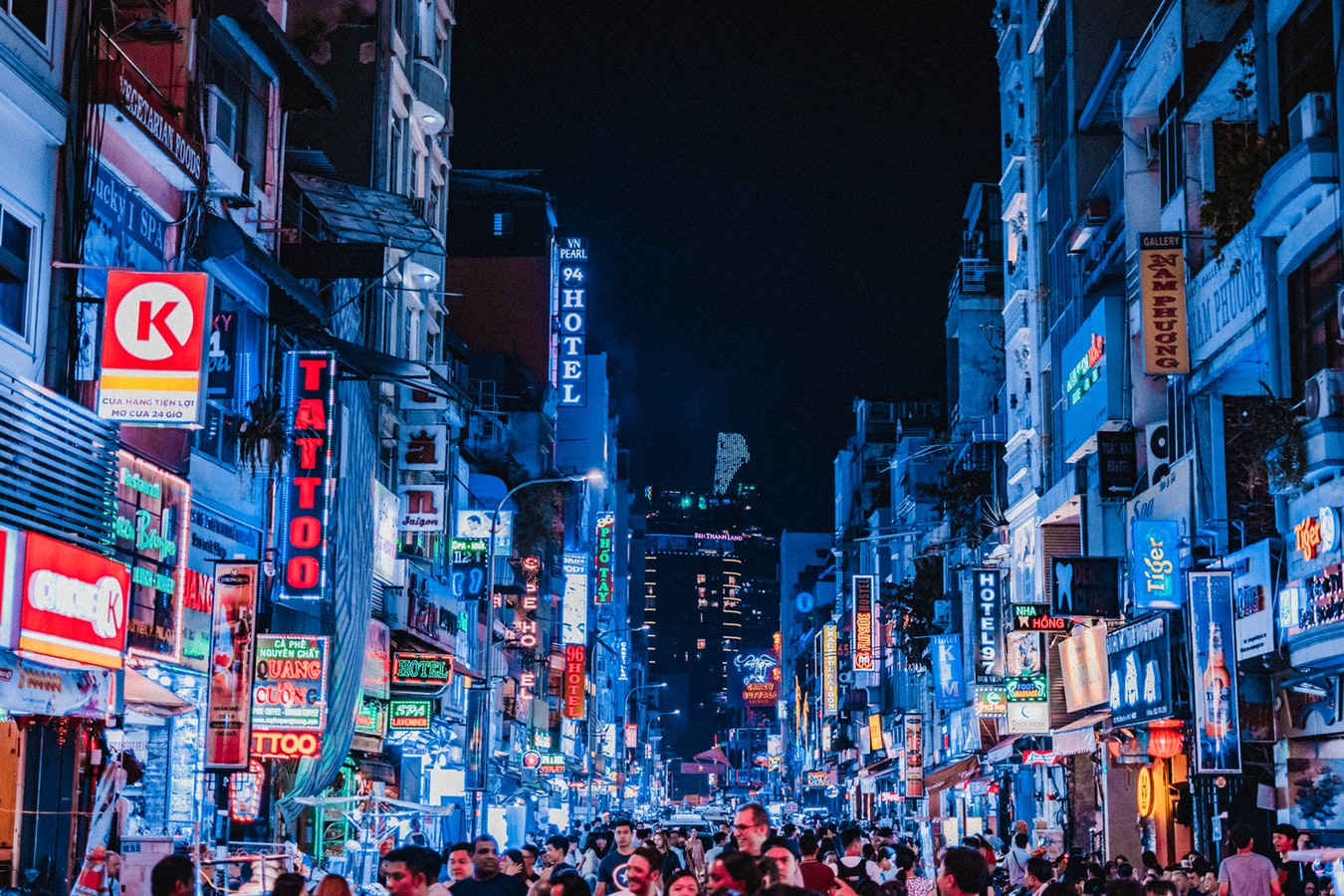
Romantically referred to by the French as the Pearl of the Orient, Ho Chi Minh City today is a super-charged city of sensory overload. Motorbikes zoom day and night along the wide boulevards, through the narrow back alleys and past vendors pushing handcarts hawking goods of all descriptions. Still called Saigon by most residents, this is Vietnam’s largest city and the engine driving the country’s current economic resurgence, but despite its frenetic pace, it’s a friendlier place than Hanoi and locals will tell you the food—simple, tasty, and incorporating many fresh herbs—is infinitely better than in the capital.This is a city full of surprises. The madness of the city’s traffic—witness the oddball things that are transported on the back of motorcycles—is countered by tranquil pagodas, peaceful parks, quirky coffee shops, and whole neighborhoods hidden down tiny alleyways, although some of these quiet spots can be difficult to track down. Life in Ho Chi Minh City is lived in public: on the back of motorcycles, on the sidewalks, and in the parks. Even when its residents are at home, they’re still on display. With many living rooms opening onto the street, grandmothers napping, babies being rocked, and food being prepared, are all in full view of passersby.Icons of the past endure in the midst of the city’s headlong rush into capitalism. The Hotel Continental, immortalized in Graham Greene’s The Quiet American, continues to stand on the corner of old Indochina’s most famous thoroughfare, the rue Catinat, known to American G.I.s during the Vietnam War as Tu Do (Freedom) Street and renamed Dong Khoi (Uprising) Street by the Communists. The city still has its ornate opera house and its old French city hall, the Hôtel de Ville. The broad colonial boulevards leading to the Saigon River and the gracious stucco villas are other remnants of the French colonial presence. Grisly reminders of the more recent past can be seen at the city’s war-related museums. Residents, however, prefer to look forward rather than back and are often perplexed by tourists’ fascination with a war that ended 40 years ago.The Chinese influence on the country is still very much in evidence in the Cholon district, the city’s Chinatown, but the modern office towers and international hotels that mark the skyline symbolize Vietnam’s fixation on the future.
Ho Chi Minh City, Vietnam
Romantically referred to by the French as the Pearl of the Orient, Ho Chi Minh City today is a super-charged city of sensory overload. Motorbikes zoom day and night along the wide boulevards, through the narrow back alleys and past vendors pushing handcarts hawking goods of all descriptions. Still called Saigon by most residents, this is Vietnam’s largest city and the engine driving the country’s current economic resurgence, but despite its frenetic pace, it’s a friendlier place than Hanoi and locals will tell you the food—simple, tasty, and incorporating many fresh herbs—is infinitely better than in the capital.This is a city full of surprises. The madness of the city’s traffic—witness the oddball things that are transported on the back of motorcycles—is countered by tranquil pagodas, peaceful parks, quirky coffee shops, and whole neighborhoods hidden down tiny alleyways, although some of these quiet spots can be difficult to track down. Life in Ho Chi Minh City is lived in public: on the back of motorcycles, on the sidewalks, and in the parks. Even when its residents are at home, they’re still on display. With many living rooms opening onto the street, grandmothers napping, babies being rocked, and food being prepared, are all in full view of passersby.Icons of the past endure in the midst of the city’s headlong rush into capitalism. The Hotel Continental, immortalized in Graham Greene’s The Quiet American, continues to stand on the corner of old Indochina’s most famous thoroughfare, the rue Catinat, known to American G.I.s during the Vietnam War as Tu Do (Freedom) Street and renamed Dong Khoi (Uprising) Street by the Communists. The city still has its ornate opera house and its old French city hall, the Hôtel de Ville. The broad colonial boulevards leading to the Saigon River and the gracious stucco villas are other remnants of the French colonial presence. Grisly reminders of the more recent past can be seen at the city’s war-related museums. Residents, however, prefer to look forward rather than back and are often perplexed by tourists’ fascination with a war that ended 40 years ago.The Chinese influence on the country is still very much in evidence in the Cholon district, the city’s Chinatown, but the modern office towers and international hotels that mark the skyline symbolize Vietnam’s fixation on the future.
Ho Chi Minh City, Vietnam
Romantically referred to by the French as the Pearl of the Orient, Ho Chi Minh City today is a super-charged city of sensory overload. Motorbikes zoom day and night along the wide boulevards, through the narrow back alleys and past vendors pushing handcarts hawking goods of all descriptions. Still called Saigon by most residents, this is Vietnam’s largest city and the engine driving the country’s current economic resurgence, but despite its frenetic pace, it’s a friendlier place than Hanoi and locals will tell you the food—simple, tasty, and incorporating many fresh herbs—is infinitely better than in the capital.This is a city full of surprises. The madness of the city’s traffic—witness the oddball things that are transported on the back of motorcycles—is countered by tranquil pagodas, peaceful parks, quirky coffee shops, and whole neighborhoods hidden down tiny alleyways, although some of these quiet spots can be difficult to track down. Life in Ho Chi Minh City is lived in public: on the back of motorcycles, on the sidewalks, and in the parks. Even when its residents are at home, they’re still on display. With many living rooms opening onto the street, grandmothers napping, babies being rocked, and food being prepared, are all in full view of passersby.Icons of the past endure in the midst of the city’s headlong rush into capitalism. The Hotel Continental, immortalized in Graham Greene’s The Quiet American, continues to stand on the corner of old Indochina’s most famous thoroughfare, the rue Catinat, known to American G.I.s during the Vietnam War as Tu Do (Freedom) Street and renamed Dong Khoi (Uprising) Street by the Communists. The city still has its ornate opera house and its old French city hall, the Hôtel de Ville. The broad colonial boulevards leading to the Saigon River and the gracious stucco villas are other remnants of the French colonial presence. Grisly reminders of the more recent past can be seen at the city’s war-related museums. Residents, however, prefer to look forward rather than back and are often perplexed by tourists’ fascination with a war that ended 40 years ago.The Chinese influence on the country is still very much in evidence in the Cholon district, the city’s Chinatown, but the modern office towers and international hotels that mark the skyline symbolize Vietnam’s fixation on the future.
Cu Chi Tunnels
Cu Chi Tunnels – The Cu Chi Tunnels are a unique and complex underground network stretching for 124 miles and included hospitals, meeting rooms, sleeping quarters and kitchens. Begun during the last years of French rule and vastly expanded during the 1960s, the tunnels provided a base for the Vietcong from which to attack US forces within just 30 miles of Saigon.
Our visit here is a fascinating insight into these troubled times: we see the tunnels themselves and examples of the many mantraps and stake pits which protected them. Despite being carpet bombed, the tunnels were never really penetrated, and should you wish, you can try out real period weapons on a firing range.
After our tour, we’ll return to our hotel for an afternoon and evening at leisure. If you’re peckish this afternoon, why not try Banh Mi, a delicious Vietnamese sandwich? Made with a freshly cooked short baguette and traditionally packed with pate, meats, mayo, pickles and salad – it’s so popular that you can find versions of it in UK street food markets! Or, if you prefer something heartier, you could try a warming bowl of pho noodles. Delicious flat rice noodles, served in a broth, traditionally cooked for many hours for a deep, rich flavour. Best paired with Vietnamese rice paper rolls made with fresh vegetables, prawns and vermicelli noodles. Whatever you choose, you will be spoilt for choice!
Ho Chi Minh City, Vietnam
Romantically referred to by the French as the Pearl of the Orient, Ho Chi Minh City today is a super-charged city of sensory overload. Motorbikes zoom day and night along the wide boulevards, through the narrow back alleys and past vendors pushing handcarts hawking goods of all descriptions. Still called Saigon by most residents, this is Vietnam’s largest city and the engine driving the country’s current economic resurgence, but despite its frenetic pace, it’s a friendlier place than Hanoi and locals will tell you the food—simple, tasty, and incorporating many fresh herbs—is infinitely better than in the capital.This is a city full of surprises. The madness of the city’s traffic—witness the oddball things that are transported on the back of motorcycles—is countered by tranquil pagodas, peaceful parks, quirky coffee shops, and whole neighborhoods hidden down tiny alleyways, although some of these quiet spots can be difficult to track down. Life in Ho Chi Minh City is lived in public: on the back of motorcycles, on the sidewalks, and in the parks. Even when its residents are at home, they’re still on display. With many living rooms opening onto the street, grandmothers napping, babies being rocked, and food being prepared, are all in full view of passersby.Icons of the past endure in the midst of the city’s headlong rush into capitalism. The Hotel Continental, immortalized in Graham Greene’s The Quiet American, continues to stand on the corner of old Indochina’s most famous thoroughfare, the rue Catinat, known to American G.I.s during the Vietnam War as Tu Do (Freedom) Street and renamed Dong Khoi (Uprising) Street by the Communists. The city still has its ornate opera house and its old French city hall, the Hôtel de Ville. The broad colonial boulevards leading to the Saigon River and the gracious stucco villas are other remnants of the French colonial presence. Grisly reminders of the more recent past can be seen at the city’s war-related museums. Residents, however, prefer to look forward rather than back and are often perplexed by tourists’ fascination with a war that ended 40 years ago.The Chinese influence on the country is still very much in evidence in the Cholon district, the city’s Chinatown, but the modern office towers and international hotels that mark the skyline symbolize Vietnam’s fixation on the future.
Long Xuyen, Vietnam
Long Xuyen & Tiger Island – After breakfast onboard, we’ll visit the authentic Long Xuyen Floating Market by sampan (a flat-bottomed wooden boat). As less discerning travellers have yet to ‘discover’ Long Xuyen floating market in An Giang province, it still maintains its authentic, rustic atmosphere with boats selling fruits, vegetables, flowers, fish and more. It’s lively, colourful, and when all the bartering is underway, it’s rather noisy too!
Reuniting with the ship for lunch, we’ll set sail for Tiger Island and disembark by sampan. We’ll visit one of the cottage industries that still exist here – plant pot making and the planting of ornamental Bonsai plants, a real insight into local life. We’ll continue to Tiger Island itself to enjoy a walking tour and hear the story of how the island got its name on a visit to the site locally known as ‘Mr Tiger’s Temple’.
After an afternoon of discovery, we’ll re-join the ship for a cocktail competition and dinner followed by the evening’s entertainment as the ship cruises to Vam Nao before anchoring overnight.
Tân Châu, Vietnam
Phu Tan & Tan Chau – Enjoy a leisurely breakfast on board this morning as the ship sails towards Phu Tan, the provincial capital of An Giang in the Mekong Delta. Tender ashore to visit a craft village famed for handmaking Ca Rang clay stoves. Used for hundreds of years by the southern Vietnamese, these stoves have a unique design which allow them to block the wind, retain heat and keep ash from dispersing.
After your visit here, return to the ship for lunch before venturing out again in the afternoon to visit more of the attractions along the Mekong Delta, including a floating fish farm, and see how people of the Mekong Delta raise freshwater fish under stilts.
After a real glimpse of traditional rural life, return to the ship for a traditional Vietnamese lion dance followed by a delectable dinner in the ship’s restaurant. The ship will moor overnight in Tan Chau.
Ho Chi Minh City, Vietnam
Romantically referred to by the French as the Pearl of the Orient, Ho Chi Minh City today is a super-charged city of sensory overload. Motorbikes zoom day and night along the wide boulevards, through the narrow back alleys and past vendors pushing handcarts hawking goods of all descriptions. Still called Saigon by most residents, this is Vietnam’s largest city and the engine driving the country’s current economic resurgence, but despite its frenetic pace, it’s a friendlier place than Hanoi and locals will tell you the food—simple, tasty, and incorporating many fresh herbs—is infinitely better than in the capital.This is a city full of surprises. The madness of the city’s traffic—witness the oddball things that are transported on the back of motorcycles—is countered by tranquil pagodas, peaceful parks, quirky coffee shops, and whole neighborhoods hidden down tiny alleyways, although some of these quiet spots can be difficult to track down. Life in Ho Chi Minh City is lived in public: on the back of motorcycles, on the sidewalks, and in the parks. Even when its residents are at home, they’re still on display. With many living rooms opening onto the street, grandmothers napping, babies being rocked, and food being prepared, are all in full view of passersby.Icons of the past endure in the midst of the city’s headlong rush into capitalism. The Hotel Continental, immortalized in Graham Greene’s The Quiet American, continues to stand on the corner of old Indochina’s most famous thoroughfare, the rue Catinat, known to American G.I.s during the Vietnam War as Tu Do (Freedom) Street and renamed Dong Khoi (Uprising) Street by the Communists. The city still has its ornate opera house and its old French city hall, the Hôtel de Ville. The broad colonial boulevards leading to the Saigon River and the gracious stucco villas are other remnants of the French colonial presence. Grisly reminders of the more recent past can be seen at the city’s war-related museums. Residents, however, prefer to look forward rather than back and are often perplexed by tourists’ fascination with a war that ended 40 years ago.The Chinese influence on the country is still very much in evidence in the Cholon district, the city’s Chinatown, but the modern office towers and international hotels that mark the skyline symbolize Vietnam’s fixation on the future.
Ho Chi Minh City, Vietnam
Romantically referred to by the French as the Pearl of the Orient, Ho Chi Minh City today is a super-charged city of sensory overload. Motorbikes zoom day and night along the wide boulevards, through the narrow back alleys and past vendors pushing handcarts hawking goods of all descriptions. Still called Saigon by most residents, this is Vietnam’s largest city and the engine driving the country’s current economic resurgence, but despite its frenetic pace, it’s a friendlier place than Hanoi and locals will tell you the food—simple, tasty, and incorporating many fresh herbs—is infinitely better than in the capital.This is a city full of surprises. The madness of the city’s traffic—witness the oddball things that are transported on the back of motorcycles—is countered by tranquil pagodas, peaceful parks, quirky coffee shops, and whole neighborhoods hidden down tiny alleyways, although some of these quiet spots can be difficult to track down. Life in Ho Chi Minh City is lived in public: on the back of motorcycles, on the sidewalks, and in the parks. Even when its residents are at home, they’re still on display. With many living rooms opening onto the street, grandmothers napping, babies being rocked, and food being prepared, are all in full view of passersby.Icons of the past endure in the midst of the city’s headlong rush into capitalism. The Hotel Continental, immortalized in Graham Greene’s The Quiet American, continues to stand on the corner of old Indochina’s most famous thoroughfare, the rue Catinat, known to American G.I.s during the Vietnam War as Tu Do (Freedom) Street and renamed Dong Khoi (Uprising) Street by the Communists. The city still has its ornate opera house and its old French city hall, the Hôtel de Ville. The broad colonial boulevards leading to the Saigon River and the gracious stucco villas are other remnants of the French colonial presence. Grisly reminders of the more recent past can be seen at the city’s war-related museums. Residents, however, prefer to look forward rather than back and are often perplexed by tourists’ fascination with a war that ended 40 years ago.The Chinese influence on the country is still very much in evidence in the Cholon district, the city’s Chinatown, but the modern office towers and international hotels that mark the skyline symbolize Vietnam’s fixation on the future.
Ho Chi Minh City, Vietnam
Romantically referred to by the French as the Pearl of the Orient, Ho Chi Minh City today is a super-charged city of sensory overload. Motorbikes zoom day and night along the wide boulevards, through the narrow back alleys and past vendors pushing handcarts hawking goods of all descriptions. Still called Saigon by most residents, this is Vietnam’s largest city and the engine driving the country’s current economic resurgence, but despite its frenetic pace, it’s a friendlier place than Hanoi and locals will tell you the food—simple, tasty, and incorporating many fresh herbs—is infinitely better than in the capital.This is a city full of surprises. The madness of the city’s traffic—witness the oddball things that are transported on the back of motorcycles—is countered by tranquil pagodas, peaceful parks, quirky coffee shops, and whole neighborhoods hidden down tiny alleyways, although some of these quiet spots can be difficult to track down. Life in Ho Chi Minh City is lived in public: on the back of motorcycles, on the sidewalks, and in the parks. Even when its residents are at home, they’re still on display. With many living rooms opening onto the street, grandmothers napping, babies being rocked, and food being prepared, are all in full view of passersby.Icons of the past endure in the midst of the city’s headlong rush into capitalism. The Hotel Continental, immortalized in Graham Greene’s The Quiet American, continues to stand on the corner of old Indochina’s most famous thoroughfare, the rue Catinat, known to American G.I.s during the Vietnam War as Tu Do (Freedom) Street and renamed Dong Khoi (Uprising) Street by the Communists. The city still has its ornate opera house and its old French city hall, the Hôtel de Ville. The broad colonial boulevards leading to the Saigon River and the gracious stucco villas are other remnants of the French colonial presence. Grisly reminders of the more recent past can be seen at the city’s war-related museums. Residents, however, prefer to look forward rather than back and are often perplexed by tourists’ fascination with a war that ended 40 years ago.The Chinese influence on the country is still very much in evidence in the Cholon district, the city’s Chinatown, but the modern office towers and international hotels that mark the skyline symbolize Vietnam’s fixation on the future.
Cu Chi Tunnels
Cu Chi Tunnels – The Cu Chi Tunnels are a unique and complex underground network stretching for 124 miles and included hospitals, meeting rooms, sleeping quarters and kitchens. Begun during the last years of French rule and vastly expanded during the 1960s, the tunnels provided a base for the Vietcong from which to attack US forces within just 30 miles of Saigon.
Our visit here is a fascinating insight into these troubled times: we see the tunnels themselves and examples of the many mantraps and stake pits which protected them. Despite being carpet bombed, the tunnels were never really penetrated, and should you wish, you can try out real period weapons on a firing range.
After our tour, we’ll return to our hotel for an afternoon and evening at leisure. If you’re peckish this afternoon, why not try Banh Mi, a delicious Vietnamese sandwich? Made with a freshly cooked short baguette and traditionally packed with pate, meats, mayo, pickles and salad – it’s so popular that you can find versions of it in UK street food markets! Or, if you prefer something heartier, you could try a warming bowl of pho noodles. Delicious flat rice noodles, served in a broth, traditionally cooked for many hours for a deep, rich flavour. Best paired with Vietnamese rice paper rolls made with fresh vegetables, prawns and vermicelli noodles. Whatever you choose, you will be spoilt for choice!
Ho Chi Minh City, Vietnam
Romantically referred to by the French as the Pearl of the Orient, Ho Chi Minh City today is a super-charged city of sensory overload. Motorbikes zoom day and night along the wide boulevards, through the narrow back alleys and past vendors pushing handcarts hawking goods of all descriptions. Still called Saigon by most residents, this is Vietnam’s largest city and the engine driving the country’s current economic resurgence, but despite its frenetic pace, it’s a friendlier place than Hanoi and locals will tell you the food—simple, tasty, and incorporating many fresh herbs—is infinitely better than in the capital.This is a city full of surprises. The madness of the city’s traffic—witness the oddball things that are transported on the back of motorcycles—is countered by tranquil pagodas, peaceful parks, quirky coffee shops, and whole neighborhoods hidden down tiny alleyways, although some of these quiet spots can be difficult to track down. Life in Ho Chi Minh City is lived in public: on the back of motorcycles, on the sidewalks, and in the parks. Even when its residents are at home, they’re still on display. With many living rooms opening onto the street, grandmothers napping, babies being rocked, and food being prepared, are all in full view of passersby.Icons of the past endure in the midst of the city’s headlong rush into capitalism. The Hotel Continental, immortalized in Graham Greene’s The Quiet American, continues to stand on the corner of old Indochina’s most famous thoroughfare, the rue Catinat, known to American G.I.s during the Vietnam War as Tu Do (Freedom) Street and renamed Dong Khoi (Uprising) Street by the Communists. The city still has its ornate opera house and its old French city hall, the Hôtel de Ville. The broad colonial boulevards leading to the Saigon River and the gracious stucco villas are other remnants of the French colonial presence. Grisly reminders of the more recent past can be seen at the city’s war-related museums. Residents, however, prefer to look forward rather than back and are often perplexed by tourists’ fascination with a war that ended 40 years ago.The Chinese influence on the country is still very much in evidence in the Cholon district, the city’s Chinatown, but the modern office towers and international hotels that mark the skyline symbolize Vietnam’s fixation on the future.
Long Xuyen, Vietnam
Long Xuyen & Tiger Island – After breakfast onboard, we’ll visit the authentic Long Xuyen Floating Market by sampan (a flat-bottomed wooden boat). As less discerning travellers have yet to ‘discover’ Long Xuyen floating market in An Giang province, it still maintains its authentic, rustic atmosphere with boats selling fruits, vegetables, flowers, fish and more. It’s lively, colourful, and when all the bartering is underway, it’s rather noisy too!
Reuniting with the ship for lunch, we’ll set sail for Tiger Island and disembark by sampan. We’ll visit one of the cottage industries that still exist here – plant pot making and the planting of ornamental Bonsai plants, a real insight into local life. We’ll continue to Tiger Island itself to enjoy a walking tour and hear the story of how the island got its name on a visit to the site locally known as ‘Mr Tiger’s Temple’.
After an afternoon of discovery, we’ll re-join the ship for a cocktail competition and dinner followed by the evening’s entertainment as the ship cruises to Vam Nao before anchoring overnight.
Tân Châu, Vietnam
Phu Tan & Tan Chau – Enjoy a leisurely breakfast on board this morning as the ship sails towards Phu Tan, the provincial capital of An Giang in the Mekong Delta. Tender ashore to visit a craft village famed for handmaking Ca Rang clay stoves. Used for hundreds of years by the southern Vietnamese, these stoves have a unique design which allow them to block the wind, retain heat and keep ash from dispersing.
After your visit here, return to the ship for lunch before venturing out again in the afternoon to visit more of the attractions along the Mekong Delta, including a floating fish farm, and see how people of the Mekong Delta raise freshwater fish under stilts.
After a real glimpse of traditional rural life, return to the ship for a traditional Vietnamese lion dance followed by a delectable dinner in the ship’s restaurant. The ship will moor overnight in Tan Chau.
Phnom Penh, Cambodia
Phnom Penh, Cambodia’s busy capital, sits at the junction of the Mekong and Tonlé Sap rivers. It was a hub for both the Khmer Empire and French colonialists. On its walkable riverfront, lined with parks, restaurants and bars, are the ornate Royal Palace, Silver Pagoda and the National Museum, displaying artifacts from around the country. At the city’s heart is the massive, art deco Central Market.
Phnom Penh, Cambodia
Phnom Penh, Cambodia’s busy capital, sits at the junction of the Mekong and Tonlé Sap rivers. It was a hub for both the Khmer Empire and French colonialists. On its walkable riverfront, lined with parks, restaurants and bars, are the ornate Royal Palace, Silver Pagoda and the National Museum, displaying artifacts from around the country. At the city’s heart is the massive, art deco Central Market.
Koh Dach Island, Phnom Penh, Cambodia
Koh Chen & Koh Dach – After breakfast, we’ll enjoy a walking tour of Koh Chen. As we approach, you’ll notice a large Buddha statue sitting peacefully near the riverbank and, beyond, is the yellow-tiled roof of a temple built in Khmer style. Your highlight here, will be visiting its famed ornamental silver and copper smiths.
After our exploration of Koh Chen, we’ll journey by coach to Cambodia’s ancient capital, Oudong. There, we’ll have the opportunity to visit the Vipassana Dhura Buddhist Meditation retreat, renowned for its transformative method of purifying the mind and alleviating distress and pain. Keep an eye out for the awe-inspiring jade Buddha and a mummified monk, as well as other ancient art, ornate sculptures and facades. Later, we’ll return to our ship for lunch.
Known locally as Koh Dach, Silk Island is an island in the Mekong River, celebrated for its time-honoured silk-weaving craft. We’ll journey through the island in a charming tuk-tuk to learn more about the process of silk weaving, from silkworms feasting on mulberry leaves to the creation of beautiful fabrics. This is a chance to experience the skilled artisans at work, weaving the iconic Cambodia krama (a traditional scarf) with dedication and expertise.
Angkor, Cambodia
Angkor Ban & Kampong Cham – Continue upstream where this vast river astonishingly changes its direction of flow between wet and dry seasons. A remarkable ecosystem here is home to 20,000 plant species, 1,200 birds, 800 reptiles and amphibians, plus 430 mammals – with 1,400 new species having been discovered since 1997.
We’ll stop this morning at the village of Angkor Ban, one of the very few villages that survived the Khmer Rouge period without being burnt or destroyed. We’ll see the traditional stilt houses – some more than a century old – and absorb the peaceful atmosphere where time stands still as you witness a slice of Cambodian rural life. Back on board we continue our journey north.
After a delicious lunch on board, we’ll arrive at Kampong Cham later this afternoon. Enjoy a walking tour along the river and visit this charming town with your guide to get a taste of ‘real Cambodia’ with its friendly locals, pretty temples and remnants of colonial architecture.
Returning to the ship, we’ll moor here overnight for you to enjoy your last dinner on board along with the evening’s entertainment.
Siem Reap, Cambodia
Kampong Cham and Siem Reap – This morning we’ll wave goodbye to our crew aboard Victoria Mekong and, travelling by coach, begin our journey to Siem Reap through the Cambodian countryside. Enjoying the scenery of everyday life, en route, we’ll stop at the Kampong Kdei Bridge dating from the Angkorian period and built during the reign of Jayavarman VII. We’ll end our journey in a local restaurant for lunch before checking into our hotel in Siem Reap.
With the rest of the day at leisure, there’ll be time to relax in the hotel, and maybe take a dip in the pool. This evening, why not venture into the town for dinner along Bar Street? With its numerous restaurants and bars, it’s the centre of Siem Reap’s nightlife.
Angkor, Cambodia
Highlights of Angkor – Today we’ll see the haunting soft morning light over the eerie temples of Angkor. Encircled by verdant steamy jungle, shrouded in mist and with a tropical dawn chorus reverberating in the air, this is something you will never forget.
We’ll visit the huge, fortified 13th-century city of Angkor Thom with its five monumental gates and 91-metre-wide moat; its centre contains one of Angkor’s most astonishing sites, the temple of Bayon. Crowned by over 50 towers, each with four colossal carved heads looking out in every direction, this is an extraordinary masterpiece of Khmer art.
Continue to one of the most intriguing sites, the smaller temple of Ta Prohm which has been left in its natural, unrestored state, with giant tropical trees bursting through the ruins, their roots entwined like vast tentacles across the moss-covered, weathered walls and roofs. After your visit here, return to Siem Reap for some time for lunch independently and to escape the heat of the day.
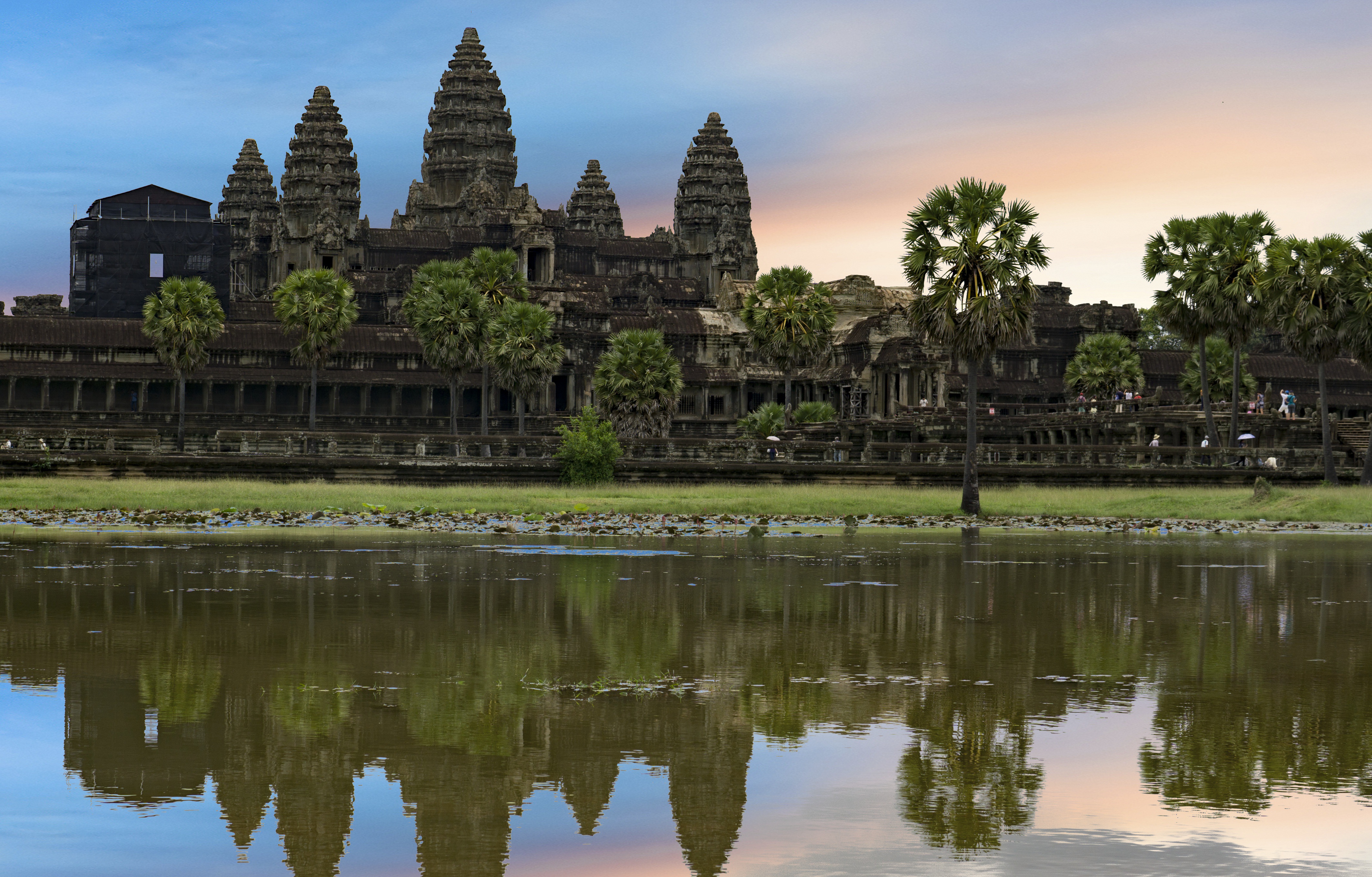
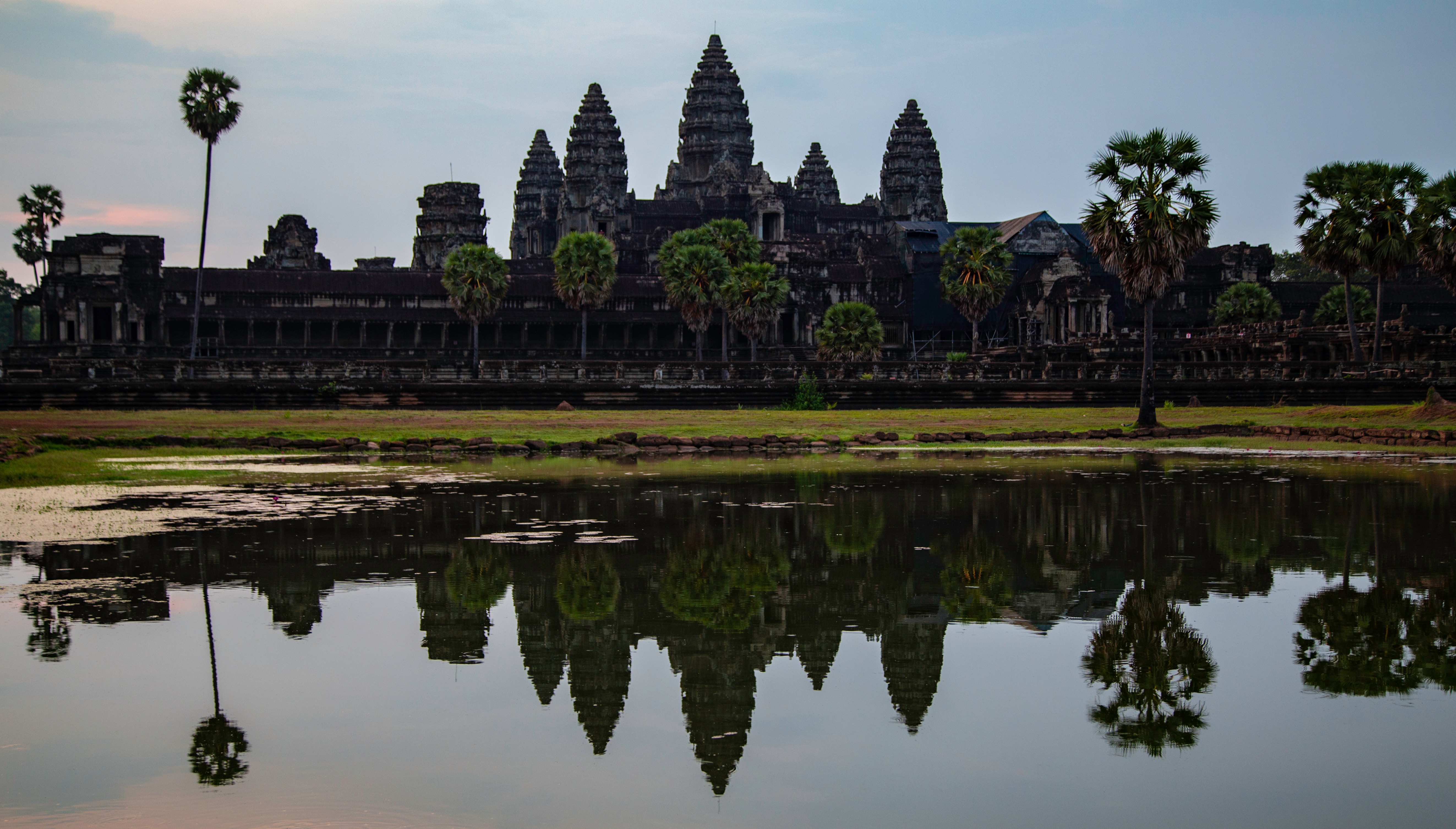
Later this afternoon, discover the immense temple of Angkor Wat, one of the largest religious structures in the world. The main entrance faces west to catch the rose-red glow of the setting sun, a truly magical time of day. This visually spectacular massive three-tiered pyramid has become a symbol of Cambodia appearing on its flag and you can marvel at the grandeur of its architecture and extensive collection of bas relief friezes.
Tonlé Sap, Cambodia
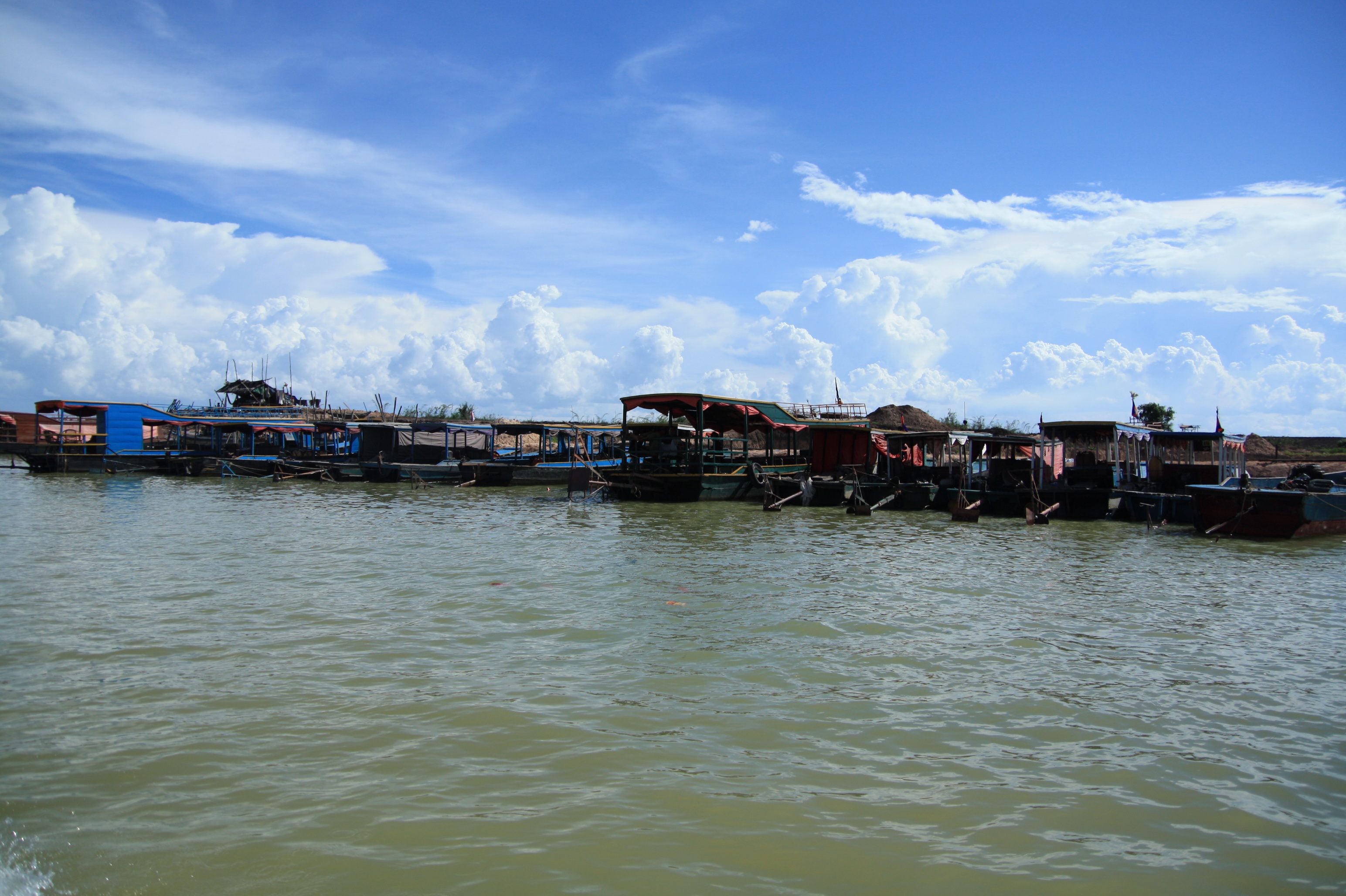
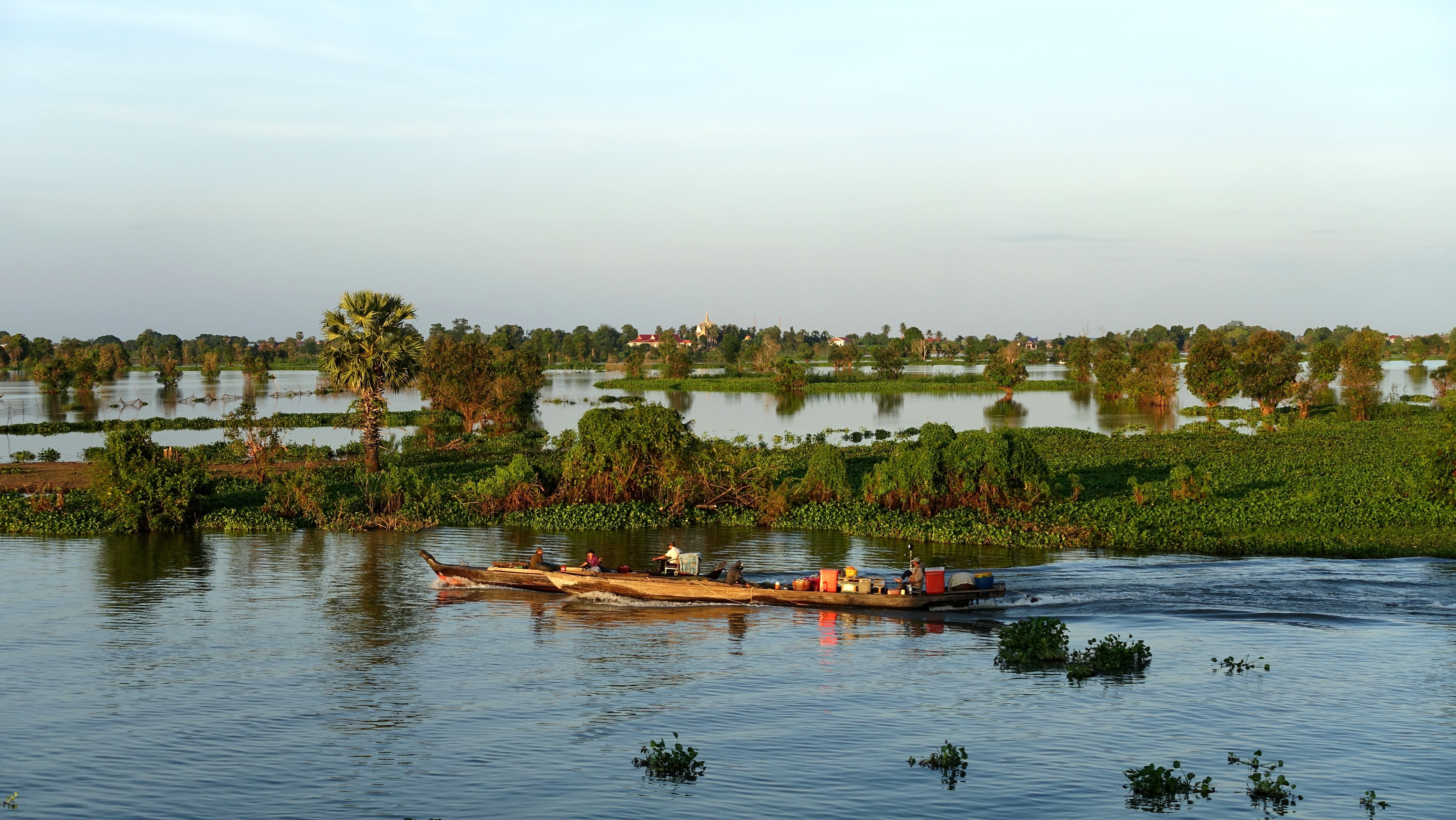
Tonle Sap Lake – Heading about 45km out of Siem Reap, today, we visit Tonle Sap Lake – the largest freshwater lake in Southeast Asia. Home to an estimated 360 floating villages on the lake and thousands of waterbirds, we’ll take a boat ride to see Kompong Khleang. The village, home to some 6,000 people, is built high on stilts. Locals rely on fishing and the lake is one of the most fish-abundant lakes in the world.
Returning to the hotel to escape the hottest time of the day, the afternoon is at leisure to relax and enjoy the hotel’s facilities.
This evening, enjoy a taste of both contemporary and historic Cambodia with a performance by the Phare Cambodian Circus. More than just a circus, the young performing artists will enthral you with their talent incorporating emotion, enthusiasm and energy. The profits from performances go to PPSA a local non-profit association working to improve the lives of socially deprived youngsters. Whilst the show consists of modern acrobatics from its talented cast, it also draws on Cambodian tradition, folk stories and music. An ideal way to conclude your Mekong adventure.
Phnom Penh, Cambodia
Phnom Penh, Cambodia’s busy capital, sits at the junction of the Mekong and Tonlé Sap rivers. It was a hub for both the Khmer Empire and French colonialists. On its walkable riverfront, lined with parks, restaurants and bars, are the ornate Royal Palace, Silver Pagoda and the National Museum, displaying artifacts from around the country. At the city’s heart is the massive, art deco Central Market.
Phnom Penh, Cambodia
Phnom Penh, Cambodia’s busy capital, sits at the junction of the Mekong and Tonlé Sap rivers. It was a hub for both the Khmer Empire and French colonialists. On its walkable riverfront, lined with parks, restaurants and bars, are the ornate Royal Palace, Silver Pagoda and the National Museum, displaying artifacts from around the country. At the city’s heart is the massive, art deco Central Market.
Koh Dach Island, Phnom Penh, Cambodia
Koh Chen & Koh Dach – After breakfast, we’ll enjoy a walking tour of Koh Chen. As we approach, you’ll notice a large Buddha statue sitting peacefully near the riverbank and, beyond, is the yellow-tiled roof of a temple built in Khmer style. Your highlight here, will be visiting its famed ornamental silver and copper smiths.
After our exploration of Koh Chen, we’ll journey by coach to Cambodia’s ancient capital, Oudong. There, we’ll have the opportunity to visit the Vipassana Dhura Buddhist Meditation retreat, renowned for its transformative method of purifying the mind and alleviating distress and pain. Keep an eye out for the awe-inspiring jade Buddha and a mummified monk, as well as other ancient art, ornate sculptures and facades. Later, we’ll return to our ship for lunch.
Known locally as Koh Dach, Silk Island is an island in the Mekong River, celebrated for its time-honoured silk-weaving craft. We’ll journey through the island in a charming tuk-tuk to learn more about the process of silk weaving, from silkworms feasting on mulberry leaves to the creation of beautiful fabrics. This is a chance to experience the skilled artisans at work, weaving the iconic Cambodia krama (a traditional scarf) with dedication and expertise.
Angkor, Cambodia
Angkor Ban & Kampong Cham – Continue upstream where this vast river astonishingly changes its direction of flow between wet and dry seasons. A remarkable ecosystem here is home to 20,000 plant species, 1,200 birds, 800 reptiles and amphibians, plus 430 mammals – with 1,400 new species having been discovered since 1997.
We’ll stop this morning at the village of Angkor Ban, one of the very few villages that survived the Khmer Rouge period without being burnt or destroyed. We’ll see the traditional stilt houses – some more than a century old – and absorb the peaceful atmosphere where time stands still as you witness a slice of Cambodian rural life. Back on board we continue our journey north.
After a delicious lunch on board, we’ll arrive at Kampong Cham later this afternoon. Enjoy a walking tour along the river and visit this charming town with your guide to get a taste of ‘real Cambodia’ with its friendly locals, pretty temples and remnants of colonial architecture.
Returning to the ship, we’ll moor here overnight for you to enjoy your last dinner on board along with the evening’s entertainment.
Siem Reap, Cambodia
Kampong Cham and Siem Reap – This morning we’ll wave goodbye to our crew aboard Victoria Mekong and, travelling by coach, begin our journey to Siem Reap through the Cambodian countryside. Enjoying the scenery of everyday life, en route, we’ll stop at the Kampong Kdei Bridge dating from the Angkorian period and built during the reign of Jayavarman VII. We’ll end our journey in a local restaurant for lunch before checking into our hotel in Siem Reap.
With the rest of the day at leisure, there’ll be time to relax in the hotel, and maybe take a dip in the pool. This evening, why not venture into the town for dinner along Bar Street? With its numerous restaurants and bars, it’s the centre of Siem Reap’s nightlife.
Angkor, Cambodia
Highlights of Angkor – Today we’ll see the haunting soft morning light over the eerie temples of Angkor. Encircled by verdant steamy jungle, shrouded in mist and with a tropical dawn chorus reverberating in the air, this is something you will never forget.
We’ll visit the huge, fortified 13th-century city of Angkor Thom with its five monumental gates and 91-metre-wide moat; its centre contains one of Angkor’s most astonishing sites, the temple of Bayon. Crowned by over 50 towers, each with four colossal carved heads looking out in every direction, this is an extraordinary masterpiece of Khmer art.
Continue to one of the most intriguing sites, the smaller temple of Ta Prohm which has been left in its natural, unrestored state, with giant tropical trees bursting through the ruins, their roots entwined like vast tentacles across the moss-covered, weathered walls and roofs. After your visit here, return to Siem Reap for some time for lunch independently and to escape the heat of the day.
Later this afternoon, discover the immense temple of Angkor Wat, one of the largest religious structures in the world. The main entrance faces west to catch the rose-red glow of the setting sun, a truly magical time of day. This visually spectacular massive three-tiered pyramid has become a symbol of Cambodia appearing on its flag and you can marvel at the grandeur of its architecture and extensive collection of bas relief friezes.
Tonlé Sap, Cambodia
Tonle Sap Lake – Heading about 45km out of Siem Reap, today, we visit Tonle Sap Lake – the largest freshwater lake in Southeast Asia. Home to an estimated 360 floating villages on the lake and thousands of waterbirds, we’ll take a boat ride to see Kompong Khleang. The village, home to some 6,000 people, is built high on stilts. Locals rely on fishing and the lake is one of the most fish-abundant lakes in the world.
Returning to the hotel to escape the hottest time of the day, the afternoon is at leisure to relax and enjoy the hotel’s facilities.
This evening, enjoy a taste of both contemporary and historic Cambodia with a performance by the Phare Cambodian Circus. More than just a circus, the young performing artists will enthral you with their talent incorporating emotion, enthusiasm and energy. The profits from performances go to PPSA a local non-profit association working to improve the lives of socially deprived youngsters. Whilst the show consists of modern acrobatics from its talented cast, it also draws on Cambodian tradition, folk stories and music. An ideal way to conclude your Mekong adventure.
Siem Reap, Cambodia
Journey home
In Flight
Arrive home
Siem Reap, Cambodia
Journey home
In Flight
Arrive home
Cabin Options
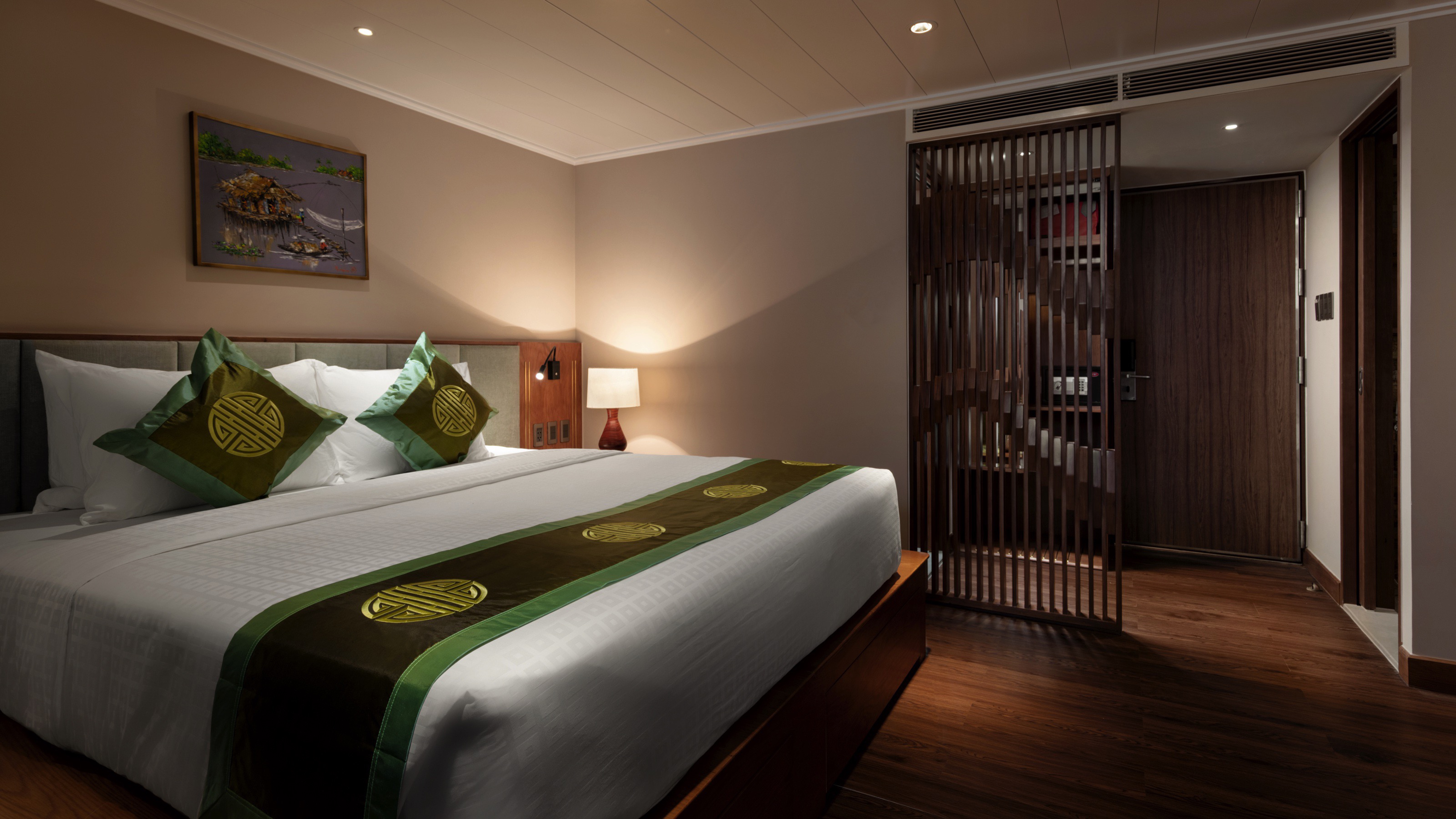
Deluxe Staterooms (River Deck)
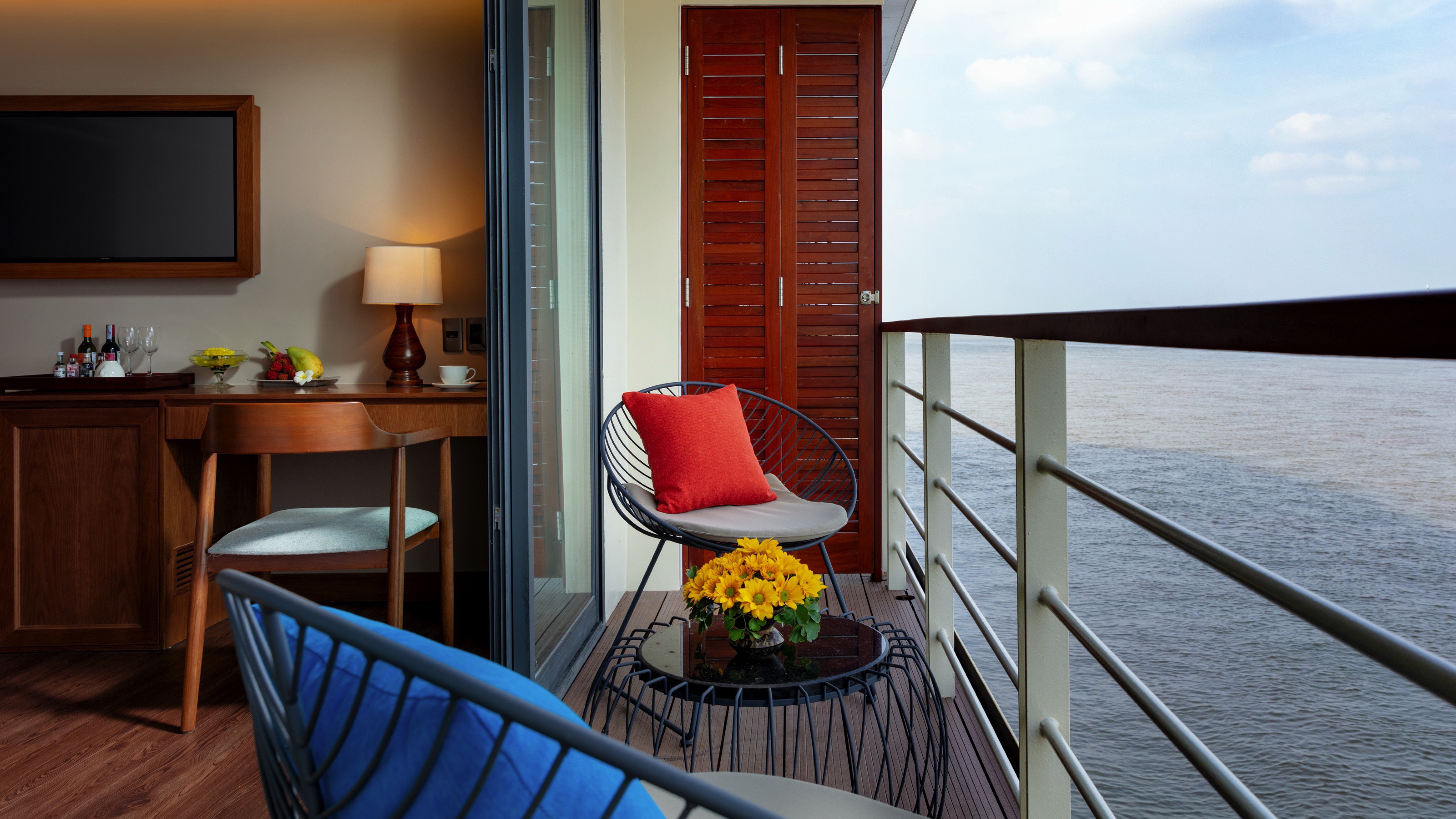
Suites (Panorama Deck)
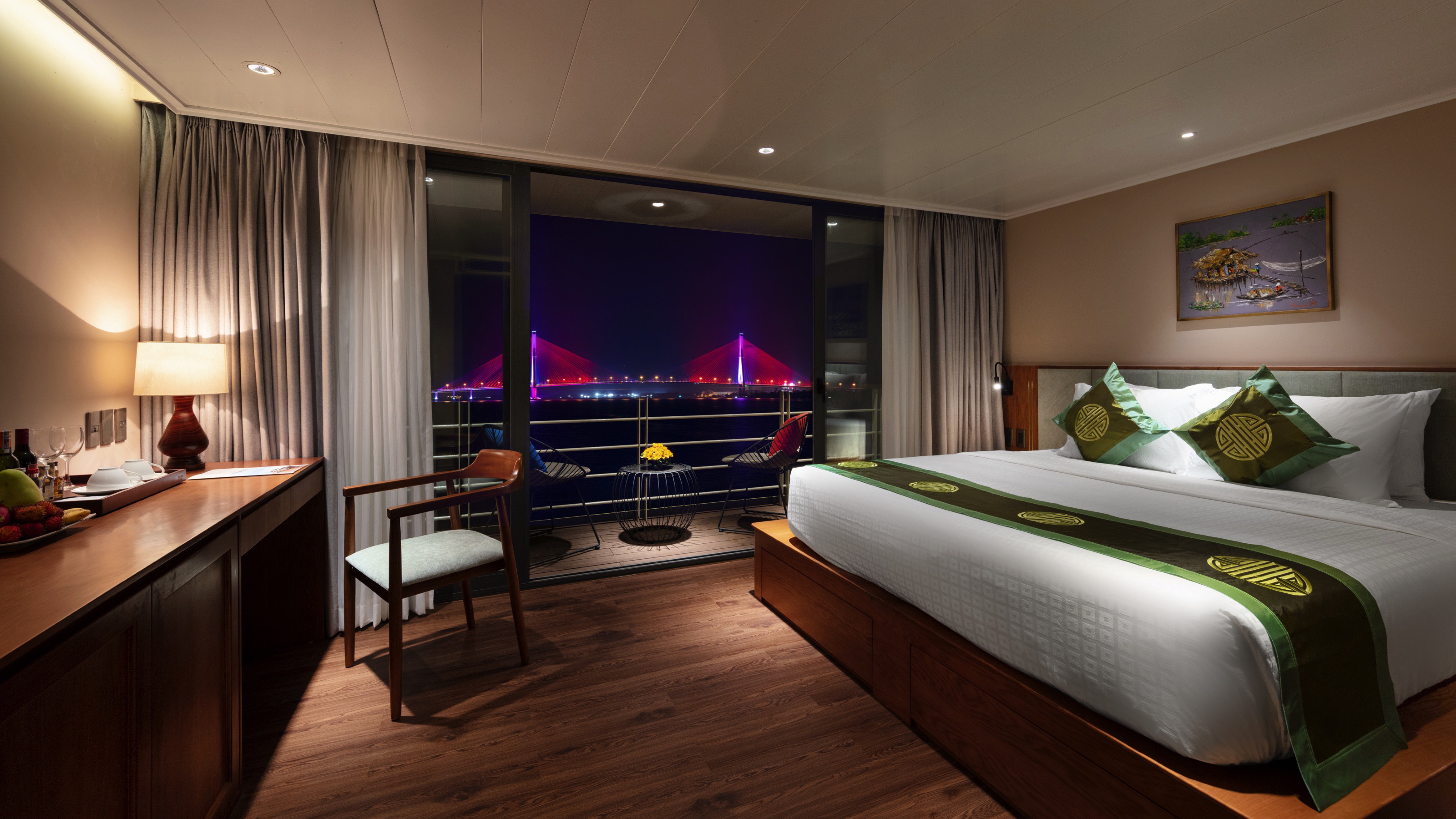
Deluxe Staterooms (Panorama Deck)
Ship Facilities
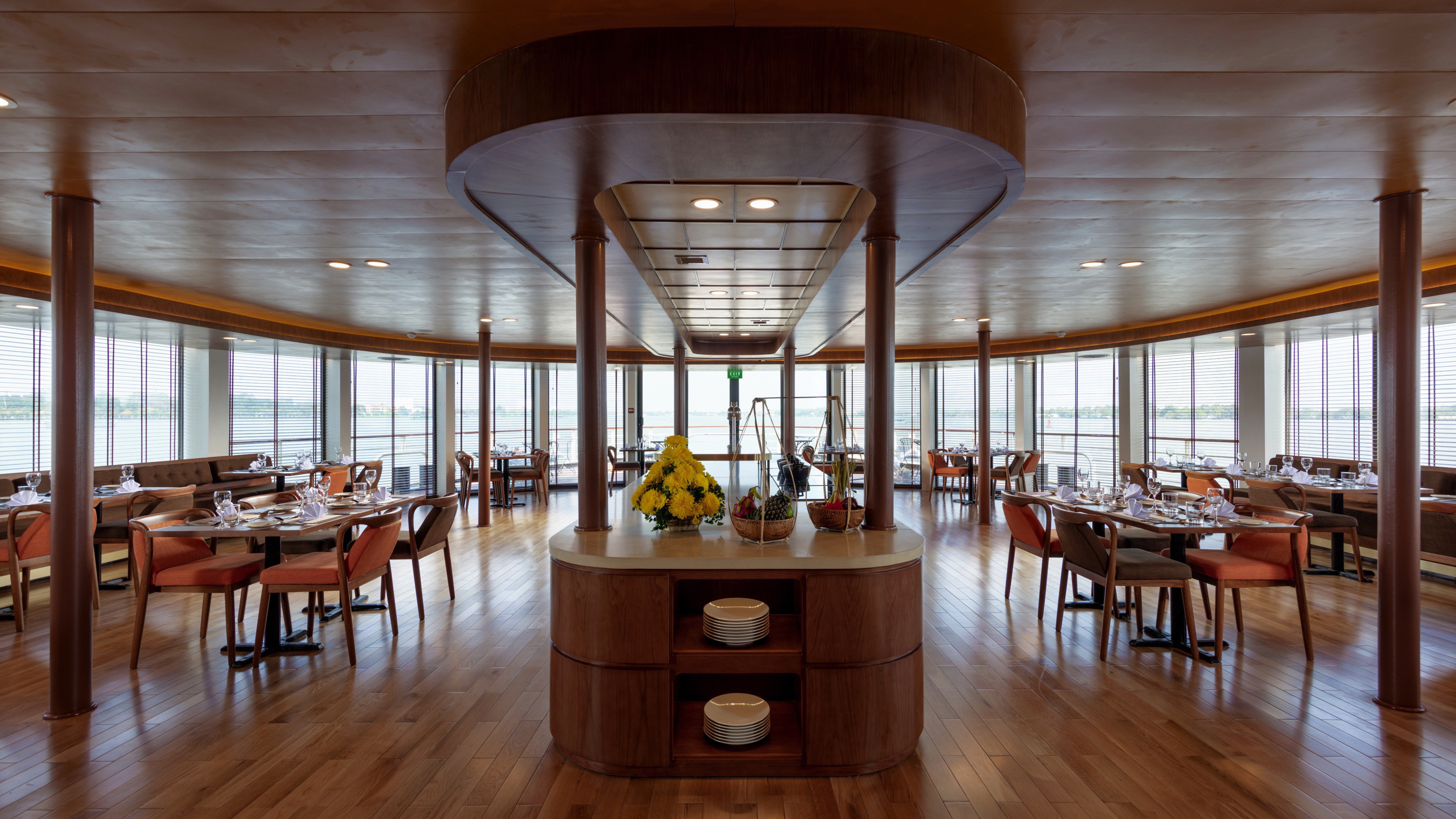
Claypot Restaurant
Savour the complete dining experience at the Claypot Restaurant on the Panorama deck. With its expansive bay windows offering breathtaking river views, the option to dine on the Terrace, and a mix of international and local dishes designed by the ship’s Executive Chef, each night offers an engaging dining experience – including an interactive dining experience.
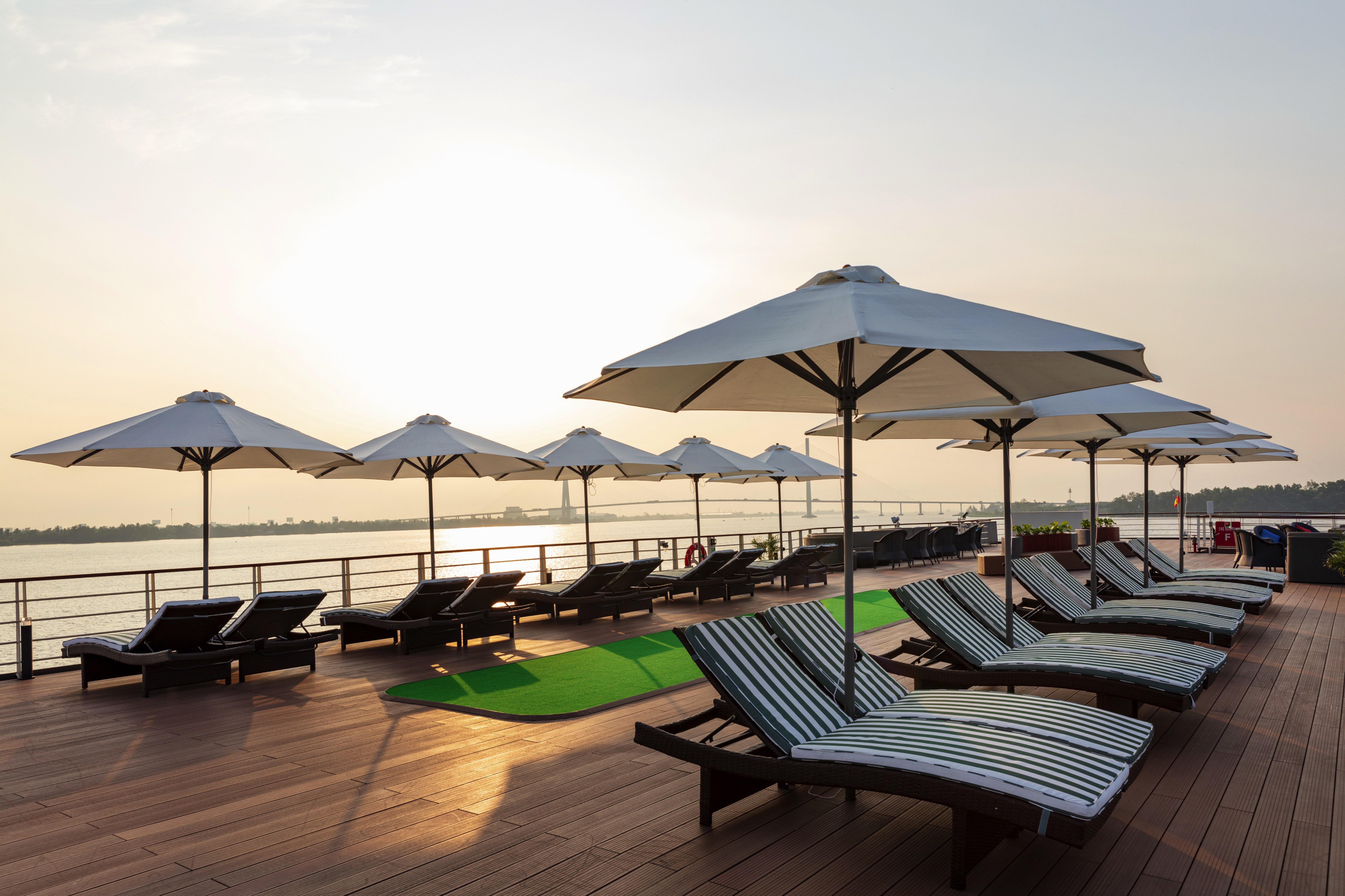
Sky Deck
While sailing, why not enjoy a round of mini golf on the Sky deck with newfound friends? Or simply relax on a sun lounger, perhaps with that book you’ve been meaning to read or take in the sweeping, uninterrupted views of the riverbanks with a cocktail.
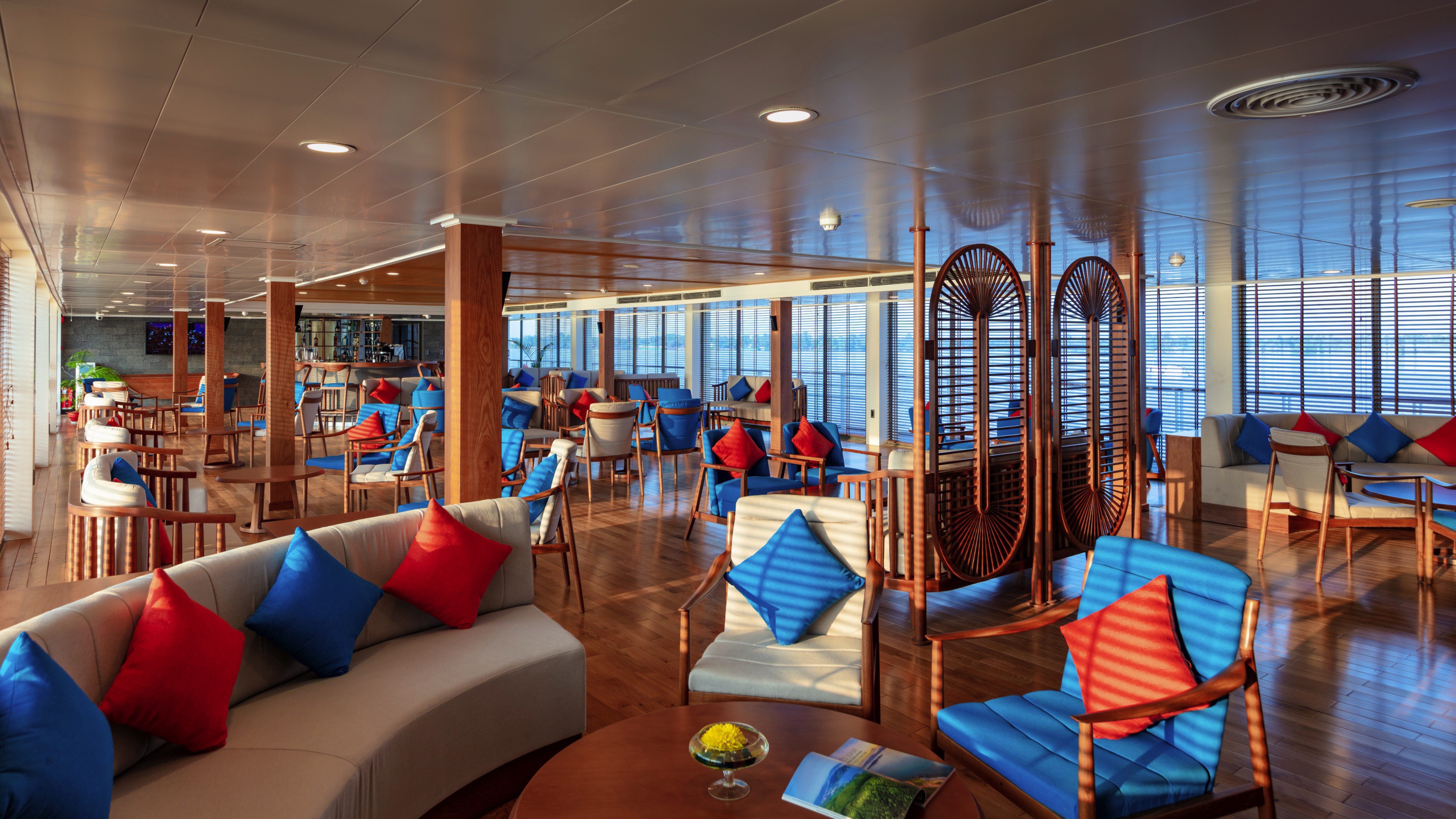
Horizon Lounge Bar
The Horizon Lounge Bar is the social hub of the ship, where you’ll meet with your fellow guests for evening signature cocktails as the sun sets and return to after dinner for authentic onboard music and dance performances (and a digestif or two).
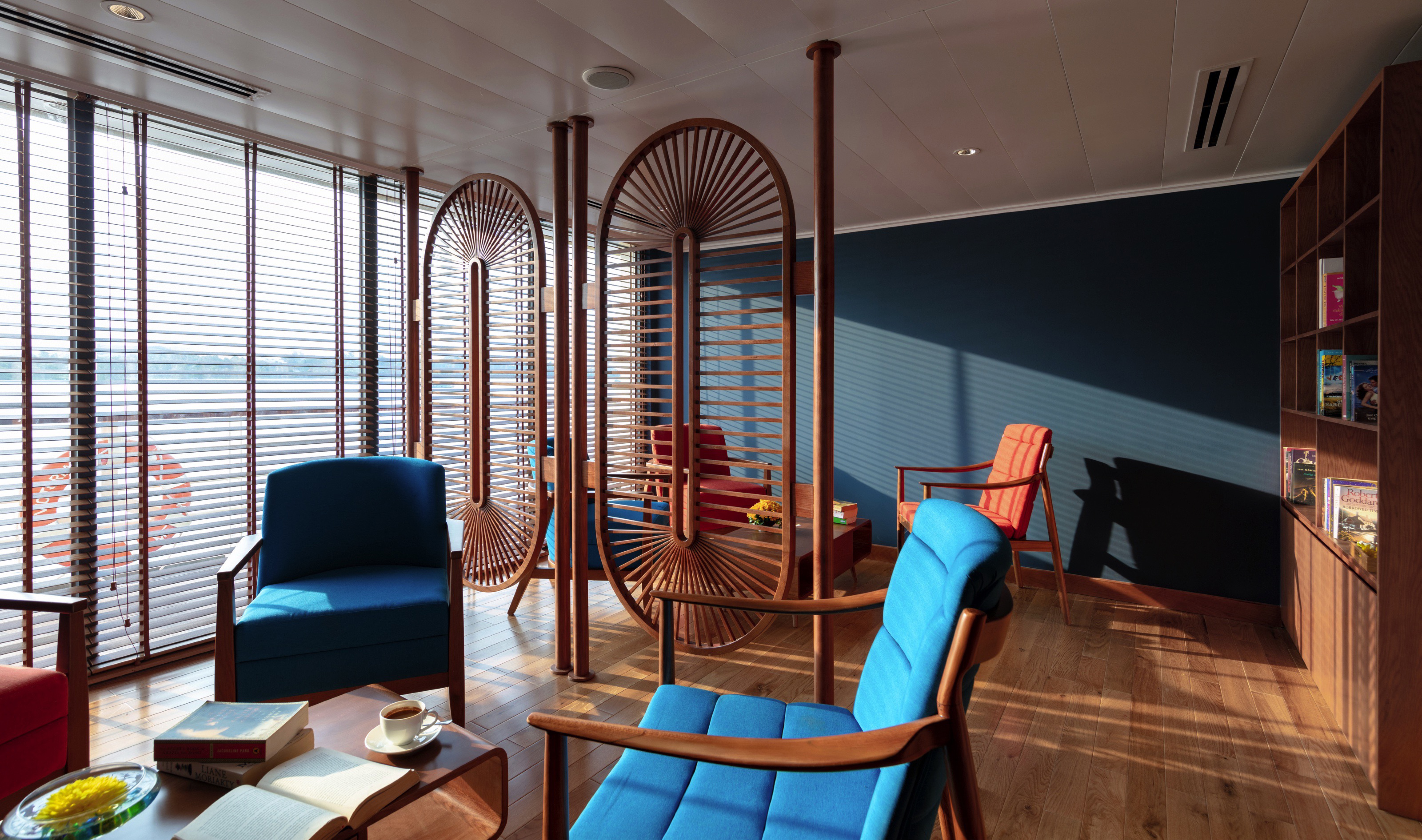
Library
There’s plenty to entertain on the Sun deck with a library full of books.
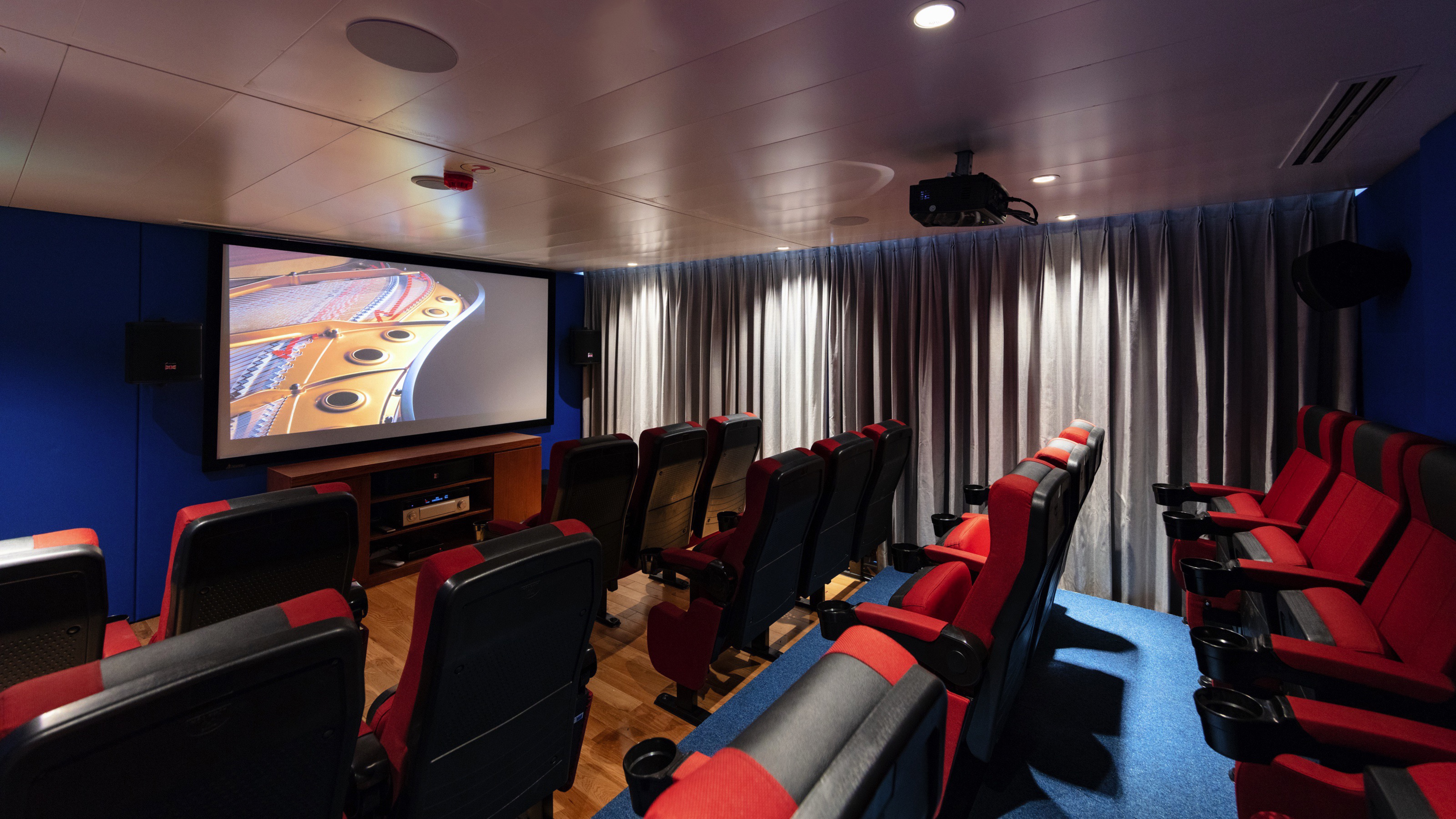
Cinema
More Information coming soon.
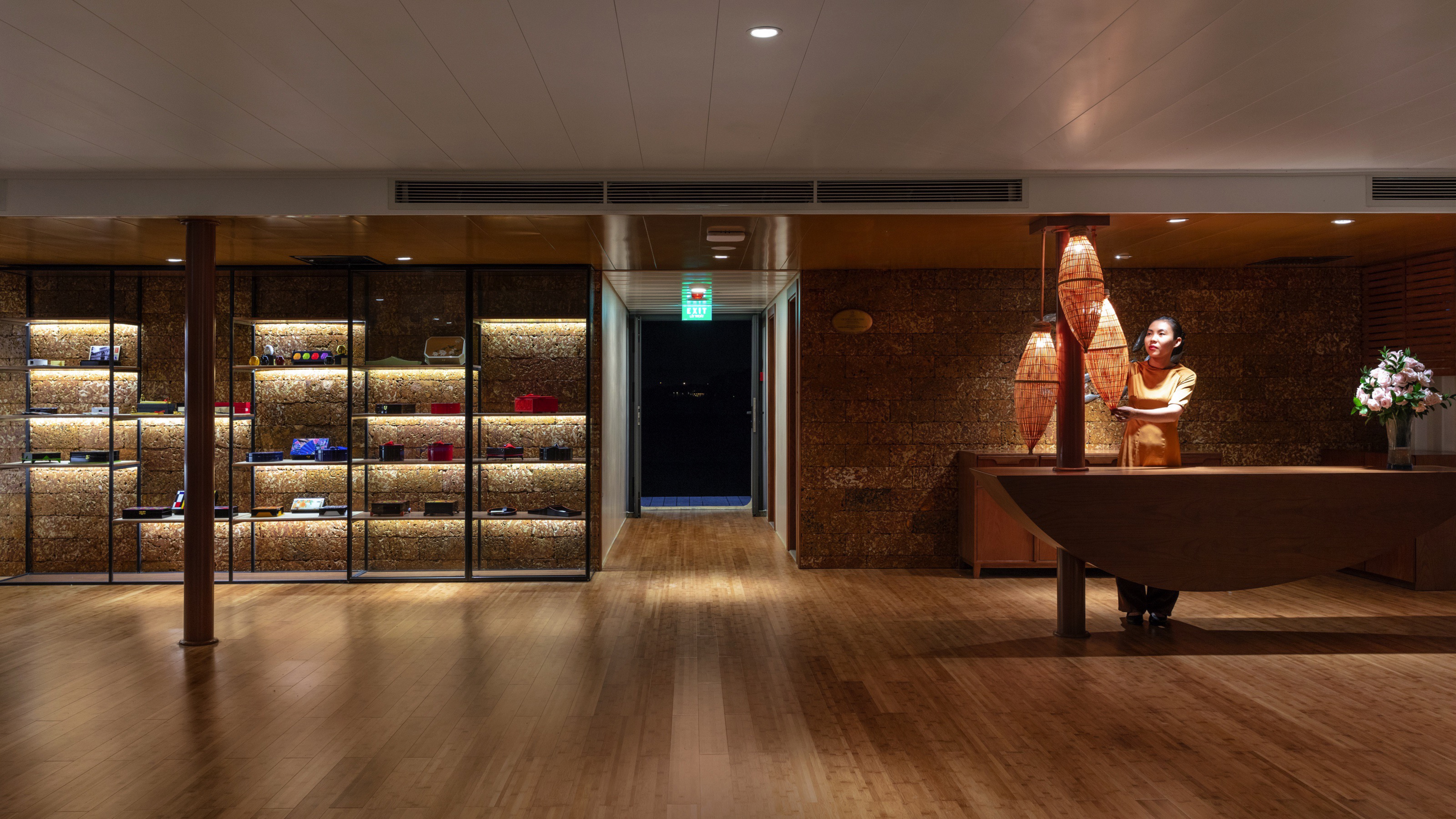
Reception
Here you’ll find our 24-hour reception and the onboard boutique.
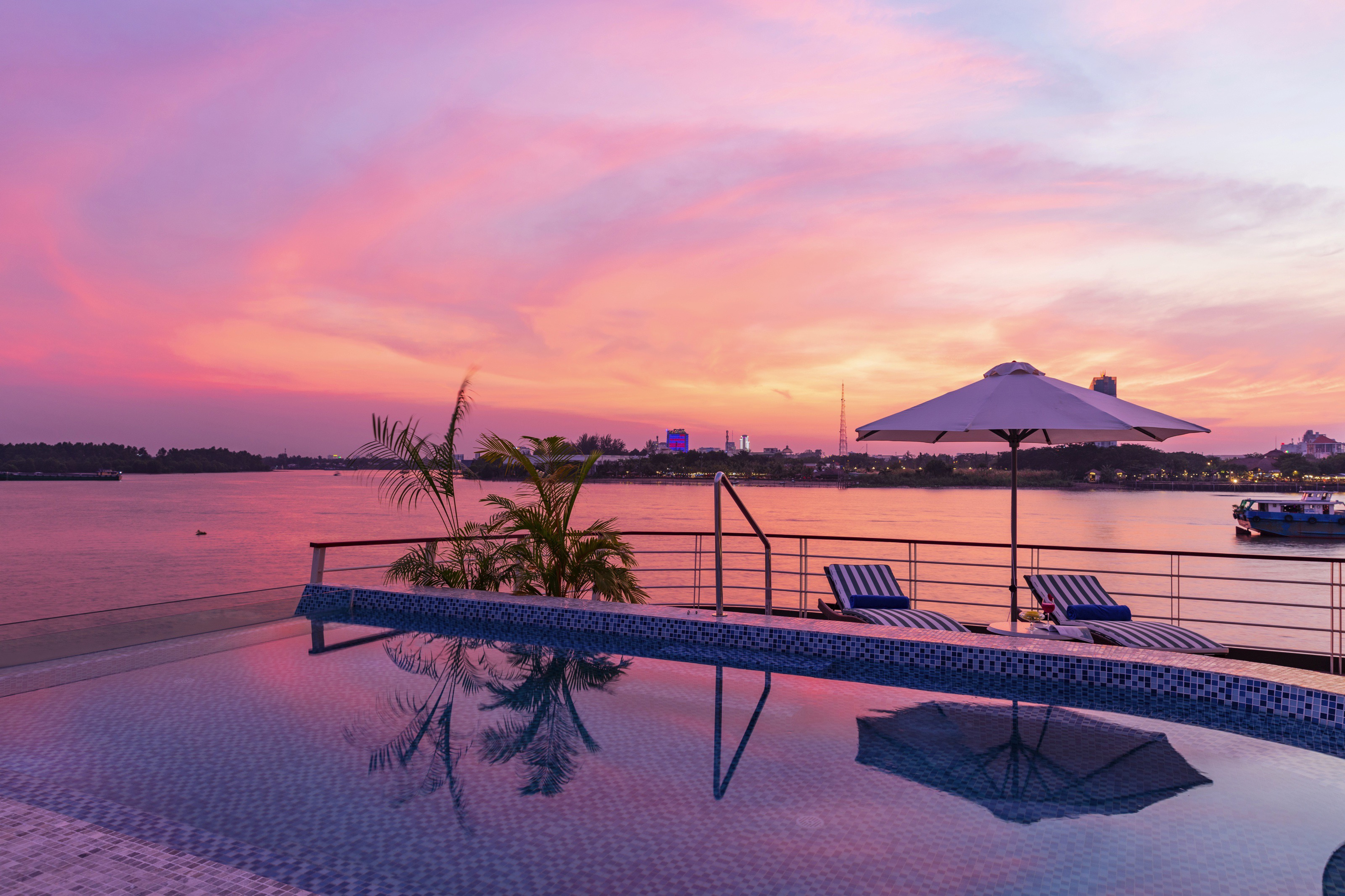
Pool
The outdoor area on the Sun deck is home to seating and sun loungers as well as a raised infinity pool – the perfect place to cool down in the mid-day heat – and a pool bar.
Claypot Restaurant
Savour the complete dining experience at the Claypot Restaurant on the Panorama deck. With its expansive bay windows offering breathtaking river views, the option to dine on the Terrace, and a mix of international and local dishes designed by the ship’s Executive Chef, each night offers an engaging dining experience – including an interactive dining experience.
Sky Deck
While sailing, why not enjoy a round of mini golf on the Sky deck with newfound friends? Or simply relax on a sun lounger, perhaps with that book you’ve been meaning to read or take in the sweeping, uninterrupted views of the riverbanks with a cocktail.
Horizon Lounge Bar
The Horizon Lounge Bar is the social hub of the ship, where you’ll meet with your fellow guests for evening signature cocktails as the sun sets and return to after dinner for authentic onboard music and dance performances (and a digestif or two).
Library
There’s plenty to entertain on the Sun deck with a library full of books.
Cinema
More Information coming soon.
Reception
Here you’ll find our 24-hour reception and the onboard boutique.
Pool
The outdoor area on the Sun deck is home to seating and sun loungers as well as a raised infinity pool – the perfect place to cool down in the mid-day heat – and a pool bar.
About the Ship
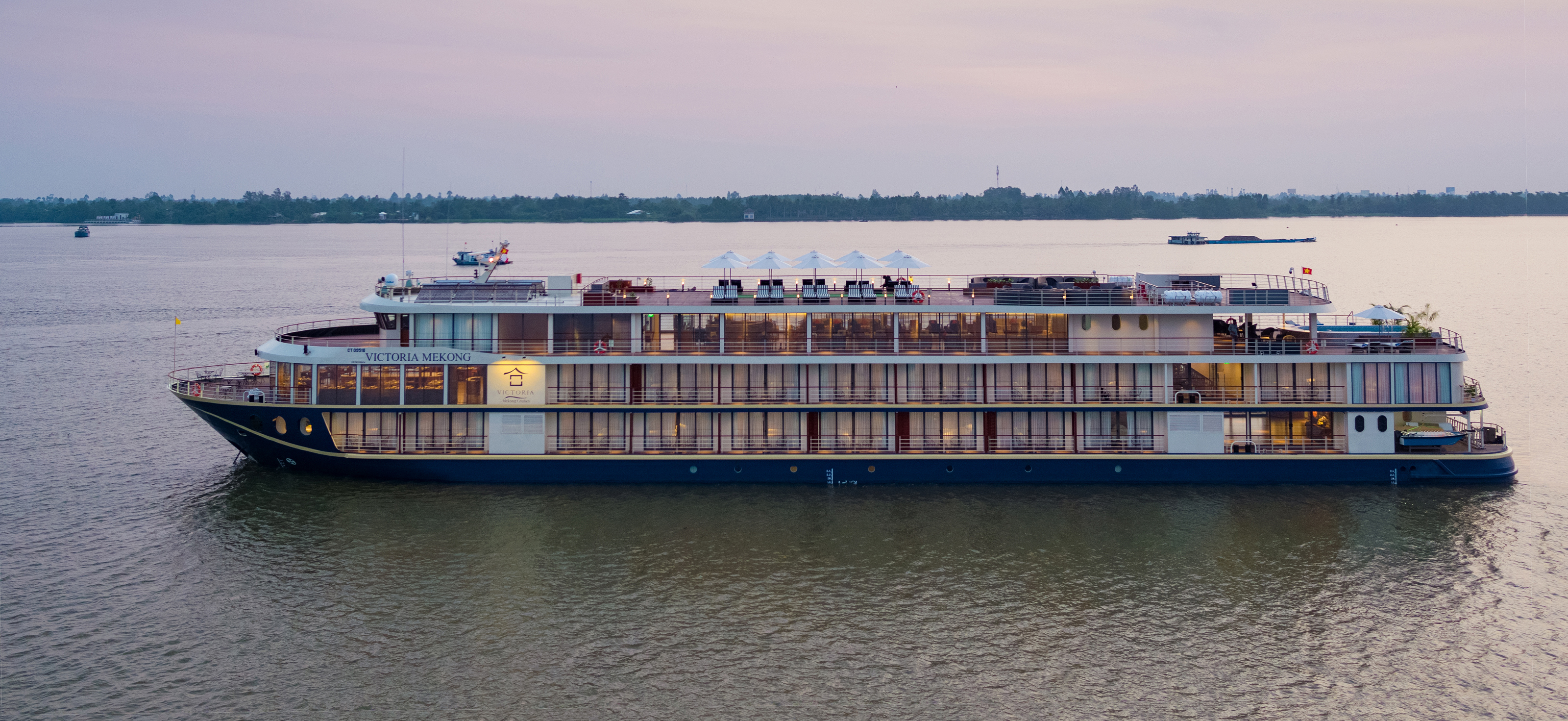
Deck Plans

- Reception
- Boutique
- Green Lotus Spa
- Deluxe Staterooms
- Restaurant
- Deluxe Staterooms
- Infinity Pool
- Horizon Lounge Bar
- Sun Loungers
- Mini Golf
- Reception
- Boutique
- Green Lotus Spa
- Deluxe Staterooms
- Restaurant
- Deluxe Staterooms
- Infinity Pool
- Horizon Lounge Bar
- Sun Loungers
- Mini Golf