Itinerary
Amsterdam, Netherlands
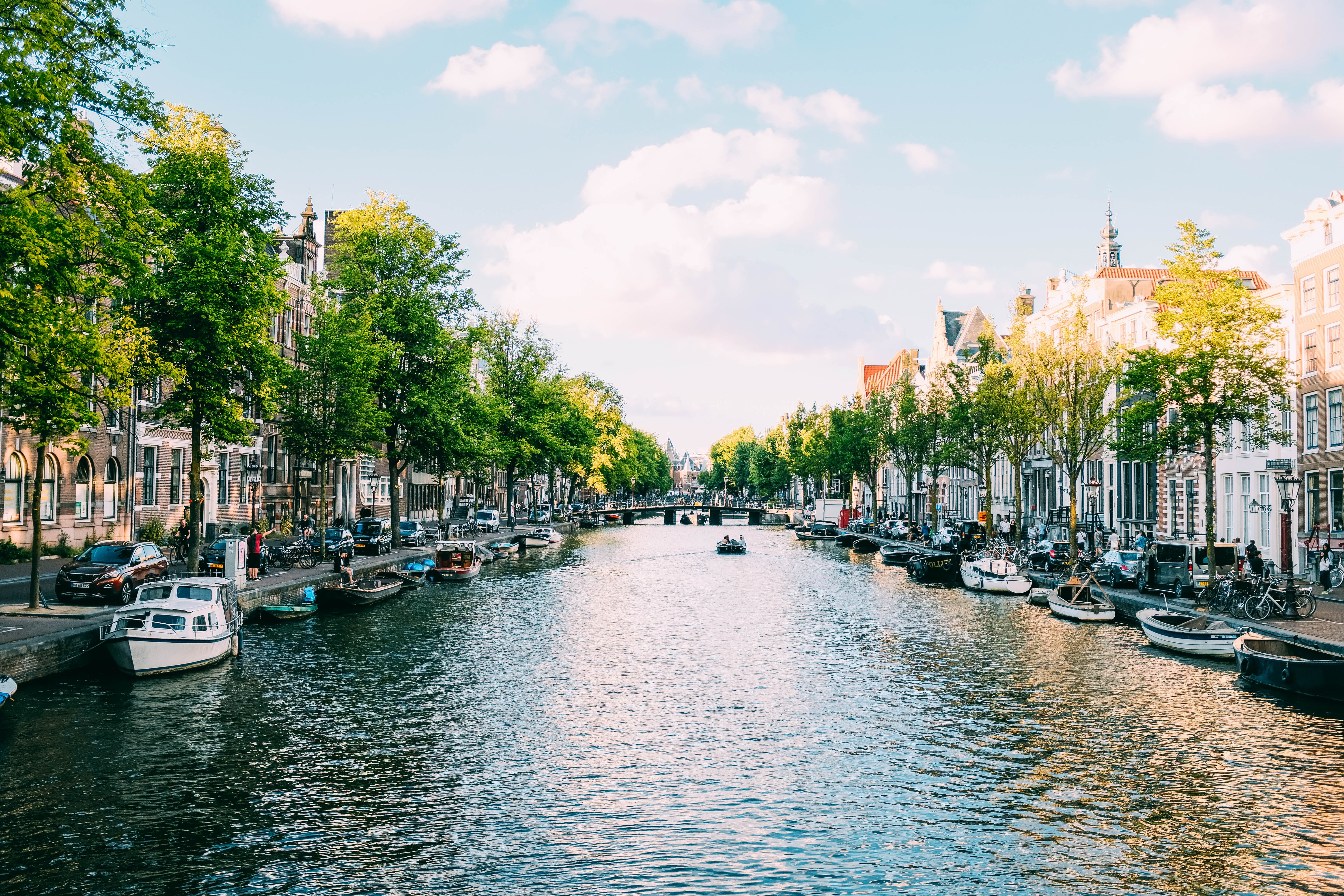
Amsterdam combines the unrivaled beauty of the 17th-century Golden Age city center with plenty of museums and art of the highest order, not to mention a remarkably laid-back atmosphere. It all comes together to make this one of the world’s most appealing and offbeat metropolises in the world. Built on a latticework of concentric canals like an aquatic rainbow, Amsterdam is known as the City of Canals—but it’s no Venice, content to live on moonlight serenades and former glory. Quite the contrary: on nearly every street here you’ll find old and new side by side—quiet corners where time seems to be holding its breath next to streets like neon-lit Kalverstraat, and Red Light ladies strutting by the city’s oldest church. Indeed, Amsterdam has as many lovely facets as a 40-carat diamond polished by one of the city’s gem cutters. It’s certainly a metropolis, but a rather small and very accessible one. Locals tend to refer to it as a big village, albeit one that happens to pack the cultural wallop of a major world destination. There are scores of concerts every day, numerous museums, summertime festivals, and, of course, a legendary year-round party scene. It’s pretty much impossible to resist Amsterdam’s charms. With 7,000 registered monuments, most of which began as the residences and warehouses of humble merchants, set on 160 man-made canals, and traversed by 1,500 or so bridges, Amsterdam has the largest historical inner city in Europe. Its famous circle of waterways, the grachtengordel, was a 17th-century urban expansion plan for the rich and is a lasting testament to the city’s Golden Age. This town is endearing because of its kinder, gentler nature—but a reputation for championing sex, drugs, and rock ’n’ roll does not alone account for Amsterdam’s being one of the most popular destinations in Europe: consider that within a single square mile the city harbors some of the greatest achievements in Western art, from Rembrandt to Van Gogh. Not to mention that this is one of Europe’s great walking cities, with so many of its treasures in the untouted details: tiny alleyways barely visible on the map, hidden garden courtyards, shop windows, floating houseboats, hidden hofjes(courtyards with almshouses), sudden vistas of church spires, and gabled roofs that look like so many unframed paintings. And don’t forget that the joy lies in details: elaborate gables and witty gable stones denoting the trade of a previous owner. Keep in mind that those XXX symbols you see all over town are not a mark of the city’s triple-X reputation. They’re part of Amsterdam’s official coat of arms—three St. Andrew’s crosses, believed to represent the three dangers that have traditionally plagued the city: flood, fire, and pestilence. The coat’s motto (“Valiant, determined, compassionate”) was introduced in 1947 by Queen Wilhelmina in remembrance of the 1941 February Strike in Amsterdam—the first time in Europe that non-Jewish people protested against the persecution of Jews by the Nazi regime.
Enkhuizen, Netherlands
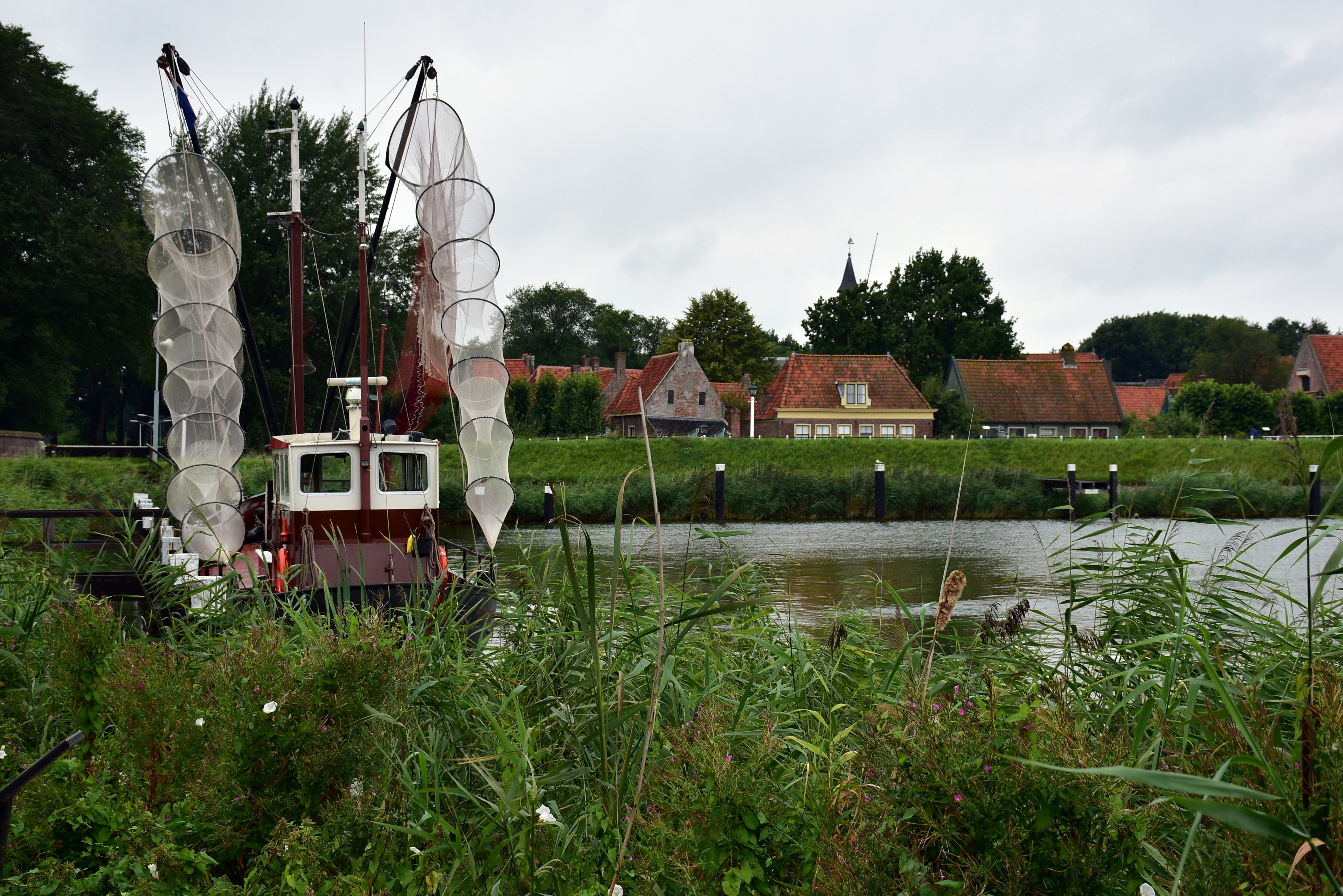
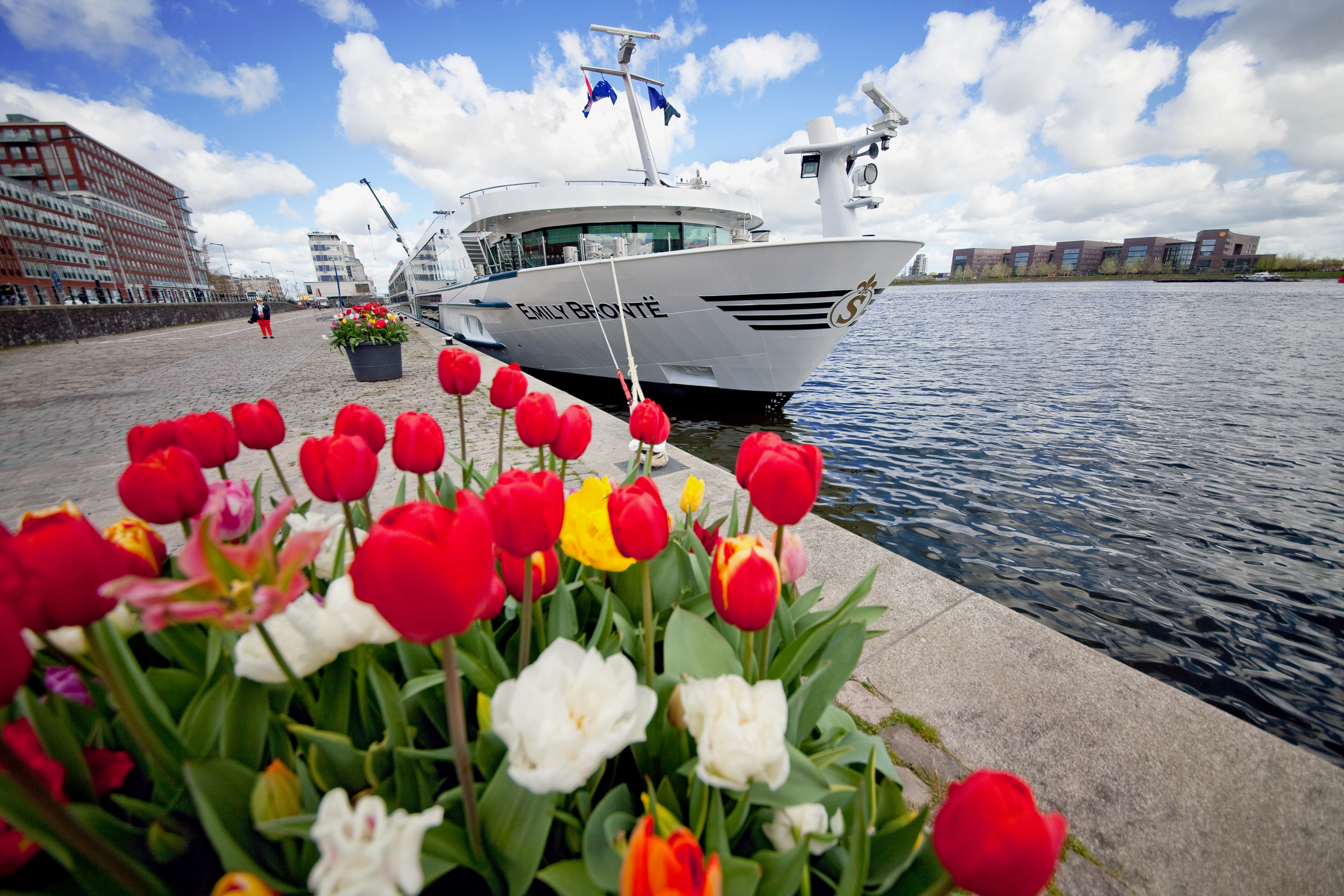
Enkhuizen – Overnight the ship has gently steered a course north. As dawn breaks, you’re greeted by views of Enkhuizen, a picturesque port nestling at the edge of the former Zuiderzee. It is also home to the Zuiderzee Museum, which we will experience on our guided tour this morning.
Found in the historic centre of Enkhuizen, it superbly recreates the 19th-century heritage of Holland’s inland bay and combines interesting exhibits with demonstrations of the artisan skills of yesteryear, such as sailmaking, fish curing and blacksmithing. The open-air museum is particularly captivating, as the era is brought to life with a charming village atmosphere, where the likes of bakers, shopkeepers and smokehouse workers don traditional clothing and serve you their wares, just as they would have done all those years ago.
During the Dutch Golden Age of the 17th-century, the Netherlands dominated world maritime trade, becoming fabulously prosperous. Enkhuizen, as one of the country’s principal ports specialising in trade in the East Indies, flourished. Merchants keen to display their wealth created this town of gabled houses, narrow streets, bridges and waterways. It’s a delight to explore, taking in the atmosphere of its little streets and jumble of sailing boats in the harbour.
After a delicious lunch on board, we cruise along the Markermeer, the southwestern part of the IJsselmeer, the great freshwater lake created when the Zuiderzee was separated from the North Sea by a series of dams and dykes built during the 1920 and ’30s. This mammoth engineering achievement now protects low-lying areas from flooding and has allowed the reclamation of 626 square miles of fertile land.
Before long, thoughts turn to tonight’s à la carte dinner, served with panache by the restaurant staff, after which why not unwind with a digestif at the bar to the soothing sound of the ship’s pianist.
Rotterdam, Netherlands
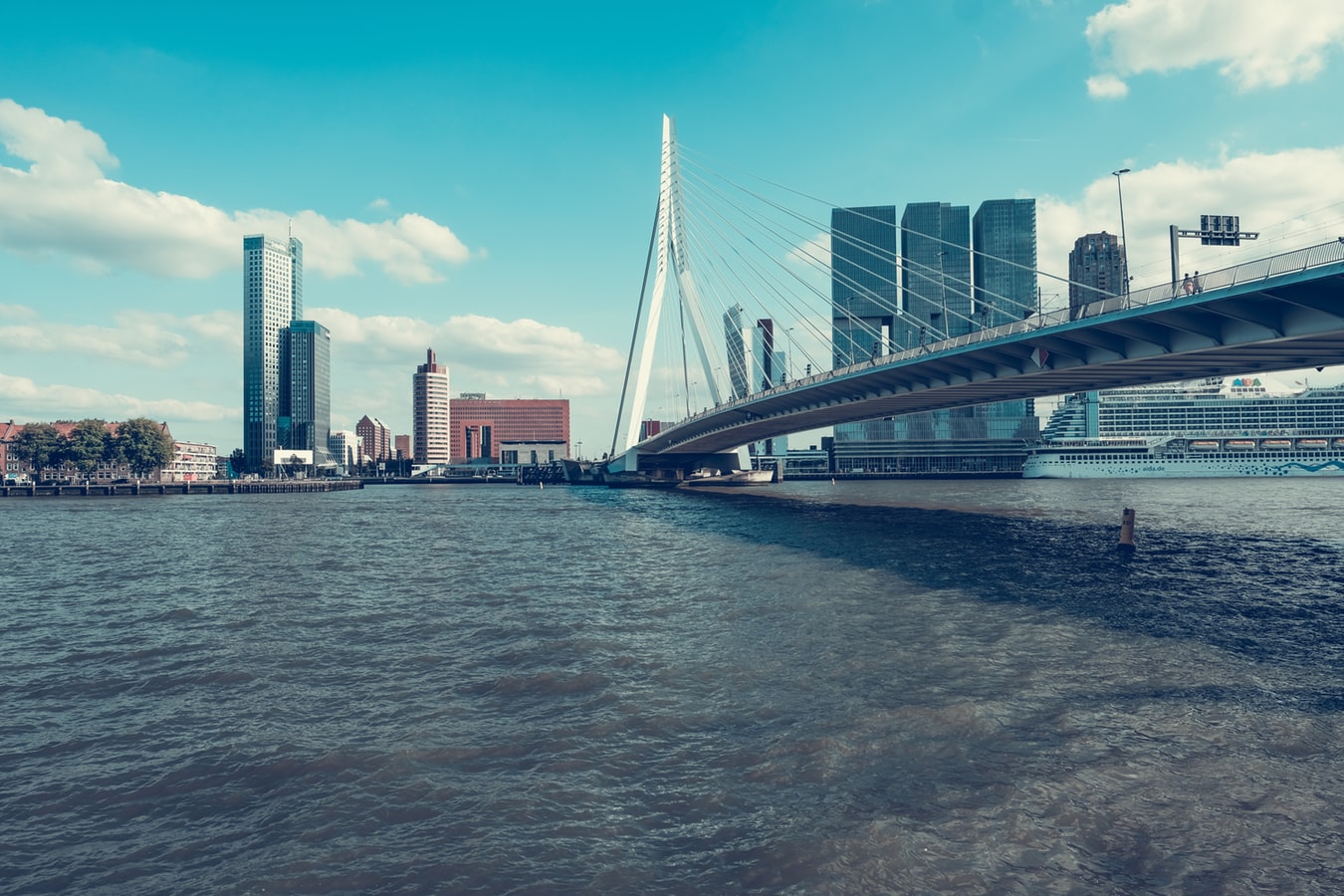
Rotterdam is a city that’s a long way removed from most people’s stereotypical notion of the Netherlands. There are few, if any, canals to be found here nor are there any quaint windmills. There is, however, a thriving modern city which is one of the busiest ports in the entire world.
Amsterdam, Netherlands
Amsterdam combines the unrivaled beauty of the 17th-century Golden Age city center with plenty of museums and art of the highest order, not to mention a remarkably laid-back atmosphere. It all comes together to make this one of the world’s most appealing and offbeat metropolises in the world. Built on a latticework of concentric canals like an aquatic rainbow, Amsterdam is known as the City of Canals—but it’s no Venice, content to live on moonlight serenades and former glory. Quite the contrary: on nearly every street here you’ll find old and new side by side—quiet corners where time seems to be holding its breath next to streets like neon-lit Kalverstraat, and Red Light ladies strutting by the city’s oldest church. Indeed, Amsterdam has as many lovely facets as a 40-carat diamond polished by one of the city’s gem cutters. It’s certainly a metropolis, but a rather small and very accessible one. Locals tend to refer to it as a big village, albeit one that happens to pack the cultural wallop of a major world destination. There are scores of concerts every day, numerous museums, summertime festivals, and, of course, a legendary year-round party scene. It’s pretty much impossible to resist Amsterdam’s charms. With 7,000 registered monuments, most of which began as the residences and warehouses of humble merchants, set on 160 man-made canals, and traversed by 1,500 or so bridges, Amsterdam has the largest historical inner city in Europe. Its famous circle of waterways, the grachtengordel, was a 17th-century urban expansion plan for the rich and is a lasting testament to the city’s Golden Age. This town is endearing because of its kinder, gentler nature—but a reputation for championing sex, drugs, and rock ’n’ roll does not alone account for Amsterdam’s being one of the most popular destinations in Europe: consider that within a single square mile the city harbors some of the greatest achievements in Western art, from Rembrandt to Van Gogh. Not to mention that this is one of Europe’s great walking cities, with so many of its treasures in the untouted details: tiny alleyways barely visible on the map, hidden garden courtyards, shop windows, floating houseboats, hidden hofjes(courtyards with almshouses), sudden vistas of church spires, and gabled roofs that look like so many unframed paintings. And don’t forget that the joy lies in details: elaborate gables and witty gable stones denoting the trade of a previous owner. Keep in mind that those XXX symbols you see all over town are not a mark of the city’s triple-X reputation. They’re part of Amsterdam’s official coat of arms—three St. Andrew’s crosses, believed to represent the three dangers that have traditionally plagued the city: flood, fire, and pestilence. The coat’s motto (“Valiant, determined, compassionate”) was introduced in 1947 by Queen Wilhelmina in remembrance of the 1941 February Strike in Amsterdam—the first time in Europe that non-Jewish people protested against the persecution of Jews by the Nazi regime.
Amsterdam, Netherlands
Amsterdam combines the unrivaled beauty of the 17th-century Golden Age city center with plenty of museums and art of the highest order, not to mention a remarkably laid-back atmosphere. It all comes together to make this one of the world’s most appealing and offbeat metropolises in the world. Built on a latticework of concentric canals like an aquatic rainbow, Amsterdam is known as the City of Canals—but it’s no Venice, content to live on moonlight serenades and former glory. Quite the contrary: on nearly every street here you’ll find old and new side by side—quiet corners where time seems to be holding its breath next to streets like neon-lit Kalverstraat, and Red Light ladies strutting by the city’s oldest church. Indeed, Amsterdam has as many lovely facets as a 40-carat diamond polished by one of the city’s gem cutters. It’s certainly a metropolis, but a rather small and very accessible one. Locals tend to refer to it as a big village, albeit one that happens to pack the cultural wallop of a major world destination. There are scores of concerts every day, numerous museums, summertime festivals, and, of course, a legendary year-round party scene. It’s pretty much impossible to resist Amsterdam’s charms. With 7,000 registered monuments, most of which began as the residences and warehouses of humble merchants, set on 160 man-made canals, and traversed by 1,500 or so bridges, Amsterdam has the largest historical inner city in Europe. Its famous circle of waterways, the grachtengordel, was a 17th-century urban expansion plan for the rich and is a lasting testament to the city’s Golden Age. This town is endearing because of its kinder, gentler nature—but a reputation for championing sex, drugs, and rock ’n’ roll does not alone account for Amsterdam’s being one of the most popular destinations in Europe: consider that within a single square mile the city harbors some of the greatest achievements in Western art, from Rembrandt to Van Gogh. Not to mention that this is one of Europe’s great walking cities, with so many of its treasures in the untouted details: tiny alleyways barely visible on the map, hidden garden courtyards, shop windows, floating houseboats, hidden hofjes(courtyards with almshouses), sudden vistas of church spires, and gabled roofs that look like so many unframed paintings. And don’t forget that the joy lies in details: elaborate gables and witty gable stones denoting the trade of a previous owner. Keep in mind that those XXX symbols you see all over town are not a mark of the city’s triple-X reputation. They’re part of Amsterdam’s official coat of arms—three St. Andrew’s crosses, believed to represent the three dangers that have traditionally plagued the city: flood, fire, and pestilence. The coat’s motto (“Valiant, determined, compassionate”) was introduced in 1947 by Queen Wilhelmina in remembrance of the 1941 February Strike in Amsterdam—the first time in Europe that non-Jewish people protested against the persecution of Jews by the Nazi regime.
Amsterdam, Netherlands
Amsterdam combines the unrivaled beauty of the 17th-century Golden Age city center with plenty of museums and art of the highest order, not to mention a remarkably laid-back atmosphere. It all comes together to make this one of the world’s most appealing and offbeat metropolises in the world. Built on a latticework of concentric canals like an aquatic rainbow, Amsterdam is known as the City of Canals—but it’s no Venice, content to live on moonlight serenades and former glory. Quite the contrary: on nearly every street here you’ll find old and new side by side—quiet corners where time seems to be holding its breath next to streets like neon-lit Kalverstraat, and Red Light ladies strutting by the city’s oldest church. Indeed, Amsterdam has as many lovely facets as a 40-carat diamond polished by one of the city’s gem cutters. It’s certainly a metropolis, but a rather small and very accessible one. Locals tend to refer to it as a big village, albeit one that happens to pack the cultural wallop of a major world destination. There are scores of concerts every day, numerous museums, summertime festivals, and, of course, a legendary year-round party scene. It’s pretty much impossible to resist Amsterdam’s charms. With 7,000 registered monuments, most of which began as the residences and warehouses of humble merchants, set on 160 man-made canals, and traversed by 1,500 or so bridges, Amsterdam has the largest historical inner city in Europe. Its famous circle of waterways, the grachtengordel, was a 17th-century urban expansion plan for the rich and is a lasting testament to the city’s Golden Age. This town is endearing because of its kinder, gentler nature—but a reputation for championing sex, drugs, and rock ’n’ roll does not alone account for Amsterdam’s being one of the most popular destinations in Europe: consider that within a single square mile the city harbors some of the greatest achievements in Western art, from Rembrandt to Van Gogh. Not to mention that this is one of Europe’s great walking cities, with so many of its treasures in the untouted details: tiny alleyways barely visible on the map, hidden garden courtyards, shop windows, floating houseboats, hidden hofjes(courtyards with almshouses), sudden vistas of church spires, and gabled roofs that look like so many unframed paintings. And don’t forget that the joy lies in details: elaborate gables and witty gable stones denoting the trade of a previous owner. Keep in mind that those XXX symbols you see all over town are not a mark of the city’s triple-X reputation. They’re part of Amsterdam’s official coat of arms—three St. Andrew’s crosses, believed to represent the three dangers that have traditionally plagued the city: flood, fire, and pestilence. The coat’s motto (“Valiant, determined, compassionate”) was introduced in 1947 by Queen Wilhelmina in remembrance of the 1941 February Strike in Amsterdam—the first time in Europe that non-Jewish people protested against the persecution of Jews by the Nazi regime.
Enkhuizen, Netherlands
Enkhuizen – Overnight the ship has gently steered a course north. As dawn breaks, you’re greeted by views of Enkhuizen, a picturesque port nestling at the edge of the former Zuiderzee. It is also home to the Zuiderzee Museum, which we will experience on our guided tour this morning.
Found in the historic centre of Enkhuizen, it superbly recreates the 19th-century heritage of Holland’s inland bay and combines interesting exhibits with demonstrations of the artisan skills of yesteryear, such as sailmaking, fish curing and blacksmithing. The open-air museum is particularly captivating, as the era is brought to life with a charming village atmosphere, where the likes of bakers, shopkeepers and smokehouse workers don traditional clothing and serve you their wares, just as they would have done all those years ago.
During the Dutch Golden Age of the 17th-century, the Netherlands dominated world maritime trade, becoming fabulously prosperous. Enkhuizen, as one of the country’s principal ports specialising in trade in the East Indies, flourished. Merchants keen to display their wealth created this town of gabled houses, narrow streets, bridges and waterways. It’s a delight to explore, taking in the atmosphere of its little streets and jumble of sailing boats in the harbour.
After a delicious lunch on board, we cruise along the Markermeer, the southwestern part of the IJsselmeer, the great freshwater lake created when the Zuiderzee was separated from the North Sea by a series of dams and dykes built during the 1920 and ’30s. This mammoth engineering achievement now protects low-lying areas from flooding and has allowed the reclamation of 626 square miles of fertile land.
Before long, thoughts turn to tonight’s à la carte dinner, served with panache by the restaurant staff, after which why not unwind with a digestif at the bar to the soothing sound of the ship’s pianist.
Rotterdam, Netherlands
Rotterdam is a city that’s a long way removed from most people’s stereotypical notion of the Netherlands. There are few, if any, canals to be found here nor are there any quaint windmills. There is, however, a thriving modern city which is one of the busiest ports in the entire world.
Amsterdam, Netherlands
Amsterdam combines the unrivaled beauty of the 17th-century Golden Age city center with plenty of museums and art of the highest order, not to mention a remarkably laid-back atmosphere. It all comes together to make this one of the world’s most appealing and offbeat metropolises in the world. Built on a latticework of concentric canals like an aquatic rainbow, Amsterdam is known as the City of Canals—but it’s no Venice, content to live on moonlight serenades and former glory. Quite the contrary: on nearly every street here you’ll find old and new side by side—quiet corners where time seems to be holding its breath next to streets like neon-lit Kalverstraat, and Red Light ladies strutting by the city’s oldest church. Indeed, Amsterdam has as many lovely facets as a 40-carat diamond polished by one of the city’s gem cutters. It’s certainly a metropolis, but a rather small and very accessible one. Locals tend to refer to it as a big village, albeit one that happens to pack the cultural wallop of a major world destination. There are scores of concerts every day, numerous museums, summertime festivals, and, of course, a legendary year-round party scene. It’s pretty much impossible to resist Amsterdam’s charms. With 7,000 registered monuments, most of which began as the residences and warehouses of humble merchants, set on 160 man-made canals, and traversed by 1,500 or so bridges, Amsterdam has the largest historical inner city in Europe. Its famous circle of waterways, the grachtengordel, was a 17th-century urban expansion plan for the rich and is a lasting testament to the city’s Golden Age. This town is endearing because of its kinder, gentler nature—but a reputation for championing sex, drugs, and rock ’n’ roll does not alone account for Amsterdam’s being one of the most popular destinations in Europe: consider that within a single square mile the city harbors some of the greatest achievements in Western art, from Rembrandt to Van Gogh. Not to mention that this is one of Europe’s great walking cities, with so many of its treasures in the untouted details: tiny alleyways barely visible on the map, hidden garden courtyards, shop windows, floating houseboats, hidden hofjes(courtyards with almshouses), sudden vistas of church spires, and gabled roofs that look like so many unframed paintings. And don’t forget that the joy lies in details: elaborate gables and witty gable stones denoting the trade of a previous owner. Keep in mind that those XXX symbols you see all over town are not a mark of the city’s triple-X reputation. They’re part of Amsterdam’s official coat of arms—three St. Andrew’s crosses, believed to represent the three dangers that have traditionally plagued the city: flood, fire, and pestilence. The coat’s motto (“Valiant, determined, compassionate”) was introduced in 1947 by Queen Wilhelmina in remembrance of the 1941 February Strike in Amsterdam—the first time in Europe that non-Jewish people protested against the persecution of Jews by the Nazi regime.
Amsterdam, Netherlands
Amsterdam combines the unrivaled beauty of the 17th-century Golden Age city center with plenty of museums and art of the highest order, not to mention a remarkably laid-back atmosphere. It all comes together to make this one of the world’s most appealing and offbeat metropolises in the world. Built on a latticework of concentric canals like an aquatic rainbow, Amsterdam is known as the City of Canals—but it’s no Venice, content to live on moonlight serenades and former glory. Quite the contrary: on nearly every street here you’ll find old and new side by side—quiet corners where time seems to be holding its breath next to streets like neon-lit Kalverstraat, and Red Light ladies strutting by the city’s oldest church. Indeed, Amsterdam has as many lovely facets as a 40-carat diamond polished by one of the city’s gem cutters. It’s certainly a metropolis, but a rather small and very accessible one. Locals tend to refer to it as a big village, albeit one that happens to pack the cultural wallop of a major world destination. There are scores of concerts every day, numerous museums, summertime festivals, and, of course, a legendary year-round party scene. It’s pretty much impossible to resist Amsterdam’s charms. With 7,000 registered monuments, most of which began as the residences and warehouses of humble merchants, set on 160 man-made canals, and traversed by 1,500 or so bridges, Amsterdam has the largest historical inner city in Europe. Its famous circle of waterways, the grachtengordel, was a 17th-century urban expansion plan for the rich and is a lasting testament to the city’s Golden Age. This town is endearing because of its kinder, gentler nature—but a reputation for championing sex, drugs, and rock ’n’ roll does not alone account for Amsterdam’s being one of the most popular destinations in Europe: consider that within a single square mile the city harbors some of the greatest achievements in Western art, from Rembrandt to Van Gogh. Not to mention that this is one of Europe’s great walking cities, with so many of its treasures in the untouted details: tiny alleyways barely visible on the map, hidden garden courtyards, shop windows, floating houseboats, hidden hofjes(courtyards with almshouses), sudden vistas of church spires, and gabled roofs that look like so many unframed paintings. And don’t forget that the joy lies in details: elaborate gables and witty gable stones denoting the trade of a previous owner. Keep in mind that those XXX symbols you see all over town are not a mark of the city’s triple-X reputation. They’re part of Amsterdam’s official coat of arms—three St. Andrew’s crosses, believed to represent the three dangers that have traditionally plagued the city: flood, fire, and pestilence. The coat’s motto (“Valiant, determined, compassionate”) was introduced in 1947 by Queen Wilhelmina in remembrance of the 1941 February Strike in Amsterdam—the first time in Europe that non-Jewish people protested against the persecution of Jews by the Nazi regime.
Cabin Options
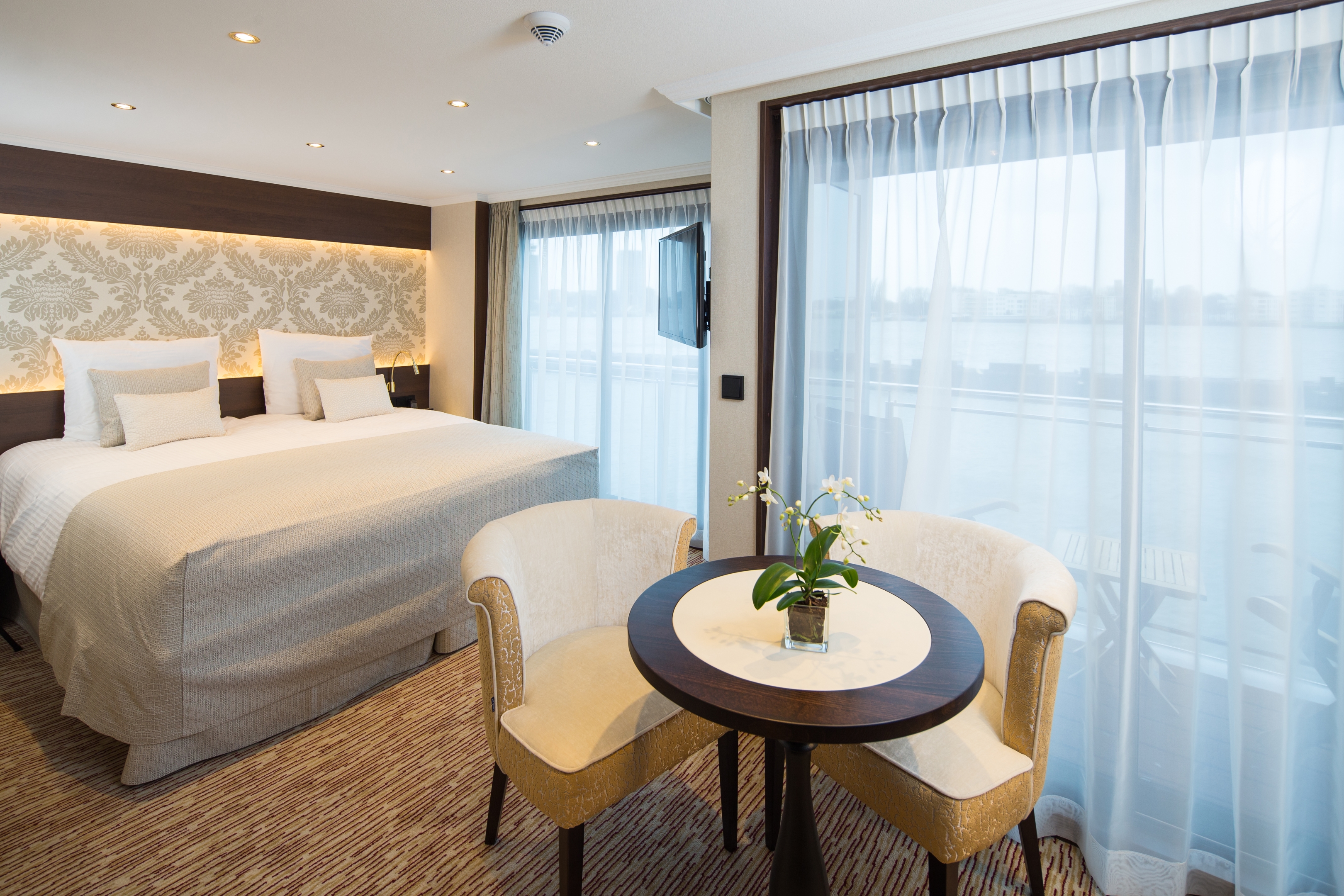
Deluxe Balcony Suites
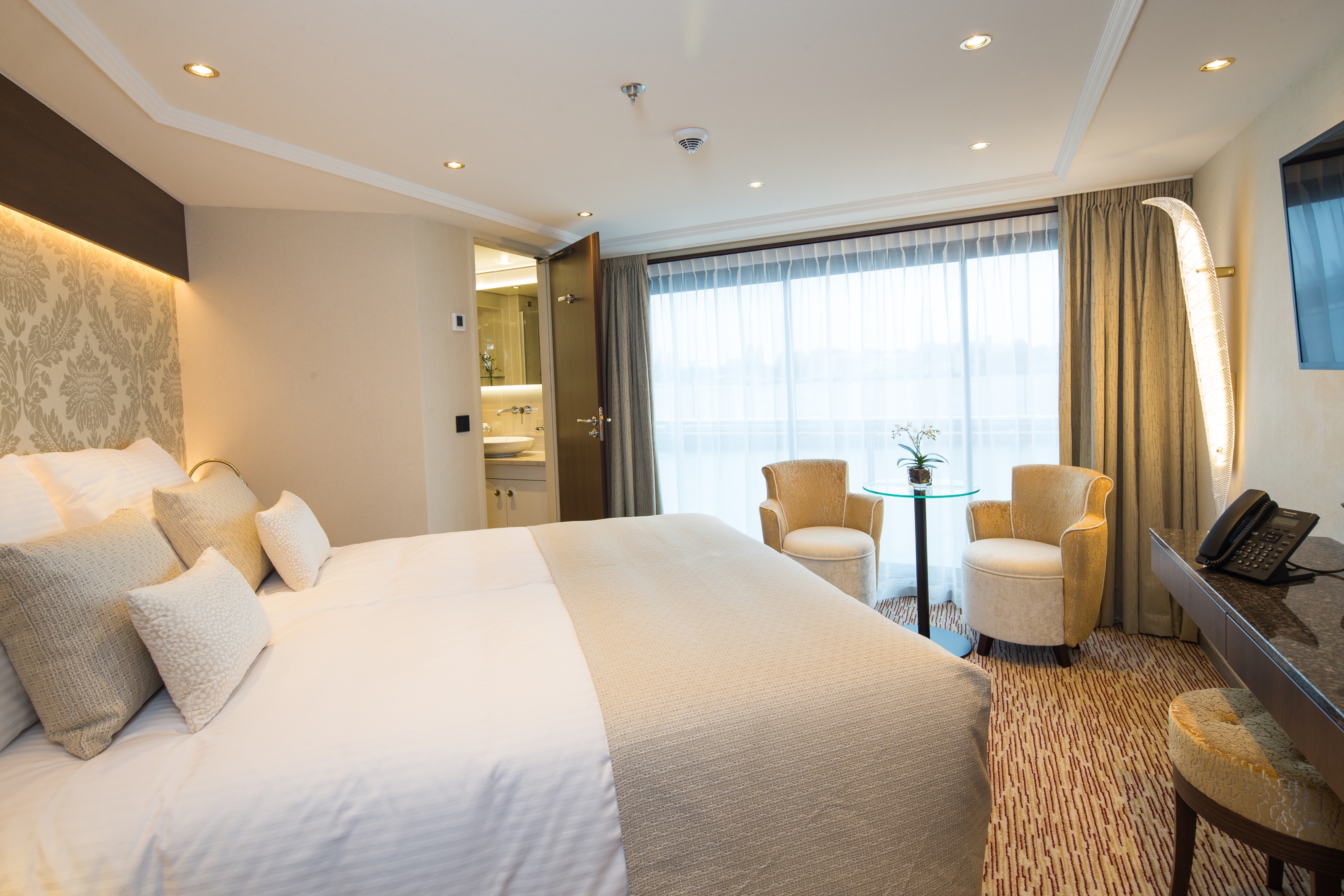
Superior Suite – Diamond Deck
Stern Superior Suite
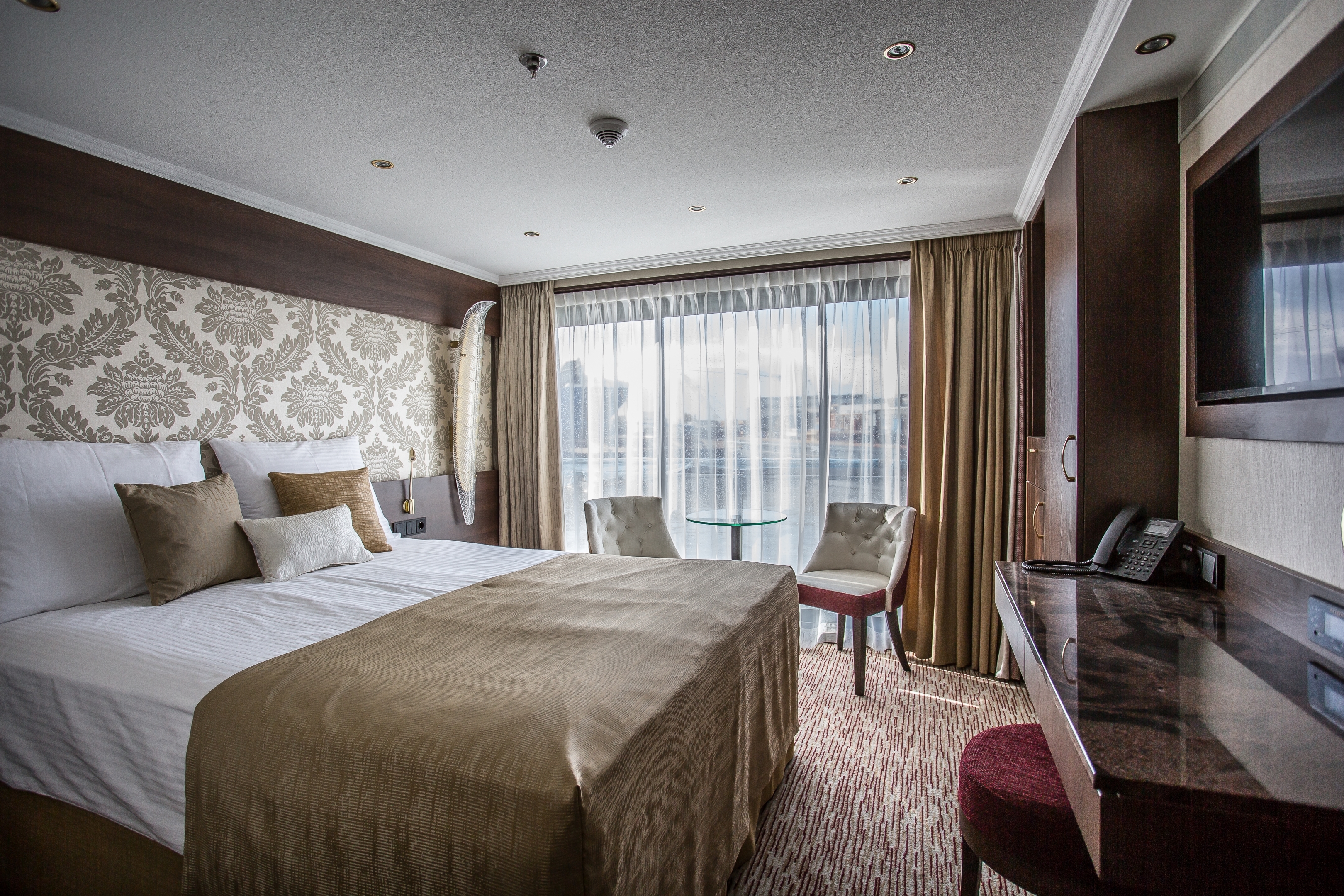
Standard Suite – Diamond Deck
Superior Suite – Ruby Deck
Standard Suite – Ruby Deck
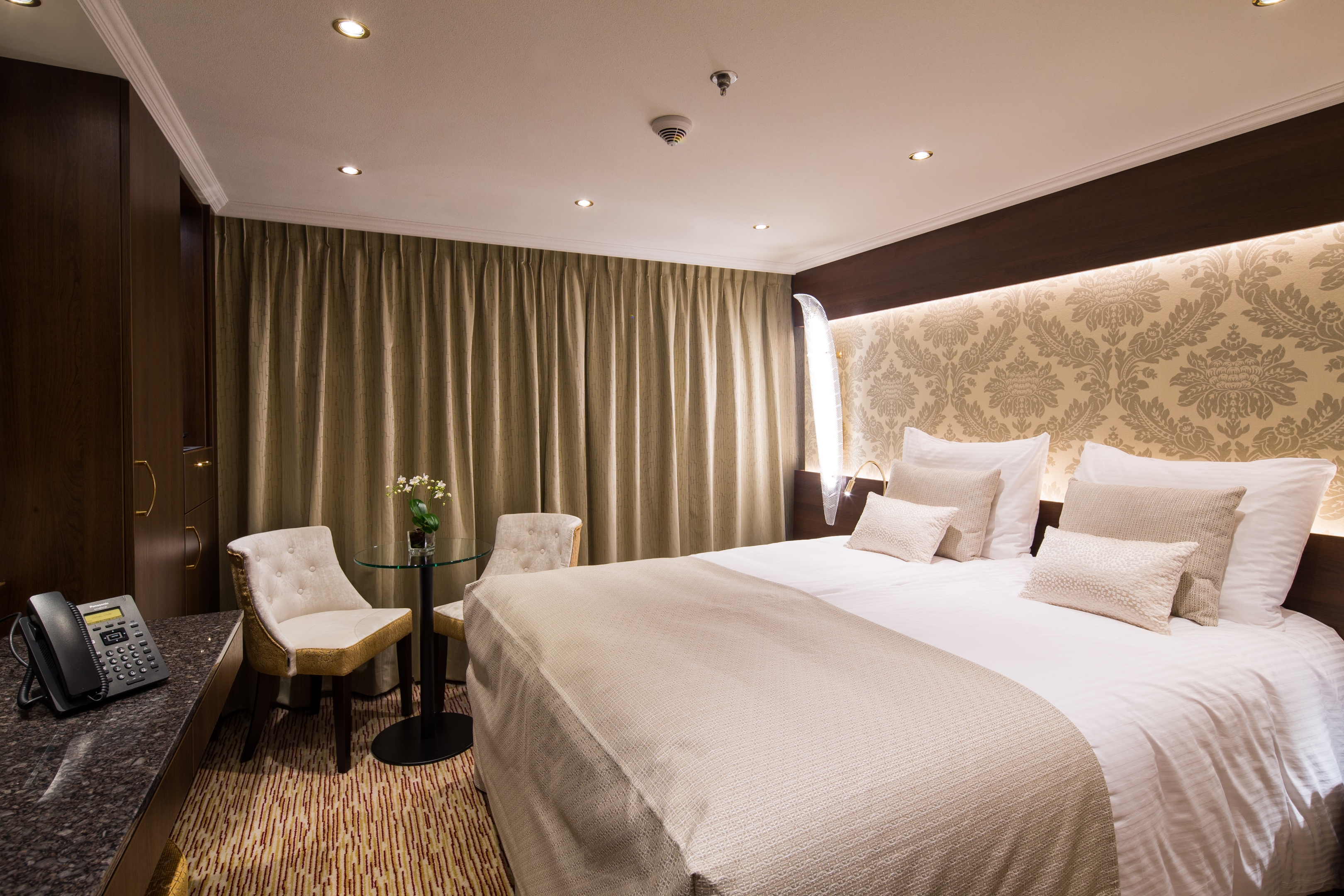
Standard Suite – Emerald Deck
Ship Facilities
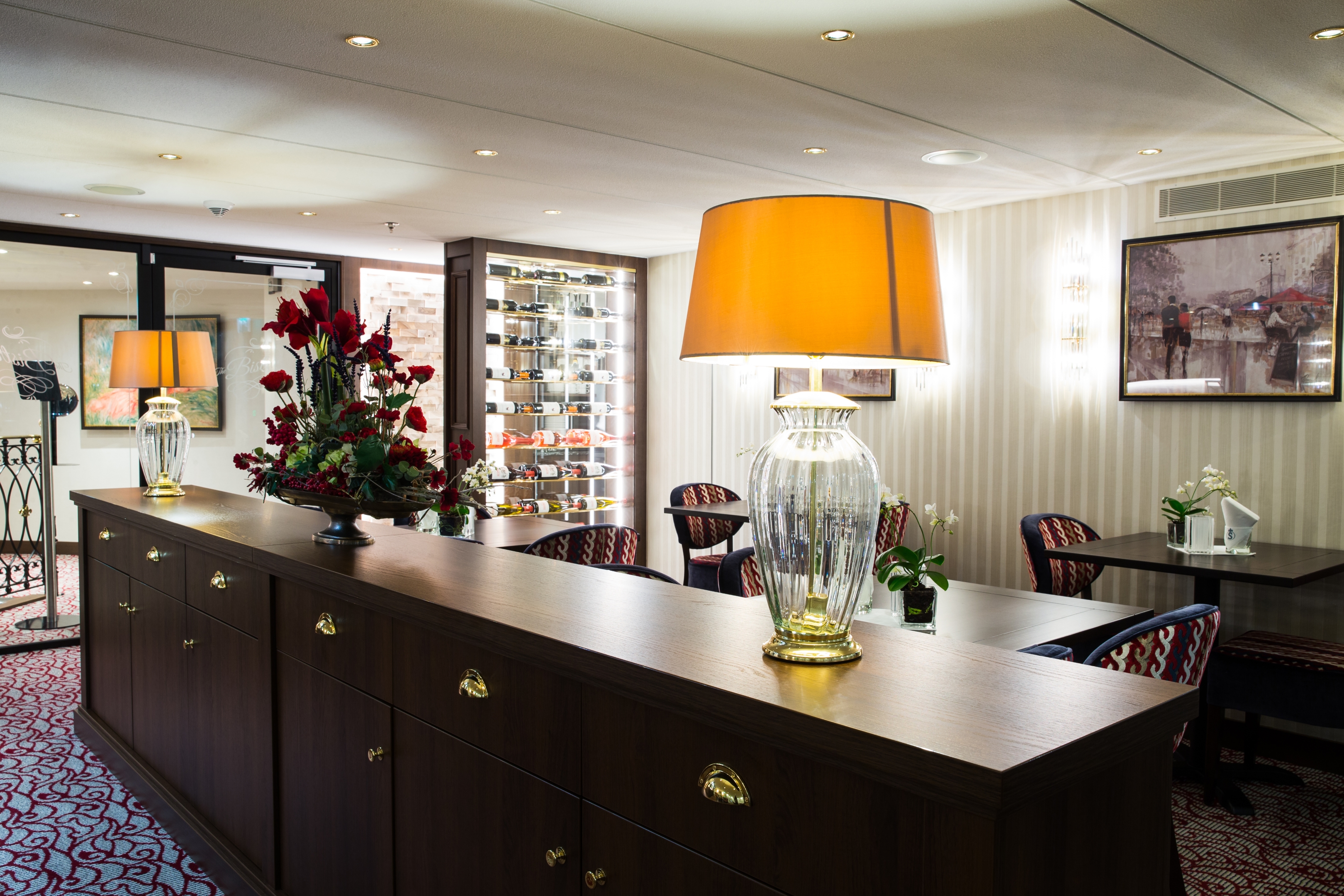
Main Restaurant
The ship’s main restaurant is located on the Ruby (middle) Deck and here you will experience not only exceptional first class cuisine, but also the most attentive yet discreet service from the ship’s highly professional crew. So just sit back with a well-deserved glass of wine from the carefully selected wine list and delight in the wonderful elegance of your surroundings; beautifully laid tables for just 4 or 6 guests, crisp linen, deep wool carpets and warm wood panelling abound to offer a delectable dining experience of the highest order.
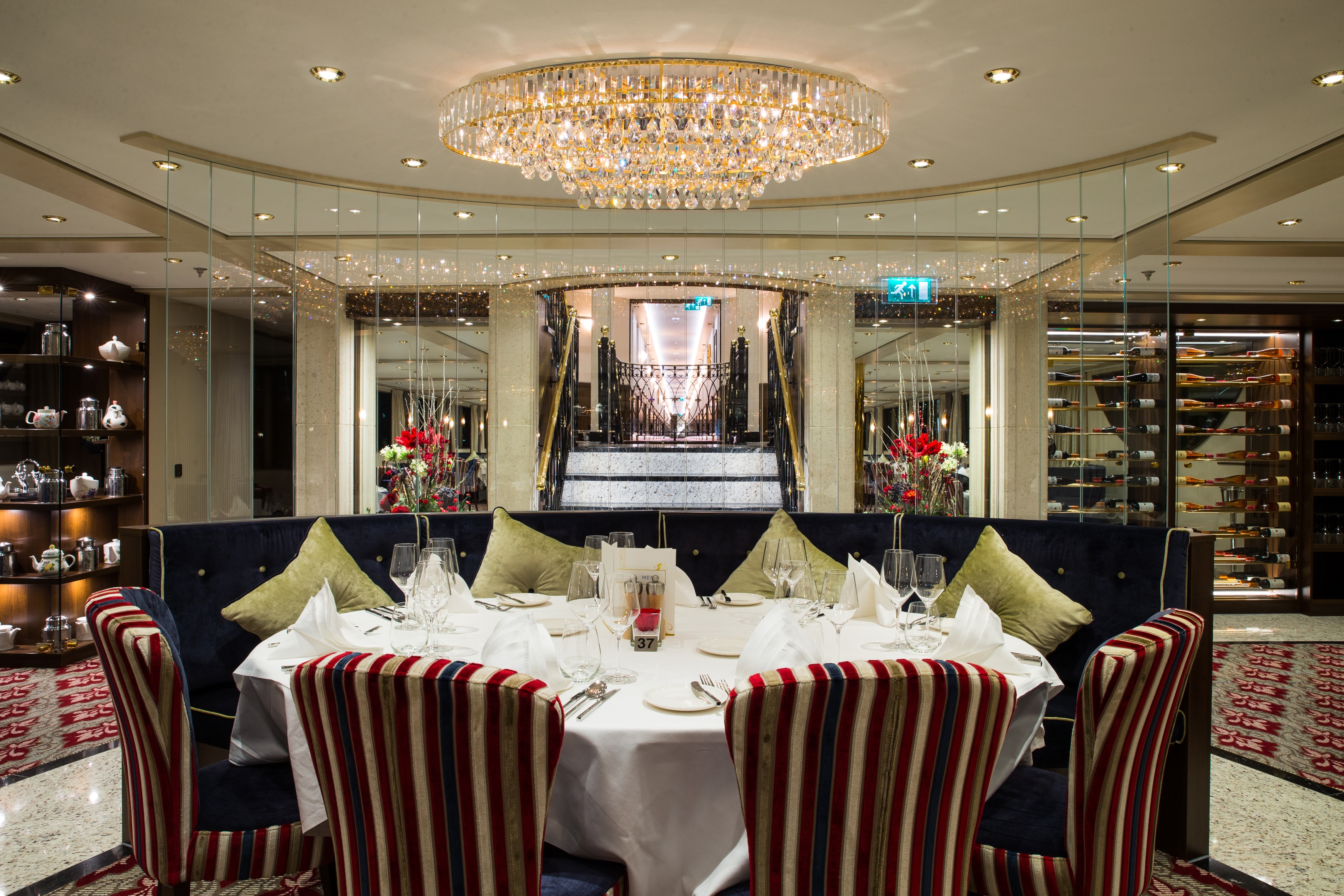
Riverview Kitchen
At the Riverview Kitchen with its large panoramic windows, enjoy a more intimate dining experience whilst taking in the fantastic views. Here in the evenings the chef presents in the open kitchen a selection of locally inspired dishes which you can enjoy with your fellow guests; this intimate dining experience can be reserved on board at no extra charge. When the weather allows the panoramic windows may be fully opened on to the terrace to allow a delightful al fresco dining experience.
Excursions
We are a well-travelled collective – made up of our guests as well as our team. We’ll admit it – we’re obsessed with travel.
But that’s not our only interest. We also love architecture, history, the arts, and gastronomy – everything that makes a culture unique. And we plan our itineraries to ensure we’re catering to those interests. Perfecting every excursion to ensure you get the most out of your onshore adventures.
Most days are filled with full or half-day excursions. Whether that’s a city tour, an introduction to a brand-new town or a more in-depth visit to a specific landmark or attraction. You’ll see the very best of every destination. Not just the legendary locations, we’ll uncover the top-secret local spots too.
World-famous landmarks
You’ll get to experience some world-famous destinations in the company of our passionate local guides. Sites like the Benedictine Melk Abbey on the Danube, spectacular Pont du Gard on the Rhône, Keukenhof Gardens – the world’s largest flower gardens – on the Dutch Waterways and Cologne with its cathedral, the largest Gothic church in Northern Europe.
A taste of your destination
Food has the uncanny ability to reveal the softer parts of the destination most tourists overlook. Recipes passed down through the generations slowly become ingrained within a culture, featuring fresh local produce and traditional cooking techniques. Our excursions often include delicious local produce perfected over centuries – sample cheese in Switzerland and chocolate in Germany (it’s not a cruise for those watching their weight), wine tasting in the world-famous wine region of Burgundy and port in the port wine cellars of Porto.
For even more, why not choose one of our Gastronomy themed departures?
Authentic cultural experiences
Our river cruise itineraries deliver authentic and engaging moments to fully immerse you in the culture. You’ll remember being seduced by the fiery passion of flamenco dancing after a cruise along the Douro. Hold on to that feeling of wonder you felt as you watch the glassblower creating the most beautiful vase out of a glowing mass. And tell the stories you heard during a Hungarian folklore show to your grandchildren at bedtime. The memory of these authentic cultural experiences will last a lifetime.
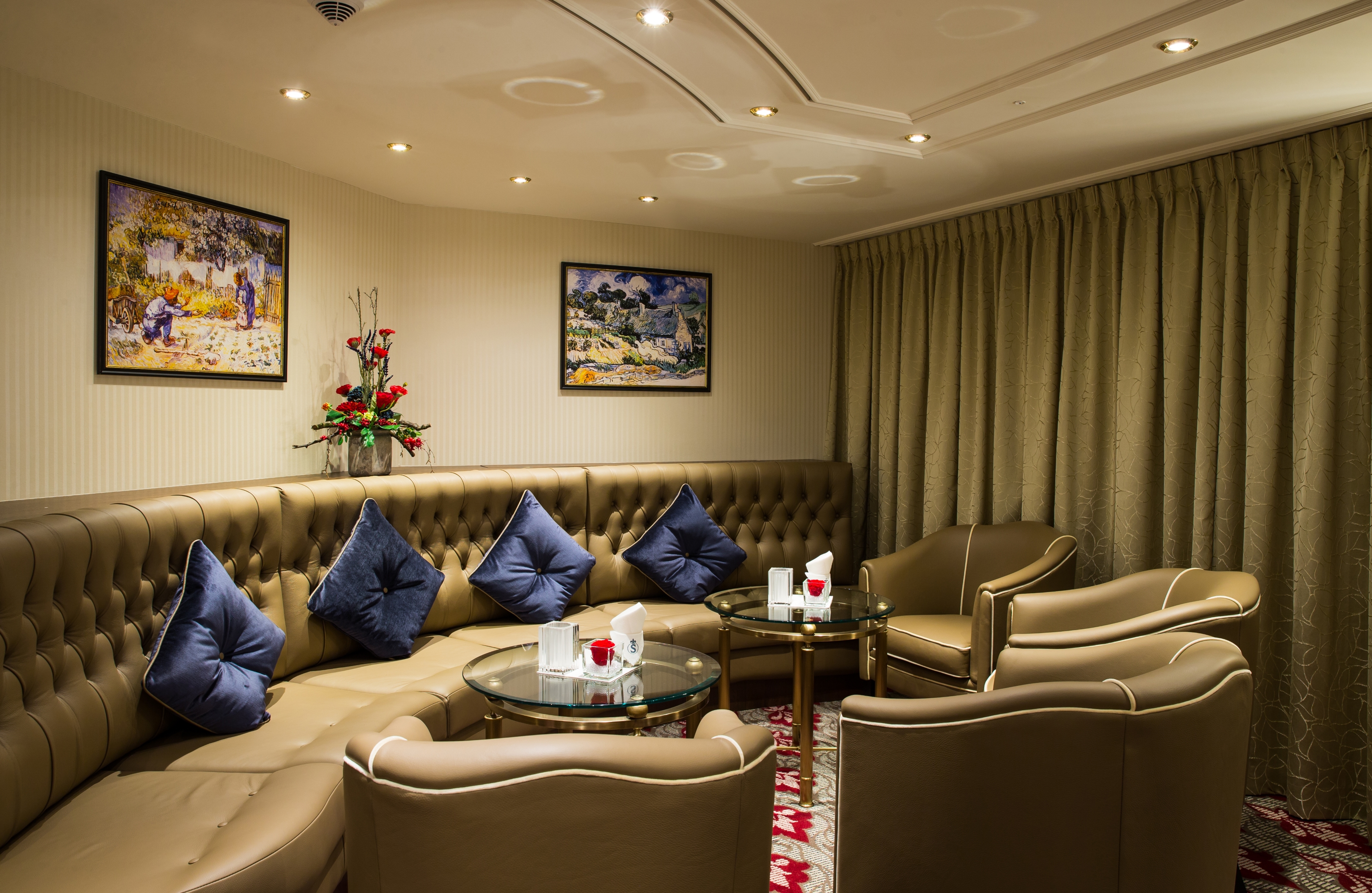
Panorama Lounge and Bar
A lounge in every sense of the word, complete with plenty of comfortable leather armchairs and sumptuous sofas where you can sink into warmly colourful cushions in beautiful quality fabrics with a freshly made cup of tea. A thick wool carpet feels lovely underfoot and the tasteful contemporary lighting above creates a welcoming and refined ambience, further complemented by the discreet and intuitive service resplendent of the finest five-star hotels. So just sit back with your favourite cocktail and take in the truly mesmerising view.
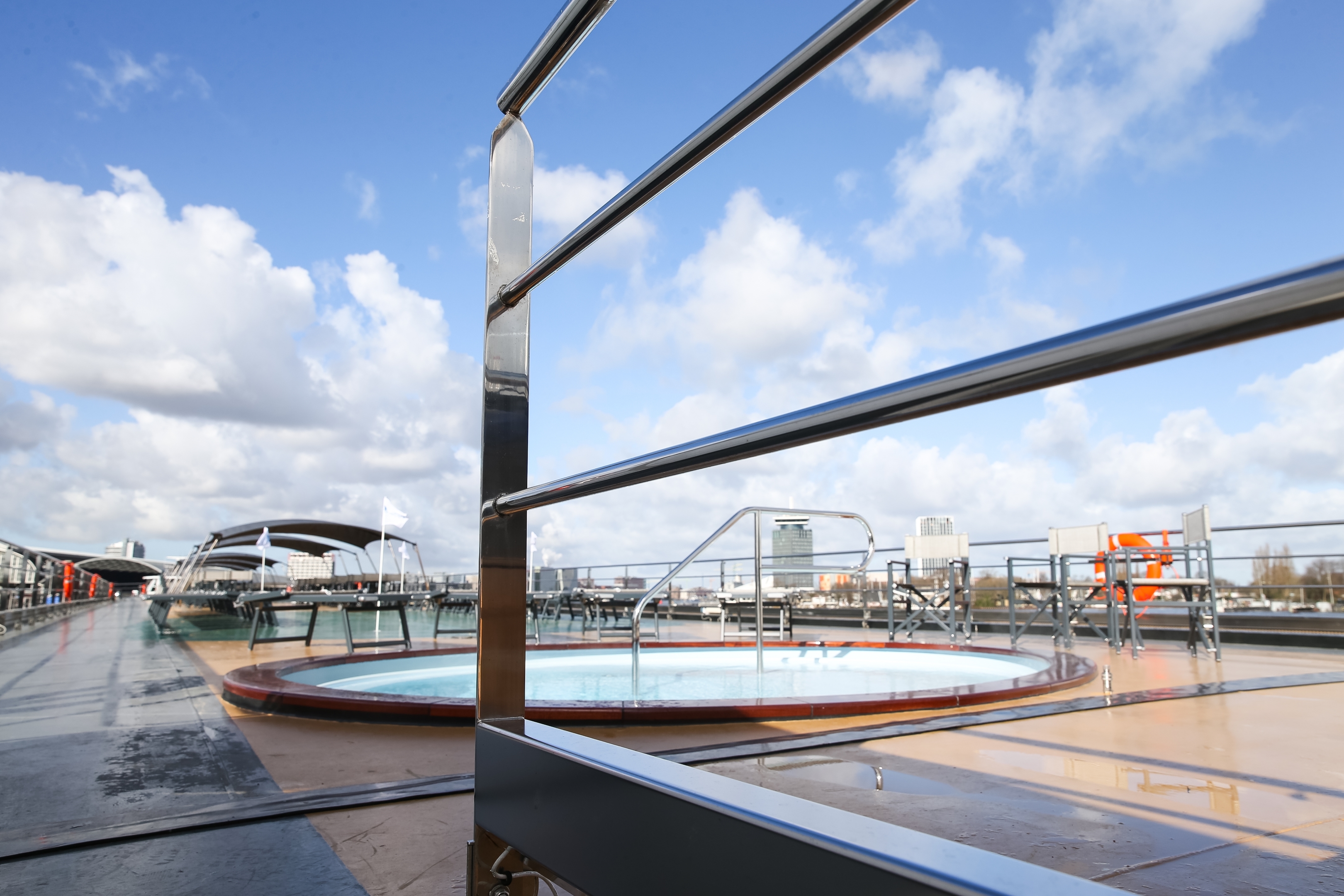
The Sun Deck
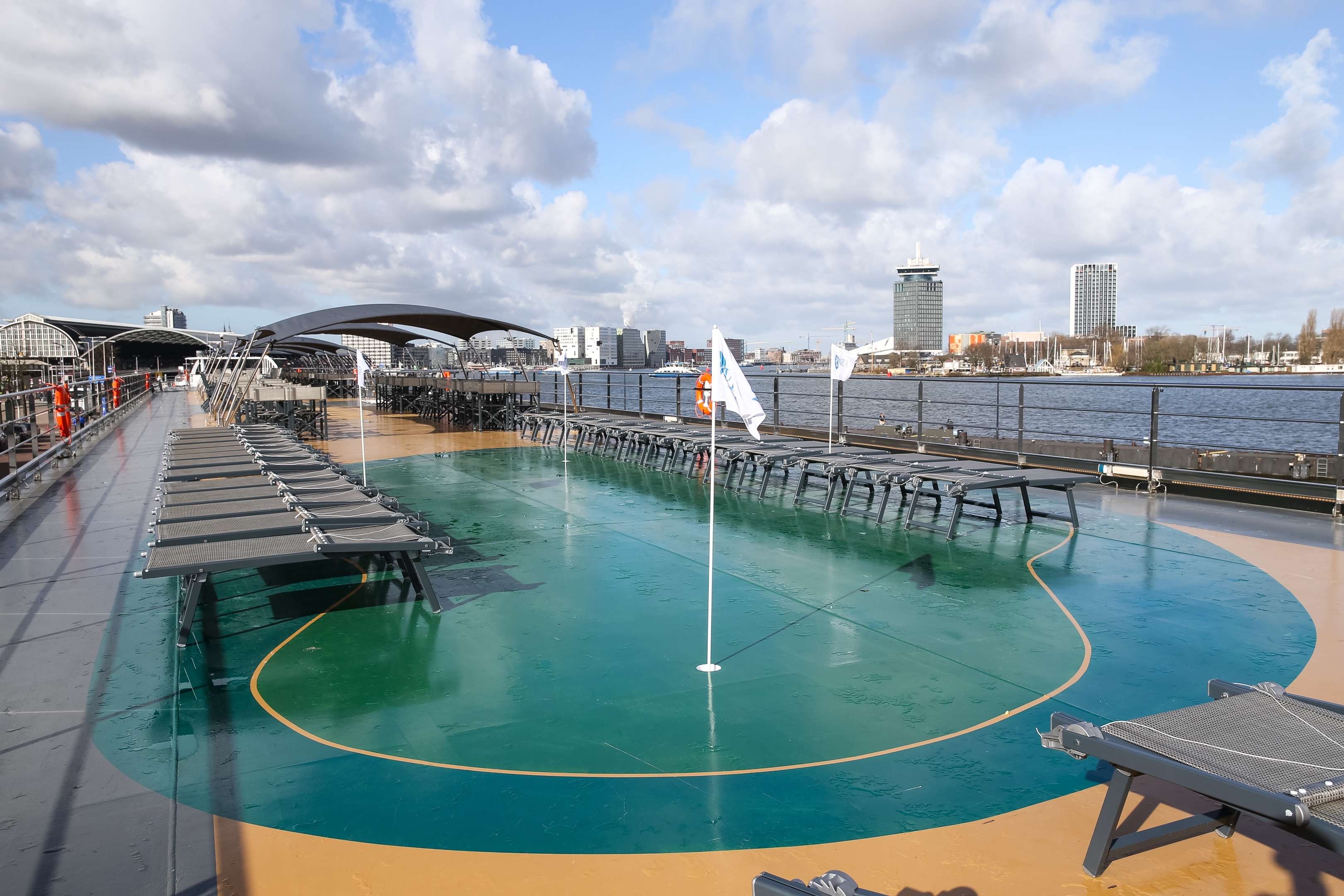
Head on up to this truly spectacular sun deck to watch life ashore slip by from the comfort of a sun lounger, perhaps under shade if the weather gets too hot! There’s always the refreshing splash pool too or why not try your hand on the putting green. Then take a refreshingly long drink and that book you’ve been meaning to read for ages on to the lovely terrace area at the fore of the ship, located right in front of the wheelhouse where you can view the Captain and his team skilfully navigating the twisting river and enjoy truly ‘driving seat’ views. Take a deep breath and relax into the pace of river cruise life – now you’re really on holiday!
Please note: The Sun Deck is only accessible by stairs
Souvenir Shop
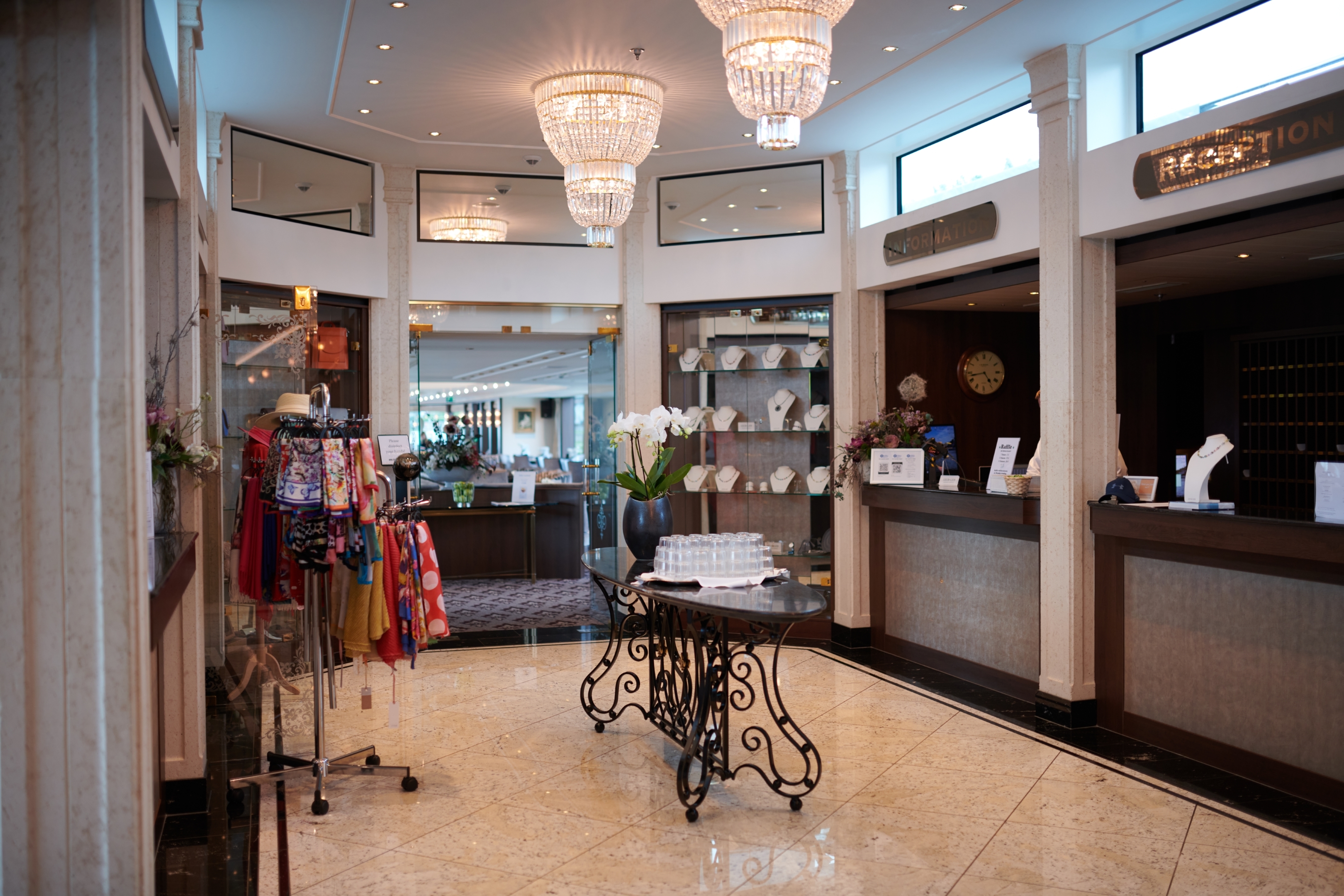
Boutique gift shop for your holiday souvenirs
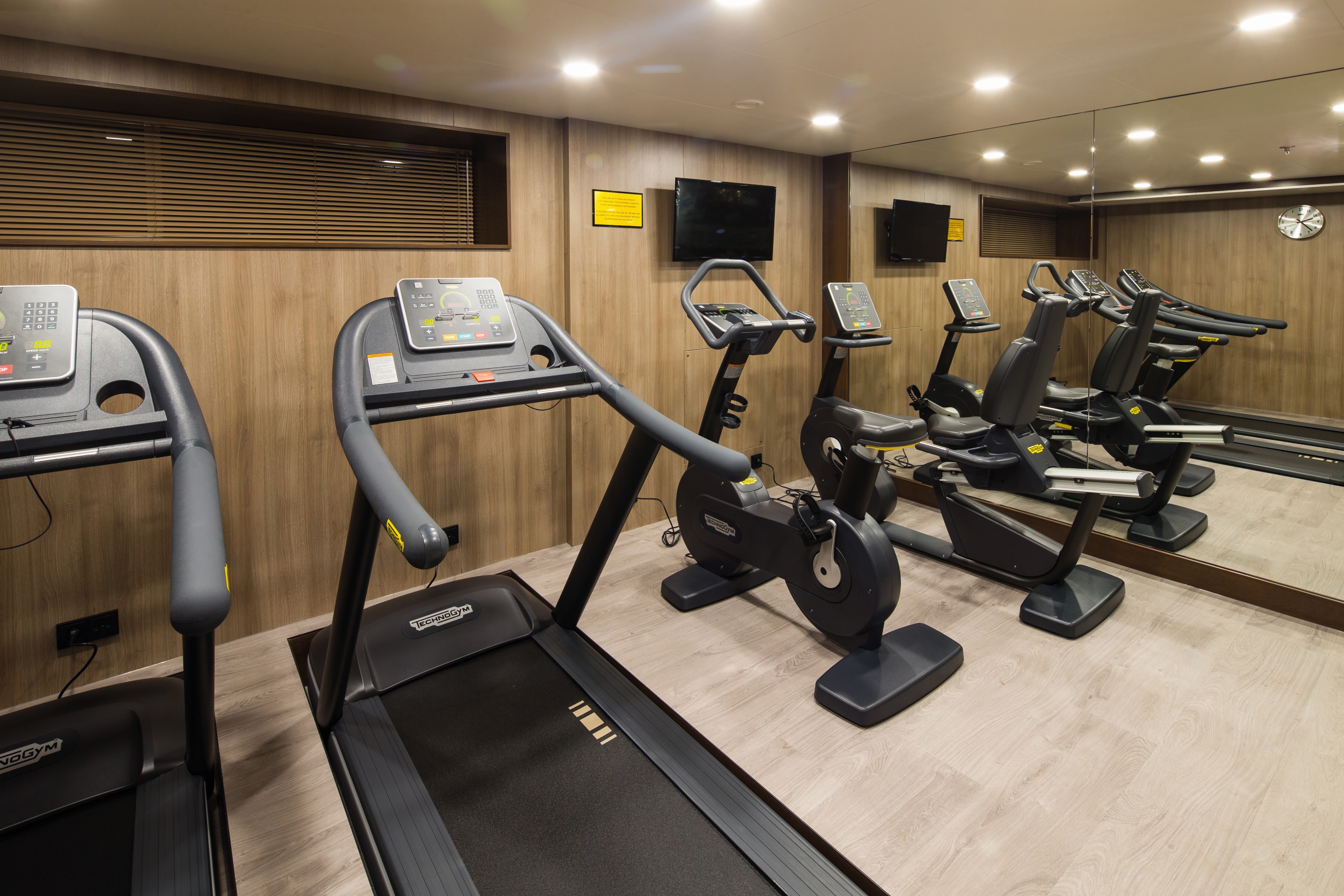
Fitness Centre
On the Emerald (lower) Deck is the fitness centre, perfect for working off all those delicious meals.
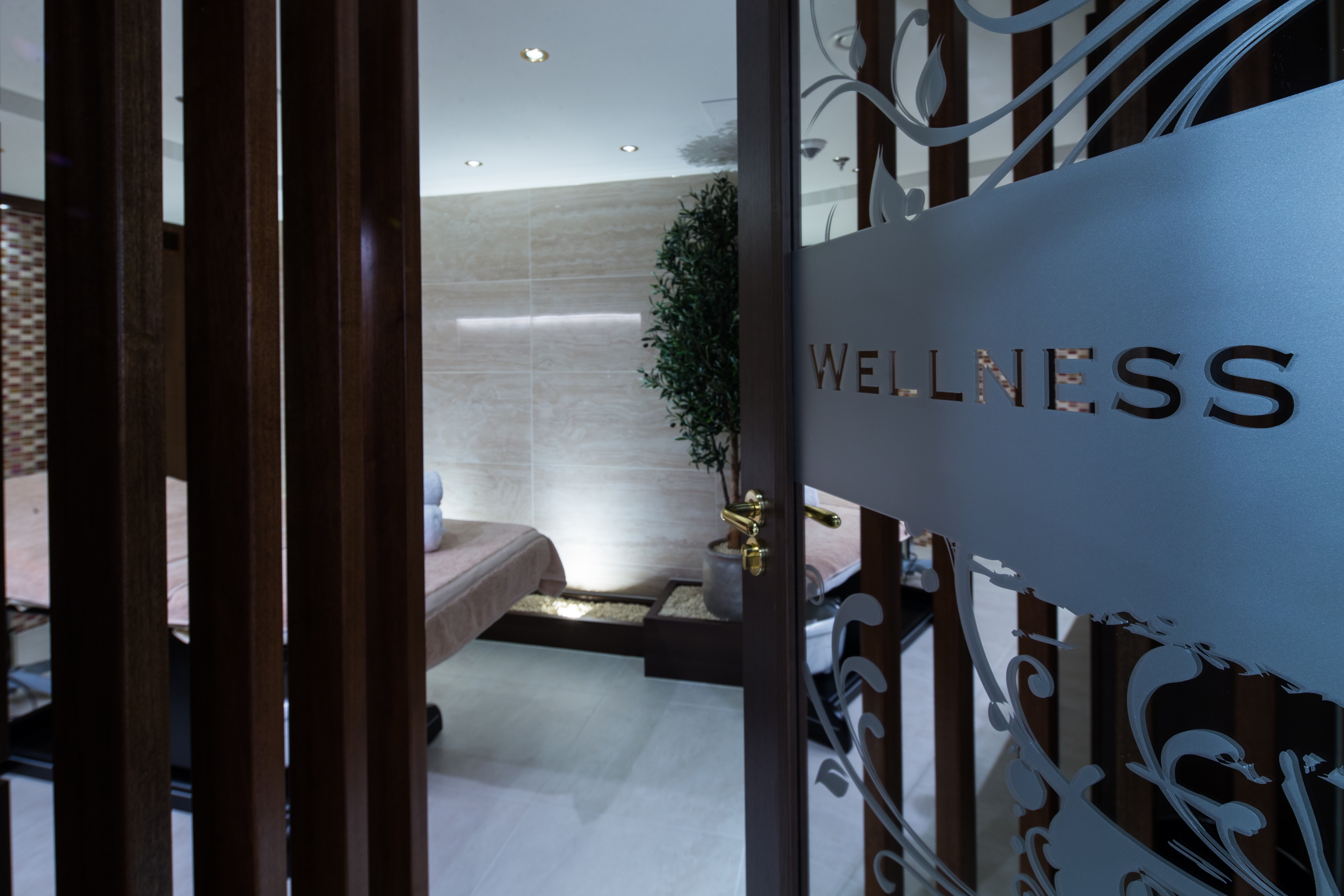
Wellness
For something less strenuous treat yourself to a relaxing massage.
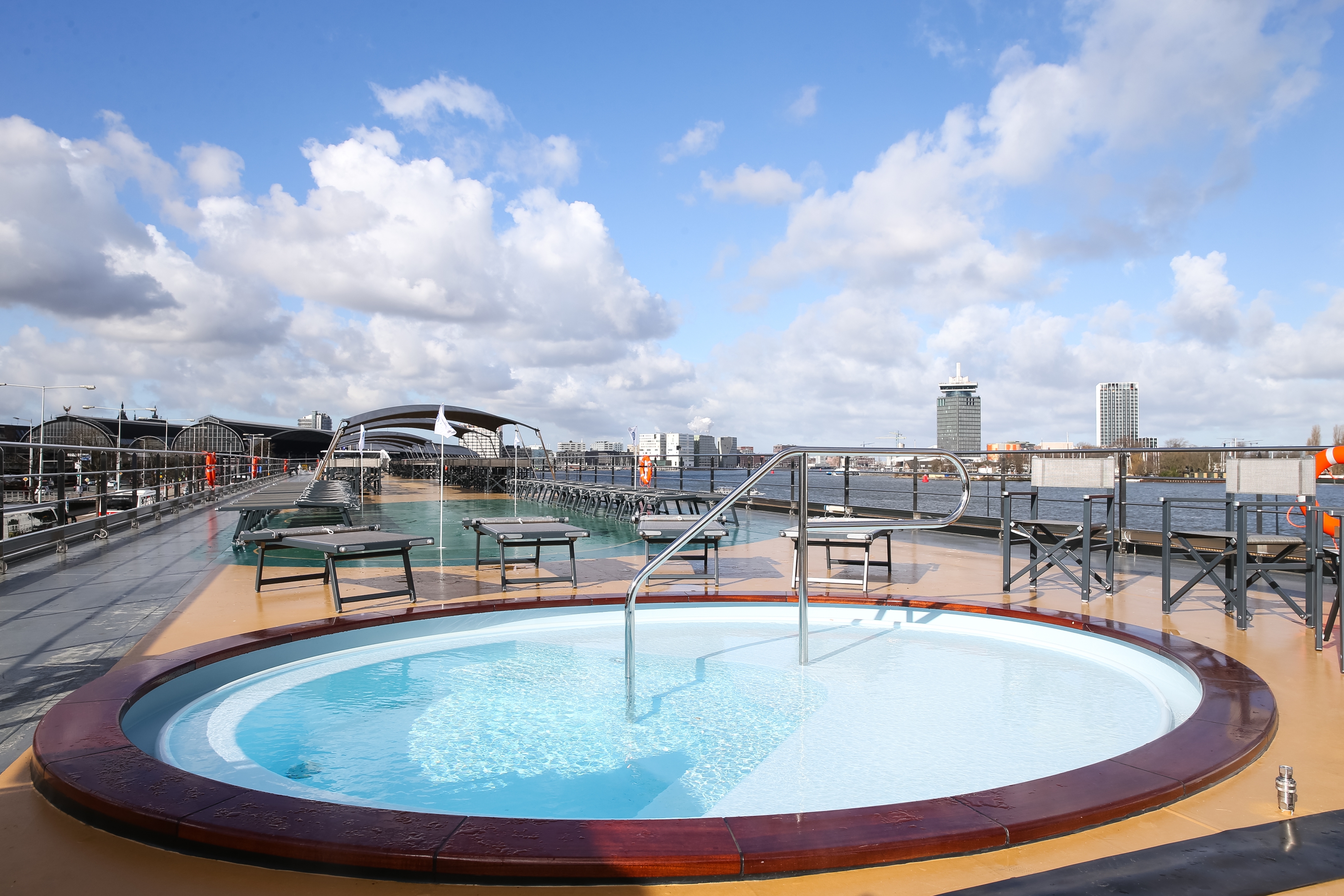
Splash Pool
Small but refreshing splash pool on the Sun Deck
Putting Green
Try your hand on the putting green on the Sun Deck
Hairdressers
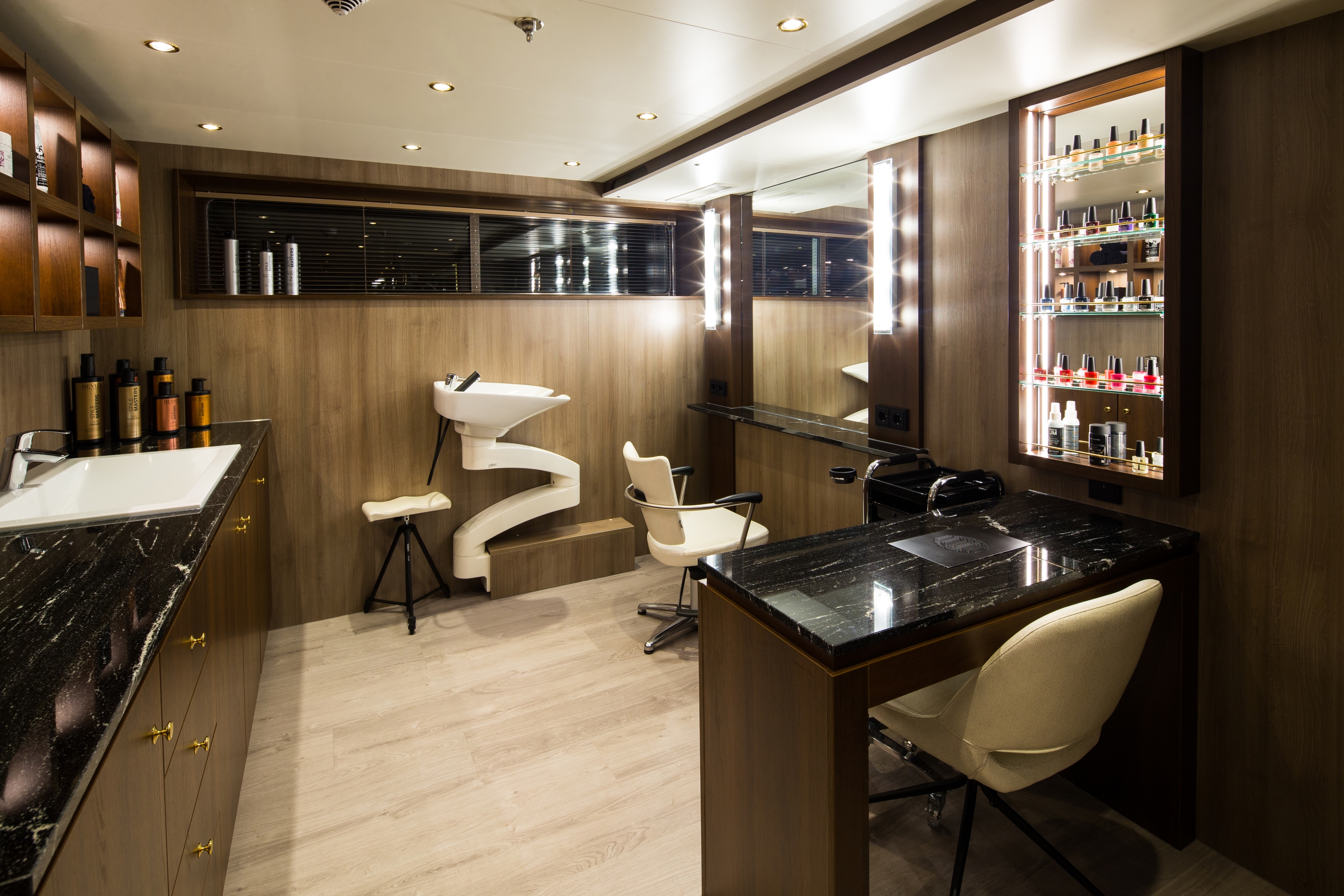
So you will always look your best there is a hairdresser’s which offers manicure and pedicure treatments.
Please note: there are no dedicated kids or teens facilities onboard.
Main Restaurant
The ship’s main restaurant is located on the Ruby (middle) Deck and here you will experience not only exceptional first class cuisine, but also the most attentive yet discreet service from the ship’s highly professional crew. So just sit back with a well-deserved glass of wine from the carefully selected wine list and delight in the wonderful elegance of your surroundings; beautifully laid tables for just 4 or 6 guests, crisp linen, deep wool carpets and warm wood panelling abound to offer a delectable dining experience of the highest order.
Riverview Kitchen
At the Riverview Kitchen with its large panoramic windows, enjoy a more intimate dining experience whilst taking in the fantastic views. Here in the evenings the chef presents in the open kitchen a selection of locally inspired dishes which you can enjoy with your fellow guests; this intimate dining experience can be reserved on board at no extra charge. When the weather allows the panoramic windows may be fully opened on to the terrace to allow a delightful al fresco dining experience.
Excursions
We are a well-travelled collective – made up of our guests as well as our team. We’ll admit it – we’re obsessed with travel.
But that’s not our only interest. We also love architecture, history, the arts, and gastronomy – everything that makes a culture unique. And we plan our itineraries to ensure we’re catering to those interests. Perfecting every excursion to ensure you get the most out of your onshore adventures.
Most days are filled with full or half-day excursions. Whether that’s a city tour, an introduction to a brand-new town or a more in-depth visit to a specific landmark or attraction. You’ll see the very best of every destination. Not just the legendary locations, we’ll uncover the top-secret local spots too.
World-famous landmarks
You’ll get to experience some world-famous destinations in the company of our passionate local guides. Sites like the Benedictine Melk Abbey on the Danube, spectacular Pont du Gard on the Rhône, Keukenhof Gardens – the world’s largest flower gardens – on the Dutch Waterways and Cologne with its cathedral, the largest Gothic church in Northern Europe.
A taste of your destination
Food has the uncanny ability to reveal the softer parts of the destination most tourists overlook. Recipes passed down through the generations slowly become ingrained within a culture, featuring fresh local produce and traditional cooking techniques. Our excursions often include delicious local produce perfected over centuries – sample cheese in Switzerland and chocolate in Germany (it’s not a cruise for those watching their weight), wine tasting in the world-famous wine region of Burgundy and port in the port wine cellars of Porto.
For even more, why not choose one of our Gastronomy themed departures?
Authentic cultural experiences
Our river cruise itineraries deliver authentic and engaging moments to fully immerse you in the culture. You’ll remember being seduced by the fiery passion of flamenco dancing after a cruise along the Douro. Hold on to that feeling of wonder you felt as you watch the glassblower creating the most beautiful vase out of a glowing mass. And tell the stories you heard during a Hungarian folklore show to your grandchildren at bedtime. The memory of these authentic cultural experiences will last a lifetime.
Panorama Lounge and Bar
A lounge in every sense of the word, complete with plenty of comfortable leather armchairs and sumptuous sofas where you can sink into warmly colourful cushions in beautiful quality fabrics with a freshly made cup of tea. A thick wool carpet feels lovely underfoot and the tasteful contemporary lighting above creates a welcoming and refined ambience, further complemented by the discreet and intuitive service resplendent of the finest five-star hotels. So just sit back with your favourite cocktail and take in the truly mesmerising view.
The Sun Deck
Head on up to this truly spectacular sun deck to watch life ashore slip by from the comfort of a sun lounger, perhaps under shade if the weather gets too hot! There’s always the refreshing splash pool too or why not try your hand on the putting green. Then take a refreshingly long drink and that book you’ve been meaning to read for ages on to the lovely terrace area at the fore of the ship, located right in front of the wheelhouse where you can view the Captain and his team skilfully navigating the twisting river and enjoy truly ‘driving seat’ views. Take a deep breath and relax into the pace of river cruise life – now you’re really on holiday!
Please note: The Sun Deck is only accessible by stairs
Souvenir Shop
Boutique gift shop for your holiday souvenirs
Fitness Centre
On the Emerald (lower) Deck is the fitness centre, perfect for working off all those delicious meals.
Wellness
For something less strenuous treat yourself to a relaxing massage.
Splash Pool
Small but refreshing splash pool on the Sun Deck
Putting Green
Try your hand on the putting green on the Sun Deck
Hairdressers
So you will always look your best there is a hairdresser’s which offers manicure and pedicure treatments.
Please note: there are no dedicated kids or teens facilities onboard.
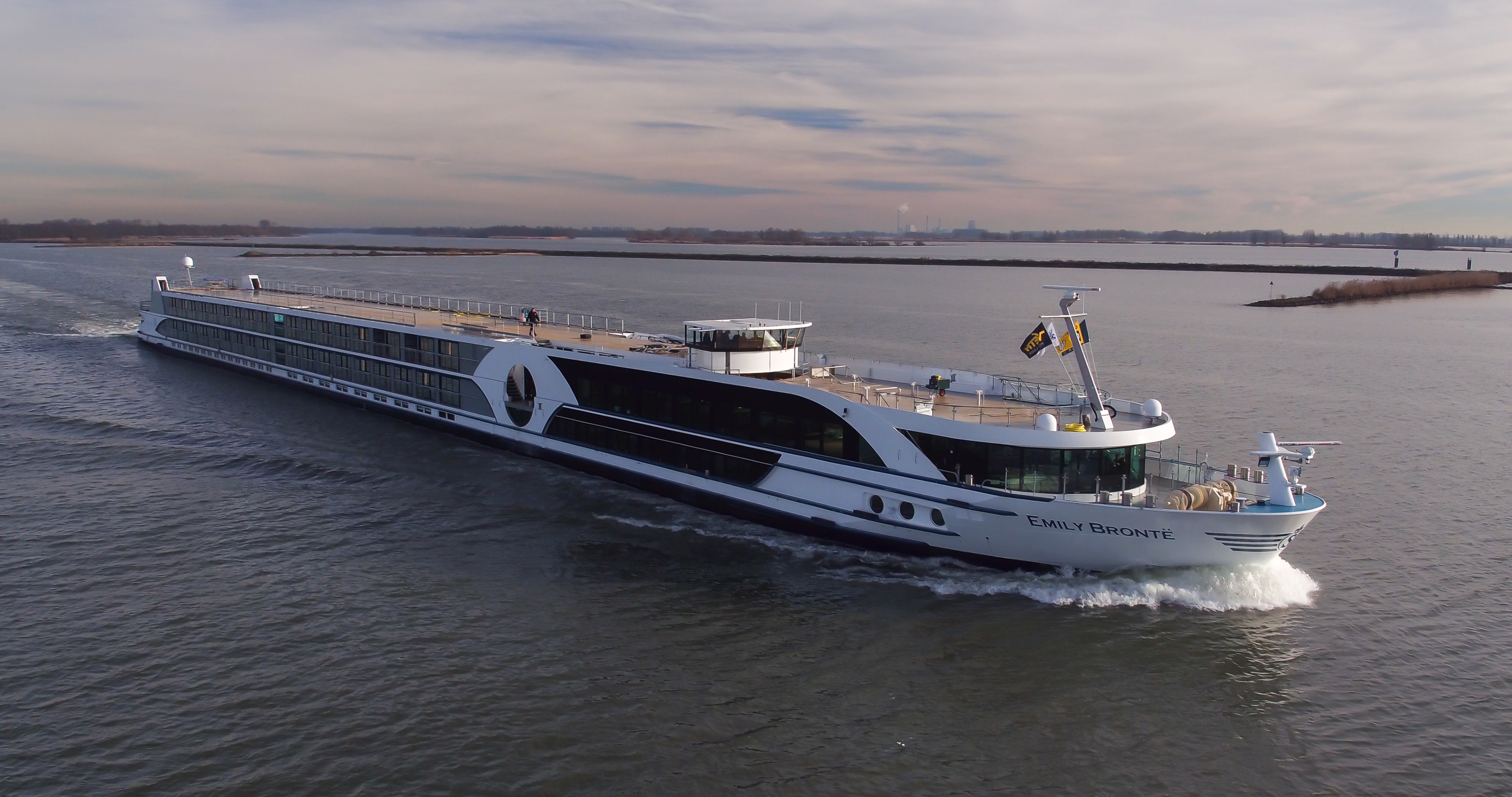
About the Ship
Deck Plans

- Fitness
- Wellness
- Hairdresser
- Emerald Deck Suites

- Restaurant
- Kitchen
- Ruby Deck Suites
- Superior Suites

- Panorama Lounge
- Bar
- Bistro
- Reception
- Travel Desk
- Souvenir Shop
- Diamond Deck Suites
- Superior Suites
- Superior Stern Suites
- Deluxe Balcony Suites

- Seating Area
- Splash Pool
- Putting Green
- Terrace
- Fitness
- Wellness
- Hairdresser
- Emerald Deck Suites
- Restaurant
- Kitchen
- Ruby Deck Suites
- Superior Suites
- Panorama Lounge
- Bar
- Bistro
- Reception
- Travel Desk
- Souvenir Shop
- Diamond Deck Suites
- Superior Suites
- Superior Stern Suites
- Deluxe Balcony Suites
- Seating Area
- Splash Pool
- Putting Green
- Terrace