Featured Cabins
Itinerary
Cologne, Germany
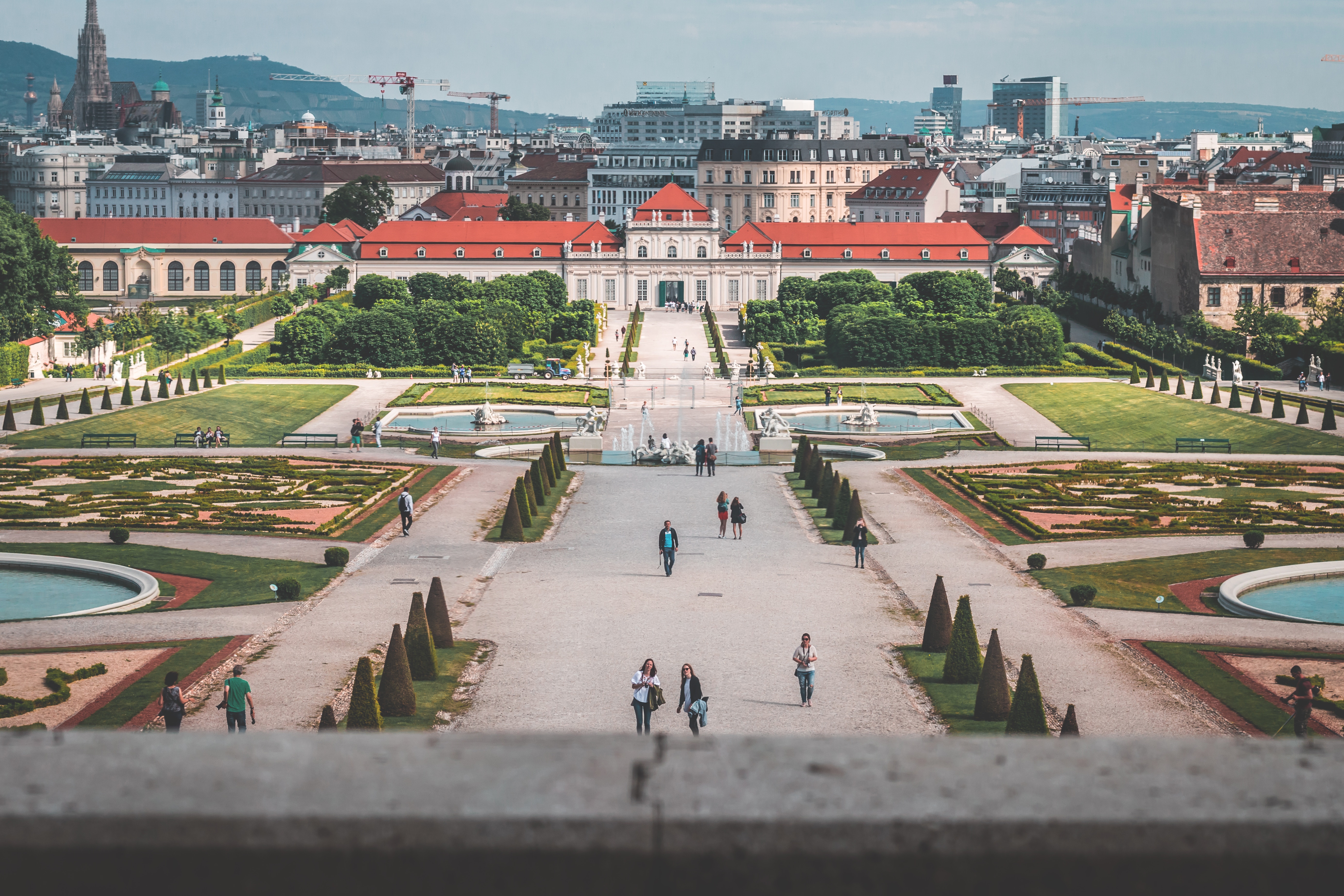
Cologne is a city in western Germany located across the Rhine river. It is the oldest in Germany, dating back 2000 years and is considered the region’s cultural hub. The city is known for its iconic landmark of the twin-spired Cologne Cathedral set against the reconstructed Old Town buildings. When in Old Town, visit the historic Old Town Hall and the Roman Church Great St Martin, or take time out and sit at one of the traditional breweries and enjoy the scenery around you. Historical sites such as the Roman Dionysus mosaic and the medieval Overstolzenhaus are worth a visit too. Another iconic sight in Cologne is at Hohenzollern Bridge. Here, local and tourist couples affix padlocks to the railings of the bridge and swear their loyalty to each other, they then throw the key into the Rhein to ensure everlasting love. Cologne is home to over 30 stages providing cabaret, free ensembles, theatre and dance and also celebrates its openly gay culture.
Koblenz, Germany
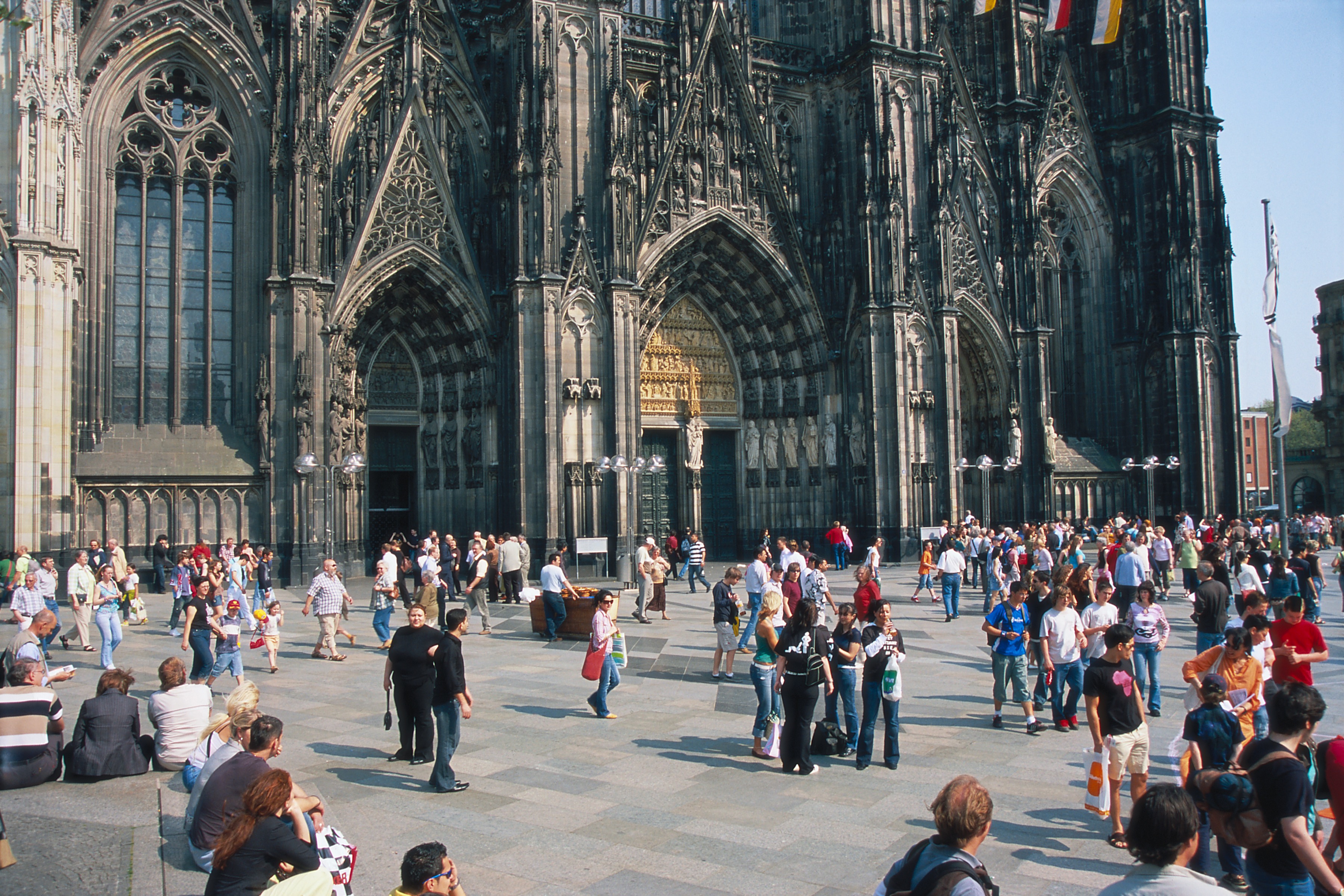
Located in the West of the country, Koblenz is one of the oldest cities in Germany. It is situated on both banks of the river Rhine, at its confluence with the Moselle River. The beginnings of Koblenz can be traced back to its military beginnings around 8 BC. The city is rich in its history and heritage and is easily explored on foot. Take the cable car crossing over the river Rhine for spectacular aerial views or enjoy the city from the one thousand year old fortress, Ehrenbreitstein. The upper middle Rhine Valley is a UNESCO World Heritage Site and its unique landscape can be enjoyed and discovered through the interactive multimedia journey at the Romanticum. Historical and architectural sites of interest include Stolzenfels Castle, the Electoral Palace of Koblenz and Old Town. From the romantic winding streets and small squares of Old Town, stroll through the alleyways from the Church of the Holy Virgin to the St Kastor Basilica and enjoy the picturesque buildings and squares along the way. Koblenz is also very popular for its Riesling and strong Spatburgunder wines since the Romans introduced it two thousand years ago.
Rüdesheim, Germany
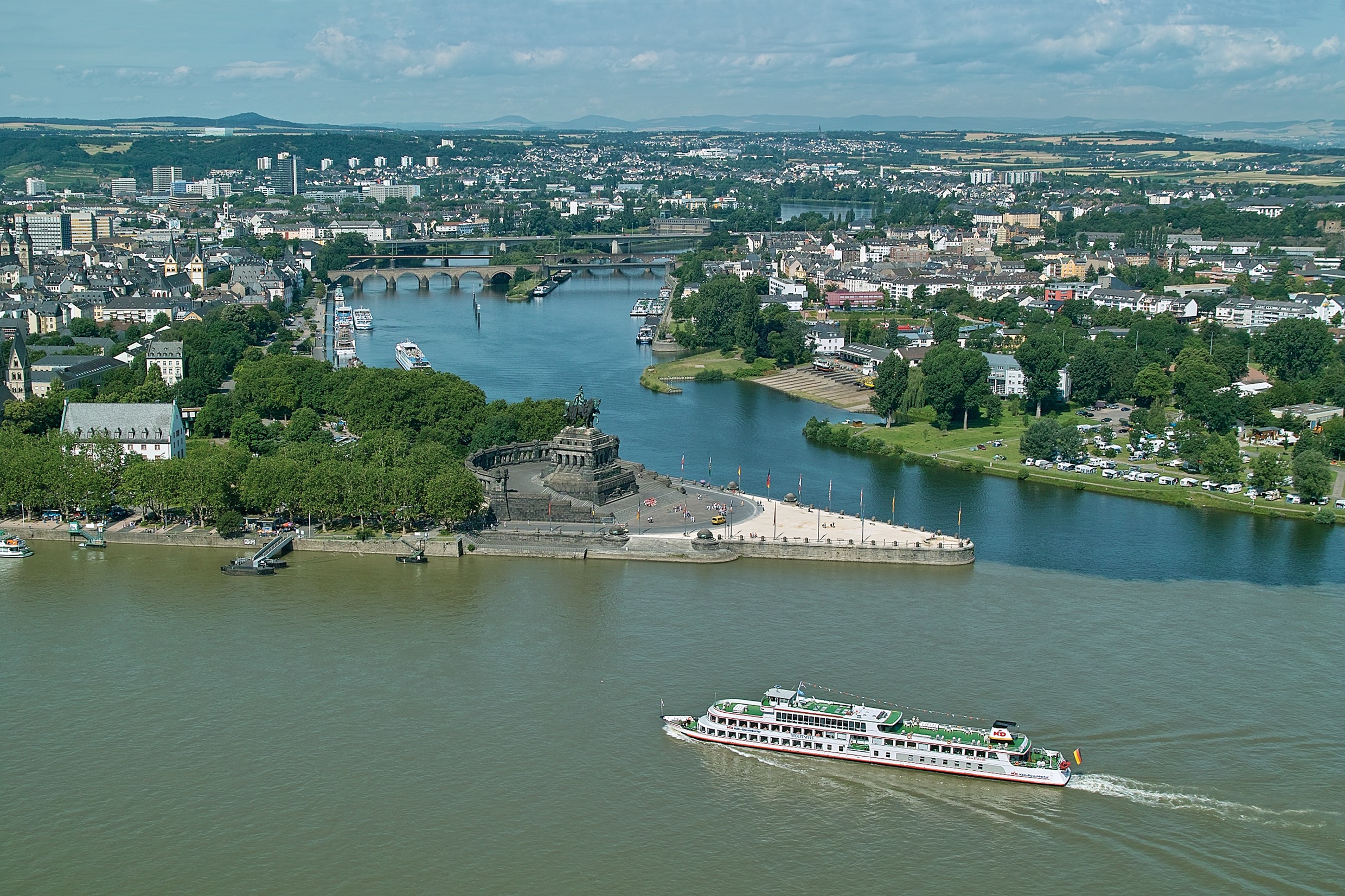
Rhine Gorge & Rüdesheim – Today you experience one of the real highlights of your cruise – the passage through the Rhine Gorge. Here the river narrows, the current is swifter and the towering valley sides soar 600 feet, while the ruins of castles, which once held sway over passing mariners, crown every tortuous turn. We pass rocky outcrops and cruise around endless twisting bends to the famous Lorelei or ‘murmuring rock’, where according to legend, enchanting maidens lured unsuspecting sailors to watery graves.
Next, we call at Rüdesheim, a true Rhine wine town surrounded by vineyards whose fruits you can sample in the many wine taverns you’ll find in its cobbled streets.
This afternoon’s guided tour takes us on a delightful walk through the heart of the old town, seeing the Klunkhardshof, a magnificent half-timbered building dating back to the 16th century and the Brömserhof, which today is home to a quirky museum with an unusual collection of mechanical musical instruments.
Personalise your holiday –
Wine tasting at a local winery
Duration: 1hr 30 mins
Price: £22pp (2025) and £24pp (2026)
Visit a winery in Rüdesheim to taste the local wine. In the atmospheric backdrop of a historic wine cave, enjoy sampling the varieties this region is famous for, including Riesling, Pinot Noir and Pinot Gris, and learn interesting facts about the viticulture and the history of wine in the area.
Please note: Due to the location of the wine tasting, it’s advised all guests bring a jacket.
Optional excursion can be done during free time in Rüdesheim.
Please contact us at least three weeks before your departure to add this experience to your booking. Minimum and maximum numbers apply. If not enough guests opt for this extra, the experience may not run.
Mainz, Germany
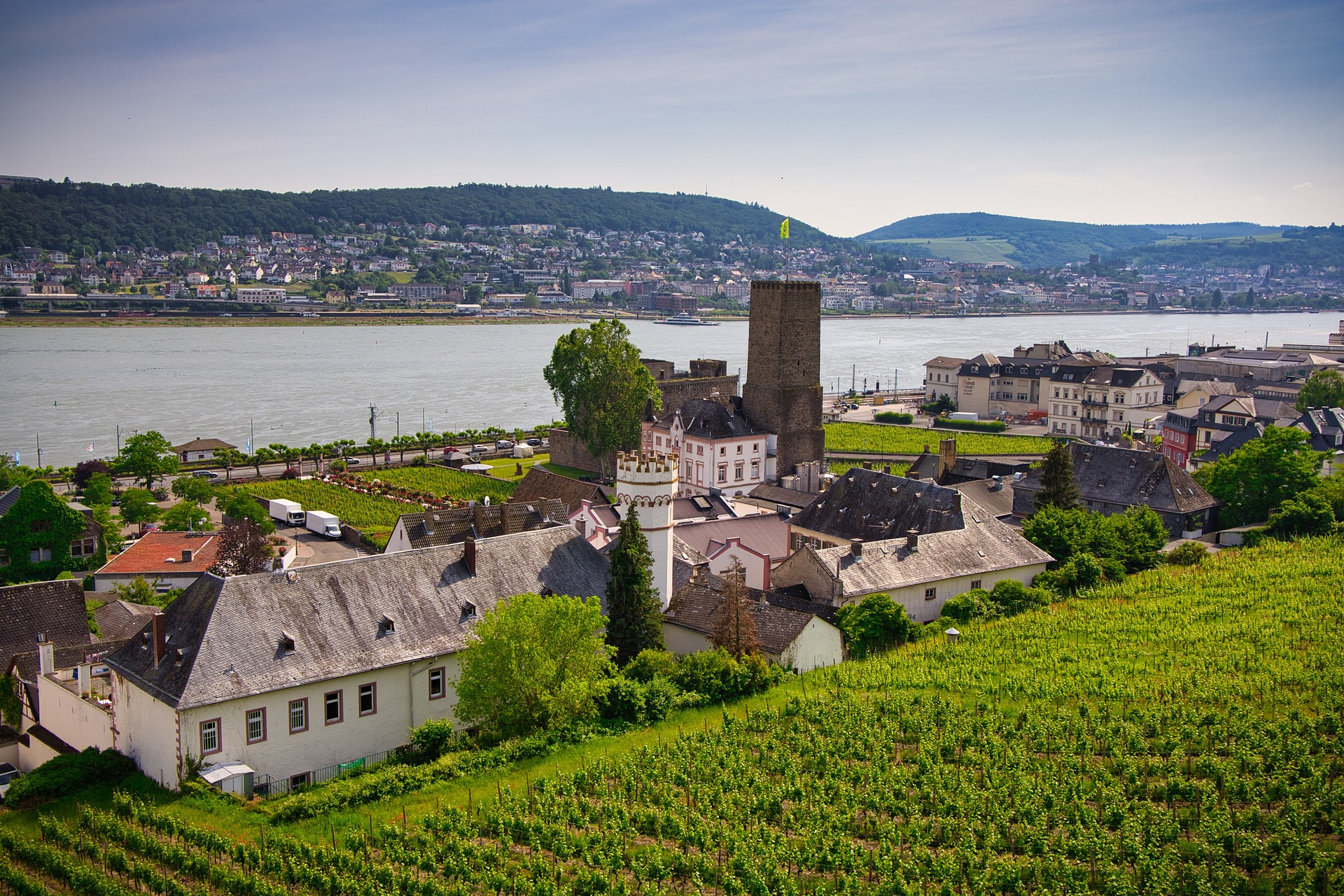
Mainz – This morning we take the short cruise to the town of Mainz, situated at the confluence of the Rhine and Main Rivers, for a city walking tour. An important Roman city for over 450 years with the largest amphitheatre north of the Alps, Mainz is also home to the magnificent Romanesque Saint Martin’s Cathedral and Saint Stephen’s Church, whose interior is filled with beautiful blue light flooding through stained glass windows featuring intricate biblical figures – a masterpiece by the great artist Marc Chagall.
On the tour, wander the crooked streets of the old town and city centre to discover the half-timbered houses and historic Roman Catholic monuments, finishing at Saint Stephen’s where you’ll have the opportunity to admire the vibrant Chagall windows up close. After the tour you have time to see the striking Cathedral and bustling marketplace. Take in the atmosphere of this river port city and marvel at the architectural feat of the 13ft sandstone ‘Heunensäule’ which dates back to 1,000 AD. Mainz’s most famous son is Johannes Gutenberg, father of modern printing, and there’s an excellent museum housing a reconstruction of his workshop and two original 1455 Gutenberg Bibles, among the earliest books ever printed.
This afternoon our ship cruises up the Main River. Due to locks and low bridges the main part of the sun deck will be closed between Mainz and Passau. The other outside areas in front of the lounge, the Riverview Kitchen and the lower section of the sun deck are still accessible. On board your floating boutique hotel in the afternoon, find a relaxing seat in the lounge to take in the lovely views of lush woodland and fertile vineyards seamlessly idling by. As evening approaches, why not enjoy an apéritif in the bar before choosing a table in the restaurant to enjoy the chef’s masterful creations for dinner?
Personalise your holiday –
Guided tour of the Gutenberg Museum
Duration: 1.5hrs
Price: £10pp (2025) & £11pp (2026)
Join our guide for a tour of the Gutenberg Museum, dedicated to Johannes Gutenberg, a native of Mainz, who invented printing with movable metal type over 500 years ago! It houses a reconstruction of his workshop and, outstandingly, two original 1455 Gutenberg Bibles.
Founded in 1900 by Mainz citizens, the museum highlights the history of letterpress printing through technical tools, typesetting machines, and printing presses. As a “World Museum for the Art of Printing,” it features sections on the origins of printing in East Asia, scripts from the Islamic world, and the development of manuscripts. Other displays cover the history of printing presses, bookbinding, fine press techniques, and the production of paper and colours.
This optional excursion can be chosen instead of the walking tour of Mainz.
Please contact us at least three weeks before your departure to add this experience to your booking. Minimum and maximum numbers apply. If not enough guests opt for this extra, the experience may not run.
Miltenberg, Germany
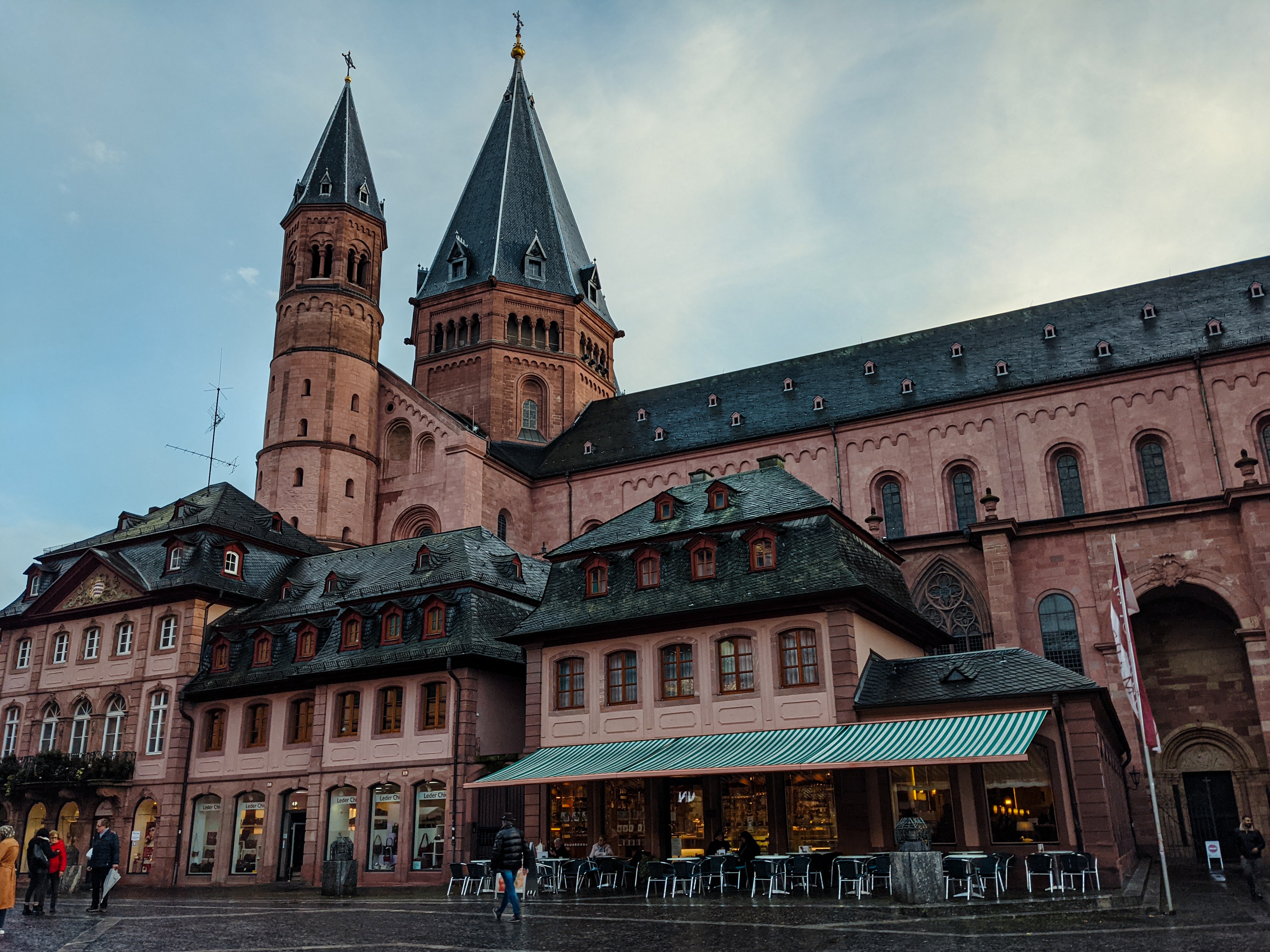
Miltenberg is a city located in Bavaria and Southern part of Germany. Located on the banks of the river Maine the city grew from its medieval roots through Viniculture, wine trade, fishery, and general river traffic, into the established and preserved town of today. Visit the Museum Stadt Miltenberg, housed in the half timbered house called the Alte Amtskellerei (The Provost’s Office) and discover the town’s history through collections depicting culture back to the Romans. A visit to castle Miltenberg is also recommended. The castle dates back to the 11th century and is now owned by the city administration. With the castle in need of rehabilitation, the Museum Burg Miltenberg was opened to exhibit classic icons and contemporary art in a historical and significant setting. The keep of the castle, which reaches twenty seven metres high, offers picturesque views of the Main Valley below and is the perfect setting to relax and enjoy some refreshments.
Würzburg, Germany
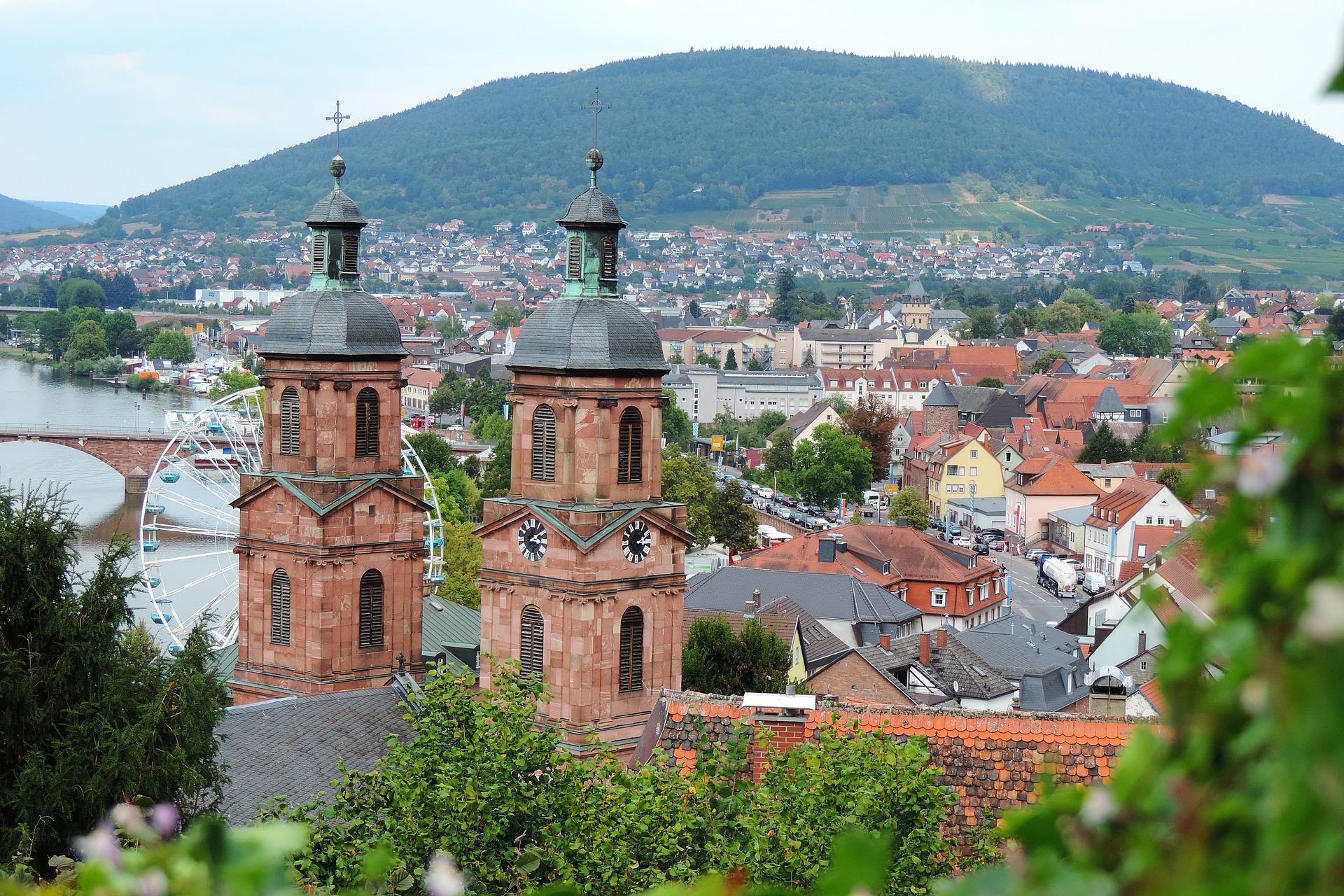
Würzburg is a city in Bavaria in southern Germany. It is located on the River Main and is famous for its lavish baroque architecture and Franconian wine. The Residence Palace is a UNESCO World Heritage Site and is highly recommended. It is a well known example of Baroque architecture with its acclaimed staircase, impressive frescos and imperial hall. Other impressive sites in Würzburg include the towering fortress of Festung Marienberg, the Alt Mainbrücke old bridge, which offers ideal views of the Marienberg, Dom St. Kilian cathedral and the many churches of Würzburg including the Romanesque Neumünster. Many of these sites have their own museums for visitors to learn of the history or view unique collections. Other museums of interest are the Mineralogical Museum, exhibiting the world of minerals and stones, and the Botanical Gardens, with various greenhouses and outdoor areas to enjoy. Wine lovers will find an abundance of wineries in Würzburg, offering cellar tours and wine tasting as well as traditional Bavarian cuisines and hospitality. Enjoy wine soup, Gerupfter (cheese spread) and Sauerbraten (braised beef in wine) in a friendly traditional wine tavern.
Bamberg, Germany
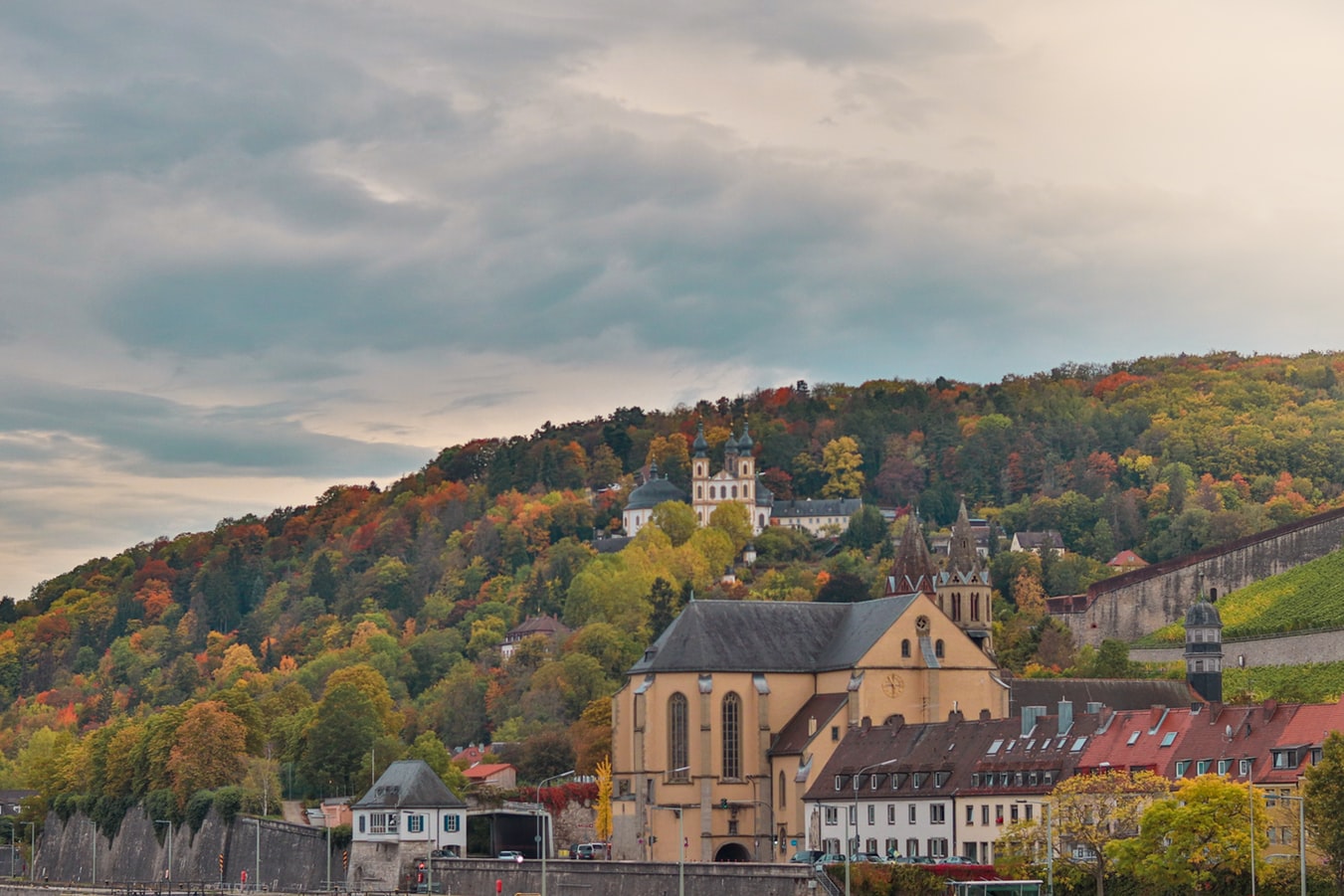
Bamberg is a German town located over a landscape of seven hills and the confluence of Regnitz and Main rivers. The town is a UNESCO World Heritage Centre with Old Town home to structures dating back to the 11th century. An iconic landmark to visit in Bamberg is the town hall Altes Rathaus, located on an island in the Regnitz and covered in murals. Bamberg Cathedral, with its four towers and numerous stone carvings, is a striking example of Romanesque architecture. Head to the Market Gardeners District and visit the historical houses where centuries ago the town gardeners would grow and export produce such as onions, seeds and liquorice. In the town centre and heart of Little Venice, the rivers and arched bridges connecting the island city are reminiscent of Venice, with a lively atmosphere and modern shops set in historical surroundings. After a day shopping, head to one of the many Brewery pubs for some popular German beer. Bamberg is famous for its beer and is where its name originated from, with the town being populated by nine traditional breweries.
Cologne, Germany
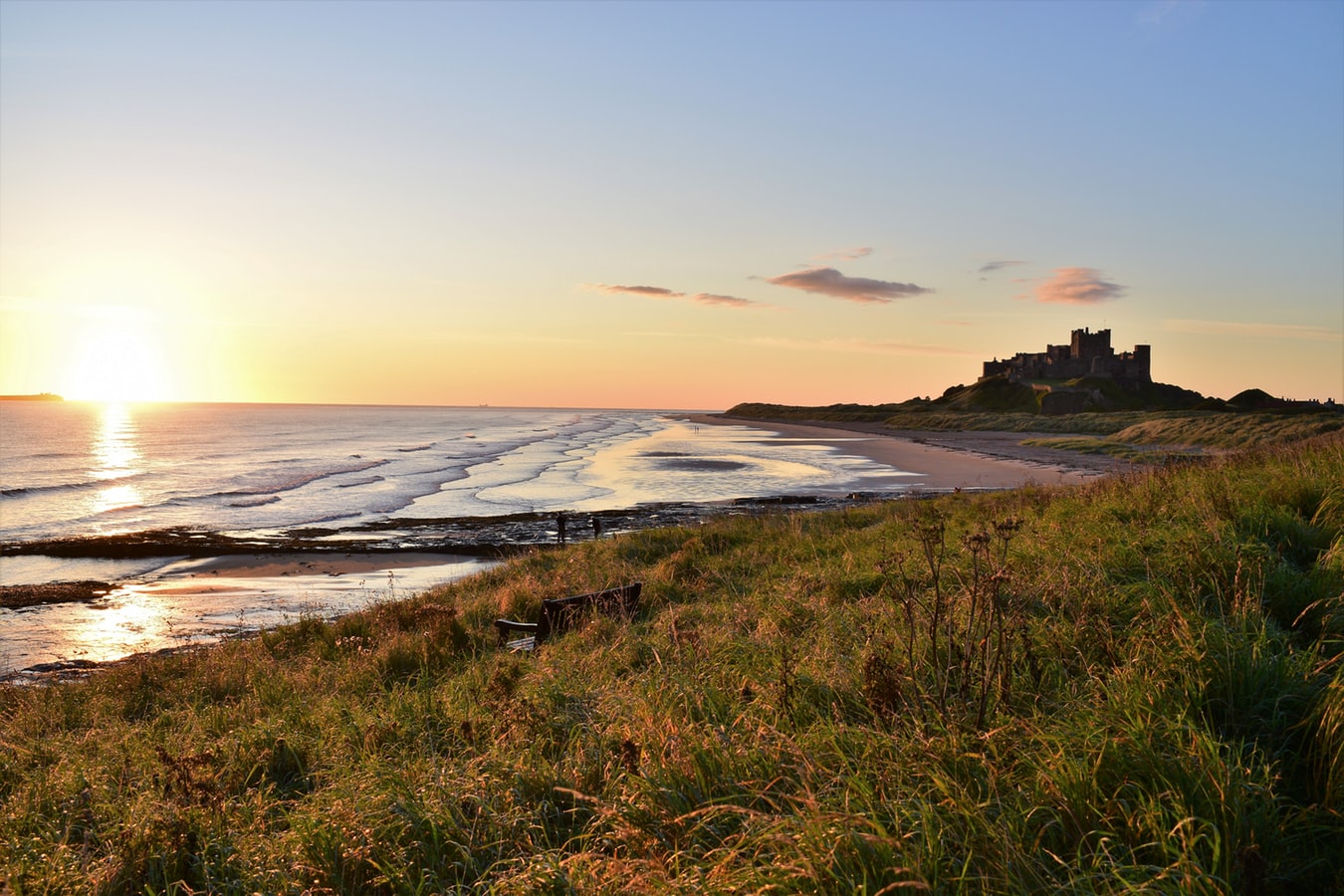
Cologne is a city in western Germany located across the Rhine river. It is the oldest in Germany, dating back 2000 years and is considered the region’s cultural hub. The city is known for its iconic landmark of the twin-spired Cologne Cathedral set against the reconstructed Old Town buildings. When in Old Town, visit the historic Old Town Hall and the Roman Church Great St Martin, or take time out and sit at one of the traditional breweries and enjoy the scenery around you. Historical sites such as the Roman Dionysus mosaic and the medieval Overstolzenhaus are worth a visit too. Another iconic sight in Cologne is at Hohenzollern Bridge. Here, local and tourist couples affix padlocks to the railings of the bridge and swear their loyalty to each other, they then throw the key into the Rhein to ensure everlasting love. Cologne is home to over 30 stages providing cabaret, free ensembles, theatre and dance and also celebrates its openly gay culture.
Koblenz, Germany
Located in the West of the country, Koblenz is one of the oldest cities in Germany. It is situated on both banks of the river Rhine, at its confluence with the Moselle River. The beginnings of Koblenz can be traced back to its military beginnings around 8 BC. The city is rich in its history and heritage and is easily explored on foot. Take the cable car crossing over the river Rhine for spectacular aerial views or enjoy the city from the one thousand year old fortress, Ehrenbreitstein. The upper middle Rhine Valley is a UNESCO World Heritage Site and its unique landscape can be enjoyed and discovered through the interactive multimedia journey at the Romanticum. Historical and architectural sites of interest include Stolzenfels Castle, the Electoral Palace of Koblenz and Old Town. From the romantic winding streets and small squares of Old Town, stroll through the alleyways from the Church of the Holy Virgin to the St Kastor Basilica and enjoy the picturesque buildings and squares along the way. Koblenz is also very popular for its Riesling and strong Spatburgunder wines since the Romans introduced it two thousand years ago.
Rüdesheim, Germany
Rhine Gorge & Rüdesheim – Today you experience one of the real highlights of your cruise – the passage through the Rhine Gorge. Here the river narrows, the current is swifter and the towering valley sides soar 600 feet, while the ruins of castles, which once held sway over passing mariners, crown every tortuous turn. We pass rocky outcrops and cruise around endless twisting bends to the famous Lorelei or ‘murmuring rock’, where according to legend, enchanting maidens lured unsuspecting sailors to watery graves.
Next, we call at Rüdesheim, a true Rhine wine town surrounded by vineyards whose fruits you can sample in the many wine taverns you’ll find in its cobbled streets.
This afternoon’s guided tour takes us on a delightful walk through the heart of the old town, seeing the Klunkhardshof, a magnificent half-timbered building dating back to the 16th century and the Brömserhof, which today is home to a quirky museum with an unusual collection of mechanical musical instruments.
Personalise your holiday –
Wine tasting at a local winery
Duration: 1hr 30 mins
Price: £22pp (2025) and £24pp (2026)
Visit a winery in Rüdesheim to taste the local wine. In the atmospheric backdrop of a historic wine cave, enjoy sampling the varieties this region is famous for, including Riesling, Pinot Noir and Pinot Gris, and learn interesting facts about the viticulture and the history of wine in the area.
Please note: Due to the location of the wine tasting, it’s advised all guests bring a jacket.
Optional excursion can be done during free time in Rüdesheim.
Please contact us at least three weeks before your departure to add this experience to your booking. Minimum and maximum numbers apply. If not enough guests opt for this extra, the experience may not run.
Mainz, Germany
Mainz – This morning we take the short cruise to the town of Mainz, situated at the confluence of the Rhine and Main Rivers, for a city walking tour. An important Roman city for over 450 years with the largest amphitheatre north of the Alps, Mainz is also home to the magnificent Romanesque Saint Martin’s Cathedral and Saint Stephen’s Church, whose interior is filled with beautiful blue light flooding through stained glass windows featuring intricate biblical figures – a masterpiece by the great artist Marc Chagall.
On the tour, wander the crooked streets of the old town and city centre to discover the half-timbered houses and historic Roman Catholic monuments, finishing at Saint Stephen’s where you’ll have the opportunity to admire the vibrant Chagall windows up close. After the tour you have time to see the striking Cathedral and bustling marketplace. Take in the atmosphere of this river port city and marvel at the architectural feat of the 13ft sandstone ‘Heunensäule’ which dates back to 1,000 AD. Mainz’s most famous son is Johannes Gutenberg, father of modern printing, and there’s an excellent museum housing a reconstruction of his workshop and two original 1455 Gutenberg Bibles, among the earliest books ever printed.
This afternoon our ship cruises up the Main River. Due to locks and low bridges the main part of the sun deck will be closed between Mainz and Passau. The other outside areas in front of the lounge, the Riverview Kitchen and the lower section of the sun deck are still accessible. On board your floating boutique hotel in the afternoon, find a relaxing seat in the lounge to take in the lovely views of lush woodland and fertile vineyards seamlessly idling by. As evening approaches, why not enjoy an apéritif in the bar before choosing a table in the restaurant to enjoy the chef’s masterful creations for dinner?
Personalise your holiday –
Guided tour of the Gutenberg Museum
Duration: 1.5hrs
Price: £10pp (2025) & £11pp (2026)
Join our guide for a tour of the Gutenberg Museum, dedicated to Johannes Gutenberg, a native of Mainz, who invented printing with movable metal type over 500 years ago! It houses a reconstruction of his workshop and, outstandingly, two original 1455 Gutenberg Bibles.
Founded in 1900 by Mainz citizens, the museum highlights the history of letterpress printing through technical tools, typesetting machines, and printing presses. As a “World Museum for the Art of Printing,” it features sections on the origins of printing in East Asia, scripts from the Islamic world, and the development of manuscripts. Other displays cover the history of printing presses, bookbinding, fine press techniques, and the production of paper and colours.
This optional excursion can be chosen instead of the walking tour of Mainz.
Please contact us at least three weeks before your departure to add this experience to your booking. Minimum and maximum numbers apply. If not enough guests opt for this extra, the experience may not run.
Miltenberg, Germany
Miltenberg is a city located in Bavaria and Southern part of Germany. Located on the banks of the river Maine the city grew from its medieval roots through Viniculture, wine trade, fishery, and general river traffic, into the established and preserved town of today. Visit the Museum Stadt Miltenberg, housed in the half timbered house called the Alte Amtskellerei (The Provost’s Office) and discover the town’s history through collections depicting culture back to the Romans. A visit to castle Miltenberg is also recommended. The castle dates back to the 11th century and is now owned by the city administration. With the castle in need of rehabilitation, the Museum Burg Miltenberg was opened to exhibit classic icons and contemporary art in a historical and significant setting. The keep of the castle, which reaches twenty seven metres high, offers picturesque views of the Main Valley below and is the perfect setting to relax and enjoy some refreshments.
Würzburg, Germany
Würzburg is a city in Bavaria in southern Germany. It is located on the River Main and is famous for its lavish baroque architecture and Franconian wine. The Residence Palace is a UNESCO World Heritage Site and is highly recommended. It is a well known example of Baroque architecture with its acclaimed staircase, impressive frescos and imperial hall. Other impressive sites in Würzburg include the towering fortress of Festung Marienberg, the Alt Mainbrücke old bridge, which offers ideal views of the Marienberg, Dom St. Kilian cathedral and the many churches of Würzburg including the Romanesque Neumünster. Many of these sites have their own museums for visitors to learn of the history or view unique collections. Other museums of interest are the Mineralogical Museum, exhibiting the world of minerals and stones, and the Botanical Gardens, with various greenhouses and outdoor areas to enjoy. Wine lovers will find an abundance of wineries in Würzburg, offering cellar tours and wine tasting as well as traditional Bavarian cuisines and hospitality. Enjoy wine soup, Gerupfter (cheese spread) and Sauerbraten (braised beef in wine) in a friendly traditional wine tavern.
Bamberg, Germany
Bamberg is a German town located over a landscape of seven hills and the confluence of Regnitz and Main rivers. The town is a UNESCO World Heritage Centre with Old Town home to structures dating back to the 11th century. An iconic landmark to visit in Bamberg is the town hall Altes Rathaus, located on an island in the Regnitz and covered in murals. Bamberg Cathedral, with its four towers and numerous stone carvings, is a striking example of Romanesque architecture. Head to the Market Gardeners District and visit the historical houses where centuries ago the town gardeners would grow and export produce such as onions, seeds and liquorice. In the town centre and heart of Little Venice, the rivers and arched bridges connecting the island city are reminiscent of Venice, with a lively atmosphere and modern shops set in historical surroundings. After a day shopping, head to one of the many Brewery pubs for some popular German beer. Bamberg is famous for its beer and is where its name originated from, with the town being populated by nine traditional breweries.
Nuremberg, Germany
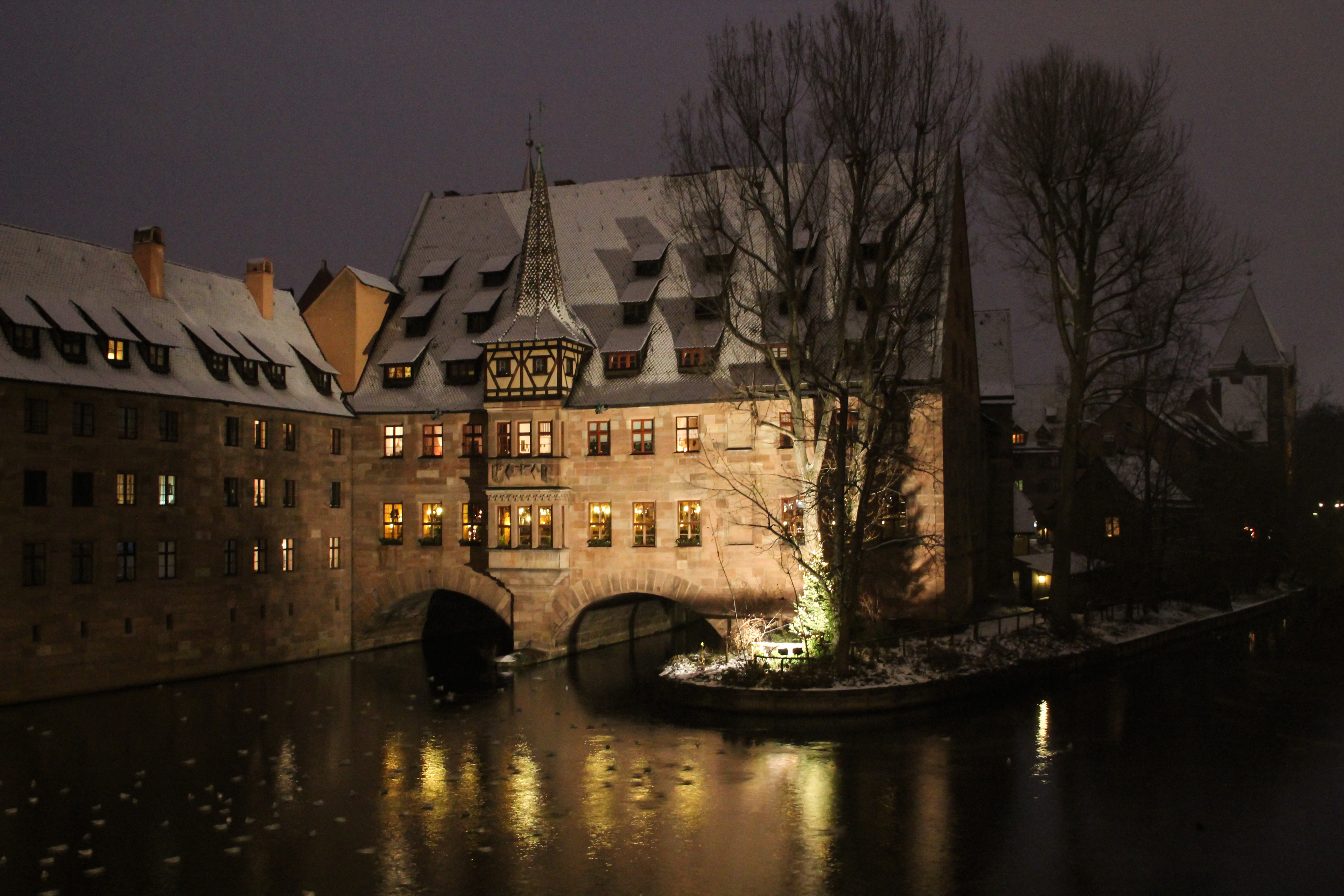
Nuremberg is a medieval city located in northern Bavaria in Germany. It is Bavaria’s second largest city and is noted for its iconic red roofed buildings and medieval architecture. The imperial Castle overlooks Nuremberg and was one of the most important fortifications of the Roman Empire. For more significant cultural history, the Germanisches Nationalmuseum, one of the largest cultural history museums in the German speaking world, offers visitors exhibitions from Prehistoric all the way to present day. Walking tours around the city offer an enjoyable and active way to learn of Nuremberg’s history and culture. Through Old Town, discover fountains, wells, churches, and art treasures, as well as learning of the colourful past and cosmopolitan present of the city and its people. Nuremberg is also home to one of the oldest Christmas markets in Germany, the Nuremberg Christkindlesmarkt, where visitors can purchase traditional handmade decorations and enjoy the famous gingerbread, mulled wine, and grilled sausage from over one hundred and eighty wooden stalls.
Regensburg, Germany
Regensburg is a medieval city of Bavaria in southeast Germany. It is situated on the northern point of the Danube River at its confluence with the Regen and Naab rivers. The city is famous for its iconic 12th Century stone bridge and sixteen arches, crossing the Danube into Old Town and is the oldest preserved bridge in Germany. Regensburg is also noted for its 13th Century Regensburg Cathedral and Gothic twin spires that feature prominently on the city’s skyline. Recently awarded UNESCO World Heritage status, the city is home to many preserved sites. Visit the the 2nd Century Porta Praetoria which served as the north gate to a Roman camp and St Peter’s Cathedral, with its French Gothic architecture. Also the 18th Century Thurn and Taxis Palace and the Old Town Hall, which is now home to the Imperial Diet Museum, are also worth a visit. Regensburg benefits from lots of parks and gardens for visitors to relax in, as well as walks and cycle paths along the banks of the rivers.
Passau, Germany
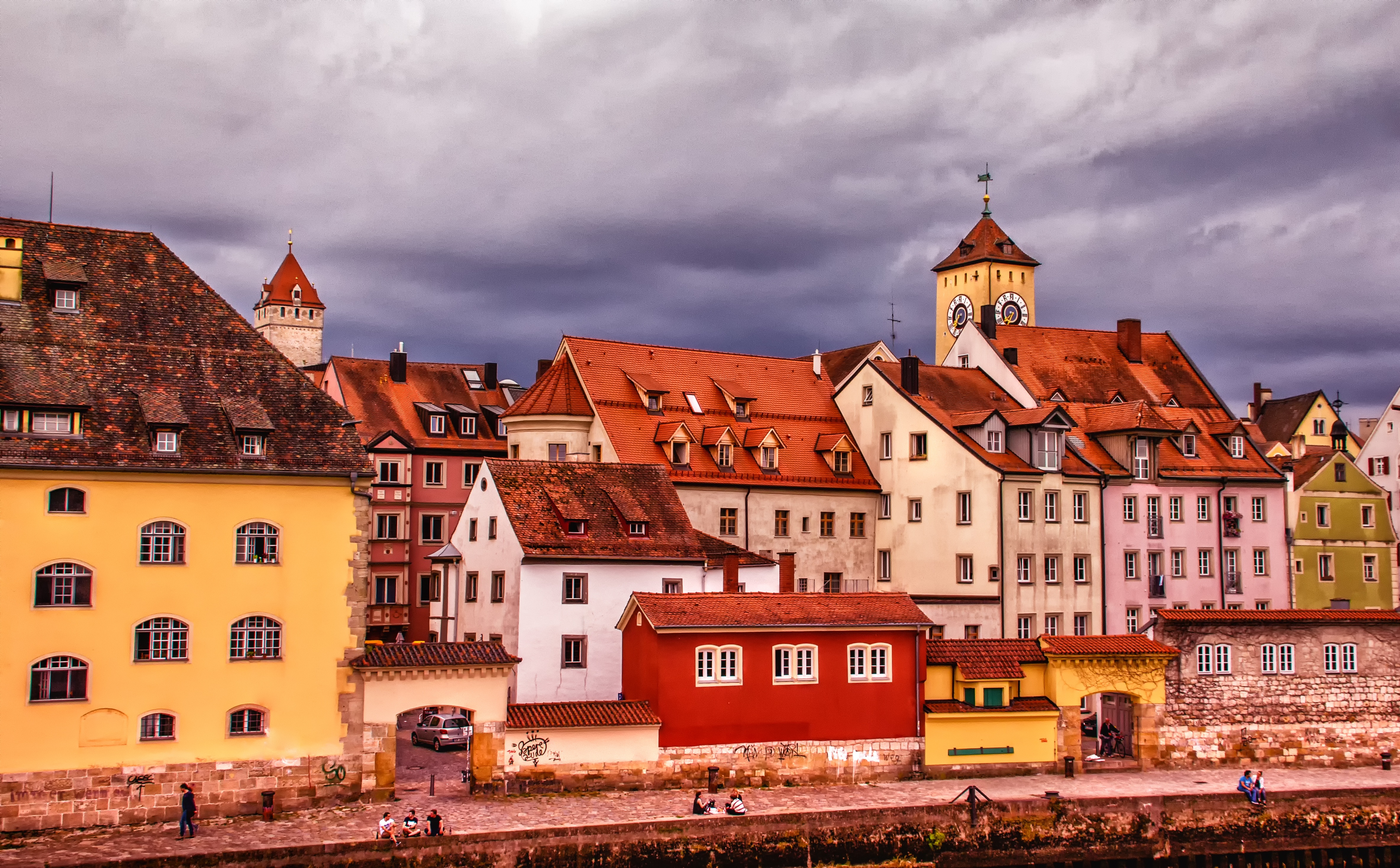
Passau is a German city located in the Southeast of Germany on the Austrian border. It is situated at the confluence of the rivers Danube, Inn and Ilz. The Three Rivers City, as it’s also known, is unique for its three contrasting currents of blue, green and black. Old Town of Passau is home to towering buildings of striking architecture: the majestic fortress Veste Oberhaus, the Pilgrimage Church Mariahilf and St Stephen’s Cathedral. Many of Passau’s attractions can be found in this area, including the New Bishop’s Residence, the Gothic Town Hall, as well as many churches and museums. Visitors can stroll along the riverfront promenades and romantic lanes whilst enjoying the picturesque landscape. For modern art, The Museum of Modern Art and Glass Museum Passau are recommended as they offer something a bit different. Theatre and cabaret are a popular evening pastime, with performances at the former Prince Bishopric Theatre or some lively cabaret and Jazz at the Scharfrichterhaus. Visitors will also find many traditional local Bavarian and Austrian cafes and restaurants offering a cosy atmosphere with home cooked food from local produce.
Melk, Austria
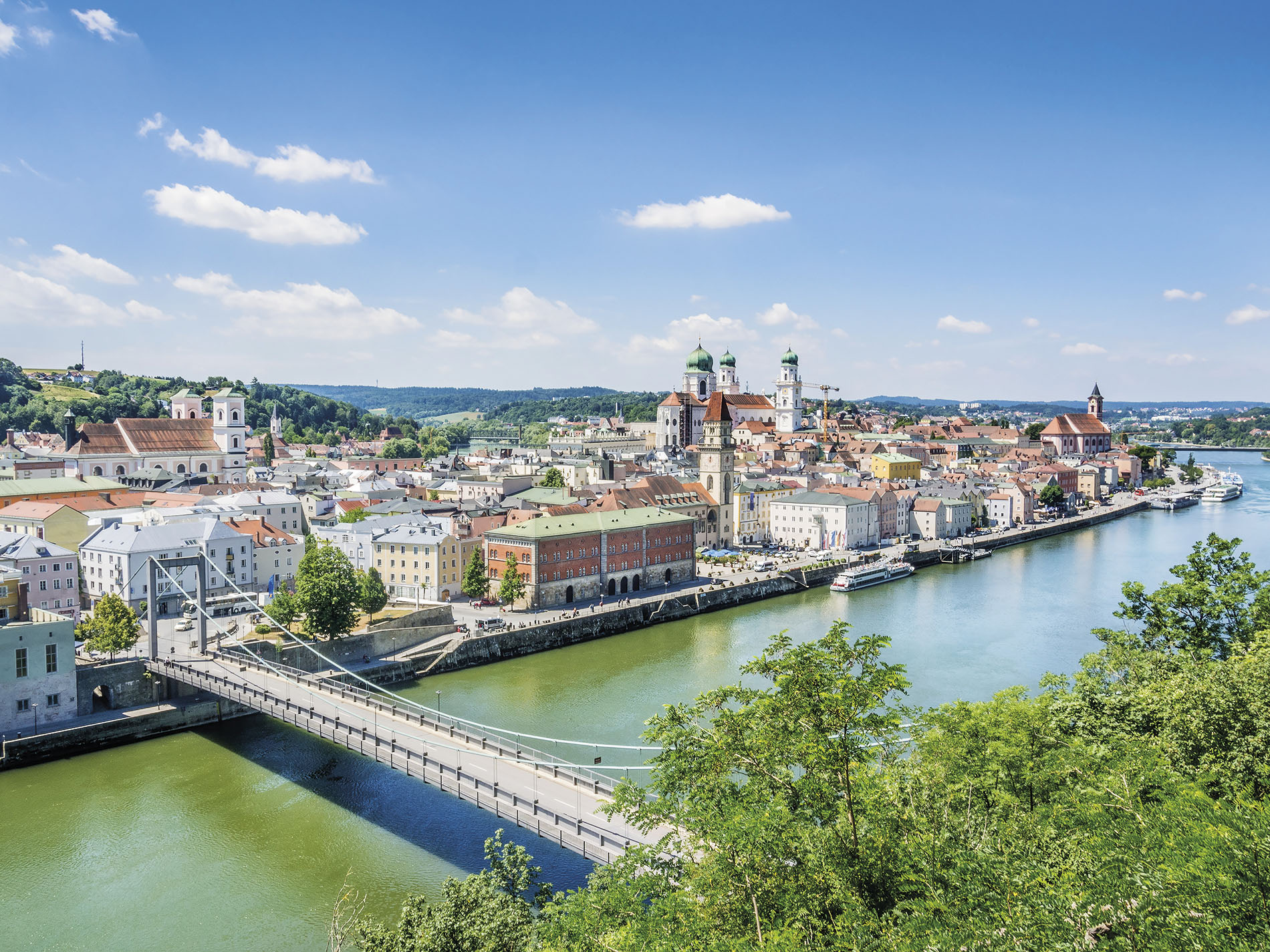
Melk is an Austrian town situated on the River Danube. Located west of Vienna, the town is mostly famous for its 11th Century Melk Abbey, a magnificent monastery built high above the town. Melk Abbey is the largest example of Baroque architecture in the Wachau Valley, with the valley itself awarded UNESCO World Heritage Site status in 2000. Its steep terraced vineyards mean vinters cultivate with traditional manual practices and the springtime sees this unique landscape covered in apricot tree blossoms. Strolling around the streets of Melk Old Town, visitors will find the Town Hall Square, the Main Square, the old Post Office, now a local museum, Old Abbey Tavern, and Kremser Strasse. River cruises, self-guided walking tours and cycle tours are also extremely popular around Melk, as the Wachau Valley offers unique landscape to be explored and enjoyed. Art festivals and Baroque music is celebrated each year with the Melk Baroque Days, an international festival.
Vienna, Austria
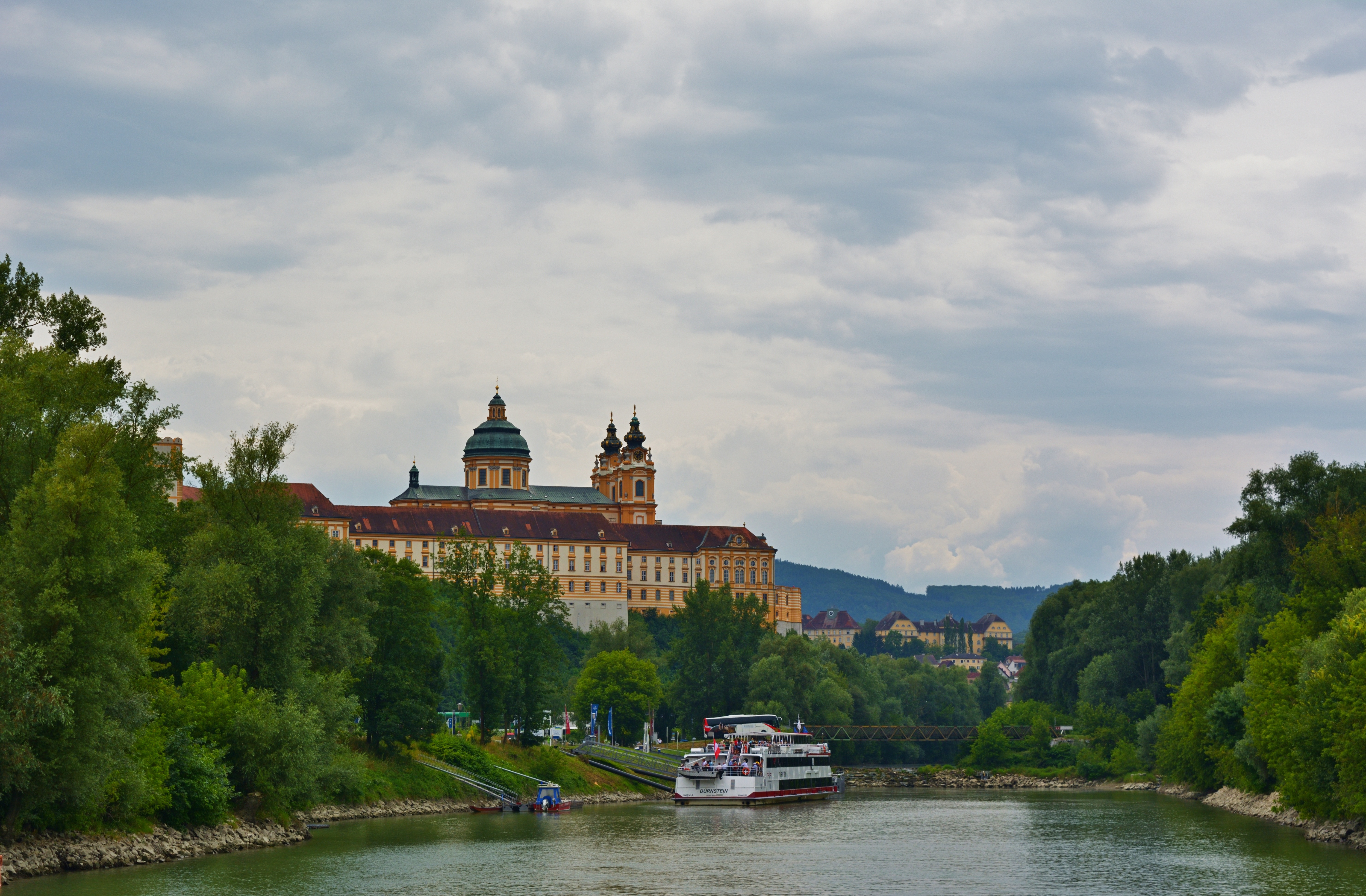
Vienna is the capital and largest city of Austria. Located on the Danube River in the East of the country, the city is renowned for its strong music heritage and rich culture, and is the largest German speaking city in the world, outside of Berlin. In 2001, Vienna was designated a UNESCO World Heritage Site and boasts magnificent architecture. The city is home to over 27 castles and 150 palaces including the symbolic Gothic St Stephen’s Cathedral and the iconic Schönbrunn Palace. Art and music are in abundance and all tastes are catered for. Live music venues offer everything from Rock to Opera. Enjoy world class performances at Vienna State Opera and experience the epicentre of international concert life at Musikverein. Modern and historical art can be found in indoor and outdoor spaces around the city, and a visit to the famous Kunsthistorisches Museum (KHM) is highly recommended. Enjoy views of the city from the Danube Tower and the Giant Ferris Wheel, then relax in the ample cosy coffee houses, cafes, bars and restaurants where traditional and international cuisines are served, as well as the locally produced wines.
Bratislava, Slovakia
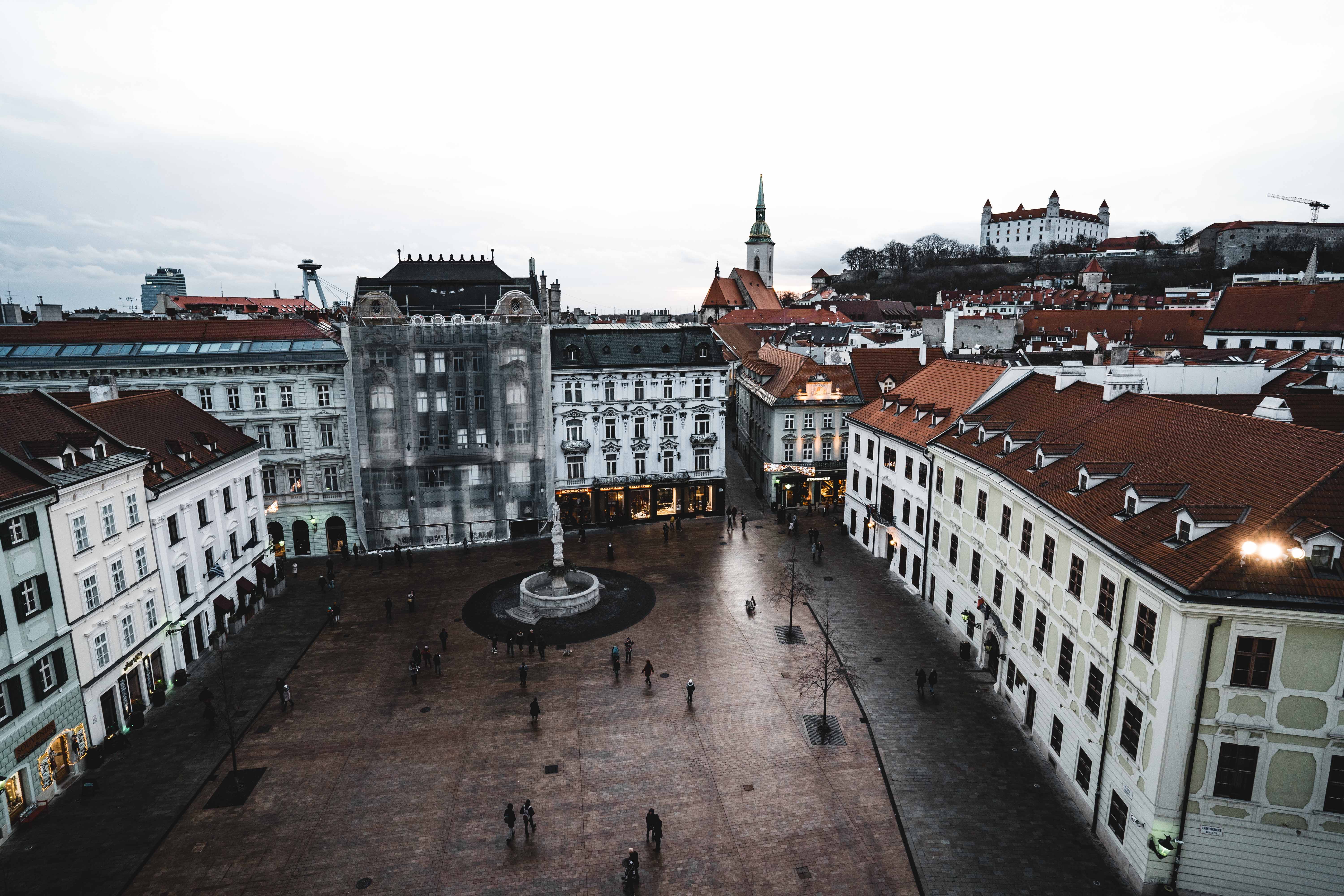
Bratislava is the capital city of Slovakia and is located along the Danube a river on the borders of Austria and Hungary. The city is surrounded by the Little Carpathians Mountains and vineyards as well as its iconic reconstructed Bratislava Castle overlooking Old Town. The castle offers a picturesque view of the city, the neighbouring countries and is home to the Museum of History. Bratislava offers a blend of historic and modern attractions including the Old Town Hall, now home to the Bratislava City Museum, the UFO Bridge, Martin’s Cathedral, Michael’s Gate and Blue Church St Elizabeth’s. Bratislava is home to one of the oldest city parks in Central Europe and is popular with walkers, runners and cyclists as is the city forest park and foothills of the Carpathian Mountains. The city is popular for its locally brewed beers and has many micro-breweries and underground beer cellars. The local cuisine of Bratislava is an eclectic influence of European cultures including Slovak, Hungarian, Austrian and German and serves as a reminder of the history of this cosmopolitan city. However, visitors will find an array of offerings to suit all tastes with lunch being the main meal of the day and roast goose with lokse considered a signature dish of the area.
Budapest, Hungary
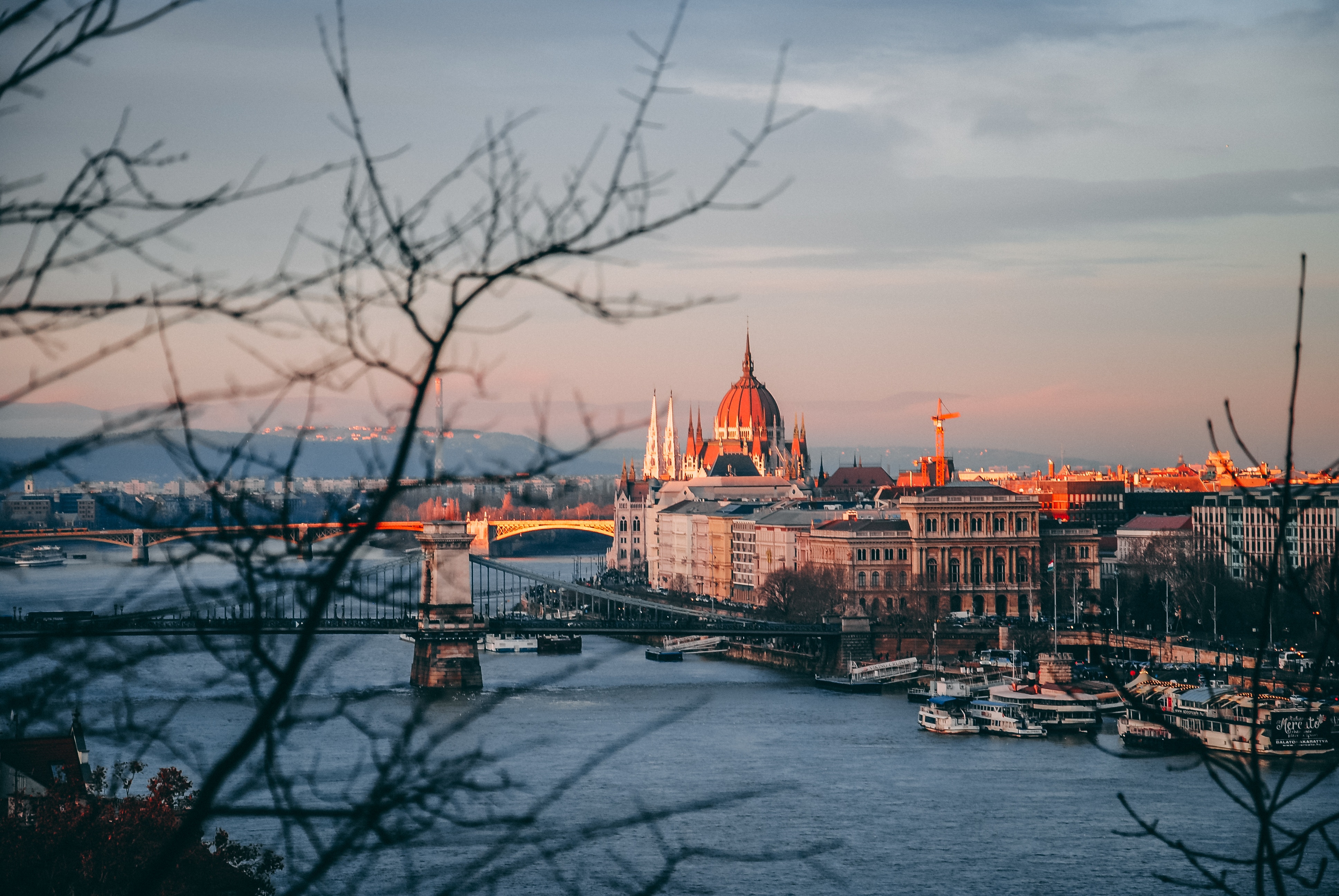
Budapest is the capital city of Hungary and is located over the River Danube. It is one of the largest cities in the European Union and much of its historical sites have been awarded UNESCO World Heritage Site status. Originally formed in 1873 by the joining of Buda, Pest and Old Buda, the city suffered heavy destruction during World War II and was rebuilt into the country’s political, cultural and commercial hub it is now. Bridges and railways connect the city over the Danube, including the six small islands situated on the river themselves. Some of Budapest’s UNESCO World Heritage sites include Chain Bridge, Budapest Parliament, the striking Matthias church and the iconic Royal Palace visible from every location within Budapest City. The Castle Hills district architecture represents over a thousand years of the city’s history with examples of Roman, Turkish, Gothic, Renaissance and Art Nouveau styles. Budapest also has a rich Jewish heritage and is home to the largest synagogue in Europe. The city has an abundance of restaurants offering international cuisines, as well as traditional Hungarian dishes ,including goulash soup, a very popular lunchtime dish. Hungarians enjoy their coffee so a traditional cafe is never hard to find.
Nuremberg, Germany
Nuremberg is a medieval city located in northern Bavaria in Germany. It is Bavaria’s second largest city and is noted for its iconic red roofed buildings and medieval architecture. The imperial Castle overlooks Nuremberg and was one of the most important fortifications of the Roman Empire. For more significant cultural history, the Germanisches Nationalmuseum, one of the largest cultural history museums in the German speaking world, offers visitors exhibitions from Prehistoric all the way to present day. Walking tours around the city offer an enjoyable and active way to learn of Nuremberg’s history and culture. Through Old Town, discover fountains, wells, churches, and art treasures, as well as learning of the colourful past and cosmopolitan present of the city and its people. Nuremberg is also home to one of the oldest Christmas markets in Germany, the Nuremberg Christkindlesmarkt, where visitors can purchase traditional handmade decorations and enjoy the famous gingerbread, mulled wine, and grilled sausage from over one hundred and eighty wooden stalls.
Regensburg, Germany
Regensburg is a medieval city of Bavaria in southeast Germany. It is situated on the northern point of the Danube River at its confluence with the Regen and Naab rivers. The city is famous for its iconic 12th Century stone bridge and sixteen arches, crossing the Danube into Old Town and is the oldest preserved bridge in Germany. Regensburg is also noted for its 13th Century Regensburg Cathedral and Gothic twin spires that feature prominently on the city’s skyline. Recently awarded UNESCO World Heritage status, the city is home to many preserved sites. Visit the the 2nd Century Porta Praetoria which served as the north gate to a Roman camp and St Peter’s Cathedral, with its French Gothic architecture. Also the 18th Century Thurn and Taxis Palace and the Old Town Hall, which is now home to the Imperial Diet Museum, are also worth a visit. Regensburg benefits from lots of parks and gardens for visitors to relax in, as well as walks and cycle paths along the banks of the rivers.
Passau, Germany
Passau is a German city located in the Southeast of Germany on the Austrian border. It is situated at the confluence of the rivers Danube, Inn and Ilz. The Three Rivers City, as it’s also known, is unique for its three contrasting currents of blue, green and black. Old Town of Passau is home to towering buildings of striking architecture: the majestic fortress Veste Oberhaus, the Pilgrimage Church Mariahilf and St Stephen’s Cathedral. Many of Passau’s attractions can be found in this area, including the New Bishop’s Residence, the Gothic Town Hall, as well as many churches and museums. Visitors can stroll along the riverfront promenades and romantic lanes whilst enjoying the picturesque landscape. For modern art, The Museum of Modern Art and Glass Museum Passau are recommended as they offer something a bit different. Theatre and cabaret are a popular evening pastime, with performances at the former Prince Bishopric Theatre or some lively cabaret and Jazz at the Scharfrichterhaus. Visitors will also find many traditional local Bavarian and Austrian cafes and restaurants offering a cosy atmosphere with home cooked food from local produce.
Melk, Austria
Melk is an Austrian town situated on the River Danube. Located west of Vienna, the town is mostly famous for its 11th Century Melk Abbey, a magnificent monastery built high above the town. Melk Abbey is the largest example of Baroque architecture in the Wachau Valley, with the valley itself awarded UNESCO World Heritage Site status in 2000. Its steep terraced vineyards mean vinters cultivate with traditional manual practices and the springtime sees this unique landscape covered in apricot tree blossoms. Strolling around the streets of Melk Old Town, visitors will find the Town Hall Square, the Main Square, the old Post Office, now a local museum, Old Abbey Tavern, and Kremser Strasse. River cruises, self-guided walking tours and cycle tours are also extremely popular around Melk, as the Wachau Valley offers unique landscape to be explored and enjoyed. Art festivals and Baroque music is celebrated each year with the Melk Baroque Days, an international festival.
Vienna, Austria
Vienna is the capital and largest city of Austria. Located on the Danube River in the East of the country, the city is renowned for its strong music heritage and rich culture, and is the largest German speaking city in the world, outside of Berlin. In 2001, Vienna was designated a UNESCO World Heritage Site and boasts magnificent architecture. The city is home to over 27 castles and 150 palaces including the symbolic Gothic St Stephen’s Cathedral and the iconic Schönbrunn Palace. Art and music are in abundance and all tastes are catered for. Live music venues offer everything from Rock to Opera. Enjoy world class performances at Vienna State Opera and experience the epicentre of international concert life at Musikverein. Modern and historical art can be found in indoor and outdoor spaces around the city, and a visit to the famous Kunsthistorisches Museum (KHM) is highly recommended. Enjoy views of the city from the Danube Tower and the Giant Ferris Wheel, then relax in the ample cosy coffee houses, cafes, bars and restaurants where traditional and international cuisines are served, as well as the locally produced wines.
Bratislava, Slovakia
Bratislava is the capital city of Slovakia and is located along the Danube a river on the borders of Austria and Hungary. The city is surrounded by the Little Carpathians Mountains and vineyards as well as its iconic reconstructed Bratislava Castle overlooking Old Town. The castle offers a picturesque view of the city, the neighbouring countries and is home to the Museum of History. Bratislava offers a blend of historic and modern attractions including the Old Town Hall, now home to the Bratislava City Museum, the UFO Bridge, Martin’s Cathedral, Michael’s Gate and Blue Church St Elizabeth’s. Bratislava is home to one of the oldest city parks in Central Europe and is popular with walkers, runners and cyclists as is the city forest park and foothills of the Carpathian Mountains. The city is popular for its locally brewed beers and has many micro-breweries and underground beer cellars. The local cuisine of Bratislava is an eclectic influence of European cultures including Slovak, Hungarian, Austrian and German and serves as a reminder of the history of this cosmopolitan city. However, visitors will find an array of offerings to suit all tastes with lunch being the main meal of the day and roast goose with lokse considered a signature dish of the area.
Budapest, Hungary
Budapest is the capital city of Hungary and is located over the River Danube. It is one of the largest cities in the European Union and much of its historical sites have been awarded UNESCO World Heritage Site status. Originally formed in 1873 by the joining of Buda, Pest and Old Buda, the city suffered heavy destruction during World War II and was rebuilt into the country’s political, cultural and commercial hub it is now. Bridges and railways connect the city over the Danube, including the six small islands situated on the river themselves. Some of Budapest’s UNESCO World Heritage sites include Chain Bridge, Budapest Parliament, the striking Matthias church and the iconic Royal Palace visible from every location within Budapest City. The Castle Hills district architecture represents over a thousand years of the city’s history with examples of Roman, Turkish, Gothic, Renaissance and Art Nouveau styles. Budapest also has a rich Jewish heritage and is home to the largest synagogue in Europe. The city has an abundance of restaurants offering international cuisines, as well as traditional Hungarian dishes ,including goulash soup, a very popular lunchtime dish. Hungarians enjoy their coffee so a traditional cafe is never hard to find.
Budapest, Hungary
Budapest is the capital city of Hungary and is located over the River Danube. It is one of the largest cities in the European Union and much of its historical sites have been awarded UNESCO World Heritage Site status. Originally formed in 1873 by the joining of Buda, Pest and Old Buda, the city suffered heavy destruction during World War II and was rebuilt into the country’s political, cultural and commercial hub it is now. Bridges and railways connect the city over the Danube, including the six small islands situated on the river themselves. Some of Budapest’s UNESCO World Heritage sites include Chain Bridge, Budapest Parliament, the striking Matthias church and the iconic Royal Palace visible from every location within Budapest City. The Castle Hills district architecture represents over a thousand years of the city’s history with examples of Roman, Turkish, Gothic, Renaissance and Art Nouveau styles. Budapest also has a rich Jewish heritage and is home to the largest synagogue in Europe. The city has an abundance of restaurants offering international cuisines, as well as traditional Hungarian dishes ,including goulash soup, a very popular lunchtime dish. Hungarians enjoy their coffee so a traditional cafe is never hard to find.
Budapest, Hungary
Budapest is the capital city of Hungary and is located over the River Danube. It is one of the largest cities in the European Union and much of its historical sites have been awarded UNESCO World Heritage Site status. Originally formed in 1873 by the joining of Buda, Pest and Old Buda, the city suffered heavy destruction during World War II and was rebuilt into the country’s political, cultural and commercial hub it is now. Bridges and railways connect the city over the Danube, including the six small islands situated on the river themselves. Some of Budapest’s UNESCO World Heritage sites include Chain Bridge, Budapest Parliament, the striking Matthias church and the iconic Royal Palace visible from every location within Budapest City. The Castle Hills district architecture represents over a thousand years of the city’s history with examples of Roman, Turkish, Gothic, Renaissance and Art Nouveau styles. Budapest also has a rich Jewish heritage and is home to the largest synagogue in Europe. The city has an abundance of restaurants offering international cuisines, as well as traditional Hungarian dishes ,including goulash soup, a very popular lunchtime dish. Hungarians enjoy their coffee so a traditional cafe is never hard to find.
Cabin Options
Standard Suite
Deluxe Balcony Suite
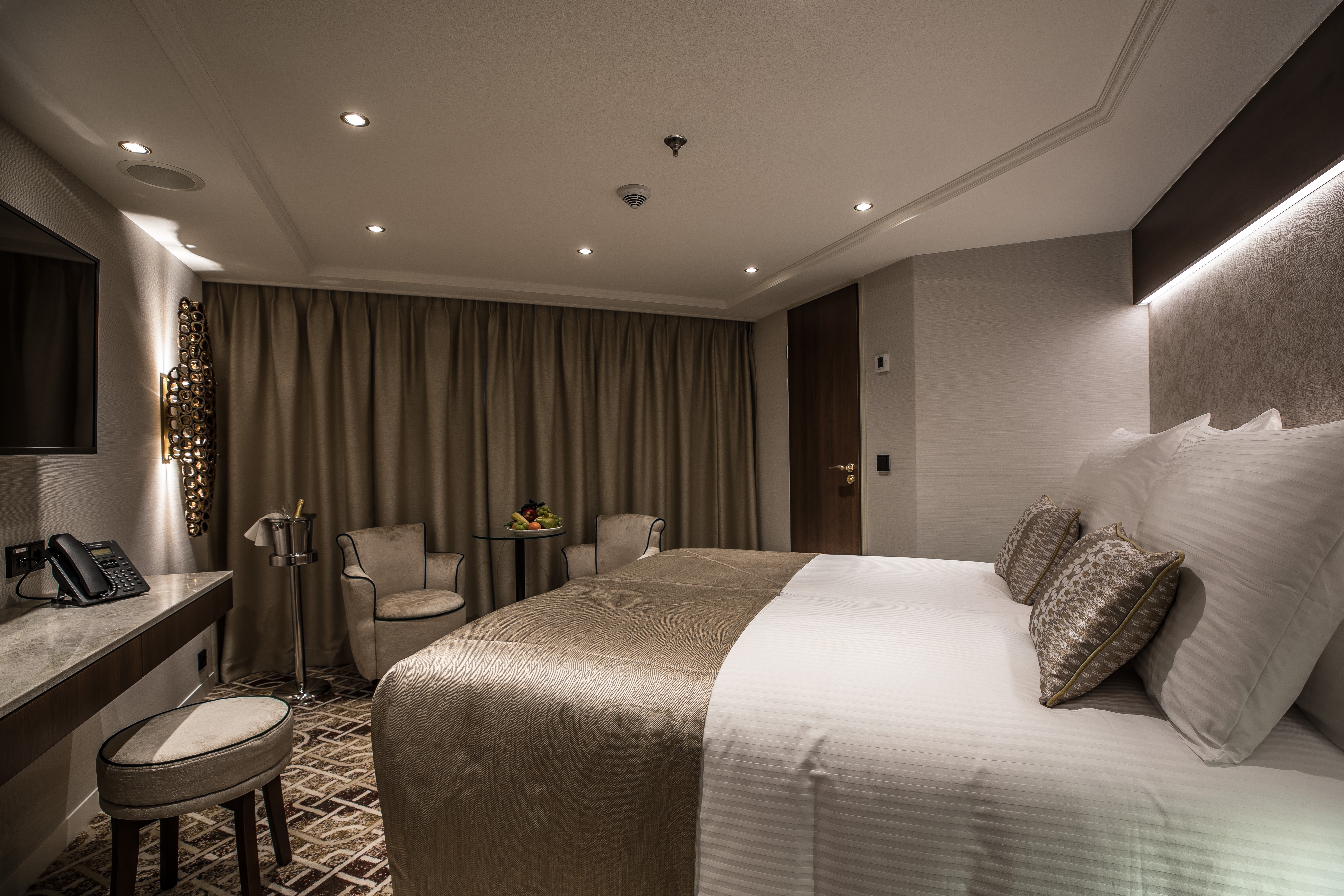
Superior Suite
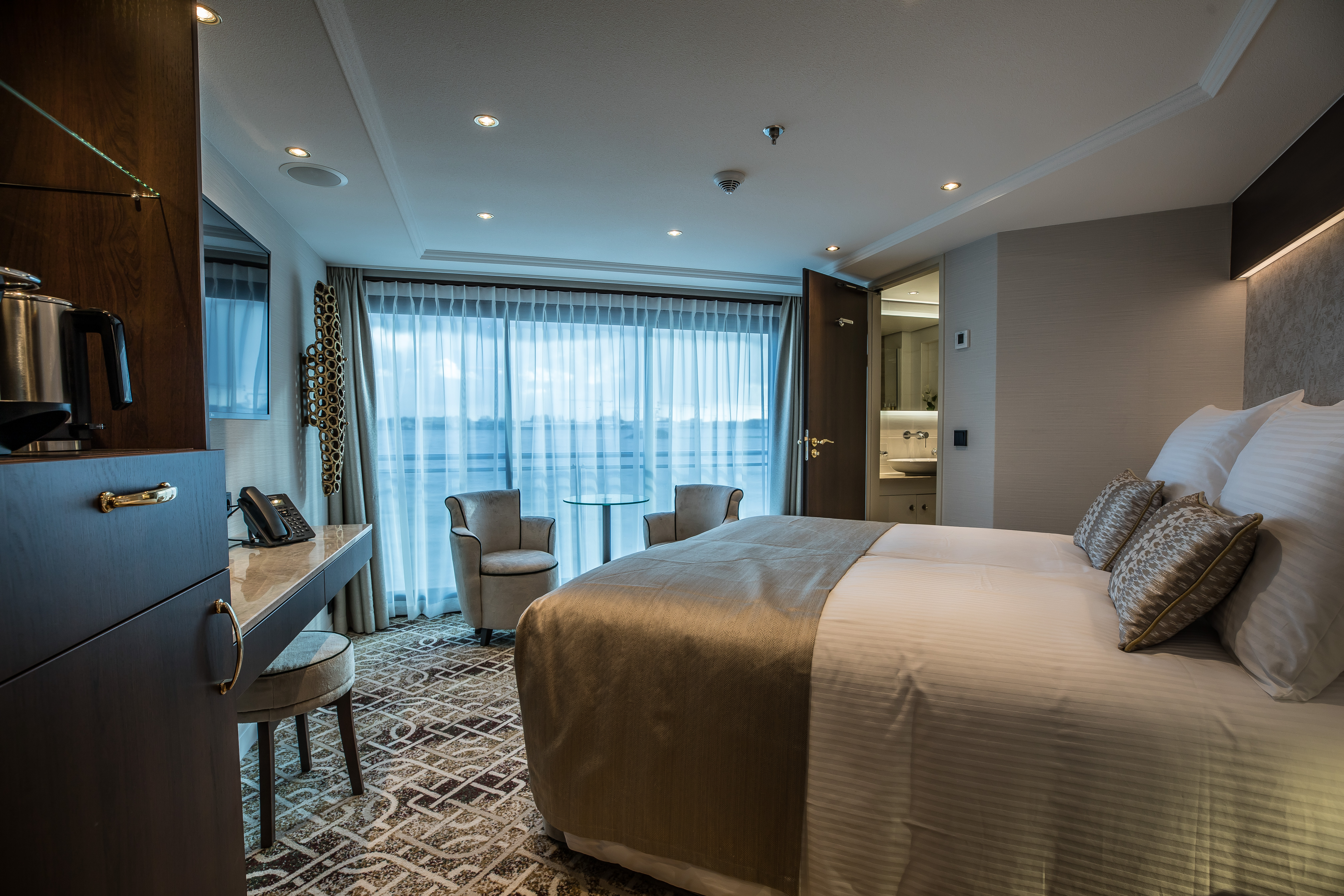
Stern Superior Suite
Standard Suite
Ship Facilities
Main Restaurant
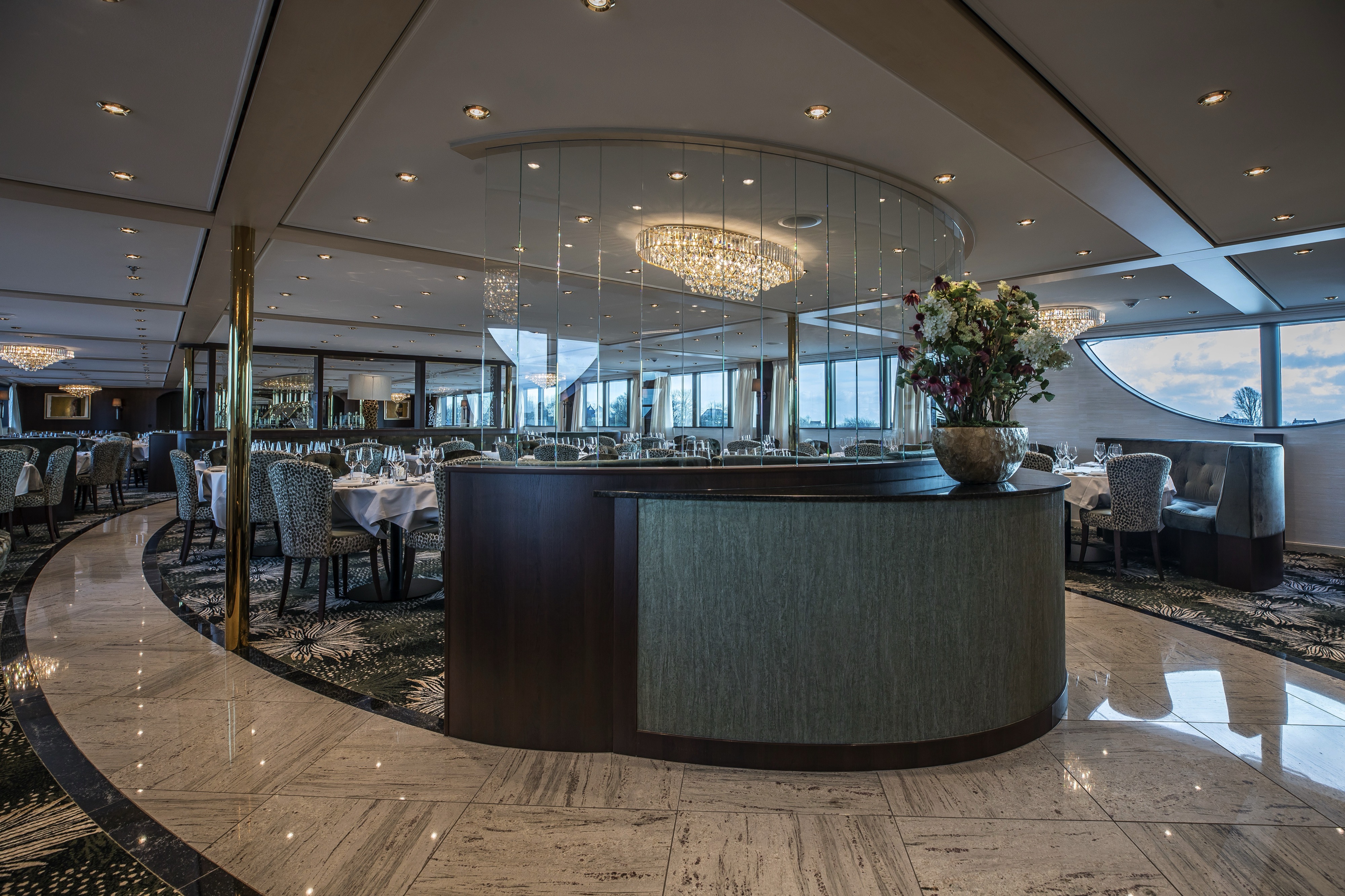
The ship’s main restaurant is located on the Ruby (middle) Deck and here you will experience not only exceptional first class cuisine, but also the most attentive yet discreet service from the ship’s highly professional crew. So just sit back with a well-deserved glass of wine from the carefully selected wine list and delight in the wonderful elegance of your surroundings; beautifully laid tables for just 4 or 6 guests, crisp linen, deep wool carpets and warm wood panelling abound to offer a delectable dining experience of the highest order.
Riverview Kitchen
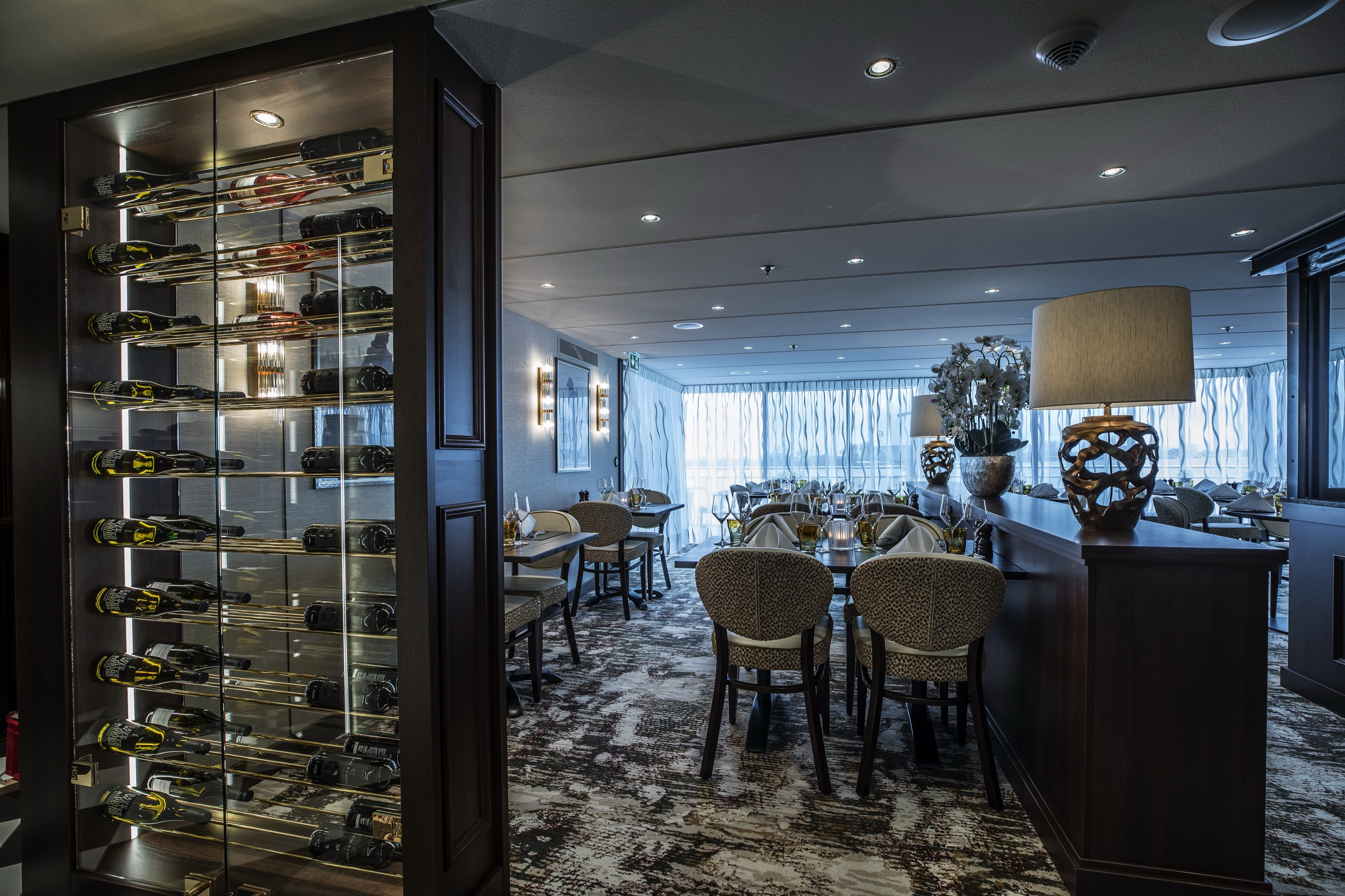
At the Riverview Kitchen with its large panoramic windows, enjoy a more intimate dining experience whilst taking in the fantastic views. Here in the evenings the chef presents in the open kitchen a selection of locally inspired dishes which you can enjoy with your fellow guests; this intimate dining experience can be reserved on board at no extra charge. When the weather allows the panoramic windows may be fully opened on to the terrace to allow a delightful al fresco dining experience.
Excursions and activities
A daily programme is produced on board and delivered to your cabin each evening, detailing the following day’s activities.
On our river cruises we love to take you right into the heart of each town or city you visit along the way, and during your cruise local guides will offer a variety of guided walking tours, panoramic coach tours and/or visits to museums and local cultural favourites such as a wine tasting in Burgundy and a train journey through the Swiss mountains.
You will have a good mix of touring and free time to learn about the history and the little quirks of each place, with plenty of time to explore at your own leisure. Please check the itinerary of the cruise for more specific details.
Optional excursions
Visits to places of interest are organised for most of the days of your holiday, but it it is not compulsory that you go on all the included experiences that have been arranged.
Please note: entrance fees to museums are not usually included in the price of your holiday.

Observation Lounge & Bar
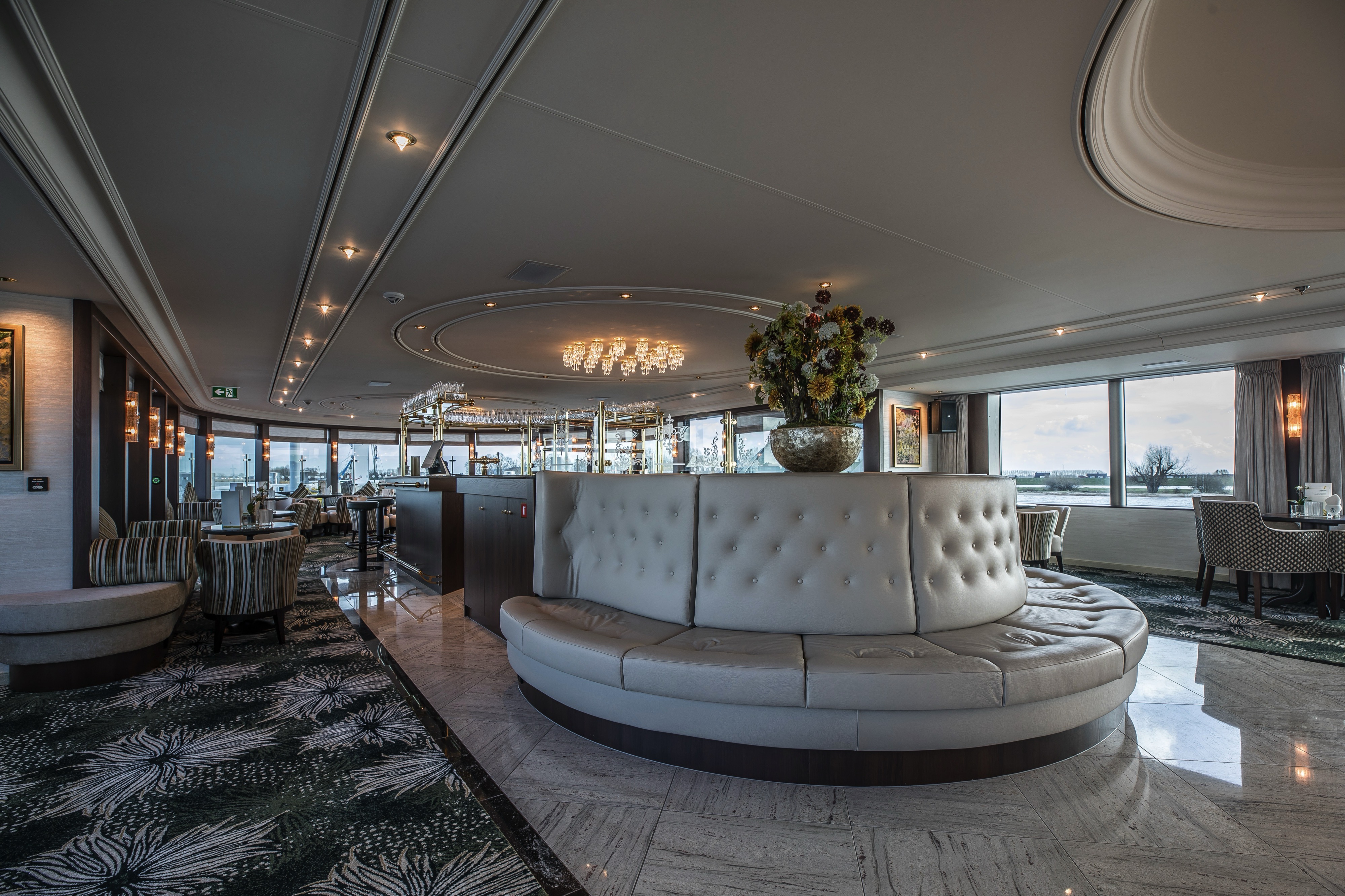
The Diamond Deck is where you will find the very heart of the ship – the superb panoramic observation lounge and bar; a lounge in every sense of the word, complete with plenty of comfortable leather armchairs and sumptuous sofas where you can sink into warmly colourful cushions in beautiful quality fabrics with a freshly made cup of tea. A thick wool carpet feels lovely underfoot and the tasteful contemporary lighting above creates a welcoming and refined ambience, further complemented by the discreet and intuitive service resplendent of the finest five-star hotels. So just sit back with your favourite cocktail and take in the truly mesmerising view.
Sun Deck
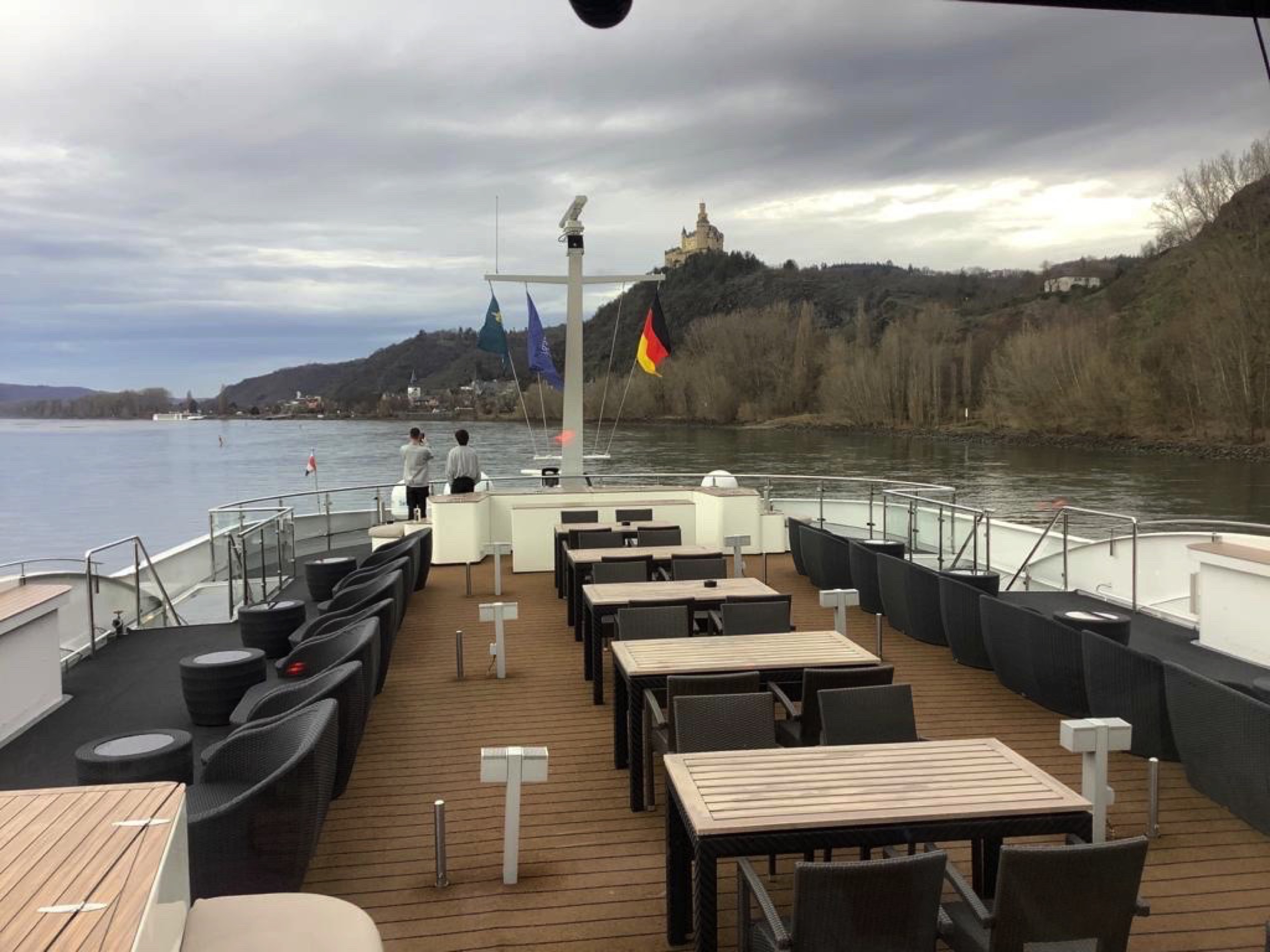
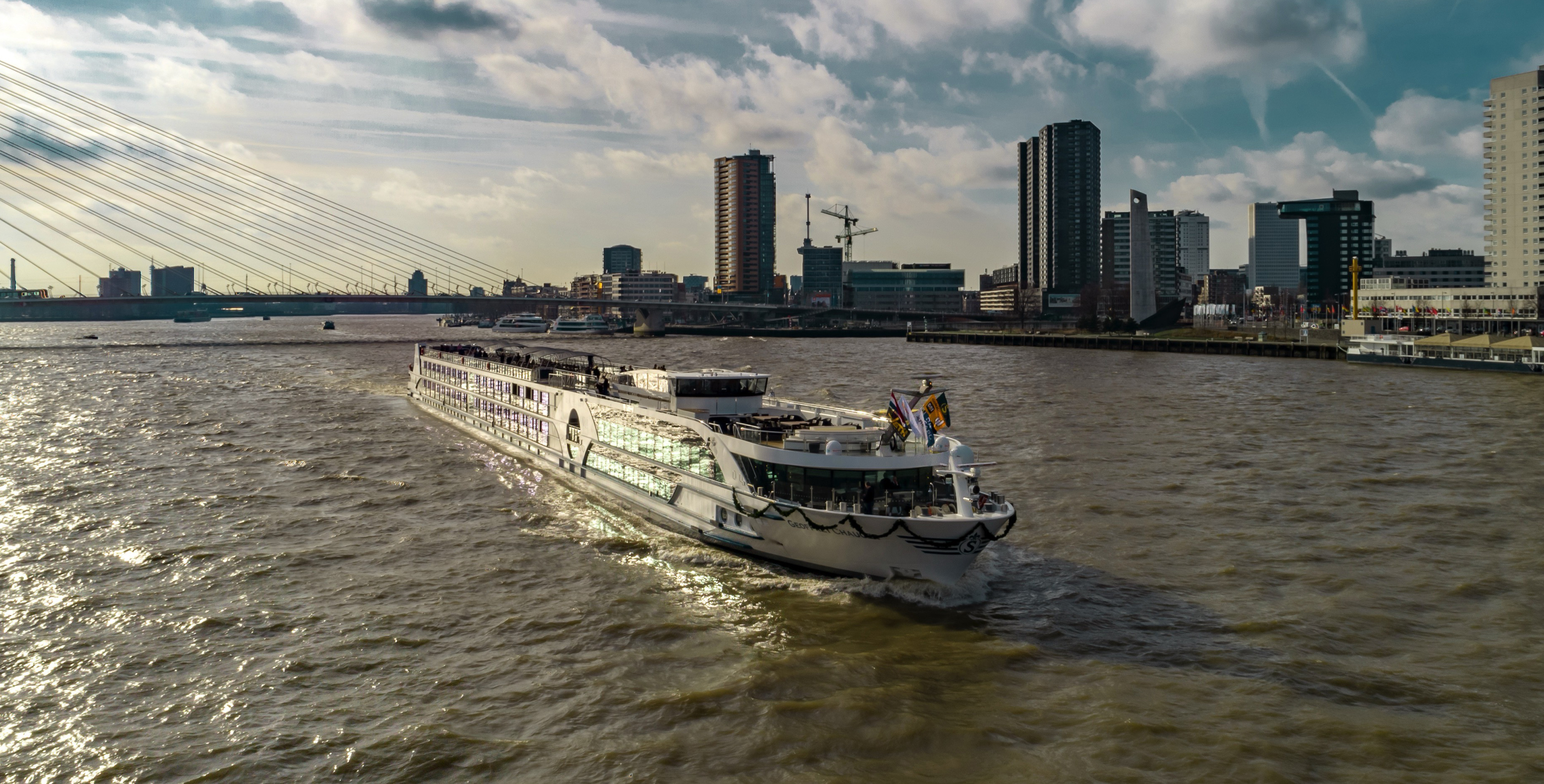
The magnificent and unique Sun Deck illustrates our considered depth of design with a second staircase amidship affording convenient Sun Deck access. Head on up to this truly spectacular deck and what could be better than watching life ashore slip by from the comfort of a sun lounger, perhaps under shade if the weather gets too hot! There’s always the refreshing splash pool too or why not try your hand on the putting green. Then take a refreshingly long drink and that book you’ve been meaning to read for ages on to the lovely terrace area at the fore of the ship, located right in front of the wheelhouse where you can view the Captain and his team skilfully navigating the twisting river and enjoy truly ‘driving seat’ views. Take a deep breath and relax into the pace of river cruise life – now you’re really on holiday!
Please note: The Sun Deck is only accessible by stairs.
Souvenir Shop
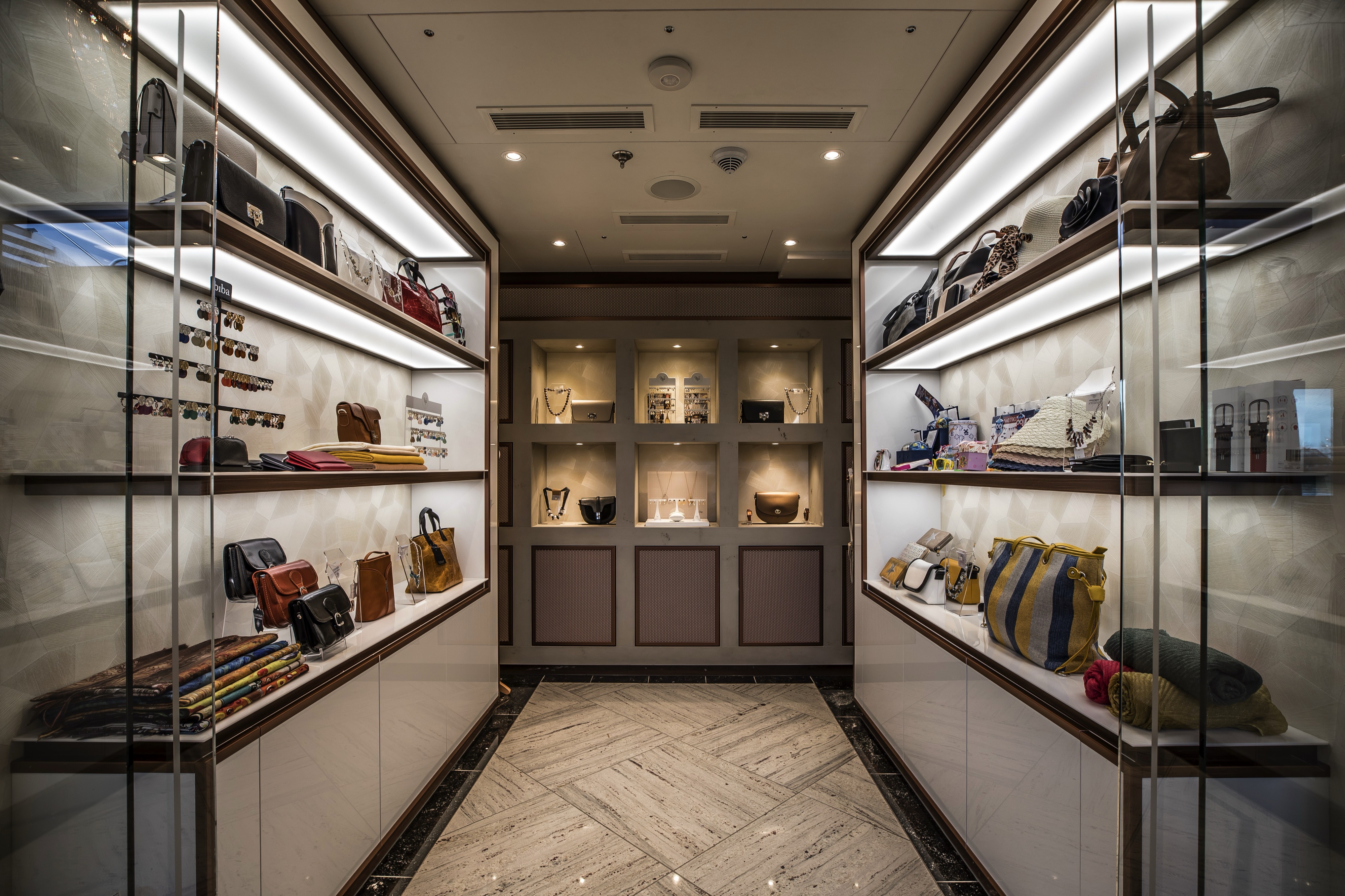
The Souvenir Shop can be found on the Diamond Deck.
Travel Desk and Reception
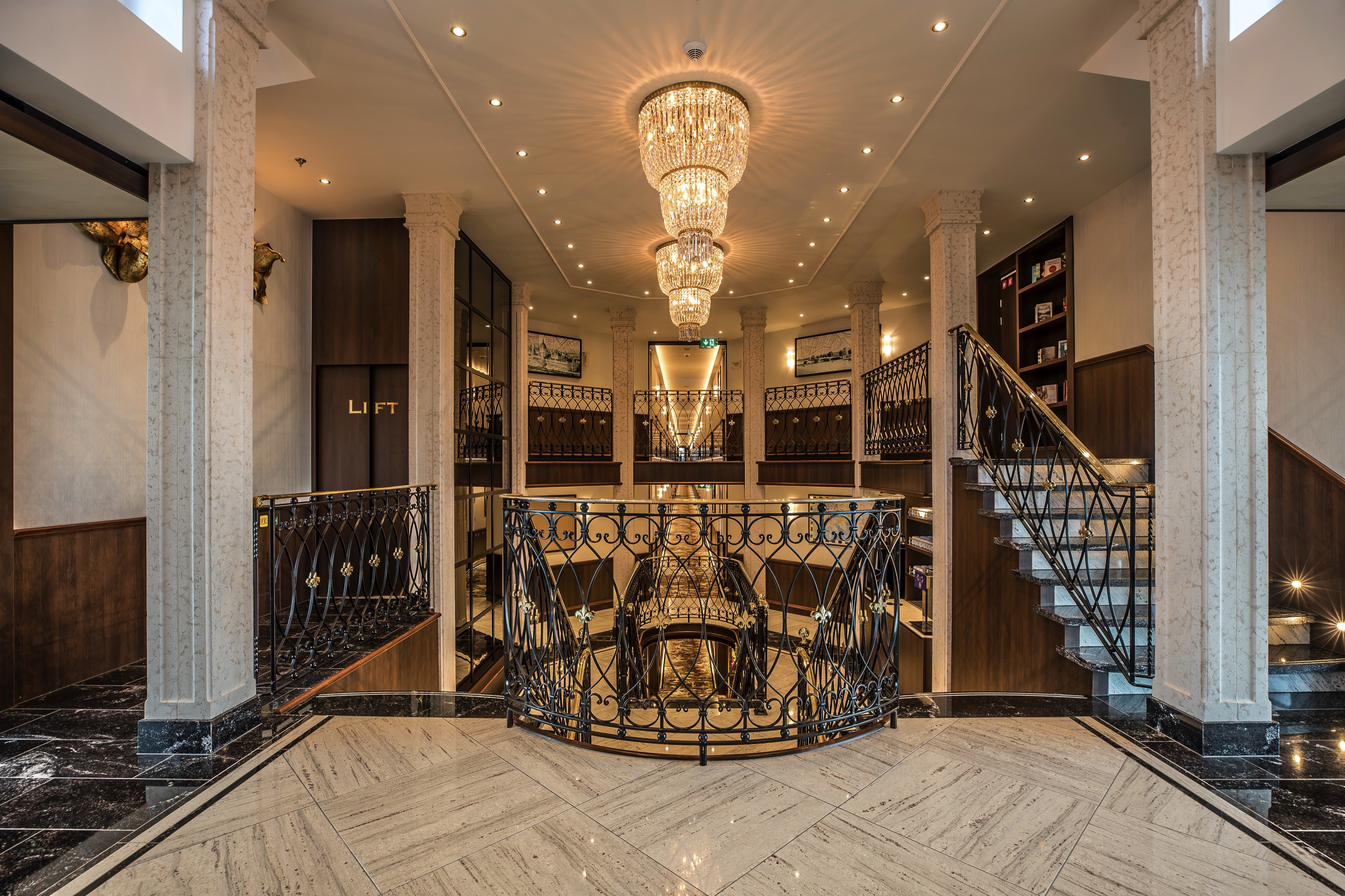
The Reception and Travel Desk can be found on the Diamond Deck.
Wellness
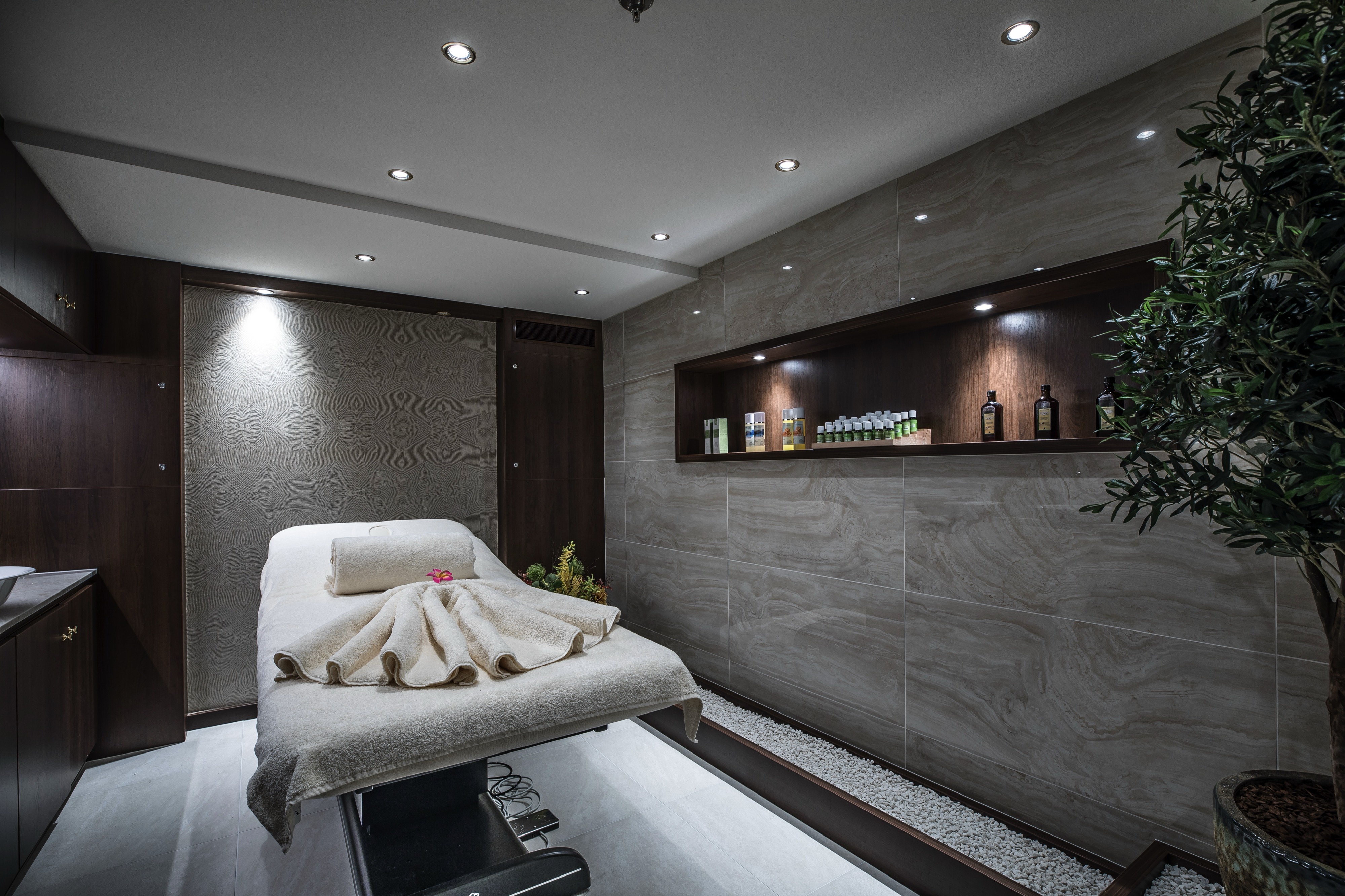
On the Emerald (lower) Deck is the fitness centre, perfect for working off all those delicious meals or for something less strenuous treat yourself to a relaxing massage. So you will always look your best there is a hairdresser’s too which also offers manicure and pedicure treatments. Simply put, these world-class ships, elegant and refined in the truest sense, take the idea of river cruising to another level – it really doesn’t get better than this!
Please note: There are no dedicated children’s facilities on board.
Main Restaurant
The ship’s main restaurant is located on the Ruby (middle) Deck and here you will experience not only exceptional first class cuisine, but also the most attentive yet discreet service from the ship’s highly professional crew. So just sit back with a well-deserved glass of wine from the carefully selected wine list and delight in the wonderful elegance of your surroundings; beautifully laid tables for just 4 or 6 guests, crisp linen, deep wool carpets and warm wood panelling abound to offer a delectable dining experience of the highest order.
Riverview Kitchen
At the Riverview Kitchen with its large panoramic windows, enjoy a more intimate dining experience whilst taking in the fantastic views. Here in the evenings the chef presents in the open kitchen a selection of locally inspired dishes which you can enjoy with your fellow guests; this intimate dining experience can be reserved on board at no extra charge. When the weather allows the panoramic windows may be fully opened on to the terrace to allow a delightful al fresco dining experience.
Excursions and activities
A daily programme is produced on board and delivered to your cabin each evening, detailing the following day’s activities.
On our river cruises we love to take you right into the heart of each town or city you visit along the way, and during your cruise local guides will offer a variety of guided walking tours, panoramic coach tours and/or visits to museums and local cultural favourites such as a wine tasting in Burgundy and a train journey through the Swiss mountains.
You will have a good mix of touring and free time to learn about the history and the little quirks of each place, with plenty of time to explore at your own leisure. Please check the itinerary of the cruise for more specific details.
Optional excursions
Visits to places of interest are organised for most of the days of your holiday, but it it is not compulsory that you go on all the included experiences that have been arranged.
Please note: entrance fees to museums are not usually included in the price of your holiday.
Observation Lounge & Bar
The Diamond Deck is where you will find the very heart of the ship – the superb panoramic observation lounge and bar; a lounge in every sense of the word, complete with plenty of comfortable leather armchairs and sumptuous sofas where you can sink into warmly colourful cushions in beautiful quality fabrics with a freshly made cup of tea. A thick wool carpet feels lovely underfoot and the tasteful contemporary lighting above creates a welcoming and refined ambience, further complemented by the discreet and intuitive service resplendent of the finest five-star hotels. So just sit back with your favourite cocktail and take in the truly mesmerising view.
Sun Deck
The magnificent and unique Sun Deck illustrates our considered depth of design with a second staircase amidship affording convenient Sun Deck access. Head on up to this truly spectacular deck and what could be better than watching life ashore slip by from the comfort of a sun lounger, perhaps under shade if the weather gets too hot! There’s always the refreshing splash pool too or why not try your hand on the putting green. Then take a refreshingly long drink and that book you’ve been meaning to read for ages on to the lovely terrace area at the fore of the ship, located right in front of the wheelhouse where you can view the Captain and his team skilfully navigating the twisting river and enjoy truly ‘driving seat’ views. Take a deep breath and relax into the pace of river cruise life – now you’re really on holiday!
Please note: The Sun Deck is only accessible by stairs.
Souvenir Shop
The Souvenir Shop can be found on the Diamond Deck.
Travel Desk and Reception
The Reception and Travel Desk can be found on the Diamond Deck.
Wellness
On the Emerald (lower) Deck is the fitness centre, perfect for working off all those delicious meals or for something less strenuous treat yourself to a relaxing massage. So you will always look your best there is a hairdresser’s too which also offers manicure and pedicure treatments. Simply put, these world-class ships, elegant and refined in the truest sense, take the idea of river cruising to another level – it really doesn’t get better than this!
Please note: There are no dedicated children’s facilities on board.
About the Ship
Deck Plans

- Fitness/Wellness Area
- Hairdresser
- Emerald Deck Suite

- Kitchen
- Restaurant
- Superior Suite
- Ruby Deck Suite

- Bar
- Panorama Lounge
- Souvenir Shop
- Travel Desk
- Reception
- Bistro
- Superior Suite
- Deluxe Balcony Suite
- Diamond Deck Suite
- Superior Stern Suite

- Sun Deck
- Splash Pool
- Putting Green
- Wheelhouse
- Terrace Area
- Fitness/Wellness Area
- Hairdresser
- Emerald Deck Suite
- Kitchen
- Restaurant
- Superior Suite
- Ruby Deck Suite
- Bar
- Panorama Lounge
- Souvenir Shop
- Travel Desk
- Reception
- Bistro
- Superior Suite
- Deluxe Balcony Suite
- Diamond Deck Suite
- Superior Stern Suite
- Sun Deck
- Splash Pool
- Putting Green
- Wheelhouse
- Terrace Area