
Itinerary
Catania, Italy
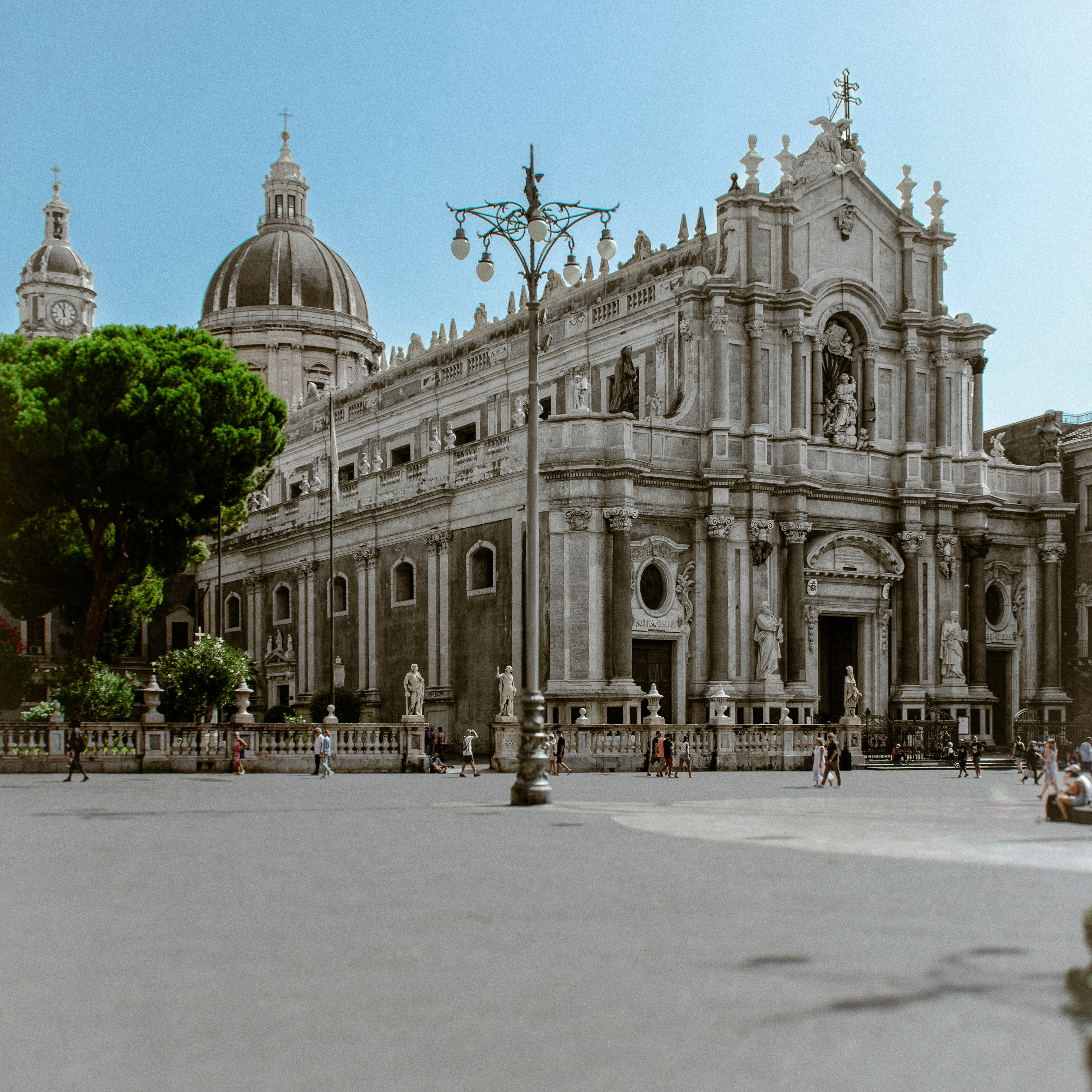
Catania is an ancient port city on Sicily’s east coast. It sits at the foot of Mt. Etna, an active volcano with trails leading up to the summit. The city’s wide central square, Piazza del Duomo, features the whimsical Fontana dell’Elefante statue and richly decorated Catania Cathedral. In the southwest corner of the square, La Pescheria weekday fish market is a rowdy spectacle surrounded by seafood restaurants.
Agrigento, Italy
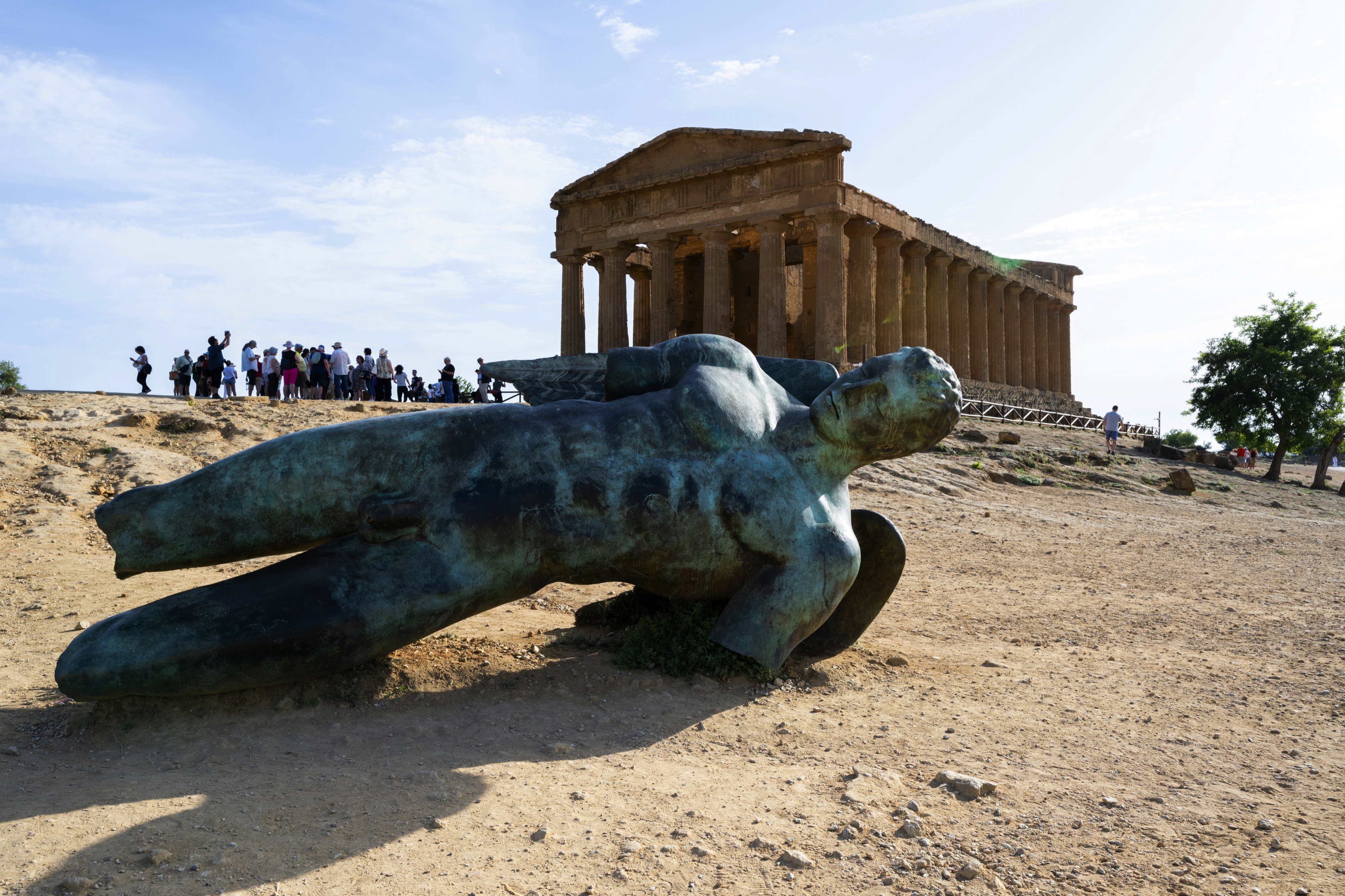
Valley of the Temples – This morning, we embark on a journey to witness one of the most impressive sights of antiquity: the Greek ruins in the Valley of the Temples. With seven temples spread across a ridge, these towering structures overlook the sea, a breathtaking spectacle visible for miles. Their grandeur must have made a strong impression on anyone who passed by, whether by sea or land, sending a clear message of dominance and authority.
Among these, the Temple of Concordia stands out, remarkably well-preserved with only its roof missing. Its graceful columns, gently tapering towards the sky, and its warm golden hue make it an unforgettable sight. It’s fascinating to think about the ancient builders labouring under the sun, creating such a timeless masterpiece.
In small groups along with an expert local guide, we’ll enjoy a guided tour of the site. You’ll have the opportunity to visit the local museum, which showcases artefacts from the temples and surrounding areas, including a remarkable collection of ancient vases. Afterwards, we head to the charming town of Agrigento, with its medieval ambience and narrow, winding streets that lead to peaceful piazzas offering sweeping views of the Mediterranean.
In the afternoon, we return to our hotel.
Piazza Armerina, Italy
Piazza Armerina & Taormina – Leaving Agrigento, we head towards Piazza Armerina, a quaint town where one of the most significant archaeological finds of the 20th century was uncovered: a 4th-century Roman villa, likely belonging to a co-emperor, which explains its grand size and lavish decor.
Buried for centuries, remnants of the vibrant frescoes can still be seen, while the stunning mosaics depicting animals and hunting scenes are some of the finest from Roman times. This grand estate, complete with baths, provides a fascinating glimpse into the luxurious lifestyle of the Roman elite. After a guided tour of the villa led by an expert local guide, we continue our journey to a cosy agriturismo nestled in the Sicilian countryside. This family-run farm stay provides a warm and inviting atmosphere where we’ll enjoy a traditional Sicilian lunch, prepared with fresh, local ingredients like vegetables, homemade pasta, and freshly pressed olive oil and wine. Dining at an agriturismo is a true taste of Sicily’s rich culinary heritage, far removed from the high-end restaurants of the city.
Afterwards, we’ll make our way to Taormina on Sicily’s eastern coast, where we’ll spend the next five nights.
Taormina, Italy
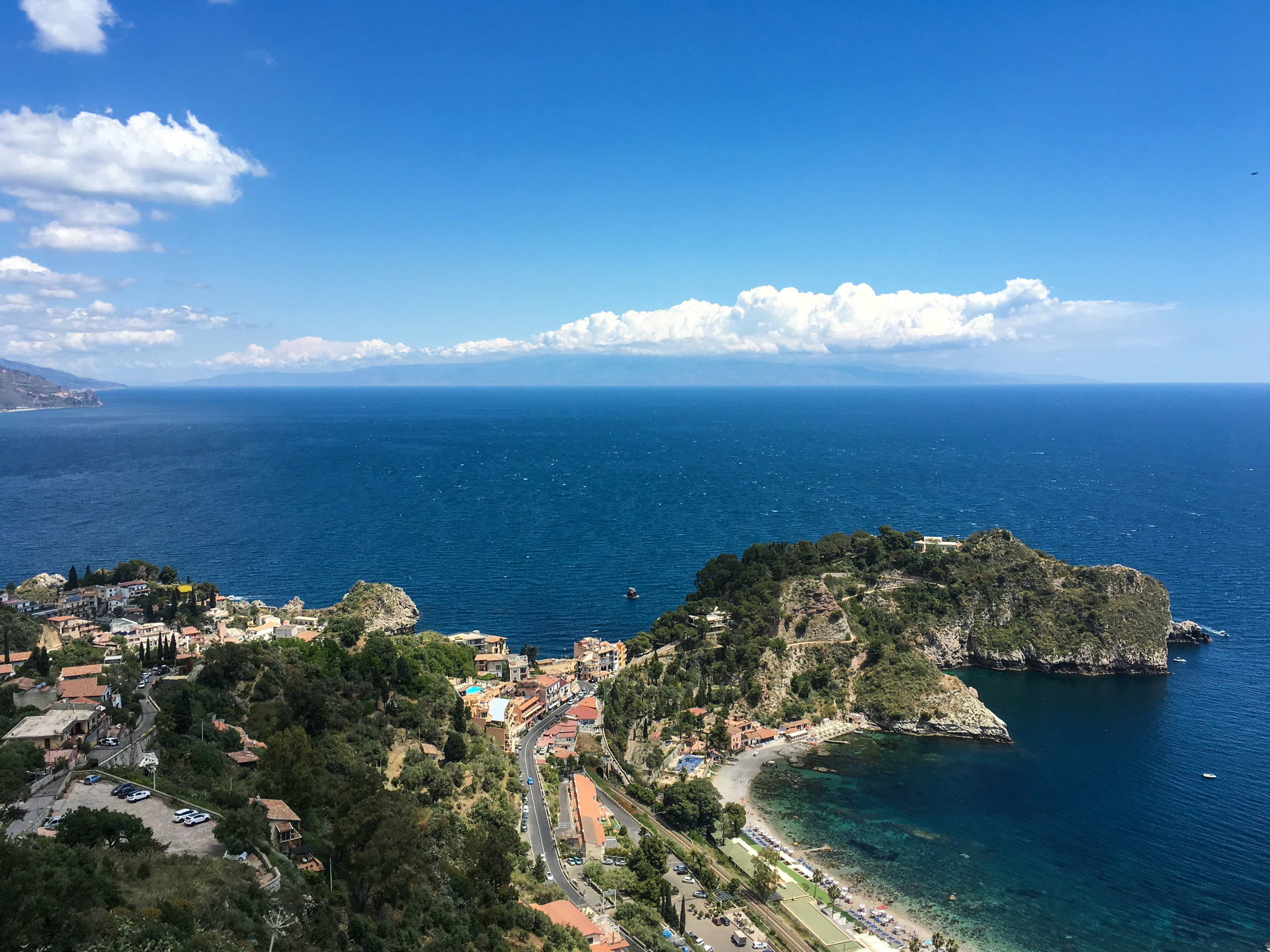
The medieval cliff-hanging town of Taormina is overrun with tourists, yet its natural beauty is still hard to dispute. The view of the sea and Mt. Etna from its jagged cactus-covered cliffs is as close to perfection as a panorama can get—especially on clear days, when the snowcapped volcano’s white puffs of smoke rise against the blue sky. Writers have extolled Taormina’s beauty almost since it was founded in the 6th century BC by Greeks from nearby Naxos; Goethe and D. H. Lawrence were among its well-known enthusiasts. The town’s boutique-lined main streets get old pretty quickly, but the many hiking paths that wind through the beautiful hills surrounding Taormina promise a timeless alternative. A trip up to stunning Castelmola (whether on foot or by car) should also be on your itinerary.
Mount Etna
Mount Etna – Rising above eastern Sicily, Etna is Europe’s tallest active volcano. In the morning, we’ll head toward the base, driving as close as possible to the snow-covered peak. As we make our way up the winding roads, the landscape transforms into an otherworldly scene, with jagged black rocks in dramatic shapes, and vast stretches of land nearly void of vegetation. When we reach the cable car station, you’ll be treated to panoramic views of the entire area.
Depending on the conditions, you’ll have the chance to continue your journey to even greater heights with the cable car, jeep, and a knowledgeable guide.
Finish your morning with a guided tour and lunch at a local winery nestled on the fertile lower slopes of Mount Etna. Surrounded by spectacular views of the vineyards, you’ll discover the unique growing conditions that produce these distinctive organic wines. A delicious lunch will follow, with local dishes paired perfectly with deep red and aromatic white wine.
Afterwards, we’ll head back to our hotel in the afternoon.
Taormina, Italy
The medieval cliff-hanging town of Taormina is overrun with tourists, yet its natural beauty is still hard to dispute. The view of the sea and Mt. Etna from its jagged cactus-covered cliffs is as close to perfection as a panorama can get—especially on clear days, when the snowcapped volcano’s white puffs of smoke rise against the blue sky. Writers have extolled Taormina’s beauty almost since it was founded in the 6th century BC by Greeks from nearby Naxos; Goethe and D. H. Lawrence were among its well-known enthusiasts. The town’s boutique-lined main streets get old pretty quickly, but the many hiking paths that wind through the beautiful hills surrounding Taormina promise a timeless alternative. A trip up to stunning Castelmola (whether on foot or by car) should also be on your itinerary.
Siracuse, Sicily, Italy
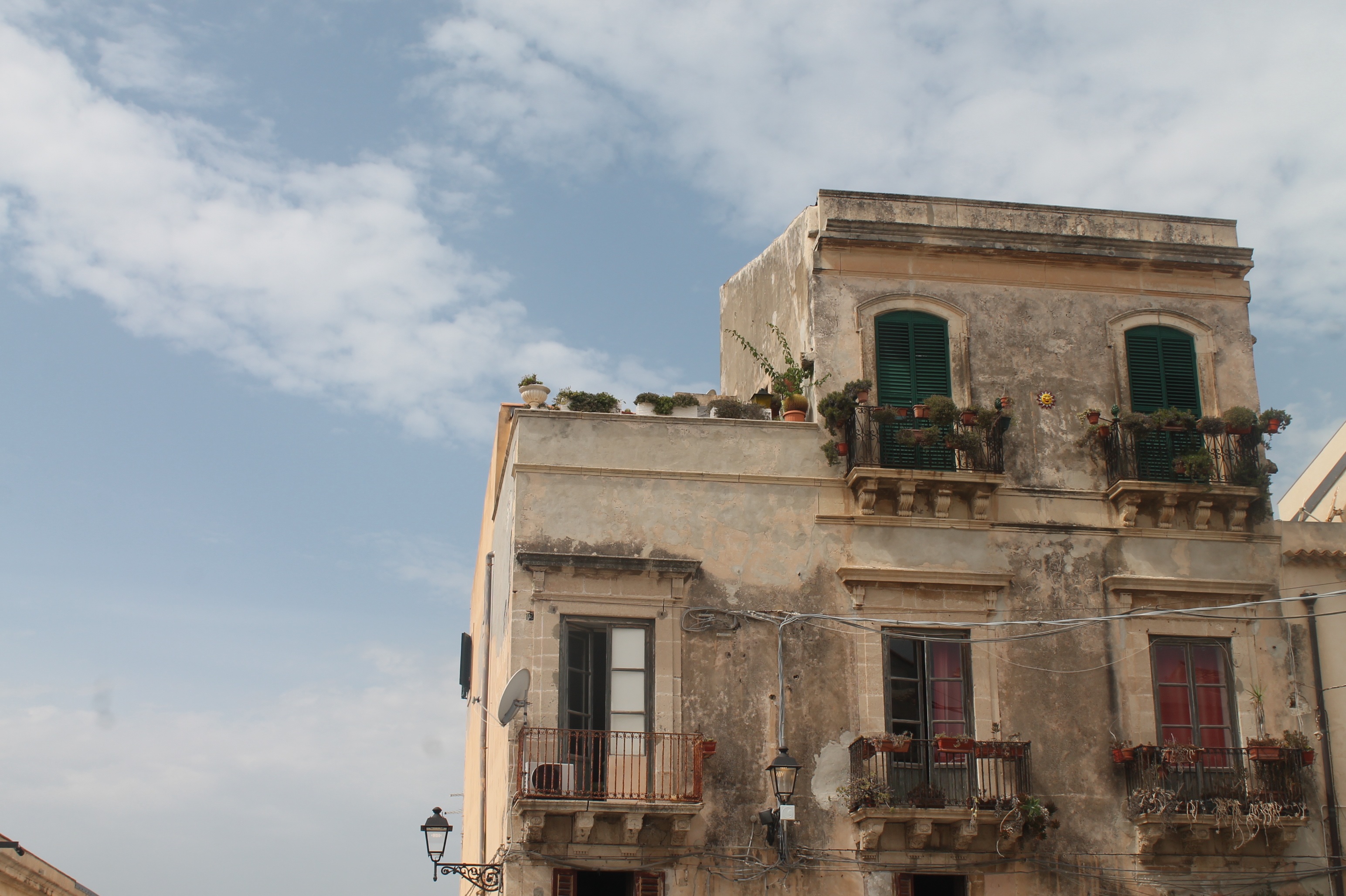
Siracusa, known to English speakers as Syracuse, is a wonder to behold. One of the great ancient capitals of Western civilization, the city was founded in 734 BC by Greek colonists from Corinth and soon grew to rival, and even surpass, Athens in splendor and power. It became the largest, wealthiest city-state in the West and a bulwark of Greek civilization. Although Siracusa lived under tyranny, rulers such as Dionysius filled their courts with Greeks of the highest cultural stature—among them the playwrights Aeschylus and Euripides, and the philosopher Plato. The Athenians, who didn’t welcome Siracusa’s rise, set out to conquer Sicily, but the natives outsmarted them in what was one of the greatest military campaigns in ancient history (413 BC). The city continued to prosper until it was conquered two centuries later by the Romans.Present-day Siracusa still has some of the finest examples of Baroque art and architecture; dramatic Greek and Roman ruins; and a Duomo that’s the stuff of legend—a microcosm of the city’s entire history in one building. The modern city also has a wonderful, lively, Baroque old town worthy of extensive exploration, as well as pleasant piazzas, outdoor cafés and bars, and a wide assortment of excellent seafood. There are essentially two areas to explore in Siracusa: the Parco Archeologico (Archaeological Zone), on the mainland; and the island of Ortygia, the ancient city first inhabited by the Greeks, which juts out into the Ionian Sea and is connected to the mainland by two small bridges. Ortygia is becoming increasingly popular with tourists, and is starting to lose its old-fashioned charm in favor of modern boutiques.Siracusa’s old nucleus of Ortygia, a compact area, is a pleasure to amble around without getting unduly tired. In contrast, mainland Siracusa is a grid of wider avenues. At the northern end of Corso Gelone, above Viale Paolo Orsi, the orderly grid gives way to the ancient quarter of Neapolis, where the sprawling Parco Archeologico is accessible from Viale Teracati (an extension of Corso Gelone). East of Viale Teracati, about a 10-minute walk from the Parco Archeologico, the district of Tyche holds the archaeological museum and the church and catacombs of San Giovanni, both off Viale Teocrito (drive or take a taxi or city bus from Ortygia). Coming from the train station, it’s a 15-minute trudge to Ortygia along Via Francesco Crispi and Corso Umberto. If you’re not up for that, take one of the free electric buses leaving every 10 minutes from the bus station around the corner.
Catania, Italy
Catania is an ancient port city on Sicily’s east coast. It sits at the foot of Mt. Etna, an active volcano with trails leading up to the summit. The city’s wide central square, Piazza del Duomo, features the whimsical Fontana dell’Elefante statue and richly decorated Catania Cathedral. In the southwest corner of the square, La Pescheria weekday fish market is a rowdy spectacle surrounded by seafood restaurants.
Agrigento, Italy
Valley of the Temples – This morning, we embark on a journey to witness one of the most impressive sights of antiquity: the Greek ruins in the Valley of the Temples. With seven temples spread across a ridge, these towering structures overlook the sea, a breathtaking spectacle visible for miles. Their grandeur must have made a strong impression on anyone who passed by, whether by sea or land, sending a clear message of dominance and authority.
Among these, the Temple of Concordia stands out, remarkably well-preserved with only its roof missing. Its graceful columns, gently tapering towards the sky, and its warm golden hue make it an unforgettable sight. It’s fascinating to think about the ancient builders labouring under the sun, creating such a timeless masterpiece.
In small groups along with an expert local guide, we’ll enjoy a guided tour of the site. You’ll have the opportunity to visit the local museum, which showcases artefacts from the temples and surrounding areas, including a remarkable collection of ancient vases. Afterwards, we head to the charming town of Agrigento, with its medieval ambience and narrow, winding streets that lead to peaceful piazzas offering sweeping views of the Mediterranean.
In the afternoon, we return to our hotel.
Piazza Armerina, Italy
Piazza Armerina & Taormina – Leaving Agrigento, we head towards Piazza Armerina, a quaint town where one of the most significant archaeological finds of the 20th century was uncovered: a 4th-century Roman villa, likely belonging to a co-emperor, which explains its grand size and lavish decor.
Buried for centuries, remnants of the vibrant frescoes can still be seen, while the stunning mosaics depicting animals and hunting scenes are some of the finest from Roman times. This grand estate, complete with baths, provides a fascinating glimpse into the luxurious lifestyle of the Roman elite. After a guided tour of the villa led by an expert local guide, we continue our journey to a cosy agriturismo nestled in the Sicilian countryside. This family-run farm stay provides a warm and inviting atmosphere where we’ll enjoy a traditional Sicilian lunch, prepared with fresh, local ingredients like vegetables, homemade pasta, and freshly pressed olive oil and wine. Dining at an agriturismo is a true taste of Sicily’s rich culinary heritage, far removed from the high-end restaurants of the city.
Afterwards, we’ll make our way to Taormina on Sicily’s eastern coast, where we’ll spend the next five nights.
Taormina, Italy
The medieval cliff-hanging town of Taormina is overrun with tourists, yet its natural beauty is still hard to dispute. The view of the sea and Mt. Etna from its jagged cactus-covered cliffs is as close to perfection as a panorama can get—especially on clear days, when the snowcapped volcano’s white puffs of smoke rise against the blue sky. Writers have extolled Taormina’s beauty almost since it was founded in the 6th century BC by Greeks from nearby Naxos; Goethe and D. H. Lawrence were among its well-known enthusiasts. The town’s boutique-lined main streets get old pretty quickly, but the many hiking paths that wind through the beautiful hills surrounding Taormina promise a timeless alternative. A trip up to stunning Castelmola (whether on foot or by car) should also be on your itinerary.
Mount Etna
Mount Etna – Rising above eastern Sicily, Etna is Europe’s tallest active volcano. In the morning, we’ll head toward the base, driving as close as possible to the snow-covered peak. As we make our way up the winding roads, the landscape transforms into an otherworldly scene, with jagged black rocks in dramatic shapes, and vast stretches of land nearly void of vegetation. When we reach the cable car station, you’ll be treated to panoramic views of the entire area.
Depending on the conditions, you’ll have the chance to continue your journey to even greater heights with the cable car, jeep, and a knowledgeable guide.
Finish your morning with a guided tour and lunch at a local winery nestled on the fertile lower slopes of Mount Etna. Surrounded by spectacular views of the vineyards, you’ll discover the unique growing conditions that produce these distinctive organic wines. A delicious lunch will follow, with local dishes paired perfectly with deep red and aromatic white wine.
Afterwards, we’ll head back to our hotel in the afternoon.
Taormina, Italy
The medieval cliff-hanging town of Taormina is overrun with tourists, yet its natural beauty is still hard to dispute. The view of the sea and Mt. Etna from its jagged cactus-covered cliffs is as close to perfection as a panorama can get—especially on clear days, when the snowcapped volcano’s white puffs of smoke rise against the blue sky. Writers have extolled Taormina’s beauty almost since it was founded in the 6th century BC by Greeks from nearby Naxos; Goethe and D. H. Lawrence were among its well-known enthusiasts. The town’s boutique-lined main streets get old pretty quickly, but the many hiking paths that wind through the beautiful hills surrounding Taormina promise a timeless alternative. A trip up to stunning Castelmola (whether on foot or by car) should also be on your itinerary.
Siracuse, Sicily, Italy
Siracusa, known to English speakers as Syracuse, is a wonder to behold. One of the great ancient capitals of Western civilization, the city was founded in 734 BC by Greek colonists from Corinth and soon grew to rival, and even surpass, Athens in splendor and power. It became the largest, wealthiest city-state in the West and a bulwark of Greek civilization. Although Siracusa lived under tyranny, rulers such as Dionysius filled their courts with Greeks of the highest cultural stature—among them the playwrights Aeschylus and Euripides, and the philosopher Plato. The Athenians, who didn’t welcome Siracusa’s rise, set out to conquer Sicily, but the natives outsmarted them in what was one of the greatest military campaigns in ancient history (413 BC). The city continued to prosper until it was conquered two centuries later by the Romans.Present-day Siracusa still has some of the finest examples of Baroque art and architecture; dramatic Greek and Roman ruins; and a Duomo that’s the stuff of legend—a microcosm of the city’s entire history in one building. The modern city also has a wonderful, lively, Baroque old town worthy of extensive exploration, as well as pleasant piazzas, outdoor cafés and bars, and a wide assortment of excellent seafood. There are essentially two areas to explore in Siracusa: the Parco Archeologico (Archaeological Zone), on the mainland; and the island of Ortygia, the ancient city first inhabited by the Greeks, which juts out into the Ionian Sea and is connected to the mainland by two small bridges. Ortygia is becoming increasingly popular with tourists, and is starting to lose its old-fashioned charm in favor of modern boutiques.Siracusa’s old nucleus of Ortygia, a compact area, is a pleasure to amble around without getting unduly tired. In contrast, mainland Siracusa is a grid of wider avenues. At the northern end of Corso Gelone, above Viale Paolo Orsi, the orderly grid gives way to the ancient quarter of Neapolis, where the sprawling Parco Archeologico is accessible from Viale Teracati (an extension of Corso Gelone). East of Viale Teracati, about a 10-minute walk from the Parco Archeologico, the district of Tyche holds the archaeological museum and the church and catacombs of San Giovanni, both off Viale Teocrito (drive or take a taxi or city bus from Ortygia). Coming from the train station, it’s a 15-minute trudge to Ortygia along Via Francesco Crispi and Corso Umberto. If you’re not up for that, take one of the free electric buses leaving every 10 minutes from the bus station around the corner.
Catania, Italy
Catania is an ancient port city on Sicily’s east coast. It sits at the foot of Mt. Etna, an active volcano with trails leading up to the summit. The city’s wide central square, Piazza del Duomo, features the whimsical Fontana dell’Elefante statue and richly decorated Catania Cathedral. In the southwest corner of the square, La Pescheria weekday fish market is a rowdy spectacle surrounded by seafood restaurants.
Catania, Italy
Catania is an ancient port city on Sicily’s east coast. It sits at the foot of Mt. Etna, an active volcano with trails leading up to the summit. The city’s wide central square, Piazza del Duomo, features the whimsical Fontana dell’Elefante statue and richly decorated Catania Cathedral. In the southwest corner of the square, La Pescheria weekday fish market is a rowdy spectacle surrounded by seafood restaurants.