Itinerary
In Flight
Departure
Chennai, India
Madras was the site of the East India Company’s first settlement, founded in 1639 on land given by the Raja of Chandragiri. A small fort was built on the settlement in 1644, and a town which subsequently became known as George Town, in the area of Fort St. George was built north of it. The settlement became independent of Banten, Java in 1683 and was granted its first municipal charter in 1688 by James II. It is therefore the oldest municipal corporation in India. During the 18th and 19th centuries, when the British and French competed for supremacy in India, the city’s fortunes waned.
Chennai, India
Madras was the site of the East India Company’s first settlement, founded in 1639 on land given by the Raja of Chandragiri. A small fort was built on the settlement in 1644, and a town which subsequently became known as George Town, in the area of Fort St. George was built north of it. The settlement became independent of Banten, Java in 1683 and was granted its first municipal charter in 1688 by James II. It is therefore the oldest municipal corporation in India. During the 18th and 19th centuries, when the British and French competed for supremacy in India, the city’s fortunes waned.
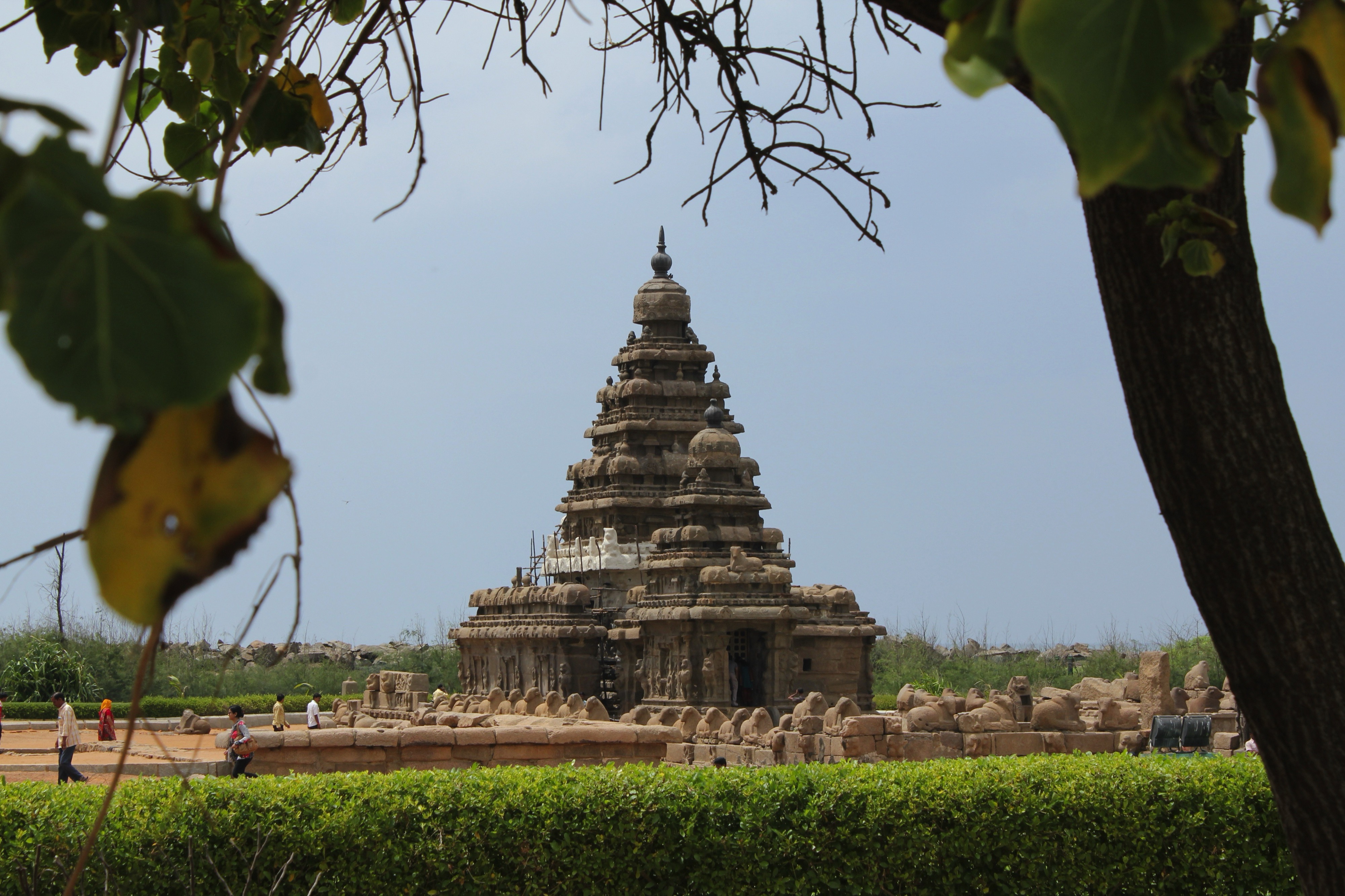
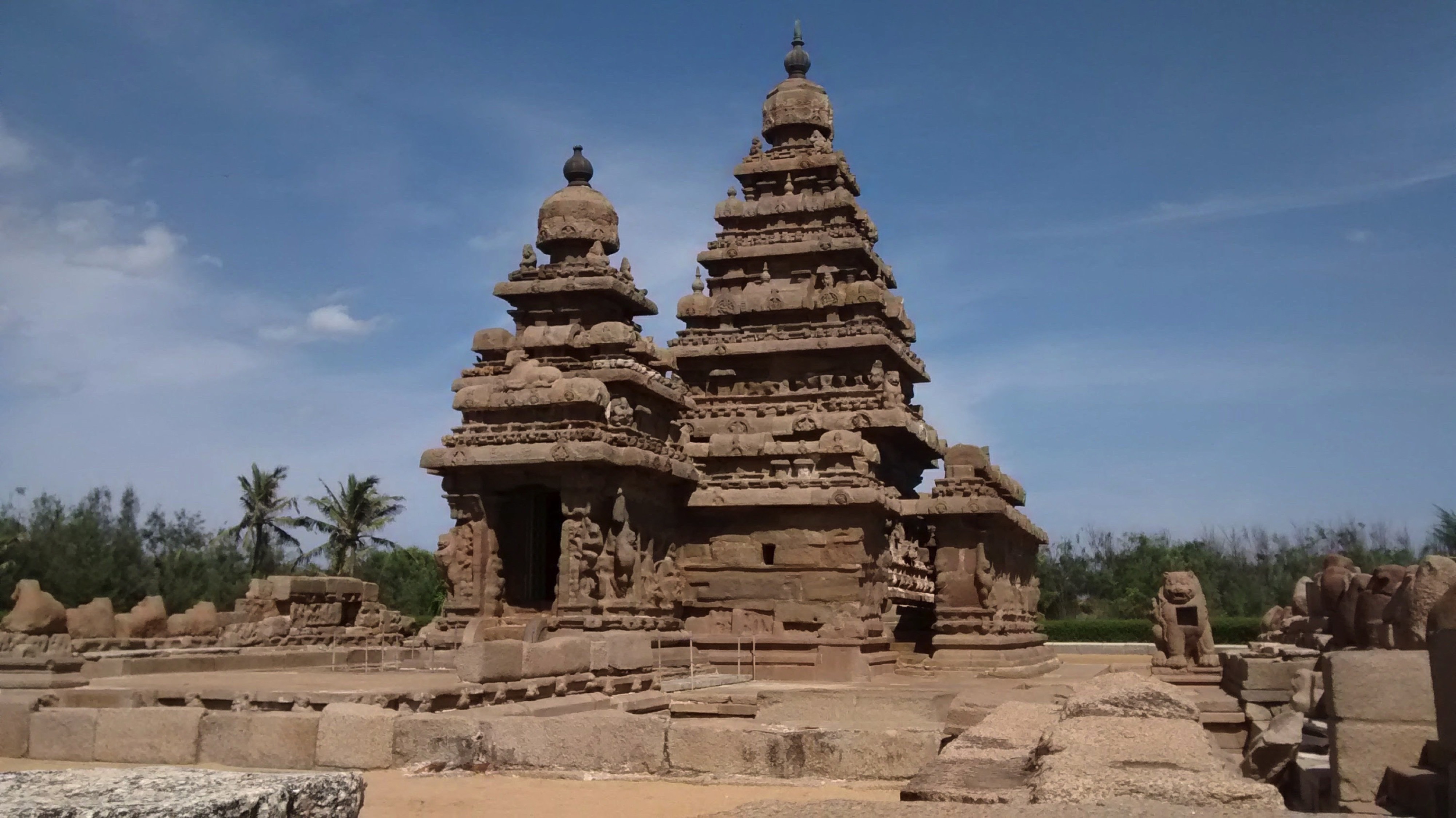
Mahabalipuram, India
Mahabalipuram & Pondicherry – This morning, we’ll make our way to Mahabalipuram a port which traded with Rome in ancient times. Its huge 7th century temples have been intricately carved from vast granite monoliths and are now UNESCO World Heritage sites. We’ll also enjoy lunch at a local restaurant.
Later, we’ll travel south to Pondicherry and enjoy a delicious dinner at our hotel.
Thanjavur, India
Tanjore – Start the day with a walking tour of the beautiful old French colonial centre of ‘Pondy’. Both its architecture and ambience are very different from any other Indian town.
There’s a sleepy, almost Mediterranean air here, with bougainvillea-clad walls and mustard-yellow-coloured neo-classical villas. We’ll see the impressive Governor’s residence, the former site of the French fort designed by the French military architect, Vauban – there is even a Hotel de Ville!
We continue our journey south to Tanjore for a two-night stay. The rest of the afternoon is at leisure to enjoy the tranquil surroundings and palm-shaded pool. Lunch is included today.
Thanjavur, India
Tanjore – Tanjore was the capital of the ancient Chola Empire and is mainly known for its extraordinary Brihadeeswara Temple, the template for all in southern India. Standing over 200ft tall, its main tower is covered with an intricately-carved ochre-coloured facade which glows in the morning light.
A working temple for over a thousand years, surrounded by colonnaded halls and a fortified wall, it is a testament to the power and wealth of the Chola Empire which at sunset seems to give off a red hue. Tanjore is also noted for its fine metalwork and the nearby Royal Palace’s art gallery houses a fascinating array of bronze sculptures.
Chettinad (India)
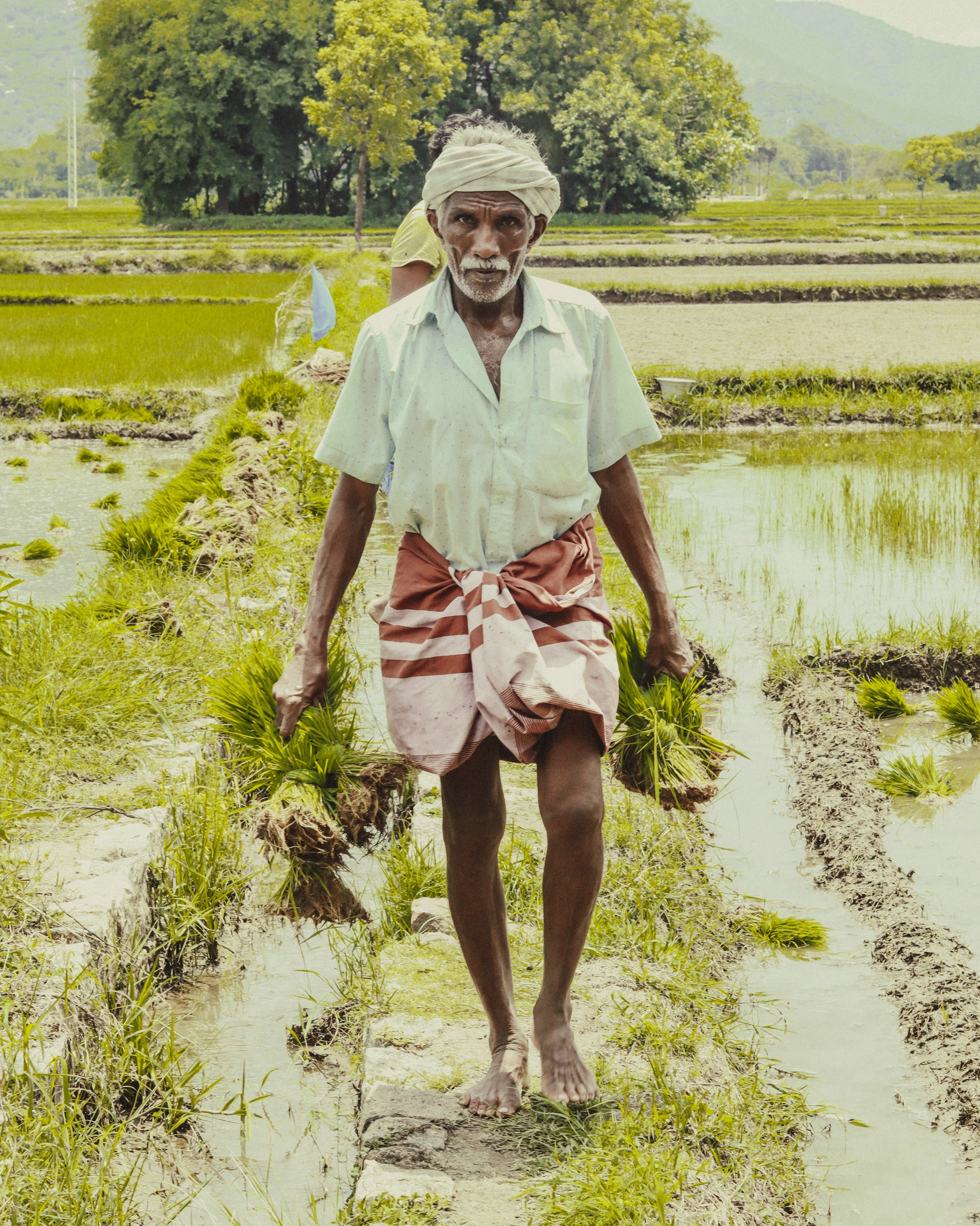
Chettinad – We drive to the nearby Chettinad region, which you are sure to love. Undiscovered, it’s a revelation, the real rural India of small farming communities. Dinner is included this evening sampling some of the region’s unique cuisine, served on a banana leaf.
In Flight
Departure
Chennai, India
Madras was the site of the East India Company’s first settlement, founded in 1639 on land given by the Raja of Chandragiri. A small fort was built on the settlement in 1644, and a town which subsequently became known as George Town, in the area of Fort St. George was built north of it. The settlement became independent of Banten, Java in 1683 and was granted its first municipal charter in 1688 by James II. It is therefore the oldest municipal corporation in India. During the 18th and 19th centuries, when the British and French competed for supremacy in India, the city’s fortunes waned.
Chennai, India
Madras was the site of the East India Company’s first settlement, founded in 1639 on land given by the Raja of Chandragiri. A small fort was built on the settlement in 1644, and a town which subsequently became known as George Town, in the area of Fort St. George was built north of it. The settlement became independent of Banten, Java in 1683 and was granted its first municipal charter in 1688 by James II. It is therefore the oldest municipal corporation in India. During the 18th and 19th centuries, when the British and French competed for supremacy in India, the city’s fortunes waned.
Mahabalipuram, India
Mahabalipuram & Pondicherry – This morning, we’ll make our way to Mahabalipuram a port which traded with Rome in ancient times. Its huge 7th century temples have been intricately carved from vast granite monoliths and are now UNESCO World Heritage sites. We’ll also enjoy lunch at a local restaurant.
Later, we’ll travel south to Pondicherry and enjoy a delicious dinner at our hotel.
Thanjavur, India
Tanjore – Start the day with a walking tour of the beautiful old French colonial centre of ‘Pondy’. Both its architecture and ambience are very different from any other Indian town.
There’s a sleepy, almost Mediterranean air here, with bougainvillea-clad walls and mustard-yellow-coloured neo-classical villas. We’ll see the impressive Governor’s residence, the former site of the French fort designed by the French military architect, Vauban – there is even a Hotel de Ville!
We continue our journey south to Tanjore for a two-night stay. The rest of the afternoon is at leisure to enjoy the tranquil surroundings and palm-shaded pool. Lunch is included today.
Thanjavur, India
Tanjore – Tanjore was the capital of the ancient Chola Empire and is mainly known for its extraordinary Brihadeeswara Temple, the template for all in southern India. Standing over 200ft tall, its main tower is covered with an intricately-carved ochre-coloured facade which glows in the morning light.
A working temple for over a thousand years, surrounded by colonnaded halls and a fortified wall, it is a testament to the power and wealth of the Chola Empire which at sunset seems to give off a red hue. Tanjore is also noted for its fine metalwork and the nearby Royal Palace’s art gallery houses a fascinating array of bronze sculptures.
Chettinad (India)
Chettinad – We drive to the nearby Chettinad region, which you are sure to love. Undiscovered, it’s a revelation, the real rural India of small farming communities. Dinner is included this evening sampling some of the region’s unique cuisine, served on a banana leaf.
Madurai, India
Madurai – After breakfast we’ll explore this undiscovered region, visiting other remarkable mansions, seeing the local Maharaja’s palace, plus local handicrafts. A fascinating visit is to a tile workshop, where each piece is delicately handmade and decorated, whilst saris are still woven to age-old local designs on traditional wooden handlooms.
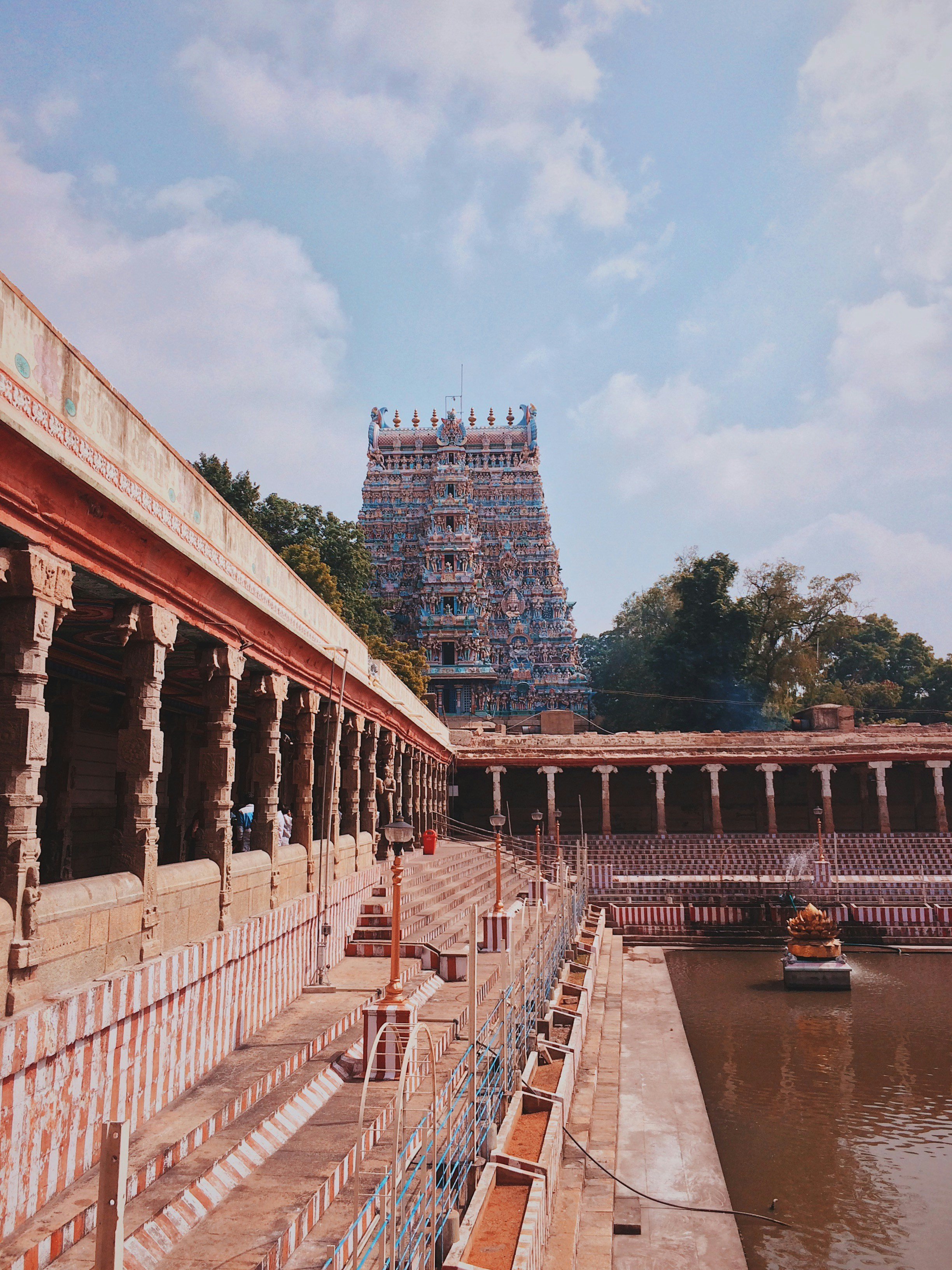
In the afternoon we drive to Madurai for one of the tour’s real highlights: the Meenakshi Amman Temple. This is the southern India’s Taj Mahal, a complex shrine of courtyards, vast pillared halls, a sacred lake and no less than fourteen gateway towers completely covered with thousands of brightly painted stucco carvings. Madurai was already an ancient city well before Chennai was even founded, trading spices with the ancient Romans. It is considered to be Tamil Nadu’s spiritual and cultural heart.
This afternoon we take tuk-tuks to visit the temple at dusk, exploring its busy traditional markets full of impossibly laden stalls and tailors rattling away at their ancient Singer sewing machines!
Kumily Village, India
Kumily – This morning we re-visit the temple in daylight plus tour the nearby Nayak Palace, with its vast throne-room and ceremonial courtyard. Then drive west towards the distant outlines of the Western Ghats, the mountain range and border between Tamil Nadu and Kerala.
The road zig-zags through lush forest with fleeting glimpses of verdant valleys below then crossing the border, we arrive at Kumily, surrounded by spice plantations and the Periyar Wildlife Sanctuary.
Periyar National Park, India
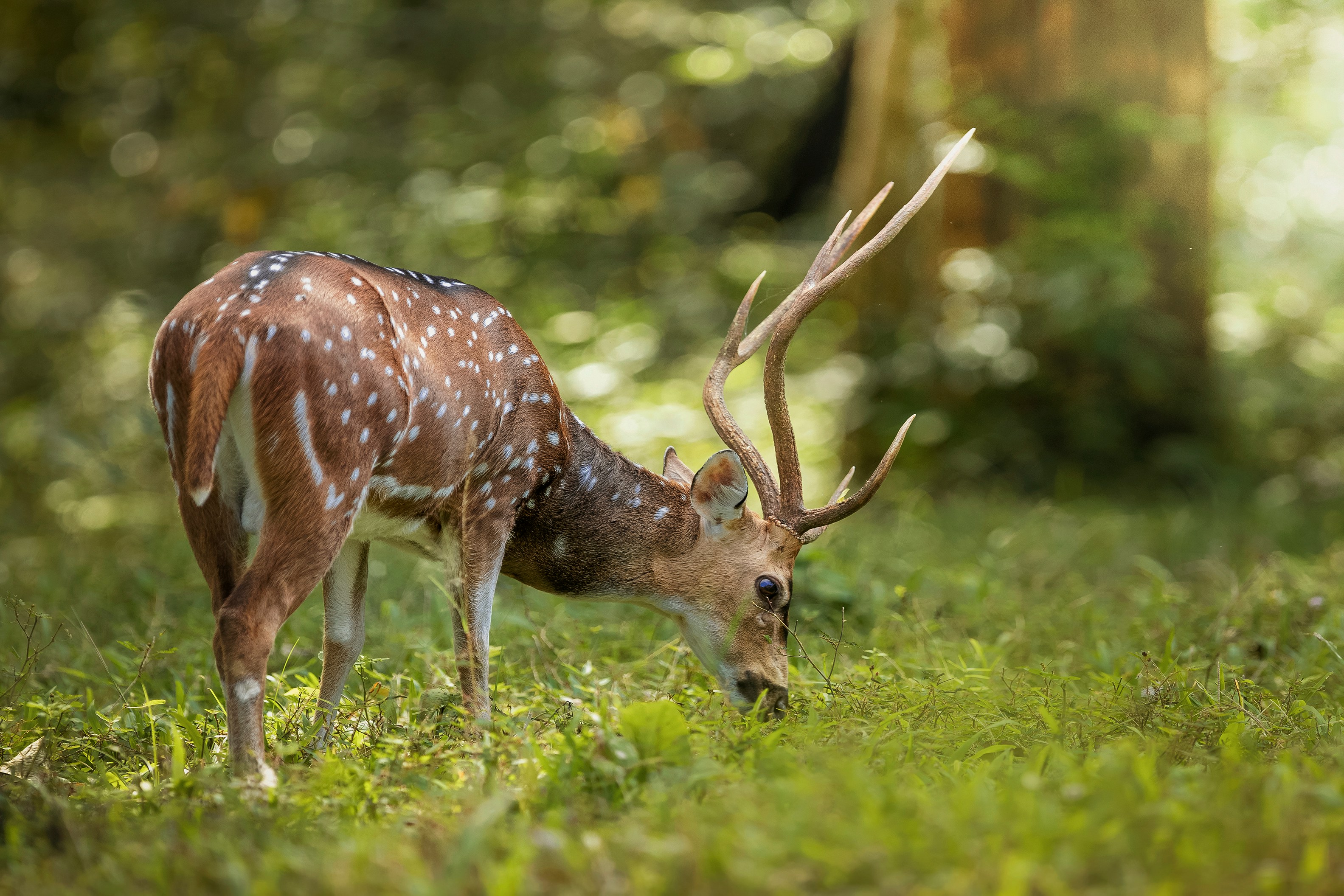
Periyar wildlife reserve – Rising early, with a tropical dawn chorus ringing in our ears we enter the wildlife sanctuary for a guided nature walk through the tall stands of teak, bamboo, wild fig and beautiful jacaranda trees.
The reserve has a small population of rarely seen tigers, however, as the reserve’s core surrounds a large lake, the birdlife is absolutely excellent, with over 260 species recorded, including hornbills, parakeets, kingfishers, eagles, kites and flycatchers. You may also be lucky enough to spot a Malabar giant squirrel or a lion-tailed macaque.
After returning to the hotel for a late breakfast, the day is at leisure until our afternoon visit to one of the numerous local spice plantations where our guide explains the uses, medicinal and culinary, of pepper, cloves, curry leaves, cardamom, vanilla, turmeric, nutmeg, cinnamon and a host of others.
Signature experience –
After your day in Periyar Wildlife Reserve, you will be welcomed back to the hotel with some light refreshments and an enriching talk by a knowledgeable local naturalist.
They will talk about how the park protects the local wildlife from hunting and poaching and the steps taken to prevent some of the animals from extinction. They will also talk about some of the flora and fauna of the region, bringing to life the enchanting sights you may have encountered during your exploration of the park earlier in the day.
Alleppey, India
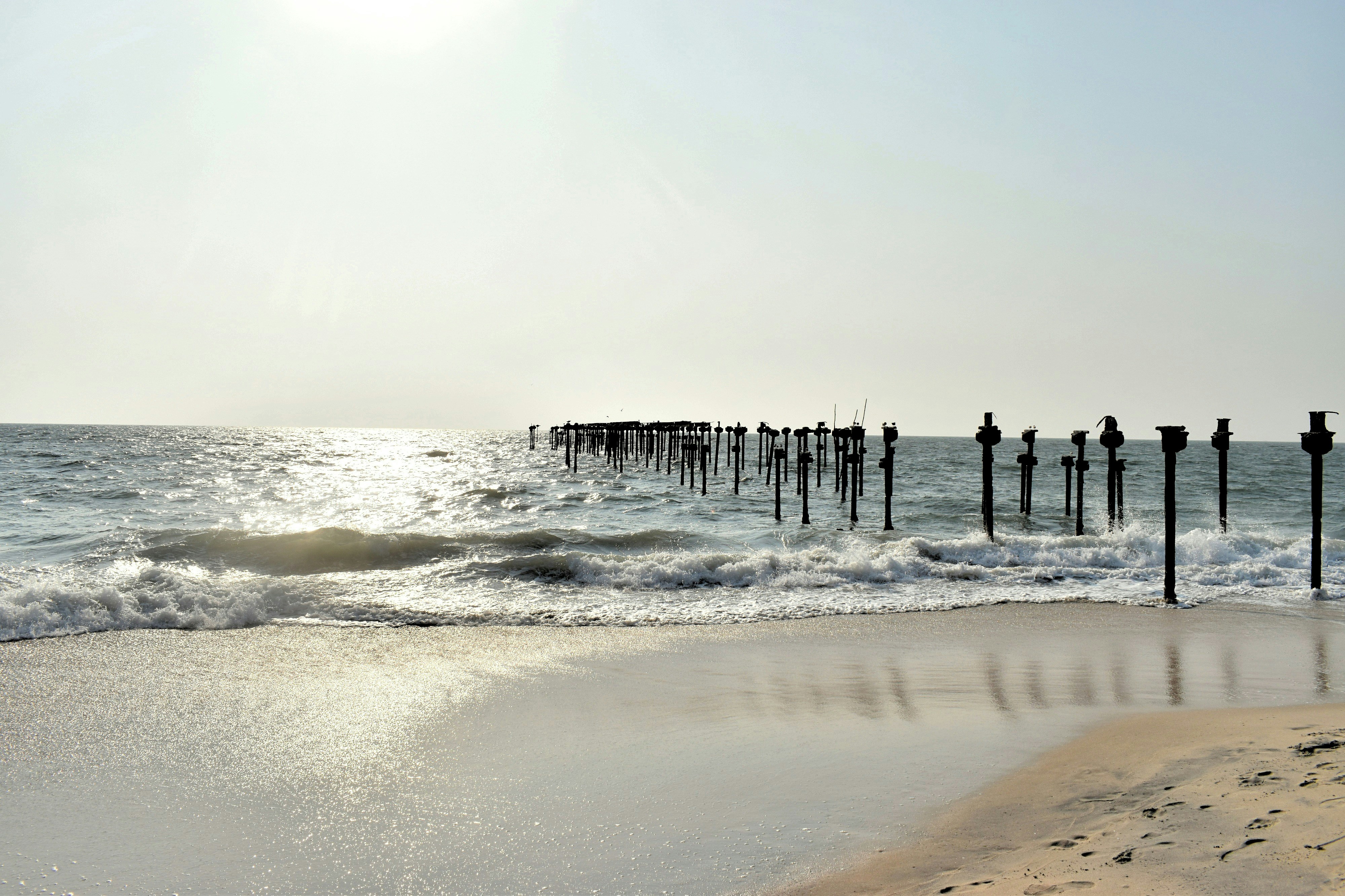
Kerala houseboat overnight – This morning we leave the hills of Periyar behind us descending towards the Kerlan coast, passing the almost carpet-like tea plantations en route to discover the enchanting Keralan backwaters. We experience an overnight stay on a Kerala Houseboat.
Leaving from nearby Alleppey, each houseboat accommodates six to eight guests plus three crew who prepare a delightful and typical Keralan lunch and dinner on board. It’s a wonderful way to travel, passing paddy fields, coconut palms and colourful local houses – watch out for the plentiful birdlife, children walking (or rowing!) back from school, people washing their clothes, pots and pans and even themselves in the narrow waterways.
Kumarakom, India
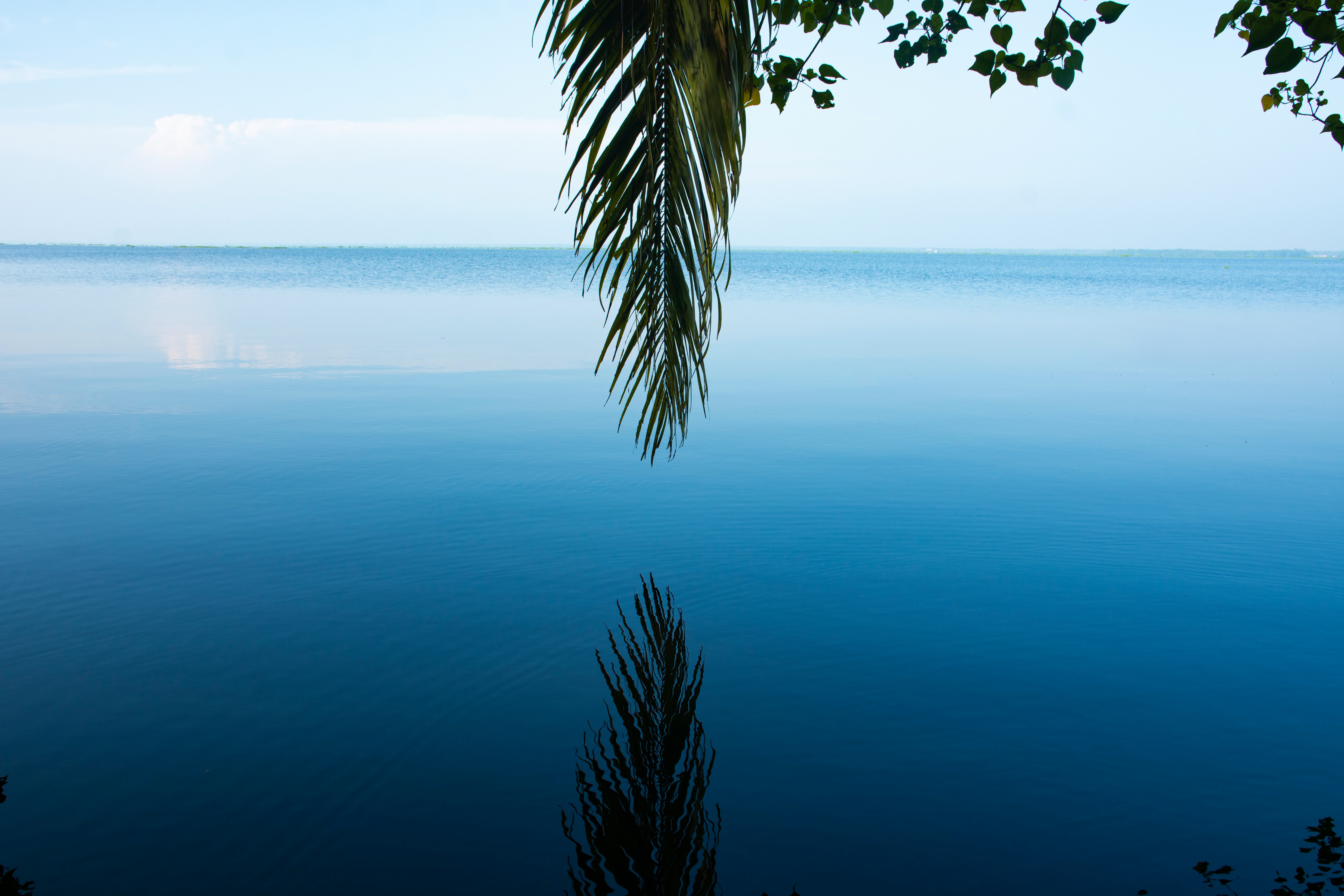
Drive to Kumarakom – After a dawn awakening, mesmerised by the stillness with the sights and sounds of the backwater, after breakfast we depart the Kerala houseboat and drive to to Kumarakom.
The rest of the day is at leisure and early evening we enjoy a sunset boat cruise on Lake Vembanad, one of India’s largest lakes and wetland eco systems home to an array of birds, animal and plant life.
Kumarakom, India
Kumarakom – For early morning bird enthusiasts there is the opportunity to go bird watching and take a village walk. The rest of the day is free to enjoy the tranquillity and beauty of this unique location.
Signature experience –
We’ll begin our day in the wetlands of Kumarkom, surrounded by an abundance of bird and plant life. Travelling by rickshaw to a nearby jetty, we’ll embark on a leisurely boat cruise accompanied by a knowledgeable naturalist, who will introduce us to the diverse bird species – like herons, owls, cormorants, and egrets – dwelling along the river and in the nearby rice paddies. As we observe the serene natural surroundings, we’ll also have the chance to witness the daily rhythms of local life along the river.
Cochin, India
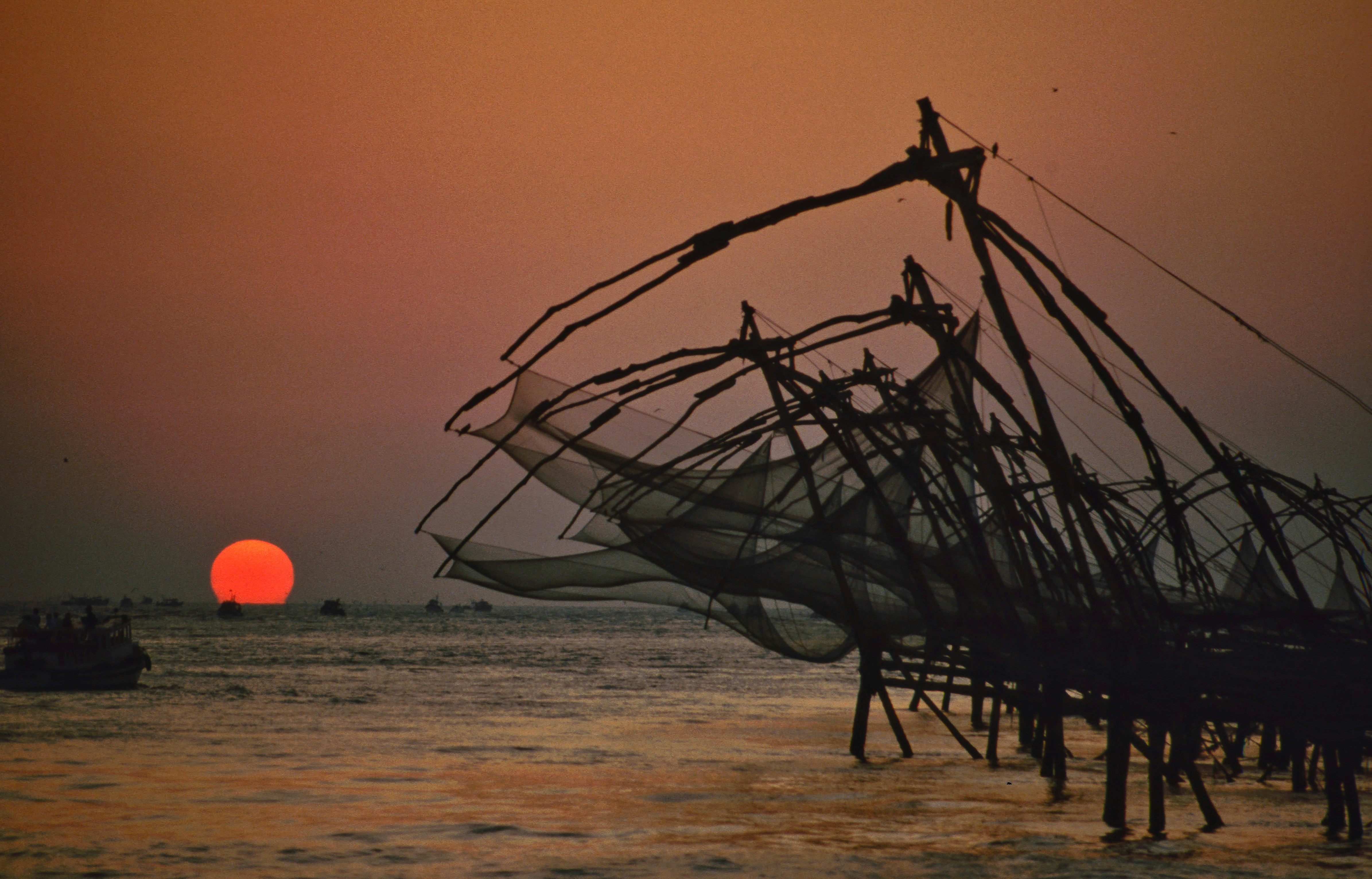
Kochi, formerly and still commonly known as Cochin, is one of the west coast’s largest and oldest ports. The streets behind the docks of the historic Fort Cochin and Mattancherry districts are lined with old merchant houses, godowns (warehouses), and open courtyards heaped with betel nuts, ginger, peppercorns, and tea. Throughout the second millennium this ancient city exported spices, coffee, and coir (the fiber made from coconut husks), and imported culture and religion from Europe, China, and the Middle East. Today Kochi has a synagogue, several mosques, Portuguese Catholic churches, Hindu temples, and the United Church of South India (an amalgamation of several Protestant denominations). The city is spread out over mainland, peninsula, and islands. Ernakulam, on the mainland 2 km (3 miles) from the harbor, is the commercial center and the one-time capital of the former state of Cochin. Willingdon Island, which was created by dredging the harbor, holds several luxury hotels as well as a navy base. The beautiful Bolghatty Island, north of Ernakulam, is a favorite picnic spot for locals. On it there’s a government-run hotel in a colonial structure that was once used by the Dutch governor and later by the British Resident. Another local favorite is Cherai beach on Vypin Island, which is a 10-minute ferry ride from Fort Cochin. The Fort Cochin district, Kochi’s historic center, is at the northern tip of the Mattancherry peninsula. Houses here often recall Tudor manors; some have been converted to hotels, others remain in the hands of the venerable tea and trading companies. South of Fort Cochin, in the Mattancherry district, is where you’ll find the city’s dwindling Jewish community. Their small neighborhood, called Jew Town, which is now dotted with cafés and shops selling curios and antiques, is centered on the synagogue.
Madurai, India
Madurai – After breakfast we’ll explore this undiscovered region, visiting other remarkable mansions, seeing the local Maharaja’s palace, plus local handicrafts. A fascinating visit is to a tile workshop, where each piece is delicately handmade and decorated, whilst saris are still woven to age-old local designs on traditional wooden handlooms.
In the afternoon we drive to Madurai for one of the tour’s real highlights: the Meenakshi Amman Temple. This is the southern India’s Taj Mahal, a complex shrine of courtyards, vast pillared halls, a sacred lake and no less than fourteen gateway towers completely covered with thousands of brightly painted stucco carvings. Madurai was already an ancient city well before Chennai was even founded, trading spices with the ancient Romans. It is considered to be Tamil Nadu’s spiritual and cultural heart.
This afternoon we take tuk-tuks to visit the temple at dusk, exploring its busy traditional markets full of impossibly laden stalls and tailors rattling away at their ancient Singer sewing machines!
Kumily Village, India
Kumily – This morning we re-visit the temple in daylight plus tour the nearby Nayak Palace, with its vast throne-room and ceremonial courtyard. Then drive west towards the distant outlines of the Western Ghats, the mountain range and border between Tamil Nadu and Kerala.
The road zig-zags through lush forest with fleeting glimpses of verdant valleys below then crossing the border, we arrive at Kumily, surrounded by spice plantations and the Periyar Wildlife Sanctuary.
Periyar National Park, India
Periyar wildlife reserve – Rising early, with a tropical dawn chorus ringing in our ears we enter the wildlife sanctuary for a guided nature walk through the tall stands of teak, bamboo, wild fig and beautiful jacaranda trees.
The reserve has a small population of rarely seen tigers, however, as the reserve’s core surrounds a large lake, the birdlife is absolutely excellent, with over 260 species recorded, including hornbills, parakeets, kingfishers, eagles, kites and flycatchers. You may also be lucky enough to spot a Malabar giant squirrel or a lion-tailed macaque.
After returning to the hotel for a late breakfast, the day is at leisure until our afternoon visit to one of the numerous local spice plantations where our guide explains the uses, medicinal and culinary, of pepper, cloves, curry leaves, cardamom, vanilla, turmeric, nutmeg, cinnamon and a host of others.
Signature experience –
After your day in Periyar Wildlife Reserve, you will be welcomed back to the hotel with some light refreshments and an enriching talk by a knowledgeable local naturalist.
They will talk about how the park protects the local wildlife from hunting and poaching and the steps taken to prevent some of the animals from extinction. They will also talk about some of the flora and fauna of the region, bringing to life the enchanting sights you may have encountered during your exploration of the park earlier in the day.
Alleppey, India
Kerala houseboat overnight – This morning we leave the hills of Periyar behind us descending towards the Kerlan coast, passing the almost carpet-like tea plantations en route to discover the enchanting Keralan backwaters. We experience an overnight stay on a Kerala Houseboat.
Leaving from nearby Alleppey, each houseboat accommodates six to eight guests plus three crew who prepare a delightful and typical Keralan lunch and dinner on board. It’s a wonderful way to travel, passing paddy fields, coconut palms and colourful local houses – watch out for the plentiful birdlife, children walking (or rowing!) back from school, people washing their clothes, pots and pans and even themselves in the narrow waterways.
Kumarakom, India
Drive to Kumarakom – After a dawn awakening, mesmerised by the stillness with the sights and sounds of the backwater, after breakfast we depart the Kerala houseboat and drive to to Kumarakom.
The rest of the day is at leisure and early evening we enjoy a sunset boat cruise on Lake Vembanad, one of India’s largest lakes and wetland eco systems home to an array of birds, animal and plant life.
Kumarakom, India
Kumarakom – For early morning bird enthusiasts there is the opportunity to go bird watching and take a village walk. The rest of the day is free to enjoy the tranquillity and beauty of this unique location.
Signature experience –
We’ll begin our day in the wetlands of Kumarkom, surrounded by an abundance of bird and plant life. Travelling by rickshaw to a nearby jetty, we’ll embark on a leisurely boat cruise accompanied by a knowledgeable naturalist, who will introduce us to the diverse bird species – like herons, owls, cormorants, and egrets – dwelling along the river and in the nearby rice paddies. As we observe the serene natural surroundings, we’ll also have the chance to witness the daily rhythms of local life along the river.
Cochin, India
Kochi, formerly and still commonly known as Cochin, is one of the west coast’s largest and oldest ports. The streets behind the docks of the historic Fort Cochin and Mattancherry districts are lined with old merchant houses, godowns (warehouses), and open courtyards heaped with betel nuts, ginger, peppercorns, and tea. Throughout the second millennium this ancient city exported spices, coffee, and coir (the fiber made from coconut husks), and imported culture and religion from Europe, China, and the Middle East. Today Kochi has a synagogue, several mosques, Portuguese Catholic churches, Hindu temples, and the United Church of South India (an amalgamation of several Protestant denominations). The city is spread out over mainland, peninsula, and islands. Ernakulam, on the mainland 2 km (3 miles) from the harbor, is the commercial center and the one-time capital of the former state of Cochin. Willingdon Island, which was created by dredging the harbor, holds several luxury hotels as well as a navy base. The beautiful Bolghatty Island, north of Ernakulam, is a favorite picnic spot for locals. On it there’s a government-run hotel in a colonial structure that was once used by the Dutch governor and later by the British Resident. Another local favorite is Cherai beach on Vypin Island, which is a 10-minute ferry ride from Fort Cochin. The Fort Cochin district, Kochi’s historic center, is at the northern tip of the Mattancherry peninsula. Houses here often recall Tudor manors; some have been converted to hotels, others remain in the hands of the venerable tea and trading companies. South of Fort Cochin, in the Mattancherry district, is where you’ll find the city’s dwindling Jewish community. Their small neighborhood, called Jew Town, which is now dotted with cafés and shops selling curios and antiques, is centered on the synagogue.
Cochin, India
Kochi, formerly and still commonly known as Cochin, is one of the west coast’s largest and oldest ports. The streets behind the docks of the historic Fort Cochin and Mattancherry districts are lined with old merchant houses, godowns (warehouses), and open courtyards heaped with betel nuts, ginger, peppercorns, and tea. Throughout the second millennium this ancient city exported spices, coffee, and coir (the fiber made from coconut husks), and imported culture and religion from Europe, China, and the Middle East. Today Kochi has a synagogue, several mosques, Portuguese Catholic churches, Hindu temples, and the United Church of South India (an amalgamation of several Protestant denominations). The city is spread out over mainland, peninsula, and islands. Ernakulam, on the mainland 2 km (3 miles) from the harbor, is the commercial center and the one-time capital of the former state of Cochin. Willingdon Island, which was created by dredging the harbor, holds several luxury hotels as well as a navy base. The beautiful Bolghatty Island, north of Ernakulam, is a favorite picnic spot for locals. On it there’s a government-run hotel in a colonial structure that was once used by the Dutch governor and later by the British Resident. Another local favorite is Cherai beach on Vypin Island, which is a 10-minute ferry ride from Fort Cochin. The Fort Cochin district, Kochi’s historic center, is at the northern tip of the Mattancherry peninsula. Houses here often recall Tudor manors; some have been converted to hotels, others remain in the hands of the venerable tea and trading companies. South of Fort Cochin, in the Mattancherry district, is where you’ll find the city’s dwindling Jewish community. Their small neighborhood, called Jew Town, which is now dotted with cafés and shops selling curios and antiques, is centered on the synagogue.
Cochin, India
Kochi, formerly and still commonly known as Cochin, is one of the west coast’s largest and oldest ports. The streets behind the docks of the historic Fort Cochin and Mattancherry districts are lined with old merchant houses, godowns (warehouses), and open courtyards heaped with betel nuts, ginger, peppercorns, and tea. Throughout the second millennium this ancient city exported spices, coffee, and coir (the fiber made from coconut husks), and imported culture and religion from Europe, China, and the Middle East. Today Kochi has a synagogue, several mosques, Portuguese Catholic churches, Hindu temples, and the United Church of South India (an amalgamation of several Protestant denominations). The city is spread out over mainland, peninsula, and islands. Ernakulam, on the mainland 2 km (3 miles) from the harbor, is the commercial center and the one-time capital of the former state of Cochin. Willingdon Island, which was created by dredging the harbor, holds several luxury hotels as well as a navy base. The beautiful Bolghatty Island, north of Ernakulam, is a favorite picnic spot for locals. On it there’s a government-run hotel in a colonial structure that was once used by the Dutch governor and later by the British Resident. Another local favorite is Cherai beach on Vypin Island, which is a 10-minute ferry ride from Fort Cochin. The Fort Cochin district, Kochi’s historic center, is at the northern tip of the Mattancherry peninsula. Houses here often recall Tudor manors; some have been converted to hotels, others remain in the hands of the venerable tea and trading companies. South of Fort Cochin, in the Mattancherry district, is where you’ll find the city’s dwindling Jewish community. Their small neighborhood, called Jew Town, which is now dotted with cafés and shops selling curios and antiques, is centered on the synagogue.