Featured Cabins
Itinerary
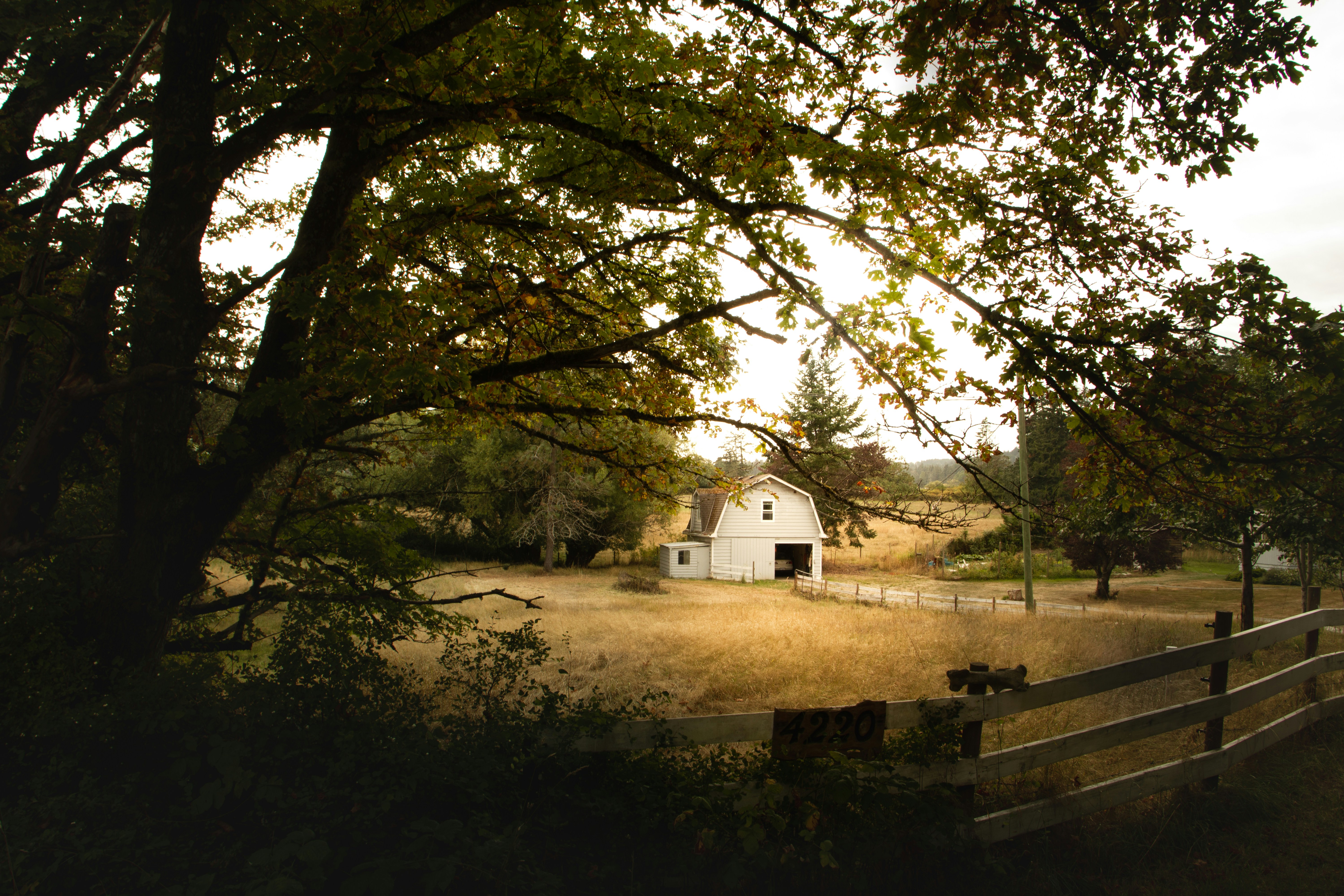
Portland, Maine, United States
Portland, Maine The largest city in Maine, Portland was founded in 1632 on the Casco Bay Peninsula. It quickly prospered through shipbuilding and the export of inland pines which made excellent masts. A long line of wooden wharves stretched along the seafront, with the merchants’ houses on the hillside above. From the earliest days it was a cosmopolitan city. When the railroads came, the Canada Trunk Line had its terminal right on Portland’s quayside, bringing the produce of Canada and the Great Plains one hundred miles closer to Europe than any other major U.S. port. Some of the wharves are now occupied by new condominium developments, with the exception of the Customs House Wharf, which remains much as it used to be. Grand Trunk Station was torn down in 1966 and a revitalization program of this historic section was spearheaded by a group of committed residents. The result was the revival of the Old Port Exchange District with its redbrick streets built in the 1860s following a disastrous fire. The area today features a wide variety of restaurants, specialty and antique shops, and makes for a pleasant place for a stroll. Congress Street and its many side streets are an engaging mixture of culture, commerce and history. Art is everywhere, from the Portland Museum of Art to the many statues and monuments throughout the city. Other points of interest include the Portland Observatory, Henry Wadsworth Longfellow’s childhood home, several colonial mansions and Fort Williams Park, with the adjacent Portland Head Light. Farther afield one can visit the charming yachting and fishing village of Kennebunkport, also noted as the locale of the home and summer White House of former President George Bush. Going Ashore in Portland Pier Information The ship is scheduled to dock at the Portland Ocean Terminal, a very easy walk to the Old Port District located about two blocks away. Taxis are available at the pier. Shopping A wide range of Maine-made clothing, crafts and imported items can be found in shops along the cobblestone streets of the quaint Old Port Exchange. Small boutiques and numerous art galleries feature everything from paintings, crafts and furniture to prints and photographs. Antique lovers will enjoy browsing through area shops. Bargain hunters may want to visit the designer factory outlet shops in Freeport. On Sundays, most shops are open from 12:00 noon to 5:00-6:00 p.m. The local currency is the dollar. Cuisine Portland has the most restaurants per capita, second only to San Francisco. Eating establishments are as diverse as the menus they offer. The fresh catch of the day can be found on most menus, but seafood is only one of many culinary delights. From specialty coffee houses and ethnic restaurants to chowder and lobster houses to elegant dining rooms, Portland makes it easy to please every palate. Other Sights Longfellow’s “City by the Sea” Portland is a walkable city, and a good place to start exploring is at the Old Port with its striking buildings comprising a bevy of architectural styles, ranging from Italianate to Mansard, Queen Anne to Greek Revival. The charming streets house an amazing collection of shops, galleries, bookstores and restaurants. Congress Street and the Arts District reflect the changes of 350 years of history, boasting an engaging mixture of culture and commerce. Portland Museum of Art The museum’s award-winning building is a blend of 1911 Beaux Arts and 1983 post-modernism. It houses one of New England’s finest art collections. Don’t miss the museum’s indoor Sculpture Garden. Portland Observatory Built in 1807, this is a rare example of a signal tower from which signal flags would be flown to identify incoming vessels. Factory Outlets of Freeport About a 25-minute drive north of Portland (approximately $35 one way for a taxi), this shopping mecca is crammed with serious shoppers who come from as far away as New York. Private arrangements for independent sightseeing may be requested through the Tour Office on board.
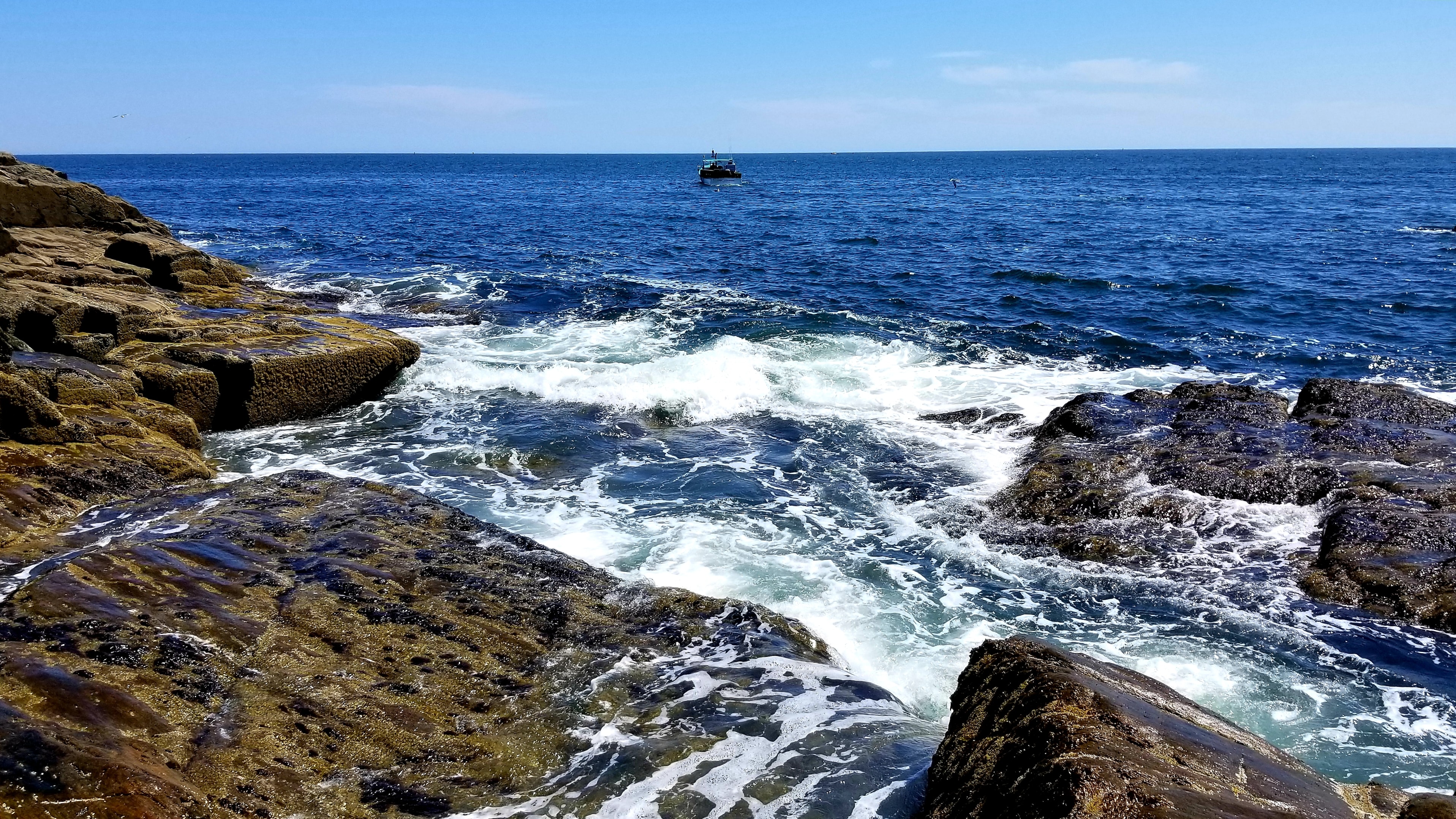
Rockland, Maine, United States
Discover a charming small city with a protected harbour, nestled among rugged peninsulas, ancient forests and beautiful sandy beaches. This classic New England coastal town bursts with historic charm, vibrant art galleries, top-notch restaurants and the freshest lobster around, earning its well-deserved reputation as the ultimate lobster capital of the world.
Scenic Freechoice:
Mt. Battie Scenic Drive & Hike: Enjoy a scenic drive and guided hike to the summit of Mount Battie, one of Maine’s most iconic viewpoints. Take in sweeping views of Penobscot Bay and Camden Harbour while exploring forested trails and the historic stone tower.
Rockland Foodie Tour: Join a local guide for a flavourful walk through historic downtown Rockland, where maritime heritage meets a vibrant culinary scene. Savour fresh seafood, Maine craft beer, and local specialties as you explore the town’s art-filled streets and iconic landmarks.
Camden Windjammer Sailing & Scenic Adventure: Discover the beauty of Maine’s Mid-Coast with coastal views, a visit to Camden, a traditional schooner sail, and time to explore the harbor at your leisure.
Anchored: 08:00 – 18:00
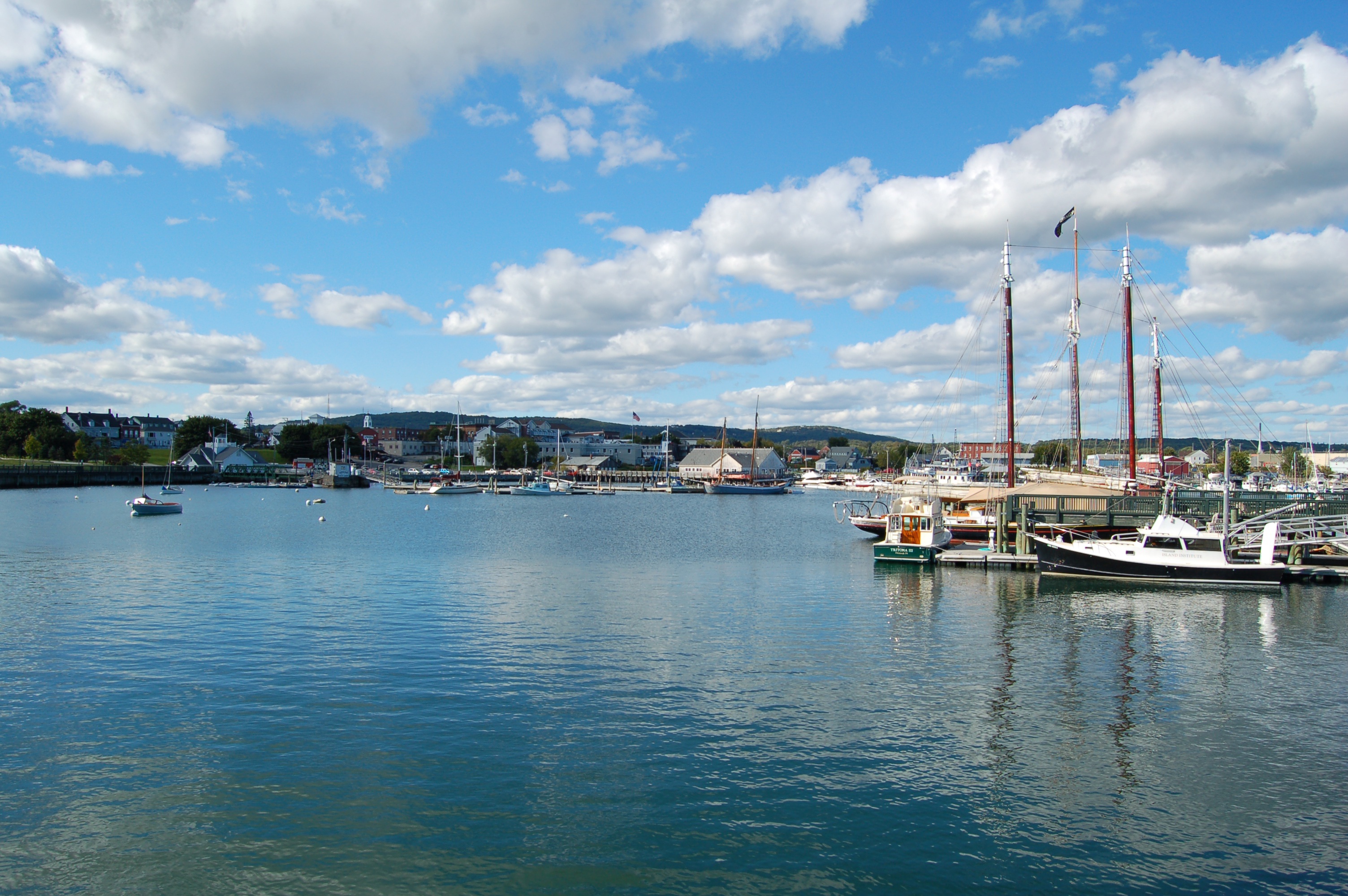
Eastport, Maine, United States
Campobello Island is a popular summer getaway, with windswept beaches, hiking trails, fresh seafood, whale watching adventures, historic lighthouses, art galleries, shops, and an incredible history and culture. It is home to the Roosevelt Campobello International Park, where Franklin and Eleanor Roosevelt’s magnificent summer home is located and preserved as a museum with an outdoor nature park.
After discovering this captivating city, return to your Discovery Yacht and relax on board. Explore some of the indulgent spaces, from the welcoming Observation Lounge to the indulgent Senses Spa#.
Scenic Freechoice:
Campobello Island & Eleanor’s Tea: Visit Campobello Island, the Roosevelts’ historic summer retreat, and tour the beautifully preserved Roosevelt Cottage. Enjoy tea with stories about Eleanor Roosevelt and take in the island’s scenic charm before returning to Eastport.
Whale Watching in Passamaquoddy Bay: Cruise from Eastport with a marine biologist to spot whales and seals and enjoy smoked salmon and champagne amid stunning coastal views.
Shackford Head State Park Hike: Hike through Shackford Head State Park to a 173-foot headland with stunning views of Cobscook Bay and Eastport harbour. Enjoy coastal scenery, wildlife and peaceful forest trails.
Taste of Eastport – Craft Beer Tour & Lobster Delight: Explore Eastport’s local culture and cuisine with stops at historic sites and a family-run brewery. Finish with a fresh Maine lobster roll paired with a handcrafted beer.
Anchored: 08:00 – 14:00
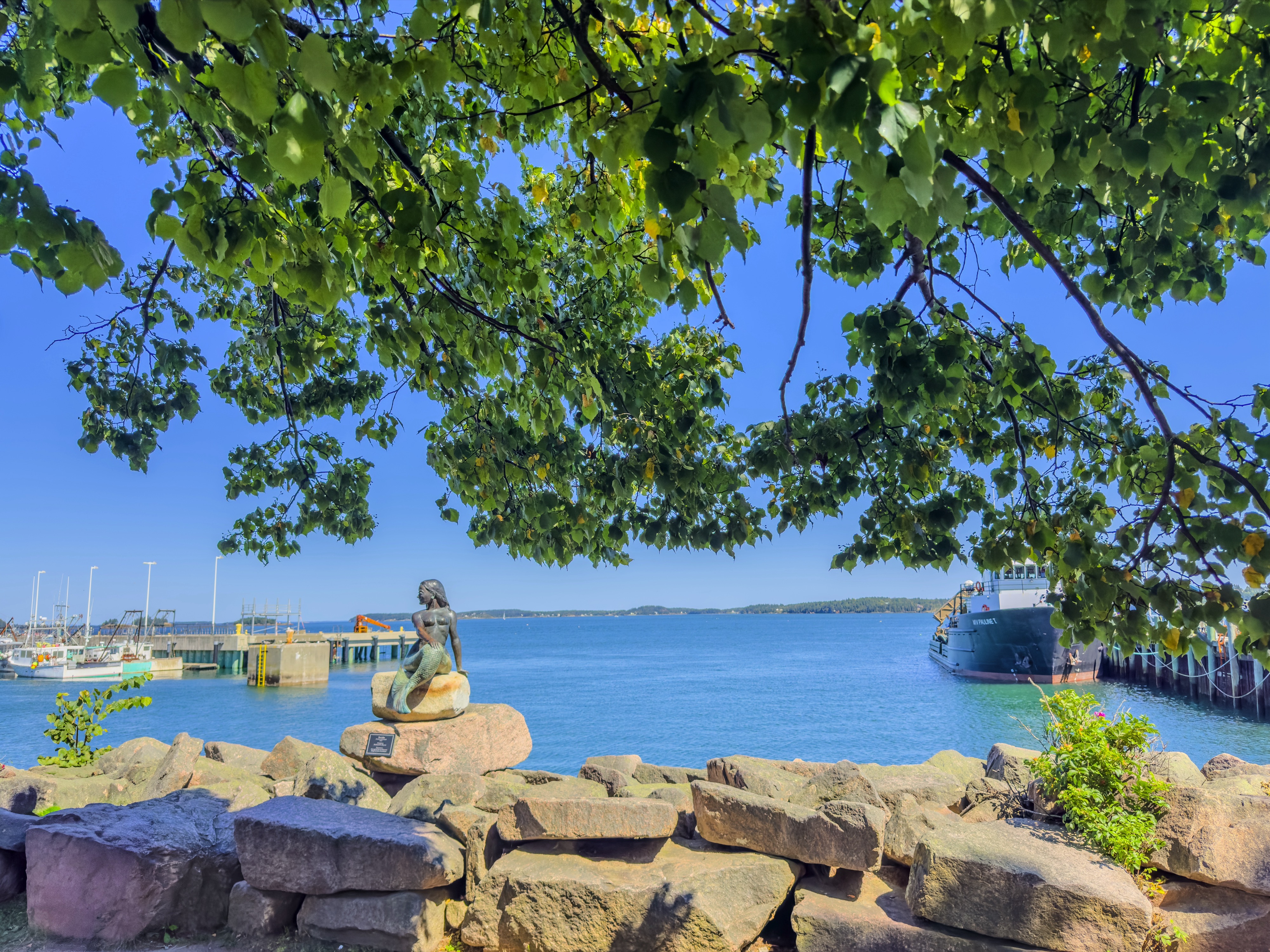
Halifax, Nova Scotia, Canada
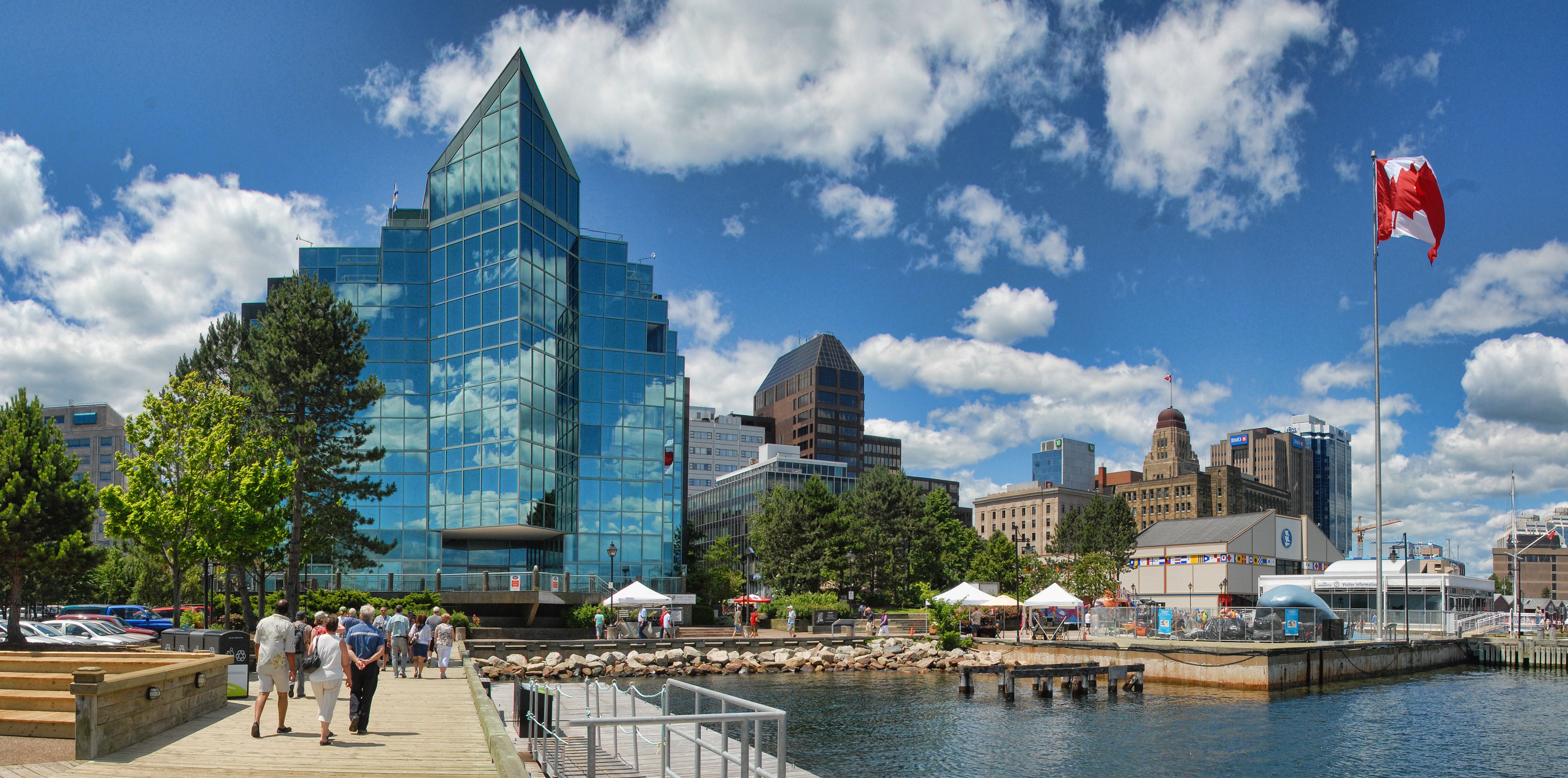
Surrounded by natural treasures and glorious seascapes, Halifax is an attractive and vibrant hub with noteworthy historic and modern architecture, great dining and shopping, and a lively nightlife and festival scene. The old city manages to feel both hip and historic. Previous generations had the foresight to preserve the cultural and architectural integrity of the city, yet students from five local universities keep it lively and current. It’s a perfect starting point to any tour of the Atlantic provinces, but even if you don’t venture beyond its boundaries, you will get a real taste of the region.It was Halifax’s natural harbor—the second largest in the world after Sydney, Australia’s—that first drew the British here in 1749, and today most major sites are conveniently located either along it or on the Citadel-crowned hill overlooking it. That’s good news for visitors because this city actually covers quite a bit of ground.Since amalgamating with Dartmouth (directly across the harbor) and several suburbs in 1996, Halifax has been absorbed into the Halifax Regional Municipality, and the HRM, as it is known, has around 415,000 residents. That may not sound like a lot by U.S. standards, but it makes Nova Scotia’s capital the most significant Canadian urban center east of Montréal.There’s easy access to the water, and despite being the focal point of a busy commercial port, Halifax Harbour doubles as a playground, with one of the world’s longest downtown boardwalks. It’s a place where container ships, commuter ferries, cruise ships, and tour boats compete for space, and where workaday tugs and fishing vessels tie up beside glitzy yachts. Like Halifax as a whole, the harbor represents a blend of the traditional and the contemporary.
Louisbourg, Nova Scotia, Canada
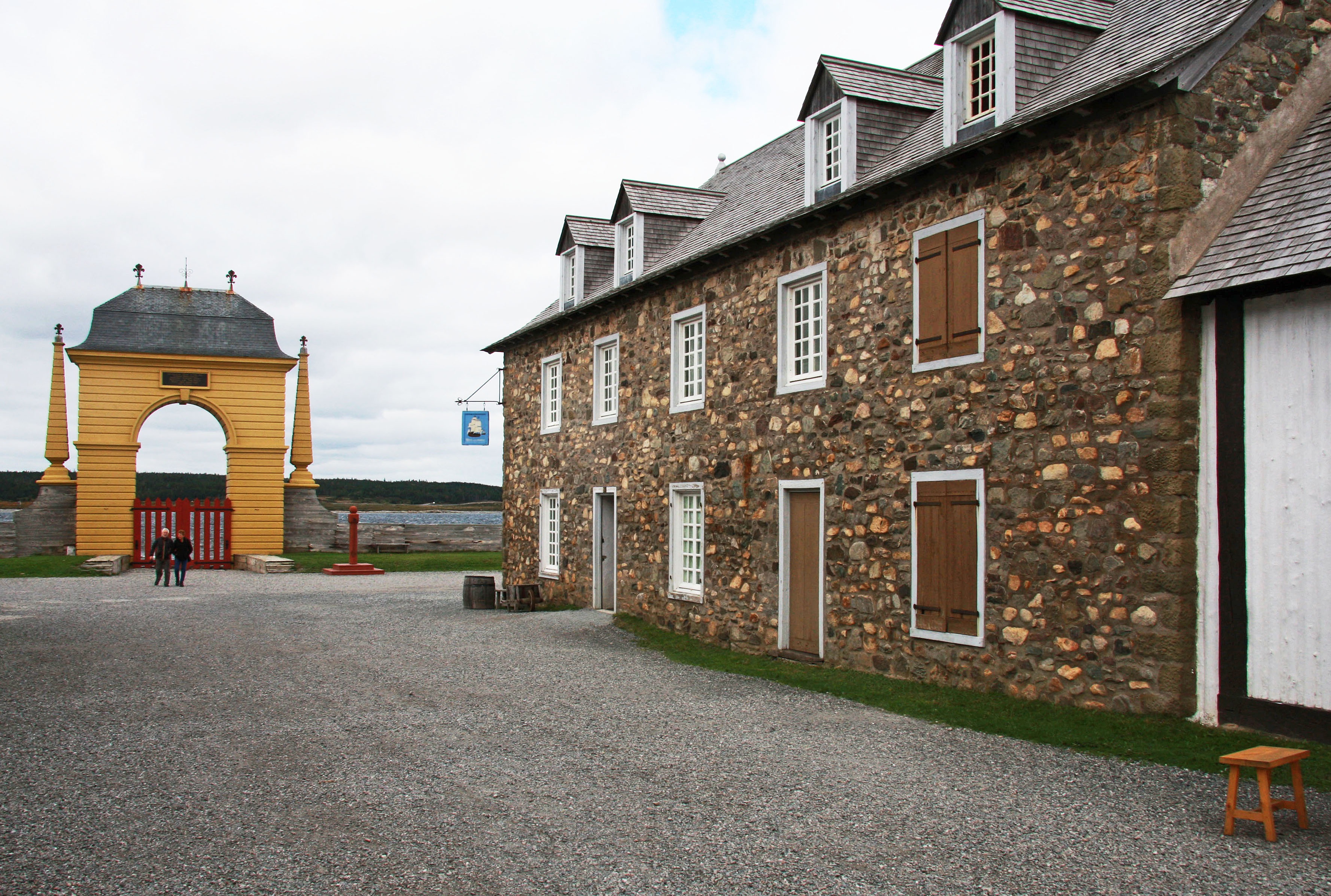
Louisbourg, Nova Scotia, is a thriving seaport located on the eastern tip of Cape Breton Island. French settlers first arrived in Louisbourg in 1713, using the island as a base for their lucrative cod fishery. Soon, the town became one of the busiest harbours in North America and an important trading outpost and military hub. They named it Louisbourg, in honour of King Louis XIV. The fortress was built to defend against the threat of a British invasion. After two major attacks, the fortress was destroyed in the 1760’s. In 1961 the Canadian Government commenced a $25 million reconstruction project to restore portions of the fortress to its pre-siege glory of the 1740’s. It was the largest reconstruction project in North America. The lighthouse was Canada’s first, constructed in 1734, but was severely damaged during the last siege and was abandoned in 1758. The existing lighthouse was built in 1923.
Cap-aux-Meules, Magdalen Islands, Québec, Canada
Cap aux Meules is the gateway to the Magdalen Islands, an archipelago in the Gulf of St. Lawrence. Made up of three villages, French-speaking Cap aux Meules has the biggest population of the islands, with a bustling port frequented by small ships, fishing boats and ferries. Visit Saint-Pierre-de-La Vernière Church, which was built in 1876 and is the second-largest wooden church in North America made from salvaged materials from shipwrecks. The islands are home to six charming 19th century lighthouses.
Scenic Freechoice:
A Taste of Îles de la Madeleine: Discover the flavours of Îles de la Madeleine with visits to local producers, including Pied-de-Vent Cheese and Fumoir d’Antan smoked herring, while enjoying scenic stops at colourful traditional homes, Echouerie Lighthouse, and Dune-du-Sud beach.
Cycling Cap-aux-Meules: Explore Îles de la Madeleine by e-bike with a local guide, taking in red cliffs, sandy beaches, colourful houses and lighthouses, while learning about local life, wildlife and fishing traditions.
Fisherman & Acadian Settlement: Journey from Cap-aux-Meules to Havre Aubert to experience traditional fishing life at Le Site d’Autrefois. Explore historic Acadian villages like La Grave, and admire the island’s colourful houses, pebble beaches and dramatic red sandstone cliffs.
Discover Grosse Île: Witness the stunning scenery of Grosse Île with its red cliffs, sandy beaches and charming village. Meet local lobster fishermen, visit a lobster pond and sample freshly caught lobster while learning about the island’s maritime traditions.
Anchored: 11:30 – 19:00
Charlottetown, Prince Edward Island, Canada
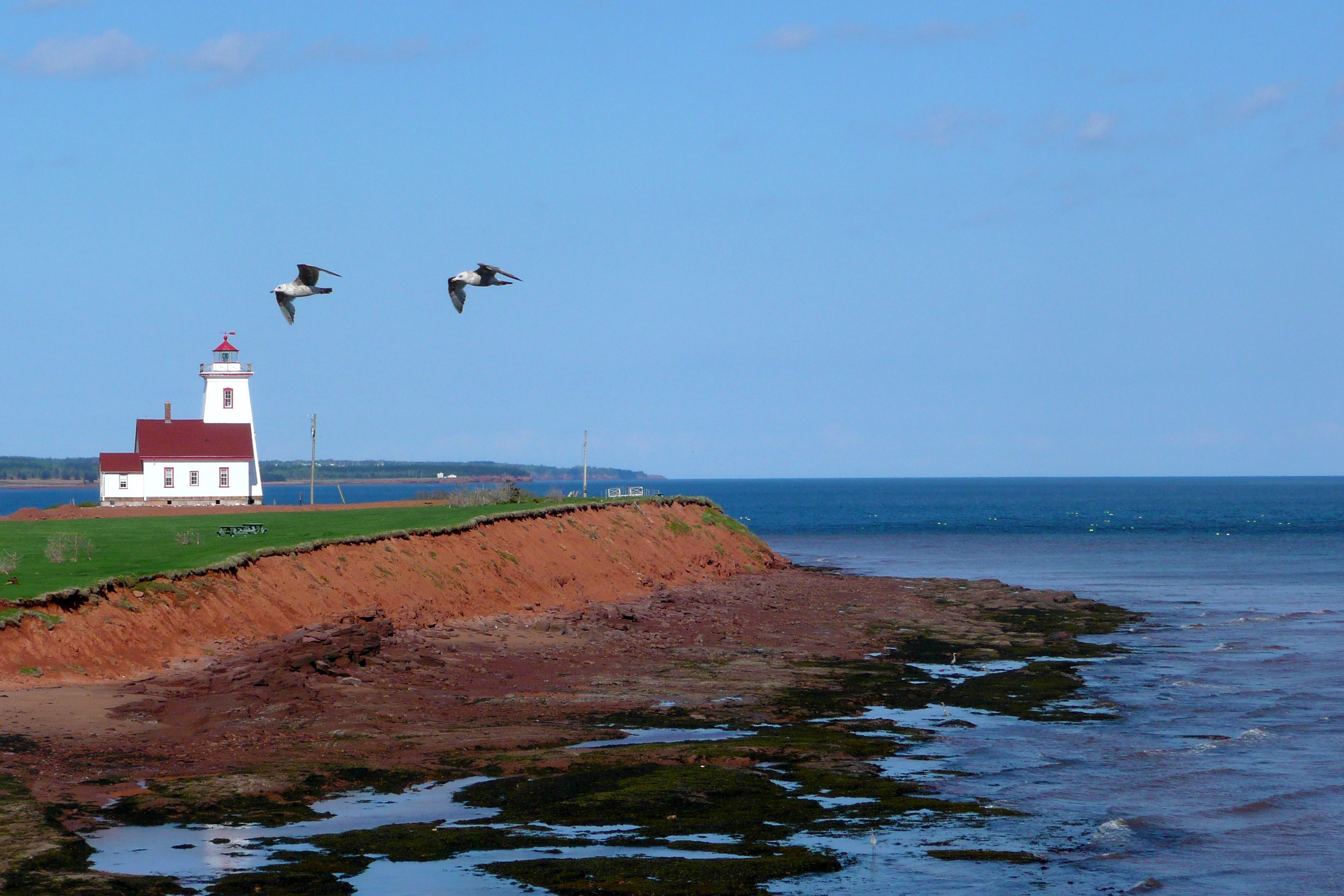
Designated as the Island capital in 1765, Charlottetown is both PEI’s oldest and largest urban center. However, since the whole “metropolitan” area only has a population of about 65,000, a pleasing small-town atmosphere remains. The city is a winner appearance-wise as well. Peppered with gingerbread-clad homes, converted warehouses, striking churches, and monumental government buildings, Charlottetown’s core seems relatively unchanged from its 19th-century heyday when it hosted the conference that led to the formation of Canada. The city is understandably proud of its role as the “Birthplace of Confederation” and, in summer, downtown streets are dotted with people dressed as personages from the past who’ll regale you with tales about the Confederation debate.
Portland, Maine, United States
Portland, Maine The largest city in Maine, Portland was founded in 1632 on the Casco Bay Peninsula. It quickly prospered through shipbuilding and the export of inland pines which made excellent masts. A long line of wooden wharves stretched along the seafront, with the merchants’ houses on the hillside above. From the earliest days it was a cosmopolitan city. When the railroads came, the Canada Trunk Line had its terminal right on Portland’s quayside, bringing the produce of Canada and the Great Plains one hundred miles closer to Europe than any other major U.S. port. Some of the wharves are now occupied by new condominium developments, with the exception of the Customs House Wharf, which remains much as it used to be. Grand Trunk Station was torn down in 1966 and a revitalization program of this historic section was spearheaded by a group of committed residents. The result was the revival of the Old Port Exchange District with its redbrick streets built in the 1860s following a disastrous fire. The area today features a wide variety of restaurants, specialty and antique shops, and makes for a pleasant place for a stroll. Congress Street and its many side streets are an engaging mixture of culture, commerce and history. Art is everywhere, from the Portland Museum of Art to the many statues and monuments throughout the city. Other points of interest include the Portland Observatory, Henry Wadsworth Longfellow’s childhood home, several colonial mansions and Fort Williams Park, with the adjacent Portland Head Light. Farther afield one can visit the charming yachting and fishing village of Kennebunkport, also noted as the locale of the home and summer White House of former President George Bush. Going Ashore in Portland Pier Information The ship is scheduled to dock at the Portland Ocean Terminal, a very easy walk to the Old Port District located about two blocks away. Taxis are available at the pier. Shopping A wide range of Maine-made clothing, crafts and imported items can be found in shops along the cobblestone streets of the quaint Old Port Exchange. Small boutiques and numerous art galleries feature everything from paintings, crafts and furniture to prints and photographs. Antique lovers will enjoy browsing through area shops. Bargain hunters may want to visit the designer factory outlet shops in Freeport. On Sundays, most shops are open from 12:00 noon to 5:00-6:00 p.m. The local currency is the dollar. Cuisine Portland has the most restaurants per capita, second only to San Francisco. Eating establishments are as diverse as the menus they offer. The fresh catch of the day can be found on most menus, but seafood is only one of many culinary delights. From specialty coffee houses and ethnic restaurants to chowder and lobster houses to elegant dining rooms, Portland makes it easy to please every palate. Other Sights Longfellow’s “City by the Sea” Portland is a walkable city, and a good place to start exploring is at the Old Port with its striking buildings comprising a bevy of architectural styles, ranging from Italianate to Mansard, Queen Anne to Greek Revival. The charming streets house an amazing collection of shops, galleries, bookstores and restaurants. Congress Street and the Arts District reflect the changes of 350 years of history, boasting an engaging mixture of culture and commerce. Portland Museum of Art The museum’s award-winning building is a blend of 1911 Beaux Arts and 1983 post-modernism. It houses one of New England’s finest art collections. Don’t miss the museum’s indoor Sculpture Garden. Portland Observatory Built in 1807, this is a rare example of a signal tower from which signal flags would be flown to identify incoming vessels. Factory Outlets of Freeport About a 25-minute drive north of Portland (approximately $35 one way for a taxi), this shopping mecca is crammed with serious shoppers who come from as far away as New York. Private arrangements for independent sightseeing may be requested through the Tour Office on board.
Rockland, Maine, United States
Discover a charming small city with a protected harbour, nestled among rugged peninsulas, ancient forests and beautiful sandy beaches. This classic New England coastal town bursts with historic charm, vibrant art galleries, top-notch restaurants and the freshest lobster around, earning its well-deserved reputation as the ultimate lobster capital of the world.
Scenic Freechoice:
Mt. Battie Scenic Drive & Hike: Enjoy a scenic drive and guided hike to the summit of Mount Battie, one of Maine’s most iconic viewpoints. Take in sweeping views of Penobscot Bay and Camden Harbour while exploring forested trails and the historic stone tower.
Rockland Foodie Tour: Join a local guide for a flavourful walk through historic downtown Rockland, where maritime heritage meets a vibrant culinary scene. Savour fresh seafood, Maine craft beer, and local specialties as you explore the town’s art-filled streets and iconic landmarks.
Camden Windjammer Sailing & Scenic Adventure: Discover the beauty of Maine’s Mid-Coast with coastal views, a visit to Camden, a traditional schooner sail, and time to explore the harbor at your leisure.
Anchored: 08:00 – 18:00
Eastport, Maine, United States
Campobello Island is a popular summer getaway, with windswept beaches, hiking trails, fresh seafood, whale watching adventures, historic lighthouses, art galleries, shops, and an incredible history and culture. It is home to the Roosevelt Campobello International Park, where Franklin and Eleanor Roosevelt’s magnificent summer home is located and preserved as a museum with an outdoor nature park.
After discovering this captivating city, return to your Discovery Yacht and relax on board. Explore some of the indulgent spaces, from the welcoming Observation Lounge to the indulgent Senses Spa#.
Scenic Freechoice:
Campobello Island & Eleanor’s Tea: Visit Campobello Island, the Roosevelts’ historic summer retreat, and tour the beautifully preserved Roosevelt Cottage. Enjoy tea with stories about Eleanor Roosevelt and take in the island’s scenic charm before returning to Eastport.
Whale Watching in Passamaquoddy Bay: Cruise from Eastport with a marine biologist to spot whales and seals and enjoy smoked salmon and champagne amid stunning coastal views.
Shackford Head State Park Hike: Hike through Shackford Head State Park to a 173-foot headland with stunning views of Cobscook Bay and Eastport harbour. Enjoy coastal scenery, wildlife and peaceful forest trails.
Taste of Eastport – Craft Beer Tour & Lobster Delight: Explore Eastport’s local culture and cuisine with stops at historic sites and a family-run brewery. Finish with a fresh Maine lobster roll paired with a handcrafted beer.
Anchored: 08:00 – 14:00
Halifax, Nova Scotia, Canada
Surrounded by natural treasures and glorious seascapes, Halifax is an attractive and vibrant hub with noteworthy historic and modern architecture, great dining and shopping, and a lively nightlife and festival scene. The old city manages to feel both hip and historic. Previous generations had the foresight to preserve the cultural and architectural integrity of the city, yet students from five local universities keep it lively and current. It’s a perfect starting point to any tour of the Atlantic provinces, but even if you don’t venture beyond its boundaries, you will get a real taste of the region.It was Halifax’s natural harbor—the second largest in the world after Sydney, Australia’s—that first drew the British here in 1749, and today most major sites are conveniently located either along it or on the Citadel-crowned hill overlooking it. That’s good news for visitors because this city actually covers quite a bit of ground.Since amalgamating with Dartmouth (directly across the harbor) and several suburbs in 1996, Halifax has been absorbed into the Halifax Regional Municipality, and the HRM, as it is known, has around 415,000 residents. That may not sound like a lot by U.S. standards, but it makes Nova Scotia’s capital the most significant Canadian urban center east of Montréal.There’s easy access to the water, and despite being the focal point of a busy commercial port, Halifax Harbour doubles as a playground, with one of the world’s longest downtown boardwalks. It’s a place where container ships, commuter ferries, cruise ships, and tour boats compete for space, and where workaday tugs and fishing vessels tie up beside glitzy yachts. Like Halifax as a whole, the harbor represents a blend of the traditional and the contemporary.
Louisbourg, Nova Scotia, Canada
Louisbourg, Nova Scotia, is a thriving seaport located on the eastern tip of Cape Breton Island. French settlers first arrived in Louisbourg in 1713, using the island as a base for their lucrative cod fishery. Soon, the town became one of the busiest harbours in North America and an important trading outpost and military hub. They named it Louisbourg, in honour of King Louis XIV. The fortress was built to defend against the threat of a British invasion. After two major attacks, the fortress was destroyed in the 1760’s. In 1961 the Canadian Government commenced a $25 million reconstruction project to restore portions of the fortress to its pre-siege glory of the 1740’s. It was the largest reconstruction project in North America. The lighthouse was Canada’s first, constructed in 1734, but was severely damaged during the last siege and was abandoned in 1758. The existing lighthouse was built in 1923.
Cap-aux-Meules, Magdalen Islands, Québec, Canada
Cap aux Meules is the gateway to the Magdalen Islands, an archipelago in the Gulf of St. Lawrence. Made up of three villages, French-speaking Cap aux Meules has the biggest population of the islands, with a bustling port frequented by small ships, fishing boats and ferries. Visit Saint-Pierre-de-La Vernière Church, which was built in 1876 and is the second-largest wooden church in North America made from salvaged materials from shipwrecks. The islands are home to six charming 19th century lighthouses.
Scenic Freechoice:
A Taste of Îles de la Madeleine: Discover the flavours of Îles de la Madeleine with visits to local producers, including Pied-de-Vent Cheese and Fumoir d’Antan smoked herring, while enjoying scenic stops at colourful traditional homes, Echouerie Lighthouse, and Dune-du-Sud beach.
Cycling Cap-aux-Meules: Explore Îles de la Madeleine by e-bike with a local guide, taking in red cliffs, sandy beaches, colourful houses and lighthouses, while learning about local life, wildlife and fishing traditions.
Fisherman & Acadian Settlement: Journey from Cap-aux-Meules to Havre Aubert to experience traditional fishing life at Le Site d’Autrefois. Explore historic Acadian villages like La Grave, and admire the island’s colourful houses, pebble beaches and dramatic red sandstone cliffs.
Discover Grosse Île: Witness the stunning scenery of Grosse Île with its red cliffs, sandy beaches and charming village. Meet local lobster fishermen, visit a lobster pond and sample freshly caught lobster while learning about the island’s maritime traditions.
Anchored: 11:30 – 19:00
Charlottetown, Prince Edward Island, Canada
Designated as the Island capital in 1765, Charlottetown is both PEI’s oldest and largest urban center. However, since the whole “metropolitan” area only has a population of about 65,000, a pleasing small-town atmosphere remains. The city is a winner appearance-wise as well. Peppered with gingerbread-clad homes, converted warehouses, striking churches, and monumental government buildings, Charlottetown’s core seems relatively unchanged from its 19th-century heyday when it hosted the conference that led to the formation of Canada. The city is understandably proud of its role as the “Birthplace of Confederation” and, in summer, downtown streets are dotted with people dressed as personages from the past who’ll regale you with tales about the Confederation debate.
Percé, Québec, Canada
The discovery of these parts of Canada, inhabited at one time by Micmac Indians, by French explorers made Percé a stop-off point between Québec City and France. In the 17th century Percé developed into a bustling port with hundreds of boats anchored in the summer season. During the English campaign against Québec, the small village was burned down by the English. Afterwards, Percé was forgotten for almost half a century. Following the Treaty of Versailles, reconstruction began; by 1777 Percé addedl 400 seasonal fishermen to its year-round population of 300. In 1781 Charles Robin founded a fishing business that prospered rapidly and generated new interest in Percé.Today this charming fishing village is as a prime holiday spot, thanks to its gargantuan limestone rock which rears up from the sea just a stone’s throw off the coast. The Roche Percé”measures 1,545 feet in length and 288 feet in height and stands as a protector against wind and ocean forces. It originally featured two holes. One of them disappeared when a part of the rock crumbled in 1845, giving way to its present shape. The rock is considered one of Canada’s most celebrated natural phenomena; it presents an almost surreal sight at dawn.Little remains of the original buildings of the 17th-century fishing village due to the long, harsh winter weather. Charles Robin’s house survived and serves as a guest house. Now the village features a number of craft shops, art galleries, and a pleasantly relaxed atmosphere endearing to visitors. Outside of town visit isolated lighthouses and enjoy a drive through bucolic countryside dotted with small farms and pastures.Bonaventure Island, renowned as a bird sanctuary, is two miles from the mainland. The high cliffs of the 1.6-square-mile island teem with bird colonies, including the world’s largest and most accessible colony of gannets. Other species include puffins, cormorants, kittiwakes and razorbills who come here to nest in this preservation area. Walking trails lead around the island for a closer look at this fascinating bird sanctuary. Pier Information The ship will be anchored off Percé and guests will be taken ashore via the ship’s tenders. The jetty is within close walking distance to the village. There are a limited number of taxis available for trips farther afield. Shopping Several small souvenir shops and art galleries offer a nice selection of local handicrafts and artwork. Hand-knit sweaters and woolen items may also be of interest. The local currency is the Canadian dollar. Cuisine Several rustic eateries throughout the village offer fresh seafood and typical hearty fare. If you are looking for a first-class restaurant try the Auberge du Gargantua, about a mile west of town. Other Sites Visitors can take local boat trips around Bonaventure Island. Stroll through this charming village and along its seaside boardwalk. Gaspésian LighthousesOnly two of the many lighthouses scattered along the coast of the Gaspé peninsula are still in use today. One of them stands at Cap d’Espoir some eight miles from Percé. It was built of wood in 1874; the present structure dates from 1939. It is 48 feet high and is open for visitors. The second lighthouse is located at Cap Blanc. It was also installed in 1874 and rebuilt in 1959.
Cruising the St Lawrence River, Canada, Quebec
Experience the splendour of scenic cruising along the St. Lawrence River today. This mighty waterway snakes for more than 1200 kilometres connecting Canada’s Great Lakes to the Atlantic Ocean. It is known for the 40-plus traditional lighthouses that have helped sailors navigate this river for centuries.
Relax on board with a coffee on the private verandah of your spacious suite or dining with new friends in the casual Azure Bar & Café, as you pass quaint fishing villages. You may be lucky to view the riverside hardwood forests in their fiery autumnal glory at this time of year.
Quebec City, Québec, Canada
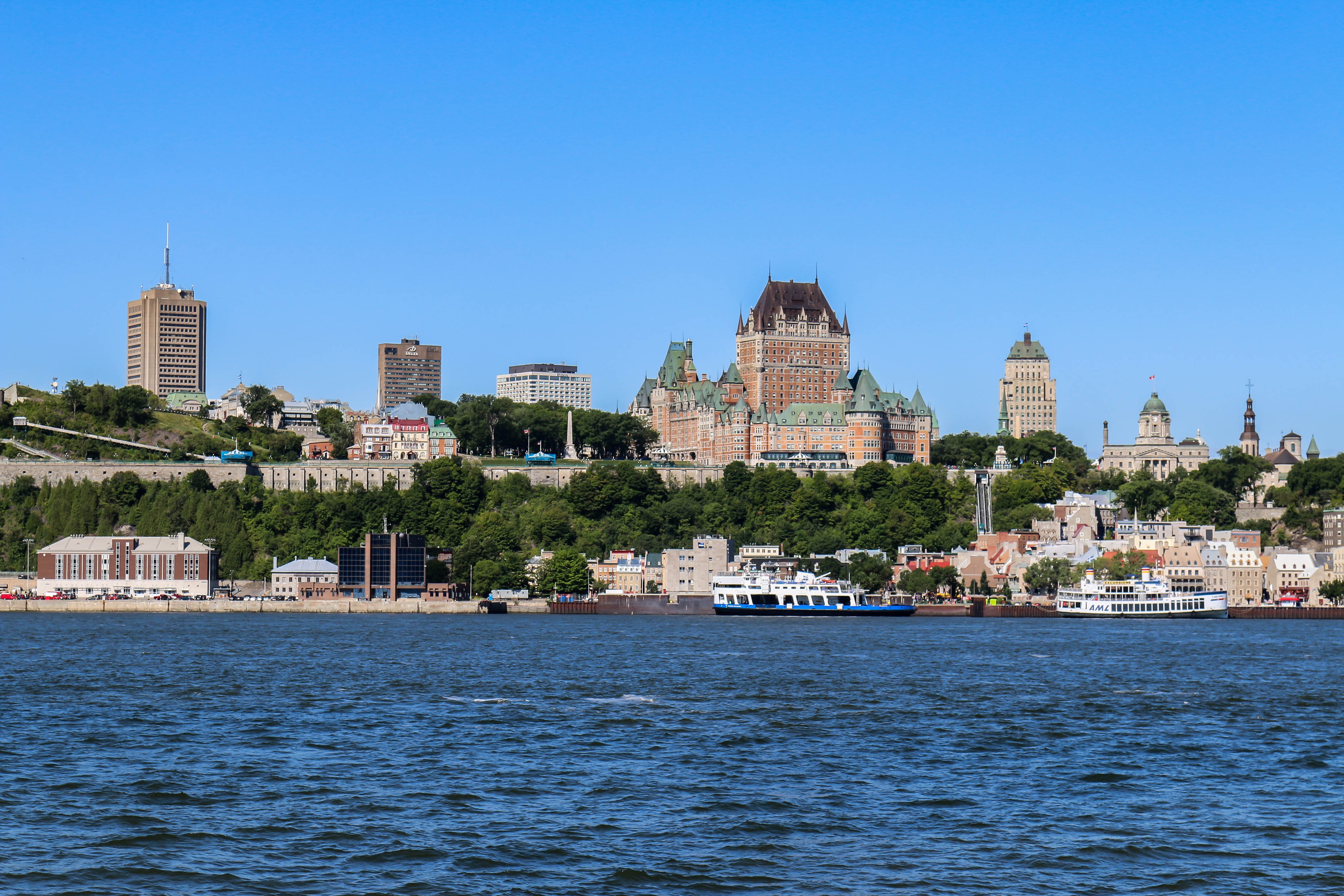
Québec City’s alluring setting atop Cape Diamond (Cap Diamant) evokes a past of high adventure, military history, and exploration. This French-speaking capital city is the only walled city north of Mexico. Visitors come for the delicious and inventive cuisine, the remarkable historical continuity, and to share in the seasonal exuberance of the largest Francophone population outside France.The historic heart of this community is the Old City (Vieux-Québec), comprising the part of Upper Town (Haute-Ville) surrounded by walls and Lower Town (Basse-Ville), which spreads out at the base of the hill from Place Royale. Many sets of staircases and the popular funicular link the top of the hill with the bottom. Cobblestone streets, horse-drawn carriages, and elaborate cathedrals here are charming in all seasons. The Old City earned recognition as an official UNESCO World Heritage site in 1985, thanks largely to city planners who managed to update and preserve the 400-year-old buildings and attractions without destroying what made them worth preserving. The most familiar icon of the city, Fairmont Château Frontenac, is set on the highest point in Upper Town, where it holds court over the entire city.Sitting proudly above the confluence of the St. Lawrence and St. Charles rivers, the city’s famous military fortification, La Citadelle, built in the early 19th century, remains the largest of its kind in North America. In summer, visitors should try to catch the Changing of the Guard, held every morning at 10 am; you can get much closer to the guards here than at Buckingham Palace in London.Enchanting as it is, the Old City is just a small part of the true Québec City experience. Think outside the walls and explore St-Roch, a downtown hot spot, which has artsy galleries, foodie haunts, and a bustling square. Cruise the Grande-Allée and avenue Cartier to find a livelier part of town dotted with nightclubs and fun eateries. Or while away the hours in St-Jean-Baptiste, a neighborhood with trendy shops and hipster hangouts.
Montréal, Québec, Canada
Canada’s most diverse metropolis, Montréal, is an island city that favors style and elegance over order or even prosperity, a city where past and present intrude on each other daily. In some ways it resembles Vienna—well past its peak of power and glory, perhaps, yet still vibrant and grand.But don’t get the wrong idea. Montréal has always had a bit of an edge. During Prohibition, thirsty Americans headed north to the city on the St. Lawrence for booze, music, and a good time, and people still come for the same things. Summer festivals celebrate everything from comedy and French music and culture to beer and fireworks, and, of course, jazz. And on those rare weeks when there isn’t a planned event, the party continues. Clubs and sidewalk cafés are abuzz from late afternoon to the early hours of the morning. And Montréal is a city that knows how to mix it up even when it’s 20 below zero. Rue St-Denis is almost as lively on a Saturday night in January as it is in July, and the festival Montréal en Lumière, or Montréal Highlights, enlivens the dreary days of February with concerts, balls, and fine food.Montréal takes its name from Parc du Mont-Royal, a stubby plug of tree-covered igneous rock that rises 764 feet above the surrounding cityscape. Although its height is unimpressive, “the Mountain” forms one of Canada’s finest urban parks, and views from the Chalet du Mont-Royal atop the hill provide an excellent orientation to the city’s layout and major landmarks.Old Montréal is home to museums, the municipal government, and the magnificent Basilique Notre-Dame-de-Montréal within its network of narrow, cobblestone streets. Although Montréal’s centre-ville, or Downtown, bustles like many other major cities on the surface, it’s active below street level as well, in the so-called Underground City–-the underground levels of shopping malls and food courts connected by pedestrian tunnels and the city’s subway system, or métro. Residential Plateau Mont-Royal and trendy neighborhoods are abuzz with restaurants, nightclubs, art galleries, and cafés. The greener areas of town are composed of the Parc du Mont-Royal and the Jardin Botanique.
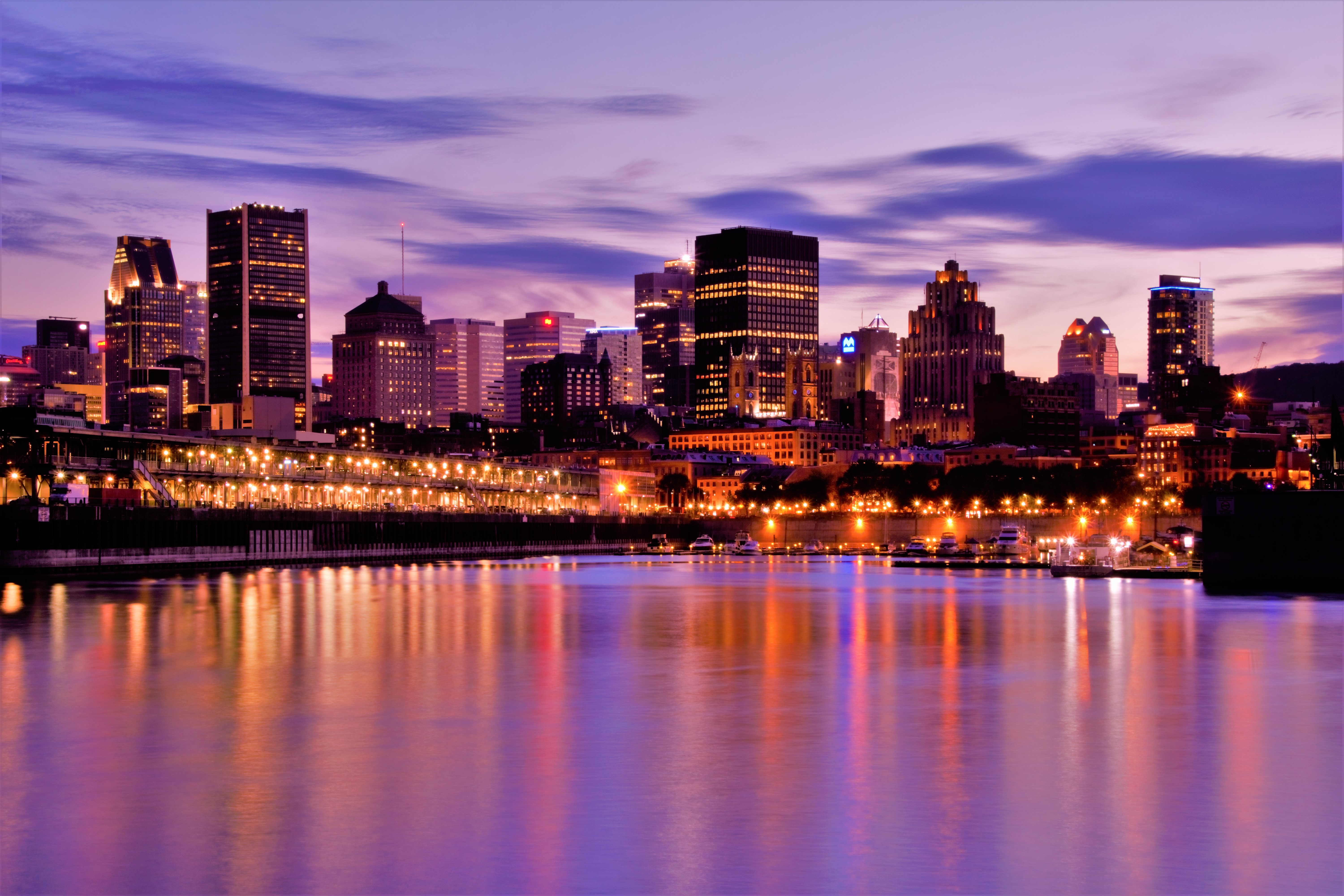
Montréal, Québec, Canada
Canada’s most diverse metropolis, Montréal, is an island city that favors style and elegance over order or even prosperity, a city where past and present intrude on each other daily. In some ways it resembles Vienna—well past its peak of power and glory, perhaps, yet still vibrant and grand.But don’t get the wrong idea. Montréal has always had a bit of an edge. During Prohibition, thirsty Americans headed north to the city on the St. Lawrence for booze, music, and a good time, and people still come for the same things. Summer festivals celebrate everything from comedy and French music and culture to beer and fireworks, and, of course, jazz. And on those rare weeks when there isn’t a planned event, the party continues. Clubs and sidewalk cafés are abuzz from late afternoon to the early hours of the morning. And Montréal is a city that knows how to mix it up even when it’s 20 below zero. Rue St-Denis is almost as lively on a Saturday night in January as it is in July, and the festival Montréal en Lumière, or Montréal Highlights, enlivens the dreary days of February with concerts, balls, and fine food.Montréal takes its name from Parc du Mont-Royal, a stubby plug of tree-covered igneous rock that rises 764 feet above the surrounding cityscape. Although its height is unimpressive, “the Mountain” forms one of Canada’s finest urban parks, and views from the Chalet du Mont-Royal atop the hill provide an excellent orientation to the city’s layout and major landmarks.Old Montréal is home to museums, the municipal government, and the magnificent Basilique Notre-Dame-de-Montréal within its network of narrow, cobblestone streets. Although Montréal’s centre-ville, or Downtown, bustles like many other major cities on the surface, it’s active below street level as well, in the so-called Underground City–-the underground levels of shopping malls and food courts connected by pedestrian tunnels and the city’s subway system, or métro. Residential Plateau Mont-Royal and trendy neighborhoods are abuzz with restaurants, nightclubs, art galleries, and cafés. The greener areas of town are composed of the Parc du Mont-Royal and the Jardin Botanique.
Percé, Québec, Canada
The discovery of these parts of Canada, inhabited at one time by Micmac Indians, by French explorers made Percé a stop-off point between Québec City and France. In the 17th century Percé developed into a bustling port with hundreds of boats anchored in the summer season. During the English campaign against Québec, the small village was burned down by the English. Afterwards, Percé was forgotten for almost half a century. Following the Treaty of Versailles, reconstruction began; by 1777 Percé addedl 400 seasonal fishermen to its year-round population of 300. In 1781 Charles Robin founded a fishing business that prospered rapidly and generated new interest in Percé.Today this charming fishing village is as a prime holiday spot, thanks to its gargantuan limestone rock which rears up from the sea just a stone’s throw off the coast. The Roche Percé”measures 1,545 feet in length and 288 feet in height and stands as a protector against wind and ocean forces. It originally featured two holes. One of them disappeared when a part of the rock crumbled in 1845, giving way to its present shape. The rock is considered one of Canada’s most celebrated natural phenomena; it presents an almost surreal sight at dawn.Little remains of the original buildings of the 17th-century fishing village due to the long, harsh winter weather. Charles Robin’s house survived and serves as a guest house. Now the village features a number of craft shops, art galleries, and a pleasantly relaxed atmosphere endearing to visitors. Outside of town visit isolated lighthouses and enjoy a drive through bucolic countryside dotted with small farms and pastures.Bonaventure Island, renowned as a bird sanctuary, is two miles from the mainland. The high cliffs of the 1.6-square-mile island teem with bird colonies, including the world’s largest and most accessible colony of gannets. Other species include puffins, cormorants, kittiwakes and razorbills who come here to nest in this preservation area. Walking trails lead around the island for a closer look at this fascinating bird sanctuary. Pier Information The ship will be anchored off Percé and guests will be taken ashore via the ship’s tenders. The jetty is within close walking distance to the village. There are a limited number of taxis available for trips farther afield. Shopping Several small souvenir shops and art galleries offer a nice selection of local handicrafts and artwork. Hand-knit sweaters and woolen items may also be of interest. The local currency is the Canadian dollar. Cuisine Several rustic eateries throughout the village offer fresh seafood and typical hearty fare. If you are looking for a first-class restaurant try the Auberge du Gargantua, about a mile west of town. Other Sites Visitors can take local boat trips around Bonaventure Island. Stroll through this charming village and along its seaside boardwalk. Gaspésian LighthousesOnly two of the many lighthouses scattered along the coast of the Gaspé peninsula are still in use today. One of them stands at Cap d’Espoir some eight miles from Percé. It was built of wood in 1874; the present structure dates from 1939. It is 48 feet high and is open for visitors. The second lighthouse is located at Cap Blanc. It was also installed in 1874 and rebuilt in 1959.
Cruising the St Lawrence River, Canada, Quebec
Experience the splendour of scenic cruising along the St. Lawrence River today. This mighty waterway snakes for more than 1200 kilometres connecting Canada’s Great Lakes to the Atlantic Ocean. It is known for the 40-plus traditional lighthouses that have helped sailors navigate this river for centuries.
Relax on board with a coffee on the private verandah of your spacious suite or dining with new friends in the casual Azure Bar & Café, as you pass quaint fishing villages. You may be lucky to view the riverside hardwood forests in their fiery autumnal glory at this time of year.
Quebec City, Québec, Canada
Québec City’s alluring setting atop Cape Diamond (Cap Diamant) evokes a past of high adventure, military history, and exploration. This French-speaking capital city is the only walled city north of Mexico. Visitors come for the delicious and inventive cuisine, the remarkable historical continuity, and to share in the seasonal exuberance of the largest Francophone population outside France.The historic heart of this community is the Old City (Vieux-Québec), comprising the part of Upper Town (Haute-Ville) surrounded by walls and Lower Town (Basse-Ville), which spreads out at the base of the hill from Place Royale. Many sets of staircases and the popular funicular link the top of the hill with the bottom. Cobblestone streets, horse-drawn carriages, and elaborate cathedrals here are charming in all seasons. The Old City earned recognition as an official UNESCO World Heritage site in 1985, thanks largely to city planners who managed to update and preserve the 400-year-old buildings and attractions without destroying what made them worth preserving. The most familiar icon of the city, Fairmont Château Frontenac, is set on the highest point in Upper Town, where it holds court over the entire city.Sitting proudly above the confluence of the St. Lawrence and St. Charles rivers, the city’s famous military fortification, La Citadelle, built in the early 19th century, remains the largest of its kind in North America. In summer, visitors should try to catch the Changing of the Guard, held every morning at 10 am; you can get much closer to the guards here than at Buckingham Palace in London.Enchanting as it is, the Old City is just a small part of the true Québec City experience. Think outside the walls and explore St-Roch, a downtown hot spot, which has artsy galleries, foodie haunts, and a bustling square. Cruise the Grande-Allée and avenue Cartier to find a livelier part of town dotted with nightclubs and fun eateries. Or while away the hours in St-Jean-Baptiste, a neighborhood with trendy shops and hipster hangouts.
Montréal, Québec, Canada
Canada’s most diverse metropolis, Montréal, is an island city that favors style and elegance over order or even prosperity, a city where past and present intrude on each other daily. In some ways it resembles Vienna—well past its peak of power and glory, perhaps, yet still vibrant and grand.But don’t get the wrong idea. Montréal has always had a bit of an edge. During Prohibition, thirsty Americans headed north to the city on the St. Lawrence for booze, music, and a good time, and people still come for the same things. Summer festivals celebrate everything from comedy and French music and culture to beer and fireworks, and, of course, jazz. And on those rare weeks when there isn’t a planned event, the party continues. Clubs and sidewalk cafés are abuzz from late afternoon to the early hours of the morning. And Montréal is a city that knows how to mix it up even when it’s 20 below zero. Rue St-Denis is almost as lively on a Saturday night in January as it is in July, and the festival Montréal en Lumière, or Montréal Highlights, enlivens the dreary days of February with concerts, balls, and fine food.Montréal takes its name from Parc du Mont-Royal, a stubby plug of tree-covered igneous rock that rises 764 feet above the surrounding cityscape. Although its height is unimpressive, “the Mountain” forms one of Canada’s finest urban parks, and views from the Chalet du Mont-Royal atop the hill provide an excellent orientation to the city’s layout and major landmarks.Old Montréal is home to museums, the municipal government, and the magnificent Basilique Notre-Dame-de-Montréal within its network of narrow, cobblestone streets. Although Montréal’s centre-ville, or Downtown, bustles like many other major cities on the surface, it’s active below street level as well, in the so-called Underground City–-the underground levels of shopping malls and food courts connected by pedestrian tunnels and the city’s subway system, or métro. Residential Plateau Mont-Royal and trendy neighborhoods are abuzz with restaurants, nightclubs, art galleries, and cafés. The greener areas of town are composed of the Parc du Mont-Royal and the Jardin Botanique.
Montréal, Québec, Canada
Canada’s most diverse metropolis, Montréal, is an island city that favors style and elegance over order or even prosperity, a city where past and present intrude on each other daily. In some ways it resembles Vienna—well past its peak of power and glory, perhaps, yet still vibrant and grand.But don’t get the wrong idea. Montréal has always had a bit of an edge. During Prohibition, thirsty Americans headed north to the city on the St. Lawrence for booze, music, and a good time, and people still come for the same things. Summer festivals celebrate everything from comedy and French music and culture to beer and fireworks, and, of course, jazz. And on those rare weeks when there isn’t a planned event, the party continues. Clubs and sidewalk cafés are abuzz from late afternoon to the early hours of the morning. And Montréal is a city that knows how to mix it up even when it’s 20 below zero. Rue St-Denis is almost as lively on a Saturday night in January as it is in July, and the festival Montréal en Lumière, or Montréal Highlights, enlivens the dreary days of February with concerts, balls, and fine food.Montréal takes its name from Parc du Mont-Royal, a stubby plug of tree-covered igneous rock that rises 764 feet above the surrounding cityscape. Although its height is unimpressive, “the Mountain” forms one of Canada’s finest urban parks, and views from the Chalet du Mont-Royal atop the hill provide an excellent orientation to the city’s layout and major landmarks.Old Montréal is home to museums, the municipal government, and the magnificent Basilique Notre-Dame-de-Montréal within its network of narrow, cobblestone streets. Although Montréal’s centre-ville, or Downtown, bustles like many other major cities on the surface, it’s active below street level as well, in the so-called Underground City–-the underground levels of shopping malls and food courts connected by pedestrian tunnels and the city’s subway system, or métro. Residential Plateau Mont-Royal and trendy neighborhoods are abuzz with restaurants, nightclubs, art galleries, and cafés. The greener areas of town are composed of the Parc du Mont-Royal and the Jardin Botanique.
Cabin Options
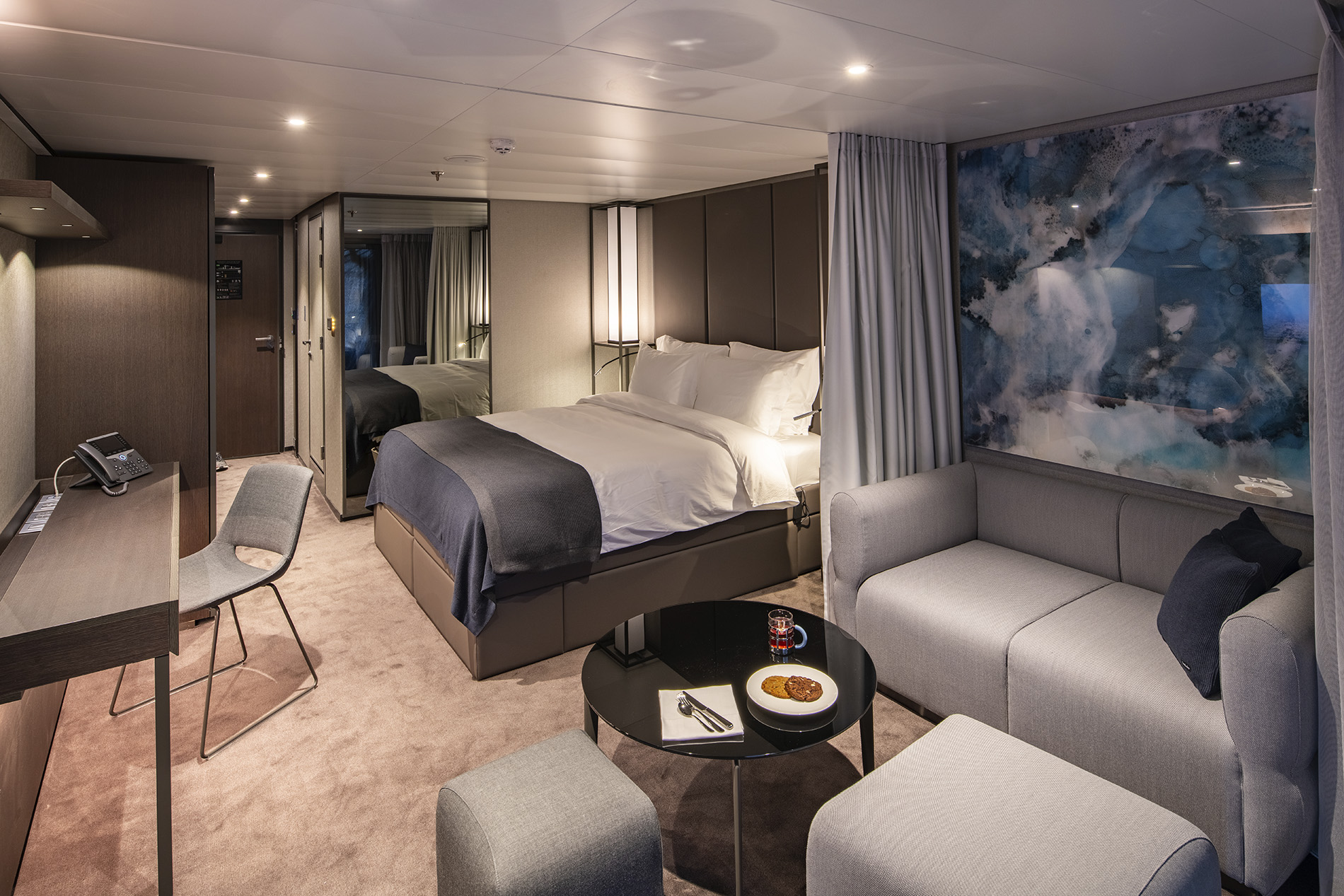
Verandah and Deluxe Verandah Suite
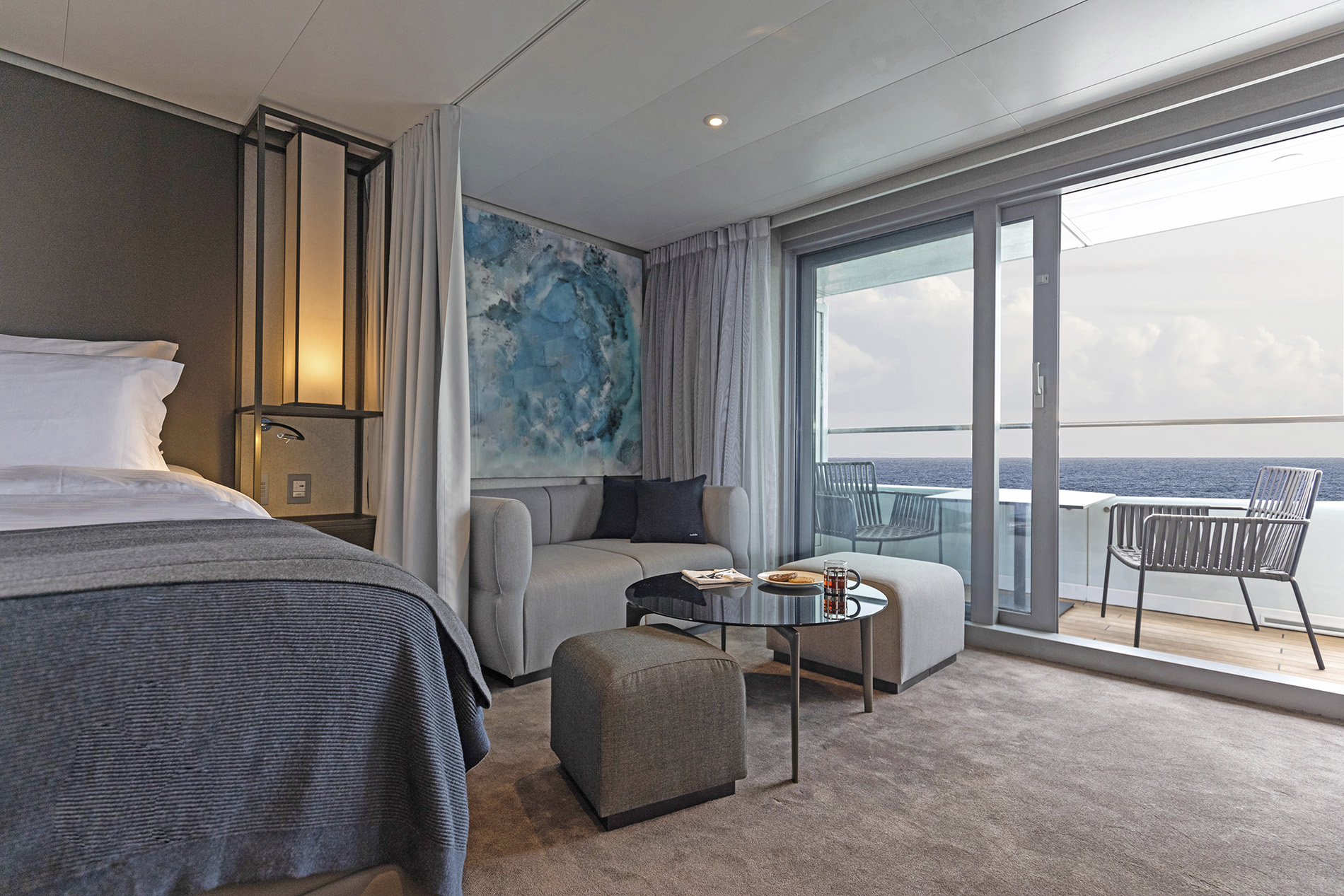
Grand Deluxe Verandah Suite
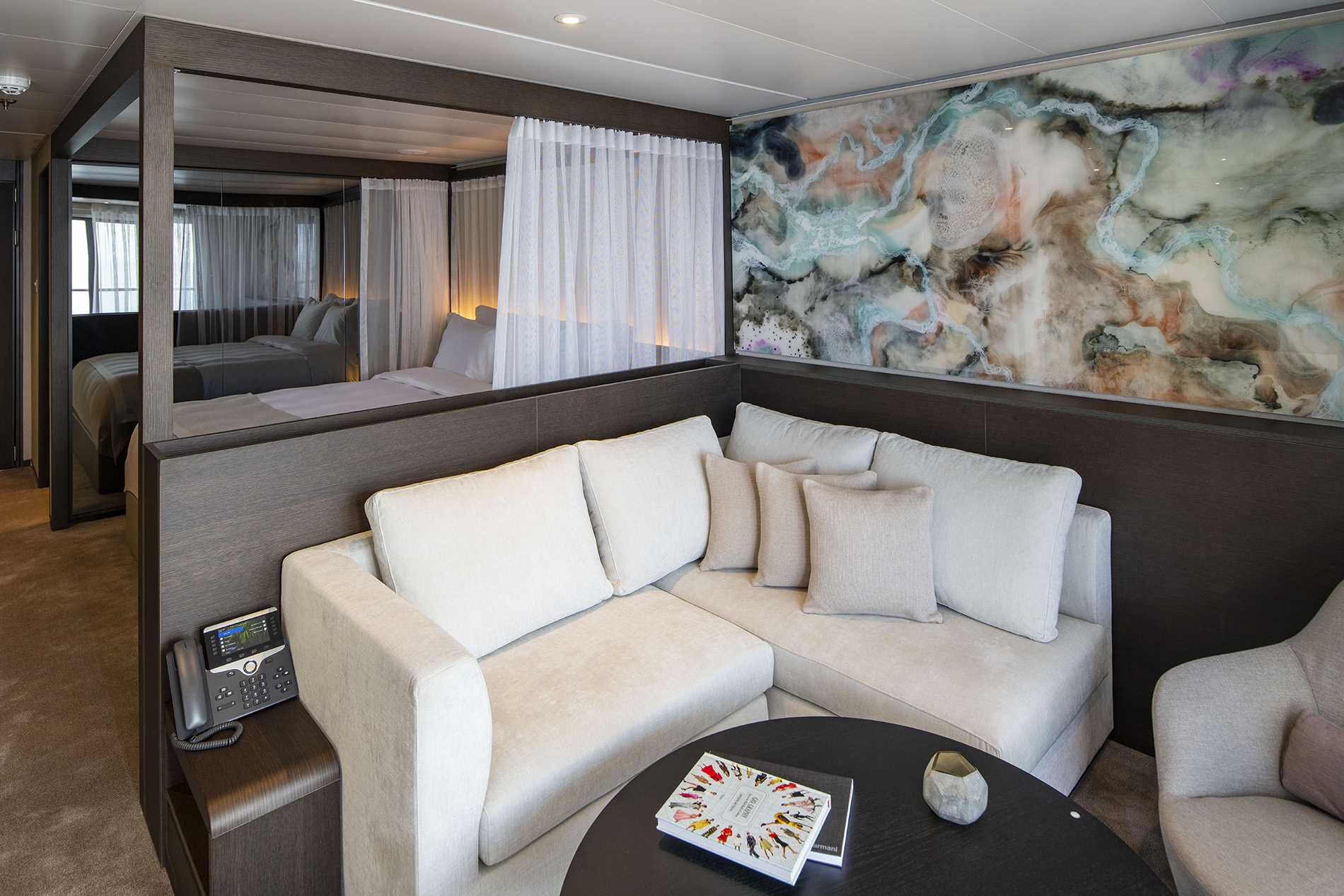
Spa Suites
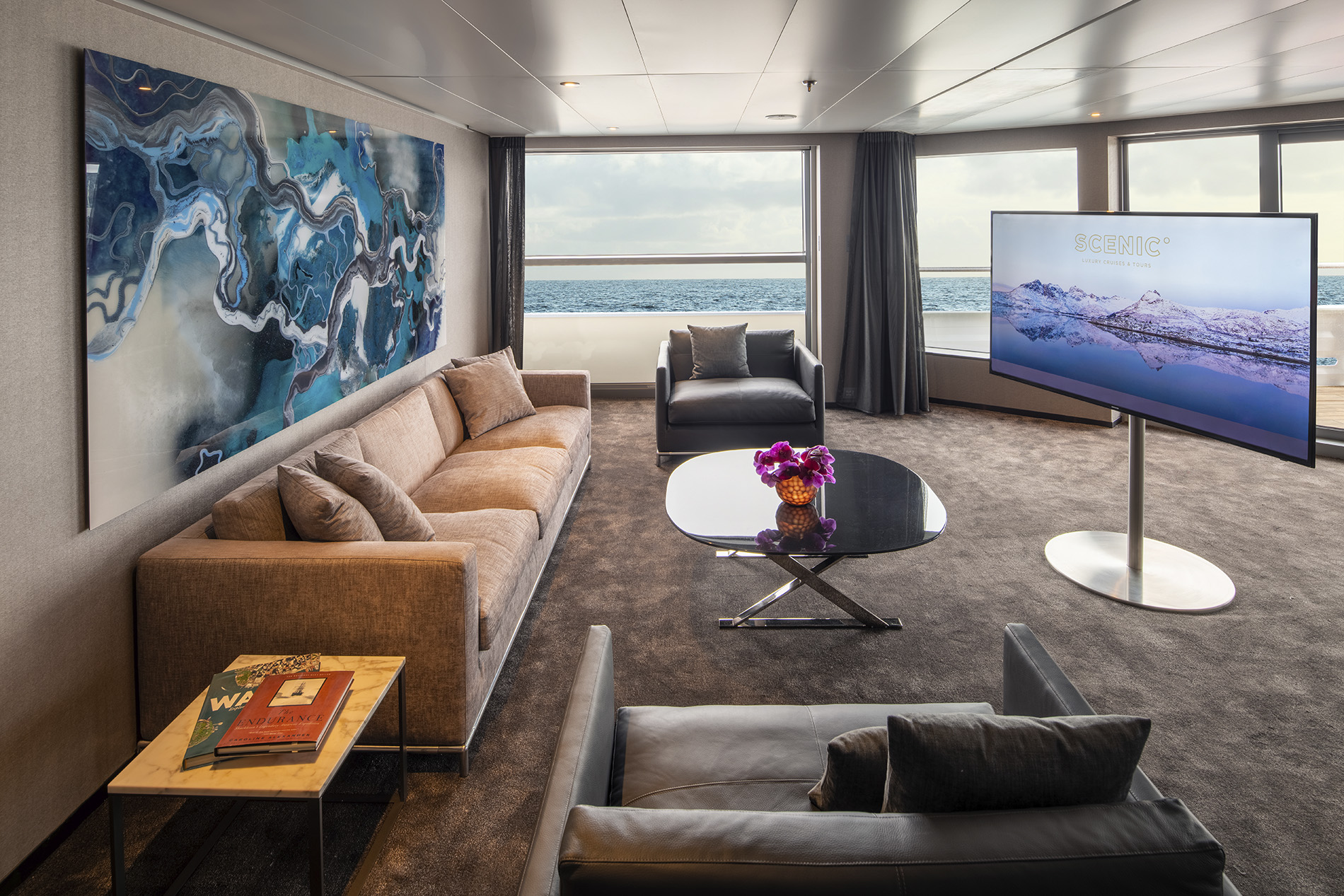
Owner's Penthouse Suites
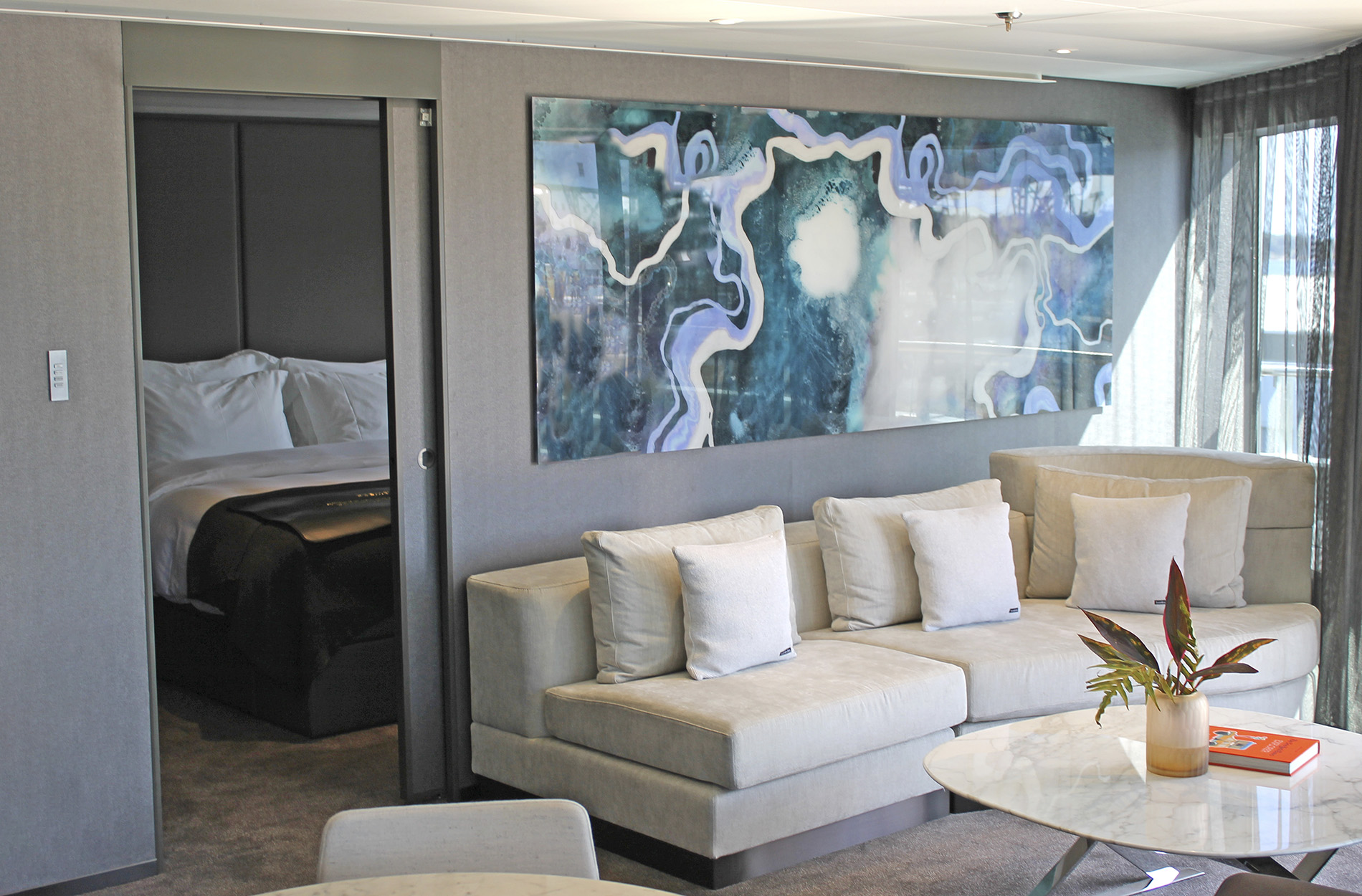
Panorama & Grand Panorama Suite
Ship Facilities
Elements
Elements is the main restaurant featuring Italian, steak and seafood from an à la carte menu. Located on Deck 4, it’s a relaxed dining option for dinner. Dine solo, with your travel partner or join friends on larger tables. Enjoy premium beverages from Elements Bar, hosting with fine wines matched to the daily menu and broad selection of international cheeses.
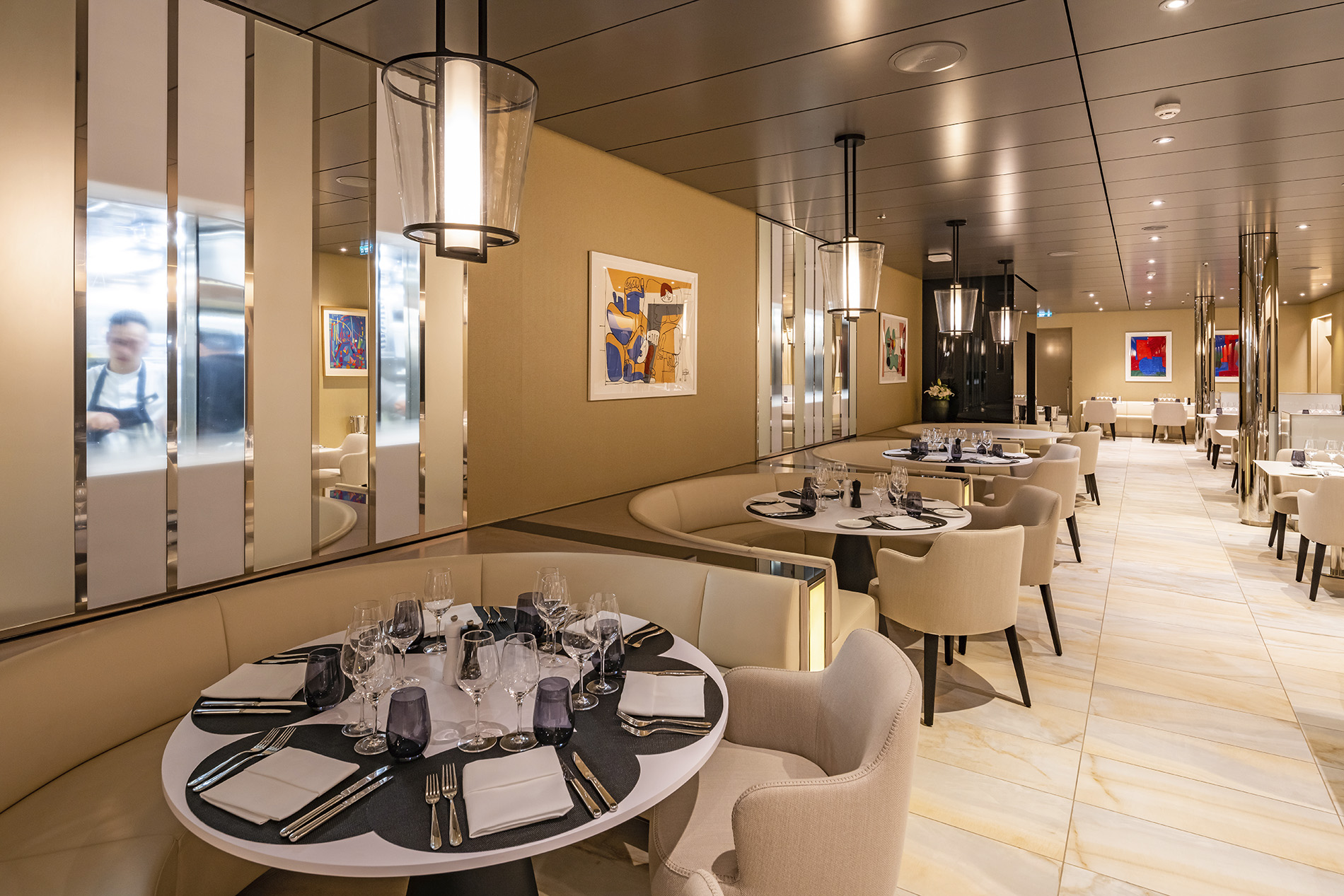
Chef's Table @ Elements
Located within Elements, dining at Chef’s Table is an exclusive, by invitation-only degustation experience. Accommodating a group of just 10 guests, this 11-course degustation meal is paired with premium beverages. The Executive Chef and the culinary team will enthral you as they present each dish, explaining the world-class techniques and ingredient origins used in each creation.
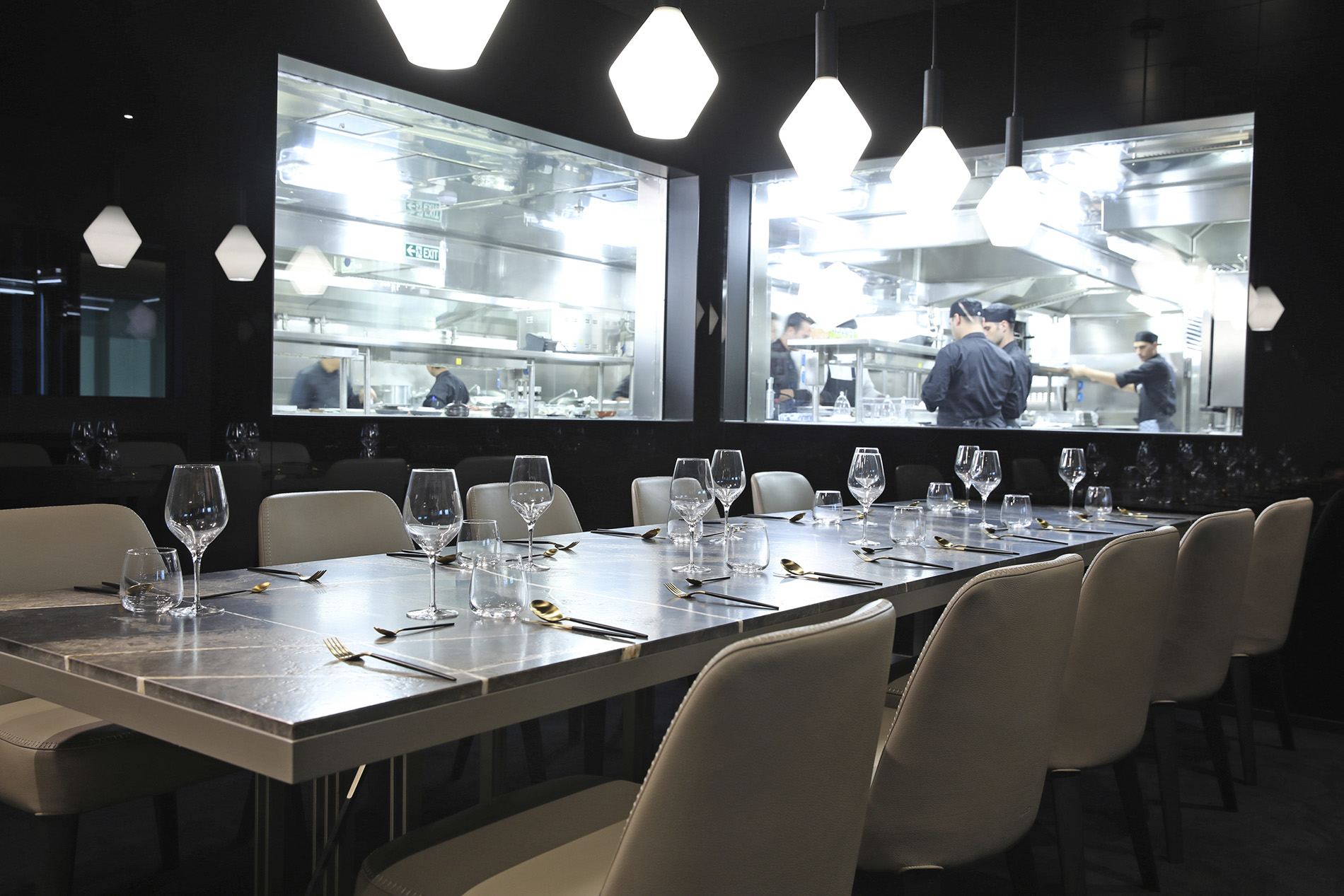
Koko's Asian Fusion
Enjoy contemporary Asian fusion in a vibrant ambience. Traditional ingredients and innovative techniques interweave to celebrate the diverse flavours of Asia. Up to 26 guests can be seated for dinner service at either regular tables or sunken seating inspired by traditional Japanese dining practices. Sample from share plates to discover new flavours as you enjoy the luxurious atmosphere.
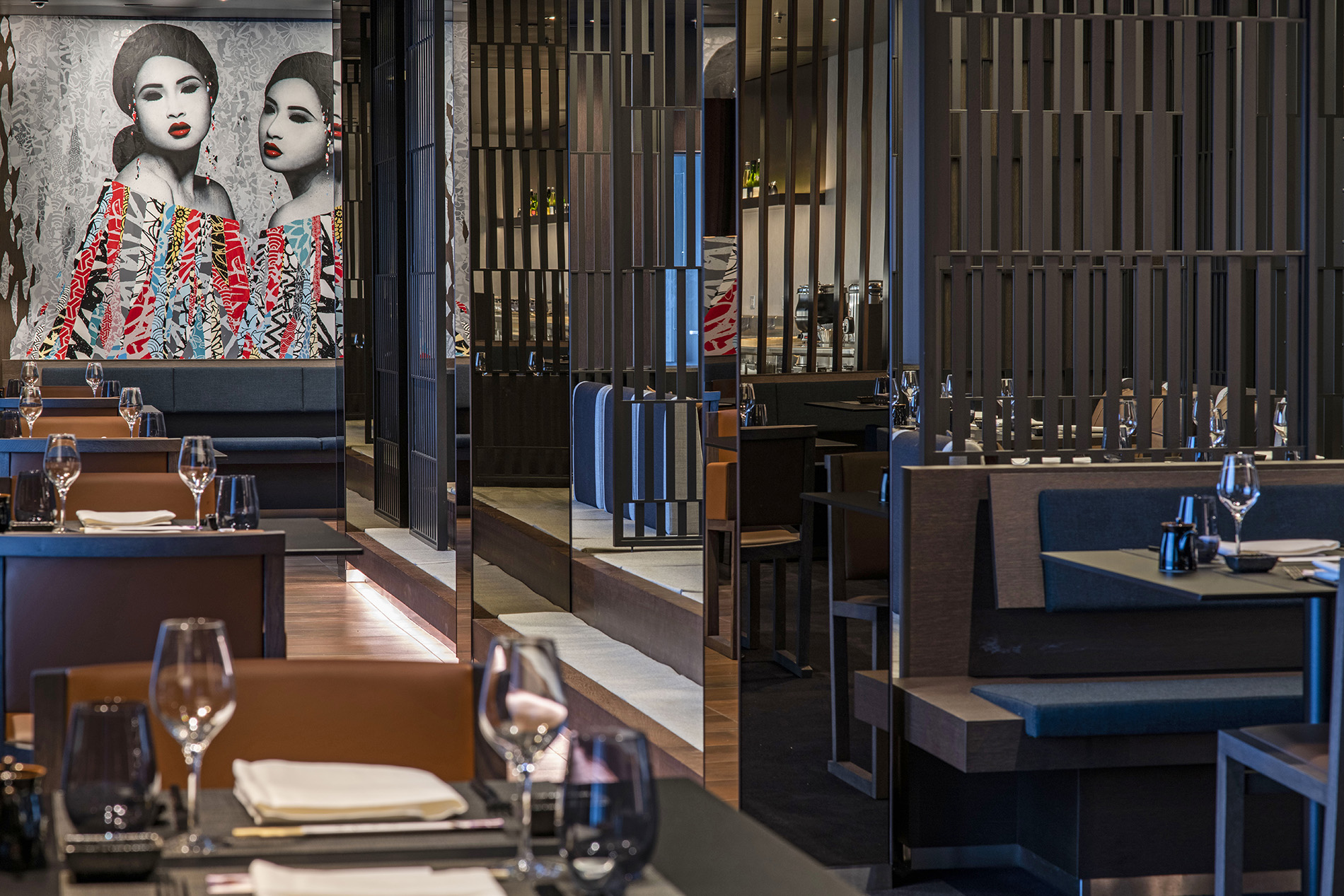
Sushi & Sake Bar @ Koko's
Indulge in a genuine culinary experience as skilled chefs handcraft the freshest sushi, including exquisite options with vegan salmon and tuna. Catering for up to 18 guests, you can dine along the ocean view benchtop or at the bar, watching as your chefs hand-make your meal.
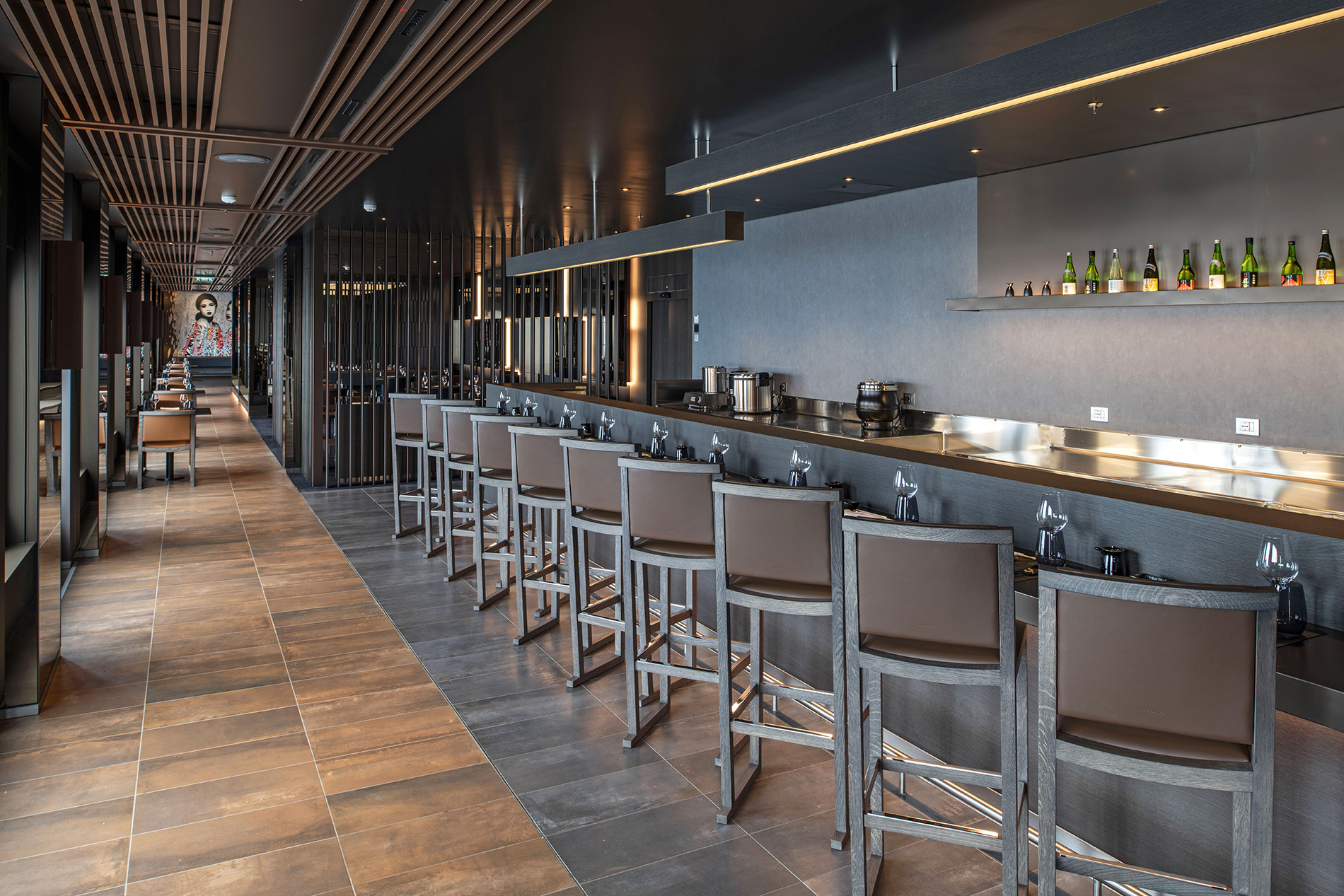
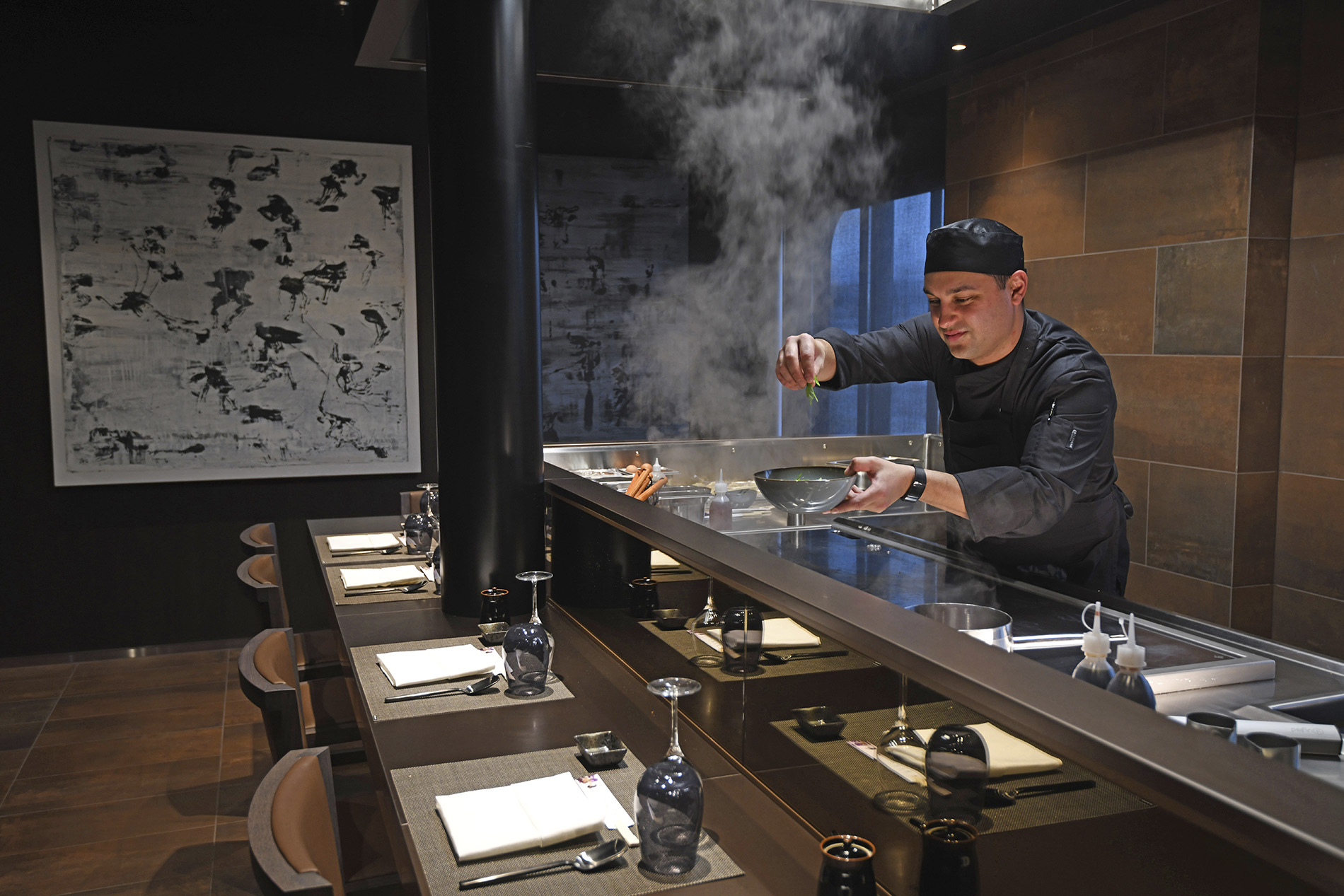
Night Market @ Koko’s
Savour the excitement of an interactive dining experience as our expert chefs craft dishes inspired by the lively markets of Asia, India and the Middle East before your eyes. For only eight guests in each seating, this exclusive Teppanyaki grill experience will be a highlight of your culinary journey.
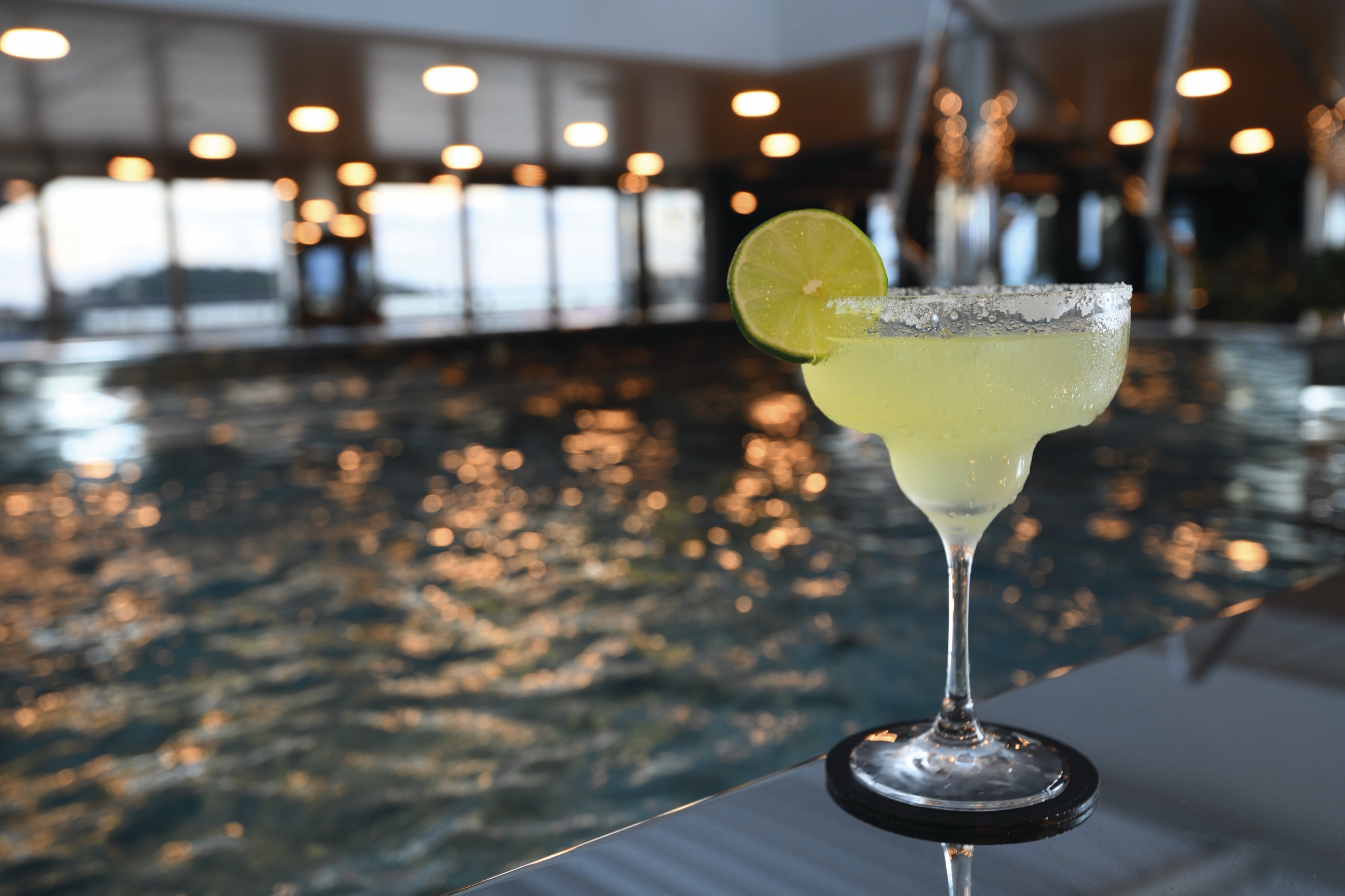
Azure Bar & Café
Visit the Azure Bar & Café for relaxed, all-day grazing. Take in the spectacular views from the indoor or outdoor terrace seating. Delight your tastebuds with a variety of pizzas, salads, snacks and healthy meals, coupled with barista-made coffee and beverages. Enjoy after-dinner treats, such as macaroons, biscotti and chocolates with a brandy, port, or tea. This relaxed café has a serene and laid-back feeling with inside and outside seating.

Lumière Restaurant & Champagne Bar
Indulge in contemporary French cuisine and Champagne. This fine dining restaurant has an elegant and modern atmosphere. Enjoy a pre-dinner drink, fried oysters and caviar before you are seated for an evening of world-class cuisine, with the option of a set degustation menu.

Yacht Club
Relax in the Yacht Club grill restaurant and bar for breakfast, lunch and special themed dinners. This casual dining experience is fitted with food islands, outdoor and lounge seating. Come to dine, mingle, relax in swing chairs overlooking the view, or taste our freshly-made gelato.
Chef's Garden @ Épicure
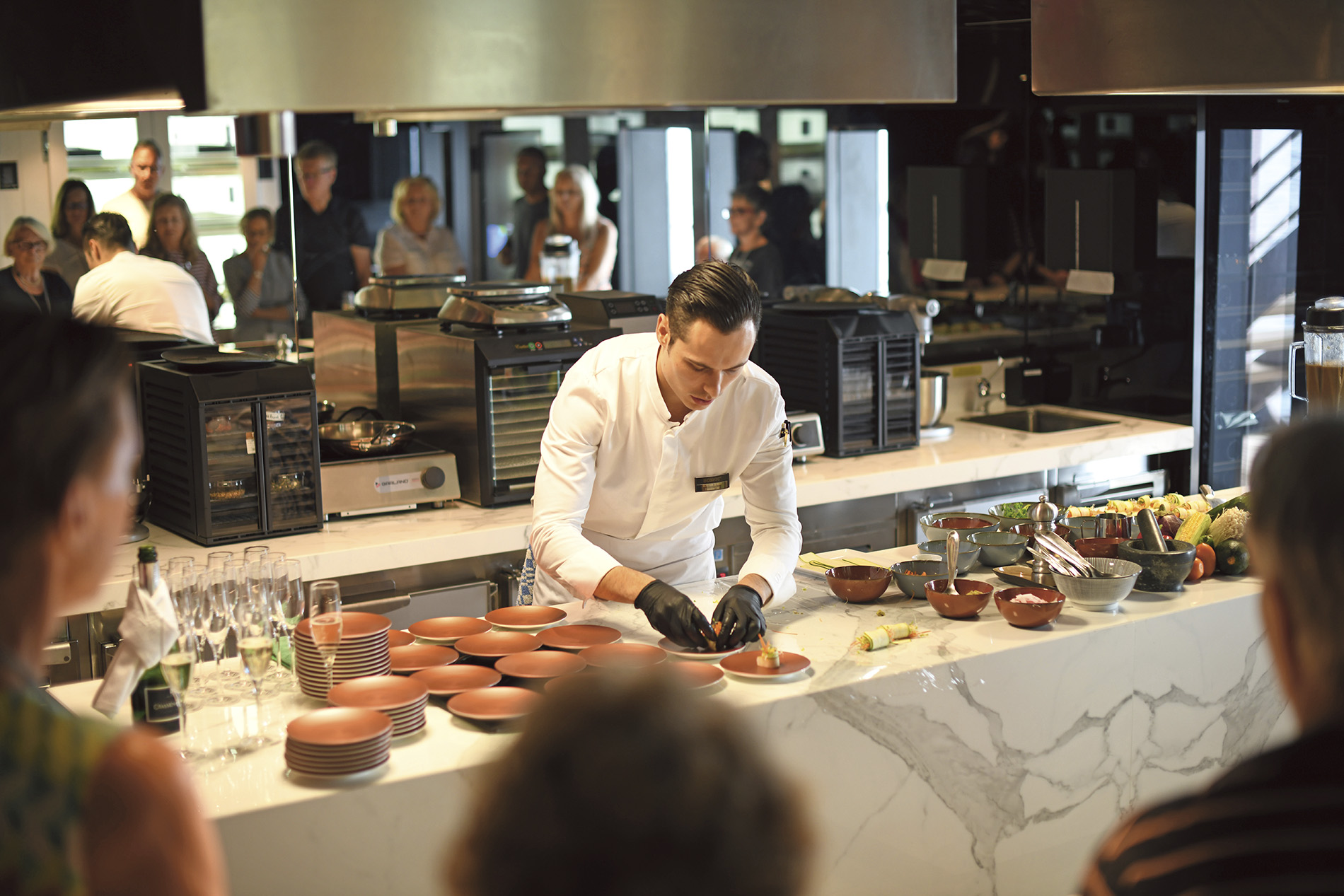
Be immersed in the gastronomical delights of local cuisine and wines with dedicated masterclasses led by our expert chefs and sommelier. Book in to see the chef create an array of authentic dishes from the regions you’re cruising through. Located on Deck 5 with a special cooking station and large TV screen, you’ll catch every detail.
Private Dining Experiences
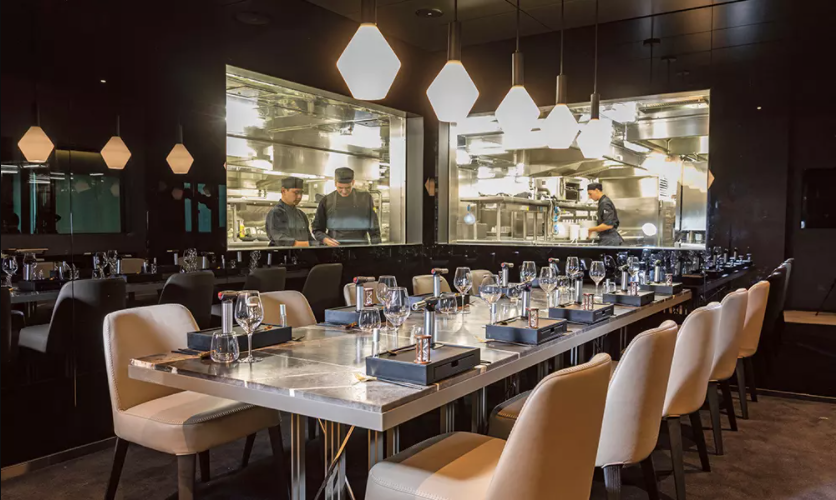
There are many intimate and relaxed venues which provide the option of private dining at no additional cost.
Groups can dine at a restaurant of their choice or in the privacy of their suite. Night Market @ Koko’s offers private dining for up to eight guests and Chef’s Table is the ultimate degustation dining by invitation-only experience for 10 guests.
In-Suite Dining
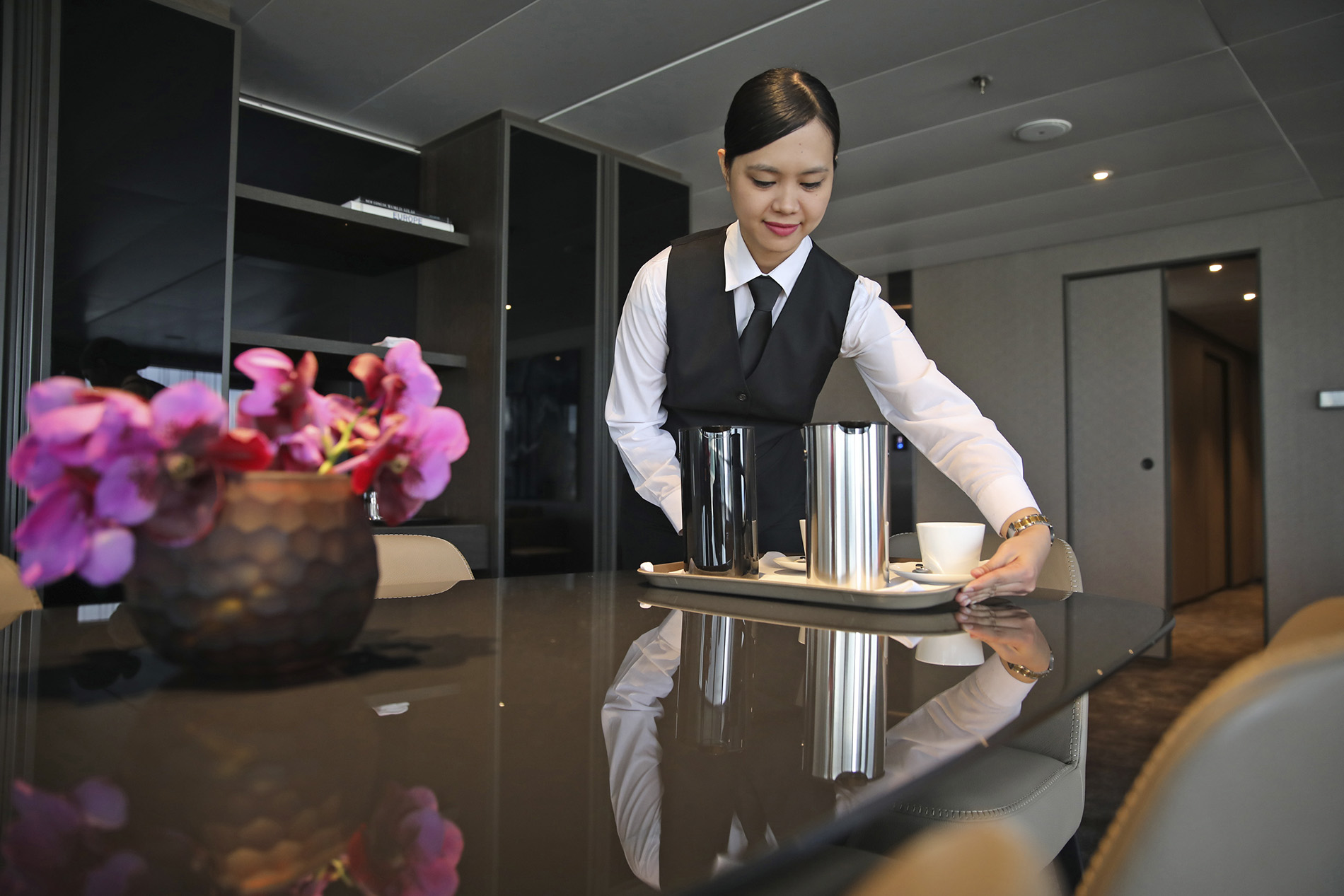
When the mood strikes to dine in the privacy of your suite, your personal butler can arrange everything. Choose from the 24-hour in-suite dining and beverage menus. Your butler will also ensure your in-suite mini-bar is re-stocked daily to your liking. With an in-suite espresso machine, savour your morning coffee in the solitude of your suite or soak up the sunlight on your verandah or terrace.
Helicopter Experiences
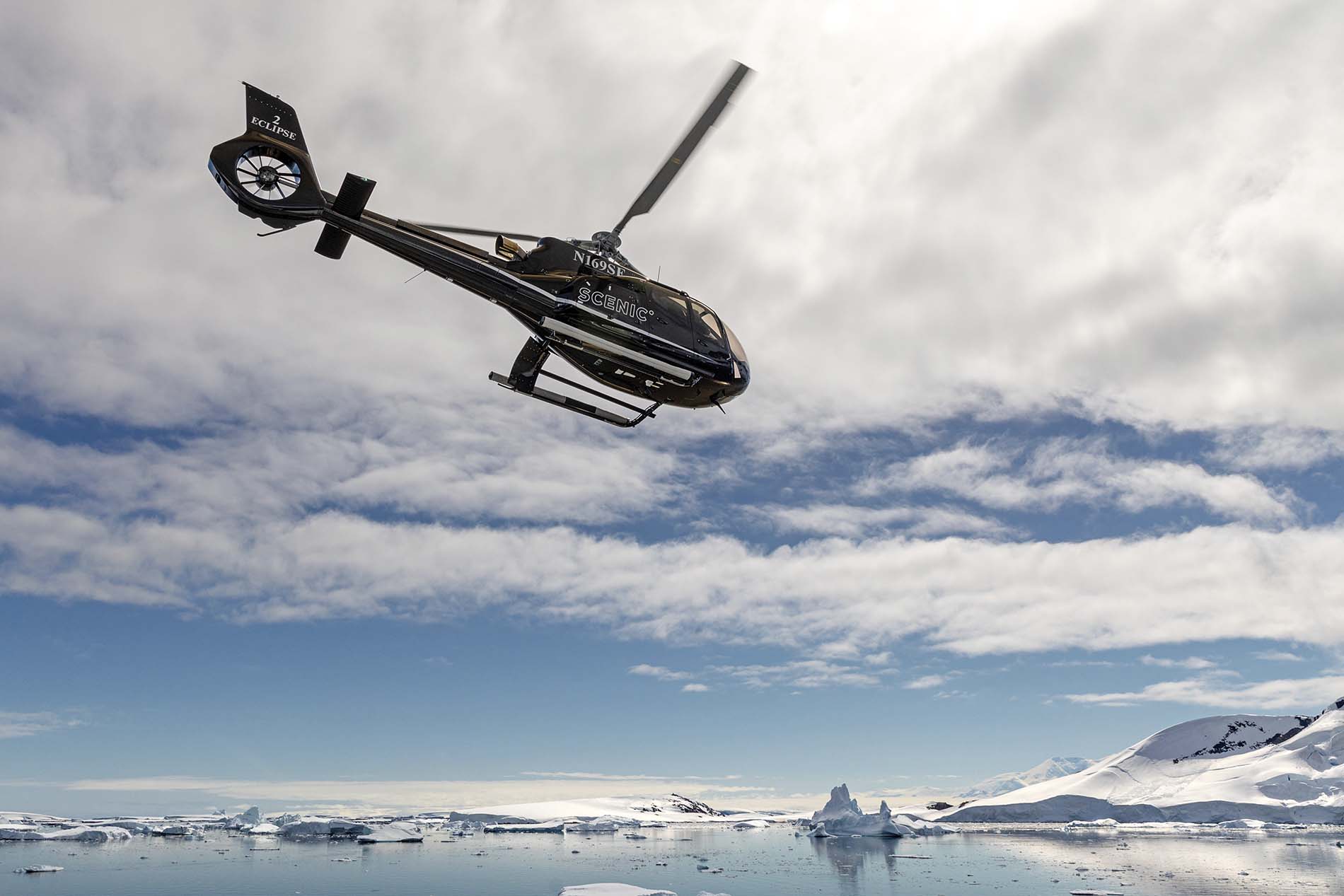
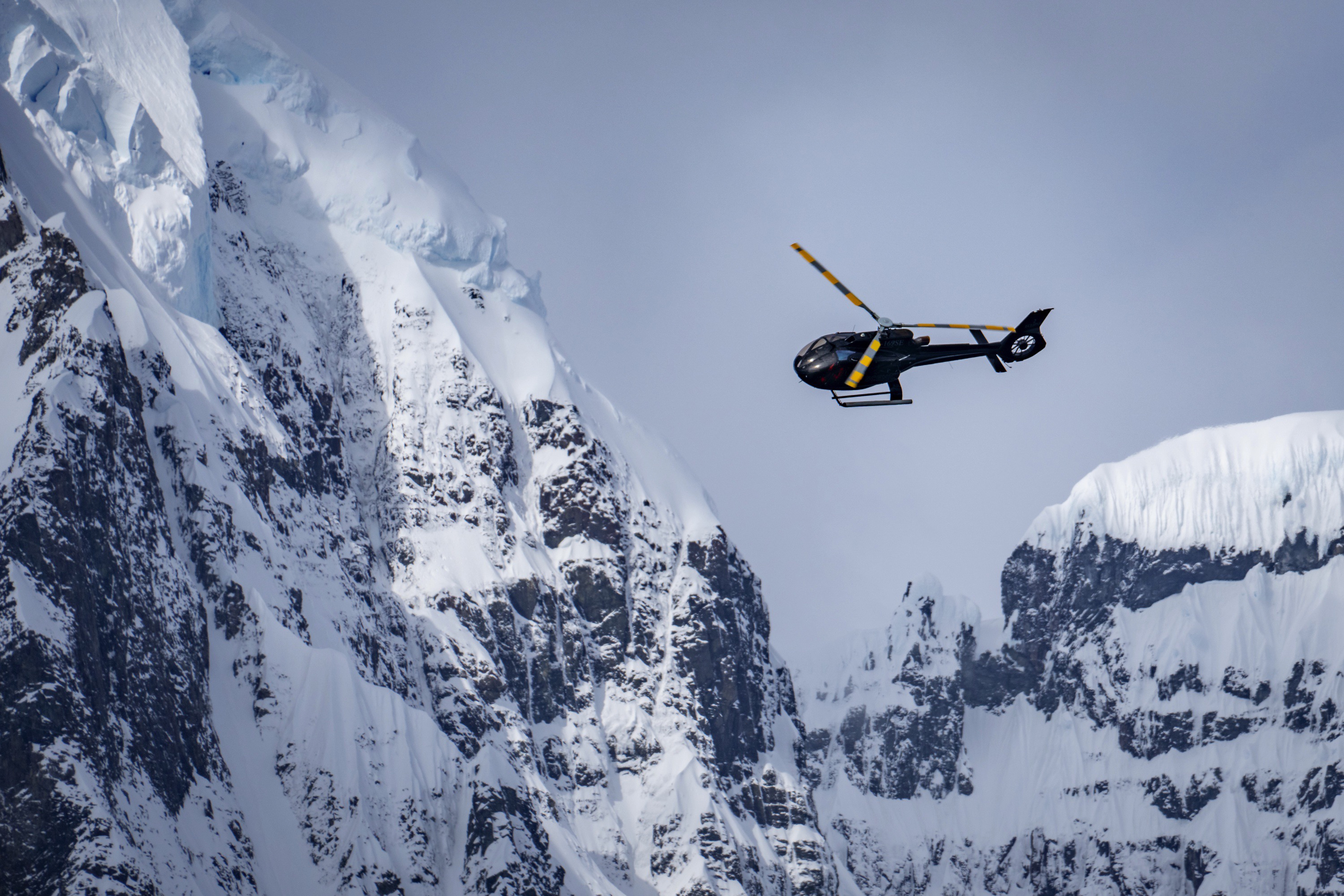
Soar above and dive below with unparalleled access to some of nature’s most remarkable sites. Scenic Eclipse is equipped with two state-of-the-art Airbus H130-T2 helicopters^ which seat up to six guests, plus the pilot.
^Helicopter, helicopter experiences and submersible at additional cost, subject to regulatory approval, availability, weight restrictions, medical approval and weather and ice conditions.
Discovery Centre
You will be supplied with everything you’ll need to fully immerse yourself in the journeys that await. On polar Expedition Voyages a Scenic Eclipse parka and water bottle will be in your suite on arrival, yours to take home. Plus, the use of specialised polar boots, trekking poles and kayaking equipment and apparel is included for your convenience.
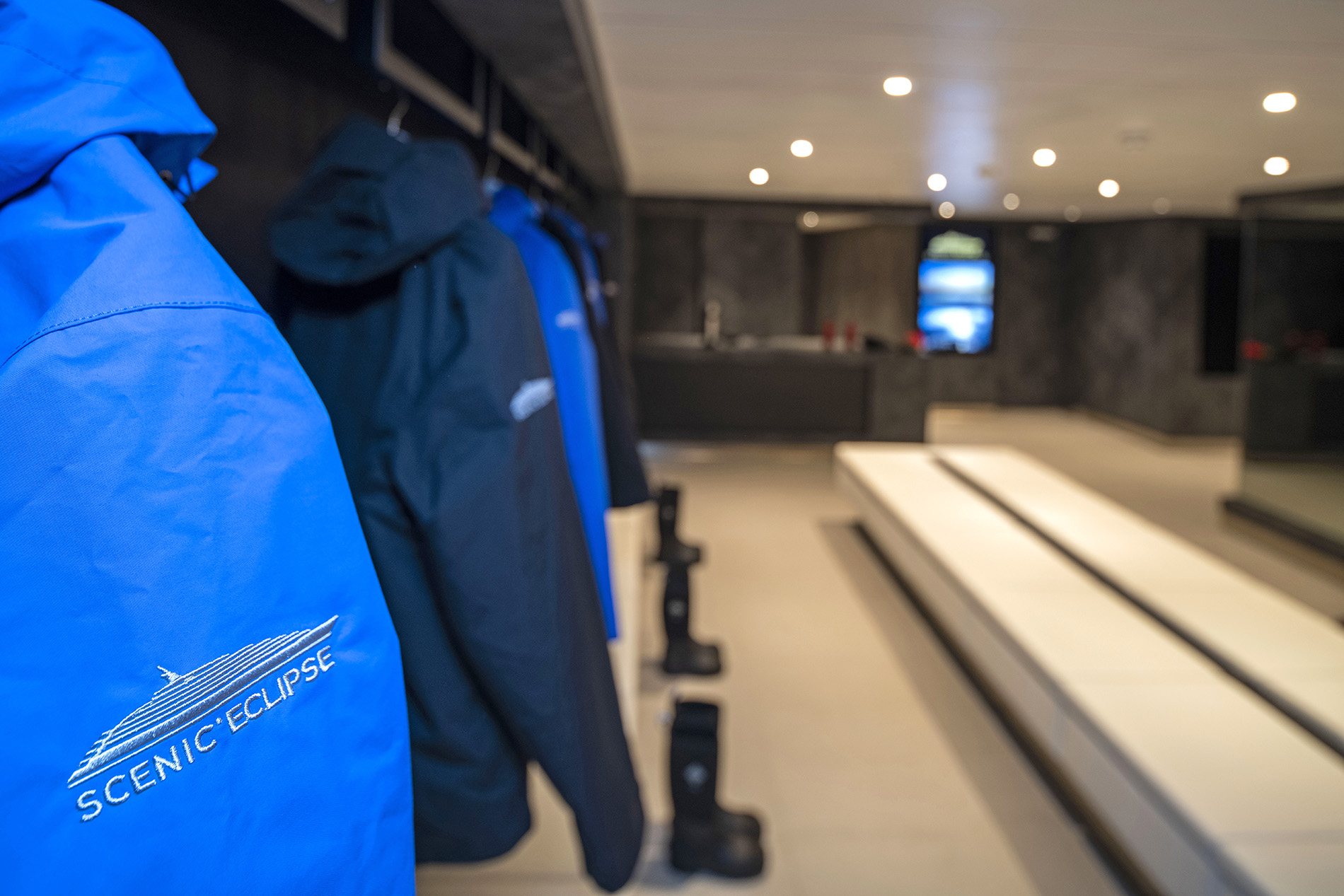
Discovery Team
Led by Director of Discovery Operations, Jason Flesher, the Discovery Team ensures unparalleled exploration and rich cultural immersion on Expedition and Discovery Voyages.
Our team of up to 20 specialists on Expedition Voyages, and up to 15 on Discovery Voyages, spans fields like history, biology, archaeology, naturalism, geology and photography. Enhancing your experience with their passion and expertise.
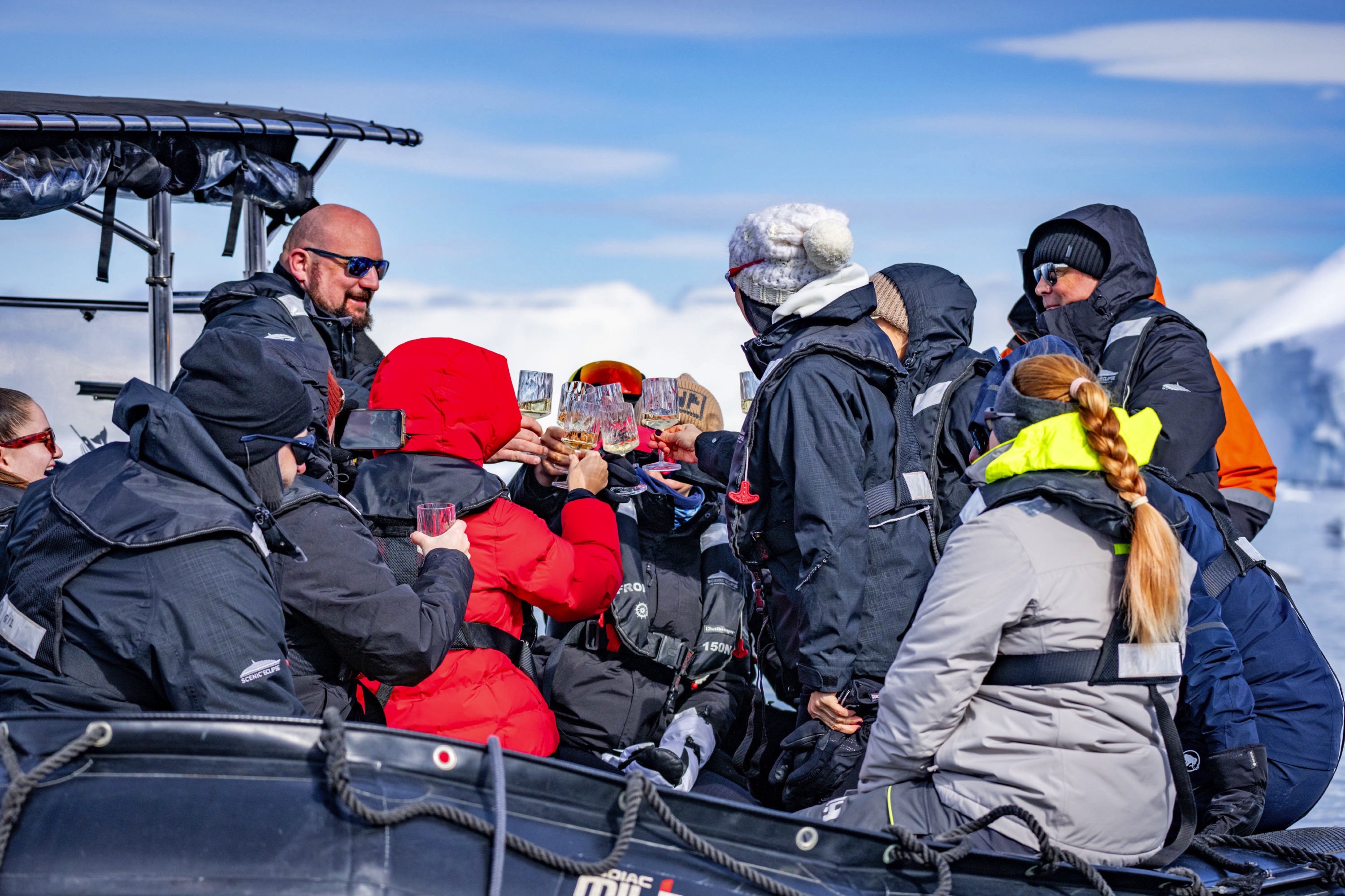
Scenic Eclipse Discovery Voyages
Blending exploration with rejuvenation
Reach small ports and remote destinations on board our custom-designed Scenic Eclipse Discovery Yachts. Ignite your inner explorer with exciting excursions during the day, then enjoy breathtaking vistas from the comfort of luxurious dining, bar and wellness spaces on board.
With only up to 228 guests on board and an expert Discovery Team of up to 15 specialists, tailor your days with a wide range of all-inclusive Discovery Excursions, Scenic Freechoice activities and bespoke Scenic Enrich experiences.
Scenic Discovery Excursions
Gain rich insights into your destination with Scenic Discovery Excursions. Our expert Discovery Team of up to 15 scientists, marine biologists, historians, geologists and expert local guides share their knowledge and regional expertise. Cruise on Zodiacs to remote island beaches, explore onshore with guided hikes, snorkel with expert marine biologists, and kayak with Discovery guides.
Scenic Enrich
On select voyages, enjoy unique and exclusively handcrafted encounters in the most spectacular surroundings. Go behind the scenes, to the heart of your destination, with private access and immersive experiences in an iconic location. From a barbeque on a secluded beach, to ritual ceremonies and immersive experiences with local tribes, these memories will stay with you forever.
Scenic Freechoice
Choose from a wide range of curated Scenic Freechoice activities, catered to your fitness level. From diving into Vanuatu’s hot springs, to snorkelling secluded bays or taking a local food tour. Whether you prefer an active or relaxed pace, there’s something for everyone.
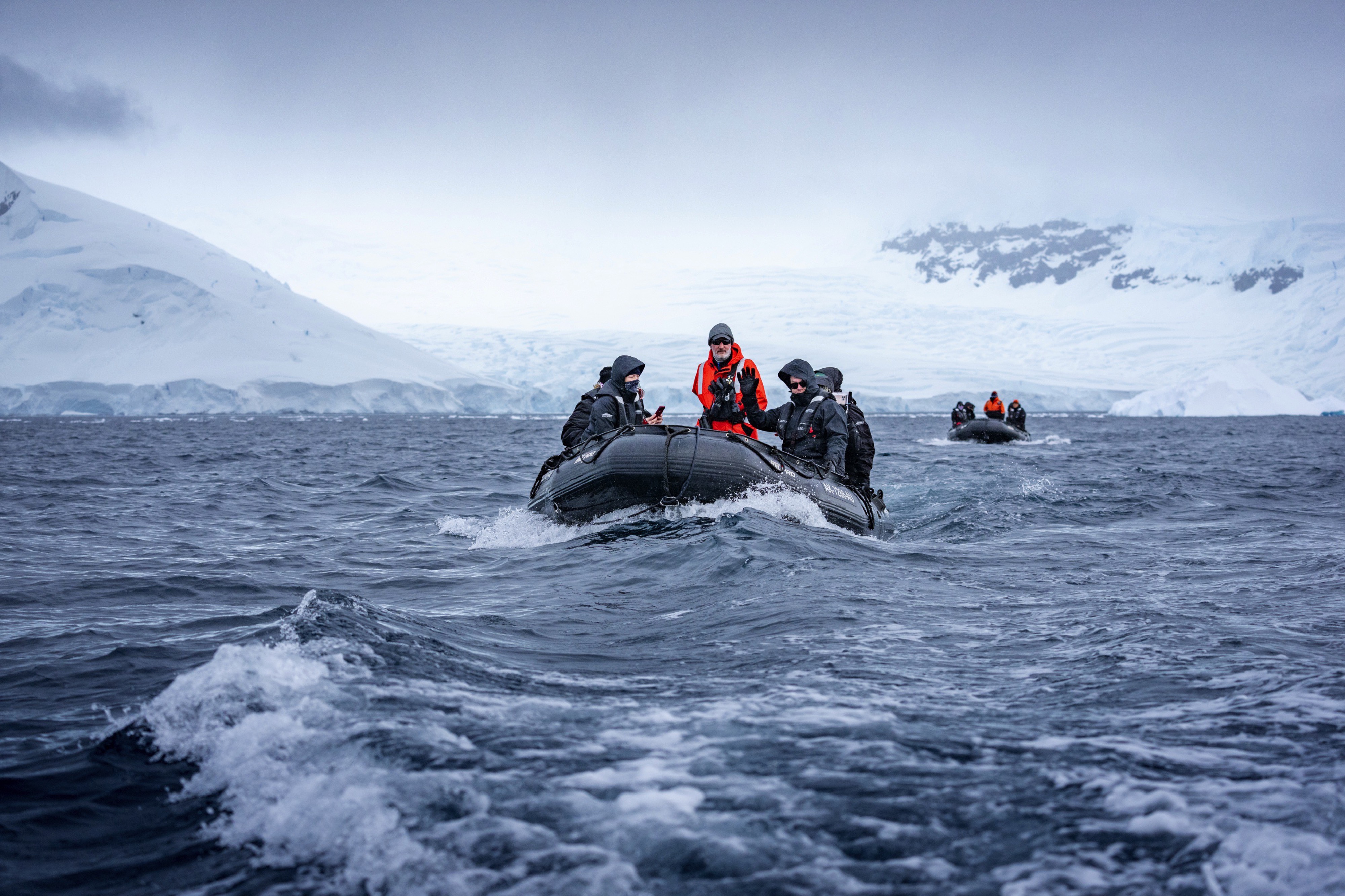
Scenic Eclipse Expedition Voyages
Enjoy unrivalled exploration of extraordinary polar destinations on an all-inclusive Scenic Eclipse voyage.
Bringing Ultra-Luxury to Expedition Cruising
The World’s First Discovery Yachts have been purpose-built for Expedition Voyages to the most remote and extreme environments, with a Polar Class 6-rating and state-of-the-art technology and design.
With only up to 228 guests (200 in Antarctica), you will experience multiple daily shore landings via Zodiac. You’ll enjoy truly all-inclusive Scenic Discovery Excursions led by an expert Discovery Team of up to 20 specialists, ensuring you get the most out of these remarkable locations.
World-Class Design & Technology
Scenic Eclipse is purpose built for the Expedition Voyages, with a Polar Class 6 rating, custom-built stabilisers, providing greater stability, a strengthened hull, forward bow thrusters, an electronic Azipod propulsion system, advanced sonar and environmentally sustainable systems. The state-of-the-art technology enables for safe and comfortable navigation through polar waters.
Scenic Discovery Excursions
Gain rich insights into your destination with Discovery Excursions. Our expert Discovery Team of up to 20 marine biologists, historians, geologists, naturalists and local guides share their knowledge and regional expertise. Cruise on Zodiacs and kayaks* around ice formations in Antarctica and go on nature walks through the Arctic tundra, under their expert guidance.
Scenic Neptune
Discover a fascinating underwater world
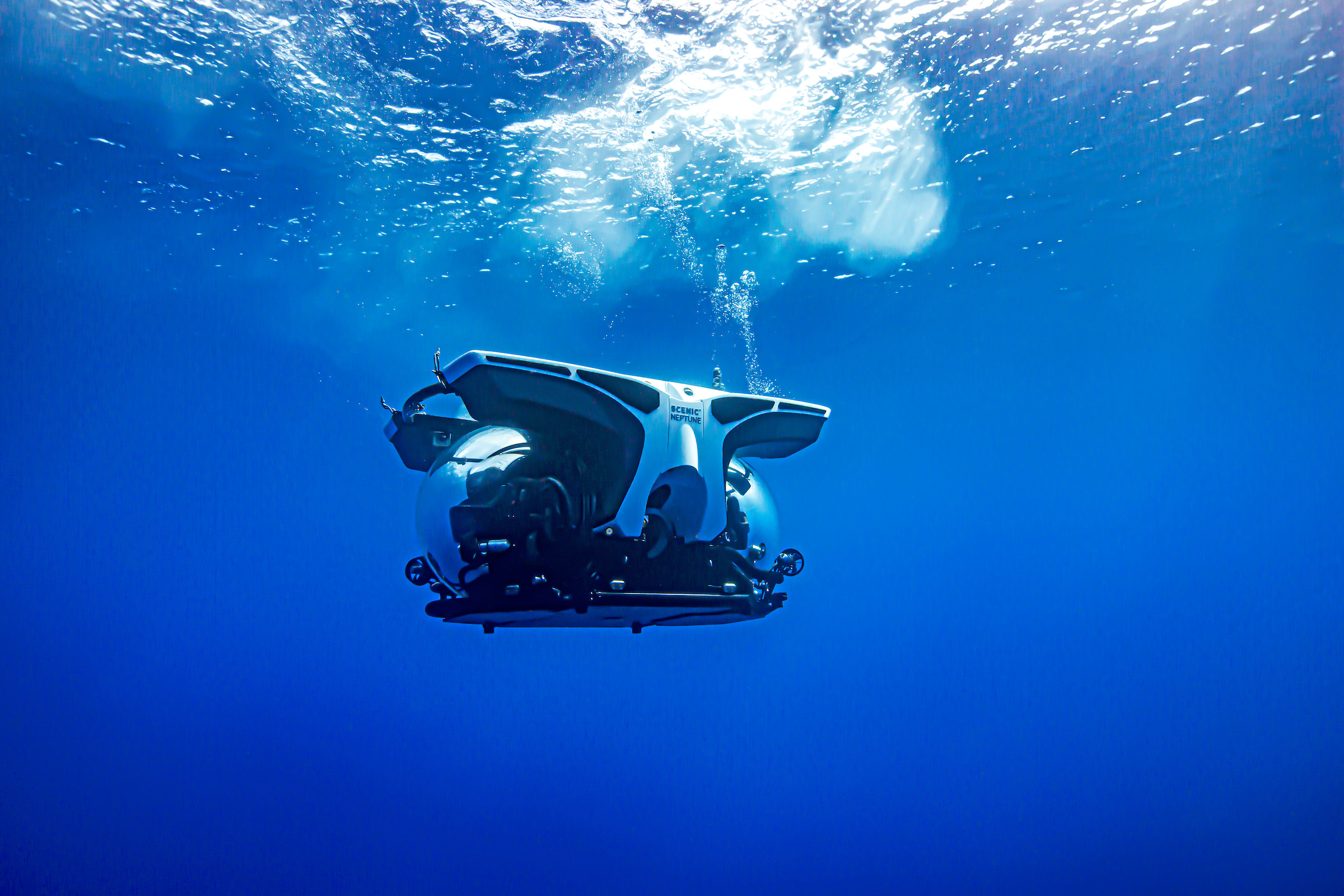
Dive below the horizon for an unforgettable experience on board our custom-designed submersibles^, Scenic Neptune I and II.
Enjoy the most immersive underwater exploration on board our custom-built submersible^, Scenic Neptune II. Featuring 360-degree panoramic views, Scenic Neptune II has been designed to provide an immersive underwater experience that will give guests the feeling of seamlessly merging with the wonders of the ocean.
Take your seat with up to eight fellow guests alongside our expert pilot and prepare for a sightseeing experience like no other, 100 metres beneath the surface. Scenic Neptune redefines underwater exploration. With large, ultra-clear acrylic spheres, our submersibles have been designed for optimum viewing and total immersion.
^Submersible at additional cost, subject to regulatory approval, availability, weight restrictions, medical approval and weather and ice conditions.
Education Programs
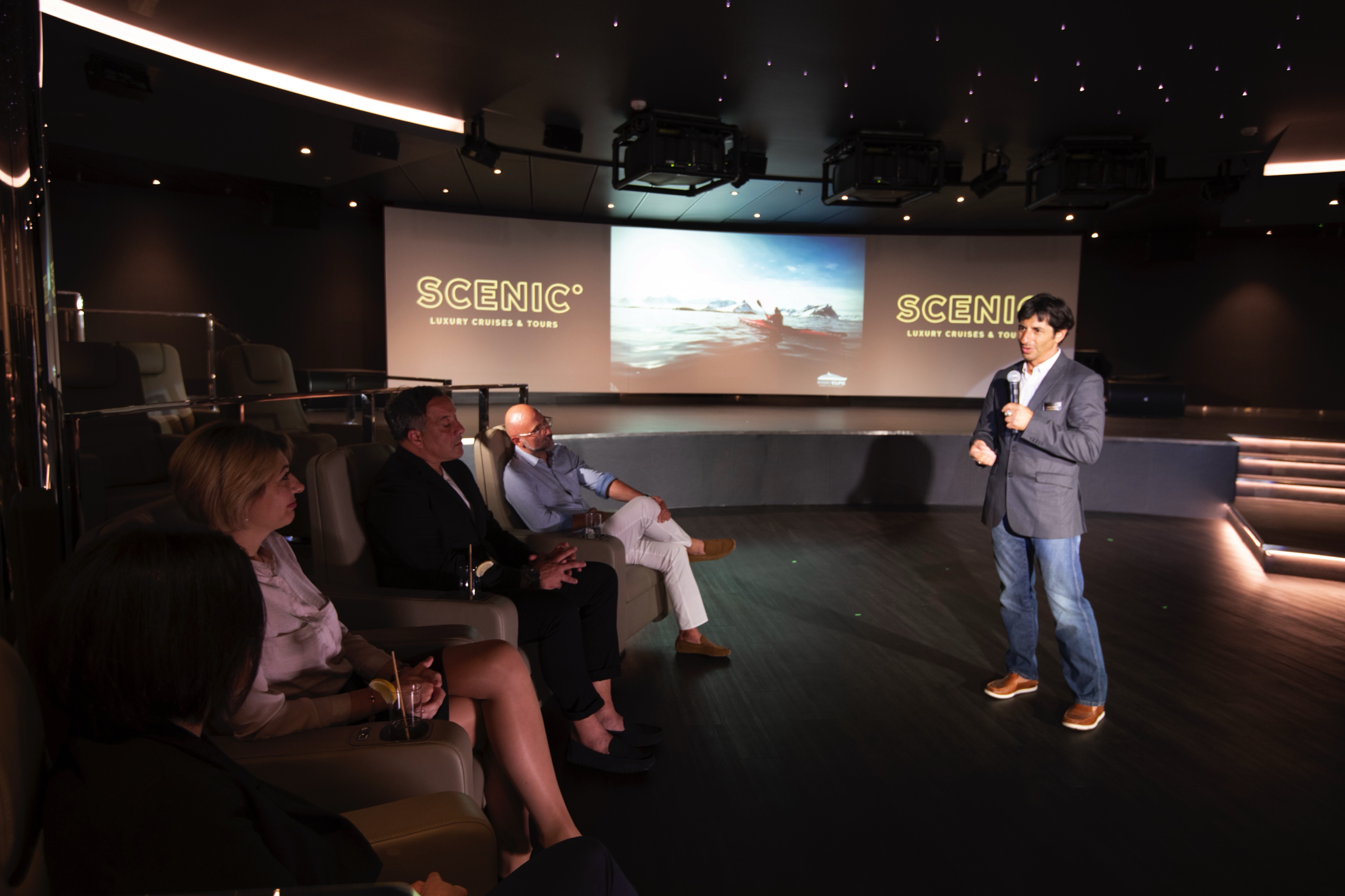
Learn about the unique wildlife, landscapes, history and culture of your destination from our knowledgeable experts during enriching lectures and education programs, hosted in the Discovery Yacht’s impressive state-of-the-art theatre.
Discovery Team Lecture Series
On Expedition and Discovery Voyages the Scenic Eclipse Discovery Team provide deep insights throughout your journey. A curated team of top experts in their respective fields, the Discovery Team is handpicked for each destination and made up of professionals including historians, geologists, glaciologists, ornithologists, marine biologists and naturalists.
On a regular basis throughout your voyage, the Discovery Team will host engaging lectures and presentations in the state-of-the-art theatre – both before and after they guide you through Discovery Excursions. Before venturing out, you’ll learn about your location, what you’re likely to see, and any particulars that will really enhance your understanding of the region. They’ll ensure you make the most of your precious moments discovering these spectacular parts of the world.
Scenic Eclipse Cruise Voyages
Scenic Eclipse Cruise Voyages take you to the heart of quaint seaside villages and glamorous European cities, the remarkable landscapes of New Zealand and the unseen riches of Japan. Explore your destination guided by our team of local experts, sharing their knowledge of the land, history and cultures. Or relax on board and soak up the sun and spectacular coastlines poolside, with a premium beverage of your choice.
Scenic Enrich
Enjoy unique and exclusively handcrafted encounters in the most spectacular surroundings. Go behind the scenes, to the heart of your destination, with private access and immersive experiences in iconic locations. Create memories that will stay with you forever, like a classical concert from the Harpsody Orchestra performed in the historic halls of the Oceanographic Museum in Monaco, or the authentic flamenco ballet production, Carmen. On select Signature Yacht Cruises, you will enjoy unique and exclusively handcrafted onshore entertainment set against the most spectacular surroundings. From private classical concerts to equestrian flamenco showcases, these memories will stay with you forever.
Scenic Freechoice
Choose from a wide range of curated Scenic Freechoice activities. From learning about the traditional “Kogin-sashi” embroidery of Aomori, to a cooking class with fresh du paize pasta. Whether you prefer an active or relaxed pace, there’s something for everyone.
Warm Water Exploration
In the Mediterranean, enjoy a range of exciting or relaxing water activities from Scenic Eclipse’s Marina including ocean swimming, Tiwal Sail Boats and stand-up paddleboards. There’s an aquatic activity for everyone to enjoy.
Zodiacs
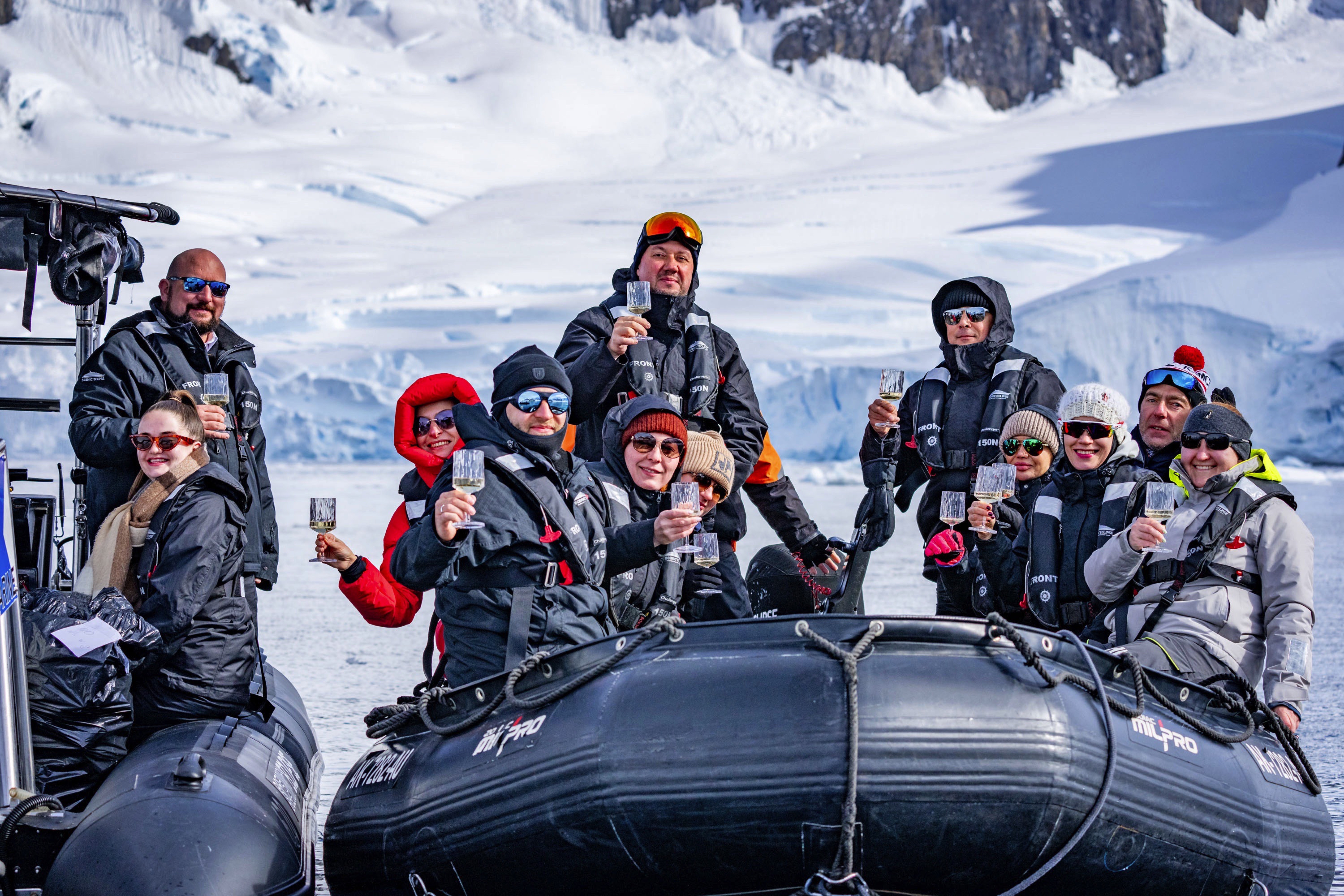
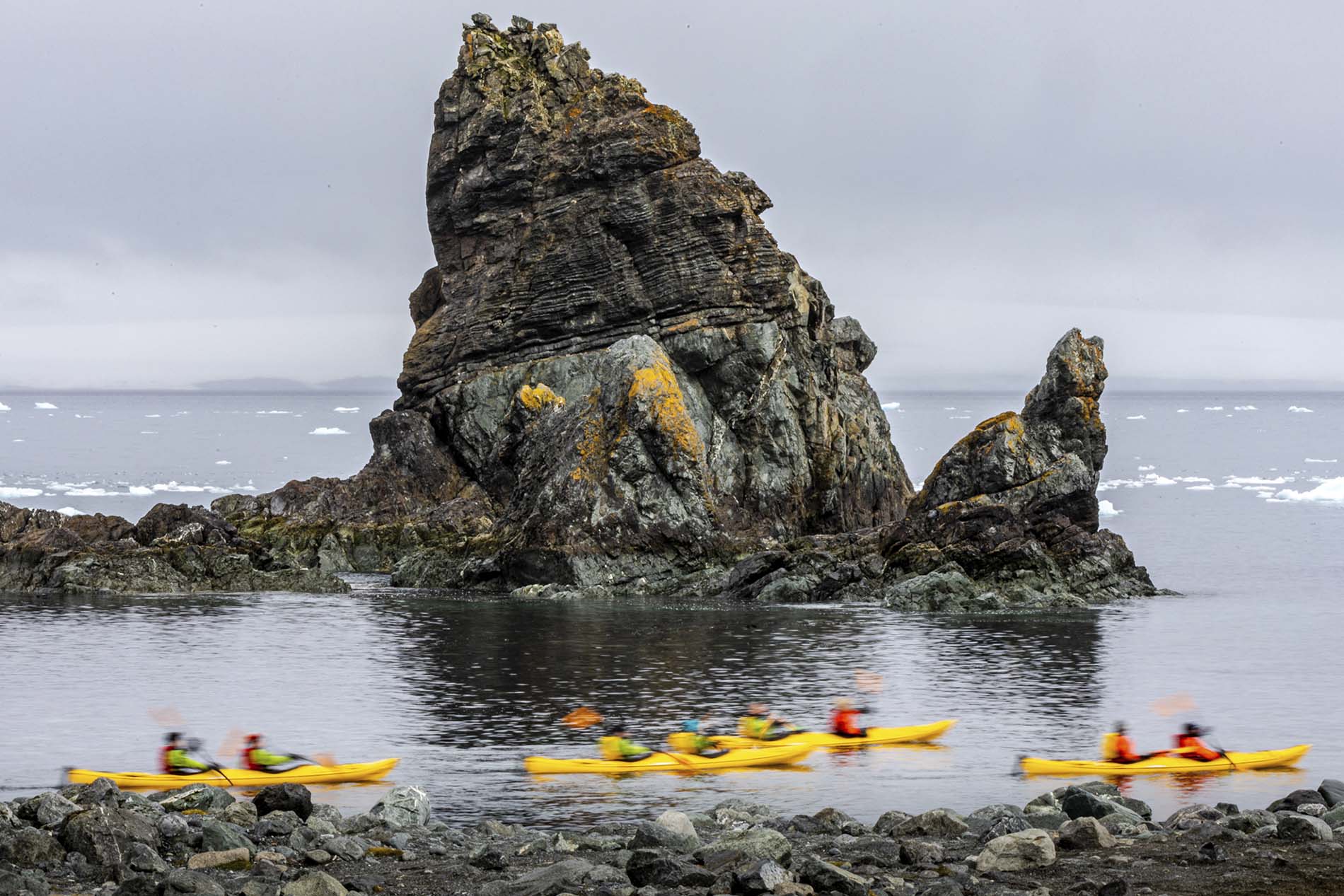
The Discovery Team are expert operators of our fleet of Zodiacs. On both Expedition and Discovery Voyages the team will guide guests on Zodiac excursions to view stunning coastlines and wildlife, as well as onshore landings.
Polar Exploration
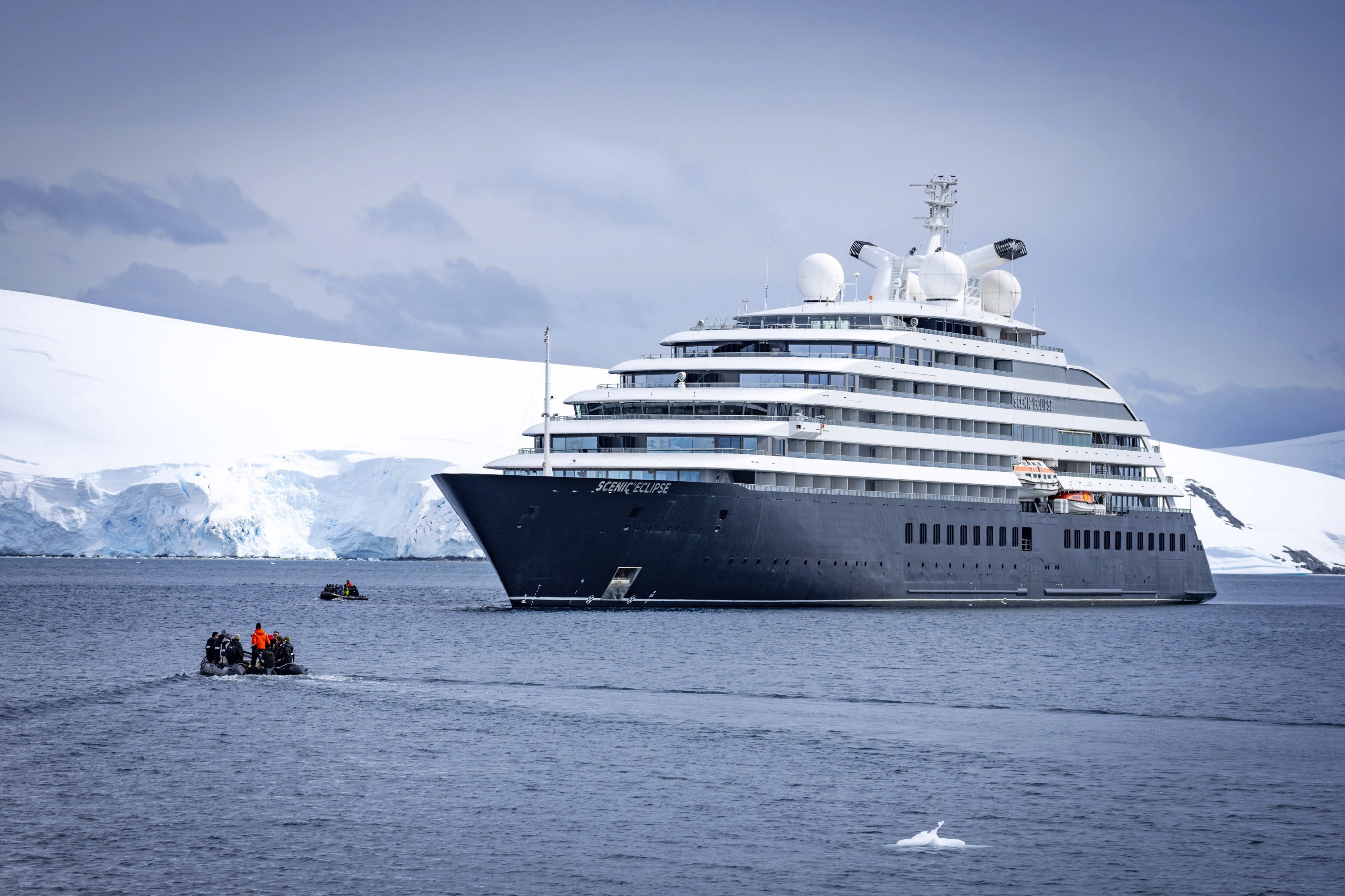
Experience the voyage of a lifetime in Antarctica, with awe-inspiring natural beauty and moments. Indulge in 6-star ultra-luxury on board Scenic Eclipse, The World’s First Discovery Yachts™, built to operate in Earth’s most extreme environments.
Seamlessly discover one of Earth’s most inspiring destinations.
When cruising through Antarctica, the difference is in the details. Innovative world-class ship design and low guest numbers allow multiple landings led by an expert Discovery Team of up to 20 specialists. Let us take you further than others.- Included Kayaking Excursions
- Stand-Up Paddleboarding Excursions
- Enjoy Multiple Daily Landings
- Scenic Eclipse In-Suite Dining
- Scenic Neptune Submersible^
- Flightseeing by Helicopter
Discover Antarctica
Explore the exquisite natural beauty and abundant wildlife of Antarctica, your way. Discover a range of Expedition Voyage options and choose your perfect 6-star all-inclusive experience.
Highlights
Antarctica in Depth – Perfect for the first-time traveller to Antarctica. Visit locations such as Deception Island and Paradise Bay, where you can witness breathtaking scenery teeming with wildlife like penguins, seals and whales.
Cross the Antarctic Circle – Push further south than most expedition ships go. Voyage to the rarely visited Marguerite Bay and enter Crystal Sound, a fairy-tale world of icebergs, snowclad mountains and the ill-fated Base W on Detaille Island.
The Falkland Islands – Discover this isolated and windswept archipelago of more than 700 islands off the southeastern tip of South America. Learn about the ill-fated Falklands War in the capital, Stanley, and marvel at rocky headlands and sandy beaches covered in the world’s highest concentration of penguins.
Expeditions
South Georgia – See King penguin colonies with 450,000 breeding pairs on beaches alongside fur and elephant seals and sea lions. Marvel at the stony shores and glaciated peaks, and learn about the history of whaling, polar explorers and pioneers.
Scotia Arc Islands – Spend a day exploring the very British capital, Stanley, an isolated outpost that’s home to just 2,500 people and surrounded by an abundance of wildlife. Join a walking tour of the town or a Battlefield tour to explore the history of the Falklands War.
East Antarctica & the Ross Sea – Departing from New Zealand or Australia, and available to a limited number of guests per year, this seldom-explored region is home to the world’s largest Adélie penguin rookeries and stunning landscapes such as the Mars-like, Dry Valley, only accessible by helicopter^.
Experiences
Specialist Polar Discovery Team – Explore up close and take your first steps onto the Antarctic Peninsula with your Discovery Team of up to 20 experts. Limited guest numbers on board allow multiple landings each day with extended time at each site.
Spend the Holidays in the Polar South – For the ultimate holiday season, celebrate Christmas or New Year’s in unrivalled all-inclusive ultra-luxury. Create stories for life during the holiday season on a polar voyage.
Culinary Experiences – Scenic Eclipse has an unrivalled range of up to 10 dining experiences on board, from casual to fine dining. You can choose from up to nine bars and lounges and enjoy a wide range of truly all-inclusive premium beverages according to your mood and tastes.
- ^Experiences on board our two helicopters and submersible are at additional cost, subject to regulatory approval, availability, weight restrictions, medical approval and weather, tide and ice conditions. Helicopters are not operational in Brazil, Canada, Colombia, Costa Rica, Faroe Islands, Finland, Greenland, Ireland, Morocco, Netherlands, Svalbard, Panama, Solomon Islands, South Georgia and United Kingdom. Submersible is not operational in Brazil, Colombia, Europe and the Mediterranean, Morocco, New Zealand, Northern Territory, Northern Queensland, Svalbard, Tonga, Uruguay and the East Antarctica Mawson’s voyage. Scenic Neptune on board Scenic Eclipse is not operational in US waters.
- #Spa treatments at additional cost.
- ~Kayak and stand-up paddleboard may not be possible in all destinations. Stand-up paddleboards cannot be used in the Arctic.
- >SEABOB is available on Scenic Eclipse II in warm water destinations on selected Discovery Voyages and is not operational in the Kimberley, Northern Territory, Northern Queensland or New Zealand. Usage is included in your voyage, at no additional charge.
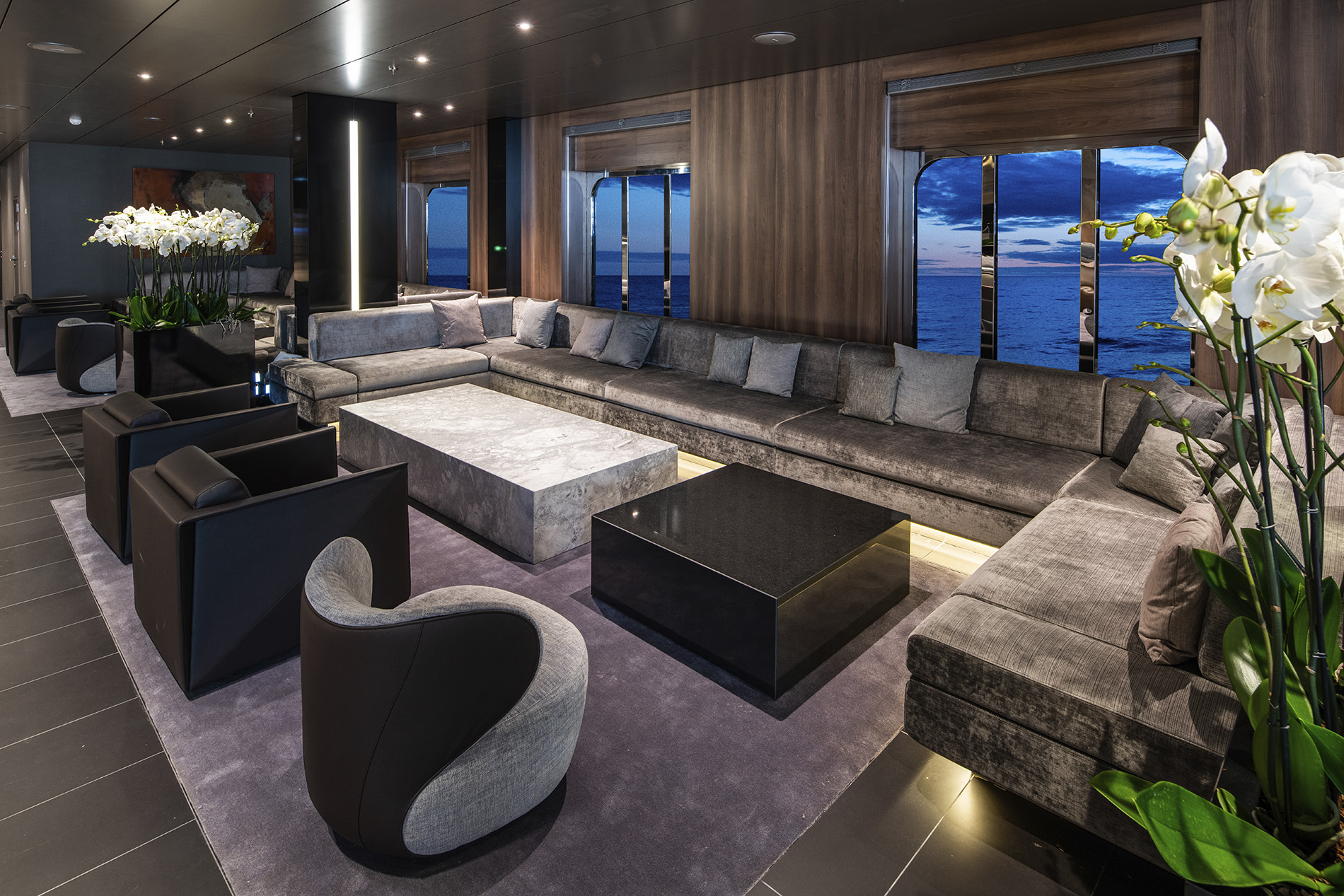
Scenic Lounge
The Scenic Lounge Bar is the main bar and heart of the yacht located next to Reception. The mixology cocktail program and whiskey bar for connoisseurs and aficionados are key attractions. You will also be entertained by the resident entertainer throughout the night.
Let our bartenders guide you towards your premium beverage of choice, be it Champagne, wine, whiskey, cocktails, an afternoon espresso or an after-dinner liqueur whilst the on board musician sets the scene with live music.
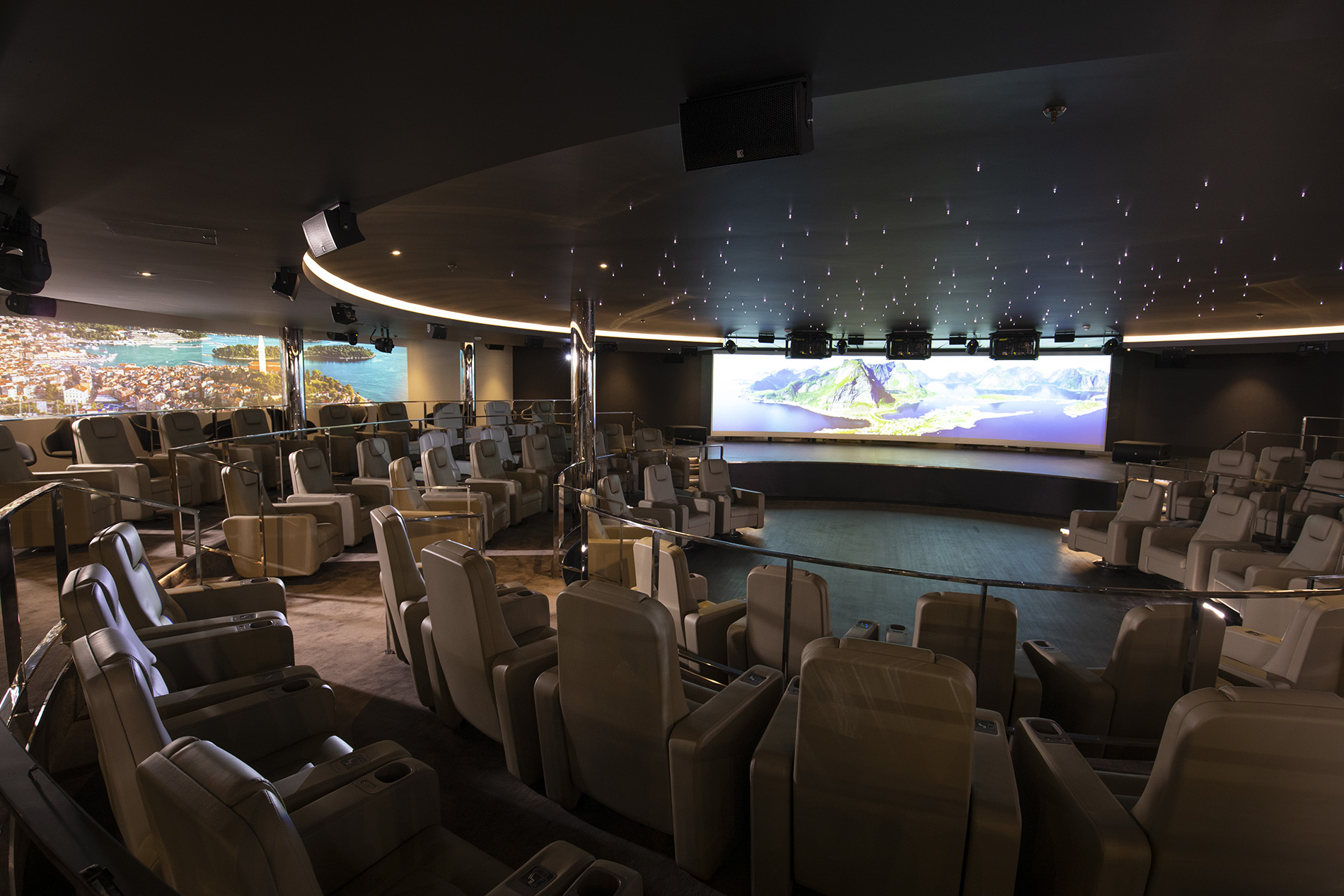
State-of-the-Art Theatre
Gain insights into the regions you’re visiting during regular lectures and information sessions, hosted by expert Discovery Team members, Captain and crew in the world-class theatre. Here, guests can also enjoy nightly musical performances spanning a range of genres.
Theatre Bar
The Theatre Lounge is the venue for screening of presentations, lectures and shows. During the day, it is supported with a self-service beverage station whilst is a full service bar during the entertainment program. The Theatre Bar is only available on Scenic Eclipse I.
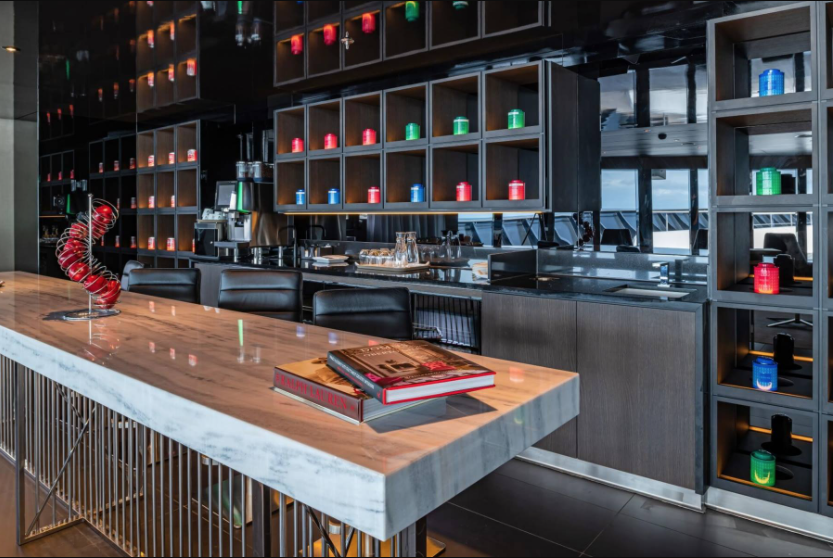
Observation Lounge
The Observation Lounge & Library is a serene haven for guests seeking a peaceful retreat to read and observe the world. While we don’t serve food in this tranquil space, you can still enjoy a variety of beverages as you unwind and watch the world go by.
You can recline into plush seating and read a book or play board games as you enjoy a specialty tea or coffee. Take a closer look at landscapes and wildlife as you pass them through the Swarovski telescopes.
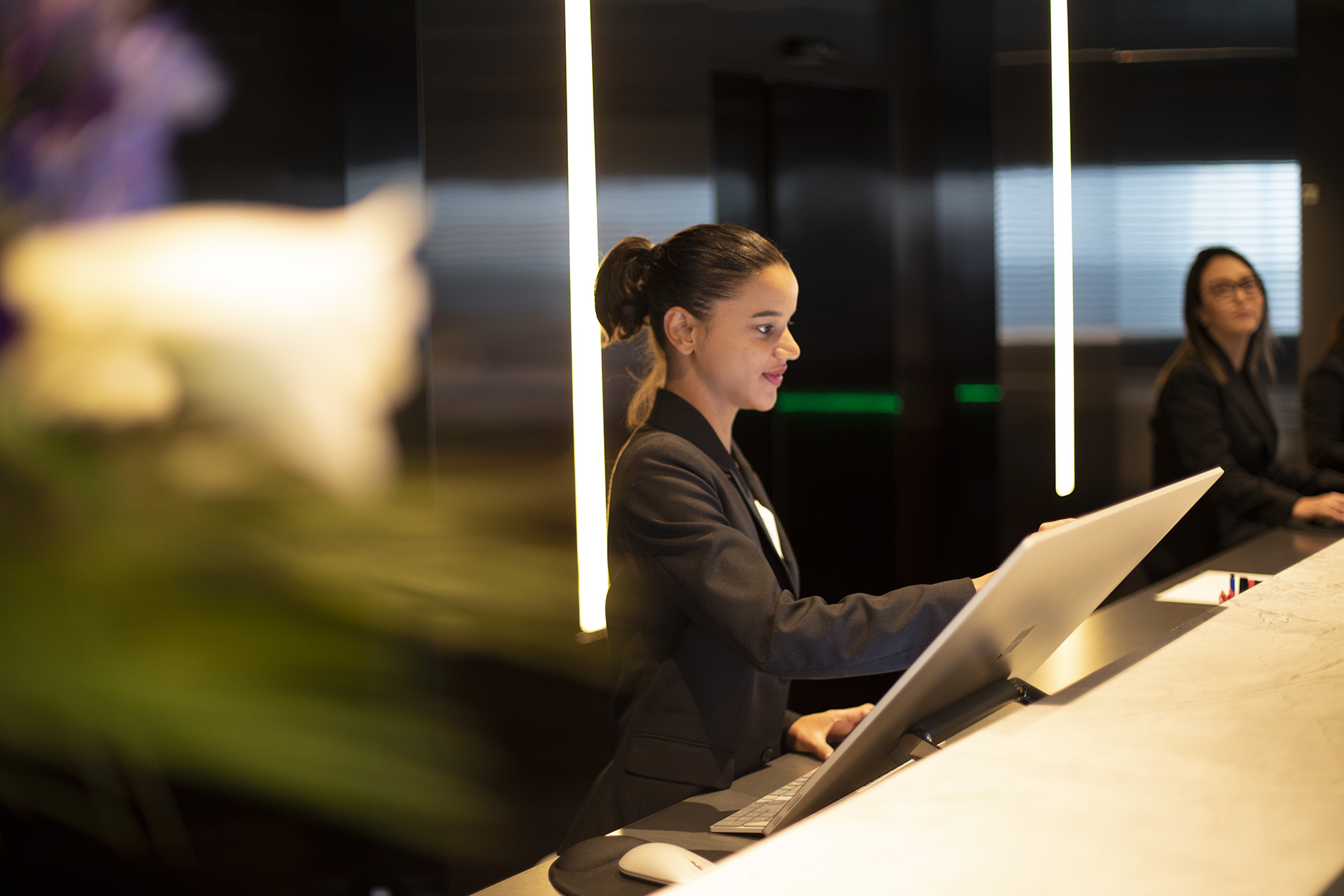
Reception
Our expert team on board Scenic Eclipse are the finest in their field and deliver an unrivalled level of service.
Yacht Club
Relax in the Yacht Club grill restaurant and bar for breakfast, lunch and special themed dinners. This casual dining experience is fitted with food islands, outdoor and lounge seating. Come to dine, mingle, relax in swing chairs overlooking the view, or taste our freshly-made gelato.
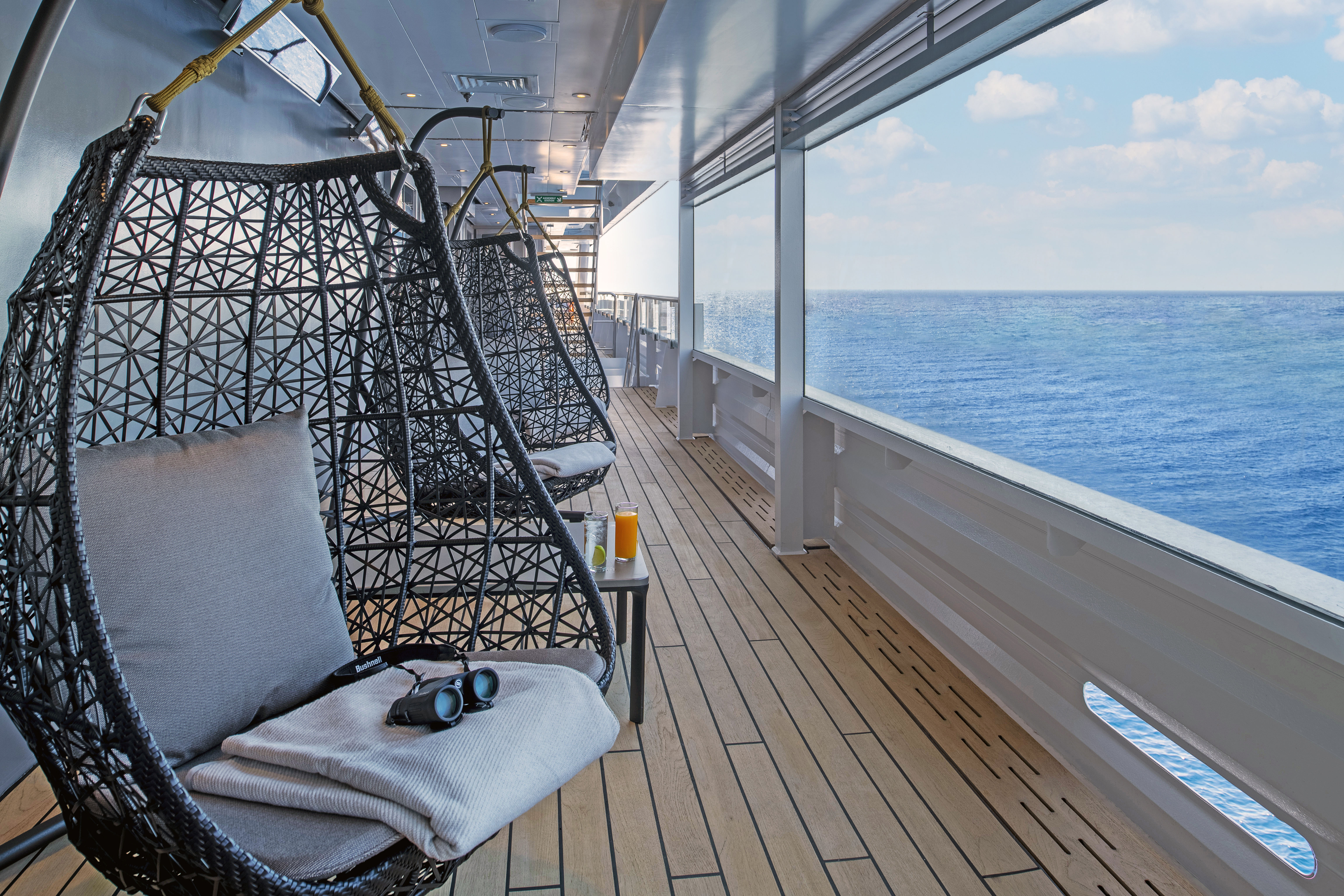
Observation Deck
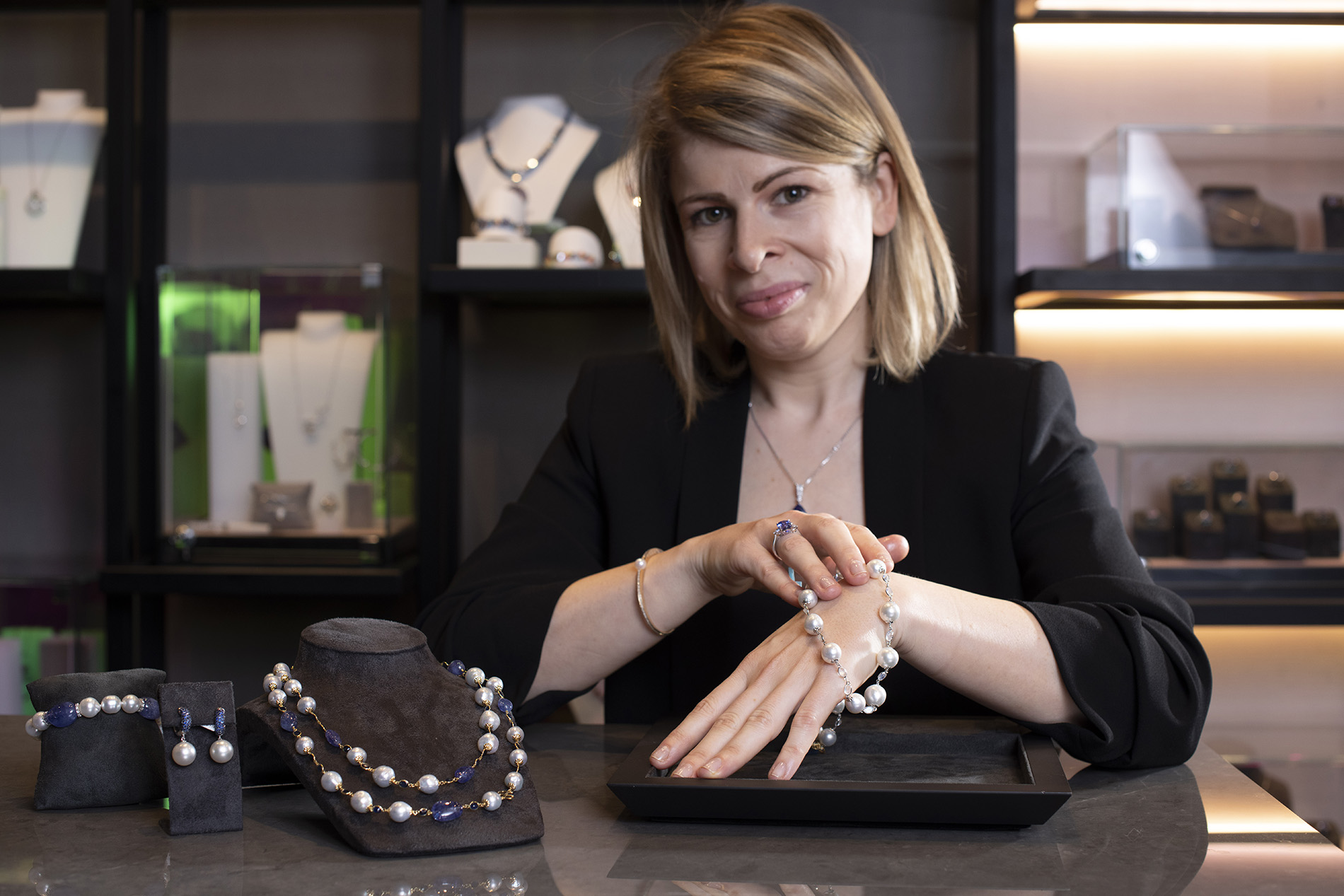
Boutique
The Boutique can be found on Deck 4.
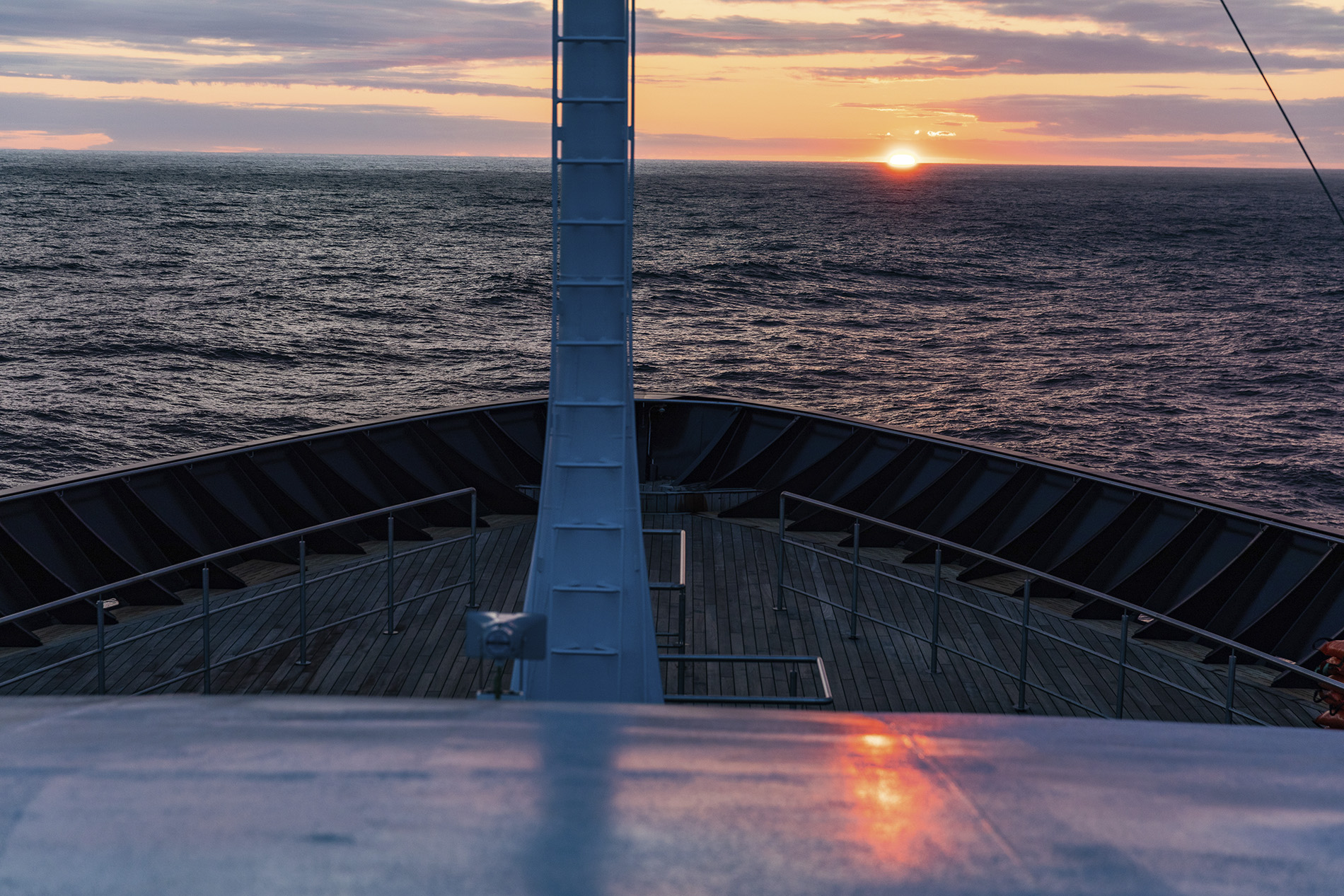
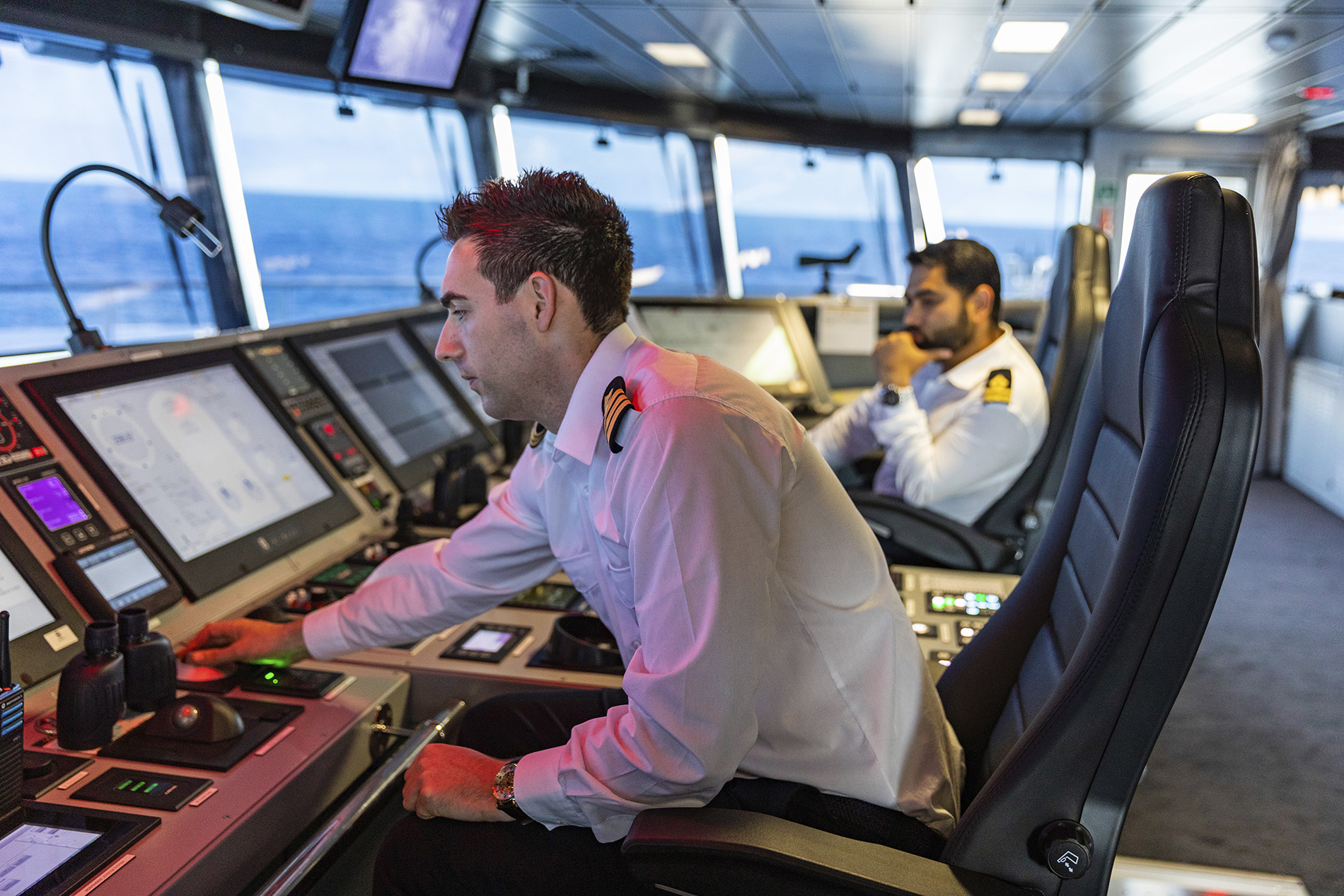
Open Bridge
Venture to the bridge and see Scenic Eclipse in full operation. The unique policy provides guests access to one of the best viewing areas on the ship, as well as the opportunity to learn about the technical capabilities of The World’s First Discovery YachtsTM.
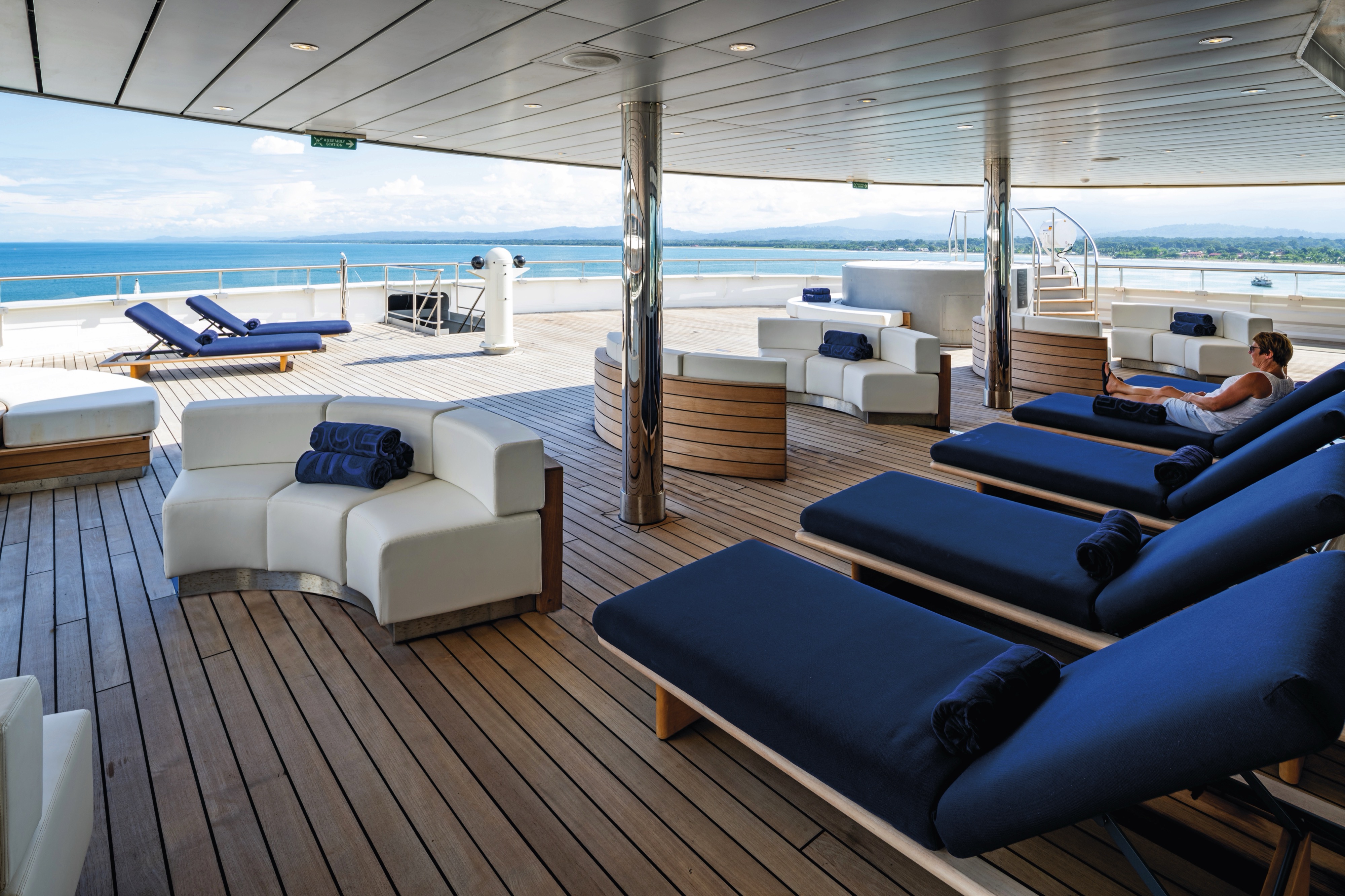
Panorama Bar, Cabanas & Vitality Pools
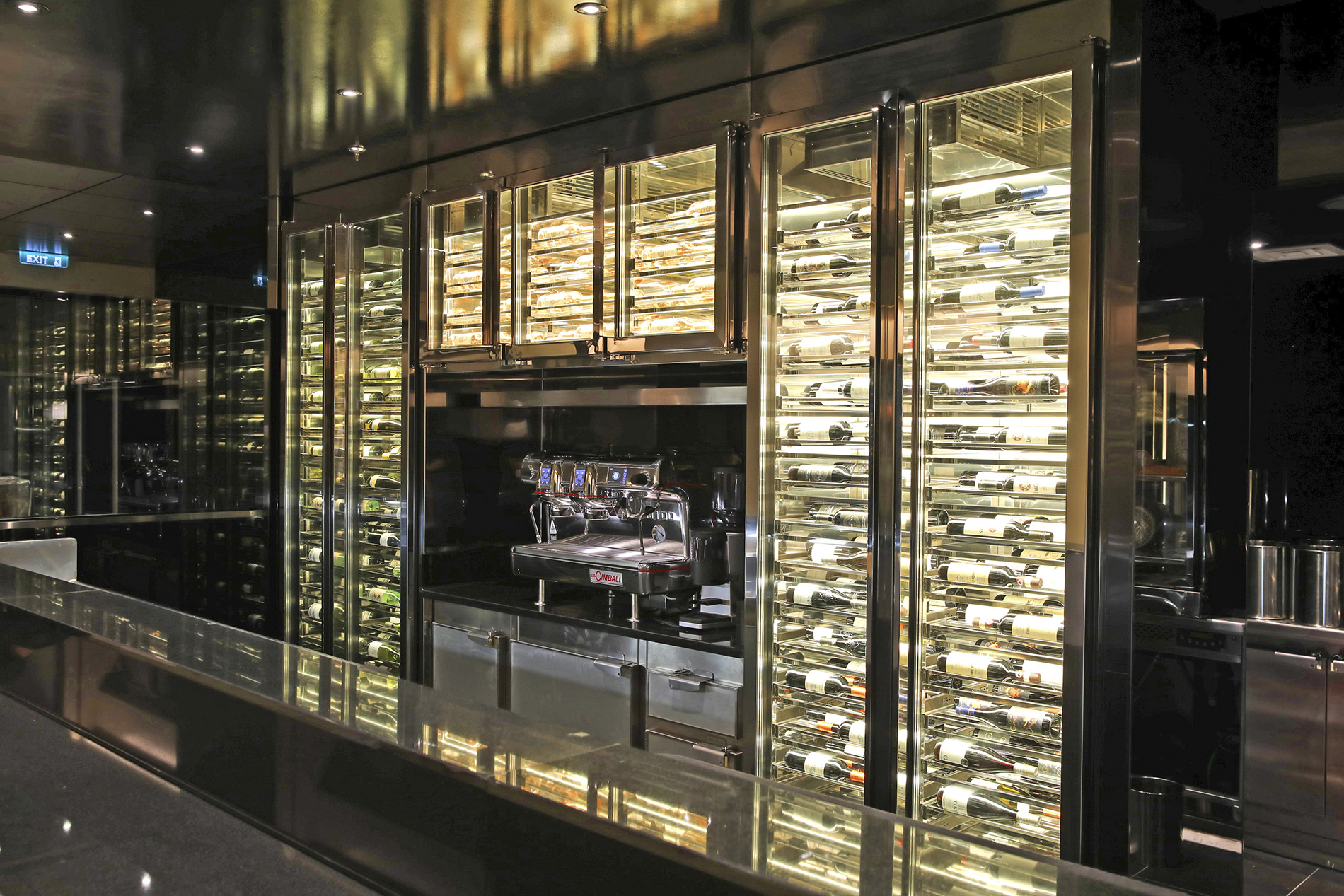
Elements Wine Bar
Elements Bar is your gateway to global cheese exploration, featuring a meticulously curated selection of international cheeses. Indulge in an array of textures and flavours, expertly paired with complementary accompaniments for a truly memorable tasting experience.
Lumière Champagne Bar
Elevate your celebration with our carefully curated range of exquisite Champagne at the dedicated bar at Lumiére.

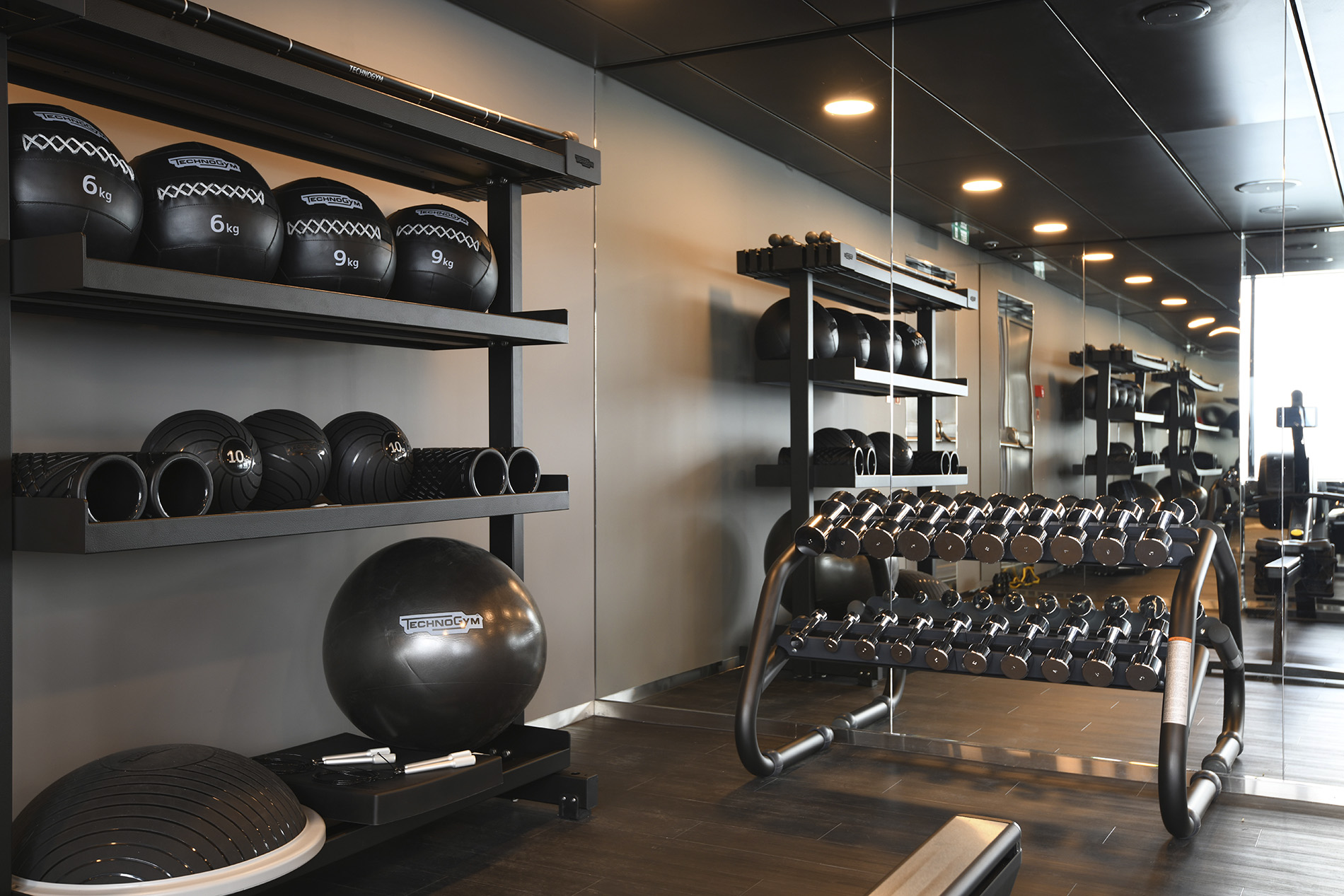
POWER: Gym
Keep up your fitness during your voyage in the fully equipped, state-of-the-art gym. Raise your heart rate with a cardio or strength workout as you overlook spectacular ocean views. Train your way or opt for a personal training session with one of our trainers.
PURE: Yoga & Pilates Studio
Our yoga and Pilates studio on Deck 7 is the only studio of its kind at sea. Rejuvenate your mind with one of our holistic therapy sessions, including aerial yoga, TRX and mindfulness meditation.
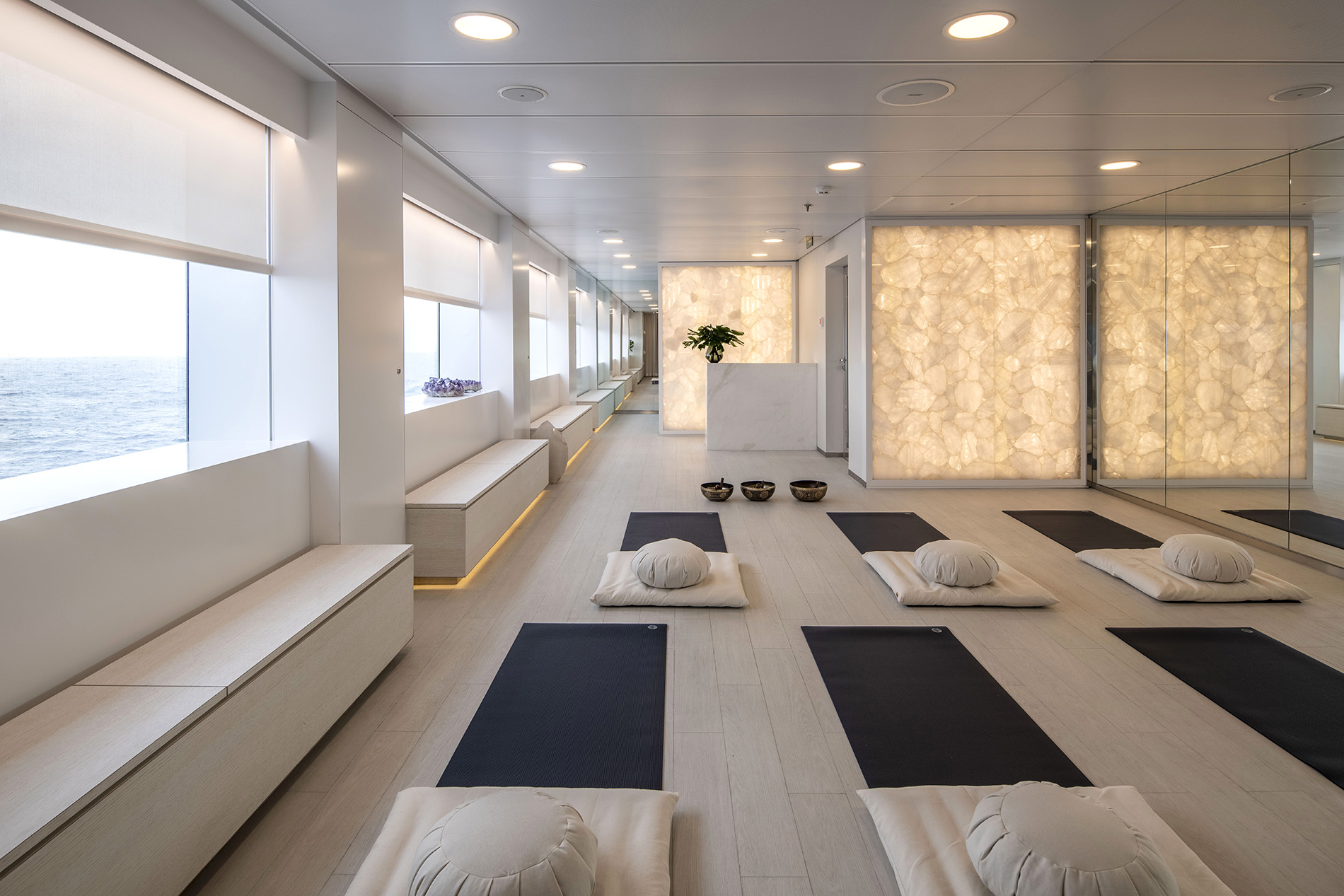
Senses Spa
Soak in the serenity with unsurpassed wellbeing experiences. Trained, specialist staff and state-of-the-art wellness facilities on board bring you a cruising experience like no other.
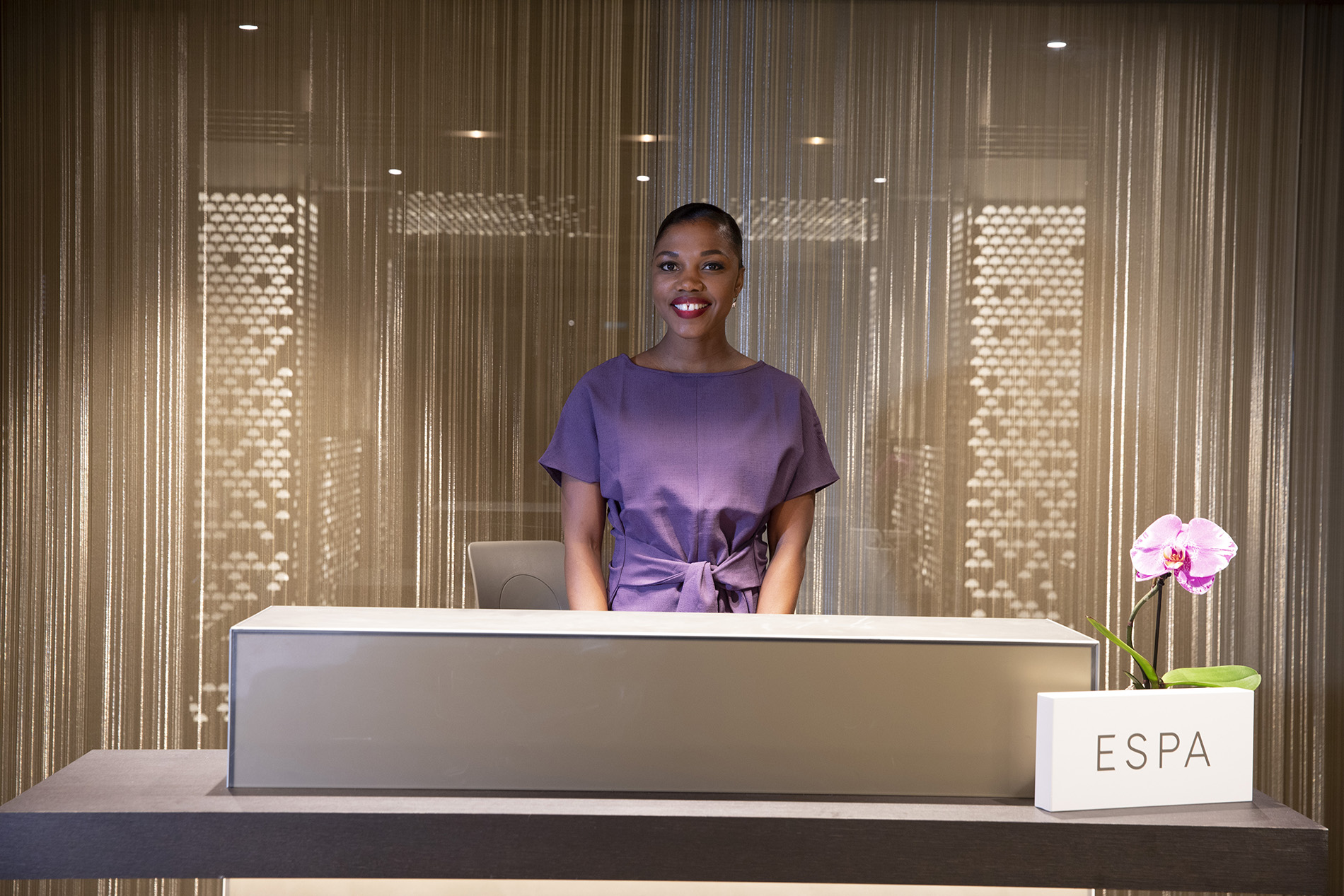
Senses Spa Pool Deck
Step into the rejuvenating Vitality Pool on Deck 6, directly adjacent to Senses Spa. Relax in this tranquil pool admiring the spectacular landscapes, perhaps after a revitalising treatment or yoga class.
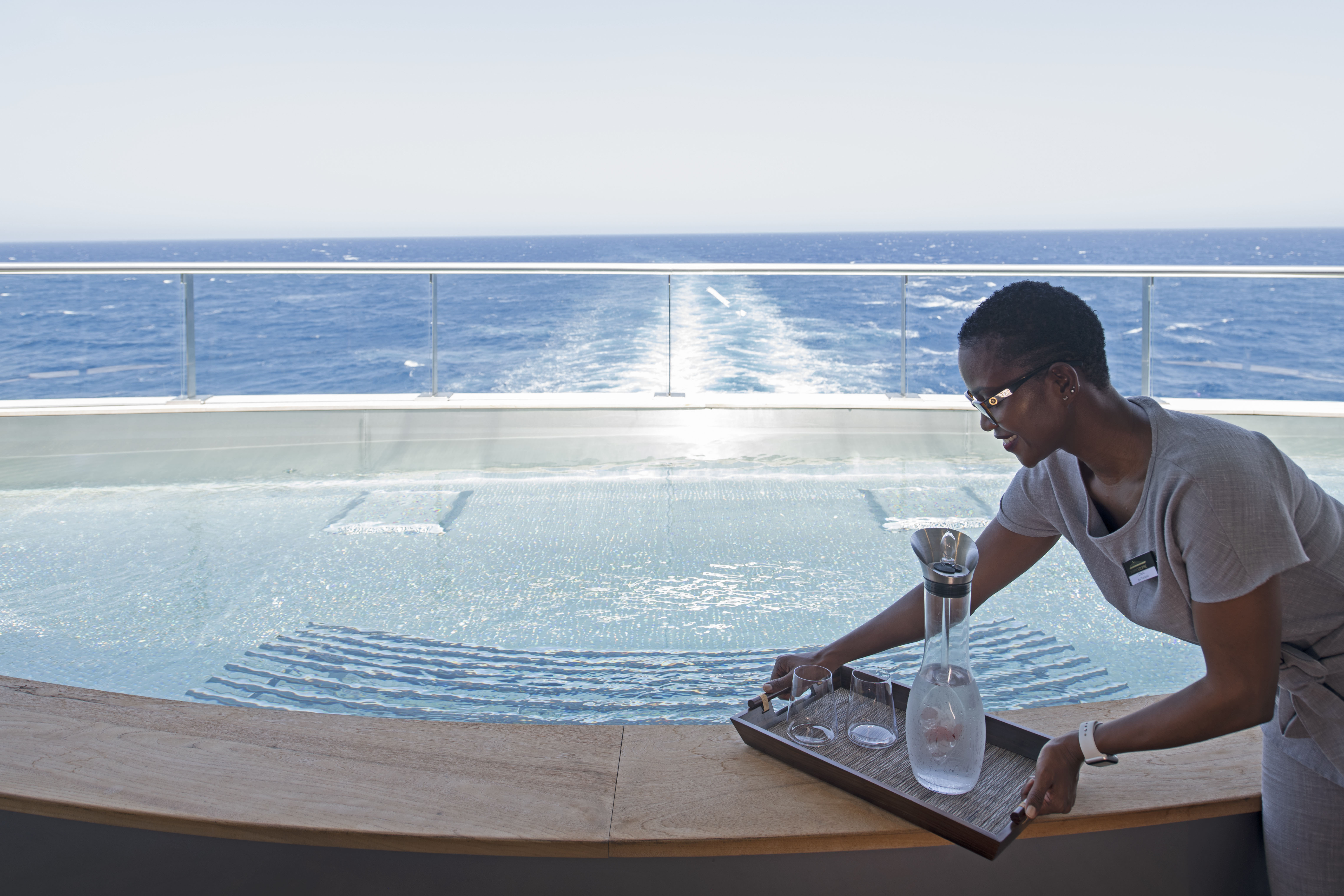
Thermal Loungers
Our Vitality Lounge offers unique thermal loungers to gently purify the body. Enjoy the tranquillity as music plays through your Bose® headset. Succumb to the serenity in this zen-like space, with ambient lighting and exquisite ocean views.
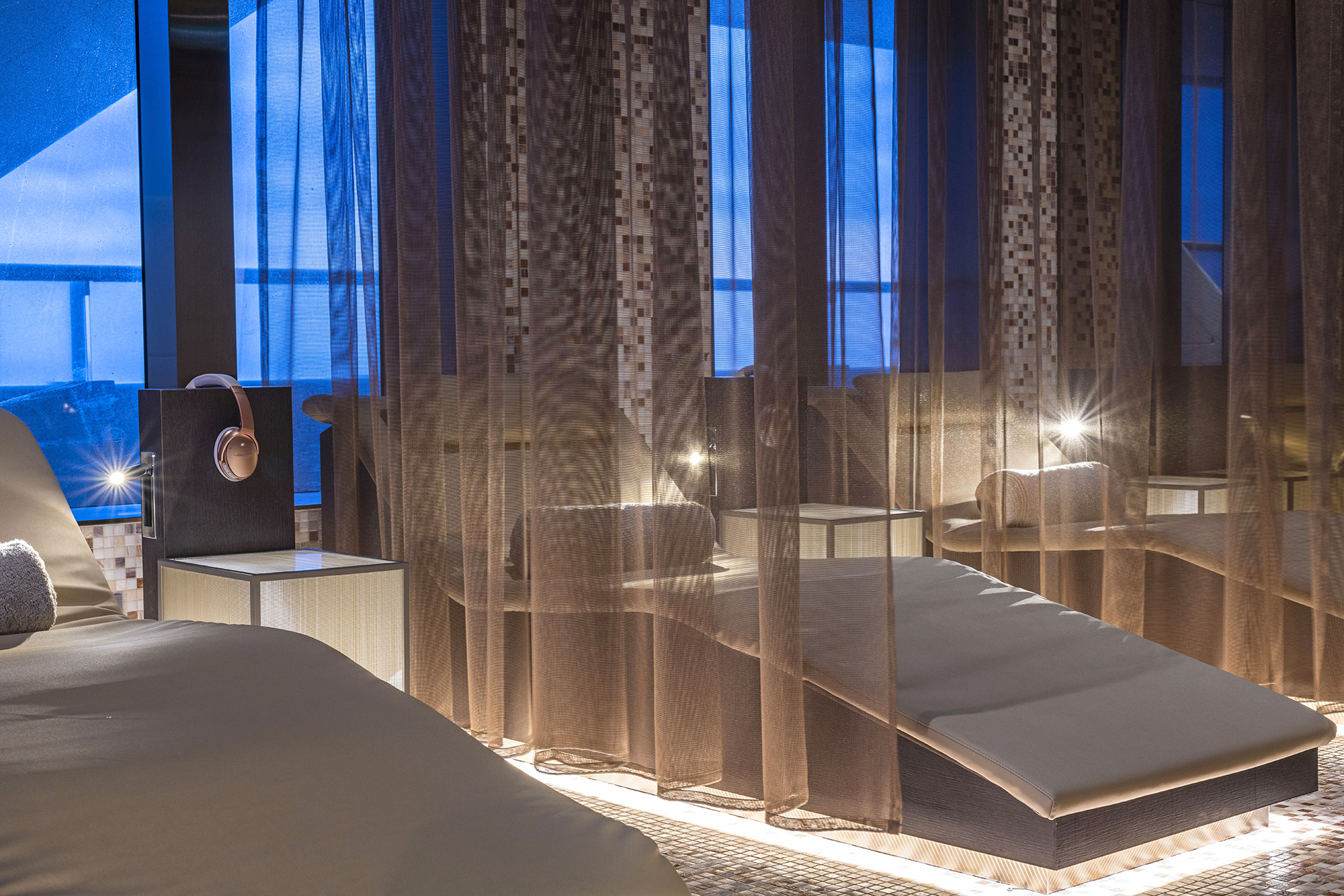
Hair & Beauty
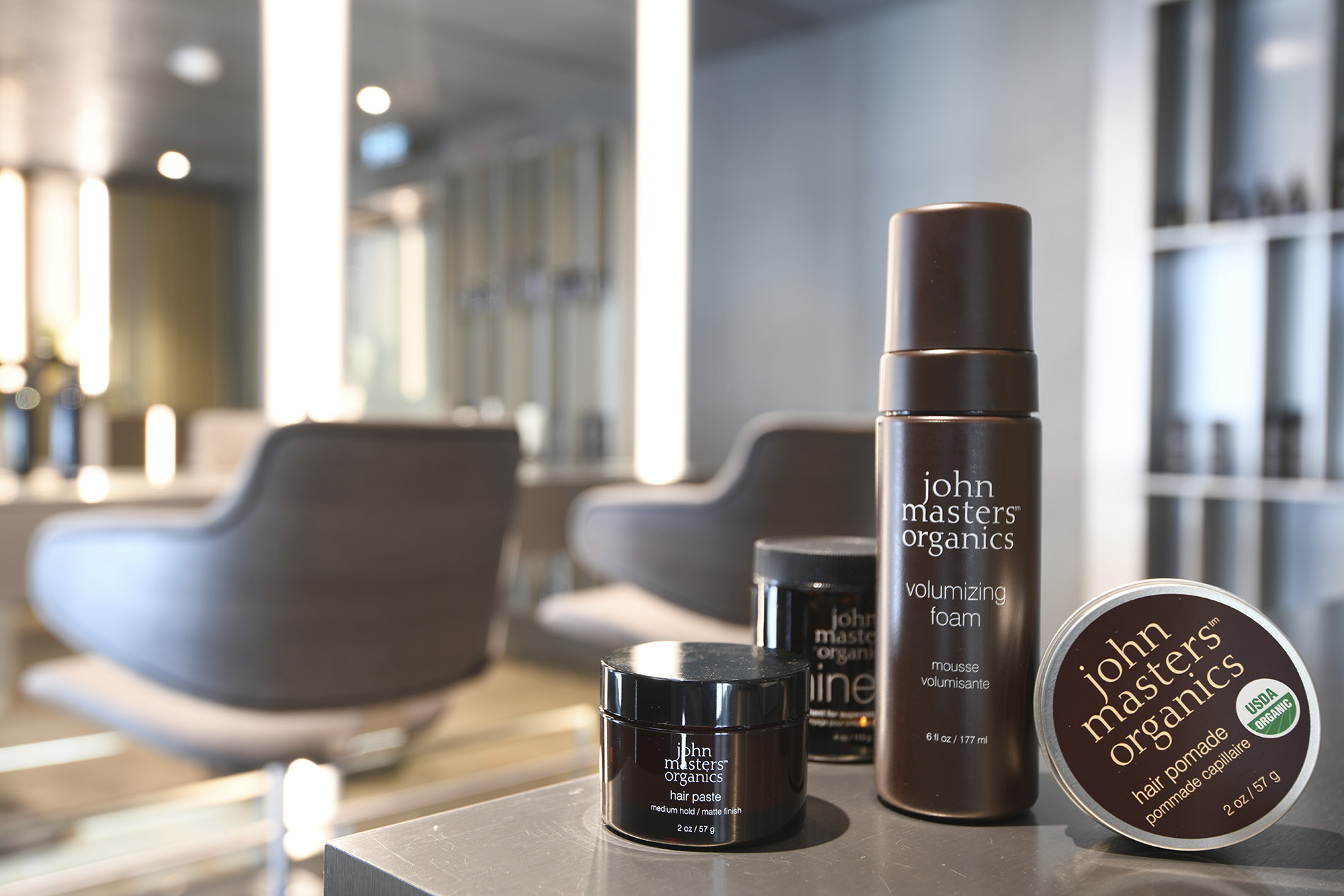
Facials
Rejuvenate and transform your skin’s appearance with a facial#. ESPA facials use a pioneering Tri-ActiveTM formula containing plant extracts, marine actives and essential oils to achieve maximum results.
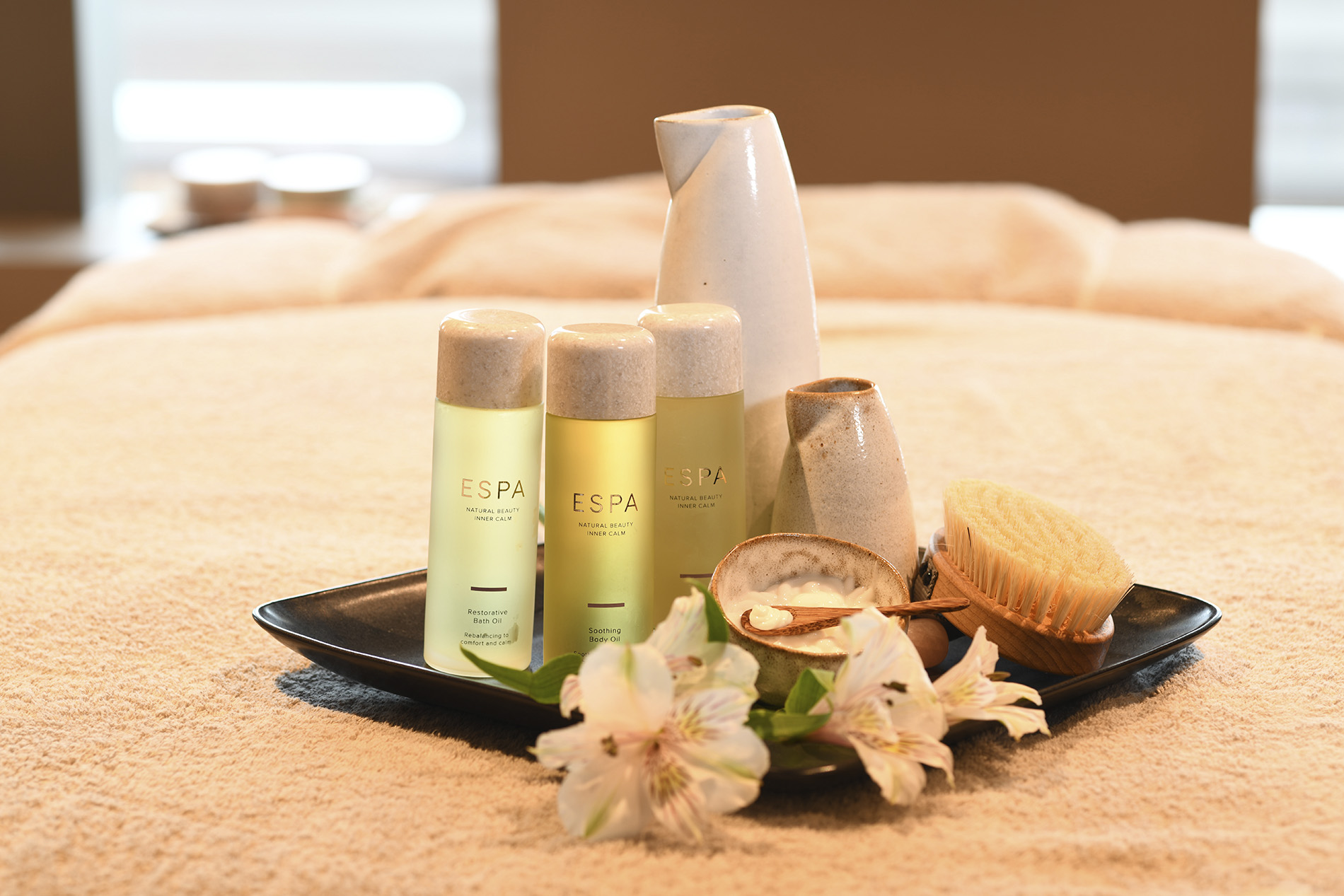
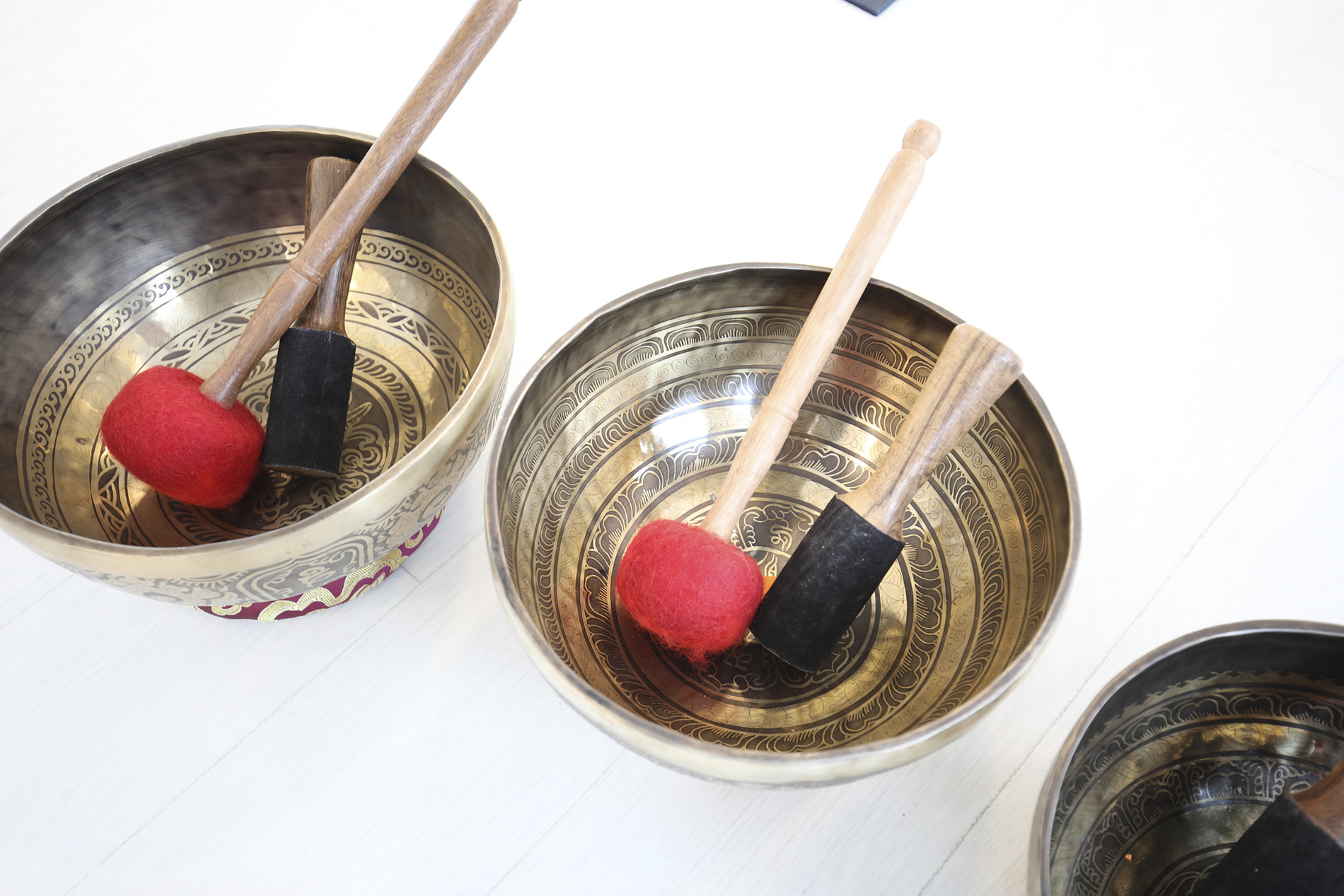
Alternative Therapies
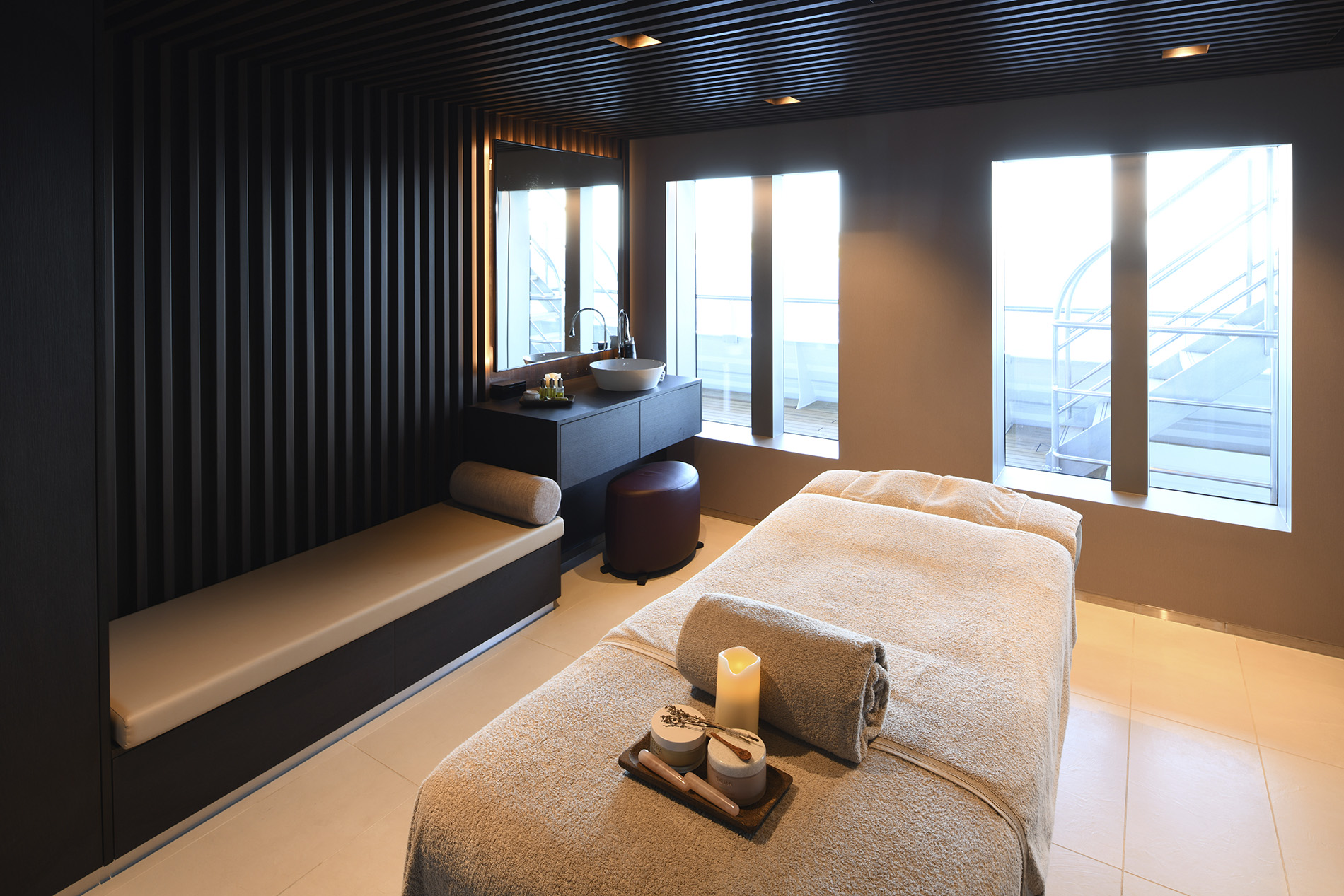
Massages
Sauna & Steam Room
The Sauna & Steam Room can be found on Deck 6.
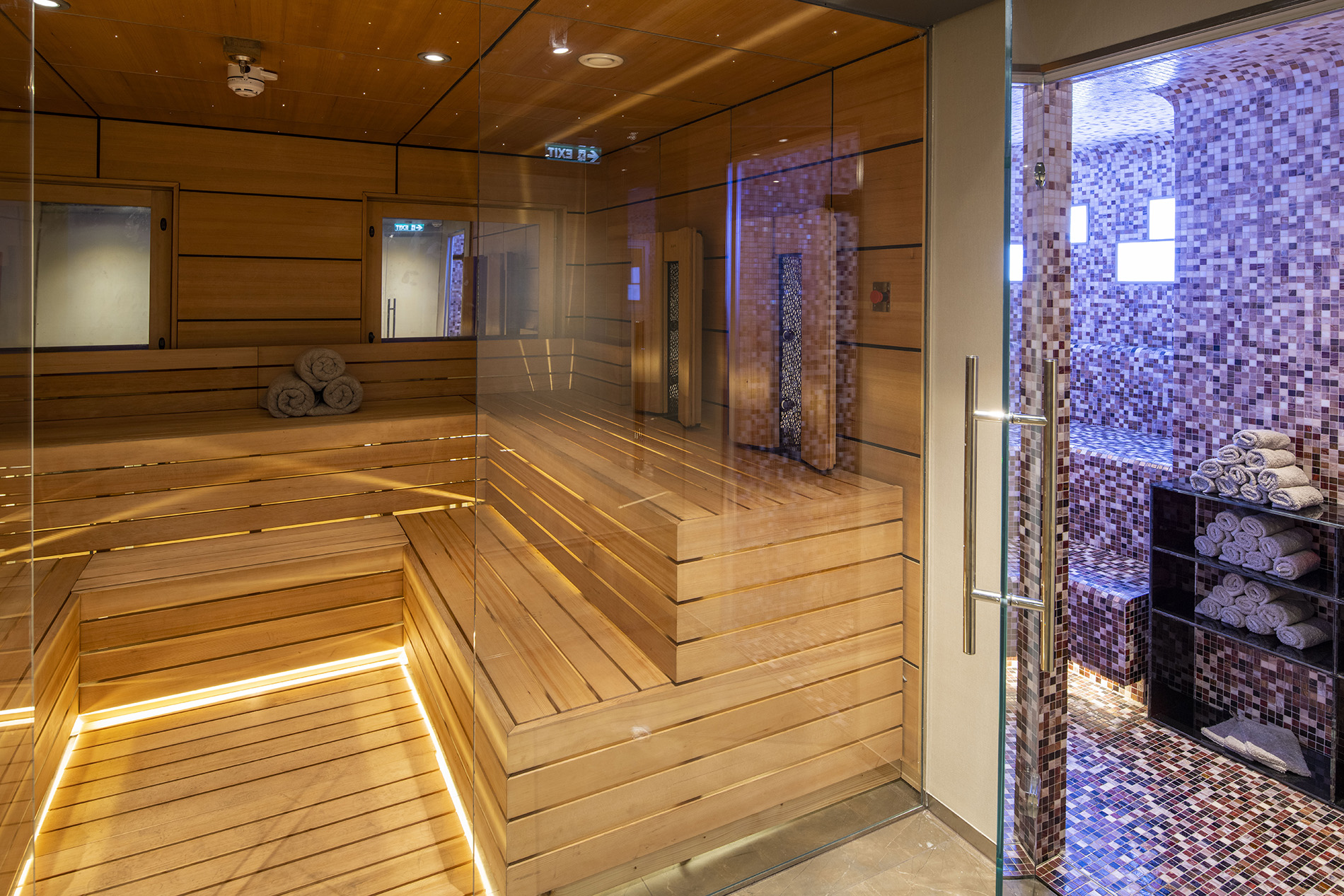
Please note: there are no kid/teen specific facilities onboard Scenic Eclipse.
Elements
Elements is the main restaurant featuring Italian, steak and seafood from an à la carte menu. Located on Deck 4, it’s a relaxed dining option for dinner. Dine solo, with your travel partner or join friends on larger tables. Enjoy premium beverages from Elements Bar, hosting with fine wines matched to the daily menu and broad selection of international cheeses.
Chef's Table @ Elements
Located within Elements, dining at Chef’s Table is an exclusive, by invitation-only degustation experience. Accommodating a group of just 10 guests, this 11-course degustation meal is paired with premium beverages. The Executive Chef and the culinary team will enthral you as they present each dish, explaining the world-class techniques and ingredient origins used in each creation.
Koko's Asian Fusion
Enjoy contemporary Asian fusion in a vibrant ambience. Traditional ingredients and innovative techniques interweave to celebrate the diverse flavours of Asia. Up to 26 guests can be seated for dinner service at either regular tables or sunken seating inspired by traditional Japanese dining practices. Sample from share plates to discover new flavours as you enjoy the luxurious atmosphere.
Sushi & Sake Bar @ Koko's
Indulge in a genuine culinary experience as skilled chefs handcraft the freshest sushi, including exquisite options with vegan salmon and tuna. Catering for up to 18 guests, you can dine along the ocean view benchtop or at the bar, watching as your chefs hand-make your meal.
Night Market @ Koko’s
Savour the excitement of an interactive dining experience as our expert chefs craft dishes inspired by the lively markets of Asia, India and the Middle East before your eyes. For only eight guests in each seating, this exclusive Teppanyaki grill experience will be a highlight of your culinary journey.
Azure Bar & Café
Visit the Azure Bar & Café for relaxed, all-day grazing. Take in the spectacular views from the indoor or outdoor terrace seating. Delight your tastebuds with a variety of pizzas, salads, snacks and healthy meals, coupled with barista-made coffee and beverages. Enjoy after-dinner treats, such as macaroons, biscotti and chocolates with a brandy, port, or tea. This relaxed café has a serene and laid-back feeling with inside and outside seating.
Lumière Restaurant & Champagne Bar
Indulge in contemporary French cuisine and Champagne. This fine dining restaurant has an elegant and modern atmosphere. Enjoy a pre-dinner drink, fried oysters and caviar before you are seated for an evening of world-class cuisine, with the option of a set degustation menu.
Yacht Club
Relax in the Yacht Club grill restaurant and bar for breakfast, lunch and special themed dinners. This casual dining experience is fitted with food islands, outdoor and lounge seating. Come to dine, mingle, relax in swing chairs overlooking the view, or taste our freshly-made gelato.
Chef's Garden @ Épicure
Be immersed in the gastronomical delights of local cuisine and wines with dedicated masterclasses led by our expert chefs and sommelier. Book in to see the chef create an array of authentic dishes from the regions you’re cruising through. Located on Deck 5 with a special cooking station and large TV screen, you’ll catch every detail.
Private Dining Experiences
There are many intimate and relaxed venues which provide the option of private dining at no additional cost.
Groups can dine at a restaurant of their choice or in the privacy of their suite. Night Market @ Koko’s offers private dining for up to eight guests and Chef’s Table is the ultimate degustation dining by invitation-only experience for 10 guests.
In-Suite Dining
When the mood strikes to dine in the privacy of your suite, your personal butler can arrange everything. Choose from the 24-hour in-suite dining and beverage menus. Your butler will also ensure your in-suite mini-bar is re-stocked daily to your liking. With an in-suite espresso machine, savour your morning coffee in the solitude of your suite or soak up the sunlight on your verandah or terrace.
Helicopter Experiences
Soar above and dive below with unparalleled access to some of nature’s most remarkable sites. Scenic Eclipse is equipped with two state-of-the-art Airbus H130-T2 helicopters^ which seat up to six guests, plus the pilot.
^Helicopter, helicopter experiences and submersible at additional cost, subject to regulatory approval, availability, weight restrictions, medical approval and weather and ice conditions.
Discovery Centre
You will be supplied with everything you’ll need to fully immerse yourself in the journeys that await. On polar Expedition Voyages a Scenic Eclipse parka and water bottle will be in your suite on arrival, yours to take home. Plus, the use of specialised polar boots, trekking poles and kayaking equipment and apparel is included for your convenience.
Discovery Team
Led by Director of Discovery Operations, Jason Flesher, the Discovery Team ensures unparalleled exploration and rich cultural immersion on Expedition and Discovery Voyages.
Our team of up to 20 specialists on Expedition Voyages, and up to 15 on Discovery Voyages, spans fields like history, biology, archaeology, naturalism, geology and photography. Enhancing your experience with their passion and expertise.
Scenic Eclipse Discovery Voyages
Blending exploration with rejuvenation
Reach small ports and remote destinations on board our custom-designed Scenic Eclipse Discovery Yachts. Ignite your inner explorer with exciting excursions during the day, then enjoy breathtaking vistas from the comfort of luxurious dining, bar and wellness spaces on board.
With only up to 228 guests on board and an expert Discovery Team of up to 15 specialists, tailor your days with a wide range of all-inclusive Discovery Excursions, Scenic Freechoice activities and bespoke Scenic Enrich experiences.
Scenic Discovery Excursions
Gain rich insights into your destination with Scenic Discovery Excursions. Our expert Discovery Team of up to 15 scientists, marine biologists, historians, geologists and expert local guides share their knowledge and regional expertise. Cruise on Zodiacs to remote island beaches, explore onshore with guided hikes, snorkel with expert marine biologists, and kayak with Discovery guides.
Scenic Enrich
On select voyages, enjoy unique and exclusively handcrafted encounters in the most spectacular surroundings. Go behind the scenes, to the heart of your destination, with private access and immersive experiences in an iconic location. From a barbeque on a secluded beach, to ritual ceremonies and immersive experiences with local tribes, these memories will stay with you forever.
Scenic Freechoice
Choose from a wide range of curated Scenic Freechoice activities, catered to your fitness level. From diving into Vanuatu’s hot springs, to snorkelling secluded bays or taking a local food tour. Whether you prefer an active or relaxed pace, there’s something for everyone.
Scenic Eclipse Expedition Voyages
Enjoy unrivalled exploration of extraordinary polar destinations on an all-inclusive Scenic Eclipse voyage.
Bringing Ultra-Luxury to Expedition Cruising
The World’s First Discovery Yachts have been purpose-built for Expedition Voyages to the most remote and extreme environments, with a Polar Class 6-rating and state-of-the-art technology and design.
With only up to 228 guests (200 in Antarctica), you will experience multiple daily shore landings via Zodiac. You’ll enjoy truly all-inclusive Scenic Discovery Excursions led by an expert Discovery Team of up to 20 specialists, ensuring you get the most out of these remarkable locations.
World-Class Design & Technology
Scenic Eclipse is purpose built for the Expedition Voyages, with a Polar Class 6 rating, custom-built stabilisers, providing greater stability, a strengthened hull, forward bow thrusters, an electronic Azipod propulsion system, advanced sonar and environmentally sustainable systems. The state-of-the-art technology enables for safe and comfortable navigation through polar waters.
Scenic Discovery Excursions
Gain rich insights into your destination with Discovery Excursions. Our expert Discovery Team of up to 20 marine biologists, historians, geologists, naturalists and local guides share their knowledge and regional expertise. Cruise on Zodiacs and kayaks* around ice formations in Antarctica and go on nature walks through the Arctic tundra, under their expert guidance.
Scenic Neptune
Discover a fascinating underwater world
Dive below the horizon for an unforgettable experience on board our custom-designed submersibles^, Scenic Neptune I and II.
Enjoy the most immersive underwater exploration on board our custom-built submersible^, Scenic Neptune II. Featuring 360-degree panoramic views, Scenic Neptune II has been designed to provide an immersive underwater experience that will give guests the feeling of seamlessly merging with the wonders of the ocean.
Take your seat with up to eight fellow guests alongside our expert pilot and prepare for a sightseeing experience like no other, 100 metres beneath the surface. Scenic Neptune redefines underwater exploration. With large, ultra-clear acrylic spheres, our submersibles have been designed for optimum viewing and total immersion.
^Submersible at additional cost, subject to regulatory approval, availability, weight restrictions, medical approval and weather and ice conditions.
Education Programs
Learn about the unique wildlife, landscapes, history and culture of your destination from our knowledgeable experts during enriching lectures and education programs, hosted in the Discovery Yacht’s impressive state-of-the-art theatre.
Discovery Team Lecture Series
On Expedition and Discovery Voyages the Scenic Eclipse Discovery Team provide deep insights throughout your journey. A curated team of top experts in their respective fields, the Discovery Team is handpicked for each destination and made up of professionals including historians, geologists, glaciologists, ornithologists, marine biologists and naturalists.
On a regular basis throughout your voyage, the Discovery Team will host engaging lectures and presentations in the state-of-the-art theatre – both before and after they guide you through Discovery Excursions. Before venturing out, you’ll learn about your location, what you’re likely to see, and any particulars that will really enhance your understanding of the region. They’ll ensure you make the most of your precious moments discovering these spectacular parts of the world.
Scenic Eclipse Cruise Voyages
Scenic Eclipse Cruise Voyages take you to the heart of quaint seaside villages and glamorous European cities, the remarkable landscapes of New Zealand and the unseen riches of Japan. Explore your destination guided by our team of local experts, sharing their knowledge of the land, history and cultures. Or relax on board and soak up the sun and spectacular coastlines poolside, with a premium beverage of your choice.
Scenic Enrich
Enjoy unique and exclusively handcrafted encounters in the most spectacular surroundings. Go behind the scenes, to the heart of your destination, with private access and immersive experiences in iconic locations. Create memories that will stay with you forever, like a classical concert from the Harpsody Orchestra performed in the historic halls of the Oceanographic Museum in Monaco, or the authentic flamenco ballet production, Carmen. On select Signature Yacht Cruises, you will enjoy unique and exclusively handcrafted onshore entertainment set against the most spectacular surroundings. From private classical concerts to equestrian flamenco showcases, these memories will stay with you forever.
Scenic Freechoice
Choose from a wide range of curated Scenic Freechoice activities. From learning about the traditional “Kogin-sashi” embroidery of Aomori, to a cooking class with fresh du paize pasta. Whether you prefer an active or relaxed pace, there’s something for everyone.
Warm Water Exploration
In the Mediterranean, enjoy a range of exciting or relaxing water activities from Scenic Eclipse’s Marina including ocean swimming, Tiwal Sail Boats and stand-up paddleboards. There’s an aquatic activity for everyone to enjoy.
Zodiacs
The Discovery Team are expert operators of our fleet of Zodiacs. On both Expedition and Discovery Voyages the team will guide guests on Zodiac excursions to view stunning coastlines and wildlife, as well as onshore landings.
Polar Exploration
Experience the voyage of a lifetime in Antarctica, with awe-inspiring natural beauty and moments. Indulge in 6-star ultra-luxury on board Scenic Eclipse, The World’s First Discovery Yachts™, built to operate in Earth’s most extreme environments.
Seamlessly discover one of Earth’s most inspiring destinations.
When cruising through Antarctica, the difference is in the details. Innovative world-class ship design and low guest numbers allow multiple landings led by an expert Discovery Team of up to 20 specialists. Let us take you further than others.- Included Kayaking Excursions
- Stand-Up Paddleboarding Excursions
- Enjoy Multiple Daily Landings
- Scenic Eclipse In-Suite Dining
- Scenic Neptune Submersible^
- Flightseeing by Helicopter
Discover Antarctica
Explore the exquisite natural beauty and abundant wildlife of Antarctica, your way. Discover a range of Expedition Voyage options and choose your perfect 6-star all-inclusive experience.
Highlights
Antarctica in Depth – Perfect for the first-time traveller to Antarctica. Visit locations such as Deception Island and Paradise Bay, where you can witness breathtaking scenery teeming with wildlife like penguins, seals and whales.
Cross the Antarctic Circle – Push further south than most expedition ships go. Voyage to the rarely visited Marguerite Bay and enter Crystal Sound, a fairy-tale world of icebergs, snowclad mountains and the ill-fated Base W on Detaille Island.
The Falkland Islands – Discover this isolated and windswept archipelago of more than 700 islands off the southeastern tip of South America. Learn about the ill-fated Falklands War in the capital, Stanley, and marvel at rocky headlands and sandy beaches covered in the world’s highest concentration of penguins.
Expeditions
South Georgia – See King penguin colonies with 450,000 breeding pairs on beaches alongside fur and elephant seals and sea lions. Marvel at the stony shores and glaciated peaks, and learn about the history of whaling, polar explorers and pioneers.
Scotia Arc Islands – Spend a day exploring the very British capital, Stanley, an isolated outpost that’s home to just 2,500 people and surrounded by an abundance of wildlife. Join a walking tour of the town or a Battlefield tour to explore the history of the Falklands War.
East Antarctica & the Ross Sea – Departing from New Zealand or Australia, and available to a limited number of guests per year, this seldom-explored region is home to the world’s largest Adélie penguin rookeries and stunning landscapes such as the Mars-like, Dry Valley, only accessible by helicopter^.
Experiences
Specialist Polar Discovery Team – Explore up close and take your first steps onto the Antarctic Peninsula with your Discovery Team of up to 20 experts. Limited guest numbers on board allow multiple landings each day with extended time at each site.
Spend the Holidays in the Polar South – For the ultimate holiday season, celebrate Christmas or New Year’s in unrivalled all-inclusive ultra-luxury. Create stories for life during the holiday season on a polar voyage.
Culinary Experiences – Scenic Eclipse has an unrivalled range of up to 10 dining experiences on board, from casual to fine dining. You can choose from up to nine bars and lounges and enjoy a wide range of truly all-inclusive premium beverages according to your mood and tastes.
- ^Experiences on board our two helicopters and submersible are at additional cost, subject to regulatory approval, availability, weight restrictions, medical approval and weather, tide and ice conditions. Helicopters are not operational in Brazil, Canada, Colombia, Costa Rica, Faroe Islands, Finland, Greenland, Ireland, Morocco, Netherlands, Svalbard, Panama, Solomon Islands, South Georgia and United Kingdom. Submersible is not operational in Brazil, Colombia, Europe and the Mediterranean, Morocco, New Zealand, Northern Territory, Northern Queensland, Svalbard, Tonga, Uruguay and the East Antarctica Mawson’s voyage. Scenic Neptune on board Scenic Eclipse is not operational in US waters.
- #Spa treatments at additional cost.
- ~Kayak and stand-up paddleboard may not be possible in all destinations. Stand-up paddleboards cannot be used in the Arctic.
- >SEABOB is available on Scenic Eclipse II in warm water destinations on selected Discovery Voyages and is not operational in the Kimberley, Northern Territory, Northern Queensland or New Zealand. Usage is included in your voyage, at no additional charge.
Scenic Lounge
The Scenic Lounge Bar is the main bar and heart of the yacht located next to Reception. The mixology cocktail program and whiskey bar for connoisseurs and aficionados are key attractions. You will also be entertained by the resident entertainer throughout the night.
Let our bartenders guide you towards your premium beverage of choice, be it Champagne, wine, whiskey, cocktails, an afternoon espresso or an after-dinner liqueur whilst the on board musician sets the scene with live music.
State-of-the-Art Theatre
Gain insights into the regions you’re visiting during regular lectures and information sessions, hosted by expert Discovery Team members, Captain and crew in the world-class theatre. Here, guests can also enjoy nightly musical performances spanning a range of genres.
Theatre Bar
The Theatre Lounge is the venue for screening of presentations, lectures and shows. During the day, it is supported with a self-service beverage station whilst is a full service bar during the entertainment program. The Theatre Bar is only available on Scenic Eclipse I.
Observation Lounge
The Observation Lounge & Library is a serene haven for guests seeking a peaceful retreat to read and observe the world. While we don’t serve food in this tranquil space, you can still enjoy a variety of beverages as you unwind and watch the world go by.
You can recline into plush seating and read a book or play board games as you enjoy a specialty tea or coffee. Take a closer look at landscapes and wildlife as you pass them through the Swarovski telescopes.
Reception
Our expert team on board Scenic Eclipse are the finest in their field and deliver an unrivalled level of service.
Yacht Club
Relax in the Yacht Club grill restaurant and bar for breakfast, lunch and special themed dinners. This casual dining experience is fitted with food islands, outdoor and lounge seating. Come to dine, mingle, relax in swing chairs overlooking the view, or taste our freshly-made gelato.
Observation Deck
Boutique
The Boutique can be found on Deck 4.
Open Bridge
Venture to the bridge and see Scenic Eclipse in full operation. The unique policy provides guests access to one of the best viewing areas on the ship, as well as the opportunity to learn about the technical capabilities of The World’s First Discovery YachtsTM.
Panorama Bar, Cabanas & Vitality Pools
Elements Wine Bar
Elements Bar is your gateway to global cheese exploration, featuring a meticulously curated selection of international cheeses. Indulge in an array of textures and flavours, expertly paired with complementary accompaniments for a truly memorable tasting experience.
Lumière Champagne Bar
Elevate your celebration with our carefully curated range of exquisite Champagne at the dedicated bar at Lumiére.
POWER: Gym
Keep up your fitness during your voyage in the fully equipped, state-of-the-art gym. Raise your heart rate with a cardio or strength workout as you overlook spectacular ocean views. Train your way or opt for a personal training session with one of our trainers.
PURE: Yoga & Pilates Studio
Our yoga and Pilates studio on Deck 7 is the only studio of its kind at sea. Rejuvenate your mind with one of our holistic therapy sessions, including aerial yoga, TRX and mindfulness meditation.
Senses Spa
Soak in the serenity with unsurpassed wellbeing experiences. Trained, specialist staff and state-of-the-art wellness facilities on board bring you a cruising experience like no other.
Senses Spa Pool Deck
Step into the rejuvenating Vitality Pool on Deck 6, directly adjacent to Senses Spa. Relax in this tranquil pool admiring the spectacular landscapes, perhaps after a revitalising treatment or yoga class.
Thermal Loungers
Our Vitality Lounge offers unique thermal loungers to gently purify the body. Enjoy the tranquillity as music plays through your Bose® headset. Succumb to the serenity in this zen-like space, with ambient lighting and exquisite ocean views.
Hair & Beauty
Facials
Rejuvenate and transform your skin’s appearance with a facial#. ESPA facials use a pioneering Tri-ActiveTM formula containing plant extracts, marine actives and essential oils to achieve maximum results.
Alternative Therapies
Massages
Sauna & Steam Room
The Sauna & Steam Room can be found on Deck 6.
Please note: there are no kid/teen specific facilities onboard Scenic Eclipse.
About the Ship
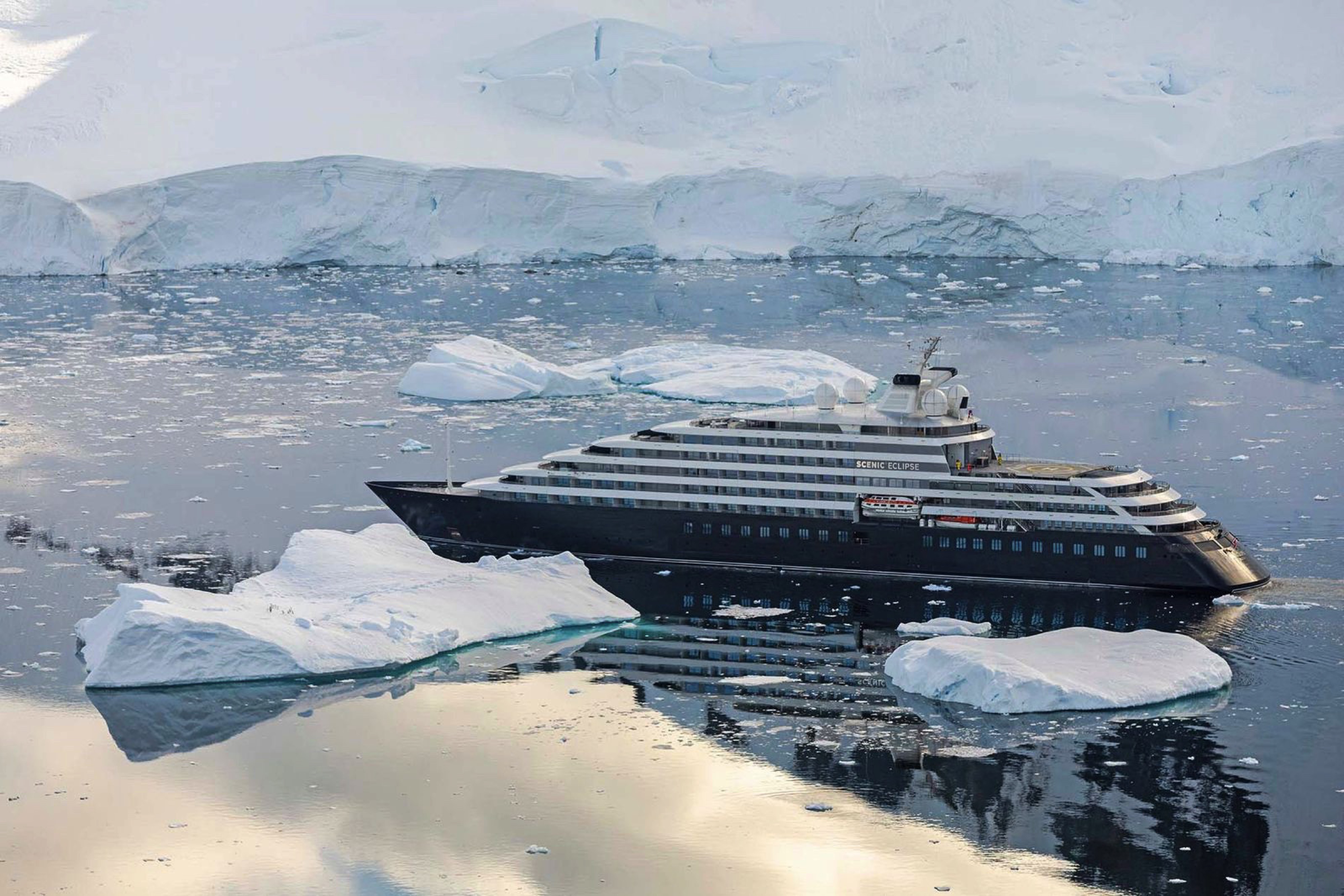
Deck Plans

- Elevator
- Marina Entrance
- Guest Laundry
- Medical Centre
- Discovery Centre
- Tender Area

- Elevator
- Koko’s
- Sushi & Sake Bar
- Chef’s Table
- Elements
- Guest Services
- Scenic Lounge & Bar
- Boutique
- Theatre
- Discovery Lounge

- Grand Deluxe Verandah Suite
- Deluxe Verandah Suite
- Verandah Suite
- Elevator
- Lumière
- Azure Bar & Café
- Scenic Épicure
- Observation Lounge & Library
- Observation Terrace
- Marina Entrance

- Grand Panorama Suite
- Grand Deluxe Verandah Suite
- Deluxe Verandah Suite
- Verandah Suite
- Elevator
- Spa Vitality Pool
- Senses Spa

- Grand Deluxe Verandah Suite
- Deluxe Verandah Suite
- Verandah Suite
- Yacht Club
- Hanging Chairs
- Elevator
- Yoga & Pilates Room
- Gym & Fitness Area
- Wheelhouse
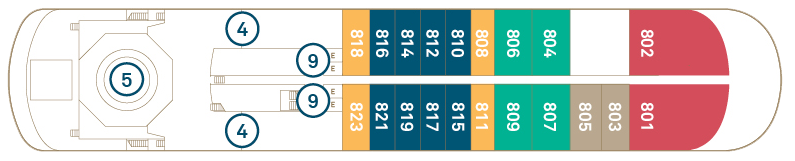
- Panorama Suite
- Spa Suite
- Grand Deluxe Verandah Suite
- Deluxe Verandah Suite
- Verandah Suite
- Helicopter Hangars
- Helipad
- Elevator

- Owner’s Penthouse Suite
- Two bedroom Penthouse Suite
- Spa Suite
- Elevator
- Helicopter Hangars
- Helipad

- Sky Bar
- Sky Deck Vitality Pool
- Cabanas
- Elevator
- Elevator
- Marina Entrance
- Guest Laundry
- Medical Centre
- Discovery Centre
- Tender Area
- Elevator
- Koko’s
- Sushi & Sake Bar
- Chef’s Table
- Elements
- Guest Services
- Scenic Lounge & Bar
- Boutique
- Theatre
- Discovery Lounge
- Grand Deluxe Verandah Suite
- Deluxe Verandah Suite
- Verandah Suite
- Elevator
- Lumière
- Azure Bar & Café
- Scenic Épicure
- Observation Lounge & Library
- Observation Terrace
- Marina Entrance
- Grand Panorama Suite
- Grand Deluxe Verandah Suite
- Deluxe Verandah Suite
- Verandah Suite
- Elevator
- Spa Vitality Pool
- Senses Spa
- Grand Deluxe Verandah Suite
- Deluxe Verandah Suite
- Verandah Suite
- Yacht Club
- Hanging Chairs
- Elevator
- Yoga & Pilates Room
- Gym & Fitness Area
- Wheelhouse
- Panorama Suite
- Spa Suite
- Grand Deluxe Verandah Suite
- Deluxe Verandah Suite
- Verandah Suite
- Helicopter Hangars
- Helipad
- Elevator
- Owner’s Penthouse Suite
- Two bedroom Penthouse Suite
- Spa Suite
- Elevator
- Helicopter Hangars
- Helipad
- Sky Bar
- Sky Deck Vitality Pool
- Cabanas
- Elevator