Itinerary
Darwin, Northern Territory, Australia
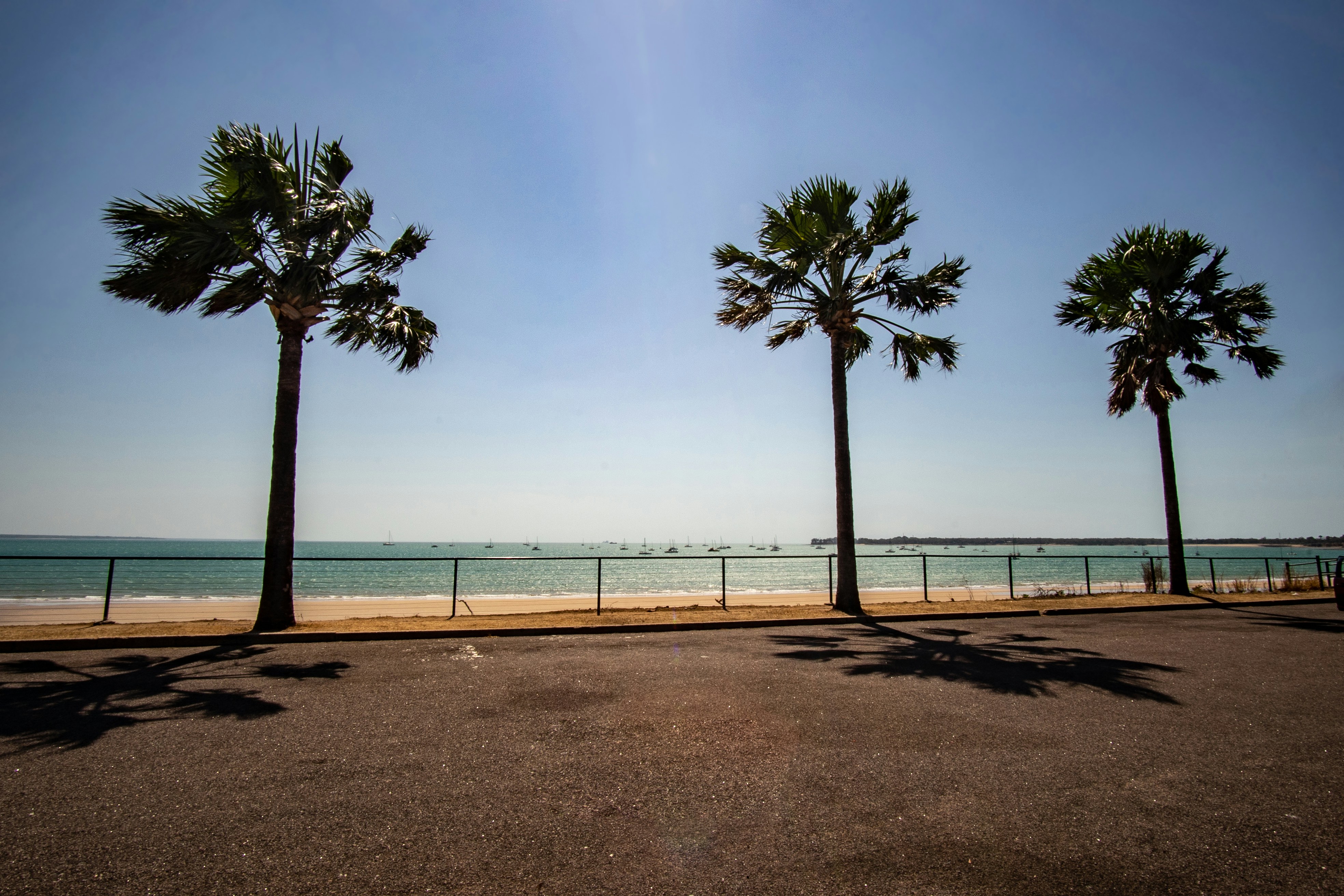
Darwin is Australia’s most colorful, and exotic, capital city. Surrounded on three sides by the turquoise waters of the Timor Sea, the streets are lined with tropical flowers and trees. Warm and dry in winter, hot and steamy in summer, it’s a relaxed and casual place, as well as a beguiling blend of tropical frontier outpost and Outback hardiness. Thanks to its close proximity to Southeast Asia and its multicultural population it also seems more like Asia than the rest of Australia. Darwin is a city that has always had to fight for its survival. The seductiveness of contemporary Darwin lifestyles belies a history of failed attempts that date from 1824 when Europeans attempted to establish an enclave in this harsh, unyielding climate. The original 1869 settlement, called Palmerston, was built on a parcel of mangrove wetlands and scrub forest that had changed little in 15 million years. It was not until 1911, after it had already weathered the disastrous cyclones of 1878, 1882, and 1897, that the town was named after the scientist who had visited Australia’s shores aboard the Beagle in 1839. During World War II it was bombed more than 60 times, as the harbor full of warships was a prime target for the Japanese war planes. Then, on the night of Christmas Eve 1974, the city was almost completely destroyed by Cyclone Tracy, Australia’s greatest natural disaster. It’s a tribute to those who stayed and to those who have come to live here after Tracy that the rebuilt city now thrives as an administrative and commercial center for northern Australia. Old Darwin has been replaced by something of an edifice complex—such buildings as Parliament House and the Supreme Court all seem very grand for such a small city, especially one that prides itself on its casual, outdoor-centric lifestyle. Today Darwin is the best place from which to explore Australia’s Top End, with its wonders of Kakadu and the Kimberley region.
Darwin, Northern Territory, Australia
Darwin is Australia’s most colorful, and exotic, capital city. Surrounded on three sides by the turquoise waters of the Timor Sea, the streets are lined with tropical flowers and trees. Warm and dry in winter, hot and steamy in summer, it’s a relaxed and casual place, as well as a beguiling blend of tropical frontier outpost and Outback hardiness. Thanks to its close proximity to Southeast Asia and its multicultural population it also seems more like Asia than the rest of Australia. Darwin is a city that has always had to fight for its survival. The seductiveness of contemporary Darwin lifestyles belies a history of failed attempts that date from 1824 when Europeans attempted to establish an enclave in this harsh, unyielding climate. The original 1869 settlement, called Palmerston, was built on a parcel of mangrove wetlands and scrub forest that had changed little in 15 million years. It was not until 1911, after it had already weathered the disastrous cyclones of 1878, 1882, and 1897, that the town was named after the scientist who had visited Australia’s shores aboard the Beagle in 1839. During World War II it was bombed more than 60 times, as the harbor full of warships was a prime target for the Japanese war planes. Then, on the night of Christmas Eve 1974, the city was almost completely destroyed by Cyclone Tracy, Australia’s greatest natural disaster. It’s a tribute to those who stayed and to those who have come to live here after Tracy that the rebuilt city now thrives as an administrative and commercial center for northern Australia. Old Darwin has been replaced by something of an edifice complex—such buildings as Parliament House and the Supreme Court all seem very grand for such a small city, especially one that prides itself on its casual, outdoor-centric lifestyle. Today Darwin is the best place from which to explore Australia’s Top End, with its wonders of Kakadu and the Kimberley region.
Kakadu National Park, Northern Territory, Australia
Travel to the amazing World Heritage-listed Kakadu National Park to experience its stunning raw beauty first hand. One of the largest national parks in Australia, this living cultural landscape is unmissable for any visitor to the Northern Territory. From rivers and waterfalls to spectacular floodplains and rich cultural history, Kakadu’s story spans 20,000 square kilometres and 65 thousand years. Marvel at ancient Aboriginal rock art at Nourlangie Rock, some of the oldest and most evocative of its kind, and visit Bowali Visitors Centre for a greater understanding of Kakadu and its cultural significance. Then it’s time to take a cruise on the Yellow Water Billabong. One of the best-known parts of Kakadu, Yellow Water is a 2.6 kilometre walk across the South Alligator River floodplain during the dry season. In the wet, it’s a completely different story – look forward to fantastic cruise across southern Kakadu. See huge crocs, water buffalo and remarkable birdlife in their habitat: Kakadu’s stunning World Heritage-listed wetlands. Your overnight stay tonight is at an idyllic retreat inside Kakadu National Park. Relax in the large outdoor pool or have a drink at the restaurant and bar before dinner.
Katherine, Northern Territory, Australia
Explore the gems and stark escarpments of Kakadu National Park, including Jim Jim and Twin Falls, by fixed wing for a bird’s-eye view of the wetlands and rocky terrain (at additional cost, please book prior to departure).
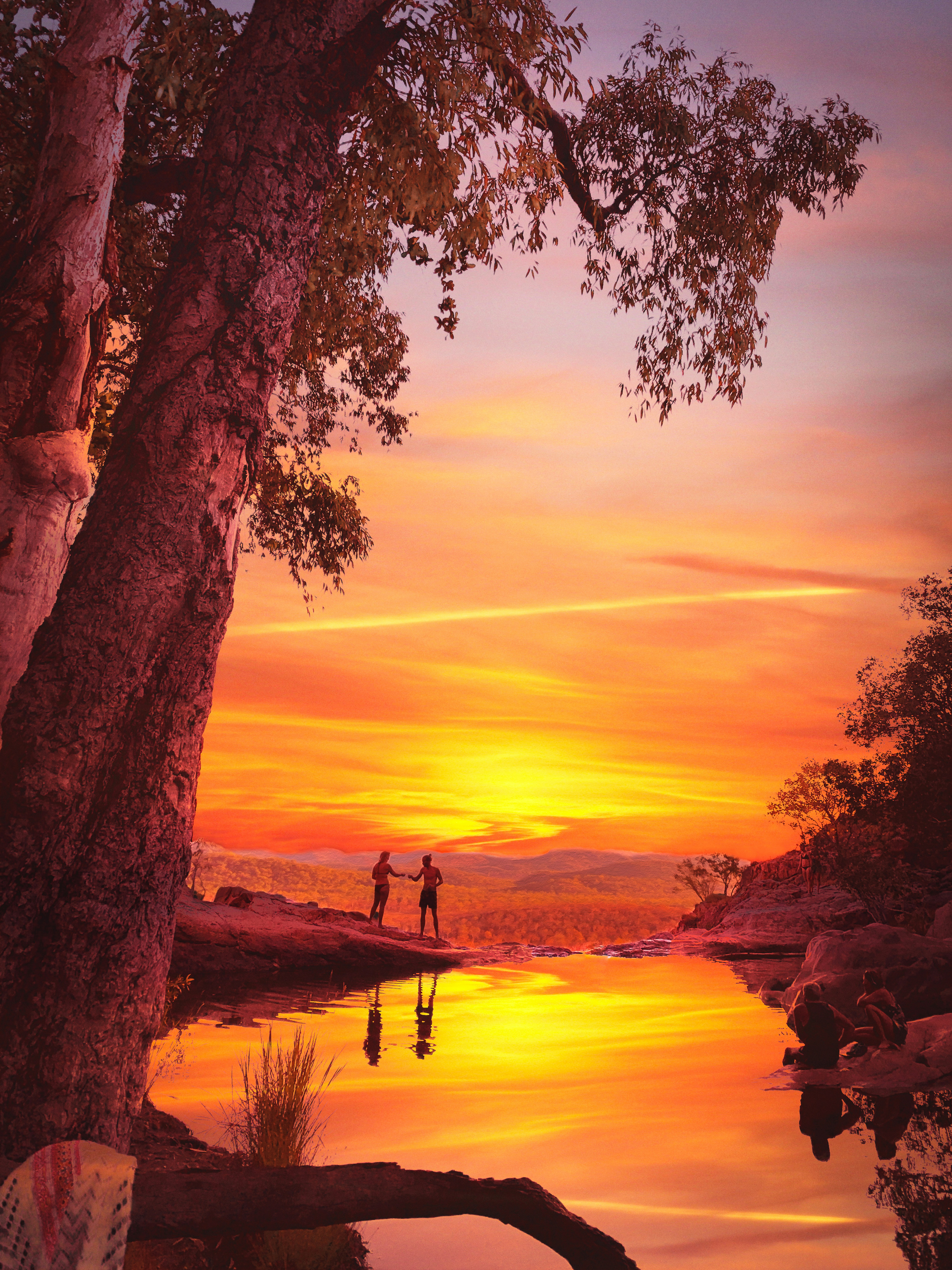
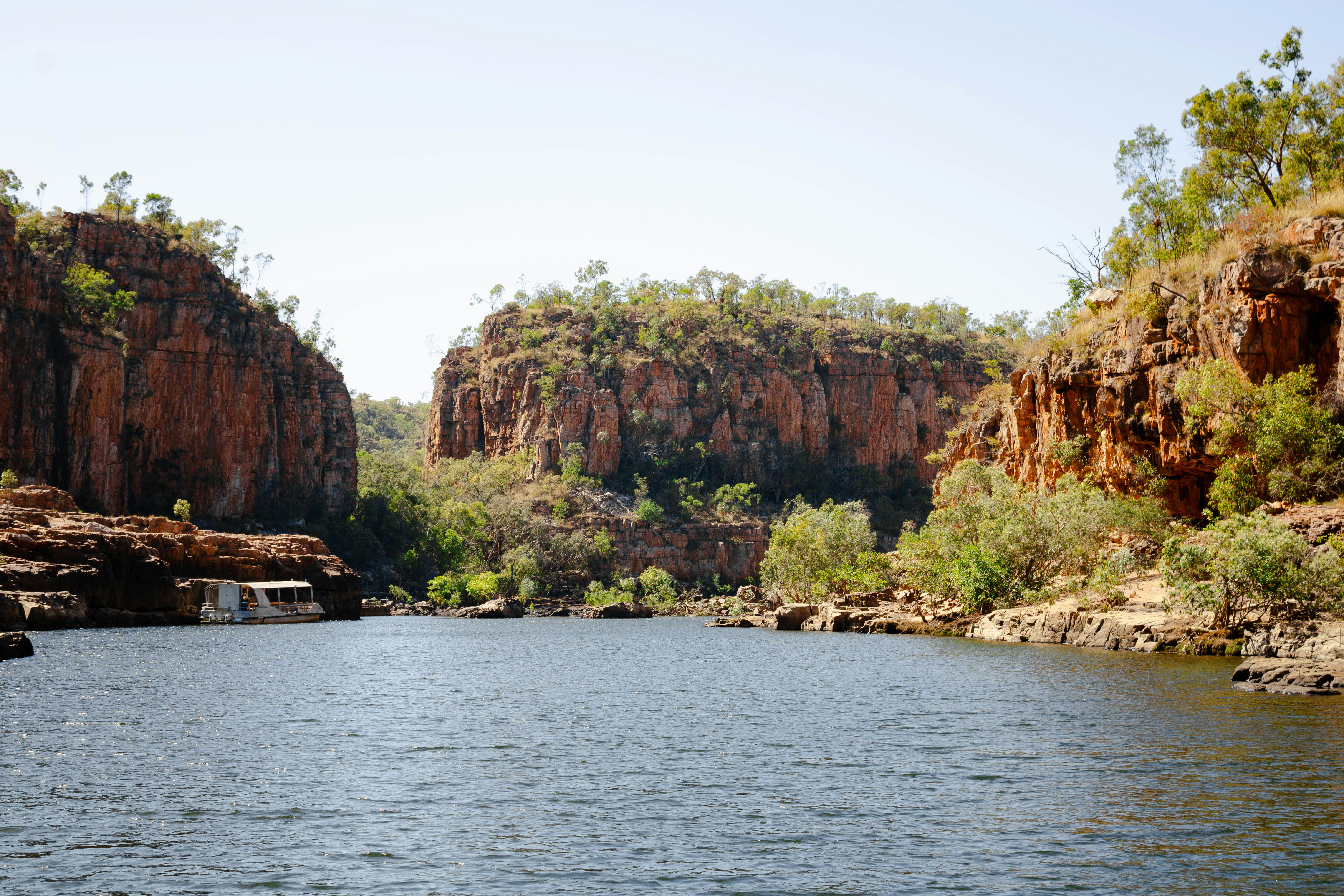
It’s time to move on to Katherine, the “Crossroads of the North”. The third-largest town in the Northern Territory, Katherine is a gateway between outback desert and the tropical climate of the Top End. You’ll explore Nitmiluk National Park, owned by the Jawoyn people and home of the breathtaking Nitmiluk (Katherine) Gorge, renowned for its towering sandstone cliffs, ancient rock art and serene waterways. Tonight, your Scenic Special Stay is at an outback sanctuary nestled in the bush and imbued with indigenous culture and artwork.
Scenic Enrich
Take a dinner cruise through Nitmiluk Gorge, where you’ll marvel at the famed towering red ochre sandstone walls and hear stories of the local Jawoyn people.
Kununurra, Western Australia, Australia
Journey to Western Australia and let the vast expanse of the Kimberley slowly reveal itself.
Scenic Enrich
Learn about Miriuwung country around Kununurra with our local Indigenous guide. Conservation of Miriuwung culture was given a huge boost in the early 1980s, when the Mirima National Parks were established to protect natural features and sites of importance to the Miriuwung people. Today, visitors to East Kimberley are invited to share the culture and traditions of the Miriuwung.
El Questro Wilderness Park is a particular highlight. Tonight, enjoy the first of a two-night stay.
Kununurra, Western Australia, Australia
Visit Lake Argyle, one of the largest man-made lakes in the Southern Hemisphere. The Ord River Dam led to the creation of Lake Argyle which, at more than 18 times the size of Sydney Harbour, classifies as an inland sea. The freshwater lake contains more than 70 islands and features an incredible array of native wildlife, from freshwater crocs to hundreds of species of birds.
This morning, take a breathtaking cruise on the Ord River, which flows over 650 kilometres across the state. The damming of Ord River in the 1970s led to the creation of several new ecosystems, while the river itself provides a habitat for more than 75 species of birds. Marvel at the vast variety of birdlife, immense gorge walls and river scenery. From there, it’s on to the town of Kununurra. Founded in the early 1960s as the Ord River Dam project got underway, the relatively young town of Kununurra contains a lifetime of delights. Lakes, waterfalls and rivers abound, as does a vibrant fishing scene.
Enjoy afternoon tea and a tour of Hoochery Distillery, a local producer of rum and other spirits made with Australian sugarcane and rainwater from the region’s famed wet season. The Distillery, owned by the Dessert family, has successfully taken its handmade tropical gins and rums around the world, and is the oldest operating legal still in Western Australia.
El Questro Wilderness Park, Western Australia, Australia
Surrounded by the ancient landscapes of the East Kimberley, Lake Argyle and the Bungle Bungles beyond, Kununurra is 33 hours’ drive from Perth. It’s a perfect base for exploring this wild and remote part of Western Australia.
Opt for a flight over the Bungle Bungles and a chance to see the orange and black stripes of these massive sandstone structures (at additional cost, please book prior to departure).
This morning, visit the first Aboriginal owned art centre in Western Australia. Then, travel along the iconic Gibb River Road to the acclaimed El Questro Wilderness Park. Set in the untamed Kimberley landscape, El Questro began life as a working cattle station, but now dedicates its 700,000 acres to those wishing to get to the heart of the Kimberley experience. From thermal springs and waterfalls to deep gorges and majestic ranges, El Questro is a natural treasure. Enjoy a two-night Scenic Special Stay.
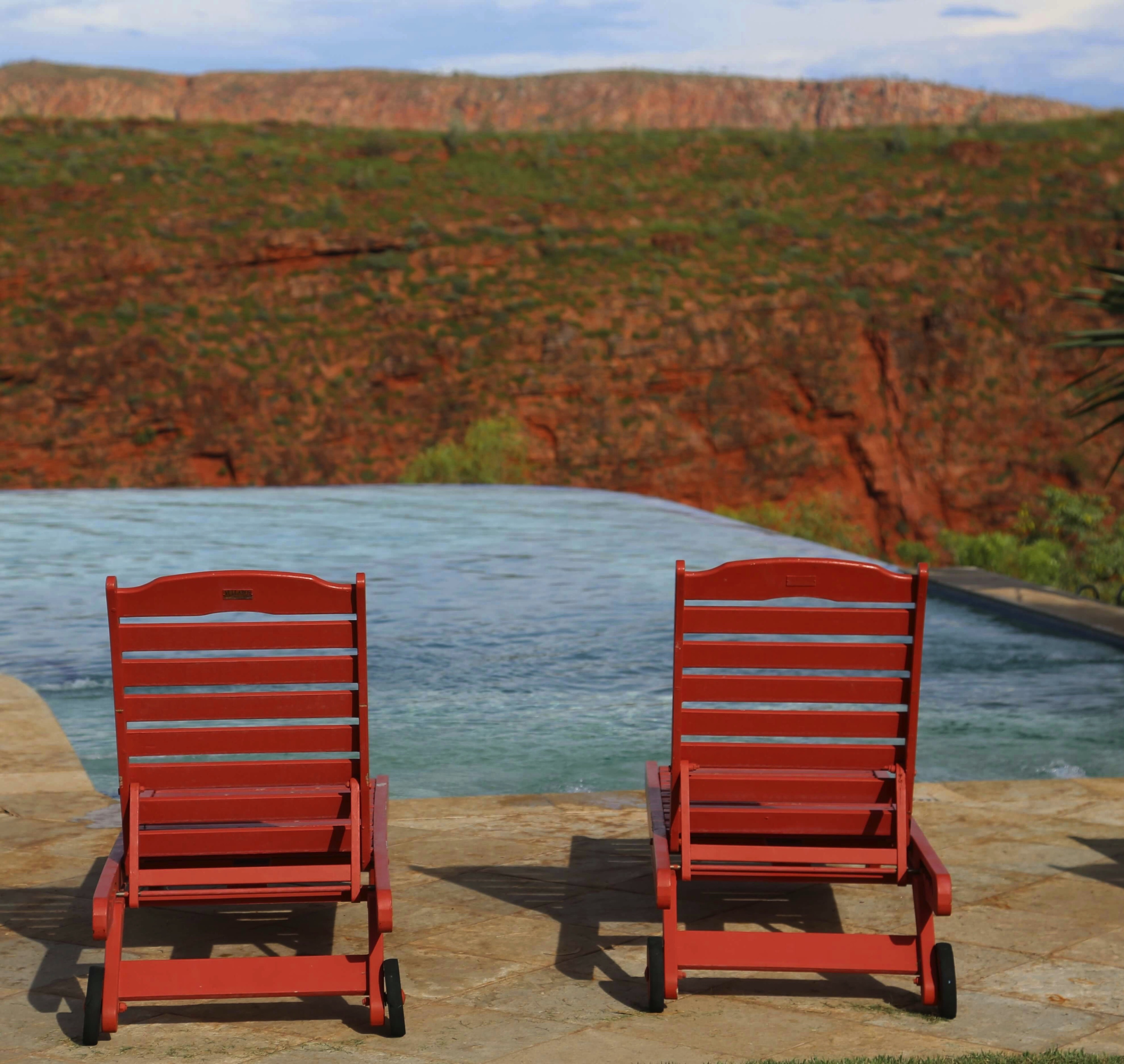
Optional El Questro Homestead upgrade: Take the opportunity to upgrade your stay to the deluxe El Questro Homestead, an exclusive retreat perched atop the magnificent Chamberlain Gorge (at additional cost, must be booked prior to departure and will substitute accommodation and touring activities).
Darwin, Northern Territory, Australia
Darwin is Australia’s most colorful, and exotic, capital city. Surrounded on three sides by the turquoise waters of the Timor Sea, the streets are lined with tropical flowers and trees. Warm and dry in winter, hot and steamy in summer, it’s a relaxed and casual place, as well as a beguiling blend of tropical frontier outpost and Outback hardiness. Thanks to its close proximity to Southeast Asia and its multicultural population it also seems more like Asia than the rest of Australia. Darwin is a city that has always had to fight for its survival. The seductiveness of contemporary Darwin lifestyles belies a history of failed attempts that date from 1824 when Europeans attempted to establish an enclave in this harsh, unyielding climate. The original 1869 settlement, called Palmerston, was built on a parcel of mangrove wetlands and scrub forest that had changed little in 15 million years. It was not until 1911, after it had already weathered the disastrous cyclones of 1878, 1882, and 1897, that the town was named after the scientist who had visited Australia’s shores aboard the Beagle in 1839. During World War II it was bombed more than 60 times, as the harbor full of warships was a prime target for the Japanese war planes. Then, on the night of Christmas Eve 1974, the city was almost completely destroyed by Cyclone Tracy, Australia’s greatest natural disaster. It’s a tribute to those who stayed and to those who have come to live here after Tracy that the rebuilt city now thrives as an administrative and commercial center for northern Australia. Old Darwin has been replaced by something of an edifice complex—such buildings as Parliament House and the Supreme Court all seem very grand for such a small city, especially one that prides itself on its casual, outdoor-centric lifestyle. Today Darwin is the best place from which to explore Australia’s Top End, with its wonders of Kakadu and the Kimberley region.
Darwin, Northern Territory, Australia
Darwin is Australia’s most colorful, and exotic, capital city. Surrounded on three sides by the turquoise waters of the Timor Sea, the streets are lined with tropical flowers and trees. Warm and dry in winter, hot and steamy in summer, it’s a relaxed and casual place, as well as a beguiling blend of tropical frontier outpost and Outback hardiness. Thanks to its close proximity to Southeast Asia and its multicultural population it also seems more like Asia than the rest of Australia. Darwin is a city that has always had to fight for its survival. The seductiveness of contemporary Darwin lifestyles belies a history of failed attempts that date from 1824 when Europeans attempted to establish an enclave in this harsh, unyielding climate. The original 1869 settlement, called Palmerston, was built on a parcel of mangrove wetlands and scrub forest that had changed little in 15 million years. It was not until 1911, after it had already weathered the disastrous cyclones of 1878, 1882, and 1897, that the town was named after the scientist who had visited Australia’s shores aboard the Beagle in 1839. During World War II it was bombed more than 60 times, as the harbor full of warships was a prime target for the Japanese war planes. Then, on the night of Christmas Eve 1974, the city was almost completely destroyed by Cyclone Tracy, Australia’s greatest natural disaster. It’s a tribute to those who stayed and to those who have come to live here after Tracy that the rebuilt city now thrives as an administrative and commercial center for northern Australia. Old Darwin has been replaced by something of an edifice complex—such buildings as Parliament House and the Supreme Court all seem very grand for such a small city, especially one that prides itself on its casual, outdoor-centric lifestyle. Today Darwin is the best place from which to explore Australia’s Top End, with its wonders of Kakadu and the Kimberley region.
Kakadu National Park, Northern Territory, Australia
Travel to the amazing World Heritage-listed Kakadu National Park to experience its stunning raw beauty first hand. One of the largest national parks in Australia, this living cultural landscape is unmissable for any visitor to the Northern Territory. From rivers and waterfalls to spectacular floodplains and rich cultural history, Kakadu’s story spans 20,000 square kilometres and 65 thousand years. Marvel at ancient Aboriginal rock art at Nourlangie Rock, some of the oldest and most evocative of its kind, and visit Bowali Visitors Centre for a greater understanding of Kakadu and its cultural significance. Then it’s time to take a cruise on the Yellow Water Billabong. One of the best-known parts of Kakadu, Yellow Water is a 2.6 kilometre walk across the South Alligator River floodplain during the dry season. In the wet, it’s a completely different story – look forward to fantastic cruise across southern Kakadu. See huge crocs, water buffalo and remarkable birdlife in their habitat: Kakadu’s stunning World Heritage-listed wetlands. Your overnight stay tonight is at an idyllic retreat inside Kakadu National Park. Relax in the large outdoor pool or have a drink at the restaurant and bar before dinner.
Katherine, Northern Territory, Australia
Explore the gems and stark escarpments of Kakadu National Park, including Jim Jim and Twin Falls, by fixed wing for a bird’s-eye view of the wetlands and rocky terrain (at additional cost, please book prior to departure).
It’s time to move on to Katherine, the “Crossroads of the North”. The third-largest town in the Northern Territory, Katherine is a gateway between outback desert and the tropical climate of the Top End. You’ll explore Nitmiluk National Park, owned by the Jawoyn people and home of the breathtaking Nitmiluk (Katherine) Gorge, renowned for its towering sandstone cliffs, ancient rock art and serene waterways. Tonight, your Scenic Special Stay is at an outback sanctuary nestled in the bush and imbued with indigenous culture and artwork.
Scenic Enrich
Take a dinner cruise through Nitmiluk Gorge, where you’ll marvel at the famed towering red ochre sandstone walls and hear stories of the local Jawoyn people.
Kununurra, Western Australia, Australia
Journey to Western Australia and let the vast expanse of the Kimberley slowly reveal itself.
Scenic Enrich
Learn about Miriuwung country around Kununurra with our local Indigenous guide. Conservation of Miriuwung culture was given a huge boost in the early 1980s, when the Mirima National Parks were established to protect natural features and sites of importance to the Miriuwung people. Today, visitors to East Kimberley are invited to share the culture and traditions of the Miriuwung.
El Questro Wilderness Park is a particular highlight. Tonight, enjoy the first of a two-night stay.
Kununurra, Western Australia, Australia
Visit Lake Argyle, one of the largest man-made lakes in the Southern Hemisphere. The Ord River Dam led to the creation of Lake Argyle which, at more than 18 times the size of Sydney Harbour, classifies as an inland sea. The freshwater lake contains more than 70 islands and features an incredible array of native wildlife, from freshwater crocs to hundreds of species of birds.
This morning, take a breathtaking cruise on the Ord River, which flows over 650 kilometres across the state. The damming of Ord River in the 1970s led to the creation of several new ecosystems, while the river itself provides a habitat for more than 75 species of birds. Marvel at the vast variety of birdlife, immense gorge walls and river scenery. From there, it’s on to the town of Kununurra. Founded in the early 1960s as the Ord River Dam project got underway, the relatively young town of Kununurra contains a lifetime of delights. Lakes, waterfalls and rivers abound, as does a vibrant fishing scene.
Enjoy afternoon tea and a tour of Hoochery Distillery, a local producer of rum and other spirits made with Australian sugarcane and rainwater from the region’s famed wet season. The Distillery, owned by the Dessert family, has successfully taken its handmade tropical gins and rums around the world, and is the oldest operating legal still in Western Australia.
El Questro Wilderness Park, Western Australia, Australia
Surrounded by the ancient landscapes of the East Kimberley, Lake Argyle and the Bungle Bungles beyond, Kununurra is 33 hours’ drive from Perth. It’s a perfect base for exploring this wild and remote part of Western Australia.
Opt for a flight over the Bungle Bungles and a chance to see the orange and black stripes of these massive sandstone structures (at additional cost, please book prior to departure).
This morning, visit the first Aboriginal owned art centre in Western Australia. Then, travel along the iconic Gibb River Road to the acclaimed El Questro Wilderness Park. Set in the untamed Kimberley landscape, El Questro began life as a working cattle station, but now dedicates its 700,000 acres to those wishing to get to the heart of the Kimberley experience. From thermal springs and waterfalls to deep gorges and majestic ranges, El Questro is a natural treasure. Enjoy a two-night Scenic Special Stay.
Optional El Questro Homestead upgrade: Take the opportunity to upgrade your stay to the deluxe El Questro Homestead, an exclusive retreat perched atop the magnificent Chamberlain Gorge (at additional cost, must be booked prior to departure and will substitute accommodation and touring activities).
El Questro Wilderness Park, Western Australia, Australia
Chamberlain Gorge Cruise: Today, enjoy a magnificent cruise through Chamberlain Gorge, a three kilometre waterhole, bound by diverse flora and fauna and set beneath towering sheer walled cliffs.
Scenic Sunset Drinks
Relax over evening drinks at the El Questro Station Airstrip, which happens to enjoy some of the best views in the park. Chat with new friends while capturing stunning views of the sunset over the Cockburn Ranges.
Broome, Western Australia, Australia
Broome, a coastal town in Western Australia, is famous for its stunning beaches, rich history, and vibrant culture. Located on the Indian Ocean, it boasts Cable Beach, known for its white sand, turquoise waters, and iconic camel rides at sunset. Once a pearling hub, Broome retains its multicultural heritage, reflected in its cuisine and architecture. The town is also the gateway to the Kimberley region, offering breathtaking landscapes and unique natural attractions like the Staircase to the Moon. With warm weather year-round and a laid-back atmosphere, Broome is a perfect destination for adventure, relaxation, and cultural experiences.
Broome, Western Australia, Australia
Broome, a coastal town in Western Australia, is famous for its stunning beaches, rich history, and vibrant culture. Located on the Indian Ocean, it boasts Cable Beach, known for its white sand, turquoise waters, and iconic camel rides at sunset. Once a pearling hub, Broome retains its multicultural heritage, reflected in its cuisine and architecture. The town is also the gateway to the Kimberley region, offering breathtaking landscapes and unique natural attractions like the Staircase to the Moon. With warm weather year-round and a laid-back atmosphere, Broome is a perfect destination for adventure, relaxation, and cultural experiences.
Broome, Western Australia, Australia
Broome, a coastal town in Western Australia, is famous for its stunning beaches, rich history, and vibrant culture. Located on the Indian Ocean, it boasts Cable Beach, known for its white sand, turquoise waters, and iconic camel rides at sunset. Once a pearling hub, Broome retains its multicultural heritage, reflected in its cuisine and architecture. The town is also the gateway to the Kimberley region, offering breathtaking landscapes and unique natural attractions like the Staircase to the Moon. With warm weather year-round and a laid-back atmosphere, Broome is a perfect destination for adventure, relaxation, and cultural experiences.
El Questro Wilderness Park, Western Australia, Australia
Chamberlain Gorge Cruise: Today, enjoy a magnificent cruise through Chamberlain Gorge, a three kilometre waterhole, bound by diverse flora and fauna and set beneath towering sheer walled cliffs.
Scenic Sunset Drinks
Relax over evening drinks at the El Questro Station Airstrip, which happens to enjoy some of the best views in the park. Chat with new friends while capturing stunning views of the sunset over the Cockburn Ranges.
Broome, Western Australia, Australia
Broome, a coastal town in Western Australia, is famous for its stunning beaches, rich history, and vibrant culture. Located on the Indian Ocean, it boasts Cable Beach, known for its white sand, turquoise waters, and iconic camel rides at sunset. Once a pearling hub, Broome retains its multicultural heritage, reflected in its cuisine and architecture. The town is also the gateway to the Kimberley region, offering breathtaking landscapes and unique natural attractions like the Staircase to the Moon. With warm weather year-round and a laid-back atmosphere, Broome is a perfect destination for adventure, relaxation, and cultural experiences.
Broome, Western Australia, Australia
Broome, a coastal town in Western Australia, is famous for its stunning beaches, rich history, and vibrant culture. Located on the Indian Ocean, it boasts Cable Beach, known for its white sand, turquoise waters, and iconic camel rides at sunset. Once a pearling hub, Broome retains its multicultural heritage, reflected in its cuisine and architecture. The town is also the gateway to the Kimberley region, offering breathtaking landscapes and unique natural attractions like the Staircase to the Moon. With warm weather year-round and a laid-back atmosphere, Broome is a perfect destination for adventure, relaxation, and cultural experiences.
Broome, Western Australia, Australia
Broome, a coastal town in Western Australia, is famous for its stunning beaches, rich history, and vibrant culture. Located on the Indian Ocean, it boasts Cable Beach, known for its white sand, turquoise waters, and iconic camel rides at sunset. Once a pearling hub, Broome retains its multicultural heritage, reflected in its cuisine and architecture. The town is also the gateway to the Kimberley region, offering breathtaking landscapes and unique natural attractions like the Staircase to the Moon. With warm weather year-round and a laid-back atmosphere, Broome is a perfect destination for adventure, relaxation, and cultural experiences.