Featured Cabins
Itinerary
Dublin, Ireland
Dublin is making a comeback. The decade-long “Celtic Tiger” boom era was quickly followed by the Great Recession, but The Recovery has finally taken a precarious hold. For visitors, this newer and wiser Dublin has become one of western Europe’s most popular and delightful urban destinations. Whether or not you’re out to enjoy the old or new Dublin, you’ll find it a colossally entertaining city, all the more astonishing considering its intimate size.It is ironic and telling that James Joyce chose Dublin as the setting for his famous Ulysses, Dubliners, and A Portrait of the Artist as a Young Man because it was a “center of paralysis” where nothing much ever changed. Which only proves that even the greats get it wrong sometimes. Indeed, if Joyce were to return to his once-genteel hometown today—disappointed with the city’s provincial outlook, he left it in 1902 at the age of 20—and take a quasi-Homeric odyssey through the city (as he so famously does in Ulysses), would he even recognize Dublin as his “Dear Dirty Dumpling, foostherfather of fingalls and dotthergills”?For instance, what would he make of Temple Bar—the city’s erstwhile down-at-the-heels neighborhood, now crammed with cafés and trendy hotels and suffused with a nonstop, international-party atmosphere? Or the simple sophistication of the open-air restaurants of the tiny Italian Quarter (named Quartier Bloom after his own creation), complete with sultry tango lessons? Or of the hot–cool Irishness, where every aspect of Celtic culture results in sold-out theaters, from Once, the cult indie movie and Broadway hit, to Riverdance, the old Irish mass-jig recast as a Las Vegas extravaganza? Plus, the resurrected Joyce might be stirred by the songs of Hozier, fired up by the sultry acting of Michael Fassbender, and moved by the award-winning novels of Colum McCann. As for Ireland’s capital, it’s packed with elegant shops and hotels, theaters, galleries, coffeehouses, and a stunning variety of new, creative little restaurants can be found on almost every street in Dublin, transforming the provincial city that suffocated Joyce into a place almost as cosmopolitan as the Paris to which he fled. And the locals are a hell of a lot more fun! Now that the economy has finally turned a corner, Dublin citizens can cast a cool eye over the last 20 crazy years. Some argue that the boomtown transformation of their heretofore-tranquil city has permanently affected its spirit and character. These skeptics (skepticism long being a favorite pastime in the capital city) await the outcome of “Dublin: The Sequel,” and their greatest fear is the possibility that the tattered old lady on the Liffey has become a little less unique, a little more like everywhere else.Oh ye of little faith: the rare ole gem that is Dublin is far from buried. The fundamentals—the Georgian elegance of Merrion Square, the Norman drama of Christ Church Cathedral, the foamy pint at an atmospheric pub—are still on hand to gratify. Most of all, there are the locals themselves: the nod and grin when you catch their eye on the street, the eagerness to hear half your life story before they tell you all of theirs, and their paradoxically dark but warm sense of humor. It’s expected that 2016 will be an extra-special year in the capital, as centenary celebrations of the fateful 1916 Easter Rising will dominate much of the cultural calendar.
Dublin, Ireland
Dublin is making a comeback. The decade-long “Celtic Tiger” boom era was quickly followed by the Great Recession, but The Recovery has finally taken a precarious hold. For visitors, this newer and wiser Dublin has become one of western Europe’s most popular and delightful urban destinations. Whether or not you’re out to enjoy the old or new Dublin, you’ll find it a colossally entertaining city, all the more astonishing considering its intimate size.It is ironic and telling that James Joyce chose Dublin as the setting for his famous Ulysses, Dubliners, and A Portrait of the Artist as a Young Man because it was a “center of paralysis” where nothing much ever changed. Which only proves that even the greats get it wrong sometimes. Indeed, if Joyce were to return to his once-genteel hometown today—disappointed with the city’s provincial outlook, he left it in 1902 at the age of 20—and take a quasi-Homeric odyssey through the city (as he so famously does in Ulysses), would he even recognize Dublin as his “Dear Dirty Dumpling, foostherfather of fingalls and dotthergills”?For instance, what would he make of Temple Bar—the city’s erstwhile down-at-the-heels neighborhood, now crammed with cafés and trendy hotels and suffused with a nonstop, international-party atmosphere? Or the simple sophistication of the open-air restaurants of the tiny Italian Quarter (named Quartier Bloom after his own creation), complete with sultry tango lessons? Or of the hot–cool Irishness, where every aspect of Celtic culture results in sold-out theaters, from Once, the cult indie movie and Broadway hit, to Riverdance, the old Irish mass-jig recast as a Las Vegas extravaganza? Plus, the resurrected Joyce might be stirred by the songs of Hozier, fired up by the sultry acting of Michael Fassbender, and moved by the award-winning novels of Colum McCann. As for Ireland’s capital, it’s packed with elegant shops and hotels, theaters, galleries, coffeehouses, and a stunning variety of new, creative little restaurants can be found on almost every street in Dublin, transforming the provincial city that suffocated Joyce into a place almost as cosmopolitan as the Paris to which he fled. And the locals are a hell of a lot more fun! Now that the economy has finally turned a corner, Dublin citizens can cast a cool eye over the last 20 crazy years. Some argue that the boomtown transformation of their heretofore-tranquil city has permanently affected its spirit and character. These skeptics (skepticism long being a favorite pastime in the capital city) await the outcome of “Dublin: The Sequel,” and their greatest fear is the possibility that the tattered old lady on the Liffey has become a little less unique, a little more like everywhere else.Oh ye of little faith: the rare ole gem that is Dublin is far from buried. The fundamentals—the Georgian elegance of Merrion Square, the Norman drama of Christ Church Cathedral, the foamy pint at an atmospheric pub—are still on hand to gratify. Most of all, there are the locals themselves: the nod and grin when you catch their eye on the street, the eagerness to hear half your life story before they tell you all of theirs, and their paradoxically dark but warm sense of humor. It’s expected that 2016 will be an extra-special year in the capital, as centenary celebrations of the fateful 1916 Easter Rising will dominate much of the cultural calendar.
Killarney, Ireland
Today, you’ll visit the 600-year-old Blarney Castle. Explore the historic castle and see the legendary ‘Stone of Eloquence’, more commonly known as the Blarney Stone. Legend says if you kiss it, you will receive the ‘gift of the gab’. Over the years, famous people such as Sir Winston Churchill, Ronald Reagan and Mick Jagger have puckered up to the ancient stone.
Afterwards, continue to Killarney, a charming town nestled in a valley surrounded by Ireland’s highest mountain range, the McGillycuddy Reeks, for a two-night Special Stay.
Killarney, Ireland
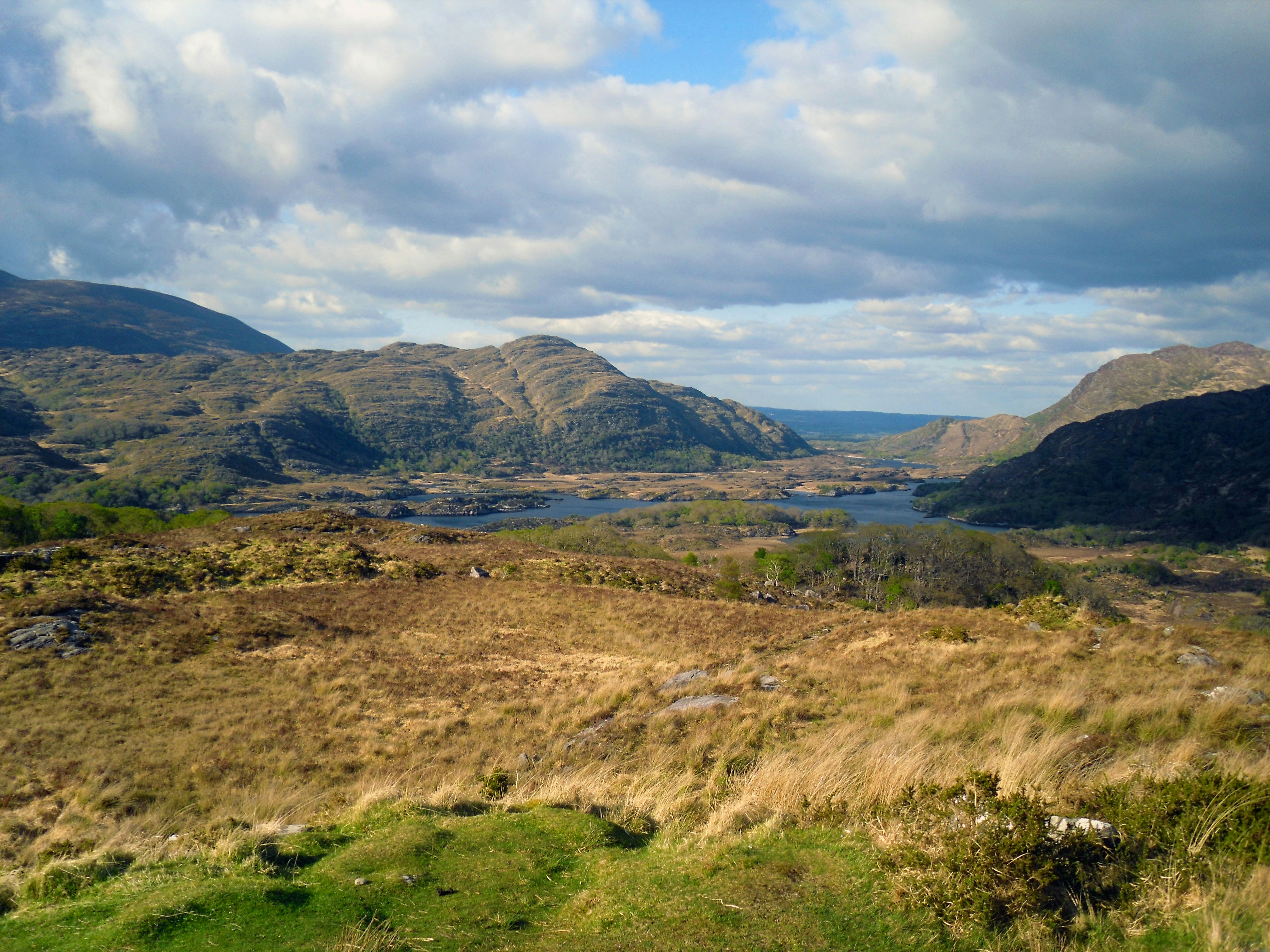
Today you will experience the breathtaking scenery of the Ring of Kerry, renowned as one of the most picturesque landscapes in Ireland. Here, the Iveragh Mountains dramatically drop into the Atlantic Ocean, where rolling green hills dotted with cows and sheep, are punctuated by sparkling lakes, grand houses and ancient castles. Watch as tiny fishing villages and off-shore islands come in and out of view as you wind along this 100-kilometre route, which will captivate you at every bend.
Galway, Ireland
Galway is a city in the West of Ireland in the province of Connacht. It lies on the River Corrib between Lough Corrib and Galway Bay and is surrounded by County Galway. It is the fourth most populous urban area in the Republic of Ireland and the sixth most populous city in the island of Ireland. It is both a picturesque and lively city with a wonderful avant-garde culture and a fascinating mixture of locally owned speciality shops, often featuring locally made crafts. Indeed local handcrafts are a feature of the entire region including hand knits, pottery, glass, jewellery and woodwork. The city’s hub is 18th-century Eyre Square, a popular meeting spot surrounded by shops, and traditional pubs that often offer live Irish folk music. Nearby, stone-clad cafes, boutiques and art galleries line the winding lanes of the Latin Quarter, which retains portions of the medieval city walls. The city bears the nickname “The City of the Tribes” because “fourteen tribes” of merchant families led the city in its Hiberno-Norman period. The merchants would have seen themselves as Irish gentry and loyal to the King. They later adopted the term as a badge of honour and pride in defiance of the town’s Cromwellian occupier.
Belfast, Northern Ireland
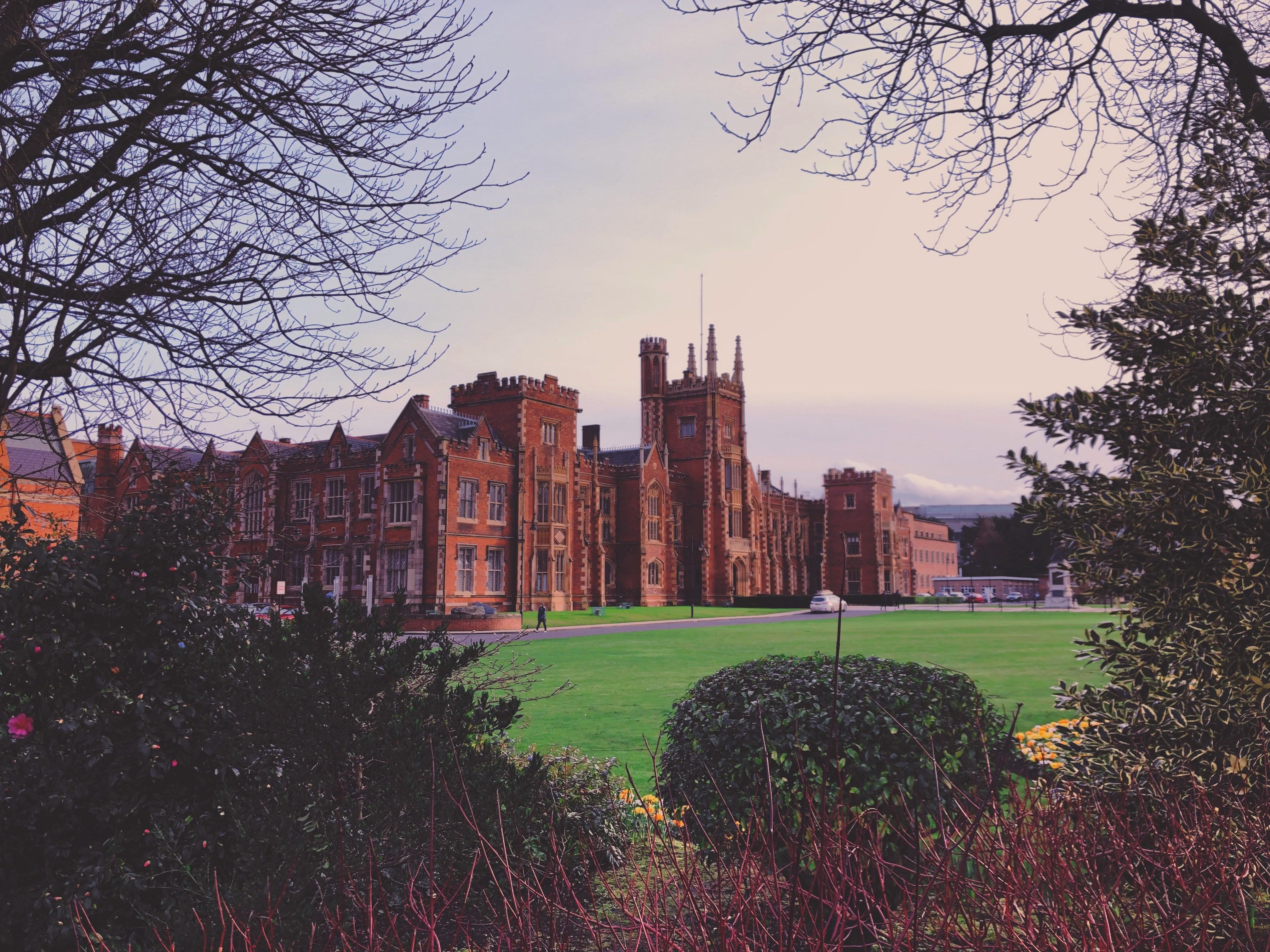
Before English and Scottish settlers arrived in the 1600s, Belfast was a tiny village called Béal Feirste (“sandbank ford”) belonging to Ulster’s ancient O’Neill clan. With the advent of the Plantation period (when settlers arrived in the 1600s), Sir Arthur Chichester, from Devon in southwestern England, received the city from the English Crown, and his son was made Earl of Donegall. Huguenots fleeing persecution from France settled near here, bringing their valuable linen-work skills. In the 18th century, Belfast underwent a phenomenal expansion—its population doubled every 10 years, despite an ever-present sectarian divide. Although the Anglican gentry despised the Presbyterian artisans—who, in turn, distrusted the native Catholics—Belfast’s growth continued at a dizzying speed. The city was a great Victorian success story, an industrial boomtown whose prosperity was built on trade, especially linen and shipbuilding. Famously (or infamously), the Titanic was built here, giving Belfast, for a time, the nickname “Titanic Town.” Having laid the foundation stone of the city’s university in 1845, Queen Victoria returned to Belfast in 1849 (she is recalled in the names of buildings, streets, bars, monuments, and other places around the city), and in the same year, the university opened under the name Queen’s College. Nearly 40 years later, in 1888, Victoria granted Belfast its city charter. Today its population is nearly 300,000, tourist numbers have increased, and this dramatically transformed city is enjoying an unparalleled renaissance.This is all a welcome change from the period when news about Belfast meant reports about “the Troubles.” Since the 1994 ceasefire, Northern Ireland’s capital city has benefited from major hotel investment, gentrified quaysides (or strands), a sophisticated new performing arts center, and major initiatives to boost tourism. Although the 1996 bombing of offices at Canary Wharf in London disrupted the 1994 peace agreement, the ceasefire was officially reestablished on July 20, 1997, and this embattled city began its quest for a newfound identity.Since 2008, the city has restored all its major public buildings such as museums, churches, theaters, City Hall, Ulster Hall—and even the glorious Crown Bar—spending millions of pounds on its built heritage. A gaol that at the height of the Troubles held some of the most notorious murderers involved in paramilitary violence is now a major visitor attraction.Belfast’s city center is made up of three roughly contiguous areas that are easy to navigate on foot. From the south end to the north, it’s about an hour’s leisurely walk.
Belfast, Northern Ireland
Before English and Scottish settlers arrived in the 1600s, Belfast was a tiny village called Béal Feirste (“sandbank ford”) belonging to Ulster’s ancient O’Neill clan. With the advent of the Plantation period (when settlers arrived in the 1600s), Sir Arthur Chichester, from Devon in southwestern England, received the city from the English Crown, and his son was made Earl of Donegall. Huguenots fleeing persecution from France settled near here, bringing their valuable linen-work skills. In the 18th century, Belfast underwent a phenomenal expansion—its population doubled every 10 years, despite an ever-present sectarian divide. Although the Anglican gentry despised the Presbyterian artisans—who, in turn, distrusted the native Catholics—Belfast’s growth continued at a dizzying speed. The city was a great Victorian success story, an industrial boomtown whose prosperity was built on trade, especially linen and shipbuilding. Famously (or infamously), the Titanic was built here, giving Belfast, for a time, the nickname “Titanic Town.” Having laid the foundation stone of the city’s university in 1845, Queen Victoria returned to Belfast in 1849 (she is recalled in the names of buildings, streets, bars, monuments, and other places around the city), and in the same year, the university opened under the name Queen’s College. Nearly 40 years later, in 1888, Victoria granted Belfast its city charter. Today its population is nearly 300,000, tourist numbers have increased, and this dramatically transformed city is enjoying an unparalleled renaissance.This is all a welcome change from the period when news about Belfast meant reports about “the Troubles.” Since the 1994 ceasefire, Northern Ireland’s capital city has benefited from major hotel investment, gentrified quaysides (or strands), a sophisticated new performing arts center, and major initiatives to boost tourism. Although the 1996 bombing of offices at Canary Wharf in London disrupted the 1994 peace agreement, the ceasefire was officially reestablished on July 20, 1997, and this embattled city began its quest for a newfound identity.Since 2008, the city has restored all its major public buildings such as museums, churches, theaters, City Hall, Ulster Hall—and even the glorious Crown Bar—spending millions of pounds on its built heritage. A gaol that at the height of the Troubles held some of the most notorious murderers involved in paramilitary violence is now a major visitor attraction.Belfast’s city center is made up of three roughly contiguous areas that are easy to navigate on foot. From the south end to the north, it’s about an hour’s leisurely walk.
Dublin, Ireland
Dublin is making a comeback. The decade-long “Celtic Tiger” boom era was quickly followed by the Great Recession, but The Recovery has finally taken a precarious hold. For visitors, this newer and wiser Dublin has become one of western Europe’s most popular and delightful urban destinations. Whether or not you’re out to enjoy the old or new Dublin, you’ll find it a colossally entertaining city, all the more astonishing considering its intimate size.It is ironic and telling that James Joyce chose Dublin as the setting for his famous Ulysses, Dubliners, and A Portrait of the Artist as a Young Man because it was a “center of paralysis” where nothing much ever changed. Which only proves that even the greats get it wrong sometimes. Indeed, if Joyce were to return to his once-genteel hometown today—disappointed with the city’s provincial outlook, he left it in 1902 at the age of 20—and take a quasi-Homeric odyssey through the city (as he so famously does in Ulysses), would he even recognize Dublin as his “Dear Dirty Dumpling, foostherfather of fingalls and dotthergills”?For instance, what would he make of Temple Bar—the city’s erstwhile down-at-the-heels neighborhood, now crammed with cafés and trendy hotels and suffused with a nonstop, international-party atmosphere? Or the simple sophistication of the open-air restaurants of the tiny Italian Quarter (named Quartier Bloom after his own creation), complete with sultry tango lessons? Or of the hot–cool Irishness, where every aspect of Celtic culture results in sold-out theaters, from Once, the cult indie movie and Broadway hit, to Riverdance, the old Irish mass-jig recast as a Las Vegas extravaganza? Plus, the resurrected Joyce might be stirred by the songs of Hozier, fired up by the sultry acting of Michael Fassbender, and moved by the award-winning novels of Colum McCann. As for Ireland’s capital, it’s packed with elegant shops and hotels, theaters, galleries, coffeehouses, and a stunning variety of new, creative little restaurants can be found on almost every street in Dublin, transforming the provincial city that suffocated Joyce into a place almost as cosmopolitan as the Paris to which he fled. And the locals are a hell of a lot more fun! Now that the economy has finally turned a corner, Dublin citizens can cast a cool eye over the last 20 crazy years. Some argue that the boomtown transformation of their heretofore-tranquil city has permanently affected its spirit and character. These skeptics (skepticism long being a favorite pastime in the capital city) await the outcome of “Dublin: The Sequel,” and their greatest fear is the possibility that the tattered old lady on the Liffey has become a little less unique, a little more like everywhere else.Oh ye of little faith: the rare ole gem that is Dublin is far from buried. The fundamentals—the Georgian elegance of Merrion Square, the Norman drama of Christ Church Cathedral, the foamy pint at an atmospheric pub—are still on hand to gratify. Most of all, there are the locals themselves: the nod and grin when you catch their eye on the street, the eagerness to hear half your life story before they tell you all of theirs, and their paradoxically dark but warm sense of humor. It’s expected that 2016 will be an extra-special year in the capital, as centenary celebrations of the fateful 1916 Easter Rising will dominate much of the cultural calendar.
Dublin, Ireland
Dublin is making a comeback. The decade-long “Celtic Tiger” boom era was quickly followed by the Great Recession, but The Recovery has finally taken a precarious hold. For visitors, this newer and wiser Dublin has become one of western Europe’s most popular and delightful urban destinations. Whether or not you’re out to enjoy the old or new Dublin, you’ll find it a colossally entertaining city, all the more astonishing considering its intimate size.It is ironic and telling that James Joyce chose Dublin as the setting for his famous Ulysses, Dubliners, and A Portrait of the Artist as a Young Man because it was a “center of paralysis” where nothing much ever changed. Which only proves that even the greats get it wrong sometimes. Indeed, if Joyce were to return to his once-genteel hometown today—disappointed with the city’s provincial outlook, he left it in 1902 at the age of 20—and take a quasi-Homeric odyssey through the city (as he so famously does in Ulysses), would he even recognize Dublin as his “Dear Dirty Dumpling, foostherfather of fingalls and dotthergills”?For instance, what would he make of Temple Bar—the city’s erstwhile down-at-the-heels neighborhood, now crammed with cafés and trendy hotels and suffused with a nonstop, international-party atmosphere? Or the simple sophistication of the open-air restaurants of the tiny Italian Quarter (named Quartier Bloom after his own creation), complete with sultry tango lessons? Or of the hot–cool Irishness, where every aspect of Celtic culture results in sold-out theaters, from Once, the cult indie movie and Broadway hit, to Riverdance, the old Irish mass-jig recast as a Las Vegas extravaganza? Plus, the resurrected Joyce might be stirred by the songs of Hozier, fired up by the sultry acting of Michael Fassbender, and moved by the award-winning novels of Colum McCann. As for Ireland’s capital, it’s packed with elegant shops and hotels, theaters, galleries, coffeehouses, and a stunning variety of new, creative little restaurants can be found on almost every street in Dublin, transforming the provincial city that suffocated Joyce into a place almost as cosmopolitan as the Paris to which he fled. And the locals are a hell of a lot more fun! Now that the economy has finally turned a corner, Dublin citizens can cast a cool eye over the last 20 crazy years. Some argue that the boomtown transformation of their heretofore-tranquil city has permanently affected its spirit and character. These skeptics (skepticism long being a favorite pastime in the capital city) await the outcome of “Dublin: The Sequel,” and their greatest fear is the possibility that the tattered old lady on the Liffey has become a little less unique, a little more like everywhere else.Oh ye of little faith: the rare ole gem that is Dublin is far from buried. The fundamentals—the Georgian elegance of Merrion Square, the Norman drama of Christ Church Cathedral, the foamy pint at an atmospheric pub—are still on hand to gratify. Most of all, there are the locals themselves: the nod and grin when you catch their eye on the street, the eagerness to hear half your life story before they tell you all of theirs, and their paradoxically dark but warm sense of humor. It’s expected that 2016 will be an extra-special year in the capital, as centenary celebrations of the fateful 1916 Easter Rising will dominate much of the cultural calendar.
Killarney, Ireland
Today, you’ll visit the 600-year-old Blarney Castle. Explore the historic castle and see the legendary ‘Stone of Eloquence’, more commonly known as the Blarney Stone. Legend says if you kiss it, you will receive the ‘gift of the gab’. Over the years, famous people such as Sir Winston Churchill, Ronald Reagan and Mick Jagger have puckered up to the ancient stone.
Afterwards, continue to Killarney, a charming town nestled in a valley surrounded by Ireland’s highest mountain range, the McGillycuddy Reeks, for a two-night Special Stay.
Killarney, Ireland
Today you will experience the breathtaking scenery of the Ring of Kerry, renowned as one of the most picturesque landscapes in Ireland. Here, the Iveragh Mountains dramatically drop into the Atlantic Ocean, where rolling green hills dotted with cows and sheep, are punctuated by sparkling lakes, grand houses and ancient castles. Watch as tiny fishing villages and off-shore islands come in and out of view as you wind along this 100-kilometre route, which will captivate you at every bend.
Galway, Ireland
Galway is a city in the West of Ireland in the province of Connacht. It lies on the River Corrib between Lough Corrib and Galway Bay and is surrounded by County Galway. It is the fourth most populous urban area in the Republic of Ireland and the sixth most populous city in the island of Ireland. It is both a picturesque and lively city with a wonderful avant-garde culture and a fascinating mixture of locally owned speciality shops, often featuring locally made crafts. Indeed local handcrafts are a feature of the entire region including hand knits, pottery, glass, jewellery and woodwork. The city’s hub is 18th-century Eyre Square, a popular meeting spot surrounded by shops, and traditional pubs that often offer live Irish folk music. Nearby, stone-clad cafes, boutiques and art galleries line the winding lanes of the Latin Quarter, which retains portions of the medieval city walls. The city bears the nickname “The City of the Tribes” because “fourteen tribes” of merchant families led the city in its Hiberno-Norman period. The merchants would have seen themselves as Irish gentry and loyal to the King. They later adopted the term as a badge of honour and pride in defiance of the town’s Cromwellian occupier.
Belfast, Northern Ireland
Before English and Scottish settlers arrived in the 1600s, Belfast was a tiny village called Béal Feirste (“sandbank ford”) belonging to Ulster’s ancient O’Neill clan. With the advent of the Plantation period (when settlers arrived in the 1600s), Sir Arthur Chichester, from Devon in southwestern England, received the city from the English Crown, and his son was made Earl of Donegall. Huguenots fleeing persecution from France settled near here, bringing their valuable linen-work skills. In the 18th century, Belfast underwent a phenomenal expansion—its population doubled every 10 years, despite an ever-present sectarian divide. Although the Anglican gentry despised the Presbyterian artisans—who, in turn, distrusted the native Catholics—Belfast’s growth continued at a dizzying speed. The city was a great Victorian success story, an industrial boomtown whose prosperity was built on trade, especially linen and shipbuilding. Famously (or infamously), the Titanic was built here, giving Belfast, for a time, the nickname “Titanic Town.” Having laid the foundation stone of the city’s university in 1845, Queen Victoria returned to Belfast in 1849 (she is recalled in the names of buildings, streets, bars, monuments, and other places around the city), and in the same year, the university opened under the name Queen’s College. Nearly 40 years later, in 1888, Victoria granted Belfast its city charter. Today its population is nearly 300,000, tourist numbers have increased, and this dramatically transformed city is enjoying an unparalleled renaissance.This is all a welcome change from the period when news about Belfast meant reports about “the Troubles.” Since the 1994 ceasefire, Northern Ireland’s capital city has benefited from major hotel investment, gentrified quaysides (or strands), a sophisticated new performing arts center, and major initiatives to boost tourism. Although the 1996 bombing of offices at Canary Wharf in London disrupted the 1994 peace agreement, the ceasefire was officially reestablished on July 20, 1997, and this embattled city began its quest for a newfound identity.Since 2008, the city has restored all its major public buildings such as museums, churches, theaters, City Hall, Ulster Hall—and even the glorious Crown Bar—spending millions of pounds on its built heritage. A gaol that at the height of the Troubles held some of the most notorious murderers involved in paramilitary violence is now a major visitor attraction.Belfast’s city center is made up of three roughly contiguous areas that are easy to navigate on foot. From the south end to the north, it’s about an hour’s leisurely walk.
Belfast, Northern Ireland
Before English and Scottish settlers arrived in the 1600s, Belfast was a tiny village called Béal Feirste (“sandbank ford”) belonging to Ulster’s ancient O’Neill clan. With the advent of the Plantation period (when settlers arrived in the 1600s), Sir Arthur Chichester, from Devon in southwestern England, received the city from the English Crown, and his son was made Earl of Donegall. Huguenots fleeing persecution from France settled near here, bringing their valuable linen-work skills. In the 18th century, Belfast underwent a phenomenal expansion—its population doubled every 10 years, despite an ever-present sectarian divide. Although the Anglican gentry despised the Presbyterian artisans—who, in turn, distrusted the native Catholics—Belfast’s growth continued at a dizzying speed. The city was a great Victorian success story, an industrial boomtown whose prosperity was built on trade, especially linen and shipbuilding. Famously (or infamously), the Titanic was built here, giving Belfast, for a time, the nickname “Titanic Town.” Having laid the foundation stone of the city’s university in 1845, Queen Victoria returned to Belfast in 1849 (she is recalled in the names of buildings, streets, bars, monuments, and other places around the city), and in the same year, the university opened under the name Queen’s College. Nearly 40 years later, in 1888, Victoria granted Belfast its city charter. Today its population is nearly 300,000, tourist numbers have increased, and this dramatically transformed city is enjoying an unparalleled renaissance.This is all a welcome change from the period when news about Belfast meant reports about “the Troubles.” Since the 1994 ceasefire, Northern Ireland’s capital city has benefited from major hotel investment, gentrified quaysides (or strands), a sophisticated new performing arts center, and major initiatives to boost tourism. Although the 1996 bombing of offices at Canary Wharf in London disrupted the 1994 peace agreement, the ceasefire was officially reestablished on July 20, 1997, and this embattled city began its quest for a newfound identity.Since 2008, the city has restored all its major public buildings such as museums, churches, theaters, City Hall, Ulster Hall—and even the glorious Crown Bar—spending millions of pounds on its built heritage. A gaol that at the height of the Troubles held some of the most notorious murderers involved in paramilitary violence is now a major visitor attraction.Belfast’s city center is made up of three roughly contiguous areas that are easy to navigate on foot. From the south end to the north, it’s about an hour’s leisurely walk.
Loch Lomond, Loch Lomond and The Trossachs National Park, Scotland
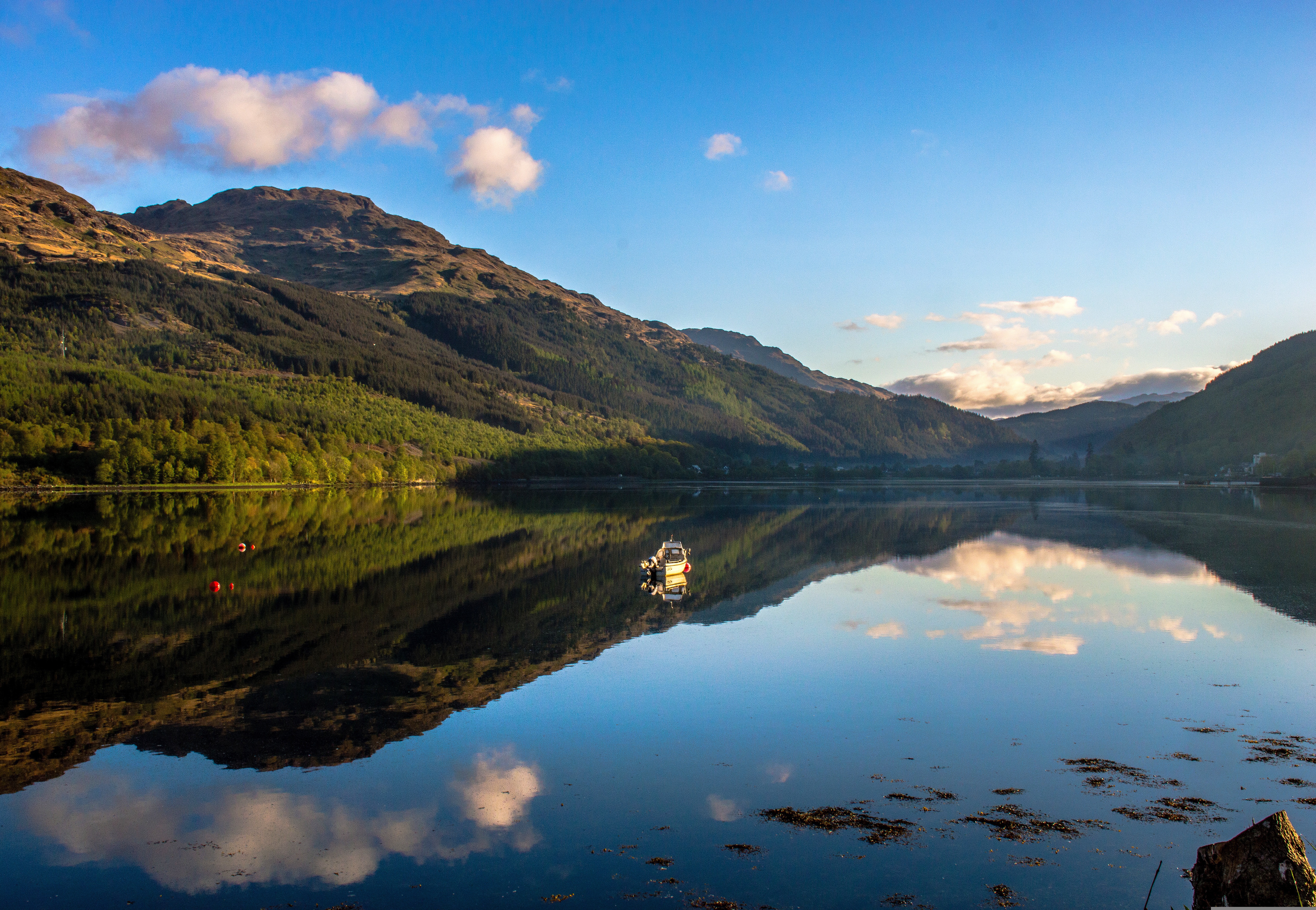
This morning, cross the Irish Sea by ferry to Scotland, where you will travel to Loch Lomond, one of Scotland’s best-known lakes (loch means lake in Scotland) and the largest in Great Britain by surface area. This evening, check into your hotel for a two-night Special Stay.
Loch Lomond, Loch Lomond and The Trossachs National Park, Scotland
Loch Lomond may be known for its breathtaking waterway, but Stirling Castle is one of the region’s most iconic castles. Home to multiple generations of Scottish royalty, including the childhood home of Mary Queen of Scots, its the ancient halls of this castle which possesses a rich storied history. You will see the Great Hall, the largest Medieval banqueting hall ever built in Scotland, and the elaborate Royal Chapel.
Inverness, Scotland
Journey to Loch Ness, a corner of the Scottish Highlands that is known for its dramatic scenery and the fabled Loch Ness monster. Keep an eye out for this elusive creature, also known as ‘Nessie’, a large prehistoric reptile believed to be living in the loch. There have been thousands of alleged sightings since the 1930s, including photographs emerging all the time, though there is no scientific evidence that Nessie exists. Nonetheless, the great folklore of the Loch Ness continues to draw in visitors far and wide. Tonight, you’ll enjoy the first of a two-night stay.
Inverness, Scotland
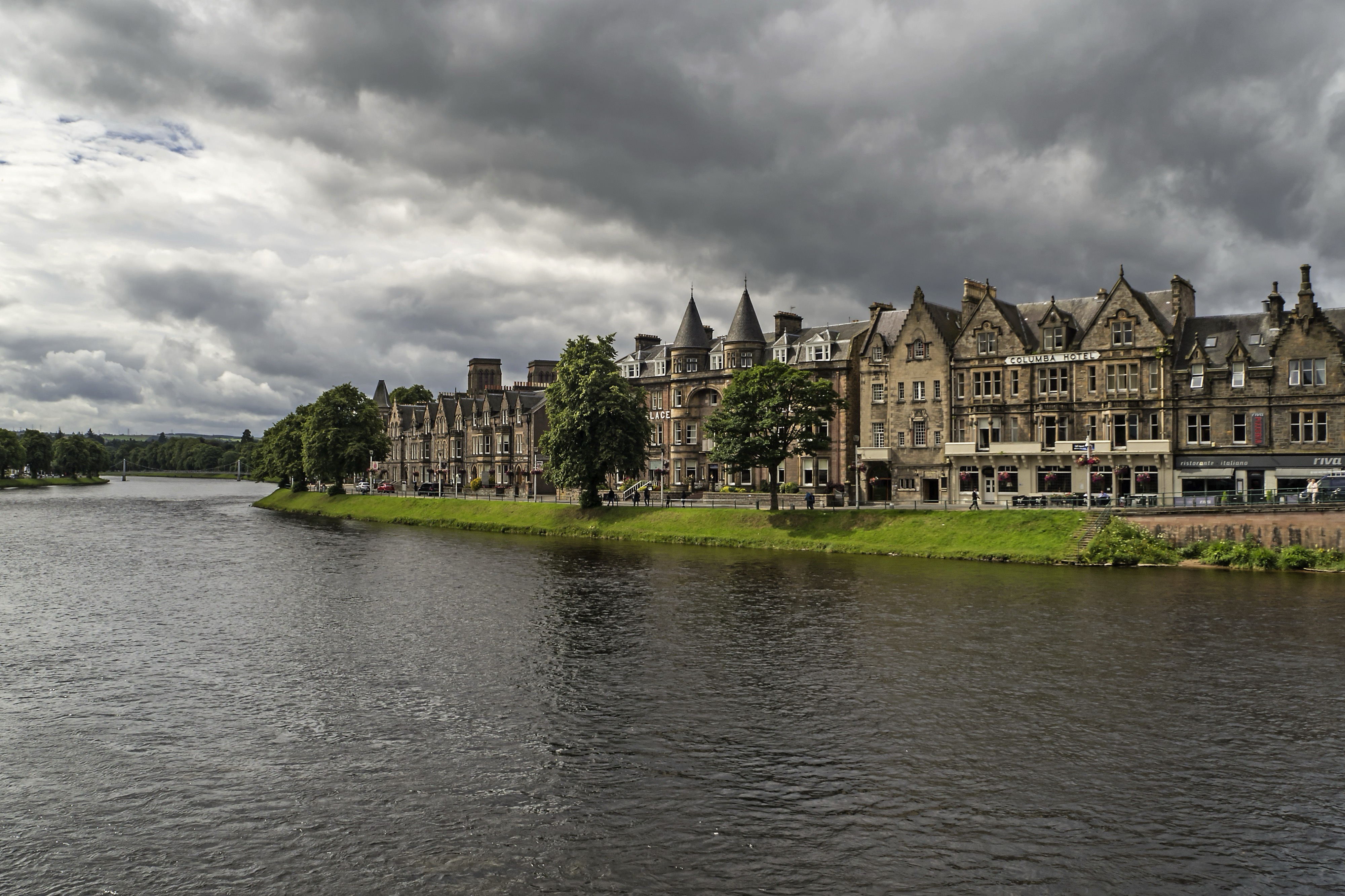
Known as Scotland’s Highland Capital, Inverness sits where the River Ness meets the Moray Firth, an inlet of the North Sea.
Today you will visit the Battle of Culloden Visitors Centre, where you will learn about the 1745 Jacobite rising and hear tales of the battle that is often described as one of the most brutal in Scottish history. Then you will discover 14th century Cawdor Castle, which is still inhabited by the Cawdor family and comprises a moat, drawbridge, turrets and turnpike stairs.
Edinburgh, Scotland
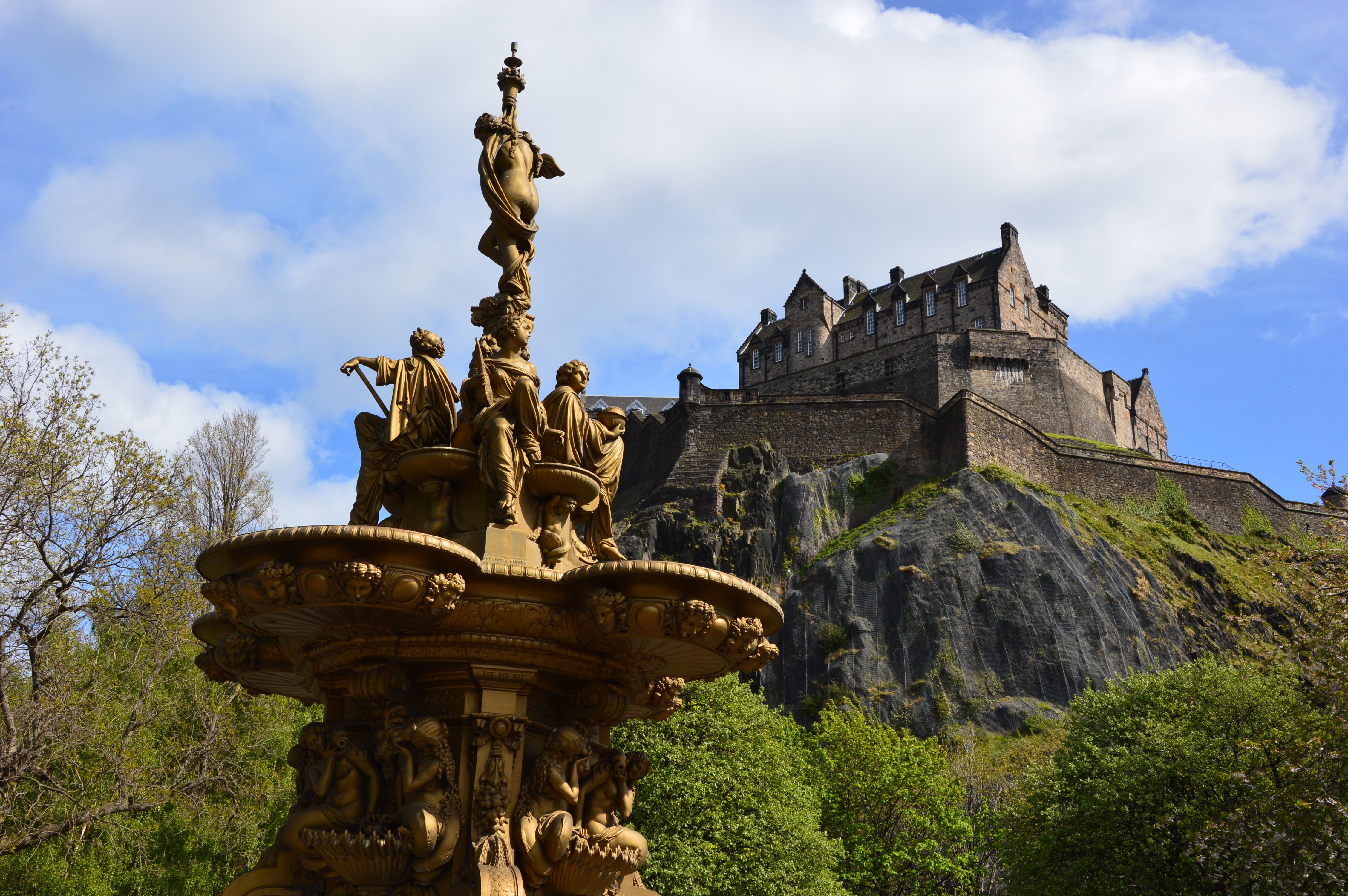
Edinburgh is to London as poetry is to prose, as Charlotte Brontë once wrote. One of the world’s stateliest cities and proudest capitals, it’s built—like Rome—on seven hills, making it a striking backdrop for the ancient pageant of history. In a skyline of sheer drama, Edinburgh Castle watches over the capital city, frowning down on Princes Street’s glamour and glitz. But despite its rich past, the city’s famous festivals, excellent museums and galleries, as well as the modern Scottish Parliament, are reminders that Edinburgh has its feet firmly in the 21st century.Nearly everywhere in Edinburgh (the burgh is always pronounced burra in Scotland) there are spectacular buildings, whose Doric, Ionic, and Corinthian pillars add touches of neoclassical grandeur to the largely Presbyterian backdrop. Large gardens are a strong feature of central Edinburgh, where the city council is one of the most stridently conservationist in Europe. Arthur’s Seat, a mountain of bright green and yellow furze, rears up behind the spires of the Old Town. This child-size mountain jutting 822 feet above its surroundings has steep slopes and little crags, like a miniature Highlands set down in the middle of the busy city. Appropriately, these theatrical elements match Edinburgh’s character—after all, the city has been a stage that has seen its fair share of romance, violence, tragedy, and triumph.Modern Edinburgh has become a cultural capital, staging the Edinburgh International Festival and the Fringe Festival in every possible venue each August. The stunning Museum of Scotland complements the city’s wealth of galleries and artsy hangouts. Add Edinburgh’s growing reputation for food and nightlife and you have one of the world’s most beguiling cities.Today the city is the second most important financial center in the United Kingdom, and the fifth most important in Europe. The city regularly is ranked near the top in quality-of-life surveys. Accordingly, New Town apartments on fashionable streets sell for considerable sums. In some senses the city is showy and materialistic, but Edinburgh still supports learned societies, some of which have their roots in the Scottish Enlightenment. The Royal Society of Edinburgh, for example, established in 1783 “for the advancement of learning and useful knowledge,” remains an important forum for interdisciplinary activities.Even as Edinburgh moves through the 21st century, its tall guardian castle remains the focal point of the city and its venerable history. Take time to explore the streets—peopled by the spirits of Mary, Queen of Scots; Sir Walter Scott; and Robert Louis Stevenson—and pay your respects to the world’s best-loved terrier, Greyfriars Bobby. In the evenings you can enjoy candlelit restaurants or a folk ceilidh (pronounced kay-lee, a traditional Scottish dance with music), though you should remember that you haven’t earned your porridge until you’ve climbed Arthur’s Seat. Should you wander around a corner, say, on George Street, you might see not an endless cityscape, but blue sea and a patchwork of fields. This is the county of Fife, beyond the inlet of the North Sea called the Firth of Forth—a reminder, like the mountains to the northwest that can be glimpsed from Edinburgh’s highest points, that the rest of Scotland lies within easy reach.
Edinburgh, Scotland
Edinburgh is to London as poetry is to prose, as Charlotte Brontë once wrote. One of the world’s stateliest cities and proudest capitals, it’s built—like Rome—on seven hills, making it a striking backdrop for the ancient pageant of history. In a skyline of sheer drama, Edinburgh Castle watches over the capital city, frowning down on Princes Street’s glamour and glitz. But despite its rich past, the city’s famous festivals, excellent museums and galleries, as well as the modern Scottish Parliament, are reminders that Edinburgh has its feet firmly in the 21st century.Nearly everywhere in Edinburgh (the burgh is always pronounced burra in Scotland) there are spectacular buildings, whose Doric, Ionic, and Corinthian pillars add touches of neoclassical grandeur to the largely Presbyterian backdrop. Large gardens are a strong feature of central Edinburgh, where the city council is one of the most stridently conservationist in Europe. Arthur’s Seat, a mountain of bright green and yellow furze, rears up behind the spires of the Old Town. This child-size mountain jutting 822 feet above its surroundings has steep slopes and little crags, like a miniature Highlands set down in the middle of the busy city. Appropriately, these theatrical elements match Edinburgh’s character—after all, the city has been a stage that has seen its fair share of romance, violence, tragedy, and triumph.Modern Edinburgh has become a cultural capital, staging the Edinburgh International Festival and the Fringe Festival in every possible venue each August. The stunning Museum of Scotland complements the city’s wealth of galleries and artsy hangouts. Add Edinburgh’s growing reputation for food and nightlife and you have one of the world’s most beguiling cities.Today the city is the second most important financial center in the United Kingdom, and the fifth most important in Europe. The city regularly is ranked near the top in quality-of-life surveys. Accordingly, New Town apartments on fashionable streets sell for considerable sums. In some senses the city is showy and materialistic, but Edinburgh still supports learned societies, some of which have their roots in the Scottish Enlightenment. The Royal Society of Edinburgh, for example, established in 1783 “for the advancement of learning and useful knowledge,” remains an important forum for interdisciplinary activities.Even as Edinburgh moves through the 21st century, its tall guardian castle remains the focal point of the city and its venerable history. Take time to explore the streets—peopled by the spirits of Mary, Queen of Scots; Sir Walter Scott; and Robert Louis Stevenson—and pay your respects to the world’s best-loved terrier, Greyfriars Bobby. In the evenings you can enjoy candlelit restaurants or a folk ceilidh (pronounced kay-lee, a traditional Scottish dance with music), though you should remember that you haven’t earned your porridge until you’ve climbed Arthur’s Seat. Should you wander around a corner, say, on George Street, you might see not an endless cityscape, but blue sea and a patchwork of fields. This is the county of Fife, beyond the inlet of the North Sea called the Firth of Forth—a reminder, like the mountains to the northwest that can be glimpsed from Edinburgh’s highest points, that the rest of Scotland lies within easy reach.
York, England
This morning you’ll depart Edinburgh on a scenic drive to Alnwick Castle. There, you’ll discover an incredible history that dates back over 950 years to the Norman period. Learn about the family that has resided in the castle for over 700 years and hear about the movies that have used Alnwick as a filming location, including Harry Potter and Downton Abbey.
Arrive in York this afternoon. This fascinating Medieval city is nestled within ancient city walls and has Roman and Viking roots. Tonight, check in for a two-night Special Stay.
Loch Lomond, Loch Lomond and The Trossachs National Park, Scotland
This morning, cross the Irish Sea by ferry to Scotland, where you will travel to Loch Lomond, one of Scotland’s best-known lakes (loch means lake in Scotland) and the largest in Great Britain by surface area. This evening, check into your hotel for a two-night Special Stay.
Loch Lomond, Loch Lomond and The Trossachs National Park, Scotland
Loch Lomond may be known for its breathtaking waterway, but Stirling Castle is one of the region’s most iconic castles. Home to multiple generations of Scottish royalty, including the childhood home of Mary Queen of Scots, its the ancient halls of this castle which possesses a rich storied history. You will see the Great Hall, the largest Medieval banqueting hall ever built in Scotland, and the elaborate Royal Chapel.
Inverness, Scotland
Journey to Loch Ness, a corner of the Scottish Highlands that is known for its dramatic scenery and the fabled Loch Ness monster. Keep an eye out for this elusive creature, also known as ‘Nessie’, a large prehistoric reptile believed to be living in the loch. There have been thousands of alleged sightings since the 1930s, including photographs emerging all the time, though there is no scientific evidence that Nessie exists. Nonetheless, the great folklore of the Loch Ness continues to draw in visitors far and wide. Tonight, you’ll enjoy the first of a two-night stay.
Inverness, Scotland
Known as Scotland’s Highland Capital, Inverness sits where the River Ness meets the Moray Firth, an inlet of the North Sea.
Today you will visit the Battle of Culloden Visitors Centre, where you will learn about the 1745 Jacobite rising and hear tales of the battle that is often described as one of the most brutal in Scottish history. Then you will discover 14th century Cawdor Castle, which is still inhabited by the Cawdor family and comprises a moat, drawbridge, turrets and turnpike stairs.
Edinburgh, Scotland
Edinburgh is to London as poetry is to prose, as Charlotte Brontë once wrote. One of the world’s stateliest cities and proudest capitals, it’s built—like Rome—on seven hills, making it a striking backdrop for the ancient pageant of history. In a skyline of sheer drama, Edinburgh Castle watches over the capital city, frowning down on Princes Street’s glamour and glitz. But despite its rich past, the city’s famous festivals, excellent museums and galleries, as well as the modern Scottish Parliament, are reminders that Edinburgh has its feet firmly in the 21st century.Nearly everywhere in Edinburgh (the burgh is always pronounced burra in Scotland) there are spectacular buildings, whose Doric, Ionic, and Corinthian pillars add touches of neoclassical grandeur to the largely Presbyterian backdrop. Large gardens are a strong feature of central Edinburgh, where the city council is one of the most stridently conservationist in Europe. Arthur’s Seat, a mountain of bright green and yellow furze, rears up behind the spires of the Old Town. This child-size mountain jutting 822 feet above its surroundings has steep slopes and little crags, like a miniature Highlands set down in the middle of the busy city. Appropriately, these theatrical elements match Edinburgh’s character—after all, the city has been a stage that has seen its fair share of romance, violence, tragedy, and triumph.Modern Edinburgh has become a cultural capital, staging the Edinburgh International Festival and the Fringe Festival in every possible venue each August. The stunning Museum of Scotland complements the city’s wealth of galleries and artsy hangouts. Add Edinburgh’s growing reputation for food and nightlife and you have one of the world’s most beguiling cities.Today the city is the second most important financial center in the United Kingdom, and the fifth most important in Europe. The city regularly is ranked near the top in quality-of-life surveys. Accordingly, New Town apartments on fashionable streets sell for considerable sums. In some senses the city is showy and materialistic, but Edinburgh still supports learned societies, some of which have their roots in the Scottish Enlightenment. The Royal Society of Edinburgh, for example, established in 1783 “for the advancement of learning and useful knowledge,” remains an important forum for interdisciplinary activities.Even as Edinburgh moves through the 21st century, its tall guardian castle remains the focal point of the city and its venerable history. Take time to explore the streets—peopled by the spirits of Mary, Queen of Scots; Sir Walter Scott; and Robert Louis Stevenson—and pay your respects to the world’s best-loved terrier, Greyfriars Bobby. In the evenings you can enjoy candlelit restaurants or a folk ceilidh (pronounced kay-lee, a traditional Scottish dance with music), though you should remember that you haven’t earned your porridge until you’ve climbed Arthur’s Seat. Should you wander around a corner, say, on George Street, you might see not an endless cityscape, but blue sea and a patchwork of fields. This is the county of Fife, beyond the inlet of the North Sea called the Firth of Forth—a reminder, like the mountains to the northwest that can be glimpsed from Edinburgh’s highest points, that the rest of Scotland lies within easy reach.
Edinburgh, Scotland
Edinburgh is to London as poetry is to prose, as Charlotte Brontë once wrote. One of the world’s stateliest cities and proudest capitals, it’s built—like Rome—on seven hills, making it a striking backdrop for the ancient pageant of history. In a skyline of sheer drama, Edinburgh Castle watches over the capital city, frowning down on Princes Street’s glamour and glitz. But despite its rich past, the city’s famous festivals, excellent museums and galleries, as well as the modern Scottish Parliament, are reminders that Edinburgh has its feet firmly in the 21st century.Nearly everywhere in Edinburgh (the burgh is always pronounced burra in Scotland) there are spectacular buildings, whose Doric, Ionic, and Corinthian pillars add touches of neoclassical grandeur to the largely Presbyterian backdrop. Large gardens are a strong feature of central Edinburgh, where the city council is one of the most stridently conservationist in Europe. Arthur’s Seat, a mountain of bright green and yellow furze, rears up behind the spires of the Old Town. This child-size mountain jutting 822 feet above its surroundings has steep slopes and little crags, like a miniature Highlands set down in the middle of the busy city. Appropriately, these theatrical elements match Edinburgh’s character—after all, the city has been a stage that has seen its fair share of romance, violence, tragedy, and triumph.Modern Edinburgh has become a cultural capital, staging the Edinburgh International Festival and the Fringe Festival in every possible venue each August. The stunning Museum of Scotland complements the city’s wealth of galleries and artsy hangouts. Add Edinburgh’s growing reputation for food and nightlife and you have one of the world’s most beguiling cities.Today the city is the second most important financial center in the United Kingdom, and the fifth most important in Europe. The city regularly is ranked near the top in quality-of-life surveys. Accordingly, New Town apartments on fashionable streets sell for considerable sums. In some senses the city is showy and materialistic, but Edinburgh still supports learned societies, some of which have their roots in the Scottish Enlightenment. The Royal Society of Edinburgh, for example, established in 1783 “for the advancement of learning and useful knowledge,” remains an important forum for interdisciplinary activities.Even as Edinburgh moves through the 21st century, its tall guardian castle remains the focal point of the city and its venerable history. Take time to explore the streets—peopled by the spirits of Mary, Queen of Scots; Sir Walter Scott; and Robert Louis Stevenson—and pay your respects to the world’s best-loved terrier, Greyfriars Bobby. In the evenings you can enjoy candlelit restaurants or a folk ceilidh (pronounced kay-lee, a traditional Scottish dance with music), though you should remember that you haven’t earned your porridge until you’ve climbed Arthur’s Seat. Should you wander around a corner, say, on George Street, you might see not an endless cityscape, but blue sea and a patchwork of fields. This is the county of Fife, beyond the inlet of the North Sea called the Firth of Forth—a reminder, like the mountains to the northwest that can be glimpsed from Edinburgh’s highest points, that the rest of Scotland lies within easy reach.
York, England
This morning you’ll depart Edinburgh on a scenic drive to Alnwick Castle. There, you’ll discover an incredible history that dates back over 950 years to the Norman period. Learn about the family that has resided in the castle for over 700 years and hear about the movies that have used Alnwick as a filming location, including Harry Potter and Downton Abbey.
Arrive in York this afternoon. This fascinating Medieval city is nestled within ancient city walls and has Roman and Viking roots. Tonight, check in for a two-night Special Stay.
York, England
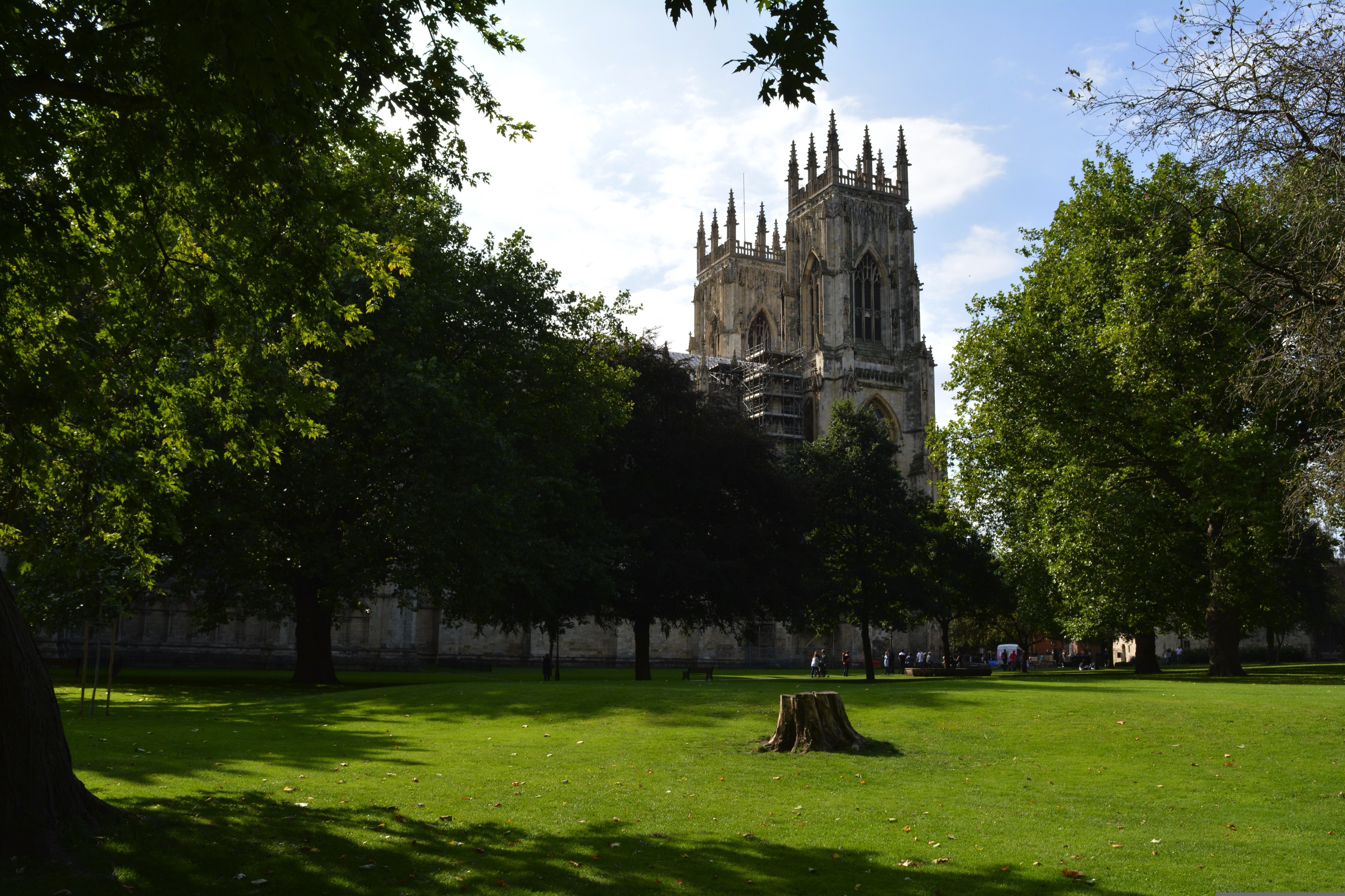
This morning you will meet a local guide who will escort you through this delightful city seeing all the Roman and Viking heritage that is on offer. Walk along The Shambles, the narrow medieval street lined with half-timbered houses and traditional shop fronts and see the impressive York Minster, said to be one of the most beautiful gothic churches in the world.
Bath, England
Enroute to the Roman city of Bath, you will stop in the charming town of Stratford-upon-Avon, the birthplace of William Shakespeare. Enjoy an orientation tour to see where the famous Bard was born, learn about his life and see his final resting place.
This afternoon you’ll arrive in Bath and check into your hotel for a two-night Special Stay. The city of Bath has been a spa town since Roman times thanks to the mineral waters with restorative properties that bubble beneath its surface. It was also the home of Jane Austen and was frequented by Charles Dickens.
Bath, England
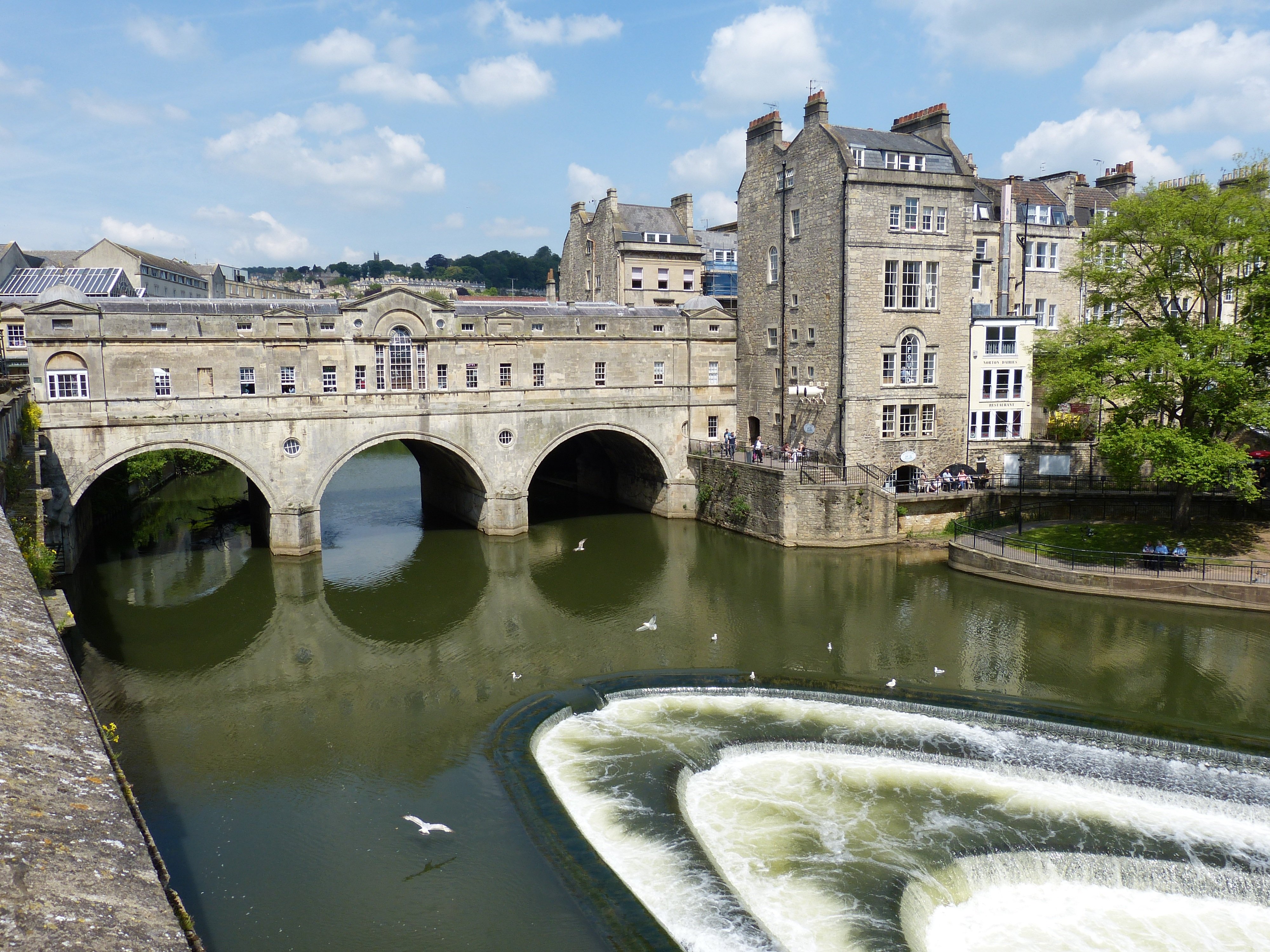
The city of Bath has been a spa town since Roman times and is the UK’s only World Heritage-listed city. Today enjoy a guided tour of the renowned Roman Baths, constructed in 70AD.
This afternoon is at leisure to explore the city at your own pace. Perhaps you would like to pack your swimsuit and make your way to the contemporary Thermae Bath Spa to experience the therapeutic waters that make this city world famous or climb the 212 steps to the top of Abbey Tower for a panoramic view over the ancient city and surrounding countryside.
London (Greenwich), England
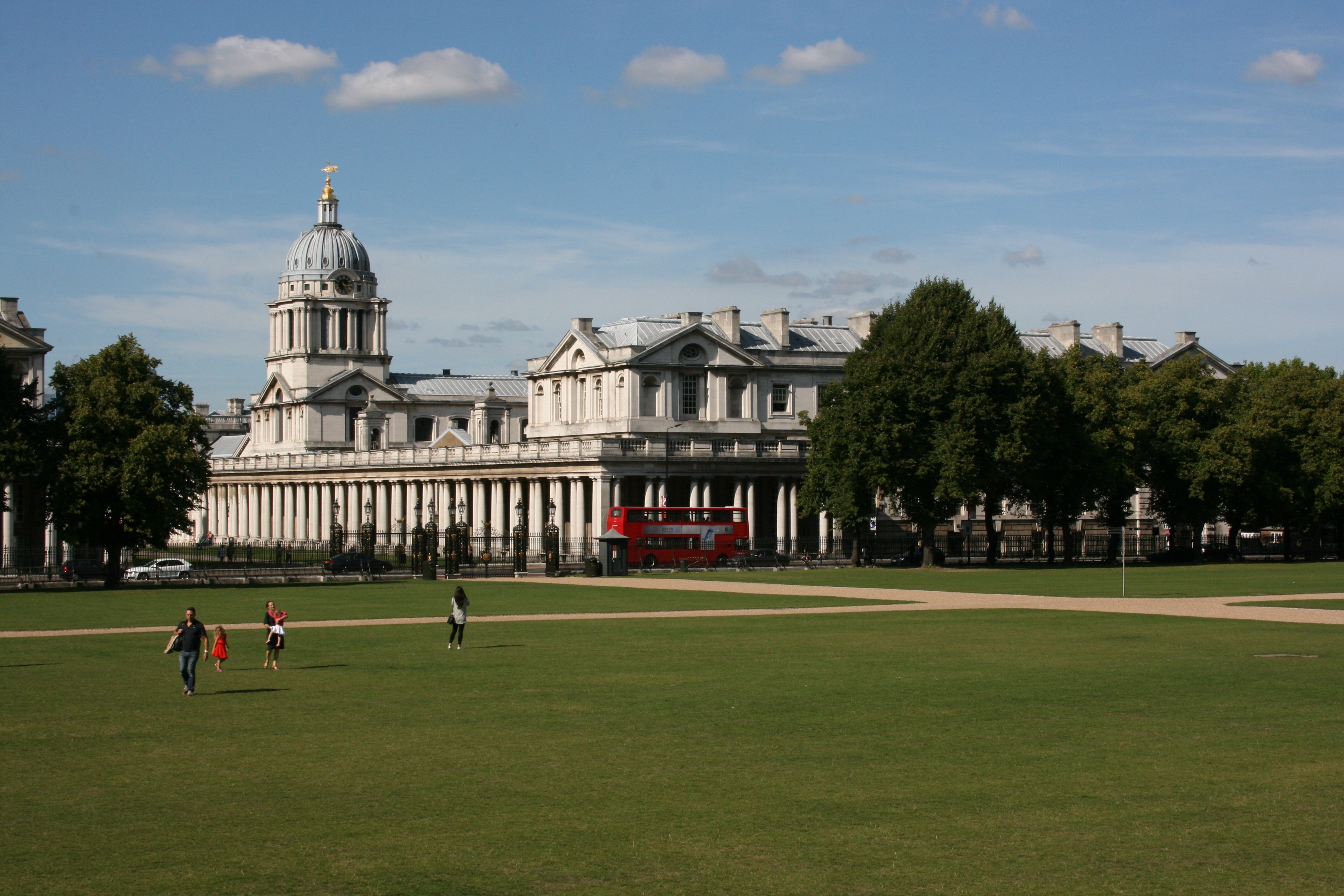
About 8 miles downstream—which means seaward, to the east—from central London, Greenwich is a small borough that looms large across the world. Once the seat of British naval power, it is not only home to the Old Royal Observatory, which measures time for our entire planet, but also the Greenwich Meridian, which divides the world into two—you can stand astride it with one foot in either hemisphere. Bear in mind that the journey to Greenwich is an event in itself. In a rush, you can take the driverless DLR train—but many opt for arriving by boat along the Thames. This way, you glide past famous sights on the London skyline (there’s a guaranteed spine chill on passing the Tower) and ever-changing docklands, and there’s usually a chirpy Cock-er-ney navigator enlivening the journey with his fun commentary. A visit to Greenwich feels like a trip to a rather elegant seaside town—albeit one with more than its fair share of historic sites. The grandiose Old Royal Naval Hospital, designed by Christopher Wren, was originally a home for veteran sailors. Today it’s a popular visitor attraction, with a more glamorous second life as one of the most widely used movie locations in Britain. Greenwich was originally home to one of England’s finest Tudor palaces, and the birthplace of Henry VIII, Elizabeth I, and Mary I. Inigo Jones built what is considered the first “classical” building in England in 1616—the Queen’s House, which now houses a collection of fine art. Britain was the world’s preeminent naval power for over 500 years, and the excellent National Maritime Museum> details that history in an engaging way. Its prize exhibits include the coat worn by Admiral Lord Nelson (1758–1805) in his final battle—bullet hole and all. The 19th-century tea clipper Cutty Sark was nearly destroyed by fire in 2007, but reopened in 2012 after a painstaking restoration. Now it’s more pristine than ever, complete with an impressive new visitor center. Greenwich Park, London’s oldest royal park, is still home to fallow red deer, just as it has been since they were first introduced here for hunting by Henry VIII. The Ranger’s House now houses a private art collection, next door to a beautifully manicured rose garden. Above it all is the Royal Observatory, where you can be in two hemispheres at once by standing along the Greenwich Meridian Line, before seeing a high-tech planetarium show. Toward north Greenwich, the hopelessly ambitious Millennium Dome has been successfully reborn as the O2 and now hosts major concerts and stand-up comedy gigs. More adventurous visitors can also go Up the O2 on a climbing expedition across the massive domed surface. Meanwhile, those who prefer excursions of a gentler kind may prefer to journey a couple of miles south of the borough, farther out into London’s southern suburbs, to the shamefully underappreciated Eltham Palace. Once a favorite of Henry VIII, parts of the mansion were transformed into an art deco masterpiece during the 1930s.
London (Greenwich), England
About 8 miles downstream—which means seaward, to the east—from central London, Greenwich is a small borough that looms large across the world. Once the seat of British naval power, it is not only home to the Old Royal Observatory, which measures time for our entire planet, but also the Greenwich Meridian, which divides the world into two—you can stand astride it with one foot in either hemisphere. Bear in mind that the journey to Greenwich is an event in itself. In a rush, you can take the driverless DLR train—but many opt for arriving by boat along the Thames. This way, you glide past famous sights on the London skyline (there’s a guaranteed spine chill on passing the Tower) and ever-changing docklands, and there’s usually a chirpy Cock-er-ney navigator enlivening the journey with his fun commentary. A visit to Greenwich feels like a trip to a rather elegant seaside town—albeit one with more than its fair share of historic sites. The grandiose Old Royal Naval Hospital, designed by Christopher Wren, was originally a home for veteran sailors. Today it’s a popular visitor attraction, with a more glamorous second life as one of the most widely used movie locations in Britain. Greenwich was originally home to one of England’s finest Tudor palaces, and the birthplace of Henry VIII, Elizabeth I, and Mary I. Inigo Jones built what is considered the first “classical” building in England in 1616—the Queen’s House, which now houses a collection of fine art. Britain was the world’s preeminent naval power for over 500 years, and the excellent National Maritime Museum> details that history in an engaging way. Its prize exhibits include the coat worn by Admiral Lord Nelson (1758–1805) in his final battle—bullet hole and all. The 19th-century tea clipper Cutty Sark was nearly destroyed by fire in 2007, but reopened in 2012 after a painstaking restoration. Now it’s more pristine than ever, complete with an impressive new visitor center. Greenwich Park, London’s oldest royal park, is still home to fallow red deer, just as it has been since they were first introduced here for hunting by Henry VIII. The Ranger’s House now houses a private art collection, next door to a beautifully manicured rose garden. Above it all is the Royal Observatory, where you can be in two hemispheres at once by standing along the Greenwich Meridian Line, before seeing a high-tech planetarium show. Toward north Greenwich, the hopelessly ambitious Millennium Dome has been successfully reborn as the O2 and now hosts major concerts and stand-up comedy gigs. More adventurous visitors can also go Up the O2 on a climbing expedition across the massive domed surface. Meanwhile, those who prefer excursions of a gentler kind may prefer to journey a couple of miles south of the borough, farther out into London’s southern suburbs, to the shamefully underappreciated Eltham Palace. Once a favorite of Henry VIII, parts of the mansion were transformed into an art deco masterpiece during the 1930s.
Paris, France
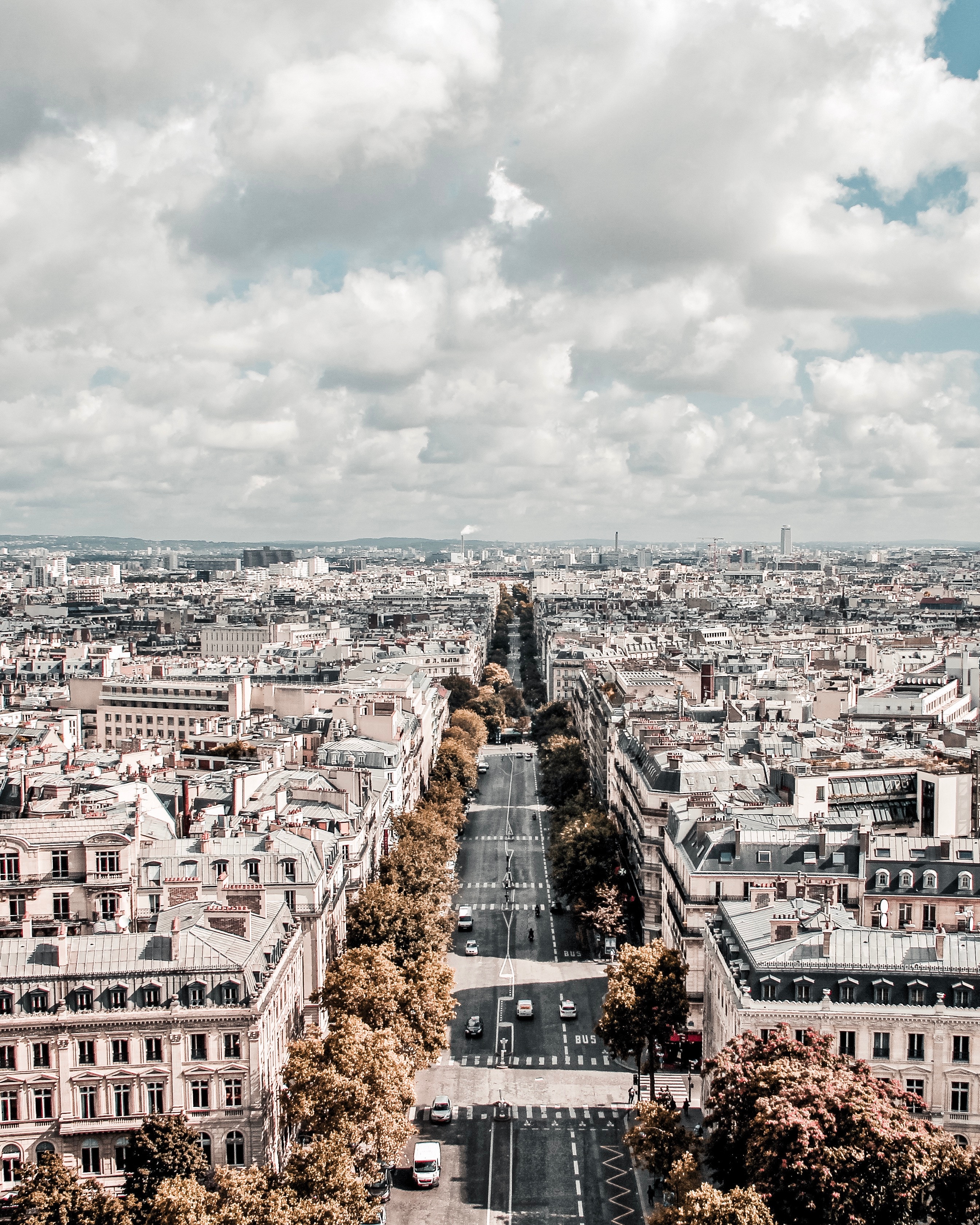
Today, travel to Paris, the City of Lights. The French capital is home to some of the world’s most famous monuments, from the Eiffel Tower to the Arc de Triomphe; museums that contain masterpieces such as Da Vinci’s Mona Lisa and Van Gogh’s Self Portrait; and iconic public spaces from elegant tree-lined Champs-Elysee to its urban oasis Jardin des Tuileries. Whether it’s your first or fiftieth time to this romantic city, there is always something new to discover. Your journey will also culminate in Paris where you’ll have the opportunity to scratch the surface a little more.
Upon arrival, transfer to your Scenic Space-Ship where your friendly crew await to welcome you on board. Relax in your luxurious suite or take a beverage to the Sun Deck.
Les Andelys, France
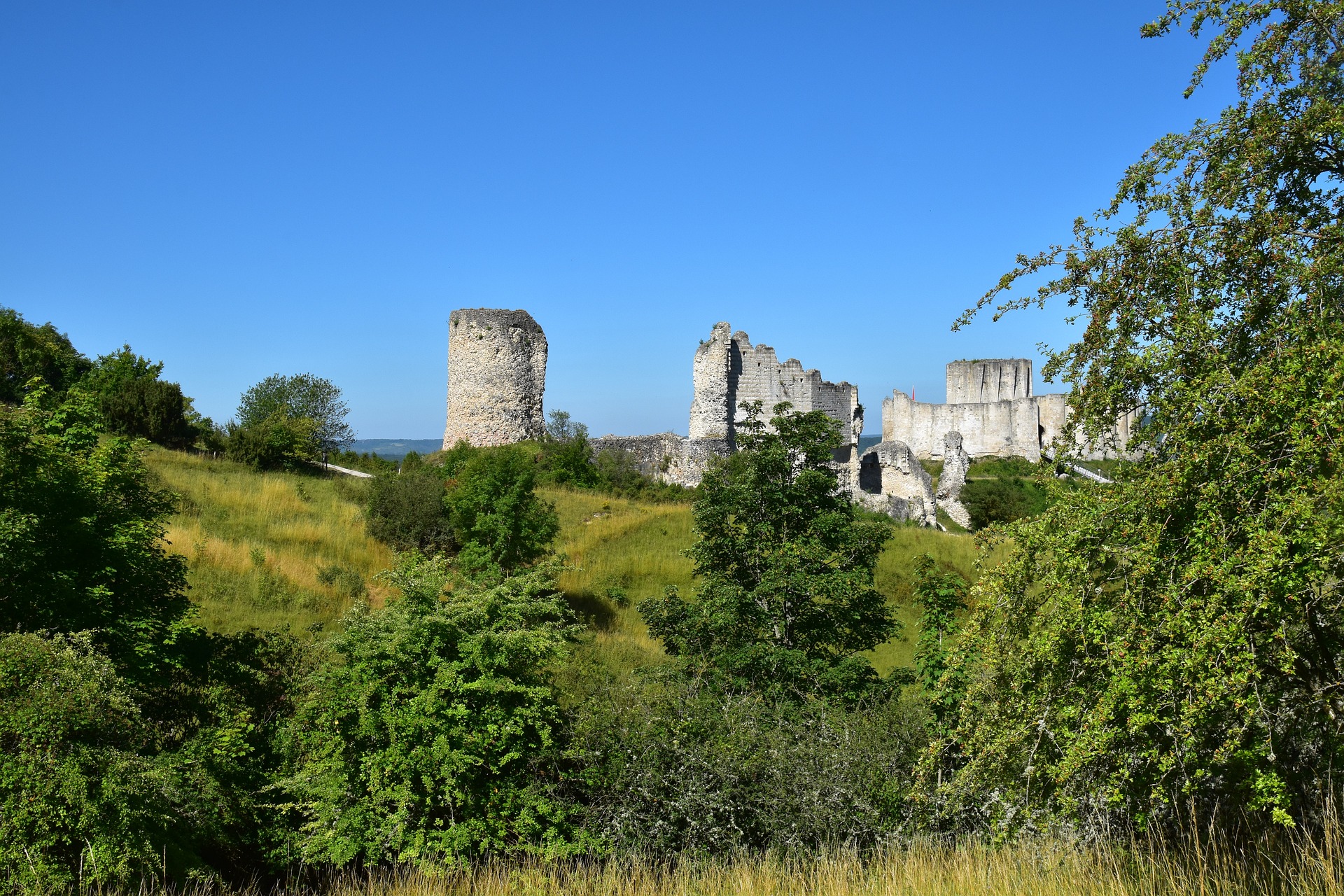
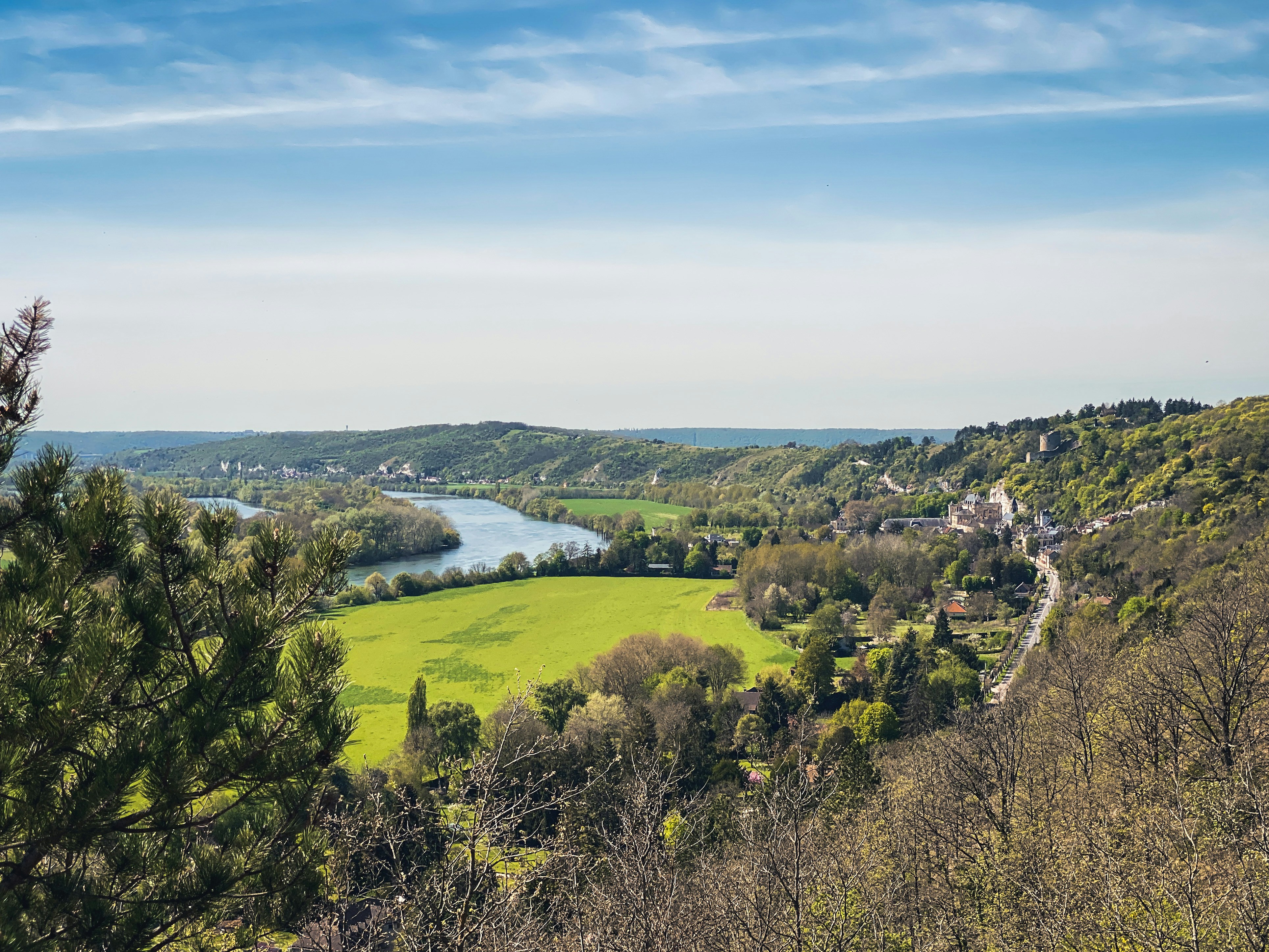
Enjoy a relaxed morning on board as you cruise gently along the Seine to Les Andelys, arriving just after lunch. This pretty, waterside village dates back almost 900 years and is resplendent with well-preserved Norman-era houses and exquisite public buildings and overlooked by the imposing ruins of King Richard the Lionheart’s castle, Château Gaillard. Take a stroll alongside the river, admiring the striking limestone cliffs rising from it, or through the charming centre of town where the buildings are a living catalogue through time.
Scenic Freechoice:
Choose from this afternoon’s Scenic Freechoice excursions:
Hike to Château Gaillard with ‘Richard the Lionheart’: Step back to the age of Robin Hood on this Medieval-themed walking tour. Uncover the historical secrets of Les Andelys and venture up to Lionheart’s castle, Château Gaillard, to wander among the remnants.
Tour of Les Andelys with Château Gaillard: Explore the picturesque Norman town of Les Andelys on the banks of the River Seine with your local guide before reaching the Château that looks over the city.
Cider farm visit: Normandy’s cider production embodies the essence of artisanal craftsmanship and rural charm. Visit a local farm to see the process in action and taste this distinctive effervescent drink.
Château d’Acquigny Gardens and Louviers: After a short drive, visit the gardens of Acquigny Castle for a peaceful walk through its romantic park, featuring rivers, waterfalls, remarkable trees, an orangery, and botanical collections from five continents. Then discover Louviers, a charming Norman town known for its medieval and industrial heritage, historic centre, traditional houses, and the Gothic Church of Notre-Dame, before returning to the ship.
York, England
This morning you will meet a local guide who will escort you through this delightful city seeing all the Roman and Viking heritage that is on offer. Walk along The Shambles, the narrow medieval street lined with half-timbered houses and traditional shop fronts and see the impressive York Minster, said to be one of the most beautiful gothic churches in the world.
Bath, England
Enroute to the Roman city of Bath, you will stop in the charming town of Stratford-upon-Avon, the birthplace of William Shakespeare. Enjoy an orientation tour to see where the famous Bard was born, learn about his life and see his final resting place.
This afternoon you’ll arrive in Bath and check into your hotel for a two-night Special Stay. The city of Bath has been a spa town since Roman times thanks to the mineral waters with restorative properties that bubble beneath its surface. It was also the home of Jane Austen and was frequented by Charles Dickens.
Bath, England
The city of Bath has been a spa town since Roman times and is the UK’s only World Heritage-listed city. Today enjoy a guided tour of the renowned Roman Baths, constructed in 70AD.
This afternoon is at leisure to explore the city at your own pace. Perhaps you would like to pack your swimsuit and make your way to the contemporary Thermae Bath Spa to experience the therapeutic waters that make this city world famous or climb the 212 steps to the top of Abbey Tower for a panoramic view over the ancient city and surrounding countryside.
London (Greenwich), England
About 8 miles downstream—which means seaward, to the east—from central London, Greenwich is a small borough that looms large across the world. Once the seat of British naval power, it is not only home to the Old Royal Observatory, which measures time for our entire planet, but also the Greenwich Meridian, which divides the world into two—you can stand astride it with one foot in either hemisphere. Bear in mind that the journey to Greenwich is an event in itself. In a rush, you can take the driverless DLR train—but many opt for arriving by boat along the Thames. This way, you glide past famous sights on the London skyline (there’s a guaranteed spine chill on passing the Tower) and ever-changing docklands, and there’s usually a chirpy Cock-er-ney navigator enlivening the journey with his fun commentary. A visit to Greenwich feels like a trip to a rather elegant seaside town—albeit one with more than its fair share of historic sites. The grandiose Old Royal Naval Hospital, designed by Christopher Wren, was originally a home for veteran sailors. Today it’s a popular visitor attraction, with a more glamorous second life as one of the most widely used movie locations in Britain. Greenwich was originally home to one of England’s finest Tudor palaces, and the birthplace of Henry VIII, Elizabeth I, and Mary I. Inigo Jones built what is considered the first “classical” building in England in 1616—the Queen’s House, which now houses a collection of fine art. Britain was the world’s preeminent naval power for over 500 years, and the excellent National Maritime Museum> details that history in an engaging way. Its prize exhibits include the coat worn by Admiral Lord Nelson (1758–1805) in his final battle—bullet hole and all. The 19th-century tea clipper Cutty Sark was nearly destroyed by fire in 2007, but reopened in 2012 after a painstaking restoration. Now it’s more pristine than ever, complete with an impressive new visitor center. Greenwich Park, London’s oldest royal park, is still home to fallow red deer, just as it has been since they were first introduced here for hunting by Henry VIII. The Ranger’s House now houses a private art collection, next door to a beautifully manicured rose garden. Above it all is the Royal Observatory, where you can be in two hemispheres at once by standing along the Greenwich Meridian Line, before seeing a high-tech planetarium show. Toward north Greenwich, the hopelessly ambitious Millennium Dome has been successfully reborn as the O2 and now hosts major concerts and stand-up comedy gigs. More adventurous visitors can also go Up the O2 on a climbing expedition across the massive domed surface. Meanwhile, those who prefer excursions of a gentler kind may prefer to journey a couple of miles south of the borough, farther out into London’s southern suburbs, to the shamefully underappreciated Eltham Palace. Once a favorite of Henry VIII, parts of the mansion were transformed into an art deco masterpiece during the 1930s.
London (Greenwich), England
About 8 miles downstream—which means seaward, to the east—from central London, Greenwich is a small borough that looms large across the world. Once the seat of British naval power, it is not only home to the Old Royal Observatory, which measures time for our entire planet, but also the Greenwich Meridian, which divides the world into two—you can stand astride it with one foot in either hemisphere. Bear in mind that the journey to Greenwich is an event in itself. In a rush, you can take the driverless DLR train—but many opt for arriving by boat along the Thames. This way, you glide past famous sights on the London skyline (there’s a guaranteed spine chill on passing the Tower) and ever-changing docklands, and there’s usually a chirpy Cock-er-ney navigator enlivening the journey with his fun commentary. A visit to Greenwich feels like a trip to a rather elegant seaside town—albeit one with more than its fair share of historic sites. The grandiose Old Royal Naval Hospital, designed by Christopher Wren, was originally a home for veteran sailors. Today it’s a popular visitor attraction, with a more glamorous second life as one of the most widely used movie locations in Britain. Greenwich was originally home to one of England’s finest Tudor palaces, and the birthplace of Henry VIII, Elizabeth I, and Mary I. Inigo Jones built what is considered the first “classical” building in England in 1616—the Queen’s House, which now houses a collection of fine art. Britain was the world’s preeminent naval power for over 500 years, and the excellent National Maritime Museum> details that history in an engaging way. Its prize exhibits include the coat worn by Admiral Lord Nelson (1758–1805) in his final battle—bullet hole and all. The 19th-century tea clipper Cutty Sark was nearly destroyed by fire in 2007, but reopened in 2012 after a painstaking restoration. Now it’s more pristine than ever, complete with an impressive new visitor center. Greenwich Park, London’s oldest royal park, is still home to fallow red deer, just as it has been since they were first introduced here for hunting by Henry VIII. The Ranger’s House now houses a private art collection, next door to a beautifully manicured rose garden. Above it all is the Royal Observatory, where you can be in two hemispheres at once by standing along the Greenwich Meridian Line, before seeing a high-tech planetarium show. Toward north Greenwich, the hopelessly ambitious Millennium Dome has been successfully reborn as the O2 and now hosts major concerts and stand-up comedy gigs. More adventurous visitors can also go Up the O2 on a climbing expedition across the massive domed surface. Meanwhile, those who prefer excursions of a gentler kind may prefer to journey a couple of miles south of the borough, farther out into London’s southern suburbs, to the shamefully underappreciated Eltham Palace. Once a favorite of Henry VIII, parts of the mansion were transformed into an art deco masterpiece during the 1930s.
Paris, France
Today, travel to Paris, the City of Lights. The French capital is home to some of the world’s most famous monuments, from the Eiffel Tower to the Arc de Triomphe; museums that contain masterpieces such as Da Vinci’s Mona Lisa and Van Gogh’s Self Portrait; and iconic public spaces from elegant tree-lined Champs-Elysee to its urban oasis Jardin des Tuileries. Whether it’s your first or fiftieth time to this romantic city, there is always something new to discover. Your journey will also culminate in Paris where you’ll have the opportunity to scratch the surface a little more.
Upon arrival, transfer to your Scenic Space-Ship where your friendly crew await to welcome you on board. Relax in your luxurious suite or take a beverage to the Sun Deck.
Les Andelys, France
Enjoy a relaxed morning on board as you cruise gently along the Seine to Les Andelys, arriving just after lunch. This pretty, waterside village dates back almost 900 years and is resplendent with well-preserved Norman-era houses and exquisite public buildings and overlooked by the imposing ruins of King Richard the Lionheart’s castle, Château Gaillard. Take a stroll alongside the river, admiring the striking limestone cliffs rising from it, or through the charming centre of town where the buildings are a living catalogue through time.
Scenic Freechoice:
Choose from this afternoon’s Scenic Freechoice excursions:
Hike to Château Gaillard with ‘Richard the Lionheart’: Step back to the age of Robin Hood on this Medieval-themed walking tour. Uncover the historical secrets of Les Andelys and venture up to Lionheart’s castle, Château Gaillard, to wander among the remnants.
Tour of Les Andelys with Château Gaillard: Explore the picturesque Norman town of Les Andelys on the banks of the River Seine with your local guide before reaching the Château that looks over the city.
Cider farm visit: Normandy’s cider production embodies the essence of artisanal craftsmanship and rural charm. Visit a local farm to see the process in action and taste this distinctive effervescent drink.
Château d’Acquigny Gardens and Louviers: After a short drive, visit the gardens of Acquigny Castle for a peaceful walk through its romantic park, featuring rivers, waterfalls, remarkable trees, an orangery, and botanical collections from five continents. Then discover Louviers, a charming Norman town known for its medieval and industrial heritage, historic centre, traditional houses, and the Gothic Church of Notre-Dame, before returning to the ship.
Rouen, France
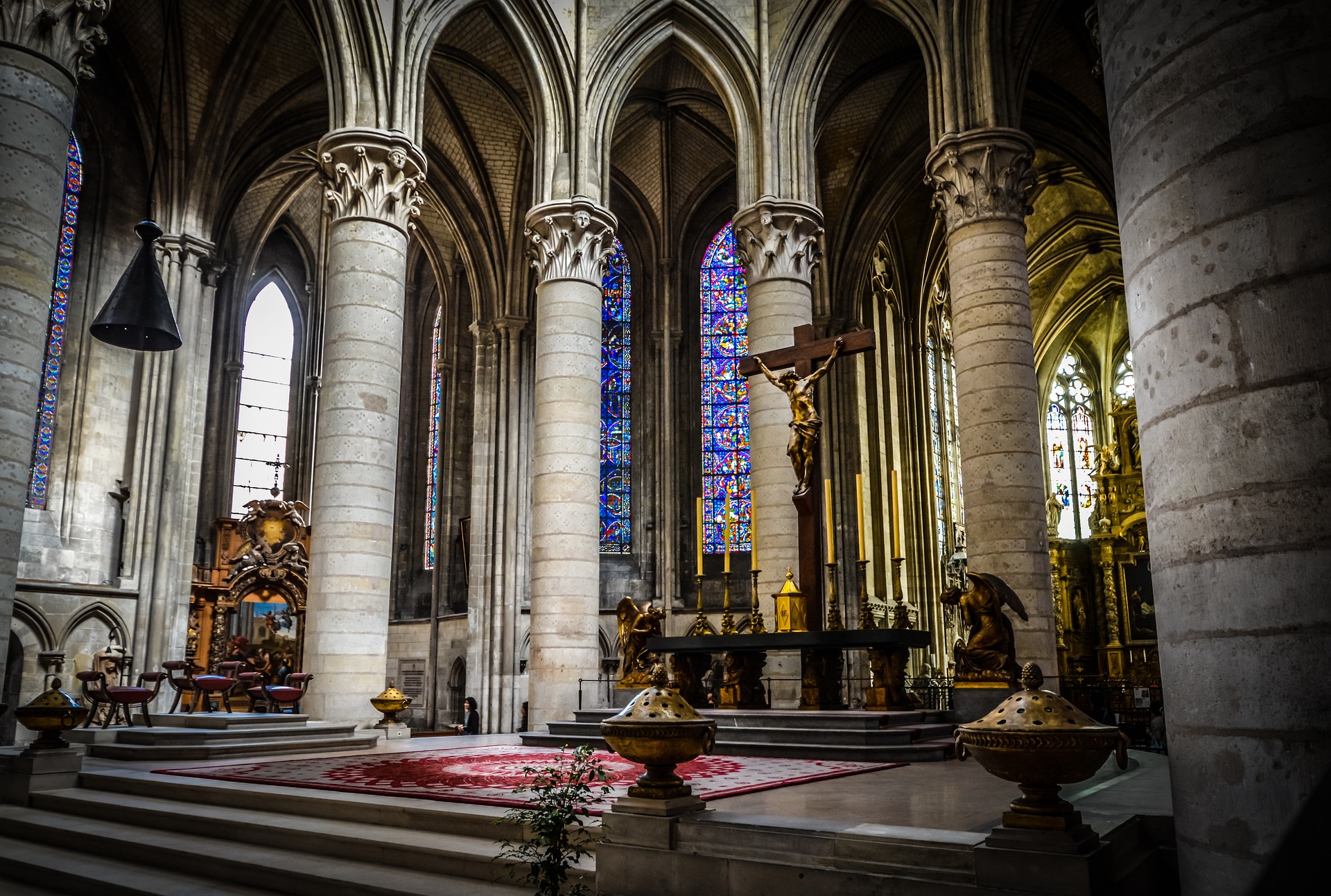
Normandy’s capital, Rouen, has a history that spans over 2,000 years, from Viking legends to its significant role in both World Wars. It was also the place where Richard the Lionheart was crowned Duke of Normandy and Joan of Arc was burnt at the stake. A considerable amount of Rouen was sadly destroyed in World War II, but much of the city has been faithfully restored, including the exquisite Old Town. It’s an engaging and historically rich destination, packed with museums, stylish bistros and coffee shops, and a wealth of churches, including the famed 12th century Rouen Cathedral.
Scenic Freechoice:
Explore your way with one of this morning’s Scenic Freechoice excursions:
Rouen city tour: See why Victor Hugo once described Rouen as ‘the city of a hundred spires’ on this guided tour. Visit the cathedral district, old marketplace and Saint-Maclou Quarter. Step into a fairytale of Medieval alleys and half-timbered houses. Learn about Joan of Arc and see where she was put to death in 1431. Enjoy free time afterwards.
Guided tour of Rouen with Rollo the Viking: Authentically dressed as Viking warlord Rollo the Walker – who was famously too tall to ride a horse – your guide will take you around the city to learn about the Viking raiders who made Rouen their capital. This tour focuses on the city’s Medieval past and you will enjoy some free time afterwards to explore.
Photography discovery: Join a local photographer to learn the secret of this century’s old art form. Use Rouen as the landscape of your digital portrait like a modern impressionist artist.
Back on board this evening, listen to a fascinating expert lecture.
WWI Lecture – Day in the life of a Tommy: During this interactive evening, you will gain an understanding into the life of a soldier on the Western Front and learn why this was known as ‘the Great War’. From the curious 1914 Christmas armistice football match to the horrors of trench warfare involving machine guns, tanks, mining and the deadly flamethrower, you will experience the war through the eyes of an Allied soldier, ‘a Tommy’. Try on his equipment and weapons and taste his rations. This immersive experience will bring the history of war to life.
Rouen, France
With another full day in Rouen today, you can uncover some of the region’s fascinating military history or sample local delicacies on a gourmet tour.
Scenic Freechoice:
Choose to explore your way with today’s Scenic Freechoice excursions:
Claude Monet and the Colors of Rouen: Step into the world of Claude Monet with the “Colors of Rouen” tour, where you will explore the city’s iconic landmarks that inspired the artist, most notably the breathtaking Rouen Cathedral, immortalized in his famous series of over 30 paintings capturing its changing light and atmosphere. Wander through Rouen’s charming medieval streets lined with half-timbered houses and lively squares while your guide shares rich historical insights and captivating Monet-related anecdotes. The tour also includes a visit to the Musée des Beaux-Arts, home to Monet’s cathedral studies and masterpieces by other Impressionists, offering a deeper appreciation of his artistic journey in this vibrant Norman city. (Please note: The Musée des Beaux-Arts is closed on Tuesdays and select public holidays. On these days, the tour itinerary will be slightly modified)
Excursion to the Somme Battlefields including Newfoundland Memorial Park: Take a full day excursion to the site of the WWI Battle of the Somme, which claimed the lives of more than 150,000 soldiers from Britain and the Commonwealth. Visit the Australian National Memorial (Sir John Monash Centre), the Franco-Australian Museum, Lochnagar Crater and Newfoundland Memorial Park, one of the largest areas on the Western Front where you can still see shell holes and trenches.
Excursion to the Somme Battlefields Including Thiepval: This full-day excursion will follow the same itinerary as the tour above, visiting the Somme Battlefields, the Australian National Memorial (Sir John Monash Centre) and the Franco-Australian Museum. After lunch, travel to Caterpillar Valley Cemetery, which contains more than 5,500 Commonwealth graves, then visit Thiepval Memorial to the Missing, and Lochnagar Crater.
Please note: The Sir John Monash Centre is a state-of-the-art immersive sensory experience that uses technology to tell the story. In order to maximise your experience, we suggest you download the Sir John Monash Centre app on your phone prior to embarking on your cruise.
Honfleur, France
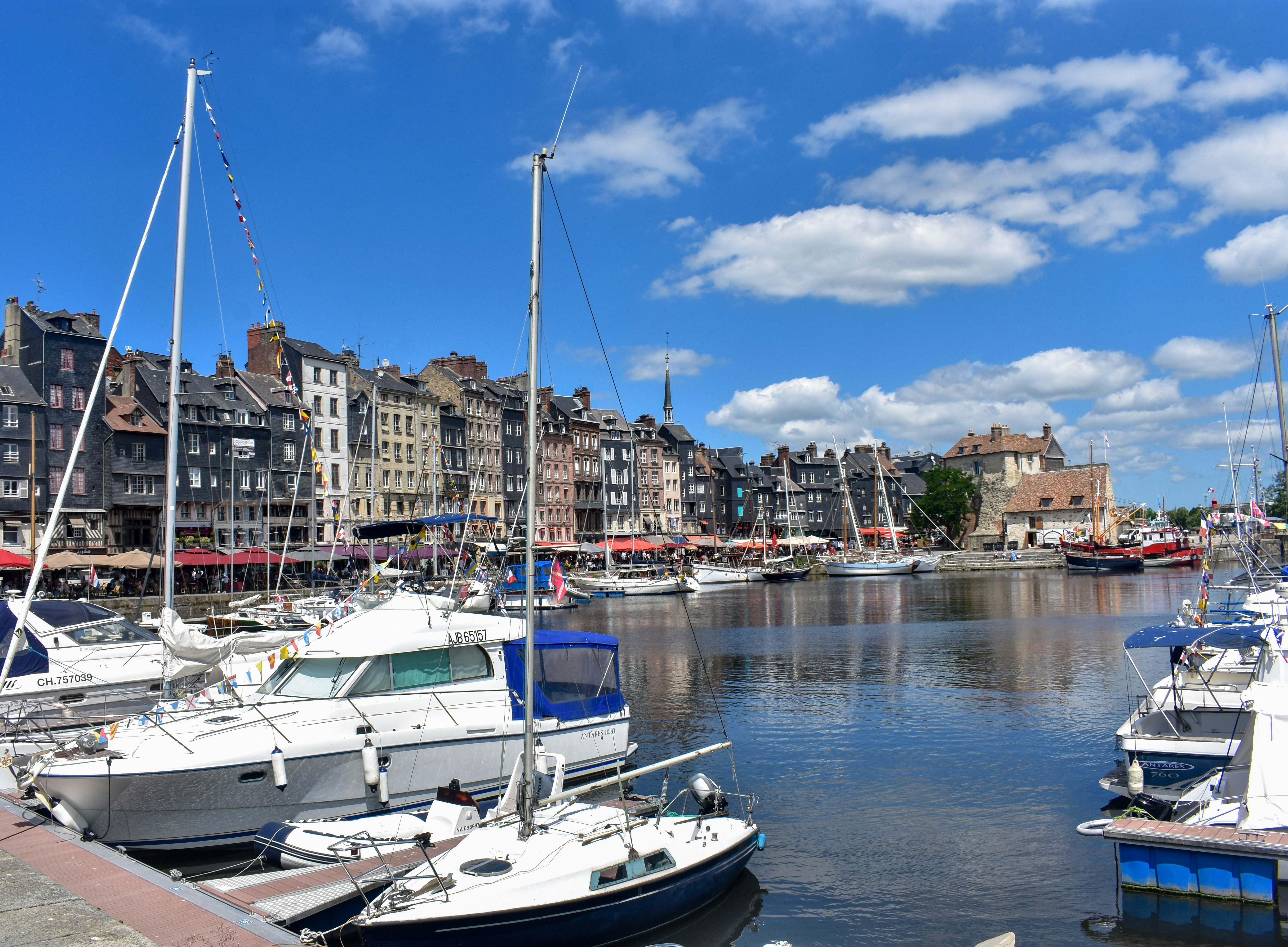
Honfleur, the most picturesque of the Côte Fleurie’s seaside towns, is a time-burnished place with a surplus of half-timber houses and cobbled streets that are lined with a stunning selection of stylish boutiques. Much of its Renaissance architecture remains intact—especially around the 17th-century Vieux Bassin harbor, where the water is fronted on one side by two-story stone houses with low, sloping roofs and on the other by tall slate-topped houses with wooden facades. Maritime expeditions (including some of the first voyages to Canada) departed from here; later, Impressionists were inspired to capture it on canvas. But the town as a whole has become increasingly crowded since the Pont de Normandie opened in 1995. Providing a direct link with Upper Normandy, the world’s sixth-largest cable-stayed bridge is supported by two concrete pylons taller than the Eiffel Tower and designed to resist winds of 257 kph (160 mph).
Honfleur, France
Honfleur, the most picturesque of the Côte Fleurie’s seaside towns, is a time-burnished place with a surplus of half-timber houses and cobbled streets that are lined with a stunning selection of stylish boutiques. Much of its Renaissance architecture remains intact—especially around the 17th-century Vieux Bassin harbor, where the water is fronted on one side by two-story stone houses with low, sloping roofs and on the other by tall slate-topped houses with wooden facades. Maritime expeditions (including some of the first voyages to Canada) departed from here; later, Impressionists were inspired to capture it on canvas. But the town as a whole has become increasingly crowded since the Pont de Normandie opened in 1995. Providing a direct link with Upper Normandy, the world’s sixth-largest cable-stayed bridge is supported by two concrete pylons taller than the Eiffel Tower and designed to resist winds of 257 kph (160 mph).
Caudebec-en-Caux, France
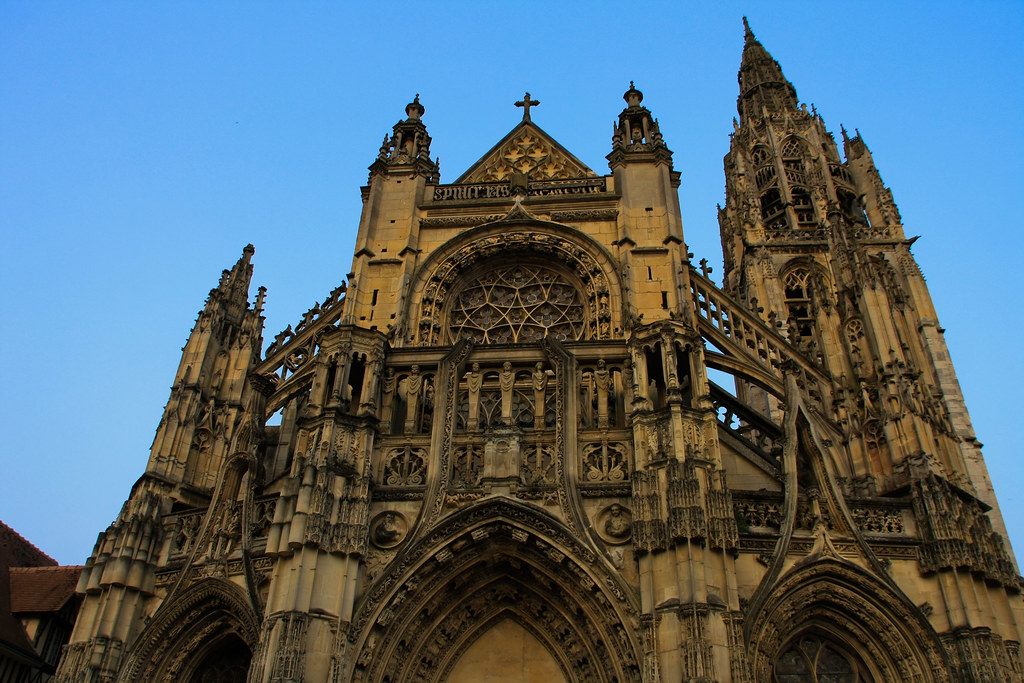
Begin cruising inland early this morning to the small town of Caudebec-en-Caux. Set on a curve of the Seine, the riverfront is lined with handsome homes, stately gardens and crumbling stone walls. Caudebec-eCaux dates back to the Middle Ages and a handful of historic buildings survived the bombardments of WWII, including the ornate 15th century Notre Dame Caudebec-e-Caux.
Scenic Freechoice:
Explore more of the region on one of these Freechoice excursions:
Cycle to Villequier with Victor Hugo Museum: Enjoy an active biking tour to the charming village of Villequier, cycling on an e-bike along the banks of the River Seine, following a flat eight-kilometre each way route. Visit the museum dedicated to Victor Hugo, the famous French poet, playwright and novelist before returning to the ship. (Please note: Victor Hugo Museum is closed on Sunday and will be replaced with a visit to Seine Museum instead).
Fecamp and Bénédictine Palace: Take a coach transfer to Fecamp, an historic seaside town surrounded by some of the tallest cliffs in Normandy. Join a guided tour of the Bénédictine Palace, a 19th-century architectural masterpiece, famous for producing Bénédictine liquor, said to contain 27 plants and spices. Enjoy a tasting during your visit.
Tales of the French Resistance: Set off on a walking tour and learn stories of the French Resistance, who fought against the Nazi Occupation of France during World War II. Hear local stories of heroism and daring missions as you explore the historic city.
Normandy Abbey Road: Spiritual health and wealth have been important in Normandy since the Middle Ages. Explore this fascinating history with a local guide on the Abbey Road, where many grand abbeys sit on the banks of the River Seine.
La Roche-Guyon, France
Historically a border town between the Duchy of Normandy and the Kingdom of France, Vernon has a rich heritage and many distinctive buildings. Nearby Giverny was the home of Impressionist artist Claude Monet for more than 40 years.
Scenic Freechoice:
Discover more on one of these Scenic Freechoice excursions:
Monet’s House and Garden: Journey to Giverny to tour the town and visit the home of the founder of Impressionism. Built by Monet, the gardens comprise a Japanese-inspired water garden with lilies, which inspired his most famous works. Afterwards, enjoy free time to explore at your own leisure.
Self-guided cycle from Vernon to Giverny: Take a self-guided biking tour from the ship in Vernon to Giverny (approximately five kilometres each way). When you arrive, you may wish to visit Monet’s House and Garden or wander about this charming town, before returning to the ship.
After exploring these beautiful gardens during this morning’s touring, you may feel inspired to create a masterpiece of your own during an on board painting class.
This afternoon your Scenic Space-Ship will cruise towards La Roche-Guyon, where this evening’s exclusive Scenic Enrich experience will take place.
Scenic Enrich
Take a short walk from the ship to Château de La Roche-Guyon, which is built into a chalk hillside and dates to the 16th century. Walk through the manicured orchard and vegetable gardens producing fresh juices, then admire the decorative walls, ceilings and tapestries. On arrival you’ll enjoy a drink and sit for a splendid classical concert that focuses on music by French composers.
Paris, France
Wake this morning in Conflans-Saint-Honorine, a Medieval town located at the confluence of the River Seine and Oise. Though it’s just a short distance from the centre of the city, it feels a world away. A castle was built here by monks in the 9th century to protect the relics of Saint Honorine, from whom the town gets its name. It became a popular pilgrimage site in the 11th century, a practice which lasted for more than 700 years. Wander the quiet streets and the riverside pathway, sip coffee at an open-air café, and admire the beautiful ancient church.
Scenic Freechoice:
Today, choose one of our Scenic Freechoice activities:
Visit to Auvers-Sur-Oise: Travel to the village where Vincent Van Gogh painted his final masterpieces. See landmarks that were immortalised in his works, such as the famous Notre Dame de l’Assomption church. The tour includes entry to Van Gogh’s room, an attic that he rented during his final months and which has sat empty since 1890. Enjoy free time afterwards to wander through the village.
Château de Chantilly: Take a guided tour of the castle, a magnificent tribute to France’s cultural heritage, built by Henri d’Orléans, the son of the last King of France. See the fine collections he amassed in his lifetime, explore the gardens and enjoy some free time. (Please note: Chantilly Castle is closed on a Tuesday, and will be replaced with a visit to Versailles Palace and Garden instead)
Musée de la Batellerie (inland water transport museum): Join this active tour in Conflans-Sainte-Honorine to visit the Inland Water Transport Museum. Conflans, sometimes called the barge capital of the world, is located on the confluence of Oise and Seine rivers, and water has played a very important role in the lives of its residents.
Château de Malmaison: This historic estate was once the residence of Napoleon Bonaparte and his first wife, Josephine de Beauharnais. Renowned for its elegant neoclassical architecture and beautifully landscaped gardens, the château reflects Josephine’s refined taste and passion for botany. Today, it houses a museum showcasing furniture, artwork, and personal items from the Napoleonic era, providing a glimpse into the private lives of one of history’s most famous couples.
This afternoon you’ll spend time on board as your Scenic Space-Ship cruises back to Paris.
Rouen, France
Normandy’s capital, Rouen, has a history that spans over 2,000 years, from Viking legends to its significant role in both World Wars. It was also the place where Richard the Lionheart was crowned Duke of Normandy and Joan of Arc was burnt at the stake. A considerable amount of Rouen was sadly destroyed in World War II, but much of the city has been faithfully restored, including the exquisite Old Town. It’s an engaging and historically rich destination, packed with museums, stylish bistros and coffee shops, and a wealth of churches, including the famed 12th century Rouen Cathedral.
Scenic Freechoice:
Explore your way with one of this morning’s Scenic Freechoice excursions:
Rouen city tour: See why Victor Hugo once described Rouen as ‘the city of a hundred spires’ on this guided tour. Visit the cathedral district, old marketplace and Saint-Maclou Quarter. Step into a fairytale of Medieval alleys and half-timbered houses. Learn about Joan of Arc and see where she was put to death in 1431. Enjoy free time afterwards.
Guided tour of Rouen with Rollo the Viking: Authentically dressed as Viking warlord Rollo the Walker – who was famously too tall to ride a horse – your guide will take you around the city to learn about the Viking raiders who made Rouen their capital. This tour focuses on the city’s Medieval past and you will enjoy some free time afterwards to explore.
Photography discovery: Join a local photographer to learn the secret of this century’s old art form. Use Rouen as the landscape of your digital portrait like a modern impressionist artist.
Back on board this evening, listen to a fascinating expert lecture.
WWI Lecture – Day in the life of a Tommy: During this interactive evening, you will gain an understanding into the life of a soldier on the Western Front and learn why this was known as ‘the Great War’. From the curious 1914 Christmas armistice football match to the horrors of trench warfare involving machine guns, tanks, mining and the deadly flamethrower, you will experience the war through the eyes of an Allied soldier, ‘a Tommy’. Try on his equipment and weapons and taste his rations. This immersive experience will bring the history of war to life.
Rouen, France
With another full day in Rouen today, you can uncover some of the region’s fascinating military history or sample local delicacies on a gourmet tour.
Scenic Freechoice:
Choose to explore your way with today’s Scenic Freechoice excursions:
Claude Monet and the Colors of Rouen: Step into the world of Claude Monet with the “Colors of Rouen” tour, where you will explore the city’s iconic landmarks that inspired the artist, most notably the breathtaking Rouen Cathedral, immortalized in his famous series of over 30 paintings capturing its changing light and atmosphere. Wander through Rouen’s charming medieval streets lined with half-timbered houses and lively squares while your guide shares rich historical insights and captivating Monet-related anecdotes. The tour also includes a visit to the Musée des Beaux-Arts, home to Monet’s cathedral studies and masterpieces by other Impressionists, offering a deeper appreciation of his artistic journey in this vibrant Norman city. (Please note: The Musée des Beaux-Arts is closed on Tuesdays and select public holidays. On these days, the tour itinerary will be slightly modified)
Excursion to the Somme Battlefields including Newfoundland Memorial Park: Take a full day excursion to the site of the WWI Battle of the Somme, which claimed the lives of more than 150,000 soldiers from Britain and the Commonwealth. Visit the Australian National Memorial (Sir John Monash Centre), the Franco-Australian Museum, Lochnagar Crater and Newfoundland Memorial Park, one of the largest areas on the Western Front where you can still see shell holes and trenches.
Excursion to the Somme Battlefields Including Thiepval: This full-day excursion will follow the same itinerary as the tour above, visiting the Somme Battlefields, the Australian National Memorial (Sir John Monash Centre) and the Franco-Australian Museum. After lunch, travel to Caterpillar Valley Cemetery, which contains more than 5,500 Commonwealth graves, then visit Thiepval Memorial to the Missing, and Lochnagar Crater.
Please note: The Sir John Monash Centre is a state-of-the-art immersive sensory experience that uses technology to tell the story. In order to maximise your experience, we suggest you download the Sir John Monash Centre app on your phone prior to embarking on your cruise.
Honfleur, France
Honfleur, the most picturesque of the Côte Fleurie’s seaside towns, is a time-burnished place with a surplus of half-timber houses and cobbled streets that are lined with a stunning selection of stylish boutiques. Much of its Renaissance architecture remains intact—especially around the 17th-century Vieux Bassin harbor, where the water is fronted on one side by two-story stone houses with low, sloping roofs and on the other by tall slate-topped houses with wooden facades. Maritime expeditions (including some of the first voyages to Canada) departed from here; later, Impressionists were inspired to capture it on canvas. But the town as a whole has become increasingly crowded since the Pont de Normandie opened in 1995. Providing a direct link with Upper Normandy, the world’s sixth-largest cable-stayed bridge is supported by two concrete pylons taller than the Eiffel Tower and designed to resist winds of 257 kph (160 mph).
Honfleur, France
Honfleur, the most picturesque of the Côte Fleurie’s seaside towns, is a time-burnished place with a surplus of half-timber houses and cobbled streets that are lined with a stunning selection of stylish boutiques. Much of its Renaissance architecture remains intact—especially around the 17th-century Vieux Bassin harbor, where the water is fronted on one side by two-story stone houses with low, sloping roofs and on the other by tall slate-topped houses with wooden facades. Maritime expeditions (including some of the first voyages to Canada) departed from here; later, Impressionists were inspired to capture it on canvas. But the town as a whole has become increasingly crowded since the Pont de Normandie opened in 1995. Providing a direct link with Upper Normandy, the world’s sixth-largest cable-stayed bridge is supported by two concrete pylons taller than the Eiffel Tower and designed to resist winds of 257 kph (160 mph).
Caudebec-en-Caux, France
Begin cruising inland early this morning to the small town of Caudebec-en-Caux. Set on a curve of the Seine, the riverfront is lined with handsome homes, stately gardens and crumbling stone walls. Caudebec-eCaux dates back to the Middle Ages and a handful of historic buildings survived the bombardments of WWII, including the ornate 15th century Notre Dame Caudebec-e-Caux.
Scenic Freechoice:
Explore more of the region on one of these Freechoice excursions:
Cycle to Villequier with Victor Hugo Museum: Enjoy an active biking tour to the charming village of Villequier, cycling on an e-bike along the banks of the River Seine, following a flat eight-kilometre each way route. Visit the museum dedicated to Victor Hugo, the famous French poet, playwright and novelist before returning to the ship. (Please note: Victor Hugo Museum is closed on Sunday and will be replaced with a visit to Seine Museum instead).
Fecamp and Bénédictine Palace: Take a coach transfer to Fecamp, an historic seaside town surrounded by some of the tallest cliffs in Normandy. Join a guided tour of the Bénédictine Palace, a 19th-century architectural masterpiece, famous for producing Bénédictine liquor, said to contain 27 plants and spices. Enjoy a tasting during your visit.
Tales of the French Resistance: Set off on a walking tour and learn stories of the French Resistance, who fought against the Nazi Occupation of France during World War II. Hear local stories of heroism and daring missions as you explore the historic city.
Normandy Abbey Road: Spiritual health and wealth have been important in Normandy since the Middle Ages. Explore this fascinating history with a local guide on the Abbey Road, where many grand abbeys sit on the banks of the River Seine.
La Roche-Guyon, France
Historically a border town between the Duchy of Normandy and the Kingdom of France, Vernon has a rich heritage and many distinctive buildings. Nearby Giverny was the home of Impressionist artist Claude Monet for more than 40 years.
Scenic Freechoice:
Discover more on one of these Scenic Freechoice excursions:
Monet’s House and Garden: Journey to Giverny to tour the town and visit the home of the founder of Impressionism. Built by Monet, the gardens comprise a Japanese-inspired water garden with lilies, which inspired his most famous works. Afterwards, enjoy free time to explore at your own leisure.
Self-guided cycle from Vernon to Giverny: Take a self-guided biking tour from the ship in Vernon to Giverny (approximately five kilometres each way). When you arrive, you may wish to visit Monet’s House and Garden or wander about this charming town, before returning to the ship.
After exploring these beautiful gardens during this morning’s touring, you may feel inspired to create a masterpiece of your own during an on board painting class.
This afternoon your Scenic Space-Ship will cruise towards La Roche-Guyon, where this evening’s exclusive Scenic Enrich experience will take place.
Scenic Enrich
Take a short walk from the ship to Château de La Roche-Guyon, which is built into a chalk hillside and dates to the 16th century. Walk through the manicured orchard and vegetable gardens producing fresh juices, then admire the decorative walls, ceilings and tapestries. On arrival you’ll enjoy a drink and sit for a splendid classical concert that focuses on music by French composers.
Paris, France
Wake this morning in Conflans-Saint-Honorine, a Medieval town located at the confluence of the River Seine and Oise. Though it’s just a short distance from the centre of the city, it feels a world away. A castle was built here by monks in the 9th century to protect the relics of Saint Honorine, from whom the town gets its name. It became a popular pilgrimage site in the 11th century, a practice which lasted for more than 700 years. Wander the quiet streets and the riverside pathway, sip coffee at an open-air café, and admire the beautiful ancient church.
Scenic Freechoice:
Today, choose one of our Scenic Freechoice activities:
Visit to Auvers-Sur-Oise: Travel to the village where Vincent Van Gogh painted his final masterpieces. See landmarks that were immortalised in his works, such as the famous Notre Dame de l’Assomption church. The tour includes entry to Van Gogh’s room, an attic that he rented during his final months and which has sat empty since 1890. Enjoy free time afterwards to wander through the village.
Château de Chantilly: Take a guided tour of the castle, a magnificent tribute to France’s cultural heritage, built by Henri d’Orléans, the son of the last King of France. See the fine collections he amassed in his lifetime, explore the gardens and enjoy some free time. (Please note: Chantilly Castle is closed on a Tuesday, and will be replaced with a visit to Versailles Palace and Garden instead)
Musée de la Batellerie (inland water transport museum): Join this active tour in Conflans-Sainte-Honorine to visit the Inland Water Transport Museum. Conflans, sometimes called the barge capital of the world, is located on the confluence of Oise and Seine rivers, and water has played a very important role in the lives of its residents.
Château de Malmaison: This historic estate was once the residence of Napoleon Bonaparte and his first wife, Josephine de Beauharnais. Renowned for its elegant neoclassical architecture and beautifully landscaped gardens, the château reflects Josephine’s refined taste and passion for botany. Today, it houses a museum showcasing furniture, artwork, and personal items from the Napoleonic era, providing a glimpse into the private lives of one of history’s most famous couples.
This afternoon you’ll spend time on board as your Scenic Space-Ship cruises back to Paris.
Paris, France
Welcome back to Paris, where you will spend the day exploring this iconic city. First timers will love the highlights tour, which allows you to tick off bucket-list items such as the Eiffel Tower and Notre Dame Cathedral, while return visitors may want to discover the trendy Marais District or Opera Garnier, an opulent architectural masterpiece built in the 19th century. Or take a tour south-east of the city to an exquisite château.
Scenic Freechoice:
Choose from today’s Scenic Freechoice
Trendy Marais with a local Parisian: Enjoy a guided walking tour of the Marais district with a Parisian guide. A melting pot of cultures, fascinating history, opulent architecture, an eclectic arts scene and high-end fashion, the Marais is one of the most diverse districts in Paris.
Highlights of Paris city tour: Join a local guide on a coach tour of the city to see some of its most famous sites, from the Eiffel Tower to the Champs Elysee, the Arc de Triomphe and Concorde Square. You will also view the 1163-built Gothic Notre Dame Cathedral, which recently reopened after a devastating fire in 2019.
Opera Garnier: Located in the theatrical heart of Paris, the spectacular Opera Garnier is resplendent with ornately decorated rooms, grand staircases, and glistening chandeliers. Tour this opera house and learn about the magnificent building that was commissioned by Emperor Napoleon III. (Please note: When Opera Garnier is not available, this will be replaced with Ateliers du Lumieres)
Château de Vaux-le-Vicomte: Take a coach to the Château de Vaux-le-Vicomte, located an hour’s drive from Paris. This château is credited as the founding French formal garden that was the inspiration for Versailles. The property is laid out in a typical symmetrical fashion with its stunning gardens creating a theatrical setting.
This afternoon is free to explore Paris at your own leisure. Perhaps you’d like to people-watch on the Champs-Elysee from a sidewalk café, head to the top of the Eiffel Tower for a bird’s-eye view of the city, or venture to Montmartre, the artist’s district and where the famed Moulin Rouge is located. Alternatively, relax back on board your luxurious Scenic Space-Ship.
Paris, France
Your journey concludes this morning. Disembark after breakfast, taking with you many wonderful memories of this unique part of France. Transfer to Paris airport or train station for your onward journey.
This itinerary is a guide only and may be amended for operational reasons such as high and low water. As such, the cruise may operate altered from that stated above. Please refer to our terms and conditions.
Paris, France
Welcome back to Paris, where you will spend the day exploring this iconic city. First timers will love the highlights tour, which allows you to tick off bucket-list items such as the Eiffel Tower and Notre Dame Cathedral, while return visitors may want to discover the trendy Marais District or Opera Garnier, an opulent architectural masterpiece built in the 19th century. Or take a tour south-east of the city to an exquisite château.
Scenic Freechoice:
Choose from today’s Scenic Freechoice
Trendy Marais with a local Parisian: Enjoy a guided walking tour of the Marais district with a Parisian guide. A melting pot of cultures, fascinating history, opulent architecture, an eclectic arts scene and high-end fashion, the Marais is one of the most diverse districts in Paris.
Highlights of Paris city tour: Join a local guide on a coach tour of the city to see some of its most famous sites, from the Eiffel Tower to the Champs Elysee, the Arc de Triomphe and Concorde Square. You will also view the 1163-built Gothic Notre Dame Cathedral, which recently reopened after a devastating fire in 2019.
Opera Garnier: Located in the theatrical heart of Paris, the spectacular Opera Garnier is resplendent with ornately decorated rooms, grand staircases, and glistening chandeliers. Tour this opera house and learn about the magnificent building that was commissioned by Emperor Napoleon III. (Please note: When Opera Garnier is not available, this will be replaced with Ateliers du Lumieres)
Château de Vaux-le-Vicomte: Take a coach to the Château de Vaux-le-Vicomte, located an hour’s drive from Paris. This château is credited as the founding French formal garden that was the inspiration for Versailles. The property is laid out in a typical symmetrical fashion with its stunning gardens creating a theatrical setting.
This afternoon is free to explore Paris at your own leisure. Perhaps you’d like to people-watch on the Champs-Elysee from a sidewalk café, head to the top of the Eiffel Tower for a bird’s-eye view of the city, or venture to Montmartre, the artist’s district and where the famed Moulin Rouge is located. Alternatively, relax back on board your luxurious Scenic Space-Ship.
Paris, France
Your journey concludes this morning. Disembark after breakfast, taking with you many wonderful memories of this unique part of France. Transfer to Paris airport or train station for your onward journey.
This itinerary is a guide only and may be amended for operational reasons such as high and low water. As such, the cruise may operate altered from that stated above. Please refer to our terms and conditions.
Cabin Options
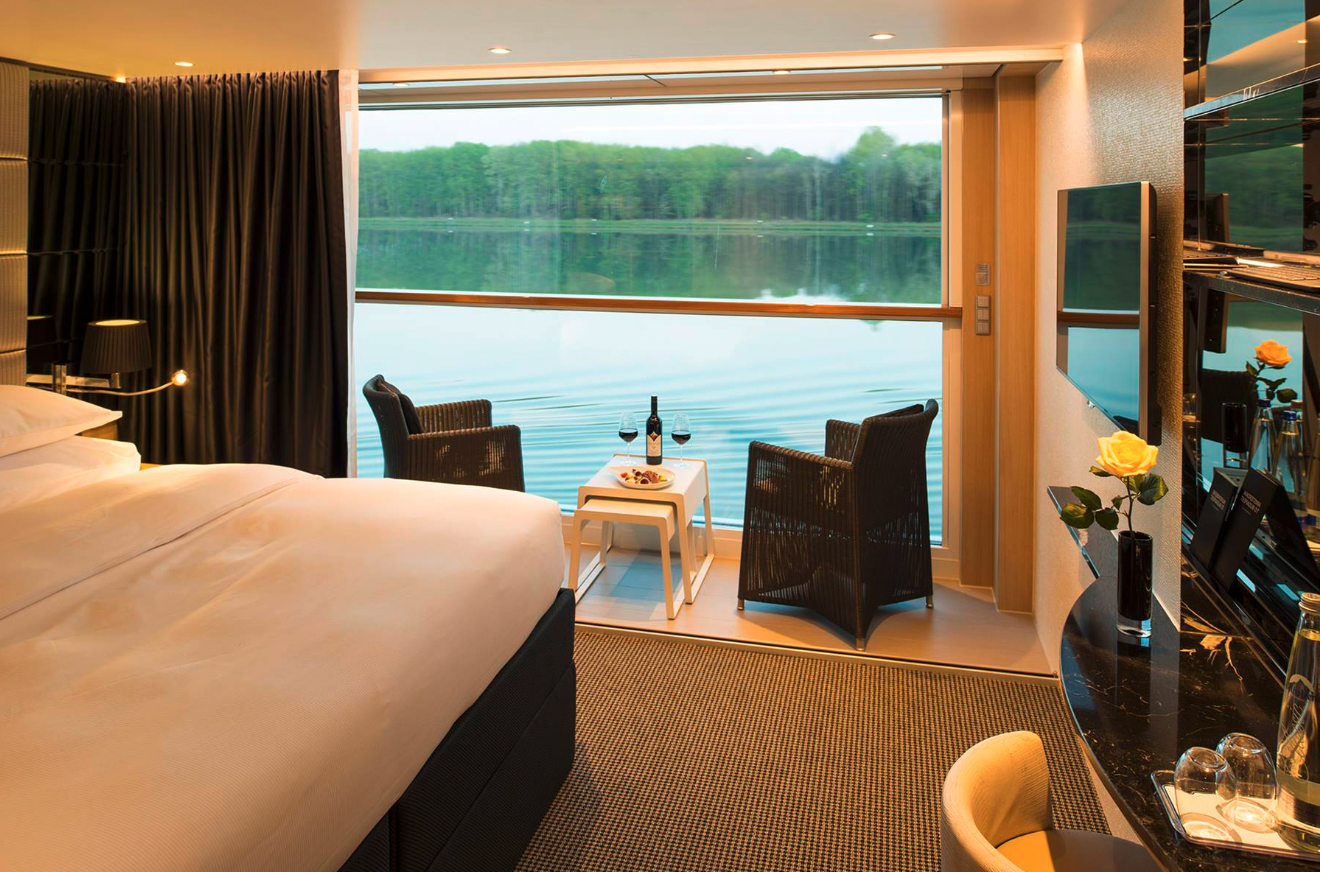
Deluxe Balcony Suite
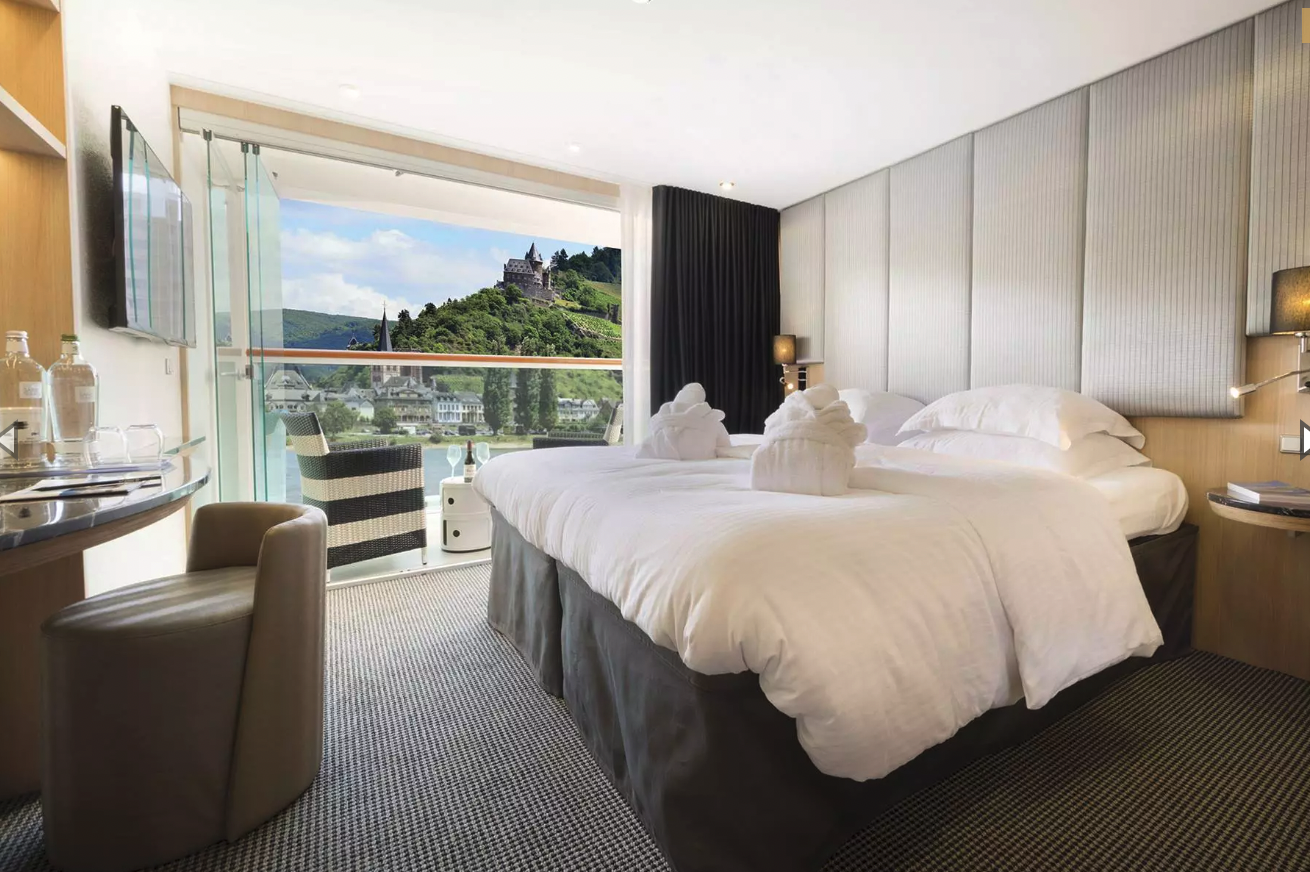
Balcony Suite
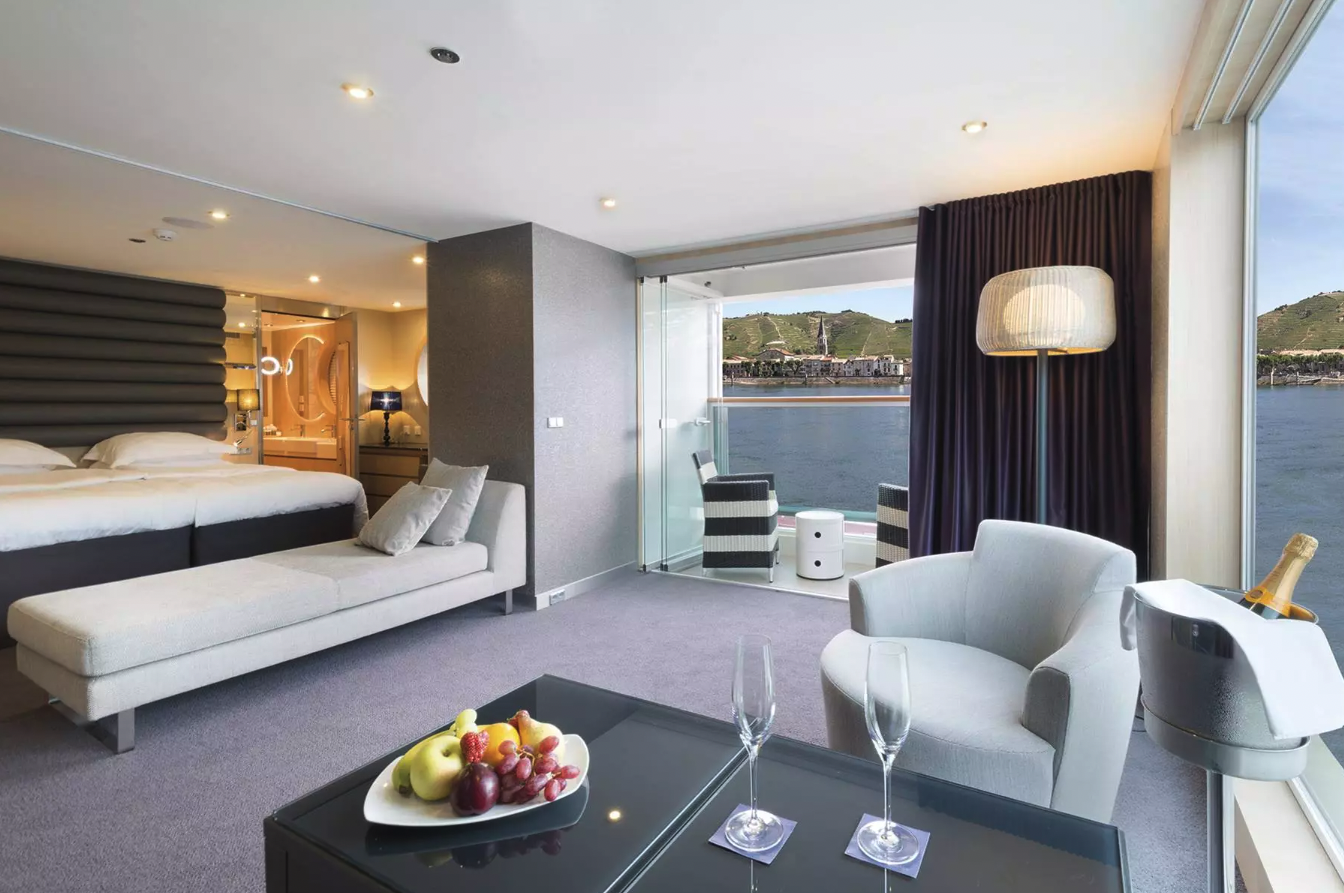
Royal One Bedroom Suite
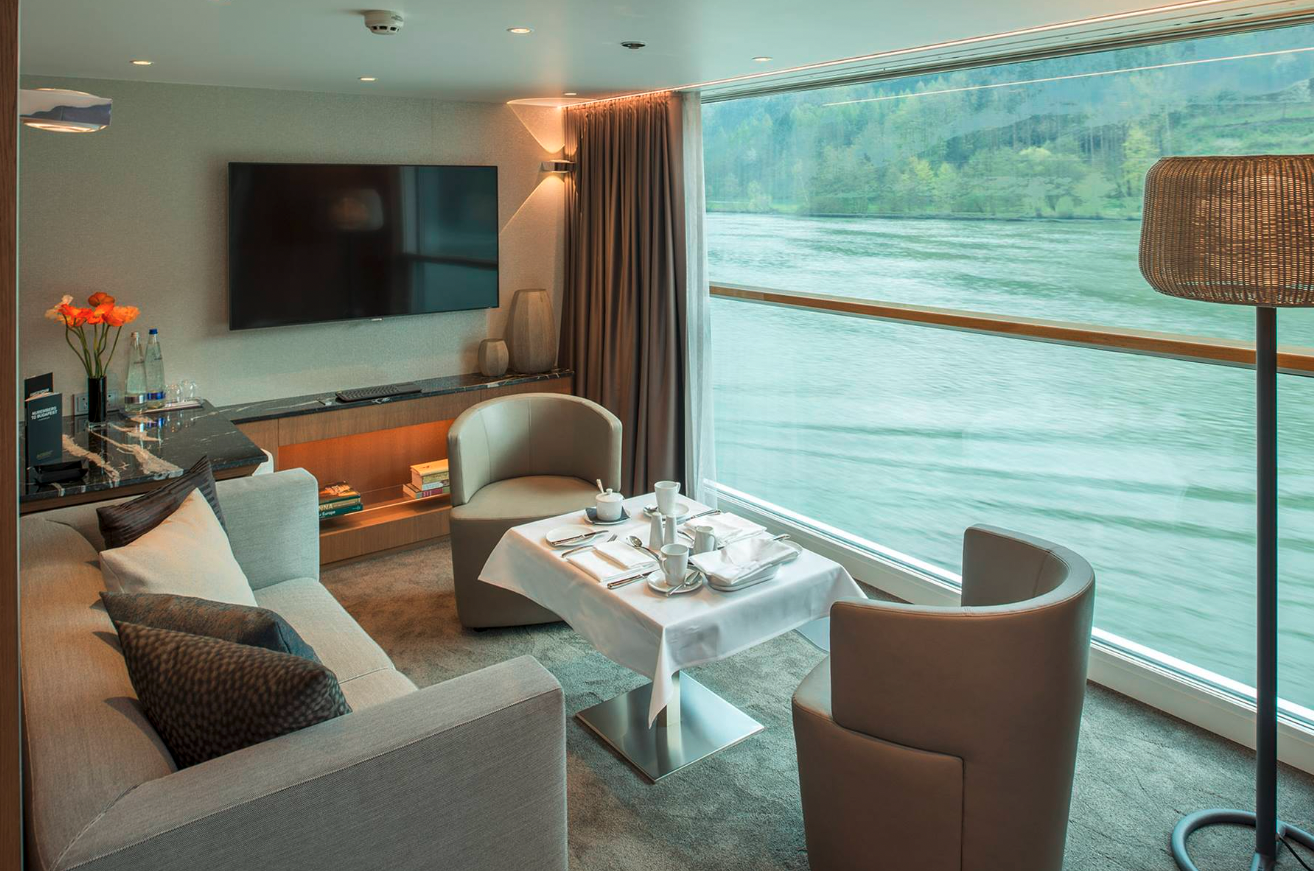
Royal Balcony Suite
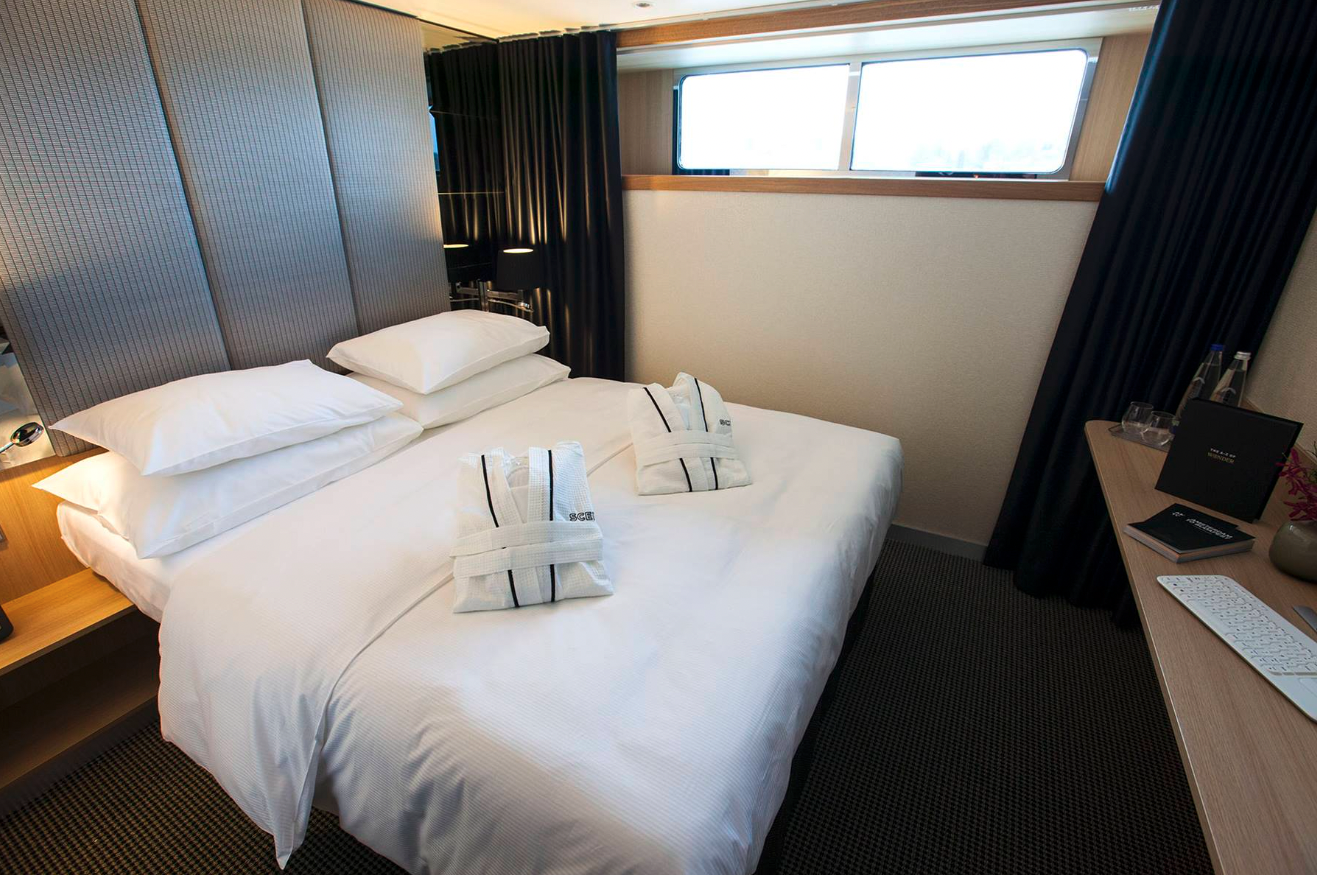
Standard Suite
Ship Facilities
Crystal Dining
Enjoy à la carte menus for breakfast, lunch and dinner at Crystal Dining. Available on all Europe and South East Asia river cruises, this main restaurant offers a relaxed dining experience with local delicacies.
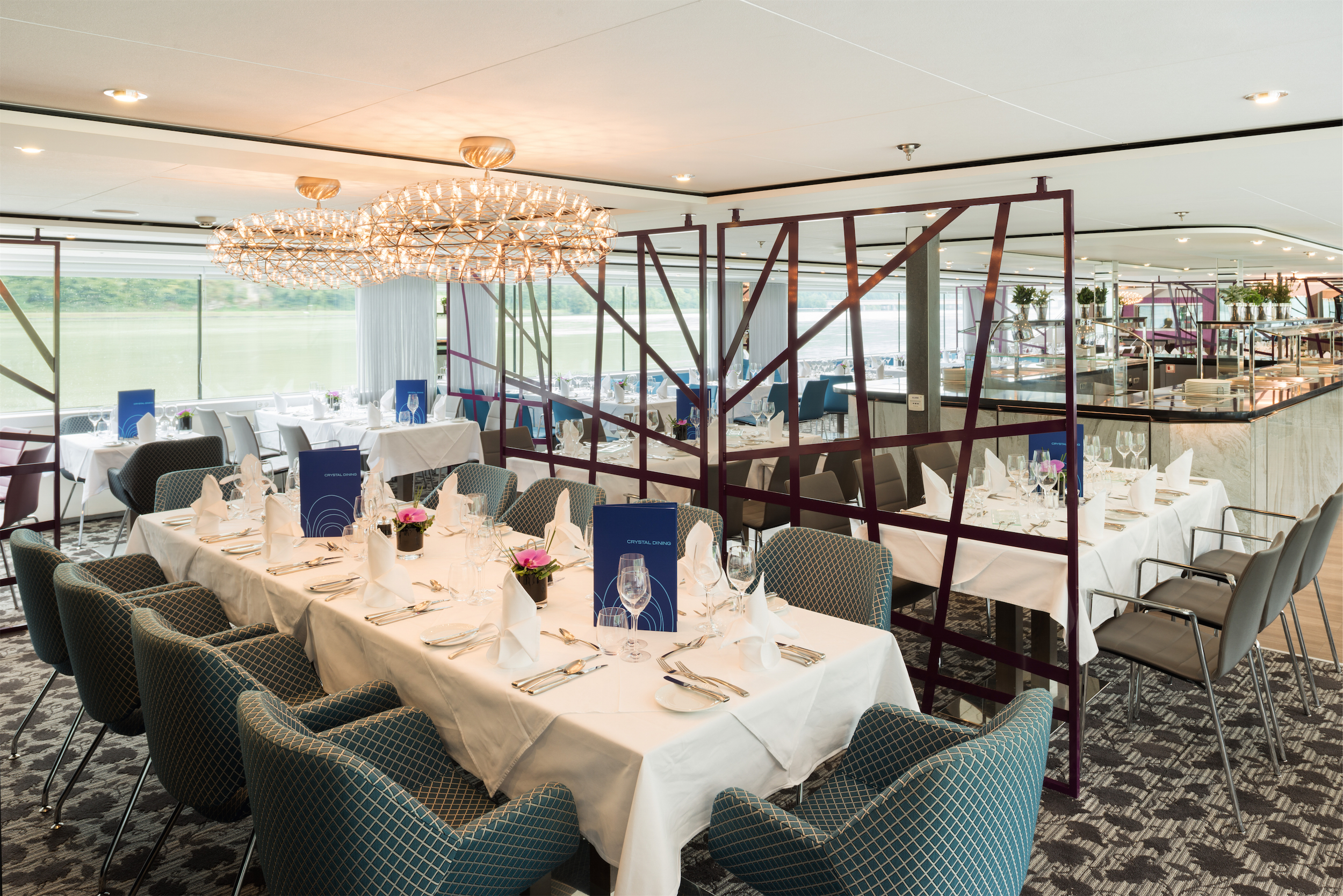
L'Amour Restaurant
With up to only 32 guests an evening, the exclusive and intimate L’Amour showcase sumptuous regional specialities. The delectable five-course menu features either Italian, French or Portuguese cuisine (depending on your cruise location), paired with elegant wines, and is available on all European river cruises.
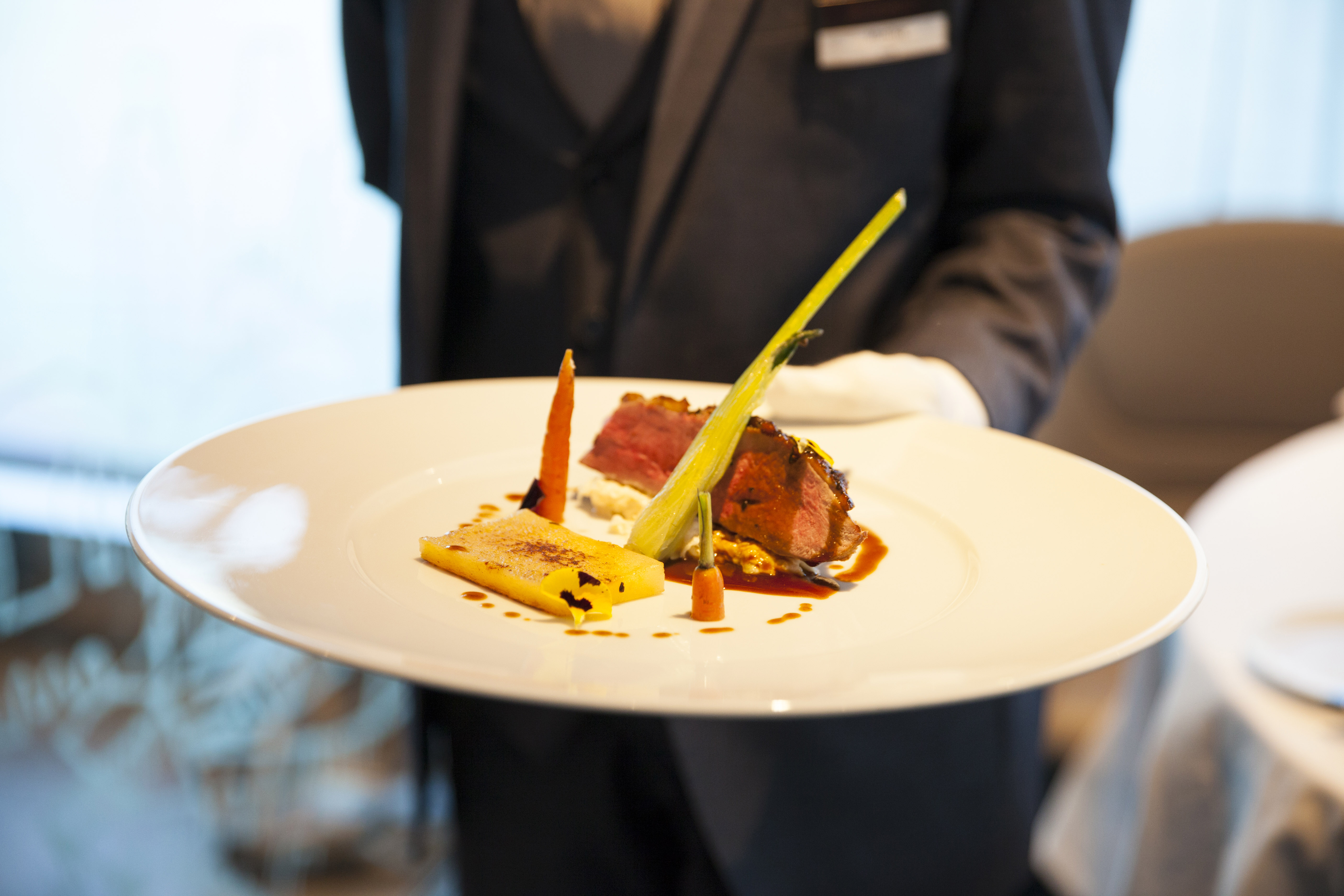
Table La Rive
Featuring a six-course degustation, the exclusive Table La Rive on our European river cruises offers an intimate dining experience for only 10 guests per evening. Guests staying on the Diamond Deck for 10 nights or longer, as well as Royal and Junior Suite guests staying for up to nine nights, will be invited by our Executive Chef.
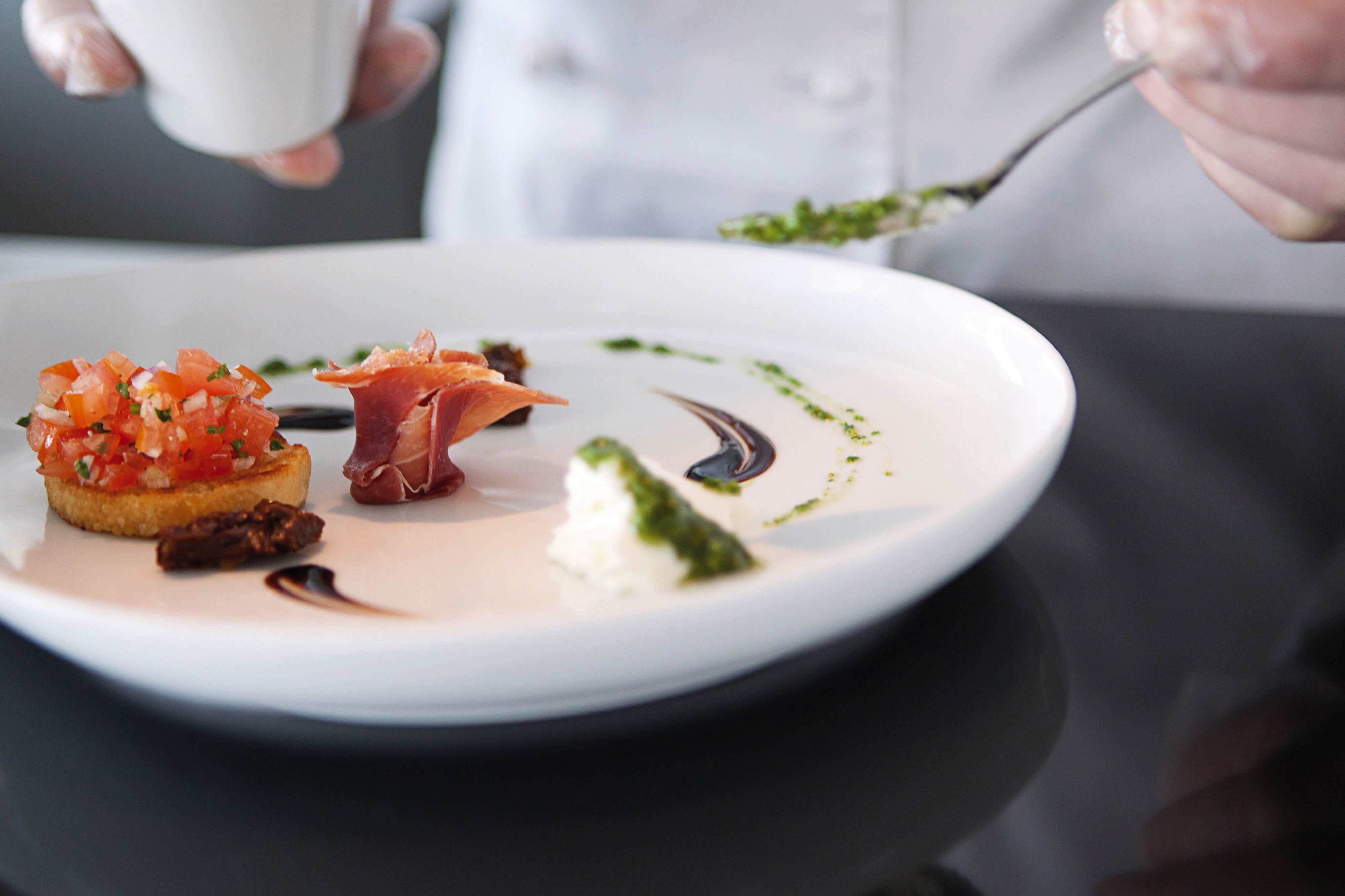
River Café
Offering a casual dining experience, you can enjoy all-day grazing options, light snacks and tasty treats to suit your schedule. The River Café is available on all Europe and South East Asia river cruises.

Riverview Terrace
Enjoy a refreshing afternoon aperitif or pick-me-up light bite on the Riverview Terrace, an open-air lounge and bar area located on the Sun Deck. Alfresco living doesn’t get better, with all-inclusive refreshments to complement the rapturous views.
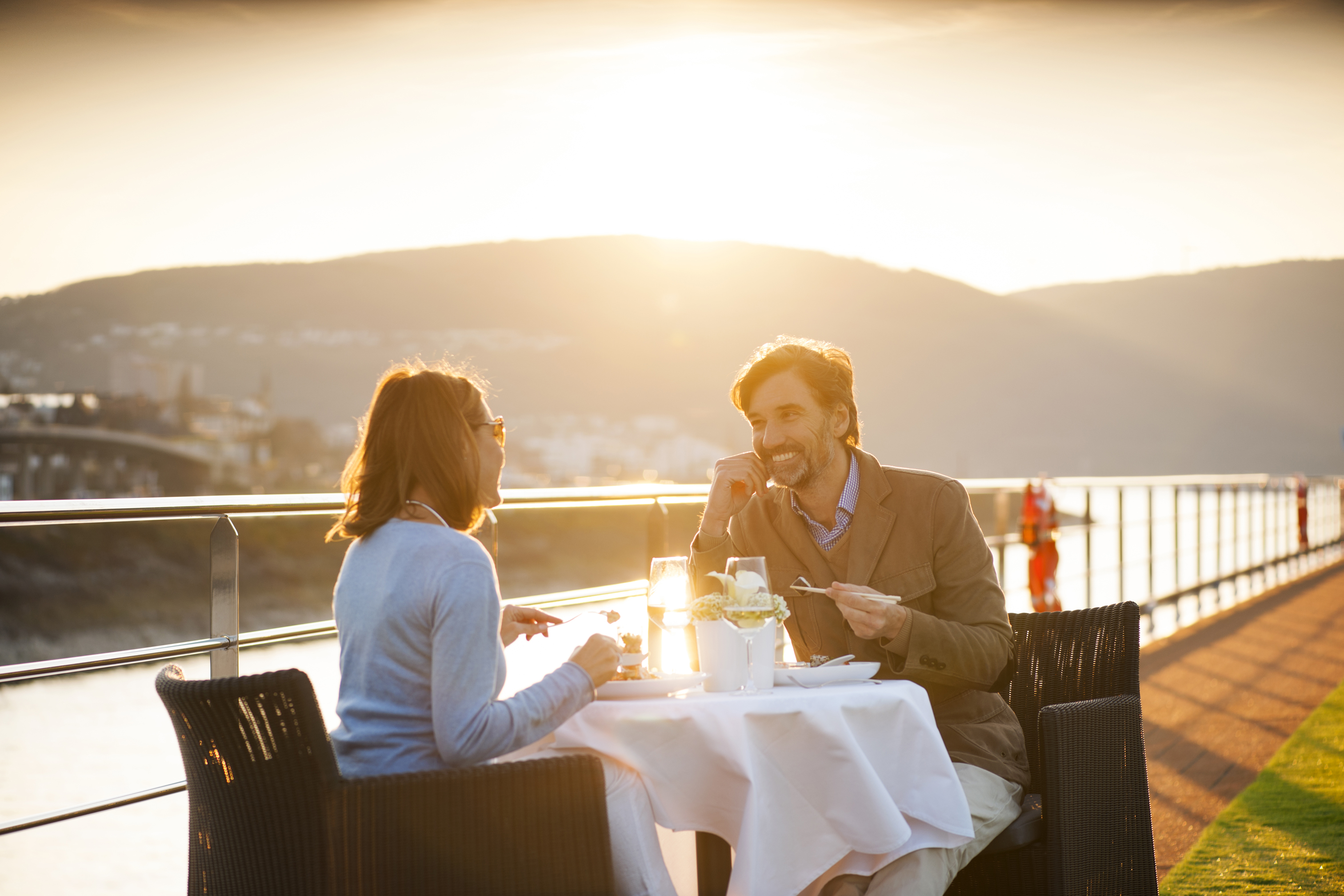
In-Suite Dining
Choose to dine in the comfort of your luxurious suite, while taking in the incredible views and enjoy included room service throughout your cruise.
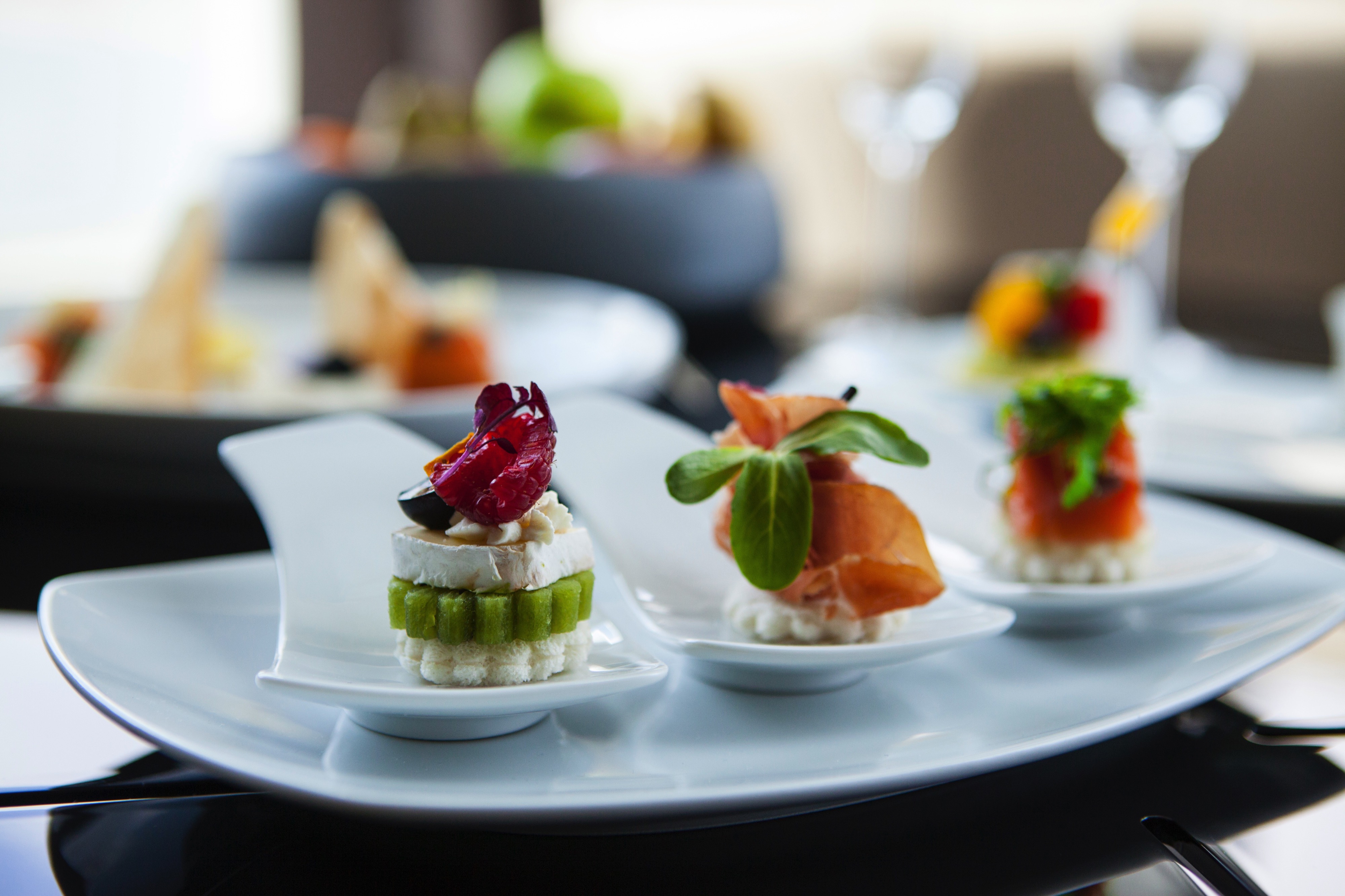
Complimentary E-bikes
Explore cities onshore on our complimentary e-bikes^+. Keep active and interact with locals as you explore Europe’s countryside.
Experience Europe’s wonders at your own pace with truly all-inclusive Scenic Freechoice excursions. From e-bike+^ riding alongside spectacular waterways, to exploring Europe’s cultural and historic treasures on a day trip, you can choose from a wide range of activities to suit you.
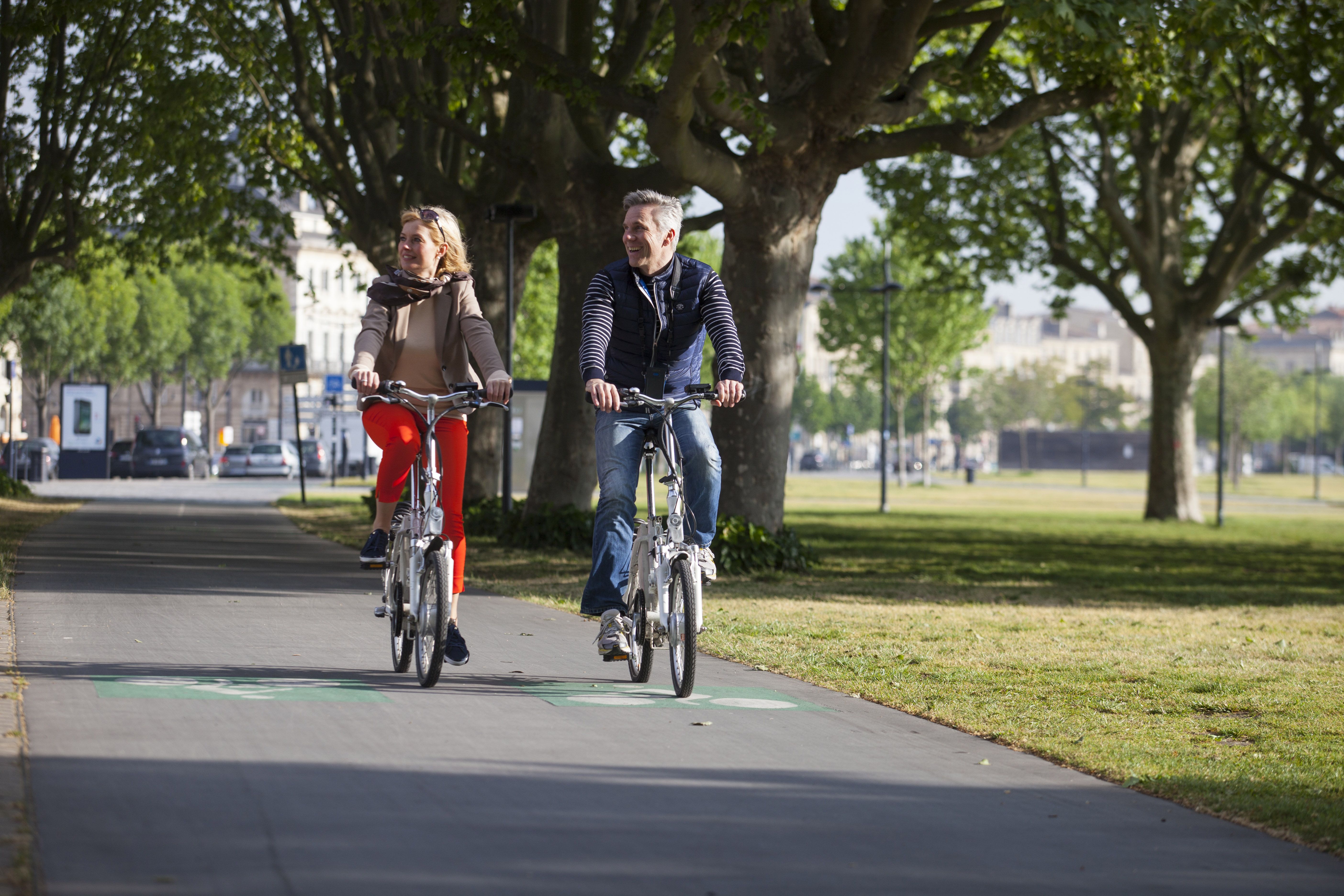
Scenic Freechoice
Personalise your river cruise and pursue your own interests as you set off on curated excursions throughout Europe. Our extensive and diverse list of Freechoice excursions are designed at Active, Moderate or Relaxed pace so you can choose activities best suited to you based on your interests and needs. Whether it’s a guided hike or e-Bike ride through the vineyards or a visit to the historic towns of Ypres and Passchendaele, the choice is yours.
Each Europe river cruise has been carefully curated to include a broad range of immersive experiences onshore. From active to cultural and interactive, you can choose from a wide range of Scenic Freechoice activities to suit your interests and pace.
Active
Cycling from Dürnstein to Krems
Join your guide on a bicycle tour along the Danube to the quaint village of Krems. Pass by charming villages and scenic vineyard landscapes. You will have time to stop along the way to enjoy the breathtaking views of the Danube.
Explore Château Gaillard
Hike to King Richard the Lionheart’s Château Gaillard and enter this fabulous ruin overlooking the Seine River. Available on select Northern France river cruises.
Kayak on the Pinhão River
Enjoy a guided kayaking tour along the Pinhão River and see the beautiful town from an alternative perspective. Available on select Douro river cruises in Portugal.
Moderate
Gottweig Abbey
Visit the renovated Gottweig Abbey. Founded in the 6th Century, the abbey was burned down during the 18th Century and rebuilt to be one of the most magnificent in the Wachau Valley. Your local guide will take you through various room where you will see the magnificent frescoes that decorate the Abbey as well as its staircase, the largest Baroque Staircase in Austria.
Visit to Mateus Palace
Built in the 18th century the grounds of the palace feature a cellar, chapel and impressive gardens. Tour this amazing property depicted on the label of the internationally renowned wine of the same name.
Beer & Chocolate Pairing
Take your tastebuds on a journey whilst learning and appreciating how the complex flavours of local craft beer and chocolate go together.
Relaxed
Sausage-making class
Learn to make traditional Regensburger wurst. Discover the history of this sausage as well as the spices that flavour the meat. And of course, you can sample it once it’s complete.
Passau Photography Safari
Visit some of the most beautiful locations in Passau such as the Old Town Hall with this photography tour suitable for all. Available on Danube in Depth.
Shop with a Chef
Join your on board chef on a guided visit to a local food market where you will have an opportunity to shop for and taste the best ingredients this region has to offer. Upon returning to your Scenic Space-Ship meet in the purpose built Scenic Culinaire cooking school for an interactive cooking demonstration making some of France’s most popular and delicious dishes using the ingredients you have just bought at the market.
Disclaimer: Options above are examples, experiences might be different depending on your river cruise ship.
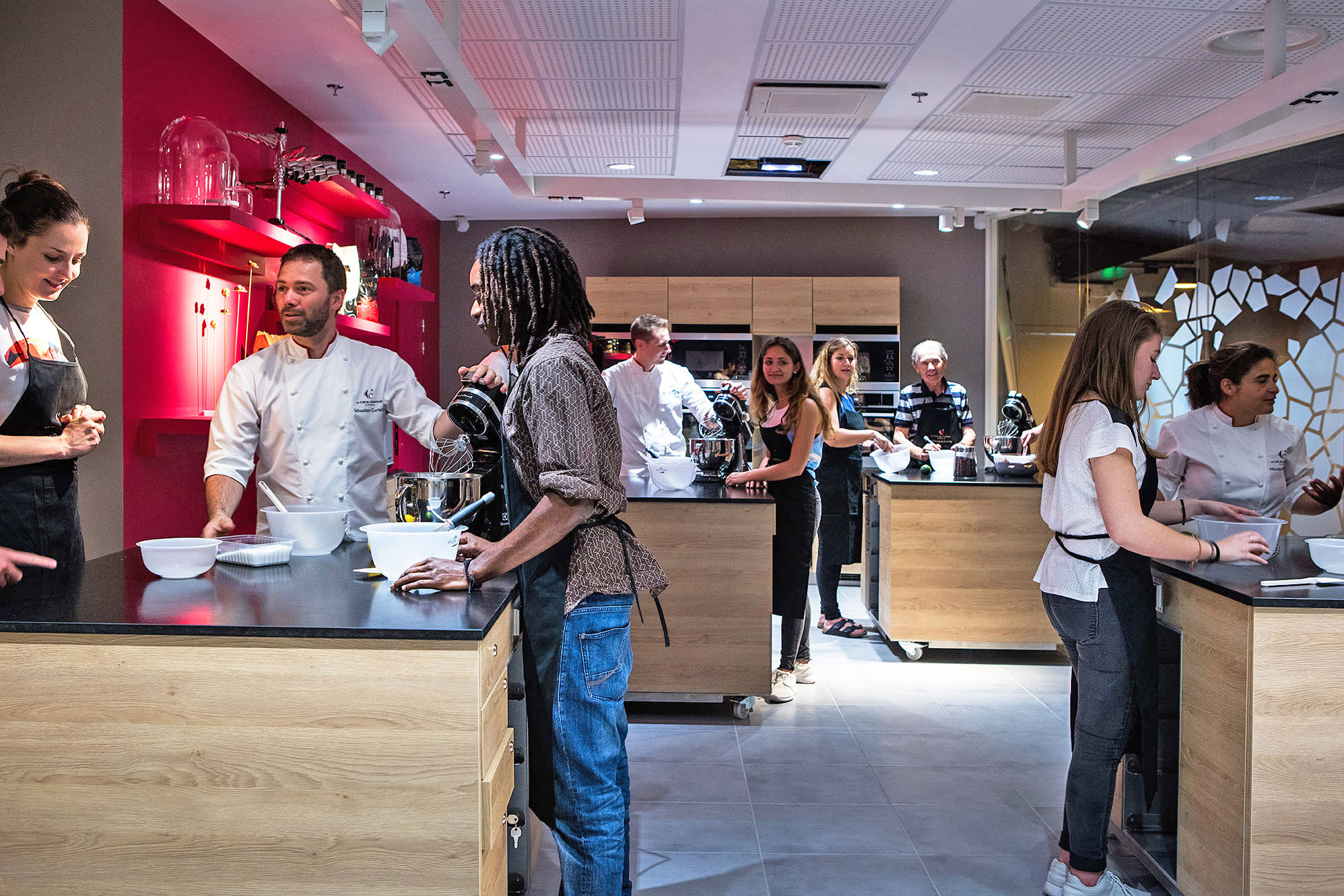
Scenic Enrich
Enjoy wondrous moments exclusively created for you, ranging from a private concert in a grand 18th century palace in Germany or indulging in a sumptuous dinner in a local home in the Netherlands. Enjoy these exquisite handcrafted experiences that are not available to the regular traveller.
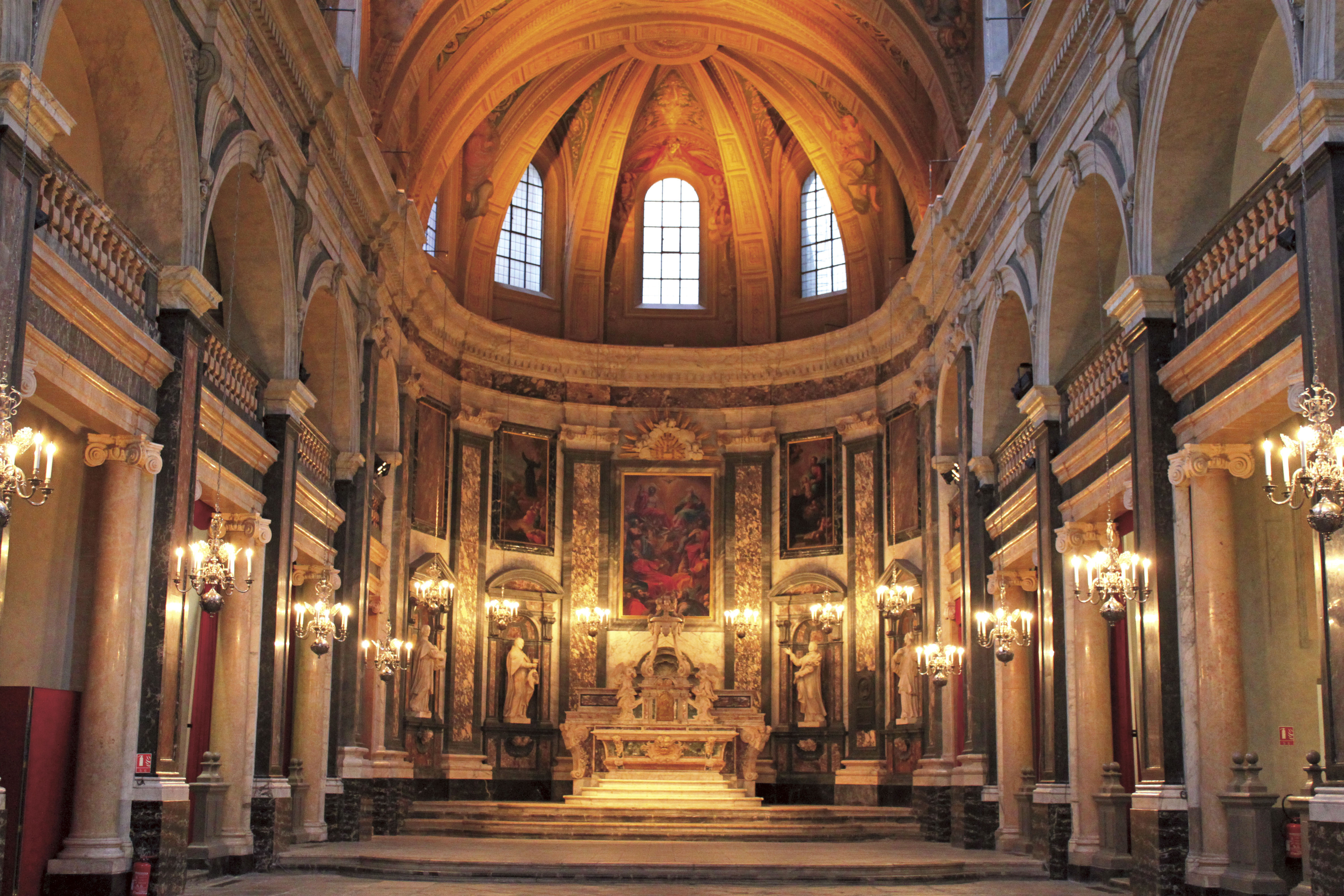
On Board Team
The Captain and Crew
All Scenic Space-Ship Captains are selected for their knowledge of Europe’s rivers. On board, the Captain and their team can be found in the wheelhouse on the Sun Deck and will be on hand to greet guests and answer any questions during briefings.
Cruise Director & Hotel Director
Committed to delivering an exceptional level of service, the Cruise Director and Hotel Director will be your main point of contact throughout your cruise. They’ll ensure every moment of your trip is seamless, while providing daily briefings and updates.
Enrichment Manager
Your on board entertainment while cruising Europe is presented by the Enrichment Manager. They’ll add to your experience by hosting game nights, informative lectures, and organise special guest performances, to experience shows with a local flair.
Scenic Butlers
Our expert butler’s have been trained to meet Scenic’s high standards. You can relax as your laundry, shines your shoes, delivers premium beverages to your suite or replenishes your mini-bar are taken care of. All guests enjoy butler service, learning your preferences and expectations, and surpassing them.
Culinary Team and Bar Staff
Our expert team of chefs will elevate the sense of luxury on your Europe river cruise. The culinary team draws inspiration from the regions you travel through and ensures all food is fresh and seasonal while creating a daily menu to suit all palates.
Wellness Coach
Each Scenic Space-Ship has a dedicated Wellness Team. You can unwind with a massage^, work on your fitness in the gym, take time out in the healing Salt Therapy Lounge (on select Space-Ships) or join a morning stretch class, all while the Wellness Coach are on hand to assist you.
Local Guides
Our local guides are important members of your onshore team. They’re the storytellers who will share the wonders of their town and immerse you in the local history and culture, with their own personal flair.
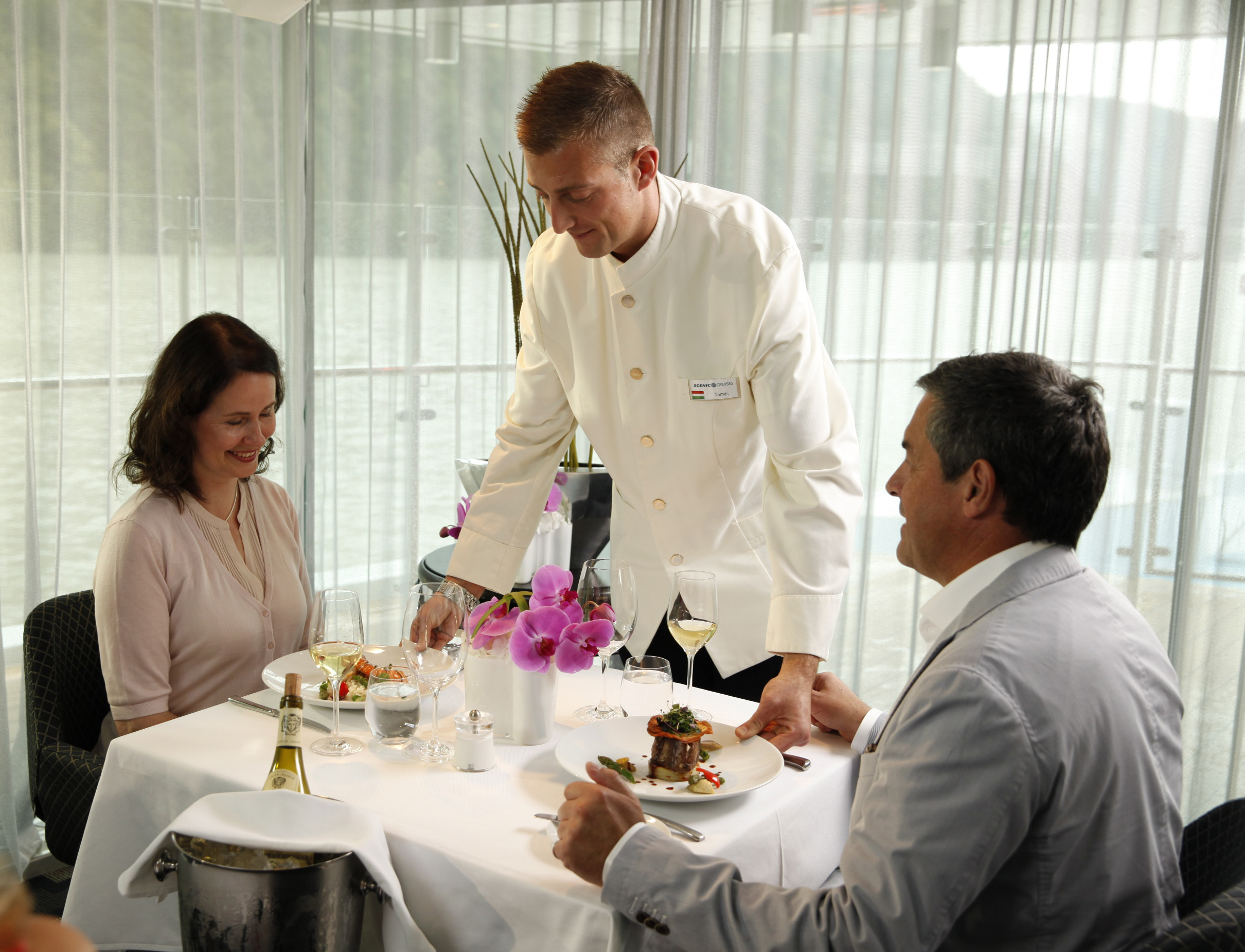
Panorama Lounge & Bar
Explore our extensive wine list, relax with a coffee or catch-up with new-found friends at the Panorama Lounge & Bar. This is the main bar lounge on-board our Space-Ships, and it’s tastefully furnished to guarantee your comfort and enjoyment.
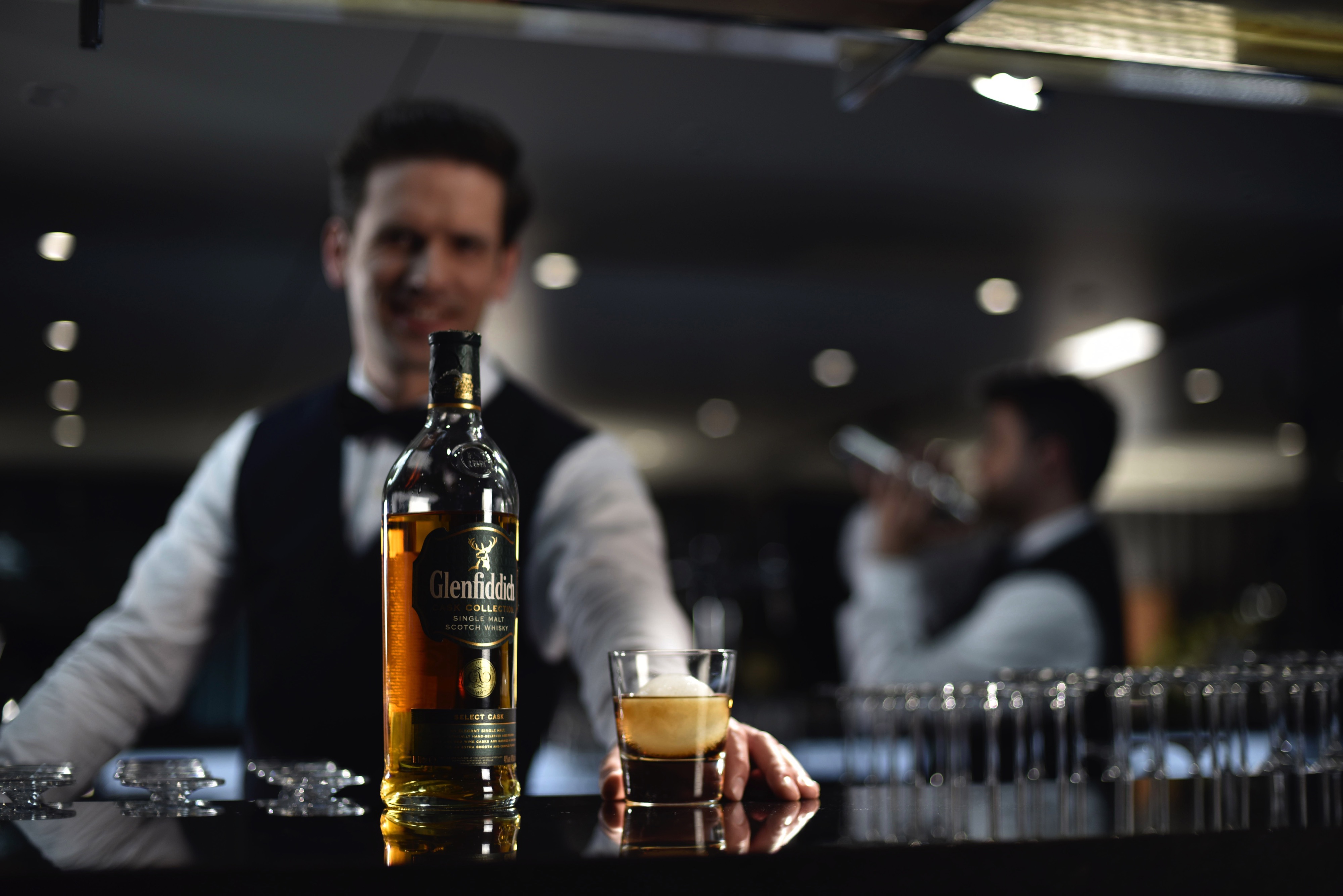
The Sun Deck
Ideal for those sunlit days on the river, the Sun Deck is a designated open-air space equipped with everything you might need to relax and enjoy the great outdoors on your river cruise – think deck chairs, games area and a bar where you can make the most of our all-inclusive service.
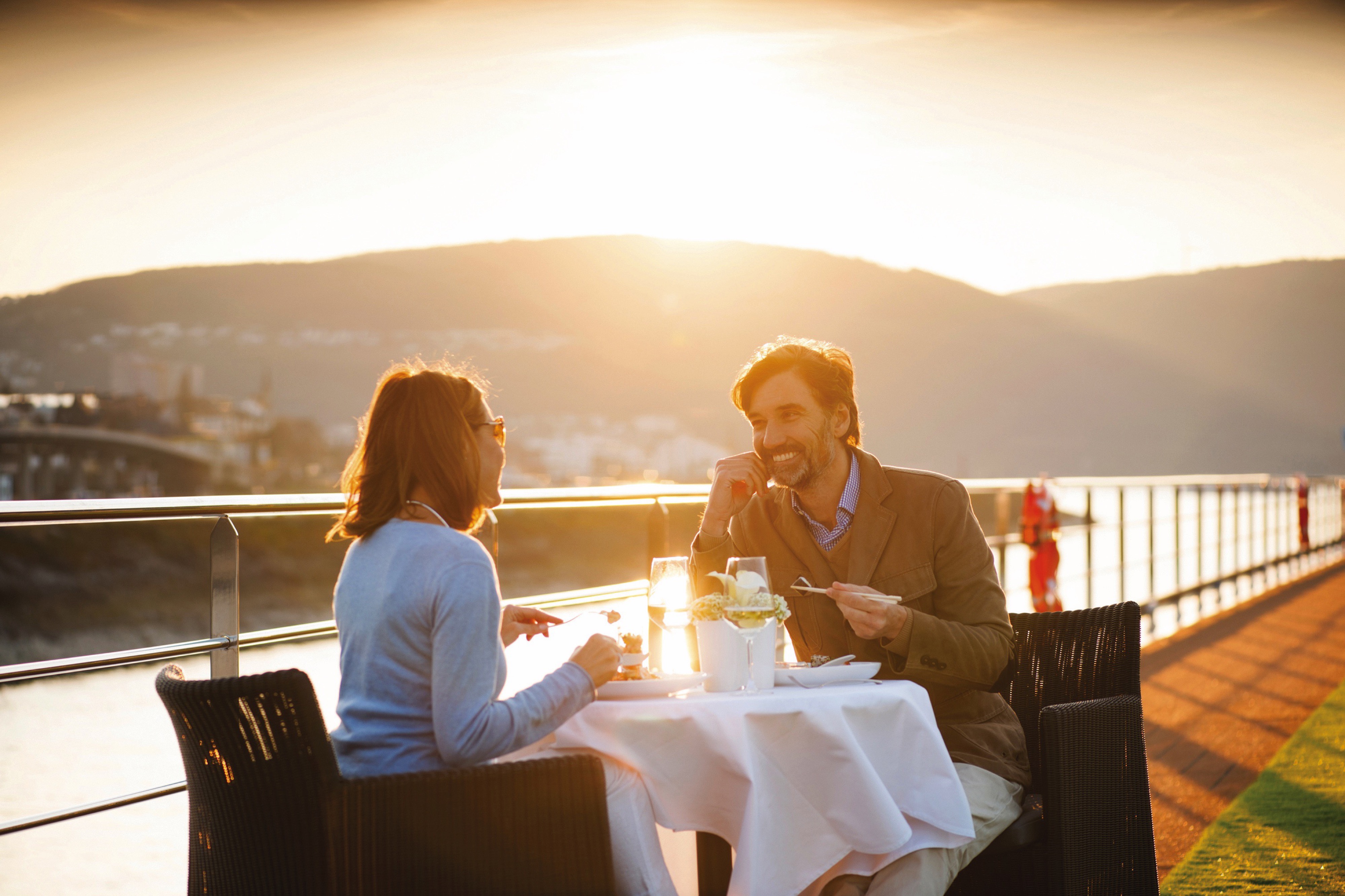
Reception
Whatever you need on your cruise through Europe, our welcoming reception team is here to ensure your trip goes down without a hitch. The reception area is also the meeting point for the day’s shore excursions; you’ll find it in the middle of the Scenic Gem.
All Inclusive Beverages
Sit back and enjoy a beverage of your choice while cruising spectacular waterways, at your leisure. Sip on handcrafted cocktails or a full-bodied wine – the choice is yours.
You will enjoy:
- Unlimited complimentary premium international beverages^, including international wines, beers and spirits
- Full in-suite mini bar, restocked daily
- Refillable water bottle for all onshore excursions
- An extensive range of specialty teas and espresso coffees
- This selection is available all day, every day.
*Exclusive invitation for Diamond Deck and Junior Suite guests cruising for 10 nights or more, or Royal and Junior Suite guests for 9 nights or fewer.
^All beverages are included except a very small number of fine and vintage wines, champagnes and spirits.
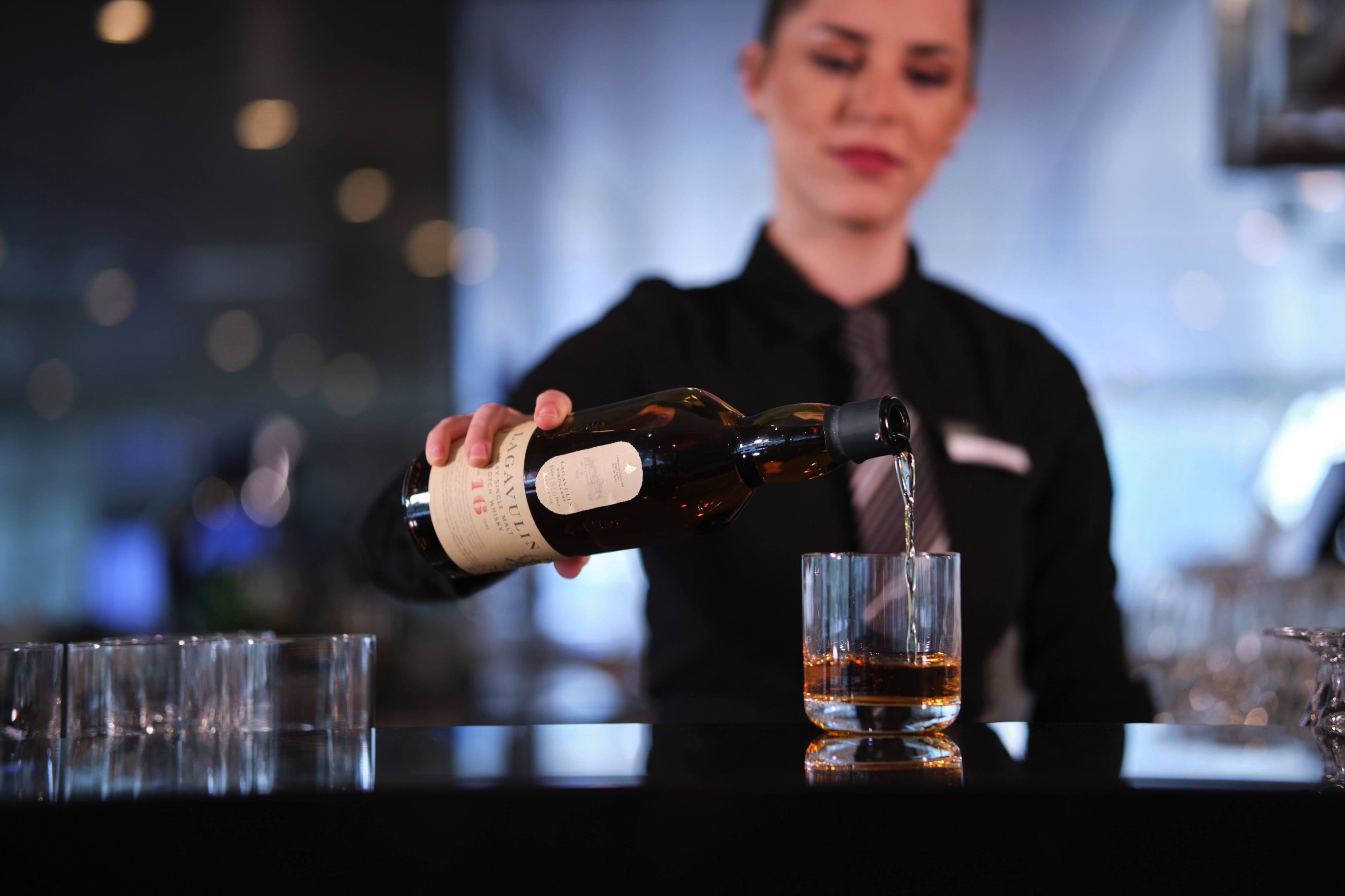
Wheelhouse
The Wheelhouse is where our expert crew pilot your Space-Ship, negotiating the twists and turns of the Danube with the utmost precision and care. Stop by to chat with the team and take a peek behind the scenes.

Gallery
Our Gallery spaces are dedicated to showcasing works by local artists, so you feel connected to people and place in every destination. We believe little touches like this are what make our European river cruises so special.
Wellness Area
Feel pampered throughout your river cruise at the Wellness Area. From facials to massages, our beauty therapist provides a selection of indulgent treatments to help you truly relax.
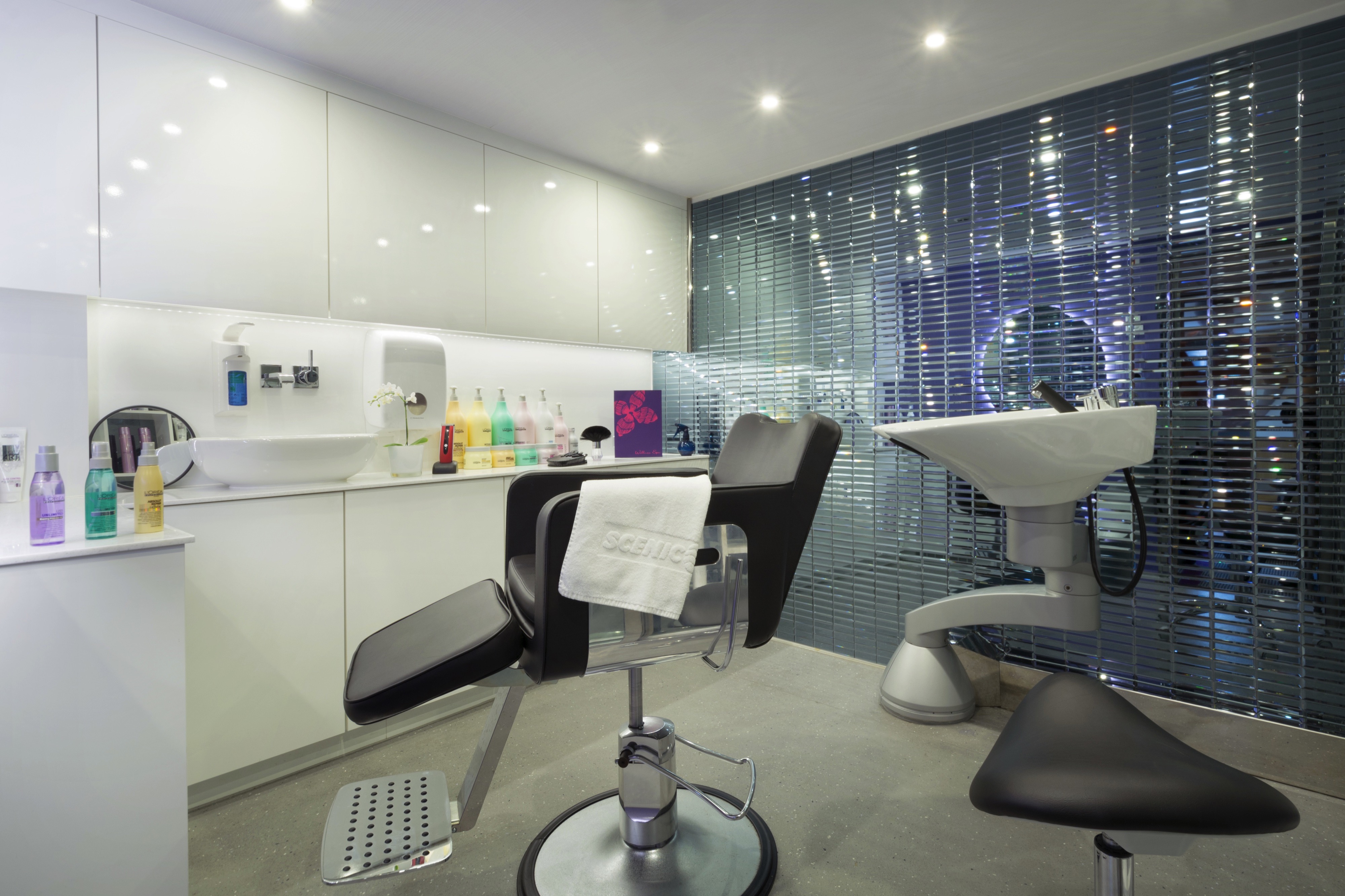
Fitness Centre
This innovative lounge is featured on most of our Space-Ships in Europe. The salt brick walls of the humidity and temperature-controlled lounge are known to offer a range of health benefits for respiratory and immune systems.
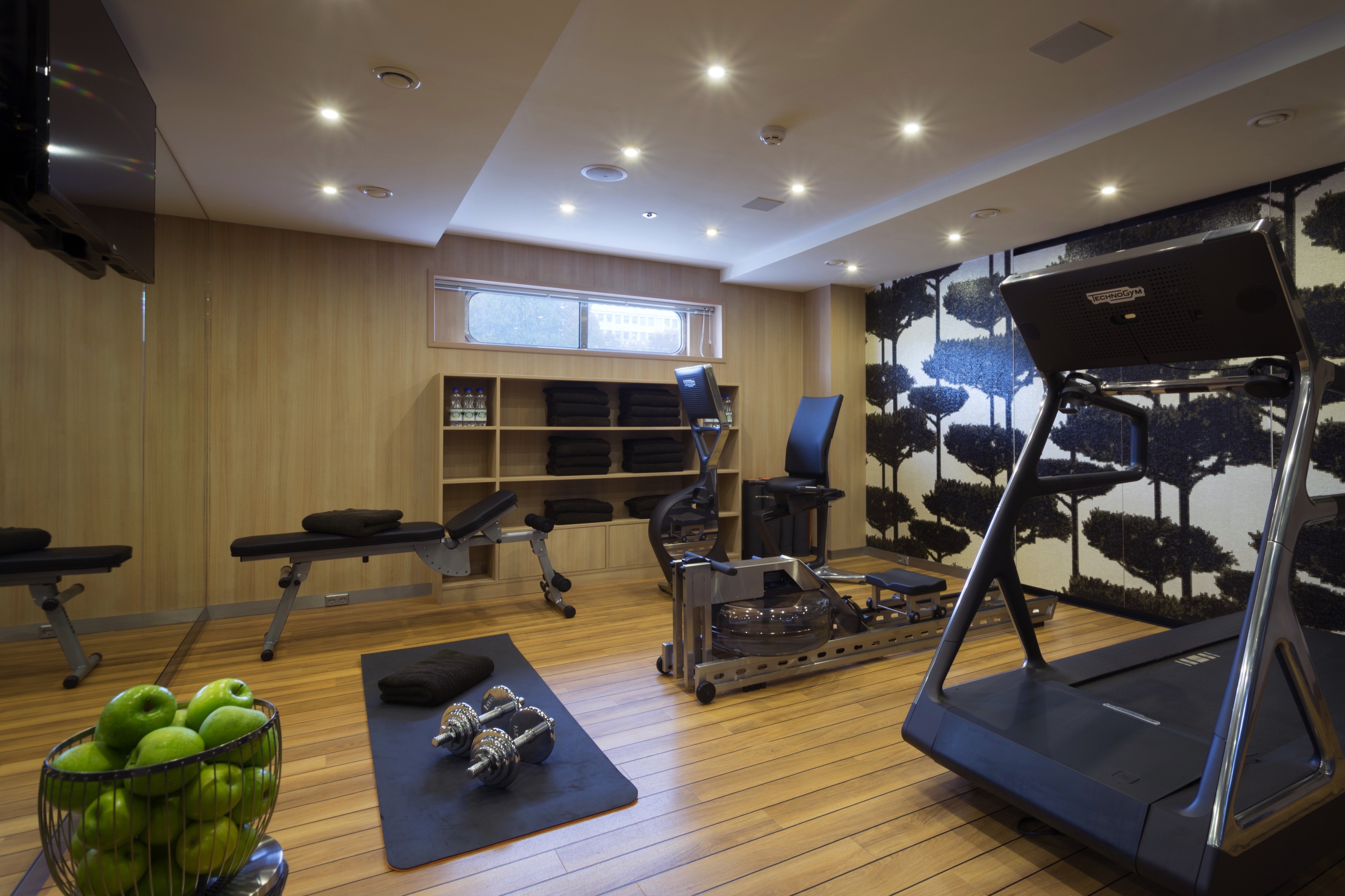
Please note: Scenic Gem does not have any specific facilities to accommodate Kids/Teens.
Crystal Dining
Enjoy à la carte menus for breakfast, lunch and dinner at Crystal Dining. Available on all Europe and South East Asia river cruises, this main restaurant offers a relaxed dining experience with local delicacies.
L'Amour Restaurant
With up to only 32 guests an evening, the exclusive and intimate L’Amour showcase sumptuous regional specialities. The delectable five-course menu features either Italian, French or Portuguese cuisine (depending on your cruise location), paired with elegant wines, and is available on all European river cruises.
Table La Rive
Featuring a six-course degustation, the exclusive Table La Rive on our European river cruises offers an intimate dining experience for only 10 guests per evening. Guests staying on the Diamond Deck for 10 nights or longer, as well as Royal and Junior Suite guests staying for up to nine nights, will be invited by our Executive Chef.
River Café
Offering a casual dining experience, you can enjoy all-day grazing options, light snacks and tasty treats to suit your schedule. The River Café is available on all Europe and South East Asia river cruises.
Riverview Terrace
Enjoy a refreshing afternoon aperitif or pick-me-up light bite on the Riverview Terrace, an open-air lounge and bar area located on the Sun Deck. Alfresco living doesn’t get better, with all-inclusive refreshments to complement the rapturous views.
In-Suite Dining
Choose to dine in the comfort of your luxurious suite, while taking in the incredible views and enjoy included room service throughout your cruise.
Complimentary E-bikes
Explore cities onshore on our complimentary e-bikes^+. Keep active and interact with locals as you explore Europe’s countryside.
Experience Europe’s wonders at your own pace with truly all-inclusive Scenic Freechoice excursions. From e-bike+^ riding alongside spectacular waterways, to exploring Europe’s cultural and historic treasures on a day trip, you can choose from a wide range of activities to suit you.
Scenic Freechoice
Personalise your river cruise and pursue your own interests as you set off on curated excursions throughout Europe. Our extensive and diverse list of Freechoice excursions are designed at Active, Moderate or Relaxed pace so you can choose activities best suited to you based on your interests and needs. Whether it’s a guided hike or e-Bike ride through the vineyards or a visit to the historic towns of Ypres and Passchendaele, the choice is yours.
Each Europe river cruise has been carefully curated to include a broad range of immersive experiences onshore. From active to cultural and interactive, you can choose from a wide range of Scenic Freechoice activities to suit your interests and pace.
Active
Cycling from Dürnstein to Krems
Join your guide on a bicycle tour along the Danube to the quaint village of Krems. Pass by charming villages and scenic vineyard landscapes. You will have time to stop along the way to enjoy the breathtaking views of the Danube.
Explore Château Gaillard
Hike to King Richard the Lionheart’s Château Gaillard and enter this fabulous ruin overlooking the Seine River. Available on select Northern France river cruises.
Kayak on the Pinhão River
Enjoy a guided kayaking tour along the Pinhão River and see the beautiful town from an alternative perspective. Available on select Douro river cruises in Portugal.
Moderate
Gottweig Abbey
Visit the renovated Gottweig Abbey. Founded in the 6th Century, the abbey was burned down during the 18th Century and rebuilt to be one of the most magnificent in the Wachau Valley. Your local guide will take you through various room where you will see the magnificent frescoes that decorate the Abbey as well as its staircase, the largest Baroque Staircase in Austria.
Visit to Mateus Palace
Built in the 18th century the grounds of the palace feature a cellar, chapel and impressive gardens. Tour this amazing property depicted on the label of the internationally renowned wine of the same name.
Beer & Chocolate Pairing
Take your tastebuds on a journey whilst learning and appreciating how the complex flavours of local craft beer and chocolate go together.
Relaxed
Sausage-making class
Learn to make traditional Regensburger wurst. Discover the history of this sausage as well as the spices that flavour the meat. And of course, you can sample it once it’s complete.
Passau Photography Safari
Visit some of the most beautiful locations in Passau such as the Old Town Hall with this photography tour suitable for all. Available on Danube in Depth.
Shop with a Chef
Join your on board chef on a guided visit to a local food market where you will have an opportunity to shop for and taste the best ingredients this region has to offer. Upon returning to your Scenic Space-Ship meet in the purpose built Scenic Culinaire cooking school for an interactive cooking demonstration making some of France’s most popular and delicious dishes using the ingredients you have just bought at the market.
Disclaimer: Options above are examples, experiences might be different depending on your river cruise ship.
Scenic Enrich
Enjoy wondrous moments exclusively created for you, ranging from a private concert in a grand 18th century palace in Germany or indulging in a sumptuous dinner in a local home in the Netherlands. Enjoy these exquisite handcrafted experiences that are not available to the regular traveller.
On Board Team
The Captain and Crew
All Scenic Space-Ship Captains are selected for their knowledge of Europe’s rivers. On board, the Captain and their team can be found in the wheelhouse on the Sun Deck and will be on hand to greet guests and answer any questions during briefings.
Cruise Director & Hotel Director
Committed to delivering an exceptional level of service, the Cruise Director and Hotel Director will be your main point of contact throughout your cruise. They’ll ensure every moment of your trip is seamless, while providing daily briefings and updates.
Enrichment Manager
Your on board entertainment while cruising Europe is presented by the Enrichment Manager. They’ll add to your experience by hosting game nights, informative lectures, and organise special guest performances, to experience shows with a local flair.
Scenic Butlers
Our expert butler’s have been trained to meet Scenic’s high standards. You can relax as your laundry, shines your shoes, delivers premium beverages to your suite or replenishes your mini-bar are taken care of. All guests enjoy butler service, learning your preferences and expectations, and surpassing them.
Culinary Team and Bar Staff
Our expert team of chefs will elevate the sense of luxury on your Europe river cruise. The culinary team draws inspiration from the regions you travel through and ensures all food is fresh and seasonal while creating a daily menu to suit all palates.
Wellness Coach
Each Scenic Space-Ship has a dedicated Wellness Team. You can unwind with a massage^, work on your fitness in the gym, take time out in the healing Salt Therapy Lounge (on select Space-Ships) or join a morning stretch class, all while the Wellness Coach are on hand to assist you.
Local Guides
Our local guides are important members of your onshore team. They’re the storytellers who will share the wonders of their town and immerse you in the local history and culture, with their own personal flair.
Panorama Lounge & Bar
Explore our extensive wine list, relax with a coffee or catch-up with new-found friends at the Panorama Lounge & Bar. This is the main bar lounge on-board our Space-Ships, and it’s tastefully furnished to guarantee your comfort and enjoyment.
The Sun Deck
Ideal for those sunlit days on the river, the Sun Deck is a designated open-air space equipped with everything you might need to relax and enjoy the great outdoors on your river cruise – think deck chairs, games area and a bar where you can make the most of our all-inclusive service.
Reception
Whatever you need on your cruise through Europe, our welcoming reception team is here to ensure your trip goes down without a hitch. The reception area is also the meeting point for the day’s shore excursions; you’ll find it in the middle of the Scenic Gem.
All Inclusive Beverages
Sit back and enjoy a beverage of your choice while cruising spectacular waterways, at your leisure. Sip on handcrafted cocktails or a full-bodied wine – the choice is yours.
You will enjoy:
- Unlimited complimentary premium international beverages^, including international wines, beers and spirits
- Full in-suite mini bar, restocked daily
- Refillable water bottle for all onshore excursions
- An extensive range of specialty teas and espresso coffees
- This selection is available all day, every day.
*Exclusive invitation for Diamond Deck and Junior Suite guests cruising for 10 nights or more, or Royal and Junior Suite guests for 9 nights or fewer.
^All beverages are included except a very small number of fine and vintage wines, champagnes and spirits.
Wheelhouse
The Wheelhouse is where our expert crew pilot your Space-Ship, negotiating the twists and turns of the Danube with the utmost precision and care. Stop by to chat with the team and take a peek behind the scenes.
Gallery
Our Gallery spaces are dedicated to showcasing works by local artists, so you feel connected to people and place in every destination. We believe little touches like this are what make our European river cruises so special.
Wellness Area
Feel pampered throughout your river cruise at the Wellness Area. From facials to massages, our beauty therapist provides a selection of indulgent treatments to help you truly relax.
Fitness Centre
This innovative lounge is featured on most of our Space-Ships in Europe. The salt brick walls of the humidity and temperature-controlled lounge are known to offer a range of health benefits for respiratory and immune systems.
Please note: Scenic Gem does not have any specific facilities to accommodate Kids/Teens.
About the Ship
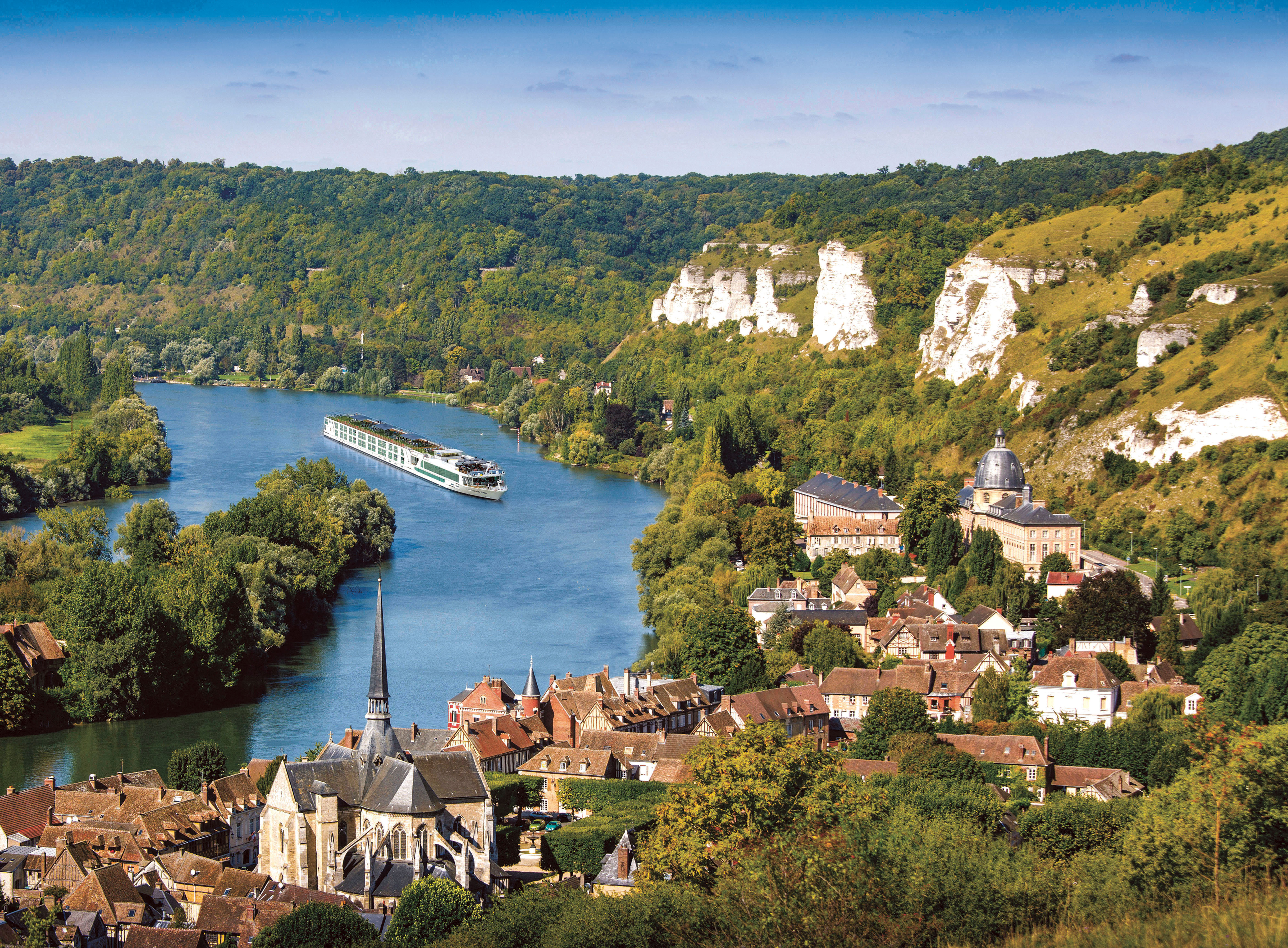
Deck Plans

- Wellness Area
- Fitness Centre
- Standard Suite Cat E

- Crystal Dining Restaurant
- Table La Rive
- Galley
- Elevator
- Deluxe Balcony Suite Cat BD
- Balcony Suite Cat C

- Panorama Deck
- L’Amour Restaurant
- River Cafe
- Panorama Lounge & Bar
- Gift Shop
- Reception
- Elevator
- Royal One-Bedroom Suite Cat RP
- Royal Balcony Suite Cat R
- Deluxe Balcony Suite Cat PD
- Balcony Suite Cat P & PA

- Riverview Terrace
- Wheelhouse
- Sun Deck
- Walking Track
- Wellness Area
- Fitness Centre
- Standard Suite Cat E
- Crystal Dining Restaurant
- Table La Rive
- Galley
- Elevator
- Deluxe Balcony Suite Cat BD
- Balcony Suite Cat C
- Panorama Deck
- L’Amour Restaurant
- River Cafe
- Panorama Lounge & Bar
- Gift Shop
- Reception
- Elevator
- Royal One-Bedroom Suite Cat RP
- Royal Balcony Suite Cat R
- Deluxe Balcony Suite Cat PD
- Balcony Suite Cat P & PA
- Riverview Terrace
- Wheelhouse
- Sun Deck
- Walking Track