Featured Cabins
Itinerary
Cape Town, South Africa
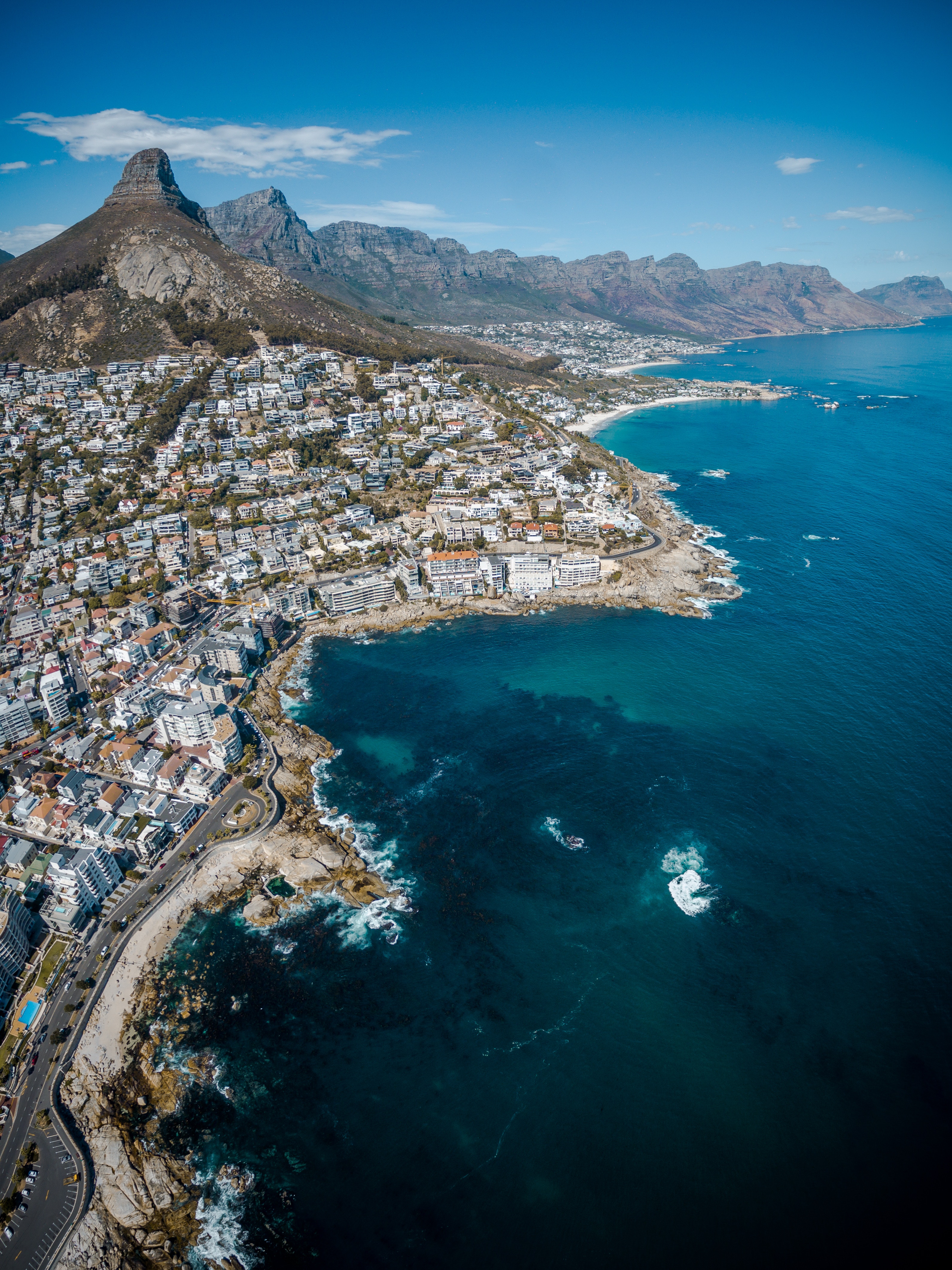
Sometimes referred to as the Mother City, Cape Town is the most famous port in South Africa and is influenced by many different cultures, including Dutch, British and Malay. The port was founded in 1652 by Dutch explorer Jan Van Riebeeck, and evidence of Dutch colonial rule remains throughout the region. The port is located on one of the world’s most important trade routes, and is mainly a container port and handler of fresh fruit. Fishing is another vital industry, with large Asian fishing fleets using Cape Town as a logistical repair base for much of the year. The region is famous for its natural beauty, with the imposing Table Mountain and Lions Head, as well as the many nature reserves and botanical gardens such as Kirstenbosch which boasts an extensive range of indigenous plant life, including proteas and ferns. Cape Town’s weather is mercurial, and can change from beautiful sunshine to dramatic thunderstorms within a short period. A local adage is that in Cape Town you can experience four seasons in one day.
At Sea
Lüderitz, Namibia
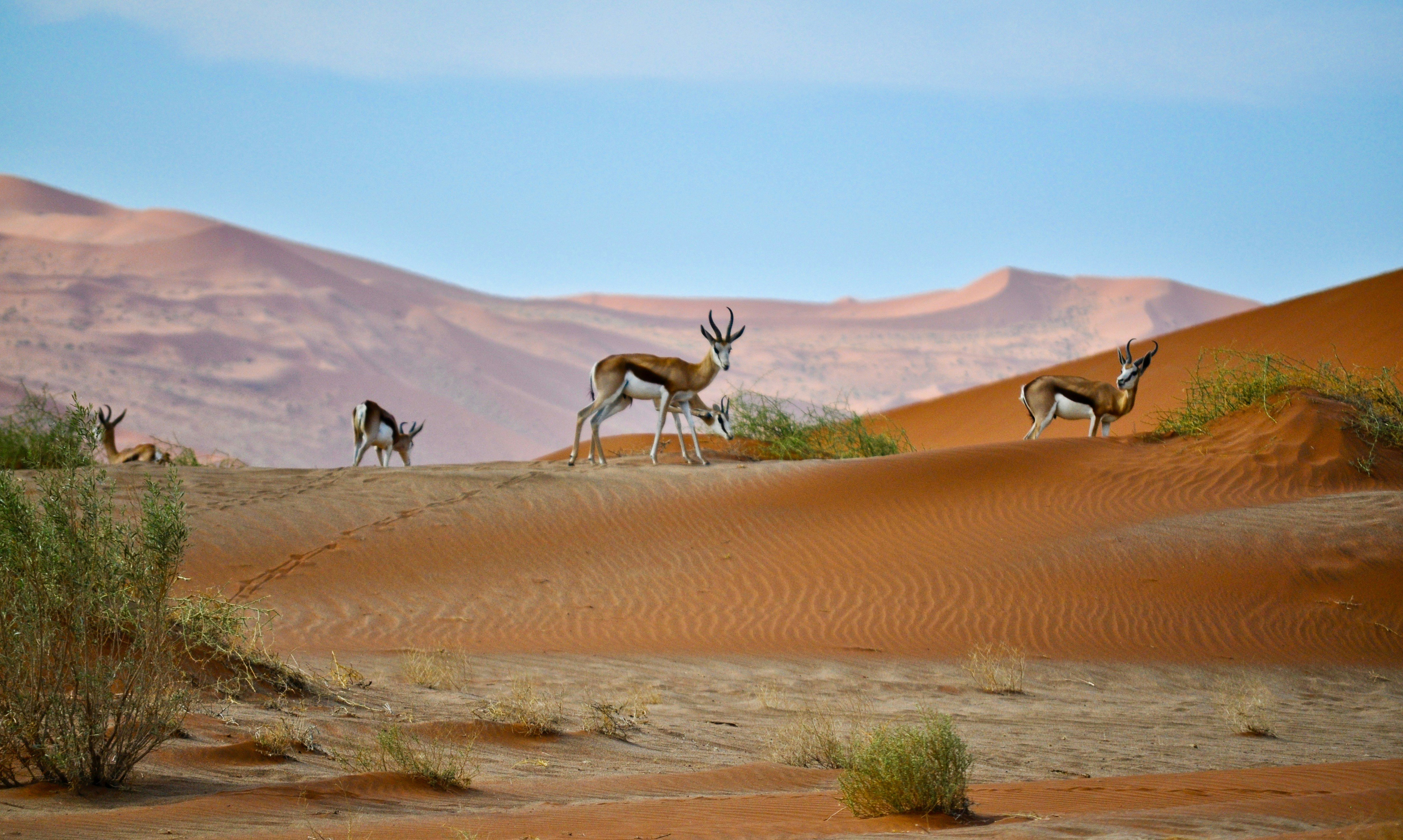
The reopening of the diamond mine at Elizabeth Bay 20 years ago has brought the development of tourism and fishing back to this small 19th century village on the barren, windswept Namib Desert coast. One of Namibias oddities, it has everything you’d expect from a small German town – delicatessens, coffee shops and a Lutheran church. Here, the icy but clean South Atlantic is home to seals, penguins and other marine life and the desolate beaches support flamingoes. It was founded in 1883 when Heinrich Vogelsang purchased Angra Pequena and some of the surrounding land on behalf of Adolf Lüderitz, a Hanseat from Germany, from the local Nama chief. Lüderitz began its life as a trading post, with other activities in fishing and guano-harvesting. As a sign of Luderitz’s revival, 1996 staged the first traditional German Karneval since 1960.
Walvis Bay, Namibia
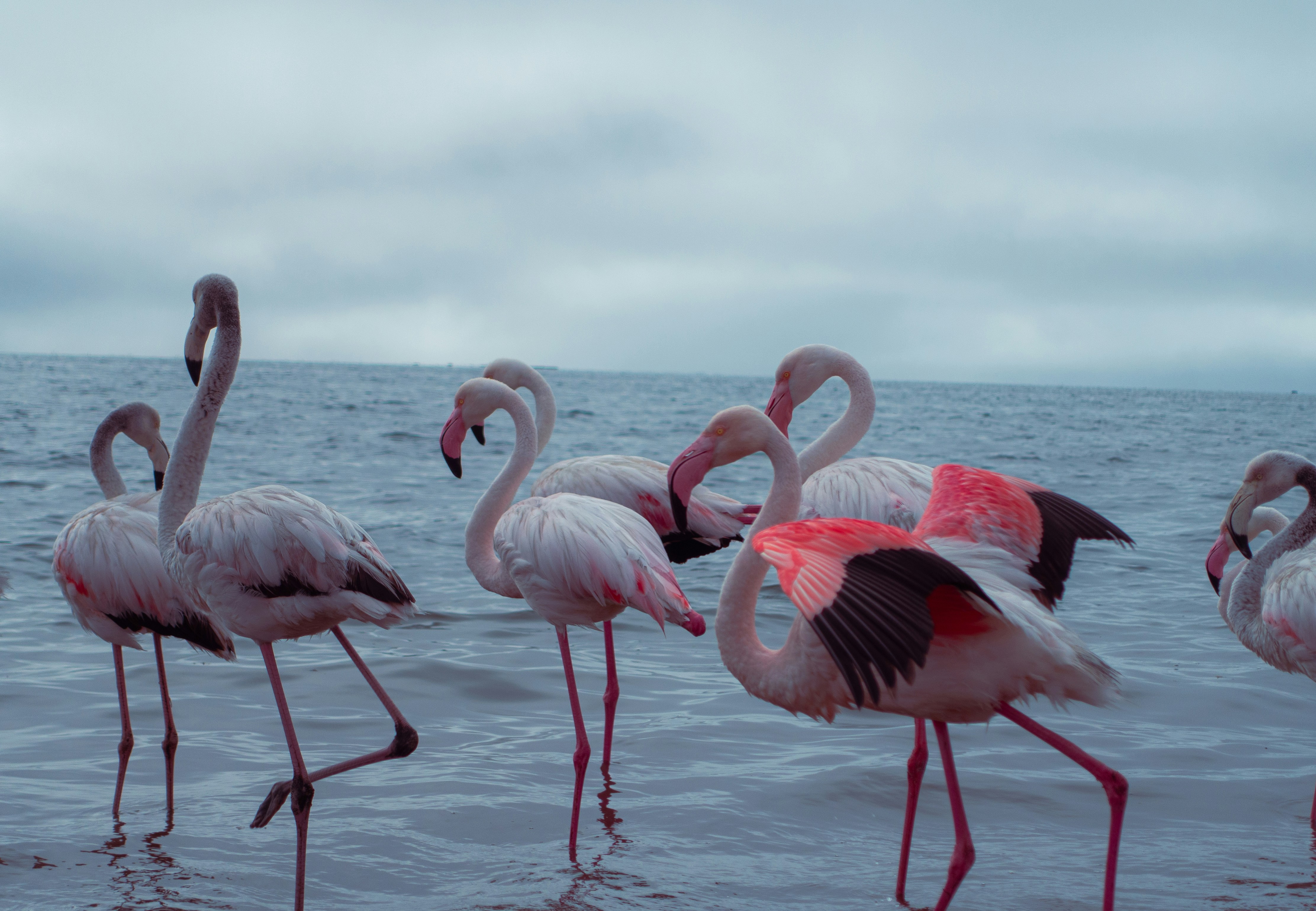
Once a whaling station, Walvis Bay provides a gateway to the extraordinary desert landscapes of Namibia and is itself an area of unusual natural beauty. The showpiece of the Walvis Bay area is the natural lagoon where you can see flamingos in their thousands at certain times of the year, along with a variety of other wading birds such as the white pelican. Further inland you will find the stunning Namib Desert, which provides an unlikely home for a diverse array of wildlife. Alternatively, you could venture into the desert of Sossusvlei, whose mountainous ochre sand dunes are said to be the highest in the world, or visit the colonial town of Swakopmund.
Walvis Bay, Namibia
Once a whaling station, Walvis Bay provides a gateway to the extraordinary desert landscapes of Namibia and is itself an area of unusual natural beauty. The showpiece of the Walvis Bay area is the natural lagoon where you can see flamingos in their thousands at certain times of the year, along with a variety of other wading birds such as the white pelican. Further inland you will find the stunning Namib Desert, which provides an unlikely home for a diverse array of wildlife. Alternatively, you could venture into the desert of Sossusvlei, whose mountainous ochre sand dunes are said to be the highest in the world, or visit the colonial town of Swakopmund.
At Sea
At Sea
Cape Town, South Africa
Sometimes referred to as the Mother City, Cape Town is the most famous port in South Africa and is influenced by many different cultures, including Dutch, British and Malay. The port was founded in 1652 by Dutch explorer Jan Van Riebeeck, and evidence of Dutch colonial rule remains throughout the region. The port is located on one of the world’s most important trade routes, and is mainly a container port and handler of fresh fruit. Fishing is another vital industry, with large Asian fishing fleets using Cape Town as a logistical repair base for much of the year. The region is famous for its natural beauty, with the imposing Table Mountain and Lions Head, as well as the many nature reserves and botanical gardens such as Kirstenbosch which boasts an extensive range of indigenous plant life, including proteas and ferns. Cape Town’s weather is mercurial, and can change from beautiful sunshine to dramatic thunderstorms within a short period. A local adage is that in Cape Town you can experience four seasons in one day.
At Sea
Lüderitz, Namibia
The reopening of the diamond mine at Elizabeth Bay 20 years ago has brought the development of tourism and fishing back to this small 19th century village on the barren, windswept Namib Desert coast. One of Namibias oddities, it has everything you’d expect from a small German town – delicatessens, coffee shops and a Lutheran church. Here, the icy but clean South Atlantic is home to seals, penguins and other marine life and the desolate beaches support flamingoes. It was founded in 1883 when Heinrich Vogelsang purchased Angra Pequena and some of the surrounding land on behalf of Adolf Lüderitz, a Hanseat from Germany, from the local Nama chief. Lüderitz began its life as a trading post, with other activities in fishing and guano-harvesting. As a sign of Luderitz’s revival, 1996 staged the first traditional German Karneval since 1960.
Walvis Bay, Namibia
Once a whaling station, Walvis Bay provides a gateway to the extraordinary desert landscapes of Namibia and is itself an area of unusual natural beauty. The showpiece of the Walvis Bay area is the natural lagoon where you can see flamingos in their thousands at certain times of the year, along with a variety of other wading birds such as the white pelican. Further inland you will find the stunning Namib Desert, which provides an unlikely home for a diverse array of wildlife. Alternatively, you could venture into the desert of Sossusvlei, whose mountainous ochre sand dunes are said to be the highest in the world, or visit the colonial town of Swakopmund.
Walvis Bay, Namibia
Once a whaling station, Walvis Bay provides a gateway to the extraordinary desert landscapes of Namibia and is itself an area of unusual natural beauty. The showpiece of the Walvis Bay area is the natural lagoon where you can see flamingos in their thousands at certain times of the year, along with a variety of other wading birds such as the white pelican. Further inland you will find the stunning Namib Desert, which provides an unlikely home for a diverse array of wildlife. Alternatively, you could venture into the desert of Sossusvlei, whose mountainous ochre sand dunes are said to be the highest in the world, or visit the colonial town of Swakopmund.
At Sea
At Sea
Luanda, Angola
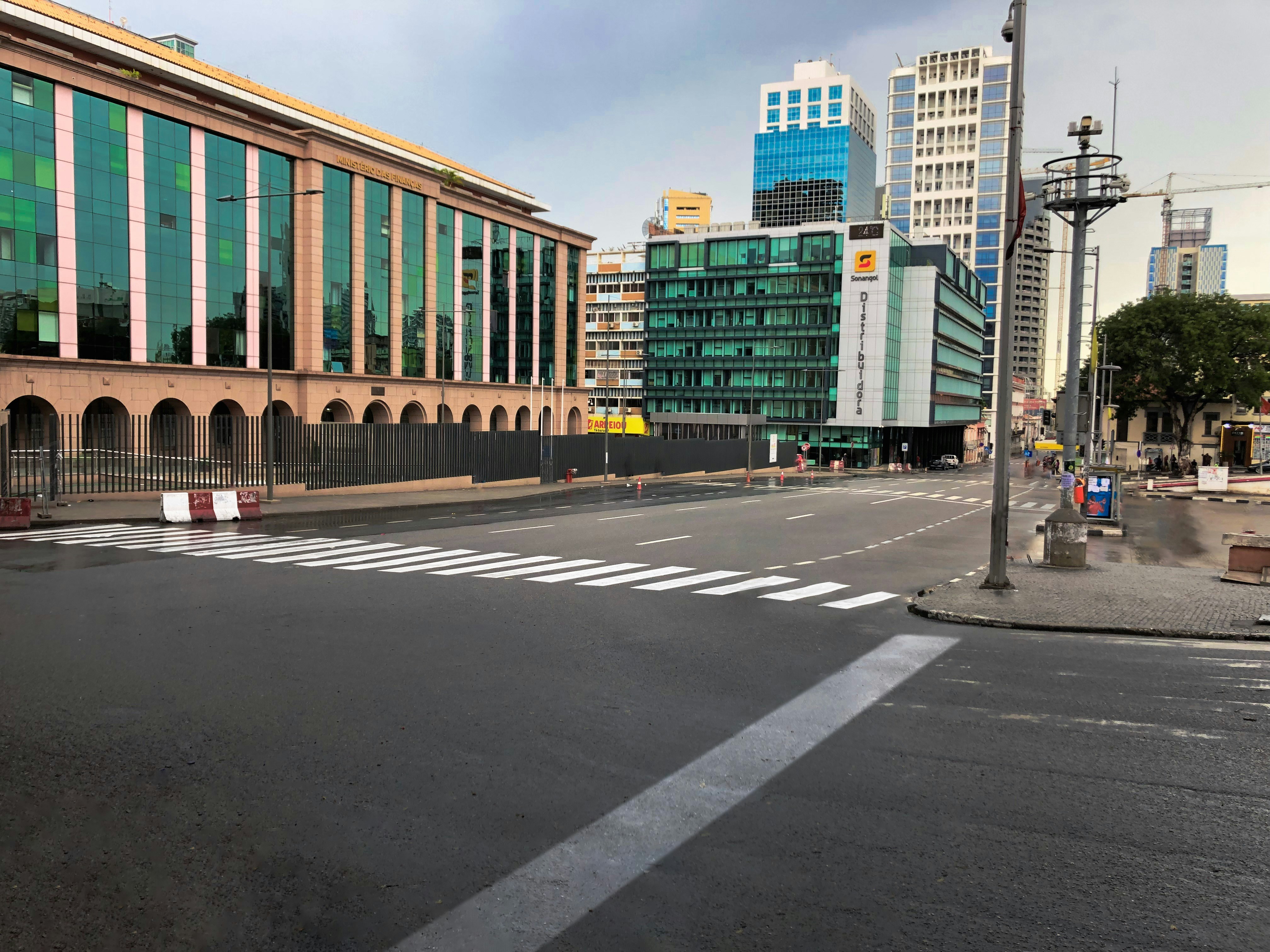
To visit Luanda is to witness the inhabitants of Angola rebuild a great city with their newly-acquired wealth. The sense of pride and confidence is overwhelming, and is demonstrated by the city’s new highways and skyscrapers, and by the wildlife and habitat rehabilitation programmes being carried out by the conservation authorities. The modern city of Luanda was founded in 1575 by Portuguese explorer Paulo Dias de Novais, and soon became a centre for trade between Portugal’s African colonies and Brazil. Apart from a short period of Dutch occupation, Luanda was under Portuguese rule until 1974. In the four decades since independence, Angola has become a peaceful and increasingly prosperous country, rich in diamonds and Africa’s second largest oil producer: many international companies now have head offices in Luanda. Please note: Owing to the destruction caused to the country’s infrastructure during the civil war that ended in 2002, Angola lost much of its ability to produce and distribute food: the resulting heavy import duties and high taxes have driven up the cost of goods and services, making Luanda one of the world’s most expensive cities. The price of excursions in this port reflects the prevailing local conditions.
At Sea
At Sea
At Sea
At Sea
At Sea
At Sea
Luanda, Angola
To visit Luanda is to witness the inhabitants of Angola rebuild a great city with their newly-acquired wealth. The sense of pride and confidence is overwhelming, and is demonstrated by the city’s new highways and skyscrapers, and by the wildlife and habitat rehabilitation programmes being carried out by the conservation authorities. The modern city of Luanda was founded in 1575 by Portuguese explorer Paulo Dias de Novais, and soon became a centre for trade between Portugal’s African colonies and Brazil. Apart from a short period of Dutch occupation, Luanda was under Portuguese rule until 1974. In the four decades since independence, Angola has become a peaceful and increasingly prosperous country, rich in diamonds and Africa’s second largest oil producer: many international companies now have head offices in Luanda. Please note: Owing to the destruction caused to the country’s infrastructure during the civil war that ended in 2002, Angola lost much of its ability to produce and distribute food: the resulting heavy import duties and high taxes have driven up the cost of goods and services, making Luanda one of the world’s most expensive cities. The price of excursions in this port reflects the prevailing local conditions.
At Sea
At Sea
At Sea
At Sea
At Sea
At Sea
Banjul, Gambia
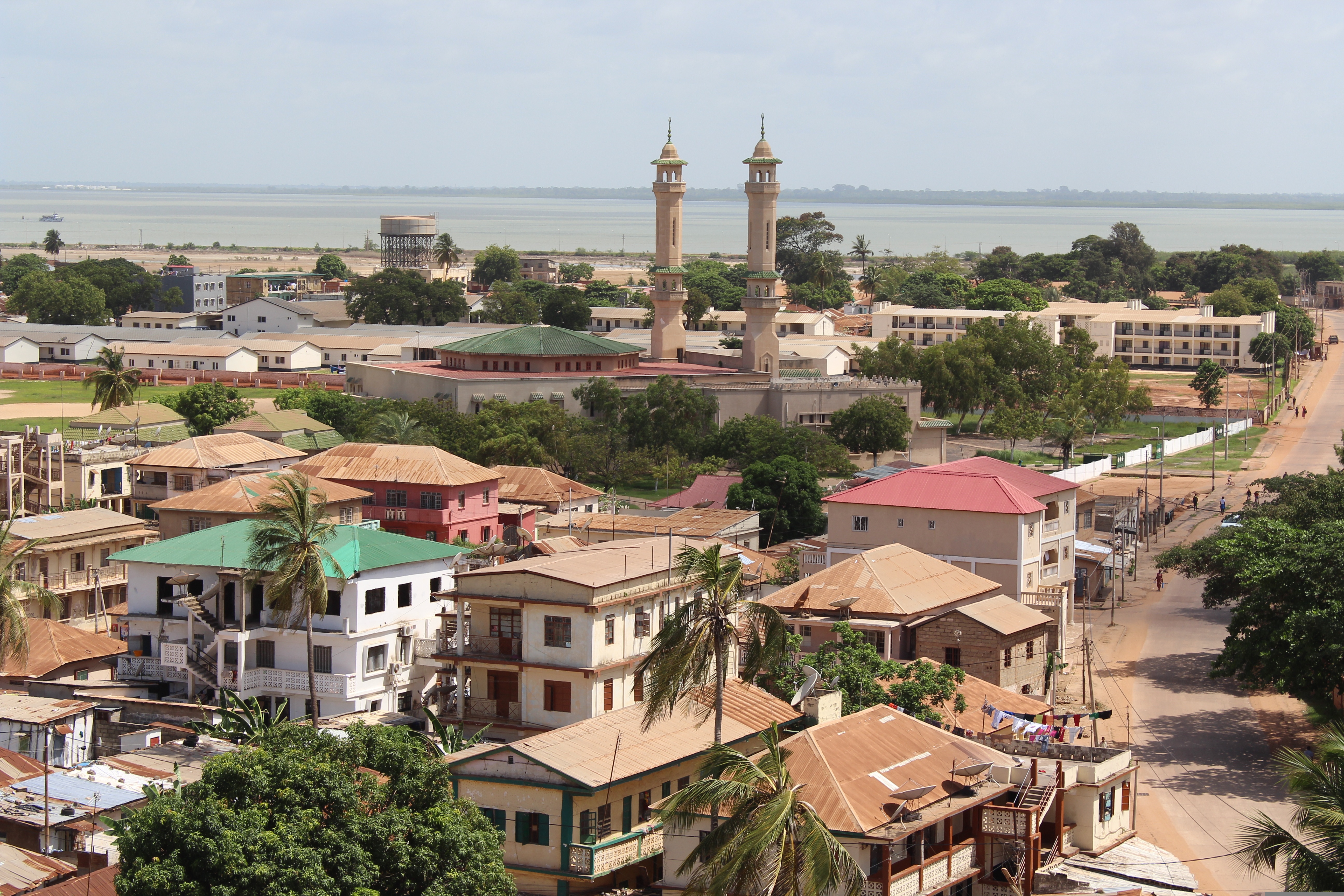
The tiny city of Banjul is the capital of The Gambia, a country that itself is little more than the banks of the mighty river that shares its name. Situated on St Mary’s Island, where the River Gambia joins the Atlantic, Bathurst, as Banjul was previously called, was established by the British in the early nineteenth century as a naval outpost dedicated to putting a halt to the trade in human beings. In 1943, Franklin Roosevelt visited Banjul on his way to the Casablanca conference with Churchill, becoming the first serving American president to visit Africa. Today, Banjul plays host to a thriving tourist trade, thanks to its pleasant climate, and is the political centre for the oldest democracy in Africa.
At Sea
At Sea
Las Palmas de Gran Canaria, Spain
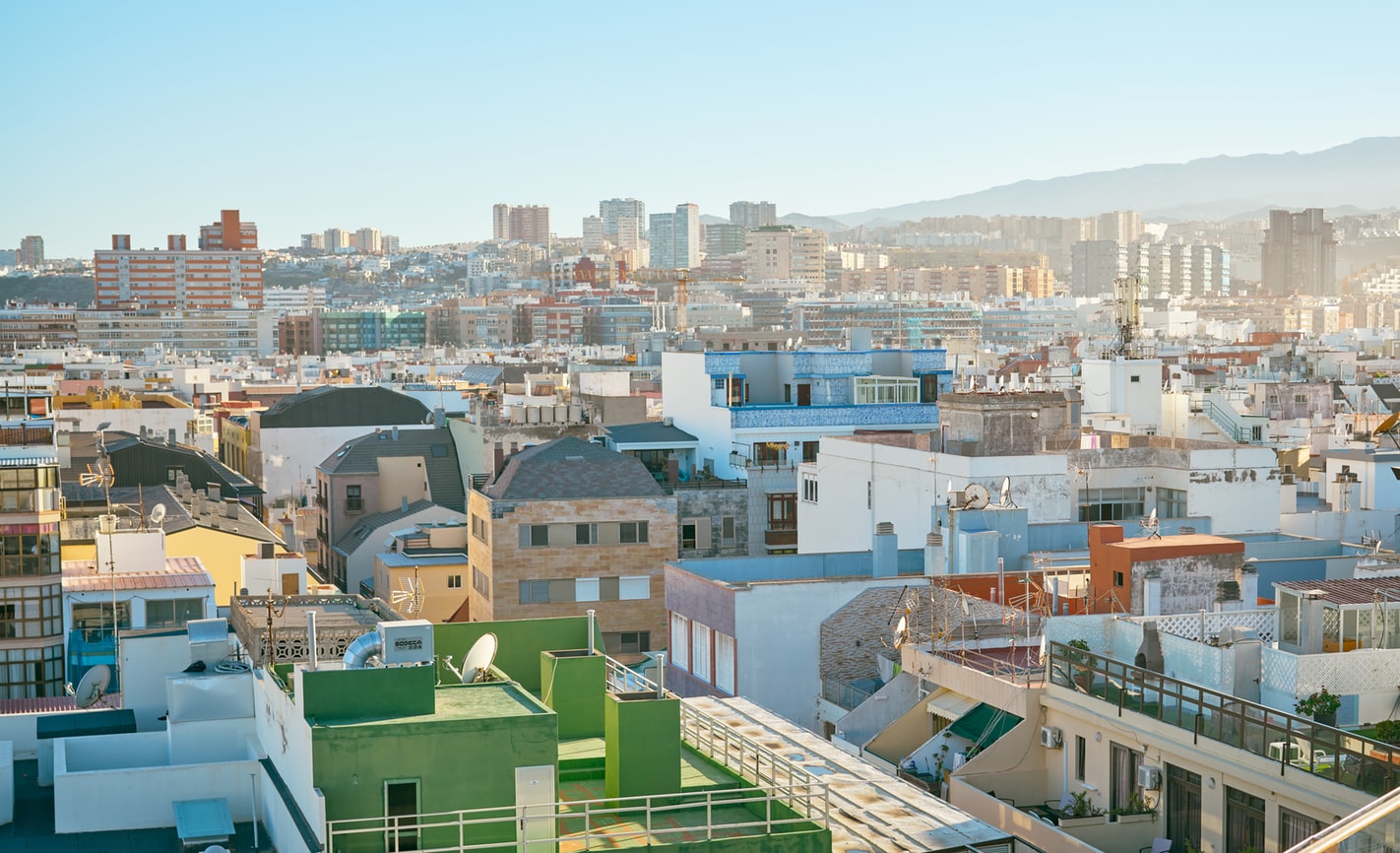
Perhaps the prettiest of the Canary Islands, Gran Canaria is an almost circular isle with the peak of Pozo de Las Nieves, its highest point, at the centre. With a wealth of natural beauty and all the exciting attractions of city life in the capital, the island offers the best of both worlds. You will no doubt wish to see the sights of the capital’s old quarter, which dates back to the 15th century and encompassses the Vegueta and Triana districts, and wherever you go you can enjoy the glorious subtropical climate, perfect for growing exotic palms and fruits.
Santa Cruz de Tenerife, Spain
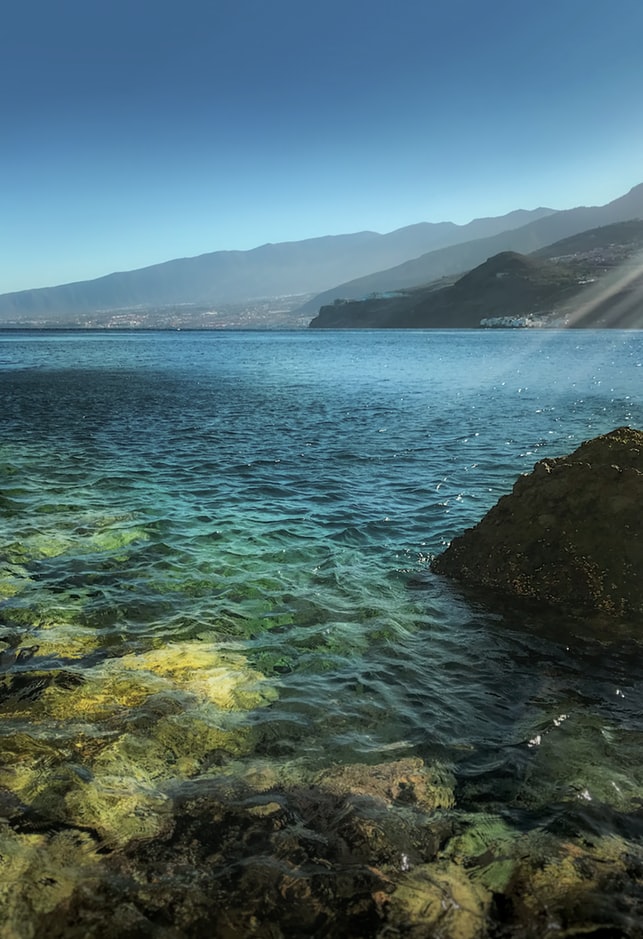
The largest of the Canary Islands, Tenerife is a beautiful and scenic island which enjoys year-round sunshine and is dominated by Mount Teide. The mountain range runs through the centre of the island, with fertile valleys on the northern side. In the central part of the range is the gigantic natural crater of the Cañadas del Teide, about 14 miles in diameter. Santa Cruz, the island’s pretty capital, was originally a small fishing village but has now grown into a modern city, and also contains 16th-century civic buildings and ornate private mansions. Near the pier is the Santa Cruz Palmetum, a Botanical Garden covering an area of 29 acres, specialising in palms.
Funchal, Madeira, Portugal
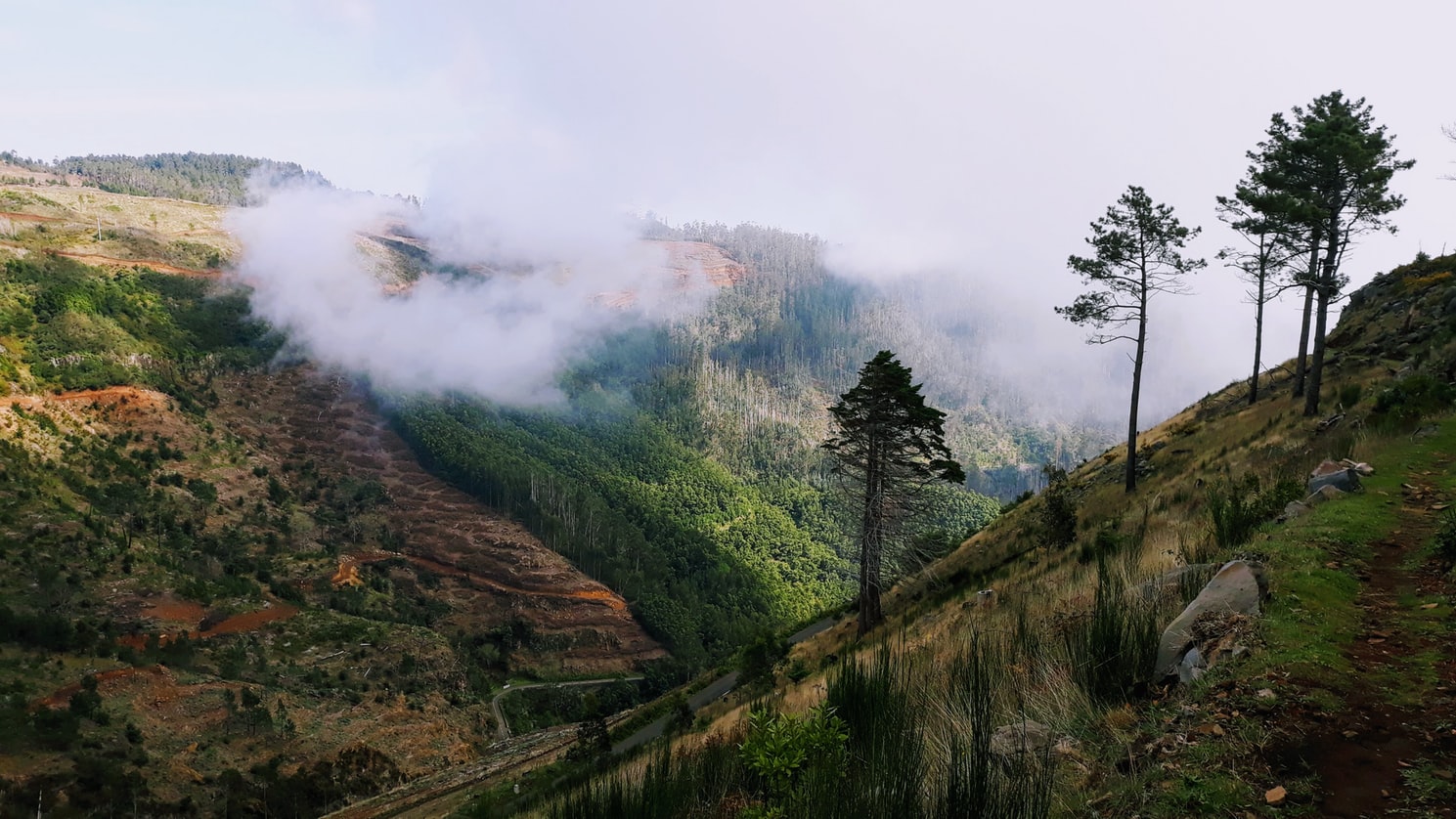
Formed by a volcanic eruption, Madeira lies in the Gulf Stream, about 500 miles due west of Casablanca. Discovered by Portuguese explorer João Gonçalves Zarco in 1419, this beautiful island became part of Portugal’s vast empire and was named for the dense forest which cloaked it – ‘Madeira’ means ‘wood’ in Portuguese. Sugar plantations first brought wealth here, and when King Charles II of England granted an exclusive franchise to sell wine to England and its colonies, many British emigrants were drawn to the capital, Funchal. Today’s travellers come to Madeira for the varied and luxuriant scenery, from mountain slopes covered with vines to picturesque villages and a profusion of wild flowers. The natural beauty of the island has earned it many pseudonyms such as ‘The Floating Garden of the Atlantic’, ‘The Island of Eternal Springtime’ and ‘God’s Botanical Gardens’ and our selection of excursions aim to show you why.
Funchal, Madeira, Portugal
Formed by a volcanic eruption, Madeira lies in the Gulf Stream, about 500 miles due west of Casablanca. Discovered by Portuguese explorer João Gonçalves Zarco in 1419, this beautiful island became part of Portugal’s vast empire and was named for the dense forest which cloaked it – ‘Madeira’ means ‘wood’ in Portuguese. Sugar plantations first brought wealth here, and when King Charles II of England granted an exclusive franchise to sell wine to England and its colonies, many British emigrants were drawn to the capital, Funchal. Today’s travellers come to Madeira for the varied and luxuriant scenery, from mountain slopes covered with vines to picturesque villages and a profusion of wild flowers. The natural beauty of the island has earned it many pseudonyms such as ‘The Floating Garden of the Atlantic’, ‘The Island of Eternal Springtime’ and ‘God’s Botanical Gardens’ and our selection of excursions aim to show you why.
Banjul, Gambia
The tiny city of Banjul is the capital of The Gambia, a country that itself is little more than the banks of the mighty river that shares its name. Situated on St Mary’s Island, where the River Gambia joins the Atlantic, Bathurst, as Banjul was previously called, was established by the British in the early nineteenth century as a naval outpost dedicated to putting a halt to the trade in human beings. In 1943, Franklin Roosevelt visited Banjul on his way to the Casablanca conference with Churchill, becoming the first serving American president to visit Africa. Today, Banjul plays host to a thriving tourist trade, thanks to its pleasant climate, and is the political centre for the oldest democracy in Africa.
At Sea
At Sea
Las Palmas de Gran Canaria, Spain
Perhaps the prettiest of the Canary Islands, Gran Canaria is an almost circular isle with the peak of Pozo de Las Nieves, its highest point, at the centre. With a wealth of natural beauty and all the exciting attractions of city life in the capital, the island offers the best of both worlds. You will no doubt wish to see the sights of the capital’s old quarter, which dates back to the 15th century and encompassses the Vegueta and Triana districts, and wherever you go you can enjoy the glorious subtropical climate, perfect for growing exotic palms and fruits.
Santa Cruz de Tenerife, Spain
The largest of the Canary Islands, Tenerife is a beautiful and scenic island which enjoys year-round sunshine and is dominated by Mount Teide. The mountain range runs through the centre of the island, with fertile valleys on the northern side. In the central part of the range is the gigantic natural crater of the Cañadas del Teide, about 14 miles in diameter. Santa Cruz, the island’s pretty capital, was originally a small fishing village but has now grown into a modern city, and also contains 16th-century civic buildings and ornate private mansions. Near the pier is the Santa Cruz Palmetum, a Botanical Garden covering an area of 29 acres, specialising in palms.
Funchal, Madeira, Portugal
Formed by a volcanic eruption, Madeira lies in the Gulf Stream, about 500 miles due west of Casablanca. Discovered by Portuguese explorer João Gonçalves Zarco in 1419, this beautiful island became part of Portugal’s vast empire and was named for the dense forest which cloaked it – ‘Madeira’ means ‘wood’ in Portuguese. Sugar plantations first brought wealth here, and when King Charles II of England granted an exclusive franchise to sell wine to England and its colonies, many British emigrants were drawn to the capital, Funchal. Today’s travellers come to Madeira for the varied and luxuriant scenery, from mountain slopes covered with vines to picturesque villages and a profusion of wild flowers. The natural beauty of the island has earned it many pseudonyms such as ‘The Floating Garden of the Atlantic’, ‘The Island of Eternal Springtime’ and ‘God’s Botanical Gardens’ and our selection of excursions aim to show you why.
Funchal, Madeira, Portugal
Formed by a volcanic eruption, Madeira lies in the Gulf Stream, about 500 miles due west of Casablanca. Discovered by Portuguese explorer João Gonçalves Zarco in 1419, this beautiful island became part of Portugal’s vast empire and was named for the dense forest which cloaked it – ‘Madeira’ means ‘wood’ in Portuguese. Sugar plantations first brought wealth here, and when King Charles II of England granted an exclusive franchise to sell wine to England and its colonies, many British emigrants were drawn to the capital, Funchal. Today’s travellers come to Madeira for the varied and luxuriant scenery, from mountain slopes covered with vines to picturesque villages and a profusion of wild flowers. The natural beauty of the island has earned it many pseudonyms such as ‘The Floating Garden of the Atlantic’, ‘The Island of Eternal Springtime’ and ‘God’s Botanical Gardens’ and our selection of excursions aim to show you why.
At Sea
Portimão, Portugal
Portimão is a major fishing port, and significant investment has been poured into transforming it into an attractive cruise port as well. The city itself is spacious and has several good shopping streets—though sadly many of the more traditional retailers have closed in the wake of the global economic crisis. There is also a lovely riverside area that just begs to be strolled (lots of the coastal cruises depart from here). Don’t leave without stopping for an alfresco lunch at the Doca da Sardinha (“sardine dock”) between the old bridge and the railway bridge. You can sit at one of many inexpensive establishments, eating charcoal-grilled sardines (a local specialty) accompanied by chewy fresh bread, simple salads, and local wine.
Lisbon, Portugal
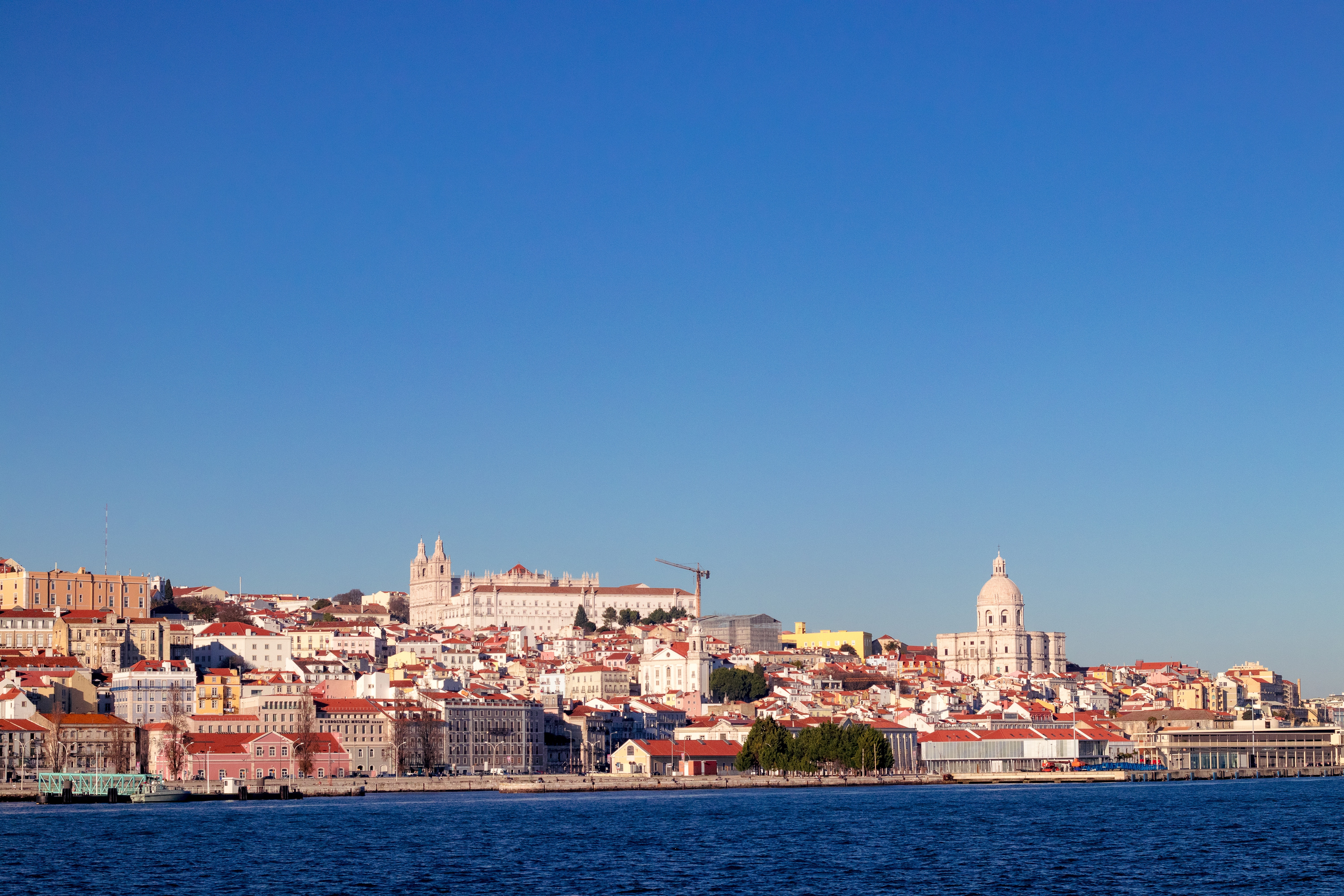
Set on seven hills on the banks of the River Tagus, Lisbon has been the capital of Portugal since the 13th century. It is a city famous for its majestic architecture, old wooden trams, Moorish features and more than twenty centuries of history. Following disastrous earthquakes in the 18th century, Lisbon was rebuilt by the Marques de Pombal who created an elegant city with wide boulevards and a great riverfront and square, Praça do Comércio. Today there are distinct modern and ancient sections, combining great shopping with culture and sightseeing in the Old Town, built on the city’s terraced hillsides. The distance between the ship and your tour vehicle may vary. This distance is not included in the excursion grades.
At Sea
Portimão, Portugal
Portimão is a major fishing port, and significant investment has been poured into transforming it into an attractive cruise port as well. The city itself is spacious and has several good shopping streets—though sadly many of the more traditional retailers have closed in the wake of the global economic crisis. There is also a lovely riverside area that just begs to be strolled (lots of the coastal cruises depart from here). Don’t leave without stopping for an alfresco lunch at the Doca da Sardinha (“sardine dock”) between the old bridge and the railway bridge. You can sit at one of many inexpensive establishments, eating charcoal-grilled sardines (a local specialty) accompanied by chewy fresh bread, simple salads, and local wine.
Lisbon, Portugal
Set on seven hills on the banks of the River Tagus, Lisbon has been the capital of Portugal since the 13th century. It is a city famous for its majestic architecture, old wooden trams, Moorish features and more than twenty centuries of history. Following disastrous earthquakes in the 18th century, Lisbon was rebuilt by the Marques de Pombal who created an elegant city with wide boulevards and a great riverfront and square, Praça do Comércio. Today there are distinct modern and ancient sections, combining great shopping with culture and sightseeing in the Old Town, built on the city’s terraced hillsides. The distance between the ship and your tour vehicle may vary. This distance is not included in the excursion grades.
Cabin Options
Vista Suite
Panorama Suite
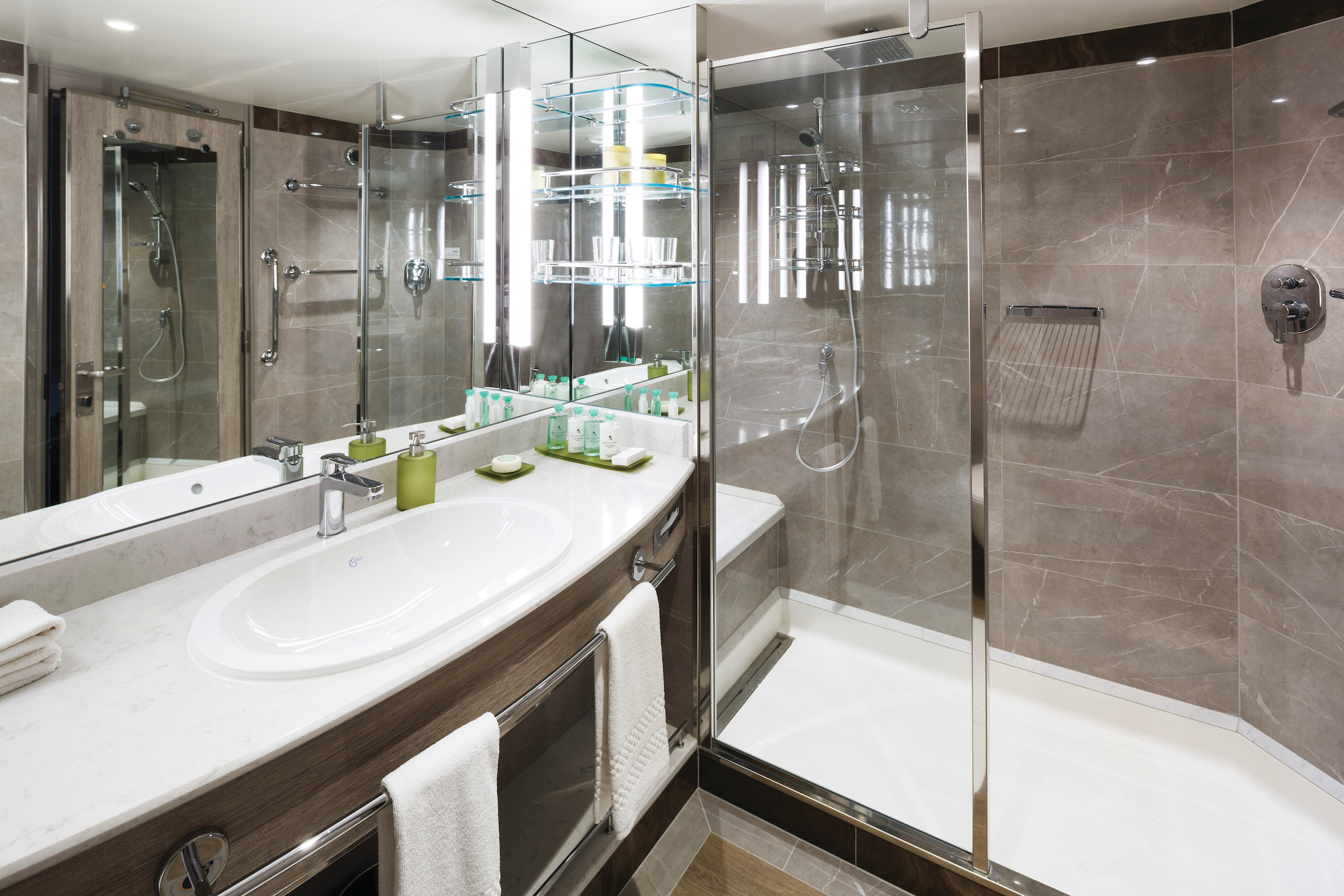
Classic Veranda Suite
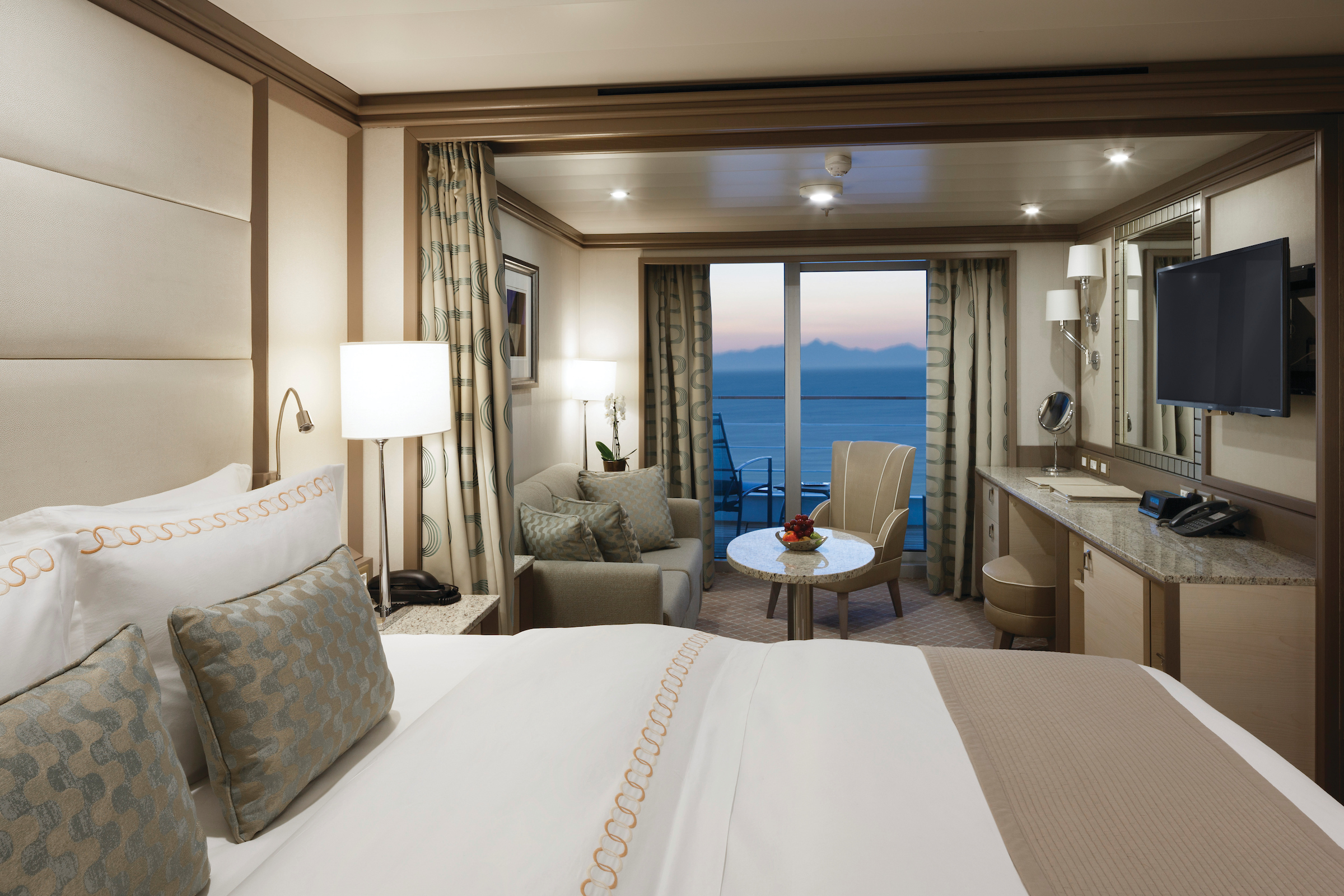
Superior Veranda Suite
Deluxe Veranda Suite
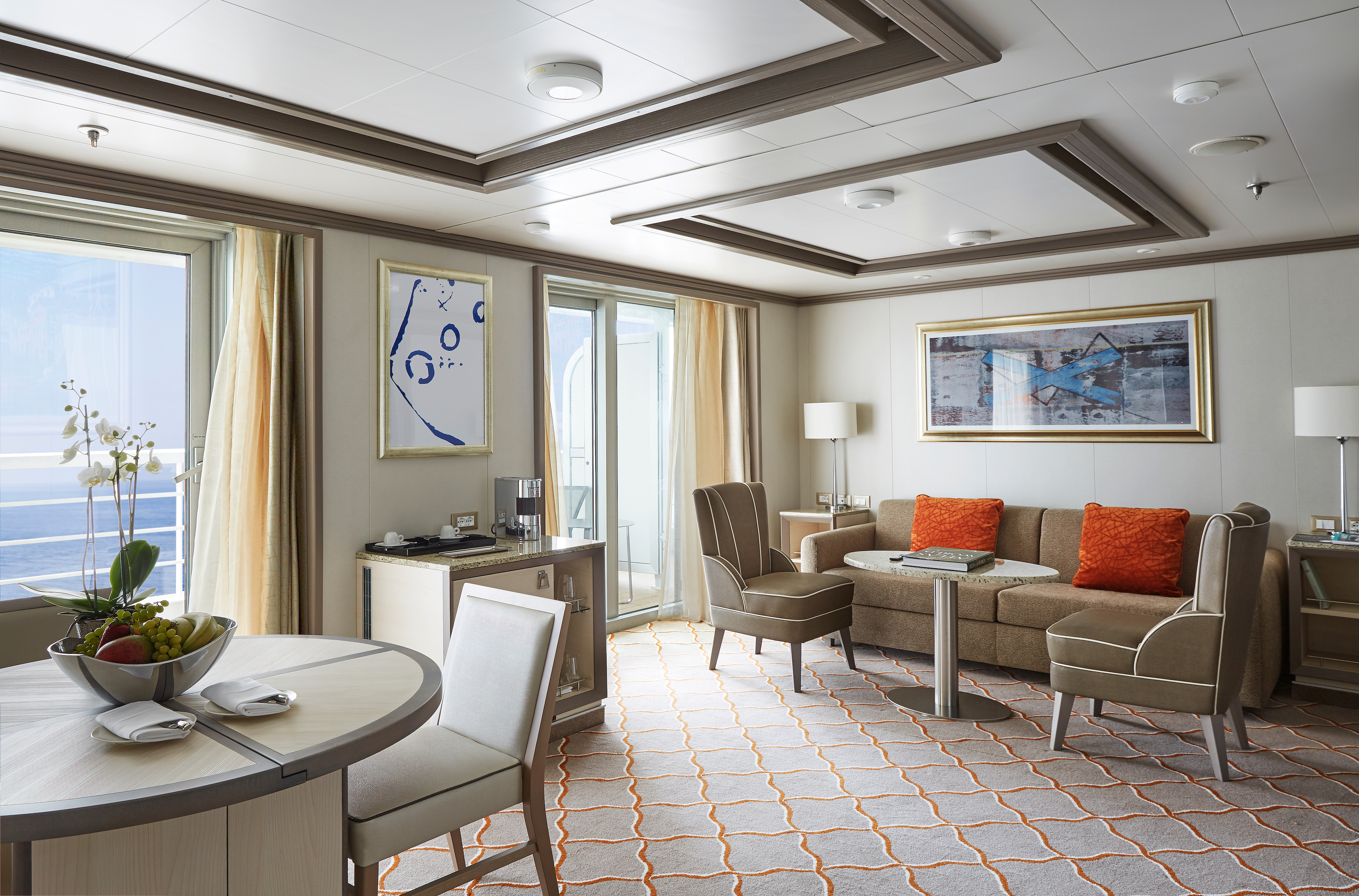
Silver Suite
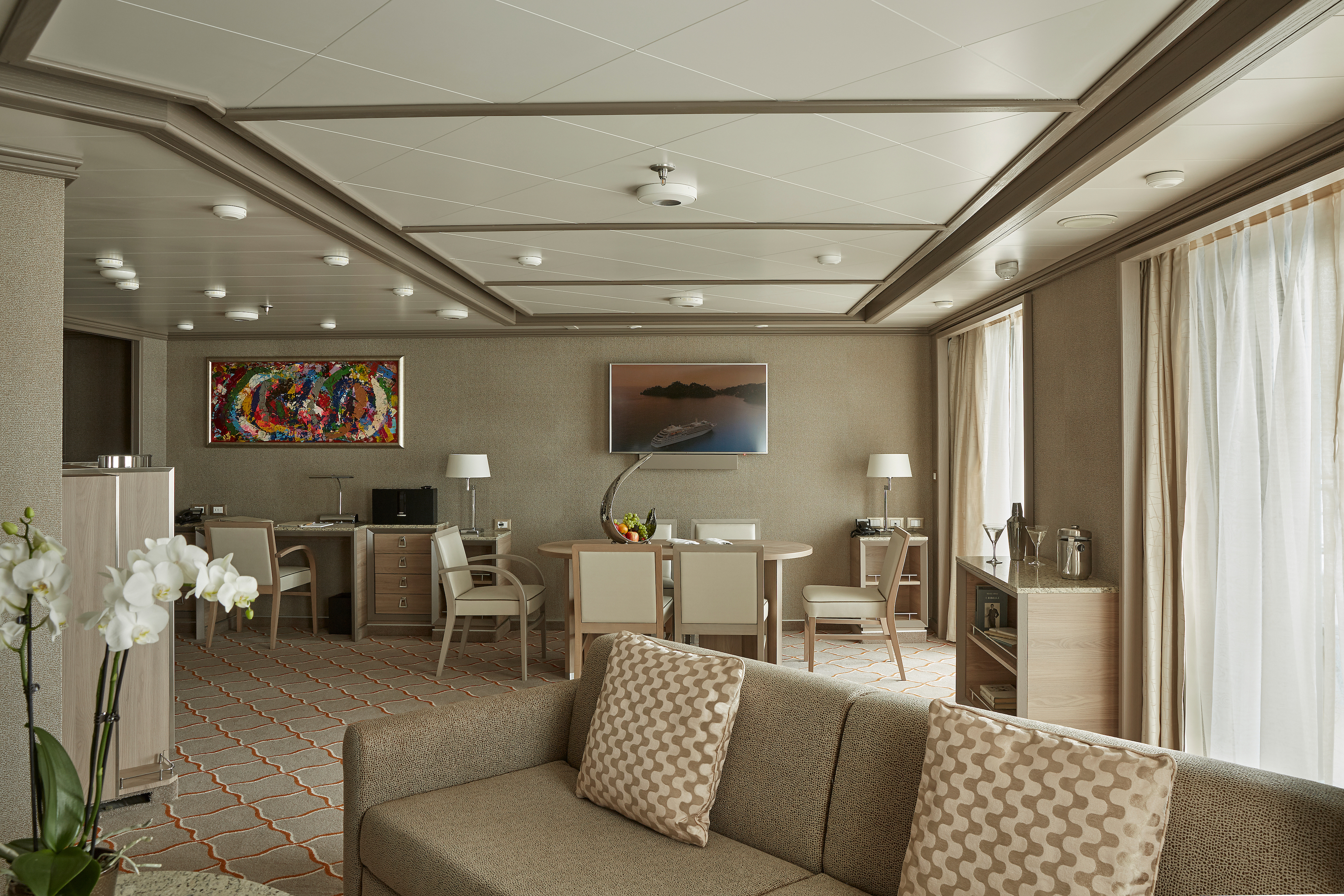
Royal Suite
Grand Suite
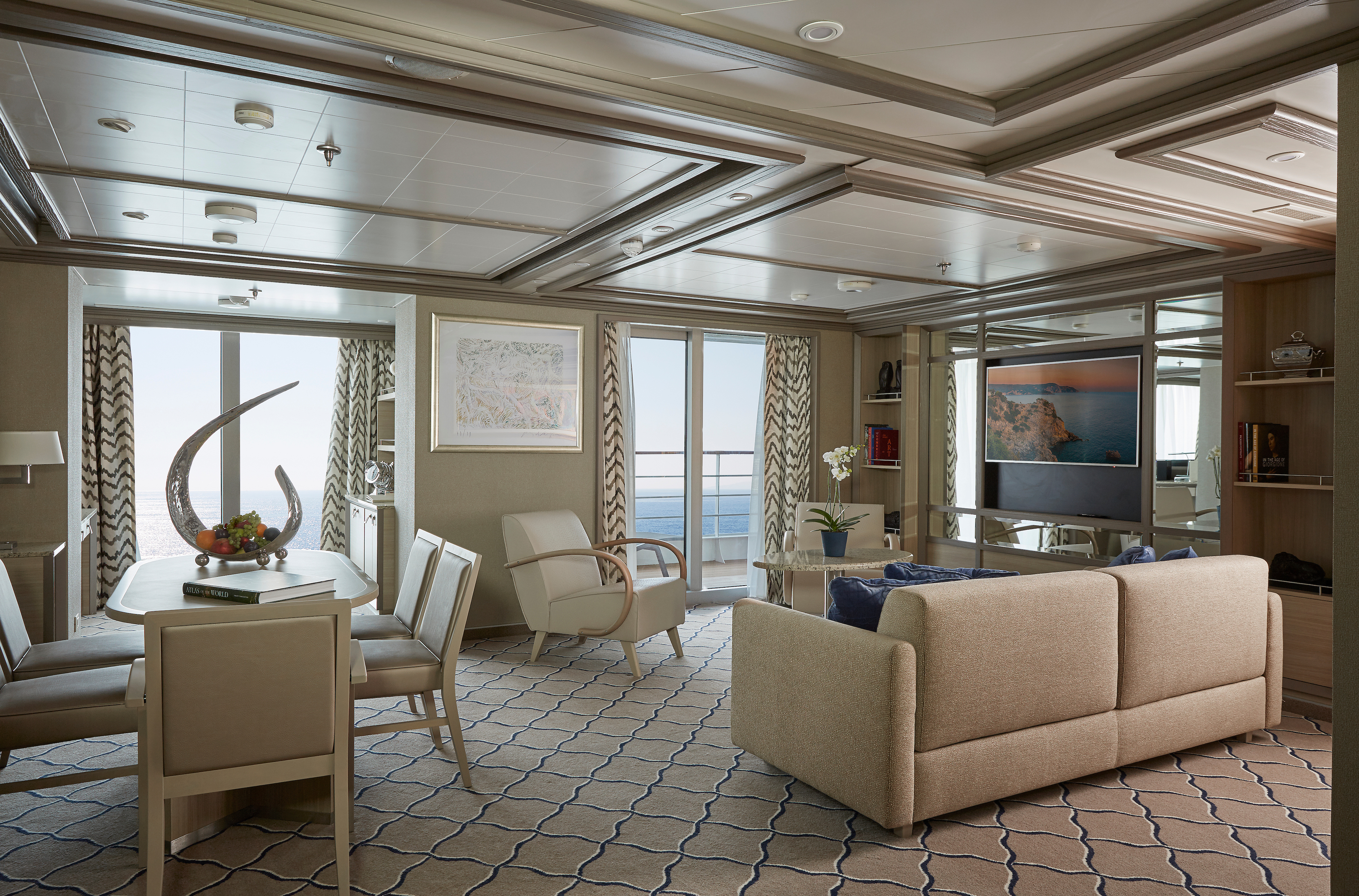
Owner's Suite
Ship Facilities
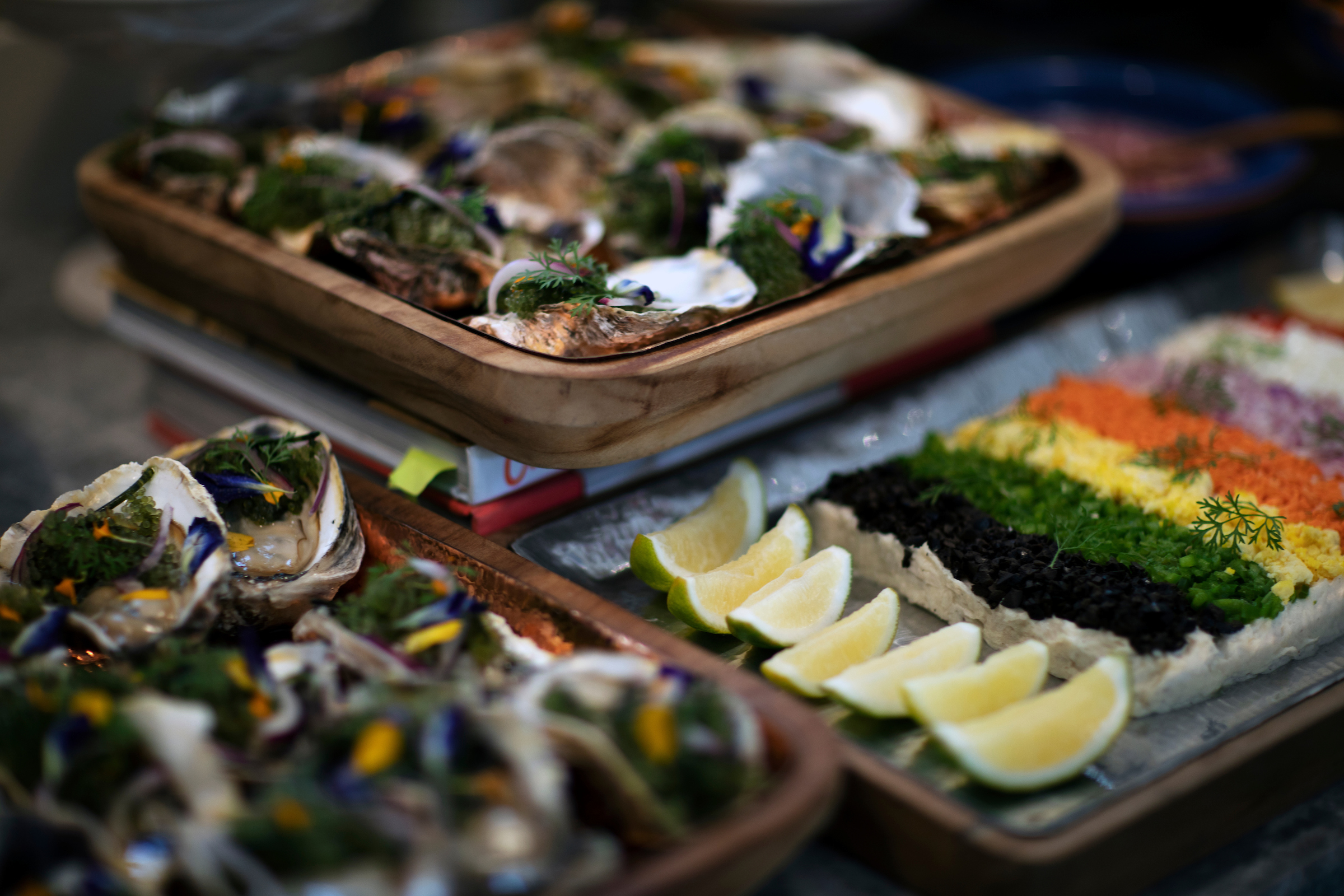
S.A.L.T. Kitchen
Take your travel experience further than ever before in the S.A.L.T. Kitchen. Silver Dawn’s exclusive destination-focused restaurant is the place to be when it comes to enjoying the local cuisine, culture, and rich culinary heritage of your voyage. Taste your way through regional specialties for your most immersive travel experience ever. Whether you are looking for excellent food and wine, a social meal with friends, or a deeper understanding of your region’s culture, expect to find it in the S.A.L.T. Kitchen.
Images are intended as a general reference. Features, materials, finishes and layout may be different than shown.
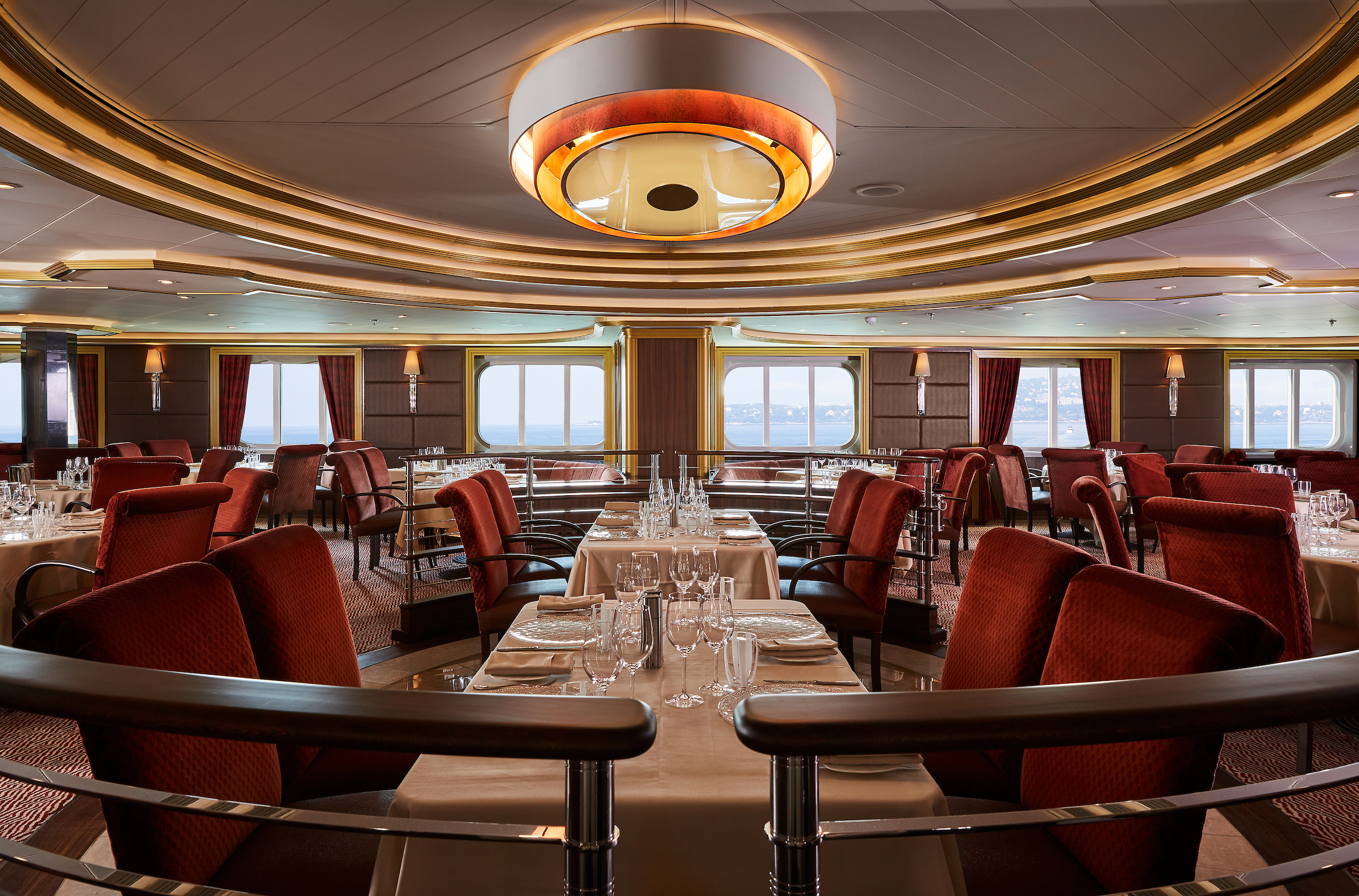
La Dame
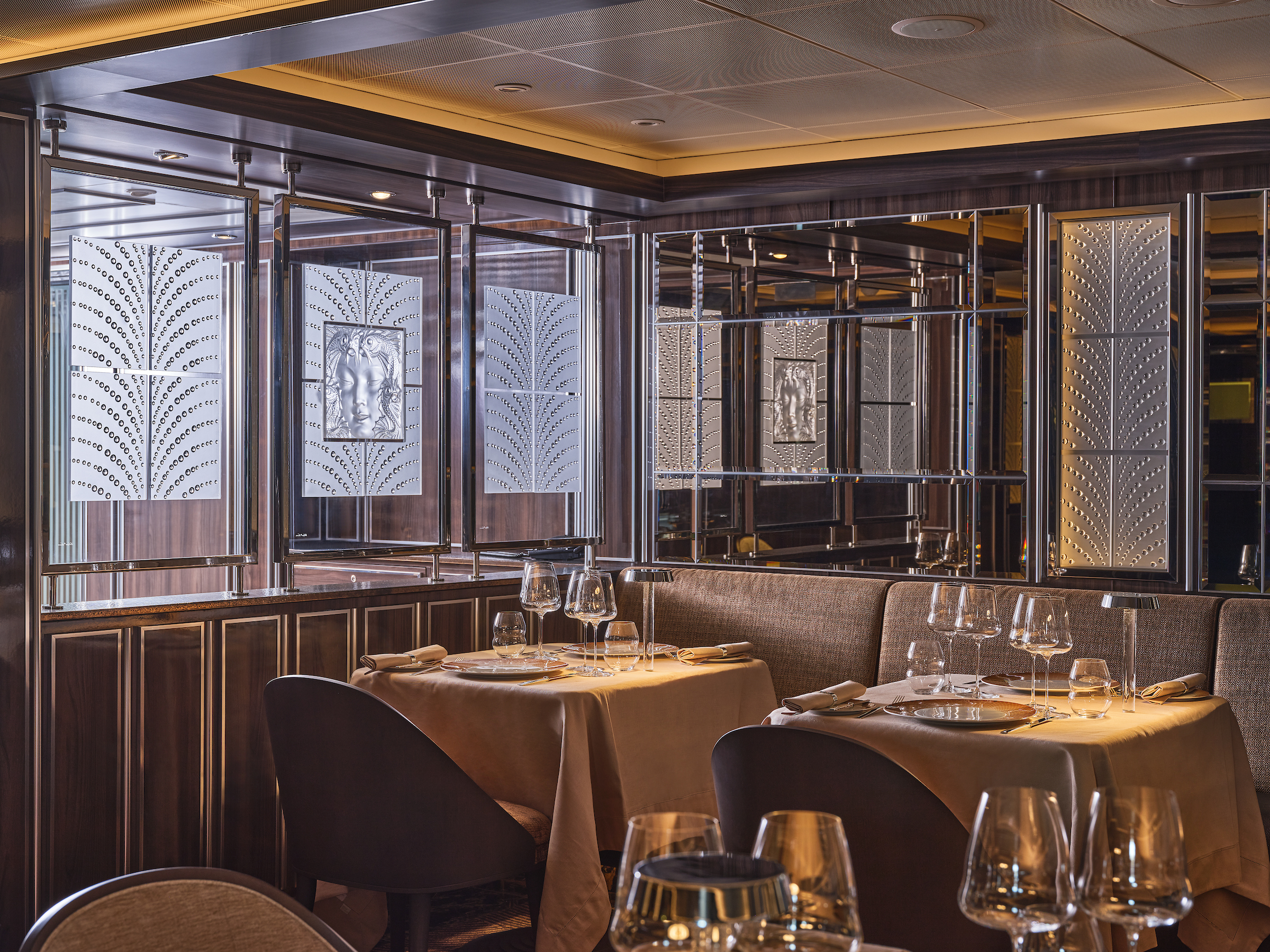
Silversea’s signature French restaurant, La Dame, is the epitome of fine dining. Featuring the rich, smooth flavors of France, La Dame’s reputation for gastronomic excellence is fully upheld aboard Silver Dawn. Expect only the very best: chic, contemporary style, vast ocean-view windows, crisp, white table linens, and impeccable white-gloved service with a smile. Decorated with custom-made interior panel compositions created by Lalique, there is no better place to feel the culinary soul of France than in La Dame.
Per guest reservation fee of US$60. Please visit My Silversea to make your reservations.
Images are intended as a general reference. Features, materials, finishes and layout may be different than shown.
La Terraza
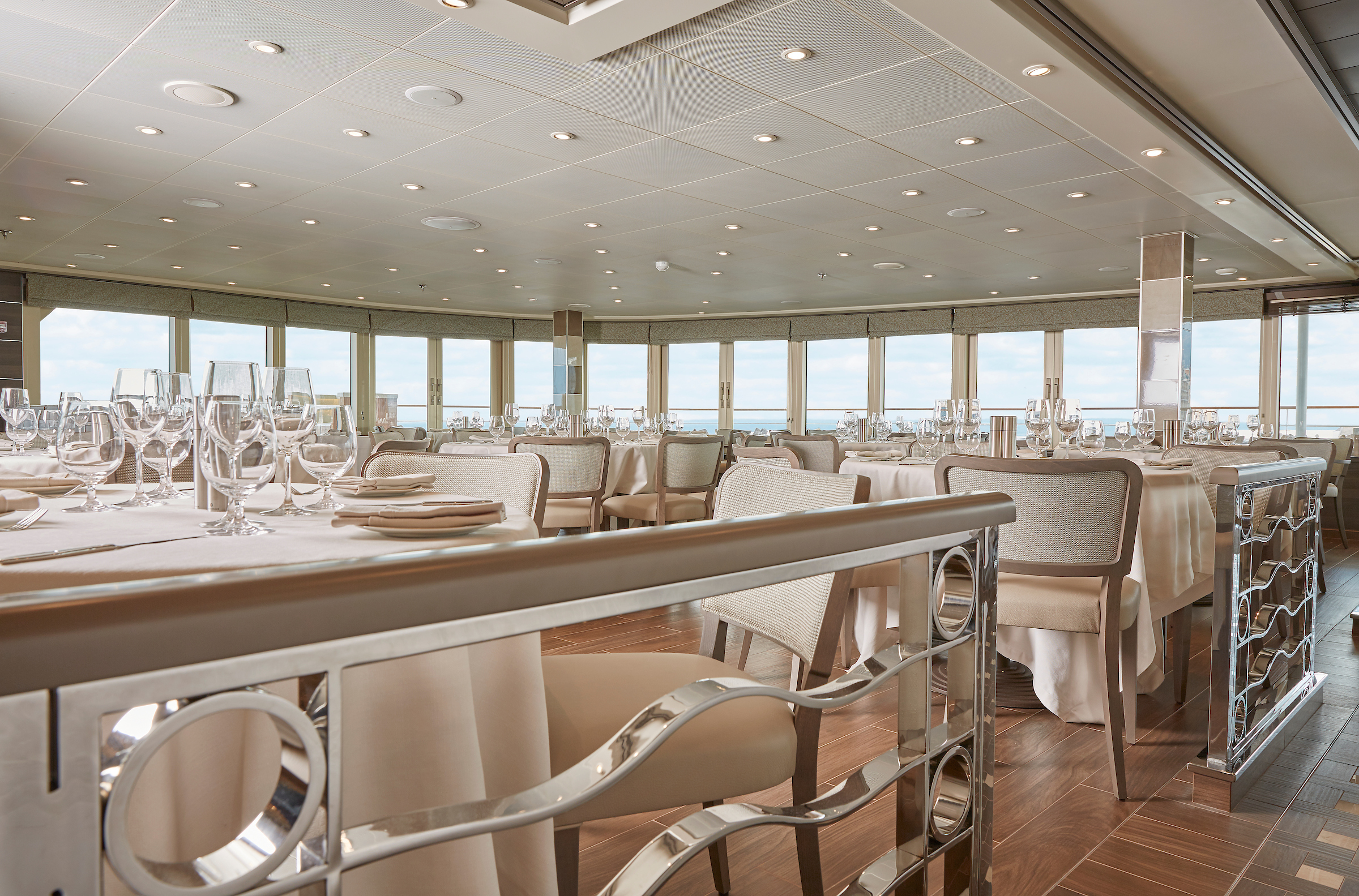
La Terrazza is a celebration of the way Italians eat today, an ode to the delicious evolution of the world’s most beloved cuisine. Evolving one of Silversea’s signature restaurants, La Terrazza serves fresh twists on great classics, and also explores the new heroes of Italian cuisine. The notion of comfort traditionally associated with Italian cuisine is present in every dish, every bite, yet always with a subtle element of surprise. La Terrazza is open for casual, buffet-style breakfast and lunch with indoor or alfresco dining on the outdoor terrace. During the evening, the venue transforms into an à la carte Italian restaurant. Seating is limited for dinner and reservations are recommended.
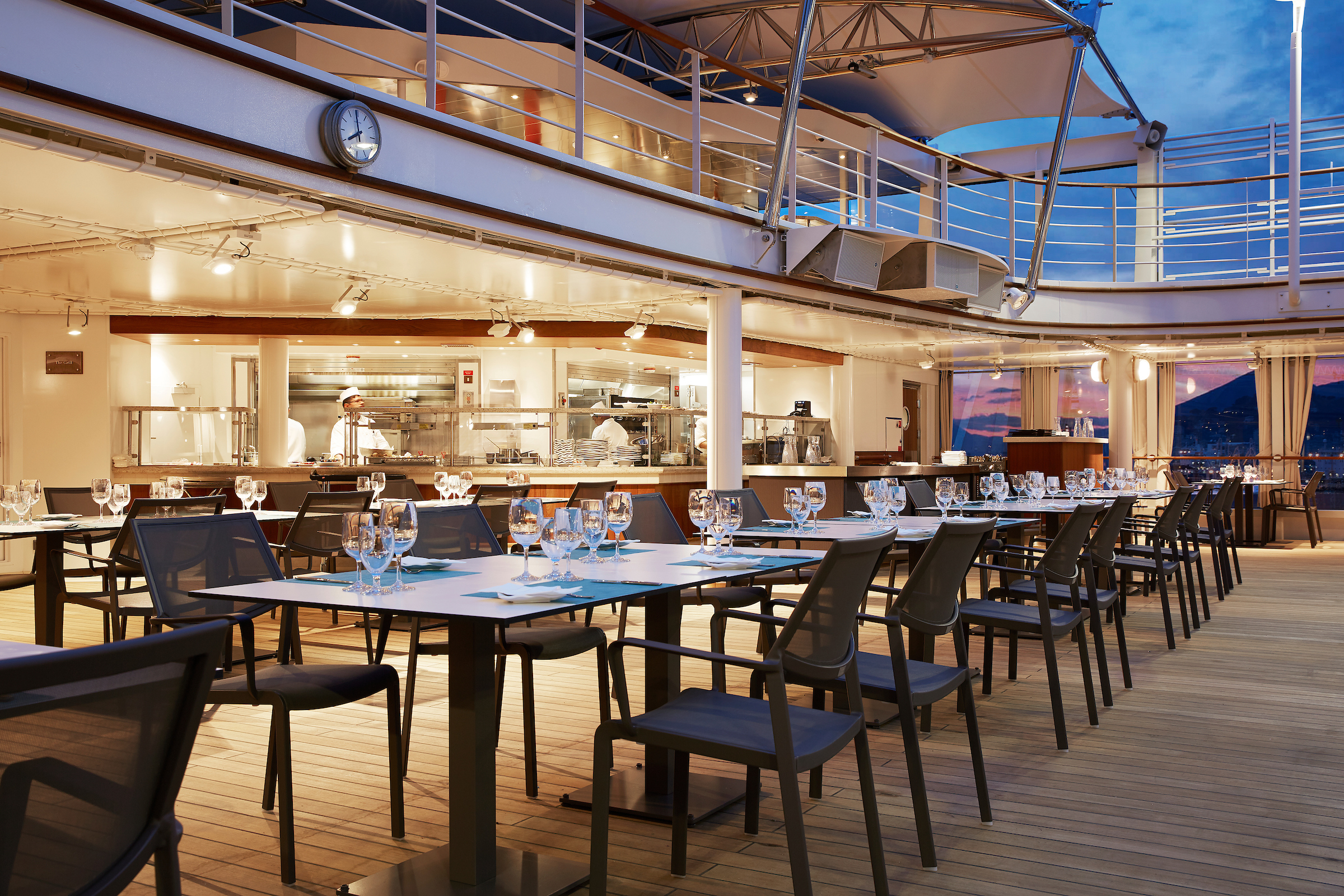
The Grill
Silversea’s much-loved casual dining restaurant serves a delectable range of burgers and salads by day and turns into our famous Hot Rocks table BBQ concept by night. The Grill is quite simply the best place to eat between sea and sky. If you like flavorsome meals cooked to perfection, a casual, laid-back atmosphere, and OMG views, then The Grill is the answer to your prayers.
Images are intended as a general reference. Features, materials, finishes and layout may be different than shown.
Atlantide
Instantly recalling images of the sea in all her watery majesty, the Atlantides are the seven nymph daughters of Atlas. Creative muses known for their wisdom and beauty, the sisters were granted immortality in the form of stars and can be seen today in the constellation of Taurus. Pivotal to the Silver Moon dining experience, this elegant bar and grill incorporates the best that the sea has to offer. Created to temper your taste buds, designer dishes such as royal crab, lobster, and verbena-infused red snapper in a sea salt crust are showcased alongside the best steaks offshore.
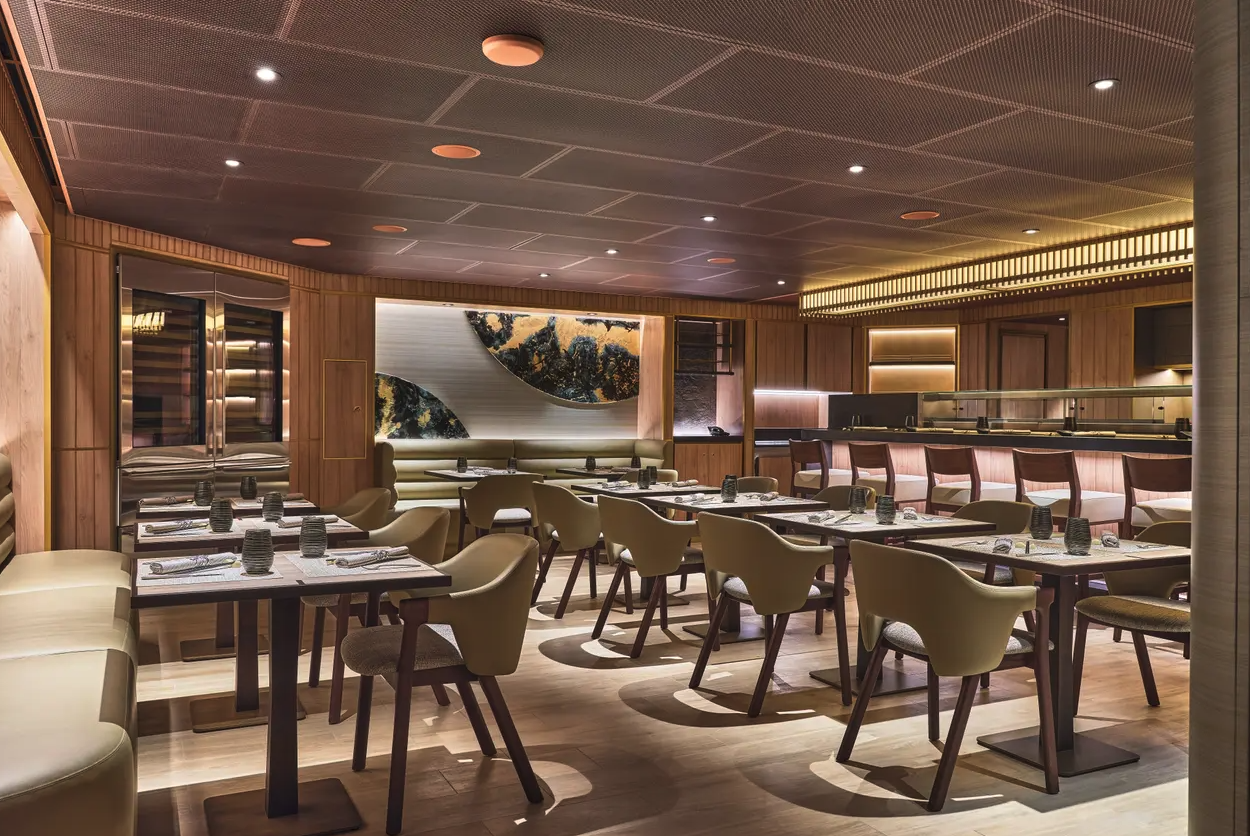
Kaiseki
The fine art of Kaiseki lies in its meticulous preparation and beautiful presentation. Dishes reflect a passion for tradition and performance and our reinterpretation of these values is clear. Balanced menus have been inspired by the five elements of Japanese nutritional cuisine and respect the equilibrium of yin and yang. Daytime menus feature a varied and balanced menu of sushi, sashimi, and other raw Asian-inspired dishes, while the evenings are alive with the taste and traditions of fine Japanese dining.
Per guest reservation fee of US$40. Please visit My Silversea to make your reservations.
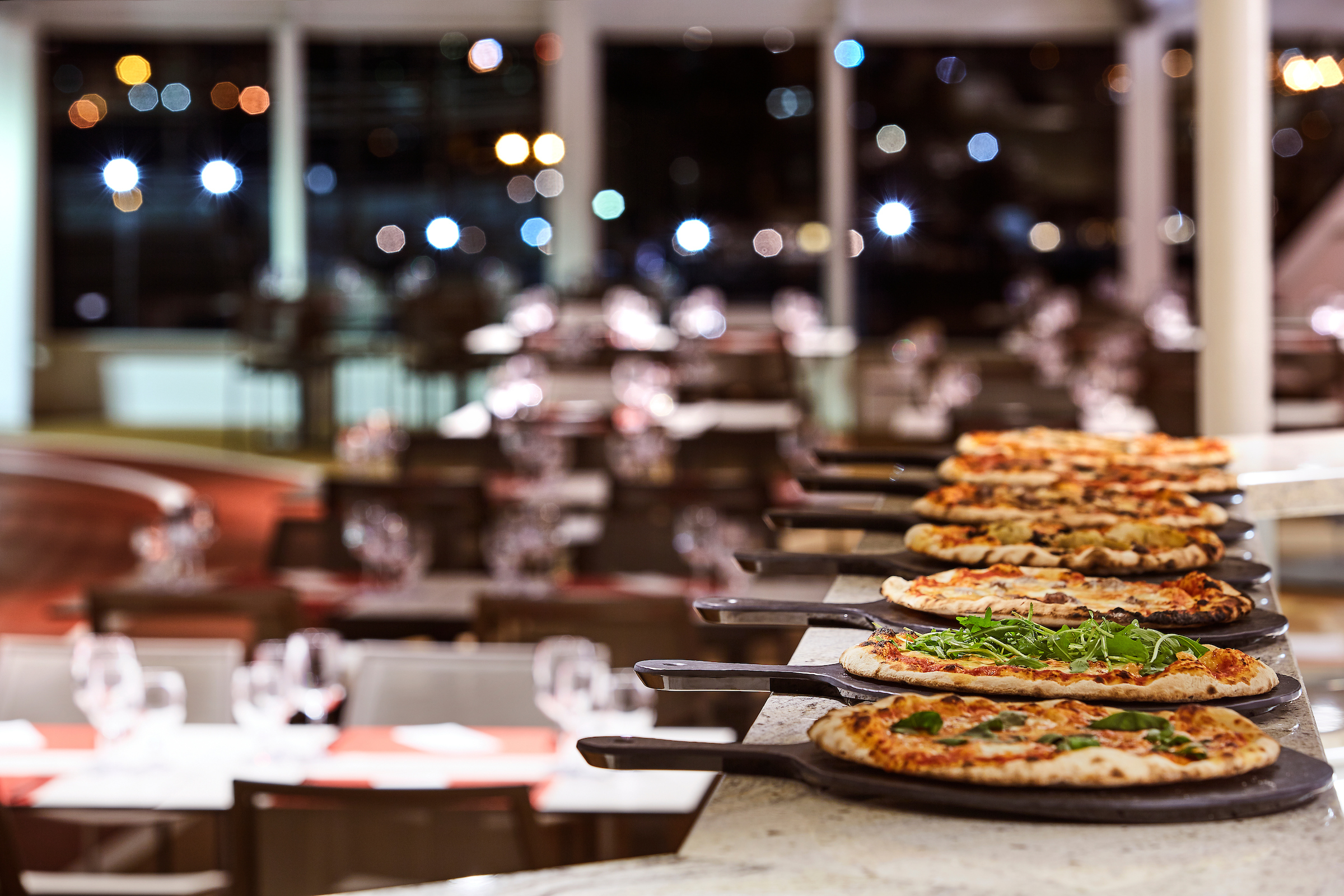
Spaccanapoli
Reflecting Silversea’s Italian heritage, this emblematic street in Naples divides the city in two and is renowned for its pizzerias. No visit to the city is complete without a journey to Spaccanapoli. Therefore, it is unsurprising that Spaccanapoli aboard Silver Dawn reflects the true Italian way of life: the freshest ingredients, authentic dough, and a perfect sense of the fabled Italian lust for life. The simplicity of la dolce vita is reflected in the relaxed dining style of the restaurant.
Silver Note
A sumptuous, intimate setting with a lively ambience is the perfect place to dine, dance, and dream the night away … Small-plate, tapas-style dishes of mouthwatering international cuisine perfectly compliment the rich, exciting entertainment as the smooth sounds of jazz and blues fill the air. A refined late evening menu perfectly showcases the panache and style of Silver Dawn’s plentiful dining options, so expect multisensory fireworks as you swing and sway effortlessly across the dance floor as Silver Dawn gracefully takes you to your next destination.
Shore Excursions
Highlight Experiences
Seamless tours of iconic sites
Explore iconic landmarks and cultural treasures with our Highlight Experiences, half or full-day adventures led by expert guides. Enjoy seamless, hassle-free journeys to must- see attractions — perfect for guests seeking a convenient, turnkey experience.
Signature Experiences
Smaller tours, crafted by Silversea
These immersive Signature Experiences offer privileged access and personalized interactions with local experts. These experiences are perfect for those seeking meaningful, social exploration who want to connect with destinations through authentic dining and slow travel.
Private Experiences
Exclusive tours for your group
Create your own exclusive adventure with a dedicated vehicle, driver, and guide. Explore at your pace, linger, or spontaneously discover new sites. Available at most ports for half- or full-day bookings, Private Experiences are ideal for families seeking privacy and flexibility.
Custom Experiences
Tailor-made tours designed for you
Enjoy personalized Custom Experiences tailored to your interests, with exclusive access and specialized guides. Our team handles every detail, ensuring unforgettable moments that exceed your expectations—crafted entirely around your pace and preferences.
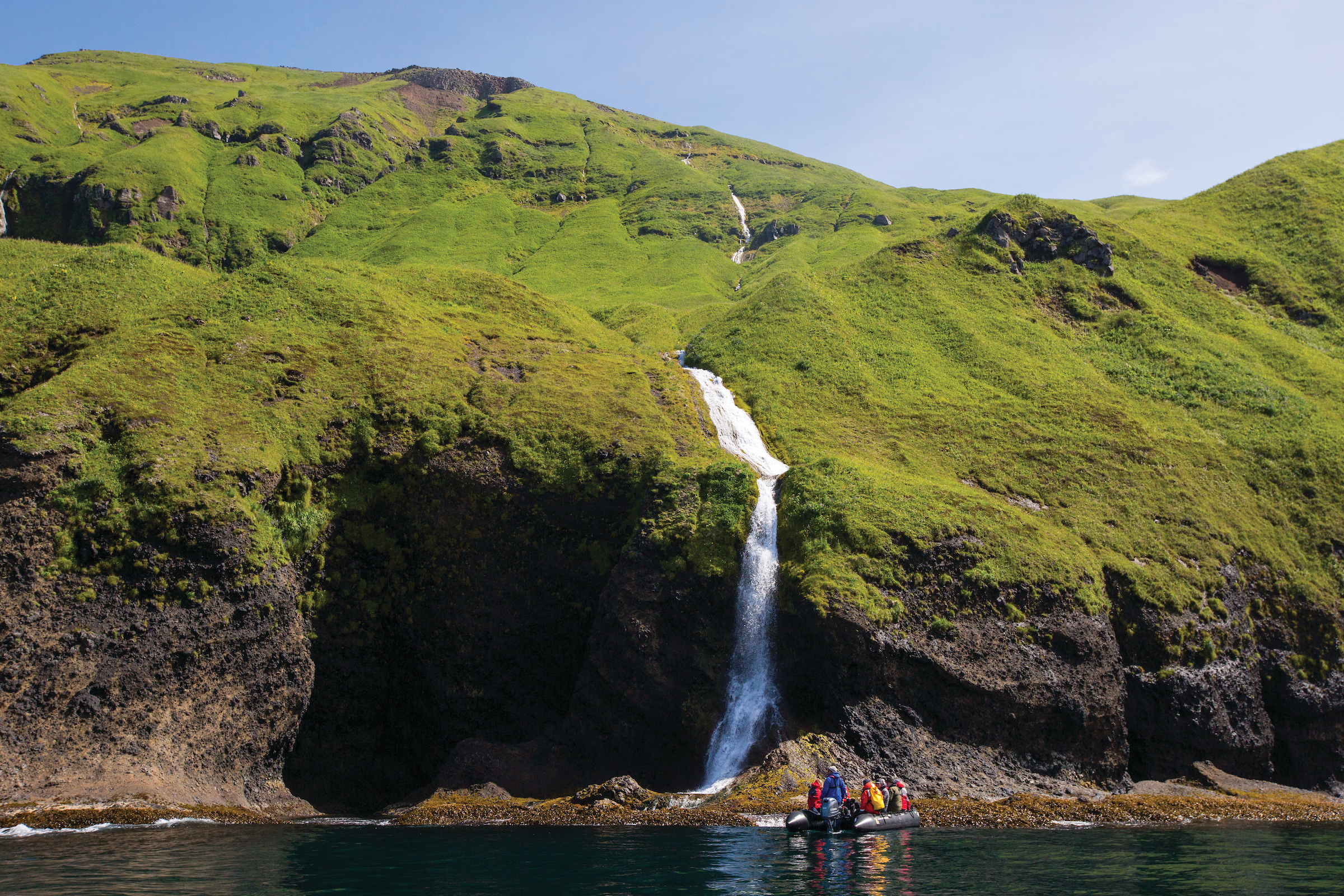
Overland Experiences
Mid-cruise, inland tours
Venture inland on two- to three-day journeys to iconic sites like the Taj Mahal or Angkor Wat. \Vith flights, stays, and guided access included, these immersive journeys offer rare experiences beyond the coast — all with the signature Silversea service.
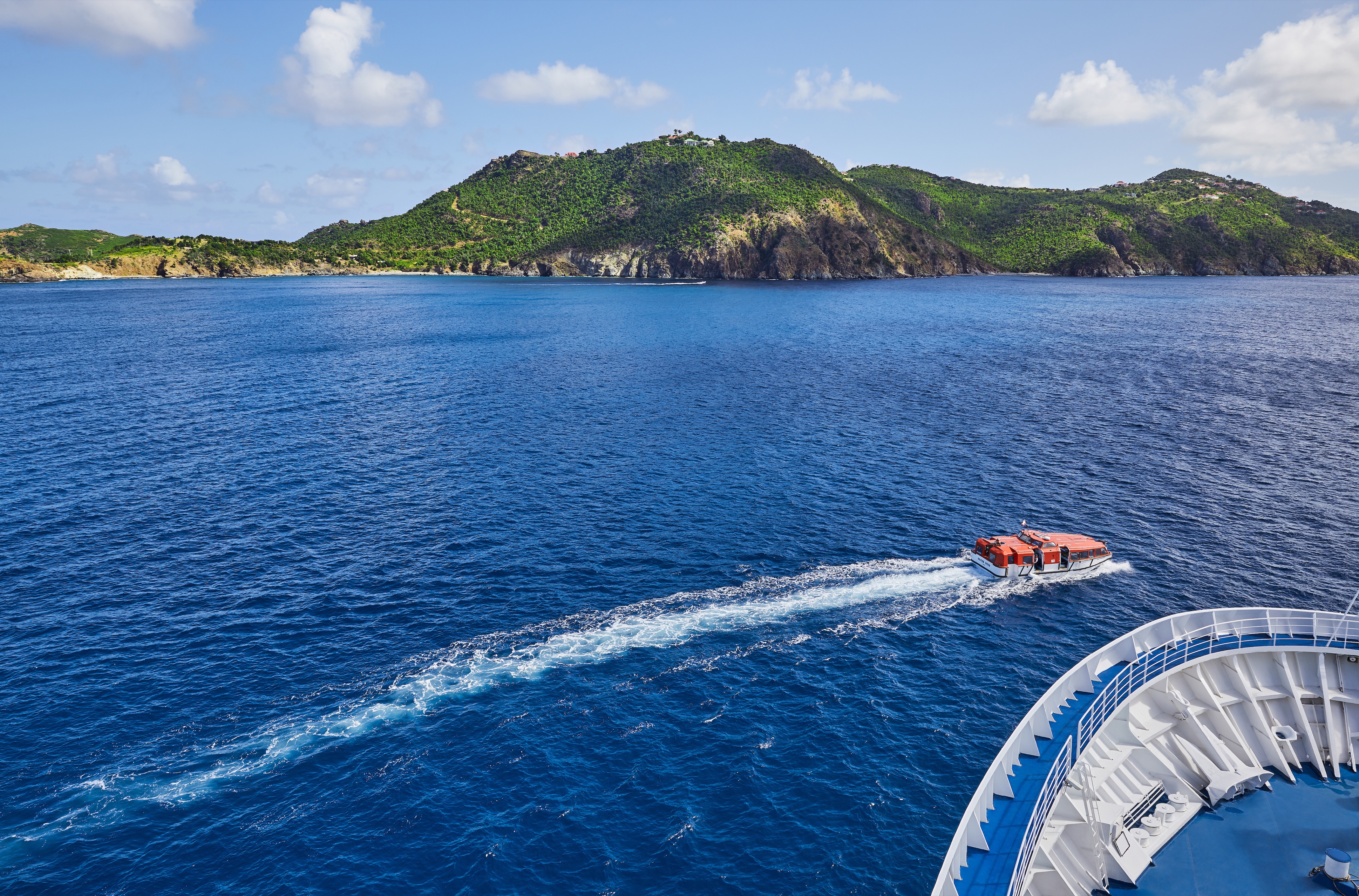
Mid-Voyage Adventures
Multiple days at sea mean plenty of R&R for some, but others prefer to experience all there is to offer on land. Our Mid-Cruise Land Adventures allow you to take full advantage of your time with us without missing a single thing! These short escapades offer an array of adventures, break up your sea days and allow for deeper exploration beyond the coast.
Silver Shore Concierge
Let Silversea customize a special event or excursion exclusively for you. Expert Shore Excursion professionals are available to assist with all your Shorex questions. Make an appointment and gain insider access to knowledgeable suggestions, personalized planning and hassle-free coordination of all private, independent touring, including area highlights, flightseeing, water sports, and much more. Take advantage of this service either in advance of your voyage by email at shoreconcierge@silversea.com or on board by visiting the Silvershore® Concierge desk. Have the Silver Shore Concierge create your tailor-made tour, or be whisked away by private car for a day—the pace and agenda are up to you.
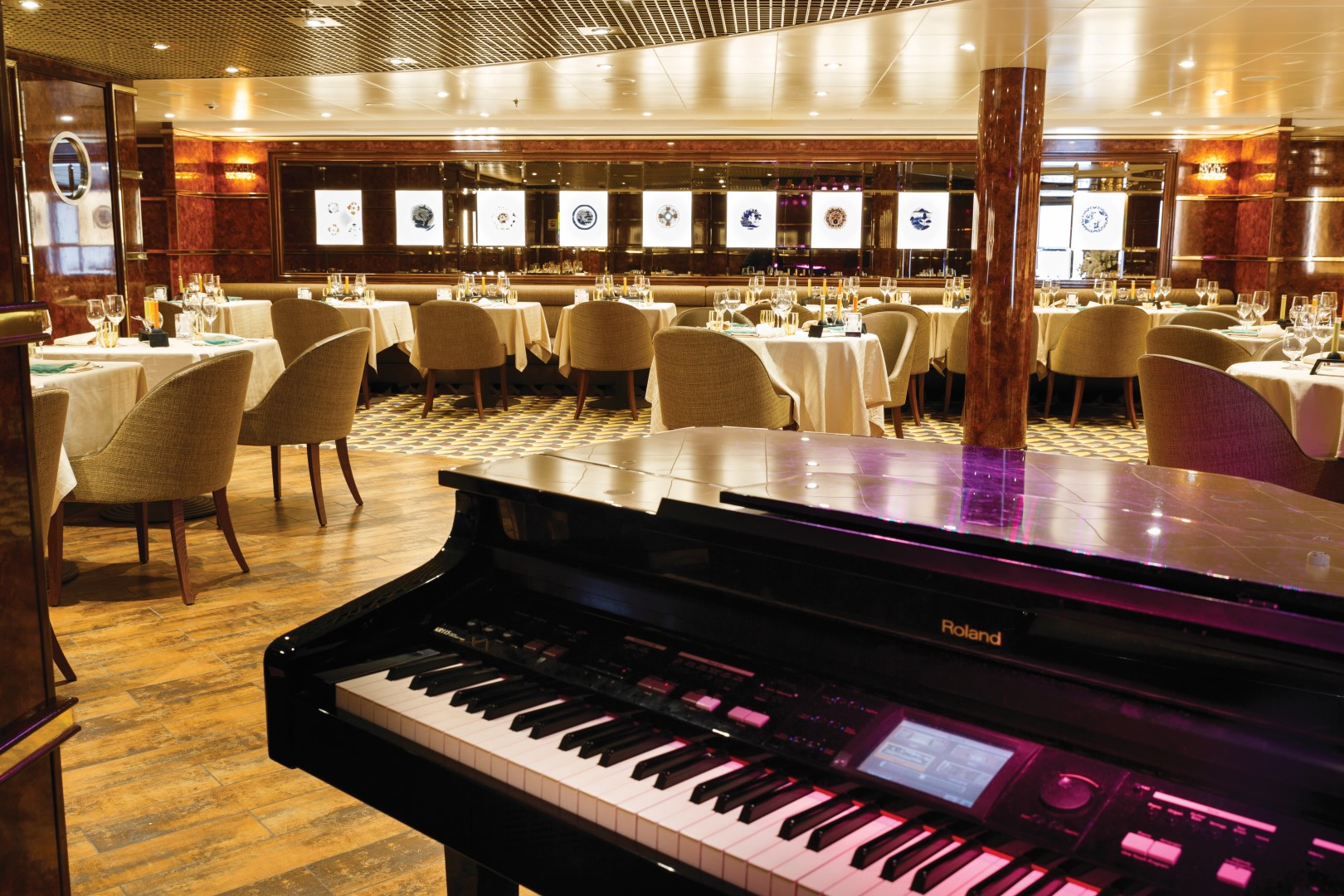
S.A.L.T. Lab
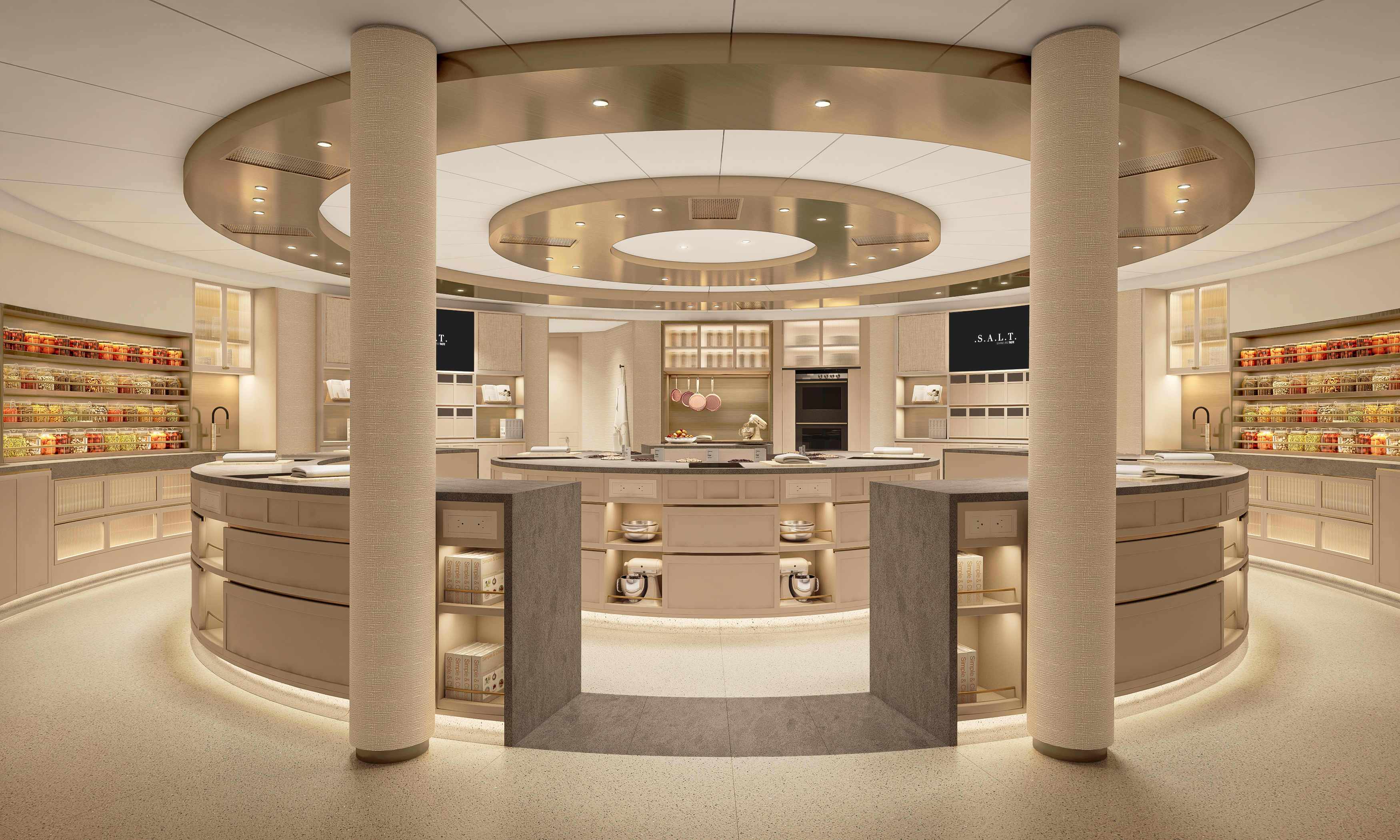
Welcome to the S.A.L.T. Lab, an interactive space where guests can take a deep dive into local culinary heritage and techniques. Join our talented chefs and learn how your region’s food is central to its culture. Engage in your destination through workshops, lectures, and cooking demonstrations for an authentic souvenir not available in any shop. The S.A.L.T. Lab is not just about food and flavor; it is a unique place where holistic destination immersion gives an entirely new dimension to traveling. This is where the magic happens!
Images are intended as a general reference. Features, materials, finishes and layout may be different than shown.
S.A.L.T. Shore Excursions
Selected shore excursions on all Silver Moon, Silver Dawn and Silver Nova cruises benefit from a culinary focus. These in-depth and informative shore excursions are accompanied by our food experts, who are adept at explaining the intricacies of foreign cuisine. S.A.L.T. offers the curious cruiser so many options; the only thing you need to do is choose. Never has a cruise line provided such an in-depth, holistic way of visiting their destination. Do one or do them all.
S.A.L.T Bar
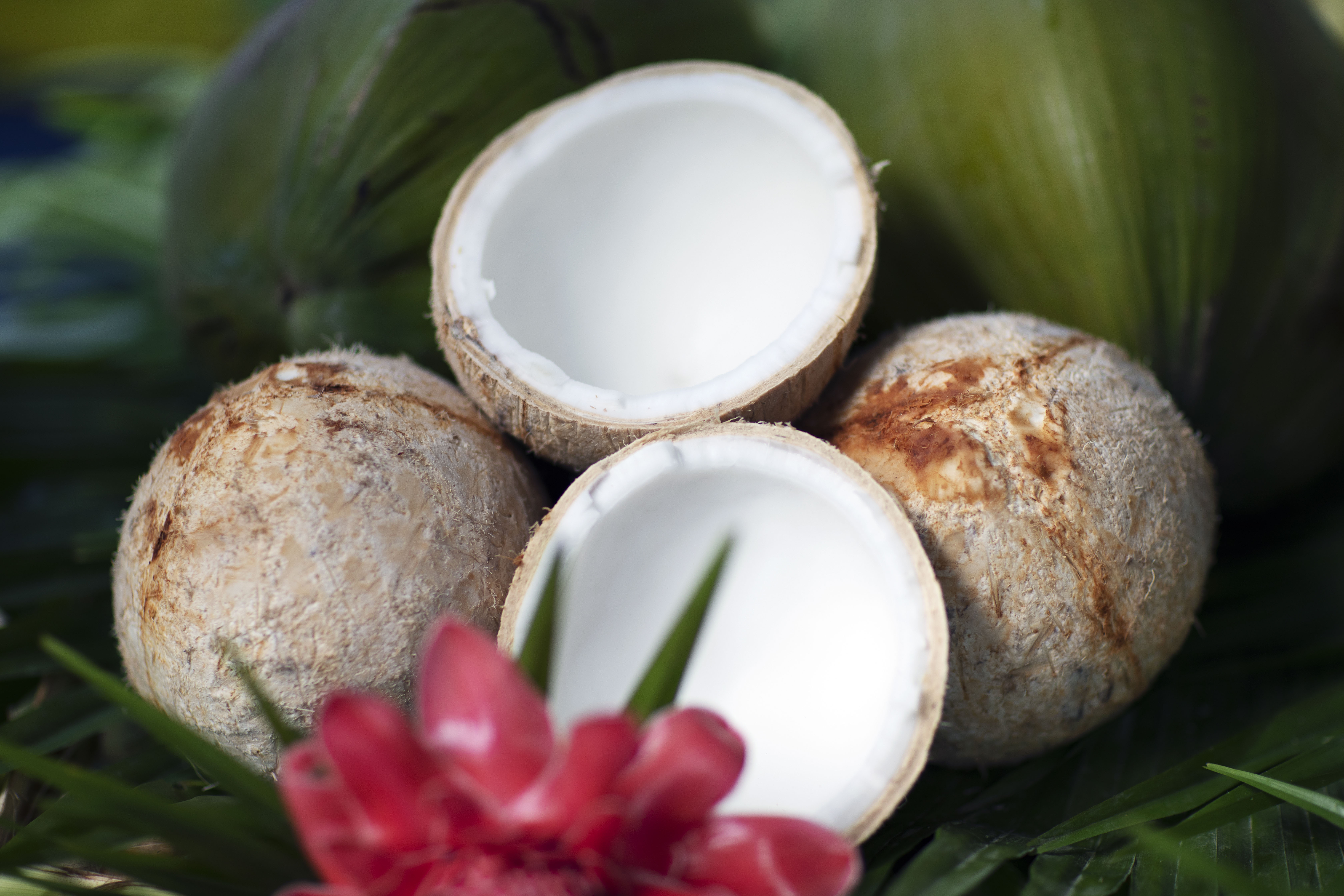
Nothing says authentic experience better than Silver Dawn’s S.A.L.T. Bar. Get a taste for the authentic and settle down to enjoy locally inspired cocktails and drinks. How can you go wrong with a rum punch in Barbados, a pastis over ice in Marseille, or a pisco sour in Lima? Nothing unites new faces and old friends in quite the same way. Be inspired to find your perfect locally inspired beverage at the S.A.L.T. Bar and let the color and flavors of your journey rush in.
Images are intended as a general reference. Features, materials, finishes and layout may be different than shown.
Arts Cafe
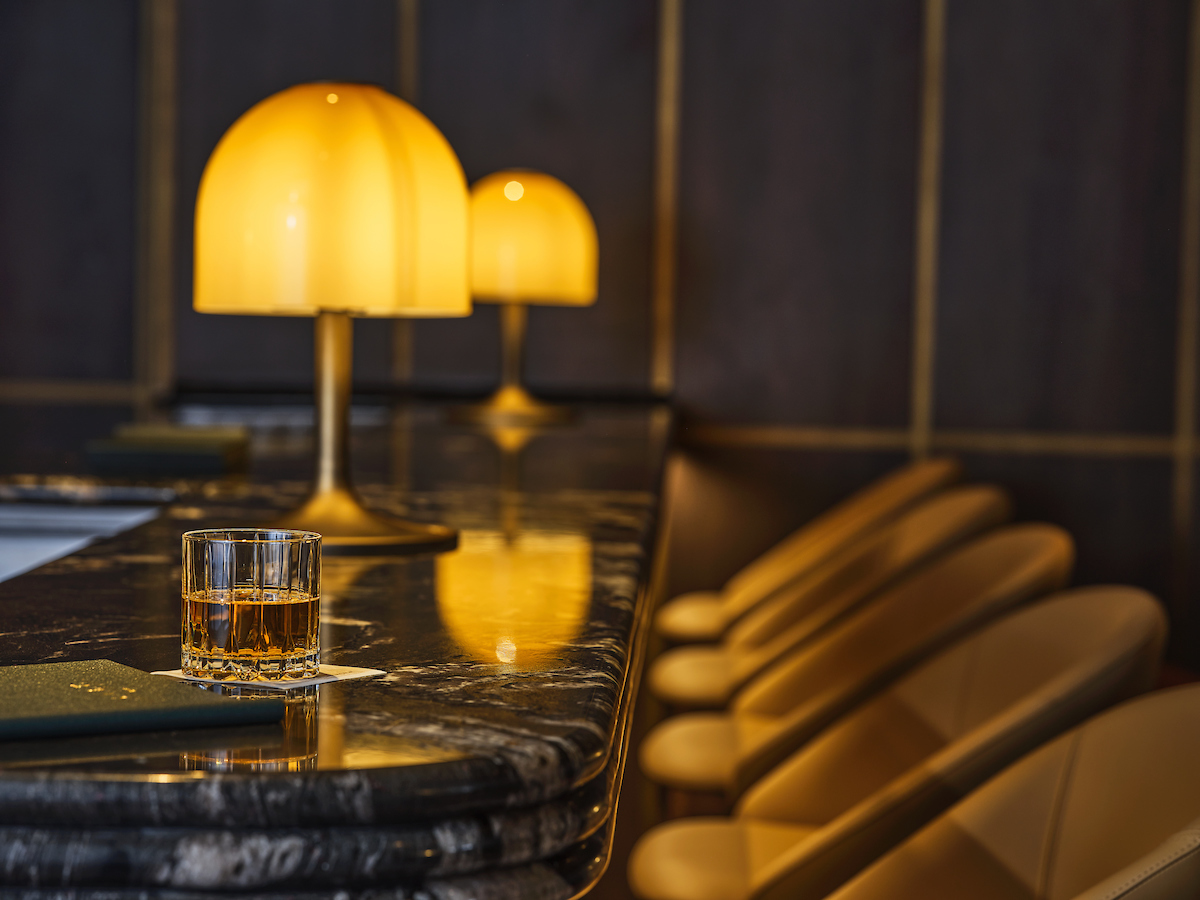
The all-new Arts Café is nestled cozily on deck 8. Hosting varied and exciting exhibitions, the Arts Café will showcase paintings and sculptures from a broad range of talent. The distinctive design of the venue is a relaxing getaway and offers daytime cuisine in the form of a café and deli-bar. But come early evening, the venue turns into a lively, evening cocktail lounge, meaning you can retreat to one of the comfortable chairs, grab a drink, and relax as you absorb the incredible view and watch the world float by. Whether you prefer the gentle sea breeze on the terrace or the sophistication inside, a superlative experience is always assured.
Images are intended as a general reference. Features, materials, finishes and layout may be different than shown.
Dolce Vita
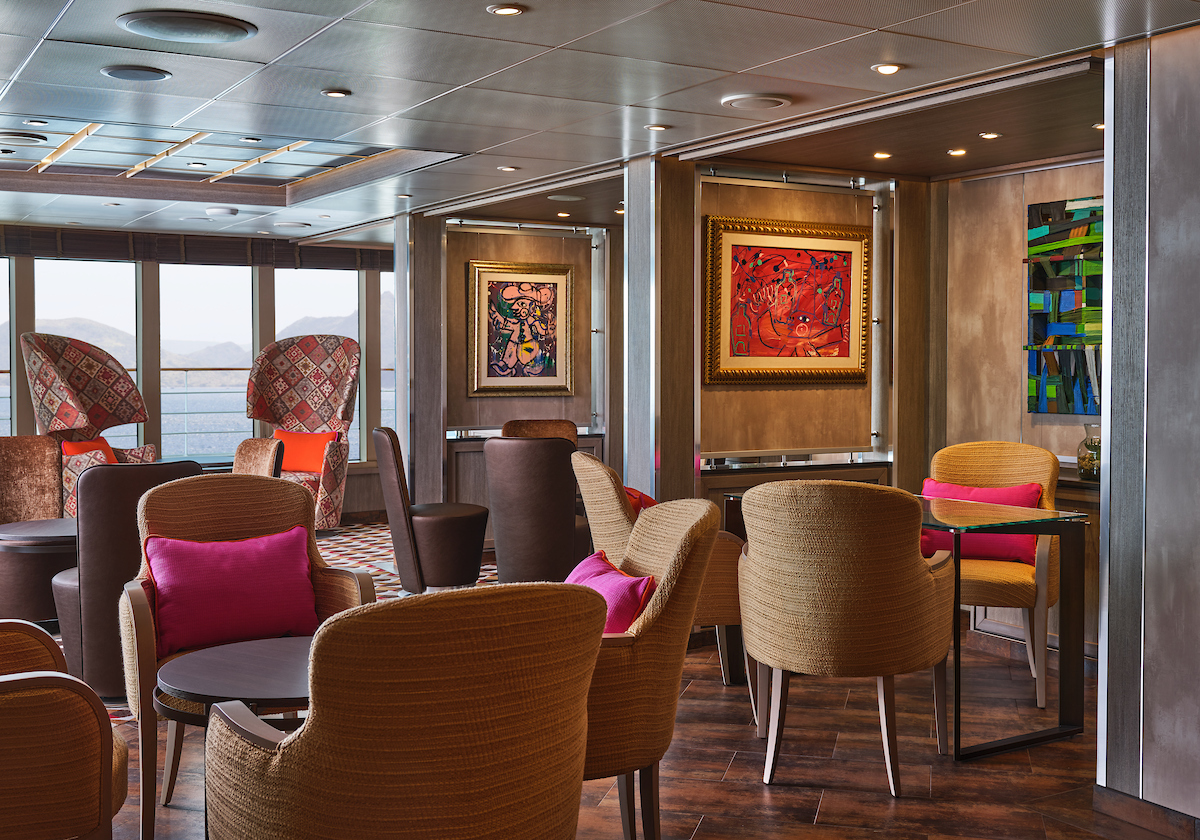
Our main bar has been newly reimagined for Silver Dawn! Dolce Vita has of course kept her legendary charm, inspired cocktails, stylish decor, and comfortable seating, but a central bar now means the warm ambience is better than ever! Oozing Italian glamour, Dolce Vita is a relaxed, refined bar with a nightly piano player playing all your favorite tunes. Perfect for pre-dinner aperitifs, or even a post-dinner cocktail, Dolce Vita is truly the beating heart of social life on board.
Images are intended as a general reference. Features, materials, finishes and layout may be different than shown.
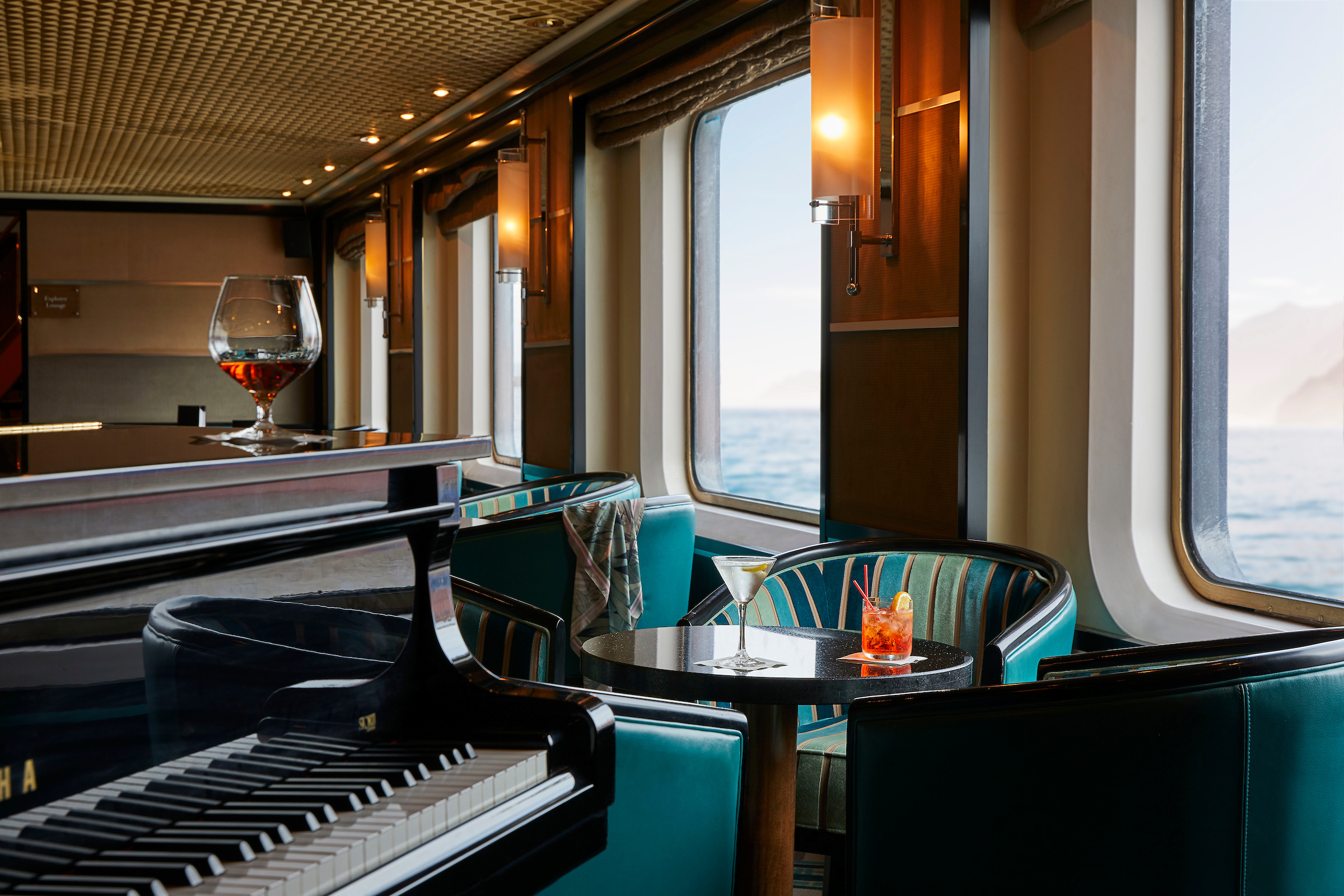
Panorama Lounge
From early morning to late at night, the Panorama Lounge offers everything you could wish for. A peaceful retreat that is the perfect place to take a break, a social place to meet and greet old friends, or an evening venue to partake in a cocktail as you sit back and watch the world go by. Sink into the plush seats, and come evening, enjoy listening to the gentle sounds of a pianist or the invigorating beats of our in-house DJ.
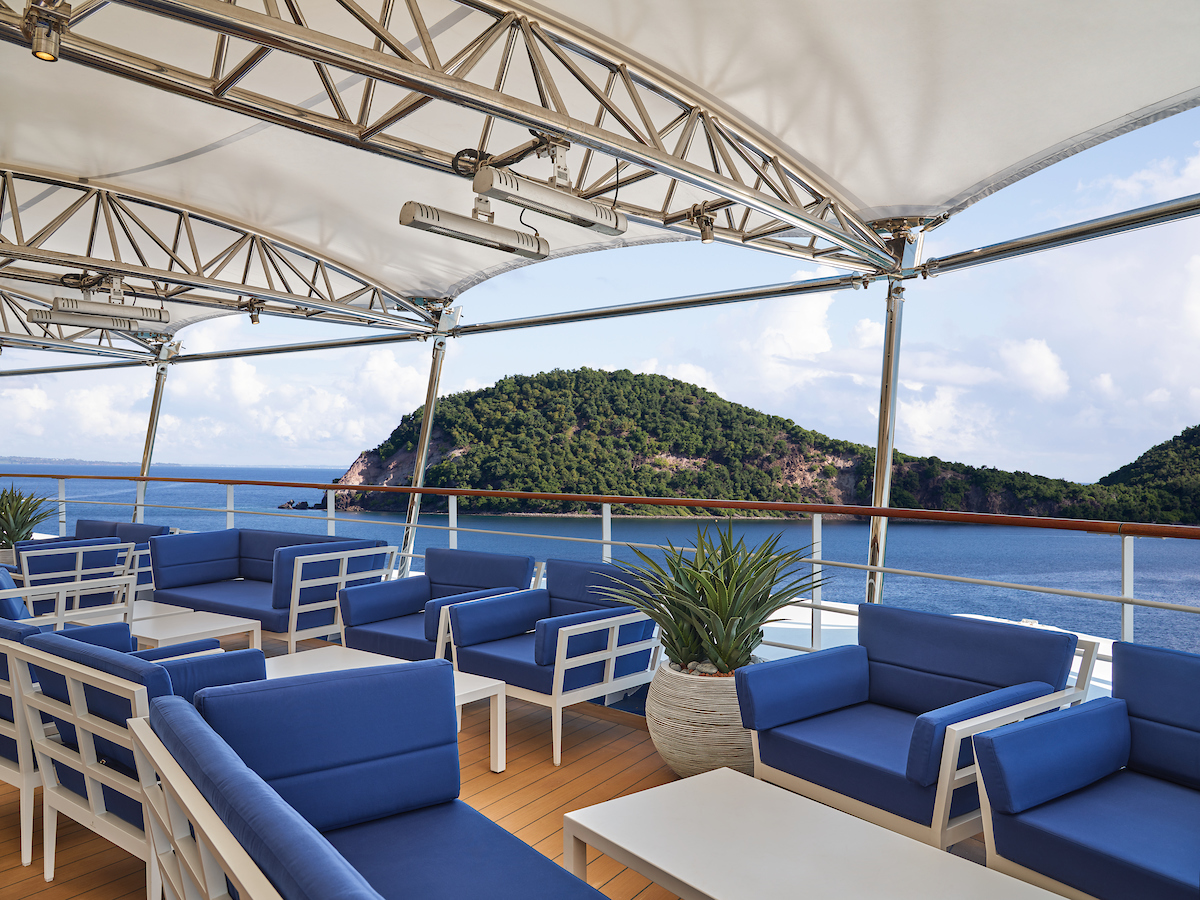
Connoisseur's Corner
Our smoking lounge aboard Silver Dawn is our latest venue where cigar lovers can buy and sample some of the world’s finest Havanas, Cohibas, Partagás, Montecristos, Ramón Allones, and Bolívars. Combining all the elements of cigar culture indoors and on its stylish terrace, the Connoisseur’s Corner is where aficionados can meet and mingle to share their iconic passion.
Images are intended as a general reference. Features, materials, finishes and layout may be different than shown.
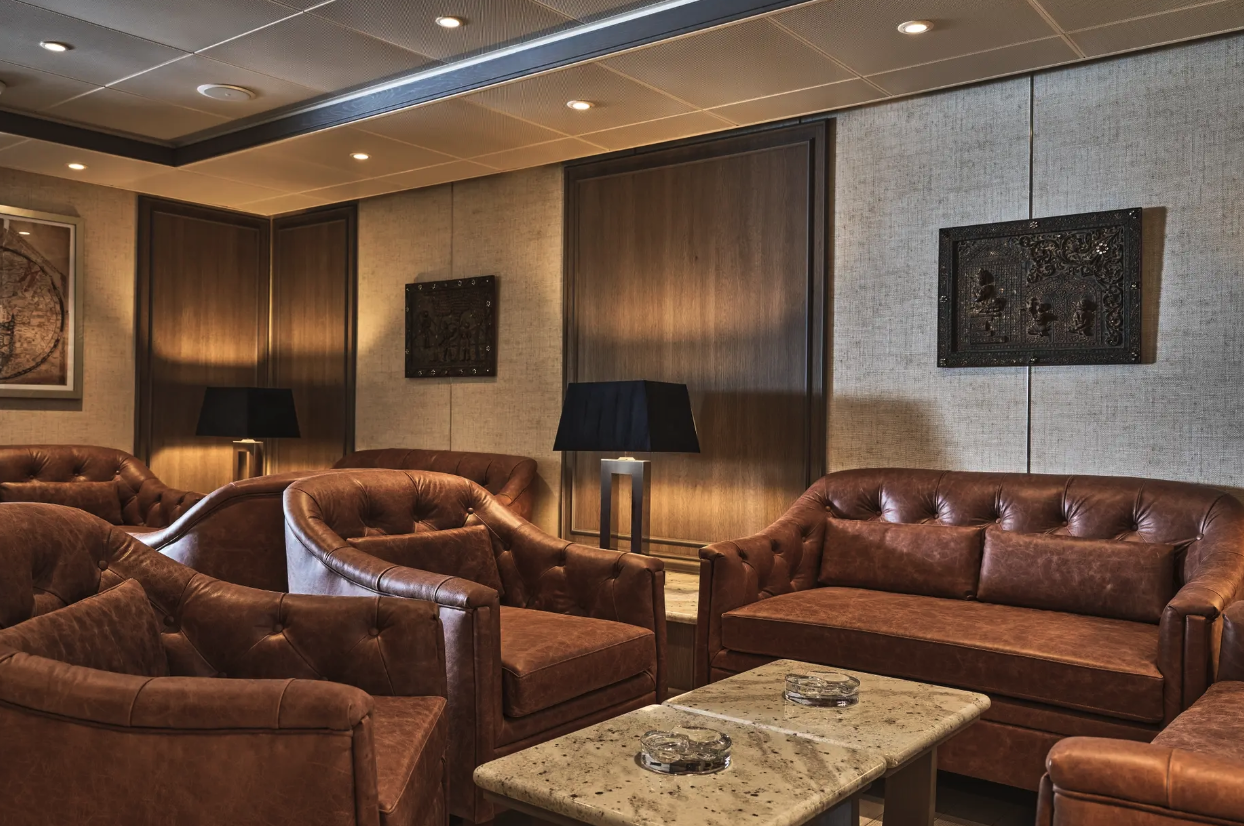
Pool Deck & Jacuzzi Area
The epitome of open-air living—defining how you enjoy the outdoors—this is the place to cool off, unwind, and enjoy the sunshine. Take a dip in the pool, relax in one of the whirlpools, or simply soak up the view from one of the sun beds while your pool attendant anticipates your every whim. A little more ice? Certainly. A plush towel to dry off with? Of course. With breathtaking landmarks gliding by, dive into the clear waters in a setting that is so idyllic that you will not want to disembark.
An elevated expression of open-air living. Whether you’re cooling off in the pool, unwinding in a whirlpool, reclining on a sun bed, or teeing off with the Off the Deck’s SeaDrivePro*, every moment is thoughtfully orchestrated. With sweeping views and refined surroundings, this is outdoor leisure redefined.
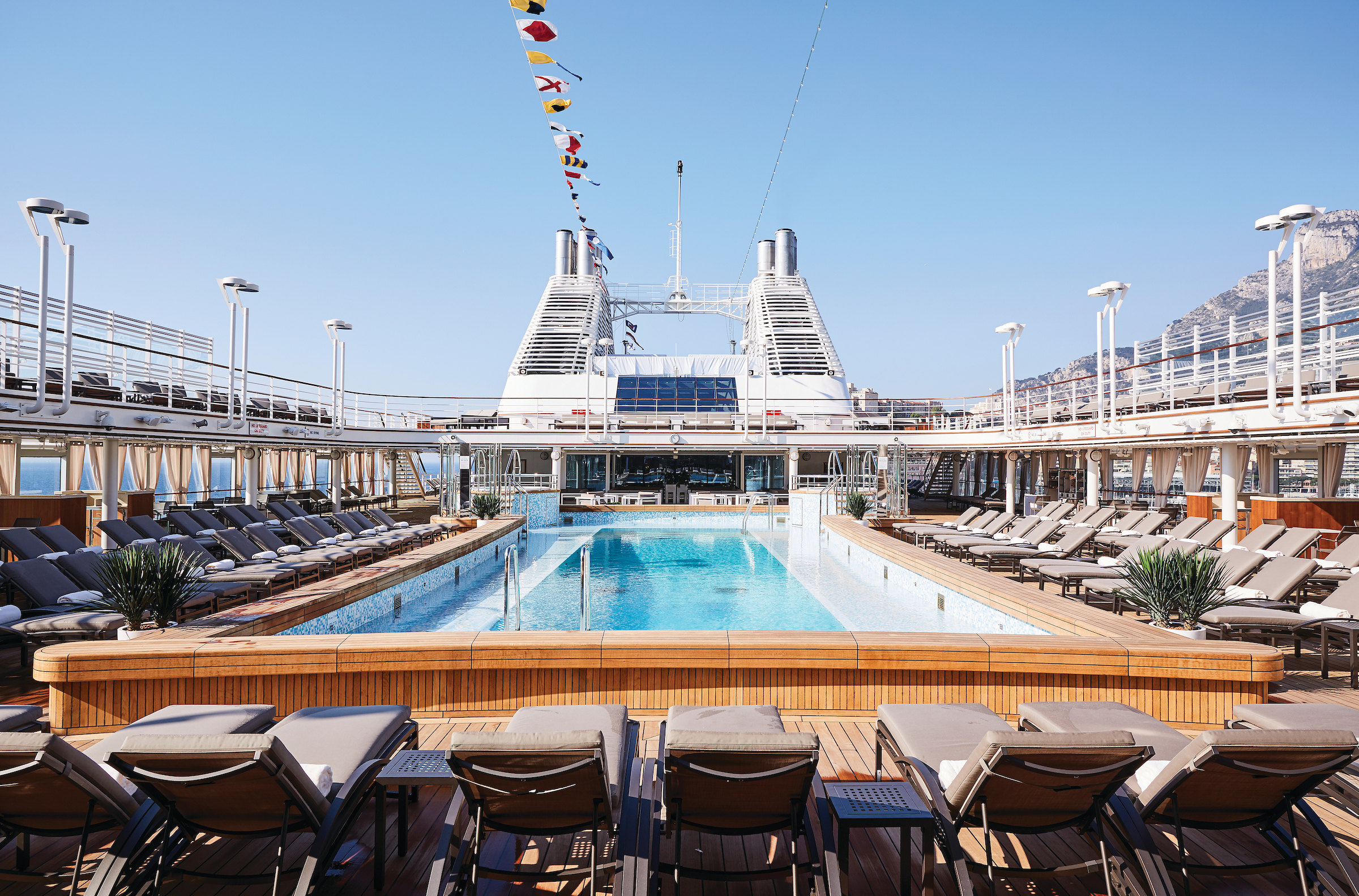
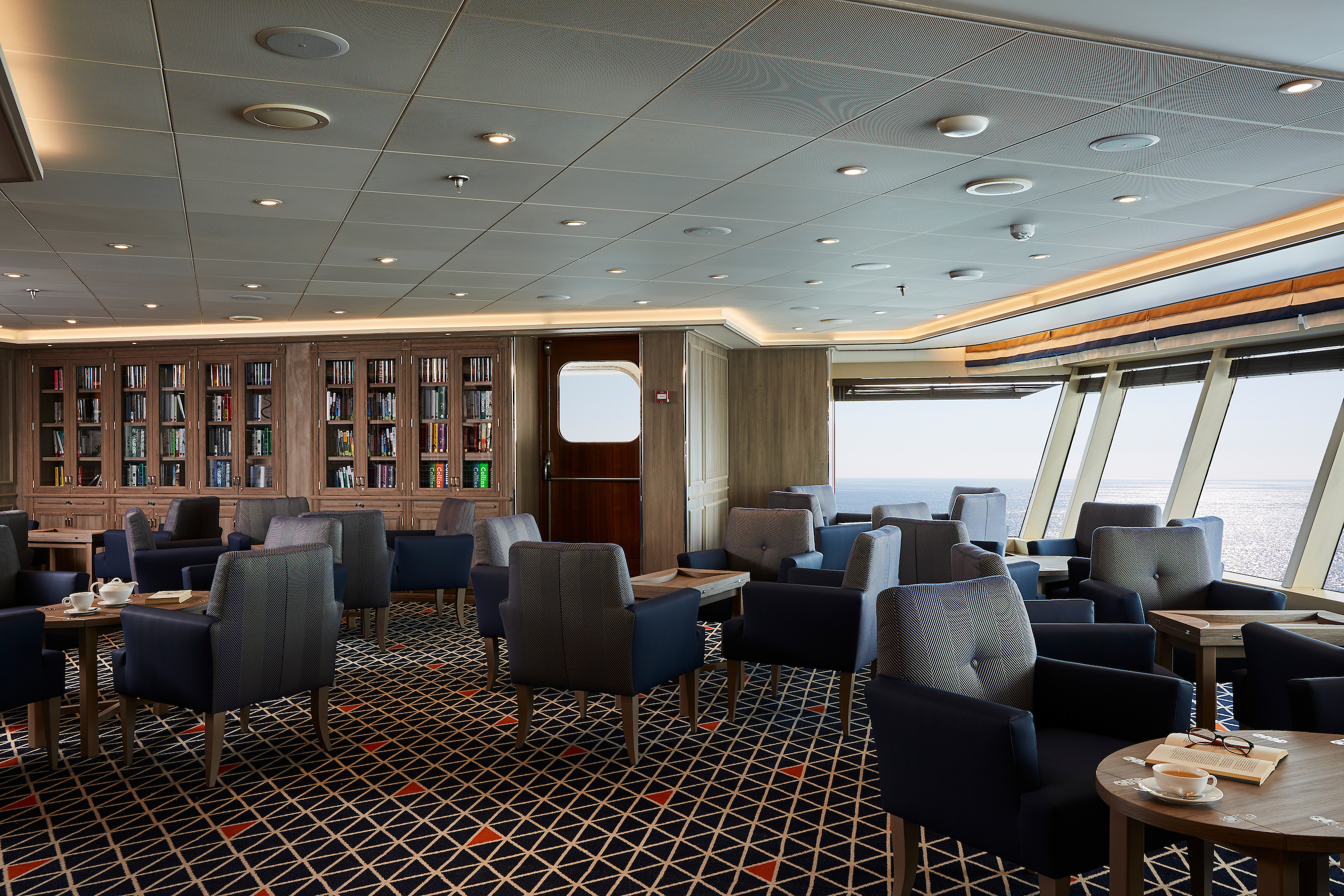
Observation Library
Set on the highest level at the very top of the ship, this is a quiet space for reading and reflection while being dazzled by the undulating seascapes that are part of life on board. Borrow a book from the in-house library, read the papers, or just embrace the tranquility of being at sea.
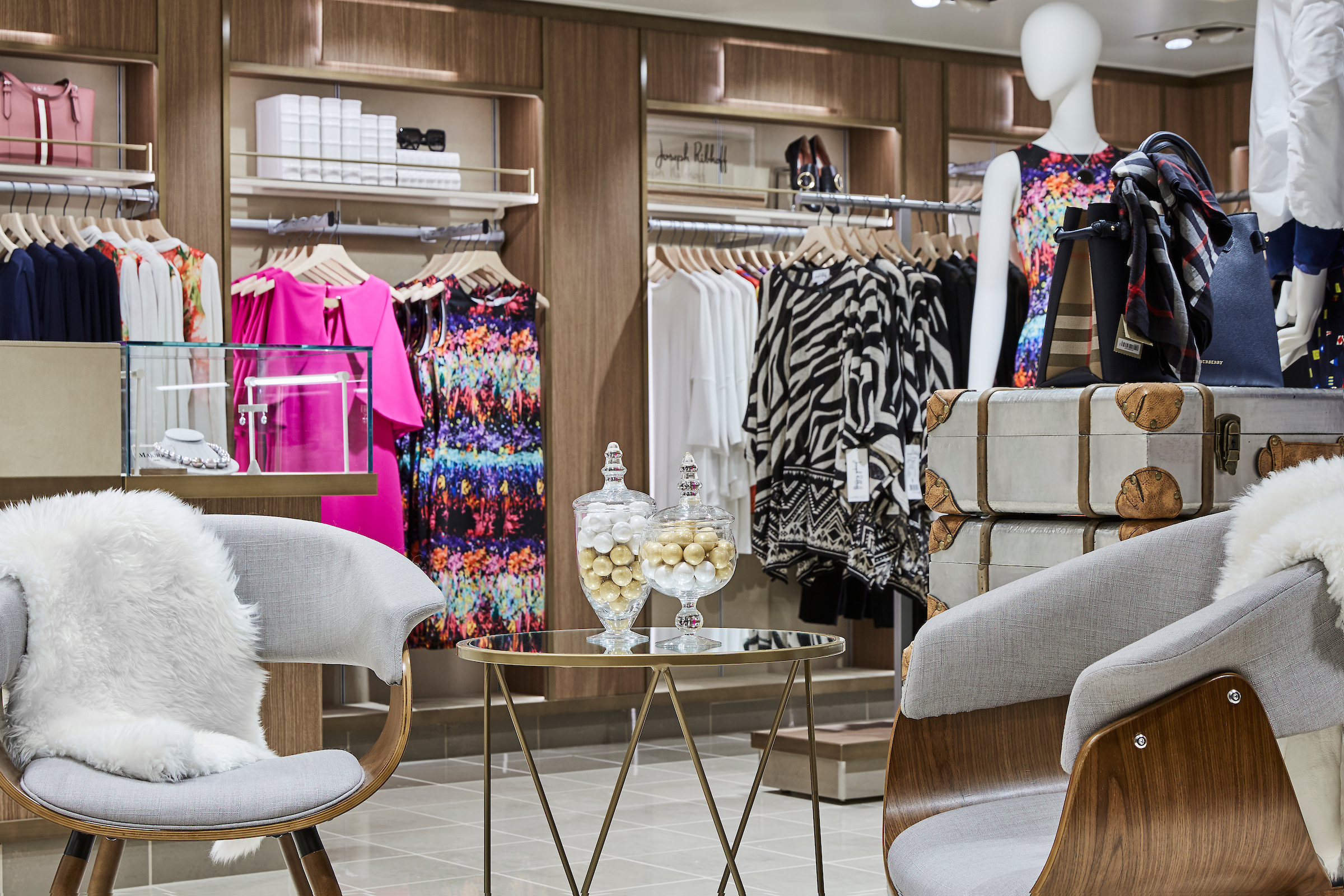
Boutique
Exceptional shopping experiences do not end in the cosmopolitan cities we visit. Silversea’s striking new shipboard boutiques, reimagined and redesigned, are stunning modern design spaces befitting the finest creations from legendary designers. Carefully selected partners on board Silversea’s duty-free boutiques offer our guests a carefully curated selection of cutting-edge fashions, jewelry, accessories, fine perfumes, cosmetics, and Silversea Logo collection, all at duty-free prices.
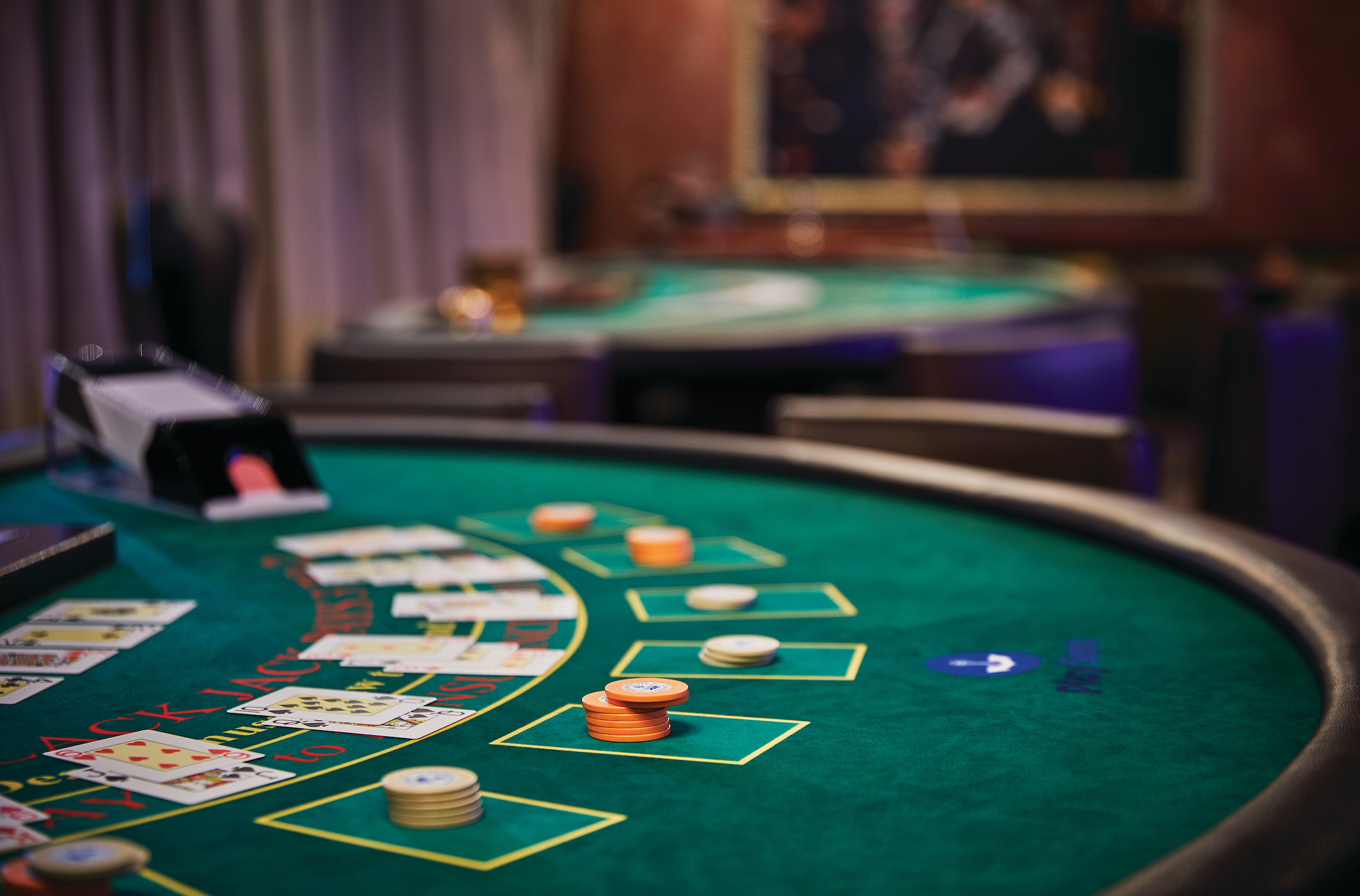
Casino
Let the fun begin! Channel your inner James Bond and place a bet at a variety of table games, including American Roulette, Blackjack, and Ocean Poker, as Silver Dawn glides silently through the waves. An assortment of multi-game, multi-denominational reel and video slot machines are also available. Prepare yourself for a luxurious and exhilarating experience with every turn of a card and spin of the wheel. Game on!
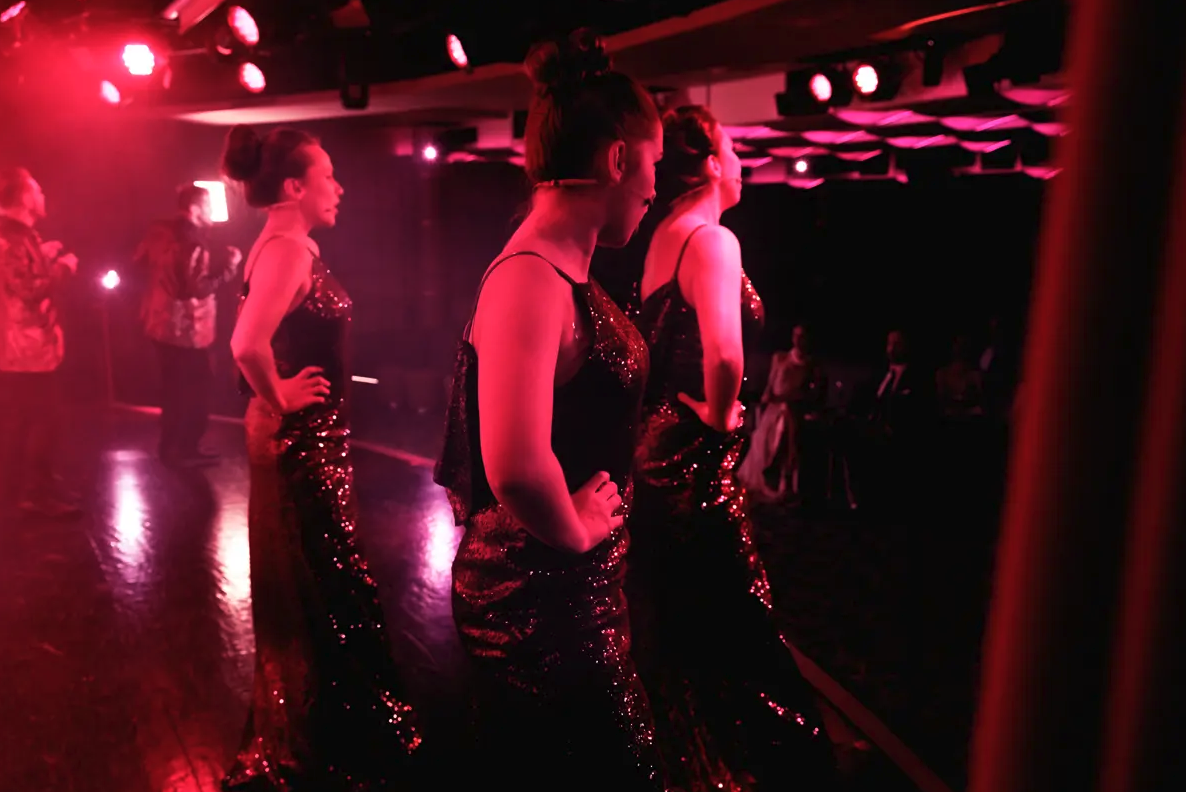
Venetian Lounge
The grandeur and magic of music and theater. The experience of being transported by performance. That satisfying feeling of seeing an evening show … Welcome to the Venetian Lounge, a place where the arts of theater and music meet with full-scale productions and feature films. Paying tribute to a golden age of glamour, the Venetian Lounge offers belle-époque-style cabaret seating, with intimate tables and chairs subtly placed between the rows of comfortable tiered banquettes. As the stage lights are dimmed, soak up the atmosphere, relax, and enjoy a night of dazzling sights and sounds.
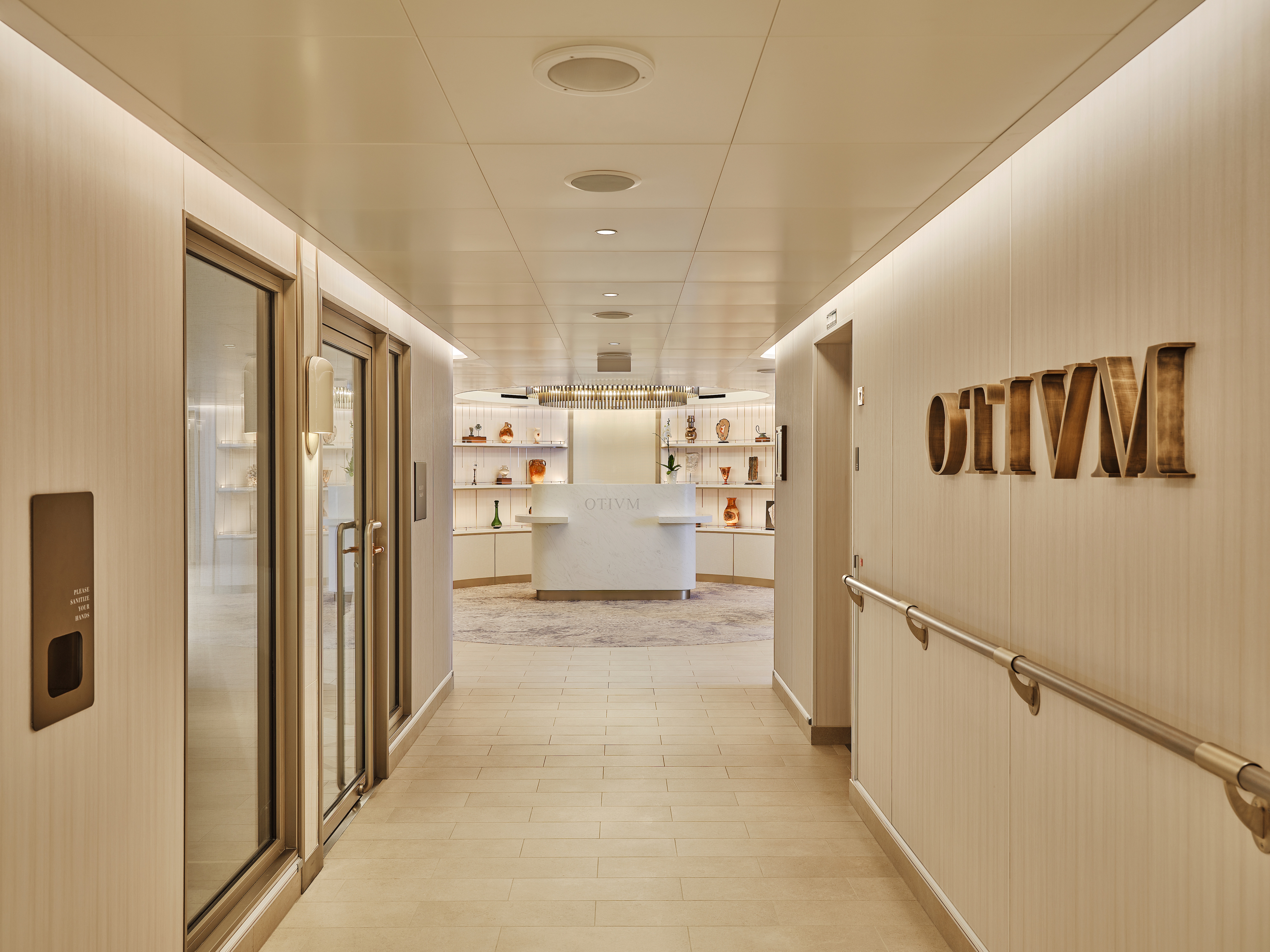
Otium Spa
Finding relaxation is one the of the principle aims of taking a cruise, so why not join us in the Otium Spa for guaranteed indulgence? Turn off your phone, slip on your robe, and get ready for a bit of me time. Whether you need to unwind with a massage, perk up your skin with a facial, or work up a sweat in the sauna and steam room, Otium Spa offers the very latest in beauty therapy. Make every day a special occasion in Otium Spa.
Images are intended as a general reference. Features, materials, finishes and layout may be different than shown.
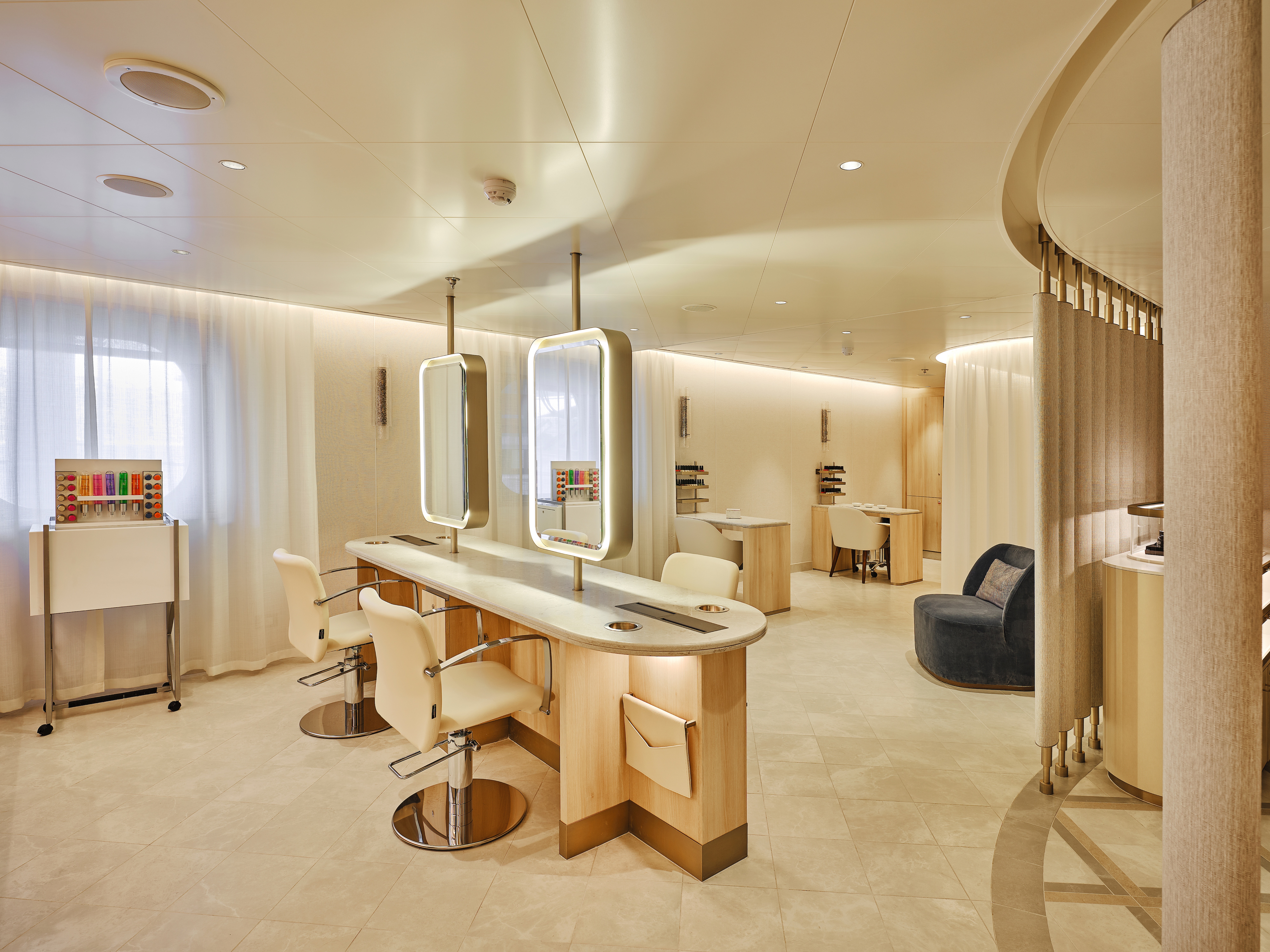
Otium Beauty Salon
A full range of salon services, including hairstyling, manicures, and pedicures, is available on board this luxury cruise ship for both men and women. Appointments for these chargeable services may be made on board the ship, or in advance via My Silversea. Maintain the look of prestige travel while you cruise.
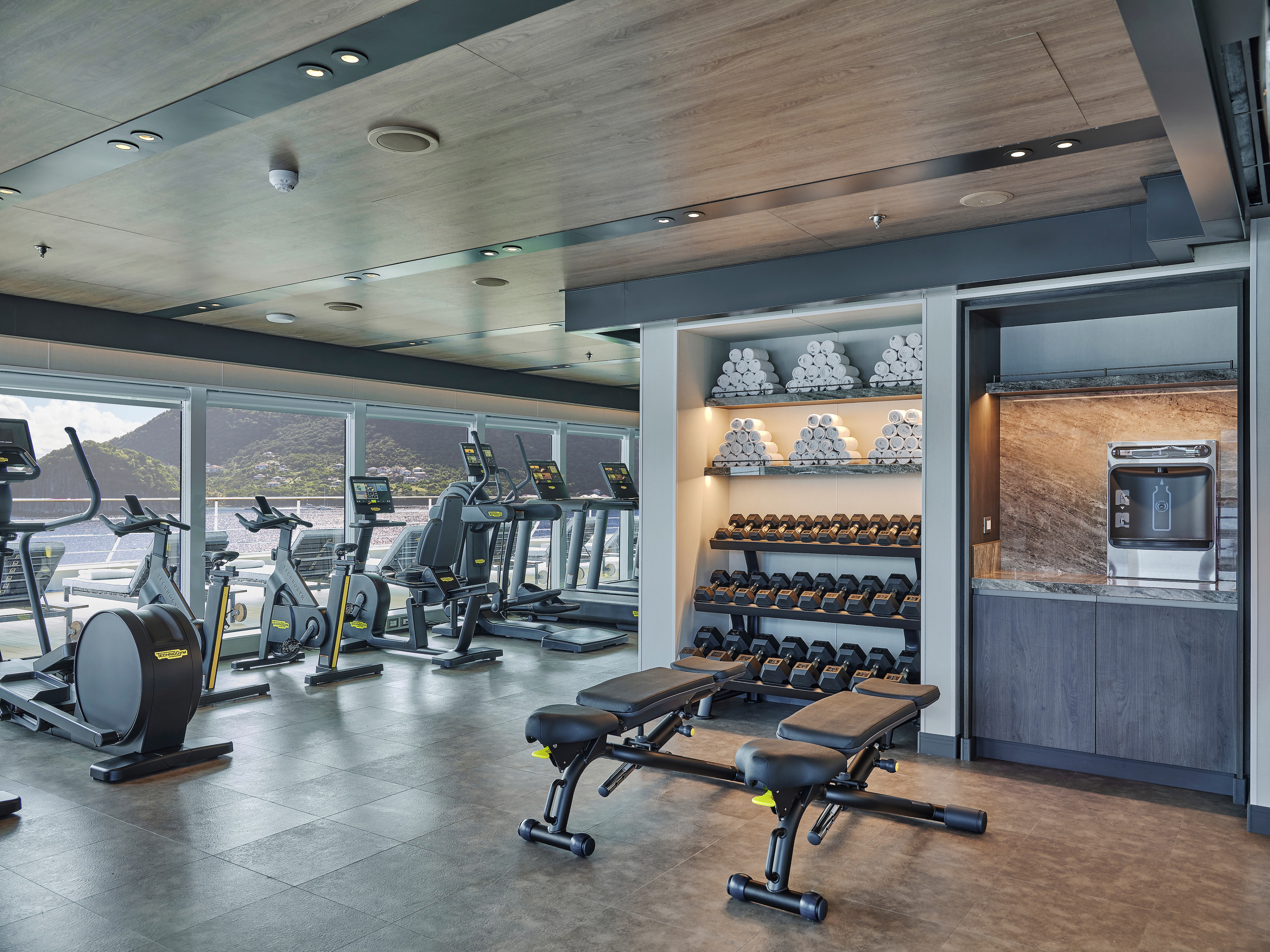
Fitness Centre
With state-of-the-art Technogym® equipment, free weights, and specialty classes, the Fitness Center brings together elite design with programs that are specifically created for your body type and needs. With personal trainers available for individual sessions, training here is a five-star experience for all levels of fitness and experience. And with the best view that you’ll ever have while working out, there are definitely no more excuses …
Images are intended as a general reference. Features, materials, finishes and layout may be different than shown.
Otium | In Suite Experiences
The Otium Bathing Experience
Dissolve into the Otium bathing experience. Treat yourself to some well-deserved solitude with this indulgent addition to your voyage. No words can accurately describe this opulent experience. Perfect temperature bath water, comfortable back and neck pillows and bespoke bath salts from the Otium menu are just the beginning. Add candles, low level lighting, a delicious selection of delicacies to pamper the taste buds and the Otium music menu and we think you’ll agree that we have designed a superlative experience to soothe both body and mind.
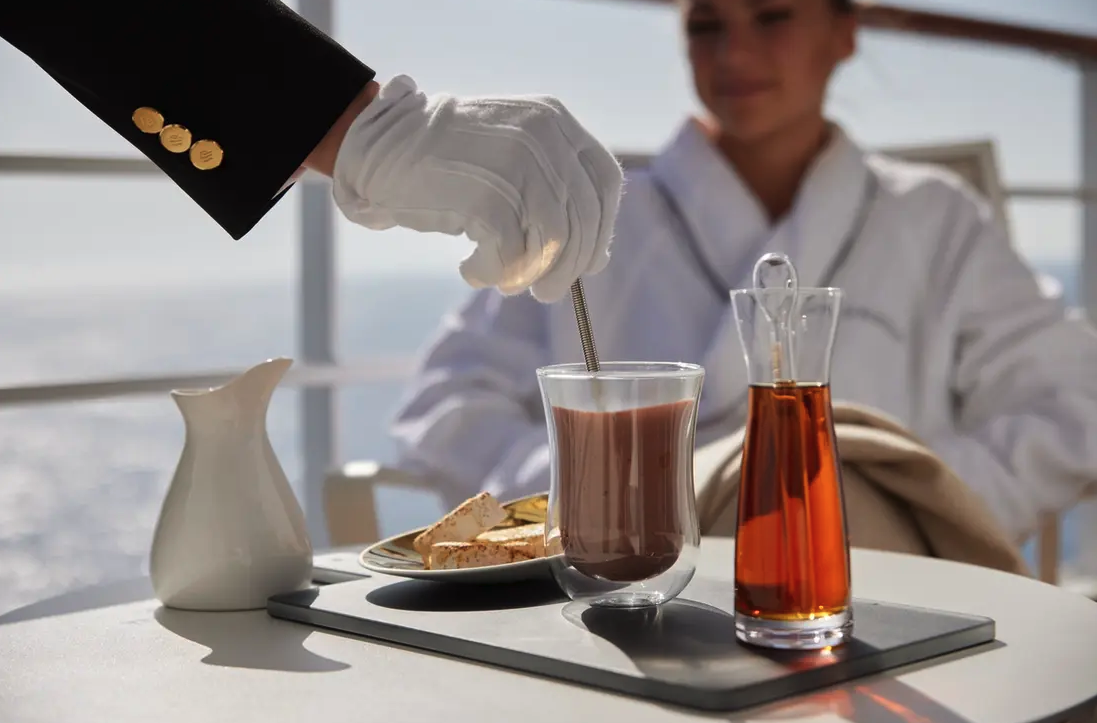
The Otium Balcony Experience
We have curated three superb moments that promise deep immersion in your destination, from the comfort of your very own veranda. Each of the three moments is destination driven, depending on where you find yourself in the world. For sun lovers, enjoy “Under the Sun”—an enhanced sunbathing session that will pamper and protect in equal measure! “Baby it’s cold outside” will bring extra warmth during cold evenings in chilly climates with cashmere blankets and the first hot chocolate menu at sea. Finally, make your balcony your own, with personalized food and snacks courtesy of your butler.
The Otium Comfort Food Experience
“Food and Chill” takes our in-suite dining menu to a whole new level. Not only will the Otium Food and Chill experience feature all your favourite dishes from the on board restaurants – ideal for those who want to stay in to dine out, but this experience will also feature a selection of dining options designed to temp your tastebuds. Finally, the Movie experience will add a touch of class to your after dinner relaxation. Have luxury popcorn and nibbles delivered to your suite for an indulgent snack as you enjoy your insuite movie menu.
The Otium Sleeping Experience
Isn’t it time you became a successful sleeper? With the Otium Sleeping experience, you can choose a pillow from our vast pillow menu, curl up on 400 thread-count Egyptian cotton linens crafted exclusively for Silversea by Rivolta Carmignani and melt into a bespoke Otium mattress, designed exclusively for the ultimate sleeping experience at sea. What’s more, you can even ask your butler for our signature Otium sleeping scent, so ensure that you have the most restorative rest possible. Take a holiday from your alarm clock and enjoy the best night’s sleep of your life.
Please note: Although Silversea accepts guests over the age of six months, there are no special programmes for children on board, and Silversea does not provide for the care, entertainment and supervision of children.
S.A.L.T. Kitchen
Take your travel experience further than ever before in the S.A.L.T. Kitchen. Silver Dawn’s exclusive destination-focused restaurant is the place to be when it comes to enjoying the local cuisine, culture, and rich culinary heritage of your voyage. Taste your way through regional specialties for your most immersive travel experience ever. Whether you are looking for excellent food and wine, a social meal with friends, or a deeper understanding of your region’s culture, expect to find it in the S.A.L.T. Kitchen.
Images are intended as a general reference. Features, materials, finishes and layout may be different than shown.
La Dame
Silversea’s signature French restaurant, La Dame, is the epitome of fine dining. Featuring the rich, smooth flavors of France, La Dame’s reputation for gastronomic excellence is fully upheld aboard Silver Dawn. Expect only the very best: chic, contemporary style, vast ocean-view windows, crisp, white table linens, and impeccable white-gloved service with a smile. Decorated with custom-made interior panel compositions created by Lalique, there is no better place to feel the culinary soul of France than in La Dame.
Per guest reservation fee of US$60. Please visit My Silversea to make your reservations.
Images are intended as a general reference. Features, materials, finishes and layout may be different than shown.
La Terraza
La Terrazza is a celebration of the way Italians eat today, an ode to the delicious evolution of the world’s most beloved cuisine. Evolving one of Silversea’s signature restaurants, La Terrazza serves fresh twists on great classics, and also explores the new heroes of Italian cuisine. The notion of comfort traditionally associated with Italian cuisine is present in every dish, every bite, yet always with a subtle element of surprise. La Terrazza is open for casual, buffet-style breakfast and lunch with indoor or alfresco dining on the outdoor terrace. During the evening, the venue transforms into an à la carte Italian restaurant. Seating is limited for dinner and reservations are recommended.
The Grill
Silversea’s much-loved casual dining restaurant serves a delectable range of burgers and salads by day and turns into our famous Hot Rocks table BBQ concept by night. The Grill is quite simply the best place to eat between sea and sky. If you like flavorsome meals cooked to perfection, a casual, laid-back atmosphere, and OMG views, then The Grill is the answer to your prayers.
Images are intended as a general reference. Features, materials, finishes and layout may be different than shown.
Atlantide
Instantly recalling images of the sea in all her watery majesty, the Atlantides are the seven nymph daughters of Atlas. Creative muses known for their wisdom and beauty, the sisters were granted immortality in the form of stars and can be seen today in the constellation of Taurus. Pivotal to the Silver Moon dining experience, this elegant bar and grill incorporates the best that the sea has to offer. Created to temper your taste buds, designer dishes such as royal crab, lobster, and verbena-infused red snapper in a sea salt crust are showcased alongside the best steaks offshore.
Kaiseki
The fine art of Kaiseki lies in its meticulous preparation and beautiful presentation. Dishes reflect a passion for tradition and performance and our reinterpretation of these values is clear. Balanced menus have been inspired by the five elements of Japanese nutritional cuisine and respect the equilibrium of yin and yang. Daytime menus feature a varied and balanced menu of sushi, sashimi, and other raw Asian-inspired dishes, while the evenings are alive with the taste and traditions of fine Japanese dining.
Per guest reservation fee of US$40. Please visit My Silversea to make your reservations.
Spaccanapoli
Reflecting Silversea’s Italian heritage, this emblematic street in Naples divides the city in two and is renowned for its pizzerias. No visit to the city is complete without a journey to Spaccanapoli. Therefore, it is unsurprising that Spaccanapoli aboard Silver Dawn reflects the true Italian way of life: the freshest ingredients, authentic dough, and a perfect sense of the fabled Italian lust for life. The simplicity of la dolce vita is reflected in the relaxed dining style of the restaurant.
Silver Note
A sumptuous, intimate setting with a lively ambience is the perfect place to dine, dance, and dream the night away … Small-plate, tapas-style dishes of mouthwatering international cuisine perfectly compliment the rich, exciting entertainment as the smooth sounds of jazz and blues fill the air. A refined late evening menu perfectly showcases the panache and style of Silver Dawn’s plentiful dining options, so expect multisensory fireworks as you swing and sway effortlessly across the dance floor as Silver Dawn gracefully takes you to your next destination.
Shore Excursions
Highlight Experiences
Seamless tours of iconic sites
Explore iconic landmarks and cultural treasures with our Highlight Experiences, half or full-day adventures led by expert guides. Enjoy seamless, hassle-free journeys to must- see attractions — perfect for guests seeking a convenient, turnkey experience.
Signature Experiences
Smaller tours, crafted by Silversea
These immersive Signature Experiences offer privileged access and personalized interactions with local experts. These experiences are perfect for those seeking meaningful, social exploration who want to connect with destinations through authentic dining and slow travel.
Private Experiences
Exclusive tours for your group
Create your own exclusive adventure with a dedicated vehicle, driver, and guide. Explore at your pace, linger, or spontaneously discover new sites. Available at most ports for half- or full-day bookings, Private Experiences are ideal for families seeking privacy and flexibility.
Custom Experiences
Tailor-made tours designed for you
Enjoy personalized Custom Experiences tailored to your interests, with exclusive access and specialized guides. Our team handles every detail, ensuring unforgettable moments that exceed your expectations—crafted entirely around your pace and preferences.
Overland Experiences
Mid-cruise, inland tours
Venture inland on two- to three-day journeys to iconic sites like the Taj Mahal or Angkor Wat. \Vith flights, stays, and guided access included, these immersive journeys offer rare experiences beyond the coast — all with the signature Silversea service.
Mid-Voyage Adventures
Multiple days at sea mean plenty of R&R for some, but others prefer to experience all there is to offer on land. Our Mid-Cruise Land Adventures allow you to take full advantage of your time with us without missing a single thing! These short escapades offer an array of adventures, break up your sea days and allow for deeper exploration beyond the coast.
Silver Shore Concierge
Let Silversea customize a special event or excursion exclusively for you. Expert Shore Excursion professionals are available to assist with all your Shorex questions. Make an appointment and gain insider access to knowledgeable suggestions, personalized planning and hassle-free coordination of all private, independent touring, including area highlights, flightseeing, water sports, and much more. Take advantage of this service either in advance of your voyage by email at shoreconcierge@silversea.com or on board by visiting the Silvershore® Concierge desk. Have the Silver Shore Concierge create your tailor-made tour, or be whisked away by private car for a day—the pace and agenda are up to you.
S.A.L.T. Lab
Welcome to the S.A.L.T. Lab, an interactive space where guests can take a deep dive into local culinary heritage and techniques. Join our talented chefs and learn how your region’s food is central to its culture. Engage in your destination through workshops, lectures, and cooking demonstrations for an authentic souvenir not available in any shop. The S.A.L.T. Lab is not just about food and flavor; it is a unique place where holistic destination immersion gives an entirely new dimension to traveling. This is where the magic happens!
Images are intended as a general reference. Features, materials, finishes and layout may be different than shown.
S.A.L.T. Shore Excursions
Selected shore excursions on all Silver Moon, Silver Dawn and Silver Nova cruises benefit from a culinary focus. These in-depth and informative shore excursions are accompanied by our food experts, who are adept at explaining the intricacies of foreign cuisine. S.A.L.T. offers the curious cruiser so many options; the only thing you need to do is choose. Never has a cruise line provided such an in-depth, holistic way of visiting their destination. Do one or do them all.
S.A.L.T Bar
Nothing says authentic experience better than Silver Dawn’s S.A.L.T. Bar. Get a taste for the authentic and settle down to enjoy locally inspired cocktails and drinks. How can you go wrong with a rum punch in Barbados, a pastis over ice in Marseille, or a pisco sour in Lima? Nothing unites new faces and old friends in quite the same way. Be inspired to find your perfect locally inspired beverage at the S.A.L.T. Bar and let the color and flavors of your journey rush in.
Images are intended as a general reference. Features, materials, finishes and layout may be different than shown.
Arts Cafe
The all-new Arts Café is nestled cozily on deck 8. Hosting varied and exciting exhibitions, the Arts Café will showcase paintings and sculptures from a broad range of talent. The distinctive design of the venue is a relaxing getaway and offers daytime cuisine in the form of a café and deli-bar. But come early evening, the venue turns into a lively, evening cocktail lounge, meaning you can retreat to one of the comfortable chairs, grab a drink, and relax as you absorb the incredible view and watch the world float by. Whether you prefer the gentle sea breeze on the terrace or the sophistication inside, a superlative experience is always assured.
Images are intended as a general reference. Features, materials, finishes and layout may be different than shown.
Dolce Vita
Our main bar has been newly reimagined for Silver Dawn! Dolce Vita has of course kept her legendary charm, inspired cocktails, stylish decor, and comfortable seating, but a central bar now means the warm ambience is better than ever! Oozing Italian glamour, Dolce Vita is a relaxed, refined bar with a nightly piano player playing all your favorite tunes. Perfect for pre-dinner aperitifs, or even a post-dinner cocktail, Dolce Vita is truly the beating heart of social life on board.
Images are intended as a general reference. Features, materials, finishes and layout may be different than shown.
Panorama Lounge
From early morning to late at night, the Panorama Lounge offers everything you could wish for. A peaceful retreat that is the perfect place to take a break, a social place to meet and greet old friends, or an evening venue to partake in a cocktail as you sit back and watch the world go by. Sink into the plush seats, and come evening, enjoy listening to the gentle sounds of a pianist or the invigorating beats of our in-house DJ.
Connoisseur's Corner
Our smoking lounge aboard Silver Dawn is our latest venue where cigar lovers can buy and sample some of the world’s finest Havanas, Cohibas, Partagás, Montecristos, Ramón Allones, and Bolívars. Combining all the elements of cigar culture indoors and on its stylish terrace, the Connoisseur’s Corner is where aficionados can meet and mingle to share their iconic passion.
Images are intended as a general reference. Features, materials, finishes and layout may be different than shown.
Pool Deck & Jacuzzi Area
The epitome of open-air living—defining how you enjoy the outdoors—this is the place to cool off, unwind, and enjoy the sunshine. Take a dip in the pool, relax in one of the whirlpools, or simply soak up the view from one of the sun beds while your pool attendant anticipates your every whim. A little more ice? Certainly. A plush towel to dry off with? Of course. With breathtaking landmarks gliding by, dive into the clear waters in a setting that is so idyllic that you will not want to disembark.
An elevated expression of open-air living. Whether you’re cooling off in the pool, unwinding in a whirlpool, reclining on a sun bed, or teeing off with the Off the Deck’s SeaDrivePro*, every moment is thoughtfully orchestrated. With sweeping views and refined surroundings, this is outdoor leisure redefined.
Observation Library
Set on the highest level at the very top of the ship, this is a quiet space for reading and reflection while being dazzled by the undulating seascapes that are part of life on board. Borrow a book from the in-house library, read the papers, or just embrace the tranquility of being at sea.
Boutique
Exceptional shopping experiences do not end in the cosmopolitan cities we visit. Silversea’s striking new shipboard boutiques, reimagined and redesigned, are stunning modern design spaces befitting the finest creations from legendary designers. Carefully selected partners on board Silversea’s duty-free boutiques offer our guests a carefully curated selection of cutting-edge fashions, jewelry, accessories, fine perfumes, cosmetics, and Silversea Logo collection, all at duty-free prices.
Casino
Let the fun begin! Channel your inner James Bond and place a bet at a variety of table games, including American Roulette, Blackjack, and Ocean Poker, as Silver Dawn glides silently through the waves. An assortment of multi-game, multi-denominational reel and video slot machines are also available. Prepare yourself for a luxurious and exhilarating experience with every turn of a card and spin of the wheel. Game on!
Venetian Lounge
The grandeur and magic of music and theater. The experience of being transported by performance. That satisfying feeling of seeing an evening show … Welcome to the Venetian Lounge, a place where the arts of theater and music meet with full-scale productions and feature films. Paying tribute to a golden age of glamour, the Venetian Lounge offers belle-époque-style cabaret seating, with intimate tables and chairs subtly placed between the rows of comfortable tiered banquettes. As the stage lights are dimmed, soak up the atmosphere, relax, and enjoy a night of dazzling sights and sounds.
Otium Spa
Finding relaxation is one the of the principle aims of taking a cruise, so why not join us in the Otium Spa for guaranteed indulgence? Turn off your phone, slip on your robe, and get ready for a bit of me time. Whether you need to unwind with a massage, perk up your skin with a facial, or work up a sweat in the sauna and steam room, Otium Spa offers the very latest in beauty therapy. Make every day a special occasion in Otium Spa.
Images are intended as a general reference. Features, materials, finishes and layout may be different than shown.
Otium Beauty Salon
A full range of salon services, including hairstyling, manicures, and pedicures, is available on board this luxury cruise ship for both men and women. Appointments for these chargeable services may be made on board the ship, or in advance via My Silversea. Maintain the look of prestige travel while you cruise.
Fitness Centre
With state-of-the-art Technogym® equipment, free weights, and specialty classes, the Fitness Center brings together elite design with programs that are specifically created for your body type and needs. With personal trainers available for individual sessions, training here is a five-star experience for all levels of fitness and experience. And with the best view that you’ll ever have while working out, there are definitely no more excuses …
Images are intended as a general reference. Features, materials, finishes and layout may be different than shown.
Otium | In Suite Experiences
The Otium Bathing Experience
Dissolve into the Otium bathing experience. Treat yourself to some well-deserved solitude with this indulgent addition to your voyage. No words can accurately describe this opulent experience. Perfect temperature bath water, comfortable back and neck pillows and bespoke bath salts from the Otium menu are just the beginning. Add candles, low level lighting, a delicious selection of delicacies to pamper the taste buds and the Otium music menu and we think you’ll agree that we have designed a superlative experience to soothe both body and mind.
The Otium Balcony Experience
We have curated three superb moments that promise deep immersion in your destination, from the comfort of your very own veranda. Each of the three moments is destination driven, depending on where you find yourself in the world. For sun lovers, enjoy “Under the Sun”—an enhanced sunbathing session that will pamper and protect in equal measure! “Baby it’s cold outside” will bring extra warmth during cold evenings in chilly climates with cashmere blankets and the first hot chocolate menu at sea. Finally, make your balcony your own, with personalized food and snacks courtesy of your butler.
The Otium Comfort Food Experience
“Food and Chill” takes our in-suite dining menu to a whole new level. Not only will the Otium Food and Chill experience feature all your favourite dishes from the on board restaurants – ideal for those who want to stay in to dine out, but this experience will also feature a selection of dining options designed to temp your tastebuds. Finally, the Movie experience will add a touch of class to your after dinner relaxation. Have luxury popcorn and nibbles delivered to your suite for an indulgent snack as you enjoy your insuite movie menu.
The Otium Sleeping Experience
Isn’t it time you became a successful sleeper? With the Otium Sleeping experience, you can choose a pillow from our vast pillow menu, curl up on 400 thread-count Egyptian cotton linens crafted exclusively for Silversea by Rivolta Carmignani and melt into a bespoke Otium mattress, designed exclusively for the ultimate sleeping experience at sea. What’s more, you can even ask your butler for our signature Otium sleeping scent, so ensure that you have the most restorative rest possible. Take a holiday from your alarm clock and enjoy the best night’s sleep of your life.
Please note: Although Silversea accepts guests over the age of six months, there are no special programmes for children on board, and Silversea does not provide for the care, entertainment and supervision of children.
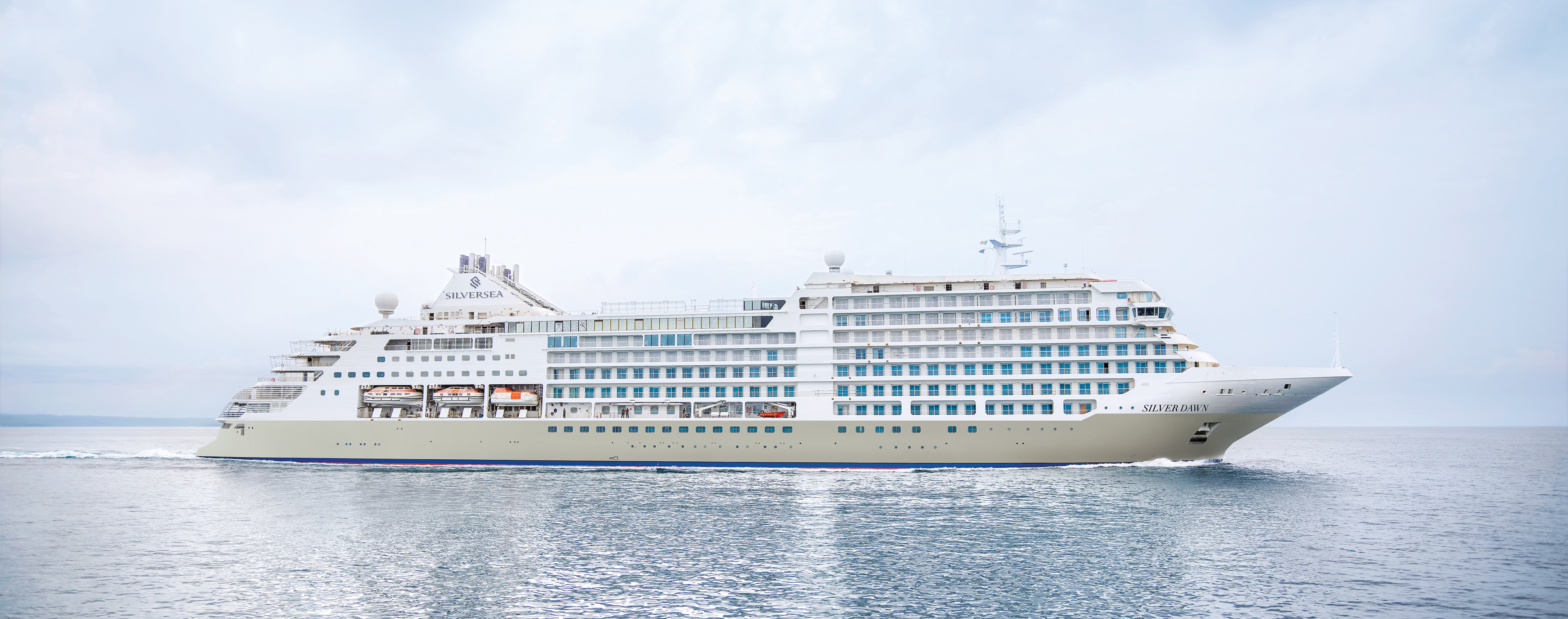
About the Ship
Deck Plans

- Atlantide
- Kaiseki
- S.A.L.T Kitchen
- S.A.L.T Bar
- S.A.L.T Lab
- Vista Suite (3x Accessible)
- Elevator

- Reception/Guest Relations
- Shore Concierge
- Dolce Vita
- Venetian Lounge
- Future Cruise Sales
- Launderette
- Cruise Consultant
- Classic Veranda Suite
- Elevator

- Otium Spa
- Fitness Centre
- Relaxation Area
- Beauty Salon
- Launderette
- Deluxe Veranda Suite
- Classic Veranda Suite
- Elevator

- La Terrazza
- Silver Note
- Casino
- Launderette
- Royal Suite
- Superior Veranda Suite
- Deluxe Veranda Suite
- Elevator

- Arts Café
- Boutique
- La Dame
- Launderette
- Deluxe Veranda Suite
- Superior Veranda suite
- Grand Suite
- Elevator

- Panorama Lounge
- Connoisseur’s Corner
- Launderette
- Owner’s Suite
- Panorama Suite
- Silver Suite
- Superior Veranda Suite
- Grand Suite
- Elevator

- Pool Deck
- Pool Bar
- Launderette
- The Grill
- Whirlpool Area
- Silver Suite
- Elevator

- Observation Library
- Spaccanapoli
- Jogging Track
- Silver Suites
- Elevator
- Atlantide
- Kaiseki
- S.A.L.T Kitchen
- S.A.L.T Bar
- S.A.L.T Lab
- Vista Suite (3x Accessible)
- Elevator
- Reception/Guest Relations
- Shore Concierge
- Dolce Vita
- Venetian Lounge
- Future Cruise Sales
- Launderette
- Cruise Consultant
- Classic Veranda Suite
- Elevator
- Otium Spa
- Fitness Centre
- Relaxation Area
- Beauty Salon
- Launderette
- Deluxe Veranda Suite
- Classic Veranda Suite
- Elevator
- La Terrazza
- Silver Note
- Casino
- Launderette
- Royal Suite
- Superior Veranda Suite
- Deluxe Veranda Suite
- Elevator
- Arts Café
- Boutique
- La Dame
- Launderette
- Deluxe Veranda Suite
- Superior Veranda suite
- Grand Suite
- Elevator
- Panorama Lounge
- Connoisseur’s Corner
- Launderette
- Owner’s Suite
- Panorama Suite
- Silver Suite
- Superior Veranda Suite
- Grand Suite
- Elevator
- Pool Deck
- Pool Bar
- Launderette
- The Grill
- Whirlpool Area
- Silver Suite
- Elevator
- Observation Library
- Spaccanapoli
- Jogging Track
- Silver Suites
- Elevator