Featured Cabins
Itinerary
Fusina, Italy
Piran, Slovenia
Zadar, Croatia
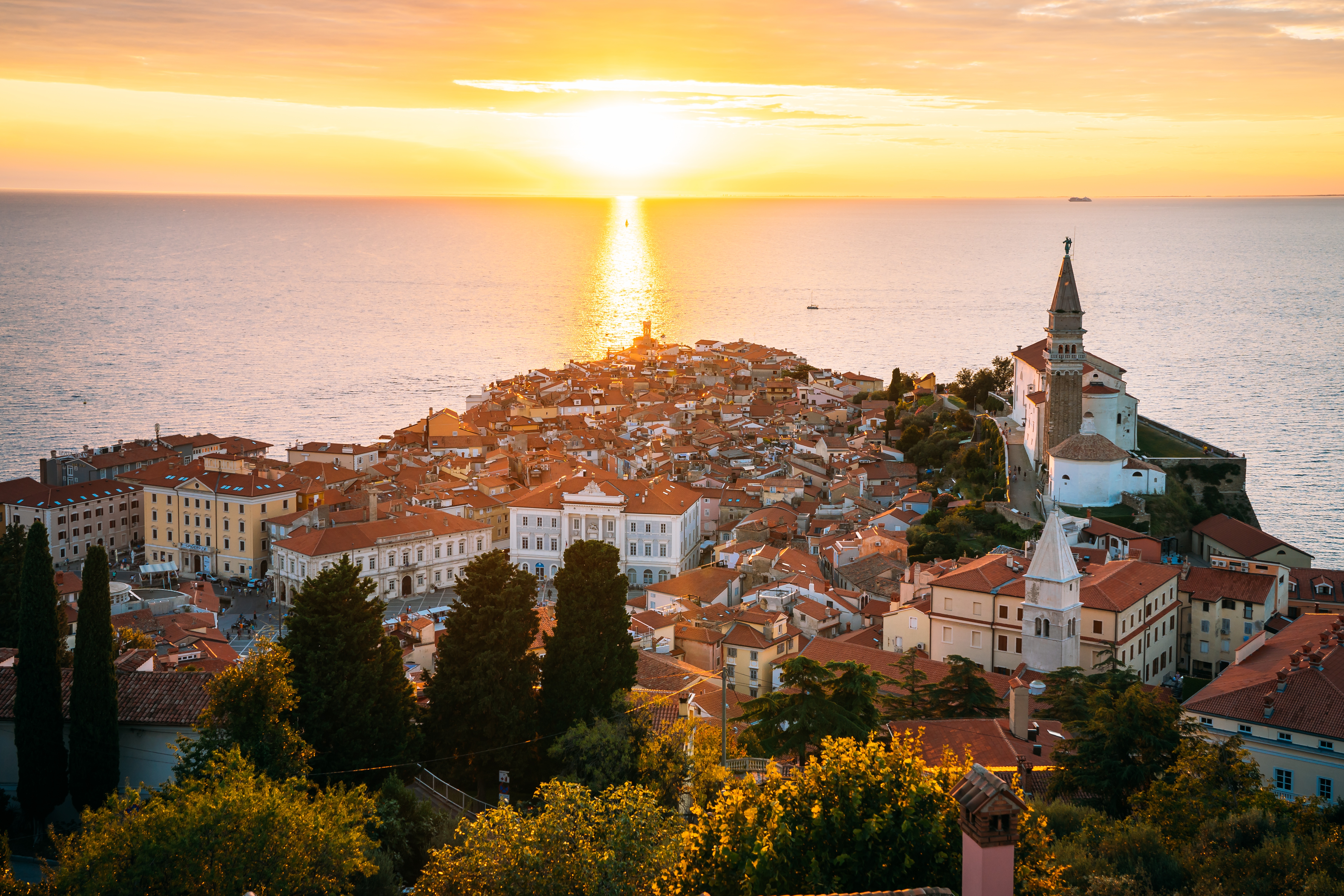
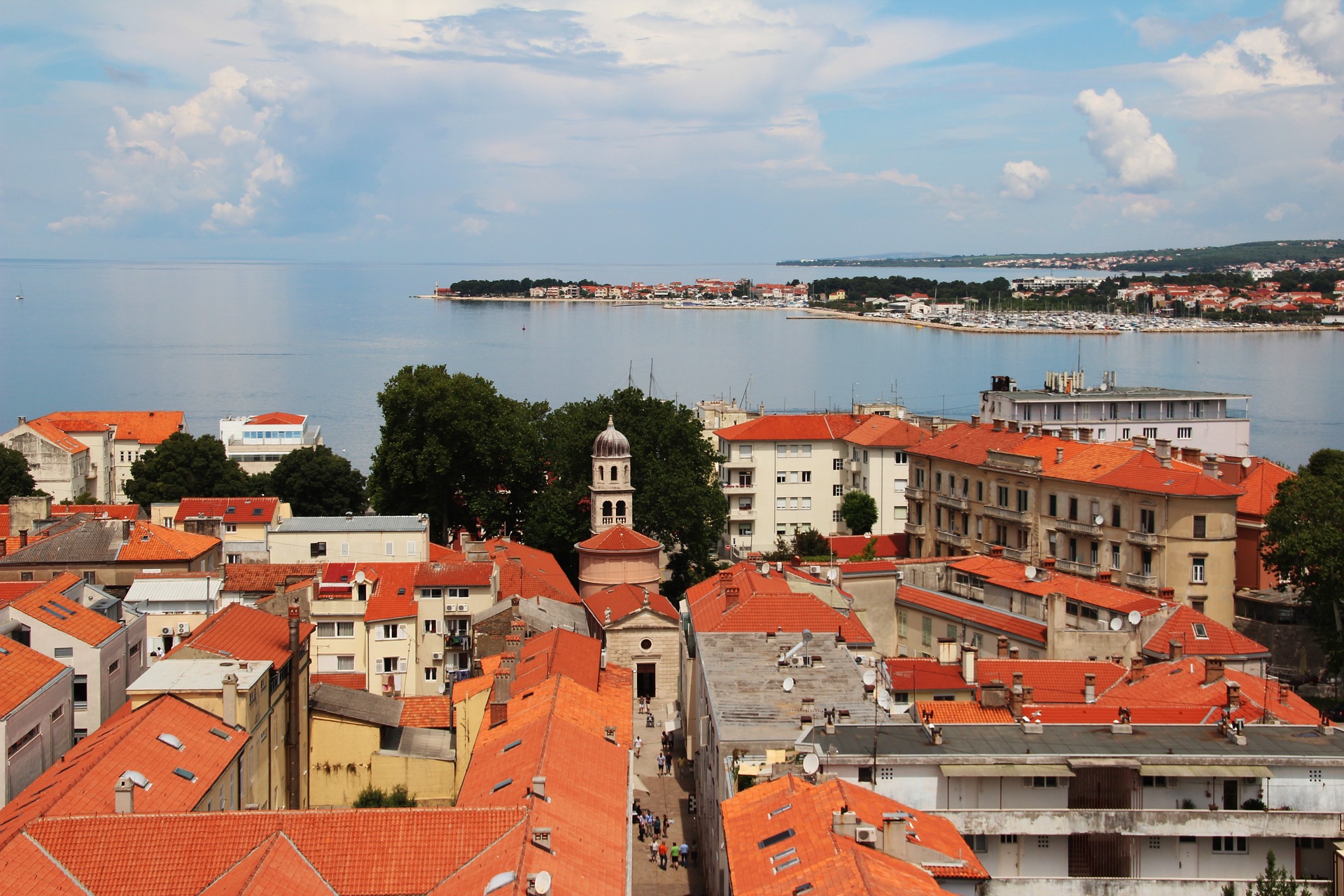
Dalmatia’s capital for more than 1,000 years, Zadar is all too often passed over by travelers on their way to Split or Dubrovnik. What they miss out on is a city of more than 73,000 that is remarkably lovely and lively despite—and, in some measure, because of—its tumultuous history. The Old Town, separated from the rest of the city on a peninsula some 4 km (2½ miles) long and just 1,640 feet wide, is bustling and beautiful: the marble pedestrian streets are replete with Roman ruins, medieval churches, palaces, museums, archives, and libraries. Parts of the new town are comparatively dreary, a testament to what a world war followed by decades of communism, not to mention a civil war, can do to the architecture of a city that is 3,000 years old. A settlement had already existed on the site of the present-day city for some 2,000 years when Rome finally conquered Zadar in the 1st century BC; the foundations of the forum can be seen today. Before the Romans came the Liburnians had made it a key center for trade with the Greeks and Romans for 800 years. In the 3rd century BC the Romans began to seriously pester the Liburnians, but required two centuries to bring the area under their control. During the Byzantine era, Zadar became the capital of Dalmatia, and this period saw the construction of its most famous church, the 9th-century St. Donat’s Basilica. It remained the region’s foremost city through the ensuing centuries. The city then experienced successive onslaughts and occupations—both long and short—by the Osogoths, the Croatian-Hungarian kings, the Venetians, the Turks, the Habsburgs, the French, the Habsburgs again, and finally the Italians before becoming part of Yugoslavia and, in 1991, the independent republic of Croatia. Zadar was for centuries an Italian-speaking city, and Italian is still spoken widely, especially by older people. Indeed, it was ceded to Italy in 1921 under the Treaty of Rapallo (and reverted to its Italian name of Zara). Its occupation by the Germans from 1943 led to intense bombing by the Allies during World War II, which left most of the city in ruins. Zadar became part of Tito’s Yugoslavia in 1947, prompting many Italian residents to leave. Zadar’s most recent ravages occurred during a three-month siege by Serb forces and months more of bombardment during the Croatian-Serbian war between 1991 and 1995. But you’d be hard-pressed to find outward signs of this today in what is a city to behold. There are helpful interpretive signs in English all around the Old Town, so you certainly won’t feel lost when trying to make sense of the wide variety of architectural sites you might otherwise pass by with only a cursory look.
Hvar Island, Croatia
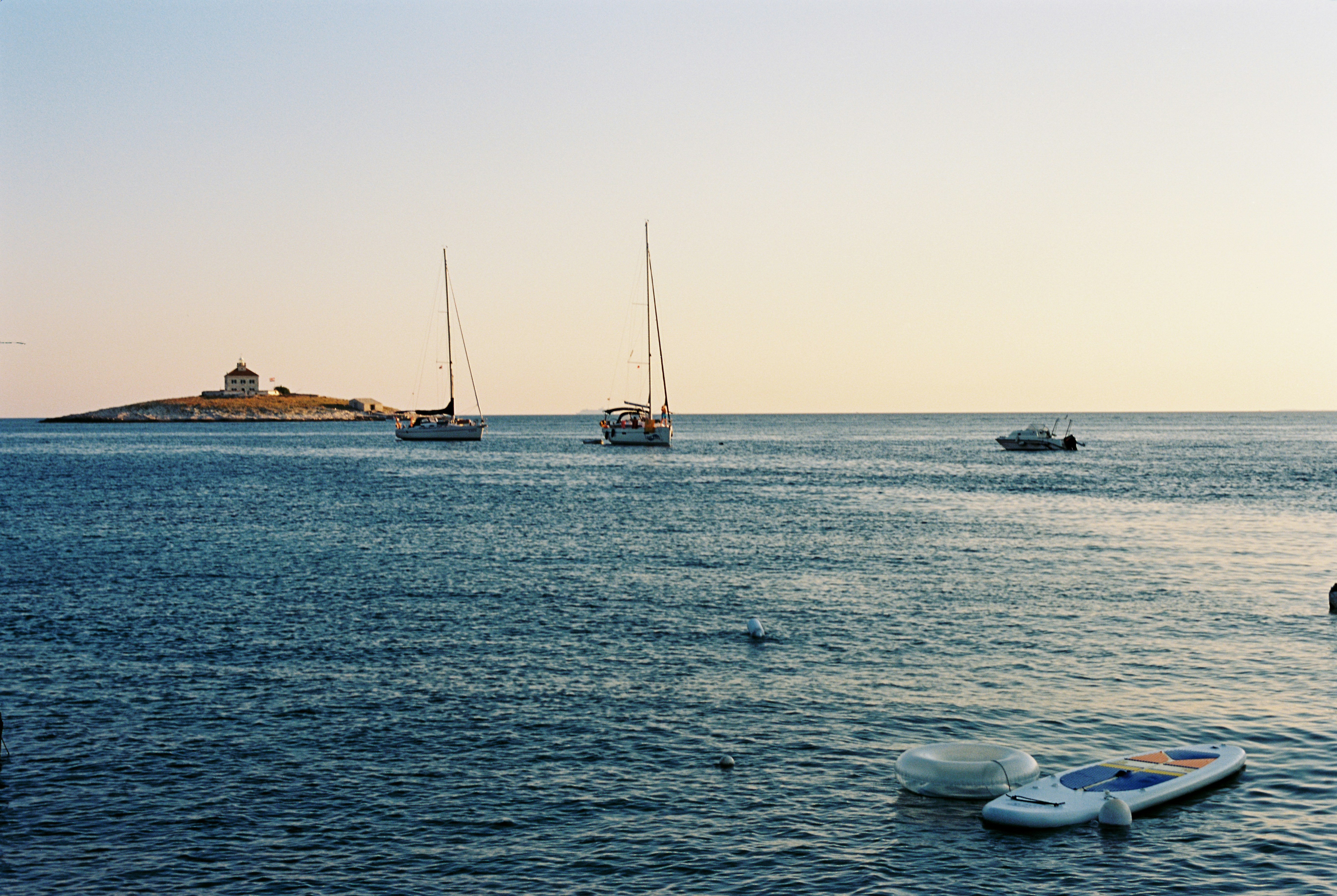
The Croatian island of Hvar bills itself as the “sunniest island in the Adriatic.” Not only does it have the figures to back up this claim—an annual average of 2,724 hours of sunshine—but it also makes visitors a sporting proposition, offering them a money-back guarantee if there are seven consecutive days of snow (snow has been known to fall here; the last time being February 2012).
Dubrovnik, Croatia
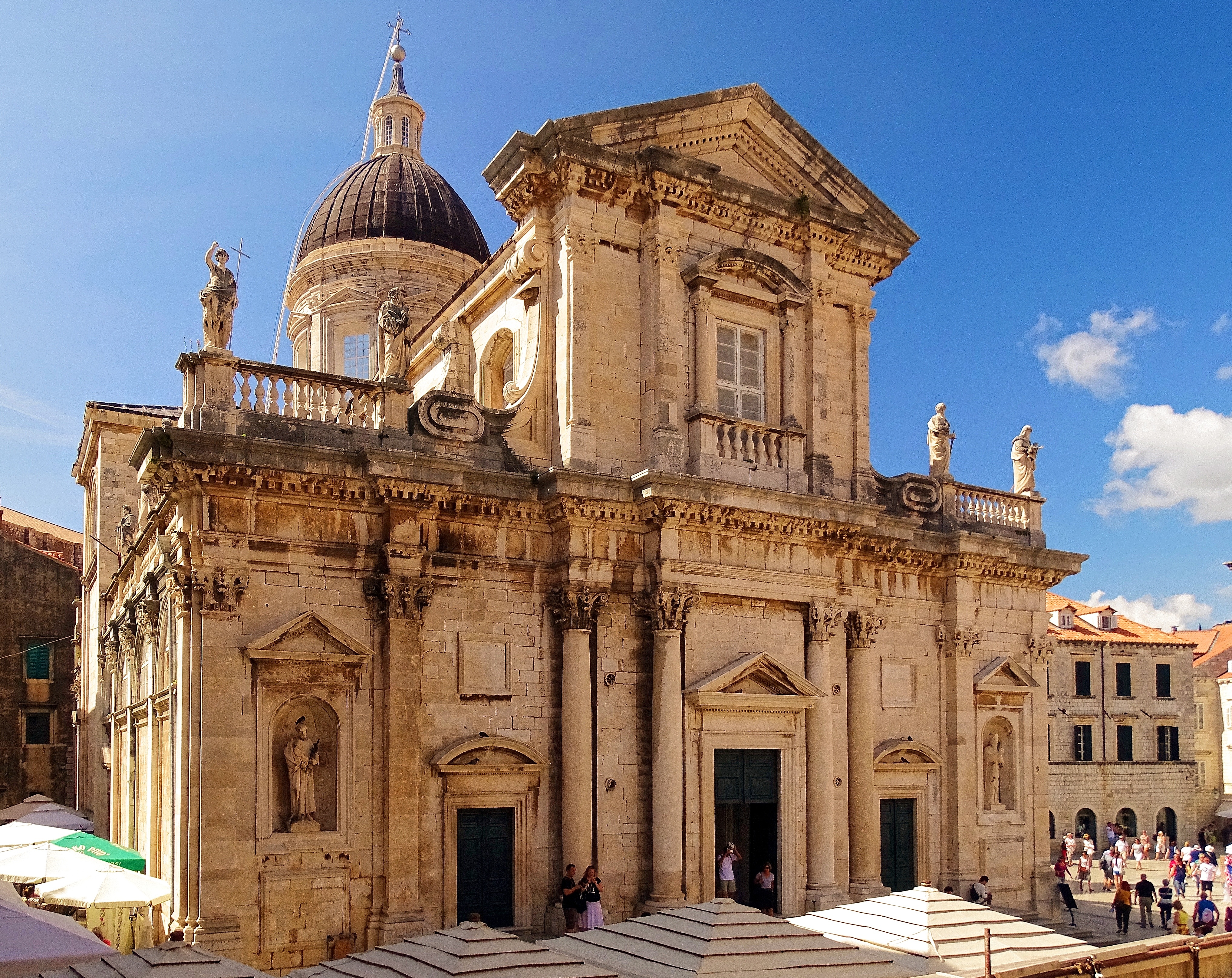
Nothing can prepare you for your first sight of Dubrovnik. Lying 216 km (135 miles) southeast of Split and commanding a jaw-dropping coastal location, it is one of the world’s most beautiful fortified cities. Its massive stone ramparts and fortress towers curve around a tiny harbor, enclosing graduated ridges of sun-bleached orange-tiled roofs, copper domes, and elegant bell towers. Your imagination will run wild picturing what it looked like seven centuries ago when the walls were built, without any suburbs or highways around it, just this magnificent stone city rising out of the sea.In the 7th century AD, residents of the Roman city Epidaurum (now Cavtat) fled the Avars and Slavs of the north and founded a new settlement on a small rocky island, which they named Laus, and later Ragusa. On the mainland hillside opposite the island, the Slav settlement called Dubrovnik grew up. In the 12th century the narrow channel separating the two settlements was filled in (now the main street through the Old Town, called Stradun), and Ragusa and Dubrovnik became one. The city was surrounded by defensive walls during the 13th century, and these were reinforced with towers and bastions in the late 15th century.From 1358 to 1808 the city thrived as a powerful and remarkably sophisticated independent republic, reaching its golden age during the 16th century. In 1667 many of its splendid Gothic and Renaissance buildings were destroyed by an earthquake. The defensive walls survived the disaster, and the city was rebuilt in baroque style.Dubrovnik lost its independence to Napoléon in 1808, and in 1815 passed to Austria-Hungary. During the 20th century, as part of Yugoslavia, the city became a popular tourist destination, and in 1979 it was listed as a UNESCO World Heritage Site. During the war for independence, it came under heavy siege. Thanks to careful restoration, few traces of damage remain; however, there are maps inside the Pile and Ploče Gates illustrating the points around the city where damage was done. It’s only when you experience Dubrovnik yourself that you can understand what a treasure the world nearly lost
At Sea
Taormina, Italy
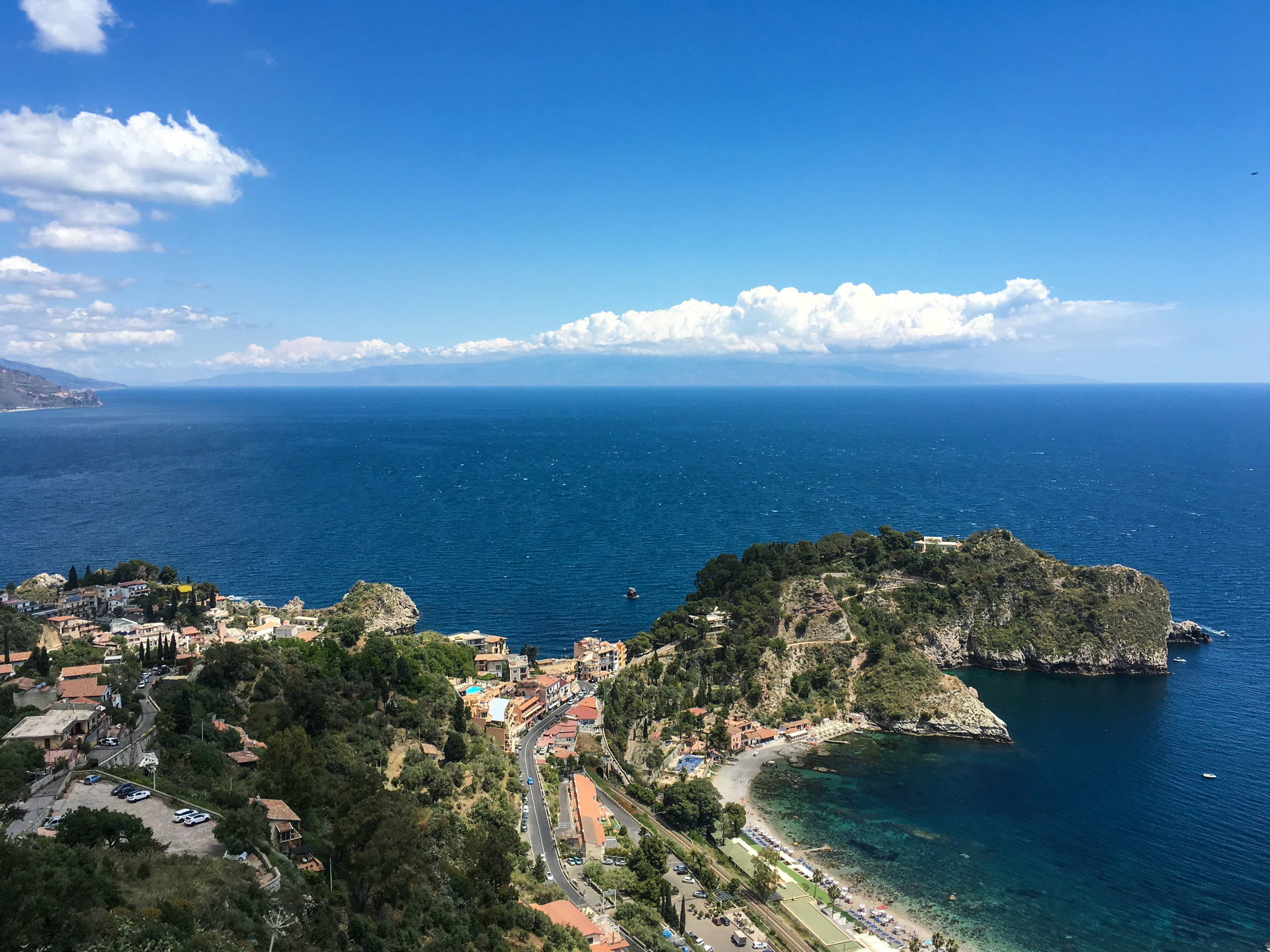
The medieval cliff-hanging town of Taormina is overrun with tourists, yet its natural beauty is still hard to dispute. The view of the sea and Mt. Etna from its jagged cactus-covered cliffs is as close to perfection as a panorama can get—especially on clear days, when the snowcapped volcano’s white puffs of smoke rise against the blue sky. Writers have extolled Taormina’s beauty almost since it was founded in the 6th century BC by Greeks from nearby Naxos; Goethe and D. H. Lawrence were among its well-known enthusiasts. The town’s boutique-lined main streets get old pretty quickly, but the many hiking paths that wind through the beautiful hills surrounding Taormina promise a timeless alternative. A trip up to stunning Castelmola (whether on foot or by car) should also be on your itinerary.
Valletta, Malta
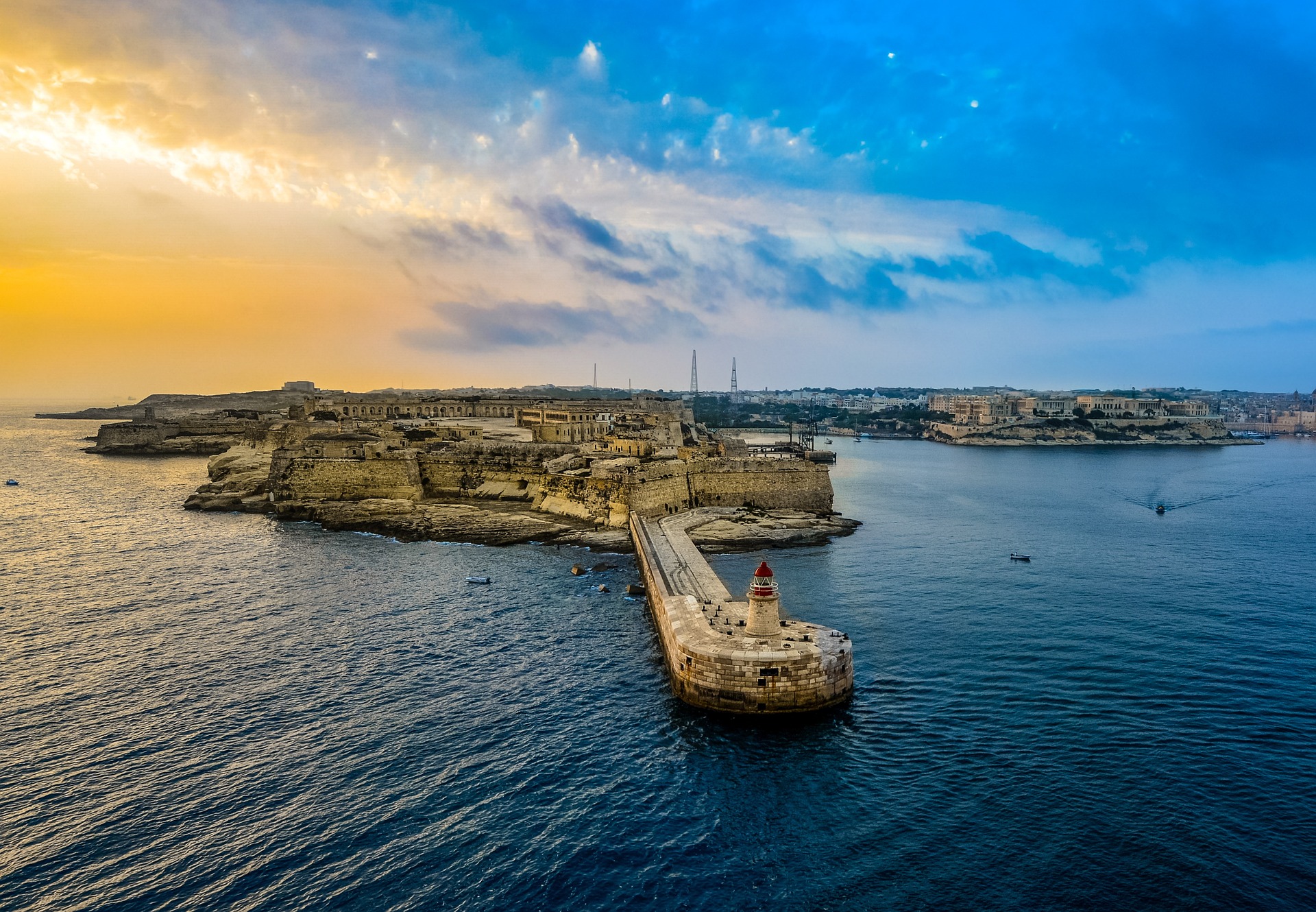
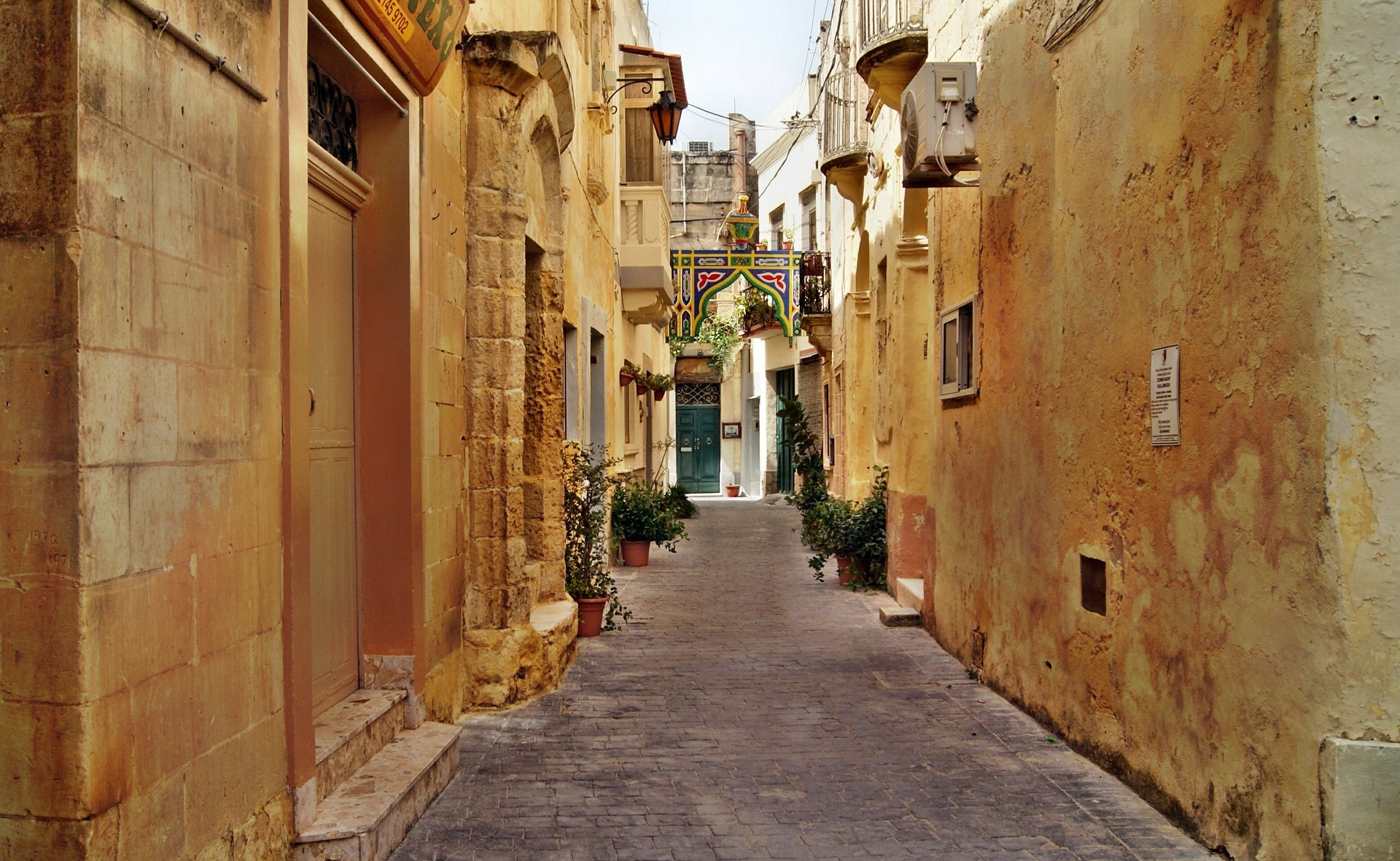
Malta’s capital, the minicity of Valletta, has ornate palaces and museums protected by massive fortifications of honey-color limestone. Houses along the narrow streets have overhanging wooden balconies for people-watching from indoors. Generations ago they gave housebound women a window on the world of the street. The main entrance to town is through the City Gate (where all bus routes end), which leads onto Triq Repubblika (Republic Street), the spine of the grid-pattern city and the main shopping street. Triq Mercante (Merchant Street) parallels Repubblika to the east and is also good for strolling. From these two streets, cross streets descend toward the water; some are stepped. Valletta’s compactness makes it ideal to explore on foot. City Gate and the upper part of Valletta are experiencing vast redevelopment that includes a new Parliament Building and open-air performance venue. The complex, completed mid-2013, has numerous pedestrian detours in place along with building noise and dust. Before setting out along Republic Street, stop at the tourist information office on Merchant Street for maps and brochures.
Cabin Options
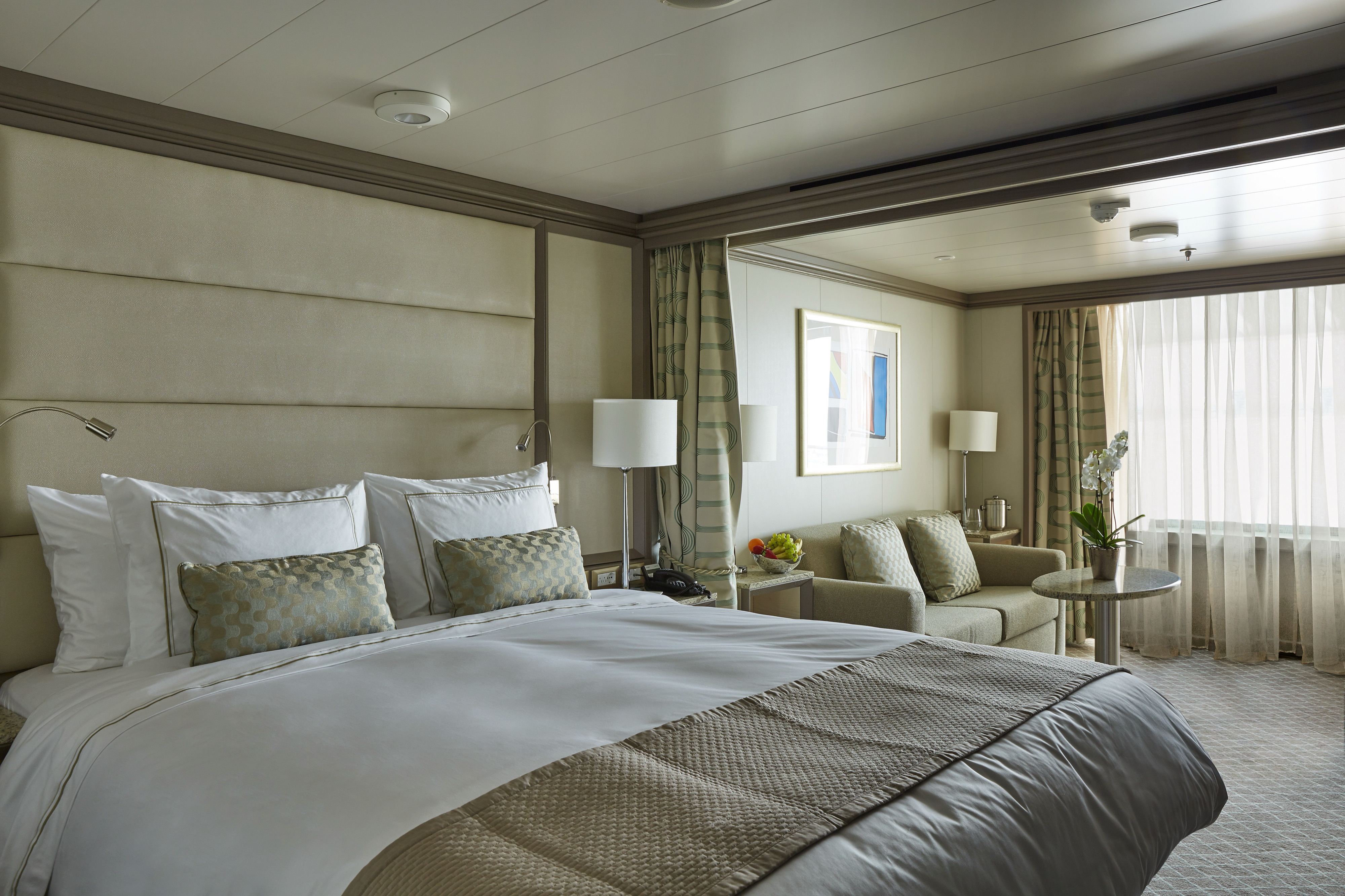
Vista Suite
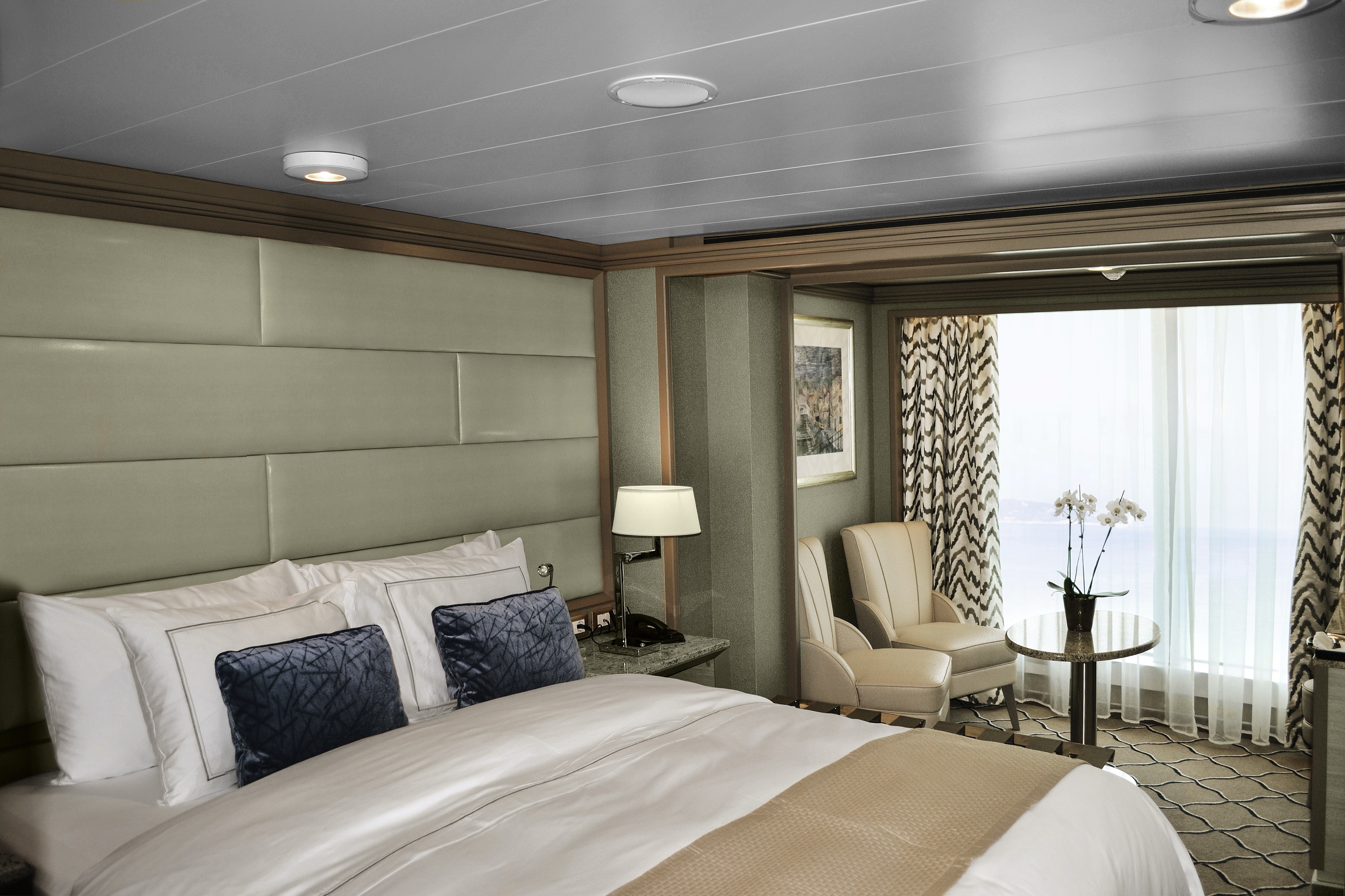
Panorama Suite
Classic Veranda Suite
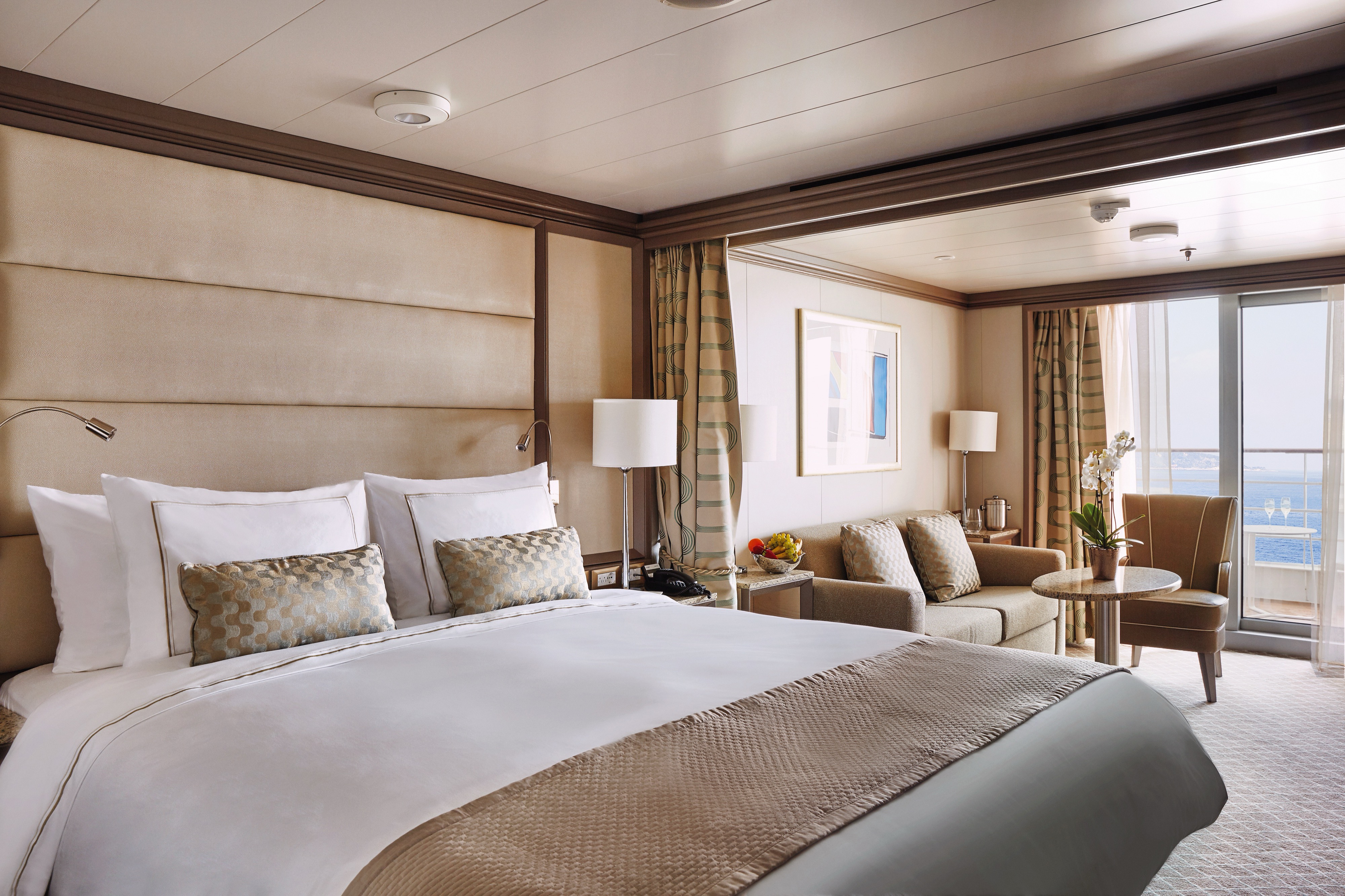
Superior Veranda Suite
Deluxe Veranda Suite
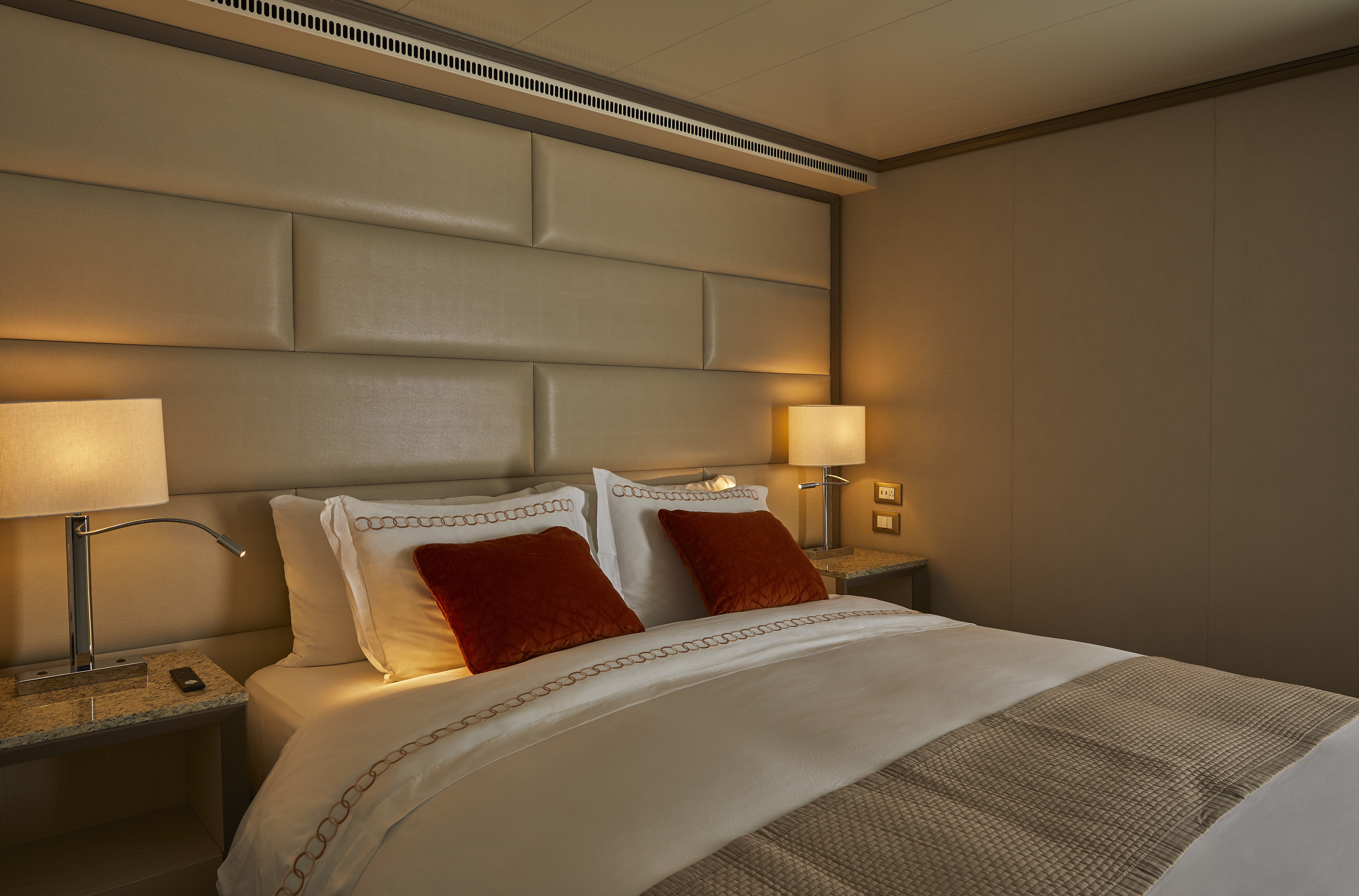
Medallion Suite
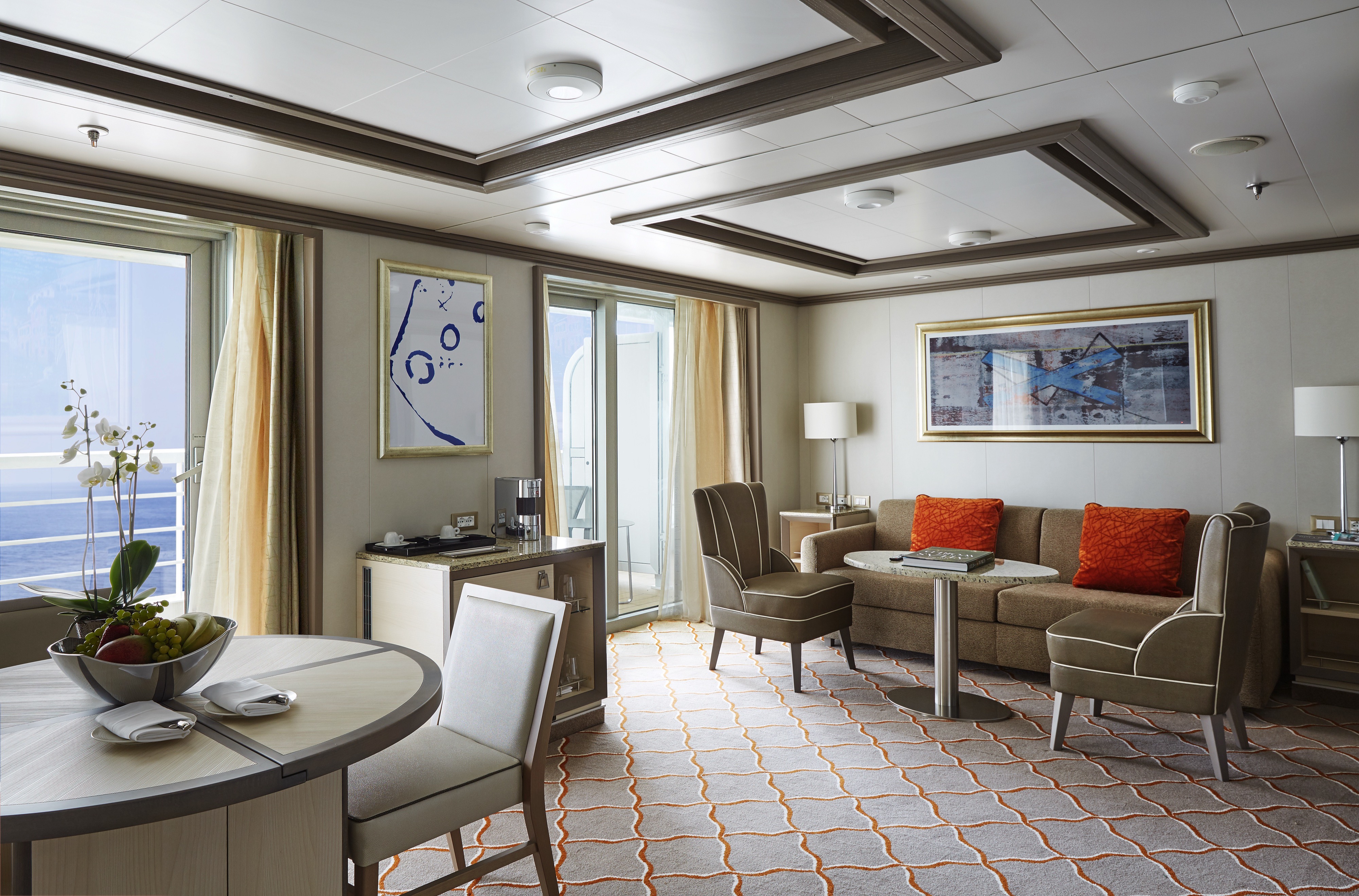
Silver Suite
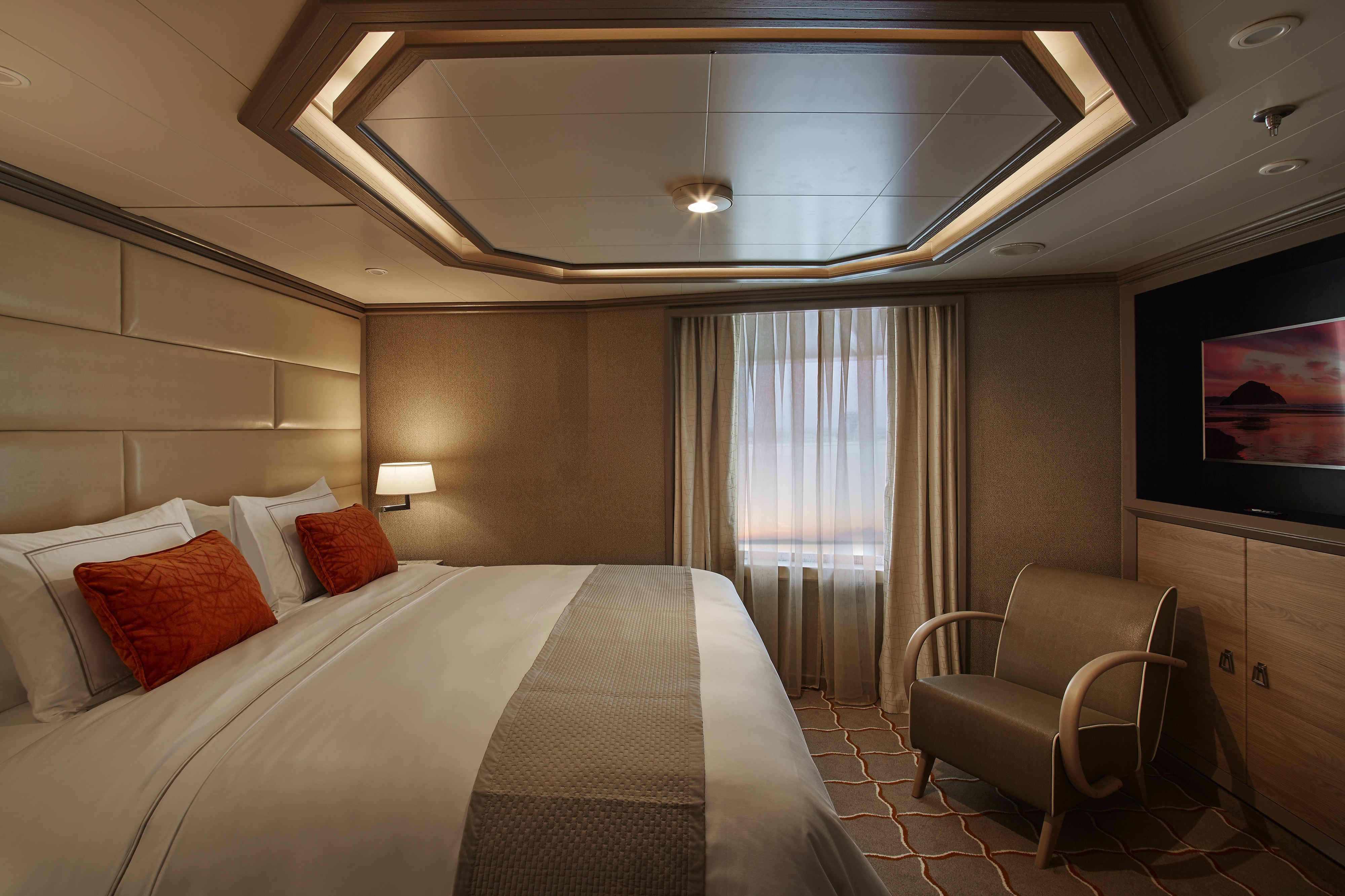
Royal Suite
Grand Suite
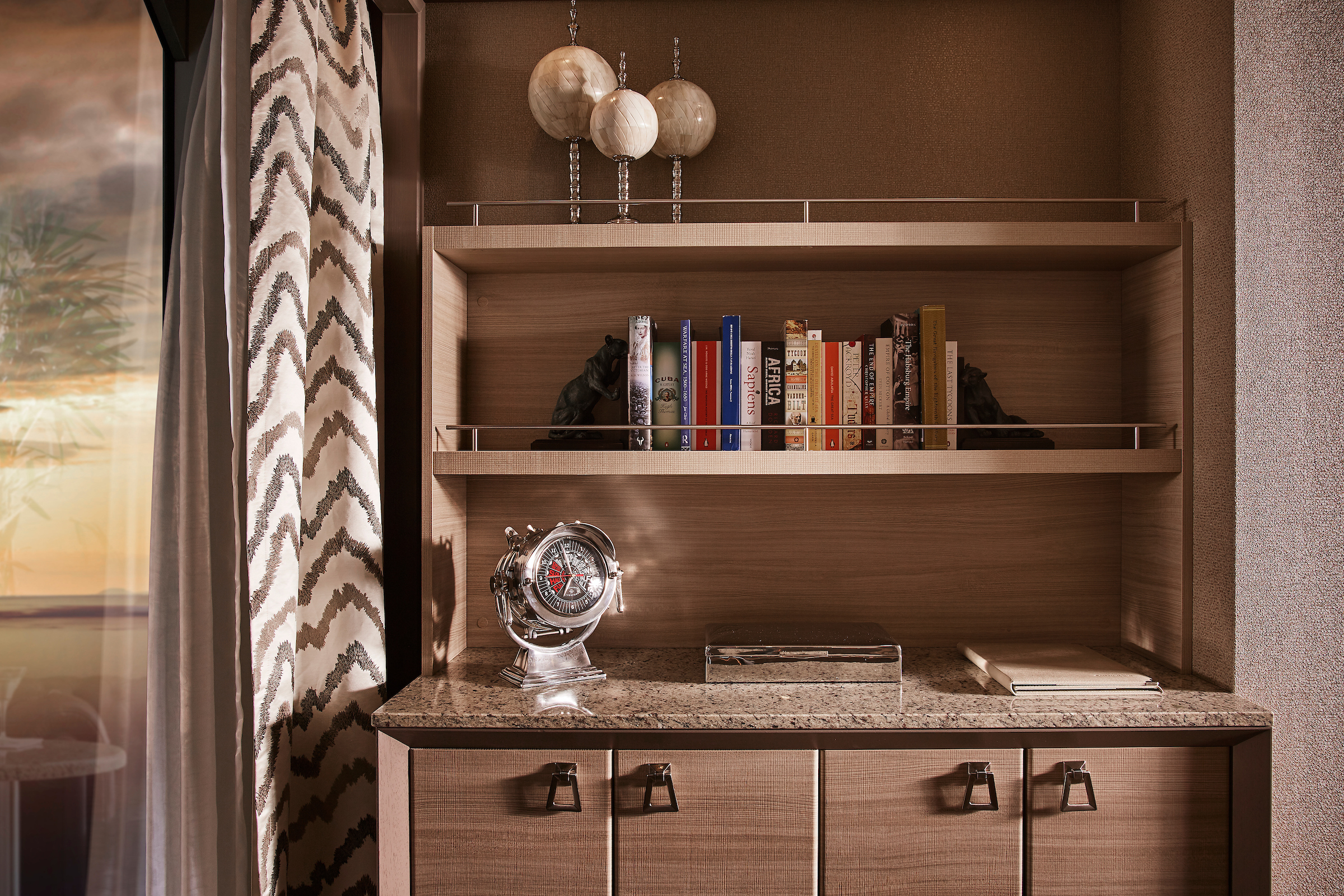
Owner's Suite
Ship Facilities
S.A.L.T. Kitchen
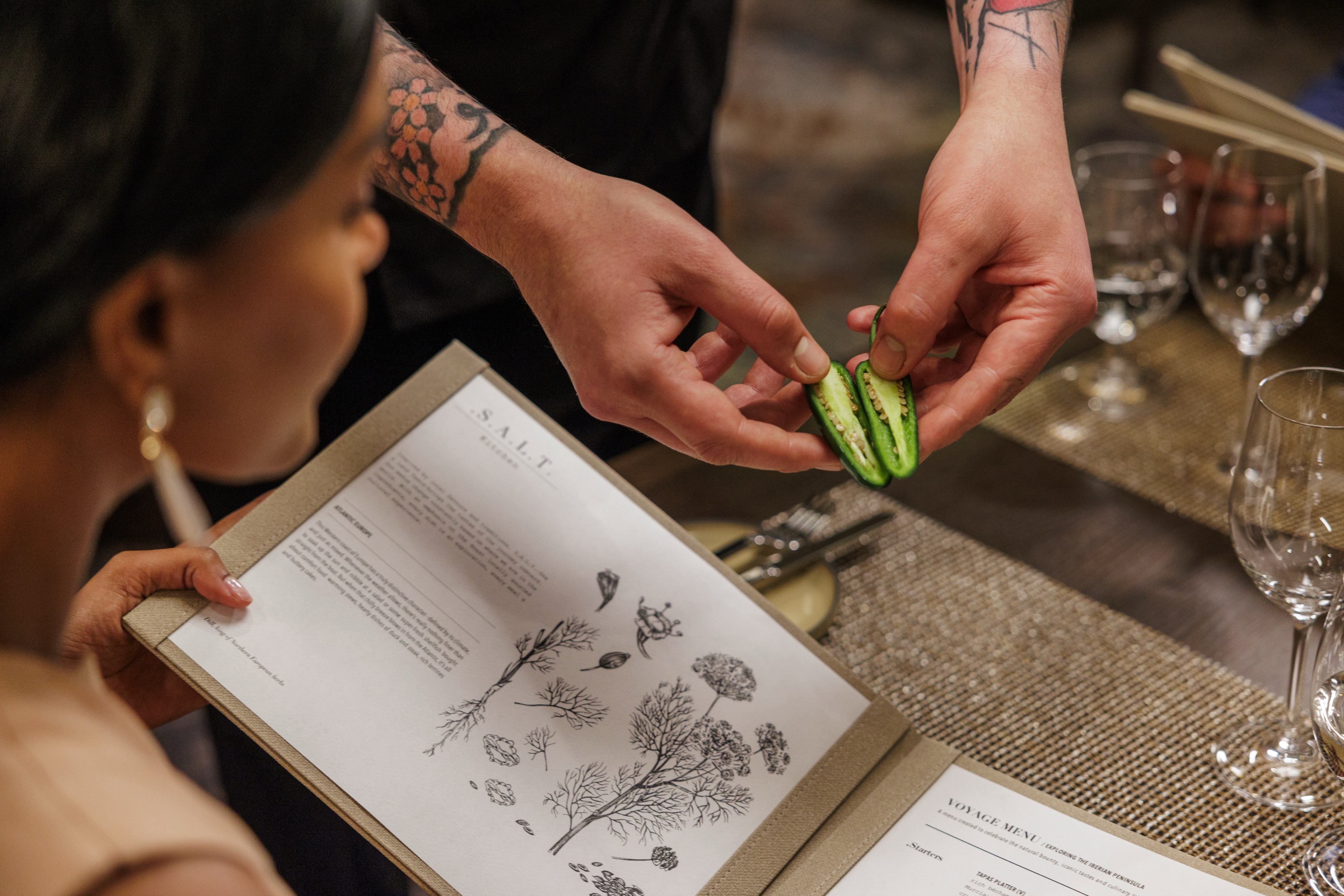
S.A.L.T. Kitchen transforms dining into discovery with menus that reflect the cuisines of the places you’ll visit. This complimentary venue is the only restaurant at sea with an ever-changing menu based on destination. Plus, a standing menu focuses on broader regional specialties, complemented by a menu featuring hyperlocal fare. Dishes are inspired by local flavors and prepared with responsibly sourced ingredients. Accompanied by a curated selection of over 160 regional wines, S.A.L.T. Kitchen delivers an immersive taste of place without ever leaving the ship.
Images are intended as a general reference. Features, materials, finishes and layout may be different than shown.
Kaiseki
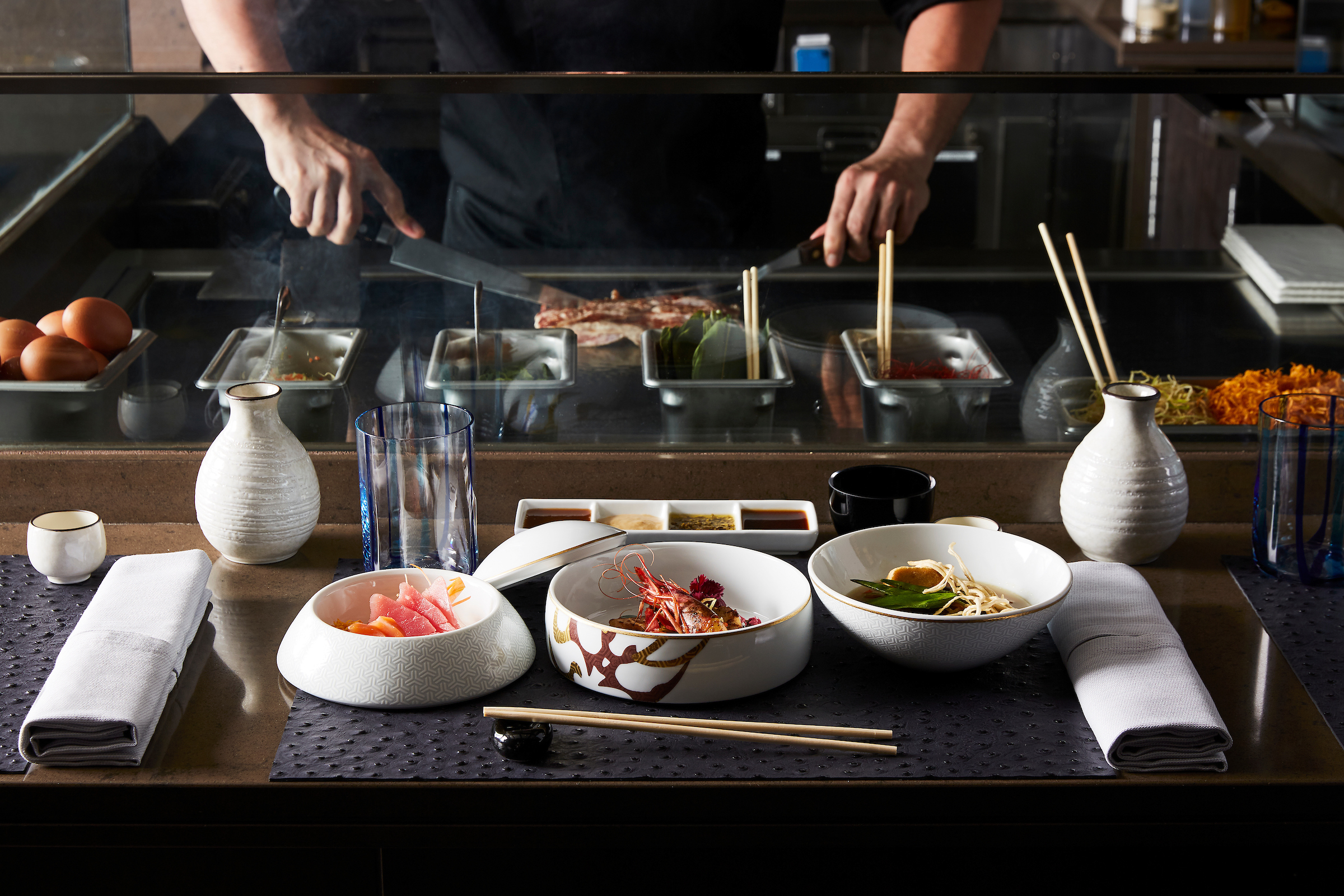
Meals at Kaiseki are rooted in the Japanese philosophy of balance and precision. By day, refreshing sushi, sashimi, and izakaya-style dishes guide the menu. During dinner, specialties like miso black cod and wagyu teriyaki nod to Japan’s enduring culinary legacy, while fine sake, whiskies, and teas enhance every course.
Lunch – Open seating
Opening Hours: 12:00 PM – 2:30 PM
Dinner – Reservations required*
Opening Hours: 7:00 PM – 9:30 PM
Per guest reservation fee of US$40. Please visit My Silversea to make your reservations.
Learn more about the Epicurean Experience, which includes dining in three specialty restaurants with preferential rates.
Images are intended as a general reference. Features, materials, finishes and layout may be different than shown.
La Terrazza
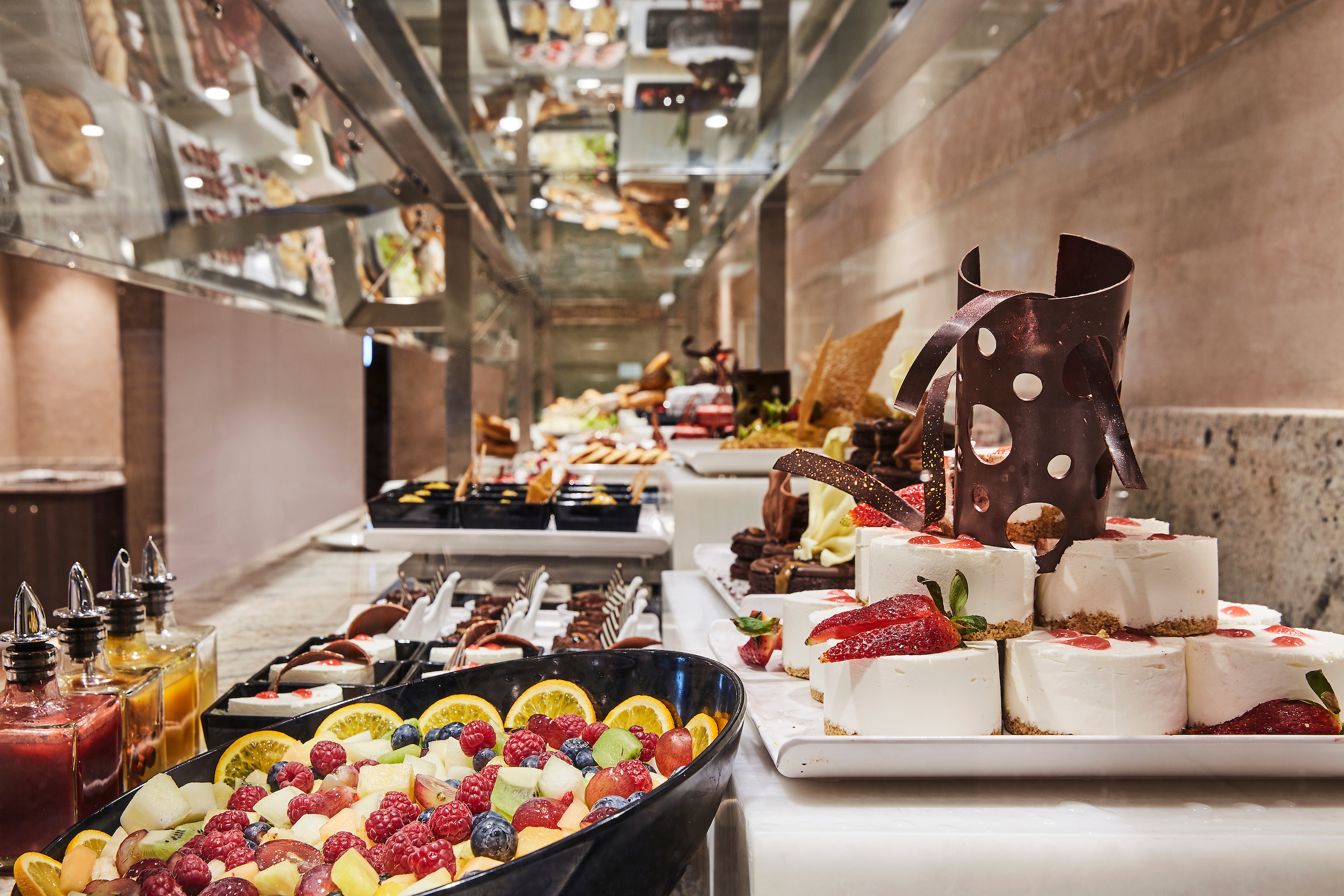
La Terrazza elevates casual dining by day and delivers an authentic Italian experience by night. During the breakfast and lunch buffets, our master chefs prepare global favorites at live stations. As evening falls, handmade pastas and classic seafood dishes are the centerpiece — every impeccable bite paired with fine wines from around the world.
Images are intended as a general reference. Features, materials, finishes and layout may be different than shown.
Arts Café
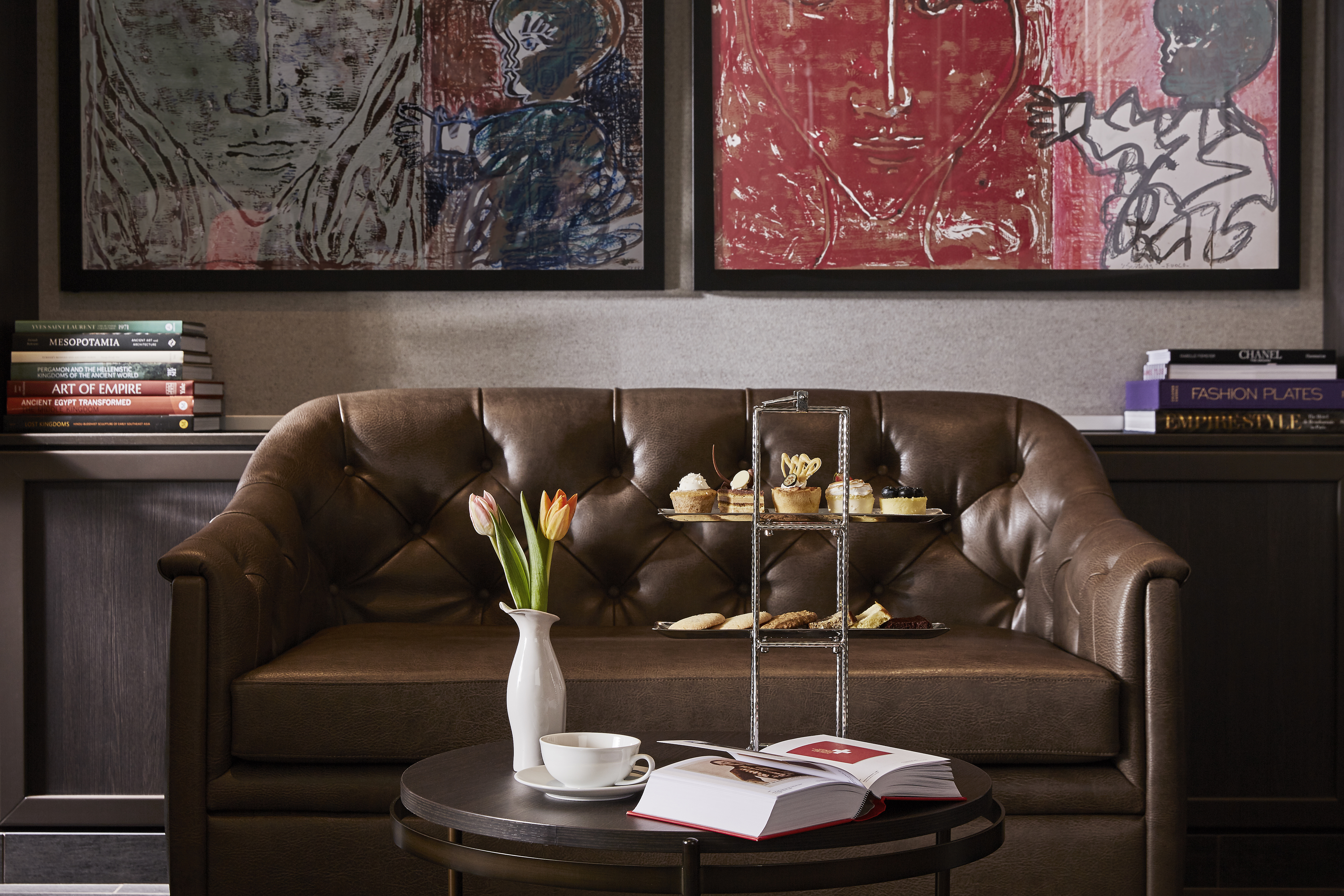
Arts Café is a vibrant, light-filled haven for conversation, connection, and indulgence. Snack on creative canapés and decadent pastries paired with perfectly pulled espressos, fresh squeezed juices, and artisanal teas. Open all day, this inviting space provides a dynamic backdrop for unwinding, recharging, or catching up with fellow travelers.
Images are intended as a general reference. Features, materials, finishes and layout may be different than shown.
The Grill
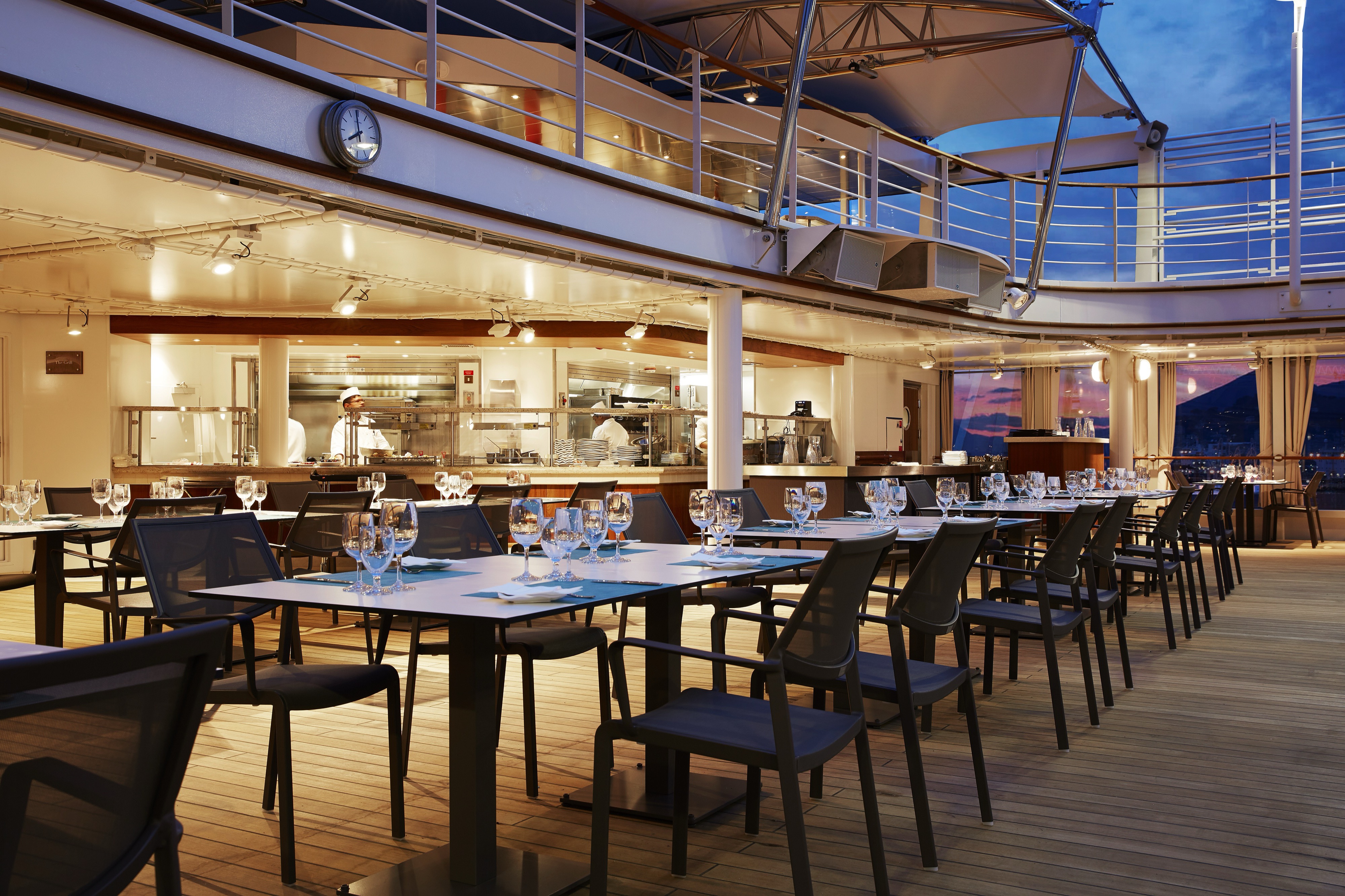
A poolside al fresco favorite, The Grill is casual by day and captivating by night. Dig in to crisp salads and grilled classics during lunch, then return after sunset for masterfully seasoned and seared cuts paired with balmy sea breezes.
Images are intended as a general reference. Features, materials, finishes and layout may be different than shown.
La Dame
Experience the pinnacle of French gastronomy at La Dame, where sophistication meets tradition. Here, an exclusive tasting menu unfolds course by course — each plate a study in masterful technique, seasonal ingredients, and modern refinement. From classic Kir Royales to exquisite signatures such as Dover sole à la Grenobloise, this is haute cuisine at its finest.
Per guest reservation fee of US$60. Please visit My Silversea to make your reservations.
Learn more about the Epicurean Experience, which includes dining in three specialty restaurants with preferential rates.
Images are intended as a general reference. Features, materials, finishes and layout may be different than shown.
Atlantide
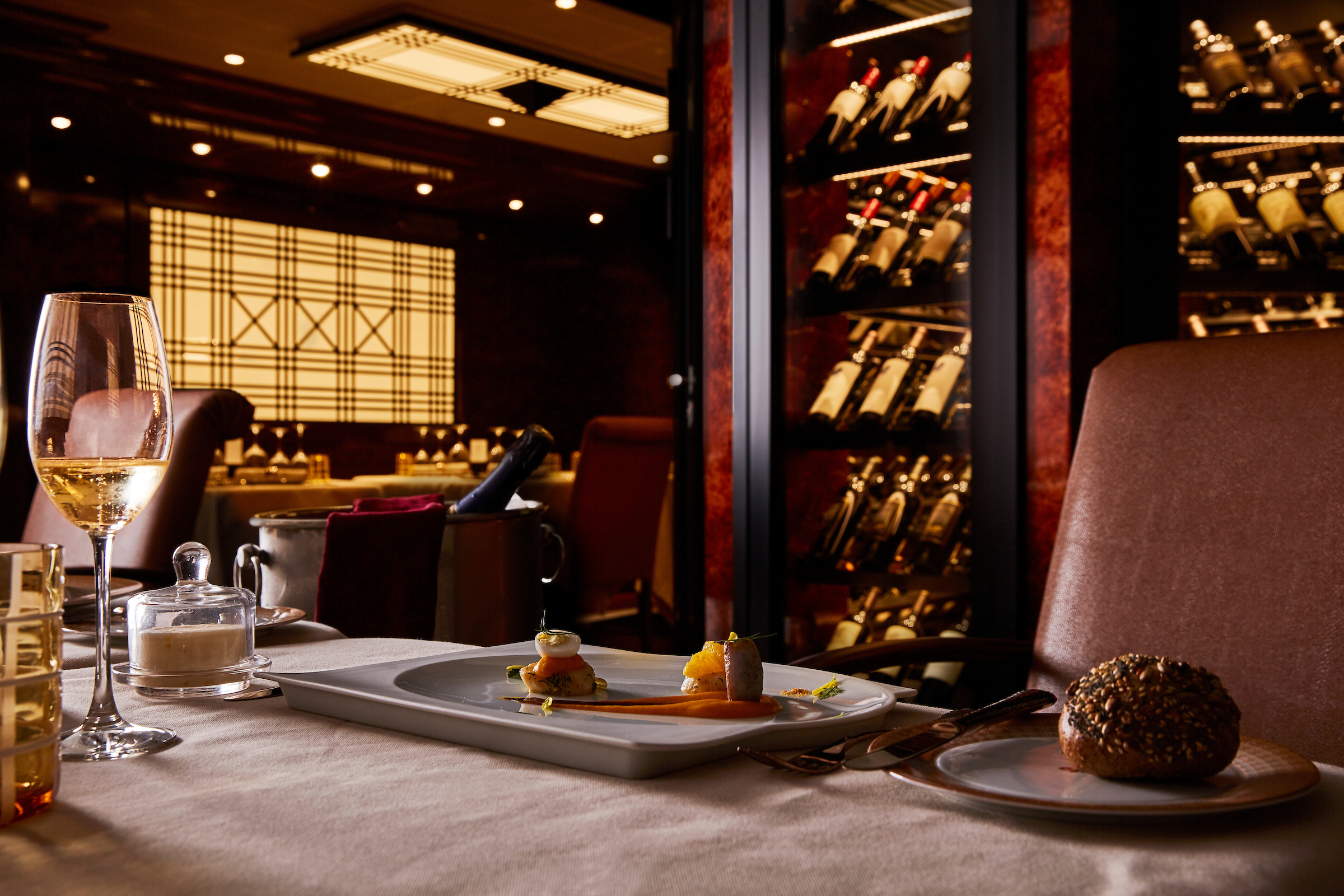
Refined global fare and grilled classics take center stage at Atlantide. Drop in for an indulgent à la carte breakfast, a leisurely lunch, or an elegant dinner among family and new friends, served in a timeless and sophisticated setting.
Images are intended as a general reference. Features, materials, finishes and layout may be different than shown.
Silver Note
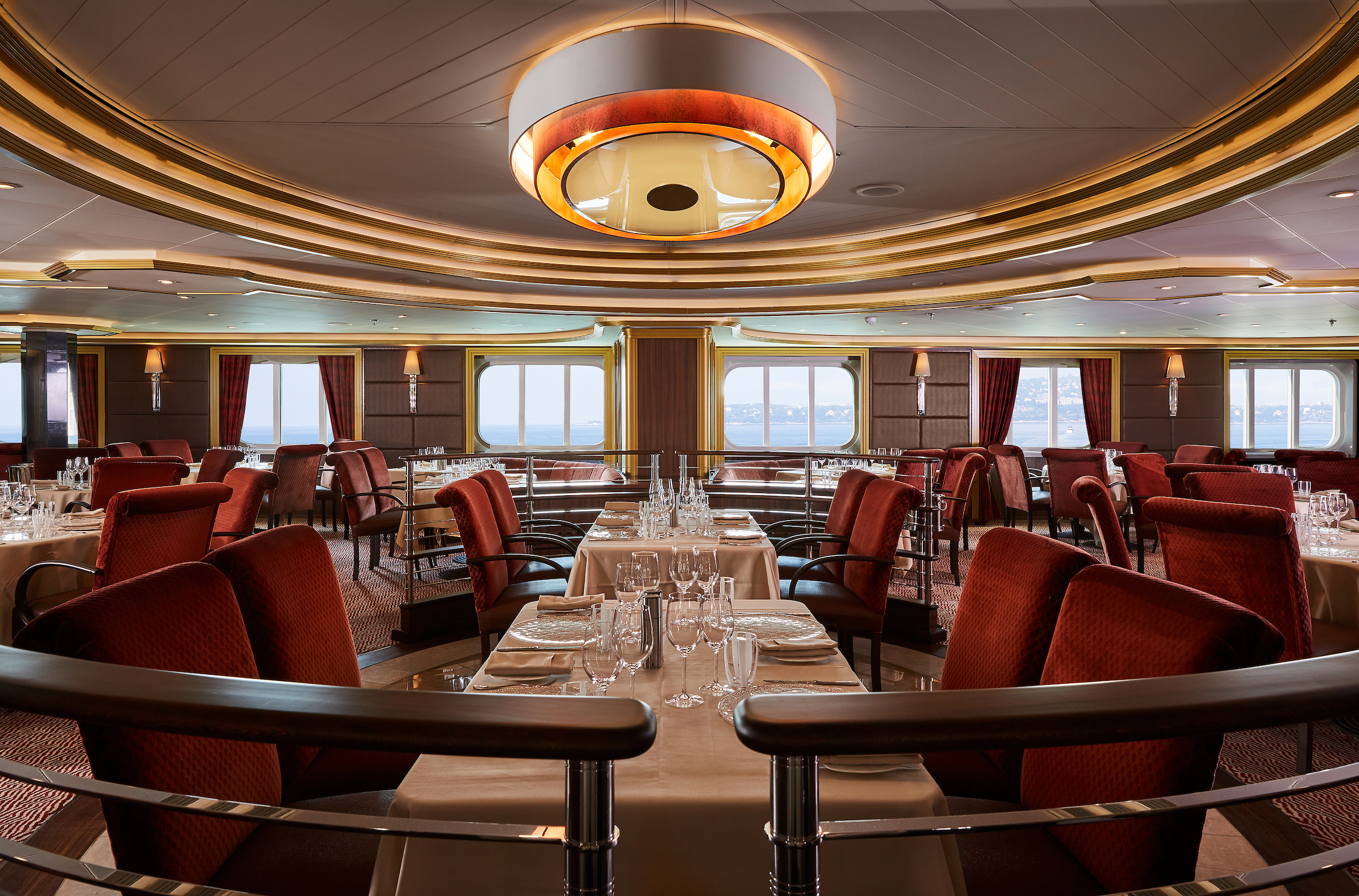
As the stars come out, Silver Note comes alive with the rhythm of jazz and the artistry of small-plate fine dining. This intimate supper-club experience pairs soulful live performances with inventive, international cuisine in a chic, lounge-style setting — one of the most exclusive dining concepts at sea.
Learn more about the Epicurean Experience, which includes dining in three specialty restaurants with preferential rates.
Images are intended as a general reference. Features, materials, finishes and layout may be different than shown.
Spaccanapoli
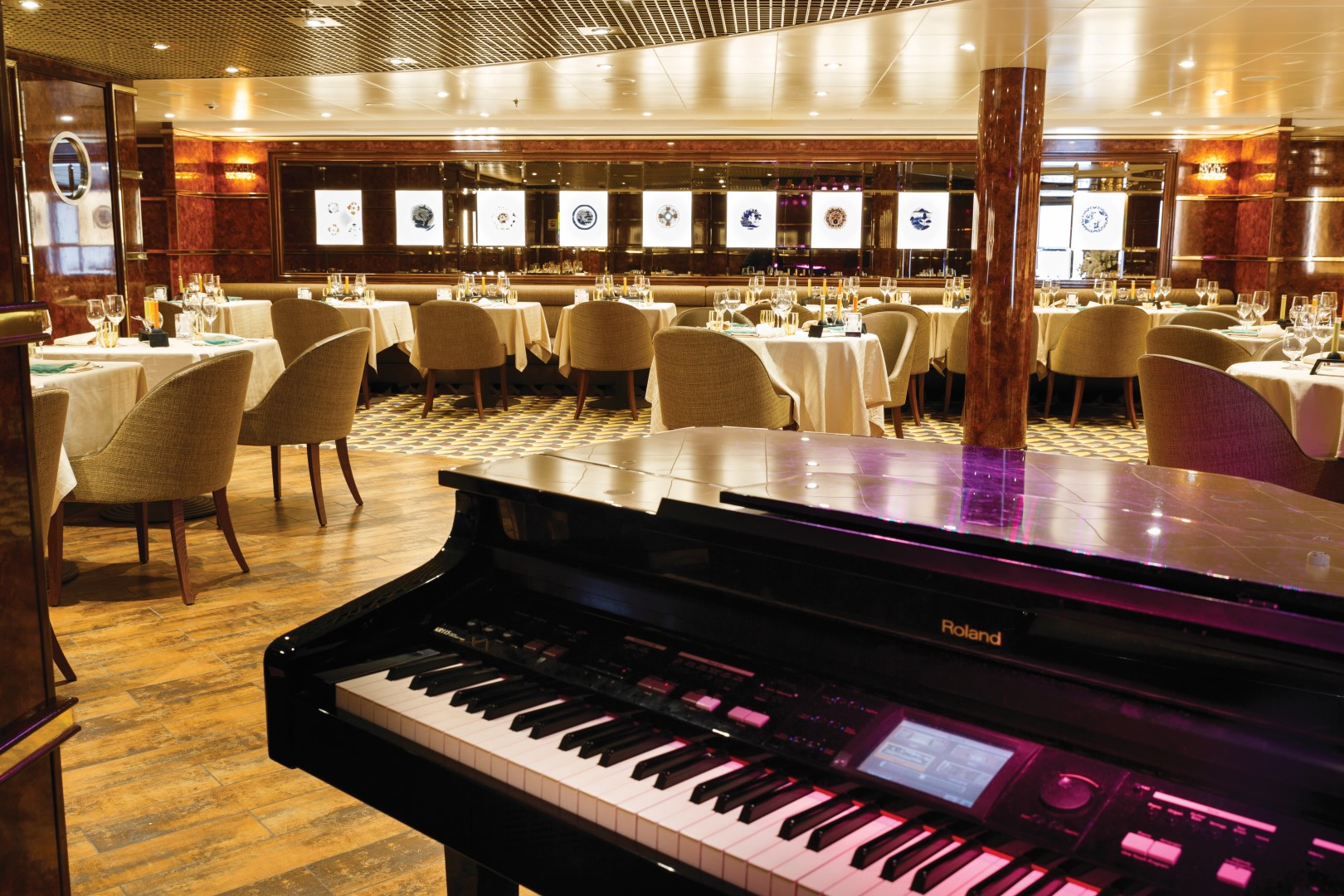
Spaccanapoli honors southern Italy’s culinary heritage with handcrafted pies tossed, topped, and baked to perfection. This signature pizzeria captures true Neapolitan flavor — from golden, blistered crusts to the irresistible aromas that drift from the custom-built oven.
In-Suite Dining
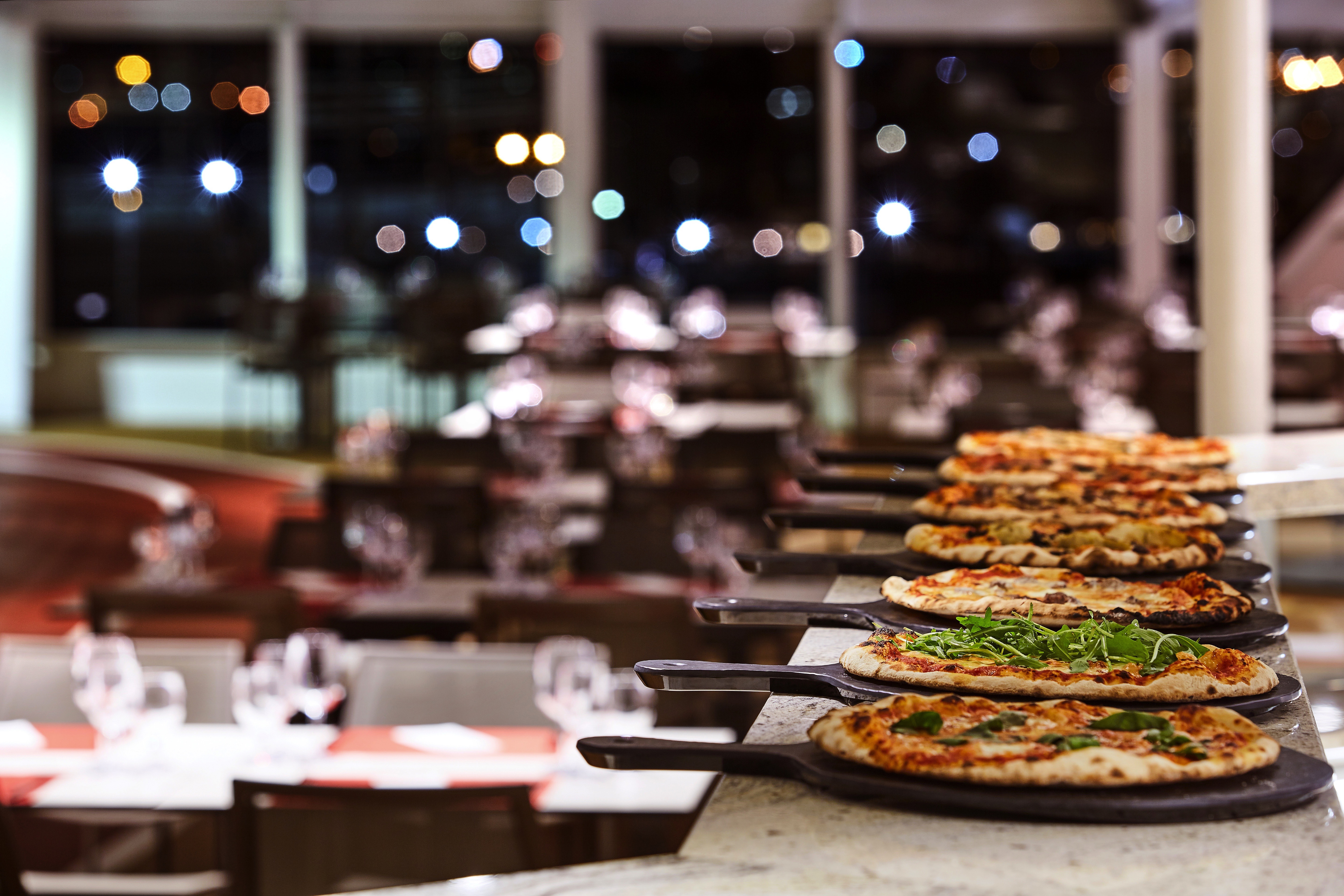
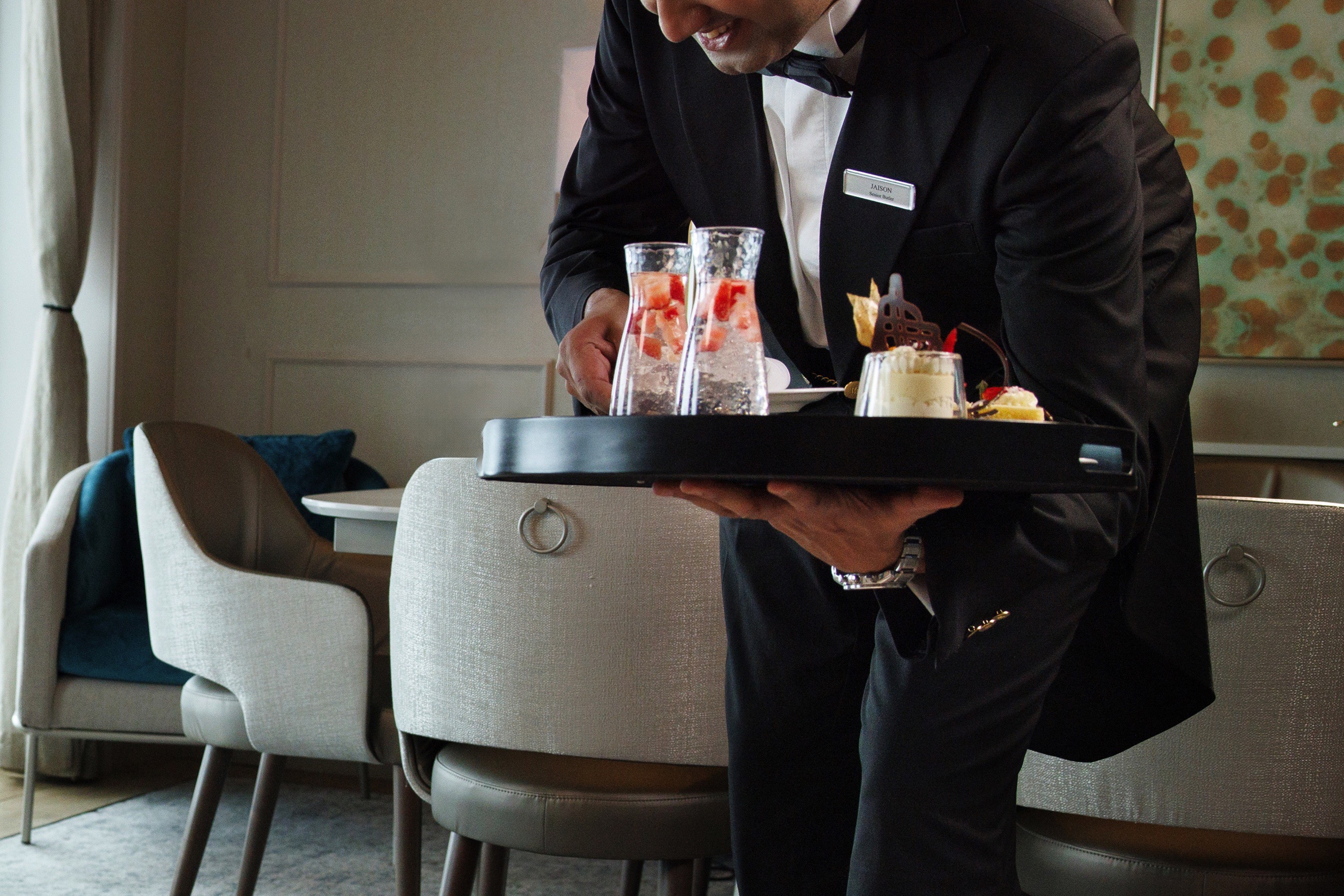
You can order from our Room Service menu 24 hours a day.
Opening hours are for reference only. For precise opening hours, please refer to the Daily Chronicles provided on board.
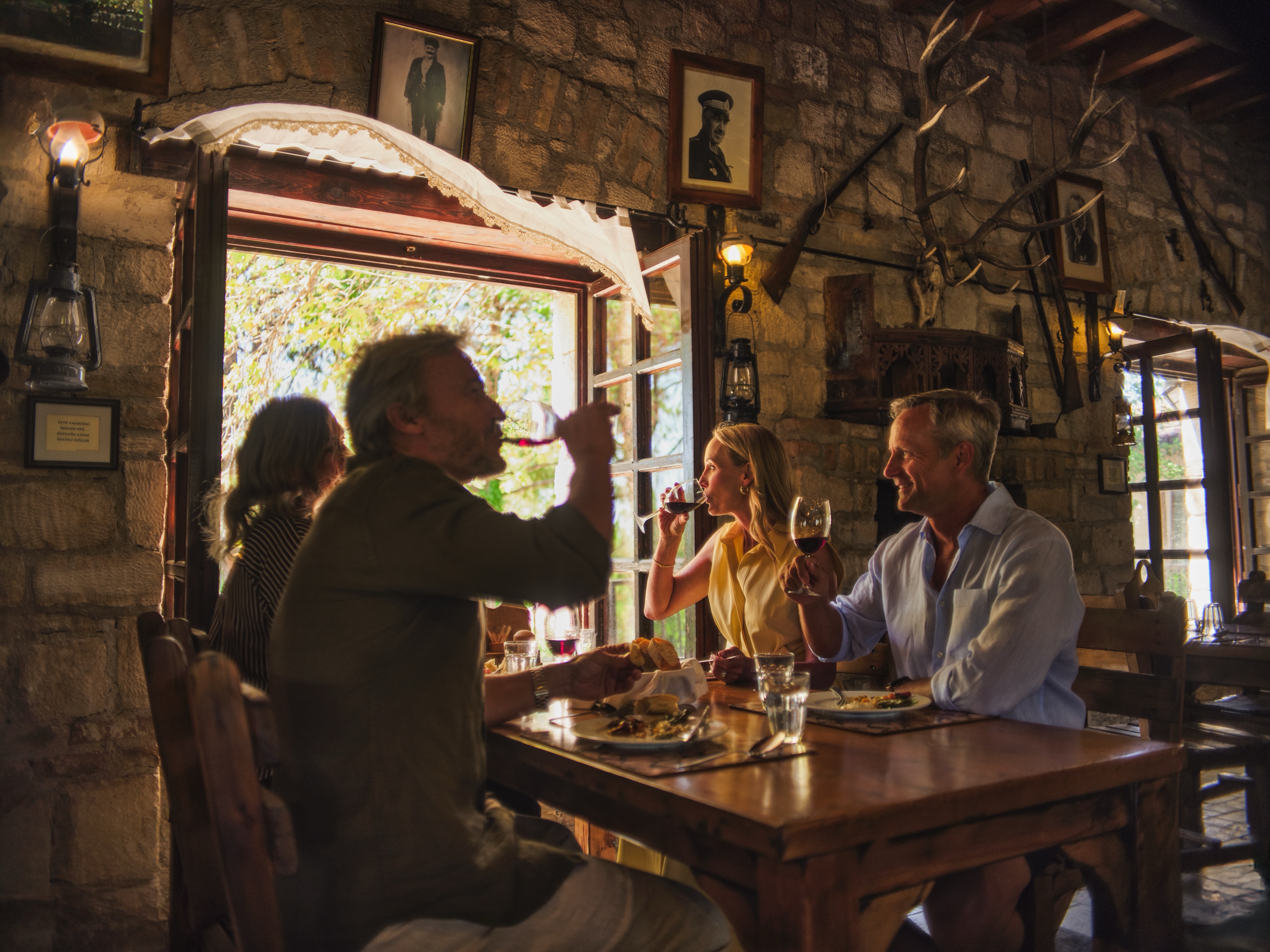
S.A.L.T. Land Programs
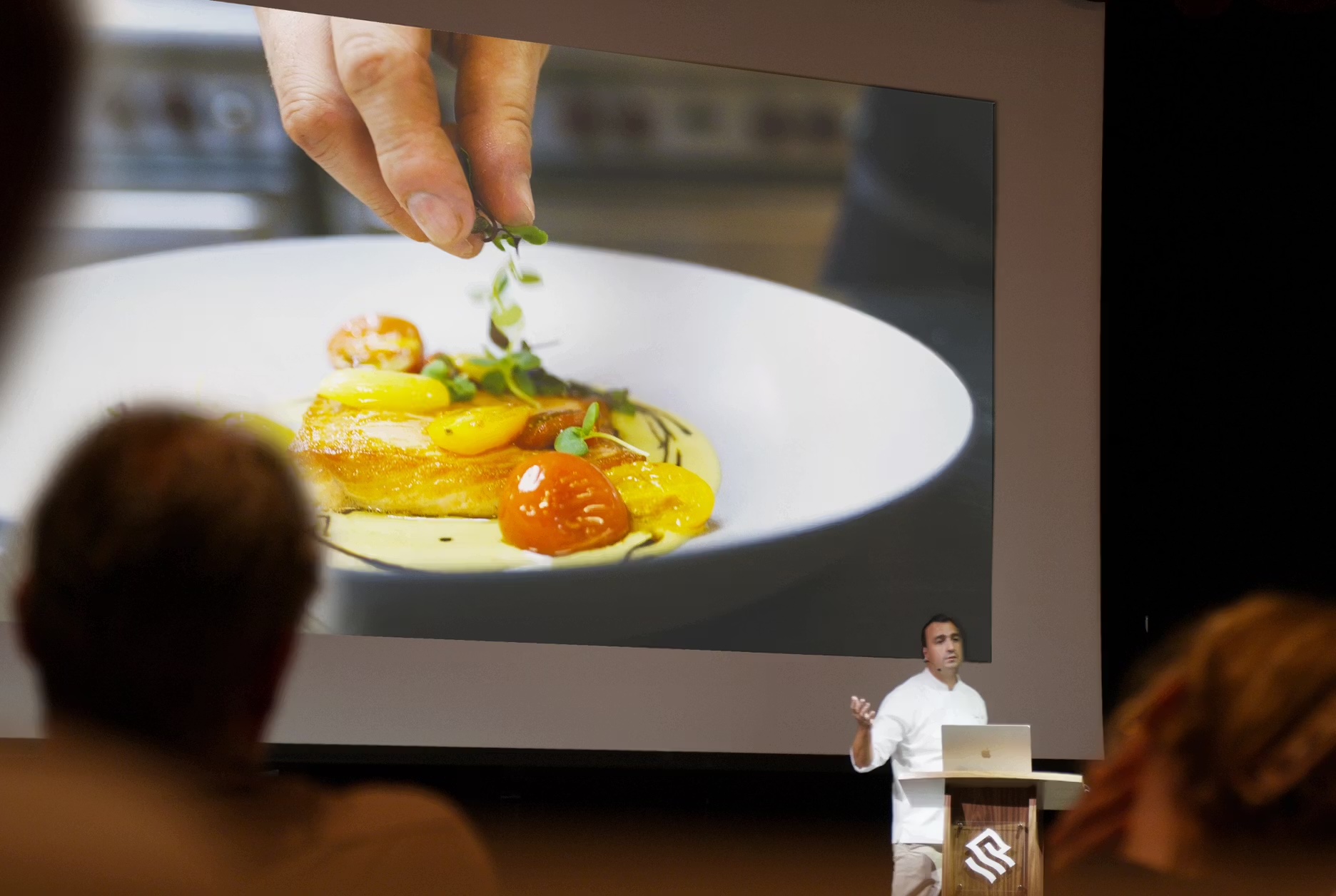
S.A.L.T. Talks
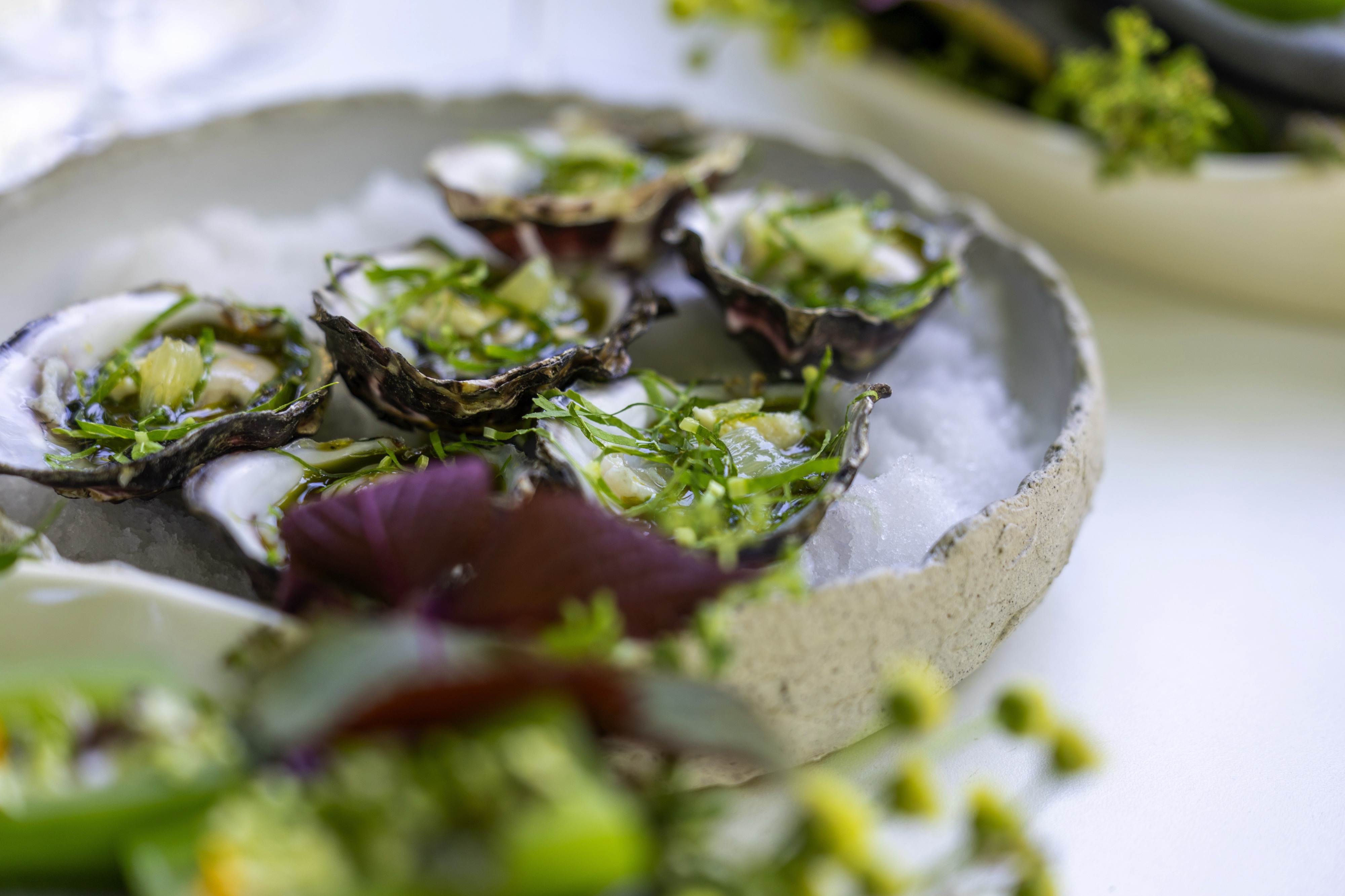
S.A.L.T. Experiences
S.A.L.T. Experiences take you on deliciously immersive journeys that delve into the personality of each destination. These thoughtfully designed Shore Excursions grant privileged access to local food cultures — from Michelin starred restaurants to familyrun farms and bustling markets to private kitchens — always led by those who know the region best. Whether harvesting vegetables from biodynamic gardens, learning ancestral techniques from village cooks, or savoring wines with renowned vintners, these optional journeys invite you into culinary adventures where strangers become friends, recipes become stories, flavors become memories.
Available on all Classic ships, with experiences tailored to each region’s unique culinary heritage.
Northern Europe
From Russian caviar to the smokehouses dotting the Swedish countryside, there is much to recommend for a culinary tour of Northern Europe. Discover expertly guided shore excursions that uncover the history, stories and personalities behind the well-known dishes, as well as shine a light on lesser-known culinary treasures. Think of anything from an exploration of the world-class restaurant culture of Copenhagen to the preserving methods of Iceland, to foraging for flavors the New Nordic way.
Mediterranean
In the Mediterranean, S.A.L.T. Experiences invite you to discover the region’s rich cultural tapestry through privileged access to local food artisans and traditions. On these highly curated Shore Excursions, you can ascend Portofino’s famous Monte for an exclusive eco-farm picnic featuring wood-fired focaccia and panoramic views. Learn about time-honored cheese-making traditions in Mykonos or immerse yourself in Croatian cooking methods at the Miloslavic family homestead in Dubrovnik. Each Mediterranean S.A.L.T. Experience reveals centuries of culinary wisdom — shared by the people who continue to preserve traditions.
Images are intended as a general reference.
Shore Excursions
Highlight Experiences
Seamless tours of iconic sites
Explore iconic landmarks and cultural treasures with our Highlight Experiences, half or full-day adventures led by expert guides. Enjoy seamless, hassle-free journeys to must- see attractions — perfect for guests seeking a convenient, turnkey experience.
Signature Experiences
Smaller tours, crafted by Silversea
These immersive Signature Experiences offer privileged access and personalized interactions with local experts. These experiences are perfect for those seeking meaningful, social exploration who want to connect with destinations through authentic dining and slow travel.
Private Experiences
Exclusive tours for your group
Create your own exclusive adventure with a dedicated vehicle, driver, and guide. Explore at your pace, linger, or spontaneously discover new sites. Available at most ports for half- or full-day bookings, Private Experiences are ideal for families seeking privacy and flexibility.
Custom Experiences
Tailor-made tours designed for you
Enjoy personalized Custom Experiences tailored to your interests, with exclusive access and specialized guides. Our team handles every detail, ensuring unforgettable moments that exceed your expectations—crafted entirely around your pace and preferences.
Overland Experiences
Mid-cruise, inland tours
Venture inland on two- to three-day journeys to iconic sites like the Taj Mahal or Angkor Wat. \Vith flights, stays, and guided access included, these immersive journeys offer rare experiences beyond the coast — all with the signature Silversea service.
S.A.L.T. Bar
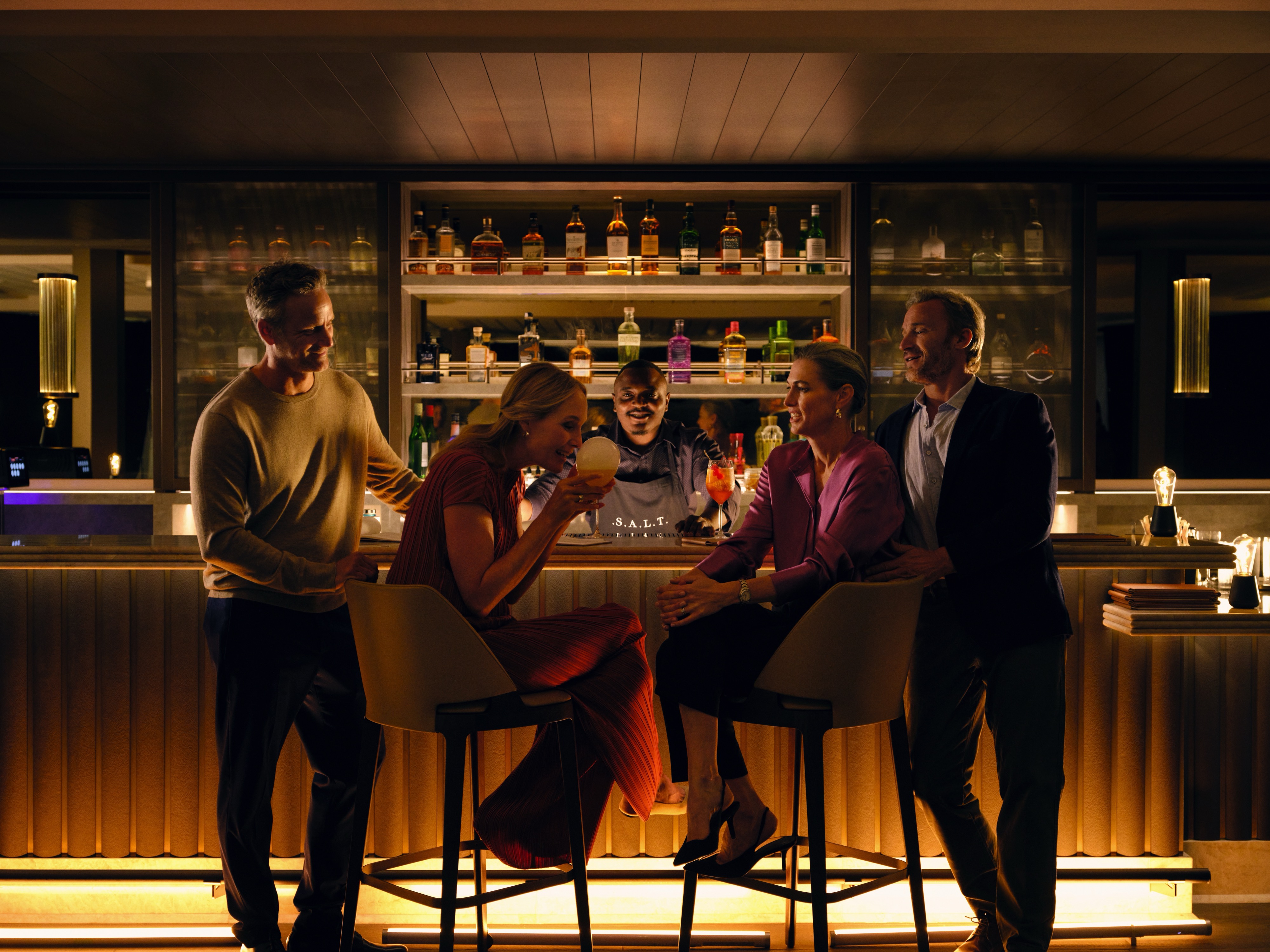
S.A.L.T. Bar crafts authentic cultural connections through expertly prepared cocktails that tell the story of each region. A welcoming atmosphere invites you to indulge in regionally inspired libations prepared with local ingredients and traditional spirits. Each perfectly balanced pour serves as your passport to the shores you’re exploring.
Images are intended as a general reference. Features, materials, finishes and layout may be different than shown.
Venetian Lounge
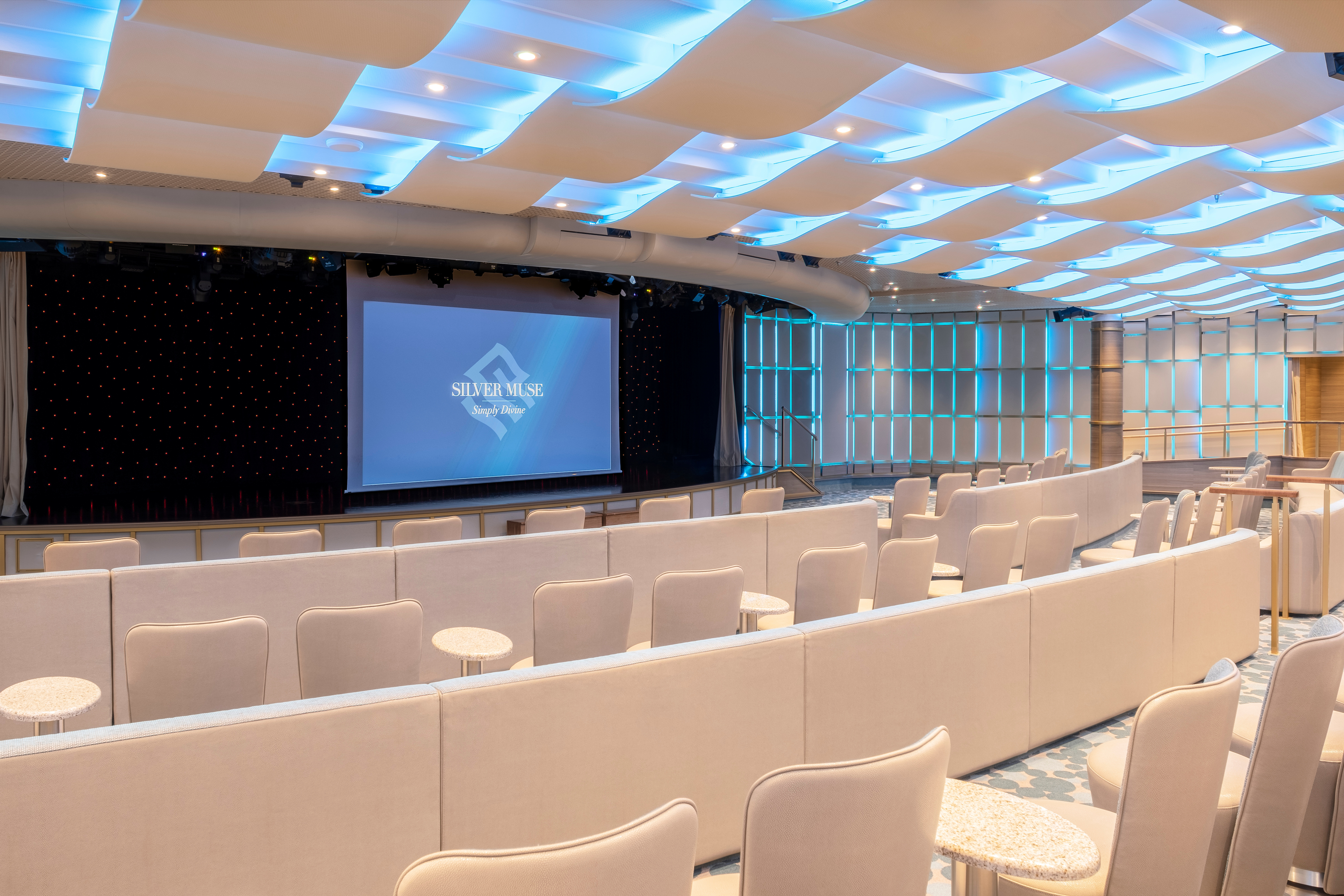
Step inside The Venetian Lounge, a cabaret-style theater draped in gilded glamour and Belle Époque charm. Cozy seating and intimate tables invite you to bask in the glow of live productions and cinematic screenings, complemented with Champagne, fine wines, and classic cocktails. In a setting this grand, every night feels like opening night.
Images are intended as a general reference. Features, materials, finishes and layout may be different than shown.
Connoisseur’s Corner
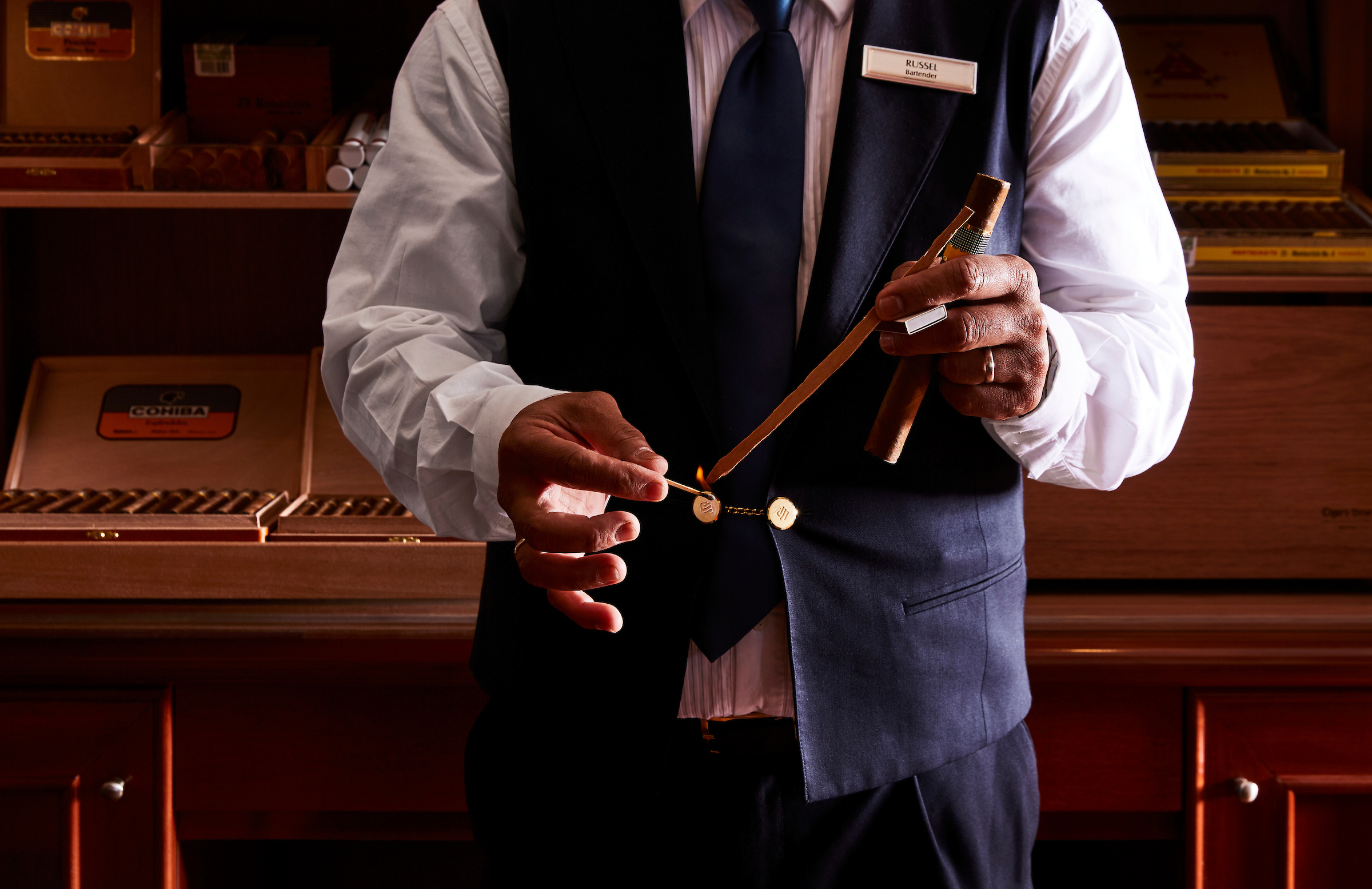
As evening stretches into night, Connoisseur’s Corner offers a stylish refuge for those who appreciate the time-honored rituals of smoke and spirit. Sink into tufted leather chairs with a hand-rolled cigar and a glass of one of our finest cognacs or whiskeys. Indoors or under the stars, every moment is marked by pure indulgence.
Images are intended as a general reference. Features, materials, finishes and layout may be different than shown.
Dolce Vita
Surrender to a world of Italian elegance where the art of aperitivo takes pride of place. Ideal for connecting over spritzes, negronis, and light bites, here each evening feels like a celebration. As laughter lingers, crystal glasses clink, and live piano notes ripple through the air, Dolce Vita compels you to savor the sweetness of life on board.
Images are intended as a general reference. Features, materials, finishes and layout may be different than shown.
Casino
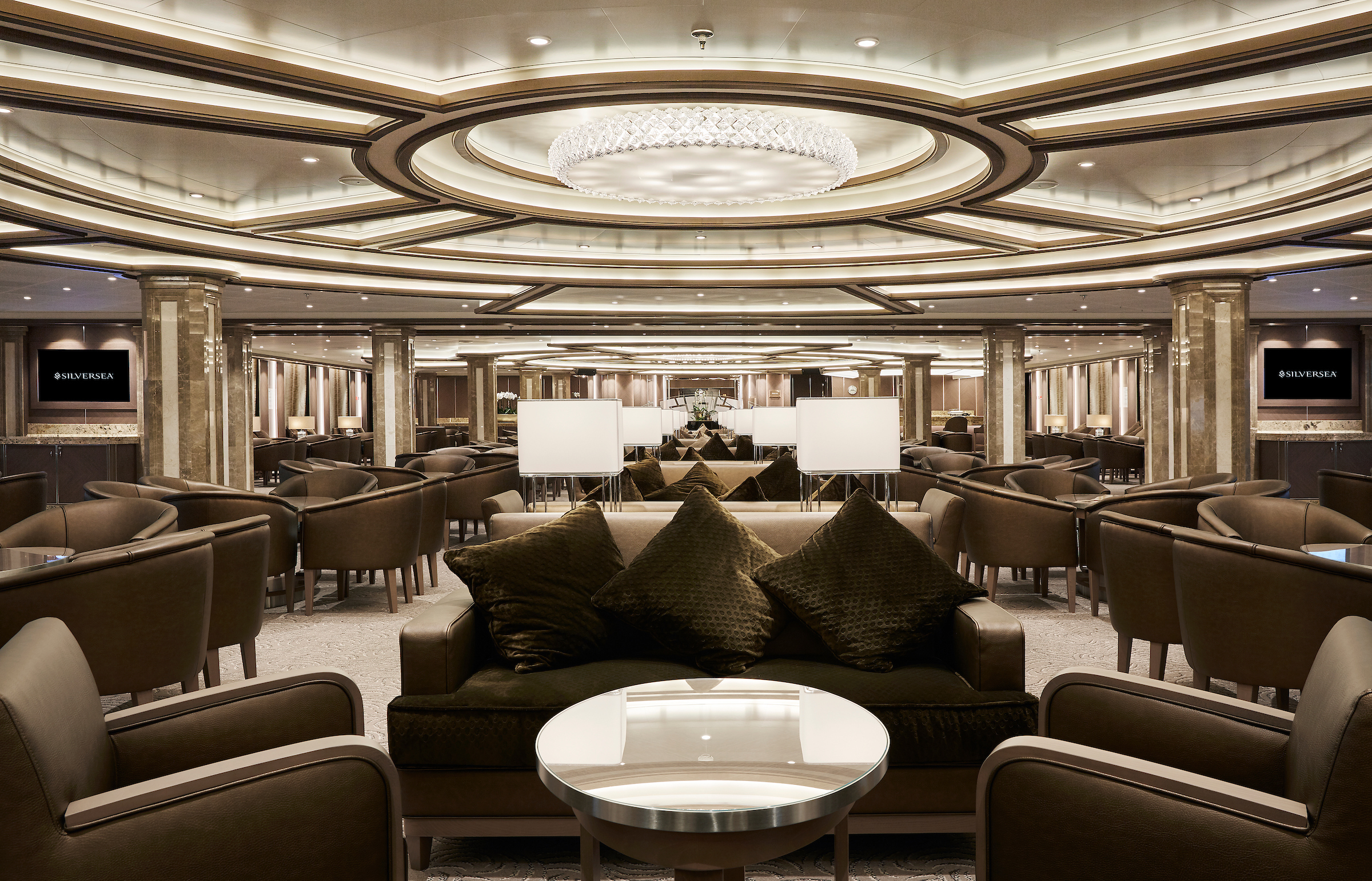
Let the fun begin! Channel your inner James Bond and place a bet at a variety of table games, including American Roulette, Blackjack, and Ocean Poker, as Silver Muse glides silently through the waves. An assortment of multi-game, multi-denominational reel and video slot machines are also available. Prepare yourself for a luxurious and exhilarating experience with every turn of a card and spin of the wheel. Game on!
Images are intended as a general reference. Features, materials, finishes and layout may be different than shown.
Observation Library
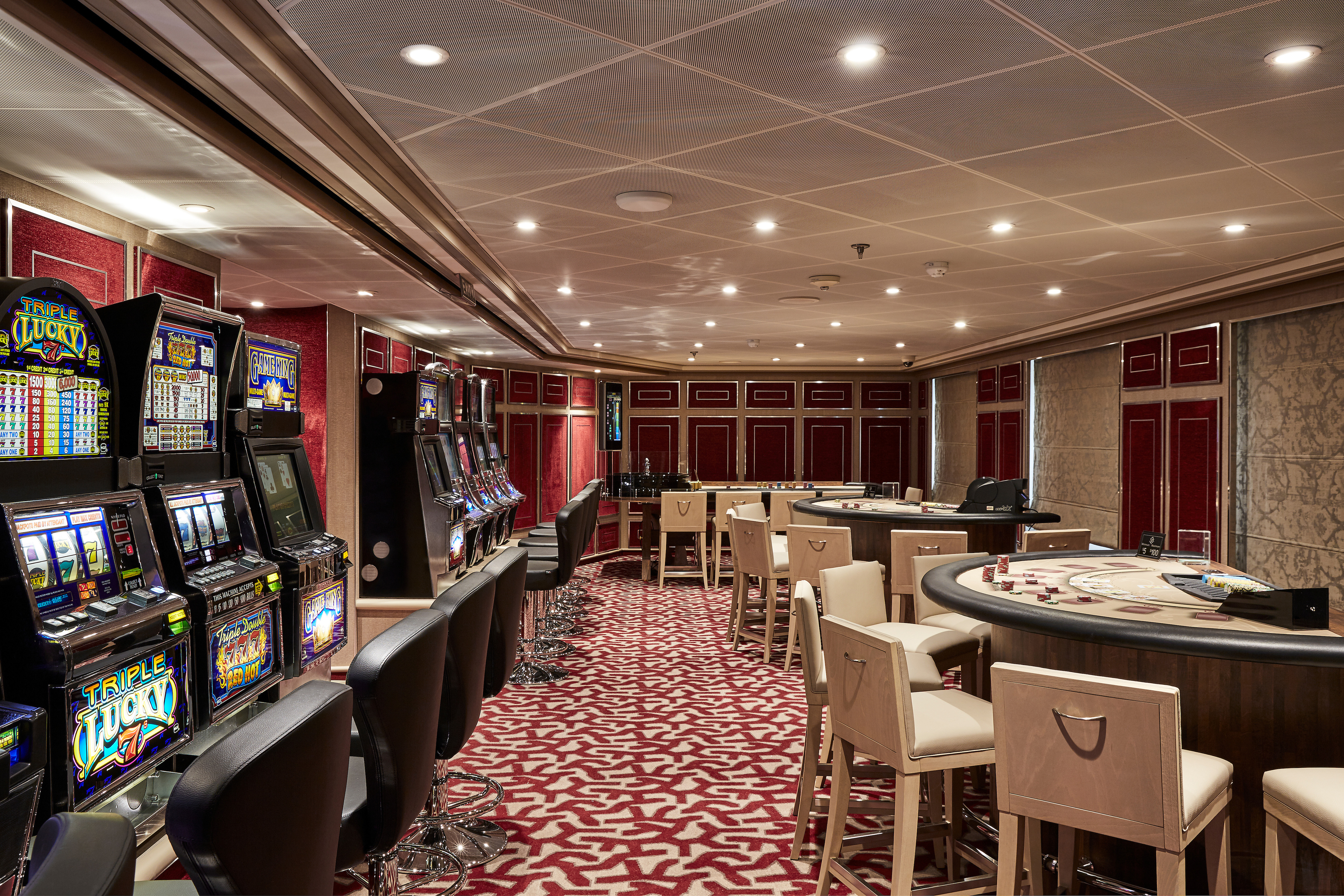
The eponymous lounge carries its name well. Set on the highest level at the very top of the ship, this is a quiet space for reading and reflection while being dazzled by the undulating seascapes that are part of life on board. Borrow a book from the in-house library, read the papers, or just embrace the tranquility of being at sea.
Images are intended as a general reference. Features, materials, finishes and layout may be different than shown.
Panorama Lounge
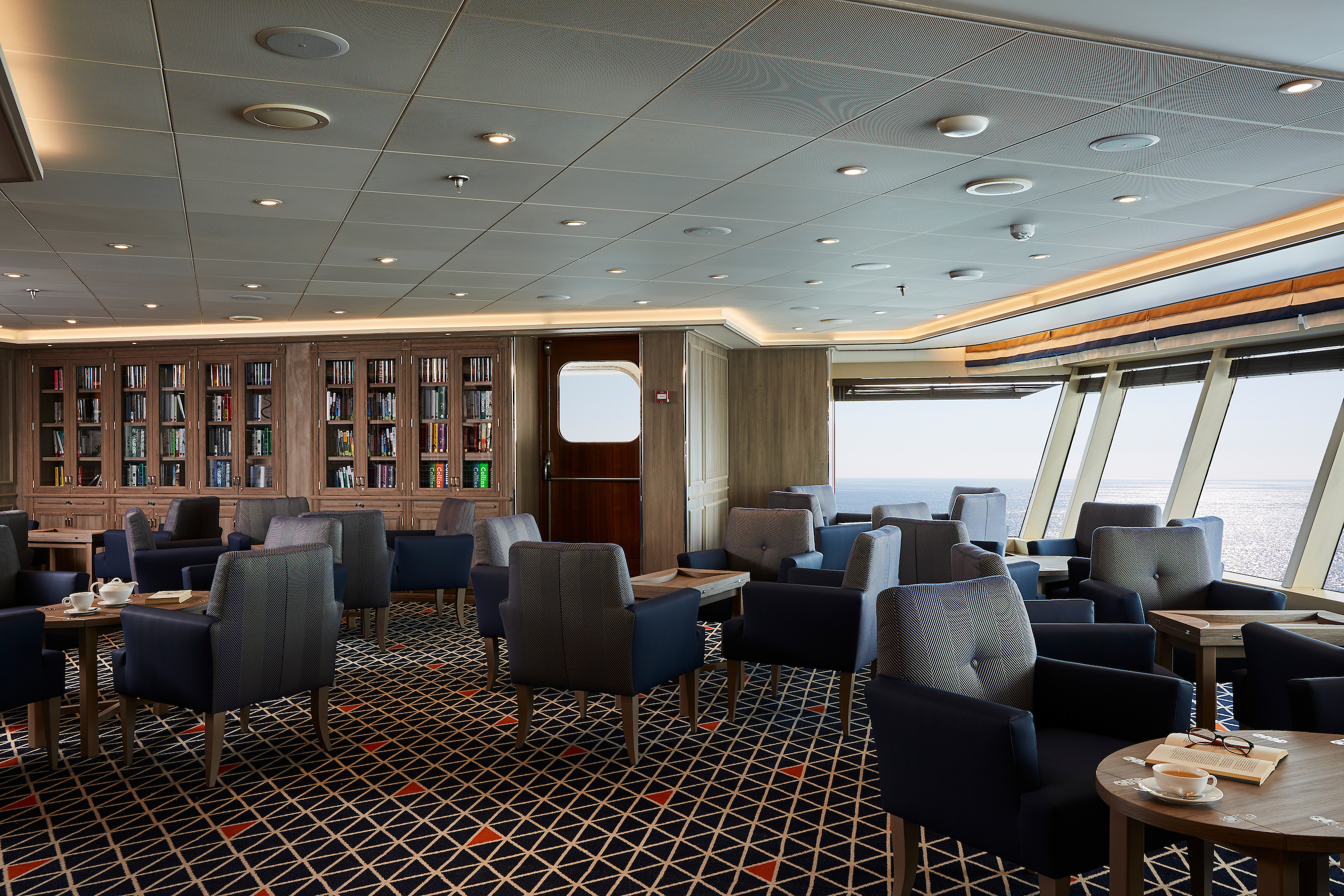
True to its name, Panorama Lounge surrounds you with sweeping views from every angle. Sunlight pours through wraparound windows by day, framing horizons that shift like watercolors. Evenings hum with piano chords and DJ beats that carry you late into the night. And all of it pairs wonderfully with cocktails handcrafted to match your mood.
Images are intended as a general reference. Features, materials, finishes and layout may be different than shown.
Boutique
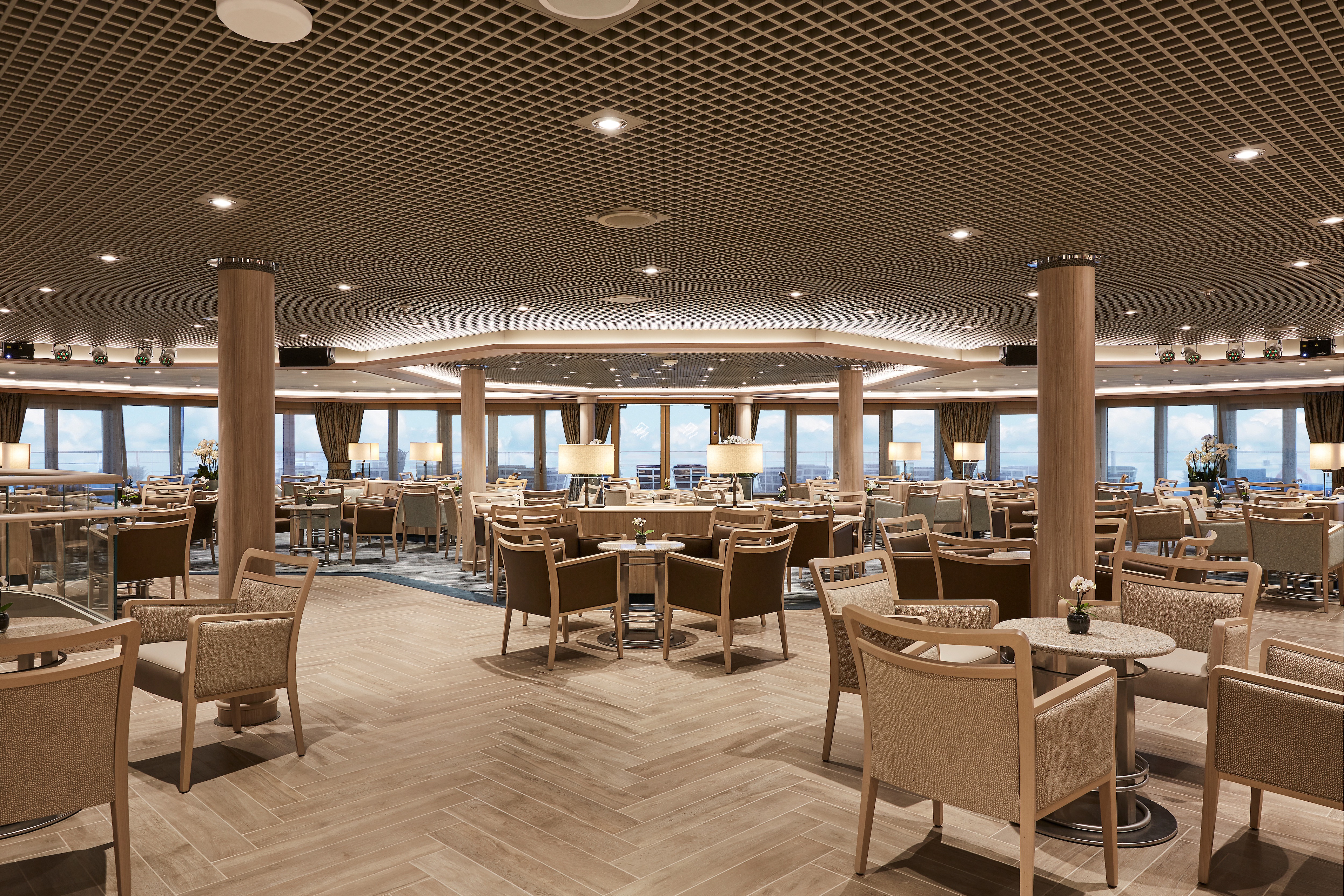
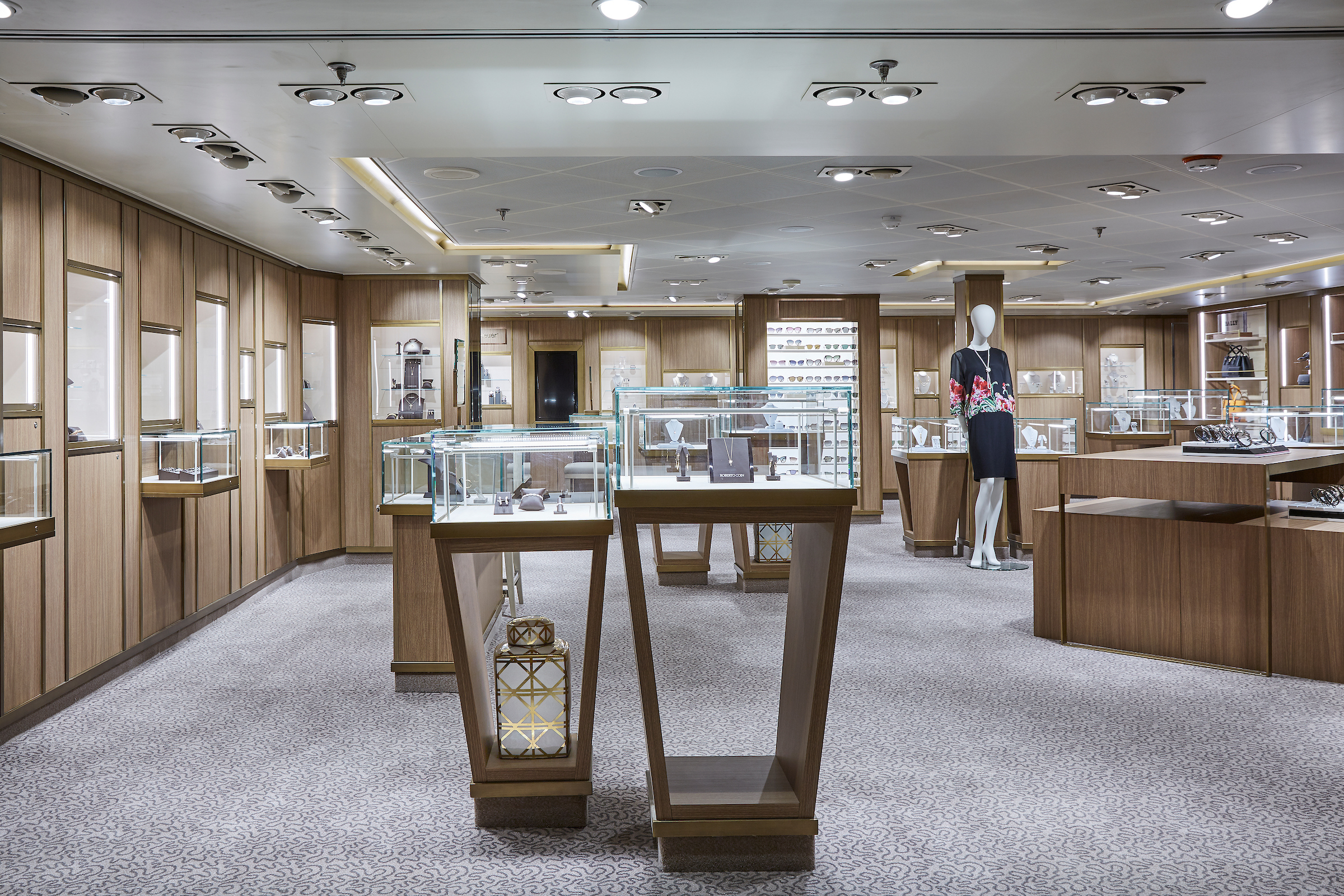
Exceptional shopping experiences do not end in the cosmopolitan cities we visit. Silversea’s striking new shipboard boutiques, reimagined and redesigned, are stunning modern design spaces befitting the finest creations from legendary designers. Carefully selected partners on board Silversea’s duty-free boutiques offer our guests a carefully curated selection of cutting-edge fashions, jewelry, accessories, fine perfumes, cosmetics, and Silversea Logo collection, all at duty-free prices.
Images are intended as a general reference. Features, materials, finishes and layout may be different than shown.
Zagara Beauty Spa
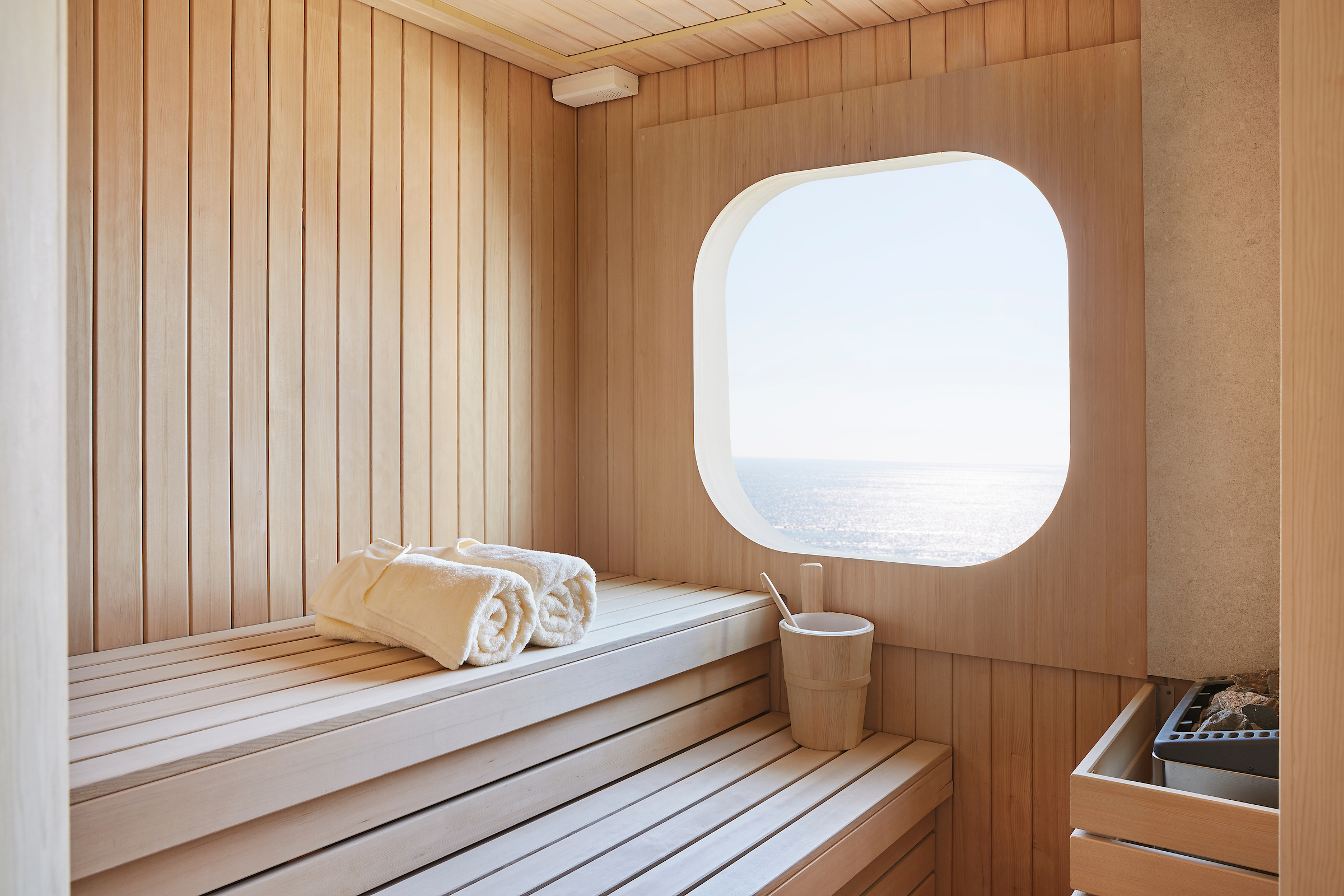
Relax, rejuvenate, and renew all your senses. The Zagara Beauty Spa by Silversea is a sanctuary of pure bliss … Sweeping ocean views from the floor-to-ceiling windows, nine treatment rooms, an acupuncture suite, relaxation areas, and a dedicated outdoor whirlpool allow delectable indulgence on board. Invigorating therapies including facials, body wraps, and massages, plus men’s and women’s saunas and steam rooms, are perfect for relaxing before your spa treatment or after your workout.
Images are intended as a general reference. Features, materials, finishes and layout may be different than shown.
Fitness Centre
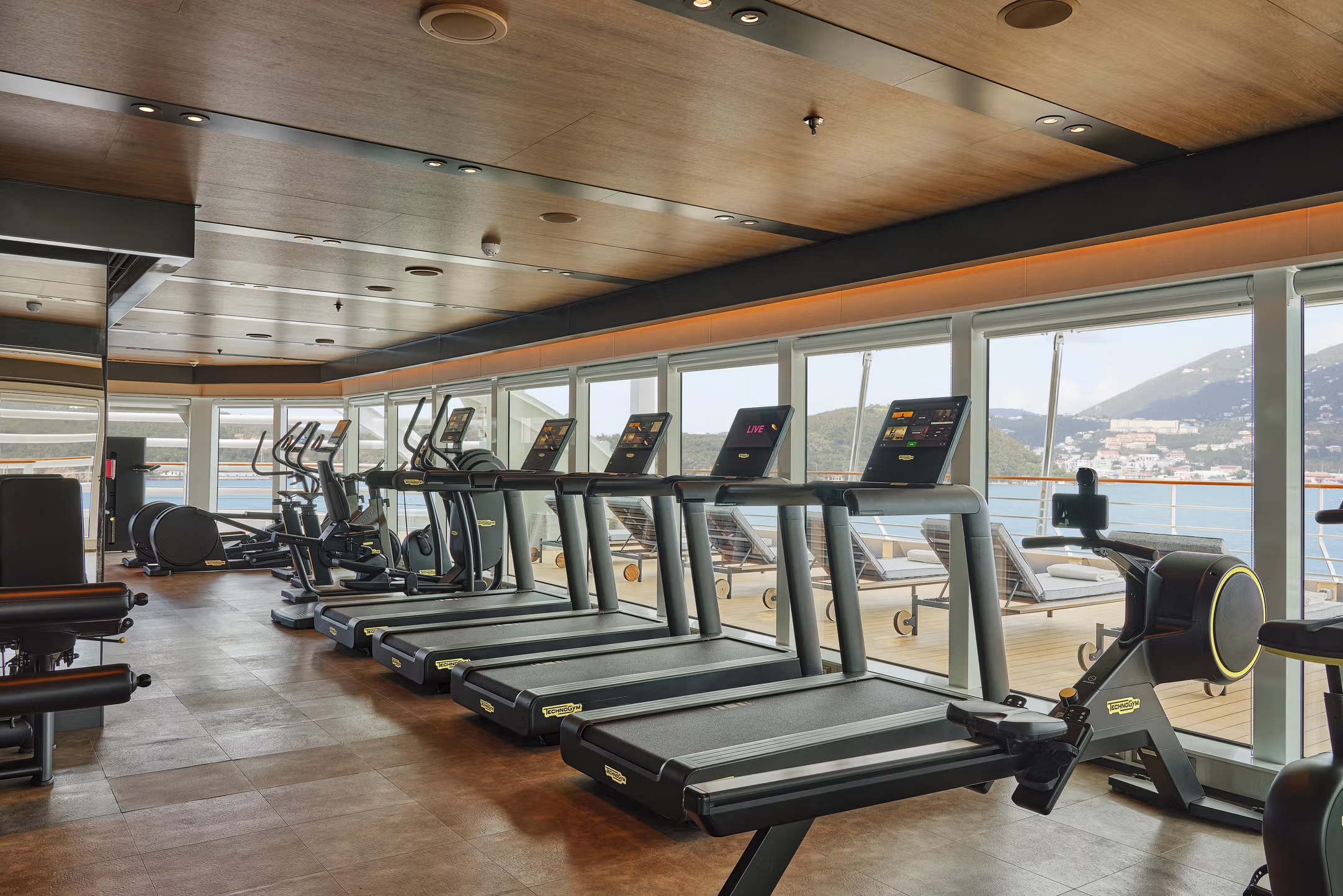
With state-of-the-art Technogym® equipment, free weights, and specialty classes, the Fitness Center brings together elite design with programs that are specifically created for your body type and needs. With personal trainers available for individual sessions, training here is a five-star experience for all levels of fitness and experience. And with the best view that you’ll ever have while working out, there are definitely no more excuses …
Images are intended as a general reference. Features, materials, finishes and layout may be different than shown.
Pool Deck & Jacuzzi Area
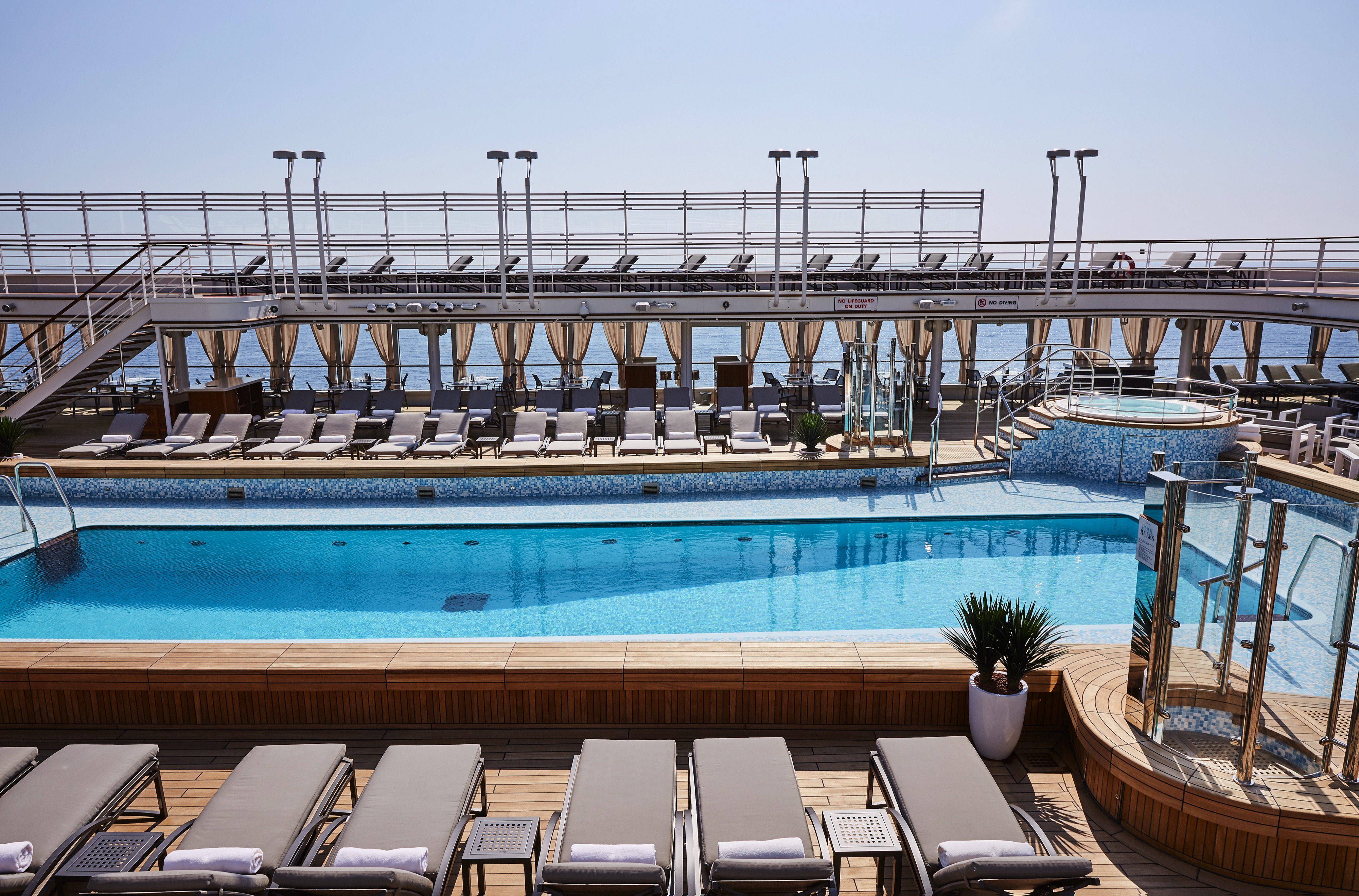
The epitome of open-air living—defining how you enjoy the outdoors—this is the place to cool off, unwind, and enjoy the sunshine. Take a dip in the pool, relax in one of the whirlpools, or simply soak up the view from one of the sun beds while your pool attendant anticipates your every whim. A little more ice? Certainly. A plush towel to dry off with? Of course. With breathtaking landmarks gliding by, dive into the clear waters in a setting that is so idyllic that you will not want to disembark.
Images are intended as a general reference. Features, materials, finishes and layout may be different than shown.
Zagara Beauty Salon
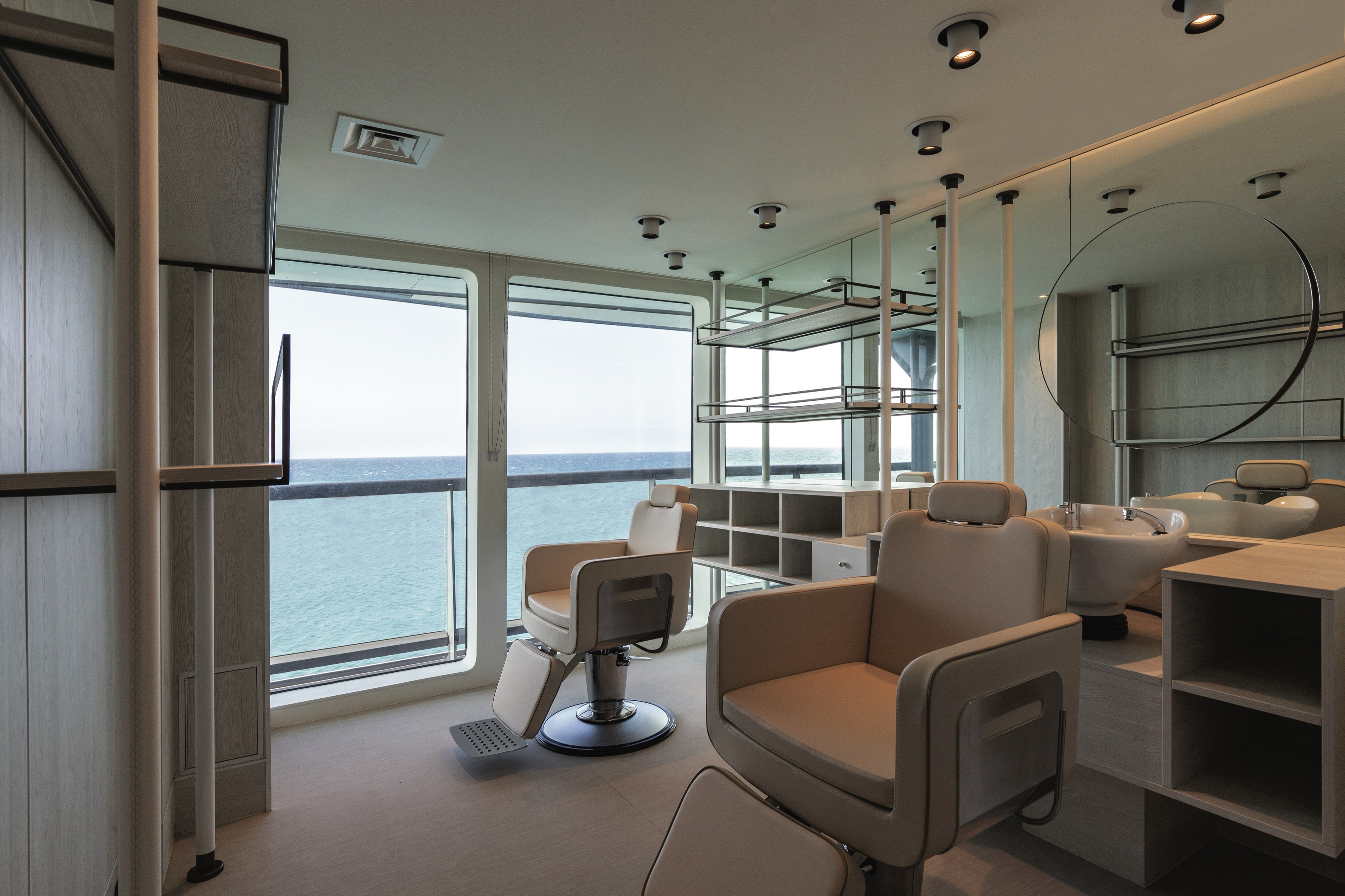
A full range of salon services, including hairstyling, manicures, and pedicures, is available on board this luxury cruise ship for both men and women. Appointments for these chargeable services may be made on board the ship, or in advance via My Silversea. Maintain the look of prestige travel while you cruise.
Images are intended as a general reference. Features, materials, finishes and layout may be different than shown.
Please note: Although Silversea accepts guests over the age of six months, there are no special programmes for children on board, and Silversea does not provide for the care, entertainment and supervision of children.
S.A.L.T. Kitchen
S.A.L.T. Kitchen transforms dining into discovery with menus that reflect the cuisines of the places you’ll visit. This complimentary venue is the only restaurant at sea with an ever-changing menu based on destination. Plus, a standing menu focuses on broader regional specialties, complemented by a menu featuring hyperlocal fare. Dishes are inspired by local flavors and prepared with responsibly sourced ingredients. Accompanied by a curated selection of over 160 regional wines, S.A.L.T. Kitchen delivers an immersive taste of place without ever leaving the ship.
Images are intended as a general reference. Features, materials, finishes and layout may be different than shown.
Kaiseki
Meals at Kaiseki are rooted in the Japanese philosophy of balance and precision. By day, refreshing sushi, sashimi, and izakaya-style dishes guide the menu. During dinner, specialties like miso black cod and wagyu teriyaki nod to Japan’s enduring culinary legacy, while fine sake, whiskies, and teas enhance every course.
Lunch – Open seating
Opening Hours: 12:00 PM – 2:30 PM
Dinner – Reservations required*
Opening Hours: 7:00 PM – 9:30 PM
Per guest reservation fee of US$40. Please visit My Silversea to make your reservations.
Learn more about the Epicurean Experience, which includes dining in three specialty restaurants with preferential rates.
Images are intended as a general reference. Features, materials, finishes and layout may be different than shown.
La Terrazza
La Terrazza elevates casual dining by day and delivers an authentic Italian experience by night. During the breakfast and lunch buffets, our master chefs prepare global favorites at live stations. As evening falls, handmade pastas and classic seafood dishes are the centerpiece — every impeccable bite paired with fine wines from around the world.
Images are intended as a general reference. Features, materials, finishes and layout may be different than shown.
Arts Café
Arts Café is a vibrant, light-filled haven for conversation, connection, and indulgence. Snack on creative canapés and decadent pastries paired with perfectly pulled espressos, fresh squeezed juices, and artisanal teas. Open all day, this inviting space provides a dynamic backdrop for unwinding, recharging, or catching up with fellow travelers.
Images are intended as a general reference. Features, materials, finishes and layout may be different than shown.
The Grill
A poolside al fresco favorite, The Grill is casual by day and captivating by night. Dig in to crisp salads and grilled classics during lunch, then return after sunset for masterfully seasoned and seared cuts paired with balmy sea breezes.
Images are intended as a general reference. Features, materials, finishes and layout may be different than shown.
La Dame
Experience the pinnacle of French gastronomy at La Dame, where sophistication meets tradition. Here, an exclusive tasting menu unfolds course by course — each plate a study in masterful technique, seasonal ingredients, and modern refinement. From classic Kir Royales to exquisite signatures such as Dover sole à la Grenobloise, this is haute cuisine at its finest.
Per guest reservation fee of US$60. Please visit My Silversea to make your reservations.
Learn more about the Epicurean Experience, which includes dining in three specialty restaurants with preferential rates.
Images are intended as a general reference. Features, materials, finishes and layout may be different than shown.
Atlantide
Refined global fare and grilled classics take center stage at Atlantide. Drop in for an indulgent à la carte breakfast, a leisurely lunch, or an elegant dinner among family and new friends, served in a timeless and sophisticated setting.
Images are intended as a general reference. Features, materials, finishes and layout may be different than shown.
Silver Note
As the stars come out, Silver Note comes alive with the rhythm of jazz and the artistry of small-plate fine dining. This intimate supper-club experience pairs soulful live performances with inventive, international cuisine in a chic, lounge-style setting — one of the most exclusive dining concepts at sea.
Learn more about the Epicurean Experience, which includes dining in three specialty restaurants with preferential rates.
Images are intended as a general reference. Features, materials, finishes and layout may be different than shown.
Spaccanapoli
Spaccanapoli honors southern Italy’s culinary heritage with handcrafted pies tossed, topped, and baked to perfection. This signature pizzeria captures true Neapolitan flavor — from golden, blistered crusts to the irresistible aromas that drift from the custom-built oven.
In-Suite Dining
You can order from our Room Service menu 24 hours a day.
Opening hours are for reference only. For precise opening hours, please refer to the Daily Chronicles provided on board.
S.A.L.T. Land Programs
S.A.L.T. Talks
S.A.L.T. Experiences
S.A.L.T. Experiences take you on deliciously immersive journeys that delve into the personality of each destination. These thoughtfully designed Shore Excursions grant privileged access to local food cultures — from Michelin starred restaurants to familyrun farms and bustling markets to private kitchens — always led by those who know the region best. Whether harvesting vegetables from biodynamic gardens, learning ancestral techniques from village cooks, or savoring wines with renowned vintners, these optional journeys invite you into culinary adventures where strangers become friends, recipes become stories, flavors become memories.
Available on all Classic ships, with experiences tailored to each region’s unique culinary heritage.
Northern Europe
From Russian caviar to the smokehouses dotting the Swedish countryside, there is much to recommend for a culinary tour of Northern Europe. Discover expertly guided shore excursions that uncover the history, stories and personalities behind the well-known dishes, as well as shine a light on lesser-known culinary treasures. Think of anything from an exploration of the world-class restaurant culture of Copenhagen to the preserving methods of Iceland, to foraging for flavors the New Nordic way.
Mediterranean
In the Mediterranean, S.A.L.T. Experiences invite you to discover the region’s rich cultural tapestry through privileged access to local food artisans and traditions. On these highly curated Shore Excursions, you can ascend Portofino’s famous Monte for an exclusive eco-farm picnic featuring wood-fired focaccia and panoramic views. Learn about time-honored cheese-making traditions in Mykonos or immerse yourself in Croatian cooking methods at the Miloslavic family homestead in Dubrovnik. Each Mediterranean S.A.L.T. Experience reveals centuries of culinary wisdom — shared by the people who continue to preserve traditions.
Images are intended as a general reference.
Shore Excursions
Highlight Experiences
Seamless tours of iconic sites
Explore iconic landmarks and cultural treasures with our Highlight Experiences, half or full-day adventures led by expert guides. Enjoy seamless, hassle-free journeys to must- see attractions — perfect for guests seeking a convenient, turnkey experience.
Signature Experiences
Smaller tours, crafted by Silversea
These immersive Signature Experiences offer privileged access and personalized interactions with local experts. These experiences are perfect for those seeking meaningful, social exploration who want to connect with destinations through authentic dining and slow travel.
Private Experiences
Exclusive tours for your group
Create your own exclusive adventure with a dedicated vehicle, driver, and guide. Explore at your pace, linger, or spontaneously discover new sites. Available at most ports for half- or full-day bookings, Private Experiences are ideal for families seeking privacy and flexibility.
Custom Experiences
Tailor-made tours designed for you
Enjoy personalized Custom Experiences tailored to your interests, with exclusive access and specialized guides. Our team handles every detail, ensuring unforgettable moments that exceed your expectations—crafted entirely around your pace and preferences.
Overland Experiences
Mid-cruise, inland tours
Venture inland on two- to three-day journeys to iconic sites like the Taj Mahal or Angkor Wat. \Vith flights, stays, and guided access included, these immersive journeys offer rare experiences beyond the coast — all with the signature Silversea service.
S.A.L.T. Bar
S.A.L.T. Bar crafts authentic cultural connections through expertly prepared cocktails that tell the story of each region. A welcoming atmosphere invites you to indulge in regionally inspired libations prepared with local ingredients and traditional spirits. Each perfectly balanced pour serves as your passport to the shores you’re exploring.
Images are intended as a general reference. Features, materials, finishes and layout may be different than shown.
Venetian Lounge
Step inside The Venetian Lounge, a cabaret-style theater draped in gilded glamour and Belle Époque charm. Cozy seating and intimate tables invite you to bask in the glow of live productions and cinematic screenings, complemented with Champagne, fine wines, and classic cocktails. In a setting this grand, every night feels like opening night.
Images are intended as a general reference. Features, materials, finishes and layout may be different than shown.
Connoisseur’s Corner
As evening stretches into night, Connoisseur’s Corner offers a stylish refuge for those who appreciate the time-honored rituals of smoke and spirit. Sink into tufted leather chairs with a hand-rolled cigar and a glass of one of our finest cognacs or whiskeys. Indoors or under the stars, every moment is marked by pure indulgence.
Images are intended as a general reference. Features, materials, finishes and layout may be different than shown.
Dolce Vita
Surrender to a world of Italian elegance where the art of aperitivo takes pride of place. Ideal for connecting over spritzes, negronis, and light bites, here each evening feels like a celebration. As laughter lingers, crystal glasses clink, and live piano notes ripple through the air, Dolce Vita compels you to savor the sweetness of life on board.
Images are intended as a general reference. Features, materials, finishes and layout may be different than shown.
Casino
Let the fun begin! Channel your inner James Bond and place a bet at a variety of table games, including American Roulette, Blackjack, and Ocean Poker, as Silver Muse glides silently through the waves. An assortment of multi-game, multi-denominational reel and video slot machines are also available. Prepare yourself for a luxurious and exhilarating experience with every turn of a card and spin of the wheel. Game on!
Images are intended as a general reference. Features, materials, finishes and layout may be different than shown.
Observation Library
The eponymous lounge carries its name well. Set on the highest level at the very top of the ship, this is a quiet space for reading and reflection while being dazzled by the undulating seascapes that are part of life on board. Borrow a book from the in-house library, read the papers, or just embrace the tranquility of being at sea.
Images are intended as a general reference. Features, materials, finishes and layout may be different than shown.
Panorama Lounge
True to its name, Panorama Lounge surrounds you with sweeping views from every angle. Sunlight pours through wraparound windows by day, framing horizons that shift like watercolors. Evenings hum with piano chords and DJ beats that carry you late into the night. And all of it pairs wonderfully with cocktails handcrafted to match your mood.
Images are intended as a general reference. Features, materials, finishes and layout may be different than shown.
Boutique
Exceptional shopping experiences do not end in the cosmopolitan cities we visit. Silversea’s striking new shipboard boutiques, reimagined and redesigned, are stunning modern design spaces befitting the finest creations from legendary designers. Carefully selected partners on board Silversea’s duty-free boutiques offer our guests a carefully curated selection of cutting-edge fashions, jewelry, accessories, fine perfumes, cosmetics, and Silversea Logo collection, all at duty-free prices.
Images are intended as a general reference. Features, materials, finishes and layout may be different than shown.
Zagara Beauty Spa
Relax, rejuvenate, and renew all your senses. The Zagara Beauty Spa by Silversea is a sanctuary of pure bliss … Sweeping ocean views from the floor-to-ceiling windows, nine treatment rooms, an acupuncture suite, relaxation areas, and a dedicated outdoor whirlpool allow delectable indulgence on board. Invigorating therapies including facials, body wraps, and massages, plus men’s and women’s saunas and steam rooms, are perfect for relaxing before your spa treatment or after your workout.
Images are intended as a general reference. Features, materials, finishes and layout may be different than shown.
Fitness Centre
With state-of-the-art Technogym® equipment, free weights, and specialty classes, the Fitness Center brings together elite design with programs that are specifically created for your body type and needs. With personal trainers available for individual sessions, training here is a five-star experience for all levels of fitness and experience. And with the best view that you’ll ever have while working out, there are definitely no more excuses …
Images are intended as a general reference. Features, materials, finishes and layout may be different than shown.
Pool Deck & Jacuzzi Area
The epitome of open-air living—defining how you enjoy the outdoors—this is the place to cool off, unwind, and enjoy the sunshine. Take a dip in the pool, relax in one of the whirlpools, or simply soak up the view from one of the sun beds while your pool attendant anticipates your every whim. A little more ice? Certainly. A plush towel to dry off with? Of course. With breathtaking landmarks gliding by, dive into the clear waters in a setting that is so idyllic that you will not want to disembark.
Images are intended as a general reference. Features, materials, finishes and layout may be different than shown.
Zagara Beauty Salon
A full range of salon services, including hairstyling, manicures, and pedicures, is available on board this luxury cruise ship for both men and women. Appointments for these chargeable services may be made on board the ship, or in advance via My Silversea. Maintain the look of prestige travel while you cruise.
Images are intended as a general reference. Features, materials, finishes and layout may be different than shown.
Please note: Although Silversea accepts guests over the age of six months, there are no special programmes for children on board, and Silversea does not provide for the care, entertainment and supervision of children.
About the Ship
Deck Plans

- Atlantide
- S.A.L.T. Kitchen
- S.A.L.T. Bar
- Kaiseki
- La Dame
- Launderette
- Vista Suites

- Reception/Guest Relations
- Shore Concierge
- Dolce Vita
- Launderette
- Venetian Lounge
- Future Cruise Manager
- Classic Veranda Suites

- Zagara Beauty Spa
- Steam Rooms and Saunas
- Fitness Centre
- Aerobic Studios
- Thermal Suite
- Whirlpool
- Launderette
- Classic Veranda Suites
- Deluxe Veranda Suites

- La Terrazza
- Silver Note
- Casino
- Launderette
- Royal Suites
- Deluxe Verandah Suites
- Superior Verandah Suites
- Elevator

- Connoisseur’s Corner
- Boutique
- Arts Café
- Conference/Card Room
- Launderette
- Grand Suites
- Superior Veranda Suites
- Deluxe Veranda Suites
- Elevator

- Panorama Lounge
- Activities Room & Outdoor Area
- Superior Veranda Suites
- Silver Suites (x1 Accessible Suite)
- Grand Suites
- Owner’s Suites
- Panorama Suites
- Deluxe Veranda Suites
- Launderette

- Pool Deck
- Pool Bar
- The Grill
- Whirlpool Area
- Silver Suites
- Medallion Suite
- Deluxe Veranda Suites
- Launderette

- Observation Library
- Silver Suites
- Medallion Suite
- Deluxe Veranda Suites
- Spaccanapoli
- Jogging Track
- Launderette

- Golf Putting Green
- Golf Hitting Bay(access via Observation Library)
- Atlantide
- S.A.L.T. Kitchen
- S.A.L.T. Bar
- Kaiseki
- La Dame
- Launderette
- Vista Suites
- Reception/Guest Relations
- Shore Concierge
- Dolce Vita
- Launderette
- Venetian Lounge
- Future Cruise Manager
- Classic Veranda Suites
- Zagara Beauty Spa
- Steam Rooms and Saunas
- Fitness Centre
- Aerobic Studios
- Thermal Suite
- Whirlpool
- Launderette
- Classic Veranda Suites
- Deluxe Veranda Suites
- La Terrazza
- Silver Note
- Casino
- Launderette
- Royal Suites
- Deluxe Verandah Suites
- Superior Verandah Suites
- Elevator
- Connoisseur’s Corner
- Boutique
- Arts Café
- Conference/Card Room
- Launderette
- Grand Suites
- Superior Veranda Suites
- Deluxe Veranda Suites
- Elevator
- Panorama Lounge
- Activities Room & Outdoor Area
- Superior Veranda Suites
- Silver Suites (x1 Accessible Suite)
- Grand Suites
- Owner’s Suites
- Panorama Suites
- Deluxe Veranda Suites
- Launderette
- Pool Deck
- Pool Bar
- The Grill
- Whirlpool Area
- Silver Suites
- Medallion Suite
- Deluxe Veranda Suites
- Launderette
- Observation Library
- Silver Suites
- Medallion Suite
- Deluxe Veranda Suites
- Spaccanapoli
- Jogging Track
- Launderette
- Golf Putting Green
- Golf Hitting Bay(access via Observation Library)